



Long layered haircuts for round faces work best when they pull the eye down, not out. That sounds obvious, but you can feel the difference the moment a cut hits the wrong point on the cheekbone and starts adding width instead of length.
A blunt line that stops right at the fullest part of the face can make the shape read wider than it really is. Layers change that. They break up the outline, create movement below the jaw, and keep the hair from sitting like one solid curtain around the face.
The tricky part is choosing the right version. Some cuts need a side part. Some need curtain bangs. Some need barely-there internal layers, while others look better with a big, airy shape through the crown. The good news is that there’s room to work with different textures, lengths, and styling habits without losing the length you want.
1. Long Layered Haircuts for Round Faces With a Side Part
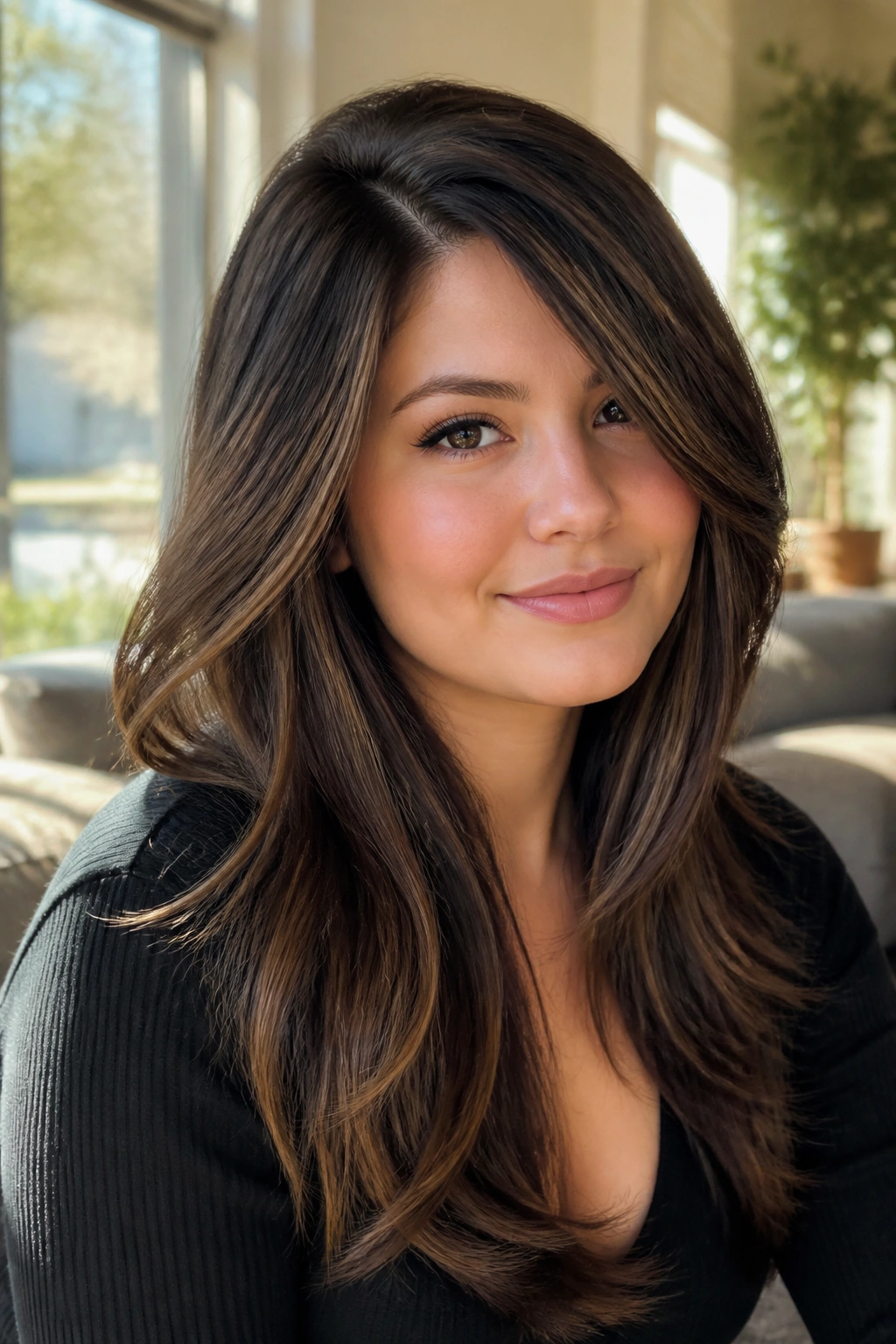
A side part does a quiet bit of heavy lifting. It shifts volume away from the center of the face and gives the eye a diagonal line to follow, which is exactly what a round face likes.
Why the Side Part Helps
The shortest face-framing pieces should usually fall below the cheekbone, not right on it. That keeps the cut from widening the face at the broadest point.
- A side part breaks up symmetry fast.
- Long layers keep the outline soft.
- Front pieces that skim the jaw feel lighter than chin-length chunks.
- Works especially well on straight and loose-wavy hair.
Ask for the first face-framing layer to start under the cheekbone. That one detail changes the whole look.
2. Curtain Bangs and Long Layers That Pull the Eye Down
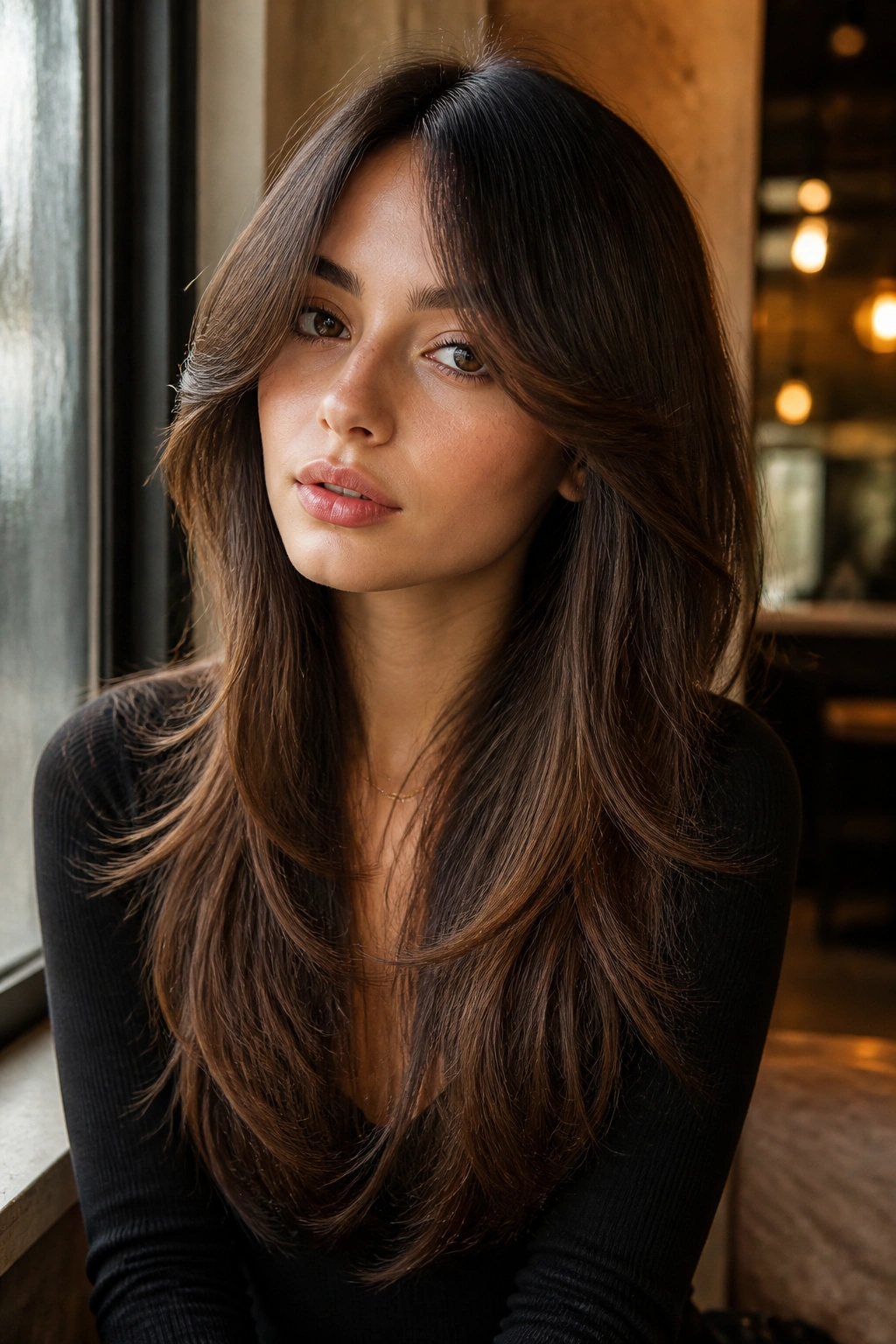
Curtain bangs can be a gift on a round face when they stay long and soft. The trick is not to cut them like a short fringe. You want pieces that open in the middle and sweep into the sides with enough length to brush the cheek.
That shape creates a narrow point at the center of the forehead and a longer line along the sides of the face. It feels gentle, not severe. And it works because the bangs blend into the layers instead of sitting on top of the haircut like a separate feature.
If your hair has a little bend in it, even better. Blow-dry the bangs away from the face with a round brush, then let the rest fall into soft layers around the collarbone. The cut looks lived-in, not stiff. That matters.
3. A Soft U-Shaped Cut That Keeps the Ends Full
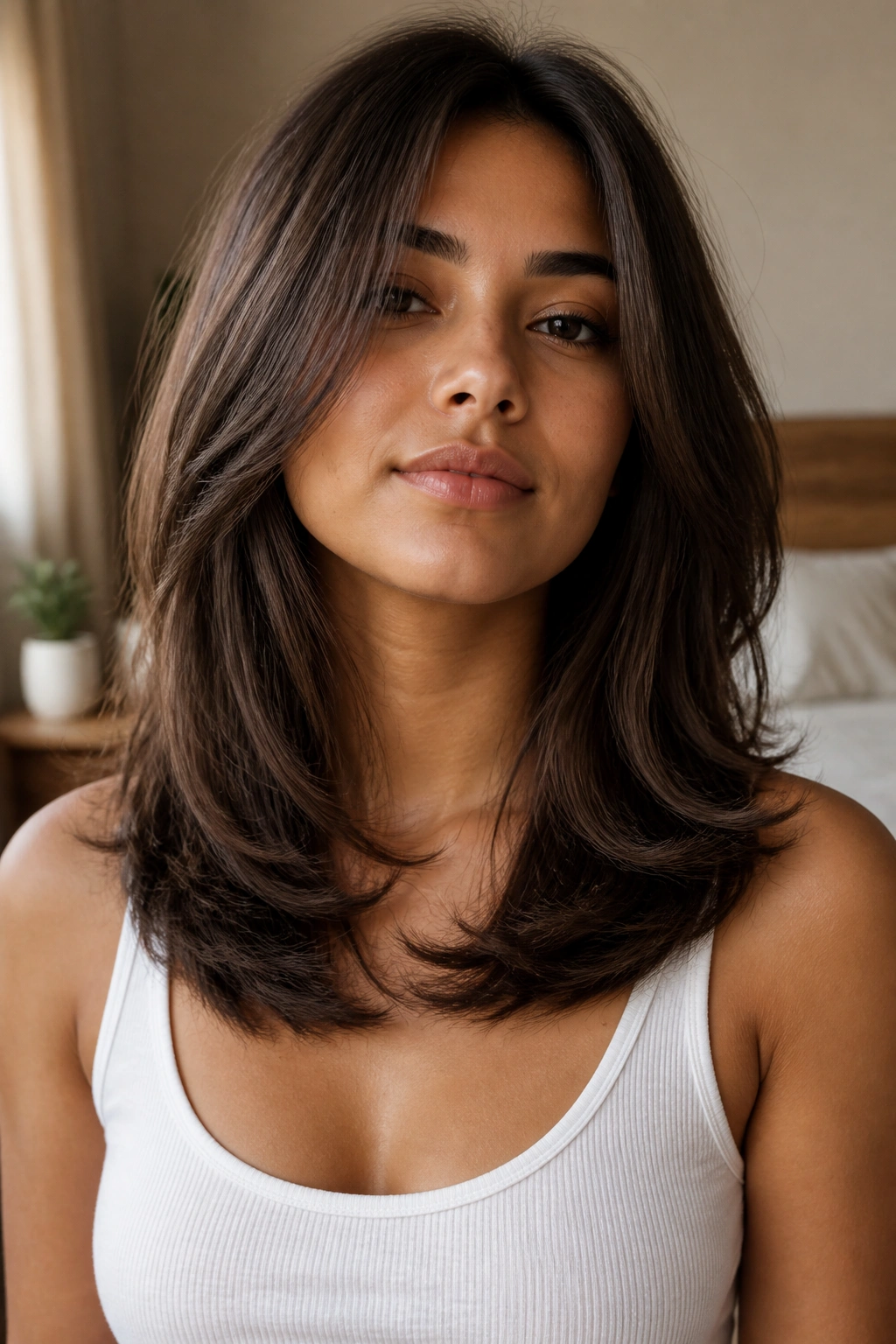
Can a U-shape help a round face look longer? Yes, and it usually does so without making the hair feel stripped down.
A U-cut leaves the middle of the back a touch longer than the sides. That gentle curve draws the eye downward and keeps the outline smooth. It’s a nice choice if you want movement, but you do not want the sharper point of a V-cut.
How to Wear It
- Keep the face-framing layers long enough to sit near the jaw or collarbone.
- Avoid a heavy fringe that stops at the cheeks.
- Use a soft bend at the ends, not a tight curl.
- Works well for medium-density hair that needs shape without drama.
If you like wearing your hair down more than up, this cut is easy to live with. It doesn’t fight your texture.
4. V-Cut Layers That Give Long Hair a Slimmer Outline
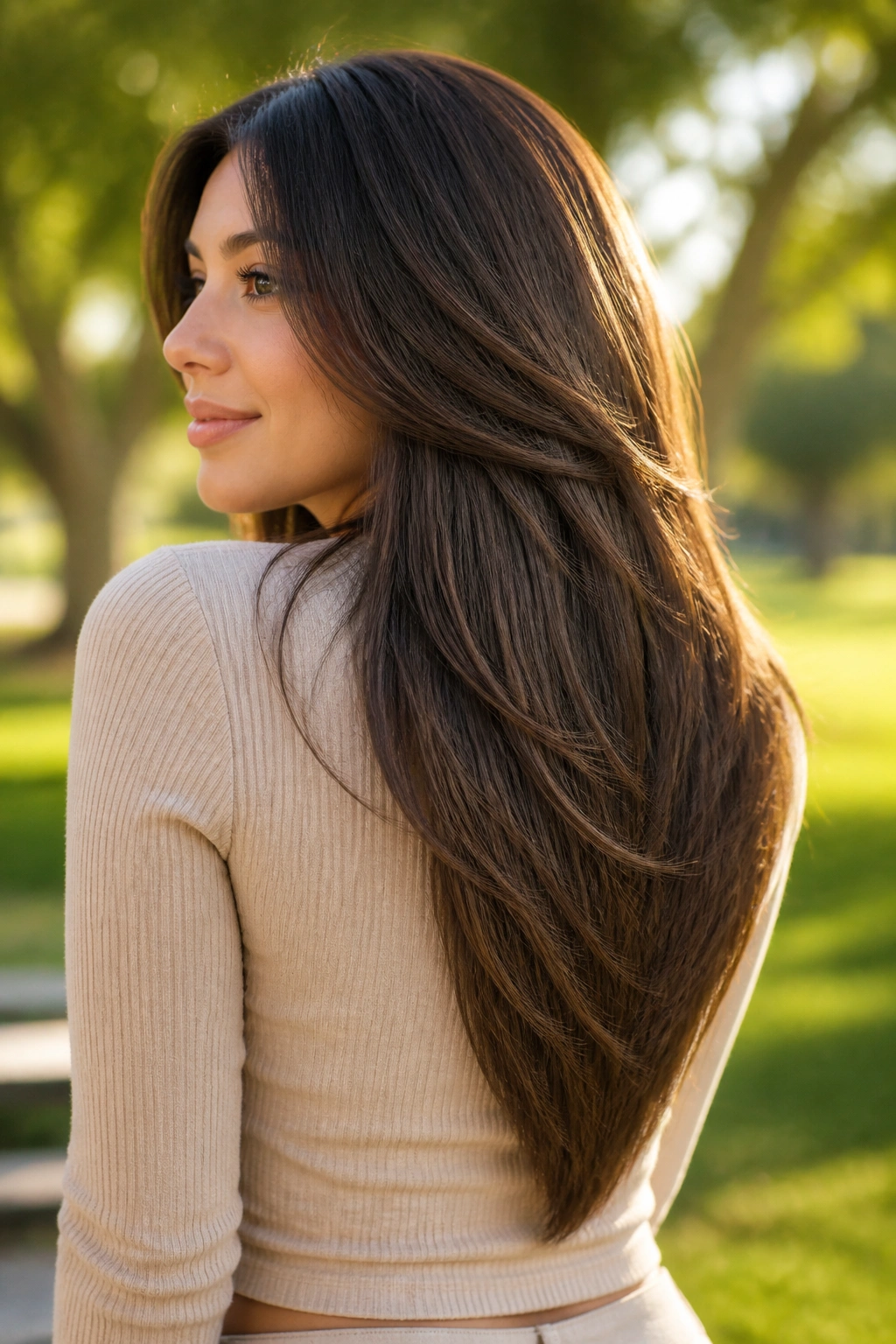
If your hair feels too heavy at the bottom, the V-cut is the one that changes the silhouette fast. The shape narrows toward the center back, so the hair reads longer and a little leaner through the ends.
This is especially useful when the hair is thick enough to puff out at the sides. A V-cut takes some of that visual bulk away without forcing the whole style into a short, choppy shape. The point is in the outline, not in the texture.
- Best for dense hair that spreads wide.
- Keeps length while removing weight.
- Looks good with waves, blowouts, and soft curls.
- Needs a careful finish so the point doesn’t look sharp or dated.
Tell your stylist you want a soft V, not a hard triangle. That small distinction keeps the cut modern.
5. Butterfly Layers That Add Lift Without Losing Length
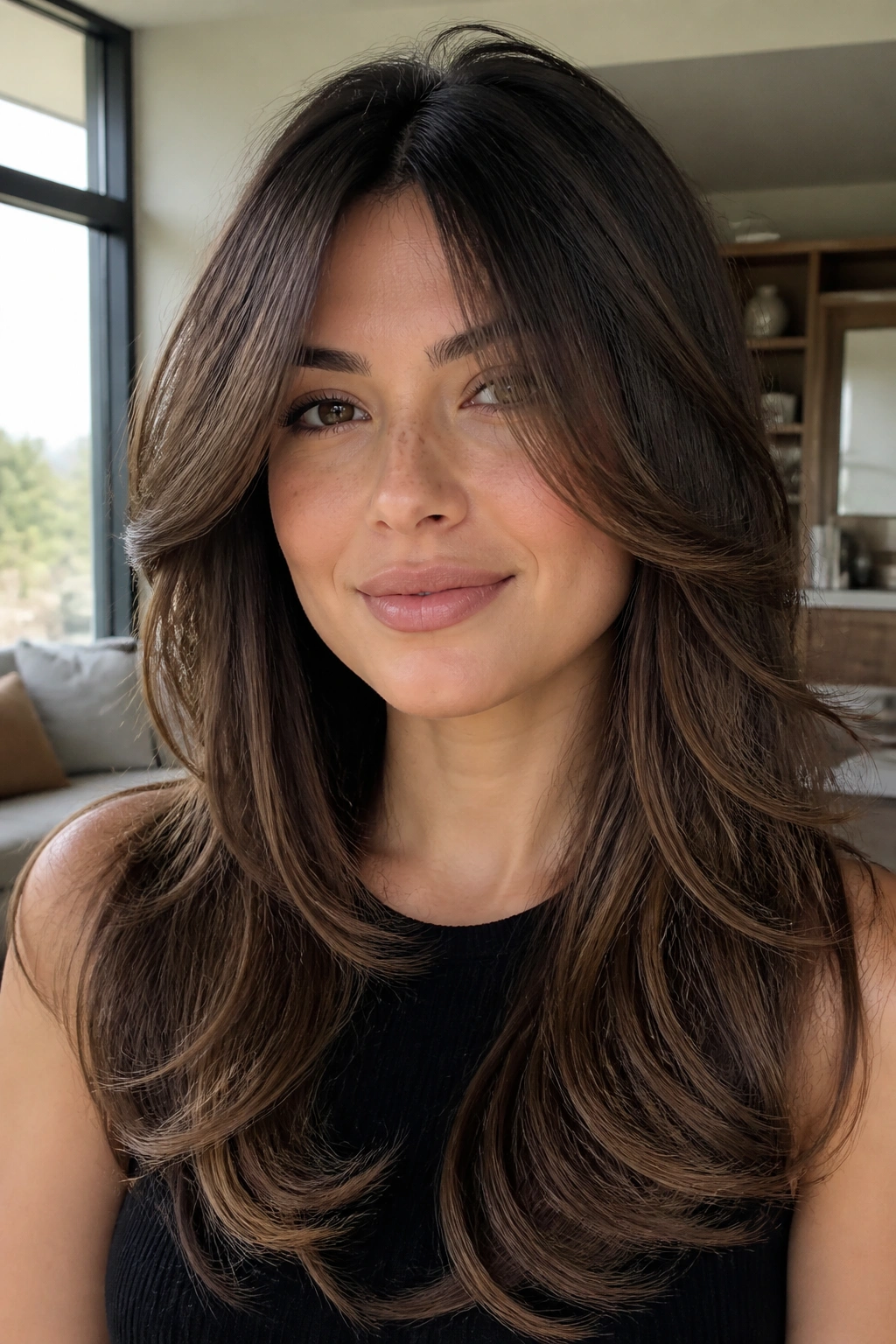
Butterfly layers work because they split the haircut into two jobs. The shorter top layers give lift around the crown and cheek area, while the long bottom length stays in place. You get movement without giving up the drama of long hair.
On a round face, that matters. A flat, one-length style can sit like a heavy frame around the cheeks. Butterfly layers open things up. They create that blown-out, floating feel near the front while the back still hangs long and clean.
The cut looks especially nice when the top pieces brush past the cheekbones and the lower length stays past the chest. That keeps the fullness lower on the face, where it helps lengthen the shape instead of widening it. It’s a polished look, but not a fussy one.
6. Chin-Starting Face-Framing Layers for a Sharper Outline
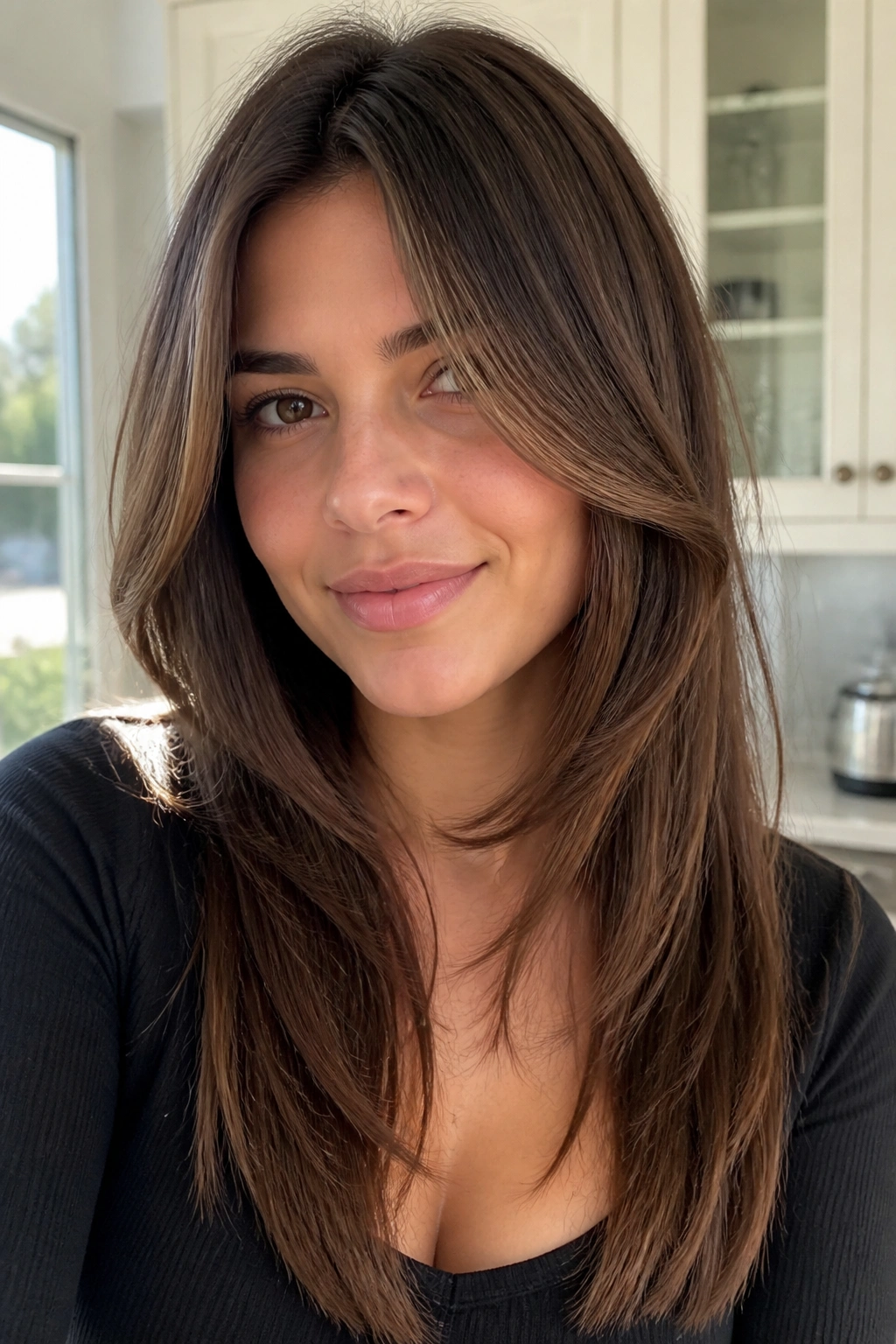
Chin-starting layers are a different beast from cheekbone layers. They give the face a firmer edge and help define the jaw without cutting the hair so high that it adds width.
This works well if your face has soft curves and you want a little structure. The front pieces fall beside the jaw, not across the cheeks, which makes the whole cut feel more vertical. If the layers start too short, the effect turns puffy fast. Nobody wants that.
I like this version most on medium to thick hair that can hold a shape. It also plays nicely with a side part or a slight off-center part. If you want the safest bet, ask for the first layer to begin just below the chin and keep the rest of the layering long and blended.
7. Long Layered Haircuts for Round Faces With a Center Part
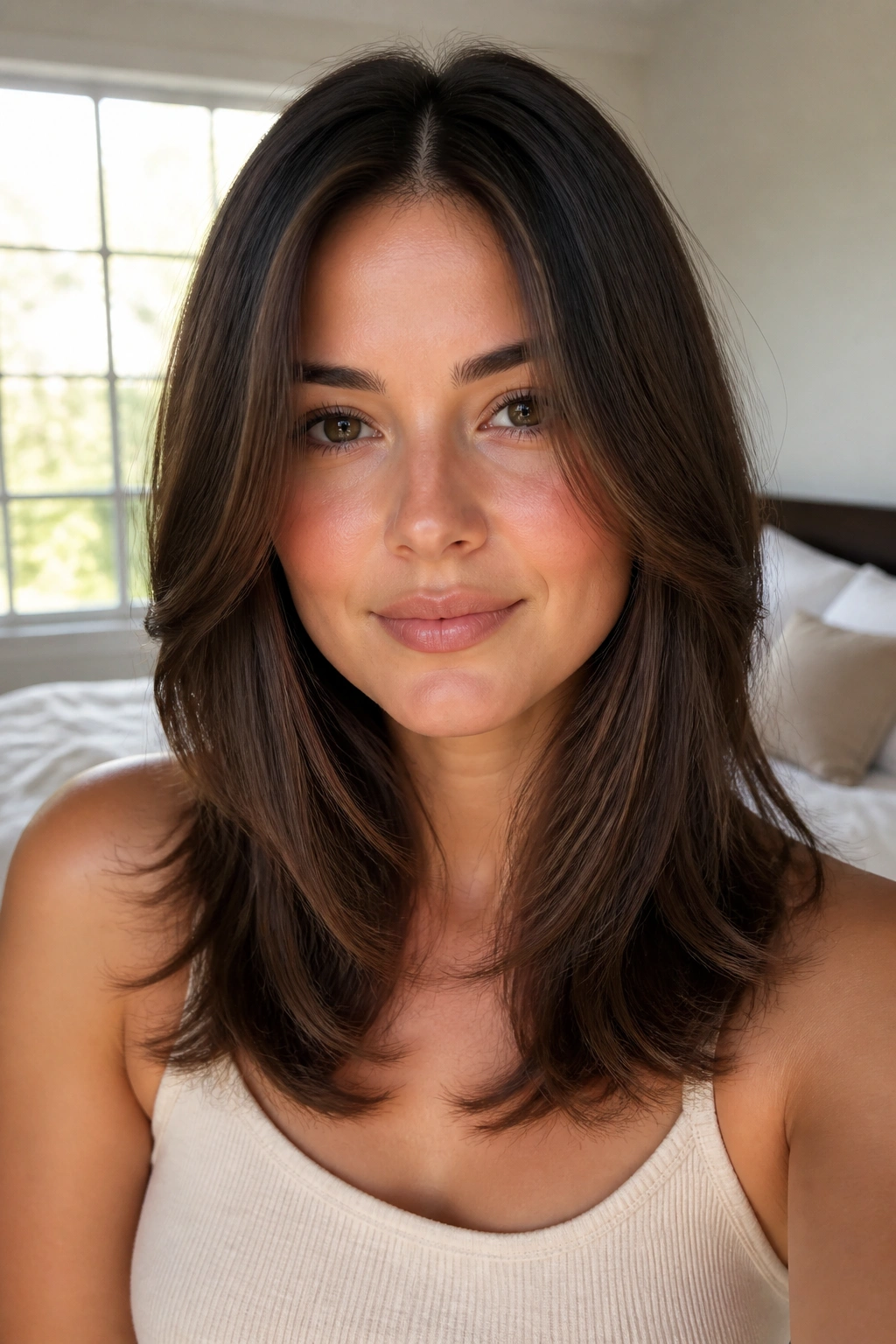
A center part can work on a round face when the layers do the shaping. The part itself is only one line; the real job is done by the front pieces, which should fall long enough to narrow the middle of the face and keep the cheeks from feeling boxed in.
Texture Notes
Straight hair needs a bit of bend at the ends so it doesn’t hang flat. Wavy hair usually does this on its own, which is why it often looks so easy with a center part.
- Keep the shortest front layer below the cheekbone.
- Let the ends sit around the collarbone or lower.
- Add soft movement through the mid-lengths, not a lot of chopped-up bits.
- A middle part with long layers looks cleanest when the crown has a little lift.
The cut should frame, not squeeze. That’s the difference between sleek and too tight.
8. Feathered Straight Layers That Move Instead of Puff
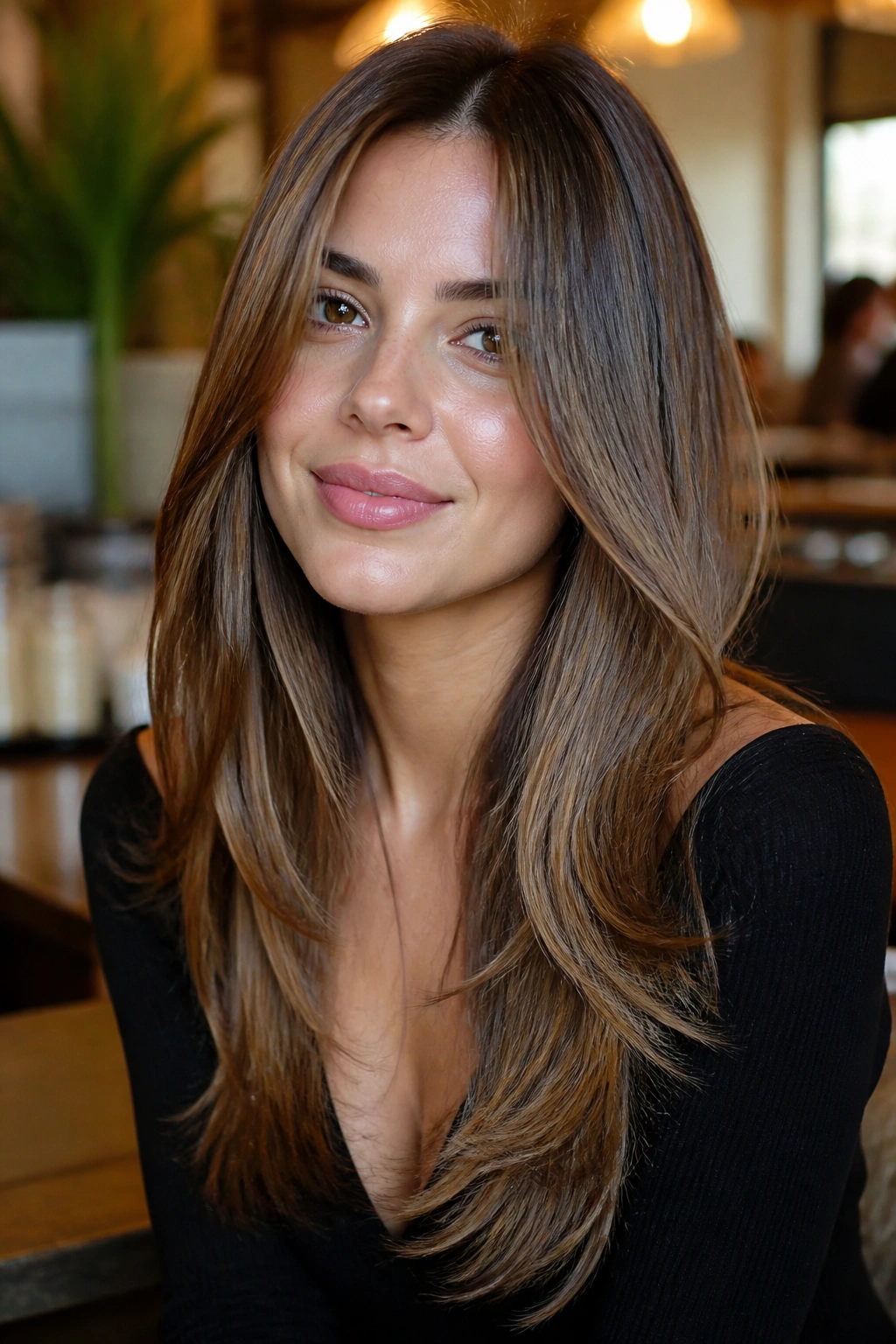
Feathered layers are one of the best fixes for straight hair that tends to sit heavy at the sides. They soften the outline without adding a bunch of visible steps, which helps a round face look longer and less boxed in.
The movement matters here. Straight hair can turn into one solid block if the layers are too blunt. Feathering breaks that up and lets the hair swing instead of sit. The ends feel lighter, but the overall length stays intact.
When I see this done well, the layers start low enough to avoid the cheeks and the blowout curves just a little away from the face. That tiny bend is doing more than people think. It keeps the hair from hugging the widest part of the face and makes the whole shape breathe.
9. Soft Shag Layers That Keep a Round Face Looking Longer
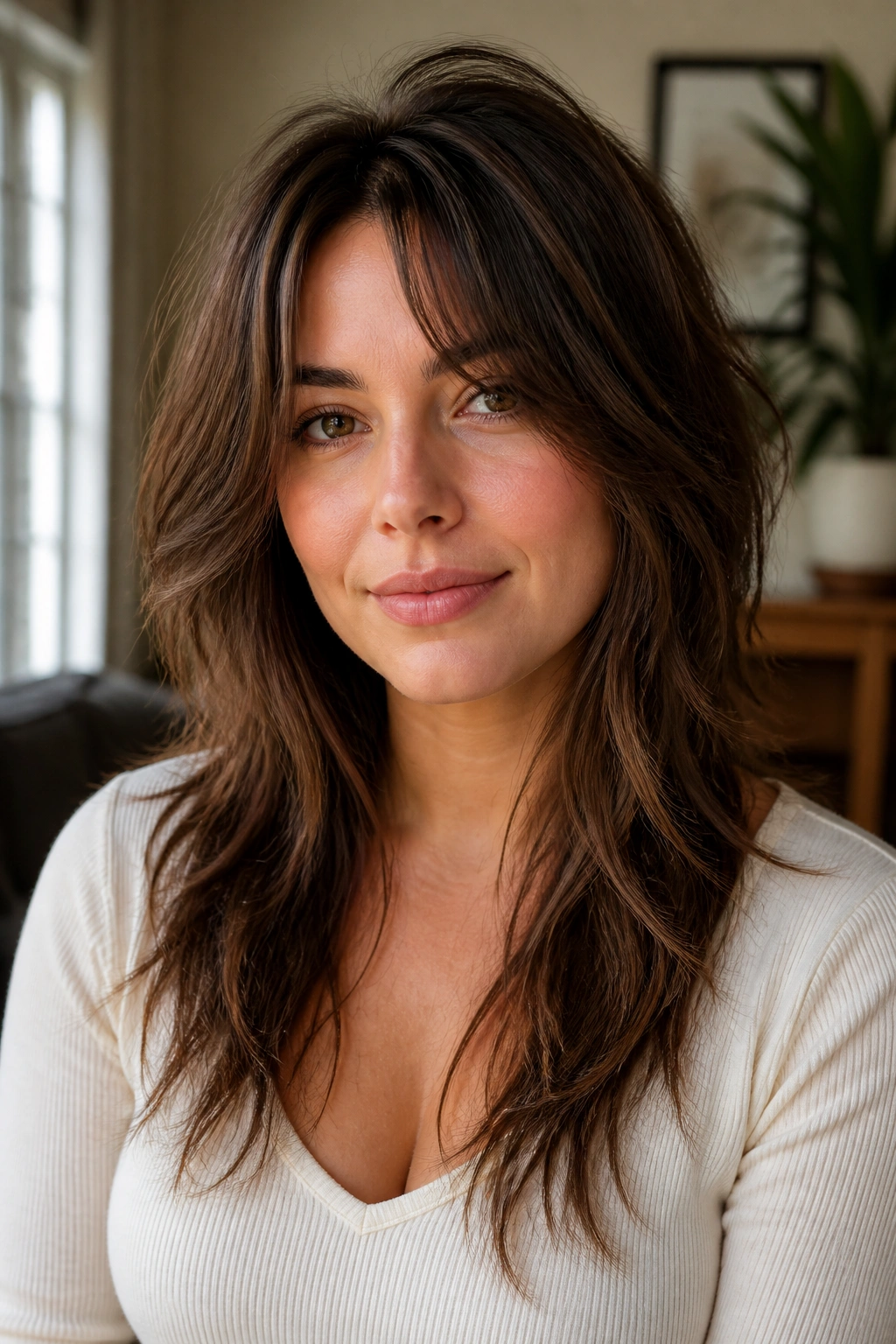
Can a shag work on a round face? Absolutely, if it stays soft. The harsh, choppy version can add width fast, but a long shag with blended layers does the opposite and builds vertical movement.
What Makes It Softer
The longest pieces should still live below the collarbone. That keeps the haircut from turning into a short, wide halo around the cheeks.
A good soft shag uses texture, not bulk. The crown gets a little lift, the sides stay airy, and the front pieces taper in a way that feels relaxed. If the layers are too short near the cheeks, the whole cut starts looking busy. Keep the shortest pieces long enough to skim past the face, and the shape stays flattering instead of loud.
10. Beachy Wavy Layers That Sit Light Around the Cheeks
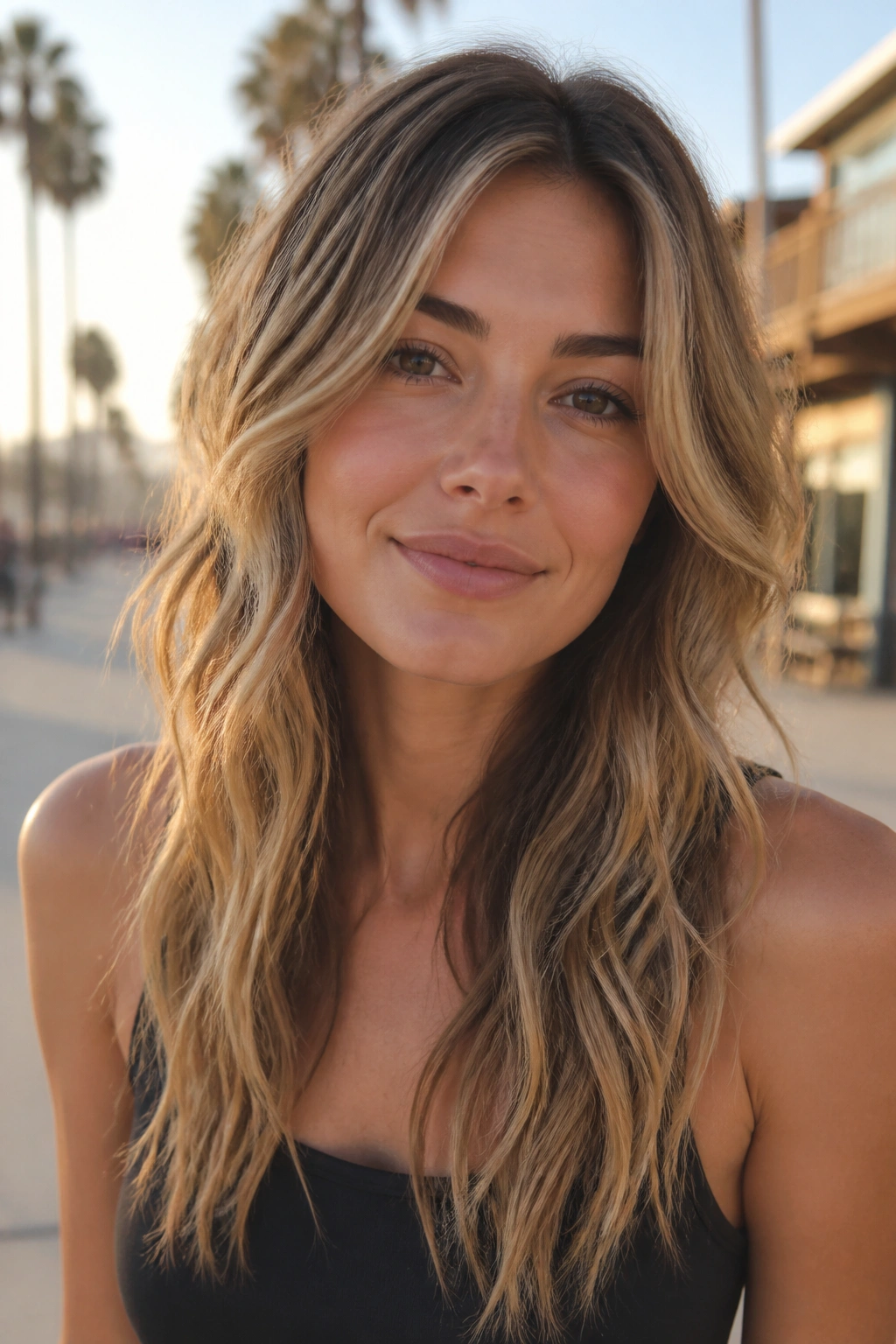
Picture hair that falls in loose bends, not tight curls, and lands just far enough off the face to show the jaw. That’s the sweet spot for beachy layers on a round shape.
The wave pattern matters because it breaks up the width naturally. A straight line across the cheeks can look broad. A soft wave does not. It creates movement, and movement gives the eye more to follow than a flat wall of hair ever will.
- Use a lightweight mousse on damp hair.
- Scrunch sections with your hands instead of over-brushing.
- Diffuse on low heat, or air-dry if your texture cooperates.
- Keep the shortest layers below the cheekbone so the wave doesn’t puff outward at the face.
The result looks casual, but the placement has to be careful.
11. Bottleneck Bangs and Long Layers for a Soft Frame
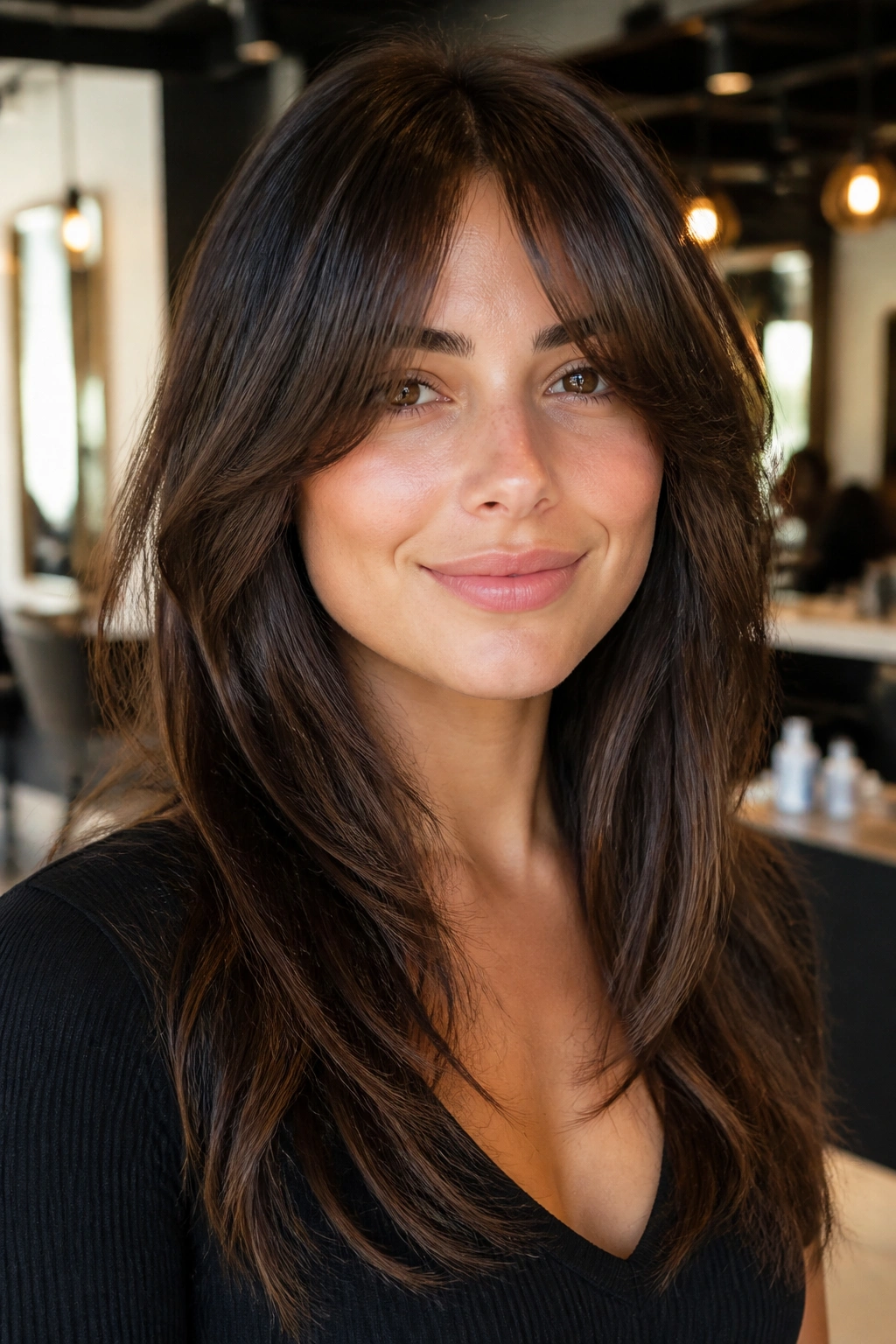
Bottleneck bangs are sneaky. They start narrow in the center, then open out toward the sides in a shape that feels softer than a straight fringe and a little more tailored than curtain bangs.
That shape suits round faces because it doesn’t carve a hard horizontal line across the forehead. Instead, it opens the center and flows into the layers beside the cheeks. The face reads longer, and the haircut doesn’t lose its softness.
The best version keeps the bangs long enough to graze the brow and the side pieces long enough to tuck into the rest of the cut. If the bangs end too high, they can draw too much attention to the upper face. Let them breathe. That’s the whole point.
12. Thick-Hair Layers That Remove Bulk Without Chopping
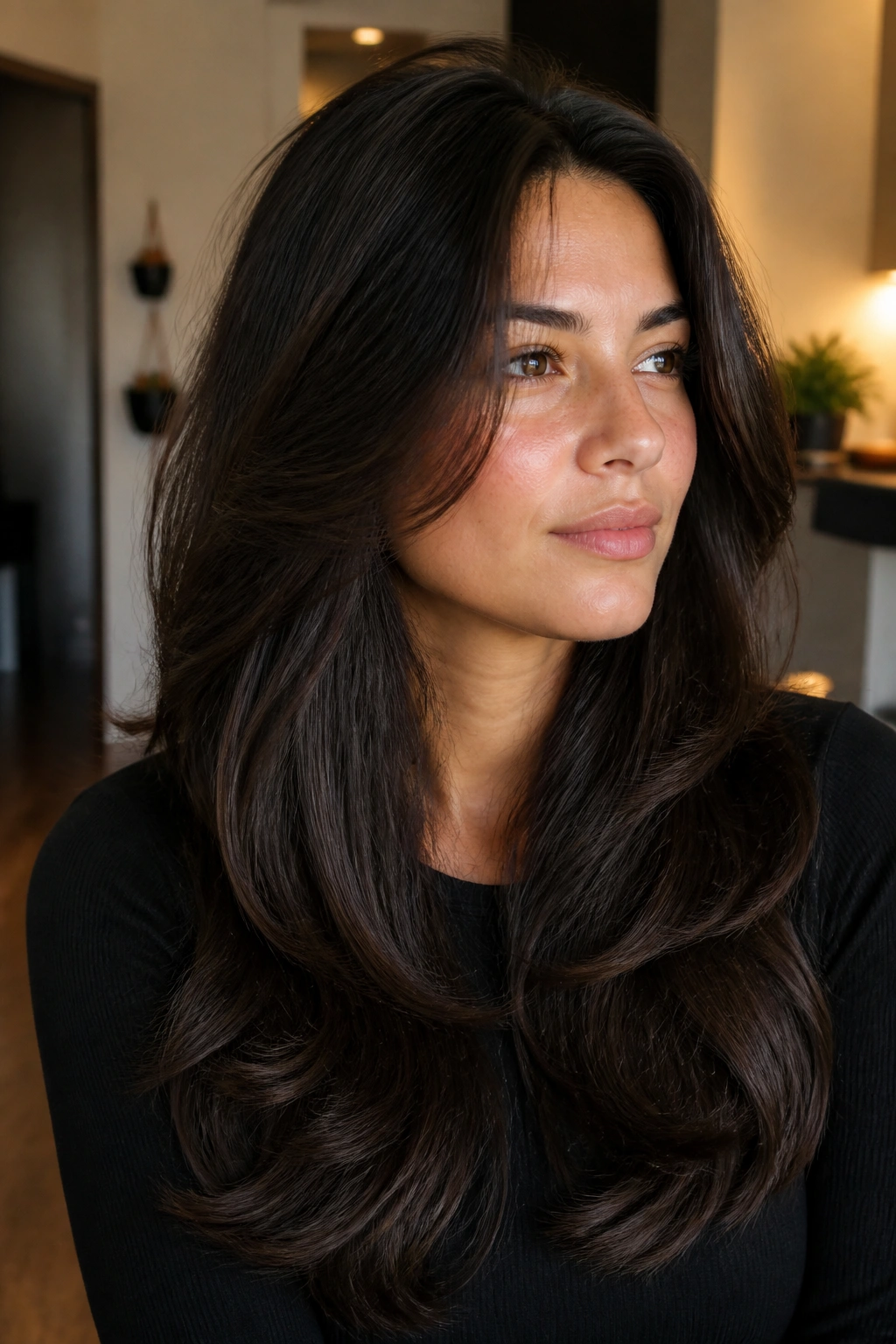
Thick hair needs a different kind of layering. You want weight removed from the inside, not so much from the ends that the hair balloons around the face.
That’s where long internal layers help. They keep the length, but they stop the haircut from feeling like one huge mass. For a round face, that matters because a heavy wall of hair can make the face look wider than it is.
This style works best when the stylist keeps the outer shape smooth and avoids too many short pieces near the cheeks. I’d take a clean, heavy-looking length with smart weight removal over a choppy, over-thinned cut any day. The first one grows out better too.
13. Fine-Hair Layers That Keep the Ends Looking Full
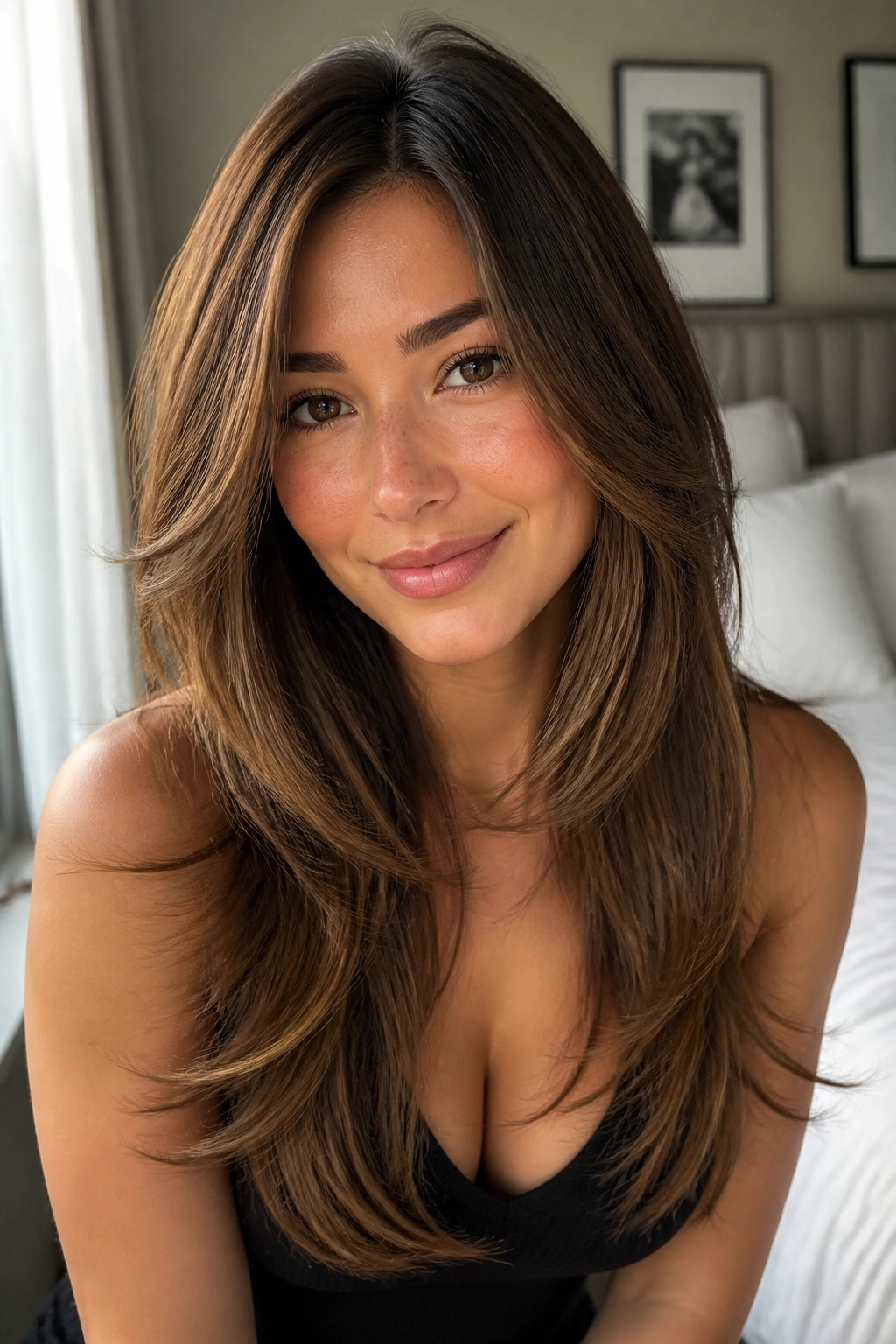
Fine hair can lose shape fast if the layers are too aggressive. So the trick is restraint.
Stylist Notes
Ask for long layers that begin low and stay blended. You want movement, not see-through ends.
- Keep the shortest layer well below the jaw.
- Leave enough weight at the bottom to avoid stringiness.
- Use a round brush or velcro rollers at the crown for lift.
- Skip razor work if your hair already feels fragile.
A small amount of layering makes fine hair move. Too much makes it vanish. That balance is the whole haircut.
14. Curly Long Layers That Let the Shape Breathe
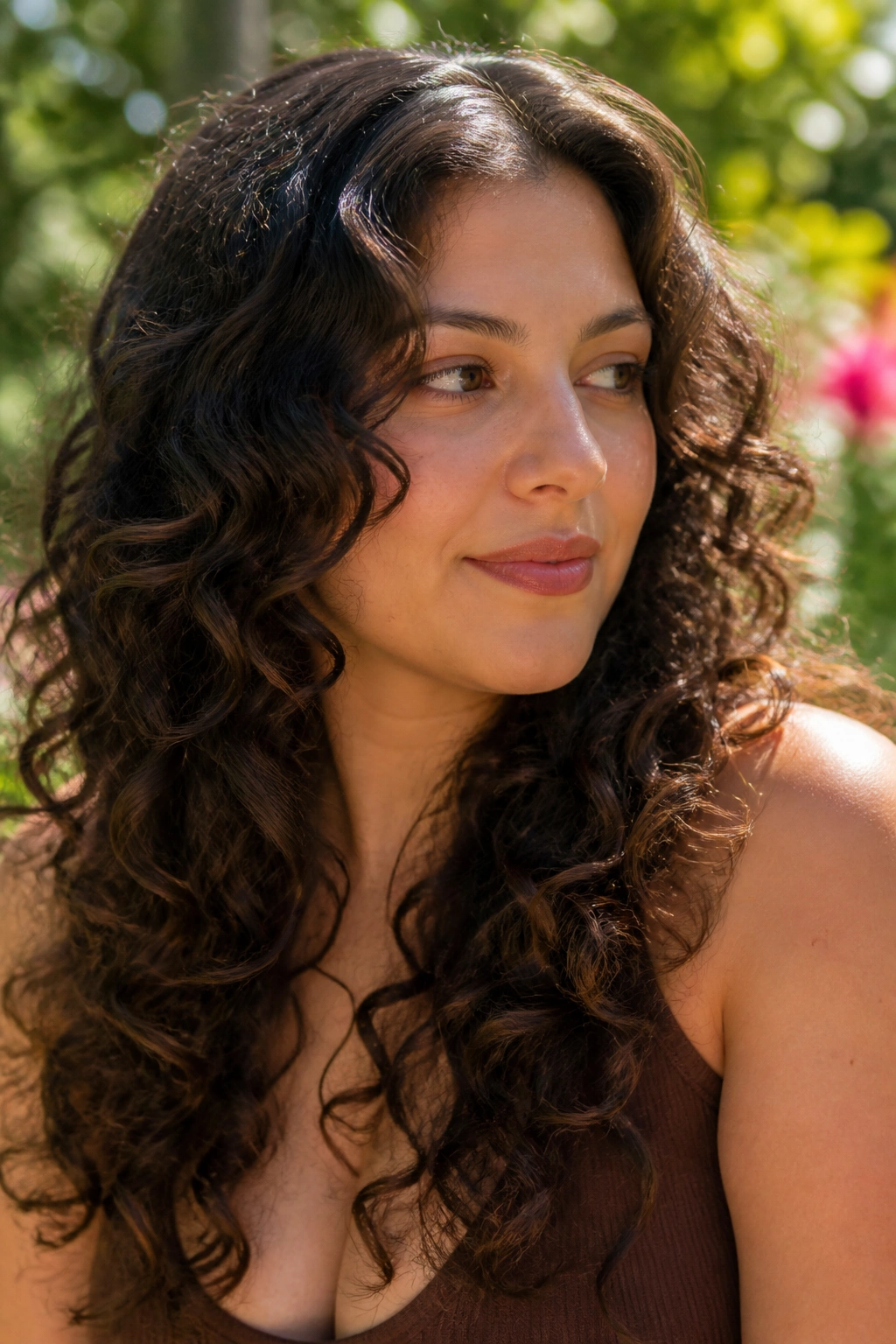
Curly hair on a round face should not be forced into one flat outline. The curls need room to stack and spring, which is why long layers can look so much better than a blunt length.
The shape works best when the shortest curl groups are placed low enough to avoid puffing out at the cheeks. A dry cut, or at least a curl-aware cut, helps because curls shrink once they dry. That shrinkage can change the whole shape if it’s ignored.
I like long curly layers that keep the back full and let the front pieces curve away from the face. It keeps the curls defined without making the haircut feel boxy. If the hair is dense, the layers should be spread through the interior, not chopped on the surface.
15. Flip-Out Collarbone Layers That Create Easy Movement

Why do flip-out ends work so well on round faces? Because they turn the eye outward near the shoulders instead of inward toward the cheeks.
The flip should happen low, around the collarbone, not right under the jaw. That keeps the style open and light without adding width at the face. It’s a very forgiving shape if you like a little movement but do not want curls or waves every day.
How to Ask for It
- Keep the front layers long and softly connected.
- Ask for ends that can turn outward with a blow-dry brush.
- Avoid short face-framing pieces that stop at the cheeks.
- Finish with a light bend, not a stiff flip.
It’s a small styling detail, but it changes the whole read of the haircut.
16. Razor-Cut Layers That Feel Airy and Light
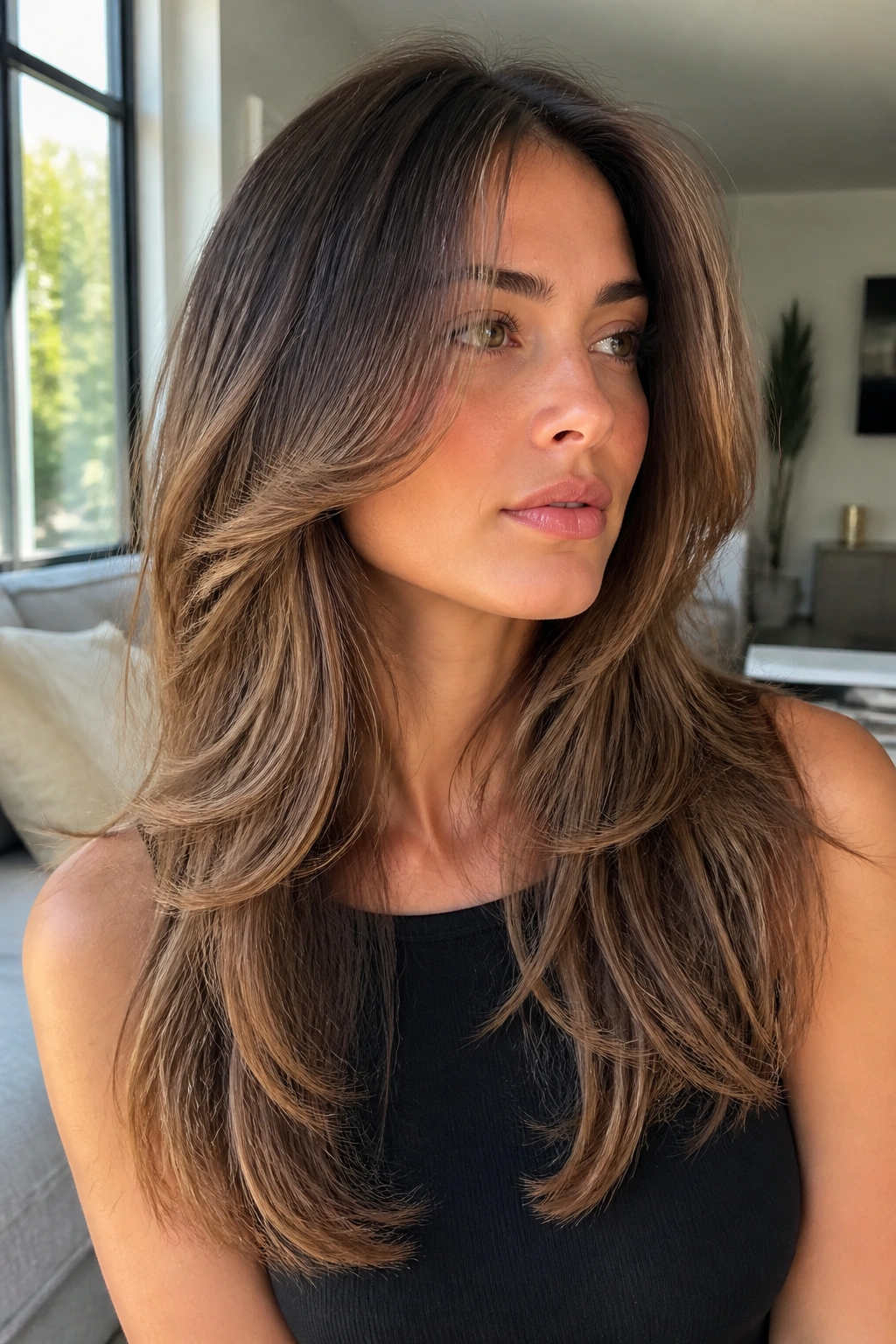
A razor cut can give long hair a soft, wispy edge that takes weight out without making the cut look blocky. On a round face, that airiness helps because the hair doesn’t sit as one dense shape around the cheeks.
Still, there’s a catch. Razor work is not the friend of every hair type. Very fine or fragile hair can fray if it’s overdone, and coarse hair can puff if the ends are too torn up. The cut needs a light hand.
- Works well on straight to gently wavy hair.
- Best when the layers stay long and blended.
- Needs careful styling with a smoothing cream or light oil.
- Can look messy fast if the hair is overly dry.
If you want this shape, ask for softness, not shredded ends. That word matters.
17. Money Piece Layers That Brighten the Front
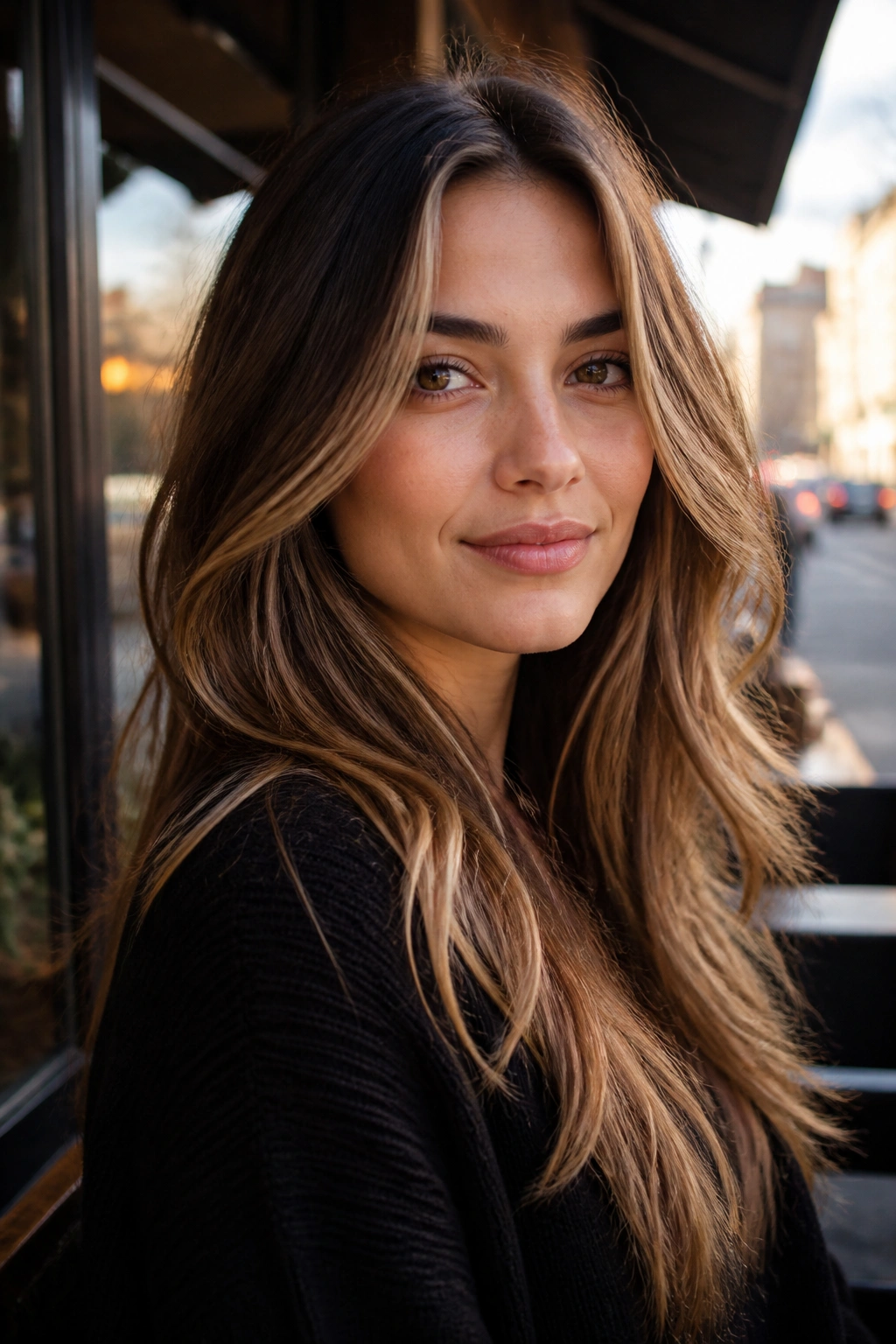
Front highlights get a lot of attention, but on a round face the cut around them matters just as much. A bright face frame looks sharper when it’s paired with long layers that guide the eye downward.
The key is keeping the lighter pieces narrow and well blended. If the front sections are too wide or too short, they can widen the face instead of lengthening it. A thin strip near the front, feathered into the rest of the haircut, works much better.
I like this look on hair that already has some wave or bend. The contrast between the brighter front and the moving layers makes the face read more vertical. It’s not just about color. It’s about where the color sits.
18. Wolf-Lite Layers for a Bit of Edge Without Too Much Width
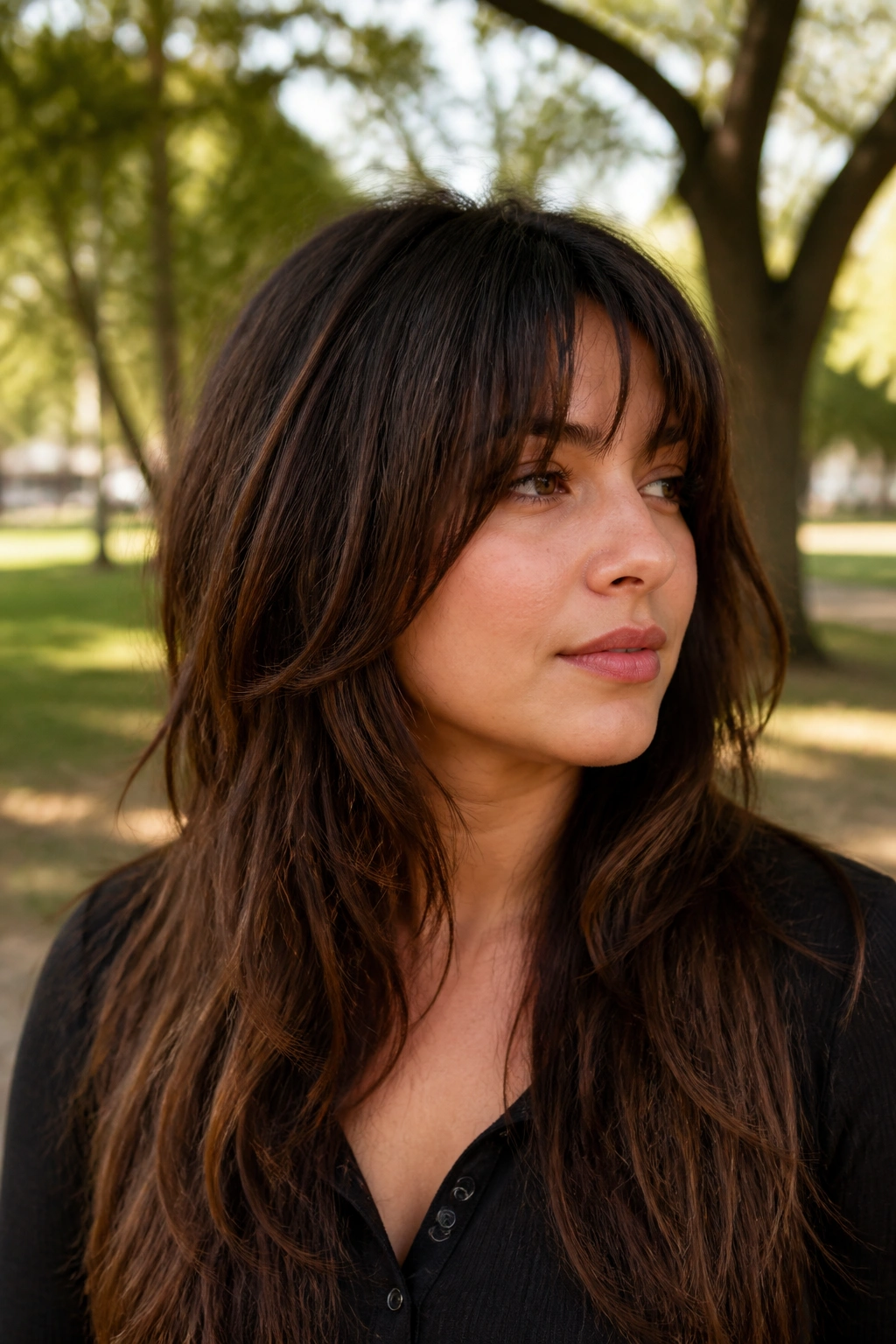
A full wolf cut can be a lot on a round face. Too much crown volume and too much side width can make the head shape read broader than you want. A wolf-lite version keeps the attitude and trims away the excess.
That means long length stays in place, the top gets texture, and the sides are softened instead of puffed out. It feels less like a mullet and more like a long cut with a bit of bite. Much better, in my view.
This version works for people who want movement and a little mess but still like their hair to look long when it’s down. Ask for disconnected layers that stay soft through the front. If the shape starts getting boxy, it’s too much.
19. Long Layered Haircuts for Round Faces With a Deep Side Sweep
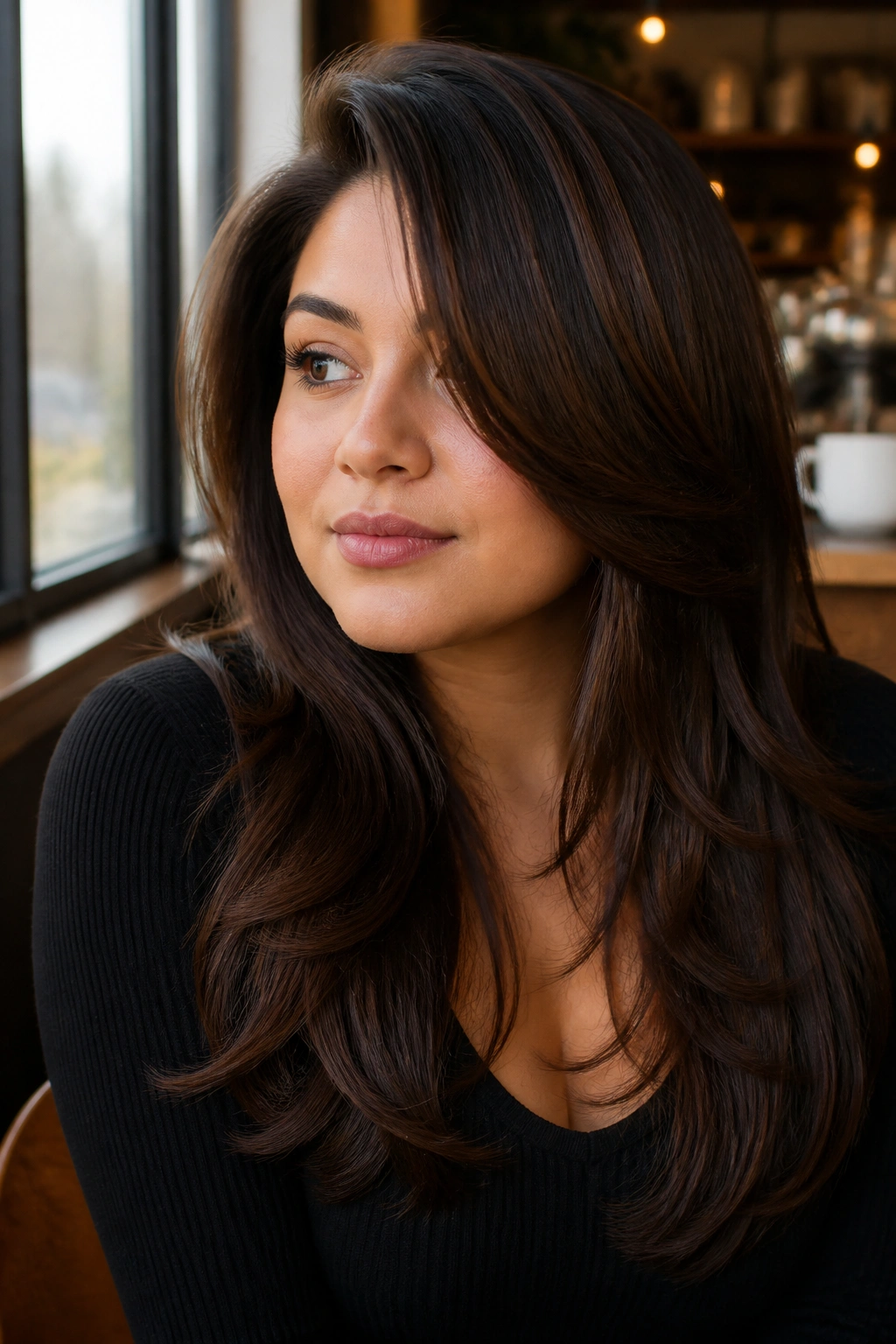
A deep side sweep can do for a round face what a strong line of makeup does for the cheekbones: it changes the direction of the eye. The sweep creates a longer diagonal across the forehead and opens the opposite side of the face.
Where the Sweep Should Start
Keep the shortest section long enough to brush the temple or cheekbone. That keeps the shape soft.
- The part should sit well off center.
- The front sweep works best when it connects into shoulder or collarbone layers.
- Use a round brush to keep the front piece curved, not flat.
- Good for hair that needs a little drama without short bangs.
If your hair always falls forward, this cut helps control that. It gives the front a job to do.
20. Invisible Layers for Sleek, Straight Hair
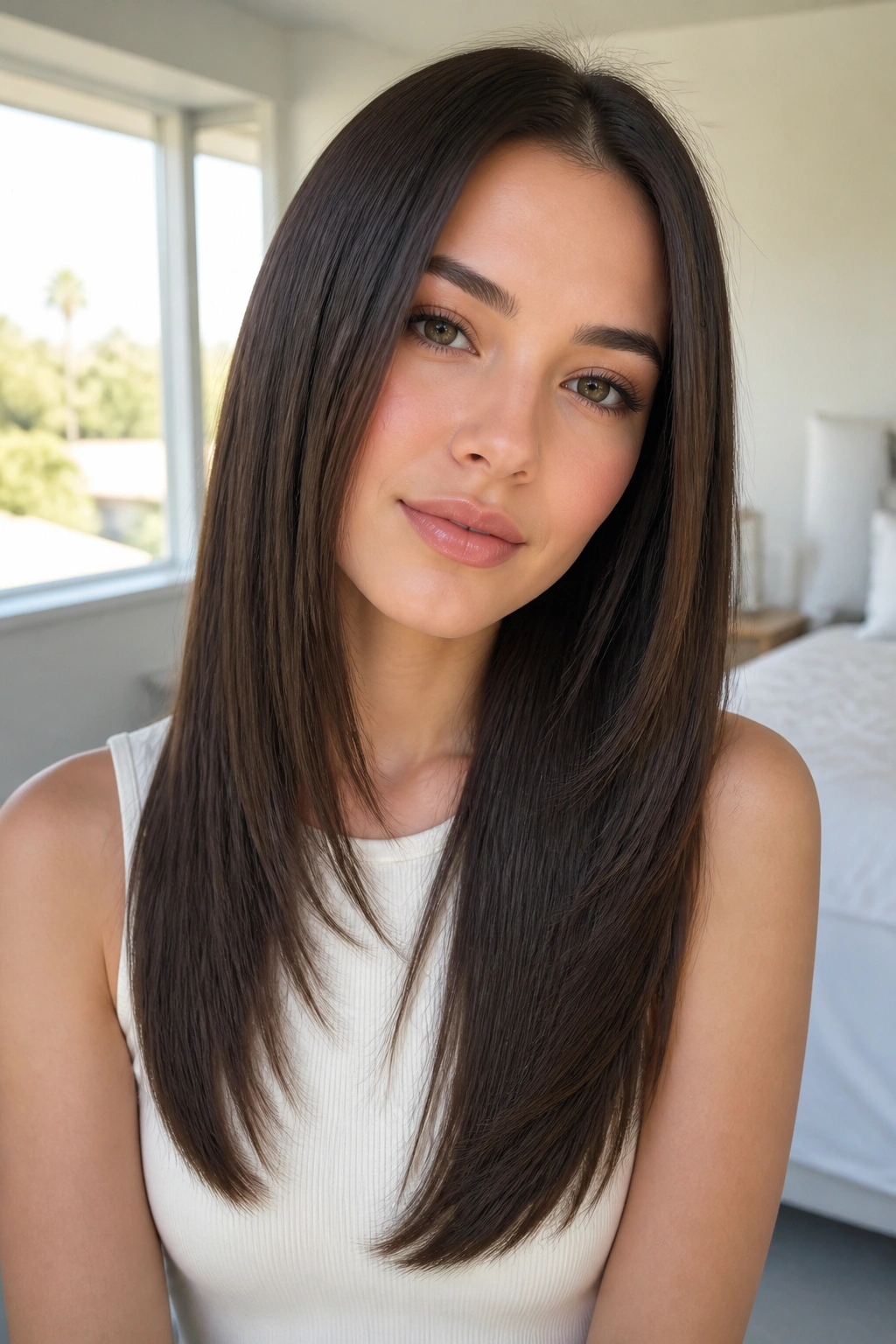
Invisible layers are the quiet answer for people who want movement without obvious steps. On sleek straight hair, they keep the outline smooth while removing enough weight to stop the style from hanging too heavily around the face.
That’s useful on a round face because the hair can look polished without adding width. The surface stays calm. The movement lives underneath. You get a softer swing at the ends, and the cut still reads clean from the front.
This style is especially good if you like to air-dry or wear your hair straight most of the time. The layers are there, but they do not shout. That subtlety is what makes the face look longer without making the haircut look busy.
21. Crown-Lift Layers That Add Height at the Top
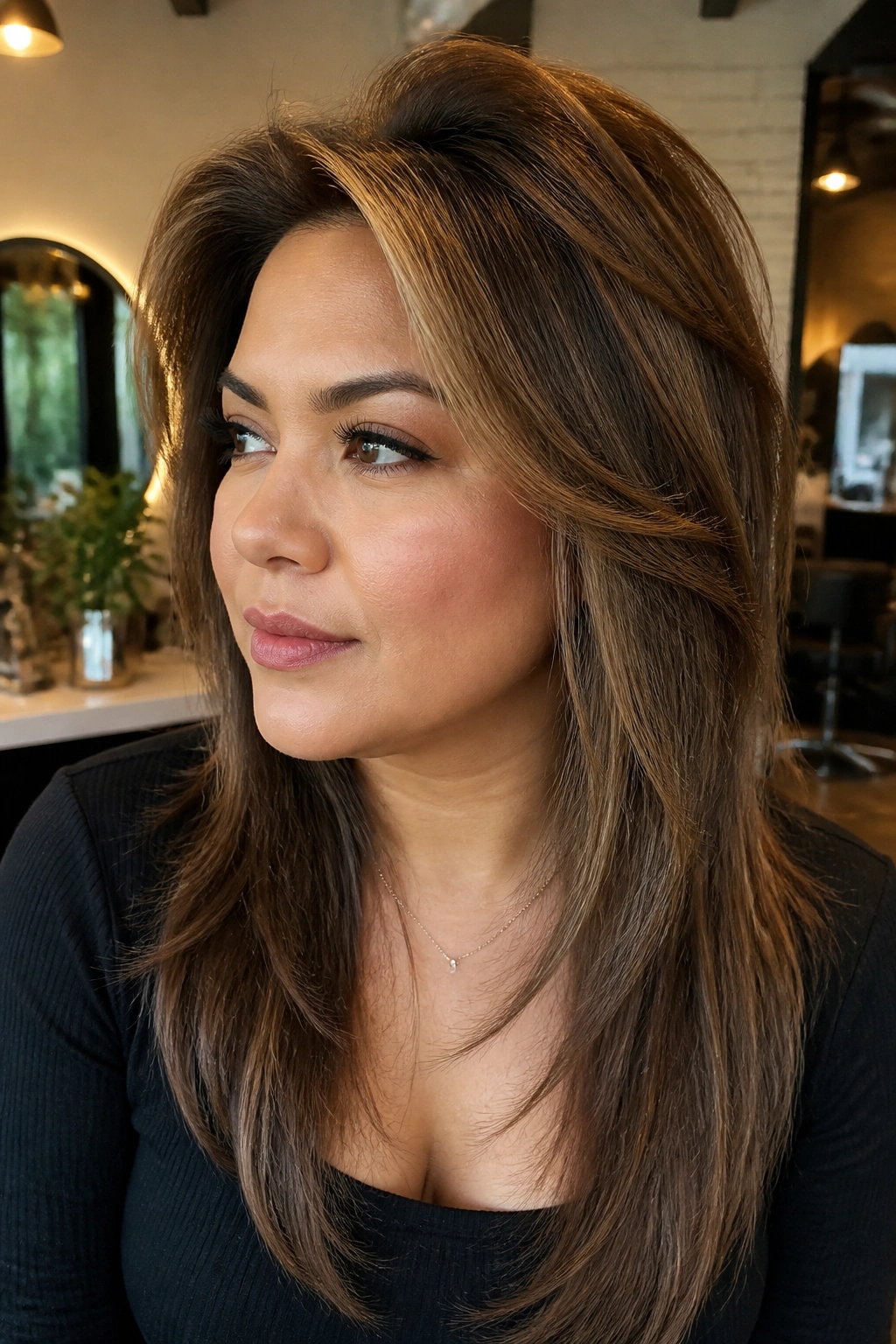
Can a little extra height at the crown help a round face? Yes, as long as the sides stay controlled.
The reason is simple: volume on top stretches the silhouette upward. Volume at the cheeks does the opposite. A crown-lift cut gives the top some air while keeping the lower half of the hair long and smooth.
How to Build the Height
A good cut is only half the job. The styling matters too.
- Blow-dry the roots upward with a round brush.
- Use clips at the crown while the hair cools.
- Keep the side layers light and long.
- Avoid piling too much width near the temples.
This is a smart option if your hair tends to lie flat on top. A little lift changes the whole face shape.
22. Rounded Blowout Layers That Bounce at the Ends
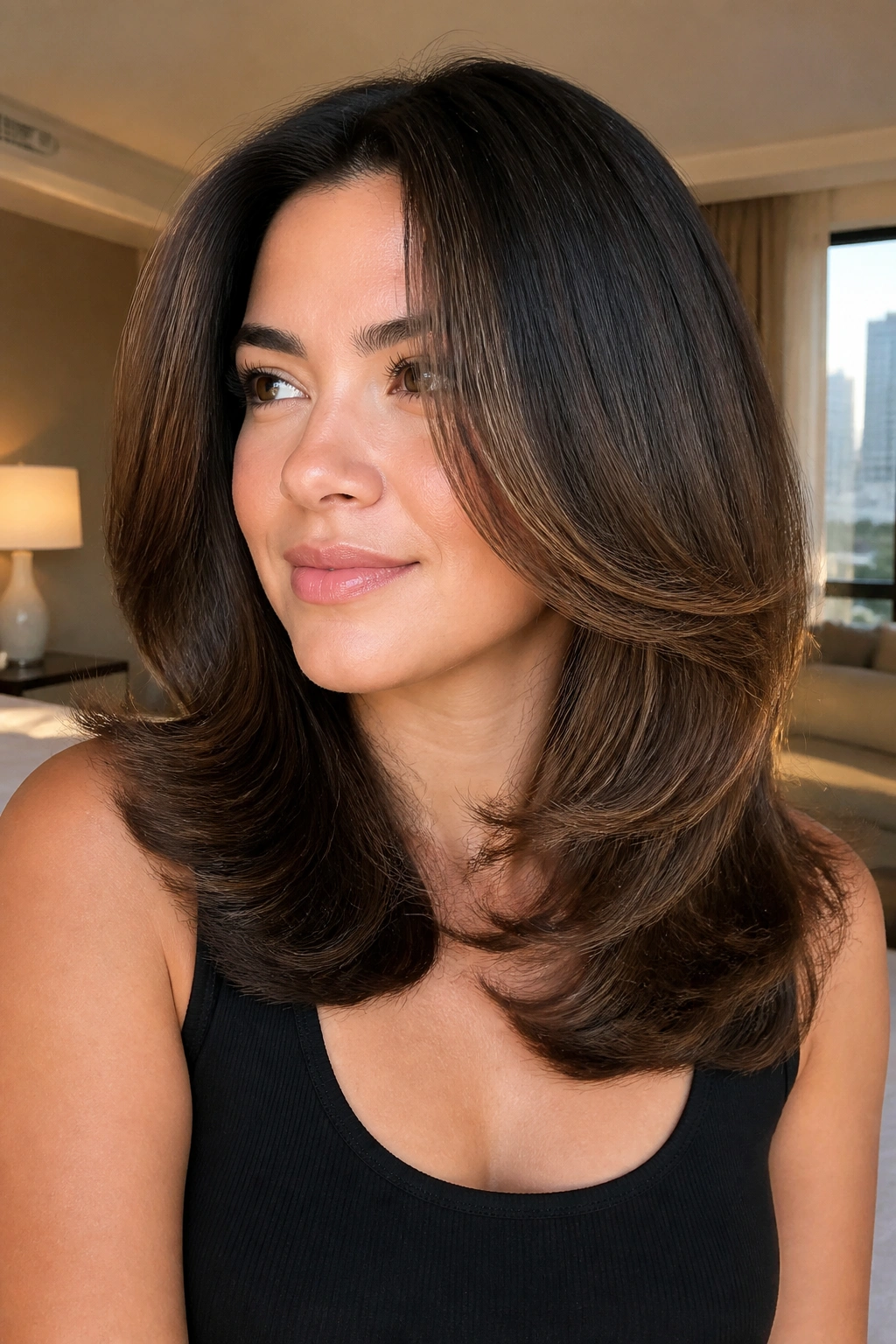
There’s a reason a big, rounded blowout flatters so many round faces: it doesn’t sit in one hard line. The hair bends outward, then tucks back in, which keeps the shape soft and mobile.
A 1½-inch or 2-inch round brush usually gives enough bend without making the ends too curly. You want the layers to curve away from the cheeks and then fall past the jaw. That way the volume lives lower, where it helps the cut look long.
The cut itself should support that finish. Ask for long layers that maintain fullness at the bottom and a light face frame that doesn’t stop at the widest part of the face. If the layers are too short, the blowout can turn puffy. If they’re too long, the shape can go flat. The middle ground is where it looks expensive without trying.
23. Mixed-Length Face Framing That Softens a Wide Jaw
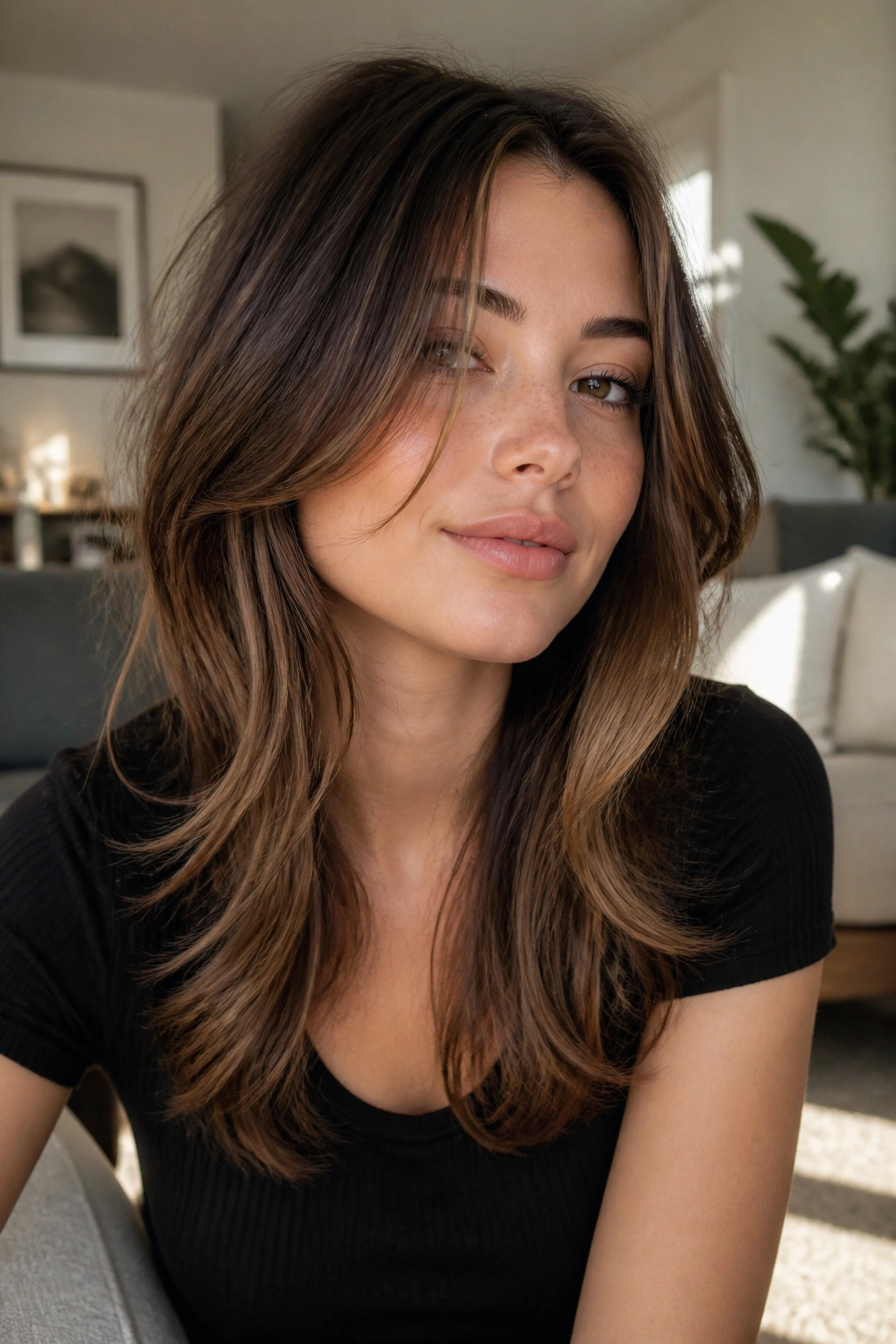
Mixed-length face framing is one of those ideas that sounds fussy until you see it done well. The front has more than one landing point: a piece near the cheekbone, another at the jaw, and maybe a longer one grazing the collarbone.
That variety helps because the face doesn’t get trapped under one single line. The eye moves through the layers instead of stopping at one width point. On a round face with a softer jaw, that can make the haircut feel more sculpted without looking sharp.
It also works nicely if you wear your hair half-up or fully pinned back sometimes. Those front pieces still do the framing even when the rest of the hair is up. That’s a practical perk people forget about until they need it.
24. Waist-Length Layers With a Gentle Taper
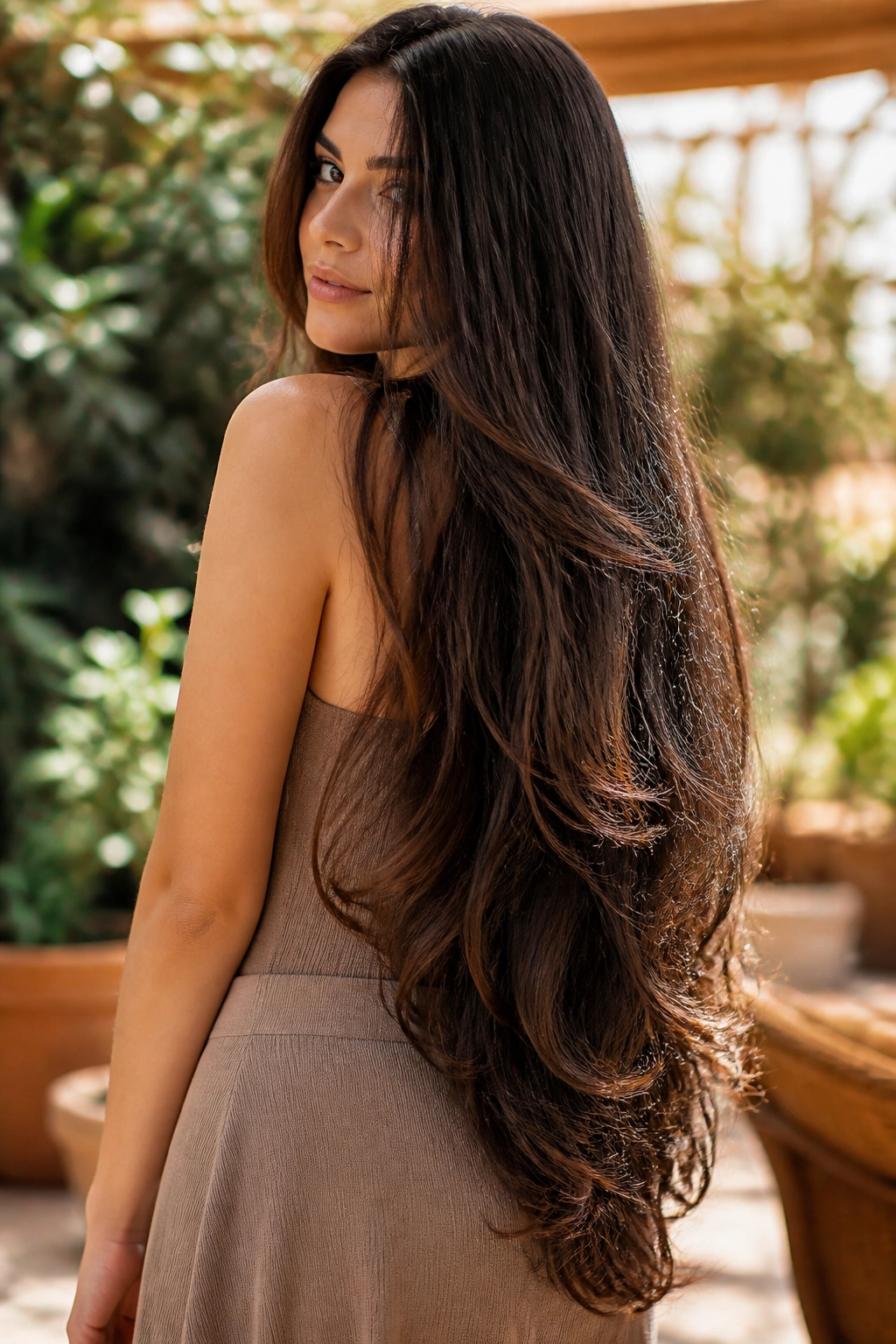
Very long hair needs control, not just length. If the bottom is too heavy and the sides are too full, the hair can drag the face downward in an awkward way. A gentle taper keeps the length but trims the bulk.
This version is not about a dramatic change in outline. It’s about small shifts that make the whole style feel lighter. The front should still start low, and the longest pieces can stay waist-length if that’s the look you want. The taper just stops the cut from feeling like one huge curtain.
I’d choose this over a heavily layered long cut if you like wearing your hair straight, braided, or in loose bends. It keeps options open and grows out cleanly. That last part matters more than people admit.
25. Low-Maintenance Air-Dried Layers That Grow Out Softly
Air-dried layers can look effortless when the cut is planned with a round face in mind. The goal is to let the texture fall where it wants without the cheek area becoming the widest point of the whole shape.
How to Keep It Soft
The shortest layers should be long enough to avoid springing right at the cheeks. A little length goes a long way here.
- Use long, blended layers instead of sharp steps.
- Keep the front pieces below the cheekbone.
- Let the natural wave or bend do the work.
- Finish with a small amount of cream on the ends, not the roots.
This is the version I’d hand to someone who wants low fuss and still wants shape. It grows out kindly, and it does not fall apart the minute you skip a styling day. That is a rare good thing with layered hair.
