



Fine hair has a way of exposing a bad haircut fast. A blunt line can fall flat, too many short layers can leave the ends looking thin, and anything overly heavy can make the whole shape slump by lunchtime.
That’s why wispy layered haircuts for fine hair work so well when they’re done with a light hand. They keep movement near the face, keep the perimeter from looking stringy, and create the illusion of more hair without chopping away the density you actually need. The trick is not “more layers.” It’s smarter layers.
A good stylist reads the hair the way a tailor reads cloth. Where does it collapse? Where does it puff? Does it need lift at the crown, softness around the cheekbones, or just a little broken-up edge so the cut doesn’t sit like a helmet? Those details matter more than any trend photo ever will.
1. Collarbone Lob With Feathered Ends
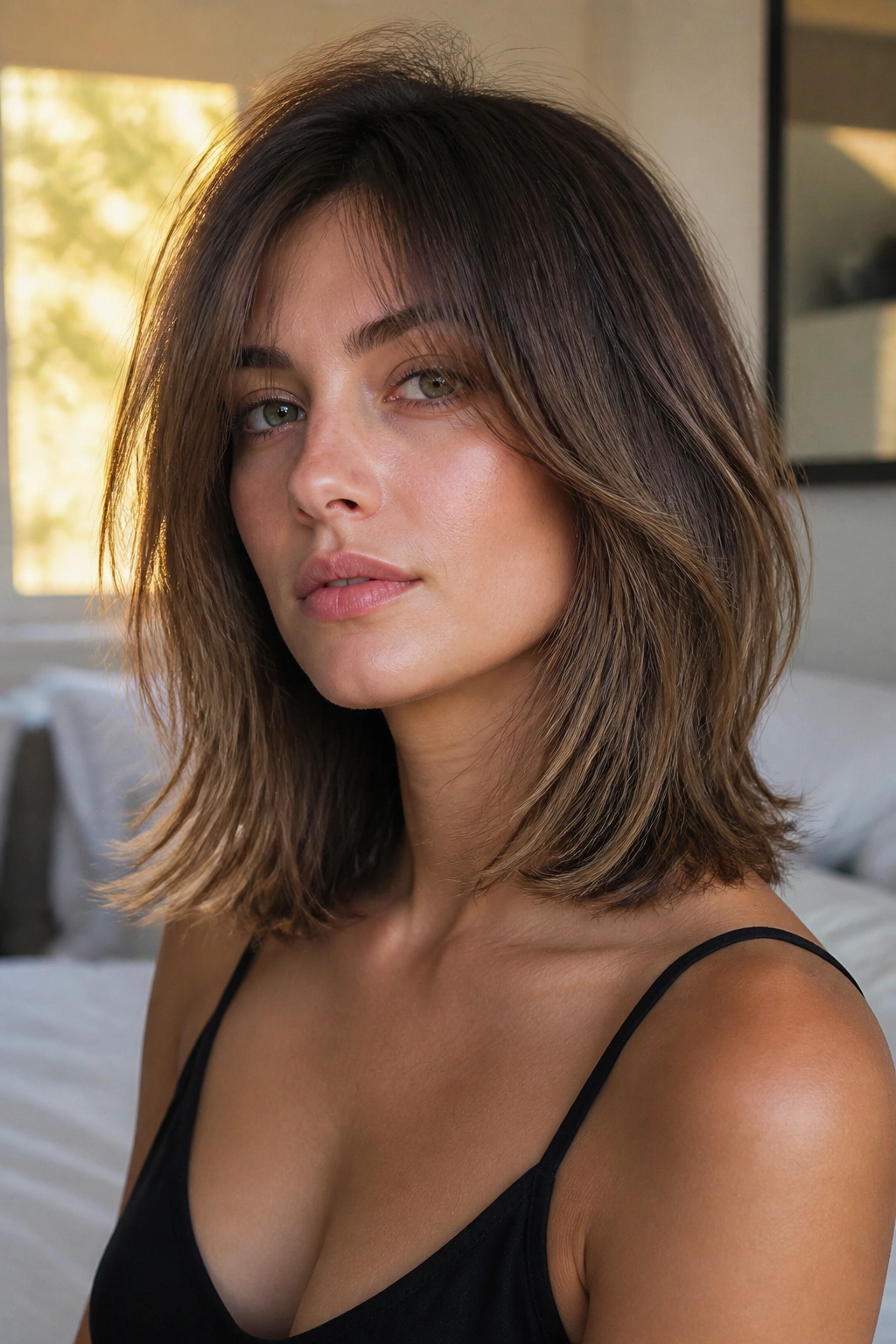
The collarbone lob is one of those cuts that keeps showing up for a reason: it gives fine hair a place to land without dragging it down. When the ends are feathered instead of carved into a blunt block, the whole shape moves a little more freely and the hair doesn’t look boxed in.
Why it works
Feathered ends soften the line at the bottom, which helps hair feel lighter without looking wispy in a bad way. The length still hits around the collarbone, so you keep enough weight to make the cut look full. That balance matters. Too short, and fine hair can expose every uneven bit. Too long, and it starts to hang.
Ask for soft, point-cut ends and a few face-framing pieces that start around the chin or just below. If your hair is straight, this cut is especially useful because it builds shape without relying on curls or waves to do the work.
- Best for hair that falls flat at the shoulders
- Easy to style with a round brush or a medium-barrel curling iron
- Looks polished even when air-dried with a little mousse
One smart move: keep the layers subtle at the back so the ends still read as full.
2. Butterfly Layers With Soft Face-Framing
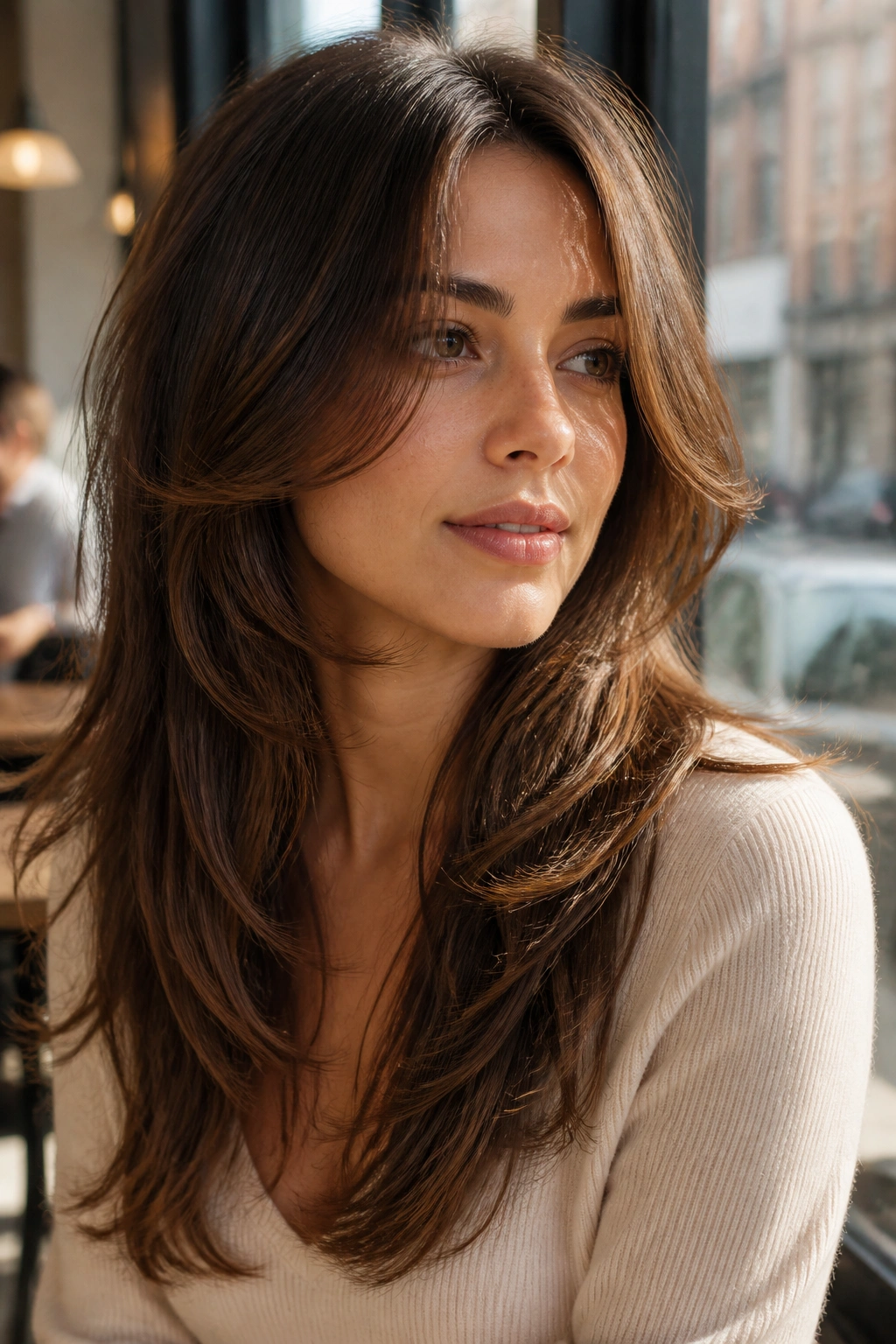
Butterfly layers can look dramatic in photos, but on fine hair they work best when the contrast is softened a little. You want the top sections to lift and float, not to get hacked into pieces that make the ends seem sparse.
The shape gives you shorter layers around the crown and cheekbones, then longer lengths underneath. That does two things at once: it creates movement near the top where fine hair tends to go limp, and it keeps enough length below to preserve weight. Weirdly, that lower length is part of what makes the whole cut look fuller.
If your hair is fine but plentiful, this cut can be a sweet spot. If your hair is fine and sparse, ask for a gentler version with fewer short layers and more gradual blending. That small adjustment keeps the look airy instead of overworked.
3. French Bob With Broken Ends
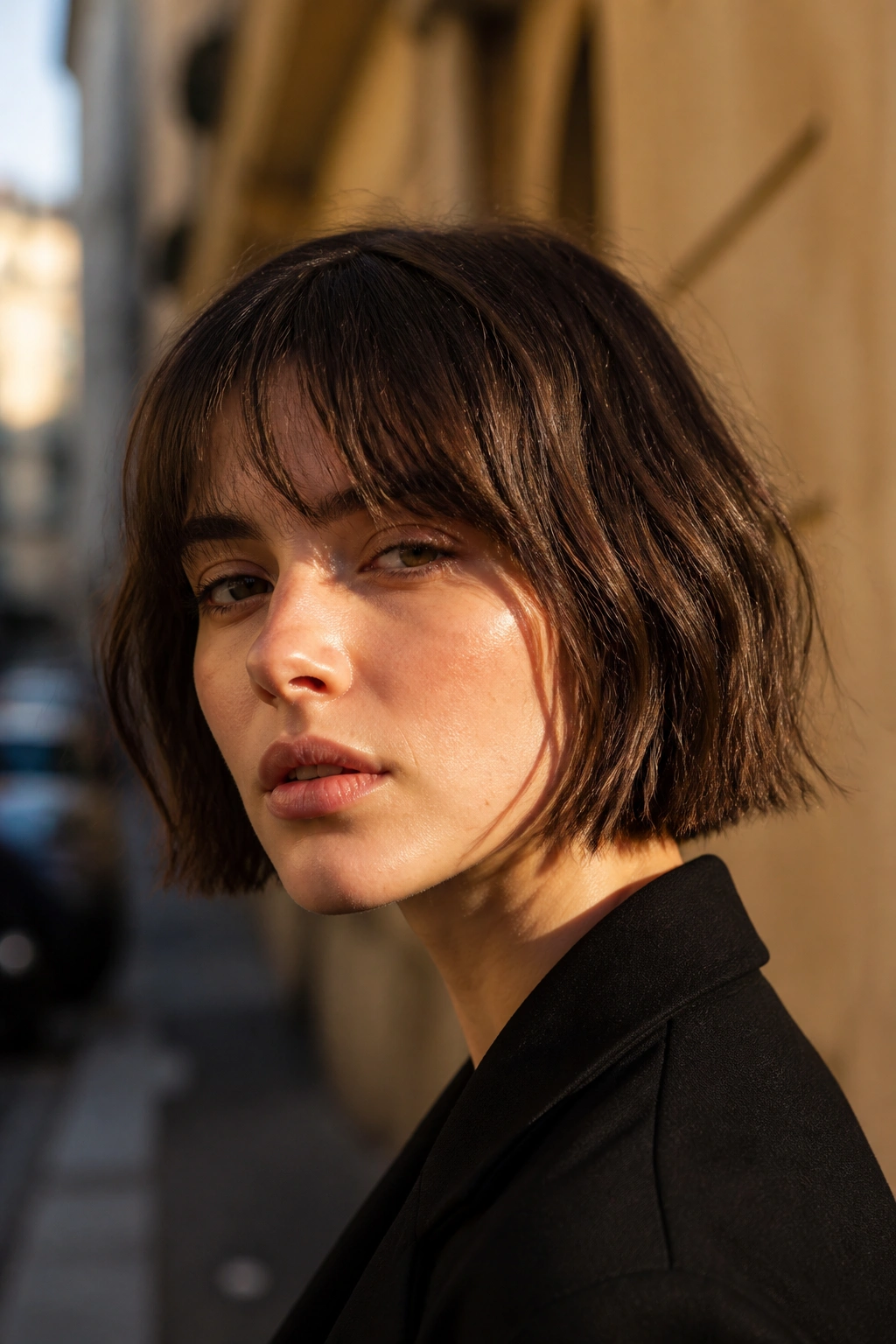
Can a bob feel airy instead of heavy? Absolutely. The French bob gets a little extra life when the bottom edge is softened with broken, slightly uneven ends instead of a hard, solid line.
That softness matters on fine hair. A clean bob can look chic, but it can also look too rigid if the hair itself is delicate. Broken ends make the cut read as lived-in, not stiff. They also help the hair move around the jaw instead of sitting like a sheet.
How to style it
Use a small round brush or a flat brush and rough-dry the roots first. Then bend just the ends under with a 1-inch iron or a quick pass of a straightener. Don’t overthink the finish. A little texture cream at the ends is usually enough.
- Works well at jaw length or just below
- Keeps the face open and fresh
- Grows out cleanly if you like low-maintenance cuts
This one is good if you want short hair without losing that soft, almost airy feeling.
4. Soft Shag With Light Crown Texture
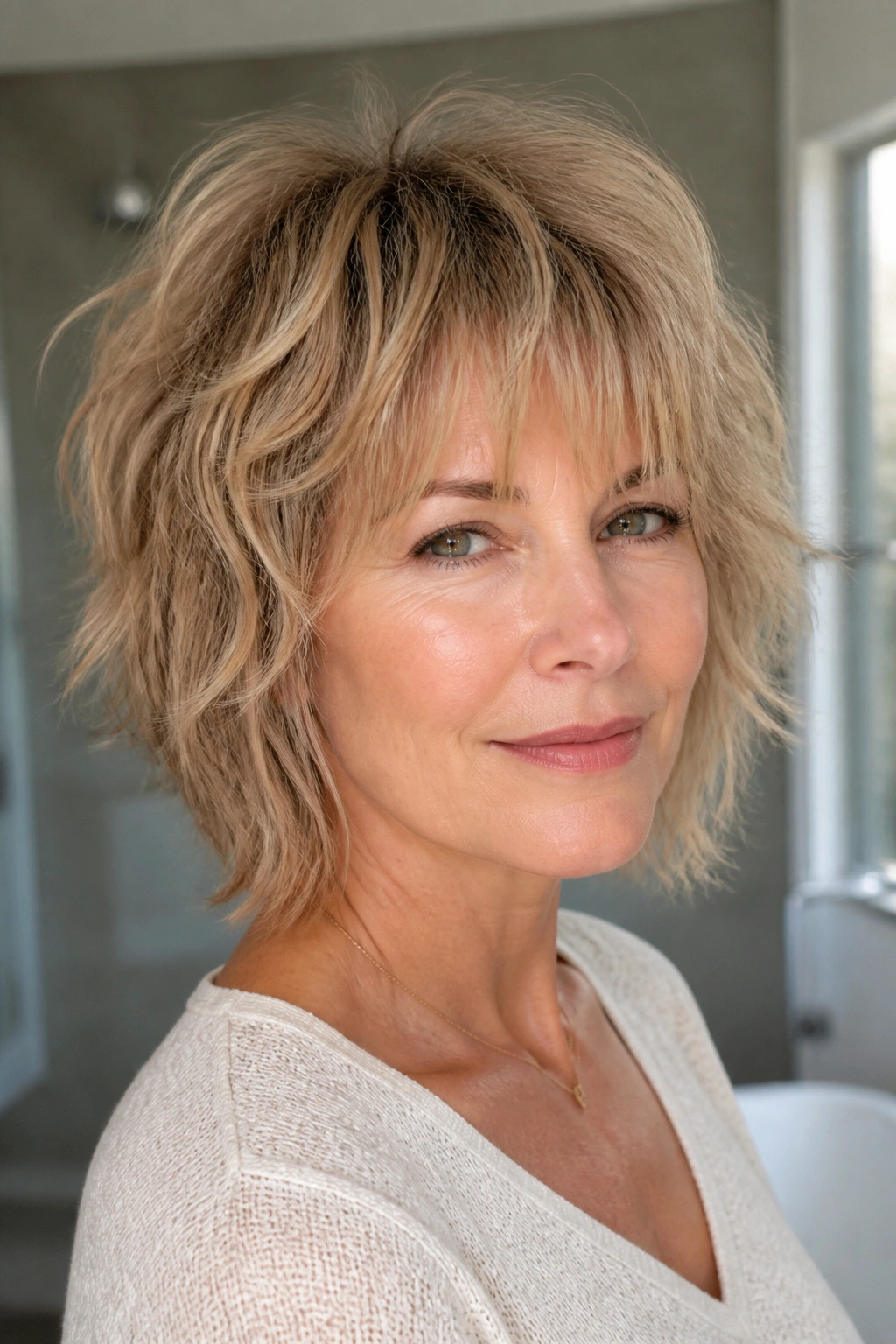
A soft shag is a better choice for fine hair than a heavy, old-school shag that has too many disconnected pieces. Fine hair needs shape, yes, but it also needs restraint. Too much slicing and the ends can start to look see-through.
The version I like best keeps the crown lightly textured, then lets the layers taper out toward the sides. That gives the cut a bit of lift at the top and a touch of swing near the cheekbones. It’s not a loud haircut. It’s more like one that wakes up after you run your fingers through it.
The best part is how forgiving it is. If your blow-dry is a little rough, the shag usually still looks intentional. If your hair is naturally a bit wavy, even better. A salt-free texture spray and a quick scrunch can make the layers sit in place without turning crunchy.
5. Long Layers With Curtain Bangs
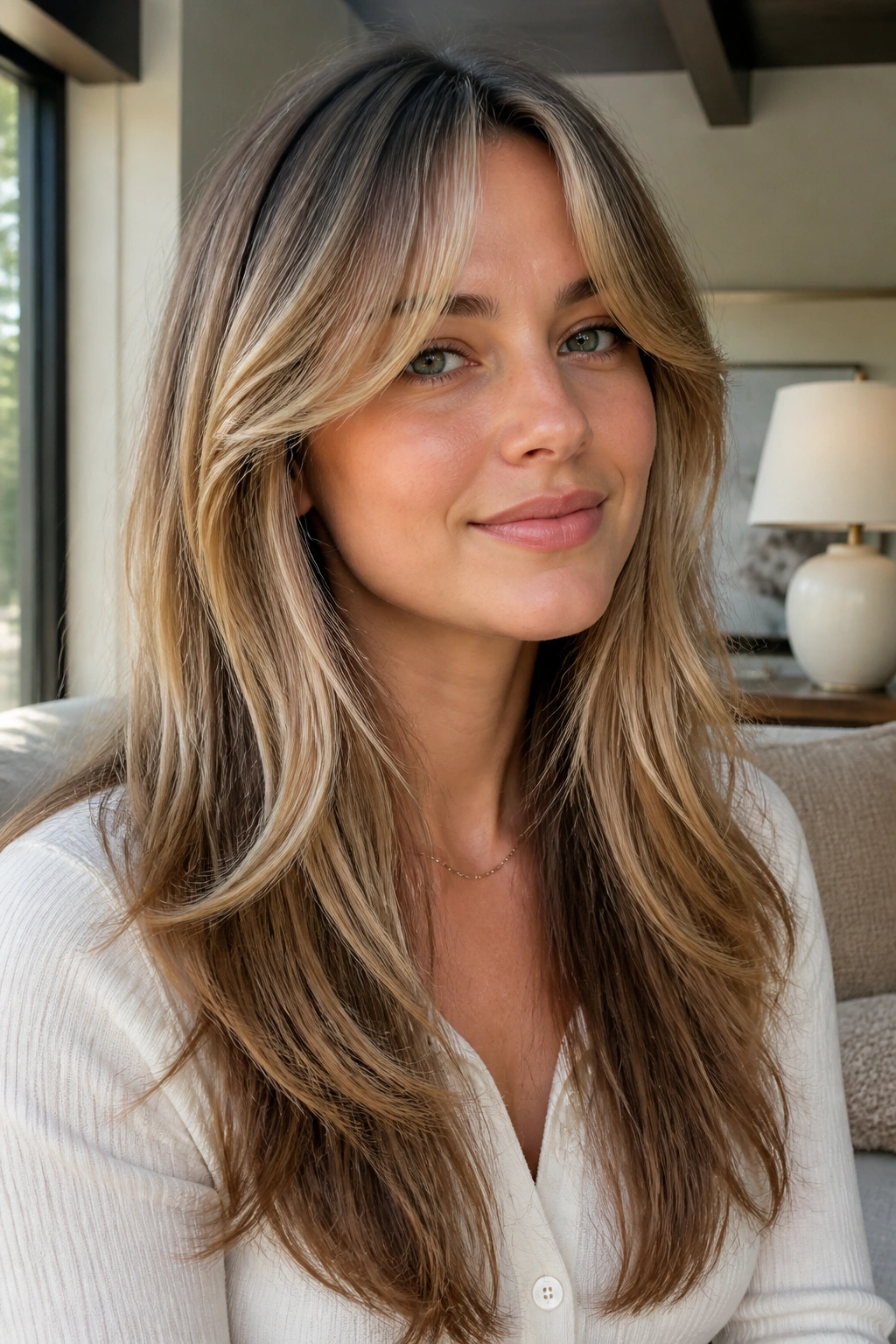
Long hair and fine hair can get along, but only if the layers are placed with some care. Curtain bangs help because they pull attention upward, frame the face, and stop long lengths from looking like one flat curtain all the way down.
The layers should start high enough to create movement, but not so high that the ends lose their body. That’s the mistake I see most often. People ask for layers, get too many of them, and then wonder why the hair looks thinner at the bottom. It’s because the cut lost its anchor.
Curtain bangs are useful because they give you shape without forcing you into a full fringe. They can be worn split, tucked back, or blended into a blowout. If you like the idea of keeping length, this is one of the safest wispy layered haircuts for fine hair.
6. Rounded Layers With a Side Part
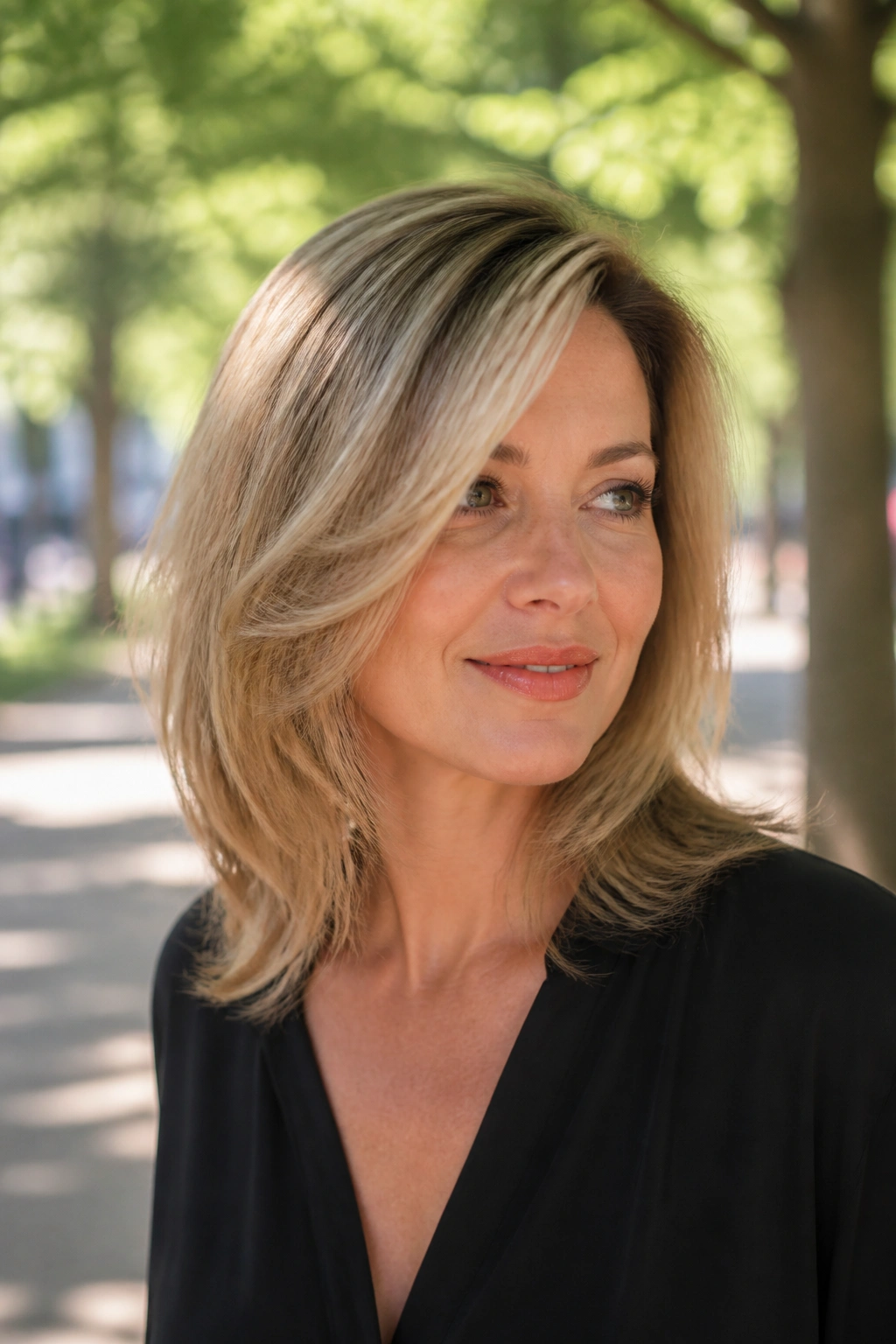
A side part can do a lot of work on fine hair. It creates instant lift on one side, and when the layers are rounded instead of choppy, the whole style feels fuller around the face.
This cut is especially nice if your hair tends to fall flat right at the roots. A center part can sometimes make fine hair look narrower than it is. A soft side part breaks that line and gives the top section more room to rise. Add rounded layers through the mid-lengths, and the hair starts to move in a curve instead of dropping straight down.
What to ask for
Tell your stylist you want rounded layering, not chunky steps. Ask for soft graduation around the cheekbones and a perimeter that stays fairly full. That phrase matters. You are trying to keep the ends from looking stringy.
- Great for oval, heart, and square face shapes
- Works with straight or slightly wavy textures
- Styles best with a root-lifting mousse and a round brush
The result feels gentle, not fussy. That’s the appeal.
7. Bixie With Wispy Nape
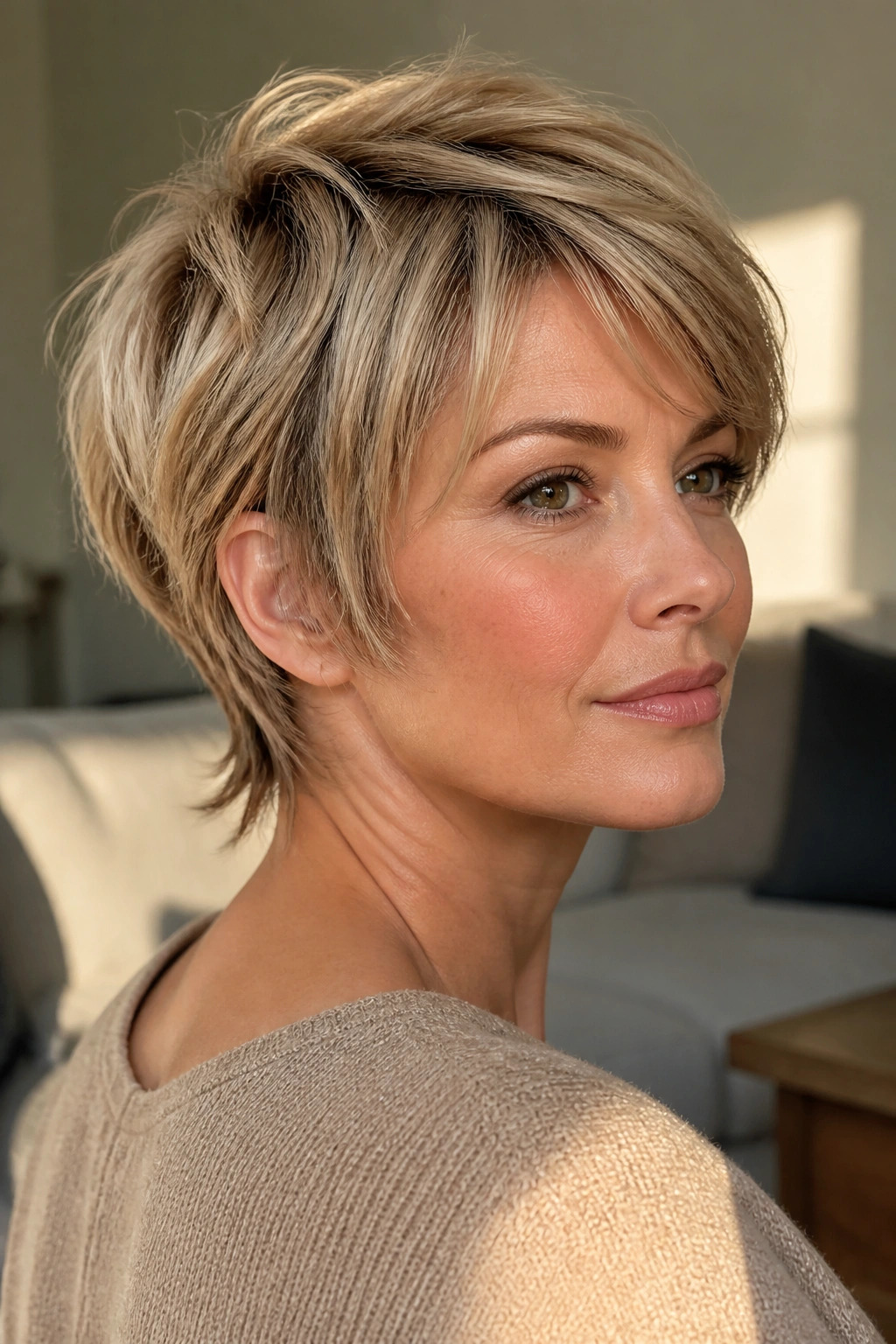
The bixie sits between a bob and a pixie, and on fine hair that in-between length can be a blessing. It gives you short-hair lightness without stripping away all the coverage at the back.
What makes it work here is the wispy nape. The back is kept neat and close, while the top has enough length to fluff up a little. That contrast creates shape fast, even when the hair itself is soft and slippery. You don’t need a ton of product either. A small amount of paste at the crown can keep the top from falling flat by noon.
This cut has personality. It’s not trying to behave. If you want a cropped style that still feels feminine and a little undone, the bixie does that better than a strict pixie ever could.
8. U-Shaped Midlength Layers
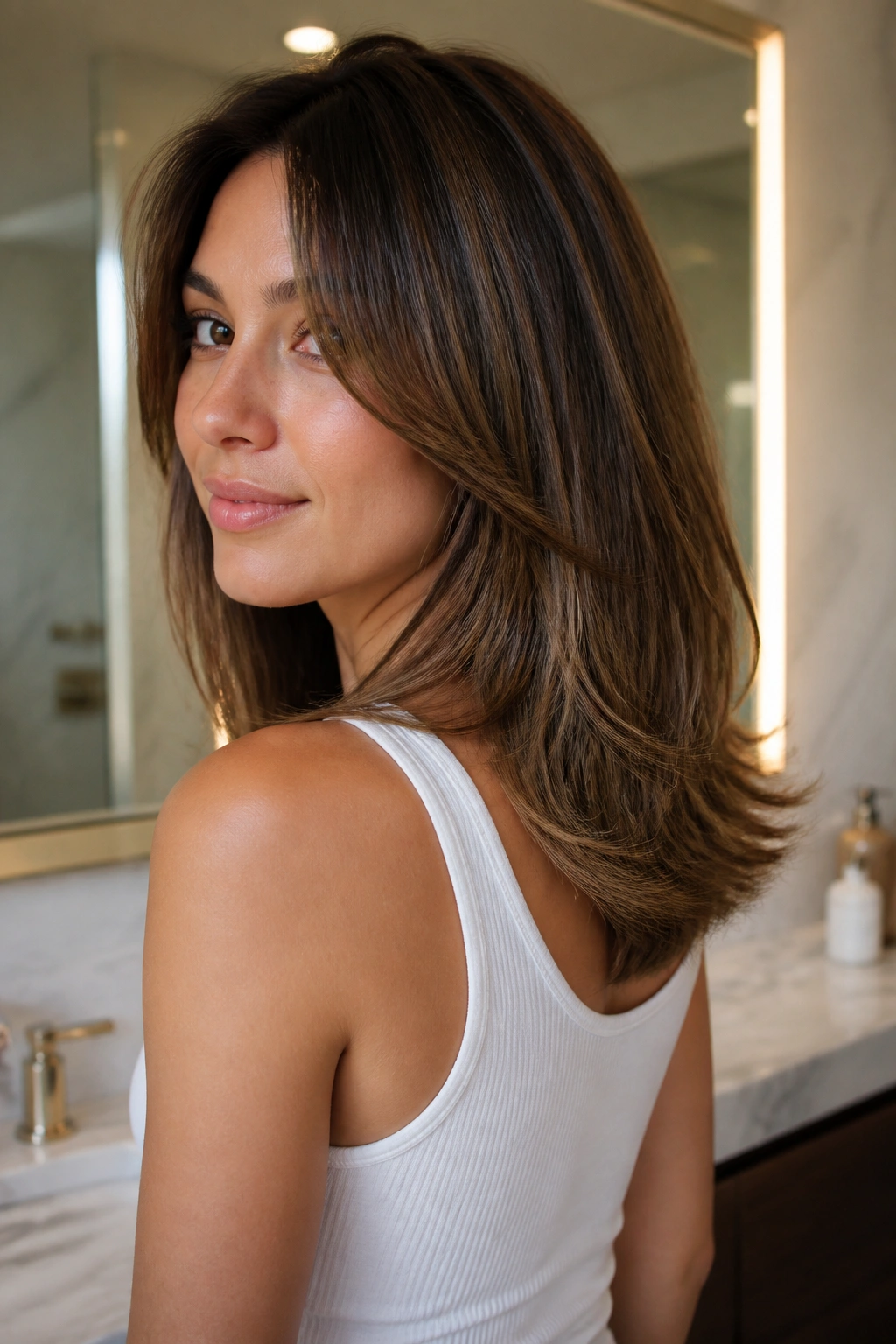
A U-shape sounds subtle, and that’s the point. The length stays longer in the back, then curves softly around the sides, which gives fine hair a fuller outline than a straight-across cut often can.
The layers live inside that shape. They add movement without making the perimeter look hollow. That distinction matters a lot for fine hair. Internal layering can give the hair lift while keeping the outside line dense enough to feel substantial. Not bulky. Dense.
This is a strong option if you like shoulder-to-midback length but hate how heavy the ends can feel when the cut is too blunt. It also grows out in a calm, low-drama way, which is a nice bonus. If you’re not the type to rush back for trims every few weeks, this cut behaves.
9. Choppy Pixie With Piecey Top Layers
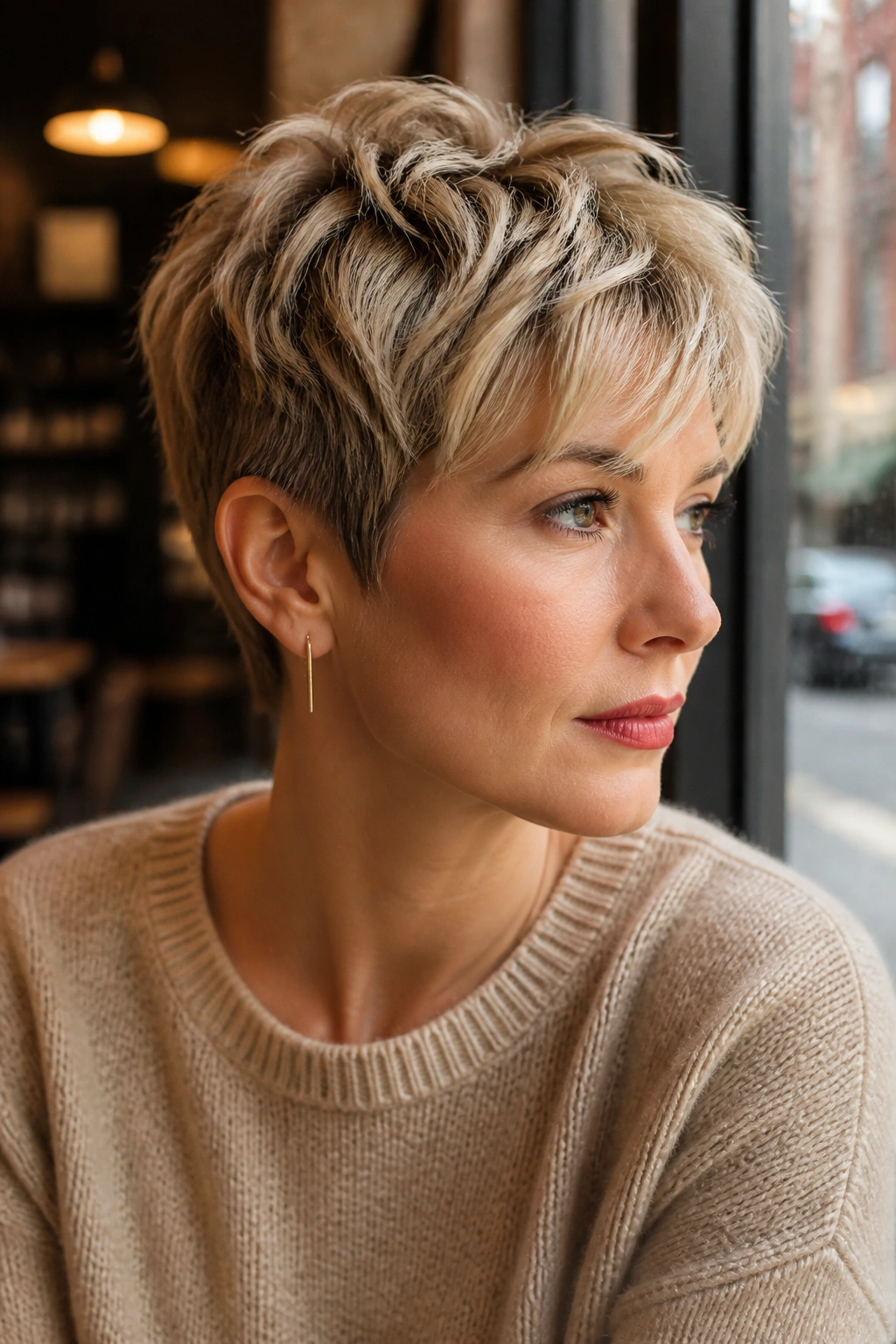
A pixie on fine hair can either look chic or look accidentally over-thinned. The difference is usually in the top layers. Keep them piecey and light, but don’t take the sides so short that the head shape starts to show every line.
The best version of this cut has a little softness around the ears, a tapered nape, and a top section that can be pushed forward or swept to the side. That movement helps the hair look fuller because the eye sees texture before it notices density.
Short hair doesn’t have to mean severe hair. It can be soft. It can even feel a little fuzzy in a good way. If your fine hair refuses to hold a long style anyway, a pixie with wispy top layers may feel easier than fighting with length every morning.
10. Long V-Cut With Soft Interior Layers
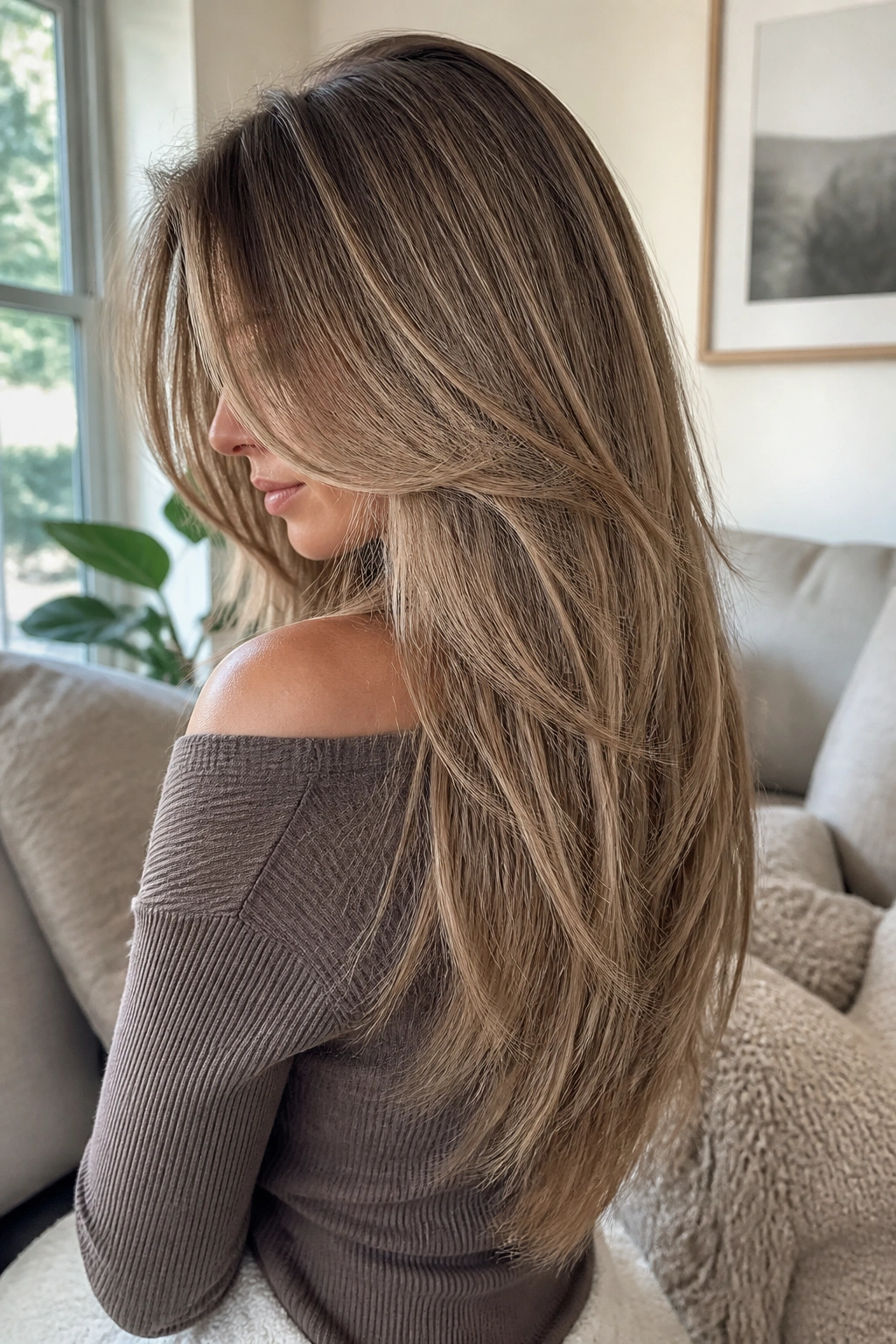
The V-cut gets a bad reputation when it’s too sharp, but a soft version can be lovely on fine hair. The point at the back gives long hair some direction, while the interior layers stop it from hanging in one heavy sheet.
That inside layering is the part people forget. Without it, long fine hair can look long and flat, which is not the same thing as full. With it, the lengths fall in overlapping pieces that move when you walk, especially if there’s a little wave in the hair.
This cut suits someone who wants to keep a lot of length. It does ask for heat styling if you want the shape to show clearly, though. A quick bend through the mid-lengths is often enough. You do not need a full salon blowout every time.
11. Layered Lob With Tucked-Behind-Ear Volume

Some cuts are made for the moments when you tuck one side behind your ear and suddenly feel like your hair woke up. This is one of them.
A layered lob that sits just above the shoulders gives fine hair enough weight to stay smooth, while the layers around the front keep the style from looking blocky. What I like here is the way the shape opens up when one side is tucked back. The ear gives the hair a little lift, and the shorter front layers help the whole thing bend instead of droop.
Styling detail worth knowing
Use a round brush only at the root and around the front pieces. Leave the ends a little straighter. That contrast makes the hair look thicker than if you curl everything into a perfect shape.
If you want a cut that works at the office, at dinner, and on a lazy day with a clip in your bag, this one earns its keep.
12. Razored Midi Cut

A razored cut can be brilliant on fine hair, but it needs a careful hand. Too much razor work and the ends can get wispy in a way that looks unfinished rather than airy.
The sweet spot is a midi length with light razor-softened ends and a few internal layers. That gives the cut movement, especially if your hair tends to puff at the ends but stay flat at the roots. The razor removes some bulk without creating those obvious stair-step layers that can make fine hair look thinner.
Ask for soft razoring, not aggressive thinning. Those are not the same thing. A clean razor finish should feel feathered, not shredded. If your hair is delicate and prone to snapping, this cut can still work beautifully when it’s done by someone who knows how far to go and when to stop.
13. Airy Wolf Cut

The wolf cut can be too much for some fine hair, and I’ll say that plainly. If the layers are pushed too high or the disconnect is too sharp, the cut can look sparse at the ends fast.
But the airy version is different. It keeps the texture and attitude of the wolf cut while softening the top and leaving more length through the perimeter. The crown still gets lift. The sides still move. The edges just don’t disappear.
This is a good option if your hair has a little natural bend and you don’t mind using texture spray or a diffuser. It also works better when the bangs are light, not heavy. Think soft fringe, not a thick curtain that swallows the face.
A good wolf cut should look a little wild, yes. It should also look like you still have hair left at the bottom.
14. Shoulder-Length Flip With Layered Ends

There’s something cheerful about a flipped shoulder-length cut. It gives fine hair a little bounce at the edges, which can be enough to stop the whole style from reading as flat.
The trick is in the ends. They’re layered, lightly bent out, and kept soft so the shape doesn’t go retro in a costume-y way. When the hair flips away from the neck and collarbone, it creates a bit of separation. That separation makes the hair feel fuller, because the pieces are not sitting on top of each other in one heavy curtain.
This cut works especially well if you like blow-drying with a brush. A little heat at the ends, a side part or off-center part, and a light mist of flexible hairspray are usually enough. It’s a friendly haircut. Easy to wear. Easy to move around in.
15. Face-Framing Layers Only
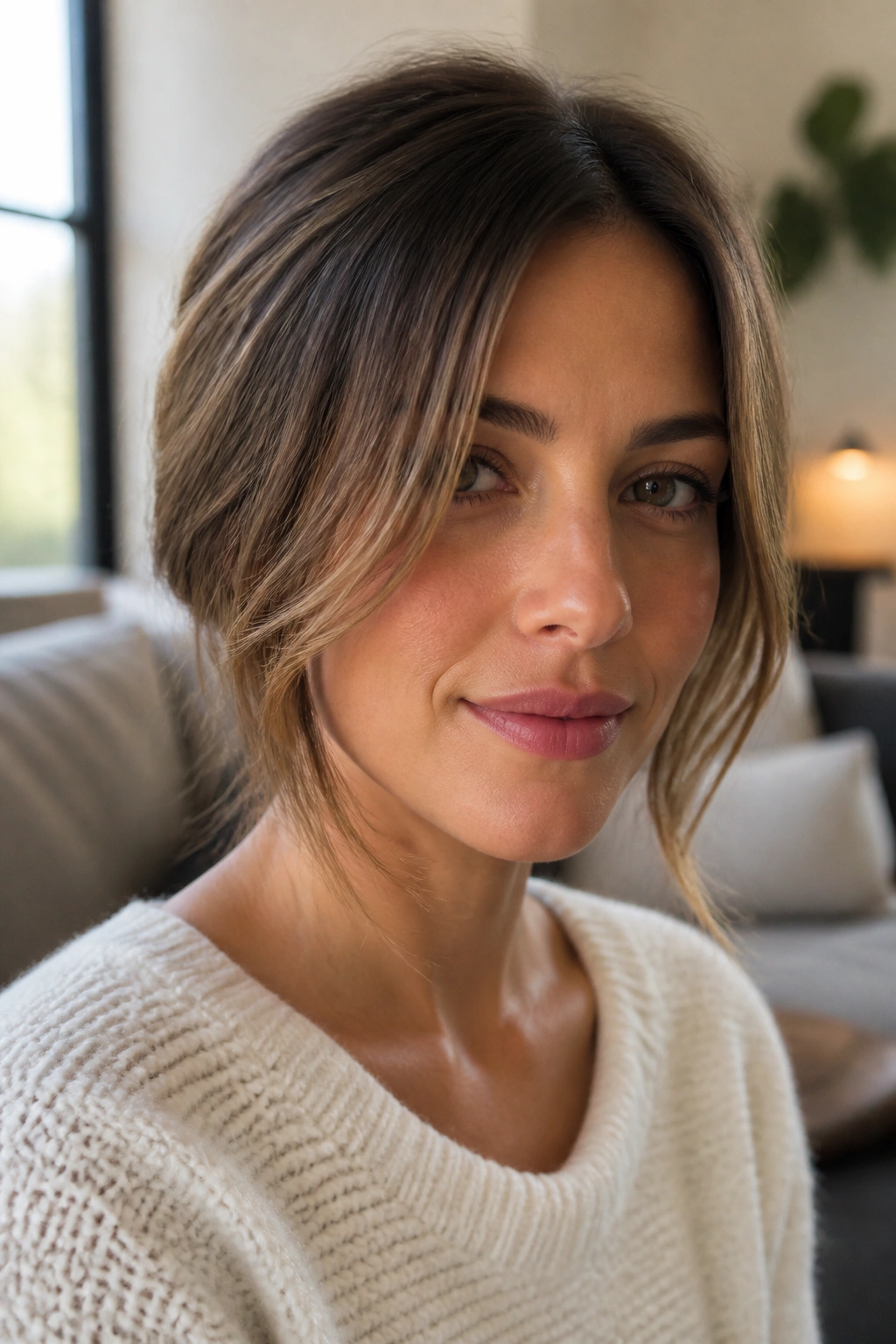
Sometimes the smartest move is to leave most of the hair alone. Fine hair does not always need a full head of layers; sometimes it needs just enough shaping around the front to make the rest of it look intentional.
Face-framing layers can start around the cheekbones and slide down toward the jaw or collarbone. That gives the face softness without cutting away the density in the back and sides. For a lot of people, that’s the real issue anyway: the haircut looks thin because too much weight was removed, not because the hair itself was too fine.
This is a good choice if you want to keep your hair looking polished and full. It also works well when you grow out bangs or want to freshen a blunt cut without changing the whole shape. Minimal change, useful result. I like that in a haircut.
16. Invisible Layers Inside a Blunt Cut
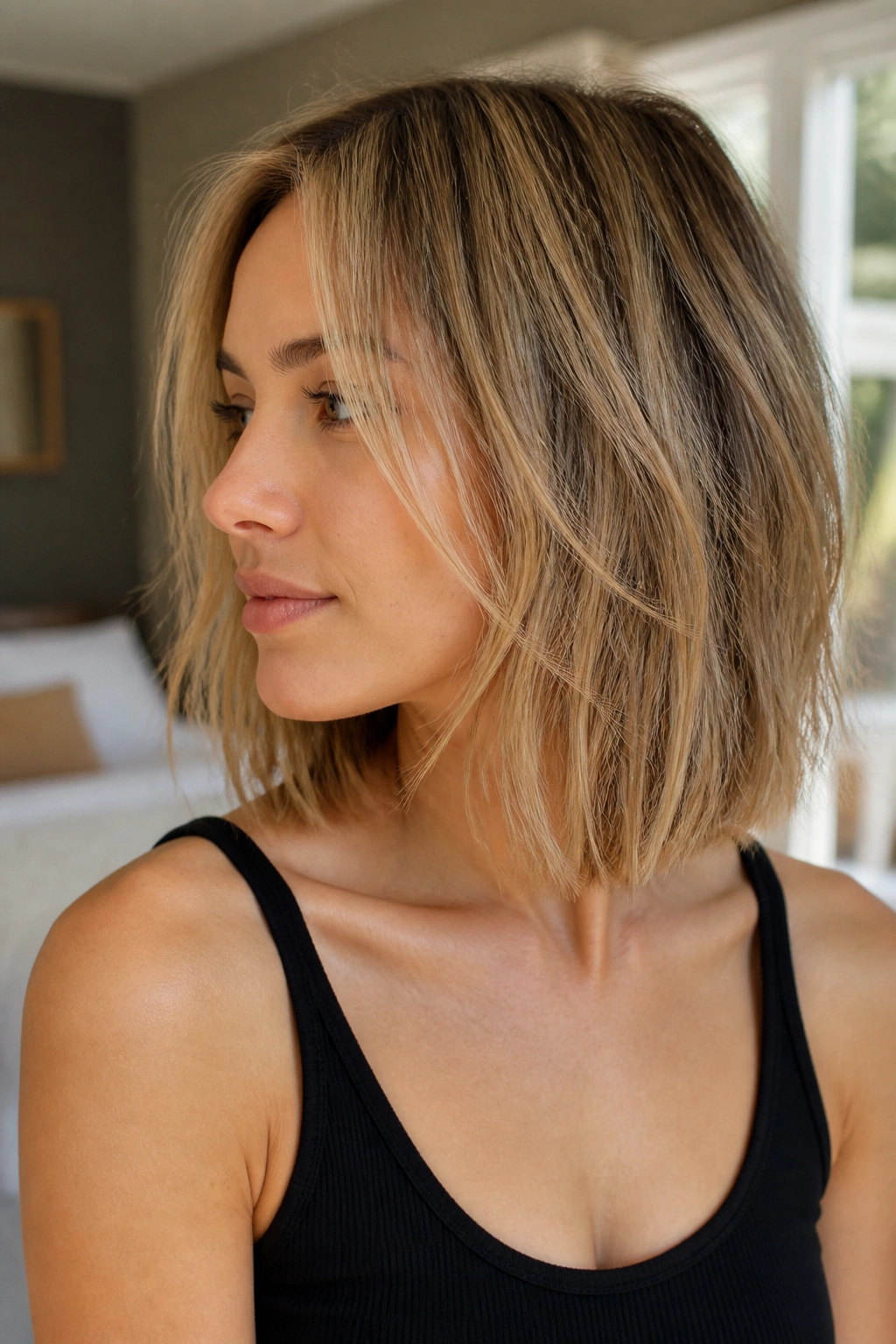
Invisible layers are exactly what they sound like: layers hidden inside the haircut so the surface still looks clean. Fine hair often benefits from this because the outer line stays full while the inside gets enough movement to avoid a limp finish.
A blunt-looking cut with internal layers can be the best of both worlds. You keep the density of a strong edge, which makes the hair appear thicker, but the interior isn’t trapped. It can move. It can bend. It doesn’t sit like one stiff sheet.
Why I’d choose this over obvious layers
If your hair is naturally sparse, obvious layers can sometimes work against you. They remove too much from the outline. Invisible layers don’t do that. They support the shape from inside, which is why the haircut still looks solid when it’s tucked, clipped, or pulled into a low ponytail.
This is one of those cuts that looks simple from across the room and better the closer you look.
17. Curved Bob With Internal Lift
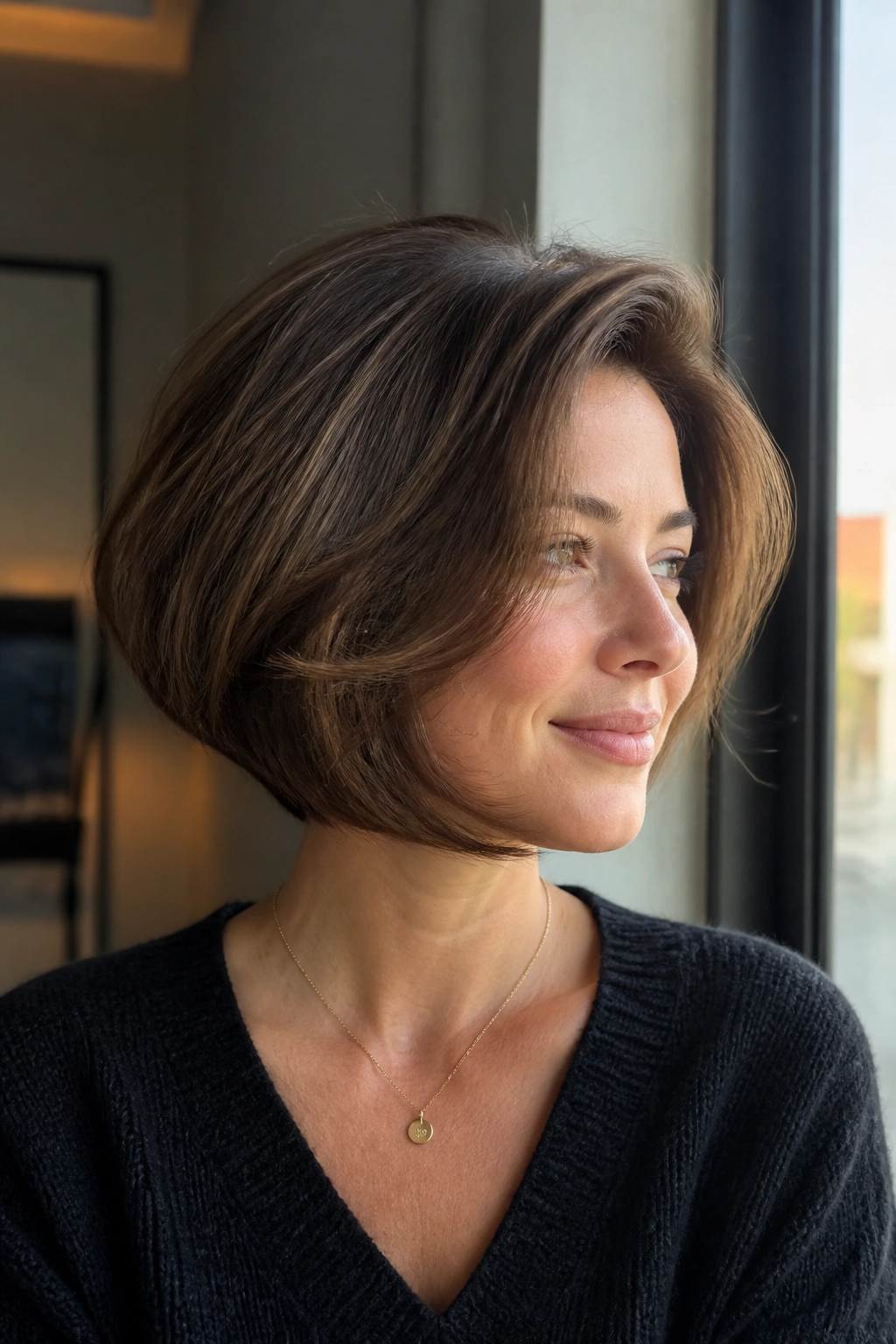
A curved bob follows the shape of the head instead of hanging flat and straight. On fine hair, that rounded line can be a lifesaver because it gives the haircut a sense of fullness from every angle.
The internal lift is what keeps it from looking too heavy. Shorter sections inside the bob help the crown rise a little, while the outside edge stays smooth. That combination is hard to beat if your hair tends to collapse at the back of the head. Flat back-of-head hair is sneaky. It ruins a lot of otherwise good cuts.
This style can be worn sleek or a little tousled. If you’re after something refined but not stiff, a curved bob with soft interior layers is one of the cleaner solutions. It looks thoughtful without looking precious.
18. Wispy Mullet-Inspired Cut
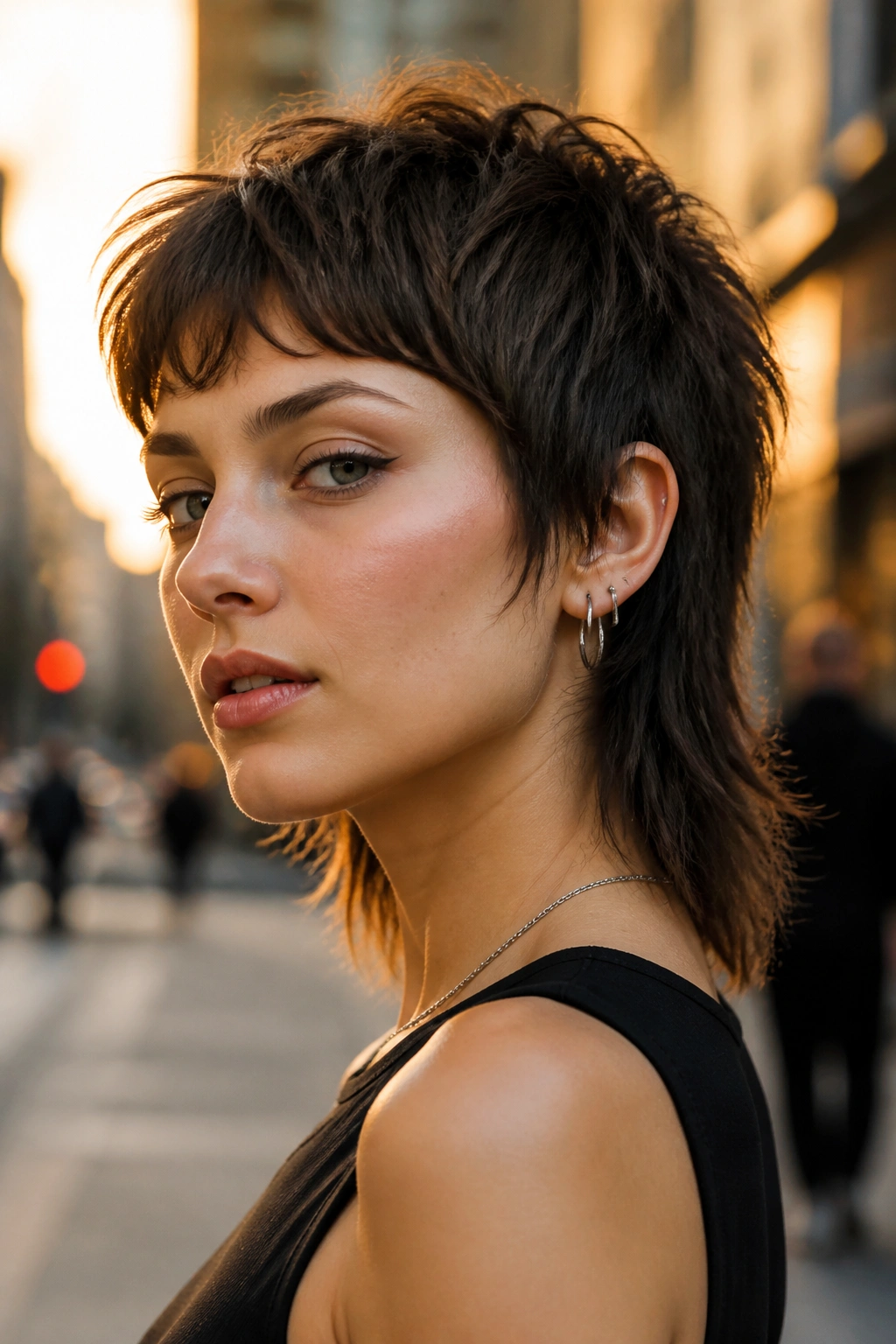
The modern mullet doesn’t have to be extreme. On fine hair, the softer versions can actually be useful because they keep the top and sides short enough to lift, while leaving length through the back for balance.
The wispy part matters. You want the transition from short to long to feel soft, not chopped. That means light layering around the temples, feathering through the crown, and a back section that still has some flow. If the contrast is too sharp, the hair can look thin in the wrong places. If it’s blended well, the cut feels edgy without being severe.
This one is for someone who likes movement and doesn’t mind a little styling effort. A bit of texture cream, a rough dry, maybe a few bends with a flat iron. That’s usually enough. It’s not a haircut for people who want invisible maintenance. It is a good one if you want personality.
19. Long, Loose Layers With Soft Bangs

Long hair with fine texture can start to look tired when it’s all one length. Long, loose layers fix that by breaking up the shape without taking away the length that gives the hair its presence.
Soft bangs help here. Not thick bangs. Not blunt bangs that sit heavy on the forehead. Soft ones. They bring the eyes upward and make the rest of the cut feel lighter around the face. If the bangs are blended into the side layers, even better. That keeps the haircut from looking disconnected.
This style works well if you like your hair down most of the time. It also behaves nicely in low ponytails and half-up styles because the front pieces have enough movement to frame the face. A quick blast with a blow dryer around the bangs can make the whole haircut look more finished than it really was.
20. Soft Cascade With Airy Ends
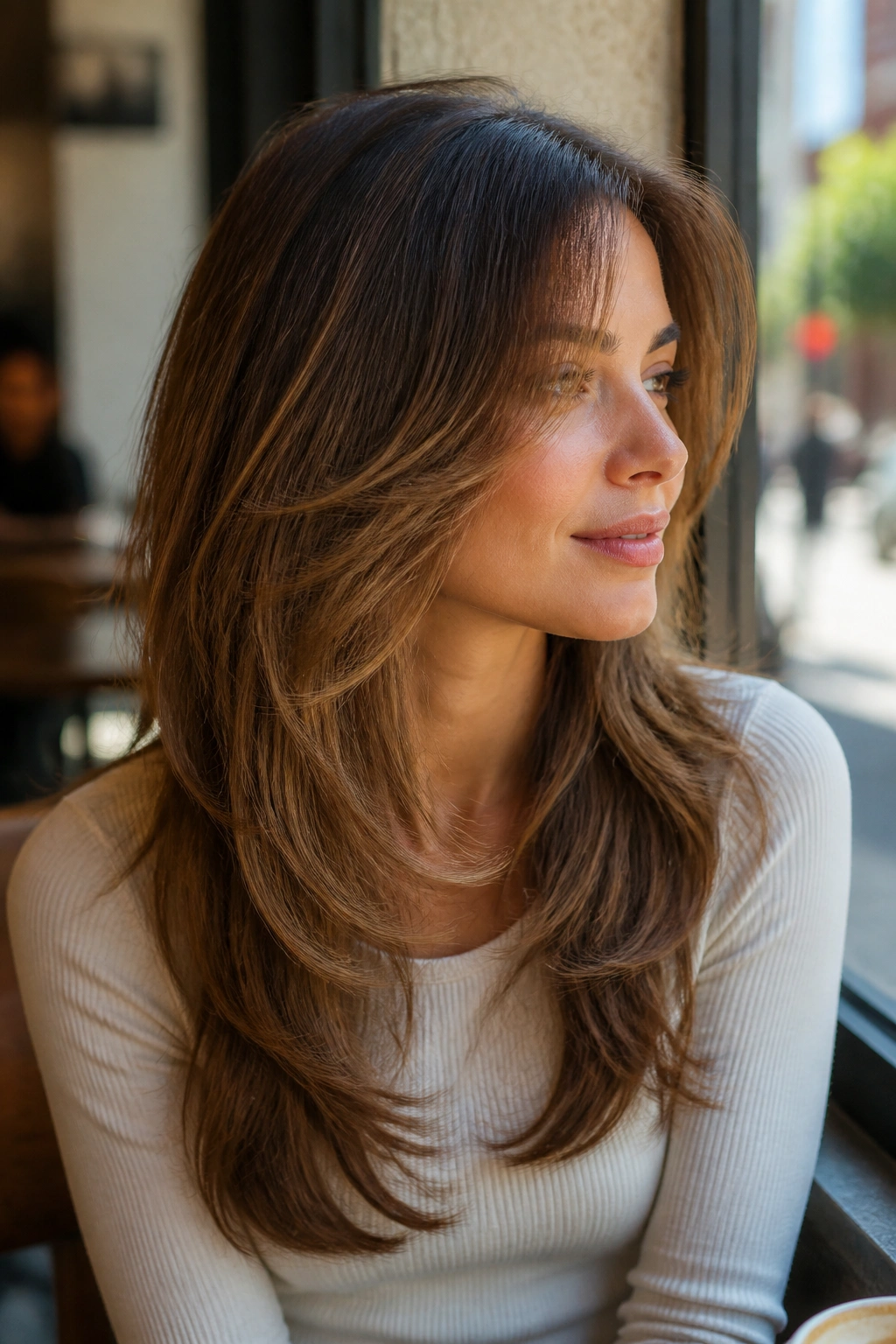
A soft cascade is the kind of cut that quietly does everything fine hair asks for. It keeps the length, adds movement through the mid-lengths, and lets the ends feel light without disappearing.
What makes this version different from a heavy layered cut is restraint. The layers are spaced out enough to show shape, but not stacked so close together that the bottom gets stringy. That spacing keeps the silhouette full. It also gives you room to wear the hair straight, waved, clipped back, or twisted into a loose updo without the cut fighting you.
If you want a final thought to take with you, it’s this: wispy layers work best when they support the hair instead of trying to reinvent it. Fine hair usually looks best when the cut respects its natural fall, adds lift where it collapses, and leaves enough weight at the edges to keep the shape honest. That’s the haircut that feels easy on a normal morning. And those are the ones people keep coming back to.
