



Thick hair can be gorgeous and exhausting at the same time. It holds shape, keeps fullness, and makes a clean blowout look expensive. Then it grows a little, swells at the sides, and suddenly the ends feel like they’re carrying all the weight in the room.
That’s why layered haircuts for thick hair matter so much. The right cut doesn’t just thin things out. It changes the way the hair falls, where the bulk sits, and how much work you have to do on a random Tuesday morning when you’d rather not wrestle a round brush.
The mistake I see most often is this: people ask for layers like they’re asking for more hair movement, but they don’t say where the shape should live. That detail matters. A few inches too high at the crown can turn dense hair puffy. Too low, and the haircut still feels heavy no matter how much product you use.
So the sweet spot is different for every head of hair. Some cuts remove weight from the inside. Some keep a strong perimeter and soften only the front. Some are tidy and polished; others have a little attitude. The good ones make thick hair feel lighter without making it look thin, stringy, or overworked.
1. Feathered Layers That Move Instead of Piling Up
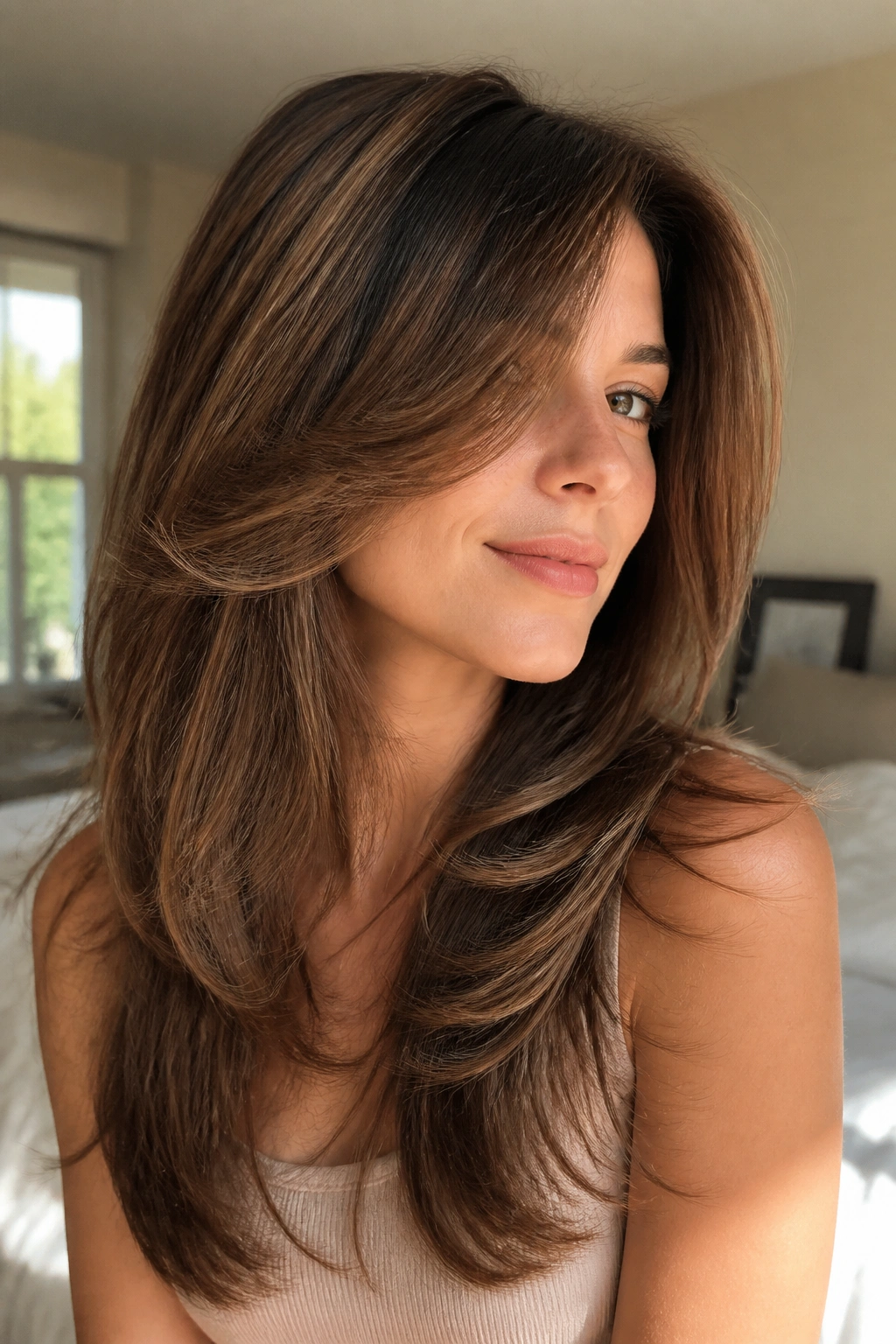
Feathered layers are one of the cleanest fixes for thick hair that hangs in one solid block. The cut softens the outline and lets the ends flick out a little instead of sitting in a heavy shelf. I like this shape on hair that feels blunt but not necessarily short on length.
Why It Works
The trick is in the direction of the cut. Feathering breaks up the density at the edges, which helps long, thick hair swing instead of drag. It also keeps the hair from looking boxy when you wear it down.
What to Ask For
- Keep the shortest layers below the cheekbones if you want movement without a lot of width.
- Leave the perimeter full so the ends still look thick.
- Ask for soft point-cutting rather than hard, chopped lines.
- Style with a large round brush or a 1.5-inch curling iron for a loose bend.
My favorite detail: if your hair already has a little wave, feathering should be subtle. Too much of it can turn into frizz fast.
2. Butterfly Cut With a Big, Floating Top Section
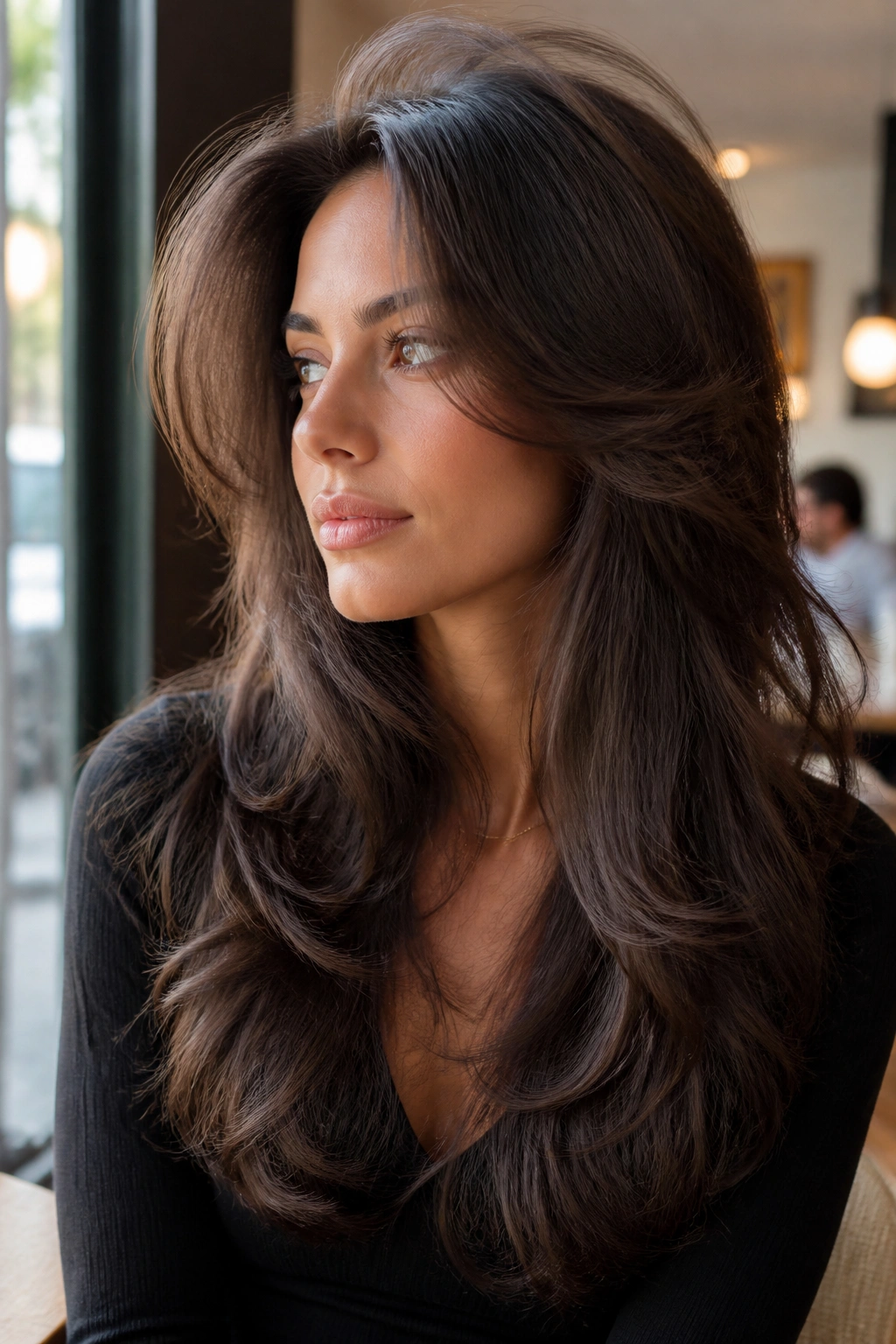
Why does the butterfly cut keep showing up on thick hair? Because it solves a problem that dense hair creates all by itself: too much weight in the wrong places. The short top layers give lift near the face and crown, while the longer bottom length stays dramatic and full.
The cut works especially well if you like to wear your hair half-up or in a claw clip. The short layers fall out around the face and shoulders in a soft way, which makes the whole style look intentional even when the rest of your hair is plain and straight. That balance matters.
The Part That Makes It Look Good
The upper layers need room to move. If they’re cut too short, thick hair can spring outward and make the top look fuzzy. If they’re too long, the cut loses that airy shape and starts to look like a standard long layer haircut.
Best Styling Match
- Blow-dry the crown first for lift.
- Curl the top layers away from the face.
- Leave the lower section straighter for contrast.
- Use a light mousse at the roots, not heavy cream.
It’s a flashy cut, but not a fragile one. That’s why it works.
3. U-Shaped Long Layers for Heavy Length
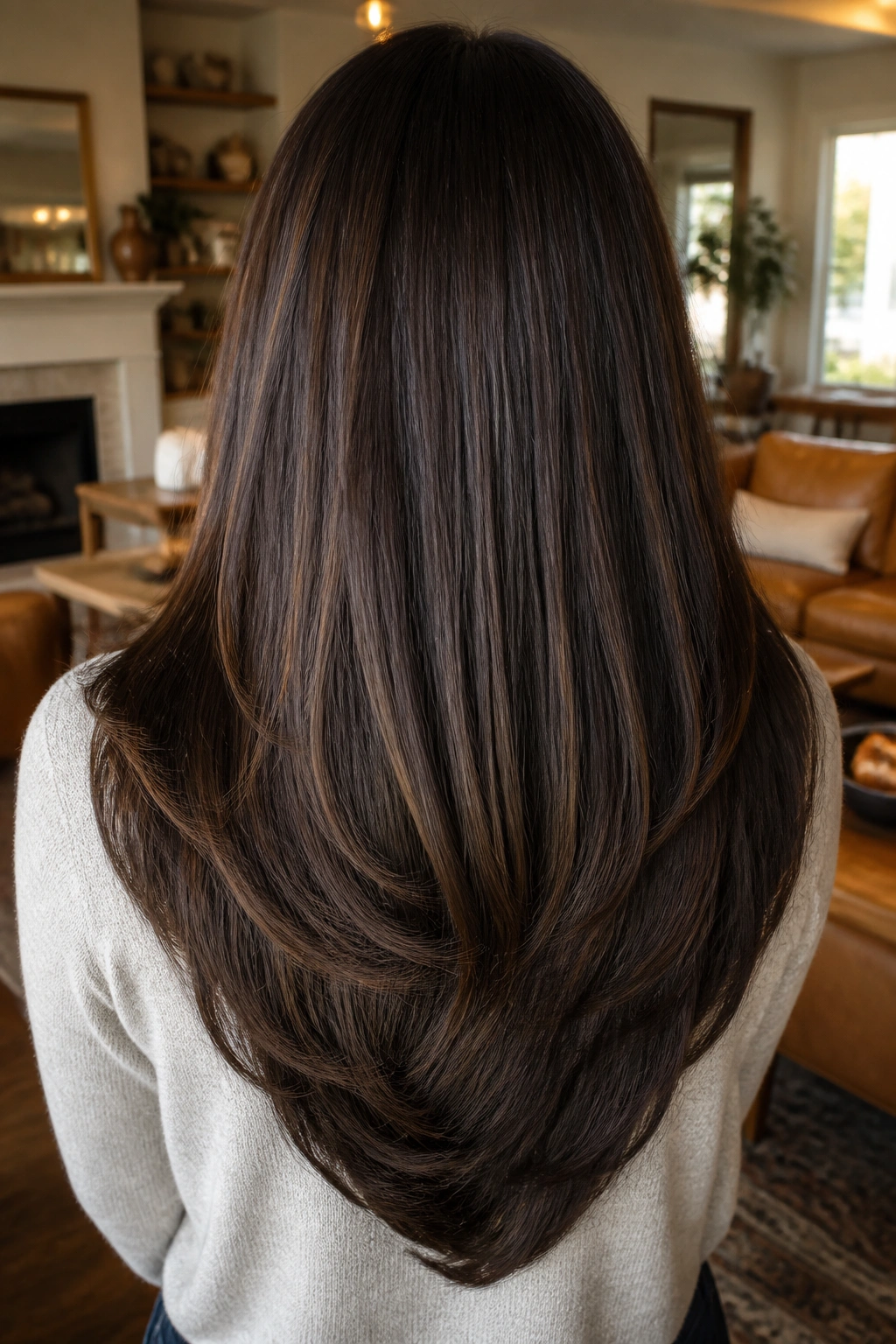
A U-shape is the calmest choice in the bunch, and sometimes that’s exactly the point. Instead of cutting the ends into a hard line, the stylist leaves a soft curve that dips lower in the back. Thick hair gets to keep its length while losing that blunt, helmet-like feeling at the bottom.
This is one of the layered haircuts for thick hair I recommend when someone says, “I want change, but I’m not ready for a big haircut.” Fair enough. A U-shape gives the eyes a place to travel, which makes the hair feel lighter without looking chopped up.
It also behaves well in real life. If you air-dry, the outline stays soft. If you heat-style, the curve makes the ends turn under or out in a controlled way instead of sticking straight across. That sounds small. It isn’t.
The only catch is that a U-cut needs clean upkeep. If the layers grow unevenly, the shape can get dull fast. A quick dusting every few months keeps the curve from slipping into shapelessness.
4. V-Shaped Layers for a Sharper, Longer Line
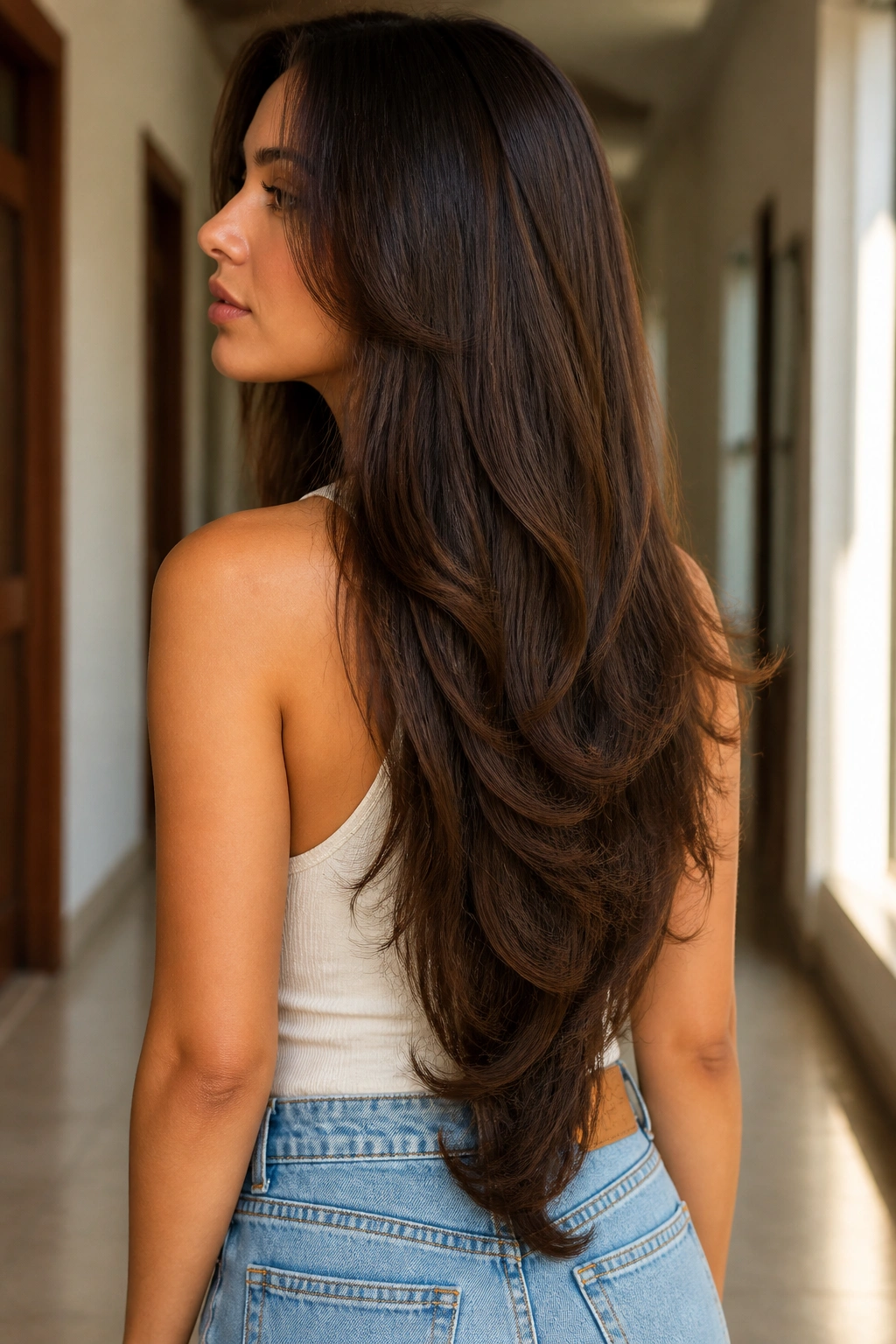
A V-shaped cut is the more dramatic cousin of the U-shape. The back drops into a point, which lets thick hair keep its length while shedding some of that heavy width through the lower half. It’s a good pick if you want the ends to look slimmer and a little more edgy.
Compared with a U-cut, the V creates a stronger sense of movement down the back. That makes long hair feel less like one big curtain. It also gives braids and ponytails a nice tail-like shape, which sounds minor until you notice how much better your hair looks from behind.
Not every thick-haired person loves this shape. If your hair is very frizzy or expands in humidity, a sharp V can make the bottom look thin while the sides stay bulky. That mismatch is annoying. If your hair is straighter or only lightly wavy, though, the line can look sleek and deliberate.
Ask your stylist to keep the point soft, not dagger-sharp. A gentle V usually ages better.
5. Long Shag With Soft Fringe
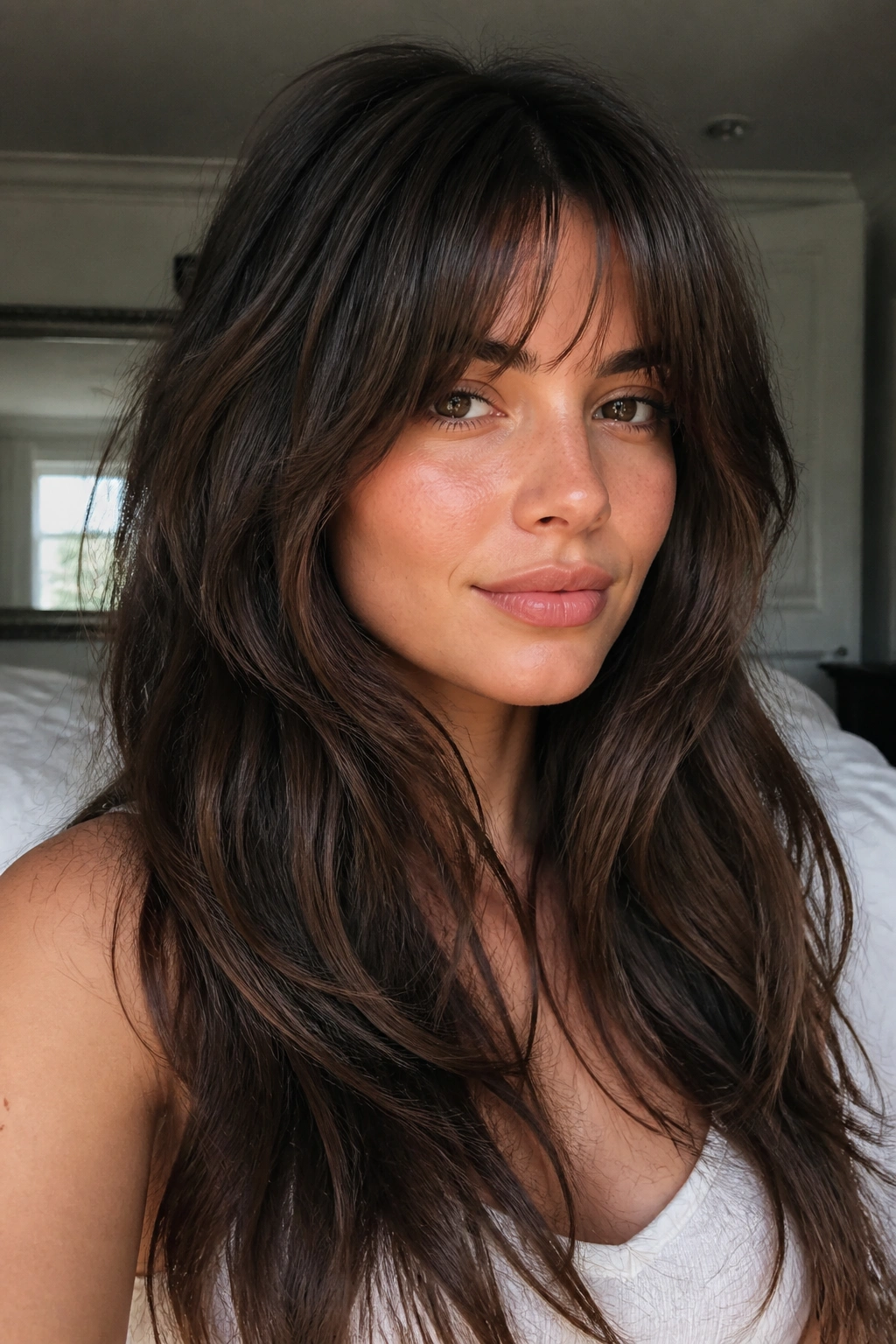
Why does the shag keep surviving every haircut cycle? Because thick hair and a shag have a useful relationship. The shag takes all that density and turns it into shape, movement, and a little messiness that feels expensive when it’s done well.
The soft fringe matters here. It keeps the haircut from looking too severe at the top, and it helps the layers blend into the face instead of stopping in a blunt wall. On thick hair, that softness can make a huge difference. Too much fringe thickness, and the whole cut feels bulky around the forehead.
What Makes It Work on Thick Hair
The best shag for dense hair uses longer layers than people expect. Short, choppy layers can puff out fast. Longer interior layers give the cut texture without making it look like it was attacked with scissors.
How to Wear It
- Air-dry with a salt-free curl cream for loose movement.
- Blow-dry the fringe first so it doesn’t split.
- Scrunch the mids, not the ends, if you want a rougher texture.
- Skip heavy oils near the crown.
This cut has attitude. It doesn’t ask permission.
6. Curly Shag That Lets the Curl Pattern Breathe
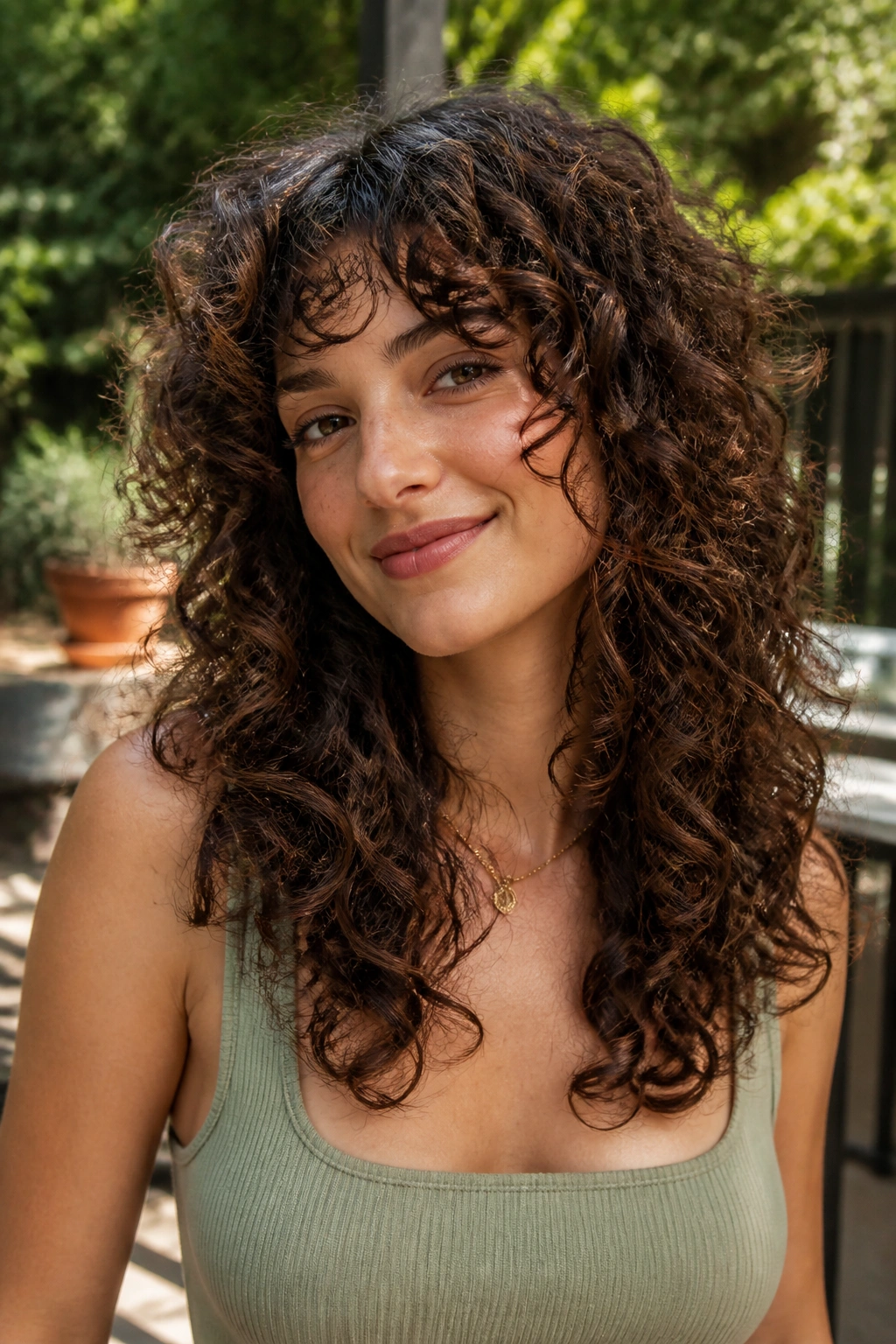
A thick curl pattern can feel heavy at the root and full through the ends, which is why a curly shag is so useful. It gives curls a shape that stacks well without becoming a pyramid. That’s the whole game, really.
I like this cut best when it’s done dry or on hair that’s been cut in its natural state. Curly hair changes a lot as it shrinks, and thick curls can hide a bad layer line for weeks before announcing the problem in a mirror. Dry cutting helps the stylist see where the volume actually lives.
A Few Details That Matter
- The shortest layers should support the curl pattern, not chop through it.
- Heavy thinning shears can make the ends fray.
- A little face framing helps, but too much can leave the sides vague.
- Diffuse on low heat so the curl clumps stay intact.
A curly shag is not about making curls smaller. It’s about giving them a smarter shape. That distinction matters more than any product bottle on the shelf.
7. Face-Framing Layers That Start at the Cheekbones
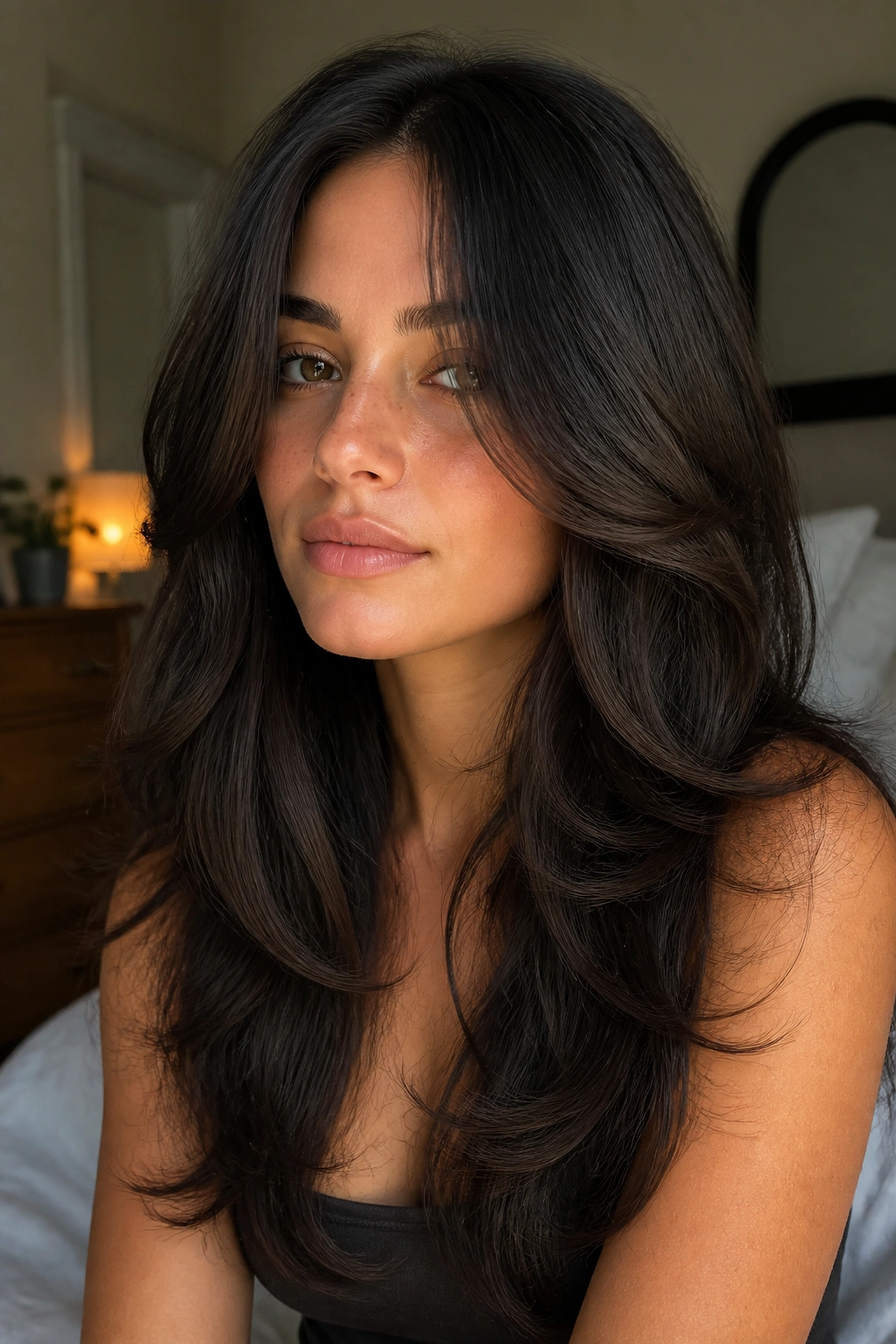
Face-framing layers are the fastest way to change thick hair without touching much of the length. They bring attention to the face, soften the sides, and keep the rest of the cut fairly intact. If you’re nervous about layers, this is a safe place to start.
The good version begins high enough to be seen but low enough to avoid the dreaded side puff. Cheekbone level is a nice reference point, though some people need the first piece a little lower, especially if their hair is very dense around the temples. That small adjustment can make the difference between flattering and fussy.
One reason I keep coming back to this cut is versatility. You can blow it smooth, bend it with a flat iron, or let it fall naturally. It still works. Even tied back, those front pieces give the whole haircut shape.
If your daily routine is simple, this is the kind of layer that pays rent. You get movement where people notice it first, and the back stays easy.
8. Collarbone Lob With Internal Layers
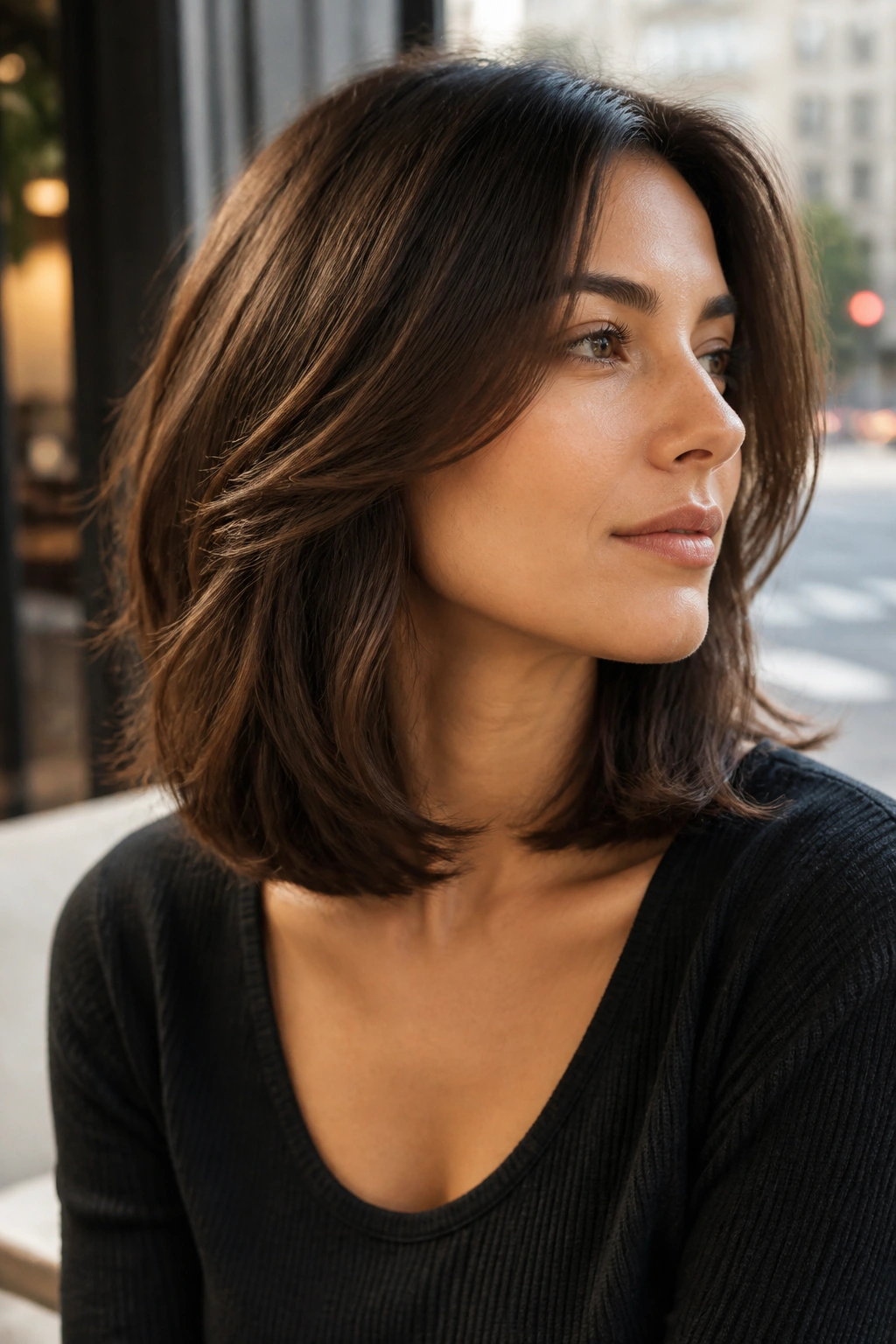
A collarbone lob is where a lot of thick-haired people land when they want less weight but don’t want to go short-short. It sits in that useful middle zone where the hair still feels feminine and swingy, but it’s no longer dragging around all the density of a longer cut.
Unlike a blunt lob, the layered version takes some of the fullness out from inside the shape. That means the outside can still look clean while the inside feels lighter. I prefer this approach when the hair is straight or has only a slight wave, because the line stays crisp and the layers don’t fight each other.
This cut can be styled sleek, tucked behind one ear, or given a loose bend with a medium iron. The collarbone length is practical too. It fits into a low ponytail, and it doesn’t take forever to dry.
If you want a change that looks polished rather than dramatic, this is one of the smarter layered haircuts for thick hair. It does the job quietly.
9. Choppy Mid-Length Layers for Thick, Straight Hair
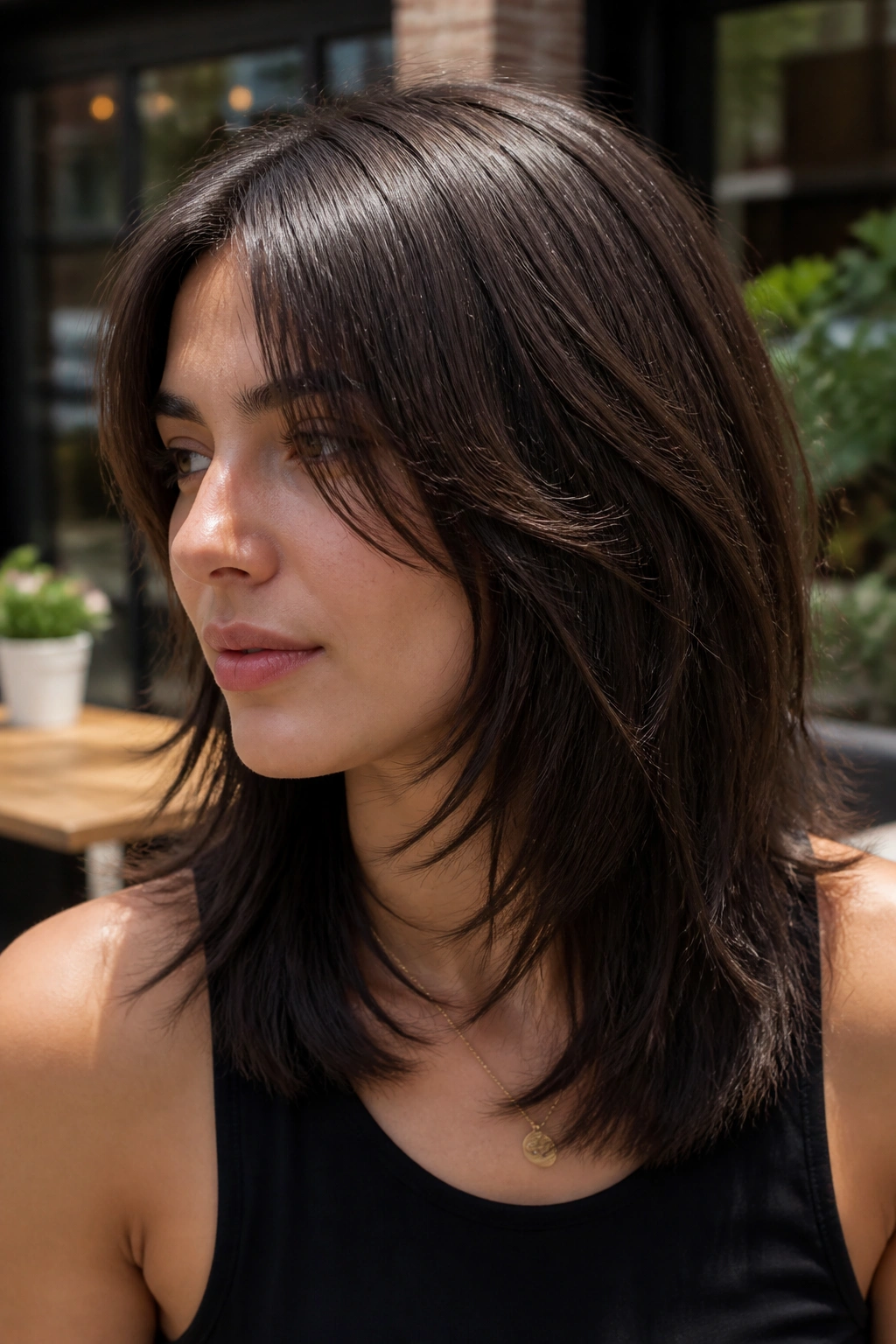
A choppy mid-length cut can make straight thick hair feel less like a slab and more like hair again. That sounds blunt because it is. Dense straight hair often needs texture to stop looking solid, and choppy layers break that visual weight up fast.
What Makes This Cut Different
The layers aren’t meant to disappear. They’re meant to be seen. You get movement through the mid-lengths, a little separation at the ends, and enough texture that the hair doesn’t sit flat and heavy all day.
Best For
- Hair that lies straight but feels thick through the ends
- People who like a lived-in blow-dry
- Anyone who wants a little grit instead of a smooth curtain
- Hair that resists curl and just wants shape
The catch is maintenance. Choppy layers need some styling, or they can look random. A quick rough-dry, a light texturizing spray, and a few bends with a flat iron usually do the trick.
My rule: keep the bottom line blunt enough to anchor the cut. Without that anchor, the whole thing can drift into fluff.
10. Inverted Bob With a Stacked Back
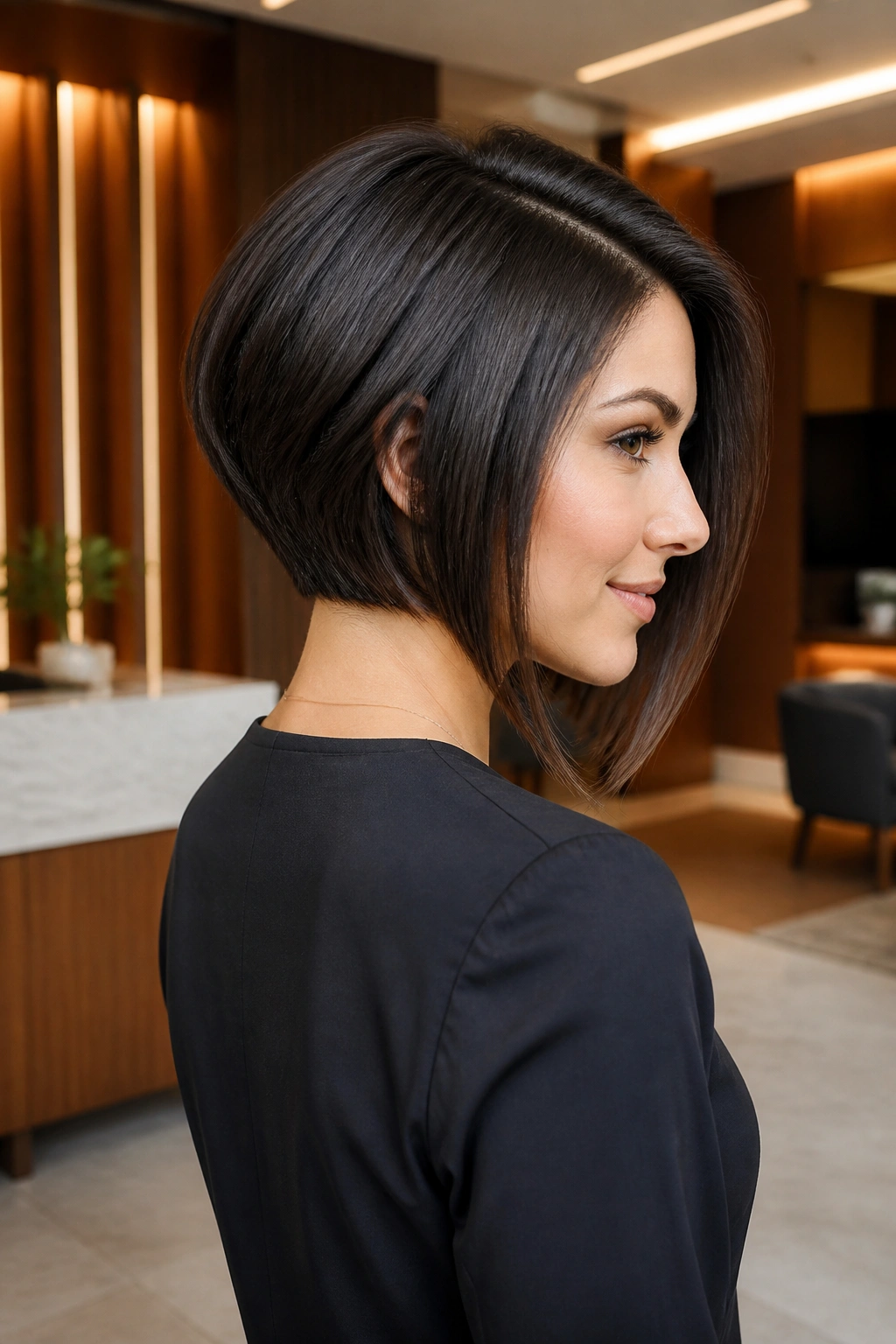
An inverted bob is a strong choice when thick hair grows dense at the nape and starts spreading outward at the sides. The shorter back removes bulk where it’s most annoying, while the front stays longer and sleeker. It’s tidy. A little sharp, too.
The stacking in the back is the whole point, but it needs a careful hand. Too much stacking and the shape becomes a bubble. Too little and you won’t get the lift that makes the cut worth wearing. The best version hugs the head at the back of the neck and angles forward with a clean line.
This cut suits people who want a real shape, not just “some layers.” It can make the jawline look stronger and the neck look longer. That’s useful if your hair tends to sit low and heavy.
It also plays well with straight styling. A flat brush can polish the back quickly, and the front pieces fall where they should. If you like haircuts that look intentional even when you do almost nothing, this one earns its keep.
11. Rounded Layers That Build a Soft Halo
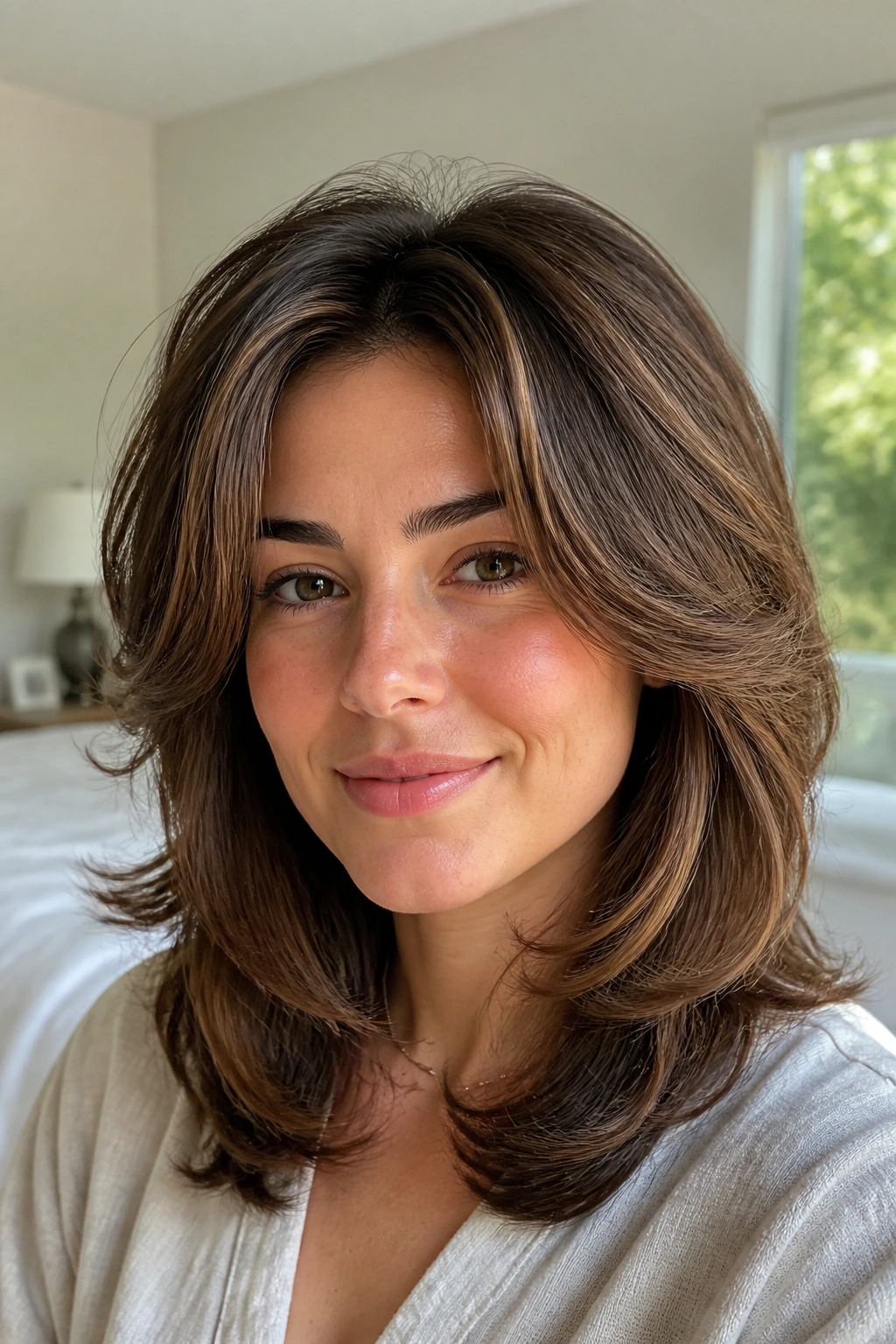
A rounded layered cut makes thick hair feel softer around the head instead of wider at the sides. That curve matters. Dense hair can create a triangle if the lower section is left too heavy, and a rounded shape pulls the eye upward instead of out.
How to Ask for the Curve
Tell your stylist you want the silhouette to stay full, but not boxy. The shortest pieces should follow the head shape, and the longer layers should blend down in a gentle arc. If the line is too severe, the cut loses its softness. If it’s too loose, the shape collapses.
Why It Works So Well
The rounded finish keeps the top from going flat and the sides from ballooning. Thick hair needs that balance. You want lift where the hair feels dense at the crown, then a smooth fall through the mid-lengths.
This cut looks especially good on blowouts with a soft bend at the ends. It’s one of those styles that reads polished without looking stiff. No need to force it. The shape does the work.
12. Long Layers With Curtain Bangs
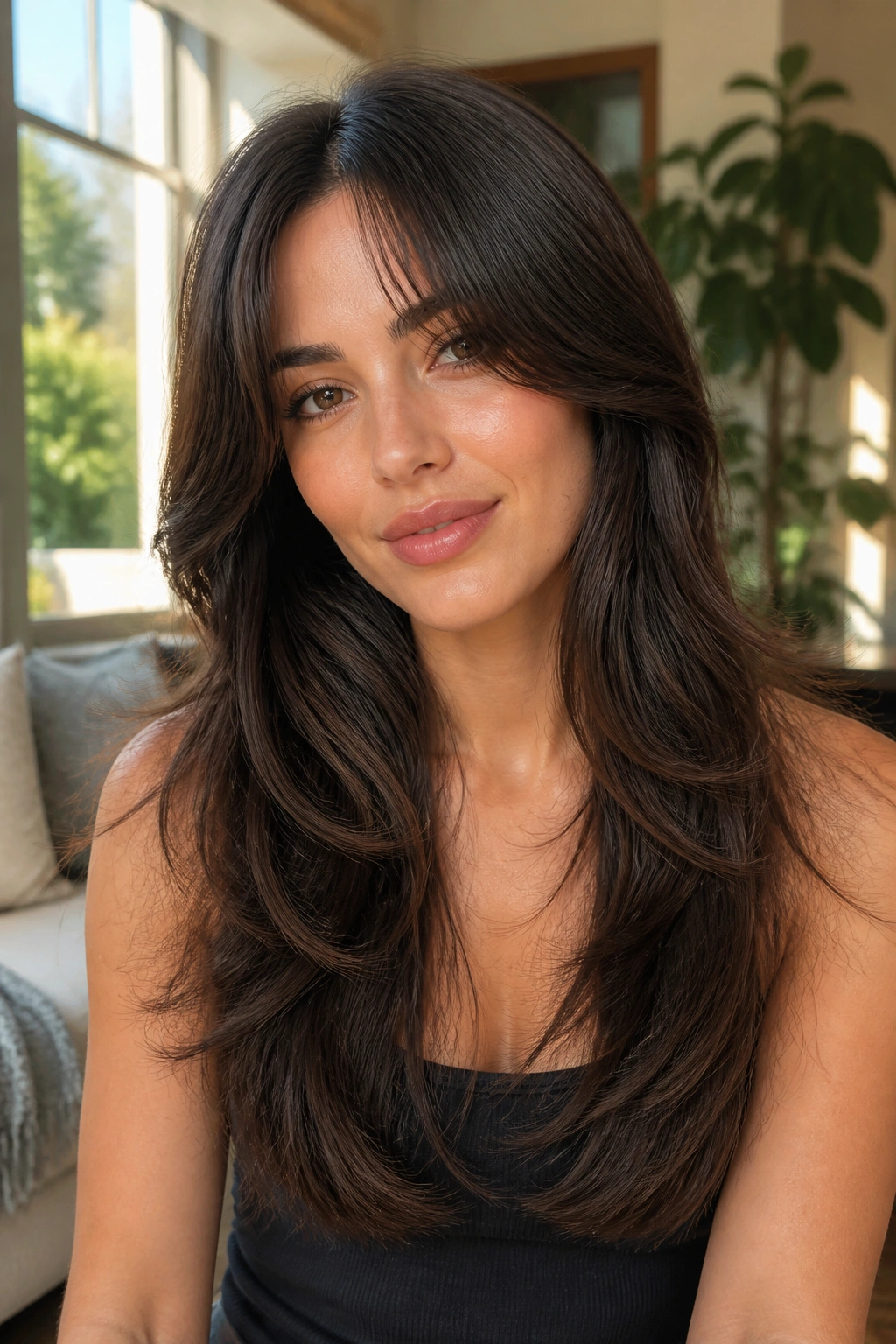
Curtain bangs can make thick hair feel lighter at the front without demanding a full chop. That’s why people keep coming back to them. They open the face, break up a heavy forehead line, and connect nicely into long layers so the haircut doesn’t stop and start in odd places.
The bang section needs a bit of daily attention, though. I’m not going to pretend otherwise. Thick hair can make curtain bangs sit heavy if they’re cut too wide or too blunt, and they usually need a quick blow-dry with a round brush or a flat wrap.
- Ask for the bangs to start narrow, then widen as they hit the cheekbones.
- Keep the shortest pieces long enough to tuck behind the ear.
- Use a light cream, not a paste, or the fringe can clump.
- Trim the bangs more often than the rest of the cut.
I like this look because it gives you the feeling of change without losing the length you worked for. That’s a fair trade.
13. Internal Layers That Hide the Bulk
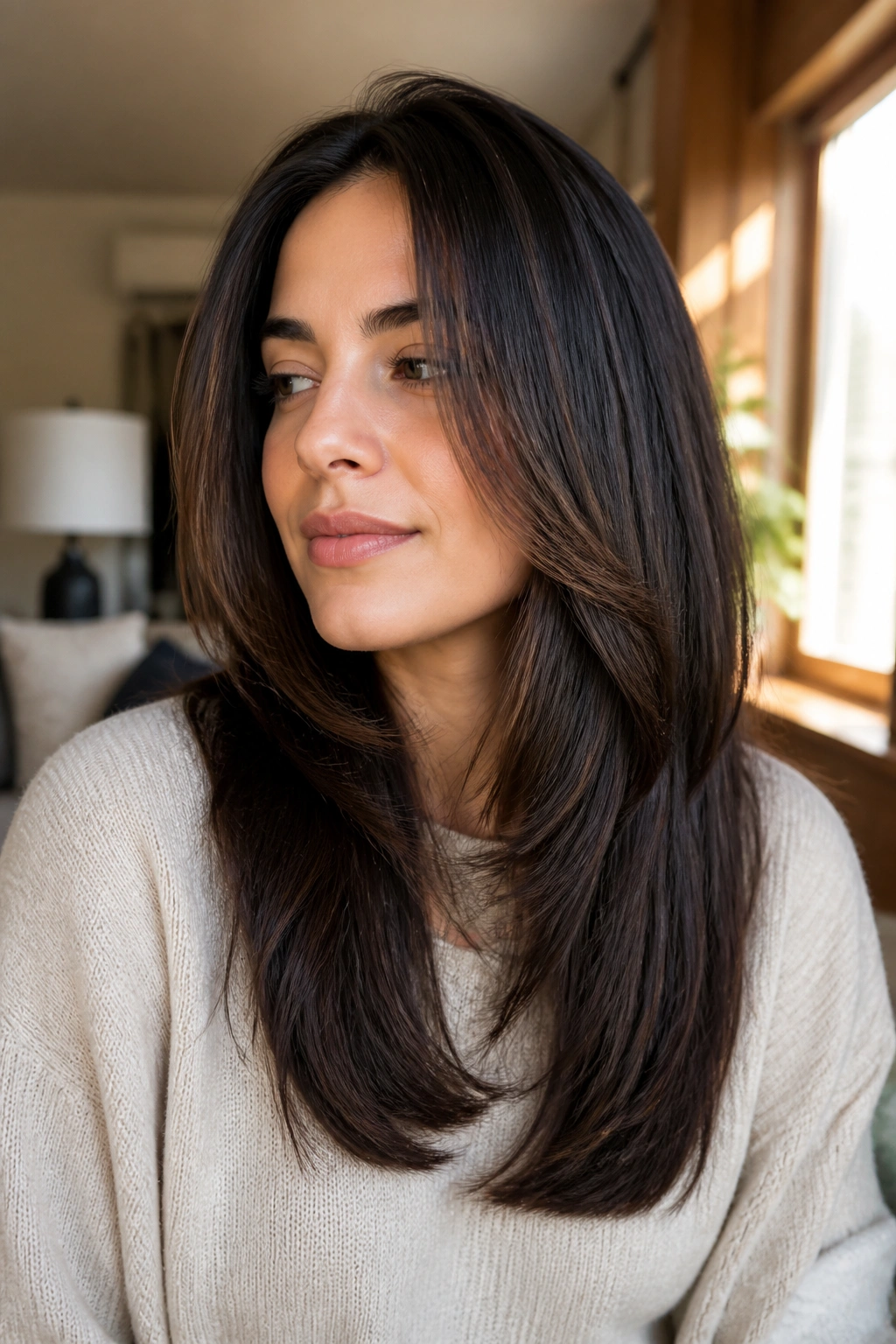
Internal layers are a quiet trick, and I mean that in a good way. From the outside, the haircut can still read as sleek and full. Inside, the weight has been removed where it needs to go, so the hair sits flatter and moves better.
This is a strong option for people who hate obvious layers. Maybe you want your ends to look solid. Maybe you don’t want the choppy, piecey look. Maybe you just want the hair to stop feeling like it lives in one giant mass. Internal layers handle that without turning the cut into a showpiece.
They’re especially useful for very dense hair that puffs at the sides when it’s all one length. Removing hidden weight from the middle gives the hair room to lie down. That can make air-drying easier, and it often cuts blow-dry time too.
The downside is simple: if you love a visibly layered look, this won’t satisfy you. It’s a subtle cut. Subtle is the point.
14. Razor-Cut Layers for Airy Ends
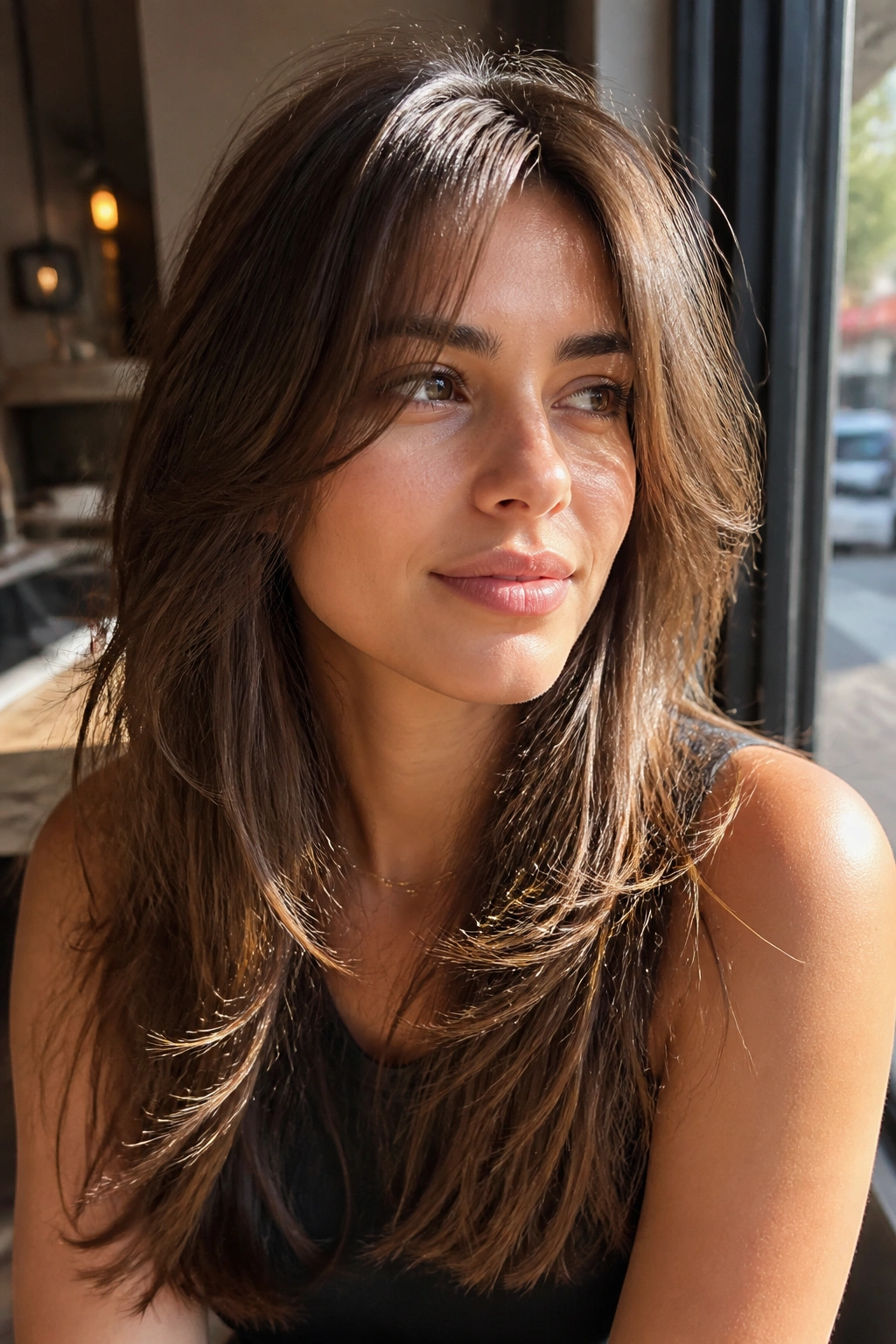
Razor-cut layers are not a universal answer, and I’m glad they aren’t. On the right head of hair, they create soft, airy ends that move like silk. On the wrong one, they can fray and puff. Thick hair sits somewhere in the middle, which is why this cut depends so much on texture and skill.
Straight, dense hair can handle razor work well if the stylist knows how to keep the ends controlled. Slightly wavy hair can too. Very coarse or frizz-prone hair may need a different approach, because the blade can rough up the cuticle and make the ends look thirsty by the end of the day.
I like razor layers when the goal is softness, not edge. They’re useful around the face, useful through the lower lengths, and useful when a blunt cut feels too heavy. They do not need to be dramatic to matter.
Ask for light, deliberate slicing near the ends rather than heavy texturing through the whole head. That keeps the movement gentle and avoids the fuzzy triangle nobody asked for.
15. Sliced Layers With a Blunt Bottom Line
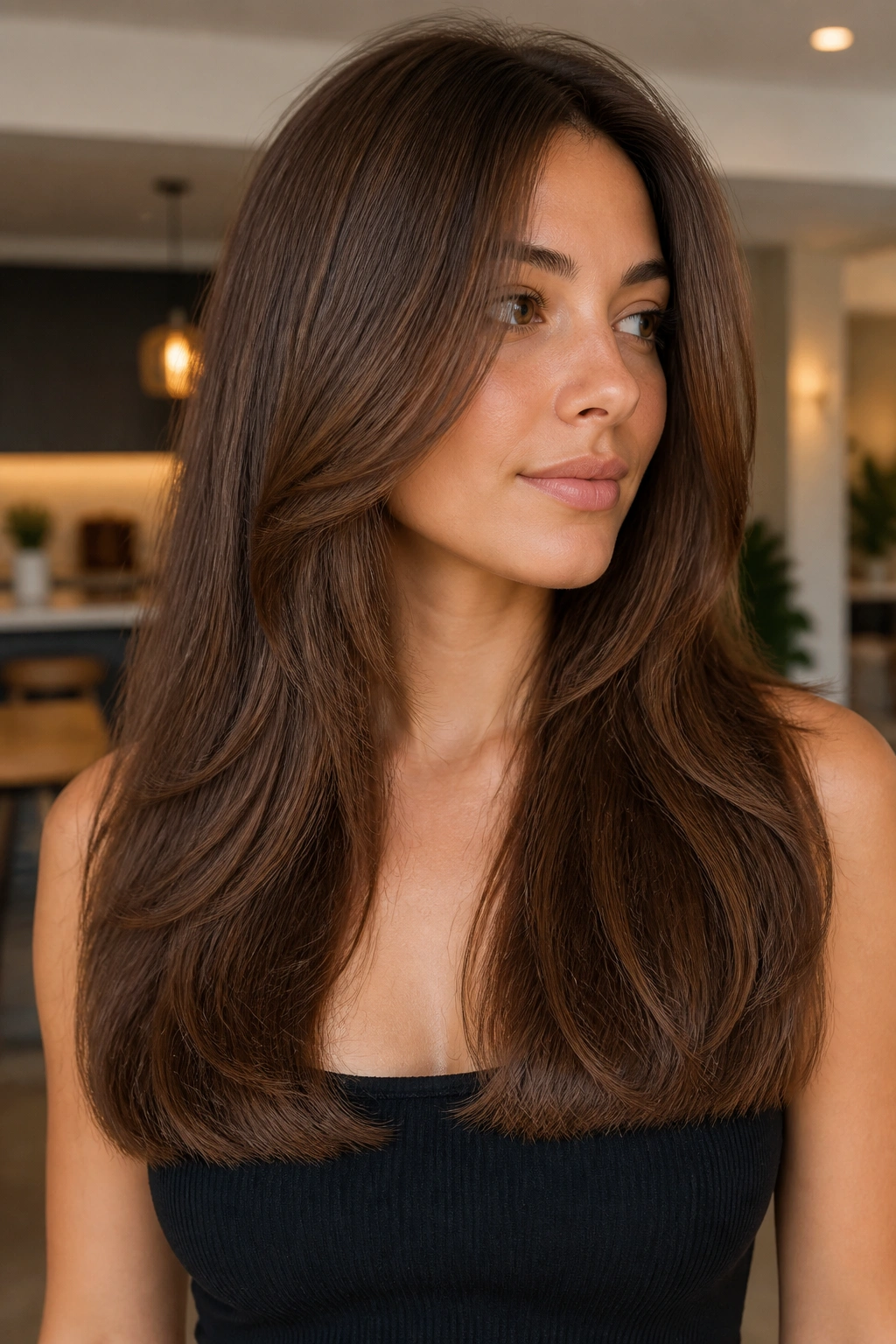
Why keep a strong edge at all? Because thick hair usually looks best when it has something solid to rest on. Sliced layers take some weight out of the mids, but the blunt bottom line keeps the haircut looking full and expensive.
This is a smart compromise for people who want movement without losing the sense of density. The sliced pieces stop the haircut from feeling too blocky, but the perimeter stays honest. I think that matters more than most people realize. A strong line can make thick hair look polished even when the styling is minimal.
It also avoids the common problem of over-layering. Too many short layers on heavy hair can create a halo of puff. Slicing keeps the interior lighter while preserving shape at the edges. That balance is why I reach for it often on straight or slightly wavy textures.
If you want hair that swings but still looks like it has substance, this is a very good lane to stay in.
16. Wolf Cut With Controlled Chaos

The wolf cut is for someone who wants movement and doesn’t mind a little attitude. It sits between a shag and a mullet, with shorter pieces around the crown and longer ends that keep the shape from feeling too severe. Thick hair gives it enough body to work.
What makes it interesting is the contrast. The top looks loose and lifted, while the bottom keeps some length and weight. That contrast is what gives the style its edge. Without thick hair, the cut can fall flat. With thick hair, it has enough fullness to hold the whole shape together.
I would not call this a neat haircut. It isn’t trying to be. It looks best when there’s texture, bend, and a little mess. If your hair is naturally wavy, you’re in good shape. If it’s pin-straight, you’ll need more styling to get the effect.
The wolf cut is not subtle, and that’s the fun of it. Sometimes a haircut should have a pulse.
17. Tapered Layers for Natural Waves
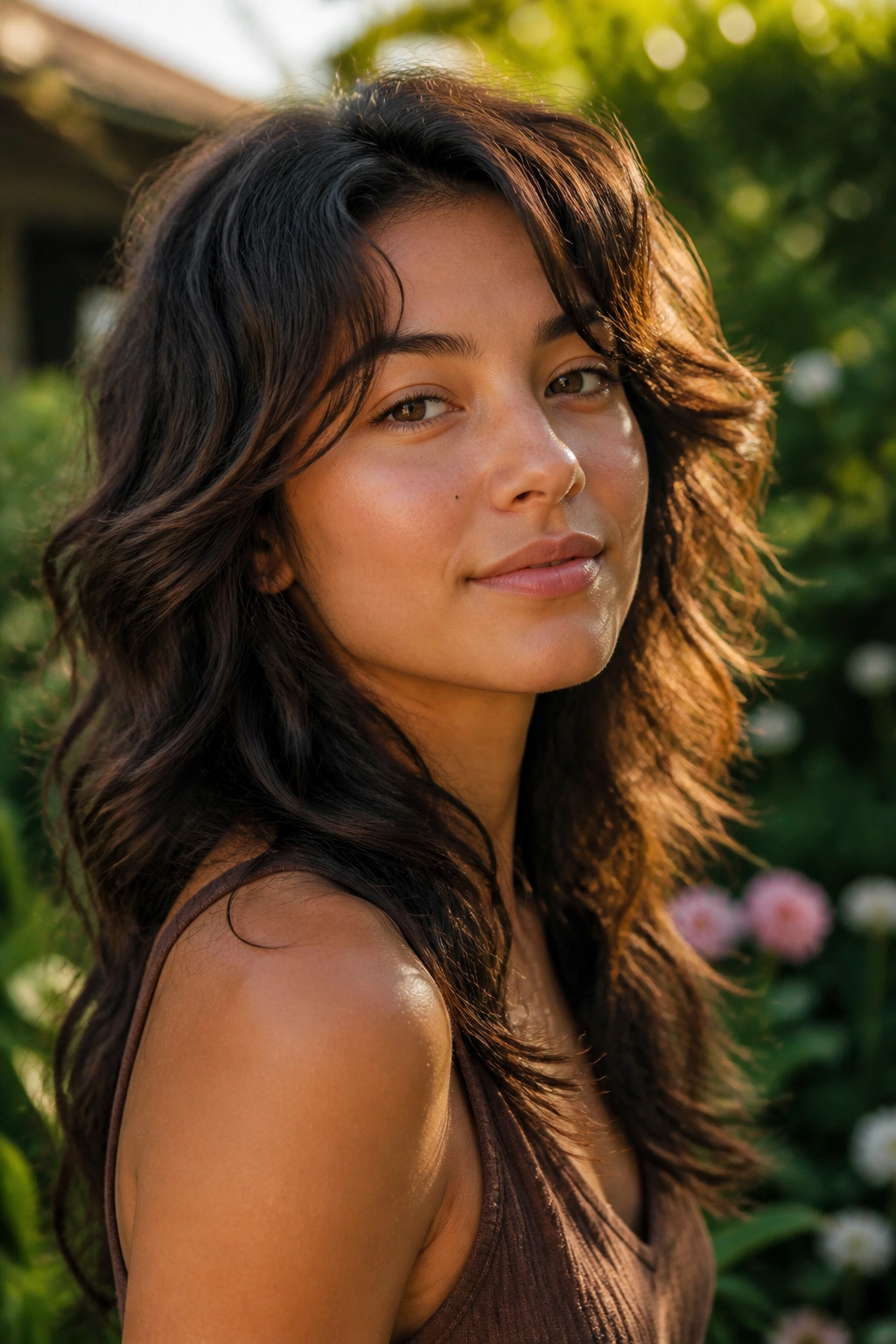
If your thick hair has a wave pattern, tapered layers can make it behave. The idea is simple: keep the top and face-framing sections light enough to bend, then let the length narrow gently so the bottom doesn’t spread out like a fan. That taper is what keeps the shape clean.
What to Tell Your Stylist
- Keep the layers longer near the crown.
- Remove weight gradually through the mids.
- Leave the bottom long enough to keep the wave from puffing.
- Ask for soft blending, not sharp separation.
The cut works beautifully when the wave pattern wants to clump but the density keeps it from dropping. Tapering gives the hair a path to follow. That path matters.
This is a strong choice if you air-dry often. The haircut does part of the styling for you, which is nice on mornings when you don’t want to negotiate with a blow dryer. It still needs some product, of course, but not a heroic amount.
18. Long Layers With a Strong Perimeter
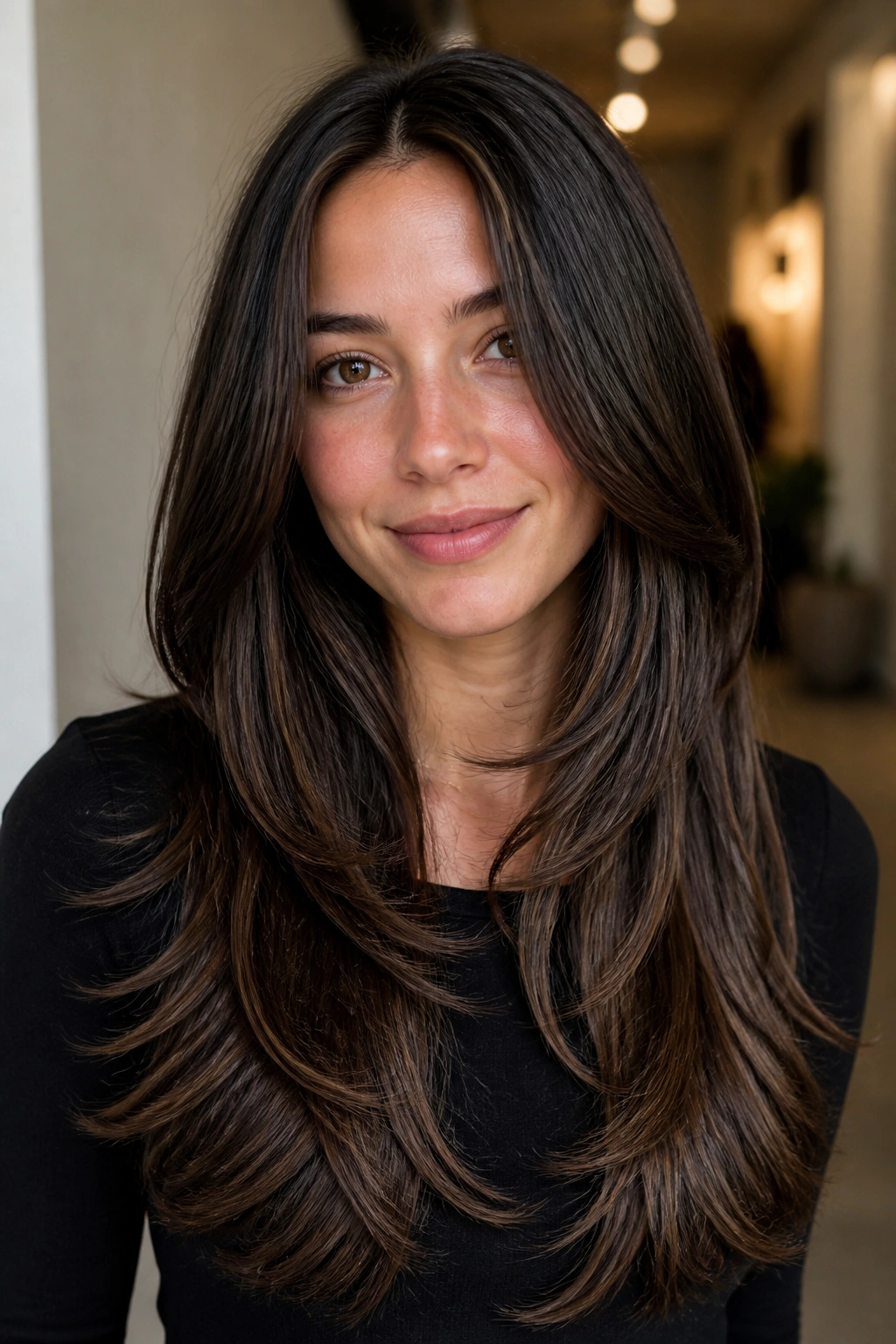
Sometimes less layering is the smarter move. Thick hair does not always need to be thinned into submission. In plenty of cases, a strong perimeter with a few long interior layers gives the best result: fullness at the ends, movement through the mids, and far less styling drama.
I like this cut on hair that is very dense but not especially coarse. The perimeter keeps the ends from looking wispy, while the long layers stop the whole head from turning into one giant block. It’s restrained, and that restraint is a good thing.
This is the kind of cut that looks expensive when it’s clean. A flat iron pass or a smooth blow-dry makes the shape obvious, but even air-dried it still has structure. The hair feels heavy in a controlled way instead of a tiring way.
People often think they need more layers than they really do. Sometimes they need smarter layers. That distinction saves a lot of bad haircut regret.
19. Layered Bixie for Thick Hair That Wants to Be Shorter
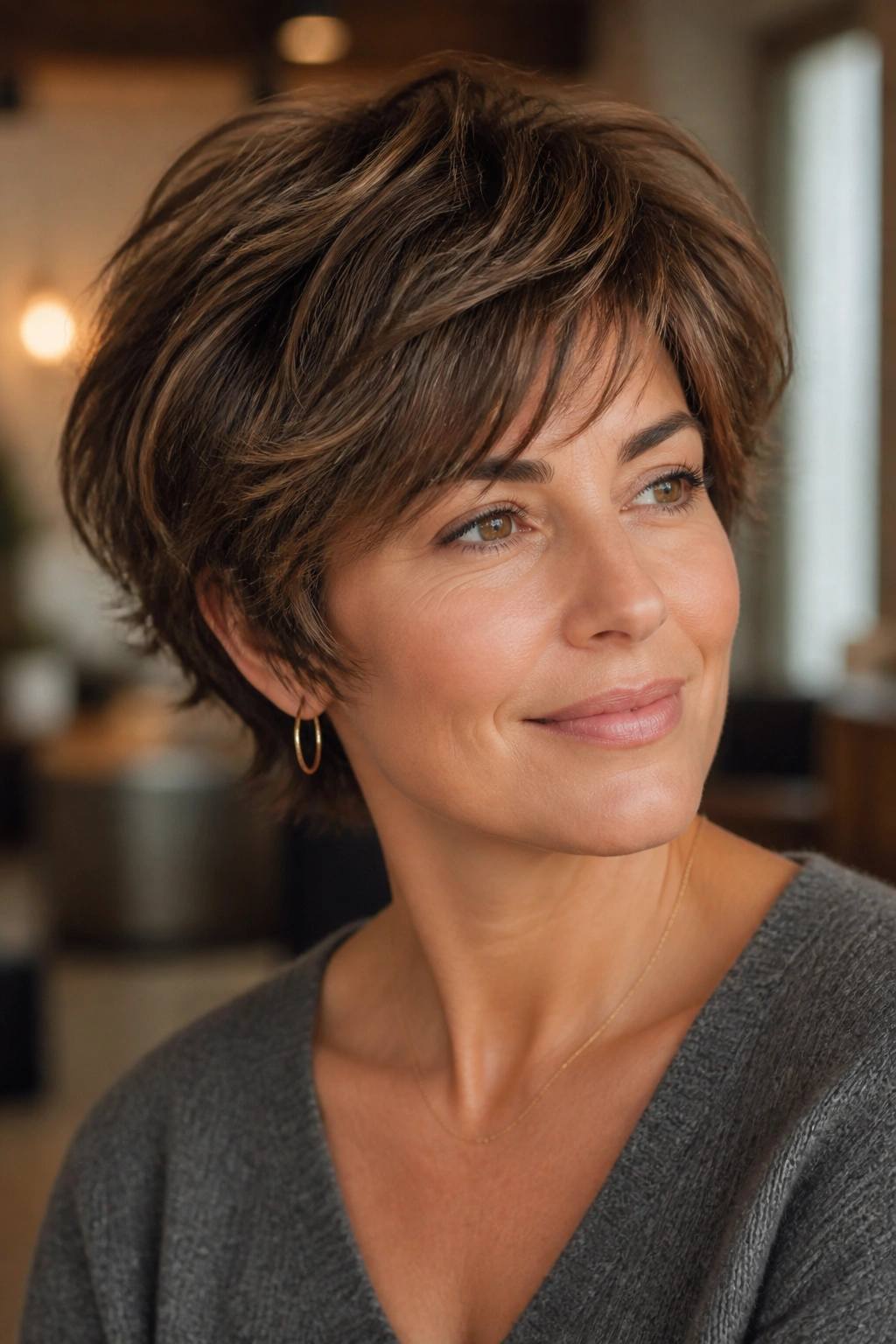
A bixie sits between a bob and a pixie, which makes it a useful cut for thick hair that’s starting to feel like too much hair. It takes bulk off the neck, lightens the sides, and keeps enough length on top to style without effort.
Unlike a full pixie, the bixie still gives you some softness around the ears and forehead. Unlike a bob, it doesn’t hang there with all its weight. That middle ground is why it works so well on dense hair. You get air around the head, but you don’t lose the sense of shape.
This cut is especially good if your thick hair grows outward instead of downward. Shortening the sides and nape can make daily styling easier fast. A little pomade or cream on the ends, and you’re done.
It is a commitment, though. Short hair shows growth sooner. If you like changing your mind a lot, keep that in mind before you chop.
20. The Octopus Cut With Wispy Ends
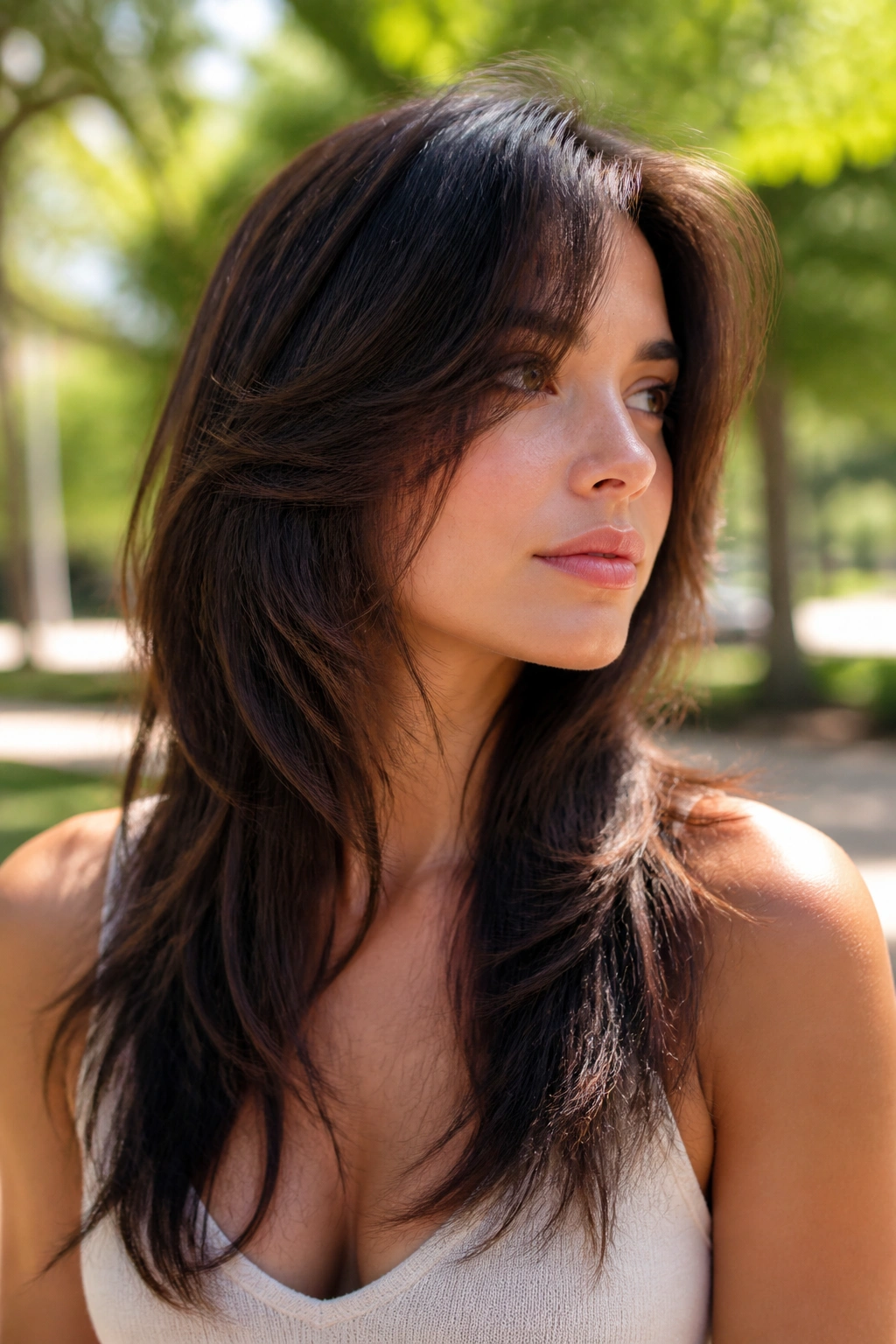
The octopus cut is one of the most useful layered haircuts for thick hair if you want length plus movement. It has a fuller crown, softer layers that drop around the face, and wispy ends that keep the bottom from feeling heavy. The name sounds playful. The shape is practical.
Why Thick Hair Likes It
The crown stays round and lifted, which helps dense hair avoid the flat-top problem. The lower lengths stay light enough to move, but not so light that the haircut loses its body. That makes the style feel modern without being fussy.
Who It Suits Best
- People with thick straight or wavy hair
- Anyone who wants texture without a shag’s rough edge
- Hair that needs lift at the top but still wants length
- Wearers who like blowouts, bends, or loose waves
The only caution is balance. Too many wispy ends and the cut starts to look unfinished. Too little internal shaping and it loses the whole point. Done well, though, it’s a smart, slightly dramatic way to make thick hair feel lighter. And if you ask me, that’s the whole reason layers matter in the first place.
