



Fine hair tells on you fast. Cut it too short in the wrong places, and it collapses by lunch; leave it too long without shape, and the ends start looking see-through in a way that is hard to ignore. The right layered haircuts for fine hair do not try to fake density with drama. They use weight, angle, and placement to make the whole head of hair look fuller, with movement that still holds up when the air gets warm or the day gets busy.
The mistake I see most often is over-layering. A stylist gets enthusiastic, removes too much bulk from the wrong spots, and suddenly the hair has nice movement at the top but thin, sad ends below. No thanks. Fine hair usually looks better when one area keeps a little heft — a blunt perimeter, a longer crown, or a face frame that starts lower than people expect. That little bit of restraint makes a bigger difference than a lot of choppy pieces ever will.
The other thing worth knowing is that fine hair and thin hair are not the same problem. Fine hair means each strand is small in diameter; thin hair means there are fewer strands on the head. Those two can overlap, but they don’t always. That’s why the same cut can look airy and flattering on one person and overly stripped-out on another. Placement matters. So does styling. So does how much texture is carved into the ends with scissors or razor work.
What follows is a set of cuts that play nicely with fine hair at different lengths, from short crops to shoulder-grazing shapes and longer layers that keep the ends from going wispy. Some are soft. Some are a little cheeky. All of them have one thing in common: they create lift without asking the hair to do something it can’t sustain.
1. Long Layers That Keep Fine Hair Looking Full
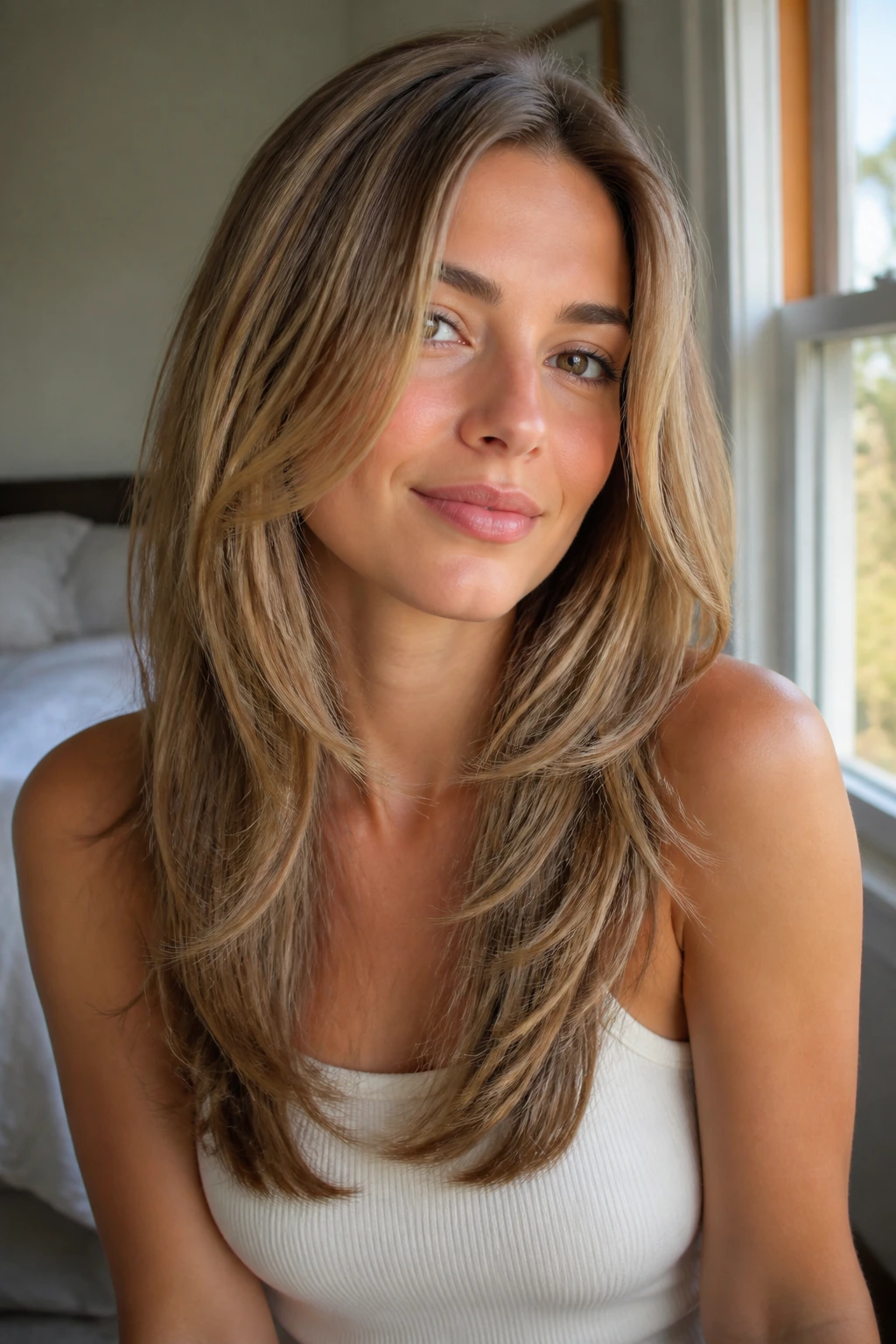
Long layers are a smart place to start because they give fine hair movement without stripping away the ends. The trick is simple: keep the shortest layer low enough that the hair still reads as full from the cheekbones down. If those layers start too high, the mid-lengths can look floaty and the bottom can look sparse.
What to ask for
Ask for long, blended layers that start below the chin, plus a face frame that softens the front without digging into the body of the cut. That keeps the silhouette thick.
- Keep the shortest layer around the jaw or collarbone, not at the temples.
- Ask for soft point-cutting only at the very ends.
- Leave the perimeter a little blunt so the haircut still has weight.
- Style with a light mousse at the roots and a quick blow-dry using a medium round brush.
A good version of this cut moves when you turn your head, but it does not look chopped to bits. That matters.
Too many short layers will betray you fast. On fine hair, the difference between airy and sparse is often less than an inch.
2. Collarbone Lob With Invisible Layers
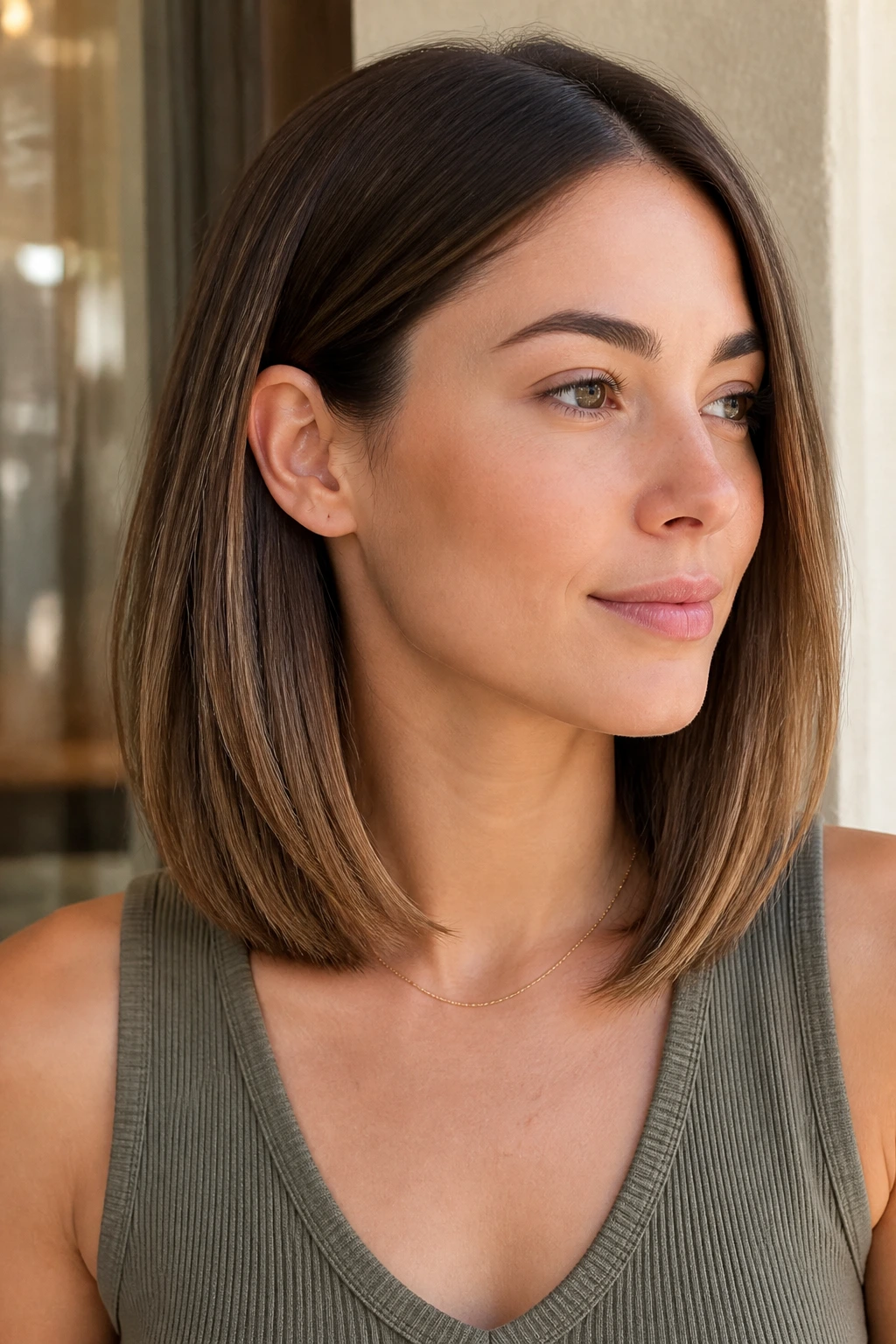
If you want fullness without obvious layers, this is the cut to ask for. A collarbone lob sits in that useful middle ground where the hair is long enough to tuck behind the ears, but short enough to keep a little spring in the ends. Fine hair often looks best here because the length does not pull the shape flat.
The “invisible” part matters. Instead of carving visible steps into the cut, the stylist builds movement inside the hair so the outside line stays clean. That gives you the look of density from the front and side, which is where most people actually see your hair anyway. It also makes the lob easier to wear straight, wavy, or with a lazy bend from a flat iron.
This cut is especially kind to hair that falls straight down and refuses to hold volume. It gives the roots a chance to lift a little, and it keeps the ends from looking stringy. A quick blow-dry with the nozzle pointed down the shaft — not blasting every direction at once — helps the hair settle into a smoother finish.
If you only want one safe bet, this is it.
3. Butterfly Cut With Lift at the Crown
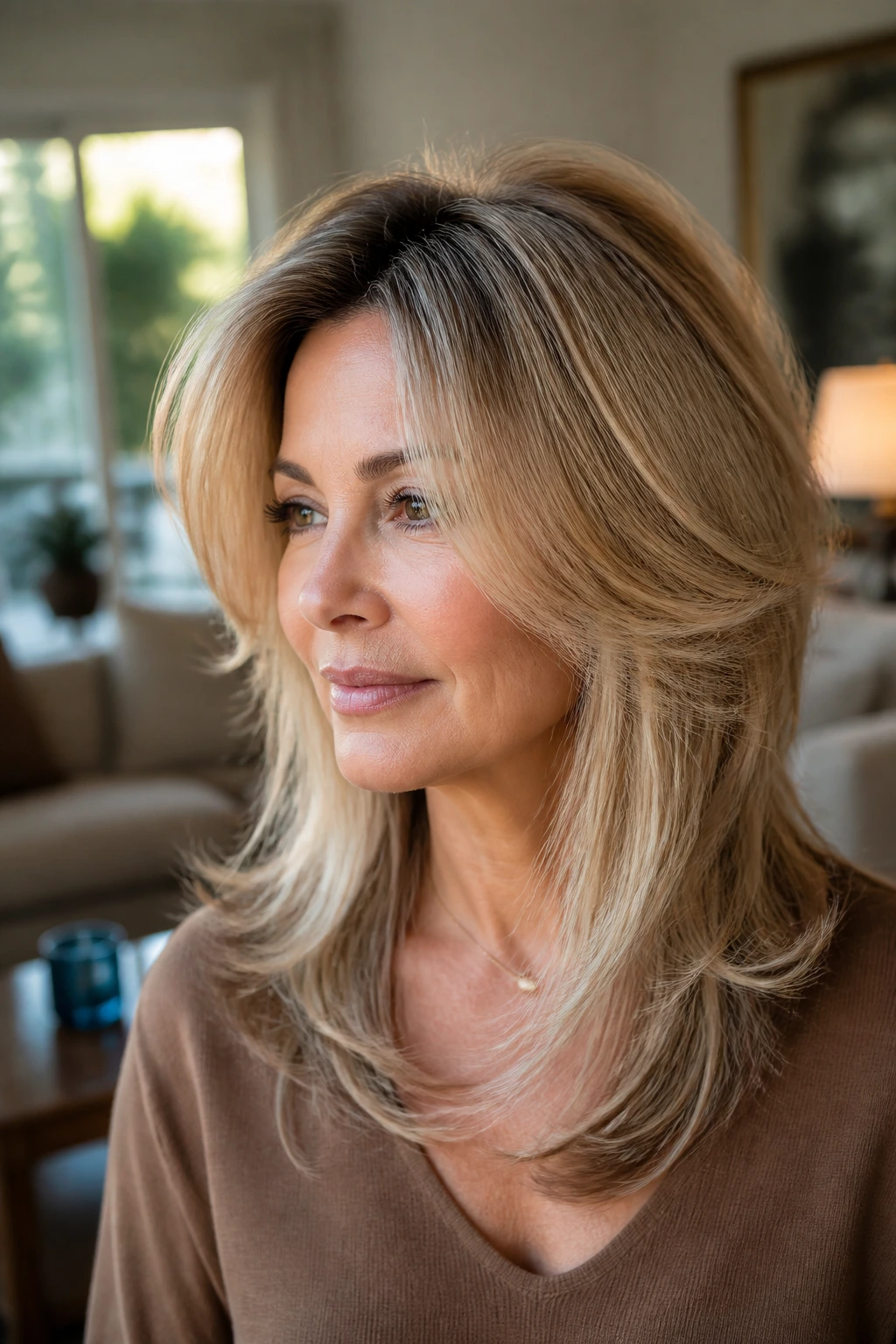
Why does the butterfly cut keep showing up on fine hair? Because it cheats, in a good way. The shorter layers at the front and crown make the top half look fuller, while the longer lengths stay in place below. You get the feeling of a big cut without giving up the hair you already have.
The best version is not choppy. It has a soft swing from the cheekbones down, and the shortest pieces are long enough to blend into the rest of the hair instead of sitting there like a separate haircut. Fine hair can actually carry this shape beautifully when the layering is controlled.
How to style it
- Blow-dry the crown first for lift at the roots.
- Use a large round brush or a hot-air brush to curve the face-framing pieces away from the cheek.
- Clip the top sections up while they cool so they hold shape.
- Finish with a light texture spray at the mids, not a heavy cream near the roots.
The catch? You do need to style it a bit. If you want a wash-and-go cut with zero effort, this one can fall flat on its own.
4. Soft Shag With Wispy Fringe
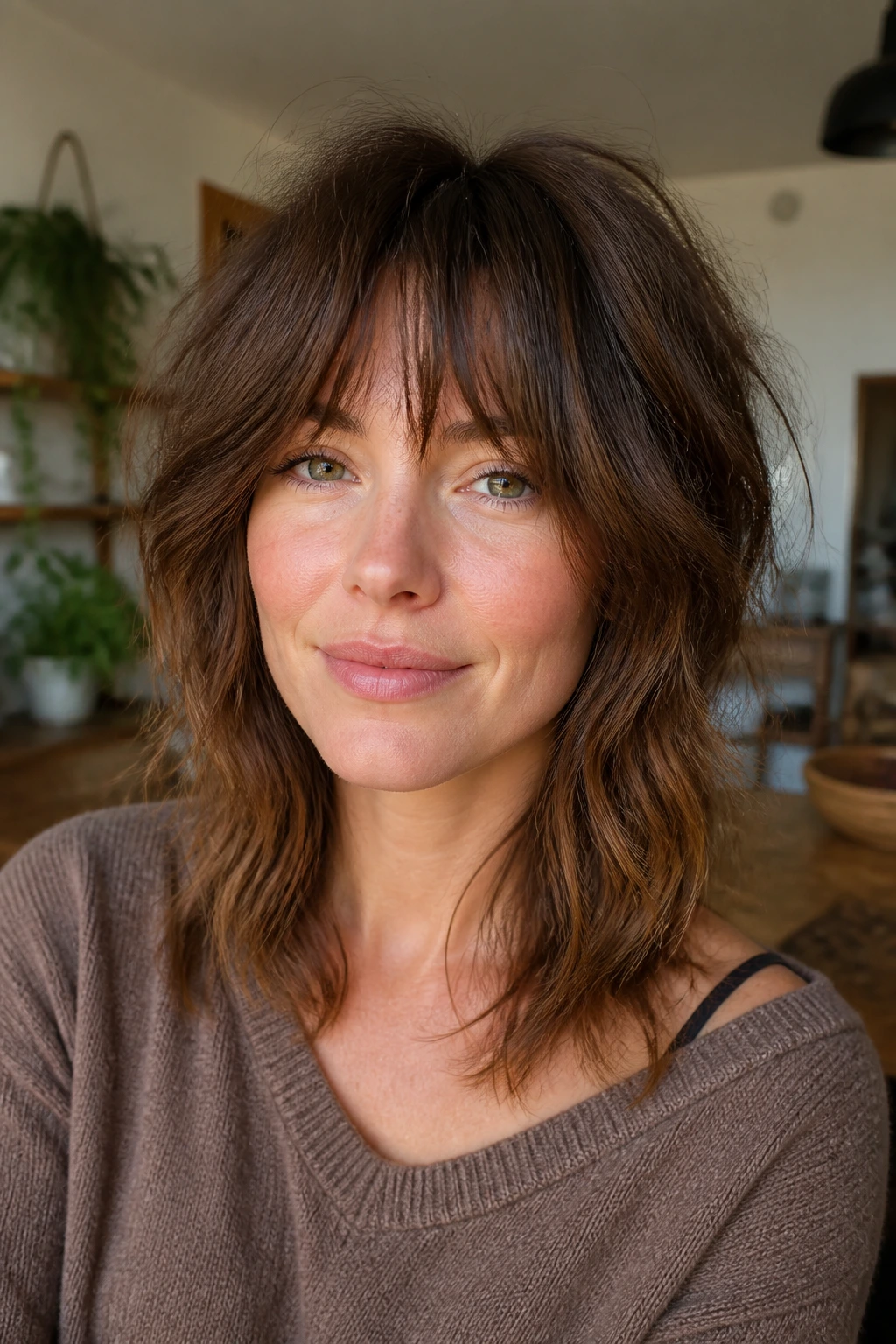
A heavy shag can eat fine hair alive. A soft shag does the opposite. It gives the hair texture and movement, but it keeps enough of the perimeter intact that the whole head still looks like it has substance.
The fringe is doing a lot of work here. A wispy, broken-up bang softens the forehead and gives the haircut a lived-in feel, but it should not be so thin that you can count individual strands in daylight. That is where people go wrong. Fine hair does not need to be shredded to look modern. It needs shape and a little lift at the crown, then space around the face so it doesn’t sit heavy.
I like this cut best on hair that has a slight wave. It air-dries with a little natural bend and doesn’t need much more than a touch of mousse and a diffuser. Straight fine hair can wear it too, but you’ll want to rough-dry the roots and give the fringe a quick bend with a small round brush.
Nope, it is not a cut for someone who wants polished and still.
5. Blunt Bob With Hidden Internal Layers
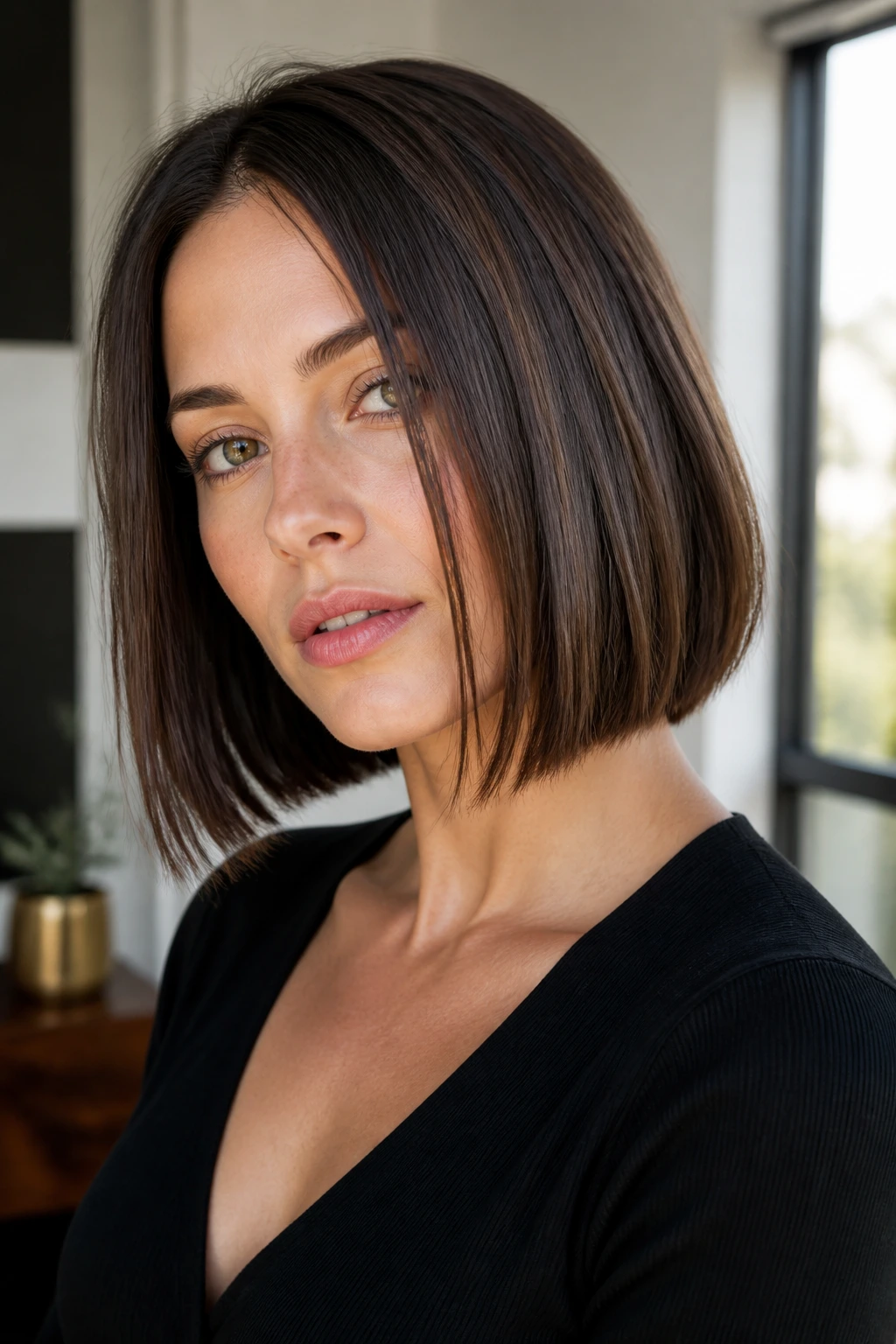
A blunt bob can make fine hair look thicker almost immediately because the edge lands cleanly and the eye reads it as dense. That strong line is the whole point. The hair doesn’t have to be long to look full; it has to look intentional, and blunt ends do that better than overworked texture.
The hidden part is where the balance comes in. A stylist can add a touch of internal layering inside the bob so it doesn’t puff out like a triangle or sit too flat on the head. You still keep the outer line. You just stop the cut from feeling stiff. It is a small adjustment, but on fine hair it makes the difference between “nice bob” and “why does this look so flat at the back?”
This haircut works especially well if your hair is naturally straight or only slightly wavy. It also grows out neatly, which I always like in a bob. A lot of bob cuts look expensive for two weeks and then turn into a maintenance project. This one stays readable longer.
A clean finish, a little root lift, and you’re done.
6. Feathered Midi Cut for Fine Hair
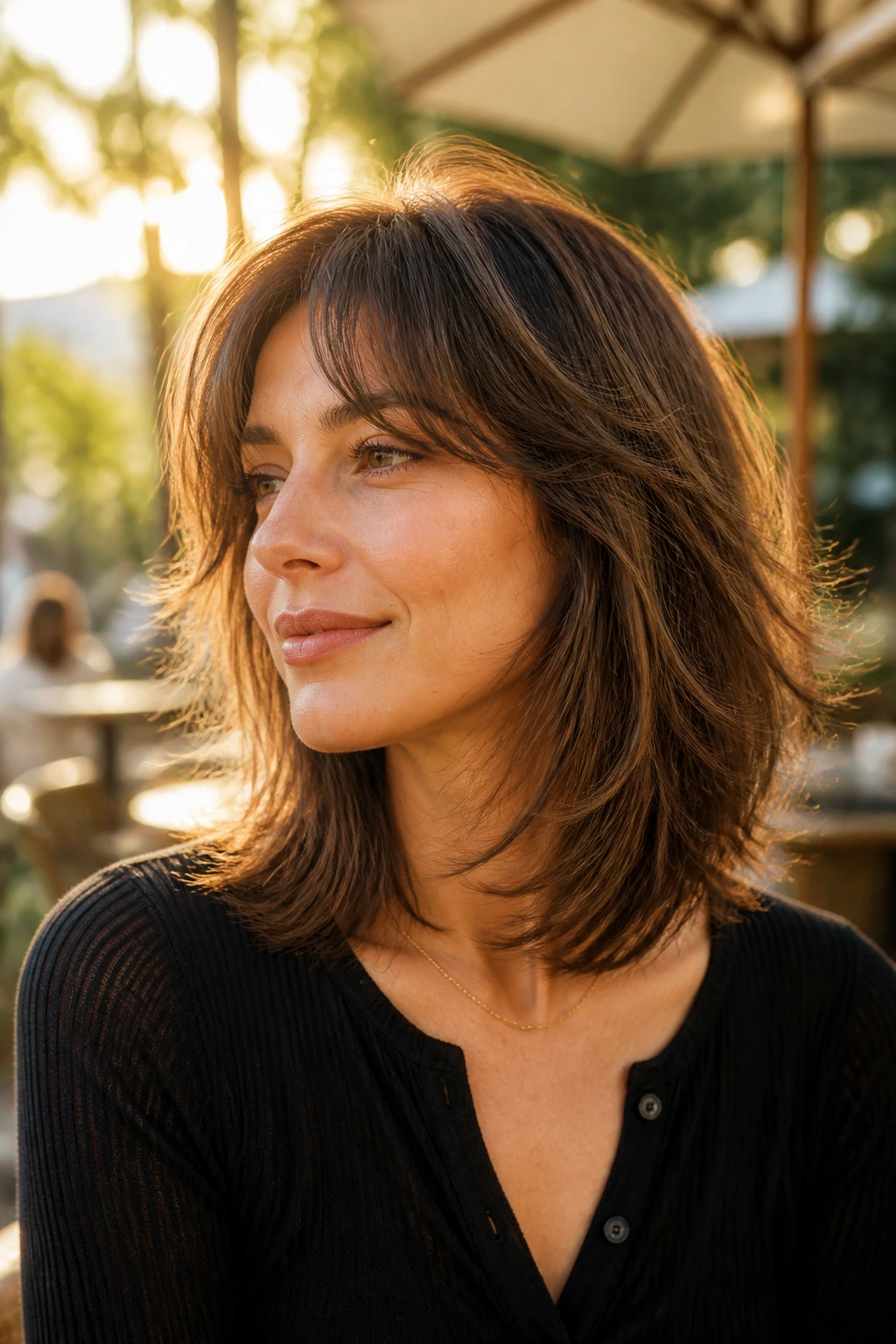
A feathered midi cut sits around the shoulders and uses light, directional layers to keep the ends from hanging like wet ribbon. That shoulder-length zone is a sweet spot for fine hair because the cut is long enough to tie back, but not so long that gravity wins every morning.
Why the feathering matters
Feathering removes bulk in a softer way than blunt chopping. The hair moves instead of clumping. It also lets you keep a thicker-looking outline through the ends while still giving the mid-lengths some air.
What to tell your stylist
- Keep the layers long and directional, not shredded.
- Ask for feathering around the cheekbones and neckline.
- Leave the ends full enough to sit on the shoulders without fraying out.
- Avoid heavy razor work if your strands already feel soft and fragile.
This cut shines with a round-brush blowout, but it is not helpless if you air-dry. A quick twist while damp can create bend without making the hair look overstyled. That matters because some feathered cuts only look good with twenty minutes of heat tools. Nobody needs that every day.
7. Pixie Cut With a Longer Crown
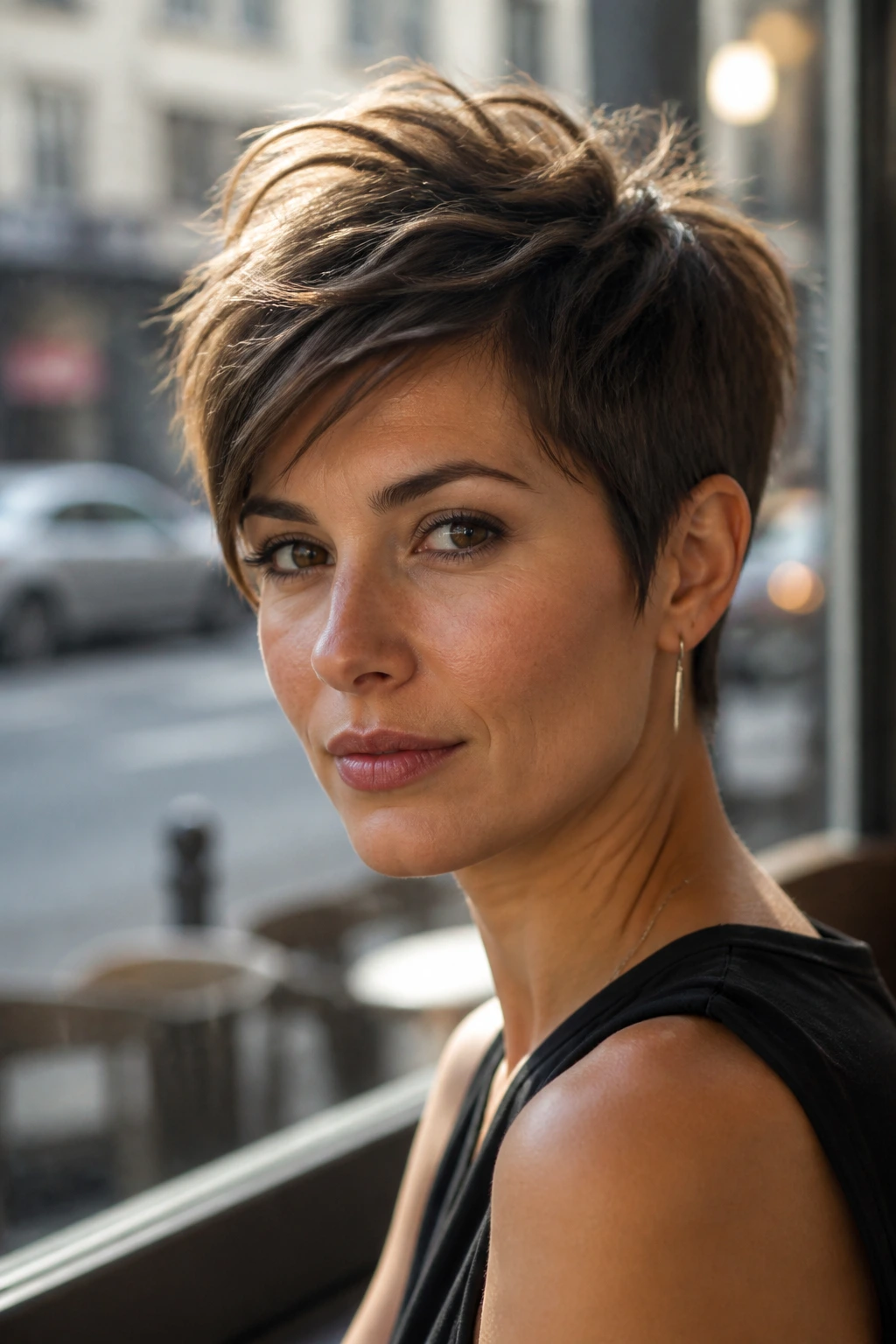
When fine hair collapses at the temples, a longer-crown pixie can fix the silhouette in one shot. The short sides take away weight that would otherwise drag the shape down, and the top layers give you room to build height. It is one of the few short cuts that can make thin-looking hair appear stronger instead of smaller.
The crown length is the whole game here. Keep enough on top to push forward, sweep to the side, or spike slightly with your fingers. If the top is too short, the cut turns flat and severe. If it is too long, it starts acting like a helmet. There is a narrow lane, but it is a good one.
- Ask for scissor-cut texture, not aggressive thinning.
- Leave at least 1.5 to 2 inches on the crown.
- Keep the nape neat so the shape doesn’t spread out.
- Use a pea-sized dab of matte paste, warmed between your palms.
This cut does ask for trims. It grows out quickly and the balance changes fast. Still, when it’s fresh, it is sharp and easy to live with.
8. Bixie With Soft Sideburns
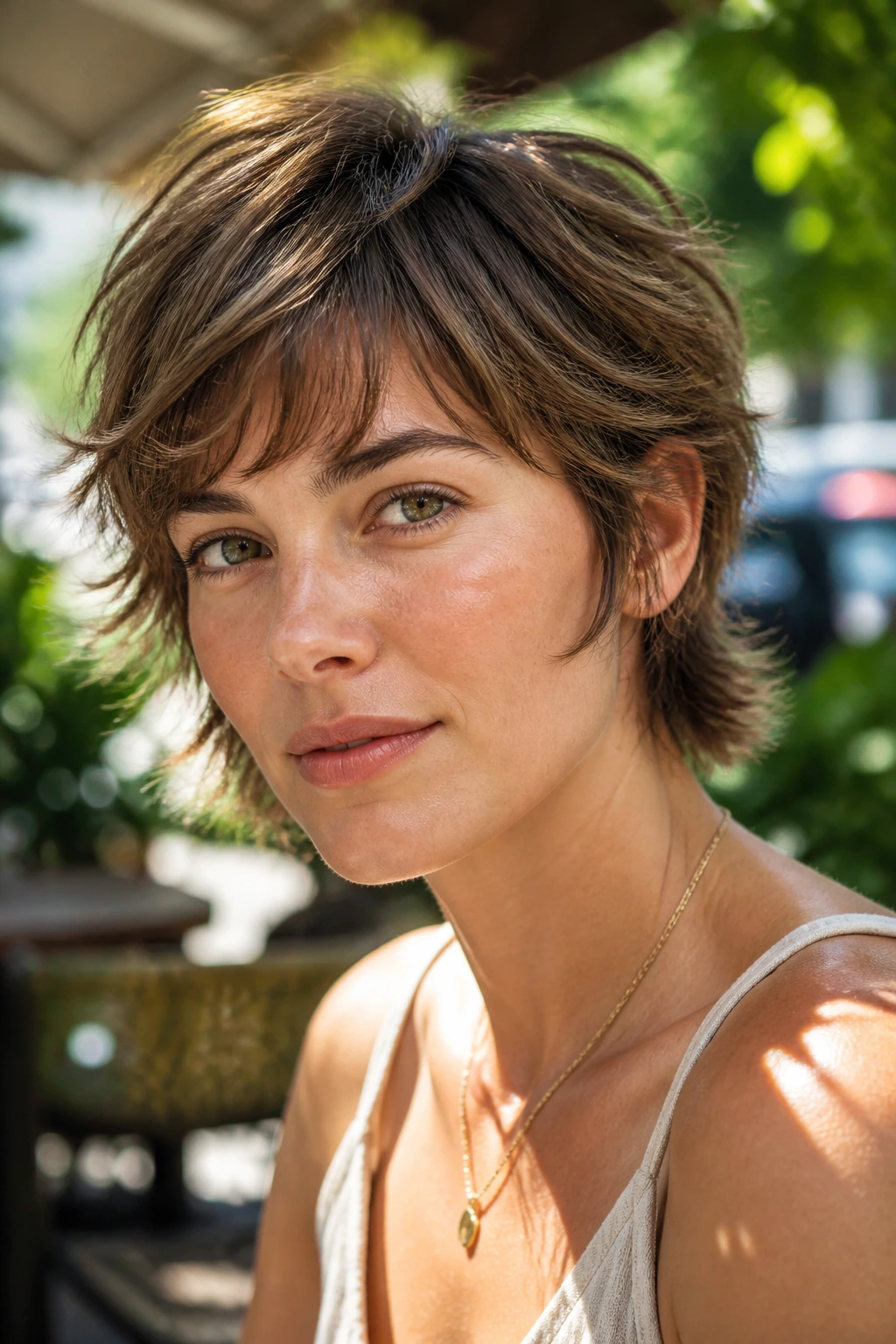
The bixie is for people who want short hair without going all the way to a pixie. It sits between a bob and a pixie, which is exactly why it works so well on fine hair. You keep a little length around the ears and jaw, then let the crown carry the lift.
The soft sideburns matter more than people think. They keep the cut from feeling too bare around the face, and they give fine hair a place to hang with a little swing. A bixie also gives the stylist room to place texture where it will help most: top, crown, and around the temples. The ends are short enough to feel light, but not so short that the head loses shape.
This is a good cut if you want something easy to finger-style in under five minutes. A touch of styling cream or lightweight paste is usually enough. If you like a sleek finish, you can smooth the top and tuck one side behind the ear. If you want a bit more edge, rough it up and let the fringe fall where it wants.
It has personality without asking for much.
9. U-Shaped Long Cut With Soft Movement
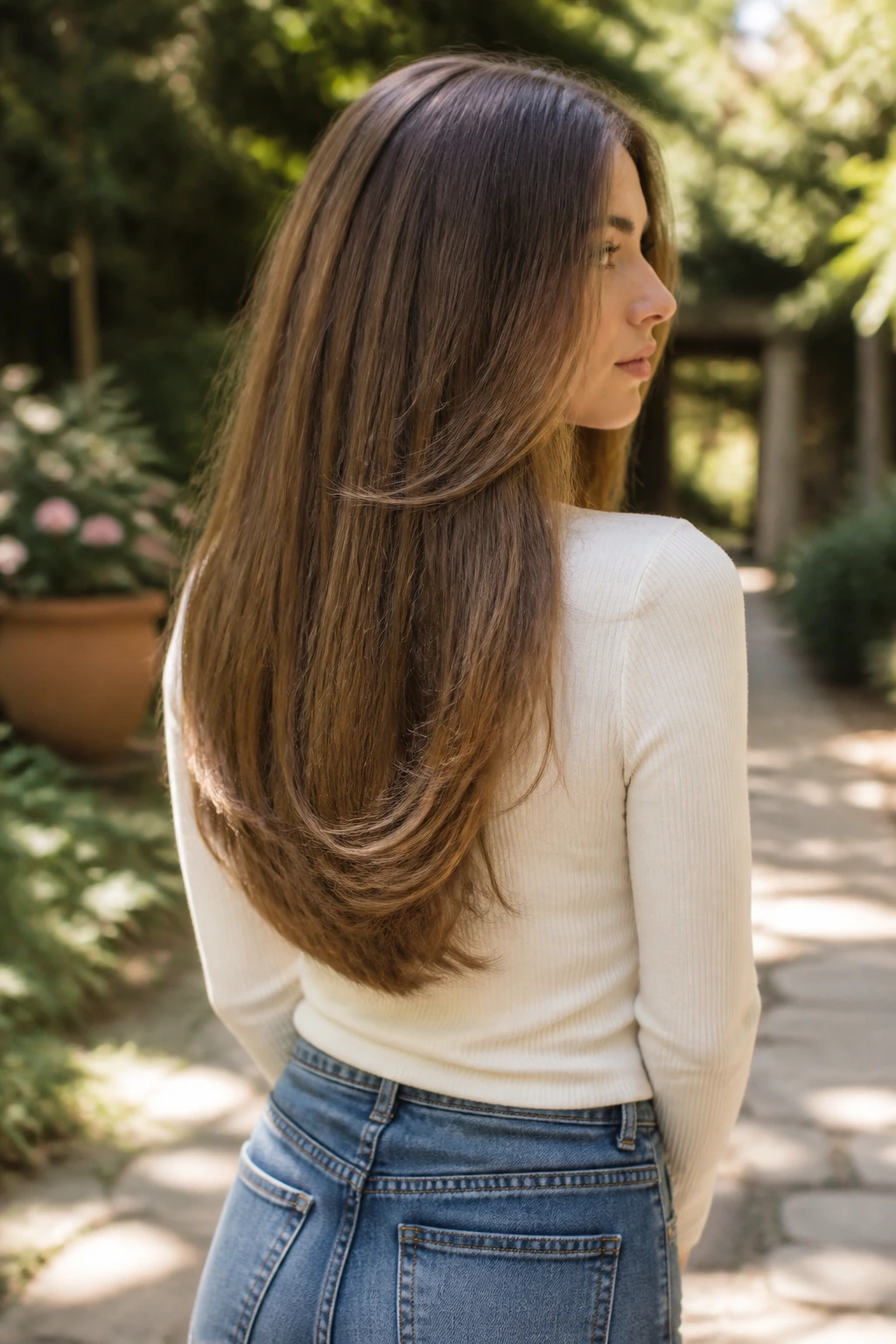
A U-shaped cut is a quiet fix for fine hair that still wants length. Instead of cutting straight across the back, the hair curves gently so the center hangs a little longer than the sides. That shape keeps the ends from feeling blunt in a heavy way, but it still preserves a fuller-looking bottom edge.
The reason I like this for long fine hair is simple: it avoids the stringy V-shape that can make the ends look too narrow. A hard V can be dramatic on thick hair. On fine hair, it often reads as “less hair than there really is.” The U-shape keeps the silhouette soft and generous.
This cut behaves well in a ponytail and looks polished when worn down. It also gives face-framing layers a place to blend without taking over the whole head. If you love long hair but hate the way it turns limp halfway through the day, this is one of the safer options. Skip razor-heavy ends. You want the length to look cared for, not scraped apart.
10. Curtain-Bang Lob That Doesn’t Flatten Out
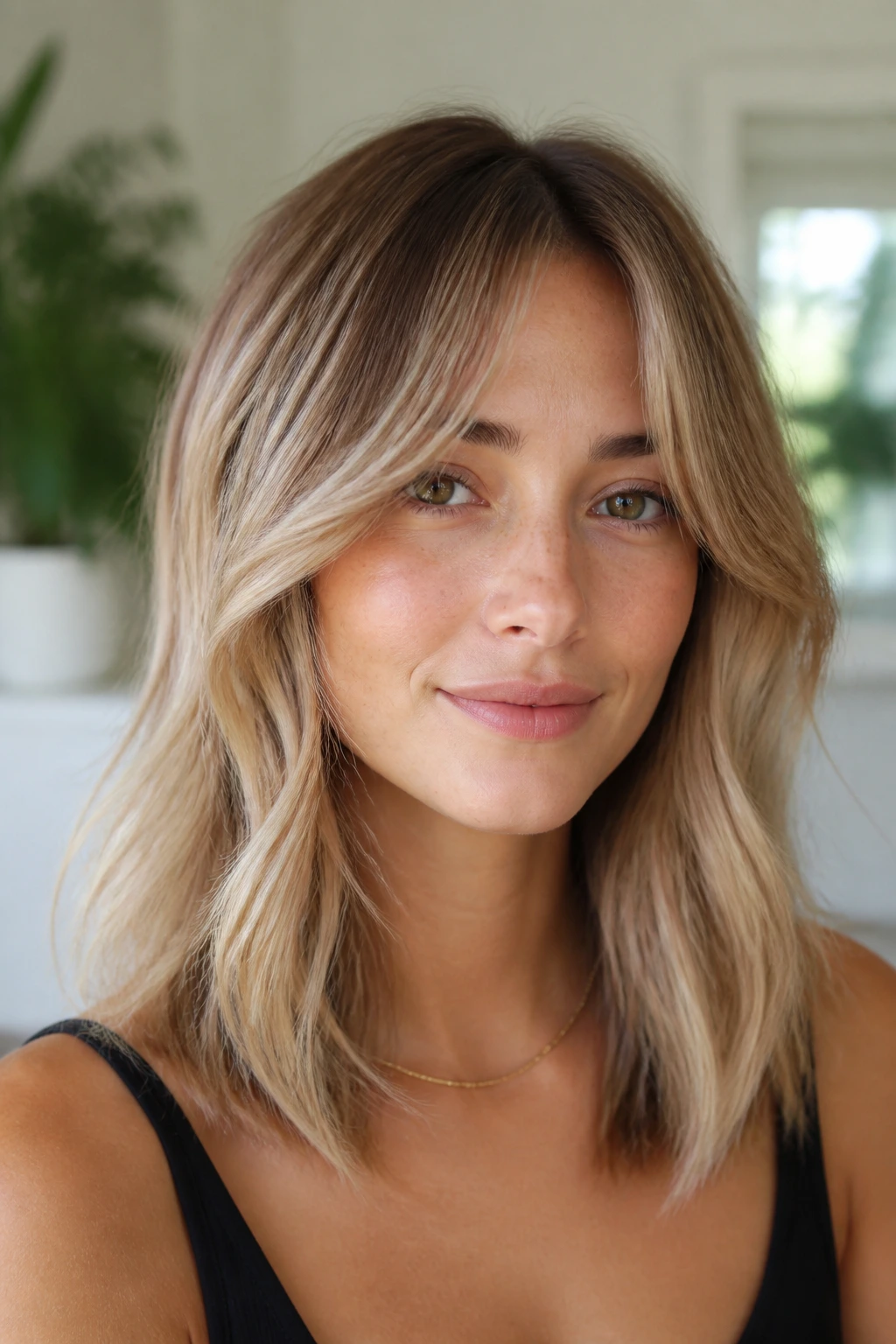
Curtain bangs can be brilliant on fine hair — if they’re cut with restraint. Too short, and they spring up awkwardly. Too thin, and they separate into little see-through strings that sit there all day. The sweet spot is a longer bang that opens from the center and falls toward the cheekbones.
The bang length that works
The outer pieces should blend into the lob around the lips or chin. That gives the face frame enough length to keep the front from looking chopped.
How to wear it
- Blow-dry the bangs away from the face using a small round brush.
- Let the roots cool before touching them.
- Keep the lob ends blunt enough to hold weight.
- Use a light mist of flexible spray so the fringe does not split apart.
This cut works best when the bangs are part of the haircut, not added as an afterthought. A good curtain bang can make the whole style look more expensive, but only if the rest of the layers support it. I like it on people who want softness around the face without committing to a full fringe.
11. Rounded Shoulder-Length Cut
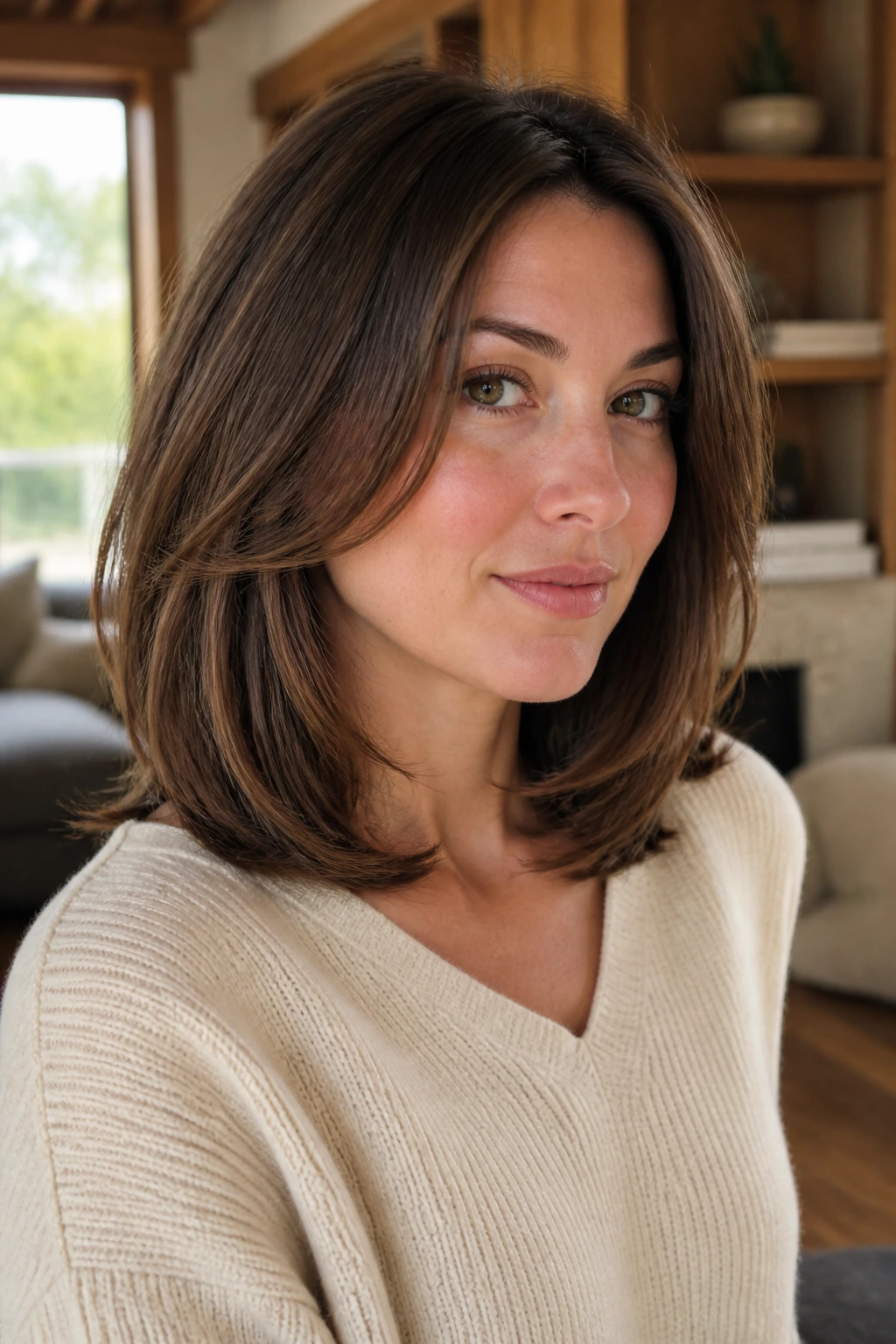
Can shoulder-length hair look thicker than shorter hair? Yes, if the shape is rounded instead of flat. A rounded cut keeps the weight balanced around the head, so the ends don’t all sit on one plane like a broom. Fine hair usually benefits from that gentler curve.
The reason this cut works is that the outline has movement without visible choppy steps. The layers are subtle, tucked into the body of the shape, and the perimeter follows the head a little more naturally. That means less separation at the bottom and more lift where the hair needs it. It also looks good with a side part or a soft middle part, which is handy if your part shifts during the day.
A round brush gives the cut its best shape, but you do not need a salon blowout to keep it looking alive. Even a quick bend at the ends can keep the silhouette from going limp. If your hair lies flat at the sides, this cut gives it a cleaner outline without turning the head into a helmet. That’s the whole appeal.
12. Side-Part Layered Bob
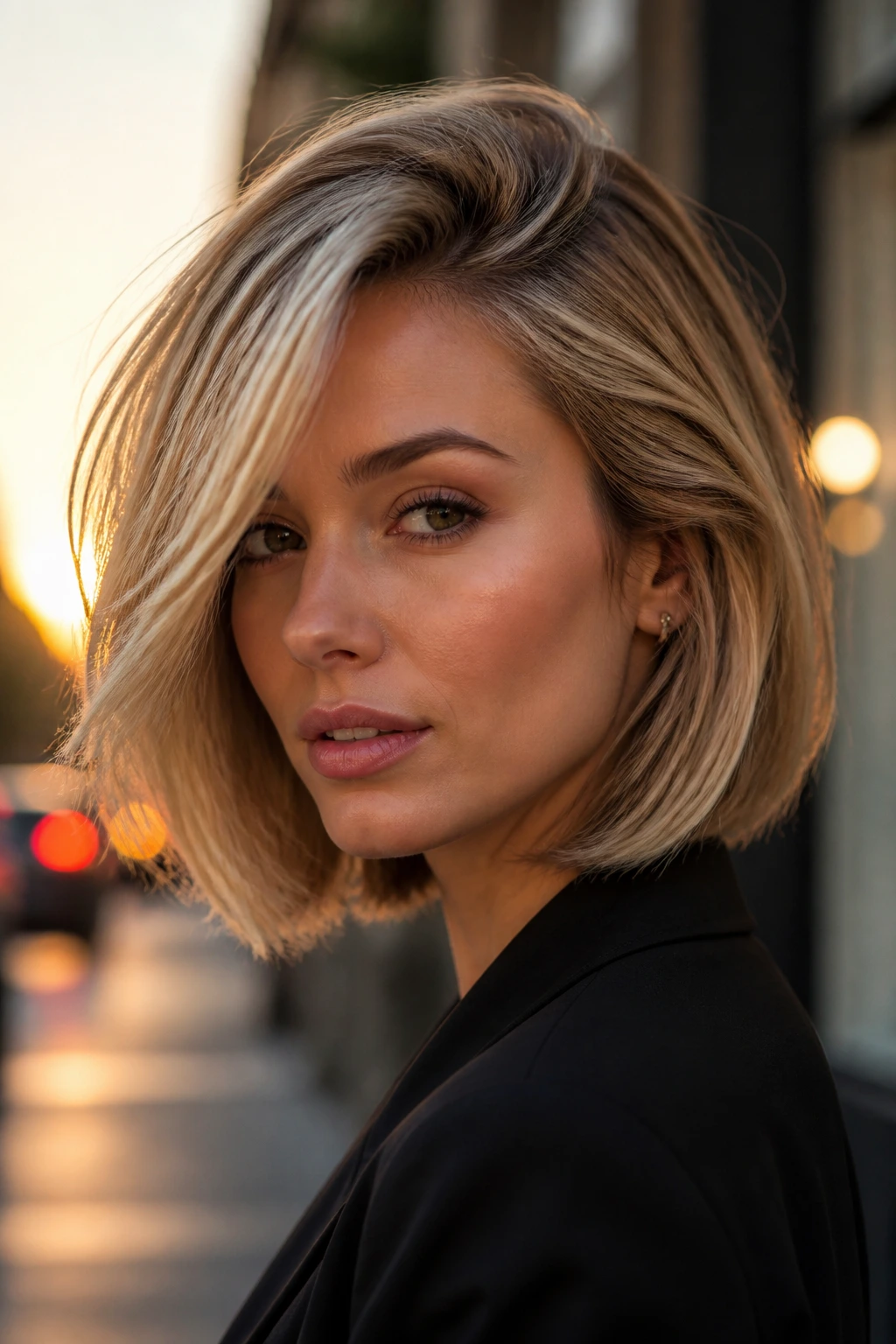
A deep side part gives fine hair instant root lift that a center part often refuses to provide. Add a layered bob under that part, and you get a shape that looks fuller on one side and more sculpted on the other. It is a little old-school in the best way.
The layers should be soft, not chopped. You want movement through the top and sides, but the bottom line still needs enough weight to look thick. A part placed about one to two inches off center is usually enough to wake up the roots without making the style feel lopsided. That small shift is a gift on fine hair.
This cut is especially useful if your hair tends to fall in the same flat pattern every single day. Changing the part exposes a different root direction, and the cut holds that shape better than a blunt one would. I also like it for people who want a bob but do not want the very exactness of a center part. There is a little more lift, a little more movement, and less fuss.
13. Mini Wolf Cut With Soft Ends
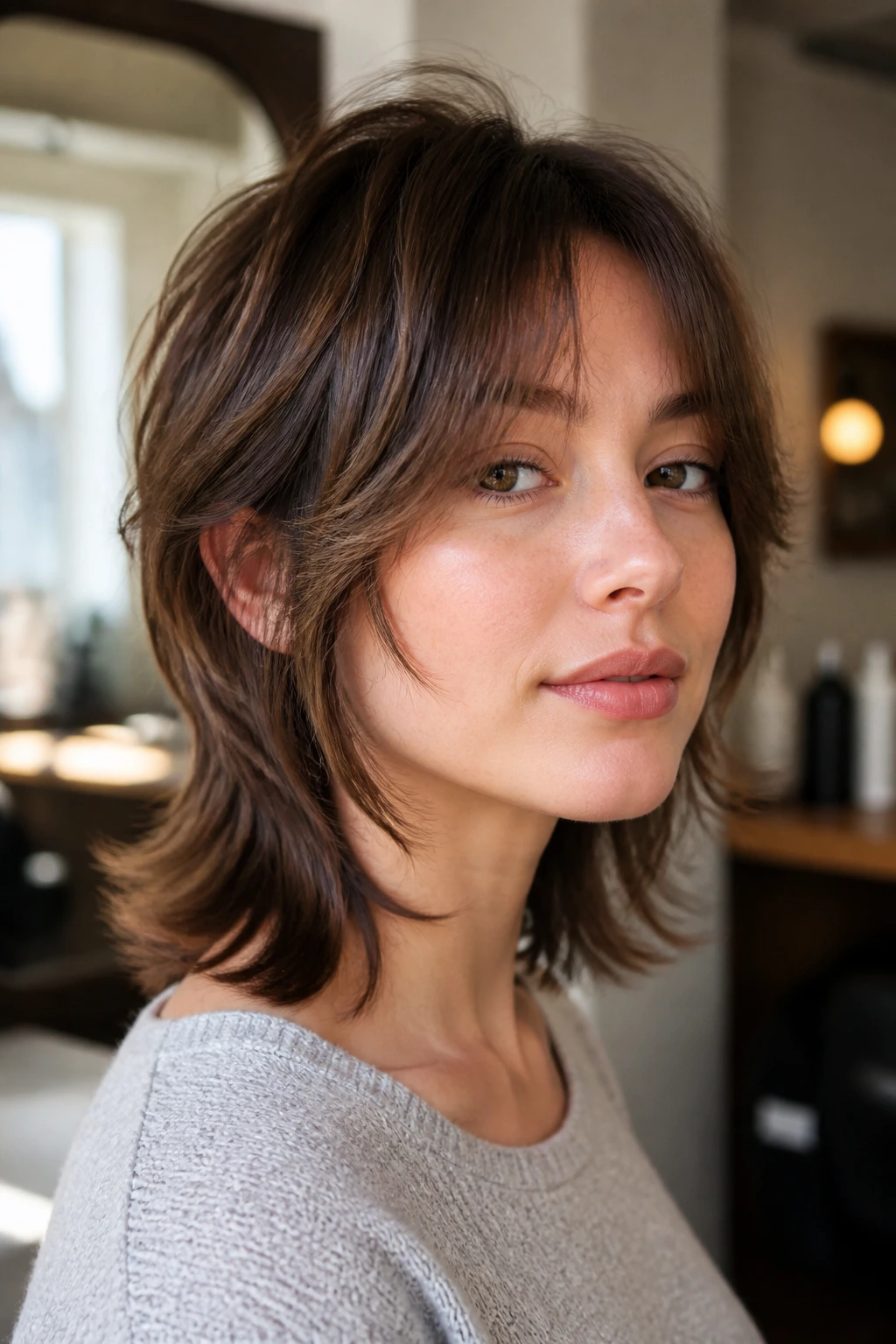
A mini wolf cut keeps the attitude of the bigger version but tones down the extremes. That matters on fine hair. The full wolf cut can be too shredded, too high up at the crown, and too light at the ends. A softer version keeps the crown lift and cheekbone framing while holding enough length below to keep the hair from disappearing.
This is the cut I’d suggest if you like texture that looks a little undone. The layers are more visible than in a lob, but less severe than in a classic shag. You get movement where hair usually falls flat — around the crown and sides — and the bottom still has enough shape to look deliberate.
- Keep the shortest layers low enough to avoid a sparse top.
- Ask for soft tapering at the front rather than a hard disconnection.
- Use a diffuser or scrunch-dry to bring out a loose bend.
- Finish with texture spray only at the mids and ends.
It is not the neatest haircut in the room. That is part of the charm.
14. Choppy Chin-Length Crop
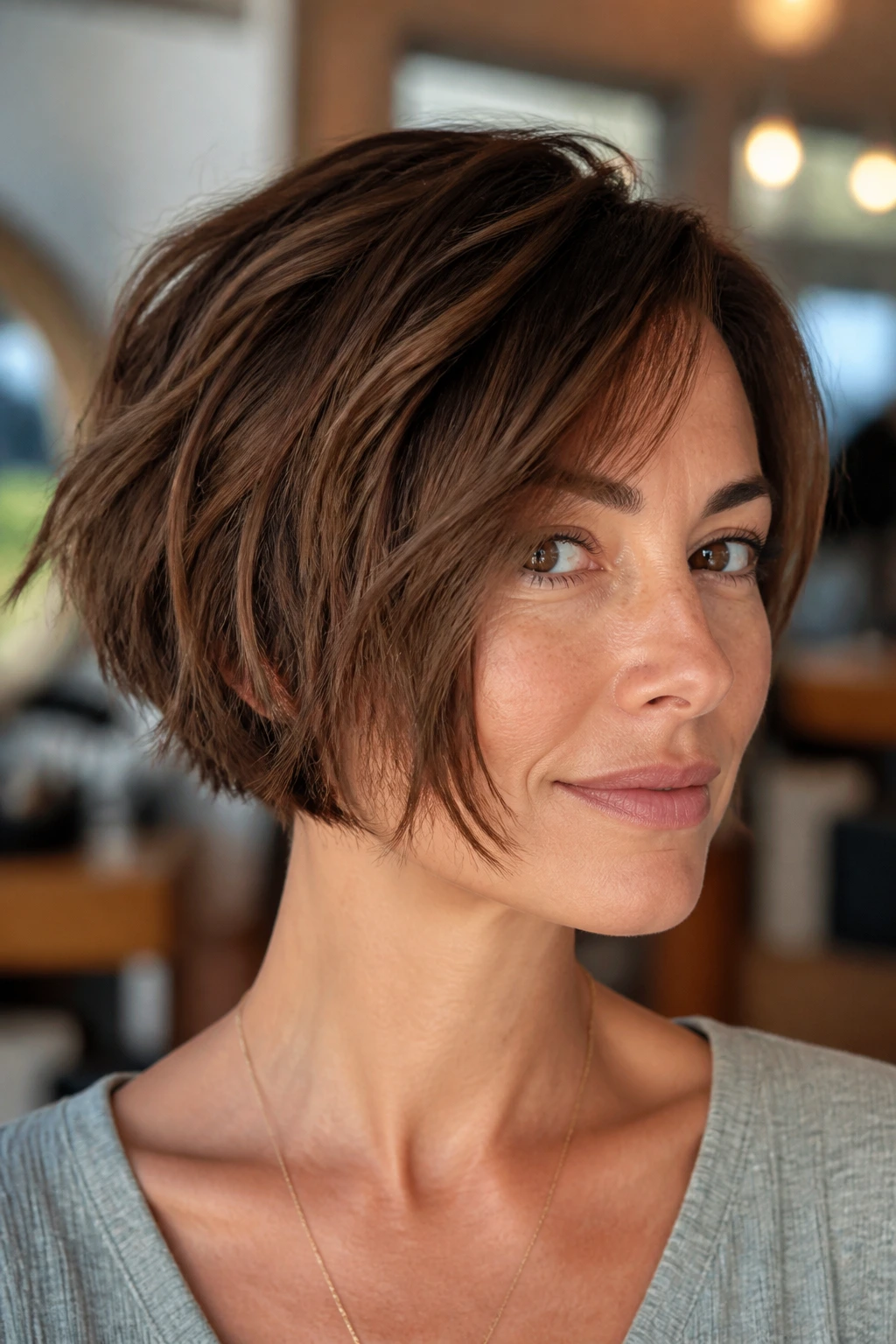
Chin-length is where fine hair starts looking bold again. At that length, the hair sits close to the face, and the eye reads the shape as fuller because the ends are gathered into a tighter line. A choppy version adds movement without turning the bottom into a thin fringe of strands.
The key is controlled choppiness. You want enough texture to keep the bob from feeling blocky, but not so much that the perimeter breaks apart. If the ends are sliced too much, the cut loses the density that makes a chin-length crop so effective in the first place. A little piecey texture around the face is fine. A shredded bottom edge is not.
This haircut works well on hair that straightens easily and on hair with a slight wave. It also pairs nicely with a side part if the center line feels too severe. The crop draws attention to the jaw and neck, so I like it best when those features are already something you enjoy showing off. It is crisp, short, and a little cheeky.
15. Airy Clavicut With Light Ends
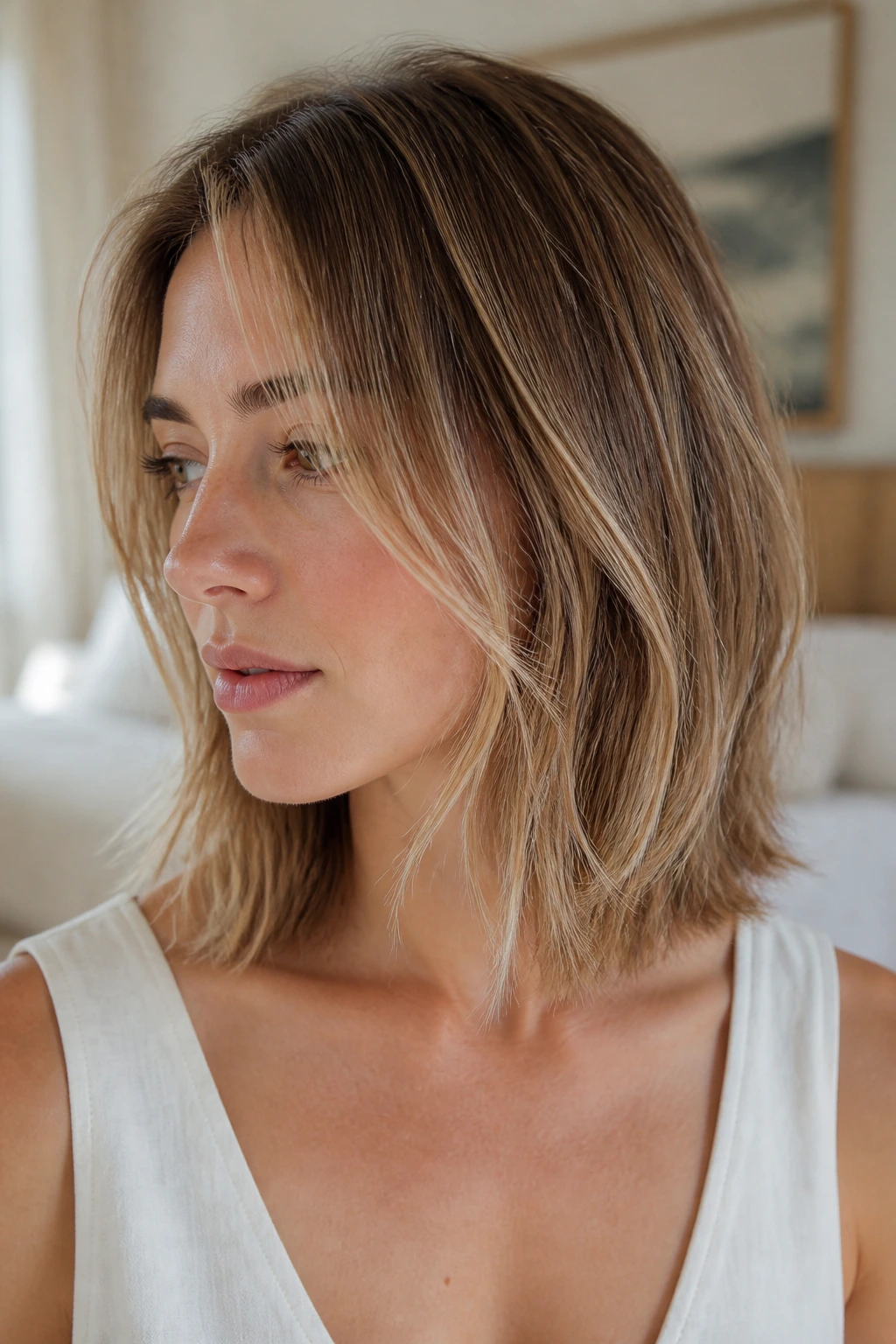
The clavicut lands right around the collarbone, which makes it one of the easiest lengths to wear on fine hair. It does not drag the ends down as much as longer hair, and it does not commit you to a short style that needs constant shaping. That middle length is why it works so often.
What gives the cut its airy feel is the layering — or, more accurately, the restraint in layering. You want just enough internal movement to stop the hair from falling like one flat sheet, but not so much that the bottom loses its edge. The ends should still look like they belong together. A soft bevel at the bottom helps the hair bend instead of droop.
If you hate the feeling of heavy hair on your shoulders, this cut is a relief. It lifts the line just enough to make the hair feel lighter, and it still leaves room for clips, half-up styles, and low ponytails. I’d call it a practical cut with decent manners. Not flashy. Not boring either.
16. Tapered Cut With Beveled Ends
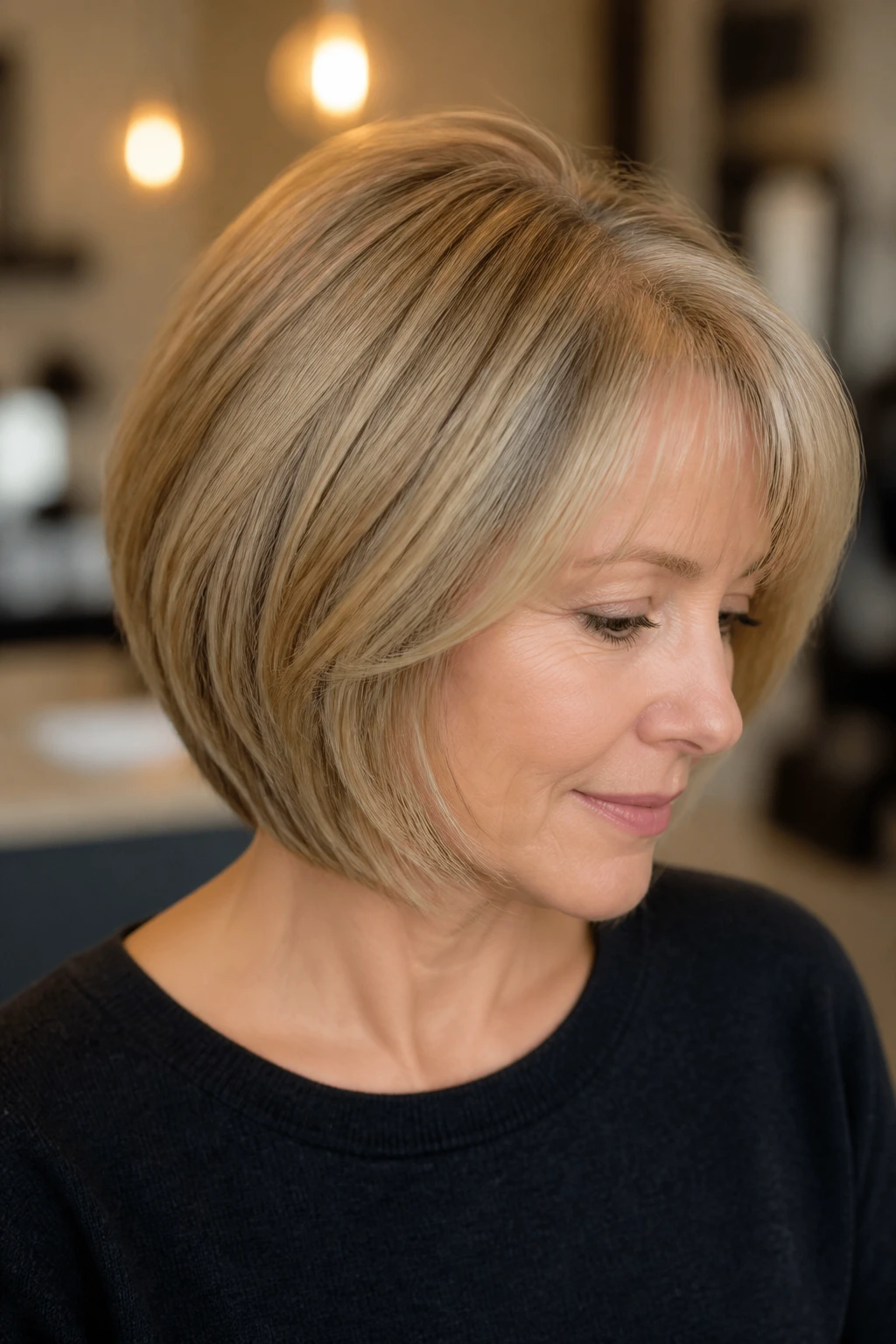
Why does a tapered cut feel fuller than a plain trim? Because the shape narrows where it should and keeps the ends from hanging in a blunt block. On fine hair, that little bit of taper creates a cleaner outline and more obvious movement, especially when the hair is worn straight.
The beveled end is the part people overlook. Instead of cutting the hair dead straight, the stylist angles the ends so they curve under or away with a little help from the brush. That creates a soft finish and stops the cut from looking flat at the bottom. It can be done on a bob, a lob, or even a longer cut if the hair tends to flop.
How to keep the shape
- Blow-dry with the nozzle pointed downward to keep frizz low.
- Use a medium brush to bend the ends in one direction.
- Don’t pile on heavy oils near the roots.
- Ask for gentle tapering at the neckline so the nape stays neat.
The result is subtle, which is exactly why it works. Fine hair does not always need a loud haircut. It needs one that behaves.
17. Long Layers With Bottleneck Bangs
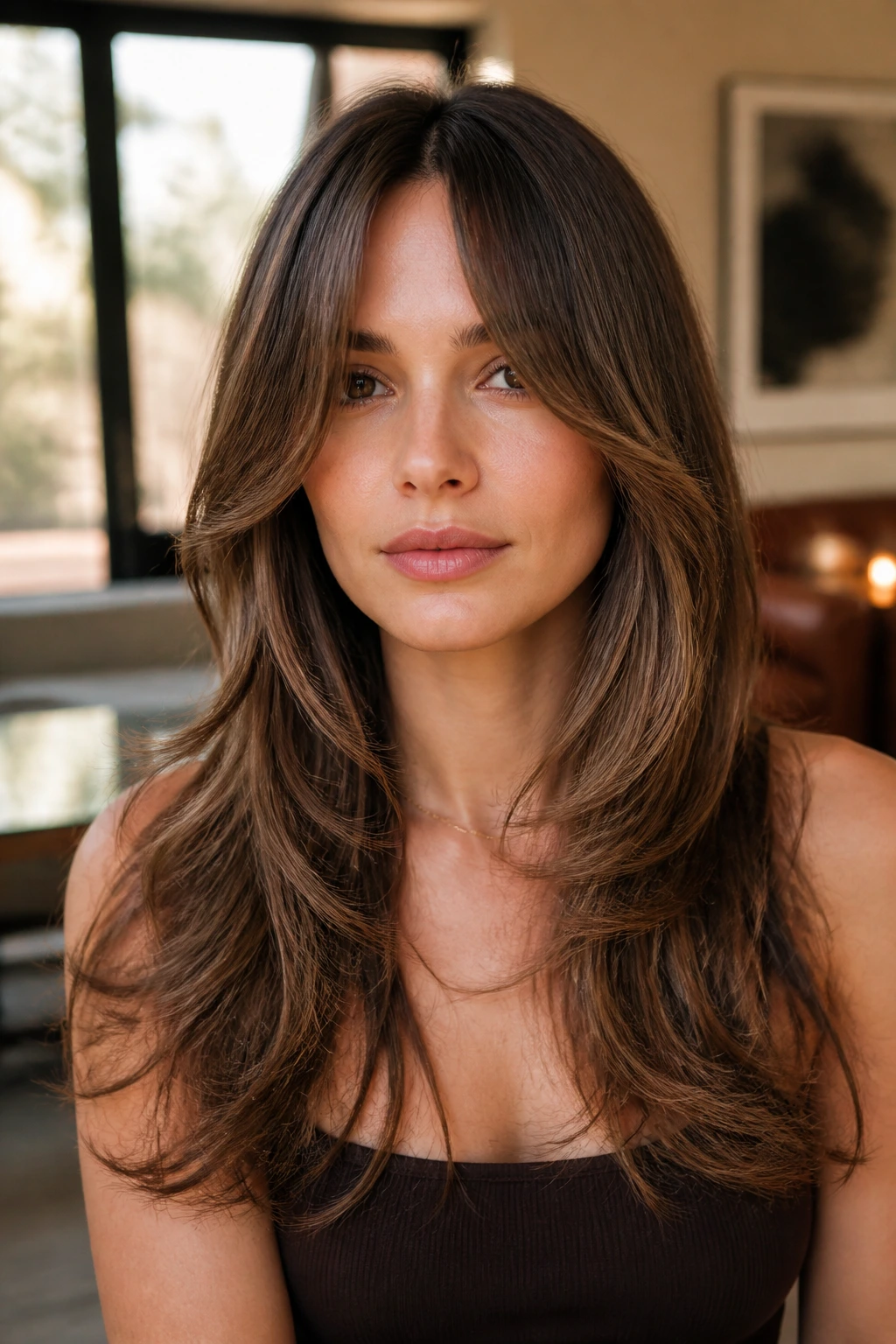
Bottleneck bangs are one of my favorite moves on fine hair because they give you face framing without swallowing too much density. The center is shorter and lighter, then the sides lengthen and blend into the rest of the haircut. You get softness near the eyes and cheekbones, but the front still feels airy rather than overworked.
Paired with long layers, this shape keeps the top interesting while leaving the bottom with enough length to look full. That balance is the whole point. Fine hair can wear bangs, but they should not dominate the haircut. Bottleneck bangs manage to frame the face and keep the hair looking like itself.
- Ask for a center opening that starts narrow, then widens gradually.
- Keep the side pieces long enough to reach the cheek or lip line.
- Style the bang with a small round brush and a quick cool-down.
- Let the layers stay long so the haircut doesn’t thin out at the ends.
This is a lovely choice if you want something softer than a full fringe but less obvious than curtain bangs. It sits somewhere in between, and that middle space is useful.
18. Soft Stacked Bob
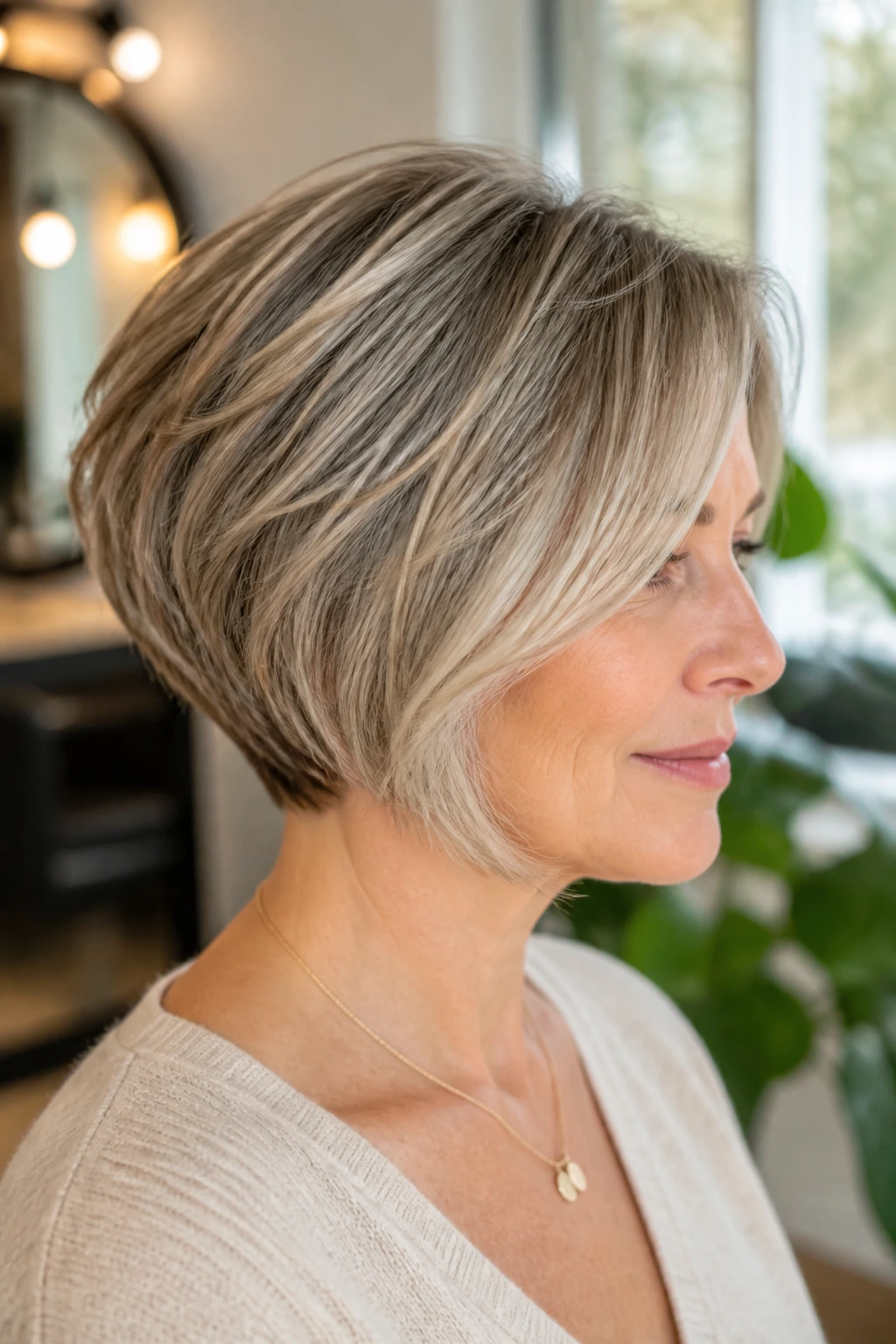
A stacked bob usually sounds more aggressive than it needs to be. On fine hair, the soft version is the one worth paying attention to. The back gets a little graduation near the nape, which helps lift the shape, but the top is kept gentle enough that the cut doesn’t turn stiff or old-fashioned.
The important part is softness. You want a slight stack that supports the crown, not a heavy slope that makes the back look dated. The front pieces can skim the jawline or sit a touch longer, which keeps the shape flattering and avoids the “pyramid” effect that some stacked cuts develop when the layers are pushed too hard.
This one is especially useful if your hair gets flat at the back of the head. A small amount of built-in lift solves that better than endless root spray. It also works well with a side part or tucked-behind-the-ear styling, both of which give fine hair a cleaner finish. Too much stacking, though, will make the cut feel fussy. Keep it mild.
19. Textured Crop With a Nape Undercut
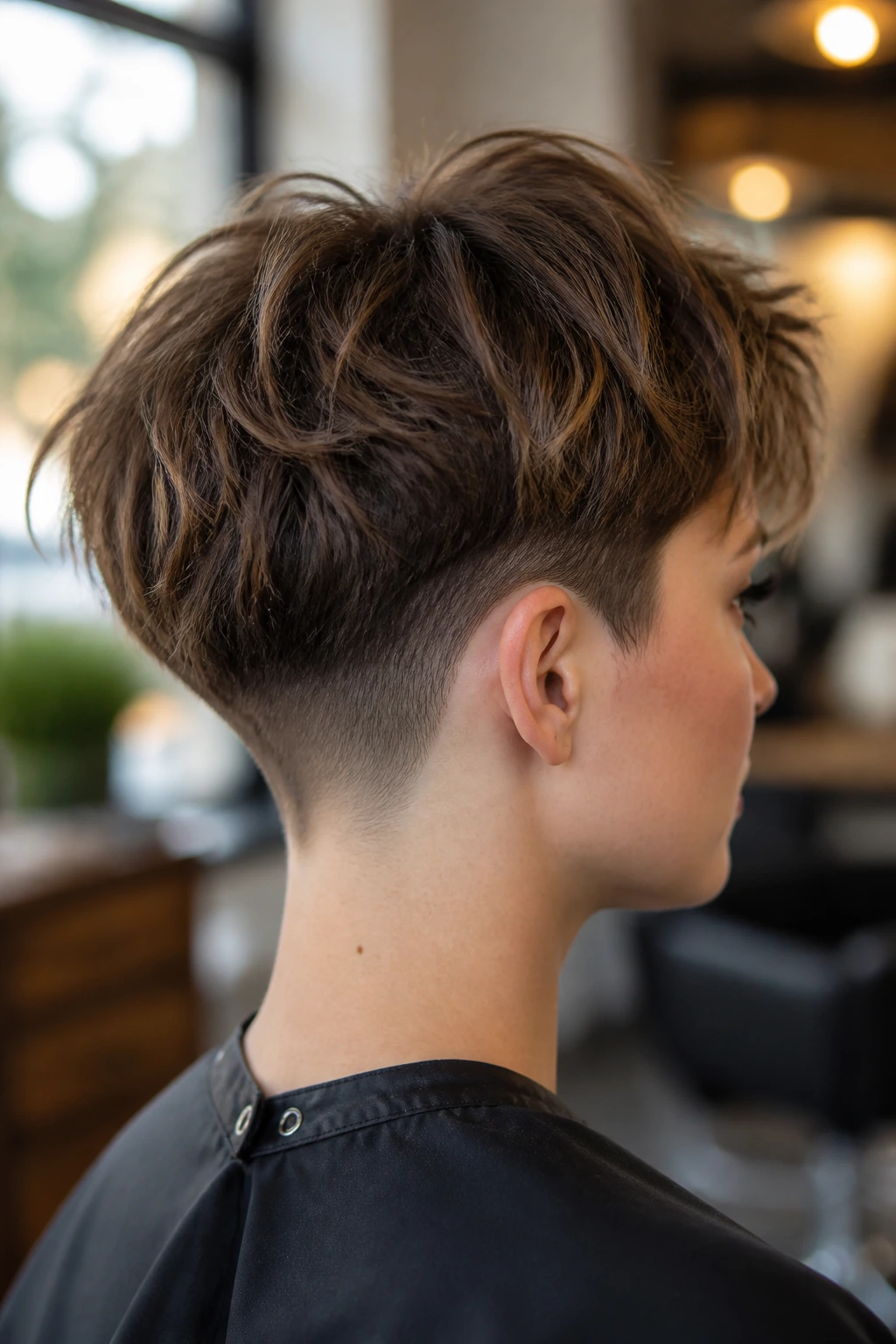
This cut solves a boring but real problem: too much bulk at the nape and not enough lift on top. A small undercut at the back removes hidden weight, while the top layers stay light and active. Fine hair can benefit from that cleanup because it stops the shape from dragging downward in the wrong place.
The texture on top should be careful, not shredded. You want enough separation to keep the crop modern and easy to style, but not so much that the hair looks dry or broken. The nape undercut also makes the neckline feel cleaner, which is nice if you hate hair brushing your collar all day. It is a practical choice as much as a style choice.
Who should avoid it
- Anyone who needs to pull hair into a full ponytail every day.
- People whose crown is already sparse and needs every bit of length.
- Anyone who hates regular upkeep around the neckline.
For the right person, it is sharp, low-effort, and oddly satisfying. The shape just sits better.
20. Layered Shoulder-Grazing Cut With Airy Ends
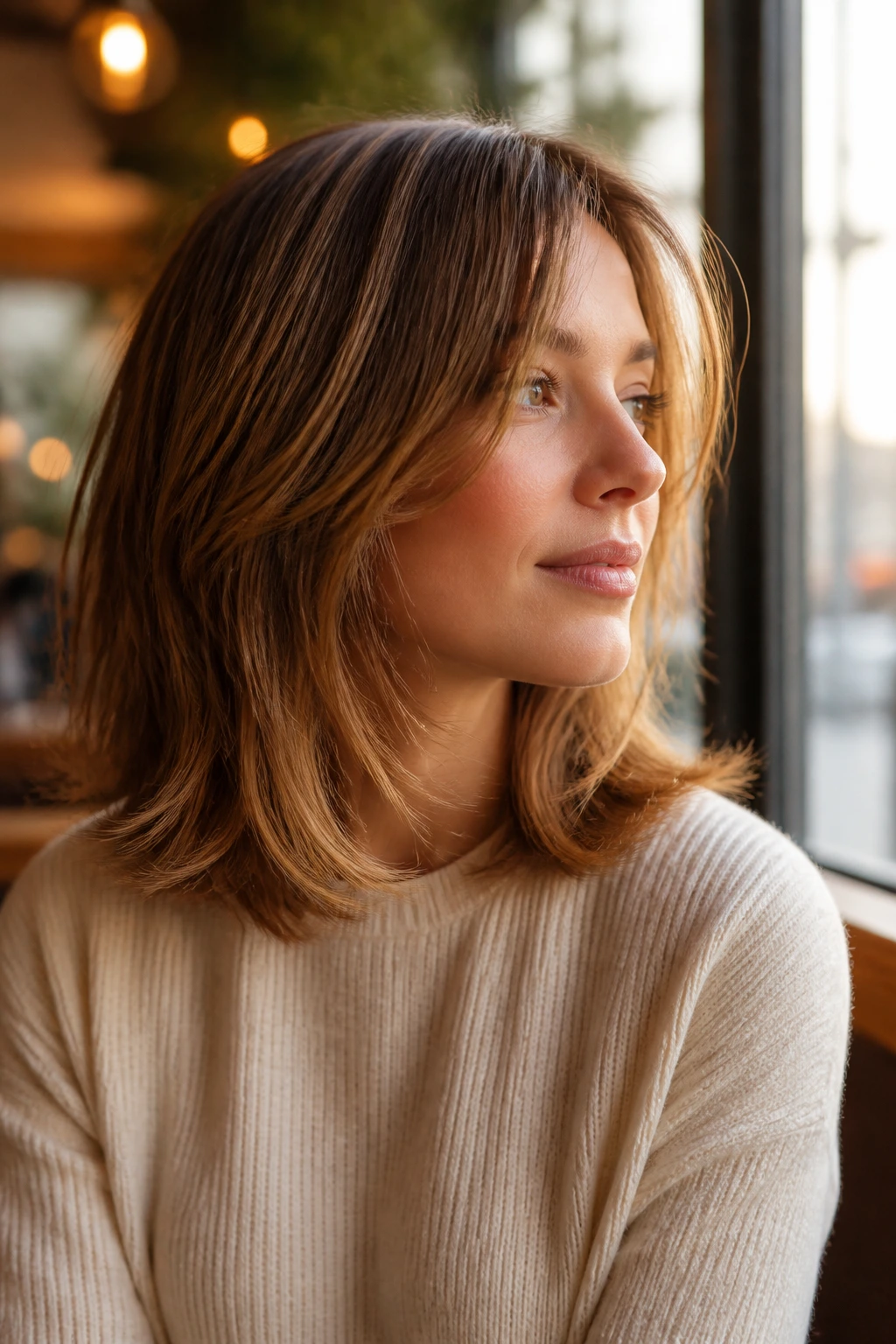
If you want one cut that sits safely between short and long, make it shoulder-grazing with airy ends. It gives fine hair room to move without letting the length get so heavy that the roots go limp. The shoulder line also gives the hair a place to rest, which can make it look thicker than it really is.
The layering here should be conservative. A few long layers through the front, a little movement at the sides, and a perimeter that still feels solid. That’s enough. You do not need a lot of visible steps to get a good result. In fact, too much texture at this length can make the ends look tired fast. A soft, slightly beveled finish is usually the better move.
This is the haircut I’d hand to someone who wants a reliable shape that grows out without drama. It works with straight hair, loose waves, and a quick bend from a curling iron. It also holds up when you wear it half-up, which is handy because not every style needs to be fully styled every day. A good cut should make life easier. This one does.
