



Round faces and long textured layered haircuts have a tricky relationship. Get the cut wrong, and the hair balloons out at the cheeks. Get it right, and the whole face reads longer, softer, and cleaner at the same time.
The mistake I see most often is not “too many layers.” It’s layers placed in the wrong spot. Short pieces that land right at the cheekbone can make the face look wider, especially when the hair has a natural bend or a little puff. Long hair needs movement, yes, but the movement has to live below the widest part of the face.
That’s why the smartest versions of this haircut keep the front pieces longer, use texture where it helps, and leave enough weight at the bottom so the shape does not flare out like a bell. Some versions lean polished. Some look better messy. A few need a stylist who knows how to carve shape without over-thinning the ends — and that part matters more than people think.
If you’ve been hunting for long textured layered haircuts for round faces that feel flattering instead of fussy, the options below cover soft, modern, wavy, shaggy, and blended cuts that actually work in real life.
1. Long Curtain Layers with a Center Part
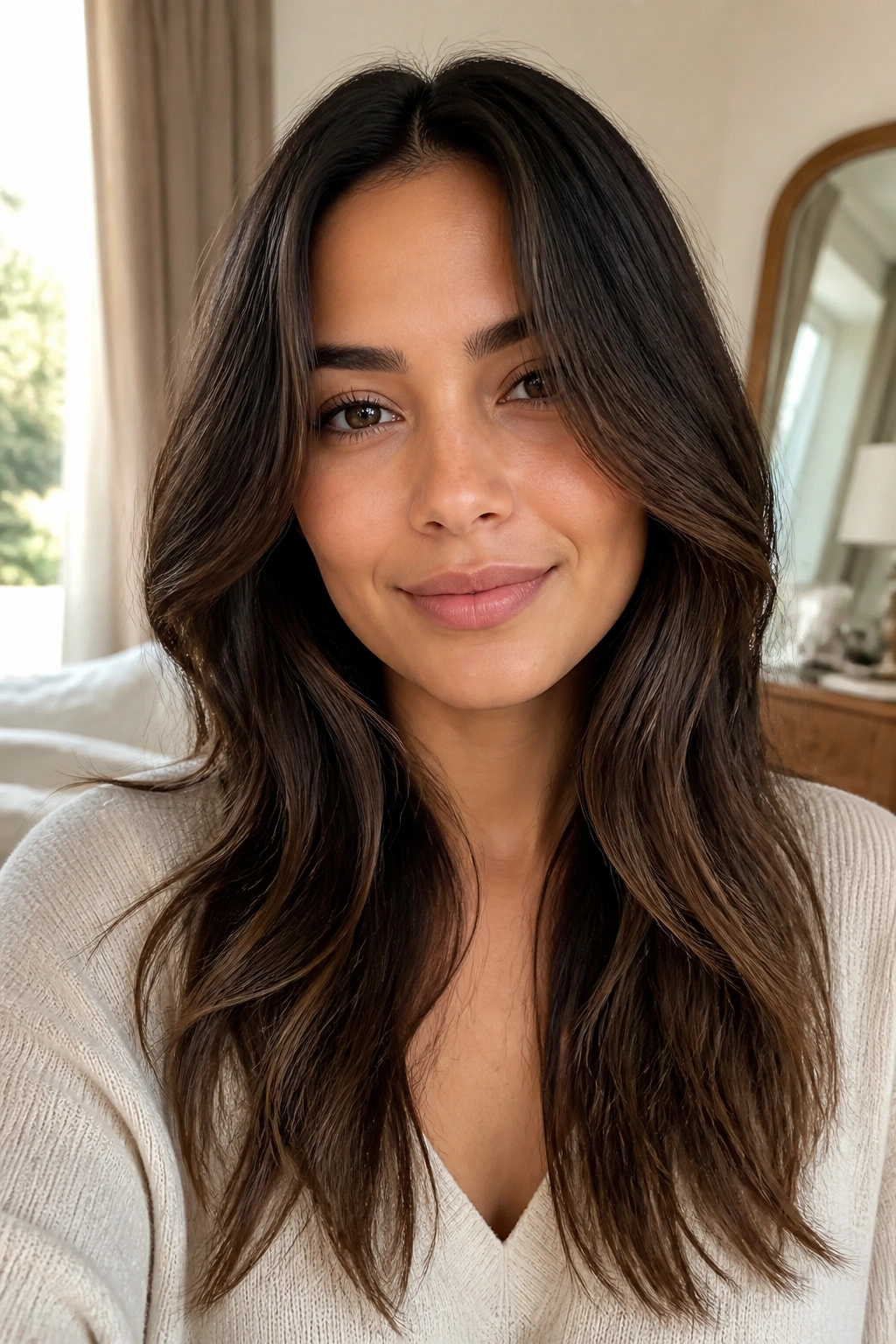
A clean center part can be friendlier than people expect. When the front pieces open away from the face and fall past the cheeks, they create a long vertical line that helps a round face look less wide.
The key is placement. The shortest face-framing piece should sit below the cheekbone, not right on top of it, and the ends should look broken rather than blunt. If the front pieces stop too high, the cut starts competing with your cheeks instead of softening them.
What to ask for
- Keep the longest layers at least past the collarbone.
- Start the face frame around lip level or lower.
- Add soft internal texture, not choppy slicing all the way through.
- Leave enough weight at the bottom so the hair falls in a smooth line.
Best tip: blow-dry the front pieces away from the face with a round brush and let them cool in place. That small bend makes a bigger difference than most people realize.
2. Butterfly Layers with a Lifted Crown
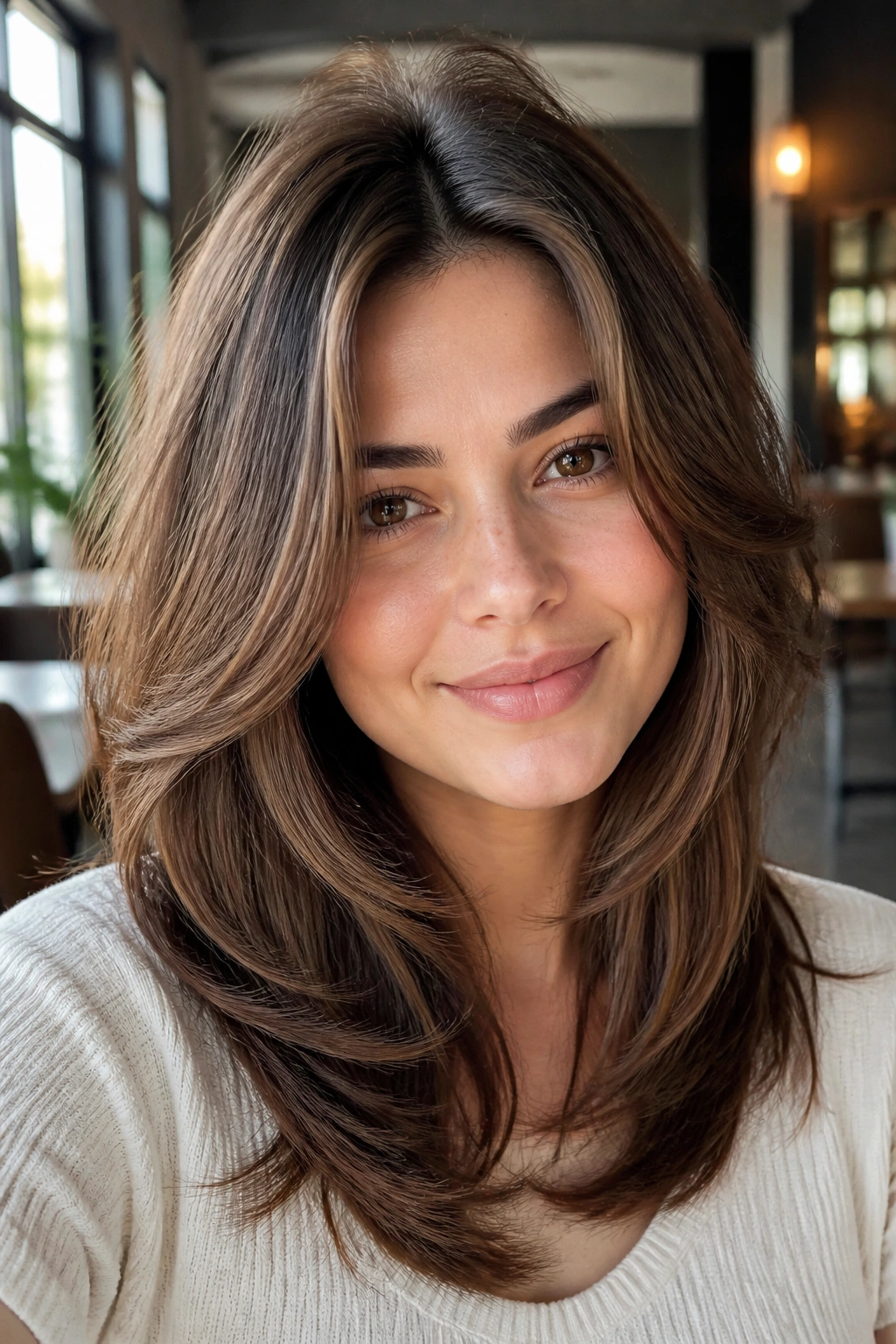
Why do butterfly layers flatter round faces so well? Because they give you lift where you want it and length where you need it. The shorter internal layers sit high enough to add air through the crown, while the longer outer layers still drape down the sides.
That mix matters. A round face usually needs a little more vertical energy, not more width around the cheeks. Butterfly layers help by pulling the eye upward first, then downward. The cut feels full, but not bulky.
Why it reads longer
The top layers create shape near the crown, which keeps the head from looking flat. The bottom layers stay long and smooth, so the silhouette doesn’t widen at jaw level. If your hair is thick, this cut can take out weight without turning the ends into a puffball.
It also works nicely with a center part or a very soft off-center part. If your hair is naturally wavy, even better. Those bends make the layered pieces separate in a way that looks lived-in instead of overdone.
Ask for this: short internal layers that start around the upper cheek to eye area, then long outer layers that stay below the shoulders.
3. U-Shaped Layers That Keep Weight at the Bottom
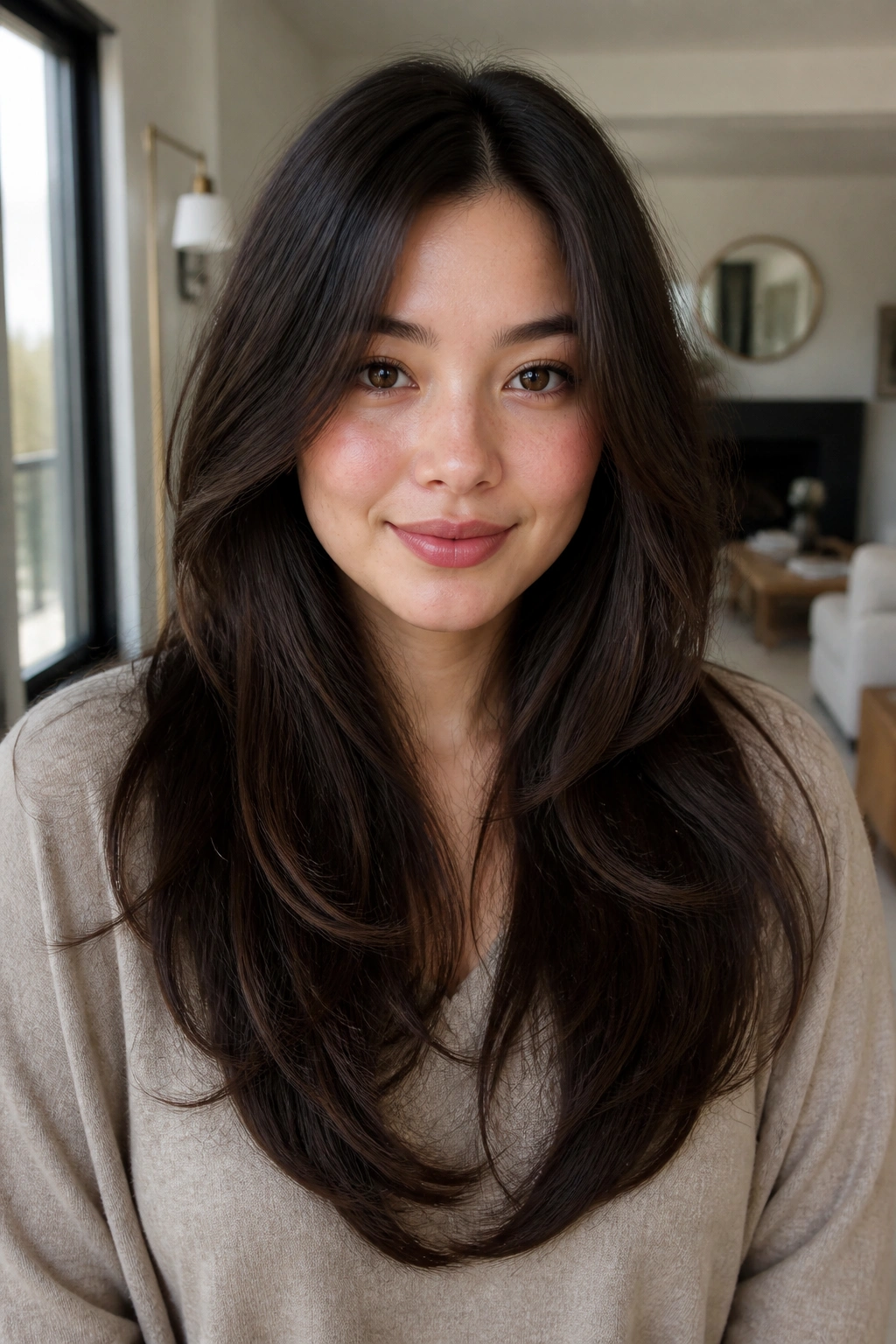
If your ends flare out like a bell, a U-shaped cut can calm the whole thing down. The outline stays rounded, but gently, and the longest point sits in the middle of the back rather than at the sides.
That shape is useful for round faces because it keeps the eye moving down the length of the hair. The sides do not stop abruptly at the cheek line, which is what makes some layered cuts feel boxy. Instead, the perimeter stays soft and continuous.
Thick hair tends to love this shape. So does coarse hair that gets wide when it dries. The trick is to keep the layers longer and lower, with enough interior movement to stop the cut from looking heavy. You want the hair to swing, not swell.
- Best when the stylist keeps the shortest layers below the chin
- Good for medium to thick textures
- Avoid too much thinning near the cheeks
- Works especially well with loose waves or a smooth blowout
One small warning: if the U-shape is carved too sharply, it can look dated fast. Keep it soft.
4. Side-Parted Layers with a Long Sweep
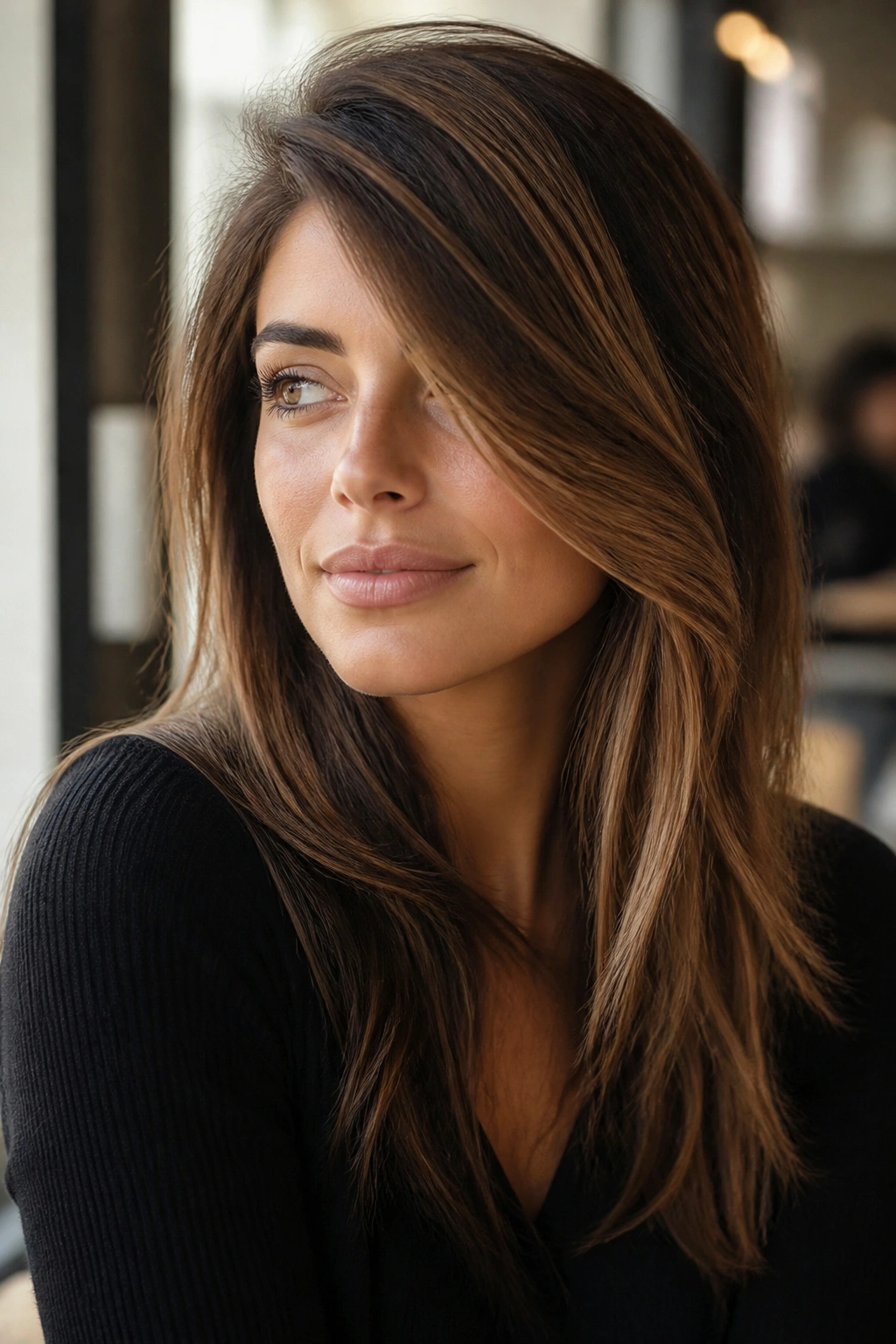
A deep side part can do a lot of quiet work on a round face. It breaks up symmetry, shifts volume off-center, and gives the front a diagonal line that makes the face look leaner.
The part itself is only half the story. The better versions of this haircut use a long sweep that starts high and falls across part of the forehead before disappearing into the rest of the layers. That diagonal line is the whole point. Straight across is too blunt. Too short is worse.
The length matters too. The face-framing pieces should brush the cheekbone and slide past the jaw, not sit on top of the widest part of the face. If you like polished hair that still moves, this is a strong choice.
It’s especially nice on hair that has a little natural bend. The side part gives the cut some attitude, but the long layers keep it wearable. No helmet. No triangle. Just shape.
5. Long Shag with Cheekbone Fringe
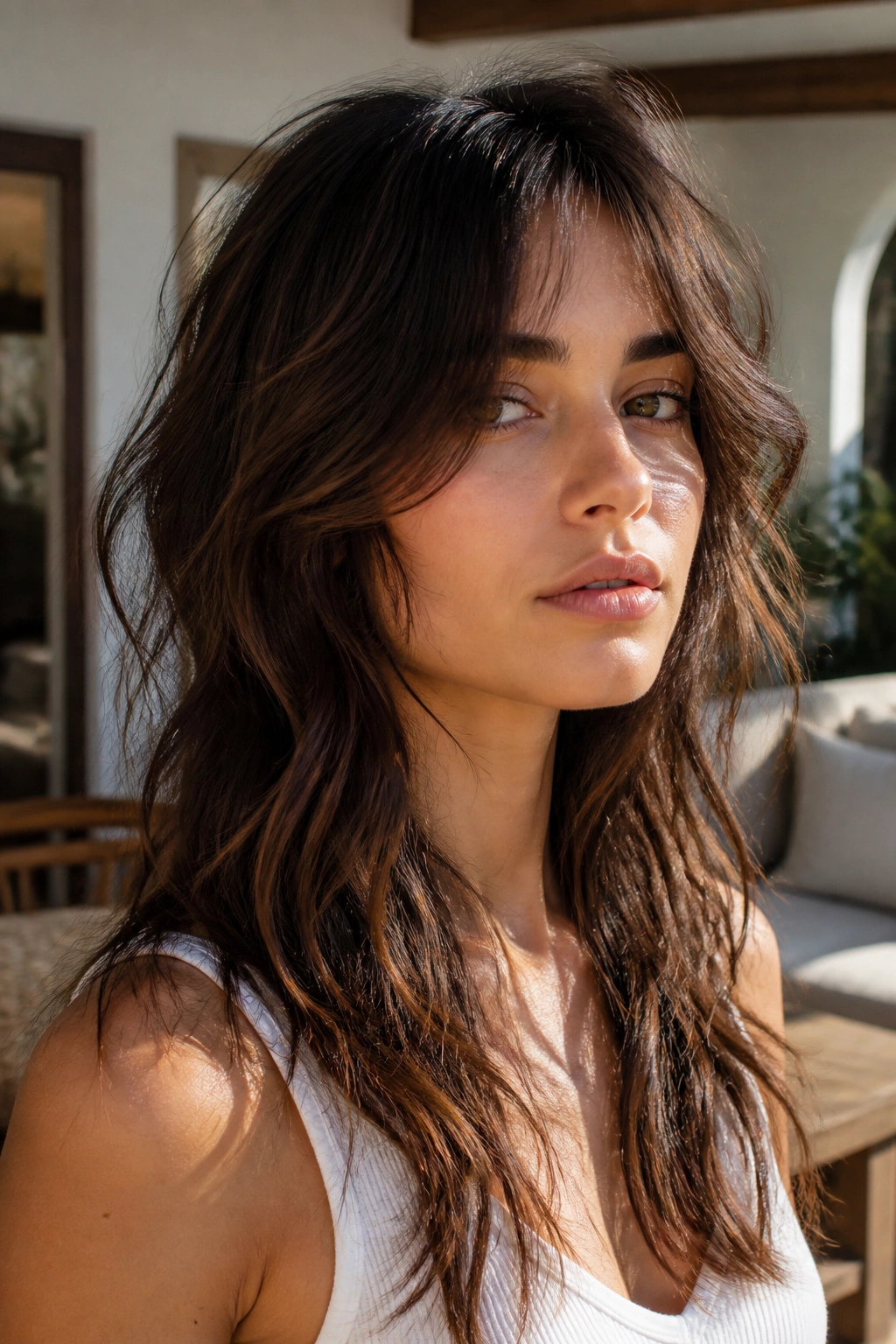
Can a shag work on a round face? Absolutely — if the shag is long enough. The old version of this haircut could get too puffy at the sides, but a longer, softer shag keeps the texture where it helps and leaves the sides under control.
The fringe should graze the cheekbone, then drift into longer pieces. That tiny bit of separation changes everything. It gives the haircut movement near the face without putting a short line right across the widest part.
What to watch for
- Keep the crown textured, not razor-thin.
- Ask for longer fringe pieces that blend into the cheek and jaw.
- Leave the perimeter long enough to hold shape.
- Skip heavy layers that stop around the ear.
This cut looks especially good when it’s a little messy. Perfectly smooth shag hair can feel stiff. A bit of separation, a bit of air, and the whole thing comes alive.
6. Invisible Layers for Fine Hair
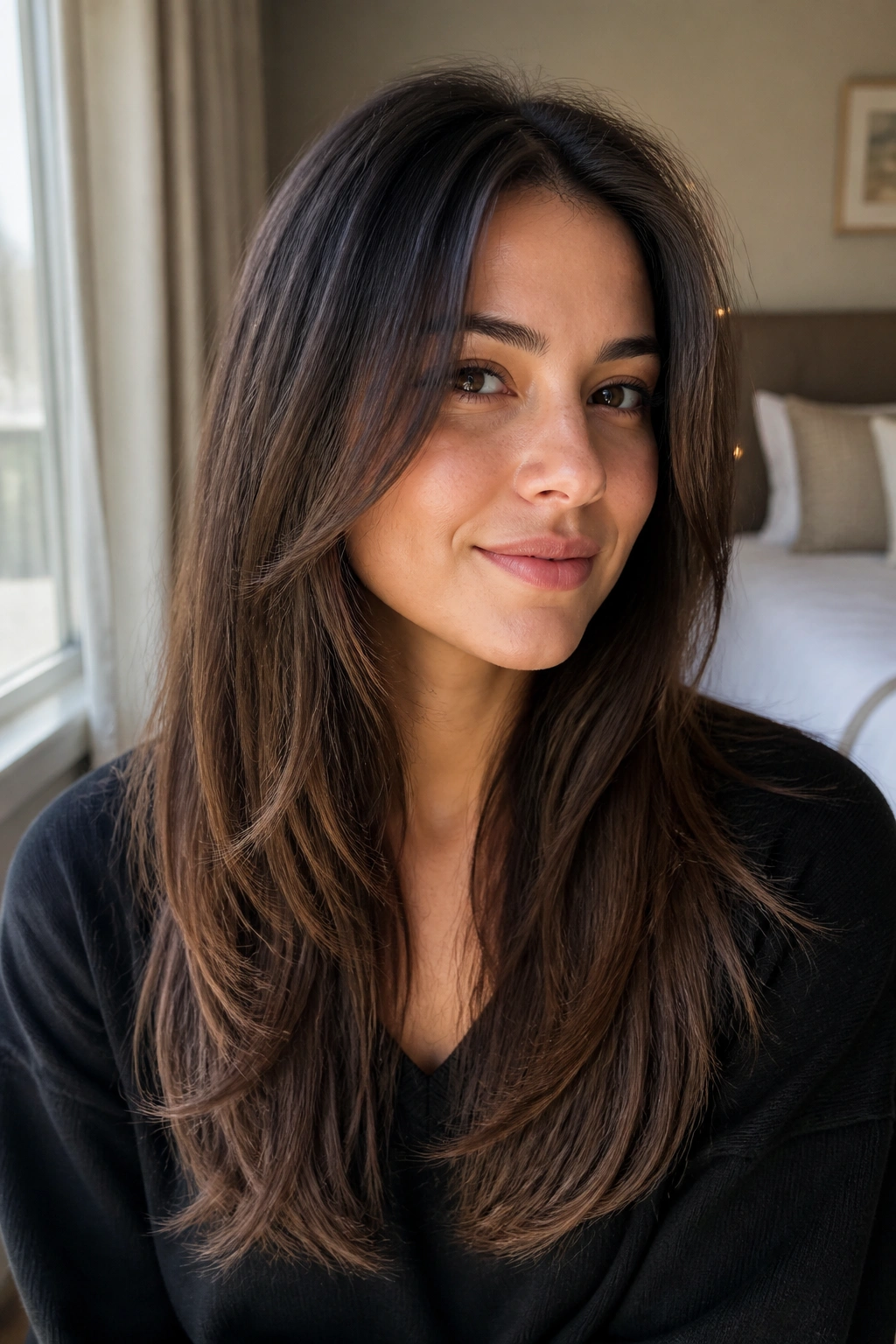
Fine hair on a round face needs a delicate hand. Too many obvious layers can make the ends look stringy, and stringy ends do not flatter anyone. Invisible layers solve that problem by removing bulk from inside the cut instead of hacking up the outline.
The result is a shape that still looks full at the bottom. That part matters. On round faces, a dense lower line helps keep the eye moving down, while a wispy, broken perimeter can make the hair drift outward at cheek level.
A good stylist will keep the longest layers soft and hidden, then use a small amount of internal graduation to give the hair some lift. Point cutting helps here because it softens the edges without creating hard steps. A blunt finish with light internal texture can look much better than a heavily layered cut on fine hair.
This is one of those styles that looks expensive when it is done well, and flat when it isn’t. The difference usually comes down to where the shortest layer lands. Keep it low. Keep it clean. Keep the crown from getting too airy.
7. Feathered Layers with Airy Ends
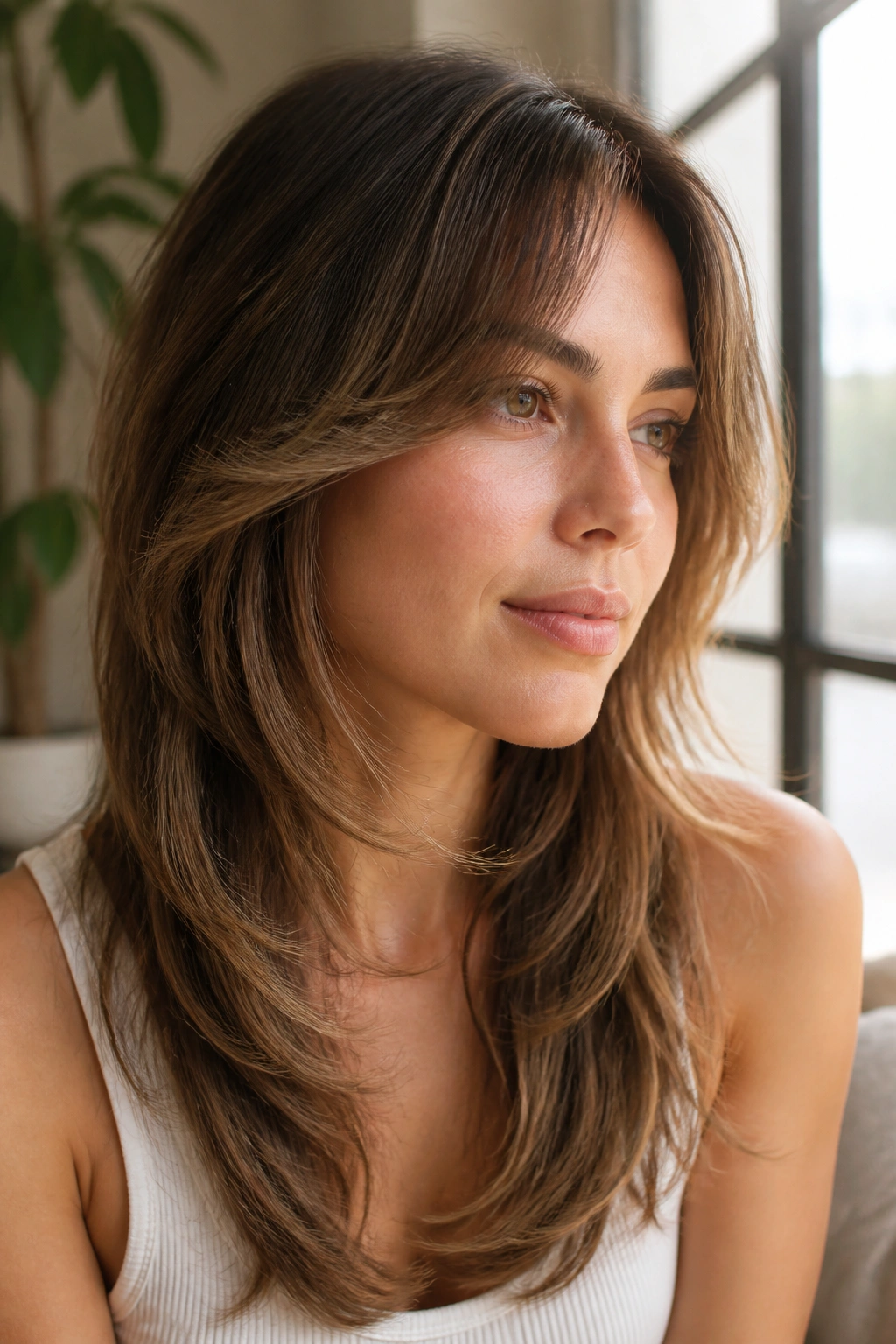
Feathering is not the problem. Bad feathering is. When the edges are too wispy or the layers are shoved too high around the cheeks, the haircut can feel dated in a hurry. Done with restraint, though, feathered layers soften a round face without adding bulk.
The best version keeps the feathering through the mid-lengths and ends, where the hair can move freely. That makes the shape feel lighter, especially if your hair is dense or heavy. The front pieces should still be longer than the widest part of the face, which keeps the overall silhouette from spreading out.
A few details that matter
- Ask for soft feathering, not aggressive thinning.
- Keep the face frame long and gradual.
- Let the ends turn slightly outward or under, depending on your styling.
- Use a brush or hot tool to create separation, not tight curls.
I like this cut for people who want motion but don’t want obvious choppy layers. It has a softer finish than a shag and less structure than a butterfly cut. Somewhere in the middle is often the sweet spot.
8. Long V-Cut Layers with Tapered Back
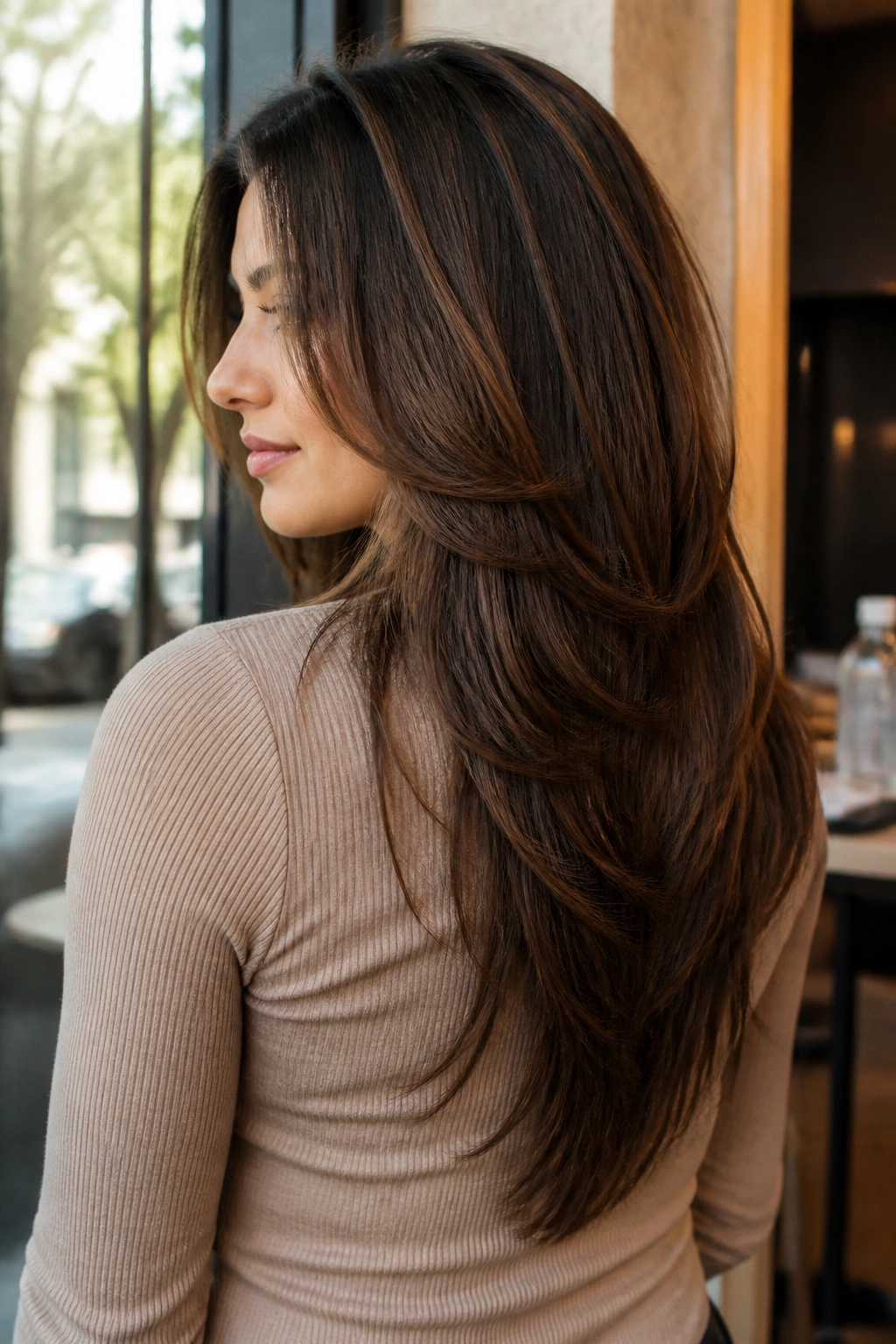
Unlike a U-shape, a V-cut gives the back a sharper point and a more dramatic length line. That shape can look beautiful on a round face because the eye follows the taper downward, which creates a stronger vertical feel.
The front still needs to stay long. That’s the rule. If the front layers get too short, the V loses its balance and the cut starts to feel top-heavy. The front should act like a frame, not a little curtain sitting on the cheeks.
This cut is especially good on thick hair. The V shape removes some of the visual weight from the back while letting the sides stay sleek. Wavy hair also works well because the taper shows up in the movement. Straight hair can wear it too, but the line will look more obvious and slightly more dramatic.
If you like hair that looks long from the back and still has shape from the front, this is a strong pick. It’s a little bolder than a soft U-shape, and that extra edge can be useful.
9. Razor-Cut Layers with Piecey Texture
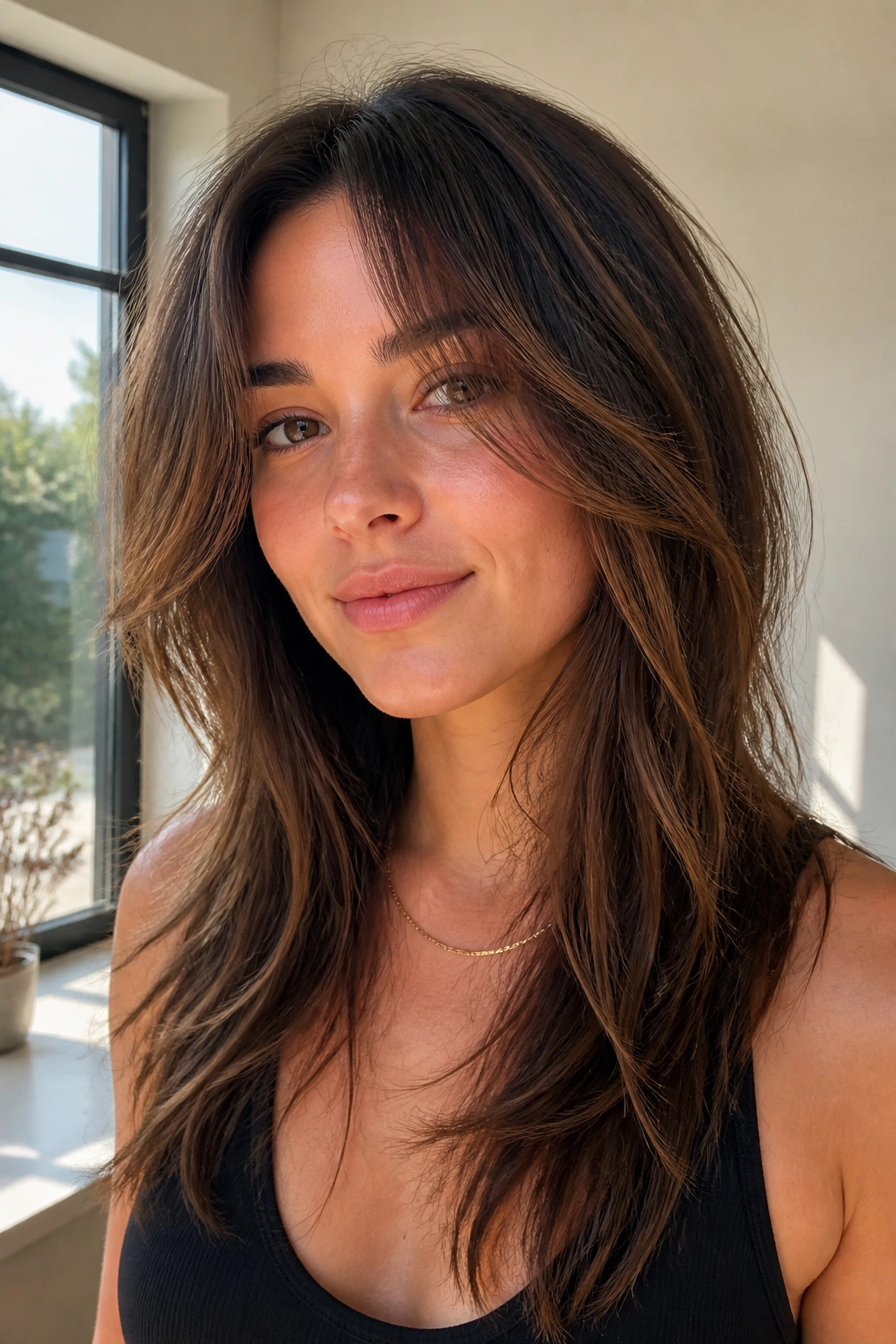
When a blunt cut sits like a helmet, razor-cut layers break it up fast. The ends look lighter, the texture separates more easily, and the whole cut feels less solid around the face.
That broken finish can be a gift for round faces, but only if the stylist uses a steady hand. Too much razor work on dry or damaged hair can leave the ends frayed. Too much around the cheeks can make the face look wider. The sweet spot is a light, airy finish through the mids and lower layers.
What to watch for
- Best on hair that has some natural density
- Avoid heavy razor work on brittle ends
- Keep the shortest pieces below cheek level
- Style with a soft cream or serum, not a sticky paste
The reason this cut works is simple: it adds movement without adding obvious width. The hair feels broken up, not chopped up. That difference matters more than the name of the technique.
10. Long Wolf-Cut-Inspired Layers
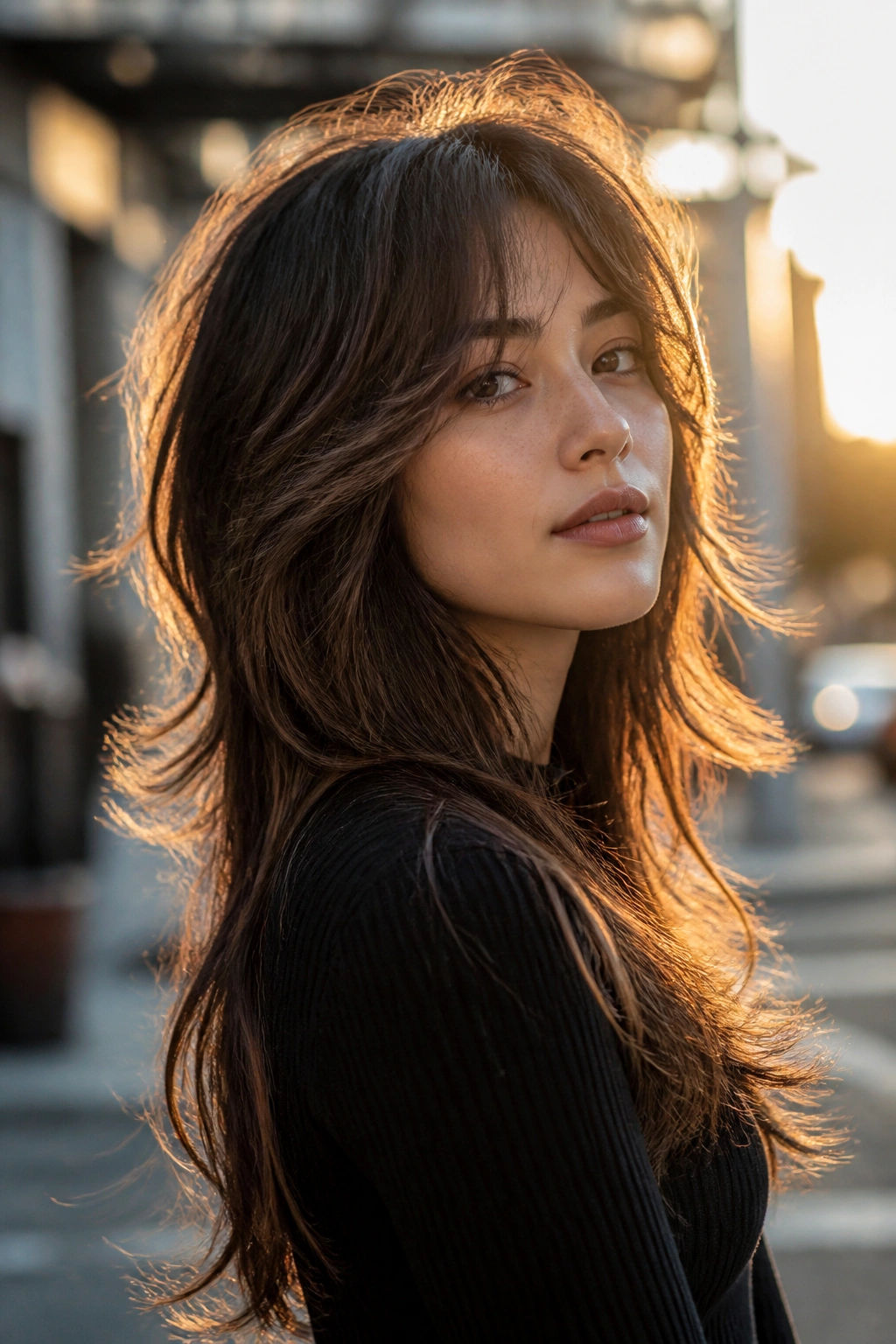
The wolf cut gets a bad reputation when it’s cut too short or too square. The long version is a different story. It keeps the rougher texture at the crown and through the top, then lets the length hang on below.
For round faces, that balance can be smart. The crown gets lift, which helps stretch the shape. The lower lengths stay long, which keeps the face from feeling boxed in. If the side layers are left too full, though, the whole thing can turn puffy fast.
Wavy hair tends to suit this cut best. It already has movement, so the layers only need to support it. Straight hair can wear it too, but it usually needs more styling to keep the texture from looking flat on top and wide at the sides.
This is the haircut for someone who likes a little edge and does not mind a piecey finish. It’s not precious. It’s not fussy. And that’s part of the appeal.
11. Center-Parted Layers with Bottleneck Bangs
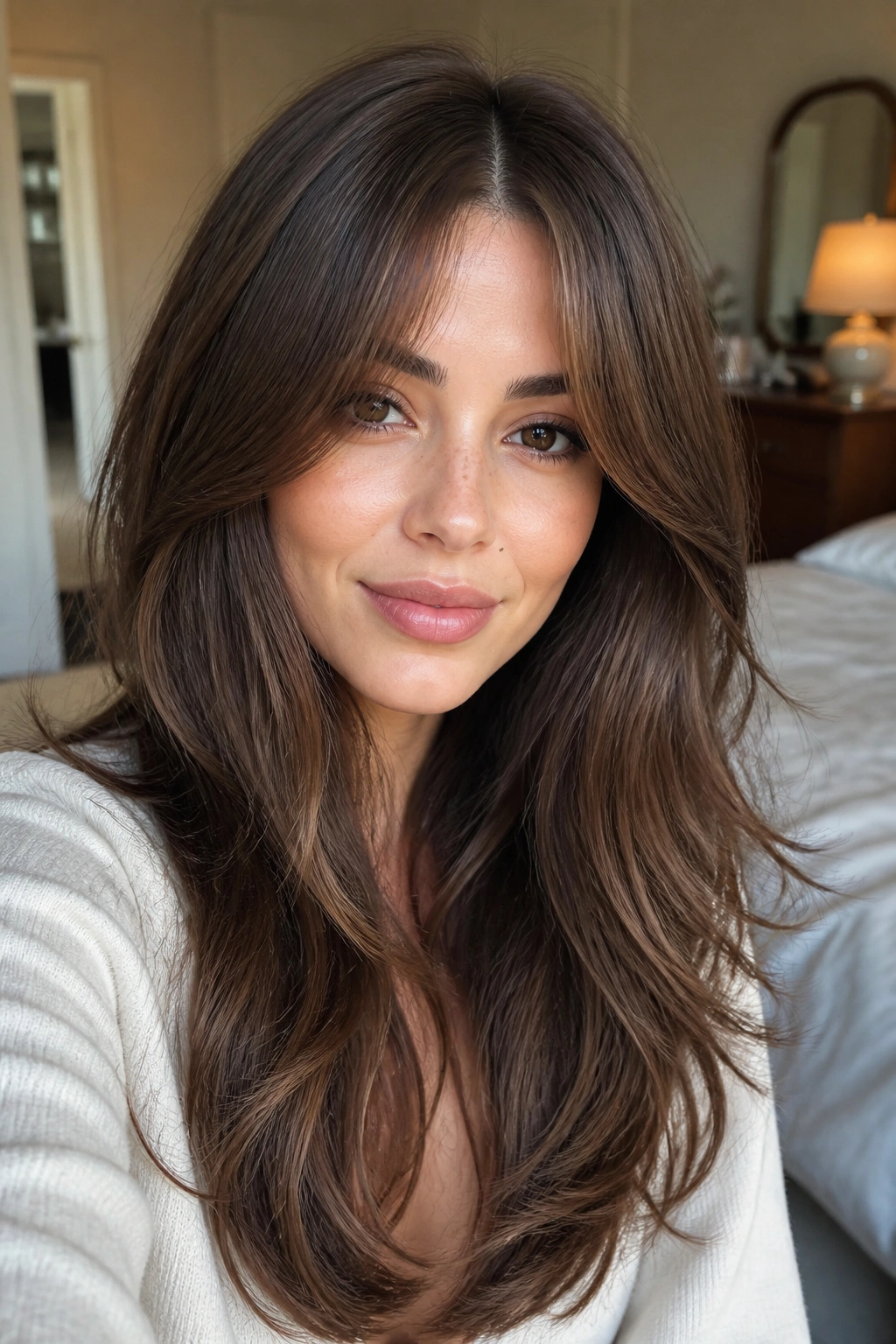
Bottleneck bangs are one of the nicer choices for a round face because they open at the center and widen out gently as they fall. That shape gives you softness near the forehead without cutting a hard line across the face.
The rest of the haircut should stay long and blended. The bangs need space to do their job. If the side layers are cut too high, the bangs end up competing with the cheeks. If they’re long and soft, the whole shape feels balanced.
How to wear them
- Blow-dry the fringe away from the center, then let it fall naturally.
- Keep the shortest part of the bang at or just below brow level.
- Ask for face-framing layers that connect into the jaw and collarbone.
- Use a light mist or cream so the fringe does not separate into strings.
This is a good option if you want bangs but don’t want to commit to a full blunt fringe. It gives movement, and it gives shape, without making the face look shorter.
12. Cascading Layers for Thick, Dense Hair
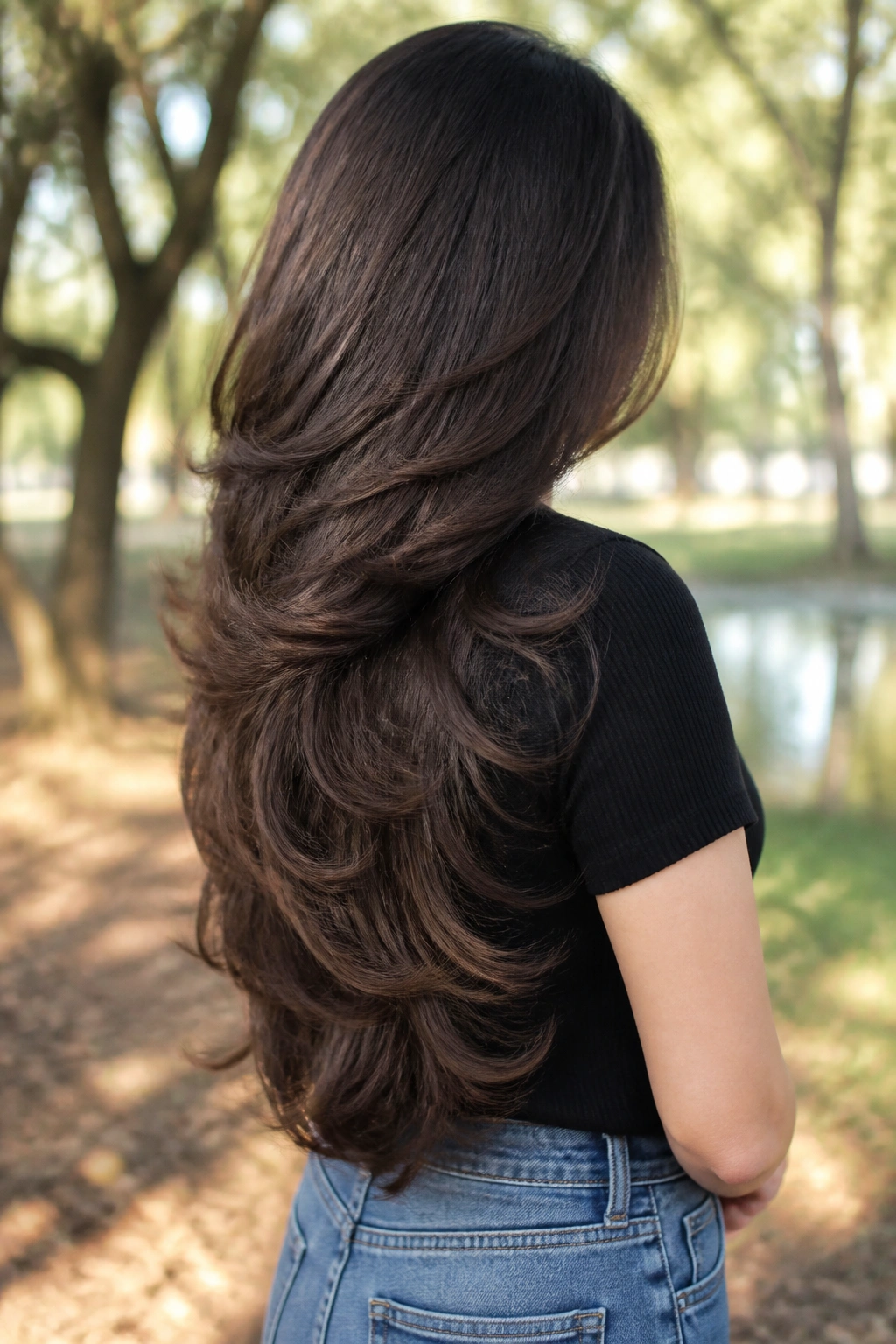
When thick hair grows long, it can form a heavy triangle if nobody controls the shape. Cascading layers fix that by moving the weight through the hair in stages instead of leaving all the bulk in one wide block.
That staged shape is helpful for round faces because it stops the hair from sitting like a shelf at the cheeks. The layers fall into one another, which keeps the outline soft and long. You still get fullness, but the fullness moves downward instead of outward.
This cut works best when the stylist respects the density. Over-thinning thick hair is a mess. It can leave the top flat and the ends fuzzy, which is a horrible trade. Better to remove weight in long sections and keep the perimeter strong.
The finish should feel controlled, not hollow. If the cut is done well, thick hair swings instead of expanding. That’s the whole win.
13. Soft Flip-Out Ends with a Long Face Frame
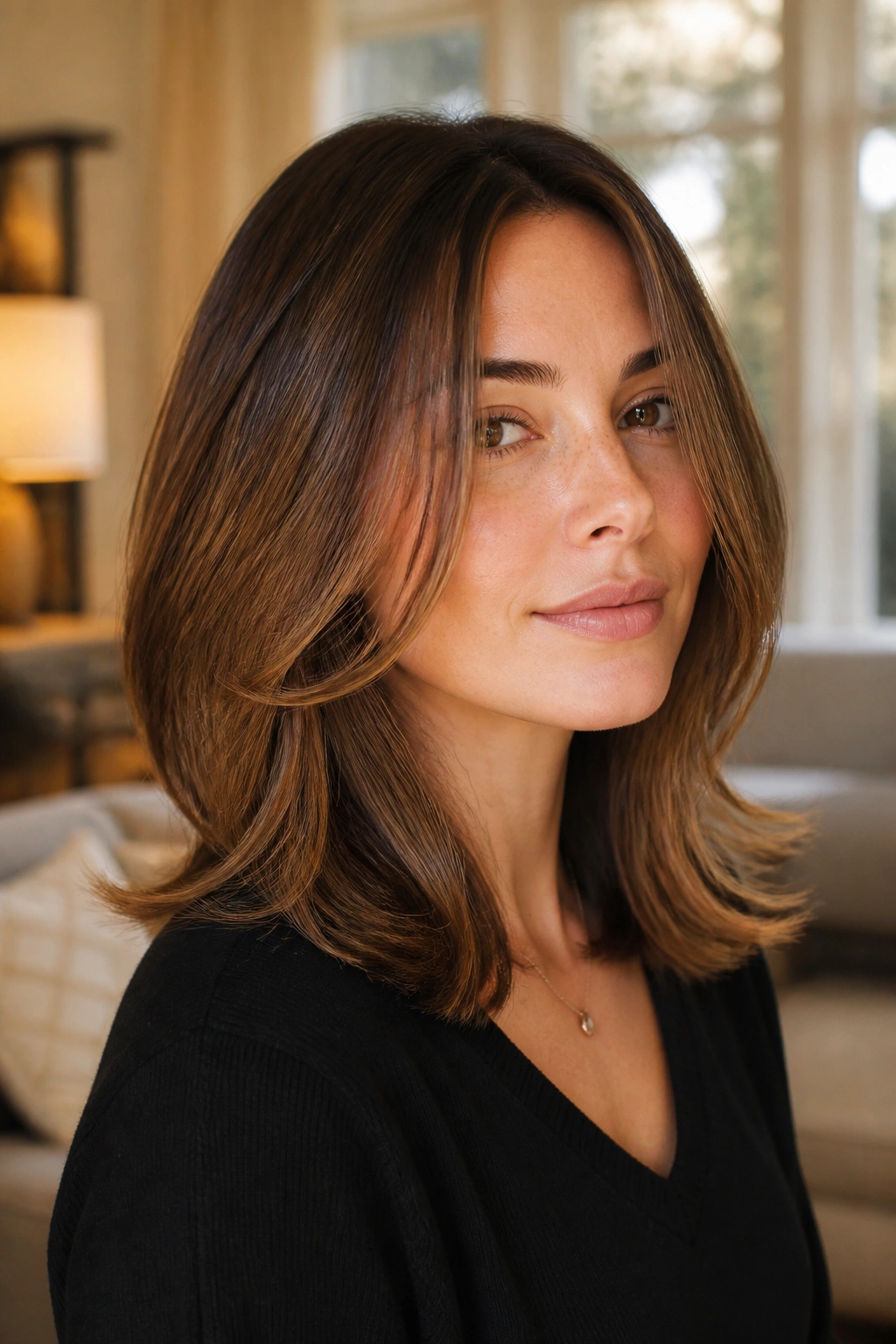
Flip-out ends can look playful, but they also do something useful for a round face: they pull the eye away from the cheeks and keep the movement lower on the length.
The trick is not a giant retro flip. Keep it small. A little outward bend at the bottom of the layers adds shape without making the hair wider through the sides. The front pieces should stay long enough to skim the mouth or collarbone, then drift away from the face.
This style suits people who like a blowout finish. A round brush, a 1.5-inch iron, or even a quick pass with a flat brush can create that outward curve. The result feels polished without looking stiff.
- Best on medium to thick hair
- Strong on shoulder-to-midback lengths
- Keep the face frame long and soft
- Avoid flipping the ends too high near the cheeks
A small outward bend is often enough. You do not need a full curl to get the effect.
14. Long Layered Cut with Natural Wave Enhancement
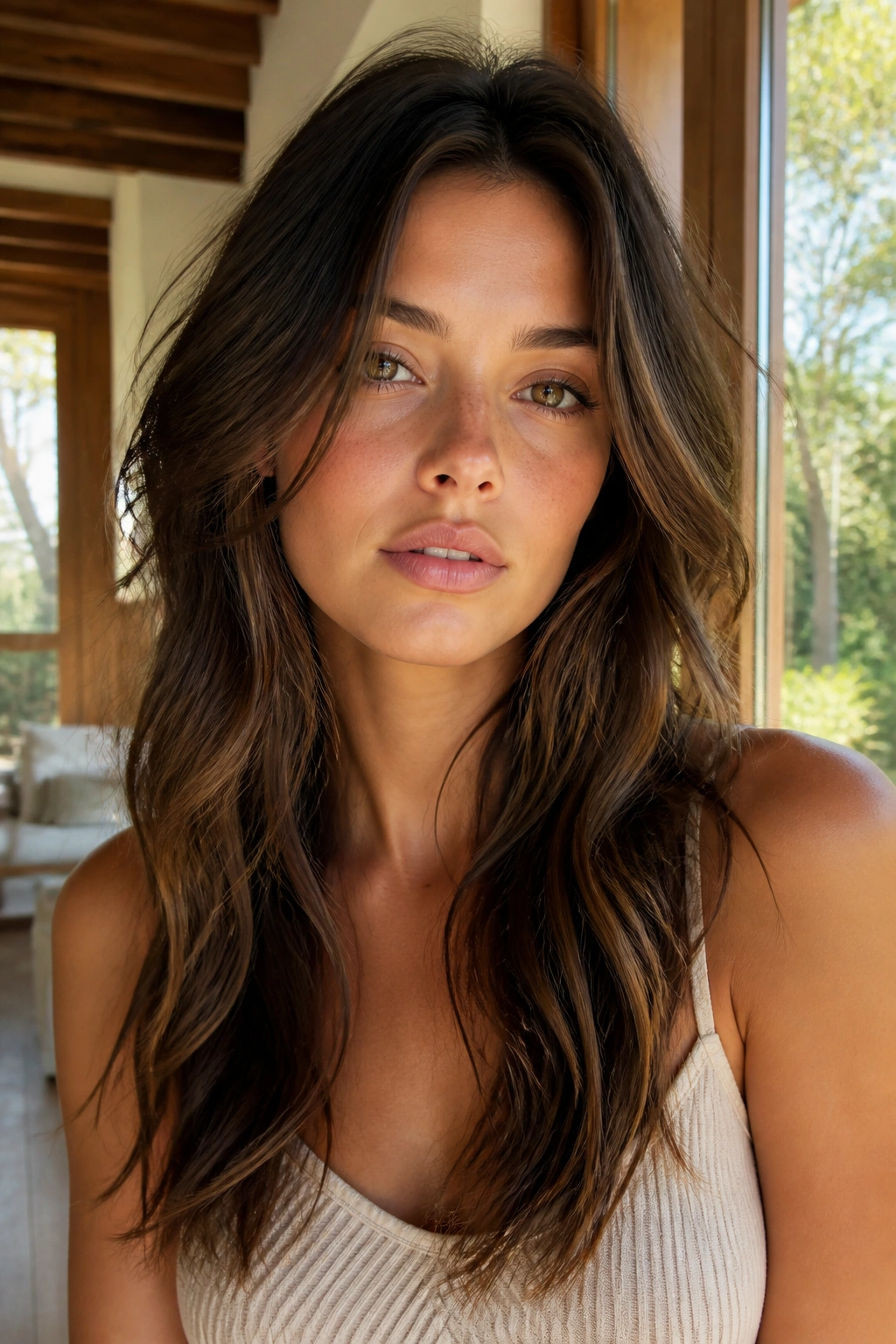
If your hair already bends on its own, do not fight it. A long layered cut that follows the wave pattern can look better than a highly structured shape, especially on a round face where too much width near the cheeks is a problem.
The layers should sit where the waves naturally fall apart. If the shortest layers land too high, the wave springs outward and the face looks wider. If the layers are placed lower, the waves create movement down the length instead of across the face.
How to ask for it
Ask for long layers that start below the chin, with the front pieces kept long enough to frame the jaw. If your hair is more wavy than curly, a stylist can soften the ends with point cutting so the layers blend instead of stacking. That gives the hair a looser shape and keeps the side profile cleaner.
This is a low-drama cut, which I always appreciate. It works with the texture you already have, and that usually means better grow-out too.
15. Deep Side-Swept Fringe with Length Below the Collarbone
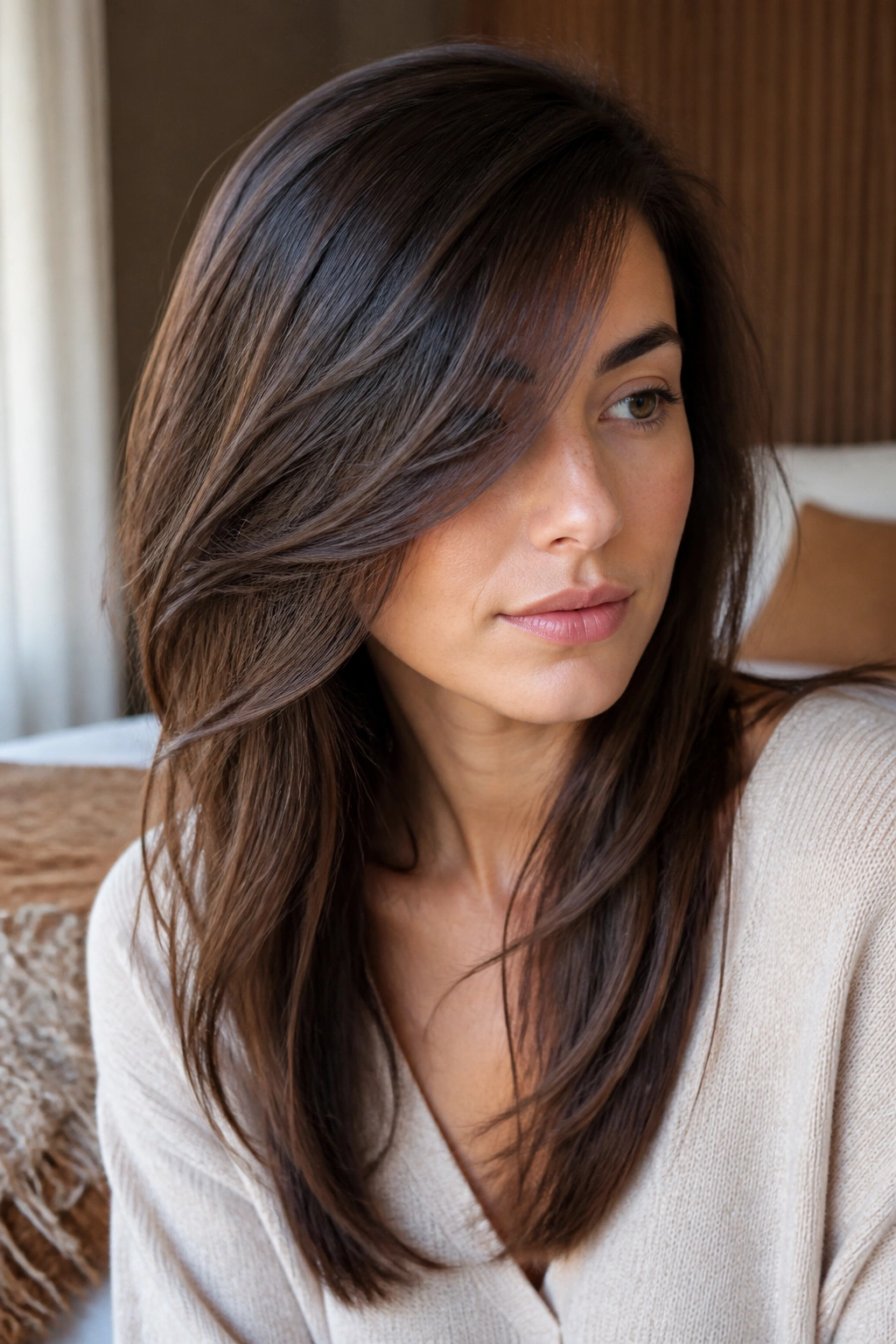
A side-swept fringe can be a cheat code for round faces when it’s long enough. The diagonal line breaks up fullness across the forehead and gives the front of the cut a little tension, which is what keeps it from feeling flat.
The fringe should not be heavy. Heavy side bangs can sink the face. Instead, the pieces should slide across the forehead and blend into longer layers that continue below the collarbone. That connection matters. If the fringe stops short, the cut loses its flow.
This version works well if you want a little face coverage without losing length. It also pairs nicely with a smooth blowout or loose waves. The hair falls in a soft arc, and that arc does a lot of flattering work on its own.
It’s a good choice when you want something more structured than curtain layers but less obvious than full bangs. The cut is quiet, which is often a better look than people expect.
16. Choppy Layers for Curly Hair
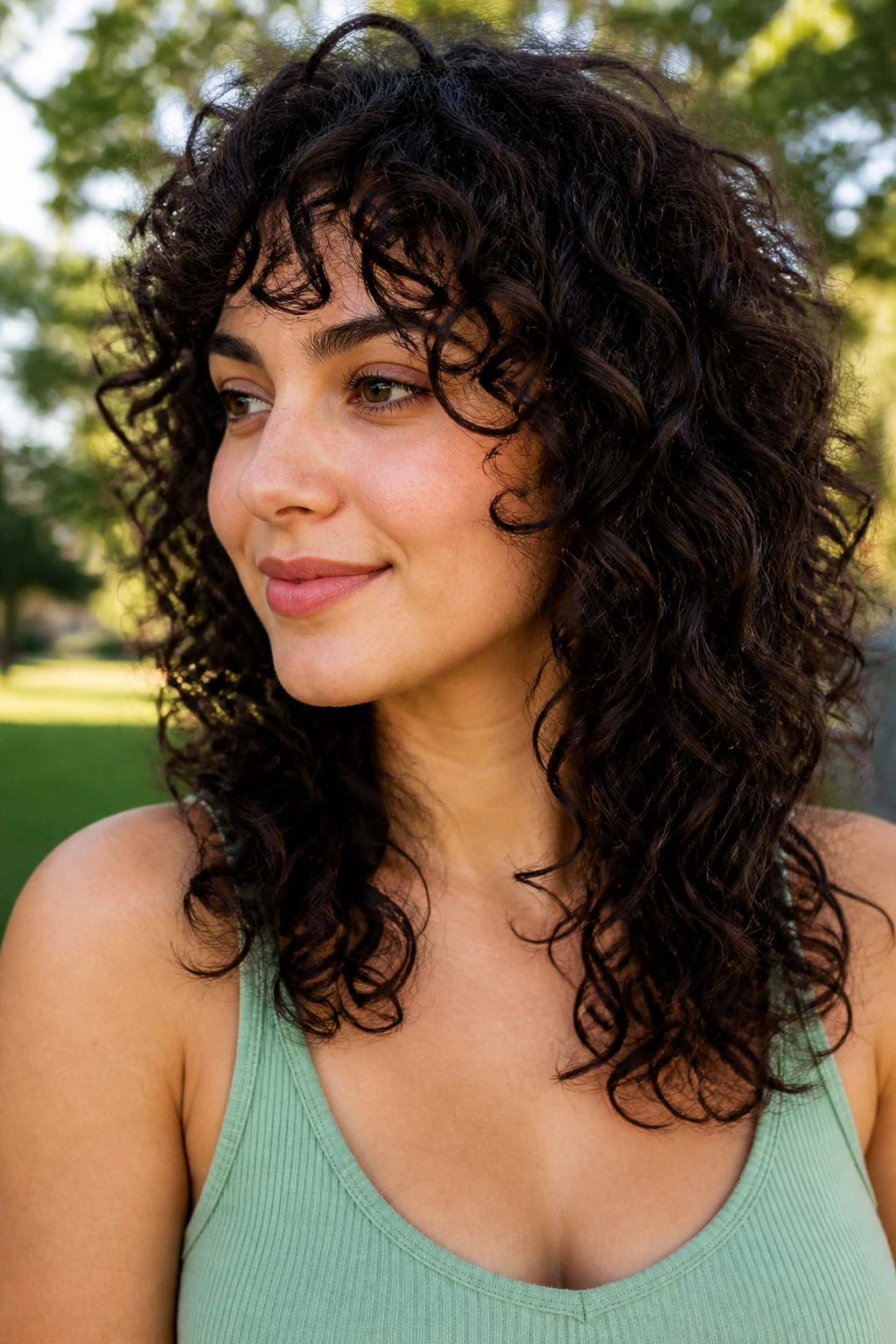
Curly hair and round faces need shape, not bulk. That sounds obvious, but a lot of layered curly cuts miss the point and end up building width around the cheeks. The better version keeps the shortest layers controlled and lets the curls drop in a longer line.
Dry cutting is often the smarter move here because curls shrink. A curl that looks like it lands at the jaw when wet may spring up to the cheek once it dries. That is why the face frame needs to be planned with shrinkage in mind, not guessed at.
What to ask for
- Long layers that respect your curl pattern
- Shortest pieces placed below the widest part of the face
- Shape through the crown, not heavy volume at the cheeks
- A clean perimeter so the cut does not look puffy
The best curly layered cuts feel springy, not boxy. They move. They breathe. And they keep the face looking open instead of crowded.
17. Long Layers with a Soft Middle Part
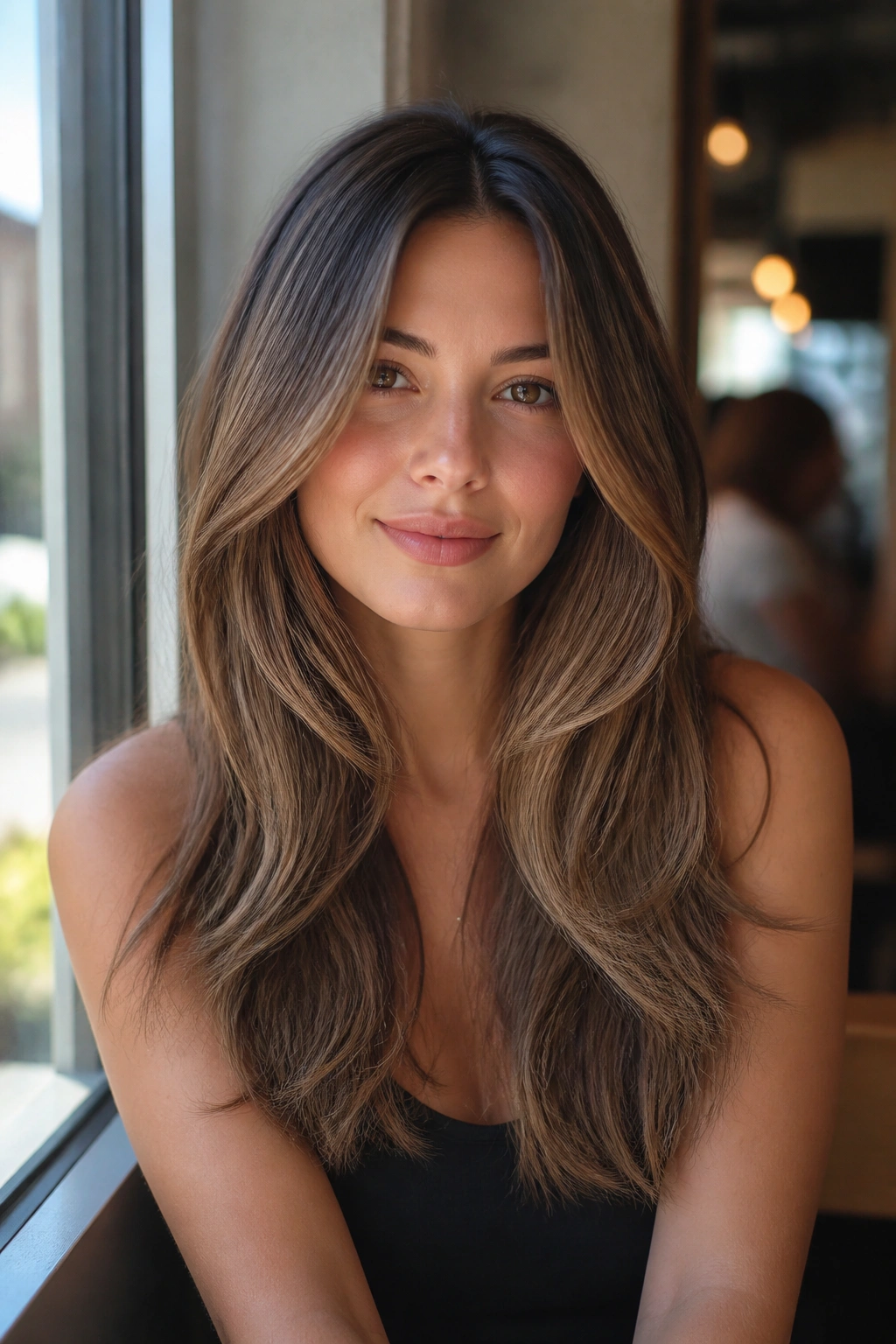
Not every middle part has to look severe. When the front pieces are tapered and the layers are kept long, a middle part can actually be one of the nicest shapes for a round face.
The reason is simple. The center line gives the eye a straight path downward, and the softer face frame prevents the cheeks from feeling exposed. If the layers start too high, the cut gets broad. If they start lower and blend gradually, the hair falls in a clean vertical flow.
This is one of the easiest styles to wear if you like straight hair or loose bends. It doesn’t need a lot of styling. A blowout with a paddle brush or a quick bend at the ends can be enough. The important part is keeping the front pieces long and the layering subtle.
It also grows out well, which is a nice bonus. Harsh layering can turn awkward in a month. Soft layering usually just gets a little more relaxed.
18. Airy Layers with a Long Curtain Fringe
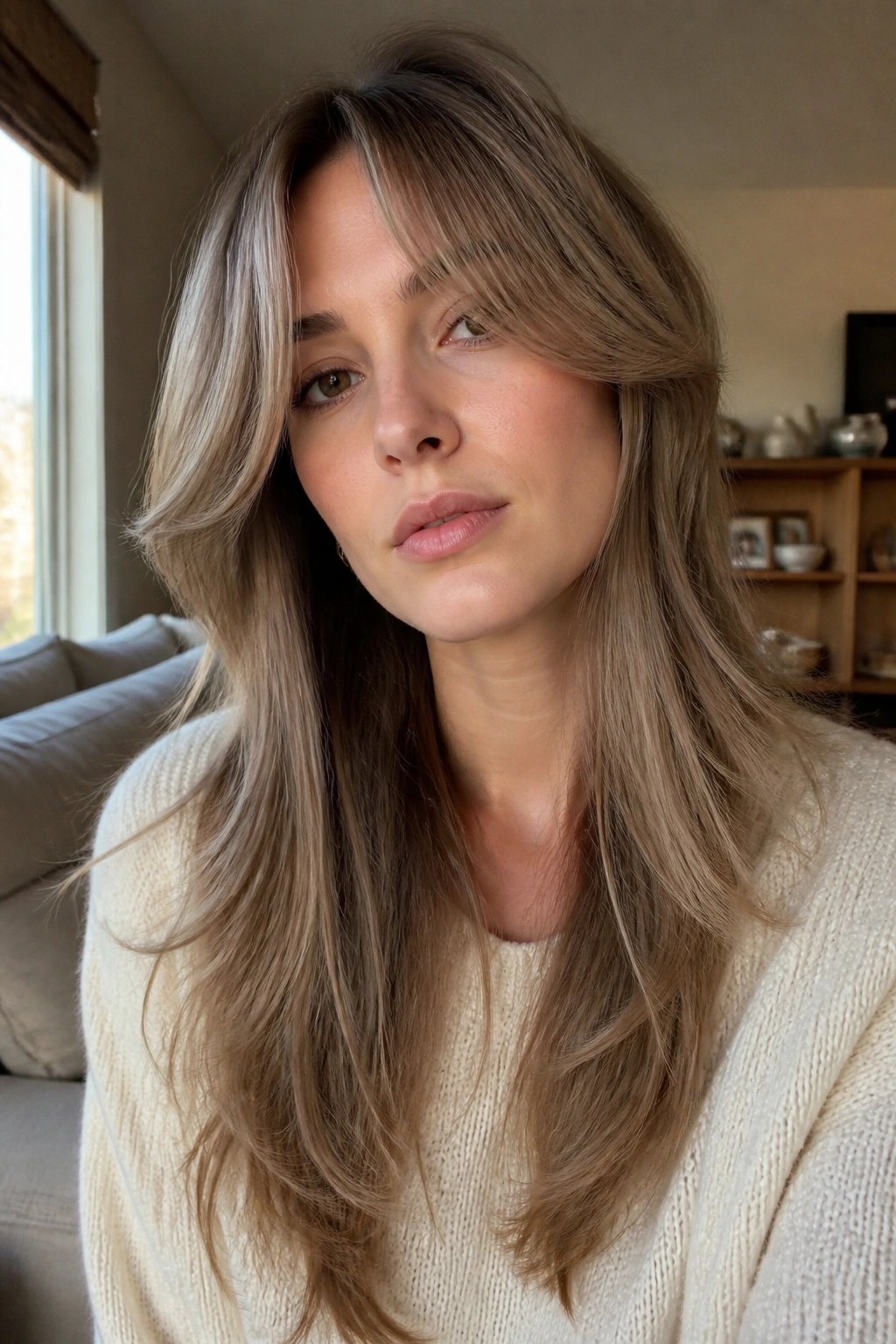
A longer curtain fringe can do the job of bangs without chopping up the length. That’s useful on round faces, where a heavy fringe can shorten the face if it’s too blunt or too dense.
The fringe should start softly near the center and open toward the cheeks, then blend into layers that keep going toward the jaw and shoulders. The ends need to feel airy, not thick, or the whole front section starts to crowd the face.
Styling notes
- Blow-dry the fringe away from the face first
- Keep the middle soft and the outer pieces longer
- Use a light round brush bend, not a tight curl
- Let the fringe separate a little instead of forcing it into one sheet
This cut is nice if your hair tends to sit heavy around the ears. The curtain fringe opens that area up, while the long layers keep the rest of the shape easy. It’s one of those cuts that can look casual on a weekday and polished with a little work.
19. Long Blended Layers with a Soft Face Frame
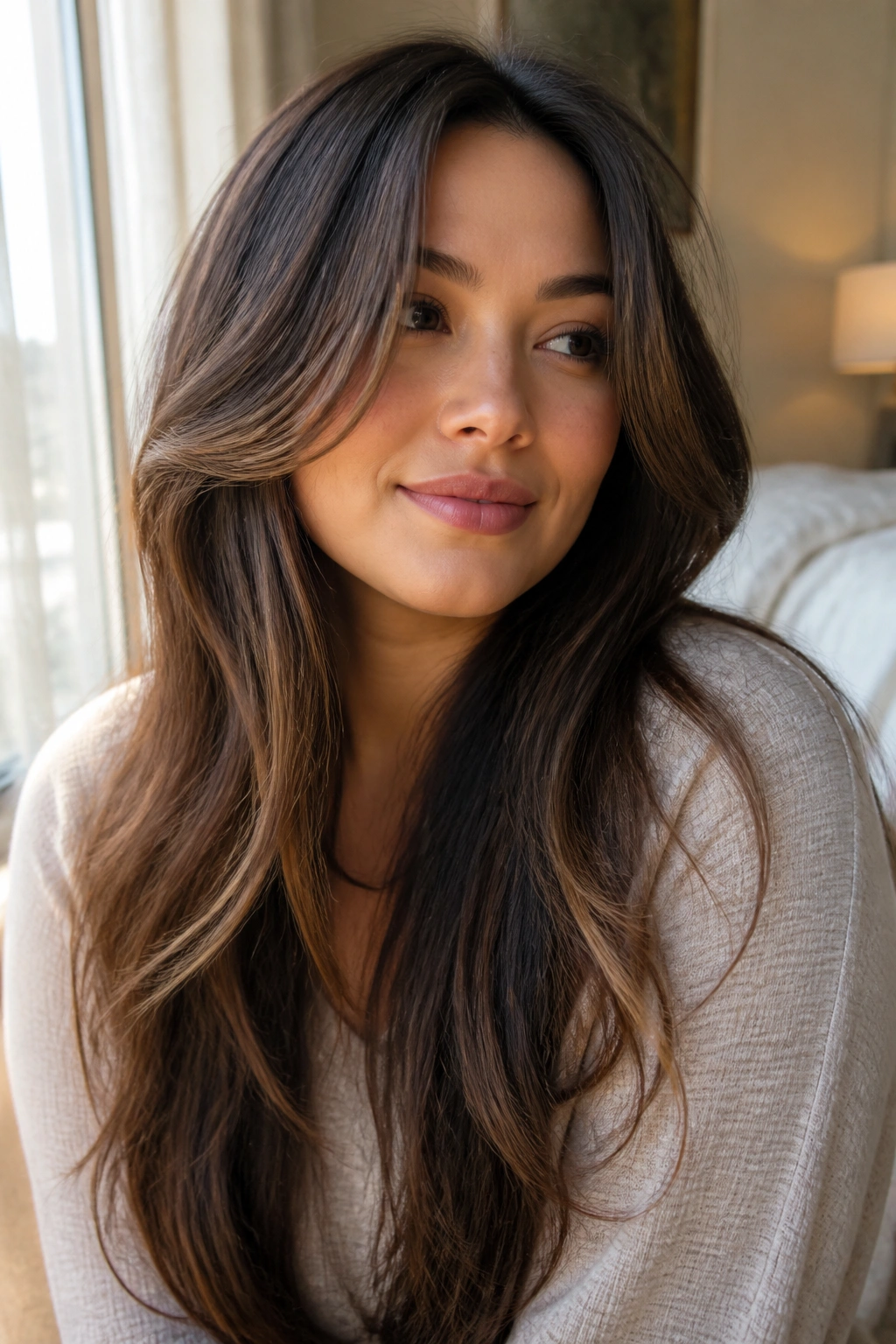
If you hate obvious layers, this is the quiet version. Long blended layers keep the shape smooth, with just enough movement to stop the hair from hanging like a curtain.
For round faces, that restraint is useful. The haircut doesn’t stop at the cheek line or flare out in chunks. It just flows. The face frame starts low, blends gradually, and stays soft enough that you notice the length before you notice the cutting technique.
This works especially well if you wear your hair straight or with very loose waves. Strong texture can hide subtle layers, which is fine, but this cut really shines when the outline stays visible. You want the hair to feel polished without looking stiff.
It’s also one of the easier shapes to live with day to day. Less drama. Less styling. Less chance of waking up to a triangle.
20. Long Textured Layers with Undone Ends
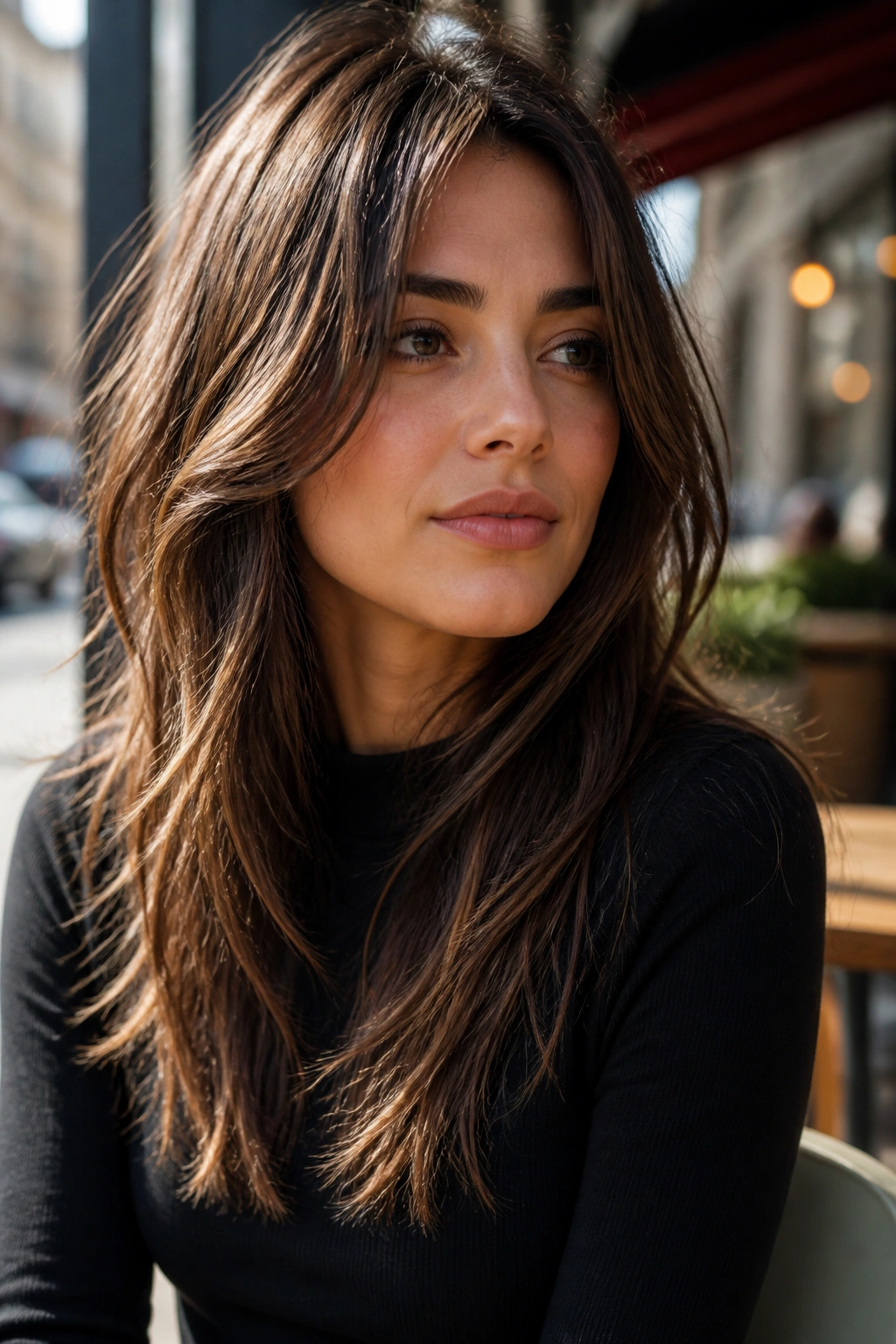
Sometimes the smartest haircut is the one that looks slightly imperfect. Long textured layers with undone ends give a round face movement without stuffing volume into the sides.
The shape stays long and easy. The texture lives mostly through the mids and ends, where it can break up the weight without crowding the cheeks. If the front pieces are kept a little longer than you think you need, the whole cut reads softer and more flattering.
The simple ask
- Keep the shortest face-framing pieces below cheek level
- Let the texture build through the lower half of the hair
- Avoid blunt ends that stop at the widest part of the face
- Leave enough length to tuck one side behind the ear when you want a change
This is the cut I’d point to if someone wants low-maintenance hair that still has shape. It works air-dried, blown out, curled, or left alone. And that flexibility is the real appeal. A good long layered cut should make your life easier, not add another job to your morning.
