



Fine hair can look flat in a haircut that’s too tidy. Shaggy layered haircuts for fine hair fix that problem when the shape is built with care — not hacked to pieces until the ends look see-through. That difference matters more than people think.
Fine hair and thin hair are not the same thing. Fine hair means the strand itself is small in diameter, which is why it bends easily and loses lift fast. A good shag works with that softness instead of fighting it, but a bad shag strips away so much weight that the whole cut starts to look wispy in the wrong way.
The sweet spot is a haircut that keeps enough length to hold shape while creating movement where the eye wants it most: around the cheekbones, the jaw, and the crown. I like shags that still feel intentional at the perimeter. Too many layers can turn fine hair into frayed ends and disappointment.
So the real question is not whether shag layers can work on fine hair. They can. The question is which version gives you volume without making the hair look scarce, and that’s where the details start to matter.
1. Soft Collarbone Shag With Curtain Bangs
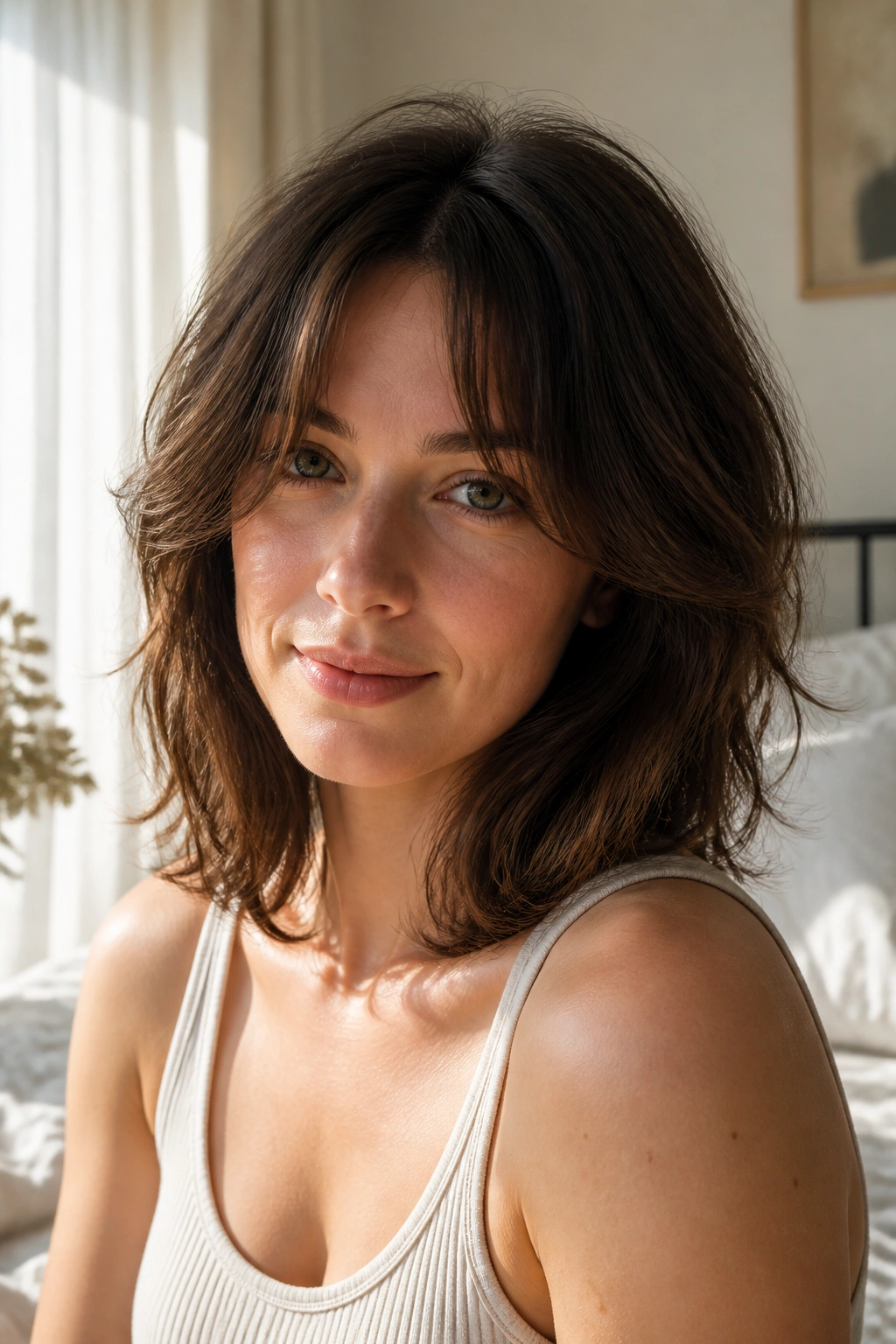
The collarbone is a smart stopping point for fine hair. It keeps enough length to feel feminine and versatile, but not so much that the weight drags everything flat by noon. Add curtain bangs, and the whole cut gets a soft opening around the face that makes the hair feel fuller without looking chopped up.
Why It Works
Curtain bangs create motion at eye level, which is where people notice shape first. On fine strands, that matters. The front pieces can be dried away from the face with a round brush, then bent slightly back at the ends — that tiny curve does more for volume than people expect.
Ask for long internal layers, not aggressive thinning. You want the inside of the cut to move, while the outer line still looks solid. That’s the part many stylists get wrong when they’re used to thicker hair.
- Best when your hair falls straight or with a slight wave.
- Good if you want to wear it down and still pull it back later.
- Works well with a soft middle part or a loose off-center part.
Ask for face-framing pieces that start around the cheekbone, not the chin. That small shift keeps the bangs from stealing density from the ends.
2. Chin-Length Shag Bob

Why does chin length help so much? Because fine hair often looks fuller when the ends are close enough to the head to catch lift. A shag bob at the chin gives you a crisp shape, then breaks up the line with light layering so it doesn’t feel stiff or boxy.
This is one of my favorite cuts for people who want a little edge without a lot of fuss. The bob length gives body. The shaggy texture keeps it from looking helmet-like. And because the hair isn’t hanging far past the shoulders, it springs back easier after a blow-dry.
The trick is balance. If the top gets too short, the cut turns fluffy in a bad way. If the layers are too long, you lose the point of the shag. The cleanest version has soft, piecey movement at the cheeks and a slightly blunt edge at the bottom.
A quick air-dry with a touch of mousse can be enough. Fine hair rarely needs much. Sometimes less is the whole answer.
3. Pixie Shag With Tousled Crown
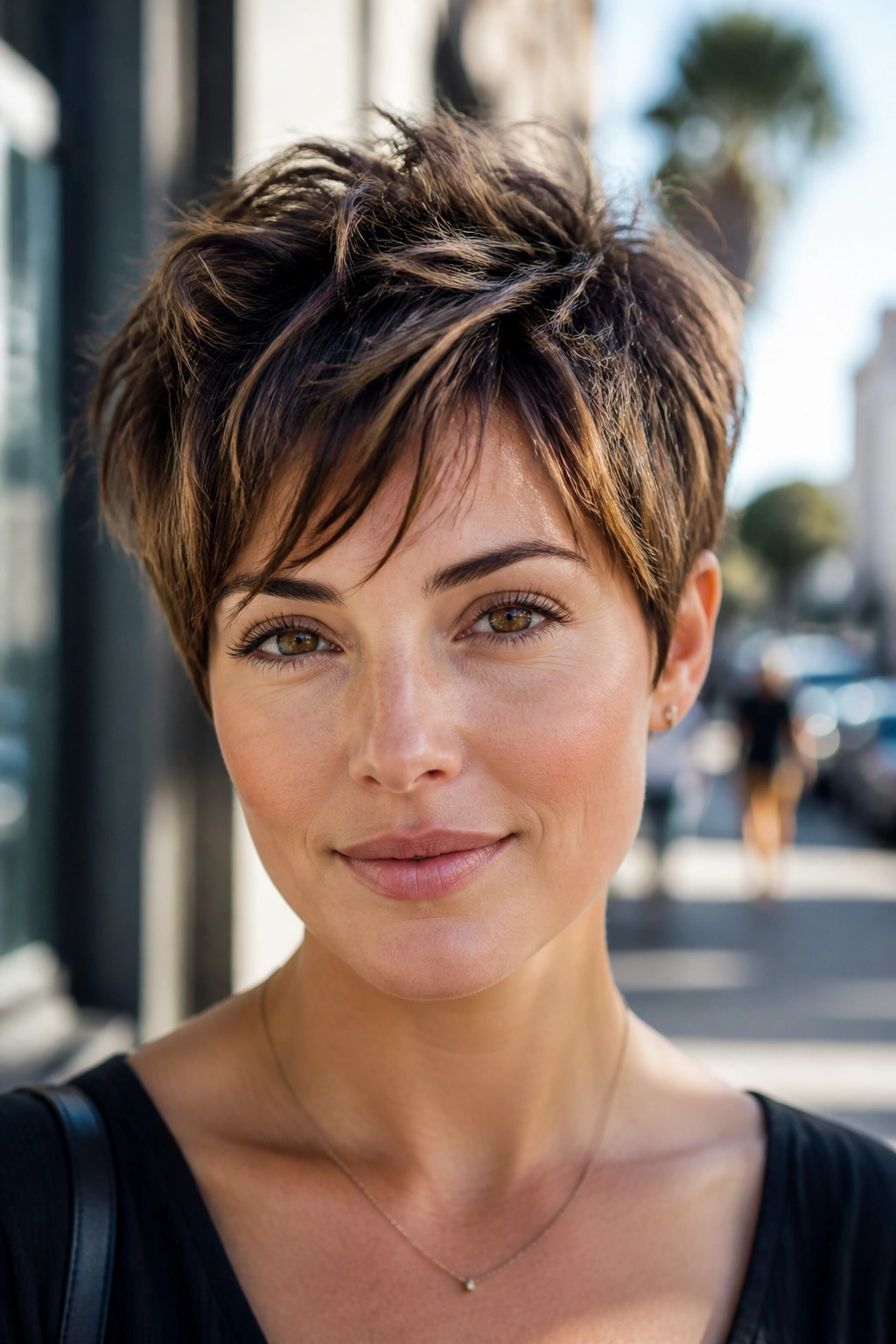
A pixie shag can be a lifesaver for fine hair, and I say that without exaggeration. Shorter hair lifts more easily at the root, and the shag texture keeps it from lying like a flat cap. With the right cut, the crown gets a little messy height while the sides stay close enough to the head to look sharp.
Ask for longer length on top, tapered sides, and soft texture through the crown. The goal is not a choppy mess. The goal is movement that looks like hair, not styling product. A little separation is fine. Chunky ends are not.
What to Tell the Stylist
- Keep the top pieces long enough to pinch between two fingers.
- Leave a little weight around the ears so the cut does not puff outward.
- Add texture with scissors first, razor second — and only if the hair can handle it.
- Preserve a soft fringe or side sweep if you want the cut to feel less severe.
This one likes finger-drying and a pea-sized dab of styling cream. Skip heavy oils. They flatten the top fast, and then the whole point disappears.
4. Lob With Razored Face-Framing Layers
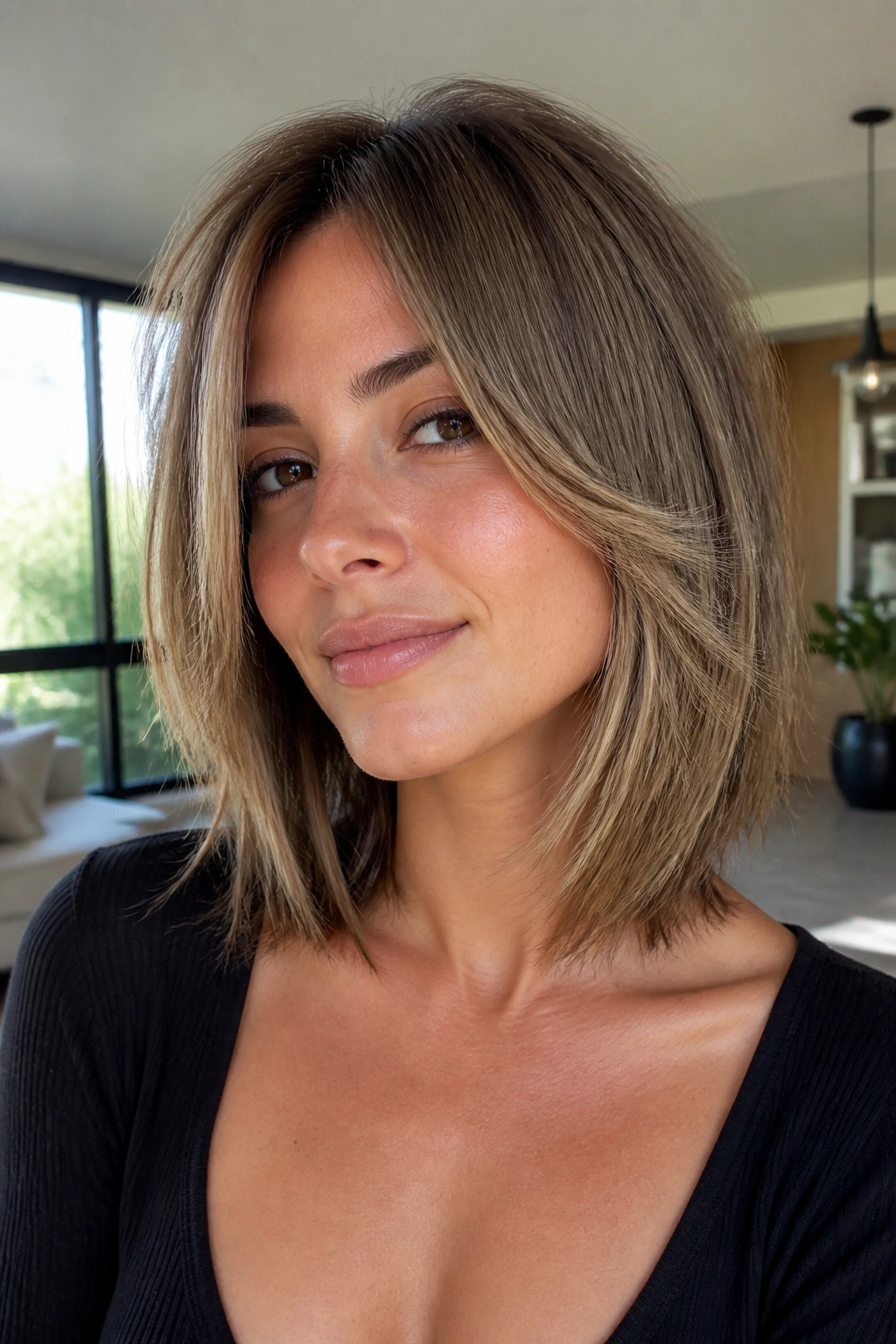
A long bob can look heavy on fine hair unless it gets help near the front. That’s where razored face-framing layers come in. They lighten the shape around the face while leaving enough length in back to keep the overall haircut from collapsing.
Picture hair that lands somewhere between the collarbone and the chest, with the front pieces kicked forward just a bit. Not dramatic. Not fussy. Just enough angle to make the cut feel alive when you move your head. It’s a good fit if you like putting hair behind one ear or clipping up one side.
The razor part needs judgment, though. A light razor pass can soften the line and create movement. A heavy one can shred fine ends into nothing. I’d rather see a clean scissor cut with controlled razoring only at the face, especially if the hair is fragile or color-treated.
For styling, a one-inch bend through the front pieces is enough. You do not need waves everywhere. That’s the trap. Too much curl can make fine hair look smaller, not bigger.
5. Butterfly Shag for Fine Hair
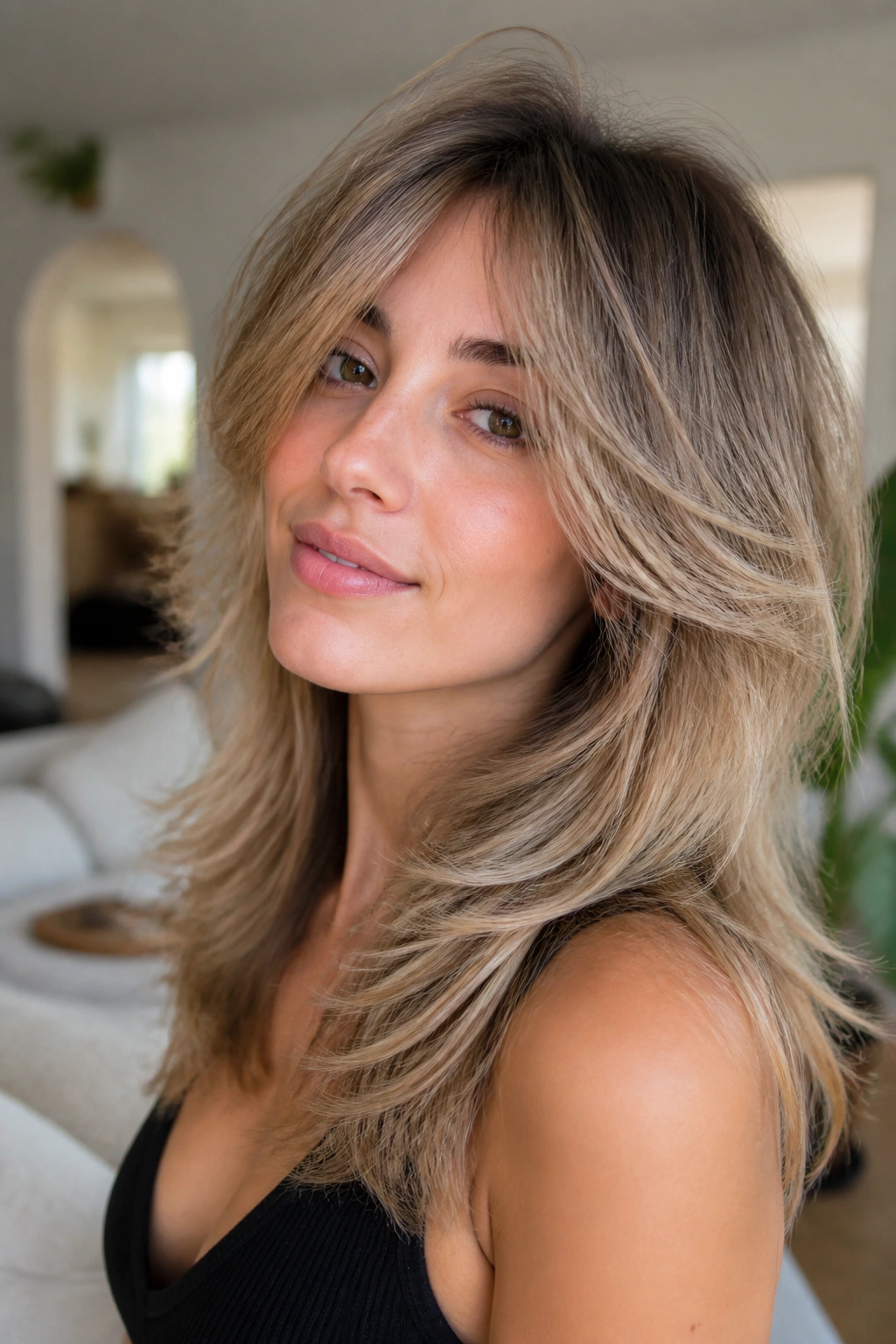
The butterfly shag keeps length in play while making the top layers feel lighter and bouncier. That makes it a clever option for fine hair that still wants to hang past the shoulders. The shorter pieces live around the front and crown, while the longer pieces stay underneath, almost like two haircuts sharing the same space.
It sounds more complicated than it is. In real life, it just means the top lifts while the bottom still moves. That can be a relief if you hate how fine hair goes limp at the ends after a few days. The shorter layer section gives the illusion of more hair near the face, which is where flatness shows fastest.
This cut does ask for styling, though. A quick blow-dry with lift at the roots helps the layers separate in a flattering way. If you let it dry in one solid curtain, the shape can vanish. That’s the tradeoff.
Best for: people who like having enough length to twist, clip, or braid, but still want some lightness around the face. It’s not the most wash-and-go option. It does look lovely with a little effort.
6. Soft Wolf Cut With a Blunt Edge

A classic wolf cut can be too much for fine hair. It sometimes eats the perimeter alive and leaves the ends looking thin, especially if the hair is naturally straight. The softer version keeps the shaggy spirit — short crown layers, face movement, a bit of attitude — but leaves a firmer edge at the bottom.
That blunt edge is doing real work. It gives the eye a solid finish, which makes the hair look denser. Without it, the cut can dissolve into fluff. With it, the top gets lift and the bottom still feels present.
What Makes It Different
- The layers are concentrated higher up.
- The nape and lower lengths stay heavier.
- The front pieces are feathered, not thinned out to lace.
- The overall shape feels modern without looking overdone.
I’d reach for this if you like a little messiness but don’t want a haircut that screams for styling every morning. A small amount of texture spray is enough. If the crown needs help, use root clips for ten minutes while the hair cools.
7. Long Feathered Shag With Face-Framing Pieces
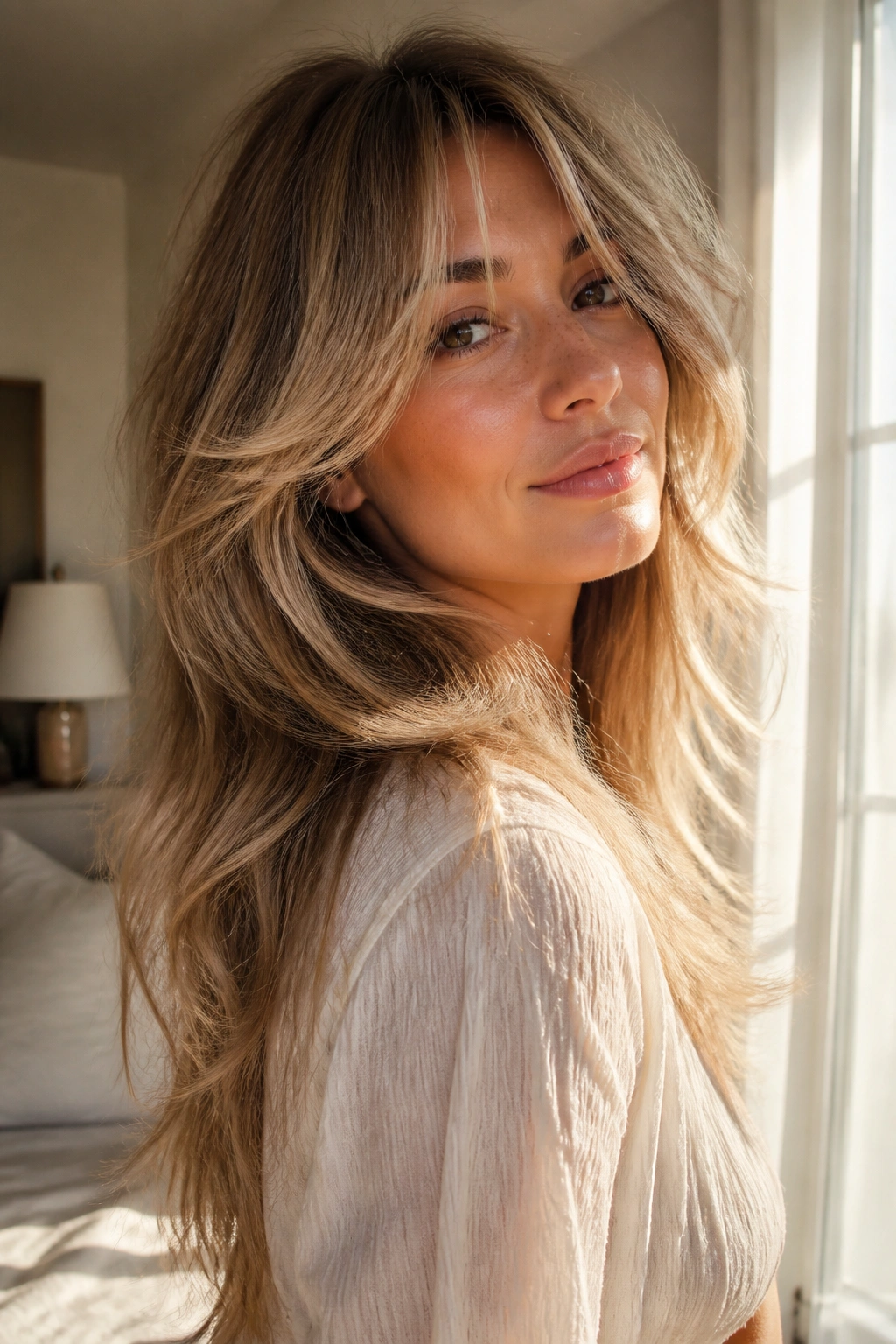
Long hair and fine hair can be a tricky pair. Add too much weight, and the roots go limp. Add too many short layers, and the ends turn stringy. A long feathered shag solves part of that by keeping the length but softening the edges so the hair moves instead of dragging.
Why It Helps
Feathering the front and outer layers gives the illusion of fullness because the cut catches air when you turn your head. The best versions start the face-framing pieces around the cheekbone or just below it, then let the longer lengths stay intact. You get motion without losing the feeling of “hair.”
This cut also handles a middle part well, which is useful if your fine hair separates easily. The layers fall away from the face instead of clinging to it. That tiny shift can make the whole style look more awake.
Use a round brush only on the front two sections if you’re short on time. The rest can dry naturally. I’d keep the finish soft, not too polished. Feathered shag hair looks better when it moves a little.
8. Shag With Bottleneck Bangs

Bottleneck bangs are narrow in the center and a bit longer at the sides, which gives fine hair a gentle frame without swallowing the face. Paired with shag layers, they create a look that feels airy around the forehead and fuller near the cheekbones. That balance is the whole game.
The bangs themselves should feel soft at the ends, not chopped blunt. On fine hair, a hard, heavy fringe can be unforgiving. Bottleneck bangs spread the density out, so the front doesn’t look like one dark block. They also grow out more gracefully than a short, straight bang.
A few details make them work better:
- Keep the center short enough to open the eyes.
- Let the sides melt into the cheekbone layers.
- Style with a small round brush or a quick bend from a flat iron.
- Avoid over-texturizing the fringe, or it can split apart too much.
I like this cut for people who want fringe without commitment fatigue. It’s soft on day one and still makes sense when it starts to grow.
9. French-Girl Shag That Sits Around the Jaw
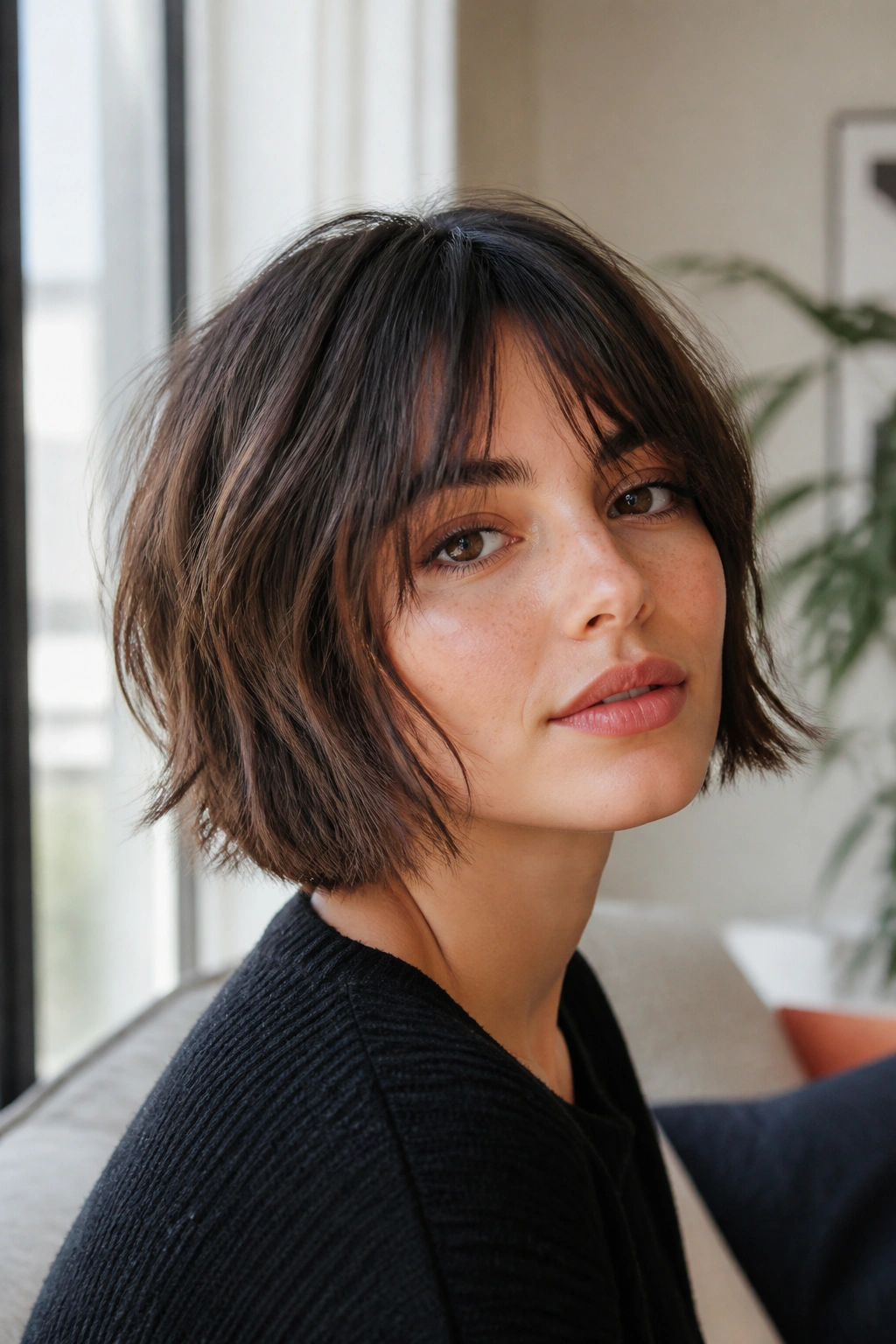
There’s a reason jaw-length shaggy cuts keep showing up in salons. They flatter fine hair because they create density where the face needs it most. The line around the jaw gives the hair something to bounce off, while the layers add enough movement to keep it from looking blunt or boxy.
This cut is especially nice if you wear glasses or have a strong jawline. The pieces hover around the face instead of hanging past it, so the haircut feels light and deliberate. It has a little attitude, but not the heavy, overdone kind that takes over your whole look.
A stylist should leave enough weight in the bottom section so the ends don’t feather out too much. That part matters. If the bottom gets too airy, the cut can look sparse from the side. Better to keep the base slightly full and let the top do the textural work.
One pass with a small brush, a bit of bend at the ends, and you’re out the door. Nice and simple. Which, honestly, is the best thing a fine-hair cut can be.
10. Side-Swept Layered Crop
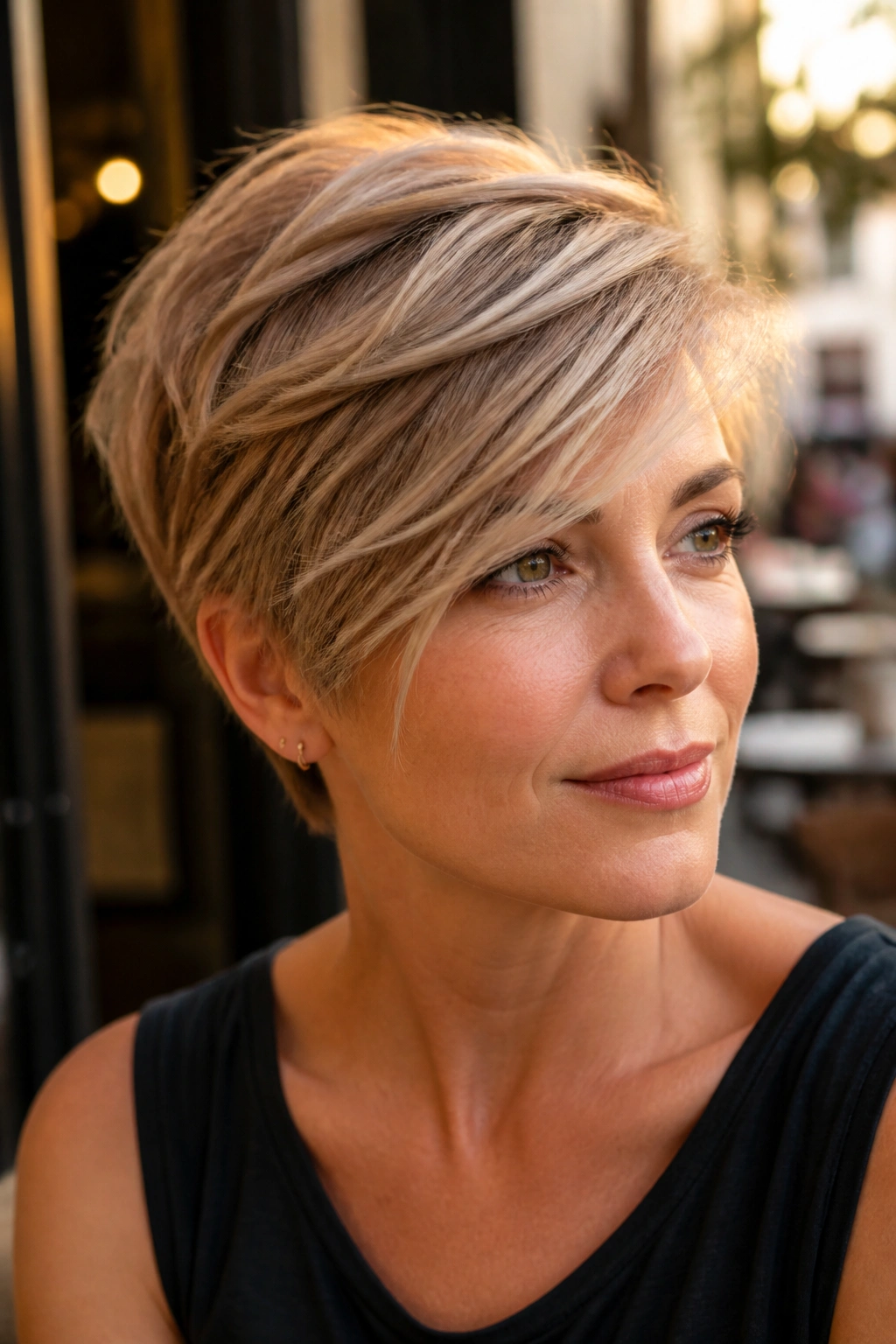
A side-swept crop is for the person who wants movement but doesn’t want a fringe sitting in the middle of the forehead all day. The diagonal line gives fine hair the look of lift, because the eye sees direction and height at the same time. That alone can make the hair feel thicker.
The layers here are shorter through the top and softly swept across the forehead or temple. Nothing severe. Nothing helmet-like. The shape is meant to break up the flat plane that fine hair sometimes creates, especially around a side part that keeps falling back into place.
I like this cut for busy mornings. It can be finger-styled, tucked, clipped, or smoothed with a little cream. It also grows out without turning into a problem haircut. That’s worth a lot.
If you want to keep it looking fresh, dry the front in the opposite direction first, then sweep it over. That gives the roots a small lift. Small is enough.
11. Wavy Shag With Invisible Layers

Can layers be there without shouting about it? Absolutely. Invisible layers are the quiet version of the shag, and they’re especially nice for fine hair that already has a natural wave. The cut removes bulk from the inside while keeping the outside line soft and fairly full.
The benefit is subtle, which is why I like it. Not every shag needs to look choppy. Some just need a little internal movement so the wave pattern can breathe. If your hair clumps into flat sheets when it dries, these hidden layers can stop that from happening.
How It Behaves When Dry
The waves separate into lighter pieces, but the ends still look intact. That’s the part people usually want but don’t know how to ask for. You keep the feeling of length, and the hair no longer hangs in one heavy panel.
Use a light curl cream or a mist of water with a tiny bit of leave-in if the wave needs encouragement. Heavy creams can be a mistake. They drag the whole cut down and erase the lift you paid for.
12. Shoulder-Length Shag With a Blunt Base
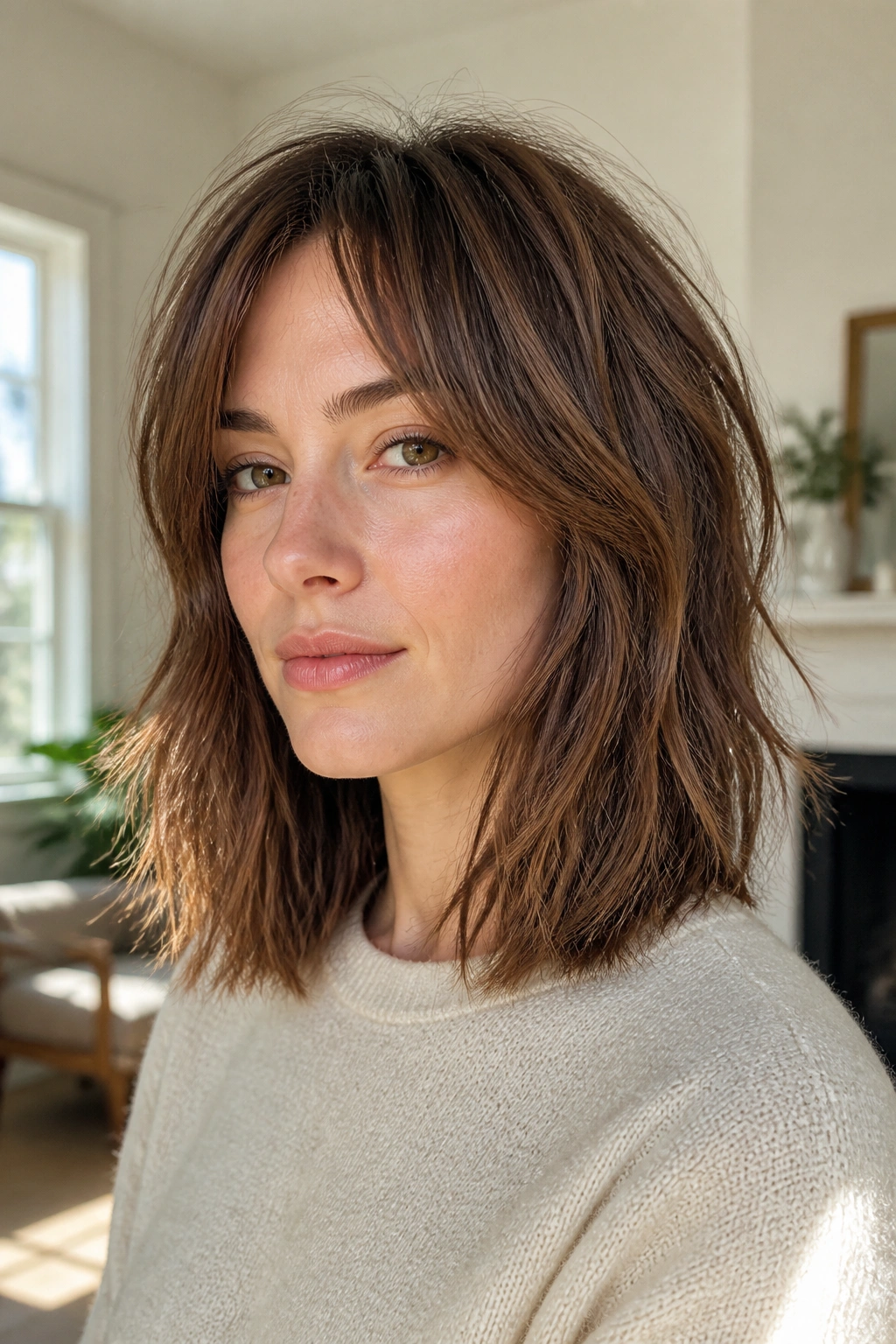
Here’s the contrarian take: a blunt base is a friend to fine hair. People assume shag cuts need every edge broken up, but that can make the ends look threadbare. A shoulder-length shag with a blunt edge keeps the density visible, while the layers around the crown and face add the messy movement.
This is one of those haircuts that looks better in motion than in a static photo. The shoulder length gives it bounce, and the blunt bottom line gives it shape. Fine hair often needs that anchor. Without it, the hair can drift into a wispy shape that looks bigger on top and emptier on the bottom.
Ask for long layers only through the upper half, then a clean line across the bottom. That’s the useful bit. If the stylist starts slicing the perimeter too much, stop them. You want lift, not vanishing ends.
This cut works well with a blowout brush or large rollers. The shape is simple, and simple is good here.
13. Razor-Cut Shag With a Soft Under-Cut Illusion
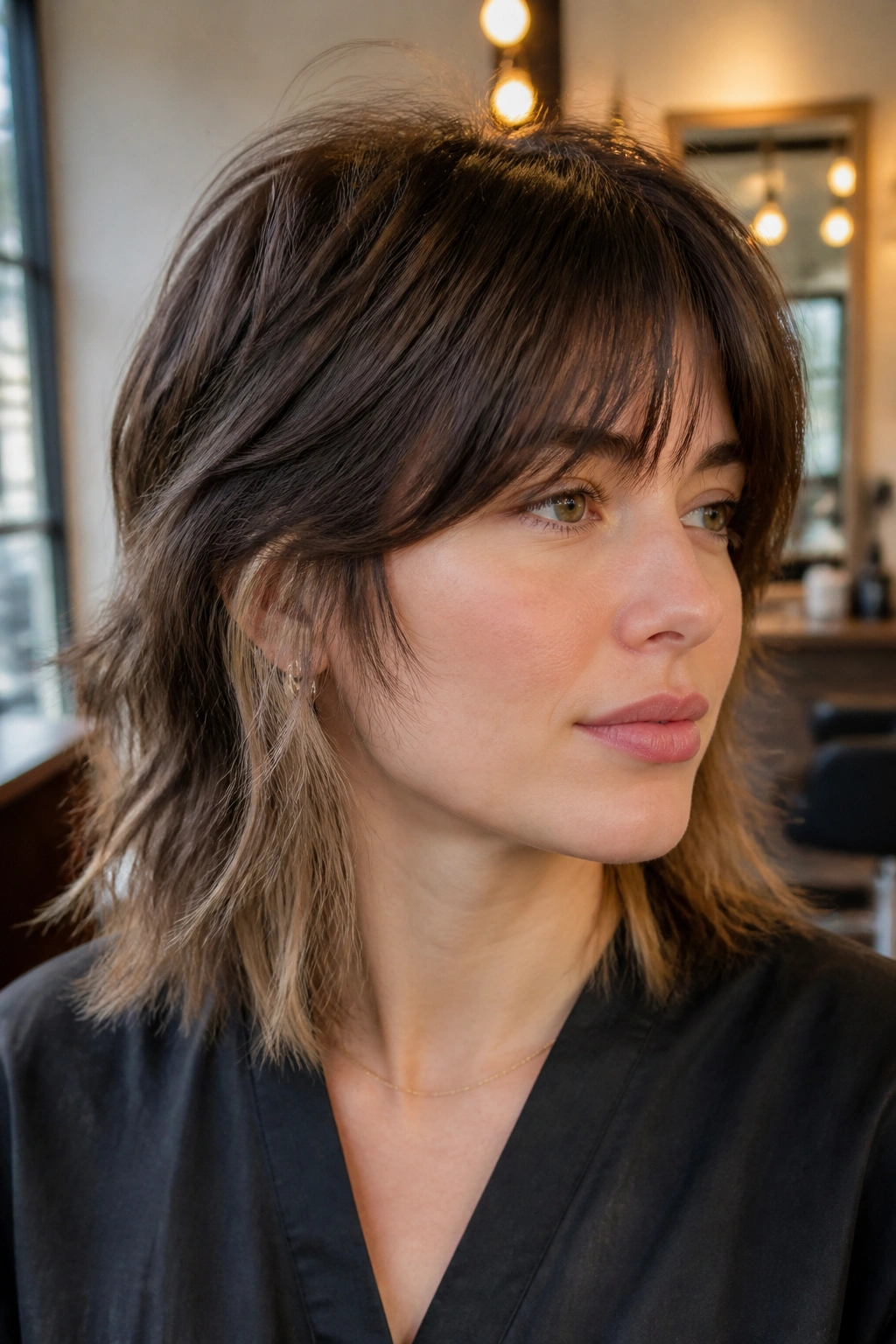
A razor cut can be brilliant on fine hair, but only when it’s handled with restraint. The appeal is softness: the blade can lighten the line and make the hair feel airy around the edges. Used well, it creates a slight under-cut illusion — not an actual shaved section, just a lighter shape underneath that lets the top layer sit with more movement.
What to Watch For
- The razor should not chew up the ends.
- The shape needs a strong perimeter somewhere, usually around the nape or the front.
- Fine hair that breaks easily may do better with scissors and point-cutting.
- The finish should feel soft, not shredded.
This cut suits someone who likes texture but hates stiffness. It can look a little undone in the best way, especially if you scrunch in a foam and let the hair dry with a natural bend. If your hair is already fragile from bleaching or heat, go carefully. A razor is a tool, not a magic wand.
14. C-Shaped Layers Around the Cheekbones
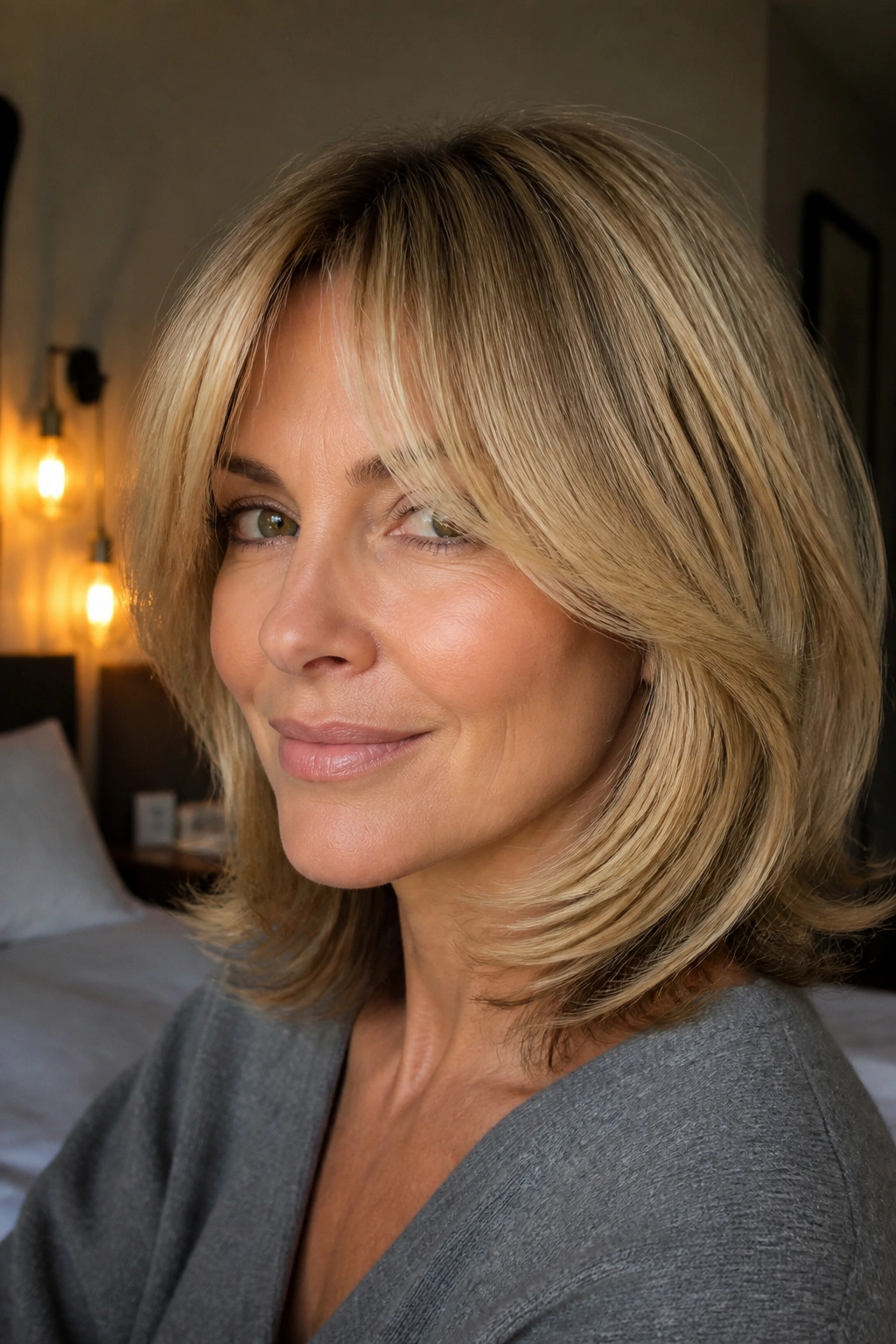
C-shaped layers curve inward toward the face, and that curve is flattering on fine hair because it creates a sense of lift where the cheeks and eyes sit. Instead of dropping straight down, the layers wrap around the face in a soft arc. The effect is subtle, but it changes the whole haircut.
This shape is especially good if your hair tends to lie flat along the sides of your head. The curve interrupts that flatness. It also helps the hair look fuller when tucked behind one ear, because the front pieces keep their shape instead of collapsing into a straight curtain.
A round brush is your friend here. Lift the front sections up and away from the face, then turn the brush slightly inward at the ends. Not a huge curl. Just enough bend to show the cut. If you want to be low-maintenance, that tiny curve is all you need.
I like this style because it gives structure without feeling formal. Fine hair often needs structure. It just doesn’t need a lot of it.
15. Grown-Out Shag With Minimal Layering
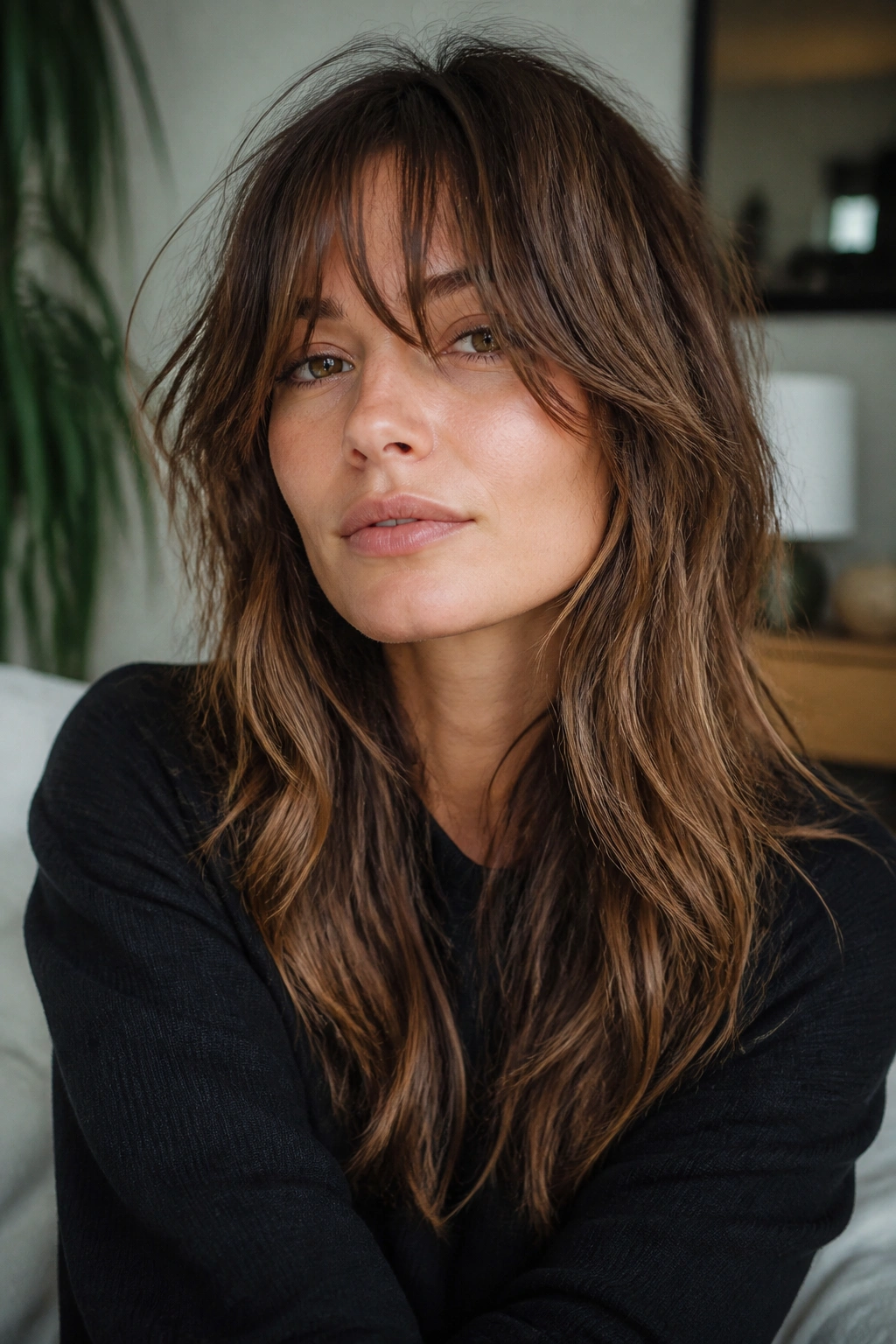
Some of the best fine-hair shags are the ones that don’t look obviously shaggy at all. A grown-out shag with minimal layering keeps the shape relaxed and easier to maintain, which matters if you hate heading back to the salon every six weeks. The layers are there, but they’re long and blended.
That means the haircut stays soft as it grows. No harsh steps. No sudden shelf shapes. Just movement that slowly loosens over time, which is exactly what you want if you live in ponytails and clips half the week anyway.
This is also a good choice if your hair is fine but plentiful in actual number of strands. The cut can remove a little bulk without making the ends look sparse. The secret is restraint. A lot of stylists want to create drama with layers; here, drama would be a mistake.
Use a light spray at the roots and leave the rest alone. The haircut should do the work. That’s the whole appeal.
16. Curly Shag for Fine Curls or Waves

Fine curls and waves need a different kind of shag. Straight-up layering can make the curl pattern collapse if it’s not placed with care, so the cut has to respect shrinkage and spring. Done well, a curly shag gives the hair lift at the crown, shape around the face, and room for each curl to sit without crowding the one next to it.
The Part That Matters Most
Dry cutting is often helpful here because curls behave differently once they lose water. A stylist can see how each curl lands and avoid slicing off too much length in the wrong place. The best version is not wildly layered; it’s shaped so the curls stack in a flattering way.
If your curls are fine, avoid too much thinning. That advice gets repeated a lot for a reason. Fine curls can puff up and fray if they’re overworked. Better to keep the curls together and let the layers come from the shape rather than the thinning shears.
A diffuser on low heat helps the cut hold its outline. High heat can make the whole thing spread out and look fuzzy. Not charming fuzzy. The other kind.
17. Disconnected Shag With Piecey Texture
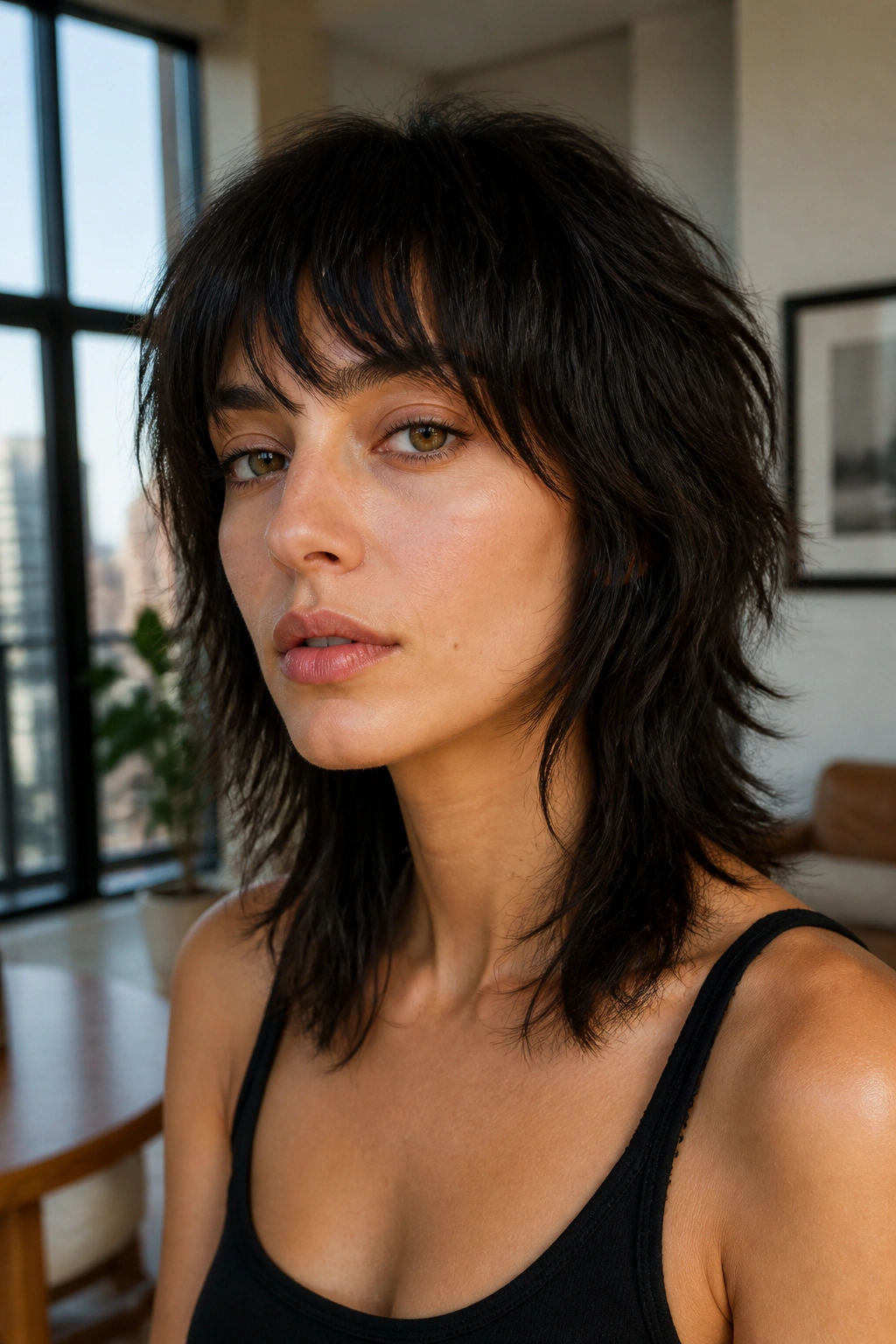
This one is for the person who likes a little edge and doesn’t mind seeing the cut. A disconnected shag keeps some sections visibly separated, which gives fine hair a piecey, lived-in finish without making the whole head look flat. The pieces are deliberate. That’s the point.
The look depends on contrast. Shorter crown sections create lift, while the longer layers underneath keep some weight in the style. It’s a bit more graphic than a soft shag, and that makes it useful if your fine hair disappears in a blended cut. Here, the separation creates the volume illusion.
Ask For
- Distinct but controlled layers through the top.
- A longer bottom line to protect density.
- A fringe that breaks into pieces, not one solid sheet.
- A finish that can hold texture paste or spray.
I’d skip this if you want hair that looks polished with almost no styling. It’s better for someone who likes a tousled finish and doesn’t mind using product. A pea-sized amount of paste through the ends is enough. More than that can make fine hair stick together in sad little strings.
18. Soft Mullet Shag
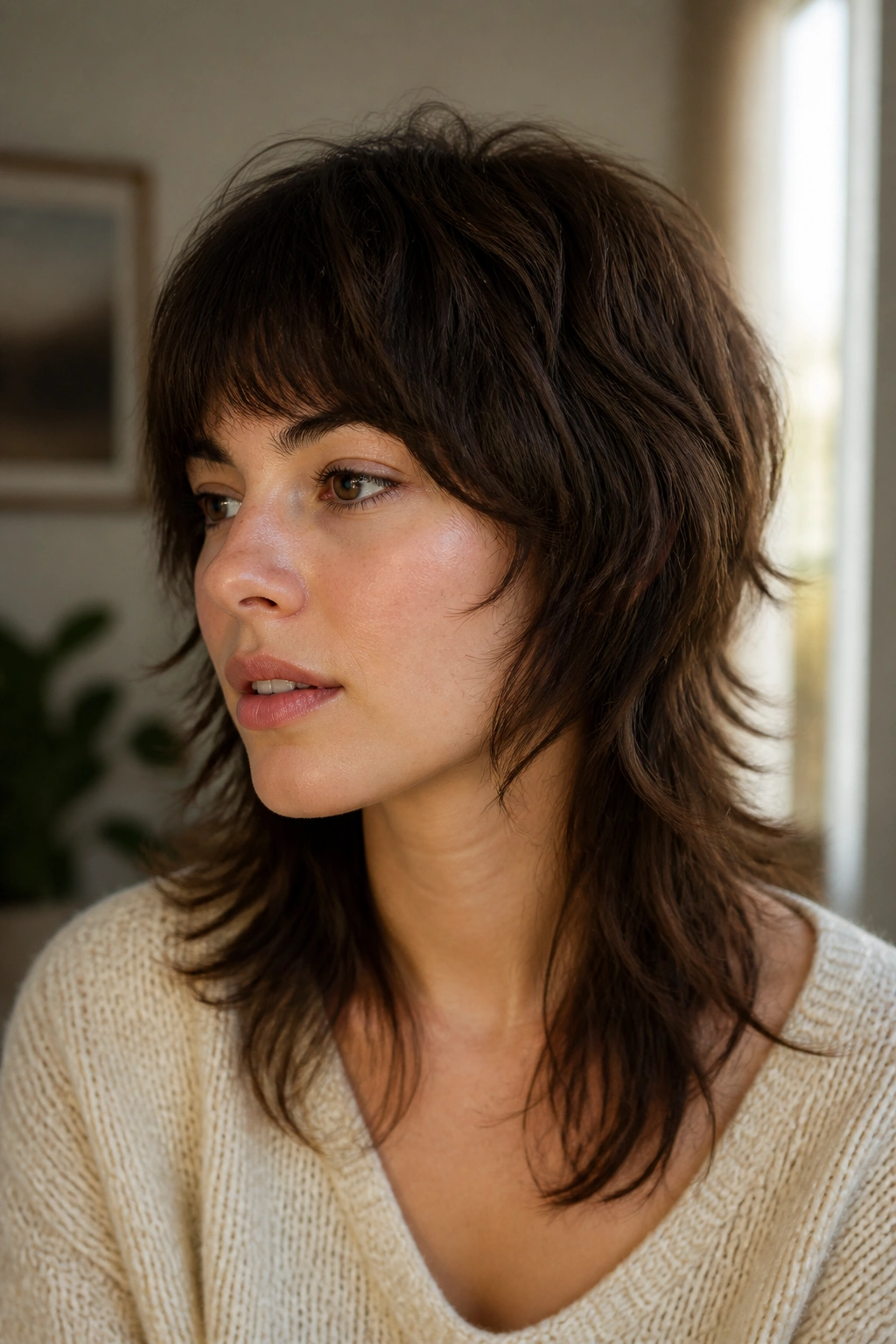
A soft mullet shag is not the loud version people imagine. On fine hair, it can actually be one of the cleverest cuts around because it keeps the front and crown lively while allowing the back to stay a little longer. That split creates movement, and movement reads as body.
The key word is soft. You do not want a hard disconnect that makes the back feel like an afterthought. You want the length to flow, just with enough contrast that the top lifts and the sides don’t sit heavy. Think texture, not costume.
This cut suits people who want a bit of personality in the haircut without spending an hour styling it. It also grows out in an interesting way, which is rare. Most edgy cuts either need constant upkeep or fall apart fast. This one sits somewhere in between.
What It’s Best For
- Hair that goes flat at the crown.
- Faces that like height around the cheekbones.
- People who want a shag with a little more shape shift.
- Fine hair that still needs a visible outline at the ends.
19. Chin-Grazing Shag You Can Tuck Behind the Ear
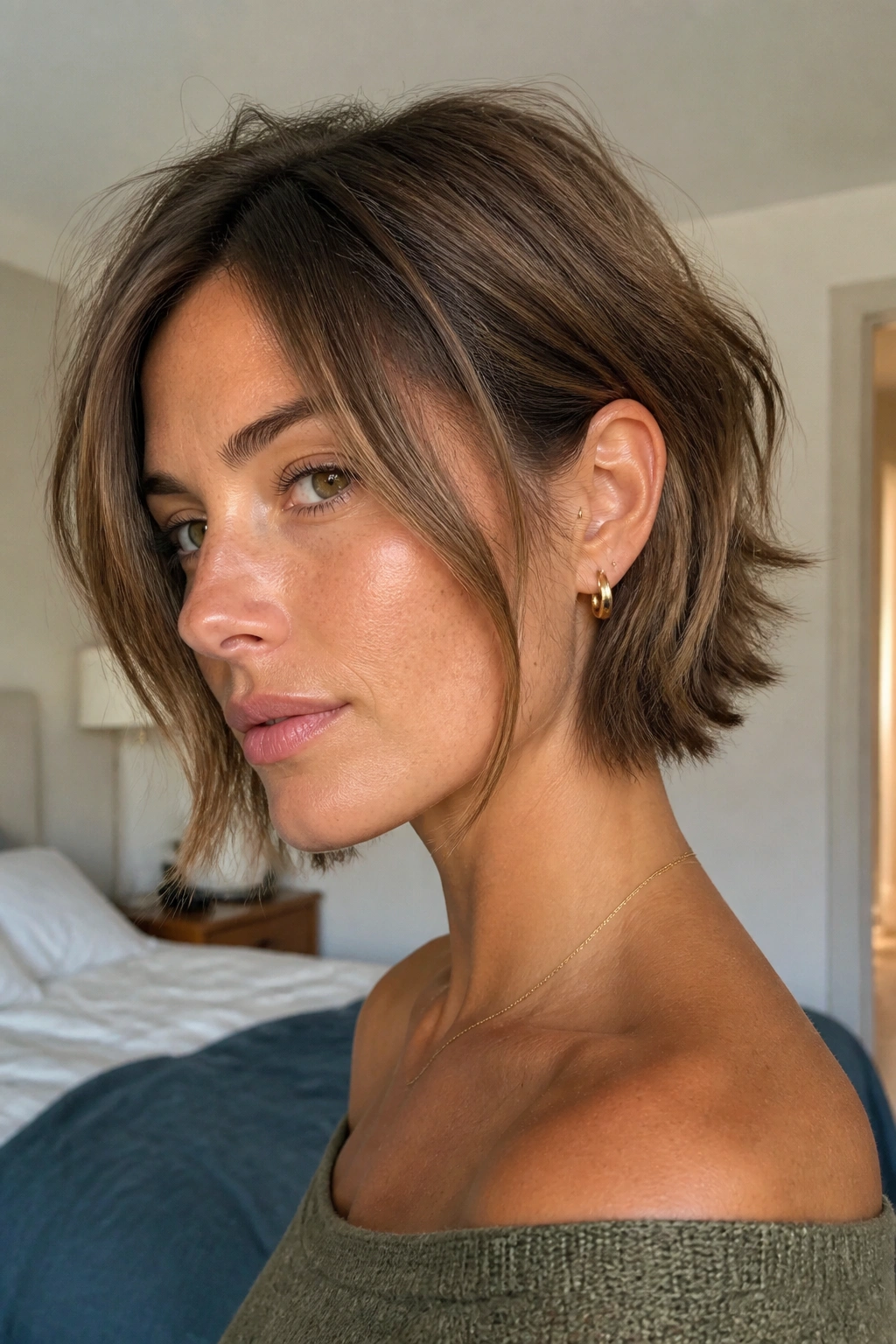
There’s something useful about a cut that still looks good after you tuck half of it behind your ear. A chin-grazing shag does that well. The length is short enough to swing, but long enough to frame the jaw and show off a few soft layers when the hair moves.
For fine hair, the benefit is simple: the haircut stays close enough to the face to look full, and the shape changes easily with a small tuck, a pin, or a bend from a brush. That flexibility matters more than people give it credit for. A cut that can shift three ways on a Monday morning is worth keeping around.
The best version has slightly longer front pieces and a lightly broken-up lower edge. Not too much texture at the tips. Just enough. You want the strands to separate when you move, not split into thin little ropes.
A side part can make this shape feel a little fuller near the crown. A middle part gives it a cleaner line. Both work. The hair just needs a bit of lift at the roots to keep the jaw-length pieces from clinging.
20. Airy Long-Layer Shag With Minimal Thinning
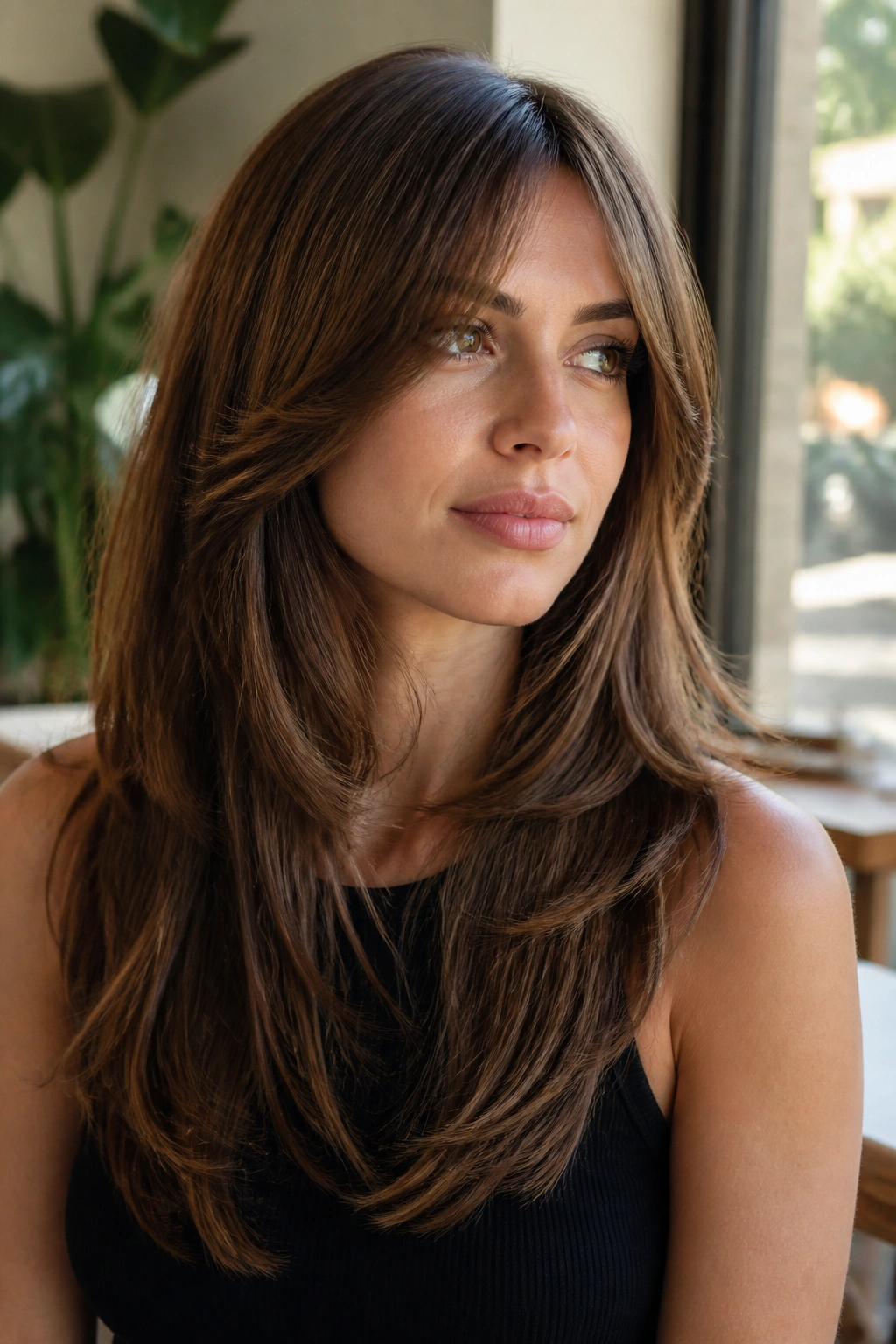
If you want the longest possible shag without losing the look of fullness, this is the one I’d point to first. An airy long-layer shag keeps most of the length intact and uses minimal thinning to create motion through the mid-lengths and ends. Fine hair gets to keep its density, which is the part too many layered cuts forget.
The shape is especially good when you like hair that can be worn loose, braided, or clipped back. The longer layers give movement, but the perimeter stays strong enough to hold a ponytail without looking stringy. That sounds small. It isn’t. For fine hair, the difference between “soft” and “too thin” can be half an inch and a bad haircut.
Ask your stylist to keep the outer line blunt-ish and place the layers inside the shape. That phrase — inside the shape — is worth repeating. It means the haircut moves without losing its outline. That’s the whole point of a good shag on fine hair.
A little root lift, a quick bend at the front, and you’re done. No heroics. No overstyling. Just a cut that gives fine hair room to move while still looking like it has something to say.
