



Short wavy layered haircuts for round faces work because they change the shape of the hair before they change the shape of the face. That sounds obvious, but it’s the part people miss most often.
A round face usually has a similar width and length, softer cheeks, and a jawline that doesn’t shout for attention. So the haircut has one job: create a little vertical line somewhere, break up the width at the cheeks, and keep the wave from turning into a puffy circle.
That does not mean hiding anything. It means being smart about where the weight falls. A side part, a longer front piece, a bit of crown lift, or a layer that ends below the cheekbone can do more than a dramatic chop ever will.
And waves help, when they’re cut well. When they’re not, they can swallow the whole face shape. Start with shape, not volume.
1. Side-Parted Chin-Length Bob
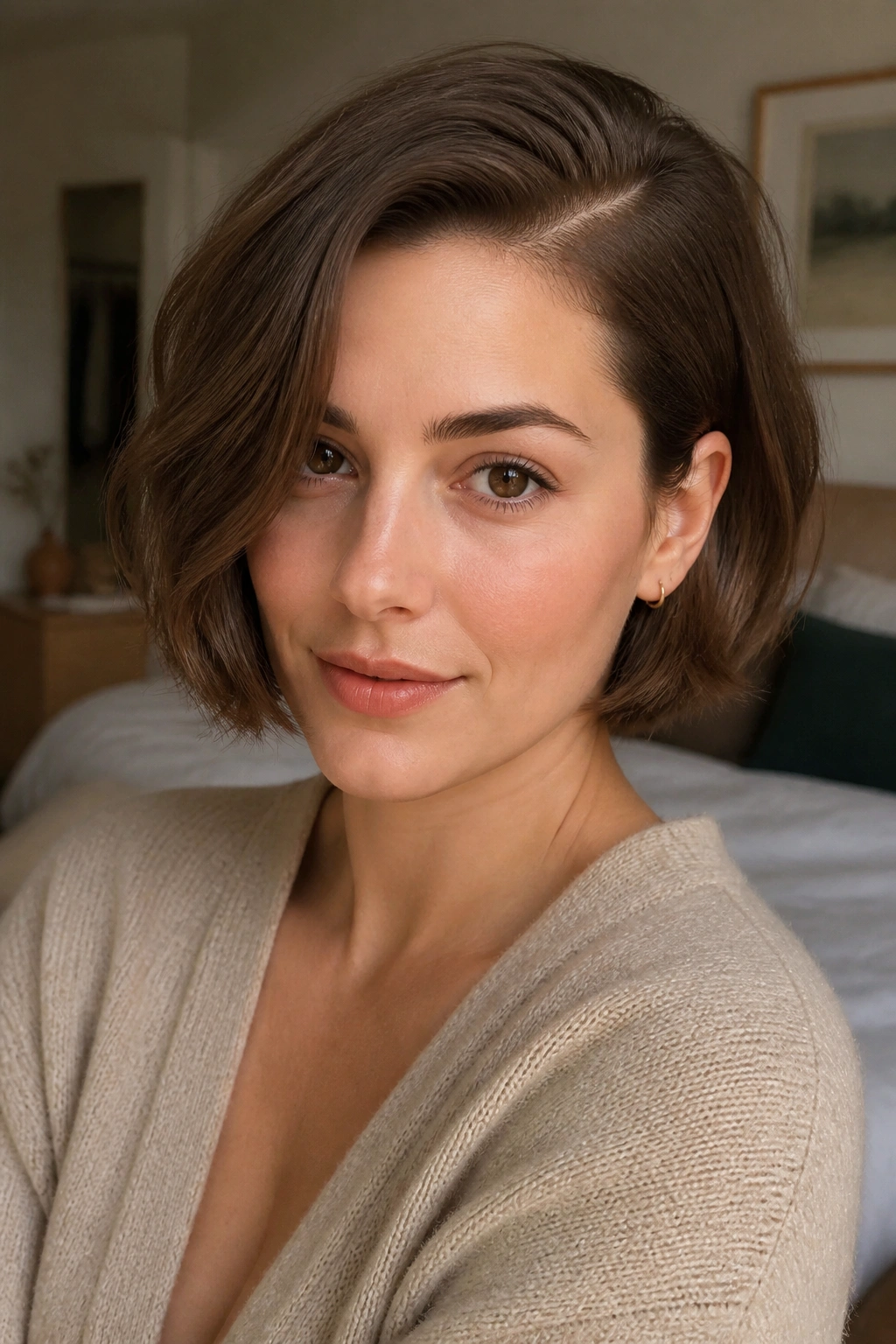
A chin-length bob can flatter a round face beautifully if it doesn’t sit like a clean shelf. The side part shifts the eye off center, and the slightly shattered ends keep the line from making your face look wider than it is.
Why It Works
The key is placement. A chin-length cut that ends right at the fullest part of the cheeks can feel boxy, but a side part and soft internal texture change the whole mood. The front pieces should skim the jaw, not press into it.
Ask your stylist for:
- A side part that starts slightly above the arch of your brow
- Soft point-cut ends instead of blunt, even edges
- The front pieces kept a little longer than the back
- Light layering through the interior so the wave moves instead of ballooning
Best for: fine to medium hair that needs shape without a lot of bulk.
Watch for: too much layering right at the chin. That can kick the bob outward, and nobody wants a triangle.
Pro tip: tuck one side behind your ear and let the other fall forward. That tiny asymmetry does a lot of work.
2. Tousled Collarbone Lob
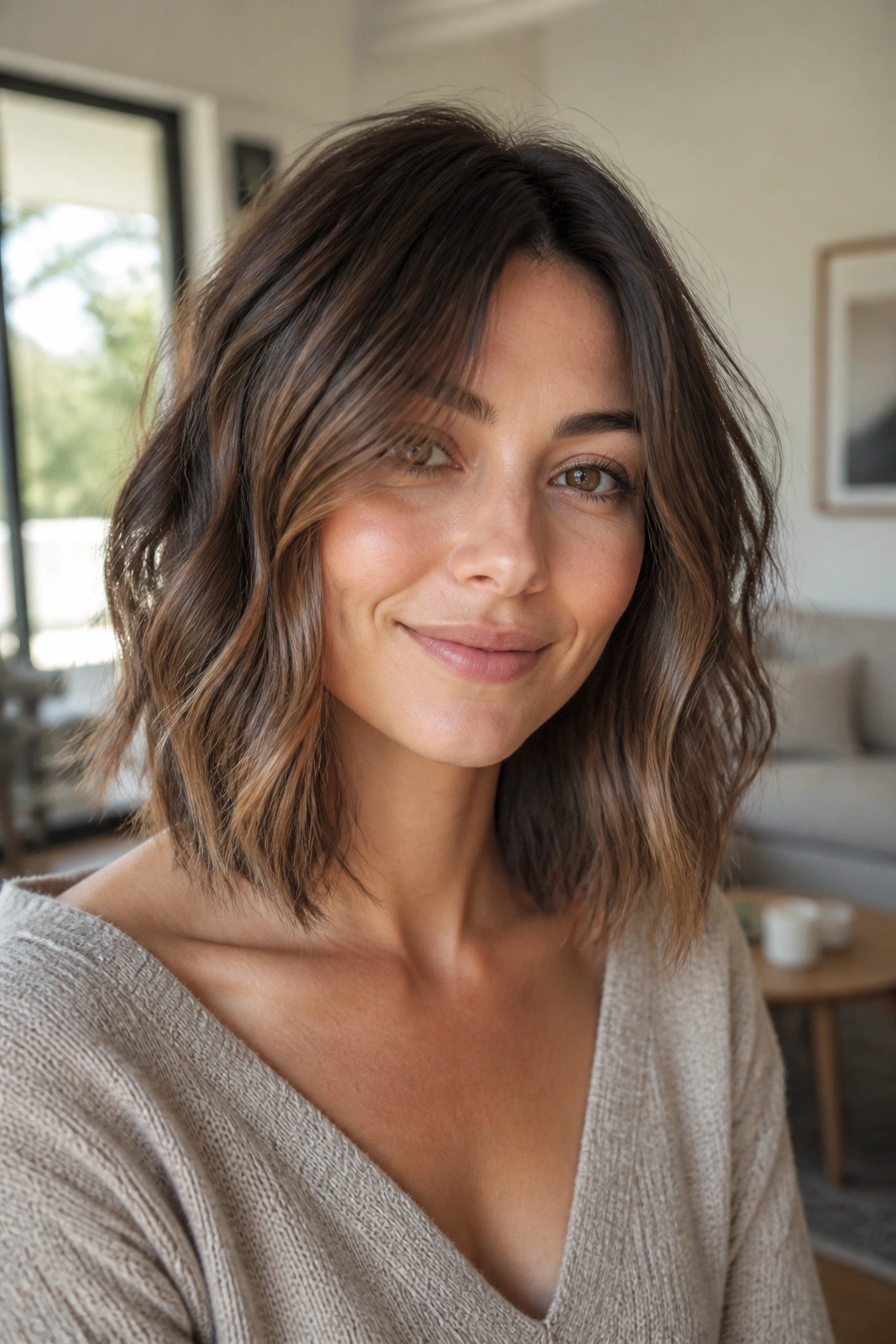
This is the haircut I reach for when someone wants something low-stress but still polished enough for everyday life. The collarbone length gives the hair room to fall past the widest part of the face, and the waves keep it from feeling heavy.
A lob like this works especially well when the layers are soft and slightly staggered. You want movement, not choppiness for its own sake. When the ends hit around the collarbone, the eye drops lower, which makes the face read a little longer.
It’s also one of the easiest styles to air-dry. A dab of mousse at the roots, a light curl cream through the mid-lengths, and a quick scrunch is often enough. If your waves are stubborn, wrap a few sections around a 1.25-inch iron and leave the last inch out so the finish stays loose.
If you like hair that can be tucked, clipped, or left down without a big production, this one earns its keep fast. It’s a workhorse cut. Quietly.
3. Curtain Bang Shag

Why do curtain bangs work so well on round faces? Because they open in the middle and fall away from the cheeks instead of cutting straight across them.
That little split creates a vertical line at the center of the face, then the layers fan out around the cheekbones. The result feels softer and longer at the same time. A shag helps because it builds texture around the crown and through the mid-lengths, which keeps the hair from settling into one solid shape.
How to Wear It
Curtain bangs need a little direction, or they collapse into a blob. Blow-dry them first, not last, using a round brush or even your fingers and a vent brush if you want a rougher finish.
- Keep the shortest point of the fringe near the bridge of the nose or just above the cheekbone
- Let the outer pieces blend into the layers instead of stopping sharply
- Use a lightweight spray, not a heavy balm, or the bangs will separate in a greasy way
- Part them while they are still damp so they learn the shape early
Good fit: wavy hair that has some natural bend but still needs a frame around the face.
4. Feathered Pixie-Bob
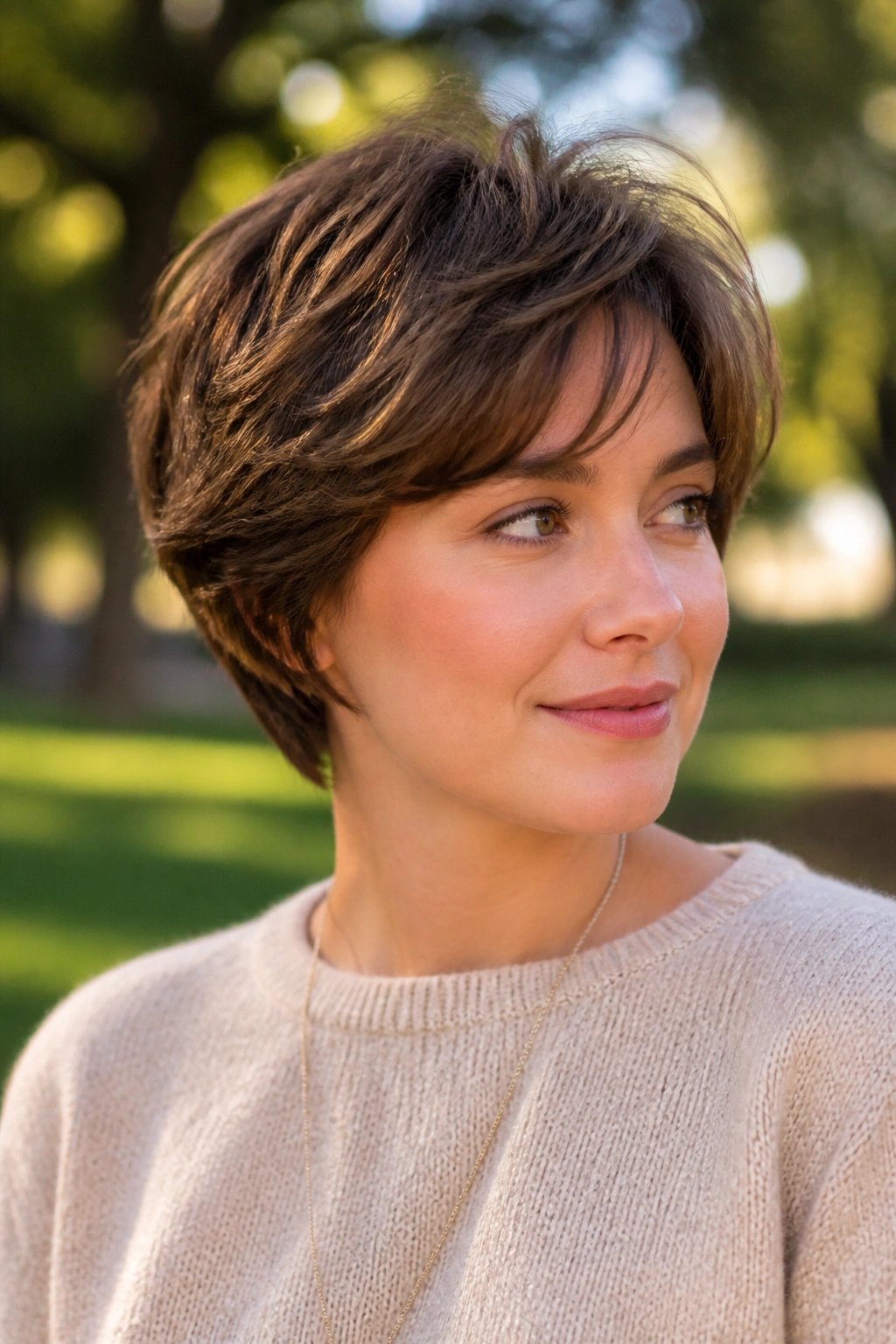
If you’re tired of hair sitting on your neck and clinging to your jaw, a feathered pixie-bob makes a strong case. It’s short, yes, but not severe. The trick is the feathering around the temples and crown, which keeps the style light.
I like this cut on round faces because it pulls some visual weight upward. A clean, heavy bob can sit low and wide; a feathered pixie-bob does the opposite. The sides stay close enough to the head to avoid puffiness, and the top gets enough lift to create a little height.
What to Ask For
- Shorter back and nape, with a gentle taper
- Longer pieces at the temples and above the ears
- Soft texturizing at the crown
- A side part or a broken middle part, not a hard center line
It works best with a bit of styling cream or a matte paste rubbed through dry hair. Keep the finish touchable. If it starts looking crisp or spiky, the shape loses its softness fast.
5. French Bob With Airy Fringe

A French bob can be a trap if it’s cut too blunt. But when the line is soft and the fringe is airy, it becomes one of the prettiest options for a round face. The length usually sits around the cheekbone or jaw, which gives you that short, chic feel without closing off the face.
The fringe matters more than people think. Heavy bangs can squeeze a round face visually, while an airy fringe breaks up the forehead and lets the rest of the cut breathe. I prefer a fringe that looks a little imperfect, with tiny gaps and movement, not a thick curtain that lies flat across the brow.
This cut loves a bit of natural wave. Let it dry with a touch of salt spray, then pinch the ends with your fingers so they don’t puff into a perfect sphere. A French bob should look like it moved through the day and came back with better stories.
It is one of those cuts that can look expensive without trying too hard. That’s the charm.
6. Angled A-Line Bob
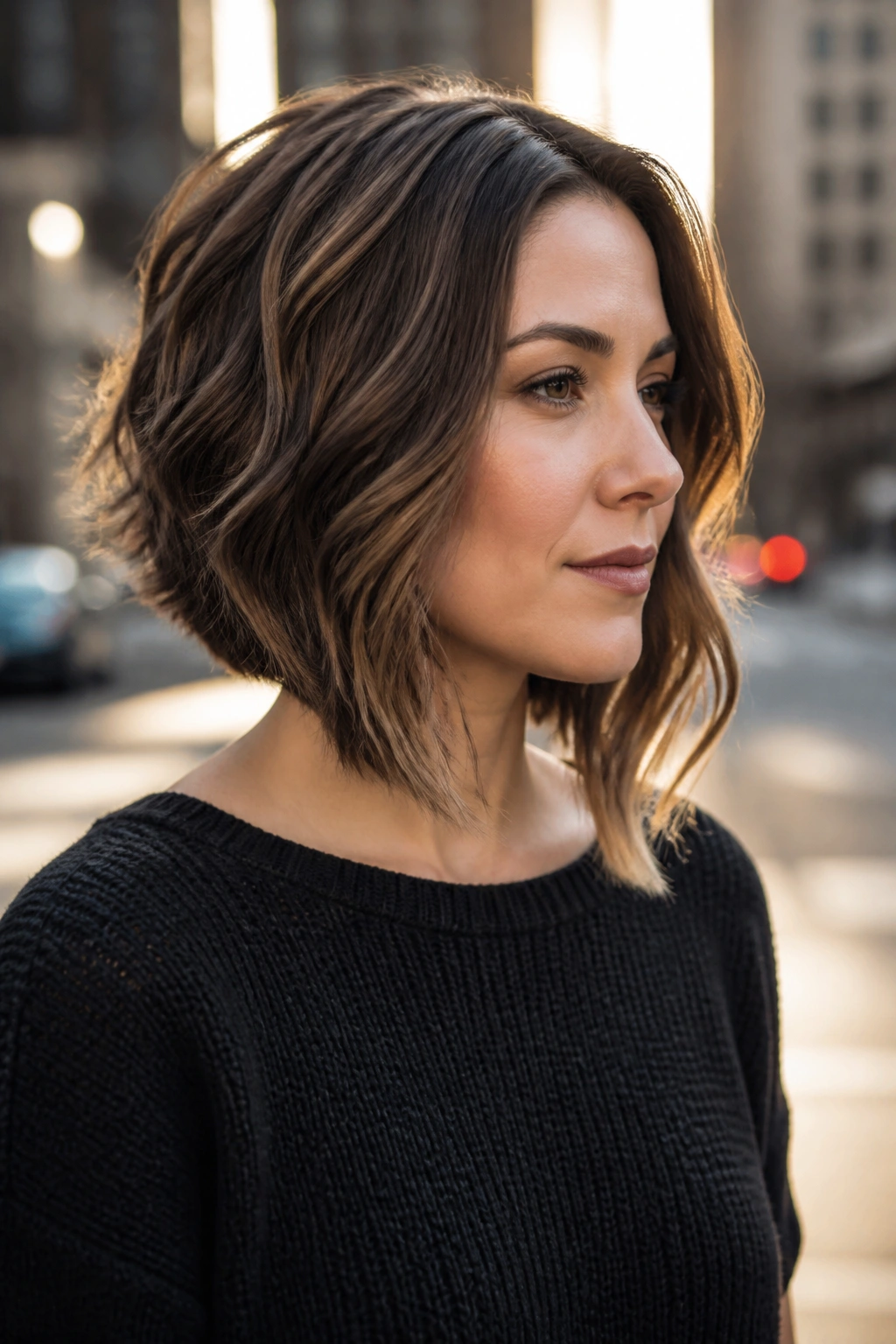
Unlike a blunt bob that ends evenly all the way around, an A-line bob angles forward and gives the face a longer line to follow. That forward slant is doing real work here.
The back stays shorter and lighter, which keeps the nape neat. The front lands longer, often an inch or two below the jaw, so the eye moves downward instead of stopping at the widest part of the cheeks. On a round face, that matters.
Waves soften the angle so the cut doesn’t look stiff. If your hair is naturally wavy, you can air-dry with a little cream and then smooth only the very ends with a flat iron if they flip out too much. If your hair is straighter, bend the front sections with a curling wand and brush them out.
Best for: thicker hair that needs a shape that can hold its line.
Not ideal for: hair that frizzes easily and refuses to lie down, unless you’re happy living in a bigger silhouette.
7. Invisible-Layer Lob
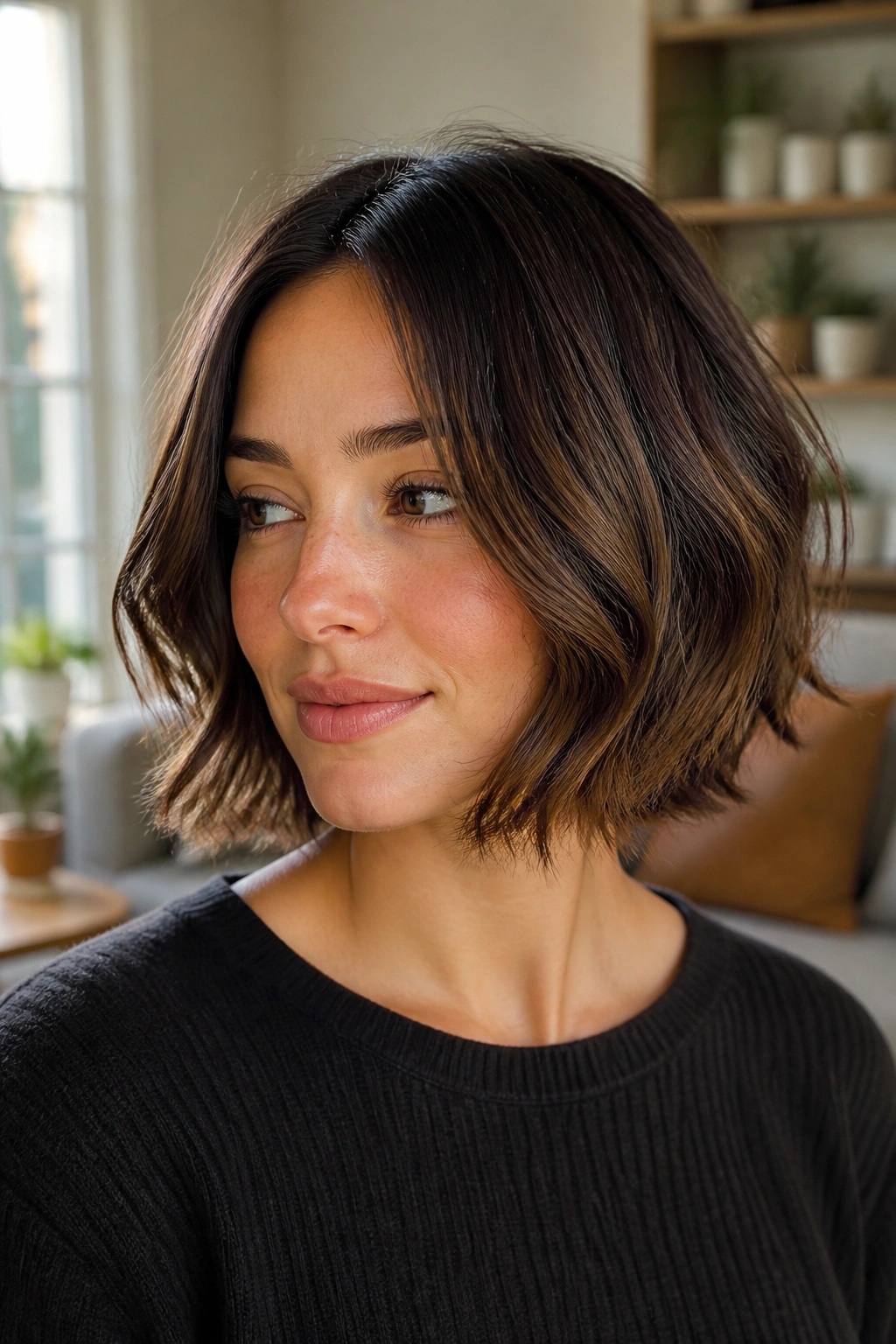
Invisible layers are the move when you want body without the chopped-up look that screams “layered haircut” from across the room. The ends stay clean, but the inside is removed just enough to let the wave move.
That’s useful on a round face because the surface still reads smooth, while the hidden structure stops the hair from puffing outward at the cheeks. You get shape without a lot of visible steps. And honestly, that is harder to cut well than people think.
Where the Layers Should Start
Ask for the first layer to begin below the chin, not right at it. That keeps the bulk from building around the face.
- Keep the perimeter soft and slightly rounded
- Use long internal layers through the mid-lengths
- Avoid too many short pieces around the jaw
- Style with a round brush only at the roots if you need lift
This is a good choice if you want your hair to look full, but not bulky. That distinction matters.
8. Choppy Crop With Side-Swept Bangs

Short does not have to mean boxy. A choppy crop with side-swept bangs can feel sharp and modern while still flattering a round face, because the bangs break the width and create a diagonal line across the forehead.
The crop itself should have broken texture, not hard edges. Think separated pieces, not a solid dome. That little bit of messiness is useful; it keeps the haircut from making the face look too symmetrical.
This cut shines on fine hair. The choppy ends give the illusion of more density, and the side-swept fringe keeps the top from looking flat. A tiny amount of paste is enough. Rub it between your palms, then pinch the ends instead of rubbing it all over like conditioner.
If your face leans round and your hair is soft, this cut gives you attitude without making you fight your own texture every morning. That’s a win.
9. Long Pixie With Wavy Top
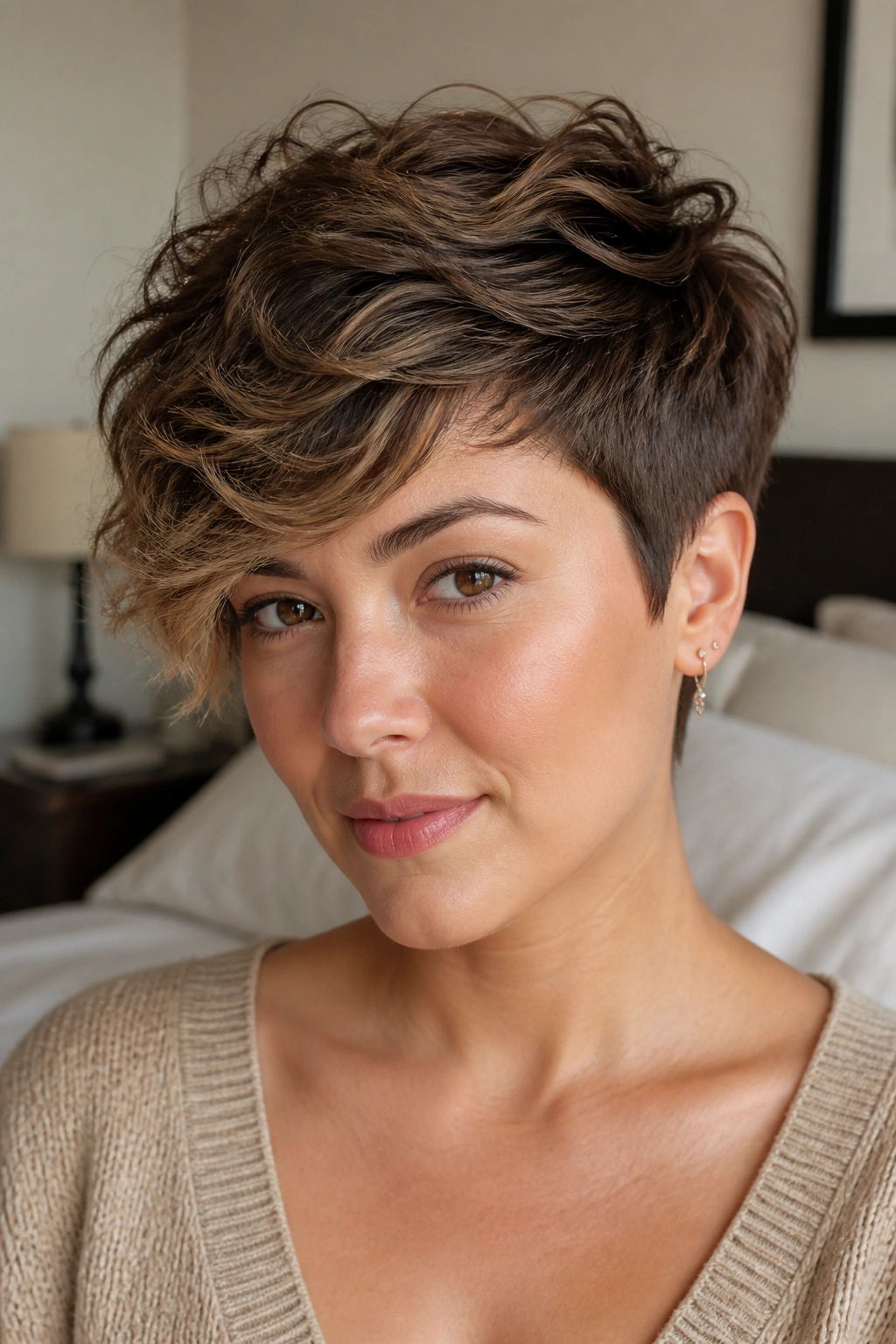
Can a pixie work on a round face? Yes, if the top stays longer than the sides and the wave is allowed to build a little height.
The magic is in the top section. Keep enough length there—usually around 2.5 to 4 inches—so the hair can bend and lift instead of lying flat. The sides should be tapered close, but not shaved into a harsh line. You want a soft edge, especially near the temples.
How to Style It
A long pixie needs less product than people assume. Too much paste turns it sticky and small.
- Work a pea-sized amount of mousse or lightweight cream through damp hair
- Blow-dry the top upward with your fingers or a small round brush
- Leave the front slightly loose so it falls diagonally
- Finish with a touch of dry texture spray at the crown
This cut is best if you want to show your face without making it look wider. The height at the top does the heavy lifting.
10. Bottleneck Bang Lob
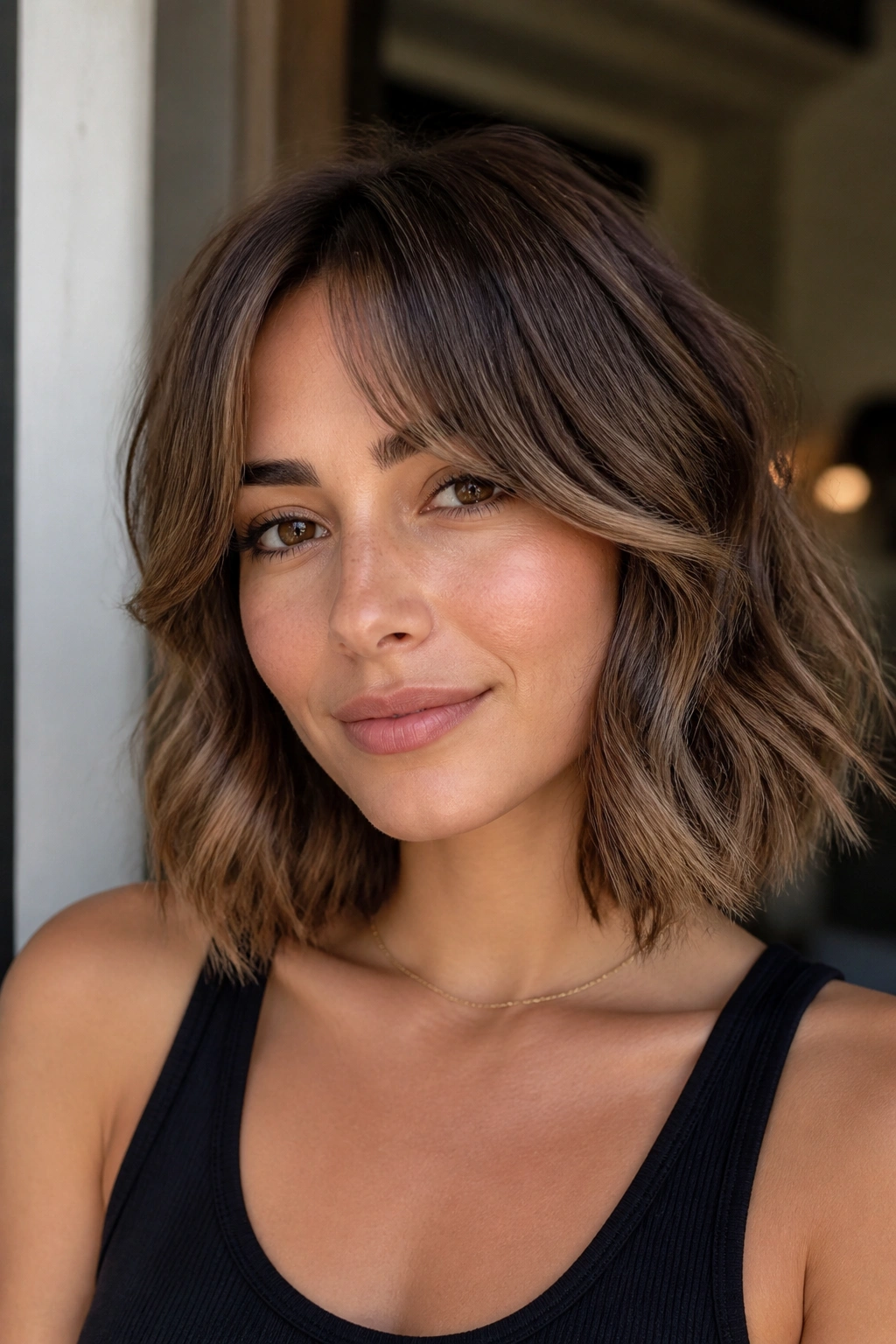
Picture a lob that lands just above the collarbone, then add bangs that start narrow at the center and widen toward the temples. That’s the bottleneck bang, and it suits round faces far more often than a straight-across fringe.
The shape opens the middle of the face and puts softness where you want it most. Because the fringe graduates outward, it doesn’t cut the face in half. It also blends nicely into waves, which matters if your hair tends to puff around the brow.
I like this cut when the bangs are kept light, almost wispy, around the center. Heavy bottleneck bangs can close things in fast. A little bend at the ends makes them sit better, too.
Good styling match: a blow-dry brush or small round brush.
Best detail to ask for: the side pieces should merge into the lob, not stop like a hard curtain.
It’s a smart middle ground. Short enough to feel fresh, long enough to stay flexible.
11. Crown-Lifted Shag

A shag without crown lift can turn into a triangle. A shag with crown lift? Much better. The extra height up top pulls the eye upward, which is exactly where a round face benefits from attention.
The layers should be cut to create softness around the head, not bulk around the cheeks. That means some shorter pieces near the crown, longer pieces through the sides, and plenty of room for the wave to separate. If the layers are too short through the lower half, the whole thing can mushroom out. Not cute.
This is one of my favorite options for medium-density hair. It has enough texture to look lived-in, but it still feels controlled if the layers are placed well. A diffuser helps, though you can air-dry it if your wave already has a good pattern.
A shag like this looks best a little imperfect. If every strand lies exactly where it’s supposed to, you’ve probably over-styled it.
12. Jaw-Skimming Bob With Piecey Ends
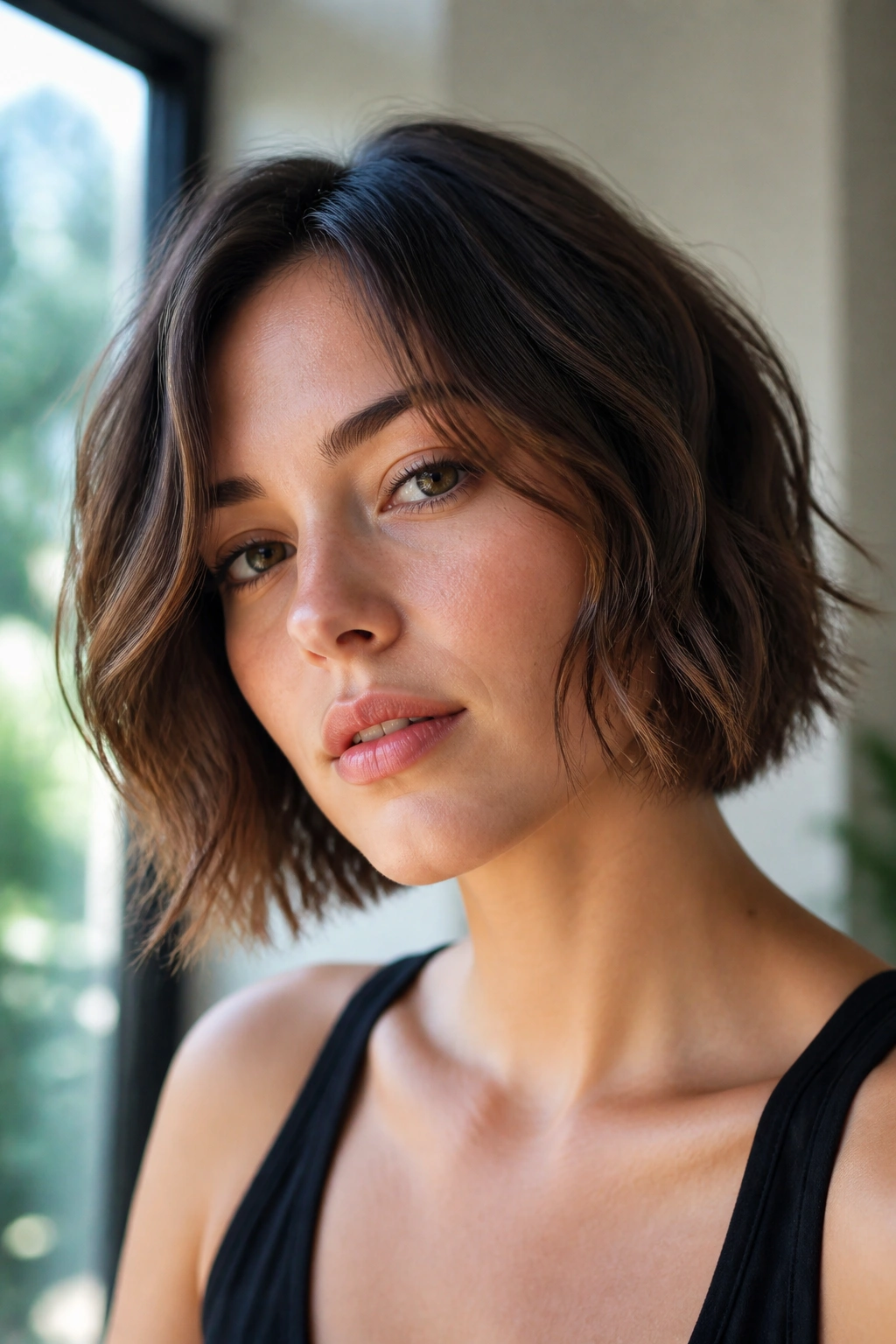
Unlike a blunt bob that draws one hard line across the jaw, this version breaks the edge up. The ends are piecey, so the haircut doesn’t press a full circle shape into the face.
That tiny difference changes the whole feel. When the ends move in separated little chunks, the eye notices texture instead of width. On a round face, that is a big deal. It gives you structure without stiffness.
This cut is especially nice if your waves are more S-shaped than curly. You can encourage the separation with a small amount of styling cream and a little scrunching, then leave it alone. Touching it too much makes the pieces collapse into frizz or puff.
The look to ask for: a bob that sits at the jaw but isn’t cut into a solid block.
The styling note: bend a few sections away from the face with a flat iron if your wave wants to turn under too neatly.
It’s clean, but not strict.
13. Soft Wolf Cut

A wolf cut sounds louder than it has to be. The soft version is much easier to live with, and on a round face it can be a smart way to build length through the sides while keeping the crown lifted.
The top is shorter, the mid-lengths carry texture, and the lower pieces stay longer and softer. That staggered shape creates movement in a way a tidy bob never will. It also works well if your waves are thick, because the layers stop the hair from sitting as one heavy mass.
Where the Shape Lands
Ask for the shortest layers to stay high on the head, not around the cheeks. That keeps the volume from spreading sideways.
- Keep the face-framing pieces below cheekbone level
- Let the back stay a little longer for balance
- Use point-cutting instead of harsh razor chops if your hair frizzes easily
- Style with a diffuser or a rough blow-dry for separation
This is a good choice if you want texture with edge, but not a haircut that feels like costume hair. There’s a difference.
14. Airy Mullet Shag
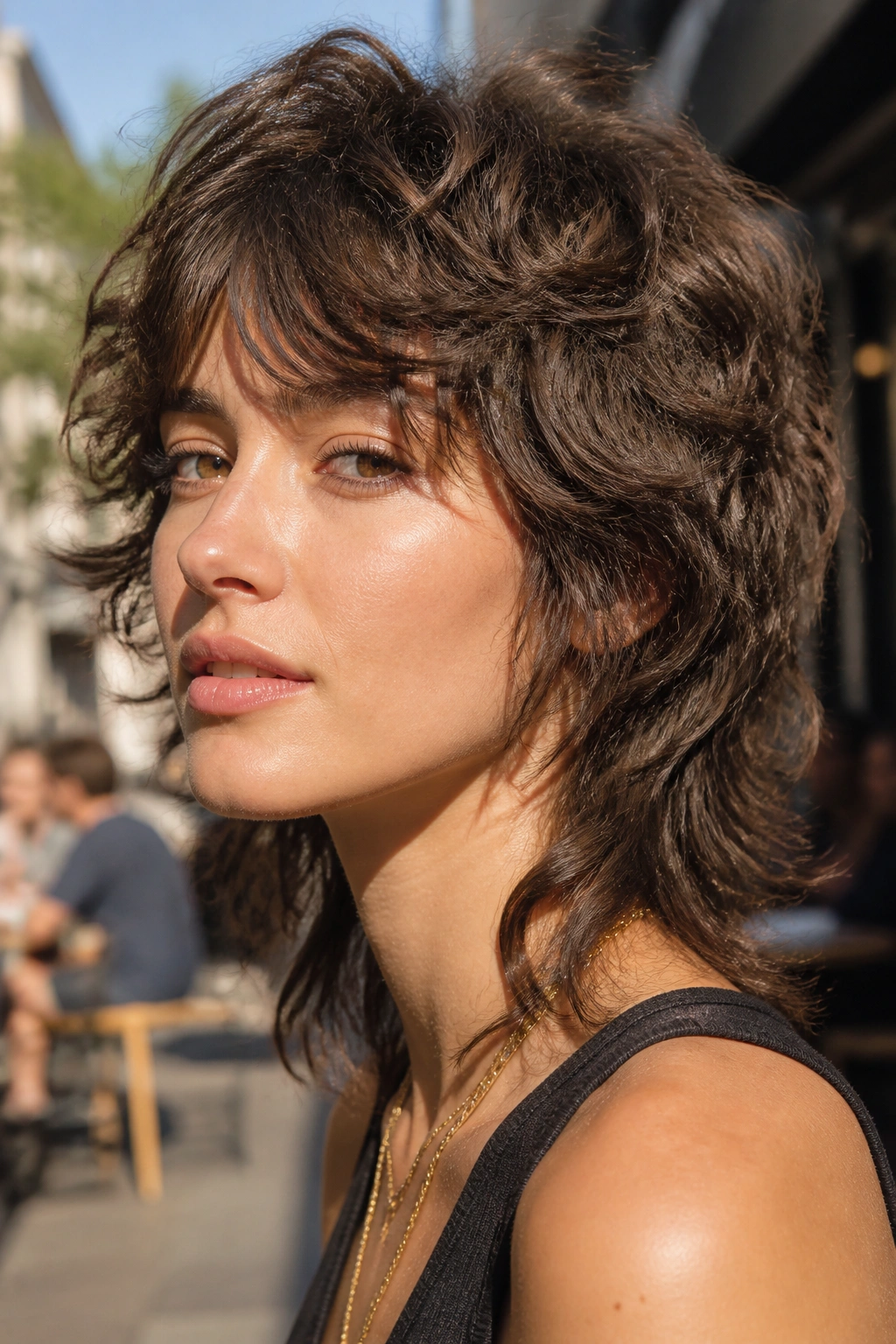
A mullet can be flattering, and I mean that without a wink. The soft, airy version builds height at the crown and keeps the sides lean, which helps a round face look less wide.
The trick is balance. The front should frame the face in a way that feels open, while the back carries a little extra length. That back length pulls the silhouette down, and the airy top keeps everything from sitting flat. If the layers are too extreme, the style can look rebellious for the sake of it. If they’re soft, it reads modern and easy.
I like this cut on wavy hair because wave texture naturally smooths the transition between the short top and longer back. A straight-haired version can feel sharper. A waved version feels broken in.
It’s not the first cut I’d hand to everyone. But if you like shape, movement, and a little attitude, it deserves a serious look.
15. Tucked-Behind-Ear Bob
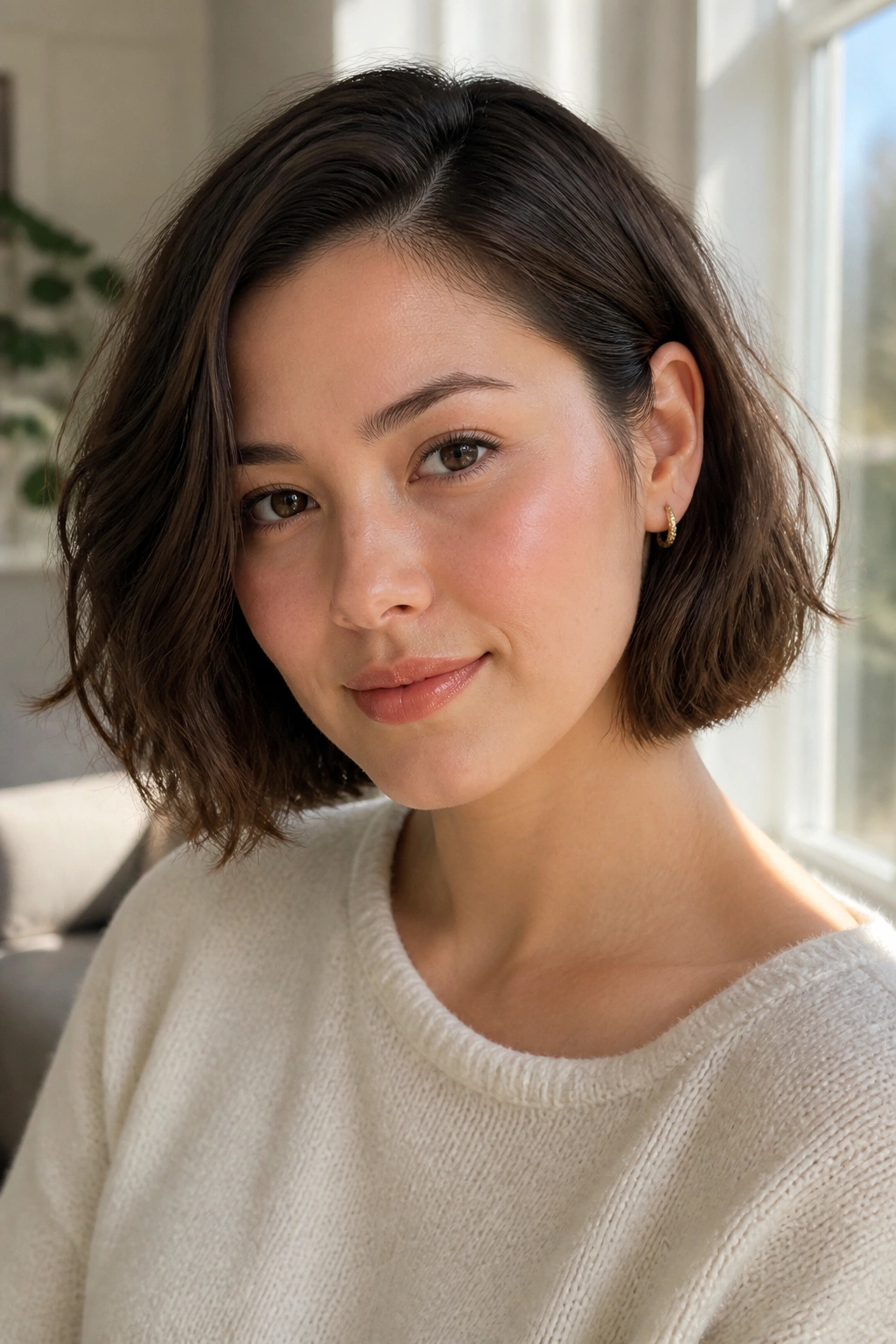
Why does one tucked side change the whole haircut? Because it opens one side of the face and lets the other side fall forward, which creates instant asymmetry.
That asymmetry is useful on a round face. It breaks up the evenness that can make the face look fuller than it is. A tucked-behind-ear bob works best when the side that stays out has a little bend at the ends and the tucked side isn’t too thick or bulky.
How to Wear It
- Ask for a length that sits between the cheekbone and jaw, depending on how much skin you want to show
- Keep the part off center so the tuck feels natural
- Use a lightweight spray or cream, not a heavy oil
- Clip the tucked side loosely if your hair slips out by noon
This is one of those cuts that can look polished in two minutes. Sometimes less is more. Here, it actually is.
16. Razor-Cut Wavy Bob

A razor-cut bob can look beautifully soft on the right hair. The razor takes weight out of the ends, which helps waves fall into little separated pieces instead of forming a thick wall.
That softness is the appeal. A round face does not need more width sitting at the jawline, and razor cutting can prevent that heavy shelf effect. The ends feel lighter, and the overall shape moves more when you walk.
But there’s a catch. If your hair is already fragile, split, or very dry, a razor can make it look frayed. I like this cut most on dense hair that needs breaking up, not on strands that need encouragement to stay together.
The finish should be touchable, almost airy. If it looks wispy in a good way, you’re there. If it looks shredded, the cut went too far.
17. Deep Side-Part Lob
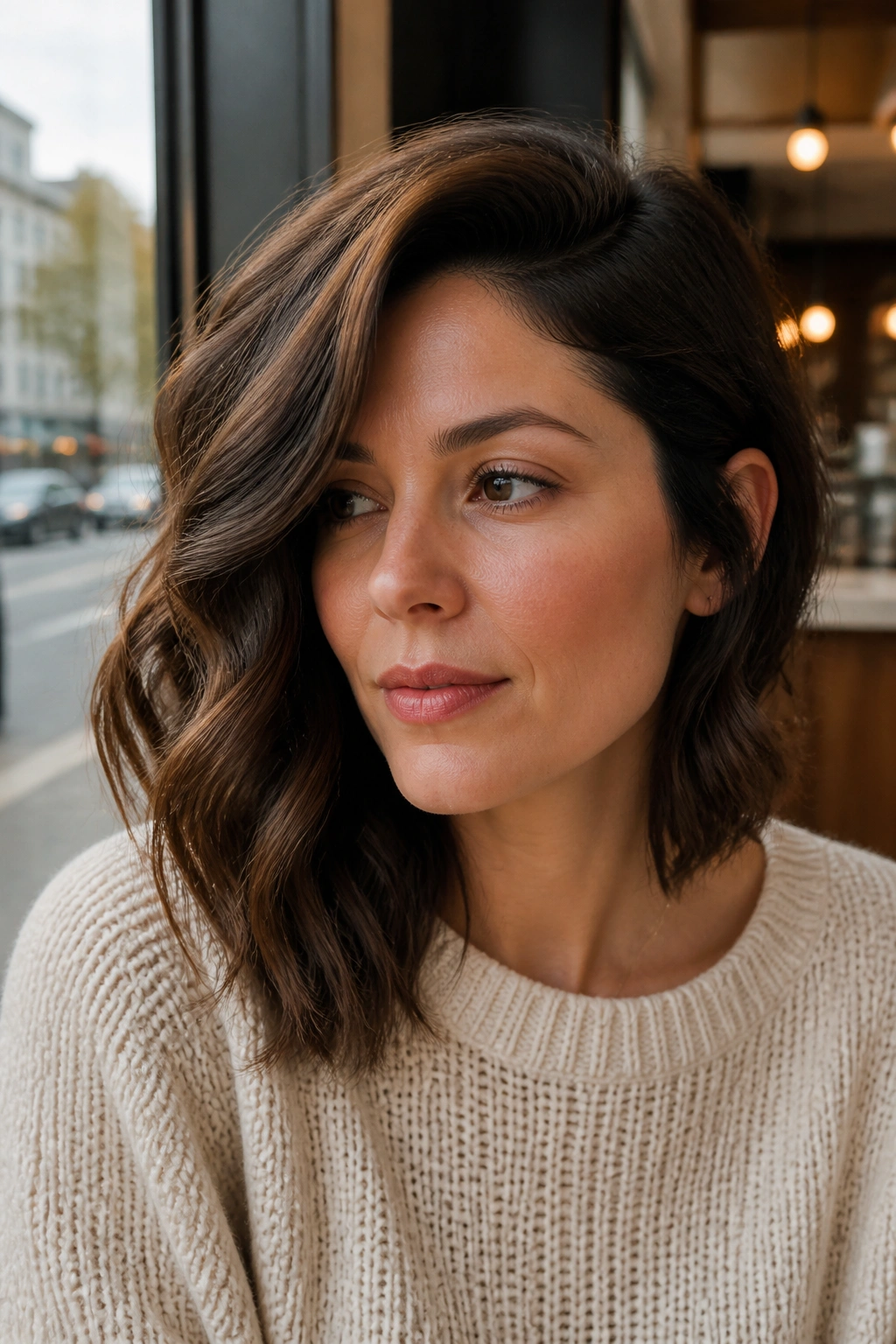
A deep side part does more facial shaping than people give it credit for. It lifts one side, drops the other, and creates a diagonal line that pulls the eye across the face instead of straight across the cheeks.
On a round face, that diagonal is gold. It creates length. It also gives the waves somewhere to go, which helps if your hair tends to swell around the sides of the head. I like a lob with the longer side falling just below the collarbone and the shorter side grazing the jaw. That little slope adds motion without turning into an obvious asymmetrical cut.
A root-lifting mousse near the part helps this style hold. Blow-dry the base first so the roots don’t collapse halfway through the day.
This is one of the easiest fixes if your current hair feels flat around the face. Sometimes the cut is fine. The part is the problem.
18. Micro-Layer Crop
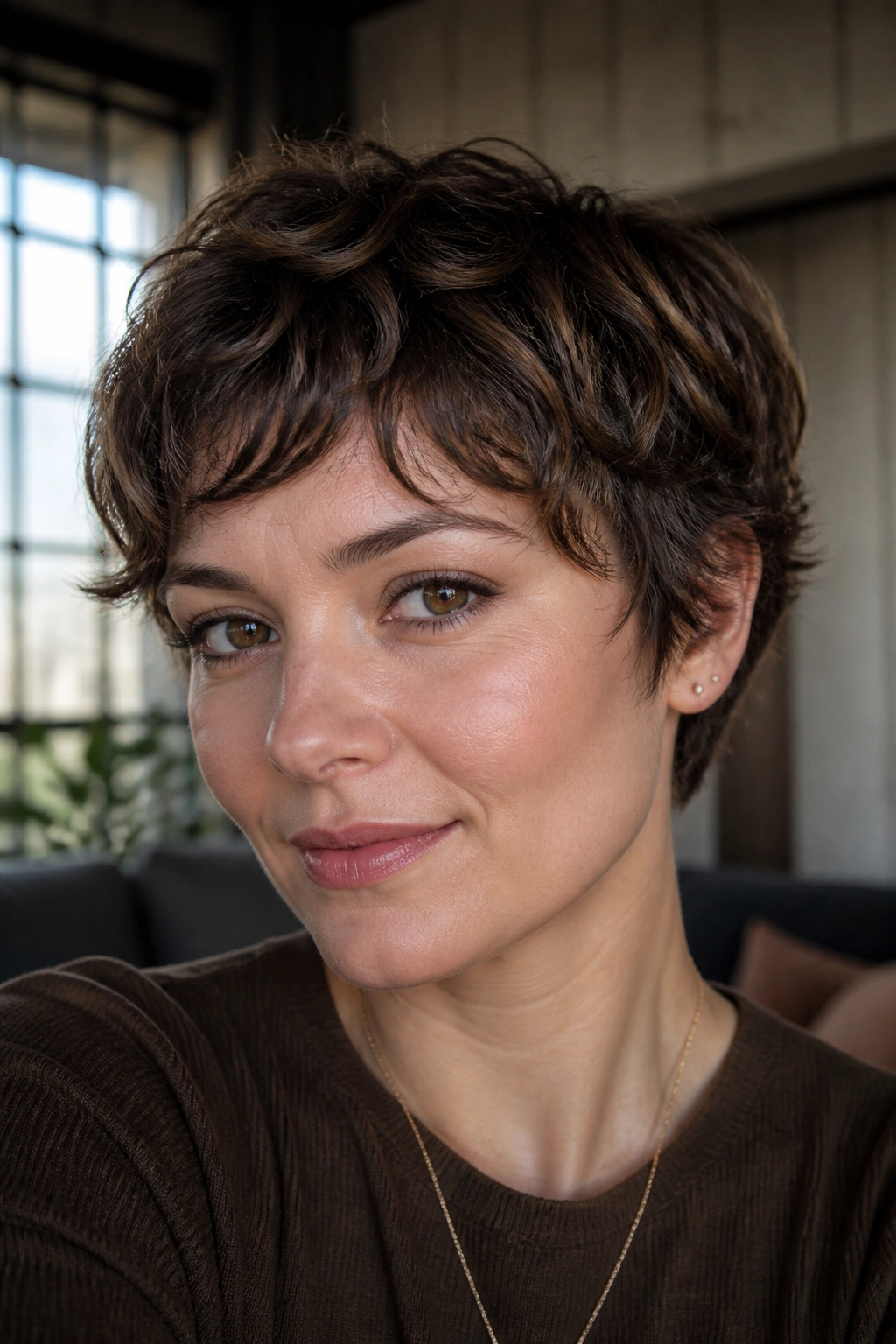
Unlike a stacked pixie, a micro-layer crop keeps the perimeter fairly solid while putting tiny bits of movement inside the cut. That makes it useful for coarse or dense wavy hair that needs relief but still wants a clean outline.
The layers are short enough to break up bulk, but not so short that the haircut starts jumping away from the head. On a round face, that balance matters. Too much outward puff at the sides is exactly what you do not want.
Best For
- Thick waves that expand after drying
- Hair that looks heavy near the temples
- People who want short hair without a lot of styling time
What to Ask For
Tell the stylist you want texture inside the shape, not on the outside edge. That distinction matters. Internal texture gives the crop movement while keeping the overall line neat.
A tiny bit of wax on dry hair is enough. Anything heavier can make the ends separate in a greasy, messy way.
19. Sliced Bob With Underlayers
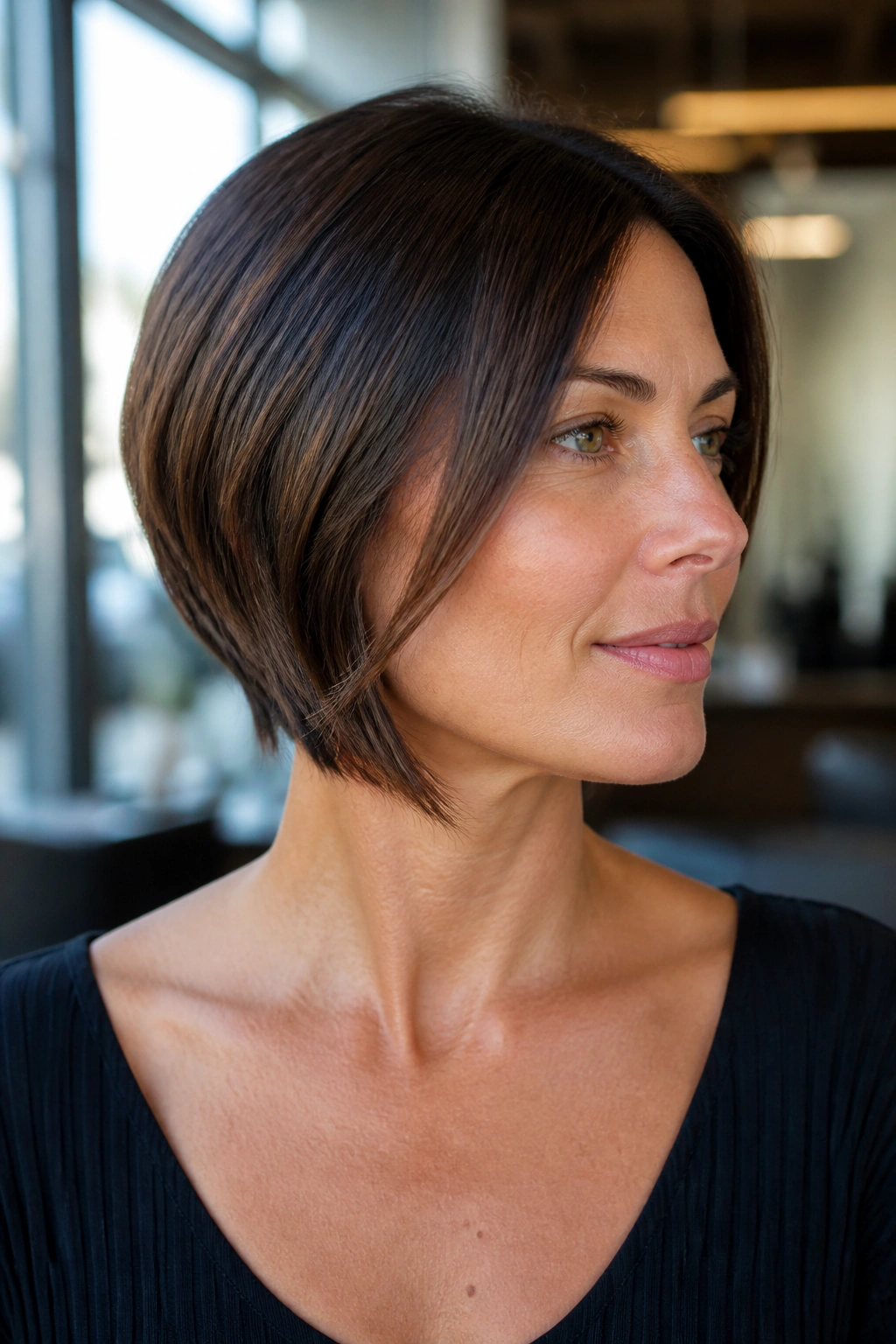
A sliced bob with underlayers is a good answer when the top layer looks smooth but the hair underneath keeps bulking out. The underlayers remove weight where you cannot see it, which keeps the surface sleek.
That hidden removal of bulk helps a round face because the side volume drops without the haircut looking thin. The shape still has substance. It just doesn’t balloon out around the cheeks.
Ask Your Stylist for This
- A bob length that lands between the chin and collarbone
- Underlayers cut to remove bulk, not create visible steps
- Soft face-framing pieces that begin below the cheekbone
- Ends that move instead of curling into a hard flip
This is a strong choice for thick, wavy hair that tends to triangle out. The underlayers stop that. And yes, the difference is visible on humid days, which is when bad cuts tend to tell on themselves.
20. Asymmetrical Wavy Bob
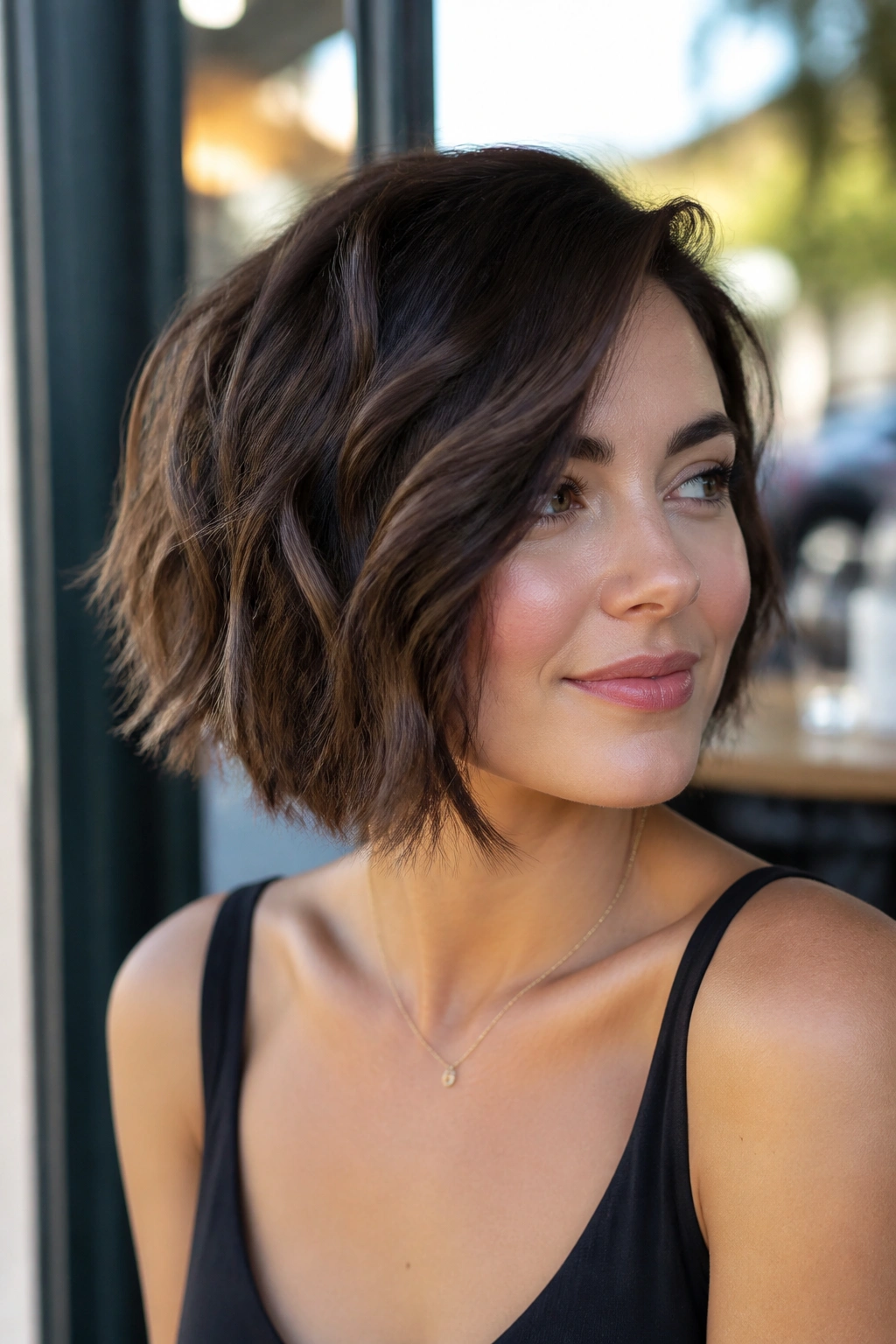
Can an uneven bob look polished on a round face? Absolutely, if the length difference is controlled and the wave is soft.
The point of asymmetry is to create a break in the circle. One side falls a little longer, usually by an inch or two, and the eye moves through the shape instead of stopping at the cheeks. Wavy texture helps blur the line so the haircut feels intentional, not severe.
This cut is best when the shorter side still touches the jaw and the longer side brushes the upper neck or collarbone. If the difference gets too dramatic, the style starts doing too much. A little goes a long way.
I like this cut when someone wants edge but not drama. It has enough personality to stand out, yet it still behaves at brunch. Which matters more than people admit.
21. Disconnected Pixie With Longer Top
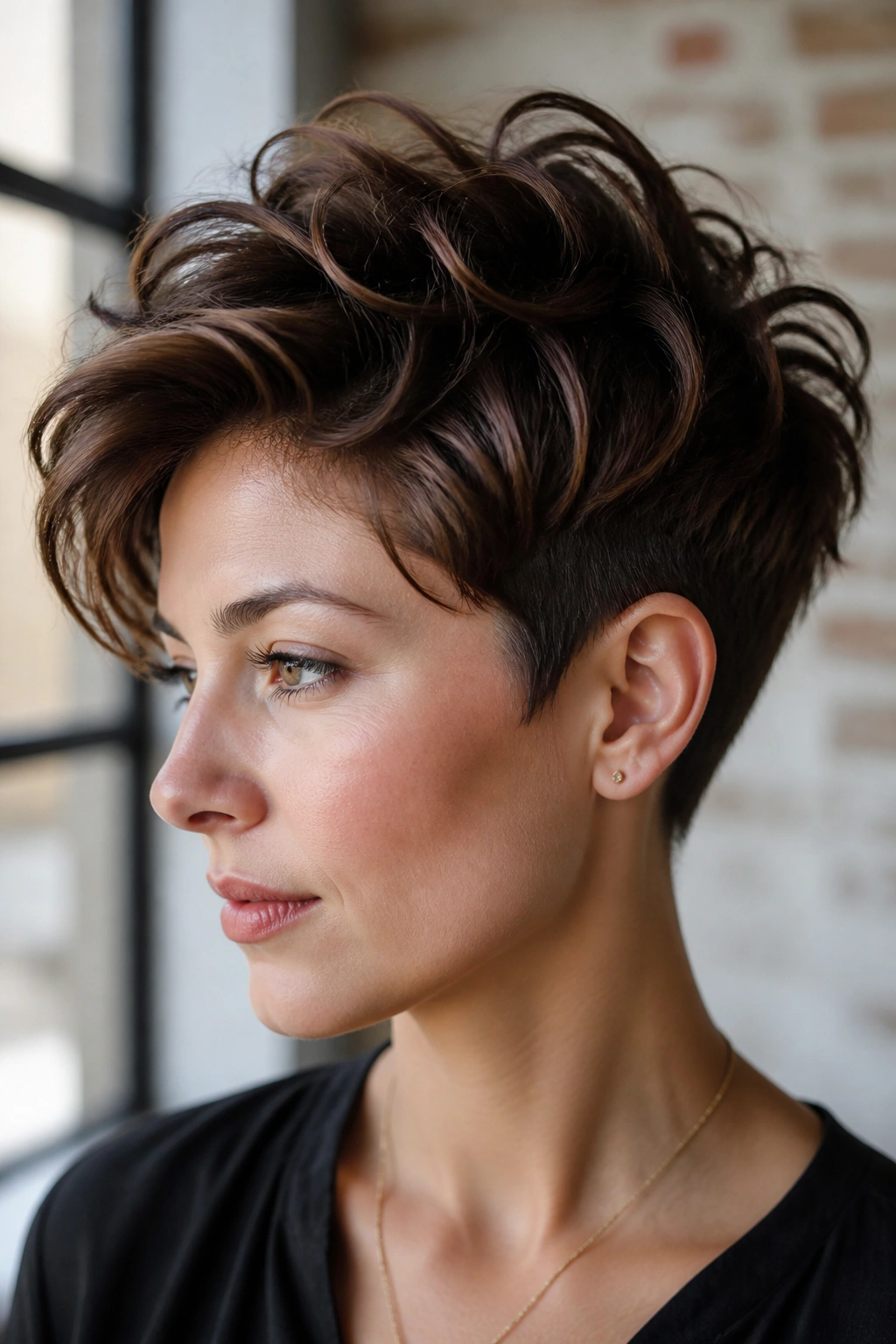
If you like short hair but still want height, this is the cut to study. The sides are kept close, the top stays longer, and the disconnection gives the style its shape.
On a round face, that longer top is doing the slimming work. It adds vertical length and keeps the eye moving upward. The disconnection also means the style can look modern without being spiky. Wavy hair softens the edges, which helps a lot.
Styling Notes
- Keep the top at least 3 inches if you want real movement
- Blow-dry upward at the crown, then let the front fall slightly to one side
- Use matte paste on the ends, not the roots
- Trim often, because short shapes lose their line fast
This cut is not lazy-hair friendly unless you’re happy with a messy finish. But if you enjoy a little structure, it’s sharp in the best way.
22. Softly Layered Wave Bob

A softly layered wave bob is the easy answer when you want something flattering without a lot of fuss. It keeps enough weight to feel full, but the layers are gentle enough that the hair still falls in a clean shape.
That softness matters on a round face. The cut doesn’t draw a hard horizontal line, and it doesn’t break into too many short pieces around the cheeks. Instead, the wave moves in a calm, loose way that lengthens the face without trying too hard.
This is a good everyday haircut for people who want to air-dry most of the time. A little leave-in cream, a scrunch, and maybe a quick bend around the front with a curling iron can be enough. The style looks best when it moves a bit. Perfect waves can make it feel too formal.
If you want one cut that plays nicely with work, errands, and the occasional dinner out, this is the one I’d keep near the top of the list.
Final Thoughts
The best short wavy layered haircuts for round faces do one simple thing well: they give the eye a place to travel. That might be a side part, a longer front piece, a soft fringe, or a little height at the crown.
If you’re stuck between two options, choose based on where you want the longest piece to land. Above the chin feels sharper. Around the collarbone feels softer. Both can work.
Bring a photo, sure, but also talk about where your wave expands and where your hair goes flat. That second part is the one that usually decides whether a haircut looks good for two days or six weeks.
