



Straight hair can make a shaggy cut look either sharp or limp, and the difference usually comes down to where the weight is removed. A good shaggy layered haircut for straight hair doesn’t depend on chaos alone. It needs a clean perimeter, a smart fringe, and layers that land in places your hair can actually show off.
That’s why some shags look expensive and airy while others look like a rushed salon experiment. Straight strands are honest. They show every line, every blunt edge, every awkward shelf. That sounds unforgiving, but it’s also the reason a well-cut shag can look so good on this hair type.
I’ve always liked straight-hair shags that keep one strong anchor point. Collarbone length, jaw length, a solid fringe, or a blunt hem with soft internal layers — give the eye something to hold onto, and the texture starts to make sense.
The cuts below cover the full range: soft and polished, choppy and cool, long and easy, short and a little edgy. Some are built to fake volume. Some are built to reduce bulk. A few need a bit of styling, and a few barely need any at all. That’s the fun of it.
1. Collarbone Shag with Curtain Bangs
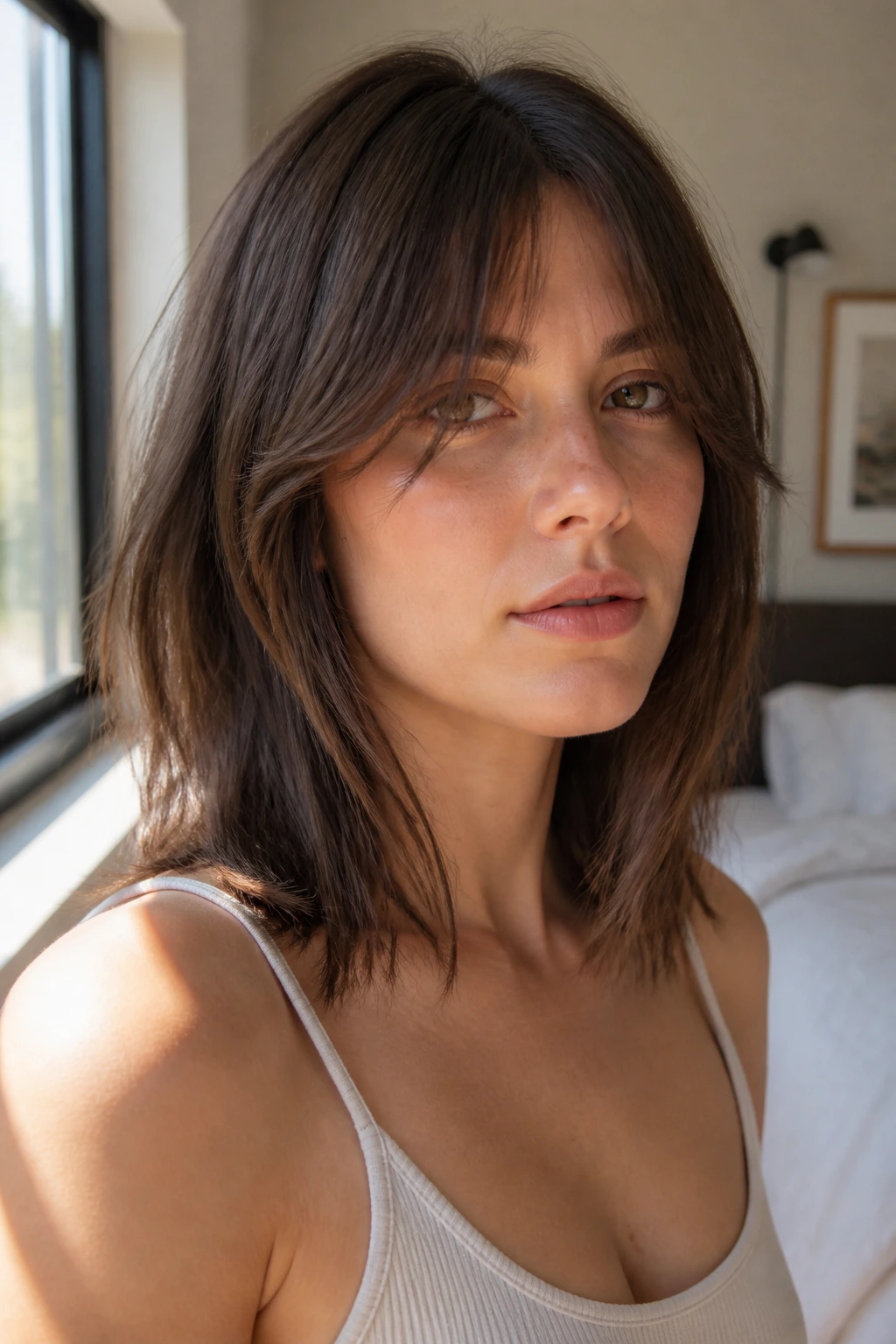
Start here if you want a shag that feels easy to wear instead of dramatic for the sake of it. The collarbone length gives straight hair a place to rest, while curtain bangs break up the front so the style doesn’t hang flat around the face.
Why It Flatters Straight Hair
Straight hair often looks best when there’s a clear line somewhere. Here, the collarbone becomes that anchor, and the layers above it do the lighter work. The result is movement at the cheeks and jaw, not choppiness all over the place.
Ask for the shortest face-framing layer to hit around the cheekbone, with the longest layer grazing the collarbone. That keeps the cut soft when you tuck one side behind your ear. It also means the shape still reads even when you do almost nothing to it.
- Best for: medium-density hair that falls flat at the roots
- Ask for: curtain bangs that split at the center and graze the brow
- Styling tool: a 1.25-inch round brush or a blow-dry brush
- Finish with: one mist of light texture spray on the mid-lengths
Pro tip: keep the bangs a touch longer than you think you need. Straight hair shrinks less than wavy hair, so bangs that seem “safe” in the chair can feel short once they’re dry.
2. Long Ghost-Layer Shag
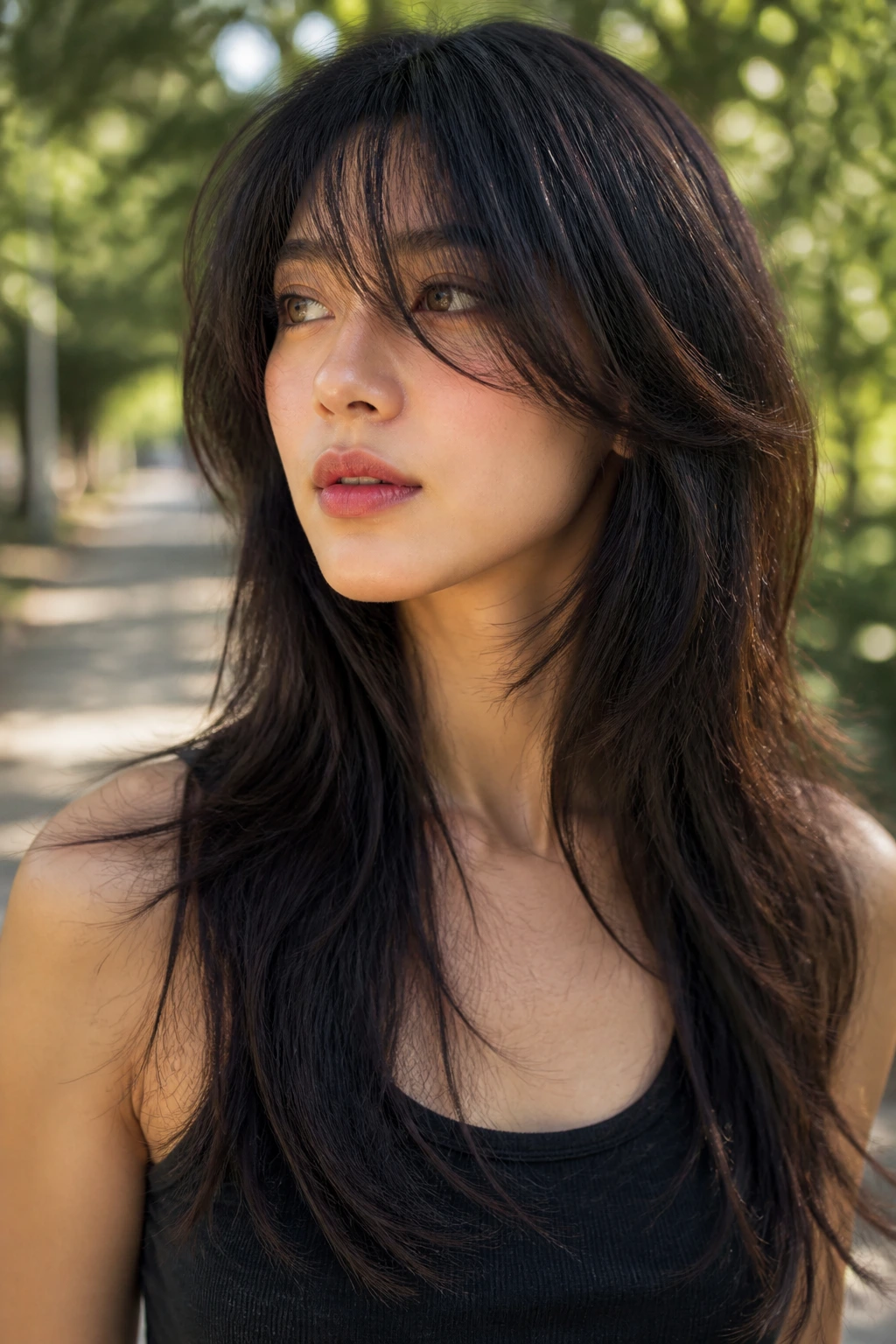
Some cuts shout. This one doesn’t. Ghost layers are the quiet trick of the shag world: they sit inside the haircut, so you feel the movement more than you see obvious steps. On straight hair, that matters a lot.
If you like length and hate the look of chopped-up ends, this is the cleaner route. The outside line stays long and calm, while the inside gets enough removal to stop the hair from hanging like a curtain. It’s subtle, which is why it works.
The best version keeps the longest pieces past the shoulders and lifts just enough weight from the midsection to stop the ends from looking heavy. That’s the part many stylists get wrong. Too many short layers, and the hair starts to look busy. Too few, and you may as well have kept it one-length.
This cut is especially good if you air-dry and walk away. The shape is built into the haircut, so the style still has body even when you don’t round-brush it to death.
3. Razor-Cut Midi Shag
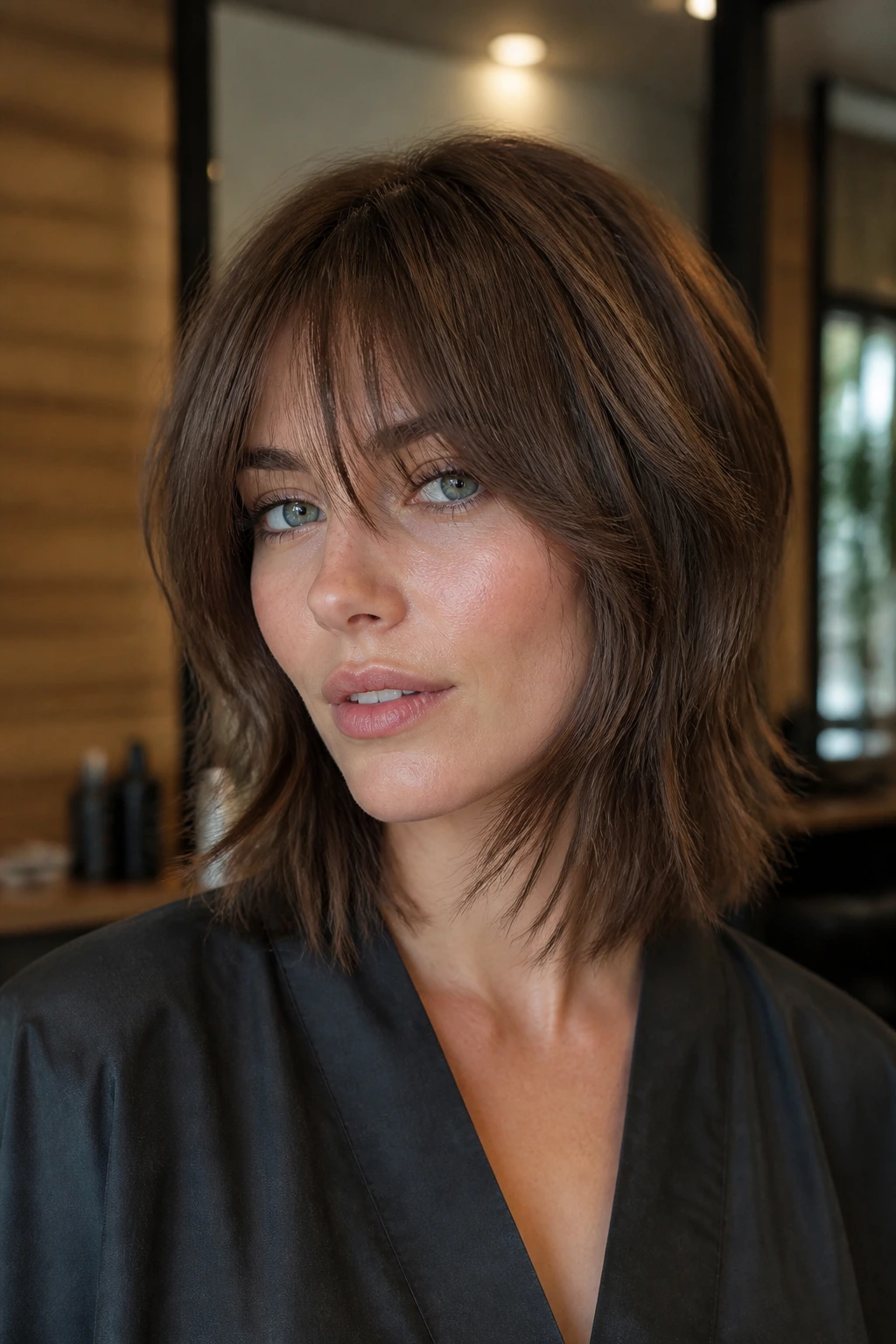
Why does a razor cut look so different from scissor layers? Because the edge comes out softer and slightly broken up, which straight hair can wear beautifully when the stylist has a steady hand. Done badly, though, it frays. So yes, this one depends on who’s holding the tool.
A razor-cut midi shag usually sits between the jaw and collarbone, with soft internal pieces and ends that aren’t blunt in the traditional sense. That airy finish helps straight hair move instead of sitting like a sheet. It also makes the whole haircut feel less severe around the jaw.
What to Ask For
Tell your stylist you want the ends softened, not shredded. That phrase matters. You’re looking for pointy, feathered ends, not rough, over-thinned bits that split in the light.
Use this cut if your hair has a little natural bend but not enough to count as wave. It benefits from a quick pass with a flat brush during blow-drying, then a small bend at the ends with a 1-inch iron if you want polish.
4. Short Shaggy Bob with Airy Fringe

A short shaggy bob can look fantastic on straight hair, but only if the top has enough lift. Otherwise it turns into a triangle or a helmet, and nobody wants that.
This version keeps the hem around the chin or just below it, then adds light, piecey layers through the crown. The fringe stays airy — not heavy, not blunt — so the cut opens up the face instead of closing it in. It’s a good move if your hair is fine and you want more shape without giving up a short length.
I like this cut on people who spend ten minutes styling and want that effort to show. Rough-dry the roots first, then use a small round brush only on the front and top. You do not need to curl every strand. In fact, that can make the cut look overdone fast.
- Best for: fine to medium straight hair
- Length: chin to jaw
- Fringe: wispy, lightly separated
- Daily styling: 8 to 12 minutes, tops
A short shaggy bob has attitude. Keep the edges soft, and it stays chic instead of fussy.
5. Blunt Lob with Hidden Layers
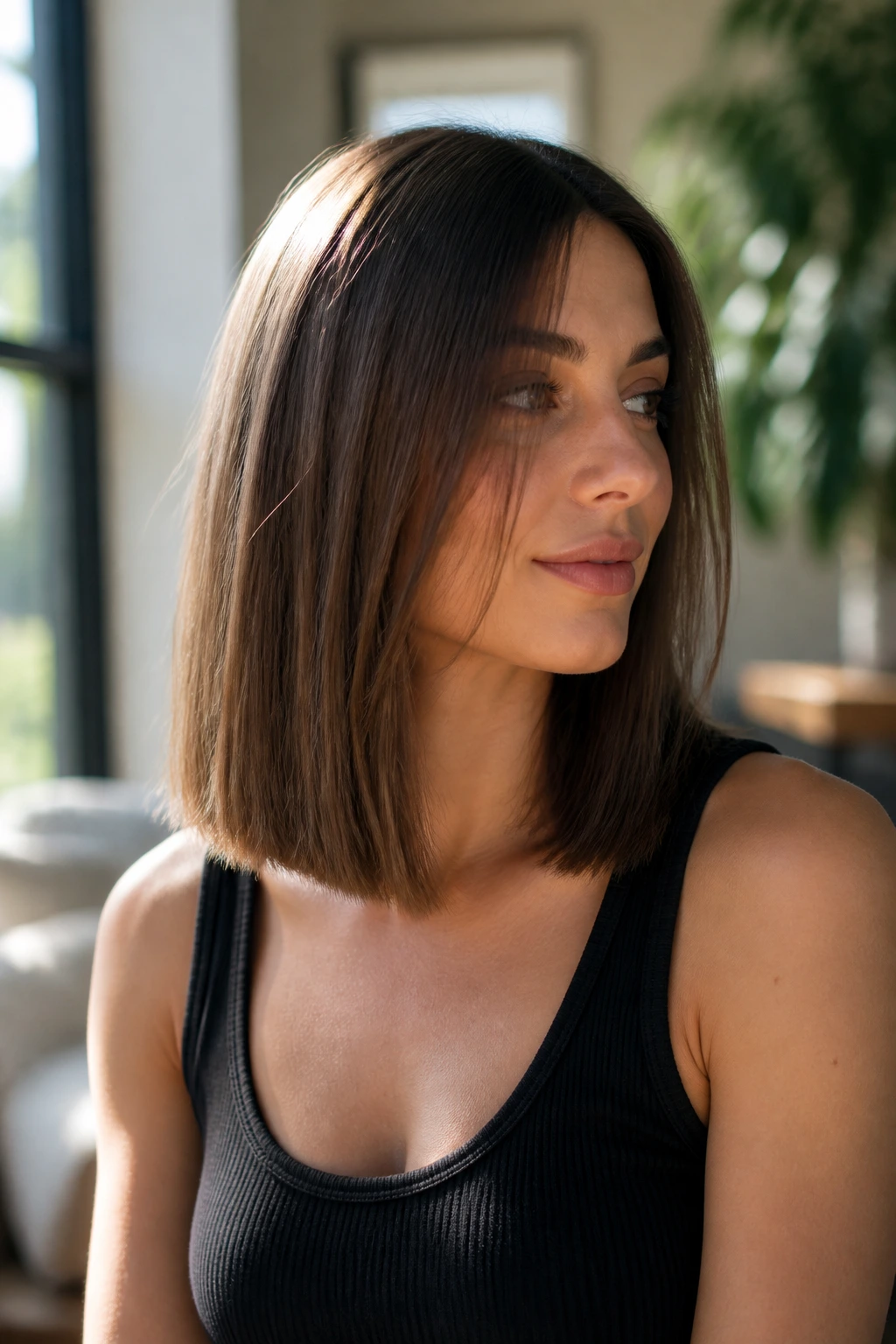
This is the cut for someone who likes a clean outline but wants a little life underneath. The outside stays blunt, which gives straight hair a strong shape. Hidden layers sit inside the lob, so the movement shows up when you turn your head instead of screaming for attention.
That blunt edge is doing real work here. It keeps the hair looking thicker, especially if your strands are fine or medium-fine. The internal layering stops the body from collapsing in the middle, which is the usual problem with straight hair at this length.
A lot of people think a shag has to look obviously shaggy. It doesn’t. This is the quieter version, and honestly, I think it’s one of the smartest choices on the whole list.
If you want to wear it sleek most days, this cut cooperates. If you rough it up with a texture spray, the layers wake up fast. That flexibility is the point.
6. Feathered Shoulder-Length Shag
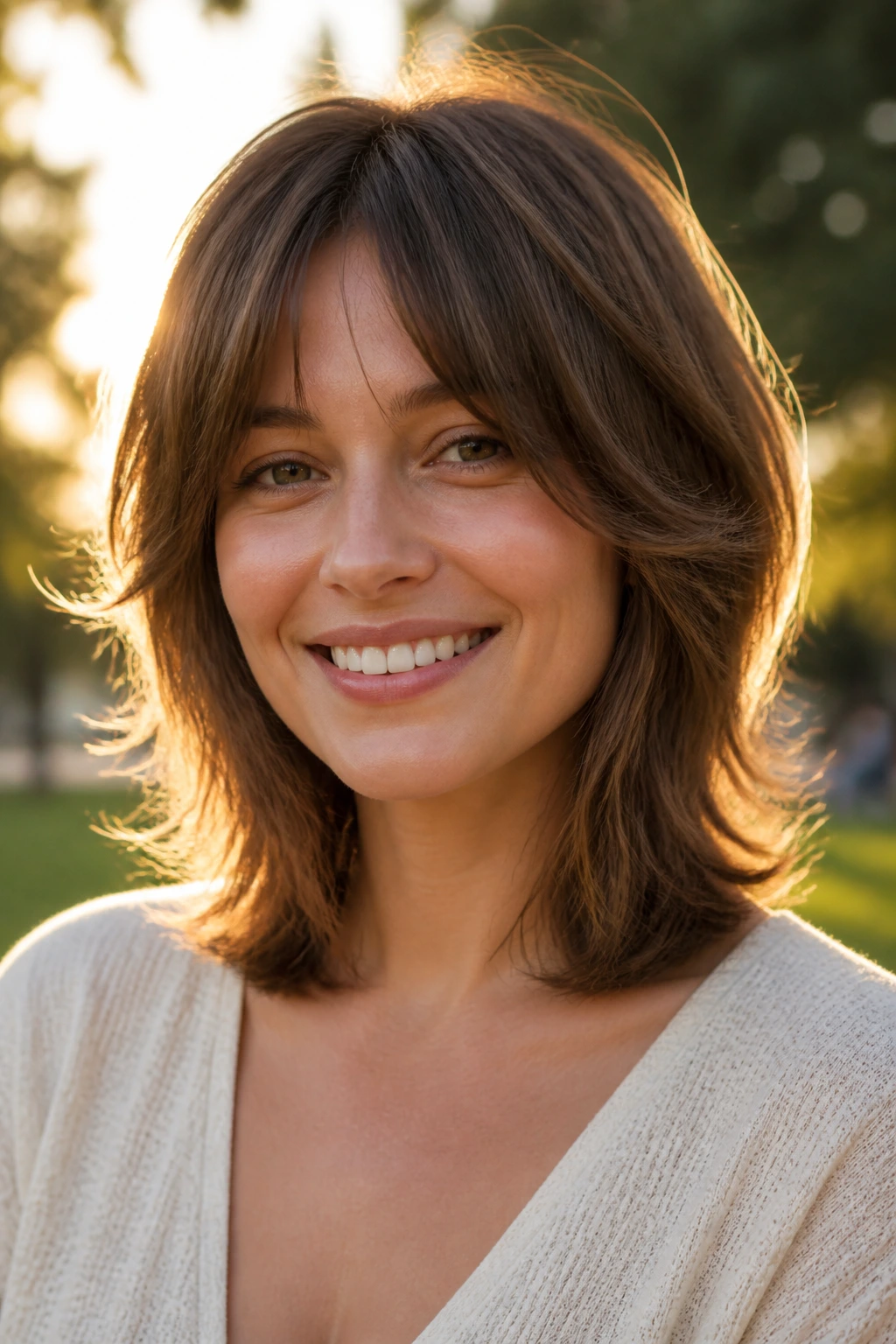
Feathering gives straight hair a softer edge than blunt scissors ever could. The pieces taper out from the face and shoulders, which makes the haircut feel lighter even when the length stays around the shoulders.
This is a lovely choice if your hair is dense and you’re tired of it sitting there like one solid block. The feathered layer pattern removes weight in a way that still looks smooth when the hair falls back into place. You get motion, but not a messy outline.
How It Should Sit
The shortest layers usually land near the cheekbone or just below it, then blend down through the collarbone. The back can stay a bit fuller so the cut doesn’t collapse. That detail matters. If every section is thinned the same way, straight hair loses shape fast.
A medium round brush and a quick blow-dry at the ends are usually enough. If you already like flipping the ends out a little, this cut makes that movement look natural instead of forced.
7. Center-Part Shag with Face-Framing Pieces
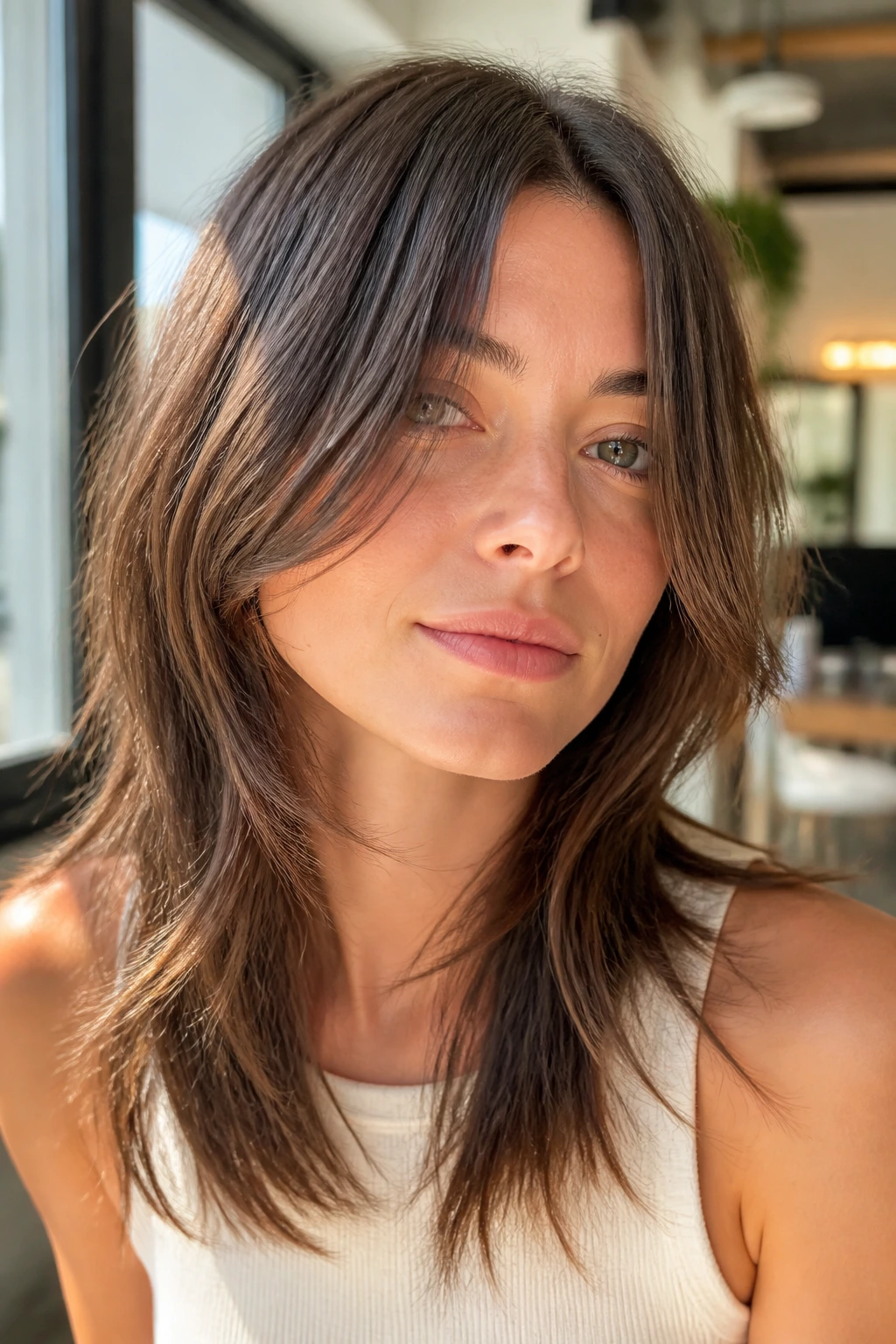
A center part is unforgiving. That’s exactly why it works here. It creates a clean line down the middle, then the face-framing pieces soften the whole thing so the haircut doesn’t feel severe.
This version is especially nice on straight hair that naturally falls evenly on both sides. The layers usually start around the cheekbones and slide down toward the jaw, which adds shape without destroying the length. If your face is longer, the cheekbone-level framing helps break that vertical line. If your face is rounder, the longer front pieces can slim the sides a little.
I like this cut because it does two jobs at once. It looks polished from the front, and it still has some swing when you turn. That’s not easy with straight hair.
Keep the part crisp. A messy center part is one thing; a crooked one can throw off the whole cut.
8. Chin-Length Micro Shag
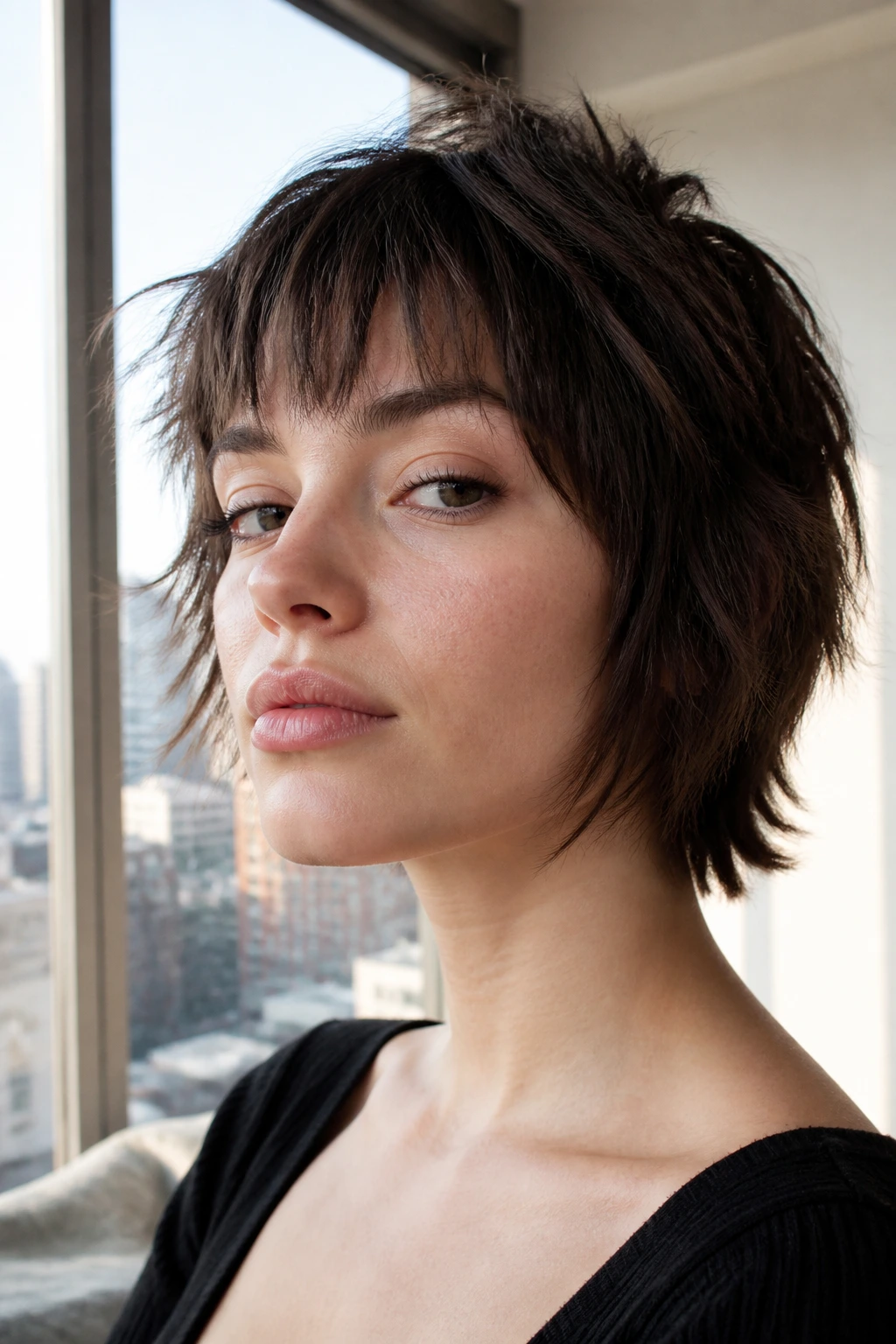
Short hair gets a little more attitude here. A chin-length micro shag is cropped, airy, and slightly uneven in the best way. It’s the kind of cut that makes straight hair look intentional instead of simply short.
The key is restraint. You want short layers at the crown and around the sides, but not so many that the silhouette explodes outward. The best versions keep the nape neat and the top pieces a bit choppy, which gives lift near the scalp without making the ends look ragged.
This works well for fine straight hair that goes limp by midday. The shorter length helps the hair spring back faster after washing, and the choppy layers stop the shape from feeling too exact. If you’ve worn one-length bobs before and found them too plain, this is the sharper choice.
It does need trims. Not every eight weeks like clockwork, but enough to keep the shape from turning into a fuzzy little triangle.
9. Long U-Shaped Shag with Soft Ends
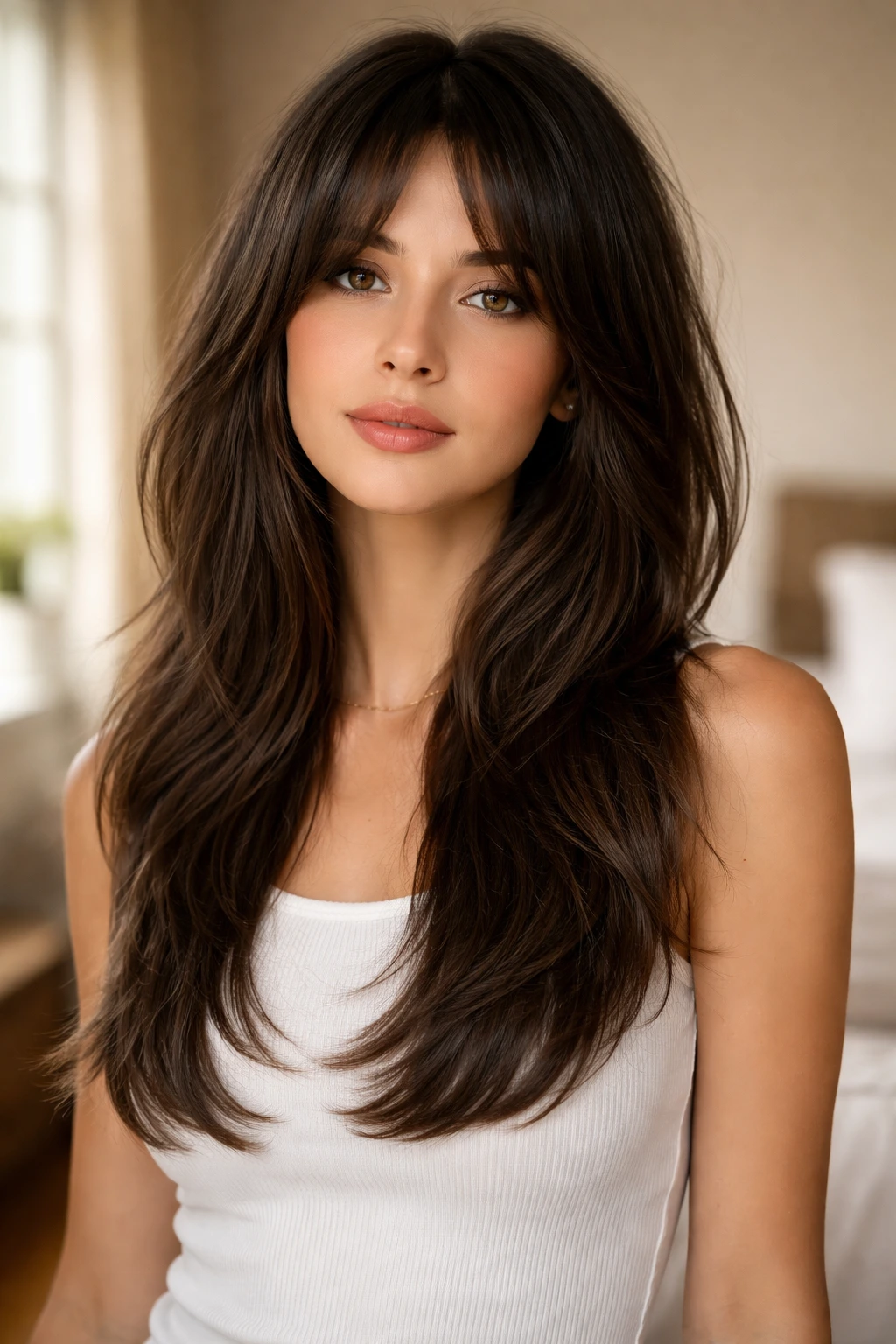
A U-shaped cut keeps more length in the center back and gradually rises toward the sides. On straight hair, that shape can be a lifesaver because it gives the eye a clean outline while the layers create movement around it.
This is the cut I’d point to if someone says, “I want a shag, but I still want my hair to feel like hair, not a pile of pieces.” The U-shape protects the length. The shag layers add air through the sides and top. Together, they keep the style from dropping flat.
Best Way to Wear It
The front pieces should start somewhere between the lip and collarbone, then taper down. That keeps the shape soft around the face. If you blow-dry, curve the front sections slightly inward on one side and outward on the other. It sounds small. It changes everything.
This is also one of the best options if your ends get dry fast, because the layered movement keeps the lower half from looking heavy even when you trim only a little off.
10. Wolf-Shag Hybrid for Straight Hair
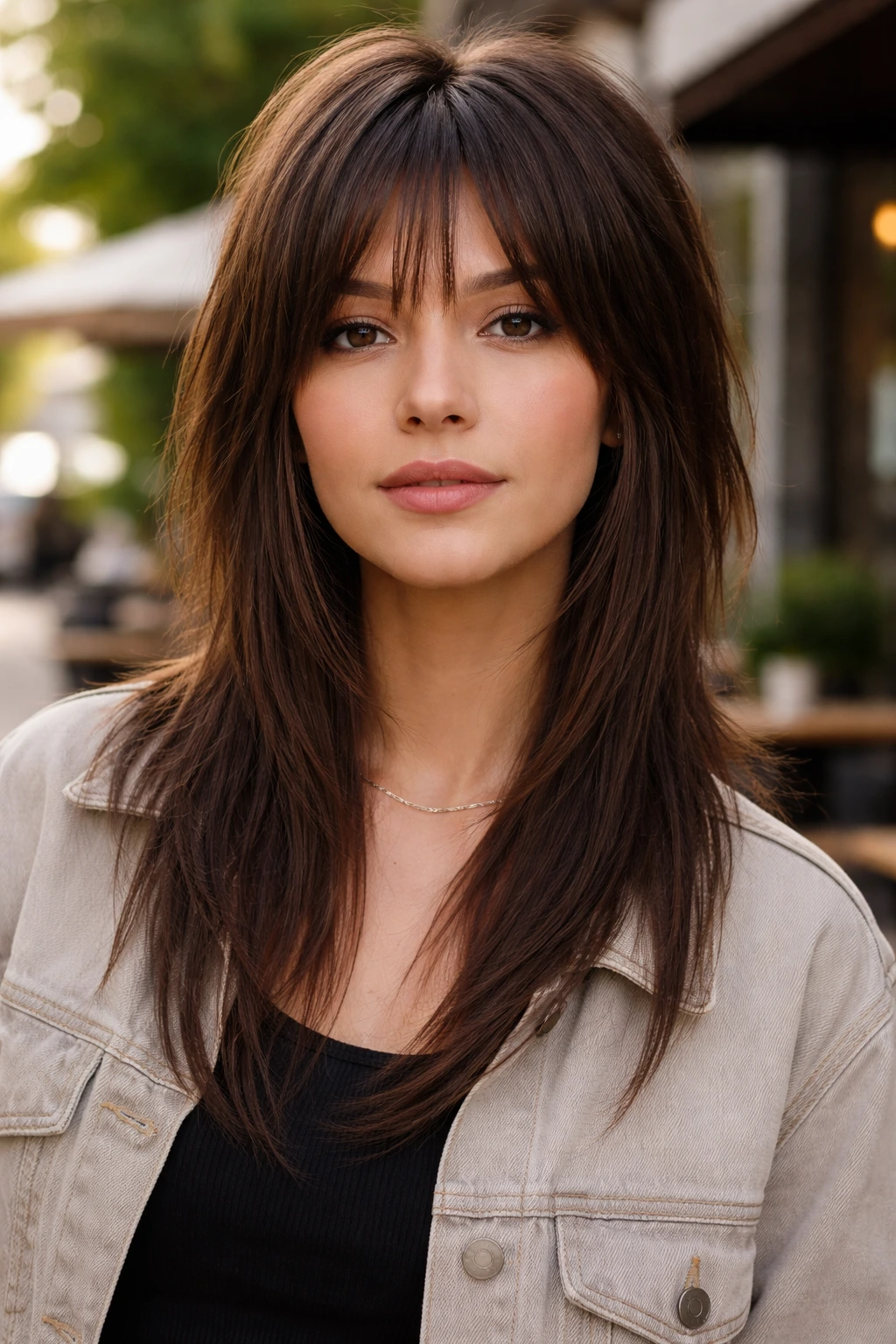
The wolf cut gets thrown around a lot, and most versions are too wild for straight hair. A wolf-shag hybrid fixes that by softening the transitions and keeping the layers more wearable.
Think of it as the halfway point between a mullet-inspired shag and a classic layered cut. The crown gets more lift, the front gets more face shape, and the bottom still carries enough length to keep things grounded. Straight hair needs that grounding. Otherwise the top can look puffed and the bottom can look thin.
Who is this best for? Someone who wants a little edge and does not mind a bit of styling. It looks best with a loose bend, not pin-straight perfection. If you’re willing to use a round brush at the top and a flat iron only on the ends, it pays off.
If you want the wolf cut idea without the full punk energy, this is the safer bet. Still cool. Less costume.
11. Bottleneck Bang Shag
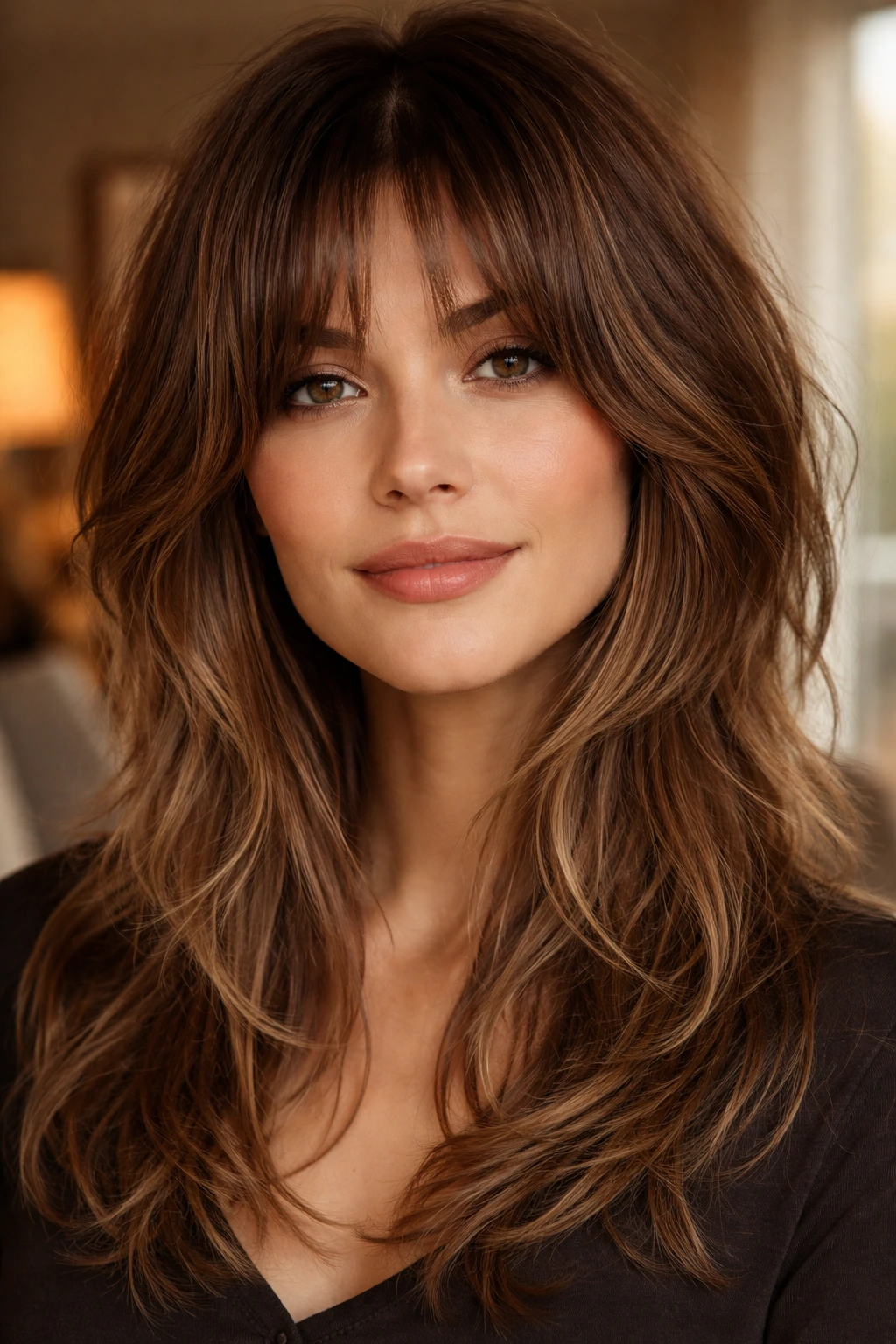
Bottleneck bangs are one of my favorite ways to soften straight hair, because they sit narrow in the middle and widen near the temples. That shape frames the eyes without swallowing the forehead.
The rest of the cut can stay shaggy and light, but the bangs give it a bit of structure. On straight hair, they fall cleanly, which makes them easier to live with than a fringe that relies on texture to behave. The tricky part is length. Too short, and they feel abrupt. Too long, and they lose the whole point.
How to Get the Most From It
Ask for the center of the fringe to hit around the brows, with the sides drifting down to the cheekbones. That creates the bottle shape. Then keep the layers around the face soft, not chunky. The bangs are the star here; the rest should support them.
This cut is good if you want something stylish but not heavy. It opens the face, and it usually looks better when slightly grown out than a blunt full fringe does. That’s a nice bonus between trims.
12. Disconnected Layered Lob
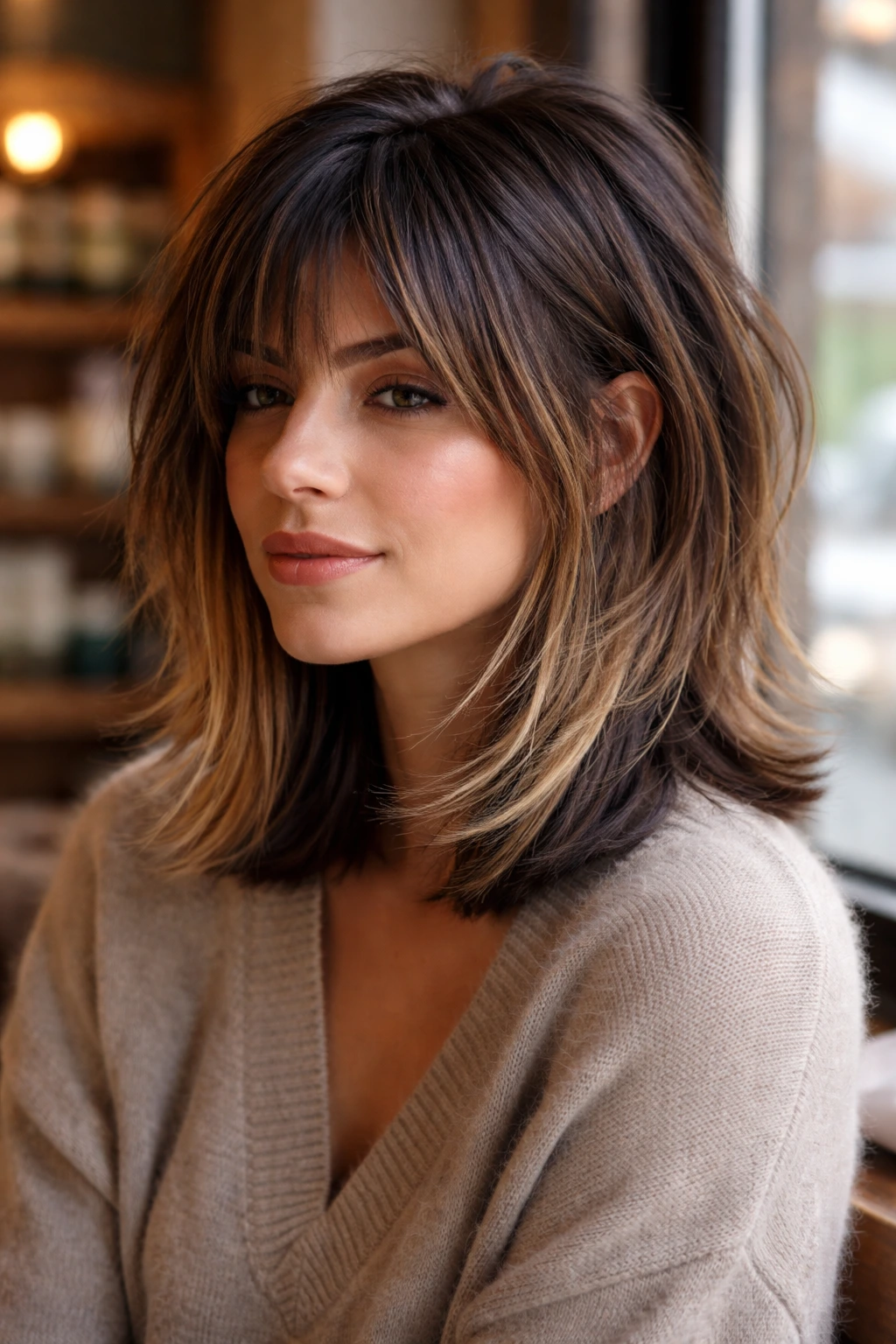
A disconnected lob has more contrast than a classic blended cut. That’s the whole point. The top can sit a little shorter and more textured, while the lower section stays smoother and longer.
On straight hair, that contrast shows up clearly, which is why it feels bolder than some of the softer shags on this list. You get movement in the top half and a clean line below. It’s a strong look. Not loud, but not shy either.
This works especially well if your hair is thick and tends to puff out at the sides. The lower perimeter gives the cut weight, and the shorter layers keep the top from lying dead against the head. You can wear it straight, tuck it behind one ear, or bend just the front pieces for a little swing.
If your current haircut feels heavy at the roots and dull at the ends, this is a better fix than just chopping length. It changes the shape, not just the size.
13. Bang-Free Textured Shag
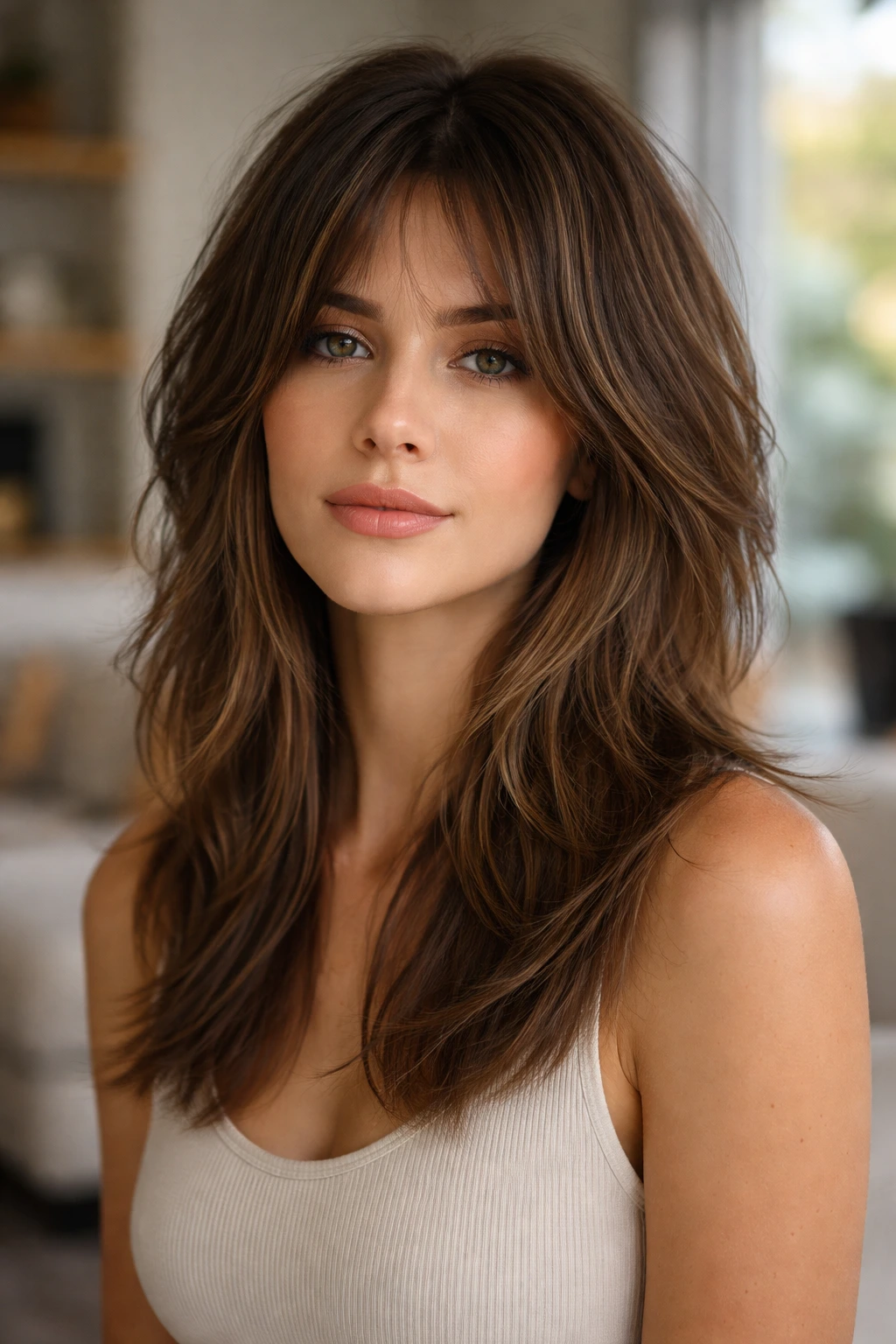
No bangs? Fine. You do not need a fringe to get a shaggy look on straight hair.
This version leans on internal texture and face-framing layers that begin lower, usually around the mouth or collarbone. That keeps the forehead clear while still giving the cut movement near the front. It’s a smart option for people who dislike hair touching their face or who have a cowlick that fights every fringe in sight.
What Makes It Work
The top layers should still be soft enough to create lift, but the shape needs to be built through the sides and ends. Straight hair shows the outline of every layer, so the transition has to be smooth. A good stylist will point-cut the ends instead of making hard steps.
This is one of the easier shag cuts to live with day to day. Pull it into a clip, wear it loose, part it down the middle, throw it to the side — it still reads as deliberate. That’s a nice quality when you don’t want one haircut that only behaves one way.
14. Heavy Fringe Shag for Fine Hair
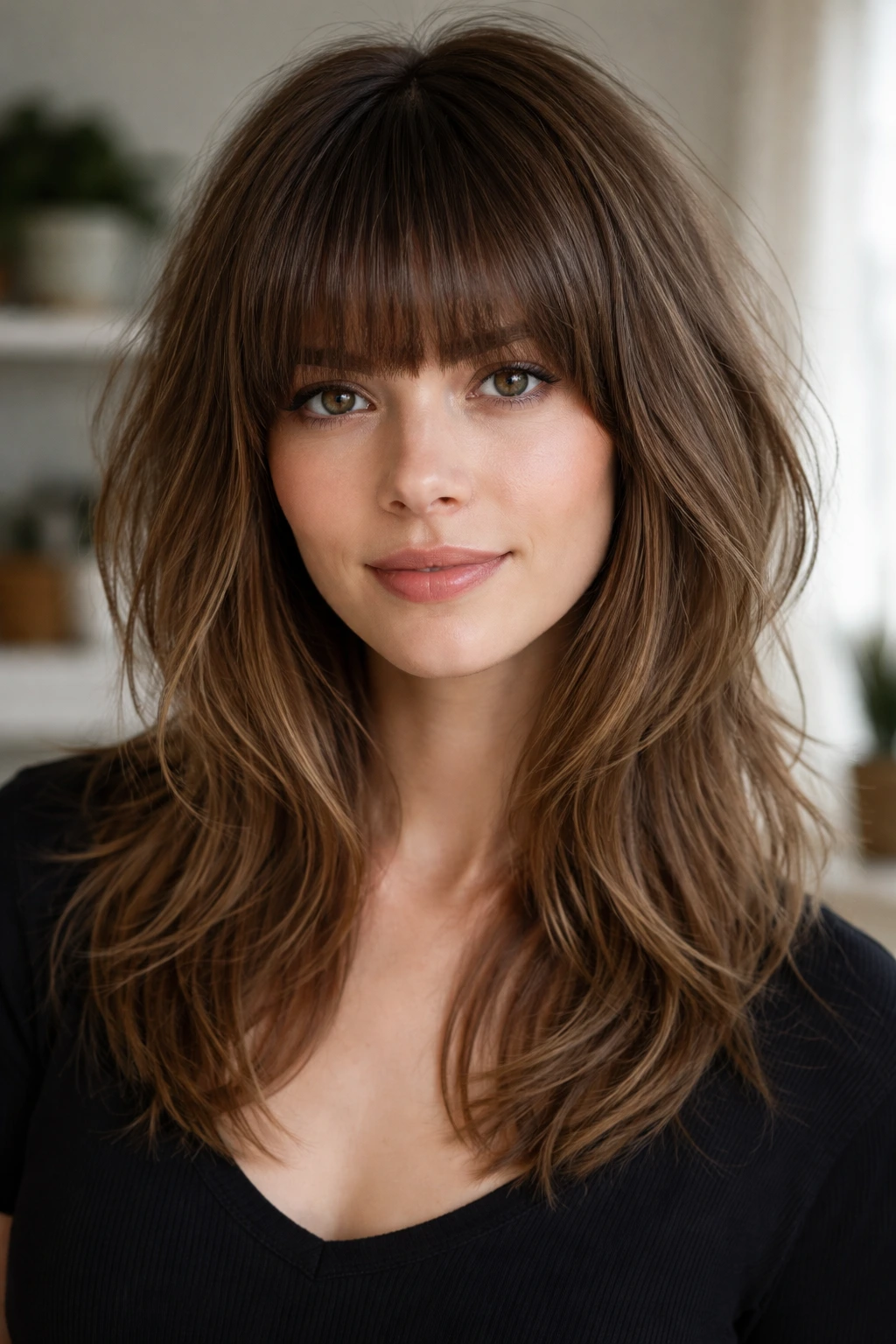
Fine straight hair can get a little ghostly around the front if the cut is too light. A heavier fringe fixes that by putting a bit more substance at the hairline, which makes the whole haircut feel fuller.
The trick is balance. The fringe should look denser, but the rest of the haircut still needs air. Too much thinning on the ends, and the contrast between heavy bangs and wispy body looks off. Keep the shape compact around the face and slightly longer through the sides.
I like this cut on people who want the illusion of more hair up front. It gives the eyes a frame and makes a simple blow-dry look done. You can sweep the fringe slightly to one side if you want it softer, but it should still feel like a real fringe, not a few stray pieces.
A little root lift spray at the front helps, especially if your hair goes flat the moment humidity enters the room.
15. Thick Straight-Hair Shag with Long Internal Layers
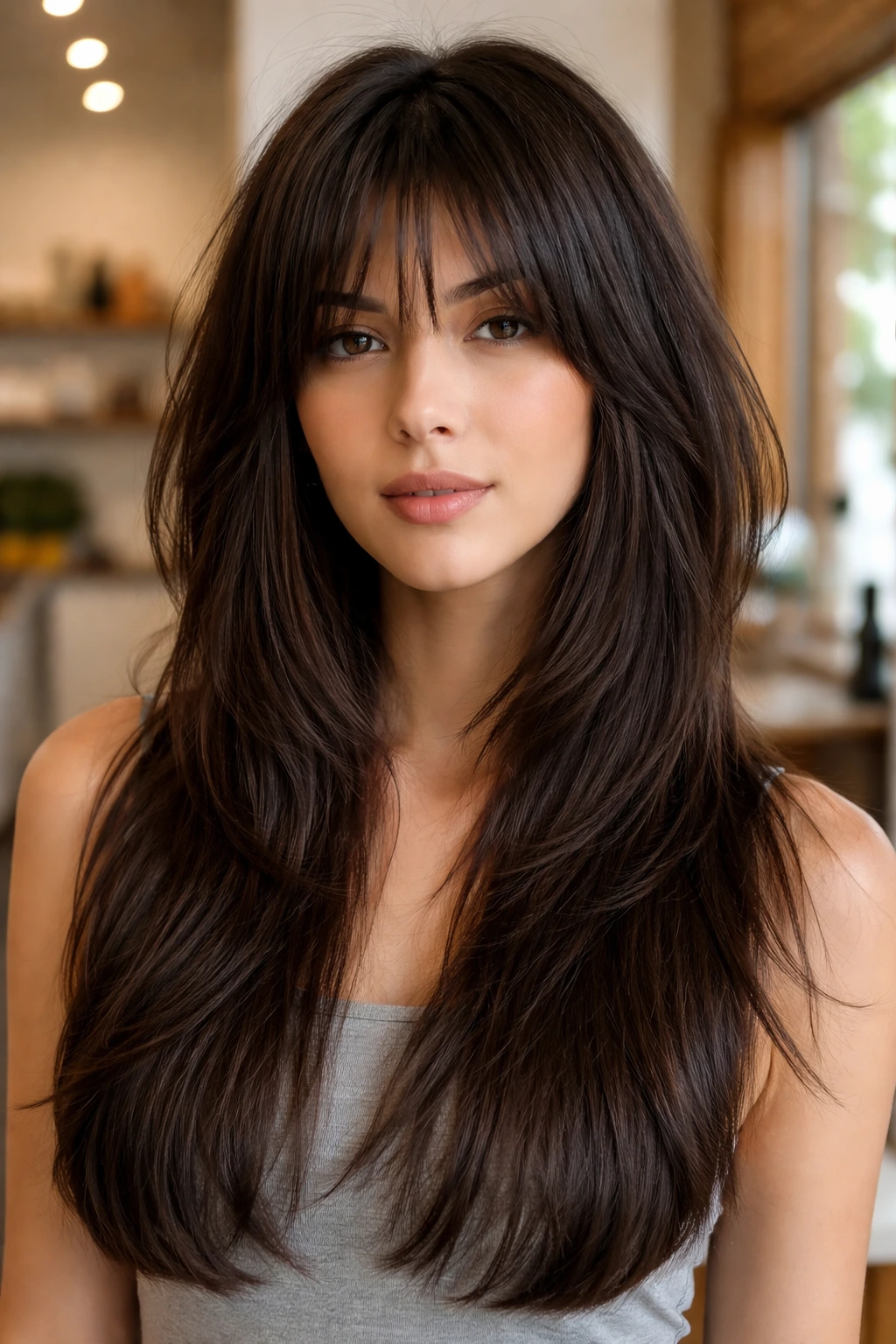
Thick straight hair needs respect. Chop it too much and it balloons. Leave it too heavy and it turns into a block. This cut sits between those two mistakes.
The answer is long internal layers. They remove weight from the inside of the haircut, not the bottom line, so the shape can move while the perimeter stays controlled. That’s the part that keeps thick straight hair from feeling bulky.
Ask Your Stylist to Avoid This
Do not let the ends get over-thinned. That’s a common mistake. On thick hair, aggressive thinning shears can leave the ends looking see-through and frayed, especially after a few washes. Point-cutting and long layers are usually the cleaner route.
This cut is good if you want to air-dry with some body or blow-dry quickly with a paddle brush. The reduced weight means the hair bends more easily, and the longer outer line keeps the style from turning fluffy. It’s practical. Also a little boring in the chair, which is usually a good sign.
16. Sleek Shag with Invisible Layers
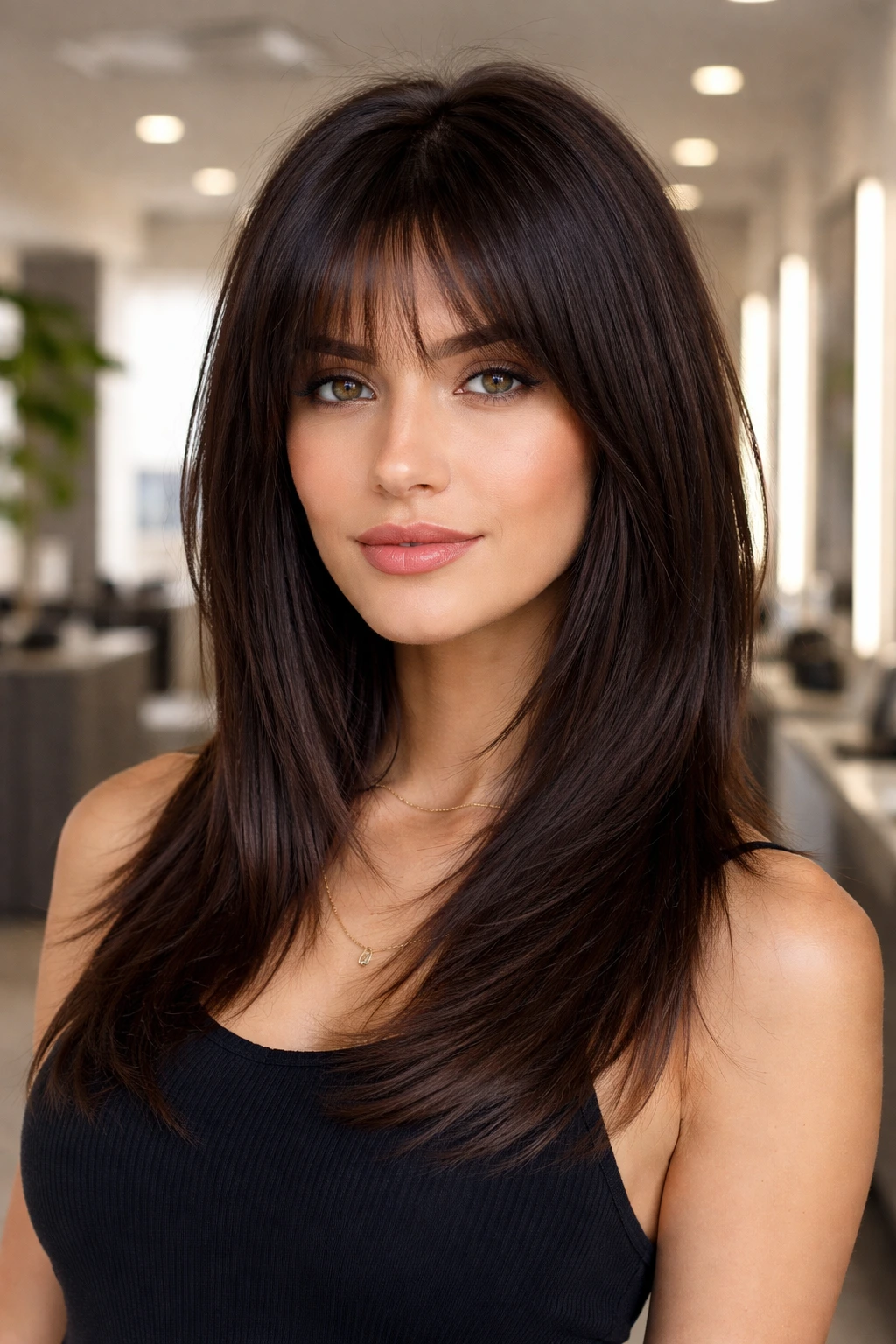
Not every shag has to look rough. A sleek shag keeps the silhouette smooth, then hides the layers just enough that you notice them when the hair moves.
This is the version for someone who likes a tidy finish but still wants more shape than a plain blunt cut gives. The layers are cut deep enough to create lift around the crown and sides, then blended so cleanly that the cut still looks polished when worn straight. Straight hair is actually ideal for this, because it shows the shape clearly without needing a lot of fluff.
If you wear your hair down for work or prefer a neater look, this is one of the smartest picks. It behaves well with a flat brush blow-dry, and it doesn’t collapse into a triangle the way some softer shags do.
A tiny bend at the ends keeps it from looking too severe. That’s all it needs.
17. Side-Part Shag with Sweeping Fringe
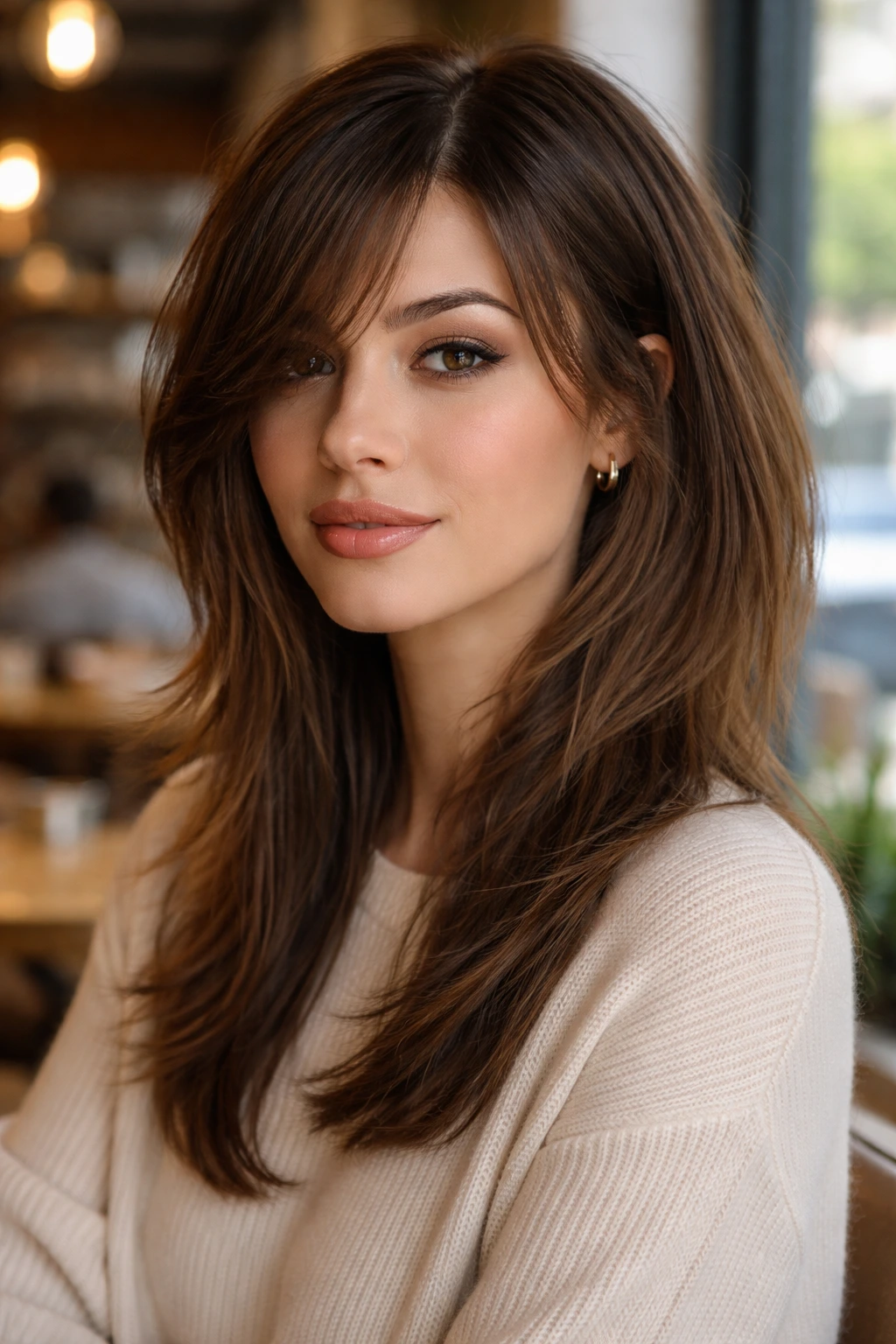
A side part changes the whole mood of a shag. It adds lift at the root, shifts the weight off the center, and gives straight hair a little asymmetry that feels fresh instead of stiff.
The sweeping fringe does most of the face work here. It can skim one brow, brush the cheekbone, or fall just under the eye depending on how dramatic you want it. Straight hair makes that sweep look glossy and clean, which is a nice change from the feathered side fringe that can get too wispy on other textures.
- Good if: your hair splits down the middle too easily
- Ask for: a part that lands about 1 to 2 inches off-center
- Styling move: blow-dry the fringe in the opposite direction first, then sweep it over
- Finish: a light mist of hairspray at the root, not the ends
This cut has a little old-school glamour in it. Not costume glamour. Just enough movement to make a simple haircut feel awake.
18. Shoulder-Grazing Cut with Flipped Ends
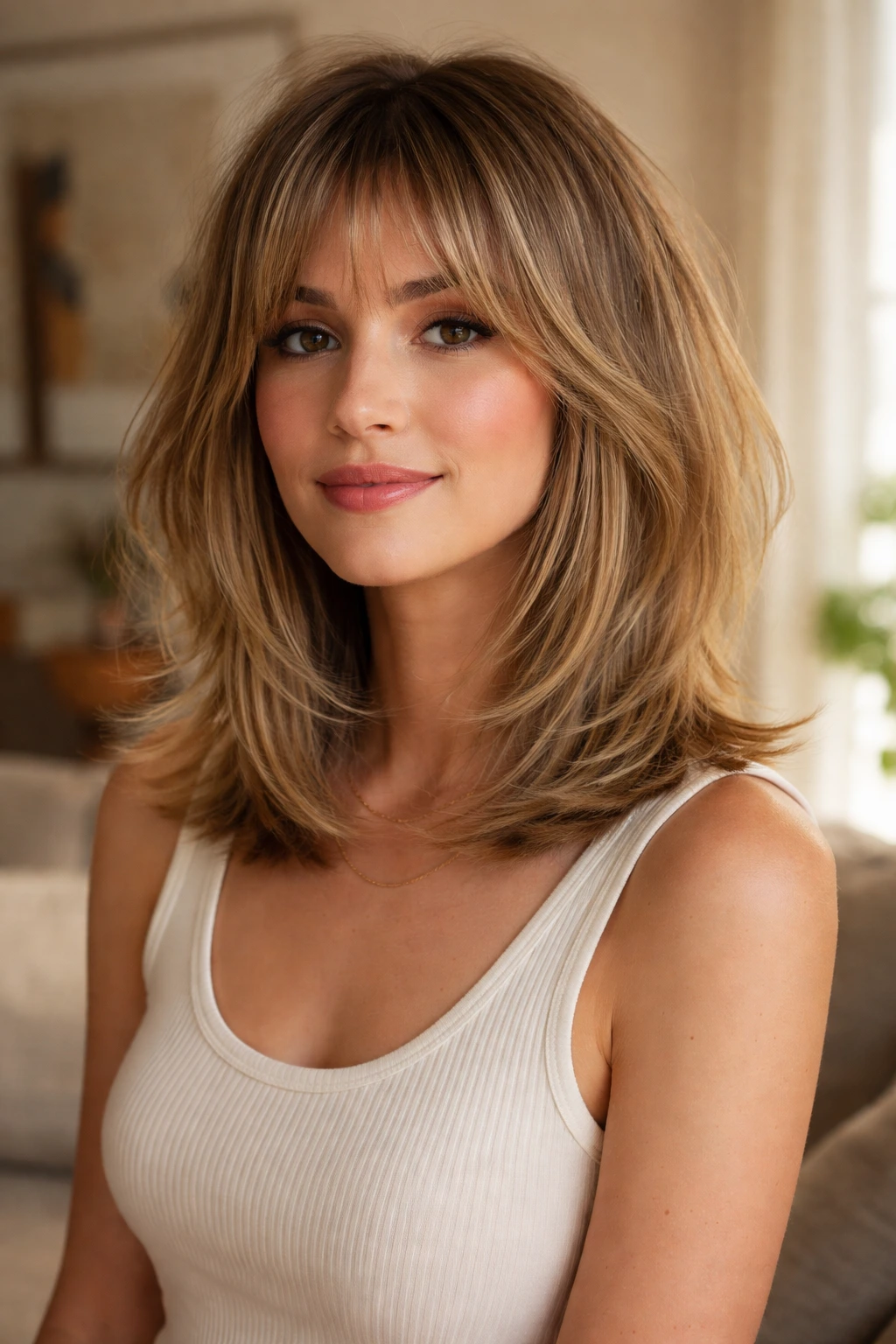
There’s something satisfying about a cut that naturally flips at the ends. It has a little bounce, a little personality, and just enough lift to keep straight hair from looking heavy.
This shoulder-grazing shag sits in the sweet spot between short and medium. The top layers build shape near the crown, while the bottom has enough length to flip out with a brush or iron. If you like that soft, outward bend at the ends, this is the cut that makes it easy.
Styling Cue
Use a medium round brush or a 1-inch curling iron on the last 2 inches only. That keeps the finish from feeling too curly. You want the ends to look turned, not rolled. A bit of movement around the shoulders also helps break up the straight line when the hair sits against a sweater or blazer.
This cut is a nice choice if you want body but don’t want a ton of fringe around the face. It looks casual in the day and more put together with a smooth blowout.
19. Edgy Choppy Shag with Piecey Ends
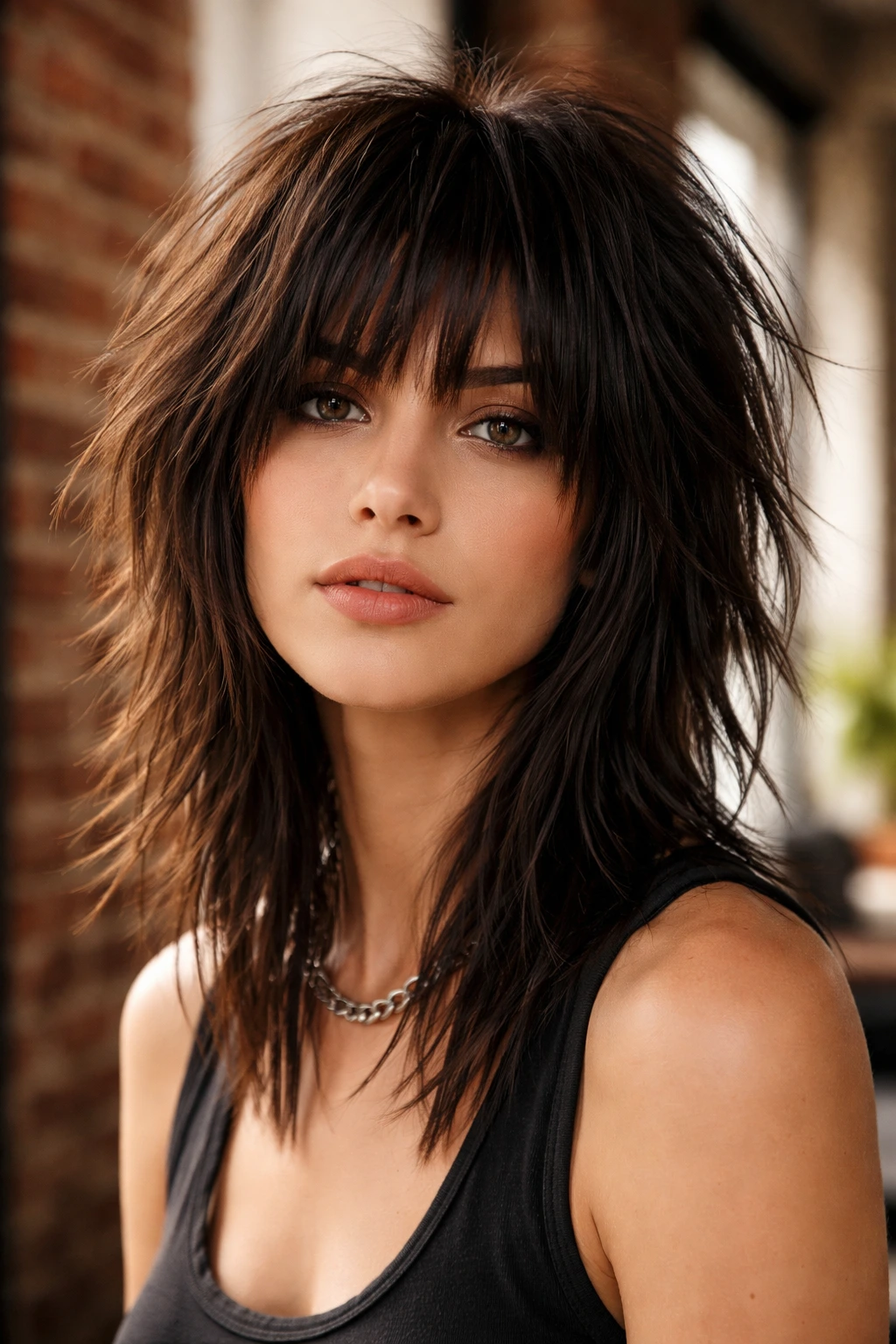
This is the loudest cut on the list, and I mean that in a good way. The piecey ends and choppy layers give straight hair a broken-up, lived-in look that feels more undone than polished.
It works best when the cut itself carries the style. The layer breaks should be visible, but not random. You want separation, not damage. That difference matters more on straight hair than on anything else, because every line shows up. If the shape is sloppy, the whole haircut reads sloppy fast.
Styling Product Notes
- Use: a light wax or styling cream on the ends
- Skip: heavy oil, which can flatten the texture
- Try: a dry texture spray at the roots and mid-lengths
- Avoid: over-brushing after styling, because it softens the choppy effect
I like this one for people who want a haircut with some attitude and are fine with a bit of effort. It looks best when slightly imperfect. Too neat, and you lose the point.
20. Minimalist Long-Layer Shag
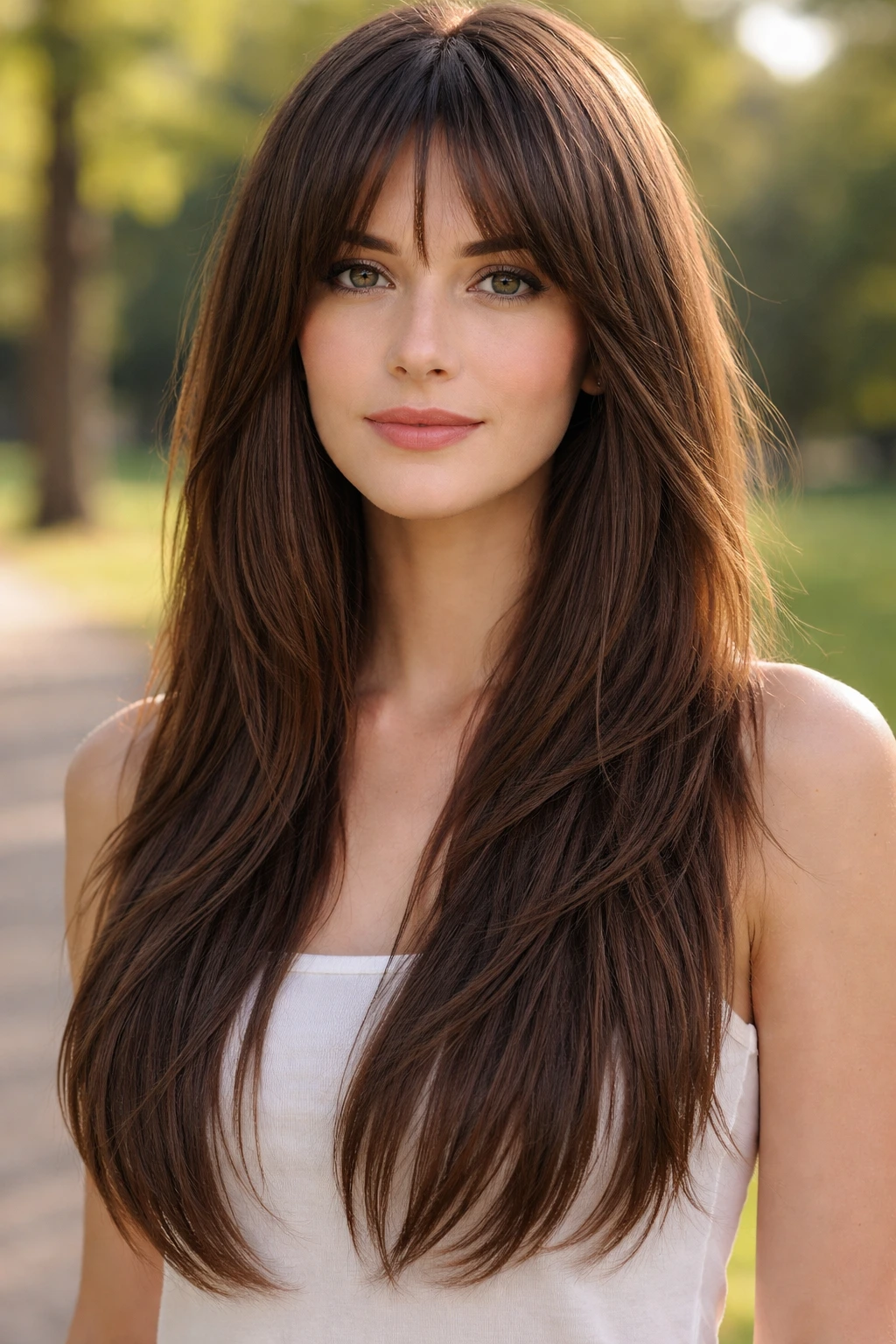
This is the shag for people who don’t want to look like they’re wearing a shag. The layers are long, quiet, and spaced out enough that the haircut still feels clean from a distance.
Straight hair loves a minimal cut like this if you want movement without a lot of obvious texture. The bottom keeps a strong line, while the layers start lower and feather just enough to stop the ends from feeling heavy. It’s a good compromise for someone who likes simple clothes, simple makeup, simple hair — and still wants the haircut to do a little work.
The reason I like this version so much is that it doesn’t fight the nature of straight hair. It leans into the smoothness and uses layers to soften the outline instead of changing it completely. That makes it easier to style, easier to grow out, and easier to keep looking neat on a windy day.
A quick bend through the front sections is enough. Really. The cut does the rest.
21. French-Inspired Airy Shag
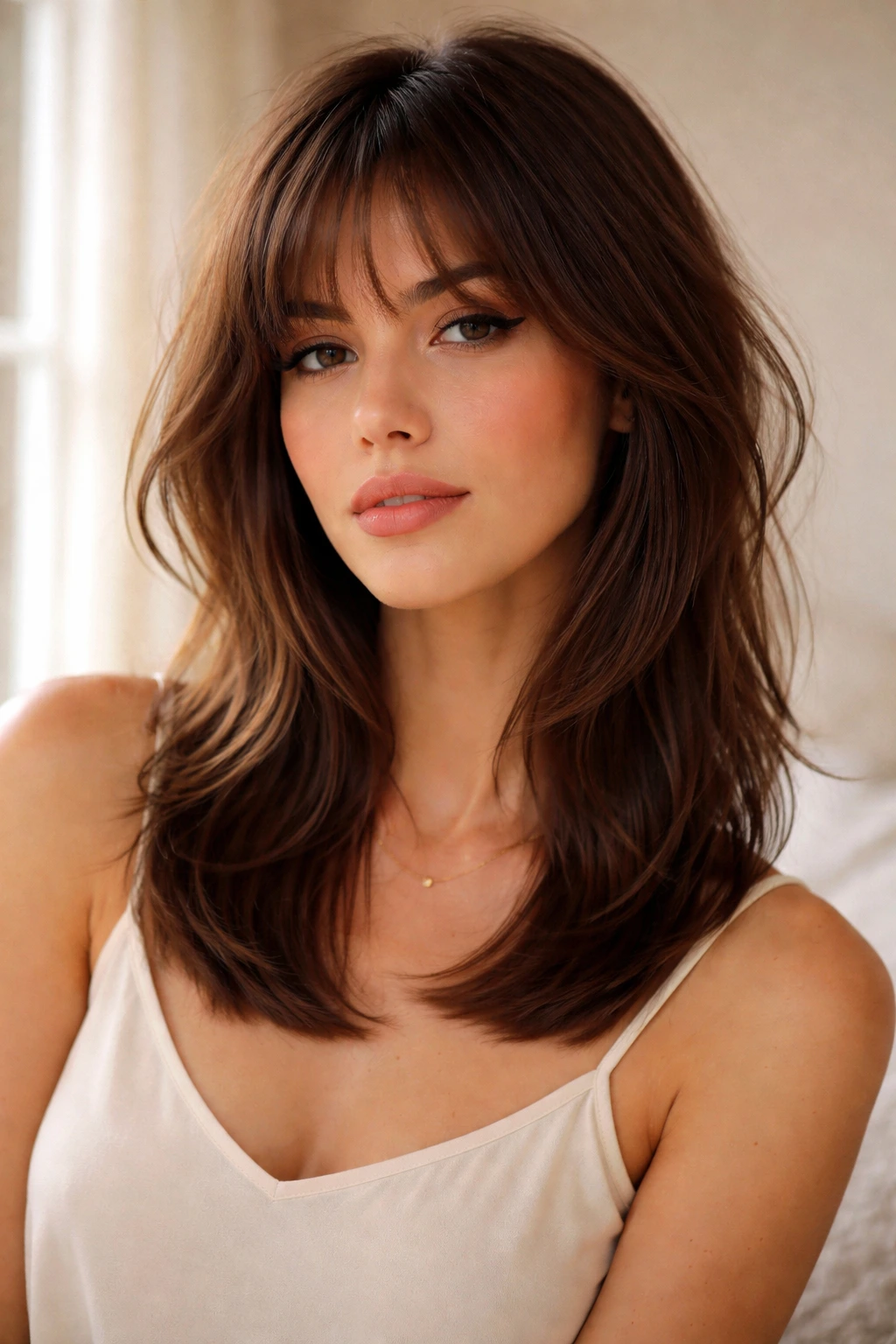
If you want a softer, cooler take on the shaggy layered haircut for straight hair, this is it. The French-inspired version usually has a light fringe, cheekbone layers, and a shape that feels a little less piecey than the edgier shags.
The magic is in the restraint. The layers should look relaxed, almost casual, but the outline still needs to be clean. Straight hair helps here because it gives the cut a glossy finish that stops the airy pieces from looking messy. That’s why this version tends to look better on smooth hair than on highly textured hair.
Best Styling Move
Blow-dry the roots with a flat brush and leave the ends slightly imperfect. That tiny bit of undone finish keeps the haircut from feeling too prim. If you wear glasses, this cut can be especially nice because the fringe and face-framing pieces sit around the frames instead of fighting them.
This is one of those cuts that looks like you didn’t try hard, even though the shape is doing a lot of work. I’m always a fan of that.
22. Grown-Out Shag That Still Looks Intentional
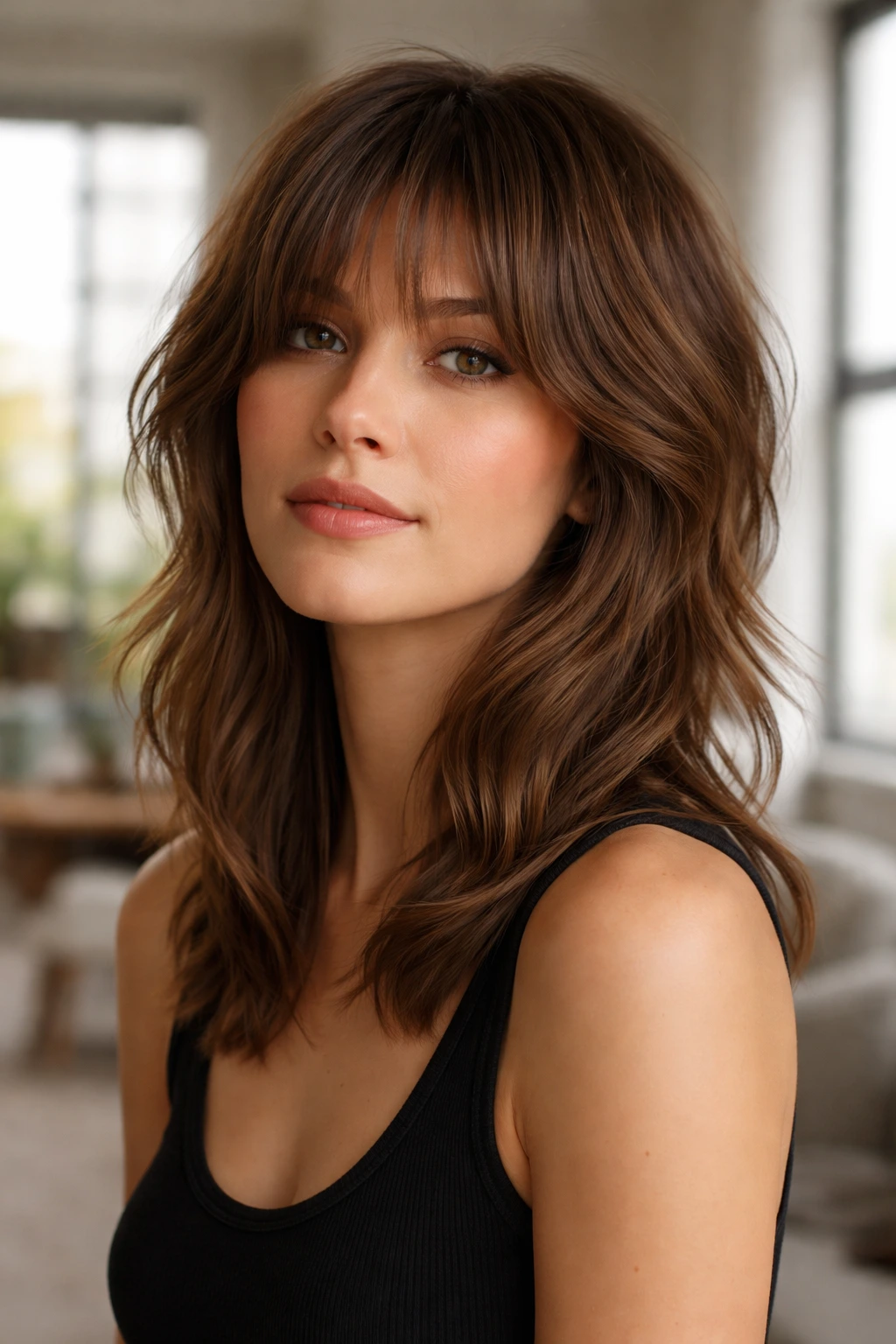
A grown-out shag can be the best shag of all. If you already have layers, this is the version that lets them breathe a little longer between trims while still keeping the haircut on purpose.
The trick is to keep the outline tidy. The longest pieces can brush the collarbone or shoulder, and the front can stay soft around the cheek and jaw. What you do not want is a random collection of layers that no longer agree with each other. Straight hair makes that obvious fast, so the cut has to be shaped with growth in mind from the start.
Ask for a trim that respects the existing movement instead of chopping it all back down. Sometimes that means just cleaning the ends and dusting the face-framing pieces. Other times it means moving one layer up or down by half an inch so the line sits better.
This is the cut for people who hate the feeling of being trapped by a haircut. It grows out gracefully, it still looks good in a clip, and it keeps working even when the last salon visit is not fresh in your mind. That’s the kind of shag I trust.
