



Layered haircuts for curly hair work best when they respect the curl’s own shape instead of fighting it. That sounds obvious, but a lot of bad curly cuts still get made as if hair will hang straight once it dries. It won’t. A curl springs, bends, contracts, and stacks on itself, which means a layer placed in the wrong spot can create bulk in one place and holes in another.
The cuts that hold up best are the ones that account for shrinkage, density, and how your curls behave at the crown versus the ends. A good stylist watches how the hair falls dry, not just how it looks stretched out under salon lights. That one detail changes everything. It’s the difference between a shape that grows out gracefully and a shape that goes puffy, square, or oddly triangular by the second week.
I like curly cuts that still make sense on day three. Not every curl wants the same amount of layering, and that’s where people get tripped up. Some heads need weight kept at the bottom. Some need bulk removed high up near the crown. Some need face-framing pieces that start at the cheekbone and stop before they crowd the eyes. The right answer depends on the curl pattern, the density, and how much time you want to spend diffusing in the morning.
1. Long Rounded Layers for Loose and Medium Curls
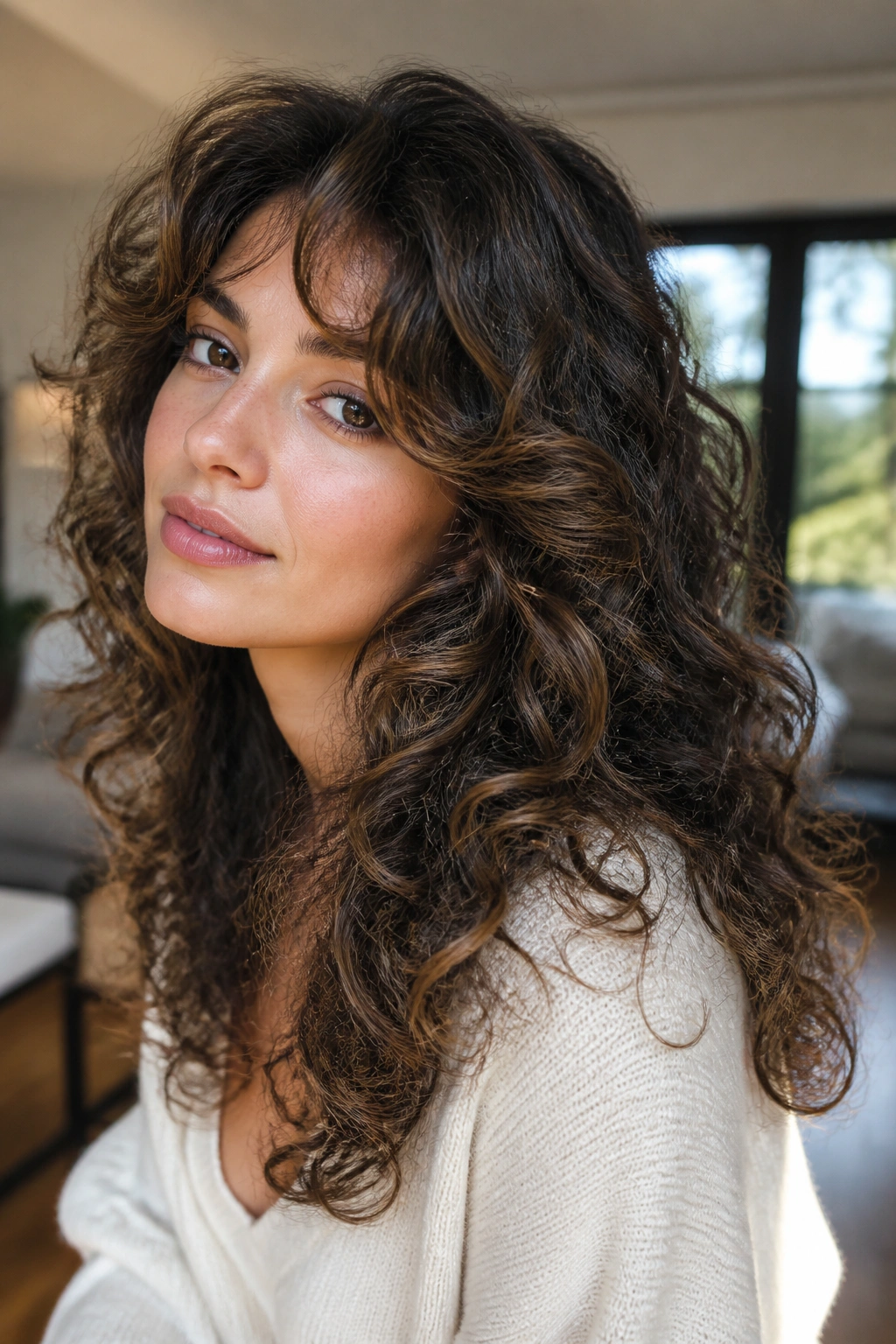
Long rounded layers are the safest place to start if you want movement without giving up length. The shape stays soft, the ends don’t get flimsy, and the curls keep enough weight to fall instead of exploding outward.
This cut works especially well on 2C to 3B curls that tend to go flat at the top and puffy at the sides. Ask your stylist to keep the outline curved rather than square, with layers that begin below the chin and get slightly shorter toward the crown. That rounded silhouette is what stops the triangle effect.
- Keep the longest pieces below the collarbone if you wear your hair down a lot.
- Ask for interior layers, not heavy razoring.
- Diffuse with the head tilted side to side so the crown doesn’t collapse.
Best for: people who want shape, but not drama. The cut looks polished even when the styling is half done, which is a small luxury that matters more than it sounds.
2. Curly Shag with a Lifted Crown
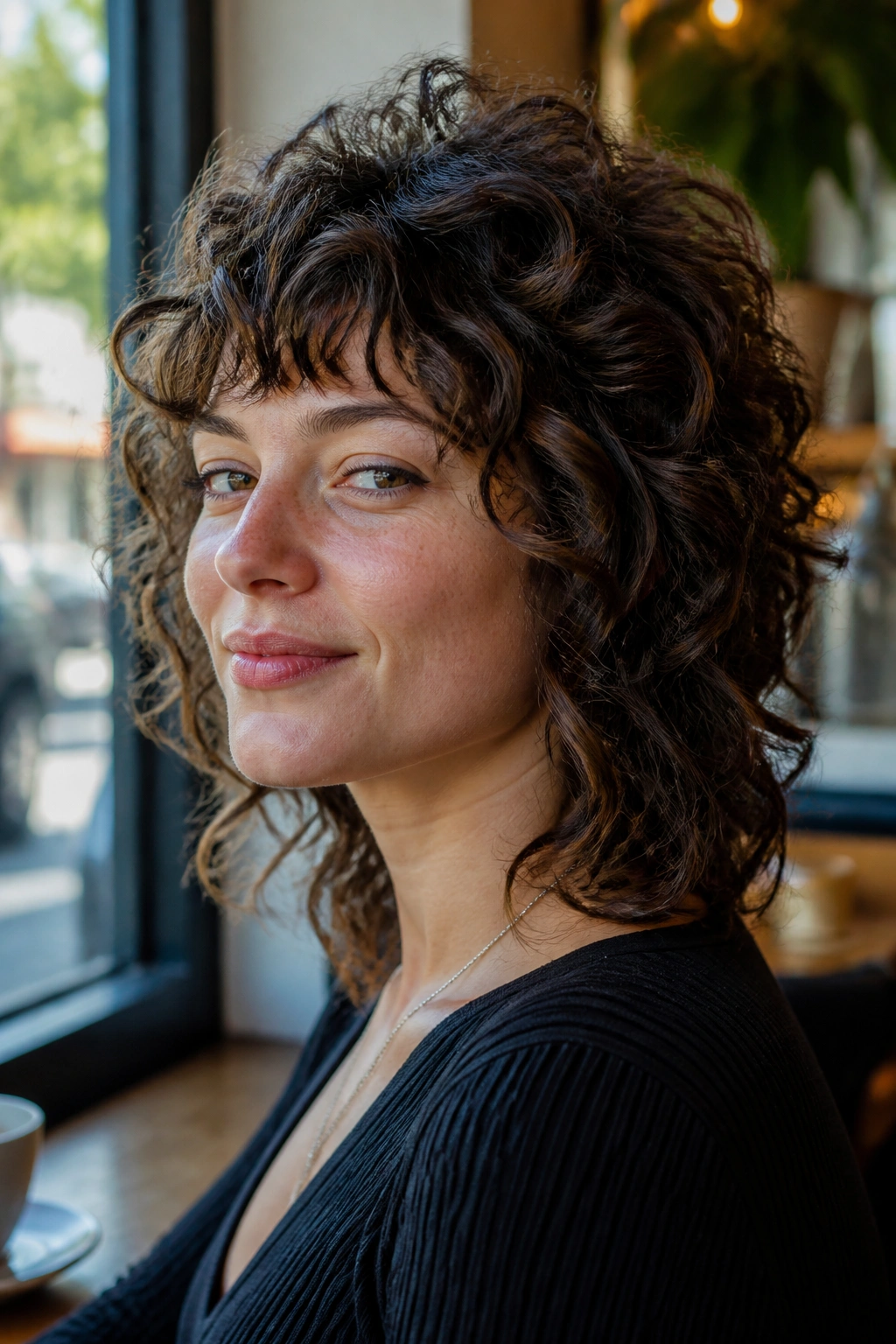
The curly shag is blunt in the best way. It’s airy at the top, piecey through the middle, and never tries to be neat for the sake of neatness.
What makes it work is contrast. Shorter layers around the crown create lift, while the longer pieces keep the whole thing from turning into a puffball. On loose curls, the result feels playful. On denser curls, it can take a lot of weight out fast, so a careful hand matters. You do not want the top cut too short unless you like volume that announces itself from across the room.
What to ask for
Tell the stylist you want a shag that keeps enough length around the perimeter to avoid a mushroom shape. If they know curly cutting, they’ll usually cut it dry and follow the curl clumps instead of slicing through them blindly.
The shag is one of those cuts that either looks fantastic or looks like an accident. There isn’t much middle ground. If you like a little edge and you don’t mind texture doing the talking, this one has real personality.
3. Butterfly Layers That Keep Length in Back
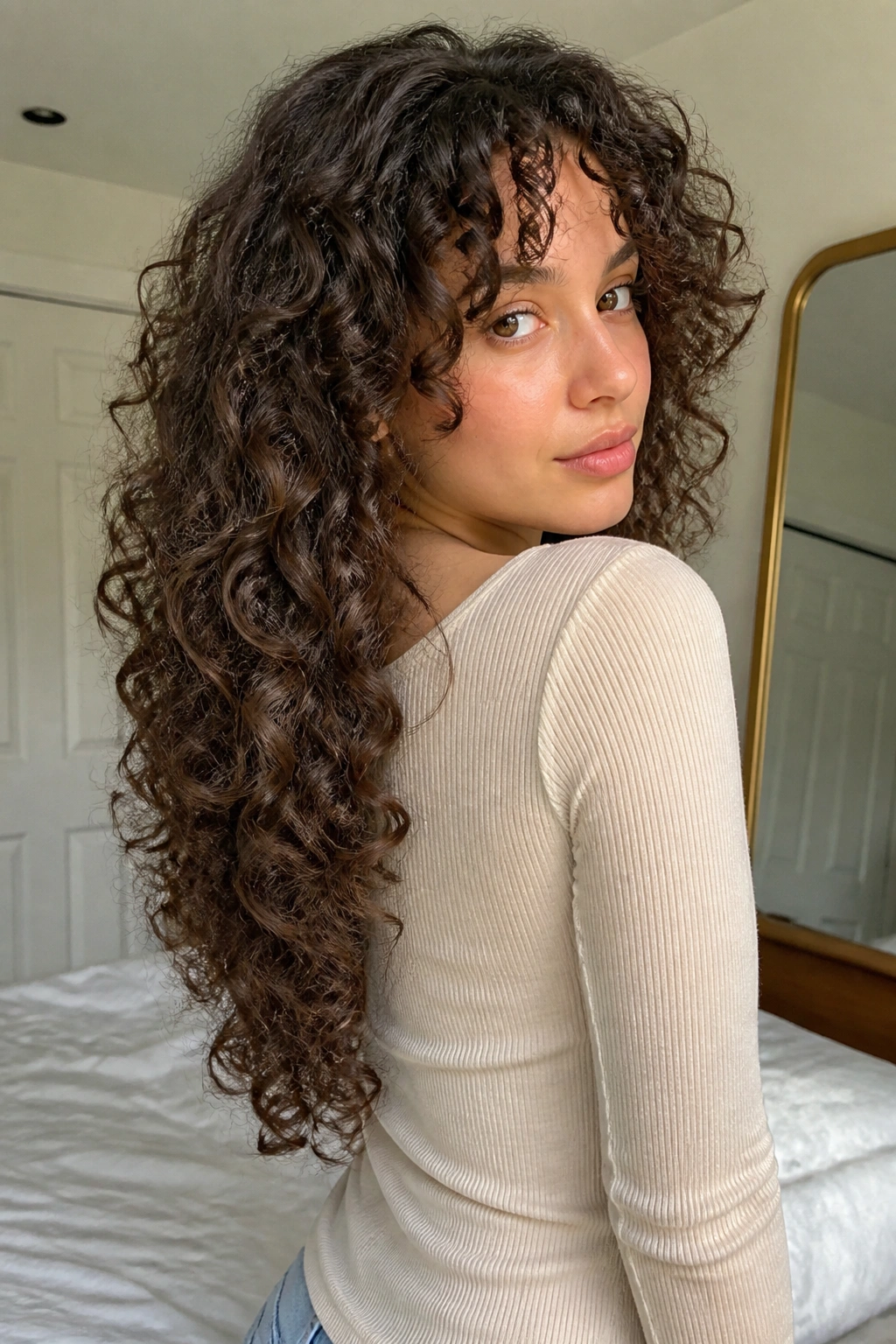
Butterfly layers are a clever answer to the “I want short face pieces, but I refuse to lose my length” problem. The front sits lighter and more open, while the back keeps the long curtain of curls people usually want to protect.
This shape is flattering because it creates motion around the face without making the whole cut feel chopped up. It’s good on medium to long curls that need lift near the front but still look best with a full back. The shorter front sections should blend into longer mid-length layers, not stop abruptly. Otherwise the cut starts to look like two different haircuts stitched together.
The best version of this cut has a soft, feathered front that begins around the cheekbone or lip line, depending on shrinkage. Do not let anyone place the shortest layer based on wet length alone. Curly hair has a nasty habit of springing up exactly where you don’t expect it.
4. Curtain Bang Layers That Blend Into the Face Frame
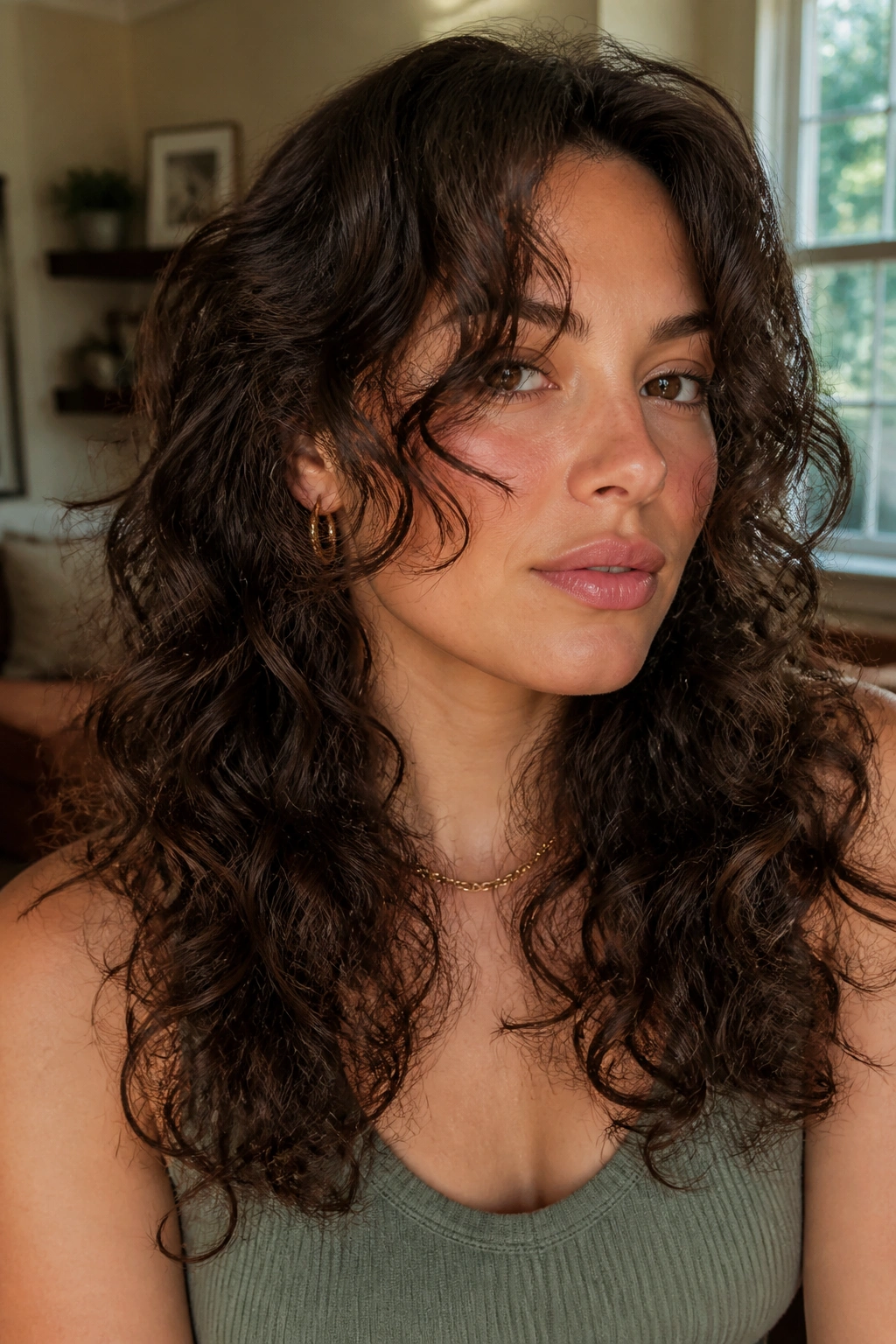
Curtain bangs on curly hair can be gorgeous. They can also be a mess if they’re cut too short or disconnected from the rest of the shape.
The trick is blending, not chopping. The bangs should open from the center and melt into cheekbone or jaw-length layers on each side. That way, the front feels soft and intentional instead of like a blunt fringe that got surprised by humidity. On tighter curls, I’d start longer than you think you need. On loose spirals, you can get away with a shorter start point because the curl won’t spring quite as much.
How to keep them from taking over your face
- Ask for the bang area to be cut with the hair in its natural curl pattern.
- Keep the shortest pieces long enough to tuck behind the ear.
- Use a tiny amount of curl cream at the front so the strands separate instead of clumping.
This is a lovely option if you want your layers to feel feminine and face-focused without losing fullness everywhere else. It’s also less fussy than a full fringe, which is why people keep coming back to it.
5. Wolf Cut with Broken Texture
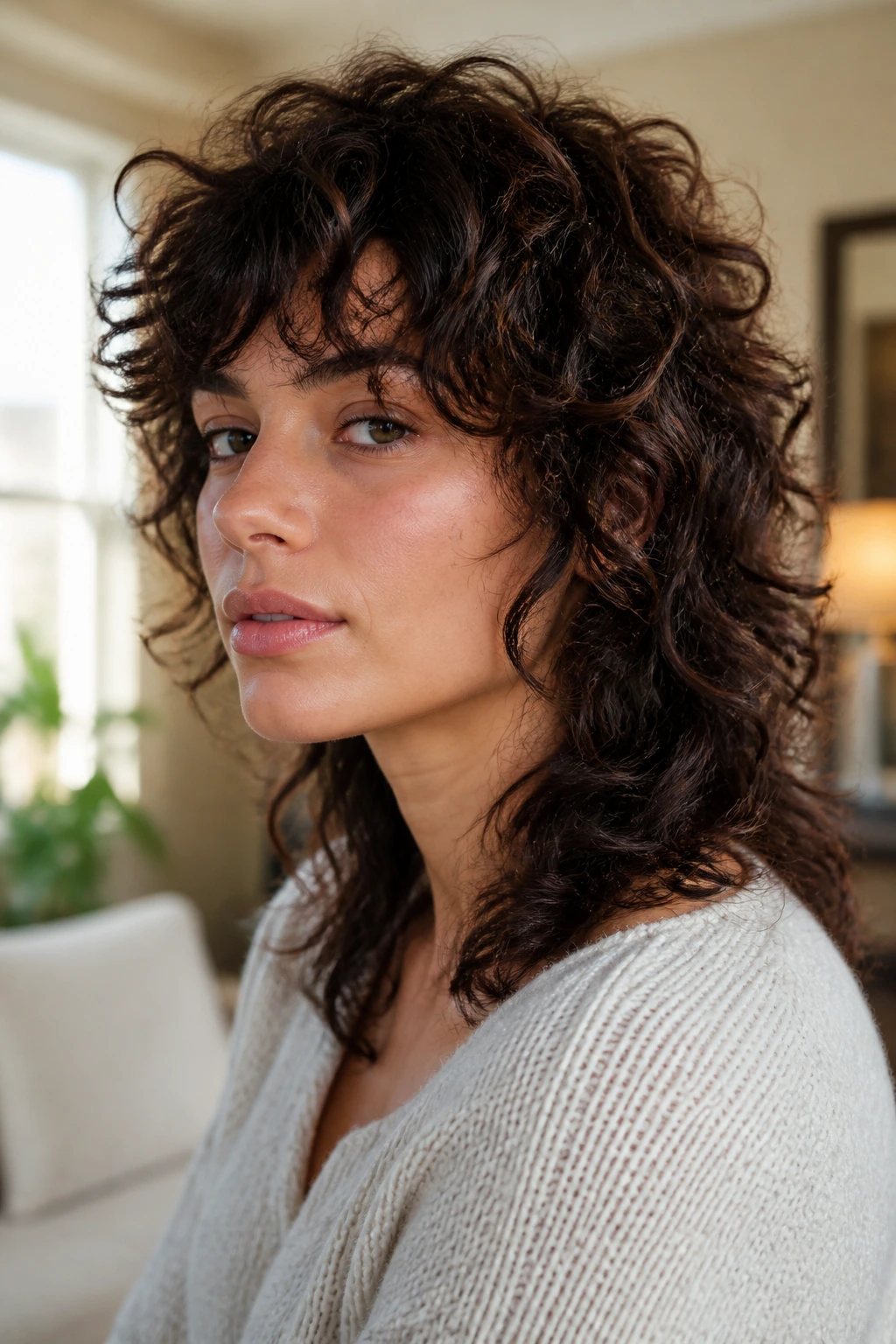
The wolf cut is for someone who likes hair with attitude. It has a shag’s looseness, but the overall shape is more aggressive, with shorter layers around the crown and longer pieces left in the back.
On curly hair, that broken texture can look fantastic because curls already have a little wildness built in. The cut exaggerates that natural movement instead of trying to smooth it away. It’s especially good on thick curls that need air between the layers. If your hair feels heavy even when it’s clean, this cut can make it move again.
But here’s the catch: the wolf cut needs styling. Not a ton, but some. A diffuser, a light gel, and a bit of patience go a long way. If you air-dry it with no product and then complain it looks fuzzy, that’s not the haircut’s fault. The haircut is doing its job. The routine has to meet it halfway.
6. U-Shaped Layers for Long Curls

A U-shaped cut keeps the perimeter fuller than a V-cut, which gives long curls a softer, more expensive-looking fall. The sides round down gently, and the back carries the length without that sharp pointy finish.
This is one of my favorite shapes for people who like to wear their curls long and loose. It keeps the bottom from looking thin while still removing enough bulk to let the curls stack. Ask for layers that follow the U line rather than cutting straight across the back. That subtle curve matters more than people think.
The cut also grows out well. That matters. A lot of layered cuts look crisp on the first day and a little awkward six weeks later. The U-shape is calmer than that. It keeps its sense of form even when the layers start blending back together.
7. V-Shaped Layers for Extra Movement
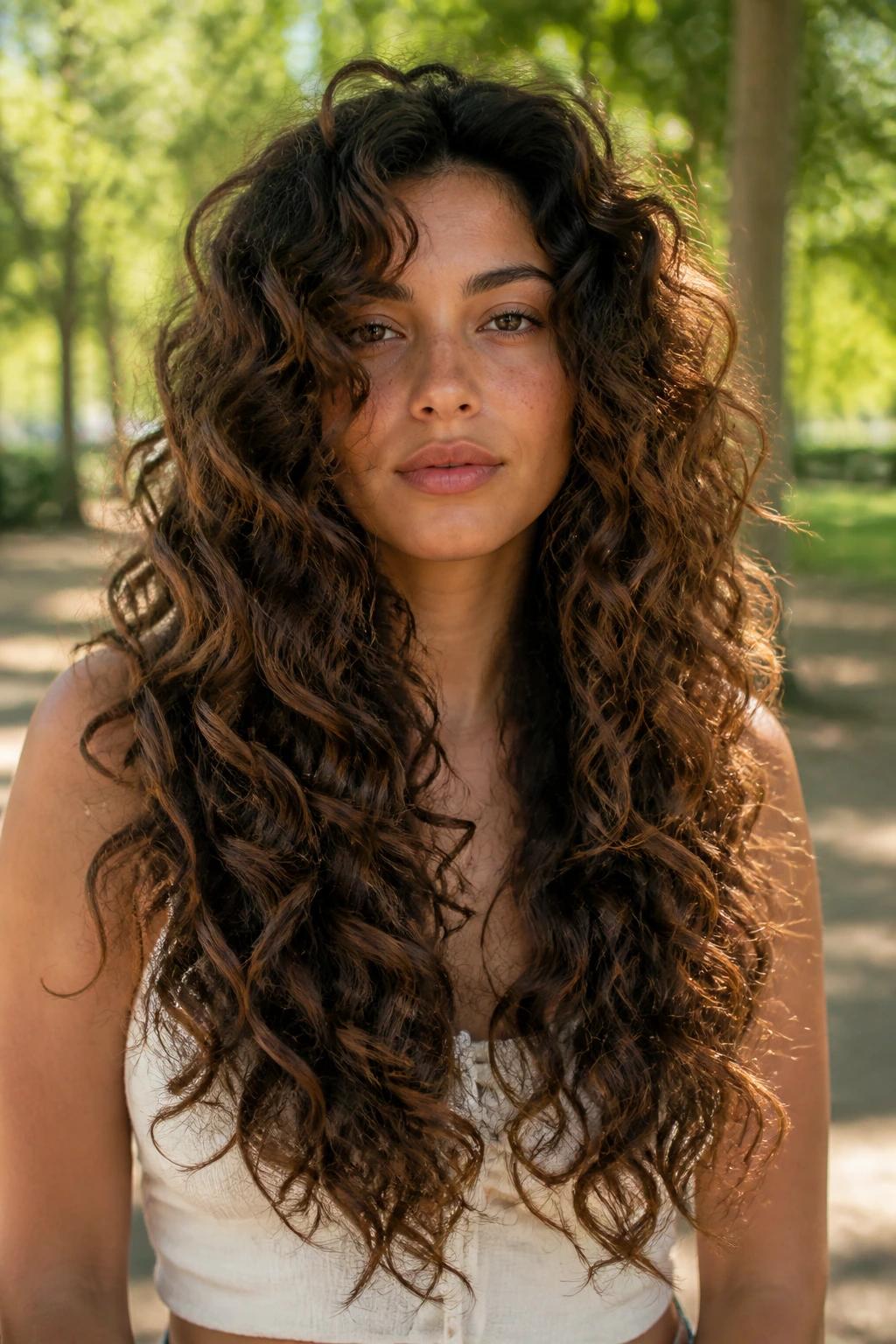
V-shaped layers do the opposite of the U. They draw the eye down toward the center back, which gives long curls a sharper, more dramatic finish.
The shape works best when the hair has enough density to support the point. Fine curls can look stringy here if the layers are too aggressive. Thick, springy curls, though? They love this cut. The center gets length, the sides taper in, and the whole style feels like it’s moving even when you’re standing still.
- Best on hair that reaches past the shoulders.
- Good if you like wearing curls half-up.
- Less ideal if you already struggle with thin-looking ends.
Pro tip: ask for soft internal layers, not a carved-up finish. The V should be visible, but the hair should still clump together in clean curl families.
8. Collarbone Lob with Hidden Interior Layers
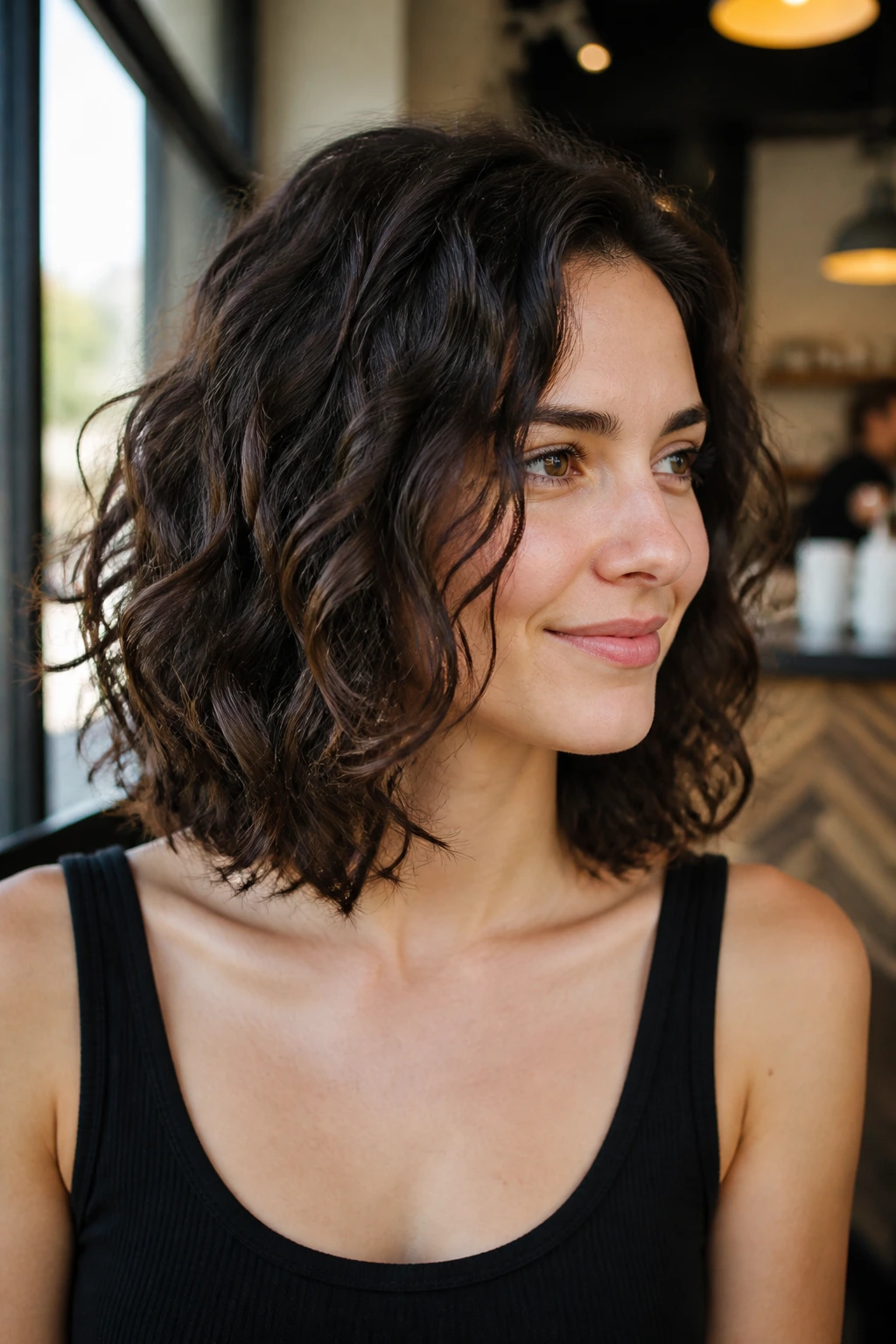
A curly lob at the collarbone is one of the easiest layered cuts to live with. It’s short enough to feel fresh, long enough to tie back, and versatile enough to wear diffused or air-dried.
Hidden interior layers make the shape move without breaking the outline. That’s the part people often miss. They ask for layers and end up with wisps all over the place. What they probably wanted was lift inside the cut, not a shredded perimeter. The lob keeps the ends looking thick, which is a big deal for curly hair because dry ends can go transparent fast.
This cut suits people who want a clean, polished look that still has texture. It’s good in an office, good on weekends, and good when you’re tired of wrestling long hair into something presentable.
9. Stacked Curly Bob with a Full Crown
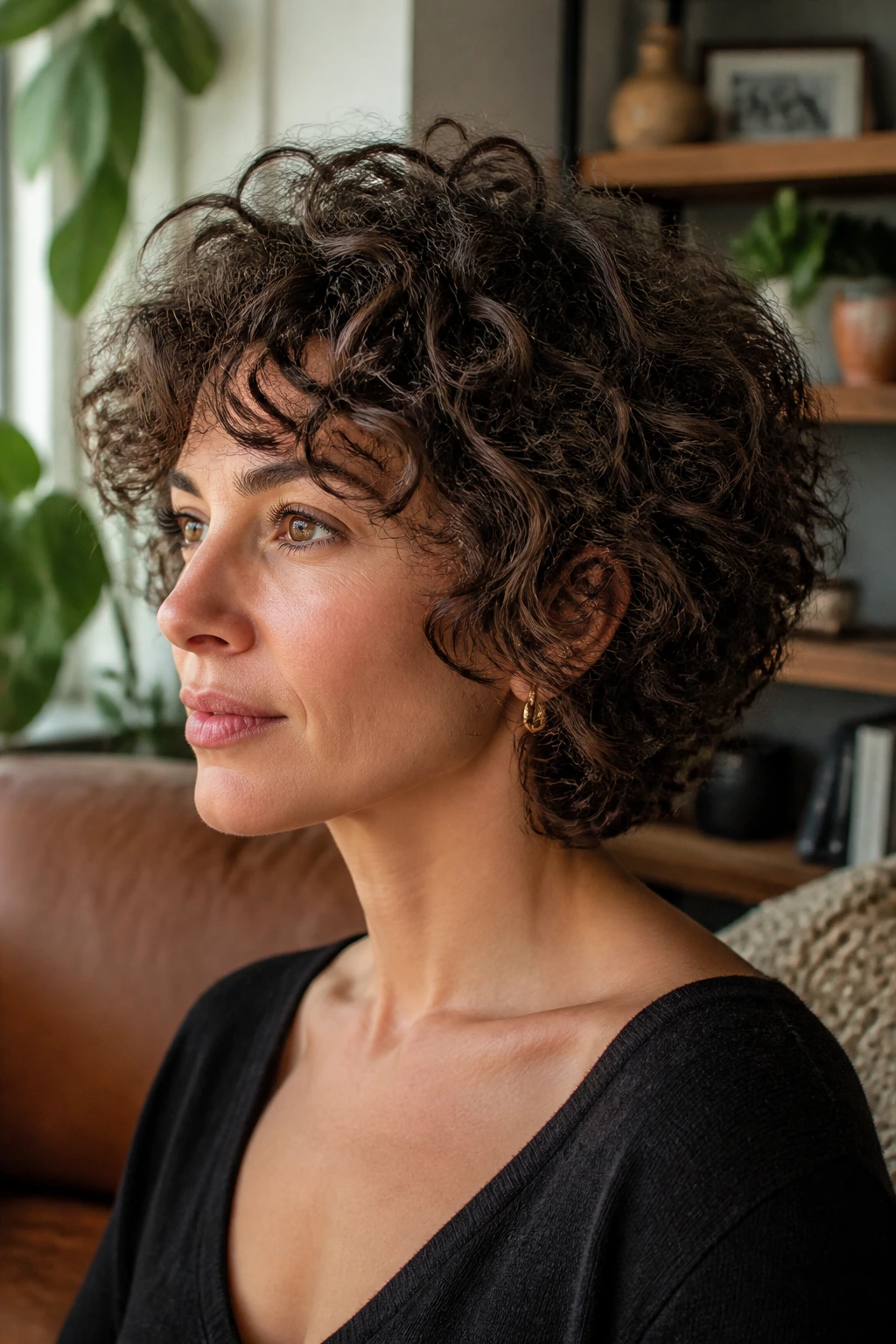
The stacked curly bob gives you height at the back without turning the cut into a helmet. That’s the line to walk, and a good stylist knows it.
Shorter layers are built through the crown and upper back, then softened down into longer pieces around the sides. On curls, this creates a round, full shape that sits close to the head but still has bounce. It’s especially nice for dense hair that gets wide at the sides. The stacking pulls the silhouette inward and upward.
What makes it work
- The back should feel lifted, not chopped.
- The side layers should be soft enough to tuck behind the ears.
- The perimeter should stay thick so the bob doesn’t fray out.
This is a strong cut if you like structure. It isn’t lazy hair. It has a shape you can see from across the room, and that’s why people either love it or avoid it.
10. Curl-by-Curl Deva Cut

A Deva Cut is all about cutting curls in their natural state. Dry, springy, and behaving the way they actually behave in life, not the way they look when stretched out and wet.
That matters because curly hair is never honest when it’s soaking. One curl may shrink an inch, another two. A curl-by-curl approach lets the stylist see those differences and build layers around them. The result is usually a shape that feels more balanced at home, especially if your curl pattern changes from section to section.
What to ask for
Ask whether the cut will be done dry and curl by curl, and ask how the stylist handles uneven curl patterns. The best answer is not a sales pitch. It’s a calm explanation of how they read the shape as they go.
This cut is a solid pick if your hair has a mind of its own. It often does better when the curl pattern is mixed, and it tends to hold its shape between washes without you having to recreate the styling from scratch every morning.
11. Balanced Rezo Cut for Even Length
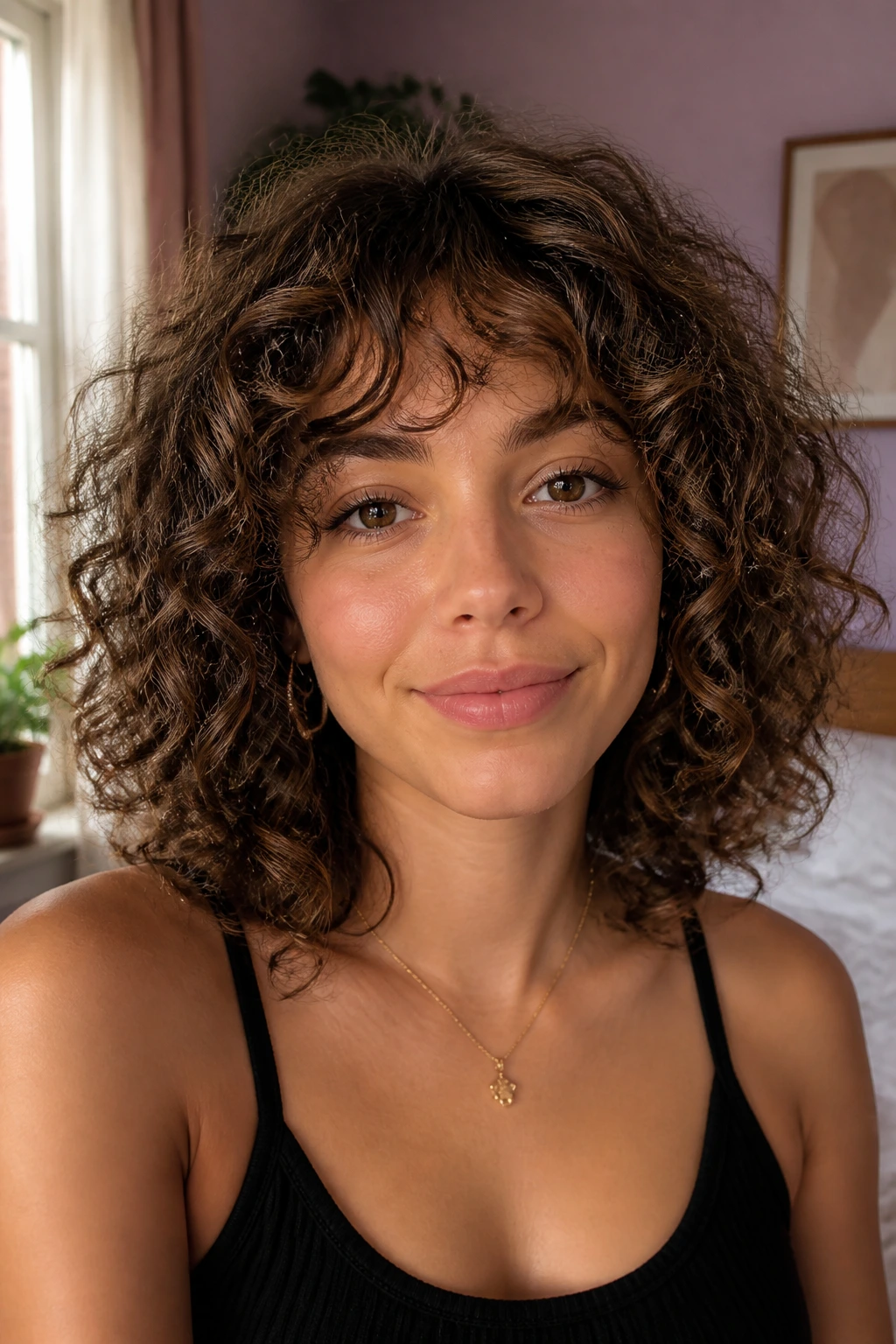
The Rezo Cut has a different goal from the Deva approach. Instead of building a very individualized shape around each curl family, it aims for even movement and consistent length around the head.
That makes it appealing if you want your curls to fall in a balanced way from every angle. The cut usually keeps more uniformity through the sides and back, which can be a relief if you hate lopsided layers. It also works nicely when you want length to remain the main story and the layers to stay subtle.
A good Rezo-inspired cut should never feel jagged. If it does, the balance is off. You want flow. You want hair that swings a little when you turn your head. That sounds like a tiny thing, but it changes how the whole style reads.
12. Tapered Cut for Tight Coils
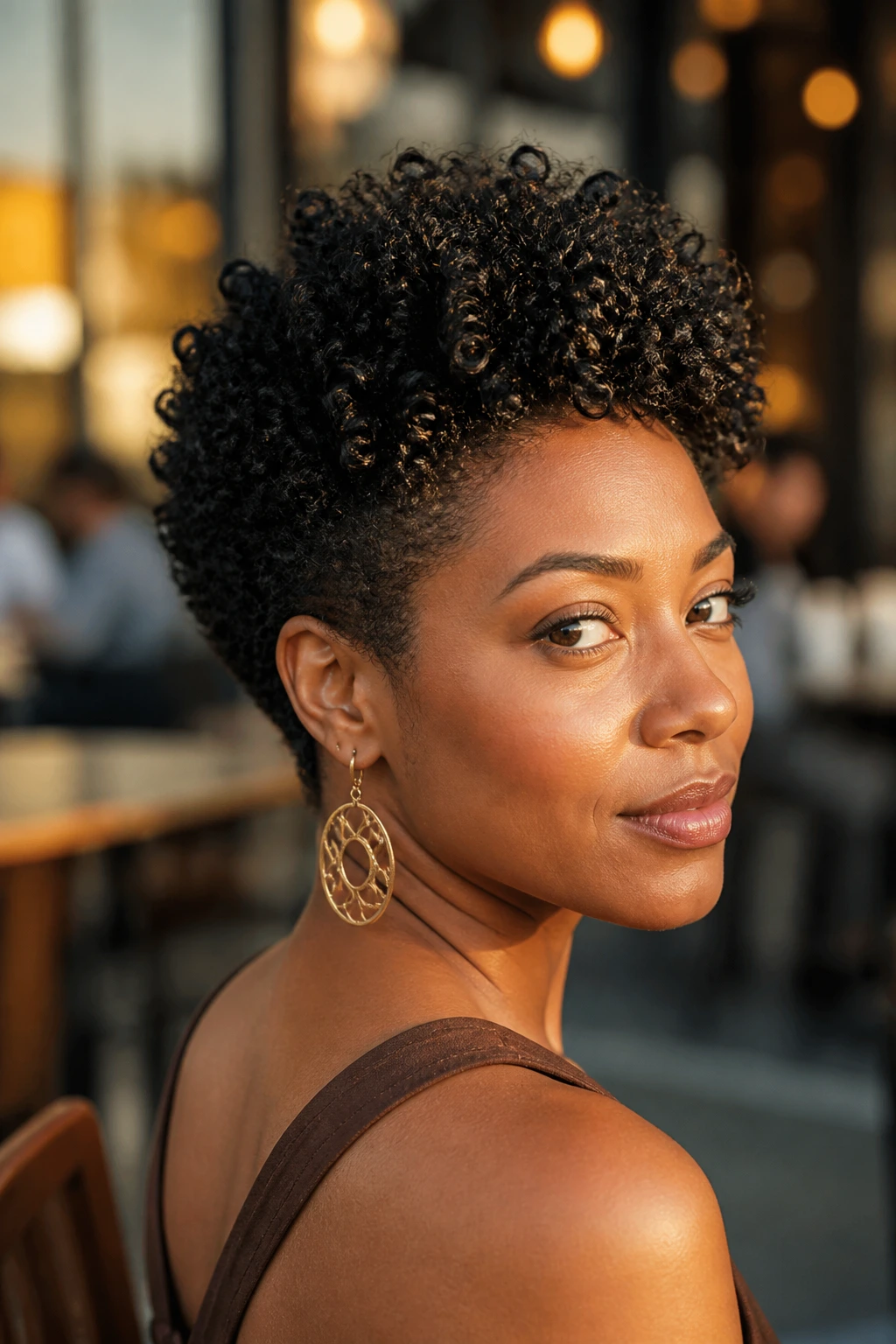
Tapered cuts make a lot of sense for tight coils because they work with shrinkage instead of fighting it. The sides and nape are kept shorter, while the top and crown hold more length and shape.
This creates a sculpted look that can feel neat, bold, or elegant depending on how you style it. It also stops the back from building a thick shelf of hair, which is a common problem in coily cuts that grow out without shape. If your hair expands a lot when it dries, tapering can make daily styling less of a wrestling match.
One thing I love about this cut: it doesn’t need perfect definition to look good. Even when the coils are softer or a little frizzy, the outline still holds. That’s a rare and useful trait.
13. Rounded Afro Layers with Soft Edges
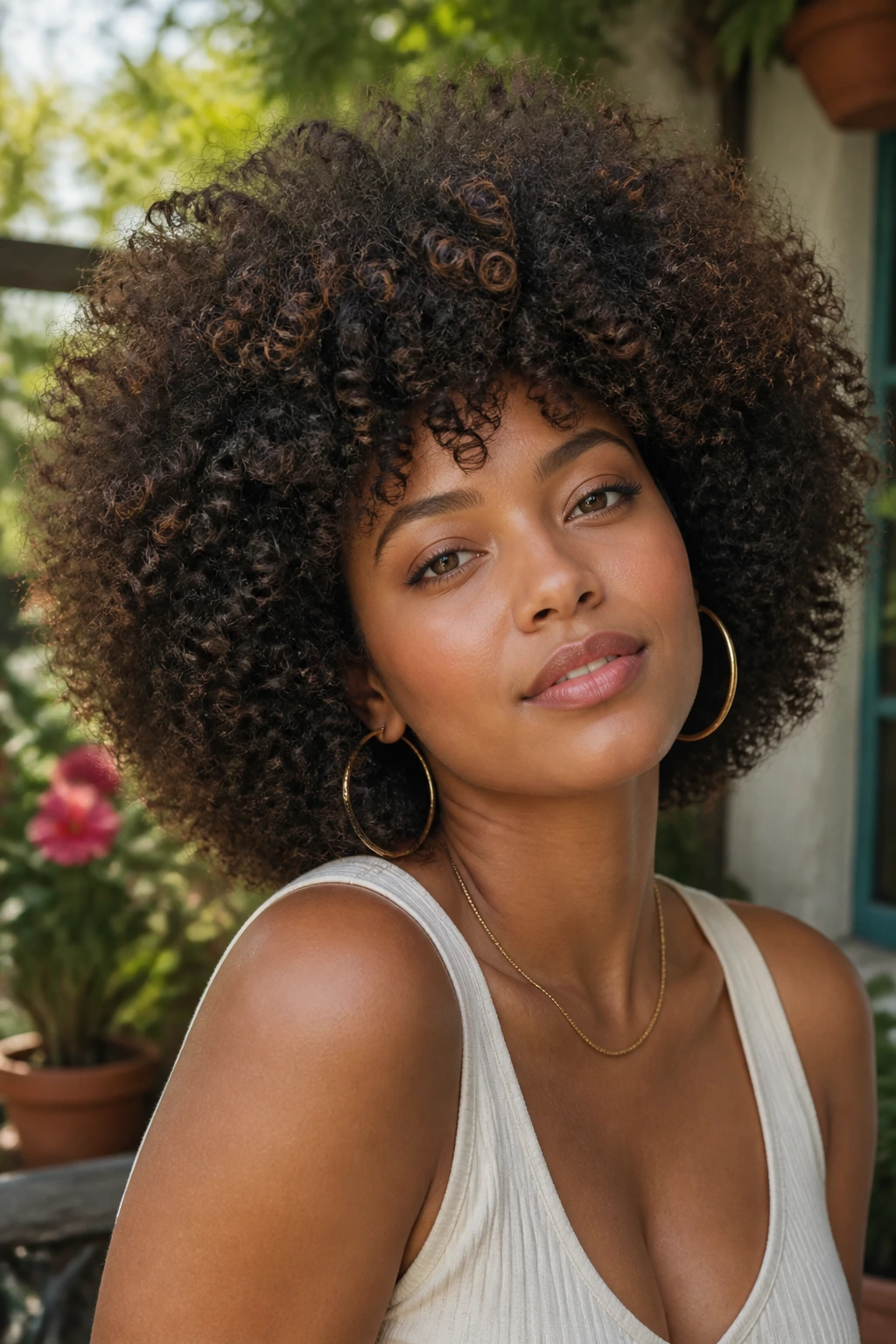
Rounded afro layers are all about the silhouette. The goal is a halo shape with lift at the crown and soft fullness at the sides, not a boxy outline or a flat top.
This works beautifully on natural texture that wants to stand out from the head. The layers should be distributed so the shape feels circular when viewed from the front and side. That usually means removing weight in the interior while leaving enough strength at the edges to keep the roundness.
Ask your stylist for
- A rounded outline rather than a square one.
- Interior layering that keeps the edge full.
- A shape that looks good both picked out and shrunken.
A cut like this can make curls feel bold without looking forced. It gives the hair room to breathe, and it keeps the shape from getting too wide at the temples.
14. Curly Pixie with a Longer Top
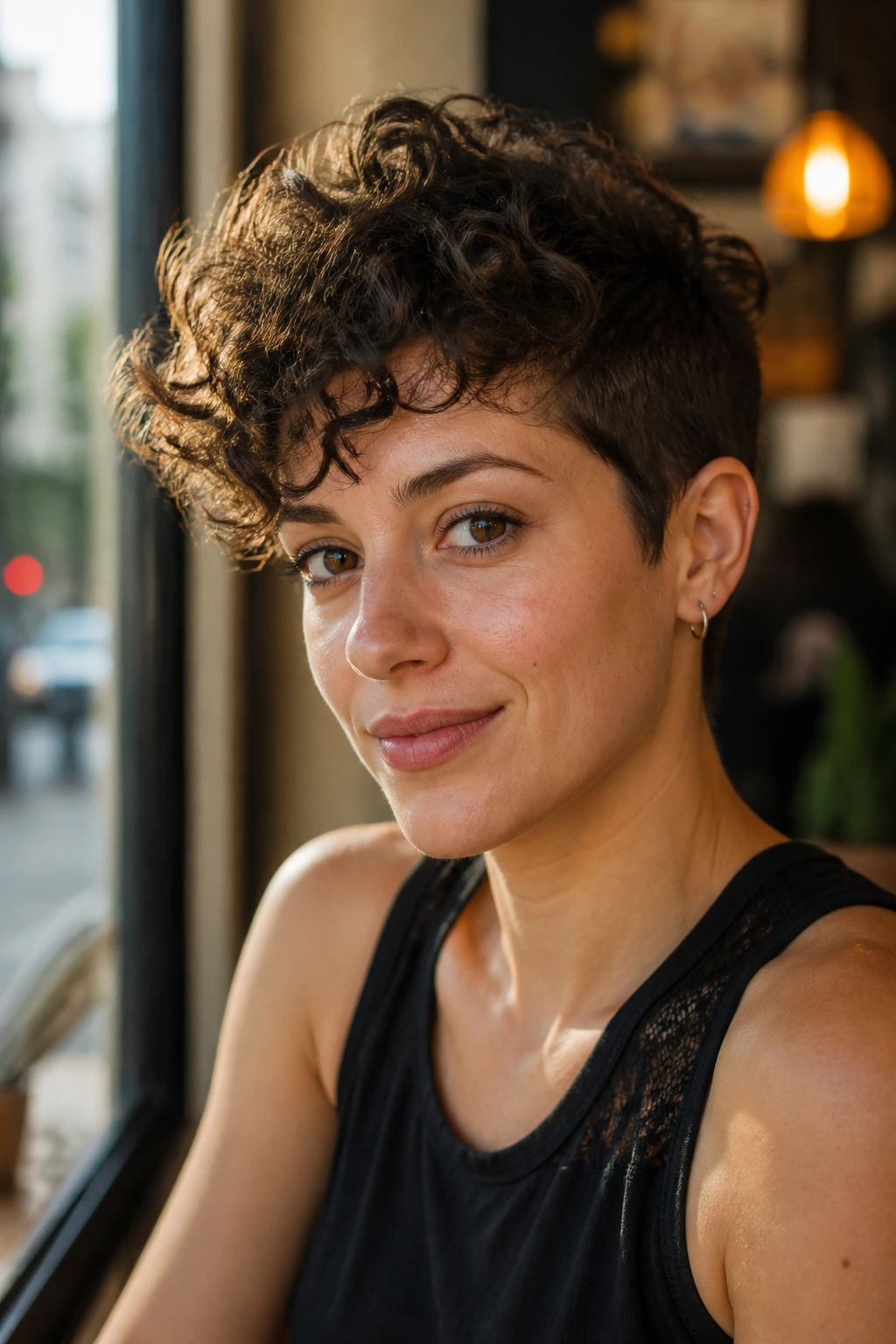
A curly pixie is not a timid haircut. It’s short, sharp, and easier to wear than people expect, as long as the top stays long enough for the curls to form.
The trick is keeping the crown and fringe area longer while trimming the sides and back close enough to show the shape. That contrast lets the curl pattern do the work. Without it, the cut can look flat or boyish in the wrong way. With it, the whole thing feels crisp and full of life.
Why it works on curls
The top has room to spring, which creates height without much effort. The shorter sides make that height look intentional. If you like earrings, bold glasses, or just want your face to be the main event, this cut does that job fast.
It does need regular shaping. A pixie on curls grows out quickly in the wrong places. The upside is that even a slightly messy version can still look good.
15. Shoulder-Length Cut with a Fringe
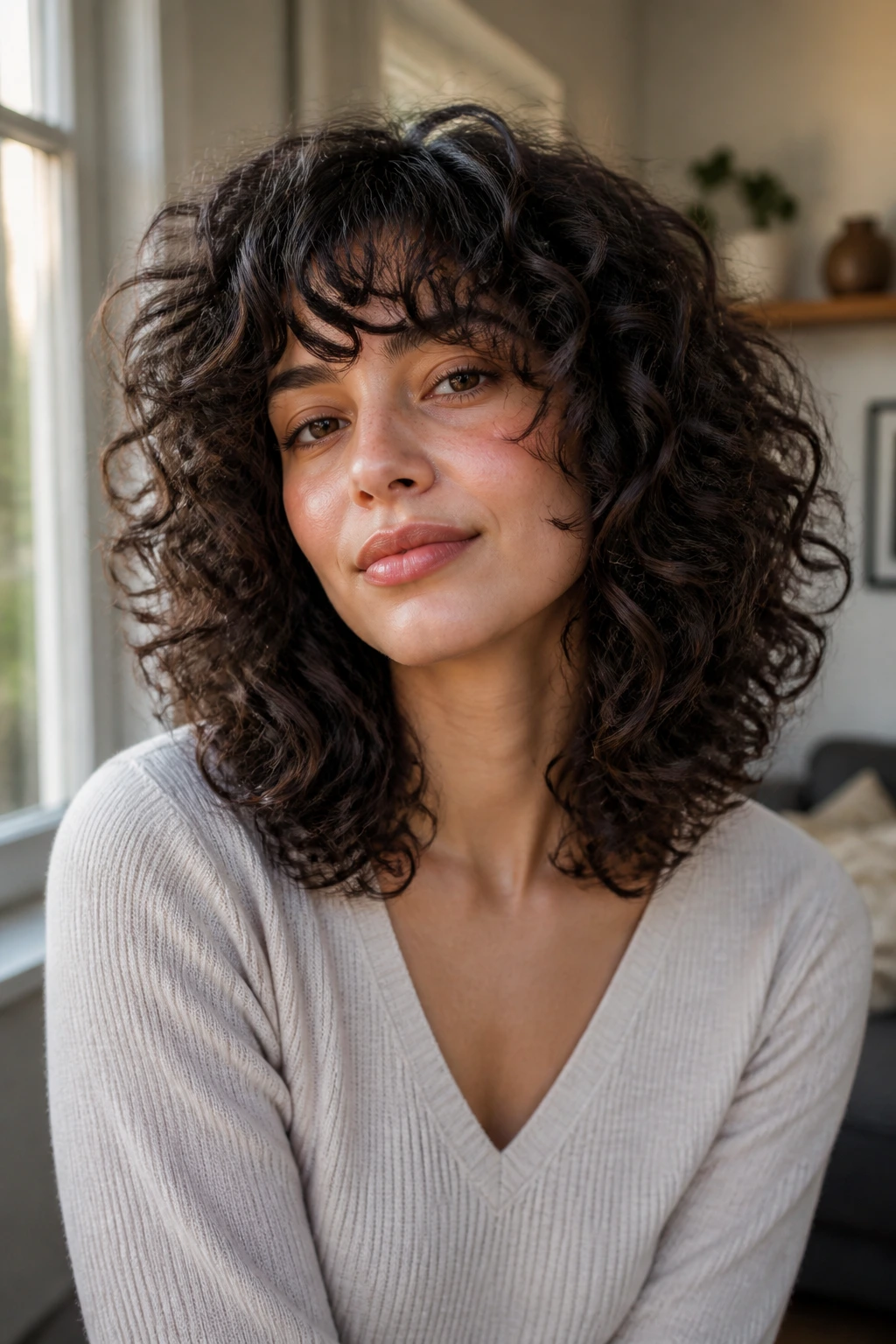
Shoulder-length curls with a fringe sit in a sweet spot. The shape is long enough to feel soft, but short enough to stop the ends from getting weighed down.
The fringe gives the cut personality. Not a hard, heavy bang, though. A fringe that breaks up a little, falls in clumps, and blends into the side layers usually looks better on curls than a straight line across the forehead. The shoulder length keeps the rest of the hair from looking overbuilt.
This is a nice option if you want your curls to frame the face more than they currently do. It also works well if you like hair that can go from neat to a little wild without losing the shape entirely. That’s a useful middle ground.
16. Choppy Layers for Thick, Dense Curls
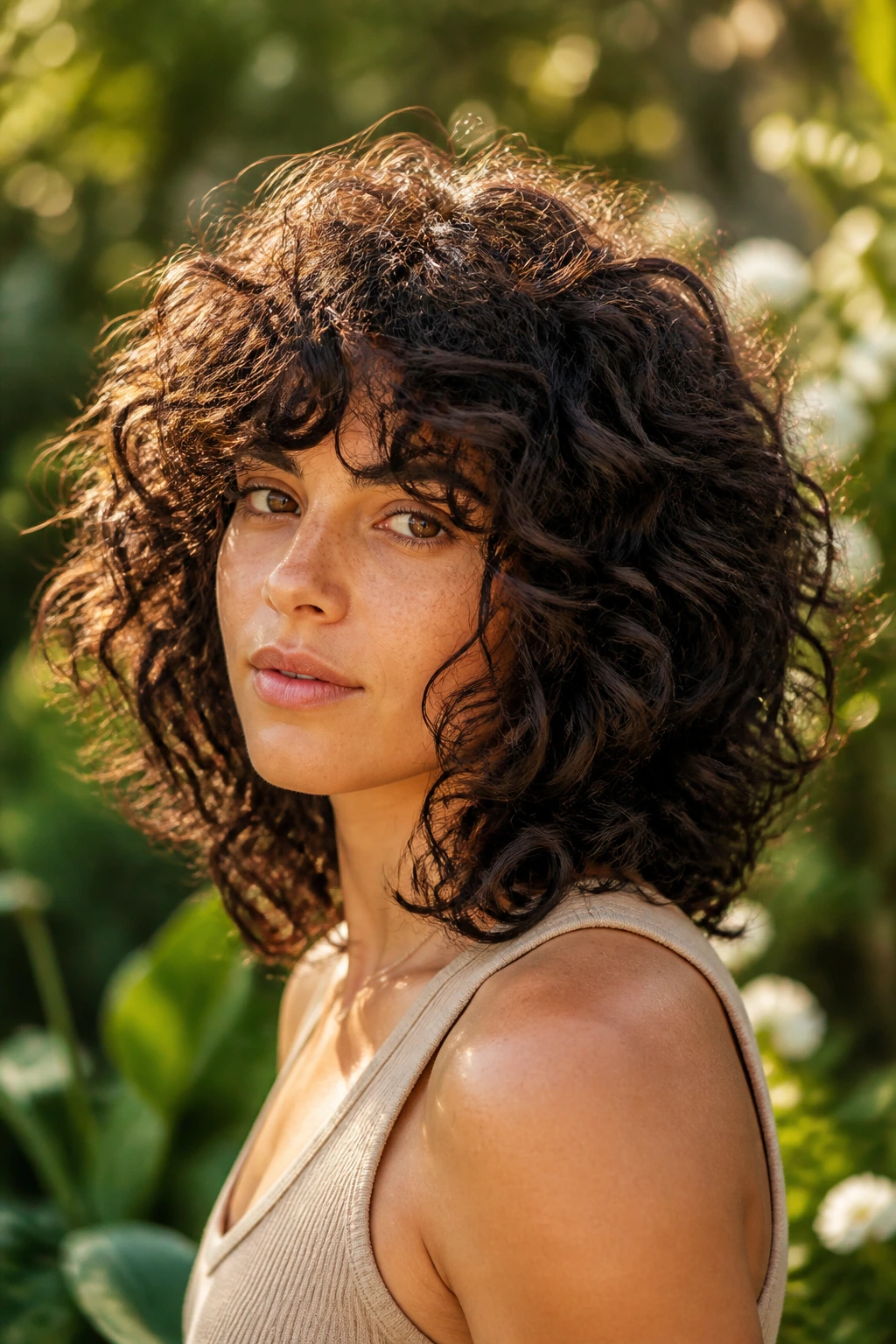
Thick curls need a different kind of layering. Not more scissors everywhere, but smarter removal of bulk.
Choppy layers break up the density so the hair doesn’t sit like one giant block. The key is keeping the chunks soft enough to blend. If the ends get too razored or the layers are cut too short in random places, the cut can puff out in all the wrong spots. Good choppy layering should feel lighter, not thinner.
- Works well when your hair takes forever to dry.
- Helps reduce the “triangle” shape.
- Makes it easier for curls to separate into smaller, cleaner clumps.
This cut can be a lifesaver for dense hair that feels heavy around the neckline. It’s one of those styles that seems simple on paper and then changes your morning routine in a very real way.
17. Invisible Layers for Fine Curly Hair
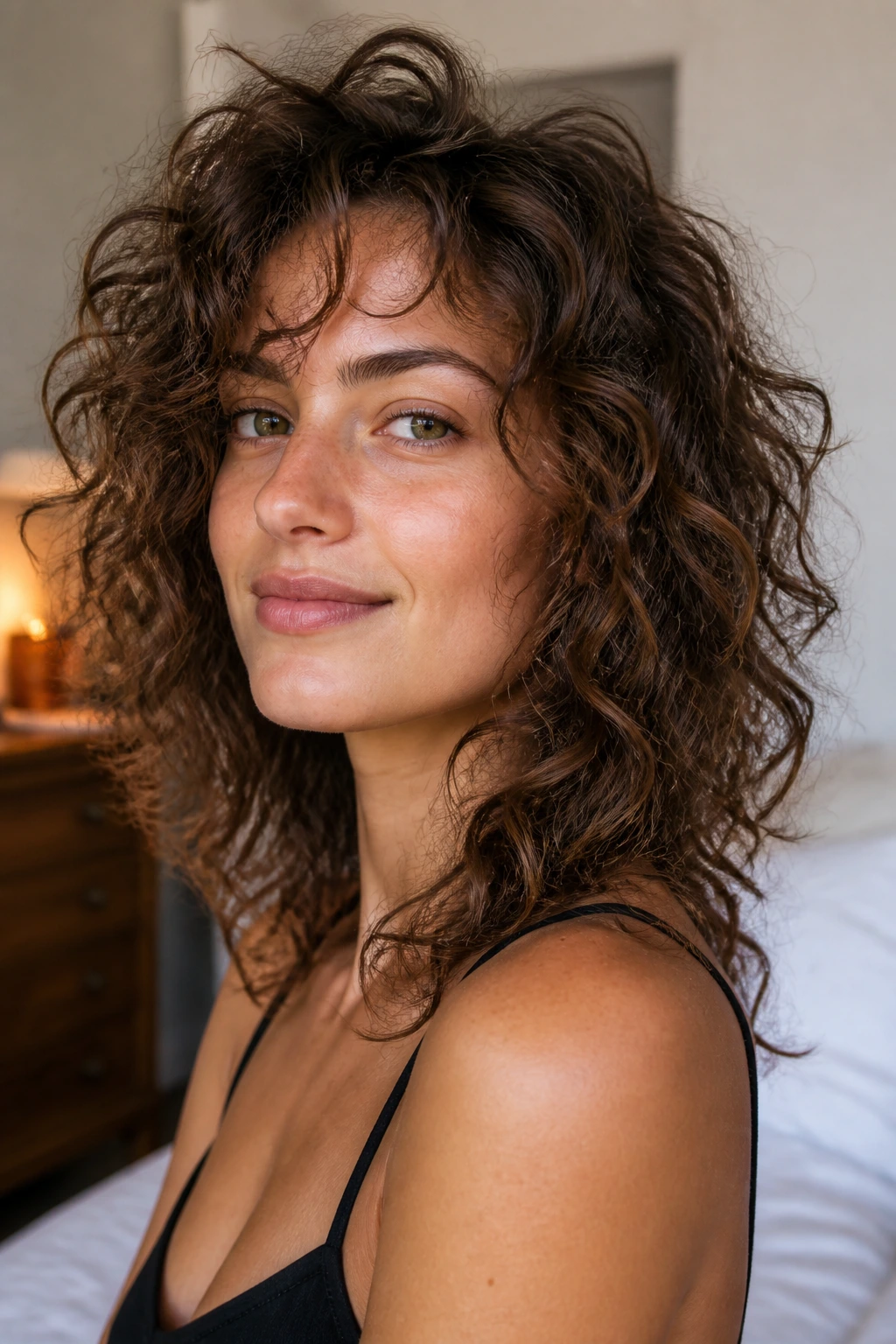
Fine curly hair needs layers too, but it needs a light touch. Too many short pieces can leave the ends looking see-through, and that’s usually worse than the bulk problem people were trying to fix.
Invisible layers sit inside the shape. You get movement and lift without announcing the layers from across the room. The perimeter stays fuller, which helps the hair read as thicker. That’s the whole trick. It’s a subtle cut, and subtle is not a dirty word here.
What to ask for
Ask for long internal layers and a soft outline. Say you want movement without losing the look of density. Those are different things, and your stylist should understand the difference.
This is the cut for someone who hates that over-layered, wispy finish. It gives a little breathing room and keeps the ends looking like they belong to the same head.
18. Curly Mullet with Soft Sides
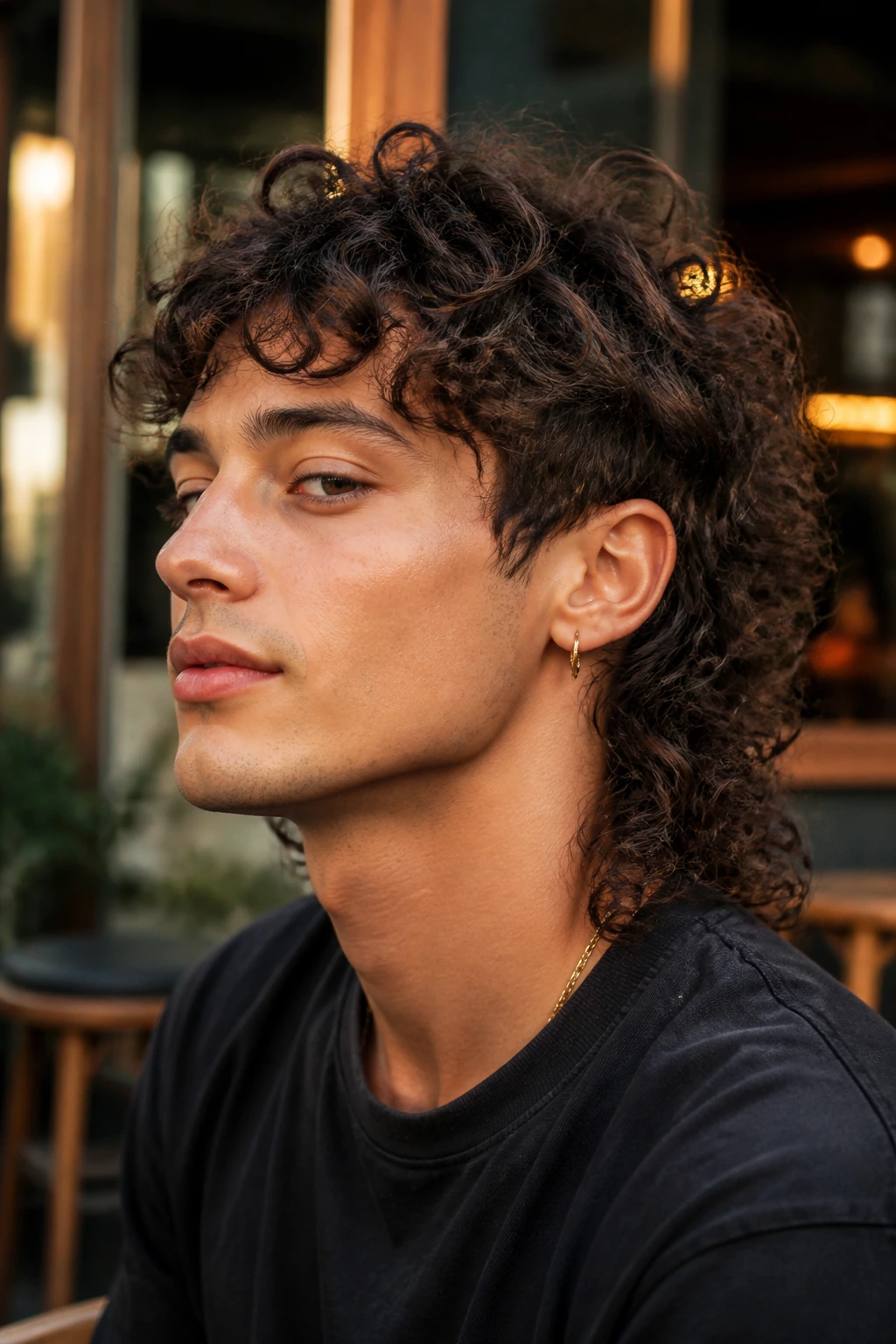
The curly mullet sounds cheeky because it is. But a good one has real shape, not costume energy.
Shorter layers on top and around the face keep the front open, while the back hangs longer and looser. The sides are softened so the cut doesn’t turn harsh or blocky. On curly hair, this shape can look modern fast because the texture gives it movement that straight hair often has to fake.
This is not the cut for someone who wants to disappear into the crowd. It has edge. Still, it’s more wearable than people assume, especially if the back is long enough to tie or scrunch. If you like pieces that break up cleanly instead of blending into one smooth mass, the mullet shape gives you that.
19. Waterfall Layers for Long Ringlets
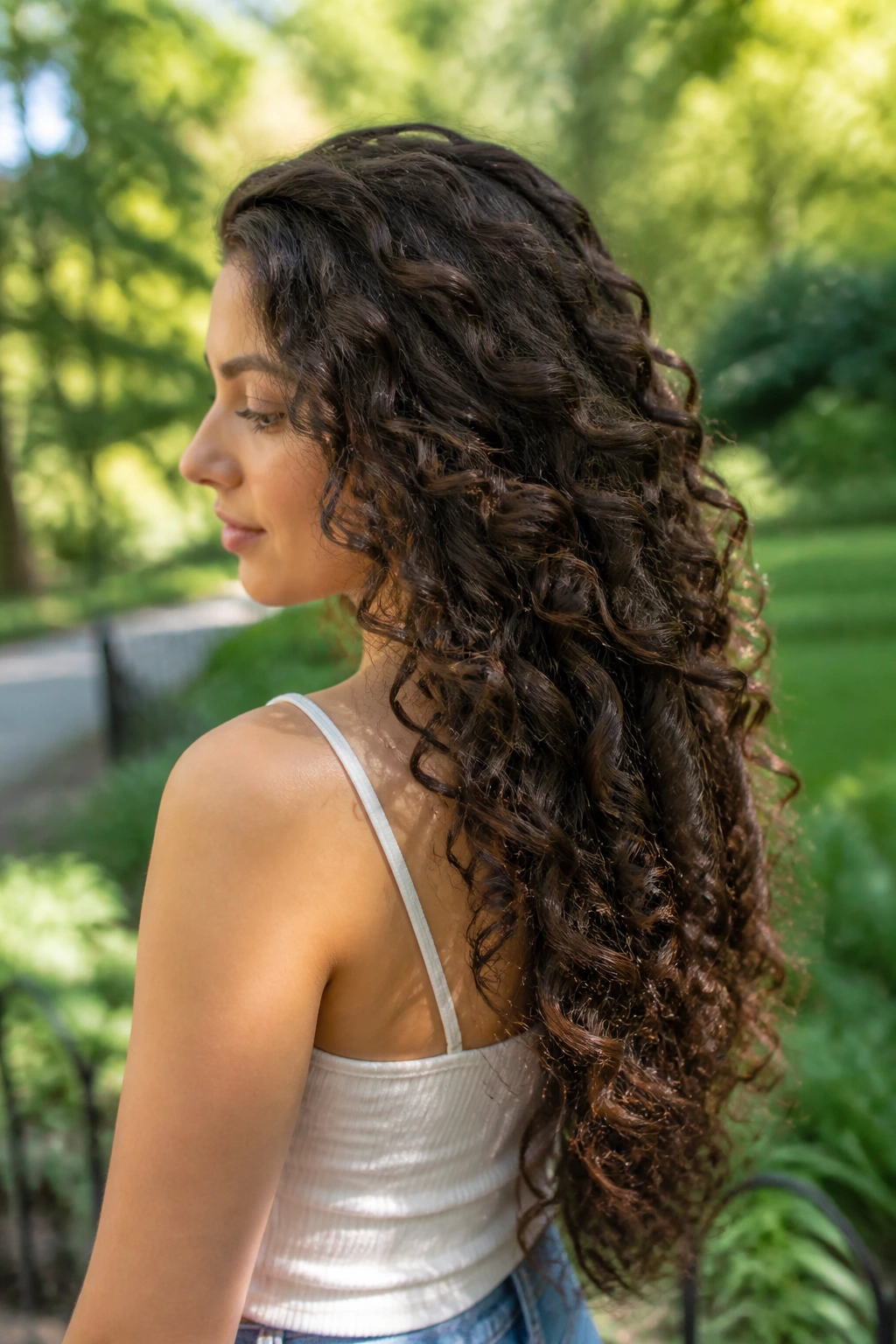
Waterfall layers create the feeling that the curls are spilling down in steps. It’s a soft shape, not a sharp one, and that softness is what makes it so flattering on long ringlets.
The layers should start high enough to create motion but not so high that the bottom loses all weight. Long ringlets need some bulk at the ends or they start to look stringy. A waterfall cut keeps the line flowing while still letting each section fall a little differently.
It’s a beautiful option if you like curls that move when you walk. The hair doesn’t sit rigidly in place. It shifts. It sways. It looks alive, which sounds cheesy until you’ve had a blunt cut that doesn’t do any of that.
20. Grow-Out Layers That Keep Their Shape

A good curly cut should still look decent when it’s grown out. That is where a lot of fancy haircuts fail.
Grow-out layers are softer, longer, and less dependent on exact placement. The shape is built so the curls can blend back together over time without obvious shelves or gaps. If you don’t want to book trims every few weeks, this is the kind of cut to ask for. It behaves. Not perfectly, but well enough.
The best grow-out cuts avoid super short top layers and keep the perimeter strong. That gives the shape a little more staying power. If you wear your curls for months between major trims, this matters more than having a trendy name attached to the cut.
21. Glasses-Friendly Layers Around the Temples

Glasses change how a curly cut behaves. The temple area gets crowded fast, and bangs that looked sweet in the chair can become a constant annoyance once frames get involved.
A glasses-friendly layered cut opens the sides a little and keeps the face-framing pieces from collapsing onto the lenses. The goal is movement around the eyes without actual interference. That usually means starting the shortest front layers a touch higher or lower depending on where your frames sit. There’s no universal rule. The glasses decide.
- Keep side pieces light around the temple.
- Avoid a bulky fringe that lands right on the frames.
- Ask for a shape that can tuck back without losing the line.
This is one of those small, practical details that can make a cut feel far better in real life than it did in the salon mirror.
22. Deep Side-Part Layers for Root Lift
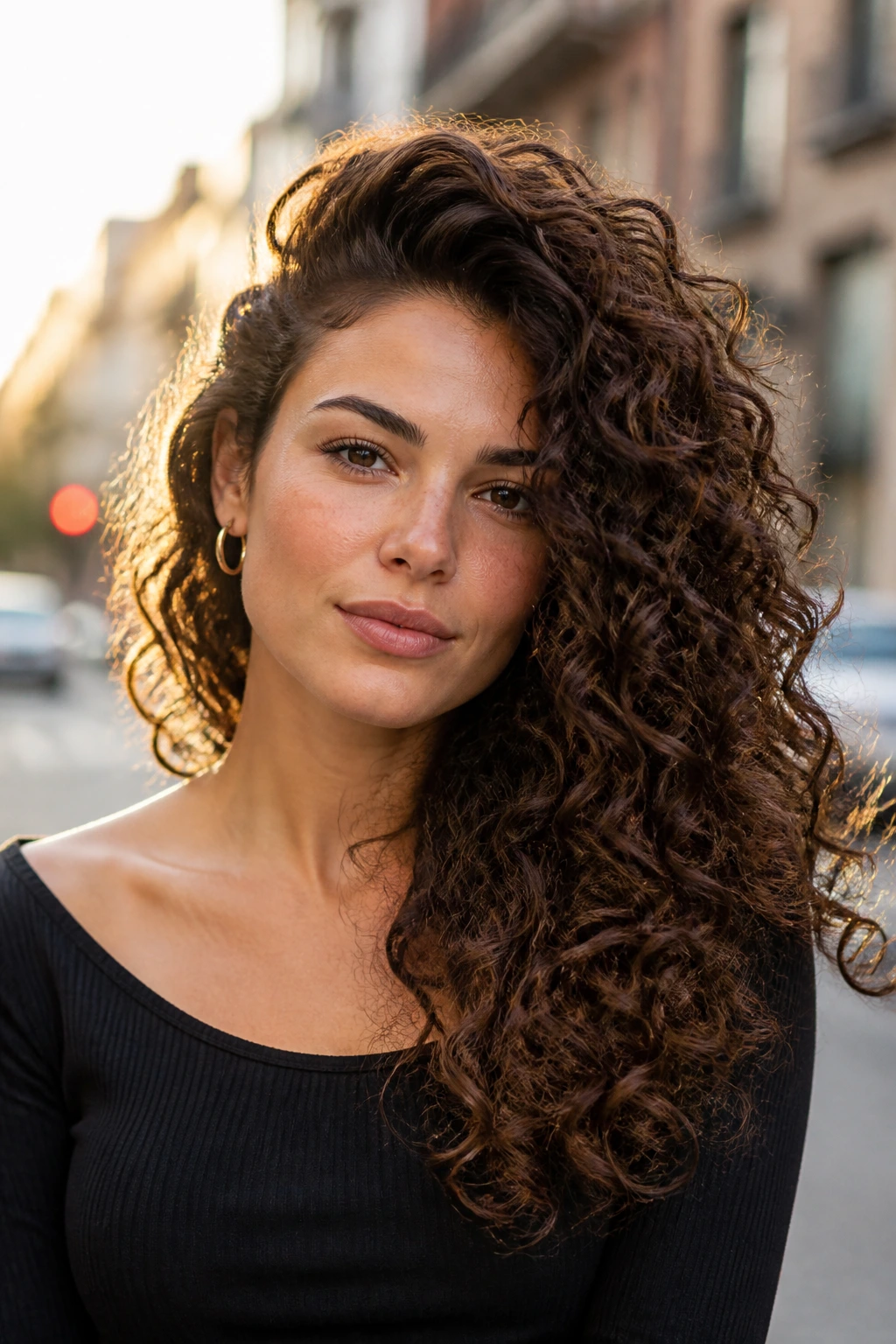
A deep side part can change the whole mood of curly hair. It gives the roots a natural lift on one side and breaks up any flatness at the top.
Layering supports that side-swept movement by letting the heavier side fall with a little more curve. The result is asymmetry that feels intentional, not lopsided. This is especially useful if your crown goes flat easily or if you have one stubborn cowlick that keeps pushing the hair in the wrong direction.
The side-part shape also works well with defined curls because it lets one section frame the face while the rest creates volume behind it. That contrast is the point. It keeps the haircut from looking too even, which is where some curly styles start to feel dull.
23. Triangle-Fix Layers for Wide Ends
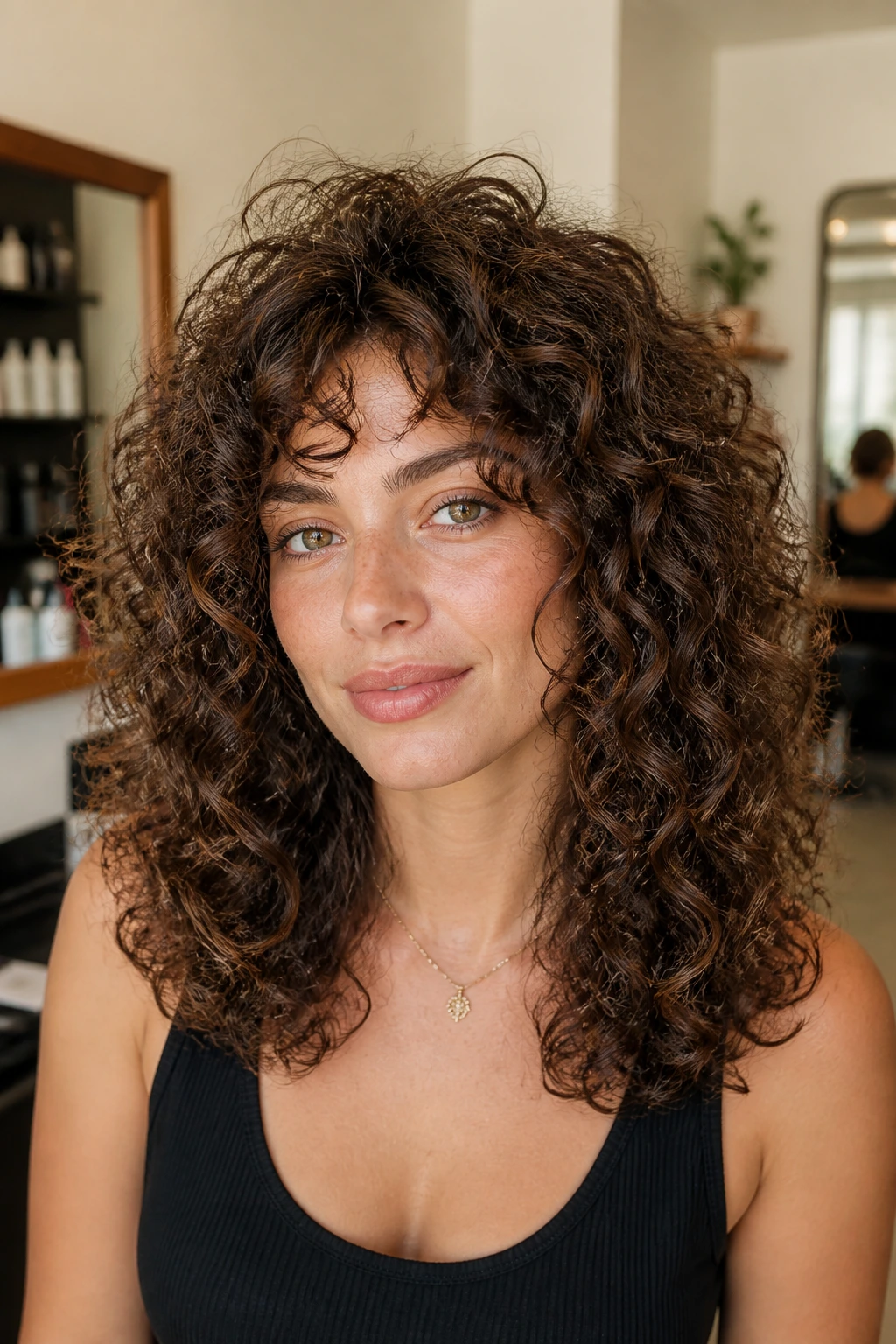
The triangle shape shows up when the bottom of the hair gets too wide and the top stays flat or narrow. It’s a classic curly hair complaint, and the fix is not to thin the ends into nothing.
Triangle-fix layers build lift higher up while softening some bulk lower down. The stylist should focus on creating vertical movement, not just hacking at the bottom. If the ends disappear, the haircut will look sparse. If the crown stays heavy, the triangle comes right back. The balance matters.
This cut is especially useful for hair with dense lower sections. You want the shape to read as balanced from the front and the side, not bulky at the jaw and tiny at the scalp. That is the whole game.
24. Ringlet Layers for 3A and 3B Curls
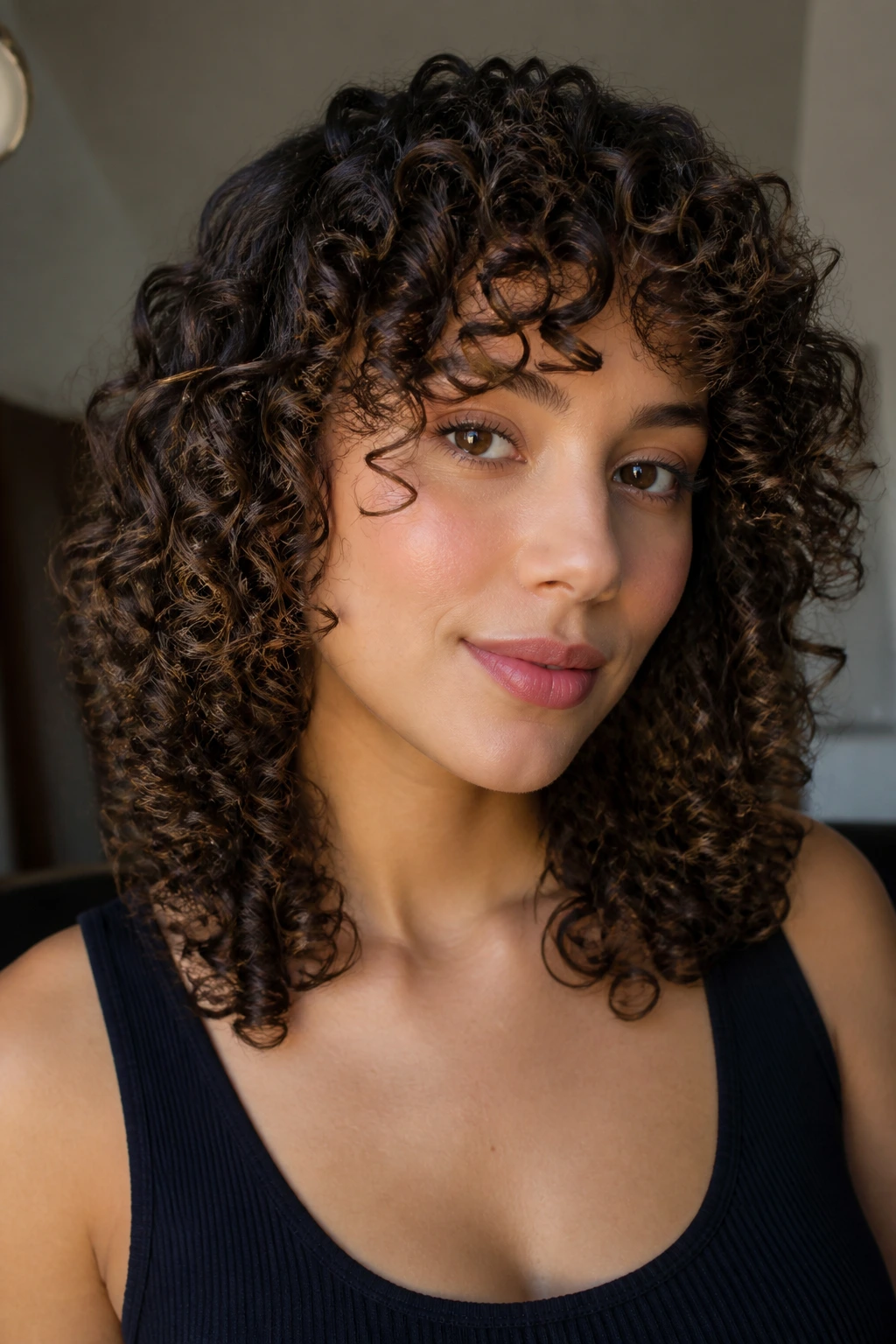
Ringlet curls have their own rhythm. They bounce, clump, and stack in a way that looser waves never quite do, and the right layers can make that movement look clean instead of messy.
The cut should encourage the ringlets to fall in clear sections. That means keeping the layers long enough to preserve definition and short enough to avoid one heavy curtain. If the curl pattern is tight at the top and looser at the bottom, the layers need to respect that shift. Otherwise the shape reads as uneven.
How to style it
- Use a gel or curl mousse that holds the ringlets together.
- Scrunch from the ends upward, not from the crown down.
- Let the hair fully dry before separating clumps.
This style is a good fit for curls that already have a defined spiral. The layers simply help them show up better.
25. Chin-Length Coily Bob with Shape
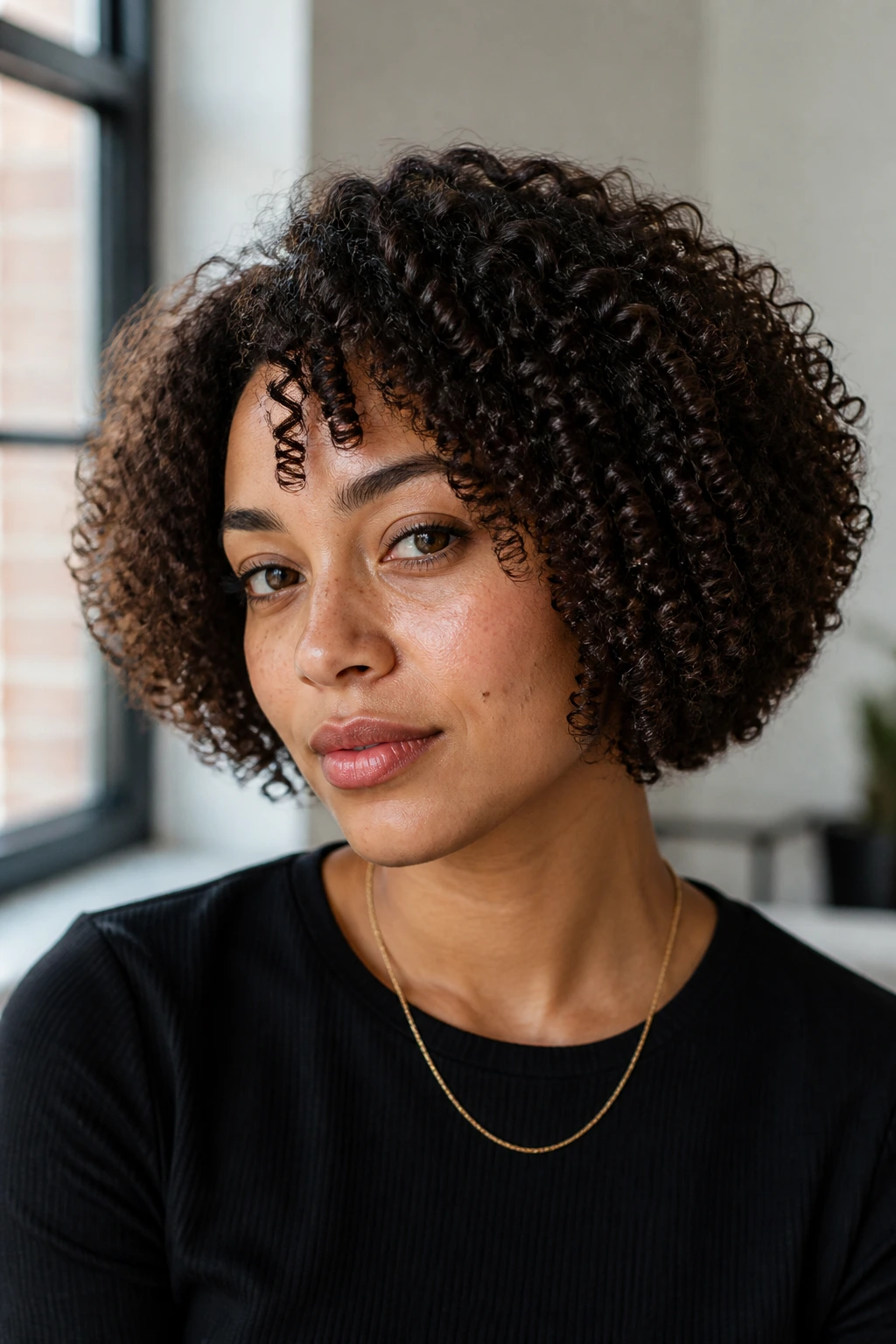
A chin-length bob on coily hair can look sharp, elegant, and surprisingly easy to wear if the shape is cut with shrinkage in mind.
The chin point matters because the hair can spring up a lot once it dries. A bob that looks shoulder-length when wet may finish well above the jaw if the coils are tight. A good cut leaves room for that. The layers should build a round or slightly tapered shape so the bob doesn’t puff out into a box.
This is a strong choice if you want something short but not too short. It keeps the style polished while letting the coils stay full and lively. I prefer this kind of bob when the hair has enough density to support a clean outline. Thin coils can get lost here if the shape is too aggressive.
26. Blunt Perimeter with Hidden Layers
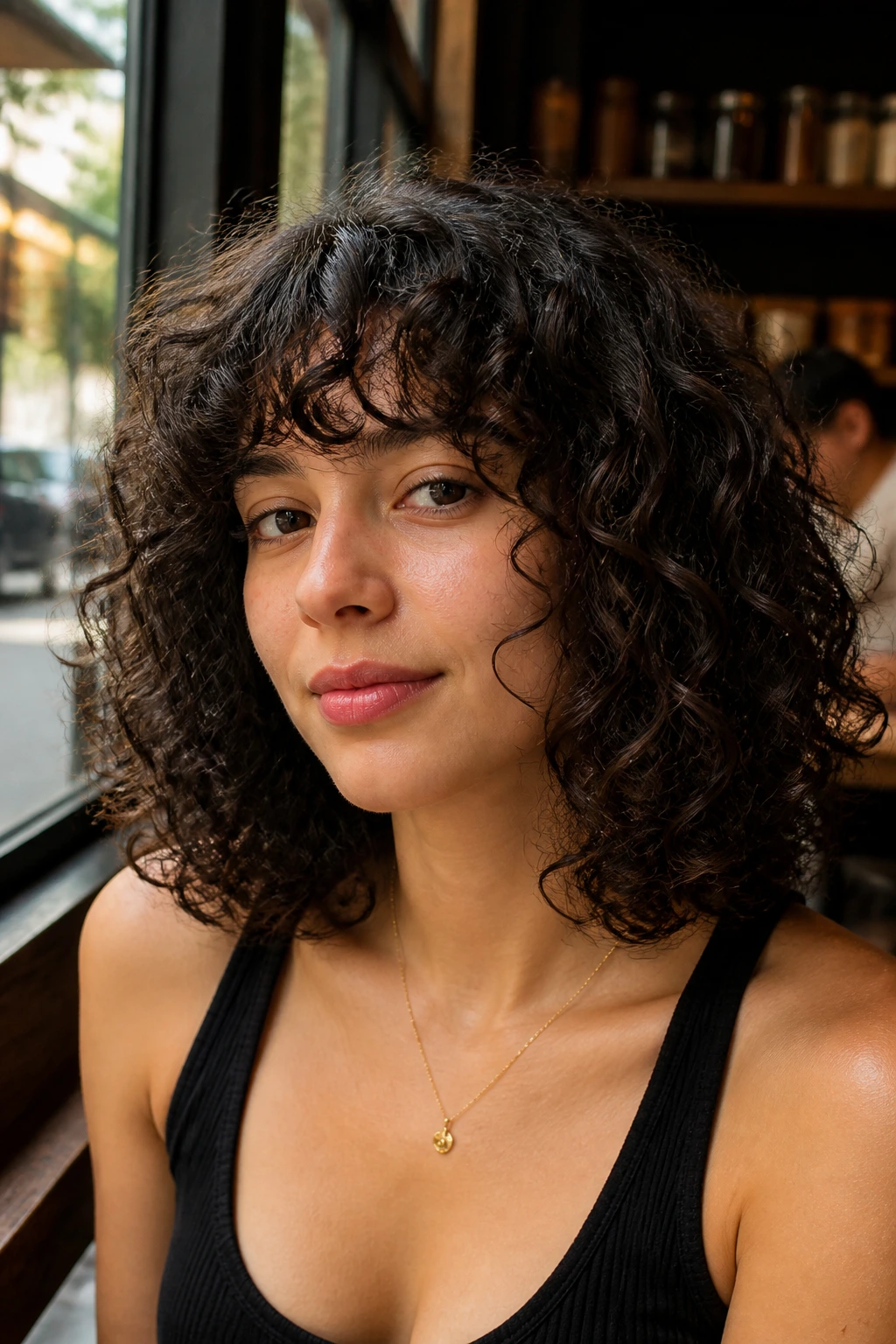
Not every curly cut needs to look layered from the outside. Sometimes the smartest move is keeping a blunt perimeter and tucking the layers inside.
That gives the hair a strong outer line, which helps the ends look thick and healthy. Inside that shell, the layers remove weight and let the curls move. It’s a nice compromise if you like structure but still want softness when the hair swings. This is one of the cleanest-looking layered haircuts for curly hair, and it tends to age well between trims.
- Great for people who hate wispy ends.
- Keeps the outline neat in ponytails and half-up styles.
- Works well when you want movement without obvious steps.
The blunt outer line is the anchor. The hidden layers are the quiet part doing the actual work.
27. Transition Layers for Heat-Damaged Ends
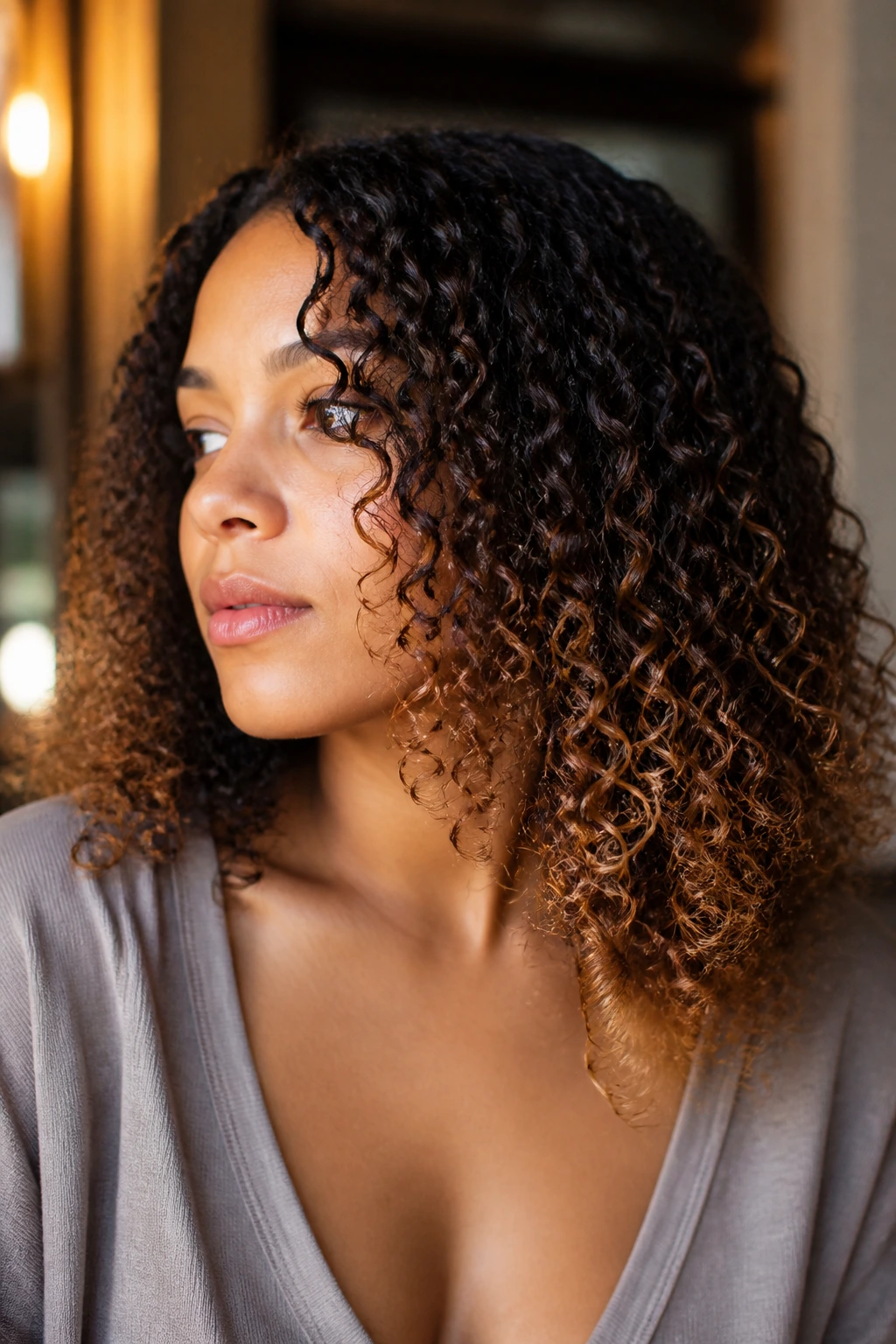
Heat-damaged curls need patience. You usually can’t just cut everything off and move on, unless you want to, and sometimes that’s fair. But if you’re growing out straightened ends or trying to blend mixed textures, layered cutting helps a lot.
Transition layers soften the line between new curl growth and older, looser ends. The stylist should create a shape that makes the differences feel intentional instead of accidental. That often means keeping more length in the damaged sections while using layers to blur the boundary. It’s not magic. It’s just a careful way to make the hair look coherent while it heals.
This cut is best for people in the awkward middle stage. Not the beginning. Not the end. The middle, where everything feels a little strange and you want the haircut to help instead of making the contrast worse.
28. Soft Air-Dry Layers for an Easy Routine
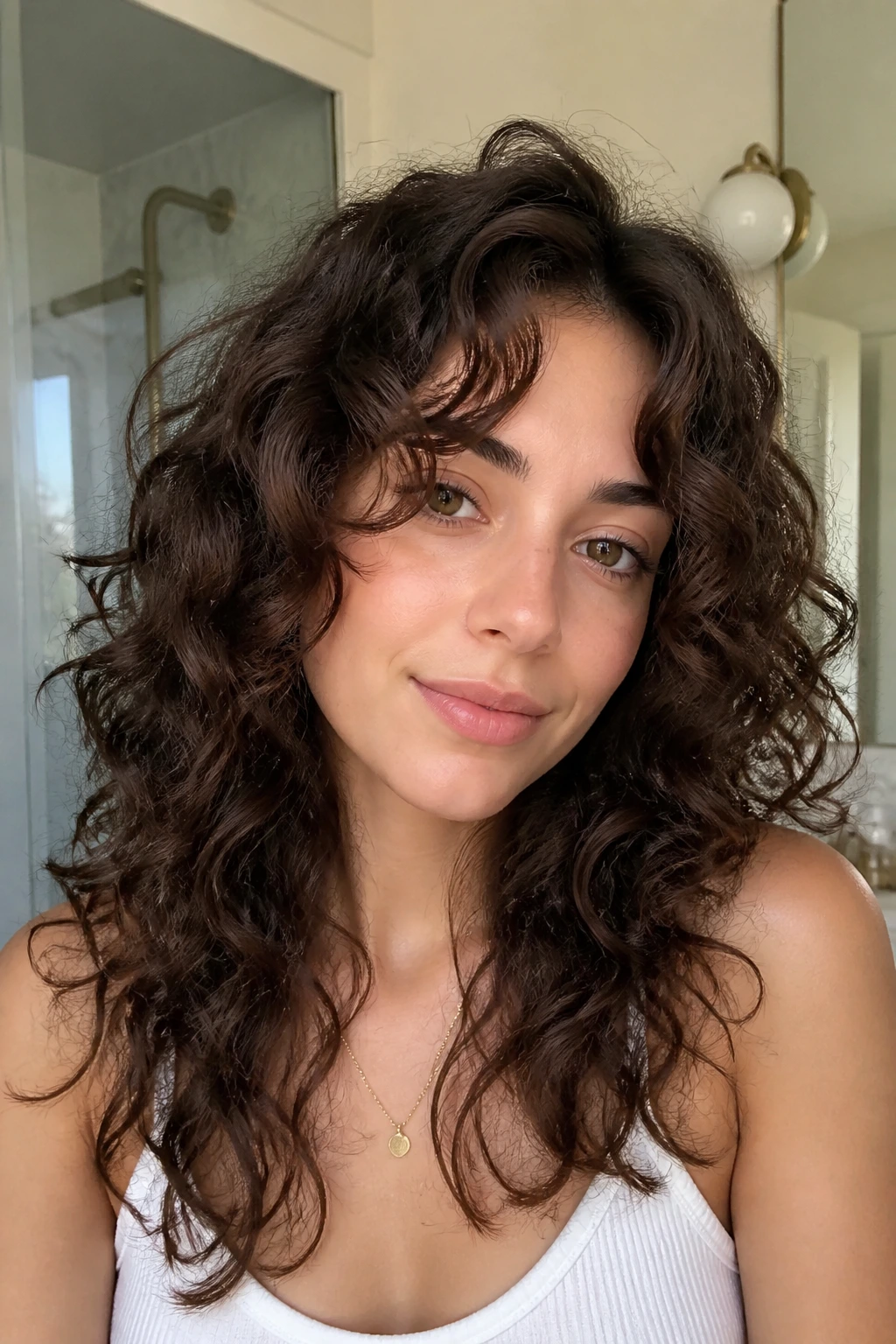
Some haircuts are built for a diffuser and a clean bathroom counter. Others are built for real life. Soft air-dry layers fall into the second camp.
The idea is simple: keep the layers long enough to settle on their own, and avoid over-shaping the ends. That way, the hair dries into a shape that still looks deliberate even if you didn’t spend 20 minutes with the dryer. It’s a practical cut, and I mean that as a compliment. Not every good curly haircut needs a dramatic silhouette. Some just need to sit right when you step out the door.
If you want low-fuss curls, ask for softness around the face, enough interior layering to stop heaviness, and a perimeter that stays full. That combination gives you movement without a styling tax. And honestly, that’s the haircut a lot of people are really asking for when they say they want layers.
A good curly cut should make life easier, not louder. It should let the pattern do its thing, keep the ends looking healthy, and still give the hair enough shape to feel finished on a plain old Tuesday. That’s the real test.
