



A round face doesn’t need to be hidden. It needs shape.
That’s the part people miss when they ask for layered haircuts for round faces. The goal is not to make your face look smaller in some fake, magic way. The real job is to build vertical lines, move fullness away from the cheeks, and give the eye a path to follow downward instead of straight across. That can be done with curtain bangs, cheekbone layers, side parts, longer front pieces, or a good old-fashioned blowout that bends the ends away from the face.
The wrong cut tends to land in the same place every time: blunt at the chin, puffy at the cheeks, and wide at the sides. It can look cute in a chair and then suddenly feel off once the hair settles. Been there. The better versions work because the shortest pieces sit where they flatter the cheekbone, not fight it, and the weight stays low enough to keep the silhouette long.
Some of the cuts below are soft and polished. Some are messy on purpose. A few are better for fine hair, a few for thick or curly hair, and a few are for anyone who wants movement without losing length. The common thread is simple: they give a round face more shape, not more width.
1. Long Feathered Layers with Curtain Bangs
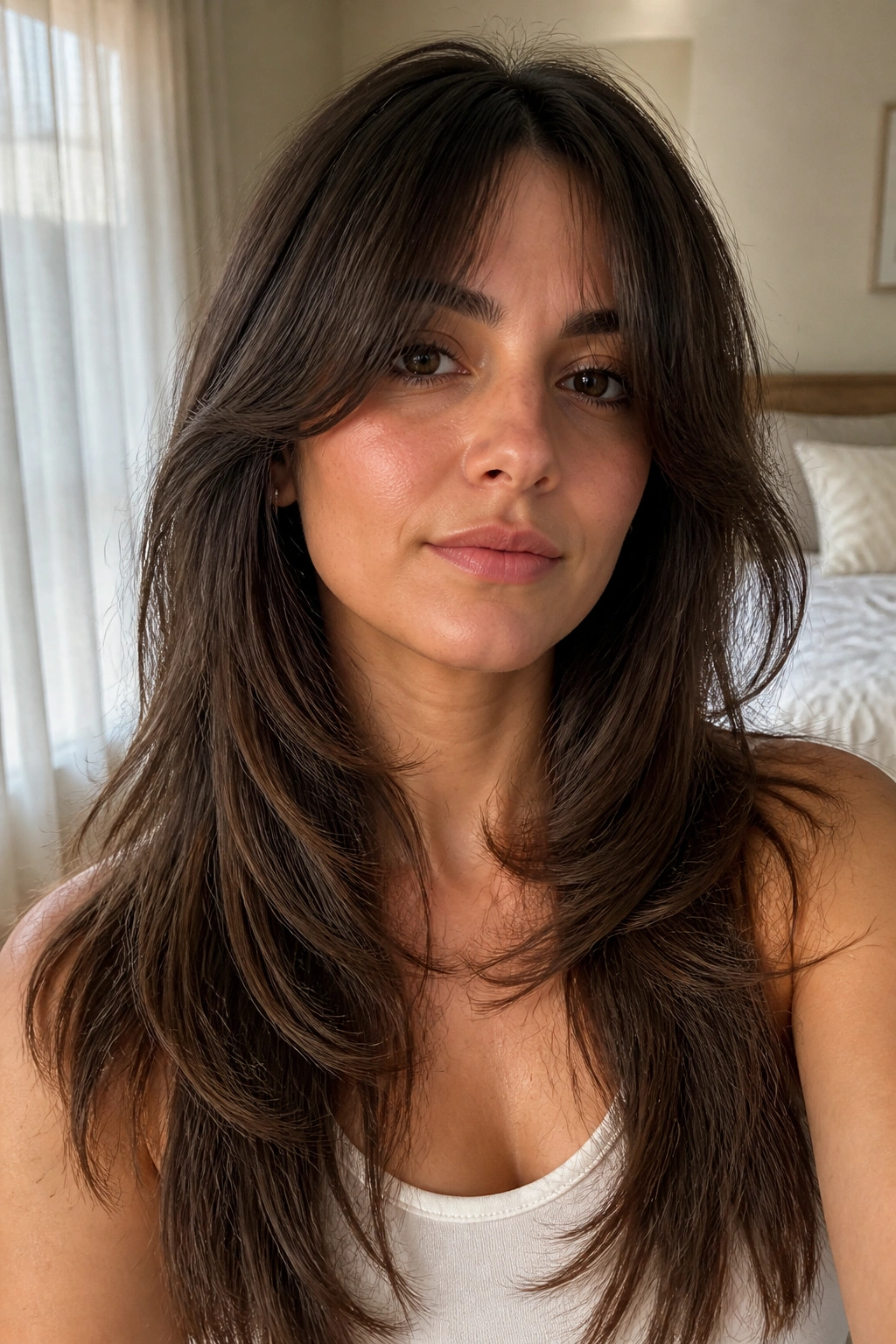
Long feathered layers are a classic for a reason. They take heavy hair and break it into lighter pieces, so the shape stops reading like one big block. On a round face, that matters because the movement pulls the eye down and out toward the ends instead of sitting right at the cheeks.
Why It Flatters Round Faces
The magic is in the placement. Ask for the curtain bangs to open around the center and then flow into layers that start near the cheekbone or just below it. That keeps the face open without boxing it in.
- Best on straight, wavy, or loosely curled hair
- Shortest face-framing pieces should land below the widest part of the cheek
- Looks strongest with a center part or a soft off-center part
Tip: Blow-dry the front pieces with a round brush away from the face. That little bend matters more than people think.
2. Butterfly Layers That Start Below the Cheekbone
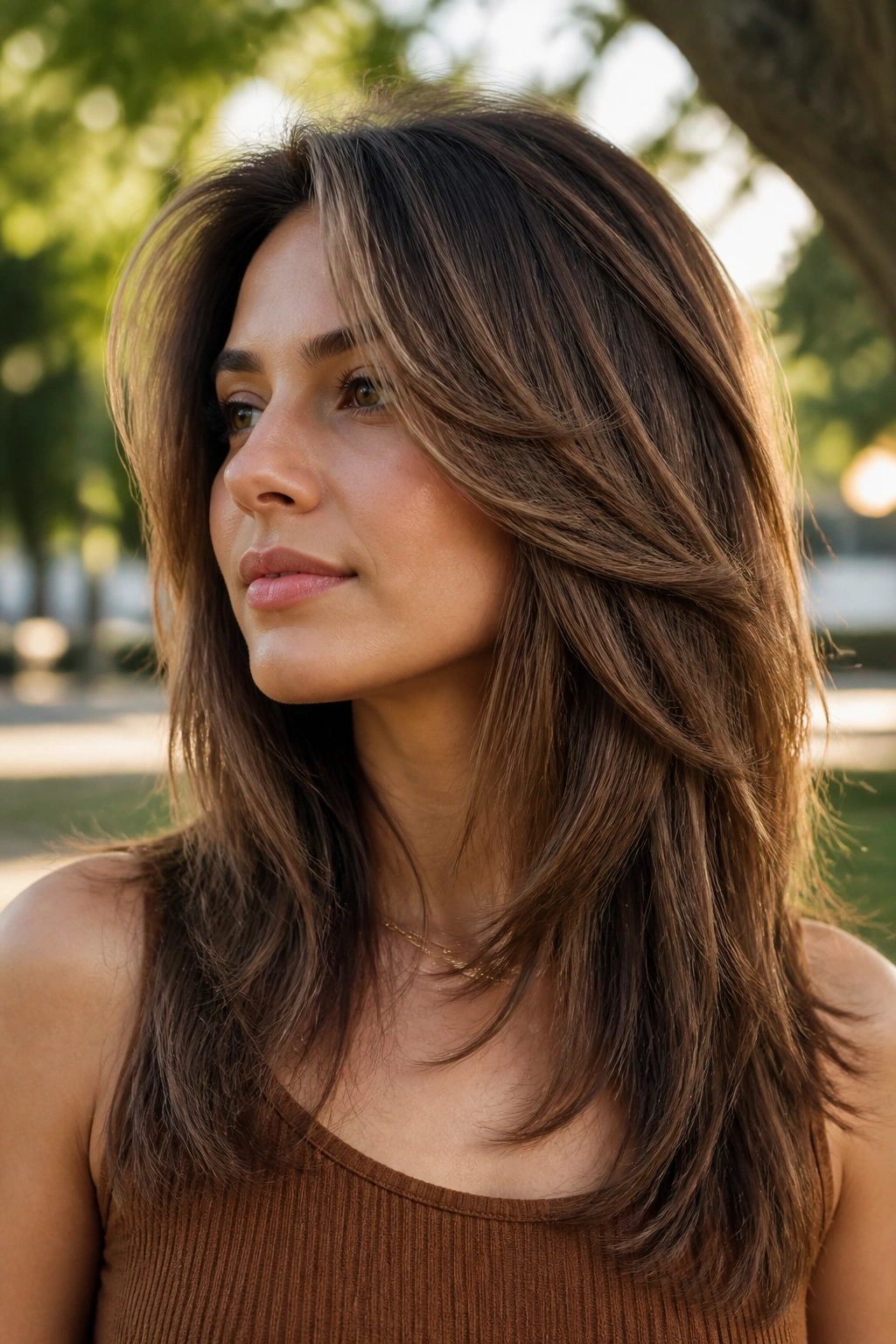
Butterfly layers have a dramatic name, but the effect is simple: short front layers on top, longer length underneath. On a round face, that split creates height near the crown and keeps the perimeter long, which is exactly what you want if you like fullness but hate the feeling of a wide outline.
The cut works especially well if you wear your hair long and want shape without sacrificing length. The top layer can hit around the chin or collarbone, while the lower layer stays well past the shoulders. That contrast gives the hair movement when it’s loose and a little lift when it’s styled out.
I like this cut on hair that tends to fall flat. A quick blowout, a large-barrel curling iron, or even a Velcro roller set around the front can make the layers pop. If your hair is thick, keep the layering controlled. If it’s fine, ask for airy ends rather than chunkier ones.
3. Collarbone Lob with Soft Face-Framing Pieces
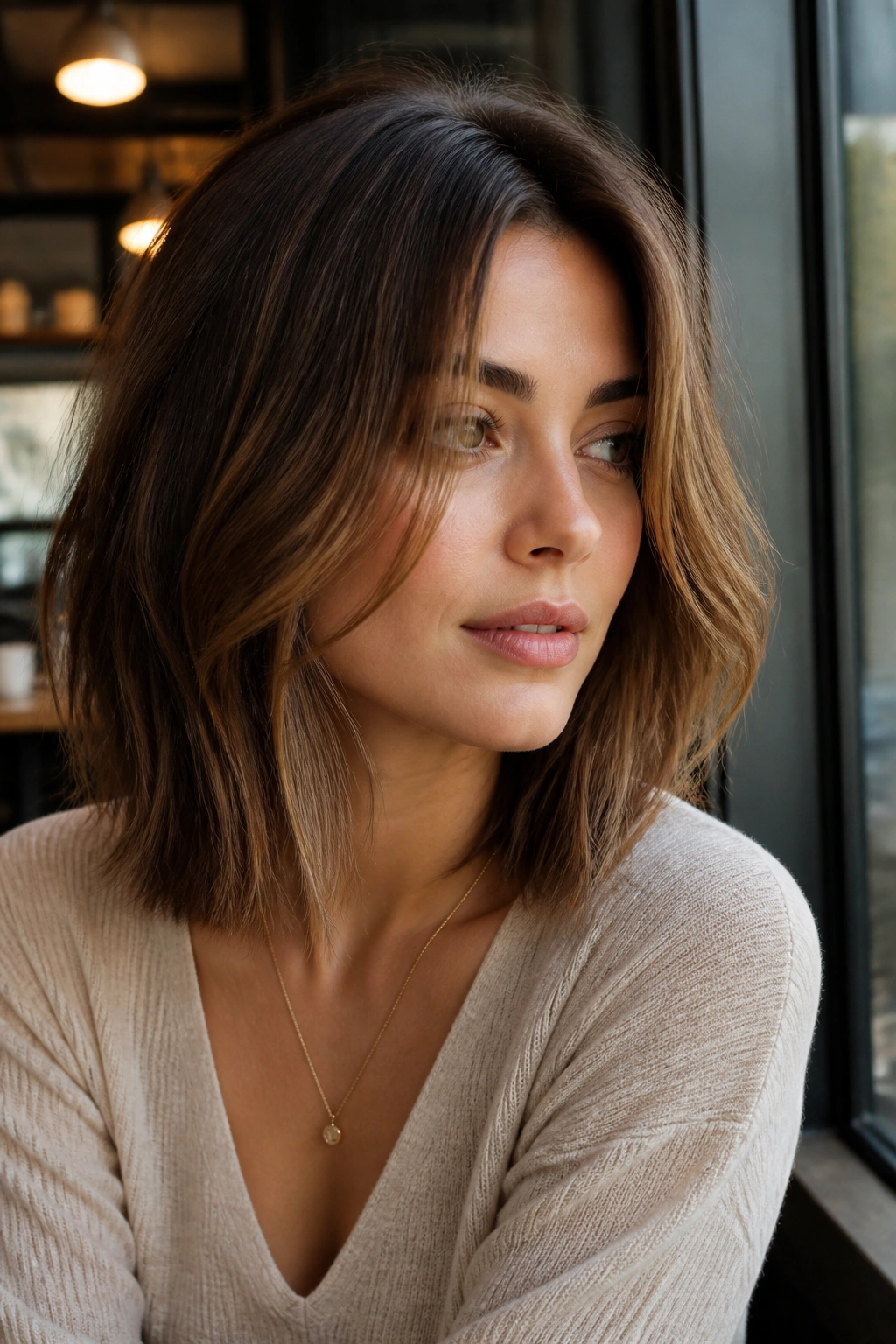
Why does the collarbone lob keep showing up in good haircut conversations? Because it’s one of the few medium cuts that sits low enough to avoid that puffed-out cheek effect, but not so long that it drags the whole look down.
A collarbone length gives round faces a clean line. Add soft face-framing pieces that start around the mouth or chin, and the whole cut turns more directional. It’s a nice middle ground for anyone who wants easy styling and a shape that still looks intentional when air-dried.
How to Style It
Keep the ends a little tucked under or softly flipped out. Either one works. What does not work is extra volume right at the sides.
- Use a heat protectant and a flat brush for a smooth finish
- Tuck one side behind the ear to break up symmetry
- Add a light wave only from mid-length to ends
That’s enough. No need to overdo it.
4. Soft Shag with Airy Fringe
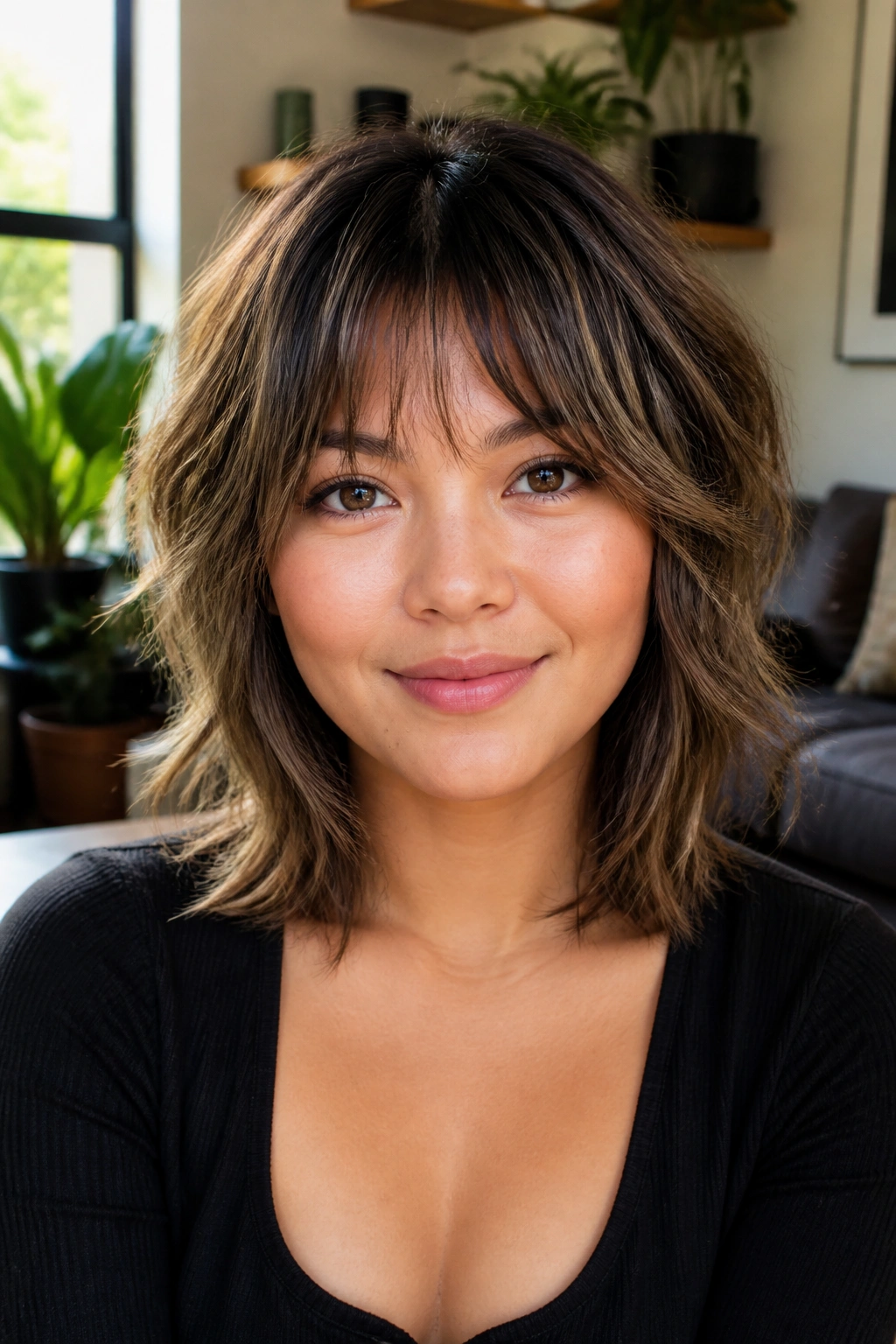
A soft shag can be a lifesaver on a round face, but only if it’s softened. The heavy, choppy version can spread out too much at the cheeks. The better version keeps the crown light, the fringe wispy, and the ends piecey instead of bulky.
This cut suits people who like hair with a little personality. It has edge, sure, but not in a costume-y way. The layers create texture around the top of the head, which lifts the eye upward, and the fringe can skim the forehead without cutting the face in half.
Wavy hair loves this cut. So does hair that refuses to stay perfectly neat. If you air-dry, use a curl cream or lightweight mousse and scrunch the ends. If you blow-dry, rough-dry first, then shape the fringe with a small round brush. The look should feel loose, not shellacked.
5. U-Shaped Long Layers
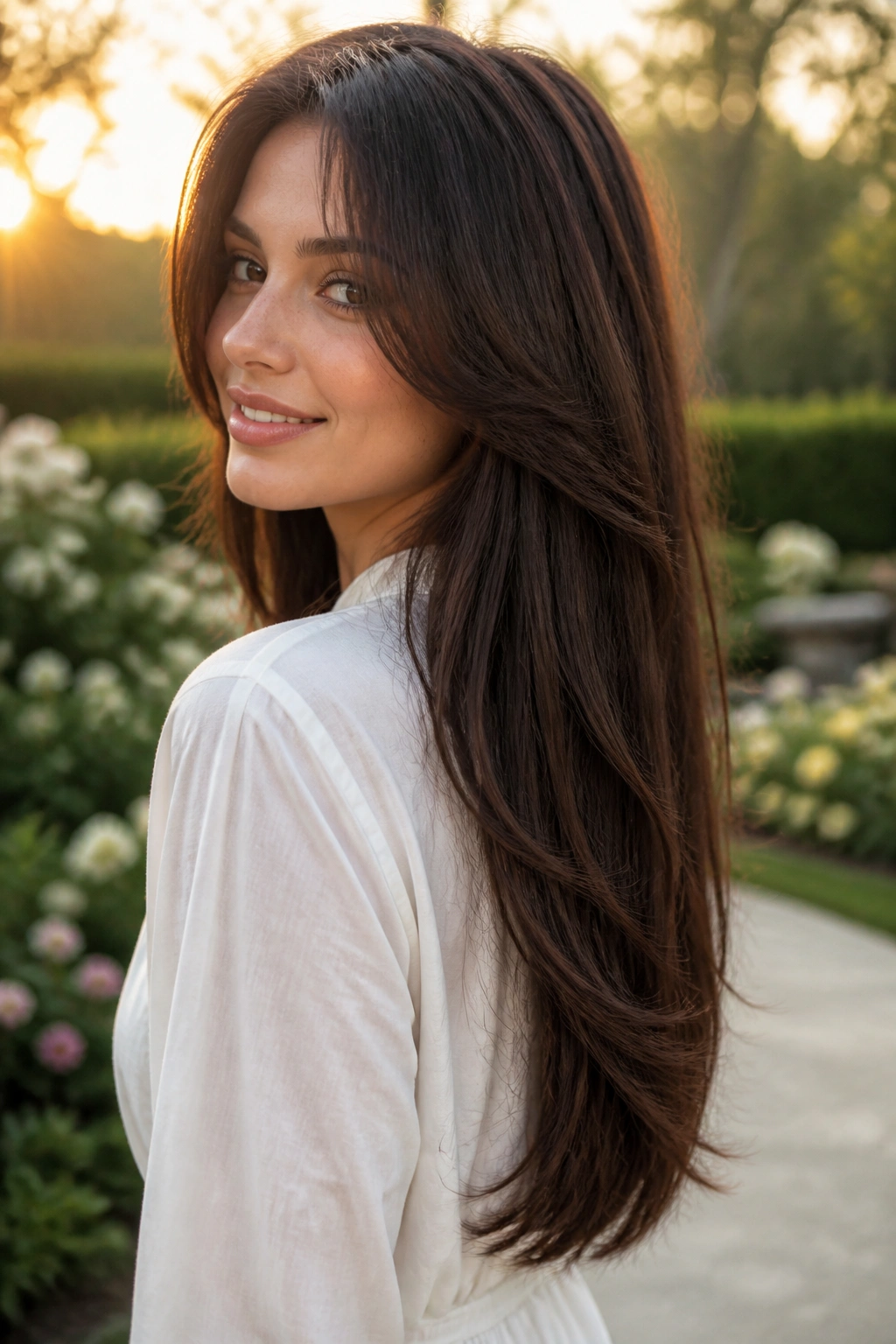
A U-shaped cut is one of those quietly smart choices. The back keeps more length, while the sides sweep in softly, creating a rounded but narrow shape through the outline. On a round face, that gentle curve is useful because it avoids the shelf effect that a straight line can create.
The best version keeps the shortest layers away from the widest part of the cheeks. Think of the front pieces as guides, not curtains. They should soften the face, not sit there and announce themselves.
This cut is especially nice if you wear your hair down most of the time and want something that still looks balanced when you throw it over one shoulder. It also behaves well with waves. A soft bend through the mid-lengths is enough. The style doesn’t need a lot of product — a little smoothing cream and a medium brush usually do the trick.
6. Deep Side-Part Layered Cut
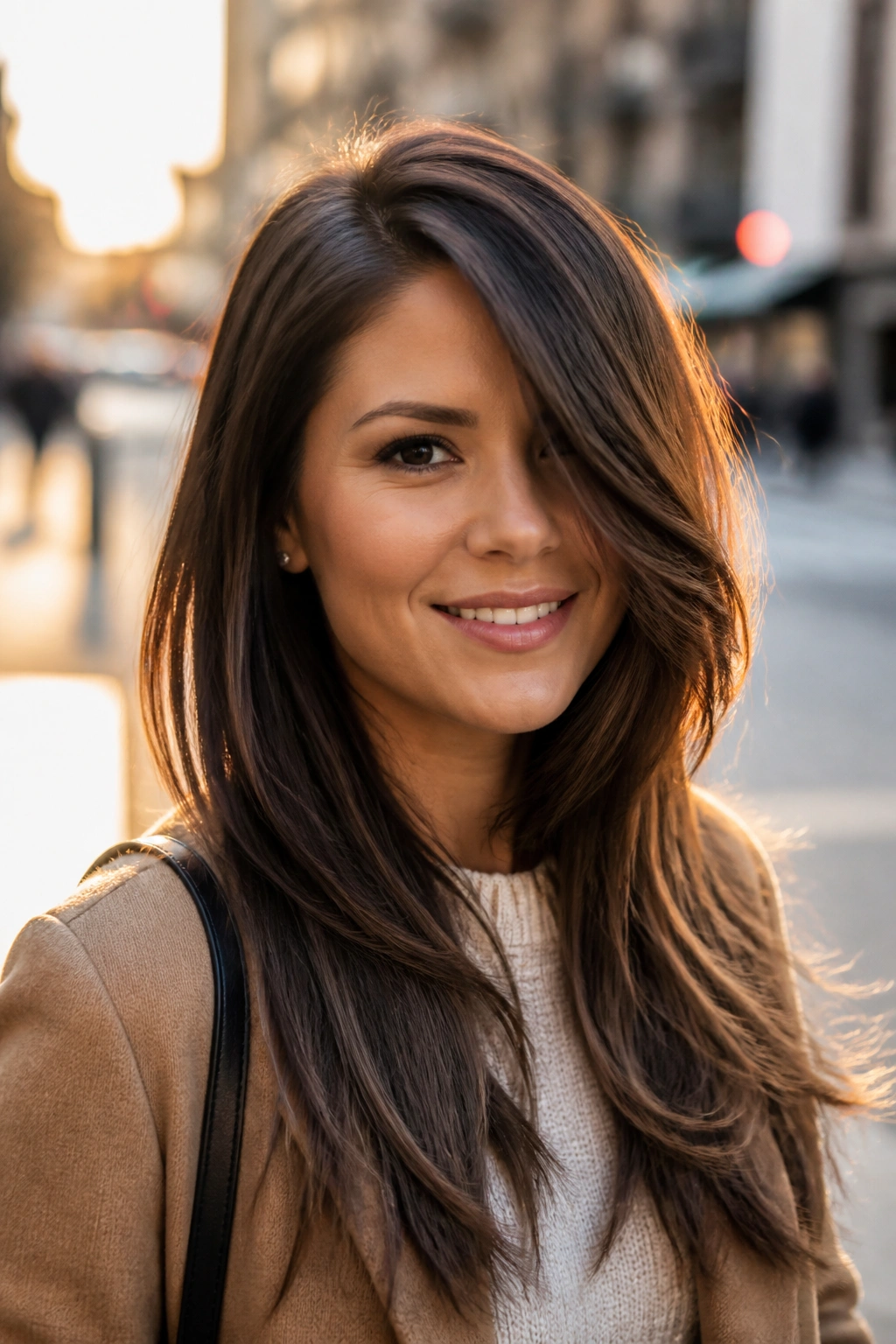
A deep side part can do more than people give it credit for. It breaks symmetry, and symmetry is often what makes a round face look even rounder. The diagonal line from the part to the opposite cheek creates movement before the haircut even starts.
This is a good option if you want a simple change without chopping off length. Keep the layers long and graduated, then let the heavier side fall forward a bit more than the other. That imbalance makes the face read longer and less centered.
The styling part is easy. Blow-dry the roots in the opposite direction first, then flip the part back into place. You get lift at the crown without teasing the hair into a helmet. A little root spray helps if your hair collapses by noon. And if you hate deep parts, even a mild off-center shift can still give you the effect.
7. Hidden Internal Layers for Thick Hair
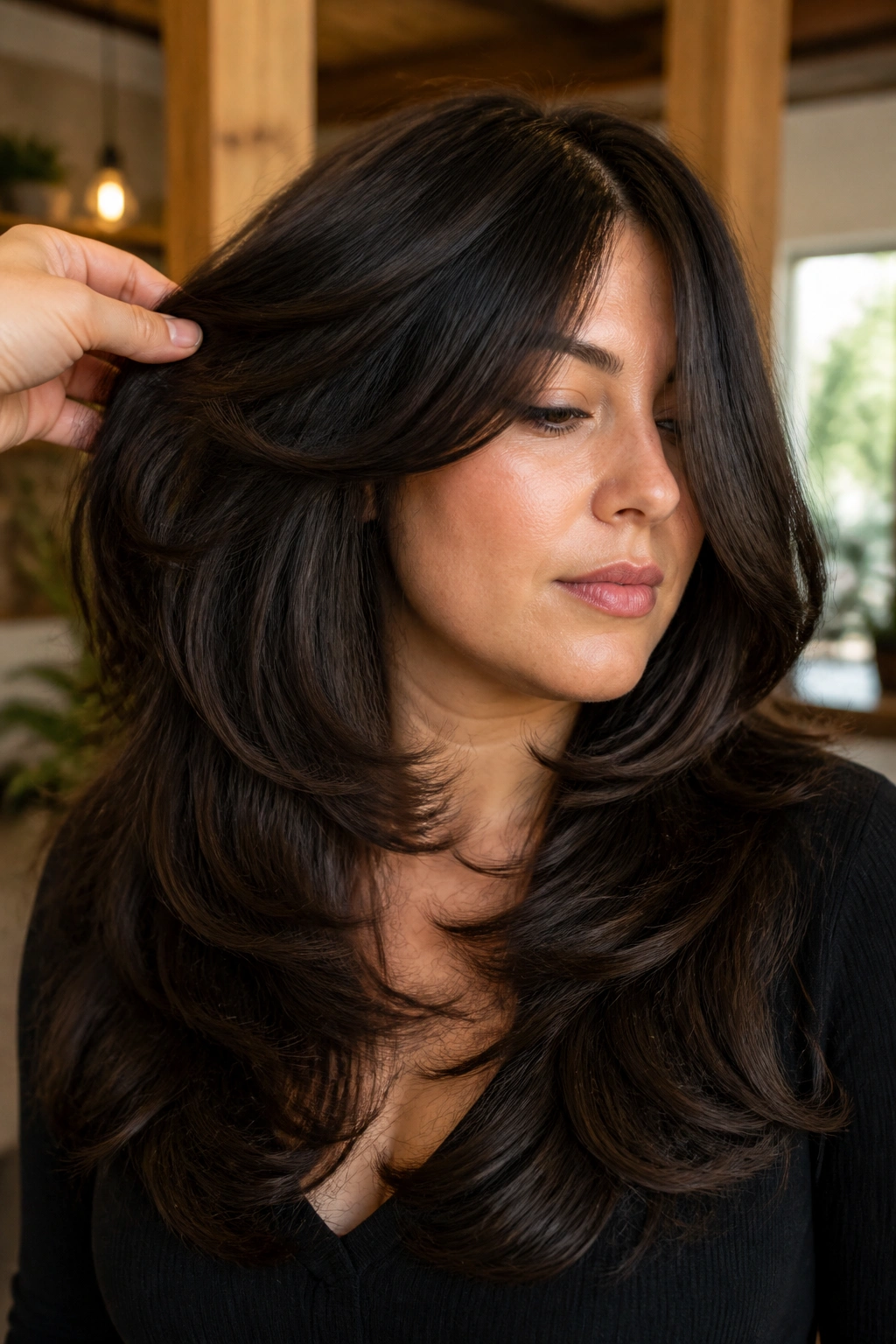
Thick hair on a round face can go one of two ways: beautiful and light, or wide and puffy. Internal layers decide which one you get.
These layers sit inside the haircut instead of on the surface, so the outline stays clean while the bulk comes out from underneath. That matters because thick hair can add width fast when the layers are too blunt around the cheeks. Hidden layering keeps the shape controlled without making the ends look thin.
What Makes It Different
The outside line stays smooth. The inside gets the weight removed.
- Best for dense, heavy hair that feels mushroom-like after drying
- Keeps the silhouette narrow through the sides
- Works well with a blowout or a straightened finish
One thing to avoid: too many short pieces around the ear. That’s where the triangle happens.
8. Razored Mid-Length Layers
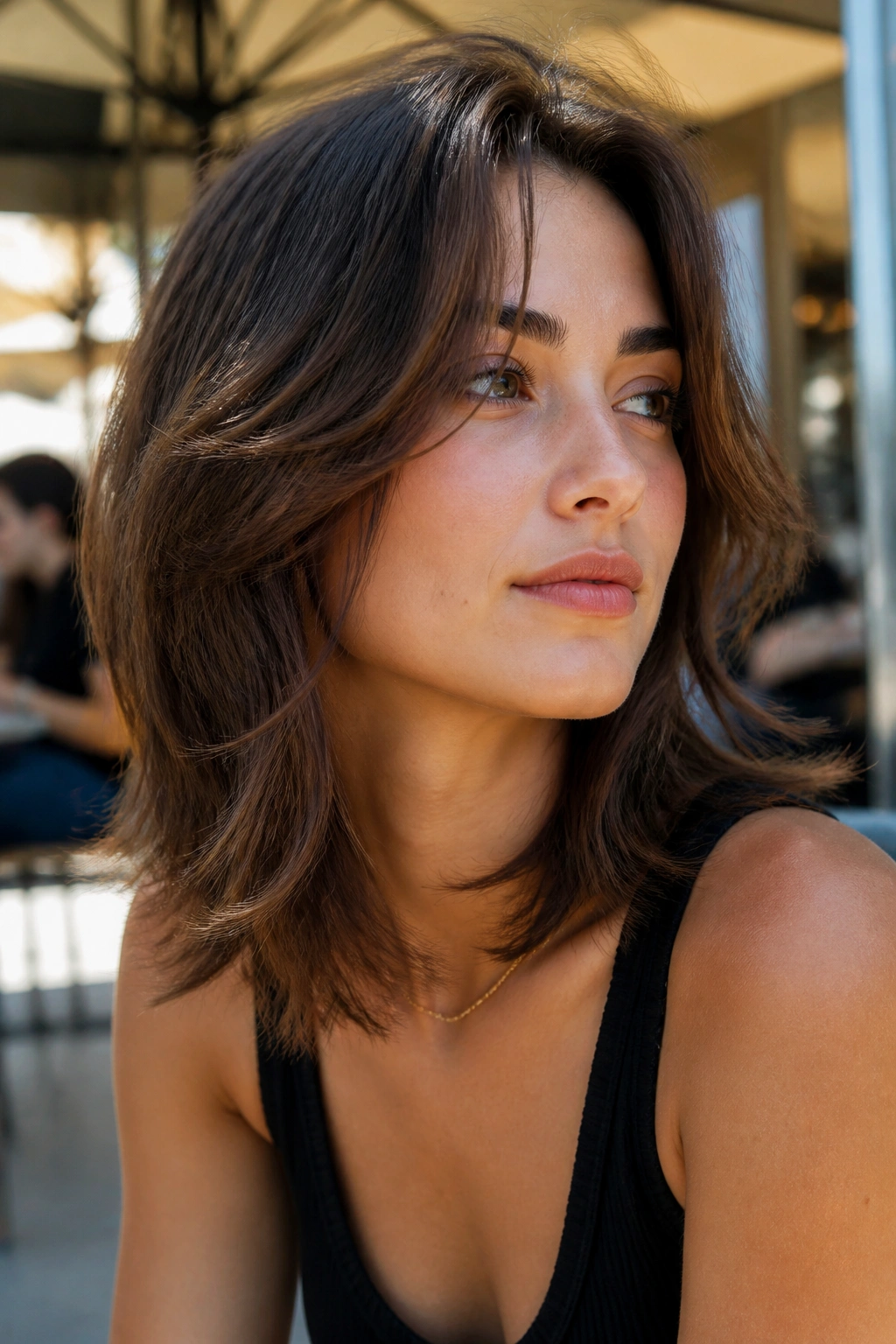
Razoring can be risky in the wrong hands. In the right hands, though, it gives mid-length hair a soft, broken-up edge that moves instead of sitting like a shelf.
On a round face, this helps because the hair doesn’t create a hard line at the jaw. The lighter ends slip around the shape of the face, and the whole cut feels less boxy. It’s especially good if your hair is medium to thick and you like a more lived-in finish.
This cut needs a stylist who knows how much to remove. Too much razor work and the ends fray. Too little and you’ve paid for a shape you can’t see. I’d ask for texture mainly through the lower half, not all over the head. Then style it with a light cream or sea-salt spray, depending on whether you want smooth movement or a more tousled finish.
9. Bottleneck Bangs with Long Length
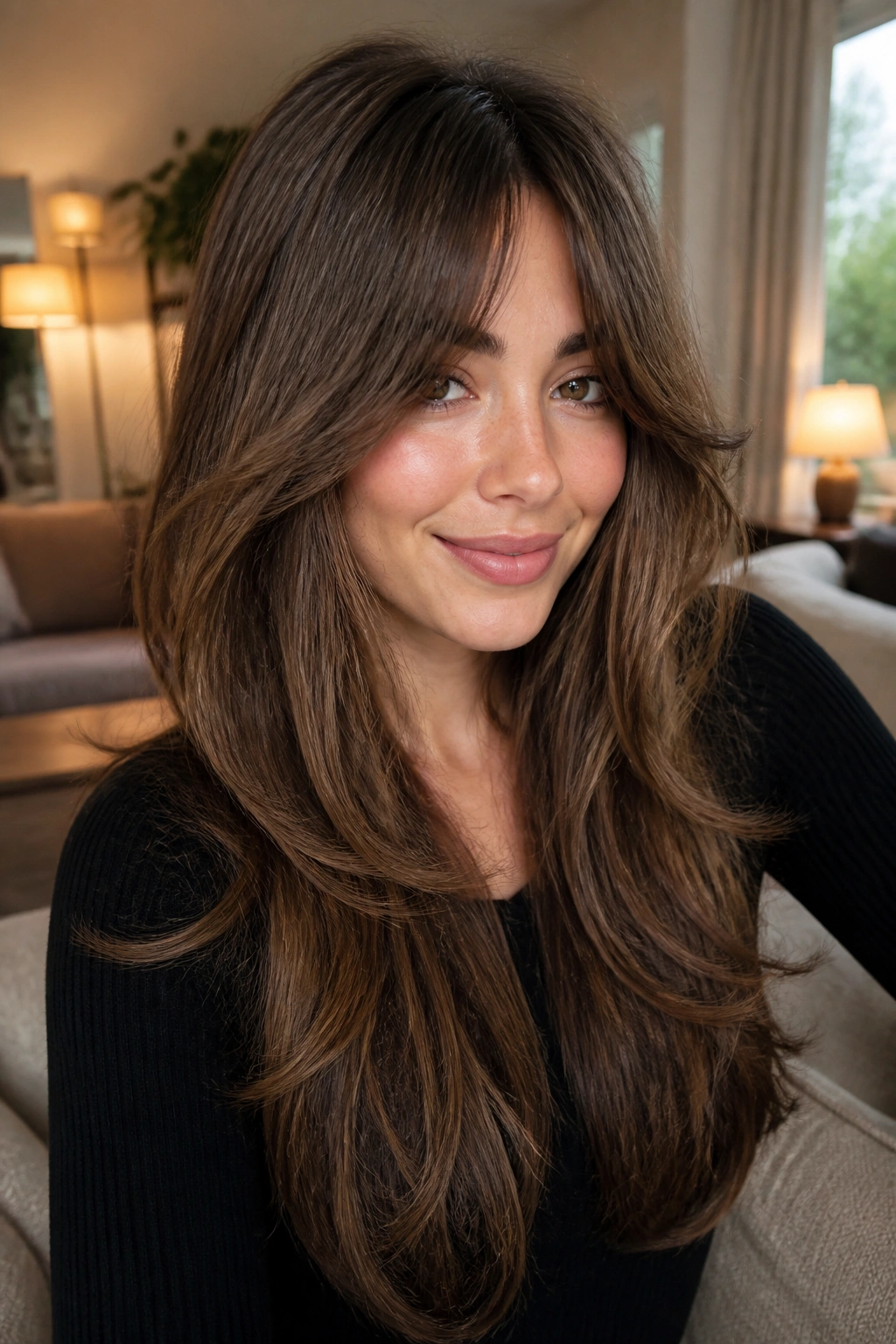
Bottleneck bangs are clever because they narrow near the center of the forehead and open outward near the temples. That shape creates a little vertical pull, which is useful on a round face where width tends to dominate.
The rest of the hair should stay long and softly layered. You want the bangs to lead into the rest of the cut, not fight it. A blunt bang across the brow can be heavy here, but a bottleneck fringe keeps the top of the face open while still adding interest.
How to Wear It
Let the center sit a bit shorter, then sweep the sides longer so they kiss the cheekbone. That gentle taper makes the face look longer without looking severe. Air-drying can work, but a quick pass with a round brush makes the shape cleaner. If your forehead is short, keep the shortest part lighter. If it’s taller, you can go a little fuller.
10. Textured Pixie-Bob with Crown Lift
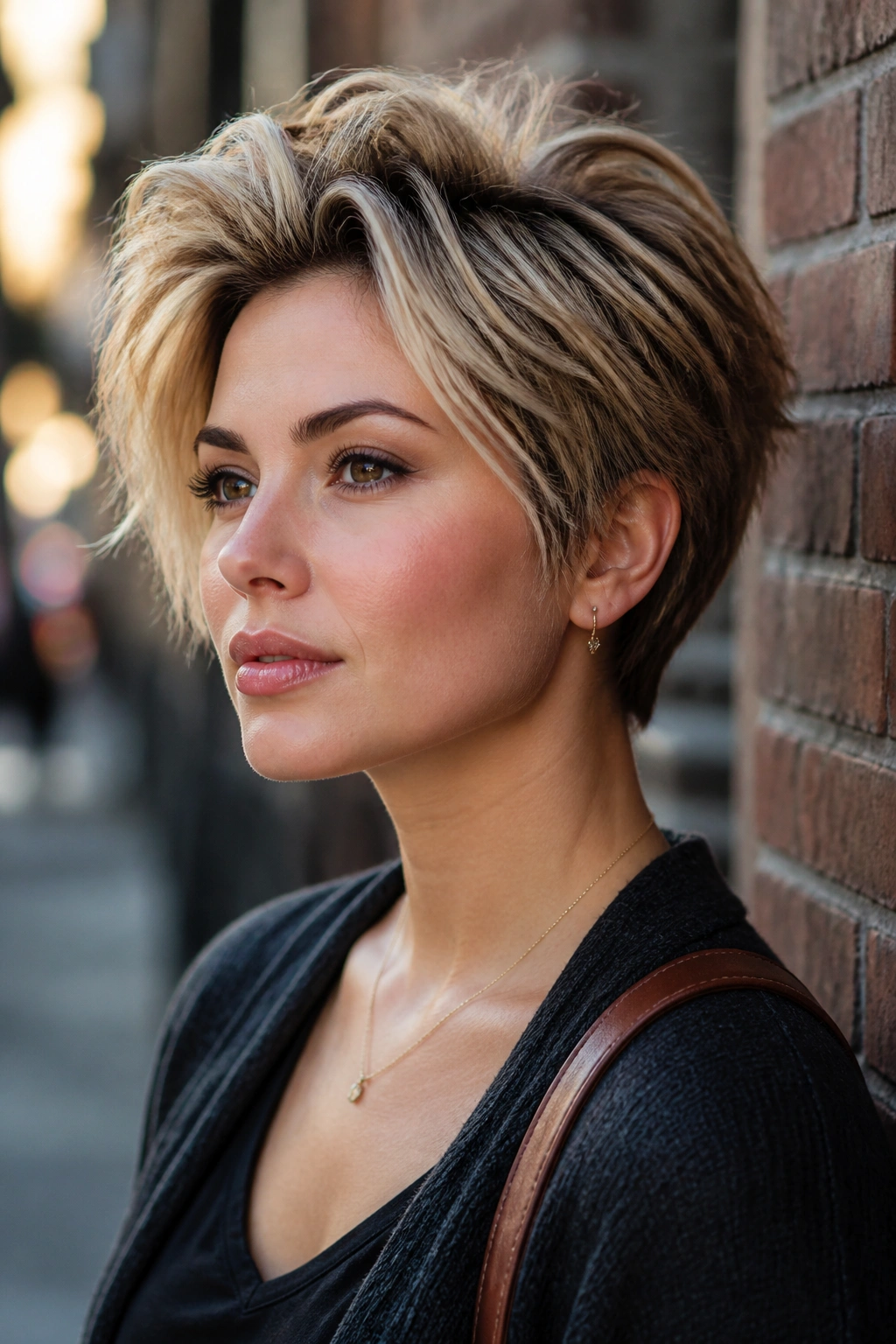
Short hair on a round face is absolutely possible. You just can’t let it balloon outward at the sides.
A pixie-bob with extra height at the crown solves that problem. The back stays close enough to the head to keep the shape neat, while the top has enough texture to add vertical lift. Longer side pieces around the face help stretch the silhouette, which is the whole point.
This cut has a bit of attitude, and I like that. It’s not timid. It works best when the top is moved with wax, pomade, or a matte paste in tiny amounts — a pea-sized bit at a time, not a palmful. The sides should stay soft, not puffed. If your hair is straight, this shape stays crisp. If it’s wavy, the texture can make it even better.
11. Wavy Bob That Skims Below the Jaw

A bob that ends right at the jaw can be brutal on a round face. A bob that drops just below it is a different story.
That small shift changes the whole read of the haircut. Instead of stopping at the widest point, the ends fall lower and create a little length. Add soft waves and the line gets even friendlier, because the bend breaks up the width around the cheeks.
The styling is simple. Use a one-inch curling iron or wand, alternate the direction of the curls, then comb them out with your fingers. Keep the roots smoother than the ends. A lot of people over-volume this cut and end up right back where they started. Less puff, more shape.
12. Invisible Layers on a Sleek Lob
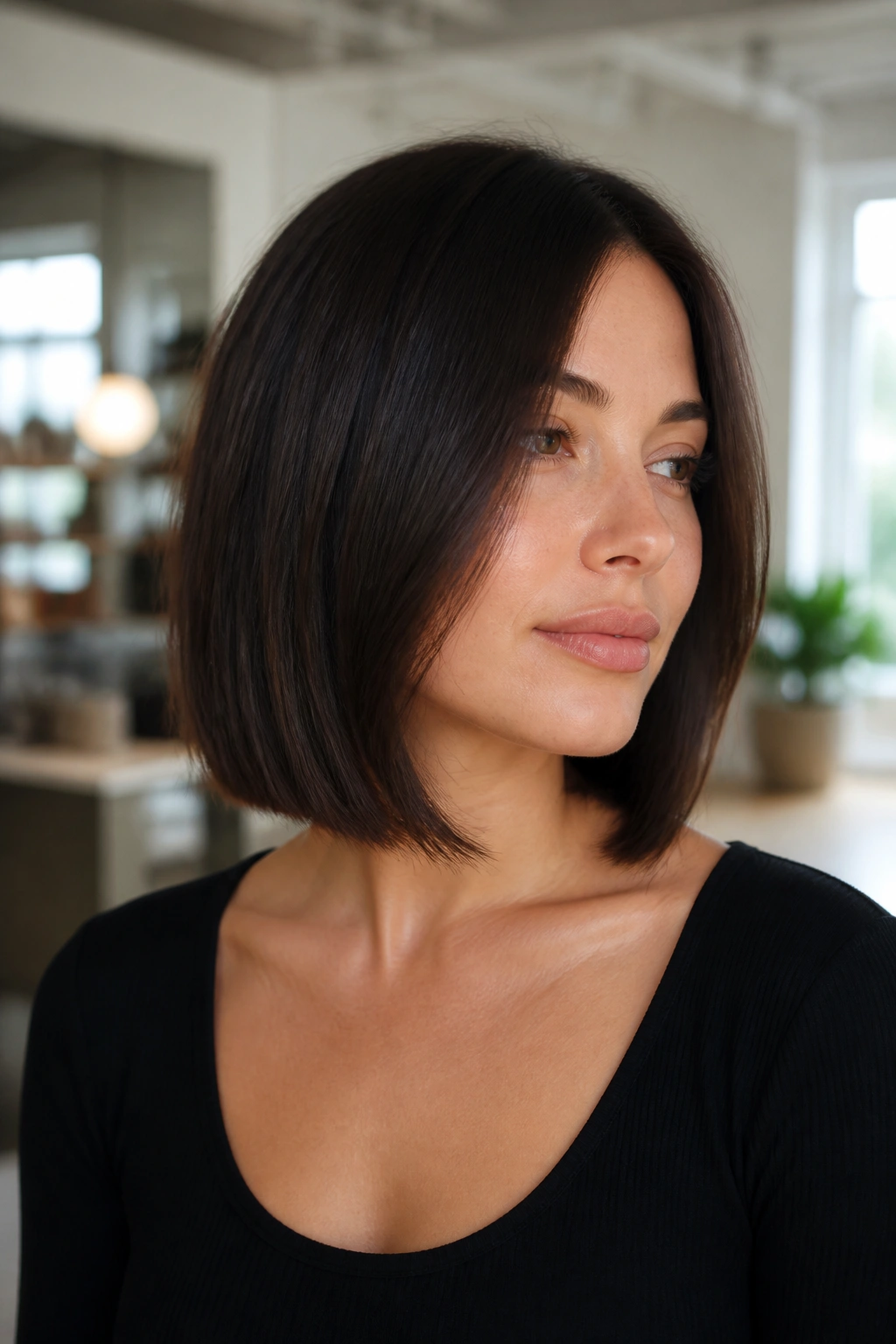
Invisible layers are for people who hate obvious choppiness but still want movement. The layers sit inside the haircut, so the surface looks polished and the shape stays neat.
On a round face, that’s useful because you can keep the hair sleek without turning it into one blunt mass. The hidden movement lets the hair fall around the face instead of sitting in one solid pane. A lob length — somewhere between the chin and shoulders — gives enough room for that shape to show up.
What Makes It Different
Unlike heavily layered cuts, this one doesn’t telegraph itself from across the room. It just falls well.
- Good for straight or slightly wavy hair
- Keeps the ends looking full
- Works with a flat iron, a round brush, or air-drying with a smoothing cream
If you want a clean look for work but still want your hair to move at night, this is a strong pick.
13. Cascading Layers with a Dramatic Side Sweep
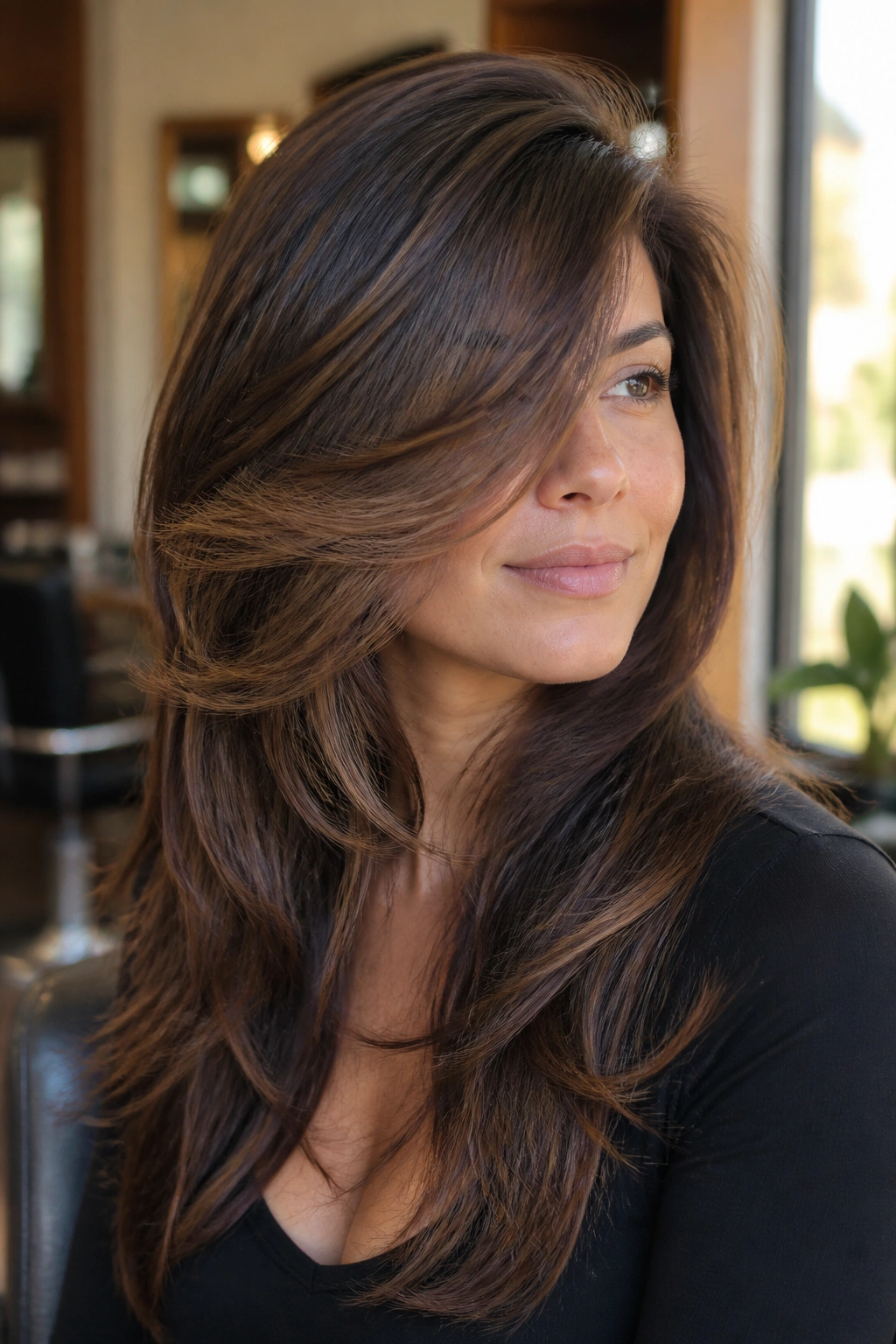
A dramatic side sweep gives round faces one of the oldest tricks in the book: asymmetry. And it works because the eye follows the hair across the forehead and down the side instead of sitting on the broadest part of the face.
The layers should cascade from the sweep into longer pieces through the lengths. Nothing should look cut into a hard line. The whole point is flow. If the top section has some lift, even better. A little volume near the part keeps the style from flattening out and making the face look wider.
I’ve always liked this cut for formal blowouts and softer glam looks. It photographs well, but more important, it actually moves in real life. Secure the sweep with a side part, round brush the front away from the face, and let the longer layers do the rest.
14. Soft Wolf Cut with a Longer Perimeter
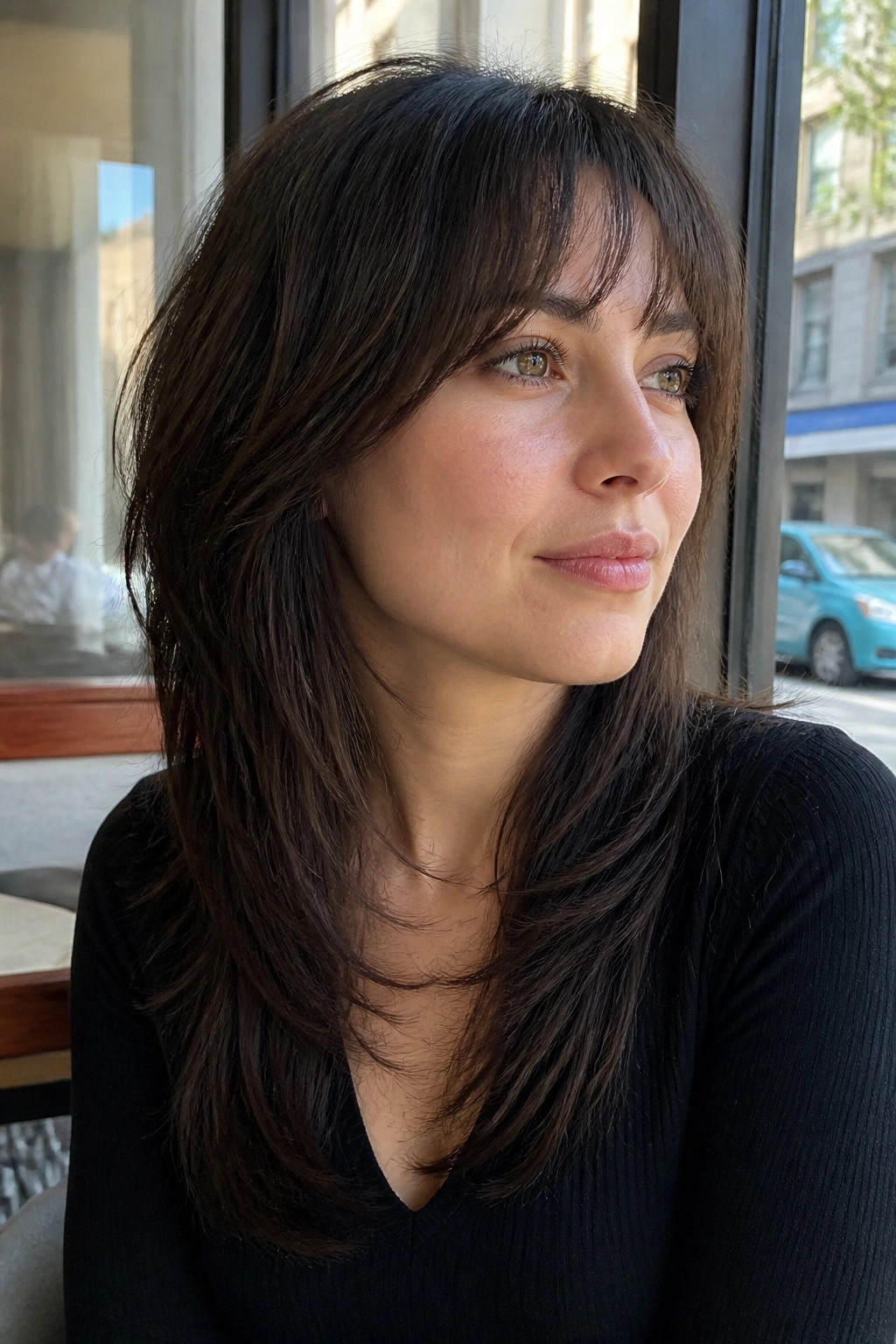
A wolf cut can go wrong fast on a round face if it gets too high and too fluffy around the cheeks. The softer version keeps the perimeter longer and the top less aggressive.
That’s the trick. You still get the shaggy, modern feel, but the ends stay stretched out below the jaw, which helps balance the face. Keep the shortest face-framing pieces modest, and let the texture happen mostly through the crown and mid-lengths.
This cut likes a bit of grit. Mousse, texturizing spray, or a diffuser can bring out the movement. If your hair is naturally wavy, you’re halfway there. If it’s straight, don’t fight for perfect bends — a few loose bends look better than uniform curls. Too much structure kills the point.
15. Long Side-Swept Bangs and Length
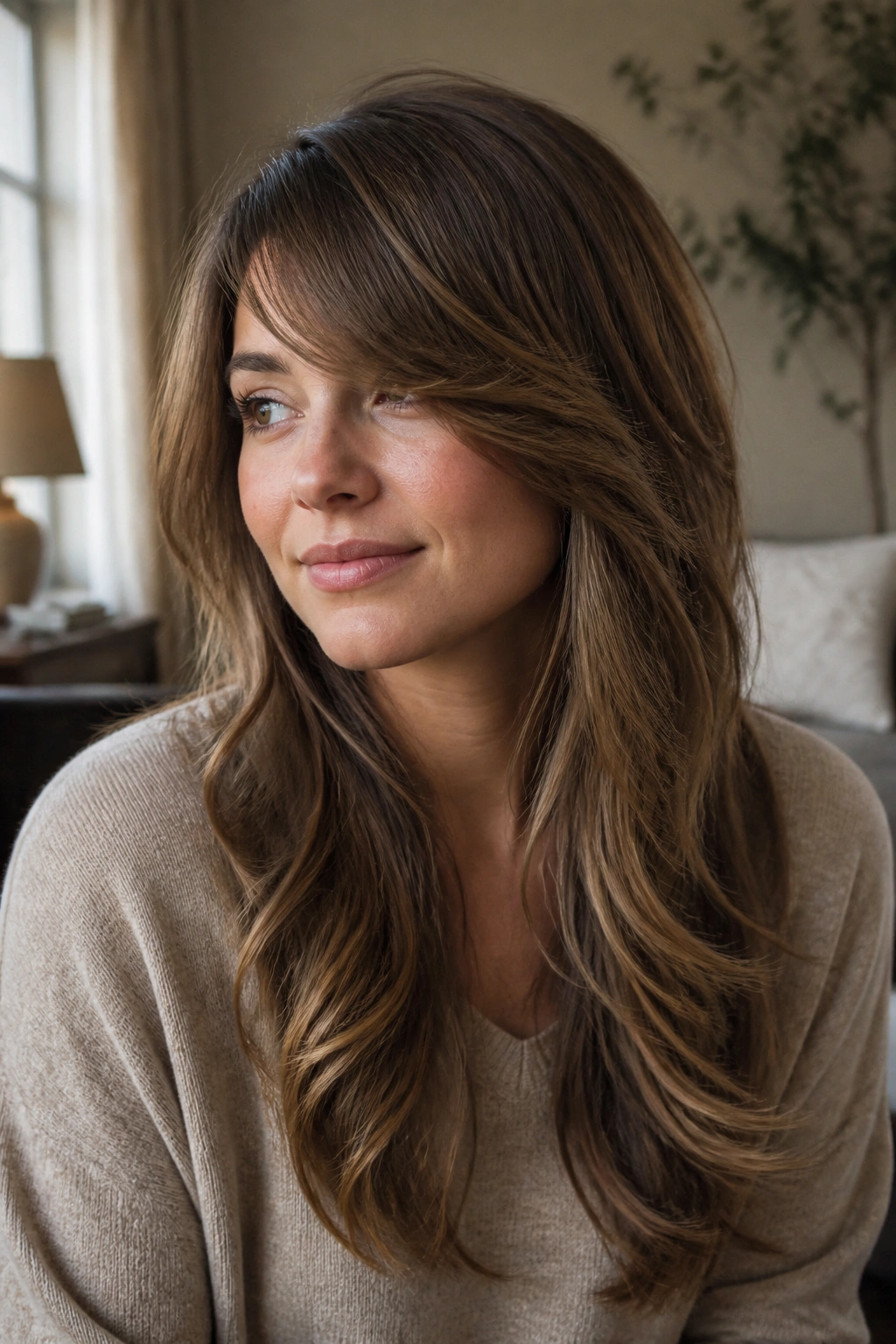
Side-swept bangs may not be flashy, but they’ve saved more round faces than some trendier cuts ever will. They create a diagonal line across the forehead, which interrupts width and gives the face a longer read.
The bangs should blend into the layers, not sit like a separate piece. That’s where some cuts go wrong. When the bang is too heavy, it chops the face short. When it’s too thin, it disappears. The sweet spot sits somewhere in the middle, brushing the brow and sweeping into the cheekbone area.
This works especially well on hair that’s long enough to stay balanced under the bang. If the rest of the cut is too short, the fringe can take over. Keep the length below the shoulders, and the whole look stays soft. A little bend at the ends helps, but you do not need a full curl set here.
16. Choppy Shoulder Cut with Piecey Ends

A shoulder cut with choppy ends can be a nice answer if you want texture without going full shag. The shoulder length keeps the silhouette long enough for a round face, and the piecey ends stop the hair from sitting in one solid mass.
What matters here is restraint. The layers should be broken up, not shredded. Too much choppiness around the cheeks makes the face look wider. Better to keep the movement mostly through the lower half of the cut and leave the top controlled.
This style behaves well with dry texture spray and a little scrunching. It’s also forgiving on busy mornings. You can let it air-dry, then rough up the ends with your fingers. If the hair falls a bit unevenly, that’s fine. It actually helps the shape.
17. V-Cut Length with Front Framing
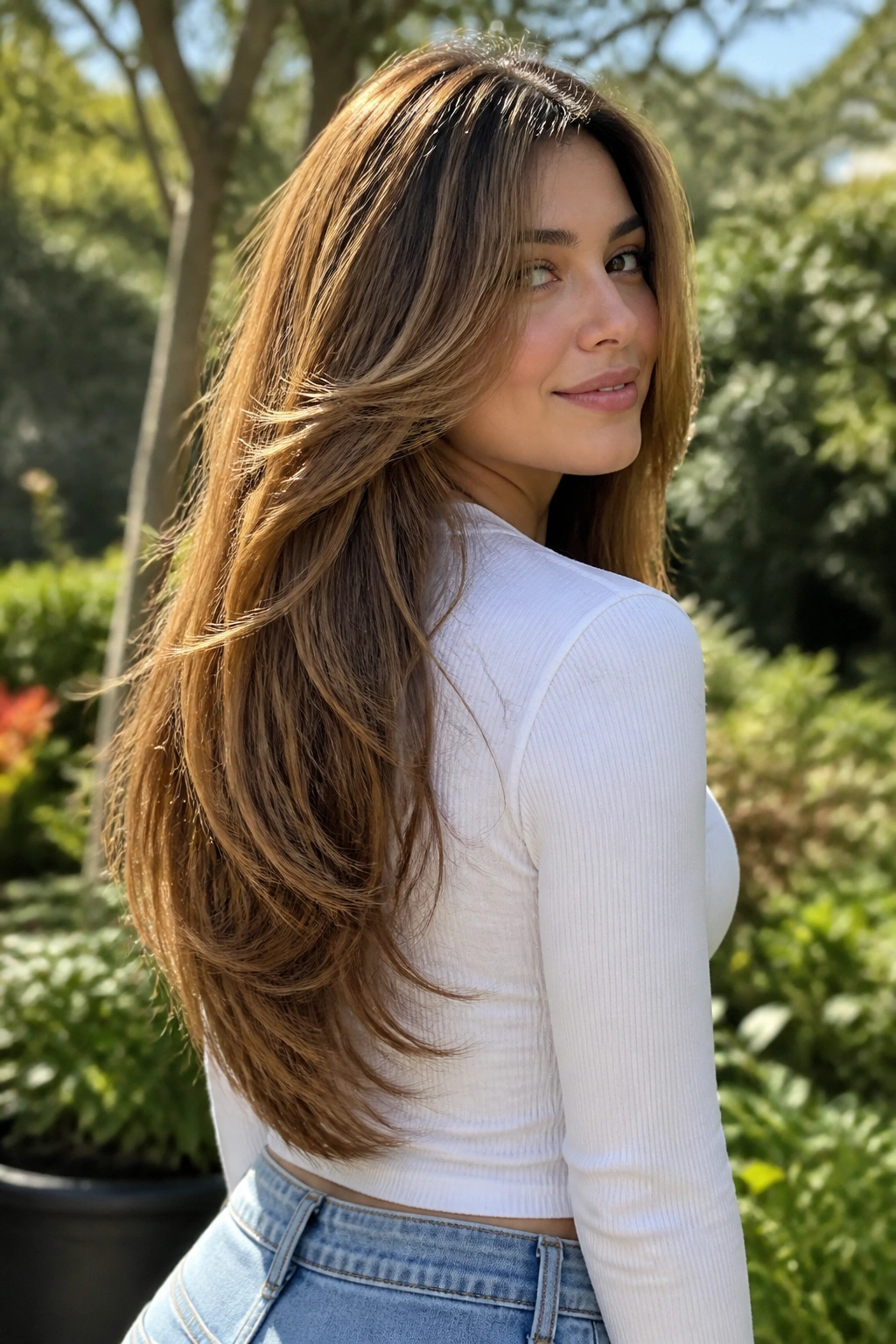
A V-cut is one of the best shapes for long hair on a round face because it narrows the back and pulls the eye downward. The point at the back adds length, while the front pieces can stay soft and face-framing.
The important part is keeping the front from getting too full at cheek level. Start the framing lower, around the mouth or collarbone, and let it taper gradually. That keeps the face open. The back should form a gentle point, not an aggressive triangle.
It’s a good cut for people who wear their hair down and like visible shape from the back. A blowout shows the line nicely, but even air-dried waves work. If you twist the hair into loose sections while it dries, the layers show up without a lot of effort.
18. Flipped-Out Mid-Length Layers
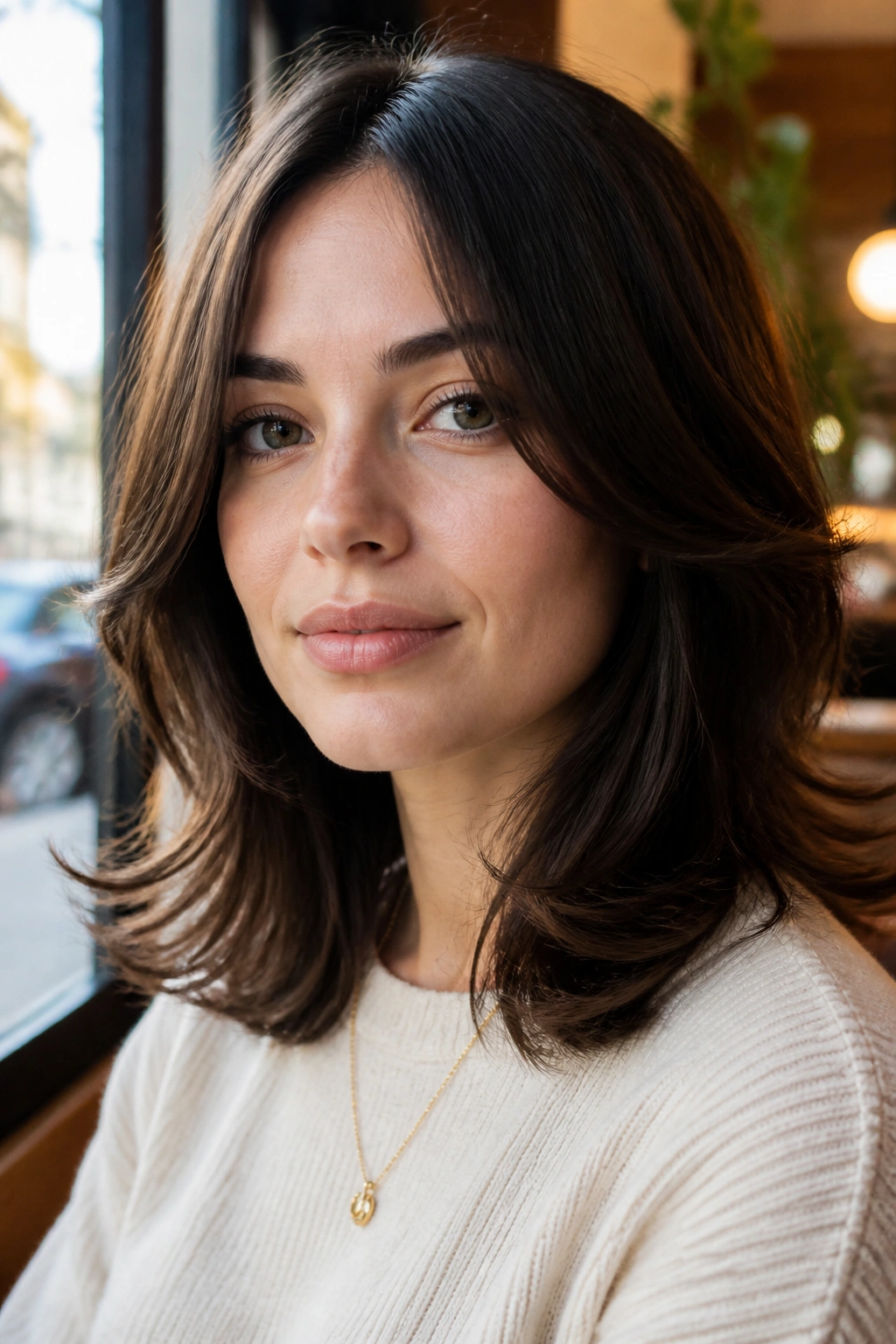
Flipped-out ends have a little retro energy, and I’m here for it. On a round face, the outward flick at the ends helps move the silhouette away from the cheeks and toward the shoulders.
The cut itself works best at mid-length, somewhere around the collarbone or just past it. That gives enough room for the ends to flip instead of curl inward and bunch up around the jaw. The layers should be light enough to move but not so short that they spread outward too much.
The Science Behind It
The flip creates a visual diagonal. Diagonals lengthen. Straight horizontals widen.
Use a medium round brush or a flat iron to bend the bottom inch or two outward. Keep the roots smoother than the ends. A little shine spray finishes the job without making the hair limp.
19. Curly Layers That Keep the Cheeks Open
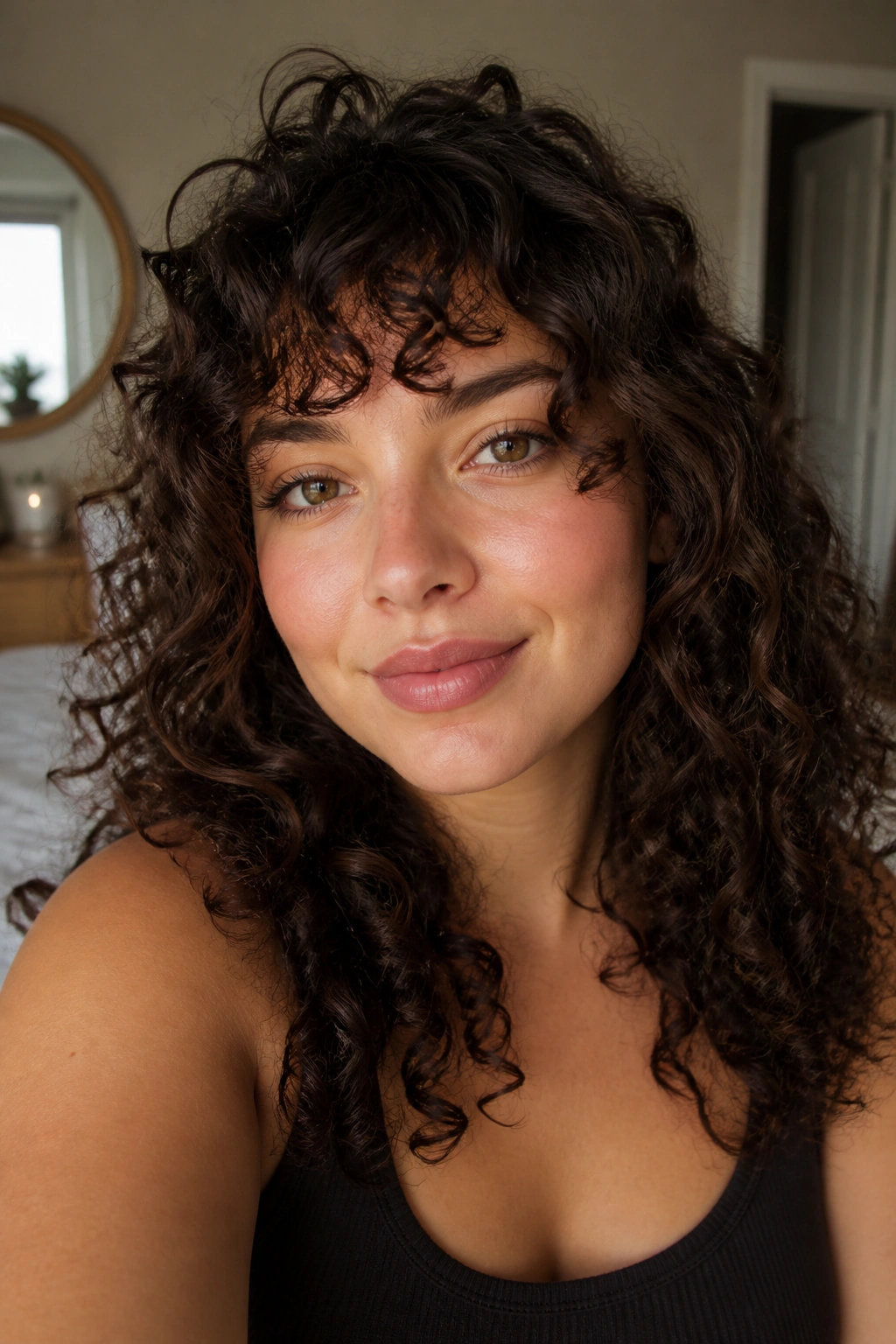
Curly hair on a round face needs shape, not bulk. If the layers pile up too high at the sides, the curls can widen the face faster than any straight style ever could.
The better approach is to keep the curl pattern framed in a way that leaves space around the cheeks. That usually means longer face-framing pieces and layers that remove weight without taking the whole shape apart. The top should have enough lift to keep the curls from collapsing inward.
This cut is at its best when a stylist cuts it dry or nearly dry, because curly hair lies to you when it’s wet. You want the curls to sit where they naturally spring, not where they were forced to fall at the sink. A diffuser and a soft hold gel can help define the shape. Heavy cream? Easy to overdo. That’s where the puff starts.
20. Off-Center Part with Crown Volume
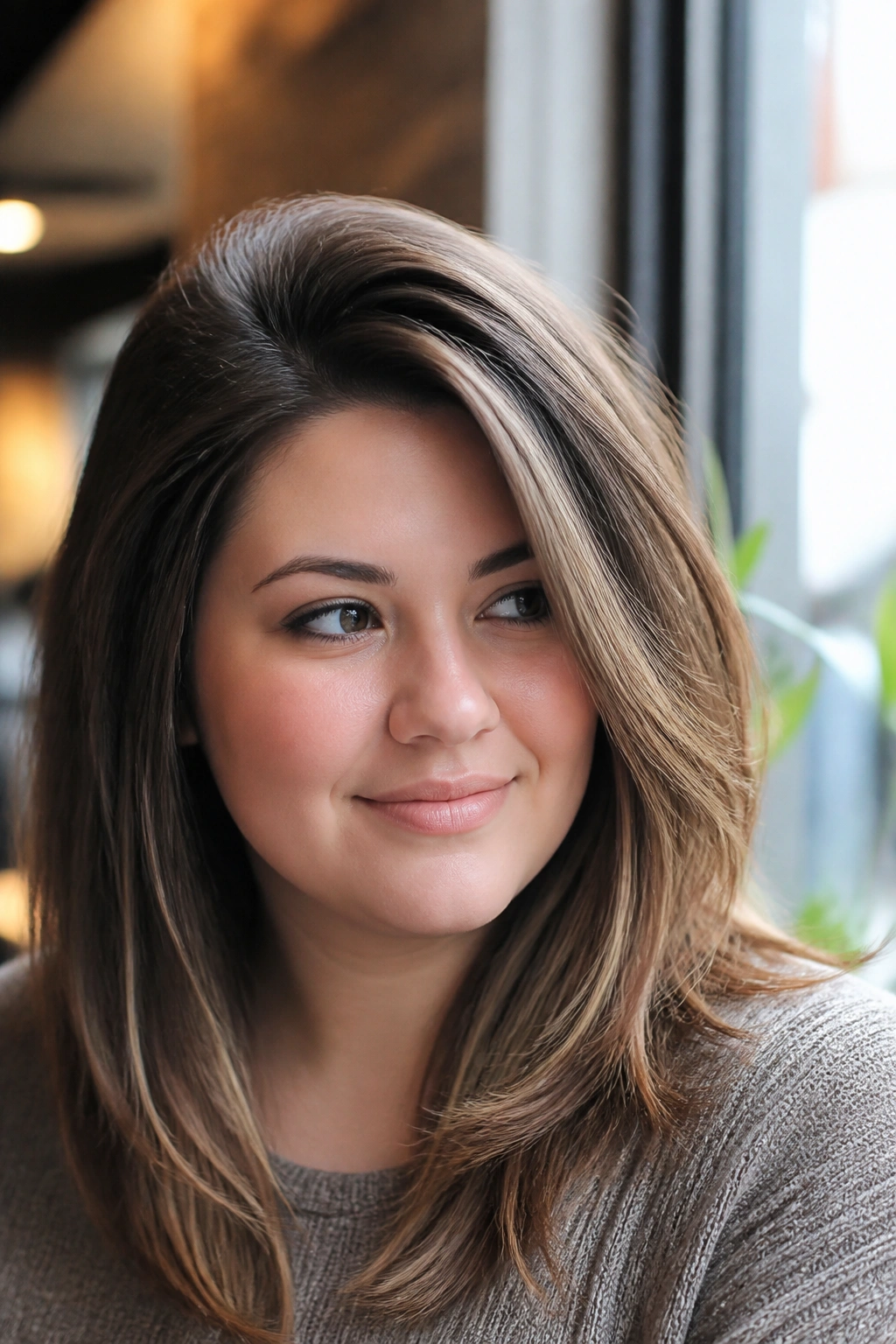
A cut built around an off-center part can be a quiet fix for a round face. It shifts the balance of the whole style without needing a dramatic chop.
The crown volume matters because it raises the eye upward, while the off-center part keeps the top from looking flat and broad. The layers should follow that direction, falling a little more on one side than the other. That asymmetry is what keeps the cut from reading as circular.
What to Watch For
If the layers are too short around the temples, the face opens too much. If they’re too long and flat, the style loses the lift.
- Keep the crown lifted with root spray or a light mousse
- Direct the front hair across the forehead, not straight down
- Let one side sit a little heavier than the other
The shape is subtle, but it changes a lot.
21. Fine-Hair Layers That Keep the Ends Full
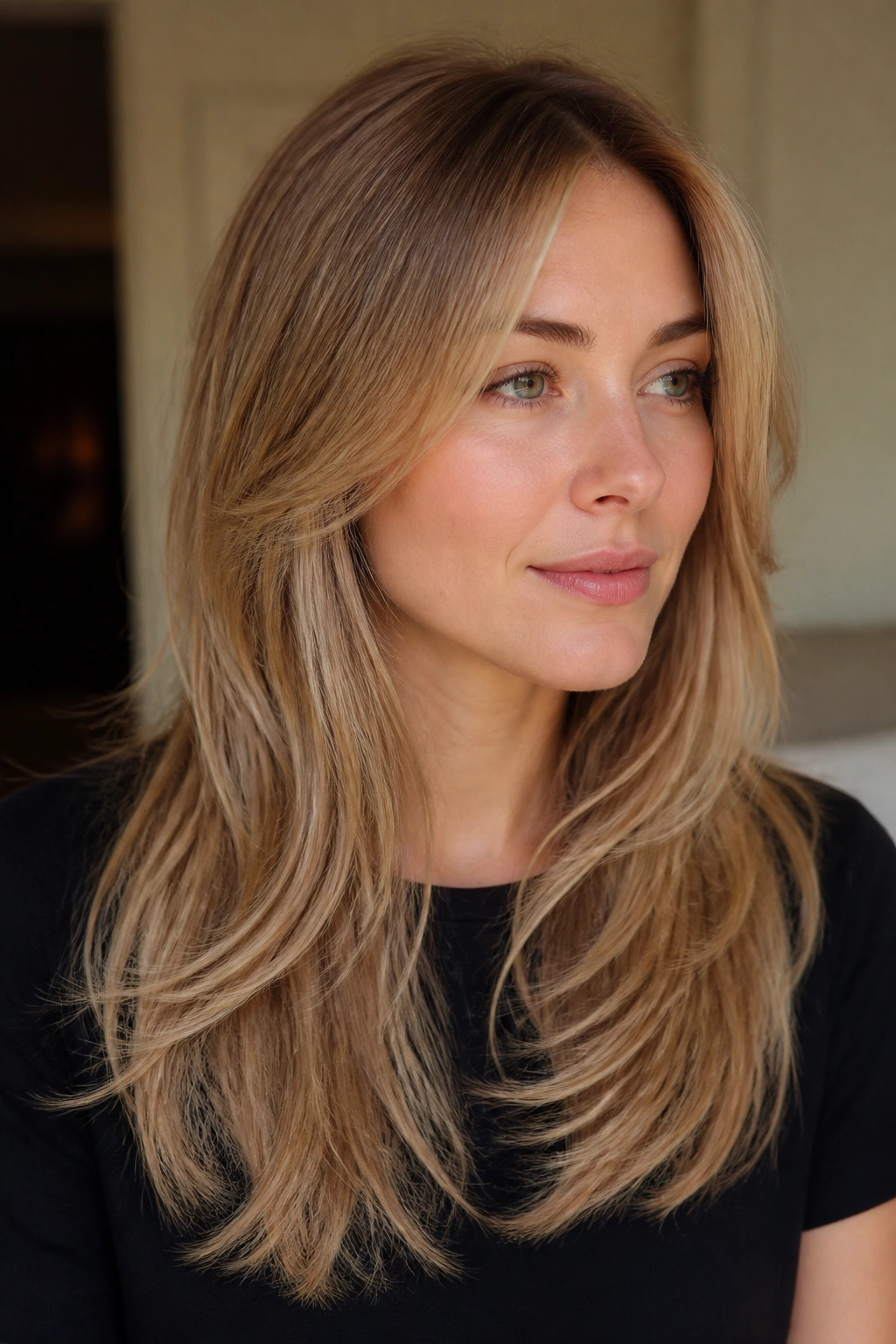
Fine hair on a round face needs a careful hand. Too many layers, and the ends go scraggly. Too little, and the hair hangs flat around the cheeks.
The sweet spot is a soft layered cut that keeps the perimeter full while adding just enough movement to stop the shape from looking helmet-like. Think of it as a haircut that respects density. The layers should be long and light, not short and chopped.
I like this option because it doesn’t chase volume in the wrong place. A bit of lift at the crown, a gentle bend through the mid-lengths, and full-looking ends do more for the face than lots of teasing ever could. Use a volumizing mousse near the roots and a round brush only at the top. Leave the bottom smooth. That keeps the line clean.
22. Modern Mullet with Soft Edges
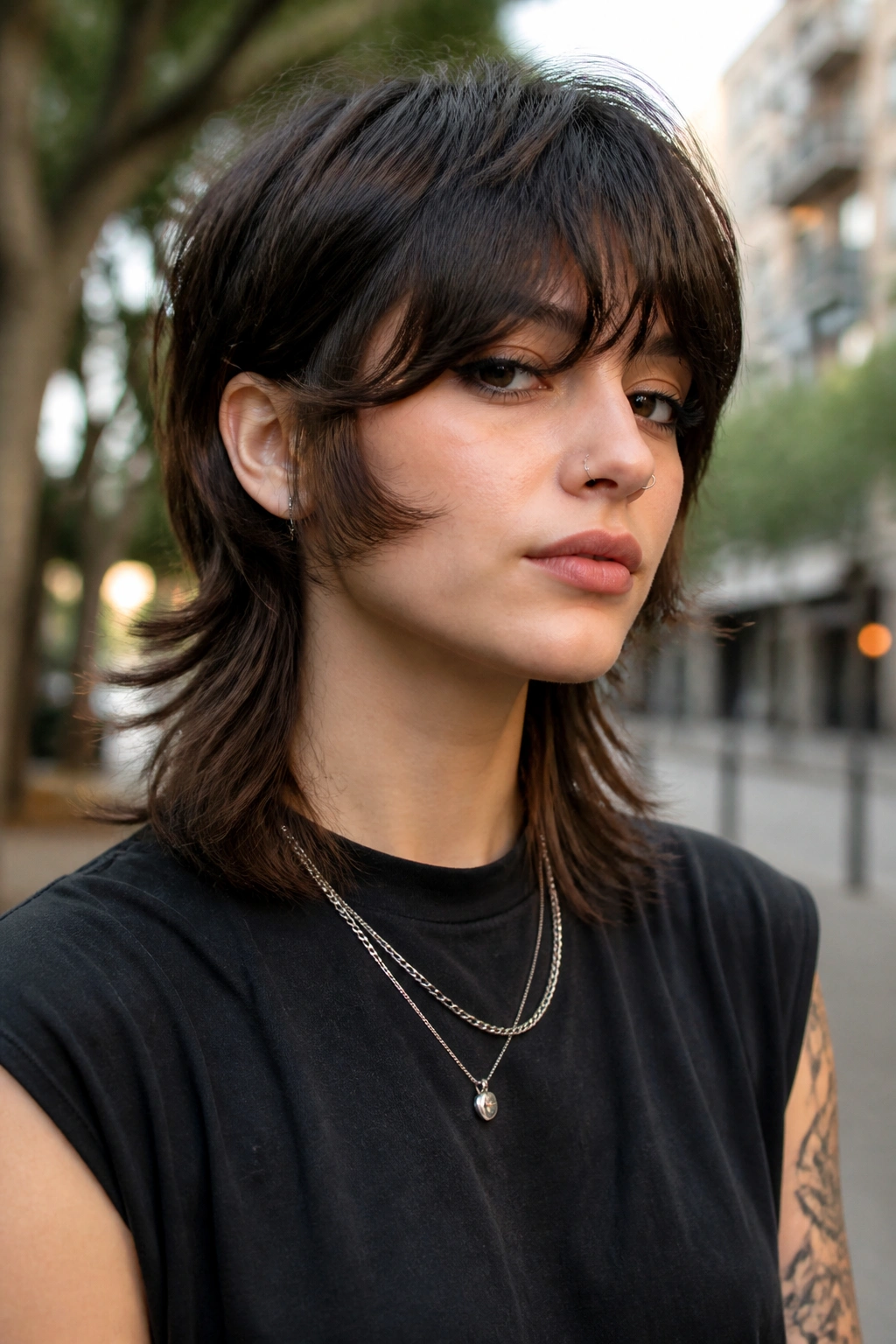
The modern mullet sounds bold because it is. But the softened version can work on a round face when the front stays longer and the back is not too abrupt.
What makes this cut manageable is the balance. The top and sides are textured, sure, but the longest lengths remain at the back, which helps lengthen the silhouette. The front pieces should skim the cheeks rather than sit on them. That keeps the face open while still giving the haircut some attitude.
This is not a cut for someone who wants to disappear into the background. It has personality. If you like styling paste, dry texture spray, and hair that looks good a little imperfect, this one has a lot going for it. The edges should feel soft, not hard. That softness is what keeps it flattering instead of costume-like.
23. Heavy-Hair Layers That Remove Bulk at the Right Spots
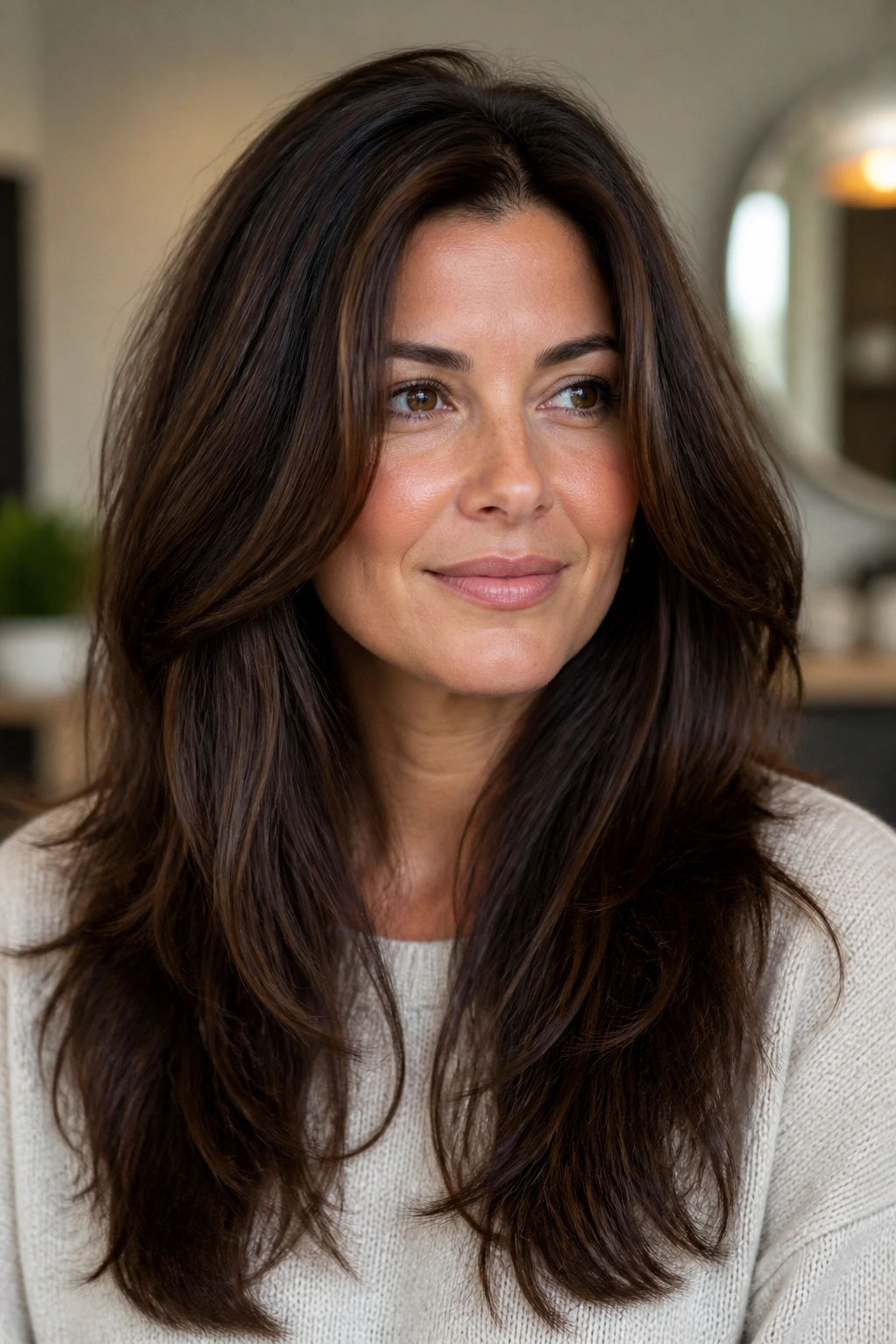
Thick hair is lovely until it sits in the wrong place. Then it gets broad, triangular, and annoying.
That’s why targeted weight removal matters so much. The layers should be placed where the density needs to come out — usually through the interior and around the lower mid-lengths — while the cheeks stay free of extra width. A round face benefits when bulk moves down, not sideways.
A Small Styling Rule
Dry the hair with the head tipped slightly forward, then smooth the sides back with a brush. That keeps the profile narrow.
This cut is especially good if your hair takes forever to dry or feels heavy by lunchtime. A little thinning in the wrong area can ruin the shape, though, so I’d ask for controlled layering instead of aggressive texturizing. There’s a difference.
24. Curly Shag with a Rounded Crown
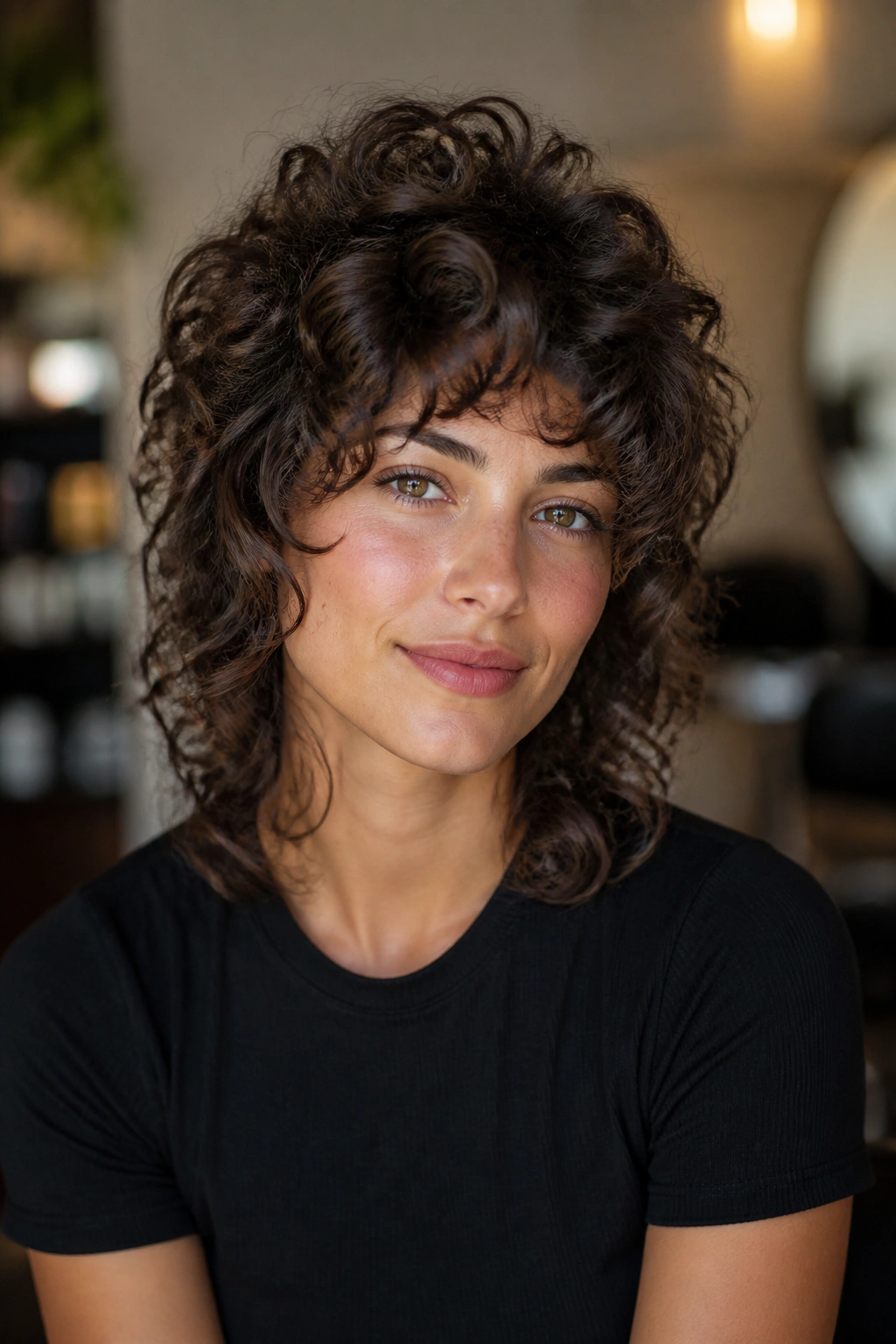
A curly shag can be a dream for round faces when the crown is shaped well and the layers don’t puff out at cheek level. The goal is to make the curls stack upward a bit and fall downward around the sides, not spread like a halo in every direction.
The rounded crown keeps height where you want it. Longer face-framing pieces keep the cheeks from looking too full. That balance is what makes the cut work. Without it, the shag can drift into triangle territory fast.
Use a diffuser on low heat, scrunch from the ends up, and stop touching the hair once it starts to set. Curly shag cuts often look better with a little frizz than with too much product. A stiff curl can flatten the shape. Soft movement is the point.
25. Angled Lob with Longer Front Corners
An angled lob gives round faces one of the cleanest lines you can ask for. The back is slightly shorter, the front is longer, and that diagonal shape pulls the eye forward and down.
It’s a sharp-looking cut without being severe. The longer front corners frame the jaw in a way that feels deliberate, and because they hang lower than the cheekbone, they help stretch the face visually. That’s the whole game, really.
How to Wear It
Straight and sleek shows off the angle. Soft waves make it feel less rigid.
- Ask for the front to hit below the jaw, not at it
- Keep the angle gentle, not extreme
- Style with a flat iron or a round brush for a clean bend
This is one of my favorites for people who like structure but don’t want a bob that balloons out.
26. Shoulder-Length Layers with Tucked Sides
Shoulder-length layers can be sneaky good on a round face, especially when the sides are styled back or tucked behind the ears. That little move opens the face and keeps the hair from forming a full circle around it.
The layers should stay long enough to move but not so short that they jump outward. A little face-framing works well if it starts lower, around the mouth or collarbone. The ends can be bent under, flipped out, or left natural. The shape still holds.
What Makes It Different
Unlike a heavily styled blowout cut, this one relies on the haircut itself more than the finish.
It’s a practical choice. If you wear glasses, earrings, or bold lipstick, this length gives those details room to show up. It also grows out well, which is not nothing. Some cuts only look good for ten minutes after a salon visit. This one is kinder.
27. Waterfall Layers From Cheek to Chest
Waterfall layers give hair that cascading, flowing feel people like to describe but rarely explain well. The key is that the shortest pieces begin high enough to create movement, then slide downward through the lengths instead of stopping abruptly.
On a round face, that slide matters. It creates a line the eye can follow from the cheek area to the chest, which stretches the face instead of boxing it in. Keep the front pieces soft and make sure the longest layers still hold enough weight so the ends don’t look thin.
This cut looks especially nice with loose waves or a smooth blowout. If the hair is curled all over, the layers can get too busy. A cleaner finish is better here. One or two bends around the front can be enough.
28. Sleek Blowout Layers with Tapered Ends
A sleek blowout with tapered ends is the kind of haircut that makes round faces look polished without trying too hard. The taper at the bottom keeps the shape narrow, while the blowout adds movement up top where it helps.
The layers should be blended, not stacked. You want the front to sweep softly around the face and then melt into the lengths. That creates a long, clean line. It’s especially flattering if your hair has a bit of natural bend, because the style holds its shape with less effort.
A large round brush, a heat protectant, and a smoothing serum are enough. Work in sections, roll the ends under or slightly out, and don’t overbuild volume near the cheeks. A little lift at the roots, yes. Side puff, no.
Final Thoughts
The best layered haircuts for round faces do one thing well: they make the face look longer without making the hair look stiff. That usually means layers placed below the cheekbone, some lift at the crown, and a shape that keeps width away from the sides.
Short hair can work. Long hair can work. Curly hair, thick hair, fine hair — all of it can work if the cut is planned with the face shape in mind instead of copied from a photo with different bone structure. That part gets ignored too often.
If you’re sitting in a salon chair, the simplest instruction is often the smartest one: ask for movement where it helps and keep the fullness out of the cheeks. The good cuts do not shout. They just make the whole face look better when you catch it in the mirror on a normal Tuesday.
