



Long brunette layered haircuts for round faces work best when they do one job well: they stretch the silhouette without making the hair feel stiff or overworked.
That sounds simple. It usually isn’t.
A round face is all about soft curves, so the cut has to create length, angles, and a little movement where the eye needs it most. Brunette hair helps here because dark strands show shadow, depth, and shape beautifully when the layers are placed with intention. If the cut is too blunt at the cheeks, the face can look wider. If the layers start in the wrong spot, the whole thing puffs out at the sides. Small difference. Big result.
The good news is that you do not need a dramatic chop to get there. Most of the best long layered cuts for round faces are quiet on paper and smart in practice: face-framing pieces that begin below the cheekbone, internal layers that remove bulk without stealing length, and ends that stay soft instead of boxy. The details matter more than the label on the style.
1. Long Face-Framing Layers That Start Below the Cheekbones
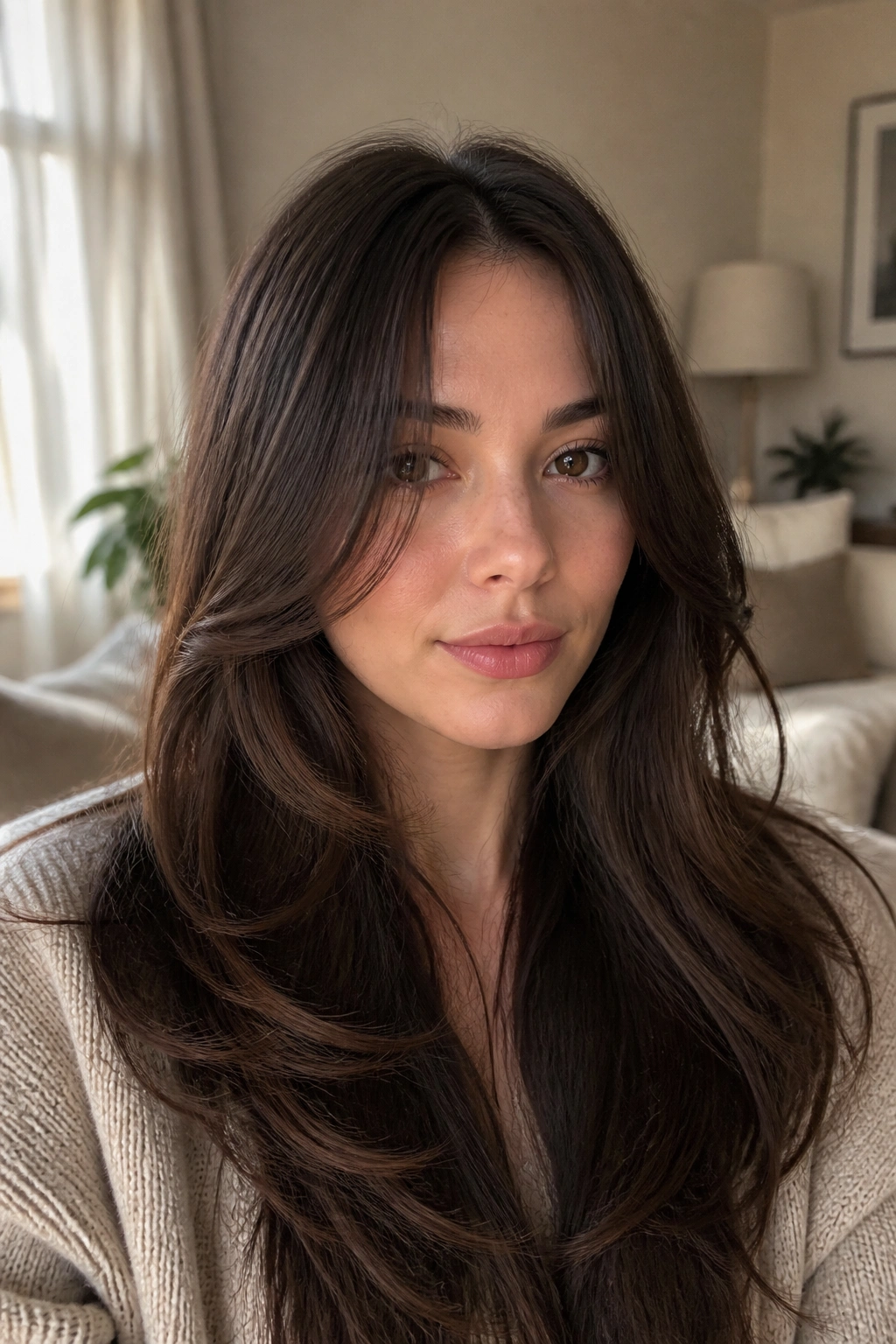
This is the safest flattering move for a round face, and I mean that in the best way. Long face-framing layers give brunette hair shape without crowding the widest part of the face, which is usually where a bad cut starts to go sideways.
Why It Works
When the shortest pieces begin below the cheekbones, the eye travels down instead of out. That little shift matters more than people think. It keeps the face looking longer and gives the hair a gentle bend near the jaw without sitting right on top of it.
The brunette part helps too. Dark hair can look heavy if it hangs in one solid block, but once those front pieces move, the color shows depth instead of weight. That’s the whole trick: shape first, shine second.
- Ask for the first layer to land around the mouth, chin, or just below, not at the widest part of the cheek.
- Keep the back length strong so the haircut still feels long, not chopped up.
- Blow-dry the front pieces away from the face with a round brush for a cleaner line.
- Best for straight, wavy, or lightly curly hair that can hold a soft bend.
Pro tip: If your stylist wants to start the layers higher, push back. Higher layers can make a round face look wider faster than you expect.
2. Brunette Curtain Bangs With Soft, Floating Length
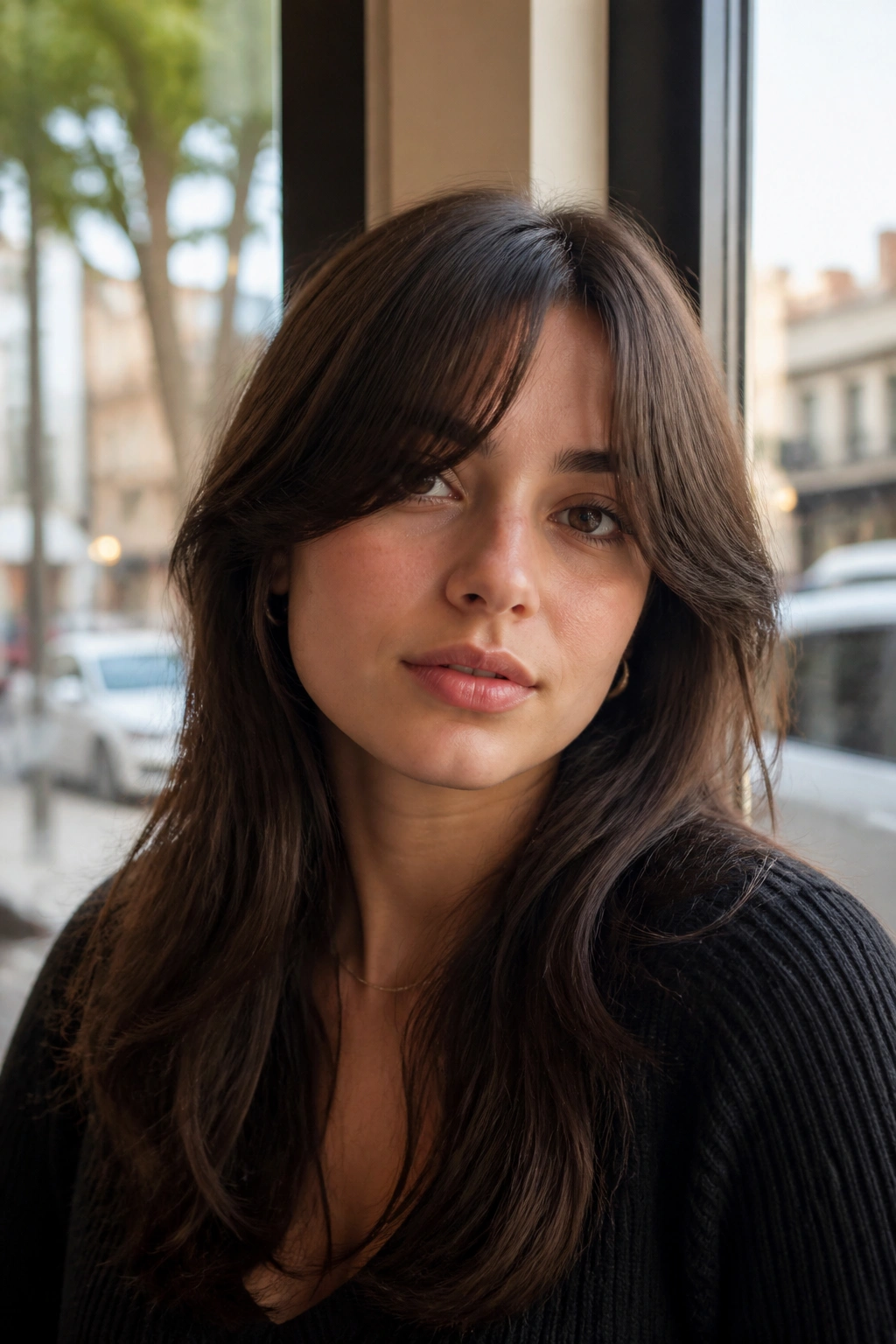
Why do curtain bangs keep working on round faces? Because they split the difference between bangs and face-framing layers, and that middle part opens the face instead of boxing it in.
Curtain bangs are especially good on brunette hair because the color makes the shape read clearly. You can see the center part, the soft bend, the longer edges sweeping into the sides. That visual line matters. A dense fringe can cut the face in half. Curtain bangs do the opposite—they make the forehead and cheeks feel connected in a softer way.
The best version is not short, choppy bangs sitting high on the forehead. You want the shorter center pieces to graze the brow or sit just below it, then taper into longer side pieces that blend into the rest of the cut. That gives you movement without the awkward “bangs taking over” problem.
If you style them, use a blow-dry brush or a large round brush and roll the bangs away from the face for a few seconds. A touch of bend is enough. Too much curl gets old fast.
3. The Butterfly Cut for Round Faces
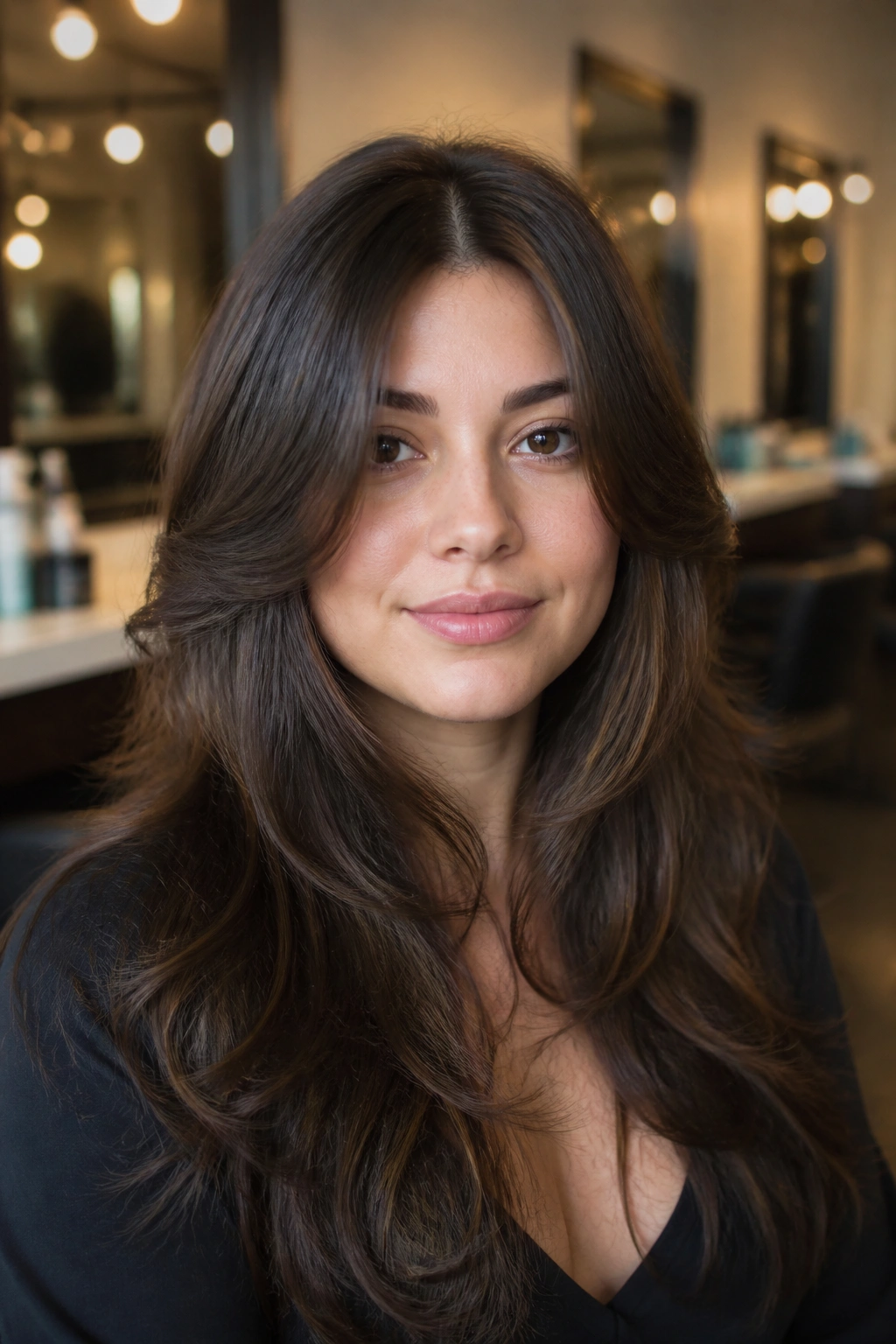
Why does the butterfly cut keep showing up in salons when people want long brunette layered haircuts for round faces? Because it gives you two things at once: lift around the face and a long, flowing length through the back.
The cut works by stacking shorter face-framing layers around the cheekbones and keeping the rest of the hair long. That creates a kind of visual “wing” near the face, but the overall shape still stays stretched out. On a round face, that matters. You get motion near the top half without sacrificing the length that makes the face look slimmer.
How to Ask for It
Tell your stylist you want the shortest pieces to live around the cheekbone or slightly below it, with long layers that blend into the back. If your hair is thick, this cut can remove a lot of bulk. If it’s fine, the layers need to stay soft so the ends don’t look thin.
A butterfly cut also loves a blowout. It does not need perfect curls. It needs bounce.
One more thing. The finished shape should still look long when you wear it down. If the front feels too floaty and the back feels too sparse, the balance is off.
4. U-Shaped Layers That Keep the Ends Full
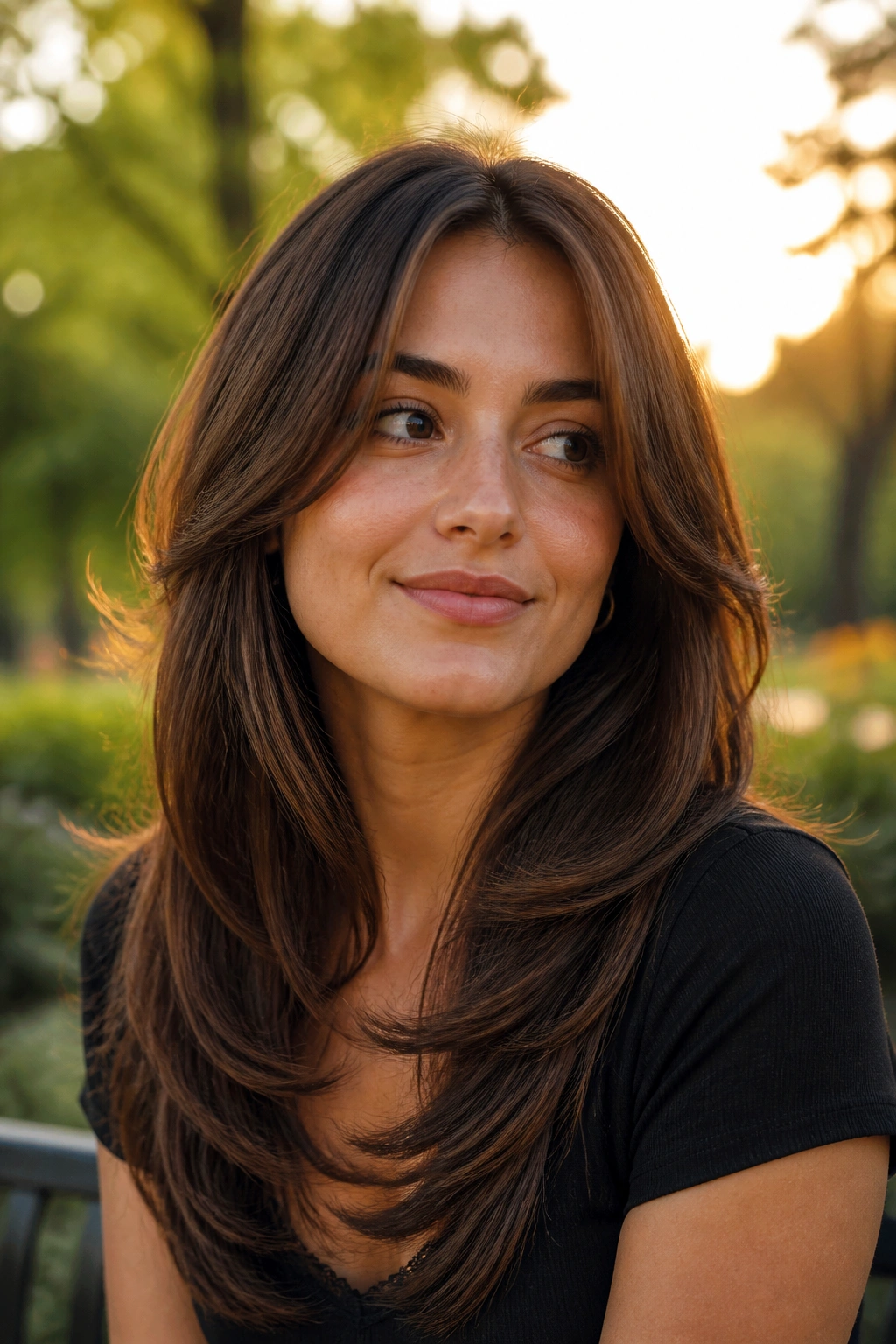
Picture hair that falls in a soft curve instead of a blunt wall. That’s the U-shape, and on a round face it feels gentle without being flat.
This cut keeps the center length the longest and lets the sides step up a little, which preserves fullness at the ends. That fullness matters more on brunette hair than people realize. Dark hair can look heavy in a straight line, but a U-shape gives it a little lift and keeps the perimeter from looking chopped off.
What to Watch For
- A U-shape works best when the layers are subtle, not sliced into obvious steps.
- The center part is usually the cleanest match, though a soft off-center part can work too.
- Thick hair gets the most from this cut because the curved shape removes some bulk.
- If you wear your hair straight most days, this is one of the neatest options around.
There’s also a practical bonus: it grows out well. The shape stays elegant longer than a more dramatic layered cut, which means fewer awkward weeks between trims. That alone makes it worth considering.
5. V-Cut Layers That Pull the Eye Down
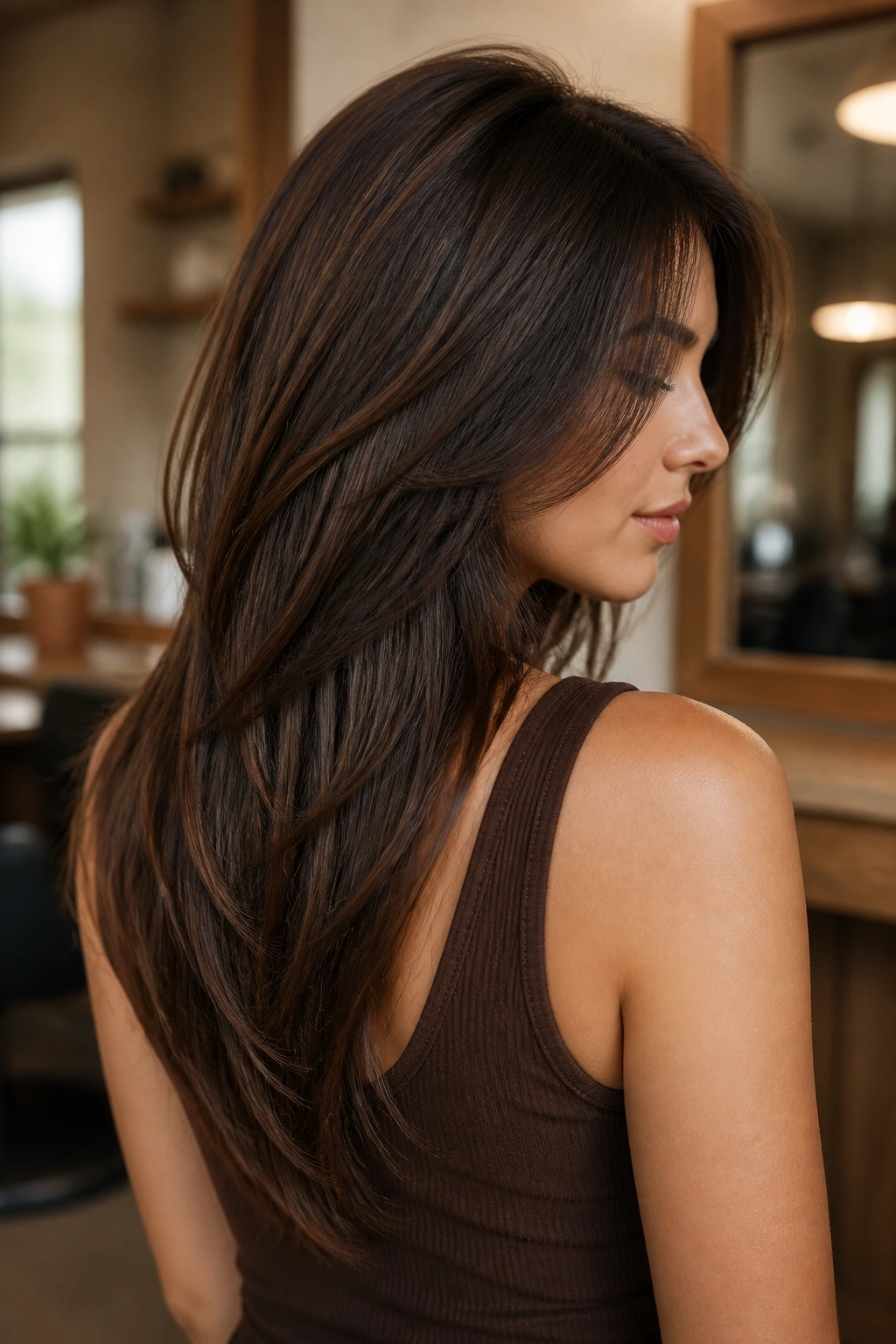
A V-cut sounds dramatic, and in a way, it is. The back falls into a point, while the sides stay long enough to frame the face. On round faces, that downward pull can be a small miracle.
The cut creates a strong vertical line, which is exactly what a round face usually needs. It keeps the silhouette from spreading outward at the sides and gives the length more presence from behind. When brunette hair is glossy, the V-shape reads even more clearly because the light lands differently across the layers.
I like this cut most on medium to thick hair. Fine hair can lose too much density at the ends if the point is too sharp. That’s where things get wispy in a bad way. A softer V is usually better than an aggressive one.
It’s also a good cut if you wear your hair down often and like to curl the front pieces away from your face. The V adds structure, while the layers keep it from feeling heavy. Straight, polished hair shows the shape best, though loose bends work too.
6. A Soft Shag With Long, Lived-In Layers
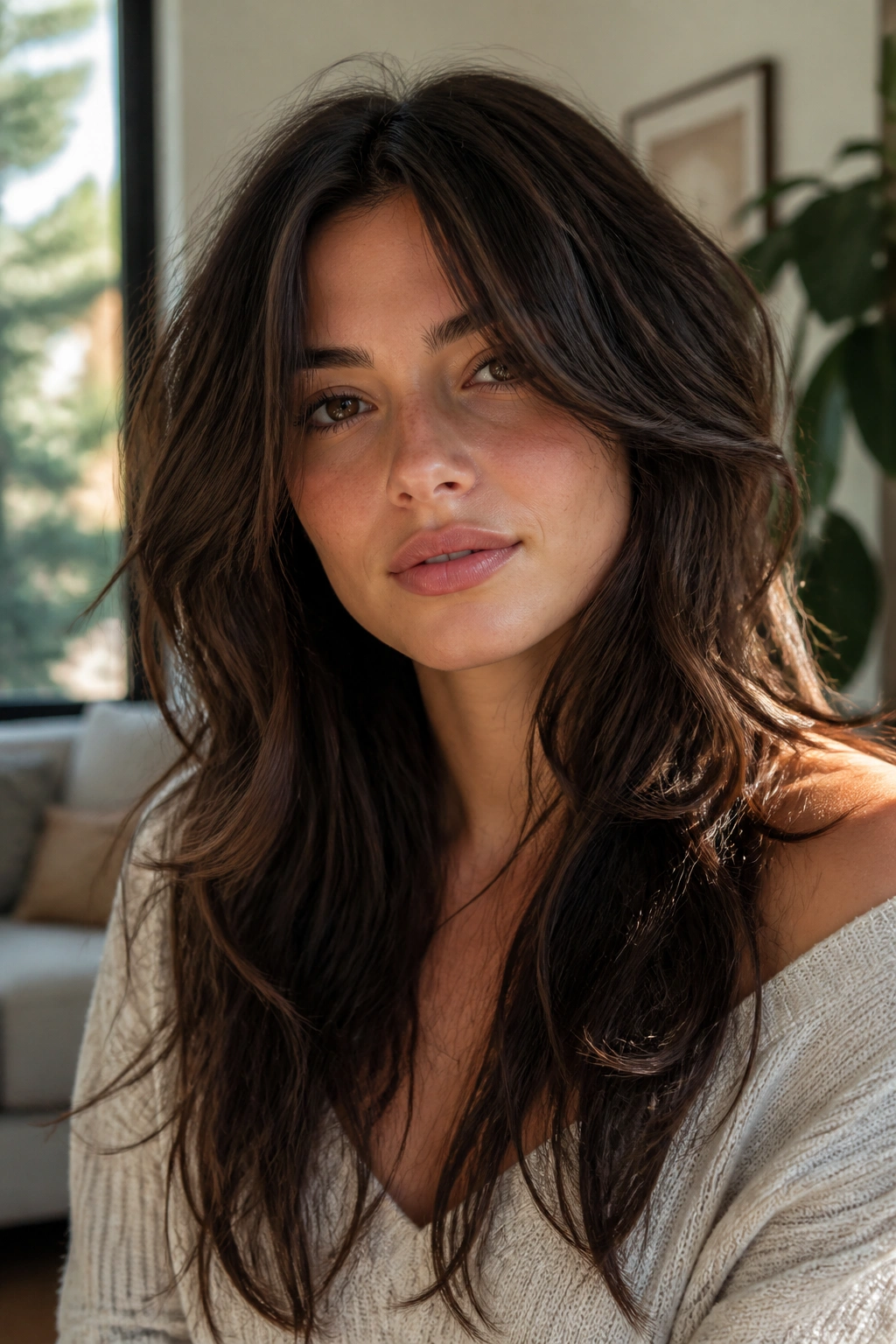
The long shag is the cool cousin in this group, but it needs a careful hand. Too much choppiness around a round face can make the sides puff out. Too little, and it loses the point.
What makes the long shag work is the way it breaks up density without chopping the length. The crown gets some lift, the sides get texture, and the ends stay long enough to keep the face from feeling boxed in. On brunette hair, that texture looks especially good because the shadows between the layers show up naturally.
This version suits wavy hair, loose curls, and anyone who likes to air-dry with a little mousse or cream. It is not the right choice if you want a neat blowout every day. The shag wants movement. It gets cranky when forced into something too slick.
Unlike a shorter shag, this one keeps enough length to stretch the face visually. That’s the real difference. You get attitude, but not the visual width that can come from a cut sitting right at the cheeks.
7. Side-Swept Layers That Skim the Jaw
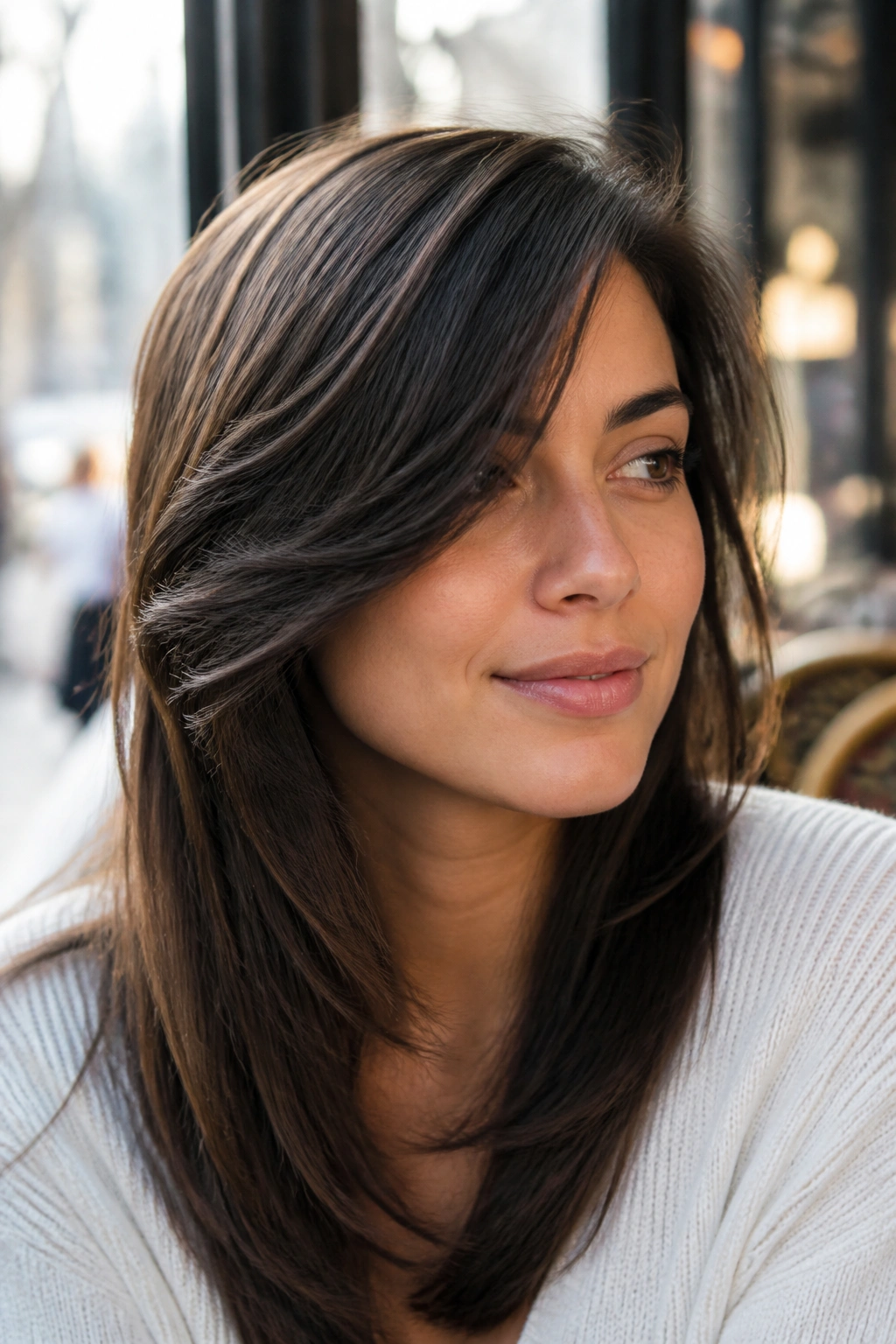
A side part changes the whole mood of brunette hair. It can turn a flat shape into something with lift, angle, and a little drama.
The Angle Matters
Side-swept layers are useful on round faces because they break the face into diagonals instead of circles. That diagonal line from the crown down toward the jaw creates the sense of length without needing a harsh cut. If your hair falls flat at the crown, this style is doing half the work for you before you even touch a curling iron.
What to Ask For
- Keep the part deep enough to create lift, not so deep it feels old-fashioned.
- Ask for front layers that flick away from the cheeks instead of curving in.
- Use a velcro roller or round brush at the crown if your roots collapse.
- Keep the longest front piece around the collarbone for a cleaner line.
This one is underrated for brunette hair that’s fine but plentiful. You can keep the body, lose the bulk around the cheeks, and still wear the hair loose without it swallowing your face.
8. Bottleneck Bangs With Long Brunette Length
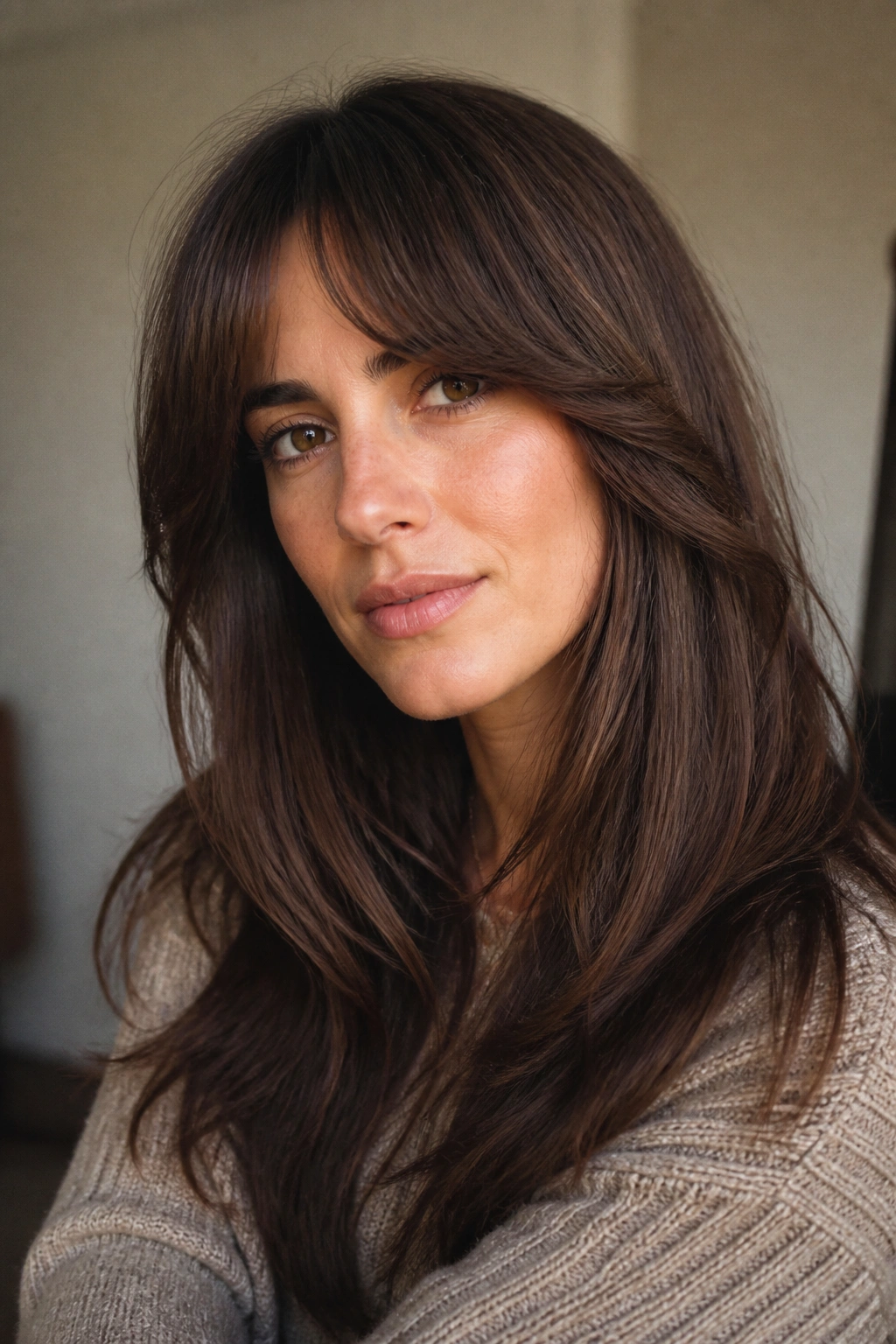
Bottleneck bangs are less fussy than a full fringe, and that makes them easier to live with on a round face. They start narrow in the center, then open out wider near the temples, which gives the forehead a softer frame without shutting the face down.
That shape matters because round faces usually need a little vertical lift up top. Bottleneck bangs create that by drawing attention to the center line first, then easing into the sides. On brunette hair, the effect is cleaner than you might expect. Dark hair can make bangs look heavy fast, but the tapered shape keeps them light.
The best version lands around the brows in the middle and blends into longer face-framing layers near the temples. If the bangs are too thick, the face feels shorter. If they’re too wispy, they disappear. The middle ground is where this cut lives.
Style them with a small round brush, not a giant one. You want bend, not barrel curls. And if your hair naturally flips forward, tell your stylist that before they start cutting. That little detail changes everything.
9. Invisible Layers for Fine Brunette Hair
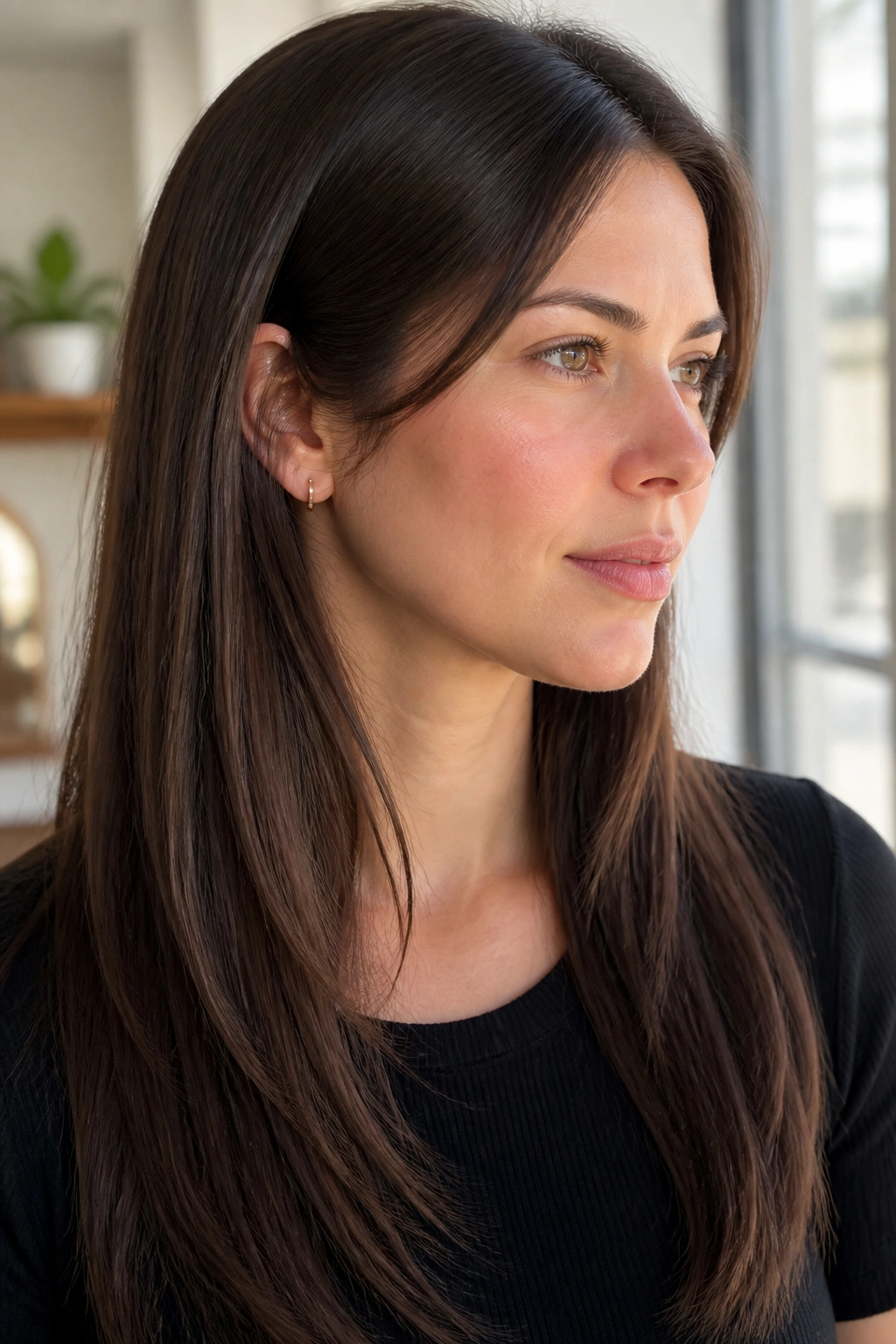
Can layered hair stay full instead of stringy? Yes, if the layers are hidden inside the shape instead of chopped all over the surface.
Invisible layers are a smart choice for round faces because they keep the perimeter of the hair looking clean and long while quietly removing weight from the middle. That means the haircut still reads as a long line, which is what helps lengthen the face. The texture is there, but it doesn’t announce itself.
For fine brunette hair, this is a much better bet than heavy, visible layers. Fine hair often loses density fast once too much is cut away from the ends. The result is a flat top and wispy bottom, which is not a flattering trade. Invisible layers avoid that mess.
What to Ask For
Ask your stylist for internal layering, a soft face frame, and a strong outer line. If they start talking about “removing bulk” in a way that sounds aggressive, slow them down. You want movement, not thinness. The cut should still feel like it has a body when you tuck it behind your ears.
This is one of those styles that looks plain on the hanger and excellent on the head.
10. Razor-Cut Layers With Airy Movement
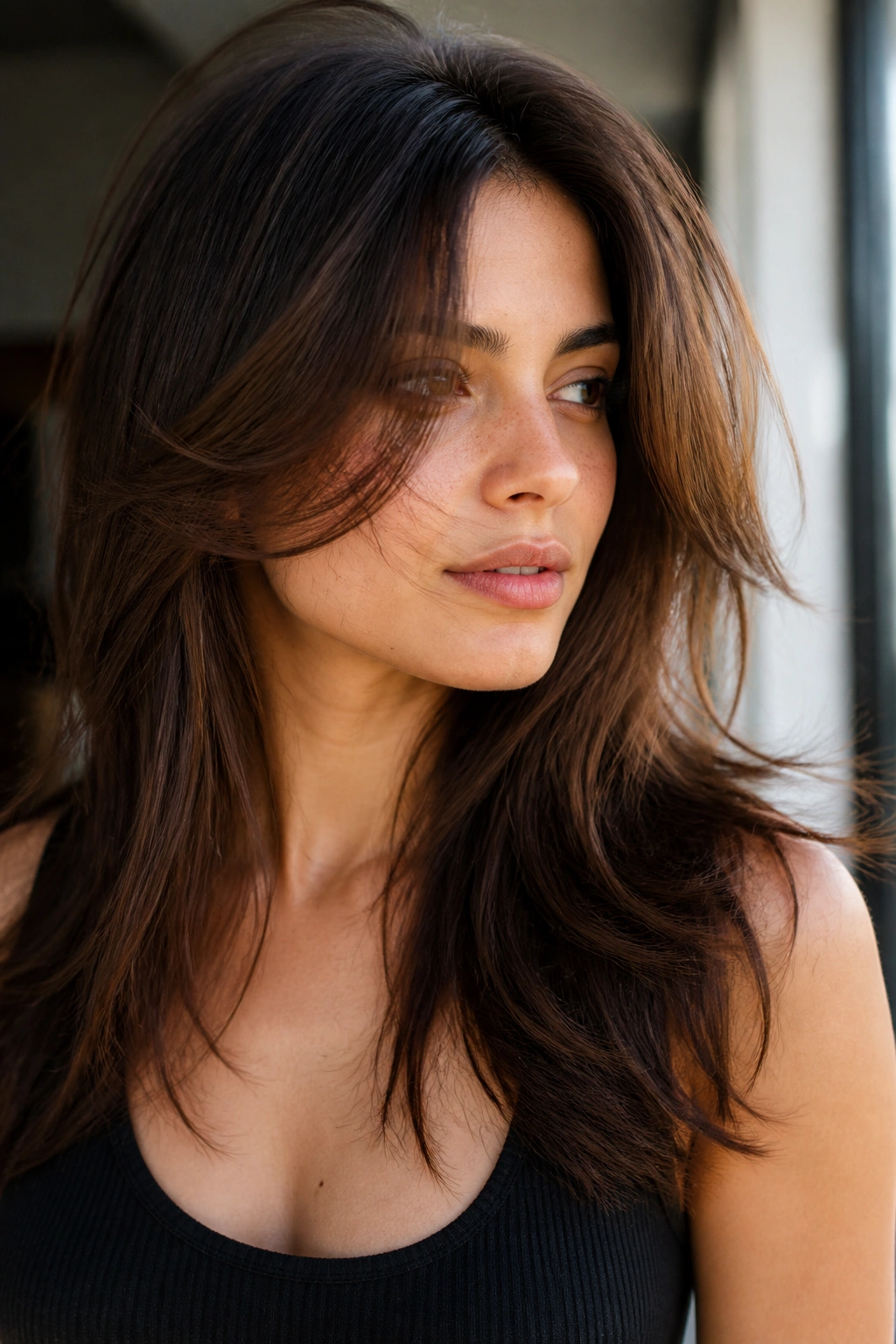
The first time you see razor-cut brunette layers move in daylight, the ends seem to breathe a little. That’s the appeal.
Razor cutting softens the edge of the hair, which can be useful when thick strands sit too blunt around a round face. The hair falls with more swing, and the front pieces can bend away from the cheeks instead of sitting there like a shelf. If your hair is coarse or dense, that softness can make the whole cut feel lighter without losing the length you want.
But there’s a catch. Razor cutting is not forgiving on fragile or very dry hair. It can fray the ends if the hand doing it is too heavy. This is one of those styles where the stylist matters as much as the haircut itself.
Key Details
- Best on thick, straight, or slightly wavy brunette hair.
- Ask for the shortest pieces to start below the cheekbone.
- Keep the back long enough to hold the shape.
- Plan on regular trims if your ends split easily.
The result is airy rather than polished. If you want a crisp, glossy finish every day, this is not the first cut I’d hand you. If you like movement and a softer edge, it hits the mark.
11. Balayage Layers That Show Off Dimension
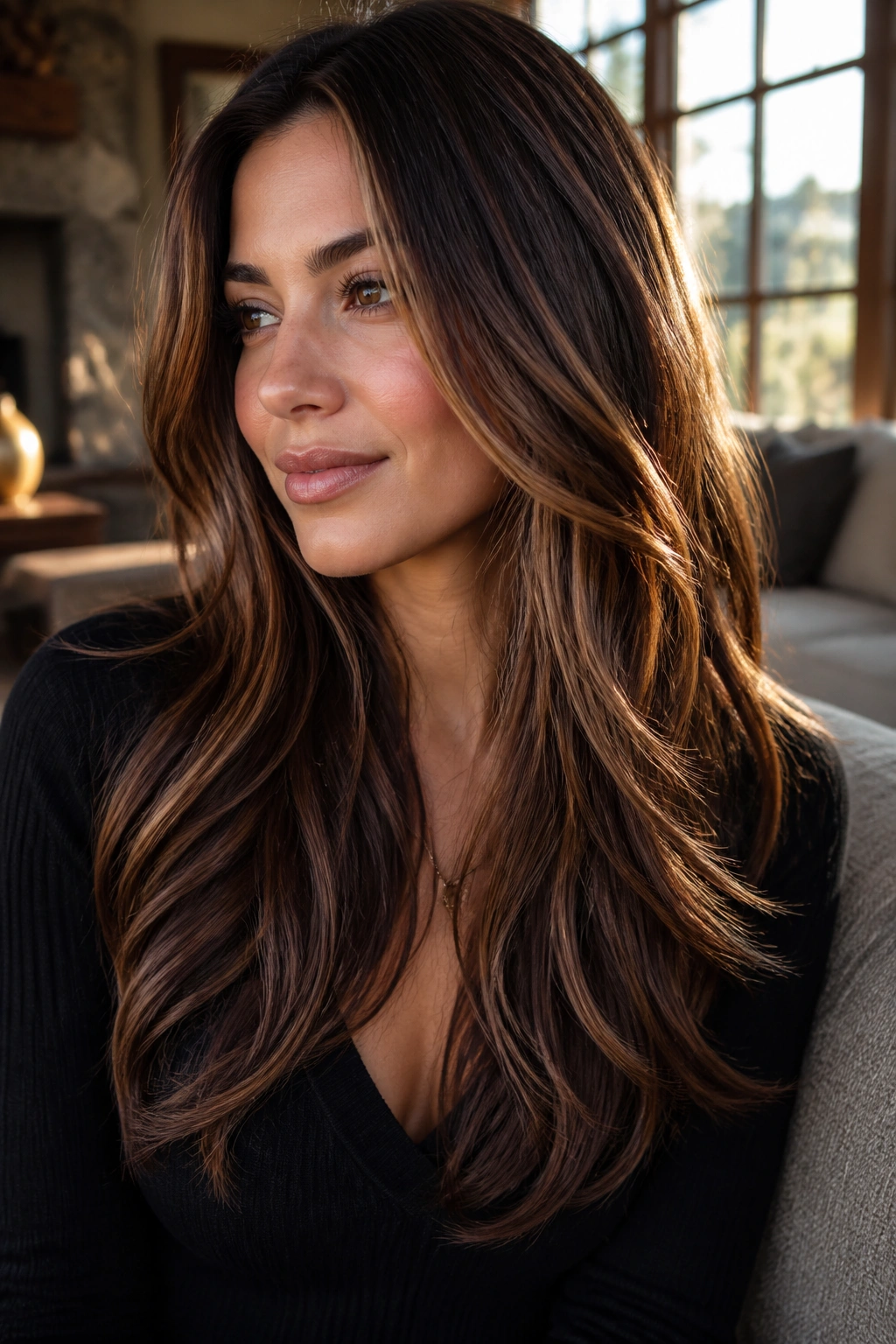
A layered cut on brunette hair can look flat if all the tones sit in one dark block. Balayage changes that fast.
Soft caramel, chestnut, mocha, or cinnamon ribbons make the layers visible without screaming for attention. The eye follows the lighter strands through the haircut, which means the layers read as movement instead of just length. On a round face, that visual movement helps the hair fall in a more vertical way.
What I like about this pairing is that the color never has to do the full job on its own. The haircut still needs smart placement. A gorgeous balayage on a poor cut is just expensive frustration. But when the layers are right, the color makes them easier to see in real life, not only in photos.
Brunette hair especially benefits from soft dimension near the face and through the mids. A few lighter ribbons near the front can brighten the cheeks, while darker lowlights at the bottom keep the ends from looking thin. It’s a simple trick, but it changes how the whole shape sits.
12. Waterfall Layers Around the Cheeks
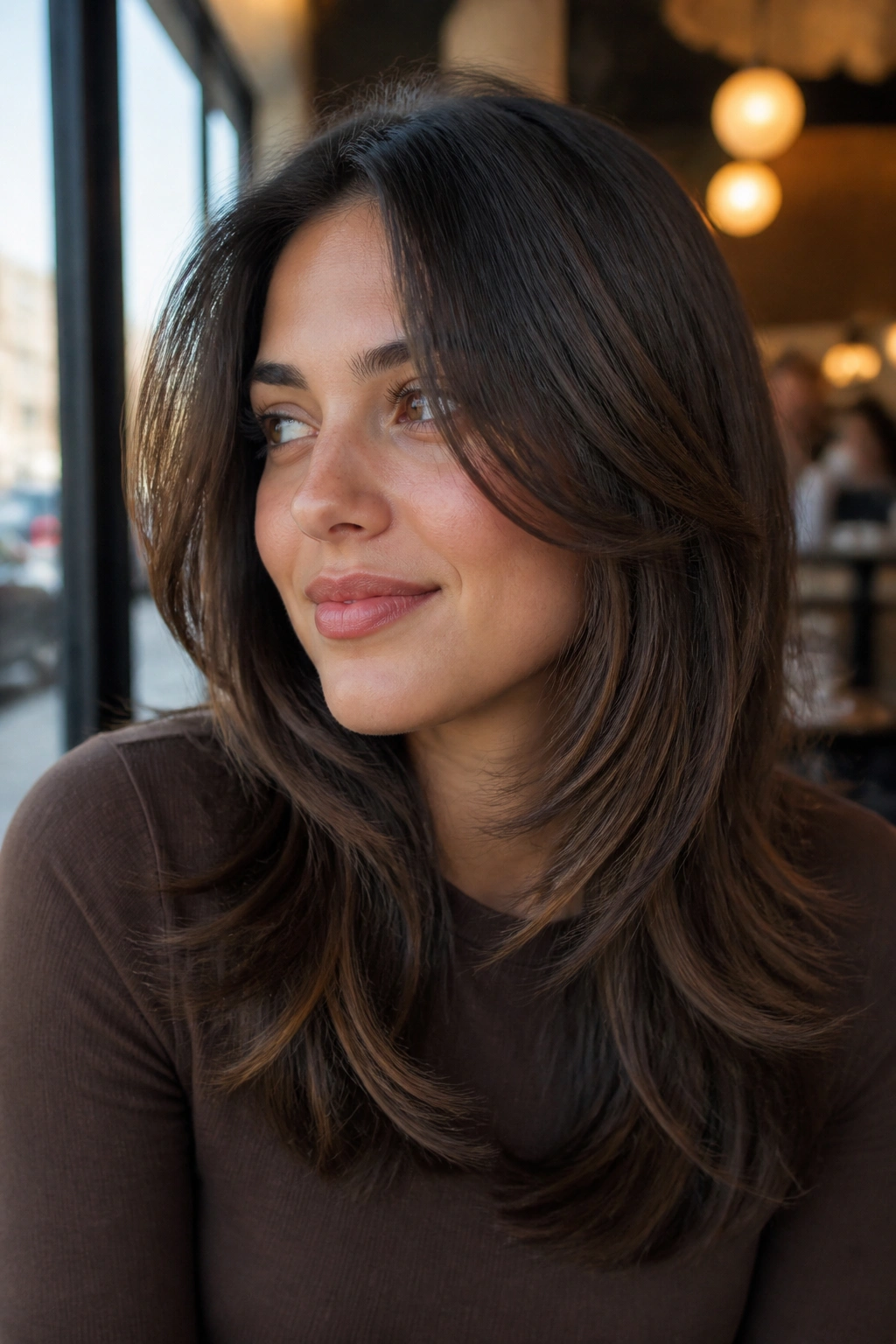
Unlike blunt face-framing chunks, waterfall layers fall in staggered pieces that curve softly from the cheekbone to the collarbone. That makes them a strong pick for round faces that need shape without a hard line.
The magic is in the way the layers overlap. Instead of one obvious step, you get a softer cascade that keeps the hair moving and keeps the cheeks from feeling surrounded. On brunette hair, that softness looks expensive without being fussy. The color deepens the curve of each layer.
This style works best when the front pieces start just below the cheekbone and continue down in small shifts. If the shortest layer is too short, the face can look wider. If it’s too long, you lose the contour effect. The placement has to be intentional. Not perfect. Intentional.
I’d reach for this if you want something feminine and easy to wear with both straight and wavy styling. It’s also one of the better options if you hate the feeling of heavy hair sitting on your jaw.
13. Long Wolf Cut With Brow-Grazing Fringe
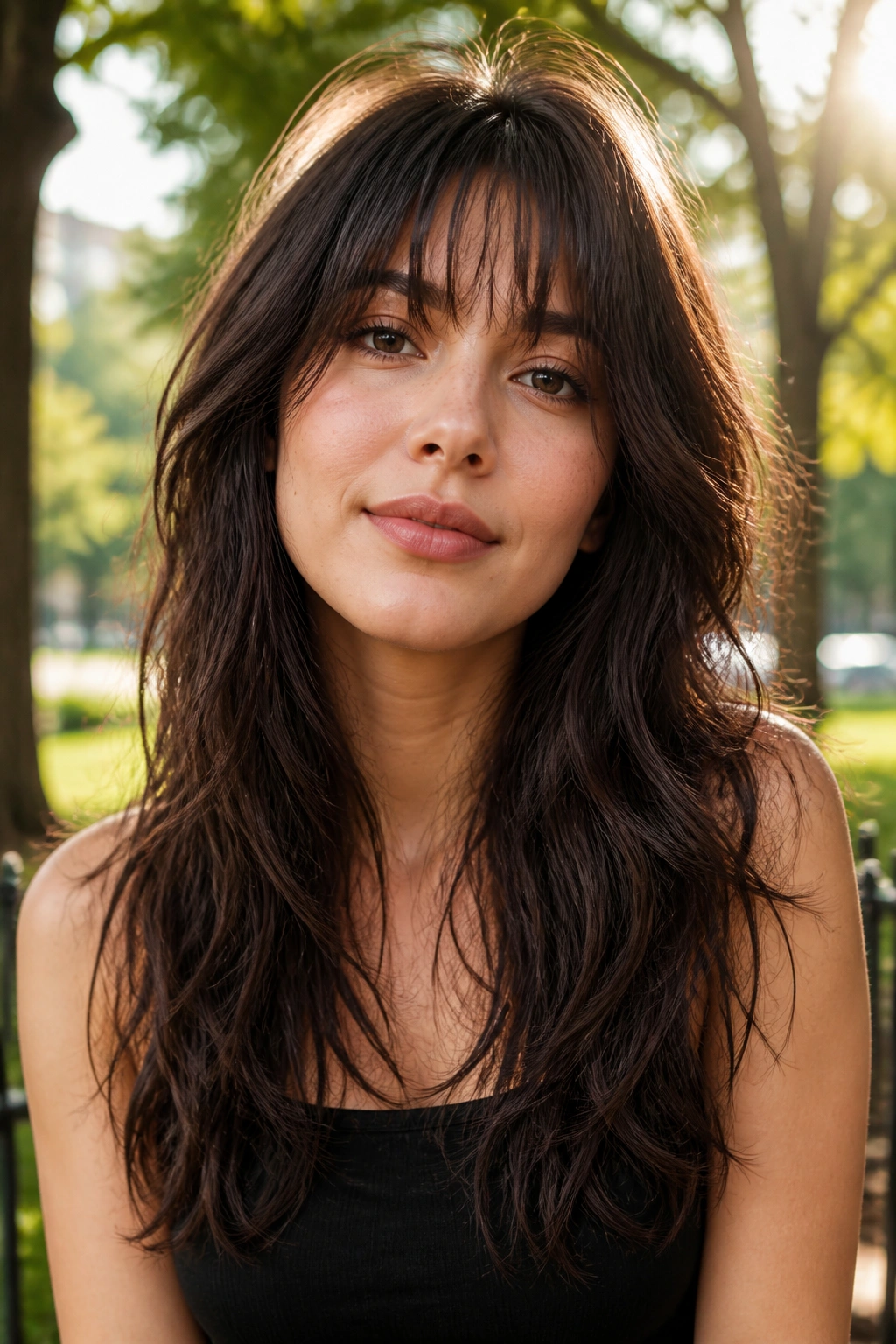
This is the bolder option, and it works if you want texture without giving up length.
Why It Works
A long wolf cut keeps the crown lifted and the ends loose, which gives a round face more height and less width. The fringe helps by shortening the visual distance from forehead to eye, but only if it stays light. Heavy bangs can crowd the face fast. Brow-grazing fringe keeps the shape open.
What to Watch For
- Keep the layers long enough to avoid a mushroom effect.
- Ask for a soft fringe, not a blunt one.
- This cut loves wavy or loosely curly brunette hair.
- Use a little texture spray at the roots if the crown falls flat.
The long wolf cut is not the most polished choice here. It has edge. It looks better a little undone, which is part of its charm. If you want a clean, glossy finish every day, you may get annoyed. If you like hair that moves and has attitude, this is a good one to save.
14. Feathered Ends That Keep Thick Hair Light
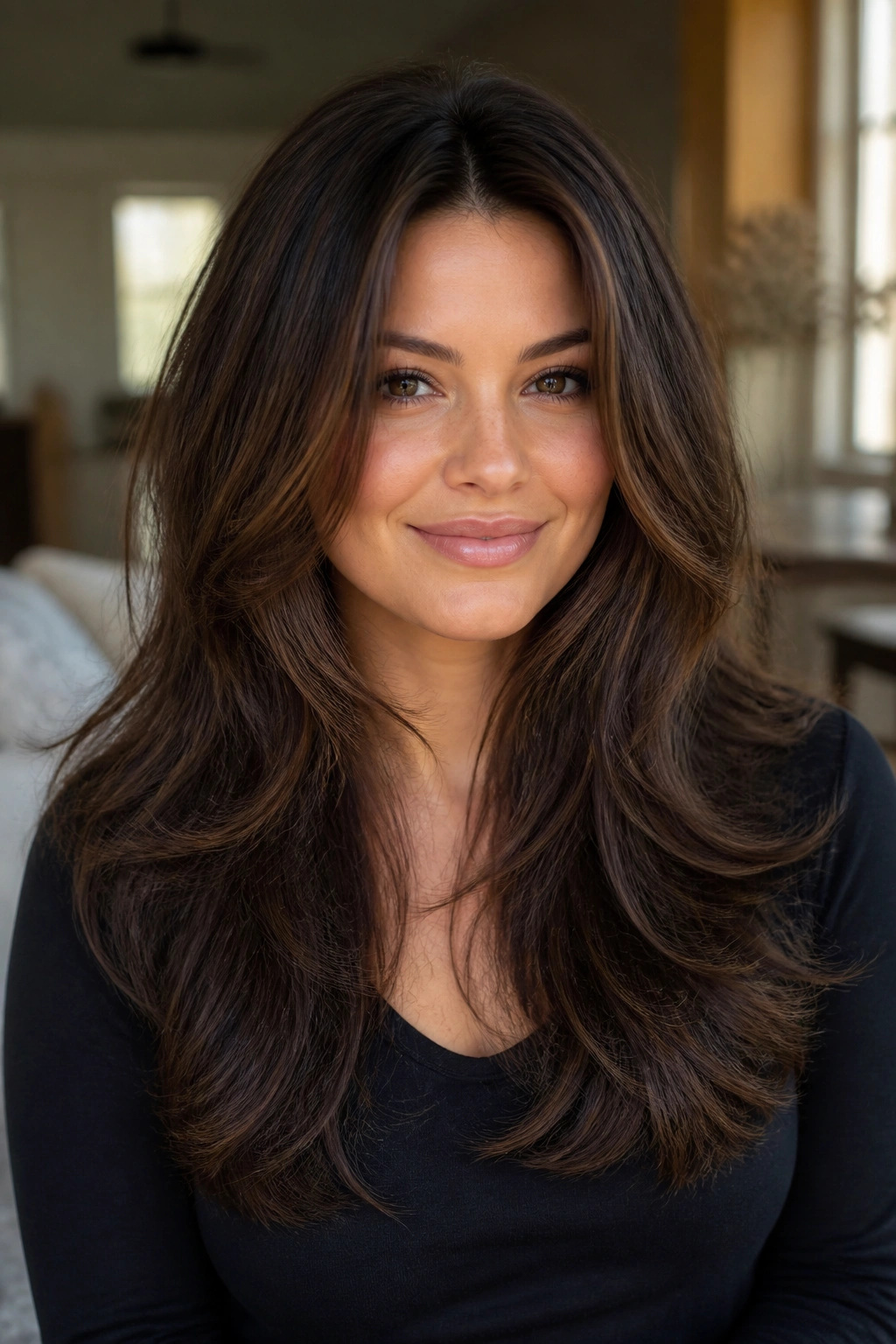
If your hair is thick and your round face gets buried under it, feathering the ends can help more than ripping layers through the middle.
Feathered ends soften the bottom edge of the haircut so the hair doesn’t sit as one dense block. That’s useful on brunette hair because thick dark strands can look even heavier when they fall straight. A feathered finish keeps the shape long, but it breaks up the weight just enough to stop the width from taking over.
The best part is how little you need to do after the cut. A blow-dry with the nozzle pointed down and a round brush at the ends usually does enough. You do not need to curl every section or spray it into place. The haircut is doing the heavy lifting.
This is a practical choice if you wear your hair down most days and want movement that doesn’t feel overstyled. It’s also kinder to thick hair that tends to puff when layers are cut too high around the cheeks.
15. Deep Side Part Layers for More Lift
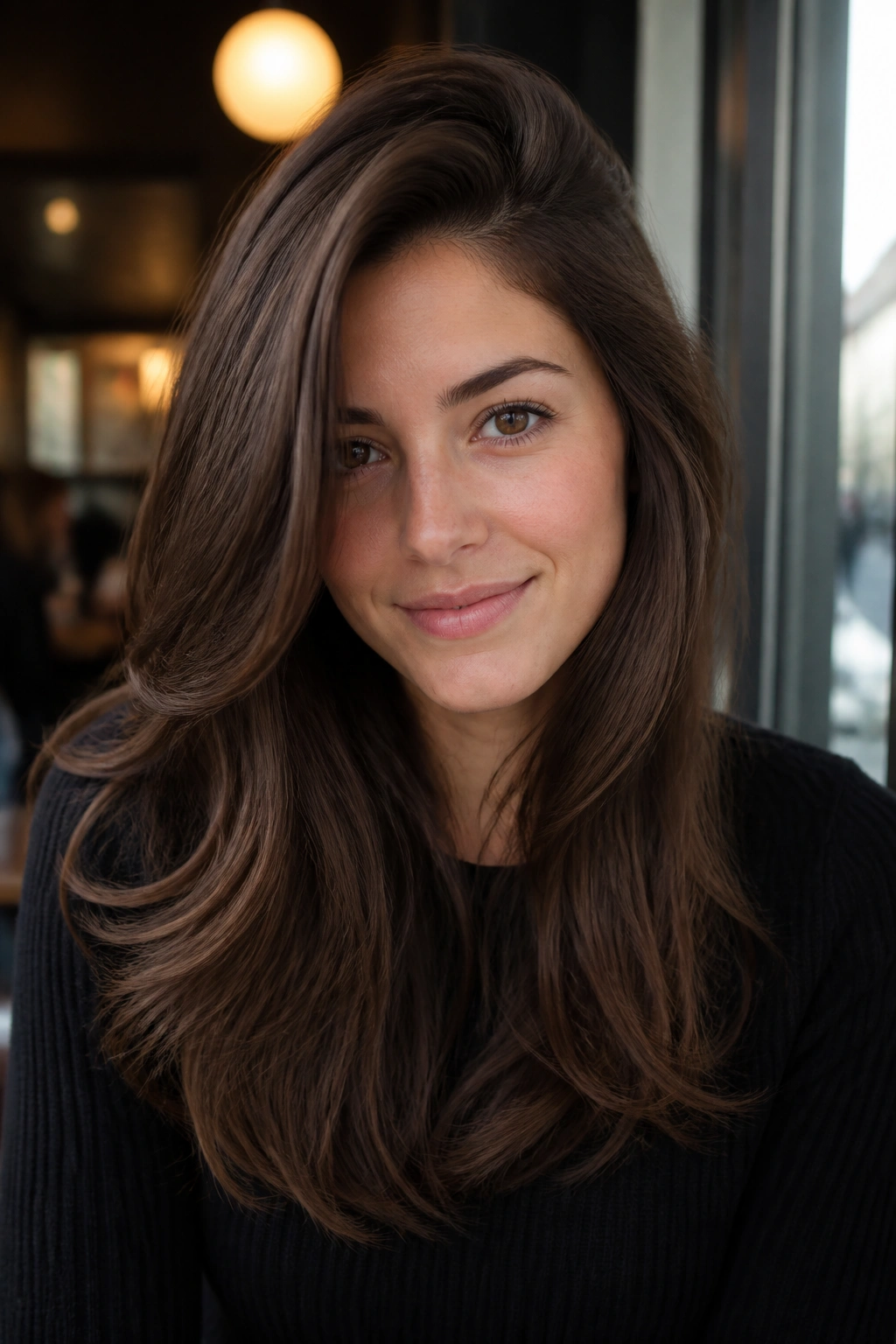
Why does a deep side part keep showing up in flattering brunette haircuts for round faces? Because it changes the balance of the whole head in one move.
The side part creates height at the crown and shifts volume away from the widest part of the face. That alone can make a round face look longer and leaner. Pair it with long layers, and the haircut starts working in your favor from top to bottom.
How to Wear It
Set the part while your hair is still damp, then clip the heavier side away from the face until it dries. That helps the root remember where to fall. A small root-lift spray or a touch of mousse at the crown can help, but don’t pile on product. Too much and the hair turns stiff.
This style is especially useful if your layers already exist and you just want them to look sharper. You do not always need a new cut. Sometimes you need a better part and a little root lift. That’s the boring answer, and honestly, it’s often the right one.
16. C-Cut Layers That Curve Inward at the Ends
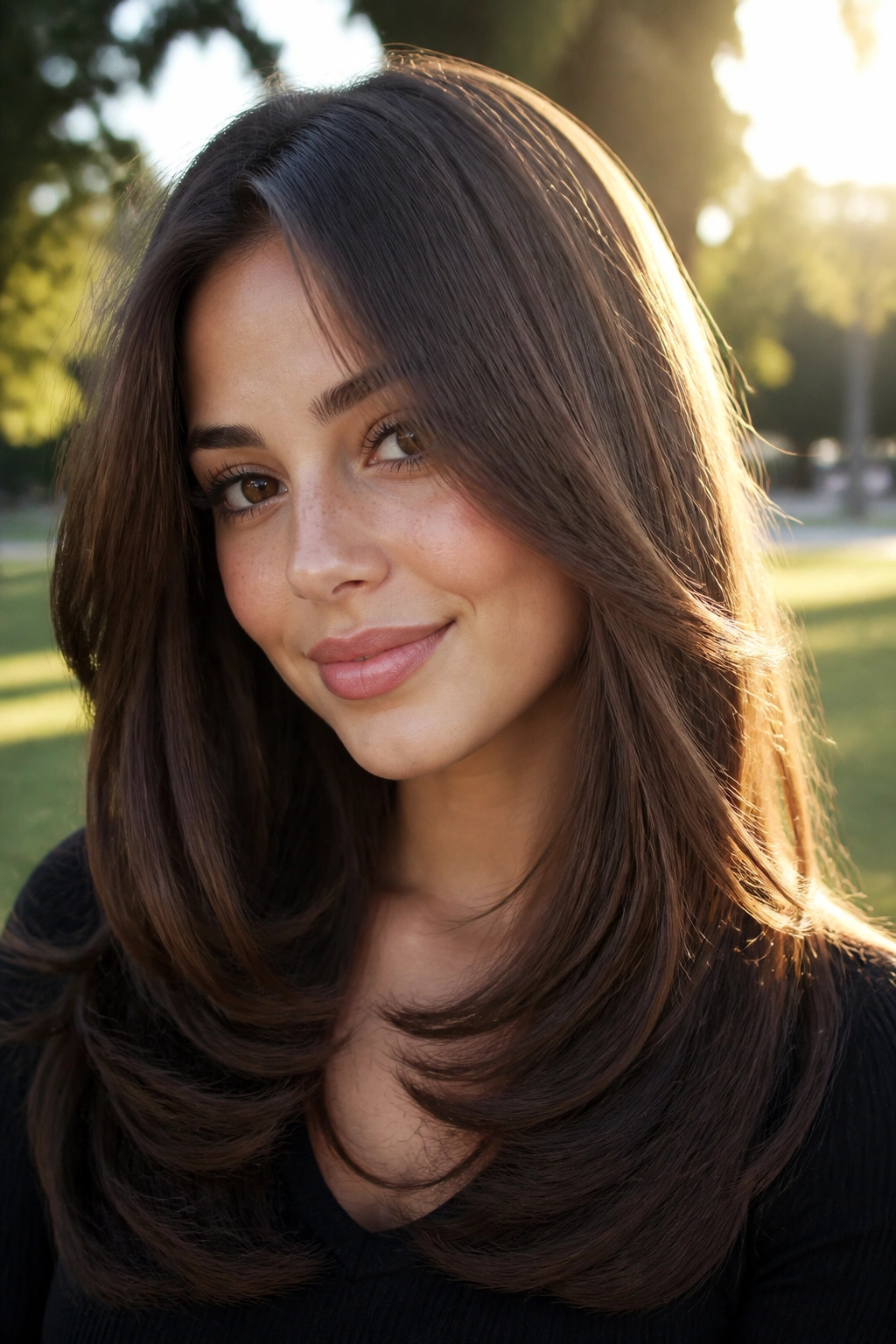
A C-cut is softer than a V-cut and less boxy than a U-shape, which makes it a nice middle ground for round faces.
The ends curve inward in a gentle arc, almost like the hair is hugging the collarbone and then turning back toward the face. That shape gives brunette hair polish while still keeping the silhouette long. It also avoids the hard spread of a blunt cut sitting at jaw level.
Good Fit Checklist
- Works well on straight to wavy hair.
- Looks neat with a round brush blow-dry.
- Best when the shortest face-framing pieces stay below the cheeks.
- Not ideal if you want a rough, shaggy finish.
The C-cut feels tidy, but not stiff. That’s the part I like. It gives you movement without the messier texture of a shag or wolf cut, which makes it a strong everyday option if you need something office-friendly or low-drama.
There’s a small styling bonus too: the curve makes the hair look full at the ends even when the layers are long. That’s a rare thing, and worth keeping in mind.
17. Long Layers With a Soft Wispy Fringe
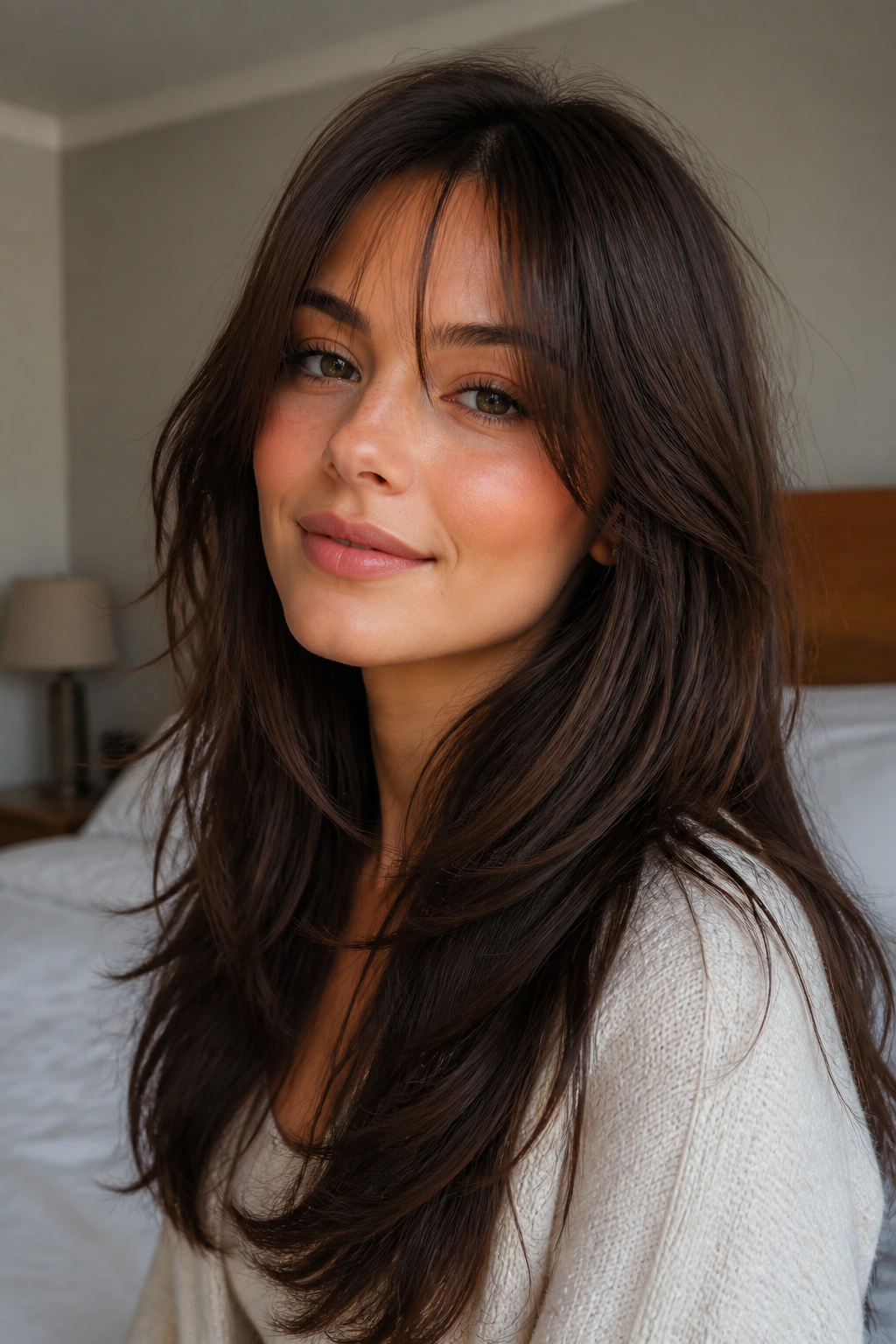
A wispy fringe is not the same thing as a full bang. That difference matters a lot on a round face.
The fringe should feel light enough that you can still see a bit of forehead through it. That breaks up the face gently instead of chopping it in half. Long layers underneath keep the rest of the hair moving downward, so the fringe doesn’t become the main event. On brunette hair, the contrast between skin and dark strands helps the wispy shape stand out without looking heavy.
This cut is a good compromise if you want something softer than a curtain bang but less committed than a full fringe. The fringe can blend into the front layers, which keeps the haircut feeling cohesive. You get texture around the face, but not too much bulk.
The main thing to avoid is over-thinning. Wispy does not mean see-through. It should still have enough hair in it to feel intentional. Too sparse, and it can look accidental. Not a good look.
18. Glossy Cascade Layers That Stay Polished
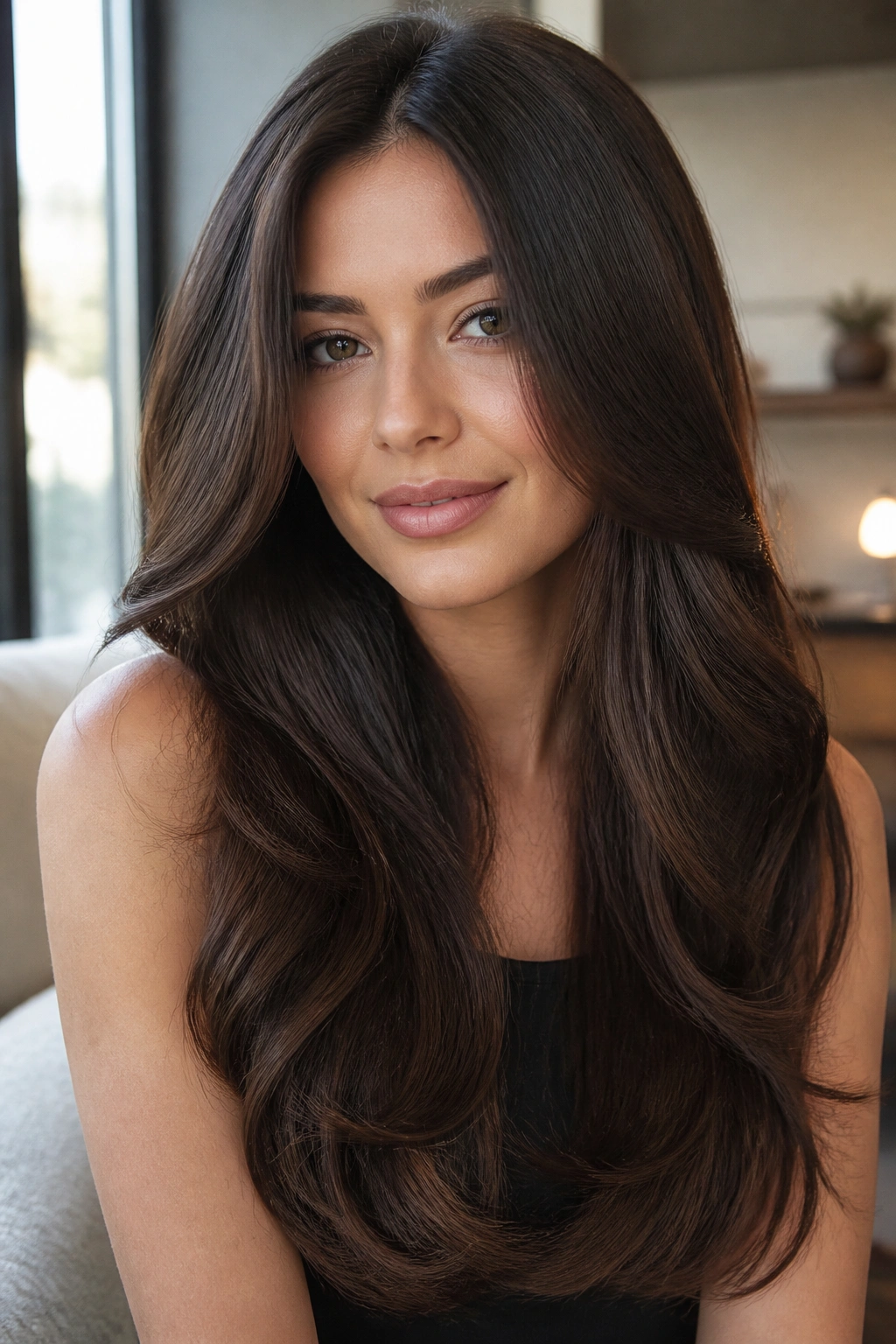
If you want brunette layers that look smooth, expensive, and easy to wear, a glossy cascade is hard to beat.
Unlike the messier texture cuts, this one leans into shine and flow. The layers are long, the transitions are soft, and the overall shape falls in a clean line that draws the eye downward. On a round face, that downward motion matters. It helps lengthen the shape without relying on bangs or edgy texture.
This style is best when the cut is paired with good maintenance. Regular trims keep the ends from looking stringy, and a simple serum on the mids and ends keeps brunette hair looking rich instead of dull. You do not need a pile of product. A little goes a long way, especially on dark hair where buildup shows faster than people expect.
I’d recommend this to anyone who likes hair that can look neat with minimal fuss. It works for workdays, dinner plans, weddings, and all the in-between moments where you want your hair to behave without looking overdone. That’s a rare balance, and a useful one.
