



Fine hair has a personality all its own. It is delicate, prone to tangling, and—if cut with a heavy hand—can lose its volume within an hour of leaving the house. When you layer that fine texture with the lightness of blonde, you have a unique set of challenges and massive potential for beauty. Darker hair often shows density more easily, but blonde hair can sometimes look translucent if it is not cut with purpose.
The goal with fine, blonde hair is never just to chop off length. You are engineering volume, creating the illusion of density, and using the natural light-reflecting properties of blonde shades to make the hair appear thicker than it actually is. Whether you are dealing with stick-straight strands or a subtle natural wave, the right layers can make your hair look like it has doubled in thickness.
Avoid the mistake of thinning shears. Many stylists reach for them on fine hair to “remove bulk,” but removing bulk from hair that already lacks it is the quickest way to end up with stringy ends. Instead, you need strategic point-cutting and internal layering that supports the structure of the style rather than just removing hair. Let us look at twenty-two specific ways to cut and color that can change the way your hair moves, sits, and feels.
1. Textured Pixie with Ash Blonde Highlights
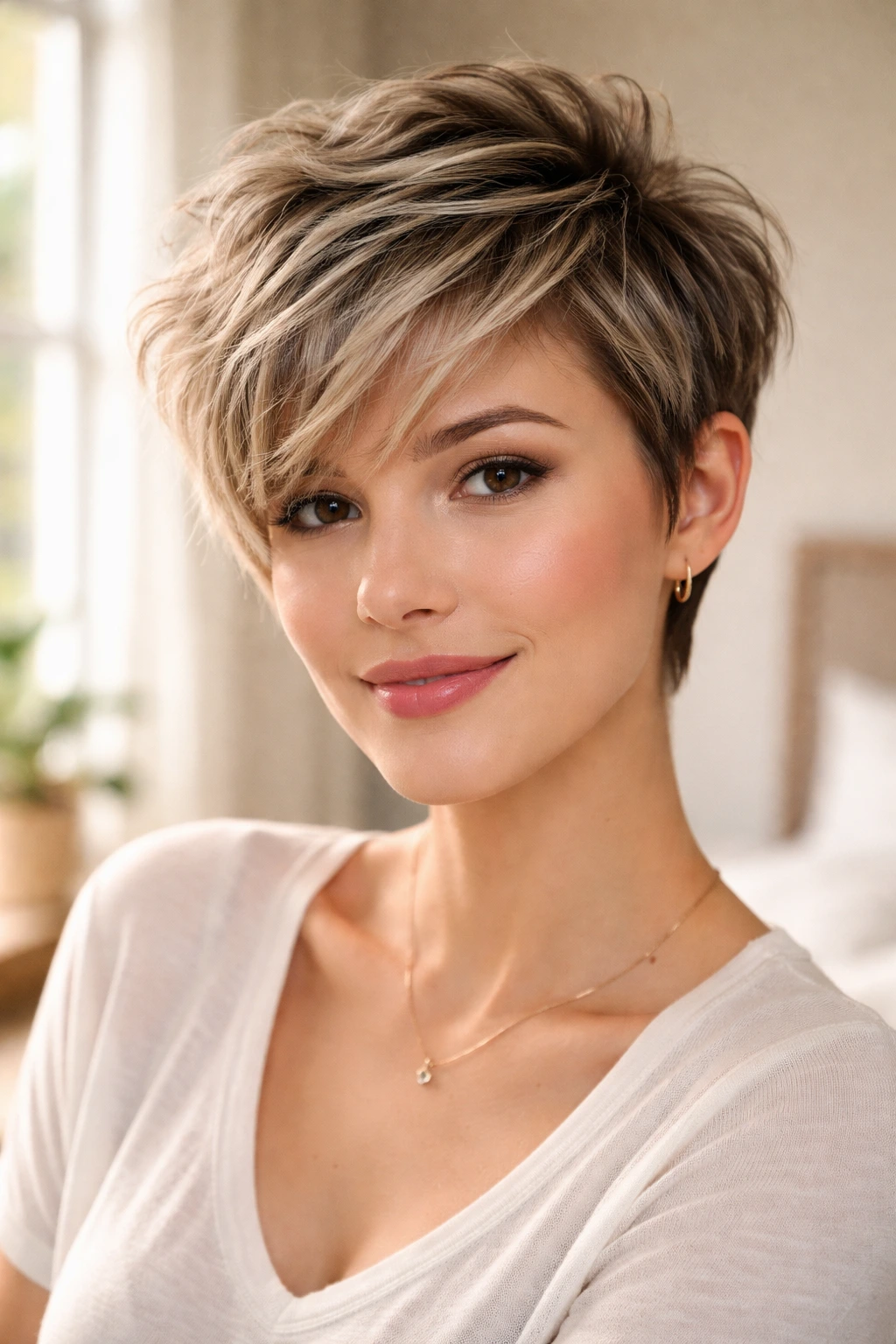
A pixie is the ultimate commitment to volume. Because the weight of long hair is completely removed, fine strands gain an instant lift at the roots. For a blonde, adding ash highlights provides the necessary dimension to keep the short style from looking like a flat, monochromatic helmet.
The secret here is the length of the top layers. You want them just long enough to create a messy, wind-swept look. Use a lightweight texturizing paste—not a heavy wax or pomade—to mess up the top. This keeps the hair airy and prevents it from clumping together, which is the enemy of fine hair.
Why This Works for Fine Hair
- The shorter length eliminates gravity’s pull on your strands.
- Ash highlights reflect light differently than the base color, creating the look of more hair density.
- Point-cutting the ends of the layers creates soft, choppy edges that look intentional and full.
Pro tip: Use a dry shampoo even on clean hair. It adds a grit that helps the fine texture hold its shape throughout the day.
2. Shoulder-Length Shag with Curtain Bangs
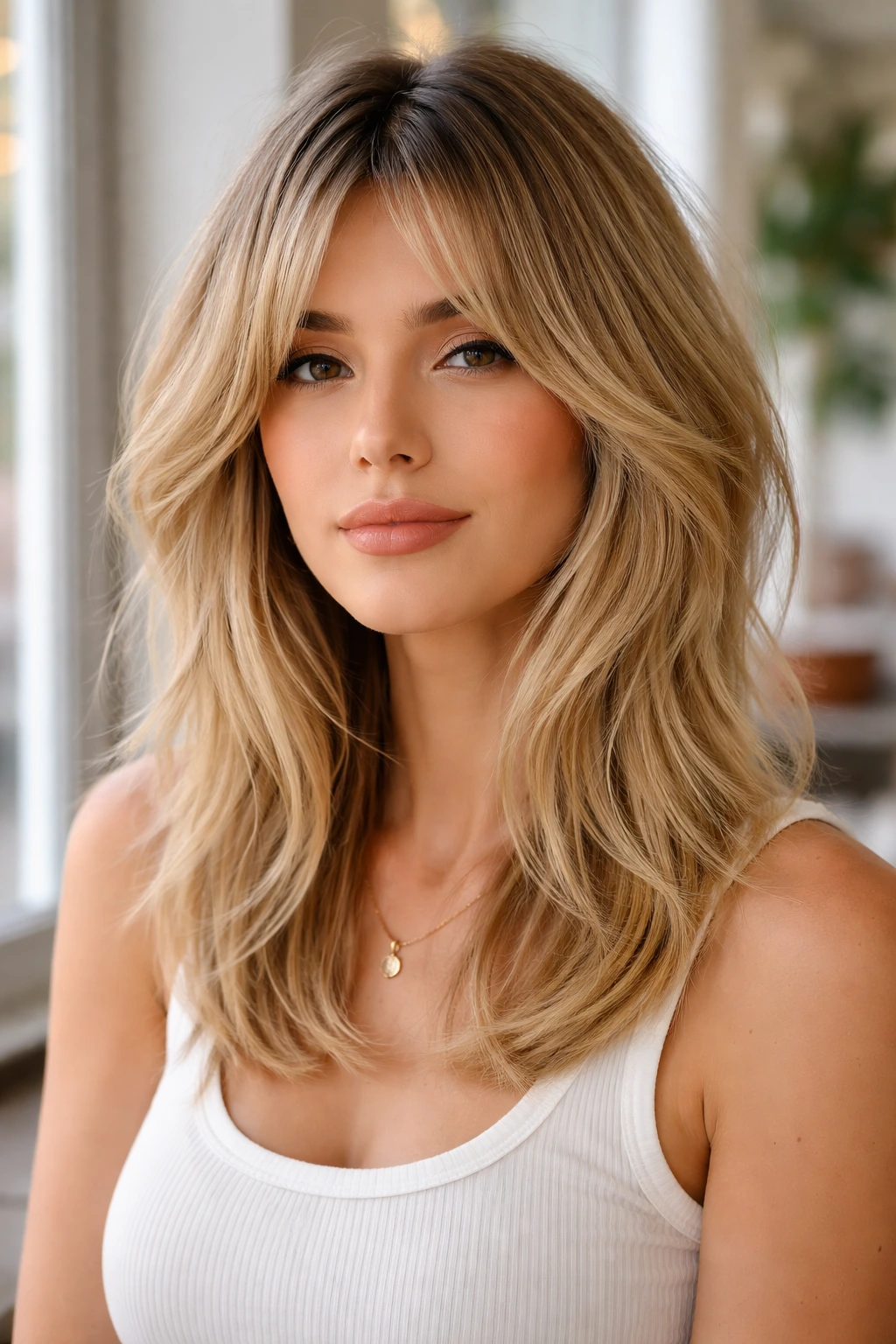
The shag has made a massive comeback, but for fine hair, you need a “soft” shag rather than a heavy, 70s-style rockstar version. A shoulder-length cut keeps the weight off your neck, while the curtain bangs frame your face and fill in the gaps where fine hair tends to look sparse.
Blonde acts as a camouflage here. By keeping the roots a bit darker—maybe a soft honey blonde—you draw the eye to the ends of the hair, which are lightened to a brighter cream or platinum. This color gradient makes the hair look like it has more depth, tricking the eye into seeing a fuller mane.
Styling the Layers
You do not need to spend hours with a curling iron. Instead, use a round brush to flick the ends of your curtain bangs outward while the hair is damp. Let the rest of the layers air-dry or use a light sea salt spray to encourage natural movement. The goal is “undone” chic, not polished perfection.
3. Wispy Layers with Platinum Balayage
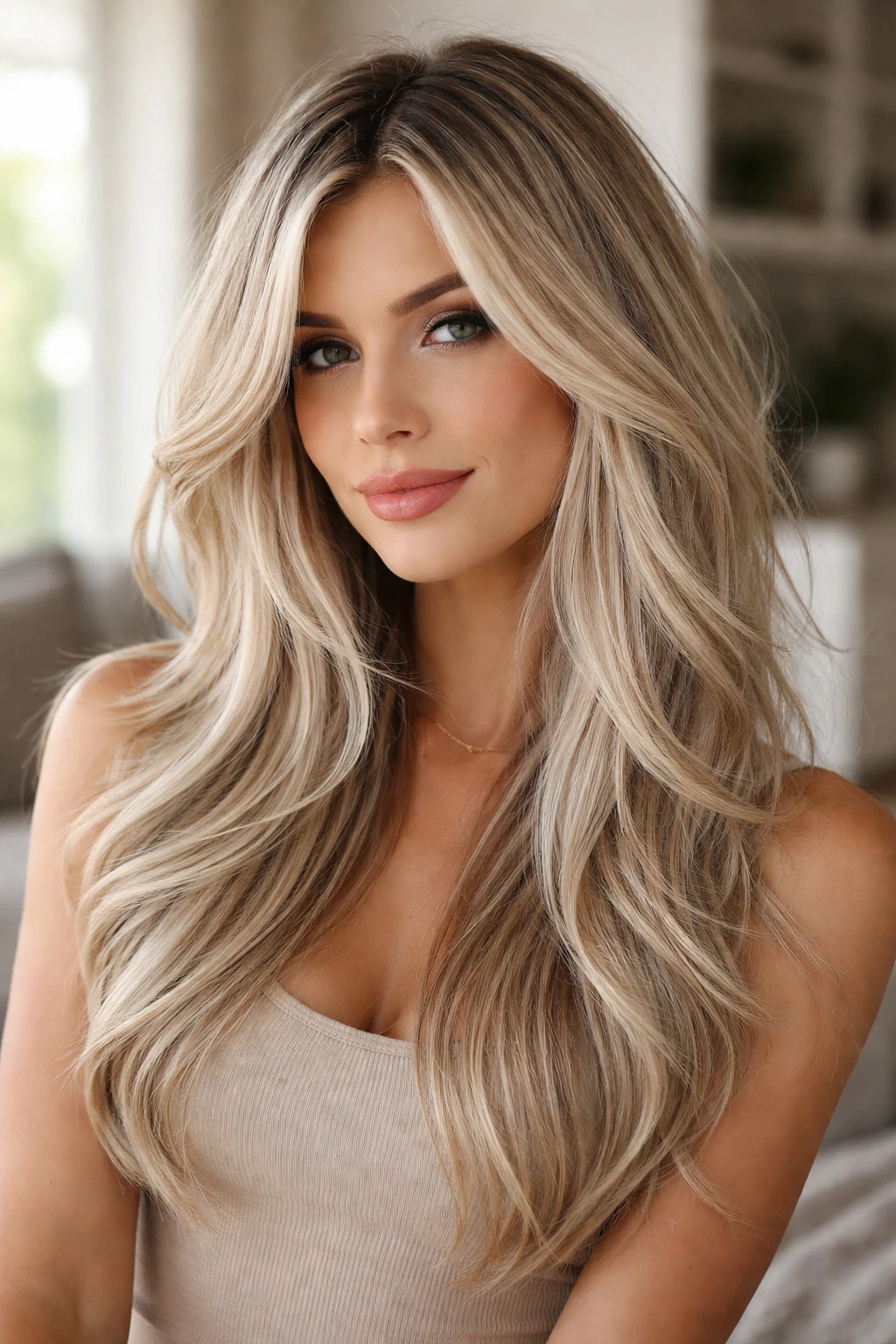
If you love length, you do not have to abandon it, but you do have to be smart about how you layer it. Wispy layers are the answer. Unlike heavy, blunt layers that can make fine hair look ragged at the bottom, wispy layers are cut in a way that allows the hair to interlock.
Platinum balayage is essential for this style. When the light hits the platinum pieces, it creates a high-contrast look that hides the fact that the strands are fine. You are playing with light and shadow across the length of the hair.
The Maintenance Factor
Be honest with yourself about your commitment to maintenance. Platinum balayage on fine hair requires gentle care to prevent breakage. Because fine hair is naturally more fragile, ensure your stylist uses a bond-builder during the lightening process. It keeps the hair integrity high, which prevents the “frizz halo” that often ruins long, fine styles.
4. Long Choppy Layers with Root Melt
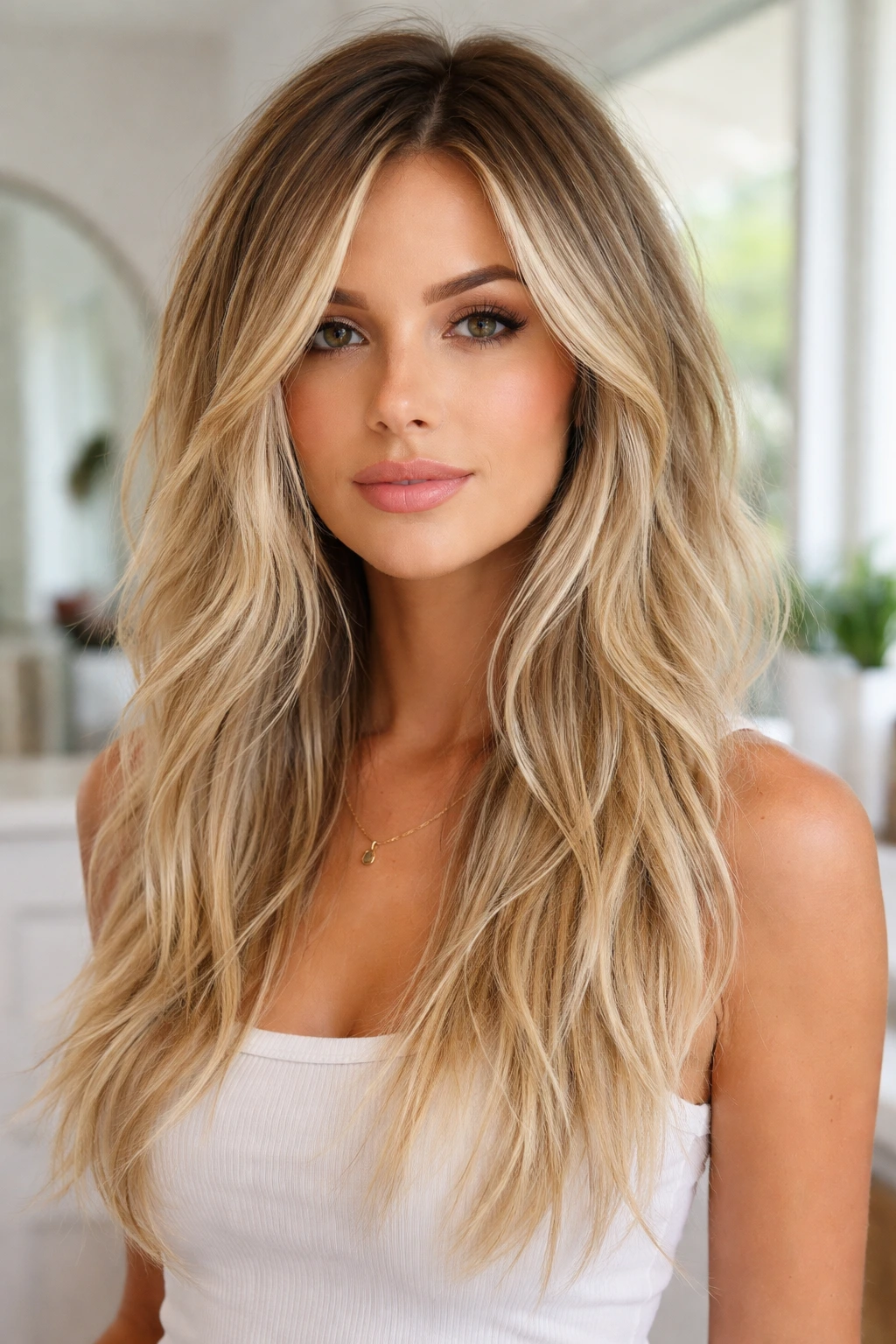
Long hair and fine hair are often described as enemies, but a root melt changes the game. A root melt—where your natural, darker root is seamlessly blended into a lighter blonde—adds instant visual weight to the crown. It creates the illusion that the hair is thicker and stronger at the base.
By adding choppy layers throughout the lengths, you stop the hair from hanging like a heavy curtain. The layers allow the hair to separate into individual strands rather than sticking together in a singular, thin sheet.
How to Ask for It
Tell your stylist you want “shattered ends” or “choppy layers” that start at the collarbone. Avoid layering too high up, as this can make the hair look thin and stringy. You want the bulk of the hair to remain at the bottom to maintain a solid, healthy-looking baseline.
5. Butterfly Cut for Fine Hair
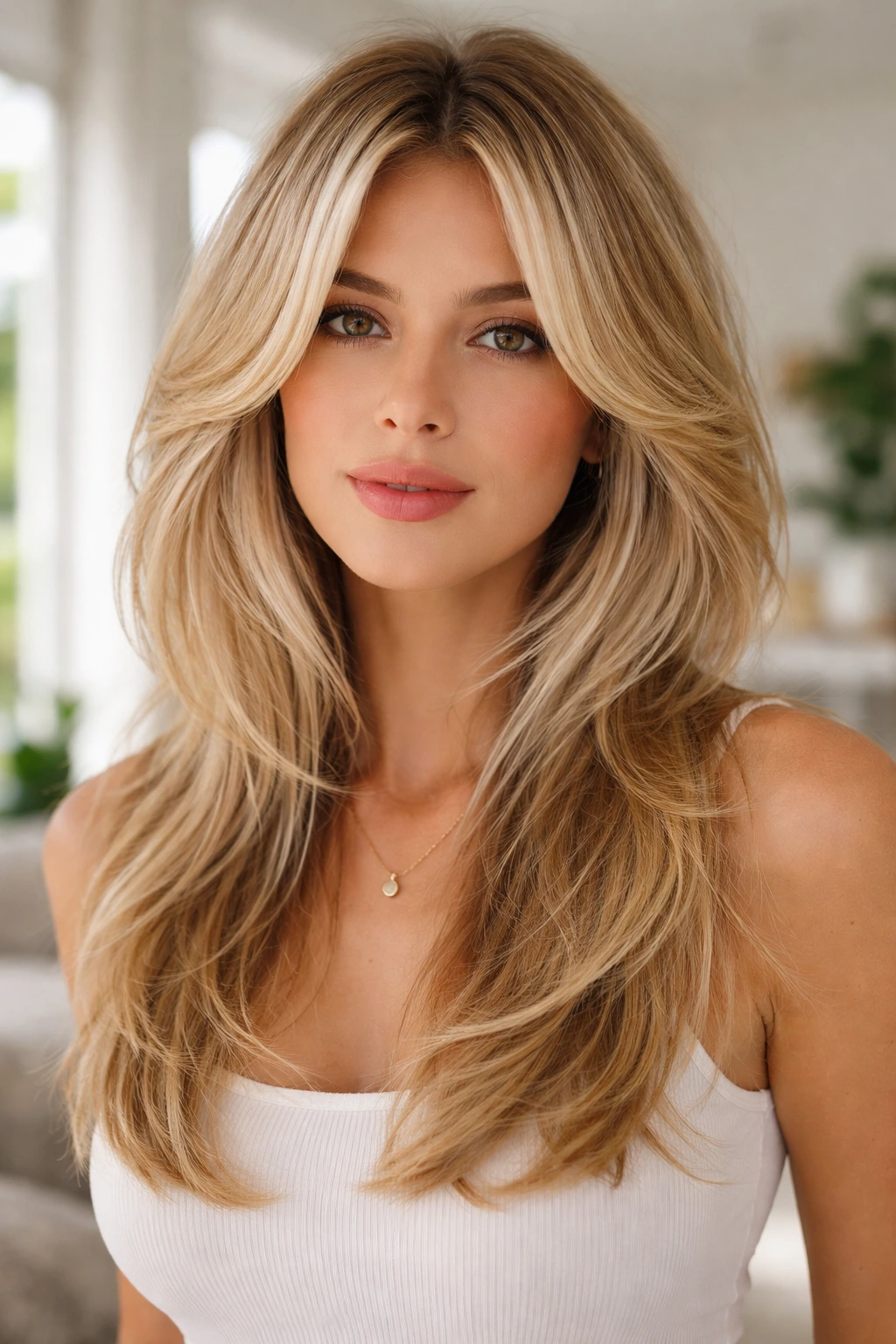
The butterfly cut is essentially a fusion of a short bob and long layers. It features shorter, face-framing layers that curve away from the face, coupled with longer layers that provide length. For fine hair, this is a masterclass in volume creation.
It works because the shorter pieces create lift around the face, drawing attention upward. If you are a blonde, use high-contrast face-framing pieces to really emphasize that movement. The result is a style that looks bouncy and full, regardless of how fine your individual strands are.
Warning: Do not let the stylist use thinning shears on the top layers of a butterfly cut. You need the weight there to create the “flick” that defines the style. If you thin the top, you lose the volume.
6. Blunt Bob with Invisible Layers
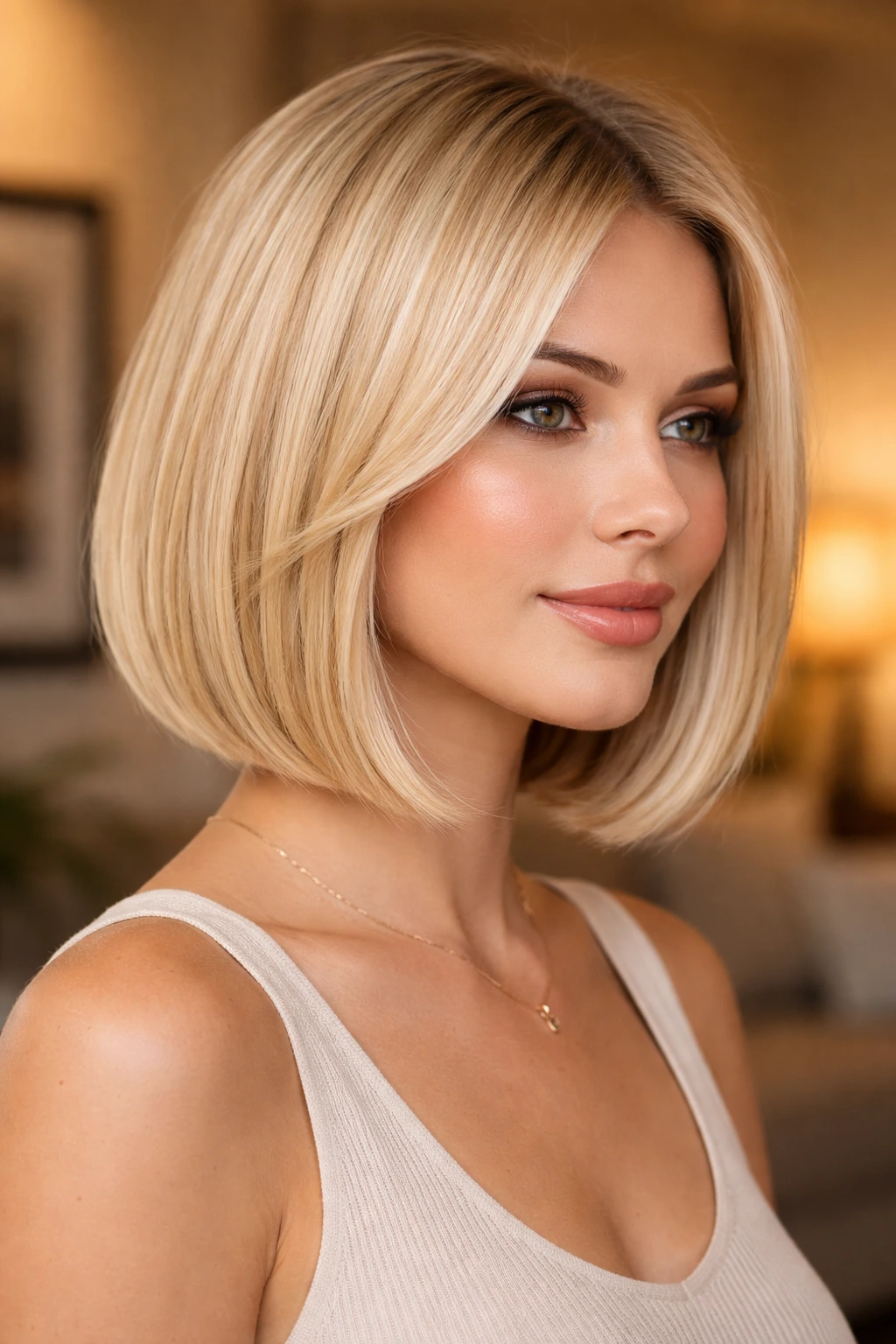
A blunt bob is often recommended for fine hair because it creates a thick, solid line at the bottom. However, a pure blunt cut can sometimes look too flat if you have zero natural wave. This is where “invisible layers” come in.
Invisible layers, or internal layering, are cut underneath the top section of the hair. You cannot see them, but they act as a hidden structure that pushes the hair out, creating a slight rounded shape. When combined with a bright, buttery blonde, this cut looks remarkably polished and thick.
Why This Style Succeeds
- It builds a sturdy foundation that makes the hair look healthy.
- The internal structure prevents the “triangle effect” where the hair looks flat on top and wide at the bottom.
- The blunt ends make the hair appear significantly denser than wispy, tapered ends.
7. Soft Wavy Lob with Face-Framing Pieces
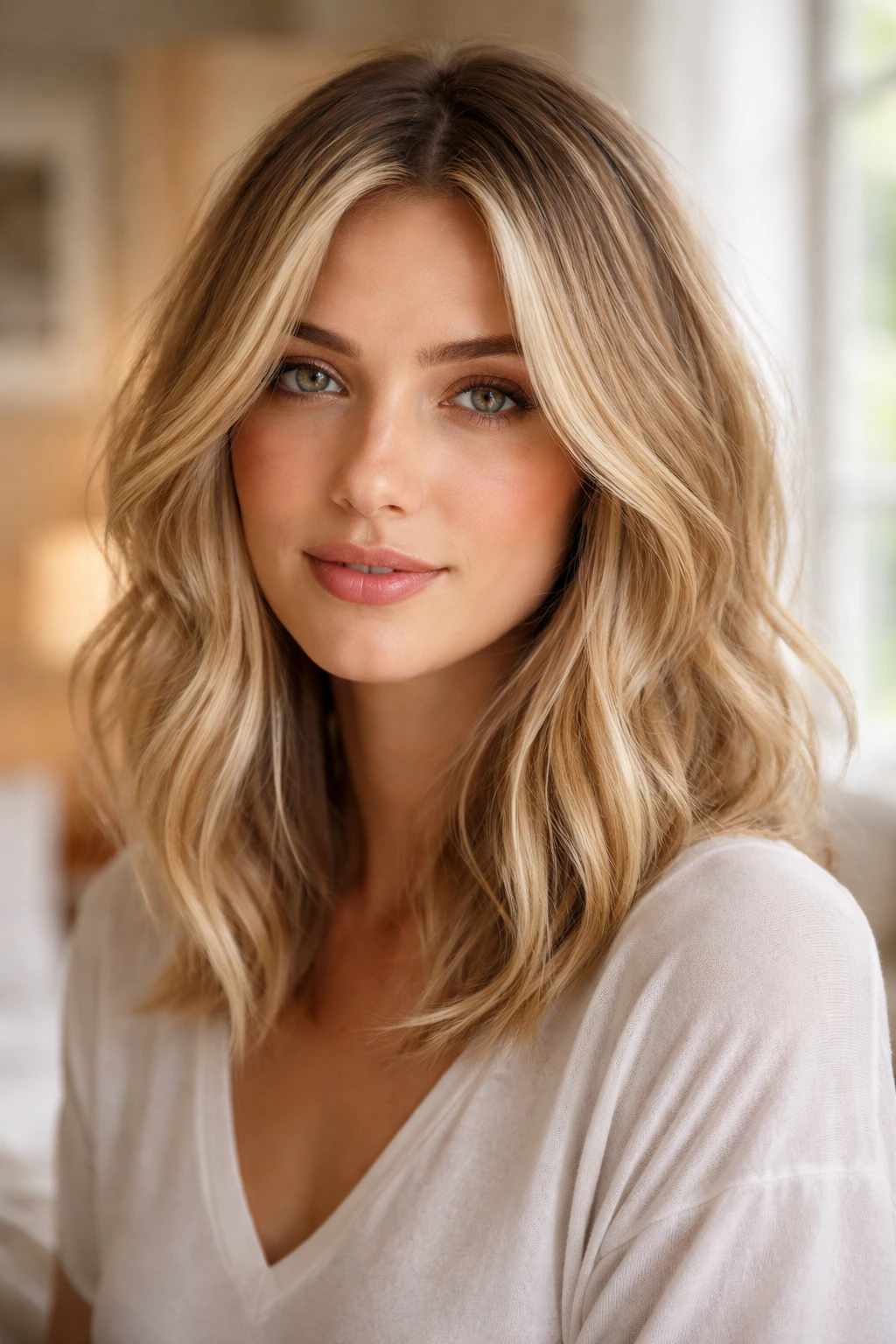
The “lob” or long bob is the most versatile cut for fine hair. It sits between the shoulder and the collarbone, providing just enough length to pull back, but enough structure to maintain volume. A soft, wavy texture is the secret weapon here.
Fine hair loves a wave. It adds immediate width to the hair, making it look fuller. When you pair this with blonde highlights that follow the pattern of the waves, you get a sun-kissed effect that feels very natural and effortless.
Achieving the Look
Do not use a high-heat curling iron. Instead, use a flat iron to create slight bends in the hair. This keeps the hair from getting that “prom curl” look. You want loose, beachy texture that looks like you spent the day by the ocean, not in front of a mirror.
8. Bottleneck Bangs with Medium-Length Layers
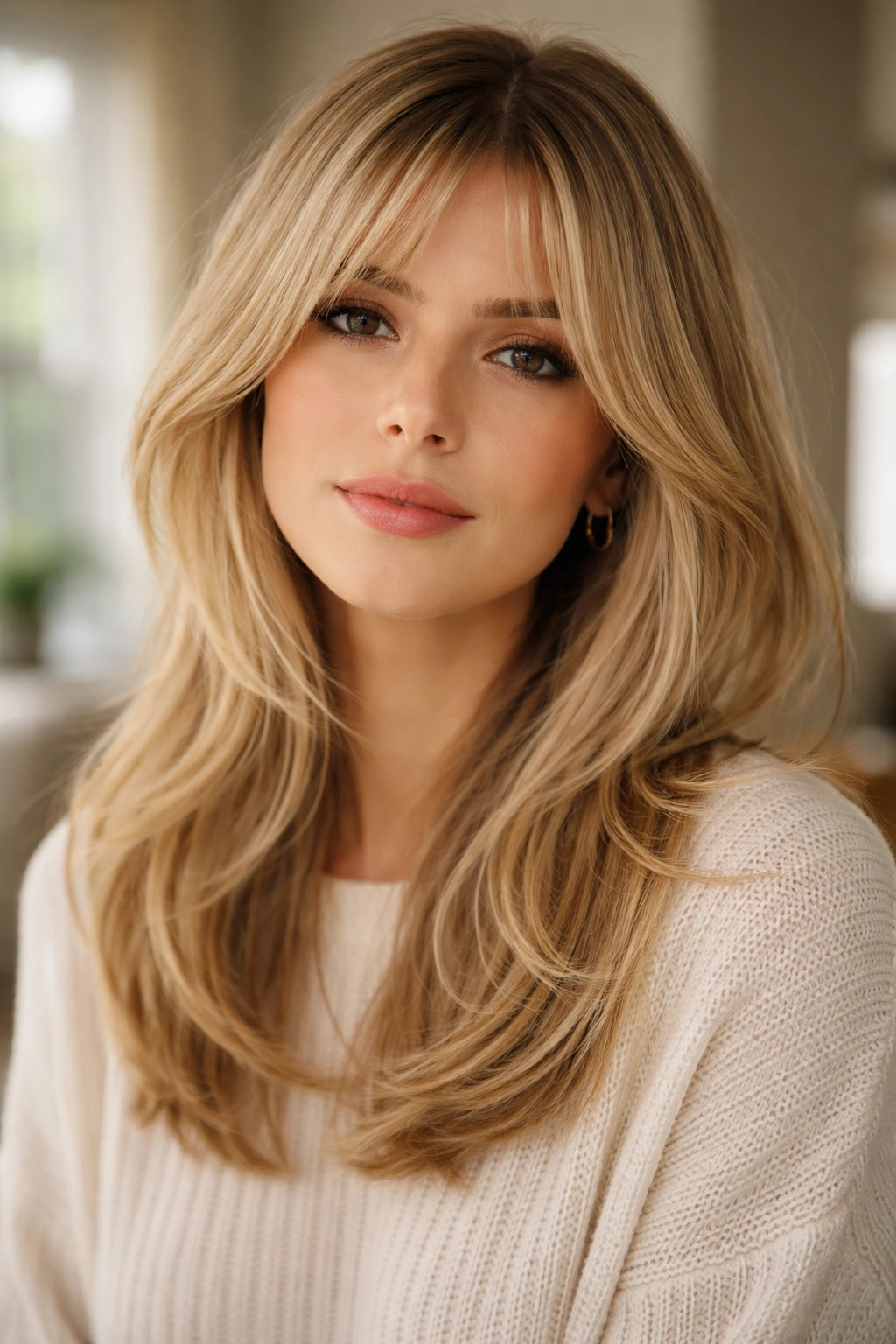
Bottleneck bangs are softer and more forgiving than traditional blunt bangs. They are shorter in the middle and longer on the sides, creating a flattering transition. For fine hair, bangs can be tricky because you often do not have enough hair to create a thick fringe.
The solution? A wider sectioning for the bangs. By taking more hair from further back on the head to create your bangs, you leave the rest of the hair looking balanced rather than sparse.
Styling Strategy
Use a small Velcro roller on the bangs while you do your makeup. The heat from your head and the cooling process create a lift at the roots that stays all day. For the rest of the medium-length layers, use a volumizing mousse on damp hair before blow-drying to provide a solid base for the bangs to blend into.
9. Honey Blonde Shag with Choppy Ends
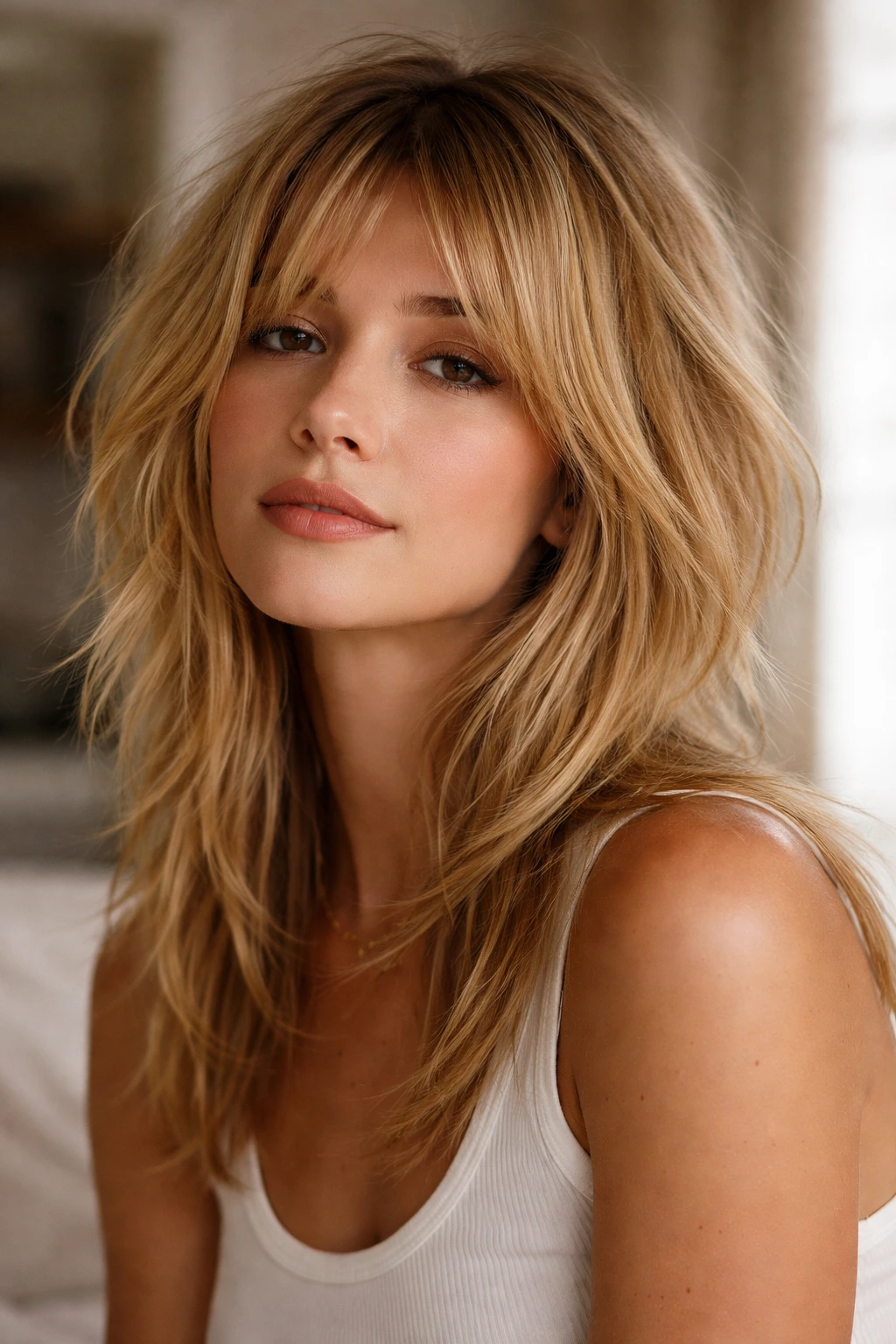
Honey blonde is a fantastic choice for fine hair because it is warmer and tends to look more “solid” than platinum. While platinum creates a high-contrast look that is great for dimension, honey blonde creates a richer, more uniform appearance that can make fine hair seem more robust.
The shag cut fits this color perfectly. The choppy, uneven ends break up the visual line of the hair, making it look more voluminous. It is a messy, cool-girl look that actually thrives on a bit of bedhead texture.
Maintenance Note
Warm tones reflect light differently than cool tones. They tend to look “shinier” on fine hair. If you struggle with your hair looking dull, a honey or caramel blonde glaze can add a sheen that makes the hair appear thicker and healthier.
10. Graduated Bob with Stacked Back
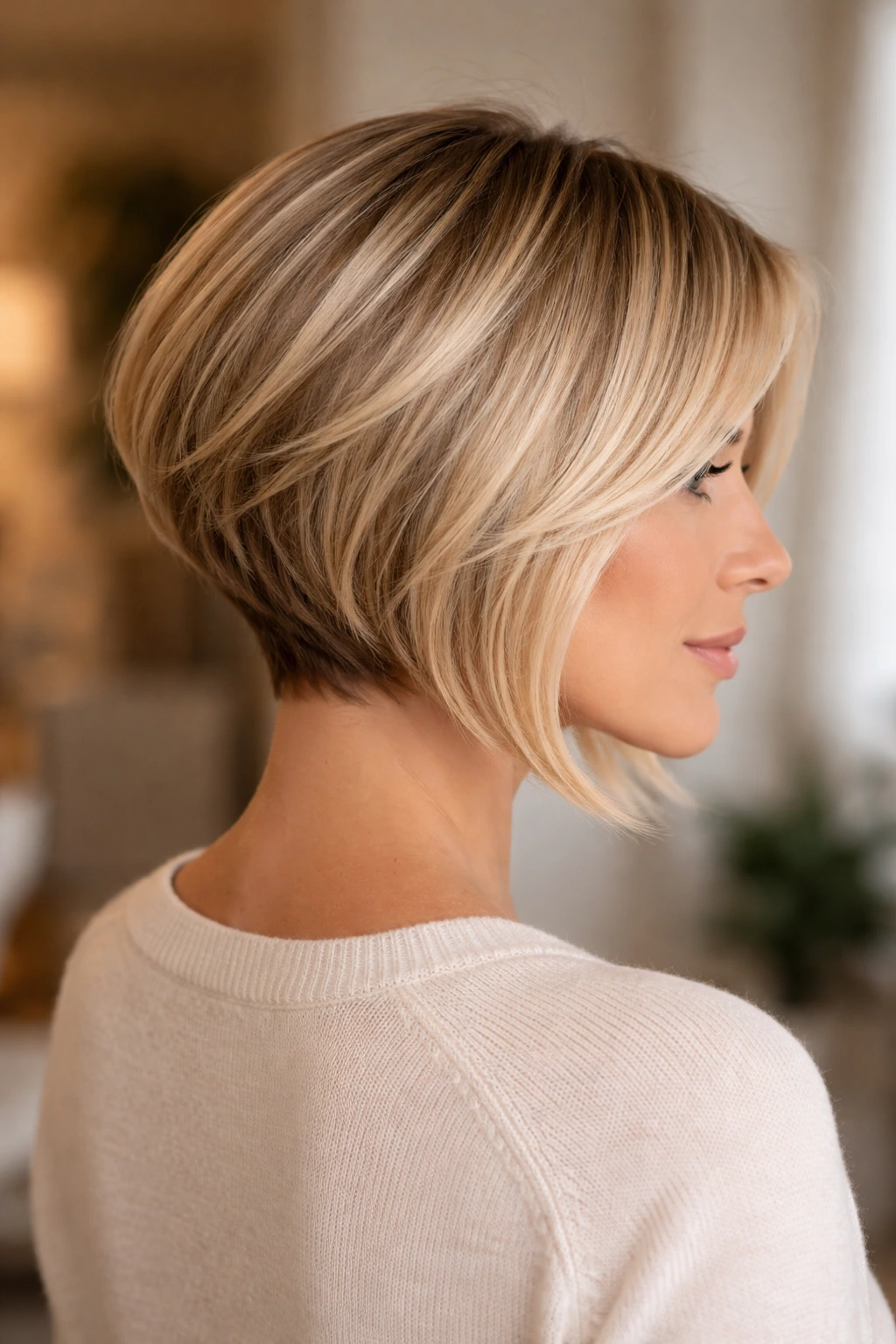
If you struggle with flatness at the crown, a graduated bob is your best friend. The back is cut shorter and stacked, meaning the layers are cut progressively shorter to create a rounded, voluminous shape. This is essentially built-in volume.
Because the back is short and stacked, the hair is forced to stand up, creating lift that doesn’t fall. The front pieces remain longer, grazing the jawline or collarbone, which frames the face beautifully.
The Blonde Factor: Use a darker root with lighter pieces around the face. This creates a focal point that distracts from the hair’s lack of thickness and makes the stacked back look deliberate and architectural.
11. Curtain Bangs with Long Layered Waves
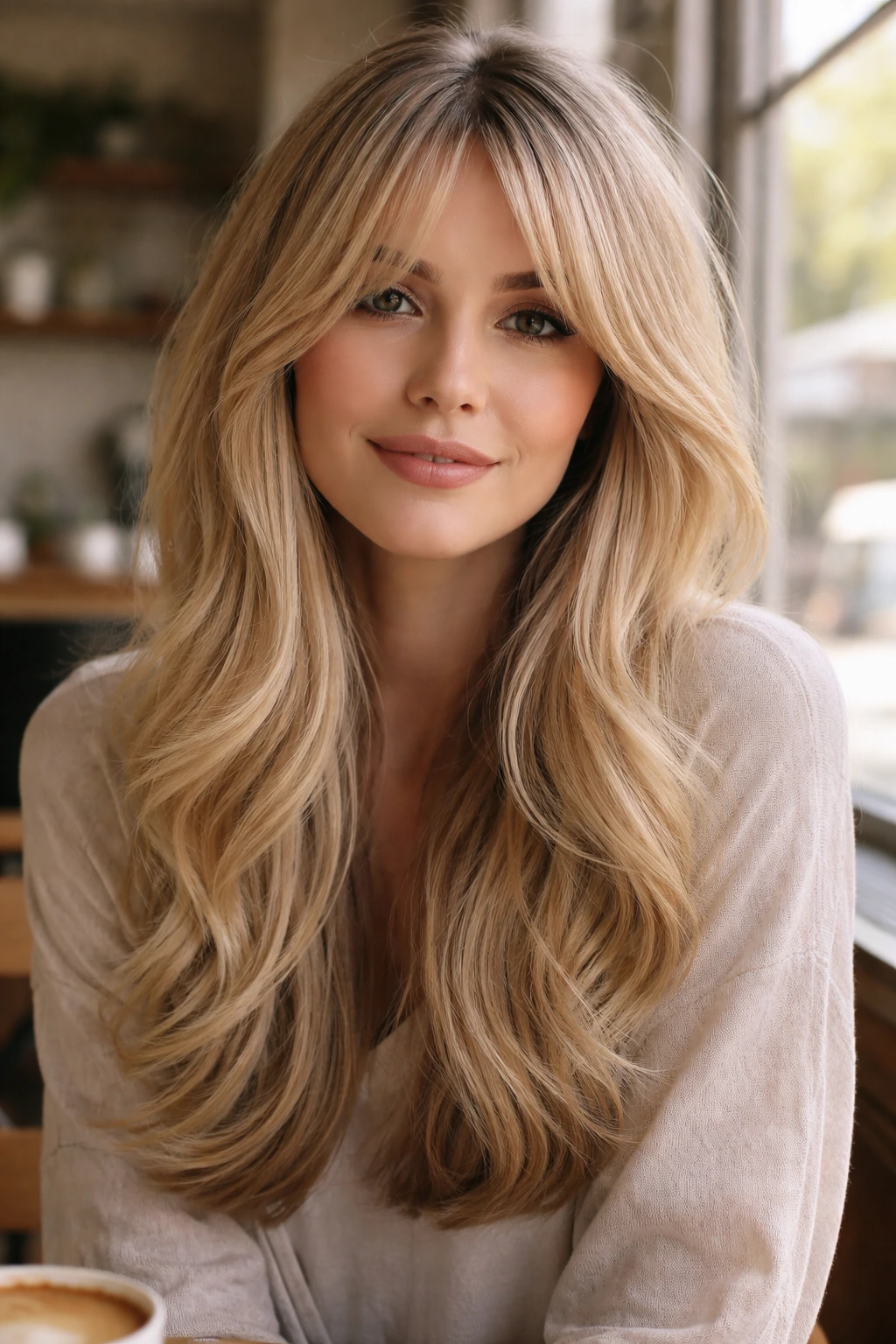
If you are determined to keep your hair long, you must prioritize the health of your ends. Long hair that is fine and blonde can look spindly if it is not cared for properly. Curtain bangs are the perfect way to break up the length and add interest without losing your hard-earned inches.
These bangs are designed to blend into the long layers, creating a cohesive, flowing look. When you wave the hair, the layers will cascade over each other, hiding the fact that you might not have the highest density of strands.
Avoiding the “Triangle”
When you have long layers, ask your stylist to “break up” the ends. If the ends are too heavy or blunt at the bottom, they will pull down the rest of your hair and make the style look like a flat triangle. You want lightness at the bottom to maintain the bounce.
12. Deep Side Part with Face-Framing Layers
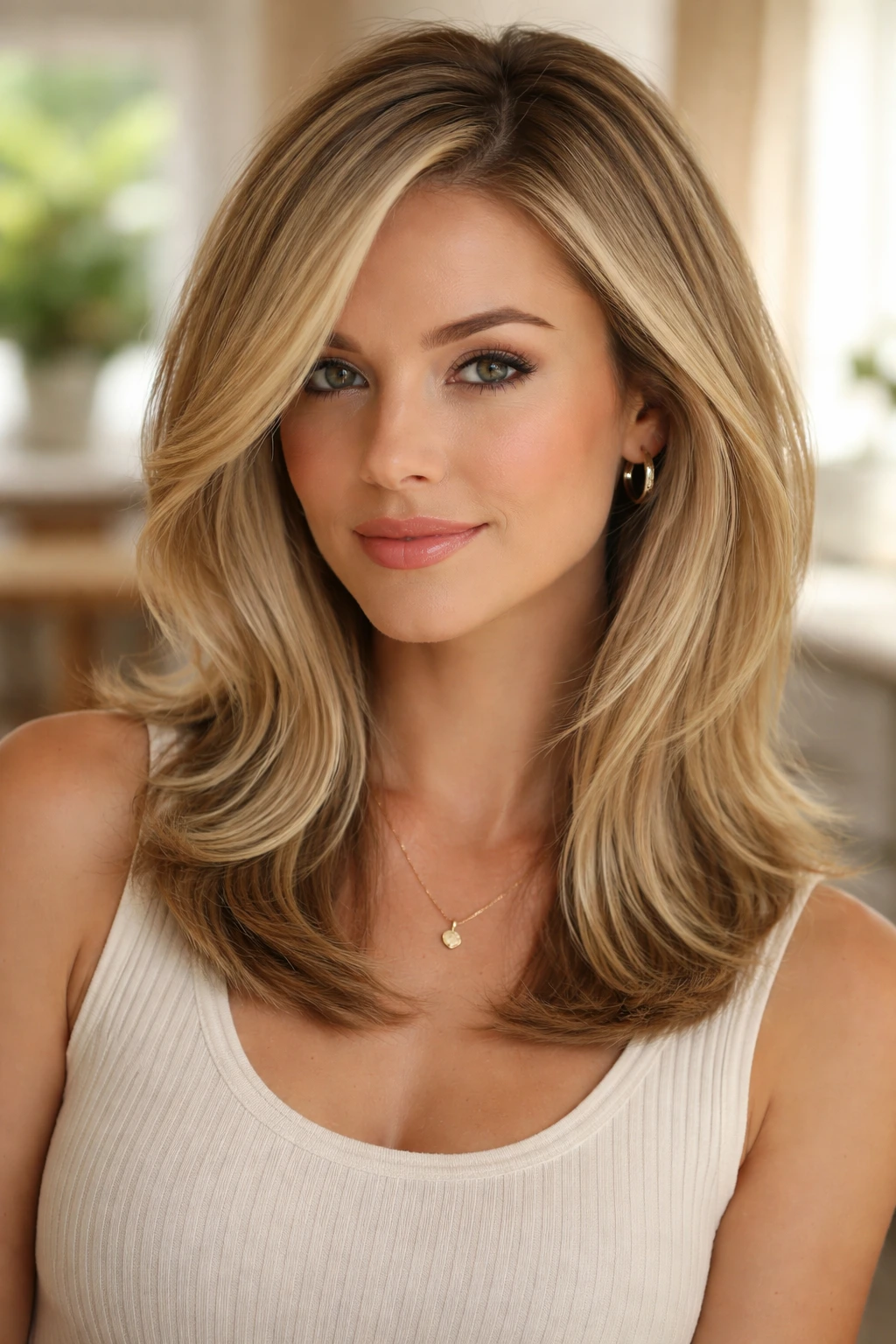
Never underestimate the power of a part. If you have fine hair, a center part is often the enemy. It exposes the scalp and creates a very flat, symmetrical look. A deep side part, on the other hand, creates an instant “swoop” of volume across the forehead.
Pair this with face-framing layers that start at the chin. By creating a sweep of hair across the face, you make the hair look like it has more movement and volume than it actually does.
Why It Works
It is a simple, zero-maintenance change. By moving your part to one side, you force the hair to stand up at the root, which gives you immediate volume that lasts until your next wash. If you are blonde, ensure your highlights are placed to emphasize that side-swept look.
13. Textured Wolf Cut (Soft Version)
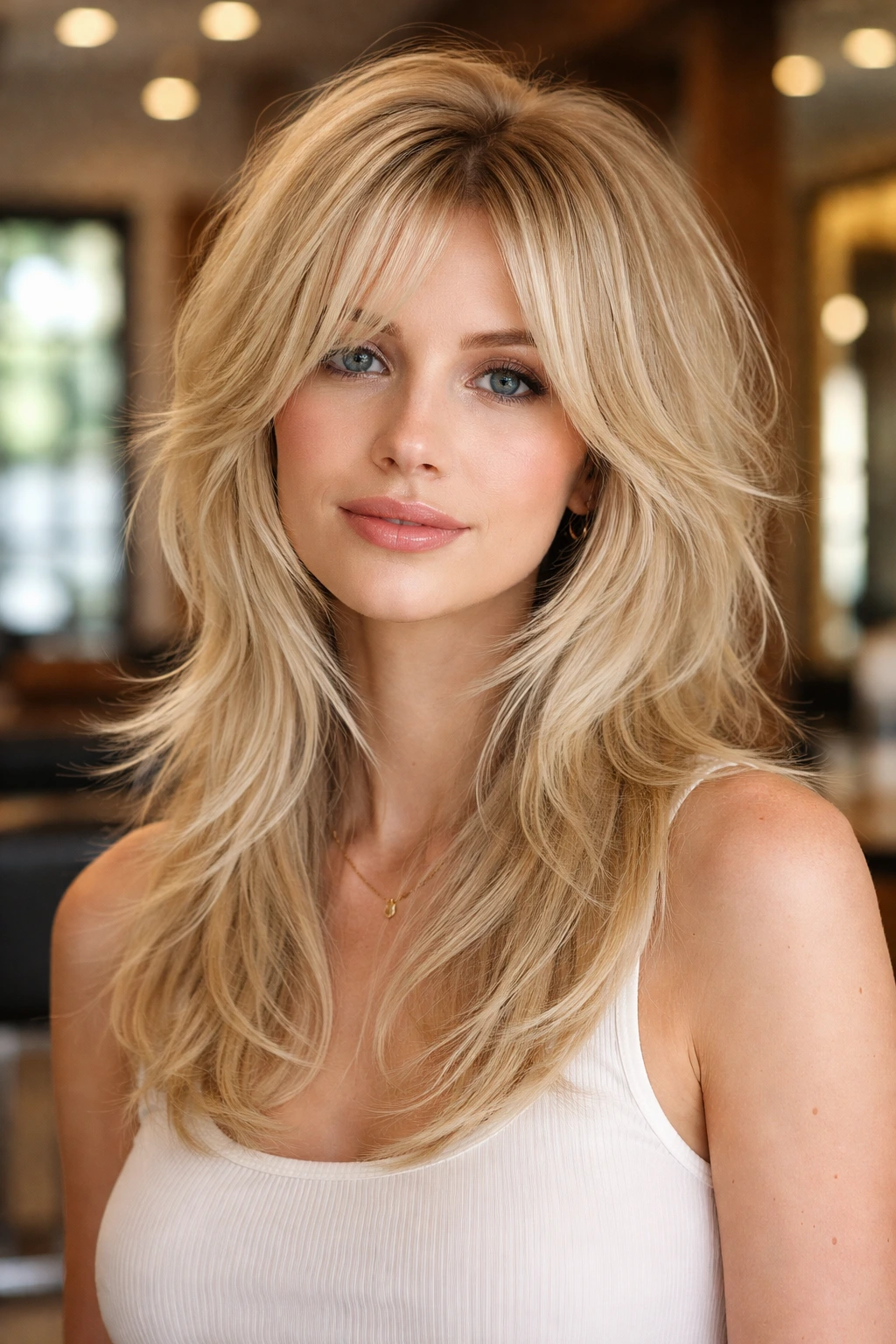
The wolf cut is a mash-up of a shag and a mullet. It sounds intimidating, but a “soft” version is incredible for fine hair. It focuses on heavy layers around the crown and thinner, wispier layers toward the bottom.
This structure creates volume exactly where you need it—on top. The crown of your head is where fine hair usually goes flat, and the wolf cut forces that area to stay lifted. The thinner ends don’t look stringy because that is the intended aesthetic of the cut.
Styling Tip: This cut is all about grit. A salt spray or a dry texturizing spray is non-negotiable. You want the hair to look slightly disheveled.
14. Asymmetrical Bob with Feathered Layers
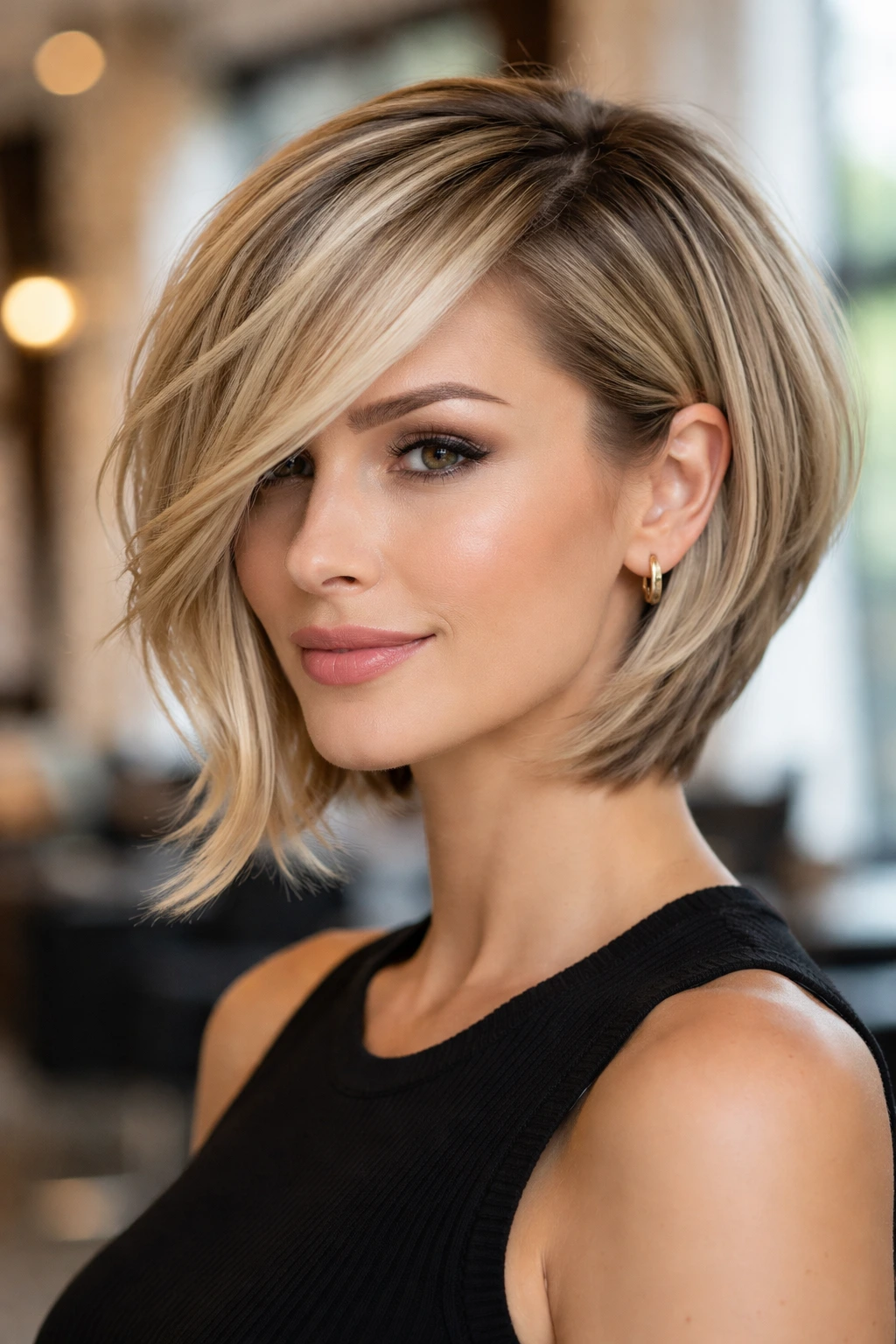
Asymmetry is a great way to distract the eye. If your hair is fine, an asymmetrical bob draws attention to the contrast between the shorter side and the longer side, rather than focusing on the thickness of the hair.
Feathered layers help the hair flow, especially on the longer side. They prevent the bob from looking blocky. For blondes, this is a great canvas for highlights that follow the angle of the cut, accentuating the asymmetrical line.
Who This Is For
This cut is perfect for those who want a bold, modern look. It is low maintenance if you have a good cut, as the style is built into the shape of the hair. You don’t need to do much styling beyond a quick blow-dry to get that sleek, angular look.
15. Collarbone-Grazing Cut with Internal Texturizing
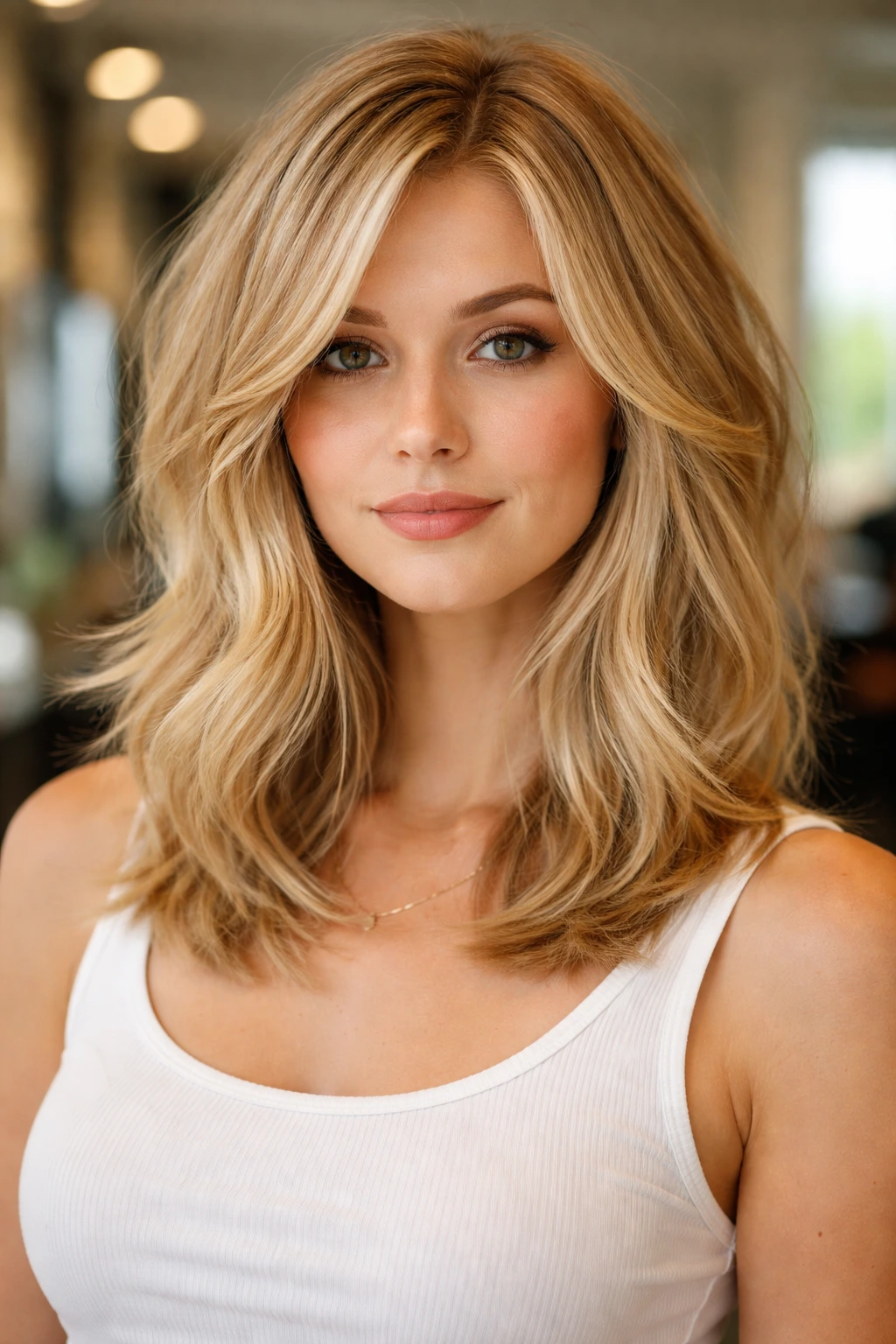
There is a sweet spot for fine hair: the collarbone. It is long enough to feel like “real hair” but short enough to retain natural volume and lift. Internal texturizing is the technique that makes this work.
Instead of cutting the surface, the stylist uses a point-cutting technique or a razor to cut into the interior of the hair shafts. This creates “hidden” layers that push the outer layers up and out. The result is a style that looks bouncy and effortless.
The Color Choice: A soft, buttery blonde with lowlights. Lowlights are crucial for fine hair because they provide depth, making the hair look denser than an all-over platinum color would.
16. Messy Bedhead Cut with Light Ash Tones
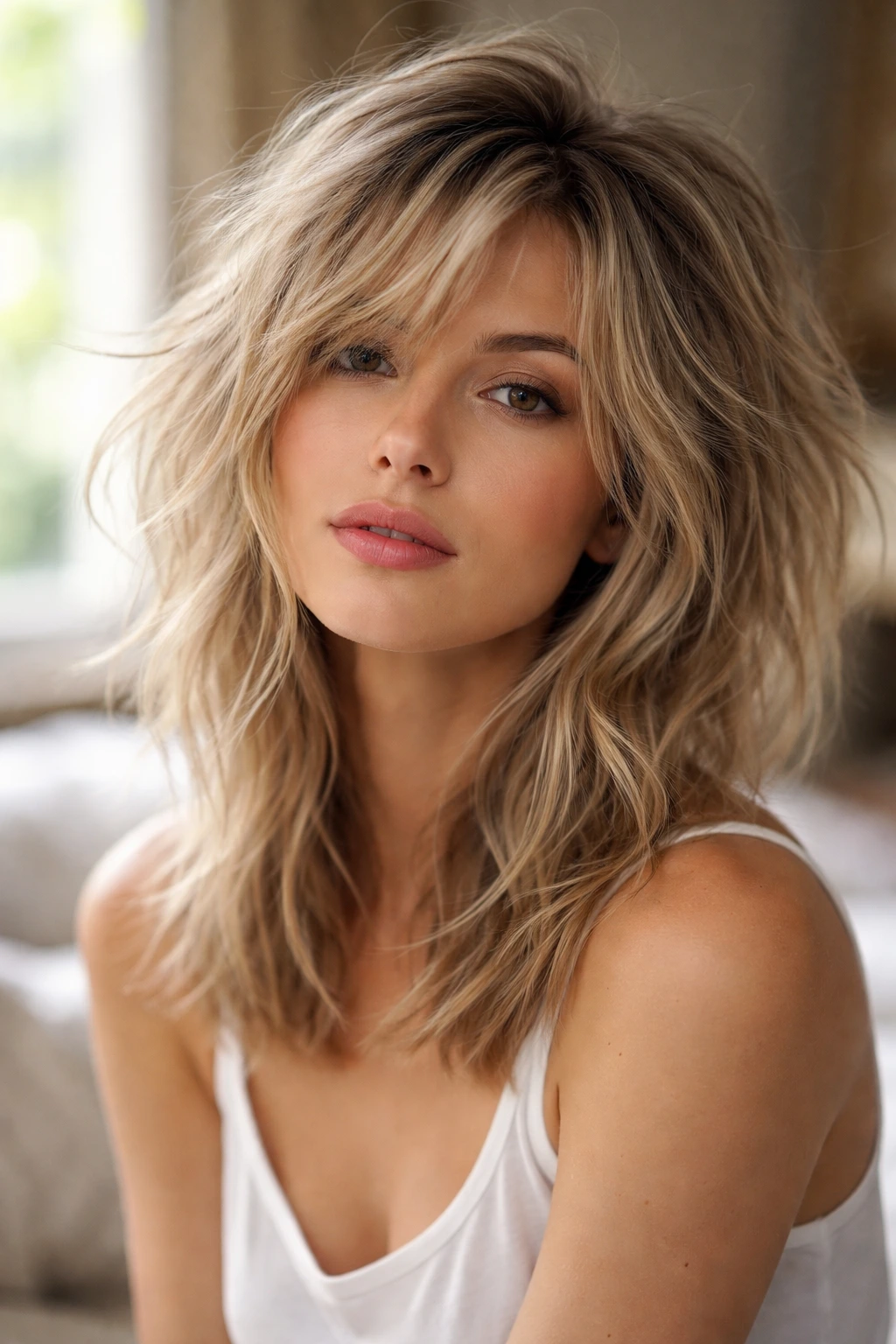
Sometimes, the best strategy is to lean into the mess. A bedhead cut is designed to be slightly uneven, choppy, and textured. It is a look that screams “I woke up like this” but requires a few minutes with a volumizing product.
Light ash tones work well here because they look slightly edgy and intentional. If you have fine hair, avoid overly polished, sleek looks; they just highlight the lack of density. A messy, textured look disguises it.
How to Style
Apply a mousse to damp hair, flip your head upside down, and rough-dry it. Do not use a brush. Use your fingers to shake out the roots. Once dry, add a tiny bit of pomade to the ends to define the messiness.
17. Deep Layered U-Cut
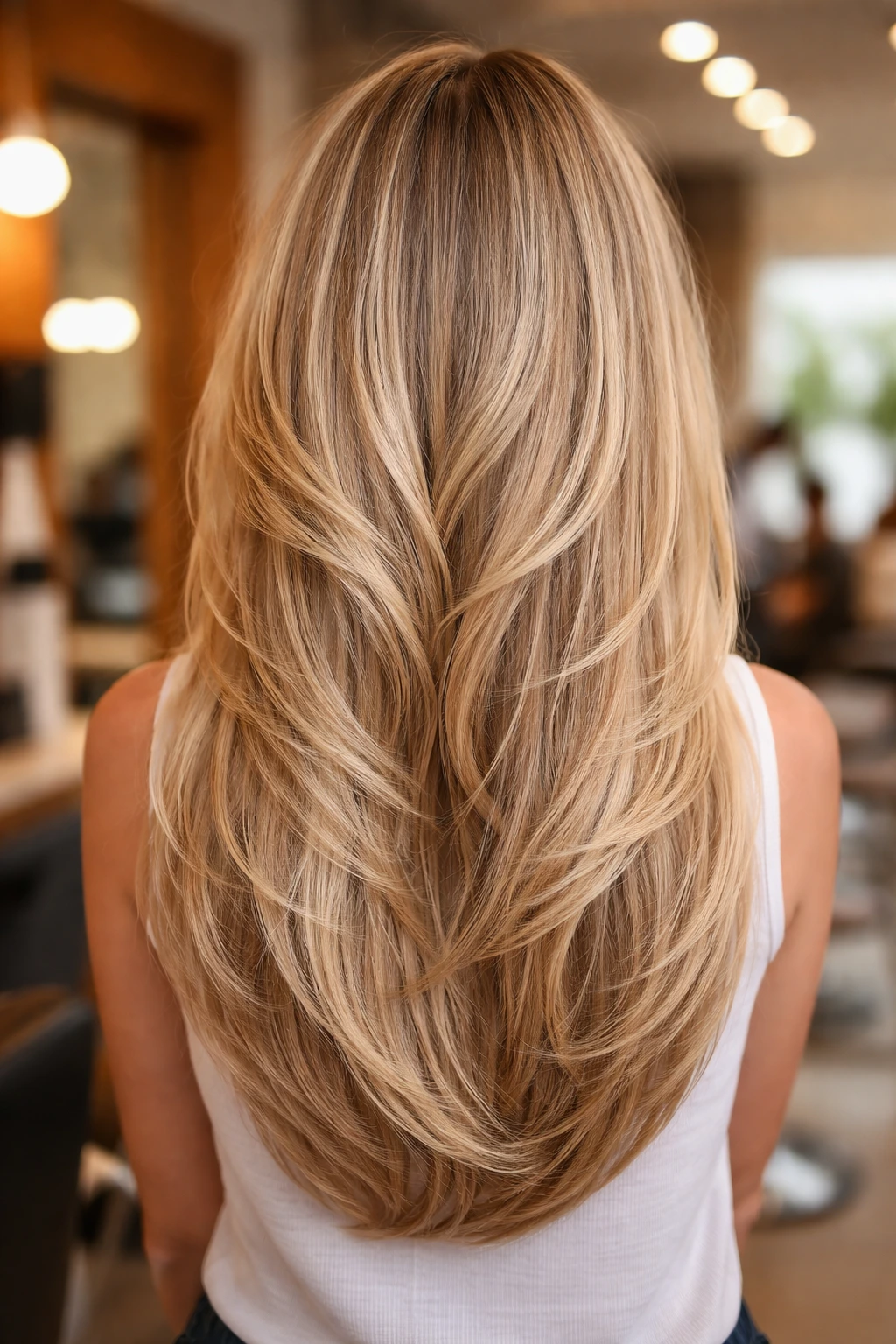
If you want the appearance of length but struggle with the thinning ends that come with long hair, a U-cut is the solution. It is rounded at the bottom, which removes the spindly corners you get with a straight-across blunt cut.
By adding deep layers that start near the mid-shaft, you ensure the hair has movement. The layers are long, not short, which prevents the hair from looking “poofy” or “mullet-like.”
Why This Is Different
A V-cut can sometimes make the ends look too thin. A U-cut is softer. It creates a balanced look that keeps the focus on the healthy ends. If you are blonde, have your stylist focus the lighter pieces on the “V” or “U” shape of the ends to frame the silhouette of your hair.
18. Inverted Bob with Texturized Layers
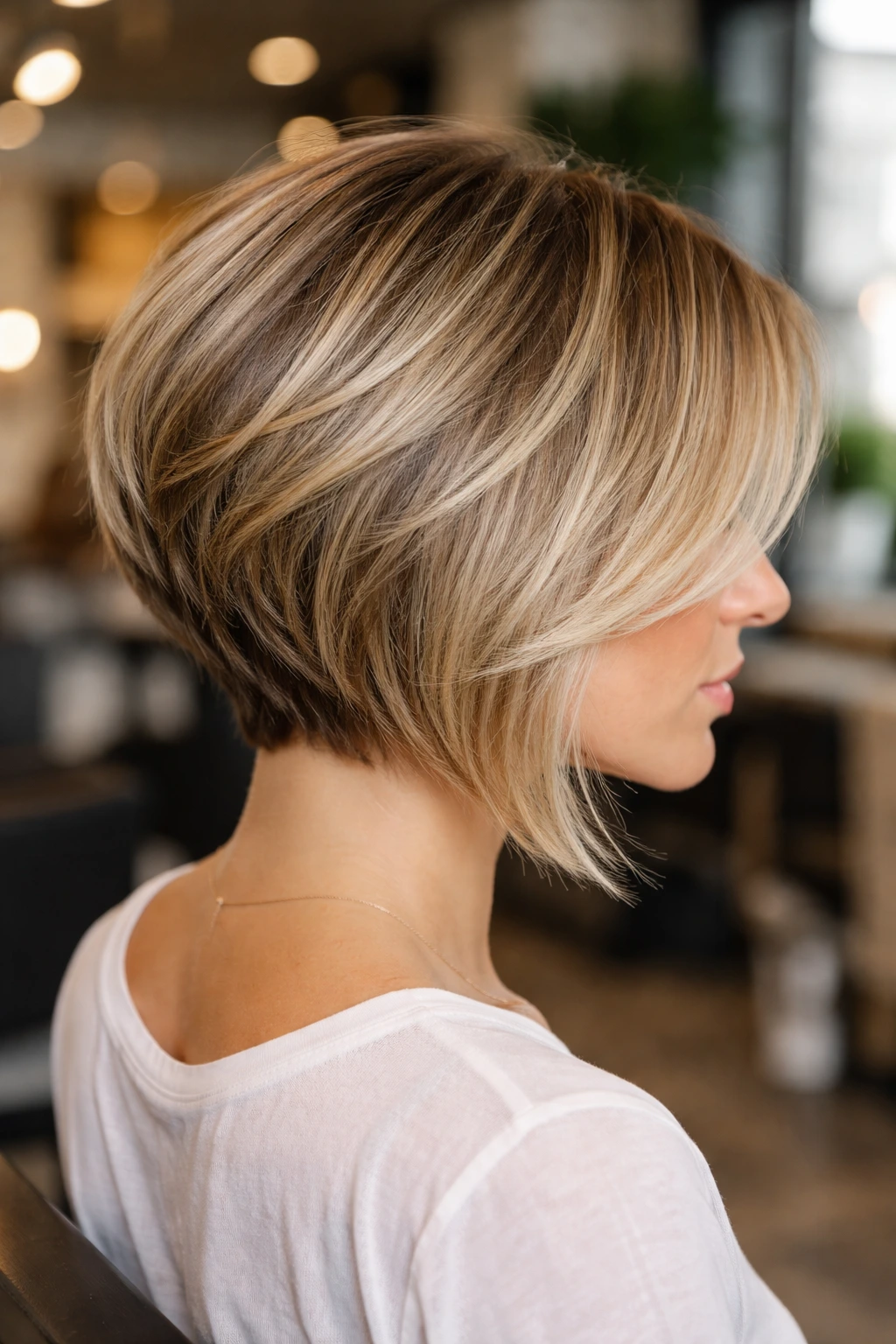
The inverted bob is shorter in the back and longer in the front. It is a classic for a reason. For fine hair, the shorter back adds automatic lift at the nape of the neck, which is a major volume booster.
Texturized layers on the sides prevent the front from looking like two flat, limp pieces of hair framing the face. It adds a bit of curvature and softness that feels modern.
Styling Strategy: Use a round brush to blow-dry the hair under, creating that classic curved shape. This creates a rounded volume that lasts longer than a straight style.
19. Soft Beach Waves with Hidden Layers
“Beach waves” are a texture, not just a cut, but the right cut makes them achievable. Hidden layers are essential here. If you just have one long length, your hair will never hold a beachy wave; it will just fall flat.
Hidden layers create “shelves” for the hair to rest on. This builds up the volume. When you add a wave, it actually stays because there is texture and structure holding it in place.
Color Integration
To make this look truly “blonde,” go for a mix of baby lights and lowlights. The baby lights catch the sunlight in the waves, while the lowlights provide the depth that makes the hair look like a thick, luxurious mane.
20. Feathered Layers with Butterfly Highlights
Feathered layers are about softness. They are cut in a way that the hair moves away from the face, creating an airy, light effect. This is the opposite of a heavy, blunt cut.
“Butterfly highlights” are a specific technique where you paint the hair in a way that frames the face and the ends. It is incredibly flattering for fine blonde hair because it creates a gradient that feels intentional, not like a bleach job gone wrong.
Why It Works
It plays with the movement of the hair. When you turn your head, the feathered layers shift, and the highlights catch the light. This constant motion makes the hair seem much more voluminous than it is.
21. Modern Shaggy Mullet (Subtle)
Do not run away at the word “mullet.” We are talking about a subtle, modern version. It features shorter layers at the top and sides, with a bit more length at the nape. It is edgy, fun, and creates massive volume on top.
The key for fine hair is the “softness” of the cut. Avoid sharp, aggressive razored lines. Ask for soft, point-cut layers that blend seamlessly.
The Attitude
This cut is for the person who wants to make a statement. It is a bold choice that thrives on texture. If you have fine hair, this is a great way to cheat volume, as the shorter layers on top provide a permanent boost that never goes flat.
22. Long Layers with Face-Framing Highlights
Sometimes, simplicity wins. Long, soft layers with bright face-framing highlights are a timeless combination for fine-haired blondes. It keeps the hair manageable but adds enough texture to prevent the “limp” look.
The layers should be long enough to curl, giving you options for styling. The face-framing highlights (often called money-piece highlights) should be slightly brighter than the rest of your hair to draw the eye forward and create a focal point.
The Finishing Touch
Focus your styling efforts on the front of your hair. If the face-framing pieces look full and healthy, the rest of the hair gets the benefit of the doubt. A light-hold texturizing spray on these front sections will keep them looking airy and voluminous all day.
Final Thoughts
Fine hair is not a curse; it is just a different texture that requires a different approach. The biggest mistake people with fine hair make is trying to force it to do what thick, coarse hair does. Do not try to weigh it down with heavy products. Do not cut it into a style that requires massive amounts of tension to maintain.
Instead, embrace the lightness. Use layers to create movement. Use blonde tones to add dimension and the illusion of thickness. A great cut is the foundation, but how you treat your hair every day—the products you skip, the way you dry it, the amount of heat you avoid—is what will truly make it look like a full, healthy mane. Work with your hair, not against it, and you will find that “fine” is just another way to say “effortlessly elegant.”
