



Fine hair can look flat in a hurry, and the wrong haircut makes the whole thing feel even thinner. That is why side layered haircuts for fine hair keep coming back as a smart choice: they build movement where the eye wants it, keep some weight at the ends, and stop the style from collapsing the minute you step outside.
The trick is not “more layers.” More layers can backfire fast. Fine strands need shape, not shredding. A clean side part, a soft diagonal fringe, or a long layer that starts at the cheekbone can give you lift without turning the ends into see-through wisps.
There’s a real difference between hair that looks airy and hair that looks sparse. One has bend and body. The other looks tired by noon. The cuts below stay on the right side of that line, with enough structure to flatter fine hair and enough softness to keep the whole thing moving.
1. Soft Side-Swept Pixie With Light Crown Lift
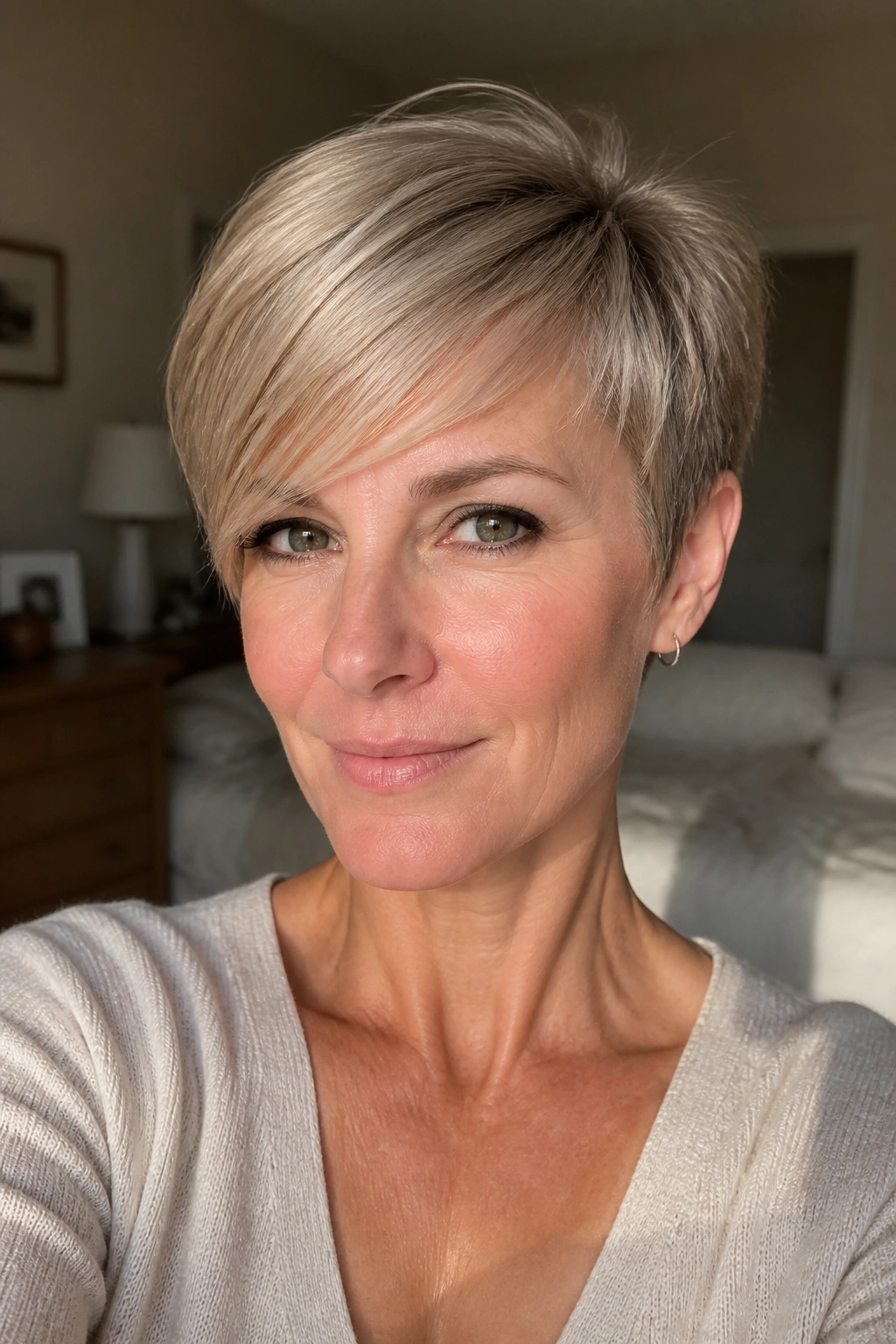
A pixie can be a gift for fine hair when it’s cut with restraint. Too many short cuts get choppy fast; this one keeps the top soft, the crown a touch longer, and the side sweep loose enough to fall across the forehead instead of sticking straight up.
Why It Works on Fine Hair
The shorter length removes the weight that drags fine hair down, while the side sweep creates a clean diagonal line. That line matters. It gives the eye something to follow, so the hair reads fuller than it is.
Ask for these details:
- Top length around 2 to 3 inches
- Tapered sides and nape
- Soft point-cutting around the temple
- A fringe that falls to one side, not a blunt micro bang
- Very light texturizing at the crown, not all over
Best move: style with a pea-sized dab of mousse and blow-dry the top forward first, then sweep it over. Flat roots are the enemy here.
2. Collarbone Lob With Long Side Layers
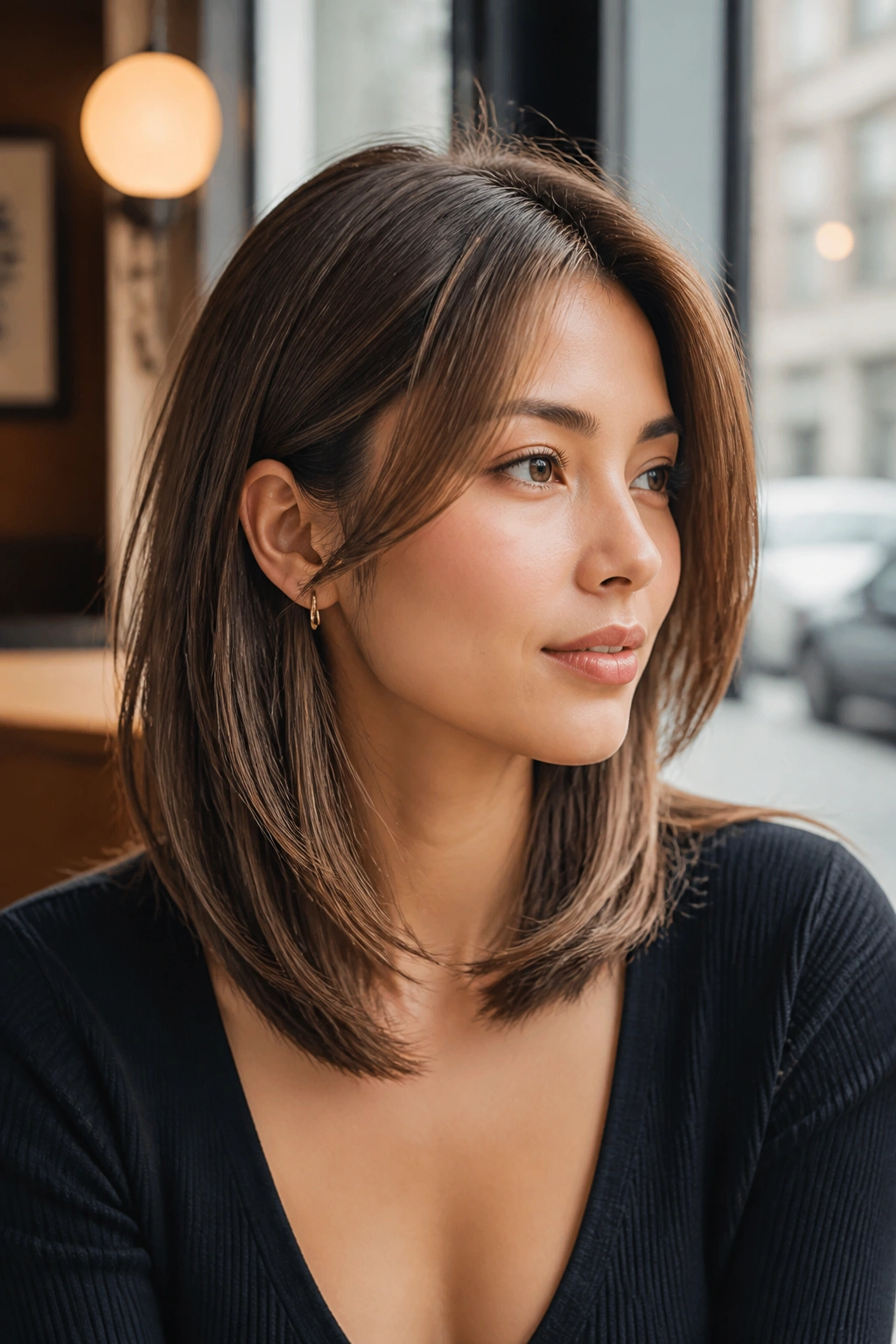
This is the haircut I’d send a cautious fine-hair client to first. A collarbone lob gives you enough length to tuck behind the ear or clip back, and the long side layers add motion without hollowing out the ends.
The sweet spot is the collarbone itself. Go too short and the hair can flip awkwardly; go too long and the shape starts to hang. Around that line, fine hair often looks its thickest because the perimeter still has some weight.
I like this cut for people who want a style that works straight, wavy, or air-dried. The long side layers should start low, usually somewhere below the cheekbone, so the front bends inward instead of breaking apart into strings. Keep the ends blunt enough to look solid.
A little lift at the roots helps. A round brush, a large Velcro roller, or even a quick bend with a flat iron can give this lob the body it needs without making it feel fussy.
3. Deep Side-Parted Long Layers
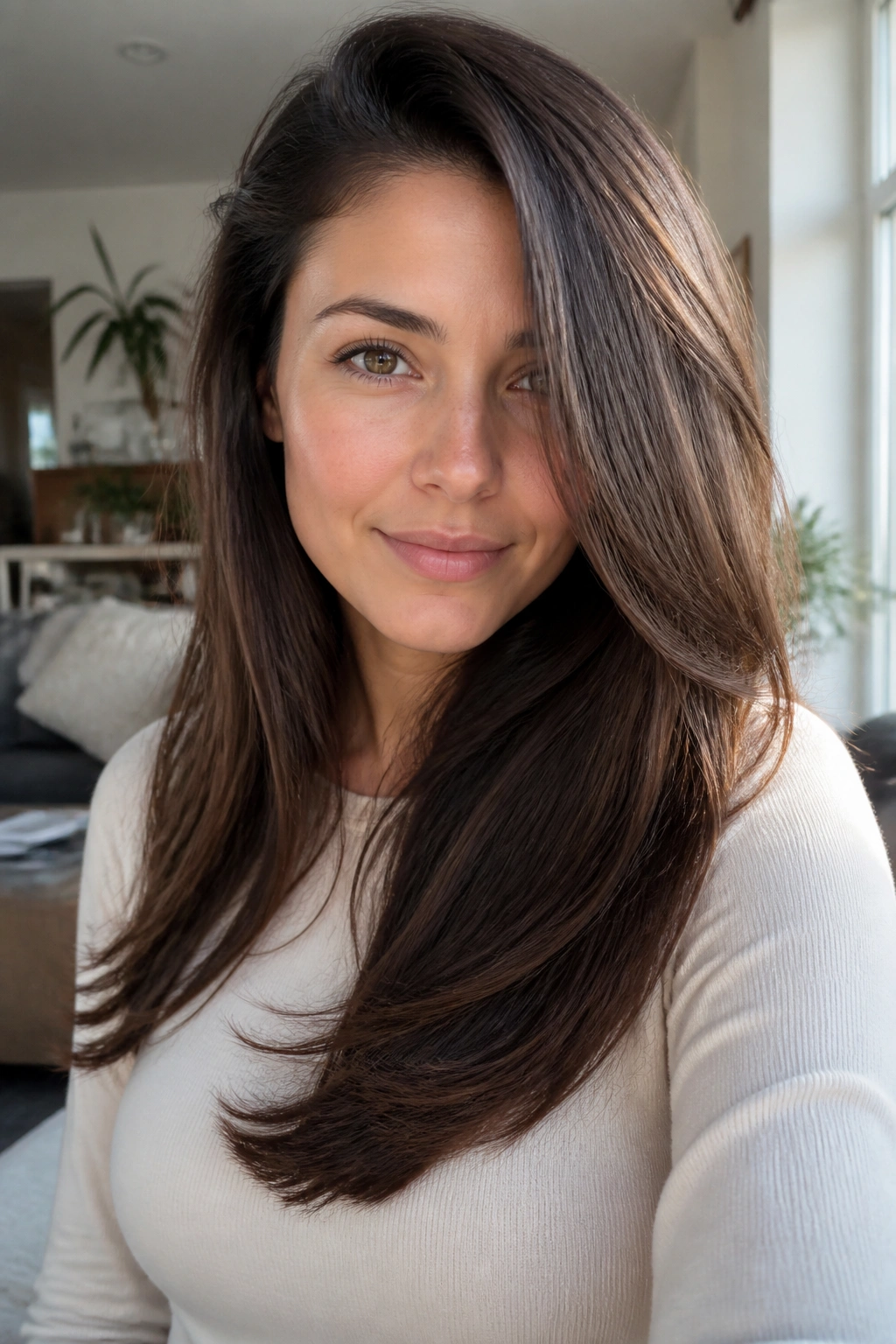
Can long hair and fine hair coexist? Yes, but only if the layers stay disciplined. A deep side part shifts the volume pattern, so the top doesn’t sit flat against the scalp, and the long layers keep the length from looking stringy.
What to Ask For
Tell your stylist you want long, soft layers that start low. Not up at the cheekbones. Not near the crown. Low enough that the bottom still feels heavy.
- Parting set about 1.5 to 2 inches off center
- First layer around the collarbone or just below
- Ends left full, not thinned out
- Face-framing pieces kept long
- Minimal razor work near the perimeter
This cut works especially well if your hair is fine but plentiful. If density is also low, the safe move is even simpler: fewer layers, more side sweep, and a strong bottom line. Fine hair looks better with a little structure than with a lot of air.
4. Feathered Shoulder-Length Cut

There’s a reason feathering keeps coming back. On fine hair, it softens the shape without breaking the whole cut apart. The ends move, the sides bend, and the style gets that light swing that photographs well in real life, not just on a screen.
Picture a shoulder-length cut with the layers brushed back and away from the face. That’s the effect. It opens the cheekbones, gives the front a softer finish, and keeps the back from looking heavy or blocky.
A feathered shoulder cut works best when the top layers are subtle. You want a whisper of lift, not a stack of chopped pieces. Ask for the softest texturizing possible at the mid-lengths. Too much thinning at the bottom makes fine hair fray at the ends, and once that happens, the whole style looks tired.
Useful details
- Best for straight to softly wavy textures
- Easy to style with a round brush
- Good with side bangs or a side part
- Needs regular trimming to keep the feathering crisp
My take: this is one of the safest “I want movement but not too much drama” cuts on the list.
5. Chin-Length Asymmetrical Bob
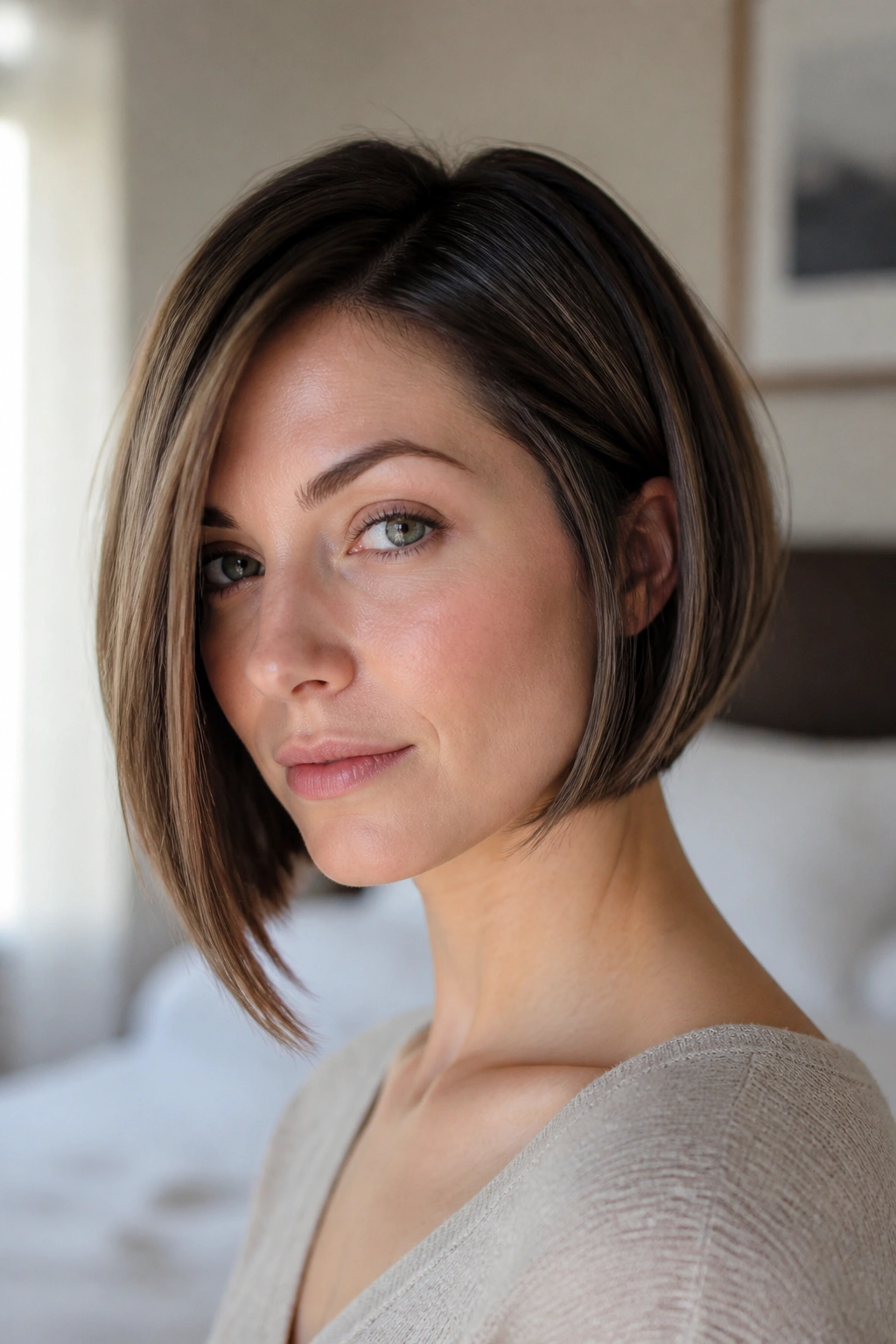
A chin-length asymmetrical bob gives fine hair a sharper outline, and that outline is doing a lot of heavy lifting. One side sits slightly longer than the other—usually by half an inch to an inch—so the cut feels modern without getting fussy.
The key is the edge. Keep it clean. A blunt line at the chin makes the hair look denser, while the subtle asymmetry keeps the cut from feeling too square. That little slant also draws the eye downward and sideways, which helps if your hair tends to puff at the crown and flatten at the ends.
I like this cut on straight hair, but it can work on a loose wave too. If your hair bends easily, ask for the longer side to graze the jaw and the shorter side to tuck just under the ear. That slight shift creates shape without asking for much styling.
One warning: if the layers get too high, the bob loses the very thing that makes it good. The line should stay visible. Solid ends. Soft side movement. That’s the formula.
6. Wispy Curtain Layers With a Side Part

Curtain bangs get a lot of attention, but on fine hair they can be too much if they’re cut heavy. A wispy side version is easier to live with. It opens the face, gives the front some swing, and doesn’t eat up the density you need elsewhere.
Unlike fuller curtain bangs, this shape leaves more forehead visible and keeps the root area from collapsing. The result feels softer, less committed, and honestly more useful for anyone who hates spending ten minutes on bangs every morning.
A side part helps the whole thing sit better. The longer piece falls into the face, the shorter piece gives a lift near the temple, and the rest of the cut can stay fairly simple. That matters with fine hair, because the more you overwork the front, the faster the style falls limp.
If you want movement around the cheeks without giving up volume, this is a smart middle ground. It’s a quiet haircut. That’s not a bad thing.
7. Soft Shag With Side Layers
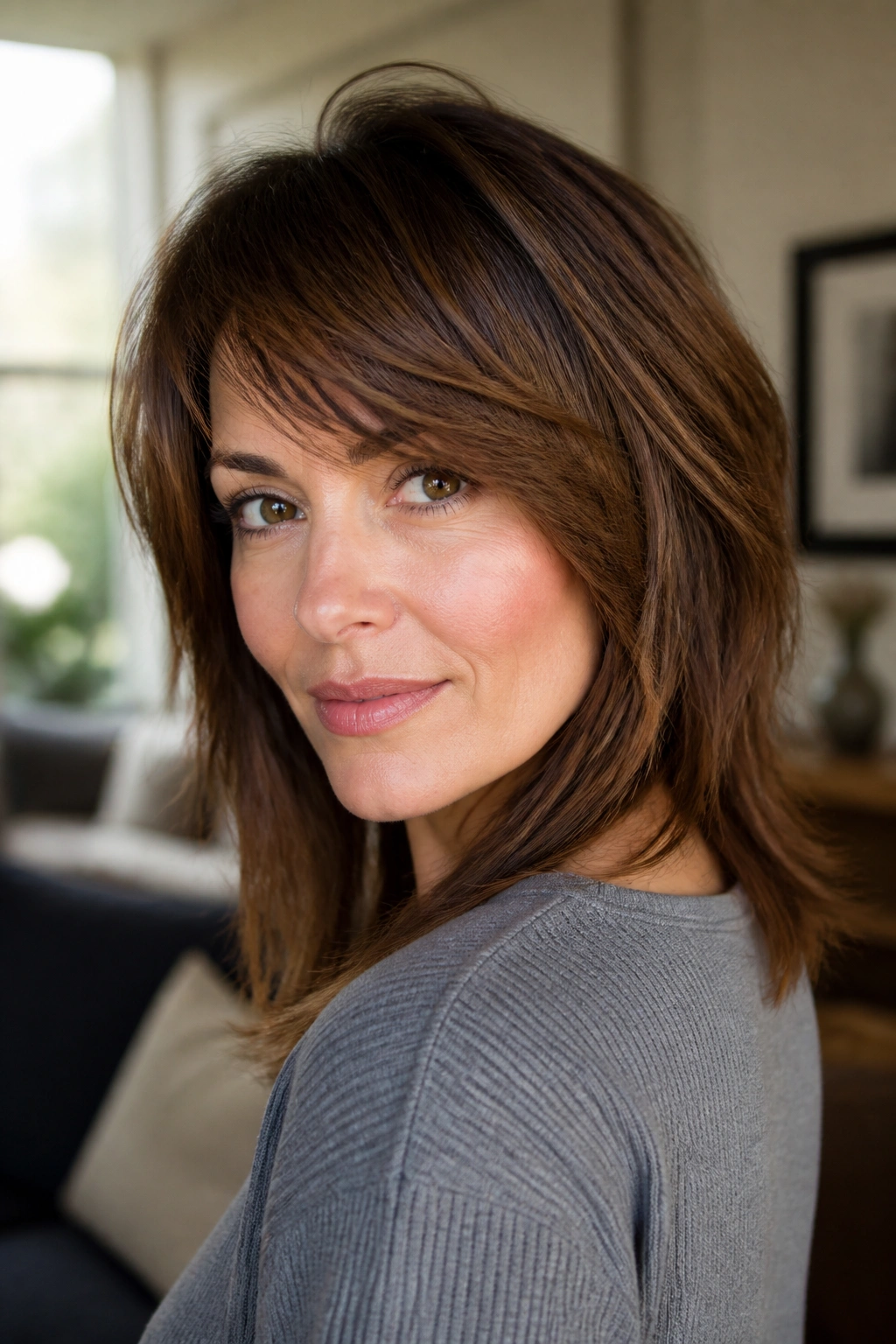
A shag can work on fine hair, but only if it’s softened. Hard shag cuts with aggressive choppy pieces can leave the ends looking thin and the whole shape looking scattered. A softer version keeps the texture on the surface and preserves density underneath.
That’s the part people miss. You do not need a wild amount of layering to get body. You need the right layers in the right places. On this cut, the side layers start around the cheekbone and the back stays a little longer, so the shape feels lived-in instead of shredded.
Keep the texture light
- Ask for soft, piecey layers, not heavy razor slicing
- Keep the bottom line at least shoulder length if density is low
- Style with a diffuser or a round brush, depending on texture
- Use a matte spray only at the mid-lengths
A soft shag looks best when it has a little bend. Straight and flat can make it seem accidental. Air-dried wave, a quick bend with a wand, or some finger-drying at the roots usually does the job.
8. Angled Lob With Face-Framing Pieces
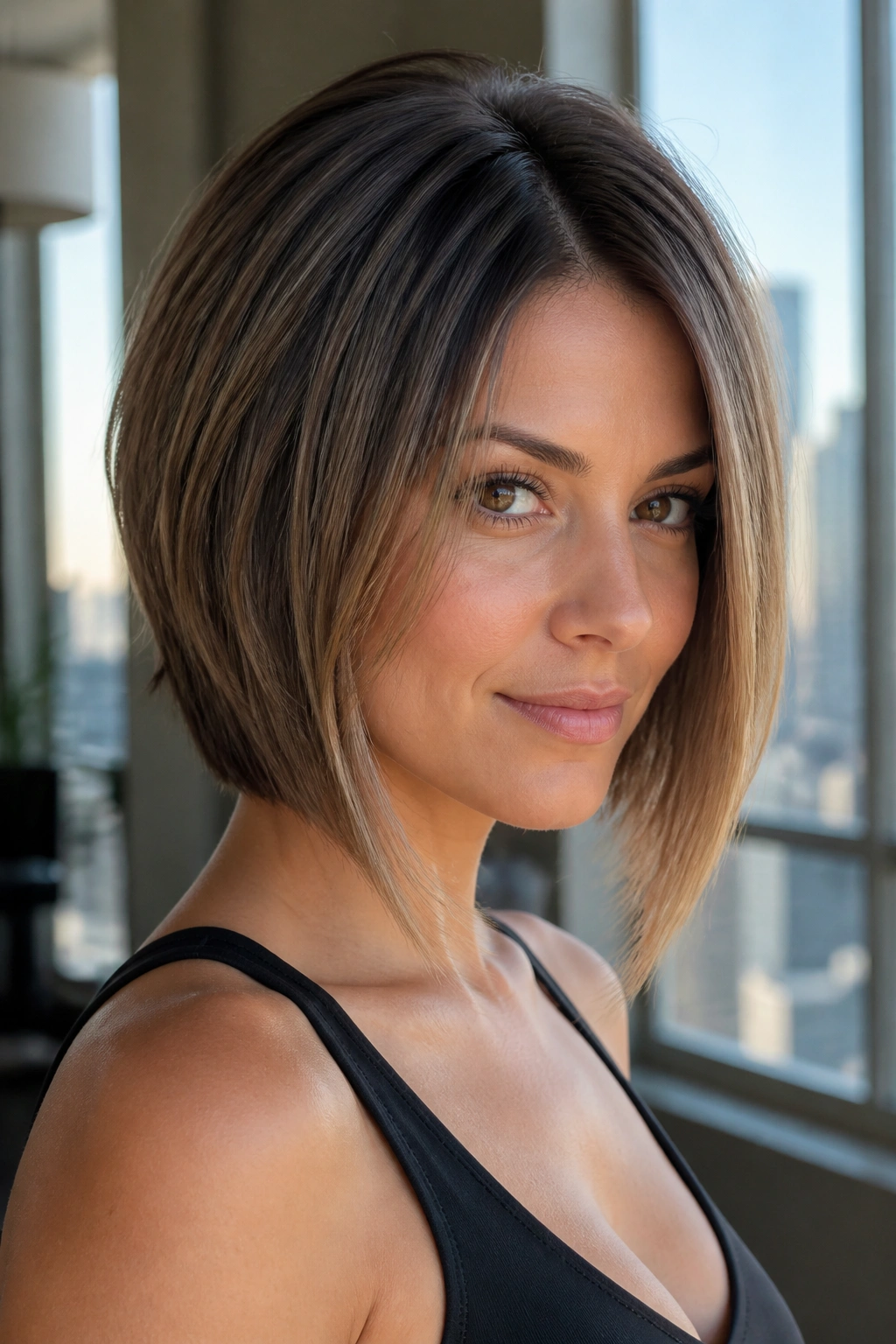
An angled lob is one of the easiest ways to make fine hair look thicker. The back stays a bit shorter, the front stretches forward, and that gentle slope adds shape without making the style look overcut.
What makes it different
The angle creates a built-in lift. Hair naturally wants to fall toward the longer front pieces, so the eye sees motion even when the hair is straight. That’s useful if your hair has a habit of lying too close to the head.
Face-framing pieces matter here, but they should be long enough to blend. Think cheekbone to jawline, not tiny bits that disappear. Fine hair can’t afford tiny bits. They vanish.
- Best with a clean side part
- Good for oval, round, and heart-shaped faces
- Works straight or with a soft bend
- Needs a regular trim to keep the angle sharp
My recommendation: if you want one cut that feels polished, low-drama, and flattering on fine hair, this is near the top of the pile.
9. Long Pixie With a Sweeping Fringe
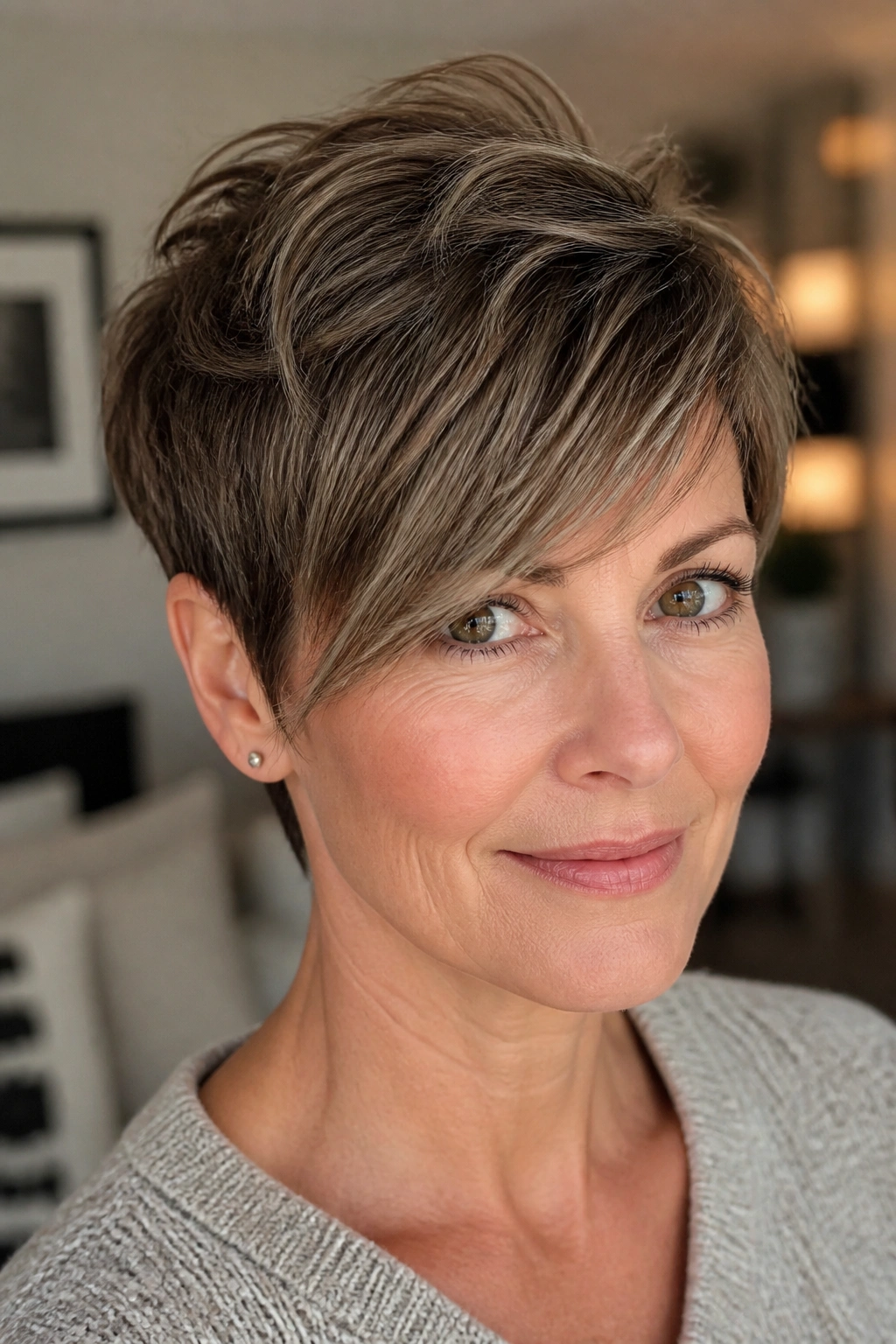
Can a pixie still feel feminine and soft? Absolutely. A long pixie with a sweeping fringe keeps enough length on top to play with, while the side-swept front gives the cut a little drama without asking for much hair.
The fringe is the whole point. It should sweep diagonally across the forehead, not sit as a heavy curtain. That diagonal line is flattering on fine hair because it creates the illusion of density across the front. The sides can stay cropped and close, which makes the top feel fuller by contrast.
This cut works well for people who want less bulk around the ears and neck. It also helps if your hair dries too flat near the crown. A tiny amount of root mousse and a quick blow-dry with your fingers can fix that in under five minutes.
Ask for this
- Long top sections, around 3 to 4 inches
- Soft taper at the nape
- Fringe cut to sweep, not sit straight down
- No aggressive thinning through the crown
If you want easy mornings, this one belongs on your shortlist.
10. Blunt Bob With Hidden Internal Layers
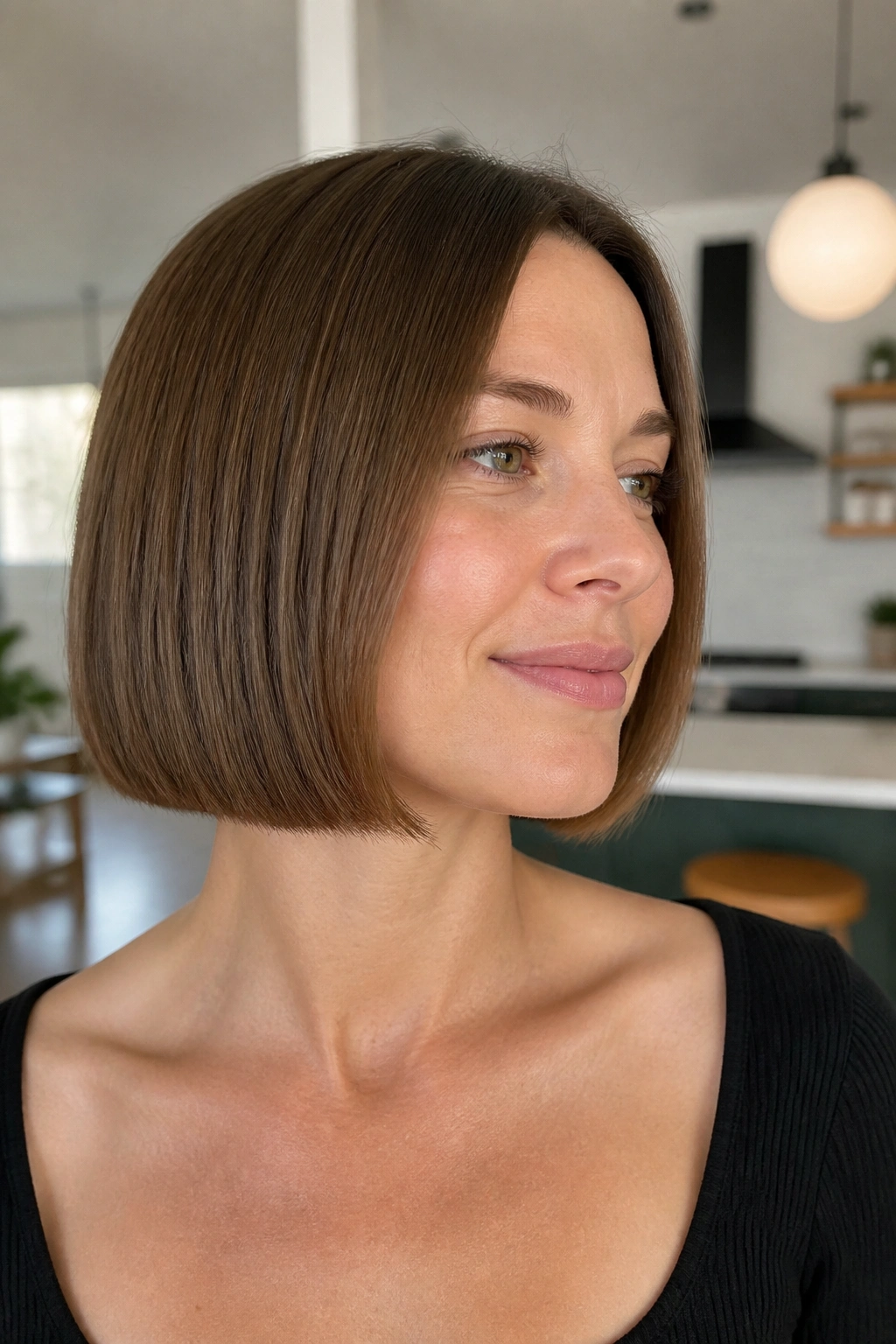
A blunt bob can be one of the best friends fine hair has. The clean edge makes the hair look fuller, and the hidden internal layers keep it from feeling stiff. That balance matters more than people think.
The trick is where the layers live. You want them tucked inside the shape, not cut into the outside line. The perimeter stays solid, so the ends look thick. The inside loses a little weight, so the bob moves instead of sitting like a helmet.
This cut is especially good if your hair is straight or only slightly wavy. It looks crisp when blown smooth, and it can still take a side part without collapsing. A light serum on the mid-lengths is enough. Heavy cream products usually flatten it.
I’d avoid a blunt bob only if your hair has very little density and a lot of cowlicks. In that case, the cut can puff at the sides. For most fine-haired people, though, it’s one of the smartest shapes around.
11. U-Shaped Cut With a Side Sweep
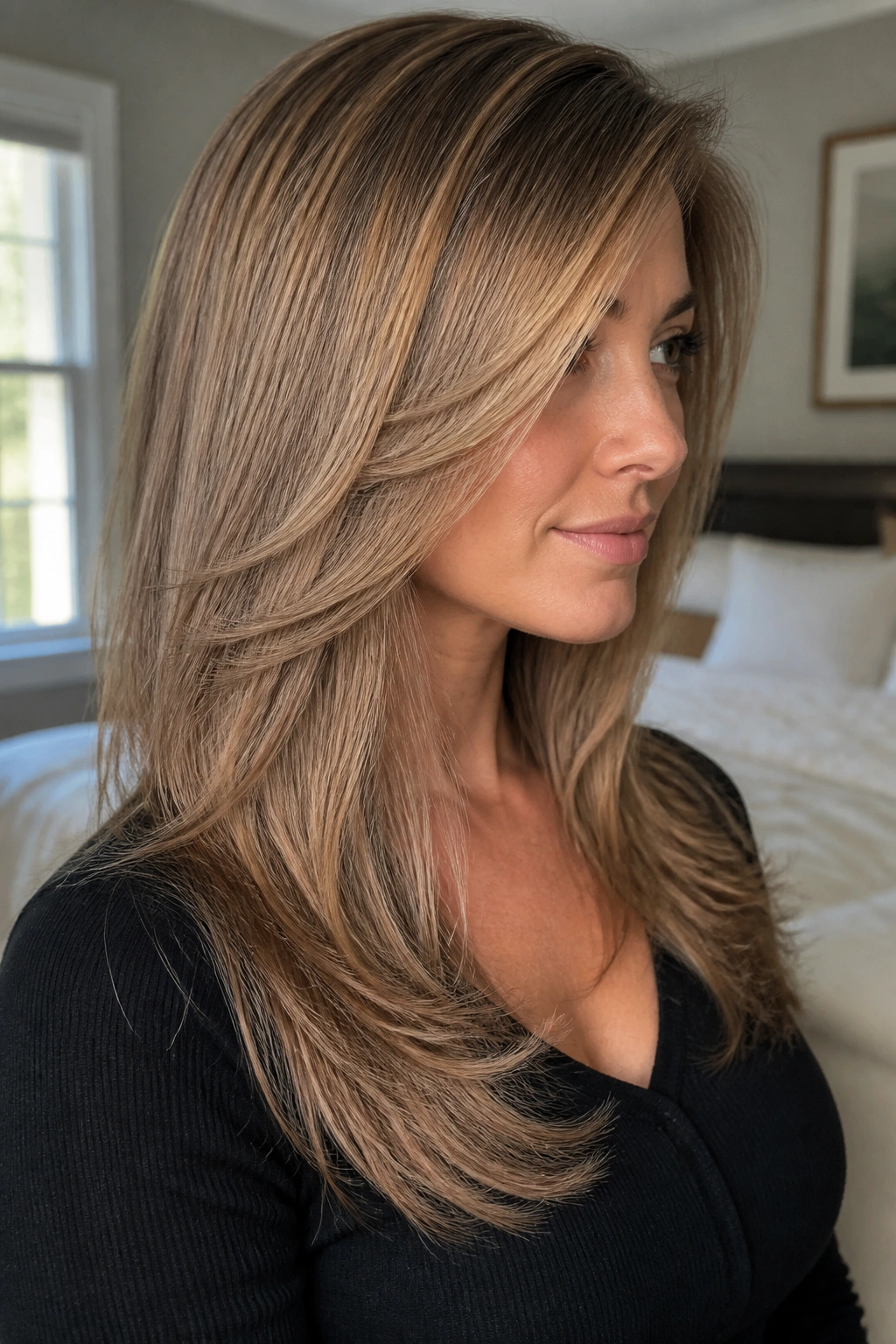
A U-shaped cut gives long hair a softer back line than a straight cut, and that curve helps fine hair hang in a more natural way. Add a side sweep at the front, and the whole shape feels less rigid.
Why the shape matters
A straight line across the back can sometimes make fine hair look thin at the edges, especially if the ends taper naturally. A U-shape avoids that hard shelf. It keeps a little more length in the middle and gently shortens the sides, which gives the hair a fuller outline.
That side sweep is not decorative. It pulls the front into the rest of the cut and keeps the face from getting swallowed by length.
- Best for medium to long hair
- Good if you like ponytails and clips
- Works with subtle layers only
- Needs careful trimming to preserve the curve
If you wear your hair up half the time, this cut is practical. The front still falls nicely, and the back doesn’t look chopped when you take it down.
12. Midi Cut With Side Bangs

A midi cut sits somewhere between a lob and longer hair, and fine hair often loves that middle ground. Side bangs add a little lift up front, which is handy when the crown area needs help.
The shape should stay light through the front and fuller through the ends. That keeps the style from turning into a narrow curtain. Fine hair is fussy about that. Too much internal layering and the whole cut starts to look like it’s been thinned for no reason.
Side bangs are useful because they can be styled soft or tucked away. They also hide a cowlick better than a blunt fringe. If your hair part fights you, a side bang usually wins.
Best styling habit
Dry the bangs first, while they’re still damp, and sweep them in the direction you want them to fall. If you wait until the rest of your hair is done, they’ll already be half-set in the wrong shape.
This is a good cut for busy people who want movement without daily reinvention.
13. Razor-Soft Side Layers
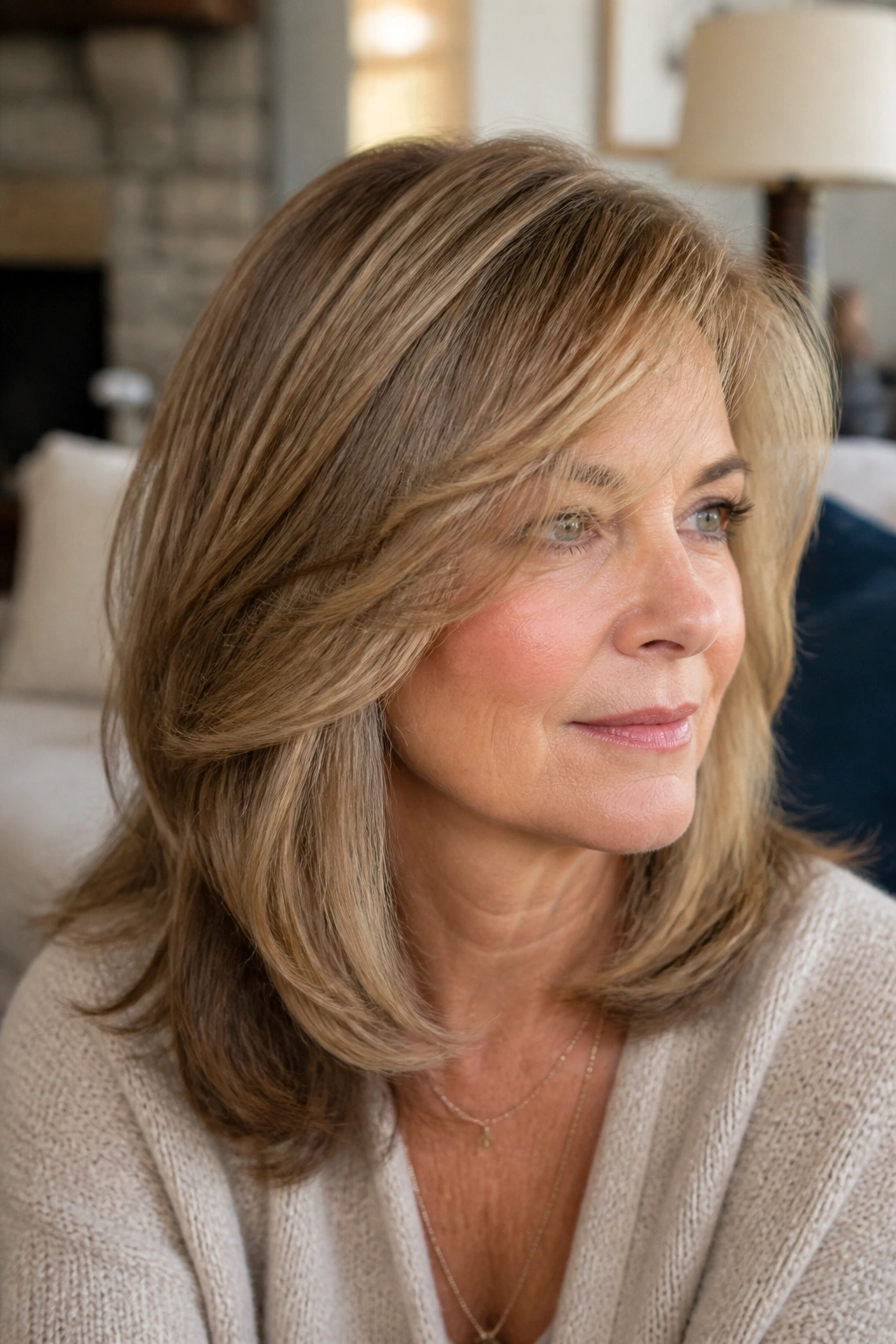
Can razor-cut layers work on fine hair? Yes, but only in a light hand. A razor is useful for softening the front and easing bulky corners, not for stripping density out of the whole head.
That distinction matters. Fine hair can go limp fast if the ends get too wispy. So the smart move is to use the razor where you want air and movement—around the face, maybe through the top side pieces—and leave the perimeter fuller.
How to keep it from going thin
- Ask for razor work only on the top and front
- Keep the ends blunt or softly point-cut
- Avoid heavy slicing on already sparse hair
- Pair the cut with a side part for lift
I like this cut on hair that naturally bends a little. Straight fine hair can show every uneven bit if the razor work is sloppy. But when it’s done well, the result feels light and touchable, not stringy.
14. Wavy Side-Layered Cut
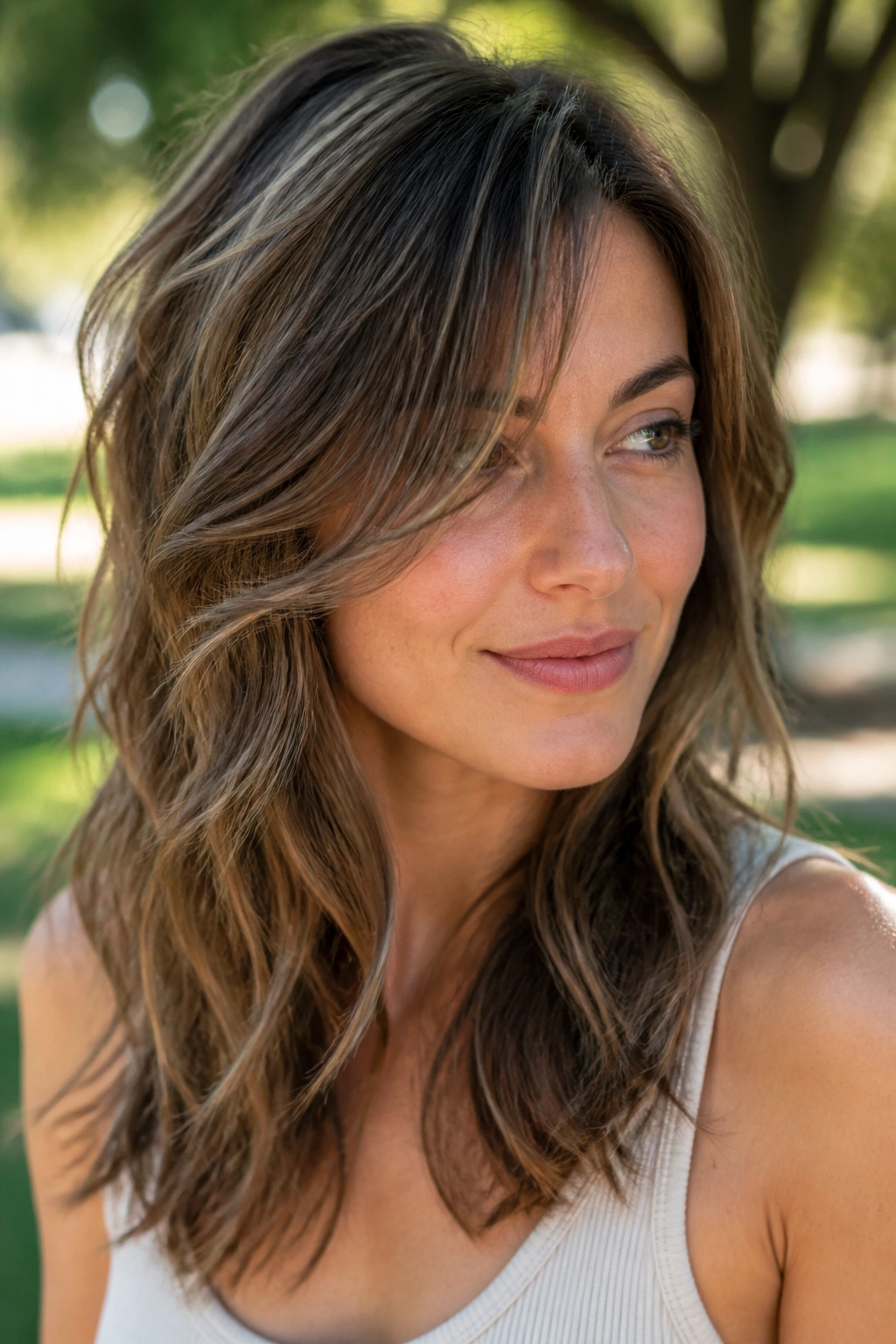
Natural wave changes the whole game. Fine hair with bend can look much fuller than straight fine hair, and side layers help that wave fall in a better direction. They create room around the cheek and jaw, so the hair doesn’t bunch up like one solid curtain.
The main thing to remember is that waves expand when they dry. That means the cut needs enough length to settle. Go too short with the layers and the hair can puff. Keep them longer, and the wave has space to form a shape instead of a cloud.
This is a good cut if you air-dry a lot or use a diffuser. A little curl cream, scrunched into damp hair, can be enough. If you like a looser finish, wrap a few front pieces around a 1-inch iron and leave the ends out slightly. That keeps the cut soft.
Fine, wavy hair is one of those textures that looks much better once it stops fighting itself. The side layers help that happen.
15. Sleek Side-Parted Layered Bob
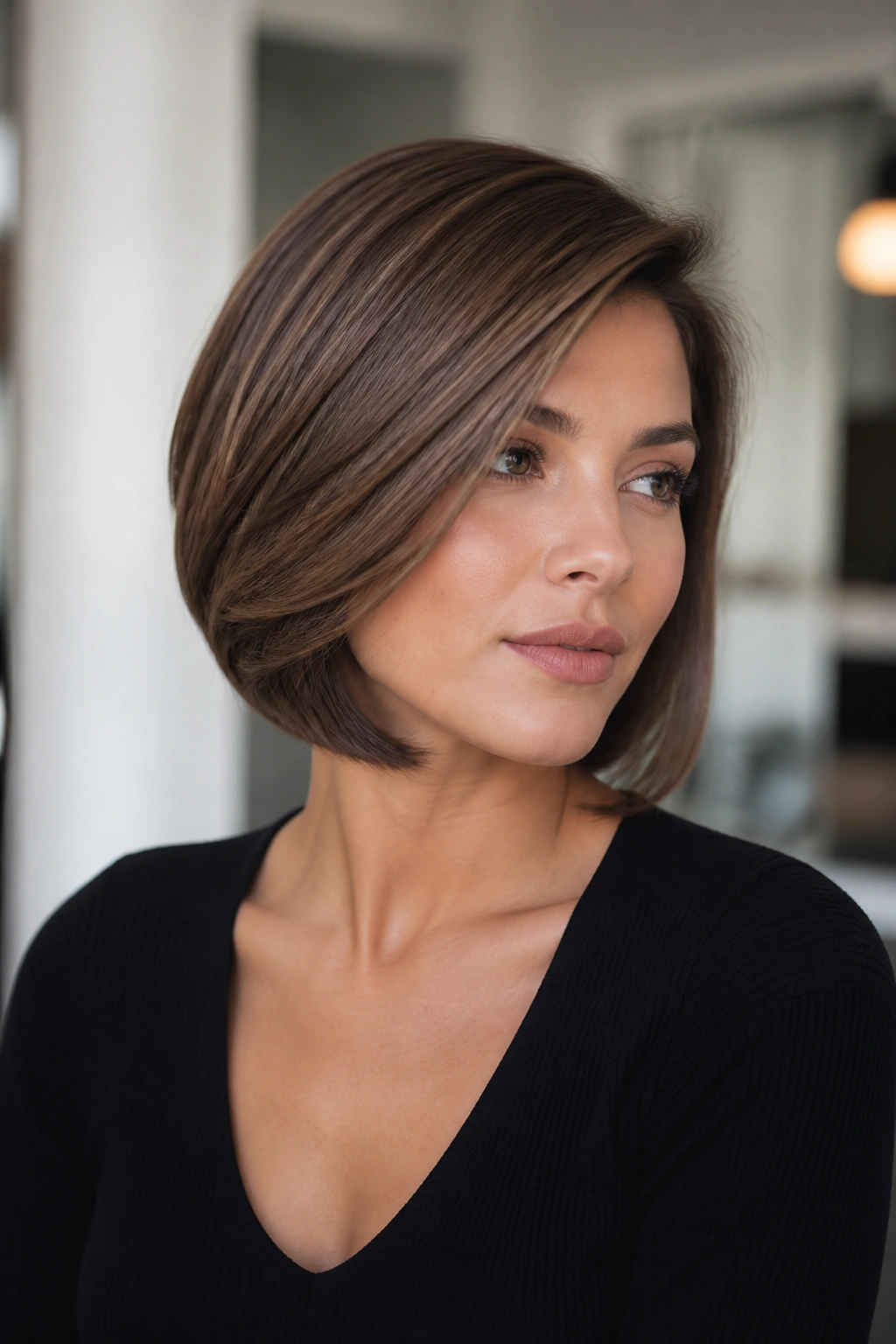
A sleek bob sounds plain until you see what a good side part does to it. On fine hair, a smooth shape can look expensive in the best sense of the word—clean, sharp, and thicker than it really is because the outline stays crisp.
This version keeps the layers shallow. You still get movement, but the surface stays smooth and the ends stay blunt enough to read dense. That’s the whole trick. Fine hair often looks better when it looks controlled.
I’d style this with a round brush or a flat brush blow-dry, then bend the last half inch of the ends under or out slightly. Not much. Just enough to keep the line from looking dead straight. A center part can work too, but the side part usually gives the crown a little extra lift.
A light shine spray or a drop of serum on the bottom half is enough. Heavy oils make the hair hang. That’s not what you want here.
16. Butterfly-Inspired Side Layers
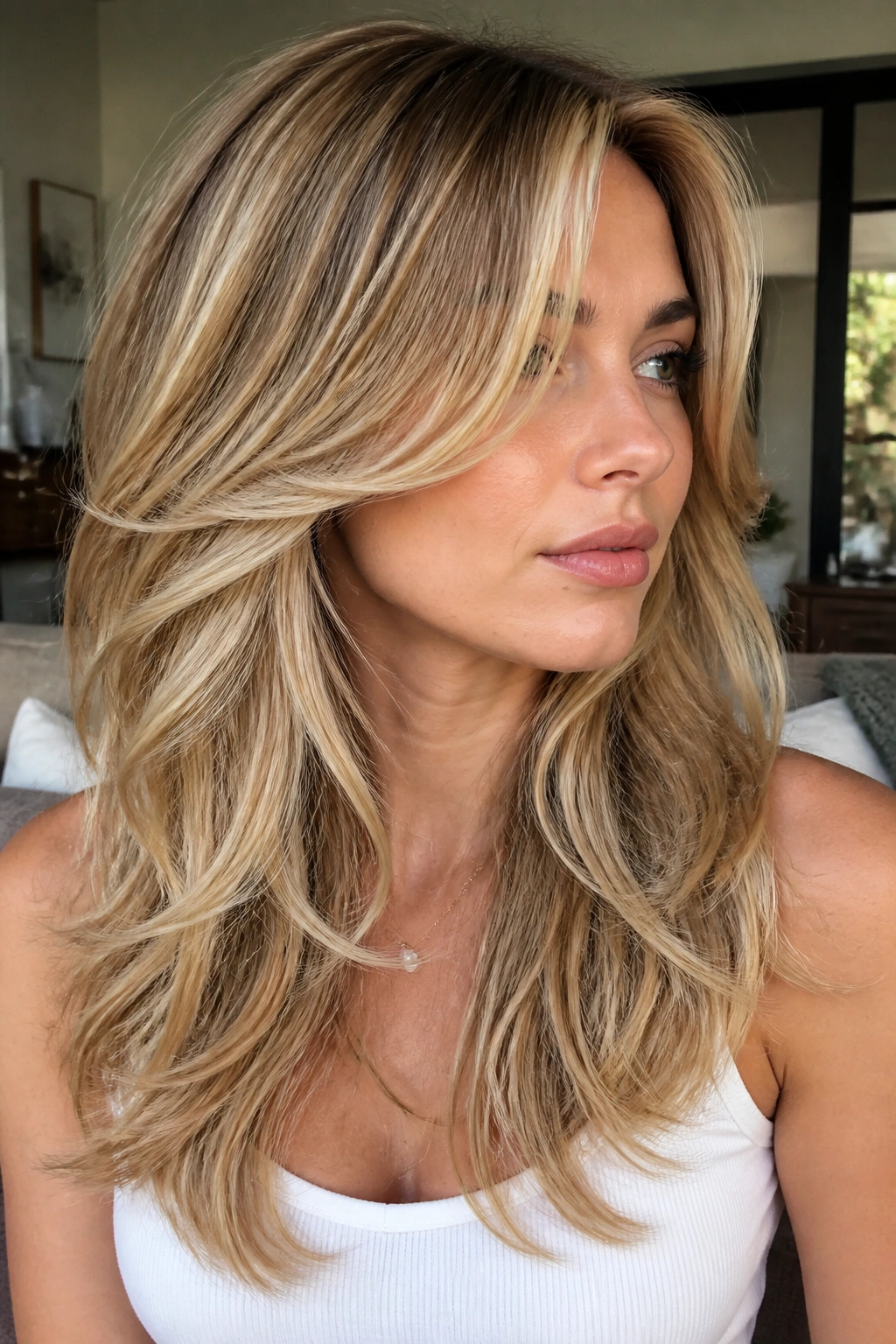
A classic butterfly cut can be a lot for fine hair, so I prefer the softer, side-weighted version. Think long face-framing layers that start around the cheekbones, plus a preserved length in the back so the ends still look full.
The idea is movement without hollowing out the middle. The front opens up, the top gets a little lift, and the longer bottom layer keeps the hair from looking scraggly. That balance is useful if you want a bigger shape but don’t want to give up length.
What to request
- Face-framing layers starting at cheekbone height
- Back length left mostly intact
- Side part or off-center part
- Soft blowout styling, not a heavily textured finish
This version works best on hair that has some density, even if the strands are fine. If your hair is both fine and sparse, keep the shortest layers longer and skip the dramatic cut-in around the crown. The softer version is the one worth having.
17. French-Inspired Side-Parted Bob

A French-inspired bob can flatter fine hair when the line stays clean and the side part gives it a little bend. I prefer it over a heavily textured short cut because the blunt edge makes the ends look thicker right away.
Unlike a chopped-up bob, this one stays tidy. The side part softens the front and keeps it from feeling severe. If you want a haircut that looks good with minimal styling, this is a strong choice. It needs only a quick blow-dry and maybe a bend at the jaw.
The caution is obvious: too much layering ruins the effect. The charm here is the shape itself, not the amount of texture. Fine hair benefits from that discipline. A little bit of bend at the front, a firm edge at the bottom, and the cut holds its own.
It suits people who like a sharper look and do not want to spend time fussing with beach waves every morning. Straight, sleek, and a touch side-swept. That’s enough.
18. Tapered Shoulder Cut With Side Volume
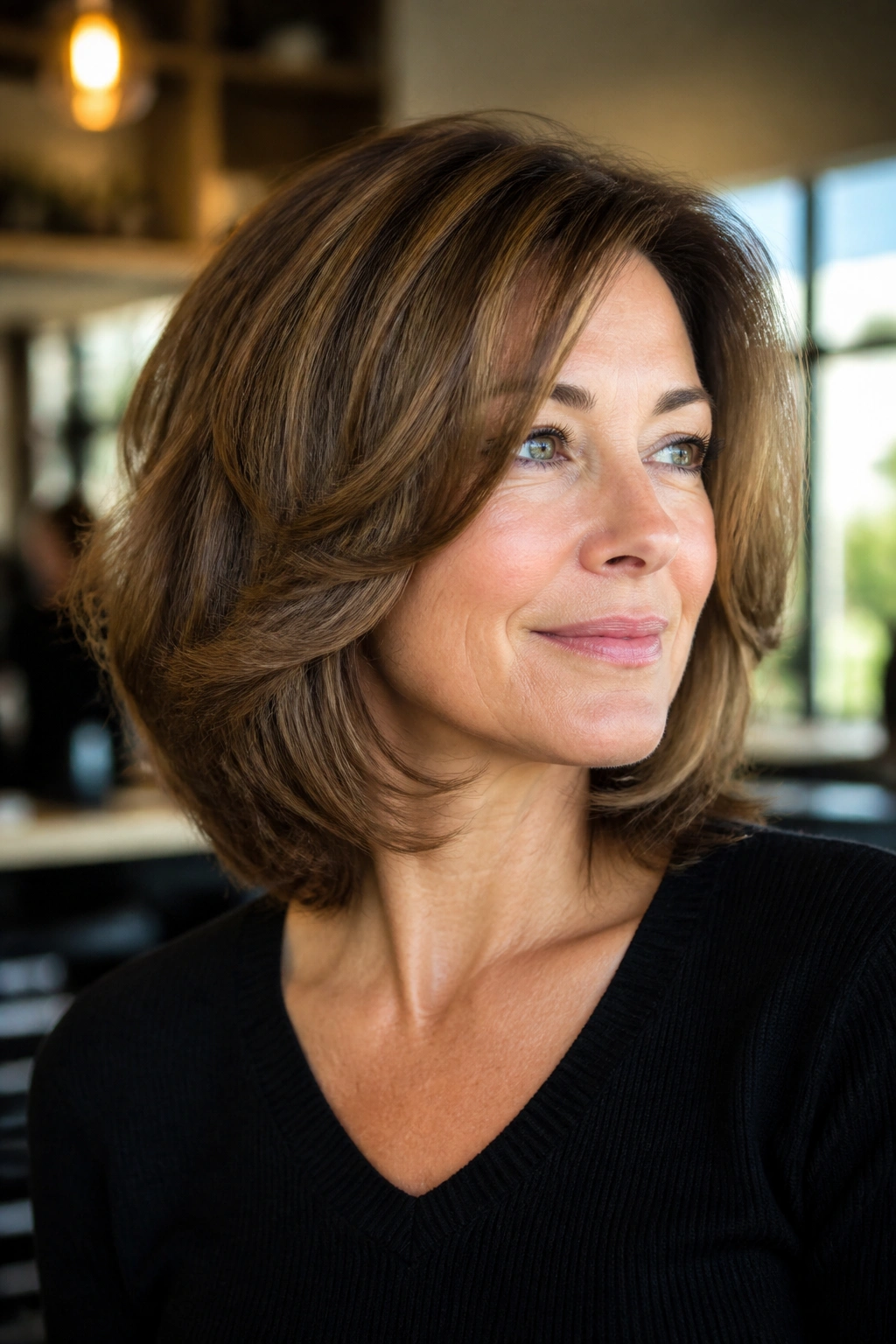
This is the cut I’d hand to someone who wants a little volume but refuses to go short. The length stays near the shoulders, the sides get more lift, and the back tapers enough to keep the shape from dragging.
Why it lasts
Shoulder-length fine hair can slip into a flat triangle if the cut is too uniform. A tapered shape fixes that by removing just enough weight where it would otherwise hang, while leaving the bottom long enough to look full.
- Keep the bottom 2 to 3 inches solid
- Add volume at the sides, not the whole crown
- Use a side part for extra lift
- Blow-dry the roots first, then the ends
I like this cut for people who tuck hair behind the ear, clip one side back, or wear a half-up style a lot. It gives you room to play without sacrificing thickness. And that is the real win with fine hair: not chasing volume for its own sake, but keeping the shape solid enough that volume has somewhere to live.
Final Thoughts
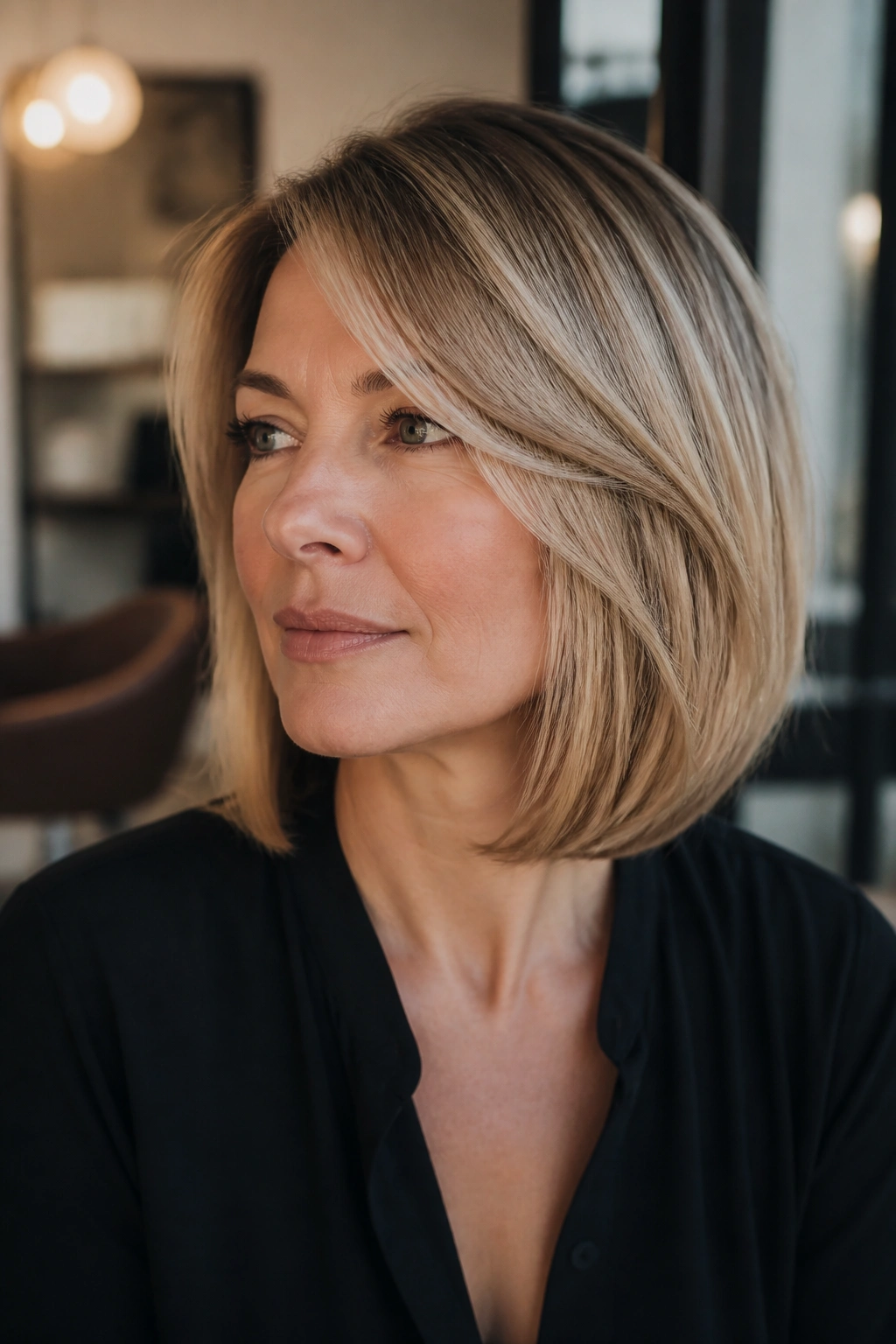
Fine hair usually looks best when a haircut respects its limits instead of fighting them. Side layers, a clean perimeter, and a smart part do more for fullness than a pile of choppy pieces ever will.
If you want the safest starting point, look at a collarbone lob, a blunt bob, or a long pixie with a side sweep. Those shapes hold together well and still leave room for movement. If you like more softness, feathering and long face-framing pieces are the smarter route.
Bring photos, yes. But also bring one plain instruction: keep the ends full. That small detail changes everything.
