



Fine hair and blonde color can be a brilliant match, but only when the cut does real work. If the layers are too aggressive, the ends go see-through. If the blonde is too flat, the whole shape can look tired before you even leave the salon.
The best blonde layered haircuts for fine hair don’t chase bulk for the sake of it. They build movement where hair naturally bends, keep enough weight at the perimeter, and use color to create depth around the crown, the cheekbones, and the ends. That mix matters more than people think. A clean cut with smart layering often looks fuller than a longer style that’s been thinned out to death.
And that’s the part a lot of people miss. Fine hair is not the same as thin hair, and blonde is not one shade. You might have plenty of strands that are just delicate, or you might have low density with very light texture. You might want swingy ends, or you might want a short shape that sits close to the head and still reads as full. Different problems. Different fixes.
So the smartest approach is to match the cut to the kind of fullness you want to see in the mirror. Some of these styles lean soft and polished. Some bring in movement and texture. A few are short enough to make fine hair look packed with body, which is a neat trick when the right hands do it. Start with the shape that fits your length, then let the blonde placement do some of the visual heavy lifting.
1. Collarbone Lob with Feathered Ends
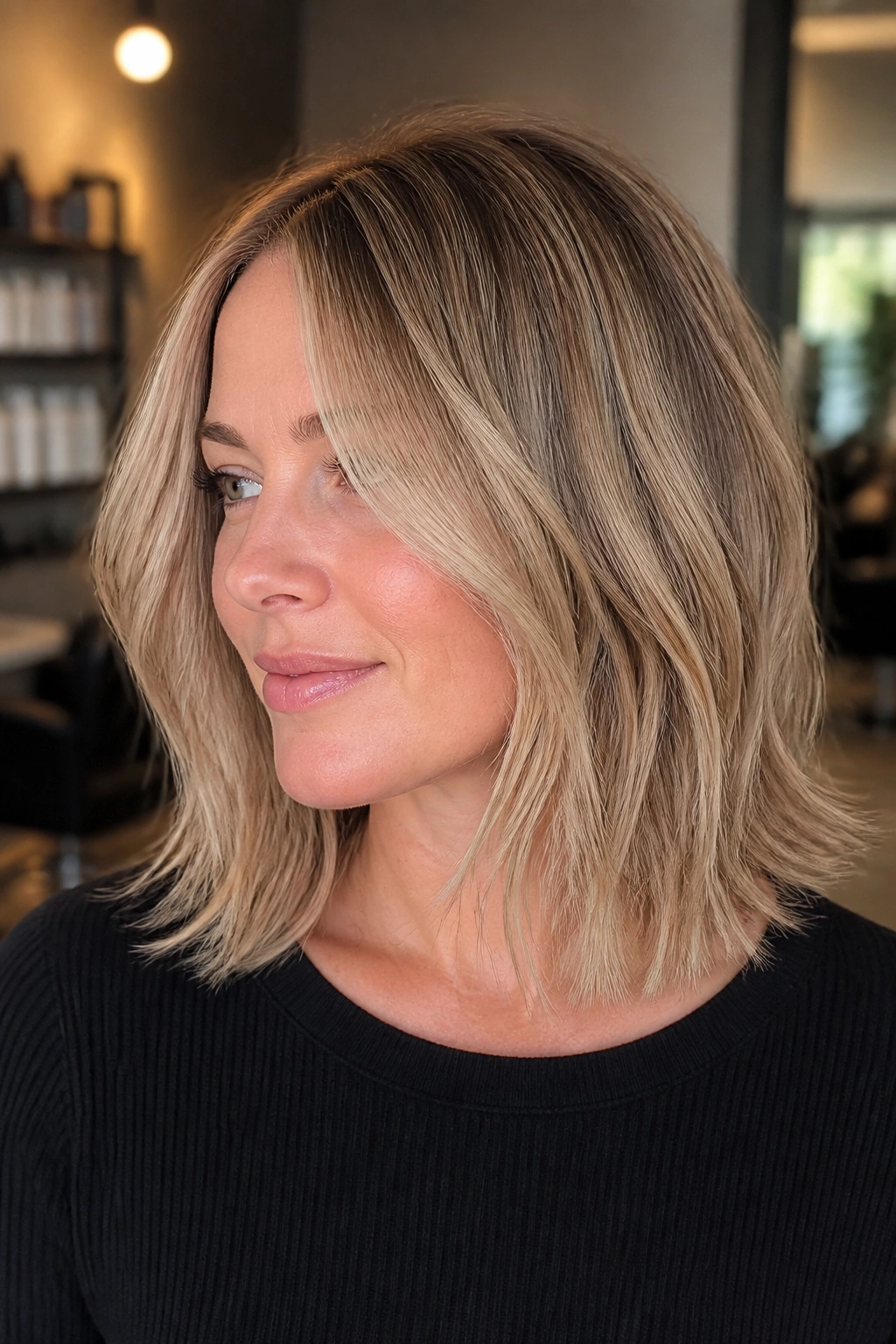
A collarbone lob is one of those cuts I keep coming back to for fine hair because it gives you enough length to feel versatile without dragging the hair flat. The ends hit at that sweet spot between swing and structure, which means the hair can move without looking stringy.
Why It Works for Fine Hair
Feathered ends soften the edge of the cut so the bottom line doesn’t look heavy or boxy. That’s useful when the strands themselves are delicate, because a blunt line can sometimes look like a shelf. Ask for light feathering, not aggressive thinning, and keep the layer placement below the cheekbones if you want the body to stay in the lower half of the shape.
A beige or cream blonde makes this cut feel airy, especially if the stylist leaves a little depth at the root. That tiny shadow keeps the top from collapsing visually.
- Length: collarbone or just above it
- Layering: soft, feathered, and limited near the ends
- Best color: beige blonde, creamy blonde, or soft pearl blonde
Pro tip: Blow-dry with a 1-inch round brush and turn the ends in or out by half an inch. Little movement goes a long way here.
2. Side-Parted Feathered Bob
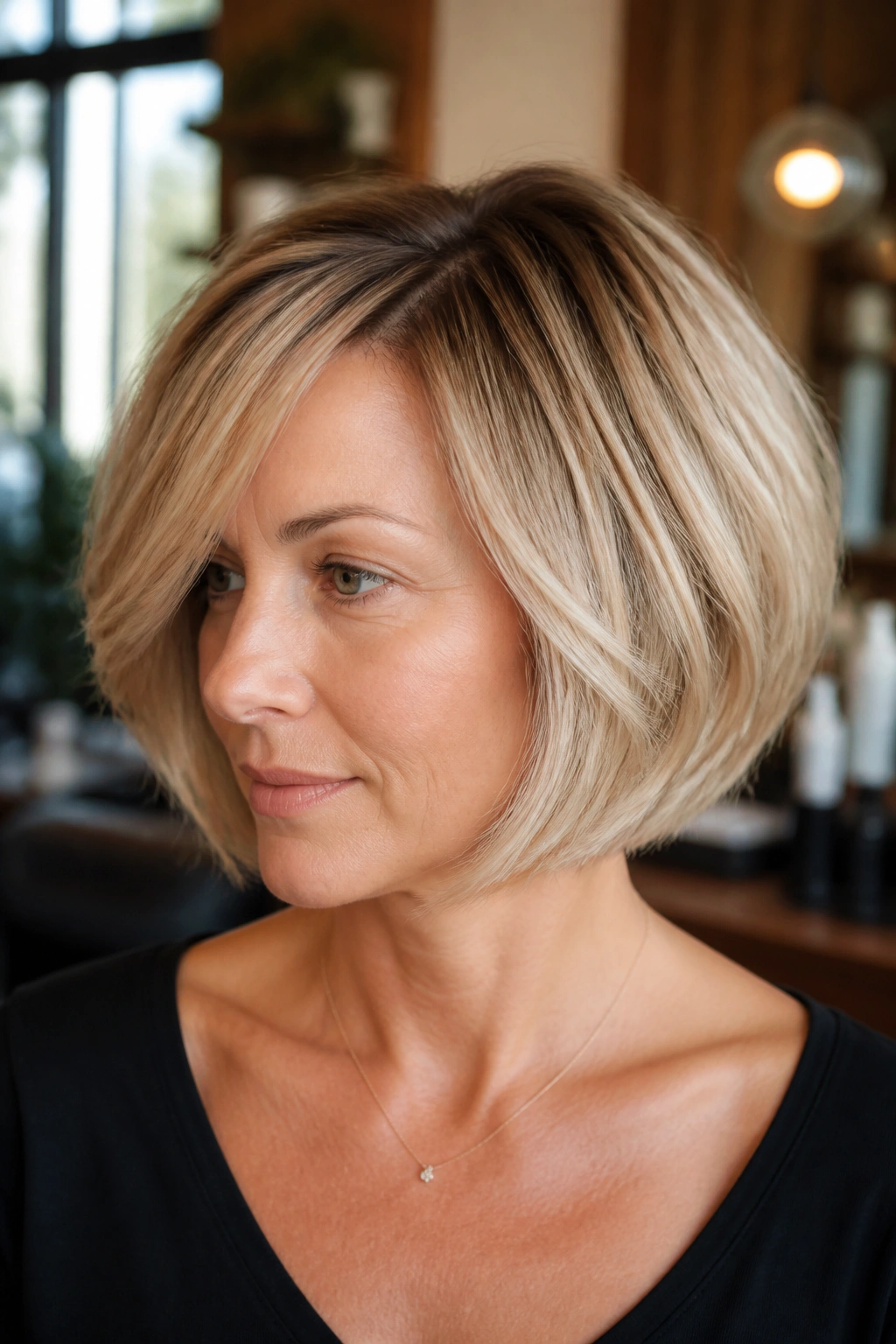
A side part does more for fine hair than most people give it credit for. It changes the way the roots lift, and that alone can make a bob look fuller without adding a single product. A feathered bob that lands around the jaw or a touch below it gets extra shape from that offset part.
The cut itself should stay light around the face and a little tighter in the back. That keeps the outline clean. I like this style in a champagne blonde with a slightly deeper root underneath, because the contrast creates the illusion of thickness where the hair is usually the flattest.
What makes it practical is the styling. You can rough-dry the roots, then direct the front away from the part with a vent brush. That gives you a soft bend, not a stiff helmet shape. Good. You want movement, not a costume.
A clean side part also helps if your crown tends to split open at the center. That’s common. A bob like this works with that, not against it.
3. Butterfly Layers with Bright Money Pieces
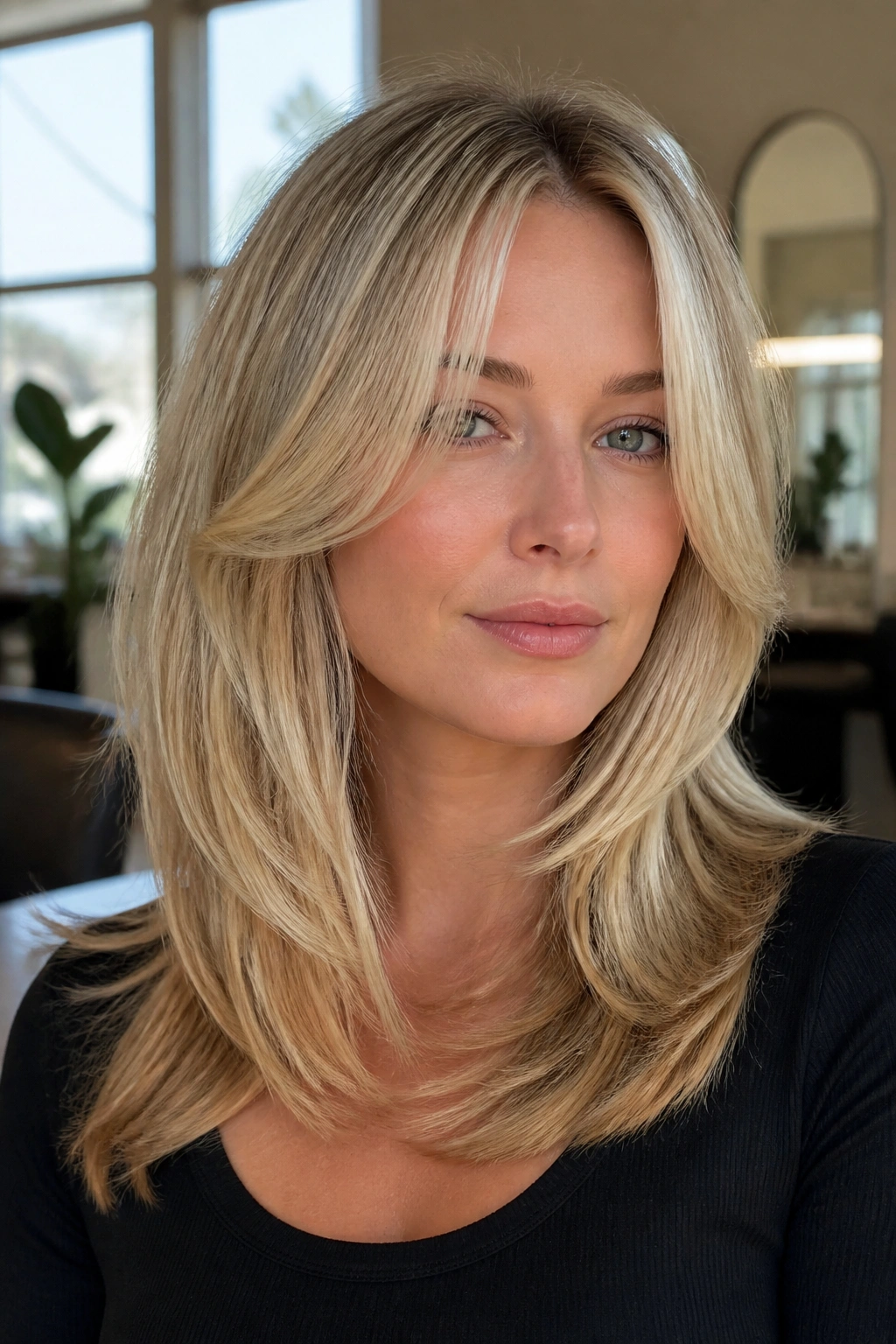
If your hair needs shape around the face but you still want the back to keep its weight, butterfly layers are a smart move. The top section is cut shorter so it can lift and frame, while the longer bottom section keeps the overall look full. It sounds dramatic on paper. In practice, it can be surprisingly wearable.
What Makes It Stand Out
The bright money pieces at the front are doing more than color work. They pull the eye outward, which makes fine hair look like it has more width at the face. That matters when the strands are fine and the whole style can start to look narrow if everything is one tone.
Ask your stylist for soft, blended layers that start around the cheekbone and taper into longer lengths below the shoulders. Too much layering through the mids will hollow the cut out fast.
What to Ask For
- Face-framing layers that start near the cheekbone
- Longer layers left through the lower half
- Bright pieces around the front hairline, no chunky stripes
- A soft root shadow for depth
This cut wants a blowout. Air-drying can work, but it usually looks better with a round brush and a little patience.
4. Curtain Bangs and Long Blended Layers
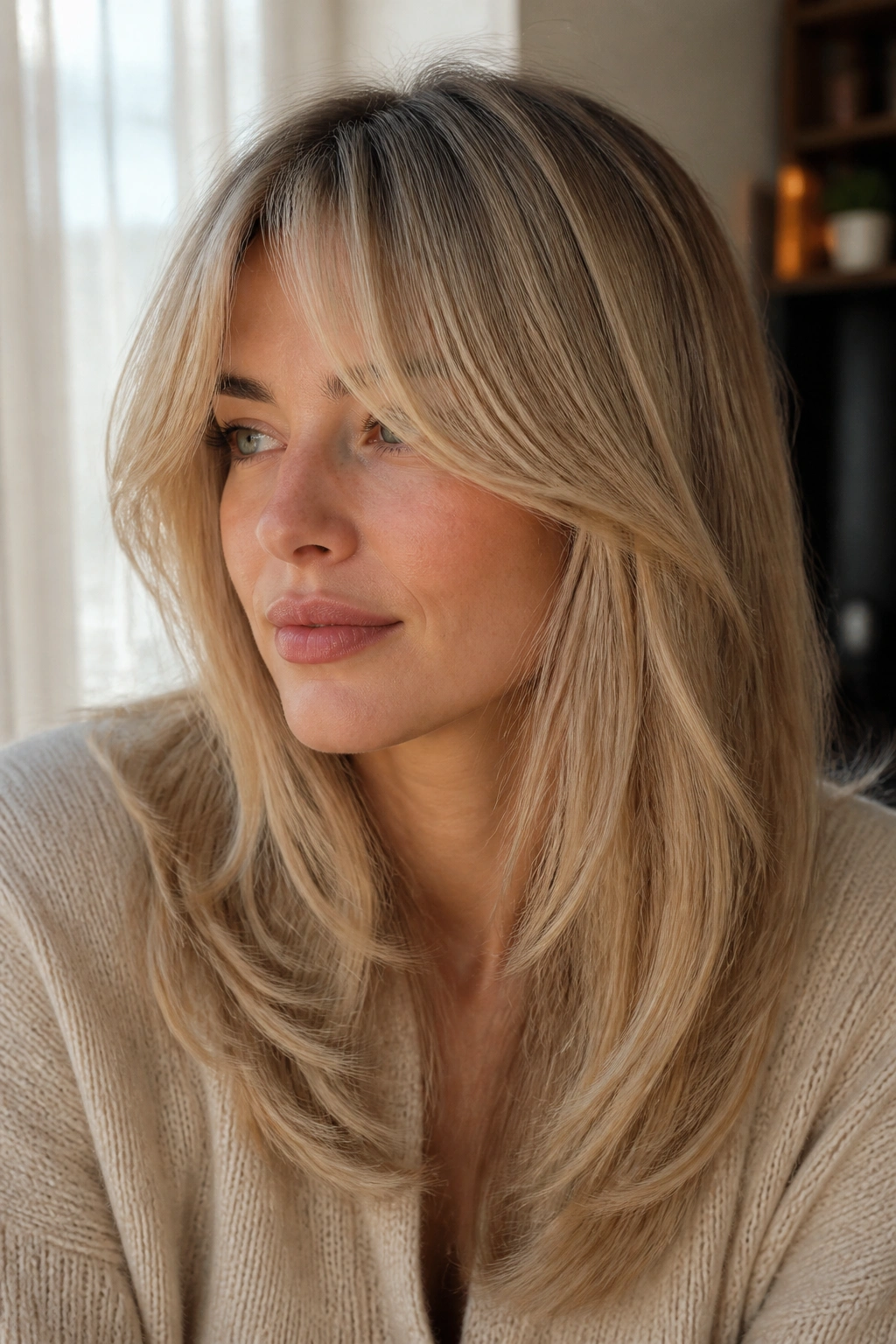
Can long fine hair still look full? Yes, if the front of the haircut is doing some of the lifting. Curtain bangs are useful because they split the attention across the face, and that makes the rest of the hair feel broader and more balanced.
Long blended layers keep the length, which is the part a lot of people want to preserve. The key is where the layers start. If they begin too high, the ends can feel wispy. If they start below the chin and stay soft through the lengths, the whole style keeps its shape.
How to Wear It
Curtain bangs should skim the brow or land just under it, then open toward the cheekbones. That gives a flattering frame without a hard line. On fine hair, I like them paired with a buttery blonde or neutral beige tone, because the lightness around the front makes the fringe feel softer.
A 1.5-inch round brush is enough for the bangs. Roll them away from the face, hold the shape for a few seconds, and let them cool before touching them. That cooling time matters more than people think.
5. Textured Shag with Rooty Blonde Dimension
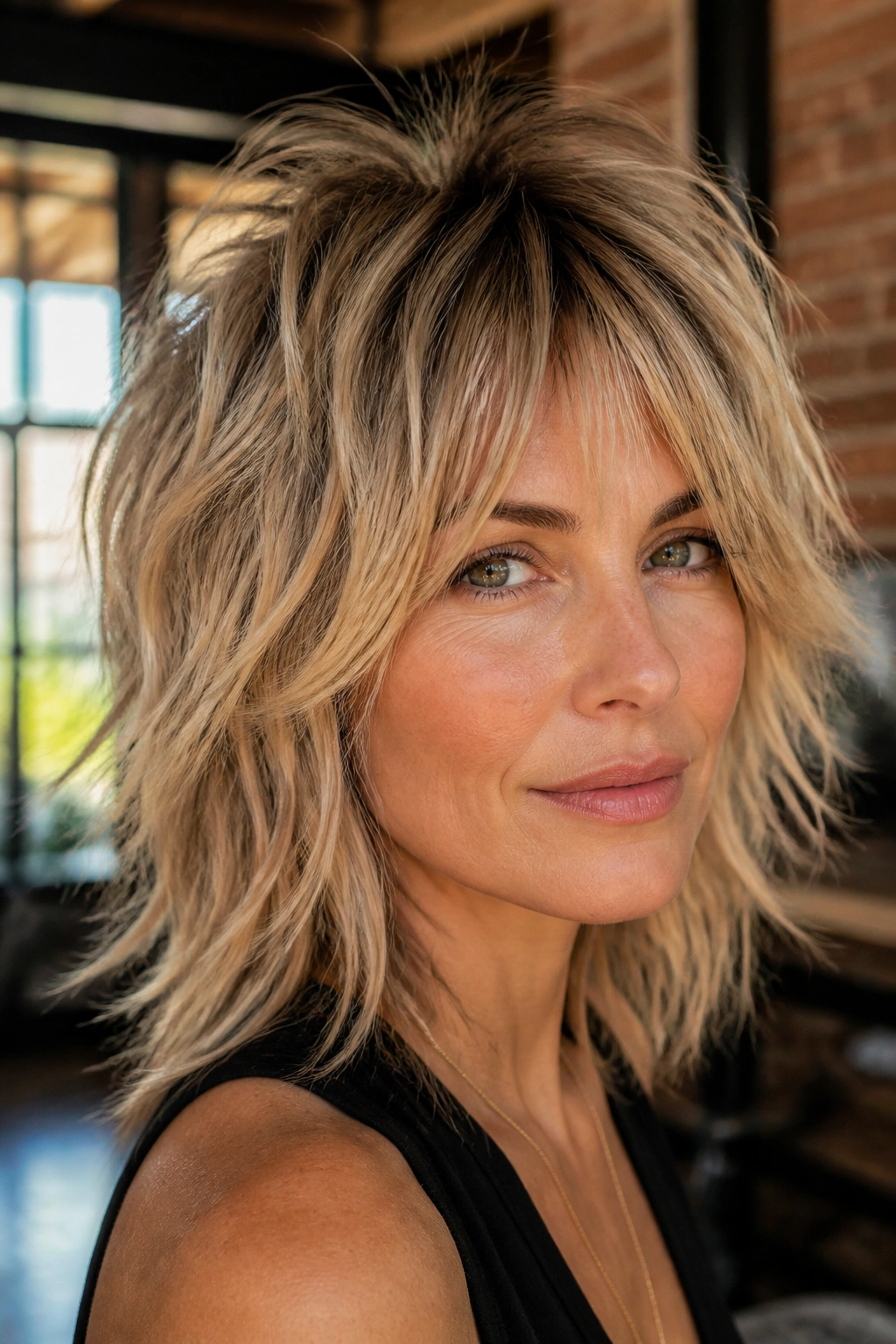
A shag can absolutely work on fine hair, but only when it’s handled with a light hand. Overdo the choppiness and you end up with ends that look frayed. Keep it controlled, and you get lift, movement, and a shape that doesn’t collapse by lunchtime.
Rooty blonde dimension helps here because the darker root gives the cut a bit of visual grit. A uniform pale blonde can make every layer read the same, which is not what you want when the goal is fullness. A softer root and a brighter mid-length create depth without harsh stripes.
This is one of the better choices if your hair has a slight wave. The shape can wake up with a little mousse and air-drying, then a quick twist of a diffuser if you need more bend. Straight fine hair can wear it too, but it needs a bit more styling, which is fair. Some cuts ask for more work.
The best version has choppy movement around the crown and a loose outline at the ends. Not shaggy in a messy way. Shaggy in a smart way.
6. Blunt Lob with Crown-Only Internal Layers
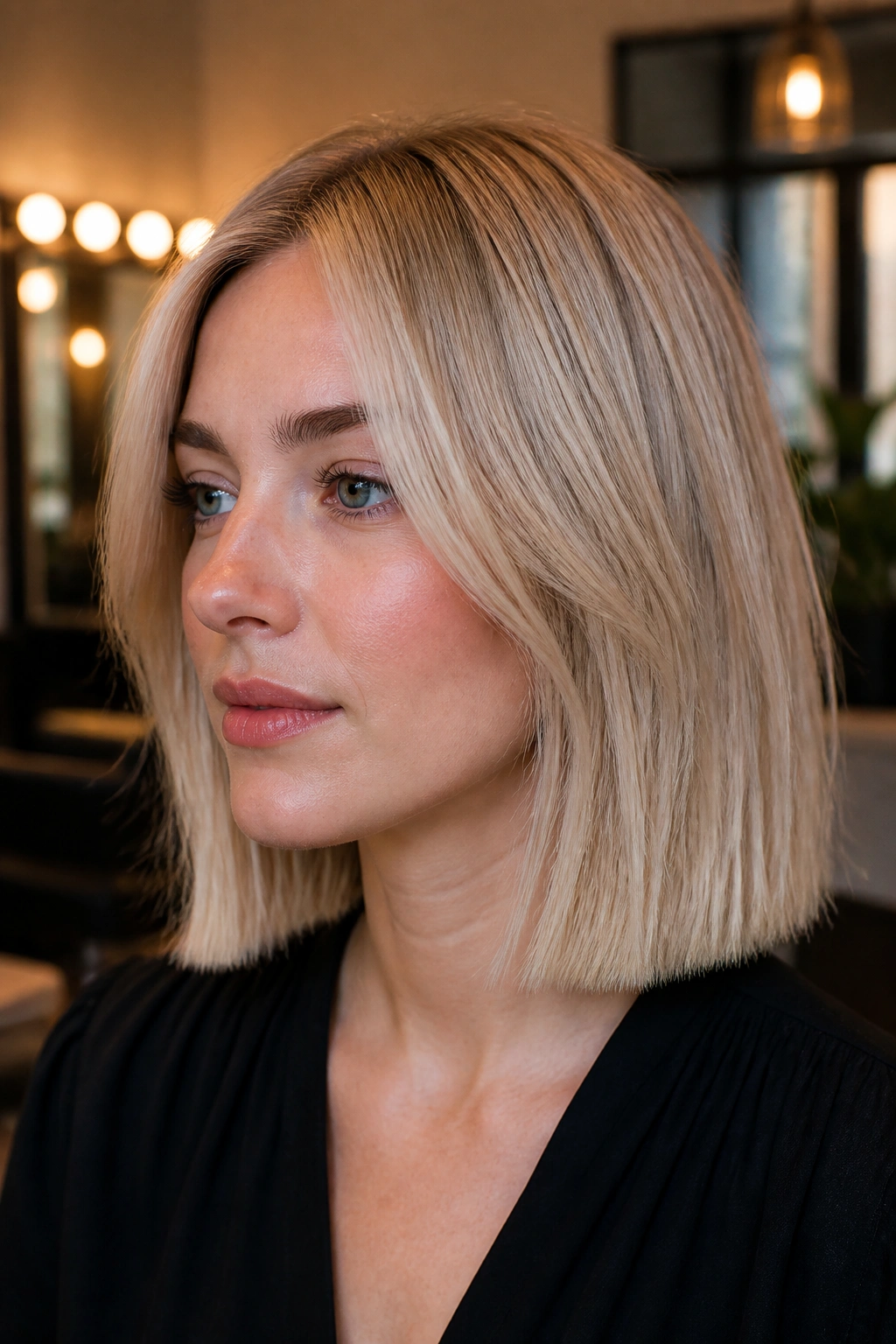
This is the cut for someone who likes the look of density. Unlike a heavily layered style, a blunt lob keeps the outline solid, which makes fine hair look thicker from the outside. The trick is hiding a few internal layers at the crown so the top doesn’t lie flat.
That crown-only shaping gives lift where you need it and preserves weight where you don’t want to lose it. If the ends start looking sparse, you’ll notice it fast. A blunt perimeter protects against that. So does avoiding thinning shears. I’d say skip them unless the stylist has a very specific reason to use them.
A pale beige blonde works well here because the clean line of the cut and the softer color read as polished without feeling stiff. If your hair is straight, this shape is especially good. It falls into place with a quick blow-dry and usually holds its line until the next wash.
Best of all, it looks expensive without trying too hard. That’s not a bad trait.
7. Long Face-Framing Layers for Straight Blonde Hair
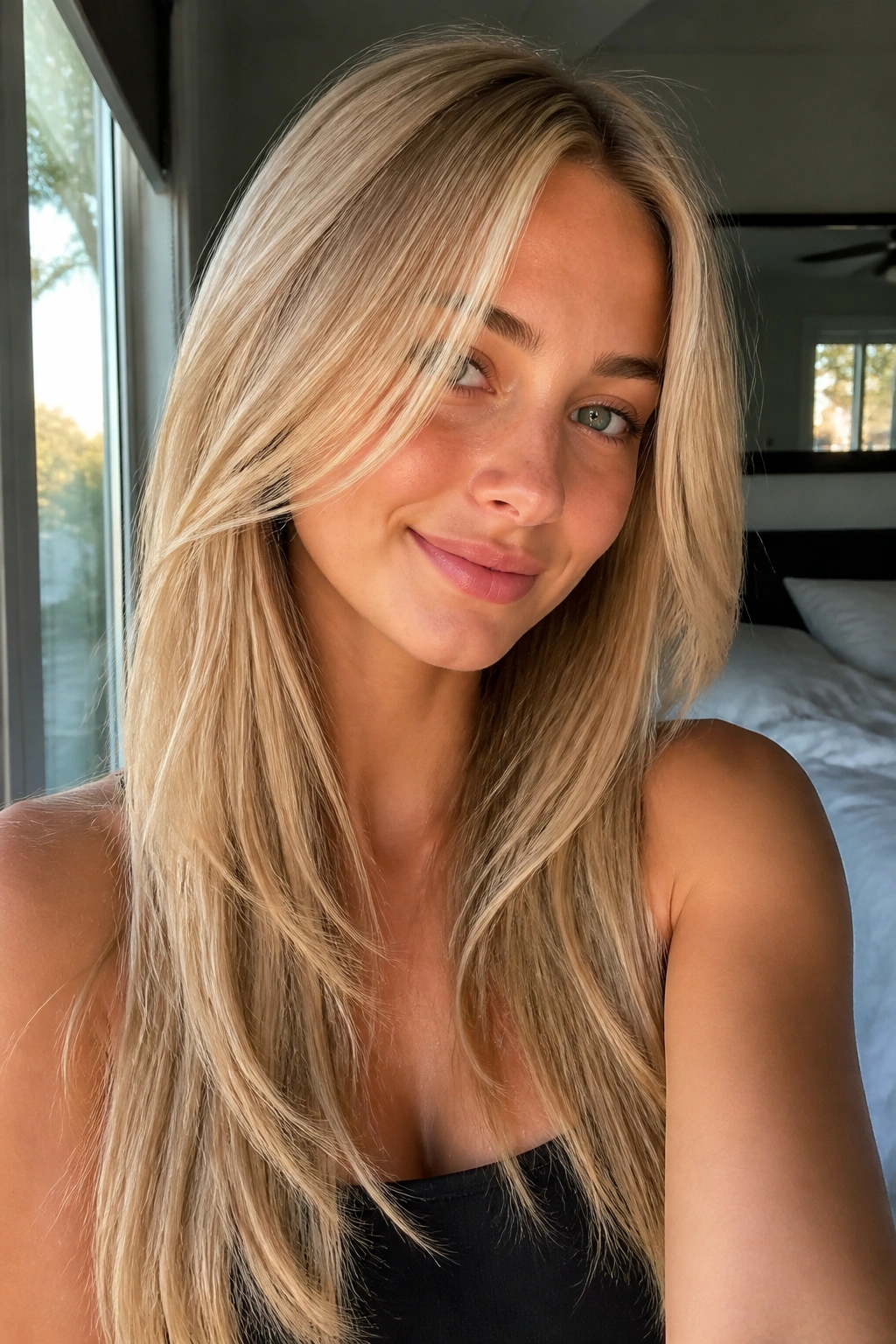
Straight fine hair can be tricky because every line shows. That’s exactly why long face-framing layers matter. They create movement without taking away the length that gives the hair some visual heft.
The layers should begin around the chin or just below it, then slide gradually into the rest of the cut. Keep them soft. Hard steps make the hair look broken up, especially if it’s naturally sleek. Bright blonde pieces around the face help the cut feel lighter, while the rest of the length stays a little deeper for contrast.
Where to Start the Layers
If your face is narrow, start closer to the cheekbones. If it’s round, let the first layer fall lower so the cut doesn’t puff out too much at the sides. That small adjustment changes the whole feel.
The easiest way to style it is with a smooth blow-dry and a tiny bend at the ends. Not poker-straight. Just enough curve to show that the hair has shape. A flat iron turned half a twist at the bottom can do the job in seconds.
This is a good everyday option. It doesn’t scream for attention, which is partly why it works.
8. Chin-Length French Bob with Soft Graduation
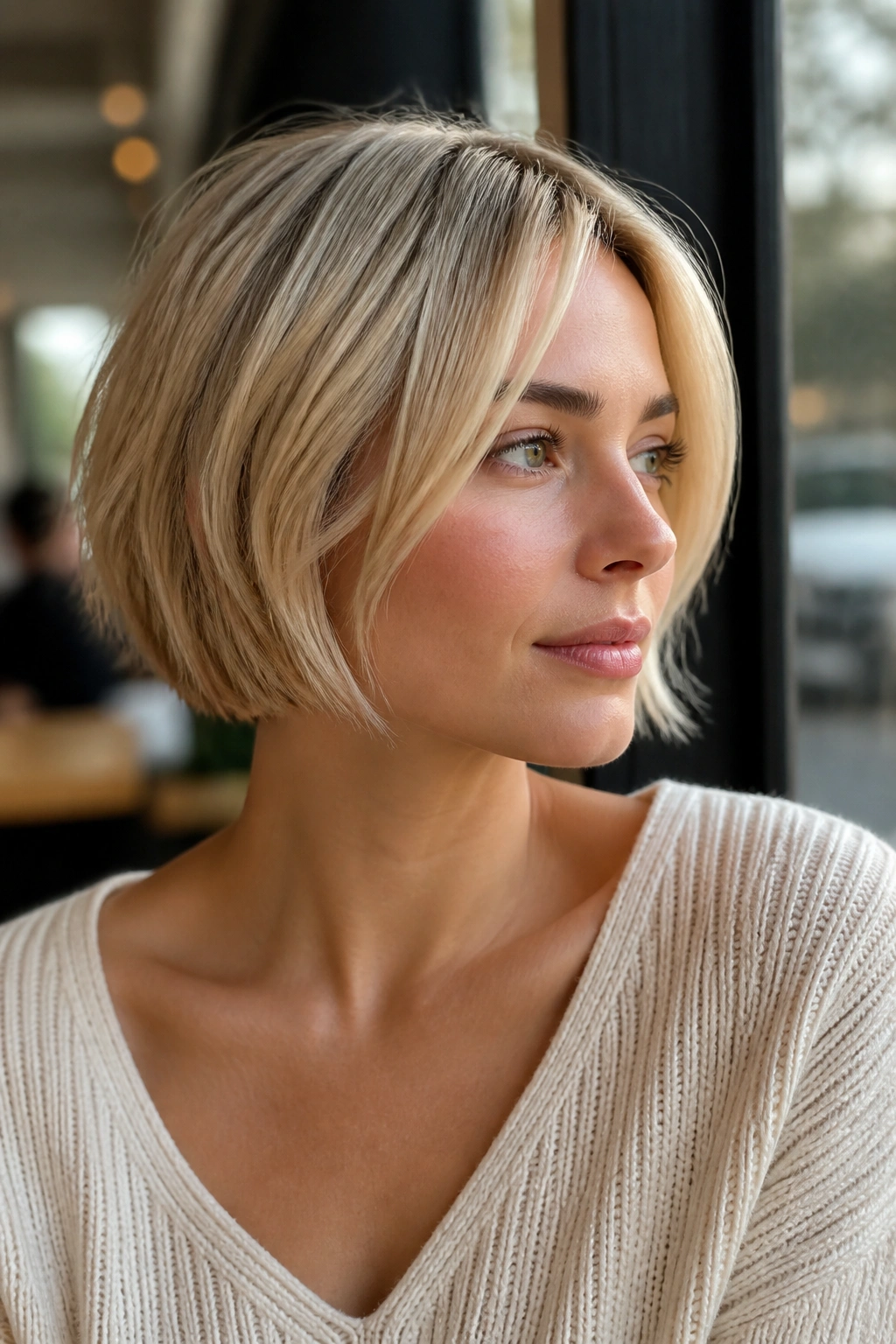
A chin-length French bob can make fine hair look denser almost instantly because the shape sits close to the head and removes the drag of extra length. The trick is to keep the graduation soft so the back doesn’t balloon and the front doesn’t look harsh.
This cut looks especially good with a creamy blonde or a soft champagne shade, because the light tone keeps the short length from feeling severe. A little warmth in the blonde helps too. Too much ash can make the cut feel flat, and flat is the enemy here.
The style needs a bit of intention. Tuck one side behind the ear, let the front fall loose, and keep the texture slightly undone. If you hate styling your hair every morning, this may not be your cut. But if you like a shape that looks deliberate with almost no length to manage, it’s hard to beat.
Short. Sharp. Useful.
The beauty of this bob is that it gives the illusion of thickness by concentrating the hair into a compact shape. That’s often the easiest fix of all.
9. Bixie Cut with Piecey Crown Layers
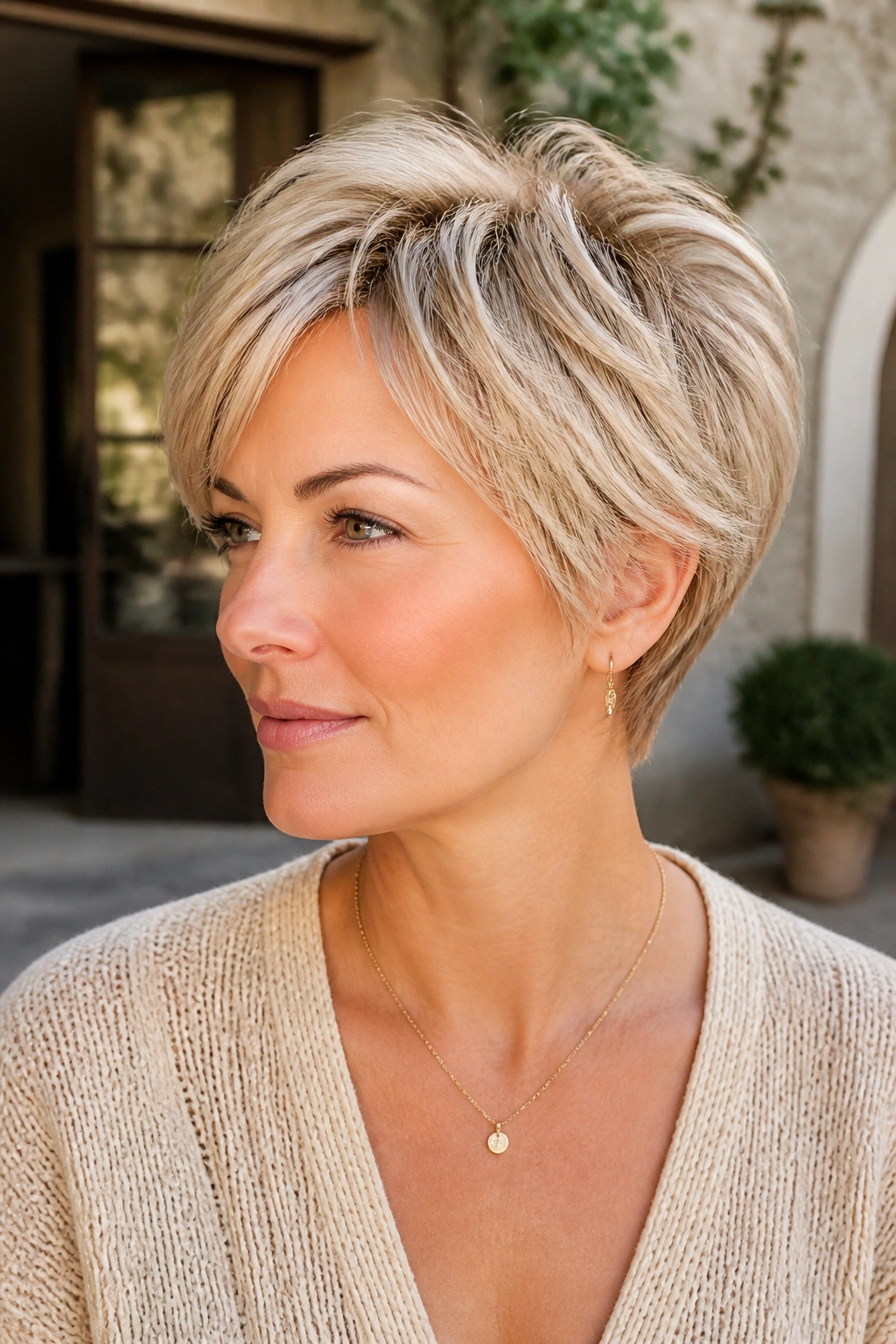
A bixie is what happens when a bob and a pixie meet halfway, and on fine hair that middle ground can be a sweet spot. You get enough length around the face to keep the cut soft, but the shorter crown gives you lift where longer hair usually sags.
Why the Crown Matters
Piecey crown layers keep the top from lying flat against the scalp. That matters more than people think, because fine hair often loses height before it loses shape anywhere else. The bixie handles that by stacking a bit of movement on top and tapering the nape so the whole cut feels light, not puffy.
A frosty blonde or pearl blonde can make the texture pop, especially if there are a few lowlights tucked underneath. That contrast keeps the short layers from blending into one pale blur.
- Best for: straight or slightly wavy fine hair
- Styling: a pea-sized amount of paste or cream through the top
- Salon note: ask for piecey texture, not choppy frizz
This cut is playful, but it’s not chaotic. There’s a difference.
10. U-Shaped Blonde Cut with Soft Ends
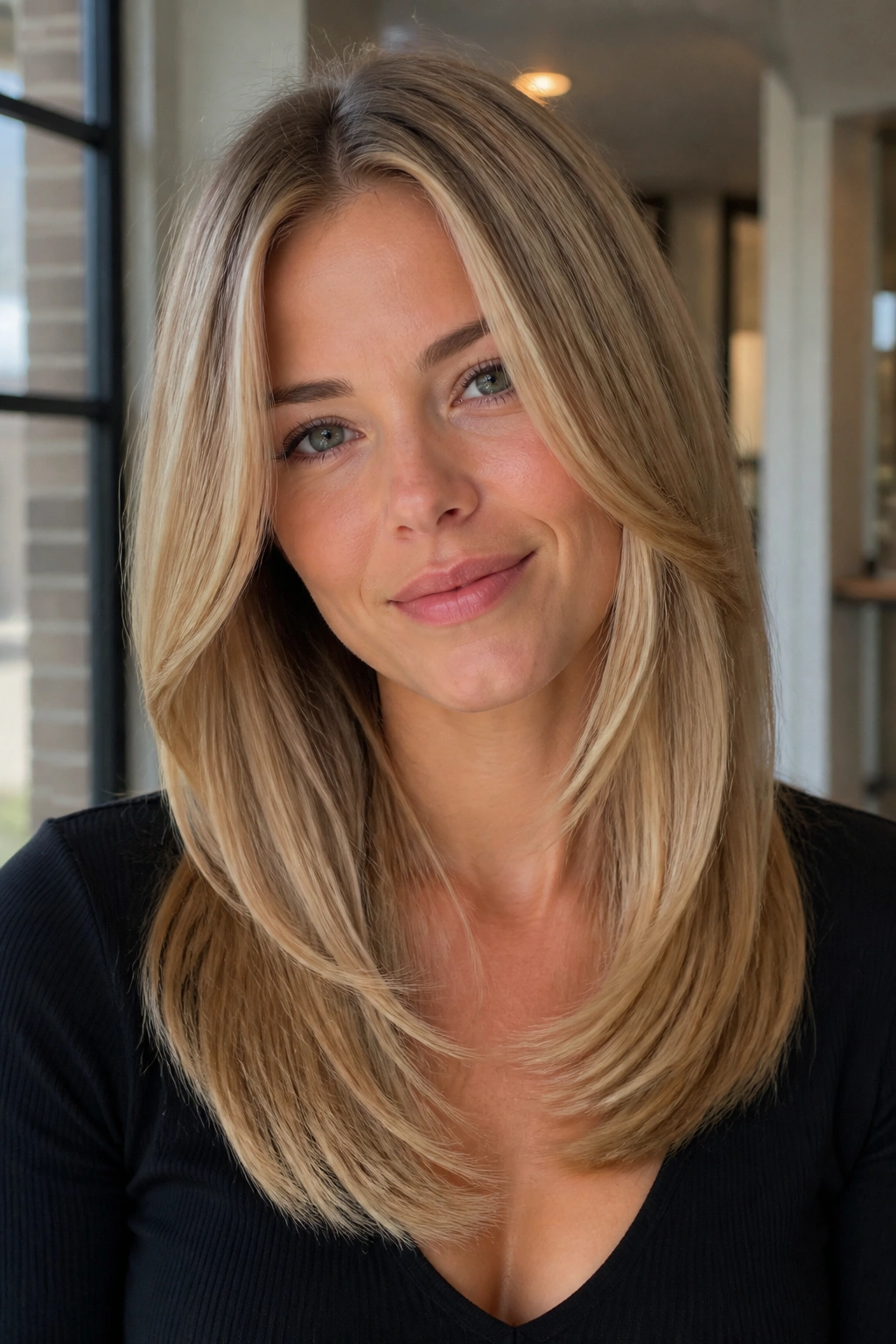
Why does a U-shape help fine hair? Because it keeps the perimeter feeling full while letting the front angle softly toward the collarbone or chest. That gentle curve gives the eye a richer shape to follow, which matters when every strand is light and delicate.
The layers should be subtle here. You want a smooth transition from the longest back section into the front pieces, not obvious stair steps. Soft ends are the whole point. They let the cut move without exposing too much of the hair’s natural sparseness.
A honey blonde with a bit of warmth through the mids works beautifully on this shape because it adds depth and stops the cut from looking too washed out. If your hair tends to go limp at the sides, parting slightly off-center helps the U-shape sit with more balance.
How to Ask for It
Tell the stylist you want length kept in back, face framing in front, and no aggressive thinning. That sentence saves a lot of regret.
This is a calm haircut. Not boring. Calm. There’s a difference there too.
11. Razor Layers for Wavy Fine Hair
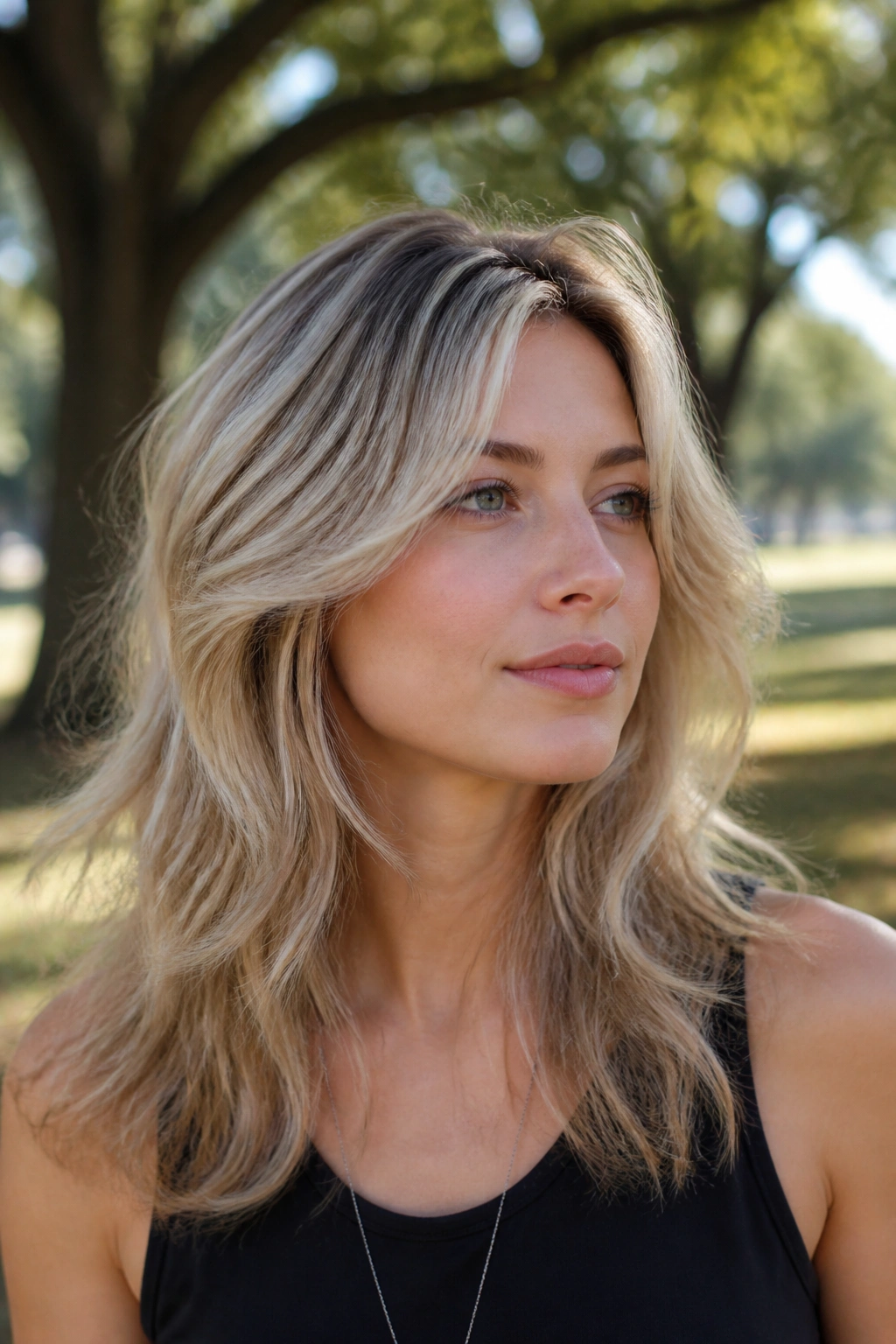
Razor cutting gets a bad reputation, and for good reason: on the wrong hair, it can make the ends look shredded. On fine hair with a bit of natural wave, though, a controlled razor cut can create airy movement that scissors sometimes miss.
The key is restraint. You want the stylist to use the razor on the surface and around the upper lengths, not to chew through the whole head. The ends should still look soft and connected. If they start looking see-through under bright light, the cut went too far.
A cool blonde with a soft shadow root can make the texture read cleanly, because the darker base separates the layers just enough. That little bit of contrast helps the wave pattern show up. Straight fine hair can wear this too, but it usually needs more styling product and more effort.
The Style That Helps Most
Use a light mousse on damp hair, then scrunch with your hands or diffuse on low heat. The goal is bend, not crunch. If you can feel the product sitting on the hair, you used too much.
This one looks best when it’s touched, not fussed over.
12. Long Layers with Beige Blonde Balayage
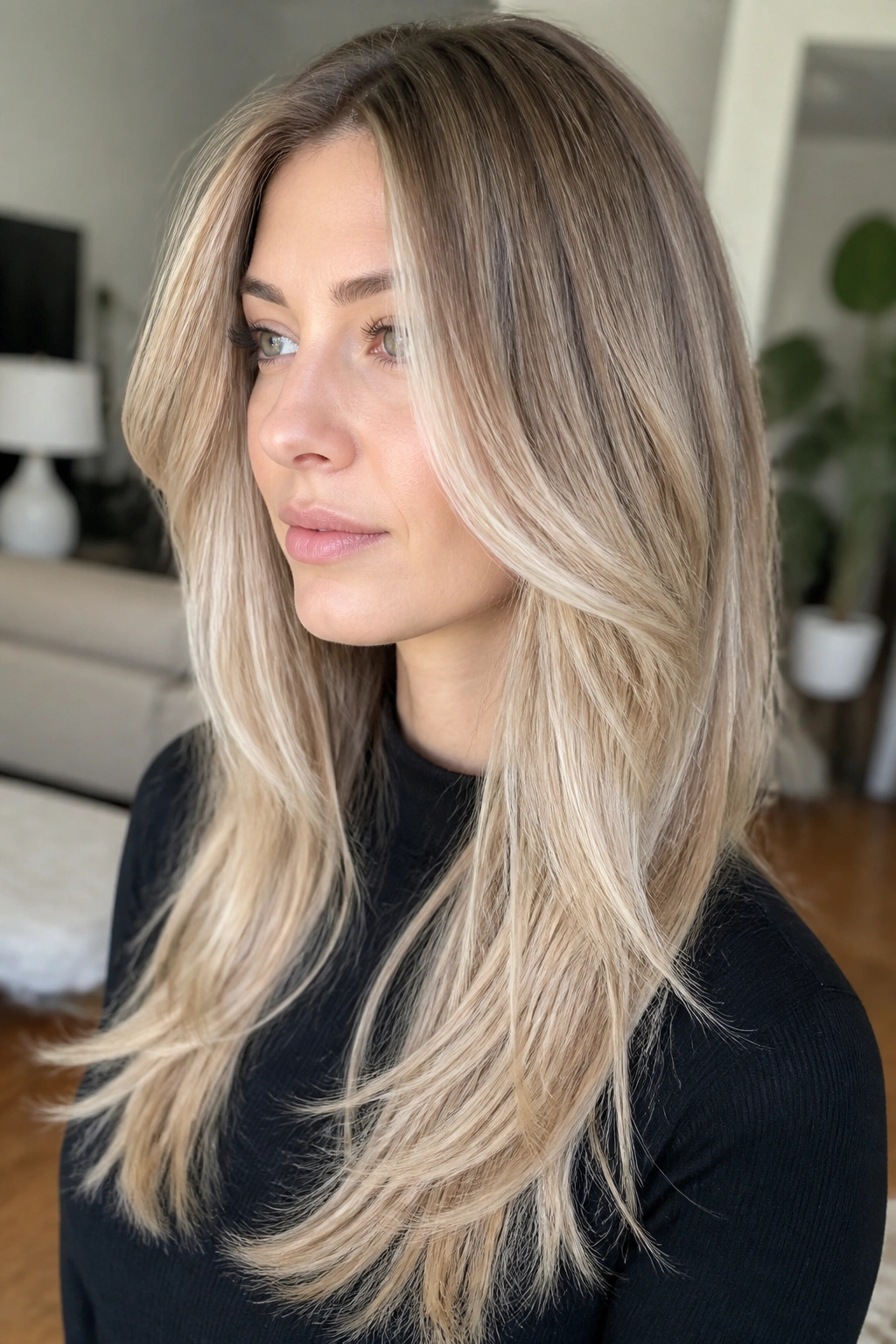
A long layered cut with beige blonde balayage is a strong choice when you want softness without losing length. The long layers keep the ends from sitting like a heavy curtain, while the balayage gives the hair pockets of light that make it look fuller from a distance.
Unlike high-contrast highlights, beige balayage spreads the light more gently. That matters on fine hair because harsh contrast can expose the gaps between sections. Softer placement hides those gaps and makes the whole head look richer. It’s a subtle trick, but it works.
This cut suits people who want a low-drama routine. Air-drying with a cream can be enough if your hair has a small wave. If it’s straighter, a quick bend with a large-barrel curling iron adds enough shape to keep the layers visible.
The most useful part is grow-out. The color does not need constant repair, and the cut keeps its shape for a while if the layering starts below the shoulders. That means fewer panic appointments and less daily effort. Nice.
13. Layered Pixie with a Longer Top
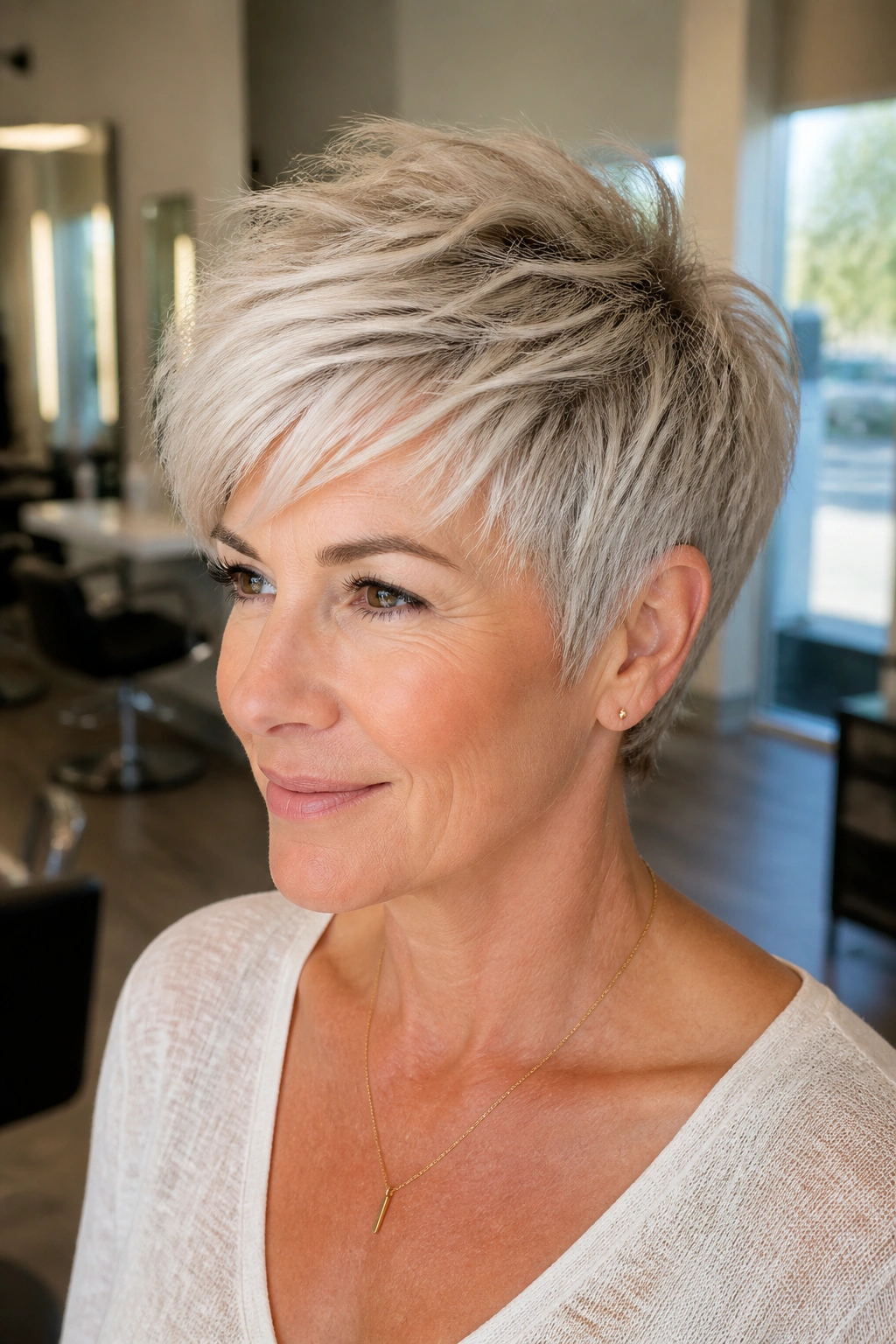
A layered pixie can make fine hair look denser because short hair stacks on itself. The trick is to leave the top longer so there’s room for lift, while keeping the sides and nape neat enough that the shape doesn’t spread out.
What Makes It Different
A longer top gives you styling flexibility. You can sweep it forward, tuck it to the side, or lift it slightly at the crown with a round brush and a blast of heat. The layers should be subtle and choppy, not razor-thin, because you want pieceiness without frizz.
A cool icy blonde or soft platinum tone can sharpen the shape, especially if the cut has clean edges around the ears. If you prefer warmth, a creamy vanilla blonde works too. Both can look good. The important part is keeping the top textured so the style doesn’t fall flat.
- Best for: fine hair that needs a stronger shape
- Styling tool: small round brush or fingers and paste
- Watch out for: over-thinning the sides
This is not a timid cut. It has edge, and that’s the fun of it.
14. Inverted Bob with Bright Front Pieces
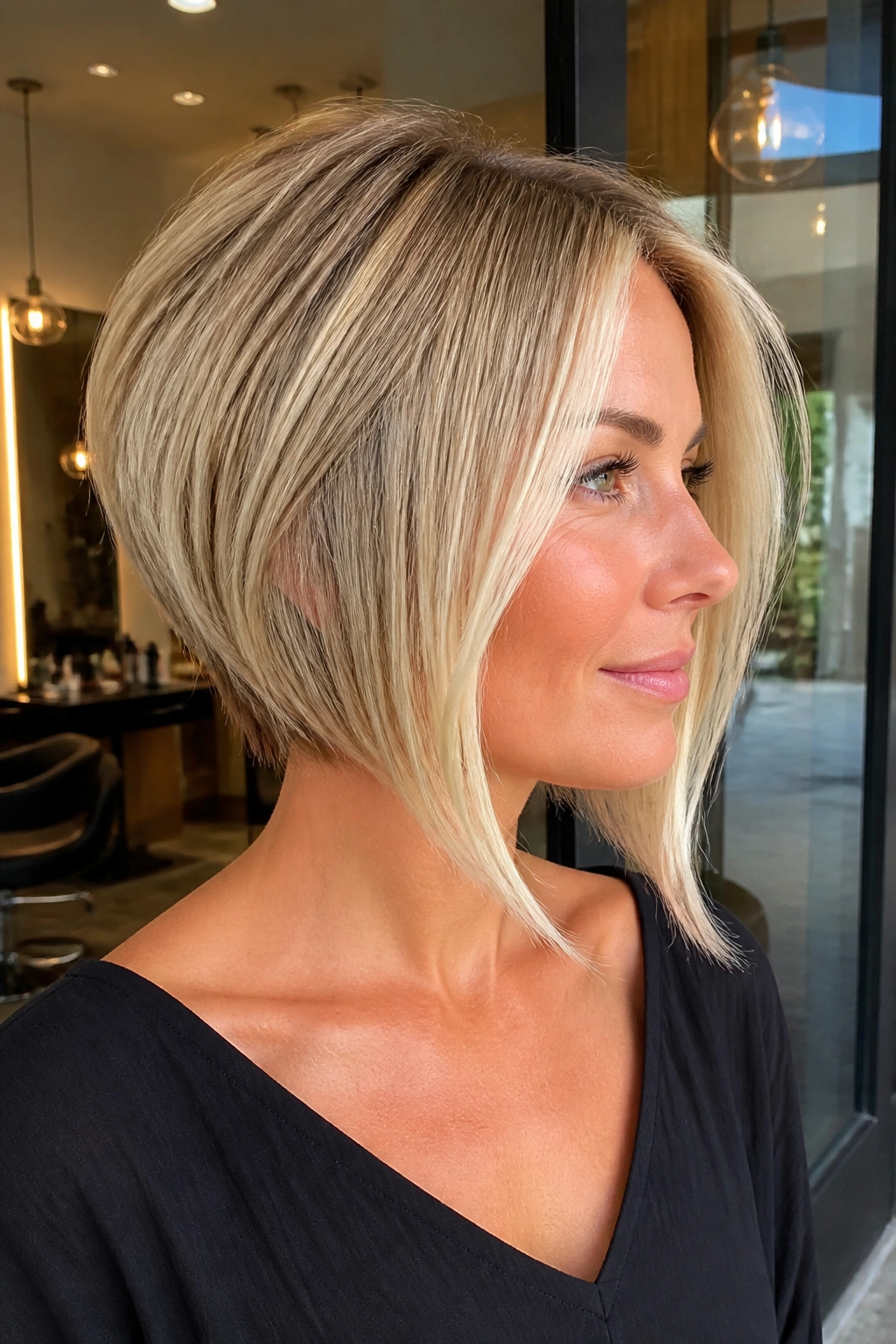
A good inverted bob gives fine hair a stronger profile because it’s shorter at the back and longer at the front, which naturally builds shape. The stacked nape creates lift, while the front pieces soften the jaw and keep the cut from feeling boxy.
Bright front pieces are doing serious visual work here. They pull light forward, which makes the edges of the face frame stand out. That’s handy when you want the haircut to look fuller without needing a lot of styling. A buttery blonde or bright champagne tone works well, especially if the back is kept a touch deeper.
The one thing to watch is the back. If it gets too stacked, the cut can look bulky at the crown and too narrow at the ends. You want a clean slope, not a mushroom. It’s a fine line, and a good stylist knows it.
I’d call this a strong option for someone who likes tidy lines but still wants movement around the face. It feels polished, not stiff.
15. Mid-Length Cut with Bottleneck Bangs
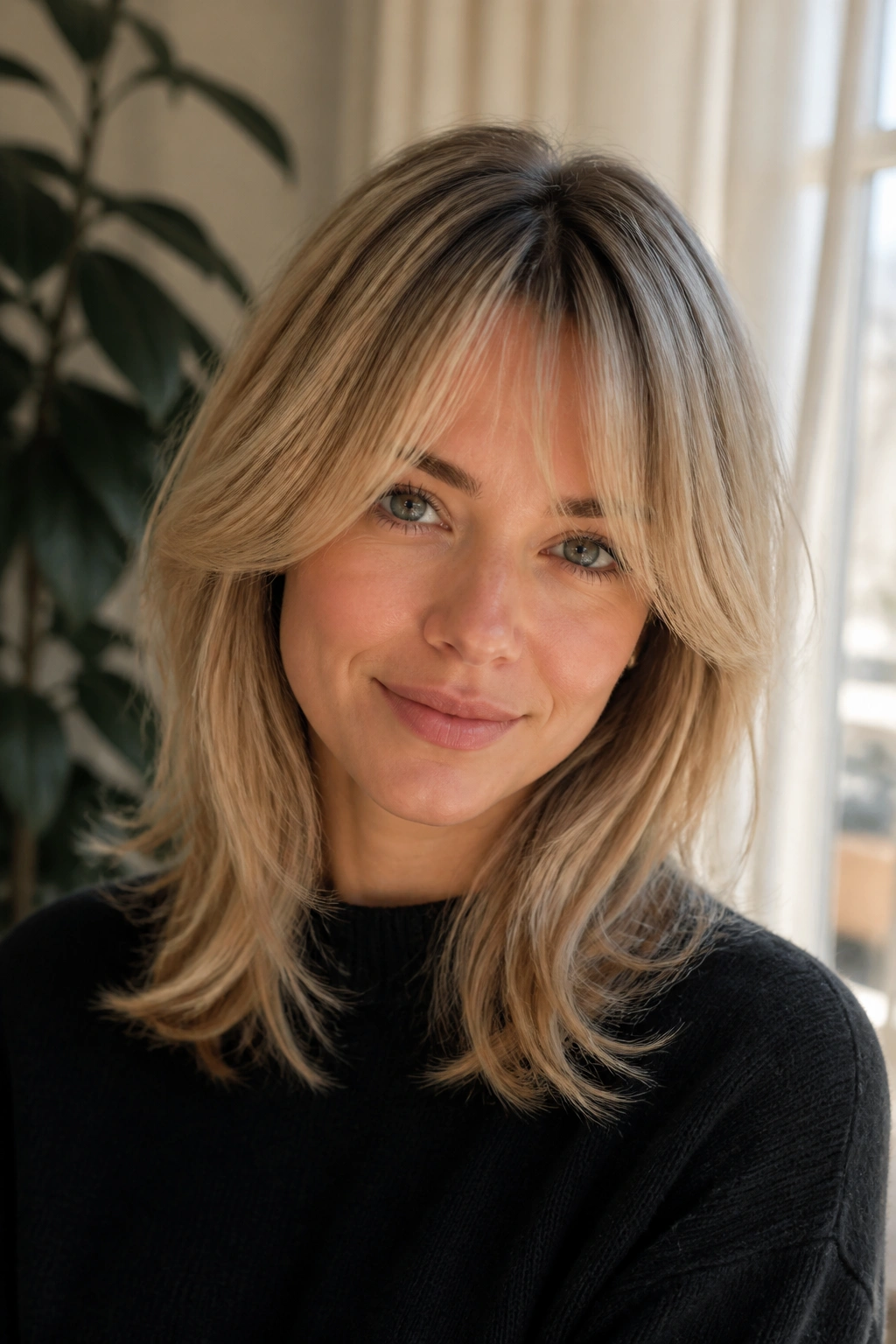
Bottleneck bangs are one of those fringe shapes that quietly help fine hair more than people expect. They start narrower at the center and open wider around the cheekbones, which softens the forehead and gives the hair a fuller front edge.
The Part That Matters Most
The rest of the haircut should sit around the shoulders with soft, blended layers that don’t break up the outline too much. That gives the bangs a stable base. If the lengths are chopped too aggressively, the fringe starts to look disconnected.
This cut looks especially good in sandy blonde or soft mushroom blonde, because the tone supports the relaxed shape. The bangs can be blown forward with a round brush, then split at the center and curled away from the face. Two minutes. Maybe three if your hair is stubborn.
- Best face fit: oval, heart, and longer faces
- Styling note: blow the bangs dry first while they’re still wet
- Color note: keep the front a shade brighter than the crown
It’s a flattering cut without shouting about it. That’s probably why it keeps showing up in good salons.
16. Flipped-Out 90s Layers
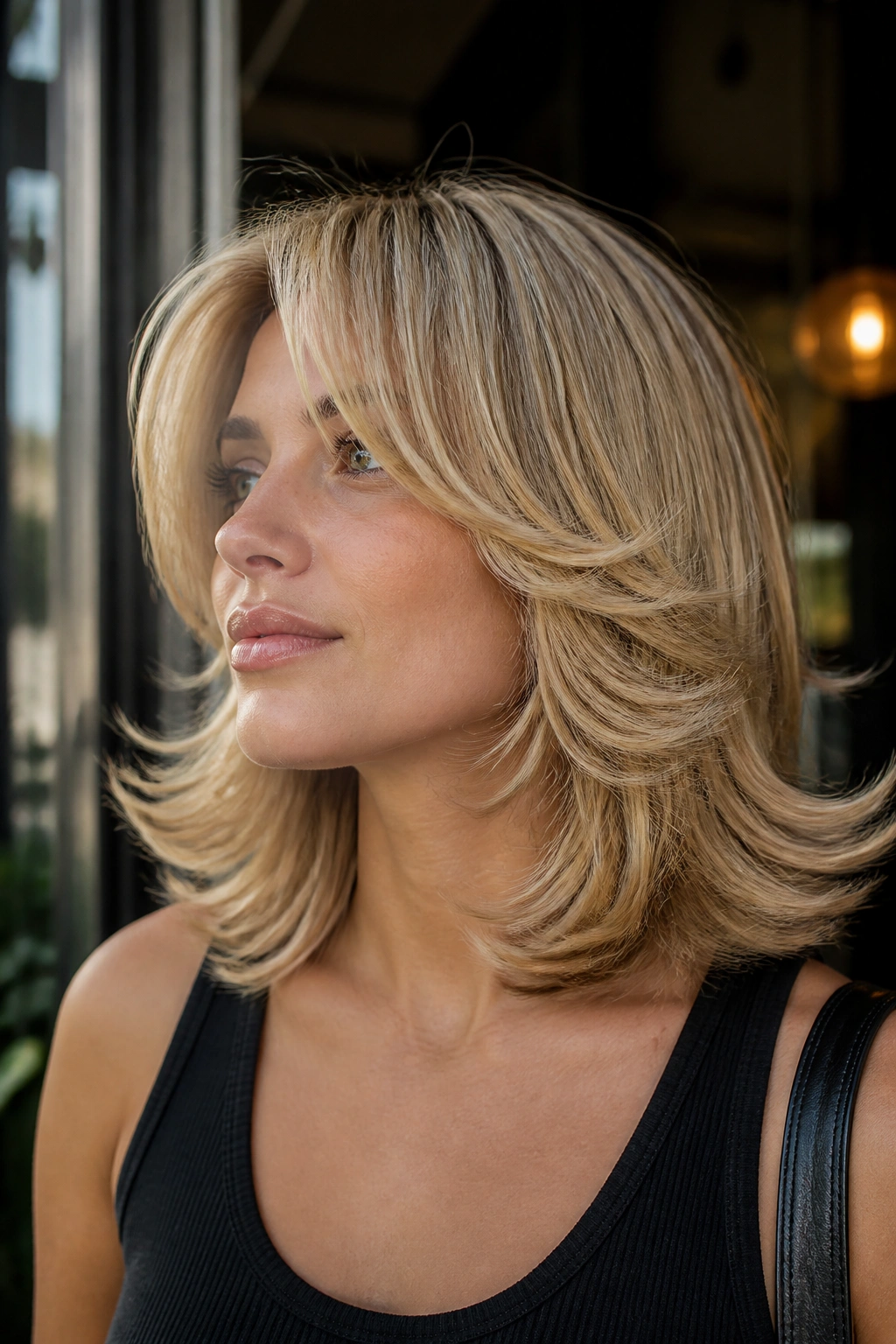
Can fine hair handle a retro flip without looking thin? Yes, if the layers are built for movement instead of fluff. The flipped-out end gives the eye something to follow, and that makes the hair read fuller than a flat, straight line ever will.
The shape works best when the layers begin around the cheekbone and keep moving downward in soft steps. You do not want the ends sliced to nothing. A little weight on the bottom keeps the flip from looking flyaway. Think of it as controlled bounce, not cartoon volume.
How to Get the Look
Use a medium round brush or a large-barrel brush and turn the ends outward for the last inch or two. A light mist of flexible spray is enough. If the hair feels sticky, you went too hard on product.
A buttery blonde with subtle dimension helps the flipped shape pop, because the light catches the bends and makes them visible. The cut has a cheerful energy to it, but it still needs a tidy base. That balance is what keeps it wearable.
Funny how one small curve can change everything.
17. Soft Wolf Cut with Rounded Top Layers
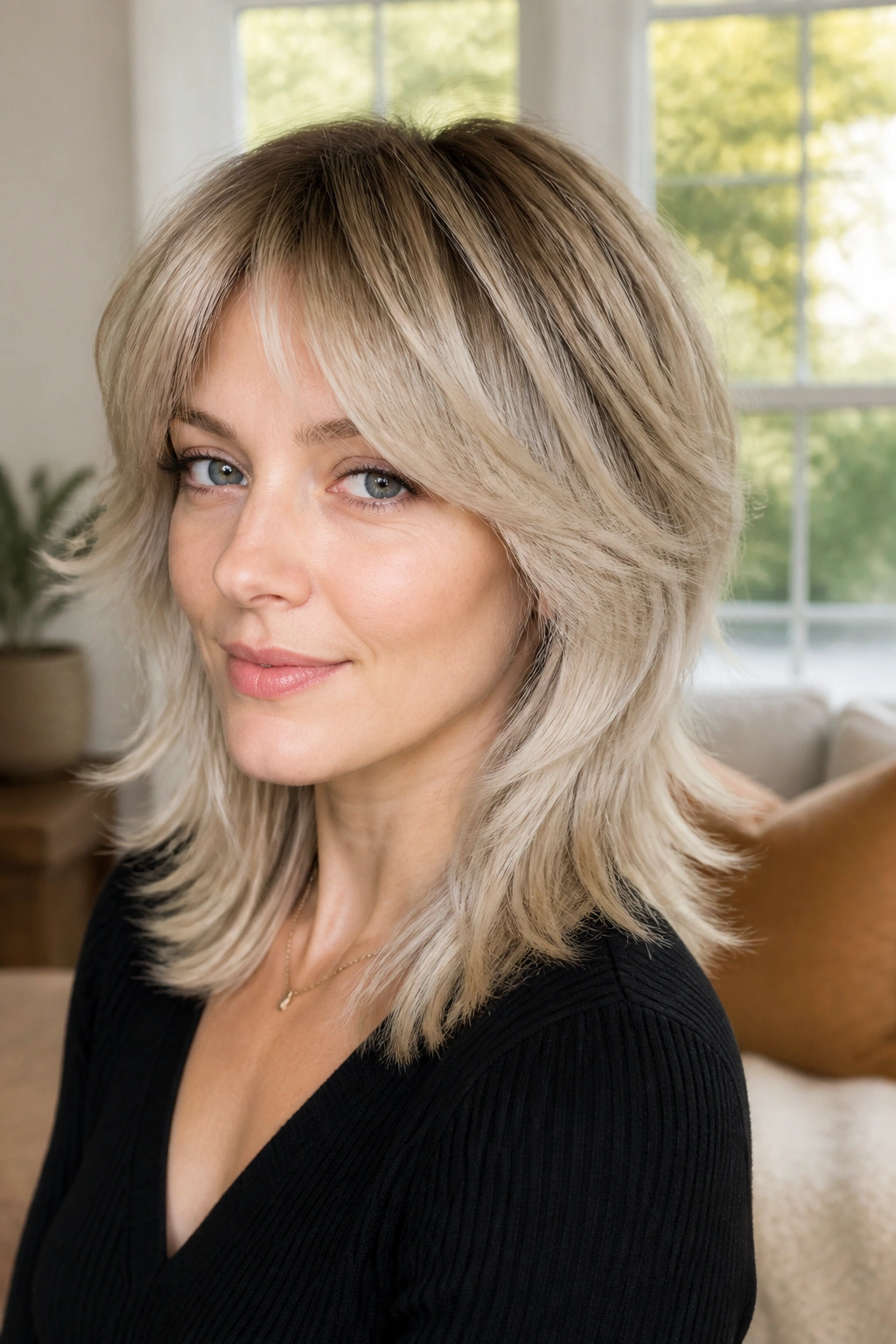
A soft wolf cut is the friendlier version of the trendier, more aggressive shape people sometimes imagine. On fine hair, that softness matters. If the crown gets too short or the ends get too sparse, the whole cut can start to look broken apart.
The right version keeps the top rounded and the layers gradual. The hair should still feel connected, especially through the sides. Natural waves make this cut easier, but straight hair can wear it too if you’re willing to rough-dry and add a bit of texture at the root.
A darker root with icy blonde ends creates depth here, which helps the layered structure show up. Without that contrast, the layers can blur together and lose their shape. You want motion, not mush.
This is a good fit for someone who likes a little mess in their hair, in a controlled way. That sounds contradictory. It isn’t.
A light texture spray at the mids and a finger-tousle at the crown are usually enough. Keep the ends soft. That’s the whole game.
18. Shoulder-Length Cut with Sliced Interior Layers
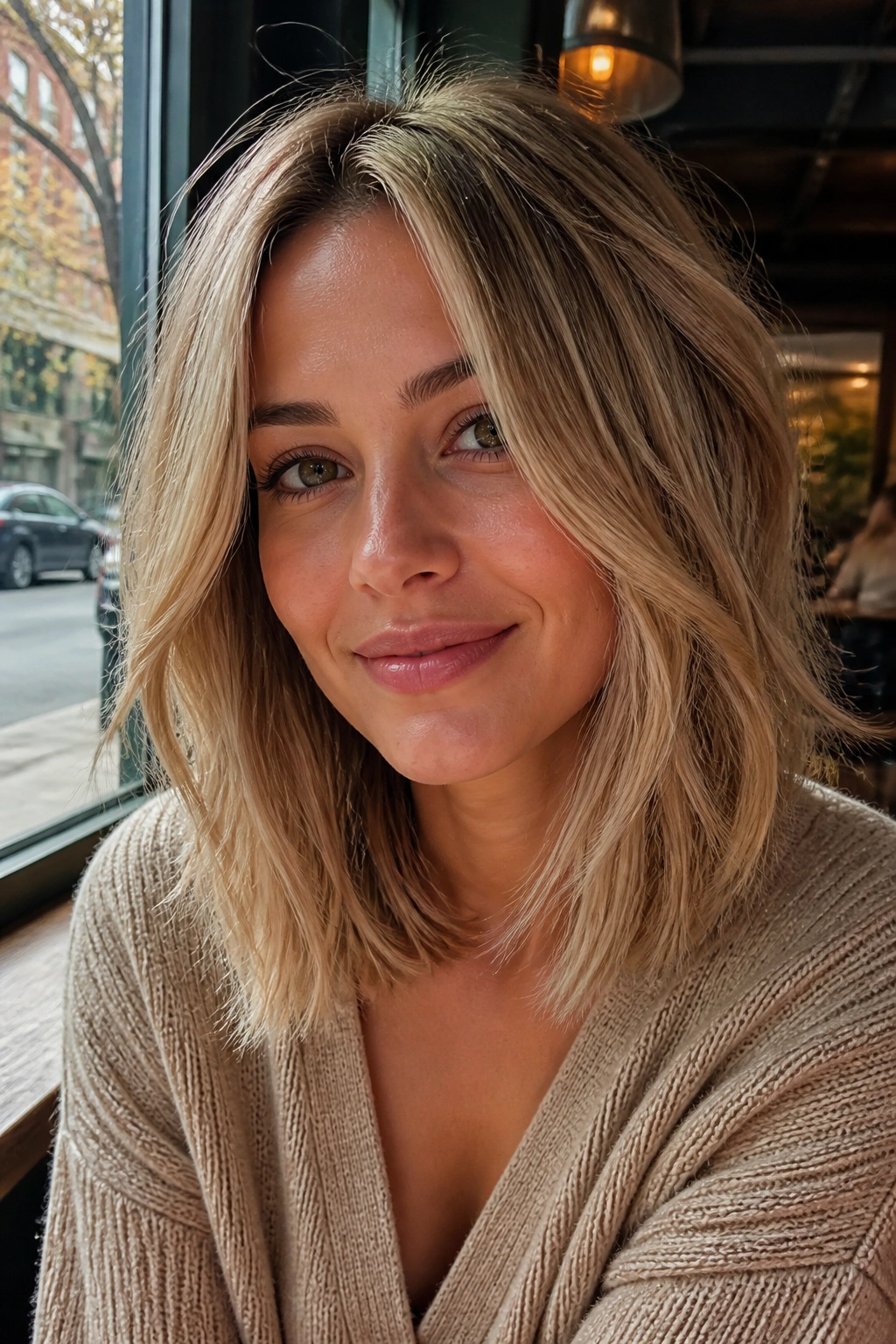
A shoulder-length cut can be a tough one for fine hair if it hangs too straight, because shoulder length is exactly where limpness likes to show up. Sliced interior layers solve that by creating movement inside the shape without breaking up the outer line.
Unlike a heavily layered shoulder cut, this version keeps the perimeter clean. The slices live underneath and through the mids, so the hair still looks full from the outside. That gives you a smoother silhouette with more air inside the shape. It’s a neat trick.
The color choice matters too. A soft beige blonde or neutral blonde balayage works well because it stops the length from looking heavy. The layers and color work together instead of competing.
This is a strong option if you want something that can be worn straight, bent, or tucked behind the ears. It’s the sort of haircut that behaves well in ordinary life, which is underrated. Not every style needs to be dramatic.
And if you want volume at the crown, lift the roots with a small round brush while the hair is still warm. It makes a difference.
19. Tapered Lob with Side-Swept Fringe
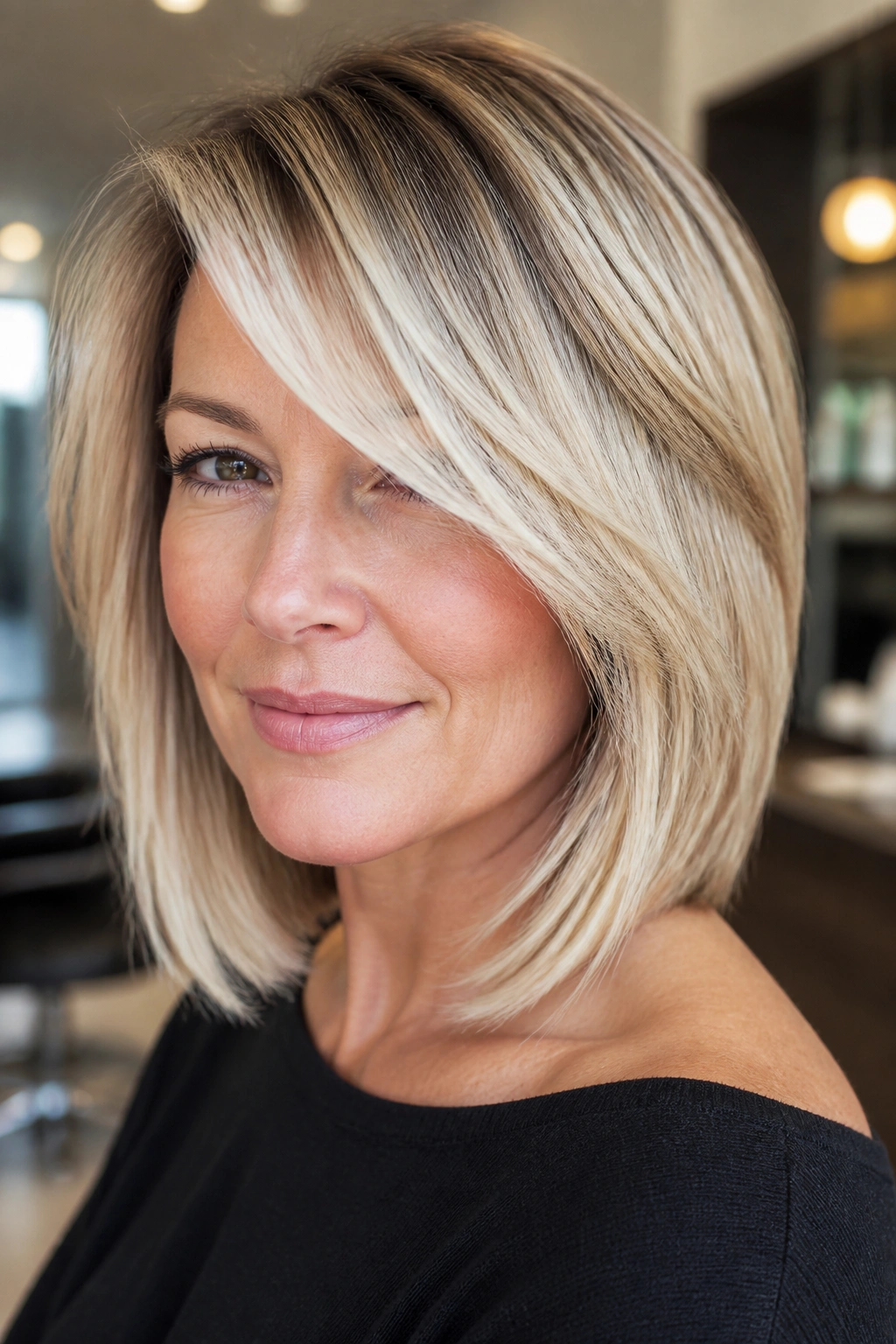
A tapered lob with a side-swept fringe gives fine hair a little attitude without making the ends look thin. The taper keeps the front soft and angled, while the fringe adds fullness over the forehead and draws the eye diagonally across the face.
Why It Stays Flattering
The side-swept fringe matters because it breaks up the flatness that fine hair can sometimes show around the hairline. It also gives the cut a sense of motion before the rest of the style even starts. That’s useful if you wear your hair straight most days and want a bit of shape without curling everything.
A creamy blonde with a darker underlayer works well here. The contrast makes the taper visible and keeps the fringe from disappearing into the rest of the cut.
- Length: just below the chin or at the collarbone
- Fringe: long enough to sweep, short enough to lift
- Styling: blow the fringe across the forehead first, then set the rest loose
This cut has a nice balance of polish and movement. Not fussy. Just smart.
20. Rooty Blonde Cut with Scattered Light Layers
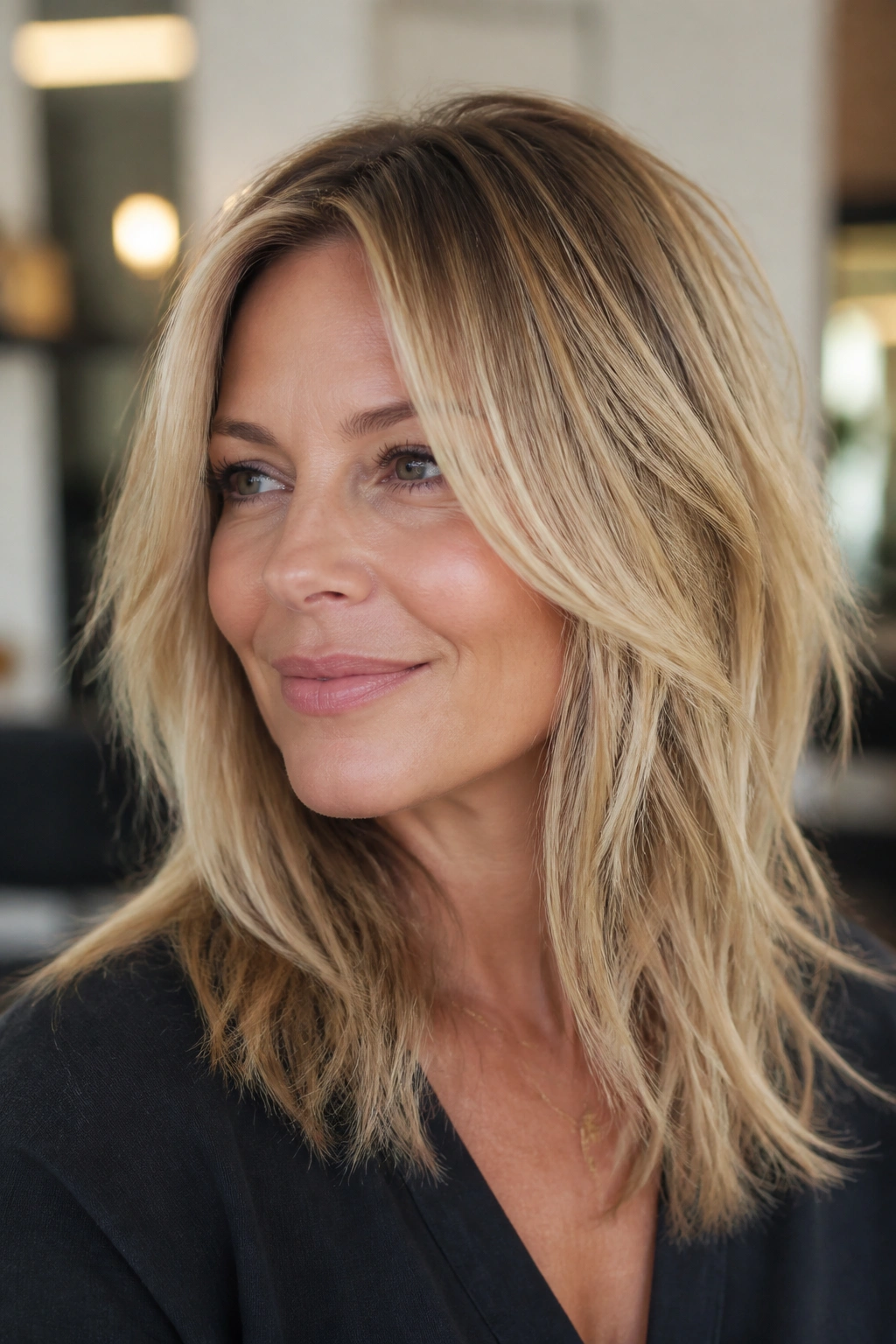
A rooty blonde cut with scattered light layers is a good ending point because it solves several fine-hair problems at once. The darker root adds depth at the scalp, the scattered layers keep the shape from looking blocky, and the lighter pieces through the mids and ends stop the whole thing from going flat.
The layers should not be stacked in a heavy way. You want them placed where the head naturally curves—around the crown, around the cheekbones, and through the lower lengths where the hair needs a little lift. That keeps the blonde looking dimensional instead of stripy.
I like this cut for people who don’t want to style their hair the same way every day. It can air-dry into a softer shape, or you can add loose bends with a curling iron and let the layers fall into place. Either way, the root shadow helps it keep some body on day two, which is one of those small things you end up appreciating a lot.
If your hair is fine and you want it to look fuller without losing softness, this is the kind of cut that earns its keep.
