



Fine hair can look flat by lunch if the cut is wrong. That is why choppy layered haircuts for fine hair matter so much: the right layers can fake density, lift the crown, and keep the ends from hanging there like they’ve given up.
The catch is that not every layered cut helps. Too many short pieces, too much razor work, or a stylist who thins the ends like they’re carving smoke out of the hair can leave fine strands looking wispy in the bad sense — see-through, soft around the edges, and oddly tired.
The cuts that work best do two things at once. They keep enough weight in the perimeter to make the hair look full, and they break up the shape in just the right places so the style moves instead of collapsing.
Some of these cuts are short and sharp. Others keep the length and build shape higher up. A few are better on straight hair, a few love a bend, and a few need a little styling every morning to earn their keep. That’s the real game with fine hair: not every good haircut is low-effort, but the right one makes the effort pay off fast.
1. The blunt collarbone lob with shattered ends
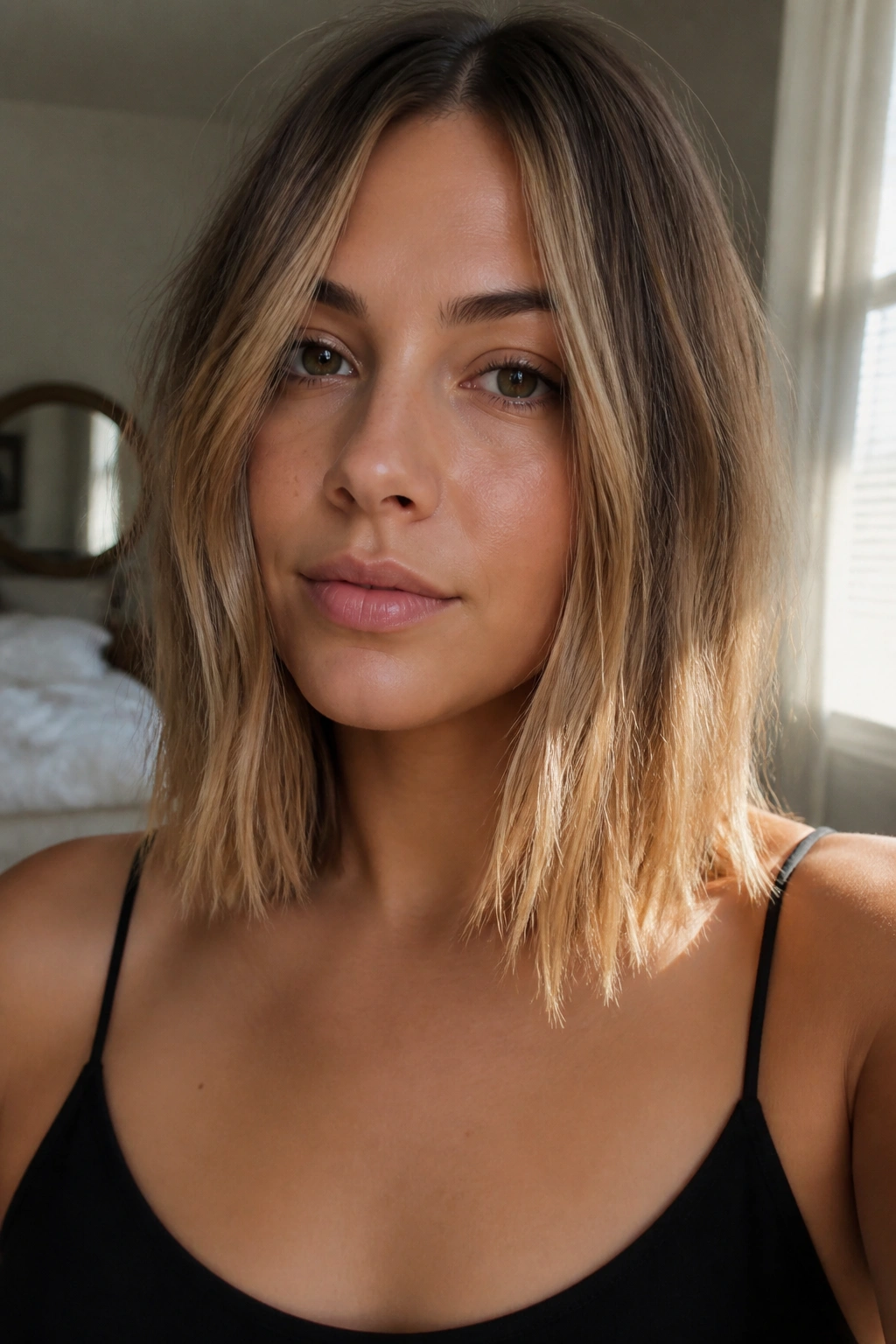
This is the cut I reach for when someone says their hair looks flat at the ends by noon. The collarbone-length lob keeps enough weight to make fine hair look fuller, while the shattered finish stops it from reading as heavy or blocky.
What to ask for
- Keep the perimeter blunt at the collarbone.
- Add light point-cutting only through the last inch or so.
- Start the shortest face-framing pieces around the chin.
- Avoid aggressive razoring through the bottom edge.
That last point matters. A blunt line gives the illusion of density, and fine hair often needs that visual anchor more than it needs lots of layers. When the cut is too airy, the ends look thin even if the hair is healthy.
Best fit: straight to slightly wavy hair that tends to fall limp at medium length.
My rule: if your hair breaks apart easily when you brush it, keep the bottom line fuller than you think you need.
Why It Works
The blunt edge catches the eye first. Then the shattered ends stop the cut from looking stiff, which is exactly the balance fine hair wants. You get movement without losing the feeling that there’s actual hair there.
2. The piecey pixie with a lifted crown
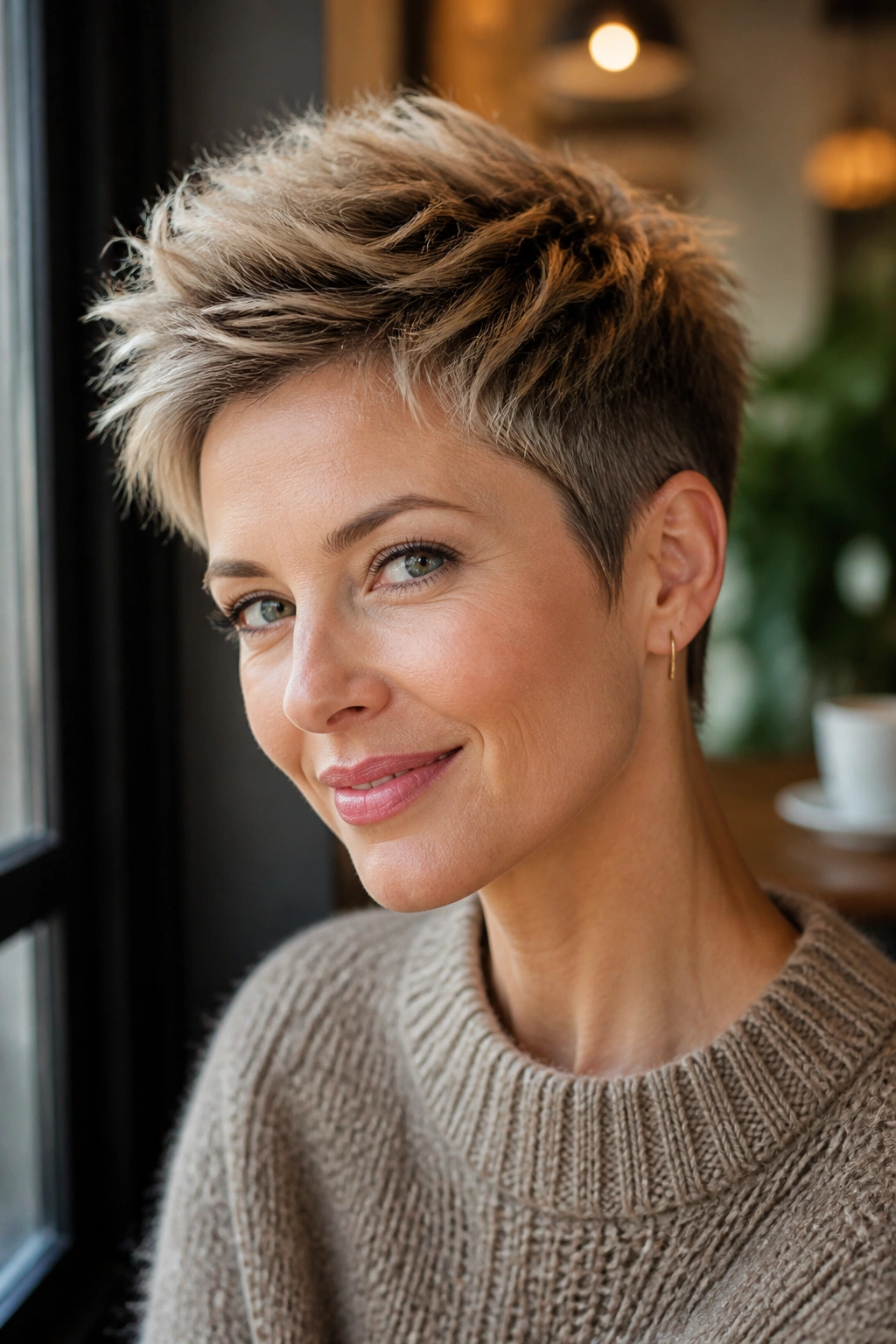
Short hair can make fine hair look thicker fast. That’s the simple truth, and the piecey pixie does it better than almost any other cut because it takes weight off the sides and uses height at the crown to create shape.
The trick is to leave about 2 to 3 inches on top, with a slightly shorter nape and clean sides. That gives you enough length to push, separate, and mess up a little with wax or paste. If the top is cut too short, the result can look more sparse than chic. Too long, and the whole thing collapses into a floppy helmet.
A good piecey pixie should look like it has little movable sections, not one helmet shape. That means a stylist should cut with texture, but not shred the hair into dust. Fine hair does not need a lot of thinning. It needs direction.
Try styling it with a pea-size amount of matte paste on dry hair. Warm it between your palms first. Then pinch the top pieces upward and slightly forward so the crown stays lifted instead of slicking flat.
One sentence matters here: lift at the root, not the ends.
3. The shaggy bob with curtain fringe

Why does this cut work so well on fine hair? Because the fringe does half the work before the rest of the hair even starts. A shaggy bob with curtain bangs puts softness around the face, and that softness makes the whole cut feel fuller.
Why It Helps Fine Hair Look Livelier
The layers should begin around the cheekbone, not way up near the temples. That keeps the top from getting too transparent. The curtain fringe opens in the middle and falls away from the face, which gives the illusion of more hair around the front without crowding the eyes.
A little wave helps, but it is not required. Straight fine hair can wear this cut too, as long as the ends are slightly bent under or out with a round brush. If you air-dry it, scrunching a small amount of mousse through the mid-lengths gives the layers something to separate into.
What to tell your stylist
- Keep the fringe long enough to split cleanly.
- Leave the ends soft, not ragged.
- Don’t over-layer the crown.
- Let the neckline stay a little blunt.
Best for: people who want movement near the face without losing the body at the bottom.
4. The butterfly cut for longer lengths
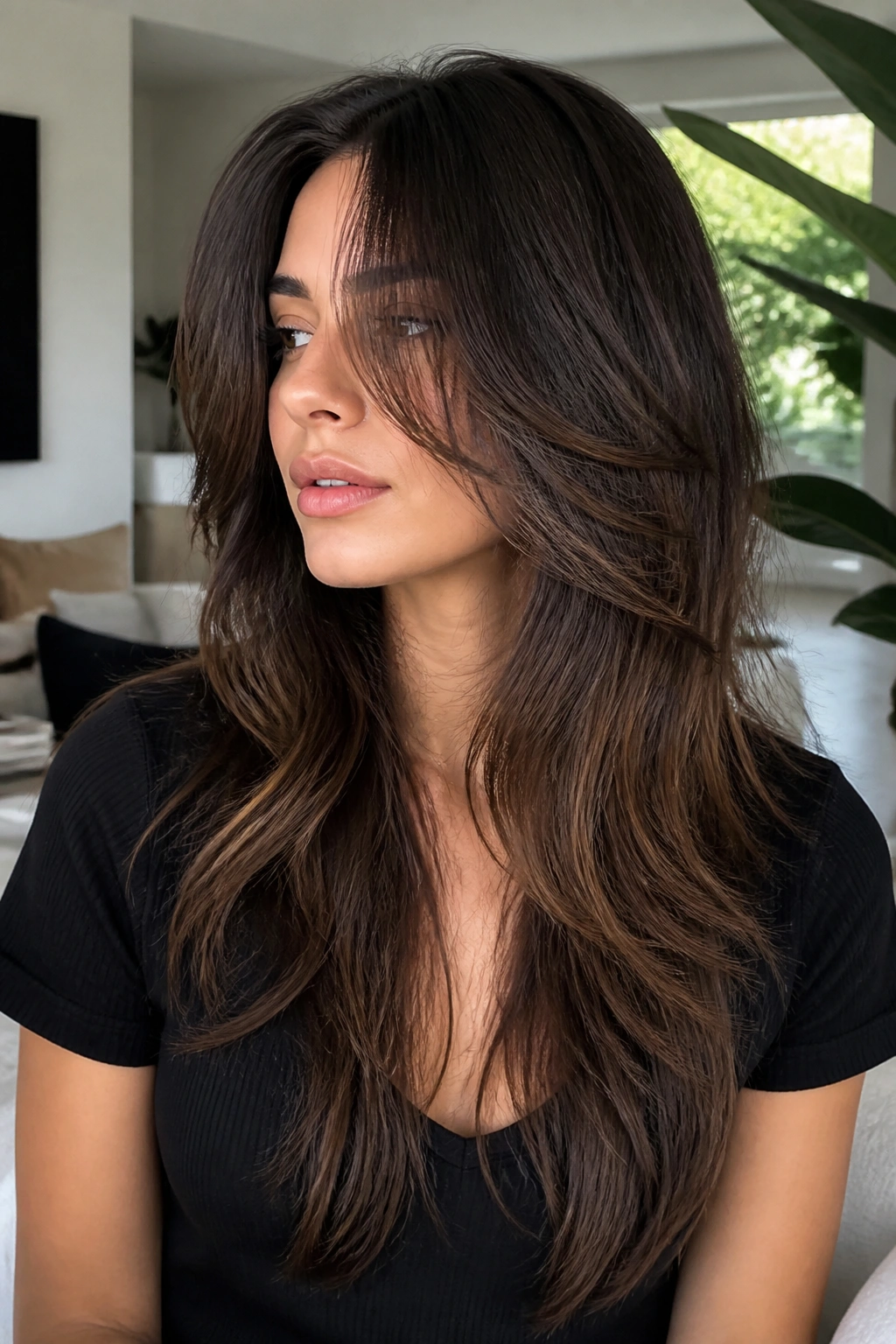
I’ve seen long fine hair look exhausted, and this cut fixes that without chopping off the length people are attached to. The butterfly cut keeps the overall length while carving in shorter face-framing layers that make the hair feel lighter and more lifted.
The shorter front pieces usually start around the cheekbone or jaw, then blend into longer layers through the chest and back. Done well, it creates a soft waterfall effect. Done badly, it turns into two disconnected lengths that fight each other.
This cut needs a careful hand. Fine hair does not love a dramatic staircase of layers. It wants the illusion of volume, not the feeling that half the hair has gone missing. Keep the ends dense and the top pieces controlled.
A round brush helps here, even if only on the front sections. Lift the shorter layers away from the face, bend the ends under, and let the longer sections hang straighter. That contrast is what makes the shape look expensive without looking fussy.
Good sign: the shortest pieces should move when you turn your head, but the ends should still feel solid in your hands.
5. The Italian bob with soft internal layering
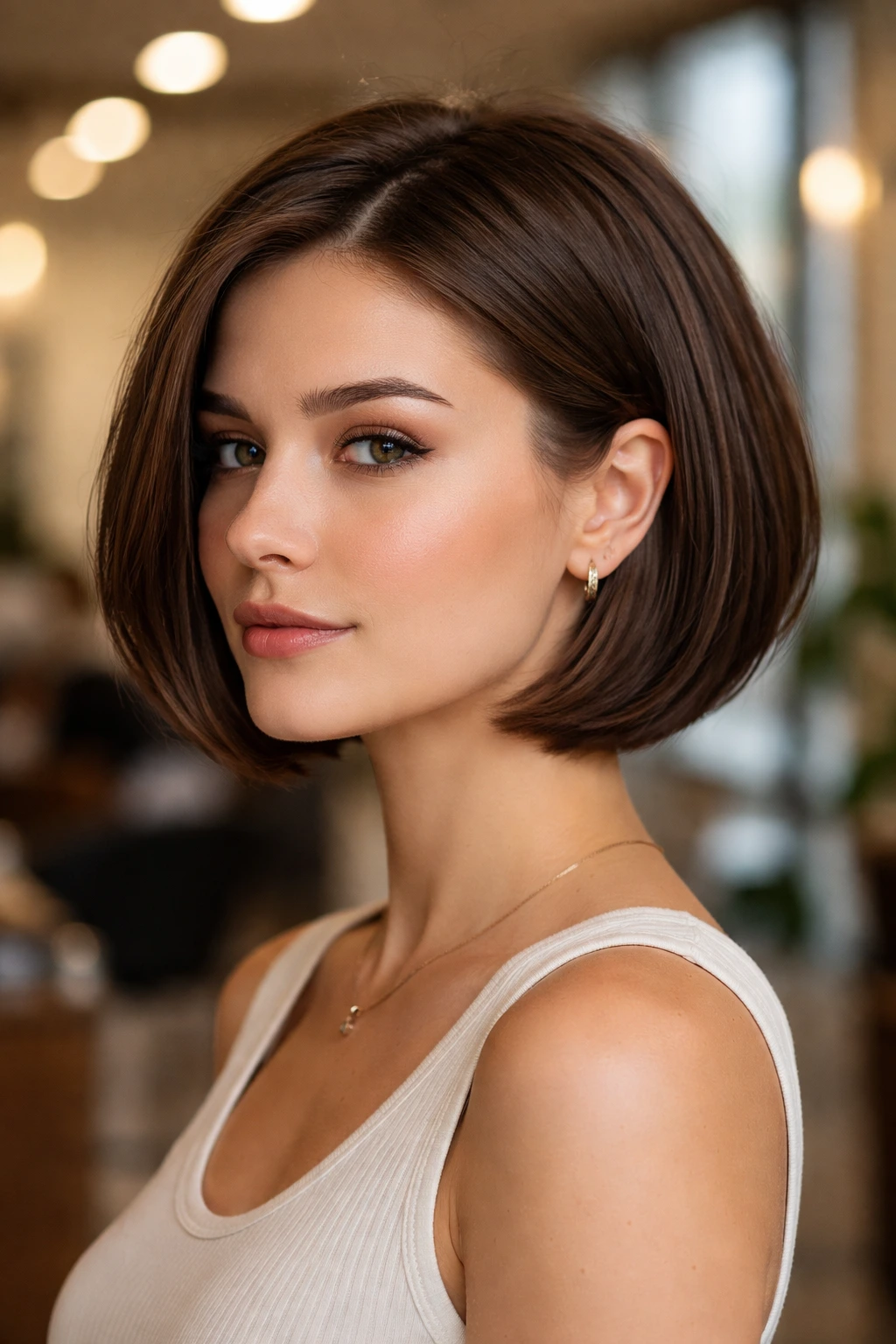
A good Italian bob is all about presence. It sits around the jaw or just below it, with a fuller edge and subtle internal layers that keep fine hair from looking like a hard block.
I like this cut on straight hair because it gives the illusion of thickness from the side. The shape is rounder than a classic blunt bob, but it is not fluffy. Think polished, not puffed. The layers stay hidden inside the shape, where they can remove bulk without making the perimeter look thin.
The best version keeps the bottom line clean. That is the part many people miss. If the underside gets overtexturized, the cut loses the heavy edge that makes fine hair look denser.
One thing I like about this bob is how little it needs once it’s cut correctly. A quick blow-dry with a paddle brush can be enough. If you want more movement, wrap the ends around a medium brush for a few seconds and let them fall. Don’t overwork it.
Blunt still matters. Even in a soft bob, it matters a lot.
6. The wolf cut with a lighter perimeter
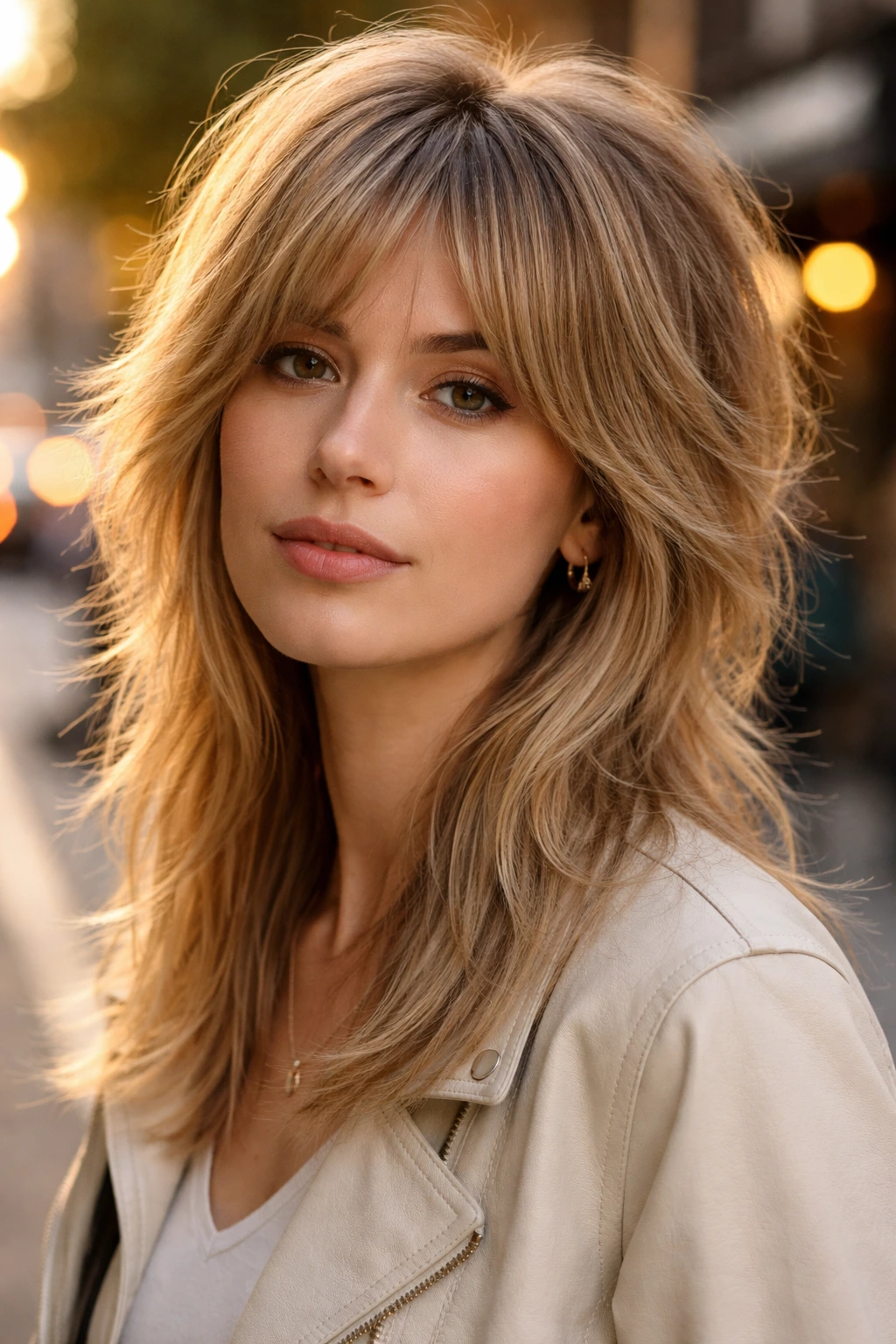
Unlike a soft shag, the wolf cut keeps more lift on top and a thinner, more broken-up shape through the lower lengths. That makes it a strong choice for fine hair that can handle texture but still needs some structure.
The best wolf cut for fine hair is not the wild, heavily razored version you see on hair that already has a lot of density. That one can go stringy fast. A better version keeps the crown airy, trims the top layers to create height, and leaves enough weight in the lower sections to stop the ends from looking sparse.
Who it suits
- Hair that bends naturally or takes a wave well.
- People who like a messy finish.
- Faces that need extra width around the cheekbones.
Who should be careful
- Very straight, soft hair that refuses to hold shape.
- Hair that already feels thin at the bottom.
- Anyone who hates spending five minutes with a diffuser or texture spray.
The wolf cut has attitude. It is not subtle. But if you like a little edge and you want the crown to stop lying flat against your scalp, it can be a strong move.
7. The face-framing midi cut
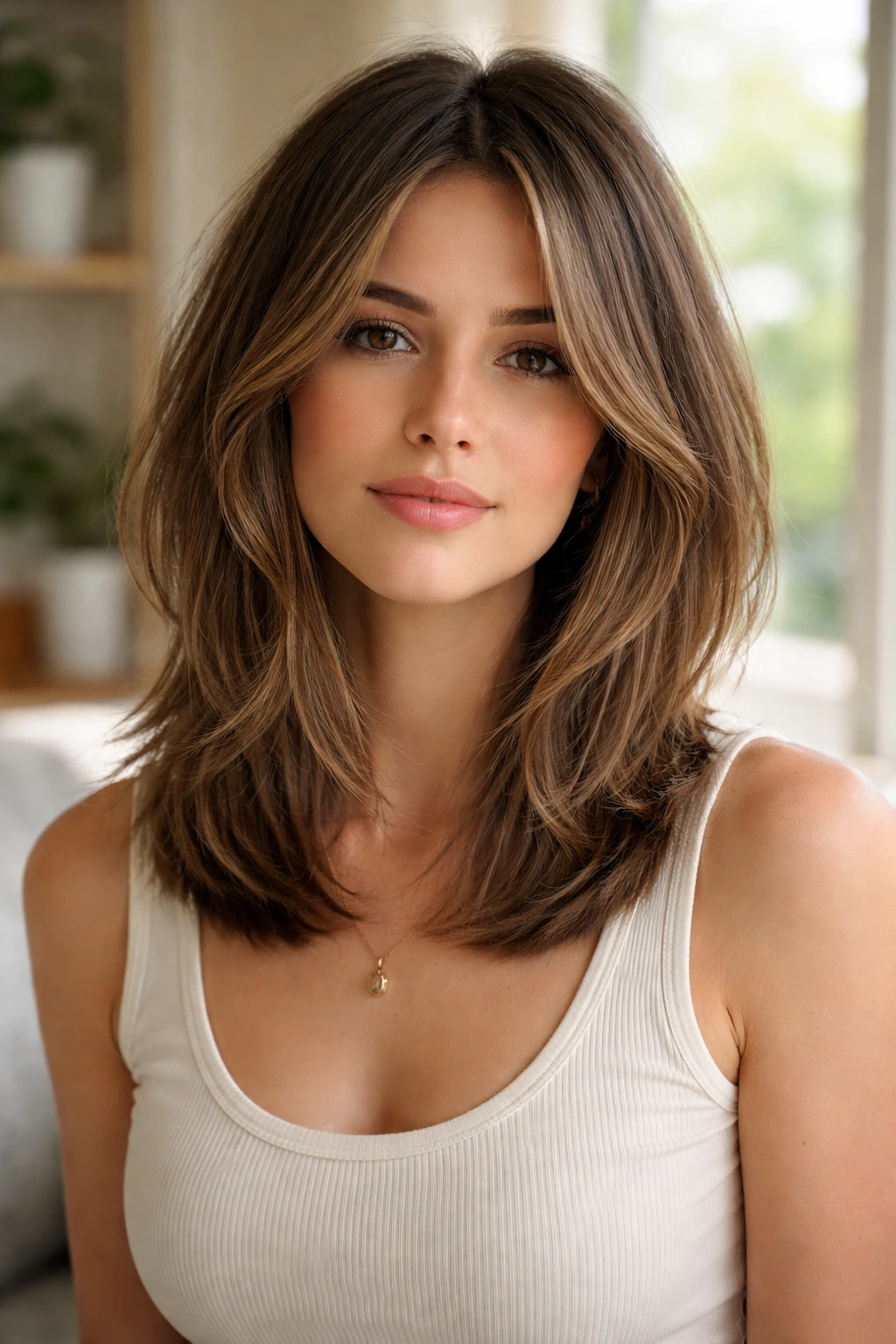
A shoulder-skimming midi cut can look plain if it’s cut too evenly. Add the right face-framing layers, though, and it suddenly has shape, bounce, and enough lift to keep fine hair from feeling heavy.
Picture this: the hair hits somewhere between the collarbone and the shoulders, and the front pieces are cut shorter — usually around the chin or just below it. That difference in length pulls the eye forward and creates movement around the face, which is where a lot of flat cuts fail.
The key is restraint. You do not want layers starting all over the head. You want a controlled frame in the front, then a mostly intact body through the back so the hair still looks thick when it’s down.
This cut is useful if you wear your hair up half the time, because the front pieces still drop out and make the style feel deliberate. A loose ponytail gets a lot better with a few choppy face-framing strands.
One good styling trick: blow-dry only the front sections with a round brush and leave the back to air-dry. That tiny bit of polish at the front changes the whole read of the haircut.
8. The French bob with micro layers
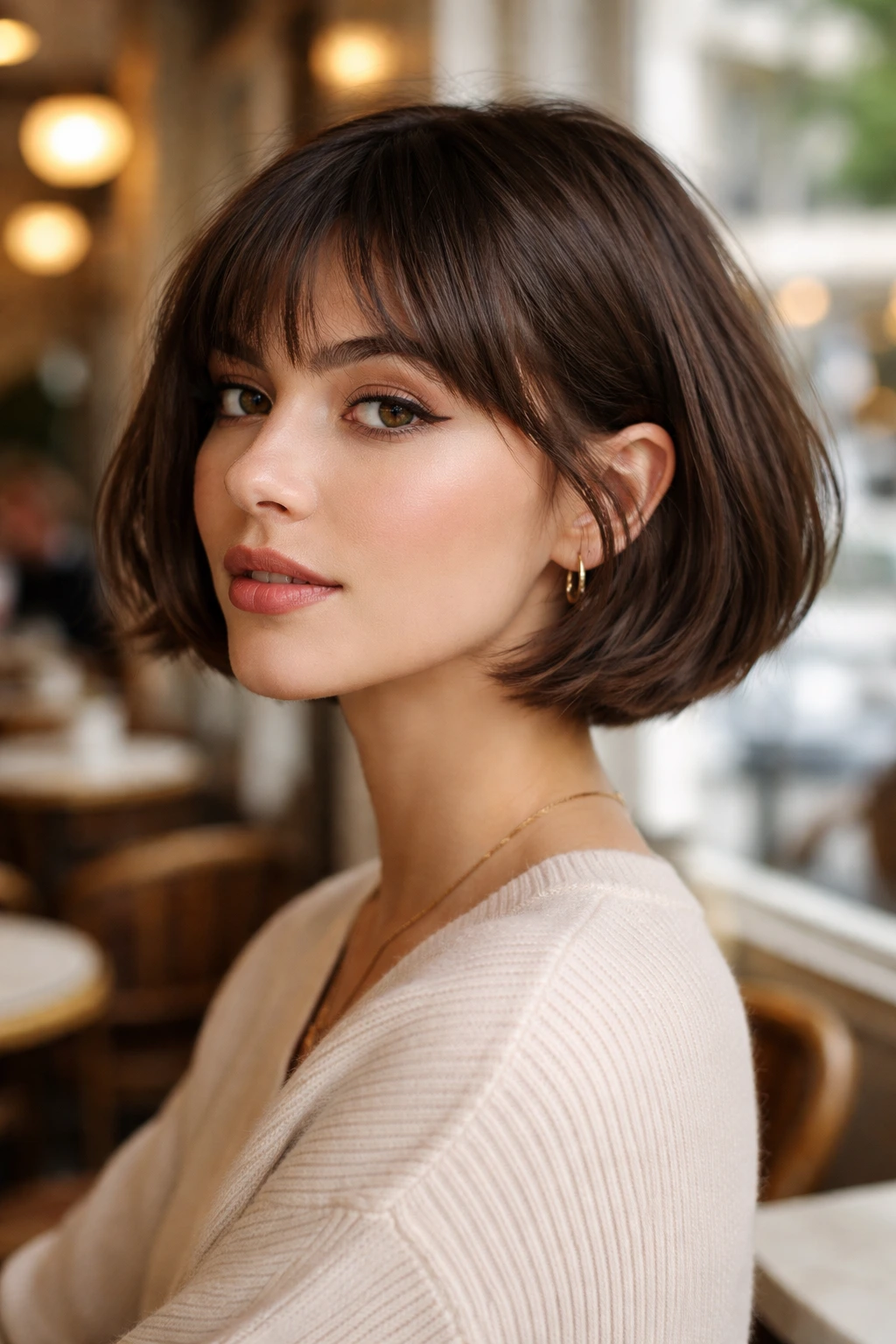
A French bob should swing a little when you turn your head. That’s the point. On fine hair, the best version stays around the jawline, keeps the perimeter blunt, and sneaks in micro layers so the shape doesn’t sit like a helmet.
This cut is more about attitude than length. It works because it gives the hair a clear edge, then softens the inside just enough to keep it from looking stiff. Fine hair can look richer at this length because the ends stack up visually instead of dragging downward.
Don’t ask for too many short pieces. That is where this cut goes wrong. A French bob needs density at the line and a light hand inside the shape. If the stylist starts carving away too much bulk, the result can look airy and unfinished.
I like this cut with a slight bend under the chin or a tiny flip at the ends. You can do that with a half-inch movement from a straightener or a small round brush. It doesn’t have to be glossy and perfect. It just needs some life.
The best version looks deliberate from across the room and soft up close.
9. The razored bixie
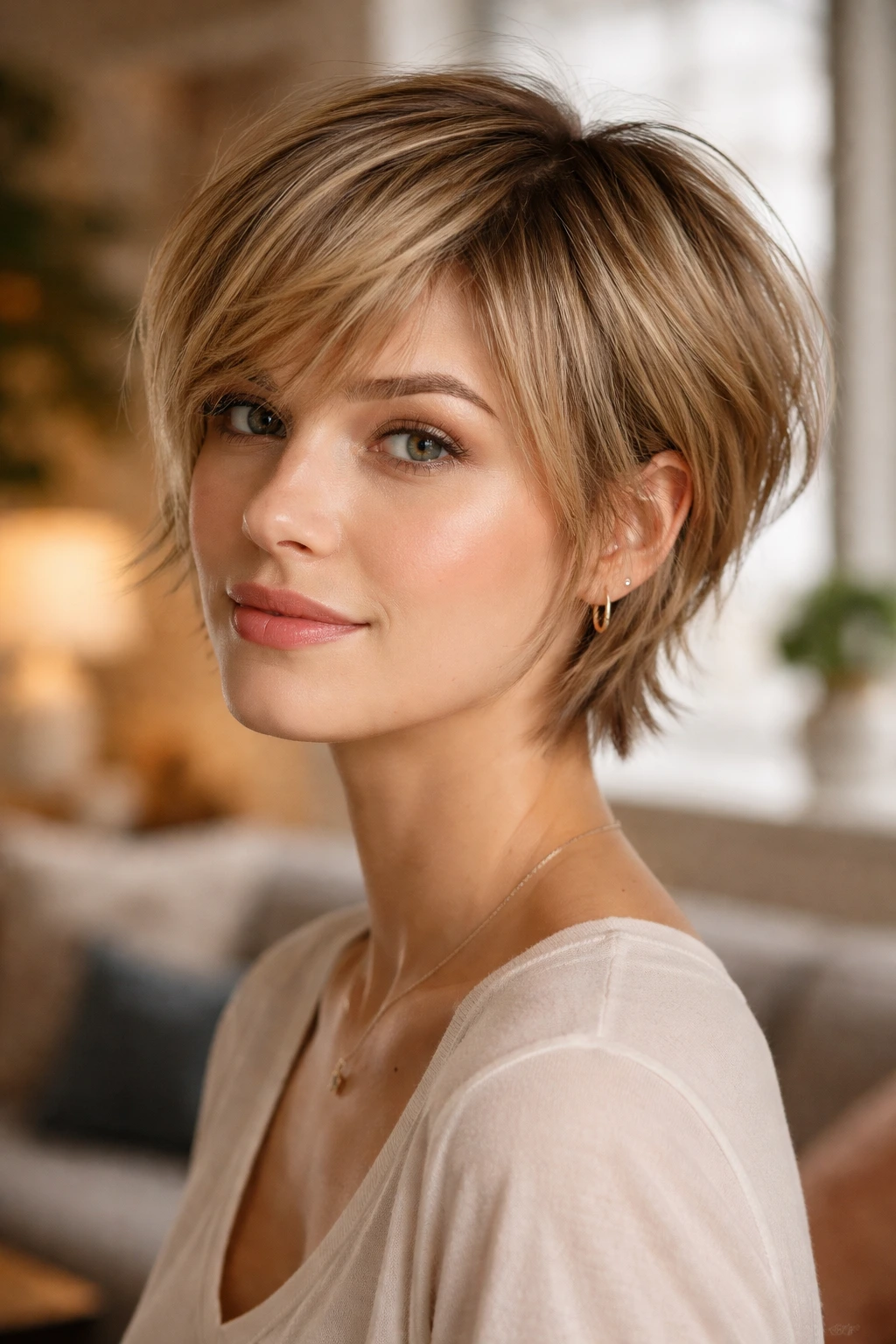
Can a bixie work on fine hair? Yes — if the razor is used with control. The razored bixie sits between a bob and a pixie, with enough length to feel feminine and enough texture to stop the style from lying flat.
How to style it
- Work a nickel-size amount of mousse through damp roots.
- Blow-dry the crown first, lifting straight up with your fingers.
- Use a small round brush on the front pieces only.
- Finish with a dab of paste on the ends to separate the layers.
That combination keeps the top from collapsing and gives the cut a little grit. The razor texture helps the hair move, which matters when the strands are too soft to hold a blunt shape all day.
Still, this is one of those cuts that rewards honesty. If your hair is fragile or breaks easily, too much razoring can make the ends look frayed. A good stylist will soften the shape with point cutting instead of shaving the life out of it.
I like the bixie on people who want something short but not severe. It has a bit of play in it. It also looks better a little messy, which is nice when you do not want to fight your hair every morning.
10. The curtain-bang lob
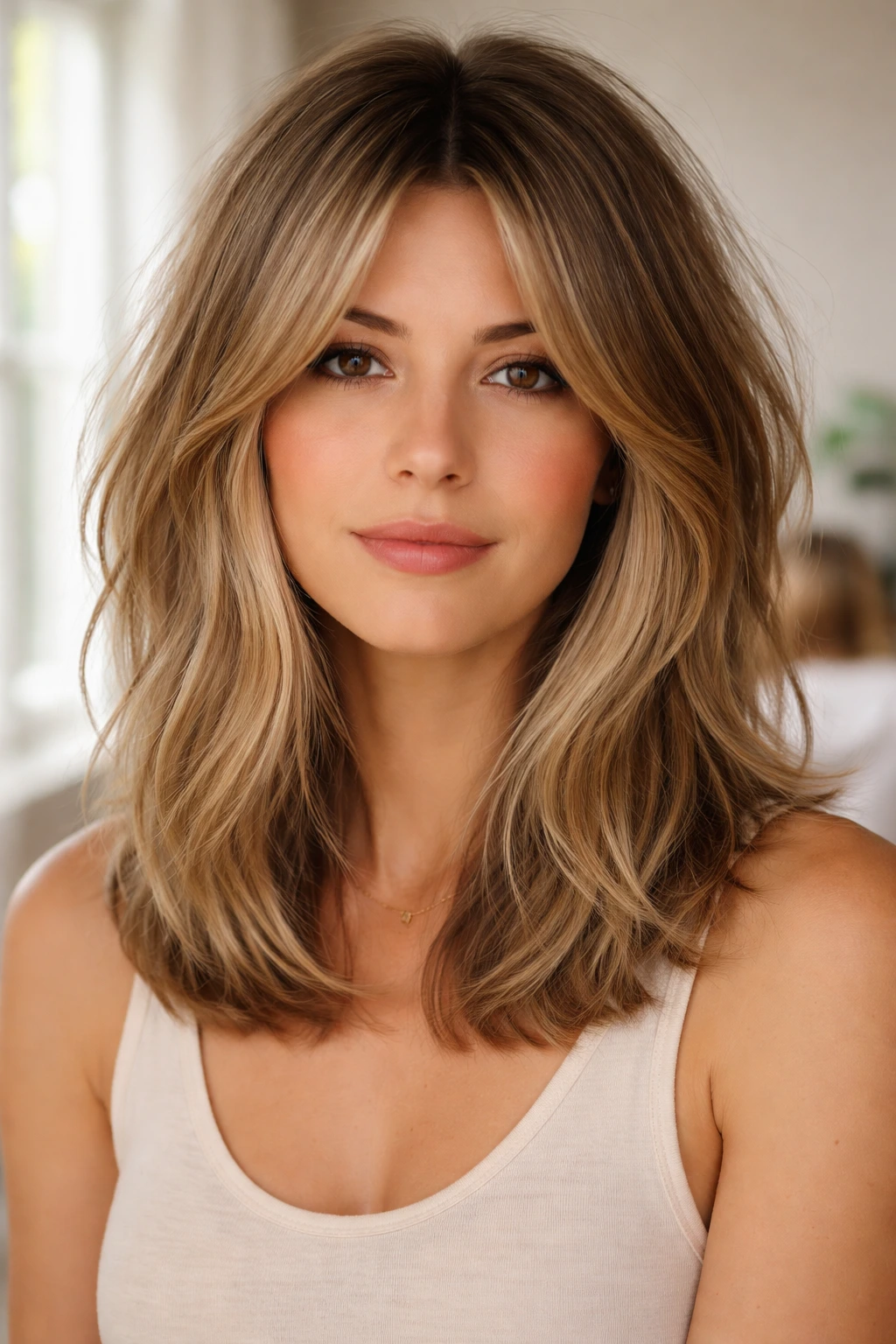
Heavy bangs can crush fine hair. Curtain bangs do the opposite when they’re cut long enough to split cleanly at the center and blend into a lob that lands near the collarbone.
The front pieces should start at the cheekbone or slightly below it, then feather outward into the rest of the cut. That gives the hair a soft frame and keeps the eyes from feeling boxed in. On fine hair, that front movement matters more than people think, because it creates the illusion of a fuller front hairline.
This cut works best when the lob itself is not over-layered. A little broken-up texture in the ends is fine. A ton of short layers is not. You want the curtain fringe to be the star and the rest of the hair to support it.
A blow-dryer with a medium round brush helps here. Roll the fringe away from the face for a few seconds, then let it fall open. Don’t force a deep bend. Too much curl can make the bangs look smaller than they are.
The result feels easy, but the shape does a lot of work.
11. The U-shaped long layers
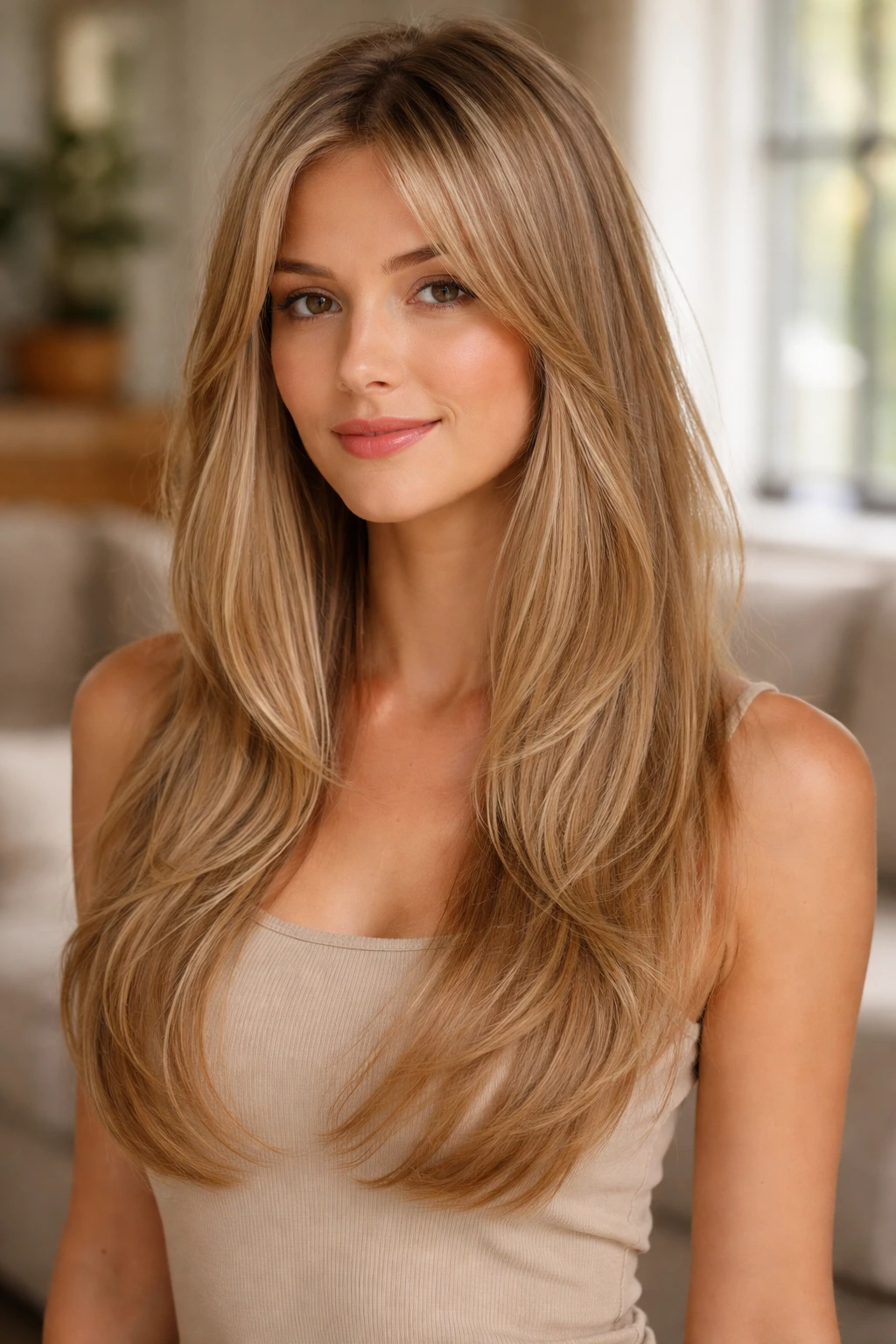
Long fine hair often looks best when the bottom keeps a clear shape. That is why the U-shaped layered cut can beat a straight-across long style. It keeps length, adds motion, and avoids the flat curtain effect that makes long fine hair look stringy.
The U shape matters because it lets the sides fall a little shorter than the back. That tiny difference creates softness without removing the weight that fine hair needs. The layers should be long enough to move, usually starting below the cheekbones or around the mouth, not chopped high up near the crown.
A few details worth asking for
- Keep the longest layers dense near the ends.
- Blend the front pieces gradually into the back.
- Avoid razoring through the last 3 to 4 inches.
- Keep the center back slightly longer than the sides.
If your hair is naturally straight, this cut can look sleek and calm. If it has a bend, the layers will show off a little more. Either way, the point is the same: preserve the feeling of thickness while giving the hair some shape.
It’s a quiet cut. No drama. That is part of its charm.
12. The asymmetrical bob
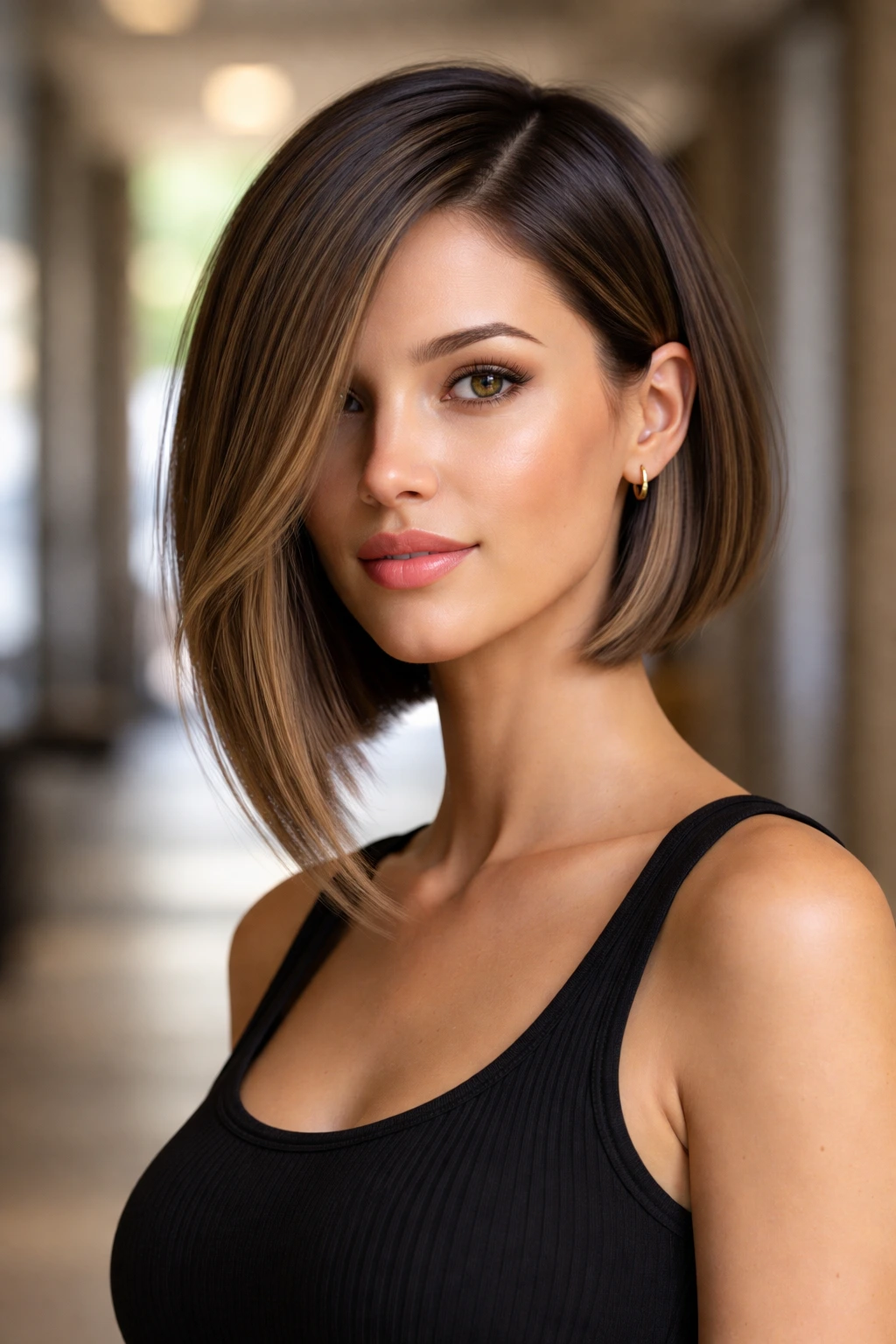
A small imbalance can do a lot. The asymmetrical bob — one side a little longer than the other — creates movement before you even style it, which is a smart trick for fine hair that needs visual interest.
This is not about making the cut look quirky for the sake of it. A difference of 1 to 2 inches can shift the way light hits the hair and make the whole style feel fuller. The longer side gives the eye a place to land, and the shorter side keeps the shape from getting heavy.
I’ve seen this cut work especially well on straight or slightly bent hair. The line stays visible, which matters. If the hair is too textured, the asymmetry can disappear into the finish. In that case, you need cleaner styling and a little smoothing cream.
What to watch for
- The length difference should look intentional, not accidental.
- The shorter side should still hit at a flattering point on the jaw or neck.
- The underlayer needs to stay neat so the cut does not puff out.
A good asymmetrical bob feels sharp, but not fussy. That’s a rare combination.
13. The octopus cut on fine hair
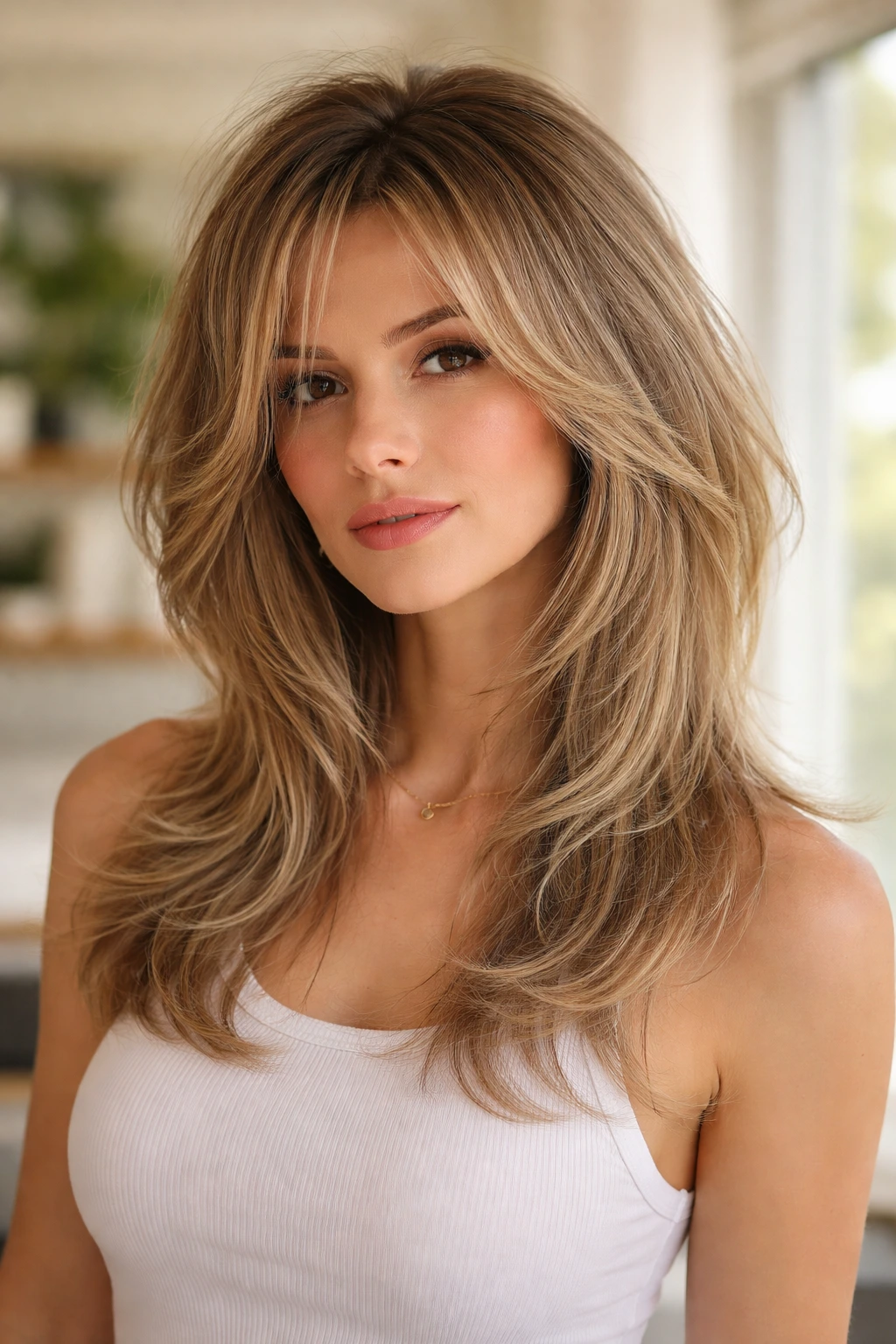
The octopus cut gets a mixed reputation because it can go too wispy if the layers are overdone. On fine hair, though, a softer version can look fantastic when the crown gets lift and the ends stay light enough to move.
Why does it work at all? Because it separates the top from the bottom in a way that makes the hair look fuller at the roots and more agile through the lengths. The silhouette resembles an inverted bell with softer ends, which sounds odd until you see it in motion. Then it makes sense.
What your stylist should avoid
- Do not chop the crown too high.
- Do not thin the bottom until it looks stringy.
- Do not leave the face frame disconnected from the rest.
- Do not use a heavy razor on already delicate ends.
The best octopus cut on fine hair still has a believable perimeter. That is the part that keeps it from looking unfinished. If the ends are too airy, the whole cut loses shape in a day or two.
I like this one on people who want a cool shape but are tired of flat layers. It has movement, and it has a little bite.
14. The graduated bob with hidden underlayers
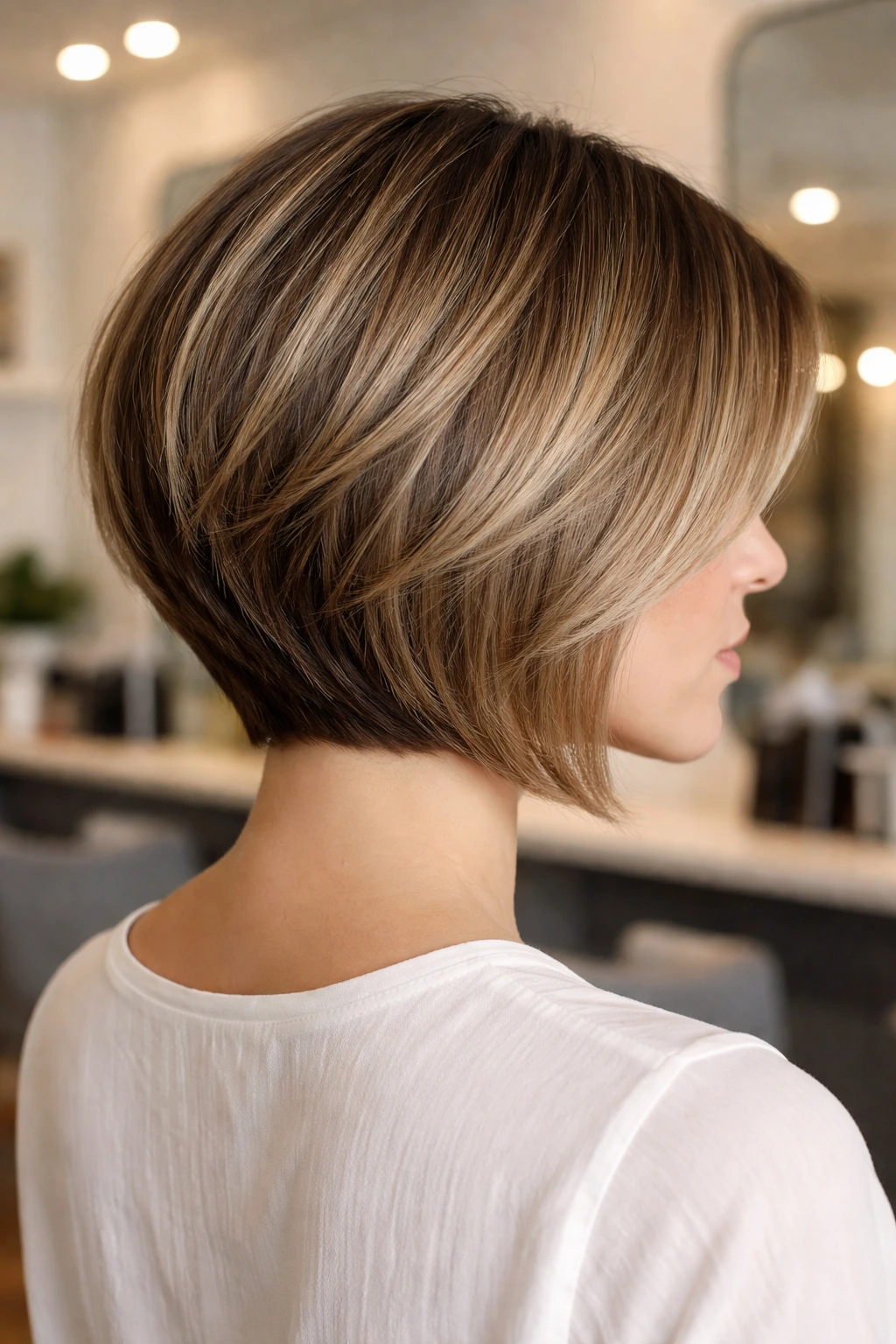
A graduated bob does something clever: it builds weight in the back while keeping the front a touch longer, so fine hair looks fuller from every angle. When the layering stays hidden underneath, the shape reads as clean instead of chopped up.
The back is usually stacked enough to create a little lift at the nape. Not too much. You are not trying to build a towering wedge. You just want the back to support the rest of the cut so the hair doesn’t collapse into one flat sheet.
This is one of the best choices for straight fine hair because the line stays sharp. The hidden layers add movement without giving away the trick. If the layers show too much, the cut starts to look airy. If they stay tucked in, the bob keeps its density.
It does need trimming on a steady schedule. A graduated bob loses its shape faster than longer cuts because the balance is so specific. When the nape grows out, the whole thing starts to sag. That is the tradeoff. Fair enough.
A smoothing cream and a round brush are enough most days. Keep the finish polished, and let the architecture do the work.
15. The soft mullet with a clean neckline
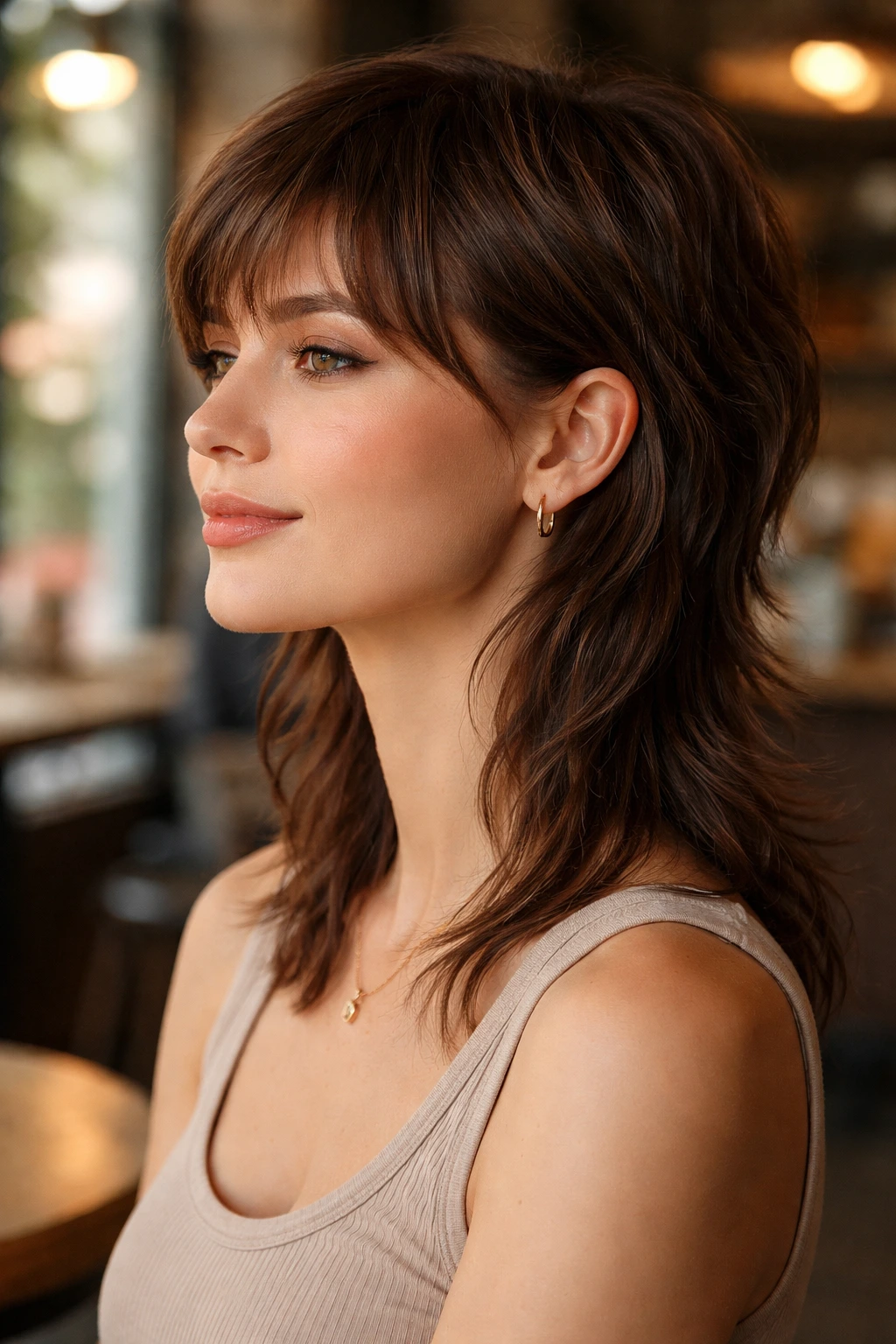
The soft mullet sounds more extreme than it usually is. On fine hair, the right version keeps a clean neckline, soft layers through the crown, and enough length in the back to avoid that choppy, mangled look people fear.
Unlike the wolf cut, which tends to feel more shaggy through the sides, the soft mullet leans on contrast. The top is shorter and lightly layered. The back is longer. The sides are shaped so the haircut falls neatly instead of exploding outward.
That shape can make fine hair look fuller because it creates visual variety. The top has lift. The nape stays clean. The movement happens where the eye wants it, not all over the place.
This cut is best for someone who likes a bit of edge but still wants something wearable. If you wear glasses, this can be a strong choice because the shape around the temples can soften the frame of the face. If you want a very polished, traditional look, though, this probably isn’t your lane.
A touch of texturizing spray at the crown and a little bend through the sides are usually enough. Don’t overdo the product. The cut needs air, not grease.
16. The feathered shoulder cut
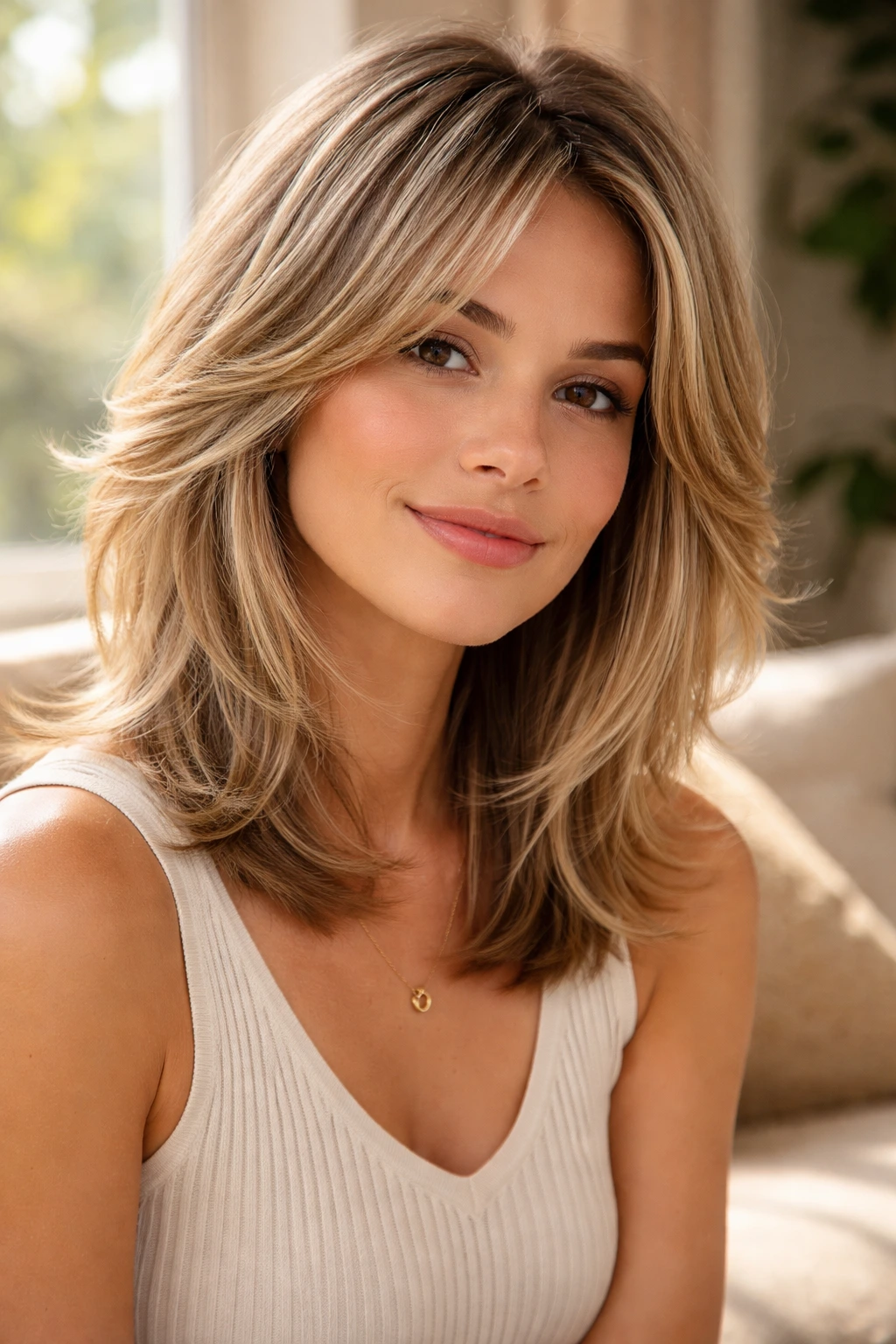
A feathered cut can be a lifesaver for fine hair that sits flat at shoulder length. The feathered shoulder cut uses soft, tapered layers that flick away from the face and give the hair a lighter, more lifted feel.
The shoulder length is key. Too short, and the feathers can look a bit sparse. Too long, and the movement gets lost. Around the shoulders is the sweet spot because the layers can frame the collarbone and move when you turn your head.
The styling setup that helps
- Use a 1-inch or 1.25-inch round brush.
- Blow-dry the front sections away from the face.
- Keep the crown lifted while drying.
- Finish with a light mist of flexible hairspray, not a crunchy one.
That little outward bend matters. Feathered layers are about shape, not volume sprayed into place. If the hair is too stiff, the cut loses its softness.
This is one of those styles that looks casual but takes a thoughtful cut. If the feathering is uneven, it can go old-fashioned fast. If it’s done well, though, the hair has that light swing that fine strands often miss.
17. The long pixie with side-swept fringe
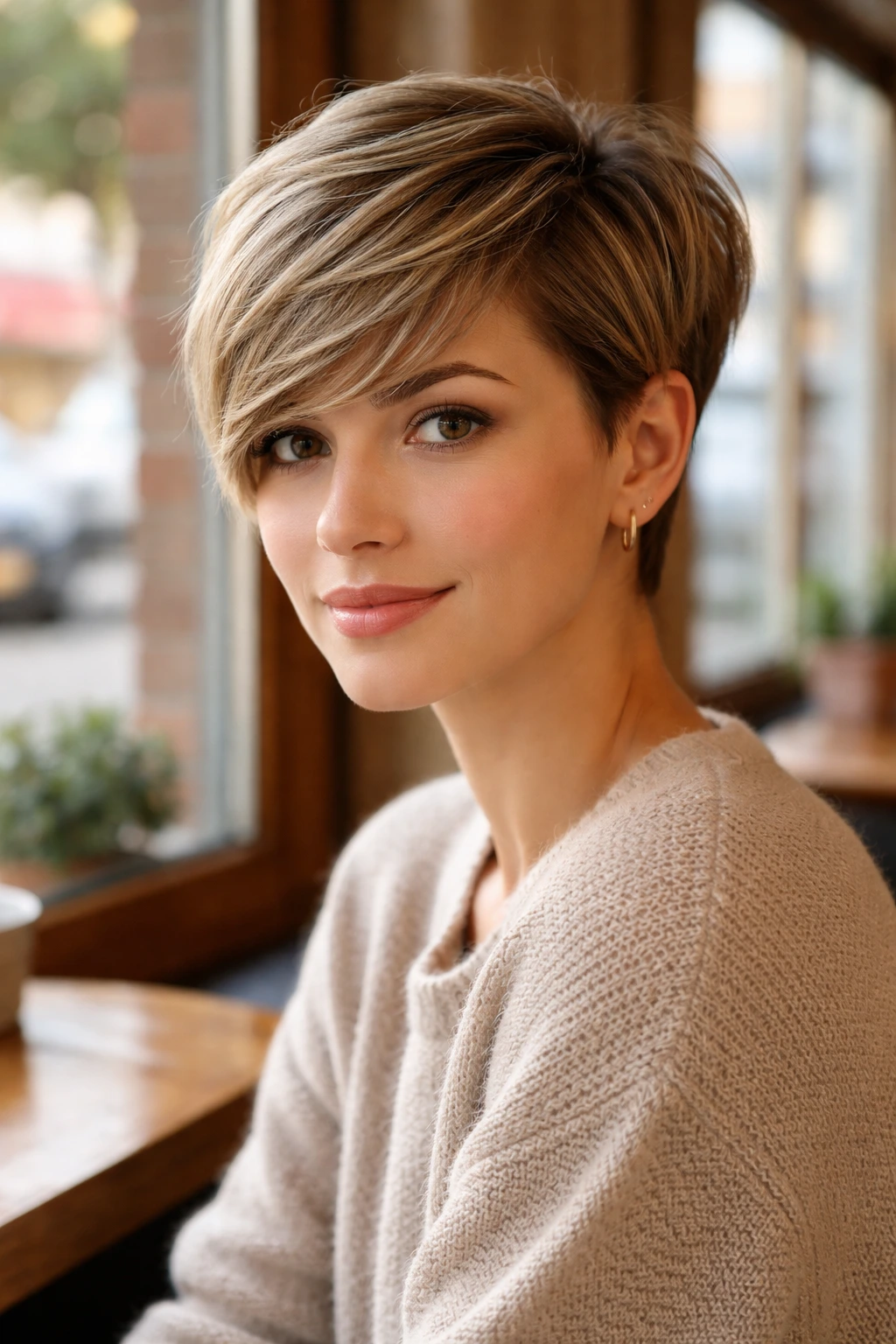
This cut is for people who want short hair without losing all their styling options. The long pixie with a side-swept fringe keeps enough length on top and around the forehead to soften fine hair, while the nape and sides stay short and tidy.
The fringe is the part that sells it. It should be long enough to sweep across the forehead without splitting in awkward chunks. That usually means leaving a few inches at the front and layering them so they curve instead of sticking straight out.
I like this cut because it gives fine hair a real shape. The crown can be lifted with a finger-dried mousse, and the fringe gives the face some softness. You get movement without having to maintain a full bob or lob.
One sentence here: It is cleaner than a shag and softer than a classic pixie.
That balance makes it useful for people who want easy mornings but don’t want to feel overexposed. Short hair can be very exposing on fine textures. This version avoids that by keeping a little drape at the front.
18. The shoulder-grazing cut with invisible layers
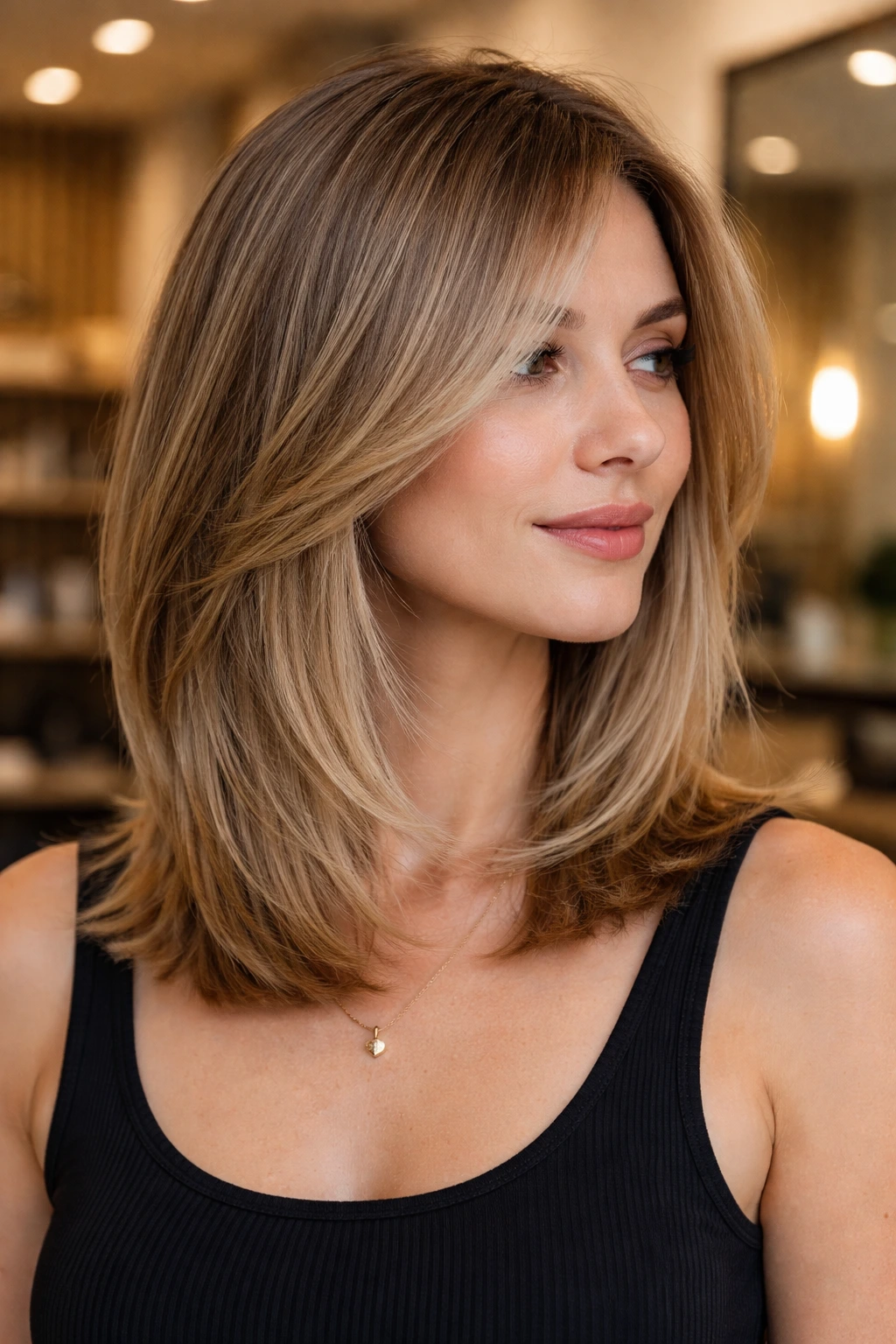
Do you want layers without that layered look? Then the shoulder-grazing cut with invisible layers is the one to study. From a distance, it looks almost blunt. Up close, the interior has soft carving that keeps the hair from falling flat.
What makes it different
The layers are hidden inside the shape instead of sitting on the outside like stairs. That means the ends still look full, but the mids have room to move. Fine hair loves that trick because it gets freedom without losing the feeling of bulk.
This cut usually works best when the length touches the shoulders or sits just above them. Go too long, and the hidden layers get buried. Go too short, and the shape can look too floaty. Shoulder grazing is the sweet spot.
A stylist should keep the perimeter clean and use very light interior texturing. If the thinning shears come out too early, the cut loses the whole point. You want hidden structure, not visible damage.
What to tell your stylist
- “Keep the outline full.”
- “Add movement inside, not on the bottom edge.”
- “I want the hair to move, but I still want it to look thick.”
That last sentence says a lot without sounding fussy.
19. The textured wedge with flipped ends
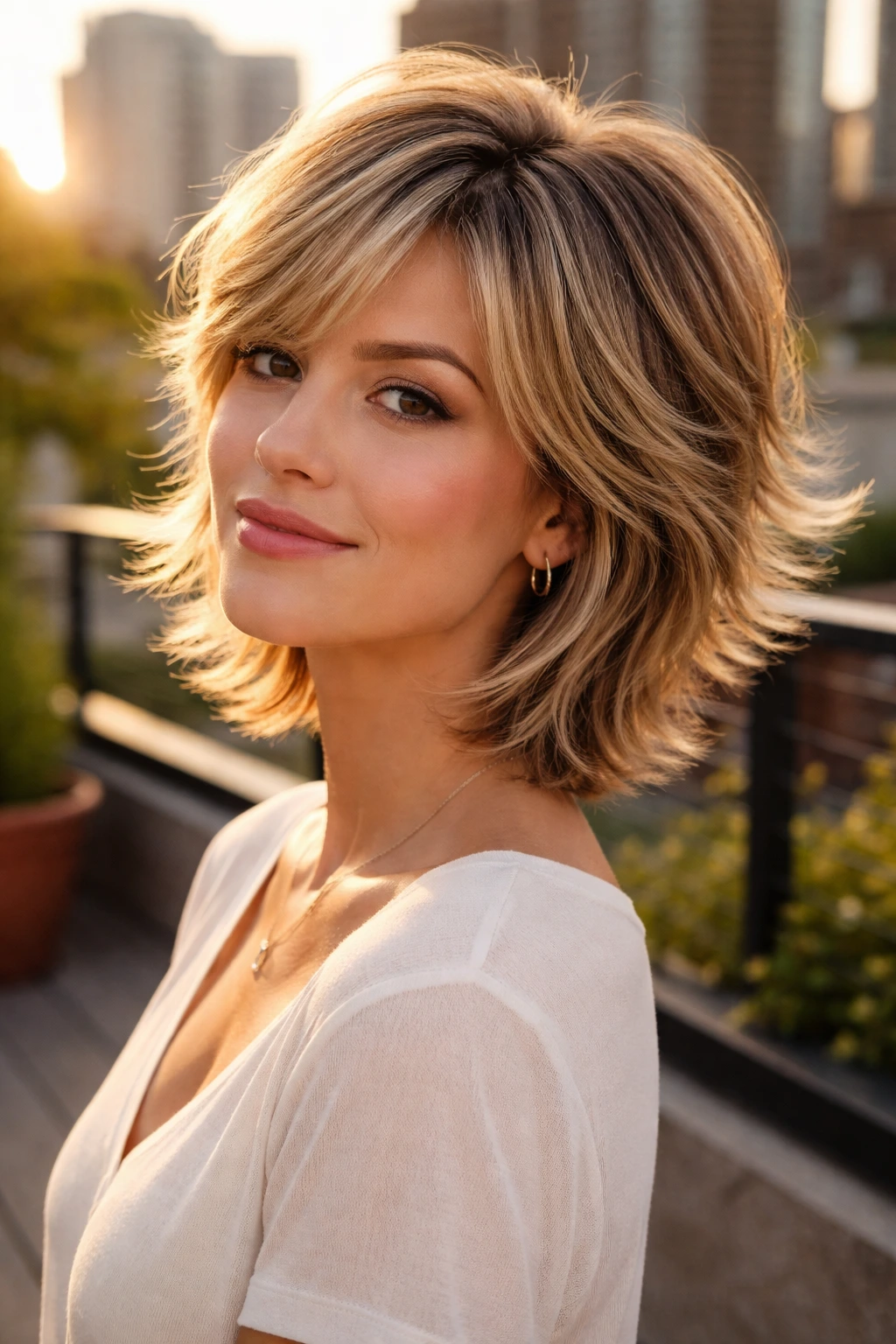
The wedge cut gets ignored too often. That’s a shame, because a textured wedge with flipped ends can give fine hair a built-in shape at the back while keeping the front soft enough to wear every day.
I’m not talking about the helmet-like wedge from old photos. This version is lighter. The back is still graduated, but the top and sides are feathered just enough to avoid a hard shelf. That creates lift where fine hair usually needs it most — at the crown and nape.
Why it helps
- It stacks visual density in the back.
- It creates a rounded silhouette without bulk.
- It makes the ends flip naturally with very little styling.
If your hair tends to sit flat against the head, this cut can be a nice fix. A small round brush or a quick bend with a flat iron at the ends gives it shape fast. You don’t need a lot of product. A light mousse at the roots is enough most days.
The wedge is not for everyone. It has a shape, and the shape is part of the point. But if you want something with a little structure that still feels youthful, it deserves more attention than it gets.
20. The softly shattered layered cut with face-framing pieces
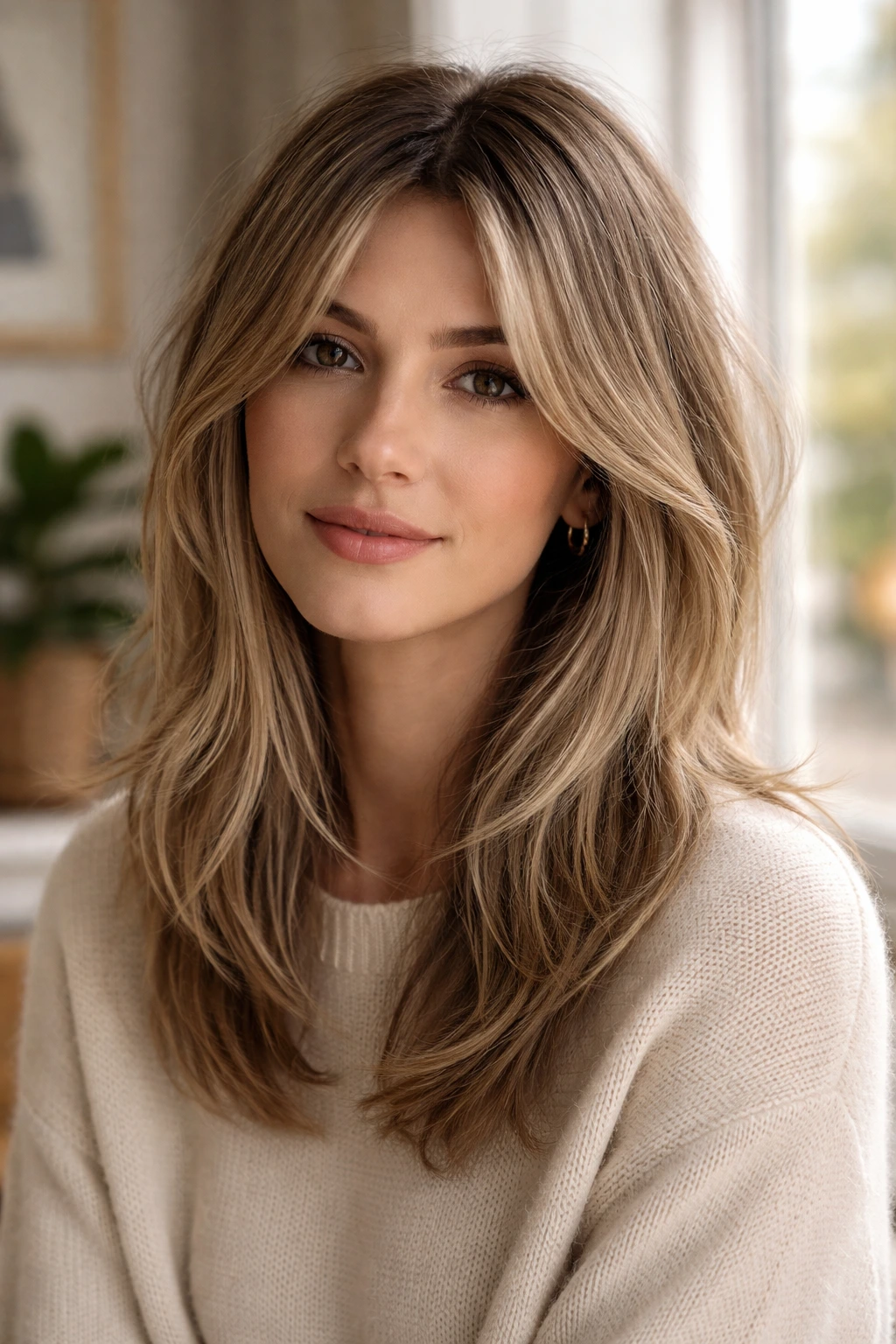
This is the cut that borrows the best parts of several styles without leaning too hard into any one of them. The softly shattered layered cut keeps the ends dense, builds movement through the middle, and uses face-framing pieces to stop fine hair from looking blank around the front.
It works on a lot of lengths, from just below the shoulders to a longer lob. The layers are not dramatic. They’re broken up enough to move, but not so short that they make the hair look frayed. That middle ground is where fine hair usually looks its best.
The face frame should be deliberate. Ask for pieces that start around the cheekbone or chin, then melt into the rest of the cut. If they’re too short, they can dominate the face. If they’re too long, you lose the lift around the front. That tiny adjustment changes the whole haircut.
One thing I like here is the flexibility. You can air-dry it, rough-dry it, or blow it out with a brush and get a different mood each time. The haircut still holds together because the perimeter stays solid.
If you want fine hair to look fuller without shouting about layers from across the room, this is the one I keep coming back to. It’s calm, a little broken up, and a lot smarter than it first looks.
