



Wavy hair can look expensive when the cut is right and a little unruly when it isn’t. Long layered haircuts for wavy hair live or die on placement: where the layers start, how much weight you remove, and whether the perimeter stays strong enough to hold the shape.
That’s why the same haircut can look soft and airy on one head and puffy on another. Waves do not fall like straight hair. They bend, stack, and spring in their own direction, which means a stylist has to think about movement as much as length.
That difference is the whole game.
The best versions give you shape without making the ends look thin, and they keep the wave pattern from turning into one giant triangle. Some cuts lean polished. Some look lived-in and loose. A few are deliberately messy in the best way. The styles below cover the range, from subtle face-framing changes to fuller, more textured shapes that let wavy hair do what it already wants to do.
1. Soft Face-Framing Layers
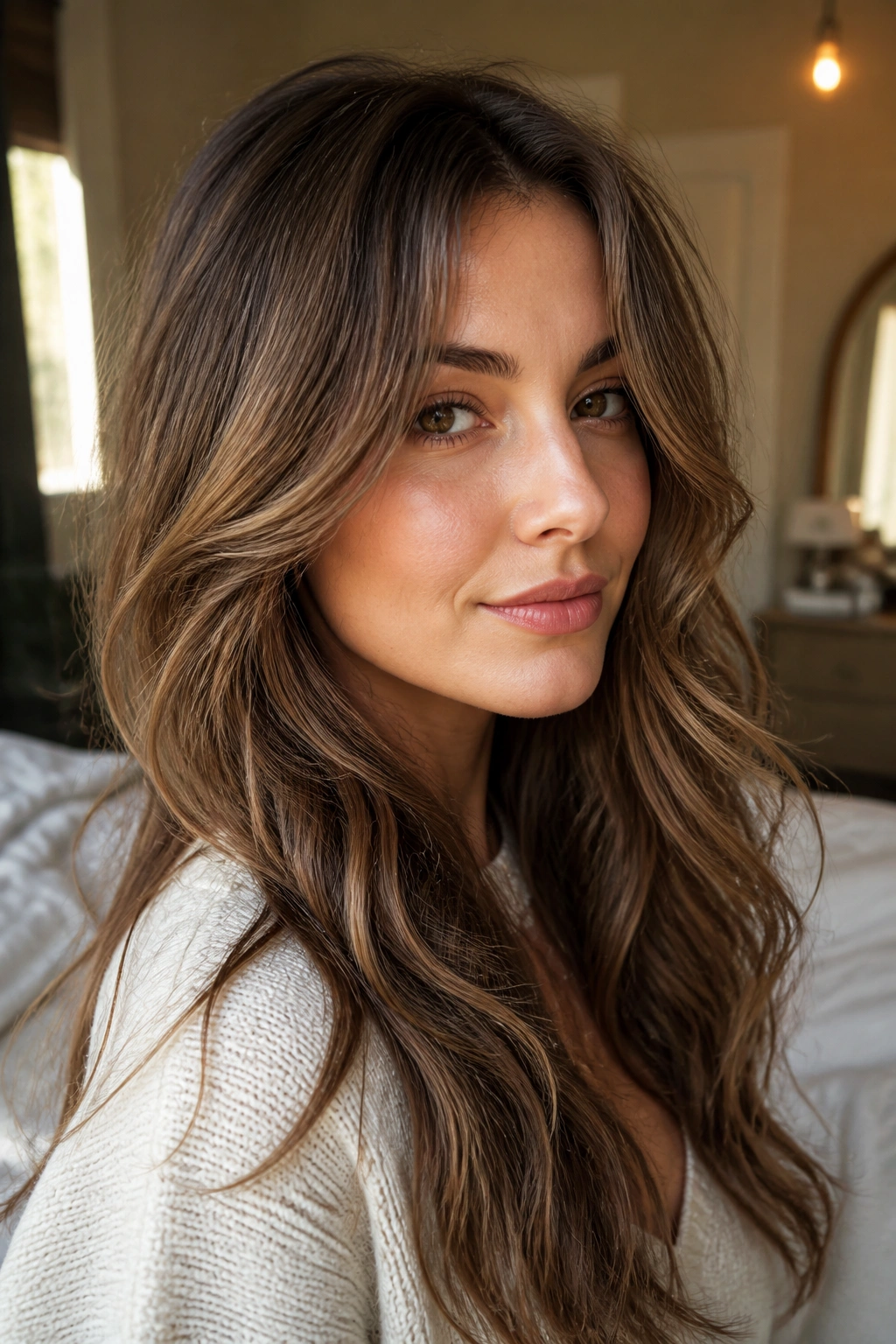
Soft face-framing layers are the safest way to start if you want change without losing the feeling of long hair. They bring the eye inward, soften the cheek line, and let your waves fall forward instead of hanging flat on the sides.
Why They Work
The longest layers stay in the back, so you keep that long, swingy look. The front pieces start around the chin or collarbone, then melt into the rest of the cut. That’s enough movement to keep wavy hair from feeling heavy, but not so much that the ends go wispy.
Ask for point-cutting around the front if your waves puff up easily. Sharp, blunt snips can make the front feel boxy. Soft, angled ends behave better.
- Best for medium to thick waves
- Works well with a middle part or a soft side part
- Grows out cleanly between trims
- Needs only a small amount of layering to make a difference
My favorite part: it changes the shape fast without making you feel like you lost inches.
2. Butterfly Cut for Wavy Hair
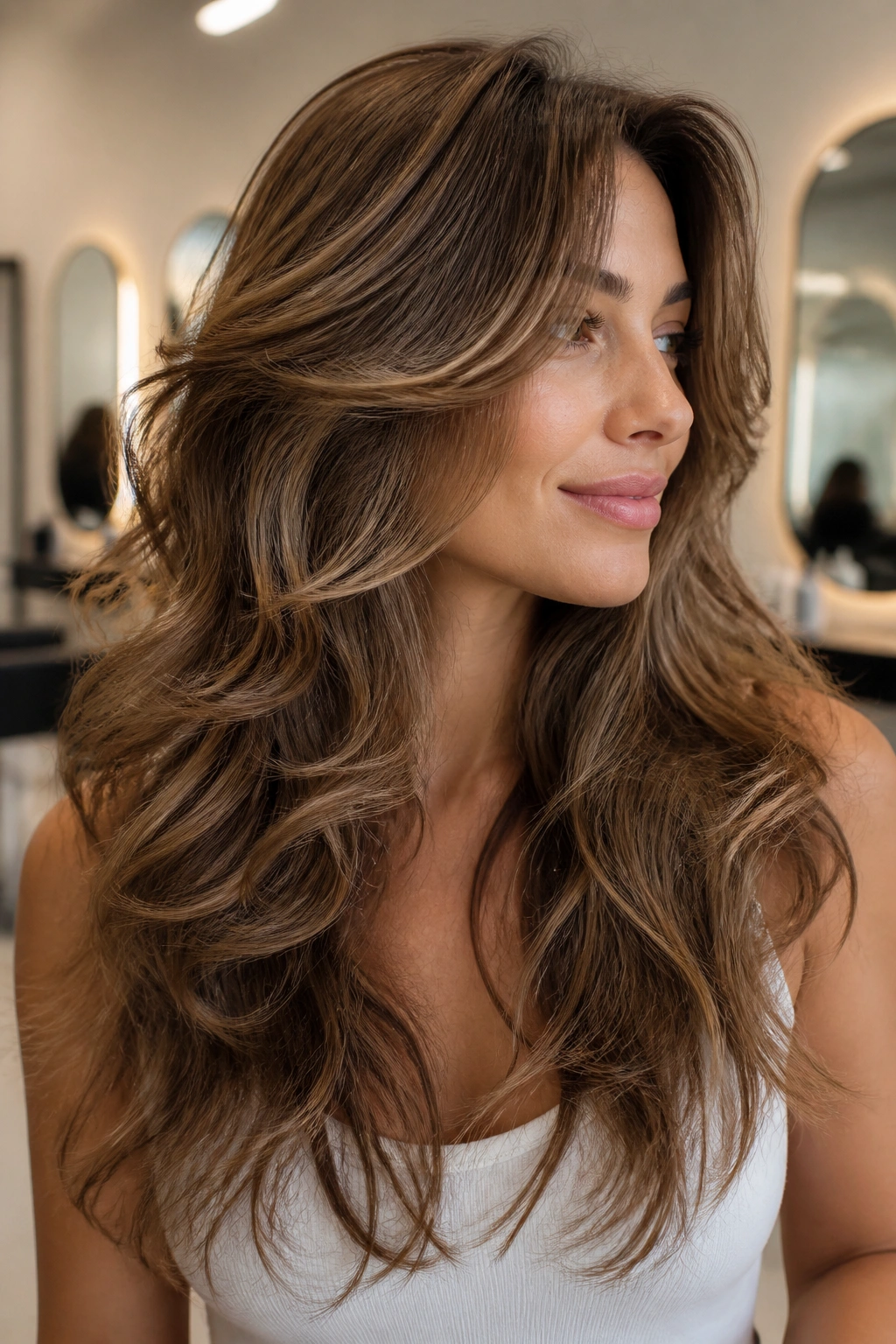
The butterfly cut is a crowd-pleaser for a reason: it gives the top half of the hair lift while leaving the bottom long and full. On wavy hair, that split in weight makes the whole style breathe.
It usually uses shorter layers around the crown and cheekbones, then keeps the lower section long enough to drape. When the hair moves, the layers separate a little, which creates that soft, floating look people keep asking for at salons. The trick is restraint. If the top layers are cut too high, loose waves can pop out and frizz instead of framing the face.
I like this cut for anyone who wants volume near the crown but does not want to give up length. It’s also friendly to ponytails, which matters more than people admit. A haircut can look cute down and annoying tied back. This one usually holds up.
3. U-Shaped Layers
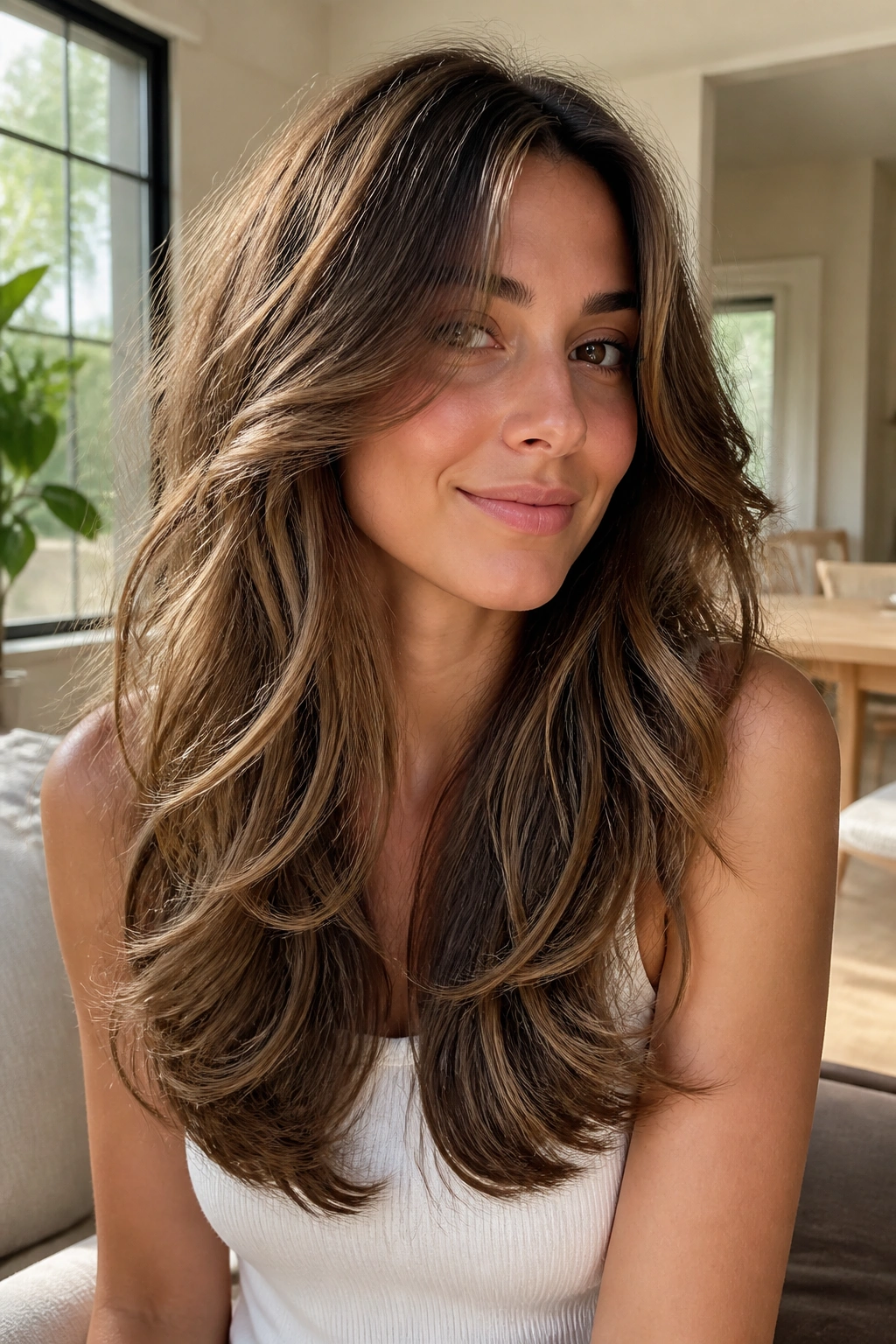
Why does a U-shape flatter wavy hair so often? Because the perimeter stays full, and the layers follow a gentle curve instead of hacking a hard line through the bottom.
The center back is a touch shorter, then the sides sweep down and out. That shape keeps the ends from looking thin when the waves separate. It also avoids the stiff, straight-across feel that can make long hair look heavy.
What to Ask For
- A soft U-shaped outline, not a deep arc
- Long internal layers that begin below the collarbone
- Face pieces that blend into the rest of the cut
- Point cutting at the ends so the edge feels soft
This is one of those cuts that looks expensive when it moves. Not flashy. Just clean, balanced, and easy on the eyes.
4. V-Cut Layers
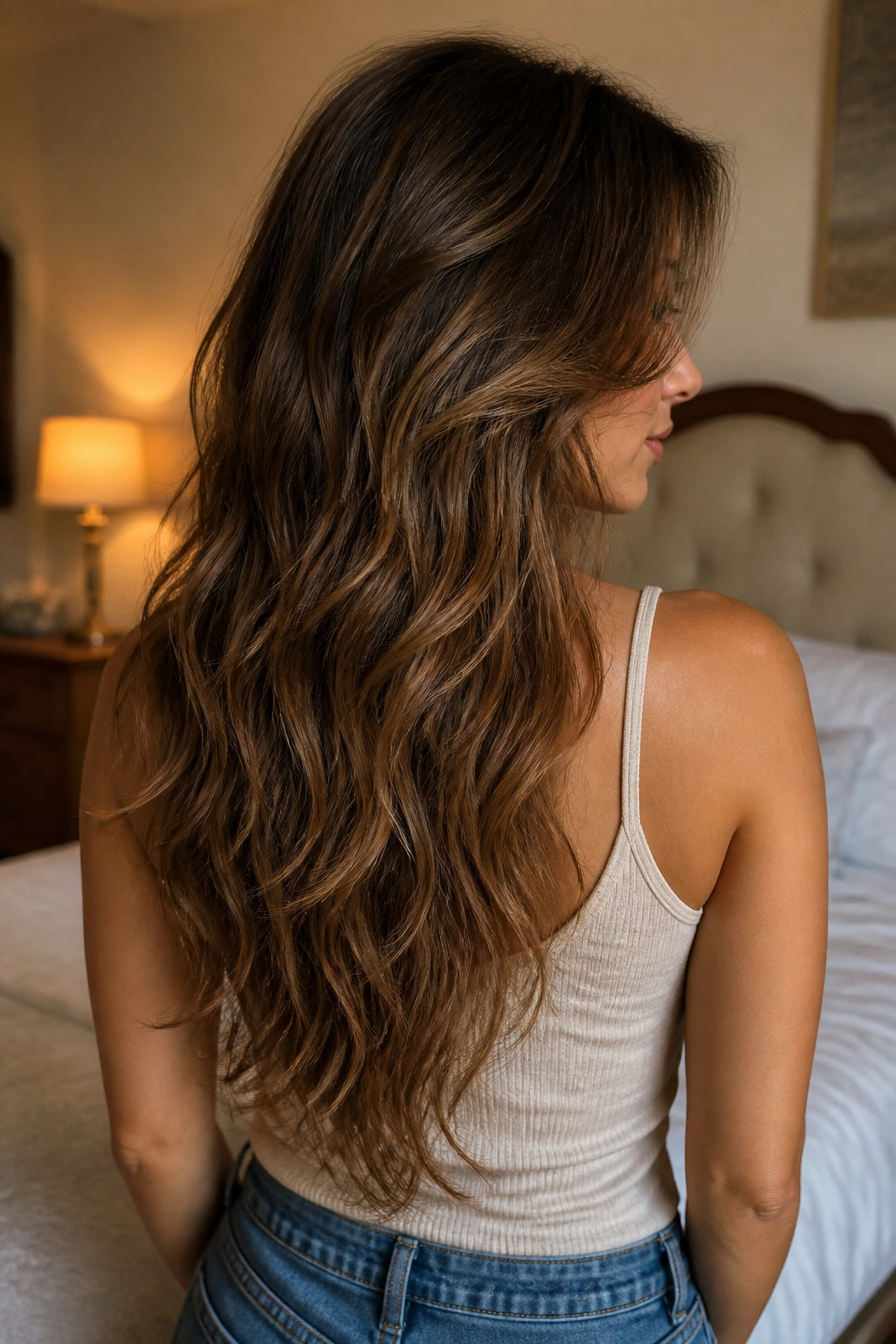
A V-cut gives long wavy hair a pointed shape at the back, which sounds dramatic but can be gorgeous when it’s done with restraint. The center back stays longest, while the sides angle in toward it.
That shape makes the hair fall like a curtain from the shoulders down. It’s especially strong on thick waves that need direction. Without some kind of tapered outline, dense wavy hair can balloon out at the sides and feel wider than it is long. The V solves that by pulling the eye downward.
The catch is balance. If the point gets too sharp, the cut can feel dated or too obvious. I prefer a softer V, the kind that reads more as a graceful taper than a hard triangle. If your waves are loose, ask for the tip of the V to stay gentle. You want motion, not a tail.
5. Long Shag with Curtain Bangs
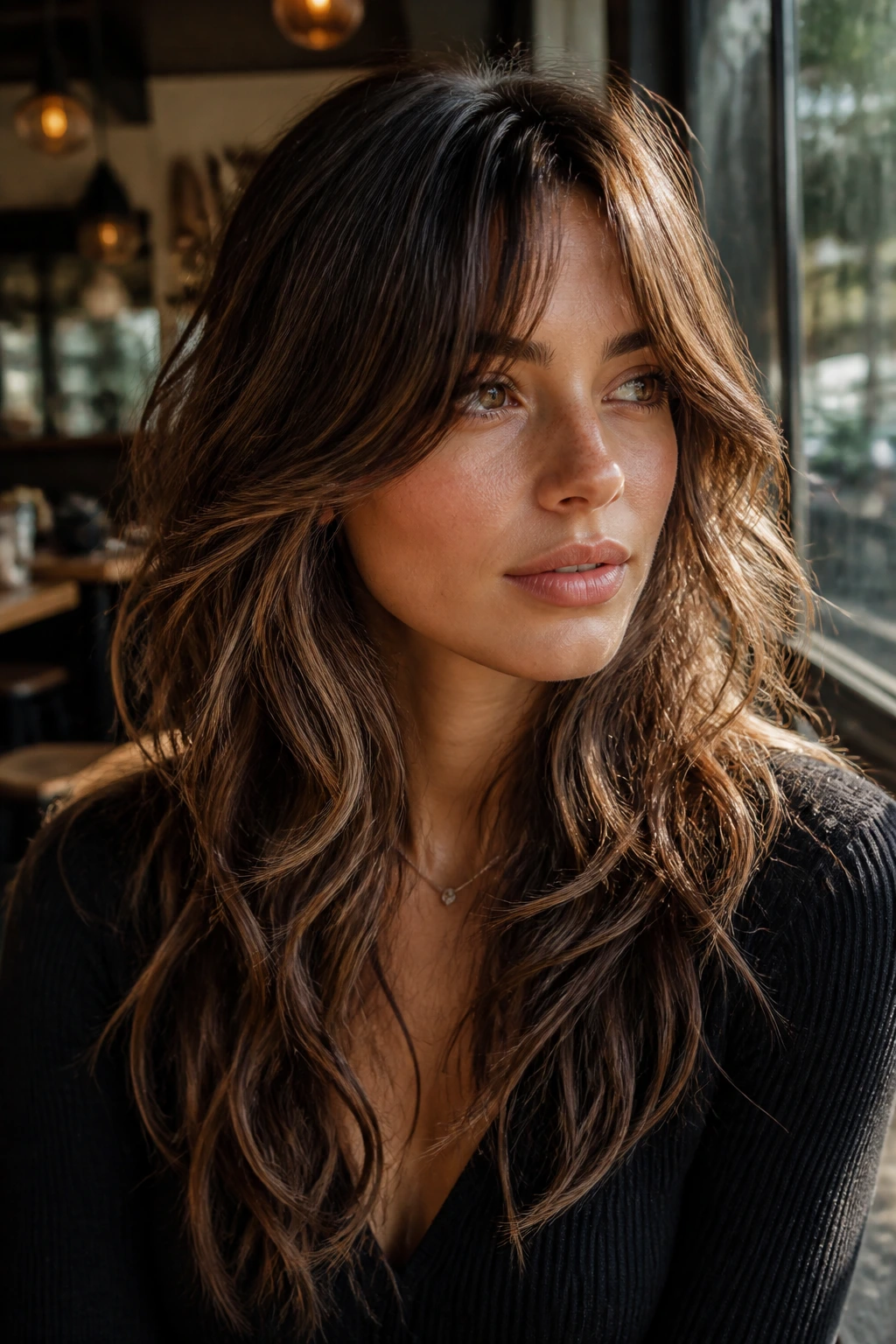
A long shag with curtain bangs is the cut for anyone who wants shape with a little attitude. It has shorter layers through the crown, face-framing fringe that splits down the middle, and longer pieces that still reach past the shoulders.
Wavy hair usually loves this setup because the texture gives the shag some body on its own. You do not need to force the movement. The cut does it for you. Curtain bangs help by breaking up the forehead area and drawing the eye toward the cheekbones.
I’d call this the most expressive option on the list. It has more personality than soft layers and more edge than a classic U-shape. But it does ask something from you: you need to be okay with texture. If you want hair that lies perfectly neat every day, skip it. If you like a little shape and a little chaos, this one has real charm.
6. Invisible Layers
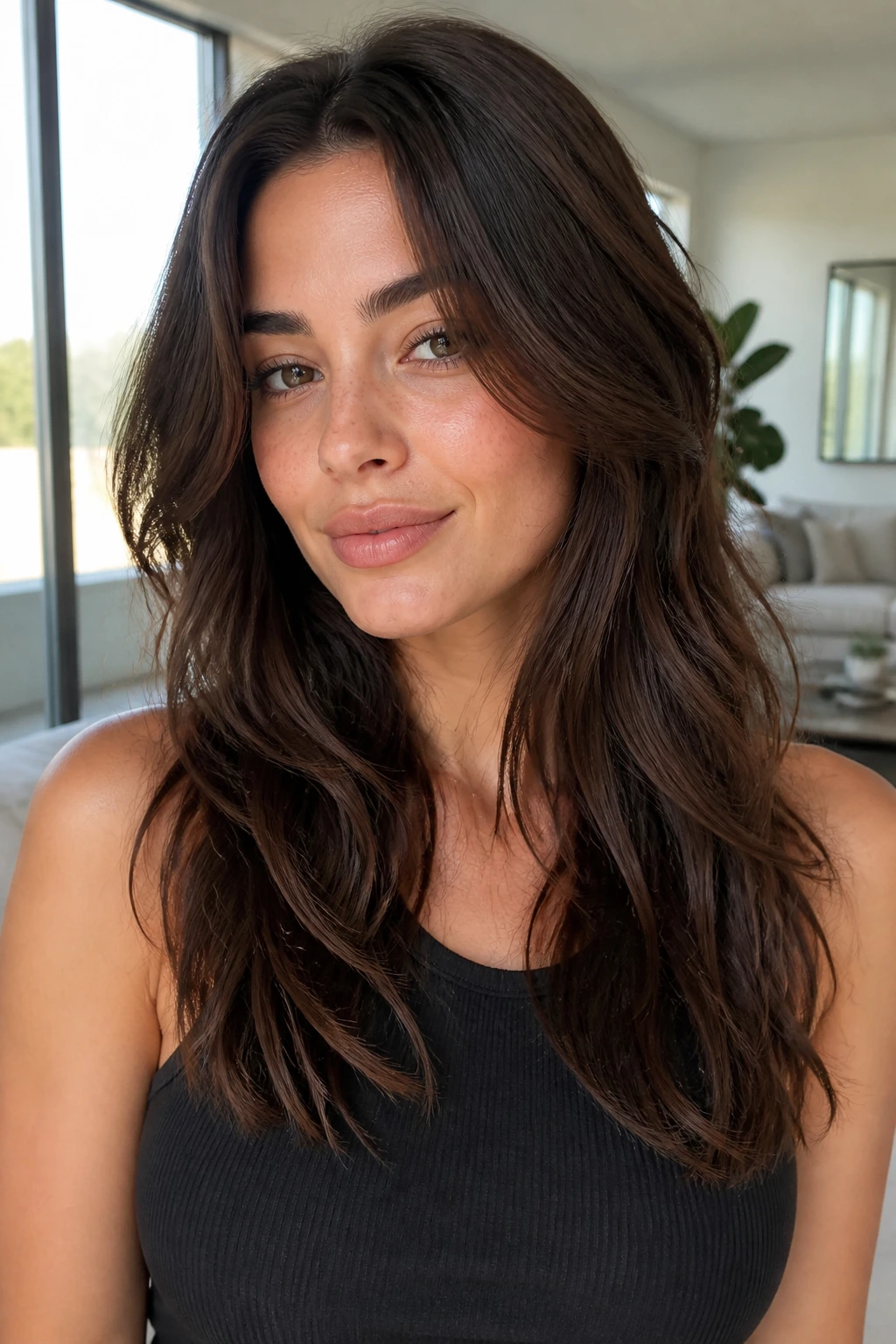
Invisible layers are for people who want movement without obvious steps. From the outside, the haircut still looks long and smooth. Underneath, there’s enough internal removal to stop the hair from hanging like a blanket.
That makes them a smart pick for wavy hair that gets bulky in the middle but thin at the ends. The outer line stays strong, while the inside loses weight where it matters. The result is subtle. You feel it more than you see it.
This is also a good choice if you work in a setting where dramatic texture is not the point. The haircut can look polished from the front and still give you lift when the hair dries. Ask for internal layers only if you want the quiet version of layered hair. No choppy shelf effect. No obvious stagger. Just cleaner movement.
7. Feathered Layers
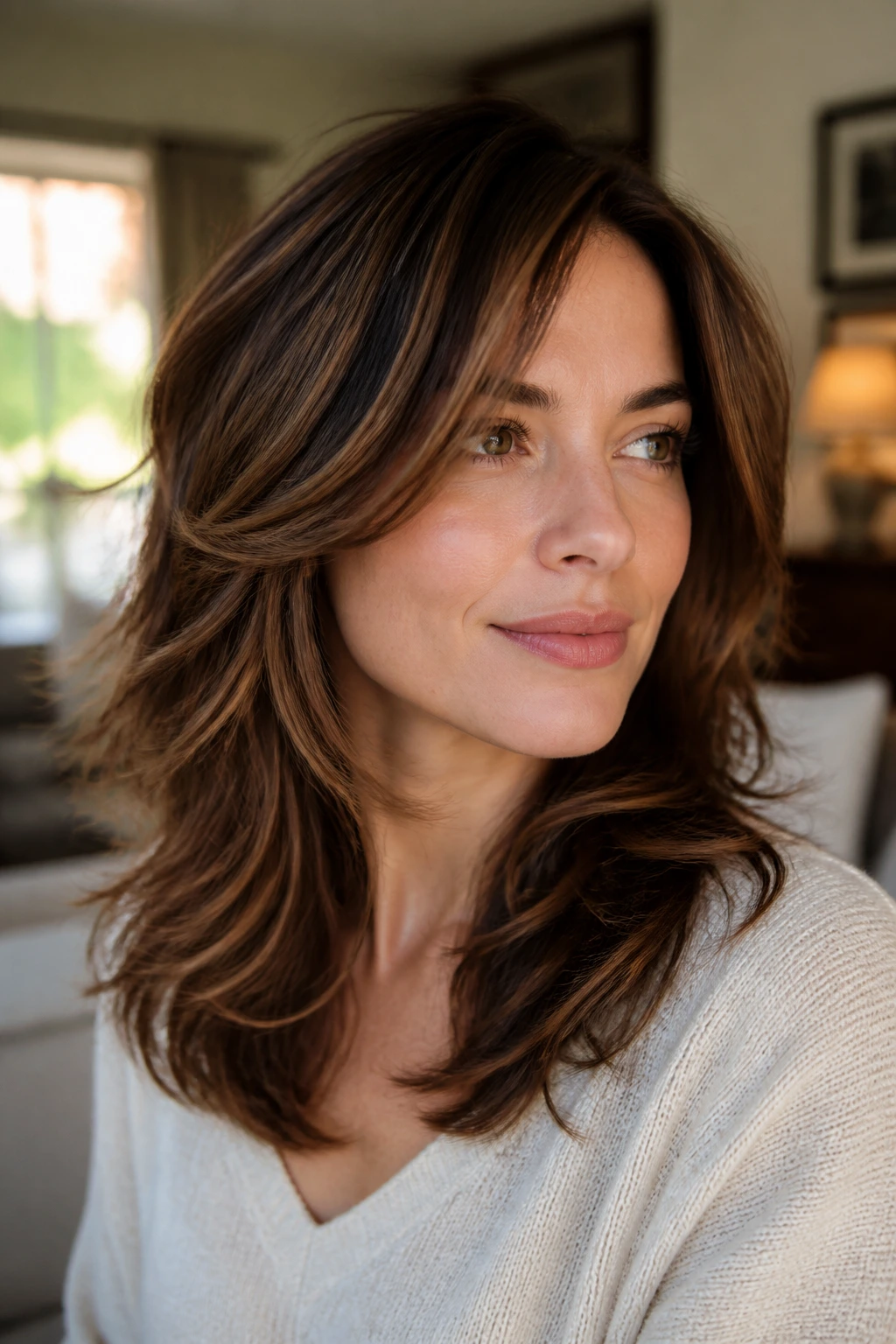
Feathered layers have that soft, airy edge that makes wavy hair look lighter around the ends. The cut usually uses slide cutting or gentle point cutting to thin the perimeter just enough for the ends to move instead of hanging in chunks.
Why They Suit Waves
Waves already bend, so feathering can make the movement look almost brushed into the hair. It keeps the shape from feeling blocky, especially if your waves are medium to thick and tend to collect weight at the bottom.
What to watch for? Too much feathering on already fine hair. That’s where people get into trouble. If the ends are soft enough already, over-feathering can make the hair see-through. The trick is to keep the feathering controlled and stay away from the last inch if your ends are fragile.
Feathered layers are lovely with air-dried hair, but they also respond well to a round brush or a large-barrel iron when you want a smoother finish.
8. Razored Layers
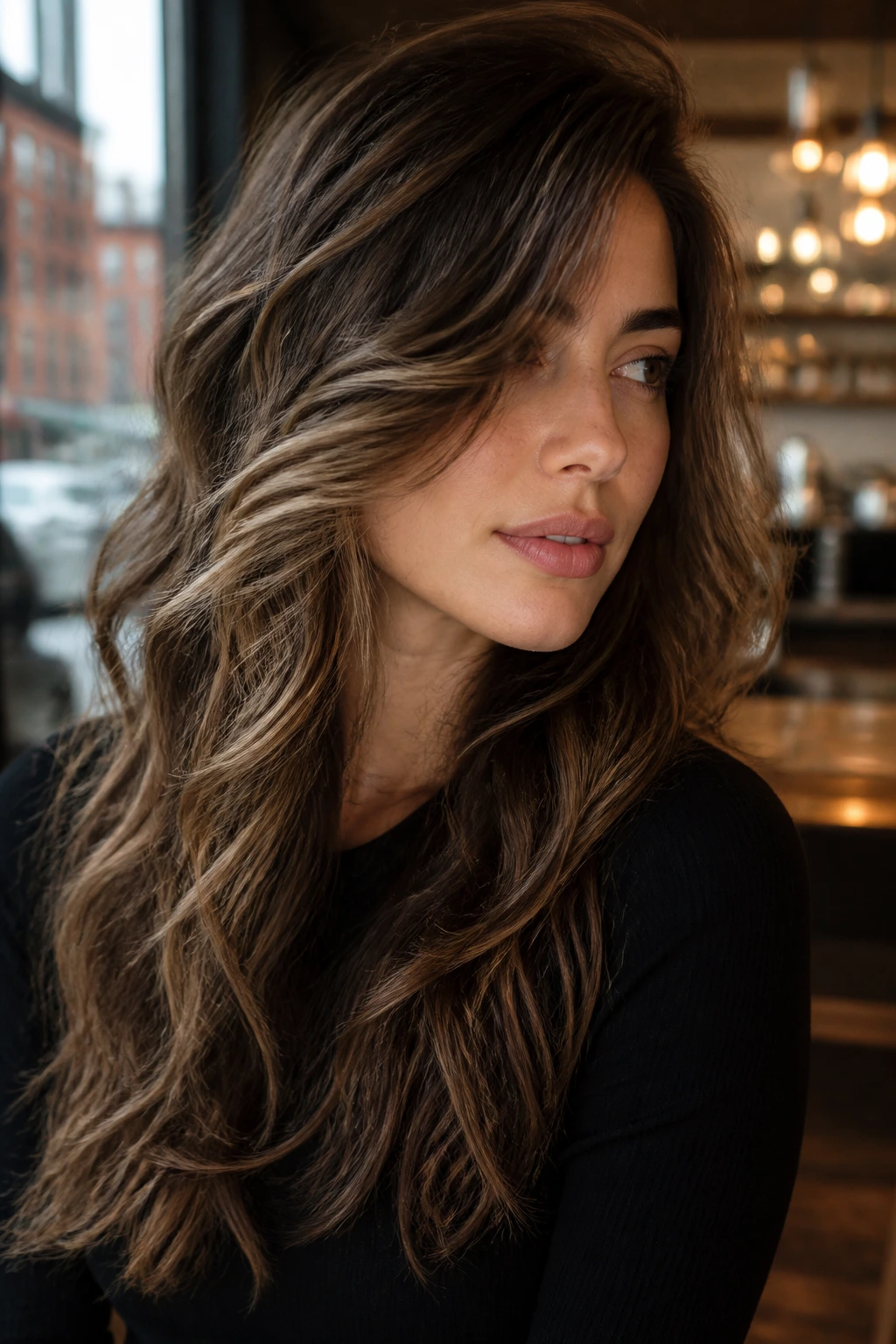
Razored layers can be brilliant on wavy hair, but only when the stylist knows how to handle a razor without shredding the ends. A razor creates a softer edge than scissors, which helps coarse or dense waves feel lighter and more piecey.
The effect is less “rounded salon blowout” and more “soft movement with a bit of edge.” I love it on hair that feels blunt after a fresh trim. The razor breaks up that heavy line in a way scissors can’t always do.
Here’s the catch: if your hair is very porous, dry, or frizz-prone, razor work can make the ends look fuzzy faster. That does not mean the cut is wrong for you. It means the technique has to stay gentle. Ask for light razoring only through the interior, then leave the perimeter cleaner so the shape holds.
9. Choppy Textured Layers

Choppy textured layers give wavy hair that easy, undone feel people often try to fake with styling cream. The haircut itself does most of the work. Pieces are cut with more separation, so the wave pattern shows up as a series of bends instead of one smooth sheet.
This is the cut I’d pick for someone who likes a beachy look and doesn’t mind a little edge. It reads casual, but not careless. The layers are visible enough to matter, yet not so short that the haircut turns shaggy in a bad way.
A few things make a difference here:
- The shortest layer should still be long enough to tuck behind the ear
- The perimeter should stay soft, not blunt and boxy
- A light mousse or wave cream helps the texture hold its shape
- Regular trims matter, because choppy ends can look ragged fast if they grow out too long
If your waves are loose, keep the choppiness modest. Too much texture can make the haircut look jumpy.
10. Bottleneck Bangs with Long Layers
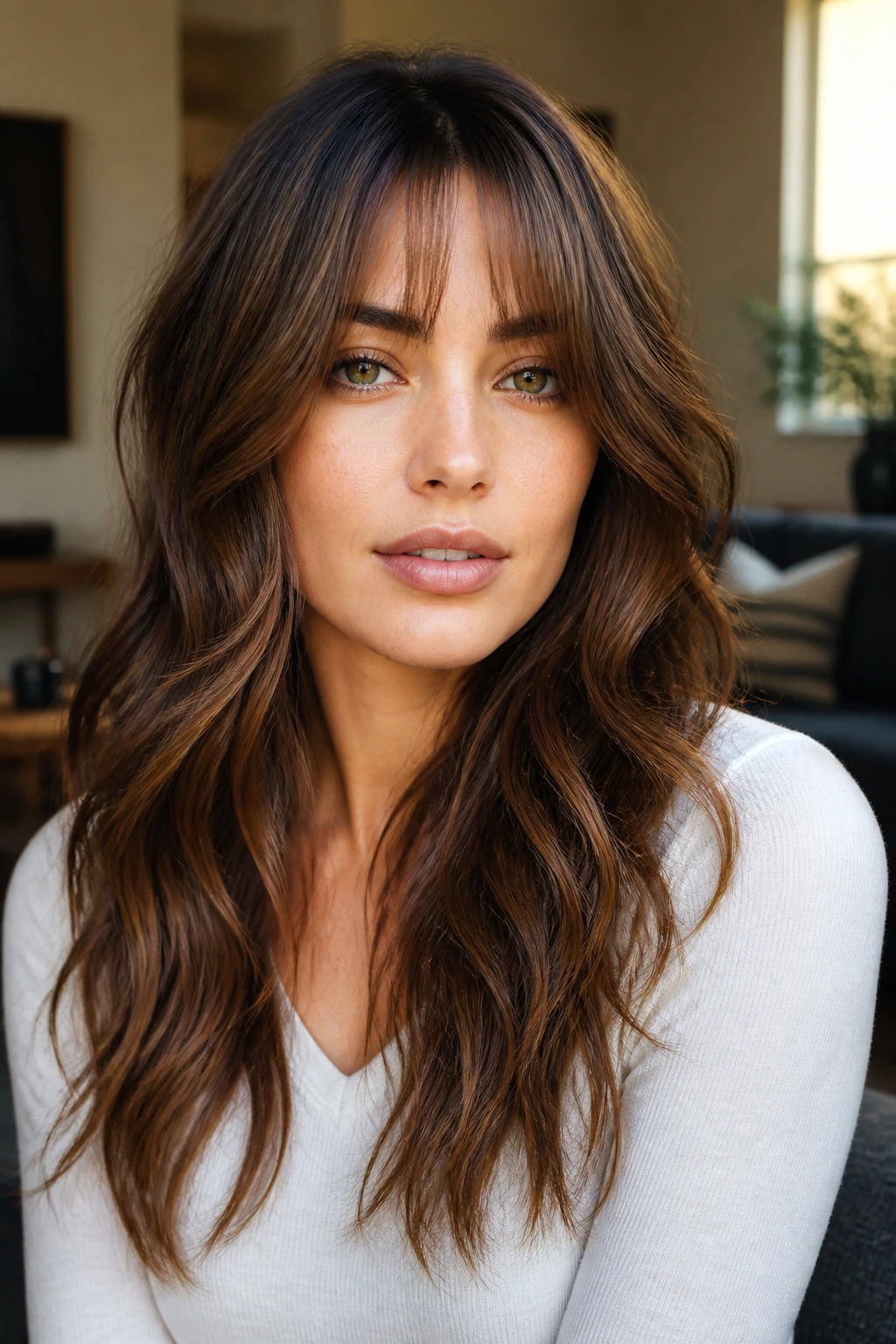
Want fringe without the blunt-line headache? Bottleneck bangs are a smart middle ground. They start shorter in the center, then open out toward the cheeks, which lets them blend into long layers more naturally than a straight bang ever could.
On wavy hair, this shape is useful because it moves. The bangs can split, sweep, or curl a bit without looking like a mistake. That flexibility matters. Straight-across fringe on waves often takes more styling than it gives back.
How They Blend Into the Layers
The side pieces should begin long enough to meet the top layer around the cheekbone or jaw. That keeps the front from looking cut into pieces. If the bangs are too short, they fight the rest of the haircut. If they’re too long, you lose the point of having bangs at all.
I like bottleneck bangs on people who want a change but are nervous about commitment. They grow out better than most fringe styles, and they flatter waves without asking for perfect blow-drying.
11. Center-Part Cascading Layers
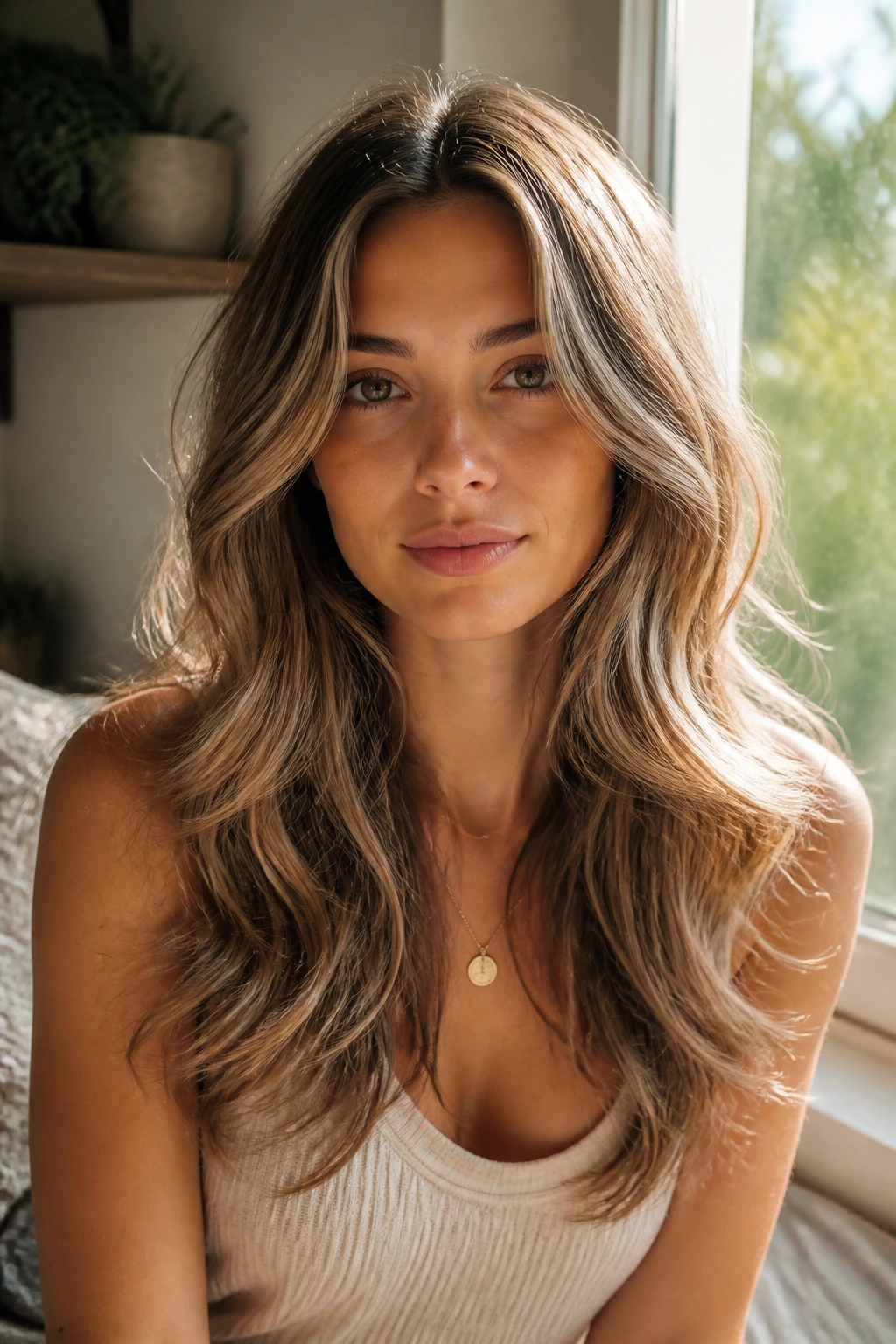
A center-part cascade gives long wavy hair a clean, balanced shape. The layers fall away from the middle and frame both sides of the face with the same rhythm, which looks calm and open rather than busy.
This style works because it respects symmetry. Wavy hair already brings plenty of texture, so the center part helps organize it. The layers can start around the cheekbones, then lengthen toward the chest, creating a flow that feels soft all the way down.
If your waves tend to fall forward on one side, this cut can still work. The key is keeping the shortest pieces long enough to stay connected to the rest of the haircut. You do not want a tiny shelf around the face. You want a gradual slide that moves with the hair.
There’s something especially nice about this shape when the hair is fully dry. It usually settles into a calm, curtain-like outline that does not need much fuss.
12. Deep Side-Part Layers
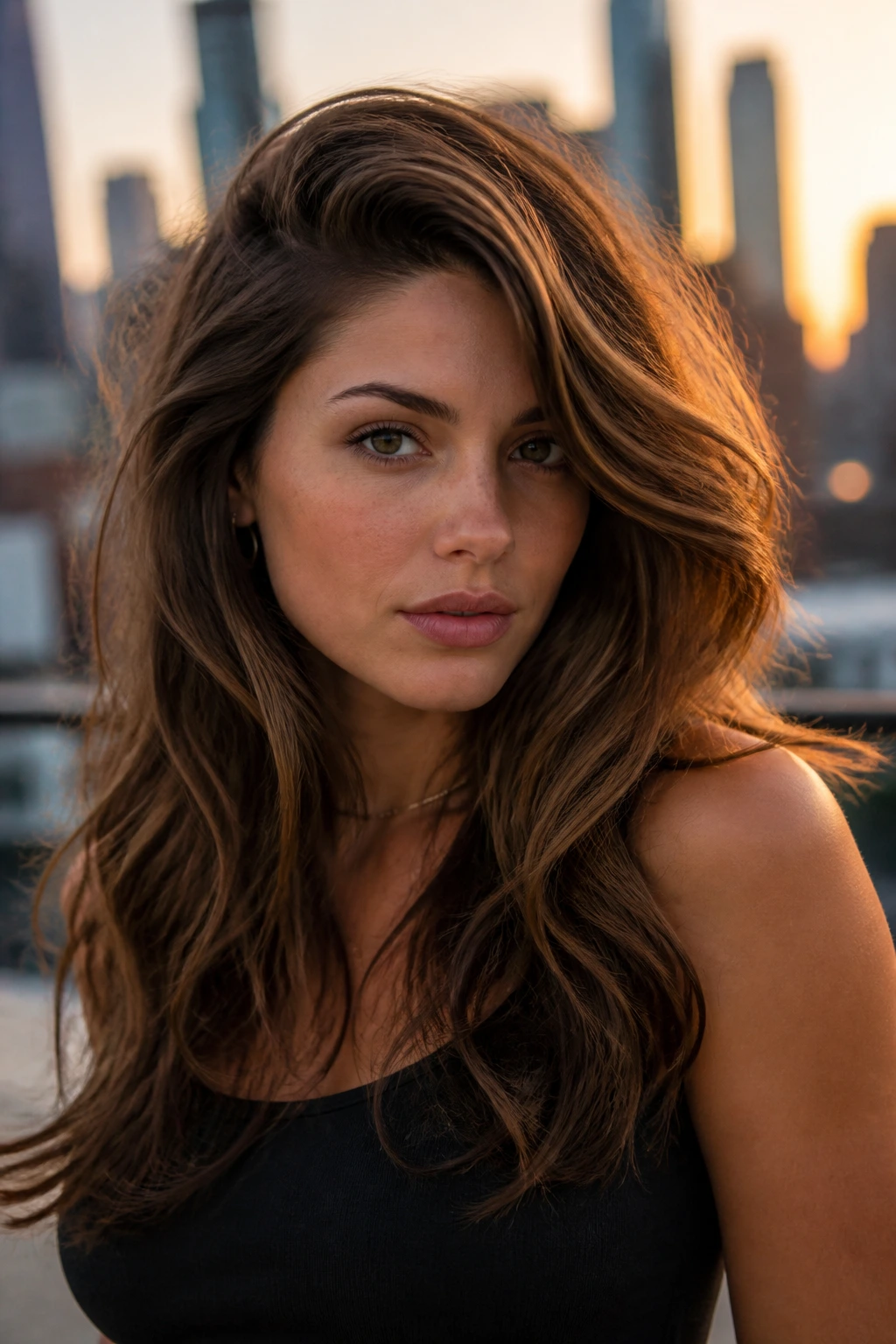
A deep side part changes the whole mood of a layered haircut. It gives the roots a lift on one side and lets the waves sweep across the forehead in a softer, more dramatic way than a center part.
That is useful for hair that goes flat at the crown. The off-center part adds height without teasing or heavy styling. It also gives layered ends a direction to fall, which can make the haircut feel more alive.
Side-part layers can be especially flattering if your waves have a looser bend and you want more volume near the top. The part creates a little asymmetry, and that asymmetry keeps the cut from looking too neat. If your face is round, the longer sweep can also lengthen the look a bit.
My advice: do not make the front shortest pieces too short just because the part is deep. Keep enough length to tuck one side behind the ear when you want a cleaner line.
13. Blunt Perimeter with Long Layers
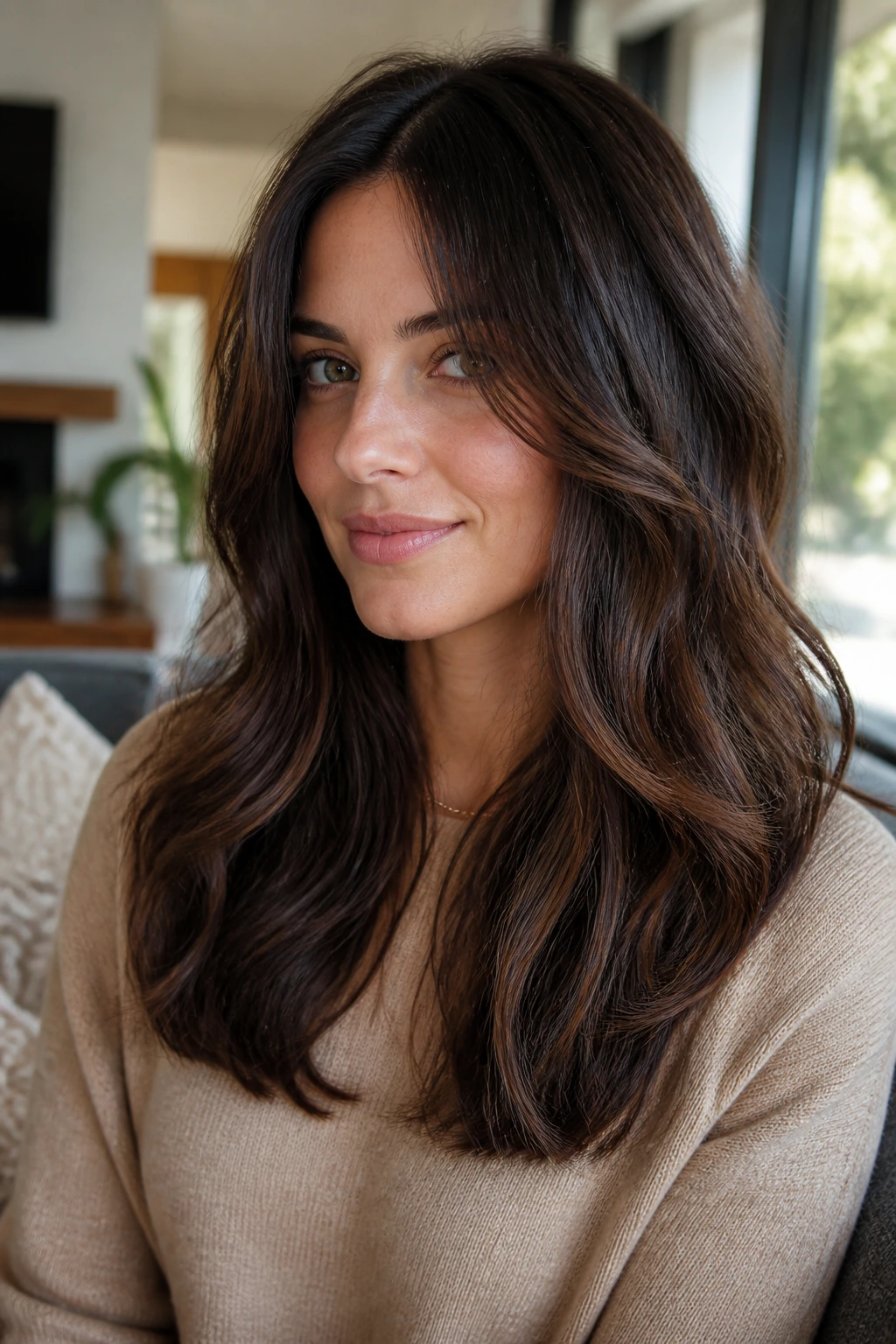
A blunt perimeter with long layers sounds like a contradiction, and that’s why it works so well. The bottom line stays full and solid, while the layers above it add movement where the eye needs it most.
This is a strong option for wavy hair that has a lot of body but still wants polish. The blunt edge keeps the cut from fanning out, especially if your hair is thick. The long layers soften everything else, so the style does not feel heavy or boxy.
Why It’s Useful
- The ends look denser
- Waves still have room to move
- The haircut grows out without turning shaggy fast
- It works well with straightening, diffusing, or air-drying
The contrast between a firm edge and soft interior layers gives the haircut structure. I reach for this shape when someone wants versatility and does not want the ends to look shredded after one too many layer requests.
14. Grown-Out Wolf Cut
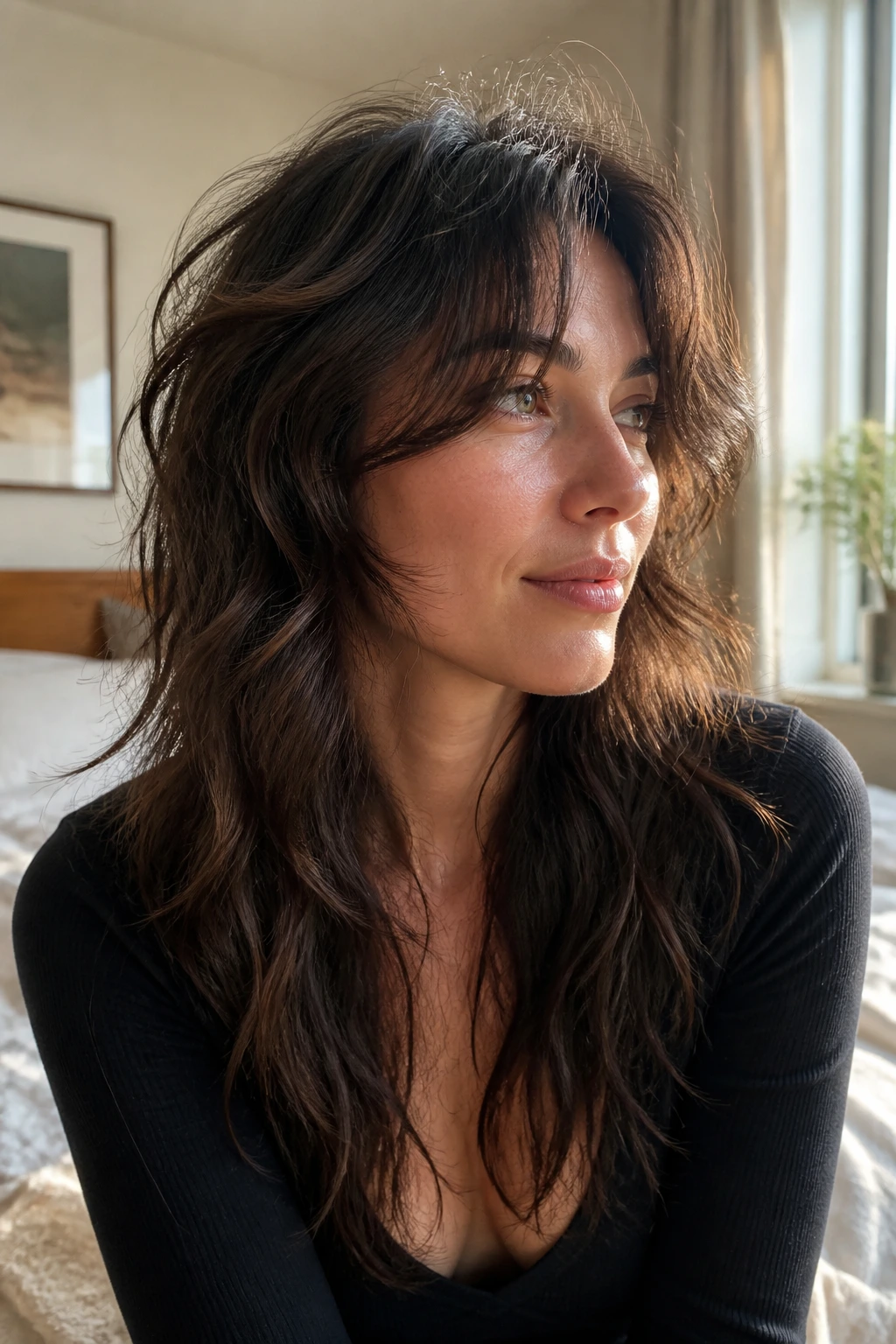
The grown-out wolf cut sits somewhere between shag and mullet, but the better versions are less extreme than people think. On long wavy hair, it keeps the top airy, leaves the mid-lengths loose, and lets the ends stay wild in a controlled way.
It suits waves that already have texture and a little bend. That natural movement stops the cut from feeling forced. If your hair is very fine, the wolf cut can still work, but the layers need to stay long enough so the bottom does not disappear.
What Makes It Different
The crown is lighter, the face frame is broken up, and the outline feels intentionally uneven. That’s the charm. You get shape without the stiffness of a neat layered cut.
I would not pick this if you want quiet hair. This is a personality cut. It looks best when you embrace the texture instead of trying to flatten it out every morning. If that sounds like a headache, move along. If it sounds fun, this one has real energy.
15. Rounded Layers for Thick Waves
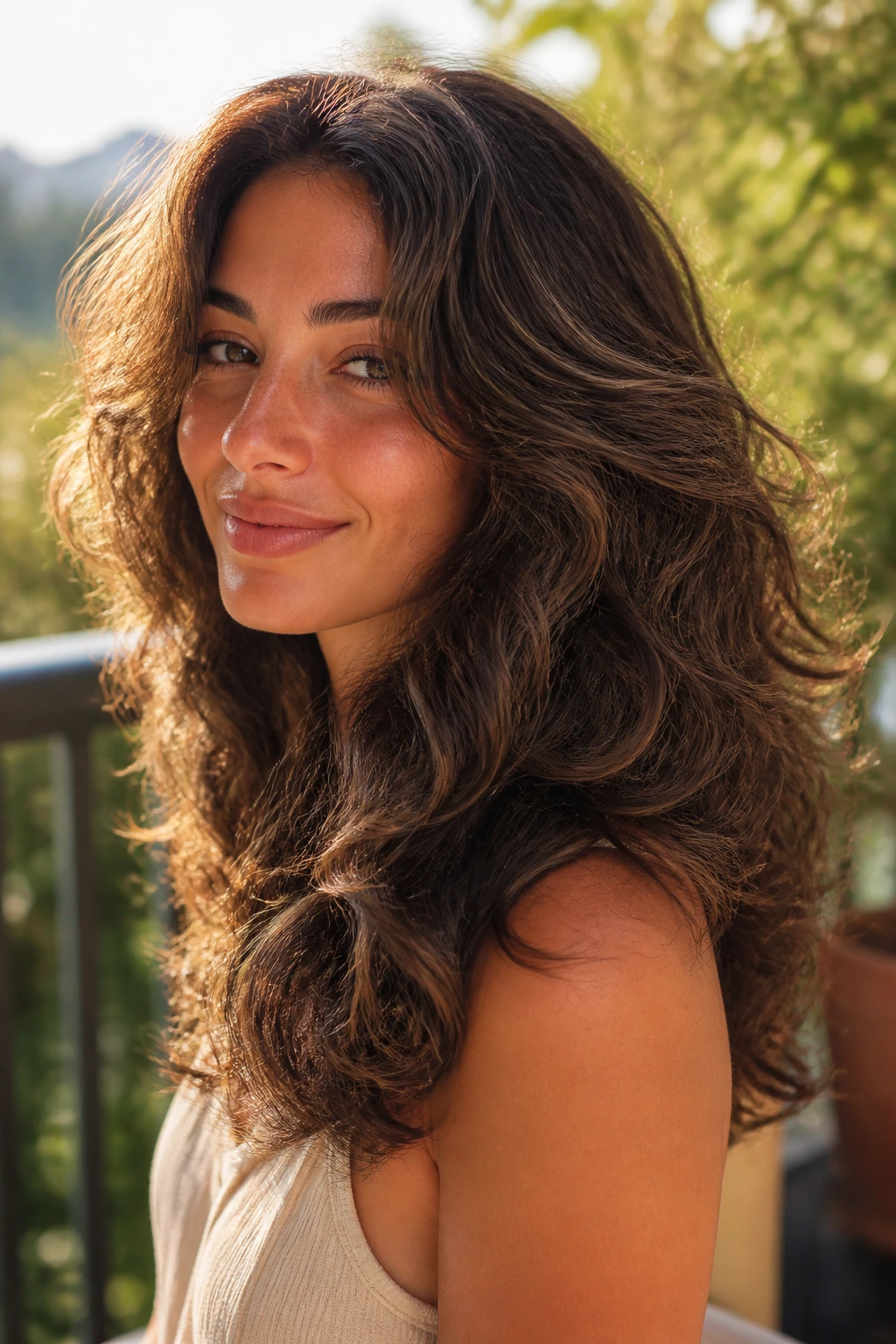
Rounded layers help thick wavy hair stop sitting out at the sides like a triangle. Instead of building width, the cut curves the shape in a softer arc from top to bottom.
That roundness matters. Thick waves carry weight, and if the layers only remove bulk at the crown, the bottom can still flare. A rounded shape spreads the weight more evenly, so the hair falls closer to the head and moves in a smoother line.
Ask for the lower half to be thinned with care, not the top half hacked up first. A lot of thick wavy hair needs weight removal near the sides and back, not just around the crown. When a cut is done well, the hair feels lighter without losing that rich, full look people often want to keep.
This is one of those cuts that seems simple until you see a bad version. Then the difference is obvious.
16. Airy Layers for Fine Wavy Hair
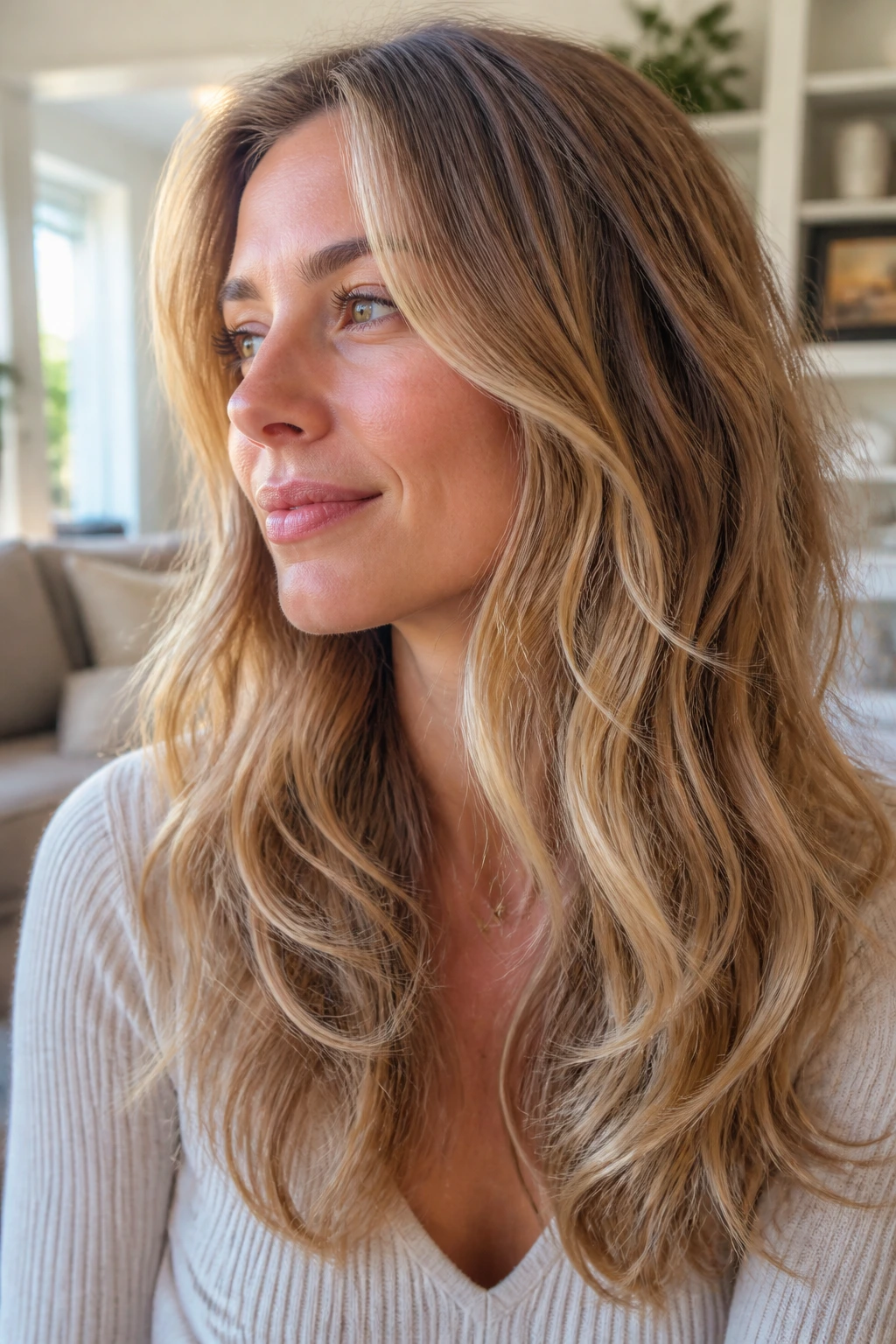
Fine wavy hair needs a gentler hand. Too many short layers can make the ends look thin, and once that happens, no styling cream in the world will fully fix it.
The better move is to keep the layers long and spaced apart. Let the shape come from a few well-placed pieces instead of a stack of tiny ones. That gives the waves room to lift without stripping away the density you need at the bottom.
Ask For This
- Long layers that begin below the chin
- Soft face-framing pieces rather than short crown layers
- Minimal thinning at the ends
- A blunt or slightly rounded perimeter to preserve fullness
This cut can look almost deceptively simple. That’s the point. Fine waves often look best when the haircut supports them instead of chasing volume that isn’t really there. Lightness is good. See-through ends are not.
17. Internal Layers for Extra Movement
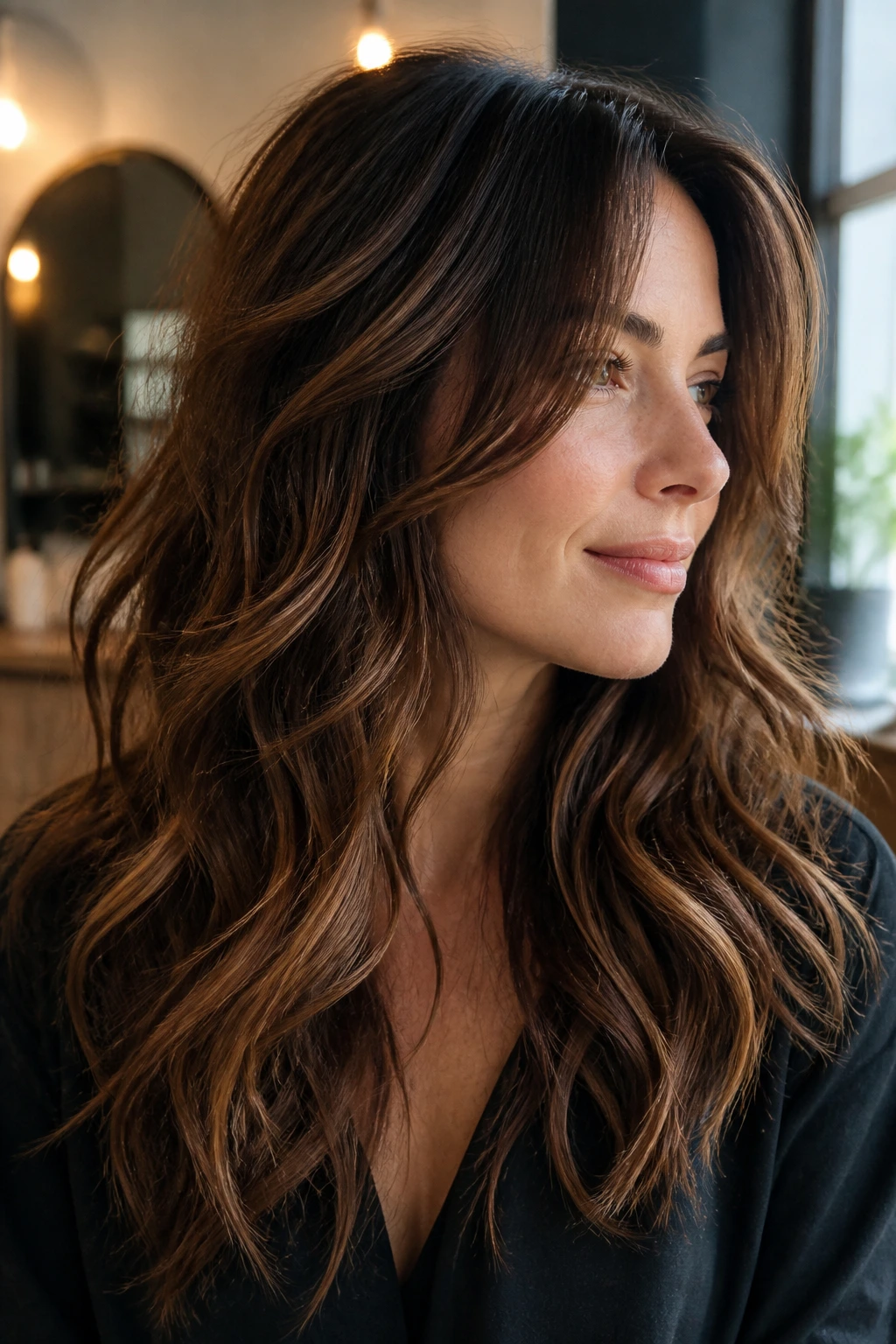
Internal layers are the quiet fix for hair that feels too heavy but still needs its length. They live inside the shape, so the outer line can stay long and smooth while the inside loses weight and gets more bounce.
That’s especially useful for long wavy hair that looks flat under its own mass. You keep the length people notice, but the hair stops hanging like one solid sheet. The waves separate a little more, and the whole head gains movement without screaming “layered haircut.”
I like this approach when someone wants to change the feel of the hair more than the look. That sounds subtle, because it is. But subtle changes matter. Hair that moves better is easier to wear, easier to air-dry, and easier to keep from feeling stale between trims.
If a stylist mentions internal debulking, that is a good sign they are thinking about the hair’s weight, not only its outline.
18. Length-Retaining Layers

Not every layered cut needs to look dramatic. Length-retaining layers are for people who want the benefits of layering without seeing much of the haircut in the mirror.
The longest layers stay near the chest or lower, and the changes happen slowly as the hair drops down. That keeps the outline long and smooth, which works well if your waves are loose and you want them to read as soft rather than choppy.
This style is a nice compromise for someone growing out a blunt cut. It helps the hair settle better, especially when the ends have become heavy and the roots start to lie flat. You get enough movement to stop the hair from sitting like a curtain, but not so much that the shape looks cut up.
It’s also easier to keep tied back. That may sound small, but it matters. A lot.
19. Cheekbone-Framing Layers
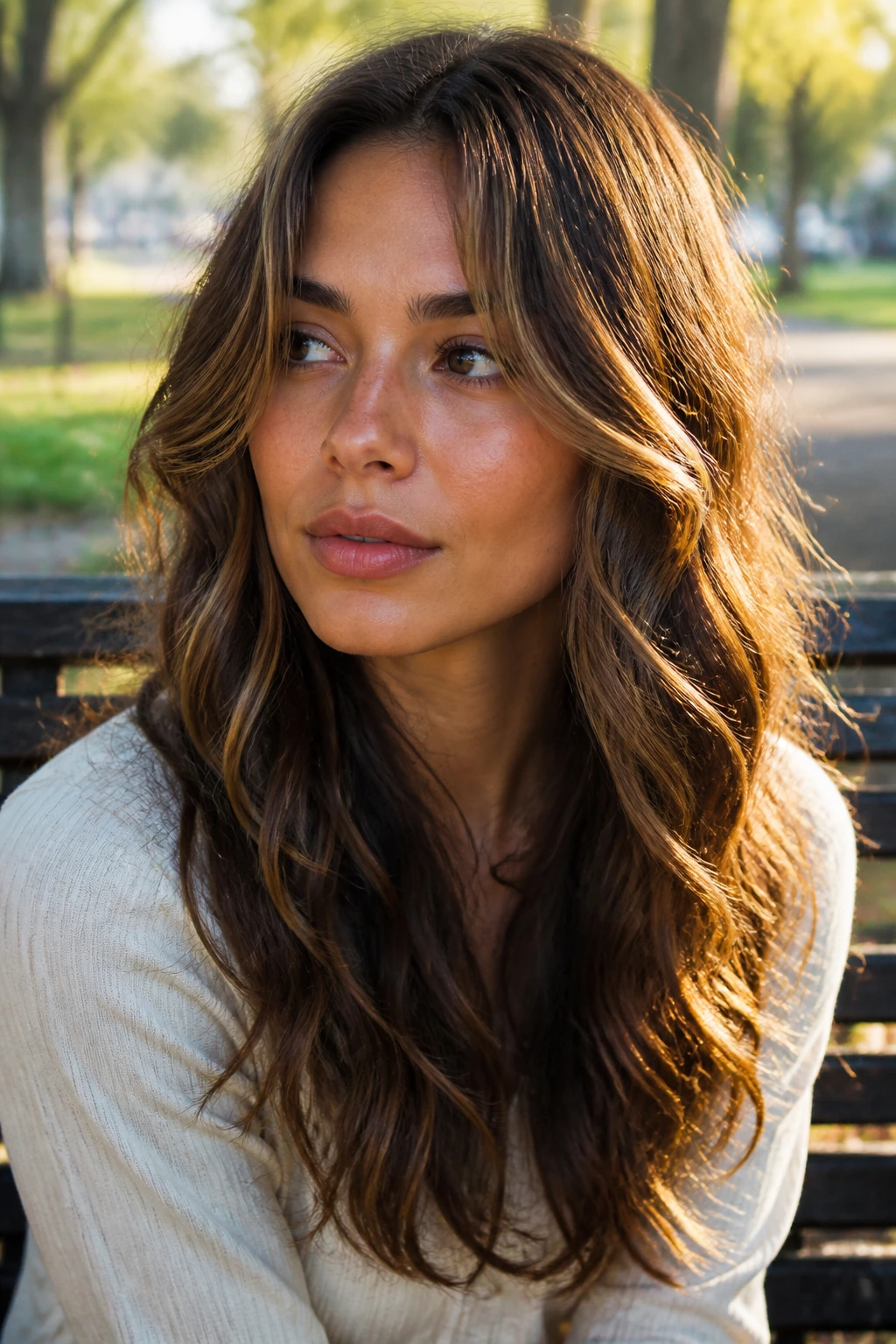
Cheekbone-framing layers can make long wavy hair look more lifted around the face without cutting the entire front short. The pieces land where the face naturally curves, which gives the style a clean, flattering outline.
Why This Placement Matters
When the shortest pieces hit at the cheekbone, they catch the wave pattern in a spot that feels lively. Too high, and the hair can puff. Too low, and the framing disappears into the rest of the cut. Cheekbone length tends to hit the sweet spot.
These layers are especially useful if you like wearing your hair loose most of the time. They create shape around the face even when the rest of the hair is simple. If your waves are fluffy, keep the pieces a little longer so they bend instead of floating outward.
I’d call this a face-shaping haircut more than a texture haircut. The texture is already there. The placement does the work.
20. Collarbone-Skimming Layers
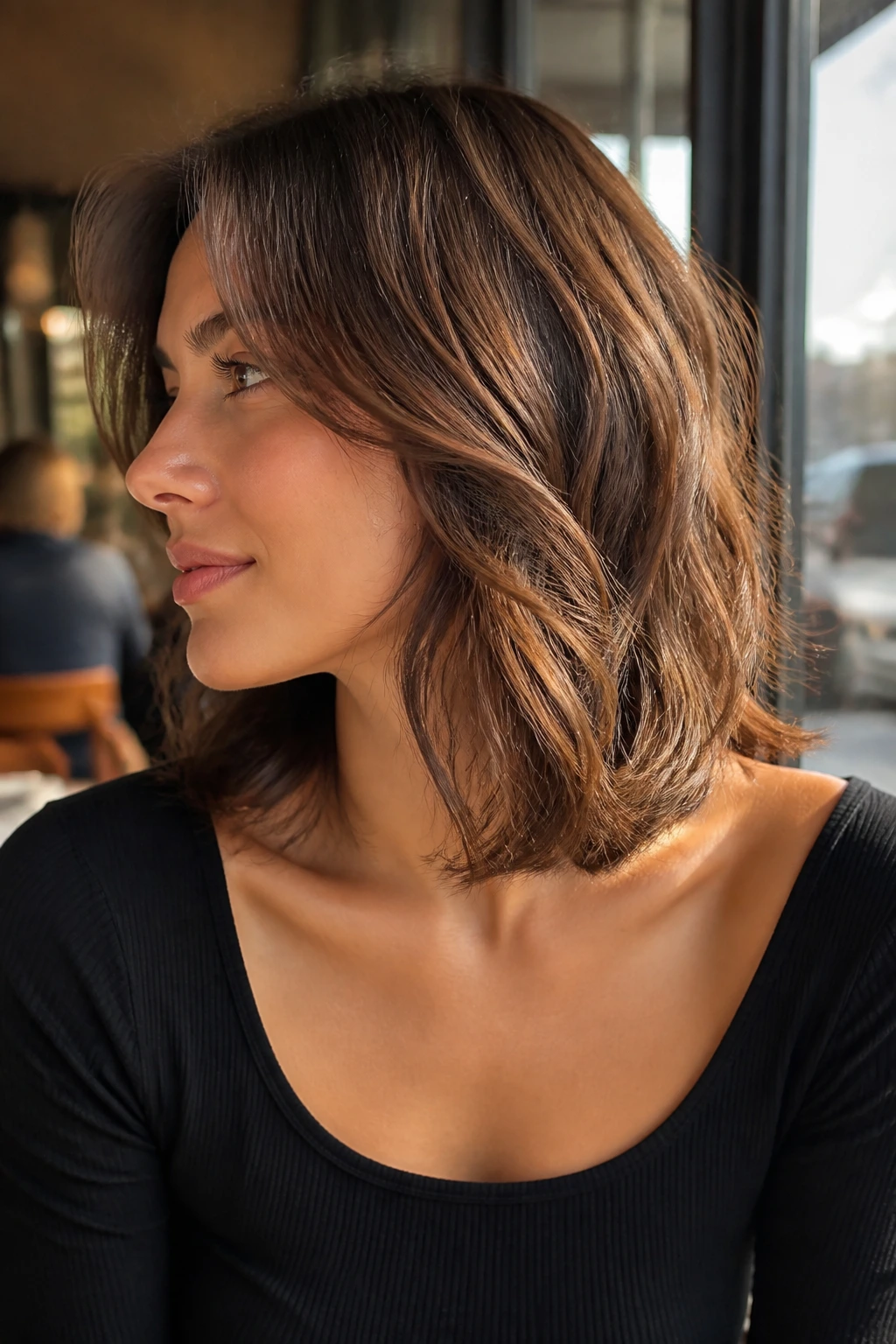
A collarbone-skimming cut has a nice physical feel to it. The hair moves, then stops right where the collarbone gives it a little bounce. On wavy hair, that can be gorgeous.
The layers usually begin just above that point and travel downward, which keeps the shape long but not sleepy. The collarbone becomes a visual anchor. It’s a small detail, yet it makes the whole haircut feel more intentional.
This is a solid choice if you like to wear necklaces, turtlenecks, or open necklines. The haircut sits in a very flattering spot and tends to move well in both loose waves and brushed-out bends.
- Great for medium-density wavy hair
- Keeps length in the back
- Works with low-maintenance styling
- Needs a trim before the ends start fraying
It’s not loud. That is part of the appeal.
21. Polished Blowout Layers
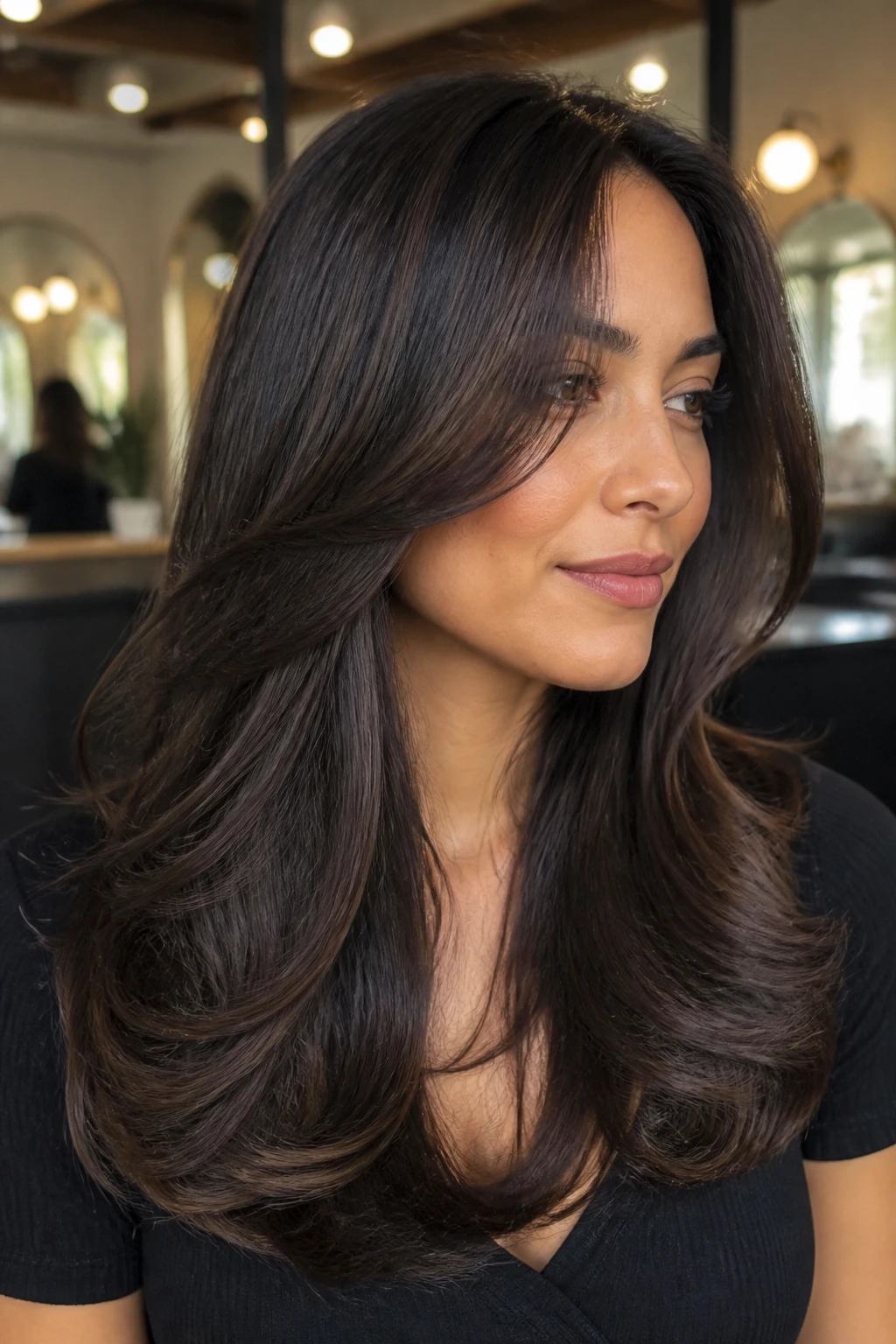
Polished blowout layers are for wavy hair that sometimes gets styled smooth, sometimes not. The cut is built to look good with a round brush, a large barrel iron, or a quick blowout using a paddle brush and tension.
The layers are usually long and soft, with enough movement to curve around the face and flip away from the shoulders. That gives the hair a dressed-up shape without making it stiff. When the hair is worn wavy instead of blown out, the cut still holds together because the layers are not too short.
I like this choice for people who want one haircut that can move between casual and neat. It is a practical cut. Not flashy. But practical haircuts are often the ones people keep coming back to because they simply behave.
A little shine serum on the ends can make the layers look finished without flattening the wave pattern.
22. Soft Minimal Layers
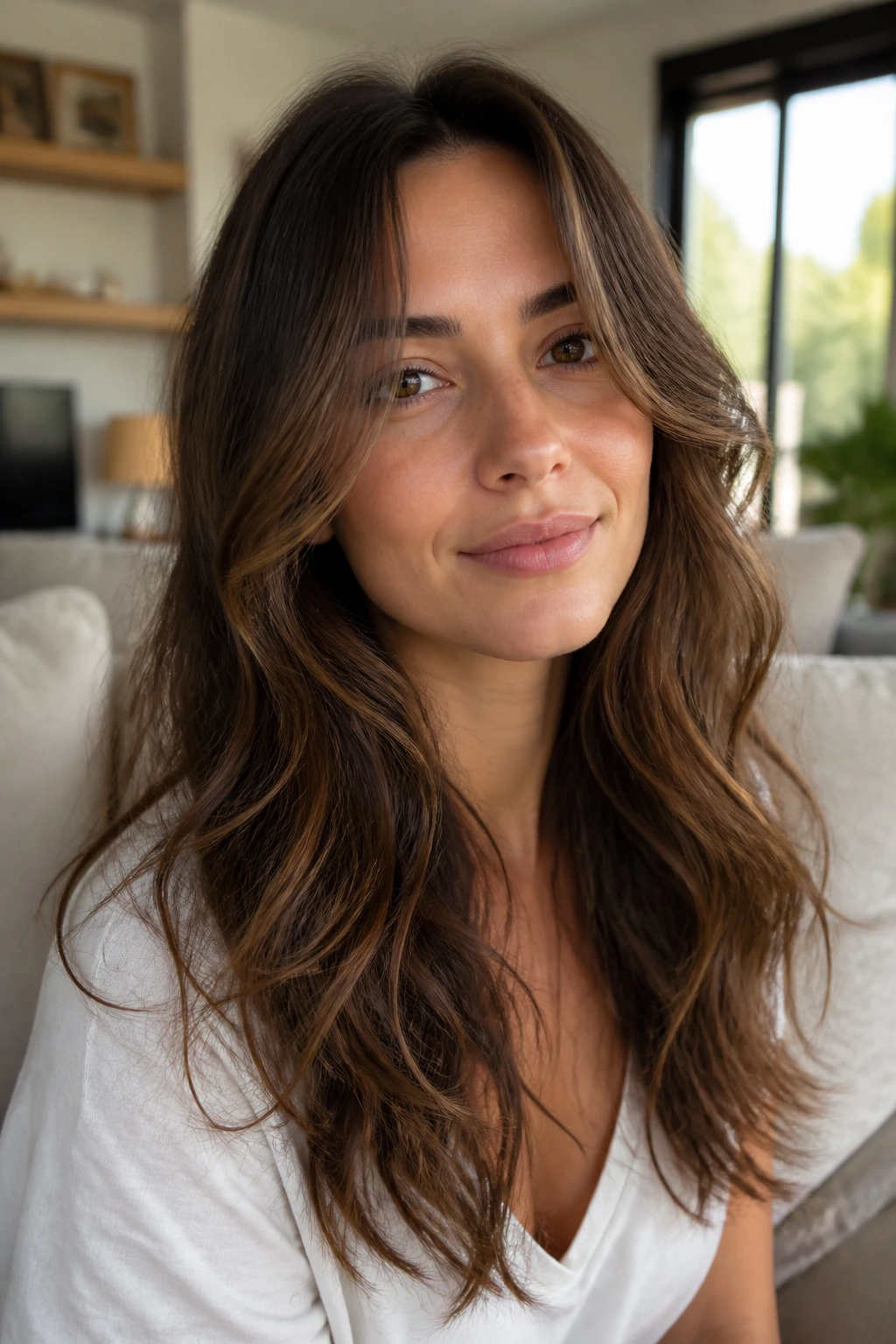
Soft minimal layers are what you ask for when you want the lightest possible change. The haircut keeps most of its length, then adds just enough shaping to stop the hair from feeling heavy around the bottom.
What to Ask For at the Chair
- One or two long layers through the front
- A gentle connection into the back
- No aggressive thinning
- Ends left full enough to hold the wave
This style is helpful if you love your length and only want the haircut to move a little better. It’s also a smart first step if you have never layered your hair before. The result is subtle, but not invisible. You’ll notice that the waves fall with a little more flow and the ends no longer look like one solid block.
Sometimes the quiet option is the one that wears best day to day. Especially with wavy hair, which tends to look better when the cut supports the texture instead of trying to rearrange it.
23. Dramatic Curve Layers
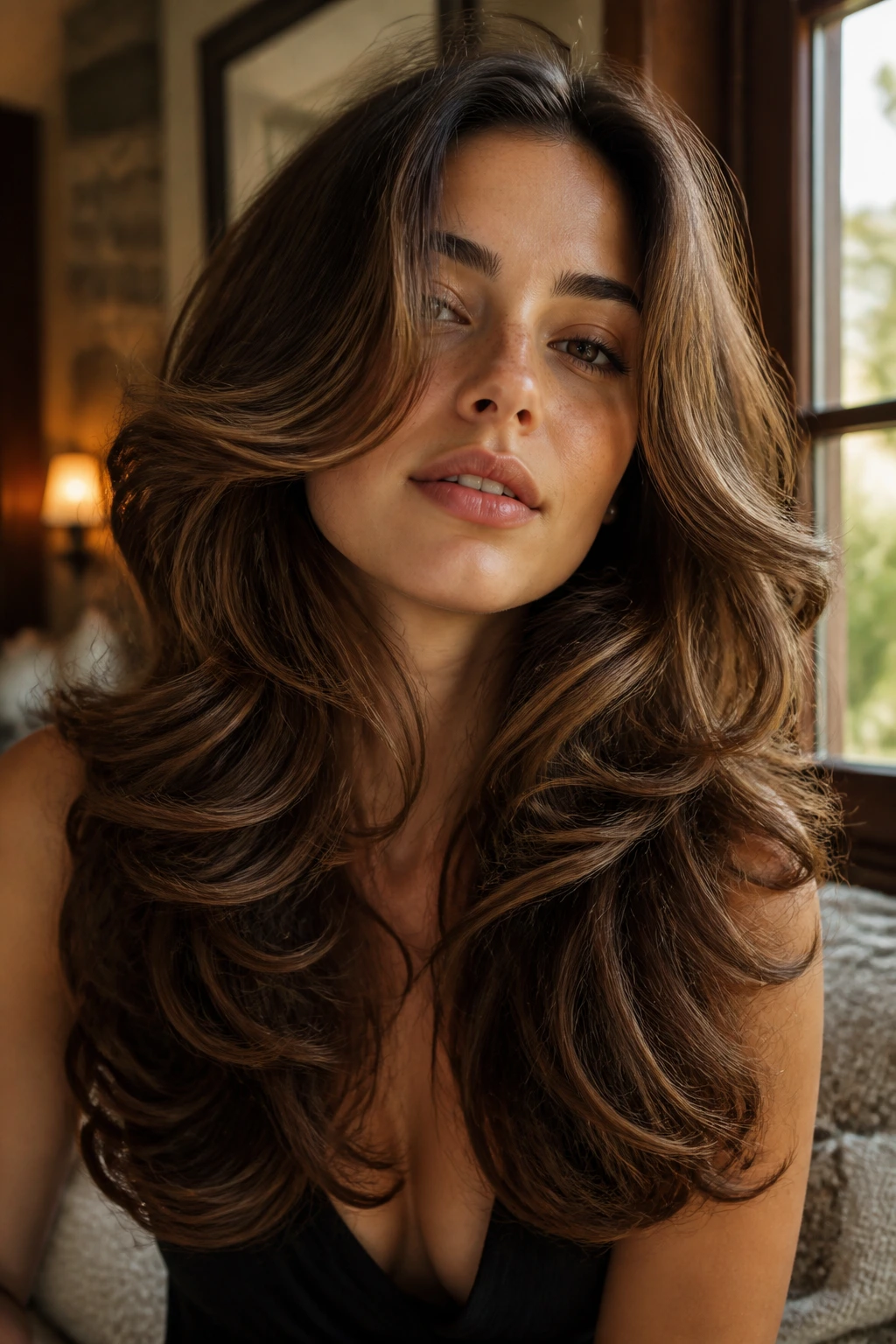
Dramatic curve layers give long wavy hair a sweeping outline that feels deliberate from top to bottom. The layers arc around the head instead of dropping in straight steps, which creates a soft curve through the body of the hair.
This shape is useful when you want movement and a bit of drama without going into shag territory. The back can stay long, while the side pieces angle in a way that makes the whole cut feel sculpted. It works especially well on denser waves that need direction.
The best version does not look sharp. It looks guided. That is a small difference, but I care about it. Sharp curves can feel dated fast. Soft curves feel like the hair naturally landed there.
If your hair is very straight at the root and wavy only through the mid-lengths, ask the stylist to keep the curve lower. That keeps the top from puffing awkwardly.
24. Wet-to-Dry Refined Layers
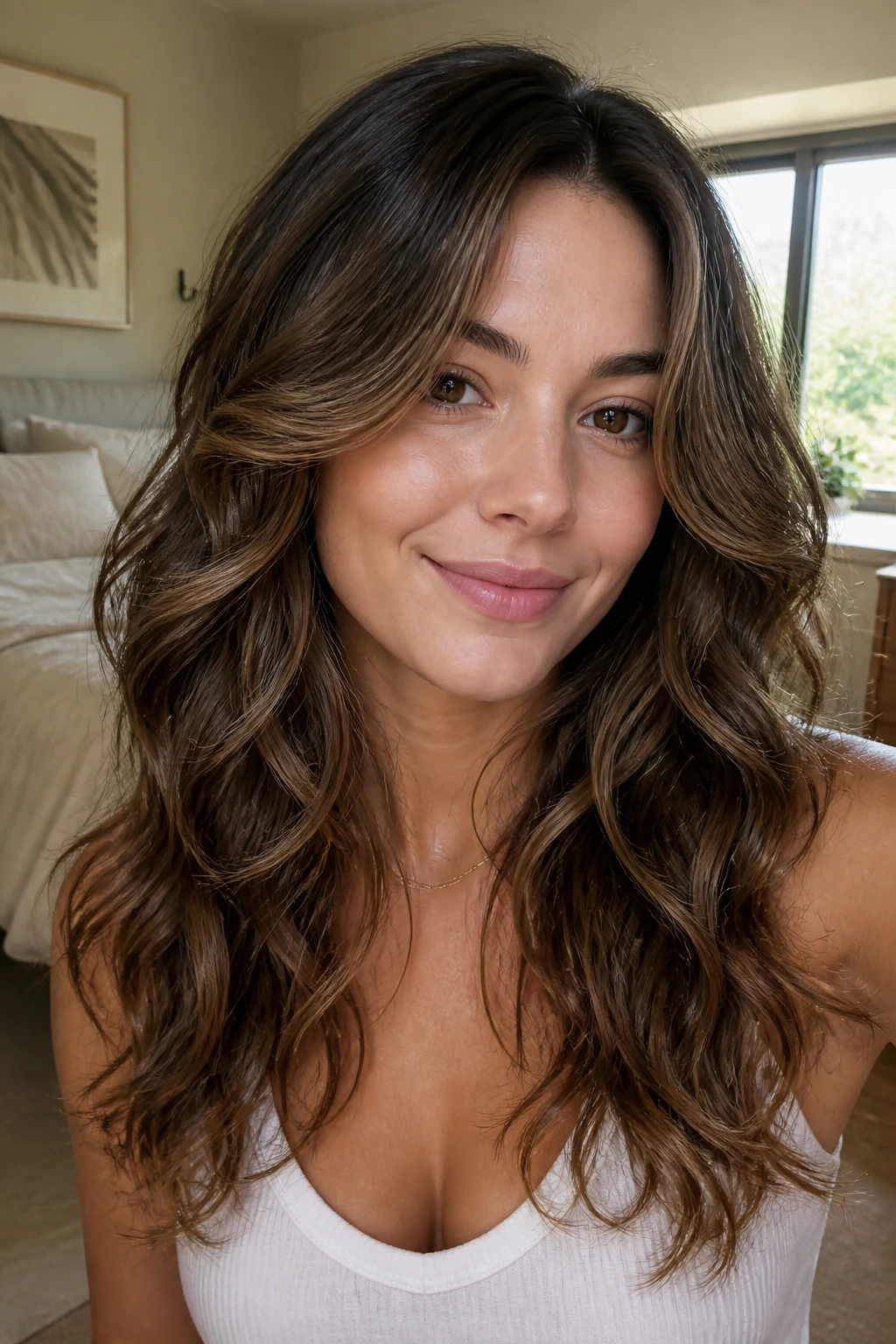
Why do some layered cuts fall apart once they dry? Because wavy hair changes shape a lot as it loses water, and a cut that looked balanced wet can land too short or too high after the shrinkage kicks in.
That’s why a wet-to-dry refinement pass matters. The hair is shaped while damp, then checked again once it dries enough to show its real pattern. The stylist can clean up any areas that jump too far or sit too heavy. On wavy hair, that extra pass can be the difference between “nice enough” and “why does this look lopsided?”
This approach works best when the hair has a strong wave pattern or a lot of shrinkage from root to end. It also helps if you’ve had bad layering before. A dry check catches problems the mirror misses while the hair is wet.
I would ask for this gently, not dramatically. Just say you want the shape refined once the hair shows its true movement.
25. Air-Dry Friendly Layers
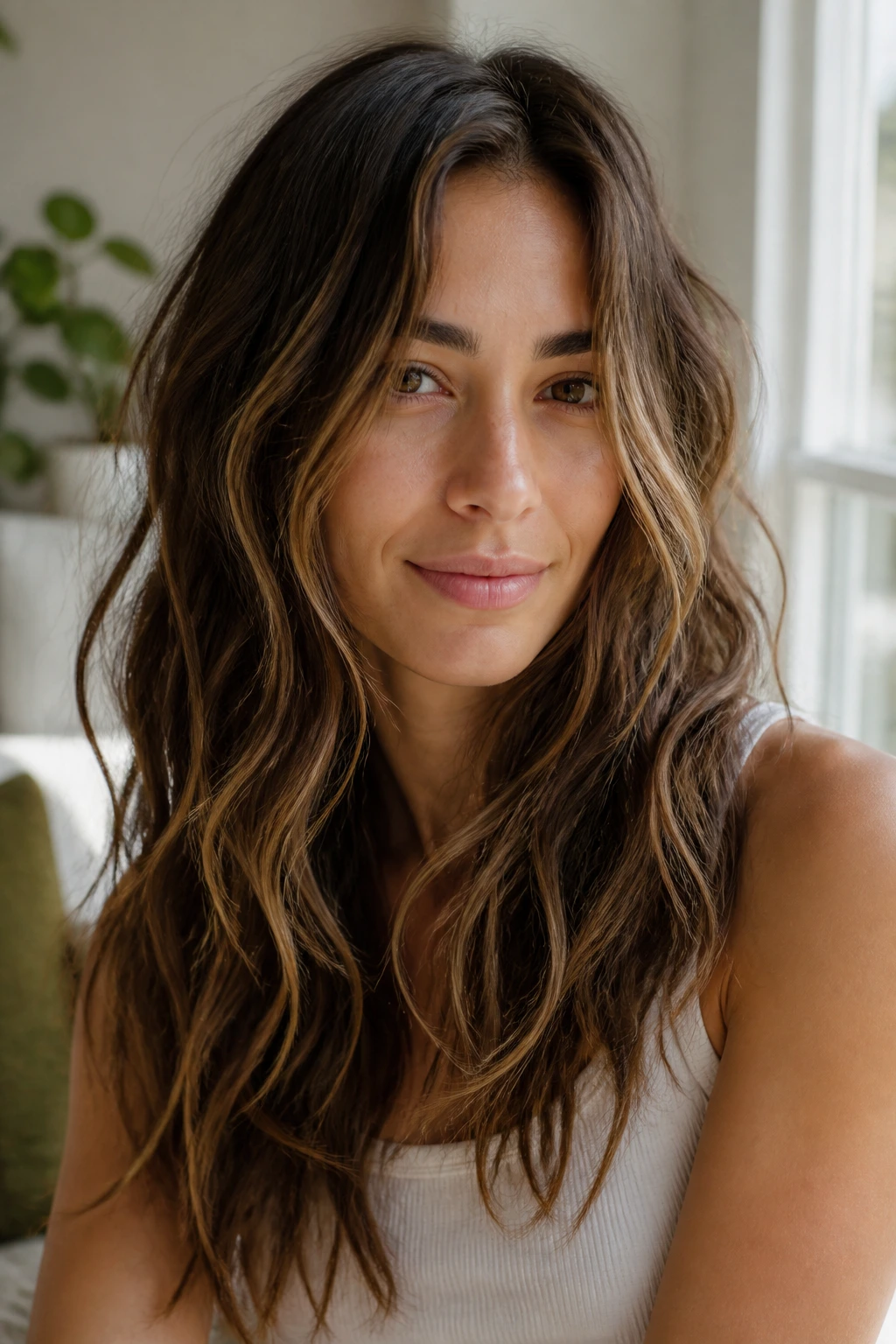
Air-dry friendly layers are the ones most people end up loving in real life. They are cut to work with a scrunched towel, a little leave-in, and time. No fancy blow-dry. No race against a round brush.
The layers usually stay long enough to let waves clump in a clean way. The perimeter remains full, which keeps the style from looking stringy once it dries. That matters more than people think. A haircut that only looks good under perfect styling is a nuisance.
Signs You’re Looking at the Right Cut
- The shortest pieces still connect to the rest of the shape
- The ends look full, not shredded
- The wave pattern is visible from the first air-dry
- The cut does not need daily rescue work
If you want long layered haircuts for wavy hair that fit real routines, this is the direction I’d lean. Not the most dramatic. Not the most editorial. Just one that behaves after a wash, a towel squeeze, and a normal day.
A good wavy cut should make your hair easier to live with, not harder.
Long layers only work when they respect the way wavy hair moves. Too high, and the cut balloons. Too blunt, and it sits there like a weight. The sweet spot is in the middle: enough shape to guide the wave pattern, enough length to keep the ends full.
If you’re taking this to a stylist, bring one simple idea with you: ask for movement that starts where your hair actually bends. That one detail can change everything.
