



Straight layered haircuts for fine hair can go one of two ways: the ends stay crisp and the whole head looks fuller, or the haircut starts eating itself and every strand seems to vanish by lunchtime. The difference is rarely the trendiest shape on a mood board. It’s usually the balance between a solid perimeter and layers that are placed with restraint.
Fine hair shows everything. A blunt line can make it look dense; a badly placed short layer can make it look thin enough to see through. I keep coming back to that because people often ask for “more layers” when what they really want is more body, and those are not the same thing.
A good cut gives straight hair enough structure to sit cleanly after a quick blow-dry, and it does not depend on forty minutes of round-brush gymnastics. The best versions use longer layers, hidden interior movement, or face-framing pieces that start low enough to keep the bottom looking full. Small changes. Big payoff.
1. Collarbone Lob with Long, Invisible Layers
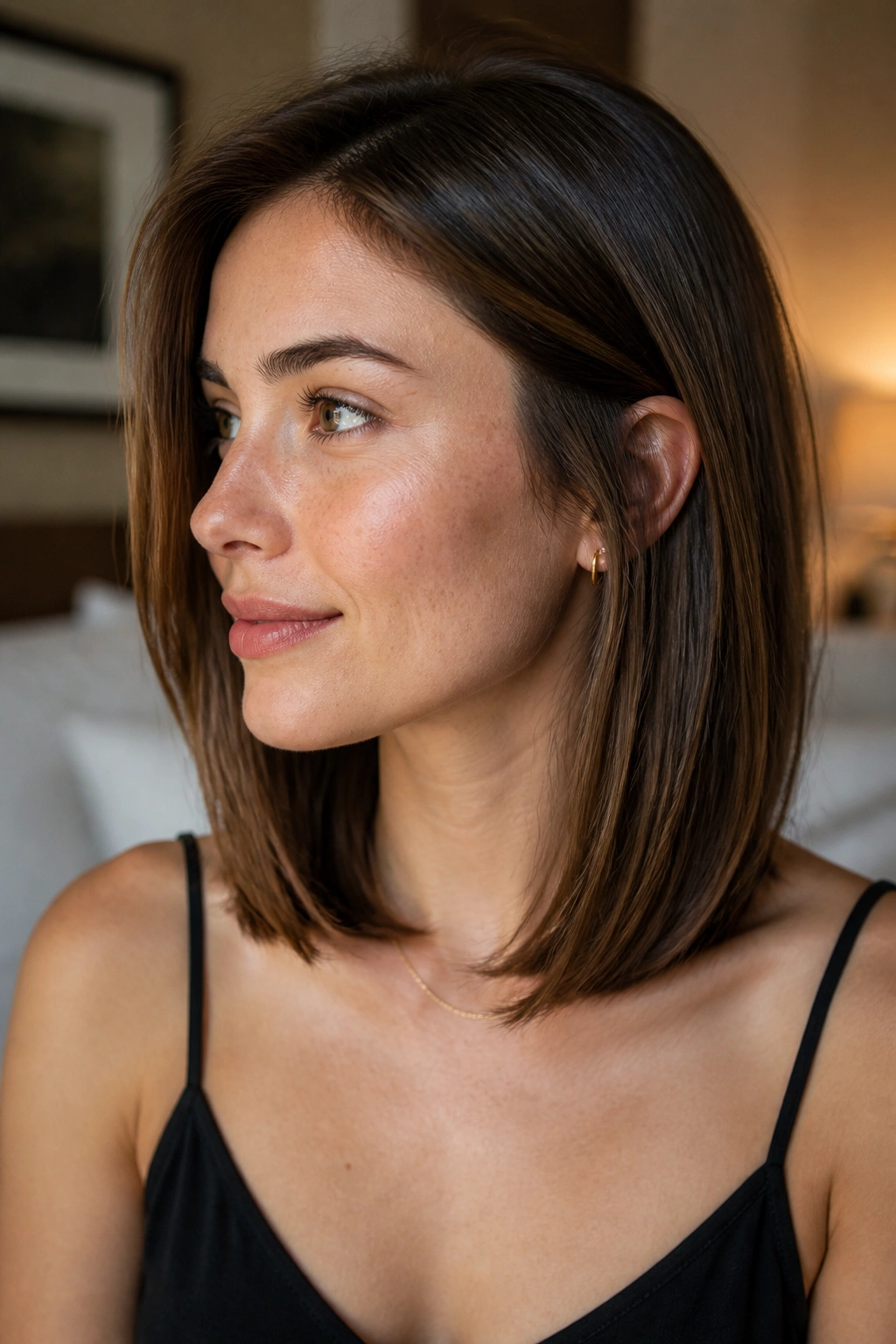
This is the cut I reach for first when someone wants movement but refuses to let the ends look wispy. The collarbone length gives fine hair enough weight to sit neatly, and the long layers live mostly underneath the surface, so the outline still reads as full.
Why It Works on Fine Hair
The collarbone is a sweet spot. Hair at that length can swing a little, tuck behind the ear, or sit straight and clean without collapsing into the scalp. Ask for the shortest layer to land a couple of inches below the chin, not up around the cheeks. That keeps the top from getting too airy.
- The perimeter stays strong, which helps straight hair look denser.
- The layers add motion without breaking the shape into pieces.
- A quick blow-dry with a paddle brush is usually enough.
- It grows out well, so you do not get a weird in-between stage.
Pro tip: ask for point-cutting only on the last half-inch of the ends. That softens the line without turning the hem into frizz.
2. Blunt Lob with Interior Layers
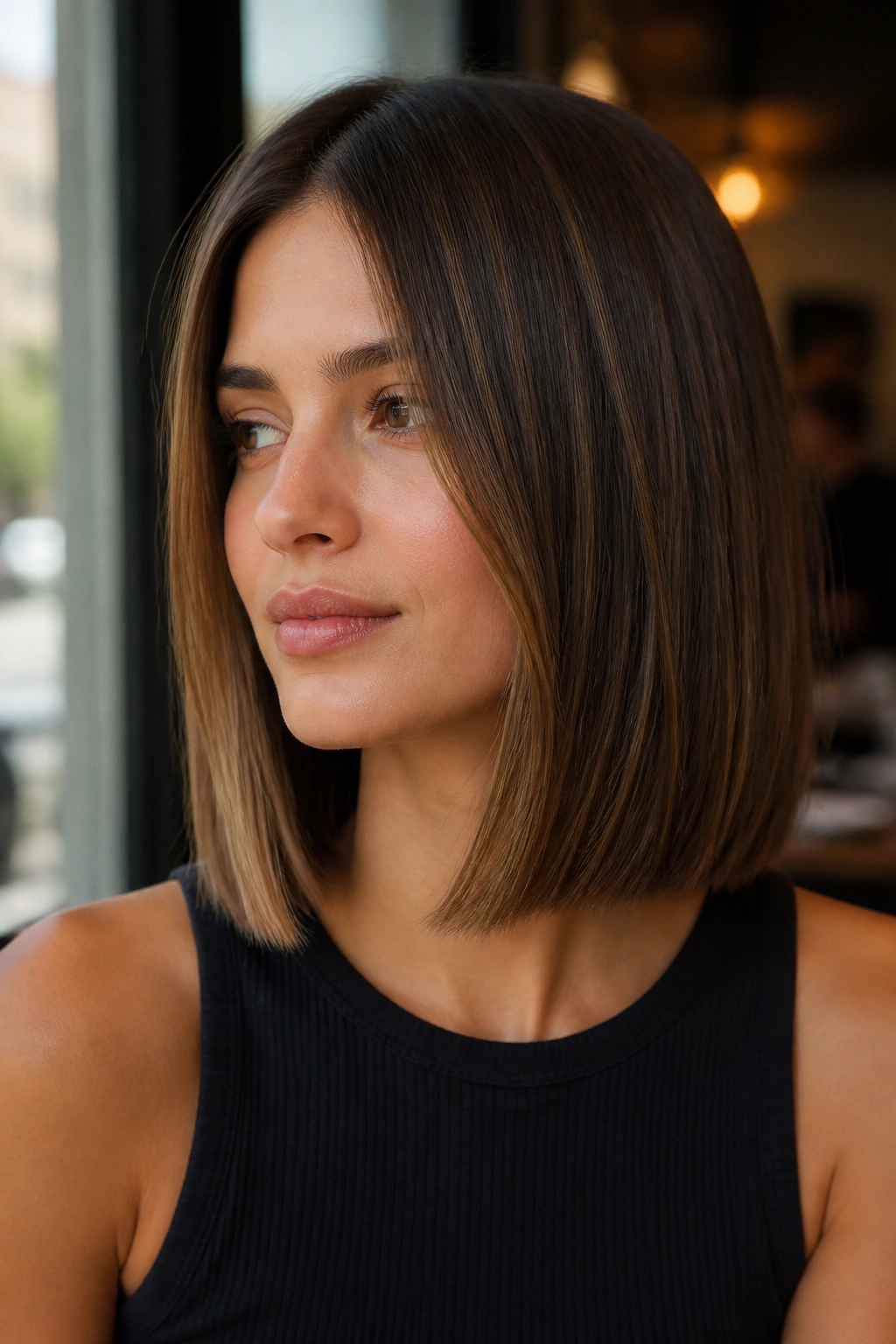
A blunt lob is the safest-looking haircut in the bunch, and that’s not a complaint. Fine hair often looks best when the outer line is clean, almost firm, while a few hidden layers underneath keep it from feeling flat and helmet-like.
What makes this version smart is the restraint. The interior layers should never jump out at you. They sit under the top section and create a little lift when the hair moves, but the eye still reads one strong shape. That matters with straight hair, because straight strands expose every shortcut.
Ask your stylist to leave the bottom edge solid and remove weight only from the interior. If the hair is pencil-fine, say so out loud. Too much texturizing on the surface will make the ends look tired fast. A root spray at the crown and a quick bend at the ends is enough styling for this cut.
3. Center-Parted Cut with Face-Framing Pieces
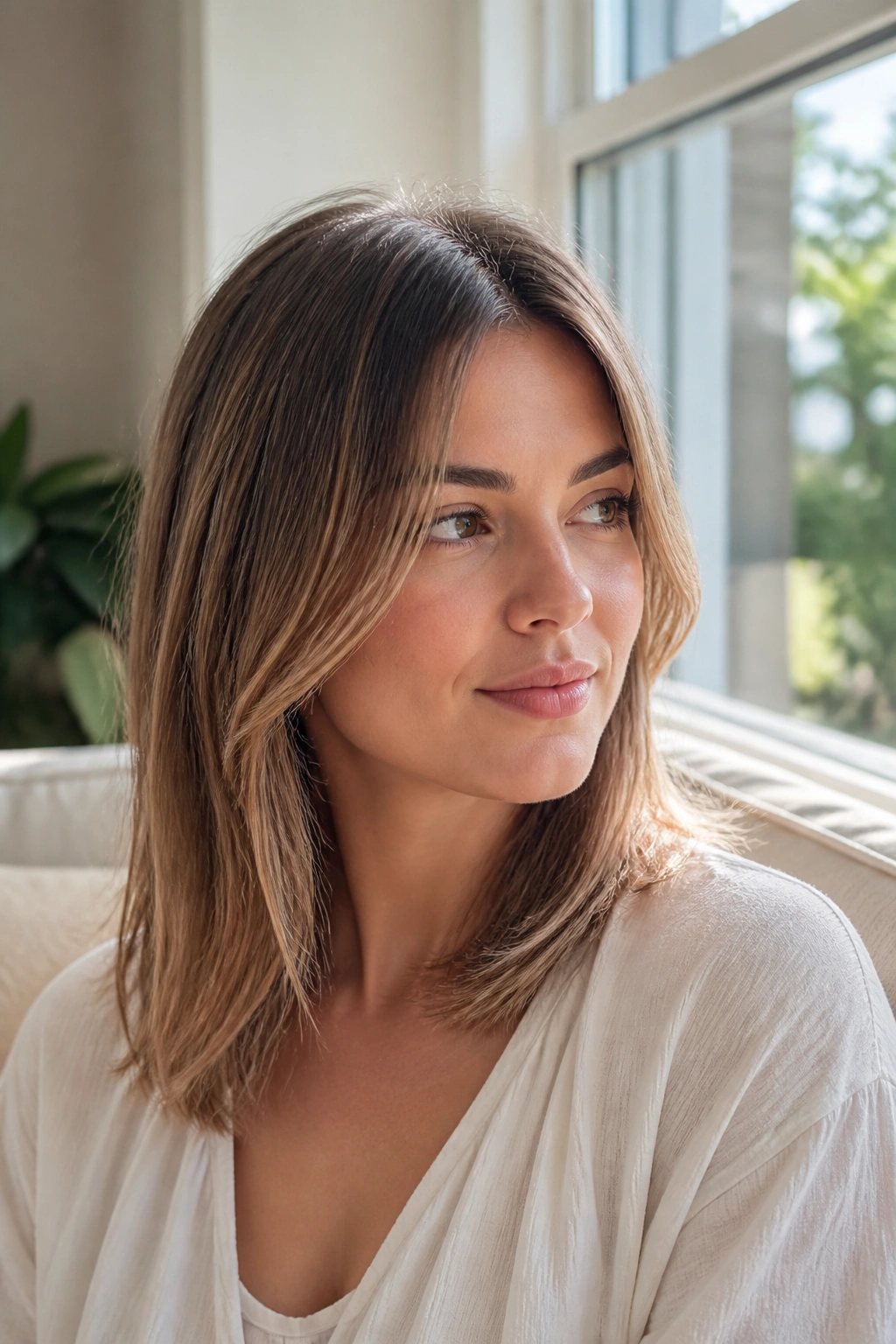
Can a center part work on fine hair? Yes—if the layers are light and the front pieces are placed with intent. The trick is to keep the face frame long enough to drape, not so short that it sticks out like a separate haircut.
The best version starts the first piece around the cheekbone or just below it, then lets the rest of the layers fall softly into the collarbone area. Straight fine hair likes this because the front gets shape while the body of the cut stays calm. Too much slicing near the temples will make the front look hollow.
How to Style It
Blow-dry the front pieces away from the face with a small round brush, about 1¼ inches across. That gives the cut a little lift without a poofy finish. A center part looks sharp here, but an off-center part works too if your hair tends to split flat at the crown.
4. Feathered Shoulder Cut with a Side Part
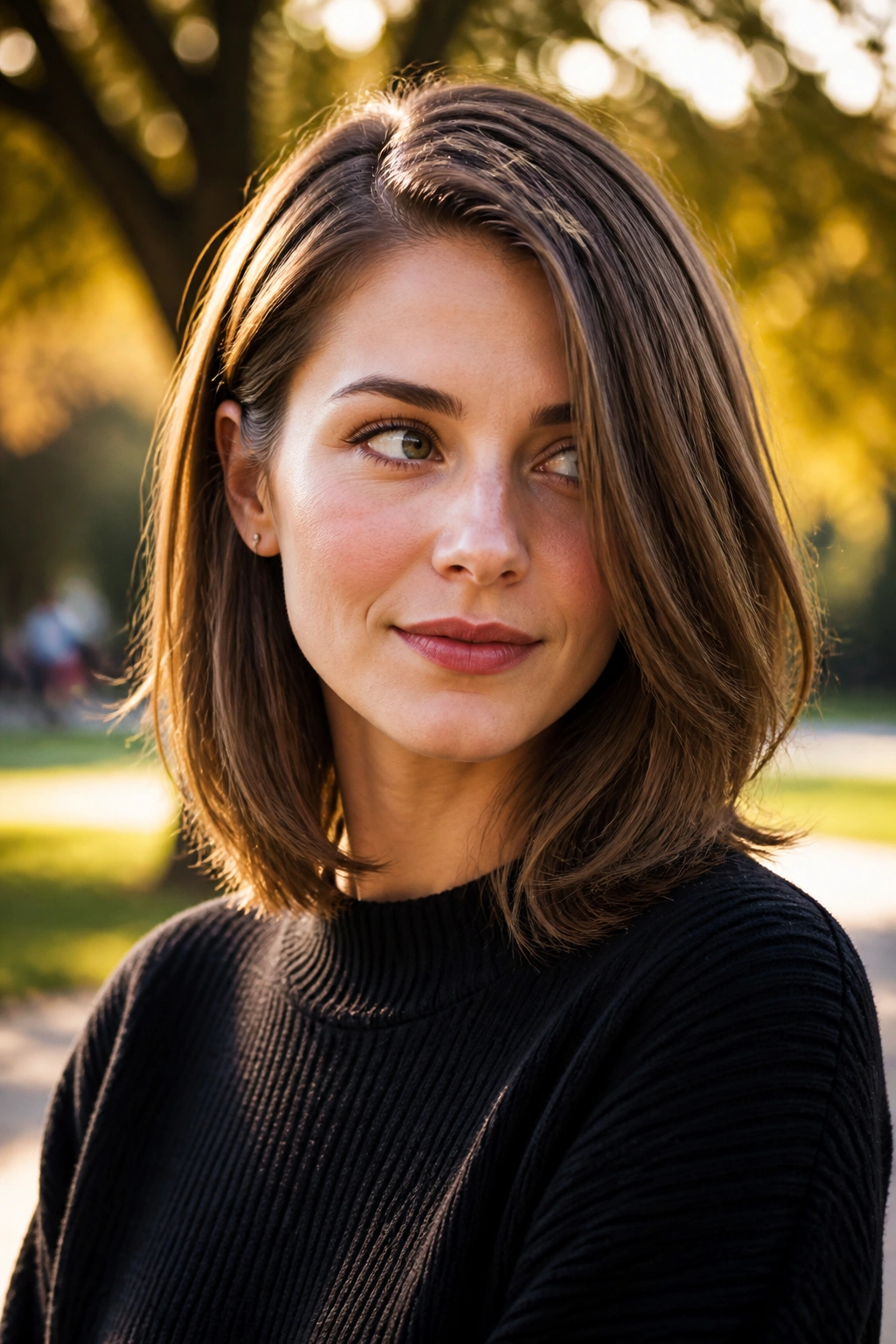
Picture this: one side tucked behind the ear, the other skimming the cheek, and the ends moving just enough to keep the cut from feeling stiff. That’s the charm of a feathered shoulder cut on fine straight hair. It gives the hair motion without demanding thick density.
Feathering works best when it stays soft. You want a hairdresser who understands how to remove weight in small bites, not a heavy razor pass that chews up the outline. Ask for the layers to begin around the mouth or chin and feather outward toward the shoulders. That keeps the volume where you can see it.
- Side parts create an easy lift at the root.
- Shoulder length keeps the hair from collapsing under its own weight.
- Feathered ends move better than blunt ones if your hair lies very flat.
- A light smoothing cream beats a heavy oil here.
One side note: this cut looks especially good when the hair is tucked once on one side and left loose on the other. It’s a tiny move, but it changes the whole read of the haircut.
5. Long U-Shaped Layers That Keep the Ends Full
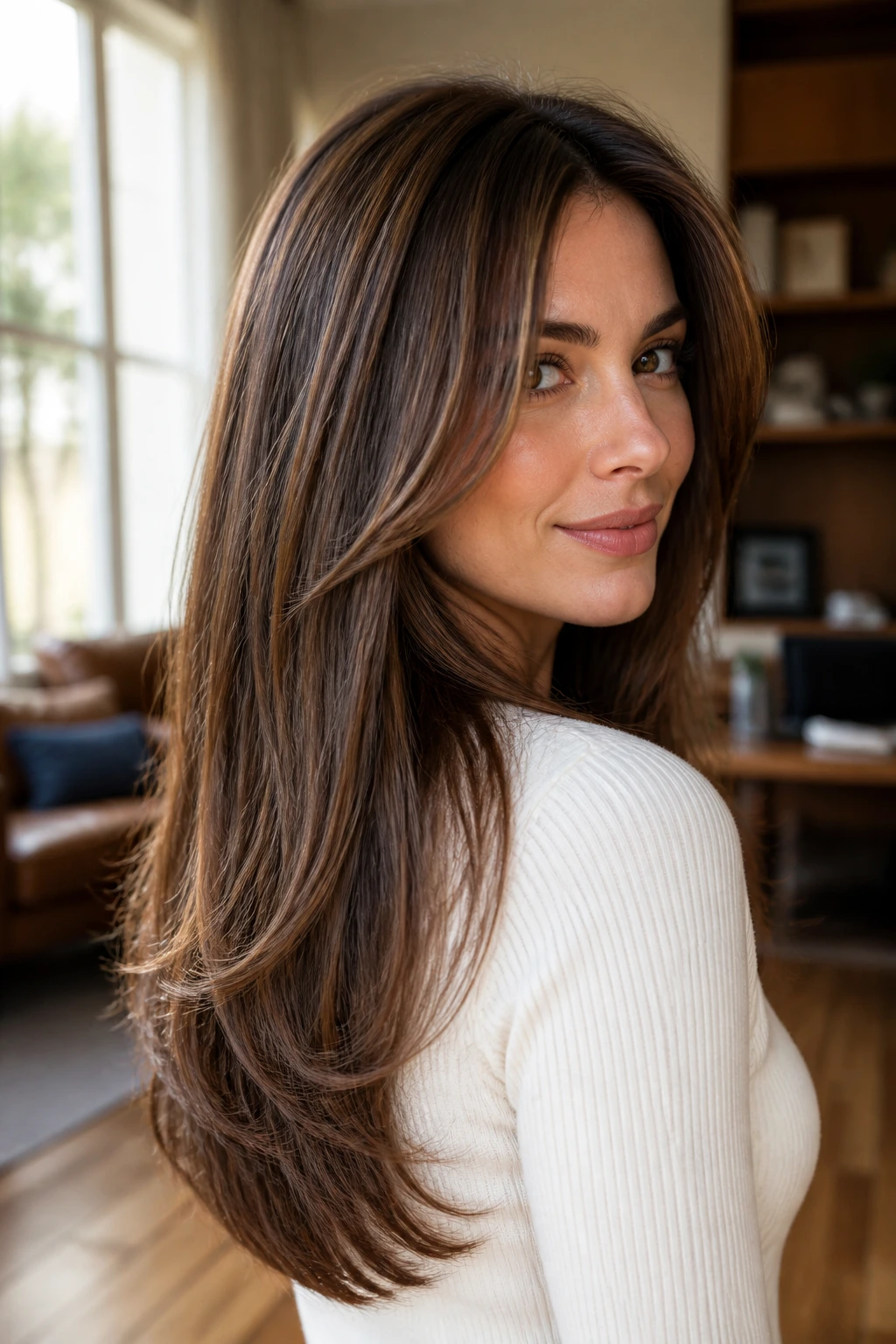
If you love length and hate losing thickness, a U-shape is a quiet hero. The outline curves gently downward in the back, which keeps the long pieces from looking like a curtain hanging off a straight bar. Fine hair benefits from that curve because it gives the eye a sense of fullness at the bottom.
The layers themselves should stay long. Think of them as soft movement rather than visible steps. On straight hair, a U-shape can create the illusion of volume by keeping the sides slightly shorter while the center holds onto length. That little difference matters more than people think.
I like this cut for anyone whose hair goes flat the second it gets too much layering. It also grows out gracefully, which is a relief if you only want to visit the salon every few months. Keep the ends blunt enough to look dense, and avoid too many short pieces around the crown.
The cut feels calm. That’s the point.
6. Angled Lob with a Slight Forward Tilt
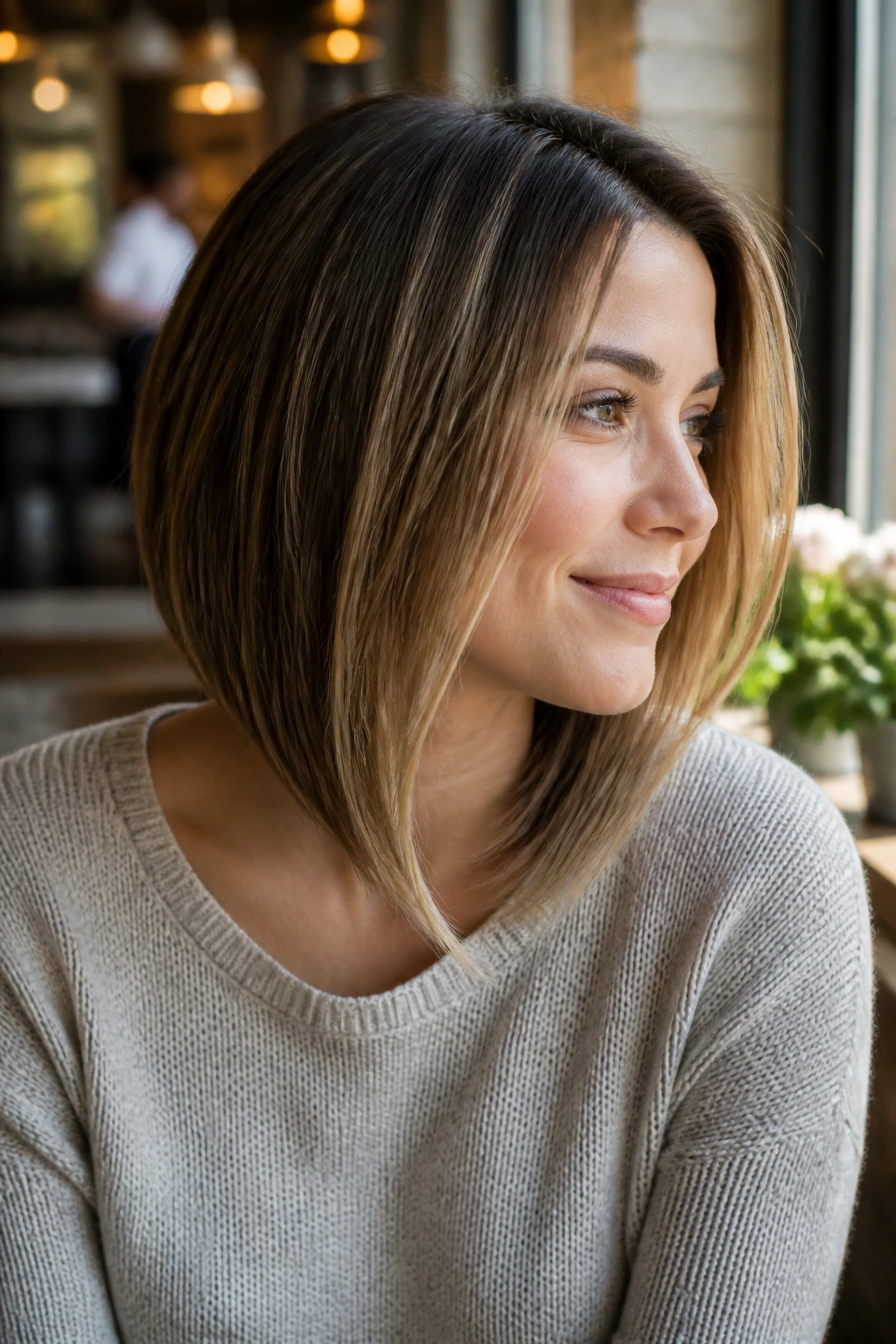
Unlike a square lob, this one has a little forward motion built into it. The back sits a touch shorter, the front comes down closer to the collarbone, and the whole shape makes fine hair look like it has more purpose.
An angled lob works because the eye follows the line. Straight fine hair can fall limp when the shape is too even, but a mild angle gives it direction. Keep the angle subtle—maybe a one-inch difference from back to front, not a dramatic swing. Too steep and the cut starts to look thin at the jaw.
This is a good choice if your hair goes flat at the sides. The slight tilt creates space around the face without exposing the neck or the ends. Add a side part and the effect gets cleaner. Add a blunt finish and it gets sharper. Either way, the haircut feels structured.
7. Curtain Bangs with Mid-Length Layers
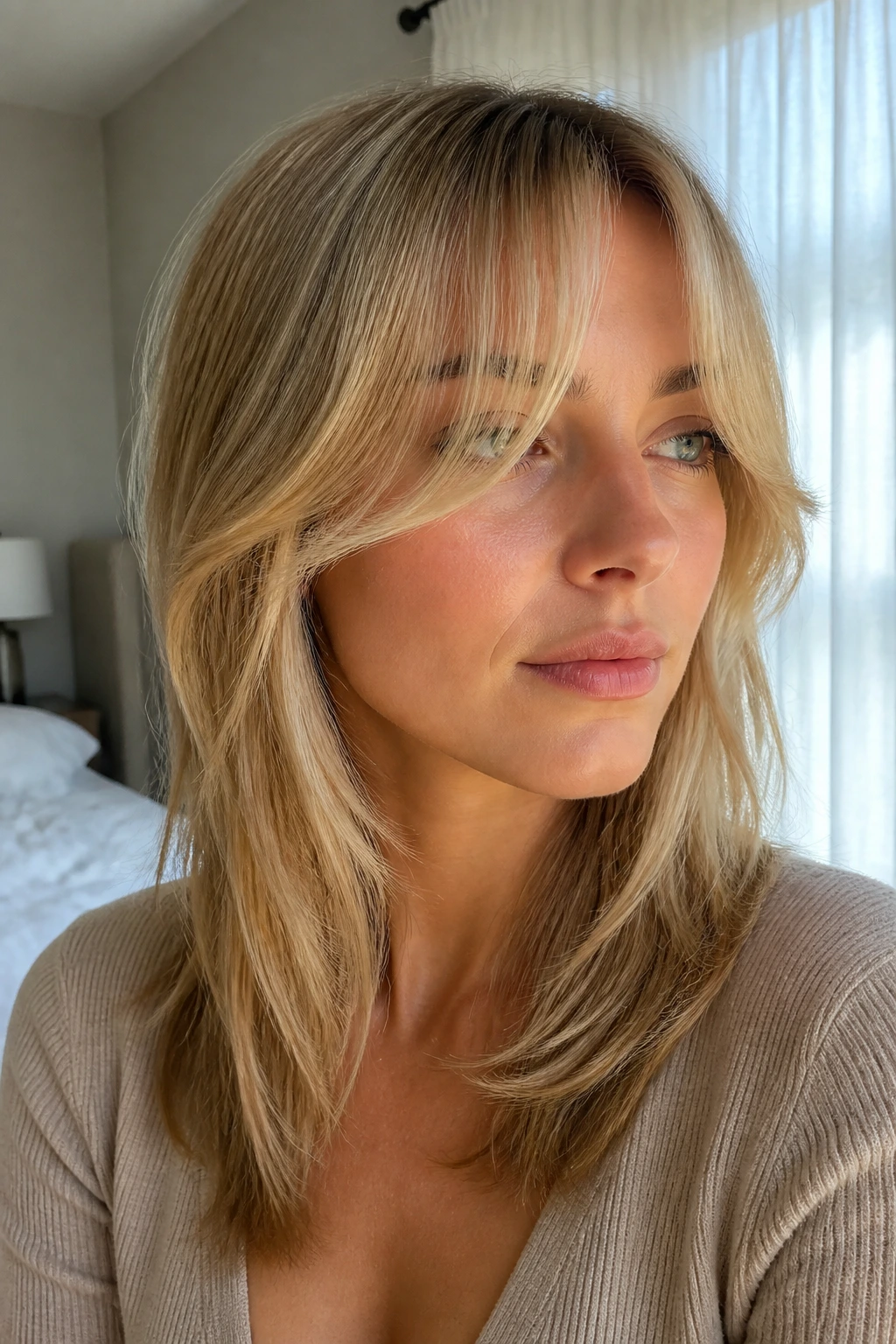
Will curtain bangs swallow fine hair? Not if the fringe is kept light and the layers are long enough to support it. The center part of the bangs opens the face, while the longer sides connect everything back into the main cut.
The mistake people make here is asking for bangs that are too thick. Fine hair does not have the density for a heavy curtain fringe unless you want to spend time fighting it every morning. Keep the shortest pieces narrow and let them hit around the brow or cheekbone, then let the longer sides fall into the rest of the haircut.
How to Keep Them Light
Blow-dry the bangs from side to side with a small brush so they do not split in one stubborn spot. A tiny bit of dry shampoo at the root can help if your hair gets slick fast. Skip heavy creams on the fringe; they make the bang line collapse.
This cut is best when you want shape around the face without giving up softness.
8. Chin-Length Bob with Soft Stacking
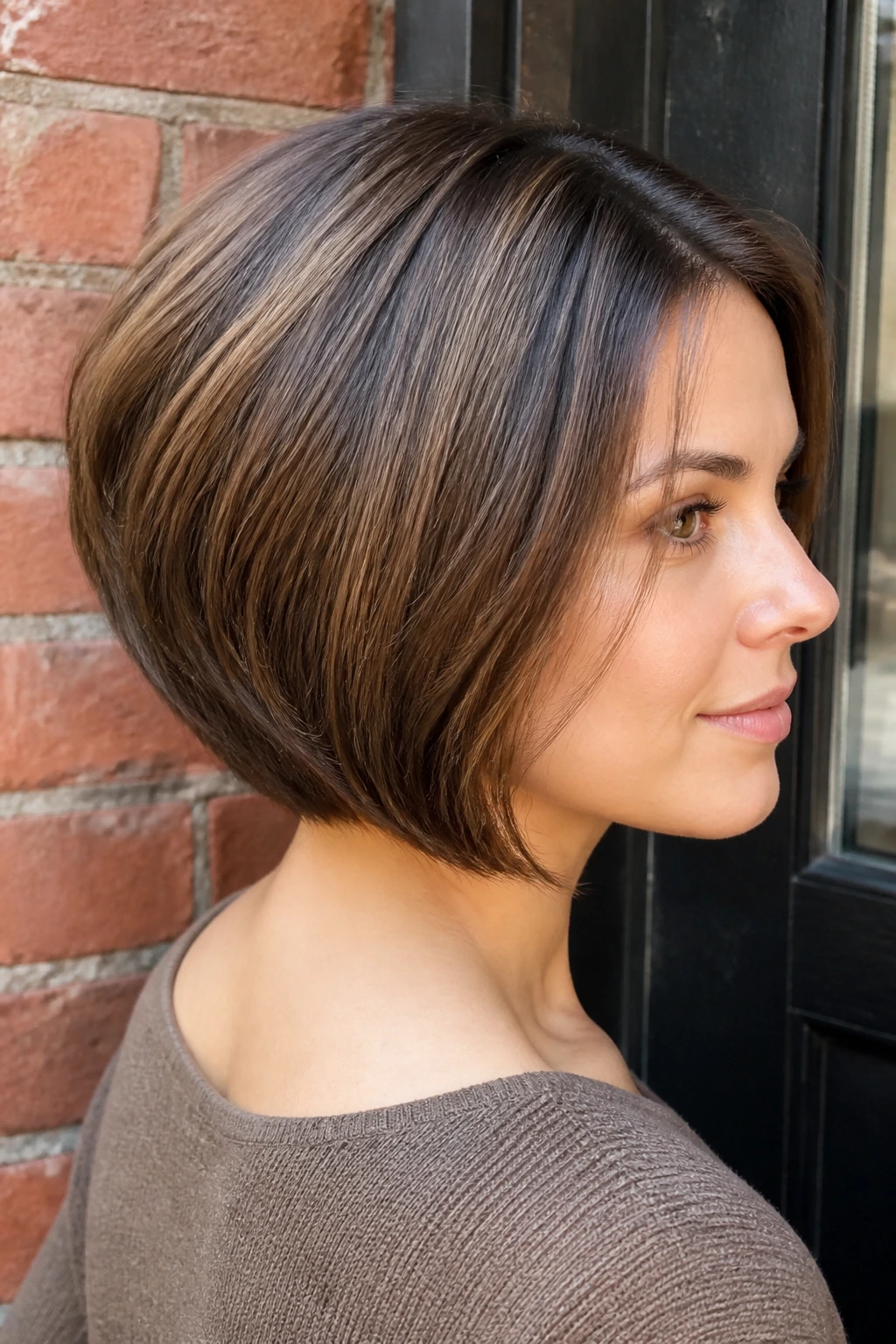
If your hair collapses at the roots, a chin-length bob can cheat fullness in a way longer cuts often cannot. The shorter length removes weight, and the soft stacking in the back gives the crown a little support without turning the cut into a stacked wedge.
The key is softness. You want a bob, not a hard line that sits like a box around the jaw. Ask for a gentle roundness through the back and a clean edge around the front. On straight hair, that combination gives you shape and density at the same time.
This is a sharp choice for anyone who likes a cleaner, shorter style and does not want to babysit it all day. It’s quick to dry, it looks tidy with little effort, and it can be tucked, pinned, or worn with a deep side part when you need a change.
9. Straight Shag with Airy, Piecey Layers
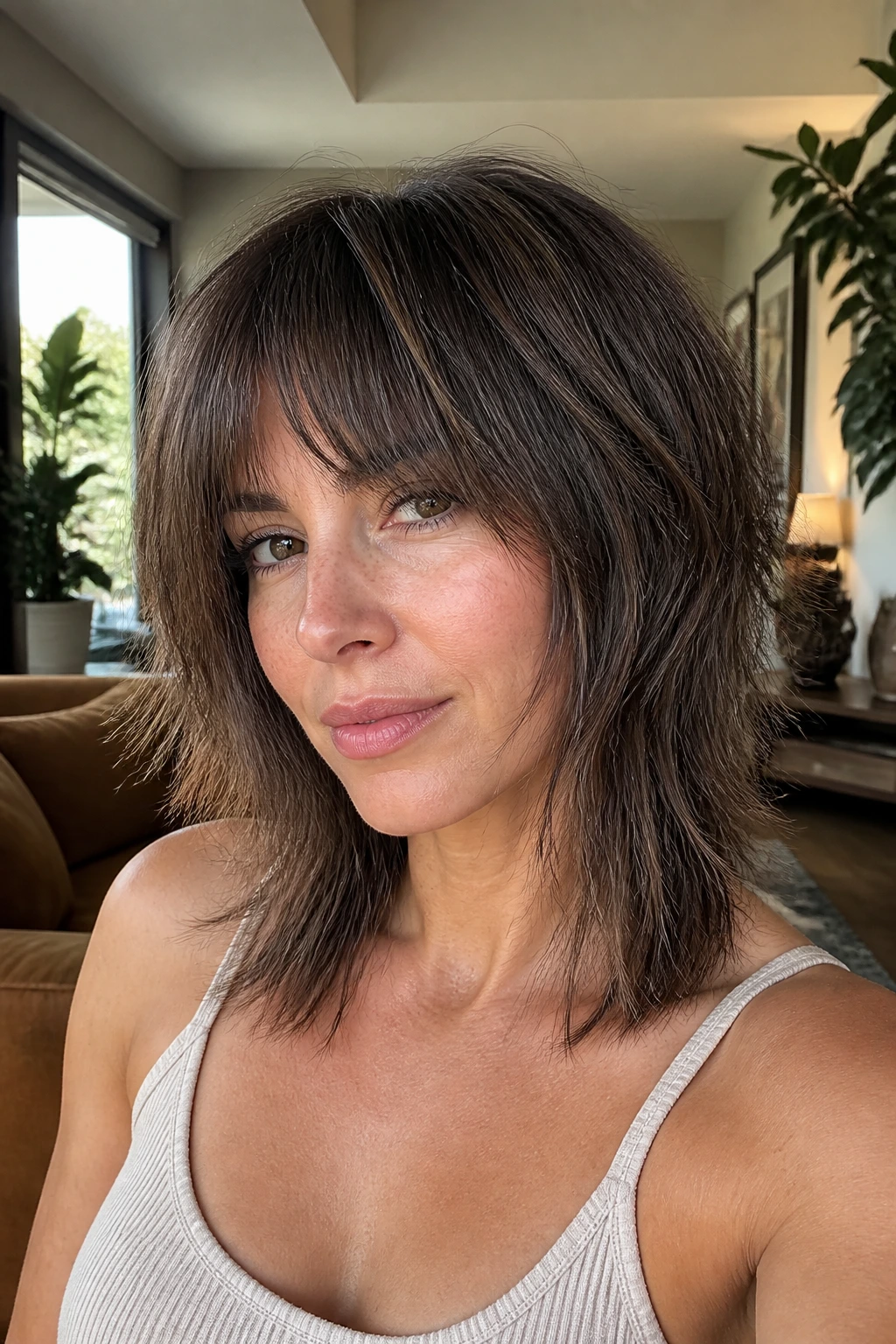
A shag on fine straight hair only works when it stays soft. If the layers get too short or too choppy, the cut starts looking tired instead of relaxed, and fine hair shows that mistake fast.
The version worth asking for keeps the ends blunt enough to hold the shape while the layers sit higher and lighter around the crown and cheekbones. It gives the hair a little lift without turning the whole head into a million tiny pieces. That matters. Straight hair does not forgive over-texturizing.
A light texturizing spray can help after drying, but I would avoid piling on product. Fine hair clumps easily. A small amount rubbed through the mid-lengths is enough to break up the surface and make the layers show. If you want a little edge without losing polish, this is one of the better bets.
10. Bottleneck Bangs with a Swingy Lob
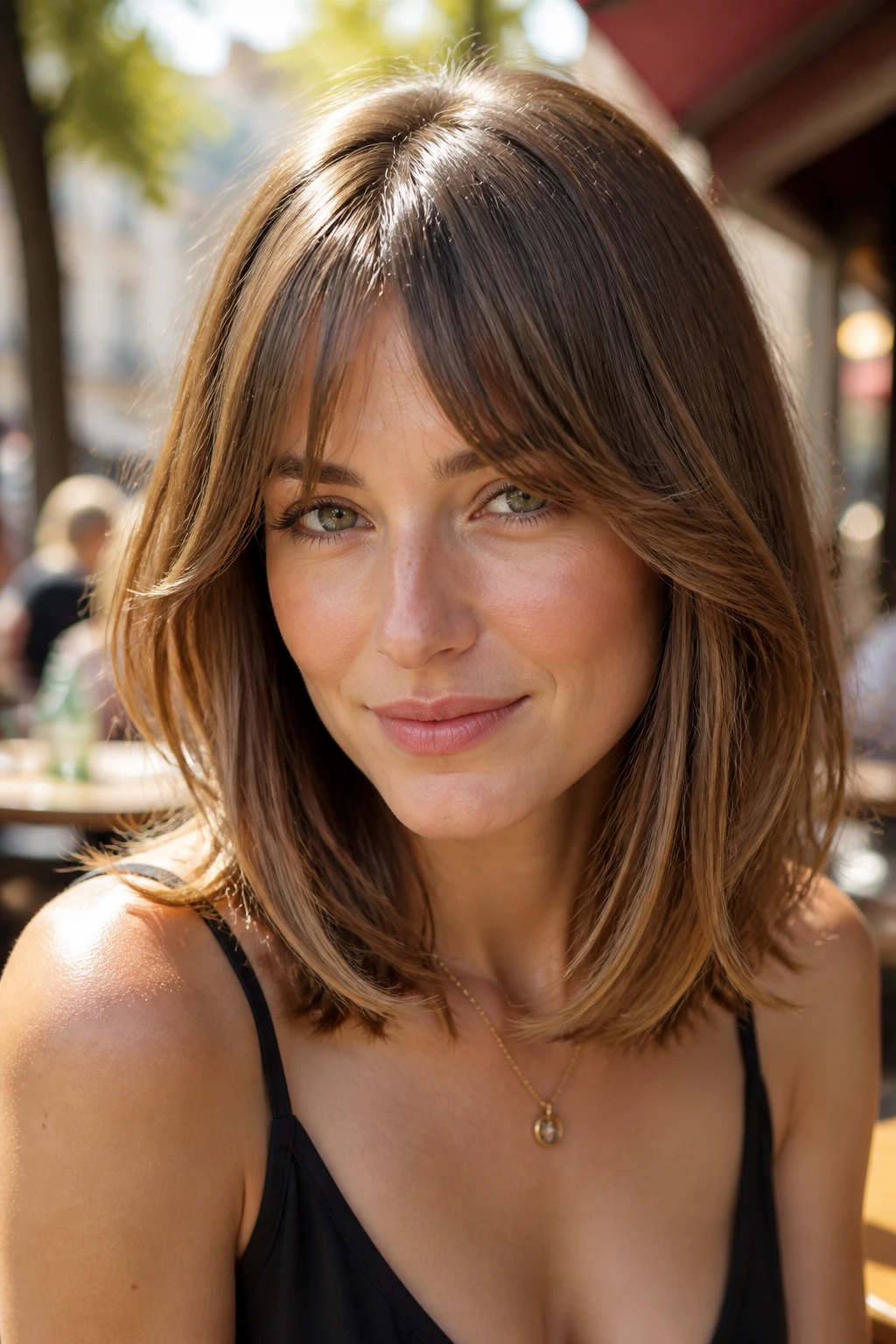
Bottleneck bangs are one of the easiest ways to add shape without committing to a full fringe. They start narrow in the center, open out near the eyes, and blend into the front of a lob in a way that works nicely on fine straight hair.
The reason this cut holds up is simple: the bangs create a focal point, so the rest of the hair does not need a lot of heavy layering. Keep the lob around the collarbone and let the front pieces sit a little longer. That gives the bangs room to do their job without making the cut look chopped.
- Shortest bang pieces should stay narrow at the bridge of the nose or just above it.
- The outer pieces need to land around the cheekbone.
- The lob should stay smooth through the ends.
- A flat iron bend at the front can keep the fringe from sitting stiff.
This one has a little personality without asking for much maintenance.
11. Blunt Cut with Hidden Crown Layers
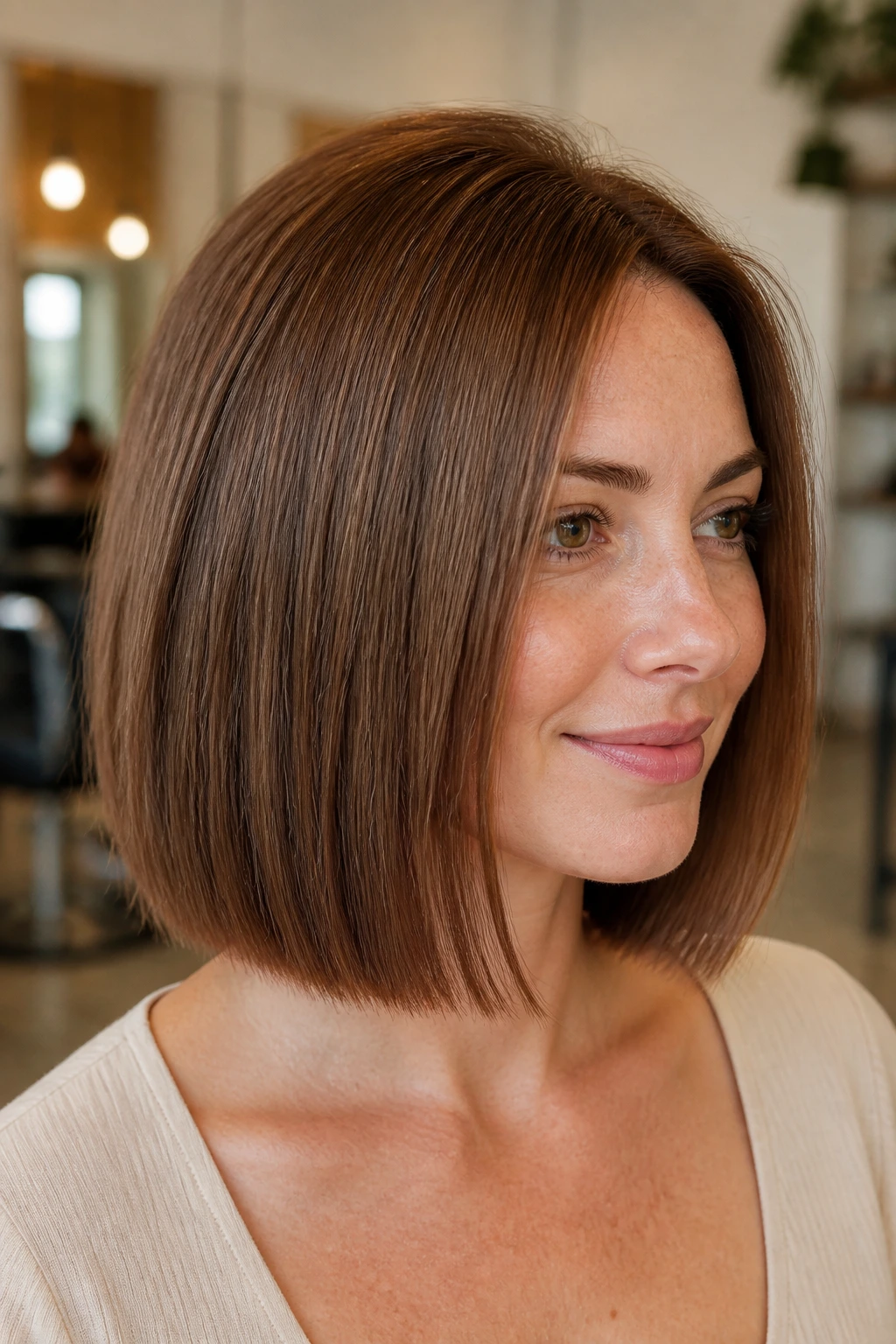
A blunt cut with hidden crown layers is perfect if the top of your head goes flat before noon. The outer line stays solid, which helps fine hair look fuller, while a few invisible layers near the crown give you lift where you need it.
What I like about this shape is that it does not shout “layered haircut.” It just sits better. The crown pieces are cut to move away from the scalp, not to stand up and announce themselves. That means you get height without that thin, broken look around the ends.
Compared with a heavily layered cut, this version is easier to style and easier to grow out. It also works if you wear your hair straight most days, because the clean perimeter keeps the finish looking polished. Ask your stylist to leave at least most of the bottom edge one length. That detail matters more than people realize.
12. Razored Ends for a Feather-Light Finish
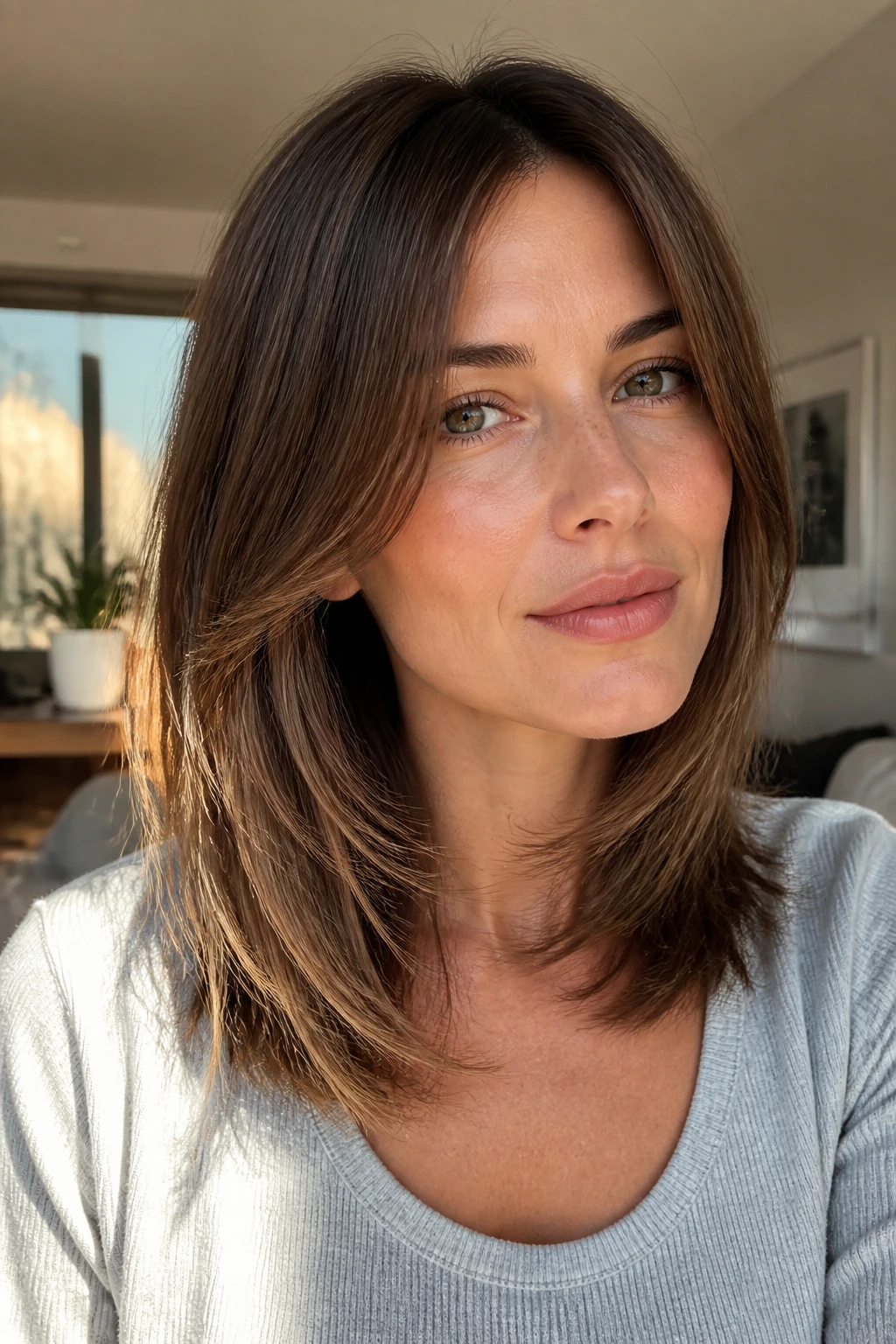
Should fine hair ever be razor-cut? Sometimes, but only with restraint. A razor can make straight hair feel lighter and more mobile, yet it can also make the ends look see-through if the hair is already fragile.
The safe version uses the razor on the last inch or so of the perimeter, not all through the haircut. That gives a soft edge without shredding the line. If your hair is prone to splitting, skip the razor entirely and ask for point-cutting instead. The result is cleaner and usually lasts better between trims.
This style suits hair that feels thick at the root but goes limp at the bottom. It can also help if your ends are too blunt and heavy for your face. Still, I would not use it on every fine-haired person who walks in the door. A good cut should solve the problem, not create a second one.
13. Side-Swept Fringe with Sleek Shoulder-Length Layers

A side-swept fringe can save a flat front without turning the whole haircut into a bang-heavy project. It gives straight fine hair a diagonal line, which is a nice trick when the hair wants to lie evenly from root to tip.
The best version is long enough to sweep across the forehead and tuck behind the ear when you want it out of the way. Shoulder-length layers keep the body of the cut smooth, and the fringe adds motion only where it matters. That keeps the style looking deliberate, not overworked.
Best Styling Move
Dry the fringe first, before the rest of the hair, and direct it to the side with a brush or just your fingers. If you let it air-dry in the wrong direction, it can split and sit there all day. A tiny bit of mousse at the root helps, but use less than you think. Fine hair gets greasy fast.
14. French-Inspired Lob with Cheekbone Layers
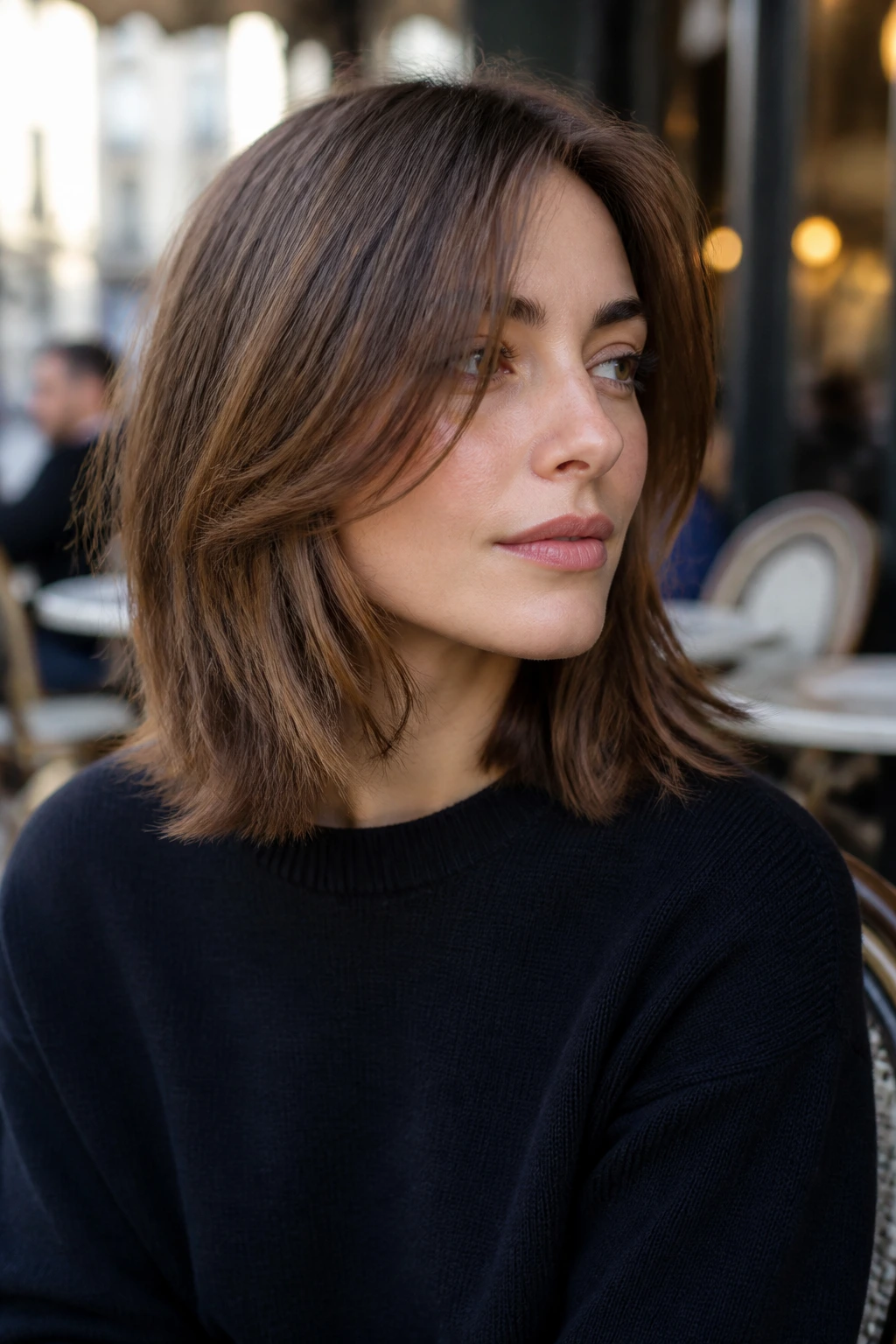
This is the cut that looks tidy even when you’ve barely touched it. The French-inspired lob keeps the overall shape neat and shoulder-skimming, while the cheekbone layers open the face and give straight hair a little lift around the front.
It’s a good fit for fine hair because the layering is controlled. You are not losing bulk all over the place. You are just carving out a bit of movement where the eyes naturally land. That makes the haircut feel lighter without looking sparse.
The styling is easy, which is part of the appeal. A quick blow-dry, a slight bend at the ends, and maybe a side part that is just off-center. Nothing fussy. If your hair tends to go limp at the cheeks, this cut gives the front enough shape to stay alive longer than a plain one-length lob.
15. One-Length Midi Cut with Barely-There Internal Layers

Not every layered haircut has to look layered. A one-length midi cut with barely-there internal layers gives you the polish of a blunt shape and just enough hidden movement to keep straight fine hair from falling flat.
This is one of those cuts that looks more expensive than dramatic. The base line stays clean, usually somewhere between the collarbone and the chest, while the internal layers remove a trace of weight from under the surface. You get swing, but not a choppy outline. That balance is rare.
If your hair tangles easily, this is also a gentler choice than lots of short layers. There are fewer places for the strands to catch. Ask for the internal layers to stay low and soft, and keep the outer edge as dense as possible. The stronger the perimeter, the fuller the hair reads.
16. Tapered Long Layers for Easy Ponytails
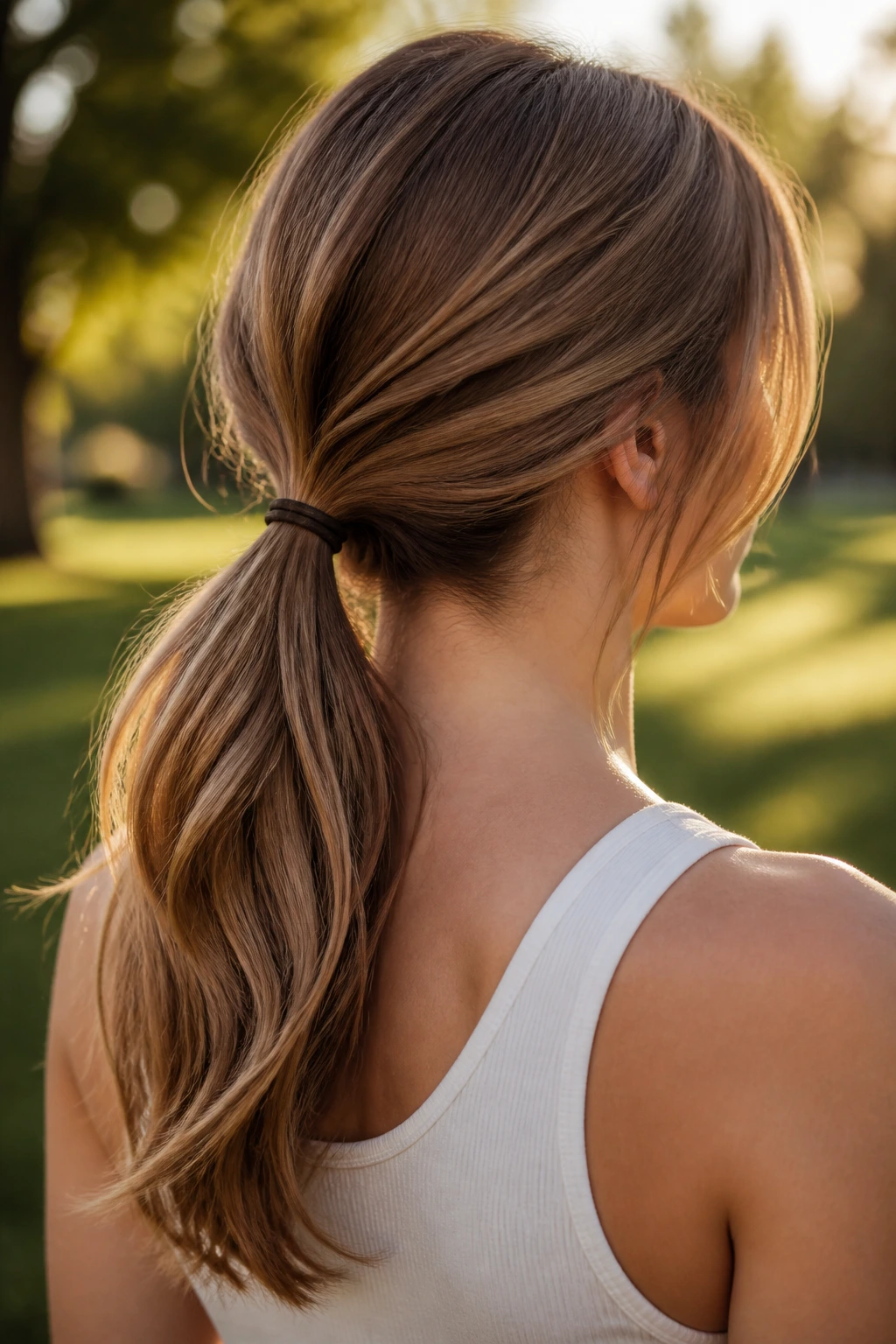
Some haircuts look nice only when they’re down. This one is built for real life. Tapered long layers keep the hair looking shaped when it’s loose and make ponytails, clips, and low buns sit better when you need your hair up.
The layers should start below the collarbone, not in the middle of the cheek. That way, the front still frames the face, but the back keeps enough length to feel substantial. On fine hair, long layers can sometimes drift into stringiness if they’re cut too high. This version avoids that.
- Great for people who wear their hair up at least part of the week.
- Easier to grow out than short, choppy layers.
- Keeps the ends looking thicker in a low ponytail.
- Works well with a middle part or a tucked side part.
A little leave-in conditioner on the ends keeps the layers neat. Not much. Fine hair gets weighed down fast.
17. Shoulder-Grazing Cut with Rounded Ends
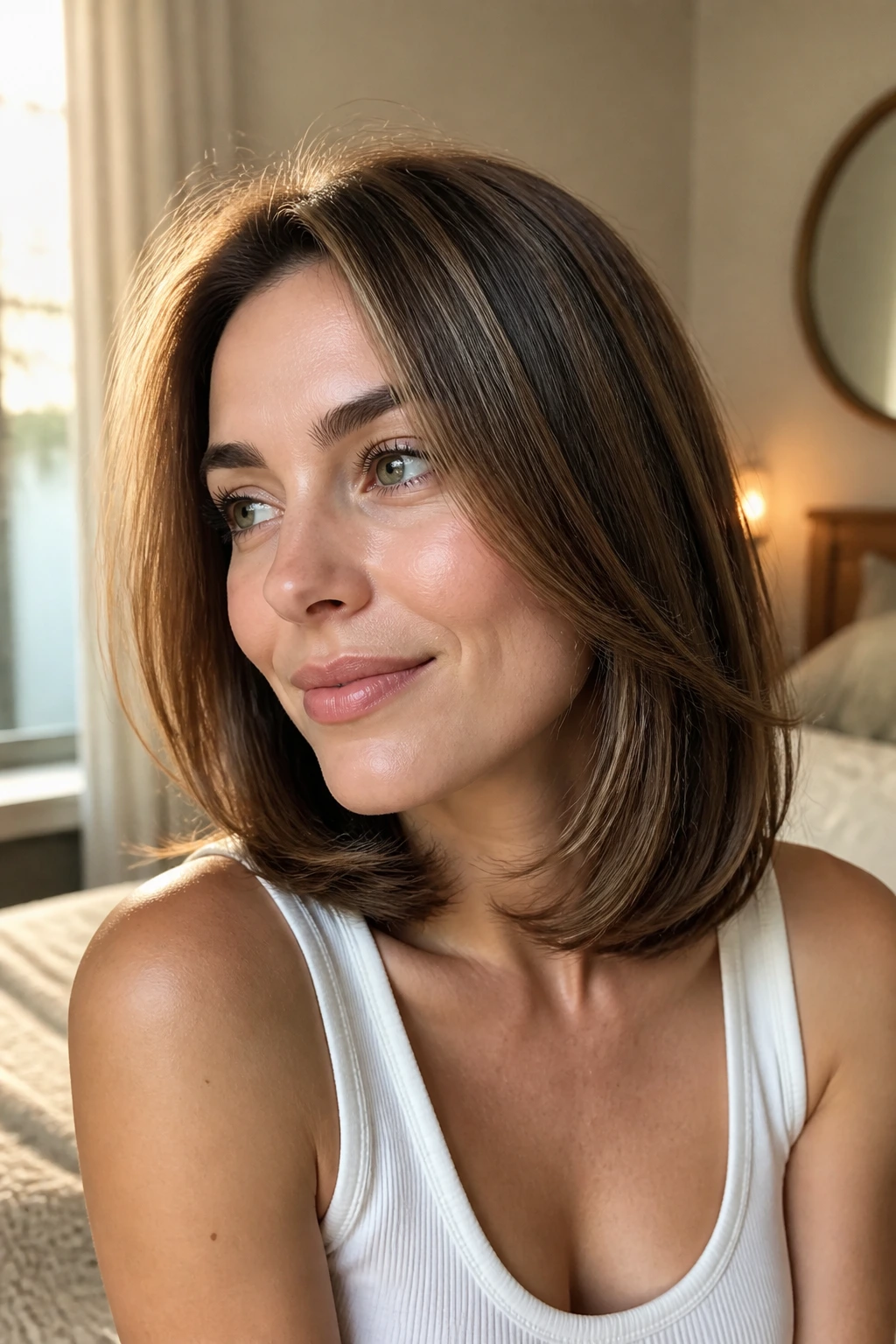
A shoulder-grazing cut with rounded ends takes the hard edge off the usual boxy shoulder length. Straight fine hair can sit flat at that length if the perimeter is too blunt, so a soft curve at the ends helps the shape feel fuller.
Ask for the outline to round slightly under the shoulders rather than fall like a ruler-straight line. The cut should still look clean, but the ends need a little bend. That bend makes the hair catch movement when you turn your head, and movement is half the battle with fine hair.
This cut is especially useful if your hair flips out at the shoulders in a weird way. A rounded finish usually calms that down. It also looks good with a simple blow-dry using a paddle brush and a final pass with a medium round brush only at the ends. Keep it neat. That’s the whole point.
18. Asymmetrical Lob with Soft Movement
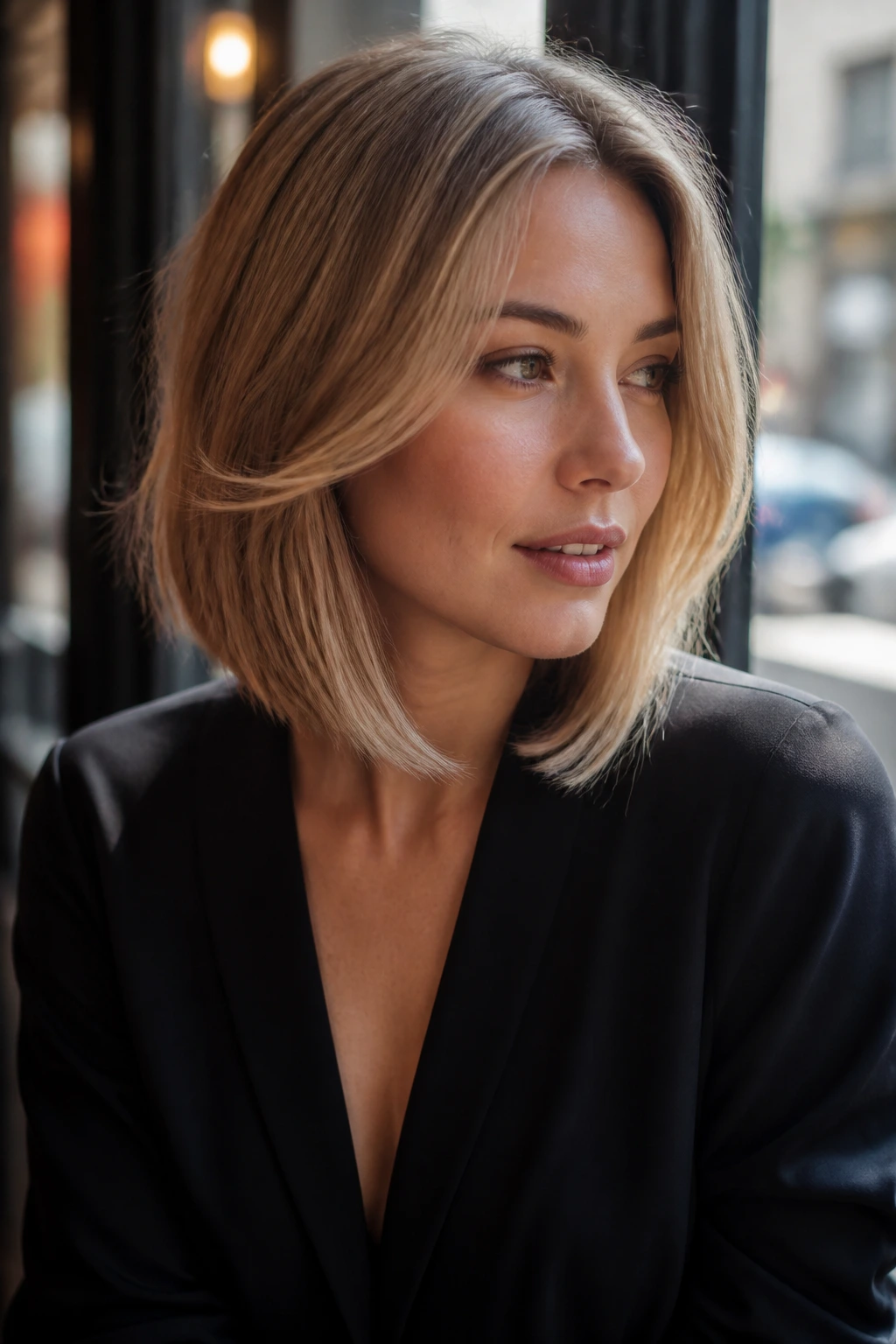
A little asymmetry does more than people expect. One side sits a touch longer, the other side comes up slightly higher, and suddenly straight fine hair has a line that feels intentional instead of limp.
The difference does not need to be dramatic. Half an inch to an inch is enough. You want the shape to be noticeable when the hair moves, not so obvious that the cut becomes a statement first and a haircut second. Soft internal layers help the asymmetry fall in a clean way.
This works well if one side of your hair always lies flatter than the other. The shape gives your eye somewhere to go, which makes the whole cut read as fuller. Keep the ends blunt enough to hold weight, and avoid over-layering the shorter side. That side already has enough going on.
19. Glassy Long Cut with Dusting Layers at the Bottom
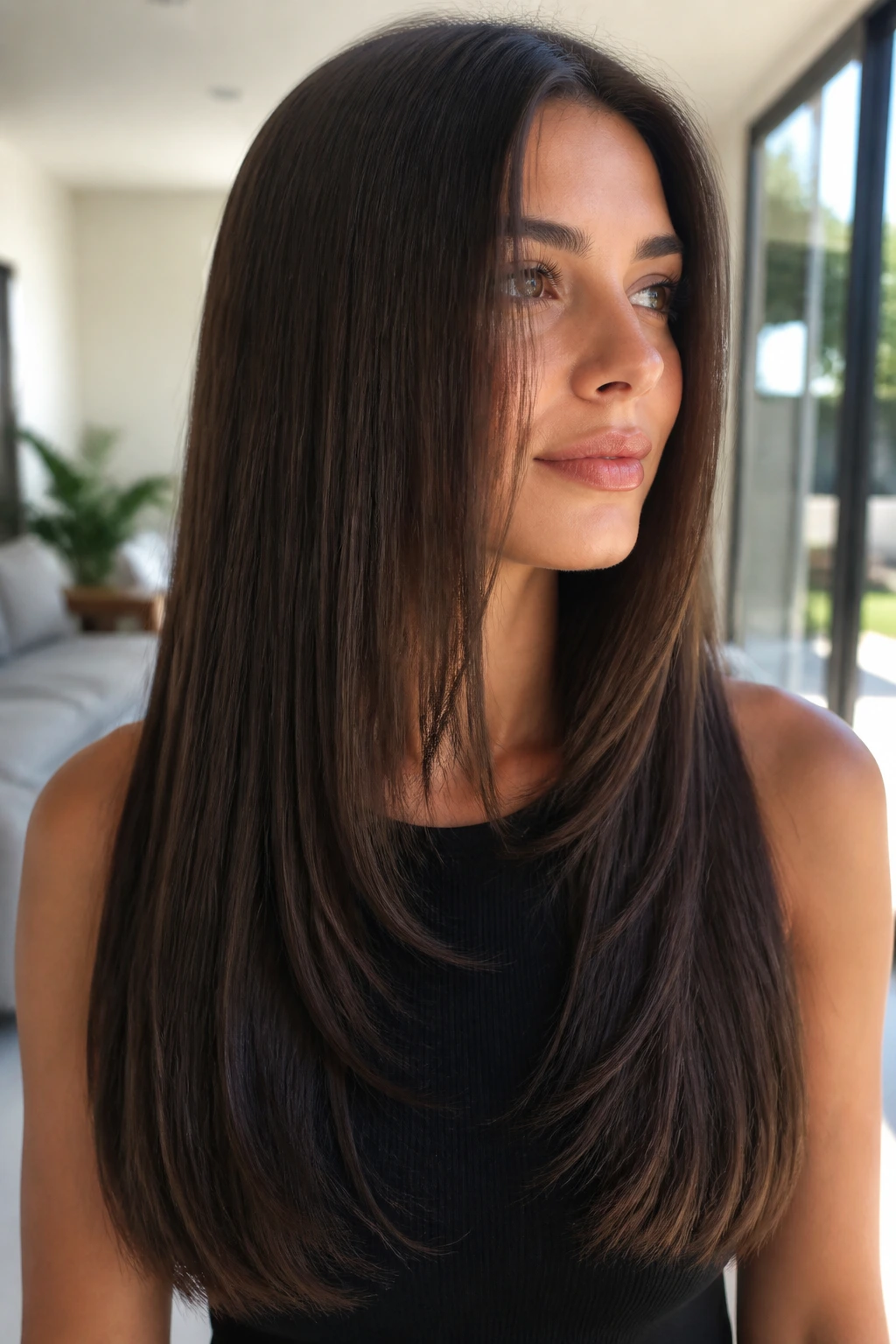
If you love hair that falls past the shoulders and still want it to look thick, this is the version to look at. The glassy long cut keeps a sleek surface, while dusting layers at the bottom remove split-looking ends without taking away the overall length.
The magic is in the restraint. Long fine hair can look gorgeous when the line is clean and the layers are almost invisible. Start the layering low—down near the last few inches—and keep the top section calm. The result is shine, length, and enough movement to keep the hair from feeling heavy.
I would not pair this with aggressive thinning. That ruins the shape fast. A better move is a precise trim every six to eight weeks and a smoothing blow-dry cream only on the mid-lengths and ends. If you want your hair to look like a single sheet rather than separate strands, this is the cut that gets closest.
20. Micro-Layered Midlength Cut for Fine Hair
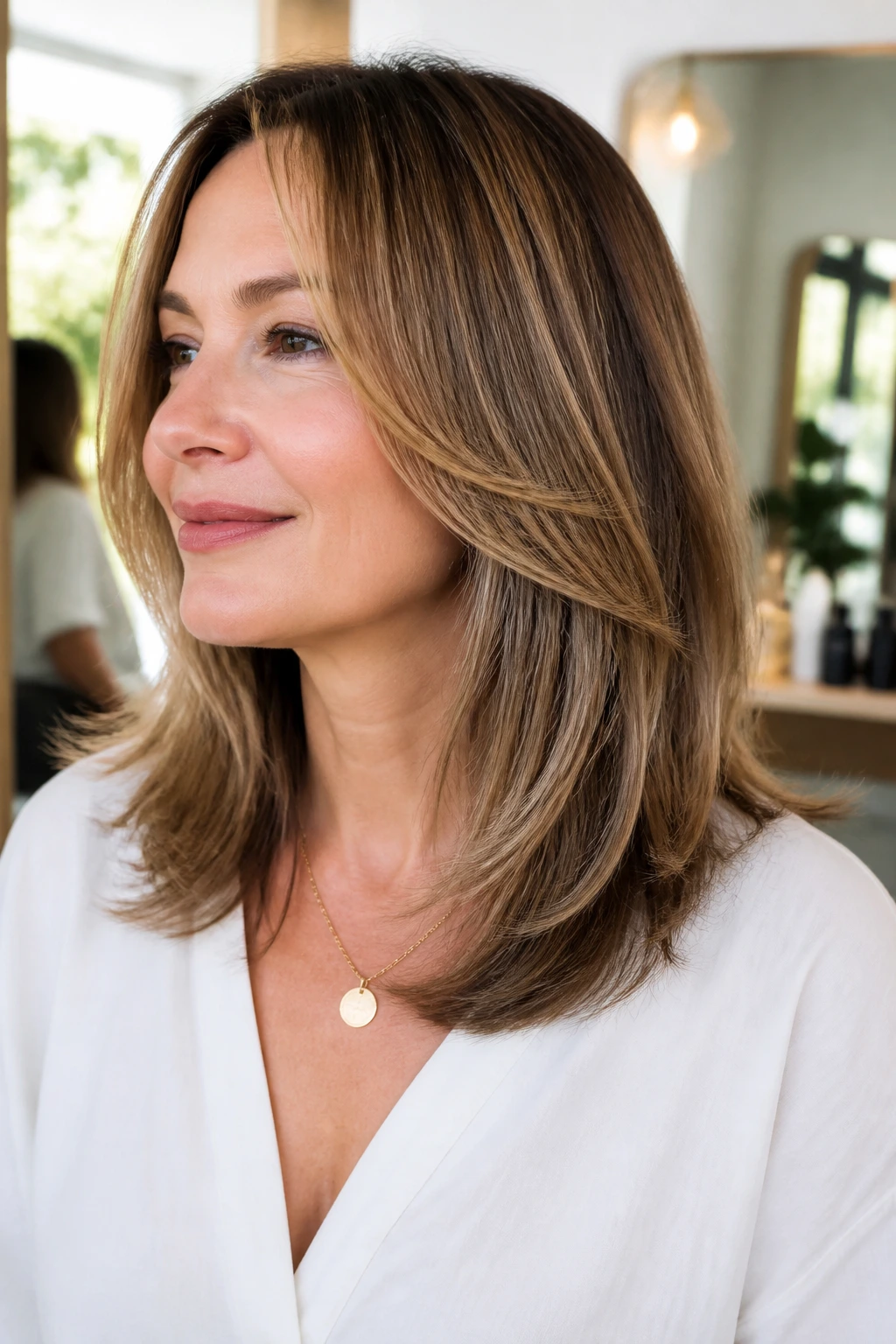
Micro-layers sound tiny because they are. They’re small internal adjustments that give the hair a little rise through the crown and sides without making the ends look choppy. On straight fine hair, that can be enough to change everything.
The style works best at midlength, somewhere between the shoulders and the collarbone. Too short and the layers can get over-exposed. Too long and the lift disappears. Ask your stylist to keep the layers shallow and close together, almost like fine tuning rather than a full restyle.
What to Ask For
- Keep the perimeter blunt or nearly blunt.
- Use small internal layers near the crown, not short pieces all over.
- Leave the face frame long enough to tuck.
- Avoid heavy thinning shears on the ends.
This is the cut for someone who wants volume without the visible “layered” look. It’s subtle, and that’s the point.
21. Rounded Lob with Soft Corner Layers
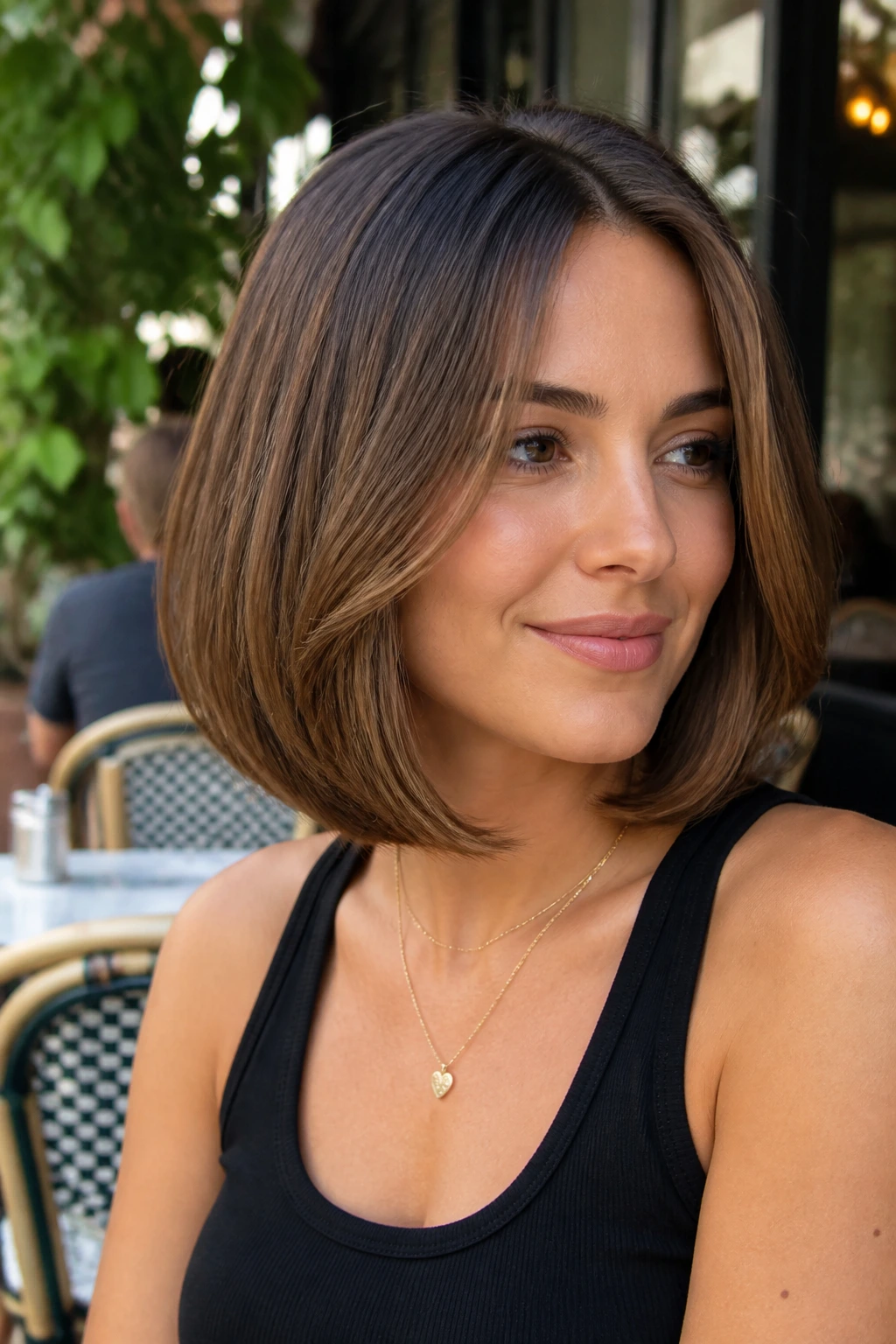
A rounded lob takes the hard edge off a boxy shape, which matters a lot on fine hair. The corners soften near the jaw and neck, and the cut feels fuller because the eye does not get trapped by a straight, flat line.
The soft corner layers should start low and sweep into the bottom edge. Think of them as shaping the outline, not breaking it apart. Straight hair loves this because it keeps the finish smooth while adding a little curve where the lob meets the face.
This cut also flatters people who feel like a straight-across bob is too severe. A rounded lob sits in a nicer place for many face shapes, especially if the hair tends to separate at the ends. Keep the part slightly off-center if you want a touch more lift. It’s a small adjustment, but small adjustments are what fine hair usually needs.
22. Jaw-Length Crop with Feathered Tips

Short hair can be a relief when fine strands refuse to hold volume. A jaw-length crop removes enough weight to let the roots lift, and the feathered tips keep the outline from feeling harsh.
This cut is not for someone who wants to hide behind length. It’s for someone who wants shape and movement in a compact form. Ask for the line to land at the jaw or just below it, then soften the last half-inch of the ends. That keeps the crop from looking too severe.
Maintenance matters here. A jaw-length cut usually needs a trim every five to six weeks if you want it to keep its shape. Fine hair shows growth fast. The upside is that it dries quickly, it looks neat with very little styling, and it gives the face a clean frame. Short, but not fussy.
23. Center-Parted Midi with Corner-Grazing Layers
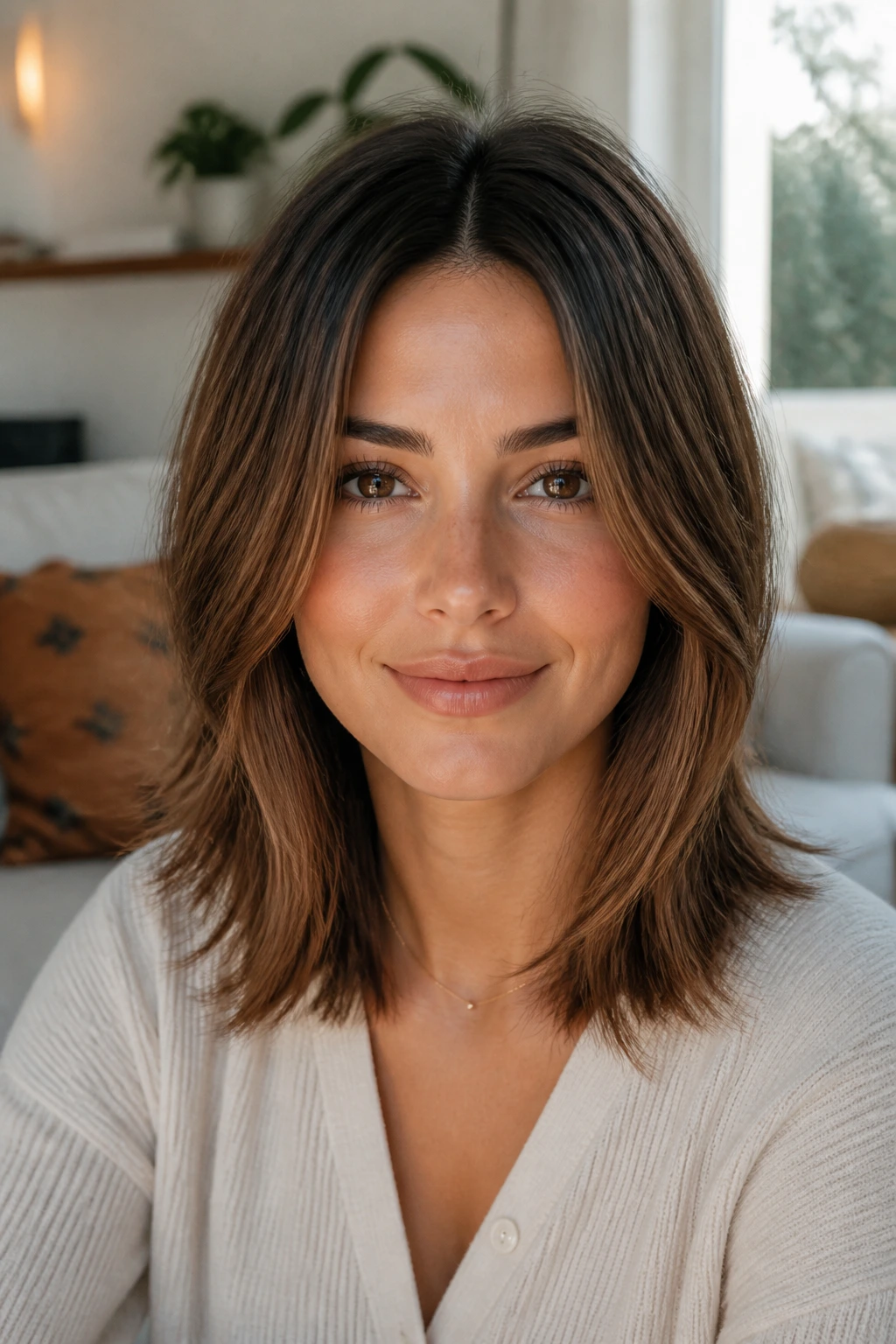
A center-parted midi cut gives fine hair a long, tidy base, and the corner-grazing layers do the work of adding movement. Those layers sit near the points where the face turns toward the jaw, which makes the haircut feel shaped without being loud about it.
I like this one for people who do not want bangs but still want something happening around the face. The longest front pieces can land near the collarbone, while the shorter pieces sit just below the cheek. That spread gives the hair a little swing when you tuck one side back or let it fall forward.
How to Wear It Straight
Use a flat iron only on the very last inch of the ends if they need smoothing. Then brush the front forward and back once so it doesn’t stick to one side. It sounds minor, but that little movement keeps the layers from looking stiff. Straight hair needs that kind of detail.
24. Collarbone Cut with Tucked-Behind-Ear Layers

This is a useful haircut if you like changing the way your hair sits during the day. The collarbone length gives you enough material to tuck behind the ear, and the layers are cut so the hair still falls in a flattering way when you let it go.
The layers should be light around the front and slightly longer under the surface. That way, the tuck creates a clean line on one side without exposing a bunch of thin ends. Fine hair often looks better when one side is purposely opened up. It gives the shape some relief.
If you wear glasses or big earrings, this cut is a quiet winner. It keeps the area around the face clear without feeling severe. Ask for a soft face frame that starts around the cheekbone and blends into the collarbone length. That blend is what makes the tuck look planned instead of accidental.
25. Long Straight Cut with a Dense, Blunt Perimeter
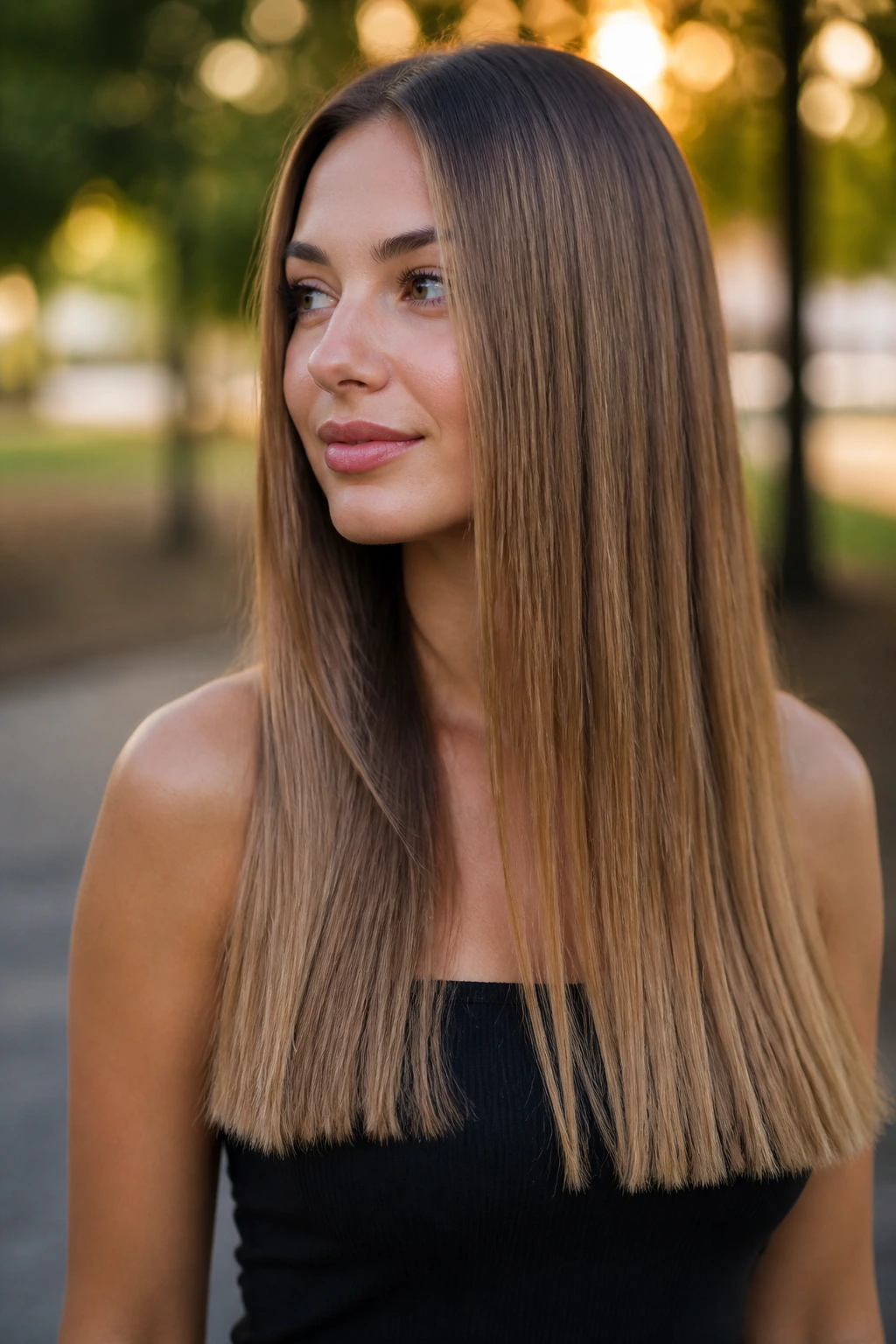
If you want the least risky version of straight layered haircuts for fine hair, this is it. The long cut keeps as much length as possible, and the dense, blunt perimeter makes the hair look thicker from every angle. The layers are there, but they stay hidden and low.
This is the haircut for someone who loves long hair but hates the see-through ends that can happen when layers go too high. Tell your stylist to keep the outer line strong and only dust the bottom. A few internal layers can help the crown sit better, but they should never take over the shape. The whole point is to keep the eye on a clean, solid line.
I also like this cut for people who air-dry a lot. Straight fine hair often dries flat when the shape is too fragmented, but a blunt perimeter holds together better and looks neater with minimal effort. If the hair starts to lose density, the answer is usually not more and more layers. It’s a cleaner line, a tighter plan, and just enough movement to keep it from feeling stiff.
