



Fine hair can look flat fast. Put it in the wrong cut and it slips against the head like ribbon. Put it in the right red layered haircut, though, and the whole shape wakes up: movement at the ends, lift at the crown, shine where the light hits, and enough softness that the style still feels believable.
The color matters more than people think. Red shows edges, bends, and texture in a way brown often hides, so a layered cut has to earn its keep. Too much thinning and the ends start to look see-through. Too little and the hair sits there like a helmet. The sweet spot is usually a cut with some length left in the perimeter, smart layering through the interior, and a red shade that gives the eye something to follow.
I’m partial to red on fine hair because it can do two jobs at once. Copper gives warmth and fullness. Cherry red sharpens the outline. Auburn behaves like a softer filter. The good versions feel alive without looking overworked, and that’s the part people often miss when they ask for “more layers” and hope for a miracle.
1. Copper Midi Cut with Long Face-Framing Layers
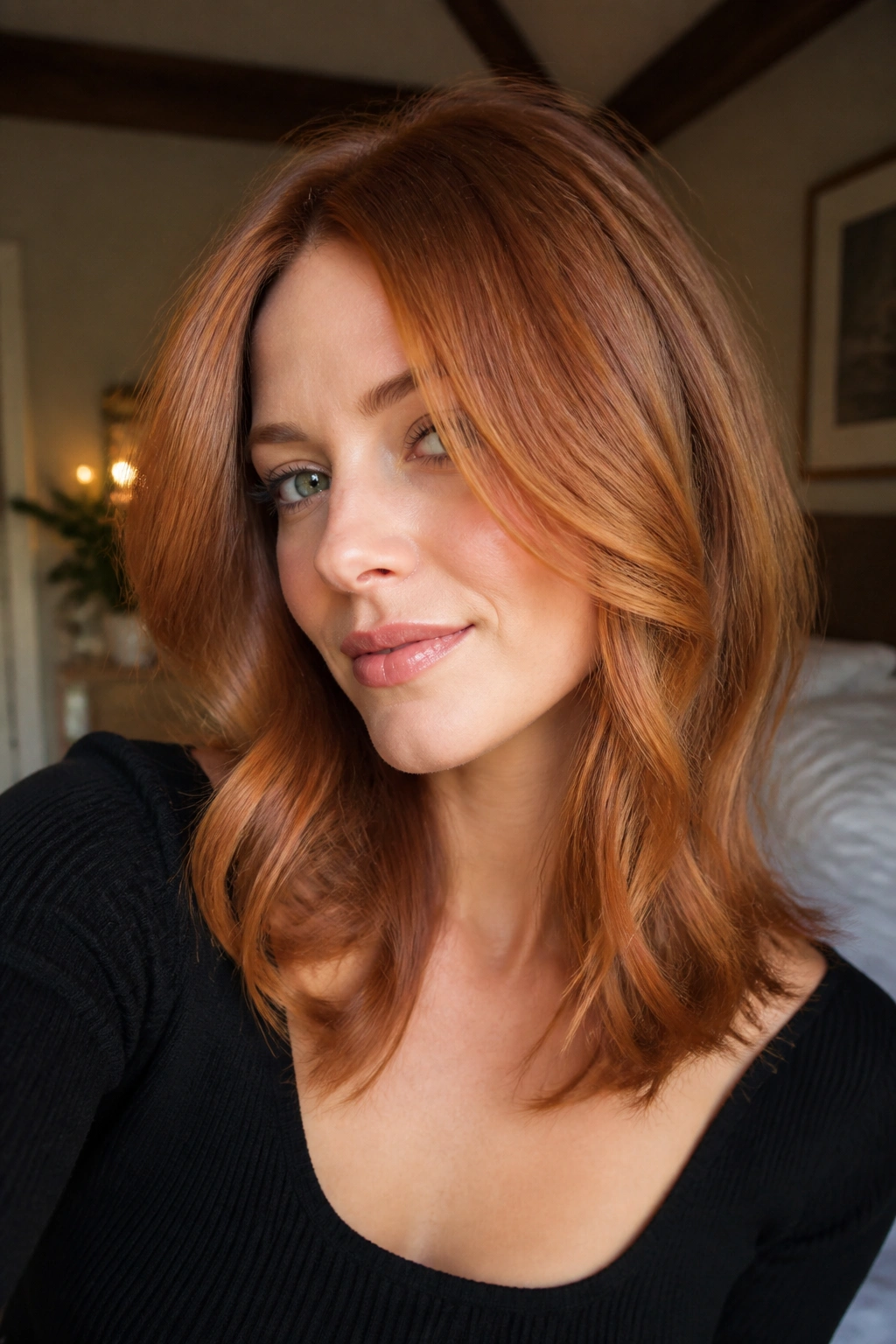
Copper is one of the easiest reds to wear on fine hair because it reflects light without looking harsh. A midi length keeps enough weight in the shape, while the long face-framing layers give you movement right where the eye lands first.
Why It Works for Fine Hair
The trick here is restraint. You want the layers to start low enough that the ends still look full, usually around the cheekbone or jawline, not halfway up the head. That keeps the hair from collapsing into thin wisps at the bottom.
A soft copper shade adds the illusion of density, especially if your hair is naturally pale or medium brown. The color catches every bend in the layers. That matters.
- Best length: collarbone to upper chest
- Best layer shape: long, blended face framing
- Best styling move: a round brush at the ends
- Best finish: a light gloss spray, not heavy oil
My take: if your fine hair gets stringy fast, this is one of the safest red layered haircuts to start with.
2. Cherry Red Collarbone Cut
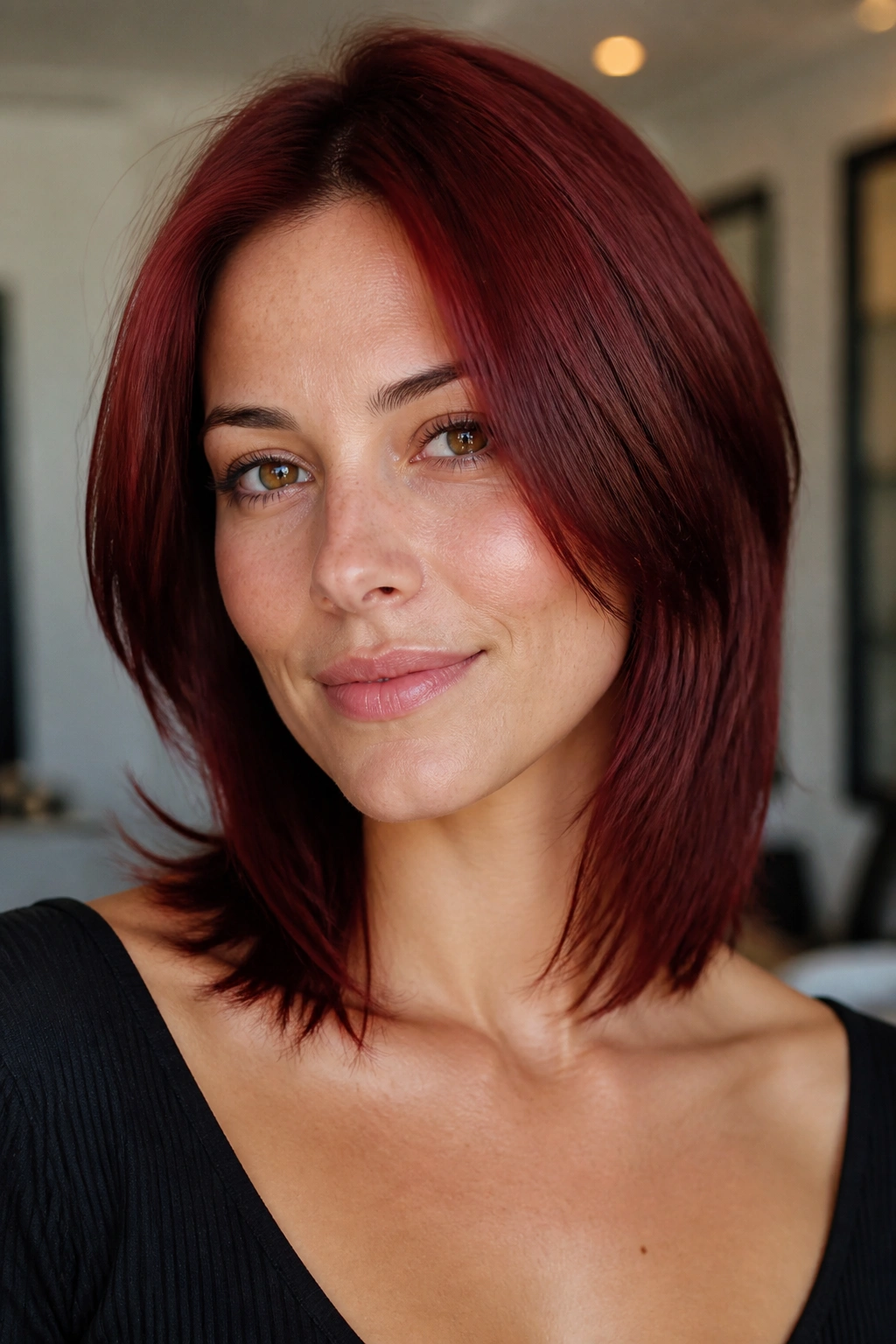
Cherry red has a sharper edge than copper, and that’s the whole appeal. It makes a simple collarbone cut look deliberate instead of plain, which is handy when your hair is fine and every line shows.
This cut works because it uses color as structure. The haircut itself stays clean, with subtle internal layers that stop the ends from feeling like one flat sheet. The red shade does some of the visual heavy lifting. A glossy cherry tone makes the surface look thicker than it is, especially under indoor light or on straight styles.
What I like most here is the balance. The cut is not fussy. It can live in a middle part, a soft side part, or a tucked-behind-the-ear shape without falling apart. If you want something polished for work but still a little fiery, this sits in that lane without trying too hard.
It suits people who hate big styling sessions. Air-dry it with a touch of mousse, then bend the ends under with a flat iron if you want a neater finish.
3. Cinnamon Pixie Bob
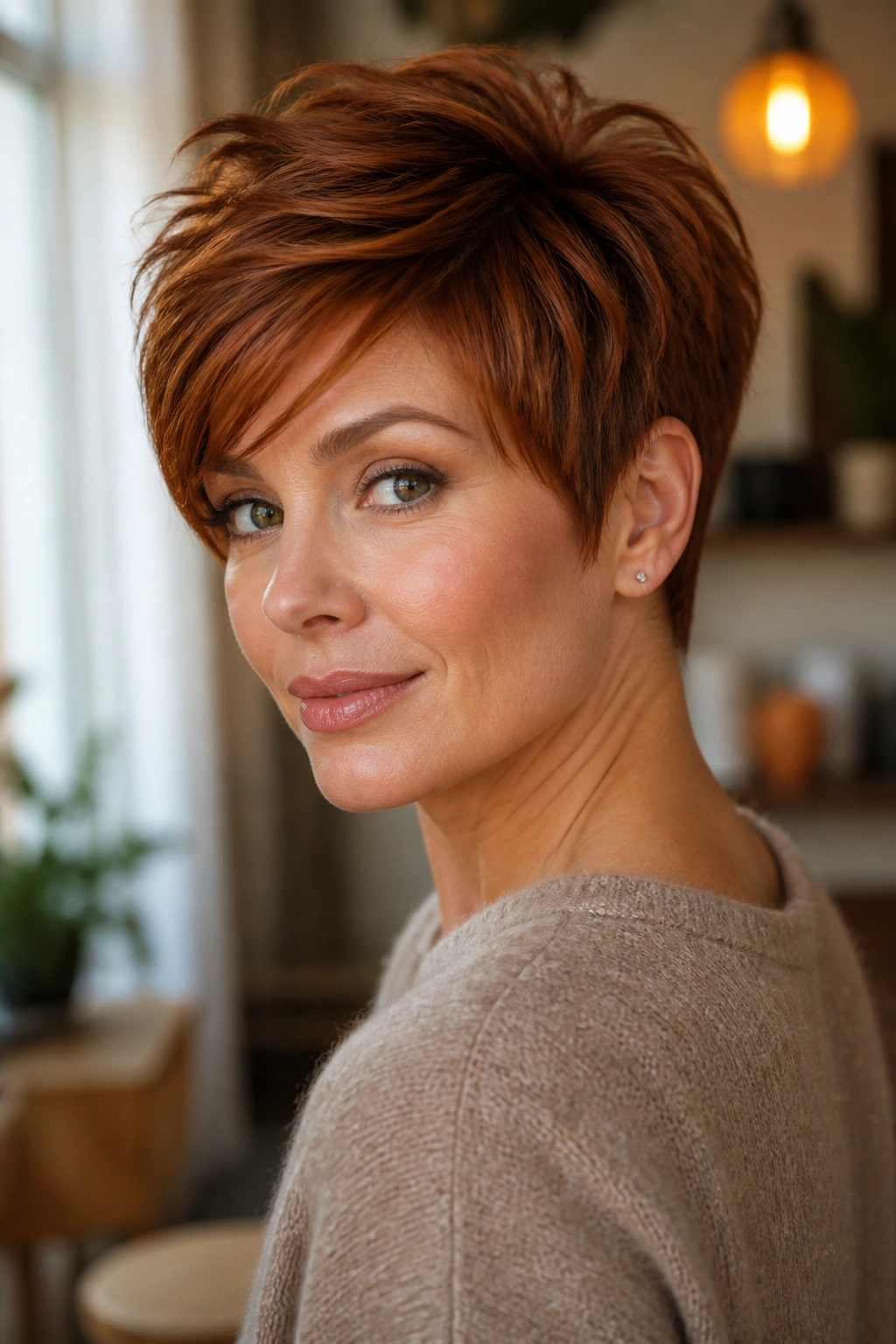
Can a short cut help fine hair look fuller? Yes, and this is one of the better examples. A cinnamon pixie bob keeps the back close and light, then leaves enough length through the top and sides to build shape.
How to Style It
The most useful part of this cut is the crown. Fine hair often lies too flat there, so a pixie bob gives you room to lift the roots without dragging the whole style down. The cinnamon red shade adds warmth that makes the short layers look richer, not sparse.
A matte paste can help, but use a tiny amount. Too much product and the hair separates into little pieces, which is rarely the look people want when they sit down for a haircut like this.
This cut shines on anyone who wants texture without a lot of length. It also grows out well, which is a blessing because short red cuts can look messy fast if the shape is too shaggy.
4. Velvet Auburn Shag
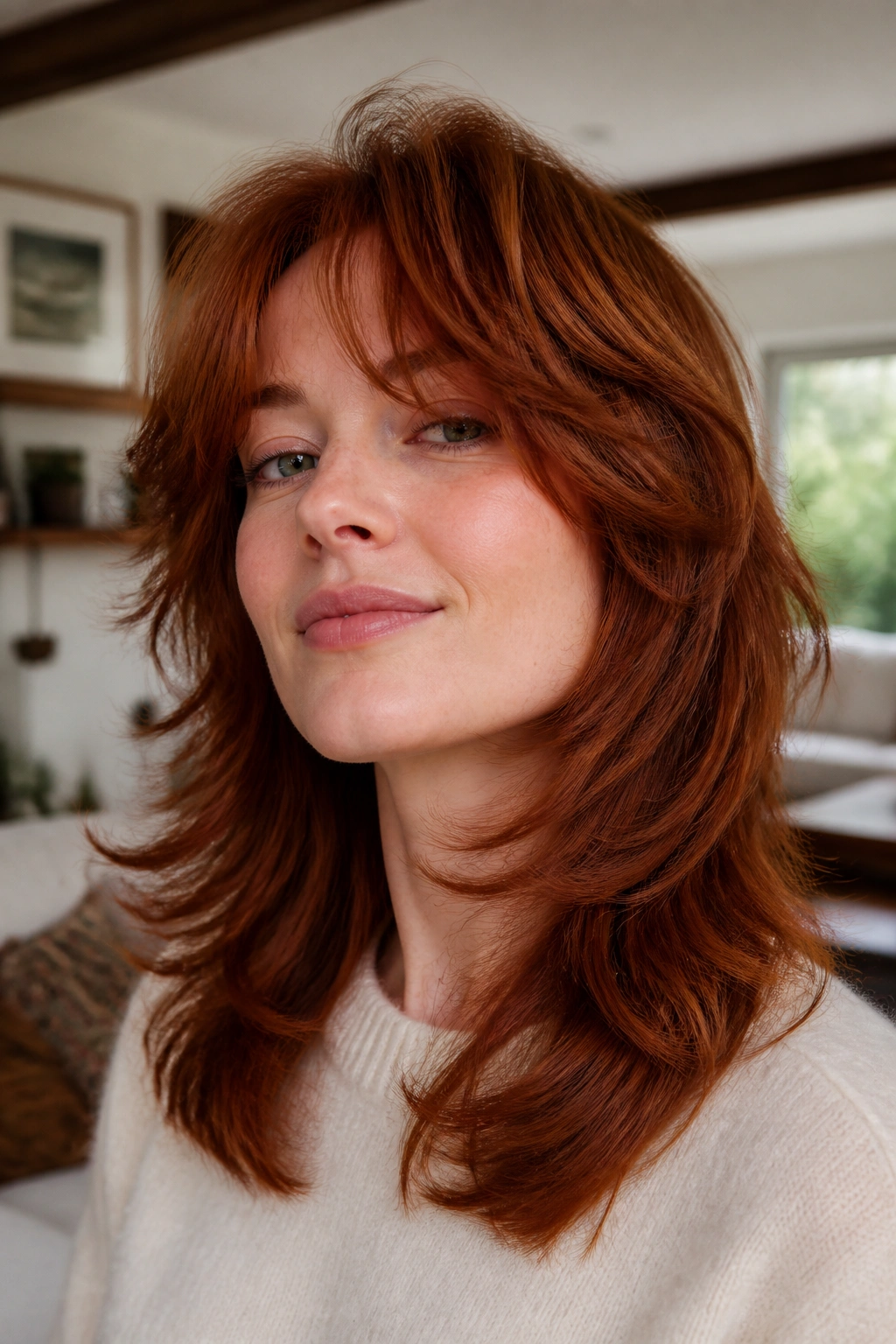
A shag sounds scary to some people with fine hair. I get it. But a velvet auburn shag, done with a light hand, can be gorgeous because it builds softness around the face and keeps the bulk in the right places.
The best version does not chew the ends to bits. Instead, it uses feathery layers that start around the cheekbones and taper down through the shoulders. The auburn color keeps everything looking warm and plush. That word matters here: plush. Not fluffy, not puffy, just soft and full enough to read as intentional.
What to Watch For
- Ask for soft texturizing, not aggressive thinning
- Keep the fringe airy, not choppy to the point of gaps
- Blow-dry with a diffuser or large brush
- Finish with a light-hold spray so the layers do not scatter
This style is good if your fine hair has some natural bend. Straight, slippery hair can wear it too, but you’ll spend more time shaping it in the morning.
5. Ruby Lob with Soft Internal Layers
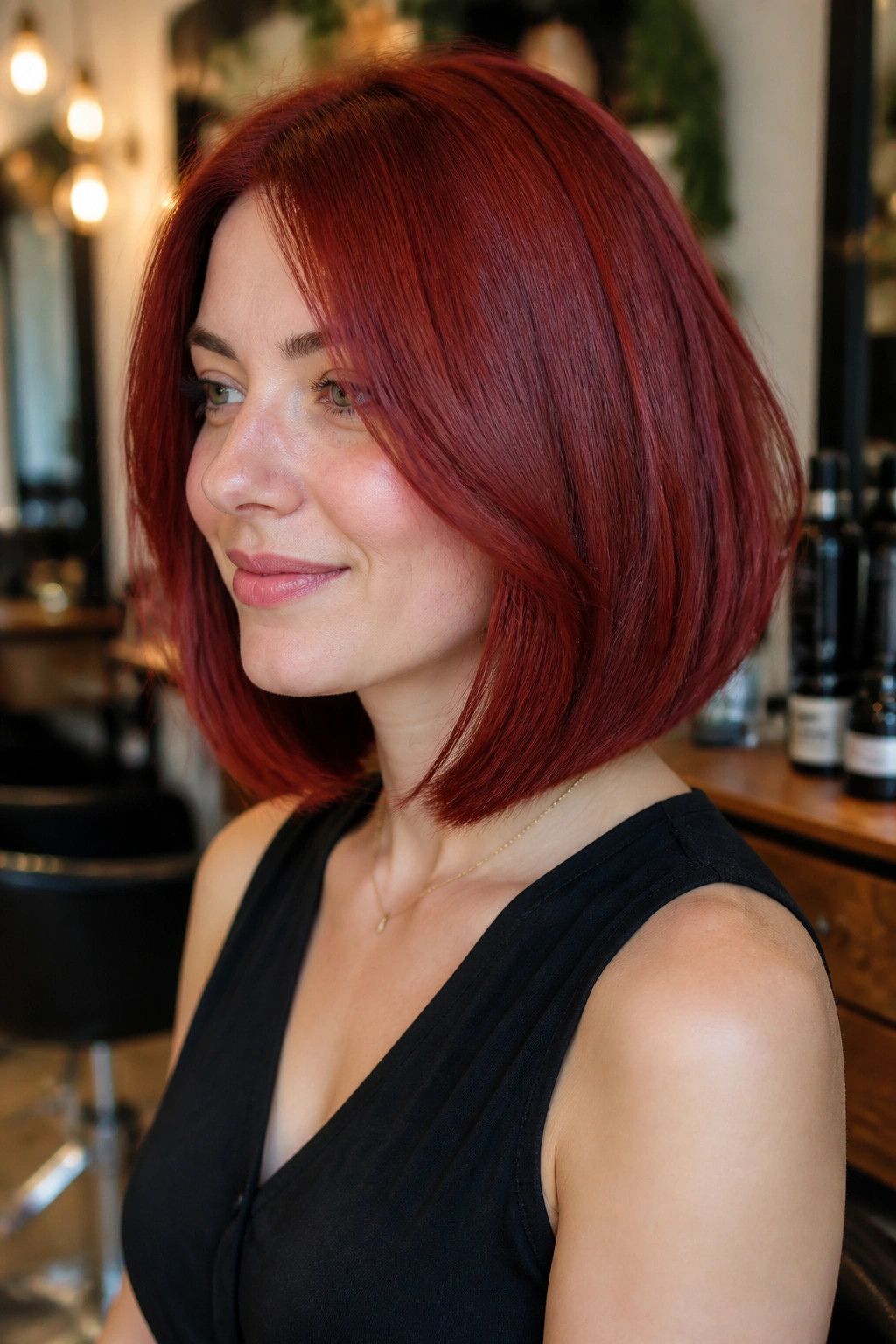
A ruby lob is the kind of haircut that looks simple until you see it move. Then it starts showing all the little details: the hidden lift through the middle, the clean perimeter, the shine that bounces off the red tone.
The internal layers matter more than the surface layers here. That’s what gives fine hair a body without turning the outline into a mess. I like this cut on hair that sits between straight and slightly wavy, because the lob length gives enough weight to keep the ends from flicking out in awkward ways.
Ruby red can lean elegant or loud, depending on the gloss level. If you want the more polished version, ask for a rich red with a translucent finish. It makes the hair look smoother and denser at the same time.
This is one of those cuts that looks expensive without shouting about it. Quiet? No. Controlled? Very.
6. Strawberry Layered Butterfly Cut
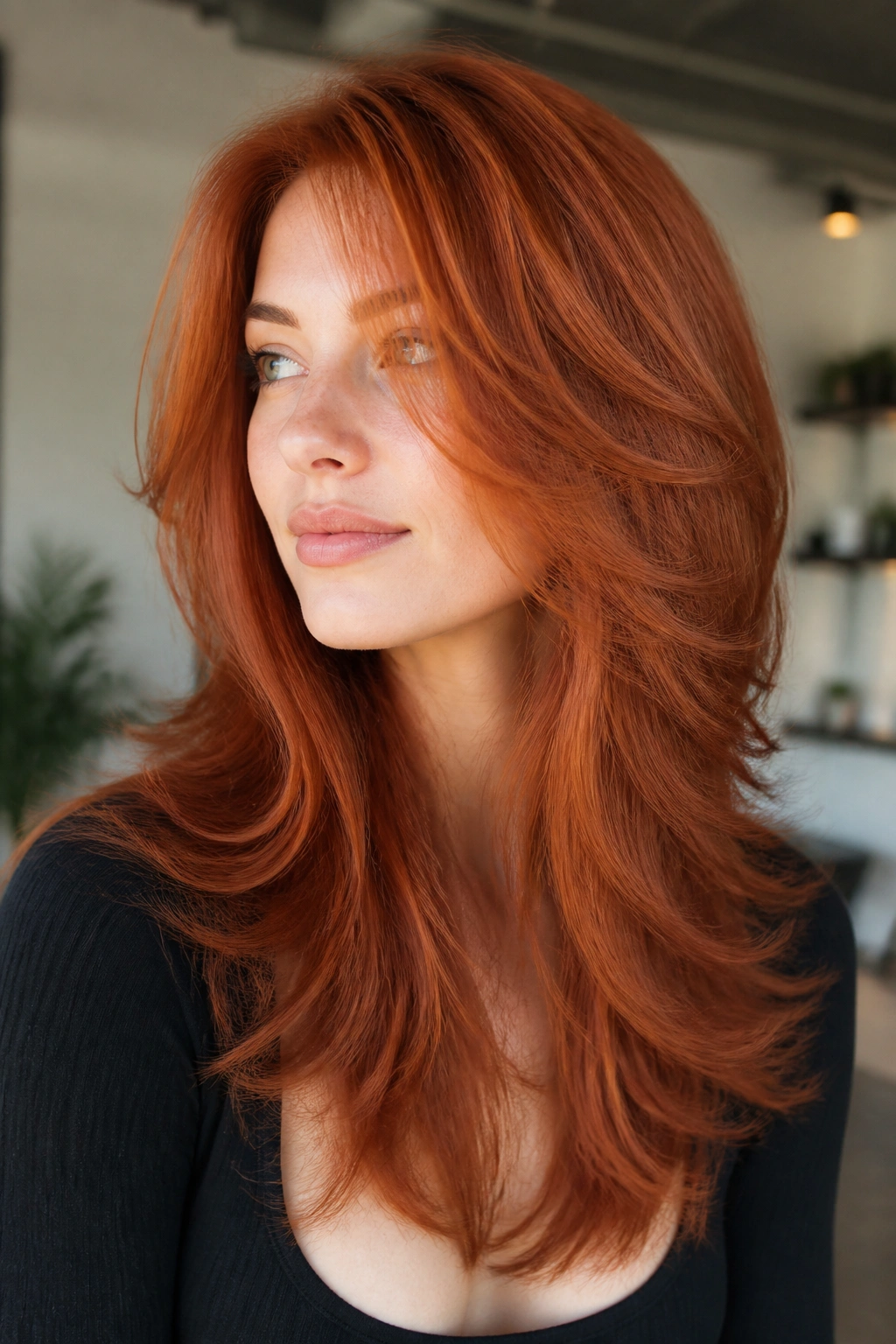
Unlike a blunt lob, the butterfly cut gives fine hair a split personality in the best way. You get shorter face-framing pieces around the front and longer length in back, so the style feels airy without losing the sense of fullness.
Strawberry red lightens the mood. It’s softer than cherry and less dense-looking than burgundy, which helps if your hair is on the finer side and you want the overall feel to stay feathery. The layered wings around the face make cheekbones stand out, and they also stop the hair from hanging like one long curtain.
What Makes It Different
The butterfly cut lives on contrast. The front sections move a lot; the back keeps the weight. That means you can get lift where you need it and still preserve enough bulk at the bottom. Fine hair usually likes that arrangement.
Best for: medium to longer lengths, round brushes, and people who like a soft blowout look. If you hate spending time on styling, skip it. If you enjoy a little bend and swing, this is a good one.
7. Merlot Wedge Bob
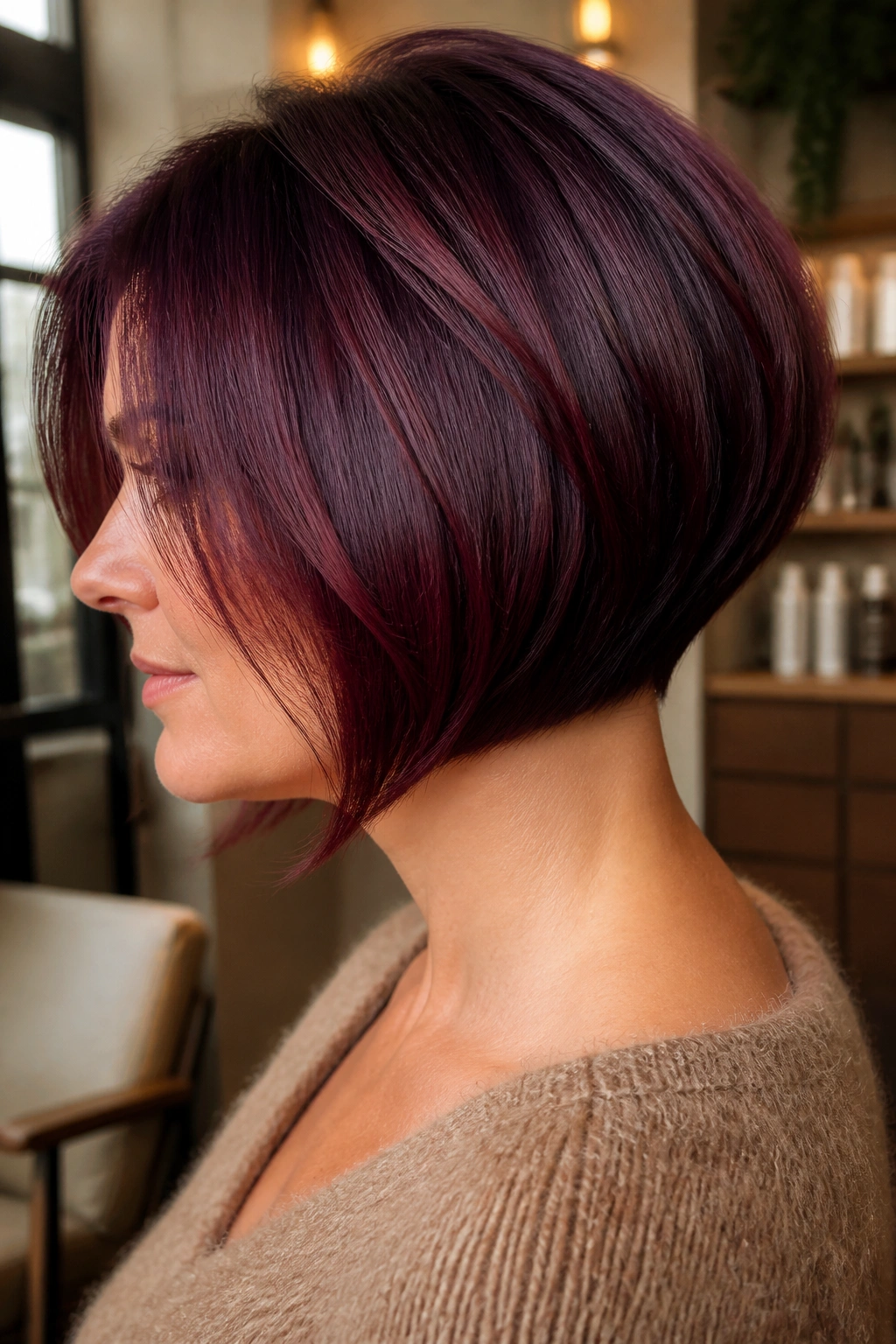
A wedge bob can be a lifesaver for fine hair. The stack in the back builds shape, and the slightly longer front keeps the cut from looking boxy. Add a merlot shade, and the whole thing gets deeper, richer, and a little more dramatic.
Why It Stands Out
The wedge shape creates the illusion of density at the nape. That’s the part many fine-haired people wish looked thicker anyway. Instead of fighting the hair’s natural fall, this cut works with it and uses geometry to make the silhouette fuller.
A merlot tone gives the cut extra depth, especially if you wear it smooth. The darker red base near the back can make the crown look more lifted. Small detail, big payoff.
- Best on straight to softly wavy hair
- Looks sharp with a side part
- Needs a tidy trim every 6 to 8 weeks
- Works best when the back is not over-thinned
If you want a red layered haircut that reads crisp and modern, this one gets there fast.
8. Deep Burgundy Wolf Cut
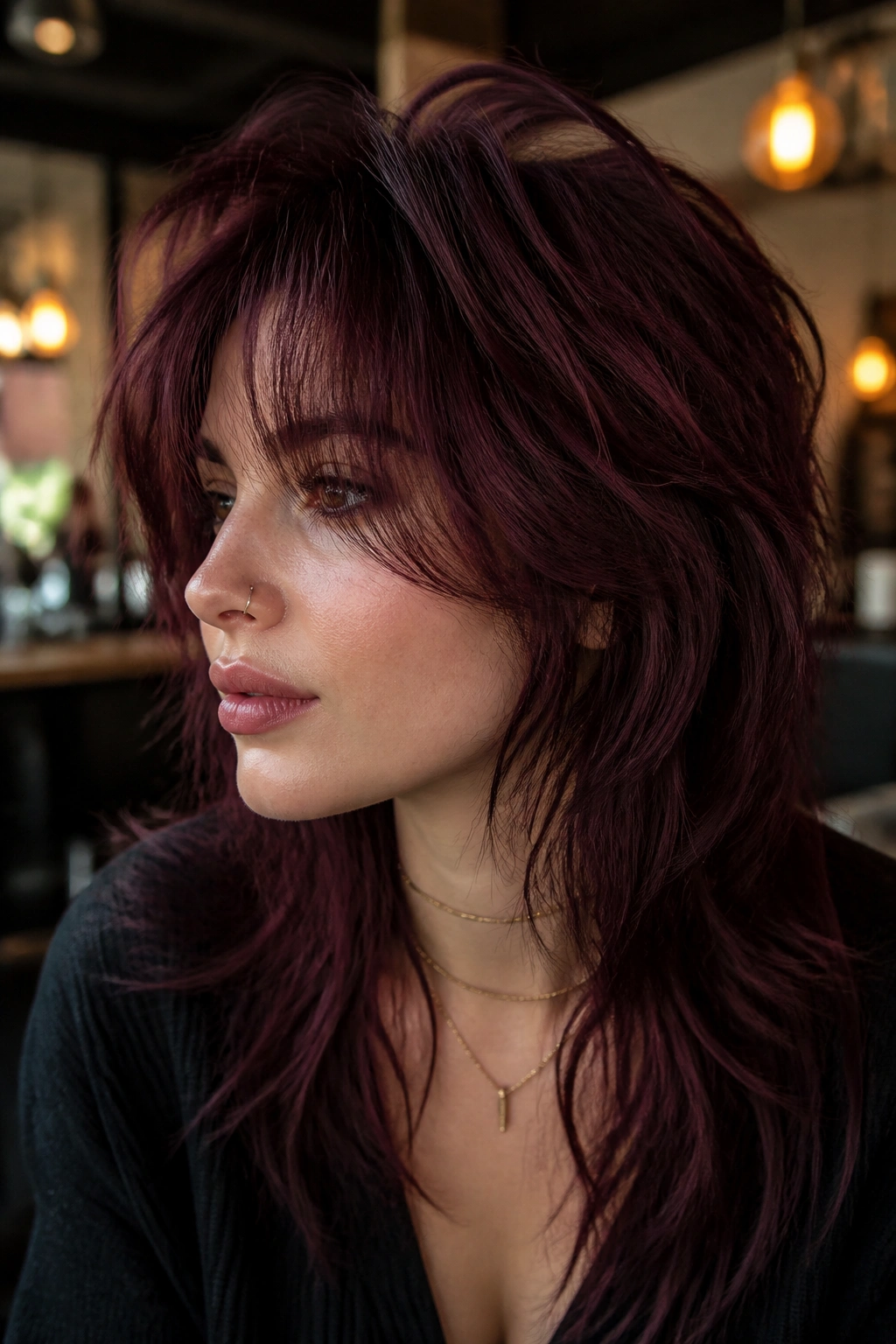
A wolf cut is not subtle, and that is part of the fun. On fine hair, though, it needs control. Deep burgundy gives it gravity, which helps keep the airy layers from looking too wispy or unfinished.
But here’s the catch: the wolf cut can go wrong if the stylist gets too enthusiastic with the razor. Fine hair already has less visual mass, so the goal is a soft, lived-in texture, not a shredded outline. The best version keeps some weight at the ends and uses the top layers to create lift around the crown.
This cut suits people who like a little edge and do not mind a messier finish. It pairs well with a bit of wave or a bend from a flat iron. Burgundy helps the shape feel richer, almost like velvet in motion.
I’d avoid this one if your hair breaks easily at the ends. You want texture, not gaps.
9. Rosewood Shoulder Sweep
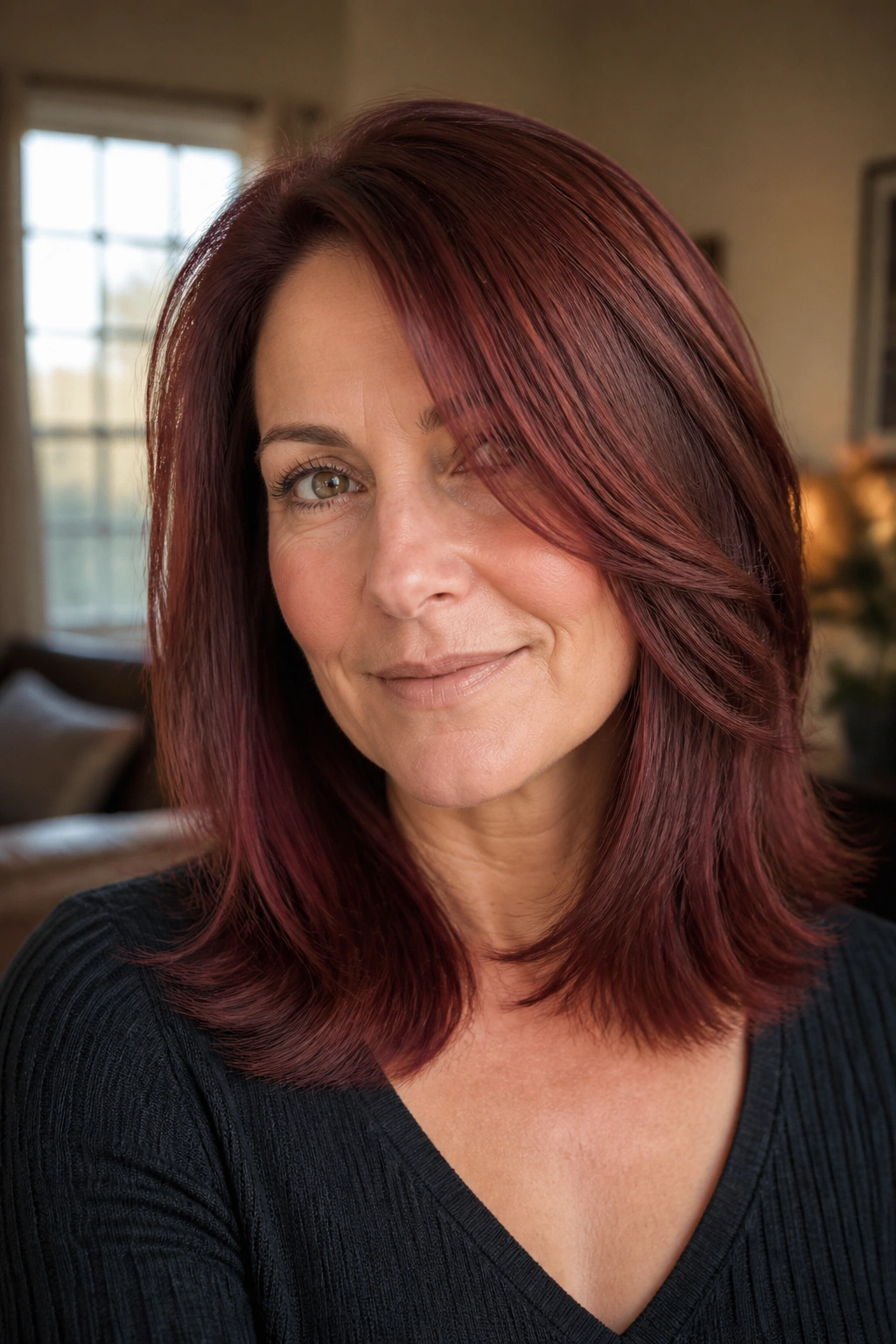
Why does this cut work so well? Because shoulder length is a sweet spot for fine hair. It gives enough length for movement, but not so much that gravity flattens everything out by lunchtime.
The rosewood tone softens the whole effect. It sits between red and brown, which means the cut looks wearable even when the styling is minimal. The side sweep through the front adds a gentle line across the face and keeps the hair from splitting into two flat curtains.
How to Get the Most From It
Ask for long, blended layers that start below the chin. That keeps the shape smooth. A little lift at the roots helps, but the bigger win is the sweep across the front. It gives the haircut direction.
This is a nice pick if you want red without a loud red. It feels polished, but not stiff. And if you’re one of those people who tucks one side behind the ear all day, the shape still holds.
10. Crimson C-Cut Layers
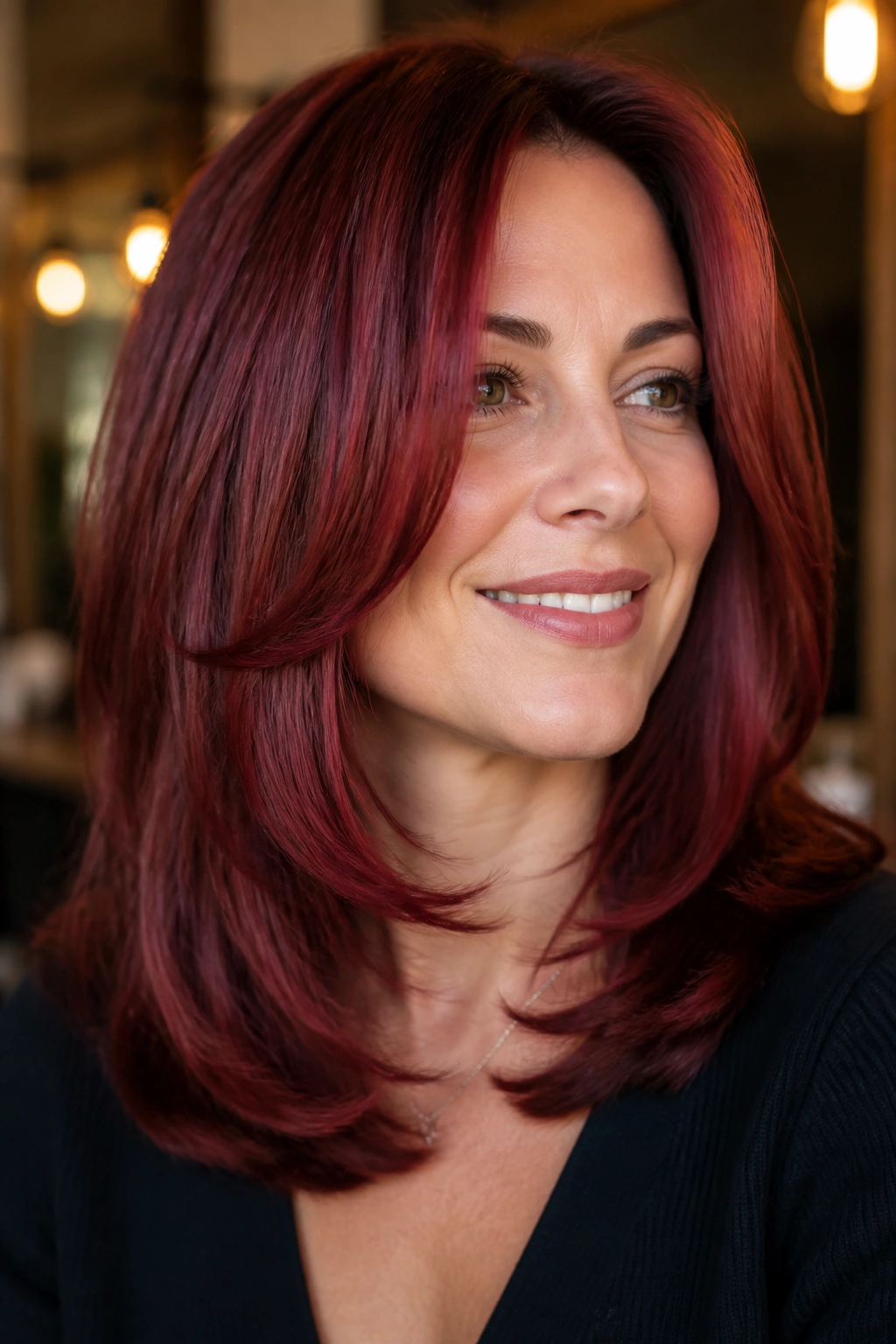
A C-cut is built to curve around the face and chest, which is useful when fine hair needs a little more shape than a plain long layer cut can offer. Crimson makes the movement visible. Every bend shows.
The front pieces are slightly shorter, then the length falls in a soft curve down the sides. That creates a rounded outline rather than a sharp drop. On fine hair, that rounded shape can look fuller because it avoids the dead-straight line that often exposes thin ends.
Think of this as a styling-friendly cut. It looks good blown smooth, but it also holds a bend from a round brush or curling iron well. The crimson tone gives the curve extra contrast, almost like the haircut has been outlined in color.
If your hair tends to look flat when it hangs straight, this is a smart fix.
11. Firelight Pageboy Modern
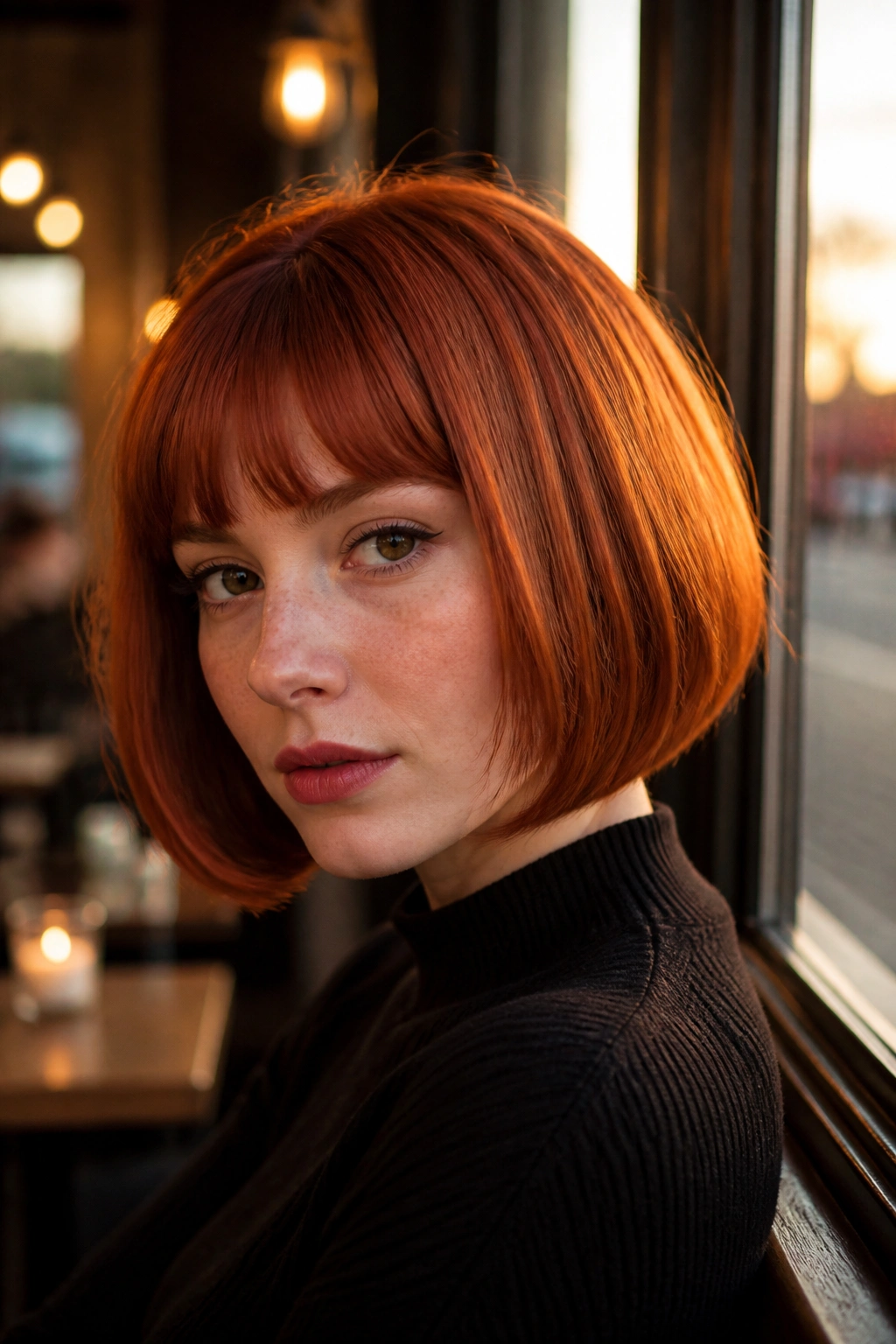
A modern pageboy sounds old-fashioned until you see it on fine hair. Then it makes sense. The rounded shape, tucked ends, and soft interior layering give the illusion of more hair than is actually there.
Firelight red keeps the cut from looking too school-uniform neat. It adds warmth and a little glow around the edges. I like this shape when the ends are cut cleanly and the top has a bit of natural lift. Too much layering ruins the rounded effect. Too little, and it can look helmet-like.
The beauty of this cut is its restraint. It does not need drama to work. A slight bend under the jawline is enough. A side part helps break up the symmetry, which can be flattering if your hair has a habit of lying too flat in the middle.
It’s one of the better choices if you want a structured haircut that still feels soft.
12. Rusted Copper Curtain Layers
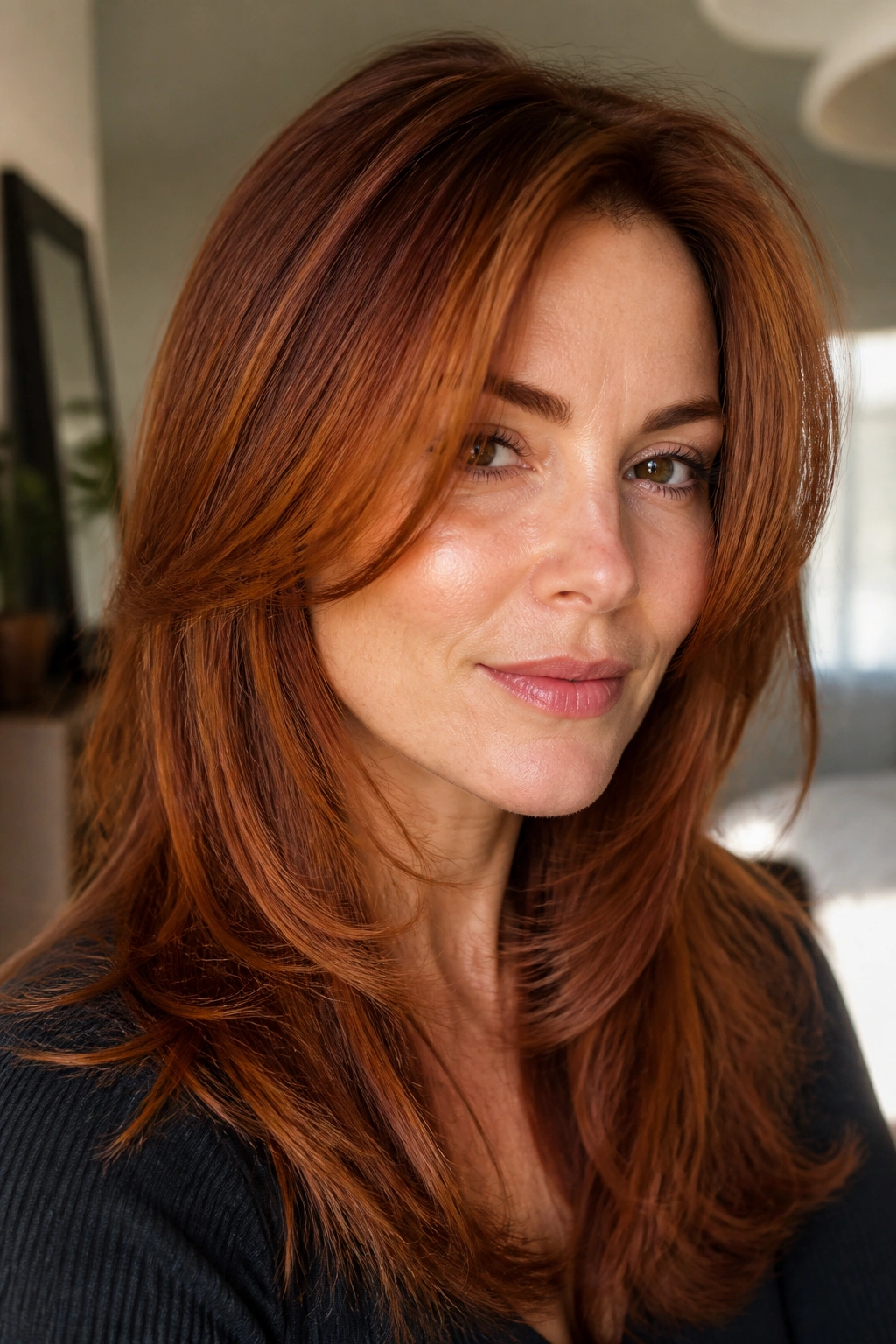
Curtain bangs and fine hair are a strong match when the bangs are kept light. Add rusted copper, and you get a cut that frames the face without stealing all the volume from the rest of the head.
What Makes It Different
Unlike heavy fringe styles, curtain layers split the front weight into two soft panels. That means your hair stays more open around the eyes and cheekbones, while the rest of the cut keeps its shape. Fine hair benefits from that kind of breathing room.
The rusted copper shade has depth, which keeps the layering from looking too airy. It gives the roots and mids a warm base, then lets the ends flash brighter. A blowout with a medium round brush makes the curtain shape sit properly; air-drying alone usually leaves the bangs too separated.
Best for:
- Oval and heart-shaped faces
- Hair that falls straight or with slight wave
- People who like a soft, face-first shape
- Anyone who wants volume without a big haircut commitment
This one is easy to wear and easy to grow out. That matters more than people admit.
13. Garnet Tapered Crop
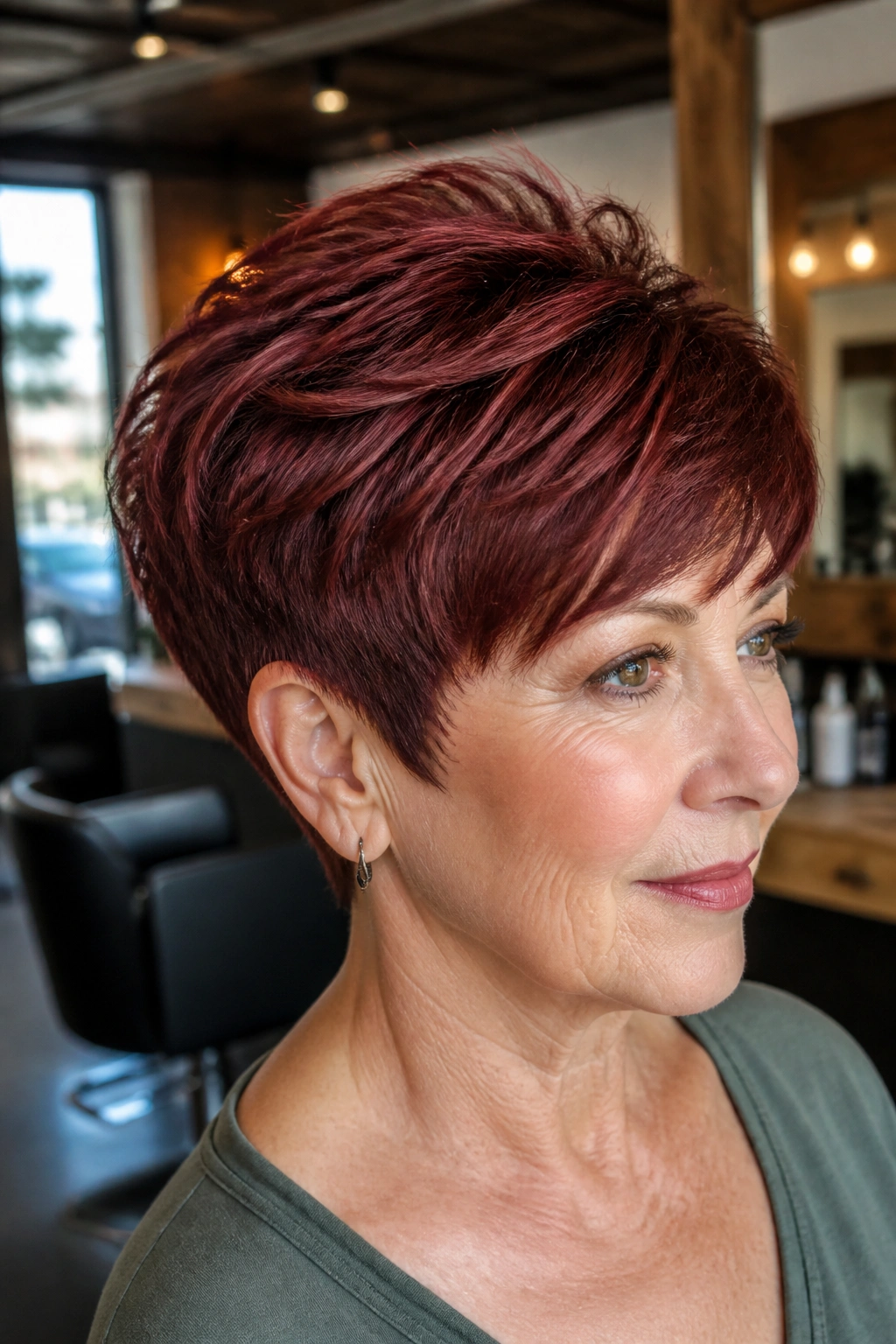
Short hair can carry red beautifully when the shape is clean. A garnet tapered crop does that job well. The sides stay neat, the nape stays close, and the top has just enough length to lift and separate.
Why It Works
The taper keeps the bulk where you want it. Fine hair often looks better when the back is shaped with intent instead of left to hang flat. Garnet red helps the shorter pieces read richer and denser, especially if the hair is glossy.
This is a sharp choice for someone who likes easy mornings. A dab of styling cream, a quick finger-dry, and you’re done. If you want more texture, rough-dry the top with your head upside down, then smooth the front with your palms.
- Great for active routines
- Needs clean neckline trims
- Works best with a strong color gloss
- Not ideal if you want lots of swinging length
I’d call this one practical with attitude.
14. Mulled Wine Midi Shag
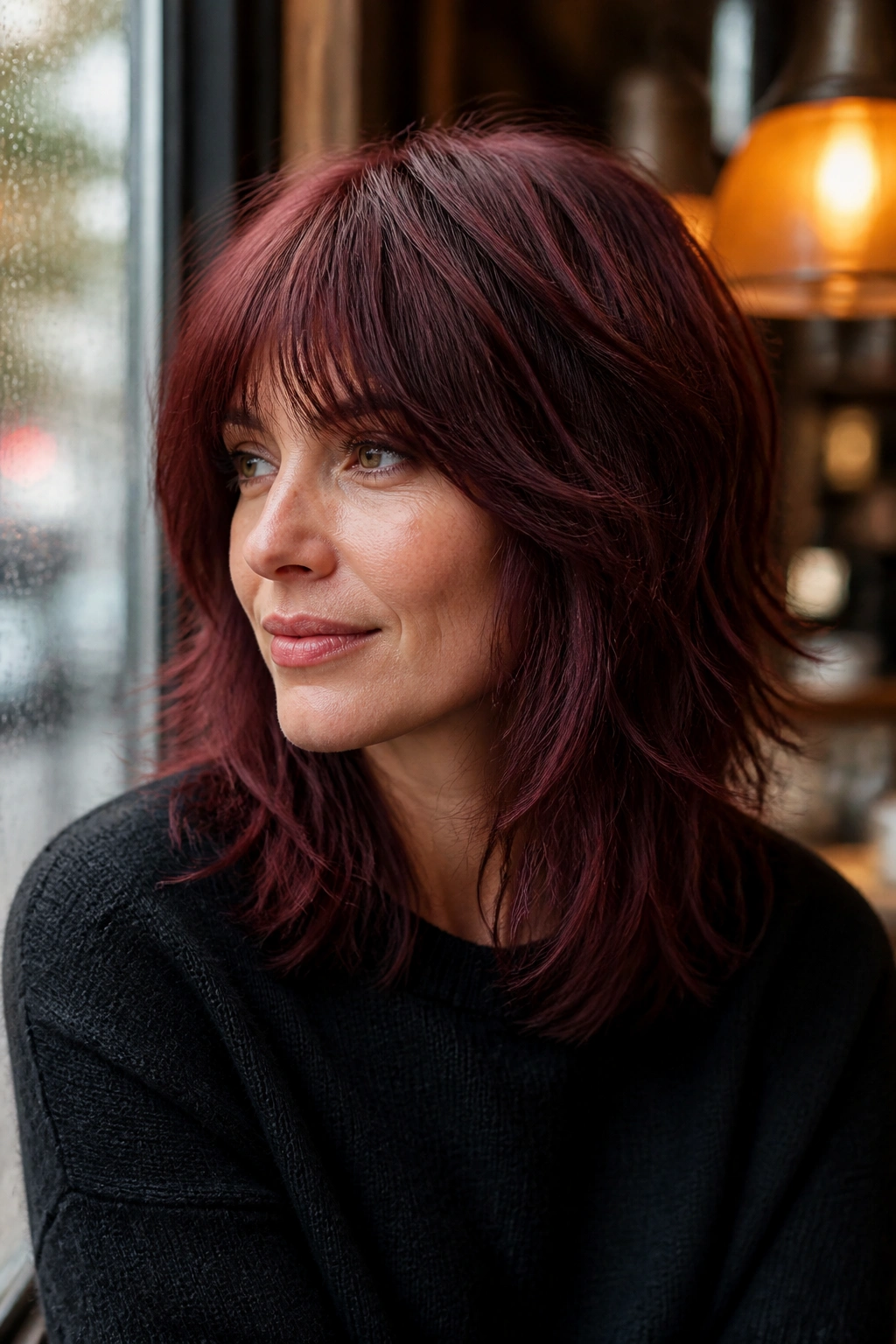
Mulled wine is one of those shades that looks especially good on layered cuts because it deepens the shadows between the layers. That gives fine hair a bit more visual texture without needing extra bulk.
The midi shag sits around the shoulders and keeps the layers loose enough to move. The fringe can be soft and piecey, but I’d keep it longer if your hair is very fine. Too much shortness in the front can expose the scalp faster than you’d like. Nobody wants that.
A shag like this depends on controlled roughness. It should look touched, not demolished. A sea-salt spray or light mousse can bring out the separation, but don’t pile on product. Fine hair turns heavy quickly.
This cut is a good middle ground if you want a lived-in shape that still feels feminine and wearable. It has a little edge, but not the kind that fights your face.
15. Spiced Tomato Chin Bob
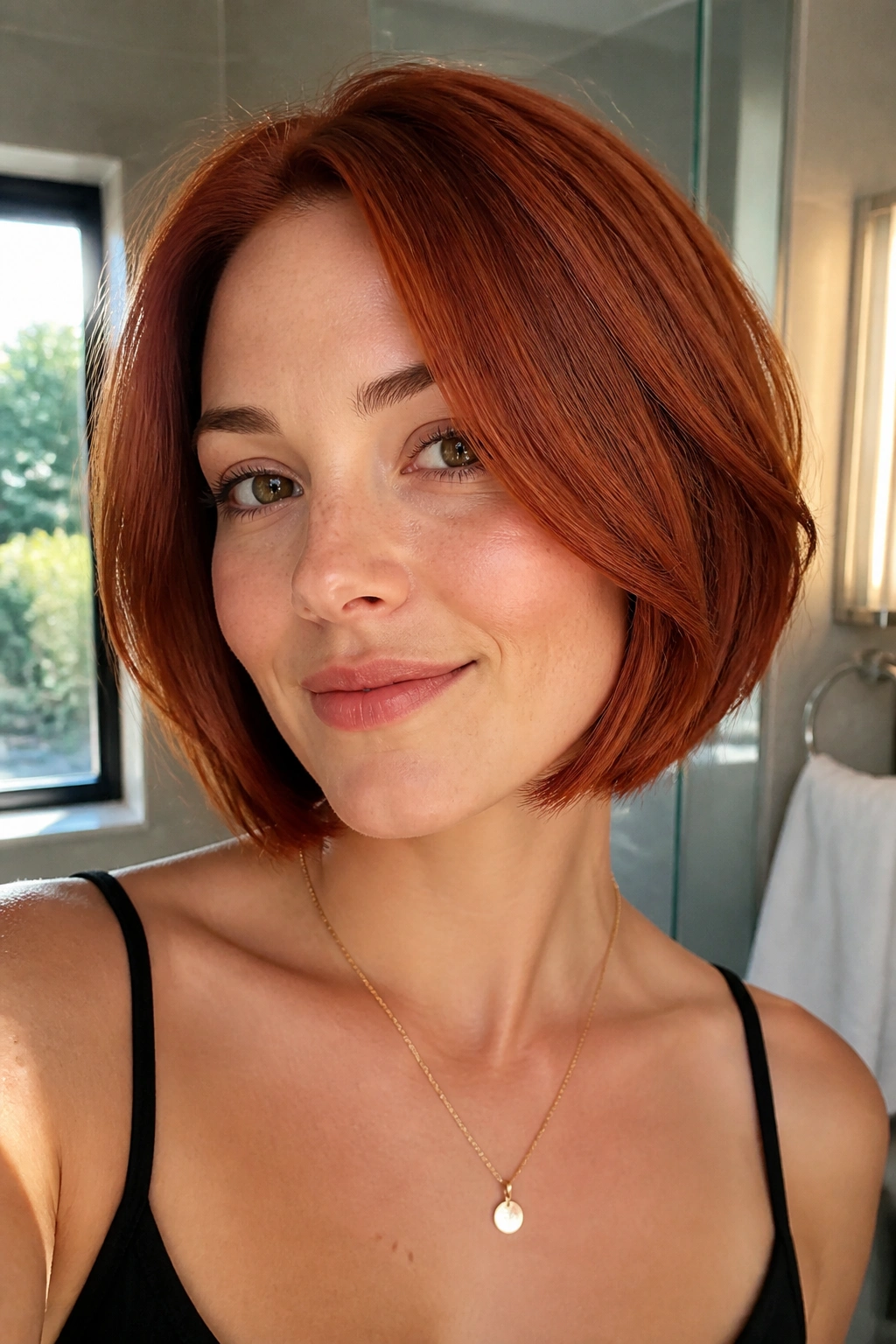
A chin bob is bold on fine hair because the line sits right where people notice movement. Add subtle layers and a spiced tomato tone, and the cut starts to feel lively instead of severe.
Why a chin length? Because it creates the sense of fullness at a higher point on the face. That can be flattering when the lower lengths of the hair are sparse. The layers should be soft, almost hidden, so the perimeter still reads as strong.
How to Style It
Use a small round brush or a flat iron turned just slightly under at the ends. The goal is a gentle curve, not a curl. Spiced tomato reds are vivid enough that the shape will show even when the styling is minimal.
This cut suits sharp jawlines and people who like a bit of polish. It does not need a lot of fuss. In fact, too much texture can make it lose the crisp line that gives it charm.
16. Blackberry-Red Long Layers
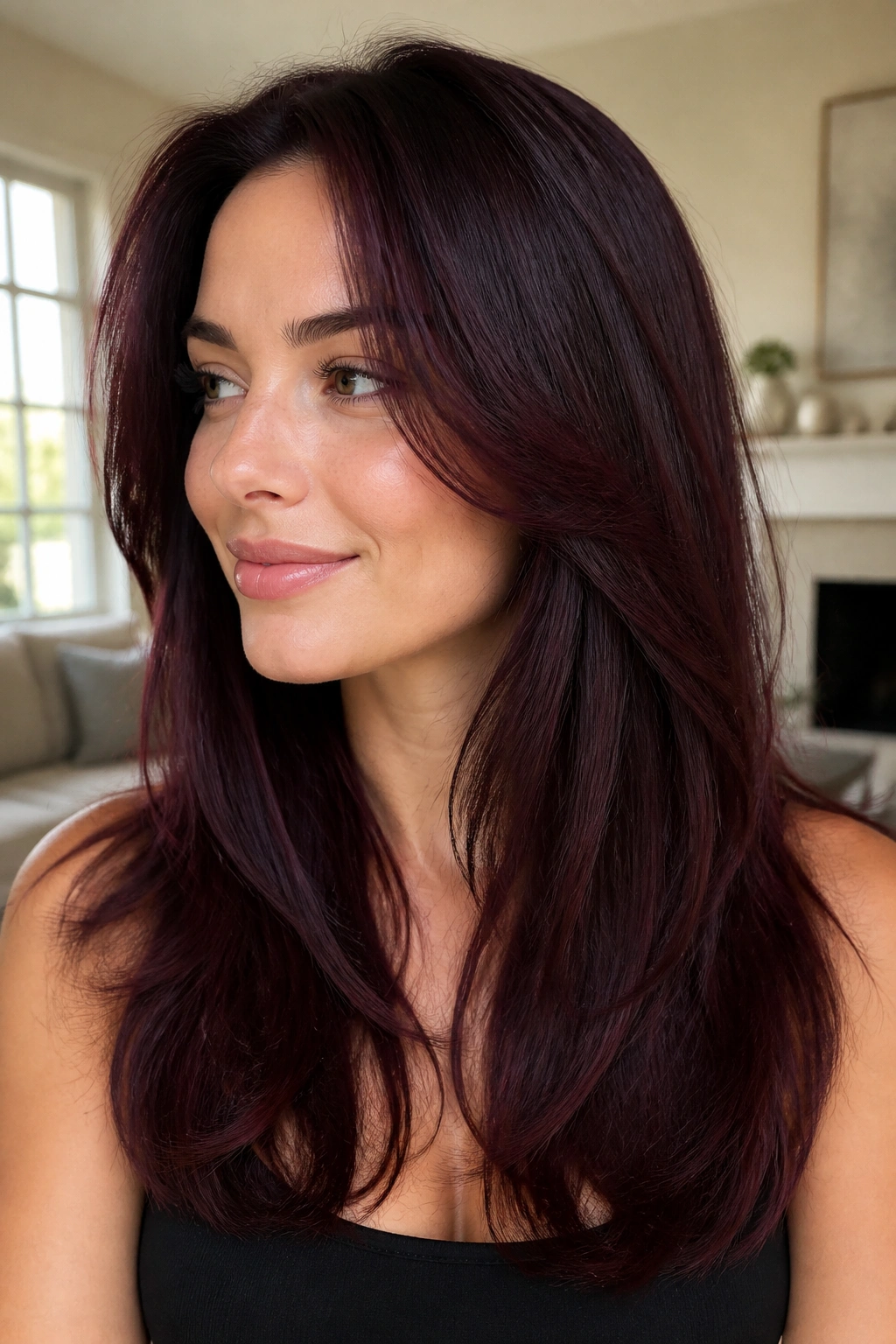
Long layers on fine hair can be tricky, but not if the cutting is careful. Blackberry-red long layers keep the length, which some people are attached to, while removing just enough weight to stop the shape from falling flat.
The color matters here because darker reds add depth through the mids and ends. Blackberry sits close to burgundy, but with a cooler edge. That cooler tone can make long fine hair look thicker, especially if the ends have a blunt-ish finish instead of being thinned out too much.
This is the sort of haircut that rewards good blow-drying. A paddle brush for the roots and a large round brush through the last 2 inches can make the whole style look fuller. Keep the layers long. Keep the ends healthy. That part is not negotiable.
Best for people who want length, but not that stringy waist-length look that fine hair gets when it’s cut badly.
17. Scarlet Soft Mullet
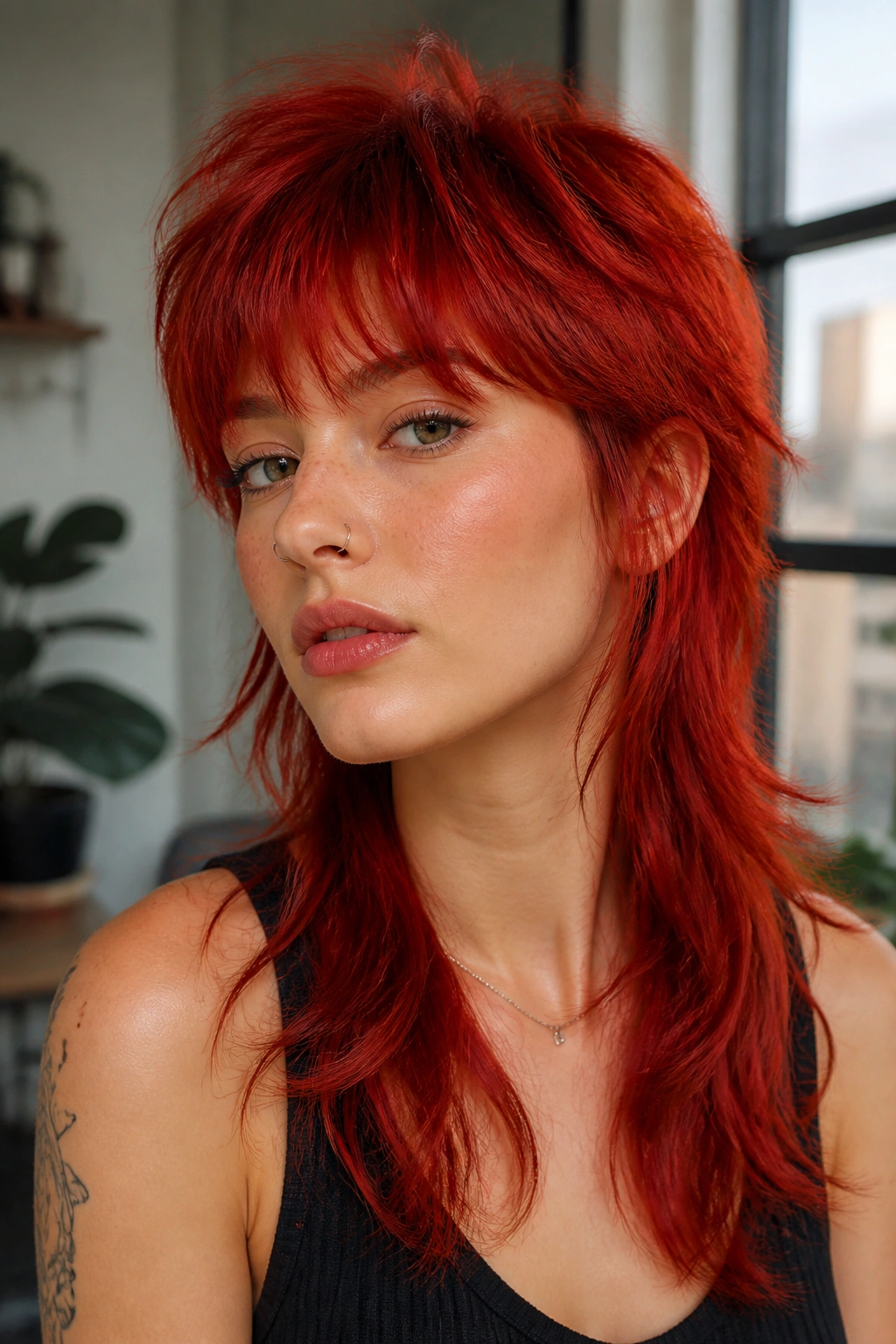
A soft mullet sounds rebellious, and sure, it can be. But on fine hair, the modern version is more about shape than shock value. Scarlet red gives it bite, while the softened layering keeps the cut from looking choppy in a bad way.
The front and top stay a little shorter, the back carries more length, and the transition between them should feel smooth. Not blunt. Not jagged. Smooth enough that the eye glides through the shape. That’s what makes this wearable.
What to Expect
- More volume around the crown
- A little length left at the back
- Movement around the cheekbones
- A cut that looks better with texture than with poker-straight styling
This one is for someone who wants personality in the haircut itself. If you like structure with a bit of bite, the soft mullet is a fun place to land. If you want quiet and conservative, skip straight past it.
18. Apricot Copper Flip Ends
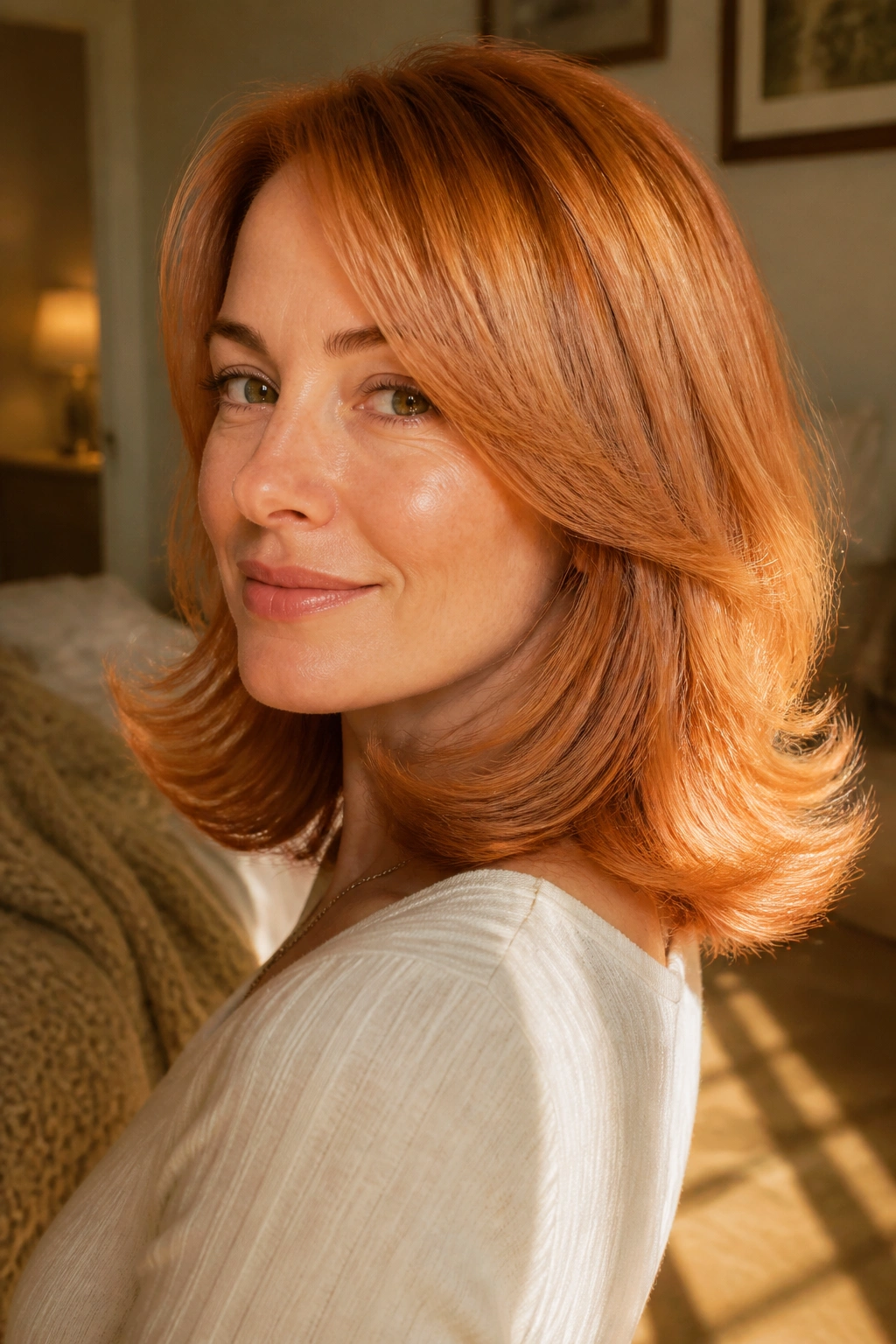
Flip ends are underrated. They make fine hair look active, even if the actual density is modest. Apricot copper adds brightness, which keeps the cut from fading into the background.
The layers here should be subtle through the top and a touch more visible near the last few inches. That lets the ends kick out with a brush or a flat iron. The flipped motion gives the illusion of extra width, which can help a narrow face or a hairline that needs more visual balance.
Unlike sleeker red cuts, this one likes a bit of bounce. You do not need perfect curls. Just enough bend to show the shape.
It works best on hair that already has some memory. If your hair refuses to hold a curve, you’ll spend more time on it. Still, the payoff is a cheerful, light-looking style that doesn’t weigh fine hair down.
19. Mahogany Layered Blunt Bob
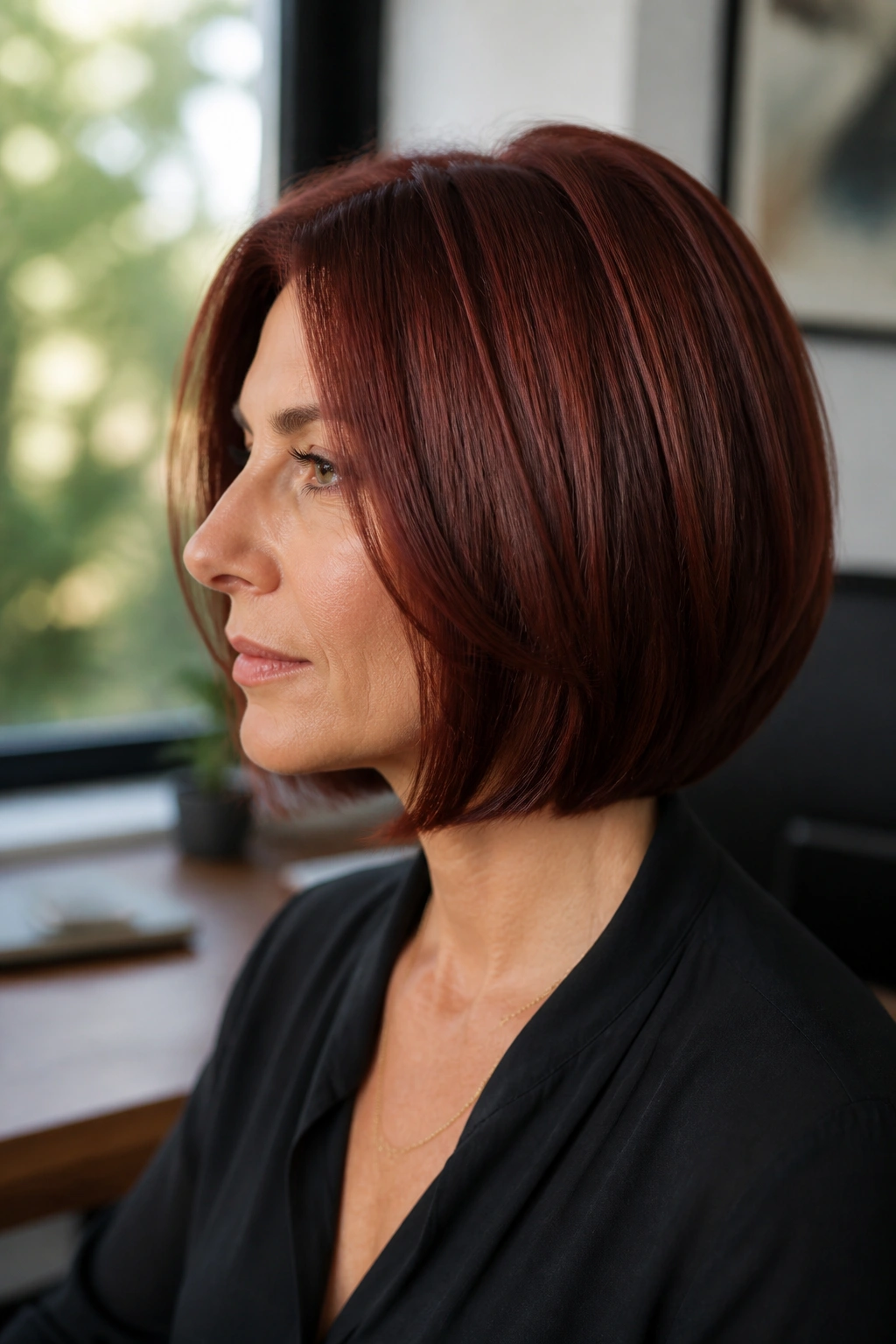
A blunt bob sounds like the enemy of layers, but the combination can work if the layering stays hidden. Mahogany gives the shape depth, while the blunt edge holds the line at the bottom.
That bottom line is doing real work. It keeps the haircut from looking too thin. Hidden layers inside the bob remove puffiness and help the hair move, but from the outside, you still see a strong shape. Fine hair often needs that trick: movement without losing the outline.
Why It’s Smart for Fine Hair
The blunt edge acts like a visual shelf. The mahogany shade adds weight through shadow and shine. Put those together and the bob looks more solid than it really is.
This is one of the better choices if you want office-friendly hair that still feels current. It’s neat, but not boring. And when the light catches the red-brown depth, the haircut looks fuller than a flat one-length bob ever could.
20. Pomegranate S-Wave Lob
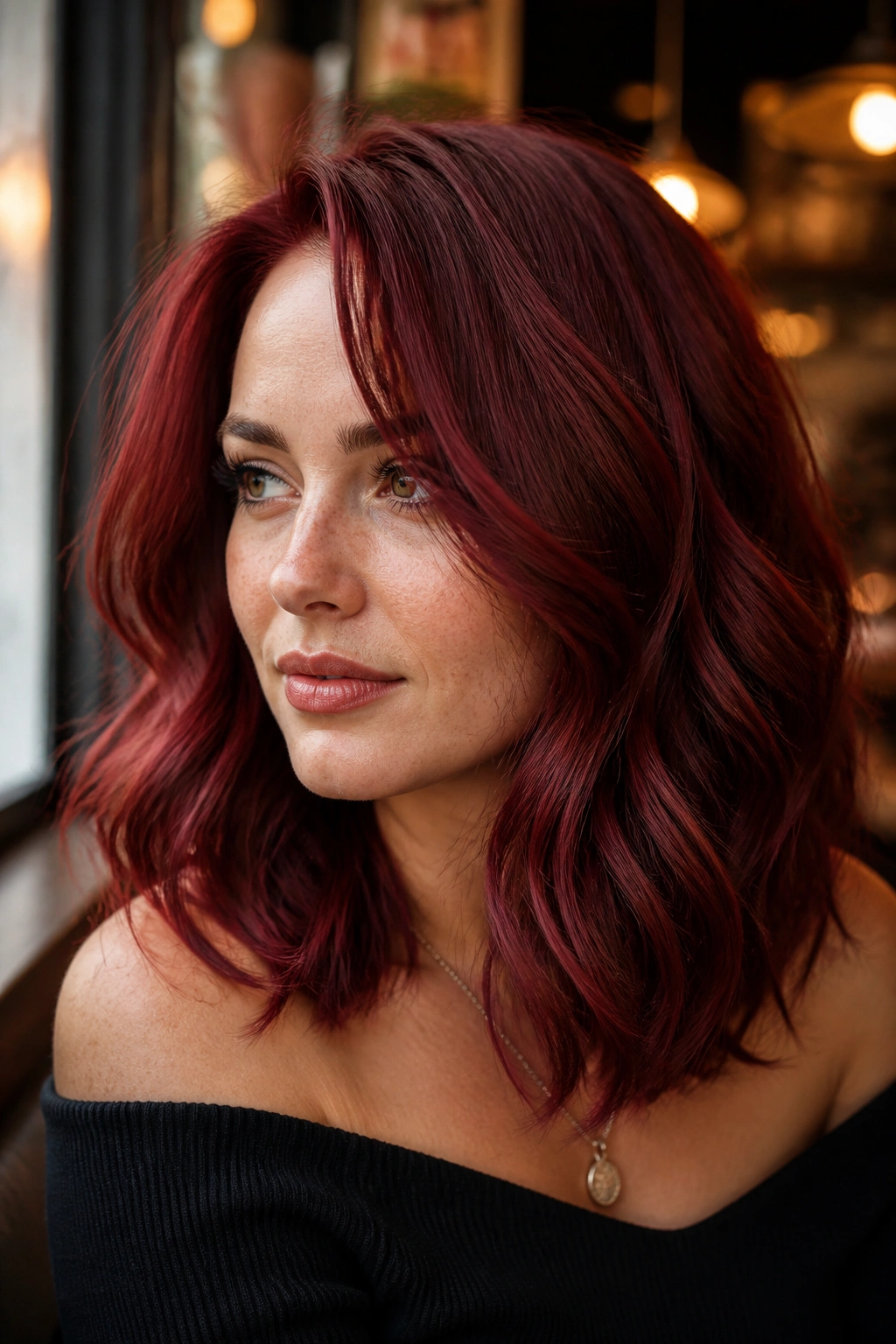
Pomegranate red and S-waves are a strong pair because both are about softness with structure. The lob gives you enough length to bend the hair, while the subtle layers keep those waves from collapsing into a triangle.
The S-wave pattern is useful on fine hair because it creates movement across the whole head without relying on big curls. Big curls can expose how little hair is actually there. Soft waves don’t shout that information. They just make the hair feel more alive.
How to Wear It Well
Use a 1-inch iron or a flat iron bend, then brush the waves out with your fingers. That gives the hair a looser finish and avoids ringlets, which can look too sparse on fine strands. A pomegranate tone deepens the curves, especially through the mids.
This is a good date-night cut, a good work cut, and a good “I want compliments from strangers” cut. A little extra, but still believable.
21. Hibiscus Layered Pixie Crop
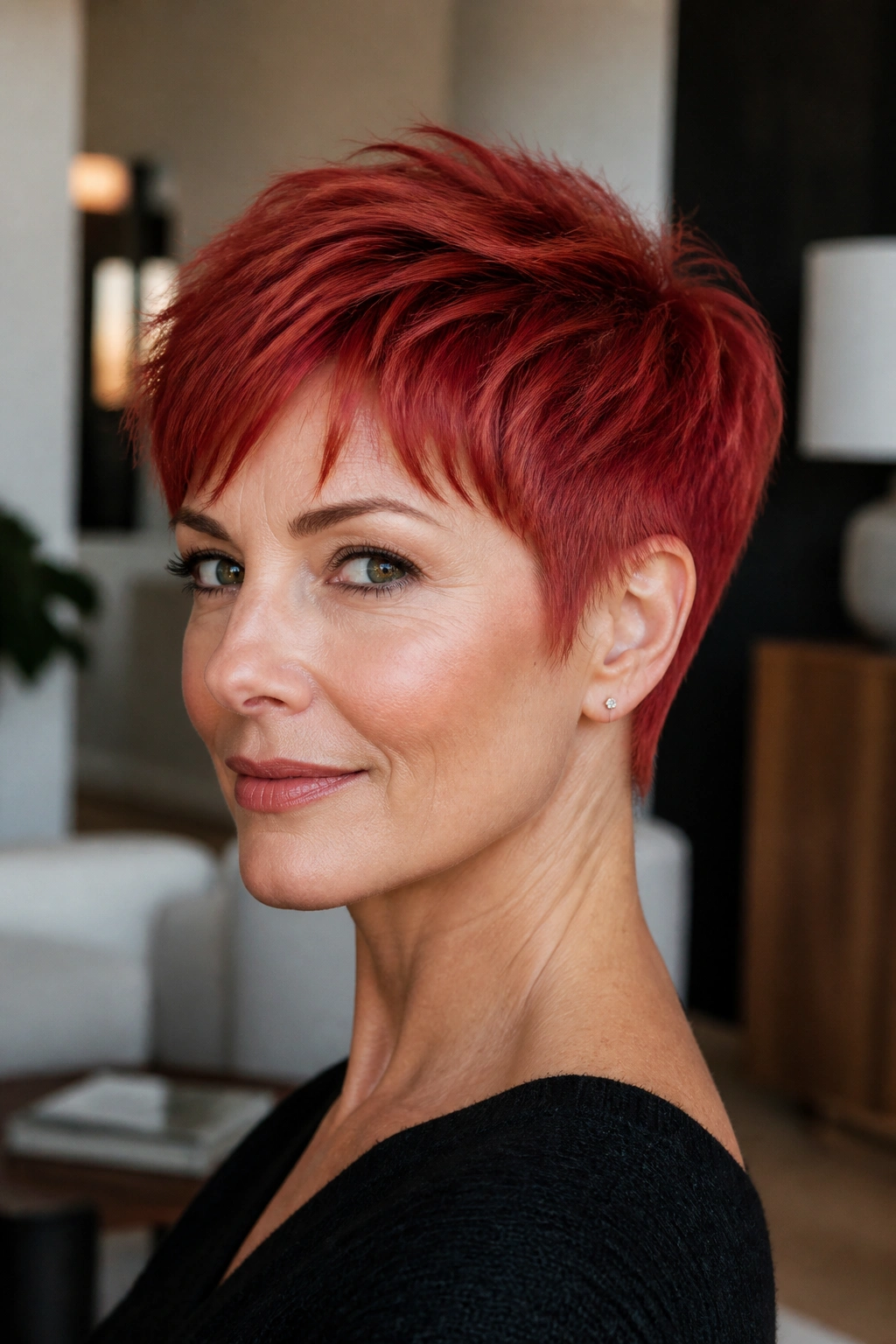
Is a pixie too much for fine hair? Not if the cut is handled with care. A hibiscus layered pixie crop keeps the silhouette light, builds lift at the crown, and leaves enough texture on top to make the hair look fuller than it is.
How to Get the Most From It
Ask for short sides and a longer top, but keep the texture soft. Fine hair looks best when the top isn’t shredded into tiny broken pieces. The hibiscus red shade gives the short cut warmth, so it doesn’t disappear against the scalp.
A tiny amount of paste goes a long way. Work it through the top with your fingertips, then push the front slightly forward or to the side. That tiny shift changes everything.
This cut is for someone who likes clean necklines, quick styling, and a little flair. It grows out gracefully if the shape is cut well. That matters more than people think with short red hair.
22. Bordeaux Long Shag with Side Sweep
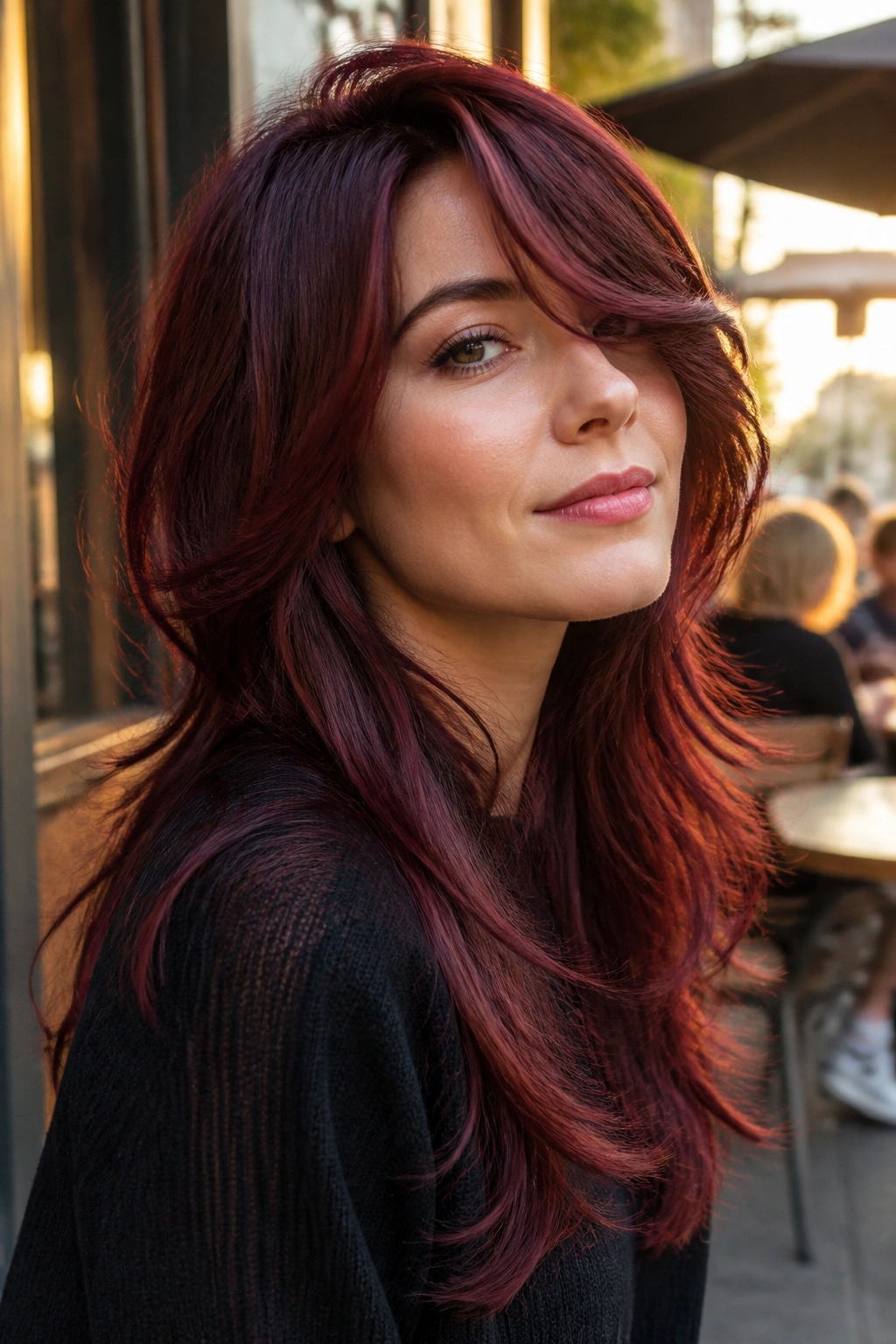
A long shag can be the best of both worlds for fine hair: enough length to feel feminine, enough layers to keep it from hanging limp. Bordeaux red adds depth, and the side sweep gives the front a soft, face-opening line.
The danger with long shags is over-layering. Once the ends get too wispy, the whole style starts looking tired. The better version keeps the lower lengths strong and uses the upper layers to frame the face and build crown lift. That way the hair still feels full when it moves.
A side sweep helps if your fine hair parts too harshly down the middle. It breaks up the flatness and lets the red shade show off its darker and lighter notes. I like this cut for people who want something romantic without drifting into high-maintenance territory.
If you only try one of these, this is a very safe place to land. It has shape, swing, and enough room for the color to do its work.
