



Some layered haircuts for round faces do one job better than anything else: they pull the eye up and down instead of letting it hang out across the widest part of the face. That sounds simple, but it changes everything. The right layers can make cheekbones look sharper, the jaw look cleaner, and the whole cut feel lighter without turning your hair into a triangle.
The trap is usually too much width at the cheeks. A lot of people ask for “more layers” and end up with shape in all the wrong places. Short pieces at chin level, bulky sides, or a blunt cut that stops right at the fullest part of the face can make a round face look even rounder. The better move is usually to keep movement below the chin, add lift at the crown, and let the front pieces slide past the cheeks.
Hair texture matters too. Fine hair needs softness and internal movement, not choppy thinning that leaves the ends see-through. Thick hair can take stronger layering, but it still needs control so it does not puff out at the sides. Curly hair can look fantastic with layers, though the curl pattern has to be cut with care or you get a halo instead of shape. That’s the part most people miss. Shape first, trend second.
1. Long Layers That Start Below the Chin
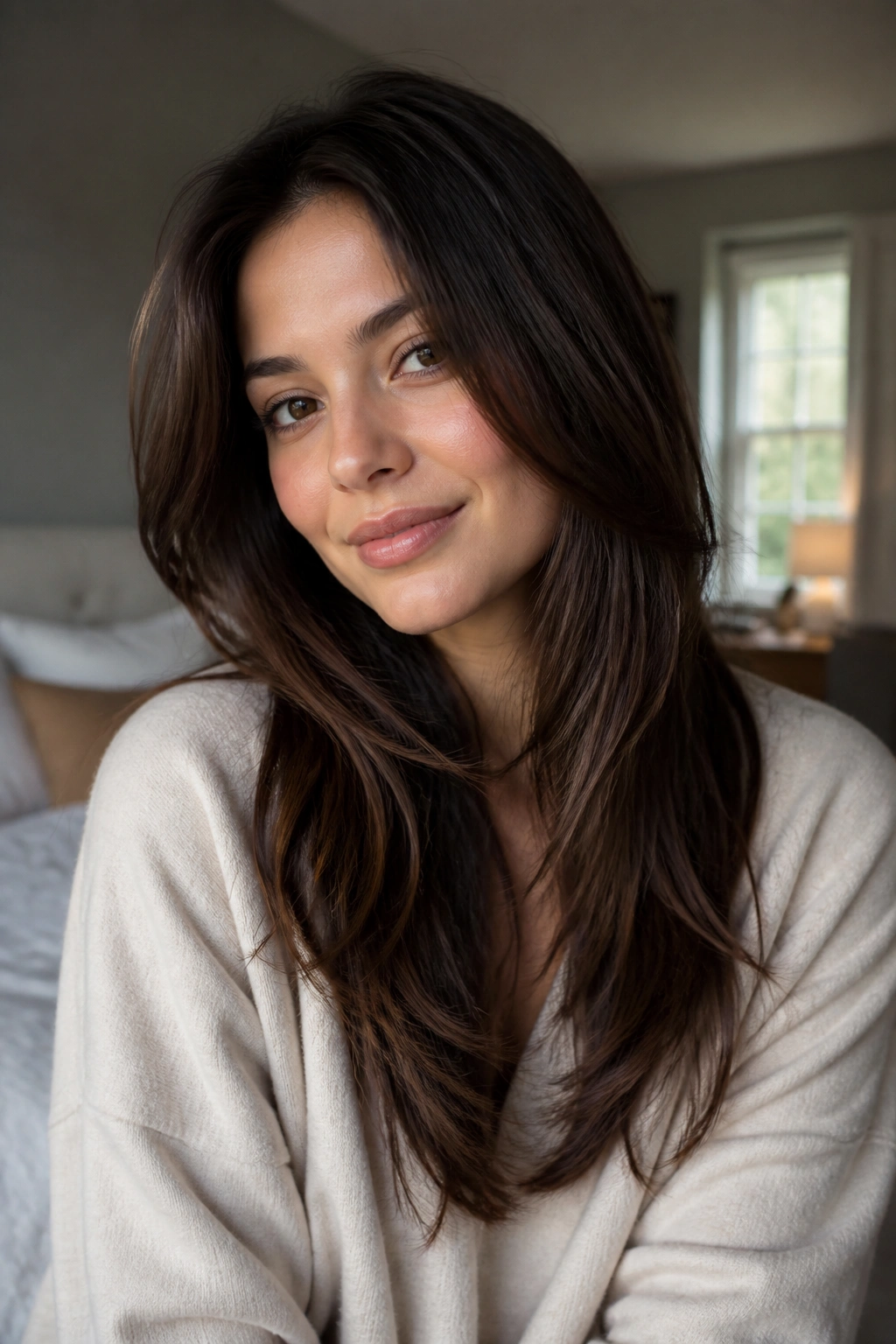
Long layers are the safe bet for a round face, but “safe” does not mean boring. The trick is placement. Ask for the first noticeable layer to start below the chin, then let the rest fall in long, blended steps. That keeps width away from the cheeks and gives your hair a vertical line that lengthens the face.
Why this works
The longest front pieces act like a frame, not a shelf. They move around the jaw and collarbone instead of sitting on the cheekbones, which is where many shorter layers go wrong.
- Best for medium to thick hair
- Works well with straight, wavy, or softly curled textures
- Low drama at the salon, easy to grow out
- Style with a round brush or large velcro rollers for bend
Pro tip: keep the shortest visible piece at least 1 to 2 inches below the chin if you want a slimmer-looking silhouette.
2. Butterfly Layers With Face-Opening Volume
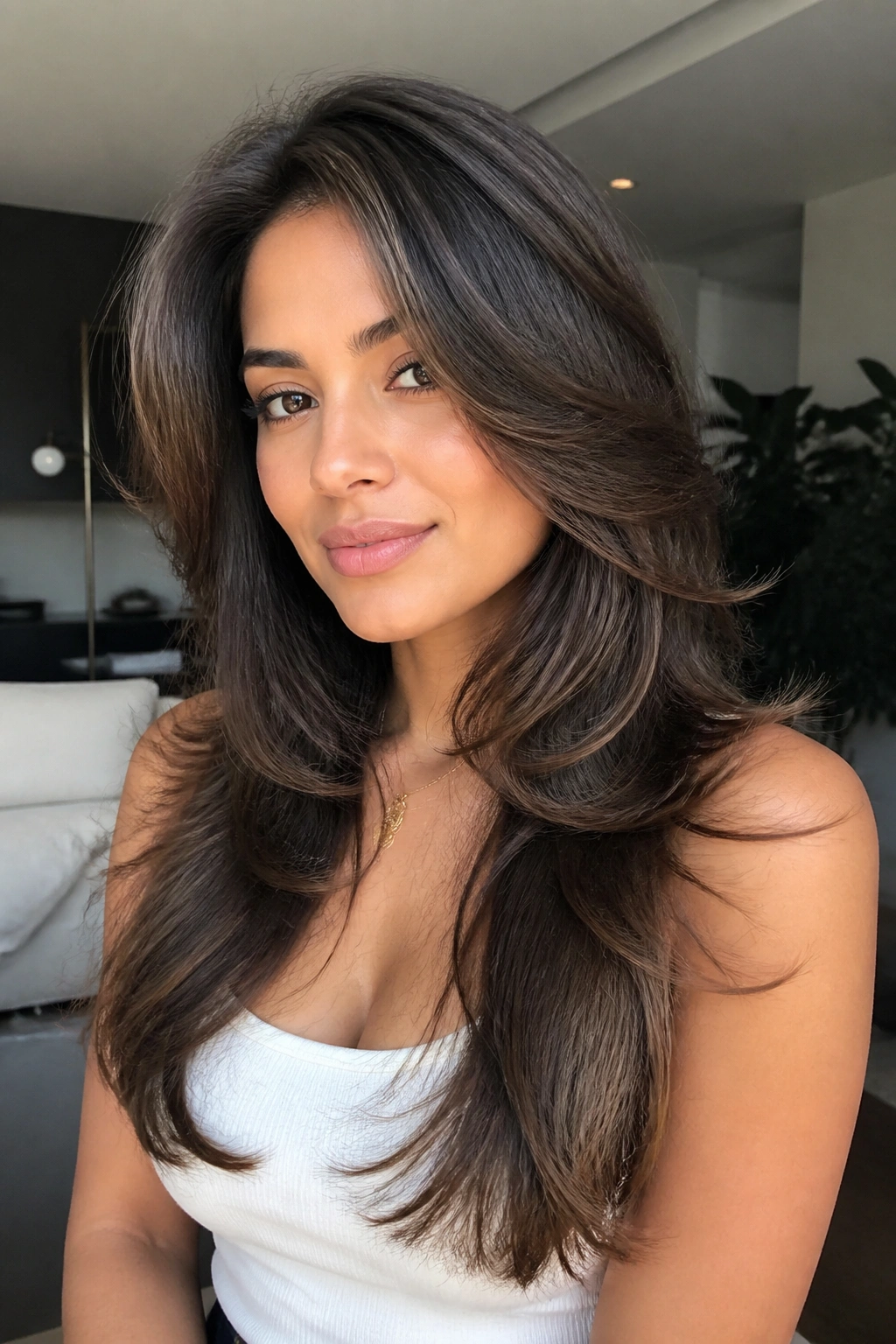
Butterfly layers are one of those cuts that can look expensive without trying too hard. The top sections are shorter and airy, while the length stays intact underneath, so you get movement around the face without losing the feeling of long hair. On a round face, that matters because the lift sits higher, near the crown, instead of spreading out at cheek level.
The best version has a soft blowout shape. Think bouncy, not fluffy. If the shortest pieces fall around the cheekbone and the longest pieces skim the chest, you get a nice stretch through the face. It’s a strong choice if you like styling your hair with a big brush and a little patience.
This cut is also kinder than a blunt mid-length shape when your hair is dense. The crown looks lighter. The ends still feel full. That balance is the whole point.
3. Curtain Bangs With Layered Length
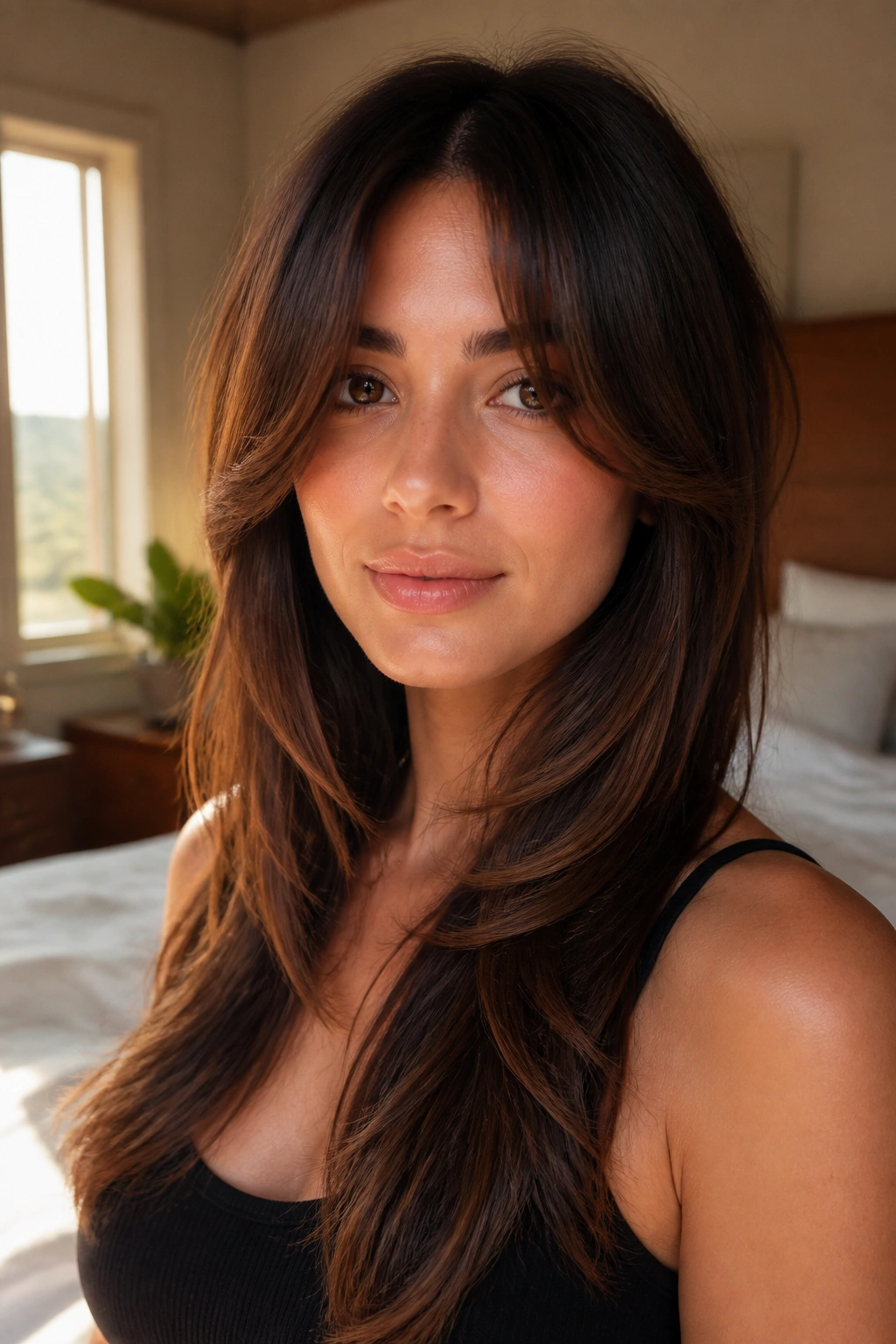
Curtain bangs can be brilliant on a round face, but only when they are cut with enough length to split and sweep away from the center. Short, blunt fringe tends to shorten the face. Long curtain bangs, on the other hand, create two diagonal lines that open the face and draw attention upward.
How to ask for it
Ask for bangs that hit around the cheekbone or just below it, with the center part able to fall away naturally. The rest of the cut should include soft layers from the bangs into the sides, so the transition does not look chopped.
This shape works especially well if you wear your hair with a middle part or a soft off-center part. It also gives you styling options. Air-dry the bangs with a little bend, or blow them forward and sweep them out at the ends.
One warning: if the bangs are too short, they can make a round face look wider. Keep them long. Really long.
4. A Deep Side-Part Lob That Pulls the Eye Sideways and Up
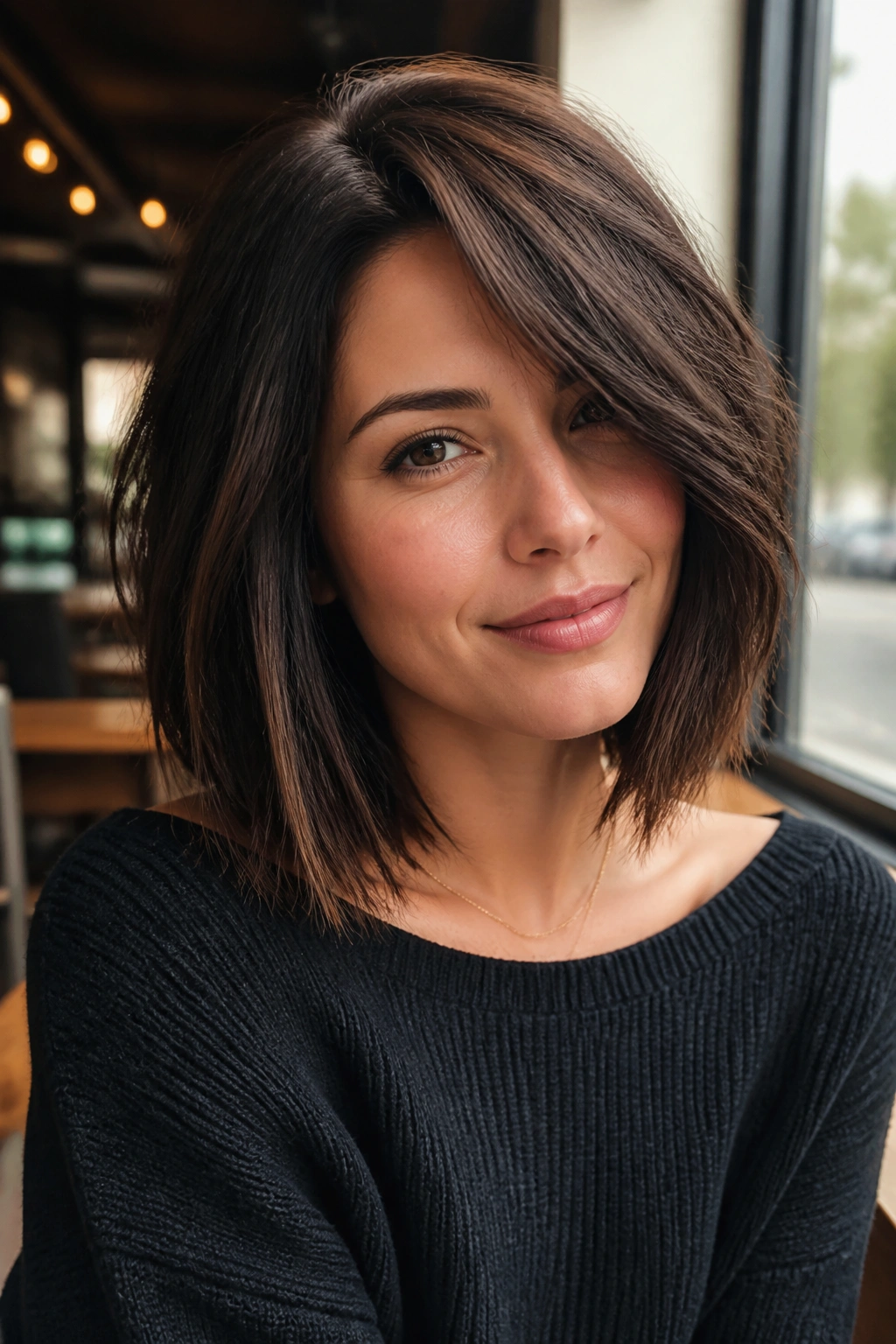
A deep side part sounds like a tiny change, but it can completely change how a layered lob reads on the face. On round features, the off-center line creates a longer diagonal across the forehead and breaks up the symmetry that can make a face look broader.
A lob that stops at the collarbone is the sweet spot here. Shorter than that, and the width starts creeping up. Longer than that, and the shape gets less crisp unless the layers are very well placed. With a deep side part, the front side can graze the jaw while the opposite side folds softly behind the cheek.
This cut is one of my favorites for people who want something modern without a big commitment. It looks polished when straight, but it gets even better with a loose wave. A 1-inch iron, one pass per section, and a little finger-combing is usually enough.
5. The Soft Shag With Crown Lift
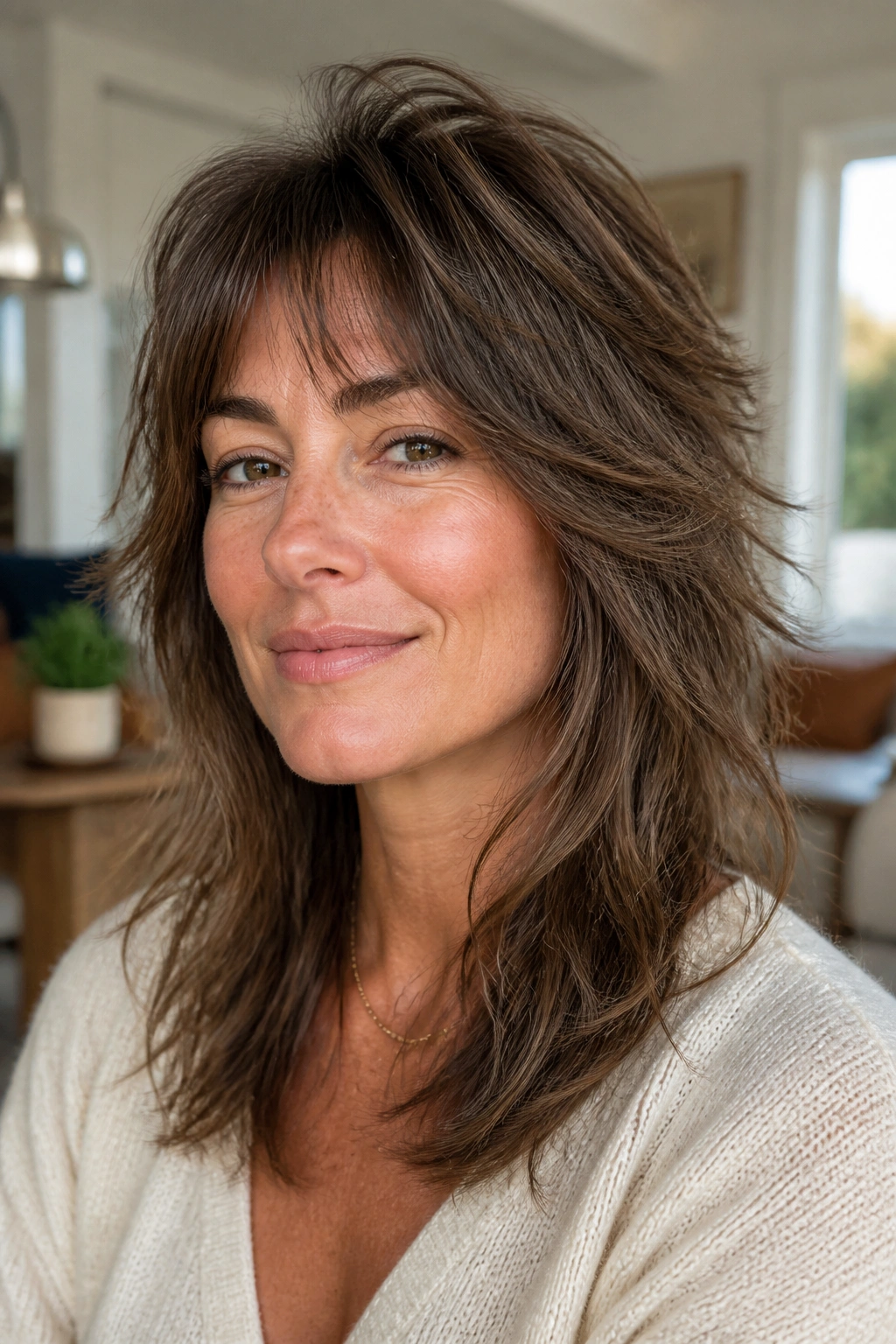
A shag can be a disaster on the wrong round face, so let me be blunt: the version you want is soft, not wild. The layers should be uneven enough to move, but not so chopped that the shape balloons out around the cheeks. Keep the crown lifted, the sides feathered, and the perimeter a little longer.
This works because the shag makes the top of the head feel taller. That extra height helps counter the width through the mid-face. If you have thick hair, this cut can also remove that heavy, helmet-like feel that sits on the sides after a fresh trim.
The easiest way to style it is with a mousse at the roots and a diffuser or rough blow-dry. You want separation, not crispness. If the ends flip too much, ask for softer texturing next time. The best shag on a round face feels loose and airy, not jagged.
6. Collarbone U-Cut With Invisible Layers

The U-cut is underrated. It keeps the perimeter full and rounded, but the center falls a little longer than the sides, which creates a gentle narrowing effect. That shape is flattering on round faces because it does not stop abruptly at the widest point.
Add invisible layers underneath, and the whole cut gets movement without looking obviously layered. That’s a good thing if you want your hair to look thick and smooth rather than heavily chopped. The layers live inside the haircut, not on top of it.
This is a smart choice for straight or softly wavy hair that gets flat at the ends. Ask your stylist for face-framing pieces that start around the jaw and then fall to the collarbone or below. If you like a clean shape with a little swing, this one has a lot going for it.
7. Angled Lob With Longer Front Pieces
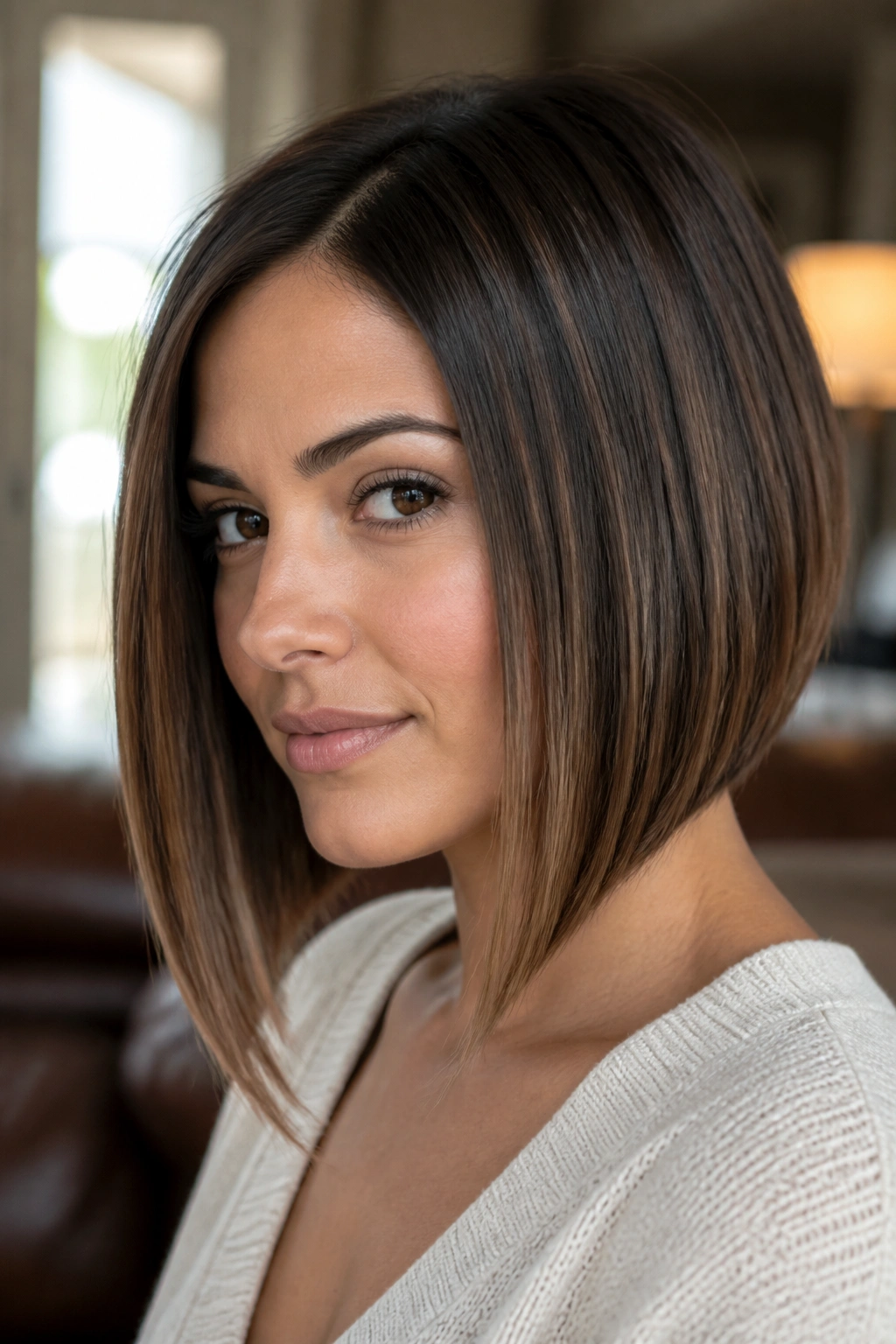
An angled lob is one of the most direct ways to add length to a round face. The back sits a touch shorter, while the front drops forward and longer, making the whole cut look like it’s moving downward. That angled line matters more than people think.
What makes it different
Unlike a blunt lob, this version doesn’t stop straight across the face. The front pieces give the eye a path to follow, and that path stretches the face visually.
A few useful details:
- Keep the back no shorter than jaw length if your face is very round
- Ask for soft graduation, not a steep wedge
- Pair it with subtle face-framing layers, not heavy stacking
- Flat iron the front pieces under slightly for a clean line
If you want a haircut that reads sharp without feeling severe, this is a very strong option.
8. A Wispy Pixie With Height on Top
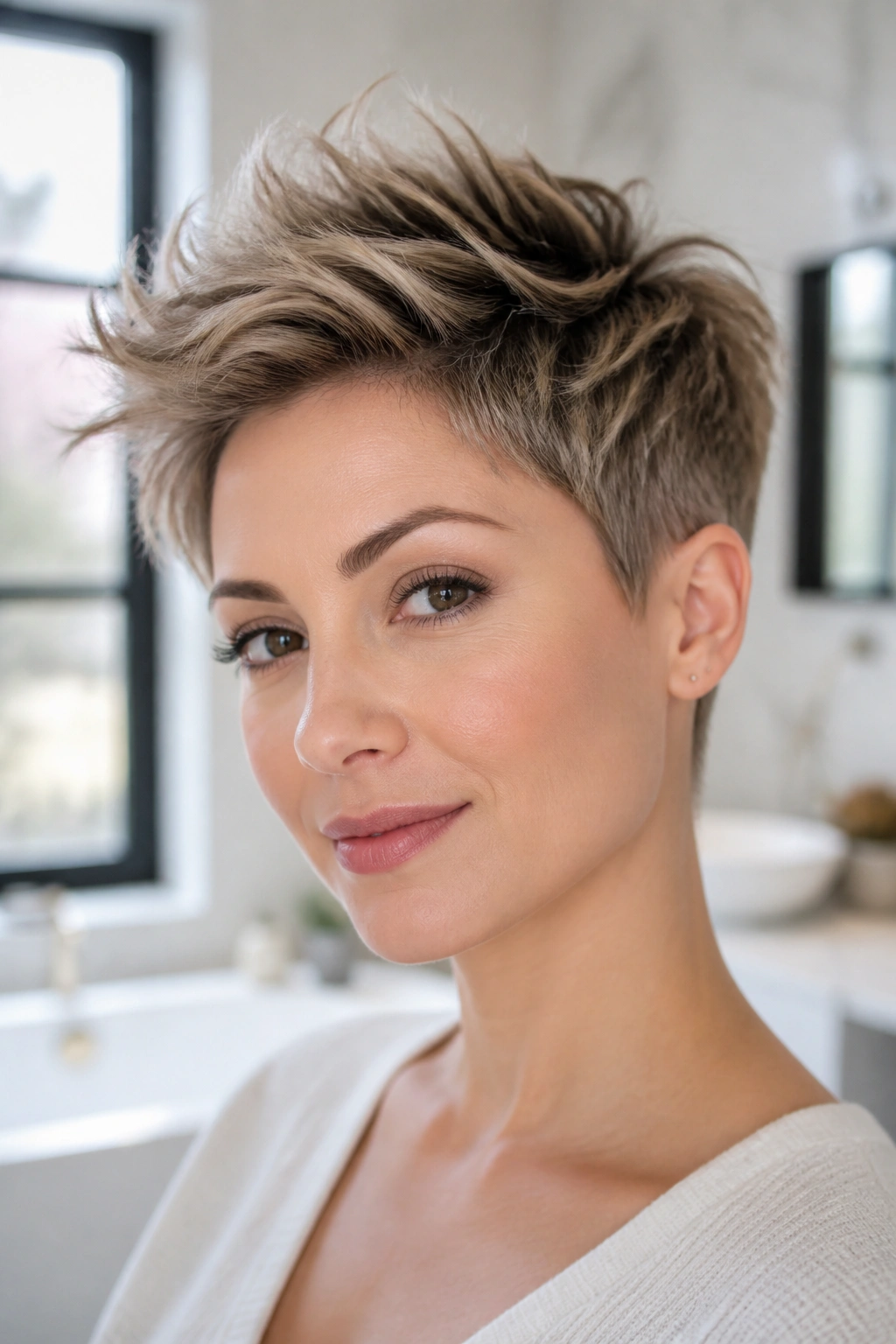
Short hair can work on a round face. It just needs the right shape. A wispy pixie with volume on top and softness at the sides creates length where you need it most. The crown lifts the face, while the sides stay close enough to avoid adding width.
This is not the old school helmet pixie. It should feel light around the ears and nape, with little pieces that break up the outline. The top can be 3 to 4 inches long, enough to sweep across or spike up a little with paste.
That said, this cut asks for confidence and good maintenance. It needs regular shaping to keep the outline clean. If you like easy mornings, it can still be easy — you’ll just be using a tiny bit of product instead of a flat iron. For the right person, it’s sharp and flattering in a way longer cuts never quite match.
9. Mid-Length Sliced Layers With Movement
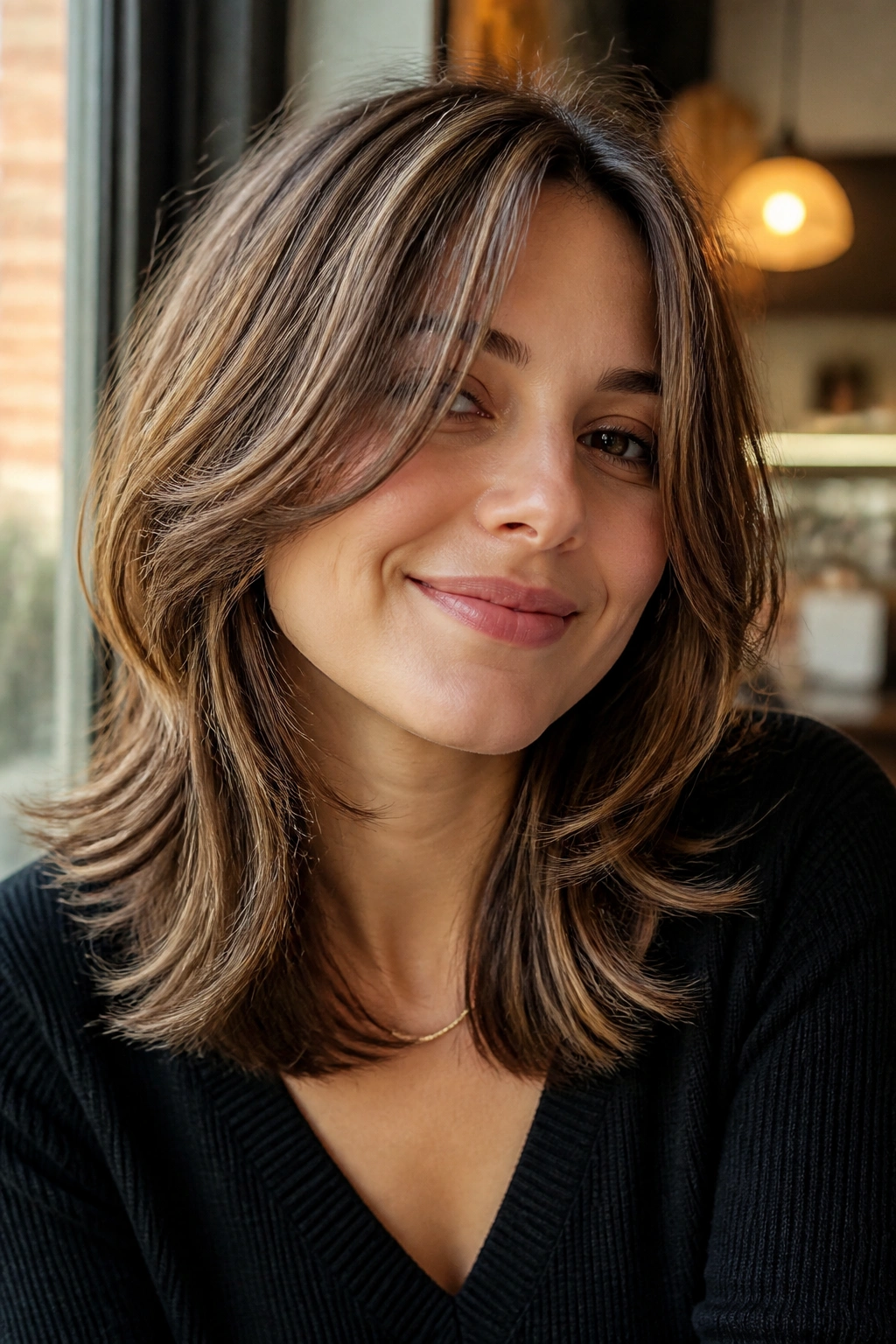
Sliced layers are smoother than choppy ones. The stylist cuts into the hair at a slight angle, which removes bulk without leaving obvious steps. On a round face, that gives you movement around the cheeks without making the sides puff out.
This style is especially good if you dislike the “done” look. It sits nicely in that lived-in space where the hair still has shape on day two. A mid-length cut that lands between the shoulders and collarbone gives the layers room to fall, which is half the battle on fuller cheeks.
You’ll want to style this with a light cream or spray, not a heavy oil. Too much product kills the swing. A few passes with a medium-barrel brush and a loose bend at the ends usually does the job. It’s one of those cuts that looks better the more it moves.
10. Feathered Layers With a Soft Blowout
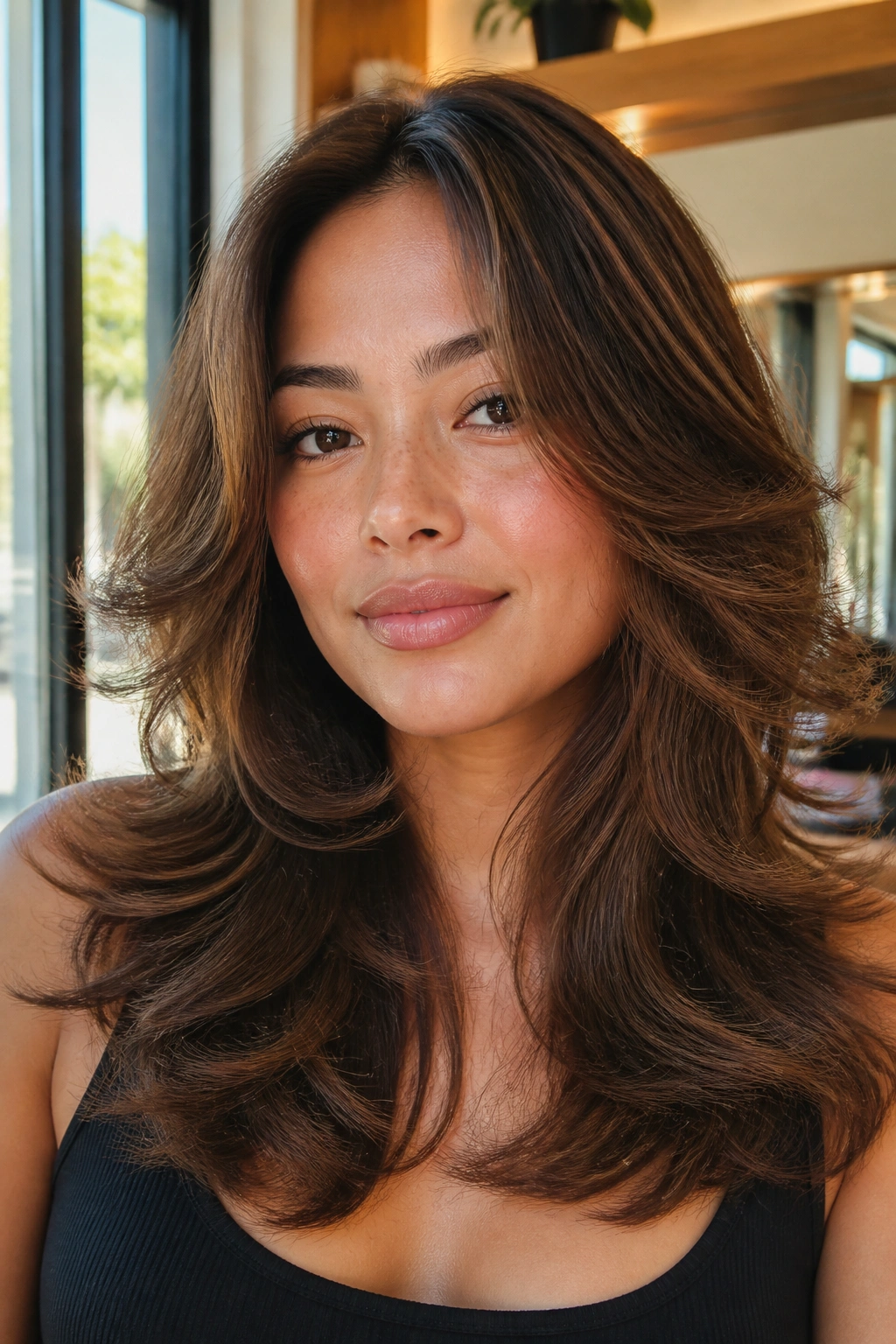
Feathering sounds old-fashioned until you see it done right. Soft, feathered layers create a light edge that bends away from the face instead of sitting heavy around it. For round faces, that soft outward flow helps open the cheek area and keep the whole cut from feeling boxy.
This style shines when the hair is blown out with a round brush. The ends should curve, not curl hard. The shape is airy at the front and fuller through the length, which gives a nice balance for people with medium to thick hair.
If your hair tends to frizz, ask for the layers to be blended rather than razor-thinned. Feathered does not have to mean wispy to the point of nothing. The goal is a clean edge that moves. A simple side part can make the whole thing look even longer.
11. Invisible Layers for Wavy Hair
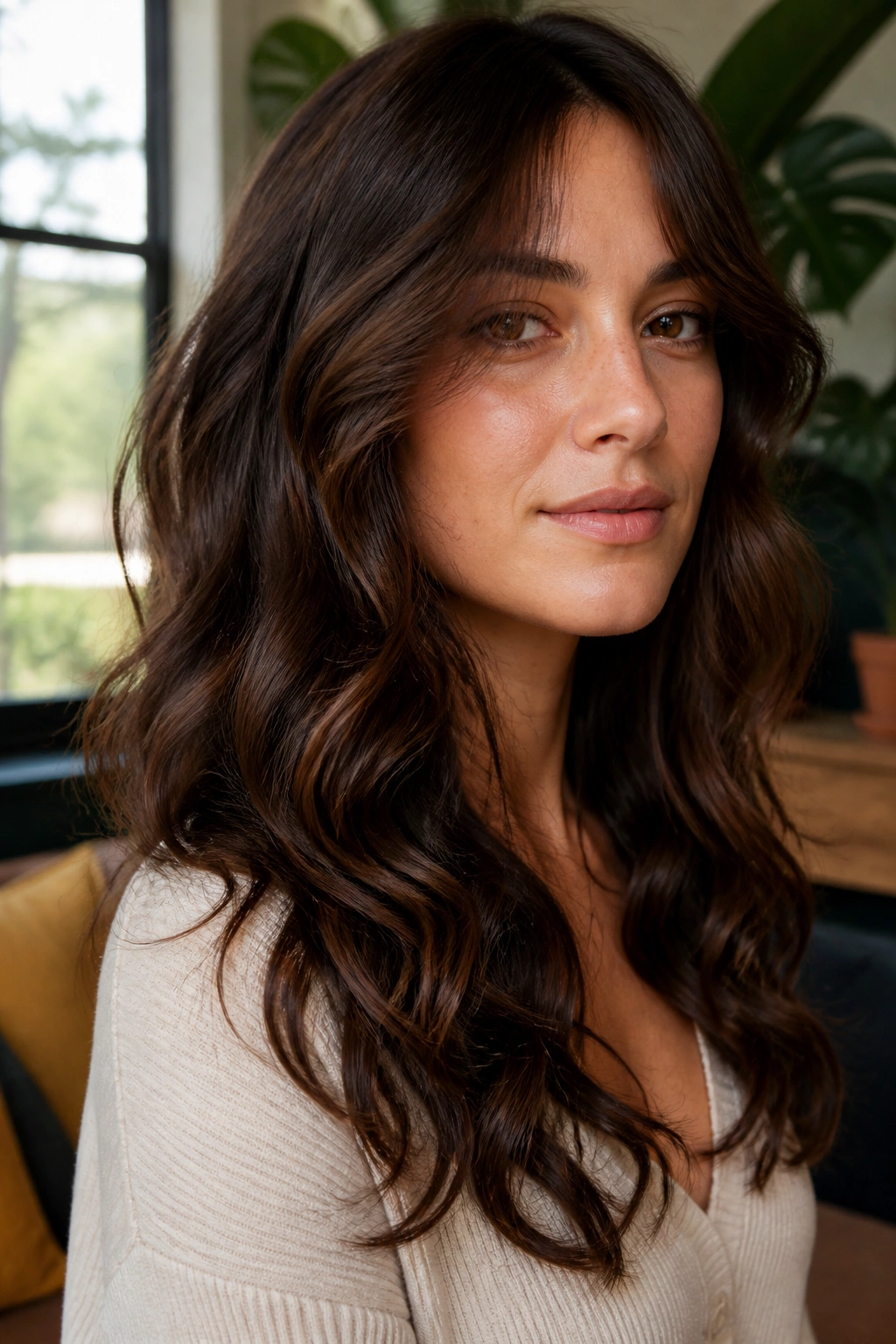
Invisible layers are one of the smartest choices for wavy hair and a round face. You keep the outside shape looking smooth, while the inside sections are cut to remove bulk and add bend. The result is movement without the obvious staircase effect that some layered cuts leave behind.
This is a quiet haircut. Not flashy. Not fussy. It’s the kind of style that looks natural on a good hair day and still behaves on a lazy one. Wavy hair especially benefits because the layers show up when the hair dries, but they do not explode into width.
Ask for the shortest interior layers to stay below the cheekbone so the wave does not puff out around the widest part of your face. A sea-salt spray can help, but don’t overdo it. Too much texture product can make the cut feel crunchy and blunt, and that defeats the point.
12. Textured Bob With Internal Shape
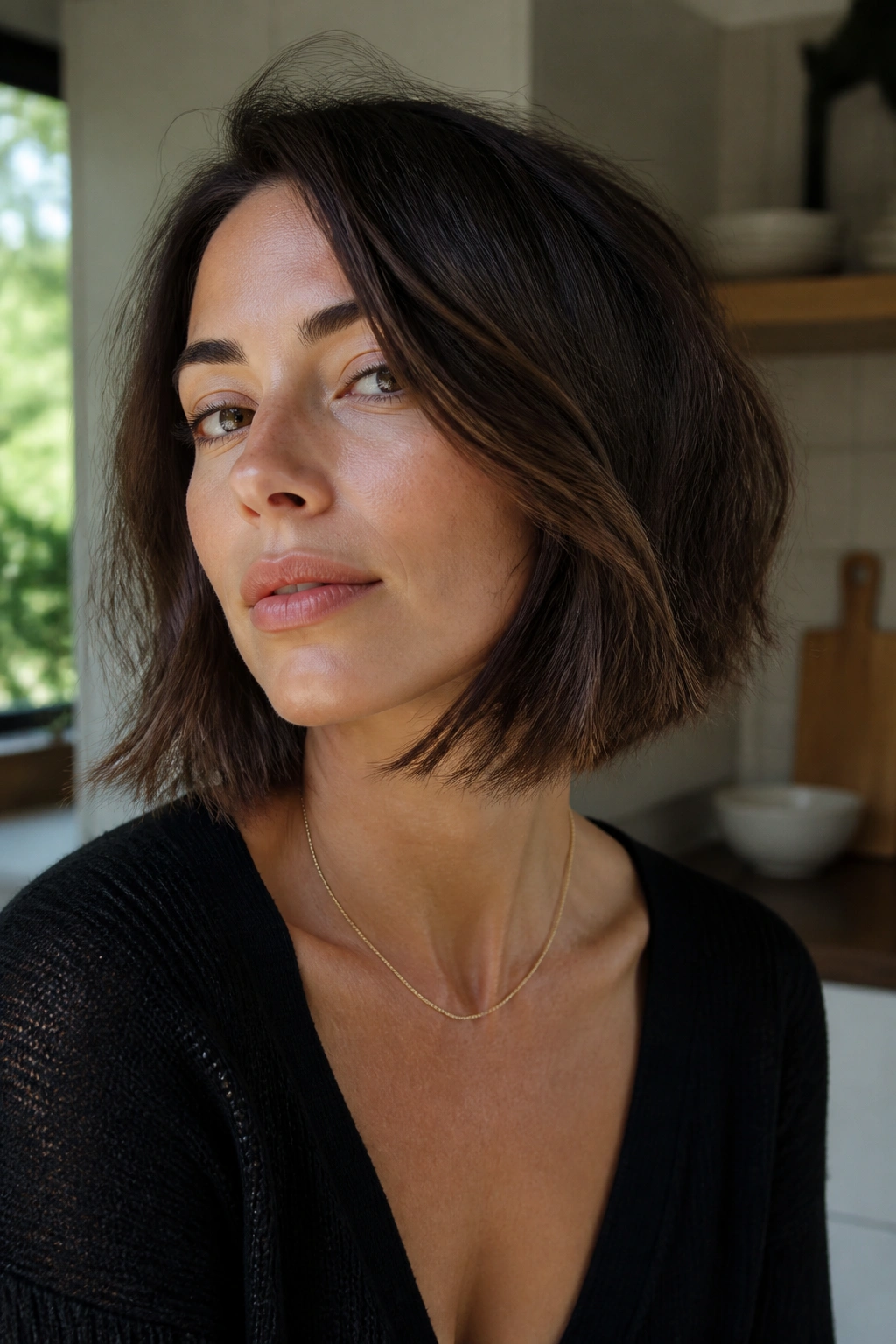
A textured bob can work on a round face if the texture lives inside the cut, not just on the ends. If every layer sits at cheek level, you get width. If the movement is distributed through the interior and the outline stays slightly longer, the whole thing looks cleaner.
The shape to ask for
Request a bob that lands just below the chin or at the collarbone, depending on your neck length. Then ask for internal layering so the weight is removed from the middle, not the bottom edge.
- Best for fine to medium hair
- Good with a side part or soft off-center part
- Needs a little round-brush polish or a bend iron
- Avoid over-thinning if your hair is already sparse
This cut works because it keeps the line of the bob intact while stopping the sides from puffing out. That’s the trick.
13. Asymmetrical Bob With a Longer Front Side
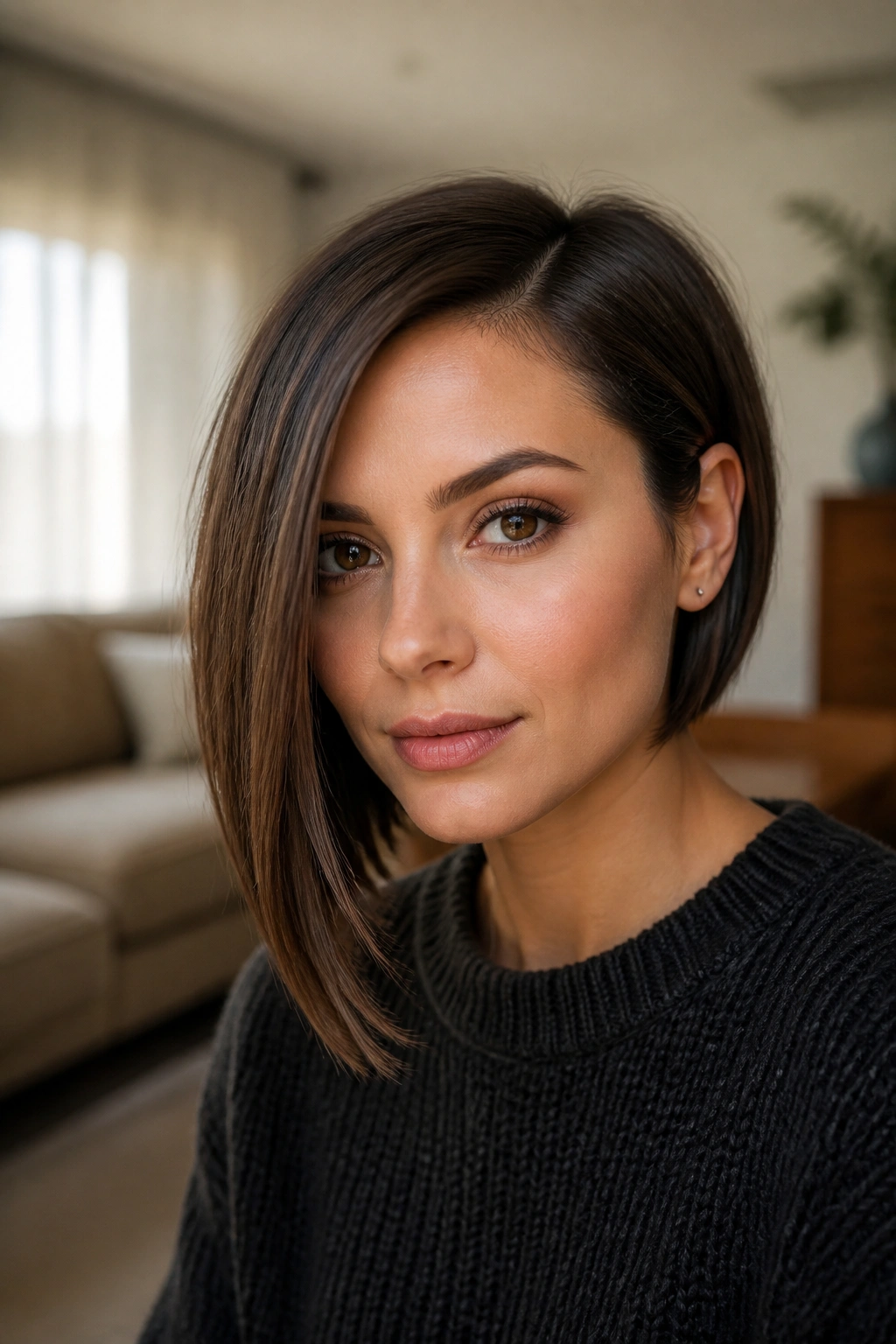
Asymmetry is a useful tool on a round face because it breaks the circular pattern. One side sits a little longer, and that difference pulls the eye down and across the face rather than straight out. Small change. Big payoff.
The cut does best when the longer side grazes the jaw or collarbone and the shorter side stays tidy without becoming severe. You don’t want a dramatic angle unless your features can carry it. A subtle mismatch is usually enough.
This is a sharp-looking cut that also suits straight hair beautifully. It gives the feeling of structure, which a lot of round faces benefit from. If your style leans tailored or minimalist, this one fits without fuss. If you want extra softness, tuck the short side behind the ear and let the longer side fall forward.
14. Soft Wolf Cut With Controlled Choppiness

The wolf cut gets thrown around a lot, and plenty of versions are too aggressive for a round face. The soft version is different. It keeps the crown lifted, the layers broken up, and the length long enough to avoid widening the cheeks.
What to watch for
The best wolf cut on a round face has these pieces working together:
- A slightly shaggy crown for height
- Longer face-framing layers that start near the lips or chin
- A perimeter that stays below the shoulders or just at them
- Texture that looks piecey, not frayed
This cut suits people who like a little edge in their hair. It’s not neat, and that’s the point. Still, the edges need control. If the ends are too shredded, the cut starts to look thin rather than cool. A light styling paste on dry hair helps keep the shape separated without making it stiff.
15. Side-Swept Fringe With Layered Length

A side-swept fringe can be a real friend to a round face because it cuts across the forehead on a diagonal. That diagonal matters. It breaks the symmetry of a rounder shape and shifts attention toward the eyes instead of the cheeks.
The rest of the haircut should be layered enough to echo that angle. You want the fringe to blend into the front sections, not sit like a separate piece. If the sweep starts too short, it can spring up and lose the effect. Long enough to tuck behind the ear? Much better.
This is a practical cut for anyone who wants fringe without the maintenance of full bangs. It grows out well, and it gives you styling flexibility. Wear it smooth for a cleaner look, or let it fall looser for a softer line around the face.
16. Shoulder-Length Razor Layers
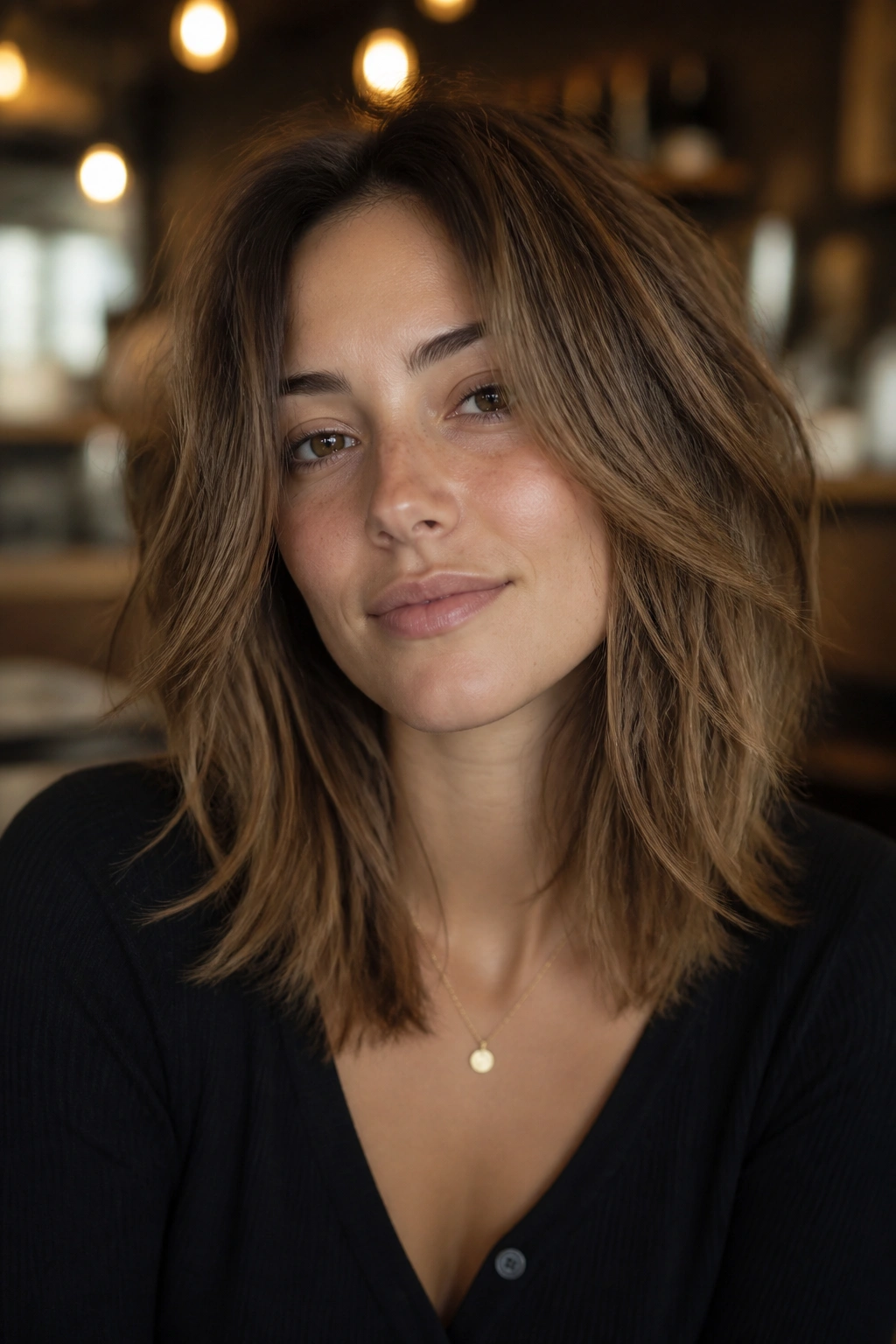
Razor layers can be gorgeous on the right hair, but they need a careful hand. On shoulder-length cuts for round faces, the razor should be used to create air and movement, not to shred the ends until they look see-through.
This style works best on medium-density hair that has some natural bend. The lighter edges help the hair move away from the cheeks, and the shoulder-length setting keeps the overall shape from getting too short or puffy. If your hair is very fine, ask for softer cutting with scissors instead. Razor work can sometimes make the ends look too thin.
The look is relaxed and slightly undone. It’s a good choice if you want hair that swings when you walk and still looks good after a little scrunching. One pass with a diffuser can bring the whole shape to life.
17. Long V-Cut Layers for Extra Length
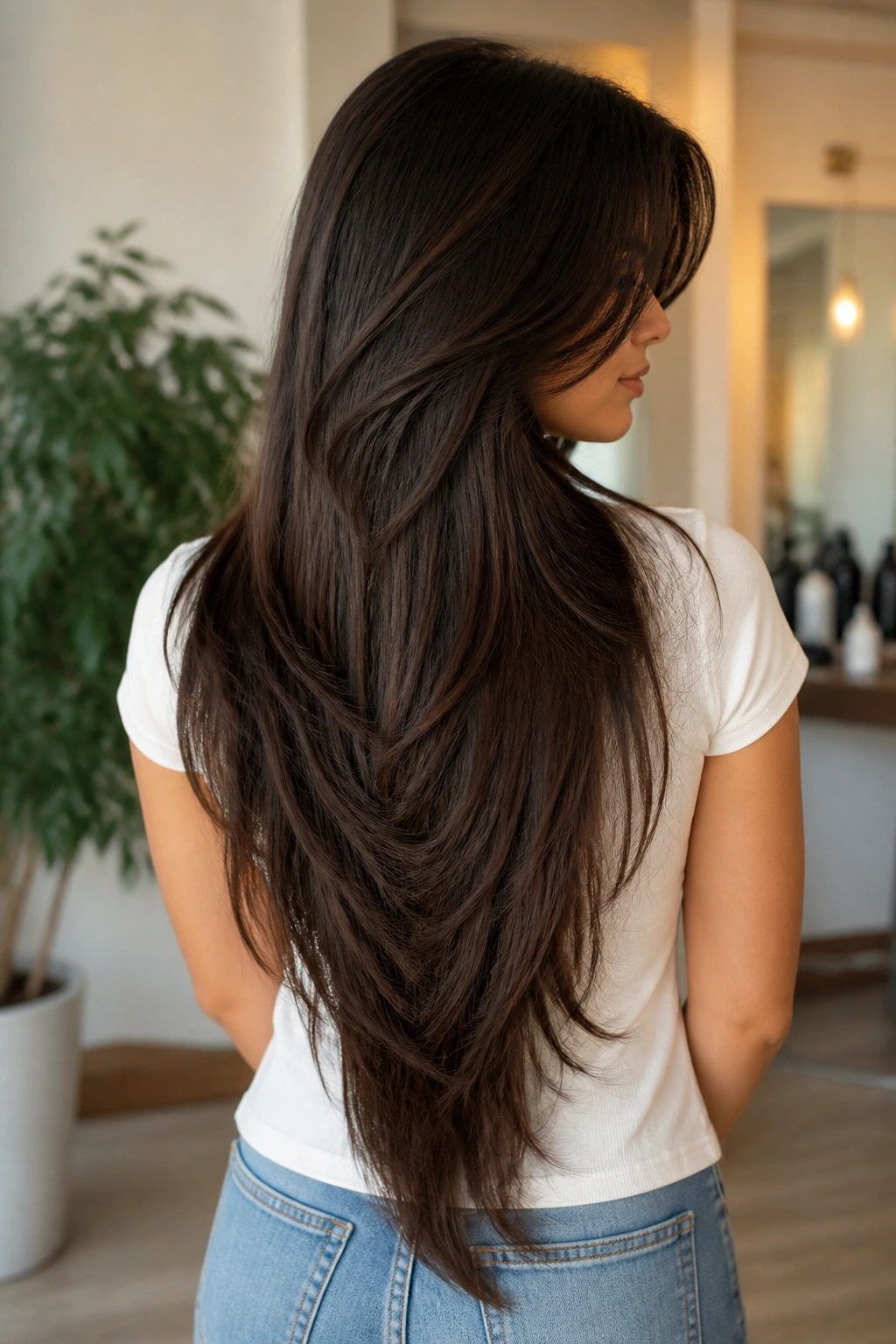
A V-cut creates a point down the back, which gives the illusion of extra length. On a round face, that vertical line is useful. The hair feels long and lean through the back while the front can still carry soft layers that frame the face.
This cut tends to suit thicker hair best because there’s enough weight to hold the V shape. If the hair is too fine, the point can look wispy instead of full. The front should be kept smooth, with the shortest layers beginning below the chin so the sides don’t get bulky.
I like this cut for people who love wearing their hair down and want a little drama without heavy styling. It looks especially good in a low ponytail or half-up style, where the V shape shows off. Clean lines. Nice movement. No extra fluff at the sides.
18. Curly Layers That Follow the Curl Pattern
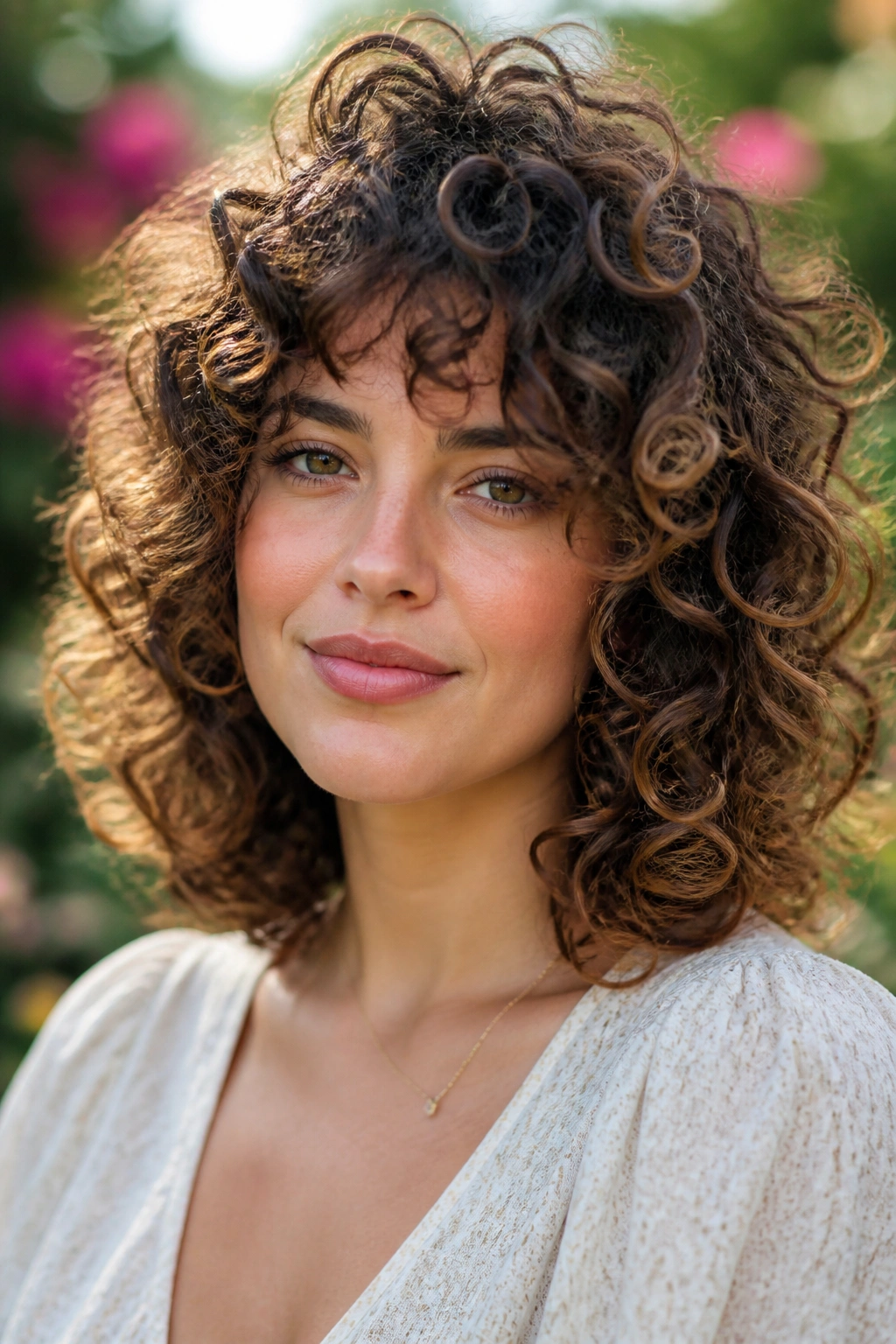
Curly hair and round faces can be a beautiful match when the cut respects the curl pattern. The layers should be cut to support the curl’s spring, not fight it. That usually means shaping the curls so they stack with height on top and narrow a bit through the sides.
The mistake I see most often is cutting curly hair too short around the cheeks. That makes the face look wider and the curls lose their shape. Better to leave the shortest curls around the jaw or below, then let the top build lift. A dry cut is often the cleanest way to see where each curl wants to sit.
This is a cut that changes a lot once it dries, so patience matters. A curl cream, a diffuser, and no touching while it sets will give you the neatest outline. If your curls are looser, ask for face-framing layers that start lower so the shape stays long.
19. The Mixie With Soft Edges
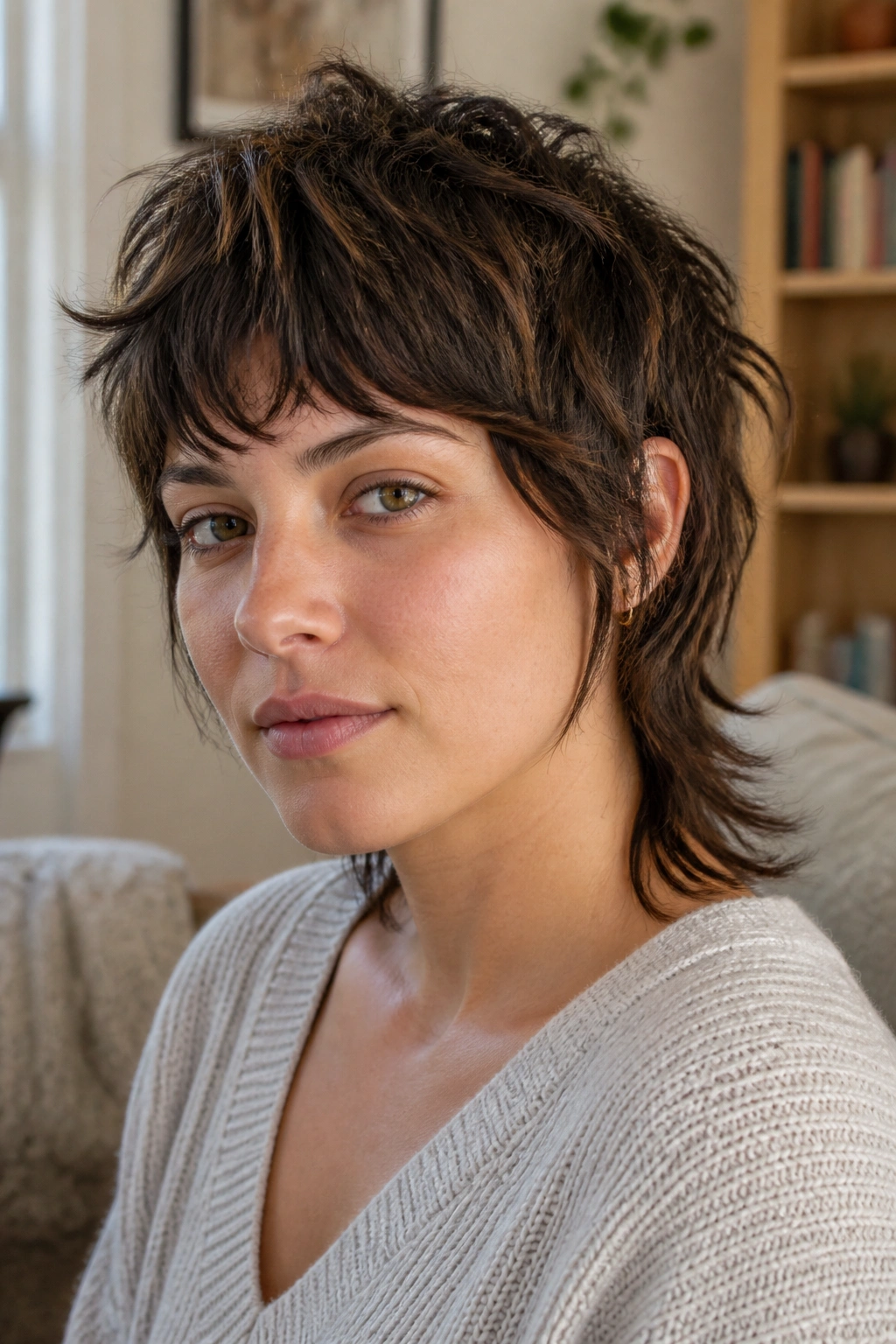
A mixie — part pixie, part mullet — sounds bold because it is. On a round face, though, the right version can work beautifully when the top is light, the back has a little length, and the sides stay soft. You get lift where it helps and movement where you need it.
How to wear it
Ask for a cropped top with texture, longer pieces around the nape, and side pieces that skim rather than stick out. The shape should feel broken up, not blocky.
This cut suits someone who likes strong shape and does not mind styling product. A pea-sized amount of paste or clay is usually enough. Work it through the top, pinch a few pieces, and leave the rest loose. The best mixie has attitude, but it should still frame the face instead of sitting on it.
20. Bixie Layers With a Longer Top
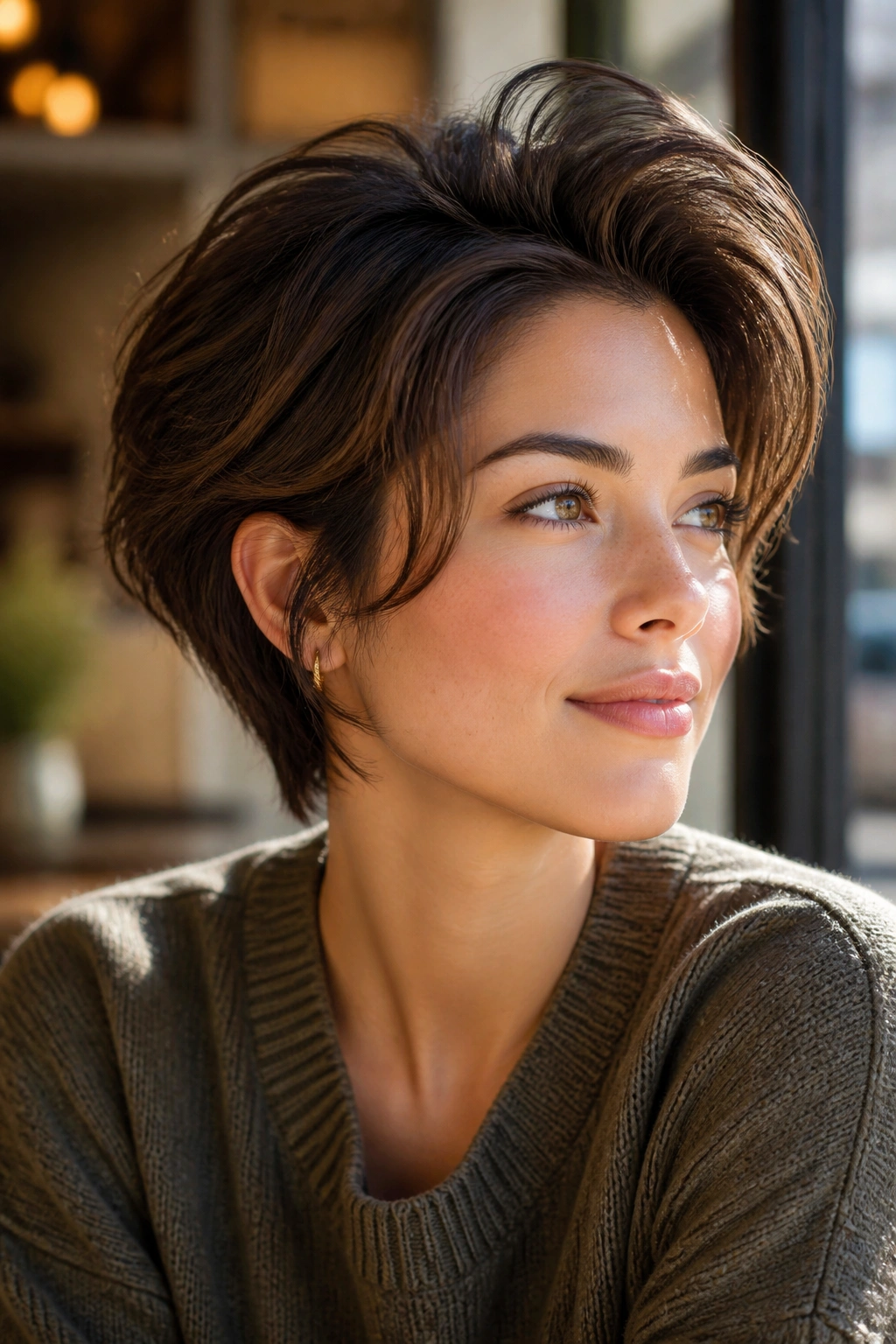
A bixie sits between a bob and a pixie, which makes it a good middle ground for round faces. The longer top gives you height, while the side layers stay soft enough not to widen the cheeks. It has more edge than a bob and more softness than a full pixie.
The cut looks best when the top is kept long enough to brush back or sweep to the side. That added height matters. The sides should not flare outward. That’s the whole line to protect. If you want a shape that feels fresh but not extreme, this one fits neatly into that space.
It’s also one of the easier short cuts to grow out. The top transitions into a bob, and the shorter pieces around the ears can be tucked or pinned while the length catches up. Handy. No drama.
21. Face-Framing C-Shape Layers
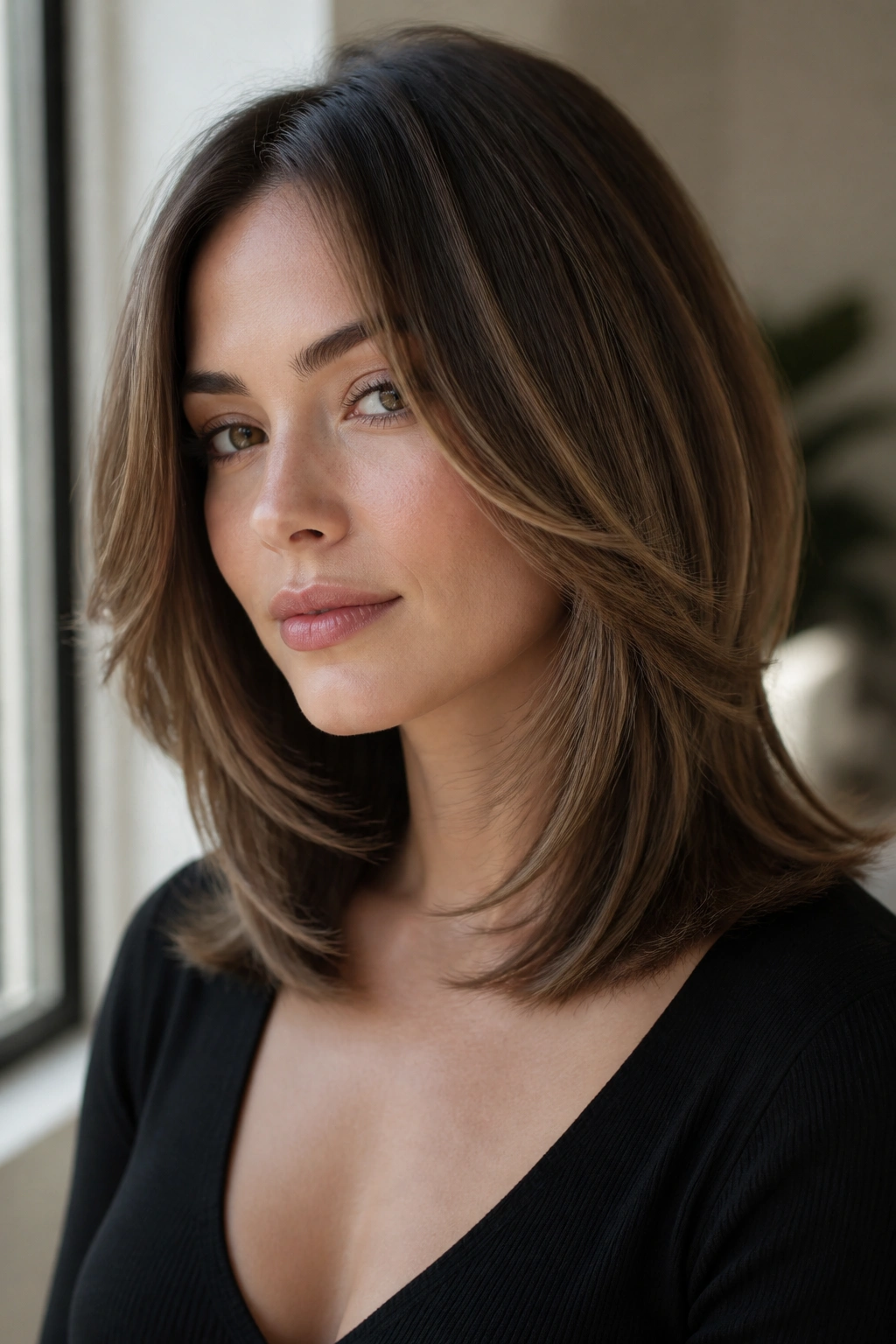
C-shape layers curve toward the face and then away from it, which gives a gentle frame without a harsh edge. On a round face, the curve helps guide the eye downward instead of letting the hair spread across the cheeks.
These layers work well on medium to long hair, especially when the front pieces are cut to start around the lips and fall toward the collarbone. The “C” should be soft. If it gets too round, it can add width rather than shape, and that’s the line to avoid.
This style is excellent if you like to wear your hair loose and want movement around the face without a dramatic haircut. It also styles well with a flat iron wave: bend the front away from the cheeks, then leave the ends a little loose so the shape feels natural.
22. Choppy Clavicle Layers With Shattered Ends
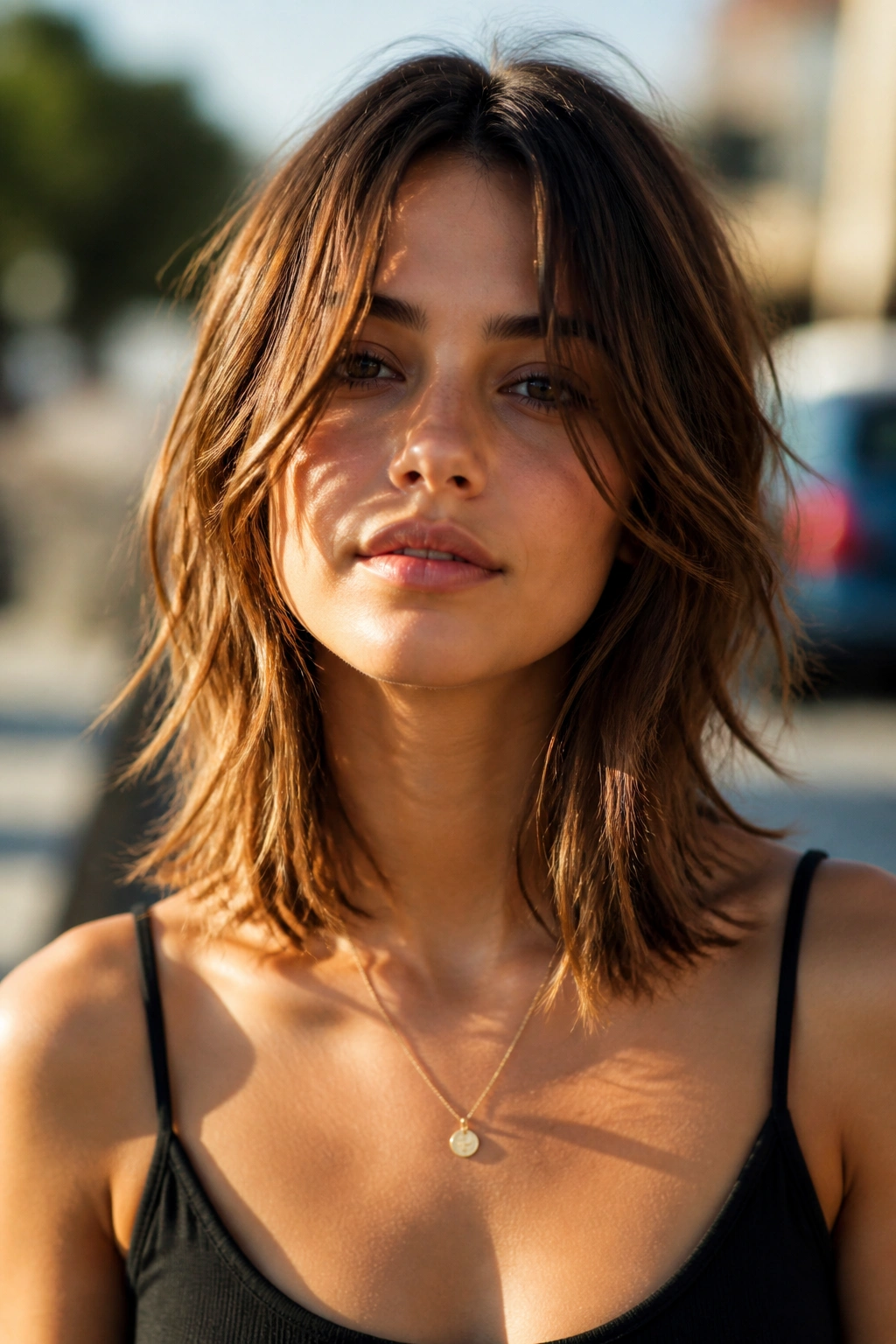
A clavicle cut with choppy layers can look sharp on a round face when the texture is placed with care. The collarbone length gives you a little extra vertical line, and the shattered ends keep the perimeter from feeling heavy. That’s useful if your hair tends to sit flat and wide.
The real trick is not overloading the sides. Keep the softest, most visible layers around the front and let the bulk fall lower. If the choppiness starts at the cheekbones, the width shows up fast. If it begins below the jaw, the whole cut feels longer and lighter.
This is a good option for people who like a little grit in their hair. It doesn’t need to look polished to work. In fact, it looks better with a bit of mess in it. A texture spray, a quick scrunch, and a side part can be enough.
Final Thoughts
Round faces don’t need to be “fixed.” They need a cut that plays with length, lift, and placement in a smarter way. The best layered haircuts for round faces don’t fight your shape. They guide the eye where you want it to go.
If you remember one thing, make it this: keep the width from sitting squarely at the cheeks. That one choice changes more than a trendy fringe ever will. And once you’ve got the right foundation, the styling becomes much easier — almost boring, in the best possible way.
Bring photos to your stylist, but also bring a clear idea of where you want the shortest pieces to land. Chin, collarbone, cheekbone, crown — those little details matter. Haircuts are geometry wearing a nice outfit.
