



Fine hair does not need more layers. It needs better placed ones.
The front is where a bad cut shows first. Too many short pieces near the crown or cheeks can make the whole head look thinner, even when the haircut was meant to add shape. The smartest front layered haircuts for fine hair keep the base honest, then use the front to create lift where the eye lands first: at the cheekbone, chin, or collarbone.
That matters because fine strands move fast. They fall flat after a hard blow-dry, they separate when over-thinned, and they can start looking stringy the minute the shortest layers are cut too high. A good cut works with that reality instead of fighting it.
If you have ever left a salon with “more shape” and somehow less hair, you already know the problem. The cuts below avoid that trap in different ways, from barely-there face framing to sharper fringe-led shapes, and they all lean on the same idea: keep enough length to hold weight, then carve the front where it helps most.
1. Chin-Grazing Front Layers for Fine Hair

Chin-grazing layers are the easiest place to start. They give fine hair movement without taking away the density you need at the ends.
Why the chin point matters
When the shortest front piece lands right around the chin, the eye reads it as structure. The hair can still be long, but the face gets a cleaner outline, and that makes the whole cut look more intentional. On fine hair, that matters more than dramatic layering ever will.
The trick is to keep the change gradual. Ask for the first front layer to hit the chin or just below it, then let the next piece blend toward the lip or jaw. If the stylist jumps too high, the front can get wispy fast.
- Ask for soft face-framing pieces, not a stacked set of short layers.
- Keep the perimeter blunt or only lightly beveled.
- Style with a round brush or large blow-dry brush to bend the front inward.
- If your hair is very straight, leave the shortest piece a little longer than you think you need.
Best tip: let the front pieces curve around the jaw, not flip out at the ends. That small detail keeps the cut looking fuller.
2. Collarbone Cut With Long Front Pieces
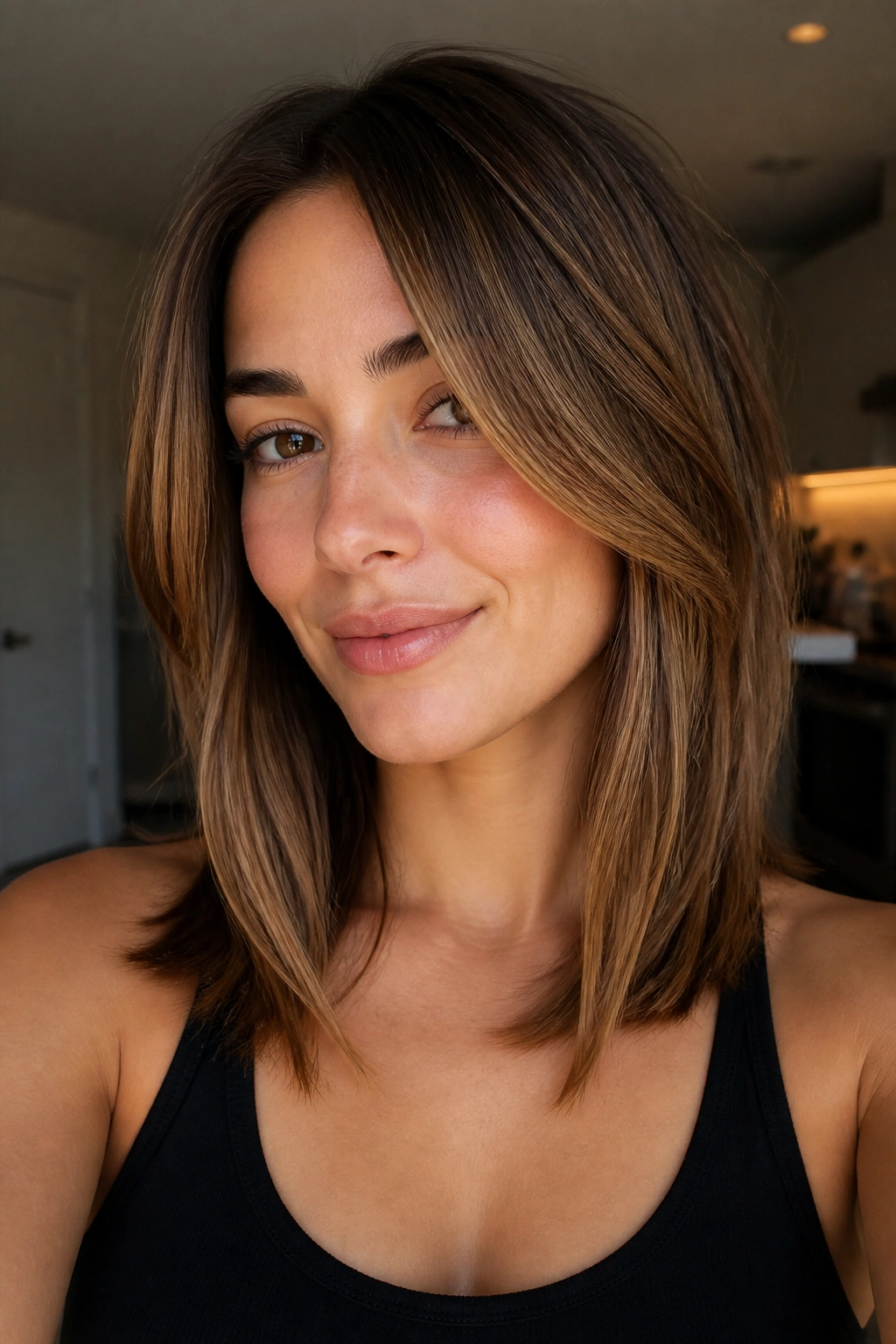
A collarbone cut keeps more hair looking like hair. That sounds blunt, but it is the honest answer for fine strands that lose body the second they get over-layered.
The length gives the hair weight, and the long front pieces add shape where the mirror notices first. You get movement around the face without exposing the thin spots that can show up when a cut is too choppy.
This version works especially well if your hair breaks easily or if you have spent years trying to make a layered cut behave. The front can start near the cheekbone, then slide into the collarbone length in a soft diagonal. It looks polished, not fussy.
The styling part is mercifully simple. A little root lift spray, a quick blow-dry with the head tipped forward, and a bend at the ends are usually enough. No need to build a whole routine around it.
3. Curtain Bangs That Melt Into the Sides
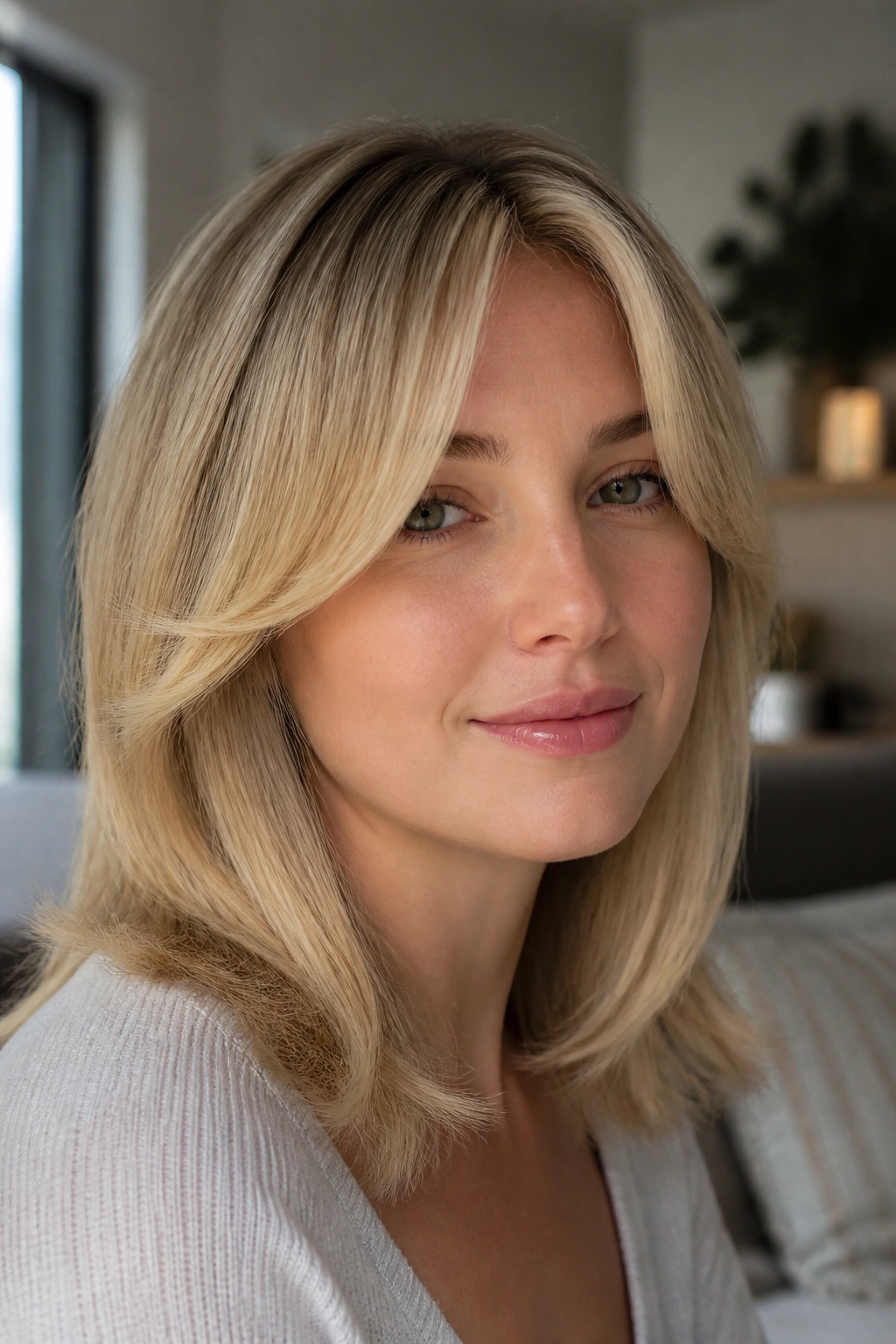
Why do curtain bangs keep showing up on fine hair? Because they create shape without stealing too much density from the rest of the cut.
The best versions start around the cheekbone and fall away from the center part in a soft arc. On fine hair, that arc matters. It keeps the fringe from sitting as one heavy block, which can look flat, and it also gives the front a little lift where the hair naturally wants to split.
How to wear them
Curtain bangs on fine hair should feel airy, not floppy. The shortest point can sit between the brow and cheekbone, but I would avoid taking them too short unless your hair has some bend to it already. Straight, fine fringe can separate fast if it is cut too aggressively.
Use a medium round brush or a blow-dry brush and direct the front away from the face. Then let the sides fall naturally. If you want the bangs to stay soft all day, skip heavy cream products. A light mousse or a tiny bit of texture spray is enough.
This is one of those cuts that looks casual but is quietly doing a lot of work.
4. Invisible Front Layers on Long Hair
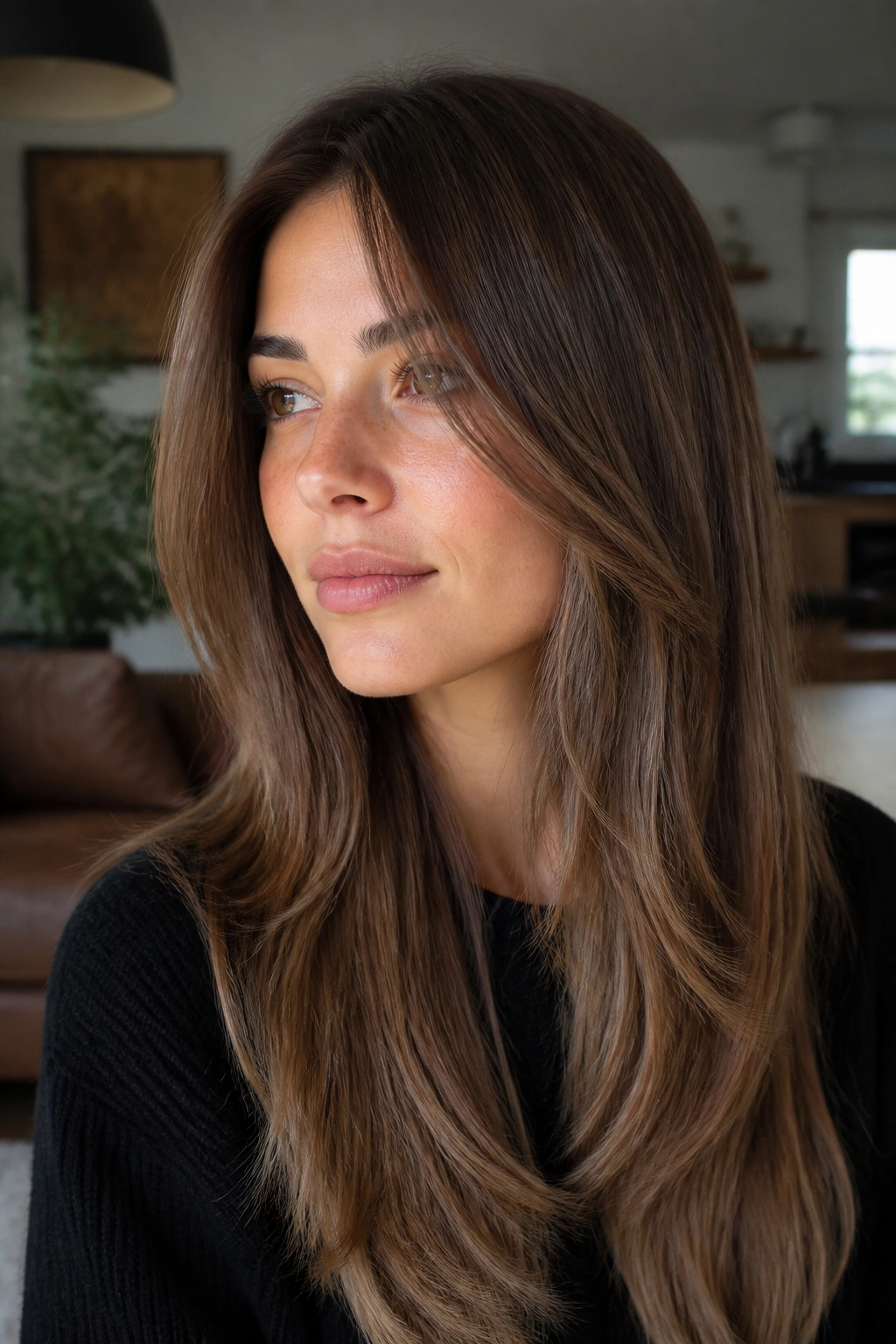
If you like your length but the front hangs limp by noon, this is the cut that makes sense. Invisible front layers keep the overall shape long while sneaking in movement around the face.
They are called invisible for a reason. From the back, the hair still reads as one long sheet, which is exactly why it works so well on fine hair. The shaping happens at the front and upper sides, where a few shorter pieces can lift the face without exposing the whole head.
This is a smart choice for anyone who hates obvious layers but wants to stop long hair from looking stringy. The shortest pieces should begin below the cheekbone or around the jaw, then disappear into the rest of the length. The result is more like a soft contour than a visible staircase.
It also grows out well. That part is underrated. A cut like this can go for weeks without turning into a weird half-stage, because the layers are doing quiet work instead of shouting for attention.
5. Feathered Jawline Layers for Straight Fine Hair
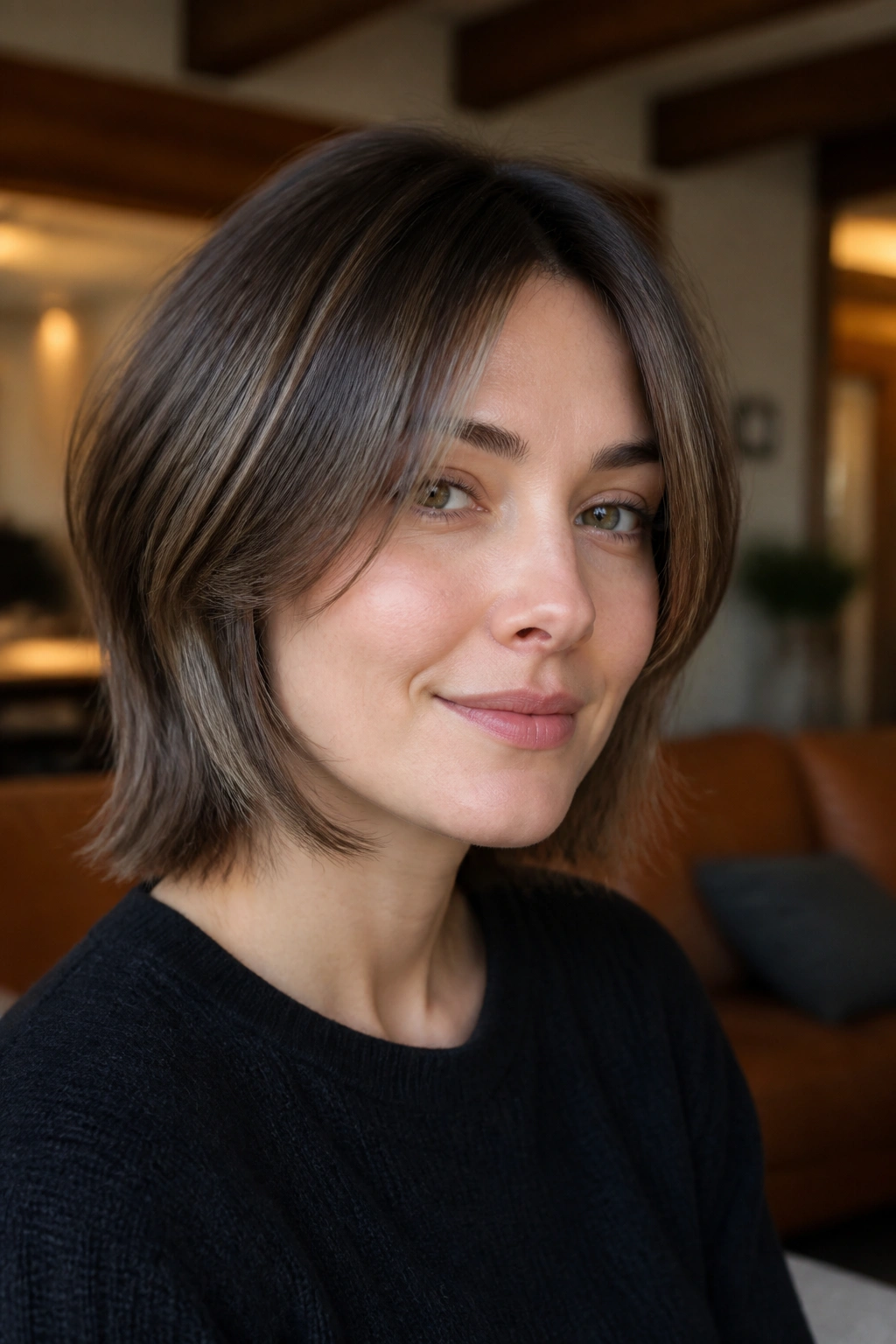
Feathered jawline layers are the haircut I reach for when someone wants movement but cannot stand the look of broken-up ends. On straight fine hair, a little feathering around the jaw can give shape without making the whole cut look sparse.
The jawline is a useful place to work because it frames the face without stripping too much weight from the lower half of the hair. If the shortest pieces sit just at or under the jaw, they move when you turn your head, but they still connect to the rest of the cut. That connection is the whole point.
Keep the edges soft, not shredded. Fine hair can go see-through if the layers are too aggressively textured, especially near the front where every strand is visible. A tidy blow-dry with the brush turned slightly under will help the feathering look smooth instead of frayed.
It is a quiet haircut. And sometimes quiet is exactly what fine hair needs.
6. Side-Swept Front Layers With a Deep Part
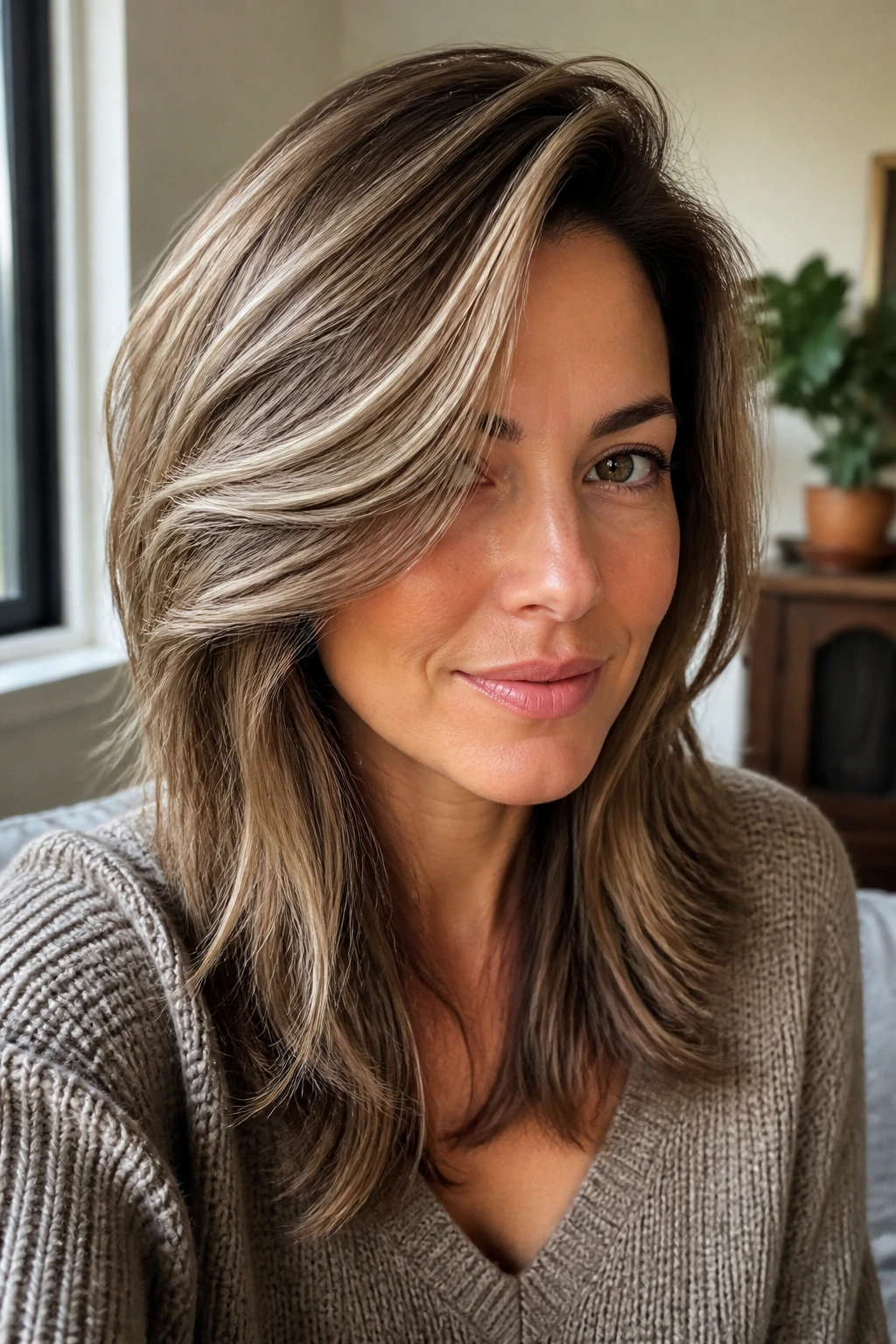
Compared with a center part, a deep side part gives the hair an instant lift before the scissors even get credit. Add front layers to that, and fine hair can suddenly look like it has more root and more body.
The deeper part shifts weight to one side, which makes the front pieces fall in a more flattering line. This is especially good if your hair always collapses around the same spot or if your crown feels flat no matter how much you tease it. The cut helps, but the part does half the work.
This shape suits round, heart, and softer square faces very well. The heavier side can sit a little longer, while the lighter side skims the cheekbone or lip. That asymmetry keeps the front from looking too neat, which would be a mistake here.
A side-swept front also gives you flexibility. Wear it tucked, brush it back, or let it swing across the forehead. It does not demand the same styling discipline as bangs.
7. Bottleneck Bangs and a Soft Lob

The best bottleneck bangs make the front feel lighter and the rest of the hair look thicker. That sounds backward, but it happens because the shape opens at the center and widens softly toward the outer edges.
A soft lob gives those bangs a place to land. When the length sits somewhere between the chin and collarbone, the hair has enough weight to avoid puffing out, yet enough movement to keep the front from feeling heavy. On fine hair, that balance matters more than chasing a dramatic cut.
Key details to ask for
- Keep the center of the fringe narrow and slightly shorter.
- Let the sides open around the brow to cheekbone area.
- Stop the lob at collarbone length or a touch above.
- Avoid heavy texturizing near the ends.
This is a good middle ground if you want some fringe without the full commitment of a straight bang. It softens the face, but it still grows out in a manageable way.
8. Wispy Fringe With Shoulder-Length Ends

Wispy fringe can look airy on fine hair, or it can look like an accident. The difference is mostly in length and density.
If the fringe is cut too short, it can separate into little pieces that sit awkwardly on the forehead. Keep it a little longer, closer to the brow or just below, and let the sides soften into shoulder-length hair. That keeps the front from looking sparse, which is the main problem with fine hair and short bangs.
The shoulder-length base helps a lot here. It gives the fringe context. Without that thicker body below, the wispy bits can feel disconnected, almost like they belong to another haircut. With the right length underneath, they look light on purpose.
This style works best when the forehead is part of the design, not the whole design. A touch of texture cream through the fringe is fine. Too much product makes the pieces clump, and clumping is the enemy of fine hair.
9. Long Front Layers That Start Below the Chin
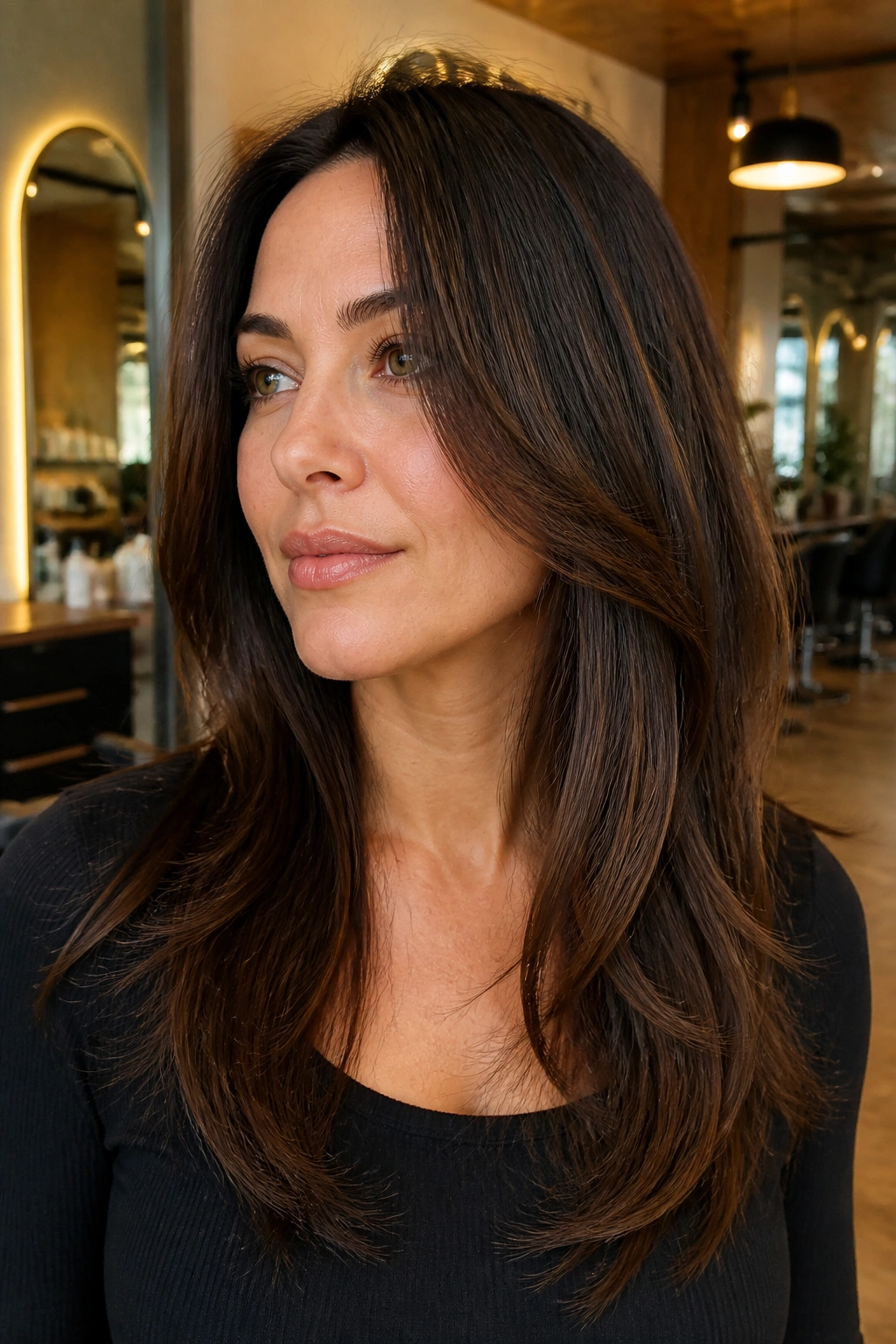
What if you want layers but hate the way short pieces pop up around your cheekbones? Start lower.
Long front layers that begin below the chin solve a common fine-hair problem: the top looks lifted for an hour, then the ends look thin for the rest of the day. By keeping the shortest front pieces down near the chin or just under it, the cut preserves enough weight to keep the hair looking full.
What to request at the salon
Ask for a soft face frame that starts low, then blends toward the rest of the length over a few inches. That keeps the front interesting without making it busy. It also works well if your hair has a fragile feel or if you already have a lot of breakage from heat styling.
This is one of the most practical front layered haircuts for fine hair because it grows out cleanly. The shape stays readable even after a few weeks, and you do not have to rush back for maintenance. If you like low-drama hair, this is a strong pick.
It also plays nicely with a middle part or a side part. That kind of flexibility is rare, and I always pay attention when a haircut gives it.
10. Rounded Front Layers With a Blunt Base
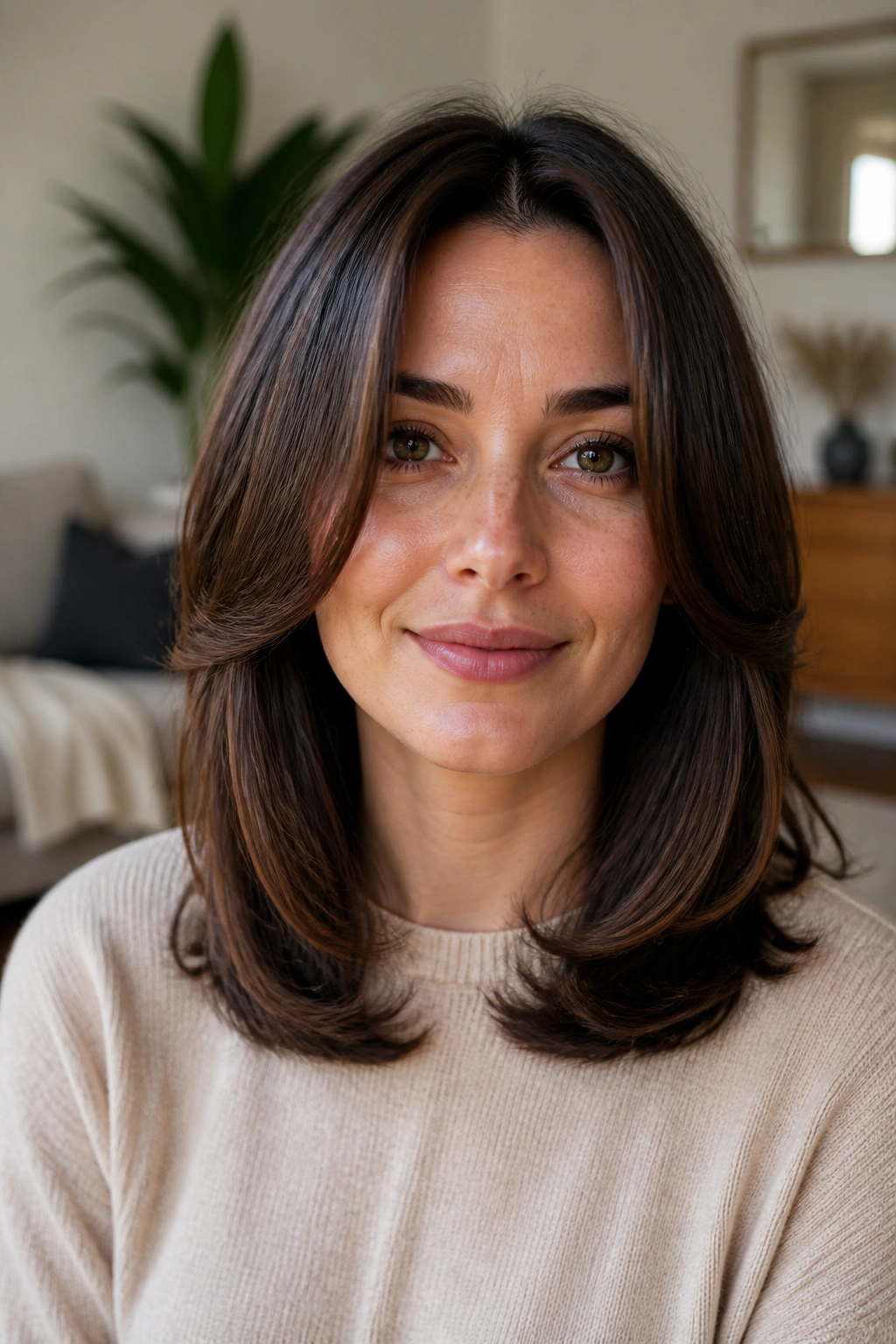
Rounded front layers and a blunt base look almost contradictory, and that is the reason they work. The blunt edge gives fine hair a thick-looking finish, while the rounded front softens the face so the cut does not feel boxy.
This shape is especially useful if your hair is straight or only slightly wavy. A blunt bottom line makes the ends look denser, and the front pieces can curve in at the cheek or jaw without taking away that fullness. You get shape where it counts and weight where you need it.
The trick is restraint. Too much layering at the front will break the silhouette, and then the whole point is lost. Ask for a rounded face frame, not a dramatic graduation. The cut should still read as one solid shape when your hair hangs naturally.
If you wear your hair down most of the time, this is one of the cleanest options in the whole group. It looks finished with very little effort.
11. Razored Front Pieces for Movement

Razored front pieces can save a haircut—or fray it. On fine hair, the difference comes down to how much weight you can afford to lose.
A razor can soften a blunt edge and add movement around the face, which is useful if your hair feels heavy in one spot but limp everywhere else. Used lightly, it can make the front move with the rest of the cut instead of sitting there like a stiff curtain. Used too hard, it can chew up fragile ends and leave them looking thin fast.
This is the one I would treat carefully. Ask for a very light razor touch, not a big reshaping session. If your hair is already dry, over-processed, or breakage-prone, scissors are safer. A gentle point-cut often gives the same softness without the risk.
- Best if your hair is straight and healthy
- Better on shorter to medium lengths
- Skip it if your ends already look see-through
- Ask for soft movement, not aggressive texture
12. Soft Shag With Fine-Hair-Friendly Front Layers
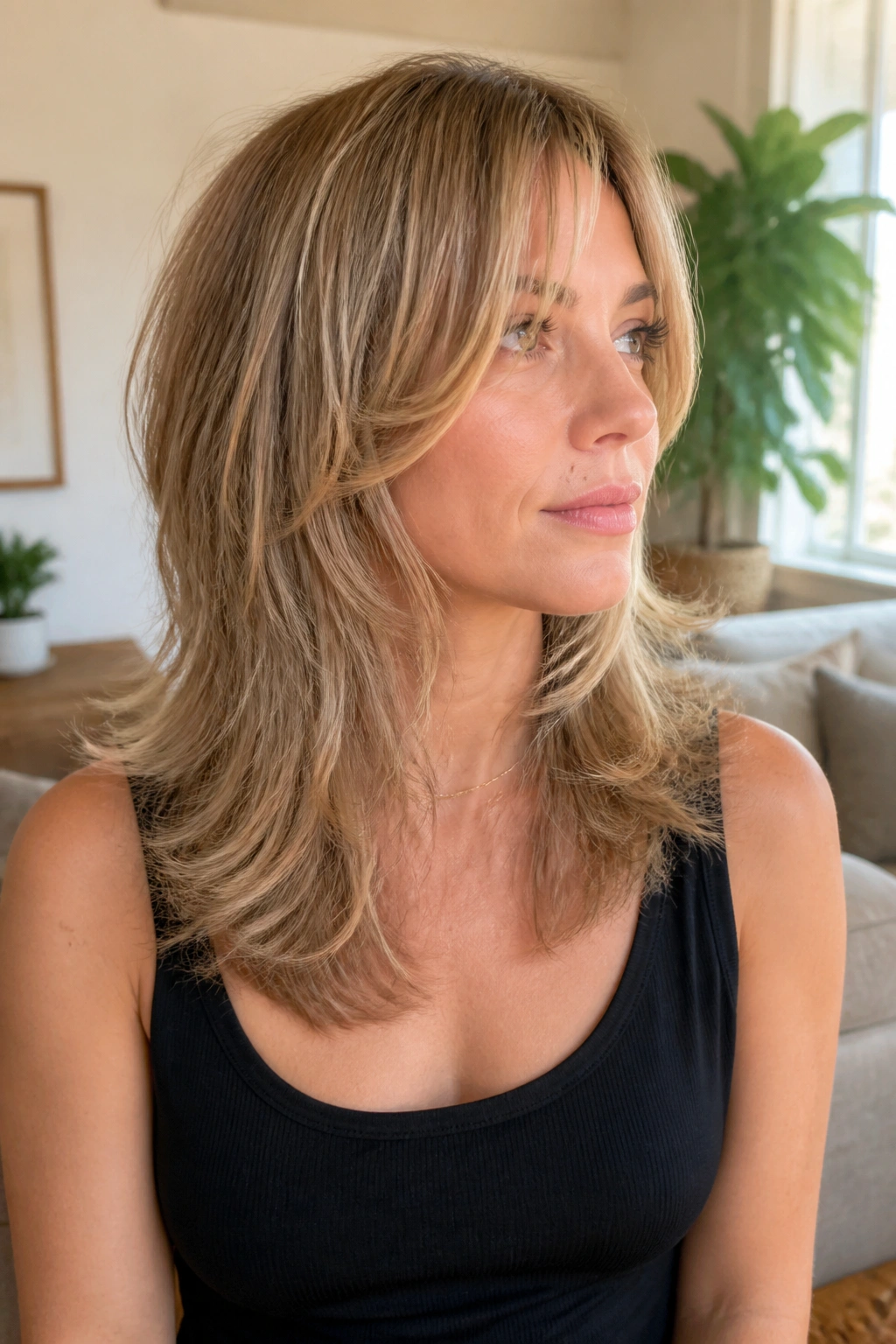
A soft shag is where fine hair gets a little attitude. The key word is soft. Not chopped, not shredded, not overloaded with short pieces that collapse the minute you step outside.
The best version keeps the top layers longer than the classic shag and focuses the shaping around the front and upper sides. That means the haircut can still move, but it does not lose the thick look through the ends. On fine hair, that trade-off matters. A shag should add energy, not erase the shape.
This cut works especially well if your hair has a natural bend or if you like a bit of air-dry texture. A little mousse at the roots and a scrunch with your hands can be enough. If you blow-dry it, use a diffuser or a round brush depending on how smooth you want the finish.
The big mistake is asking for too much disconnection. Fine hair rarely benefits from a high, choppy shag. It usually wants a quieter version with long front layers and a strong bottom line.
13. Layered Bob With Tucked-Behind-the-Ear Fronts
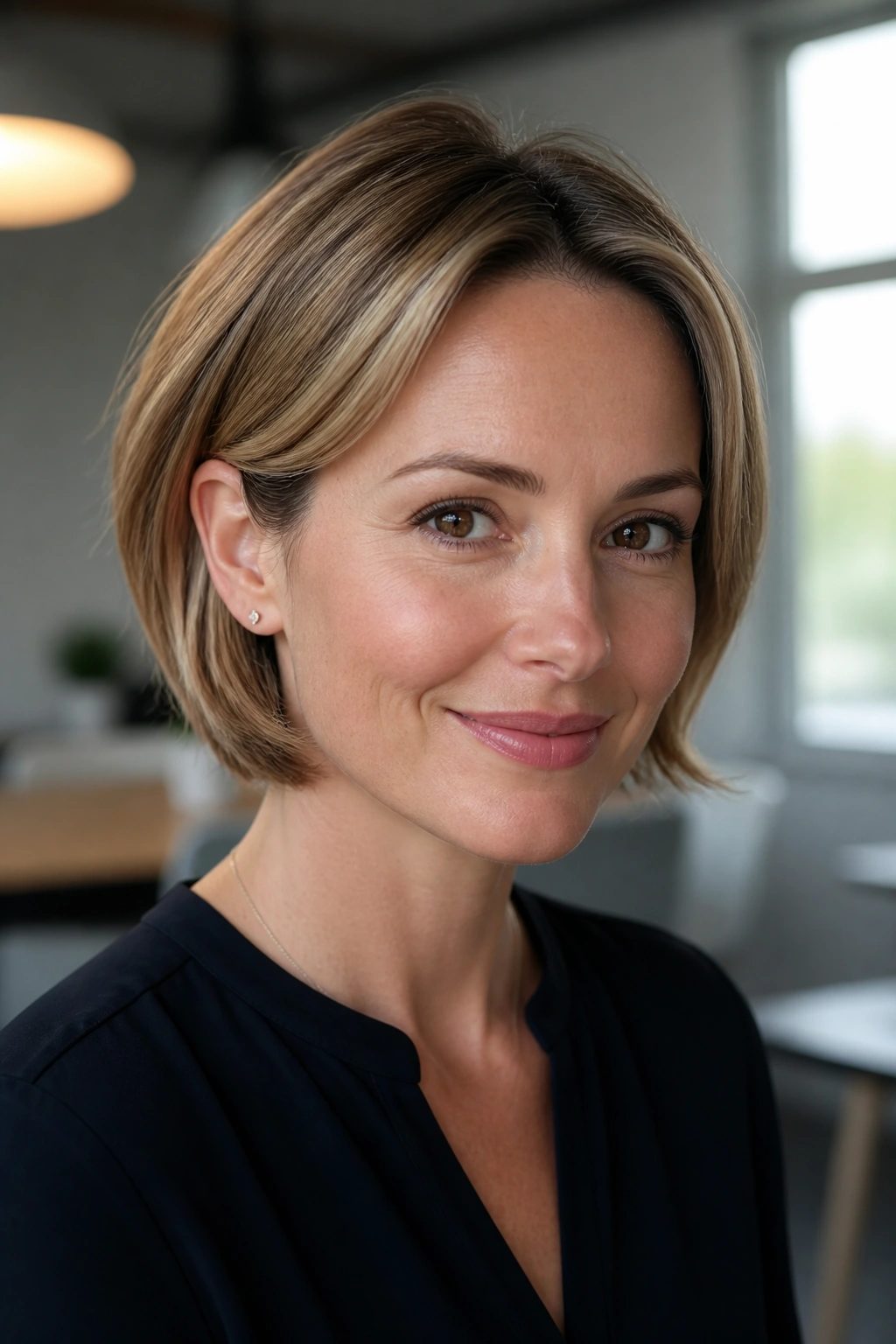
If you tuck your hair behind your ears all day, this one is for you. A layered bob with front pieces that can tuck cleanly looks neat, keeps the face open, and still gives fine hair enough shape to avoid that helmet effect.
The bob should land around the jaw or just below it. That length keeps the ends from looking too skinny, which is a real risk with fine hair and shorter cuts. Then the front gets a little extra movement so it does not fall flat the second you tuck it back.
What makes it work
- Keep the bob softly layered, not heavily stacked
- Leave the front pieces long enough to brush past the cheek
- Ask for a slight bend at the ends, not a sharp flip
- Make sure the neckline stays clean and full
This is a polished cut that still feels easy. It looks good with earrings, glasses, or a blazer, which sounds oddly specific until you realize how often hair has to work with the rest of your life.
14. Hushed Layers for Pin-Straight Fine Hair
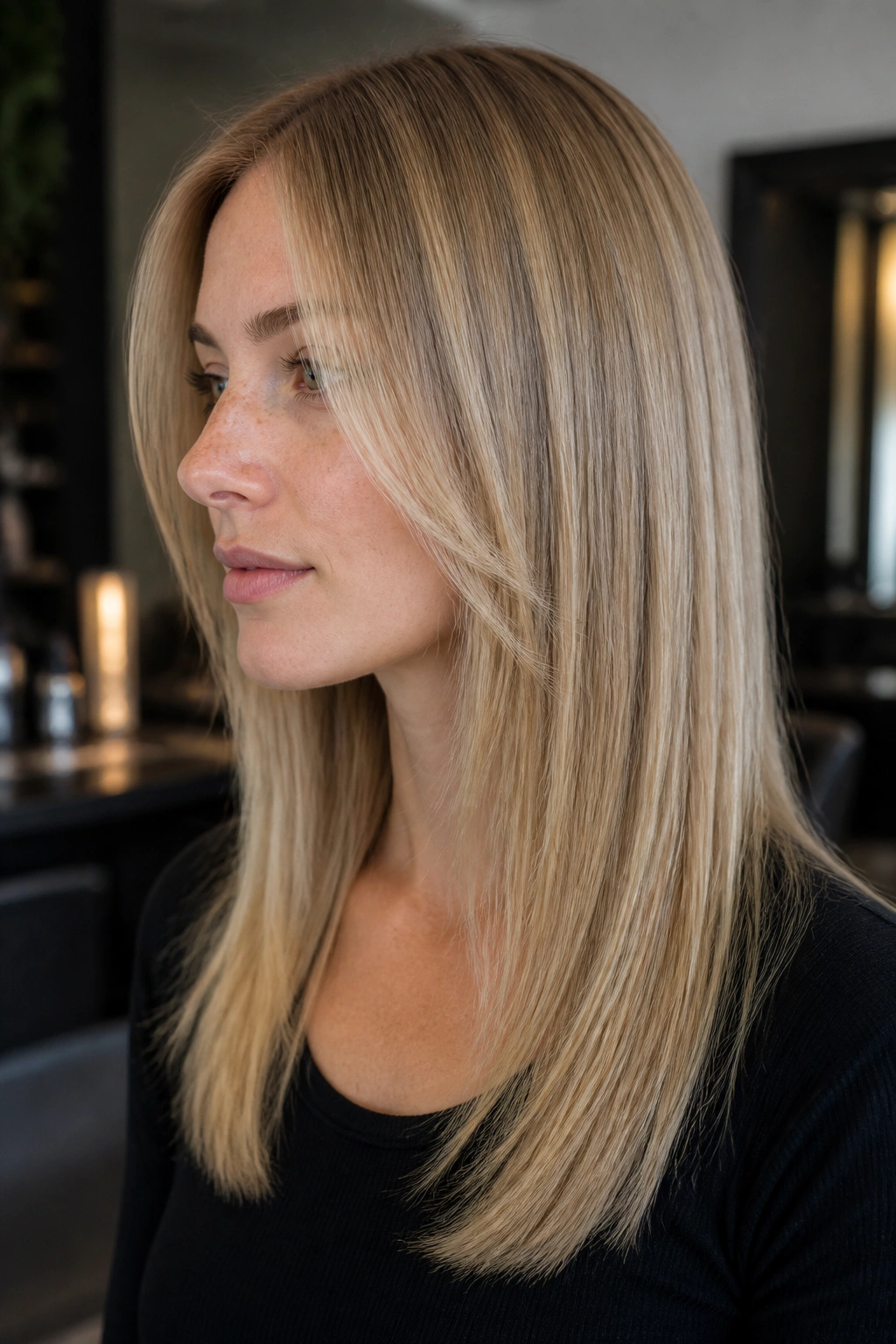
Pin-straight fine hair usually looks best with restraint. Hushed layers are the haircut version of a whisper: enough to shape the front, not enough to break the line.
The shape
The shortest pieces should stay low and soft, usually beginning around the cheekbone or jaw. That gives straight hair a little bend without turning the cut into a patchwork of thin ends. You want the face frame to feel like it was drawn with a soft pencil, not carved with scissors.
The styling
A fast blow-dry and a slight undercurve at the front are usually enough. If the hair is naturally flat, a root spray at the crown can help, but I would avoid stacking product through the mids and ends. Straight, fine hair shows buildup fast.
This is one of the better choices for people who want their hair to look expensive in the most practical sense: clean, full, and unbothered by trendier textures. It is not flashy. It works.
15. Airy Face-Framing Layers for Wavy Hair
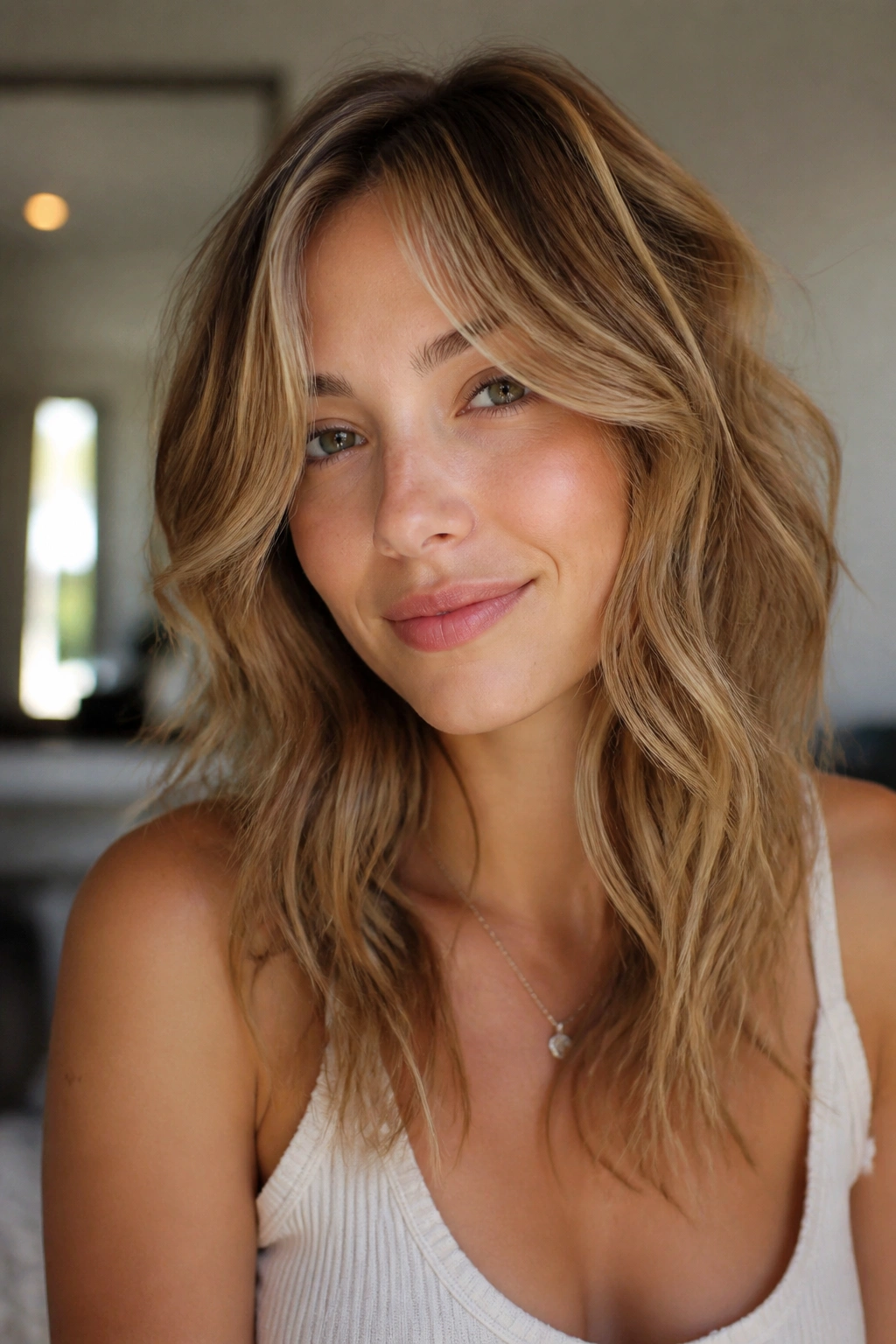
Wavy fine hair can take more front shape than a lot of people think. The wave gives the layers somewhere to live, which means the front can be a little more open and still look full.
The best versions start where the wave naturally bends, usually somewhere between the cheekbone and mouth. That lets the front pieces sit in the wave instead of fighting it. If you cut them too high, they can bounce up and separate. If you keep them too long, they may disappear into the rest of the hair.
A diffuser helps here, but so does a good cut. That is the part people skip over too fast. The haircut should support the wave pattern, not force it into some neat shape it never wanted. A touch of curl cream on damp hair can be enough; heavy cream usually weighs down fine waves and kills the lift you were trying to create.
This style gives movement around the face without making the ends look thin. That combination is the sweet spot.
16. Deep Side Part With Long Front Layers
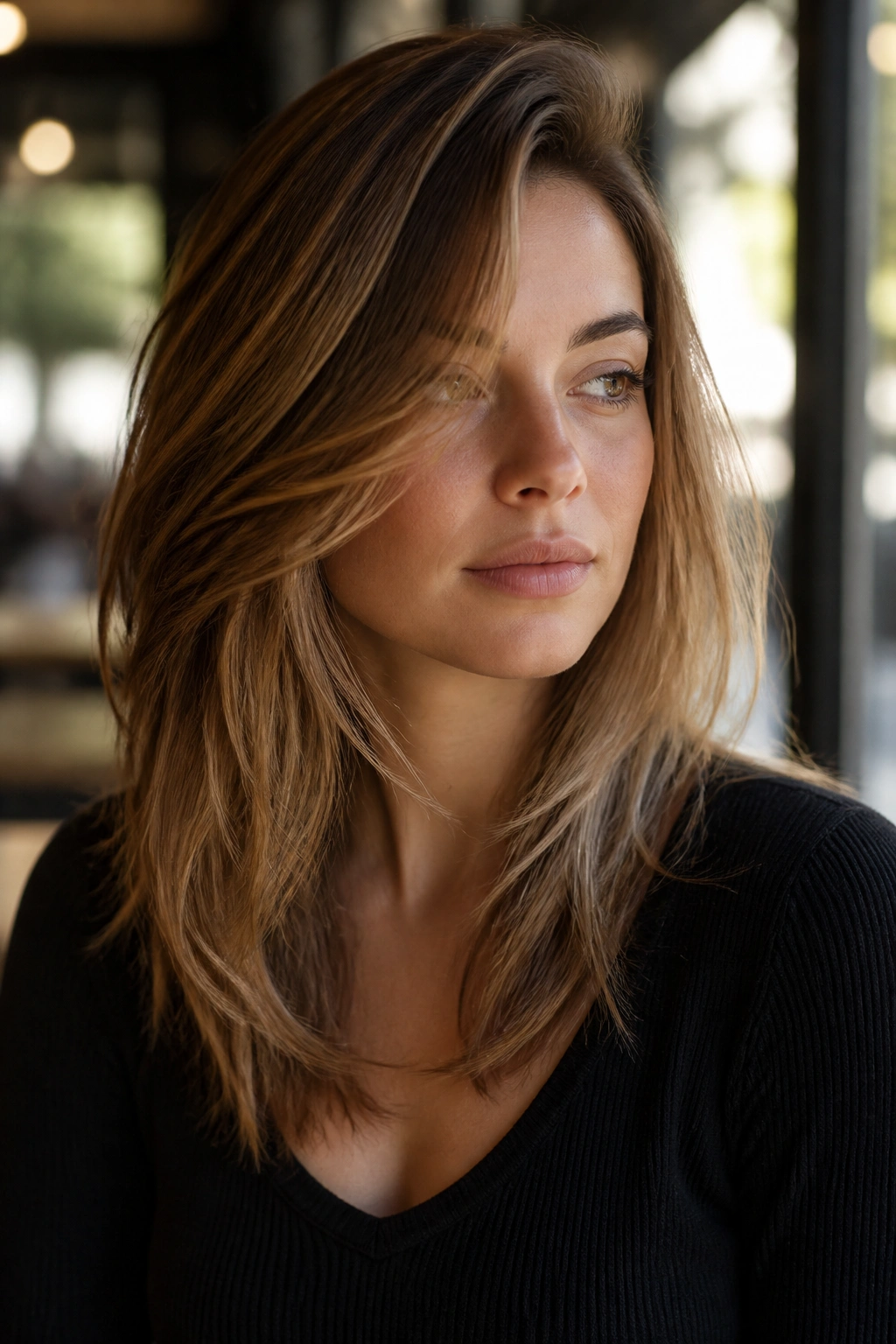
Need volume fast without cutting bangs? A deep side part with long front layers is the easiest answer.
The part creates height right at the root, especially if your hair usually sits flat in the same place. Then the front layers fall across the forehead and cheek in a way that looks deliberate instead of limp. It is a small change with a big visual payoff.
How to wear it
Use the heavier side to create a soft sweep across the face, then tuck the lighter side behind the ear if you want even more lift. A round brush at the roots helps, but the real win is in the cut itself: long front layers that can move without breaking apart.
This works well when you do not want bangs but still want something happening around the face. It also suits fine hair that feels flatter at the front than everywhere else. The asymmetry draws attention away from that flat spot and toward the shape.
Simple. Effective. Hard to argue with.
17. Sleek Mid-Length Cut With Cheekbone Layers

Sleek mid-length cuts can look flat fast unless the front is handled with care. Cheekbone layers fix that by putting shape exactly where the eye wants it, while the mid-length base keeps the hair looking thick.
This is a strong choice if you like a smoother finish. Blow it out straight, tuck it under slightly, or wear it with a middle part. The cut holds up because the bluntness at the bottom keeps the density visible. The layers do their work high enough that they do not make the ends look sparse.
I like this one for people who want a polished shape without obvious bangs. It feels clean, and it photographs in a normal, everyday way—not because it is dramatic, but because it looks like a real haircut with structure.
The key is not over-thinning the front. A little cheekbone lift is enough. More than that, and the whole thing starts to look tired.
18. Soft Wolf Cut for Fine Hair
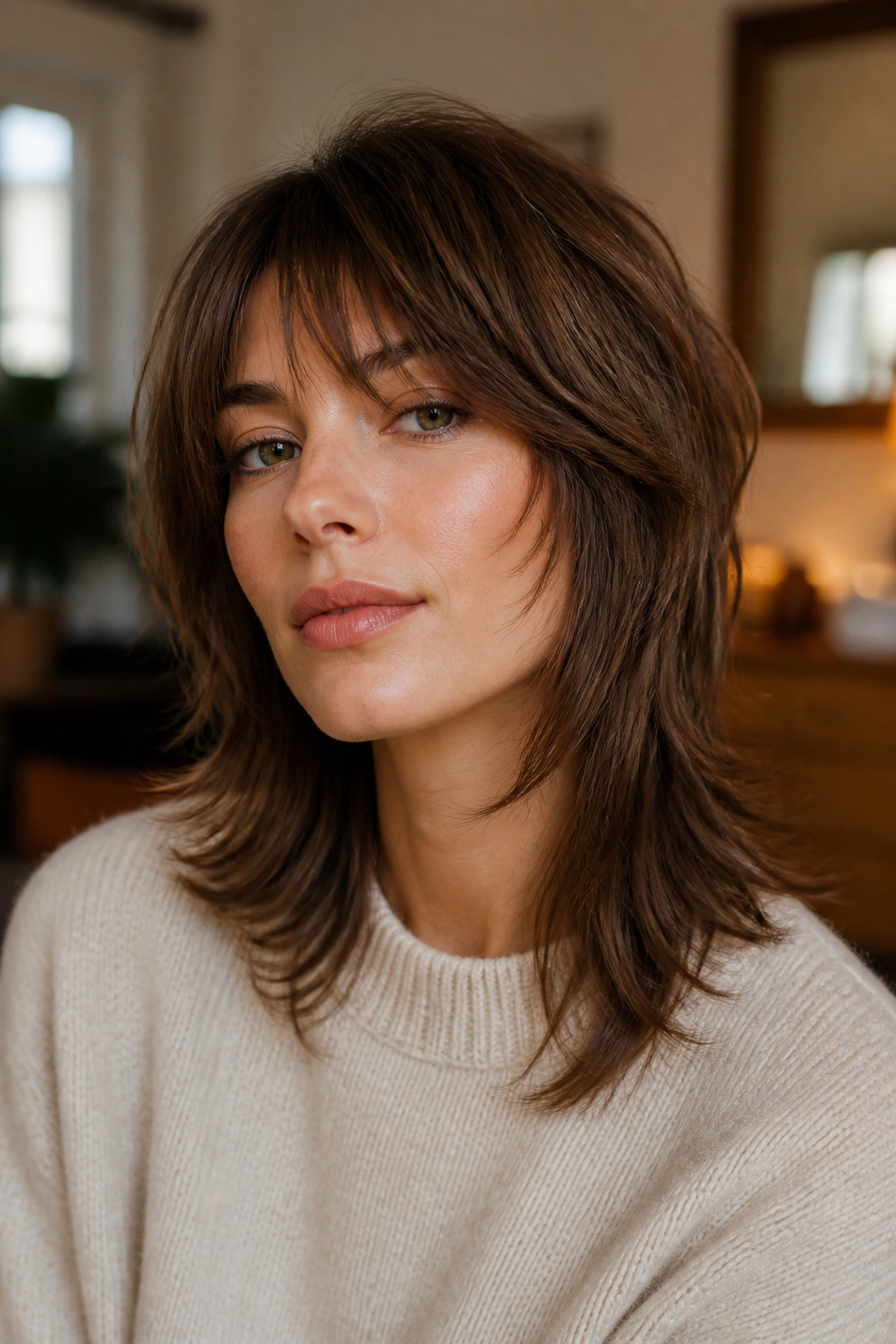
A soft wolf cut on fine hair has to be edited, not copied. The full version you see on thicker hair can swallow fine strands whole, leaving the front too choppy and the ends too thin.
The safer version keeps the top layers long, adds shape around the cheek and jaw, and preserves a solid perimeter. That gives you the movement and edge of a wolf cut without the see-through finish that fine hair often gets when the cut is too aggressive. The front is where the personality lives; the bottom is where the strength stays.
What to ask for
- Keep the shortest layers longer than classic wolf cut length
- Leave the ends full and connected
- Add texture mainly around the front and upper sides
- Avoid heavy thinning through the mid-lengths
This cut is best if you like texture and do not mind a little styling. A rough blow-dry, some root lift, and a small amount of texture spray can bring it to life. If you want wash-and-go simplicity, I would skip the full wolf shape and choose something gentler.
Final Thoughts
The cuts that work best on fine hair almost always do the same thing: they keep the perimeter honest and put the shortest pieces where the eye wants lift. Too many short layers can make hair look wispy in a way nobody asked for.
If you are bringing a photo to the salon, circle the exact point where the shortest front piece lands. Chin, lip, cheekbone, or collarbone — those details matter more than the name of the cut on the mood board.
And if your hair tends to collapse by lunchtime, do not blame the layer right away. Often the issue is the start point, not the idea. A small front shape, done well, can change the whole haircut.
