



Fine hair has a funny habit of looking great for about twenty minutes, then going soft and flat the second you leave the house. Heavy layers can make that worse. Too much weight removal near the ends leaves you with see-through pieces that move around too much and do nothing for the shape.
Choppy layered haircuts for fine hair solve that problem in a much smarter way. They take out bulk where it counts, keep enough density at the perimeter, and add movement that reads as fullness instead of stringiness. The best versions don’t look hacked at or over-thinned. They look deliberate. A little broken at the ends. A little airy around the face. Much better.
The trick is balance. You want texture, but not so much that the haircut loses its body. You want lift at the crown, but not those short top layers that pop up and make the rest of the hair hang limp. And yes, the right cut can make styling easier too — not effortless, because hair has its moods, but easier in a way you’ll notice every morning.
Here are 18 choppy cuts that actually make sense for fine hair, along with the little details that separate a flattering cut from a sloppy one.
1. Chin-Length Choppy Bob
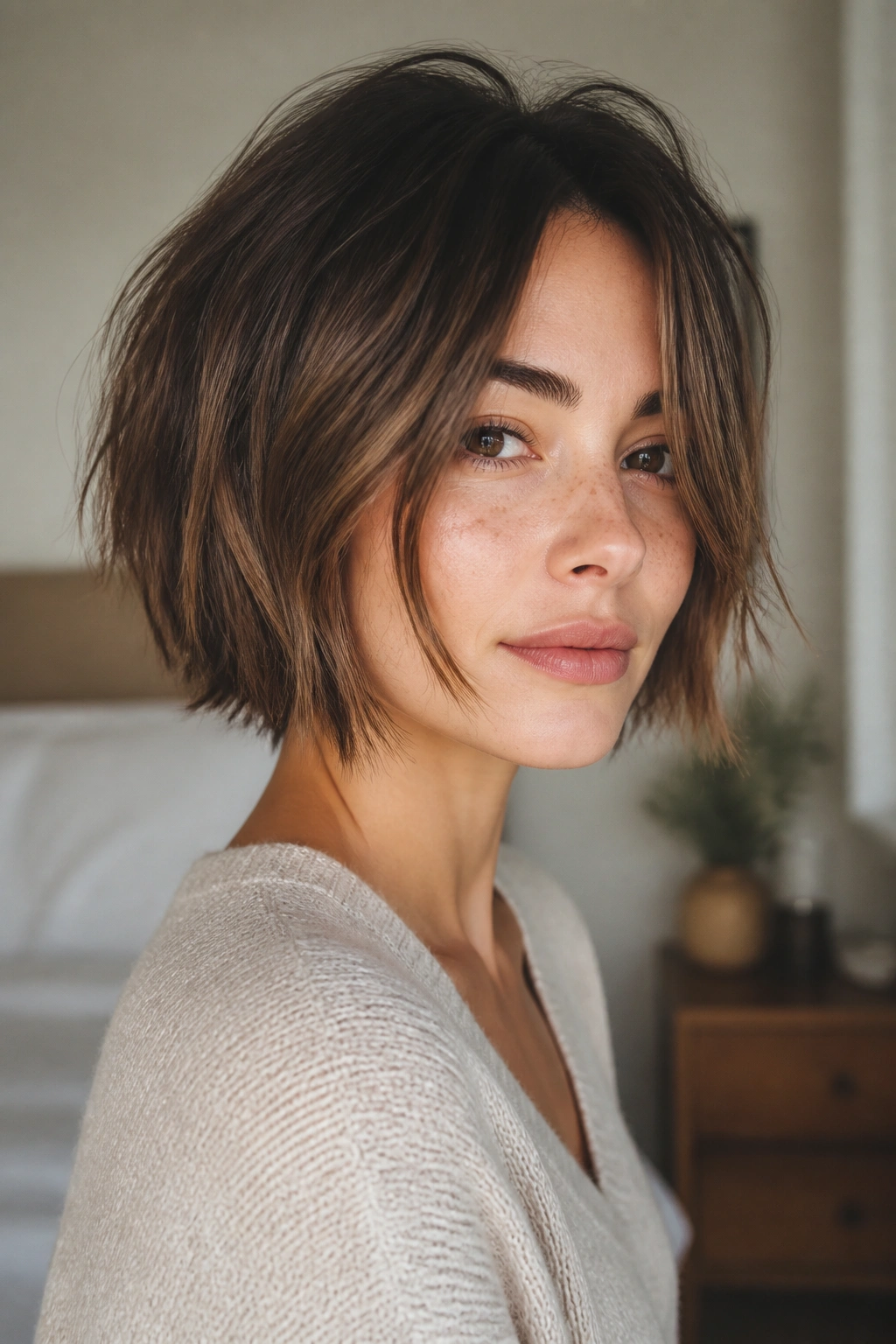
A chin-length bob is one of the sharpest options for fine hair because it puts the whole shape right where the eye notices it most. The jawline acts like a frame, so even a small amount of texture reads as movement instead of thinness.
Ask for soft point-cut ends and a few broken pieces around the face. Not a stack of short layers. That’s the difference. Point cutting keeps the edge light without chewing through the bulk you need for fullness.
What to Tell Your Stylist
- Keep the length at the chin or just below it.
- Add light texture through the mid-lengths, not the crown.
- Leave the bottom line visible so the cut still feels dense.
- If your hair is straight, a side part helps the bob look fuller fast.
A chin-length bob works especially well if your hair falls flat at the roots but holds shape at the ends. It takes a quick blow-dry and a round brush, and that’s about it. Clean, compact, and a little bit cheeky.
2. French Bob with Piecey Ends

Why does the French bob keep showing up in salons? Because it has a built-in trick for fine hair: the short length makes the hair look thicker, and the piecey ends stop it from turning into a helmet. That combo matters more than people think.
Why It Works
A French bob usually sits between the cheekbone and the jaw. That shorter line gives fine hair a fuller perimeter, while the little bits of texture make the whole cut feel light. It also plays well with a soft fringe, which can help if your hairline is sparse or your forehead feels too exposed with a blunt bob.
If your hair has even a little bend, this cut can be a gift. Air-dry it with a small amount of mousse, scrunch the ends, and let the texture do the work. Straight hair can wear it too, but then you need a bit of bend from a flat iron or a 1-inch curling iron to stop the shape from going stiff.
Styling Habit That Matters
Work a pea-sized amount of styling cream through damp ends, not the roots. Root cream is a mistake here. It weighs down the exact area you’re trying to lift.
3. Bixie Cut with Crown Texture
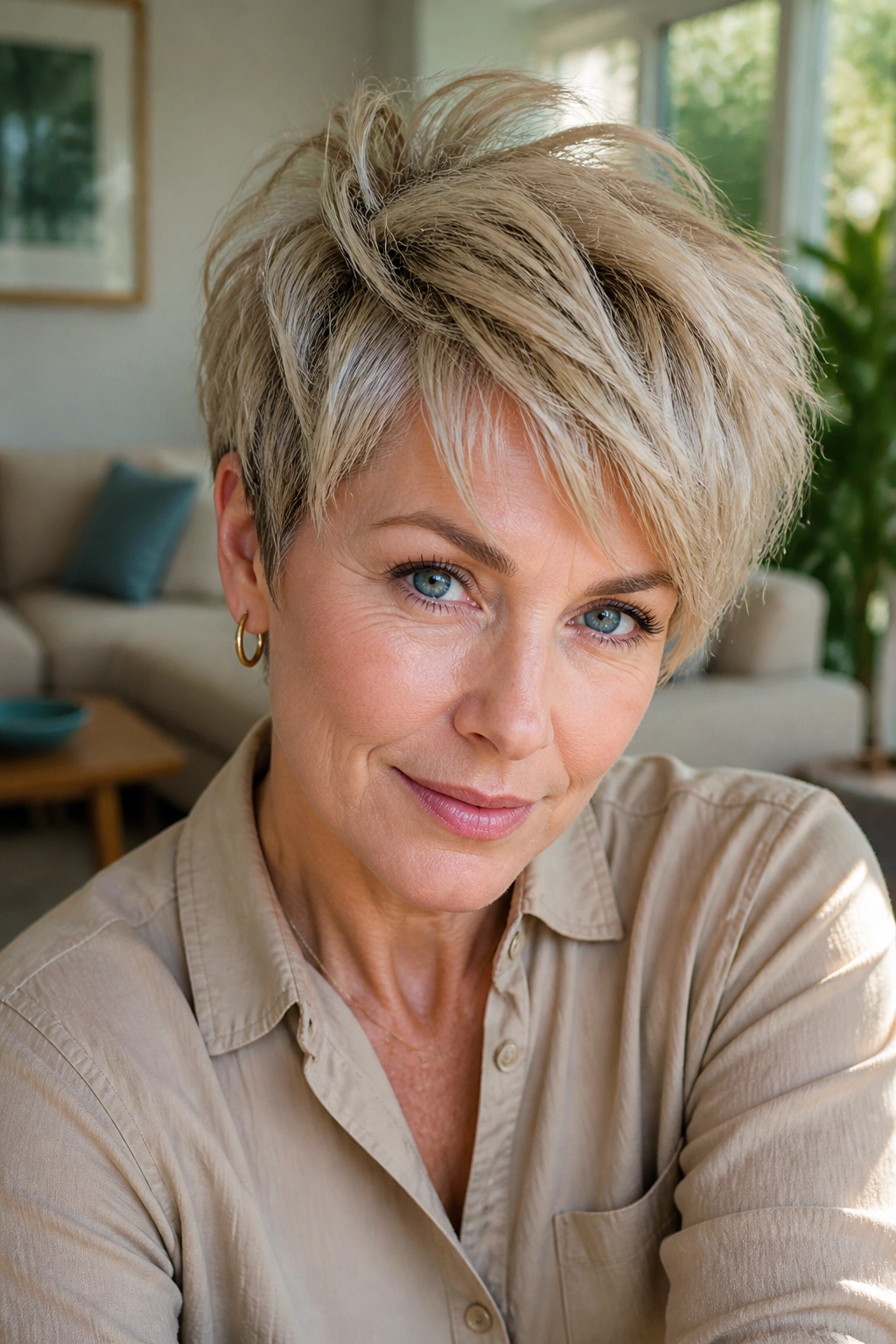
A bixie is the sweet spot between a bob and a pixie, and on fine hair it can be a lifesaver. Short enough to feel airy, long enough to keep some shape around the face. The crown gets the texture; the nape stays neat.
The best bixies for fine hair keep the top slightly longer so you can lift it with mousse or a bit of root spray. If the top is too short, the style can stand up in odd places. If it’s too long, the whole thing collapses. Annoying little balance act. Worth it, though.
How to Style It
- Blow-dry the crown first, lifting hair up and slightly forward.
- Use a light mousse on damp roots.
- Pinch a few top pieces with matte paste once dry.
- Keep the sides soft so the head shape doesn’t go boxy.
This cut is good for someone who wants a fresh shape without committing to a full pixie. It has energy. It also grows out more gracefully than a super-short crop, which matters more than people admit.
4. Jaw-Length Razor Crop
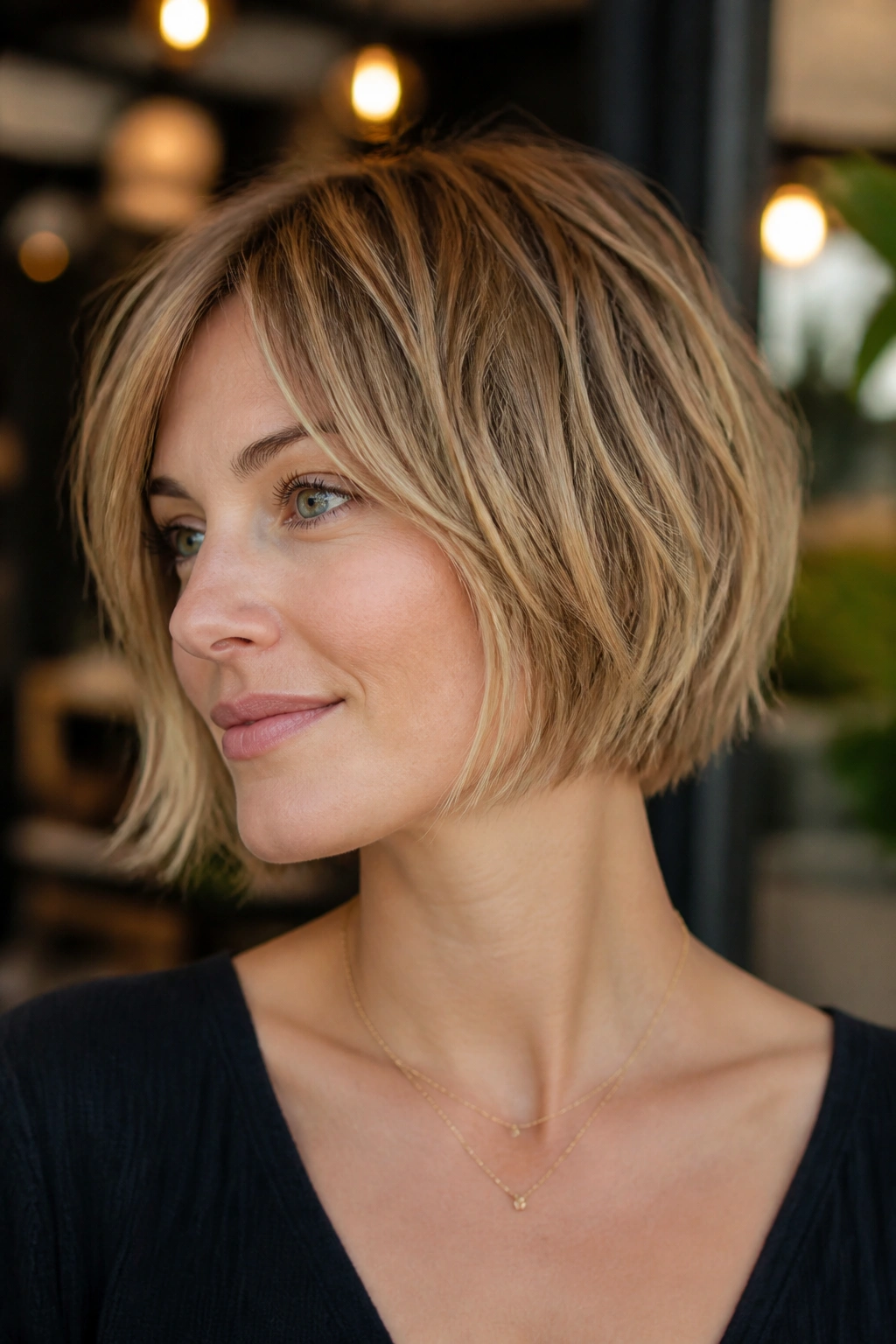
A jaw-length razor crop is a blunt little rebel. It gives fine hair movement without dragging the ends down, and when a razor is used well, it softens the outline so the haircut doesn’t look heavy or blocky.
The key word there is well. A razor can help straight, fine hair move. It can also wreck frizzy hair if your stylist gets too eager. So this is a cut that really depends on the hair’s texture. Smooth, silky strands? Great. Puffy, rough, or very porous ends? Be careful.
Don’t ask for a lot of layers here. Ask for a soft, broken edge with a bit of internal texture near the jaw. That gives the cut swing without making it thin. It’s the kind of haircut that looks best with a tucked-behind-the-ear moment or a deep side part.
One more thing: if your hair flips out in weird places, this length will show it. Loudly.
5. Collarbone Lob with Broken Layers
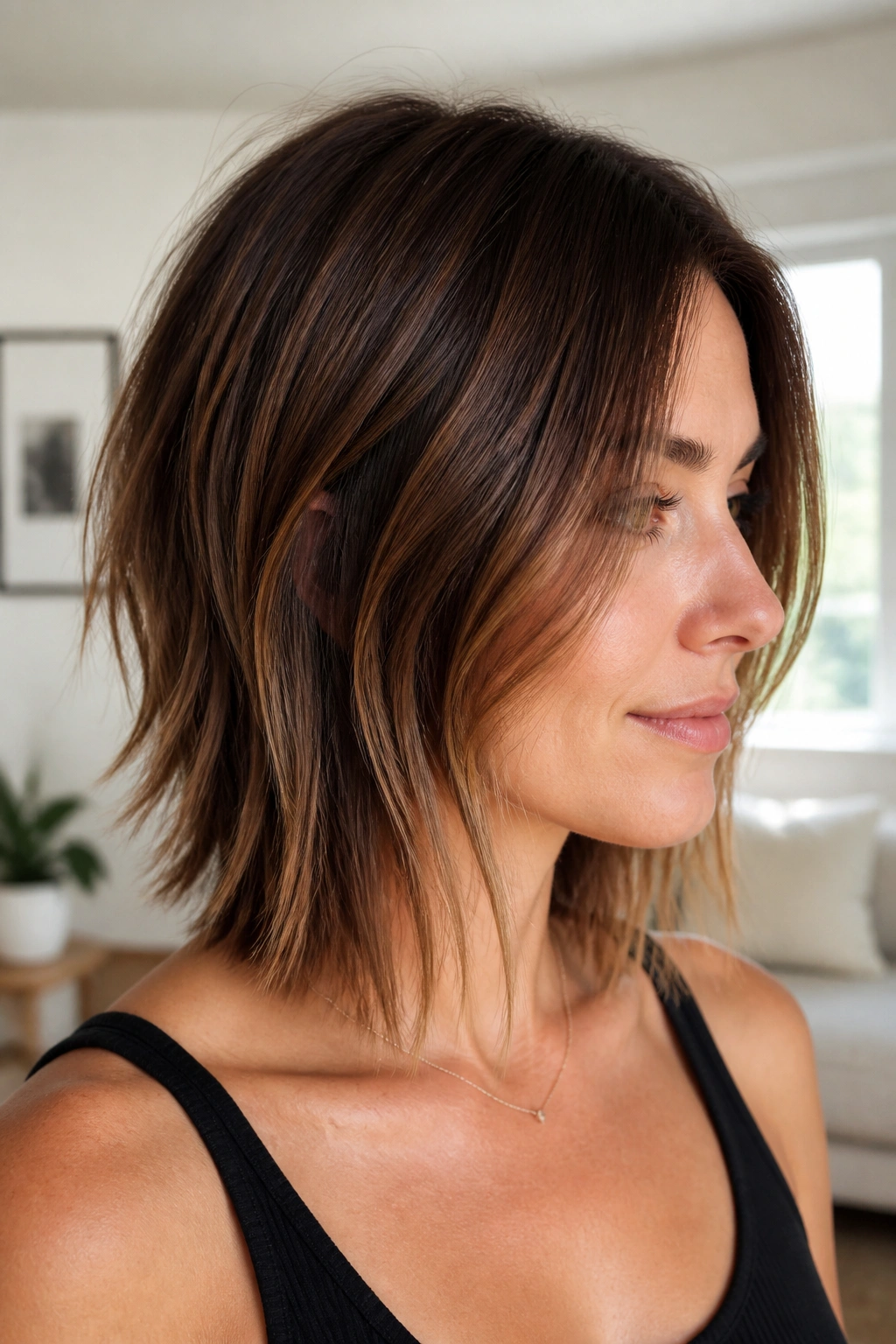
A collarbone lob is the easy answer for anyone who wants movement but refuses to go short. Fine hair tends to lose shape when it’s too long, and this length sits in the safe zone: enough weight to behave, enough lift to avoid dragging everything down.
Unlike a blunt lob, a broken-layer version keeps the surface line soft. The stylist removes small pockets of weight underneath and around the face so the hair can move, but the top still looks full. That matters. You don’t want to see where the layers begin. You just want the hair to swing better.
It’s also one of the most forgiving cuts for grow-out. If you hate salon upkeep, this one won’t punish you.
A side part makes it feel even thicker. A center part can work too, but only if your roots aren’t prone to splitting apart. That’s the thing with fine hair: part placement changes the whole mood of the cut.
6. Soft Shag with Curtain Bangs

A soft shag is probably the most misunderstood haircut on fine hair. People hear “shag” and picture giant layers, choppy pieces everywhere, and a lot of styling time. That version can be too much. The softer one is much better.
What you want is a shag that keeps some length through the bottom and uses airy layers around the cheekbones and crown. Curtain bangs help because they create shape at the front without the heavy wall of a blunt fringe. The whole look feels loose, not hollow.
Fine hair with a little wave can wear this cut beautifully. Fine hair that’s pin-straight can still do it, but you’ll want a texturizing spray and a quick bend through the front pieces. Nothing fussy. Just enough to stop the layers from lying flat and sad.
The best part is that this cut looks better a little undone. That is useful. Hair that can survive a messy day without falling apart is worth keeping.
7. Wolf Cut for Fine Hair
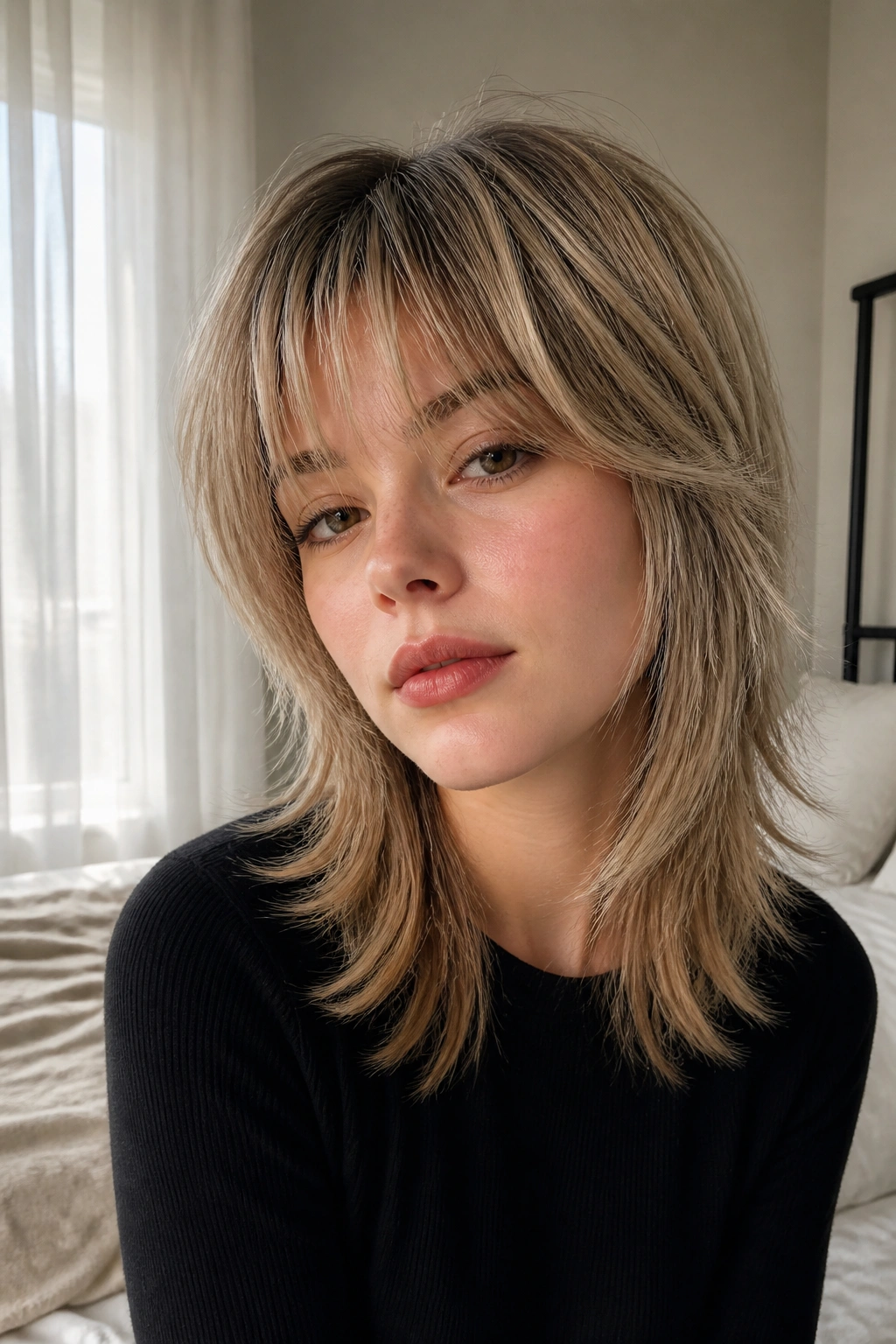
Can a wolf cut work on fine hair? Yes, but only if it’s softened down. The wild, high-contrast version can make thin ends look even thinner. A moderated wolf cut, though, gives you crown lift, face-framing texture, and a little edge without the whole thing turning stringy.
How to Ask for It
- Keep the top layers soft and blended.
- Leave enough length through the bottom to hold shape.
- Avoid aggressive thinning shears at the ends.
- Ask for movement around the cheekbones instead of huge disconnected layers.
That’s the version that makes sense. Not the exaggerated, ultra-choppy one you might see on social media.
A wolf cut suits fine hair that already has some bend or wave. On straighter hair, it needs mousse, a diffuser, or a quick rough-dry with your fingers. If you leave it to air-dry with nothing in it, the shape can disappear fast. The haircut is doing part of the work, sure, but it still wants a little help.
8. Pixie with Choppy Top
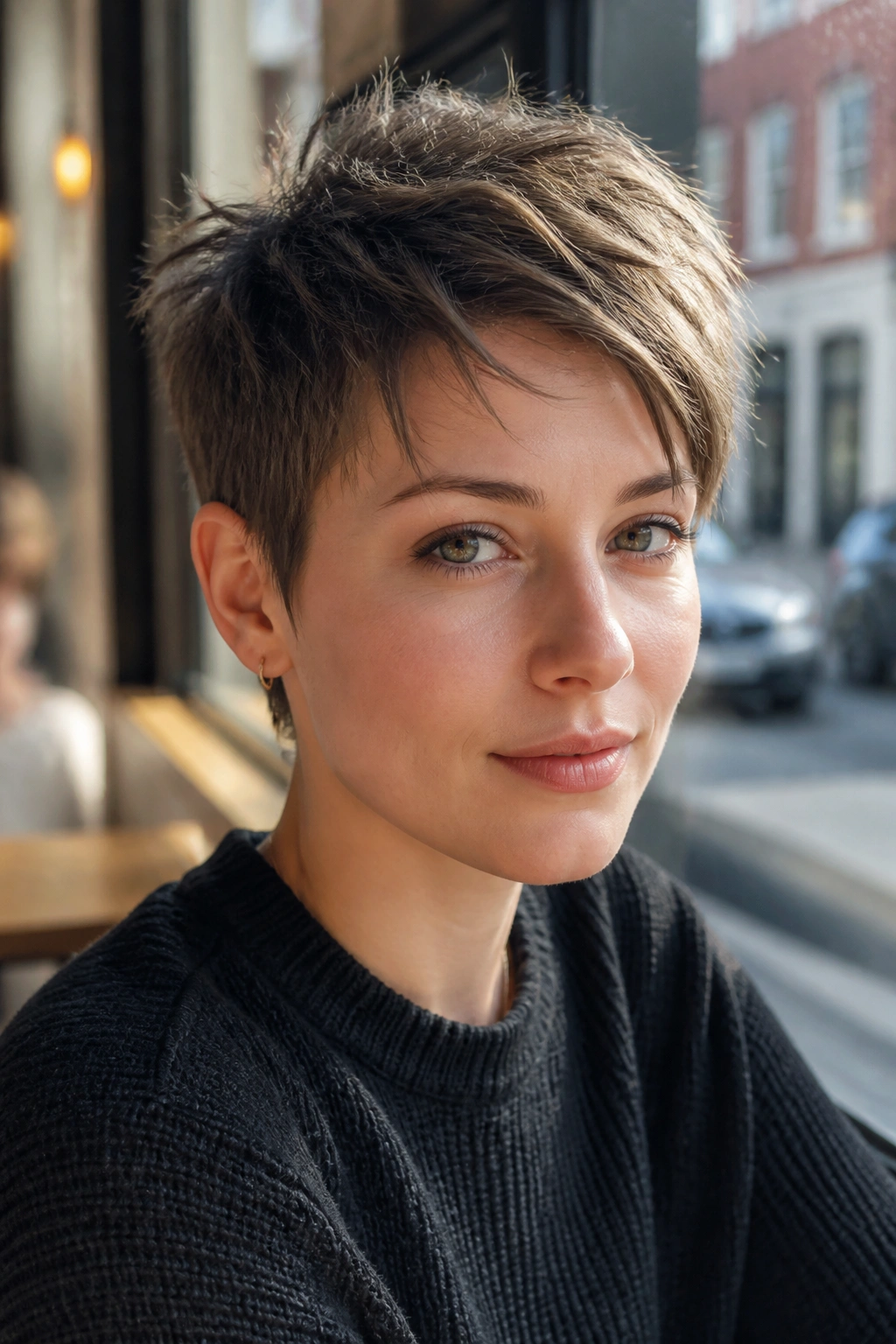
A pixie with a choppy top is one of the fastest ways to make fine hair look lively. Short sides keep the shape neat, while the longer top gives you room to mess with texture. It’s small, but not plain. That matters.
This cut is especially good if your hair gets flat under hats, helmets, or humid weather. You can lift the top with a dab of paste, push it forward, spike it a little, or smooth it to one side. The style changes fast, which is half the fun.
Use a lightweight cream or paste, not a heavy oil. Fine hair absorbs product quickly, and too much shine can make the cut go limp. A tiny amount on dry hair is enough. More than that and the texture starts to clump in a bad way.
If you’re nervous about going short, keep the fringe a bit longer than you think. That softens the whole cut and gives you more styling options on sleepy mornings.
9. Layered Crop with Side-Swept Fringe

A side-swept fringe can do more for fine hair than another inch of length ever will. That sounds dramatic, but I stand by it. The diagonal line across the forehead creates movement, and movement is what fine hair needs most.
The crop itself should stay close to the head without hugging it too tightly. A few choppy pieces around the temples help the cut bend instead of sitting in one flat shape. The fringe then pulls the eye upward, which creates the look of lift at the root.
This is a neat option if you want something that works in a professional setting and still has personality. It doesn’t scream for attention. It just looks more awake than a plain short cut.
A quick styling trick: blow-dry the fringe in the opposite direction first, then sweep it over once it’s warm. That tiny move gives the front more bend and stops it from separating into sad little strands by noon.
10. Long Bob with Hidden Internal Layers

Not everyone wants obvious choppiness. Some people want movement without seeing where every layer begins and ends. That’s where hidden internal layers come in, and they’re useful on fine hair because they remove weight without breaking the outline apart.
The outside still looks like a long bob. Clean. Full. Easy to wear. Underneath, though, the stylist has taken out enough bulk for the hair to swing instead of hanging like one solid sheet. That’s a subtle difference, but you feel it when you style it. The brush moves faster. The ends flick instead of dragging.
This cut is a good choice if your hair is fine but plentiful. You know the type — the strands are narrow, but there’s enough hair on the head to make bulk a problem. Internal layering fixes that without exposing the scalp.
A middle part works here if your root lift is decent. If not, a deep side part gives the illusion of more fullness right away.
11. Butterfly Cut with Airy Face Frame
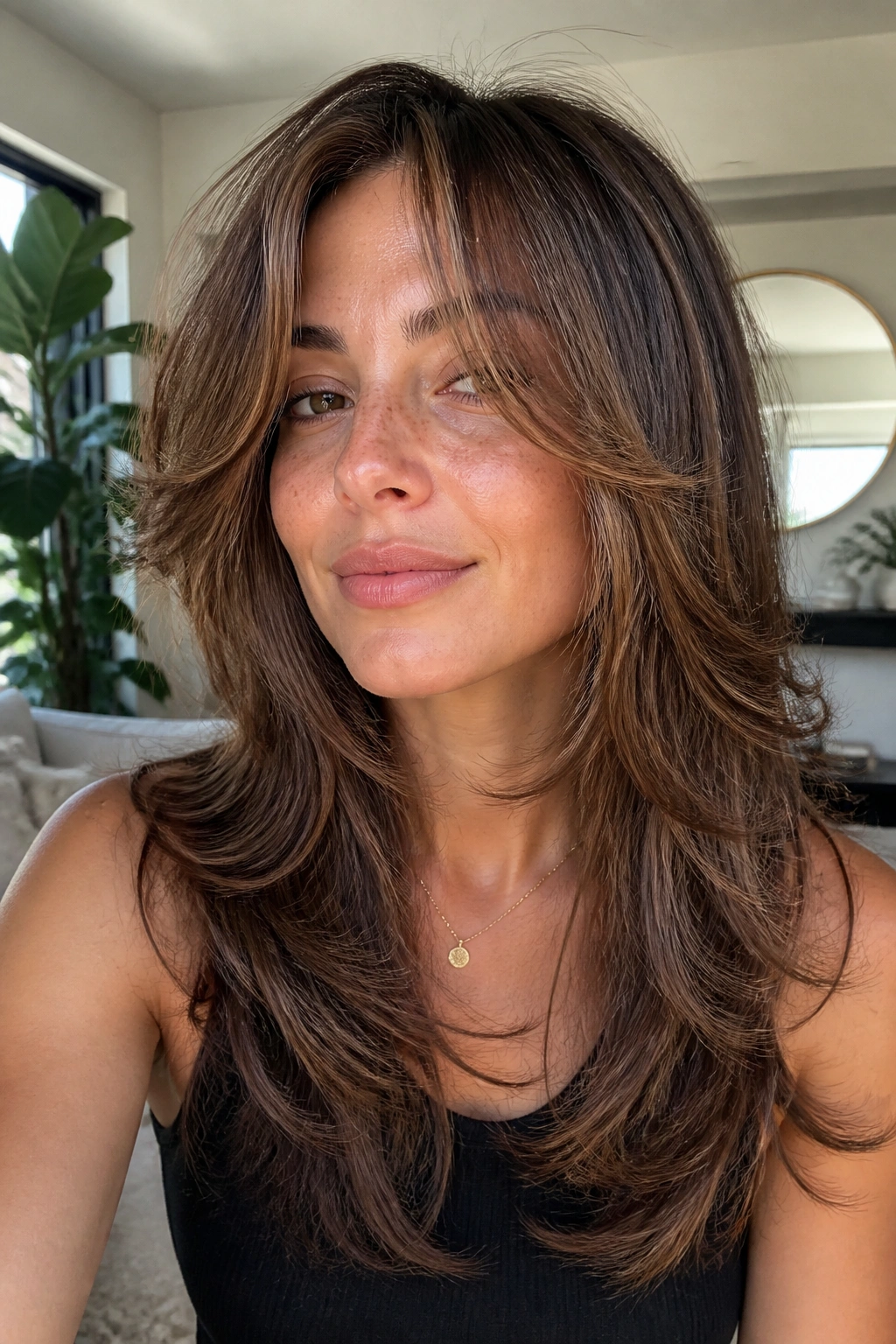
A butterfly cut can be lovely on long fine hair, but only when the face frame stays airy and the top layers don’t get chopped too high. The point is to create lift around the front while keeping enough length underneath to preserve density.
Unlike long layers that start low and stay subtle, the butterfly cut has a more obvious front shape. The shorter pieces near the face create that floating effect, while the longer back keeps the hair from feeling thin. It’s a nice compromise if you want some drama without losing the feeling of long hair.
What Makes It Different
- The shortest layers stay around the face.
- The back length stays long enough to hold weight.
- The shape looks fuller when curled away from the face.
- It grows out better than a cut with short, disconnected crown layers.
This one suits people who like to style their hair with a round brush or large roller. Straightened flat, it can lose some of its charm. A little bend brings the whole thing to life.
12. Modern Mullet with Feathered Ends
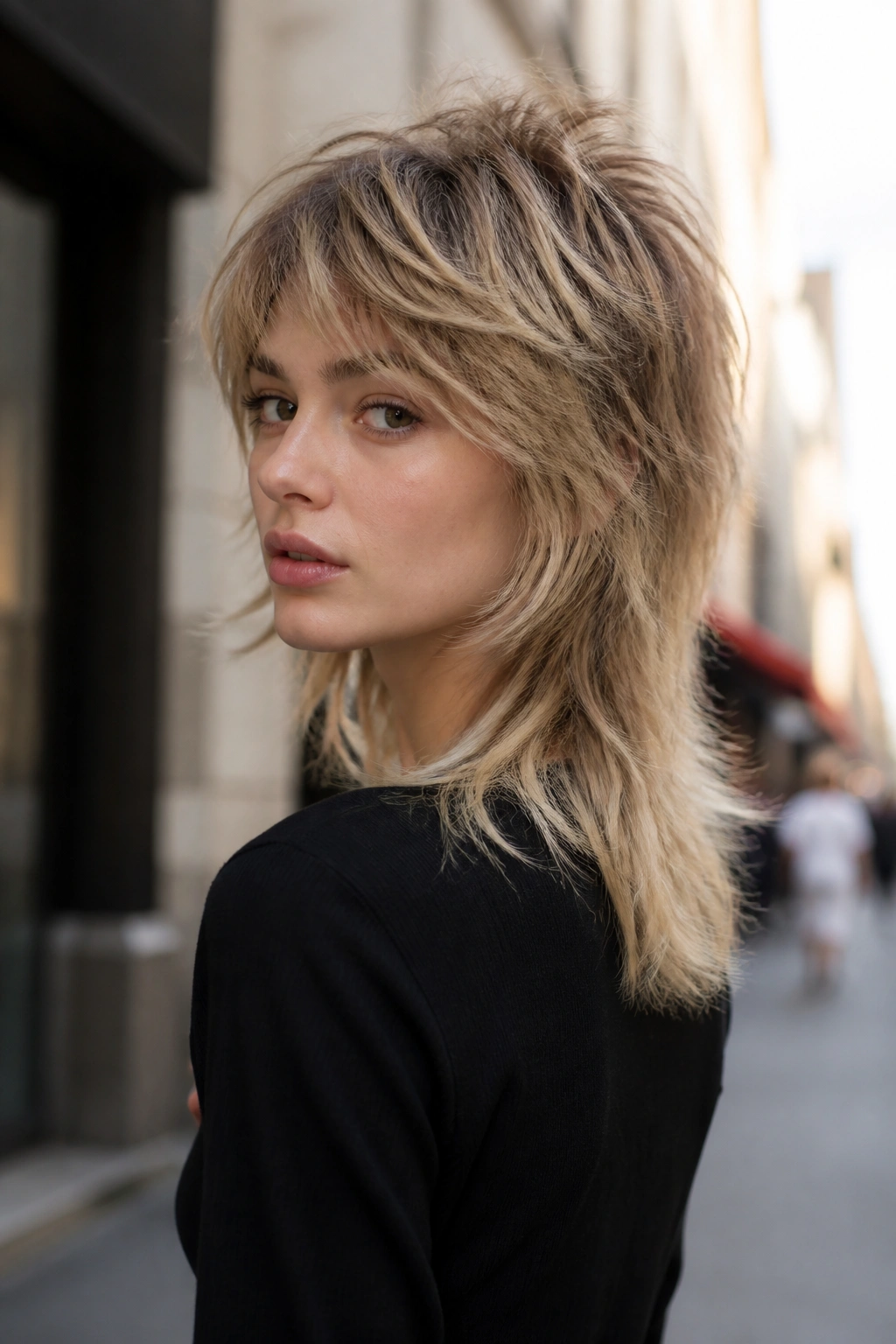
Too edgy? Not if it’s cut softly. A modern mullet for fine hair should never look harsh or punk in a costume-y way. The right version is feathered, light, and a little shaggy around the ears and nape.
The reason it works is simple: the crown gets lift, the top gets shape, and the back keeps enough length to stop the cut from feeling chopped off. On fine hair, that contrast can create the look of more volume than a single-length style ever will. The silhouette does the heavy lifting.
How to Keep It Soft
- Leave the perimeter feathered, not razor-thin.
- Keep the top layers blended into the sides.
- Use a small round brush at the crown.
- Skip heavy waxes unless you want a piecey finish.
This is not the cut for someone who wants everything neat and tucked away. It has personality. A little roughness suits it. If you want the hair to look tidy and quiet, pick something else.
13. Angled Bob with Short Back
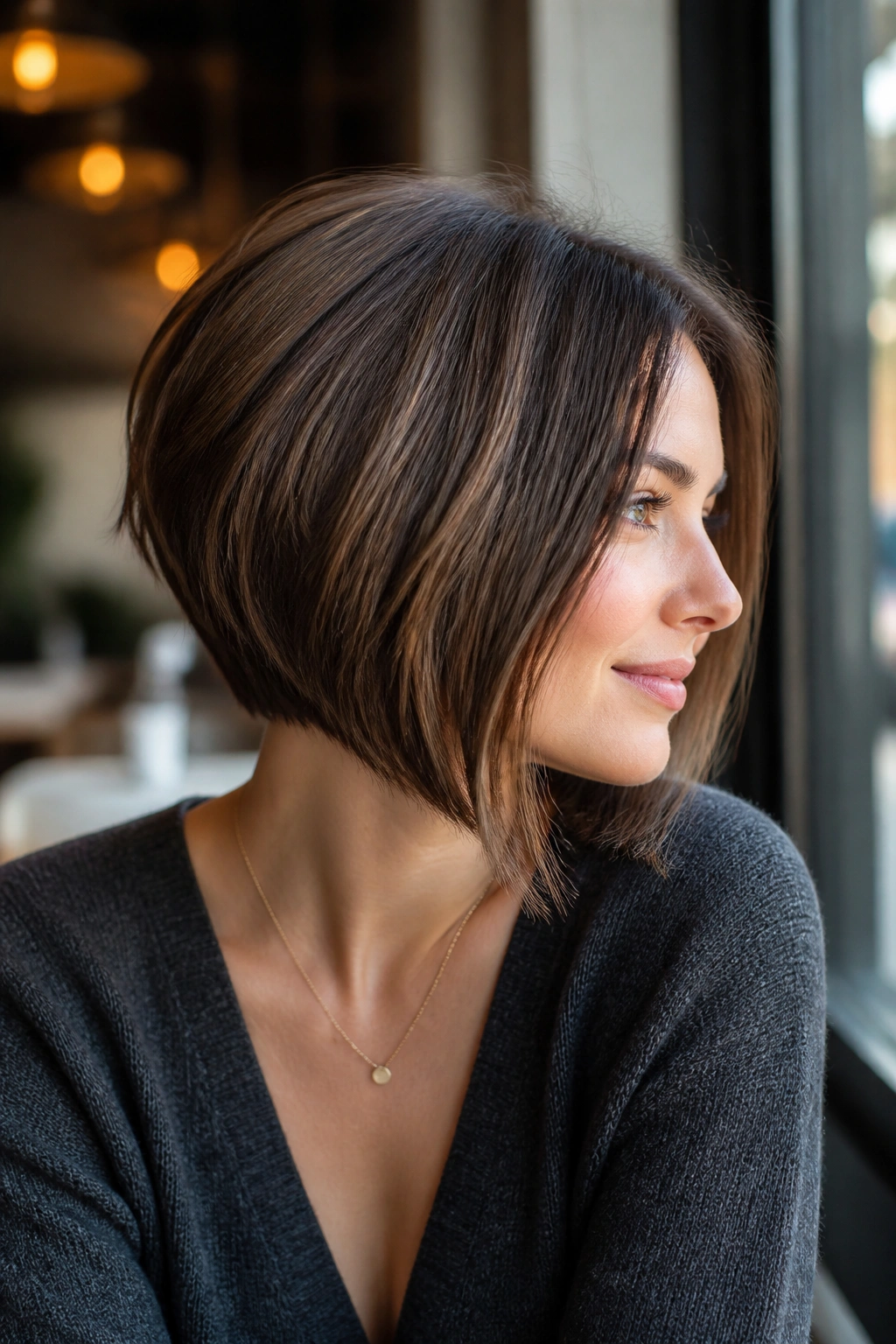
An angled bob is one of the easiest ways to fake density on fine hair. The shorter back gives the hair a little lift right where it needs it, and the longer front creates a strong line that feels intentional instead of wispy.
The angle should be mild. Too steep, and fine hair can look stretched out at the front. Too soft, and you lose the shape that makes the cut interesting. The sweet spot sits somewhere between jaw and collarbone, depending on how much hair you have to work with.
Don’t over-layer the front. That’s the mistake people make. The whole point is to keep the shape clean while using the angle to create fullness and movement. A slight bend under the ends is usually enough.
This is also a good cut if your hair tends to flip up at the nape. The shorter back controls that a bit and keeps the silhouette from feeling messy in the wrong way.
14. Shoulder-Length Cut with Textured Ends
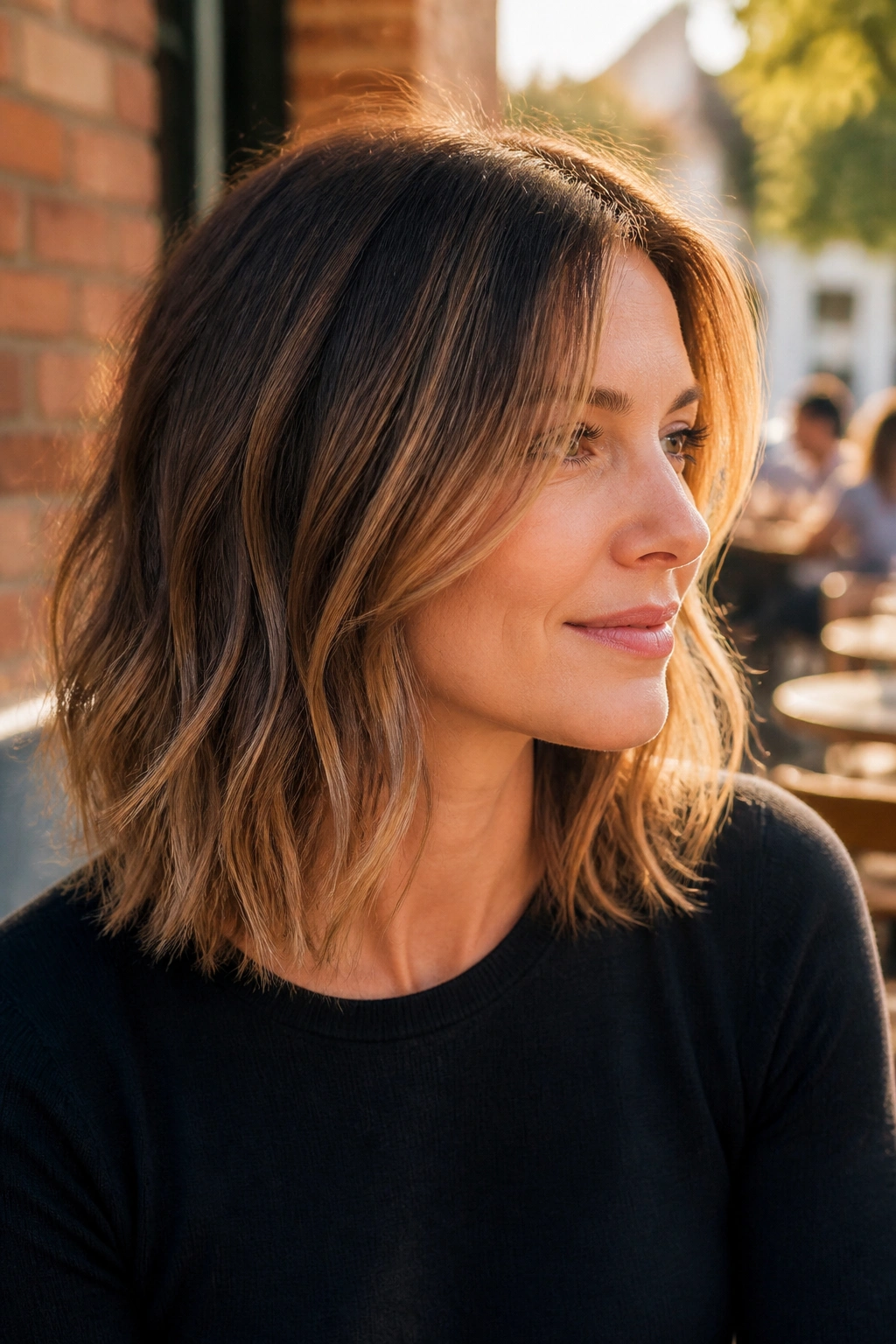
Shoulder length can be tricky on fine hair. Long enough to sag, short enough to show every flat spot. So the haircut has to work harder. Textured ends help, and they do it without making the whole style look choppy for no reason.
The Practical Part
Ask for soft texture through the bottom inch or two, not a pile of short layers. That keeps the weight line intact while allowing the ends to move. If your hair brushes your shoulders, a blunt edge can turn it into a shelf. A little brokenness at the tips fixes that.
This cut is nice if you wear your hair up a lot. It still fits into a clip or low bun, but when you wear it down, it doesn’t hang in one heavy curtain. Add a loose wave with a 1.25-inch iron, then shake it out with your fingers. Done.
It’s a smart in-between length for people growing out a shorter bob. Also for people who keep cutting their hair into the same safe shape and then complain it feels boring. Textured ends give you a little life without changing everything.
15. Long Layers with Micro-Choppiness
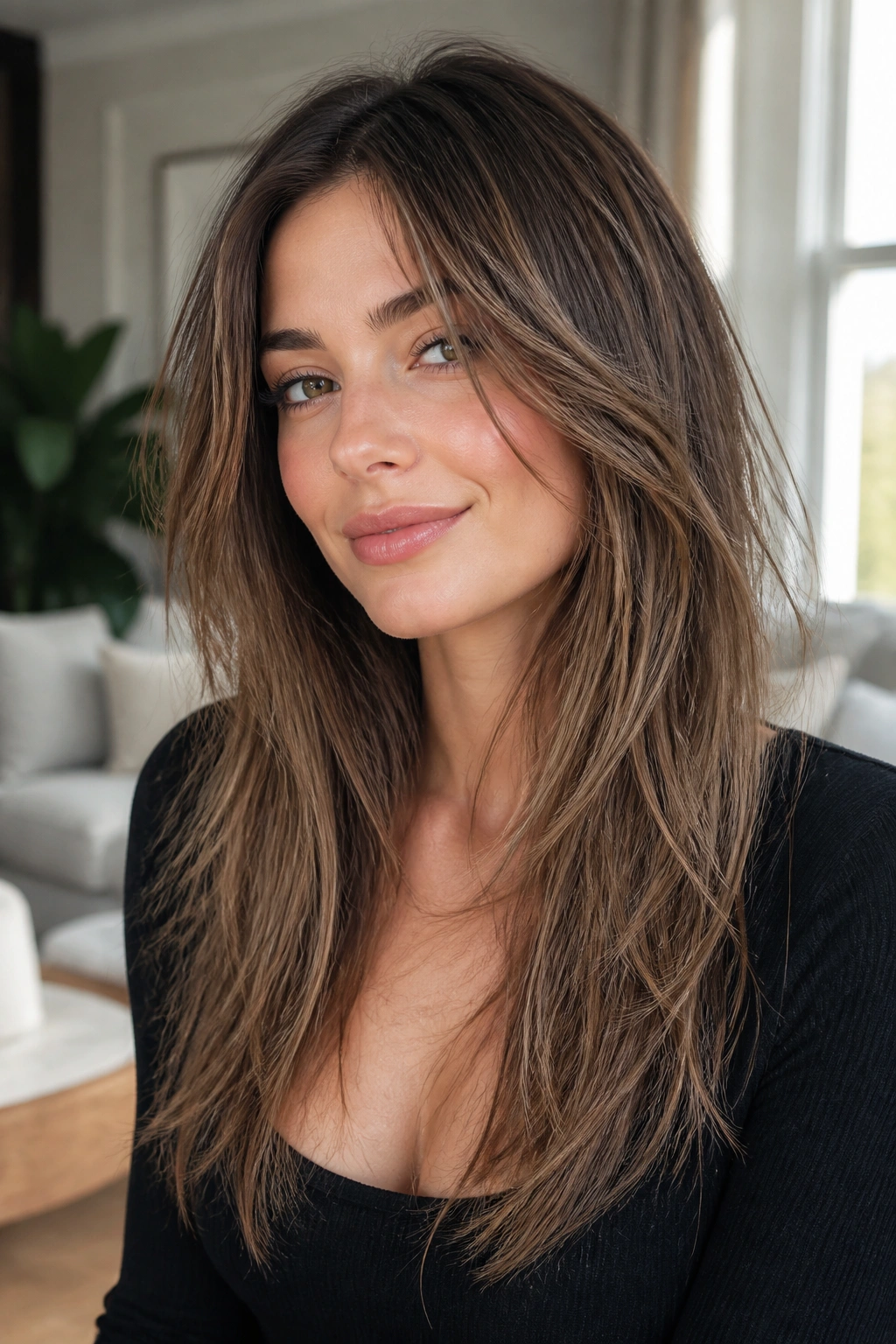
Long fine hair can look luxurious, but only if it holds shape. Too much length pulls the hair down and makes the ends look sparse. Micro-choppiness solves that by keeping the layers long while breaking up the tips just enough to stop the cut from reading as flat.
This is not a dramatic layer job. That would be the wrong move. The better version removes tiny bits of weight through the lower third of the hair and softens the face frame so the overall shape still feels full. Think movement, not chunks.
A lot of stylists go too short around the crown on fine hair. Don’t let that happen. The crown needs some length if you want lift without collapse. A soft side part helps, and a light volumizing mousse at the roots is usually enough.
If you wear your hair straight most of the time, this cut can be especially good because the micro-texture keeps the ends from looking thin and tired.
16. Shattered Bob with Tapered Nape
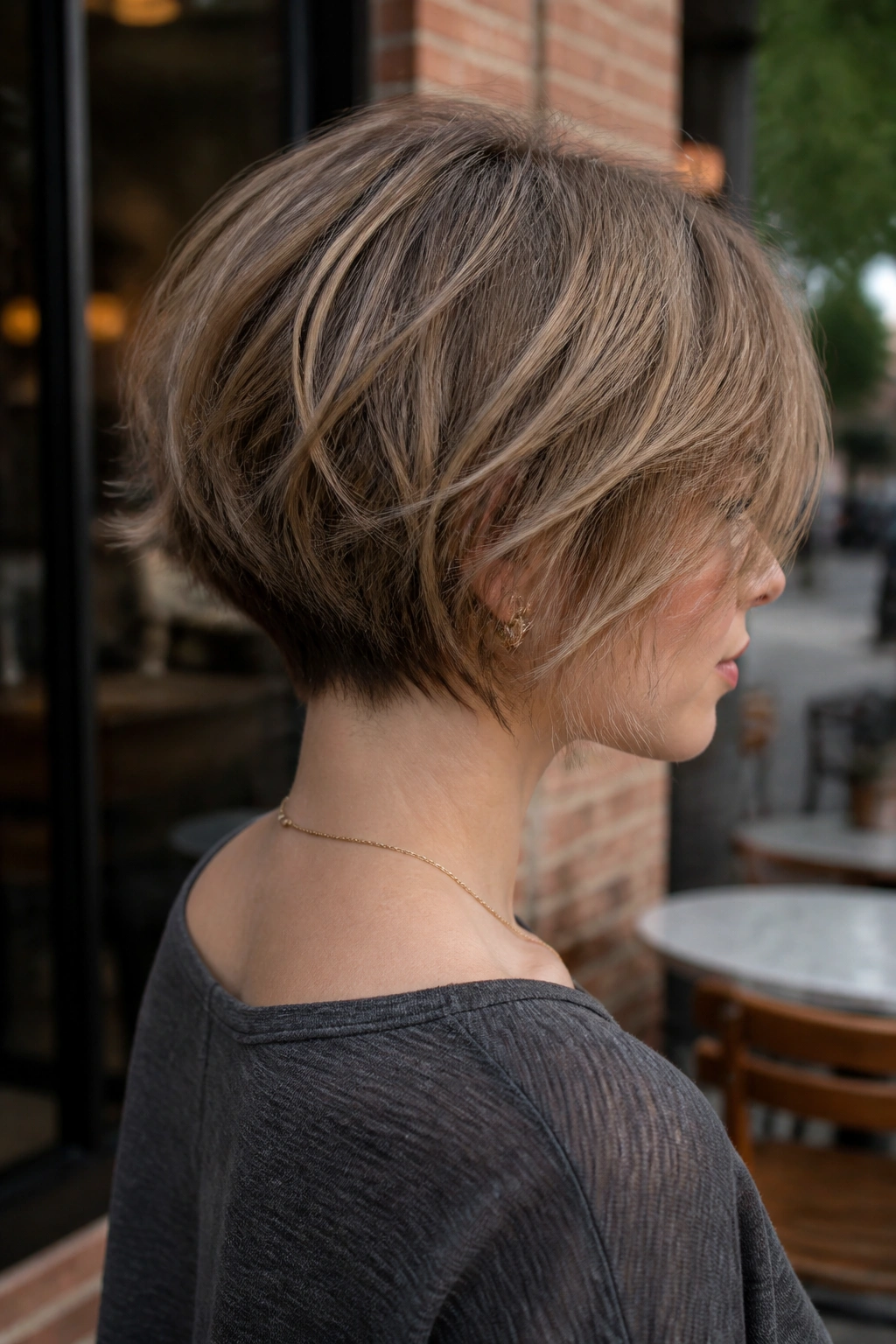
A shattered bob has a broken, airy surface that can work beautifully on fine hair when the layers stay controlled. The ends are cut into little irregular pieces, which gives the hair movement, and the tapered nape keeps the back neat instead of bulky.
That taper matters. It stops the bob from puffing out at the neck, which can happen fast with fine hair that has a little bend. The overall shape feels lighter, but not see-through. There’s a difference.
- Best on hair that has a slight wave or bends easily.
- Good if you want a bob that feels modern without being sharp.
- Works well with a side part or a soft off-center part.
- Needs a light hand with finishing spray; too much product closes the texture down.
This cut can look a little edgy in a good way, but it isn’t fussy. That’s why people return to it. It has movement even on a lazy day.
17. Wispy Layered Cut with Bottleneck Bangs
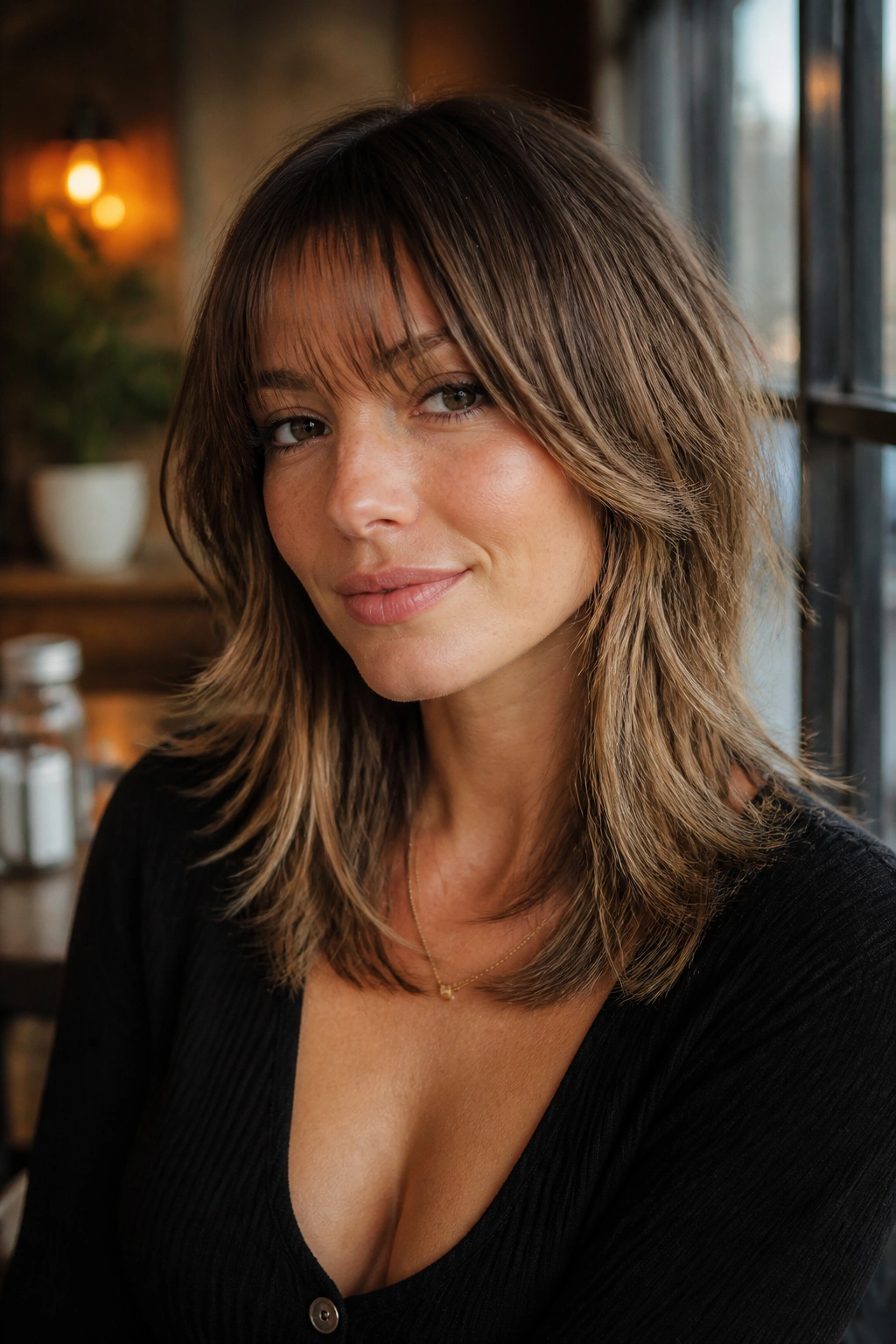
Can bangs work on fine hair? Yes, if they’re cut with restraint. Bottleneck bangs are a smart choice because they start narrow at the center and open up toward the sides, so they don’t sit like one heavy wall across the forehead.
What to Watch For
The bang area should stay airy. If it gets too dense, fine hair can look stringy everywhere else because all the bulk has been used up in the front. That’s a bad trade. You want enough hair in the bangs to make the shape clear, but not so much that they swallow the rest of the cut.
The layers around the face should stay soft and feathered. Nothing harsh. Nothing too short near the temples. The goal is a frame that opens the face without making the hair look thinner through the lengths.
A small round brush helps the bangs sit right, and a tiny bit of styling cream on the ends keeps them from separating. If your forehead is on the shorter side, ask your stylist to keep the center a touch longer. That stops the bangs from feeling cramped.
18. Flippy Layered Lob with Tucked Ends
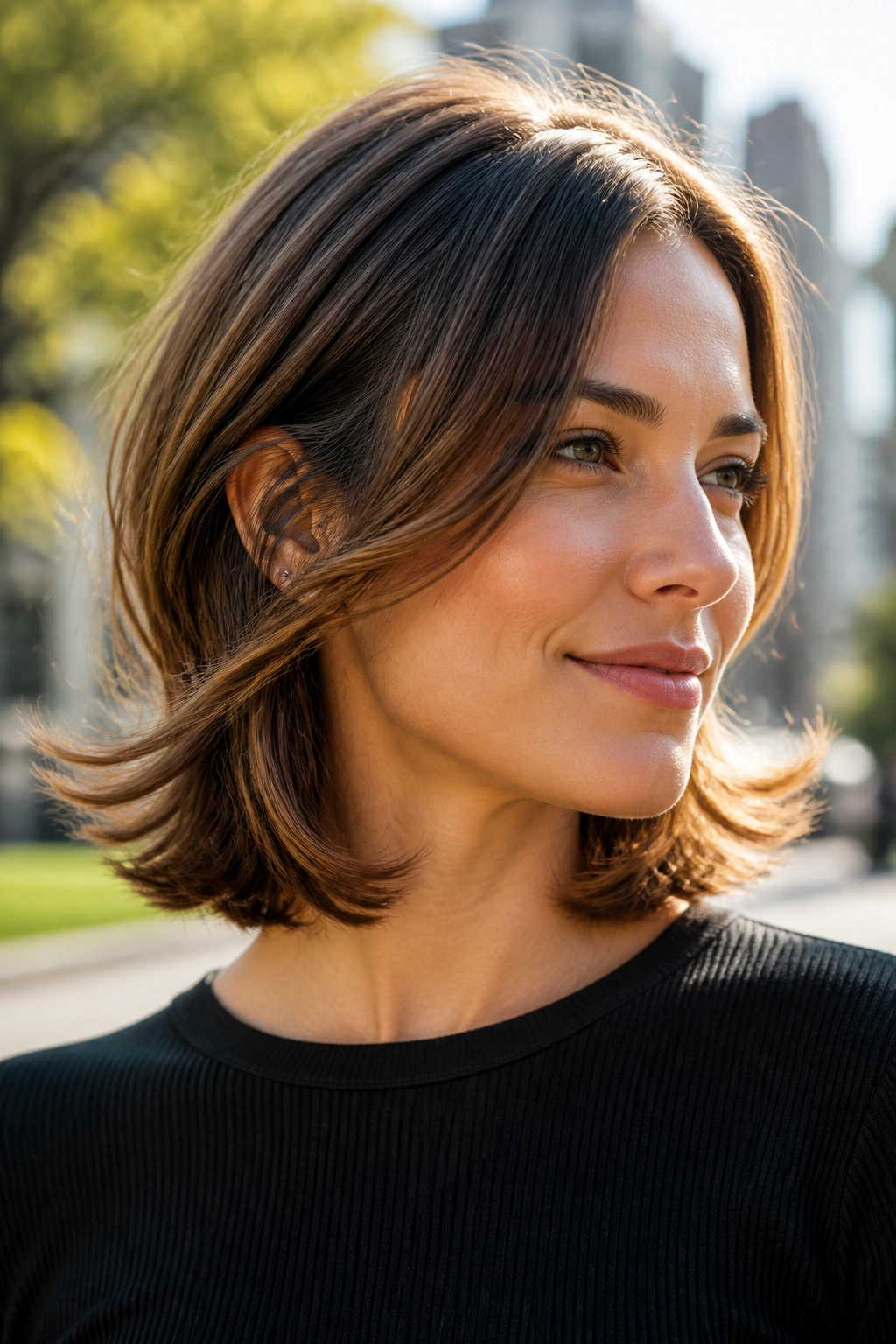
There’s something quietly satisfying about a lob that flips out at the ends. It feels a little playful, a little polished, and it gives fine hair a shape that doesn’t depend on perfect styling. You can wear it tucked, flipped, waved, or smoothed.
This cut works because the layers are placed to encourage the ends to turn instead of hang dead straight. That tiny change gives the whole shape more motion. On fine hair, motion matters. A lot.
Use a 1.25-inch curling iron or a round brush, and bend the ends away from the face on some sections, toward it on others. Don’t make every piece do the same thing. That’s how the style gets that easy, airy look instead of a stiff salon finish.
If you like hair that looks neat but not flat, this is a strong choice. It’s also a good one for people who tuck one side behind the ear and want the cut to still look intentional from every angle.
Final Thoughts
The best choppy layered haircuts for fine hair do one simple thing well: they make the hair look like it has more shape without stripping away the density it needs. That’s the balance to chase. Not more layers. Better-placed layers.
If you’re sitting between two lengths, choose the one that keeps the perimeter thick enough to hold form. If your hair is very straight, ask for soft texture instead of heavy thinning. If it bends easily, you can lean into a more broken, piecey finish. Little decisions like that change everything.
Bring photos, sure. But bring one more thing too: a clear idea of what you don’t want. No over-thinning. No see-through ends. No layers that disappear into the crown and leave the bottom tired. That part matters more than the buzzier haircut name, and it’s the difference between a cut that looks cute for a week and one that actually earns its place on your head.
