



Orange-red is the trap.
On cool skin tones, the wrong red can pull hard toward pumpkin, rust, or copper, and that is rarely the flattering direction people hope for when they ask for something bold. A red-purple hair color, though, sits in a much cleaner lane. Blue-red, berry, plum, wine, and violet-based shades tend to work with cool undertones instead of fighting them, which is why they can make skin look clearer and more even.
That does not mean every purple-red shade behaves the same. Some read deep and moody in indoor light, then flash berry at the ends. Others look soft and smoky in daylight, then go jewel-toned under lamps. A good colorist will pay close attention to the base level, because a level 5 brunette and a level 8 blonde will not hold the same red-purple the same way.
If you want the shade to feel polished instead of brassy, think in terms of blue, plum, berry, black cherry, merlot, and damson. Not copper. Not tomato. The 30 ideas below move from subtle to dramatic, and each one has a different kind of energy.
1. Black Cherry Velvet
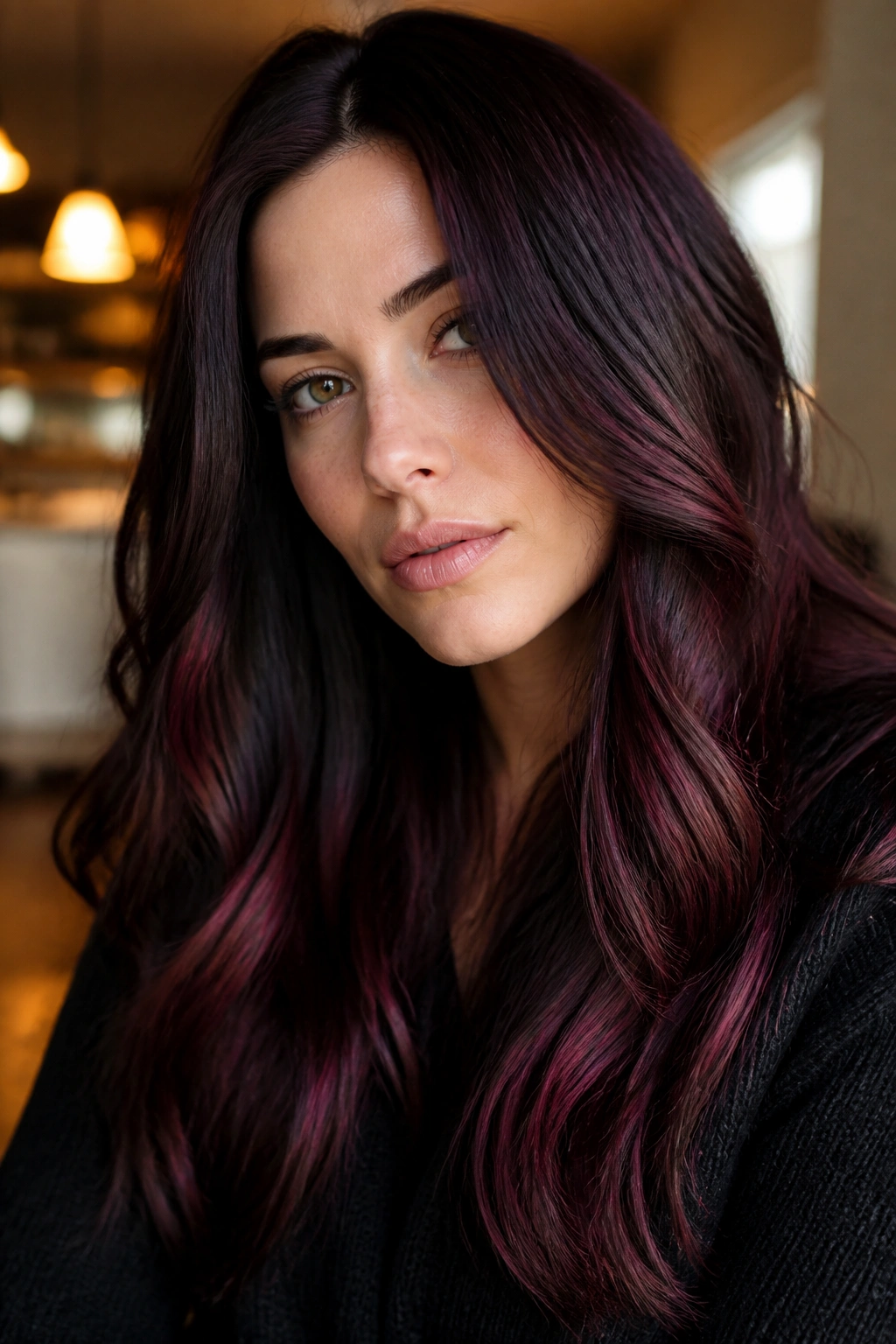
Black cherry is one of the safest dramatic choices for cool skin tones because it gives you depth first and sparkle second. The base stays nearly black, then the red-purple shows up in the light like a dark fruit stain.
Why It Works
- The blue-red pigment keeps the shade from tipping orange.
- It looks rich on a level 4 or 5 brunette without a full bleach job.
- Fair cool skin gets contrast; deeper cool skin gets a glossy, polished frame.
Ask for a deep cherry gloss over brunette lengths if you want the effect to stay elegant. On straight hair, the color reads sleeker. On waves, the red-purple movement shows more at the ends and around the face.
2. Plum Wine Gloss
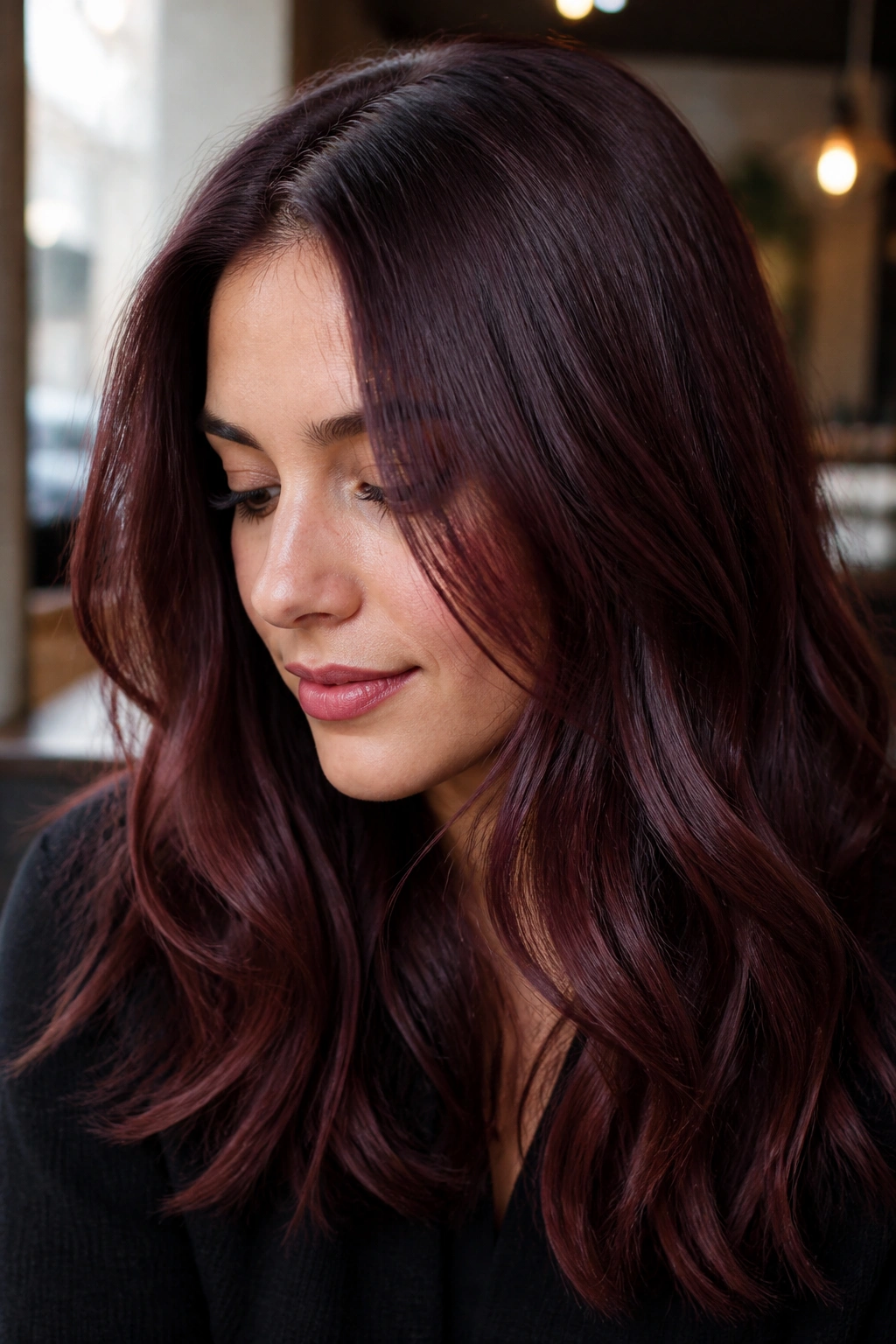
Plum wine is for the person who wants color that feels expensive without shouting. It has the softness of purple and the warmth of red, but the cool undertone keeps it from looking sticky or orange.
What I like about this shade is how easy it is to wear with silver jewelry, black clothing, and rosy makeup. It does not fight your face. It sits beside it.
A demi-permanent plum gloss over medium brown hair is the sweet spot here. If your hair is already light, the shade will read more berry. If your base is darker, it turns into a polished wine stain with shine.
3. Cherry Cola Brunette
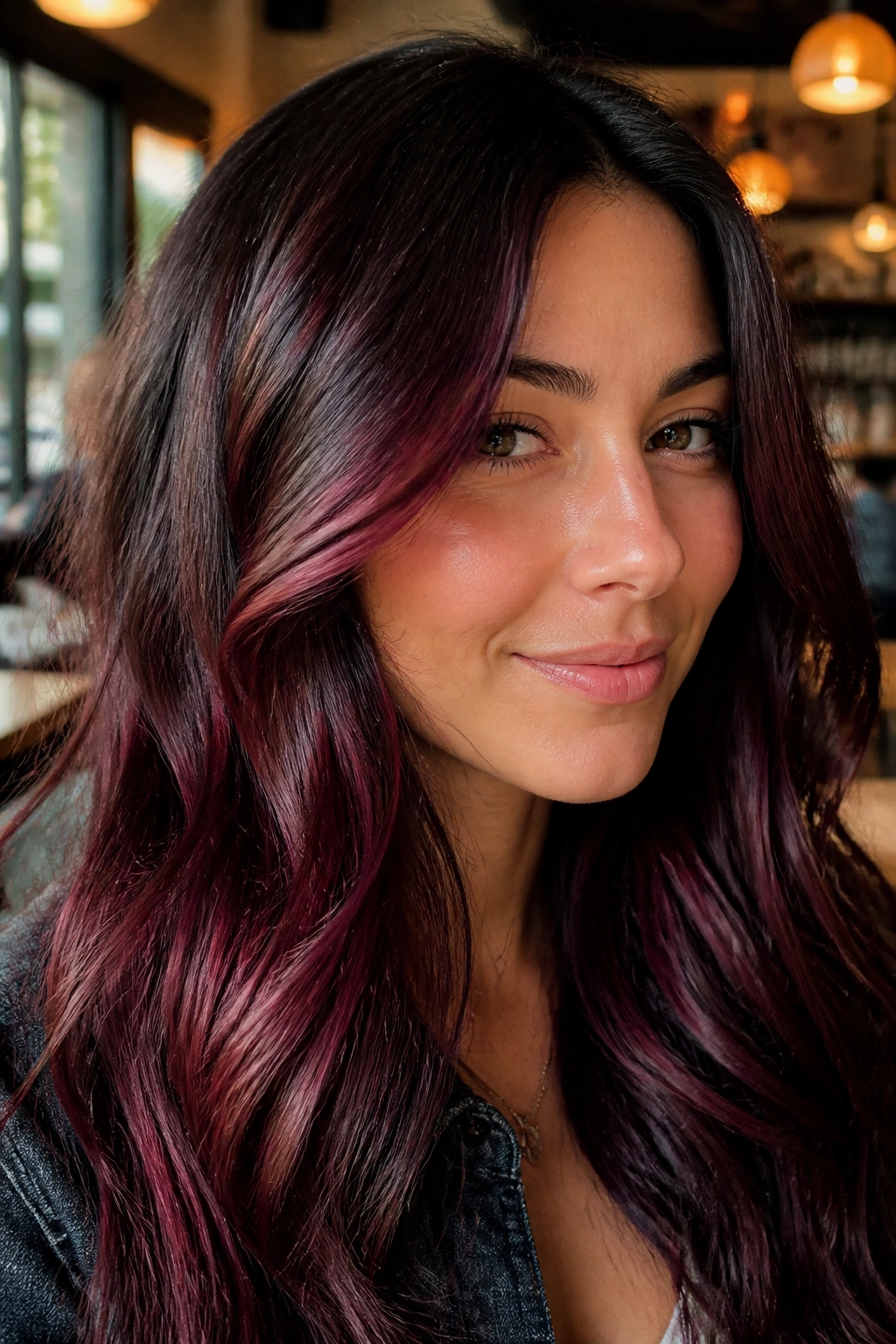
Picture brunette hair under café lighting, with a hidden red-purple glow that only shows when the hair moves. That is cherry cola, and it works because the brown base does most of the heavy lifting.
How to Wear It
- Keep the root area close to your natural brown.
- Add red-violet ribbons through the mid-lengths.
- Leave the ends a touch brighter so the movement shows.
This is a smart pick if you want red-purple hair color ideas for cool skin tones that do not scream “fresh dye job.” The contrast is soft, which is especially nice on cool complexions that look best with depth rather than flat brightness.
4. Cabernet Balayage
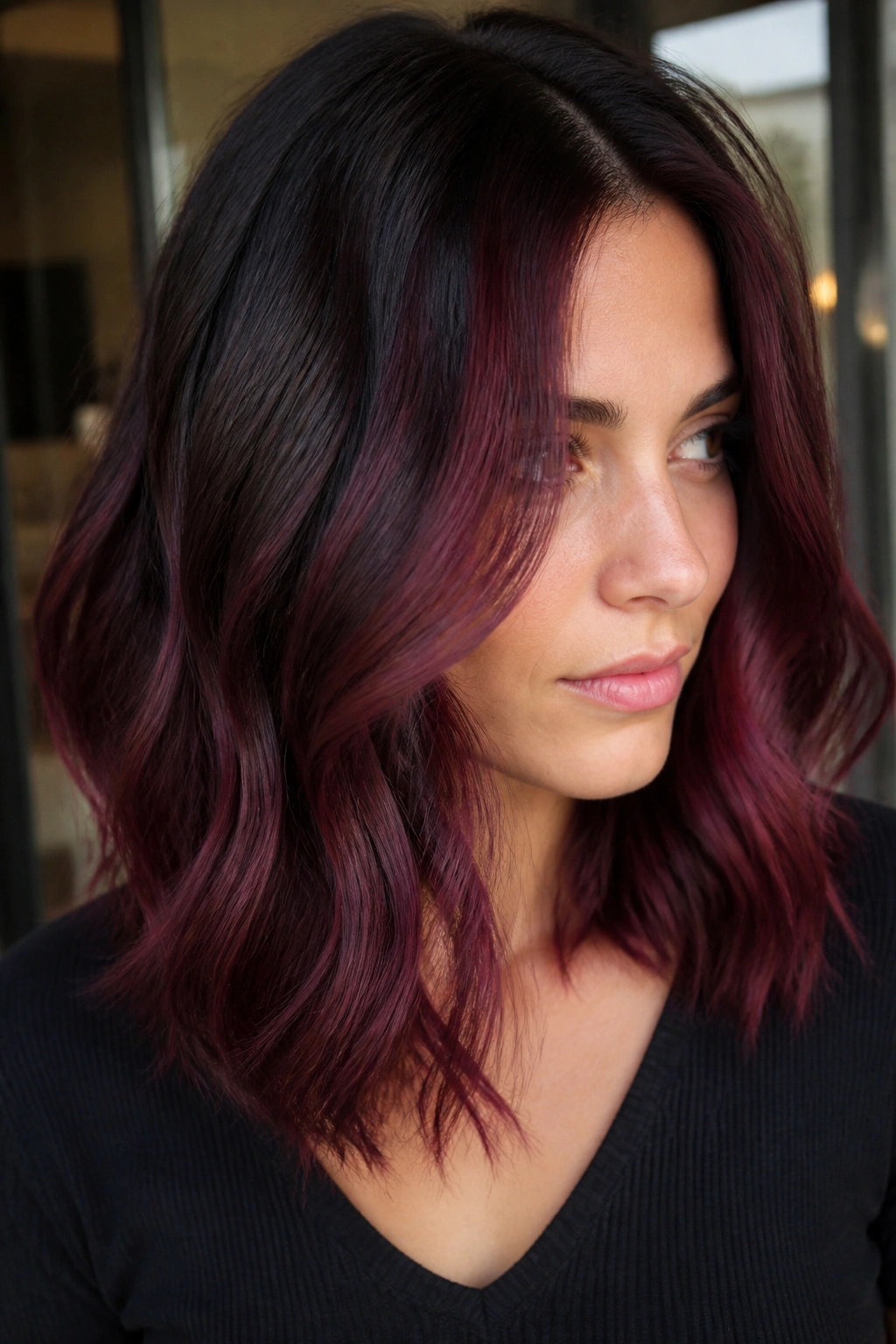
Cabernet balayage is what happens when wine red gets painted through dark hair instead of placed all over. The result feels grown-up and dimensional, not blocky.
A shoulder-length cut with loose bends is where this shade really wakes up. The darker root melts into red-purple panels, and the whole thing moves like satin when you turn your head.
- Best on medium to dark brown bases
- Looks strongest around the face and mid-lengths
- Needs gloss refreshes more than root touch-ups
If your skin leans pink or blue, cabernet gives you that rich contrast without the harshness of a flat bright red. It is a very good compromise between dramatic and wearable.
5. Aubergine Noir
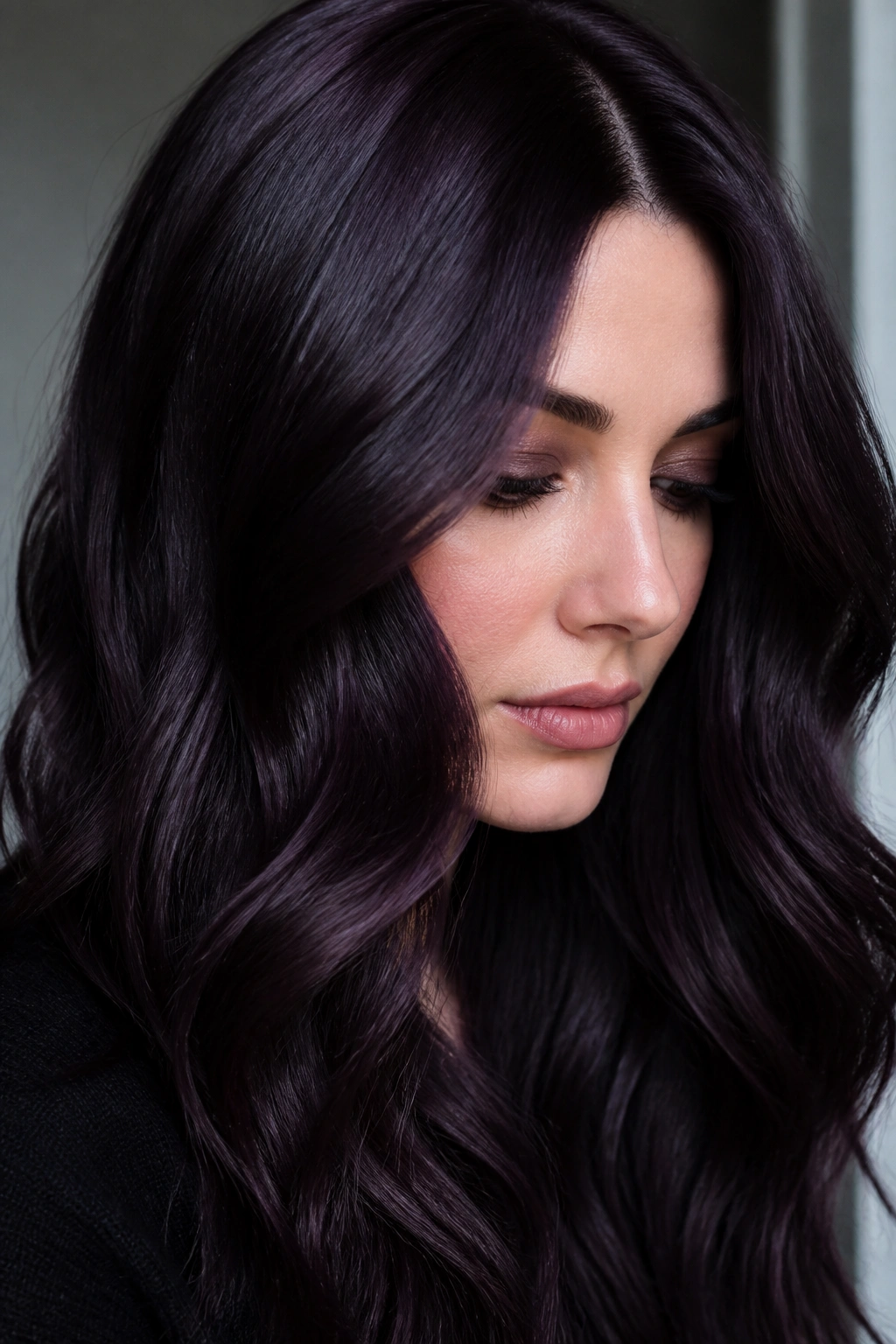
Aubergine noir is for people who like their color nearly black, but not boring. The purple is there. You just notice it slowly, which is half the appeal.
On cool skin tones, this shade can make the face look crisp and clean, especially if your wardrobe leans charcoal, navy, white, or silver. It has a sharp edge that feels intentional on blunt bobs, pixies, and chin-length cuts.
The trick is shine. Without shine, aubergine can look flat. With shine, it looks inky and expensive.
6. Raspberry Money Piece
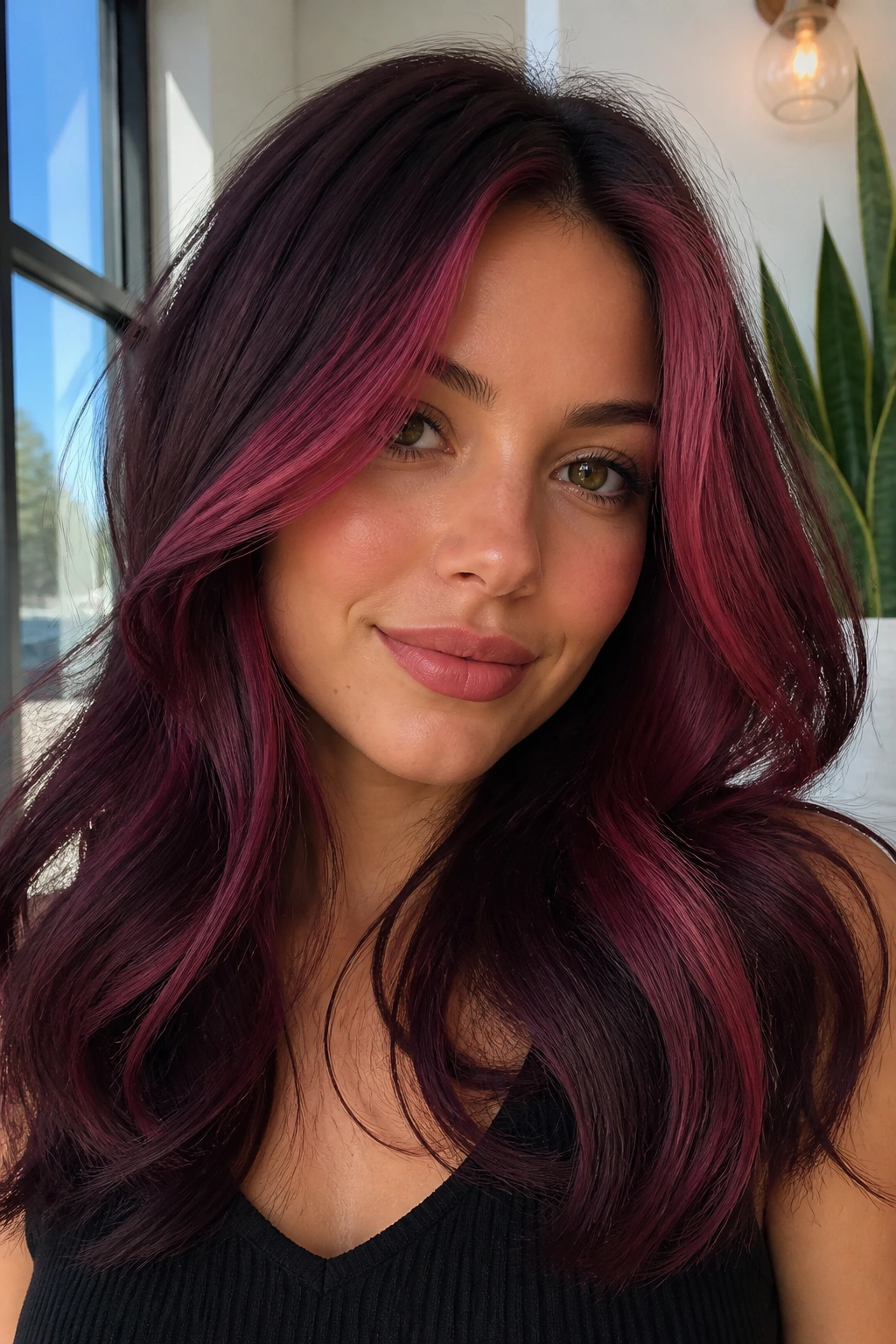
A raspberry money piece is a fast way to test the red-purple water without committing to a full head of color. You keep the base darker, then place cool raspberry right at the front, where it frames the face.
What Makes It Different
Unlike all-over dye, a money piece lets the color do the flirting instead of the shouting. You get brightness close to the skin, which can be lovely on cool undertones that already handle contrast well.
It works especially well with curtain bangs, curly fringes, or layered shags. Ask your colorist for a berry tone with blue-violet depth, not a warm pink. That one detail changes everything.
7. Cranberry Melt
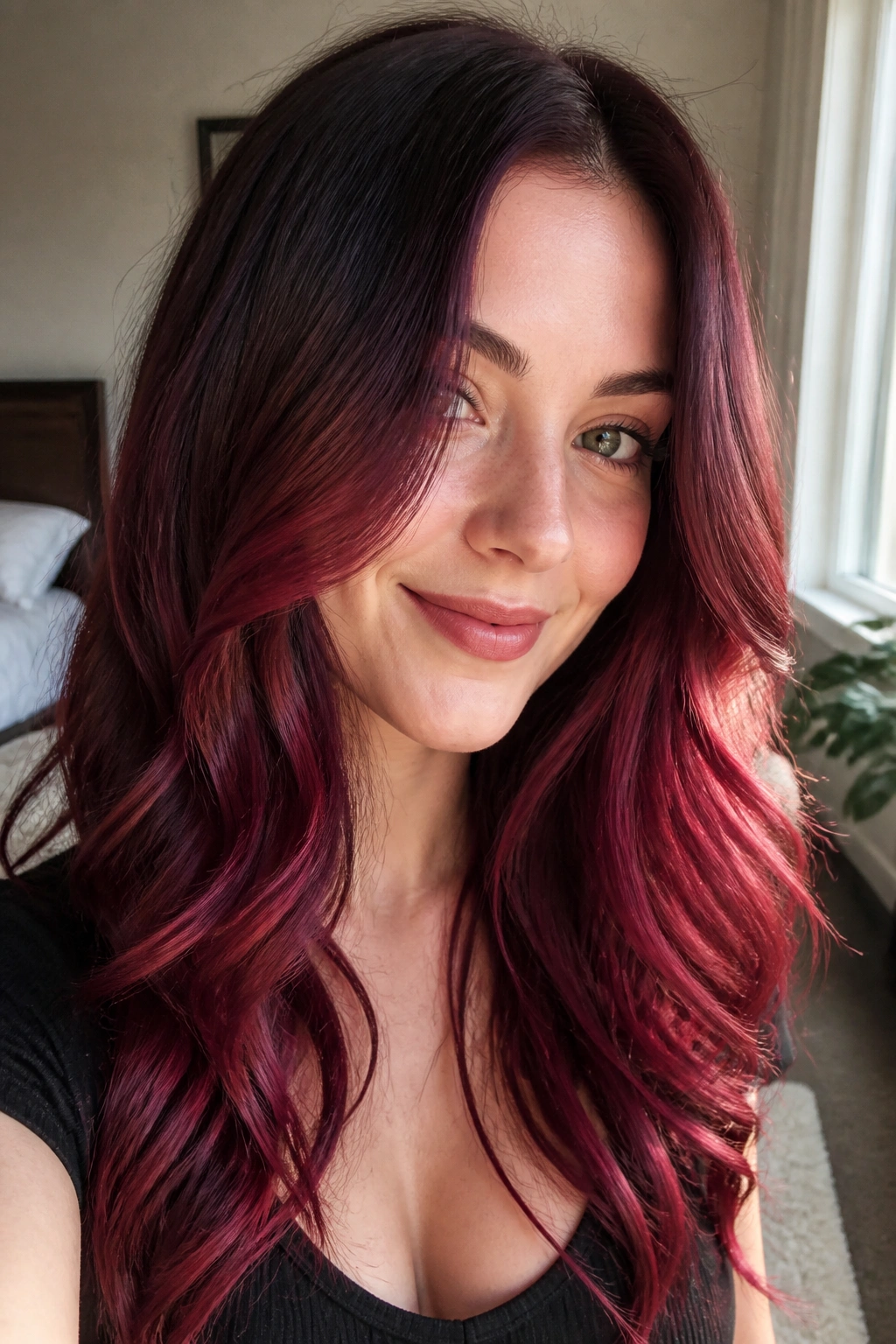
Cranberry melt is a good choice when you want the color to move from deeper red at the root to brighter berry through the ends. The transition matters here. Hard lines make the shade look costume-y. Soft melt gives it life.
This is one of those colors that can look different every time you wash and dry it, which is part of the fun. On cool skin, the berry note stops the red from going tomato. That matters more than people think.
If your hair is layered, the melt shows off every curve. If it is one-length, ask for lighter ends so the shape does not disappear.
8. Mulberry Root Shadow
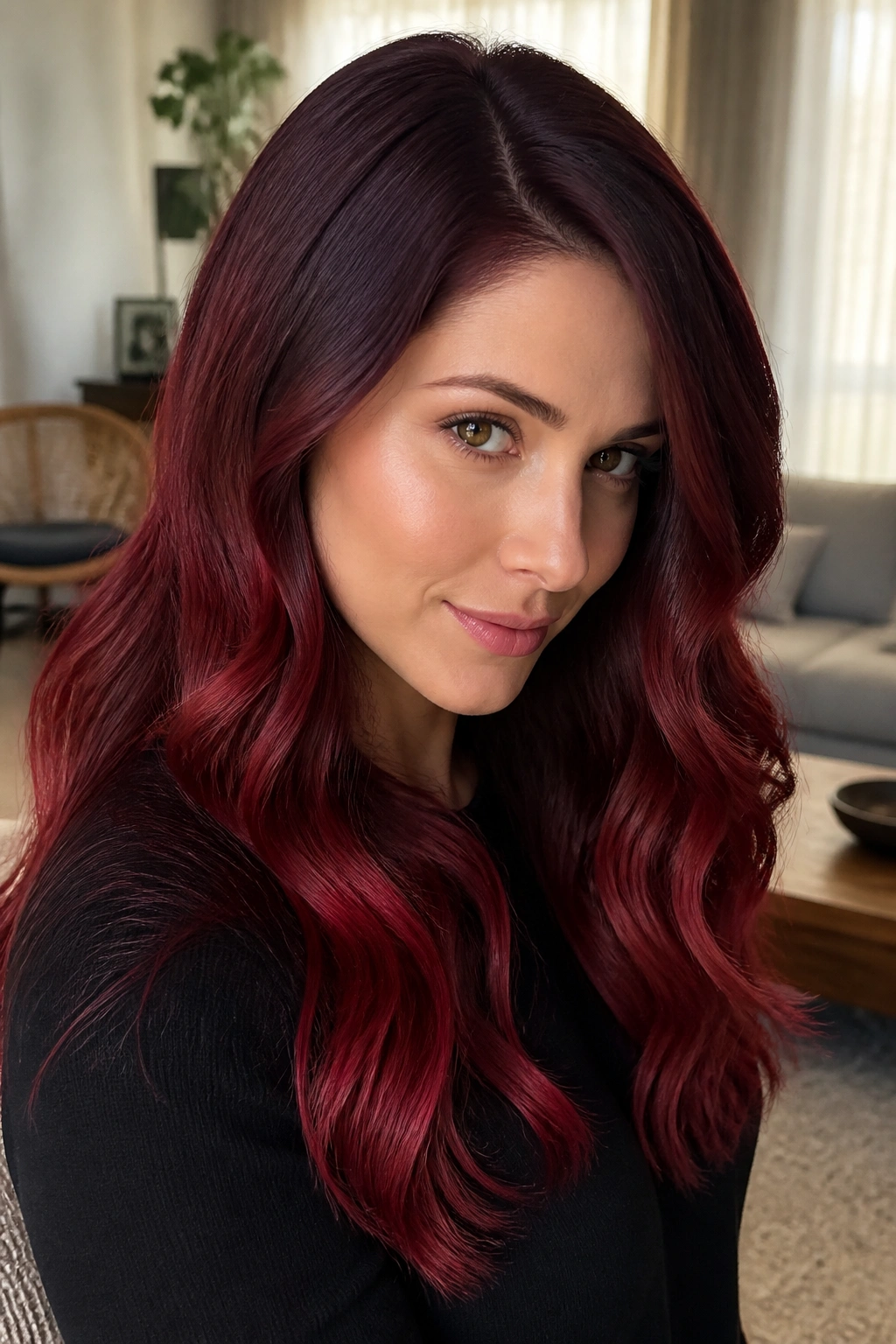
Mulberry root shadow is practical, and I mean that in the best way. You keep a deeper root, then let the mulberry tone grow brighter through the lengths so the grow-out line stays soft.
That makes it especially useful if you do not want to sit in a salon chair every few weeks. Cool skin tones tend to like this shade because the red-purple stays muted enough to feel elegant, but not washed out.
A good version of mulberry should look like crushed berries and plum skins, not pink candy. If it starts leaning candy, the shade loses that cool, dense feeling.
9. Merlot Ribbons
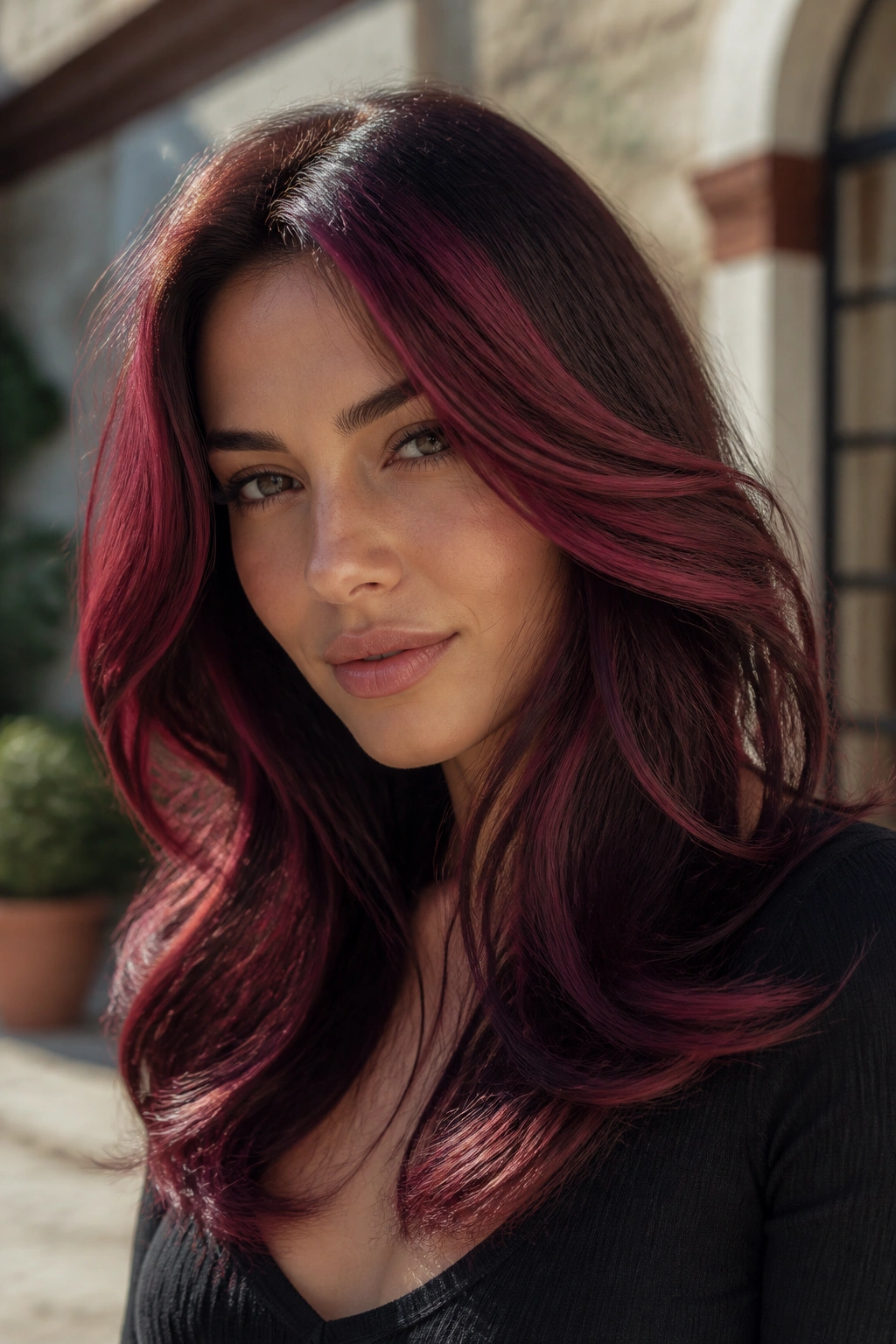
Merlot ribbons are for anyone who wants motion in the hair without a full color block. The red-purple shows up in thin painted sections, usually around the face, the surface layer, and the ends.
Why does that work so well? Because the dark hair underneath keeps the look grounded. You get flashes of wine red, then the color tucks back into brown or black.
How to Get the Most From It
- Ask for fine, painterly ribbons rather than wide streaks.
- Keep the base one shade darker than the merlot.
- Style with loose bends so the ribbons do not disappear.
This is a strong choice for layered cuts and thick hair that needs some movement anyway.
10. Amethyst Peekaboo
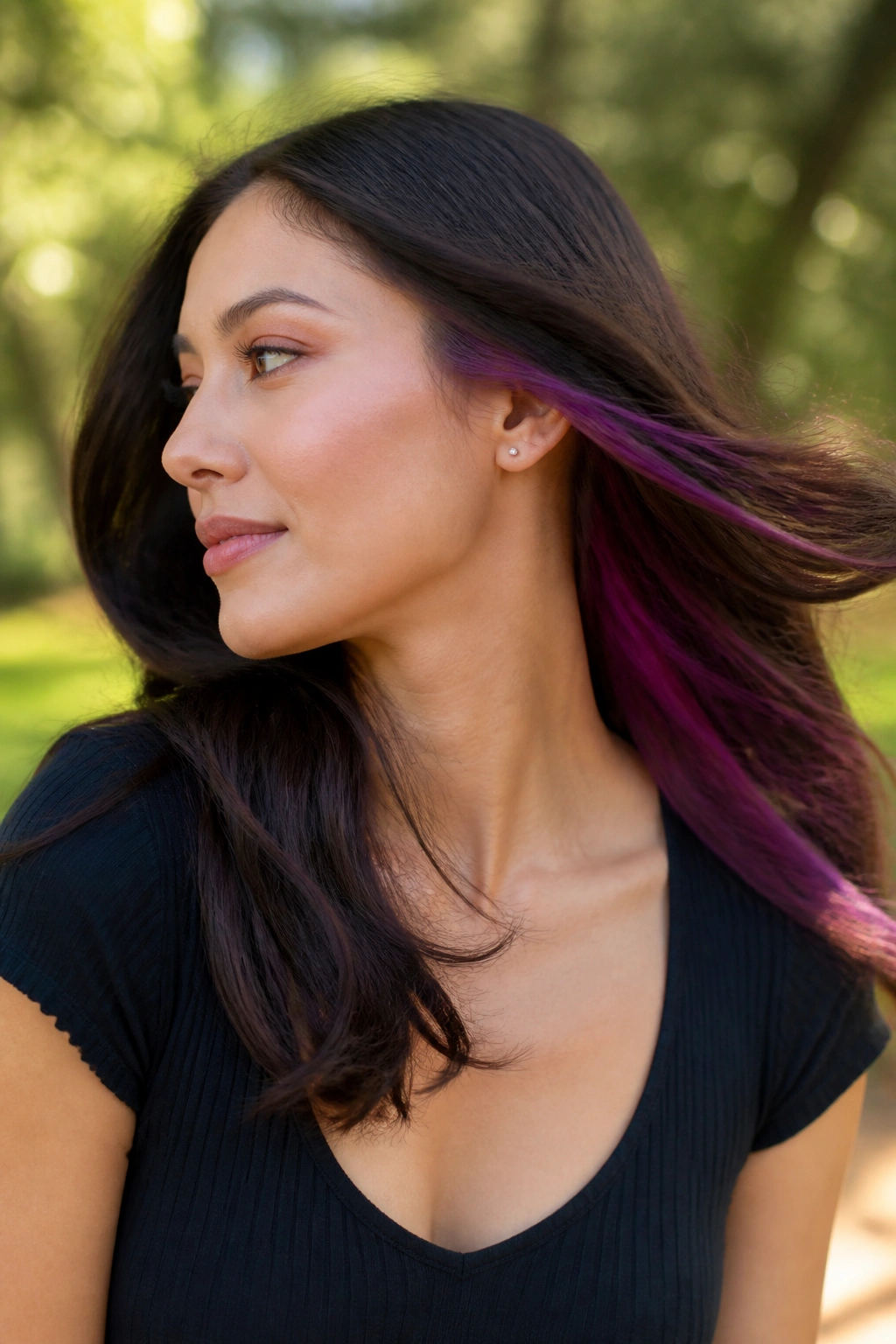
Amethyst peekaboo color lives under the top layer of hair, so the purple-red only shows when the hair moves, swings, or is tucked behind the ear. That makes it feel playful without being loud all the time.
I like this on shoulder-length cuts because the hidden panels show in a really natural way. Cool skin tones get the benefit of the color near the face, but the shade never has to dominate your whole look.
If you work in a setting where bold color feels like a lot, this is one of the easiest ways to wear it. You get surprise, not pressure. And that is a nice place to be.
11. Rosewood Red
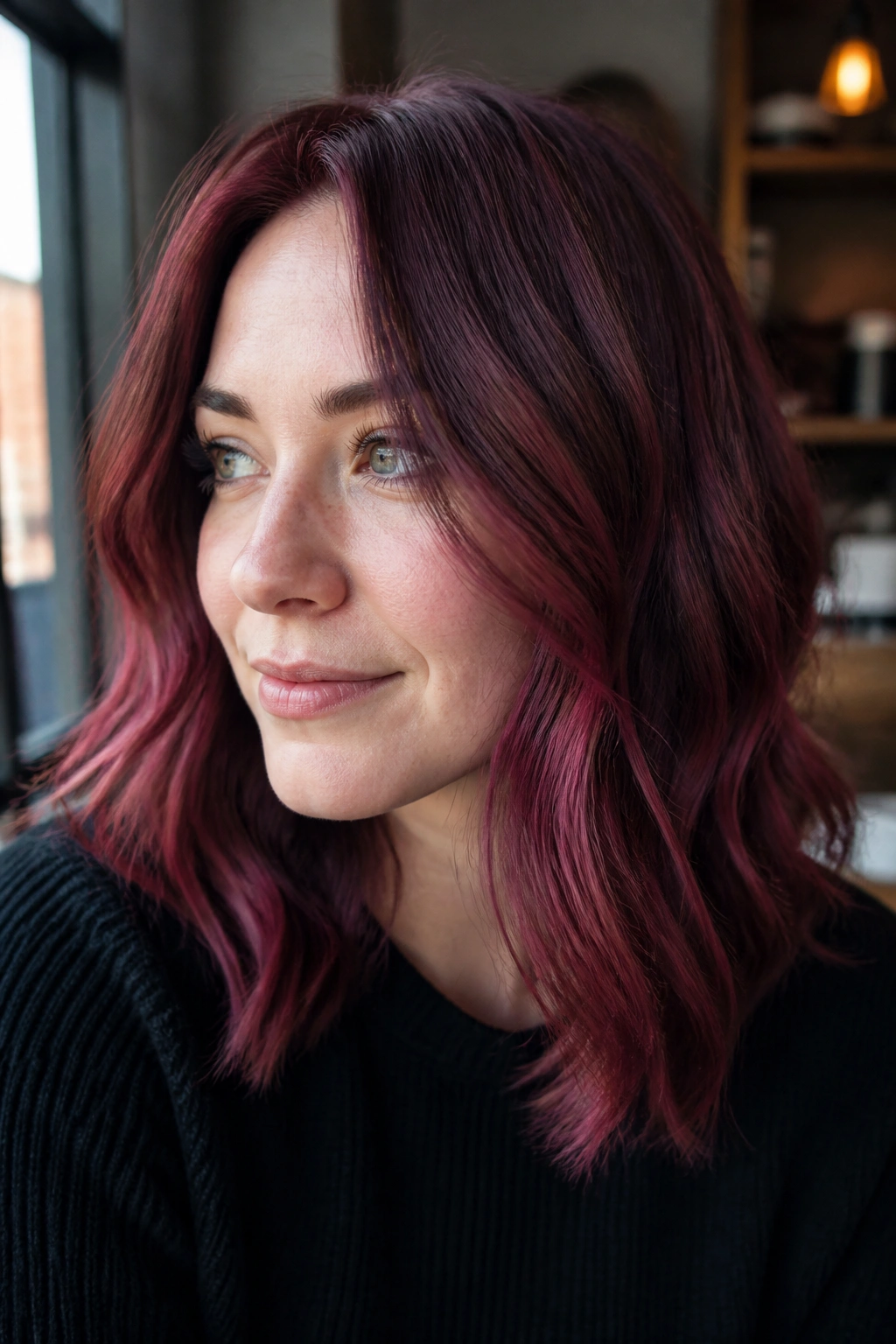
Rosewood red is a softer, woodier version of red-purple that leans muted rather than bright. It looks especially good when you want something refined instead of flashy.
The color has a pink-red thread running through it, but the cool base keeps it from veering into coral territory. On cool skin, that balance reads clean and calm. It also pairs well with brushed-out waves and airy layers, where the shade can catch light in small pieces.
This is a smart pick for shorter cuts, blunt ends, or fine hair that gets swallowed by darker colors. Rosewood keeps the shape visible.
12. Berry Brunette
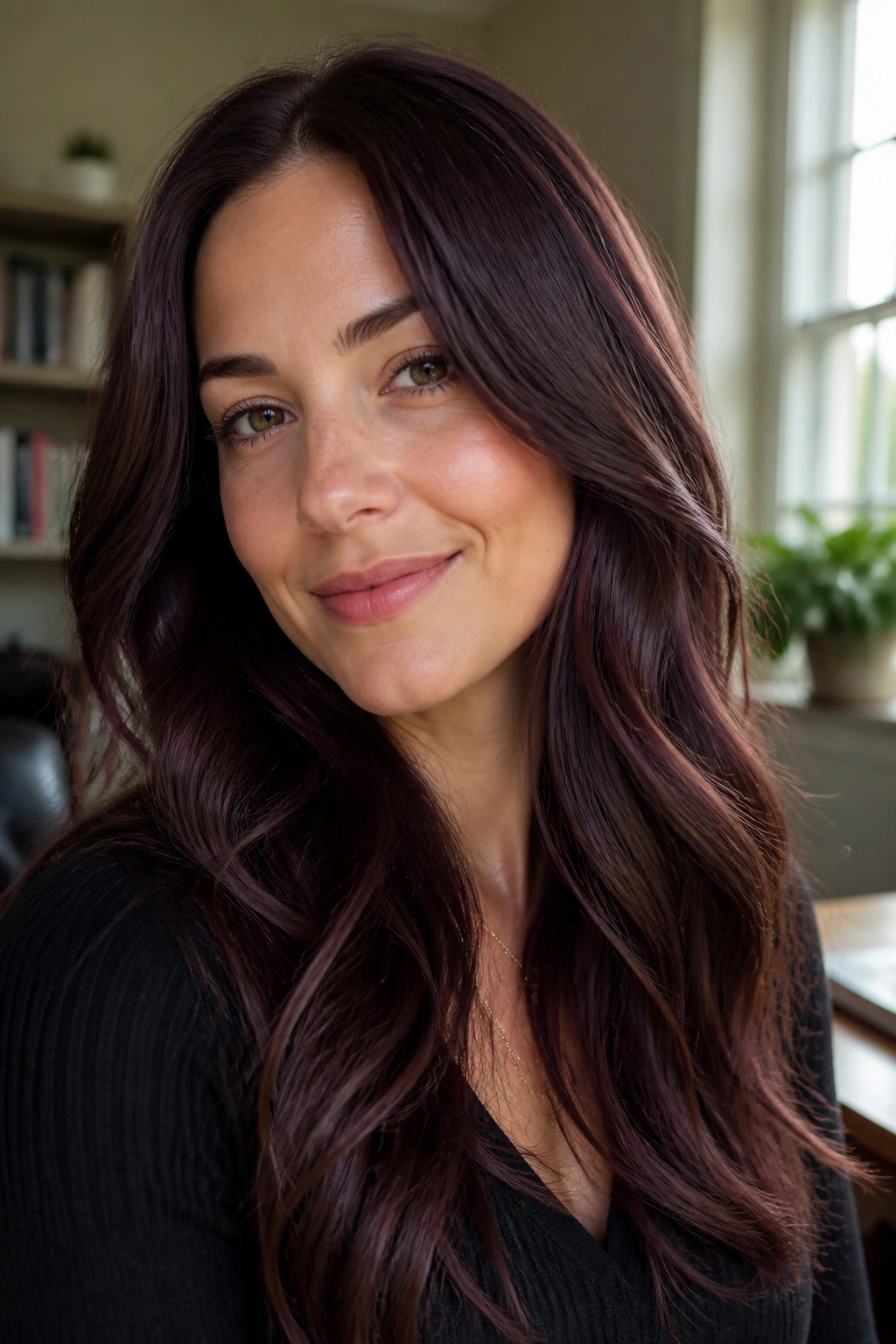
Berry brunette is exactly what it sounds like: brown hair with a cool berry glaze sitting over the top. The brown stays visible, which is why the shade feels so wearable.
Unlike a solid burgundy, berry brunette keeps some daylight in the hair. That means it works for people who want red-purple hair color ideas for cool skin tones but still need the color to read professional or low-key.
A gloss is usually enough if your base is already medium brown. On darker hair, a subtle berry toner can change the tone without making the hair feel overtly dyed.
13. Violet Merlot
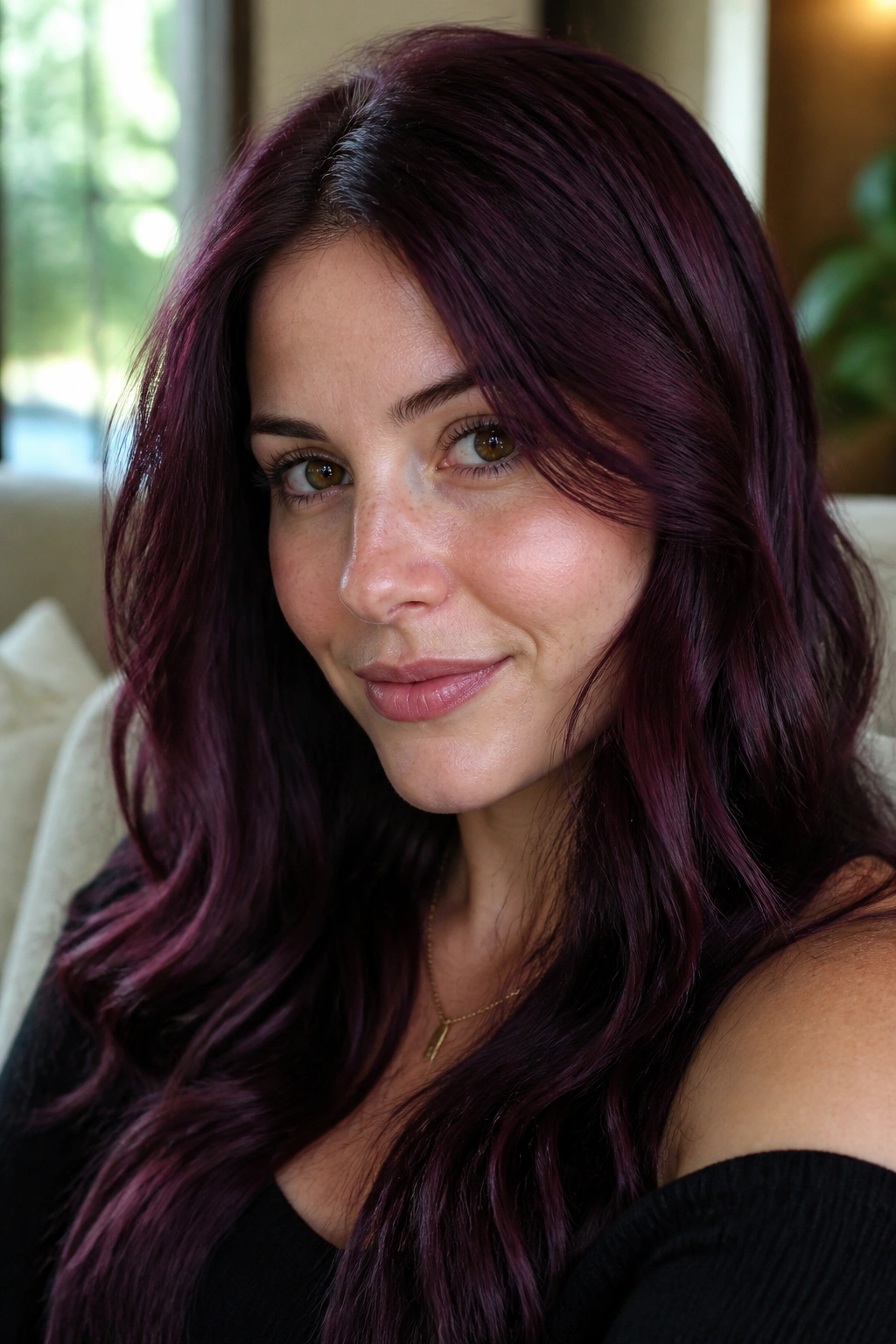
Violet merlot is deeper and more purple-leaning than straight merlot, and that extra violet makes it especially kind to cool complexions. The color feels like a dark glass of wine with a bluish edge.
This shade shines on smooth blowouts, long waves, and one-length lobs. It is not the most carefree color in the group, but it has a very clear point of view. If you like dark lipstick, black sweaters, and polished hair, this one makes sense.
Why It Flatter Cool Undertones
The violet in the formula cuts any red warmth that would otherwise make the shade drift coppery. That keeps the whole look sharper against pink or blue-leaning skin.
14. Blackcurrant Ombré
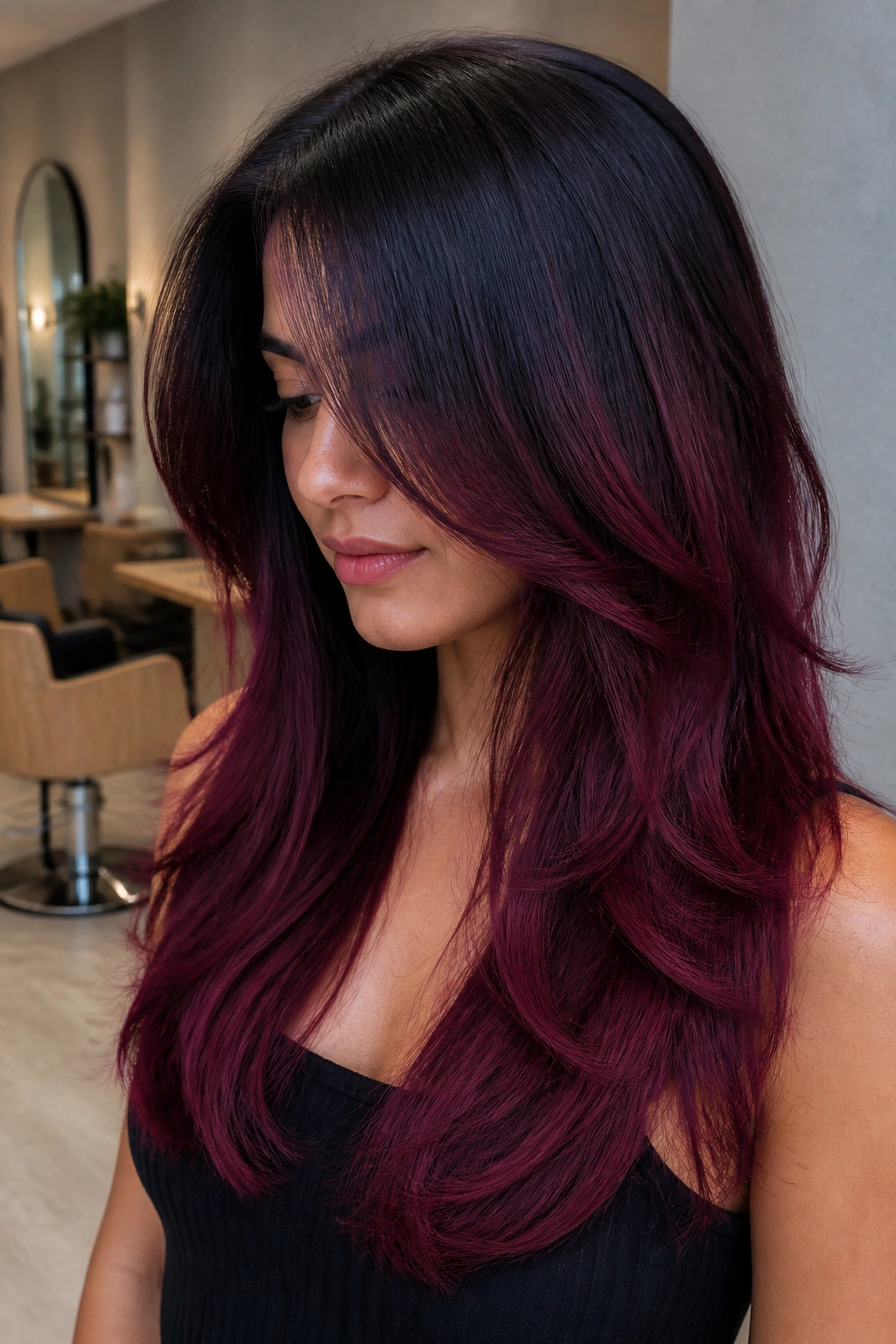
Blackcurrant ombré gives you the drama of a dark root and the softness of berry ends. The fade can be subtle or obvious, depending on how much lightening the ends need.
A long layered cut is the best home for this shade. The ends show the blackcurrant note first, then the color gets richer as the hair moves. If your hair is straight, the ombré feels sleeker; if it is wavy, the transition looks more obvious.
One thing I like here is the grow-out. Because the root stays dark, the color loses less shape as it fades. That is a practical win, not a glamorous one, but both matter.
15. Pomegranate Plum
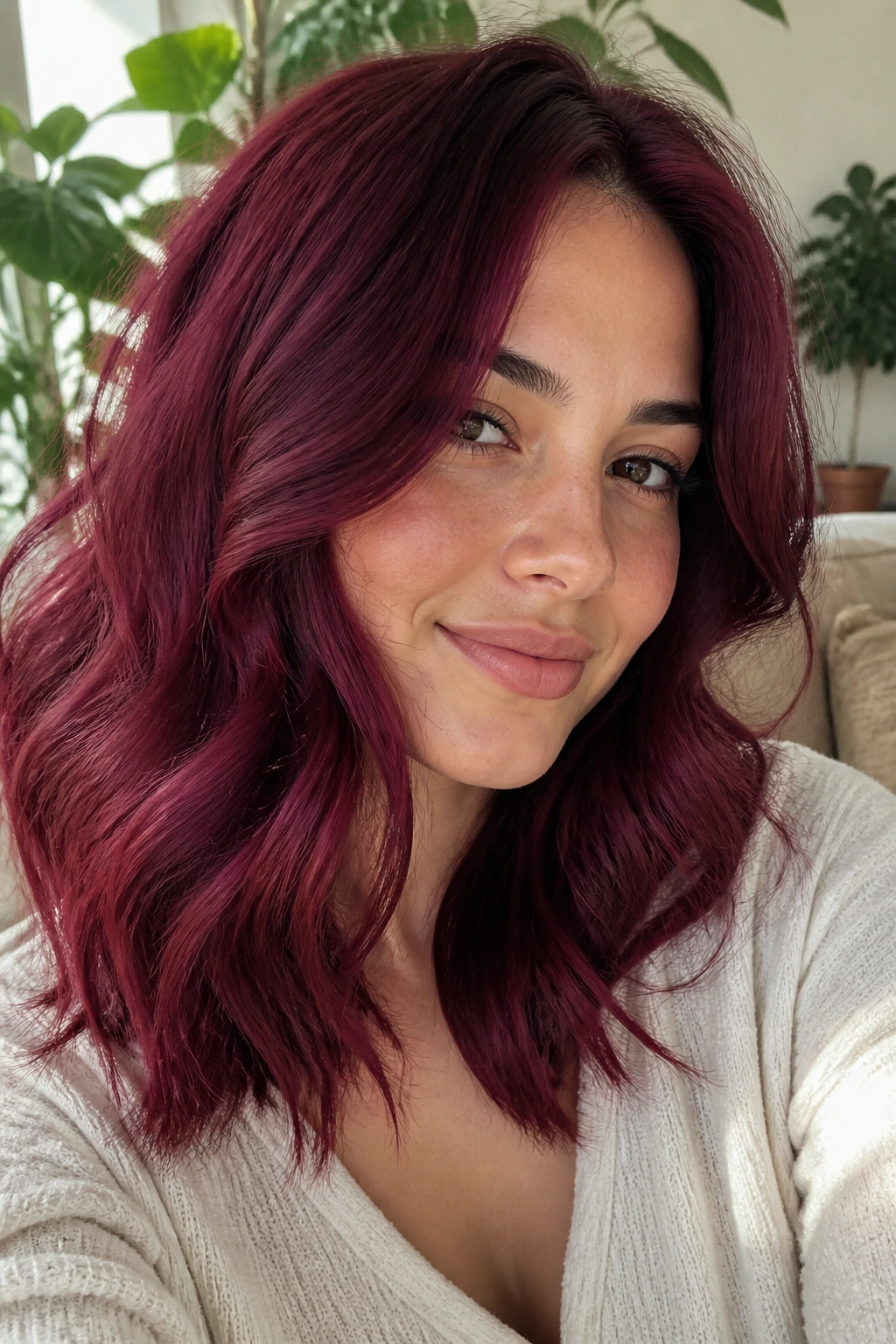
Pomegranate plum has a brighter fruit tone than some of the deeper shades in this list, yet it still stays cool enough for pink or blue-leaning skin. The red is juicy, not orange. That distinction matters.
This shade works well when you want movement and shine at the same time. On medium-length hair, it can look almost wet in good light. On curls, it gives each coil a little extra edge.
Ask for plum at the base and pomegranate near the surface if you want a dimensional result. If you go too bright all over, the shade can lose its depth fast.
16. Magenta Mauve
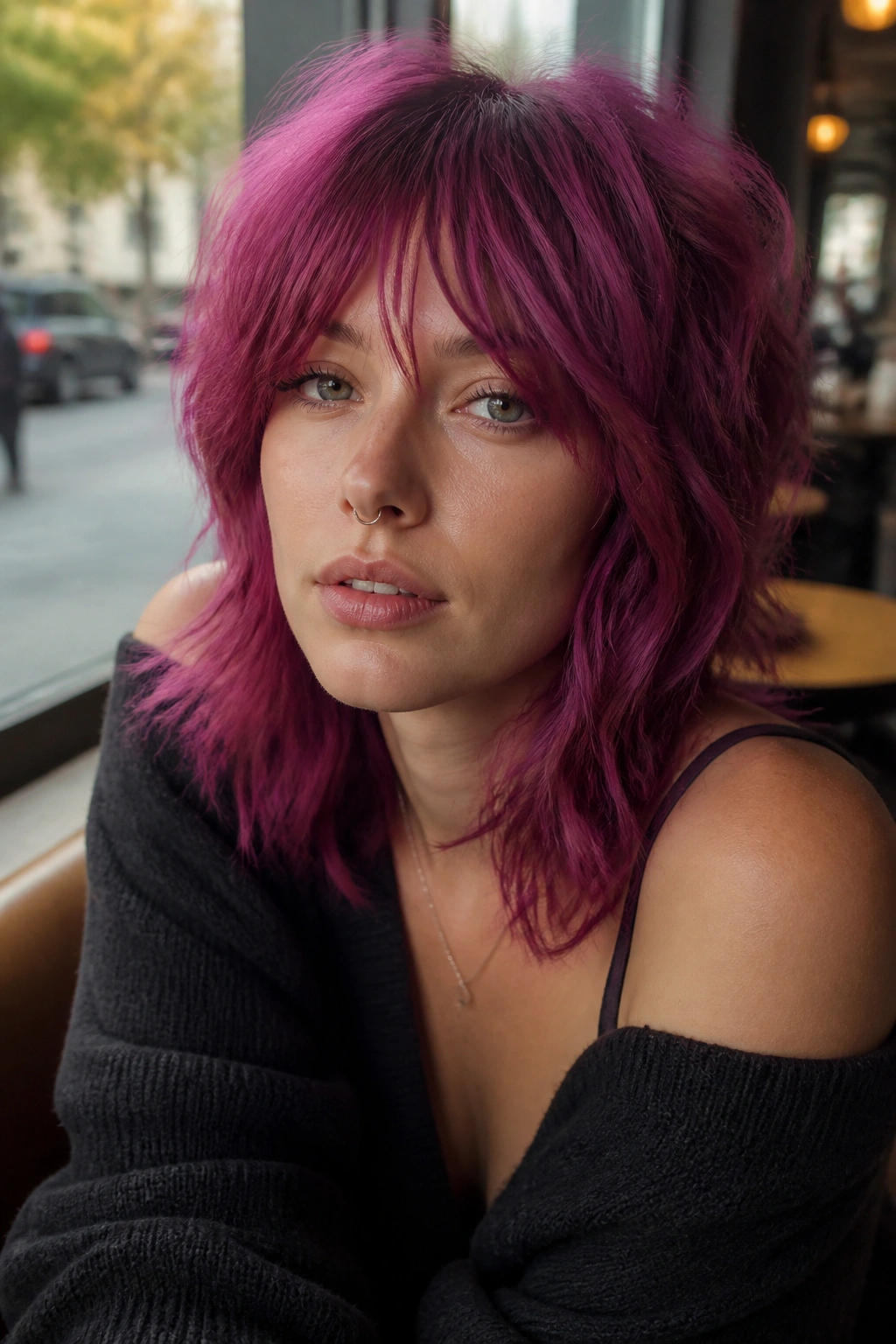
Magenta mauve is for the person who wants a brighter red-purple but still wants it softened down a bit. It has the energy of magenta and the dustier finish of mauve, which helps it sit better on cool skin.
This shade usually needs a lighter base, often around a level 8 blonde or pre-lightened brown. That is the tradeoff. You get more glow, but you also need more upkeep.
How to Keep It Looking Soft
- Use a color-safe cleanser.
- Rinse with cool water.
- Book gloss refreshes before the color goes chalky.
Magenta mauve looks especially good on shag cuts and textured lobs because the movement breaks up the brightness. On very straight hair, it can read bolder and more graphic.
17. Garnet Gloss
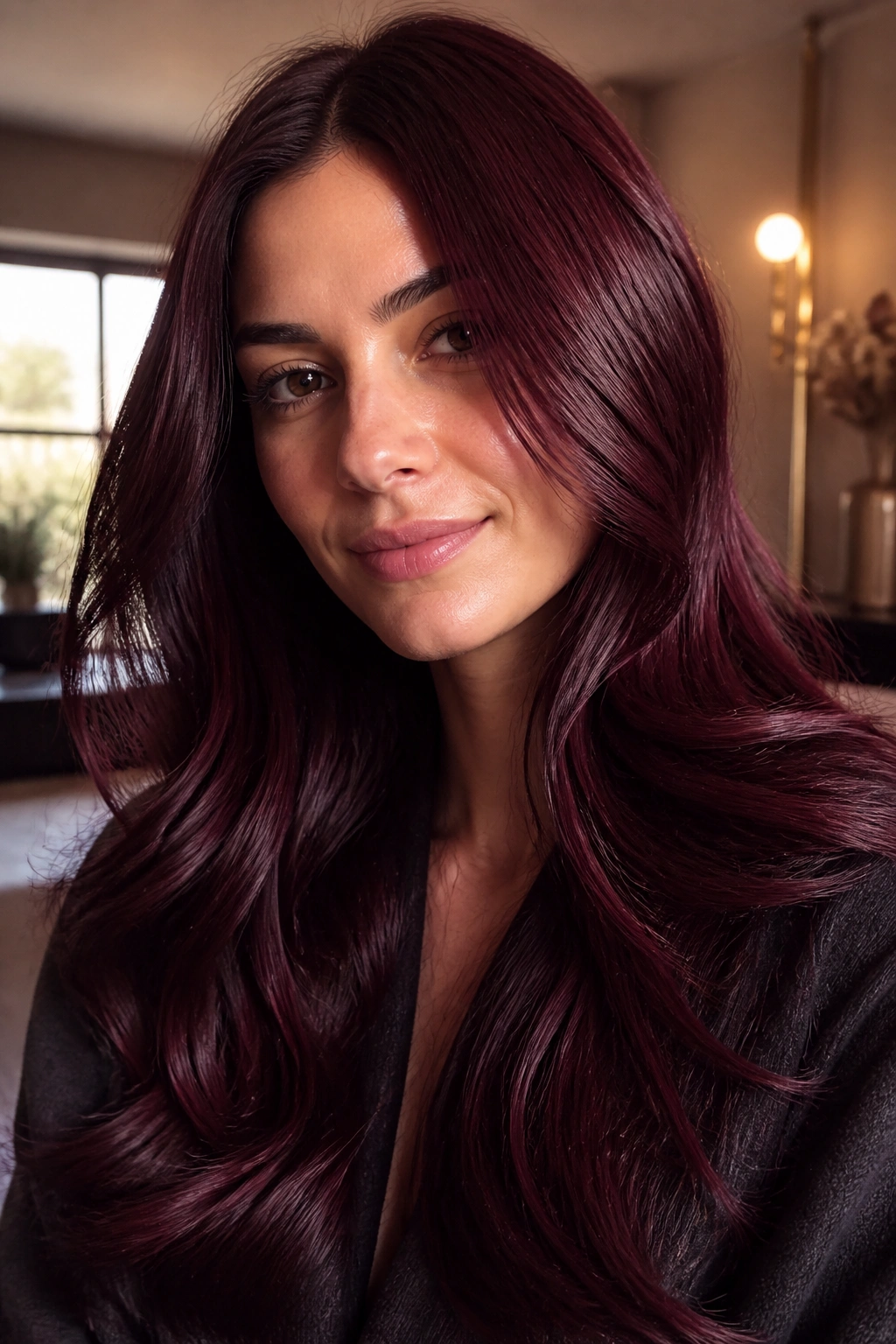
Garnet gloss is one of the richest options on the list because it brings deep red, purple, and a touch of jewel-like shine together in one shade. It does not look flat, which is a huge part of the appeal.
On cool skin tones, garnet tends to look clear and polished rather than muddy. The color is deep enough to feel serious, but the gloss keeps it from becoming too heavy around the face.
This is a favorite if you wear your hair smooth and shiny. A center part, a silk press, or a clean blowout makes the color feel even more deliberate. It is less about edge and more about depth.
18. Damson Dip-Dye
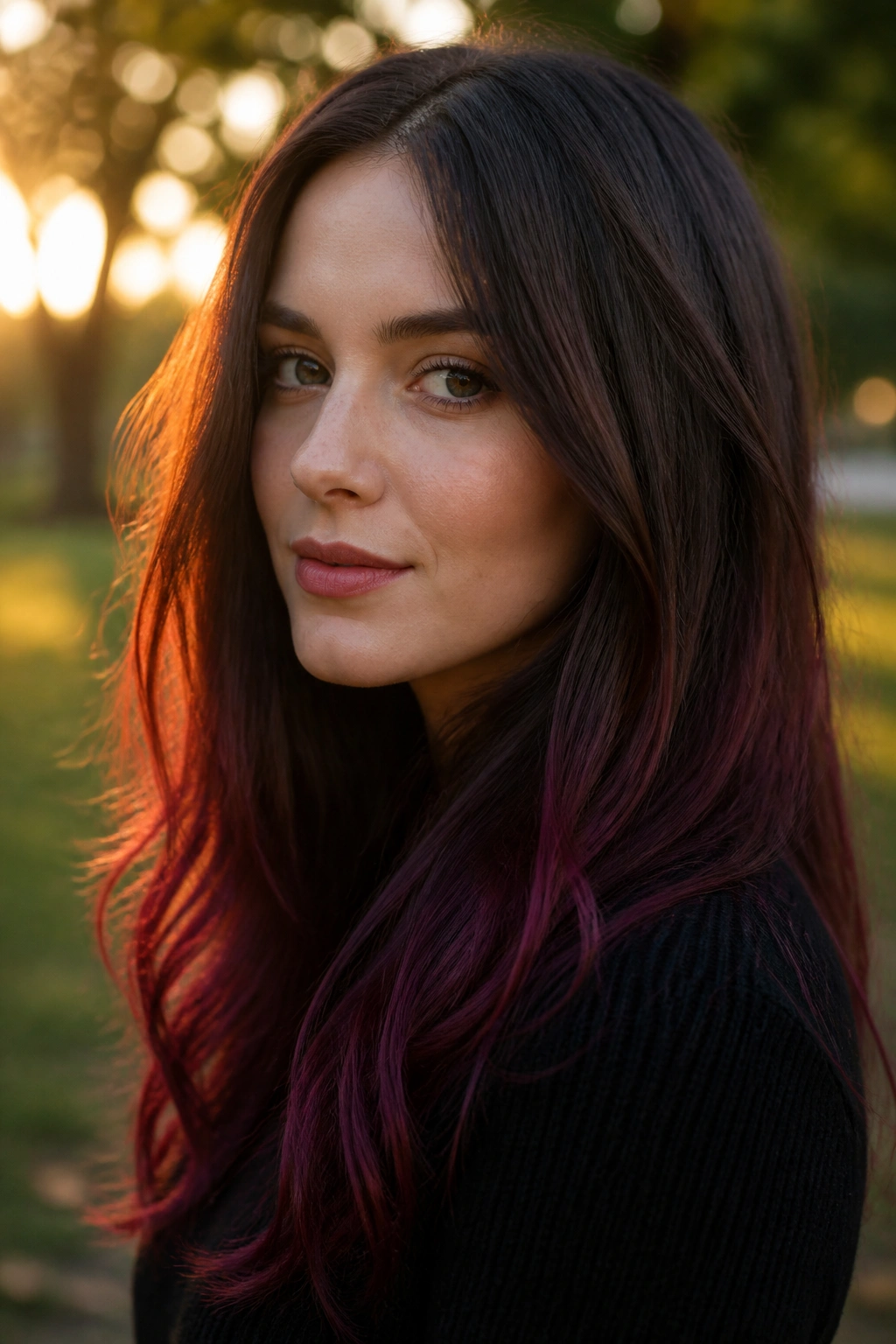
Damson dip-dye has a slightly rebellious feel, and I mean that in a good way. The ends carry the darker berry-plum color while the top stays natural or close to it.
That contrast makes the shade easy to live with. You can clip it up, braid it, wear it straight, and the color still shows in the lower half. It is especially good on long hair, where the colored ends have room to move.
Cool skin tones usually like this because the damson ends sit away from the face until you want them near it. That gives you control, which is underrated.
19. Red Velvet Brown
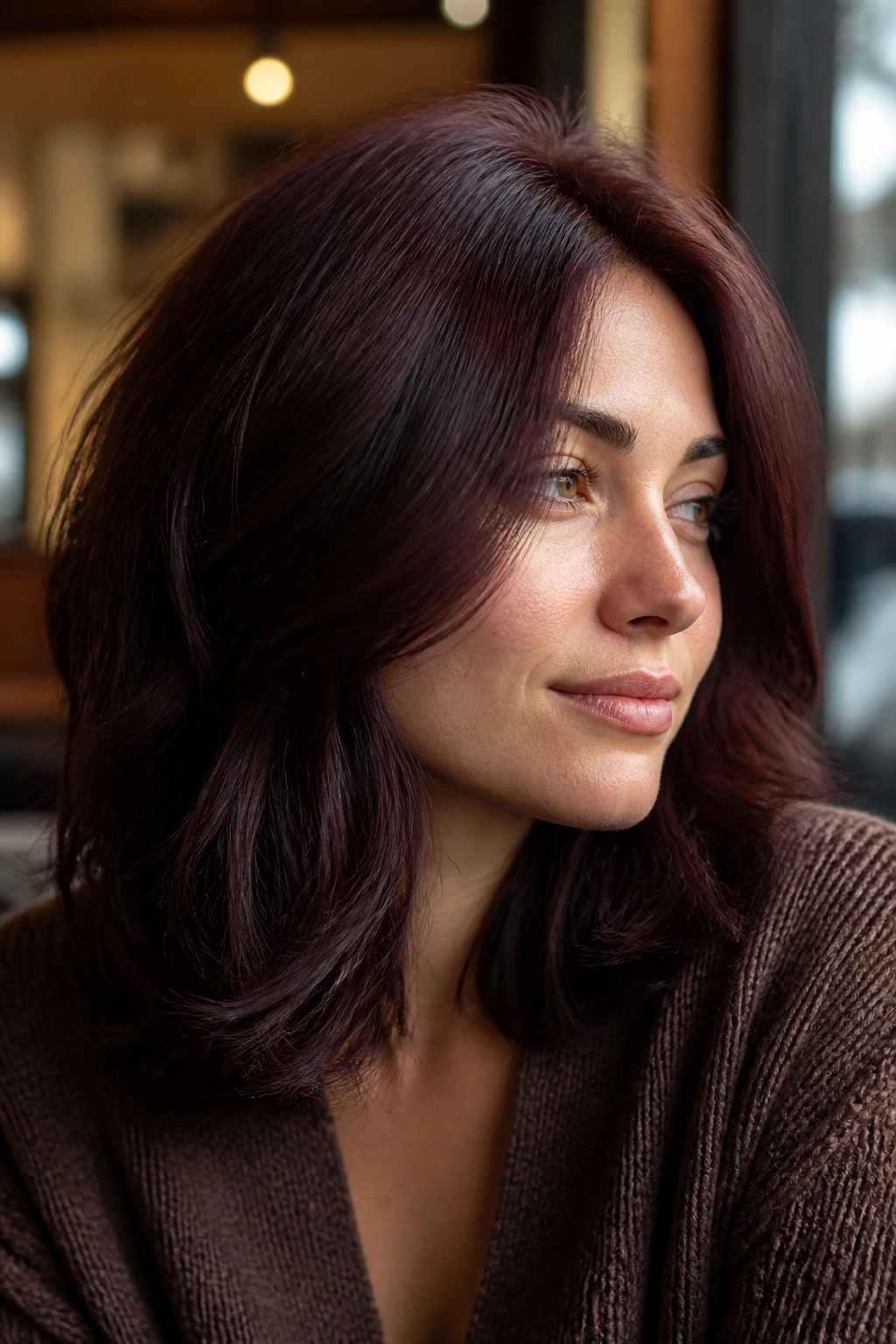
Red velvet brown is the safer cousin of bright red-purple, but it is not boring. The brown base keeps things grounded, while the red-violet overlay gives the hair a plush, almost fabric-like finish.
This shade is very good if you want something that works in a meeting and still looks interesting after dark. The color shows most when the hair bends or catches side light, which means you do not need tons of styling to get the effect.
What Makes It Different
Unlike a brighter cherry shade, red velvet brown does not demand constant attention. It grows out softer, fades slower, and still gives cool skin a flattering wine-toned frame.
20. Orchid Red
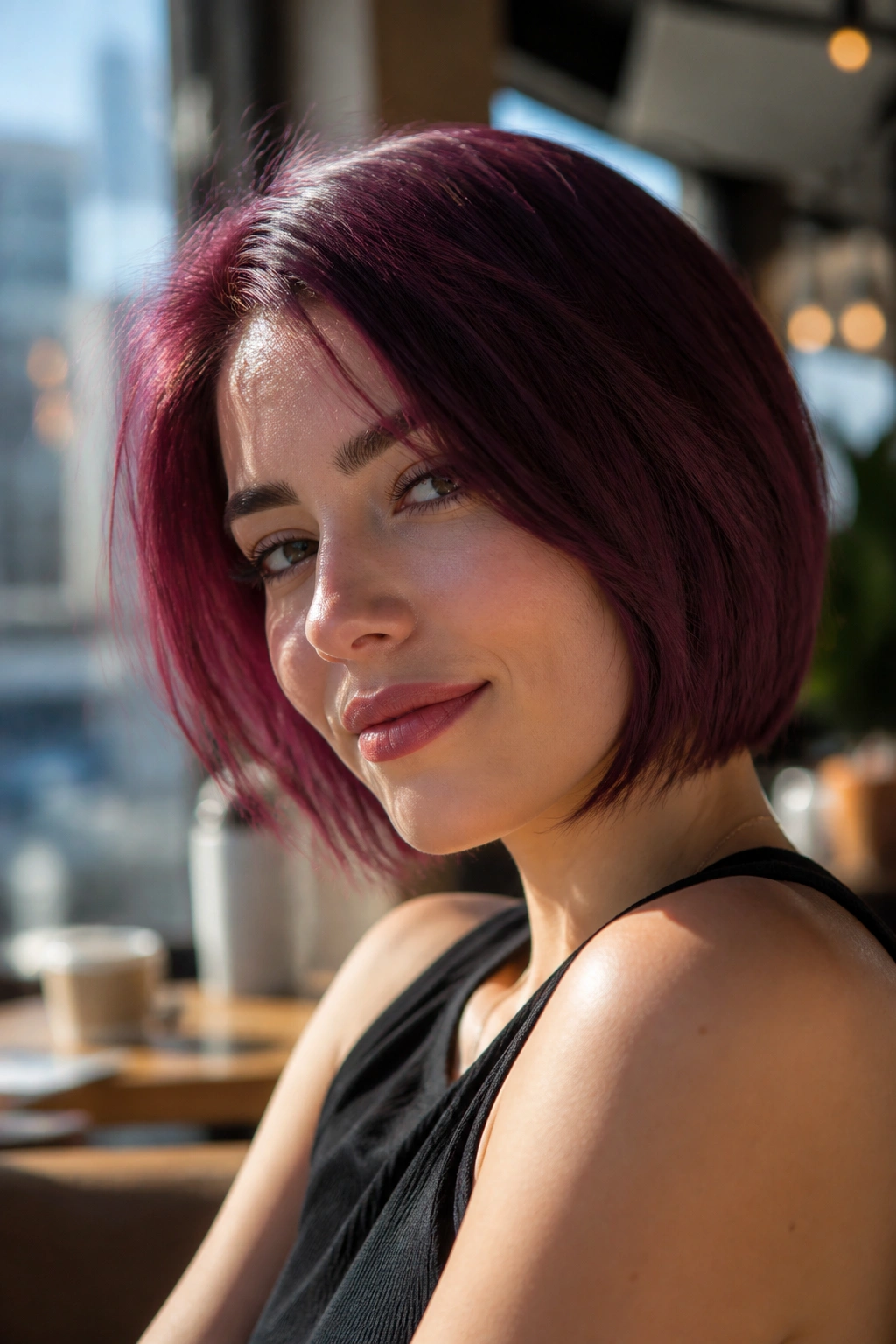
Orchid red leans lighter and airier than the darker wine shades, which is why it can look lovely on fair cool skin. The purple note keeps the red from turning candy or orange.
This is a shade that likes clean, bright hair underneath it. If the base is too dark, the orchid side disappears. If the base is light enough, you get a soft floral red with enough violet to stay cool.
It is a pretty choice for shorter cuts, glossy waves, and anyone who wants their color to look a little more refined than neon magenta. Not soft in a shy way. Soft in a deliberate way.
21. Jammy Ruby
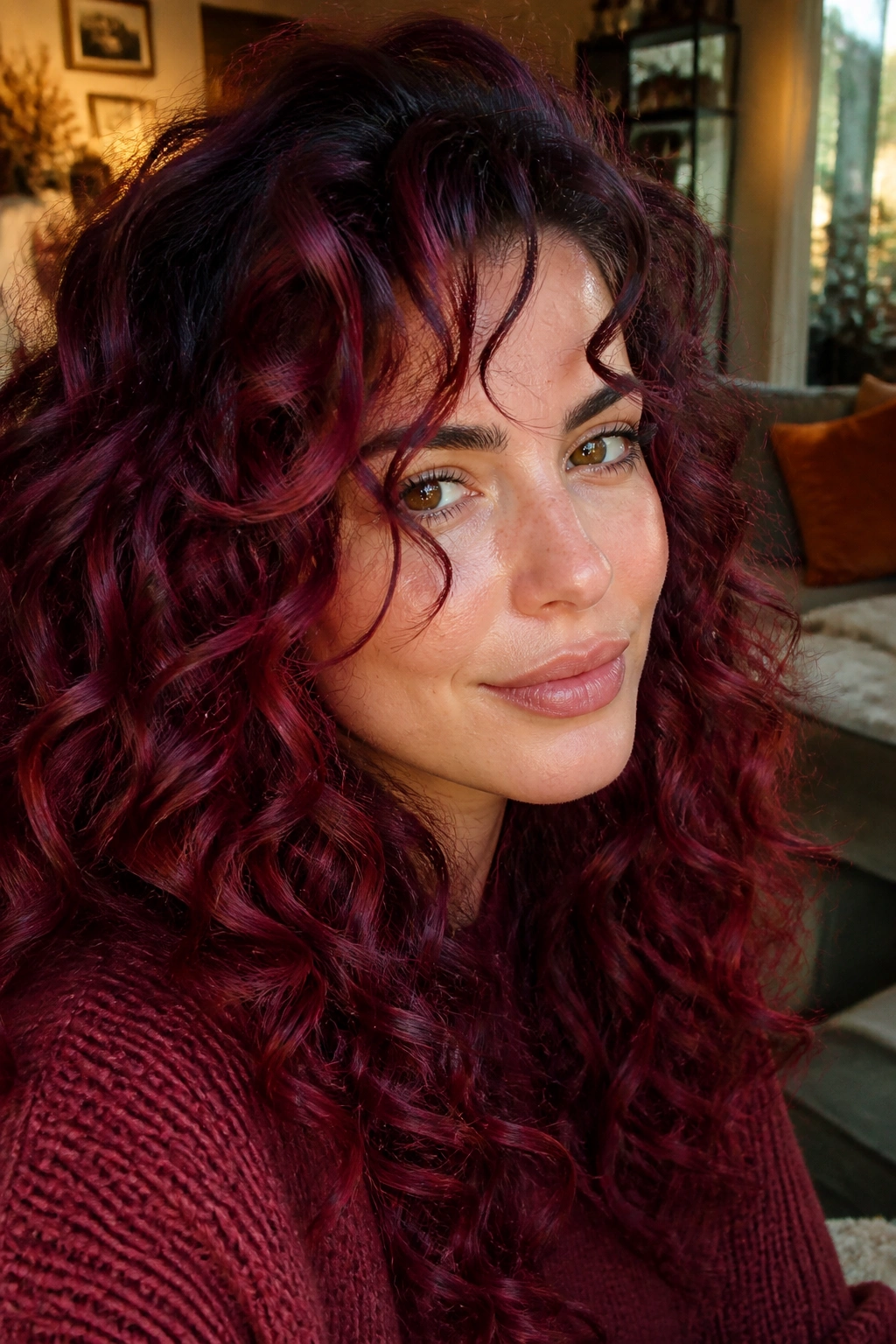
Jammy ruby has a rich, cooked-berry feel that makes it more grounded than a pure bright ruby. It lands right in that sweet spot where the hair looks bold but still wearable.
I like this shade on curls because the shape catches the different red-purple layers. Every bend in the hair picks up a slightly different tone, and that keeps the color from going flat.
A root-smudged version can be especially flattering on cool skin tones. The darker root gives the ruby more depth, and the face-framing pieces bring the brightness closer to the skin.
22. Midnight Plum
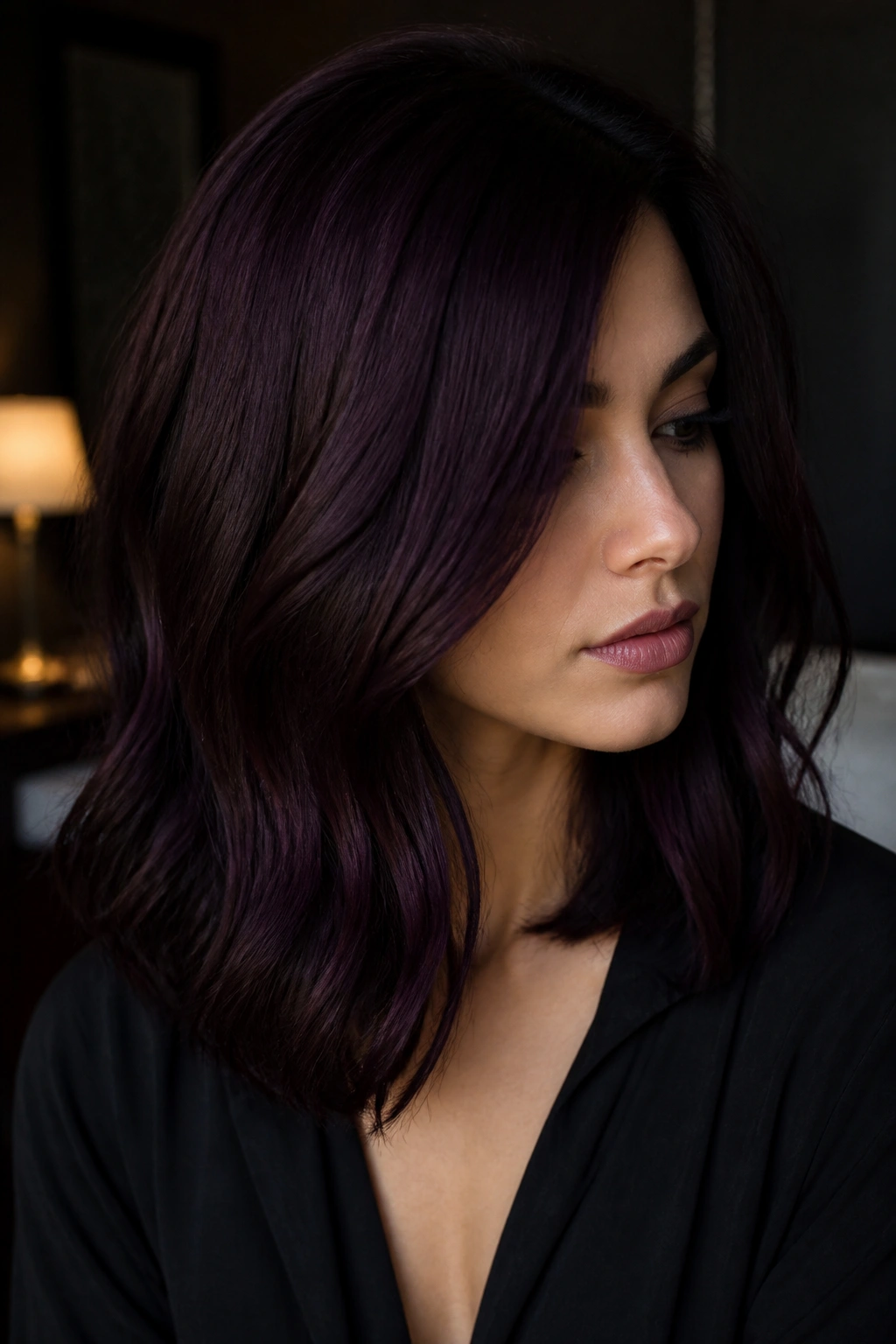
Midnight plum is nearly black, but not quite. The plum note hides inside the darkness, which makes it one of the most understated choices here.
If you want color that feels moody rather than vivid, this is the lane. It suits low-maintenance wearers, blunt bobs, and longer hair that does not need much styling to look finished. The shade is also kind to cool skin because it creates clean contrast without any orange glow.
The best version has a silky finish. If the color looks dull, it can disappear into the hair instead of sitting on top of it. Shine is the whole point.
23. Wineberry Layers
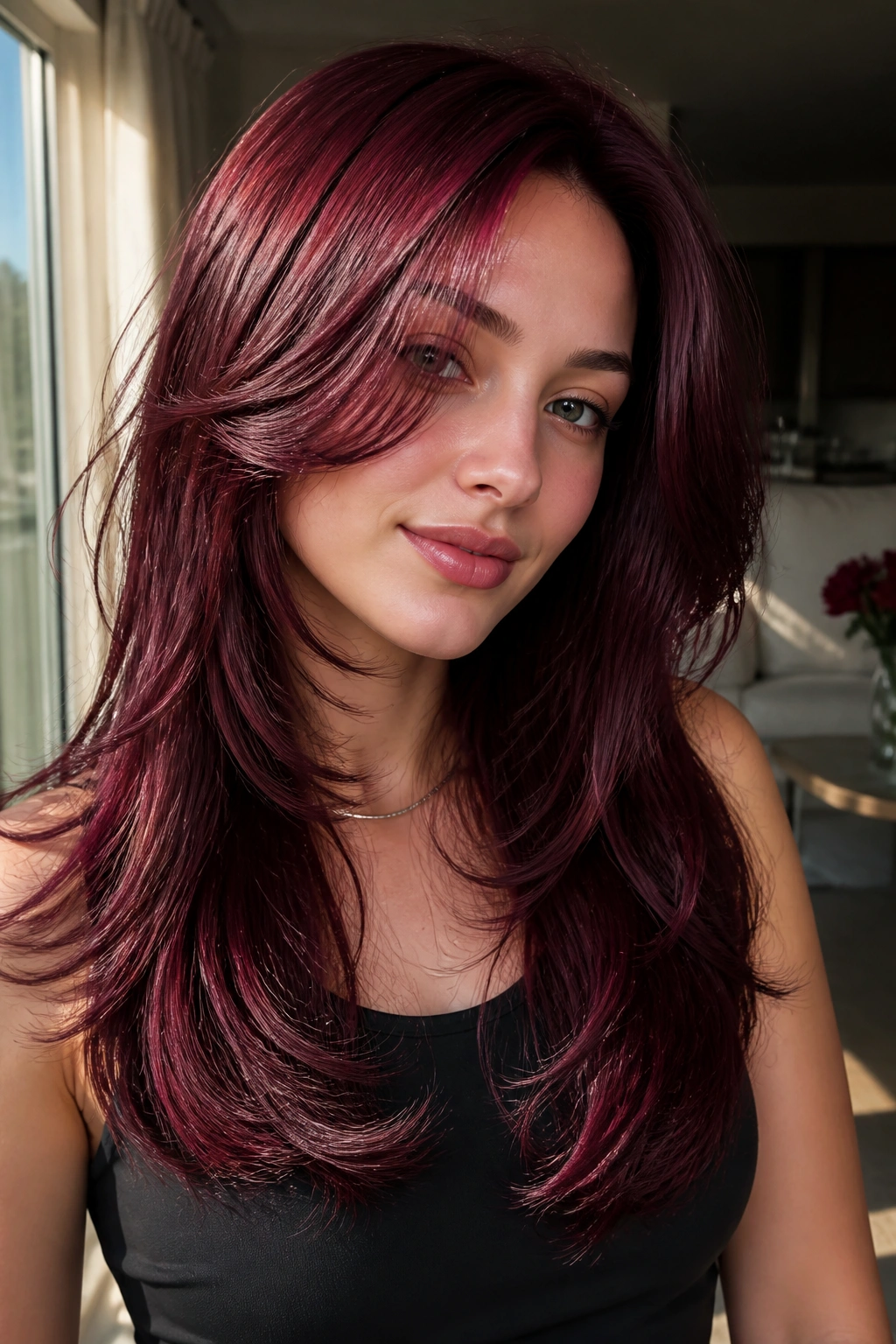
Wineberry layers are made for movement. The color is a mix of dark wine and berry tones, and every layer catches the shade a little differently.
That is why the cut matters here. Long layers, shaggy ends, and soft face-framing pieces all help the color show. If the hair is one solid sheet, you lose some of the fun.
Why It Works
- The layering reveals multiple red-purple notes at once.
- It keeps the look from feeling heavy.
- It is easy to pair with loose waves or a round-brush blowout.
This is a strong choice for cool skin tones because the berry side keeps the color fresh while the wine side keeps it deep.
24. Oxblood Violet
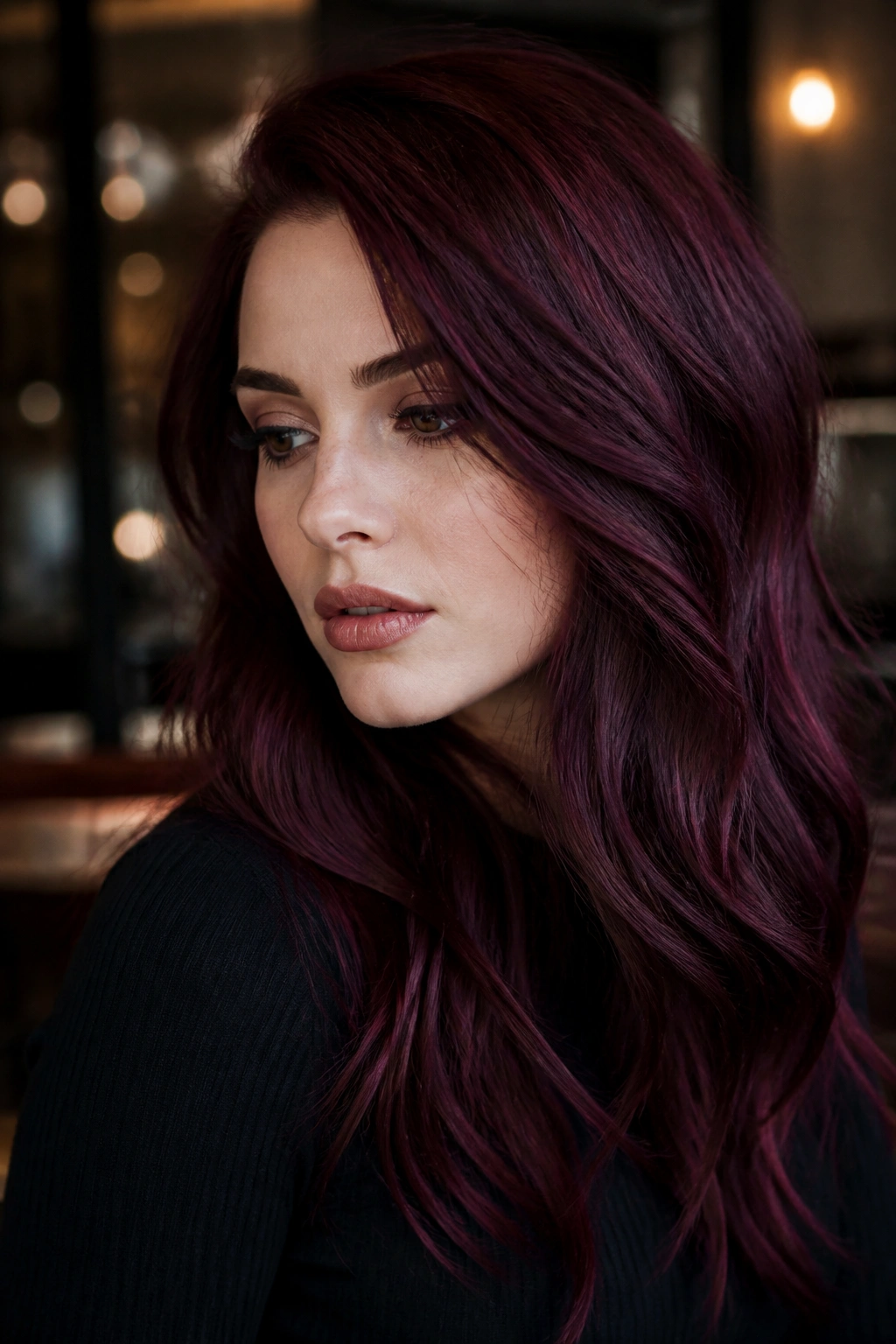
Oxblood violet is dark, dramatic, and a little fierce. The oxblood base gives you that deep red seriousness, while the violet keeps the shade from drifting warm.
This one looks fantastic on people who like strong brows, darker makeup, and hair color that holds its own in a room. It is especially good on deeper cool skin, but fair cool skin can wear it too if they want high contrast.
The key is balance. Too much brown and the color feels muddy. Too much red and it starts to lean warm. The violet edge keeps the whole thing sharpened up.
25. Raspberry Noir
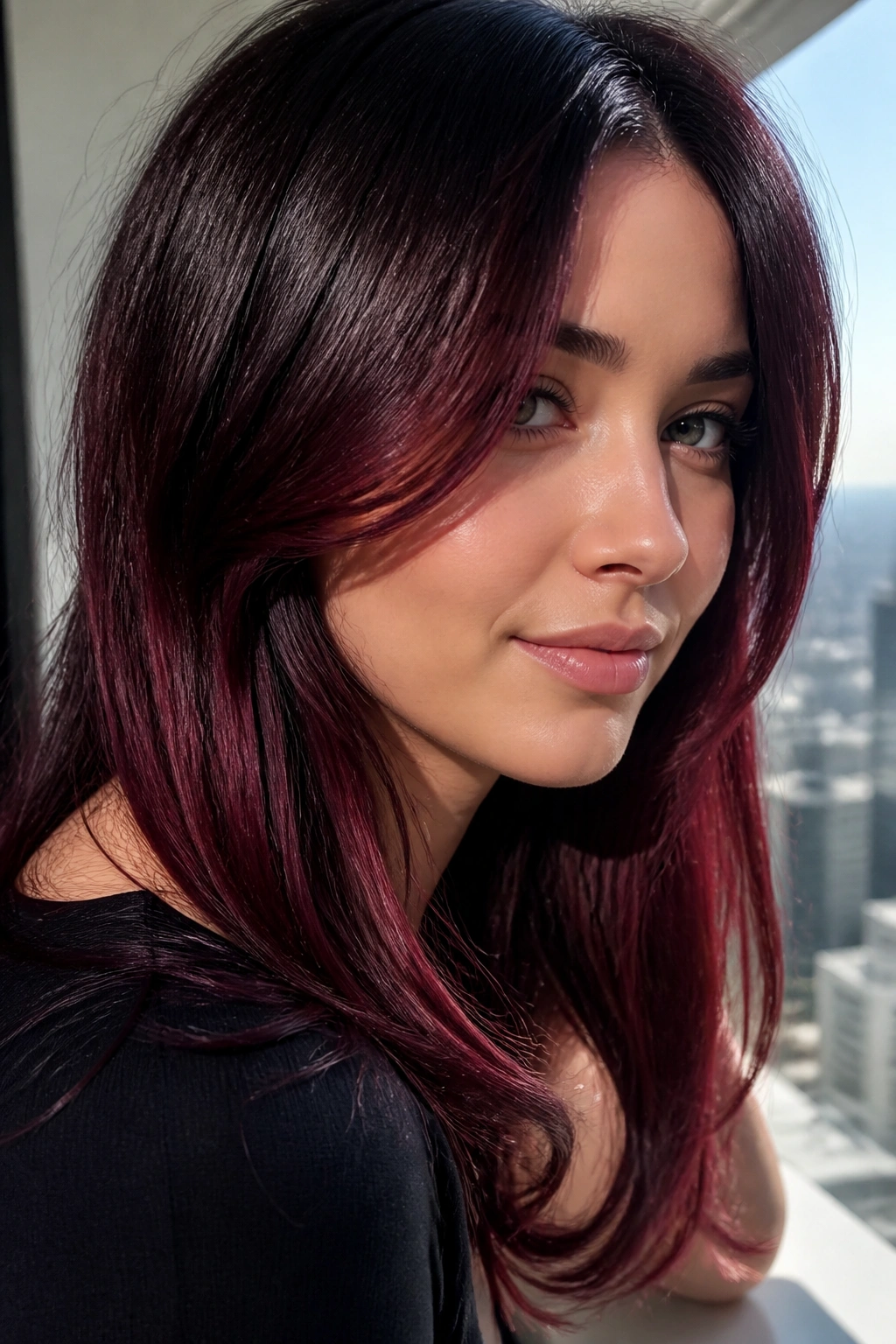
Raspberry noir is one of my favorite high-contrast choices. The base stays dark, almost black, while raspberry peeks through on the surface and at the ends.
That contrast can look amazing on sleek bobs, straight layers, and long hair worn glossy. It gives you color without losing the punch of a dark base.
If you want a little more softness, ask for the raspberry to sit in fine ribbons rather than broad blocks. That way the shade flickers instead of sitting heavy. On cool skin tones, that flicker is what makes the look feel clean.
26. Beetroot Red
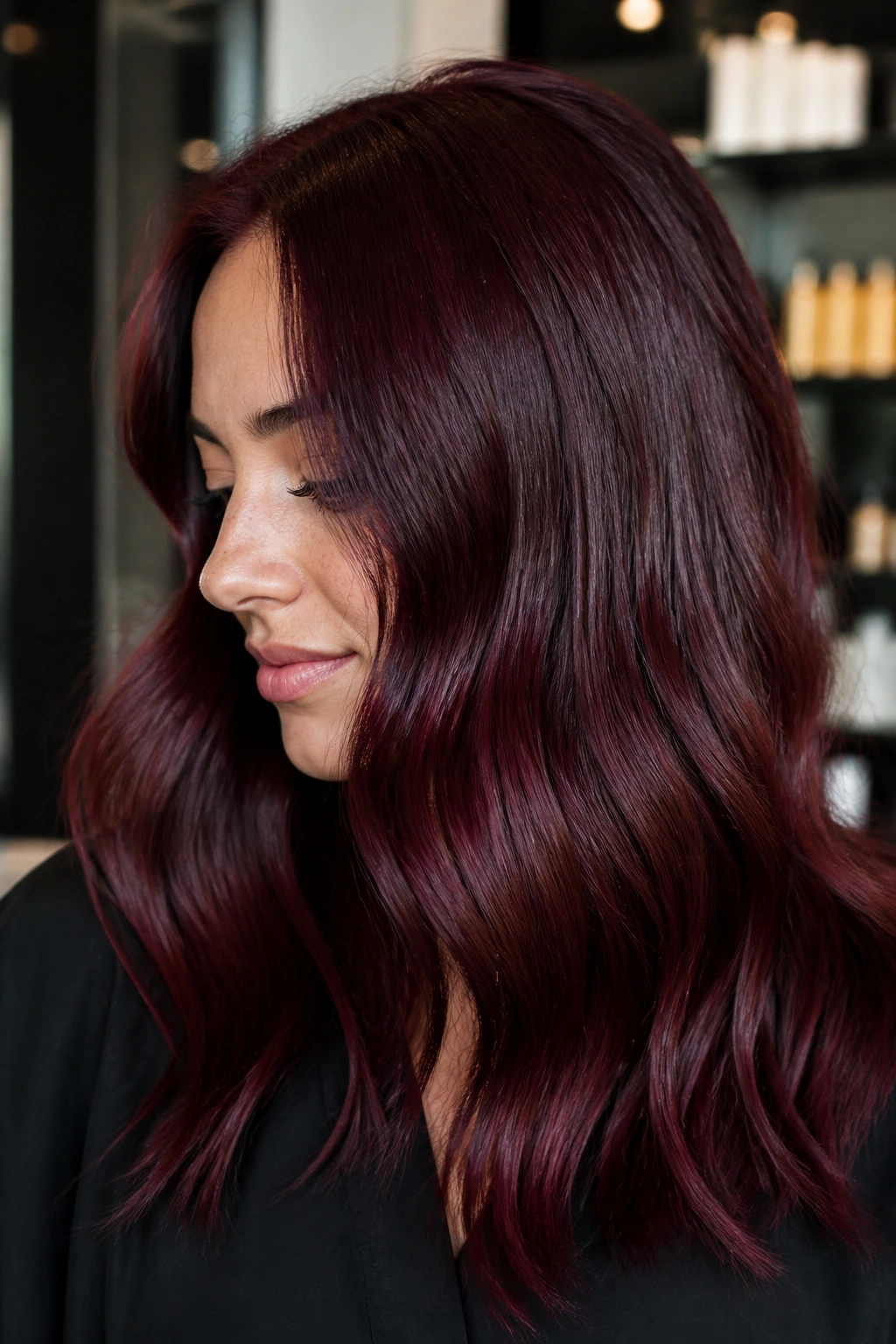
Beetroot red is a stronger, earthier version of berry red. It has that deep, stained look you see in cooked beet juice, and the cool base keeps it from going orange.
How to Wear It
Beetroot looks especially good on medium blonde or light brown hair that has been prepped to take color evenly. It can be full-coverage, or it can sit as a glaze over darker hair if you want something less intense.
A few things make it work well:
- Keep the formula blue-red, not copper-red.
- Add shine so the color does not look flat.
- Let the cut do some of the work; even a simple lob looks richer in this shade.
This is a good pick if you want a red-purple hair color that still feels rooted and grounded.
27. Cool Cherry Melt
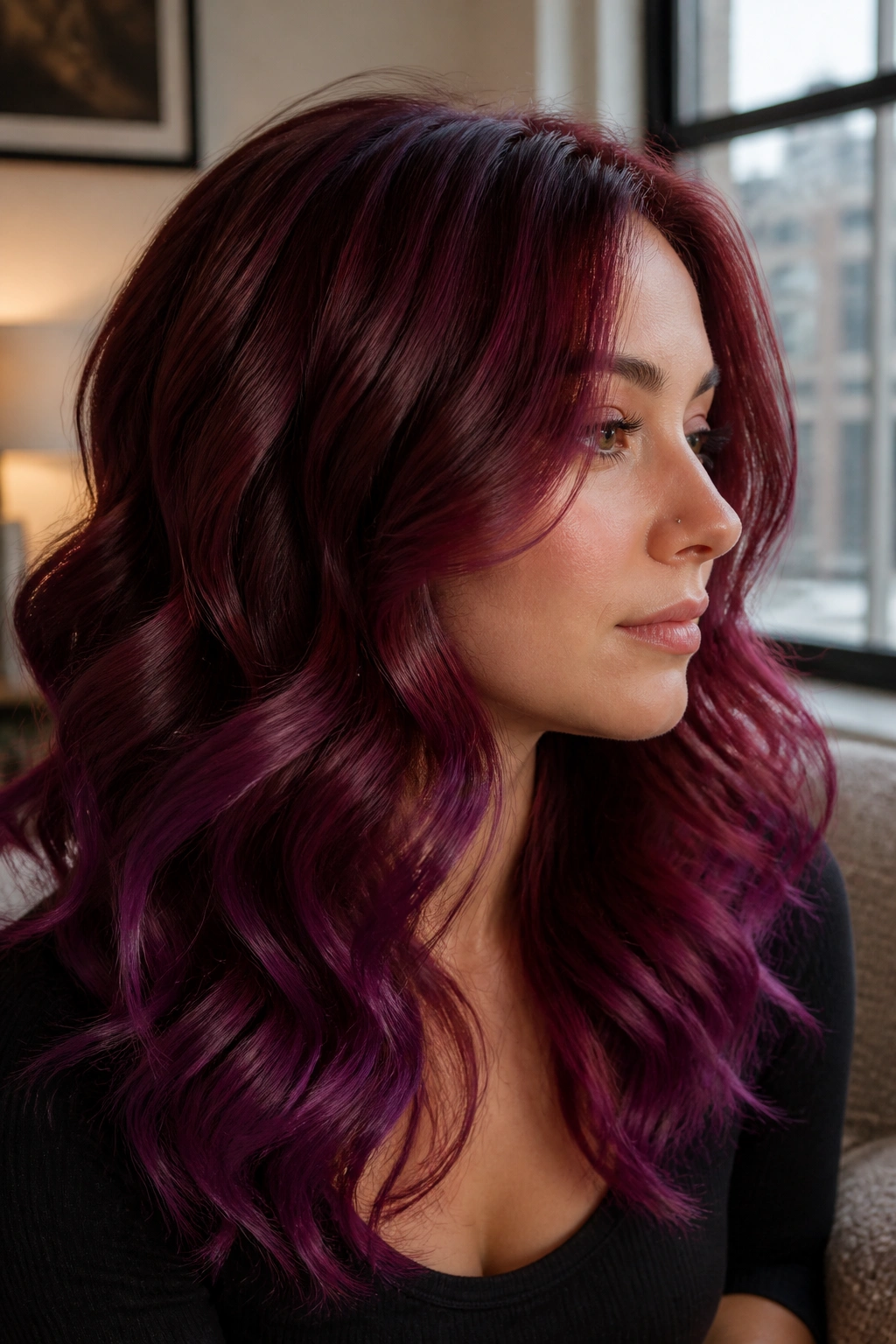
Cool cherry melt is exactly what it sounds like: cherry red with a soft fade that keeps the warmth under control. It is one of the more classic-looking choices here.
What sets it apart is the smooth transition from root to end. If the melt is done well, the hair feels glossy and full rather than striped. That makes it a nice option for cool skin tones that can handle bright color but do not want anything too candy-like.
How to Ask for It
- Request a cool cherry base with berry or violet ends.
- Keep the root soft, not harsh.
- Style with curls or bends so the melt shows.
This is a dependable choice if you want color that feels lively without drifting into copper territory.
28. Plum Smoke Balayage
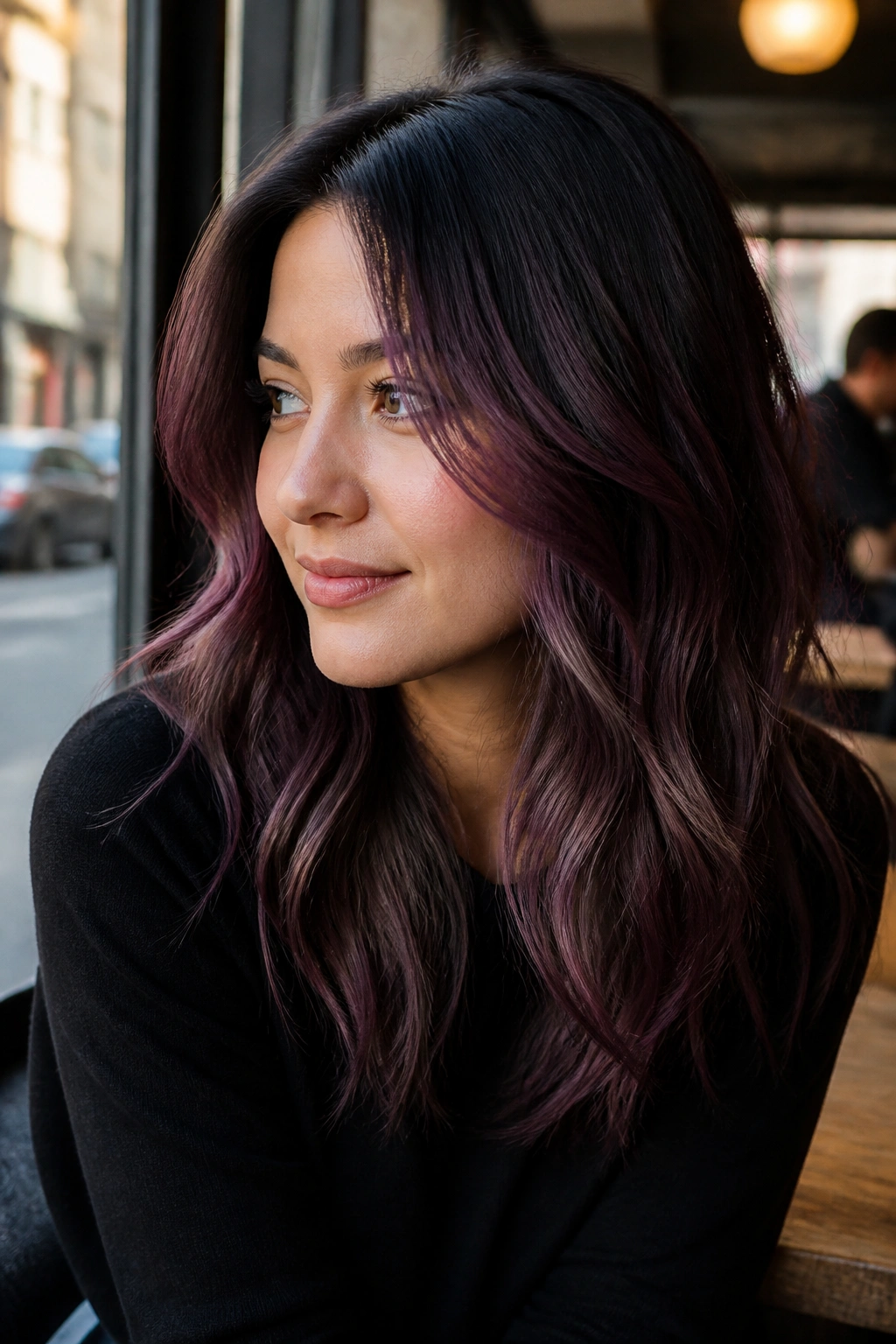
Plum smoke balayage has a softer, ashier edge than many of the richer wine shades. The smoky note pulls the plum into cooler territory, which is exactly why it works on cool complexions.
The placement matters more than the formula here. Hand-painted pieces through the mid-lengths and ends keep the color from looking heavy. Around the face, a little extra brightness can make the whole thing wake up.
I would choose this for someone who likes muted clothes, soft makeup, and color that feels a little mysterious. It is not loud. It does not try to be. That is the charm.
29. Blueberry Burgundy
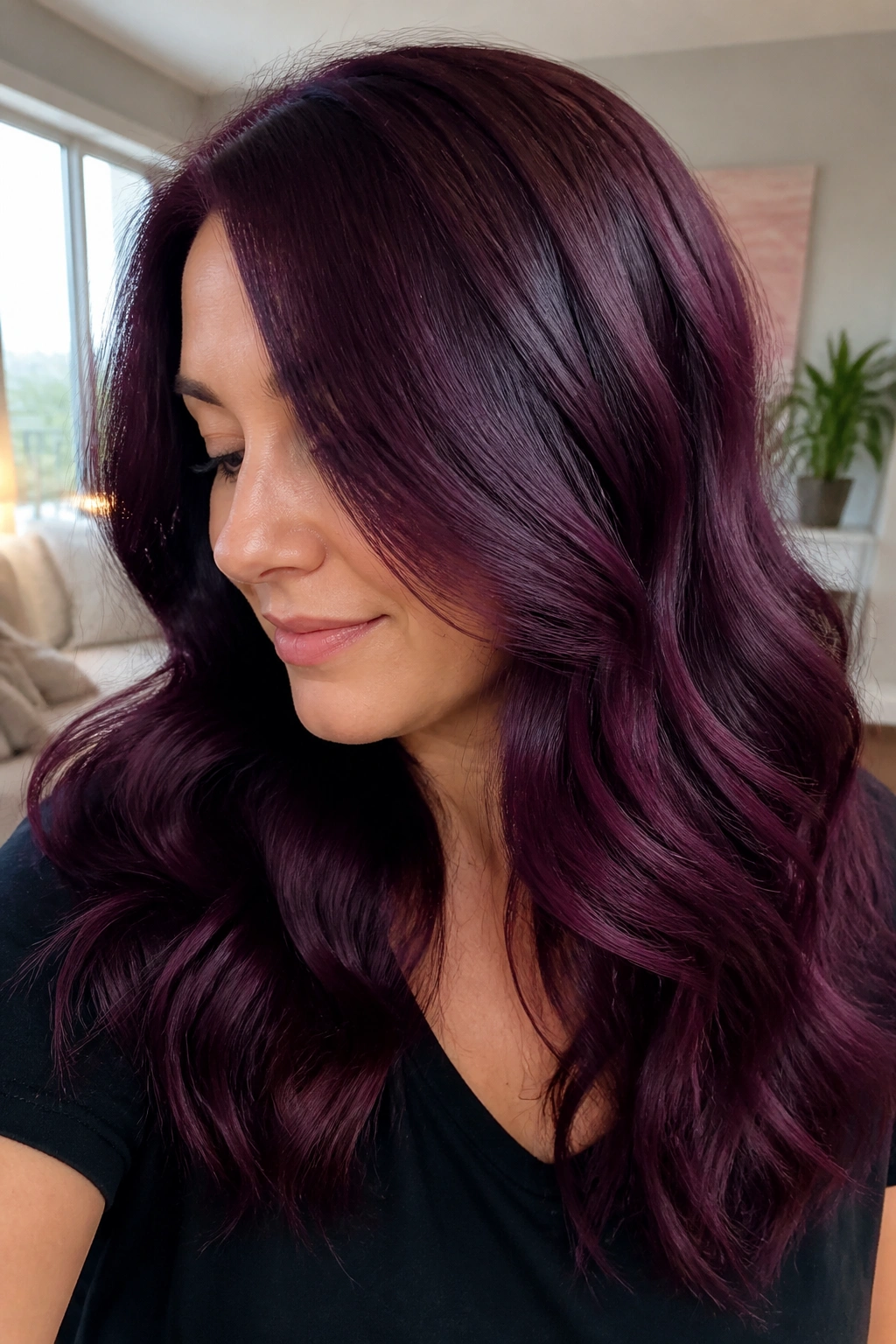
Blueberry burgundy is a strong finish because it sits right at the crossroads of berry, wine, and violet. The blue note cools everything down, which is why the shade looks so good on pink or blue-leaning skin.
This is one of the richest looks in the bunch, and it rewards good shine more than almost anything else here. On curls, the blue-red dimension becomes obvious. On straight hair, it reads more polished and dense.
If you want a red-purple hair color that feels deep but not harsh, this is an easy one to hand to a colorist. It has enough darkness to stay elegant and enough berry to stay interesting.
30. Slate Cherry
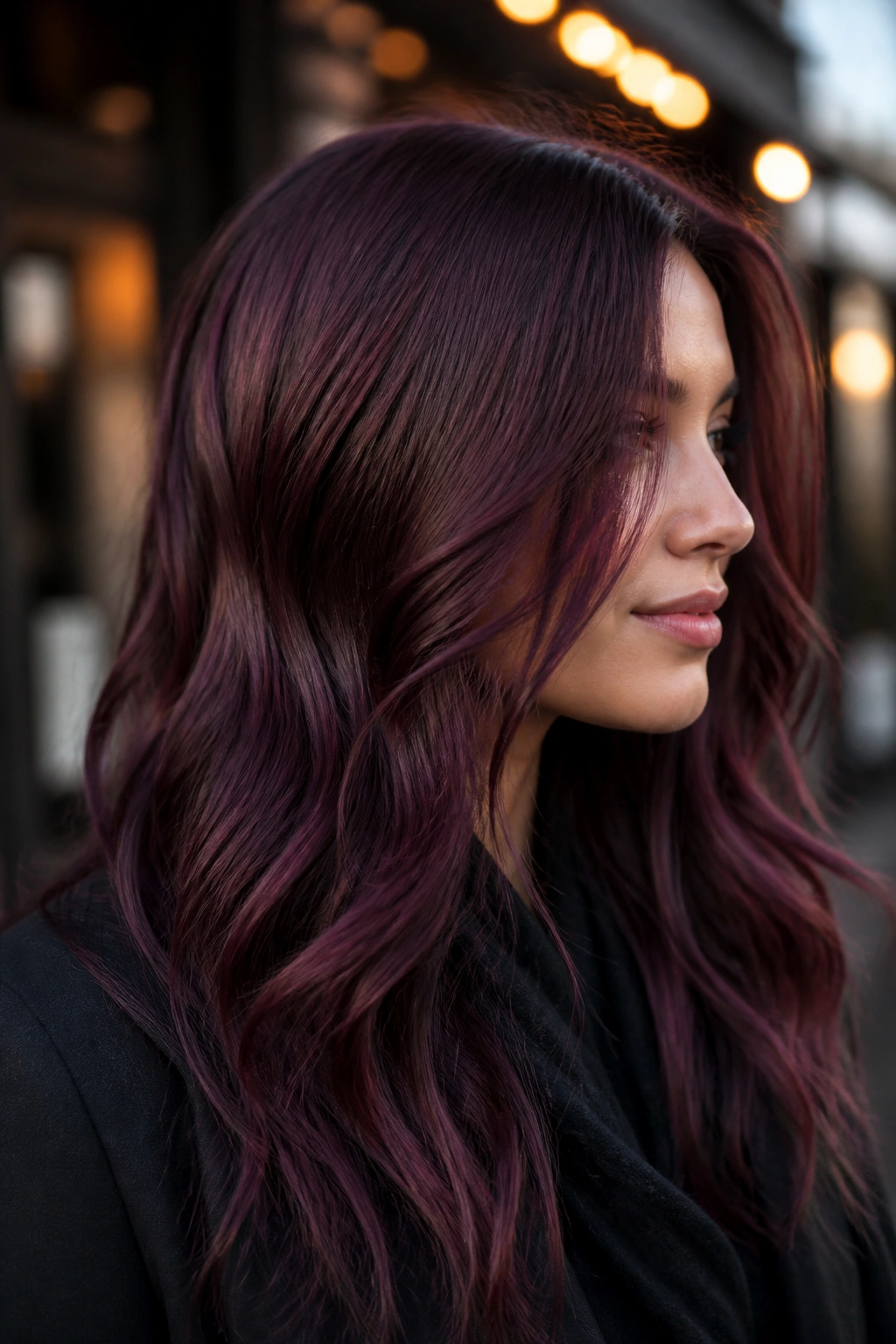
Slate cherry is the quietest shade in the group, and that is exactly why it deserves the last spot. The cherry note gives you red-purple life, while the slate undertone pulls the whole color into a cool, smoky finish.
This is a smart option if you want something wearable every day, not just on special occasions. It works on straight hair, waves, and shorter cuts especially well because the smoky depth keeps the shape crisp.
Cool skin tones tend to look good in this kind of shade because it never turns pumpkin or neon. It stays controlled. If you want one red-purple direction that feels polished, modern, and easy to live with, slate cherry is the one I would point to first.
