



Burgundy behaves.
Red burgundy hair color ideas for cool skin tones work best when the red stays on the blue-violet side. The minute it tips orange, cool skin can look a little pinker, a little harsher, and a lot less crisp than it should.
That’s why I keep coming back to shades like black cherry, merlot, blackcurrant, and smoky plum. They give you depth first, then the color shows up as wine-dark sheen instead of shouting from across the room. On dark hair, that can read almost ink-like indoors and rich berry in daylight, which is the kind of shift that makes burgundy worth the maintenance.
Red pigment is also a fussy little thing. It fades faster than brown, and it tends to drift warm as it softens, so the smartest burgundy shades are the ones that still flatter after a few washes, not just on day one. Cool skin usually looks best when the shade has a violet base, soft shadowing, or both.
Some shades are nearly black. Some sit closer to fruit. All of them keep the red on the cool side, and that’s the only rule that really matters here.
1. Black Cherry Burgundy for Cool Skin Tones
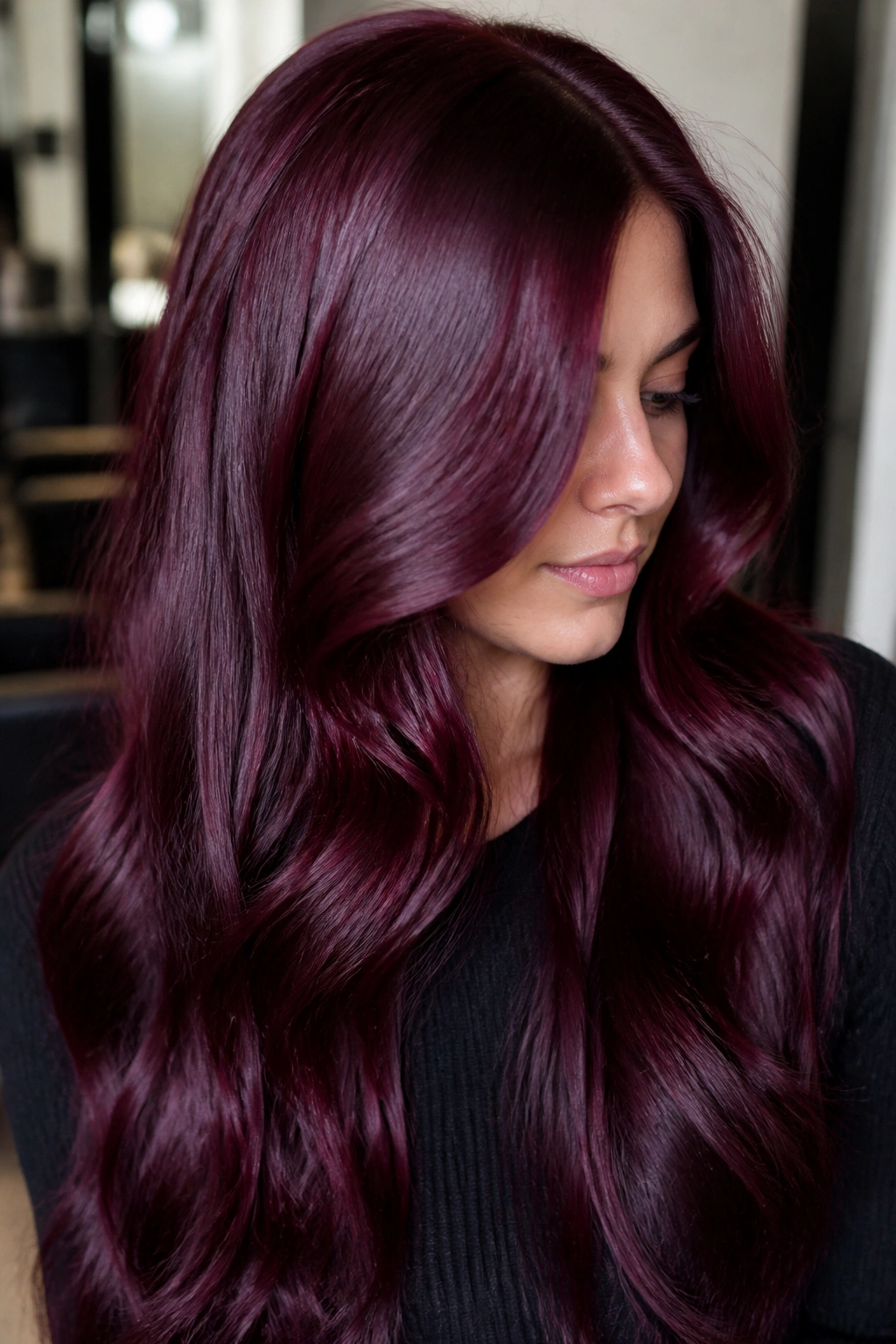
Black cherry burgundy is the shade I’d hand to someone who wants drama without crossing into fire-engine red territory. It’s deep enough to feel luxe, but the cherry note keeps it from going flat on cool skin.
Why It Flatters Cool Skin
The best part about black cherry is the balance: the base is dark, then the red shows up as a cool sheen instead of a warm block. On fair cool skin, that contrast can make the face look cleaner and brighter. On deeper cool skin, it reads polished and rich instead of muddy.
Ask for a level 4 or 5 base with a violet-red reflect, not a copper-red one. A little gloss on top makes a huge difference here. Without that shine, the shade can look sleepy.
Quick Notes to Bring to the Salon
- Best for: brunettes who want a dark red that still reads as red.
- Maintenance: refresh every 4 to 6 weeks if you want the cherry tone to stay crisp.
- Styling trick: loose waves show the cherry sheen better than pin-straight hair.
- Color note: keep the formula blue-red or violet-red, not orange-red.
Pro tip: if your hair is already dark brown, this is one of the easiest burgundy shades to wear because it usually needs less lift than brighter reds.
2. Merlot Balayage Over a Dark Brunette Base
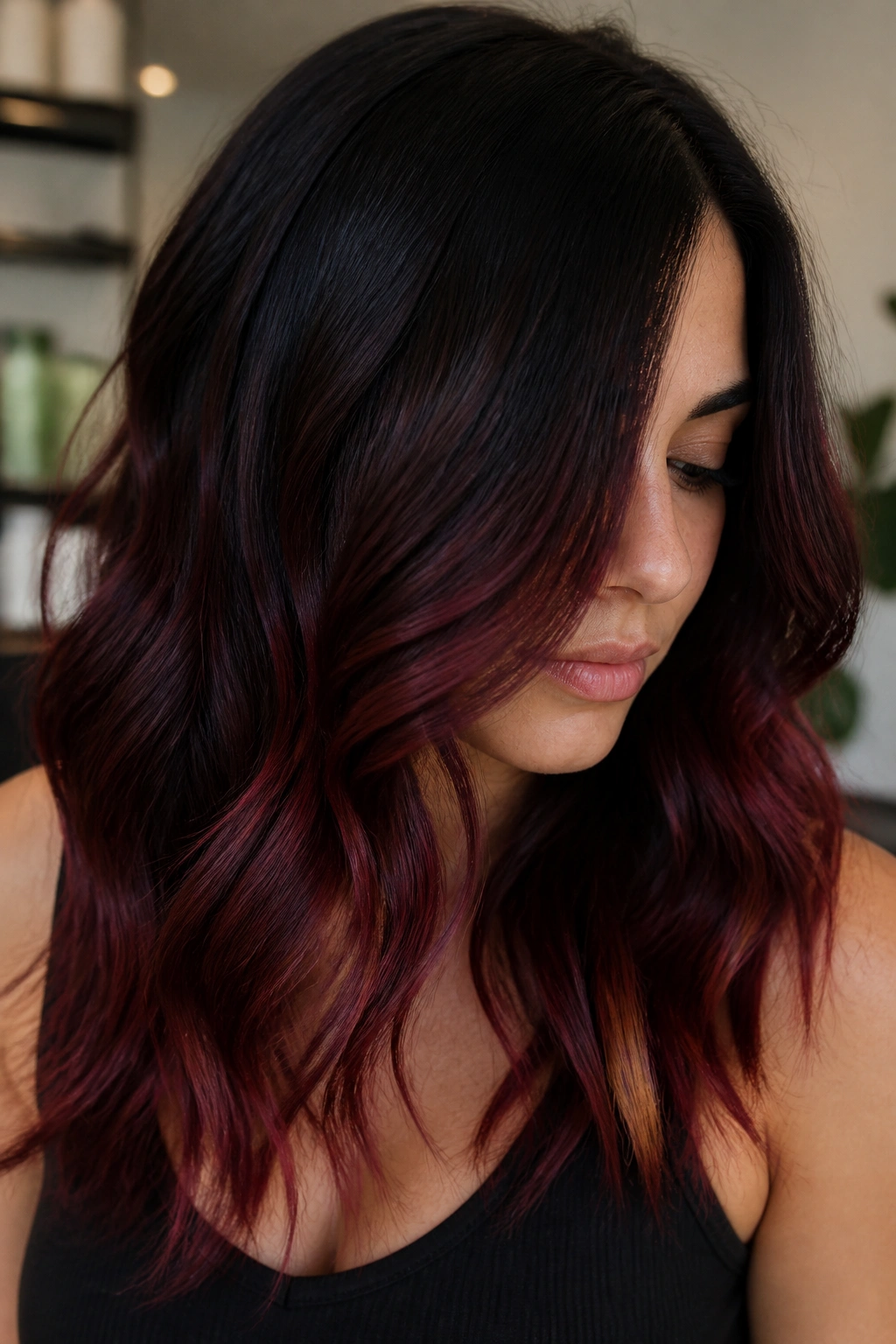
Merlot balayage is the easy answer when you want burgundy movement without committing to a full, solid color. It works because the darker base keeps the look grounded while the merlot ribbons catch light in all the right places.
Balayage also gives cool skin a little breathing room. Instead of one dense red wall from root to tip, you get pieces that break up the color and keep it from feeling heavy near the face. That matters more than people think. A flat burgundy can swallow the complexion; a merlot melt usually doesn’t.
I like this on shoulder-length cuts and longer layers, especially if the ends are softly textured. The color should start around the mid-lengths, then get denser near the bottom third so it feels painted rather than striped. If you like a lived-in look, this is one of the smartest options on the list.
Keep the contrast gentle. Too much gold in the brunette base can drag the whole thing warmer than you want.
3. Smoky Plum Burgundy with Soft Ends
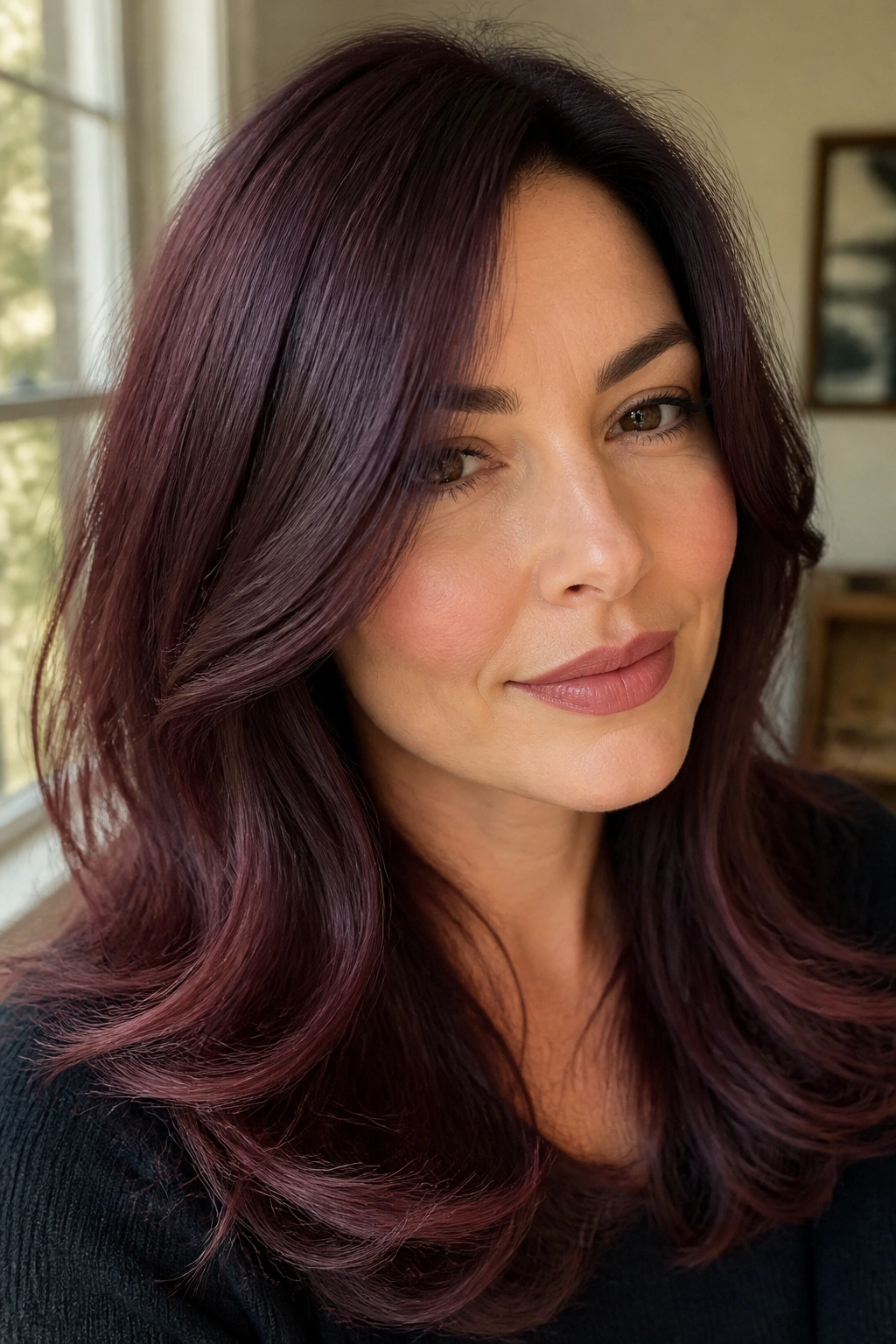
Why does smoky plum work so well on cool skin when brighter reds can fall flat? Because it swaps orange warmth for gray-violet depth, and that shift changes everything. The shade feels softer, calmer, and a little more expensive in person.
The soft ends matter more than people expect. When the tips are heavily saturated, plum can look severe. When the ends are feathered with a little translucence, the shade moves. It catches light at the edges and keeps the face from looking boxed in.
What to Ask For
Tell your colorist you want a plum-burgundy glaze with muted violet reflect and low warmth. A demi-permanent formula is often the better choice here because it gives shine and tone without the commitment of a fully opaque red. If your hair is pre-lightened, keep the ends a shade softer than the mid-lengths so the color doesn’t turn too dense.
This is a good one for someone who likes burgundy but hates obvious red hair. It feels quieter. Not shy, just controlled.
4. Cherry Cola Burgundy with a Glossy Finish
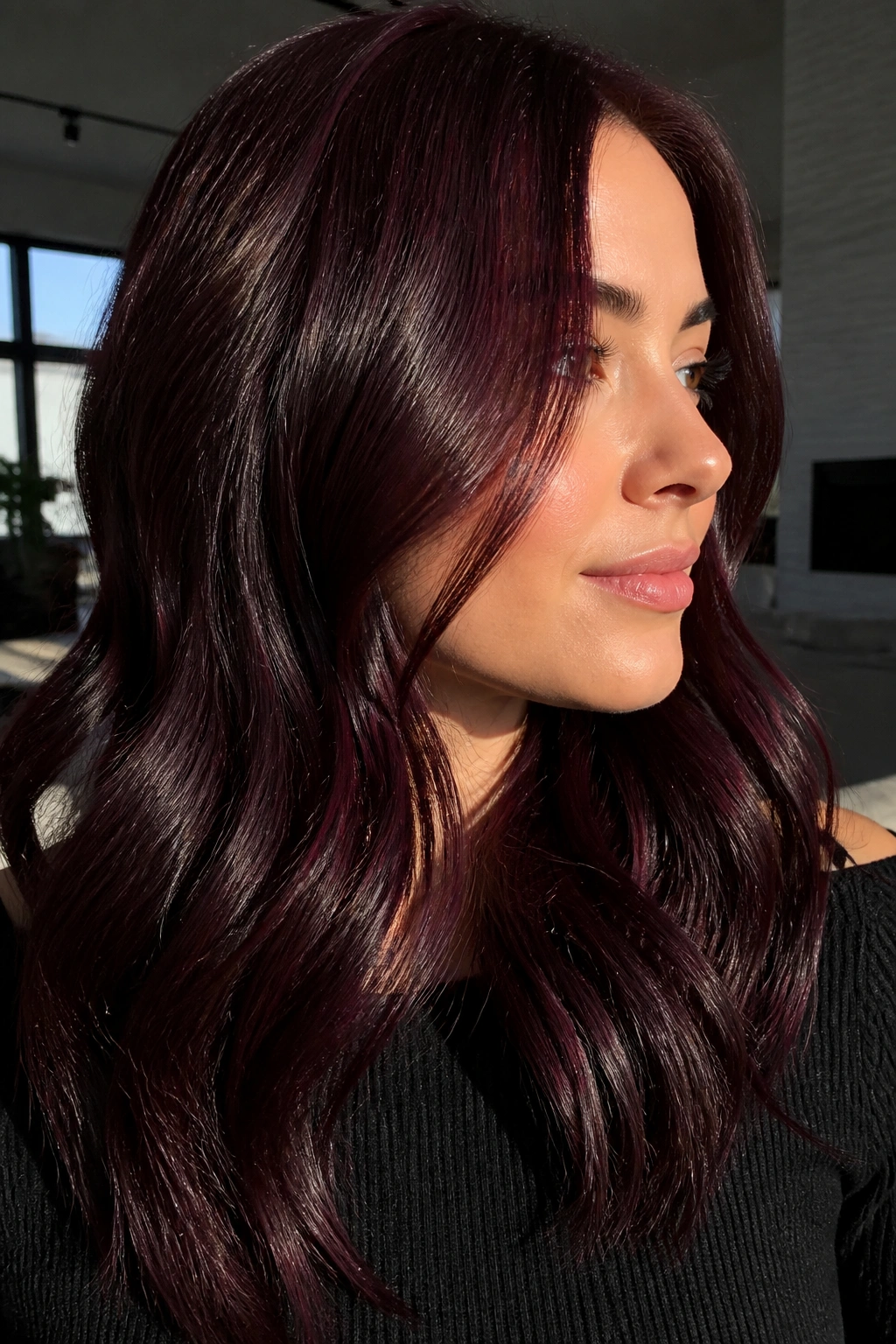
If you want red but hate red-red, cherry cola burgundy is the shade to save to your phone. It’s dark, a little moody, and layered enough to flatter cool skin without turning cartoonish.
I think of this as the bridge color. It sits between brunette and burgundy, which makes it easier to wear if you’re nervous about a big shift. The cola base adds depth, while the cherry note gives movement when you turn your head or step into daylight. Indoors, it can look almost brown. Outside, the red wakes up.
What Makes It Work
- The brown base stops the red from feeling loud.
- The cherry tone keeps cool skin from looking washed out.
- A clear gloss on top gives the shade that glassy, drinkable finish.
- Soft curls show the red dimension better than blunt, straight lengths.
Cherry cola is also forgiving on grow-out. That’s a nice bonus if you don’t want to live at the salon. The roots blend more naturally than with a brighter berry shade, and that makes the whole thing easier to keep tidy.
5. Burgundy Money Piece Around the Face
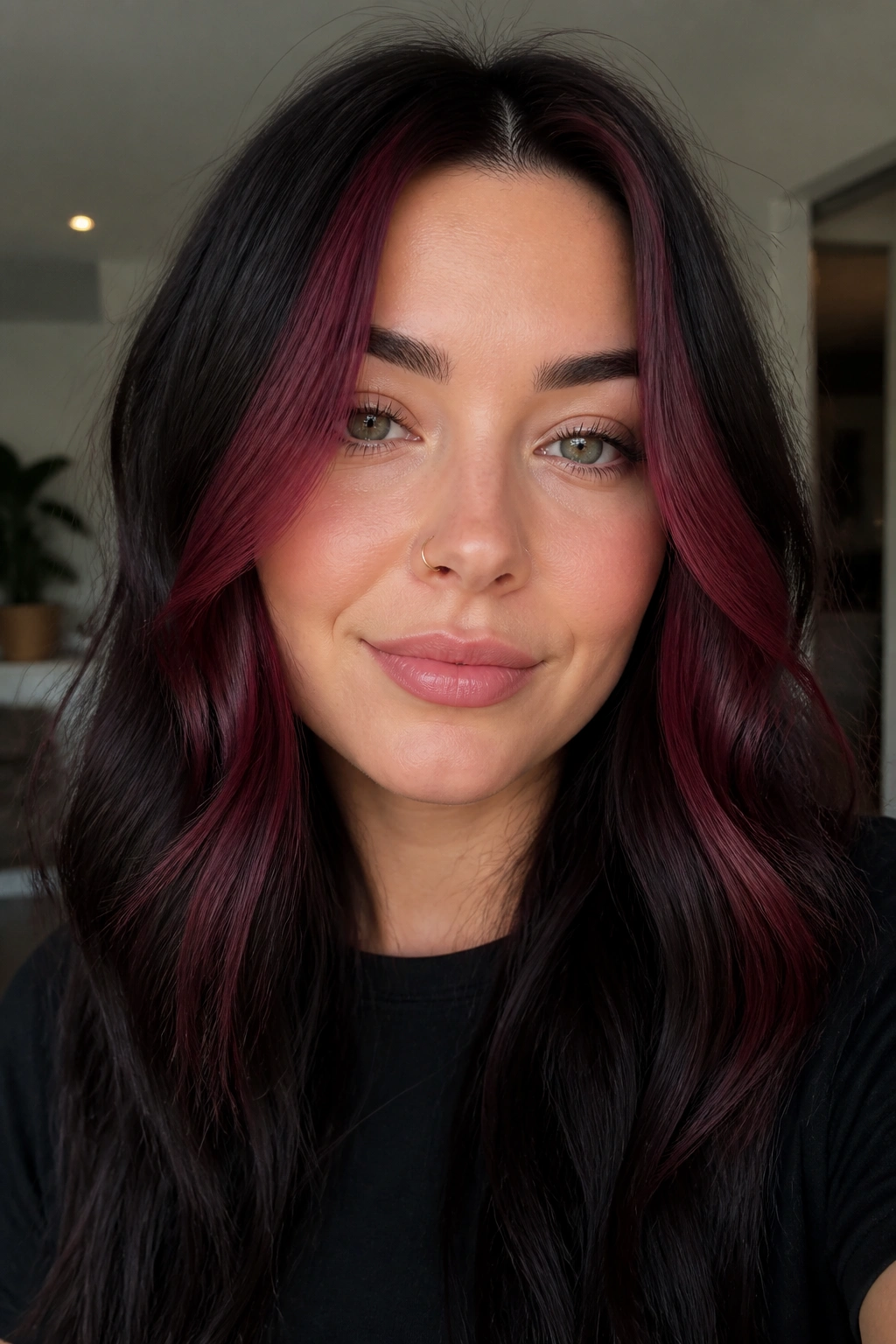
A burgundy money piece can change the whole mood of your hair without turning the rest of it red. That’s why I like it for cool skin tones that want a small punch of color near the face, not a full-color overhaul.
The placement is the trick. Keep the front pieces narrow enough to frame the cheekbones, usually somewhere around 1/2 inch to 1 inch wide on each side, then let the color feather back into the rest of the hair. If you make the pieces too thick, the look can overpower cool skin and start to feel costume-like. Thin, precise sections are better.
This also works beautifully with curtain bangs, because the burgundy sits right where the eye lands first. On pale cool skin, that can add a healthy flush without tipping warm. On deeper cool skin, it brings contrast and a little edge.
I like a money piece best when the rest of the hair stays dark or softly brunette. That way the front pieces do the work and the whole head doesn’t have to.
6. Velvet Wine Lob with Clean Lines
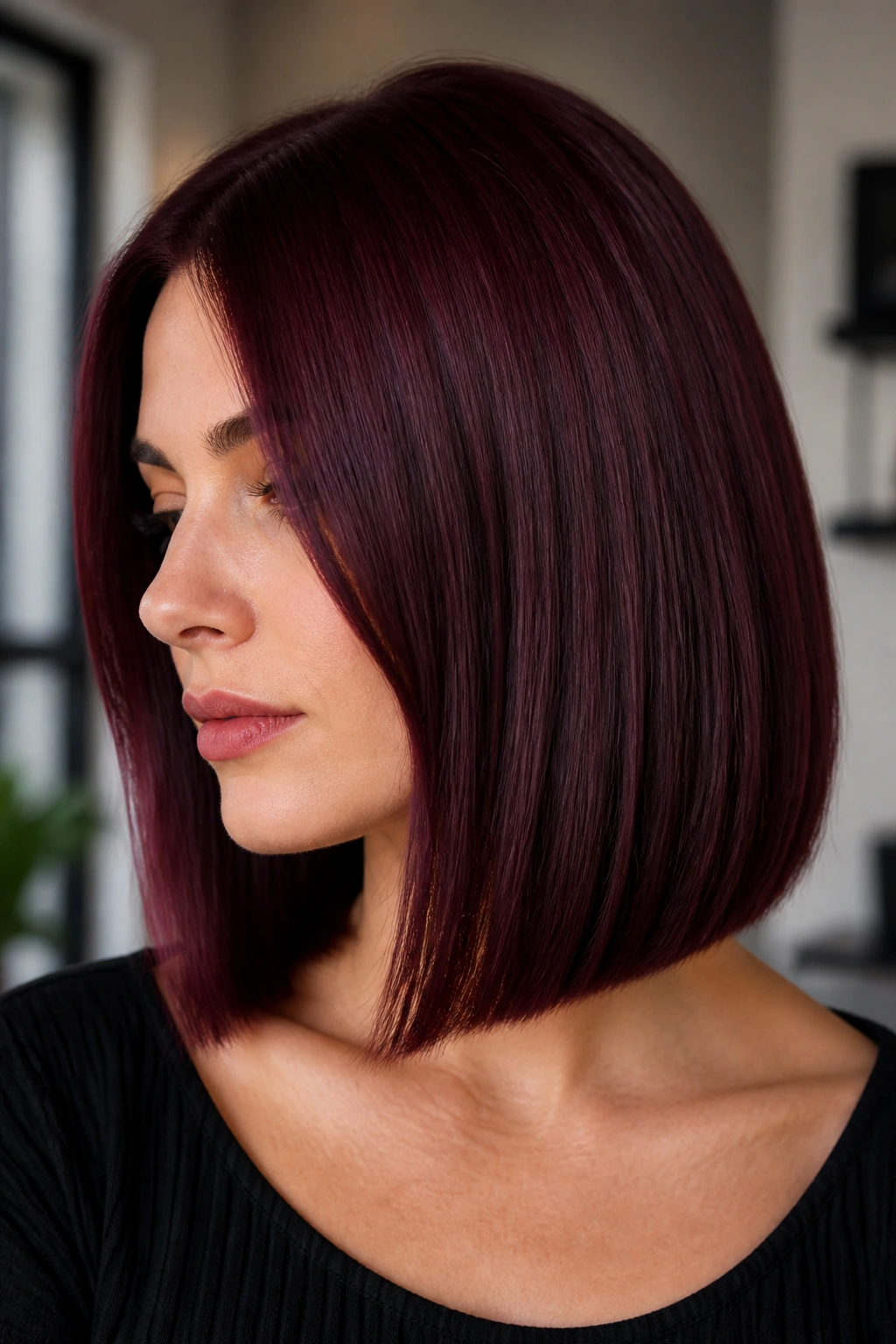
Unlike copper reds, a velvet wine lob stays cool, dark, and neat around the edges. That makes it a much safer choice for cool skin if you like a sharp haircut and don’t want your color fighting your complexion.
The lob shape helps a lot here. A blunt or slightly rounded shoulder-length cut gives the wine tone a clean frame, and the color looks richer when the line of the haircut is crisp. If the ends are too shattered or too wispy, the shade can lose its depth. A clean perimeter keeps the burgundy looking deliberate.
This is one of those colors that loves shine serum. Not heaps of it—just enough to make the cuticle lie flat and let the wine reflect show through. Straight hair makes it look sleek. Soft bends give it a little more life.
Best for: fine to medium hair, cool complexions, and anyone who wants burgundy that reads polished instead of wild. If you want a color people notice without knowing exactly why, this is a good place to land.
7. Cranberry Shadow Root for Cool Skin
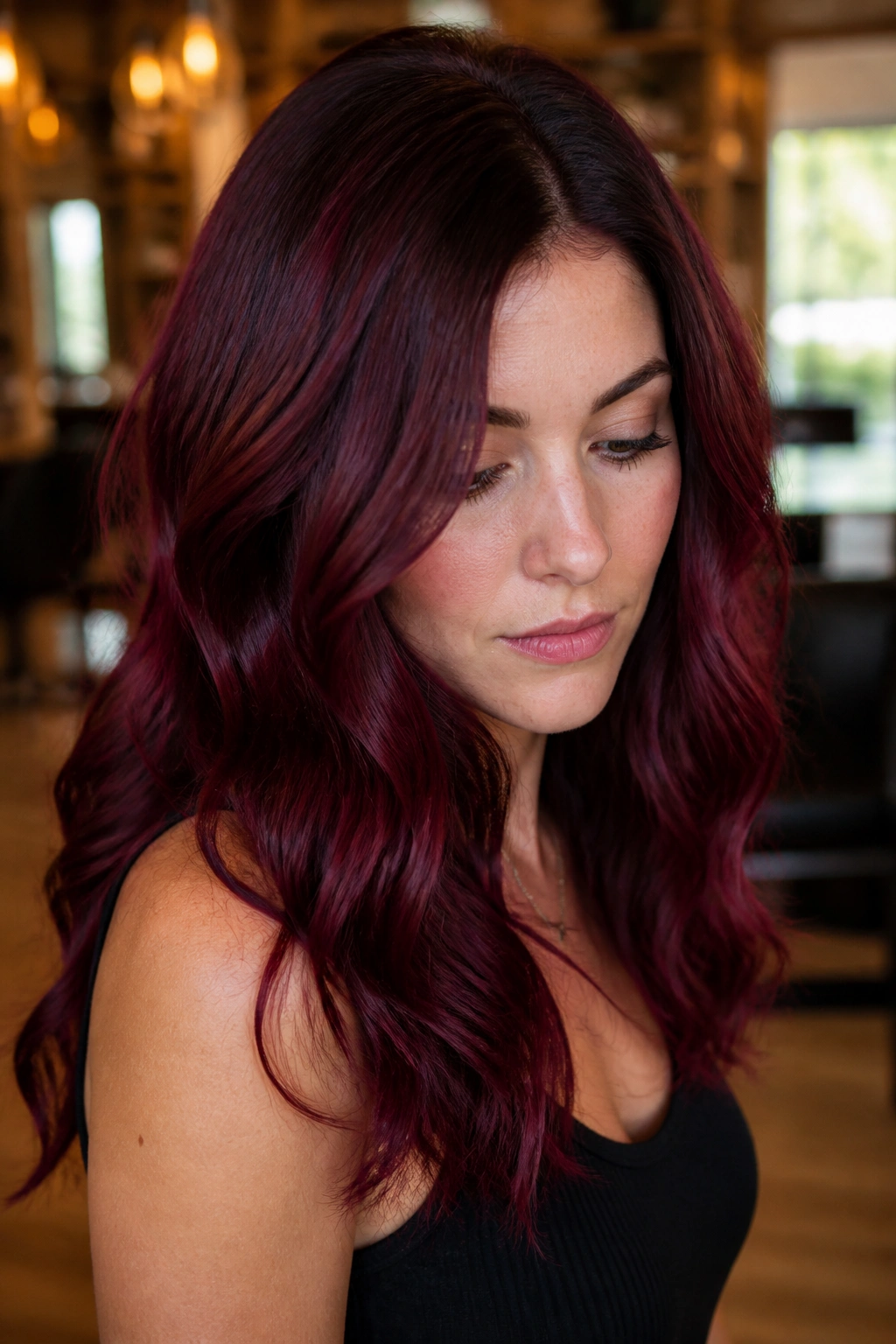
Cranberry with a shadow root is one of the smartest burgundy choices for cool skin because it keeps the top darker and the red brighter where it matters. The result feels softer at the scalp and more vivid through the lengths, which is exactly what you want if you hate harsh regrowth lines.
Why the Shadow Root Helps
The darker root gives the color a smoother grow-out and keeps the red from sitting too close to the face in one hard block. That matters on cool skin, where a flat red root can make the hair look too warm right up against the forehead. A shadow root solves that fast.
The cranberry lengths then carry the personality. They’re bright enough to feel fresh, but still more berry than orange. If you’re fair, this shade can make your features look sharper. If you’re medium or deep cool-toned, it gives a lively pop without getting loud.
What to Tell Your Colorist
- Keep the root 1 to 2 levels deeper than the mids.
- Use a cranberry tone with violet or berry undertones.
- Soften the transition so there’s no obvious line at the part.
- Finish with a cool gloss if the red starts drifting warm.
Small warning: cranberry can fade fast on porous hair, so a color-depositing conditioner helps a lot between salon visits.
8. Violet Burgundy Gloss on Long Layers
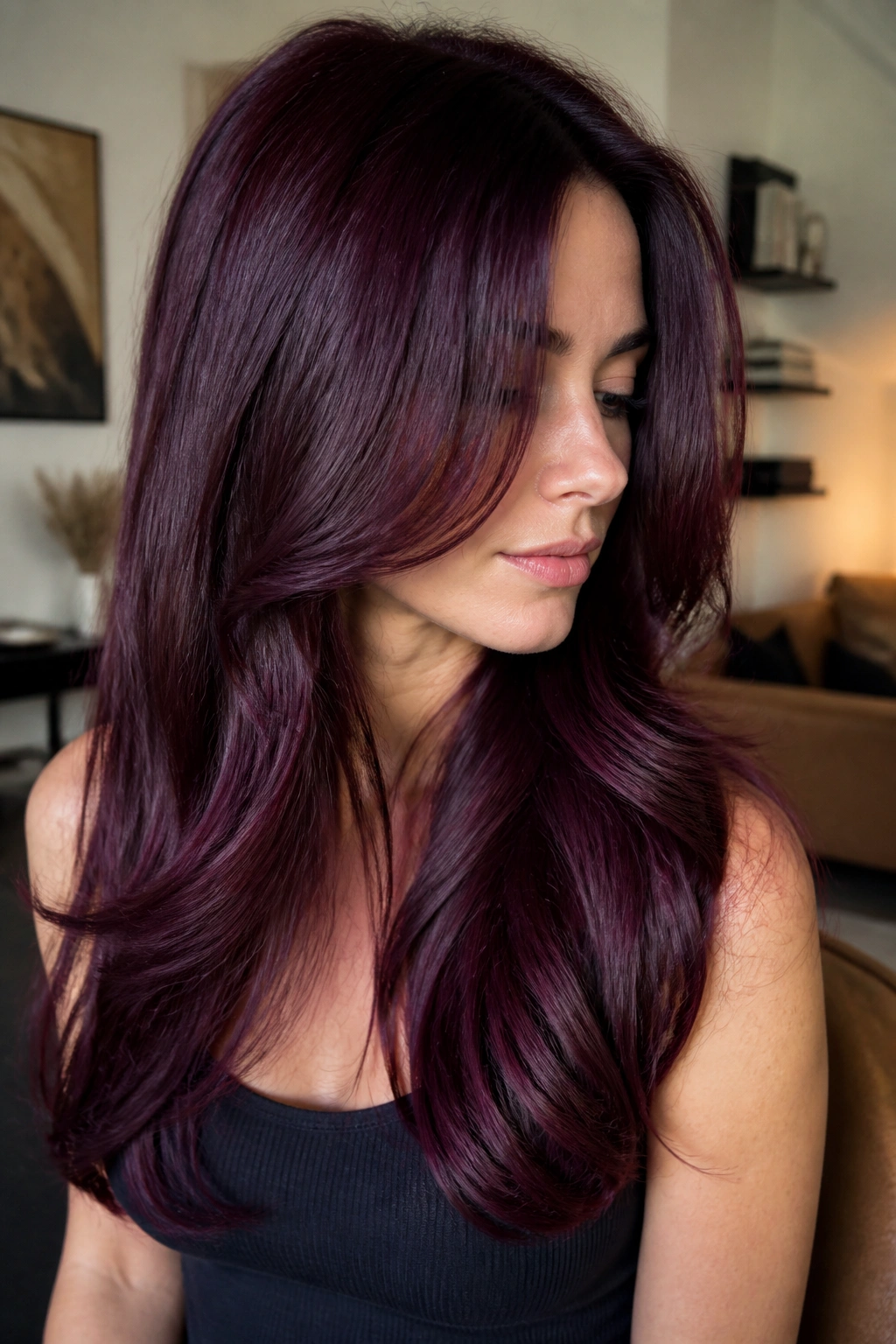
A violet burgundy gloss does more work than a lot of full dyes, and I mean that in the best way. It can freshen brown hair, cool down a red that’s gone too warm, and add that glassy wine effect that long layers need.
Glosses are useful because they deposit tone without the heavy, opaque look that some burgundies have. On long layers, that means the color moves. The shorter pieces around the face catch a different amount of light than the ends do, so the hair never looks one-note. Cool skin usually likes that softness.
This is especially good if you already have some dimension in your hair. A violet-red gloss can pull everything together and make the whole shape look more expensive. It’s also easier to live with than a full permanent red because it fades more softly.
If you’ve got naturally dark hair and want a burgundy effect without a big color commitment, this is a smart first step. It won’t scream. It will shine.
9. Rosewood Burgundy Curls for Cooler Depth
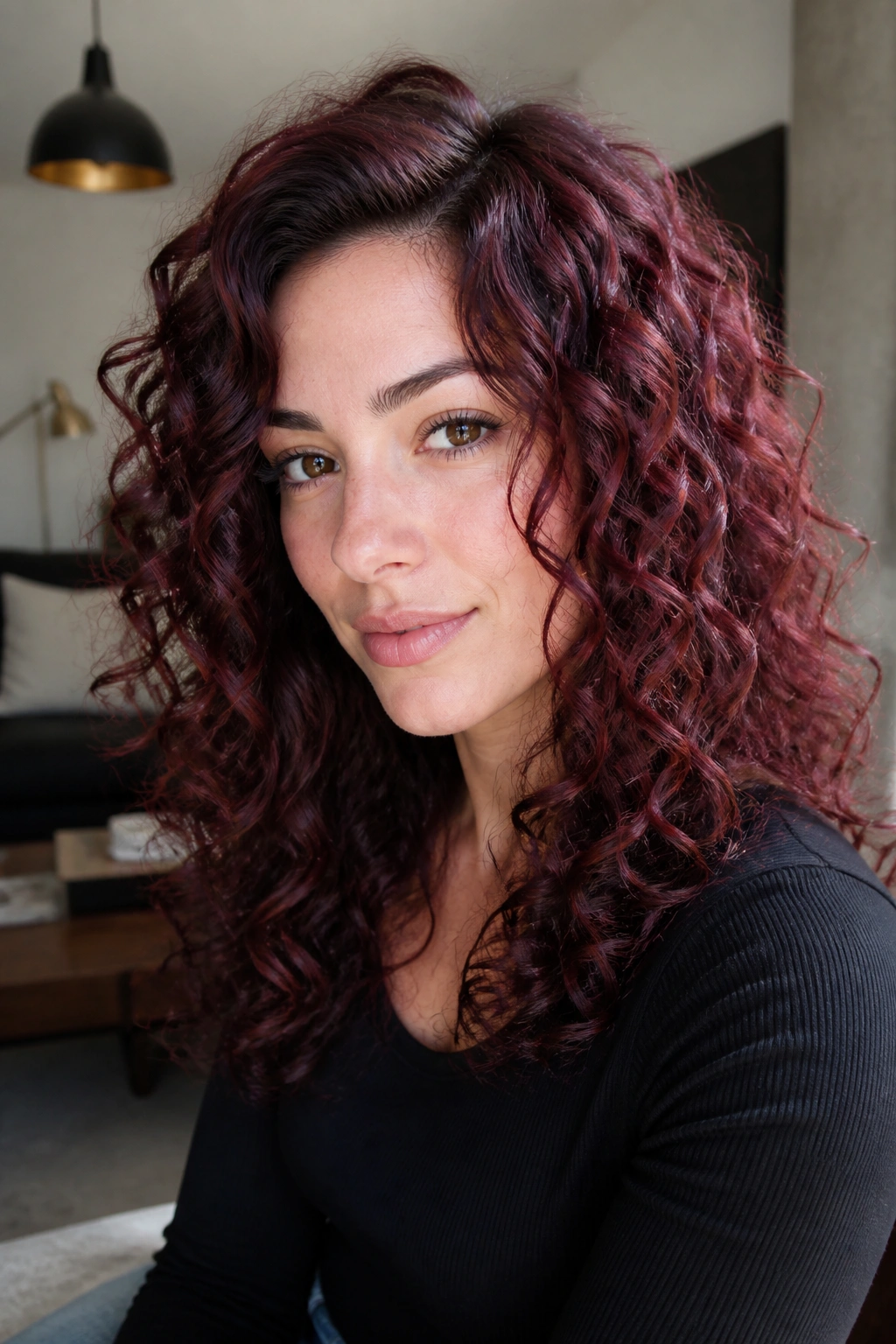
Why does rosewood look softer than merlot on curls? Because curls already create shadows and highlights, so the color doesn’t need to do all the work. Rosewood leans muted, dusty, and slightly woody, which keeps the curl pattern from looking too busy.
That makes this shade a good fit for cool skin that wants depth more than drama. The red is there, but it’s tucked under a soft brown-violet veil. On looser curls, the color reads as rich and elegant. On tighter curls, it can look almost velvety.
How to Wear It
Use a curl cream that doesn’t leave a heavy film, then diffuse until the curls are set but not crunchy. The color looks best when the curl pattern stays soft and touchable. A dry, frizzy finish can make rosewood look dull, and nobody needs that.
This is also one of the easier burgundy shades to pair with cool makeup. Plum blush, berry lipstick, soft taupe shadow—everything sits together cleanly. The hair doesn’t fight the face. That’s a nice thing to have.
10. Cabernet Melt from Root to Tip
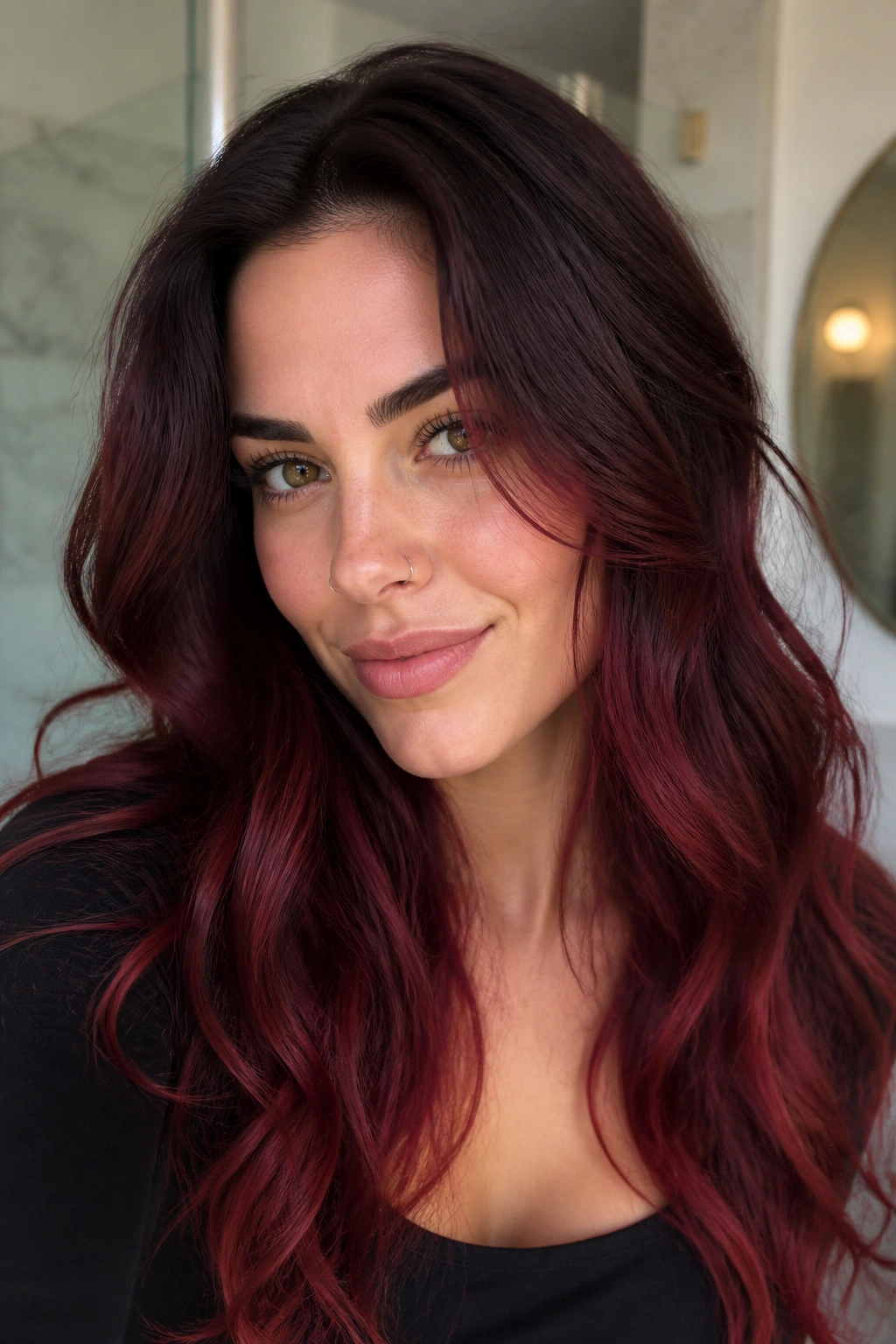
A cabernet melt gives you that deep wine feeling without a sharp line anywhere. The color flows from a darker root into richer red lengths, which helps cool skin because the warmth stays controlled and the transition feels natural.
Think of it like pouring one color into another. You want the root to stay deep and the mid-lengths to carry the cabernet tone, then the ends can brighten just a touch so the whole thing doesn’t sink into one block. A melt works best when the colorist keeps the shift soft enough that you can’t point to the exact line where one shade ends and the next begins.
- Root depth: keep it around level 4 or 5.
- Mid-length tone: red-violet cabernet.
- Ends: slightly brighter, not orange.
- Best hair type: medium to thick hair with some wave or bend.
This shade has a nice grown-out look, which matters because cabernet can be gorgeous and still a little high-maintenance. A soft fade buys you time.
11. Mulled Wine Highlights on a Dark Base
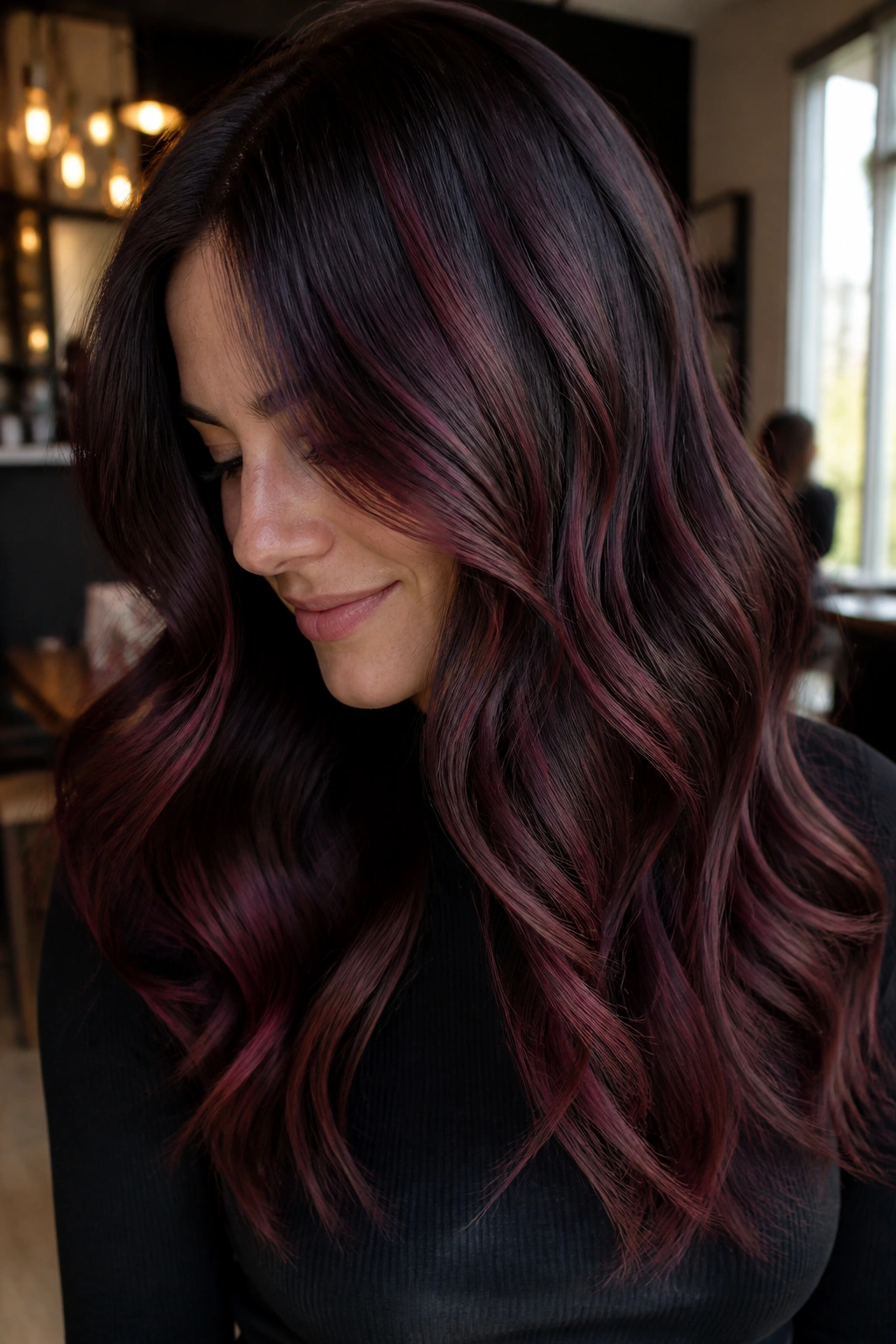
Mulled wine highlights are the shade I recommend when someone wants burgundy, but doesn’t want to look like they dyed every strand the same color. The dark base keeps the look grounded, and the wine highlights show up in narrow ribbons that move when the hair moves.
The placement is what makes this interesting. Thin highlights near the part line and around the crown can brighten the face, while deeper ribbons underneath keep the whole thing from feeling too light. On cool skin, that mix is a gift. It adds shape without flooding the face with warmth.
I like this especially on layered cuts, where the different lengths catch the light at different angles. Straight, one-length hair can hide the dimension a bit. Layers let the red-violet pieces pop in a cleaner way. And because the base stays dark, the grow-out tends to be gentler than with a full all-over burgundy.
If you’ve ever looked at wine in a glass and thought, yes, that, this is probably your shade.
12. Deep Plum Pixie Cut
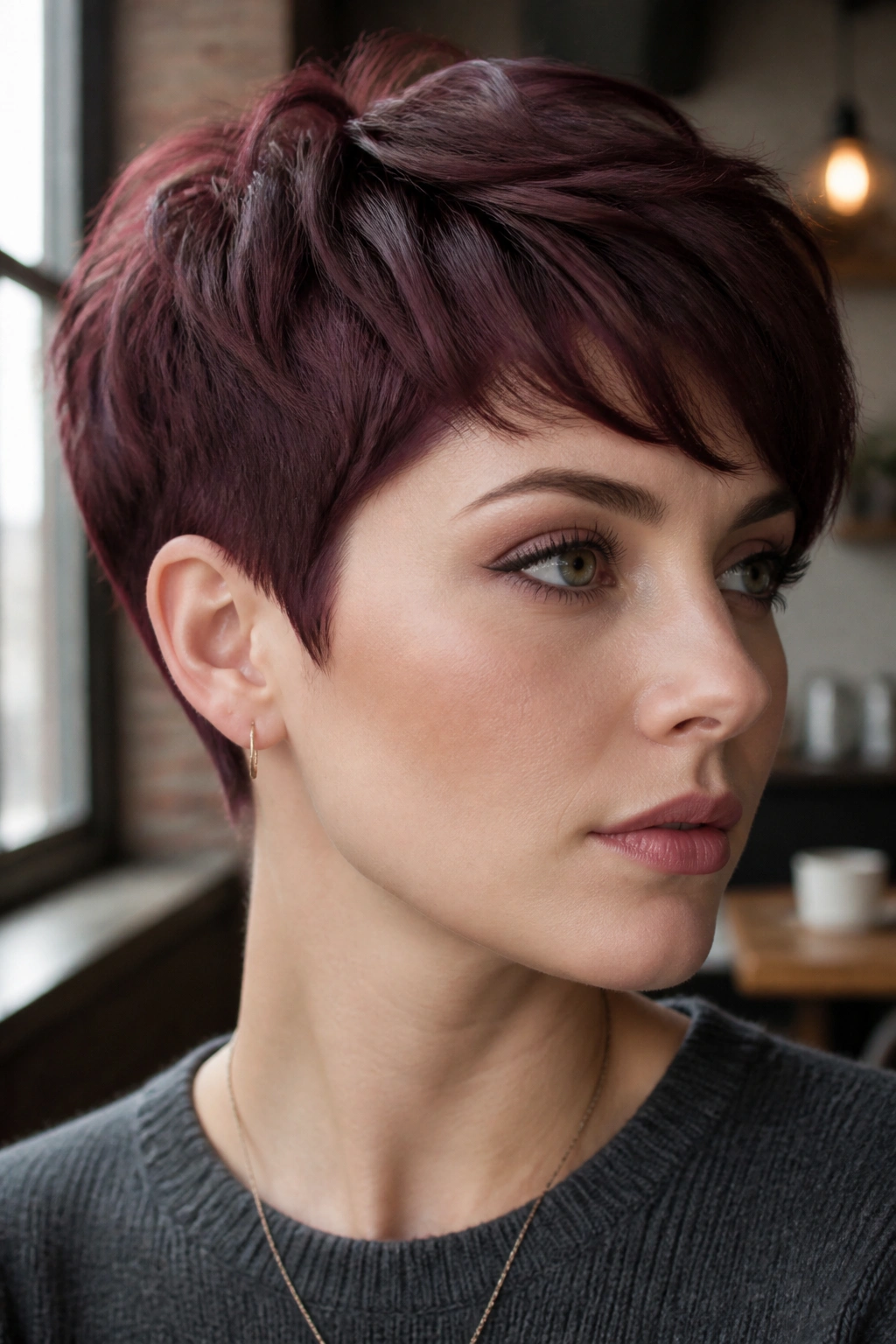
A pixie cut changes the whole game. There’s less hair to carry the color, so deep plum burgundy reads sharper and more deliberate than it would on long waves.
That’s why I like it on cool skin. The short length keeps the shade from feeling heavy, and the deep plum tone gives the cut some bite. On a pixie, shine matters a lot. If the color is dull, the whole style falls flat. If it’s glossy, the shape looks clean almost instantly.
What Makes This Version Different
Unlike a brighter red pixie, deep plum stays closer to the violet side. That means it works better with cool skin and it tends to look more elegant under office lighting, restaurant lighting, all that boring daily stuff. The color is still bold, but it doesn’t flare.
Best of all, the cut itself does some of the styling work. A little texture paste at the crown and a side-swept fringe are often enough. If you want a color that looks sharp with minimal fuss, this is one of the strongest picks in the bunch.
13. Raspberry Burgundy Bob with Extra Shine
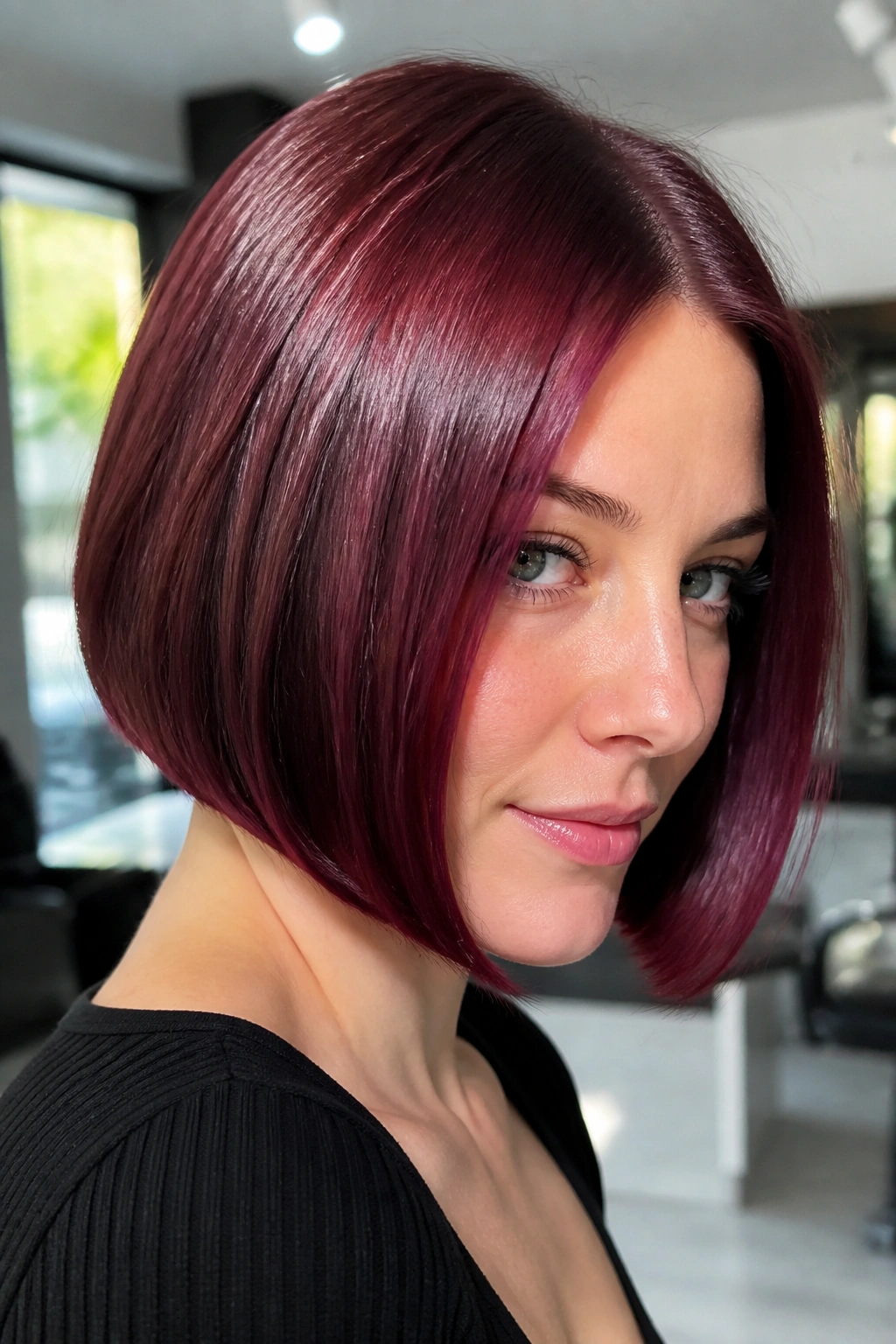
Raspberry burgundy is the brighter cousin in this family, and it can be gorgeous on cool skin if you keep the base dark enough. Too much pink and it starts looking sweet. Just enough berry, and the whole thing wakes up.
What Makes It Pop
The bob shape helps the color look neat. A chin-length or collarbone-length bob gives the shade a clean edge, which keeps raspberry from drifting into playful or childish territory. I also like this best with a mirror-like finish, because the shine keeps the berry tone from looking dusty.
Quick Styling Notes
- Use a smoothing cream before blow-drying.
- Keep the ends blunt or only slightly textured.
- Ask for a clear gloss if the red needs more shine.
- A cool-toned lipstick makes the color feel more balanced.
Raspberry burgundy is especially good if your skin is fair and cool, because the color adds life without needing a warm undertone to support it. On medium cool skin, it can read punchy and modern. On deeper cool skin, the shade works best when the base stays rich and not too pink.
14. Midnight Burgundy Peekaboo Panels
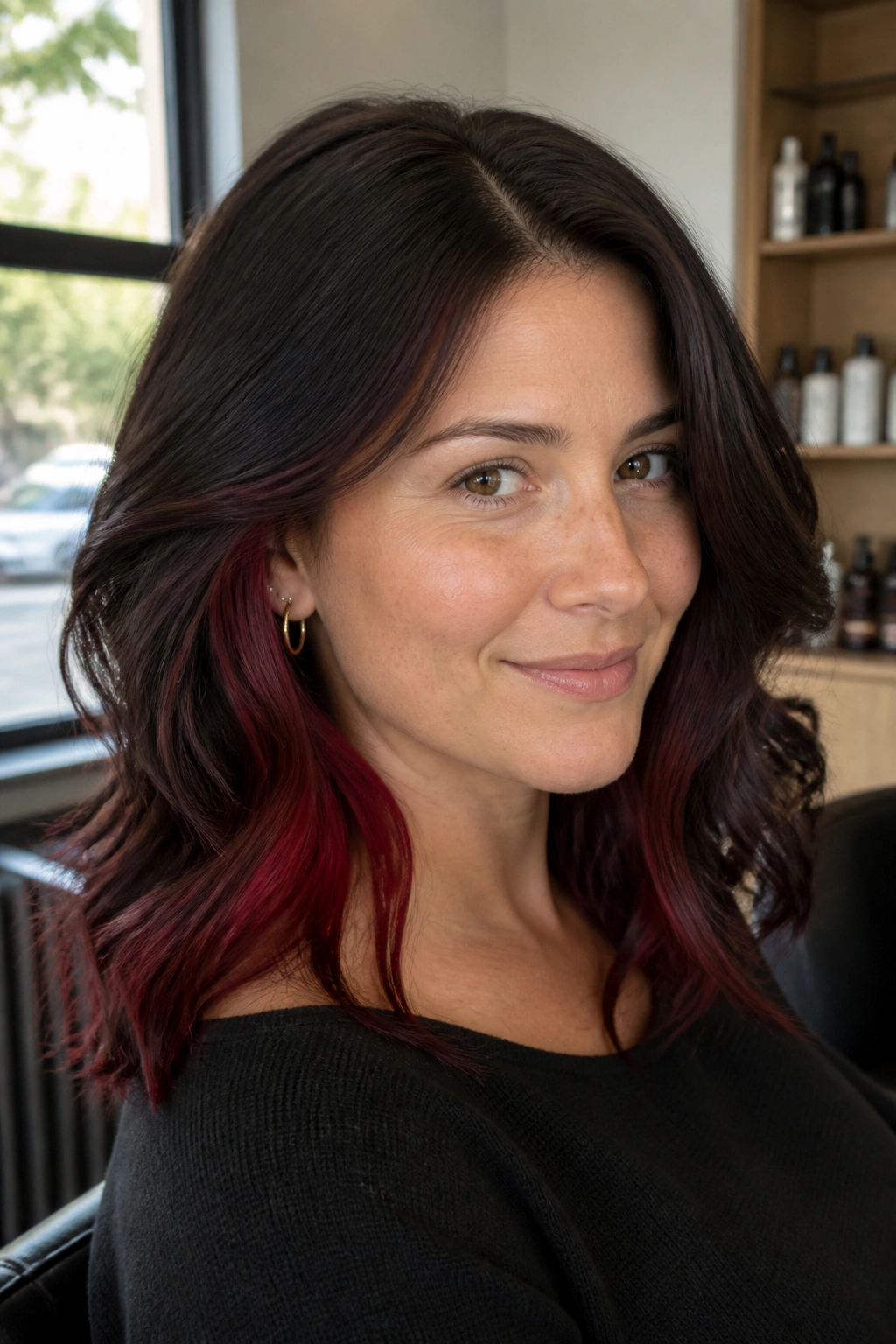
Midnight burgundy peekaboo panels are for people who want the color to show up only when it moves. That hidden placement makes the shade feel playful without making the whole head bright, and cool skin usually benefits from that restraint.
The trick is placing the panels under the top layer, often near the nape, under the crown, or tucked behind the ears. When the hair is down, you get little flashes of burgundy. When it’s pinned half-up or pulled into a ponytail, the color becomes the point. It’s a nice way to wear red if you like control.
This style also lets you keep the top layer darker, which is helpful if your complexion runs very cool or very pale. A dark surface near the face keeps the look balanced, and the burgundy underneath adds depth without dragging warmth right up against the skin.
It’s not the quietest option here. It is, however, one of the most fun.
15. Bordeaux Curls with a Satin Finish
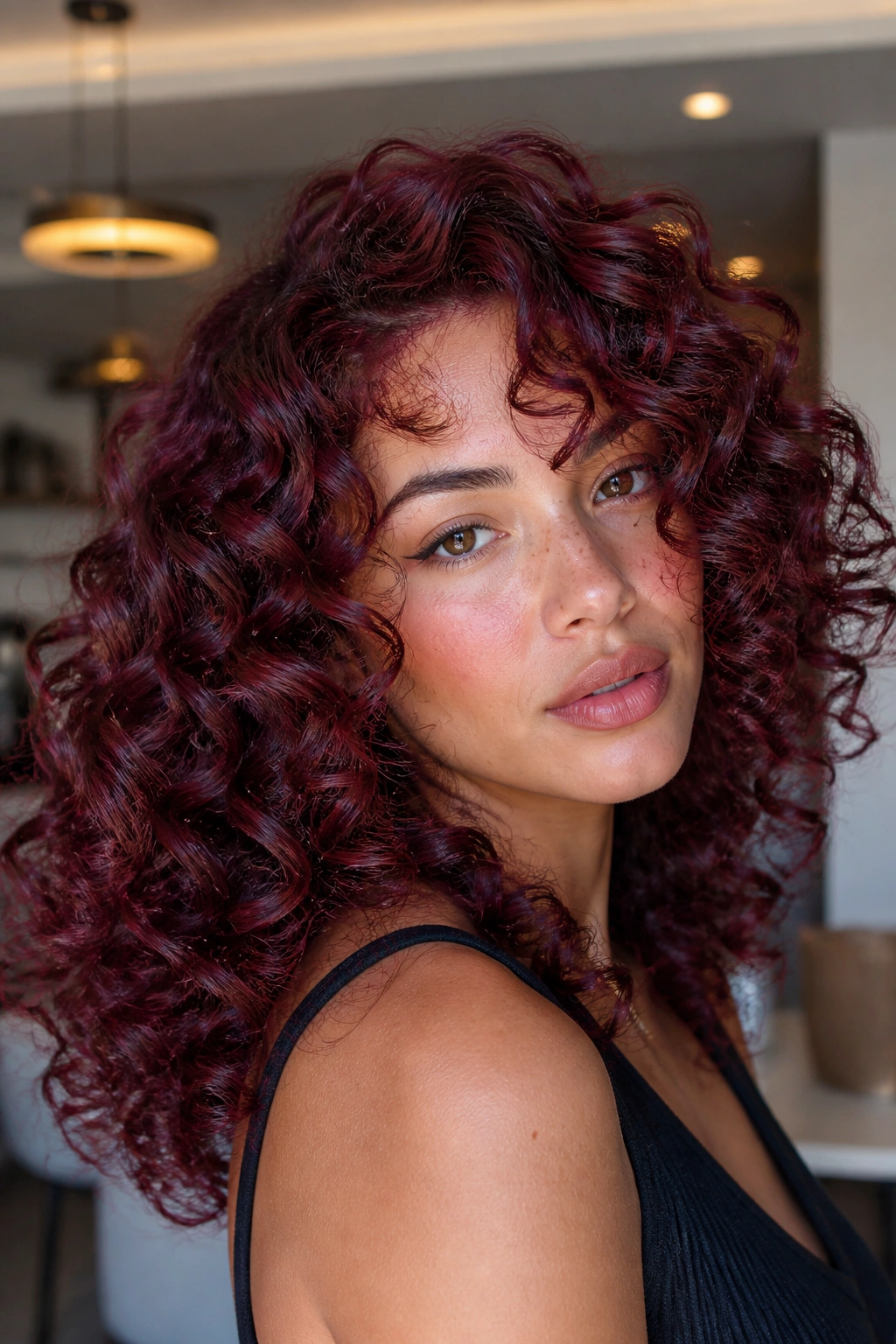
Why does Bordeaux look richer than plain burgundy on curls? Because the curl pattern breaks the color into tiny pieces of light and shadow, so the red-violet tone gets more texture to play with. A satin finish helps that effect land cleanly instead of going glossy in a plastic way.
This shade sits in a nice middle ground. It’s darker than cherry, softer than black cherry, and more refined than a loud red-violet. On cool skin, that means it can brighten the face without making the complexion look flushed. On curls, the movement keeps it from feeling flat.
How to Style It
Use a medium round brush or set the hair in large rollers if you want a smoother curl finish. If you prefer natural texture, diffuse on low heat and stop before the curls get puffy. Too much heat can make Bordeaux look brassy fast, and that is the one thing this shade does not need.
If you like a color that feels dressy but not fussy, Bordeaux is a strong choice. It has presence. It also has manners.
16. Smoked Garnet Layers for Thick Hair
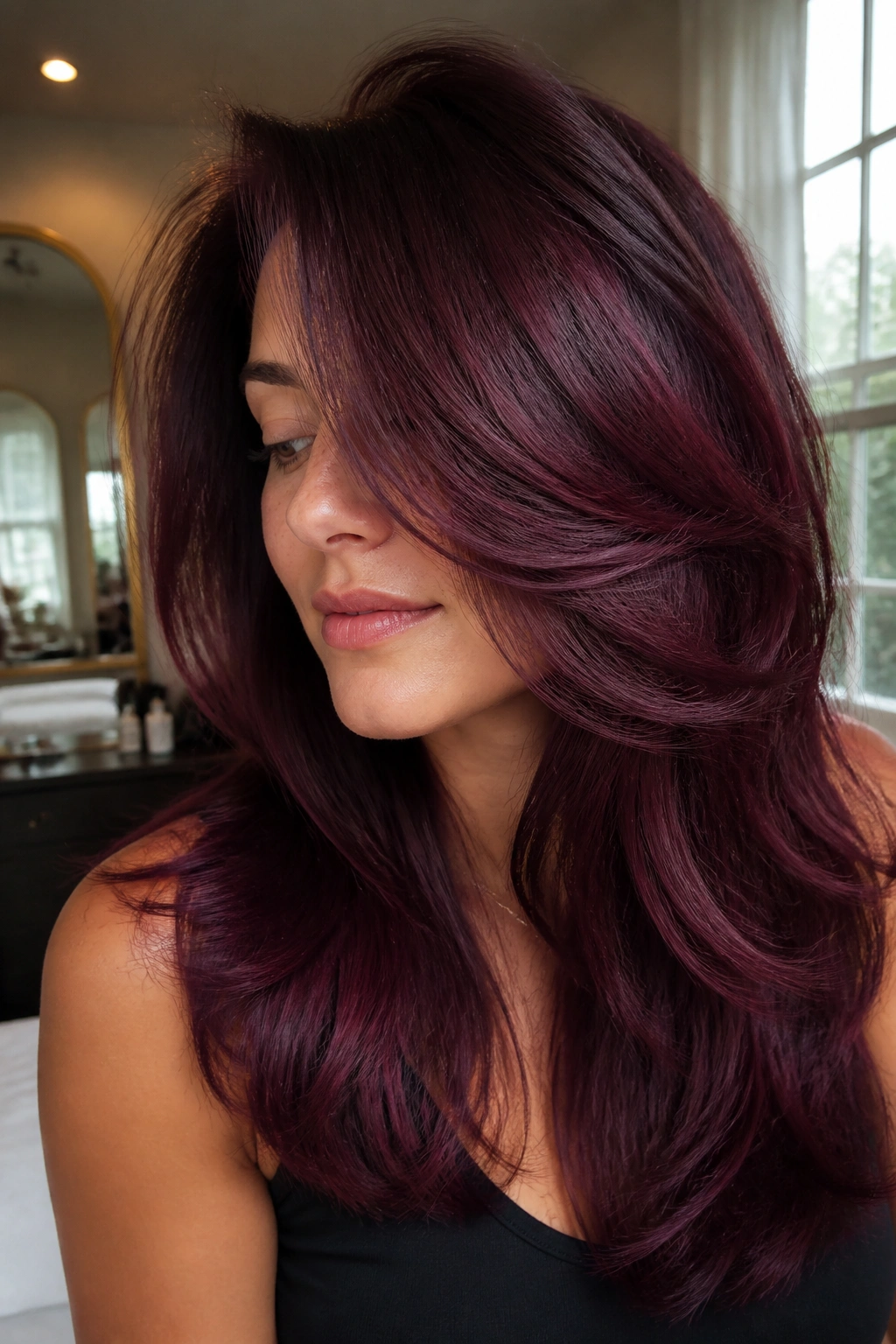
Thick hair can swallow red if the shade is too bright. Smoked garnet fixes that by adding a cooler, deeper base and just enough red-violet to keep the color visible through all that density.
Layers are the reason this shade works. On thick hair, blunt color can look like one heavy block, which makes cool skin look weighed down. Smoked garnet uses soft lowlights and layered movement to break the mass apart. You still get depth, but the hair breathes a little.
A good version of this shade should look darker at the roots and slightly brighter where the ends flip or curl. That keeps the color from turning muddy. It also means you can wear it with a blowout, soft waves, or a rougher air-dried finish and still see dimension.
Key Details
- Ask for garnet with a smoky violet base.
- Keep some deeper lowlights through the underside.
- Layer the cut so the color has places to move.
- Finish with a shine spray, not a heavy oil.
This one is practical, which I appreciate. Pretty color is nice. Color that survives thick hair is better.
17. Blackcurrant Burgundy Shag
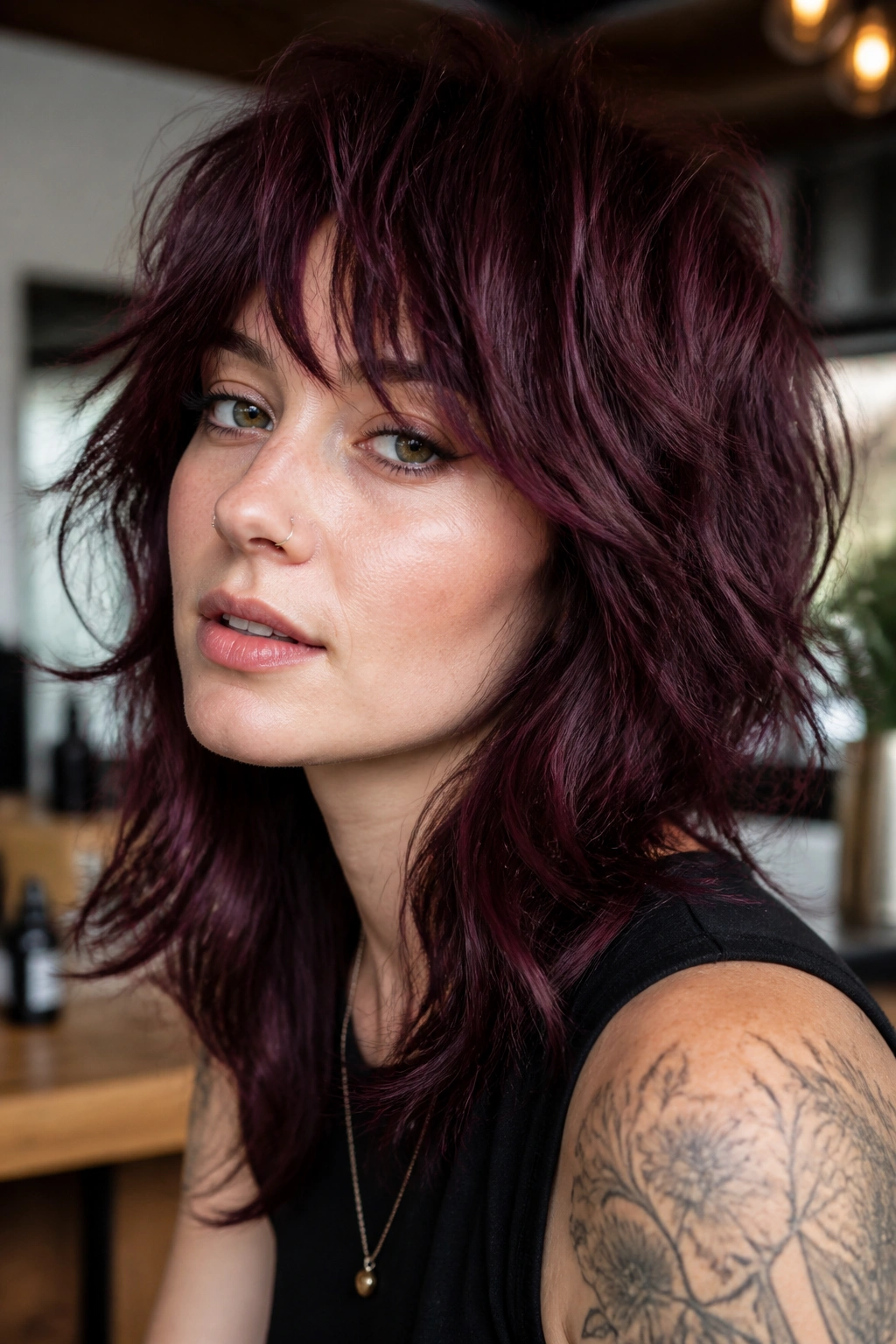
Blackcurrant burgundy on a shag cut has a slightly rebellious feel, but the shade itself is more refined than it sounds. The color sits in that cool berry-violet space that flatters cool skin without shouting red from every angle.
A shag helps because the layers and texture make the color look accidental in the best way. One piece catches blackcurrant. Another falls into shadow. Another flashes burgundy at the ends. That unevenness gives the hair energy, and cool skin often benefits from that kind of broken-up contrast.
I like this best when the cut has movement around the face and enough length to show the layers. Too short, and the shape can get choppy. Too long, and the shag loses its point. Somewhere between collarbone and mid-neck tends to work well. Air-dried texture is fine. A soft bend from a diffuser is even better.
One-sentence answer? This is the cool-girl version of burgundy.
18. Cool Merlot Ombré for Cool Skin Tones
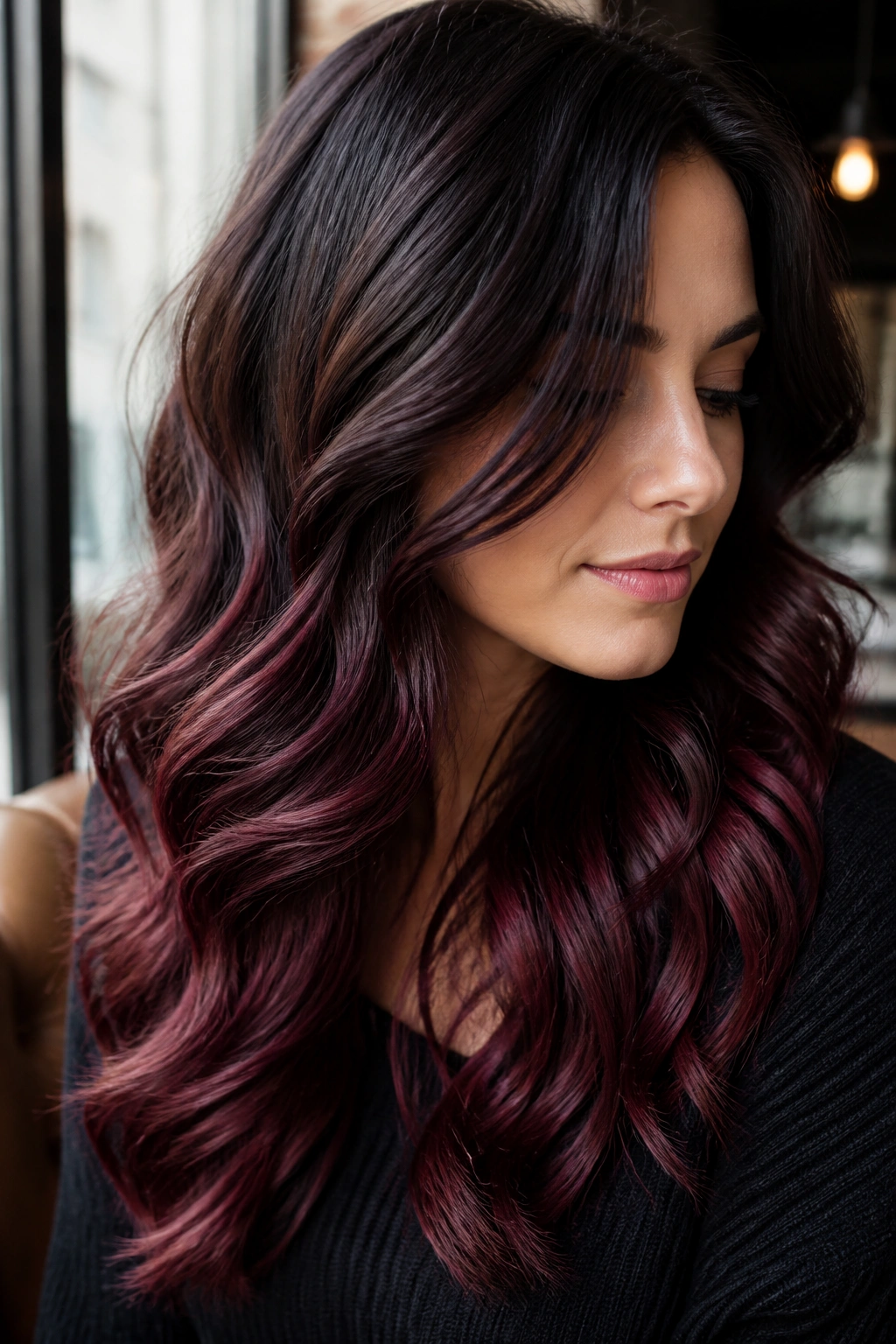
Cool merlot ombré is what I’d call the steady, low-risk way to wear burgundy if you want the red to show up gradually. The darker roots keep the complexion clean, and the merlot ends give you that wine-soaked finish without a hard line.
The ombré shape matters because it lets the red deepen as it moves down the hair. Near the face, the color stays controlled. Toward the ends, the merlot becomes richer and more obvious. That gradual shift is flattering on cool skin because it avoids the warm halo effect you sometimes get with brighter reds placed too close to the hairline.
This is a nice choice if your natural hair is brunette and you do not want to bleach much. The root can stay close to your base color, which makes upkeep easier and keeps the overall look grounded. Add waves, and the transition between dark and merlot becomes more visible. Leave it straight, and it reads sleeker and quieter.
If you want burgundy that looks like it belongs on cool skin from the first appointment onward, this is the shade I’d point to first.
