



Burgundy hair and cool skin tones get along better than most people think, but only when the red leans the right way. The shades that flatter pink, rosy, or blue undertones usually have a wine, berry, plum, or black-cherry edge; the ones that skew coppery can make the face look a little tired, and nobody wants that.
The trick is not “go red.” It’s choose a red with blue-violet depth. That small shift changes everything. Burgundy can read polished, moody, soft, dramatic, or even glossy and expensive-looking, depending on how much brown, purple, or black sits inside the formula.
I’ve always liked burgundy because it behaves differently on different textures. On straight hair, it can look sleek and almost inky. On waves and curls, the same shade picks up dimension and movement that a flat red never will. The catch is that burgundy is unforgiving when it’s too warm or too dull, so the best ideas are the ones that keep the tone cool without making the color look harsh.
If you have cool skin, think in terms of blueberry, claret, blackberry, mulled wine, and plum. That’s the lane. The shades below start with the easiest, most wearable versions and move toward bolder choices that still stay flattering.
1. Blue-Red Wine Burgundy for Cool Skin Tones
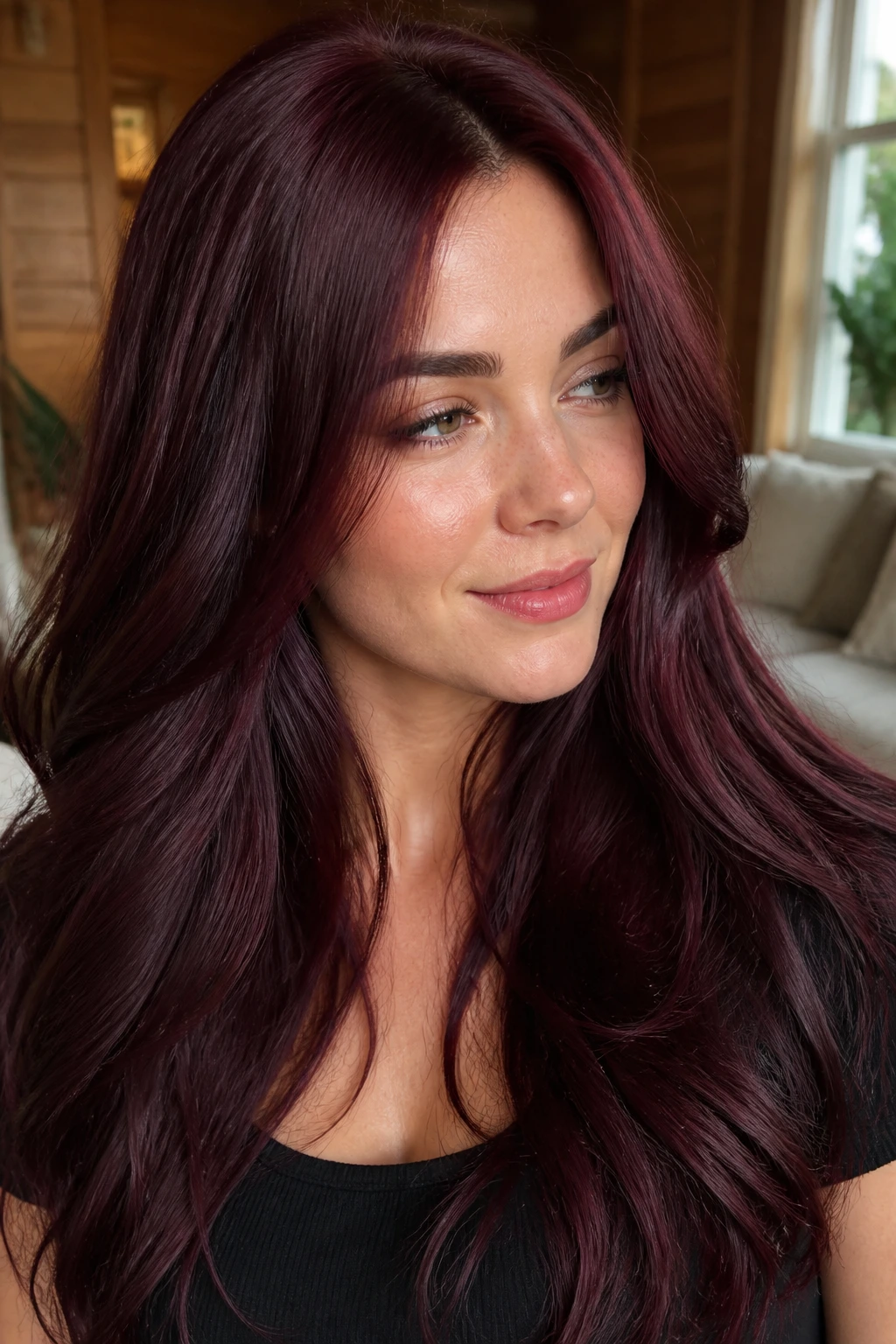
Blue-red wine burgundy is the shade I’d hand to someone who wants burgundy hair color ideas for cool skin tones without stepping into anything too loud. It has that deep glass-of-red-wine look, but the pigment stays on the cooler side, so it doesn’t pull orange in sunlight.
Why It Works
The blue note in the formula keeps the red looking crisp against fair or light-medium cool skin. That matters more than people realize. A shade like this gives the cheeks a little life without fighting pink undertones.
Ask for a level 4 or 5 base with blue-violet red deposit if you’re working with a colorist. On darker hair, the result can stay rich and dimensional; on lighter hair, it reads a little brighter and more wine-like.
- Best on straight, wavy, or softly layered cuts
- Looks cleaner with a soft gloss every 4 to 6 weeks
- Works especially well if your natural hair is brown or dark blonde
My blunt take: if you want one safe burgundy, start here.
2. Black Cherry Burgundy with Espresso Roots
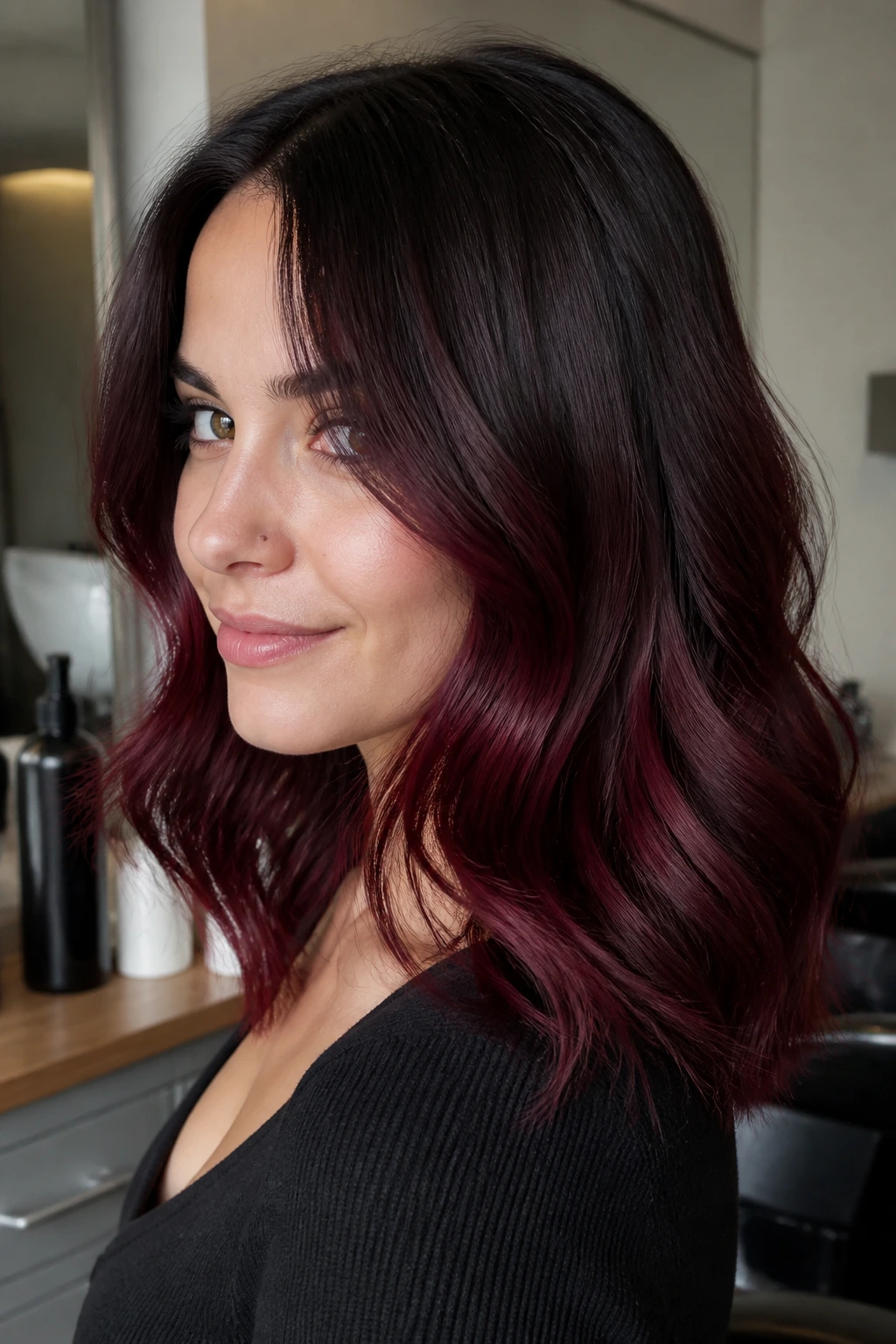
Black cherry with espresso roots is for the person who likes contrast but doesn’t want the color to look cartoonish. The roots stay deep and close to brown-black, while the mid-lengths and ends carry that faint cherry glow that shows up when the light hits at an angle.
What I like here is the control. You get brightness without sacrificing edge. Cool skin tones tend to look cleaner beside this shade because the cherry tone is still red, but the darkness around it keeps everything grounded.
This also grows out well. If your natural base is already dark, the transition can feel low-maintenance for 8 to 12 weeks, depending on how fast your hair grows and how much contrast you want. It’s a good choice if you want color that looks intentional even when your roots start to show.
3. Plum Burgundy on a Blunt Bob
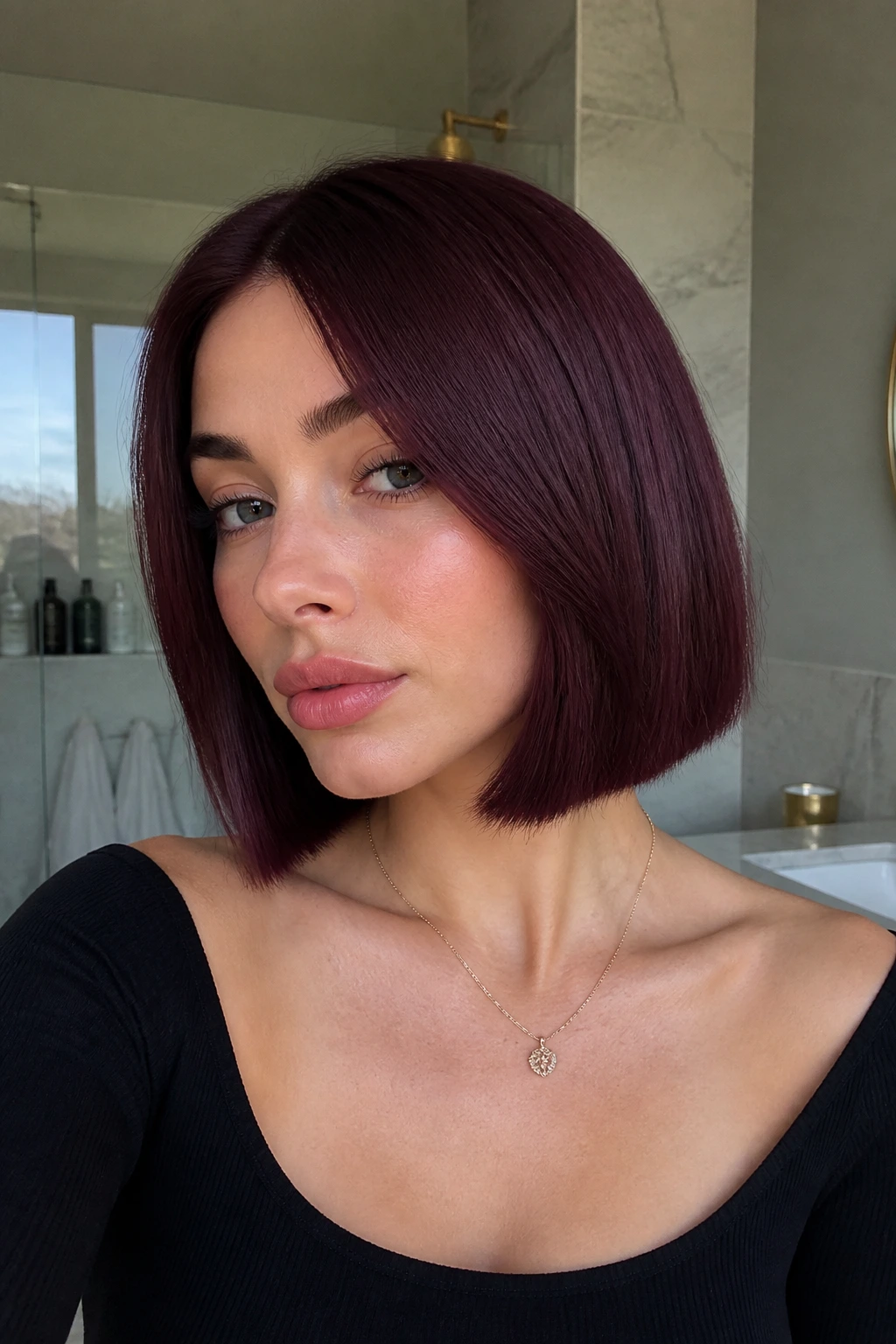
Why does a bob make burgundy look sharper? Because short hair shows off saturation better than long hair does. A blunt cut gives plum burgundy a neat edge, and that clean line makes cool undertones in the skin look calmer and more even.
How to Wear It
Keep the shade closer to plum than red. If it drifts too warm, the whole thing can lose that cool, editorial feel. On a bob, I’d also ask for a glossy finish rather than a matte one. Shine makes the color look deeper and richer, especially around the jawline.
A blunt bob with plum burgundy is the kind of cut-and-color combo that looks done without trying too hard. It’s neat. It’s controlled. It has a little attitude, which is exactly why it works so well on cool skin.
4. Merlot Curls with Soft Dimension
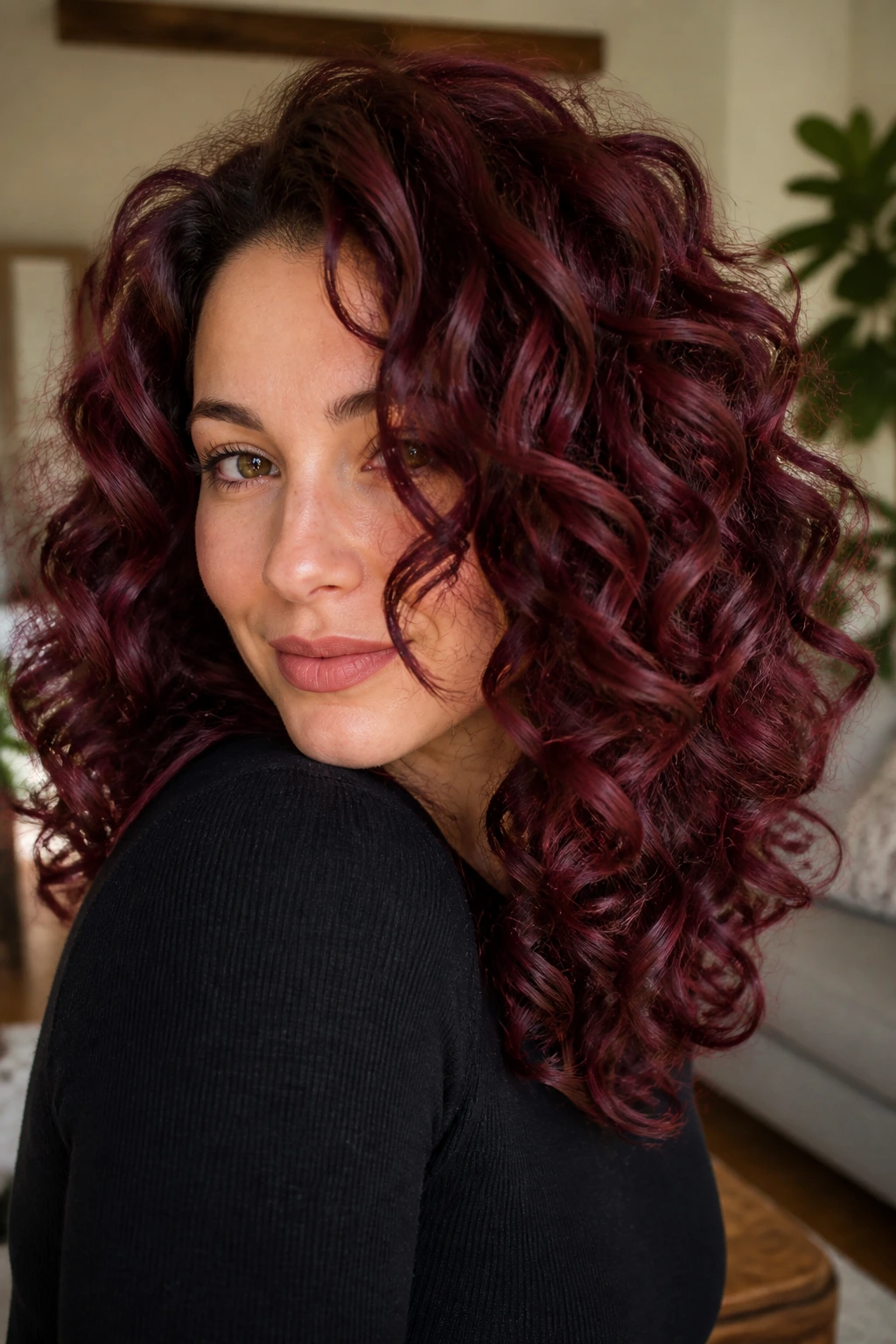
A curl pattern changes everything. Merlot curls catch color on the bends, so even one shade can look like three if the placement is done well. The deeper burgundy sits in the shadows, while the merlot notes flash on the curved outer layer.
That movement is a gift if your skin leans cool. The color doesn’t need to shout. It just needs enough lift to keep the face from looking flat, and merlot usually does that nicely.
- Ask for a softer root melt if your curls are dense
- Keep the red violet side stronger than the copper side
- Use a curl cream that doesn’t coat the hair too heavily
The best part is that curls make burgundy feel alive. Straight hair can be sleek and formal; curls make it warmer in mood, even when the pigment stays cool.
5. Smoky Burgundy Balayage
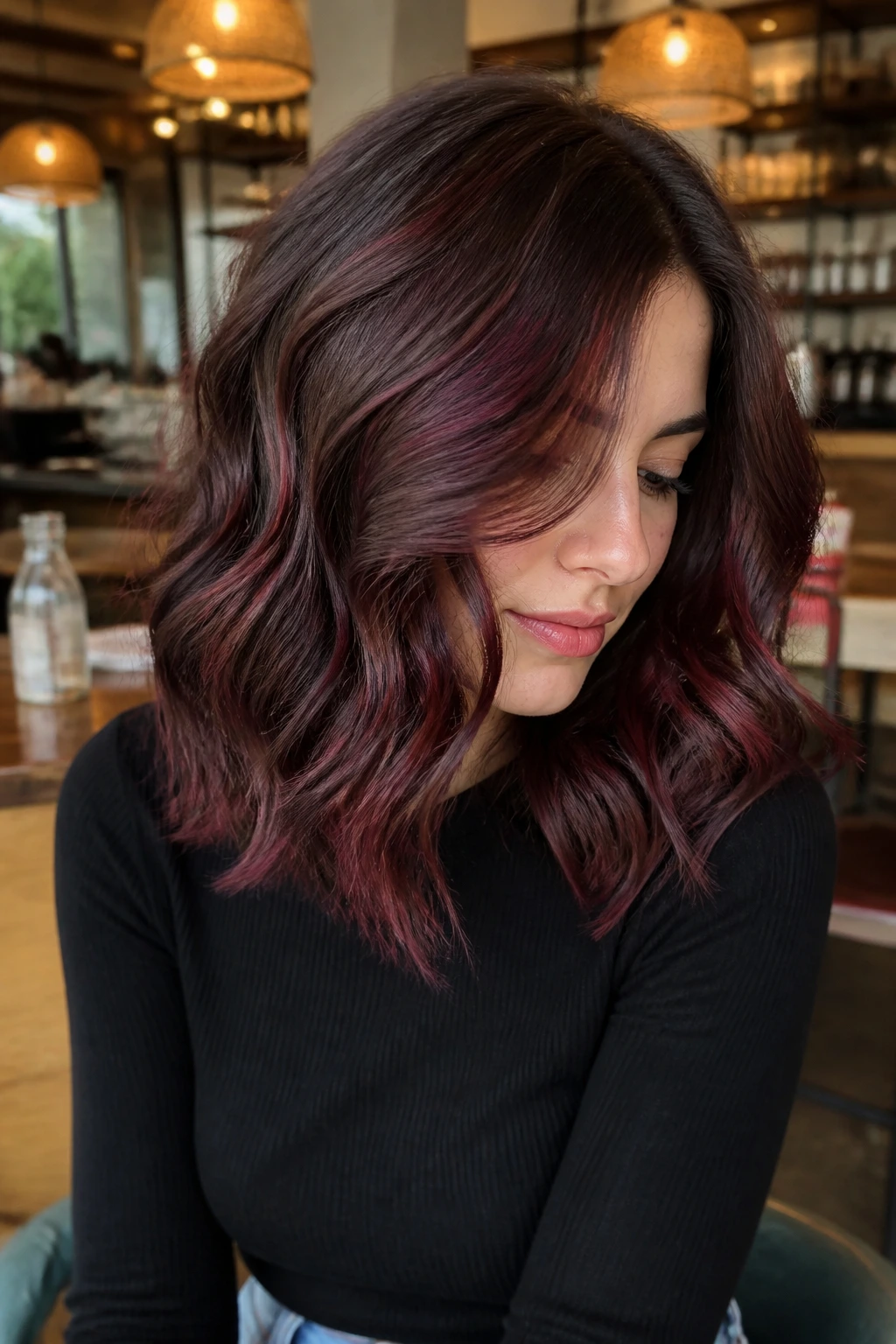
Smoky burgundy balayage is one of those shades that looks expensive because it avoids the obvious red-striping effect. The burgundy is painted in ribbons, not blocks, and the smoke comes from a brown or ash base that mutes the brightness just enough.
That muted quality flatters cool skin because it keeps the hair from competing with the face. Instead of a loud red halo, you get soft movement through the mids and ends. It feels more like color that grew there naturally, which is the whole point.
I’d choose this for shoulder-length cuts, loose waves, and anyone who wants burgundy but doesn’t want to commit to a full head of vivid color. It also buys you some grace during grow-out, which matters more than people admit.
6. Cabernet Shadow Root
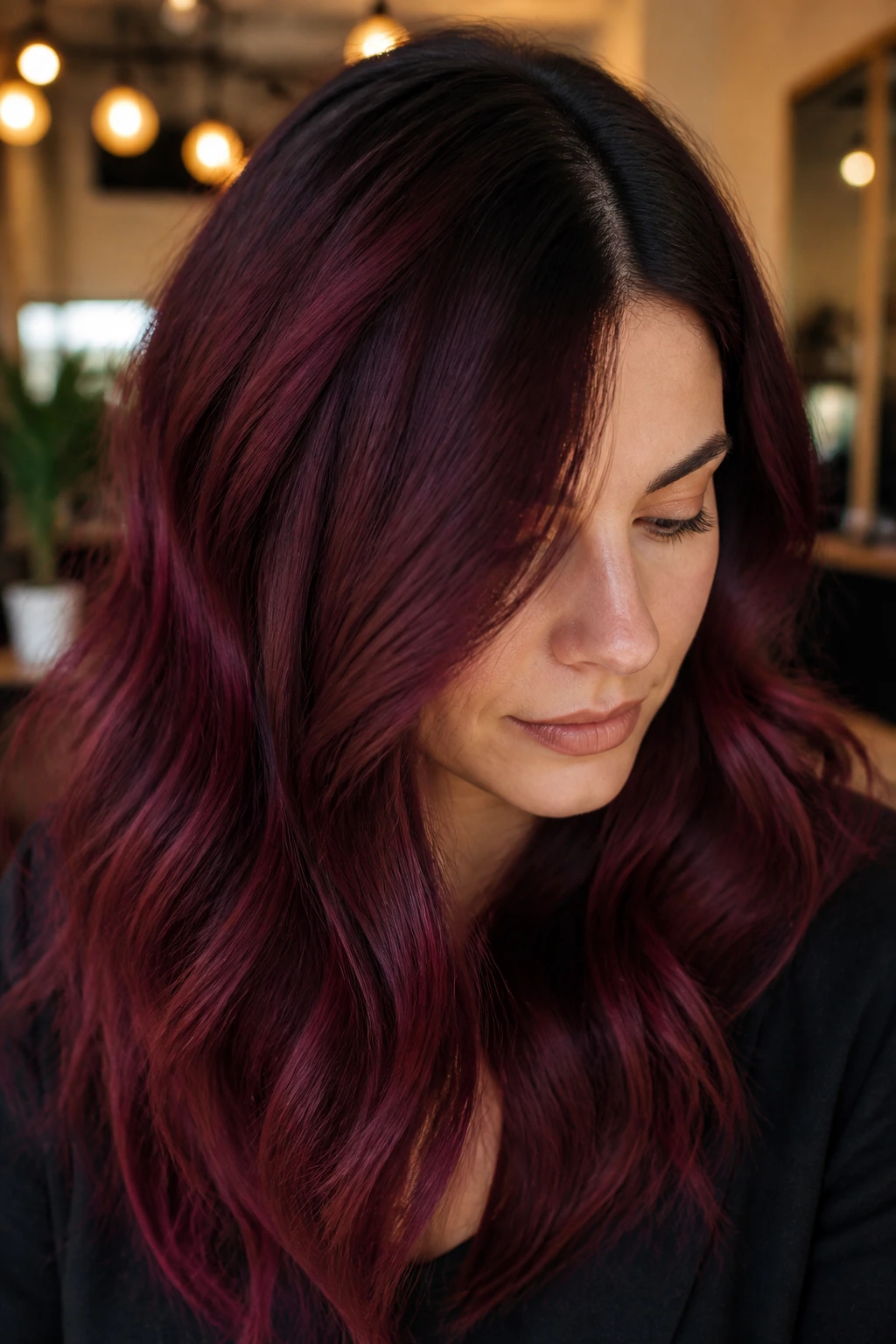
Cabernet shadow root is the smart version of a rich burgundy. The roots stay deeper, almost brown-black, and the cabernet shade sits through the rest of the hair with a wine-stained finish. Compared with all-over burgundy, it’s easier on the eyes and easier on the upkeep.
This is a strong pick if your cool skin reads pale in winter light or if you dislike heavy contrast around the scalp. The shadow root softens the line at the top, so the color looks blended instead of painted on.
A lot of people overdo red at the root. Don’t. The darker base gives cabernet its depth, and that depth is what keeps it flattering. If your natural color is level 5 or darker, this can be one of the most practical burgundy ideas on the list.
7. Blackberry Brown with a Violet Gloss
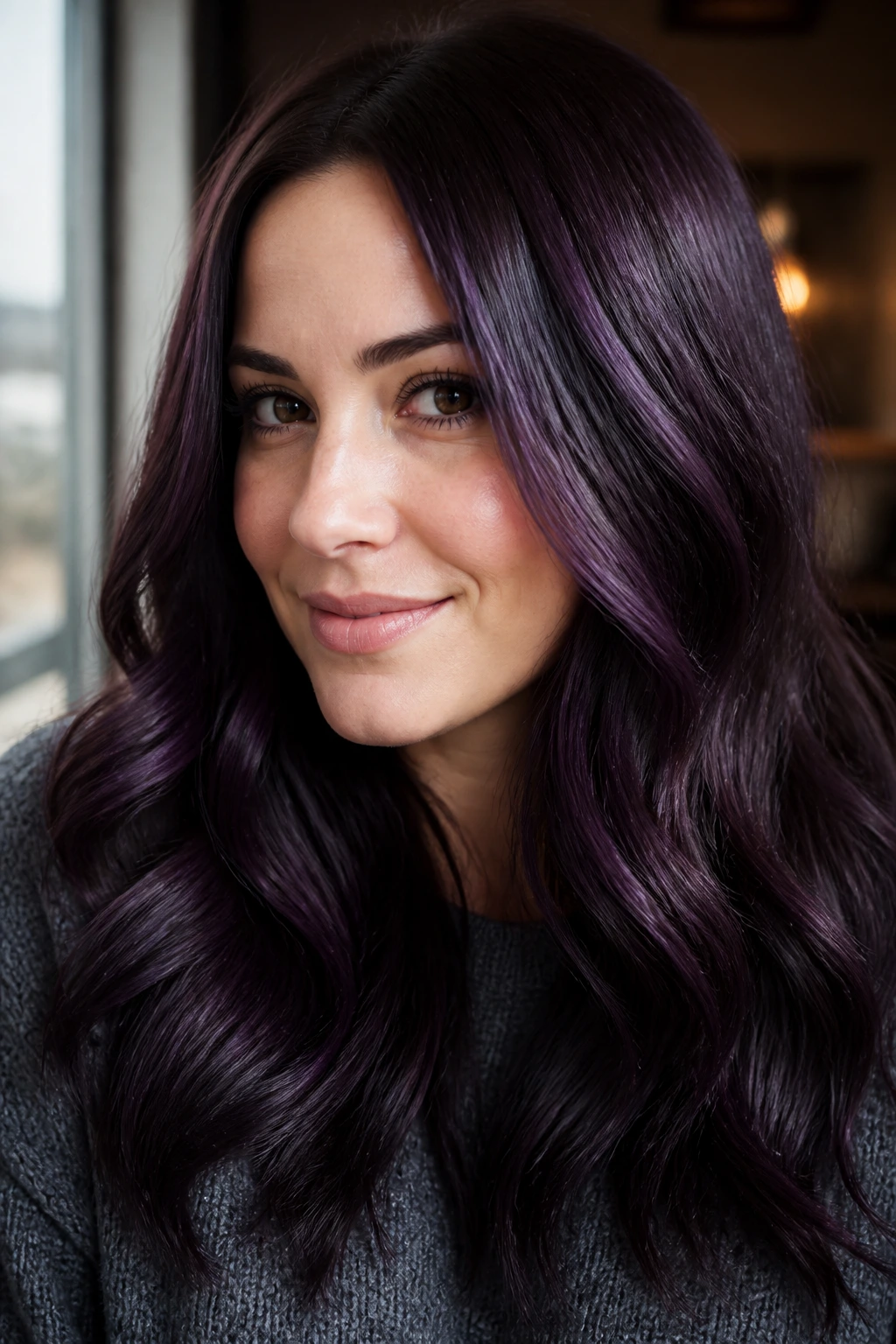
Blackberry brown sits in a nice middle zone. It’s not fully red, not fully brunette, and that’s the appeal. The violet gloss adds a cool cast that keeps the color from turning flat or muddy.
What Makes It Different
Unlike a bold cherry red, blackberry brown works quietly. You notice the tone shift more than the color itself, especially indoors. Outside, the purple-red pieces show up with a soft sheen, which is enough to keep cool skin from looking washed out.
This one is easy to live with if you’re cautious. It grows out in a forgiving way, and the brown base means you don’t need a dramatic color correction every time your roots appear. If you want burgundy energy without full commitment, this is a sensible place to land.
8. Raspberry Money Pieces for Cool Skin Tones
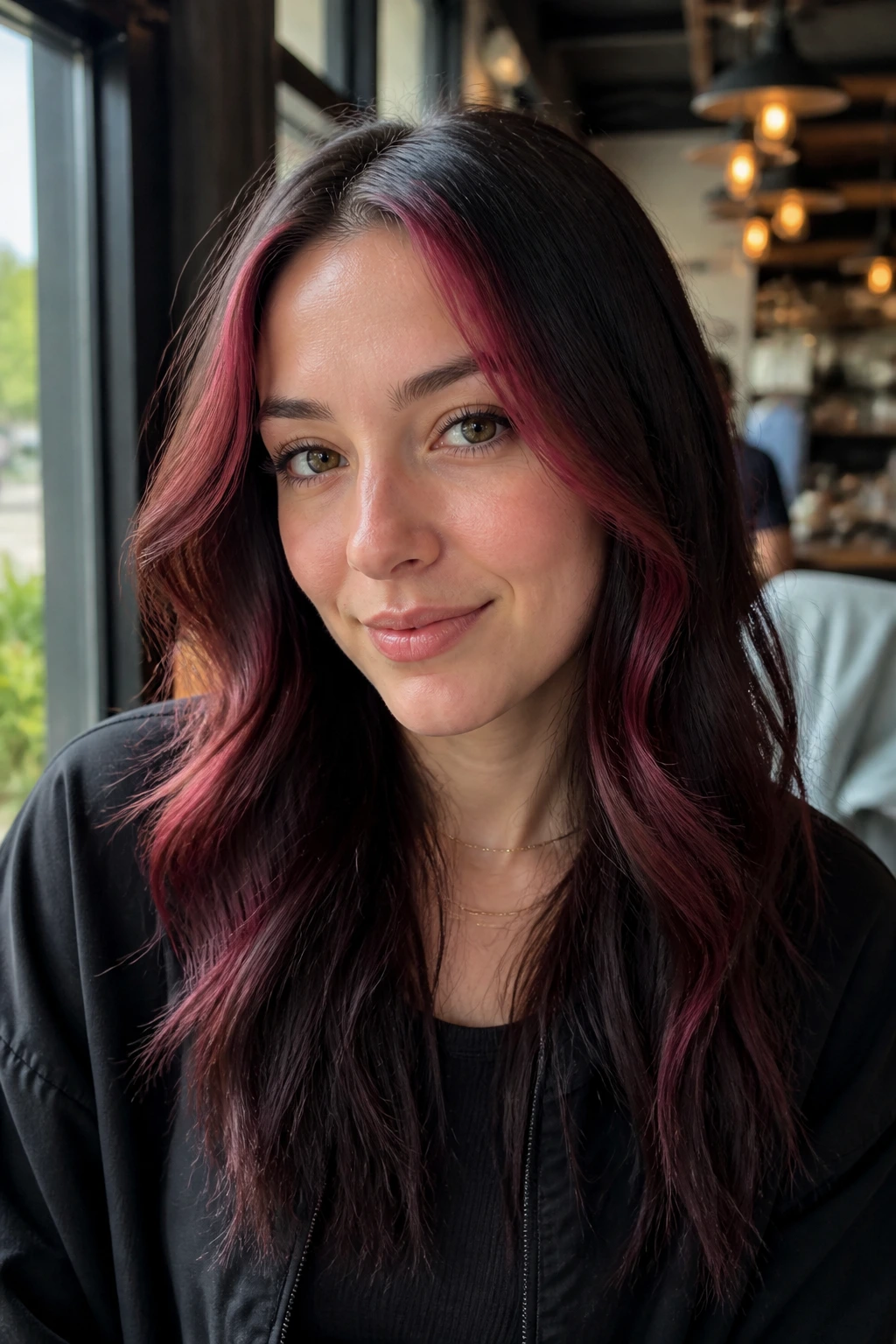
Raspberry money pieces are for the person who wants brightness near the face without dyeing the whole head. The front sections get a cool pink-red accent, and the rest of the hair stays darker, so the effect is focused rather than all over.
Do they work on cool skin? Yes, because raspberry has enough blue in it to keep the tone fresh. A warm strawberry highlight can fight the complexion. Raspberry usually does the opposite. It wakes the face up.
How to Ask for It
- Keep the money pieces no wider than 1 to 1.5 inches on each side
- Ask for a cool red-violet or raspberry tone, not a copper red
- Pair it with a brown or burgundy base for contrast
The result is playful, but not childish. That balance matters. You get the bright frame, and the rest of the color stays grounded.
9. Deep Aubergine Burgundy
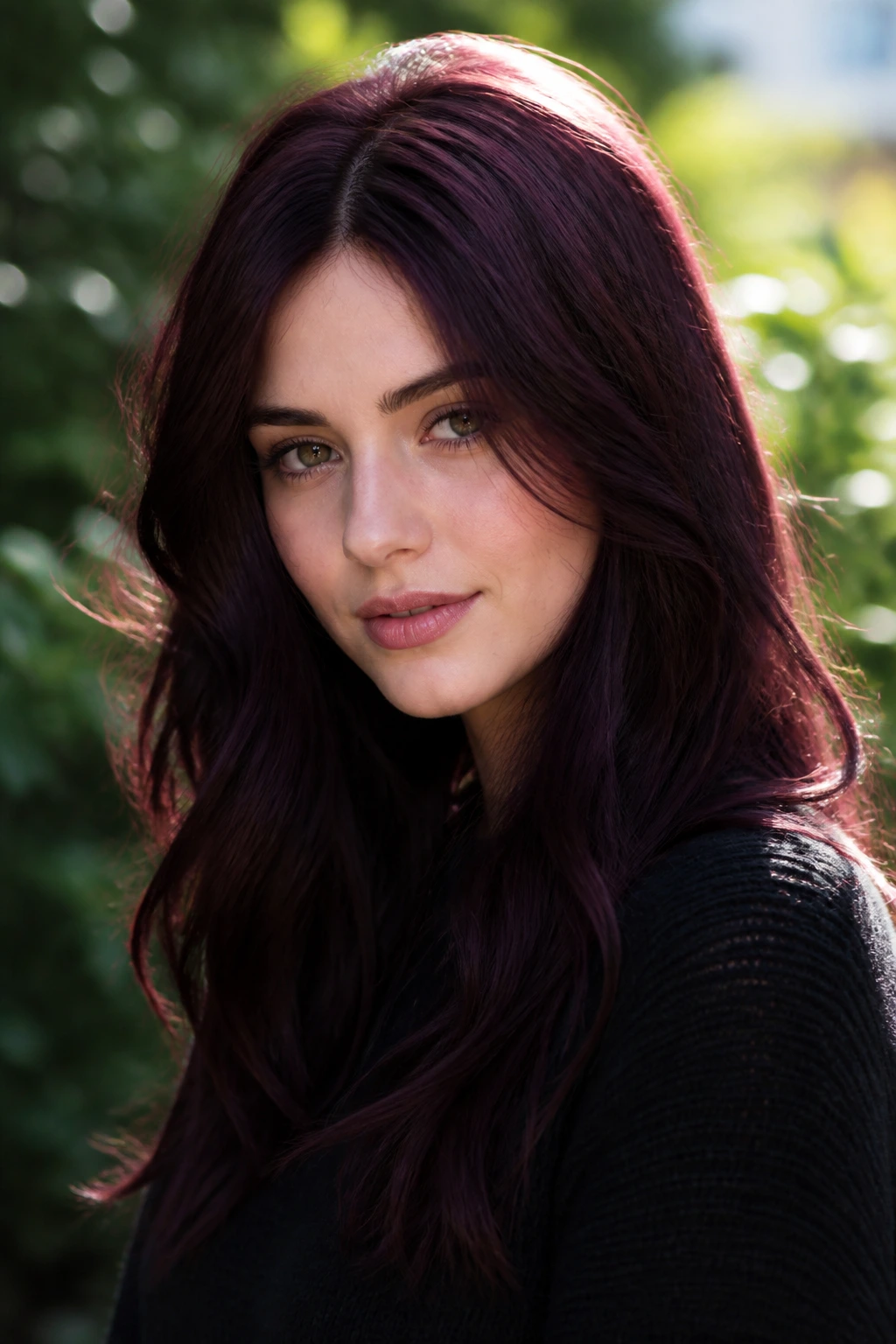
Deep aubergine burgundy leans into purple more than red, which is exactly why it flatters cool skin so well. It feels richer than plain plum and darker than berry. In daylight, it can look almost like crushed grape skin.
There’s a slightly moody edge to this shade, and I mean that as a compliment. On long hair, the color can look velvet-like. On shorter cuts, it reads sharper and more fashion-forward. Either way, it stays in the cool family without looking icy.
If your skin has a pink flush or you wear silver jewelry better than gold, this is one of the easiest dark burgundies to wear. It doesn’t fight your undertone. It leans with it.
10. Cherry Cola Burgundy on Dark Hair
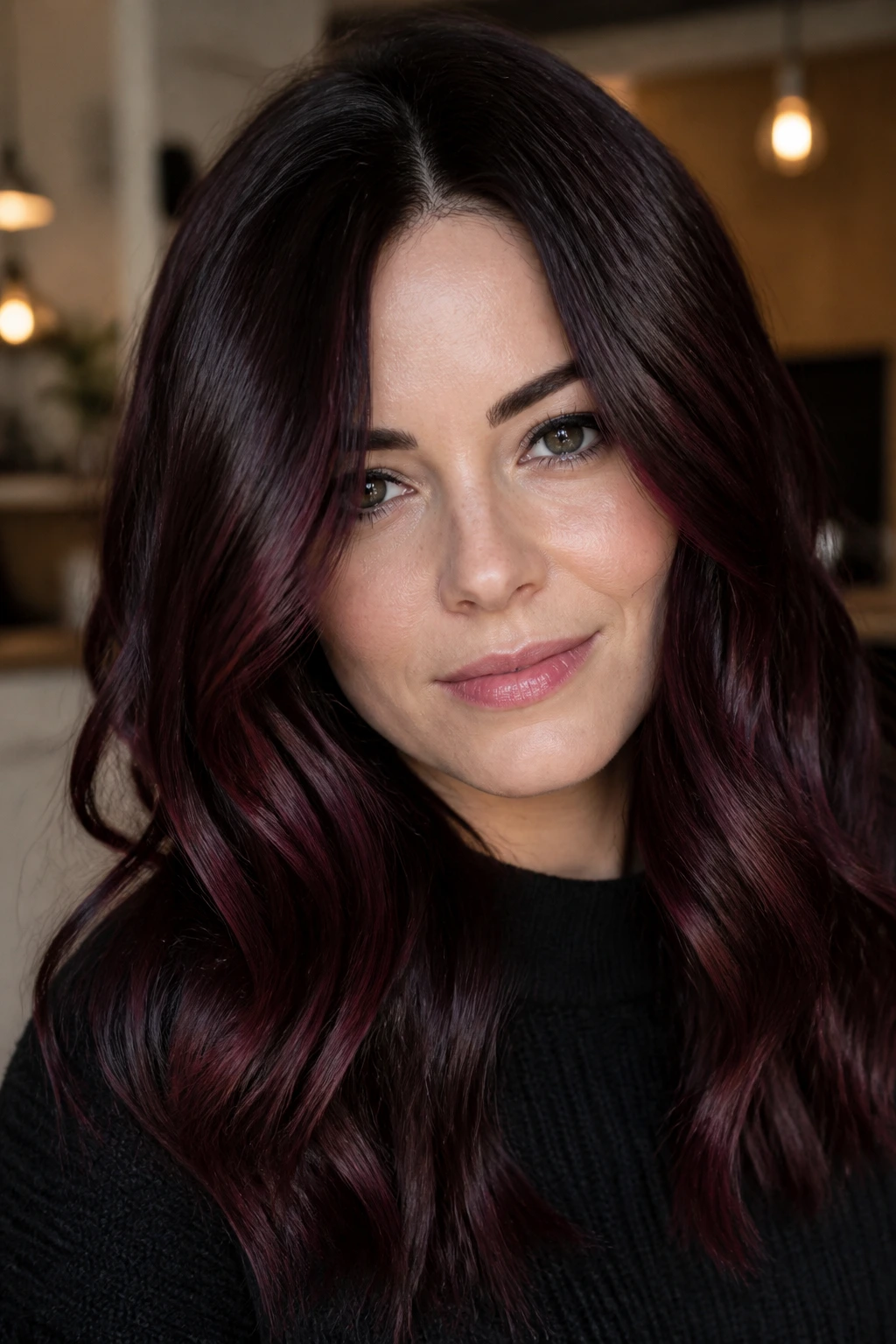
Cherry cola works because it steals a little from brunette and a little from red. The brown base keeps it grounded, while the cherry note shows up in movement, not in a flat block of color.
This is one of the better choices if you want burgundy without a dramatic salon shock. The color can be built over dark hair in a way that still looks believable. That matters if you live in ponytails, buns, or loose waves and want the hair to look polished from every angle.
For cool skin tones, the trick is to keep the cherry side blue-based. If it starts leaning orange, the whole shade loses its edge. Ask for something closer to cola with black cherry than classic red soda.
11. Burgundy Face Frame for Cool Skin Tones
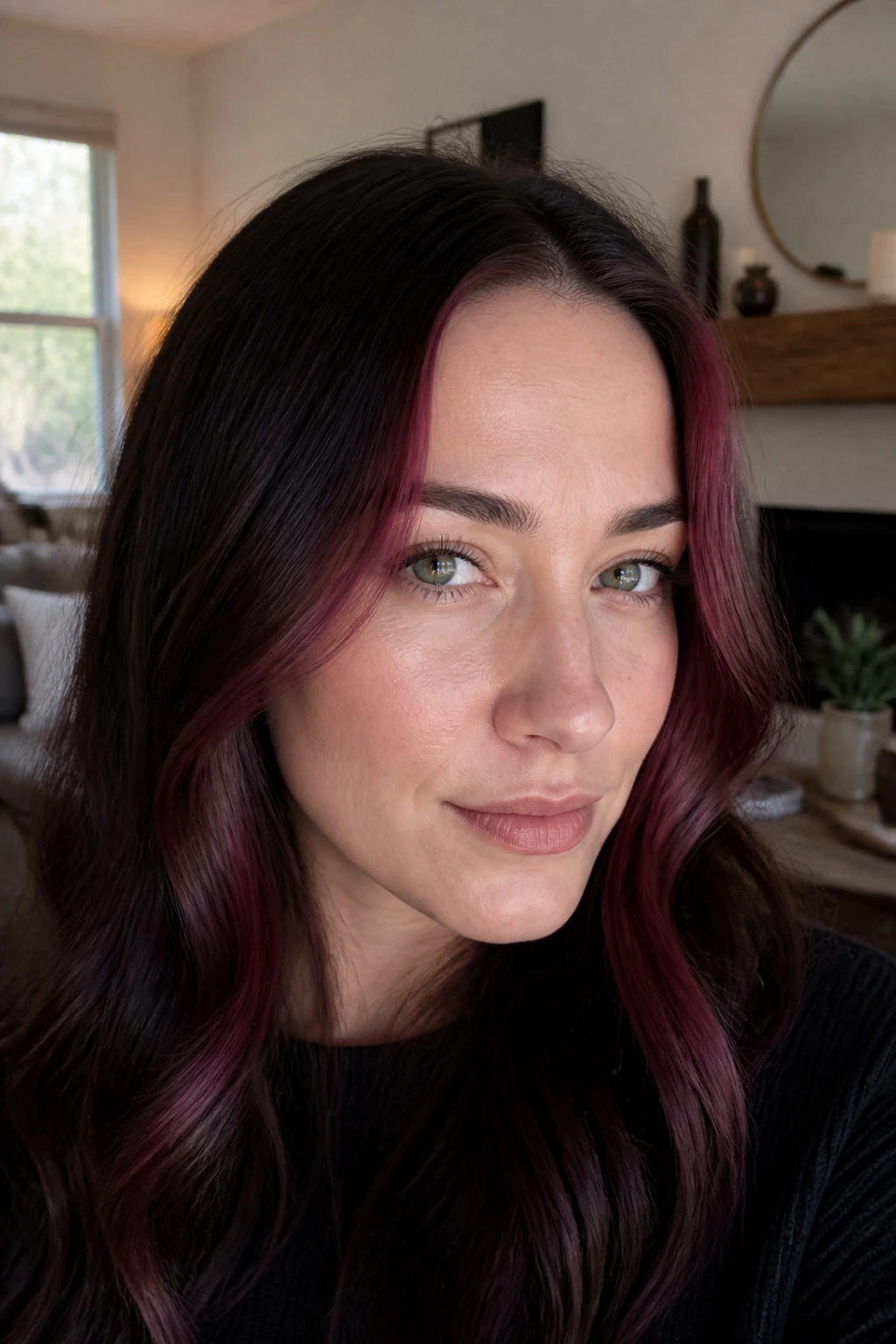
A face frame is the easiest way to test burgundy without handing over the whole head to the color wheel. You keep most of the hair dark, then place cooler burgundy pieces around the front hairline and temples, where the shade can actually do some work for the face.
This is especially useful if your skin is fair and easily overpowered. The color doesn’t blanket the whole look. It just gives you that lifted, framed effect right where you need it.
You can also change the width depending on how bold you feel. Thin face-framing ribbons feel softer. Chunkier ones give more contrast. Either way, this is one of the most forgiving burgundy options on the list.
12. Rosewood Burgundy on a Lob
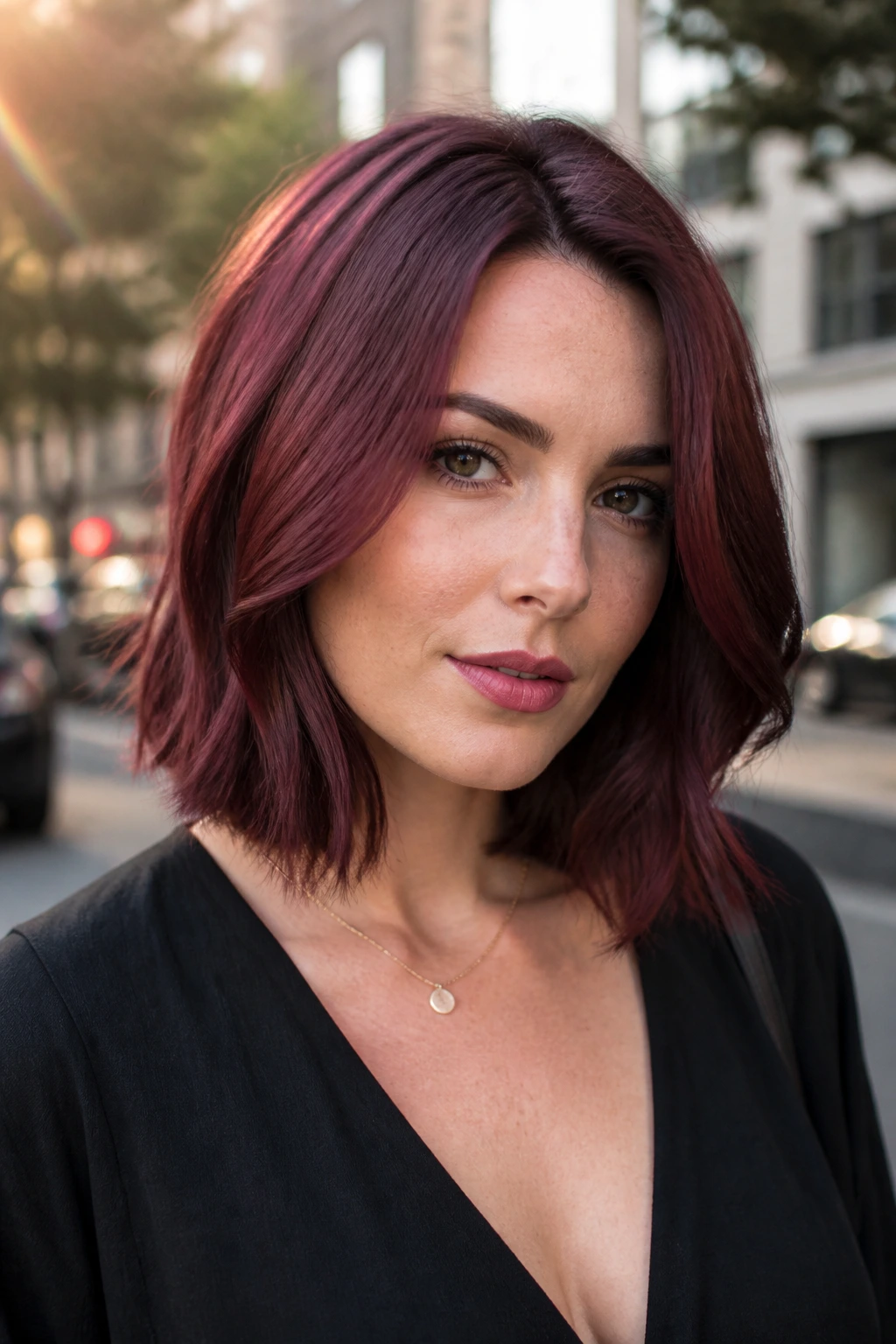
Rosewood burgundy has a softer, slightly muted finish that sits between red wine and dusty plum. On a lob, that shade looks clean and modern because the cut gives the color enough space to show off, but not so much length that it starts feeling heavy.
What I like here is the balance. The rosewood note keeps the burgundy from turning severe, and that helps cool skin look less flat. It’s a nice choice if you want a shade that can move from casual to dressed up without changing anything else.
Best For
- Medium cool skin tones
- Fine to medium hair that needs visible color
- People who want dimension without bright highlights
A lob also makes maintenance easier. You trim away faded ends more often, so the color tends to stay fresher-looking than it would on waist-length hair.
13. Cranberry Peekaboo Panels
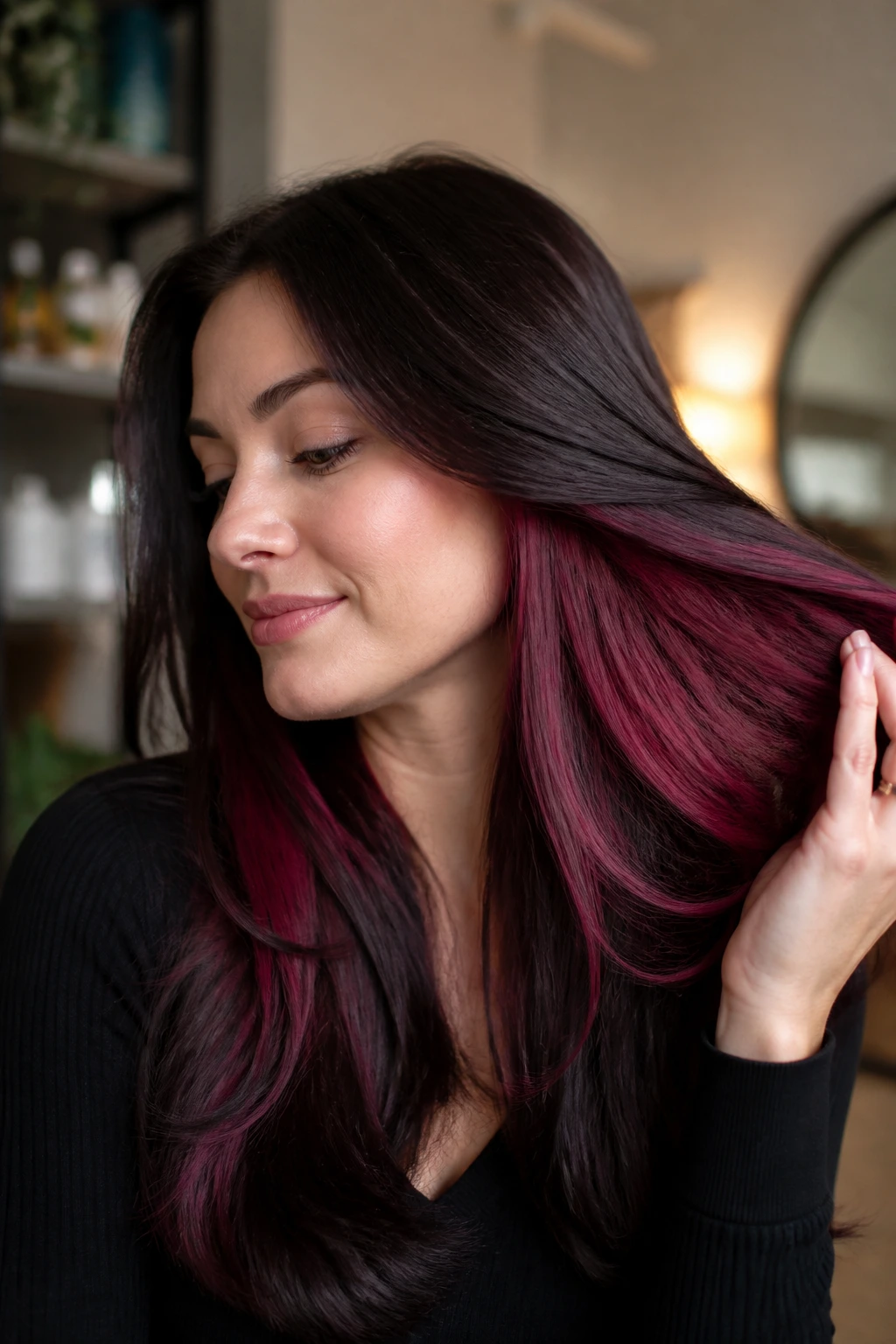
Cranberry peekaboo panels are a fun choice when you want color that flashes only when the hair moves. The panels sit underneath the top layer, so you catch the cranberry tone in waves, braids, or a tucked-behind-the-ear style.
That hidden placement is useful if you work in a setting where a full red head might feel like too much. You still get the cool red-violet payoff, but it appears in controlled bursts. On cool skin, that controlled brightness can actually look more flattering than all-over color.
If you like wearing your hair half-up, even better. The panels show off when the top section lifts, and that little reveal never gets old. It’s playful, but not chaotic.
14. Velvet Burgundy Gloss
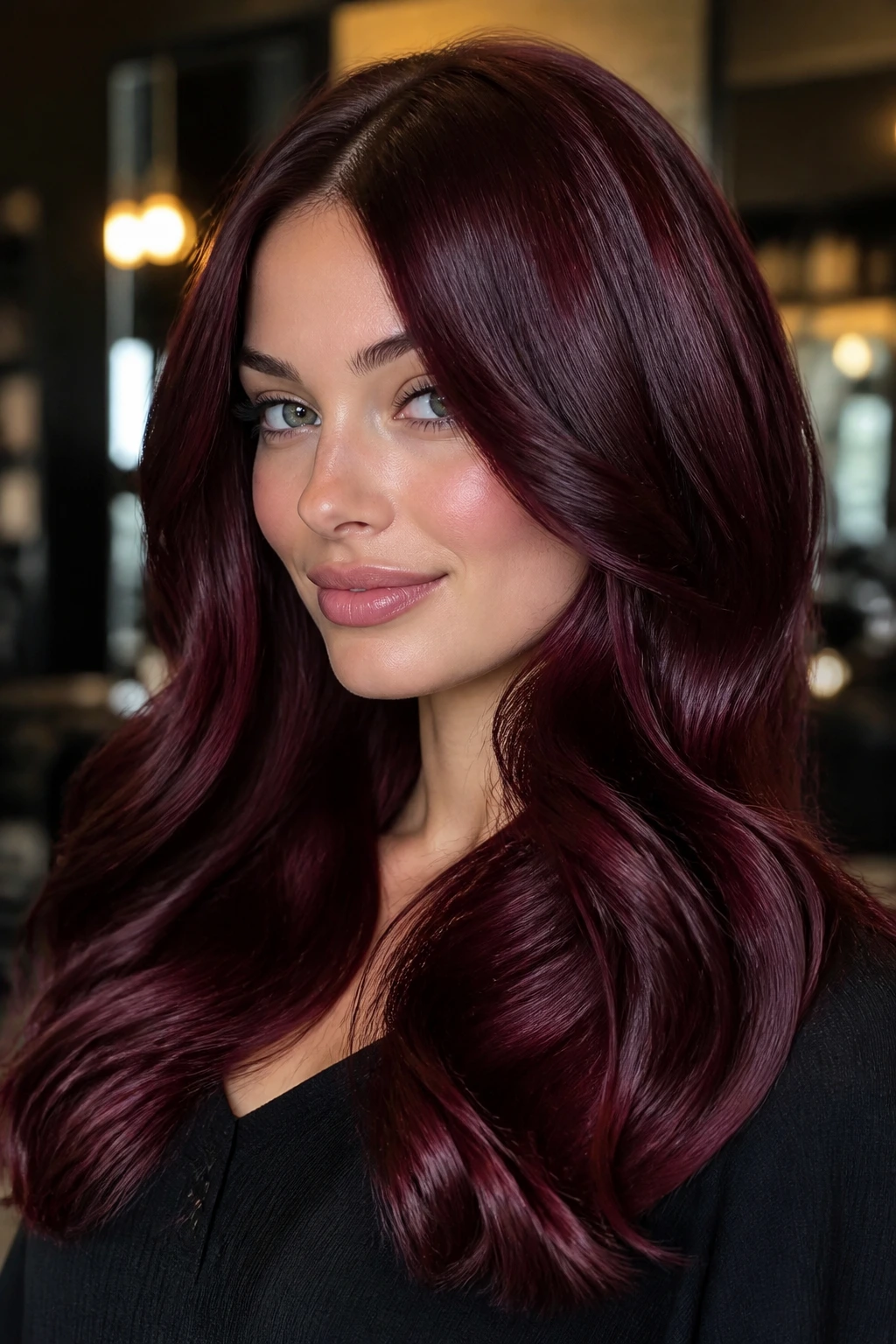
Velvet burgundy gloss is not the loudest version of burgundy, and that’s exactly why it works. It’s smooth, deep, and saturated, with enough shine to make the color look plush rather than flat.
The gloss finish matters here. Without it, dark burgundy can sink into the hair and lose the richness that makes it flattering. With a gloss, the color reflects light in a way that keeps cool skin looking clean and awake.
This is a good move if your hair is already dark brown or black and you want a tone refresh instead of a dramatic shift. You’re not changing the whole personality of the hair. You’re sharpening it.
15. Mulled Wine Waves
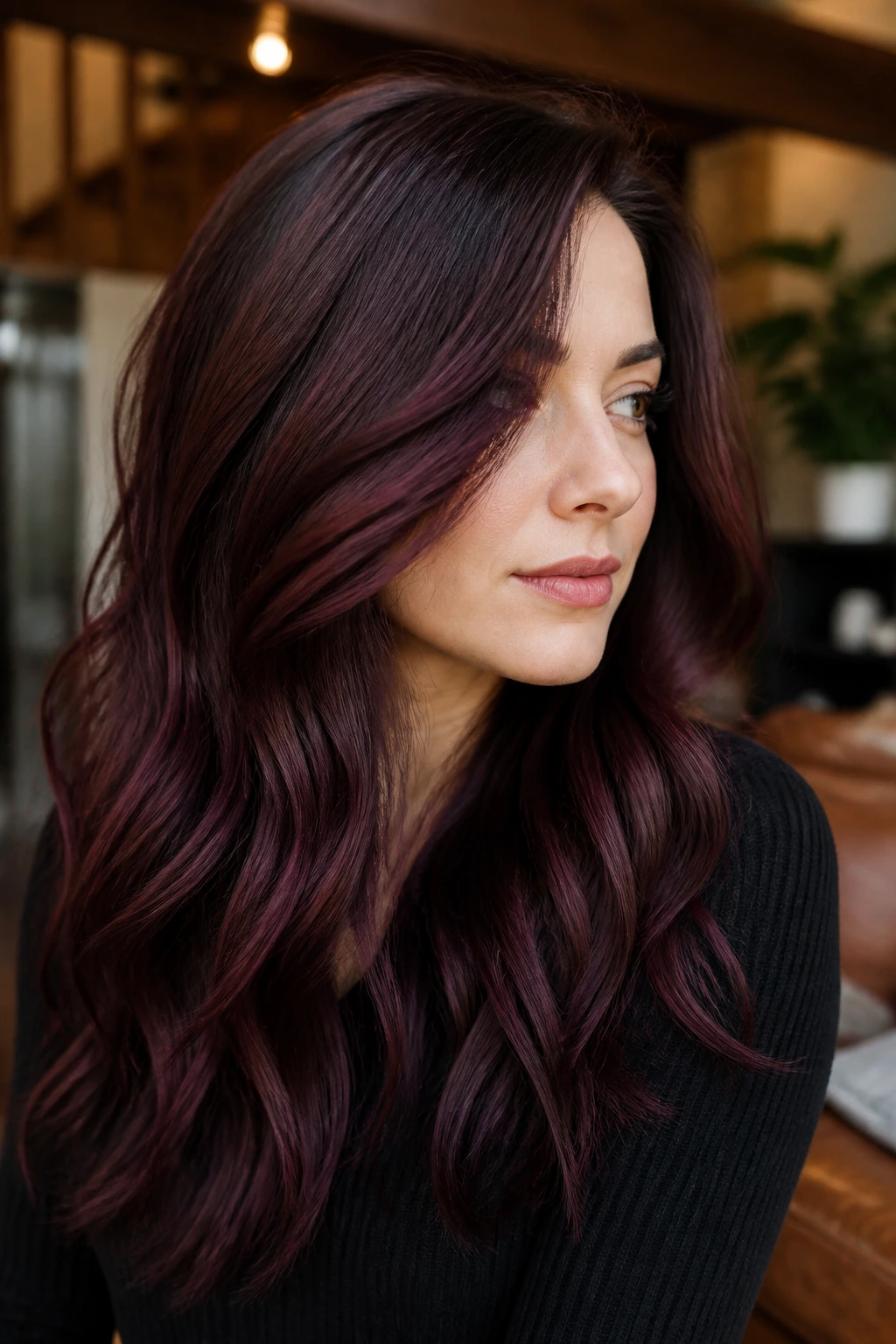
Mulled wine waves feel softer than a straight-up burgundy dye job. The waves spread the red-violet pigment across the hair in uneven ways, so the shade looks richer and less uniform. That unevenness is a good thing.
When cool skin meets this kind of depth, the face tends to look less harsh around the edges. The color has warmth in the sense of richness, not in the sense of orange pigment. Those are not the same thing, and people mix them up all the time.
A side part helps here. So does a cut with long layers, because the movement gives the shade places to sit. The result is cozy without going brown and dramatic without going neon.
16. Berry Noir with Straight Layers
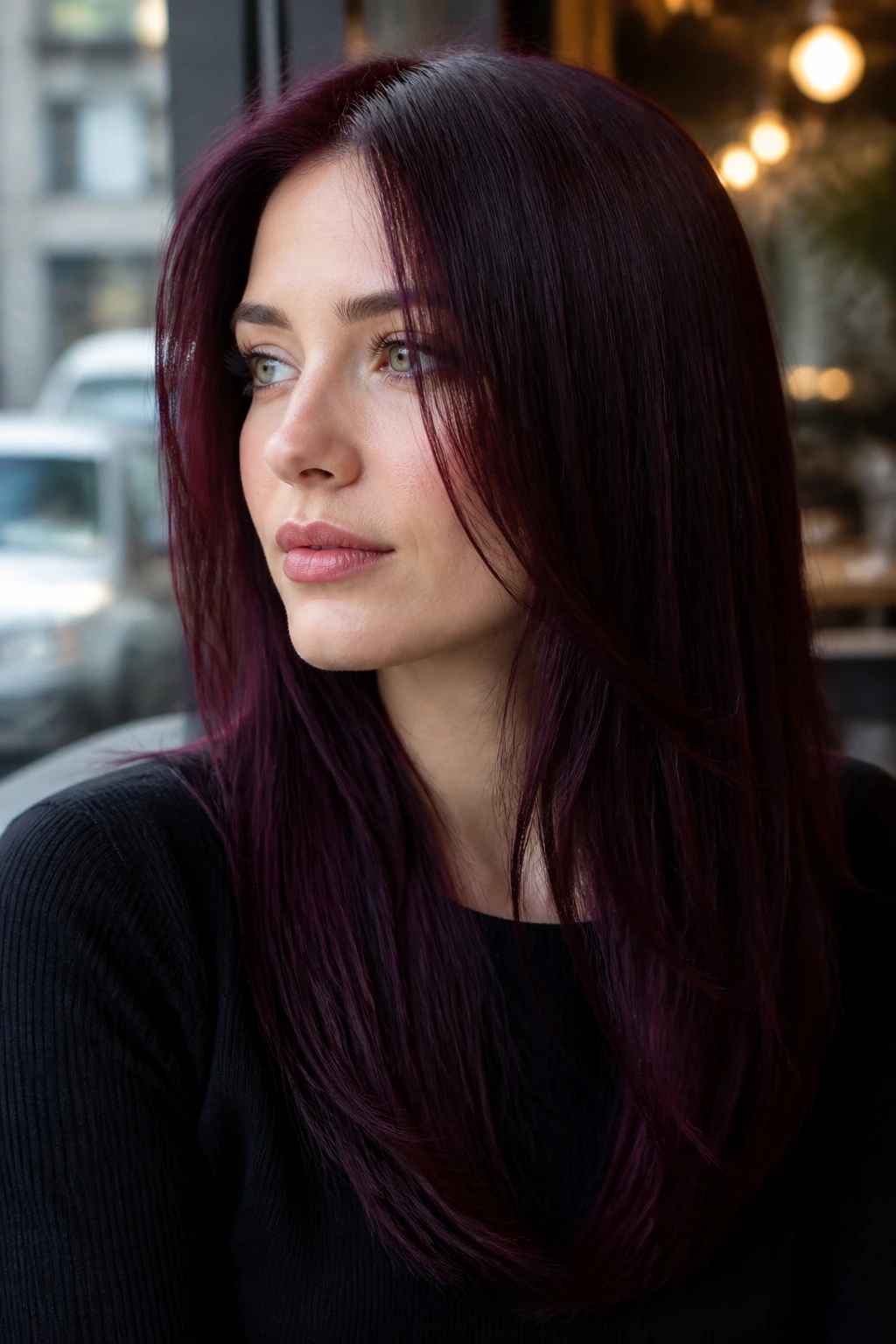
Berry noir is for straight hair that needs something stronger than subtle brown but quieter than fire-engine red. The straight layers let the color look sleek, which is useful because berry noir can go flat if the cut has no shape.
Unlike lighter burgundies, this one doesn’t rely on highlights to feel dimensional. It reads through tone alone. That’s handy if your hair is fine and gets frizzy when it’s colored too often.
Cool skin tones usually do well here because the berry pigment softens the face without adding yellow warmth. If your style leans minimalist, this might be the best fit on the whole list.
17. Burgundy Ombré with Ash Ends
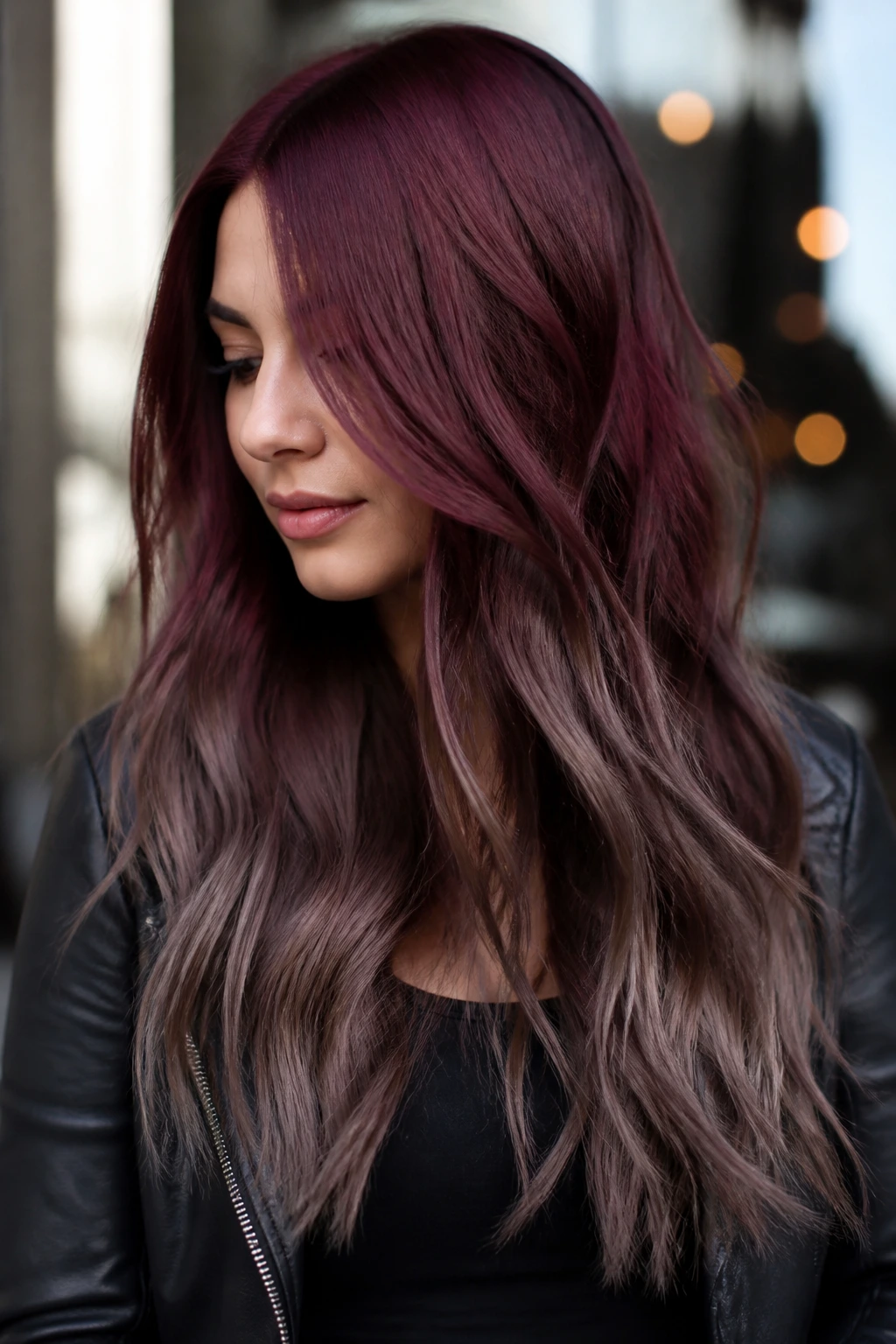
Why do ash ends matter? Because they keep burgundy ombré from turning too warm as it fades. The darker root area holds the deeper red, while the lower half melts into a cooler brown-gray cast that feels deliberate instead of washed out.
This works especially well if you like long hair and don’t want one flat tone from top to bottom. The gradient makes the color easier to wear, and the ash at the bottom gives the whole style a little edge.
It’s also practical. Faded burgundy can get clingy and brassy if no one plans the end color properly. Ash ends solve part of that problem before it starts.
18. Violet Burgundy Pixie
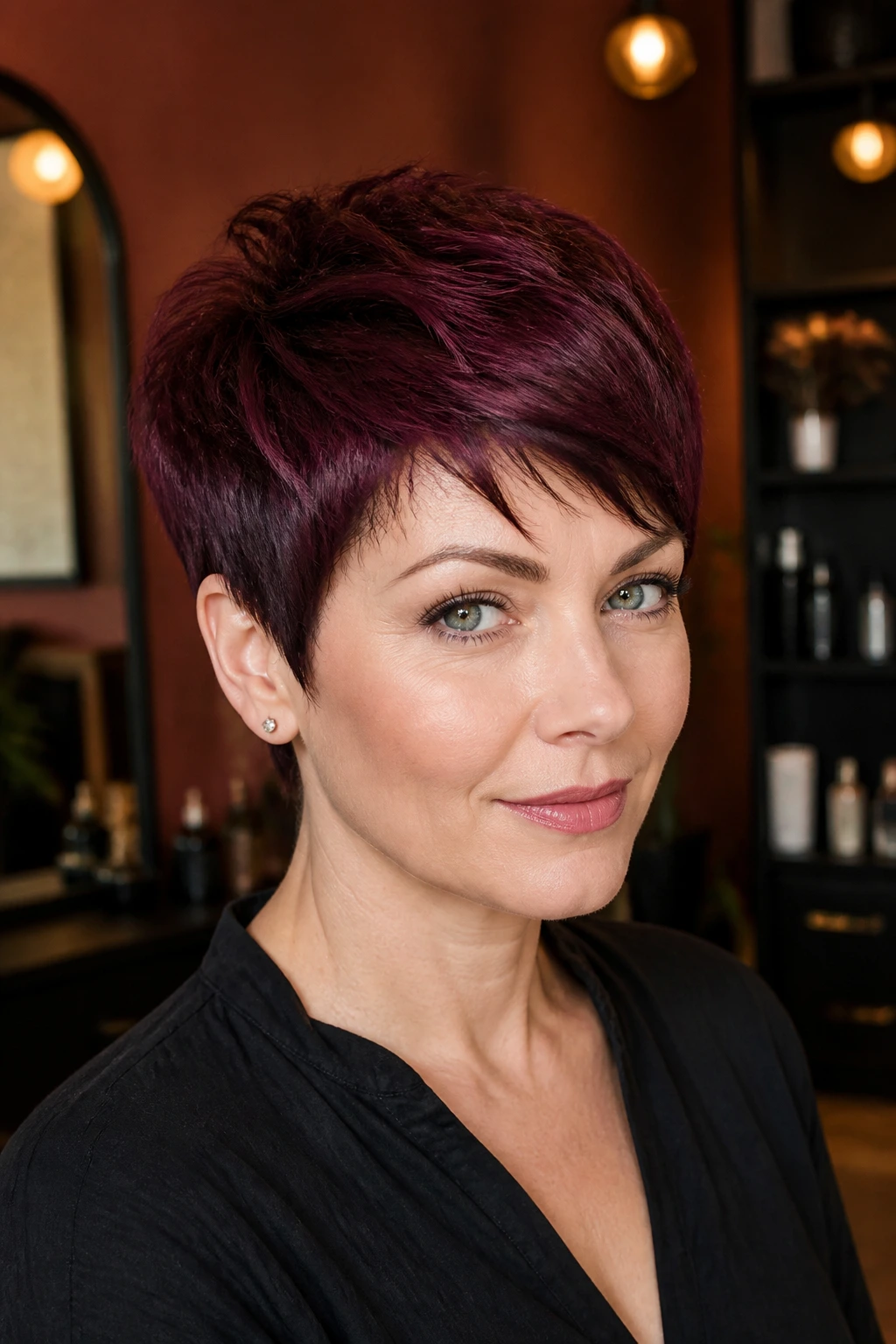
A pixie cut gives violet burgundy nowhere to hide, which is why it looks so clean. Every bit of pigment shows up. Every shine point matters. That can be intimidating, but it also makes the color feel crisp and confident.
How to Wear It
Keep the tone closer to violet than red if your skin runs very cool. A heavy red base can make the cut feel too loud. A violet burgundy pixie, on the other hand, usually reads sharp and tailored.
You can style it with a matte paste for edge or a light cream for shine. I prefer a light shine product here because burgundy on short hair can look a little dry if it’s overworked. Short hair does not need much. That’s the nice part.
19. Cool Burgundy Shag with Curtain Bangs
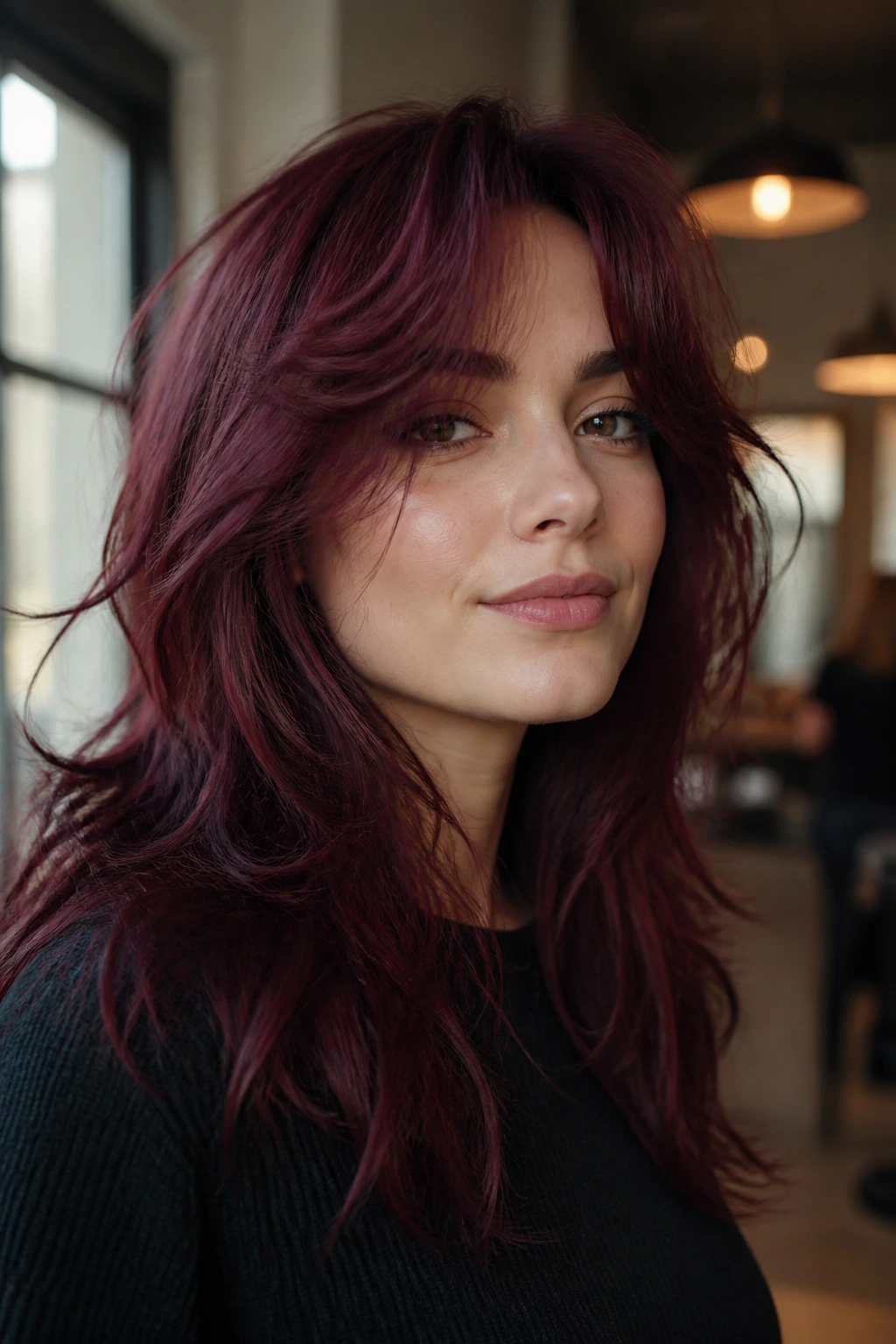
A shag and burgundy get along for the same reason: both like movement. Curtain bangs break up the face, and the layered cut gives the color little shifts of depth that stop it from looking one-note.
This is one of those styles that can feel casual or cool depending on the finish. Air-dried waves make it softer. A round-brush blowout makes it cleaner. Either way, the burgundy reads more modern when there’s texture in the cut.
For cool skin tones, I’d keep the burgundy slightly smoky rather than bright. Too much red in a shag can feel busy. A cooler, deeper tone makes the cut look intentional instead of flashy.
20. Cabernet Balayage on Dark Brown Hair
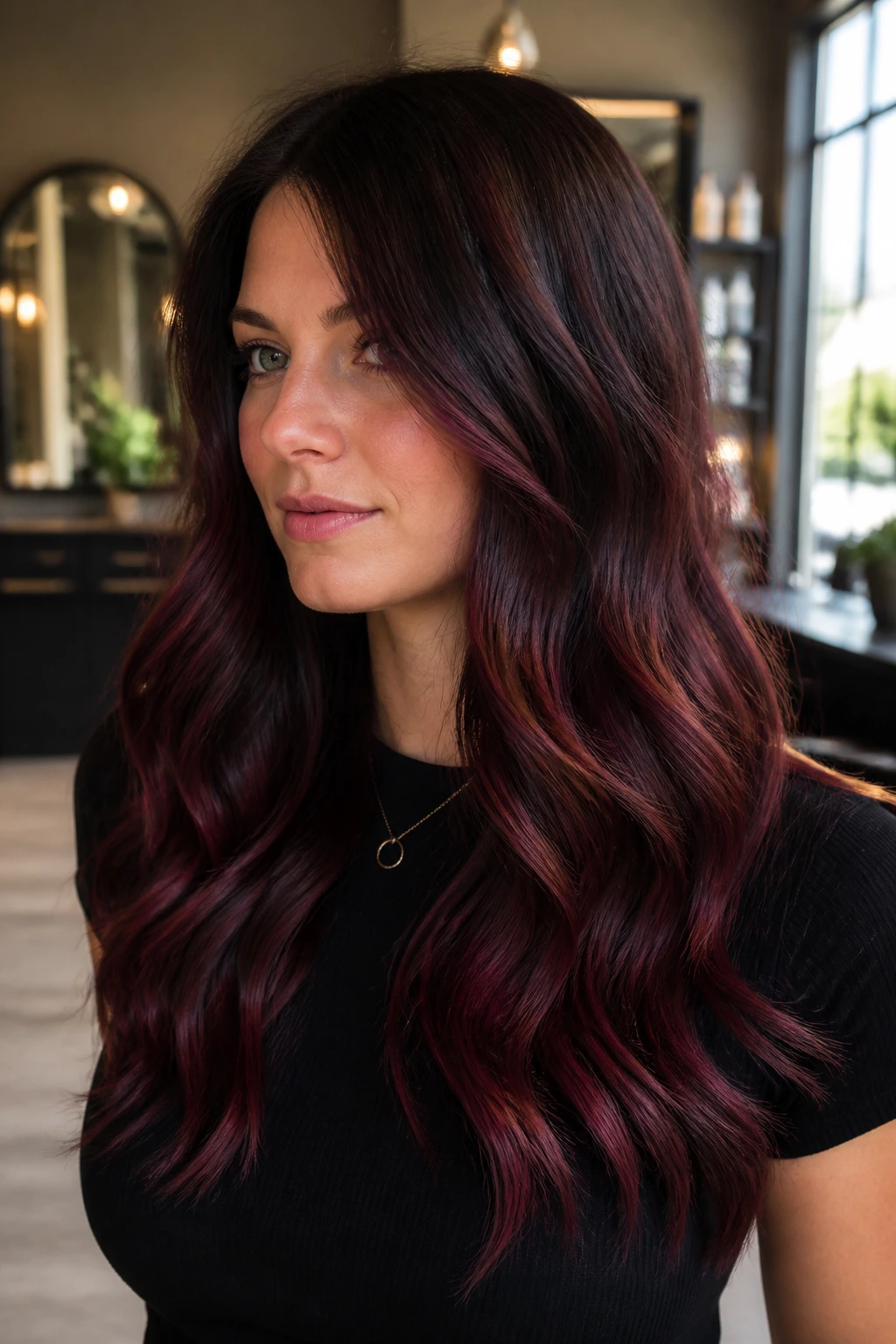
Cabernet balayage is a good compromise if you love dark hair and want burgundy without losing the brunette base. The color gets painted in strokes through the mids and ends, so the effect is layered rather than solid.
That painting method matters because it keeps the shade from sitting heavy around the face. The darker brown base gives you contrast, and the cabernet pieces do the flattering work where the light catches. It’s one of the easiest ways to bring burgundy into an everyday look.
You can push it softer with finer ribbons or bolder with thicker placement. I’d start finer if you’re unsure. Thick balayage can be gorgeous, but it’s harder to dial back once you see it on yourself in daylight.
21. Plum-Black Micro Highlights
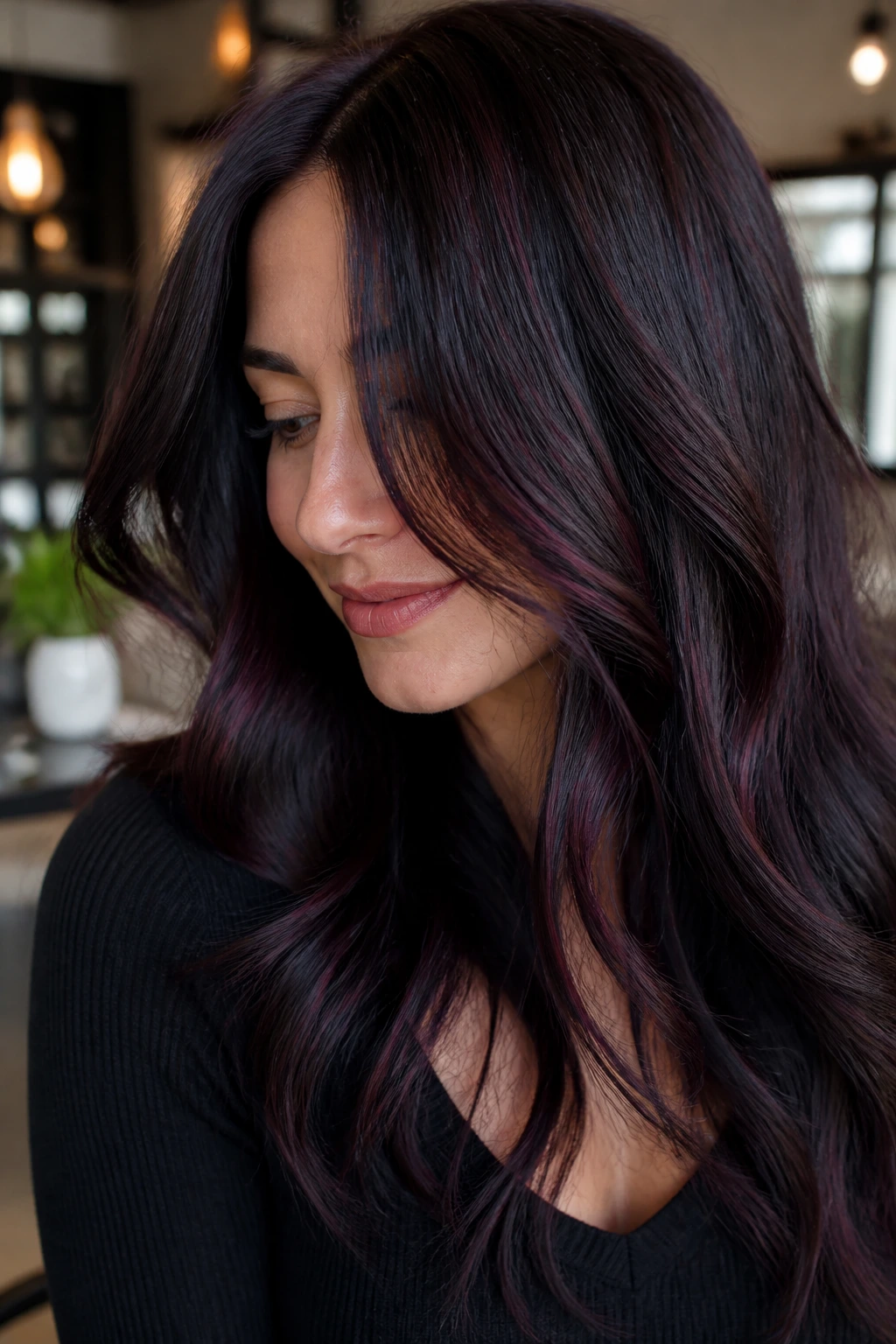
Plum-black micro highlights are for the person who likes subtle details that only show up when the hair moves. The highlights are tiny, which keeps the color from looking streaky, and the plum note stays cool enough to flatter pink-toned skin.
This is a strong option if your hair is naturally very dark. Instead of changing the base, you add hints of burgundy that make the hair look denser and shinier. It’s a little like putting a filter on the hair, except the effect is real.
What to Watch For
- Keep the highlights fine, not chunky
- Use a plum or violet-burgundy toner
- Ask for placement around the crown and outer layers, not just the bottom
That last part helps the color show up when the hair parts and shifts.
22. Ruby Burgundy Curls
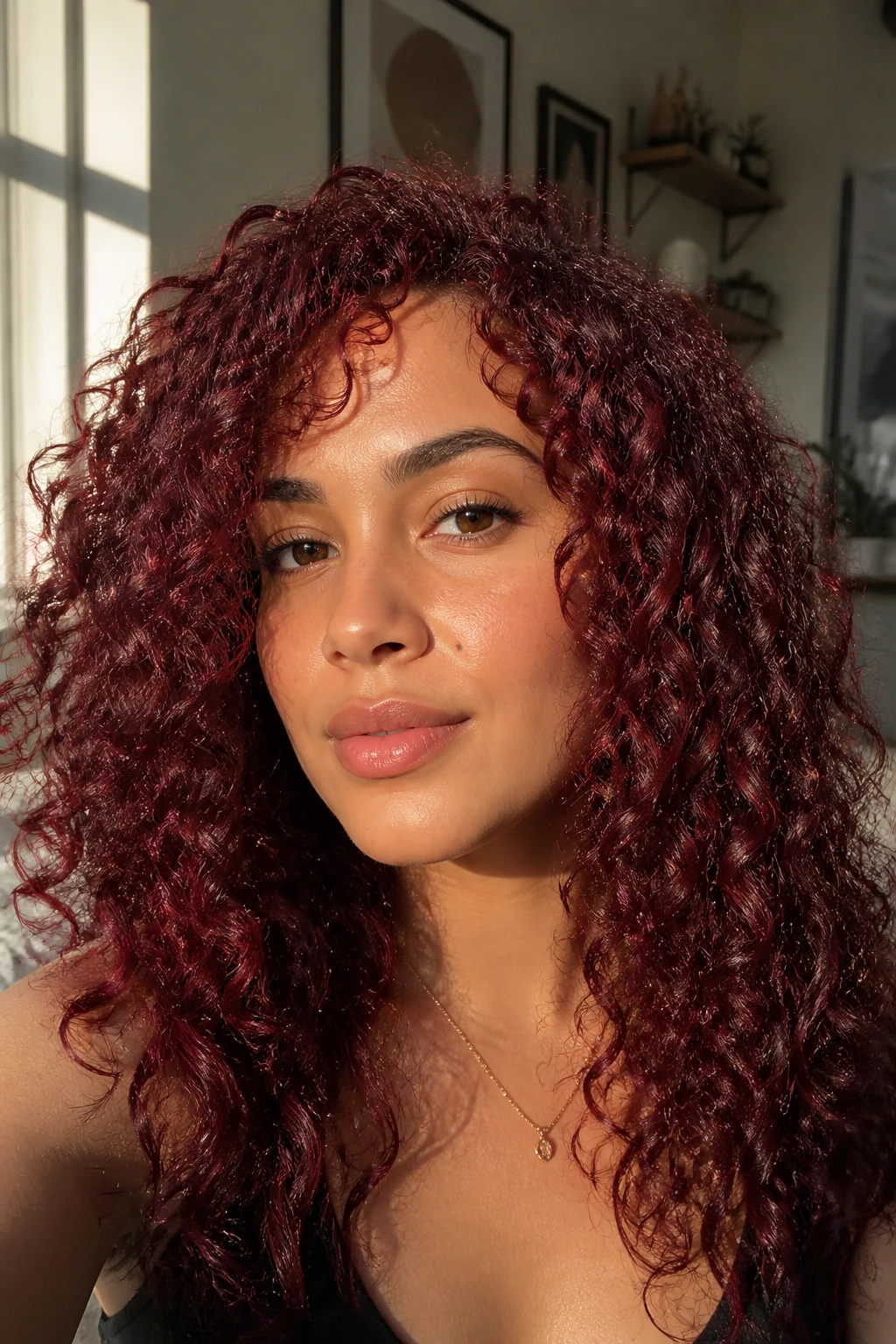
Ruby burgundy curls can look bright, but only if the ruby note stays cool. On curly hair, that color bounce matters. The curl pattern breaks up the pigment, so ruby can look lively without turning loud.
Cool skin tones usually need a little brightness near the face if the rest of the look is very dark, and ruby burgundy gives that without tipping into orange. The shade is richer than a true ruby red and deeper than a berry pink, which makes it easier to wear than people expect.
Moisture counts here. Dry curls swallow shine, and burgundy needs shine. If the hair feels rough, the color will look dull no matter how good the formula is.
23. Wine-Stained Dip-Dye Ends
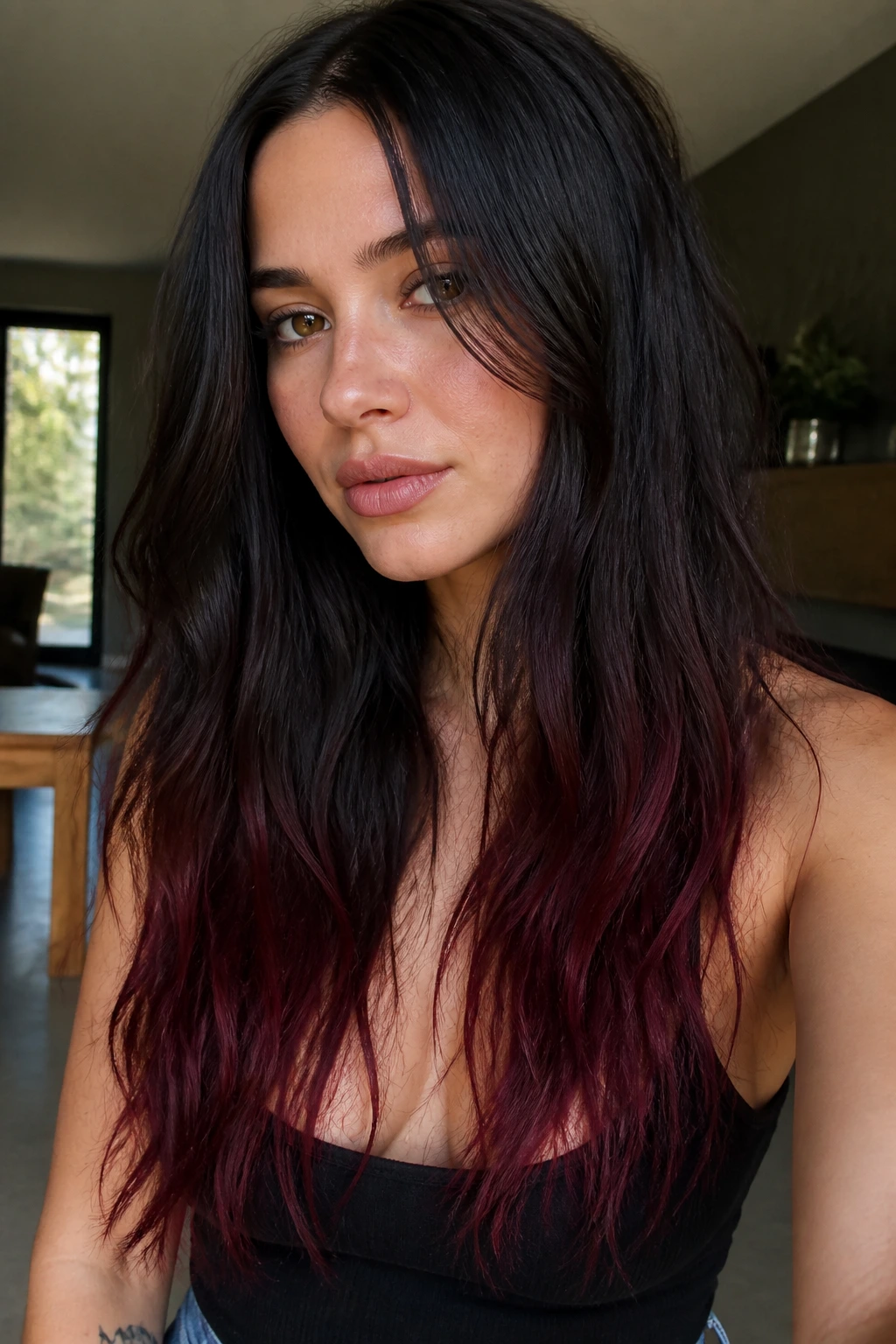
Dip-dye ends are a good choice when you want a little rebellion without giving up your natural base. The lower 3 to 5 inches carry the wine-stained color, while the top stays dark or brown.
This works especially well on medium and long hair. The ends move the most, so the burgundy has a chance to catch the light where people actually notice it. On cool skin, the effect is fun without being too warm or loud.
I like this style for someone who wants to test how burgundy feels before committing to a full head. It’s not subtle, but it’s not a trap either. You can trim it off later if you change your mind.
24. Bordeaux Brown Melt
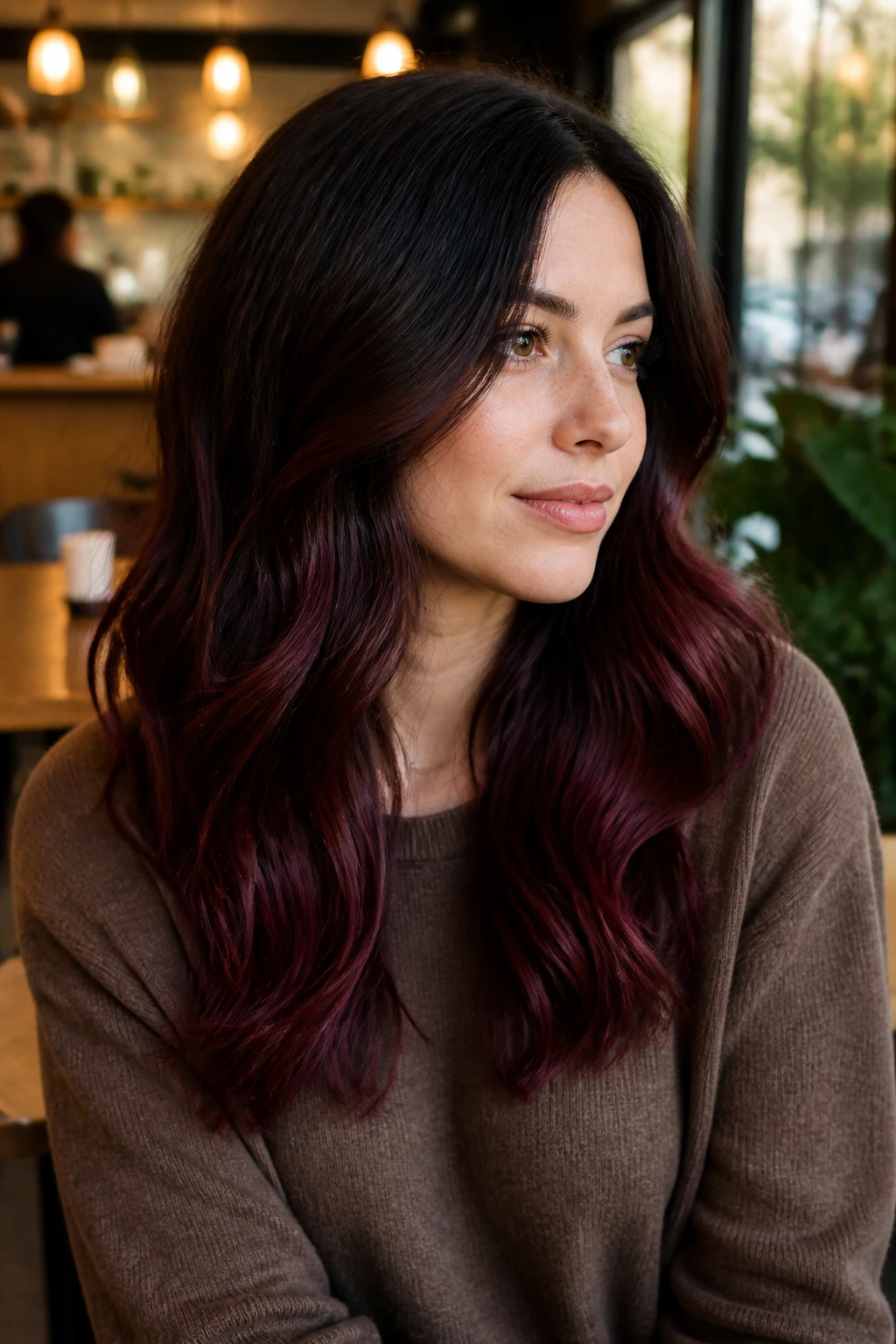
Bordeaux brown melt sits right on the line between brunette and burgundy. The transition from dark brown into bordeaux is soft, so the color doesn’t look painted in sections. It looks melted, which is the whole appeal.
For cool skin tones, this is one of the smartest long-term options because it keeps the red portion anchored in a darker base. That means less risk of the color going peachy as it fades. You get depth first, red second.
The shade works on straight hair, waves, and loose curls, but I think it looks best on layered cuts with some movement. The melt needs space to show. If the hair is one length and very heavy, the effect can disappear.
25. Soft Burgundy Balayage on a Natural Brown Base
Soft burgundy balayage is the shade I’d recommend to someone who wants a calm entry point. It keeps the natural brown base intact and threads burgundy through the mids and ends, where it can add color without taking over the whole head.
That approach is especially kind to cool skin because the brunette base does some of the balancing for you. You still get the red-violet richness, but the overall look stays grounded. If you’ve ever worried that burgundy would make your face look pinker than you want, this is the safer route.
A few things make this version work: fine ribbon placement, a cooler gloss, and enough dimension to keep the hair from going flat at the ends. It’s the kind of color that reads polished in daylight and deeper under indoor lights, which is half the battle with burgundy anyway.
If you’re choosing between two shades, pick the one that still looks clean in natural light. Salon bulbs can flatter almost anything. Daylight tells the truth.
