



Ginger on curls is one of those color choices that looks easy from a distance and then gets complicated the minute you start comparing swatches. A copper that glows on loose 2C waves can look flat on tighter coils if the placement is wrong. Curls don’t hold color like a smooth sheet of hair; they break light into tiny bends, shadows, and flashes, which is exactly why the shade you choose matters so much.
That’s also the fun part. The right ginger can make a curl pattern look sharper, richer, and more alive without needing a dramatic cut. A little warmth around the face can bring out eyes and skin tone. A deeper auburn can give dense curls more shape. A bright penny copper can make every bend look deliberate, even on a day when the frizz is doing its own thing.
The trick is knowing what kind of ginger you want to live with. Some shades are glossy and soft. Some are blazing and bold. Some are built from ribbons and root shadow so the grow-out feels easy; others are full-on color statements that ask for regular glossing and a little attention. On curls, that choice matters more than on straight hair, because the movement does half the styling for you.
Start with the amount of contrast you want, then pick the ginger family that fits it. The rest gets easier fast.
1. Soft Strawberry Ginger Wash
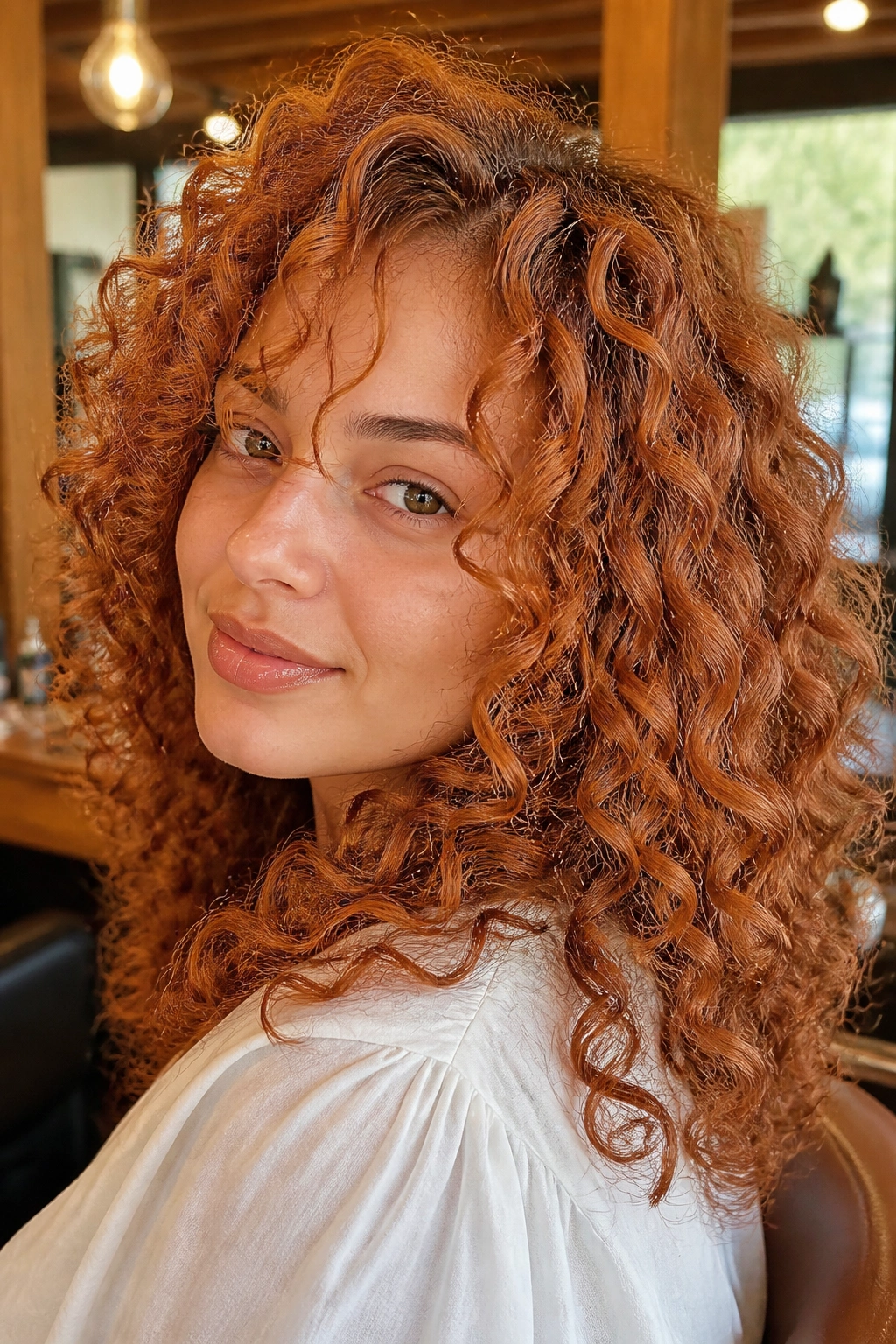
A soft strawberry ginger wash is the one I’d hand to someone who wants warmth without shouting. It sits somewhere between peach, copper, and pale red, which makes it a nice fit for light brown, dark blonde, or pre-lightened curls that need a little life. The color is gentle, but it does a lot of work in curly hair because every twist catches a different shade.
Why It Works on Curls
The lighter the curl, the more this shade behaves like a glow rather than a block of color. That means you get tiny flashes of strawberry at the top of each coil and softer apricot in the shadows. It reads clean, not loud. On a layered cut, it can make the curl pattern look softer around the face and more textured through the ends.
- Best for level 7–9 bases
- Ask for a demi-permanent gloss or a sheer copper glaze
- Works well on loose waves, ringlets, and soft coils
- Needs a tone refresh every 4–6 weeks if your hair fades fast
Quick tip: If your hair pulls yellow, ask your colorist to lean a little more coral than gold. It keeps the shade from going brassy.
2. Bright Copper Ringlets
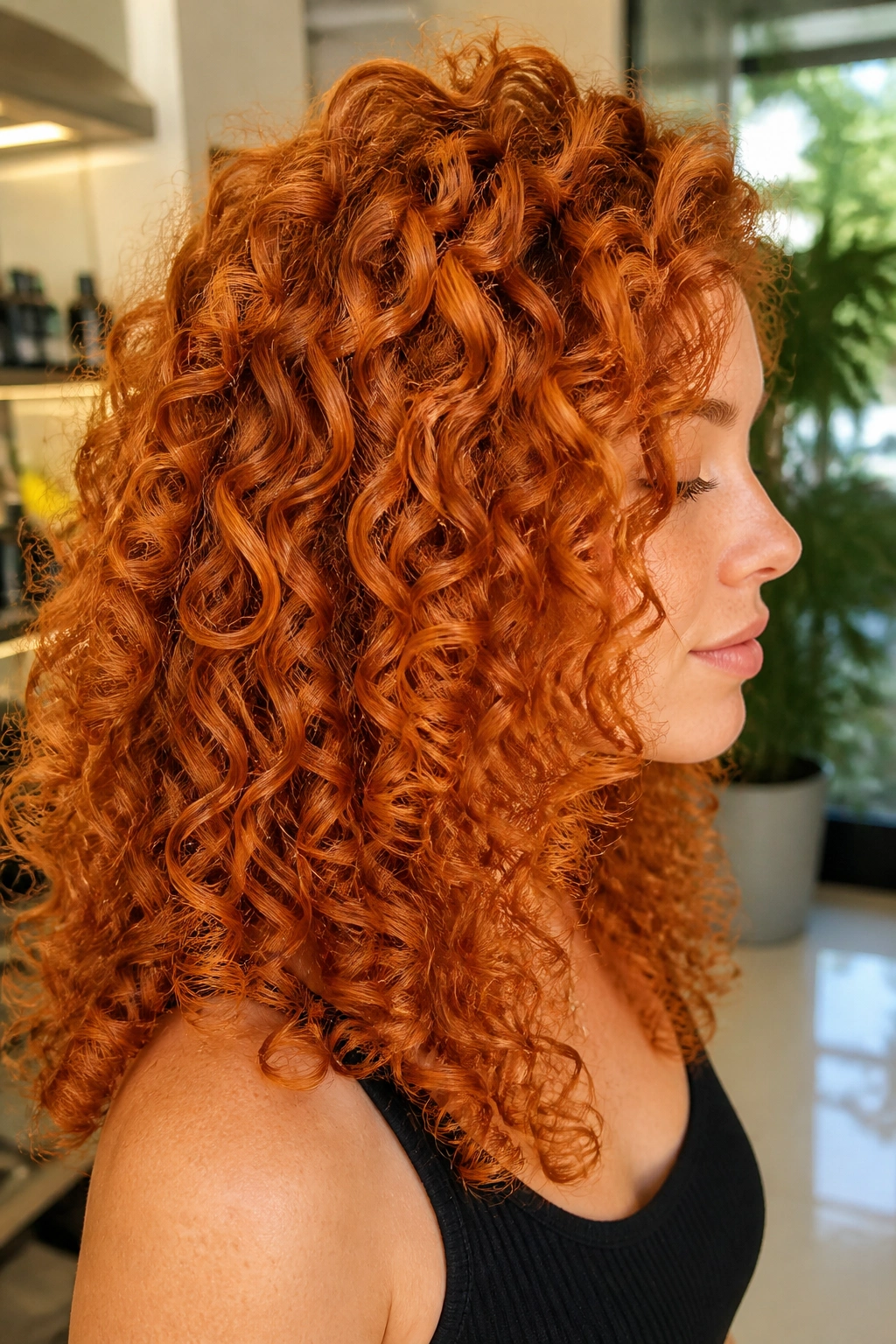
Bright copper ringlets are loud in the best way. They give curls a polished, almost molten look, especially when the shape is springy and defined. This is the shade that makes people notice the curl pattern first and the color second, which is exactly why it works so well.
What makes it different from softer ginger shades is the level of pigment. You want the copper to land cleanly on each curl, not blur into orange-brown mush. On dense hair, that means careful saturation and maybe a few micro-sections instead of one fast all-over application. It’s a color that rewards patience.
Wear it if you like your hair to feel intentional. It looks best on well-moisturized curls, because dry ends can make the color seem harsher than it really is. A curl cream with slip and a light glossing serum on the outer layer will keep the finish shiny instead of chalky.
And yes, it fades. All copper does. The difference is that bright copper fades into a softer apricot tone that can still look lovely if you keep the base healthy and don’t over-wash it.
3. Cinnamon Swirl Balayage
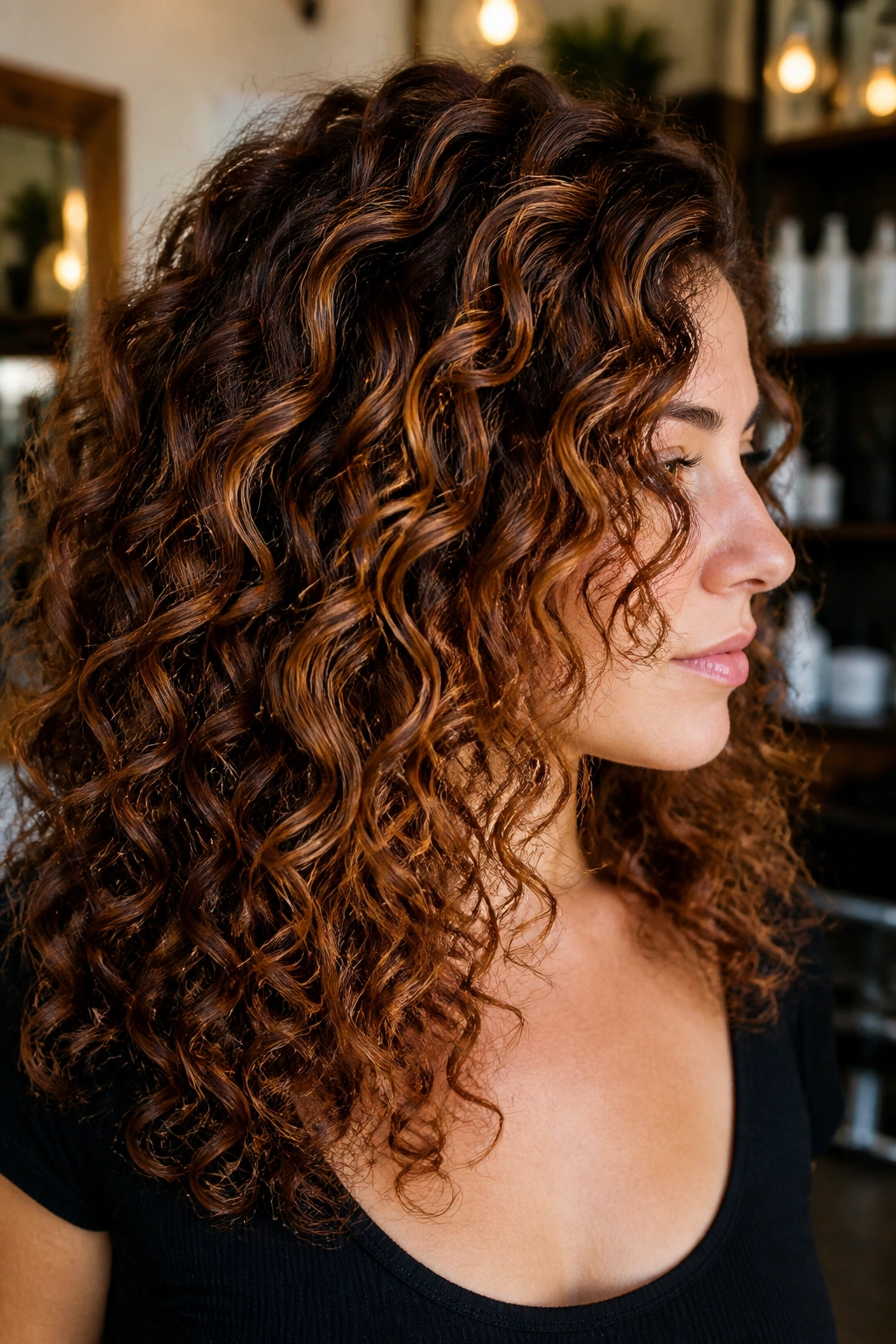
Why does cinnamon balayage look so good on curls? Because it behaves like shadows and highlights instead of one flat dye job. The darker cinnamon pieces sink into the interior of the curl, while lighter ribbons sit on top and around the bends. That contrast makes each coil look fuller.
How to Ask for It
Tell your colorist you want hand-painted cinnamon ribbons, not chunky stripes. The trick is keeping the lightening soft enough that the curl pattern still looks organic. On medium to dark brunettes, this shade often needs only a few levels of lift before the copper glaze goes on. That keeps the result warm, not orange.
- Ask for thin, curved balayage sections
- Keep the lightest pieces around the outer crown and face frame
- Choose a cinnamon-copper glaze instead of a bright orange toner
- Works best on layered cuts where the color can move
One thing to watch: If the highlights are too wide, the curl clumps can look stripey when the hair dries. Narrow ribbons age better.
4. Burnt Orange Root Melt
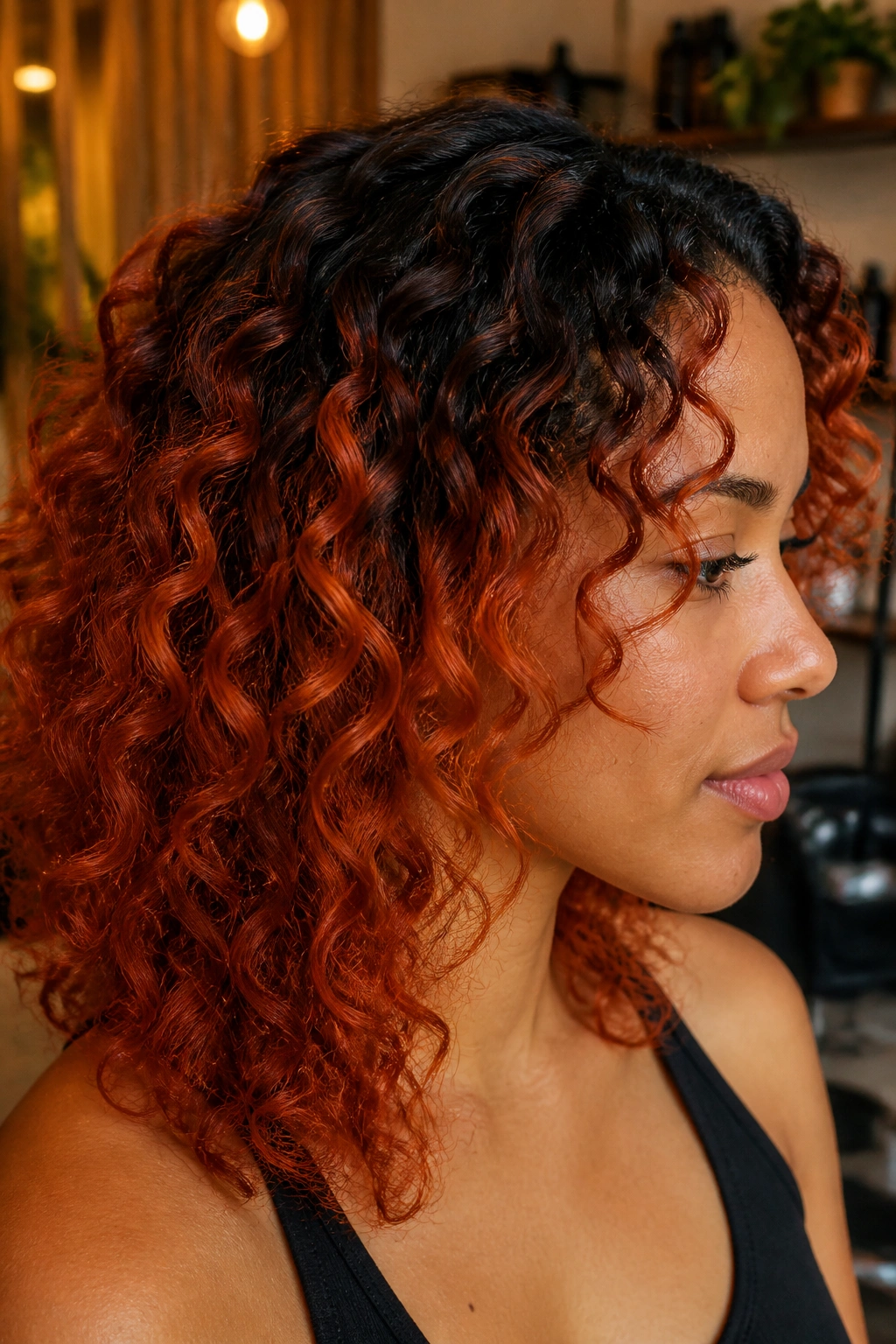
Burnt orange root melt is made for the person who likes a little edge and does not want to babysit the grow-out. The roots stay deeper — chestnut, espresso, or soft brown — while the mids and ends melt into a fiery burnt orange that looks darker and moodier than bright copper.
That gradient matters on curls. A shadow root keeps the scalp area low-maintenance, and the orange length catches light whenever the curls separate. You get movement without having to touch up every few weeks. Nice. Very nice.
It also makes thicker curls look less bulky. Darker roots create a visual anchor, while the warmer ends keep the shape from feeling heavy. If your hair expands a lot when dry, this kind of melt can calm it down a little by giving the eye a place to rest.
For the cleanest result, ask for the melt to start a little below the root, not right on the scalp. That small gap keeps the transition softer and gives the color room to breathe.
5. Auburn Ginger Blend
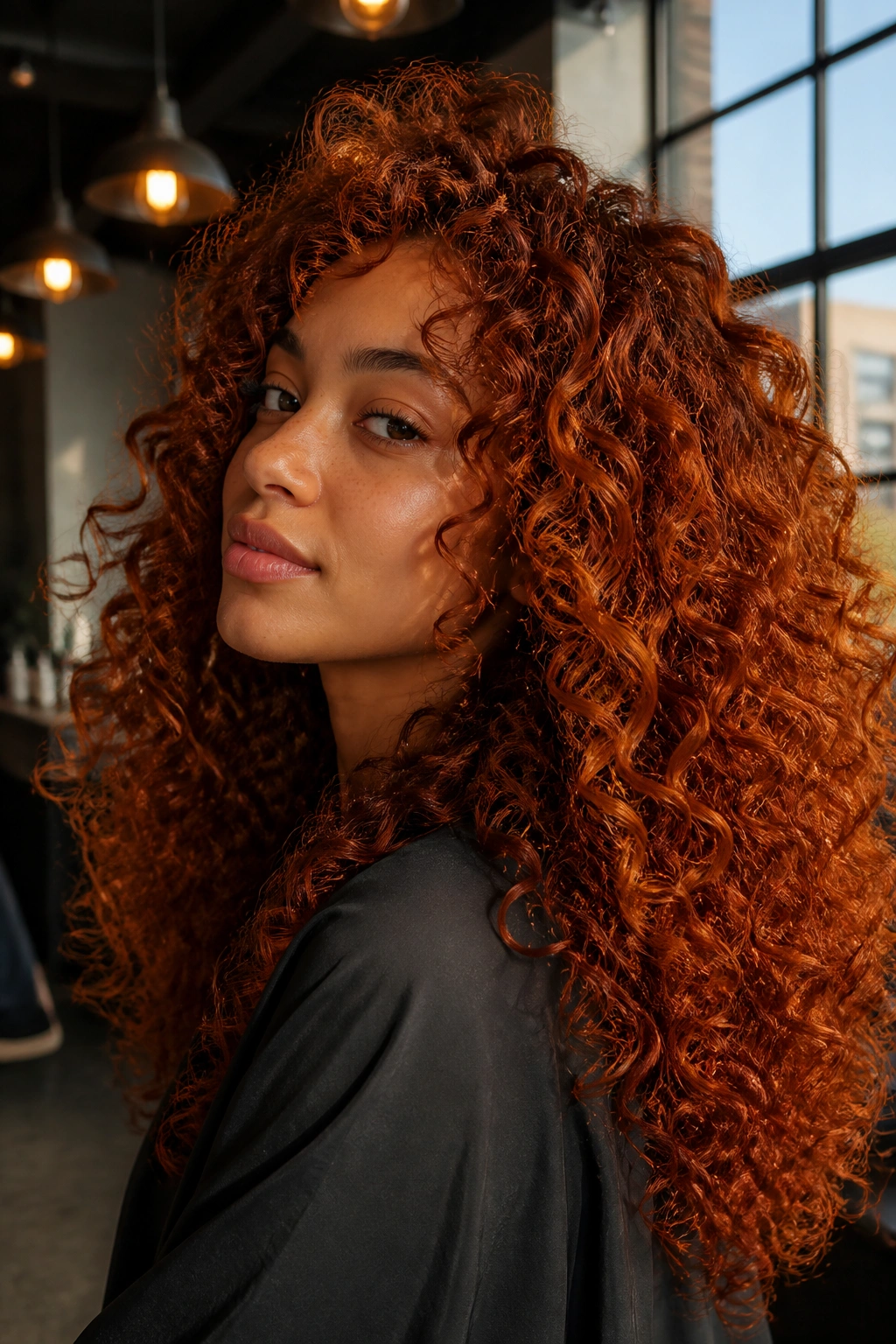
Auburn ginger is the shade for people who want red, but not cartoon red. It leans brown-red with enough copper in it to keep the finish warm and alive. On curly hair, that extra depth is a gift, because it keeps the color from getting lost in the shadow between coils.
This shade is one of the easiest to wear on naturally dark hair. The base can stay close to its original tone, and the ginger warmth can be built with gloss, low-lift color, or subtle balayage. You do not need high contrast to make it work. In fact, too much contrast can steal the softness that makes auburn good in the first place.
I like it on big, dense curls because it gives the hair a richer outline. The overall effect is almost velvet-like, especially when the finish is glossy and the ends are trimmed clean. If your skin tone runs warm, auburn ginger can be especially flattering near the face without looking harsh.
It’s one of the few red family shades that can look elegant without trying too hard. That counts for something.
6. Apricot Copper Highlights
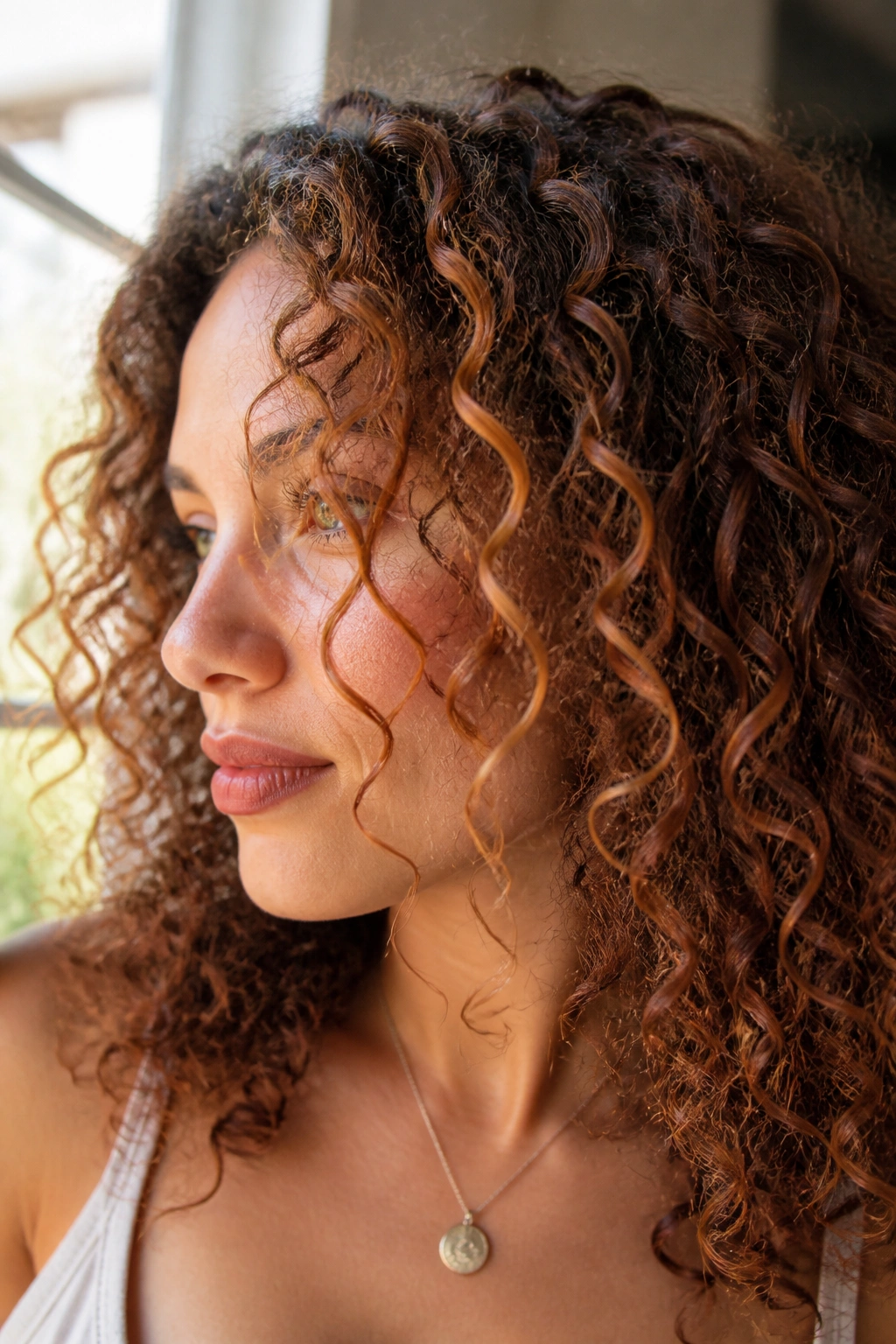
Apricot copper highlights are a smart choice if you want ginger without a full head of color. Compared with all-over copper, these pieces sit lighter and softer, more like sunlight than dye. They’re especially good for curls because the highlighted sections bend around the shape and keep the hair from looking dense.
Unlike a heavy red, apricot copper works best when it’s scattered in slim face-framing pieces and a few brighter sections through the top layers. The rest of the hair can stay deeper brown or brunette. That contrast keeps the highlights from looking too sweet or too pastel.
This shade is good for first-timers because it lets you test warm tones without committing to a dramatic change. It also grows out gracefully. The highlight line softens over time and usually just looks like richer dimension instead of a glaring root problem.
If you want the color to stay fresh, ask for a gloss at the same appointment. Apricot can turn dull faster than deeper copper, and a clear or lightly tinted gloss keeps it looking clean.
7. Rose Gold Ginger Coils
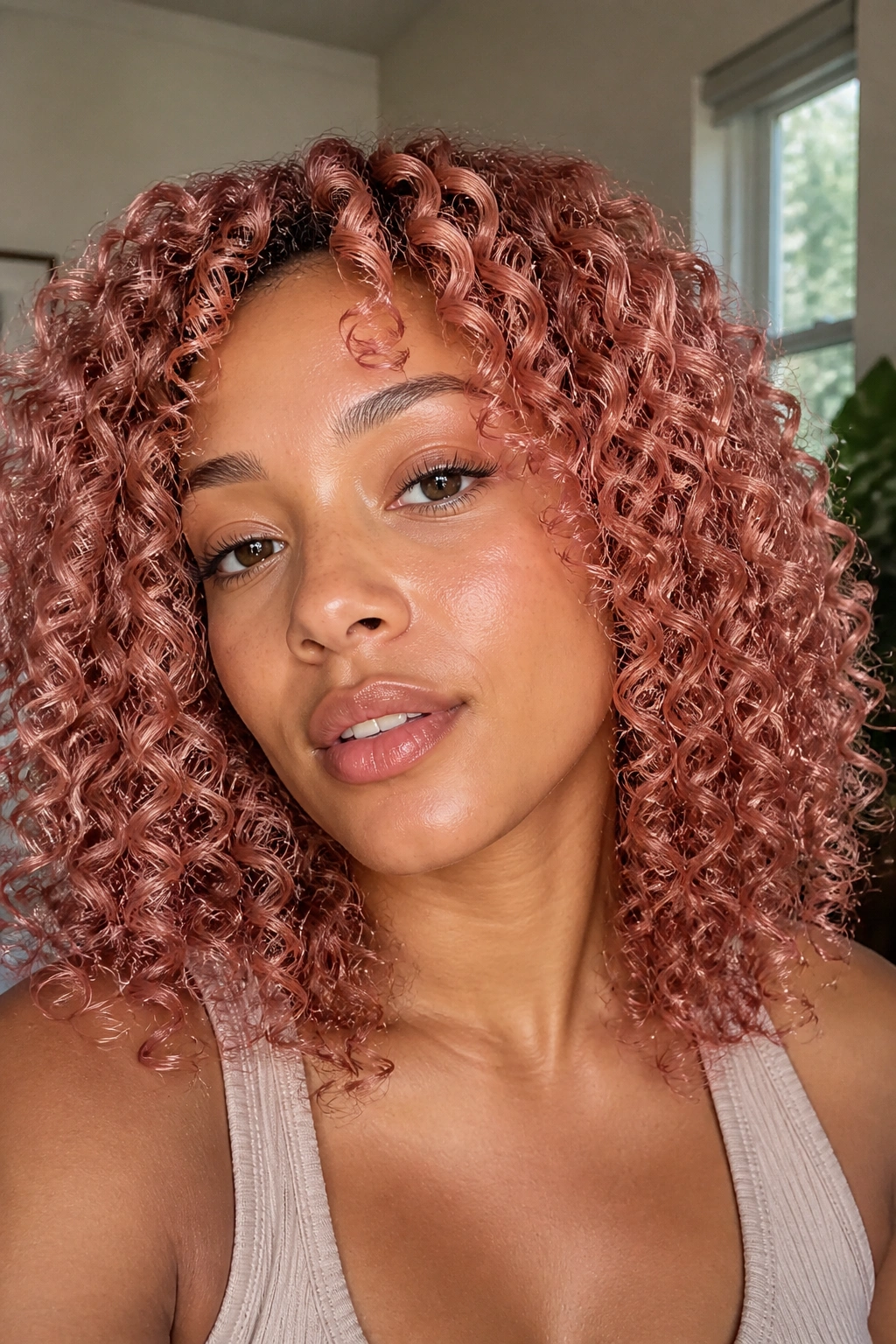
Rose gold on coils is one of those shades that looks more expensive than it sounds. The pink-copper balance gives tight curls a soft metallic shine, and because coils stack on top of each other, the color picks up little flashes of blush and gold at once. It’s elegant, but it still has a little bite.
Where It Sings
This one needs a lighter canvas than deeper ginger shades. If your hair is already lightened, the rose gold can sit on top as a pastel red-copper glaze. If your curls are darker, the color has to be lifted first or the pink note will disappear. That’s the part people underestimate.
- Best on pre-lightened curls or high-level blonde bases
- Ask for a rose copper gloss instead of a flat pink toner
- Keep the finish soft and shiny, not chalky
- Works well with defined twist-outs and coil sets
My take: It looks best when the roots are left a touch deeper. That keeps the rose tone from feeling too sweet.
8. Mahogany Ginger Lowlights
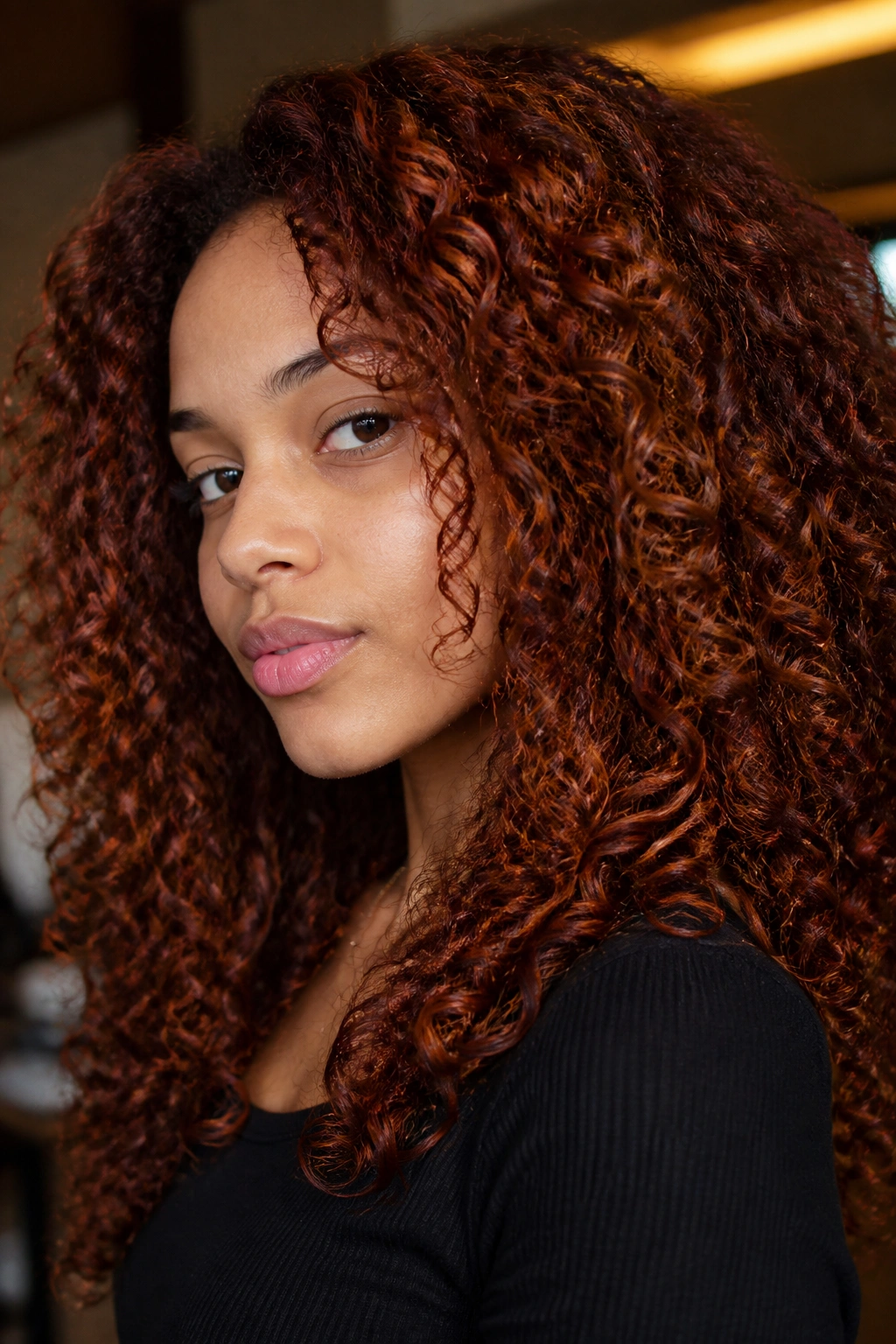
Mahogany ginger lowlights are for anyone who wants dimension more than drama. Instead of lighting the whole head, you deepen parts of the curl pattern with mahogany and tuck warm ginger tones beneath the surface. The result is richer than it first sounds.
This is a sleeper hit for thick curls. Lowlights help break up visual heaviness, and the ginger pieces stop the hair from reading too dark. On a dense shape, that little contrast can make the cut look sharper and more layered. It’s one of those colors that doesn’t scream for attention but keeps paying off in every mirror.
Ask for lowlights in the interior and around the underside, not just on the surface. That way the color peeks out when the curls move, instead of sitting there and doing nothing. It’s a quiet look, but not a boring one.
If you already have a warm brunette base, mahogany ginger can be done without much lift. That makes it friendlier to curls that hate heavy processing.
9. Tangerine Money Pieces
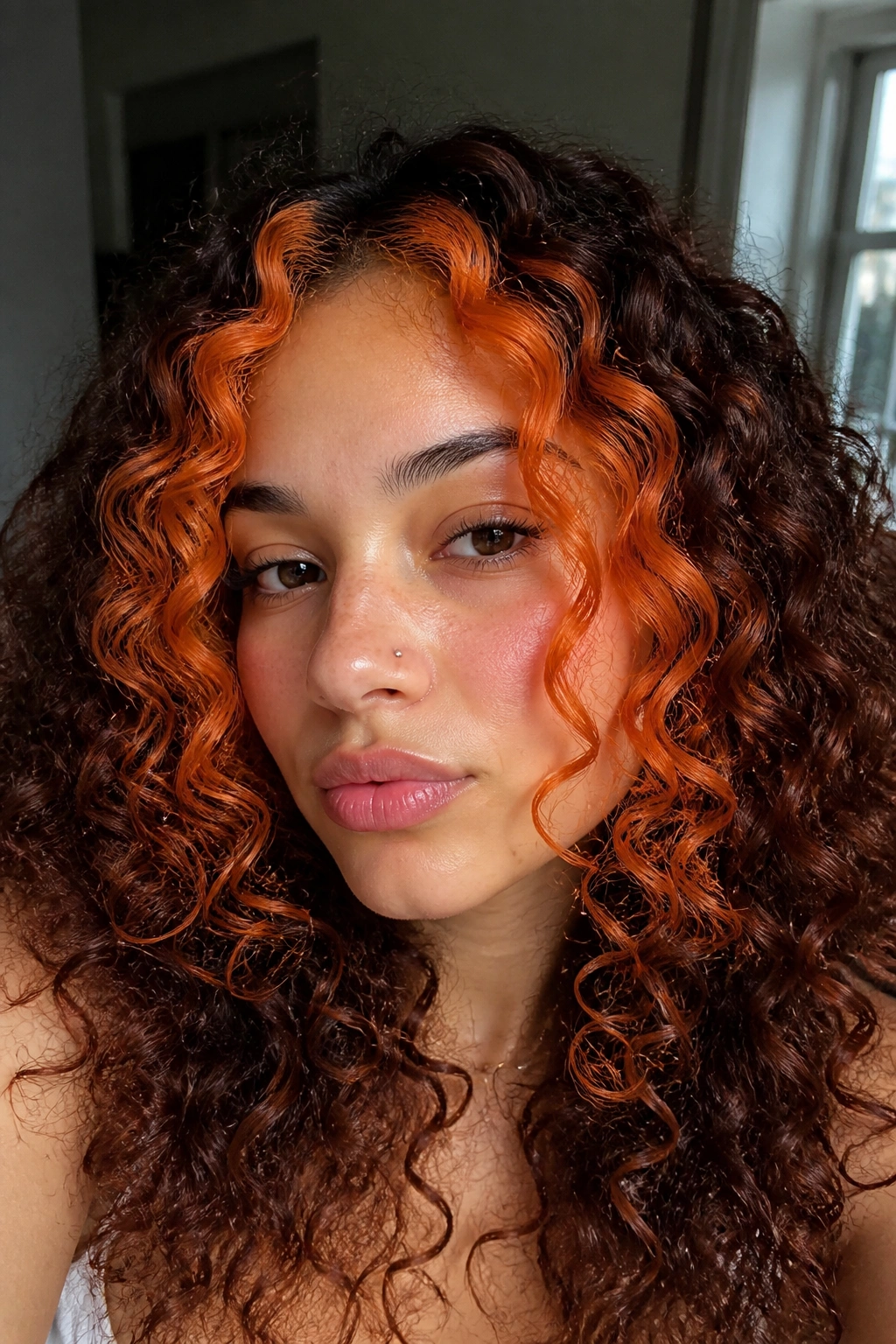
Can front pieces carry an entire look? Absolutely, if the color is strong enough. Tangerine money pieces are bright, punchy, and built to frame the face without requiring a full-head transformation. On curly hair, the front coils catch the light first, so those few inches can change the whole mood.
The best version of this idea keeps the money pieces thin enough to move with the curls. Too wide, and you get chunky orange bars. Too narrow, and the effect disappears into the rest of the hair. The sweet spot is somewhere between the two — enough color to see at a glance, but still broken up by the curl pattern.
This shade is especially fun on cuts with bangs, face-framing layers, or a deep side part. It can pull attention upward and make the curl pattern around the eyes look fuller. If the rest of your hair stays brunette, the tangerine reads even brighter.
Try it when you want a color change that feels visible but not all-consuming. It’s a small move with a big payoff.
10. Copper Penny Afro
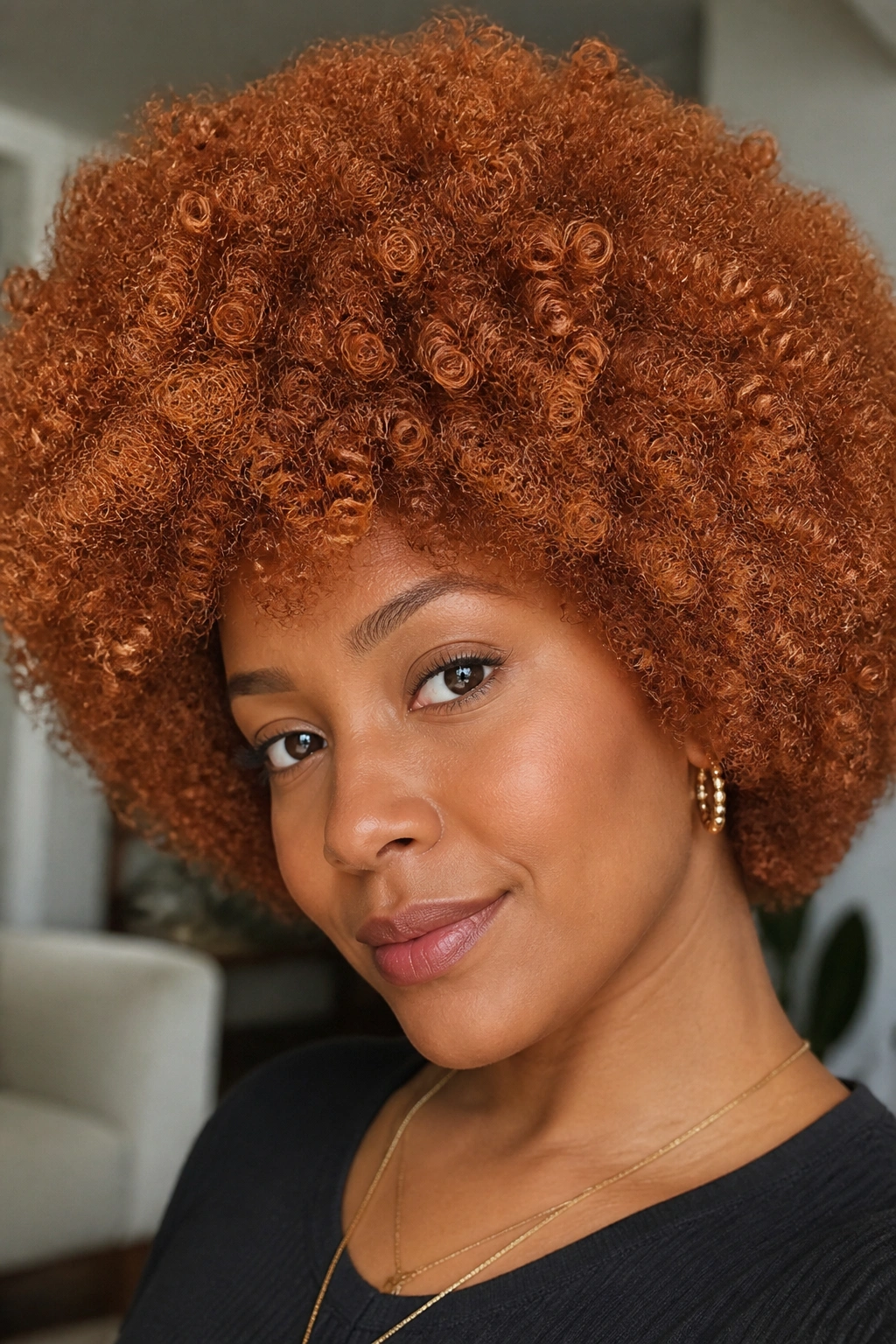
Copper penny on an afro is all about shine. The color has to be rich enough to hold up against the density of the shape, and bright enough to show through every fold and coil. Done well, it looks like metal warmed by skin.
A copper penny afro works best when the color is even but not flat. You want tiny shifts in tone across the crown, sides, and edges so the rounded shape doesn’t feel painted on. A multi-tone copper glaze can help here, especially if the hair is already healthy and the curls are well defined.
What to Ask For
Ask for full saturation with a few lighter copper accents rather than one flat orange-red. That little variation keeps the shape alive. It also helps the color survive as it fades, because the different tones soften at different speeds.
- Needs strong conditioning before and after coloring
- Looks good on rounded shapes and tapered cuts
- Benefits from a shine spray or light oil mist
- Works best when ends are trimmed clean
Worth saying: If the ends are dry, copper can look dusty. Shape first, then color.
11. Ginger Glaze on Dark Curls
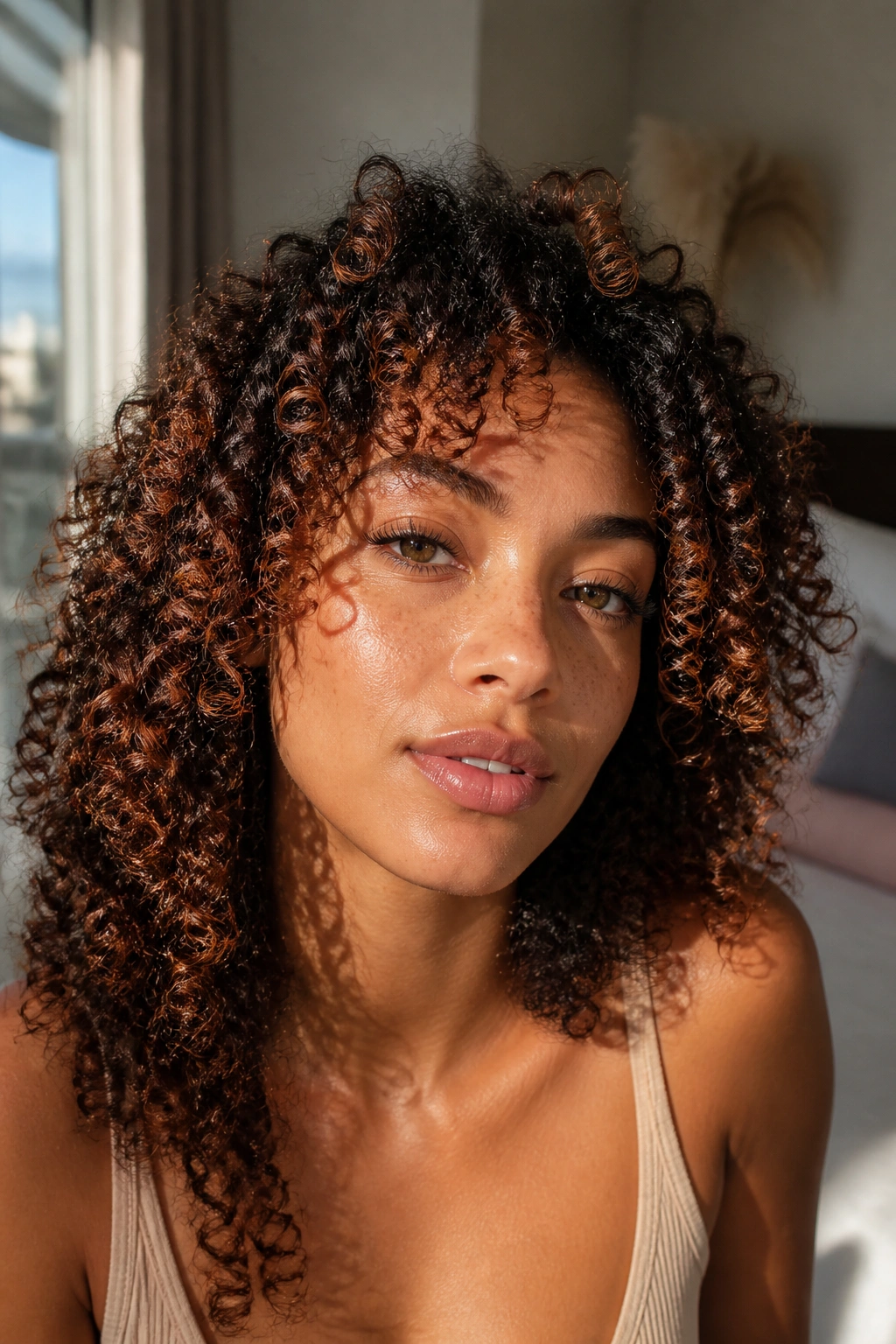
A ginger glaze on dark curls is a good move when you want warmth but not obvious red. The effect is subtle in shade and obvious in texture. In daylight, the hair picks up a faint auburn or copper cast. Indoors, it can almost disappear, which is part of its appeal.
This works especially well on very dark brown curls that have nice definition but need a little more visual movement. A glaze doesn’t try to change the whole base. It sits on top, deepens what’s already there, and adds warmth to the outer layer of each curl. The shape becomes easier to read without losing the richness of the dark base.
It’s also kinder to curls that are already dry or porous. Since the lift is minimal, the hair usually feels less stressed than it would with a full lightening session. That matters if your hair breaks easily or gets fluffy after color.
If you like understated hair that still looks polished when it catches light, this is one of the smartest ginger options around.
12. Peach Cobbler Ends
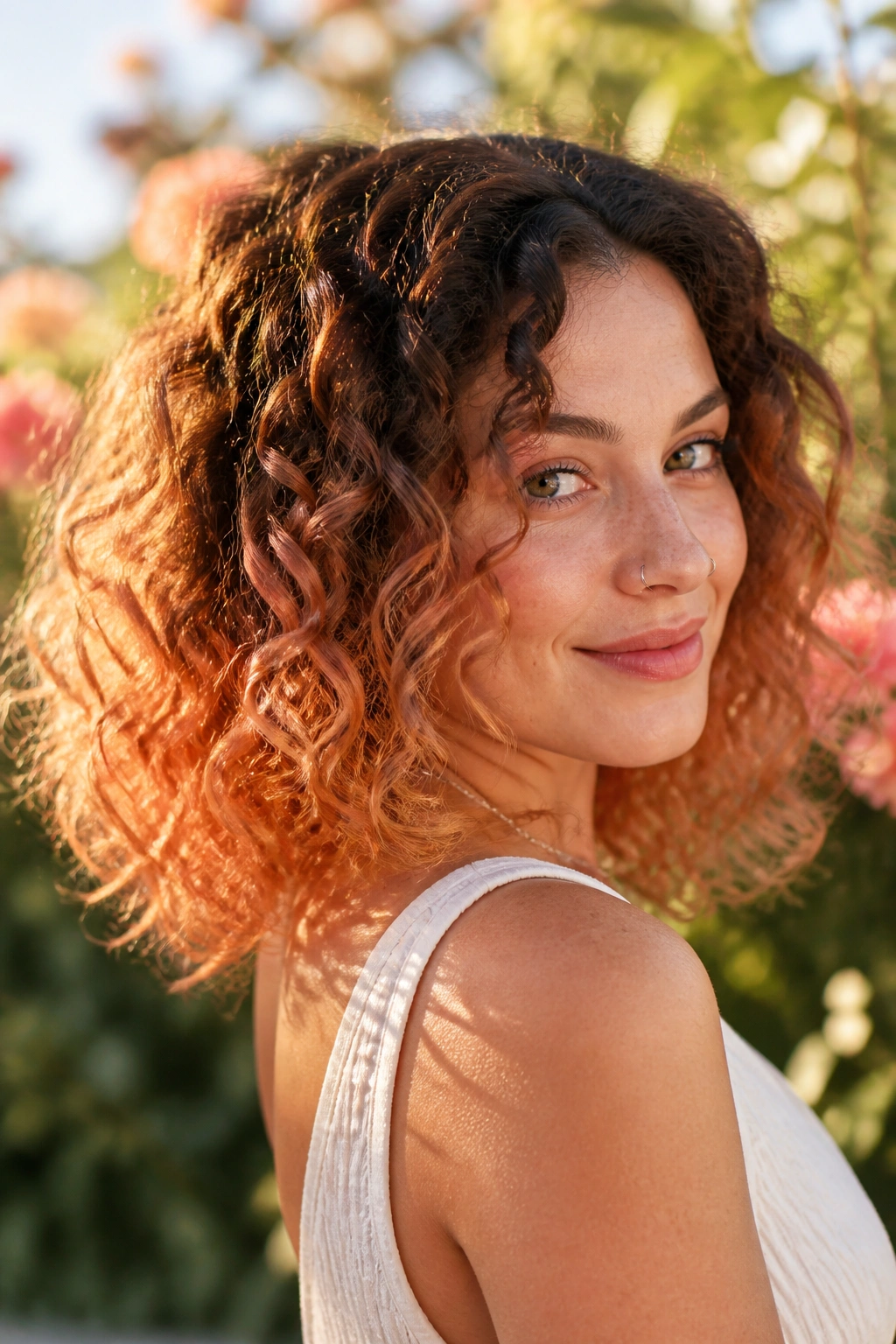
Peach cobbler ends are for people who want a playful finish without dyeing the whole head. The roots and mids stay darker, then the lower half opens into peach, copper, and a little golden warmth. On curls, that gradient can look almost like dessert-colored flames.
Unlike a standard ombré, this version leans softer and more orange-pink than brown-copper. That makes it feel lighter and more youthful, especially on shoulder-length cuts where the ends sit near the collarbone and move a lot. The curl shape helps blend the color shift so it doesn’t look harsh.
This idea is best when the ends are healthy enough to take lightening. If the last two inches are fried, peach will show every rough spot. Fresh trims help. So does using a bond-building treatment before coloring, especially if the ends have been processed before.
It’s a fun choice for people who want warmth in motion. Every time the curls bounce, the color changes a little.
13. Chili Pepper Copper
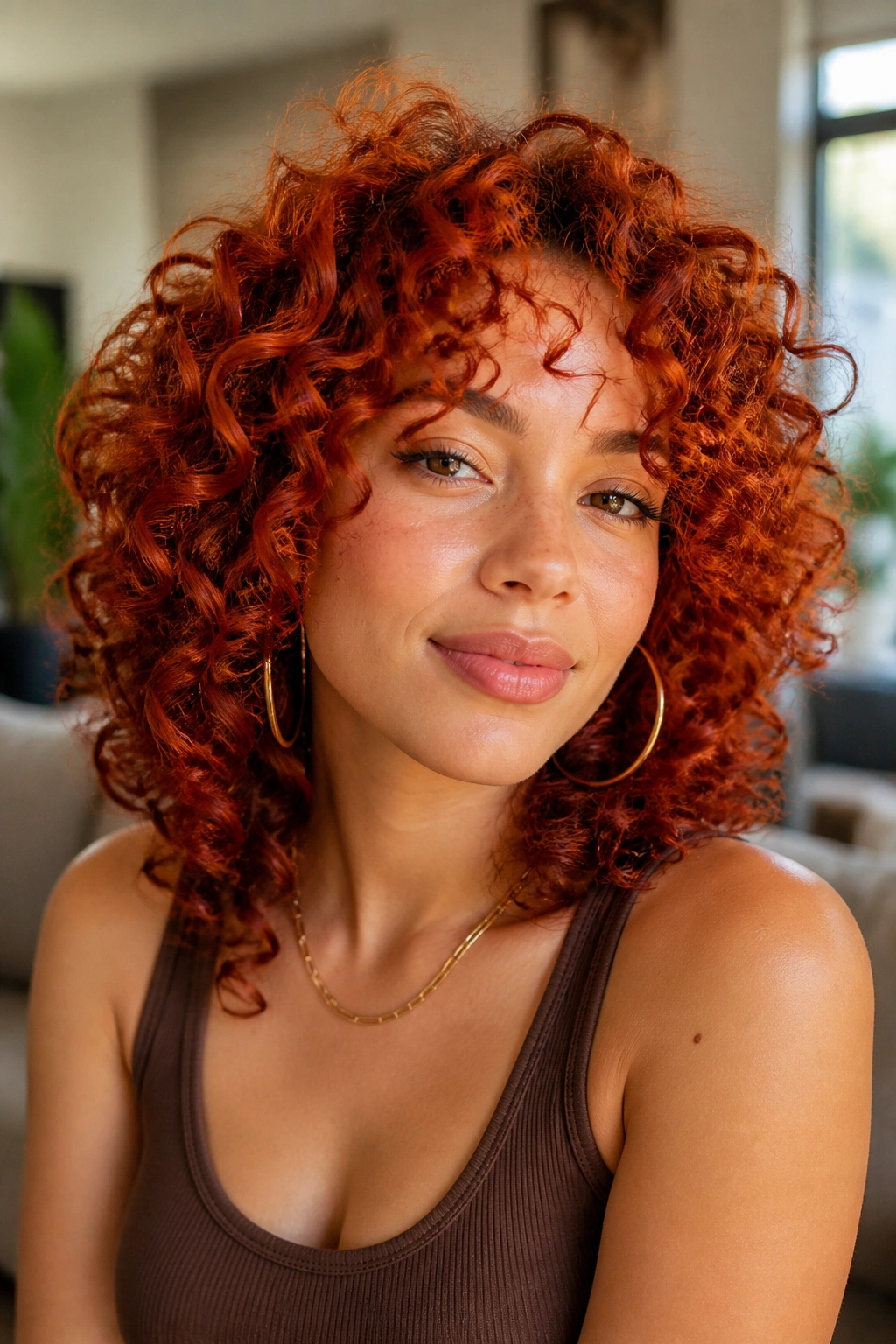
Chili pepper copper is sharp, hot, and a little dramatic. It sits brighter than auburn and deeper than neon orange, which gives it a strong red-orange bite that shows beautifully on curly texture. If you like a shade that looks alive even when your hair is tied up, this is a good one.
Why It Pops on Curls
The curl pattern breaks the color into tiny flashes, so the shade never feels too flat. One coil may read red, the next one copper, and the one behind it a hint of rust. That shifting effect is what gives the color movement. Straight hair can’t fake that as well.
- Best on medium to light brown bases with some lift
- Ask for a vivid copper-red with a red-orange bias
- Needs a color-safe wash routine
- Looks strongest on defined ringlets and springy curls
Small warning: If you use too much purple shampoo, this shade can lose its warmth fast. Keep toning gentle.
14. Golden Ginger Ribbons
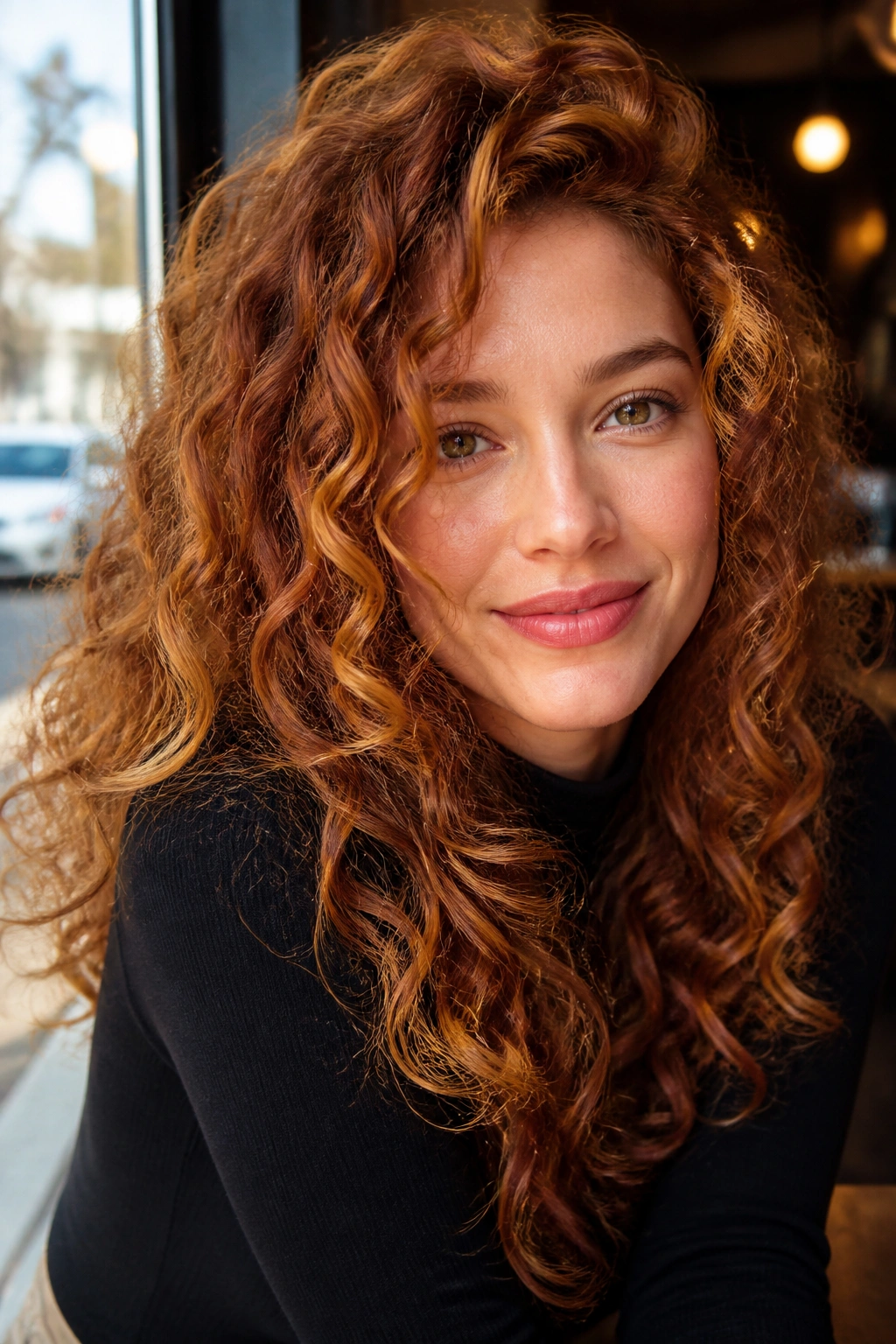
Golden ginger ribbons are softer than full copper and warmer than blonde highlights. Think thin streaks of honeyed orange-gold running through curls, especially around the top layer and face frame. The look is airy, which makes it handy for people who want brightness without obvious red roots.
This is one of the easiest ways to add depth to flat curls. A few well-placed ribbons can make layered hair look fuller, especially if the cut is long and the shape needs a little lift. The key is keeping the pieces curved and irregular, never too neat. Curls hate neat stripes.
This shade works nicely on brunettes who want dimension but not a major color correction. The ribbons can sit over a deeper base and still catch light because the curl pattern keeps them visible from several angles. You do not need a lot of lightening to get the effect.
If you’re torn between blonde and copper, this color lives in the middle. That middle ground is often where the best curly color lives.
15. Rust Red Ombré
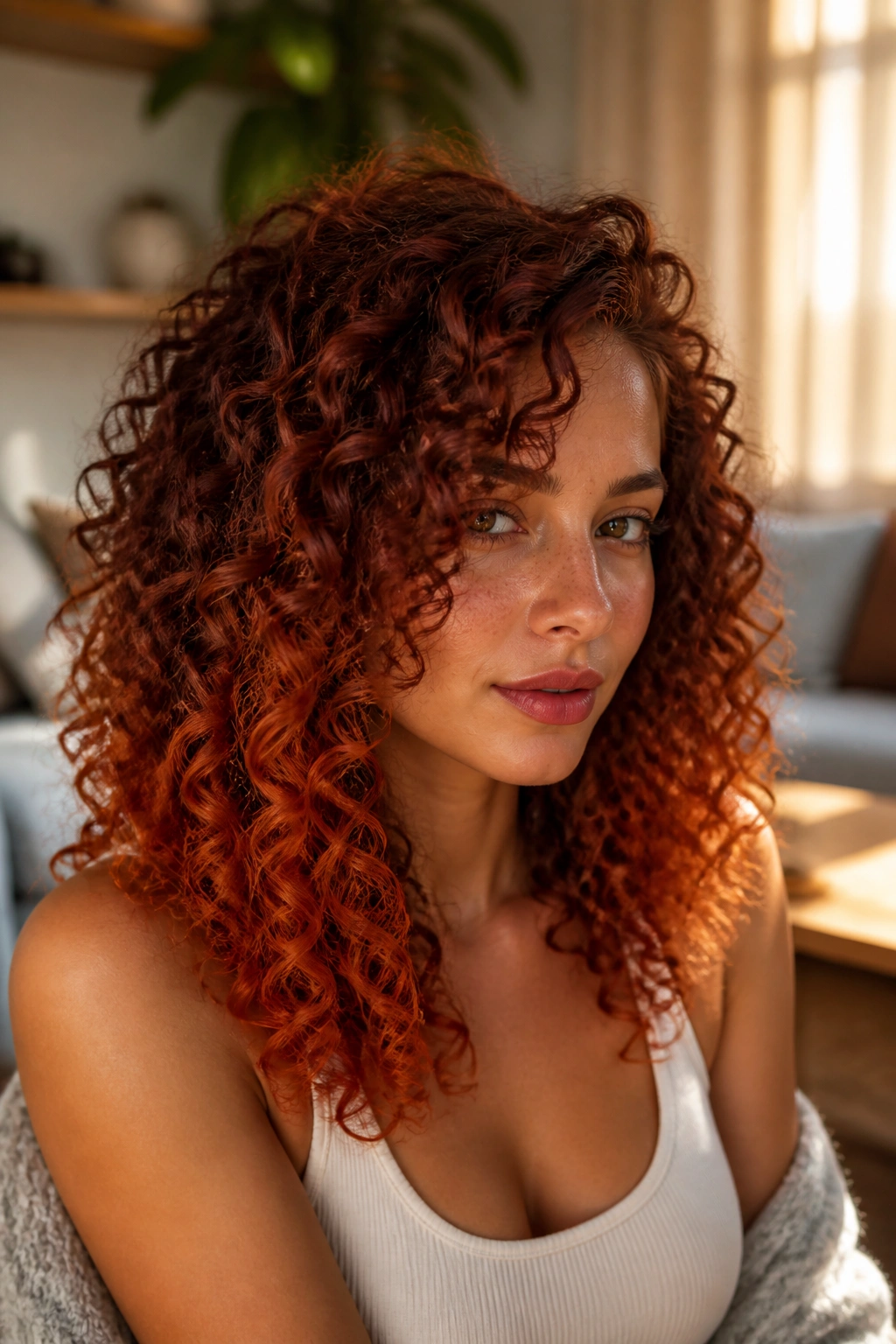
Can a rusty fade feel elegant? It can, if the transition is soft enough. Rust red ombré starts deeper near the roots and slowly shifts into a warm rust-orange finish through the mids and ends. On curly hair, that fade looks especially good because the coils make the blend less linear.
The Placement Matters
The ombré should follow the curve of the haircut, not sit in one straight band. That means the lightest rust pieces need to land where the curls naturally expand — around the outer layers, the ends, and the face-framing sections. If the color line is too obvious, the whole thing loses its softness.
- Great for shoulder-length and longer curls
- Use a deeper root shadow for easier grow-out
- Choose a rust toner instead of a bright orange one
- Ask for soft, blurred ends, not a hard line
Good to know: Rust fades well. It often softens into a spicy copper that still looks intentional.
16. Bronze Ginger on Tight Coils
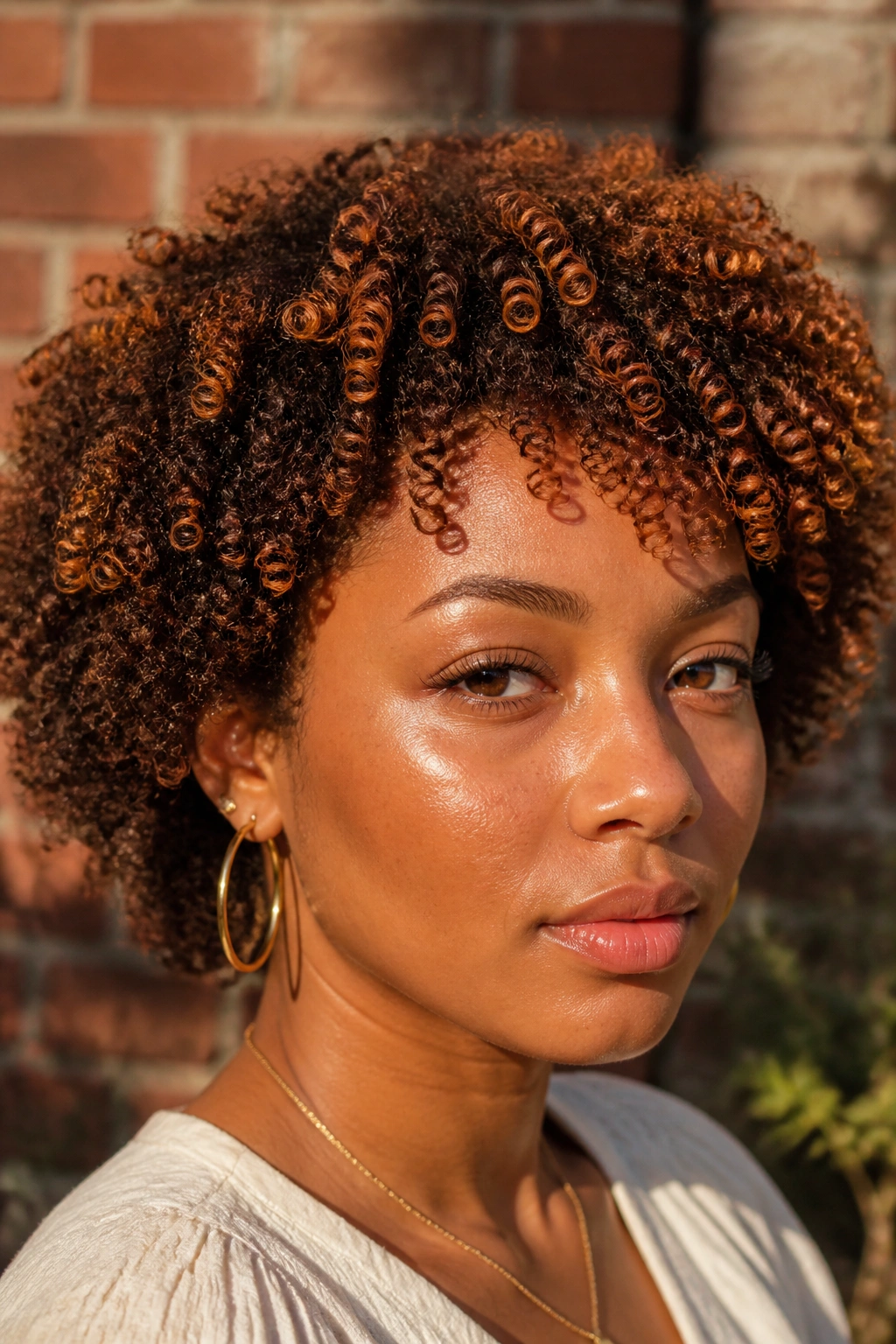
Bronze ginger on tight coils gives you warmth with weight. Bronze keeps the color grounded, while the ginger side adds just enough fire to stop it from looking brown. On tight coils, that balance matters because the shape already creates so much texture; you don’t want a color that fights the pattern.
This look works best when the tones are layered rather than painted as one solid block. A bronze base can sit underneath, with ginger accents placed through the top and around the edges. That keeps the hair looking dimensional and avoids the muddy effect that sometimes happens when reds and browns are mixed carelessly.
It’s especially good for people who want their curls to read fuller. The bronze depth makes the shape look dense, and the ginger catches light in places where the coil opens. The result feels rich without being flashy.
If your hair is high porosity, bronze ginger can be a smart choice because deeper tones usually fade more gracefully than brighter orange-reds. Less panic, more shine.
17. Copper Clay Layers
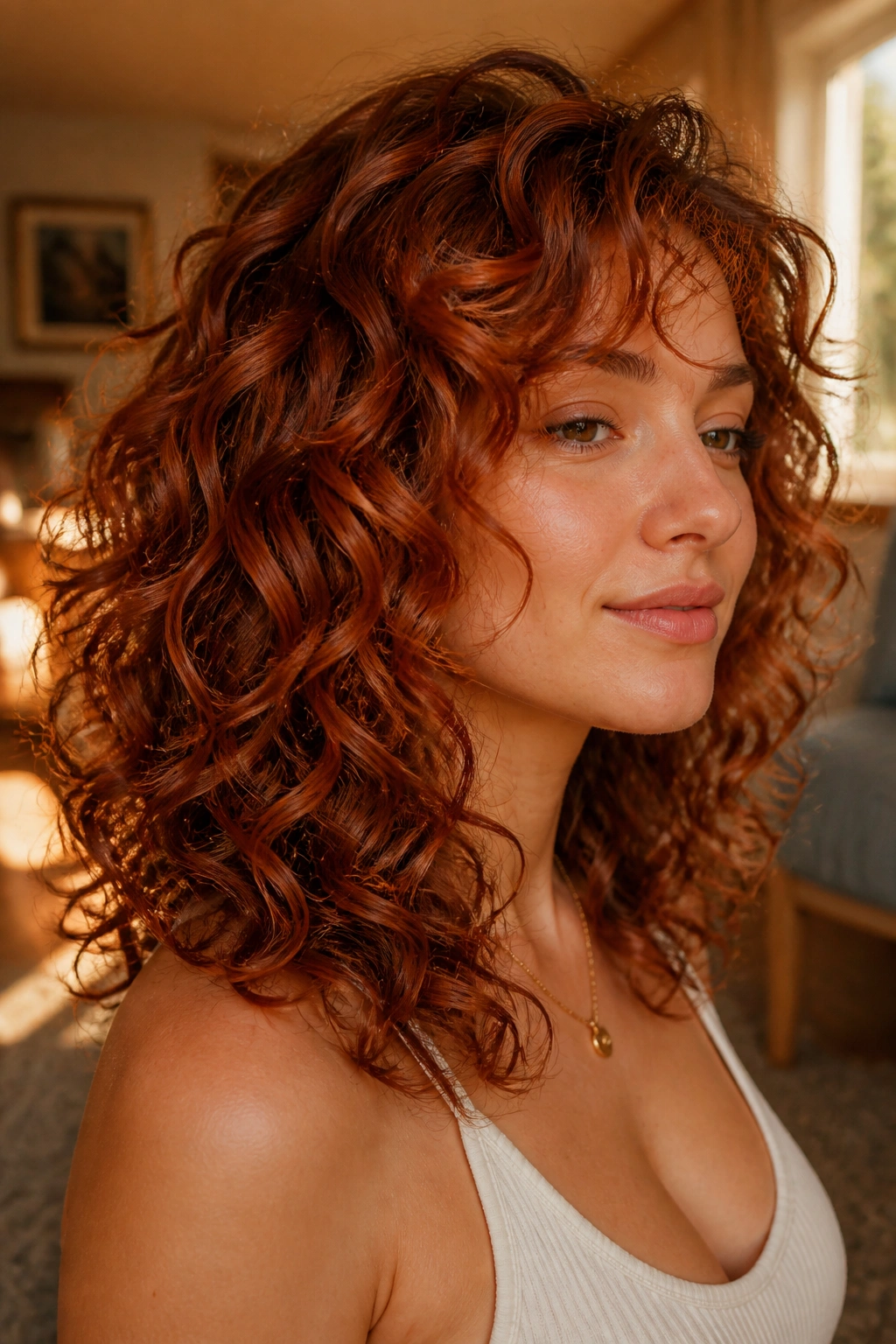
Copper clay is the earthy cousin in the ginger family. It has a muted red-orange base with a dusty, almost terracotta feel that looks especially nice in layered curls. The muted quality matters. It keeps the color from going candy-bright and lets the curl shape stay in charge.
I like this shade on cuts with visible layers because the different lengths create natural shadow. The clay tone slides into those shadows and gives the hair a warm, brushed look. It feels grown-up without being stiff. A little imperfect. Better for it, honestly.
If your natural color is medium brown, copper clay can sit close enough to your base that grow-out feels manageable. You still get warmth, but the line between colored and natural hair stays soft. That’s useful if you don’t want a strict maintenance schedule.
It also works well with matte styling products. A heavy shine cream can make the color read louder than intended, while a lightweight curl cream keeps the finish more earthy and believable.
18. Coral Peach Ginger Pixie Curls
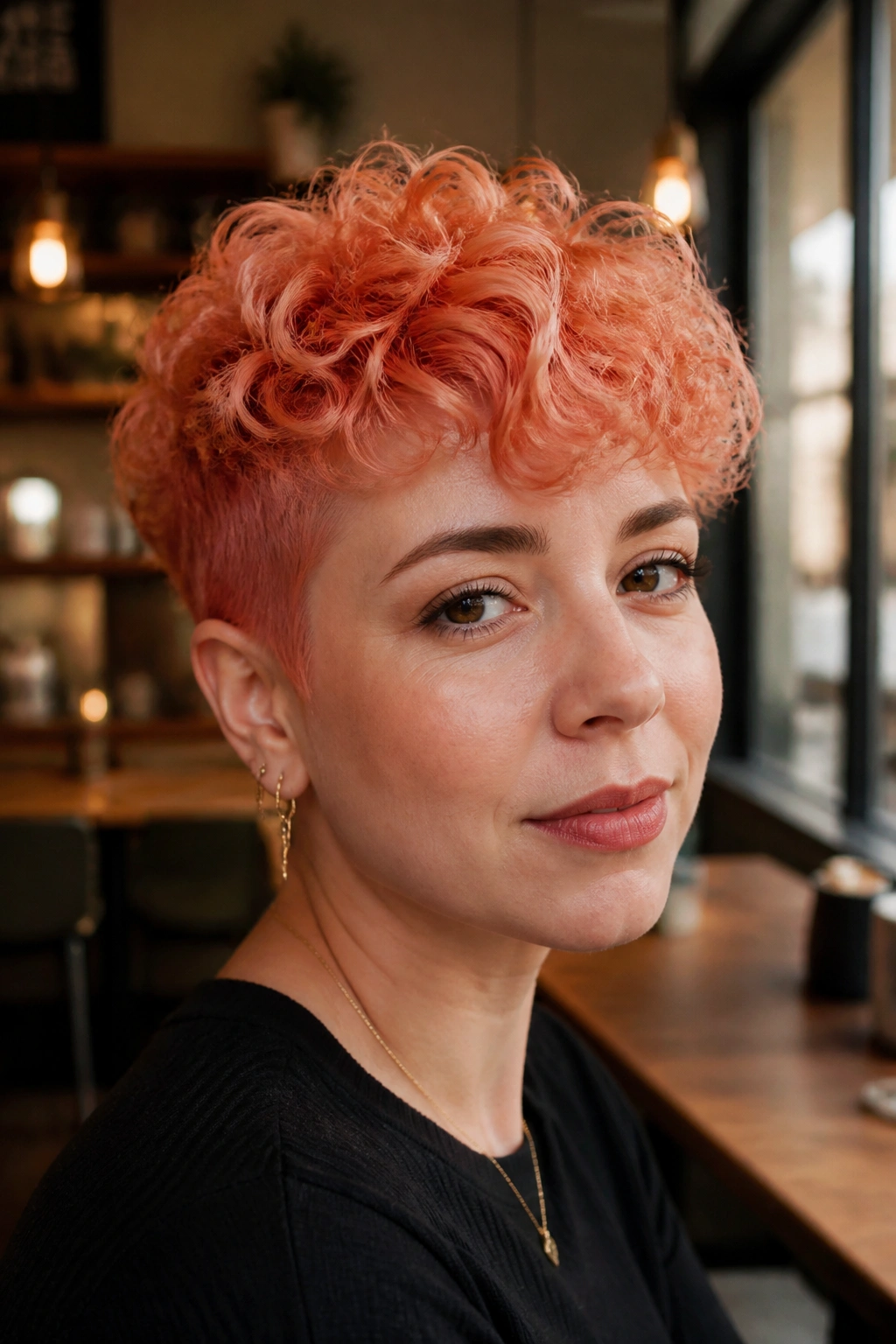
Short curls can carry a lot of color, and coral peach ginger proves it. On a pixie shape, the lighter front pieces and cropped sides make the warm tone look almost graphic. It’s playful, but not childish, which is a tricky balance in short hair.
Unlike longer styles, a pixie gives you less room to hide a color that feels off. That means the shade has to be clean from root to tip. Coral peach works because it’s bright enough to show on short curls, yet soft enough that the cut still looks wearable day to day. It also keeps the top from disappearing into the scalp, which can happen with darker reds.
Best for people who like a visible style and don’t mind touch-ups. Short cuts show regrowth faster. That’s not a flaw, just a fact. If you want the color to hold its shape, a quick gloss every few weeks helps.
This one is especially fun when the curls are finger-styled and a little piecey. It makes the cut look deliberate instead of accidental.
19. Maple Syrup Auburn
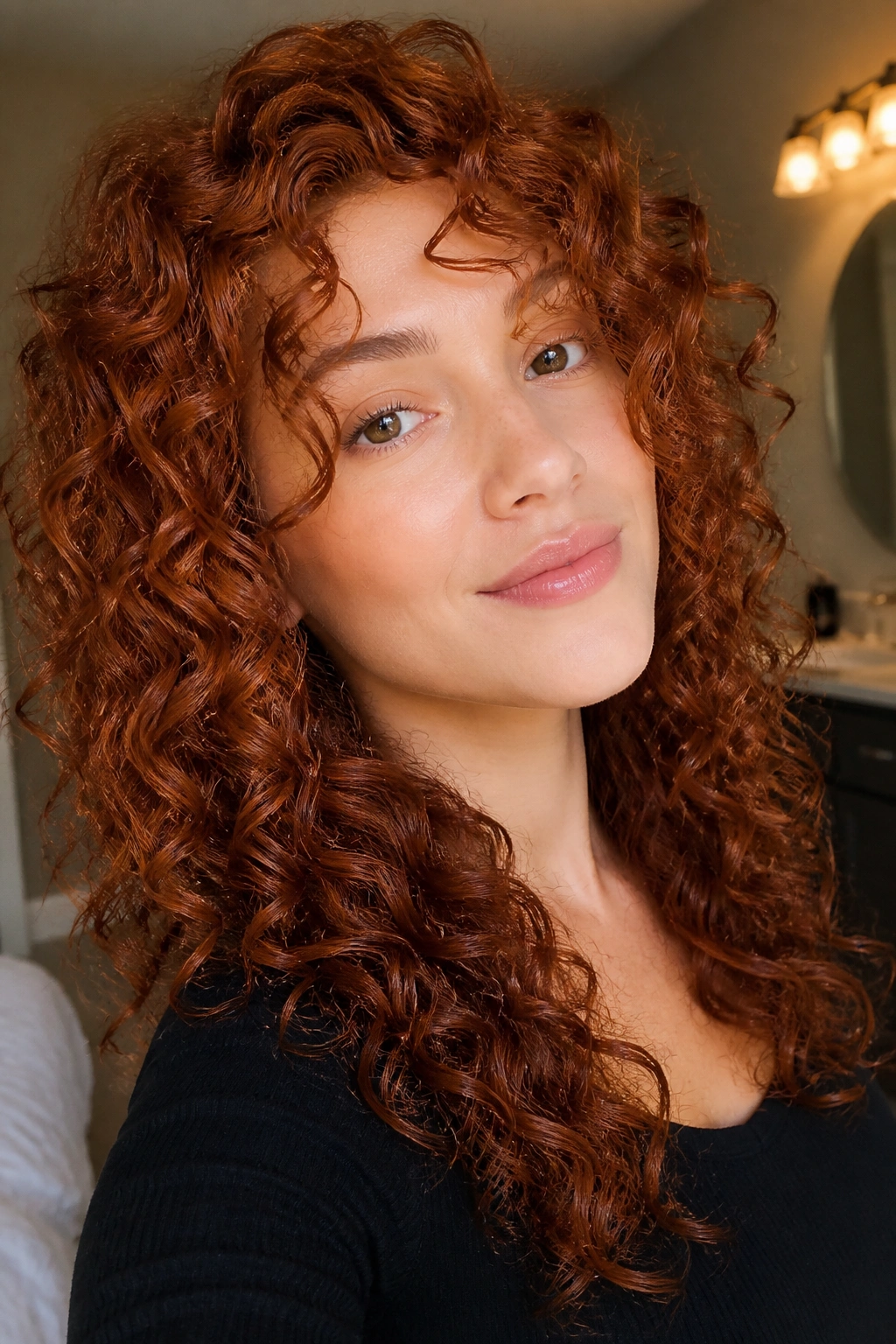
Maple syrup auburn is rich, glossy, and a little sticky-looking in the nicest way. The color has that deep amber-brown base with a warm ginger lift that glows instead of blaring. On curls, it gives the hair a polished, almost edible warmth.
What Makes It Special
The shade sits in a sweet spot between red and brunette. That means it works on a wide range of skin tones and doesn’t usually overpower the face. On curly hair, it can make thick lengths look smoother because the color reflects light along the bends instead of in one hard sheet.
- Best for medium to dark bases
- Ask for a brown-red gloss with amber warmth
- Looks good with diffused curls and soft twist-outs
- Needs gentle sulfate-free cleansing to keep the shine
My opinion: If you want one ginger shade that feels safe but not boring, this is a strong pick.
20. Firelight Balayage
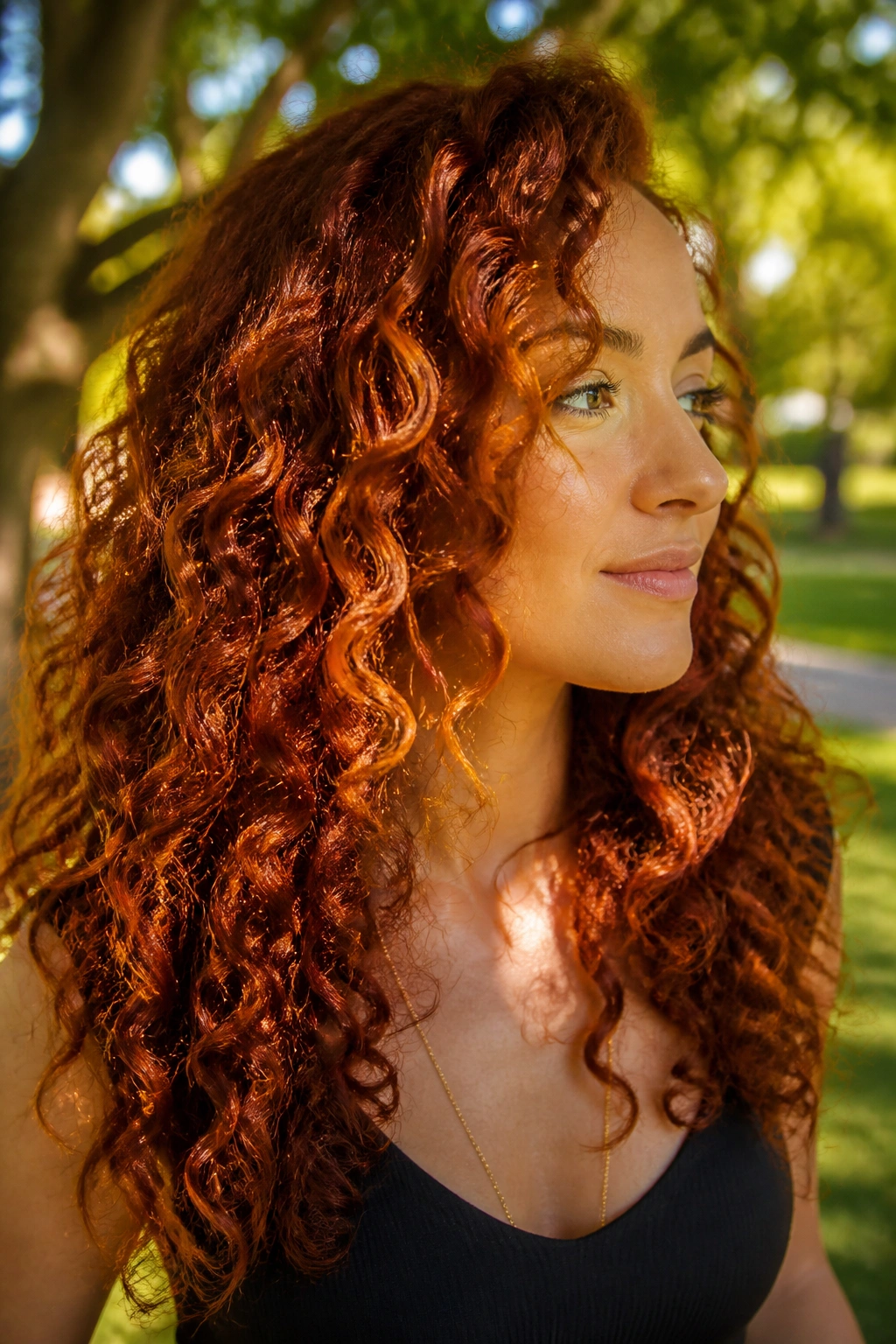
Firelight balayage is what happens when copper, amber, and a little red all share the same appointment. The result looks like flickering light across the curls instead of one fixed shade. That motion is the whole point.
Balayage works especially well on curly hair because the painted pieces don’t sit as straight stripes. They curve. They bend. They hide and reveal themselves with every turn of the head. Firelight tones make that movement more obvious, which is why they can make even simple haircuts look more expensive.
This shade is a good fit if you want dimension but don’t love heavy upkeep. Because the lightening is placed by hand and the root area stays darker, grow-out is softer than with a full copper application. The color also ages into a warm amber if you take care of it, which is rarely a bad thing.
Ask for the brightest pieces around the outer layers and face frame, then let the interior stay a little deeper. That contrast gives the look depth instead of noise.
21. Pumpkin Spice Lob
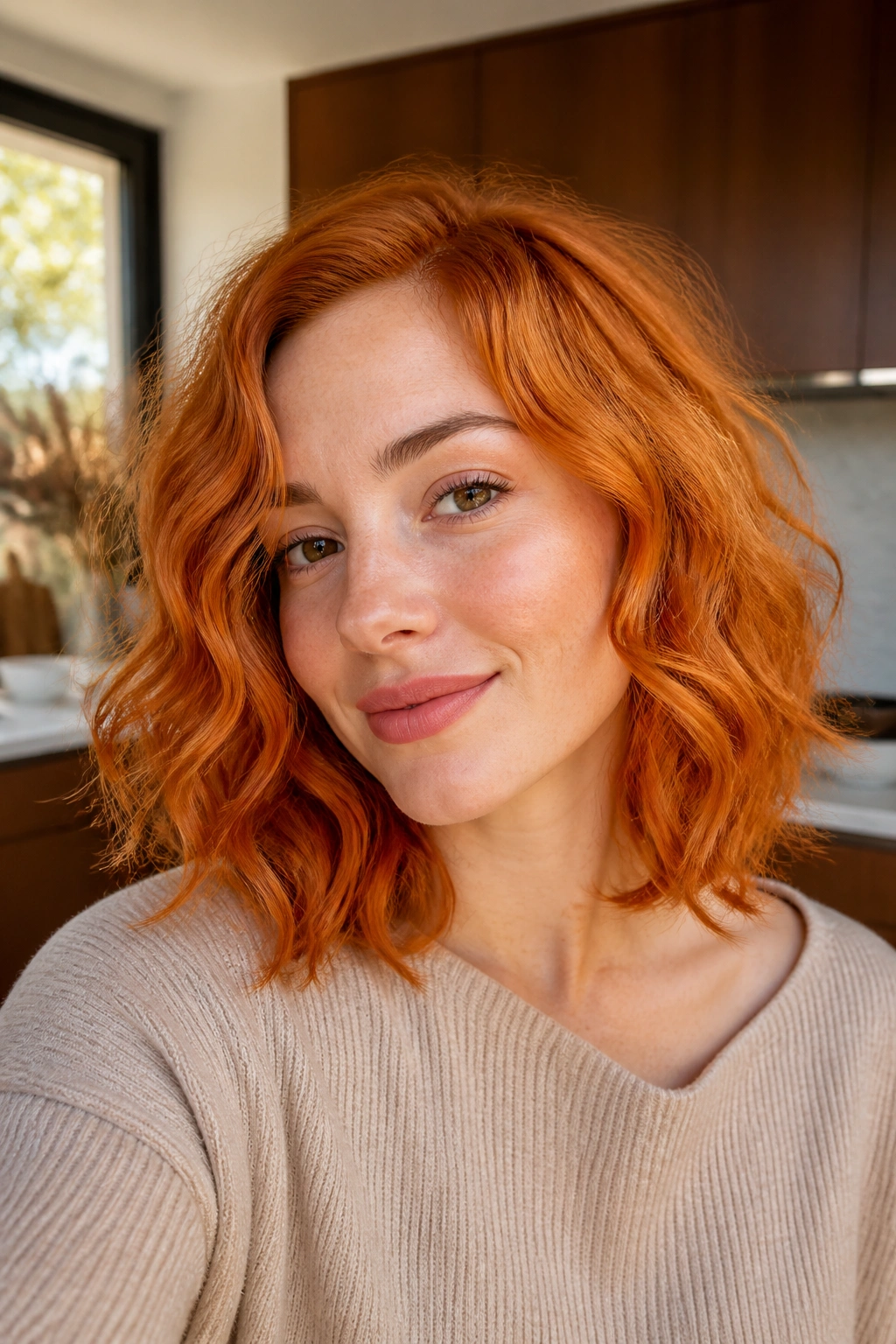
Pumpkin spice on a lob is not subtle, and that’s exactly why it works. The shoulder-grazing shape gives the color a clean surface to show off, while the curls keep the bright orange-copper tones from looking flat. It’s cheerful without feeling childish.
How to Wear It Well
The lob length gives you room for movement, but not so much that the color gets lost. That makes it a good match for vivid ginger tones that need a visible shape. If the cut is blunt, the color reads modern. If the cut has layers, it reads softer and a little more relaxed.
- Works well with soft waves or loose curls
- Ask for a pumpkin-orange copper with golden warmth
- Keep the ends trimmed every 8–10 weeks
- Use heat sparingly so the color stays bright
Small reality check: Vivid warm shades look best when the hair is smooth enough to show shine. Dryness steals the magic fast.
22. Henna-Inspired Earthy Ginger
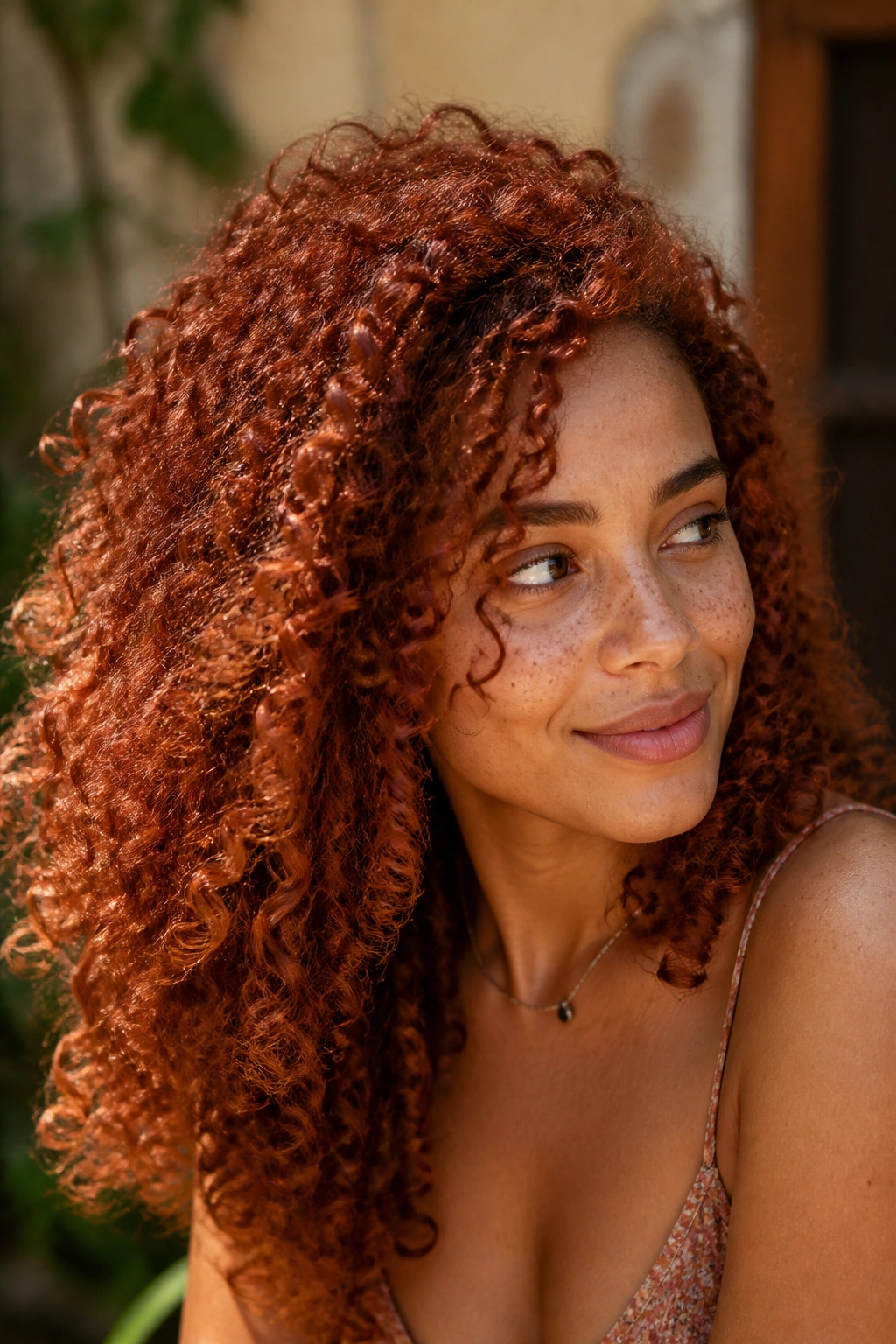
Henna-inspired ginger has that grounded, sunbaked quality that feels close to natural red hair, even when it’s color-treated. It leans earthy instead of neon, with a warm terracotta cast that works especially well on dense curls and coils. The finish is less “fashion color,” more “this grew here.”
Where It Lands Best
This shade is a good match for people who want red without a synthetic look. It pairs well with deeper base color and can be built with glosses, low-lift dye, or warm overlays. On curly hair, that earthiness helps the color sit inside the pattern instead of sitting on top of it like paint.
- Great for medium and deep brunette bases
- Ask for a terracotta-copper red with brown depth
- Looks strongest in natural light
- Works well with minimal styling product buildup
Worth noting: If you use too much heavy curl cream, earthy ginger can look dull. Keep the finish light and airy.
23. Ginger Champagne Highlights
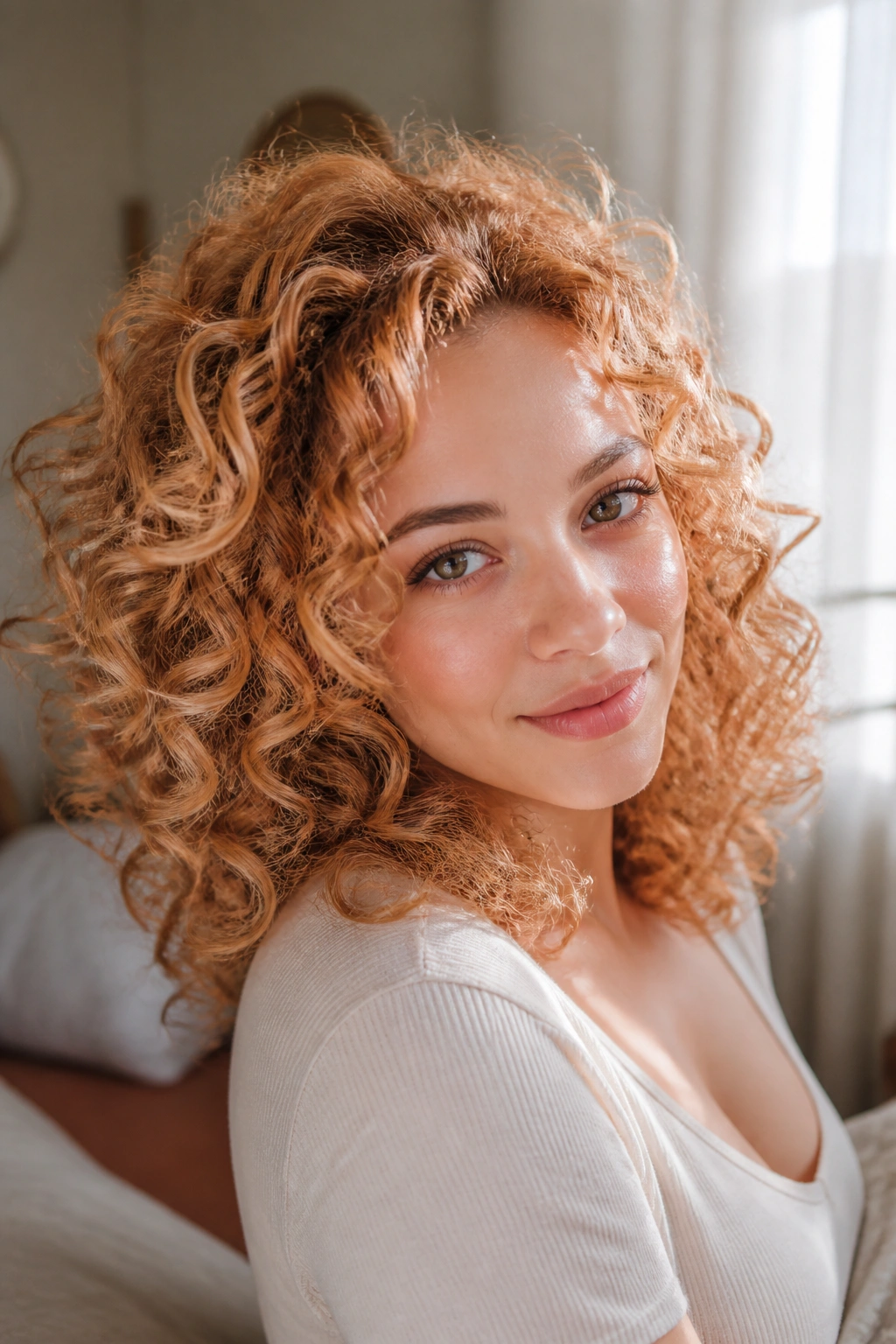
Ginger champagne is softer than it sounds. The color sits between pale gold, light copper, and a whisper of peach, which gives curls a delicate shimmer rather than a heavy red statement. It’s especially good for people who want brightness but don’t want to live in bright copper.
The nice thing about champagne tones is the way they lift the curl pattern around the top and face. They create small points of light where the hair naturally bends, so the curls look more separated and airy. On finer curls, that can be a real help. On thicker curls, it keeps the shape from feeling too dense.
This shade works best with a cool or neutral gloss layered over a warm base. That prevents it from drifting too yellow. It also helps if the highlights are placed with some randomness, because curls already do enough of the organizing for you.
If you like warm hair that still feels soft in tone, this one is easy to wear and easier to grow out than it first appears.
24. Merlot Copper Blend
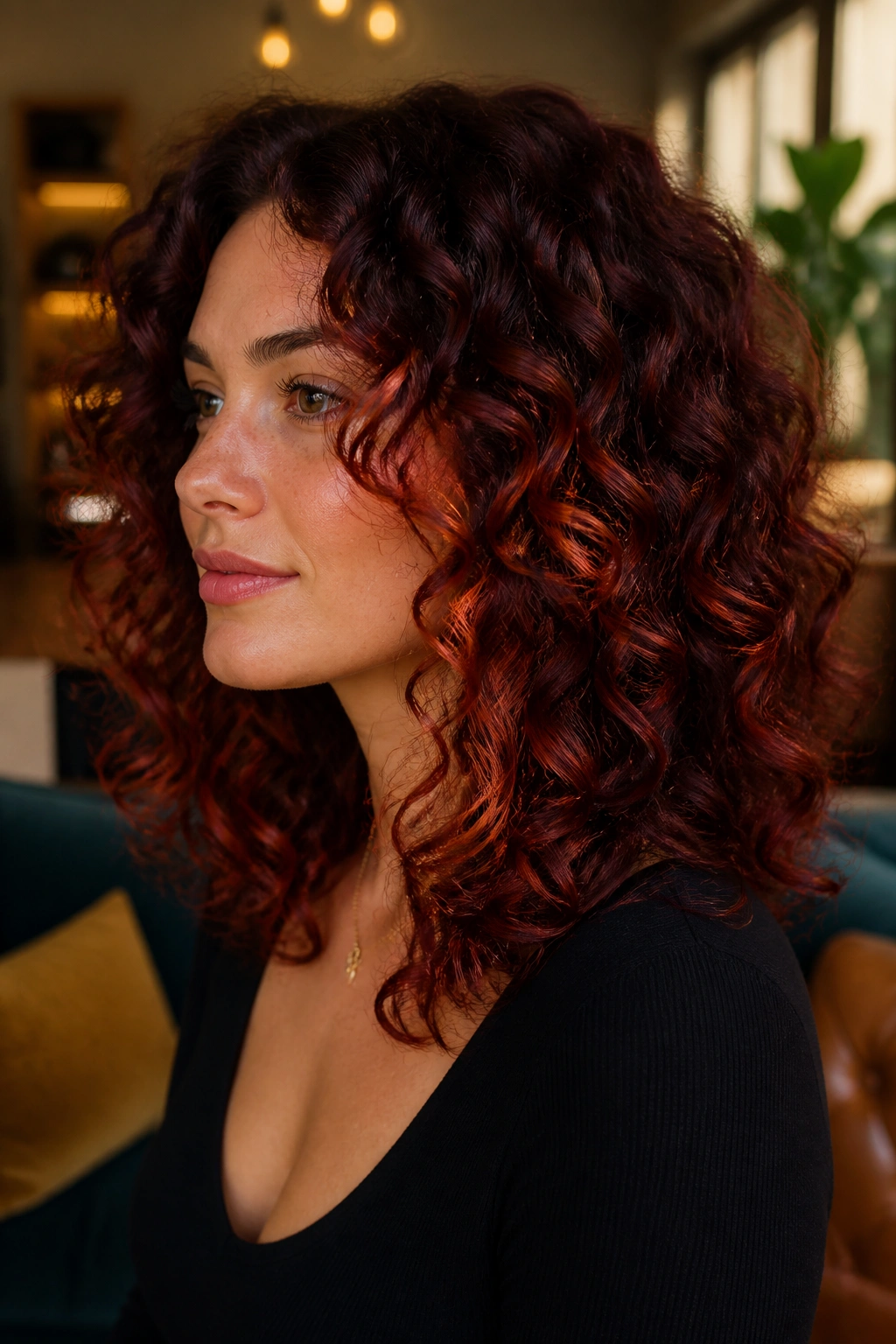
Merlot copper is deeper, darker, and far more sultry than a bright ginger. It combines wine-red depth with a copper shine that shows up at the edges of curls and around the face. On curly hair, the shade feels luxe because the curls create tiny pockets of shadow and light.
Unlike brighter reds, this blend can handle a little less definition and still look polished. That makes it useful for hair that doesn’t want to be flattened by heavy styling. Even when the curls are a little imperfect, the color holds its shape. The merlot side keeps it grounded; the copper side keeps it from feeling too dark.
This is a strong choice for people with medium to deep skin tones, though it can flatter a lot of different complexions when the copper is balanced well. It’s also one of the better red tones for cooler weather dressing, if that matters to you. Dark denim. Black sweaters. Big hoops. It all works.
Ask for the color to stay in the red-brown family with copper lightness on the outer curls, not a true burgundy. That little shift changes everything.
25. Sunset Ombré
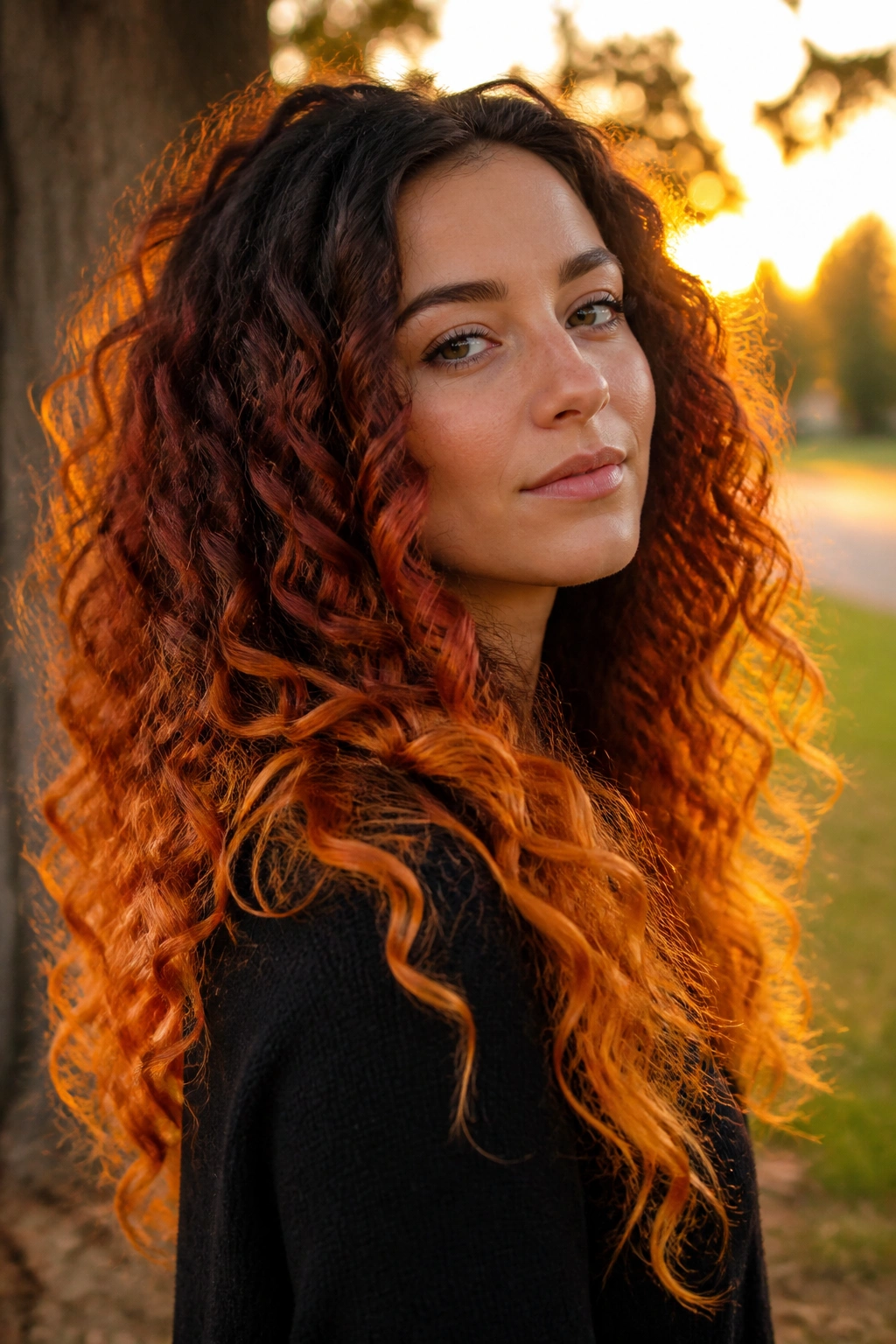
Sunset ombré gives you one of the prettiest color transitions in the ginger family. The roots stay deeper, then the mids move into copper, and the ends open into orange-gold warmth. On curls, it looks like the hair is catching the last bit of light from three different directions.
The Blend Is the Point
The transition should feel gradual, not striped. You want the darker root area to blend into warm mids, then let the ends take on the brightest color. If the fade is rushed, the hair can look patchy when it dries. If it’s smooth, it looks almost painted by hand.
- Best on medium to long curls
- Ask for a copper-to-gold fade
- Keep the root area slightly deeper for contrast
- Works well when curls are layered and airy
Little warning: This kind of ombré can be gorgeous on day one and messy on day twenty if the blend is too abrupt. Softness wins here.
26. Spiced Caramel Ginger
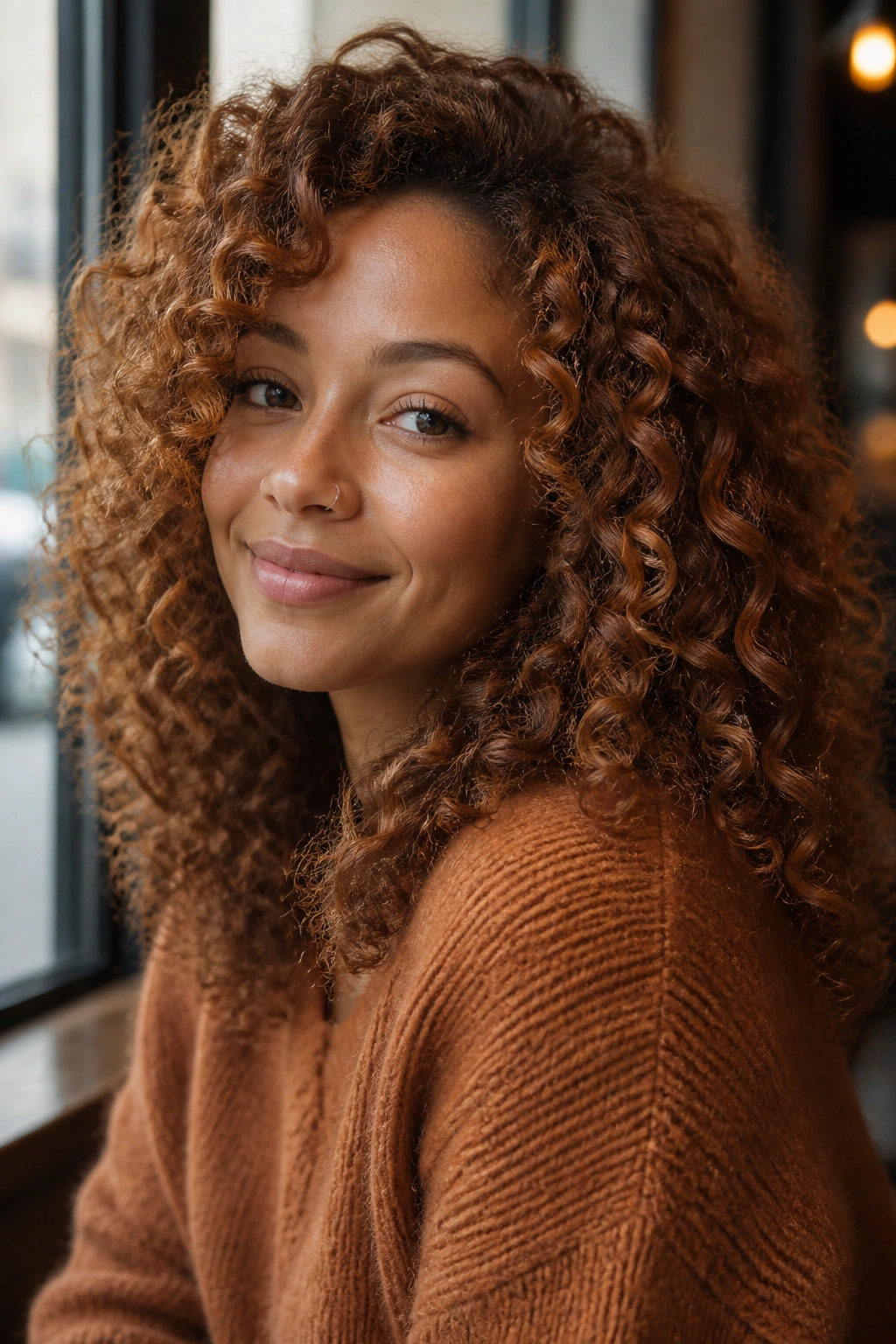
Spiced caramel ginger is one of the easiest warm colors to wear because it feels familiar without being dull. It mixes caramel brown with ginger warmth, so the end result lands softer than full copper and richer than plain brunette. On curls, that kind of balance helps the pattern stay visible.
This shade is especially useful if you want warmth around the face and a little shine through the lengths, but you’re not interested in full red maintenance. The caramel base keeps the look grounded. The ginger overlay gives it a little spark. It’s the sort of color that looks good in messy buns, diffused curls, and day-two styles that need a bit of life.
For the nicest finish, ask for lighter pieces through the top layers and warmer tones through the mids. That keeps the shade dimensional. It also lets the cut do some of the work, which is always a nice trade.
If you’re nervous about ginger but want something clearly warm, this is a very sensible doorway into the family.
27. Copper Peekaboo Panels
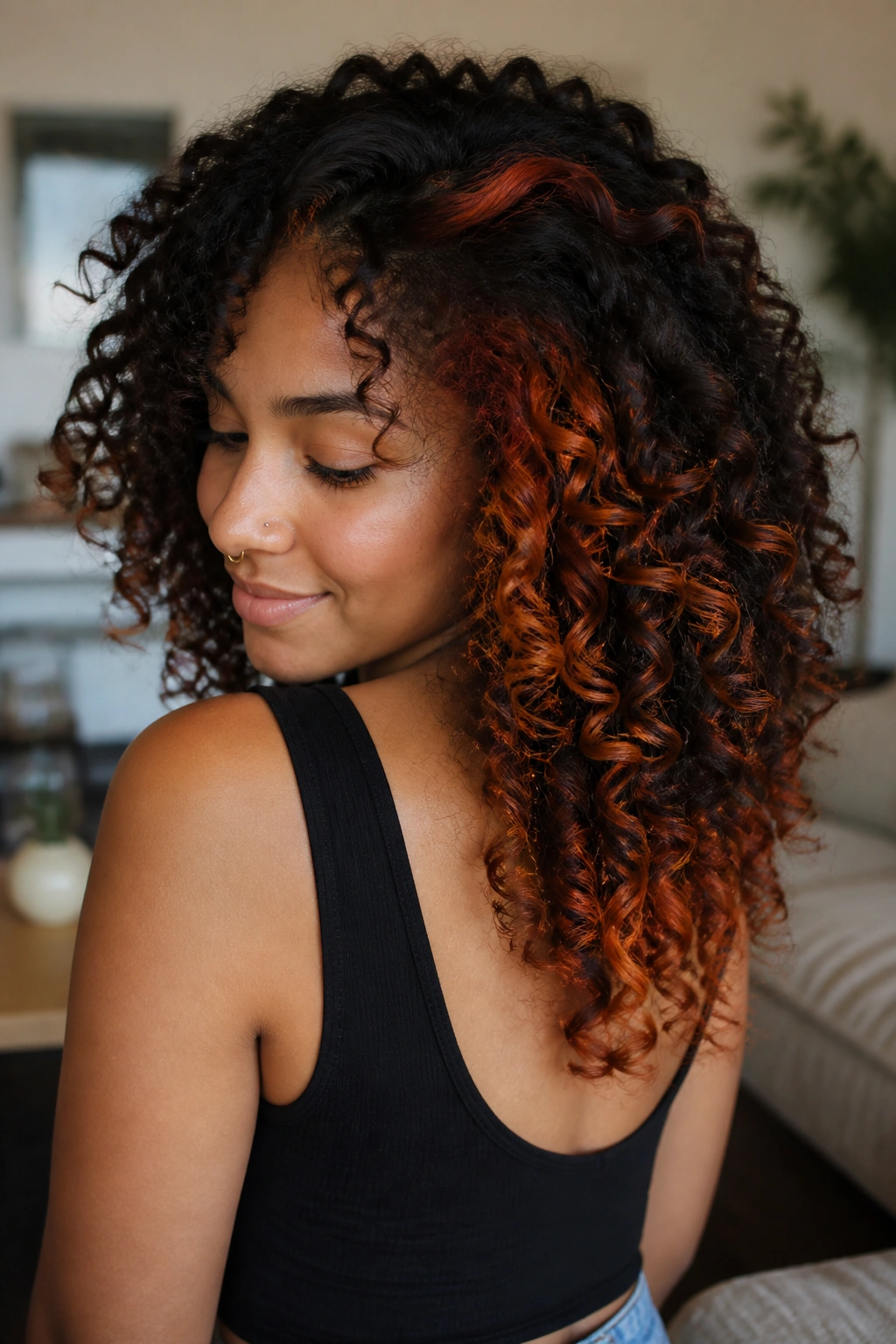
Can hidden color still make a big statement? Yes. Copper peekaboo panels live under the top layer of curls, so they flash only when the hair moves. That makes them feel playful and a little secretive, which is a fun match for curly texture.
This idea is especially smart if you work somewhere that prefers a calmer look, or if you just don’t want bright copper staring at you every day. The top layer stays closer to your natural shade, while the underneath sections hold the stronger color. When the curls separate, the copper appears in little flashes. It’s one of the few bold choices that can still feel low-key.
Best Ways to Place Them
Ask for the panels under the crown and around the lower back sections, not just at the nape. That way the color shows when the hair is worn half-up, pinned, or shaken out. The best peekaboo work is planned around the haircut, not tacked on afterward.
Personal favorite: This looks especially good on shoulder-length curls with a messy halo shape. The flashes feel accidental, even when they’re carefully placed.
28. Desert Rose Ginger
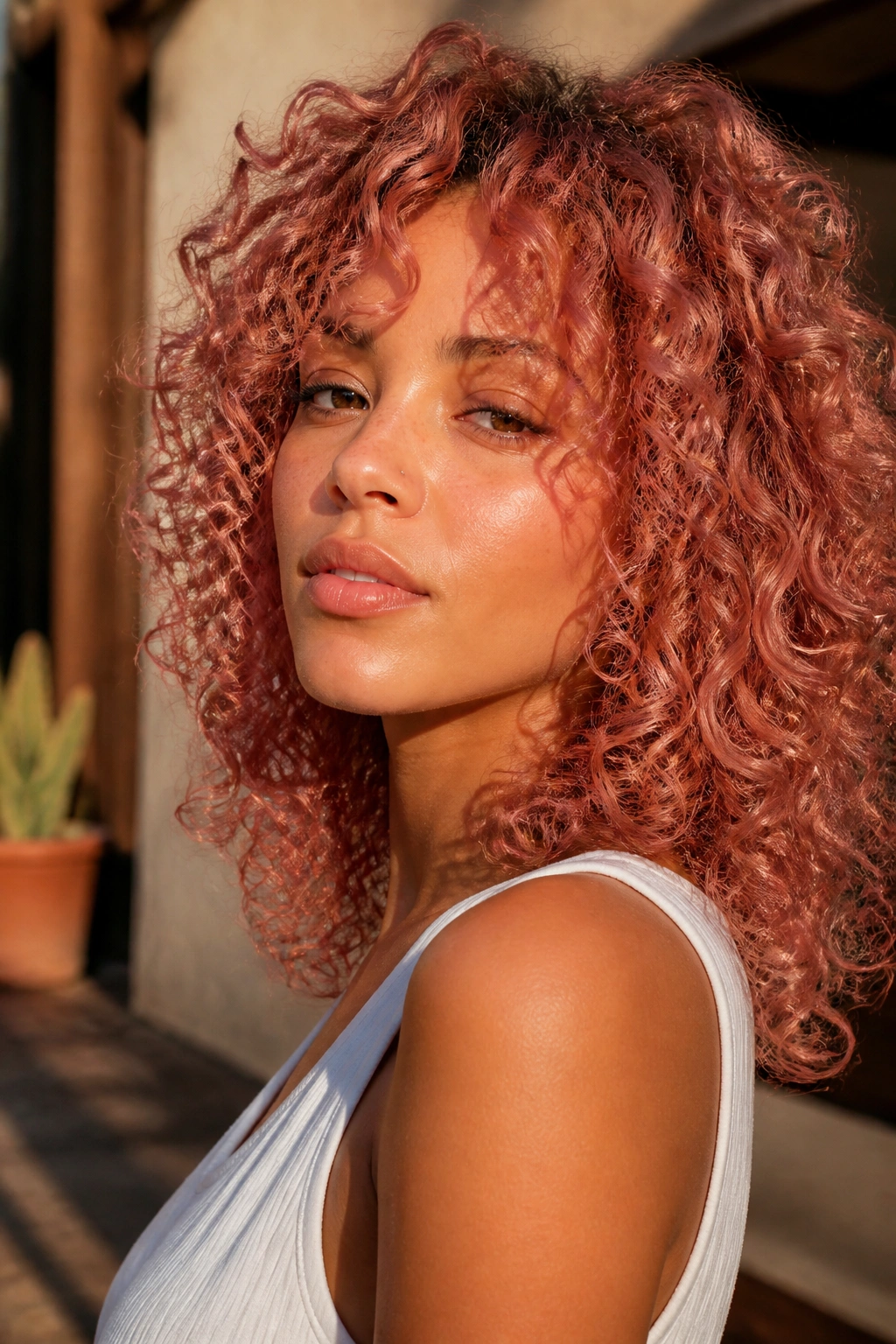
Desert rose ginger has a dusty, sun-warmed quality that sits between peach, rust, and muted copper. It’s not a bright red and it’s not a pastel either. That middle ground gives curly hair a soft glow that feels modern without being trendy in a way that will age badly fast.
The color works well on textured hair because the muted tone helps preserve curl definition. Highly saturated reds can sometimes overwhelm a finer curl pattern, but desert rose stays calm. It still adds warmth around the face and depth through the lengths. It just does it in a quieter voice.
- Good for wavy to coily textures
- Ask for a dusty coral-copper glaze
- Looks nice with a slightly deeper root shadow
- Needs gentle conditioning to keep the rose tone from dulling
Worth it if: You want ginger, but you want it with a little dust and restraint.
29. Velvet Auburn Shadow Roots
Velvet auburn with shadow roots is all about richness. The roots stay deeper and cooler, then the auburn lengths glow with a soft red-brown warmth that feels almost plush. On curls, that deeper root area makes the color look thicker and cleaner at the scalp.
The shadow root also buys you time. Grow-out looks softer, and the red length doesn’t scream for a touch-up the second your hair shifts a quarter inch. That matters if you prefer a less fussy routine. It also makes the overall shade feel more grounded, which is useful when the rest of the hair is bright or highly defined.
This version is especially good on long curls that need a little visual weight at the top. The darker root holds the shape in place, while the auburn mids and ends keep the hair from feeling flat. It’s one of those colors that looks better in motion than in a photo.
If you like warm hair but hate obvious regrowth, this is one of the smartest choices on the list.
30. Classic Vivid Ginger Gloss
Classic vivid ginger gloss is the full red-copper statement. No soft fade, no hidden panels, no shy little highlight trick. Just an all-over glossy ginger that makes curls look bold, shiny, and very awake. It is the simplest idea here, and sometimes simple is the right call.
Why It Still Works
A single, vivid ginger shade can look powerful on curls because the texture keeps it from feeling flat. Every bend picks up a slightly different tone. That means one glossy formula can still give you movement if the hair is layered and healthy enough to hold a clean finish. The shine is the whole game here.
- Best on well-conditioned curls with some natural volume
- Ask for a high-shine copper-gold gloss
- Great when you want one clear color story
- Needs color-safe shampoo and regular hydration
My take: If you want ginger to feel unapologetic, this is the one to choose. No tricks. No camouflage.
Final Thoughts
Curly hair and ginger tones get along best when the color has room to move. The smartest choices are the ones that work with the curl pattern instead of fighting it — soft ribbons for dimension, deeper roots for ease, brighter coppers when you want the hair to lead the room.
If you want the lowest-maintenance path, start with a glaze, balayage, or shadow-rooted ginger. If you want drama, go all the way with vivid copper, penny red, or a bold orange-red melt. The cut matters too. A good layer can make a warm color look twice as expensive, and a bad cut can flatten even the prettiest shade.
One last practical note: bring photos with both indoor and daylight lighting. Ginger shifts fast under different bulbs, and curls change the read even more. That tiny bit of planning saves a lot of disappointment later.
