



Cherry red can be brutal on the wrong undertone. Put an orange-leaning version next to cool skin, and it can make the face look a little tired or flat. Choose a blue-based cherry instead, and the whole look sharpens up fast.
That’s the part people miss. Cool skin tones don’t need a softer red; they need the right red. Think blueberry, cranberry, plum, wine, black cherry, and raspberry more than tomato, copper, or tangerine. The difference is small on a swatch card. On hair, it’s the difference between “nice color” and “why does that suddenly suit you so well?”
I’ve always liked cherry red because it has range. It can go glossy and subtle, dramatic and dark, or bright enough to read from across a room, and still stay on the cool side if the undertone is right. Some shades need bleaching. Some don’t. Some look better on curls, some on blunt bobs, and some only really come alive when the light hits them at an angle.
So the fun part starts here. The first few shades lean deep and smoky, then the list moves through brighter cherry tones, hidden placements, and low-maintenance ideas that still give you that cool-toned hit of red.
1. Blue-Black Cherry Red
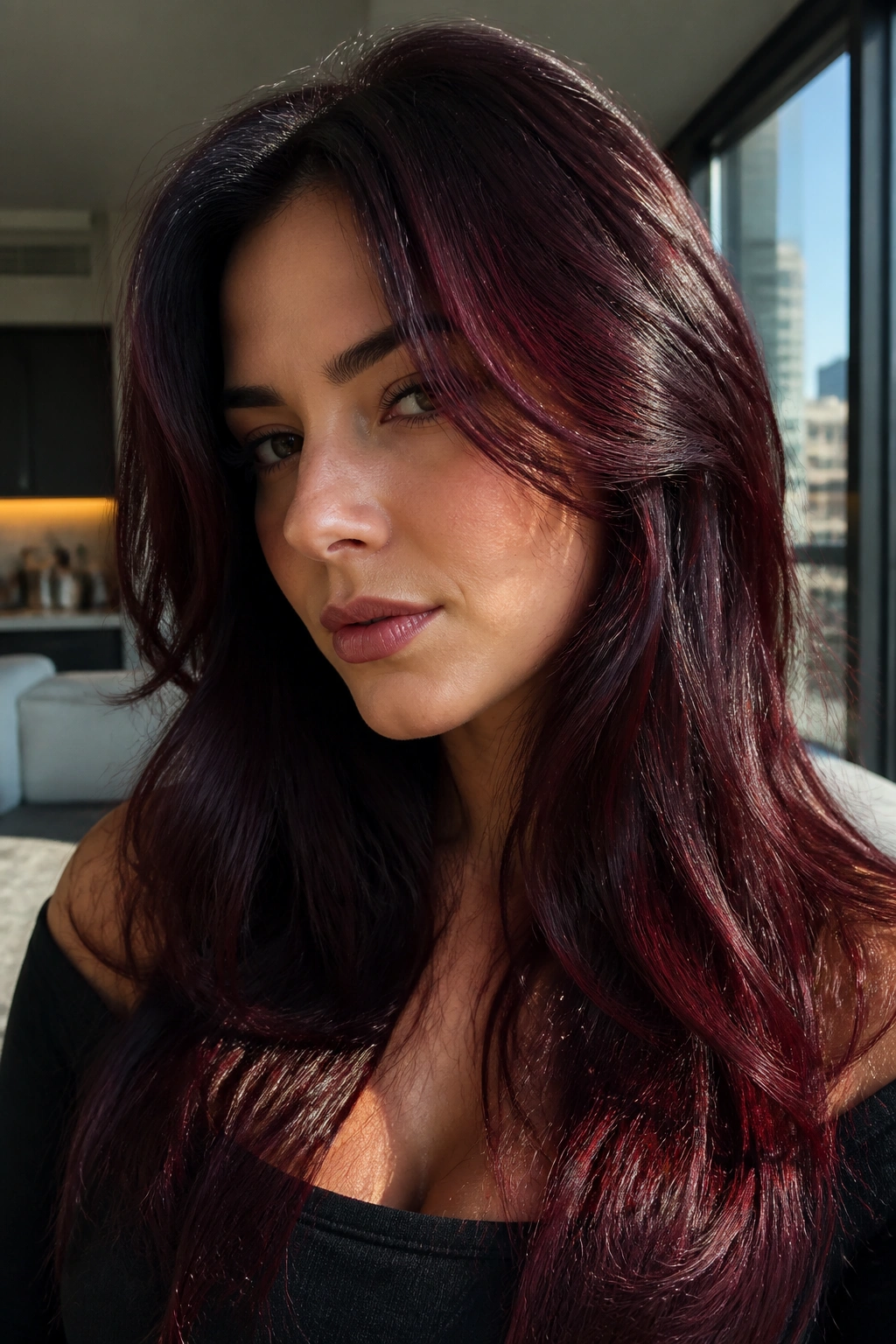
This is the shade I reach for when someone says they want cherry red hair color ideas for cool skin tones, but they do not want the color shouting before they’re ready. It reads almost black indoors, then throws a blue-red flash in daylight. Very slick. Very controlled.
Why It Works for Cool Skin
A blue-black cherry keeps the red on the cooler side because the base is so deep. That means the color sits nicely beside pink, blue, or neutral-cool skin without pulling the face warm. It’s also forgiving if your hair is already dark brown.
- Ask for a level 3 or 4 base with a blue-red or violet-red deposit.
- It works well as a full all-over color or a high-shine gloss over dark hair.
- Best on straight styles, blunt cuts, and glossy waves.
- Expect the red to show more in sunlight and under warm indoor light.
Pro tip: If you want the red to stay moody instead of bright, keep the roots deeper than the mid-lengths.
2. Cherry Cola with a Cool Brown Base
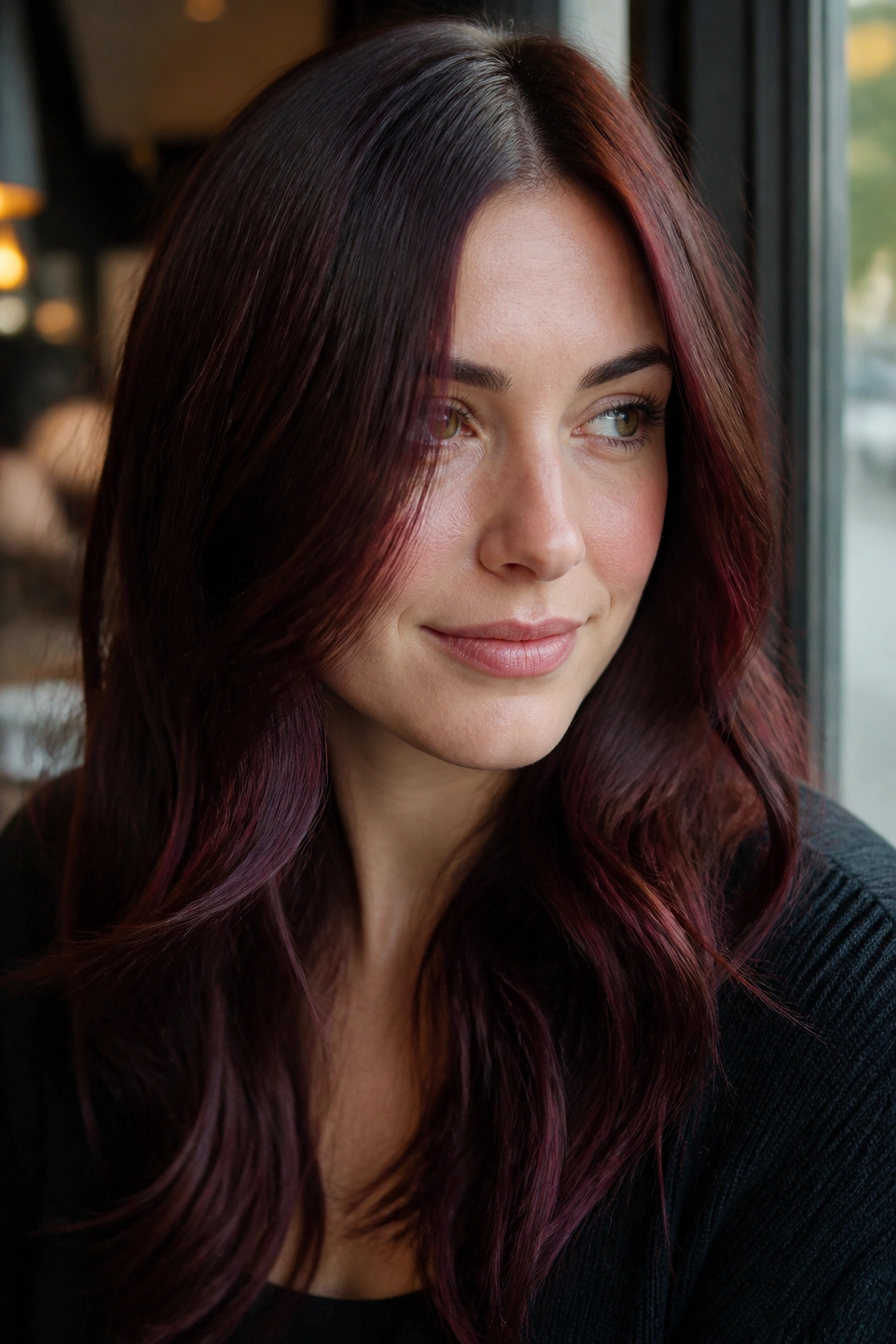
Why does cherry cola look so good on cool skin? Because it behaves like brunette hair first and red second. The brown gives it structure, and the cherry reflection comes through as a soft red sheen instead of a loud statement. That makes it easy to wear to work, dinner, or anywhere else where bright red would feel like a lot.
How to Wear It
The best version starts with a cool chocolate or ash-brown base and then layers in a cherry gloss. You want the red to peek through, not sit on top like paint. On curls, the red catches the curve of each ringlet. On blown-out hair, it reads smoother and richer.
A middle part makes this color look polished. A side part makes it feel a little less strict.
Best for: cool medium skin, dark eyes, and anyone who wants red with a brown backbone.
Maintenance: refresh the gloss every 4 to 6 weeks to keep the cherry from fading into flat brown.
Skip if: you want a coppery red. That’s a different mood.
3. Cranberry Gloss on Light Brunette Hair
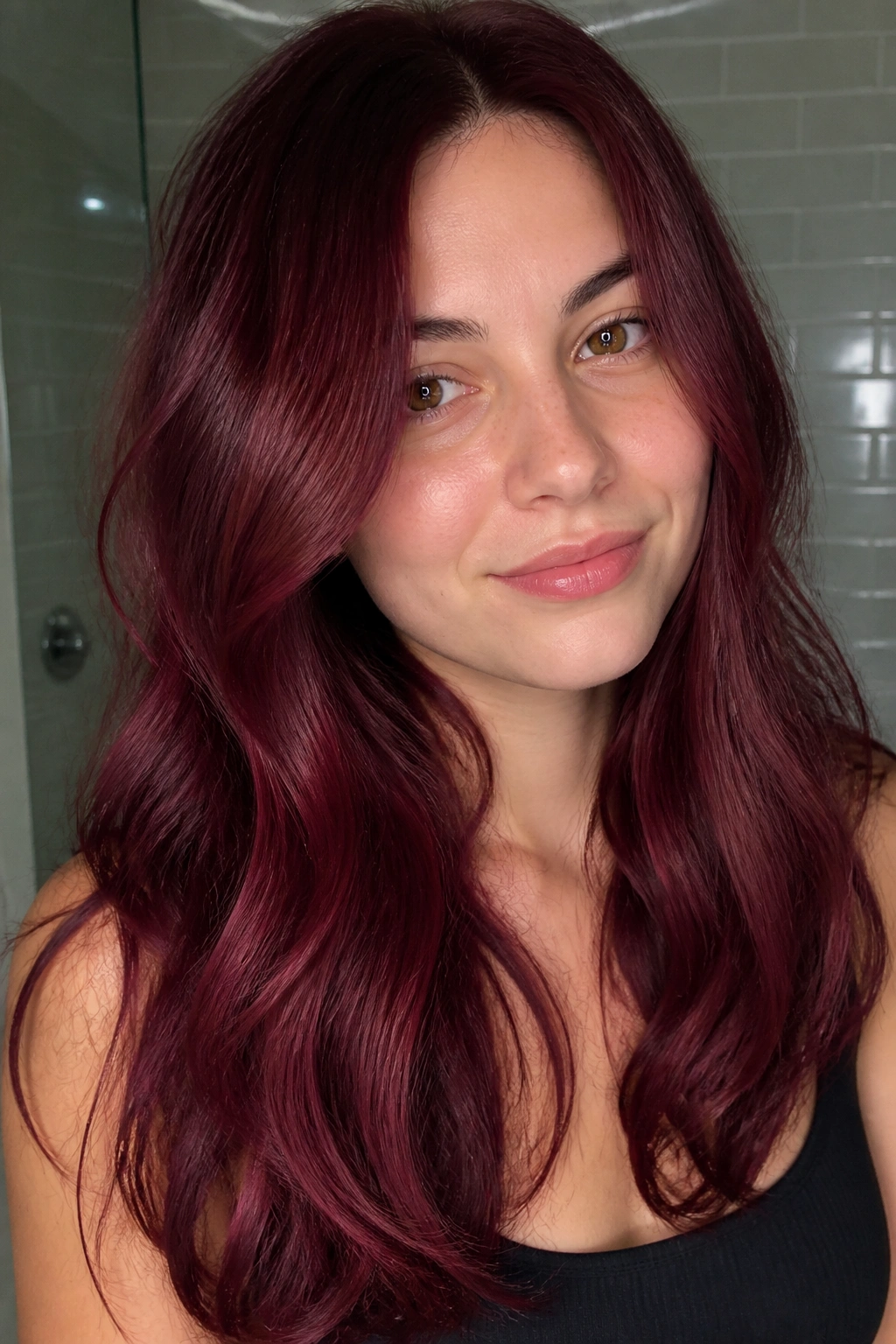
Cranberry is one of those shades that does not get enough credit. It has enough red to feel fun, but the berry note keeps it cool and crisp. On light brunette hair, especially a level 5 or 6 base, it creates a clean red that never tips into orange.
The nice thing about a cranberry gloss is that it wears softly. You can do it over a few pre-lightened pieces, or over a full brunette base if your colorist adds enough deposit. It is especially good if your skin has a pink cast and you usually look best in silver jewelry.
A little shine spray helps, but the color should already have that wet, reflective look. If it doesn’t, the formula may be too warm.
4. Black Cherry Balayage for Cool Skin Tones
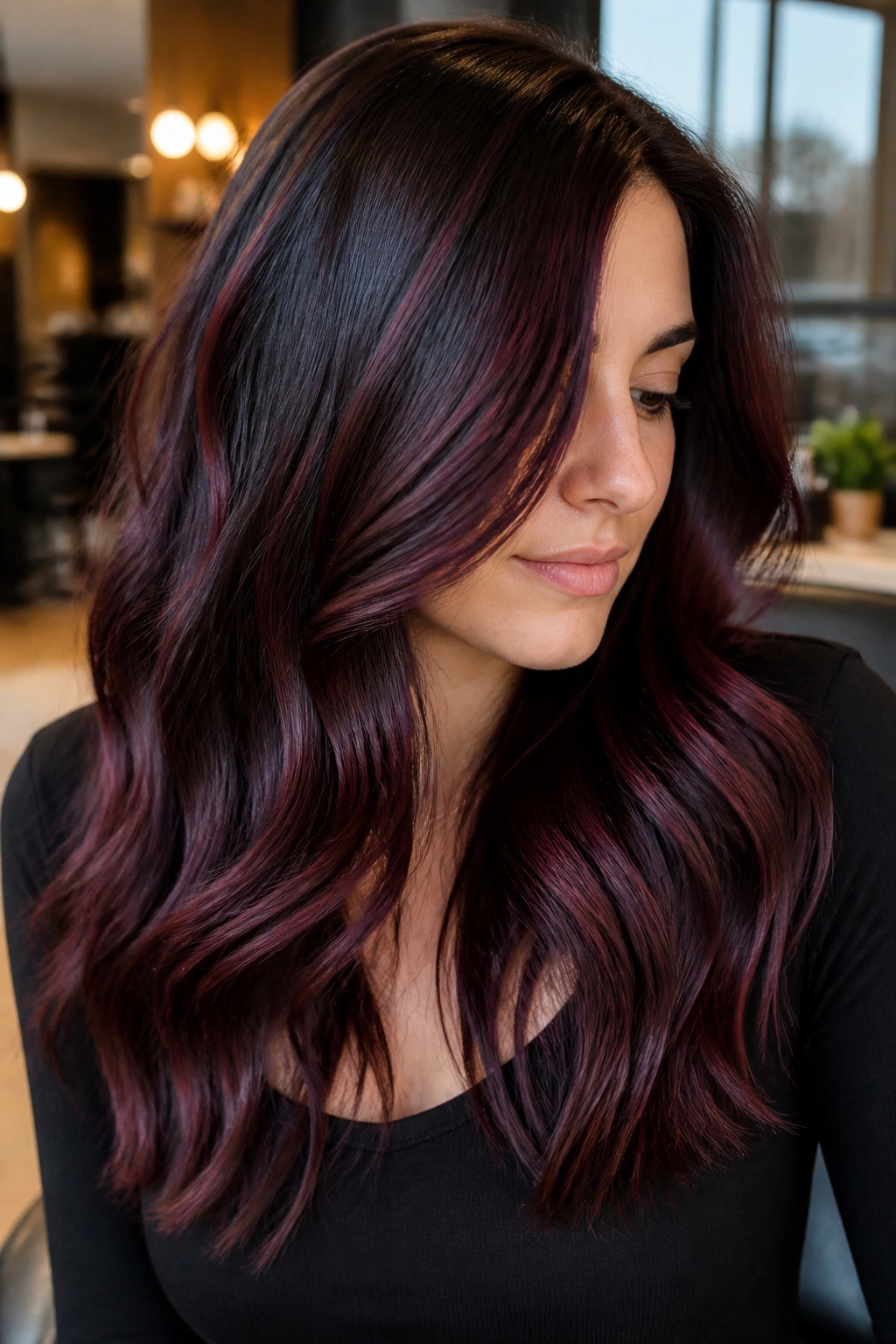
Balayage is the move when you want dimension without full commitment. Black cherry balayage keeps a dark base and paints in cool red ribbons that appear and disappear as the hair moves. It’s a smarter choice than full-head red if you like a little mystery.
What Makes It Different
Unlike one flat cherry shade, balayage gives you built-in depth. The lighter red pieces can sit around the face, through the ends, or tucked inside the haircut so the color shifts when you walk. Cool skin tones usually love that contrast because the darker base keeps everything balanced.
- Works best on medium to dark brunette hair.
- Ask for hand-painted ribbons, not chunky streaks.
- Looks strongest on wavy or curled hair.
- Needs a toner or gloss between salon visits if the red starts to look dull.
Short version: this is cherry red for people who like movement more than uniformity.
5. Ruby Red Money Piece
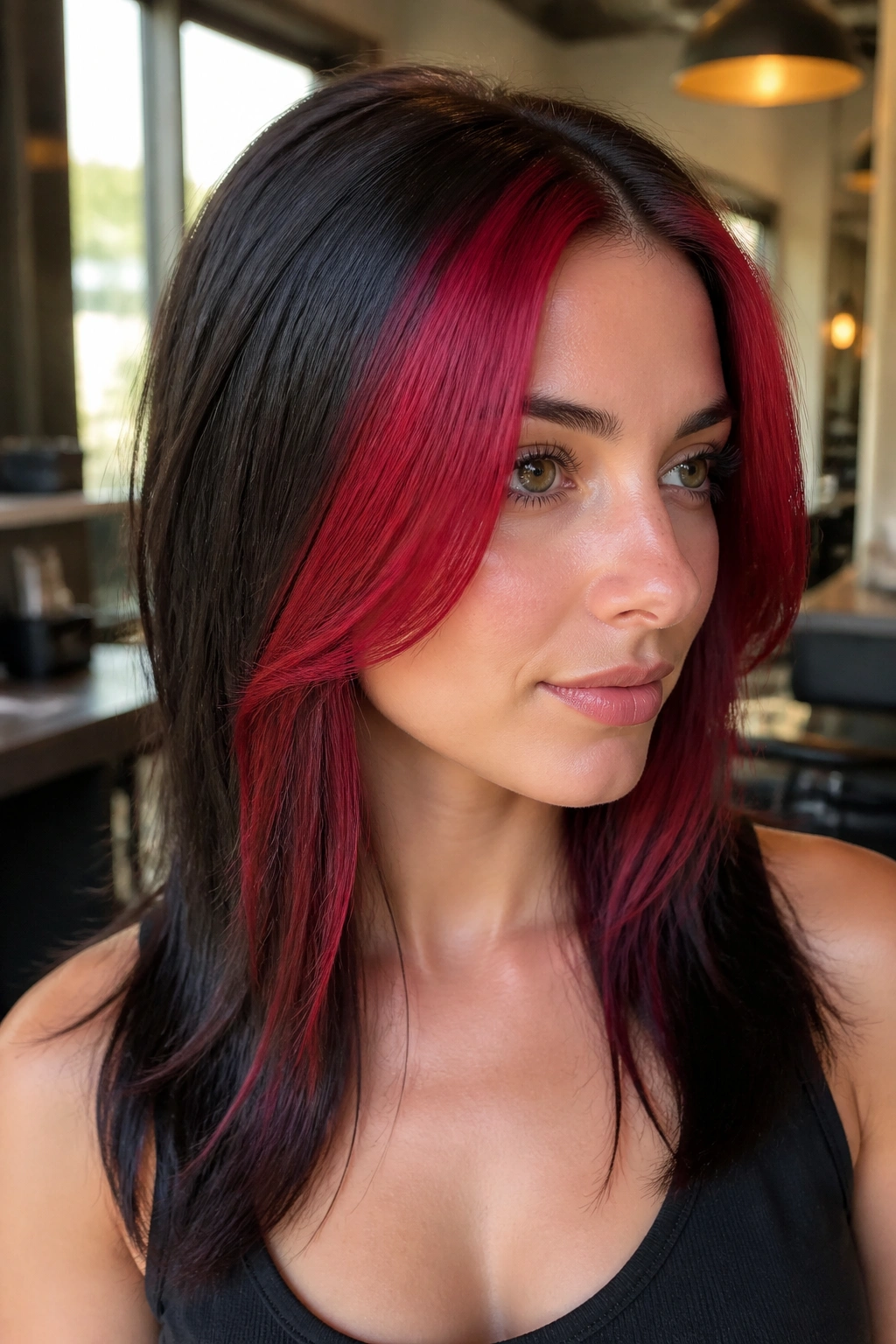
A ruby money piece is the fast way to change your whole face without coloring your whole head. Two bright panels around the hairline can make cool skin look clearer, especially if the rest of the hair stays dark or neutral.
I like this idea for someone who wants a visible red but doesn’t want the maintenance of a full cherry head. It also works well with ponytails, buns, and half-up styles because those front sections stay visible even when the rest of the hair is pulled back.
Quick Notes
- Best on dark brunette or black hair with a strong ruby deposit.
- The front panels should be slightly brighter than the rest of the hair.
- Cool makeup shades — plum lipstick, berry blush, silver liner — make the whole look feel intentional.
- Touch up the face frame more often than the back. Those pieces fade first.
One bright strip can do a lot.
6. Burgundy Cherry Melt
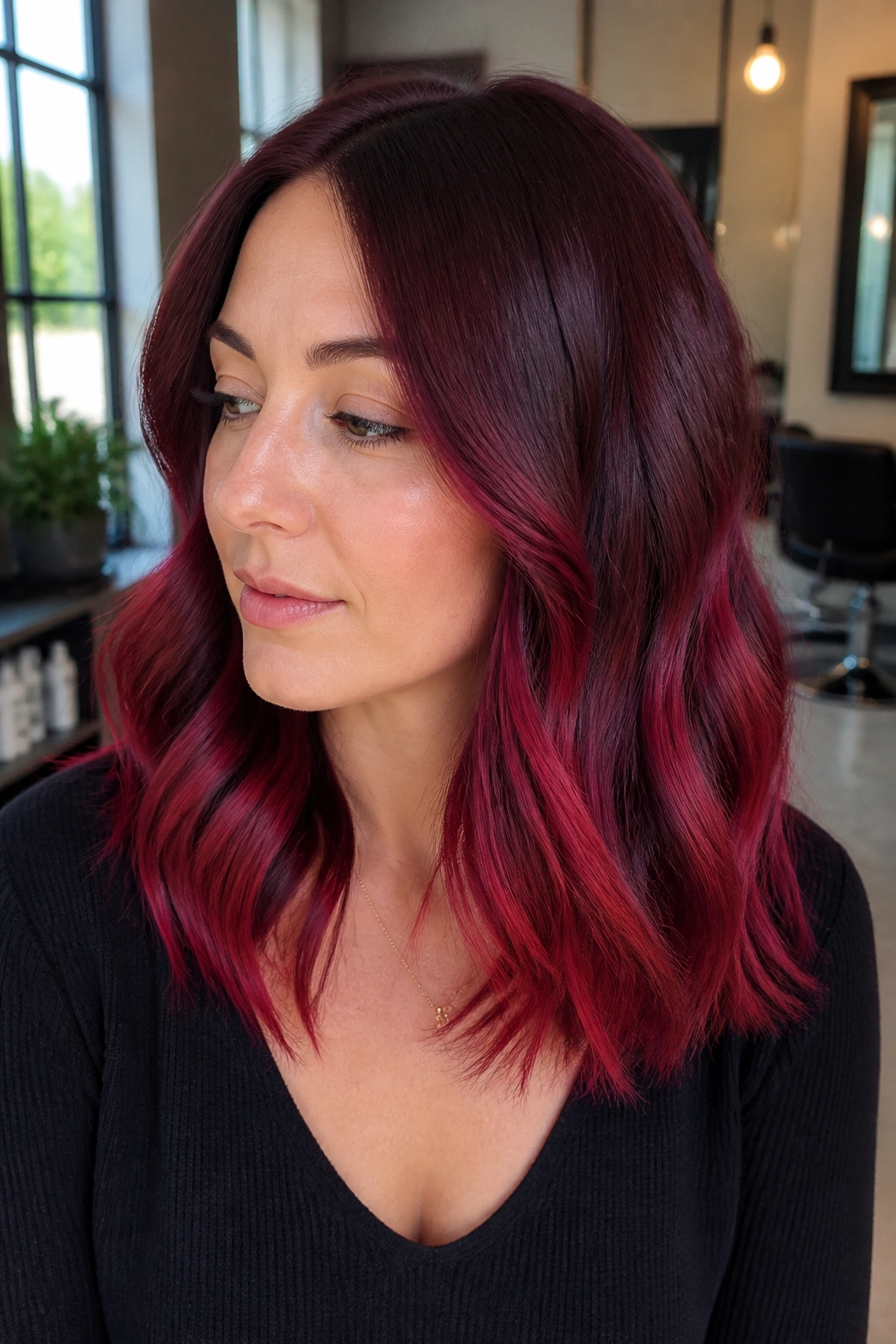
A cherry melt is smoother than a block color, and that softness matters. The roots stay deeper burgundy or wine, then the color gradually shifts into a brighter cherry through the mids and ends. The transition is what keeps it wearable.
Why the Melt Matters
If the root is too light or too red, the whole style can start to feel patchy. A good melt avoids that problem. The darker top gives the color shape, while the cherry ends bring the movement. On cool skin, that gradual change reads polished instead of harsh.
Use this idea if you like layered cuts, because the color catches on the steps of the haircut. A blunt cut can wear it too, but the gradient shows up more clearly in curls or bends.
Best choice for: medium-length hair, shoulder cuts, and anyone who wants red with a little depth.
Ask for: burgundy roots, cherry mids, and a soft feathered finish at the ends.
7. Raspberry Cherry Lob
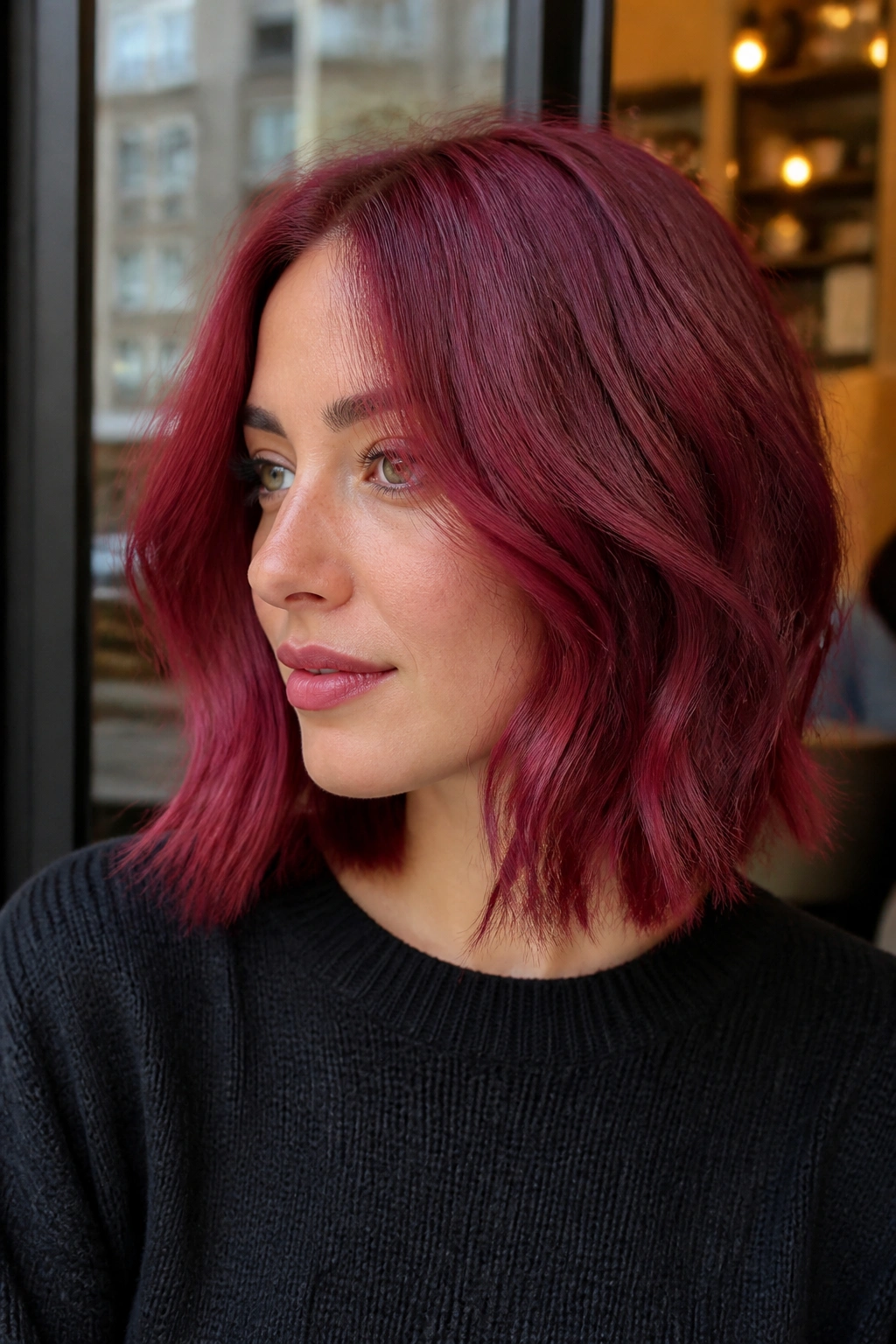
Bright can still be cool. The trick is raspberry. It keeps the red in berry territory instead of letting it drift warm, and on a lob the color has enough space to breathe without taking over the whole look.
A raspberry cherry lob tends to look clean and modern because the cut is so simple. One length. A little movement. A color that does the work. When the hair swings, the red flashes pinker in some angles and deeper in others. That shift is half the charm.
If you like a tidy haircut but want the color to do something interesting, this is a strong pick. Loose bends are better than tight curls here. Tight curls can make the shade look busier than it needs to be.
8. Wine Red Ombré
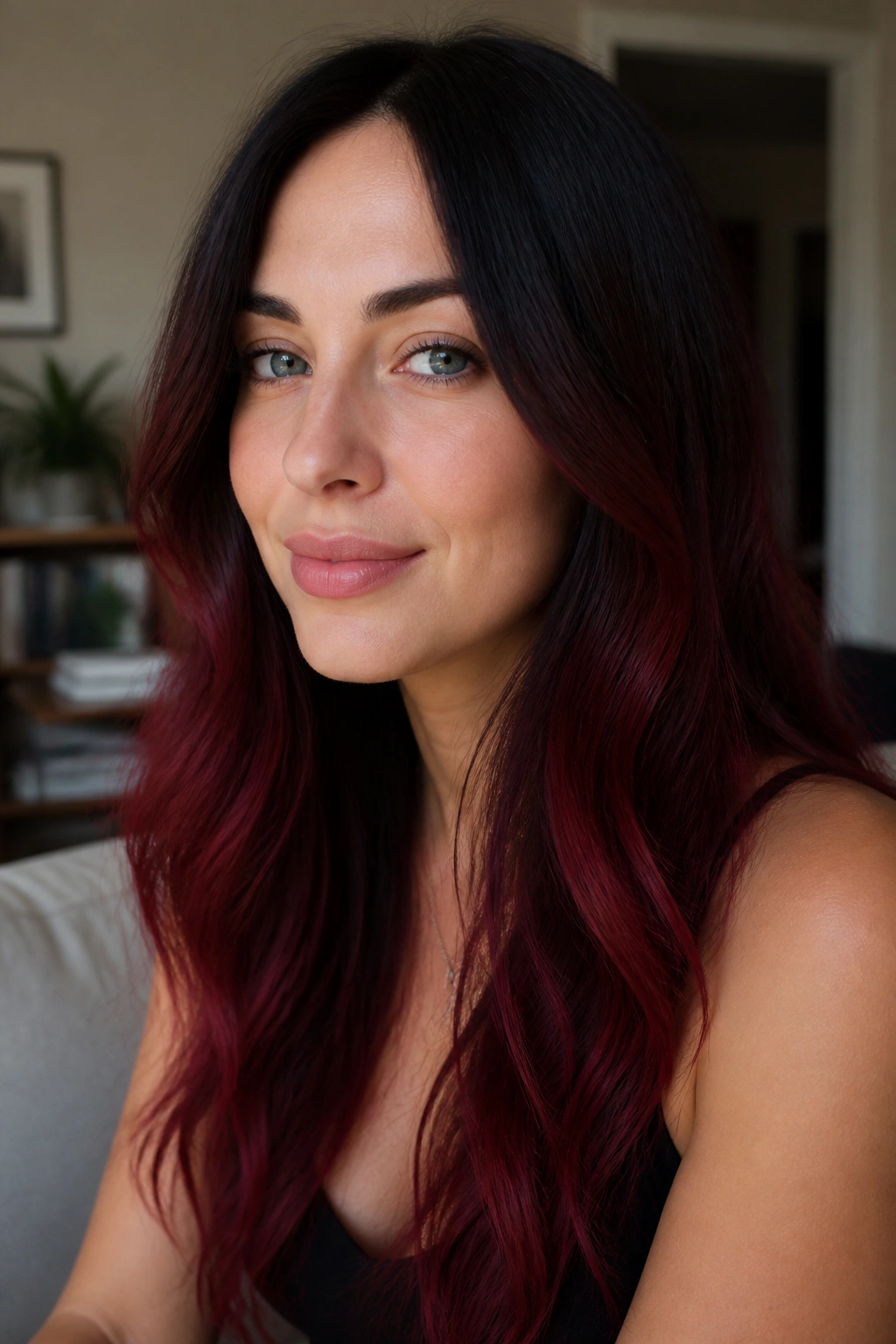
Wine red ombré is a good answer for anyone who wants cherry red without dyeing the roots all over. The darker top stays cool and grounded, then the ends shift into that deep red-wine color that looks especially good on cool skin with strong contrast.
It’s a low-drama grow-out, which matters more than people admit. Hair grows. Roots happen. A soft ombré lets that happen without turning the style into a maintenance chore. It also gives the ends a richer hit of color, since that’s where the eye usually lands first.
Straight hair shows the gradient cleanly. Wavy hair makes it feel more blended. Either way, keep the ends hydrated. Dry ends turn wine red muddy fast.
9. Garnet Pixie
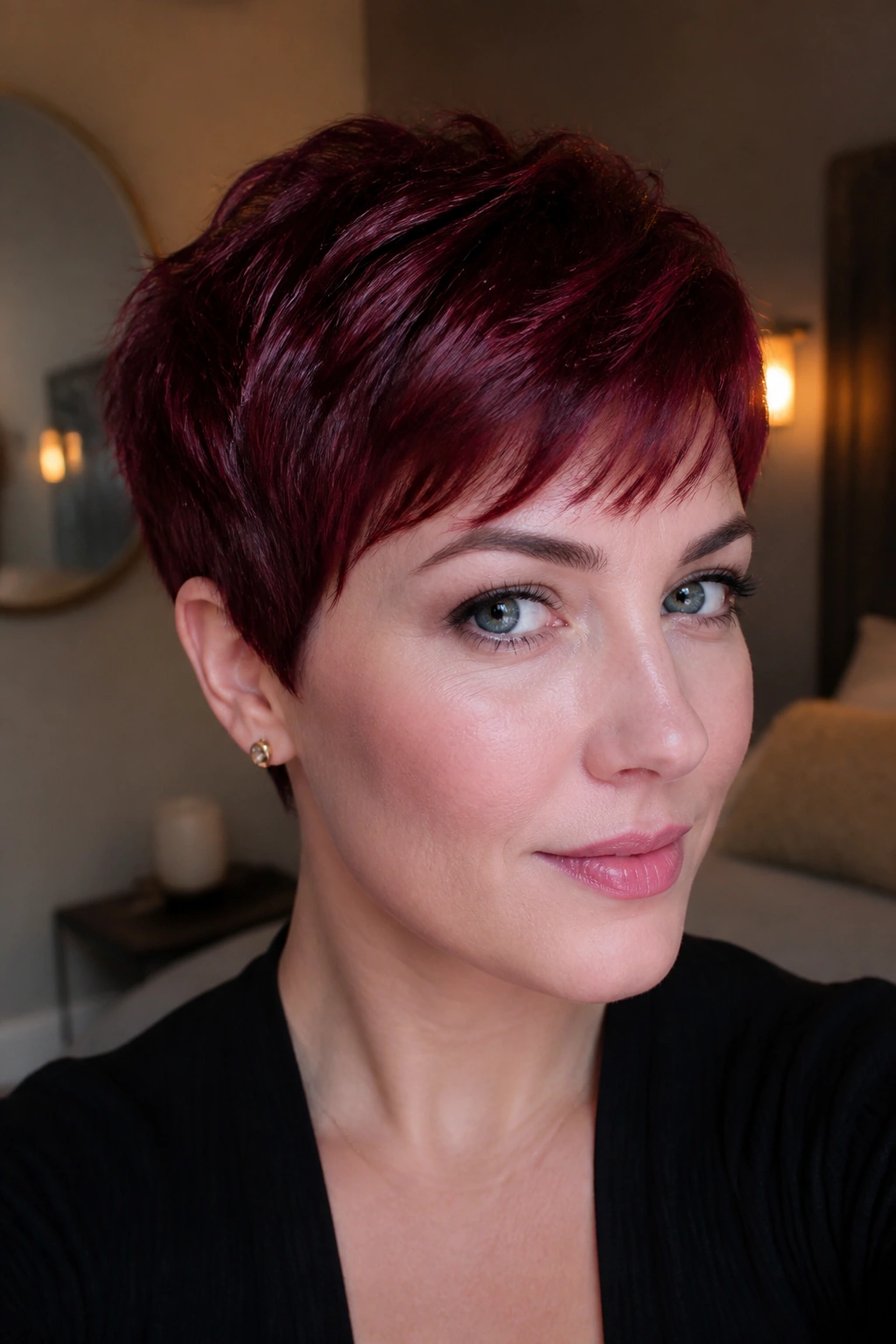
Short hair and red color have a great relationship. A garnet pixie makes the cut look sharper because the color catches on every little edge and texture change. You don’t need a huge amount of length for this shade to work.
The cool thing about garnet is that it sits between red and berry, so it reads bold without turning neon. On cool skin, that balance is useful. It adds color near the face without fighting your undertones. If your pixie has piecey texture on top, even better. The light breaks across the hair and gives the color more depth than you’d expect.
Keep the finish glossy. Short red hair can look dusty if the shine is missing.
10. Plum Cherry Bob
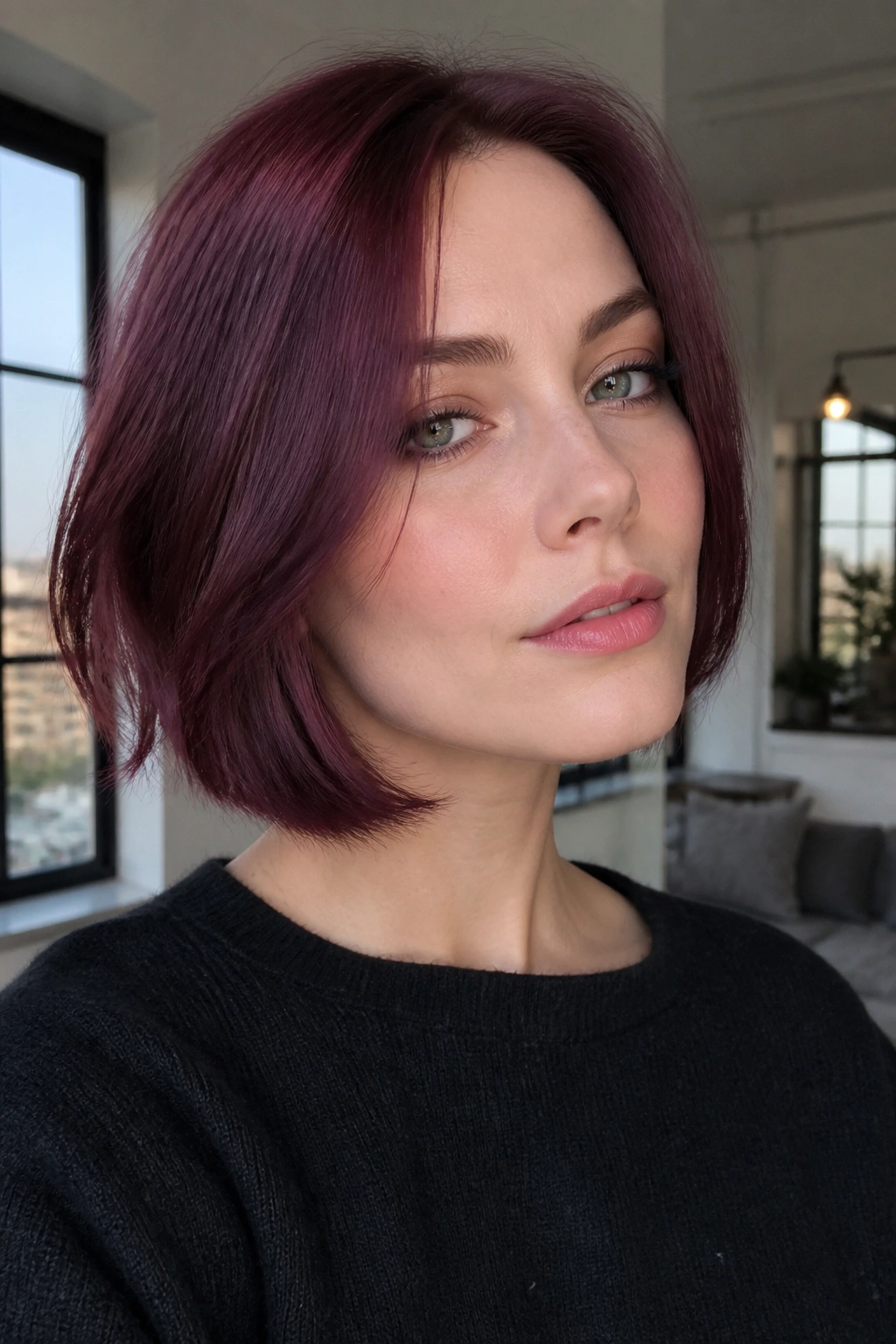
A plum cherry bob has a sharper edge than plain red. The plum note pulls the color cooler, so the red comes across as deep and tailored rather than bright and playful. On a bob, that matters. The haircut already has structure; the color should support it.
What Makes It Different from Burgundy
Plum cherry leans a little more violet than burgundy, which gives it a cool, shadowy finish. That makes it a smart pick for pale cool skin, but it also works on deeper cool complexions that can carry strong contrast. The color looks especially good on chin-length cuts with a clean line.
- Ask for a violet-red or plum-red demi-permanent finish.
- Flat-ironed hair shows the color’s depth.
- A slight inward bend at the ends keeps the bob from feeling severe.
- Strong silver hoops or a crisp neckline make this color pop.
It’s polished, but not stiff.
11. Shadow-Root Cherry Red for Cool Skin Tones
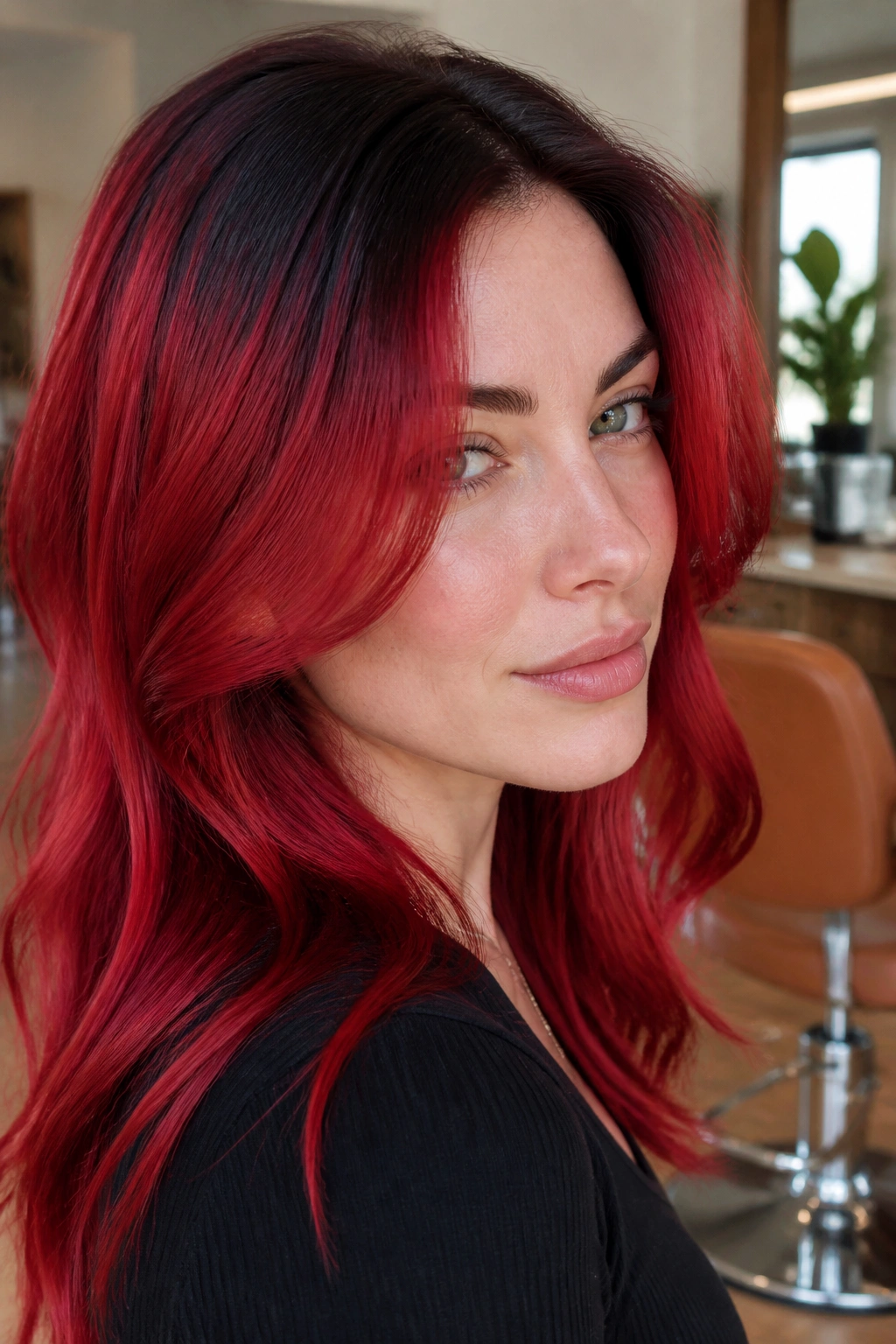
Why do stylists keep coming back to a shadow root? Because it solves the grow-out problem before it starts. With cherry red, a darker root gives the color somewhere to live, and the red lengths can stay bright without making the scalp area look harsh.
Why Stylists Like It
A shadow root is useful if your natural color is medium brown or darker. It lets you wear a cherry red that still feels grounded. The root stays closer to your natural level, while the mids and ends carry the red payoff. Cool skin tones tend to like the contrast because it keeps the red from floating on its own.
- Best for busy schedules and low-maintenance color wearers.
- Works on waves, curls, and long straight hair.
- Ask for a root melt that fades 1 to 2 shades lighter into the mids.
- If you keep your makeup cool-toned, the whole look feels cleaner.
It’s a practical red. I like that.
12. Cobalt Cherry Peekaboo
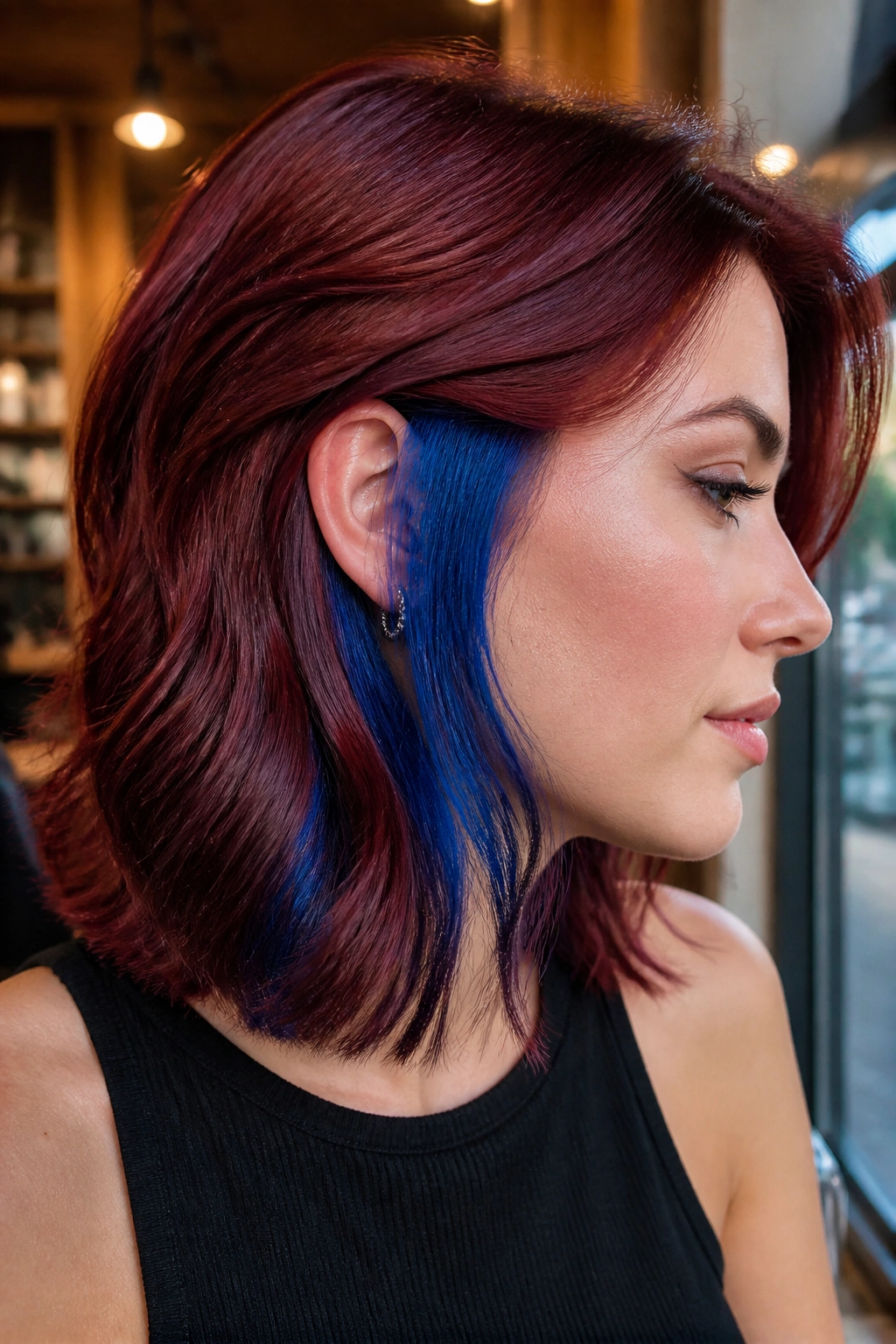
Peekaboo color is for people who want a secret. Cobalt cherry sits underneath the top layer, so you only catch it when the hair moves, gets tucked behind the ear, or gets tied up. That hidden placement makes the red feel sharper and a little cooler.
This is one of my favorite ideas for cooler skin because the blue note in cobalt keeps the cherry from leaning warm. It also works well if your base is dark brunette or black. You don’t need the whole head to be red for the shade to matter.
A layered cut helps, since the hidden sections show more often. If your hair is one solid length, the effect is still there, just quieter.
13. Black Cherry Ribbon Highlights
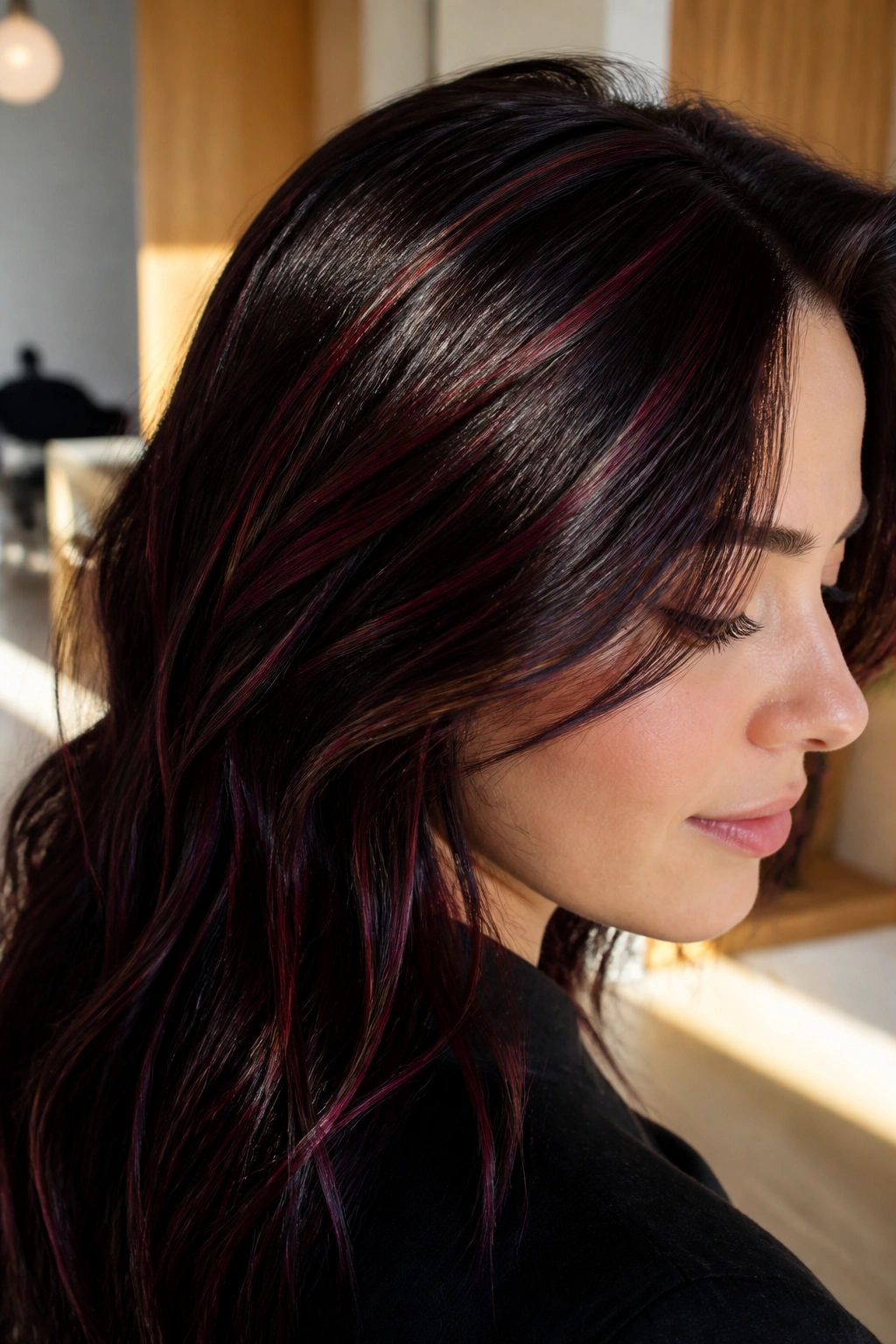
Thin black cherry ribbons are for the person who wants depth, not a full color shift. The highlights should be narrow — think 1/8-inch to 1/4-inch sections — so the red threads through the dark base instead of sitting in big chunks.
That size matters. Chunky red can turn loud fast. Fine ribbons look more expensive in the plain sense of the word: they blend, move, and catch light in a controlled way. On cool skin, that control helps the color feel deliberate.
This idea is especially nice on layered hair because each ribbon lands on a different plane. The result is less “dyed hair” and more “hair with a red pulse running through it.”
14. Crimson Velvet Waves
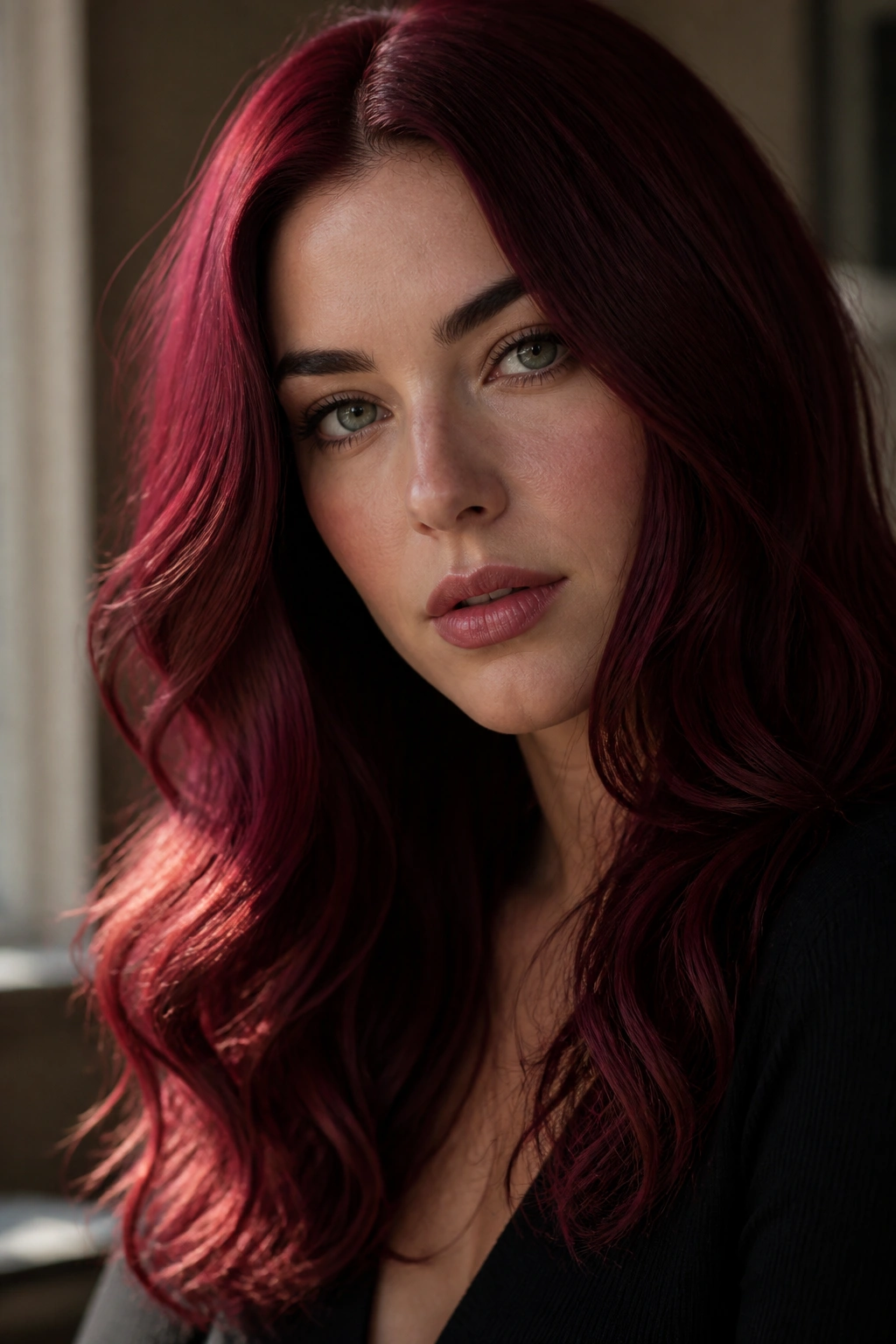
Crimson can go warm if the formula drifts orange, so this version needs a blue-red base. Done right, it has a velvet look that sits well beside cool skin and deep eye color. On waves, the shade reads rich and soft at the same time.
The wave pattern matters because crimson shows up best when the hair moves. Flat-ironed hair gives you a smoother finish. Waves give you a softer, brushed look that feels less severe. If the hair is thick, the color can hold a lot of visual weight. If it’s fine, the red can look more airy.
A center part makes it a little moody. A deep side part gives it more drama. Pick your lane.
15. Mulberry Cherry Curls
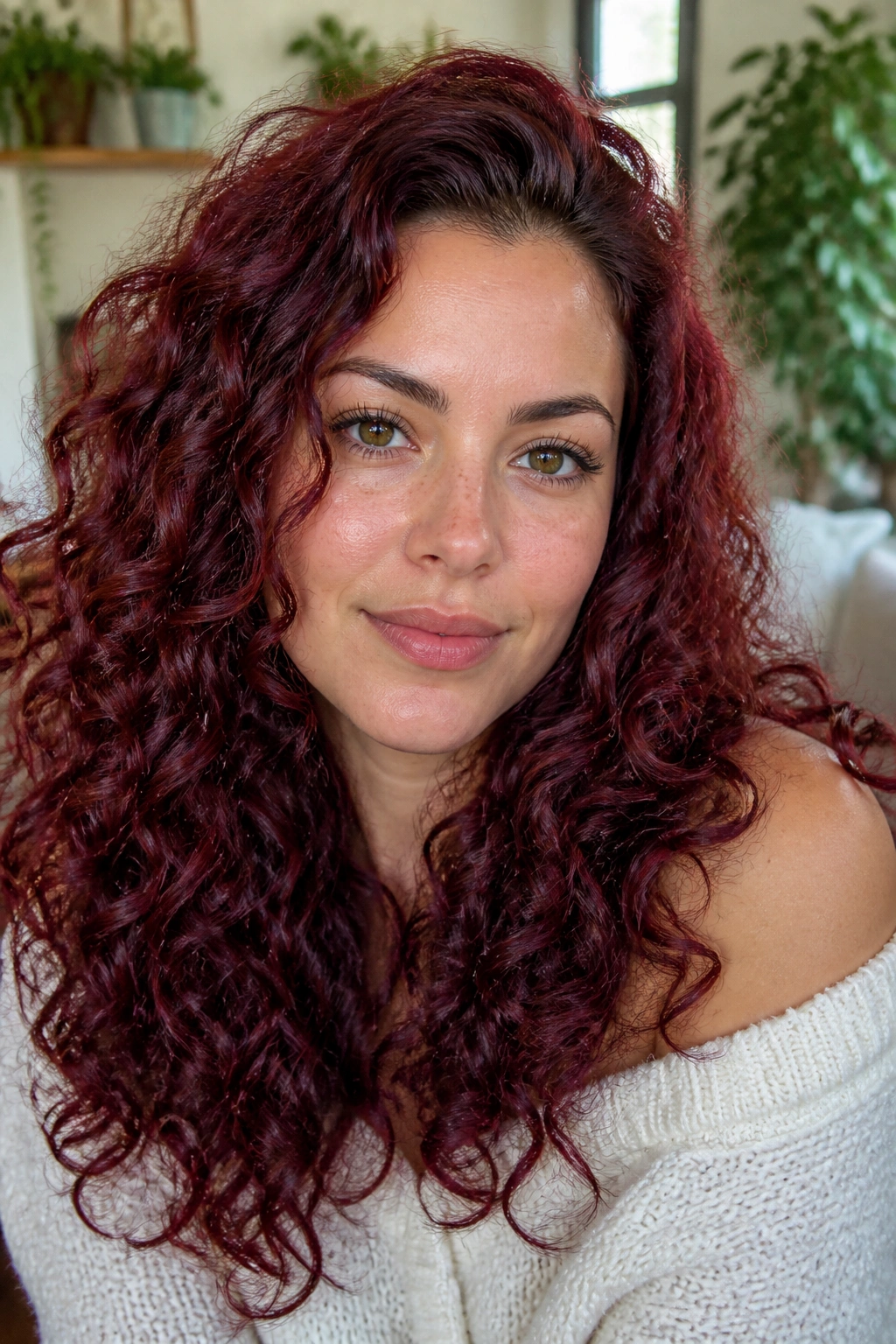
Curly hair and mulberry cherry are a good match because the curl pattern breaks up the color naturally. You don’t get one solid block of red. You get little flashes of berry, wine, and cherry as the curls twist and separate.
That softer texture is kind to cool skin, especially if your features are delicate and you don’t want the hair to overpower your face. Mulberry adds a plum layer that keeps the shade cool. Cherry brings the red energy back in. The mix is what makes it work.
Hydration matters here. Dry curls can make any red look flat, and red already fades faster than brown. Keep the curls glossy and the shade will hold its shape longer.
16. Cherry Red Underlights
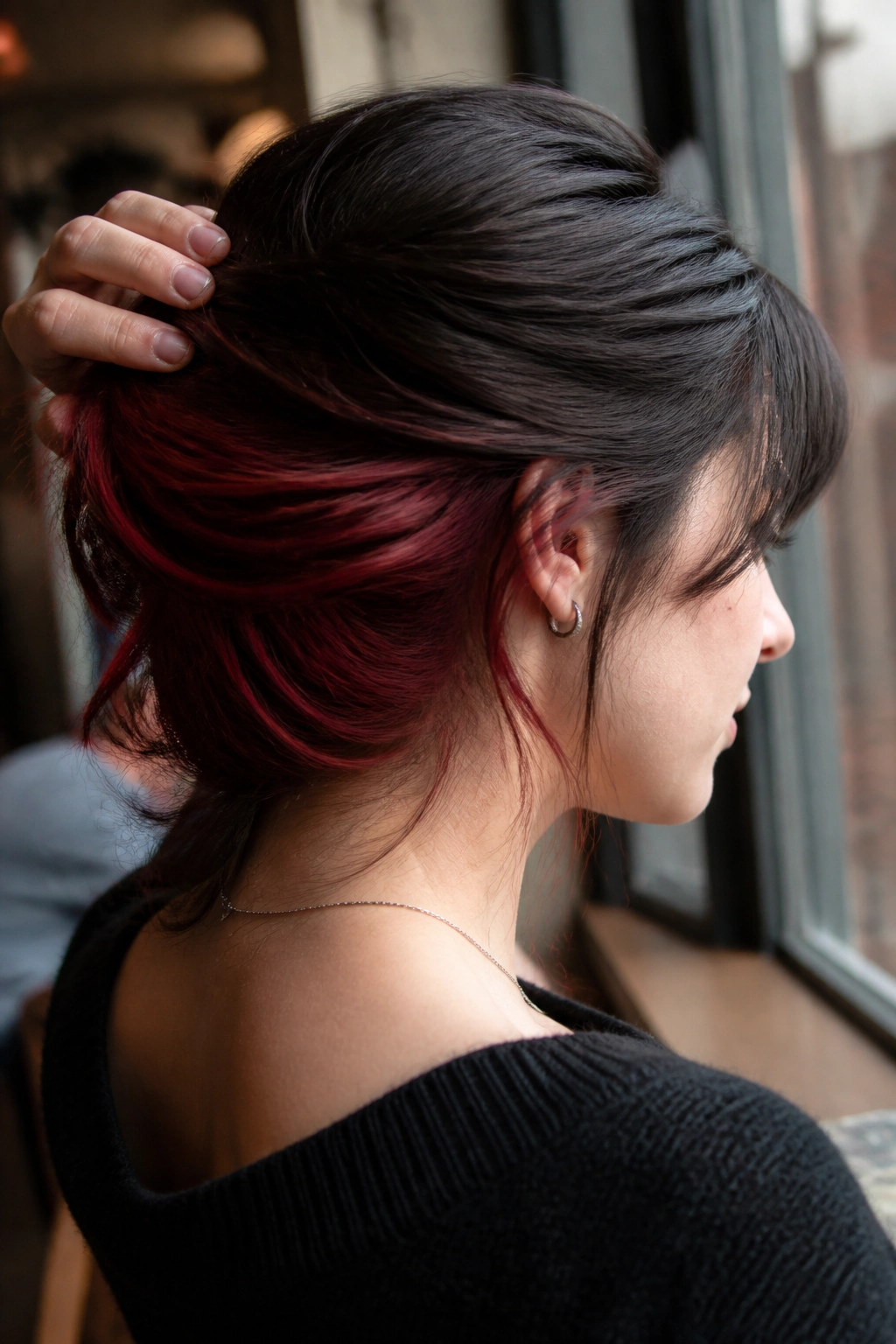
Underlights are one of those ideas that sounds subtle until you see them in motion. The top layer stays dark, then the cherry red sits underneath and flashes through when the hair flips or catches wind. It’s low-key, but not boring.
Where It Works Best
This color placement is smart for people who wear hair up a lot. Buns, clips, half-up styles — all of them reveal the red underneath. It also works on layered cuts because the shorter pieces move enough to show glimpses of color.
- Best on medium to long layered hair.
- Ask for the red to sit under the crown and through the nape.
- Great if you want less visible root maintenance.
- Red underlights pair well with cool-toned wardrobes: black, charcoal, navy, plum.
The nice part is that you decide how much to show. That’s hard to beat.
17. Ice-Cherry Gloss
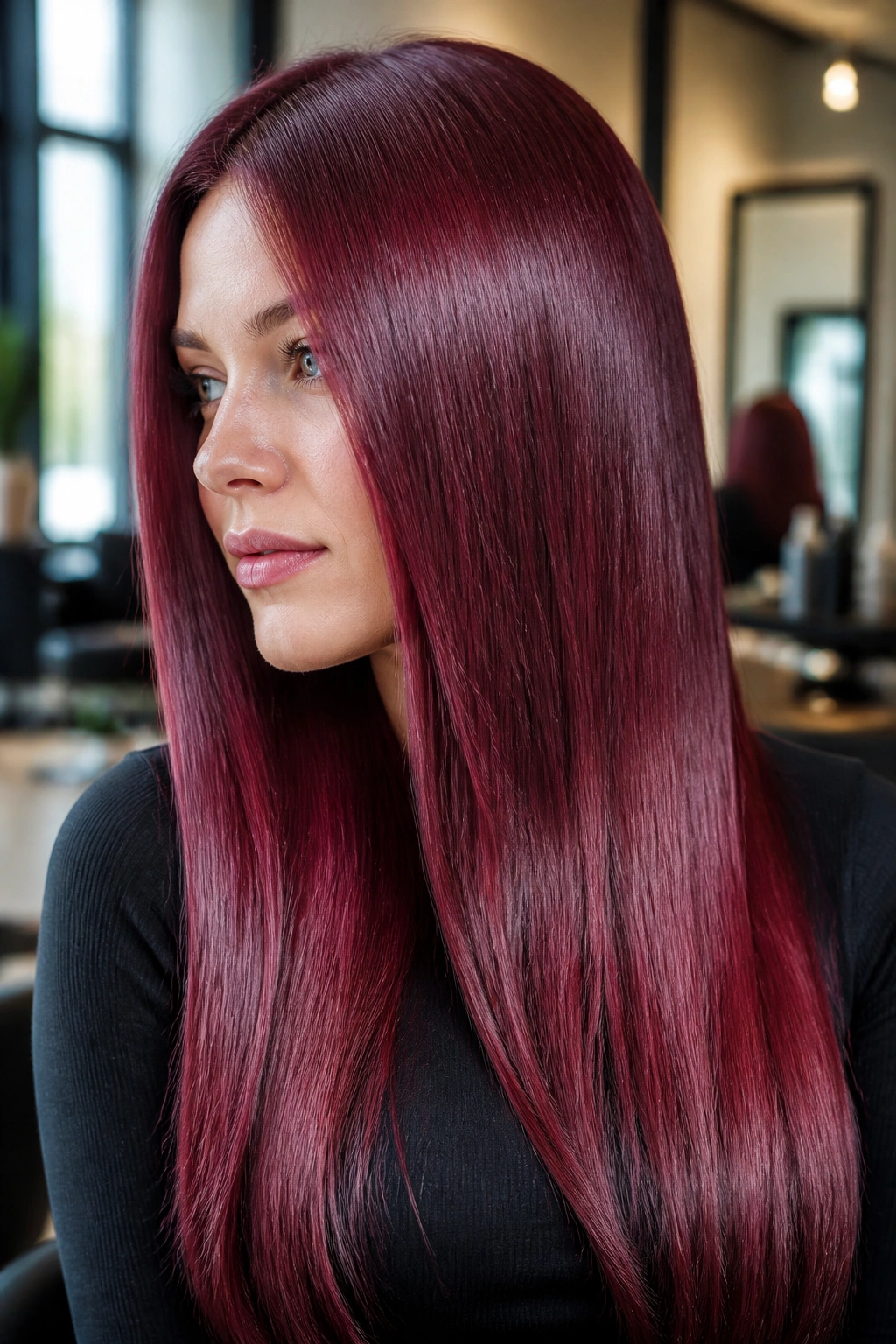
Ice-cherry is for people who like their red crisp. The shade leans light, cool, and reflective, almost as if a pale cherry stain had been mixed with a silvery gloss. It works best on pre-lightened hair or on a lighter brunette base that can carry the brightness.
You need to watch the tone closely here. If the formula goes warm, the whole effect loses its edge. Ask for a blue-violet cherry gloss with a cool finish. On cool skin, that kind of brightness can wake up the face without crossing into fiery territory.
Straight hair shows the cleanest finish. Waves make it feel softer. Either way, shine is the point.
18. Garnet Face-Framing Layers
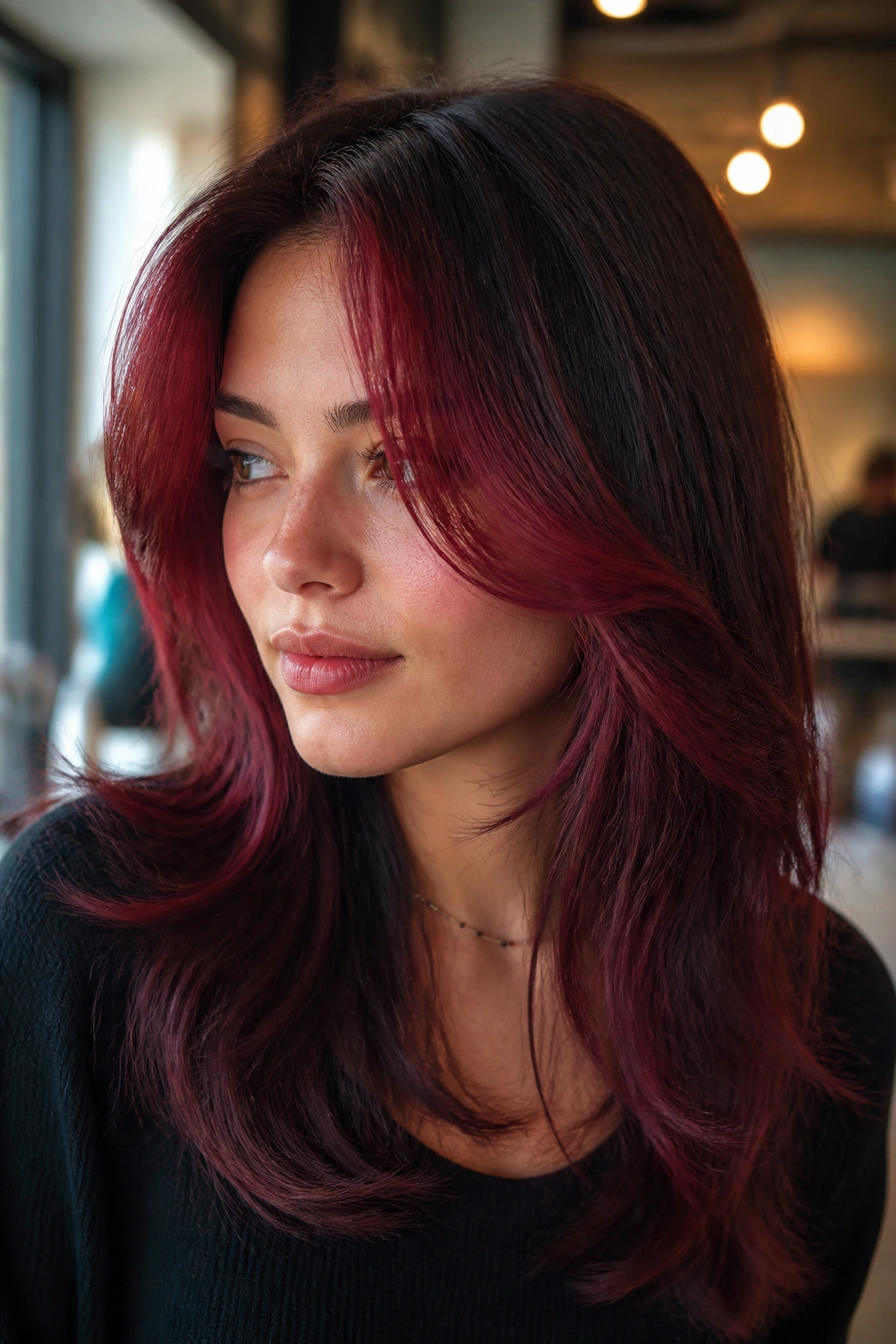
Face-framing layers are a smart place to put a red shade like garnet because the color lands near the eyes and cheekbones first. You don’t need a full head of red to get a strong effect. Two or three face pieces can do the job.
The cut and color work together here. Layers keep the red from sitting in one heavy block. Garnet keeps the tone cool enough for pink or neutral skin. If your hair is dark, the contrast can be especially clean around the face. If your hair is lighter, the shade looks softer and more berry-like.
Small Details That Help
- Keep the front pieces slightly brighter than the rest.
- Style with soft bends so the layers show.
- A cool blush tone keeps the color from feeling disconnected.
- If you wear glasses, this placement can frame the face nicely.
It’s a small placement with a lot of payoff.
19. Smoky Cherry Chrome
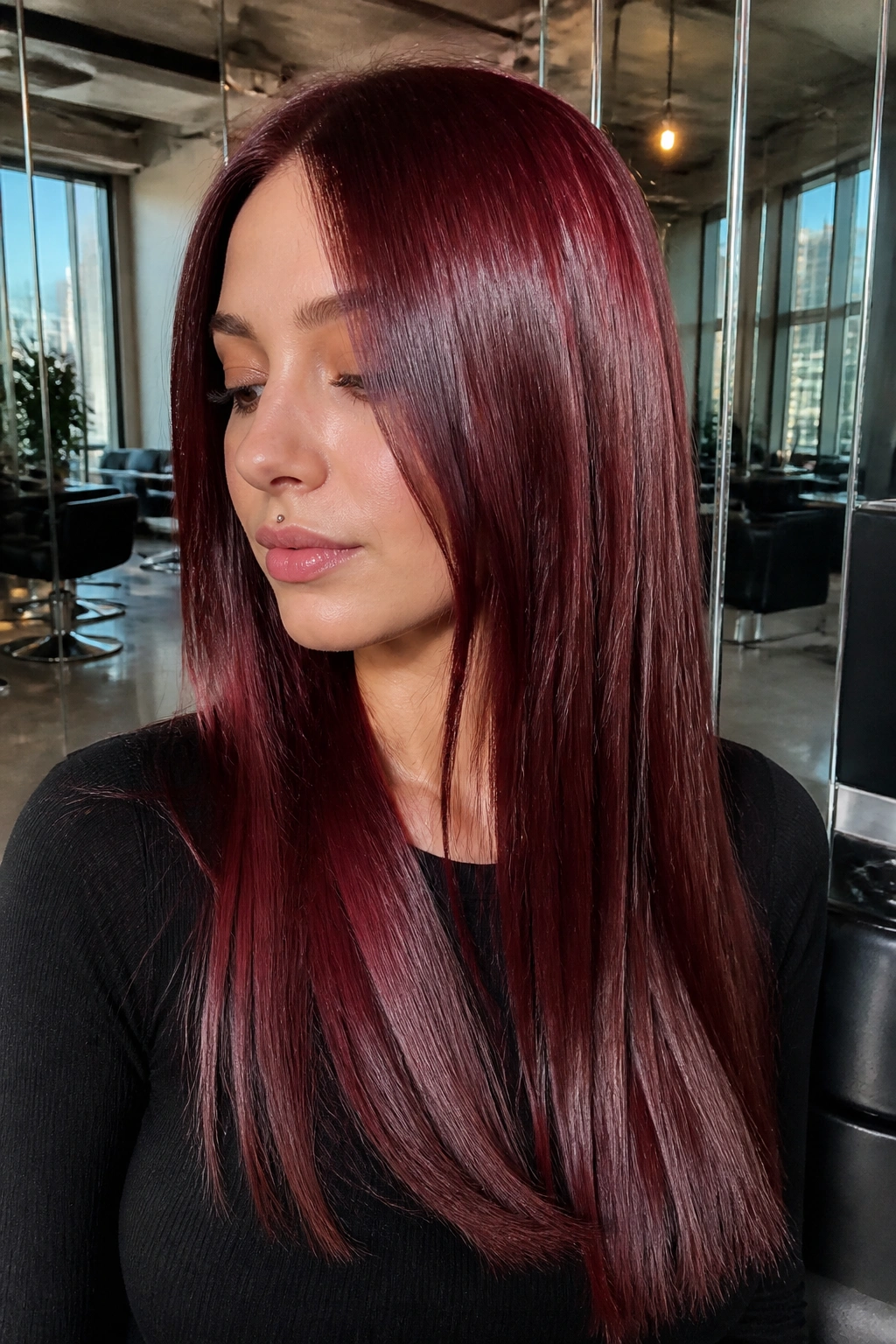
Smoky cherry chrome is what happens when red gets a glossy, dark finish and stops trying to be cheerful. It’s a cool red with a reflective surface, almost metallic in good light. On cool skin tones, that smoky edge keeps the shade from warming up too much.
This is one of those colors that looks better when the hair is healthy. Chrome finishes expose roughness fast. If the cuticle is frayed, the shine disappears and the color can look dull. A good bond treatment and a clear gloss make a bigger difference here than people expect.
If you wear sleek hair, this shade has presence. If you wear texture, the red shows as a dark, shifting sheen.
20. Cherry Merlot
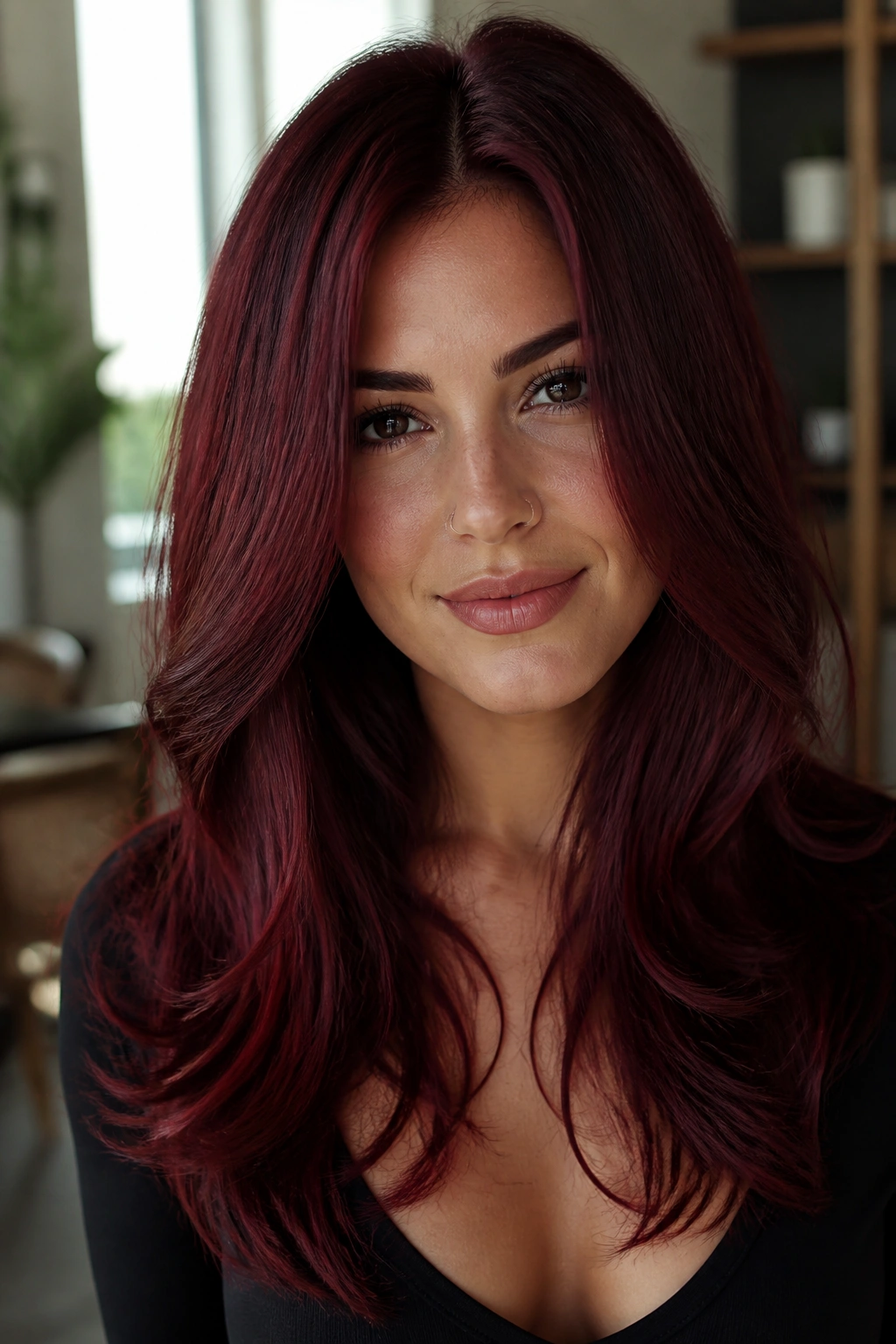
Cherry merlot sits in the middle of the red family: deeper than ruby, brighter than black cherry, and more berry than wine. That middle ground makes it easy to wear if you don’t want anything too loud. It also works on medium cool skin, where a saturated but dark shade can look balanced.
The best thing about cherry merlot is the depth. It has enough darkness to stay elegant and enough red to feel alive. On layered cuts, the shade moves. On a blunt cut, it looks cleaner and sharper. You can wear it full-head, or let it sit over a brown base as a gloss.
It is one of those shades that photographs with real depth. No extra effort needed.
21. Velvet Burgundy Bob
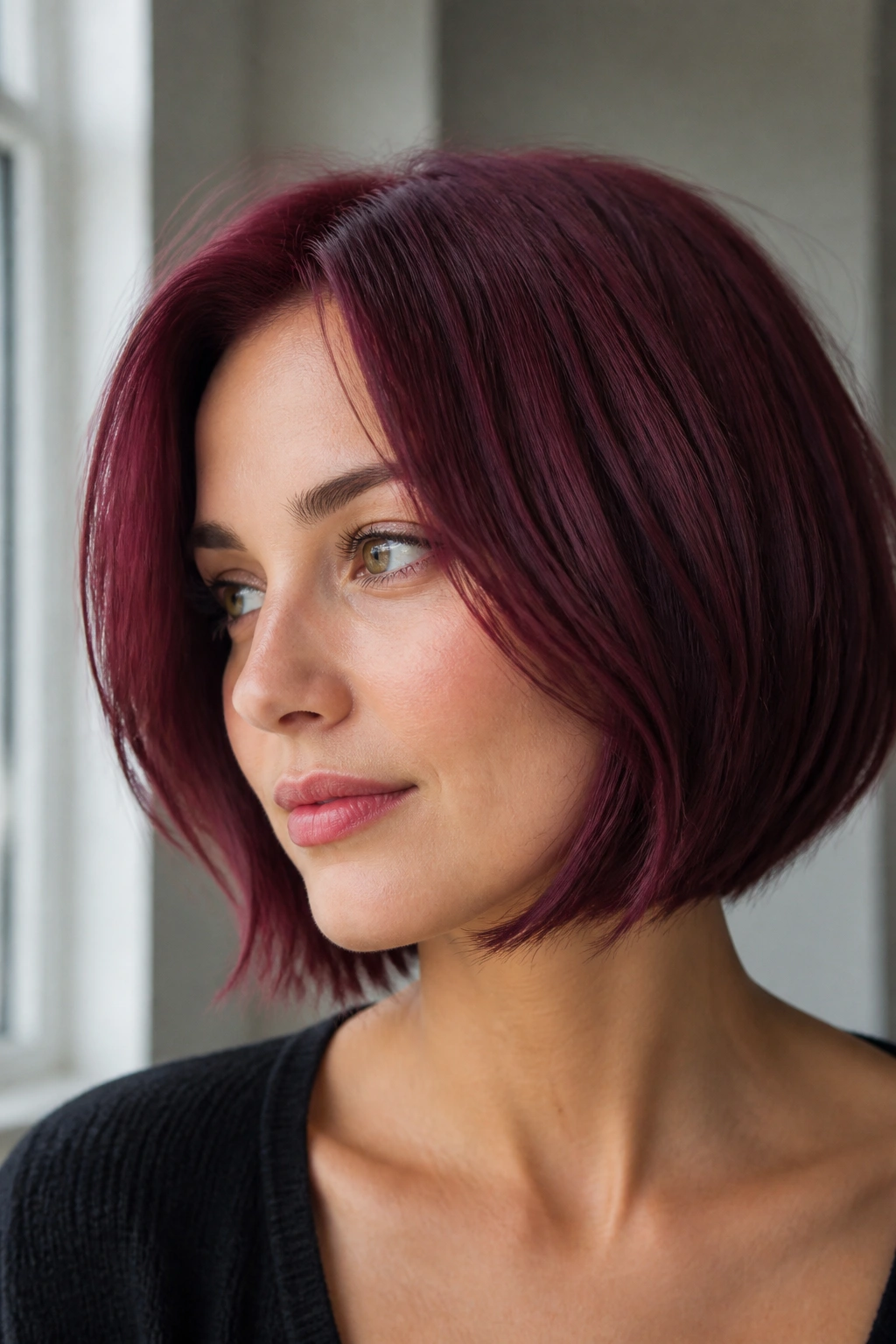
A velvet finish changes everything. Instead of a high-gloss, glassy red, you get a softer surface that makes the burgundy cherry look richer and a little quieter. On a bob, that understated texture gives the haircut a neat, tailored feel.
How to Style It
Unlike a bright cherry bob, this version should not be over-styled. Keep the movement loose. A round brush blowout or a quick bend through the ends is enough. Heavy curls can make the color feel too busy, and that defeats the point.
- Best on jaw-length to shoulder-length bobs.
- Ask for burgundy-red with a low-shine finish.
- Use a light serum instead of a thick oil.
- Tuck one side behind the ear to show the color change at the jawline.
It’s a calm red. Quiet, but not dull.
22. Raspberry Ombré on Curly Hair
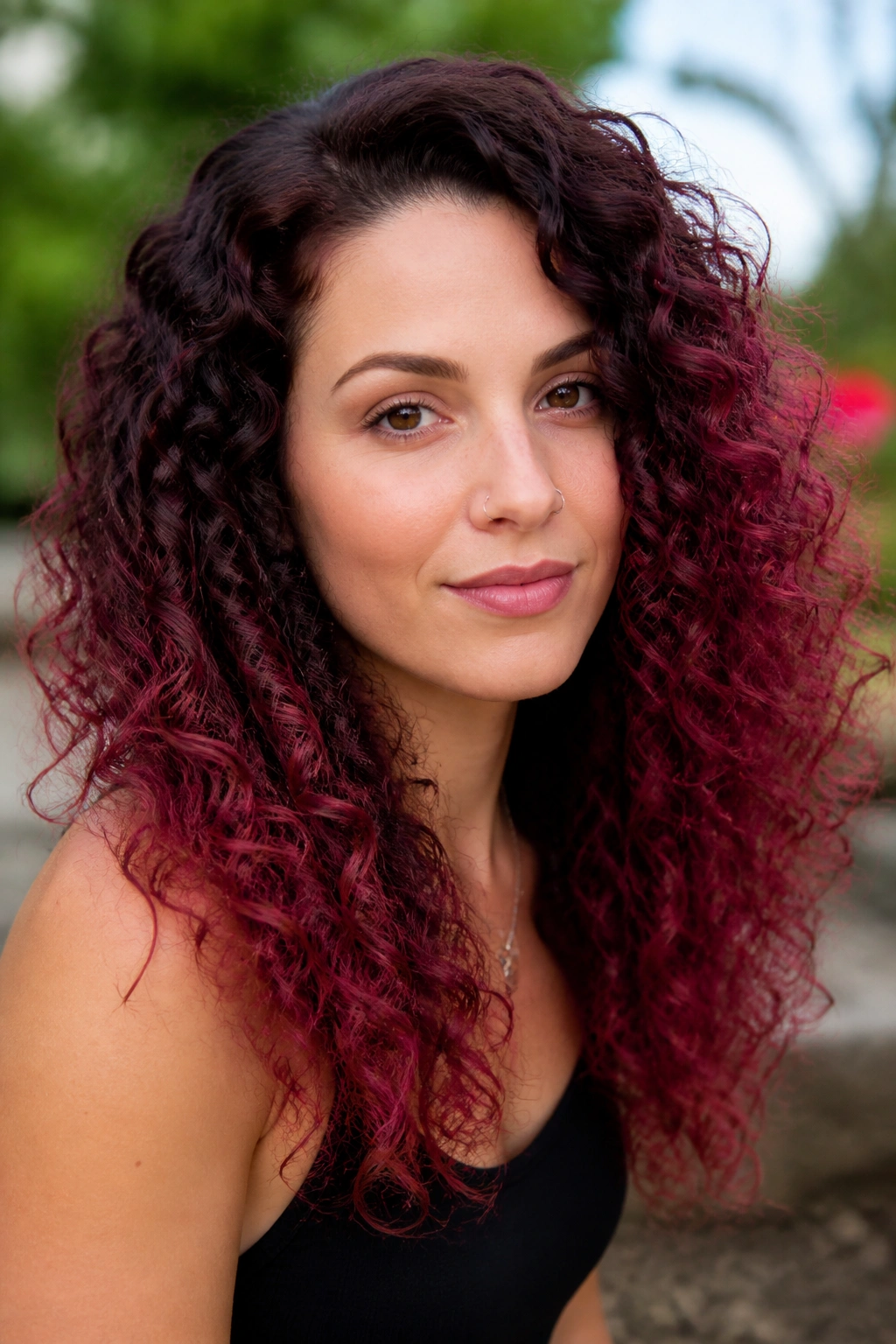
Raspberry ombré works beautifully on curls because the color has room to shift as the pattern moves from root to tip. The top stays deeper, while the ends brighten into a berry-red that still reads cool. That gradient keeps the curls from looking heavy.
The key is not to draw a hard line where the darker root stops and the red starts. The transition should be soft, almost brushed in. On cool skin, raspberry keeps the brightness sweet without turning warm. On dense curls, it helps the style feel lighter. On loose curls, it adds more shape than you’d expect.
A curl cream with slip helps the red catch the light in sections instead of all at once.
23. Cherry Red Wolf Cut
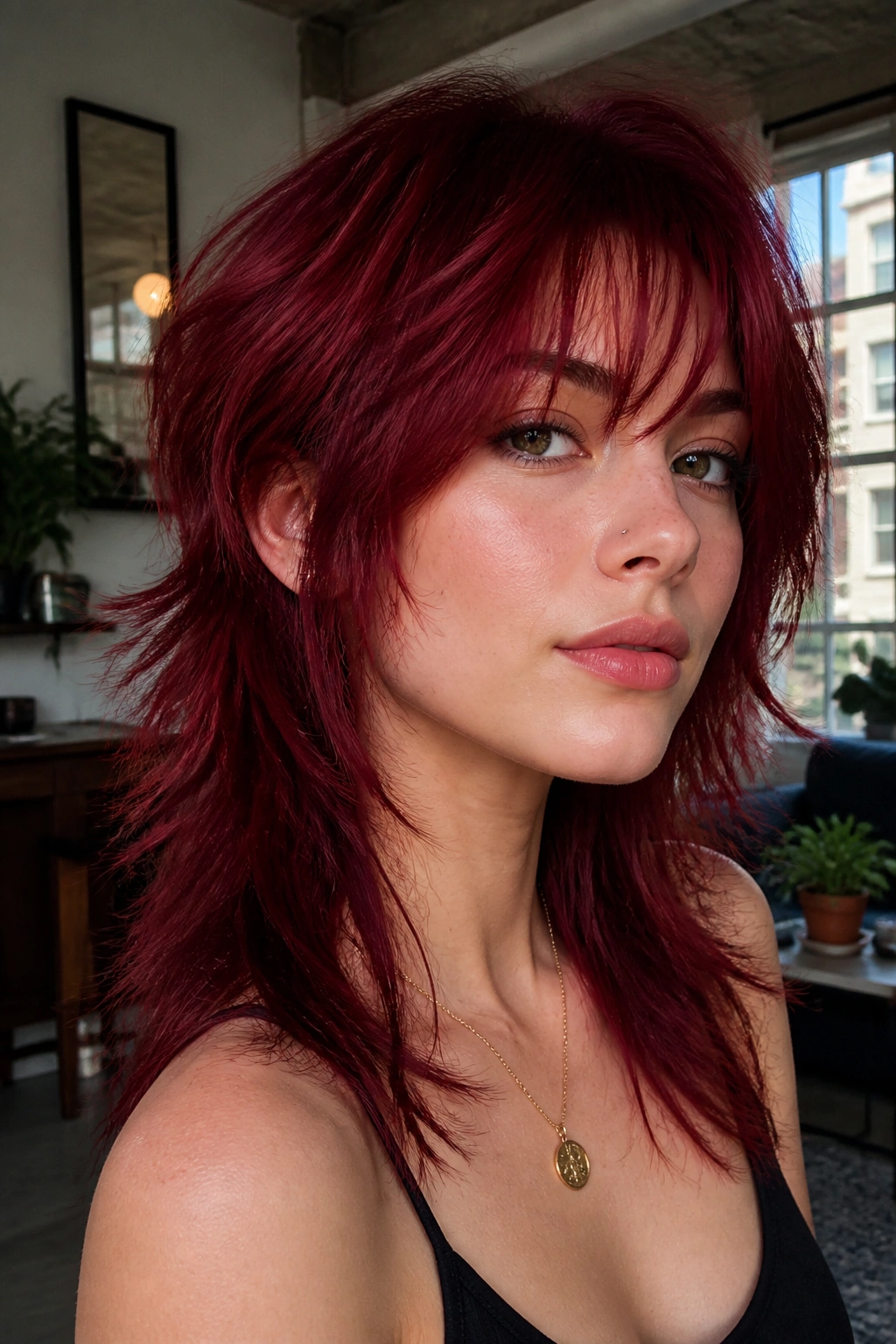
A wolf cut needs color with movement, and cherry red gives it exactly that. The jagged layers, crown volume, and textured ends all help the red shift as the hair moves. Flat color can look a little static on this cut. Cherry wakes it up.
This is a strong choice if you like a little edge. The red doesn’t have to be neon. In fact, a slightly deeper cherry often works better because it keeps the haircut from looking costume-like. Cool skin tones usually do well with that darker red contrast near the face and crown.
Textured styling cream. A bit of grit. That’s enough.
24. Berry-Cherry Shag
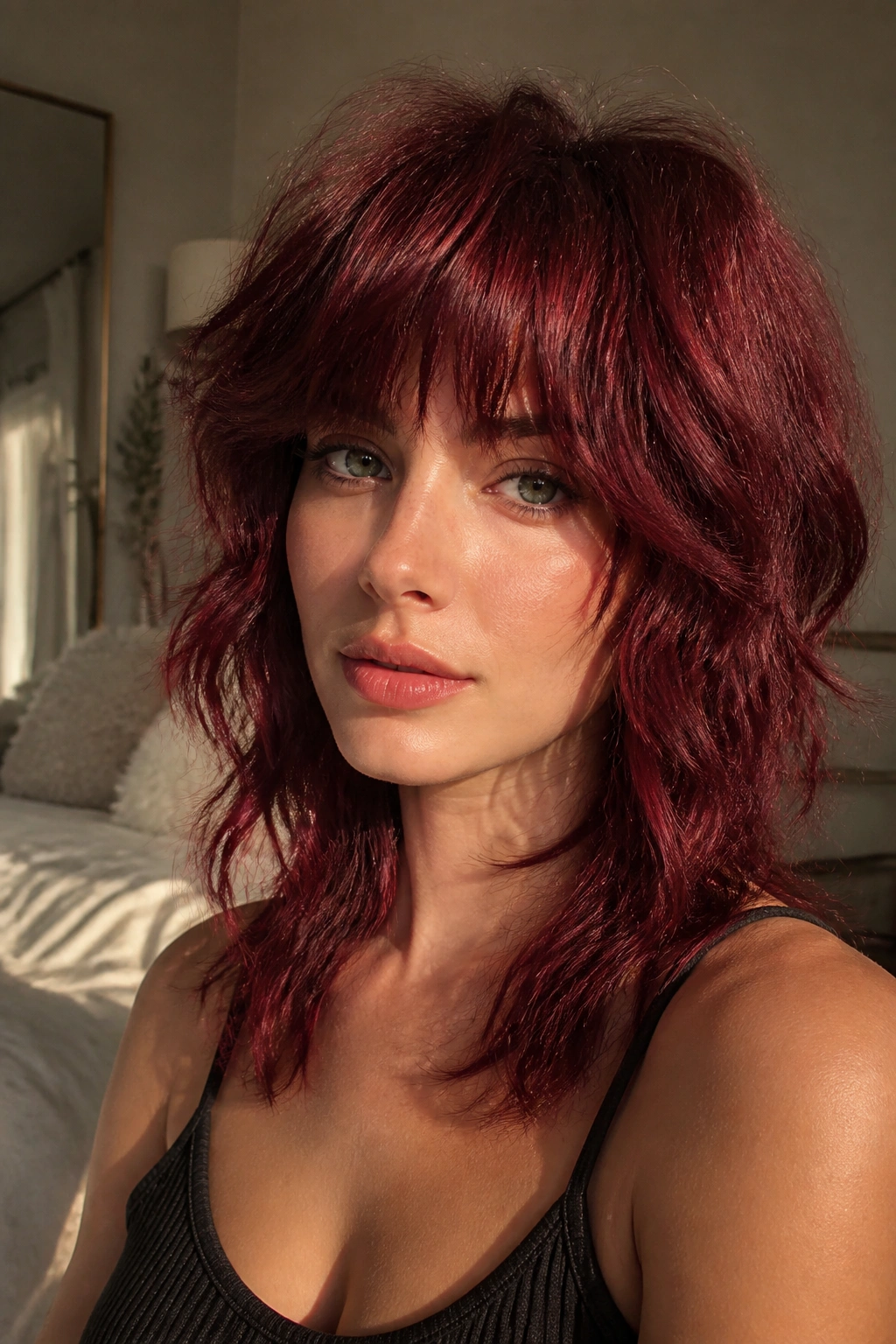
The shag is messy on purpose, which is why berry-cherry fits it so well. The layers break the color up, and the fringe gives you a place to show a little red right around the eyes. If your skin is cool, the berry note keeps the whole thing cleaner.
This version is softer than a wolf cut. Less bite. More swing. The color should follow that energy. Ask for a cherry base with a berry veil, not a hard red block. That keeps the haircut from looking too heavy at the crown.
Air-dried waves are enough here. Too much smoothing can flatten the shag’s shape. A little frizz is not the enemy.
25. Cool Cherry Balayage on Black Hair
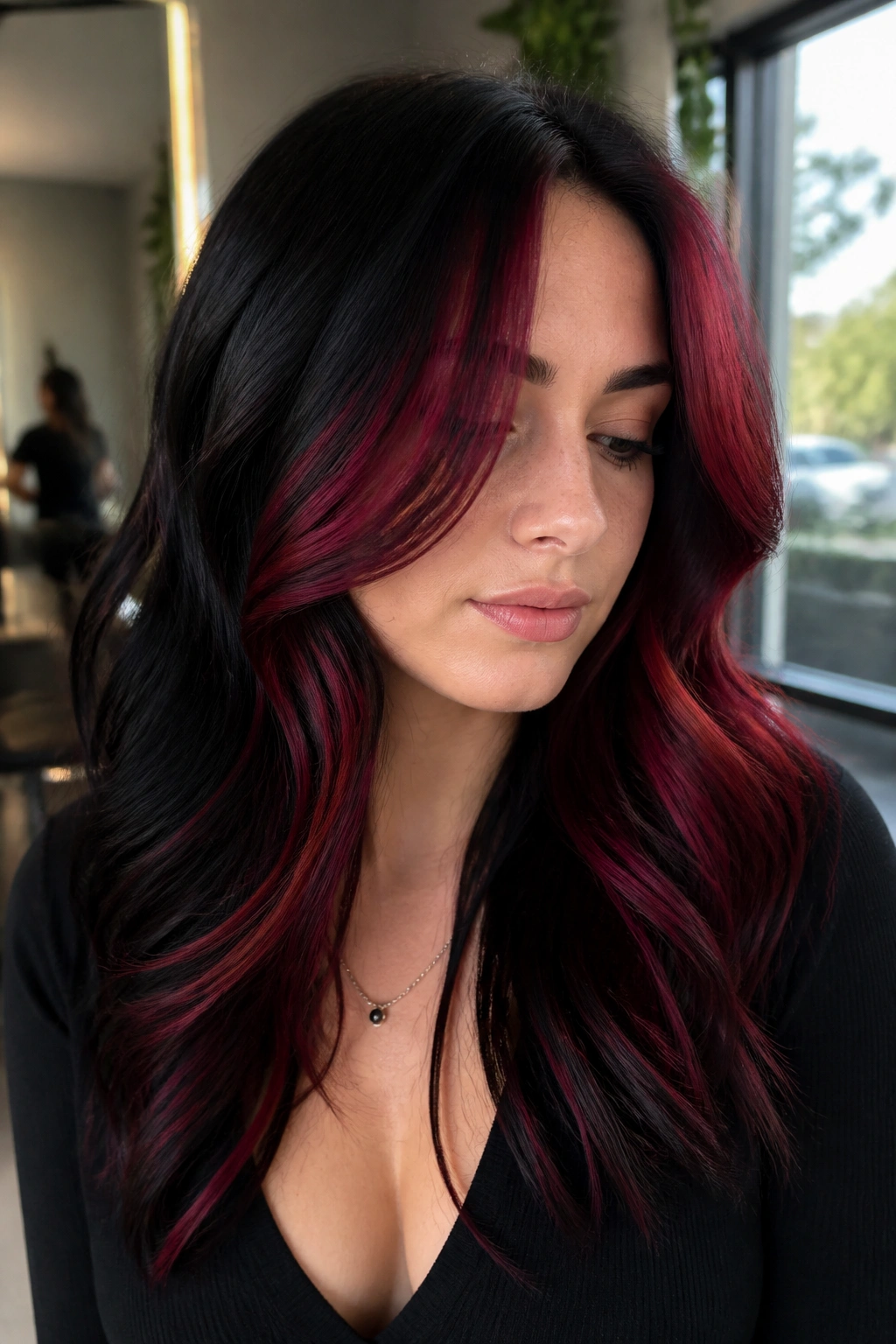
Black hair can hold cherry beautifully if the red is cool enough. The trick is contrast. You paint the red into lifted sections so the color reads like a deep red flame against the black base, not a brown smear that disappears.
Why This One Hits
On cool skin, the black base keeps the face from looking washed out. The cherry pieces add just enough color to pull attention upward. It’s a bold look, but it can still feel refined if the placement is careful.
- Best on virgin black or very dark brown hair with selective lift.
- Ask for thin, hand-painted panels rather than broad streaks.
- The red shows best on curly or waved hair.
- Deep conditioning matters because lightened black hair can get dry fast.
If you want contrast without losing the depth of dark hair, this is hard to top.
26. Gothic Cherry
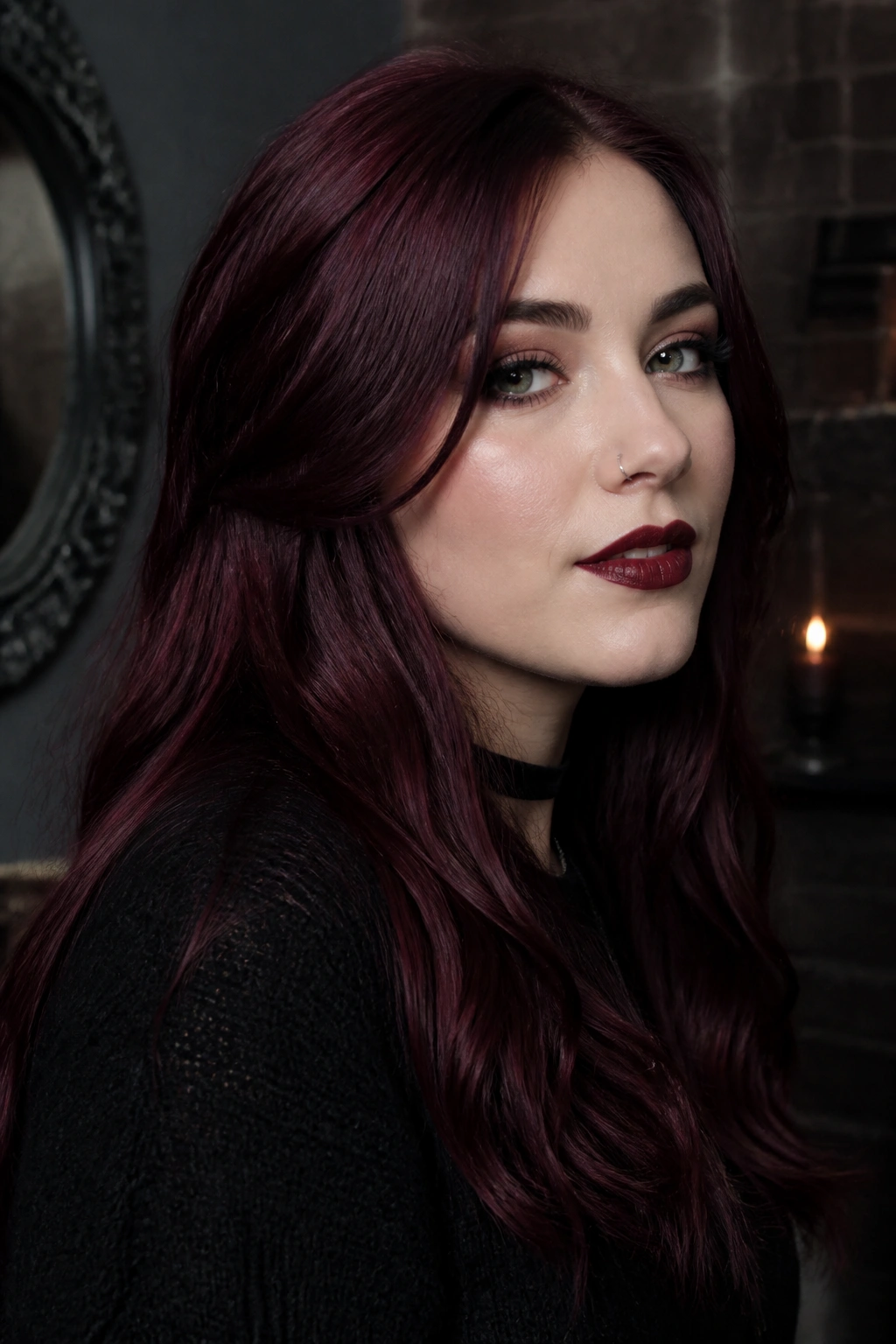
Gothic cherry is almost black, but not quite. It carries a deep red-violet cast that shows up in bright light and disappears into darkness indoors. That’s the point. It gives you depth first and color second.
What to Watch For
This shade is one of the most forgiving cherry options for pale cool skin and deep cool skin alike, because the undertone stays in the violet-red lane. It can look dramatic without reading warm or brassy. The only risk is making it too flat, so the finish matters.
- Use a high-shine gloss to keep the shade from looking dead.
- A middle or off-center part helps the color catch light.
- Best on medium to long hair with some movement.
- If your hair is porous, the violet notes can fade first, so watch for that.
It’s dark, a little moody, and still very wearable.
27. Amethyst Cherry
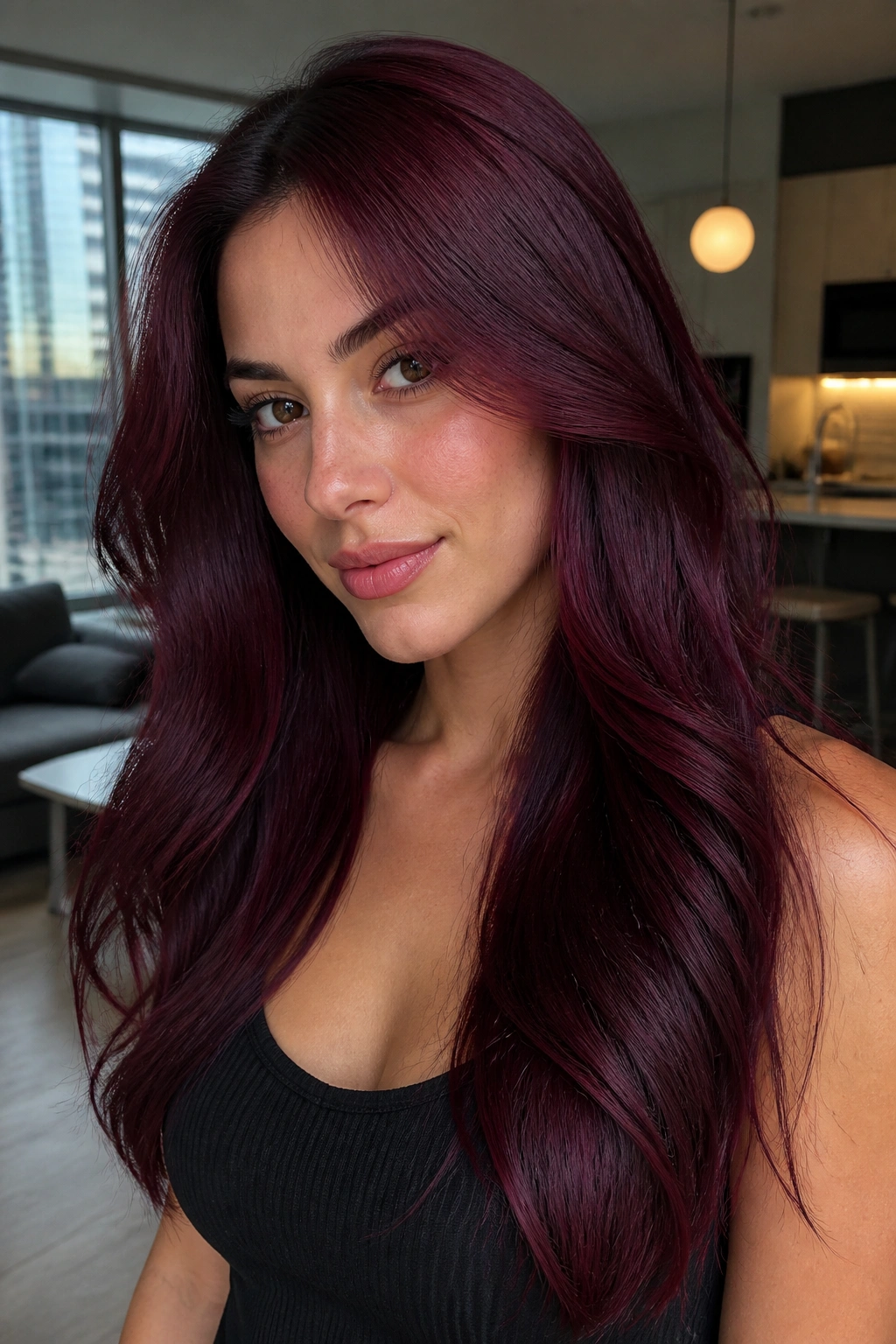
Amethyst cherry is the most purple-leaning idea on the list, and that’s exactly why it suits cool skin so well. The amethyst note pulls the red away from warmth and into a jewel tone that feels cleaner and sharper.
This shade is good for someone who likes fashion colors but doesn’t want a neon outcome. It has enough red to still count as cherry, yet the violet depth keeps it elegant. On lighter hair, it reads bright and striking. On darker hair, it can sit deeper and more smoky.
If you want the color to last, ask for a deposit-heavy formula rather than something too sheer. Sheer fades fast.
28. Violet Cherry Peekaboo
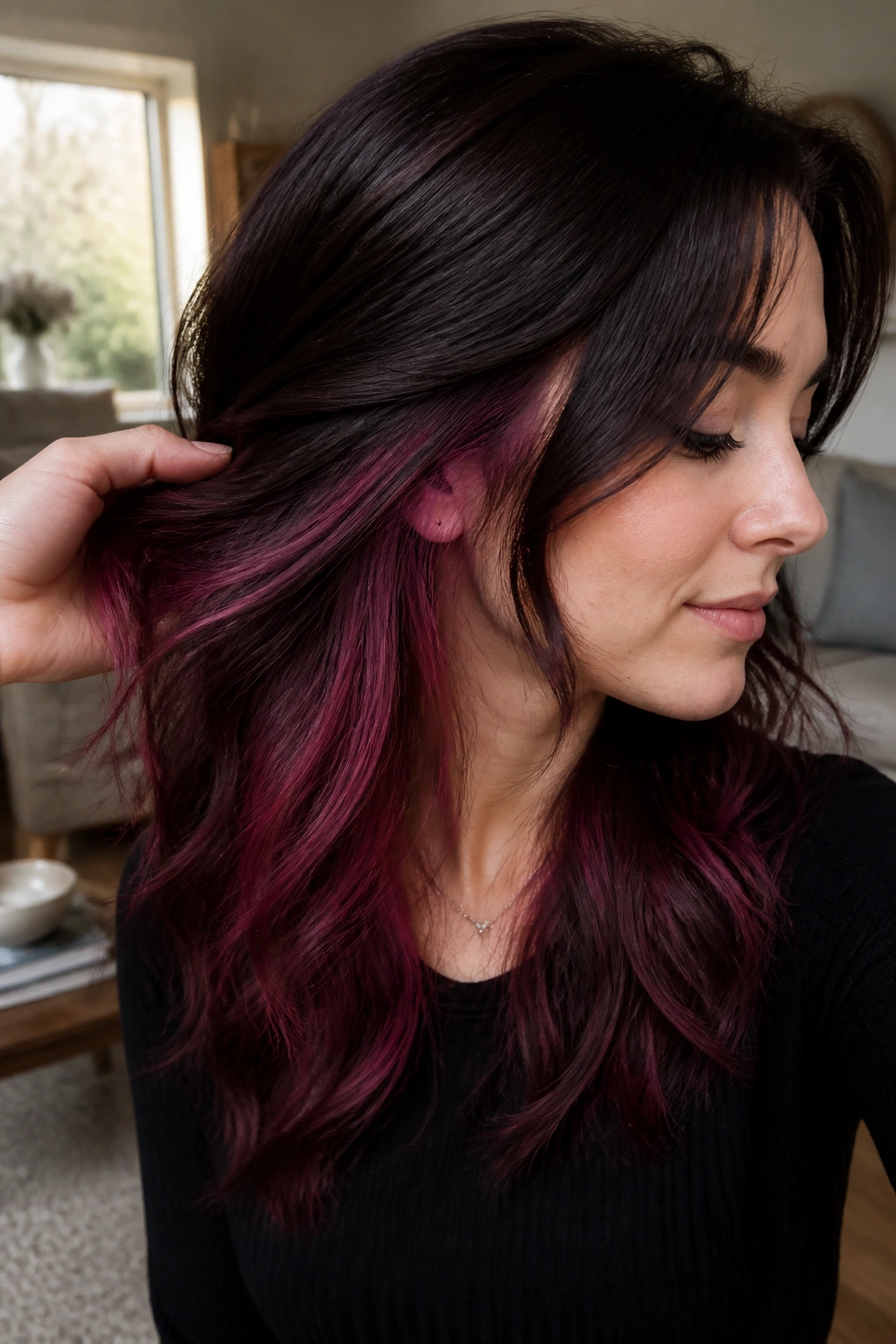
Peekaboo color gets better when the hidden shade has a little mystery to it. Violet cherry does that well. The red is still there, but the violet note keeps it cooler and more dimensional. Tucked under a dark top layer, it flashes out only when the hair moves.
This idea is especially good if you like to wear your hair half up or pinned back. The hidden color shows through the gaps. A lot of people think peekaboo red is tiny. It isn’t, once it starts moving. The effect is much bigger in real life than in a still photo.
Clip the top layer up if you want the color to show more. Simple fix.
29. Black Cherry Money Piece
A black cherry money piece is sharp in the best way. The rest of the hair can stay dark, but the front section gets a richer red-black tint that frames the face and gives you that cool, glossy edge right where people look first.
The placement does a lot of work here. A strong money piece near the cheekbones can make the eyes pop, especially with cool-toned makeup. It’s also a good way to test whether you want more red later. Start at the front. See how it feels. Then decide if the rest of the head needs to join in.
A smooth blowout makes the color look crisp. Messy texture makes it more casual. Same shade, different mood.
30. Midnight Cherry Glaze
If you want the easiest cherry red to live with, this is the one I’d put at the top of the list. Midnight cherry glaze sits so deep that it barely announces itself indoors, but it still gives cool skin that red-violet reflection in daylight. It’s subtle. Not shy.
This is the shade for anyone who wants cherry red hair color ideas for cool skin tones without the maintenance headache of brighter copper-reds. Ask for a blue-red or wine-red gloss over a dark brunette base, and keep the finish smooth. A little shine serum helps, but the cut does half the work. Blunt ends make it feel chic. Soft layers make it feel softer.
If you’re torn between two shades, start here. It’s the one that usually ages the best between salon visits.
