



Purple burgundy shades can be a lot more flattering on cool skin than the warmer burgundies that crowd salon menus. The catch is obvious once you see it: blue-violet pigment makes pale pink, rosy, and neutral-cool complexions look crisp, while orange-red pigment can push the face into flushed territory for the wrong reasons.
A lot of people ask for “burgundy” and end up with something that leans rust. It happens because the word covers a huge range, from black cherry to cassis to plum wine. On hair, those differences matter more than people expect. A gloss with a violet base can calm brass in a way a warm red never will.
I like burgundy on cool skin when it looks like dark fruit, not fire. Think merlot in low light, blackberry at the ends, cassis around the face. Those shades keep the richness while avoiding the orange cast that fights with cooler undertones.
Some of these ideas stay subtle. Some are dramatic. All 22 stay in the cooler side of the burgundy family, so you can pick the one that matches your base, your haircut, and how much salon upkeep you’re willing to live with.
1. Blue-Black Merlot
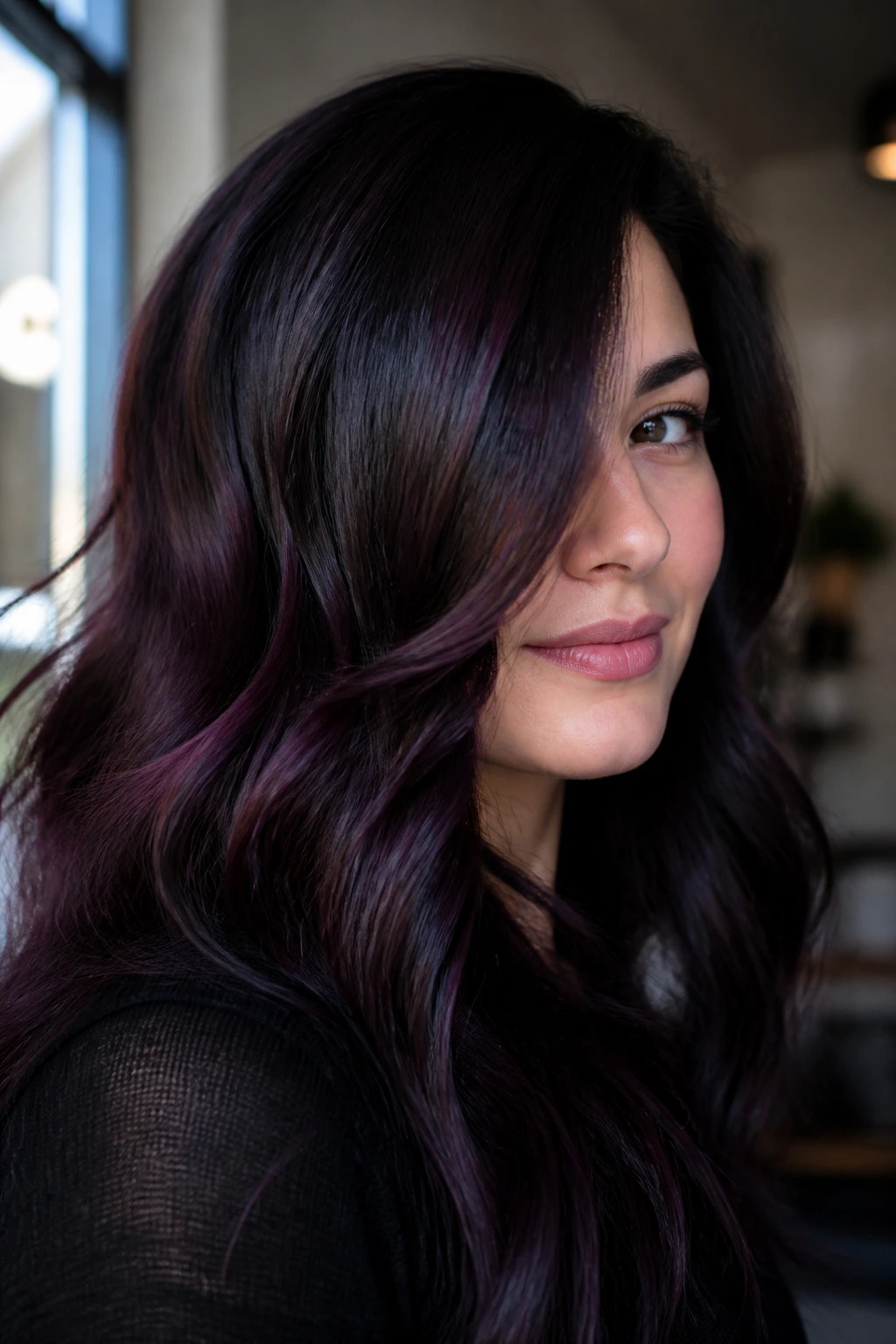
Blue-black merlot is the shade I reach for when someone wants burgundy that behaves like a neutral indoors and turns wine-dark near a window.
It sits right in that sweet spot for cool skin tones. The blue-black base keeps pink undertones from looking blotchy, and the merlot note gives you depth without dragging the whole thing into copper. On dark brunette hair, it can look almost inky from a distance, then flash a deep berry-red when the light hits the strands at an angle.
- Best on level 3 or 4 brunette bases.
- Ask for a blue-violet or blue-red pigment mix, not a warm ruby.
- A clear gloss on top keeps the shade looking slick instead of dusty.
- This one ages well between appointments because the grow-out stays soft.
Tip: If your ends are porous, keep the last inch a shade darker. Otherwise the lighter ends can read pink too fast.
2. Plum Velvet Balayage
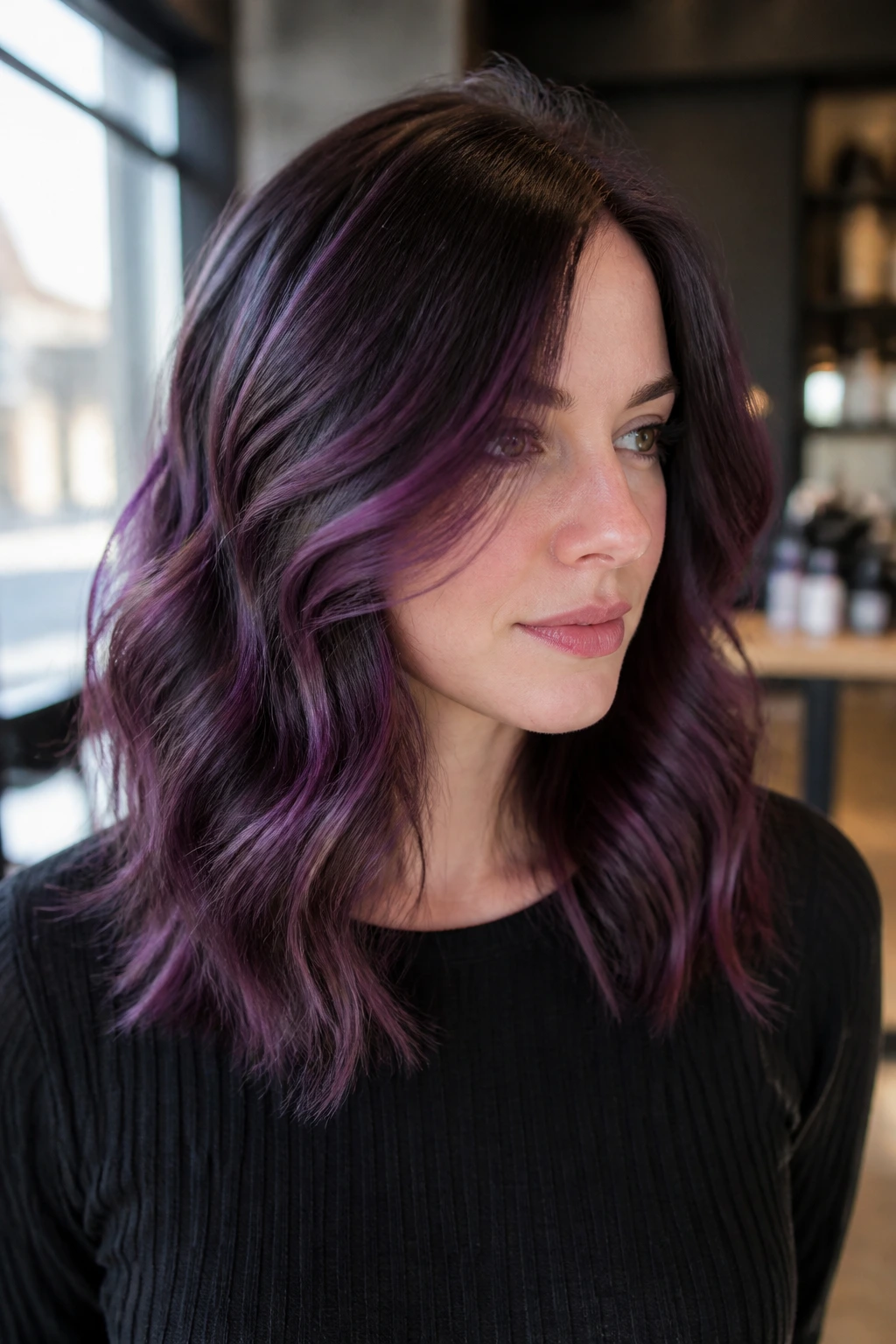
What if you want burgundy that still moves? Plum velvet balayage gives you that softness without losing the cool edge.
Why It Flatters Cool Skin
The plum side of this color is doing the heavy lifting. Plum carries a violet cast, and violet is the friendliest red family shade for skin that has pink, rosy, or blue undertones. The balayage placement matters too, because the darker base keeps the overall look grounded while the plum pieces catch light in the mid-lengths and ends.
How to Wear It
Keep the plum ribbons below the cheekbone if you want the face to stay calm. If you put the brightest pieces too high, the shade can start wearing the face instead of framing it.
A wavy blowout shows it best. Straight hair can still wear it, but soft bends make the plum and burgundy notes separate a little more, which is the whole point.
3. Black Cherry Gloss
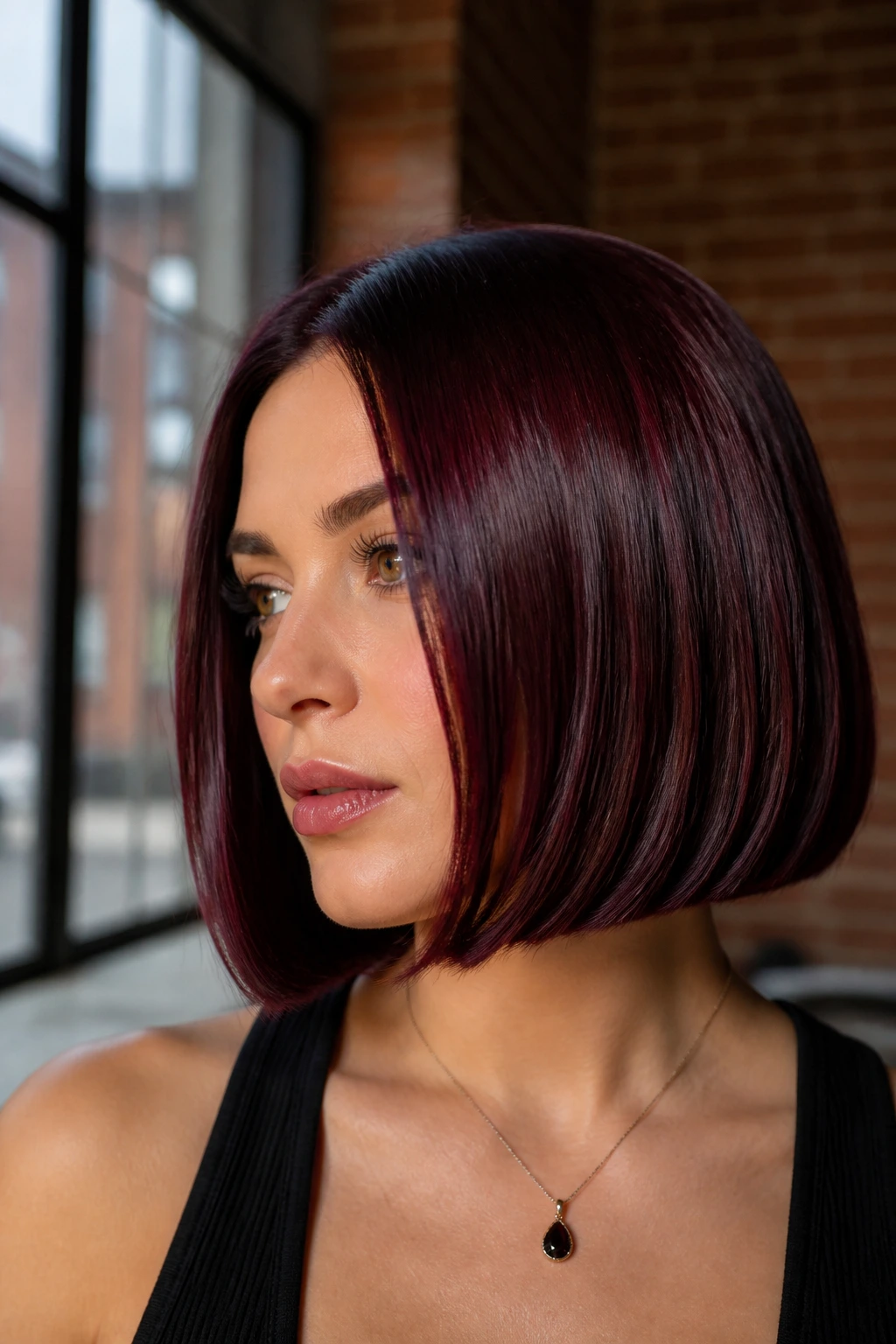
Picture a blunt bob that looks almost black at brunch and berry-red by dinner. That’s black cherry gloss, and it has real charm on cool skin.
The trick here is the gloss itself. Glossing gives the hair that glassy surface that lets the cherry note show without turning the whole head red. It’s a clean look on short hair, especially if you like a sharp line at the ends. On a cool complexion, it can make the skin look brighter without screaming for attention.
- Works best on bobs, lobs, and collarbone cuts.
- Ask for a black base with cherry-burgundy overlay.
- The finish should look reflective, not opaque.
- Great if you want a darker shade that still has personality.
One small warning: if your hair is very porous, black cherry can grab unevenly at the ends. A colorist who knows how to smooth porosity first will save you a lot of frustration.
4. Smoky Mulberry Lob
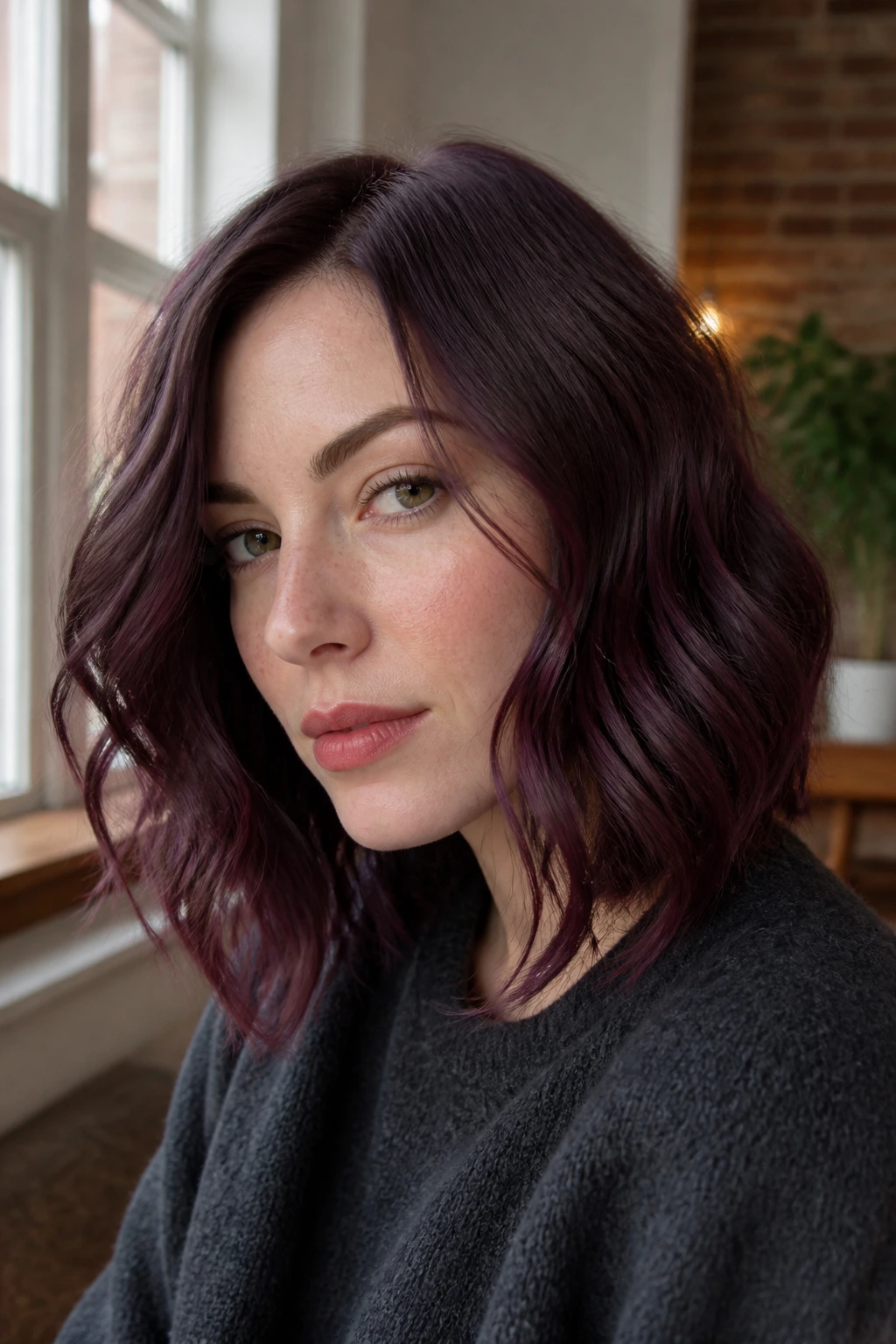
Smoky mulberry is the shade for people who want purple burgundy without the full drama of a vivid violet.
It sits between plum and merlot, which is why it feels so wearable on cool skin. The smoky part matters. It mutes the red enough that the color doesn’t tilt warm, and that makes the face look less flushed. On a lob, the shade has enough room to show movement but not so much length that it starts looking heavy.
I like this one on hair that already has a bit of wave. The bends create darker and lighter pockets, and mulberry looks richer when it isn’t sitting in one flat block. If your haircut is blunt and you want a softer edge, this color does a lot of work for you.
It’s also a good bridge shade if you’re nervous about going purple. Not pastel. Not fire-engine red. Just deep, cool fruit.
5. Violet Burgundy Melt
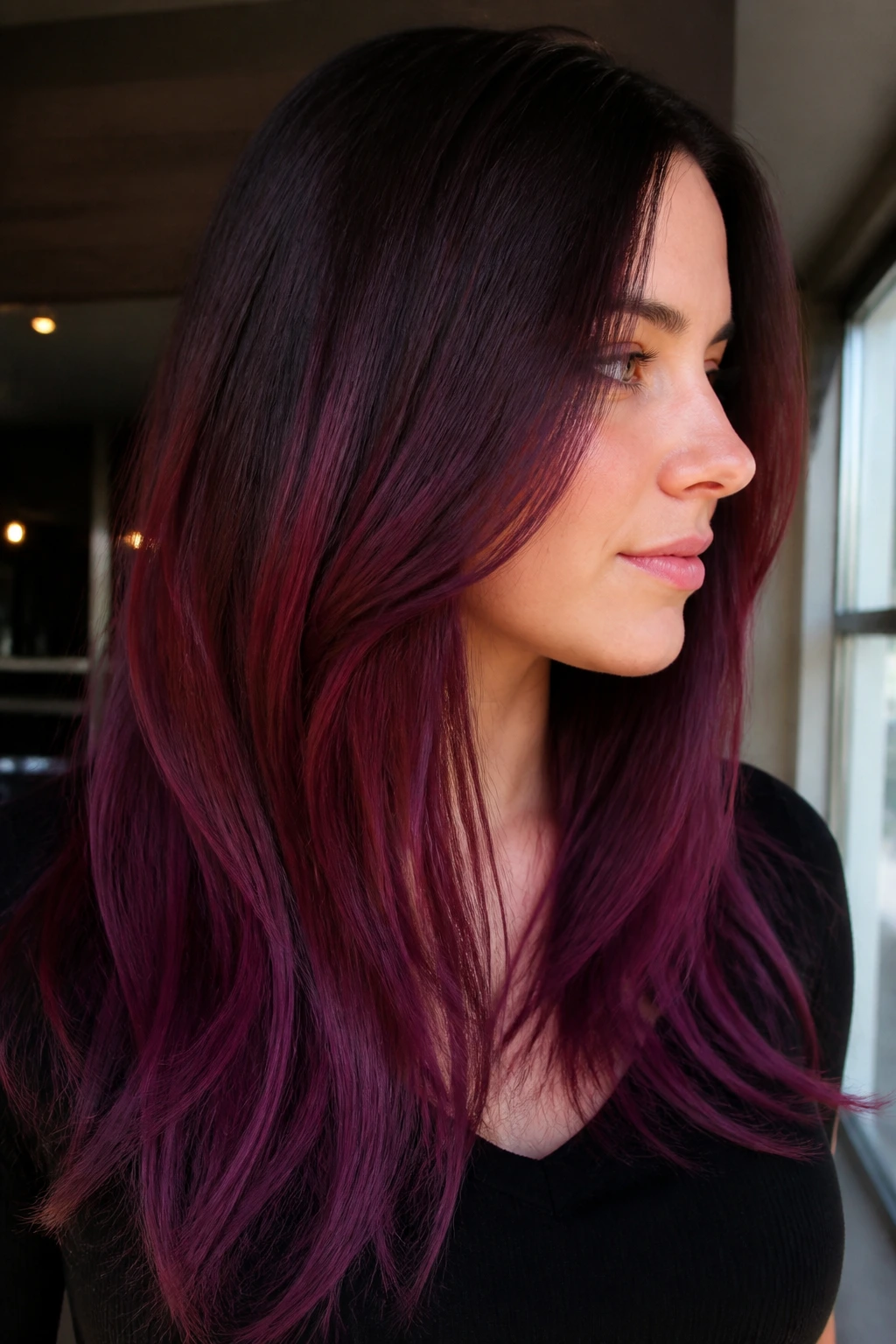
If you want the purple side to show first, this is the one.
Where the Violet Should Sit
A violet burgundy melt usually starts with a darker root shadow and then shifts into burgundy mids that have a visible violet cast. That root-to-end change keeps the hair from looking flat, which matters a lot on straight textures where color can disappear if it’s too even.
The melt works especially well on cool skin because the violet prevents the burgundy from turning rusty. That’s the whole difference between a rich red and a color that starts looking tired after a few washes. Violet keeps the shade clean.
What to Ask For
- A root shadow one to two levels deeper than the mids.
- Burgundy through the mid-lengths.
- Violet concentrated near the ends or face frame.
- A translucent finish, not a thick red block.
This one is a little more fashion-forward than the blue-black options. If you like eyeliner, dark lipstick, or a sharp haircut, it makes sense fast.
6. Cool Cabernet Curls
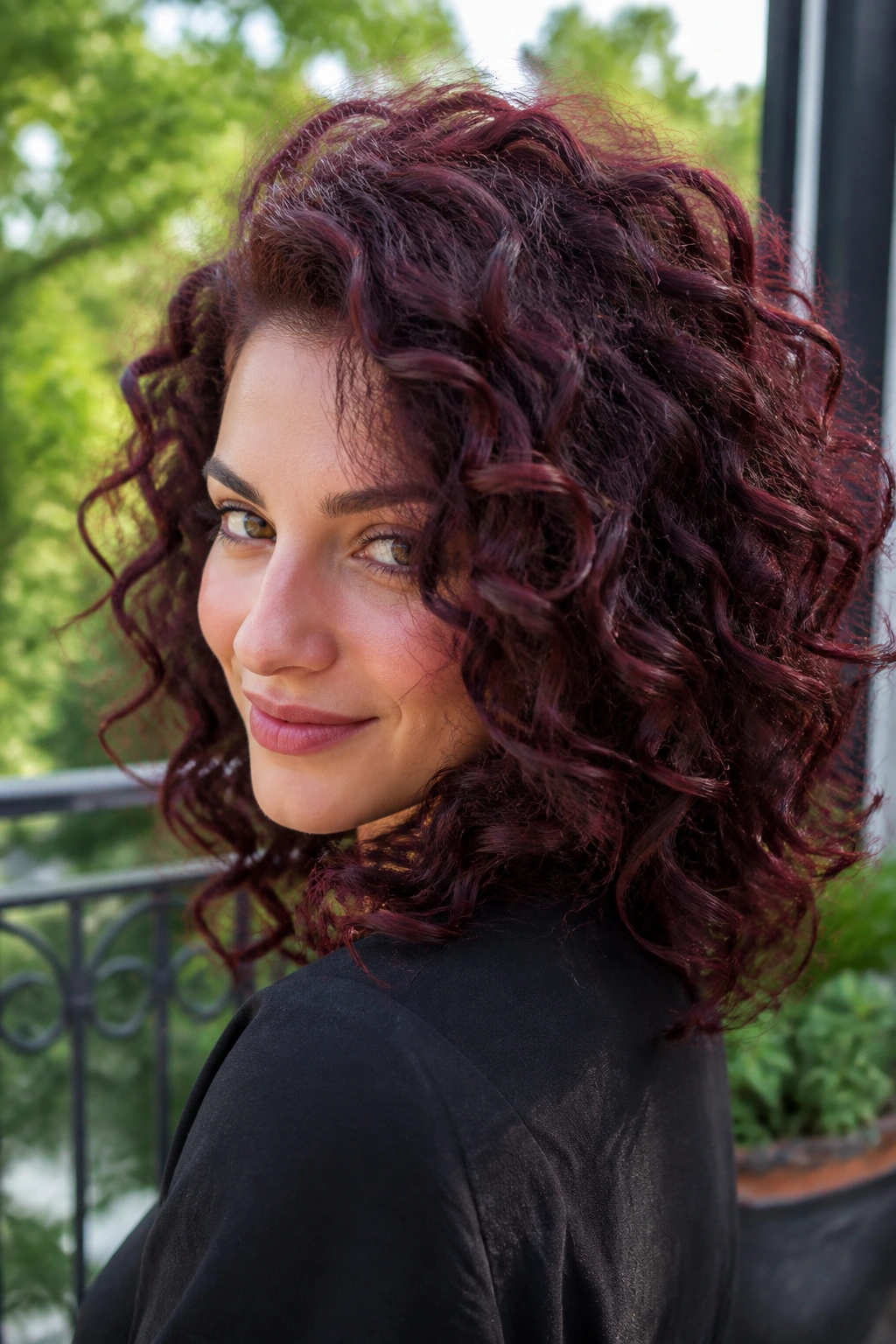
Curly hair eats color differently. It shows it in pieces.
That’s why cabernet is such a nice fit. On curls, the red-violet notes break across the pattern of each coil, so the color never looks flat or painted on. Cool skin gets a lift from the blue-red base, and the curls keep the finish from feeling too severe. You see wine, then berry, then a little plum, all in the same head of hair. That movement matters.
Cabernet is also forgiving on medium to deep brunette bases because you don’t need a huge lift to see the color. A semipermanent or demi-permanent formula can leave the hair feeling softer than permanent dye, which is helpful if your curls already lean dry.
A diffuser helps here. So does a light curl cream with no heavy wax. The color should look plush, not sticky.
7. Amethyst Burgundy Money Piece
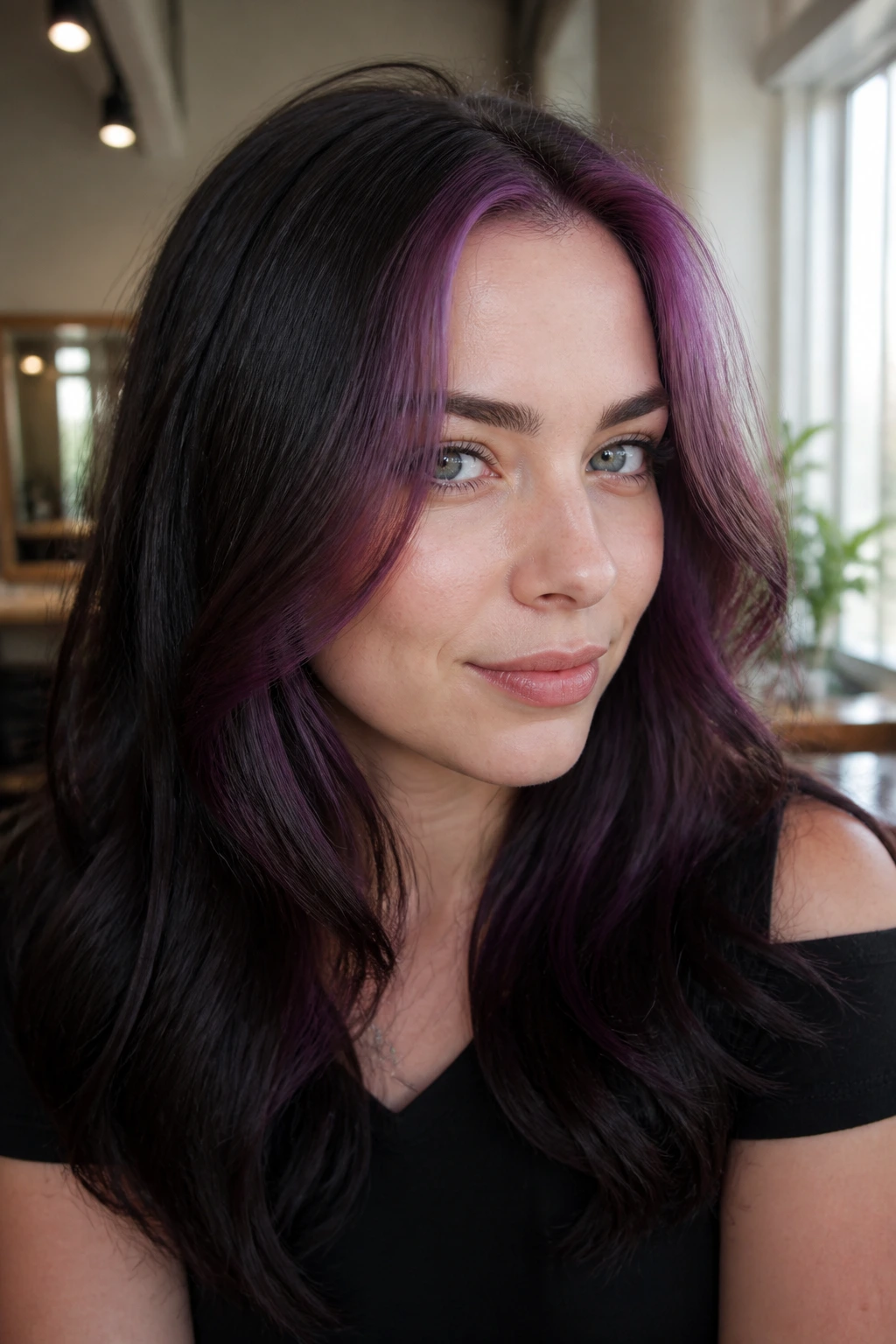
Can a bright face frame stay cool-toned? Absolutely, if the purple stays blue-leaning and the burgundy stays deep.
How to Ask for It
The money piece should sit around the front hairline and maybe skim the first inch or two of the part. That keeps the color where it matters most: near the skin. If you go too wide, the whole effect can turn streaky. Too thin, and you lose the point.
- Ask for amethyst-burgundy pieces, not magenta.
- Keep the frame chunky enough to show, but not so wide that it looks stripey.
- Place the lightest pieces at the temple, not all the way back.
- Pair it with a darker brunette base for contrast.
This is one of my favorite options for someone who wants color without full-head maintenance. You get payoff around the face, and the rest can stay quieter.
8. Blackberry Jam Ends
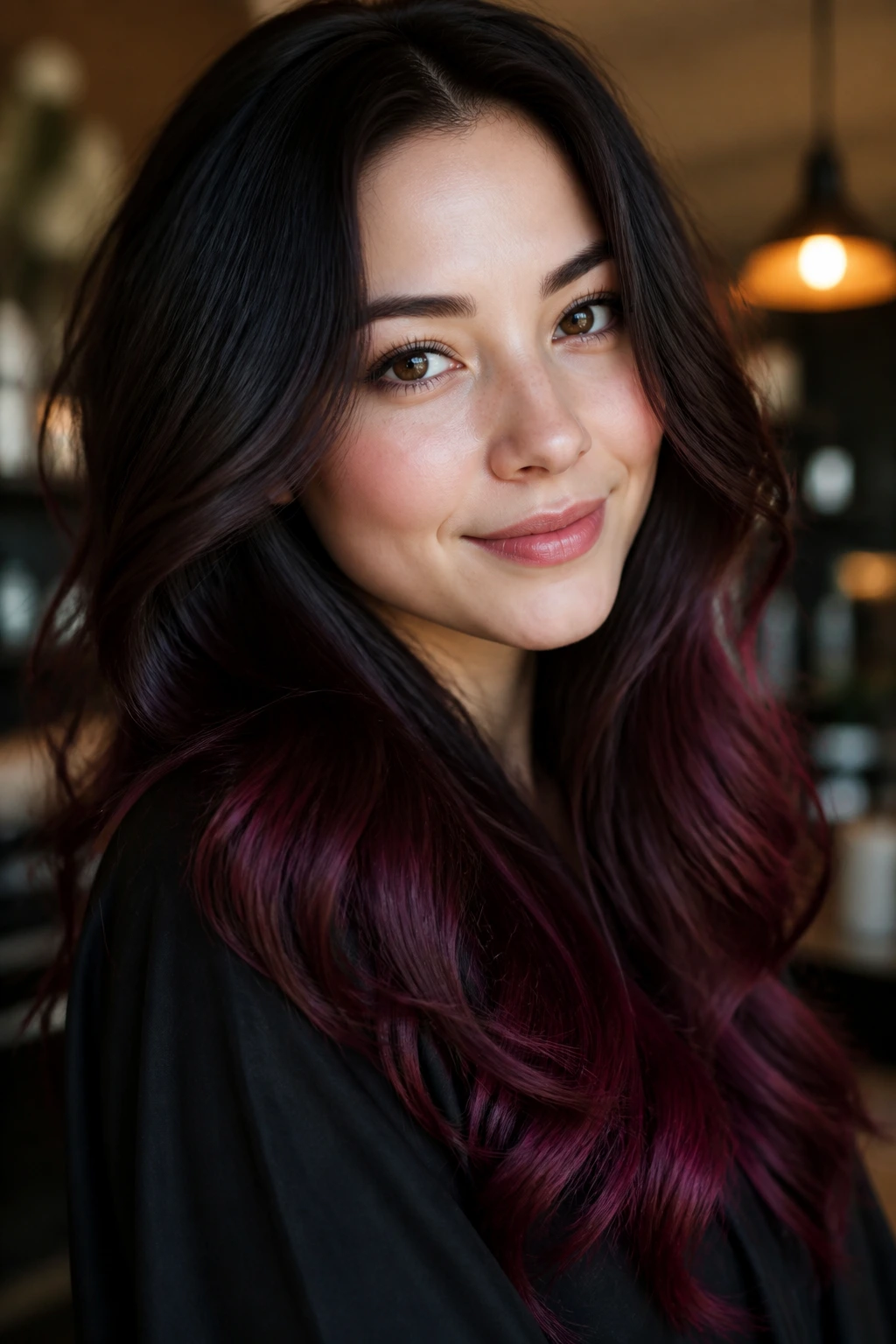
Blackberry jam ends are for long hair that needs a little personality at the bottom.
The idea is simple: keep the roots and mids dark, then let the color deepen into blackberry at the last few inches. On cool skin, the purple-berry note keeps the ends from looking orange, which can happen fast with warm red ombré. The result feels polished, not loud. And because the color is concentrated at the ends, you can grow it out without hating your life in six weeks.
This is one of those shades that looks especially good with layers. The lighter movement at the ends gives the blackberry a place to show up. On heavy one-length hair, the effect can get lost unless the cut has a bit of swing.
If you air-dry your hair often, this shade has a nice casual feel. If you blow it out smooth, it reads sleeker and more deliberate.
9. Deep Port Wine All Over
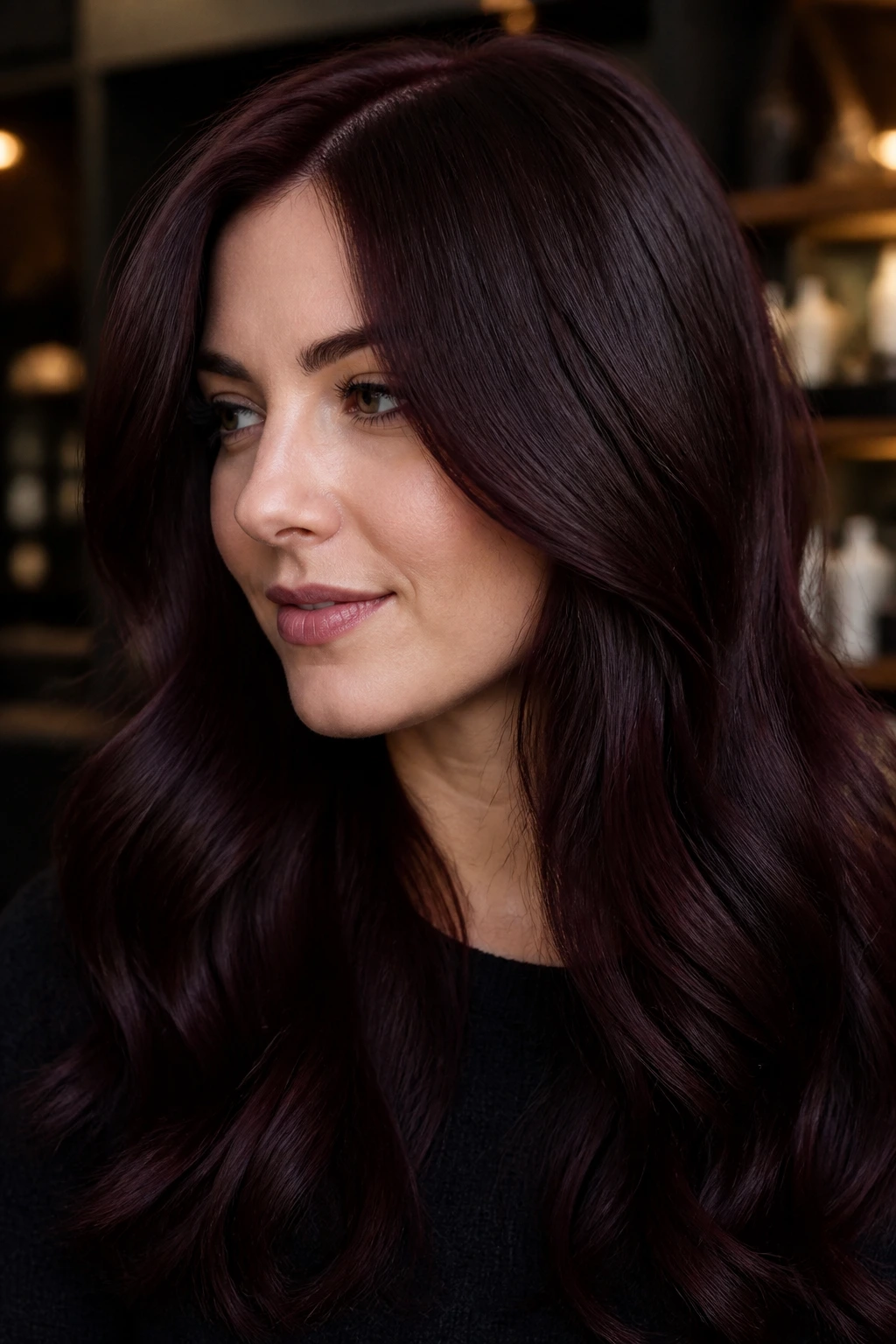
Deep port wine is for people who want burgundy that looks almost brown in shade and richly purple-red in bright light.
Unlike brighter burgundies, port wine sits low and dark. That makes it a good match for cool skin that needs depth more than brightness. The color can be especially flattering on deeper complexions with cool undertones, because it creates contrast without looking chalky or overdone. It also behaves well on coarse or dense hair, where lighter reds can sometimes feel too busy.
There’s a serious upside here: port wine grows out in a soft way. The root line does not scream for attention the way a lighter violet-red can. If you want a color that feels mature, rich, and a little moody, this is hard to beat.
It’s the shade I’d pick for someone who likes dark lipstick and black clothing. The whole look locks together fast.
10. Rosewood Burgundy Highlights
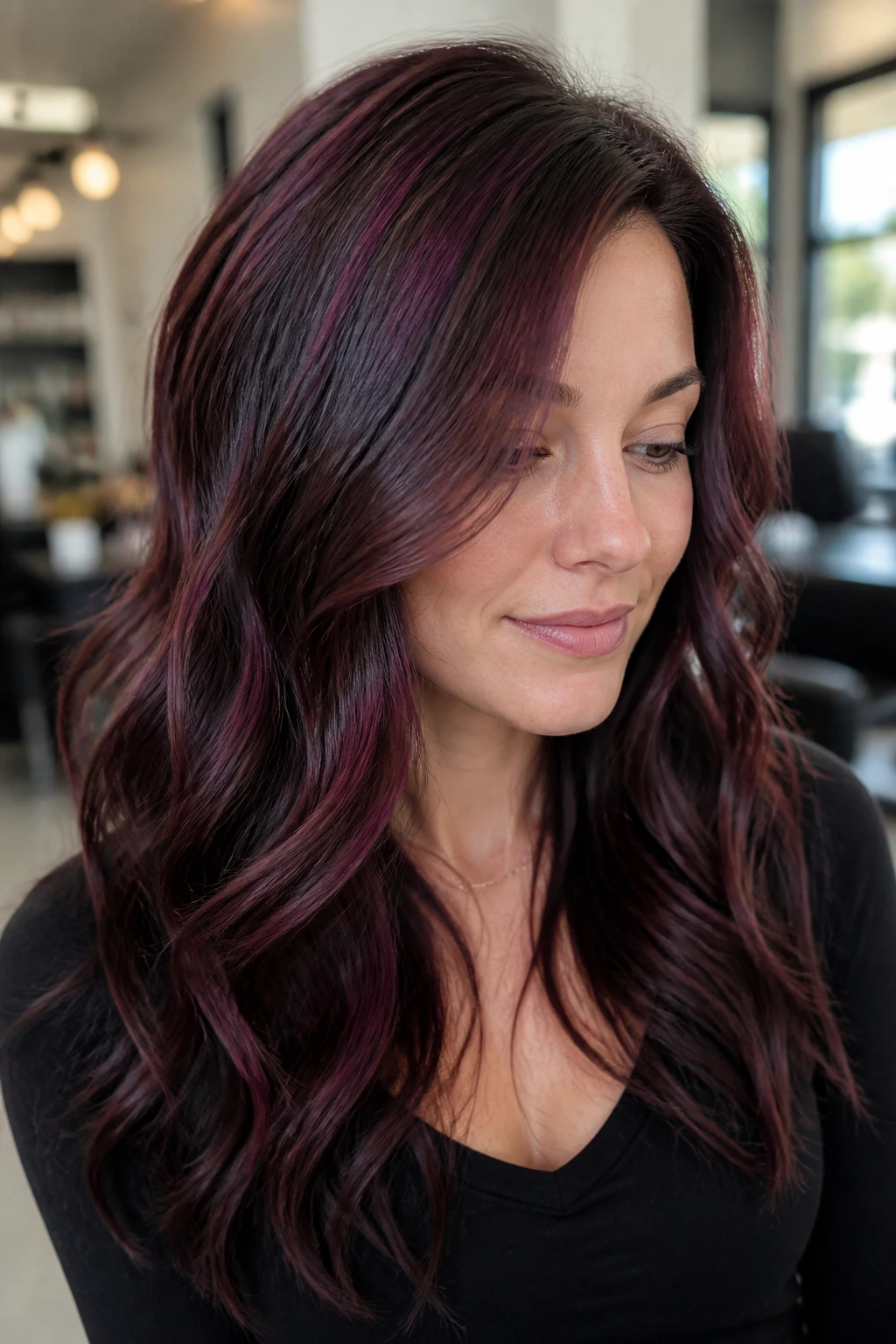
You do not need full red coverage to get the effect. Rosewood burgundy highlights can do the job with less maintenance and a softer finish.
What Makes Them Work
Rosewood lives on the cooler edge of the burgundy family. It has a mauve-brown feel, which is why it sits so well beside cool skin tones. Placed as highlights, it breaks up dark hair without turning it warm. You can put them through the crown for movement, or keep them under the top layer so they flash only when the hair moves.
Placement That Looks Best
- Concentrate the highlights around the mid-lengths and crown.
- Keep a few pieces near the temples if you want brightness near the face.
- Use a brunette base that is no lighter than a deep chestnut.
- Ask for a translucent rosewood glaze over the lightened pieces.
This is one of the easiest burgundy ideas to live with if you don’t want a bold all-over change.
11. Aubergine-Infused Burgundy Bob
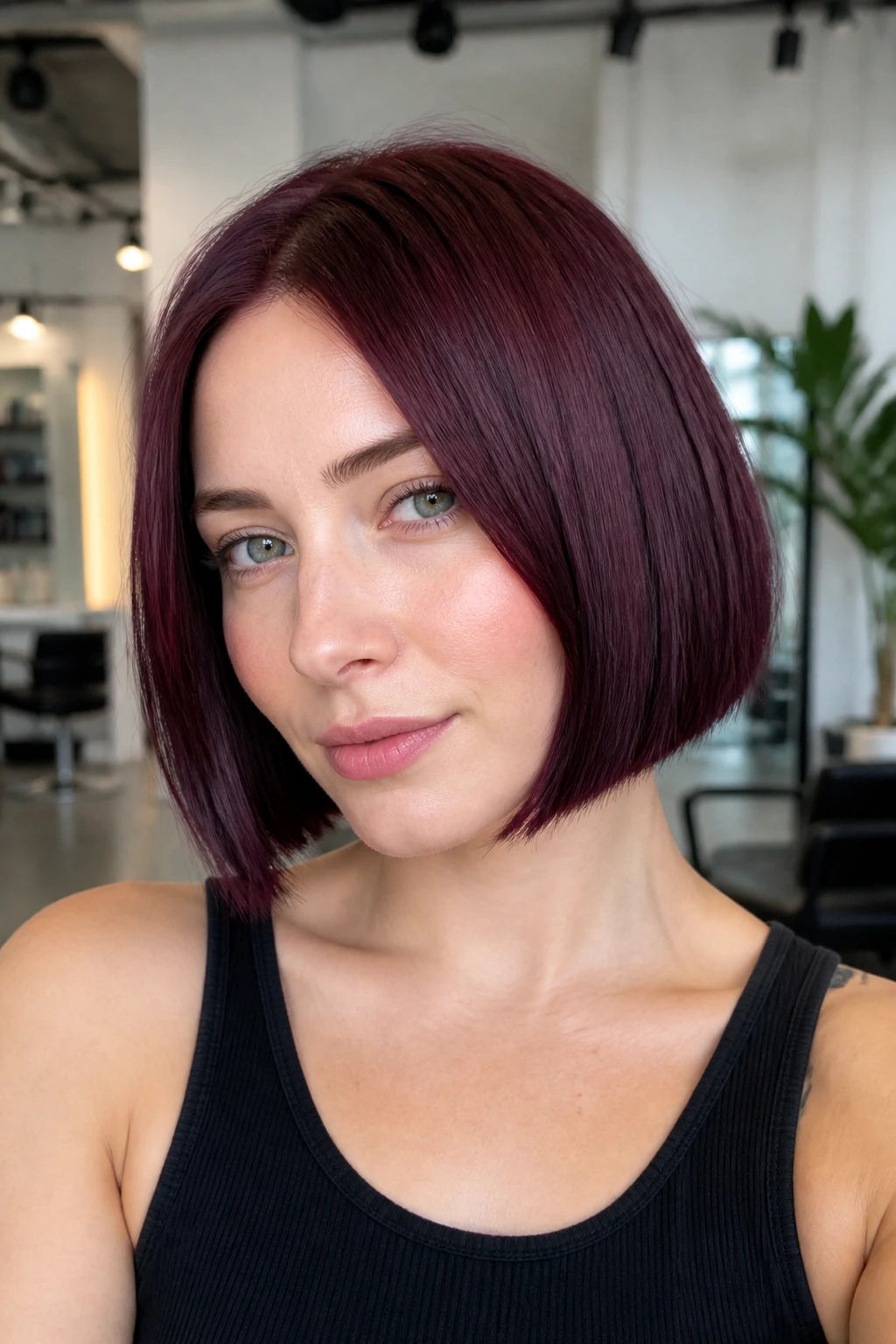
A bob gives aubergine-burgundy a clean edge, and that edge is what keeps it from looking muddy.
What Makes It Different
Aubergine is more purple than red, so when it’s folded into burgundy, the result feels rich and shadowy. On a bob, the cut keeps the shape crisp, which stops the color from getting lost in too much length. Cool skin loves that balance. The face gets contrast, but the color never swings into orange territory.
This shade is especially good if you like blunt lines. The clean perimeter of a bob makes the dark purple-red read sharper. It’s also a nice choice for straight hair, where the color can otherwise flatten out.
If you want a bit more attitude, add a glossy finish and tuck one side behind the ear. Small move. Big effect.
12. Cranberry Plum Peekaboo
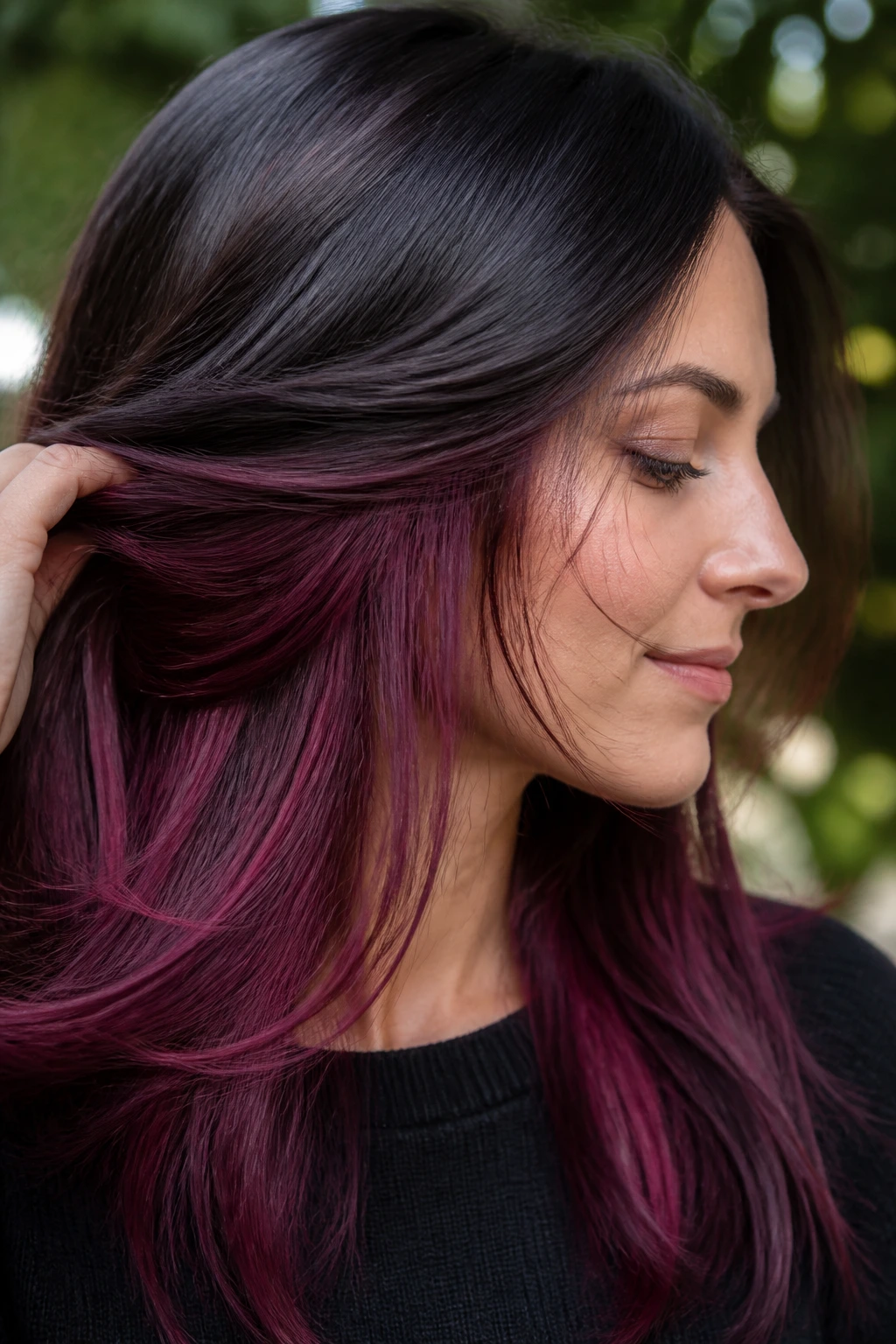
Want color that shows only when hair moves? Cranberry plum peekaboo is the quiet rebel of the bunch.
Where to Hide the Color
The best placement is underneath the top layer, near the nape or lower sides. That way the cranberry plum only appears when you flip your hair, tie it up, or catch a little wind. On cool skin, the plum base keeps the cranberry note from reading too warm. It feels playful, but not sugary.
This is a smart pick if you work in a conservative setting or just want a color you can choose when to reveal. You also get fewer obvious roots, which is a nice bonus. The hidden placement means the grow-out stays softer than full-head burgundy.
Keep the top layer a dark brunette or espresso. The contrast is what gives the peekaboo piece its little surprise.
13. Wine-Stain Balayage on Long Layers
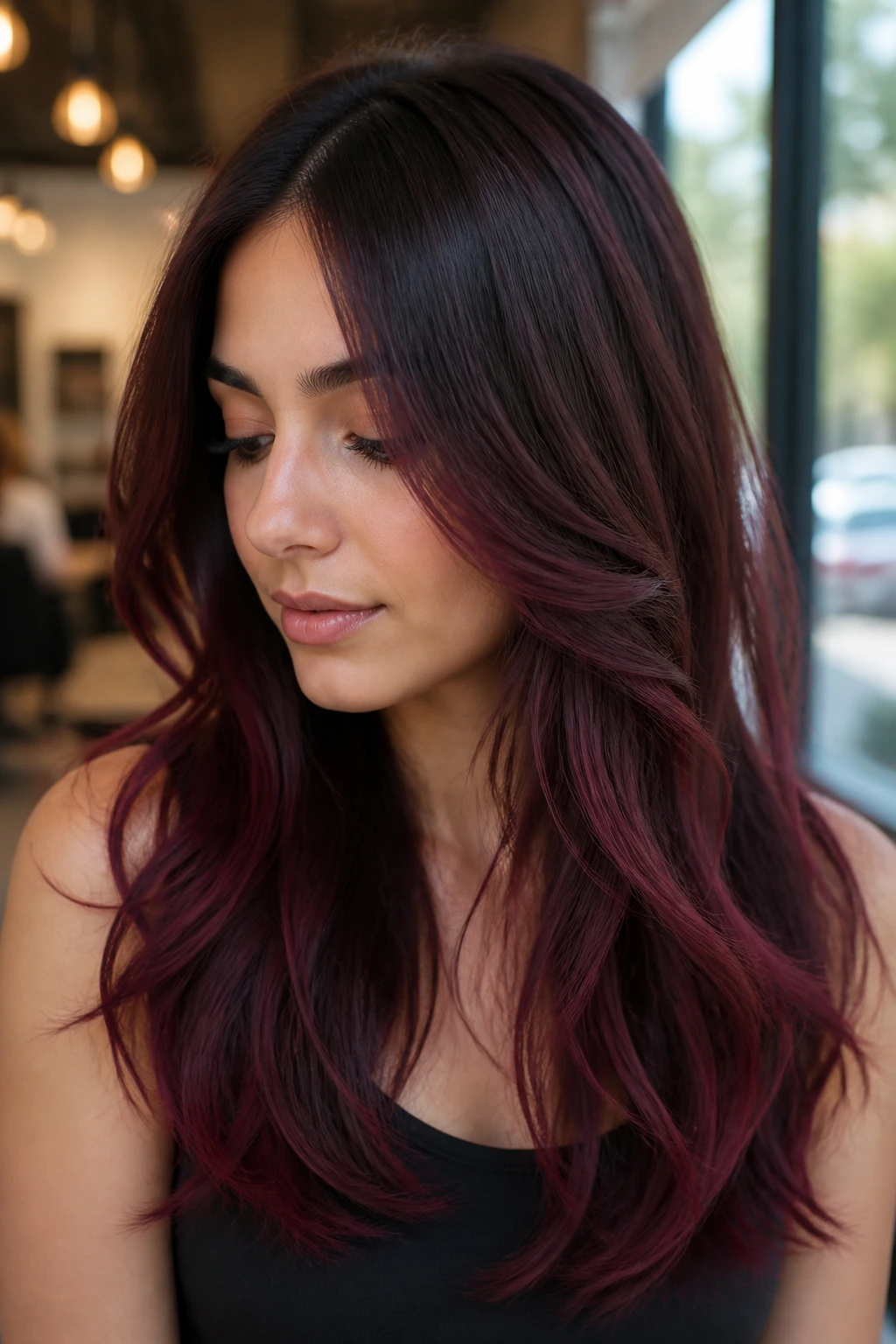
Long layers give burgundy room to breathe. Without that movement, the color can feel heavy.
Wine-stain balayage works by threading dark wine tones through the mid-lengths and ends, usually with the deepest pigment staying near the underside and the brightest pieces closer to the surface. On cool skin, the wine stain effect stays flattering because it’s blue-red rather than brick-red. The color looks like it belongs there, not like it was dropped on top at the last minute.
I like this on hair that already has a little natural bend. The layer movement lets the burgundy appear and disappear as you move, which keeps it from feeling too strong. If you wear your hair down most days, this is one of the prettiest ways to get richness without a blocky finish.
A soft wave iron or a large round brush makes the color show best. Straight, flat hair can still wear it, but the softness is half the appeal.
14. Smoked Orchid Shine
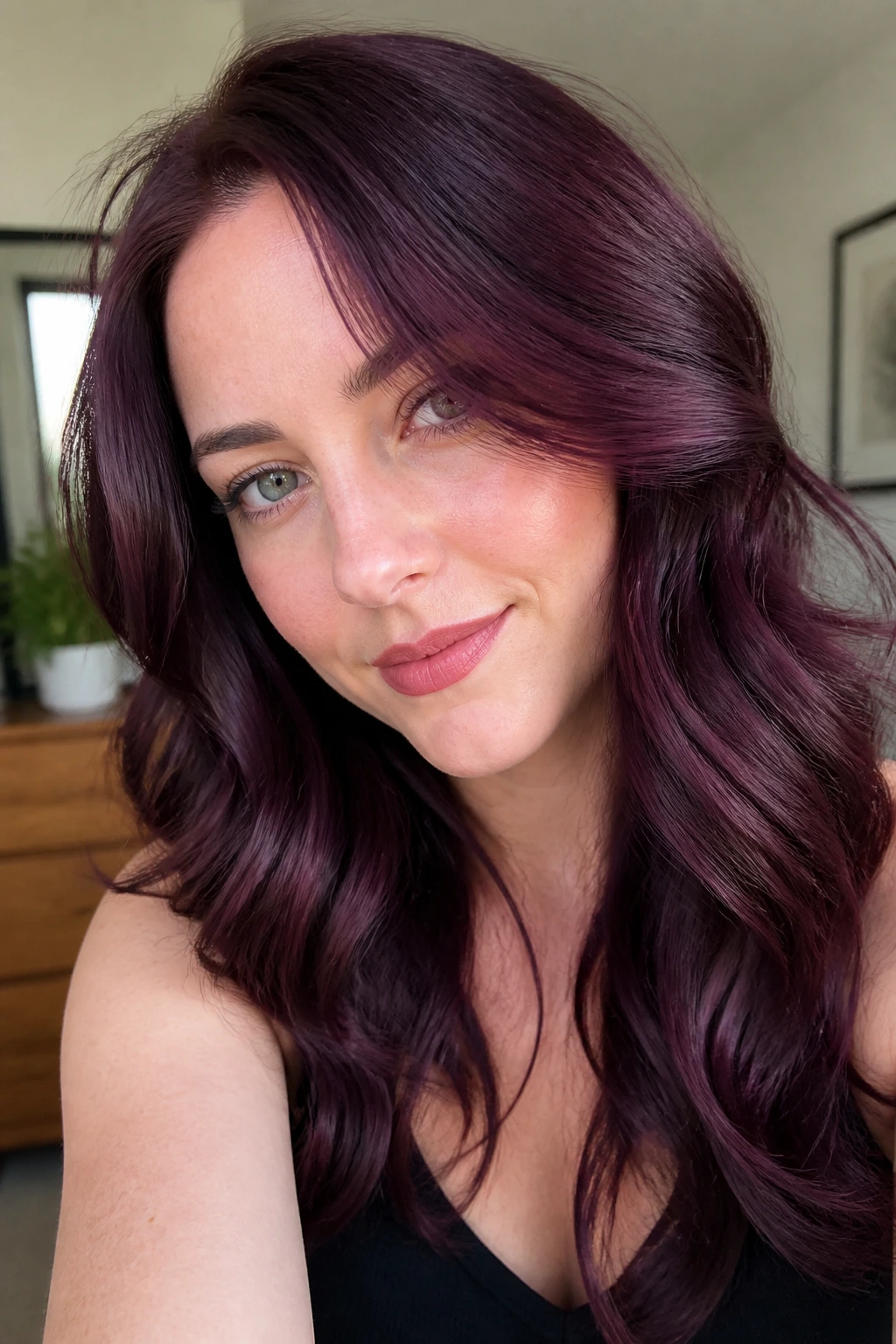
Smoked orchid shine is what happens when burgundy decides to lean a little more purple and a little less red.
- Best on pre-lightened hair at level 6 or higher.
- Ask for a smoky violet-burgundy toner, not a neon purple.
- A gloss or demi formula keeps the finish reflective.
- Works best if you’re comfortable refreshing tone every few washes.
The cool thing here is the softness. Smoked orchid has enough purple to flatter cool skin, but the smoke in the formula keeps it from looking like candy. It reads grown-up, not playful in a highlighter way. That makes it a solid choice if you want something fashion-forward but still wearable.
One warning: this shade fades faster than the darker burgundies. If you hate upkeep, pick one of the deeper wine colors instead. If you like color that shifts over time, orchid is a fun lane.
15. Garnet Violet Melt
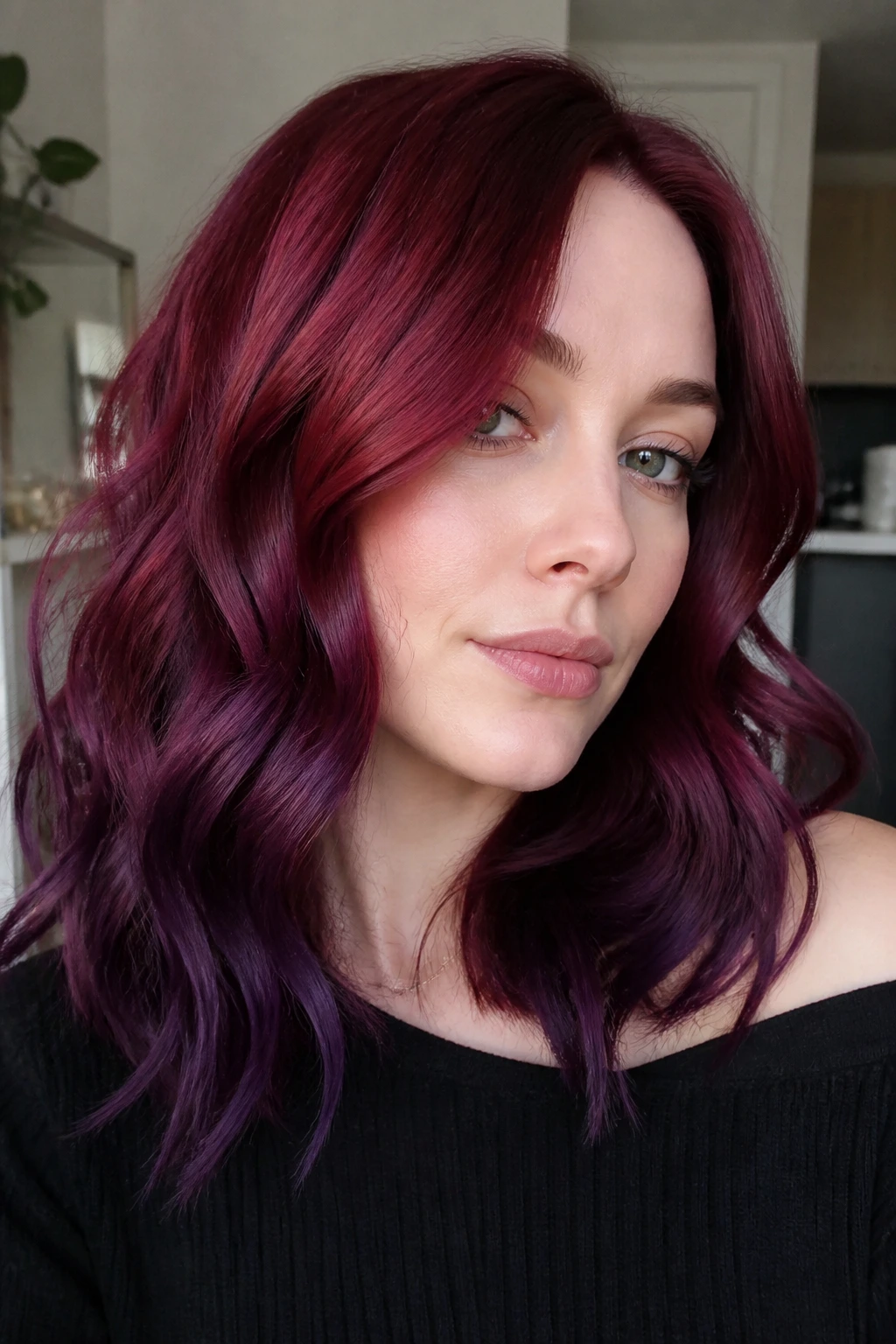
Garnet can skew warm if you let it. Violet pulls it back where cool skin wants it.
The Difference Is in the Glaze
A garnet violet melt usually starts with a darker garnet red and then layers violet through the mids or ends. That shift keeps the color from going orange, which is the problem with a lot of red-brown shades. On cool skin, the violet softens the red and gives the whole head of hair a deeper, more polished look.
This is a good option if you like the richness of red but don’t want it to feel loud. The melt also works on medium-length cuts where the color can spread out a bit without swallowing the shape of the haircut.
If your stylist mentions “warm garnet,” steer the conversation back toward violet. Small change. Huge difference.
16. Mulberry Root Shadow
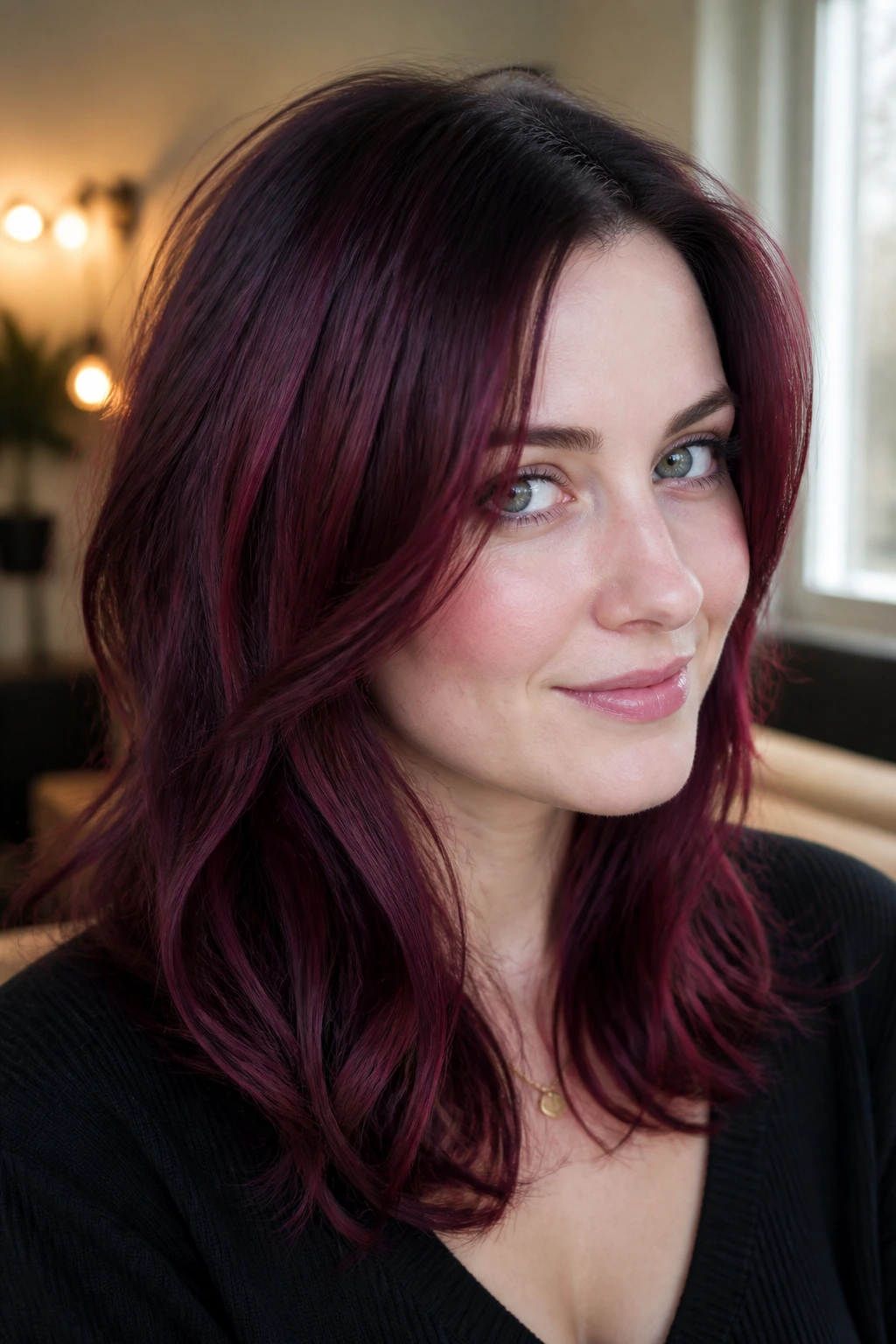
Mulberry root shadow is the practical one in the group, and I mean that as praise.
The root stays deeper and more neutral, then the mulberry color opens up through the mids and ends. That gives you a softer grow-out and keeps the burgundy from sitting too high around the face. On cool skin, the mulberry note keeps the shade looking berry-rich instead of coppery. It’s a calm color, but not boring.
This is the sort of shade that plays nicely with people who don’t want salon visits on a tight schedule. The root shadow does a lot of the blending for you. It also works well on naturally dark hair, because the contrast between root and color is controlled rather than harsh.
If your haircut has layers, the shadow-to-mulberry shift looks especially good when the hair moves. If it’s all one length, the result feels more solid and a little darker.
17. Purple-Red Ribbon Lights
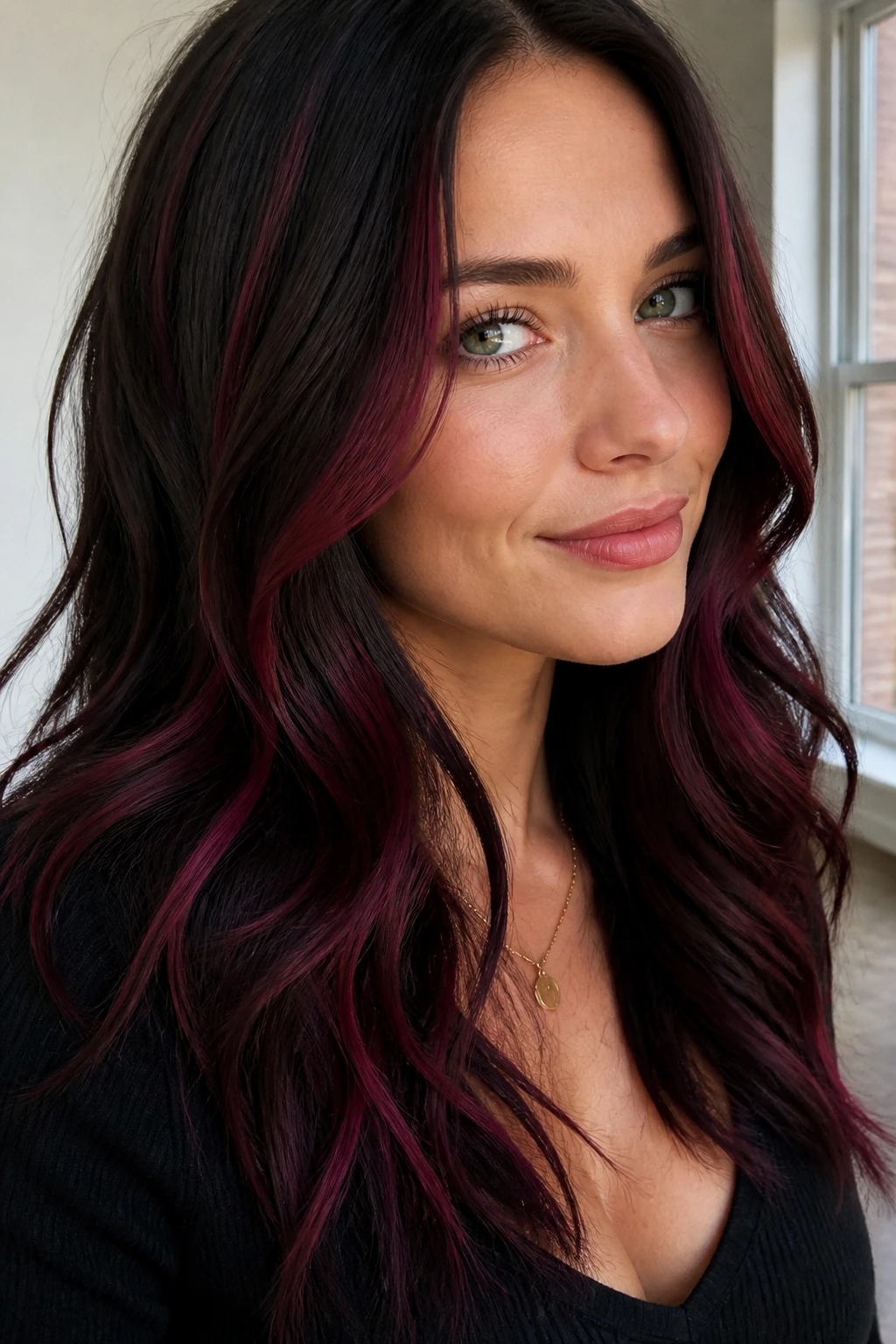
On dense waves, ribbon lights can do more than full color ever will.
How to Place the Ribbons
The idea is to weave narrow purple-red pieces through the hair in long ribbons rather than wide bands. That keeps the finish dimensional and stops the color from looking striped. For cool skin, the purple-red blend gives you the burgundy payoff without a warm brass note sneaking in from the sides.
- Place the ribbons around the face and through the outer layers.
- Keep the base a deep brunette or espresso.
- Use thinner sections if the hair is fine.
- Go wider if the texture is coarse and swallows color fast.
This is one of the better choices for people who like movement. The ribbons shift as the hair moves, so the color never sits still for long. That makes the shade feel richer than a flat all-over dye.
18. Cool Cherry Cola Blend
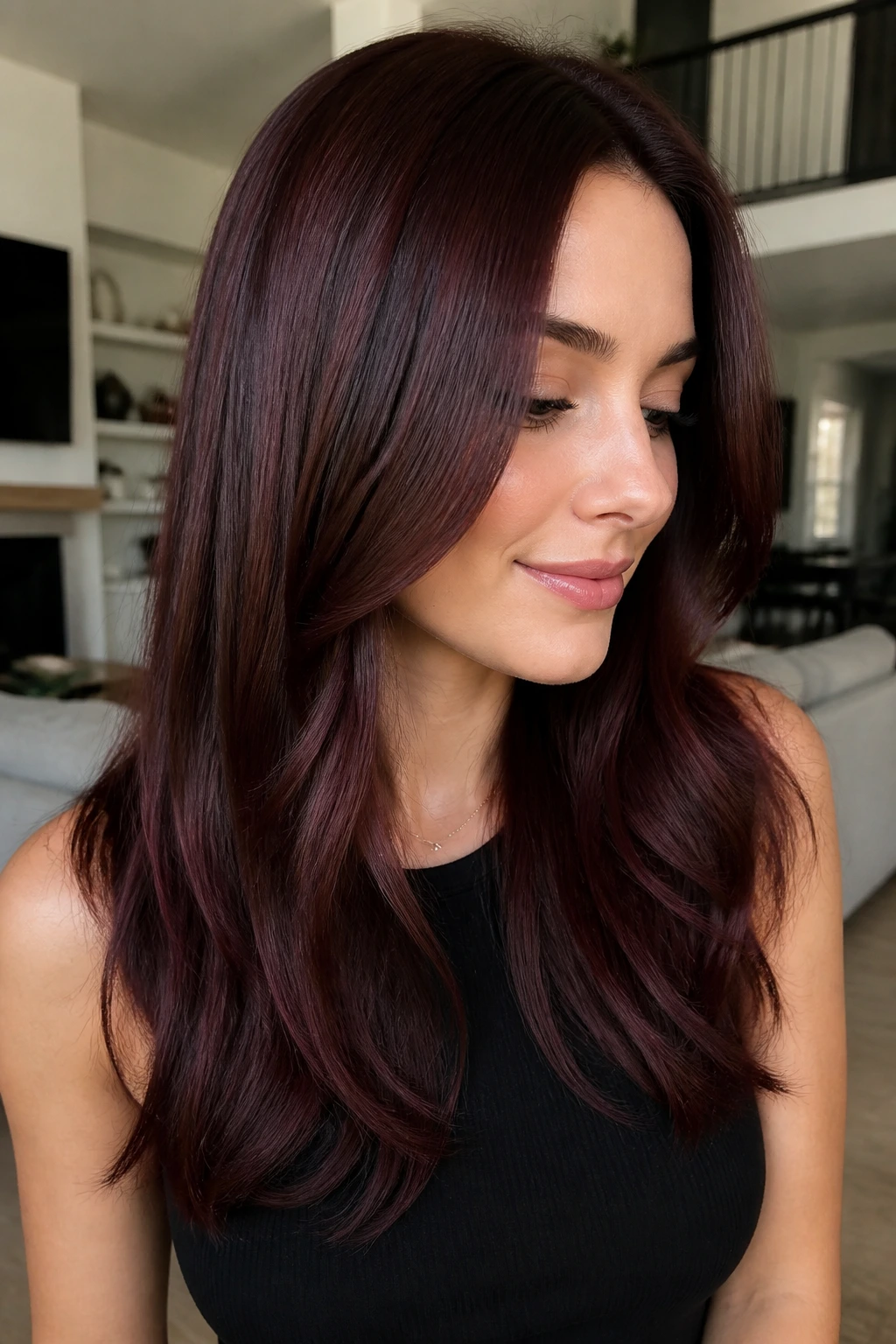
Can you keep the brunette base and still get burgundy shine? Yes, and cherry cola is one of the easiest ways to do it.
The blend starts with a dark brown or cola base and adds a cool cherry glaze over the top. The result is less purple than mulberry and less red than cabernet, which makes it useful if you want something subtle. On cool skin, the cherry note is bright enough to wake up the face while the cola depth keeps the color grounded.
- Best if you want low contrast and low drama.
- Works well on medium to deep brunettes.
- Ask for a blue-red gloss rather than a copper glaze.
- Great for straight hair that needs some shine movement.
This shade looks especially good when the hair is smooth and reflective. Frizz can hide the color shift a bit, so a good blowout helps.
19. Dark Berry Face Frame
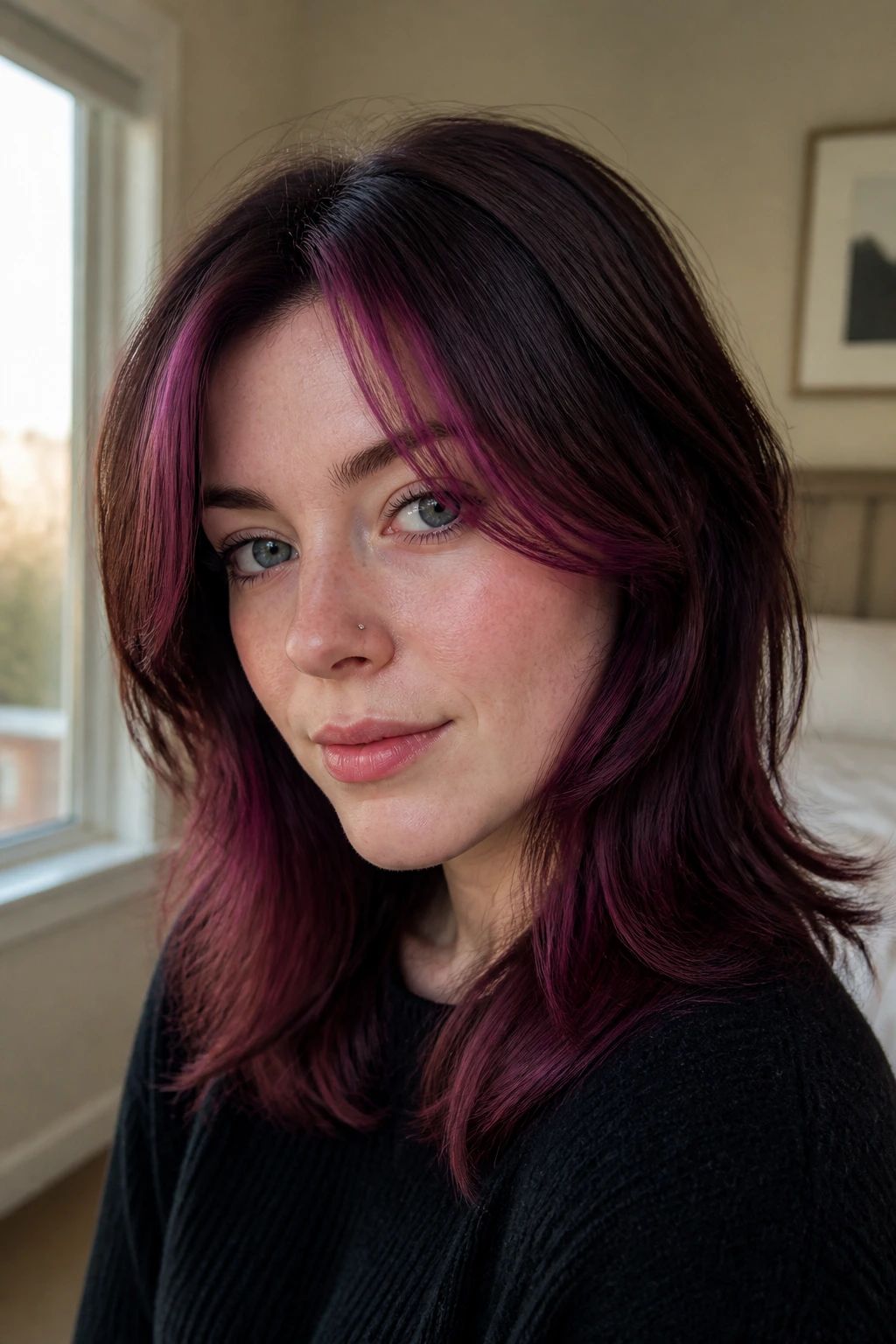
If your face needs contrast, the frame is the fastest way to get it.
Dark berry face framing pieces sit around the hairline and bring the burgundy where the eye goes first. On cool skin, that placement can make the complexion look cleaner without changing the whole head of hair. The berry tone should stay deep and cool, not bright cranberry. A little goes far here.
I like this idea on layered cuts, curtain bangs, and shoulder-length hair. The front pieces can be a touch lighter than the rest, which gives the face a soft spotlight. If you want more drama, widen the frame slightly. If you want it subtle, keep it thin and let the color peek through only when the hair is tucked behind the ear.
It’s a smart pick when you want to test burgundy before doing the full thing.
20. Cassis Gloss Over Brunette
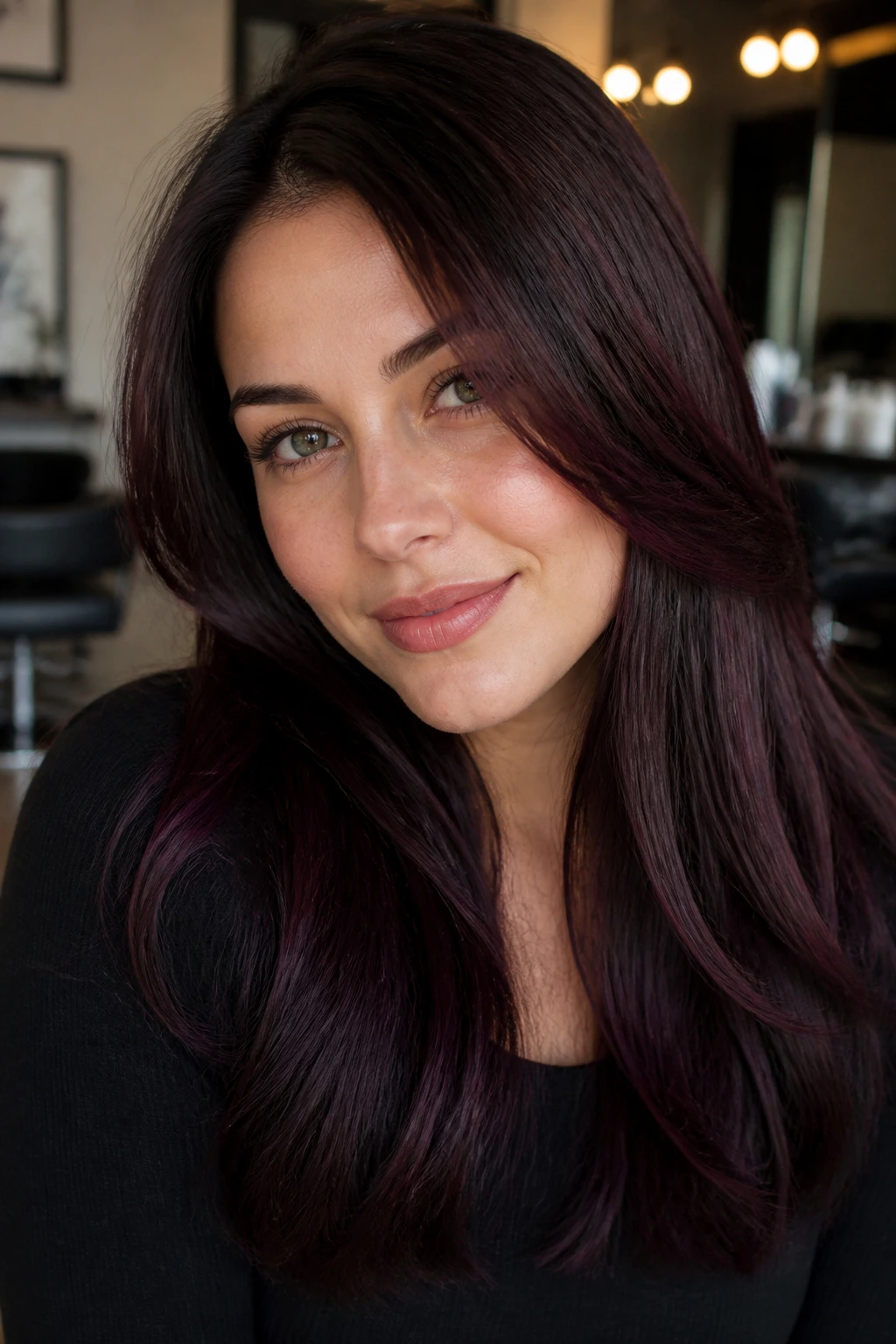
Cassis is one of my favorite burgundy relatives because it has that blackcurrant depth that cool skin tends to wear well.
Best Brunette Bases
A cassis gloss works best on brunette hair that sits at a level 4 or 5. Anything lighter can start looking more purple than burgundy, which is a different mood entirely. On the right base, cassis gives the hair a dark berry shine that shows in the light without becoming obvious from across the room.
Use it when you want the hair to look polished and a little shadowy. The gloss part matters. It keeps the color reflective, which helps the cool undertones in the skin look cleaner. A dull cassis formula can slip into muddy territory, and nobody wants that.
This is the kind of shade I’d choose for someone who likes dark denim, silver jewelry, and a no-fuss haircut.
21. Lilac-Burgundy Sheen
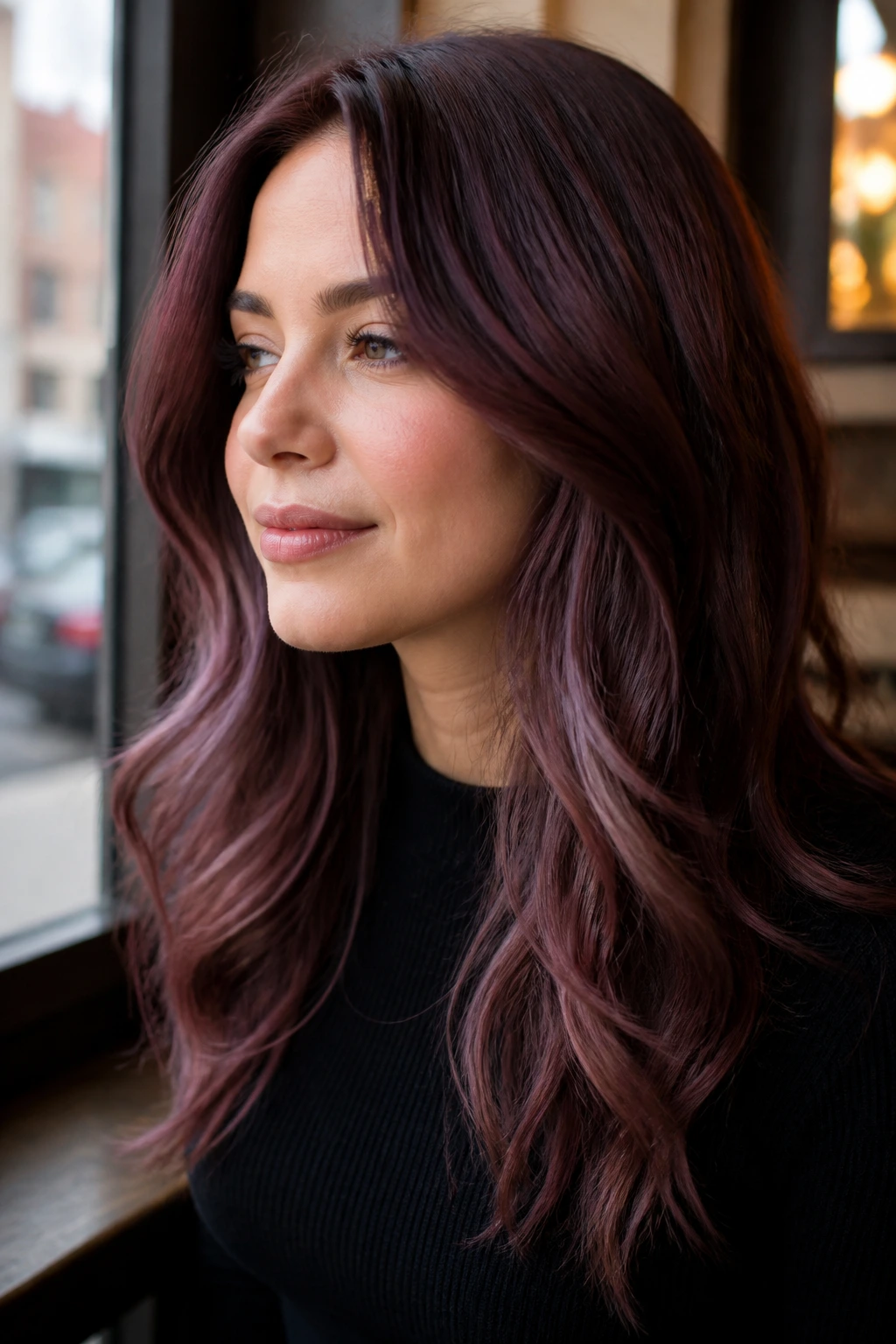
Lilac-burgundy sheen is softer than most of the shades here, and that’s exactly why it works.
The lilac note gives the burgundy a cooler, airier edge. It does not turn the hair pastel unless you ask it to. Instead, it shows up as a faint violet cast over a deep red base, especially on light catching the ends. Cool skin tends to look good with that kind of restraint because the color never turns muddy or orange.
This shade is nice on medium brown hair that has a few lighter pieces already, or on pre-lightened ends that need a cooler tone. It also pairs well with soft layers, since the sheen can move from piece to piece instead of sitting in one block.
If you want burgundy that whispers instead of shouts, this is one of the smartest places to land.
22. Midnight Plum Burgundy
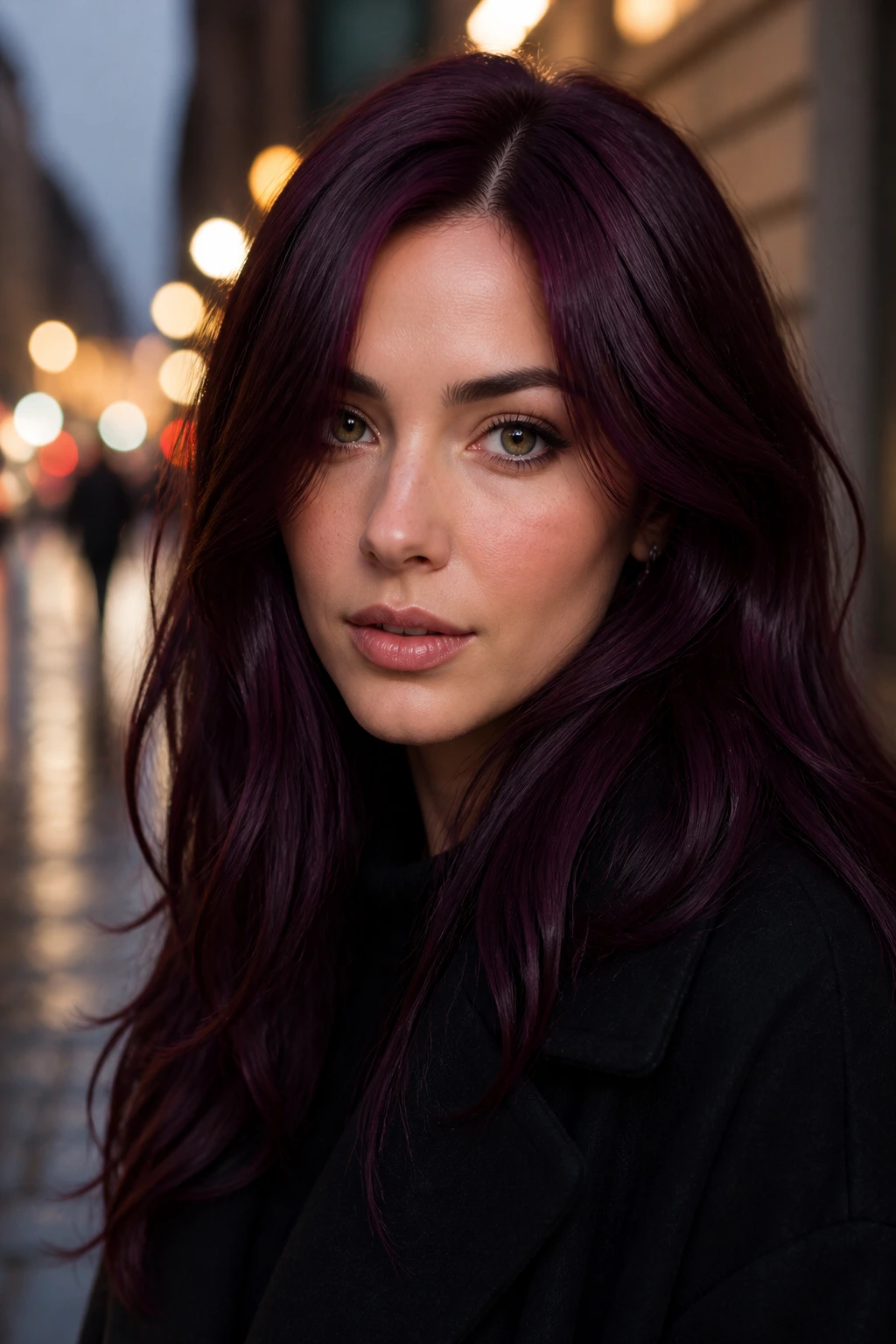
Midnight plum burgundy is the shade I’d hand to someone who wants one color that can handle bare skin, heavy liner, or a black sweater without fighting any of them.
It sits deep enough to feel serious, but the plum note keeps it from turning flat. On cool skin, that matters a lot. The color adds richness near the face without bringing in the orange cast that ruins so many burgundy formulas. It also photographs with a little more depth than a standard red-brown, because the plum edge keeps the shine looking dimensional.
If you want the safest all-around choice from this whole list, start here. It works on straight hair, waves, and curls. It works on short cuts and longer layers. And it gives you that dark berry effect without asking the rest of your look to do much. Sometimes that is exactly the point.
