



Orange-heavy copper can flatten cool skin in a hurry. That sounds dramatic, but anyone who has sat in a salon chair with a swatch that looked rich in the book and brassy in daylight knows exactly what I mean.
The best copper red hair color ideas for cool skin tones usually lean red, rose, berry, or smoky auburn instead of bright pumpkin orange. That one shift changes everything. It keeps the face looking fresh, not flushed, and it gives the color a little more depth so it doesn’t fight with pink, blue, or porcelain undertones.
There’s also a practical side to this. Cool skin tends to look best with copper shades that have a soft base — think red-violet, rose, mahogany, or muted apricot — because those tones play nicely with the skin instead of sitting on top of it like a loud signal. A good colorist will talk about level, undertone, and placement, not just “red.” That matters. A lot.
1. Soft Strawberry Copper
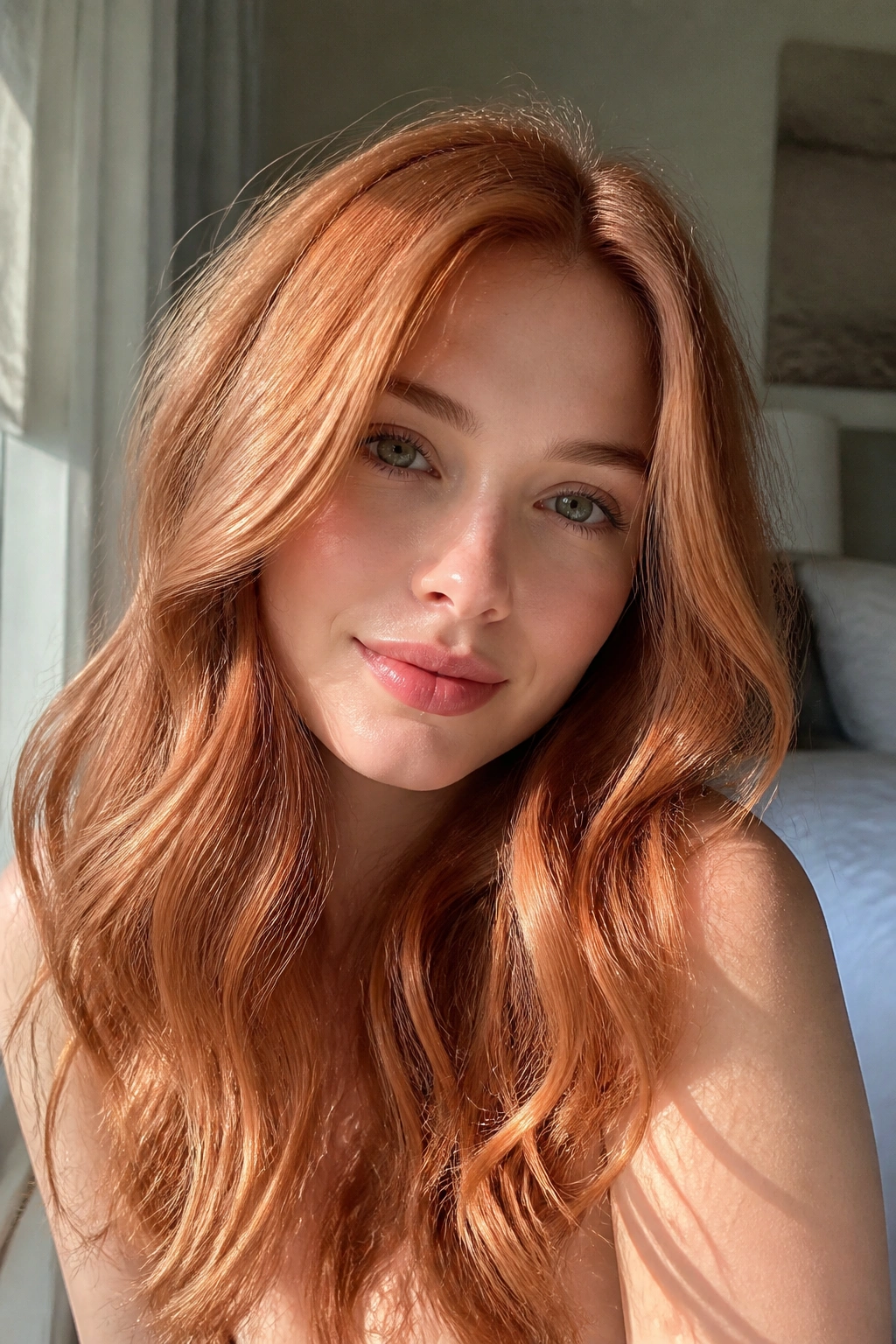
Soft strawberry copper is the shade I’d hand to someone with fair cool skin who wants warmth without the full orange blast. It sits in that sweet spot where red is the star and copper is the backup singer. The result is bright, but not shouty.
Why it works on cool undertones
The pink-red base keeps the color from reading muddy against rosy skin. If your face gets red easily, this is one of the safer copper families because it adds life instead of more heat. Ask for a level 8 strawberry copper gloss with only a touch of gold.
- Best on: fine to medium hair with natural lightness
- Salon ask: strawberry copper with a rose base, not a golden base
- Maintenance: gloss every 4 to 6 weeks
- Style pairing: soft waves, brushed-out curls, or a blunt lob
Best move: keep the roots slightly deeper so the color doesn’t look washed out near the scalp.
2. Rose-Gold Copper Balayage
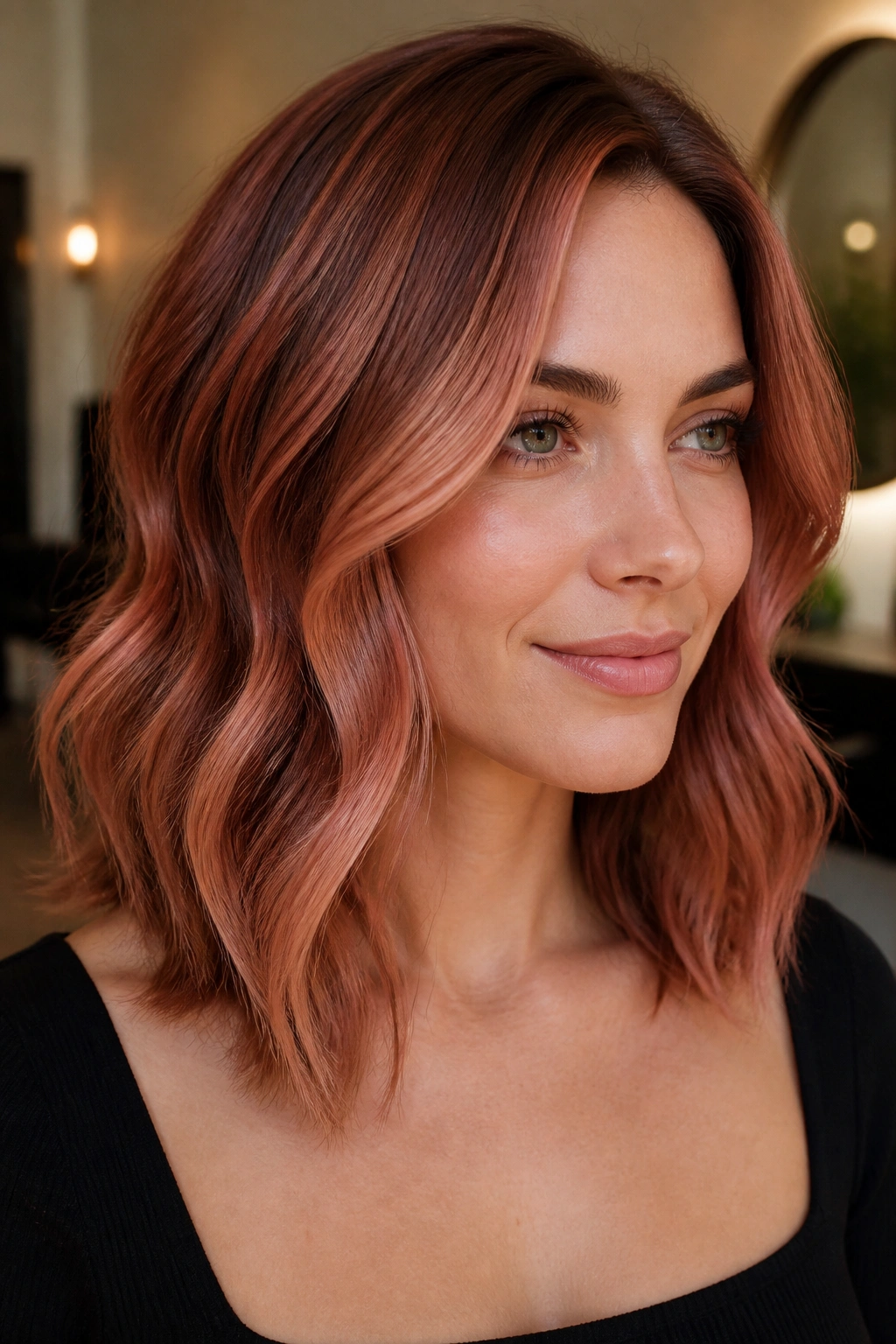
Rose-gold copper balayage is the easy answer when you want dimension and you do not want to commit to a full-head copper block. It gives cool skin that rosy glow people usually chase with makeup, only this version lives in the hair.
The trick is balance. The copper pieces should be painted over a neutral or beige brown base, not a yellow blonde one. That keeps the finish soft and elegant instead of leaning too warm. On shoulder-length hair, the balayage catches movement beautifully and grows out without looking harsh.
For the salon chair, say rose-gold ribbons around the face and through the mid-lengths. That phrasing matters more than just saying “copper balayage,” because a good colorist will know you want pink warmth, not orange warmth. And that’s the difference between flattering and just loud.
3. Smoky Apricot Copper
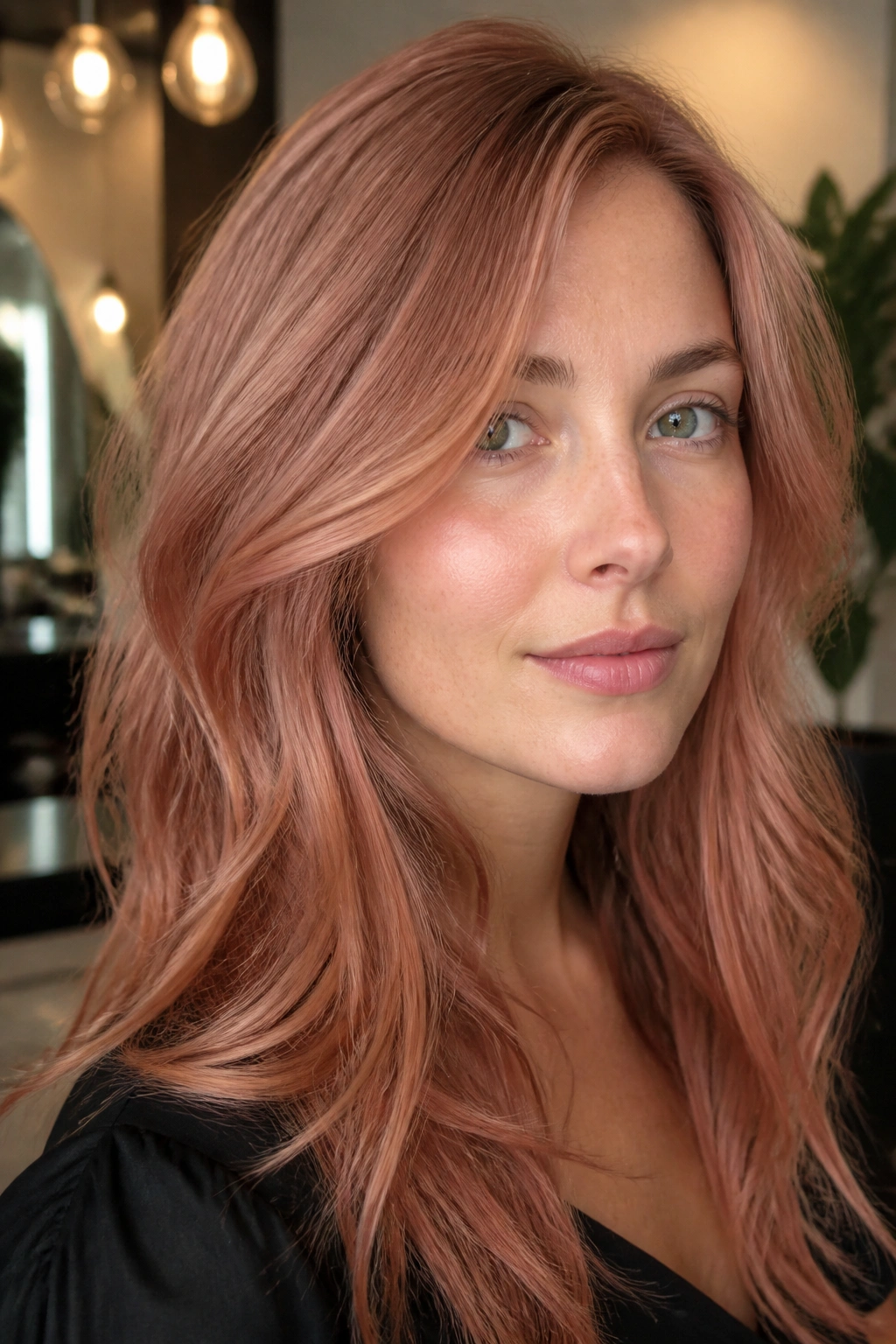
Can apricot work on cool skin? Yes, if it’s smoked down a little. A raw apricot tone can look too sunny, but once a colorist adds beige or rose restraint, it turns into a very wearable copper-red hybrid.
How to ask for it
Tell your stylist you want muted apricot with a dusty finish, not a bright peach or mango shade. That wording gives room for a softer formula with red-violet pigment folded in. It’s a good choice if you want something lighter than auburn but less obvious than true red.
Smoky apricot looks nicest on layered hair because the movement keeps it from feeling flat. It also works well with cool-toned blush and a soft berry lip. A little contrast goes a long way here.
4. Penny Copper Bob
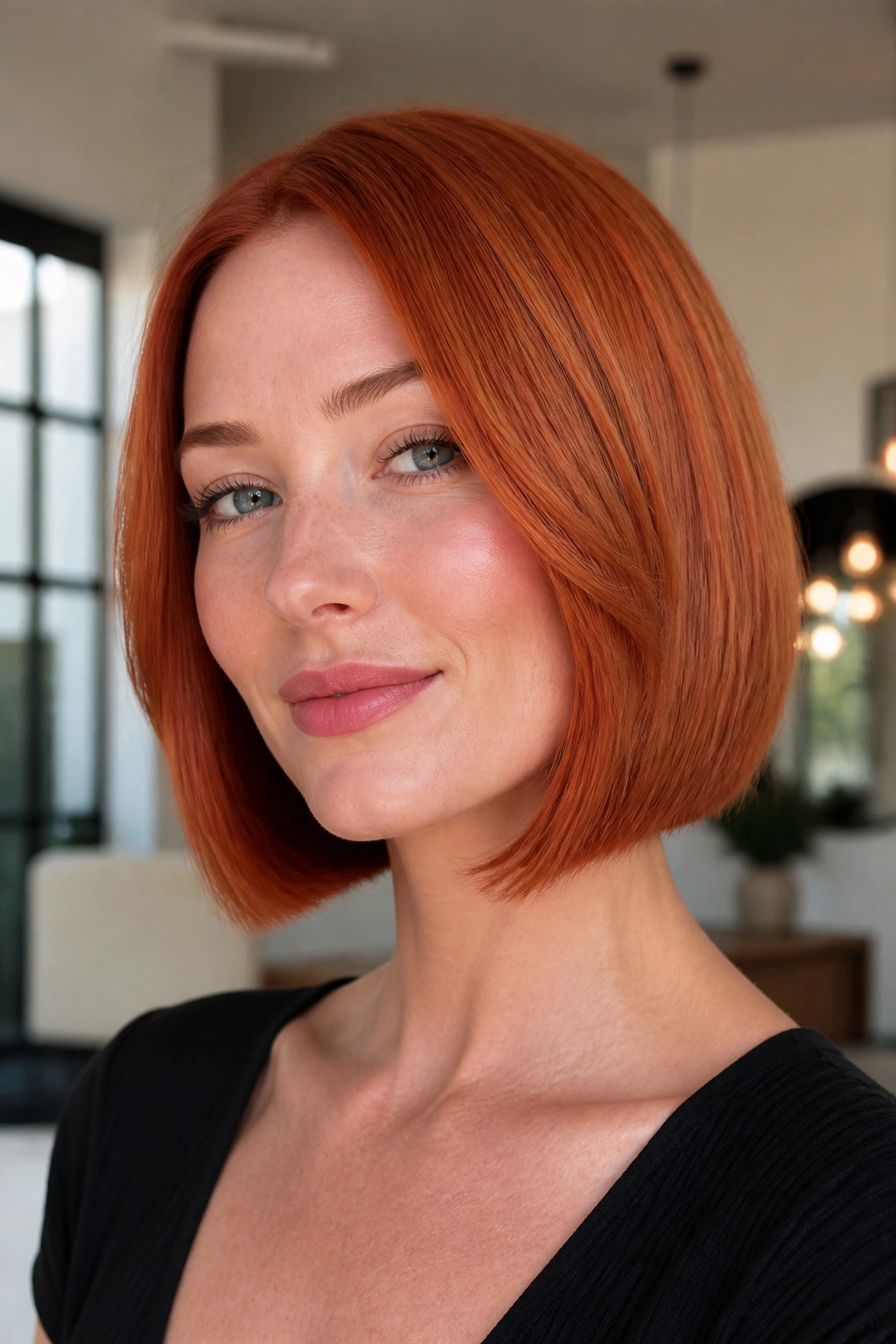
A penny copper bob has that fresh-minted shine you get on an old coin — warm, but with enough red to keep it from going orange. On cool skin, the cut matters as much as the color. A clean bob gives this shade a crisp edge.
I like this one on chin-length or jaw-skimming cuts because the shape helps the color reflect light in a tight, controlled way. Long copper hair can look soft; a bob makes it look sharp. That’s the whole appeal. It’s neat without feeling strict.
- Good match for: straight or slightly wavy hair
- Best finish: high-gloss color, not matte
- Ask for: copper with a red base and minimal gold
- Watch for: too much yellow in the formula; it will turn brassy fast
Tiny detail, big payoff: a glassy blowout makes this color look richer than beach waves do.
5. Copper Auburn with Blue-Violet Gloss
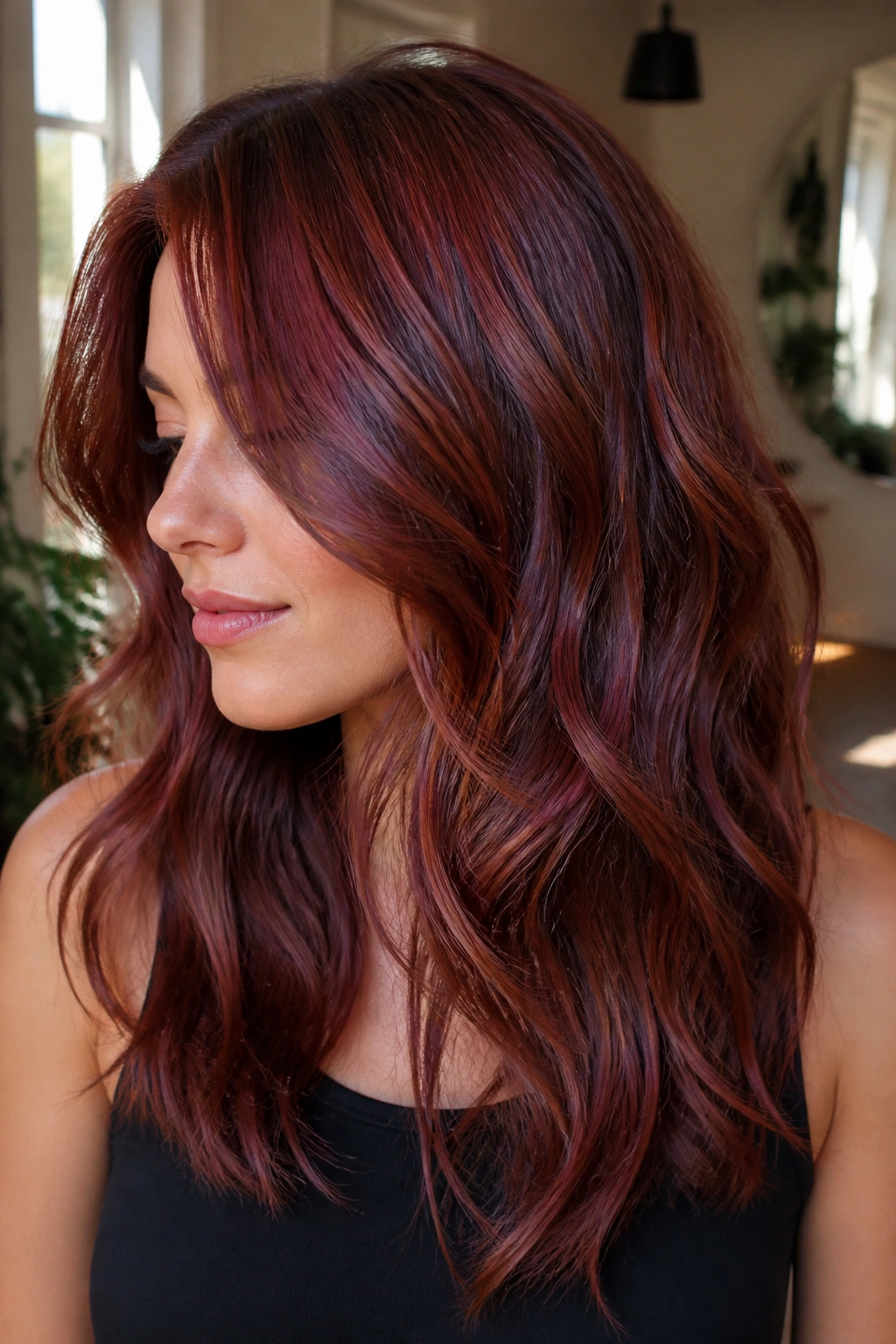
Copper auburn with a blue-violet gloss is the kind of shade that makes cool skin look more even in daylight. It’s deeper than strawberry copper, but it still keeps that glowing red warmth. The blue-violet gloss is the part people forget about — and the part that saves the whole look.
Without that cooler overlay, auburn can drift too orange on pink or porcelain skin. With it, the hair picks up a darker red tone that feels polished and a little moody. I like this on medium-length hair because the depth shows best when there’s enough movement for the light to hit different sections.
If your natural color is brown and you want to go red without looking cartoonish, this is one of the smartest paths. Ask for auburn copper with a violet-based gloss, not just “red.” That little detail changes the finish more than people expect.
6. Burnished Copper with Mocha Lowlights
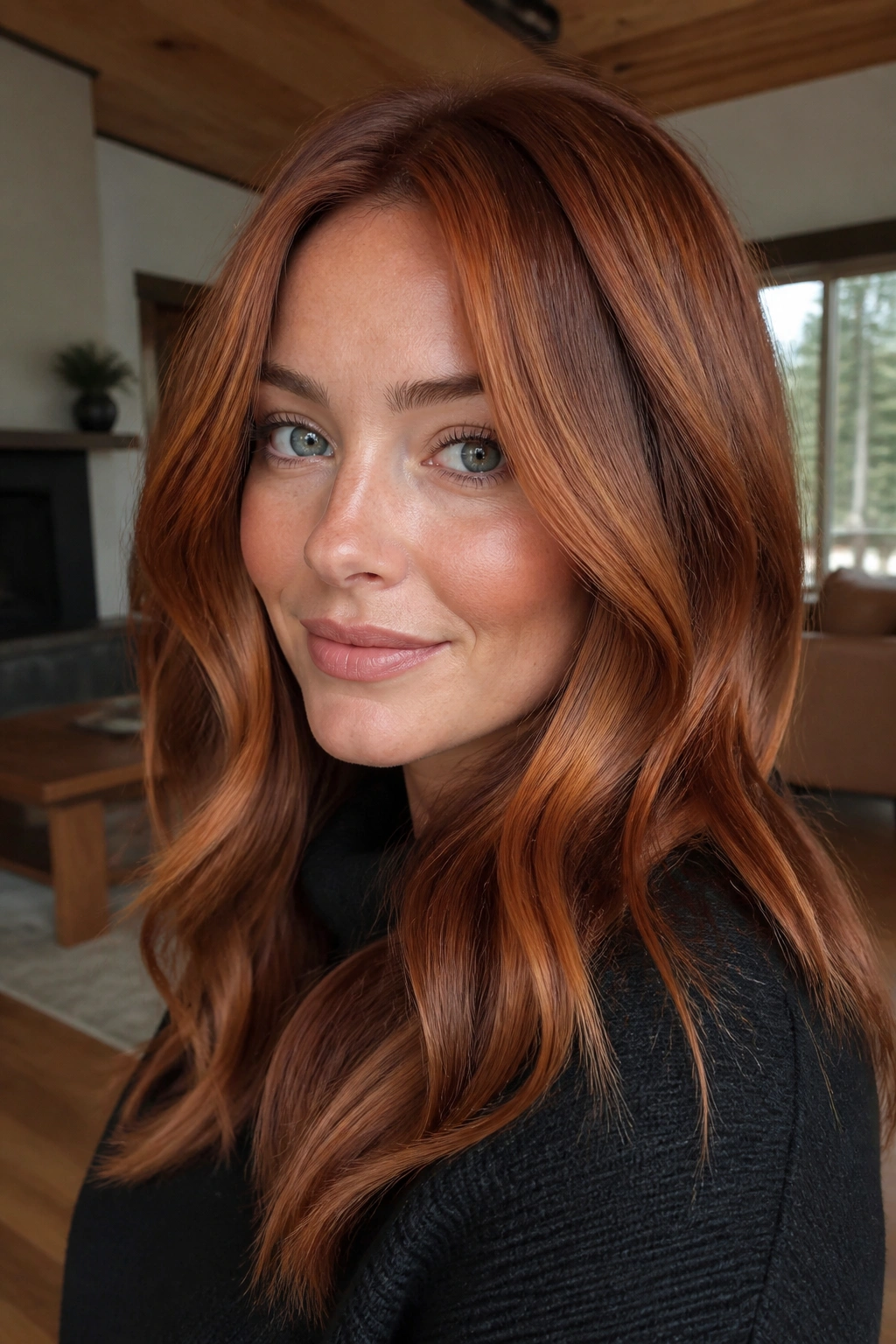
Burnished copper with mocha lowlights is where copper starts to feel expensive in a quiet, lived-in way. The darker ribbons pull the brightness down, which is exactly why it flatters cooler complexions so well. There’s less orange hanging around the face.
Unlike a flat all-over copper, this version has depth. The mocha lowlights soften the shine and make the red tones sit closer to the hair shaft instead of floating on top. It’s especially nice on thicker hair, where the lowlights keep the color from looking like a single solid block.
This is the one I’d pick for someone who wants a copper look without the maintenance headache of a bright red. It grows out with less drama, and the darker pieces give you a little more forgiveness between appointments. That matters if you hate constant salon trips.
7. Ginger Red Pixie with Soft Root Melt

A ginger red pixie can look electric on cool skin when the root stays a shade deeper and the ends carry the brightness. That soft root melt keeps the cut from looking harsh at the scalp, which is where bright red can turn a little too loud.
What makes it different
Short hair shows pigment in a cleaner way. Every ridge, every bit of texture, every little flick at the crown catches the red. If you want a copper that feels sharp and modern, this is it. The key is to keep the ginger tone red-led, not orange-led.
- Best for: fine hair that needs visual texture
- Salon note: keep the roots in a muted auburn or brown-red
- Styling note: matte paste on dry hair gives the color more shape
- Maintenance note: shorter cuts need more frequent trims, so the color looks deliberate
A pixie like this works because it has attitude. No extra fuss.
8. Cherry Copper Face-Framing Highlights
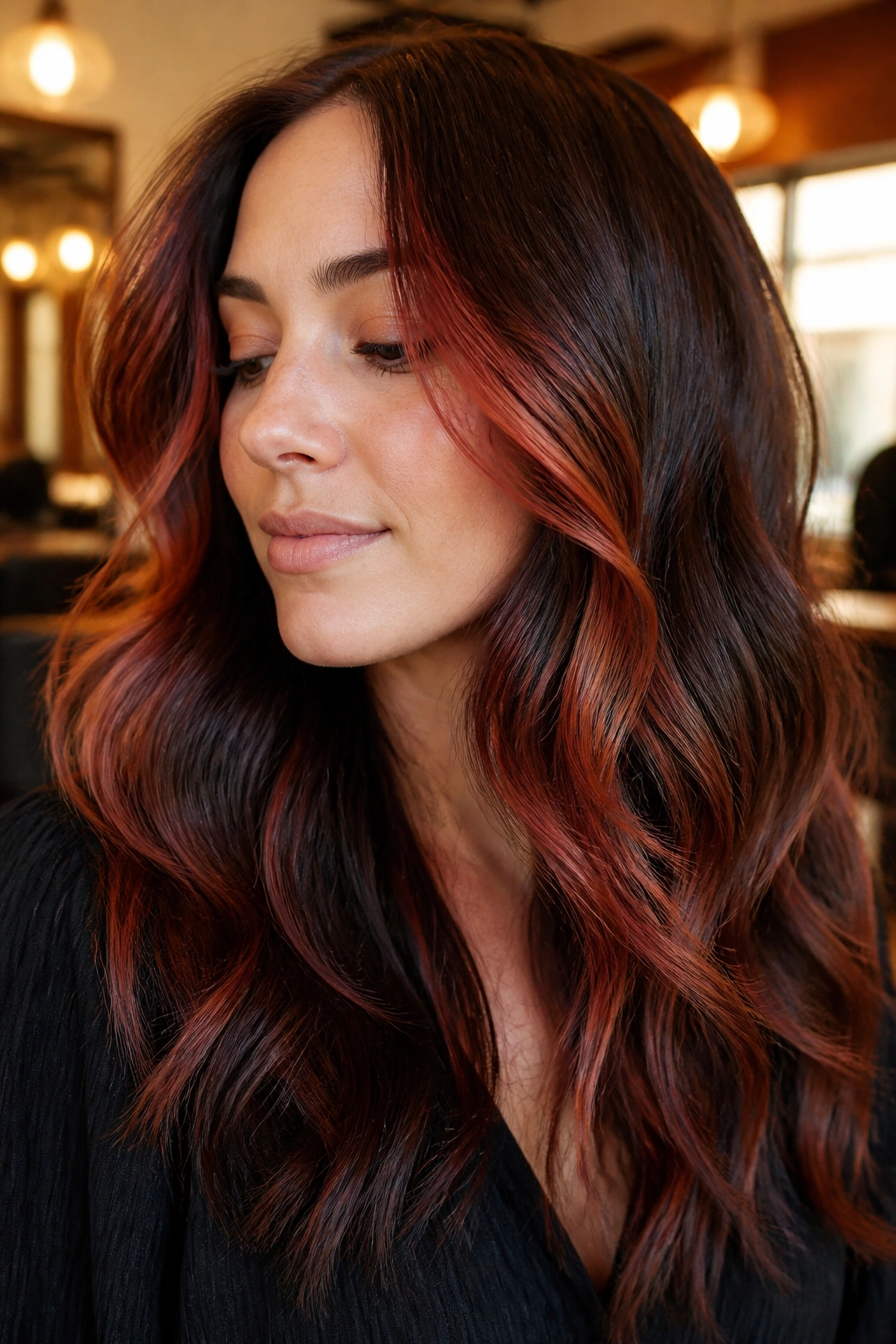
Cherry copper around the face is one of those shades that changes the whole mood of a haircut. The base can stay deep brunette or auburn, while the front pieces go brighter and redder. On cool skin, that placement is what keeps the color flattering instead of overwhelming.
The face-framing pieces should sit close to cherry, cranberry, or red-copper — not bright orange. That cooler red edge wakes up the complexion and brings the eyes forward. If your hair is long and dark, this is a smart way to test copper before committing to a full head.
I like this option because it gives you the fun part up front and the low-maintenance part everywhere else. It also looks good pulled back, which is one of those small real-life details that matters more than salon photos do.
9. Cinnamon Copper Curls
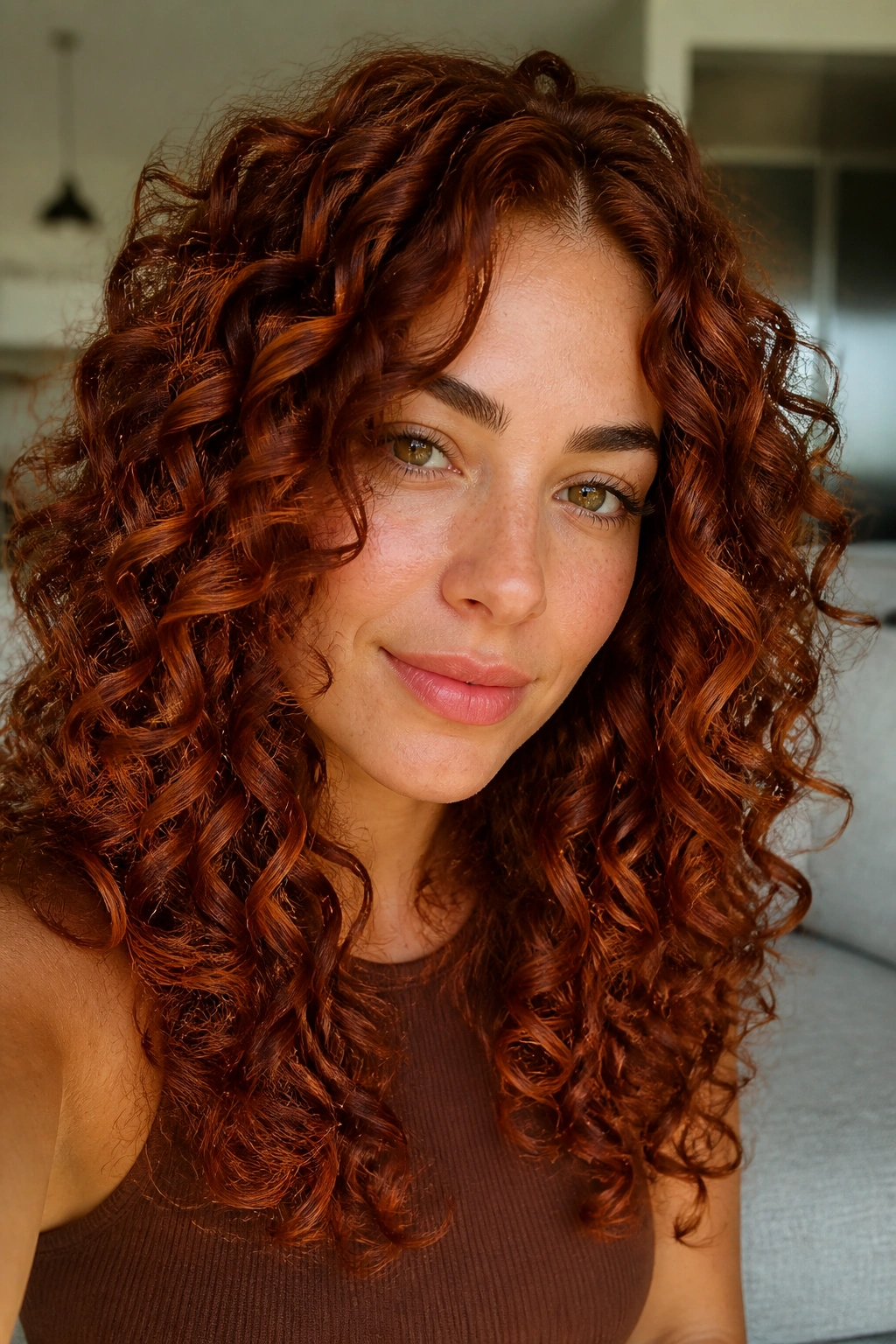
Can cinnamon read cool? It can, if the shade leans red-brown instead of orange-brown. On curls, that distinction matters even more because texture magnifies every pigment shift.
How to get the most from it
Ask for a red-brown cinnamon copper with soft dimension through the mid-lengths. Curls need contrast, or the color turns into one flat note. With the right formula, every bend in the hair picks up a different tone, and the whole thing looks richer.
Cinnamon copper is a good match for cool skin that wants something softer than red but deeper than strawberry. It also plays well with wintery makeup colors — plum, mauve, berry, even a cool nude lip. That sounds small, but the face and hair need to belong to the same temperature family.
A diffuser helps this shade a lot. Air-dried curls can leave the finish a little fuzzy. Defined curls make the red tones look intentional.
10. Rusty Copper Shag
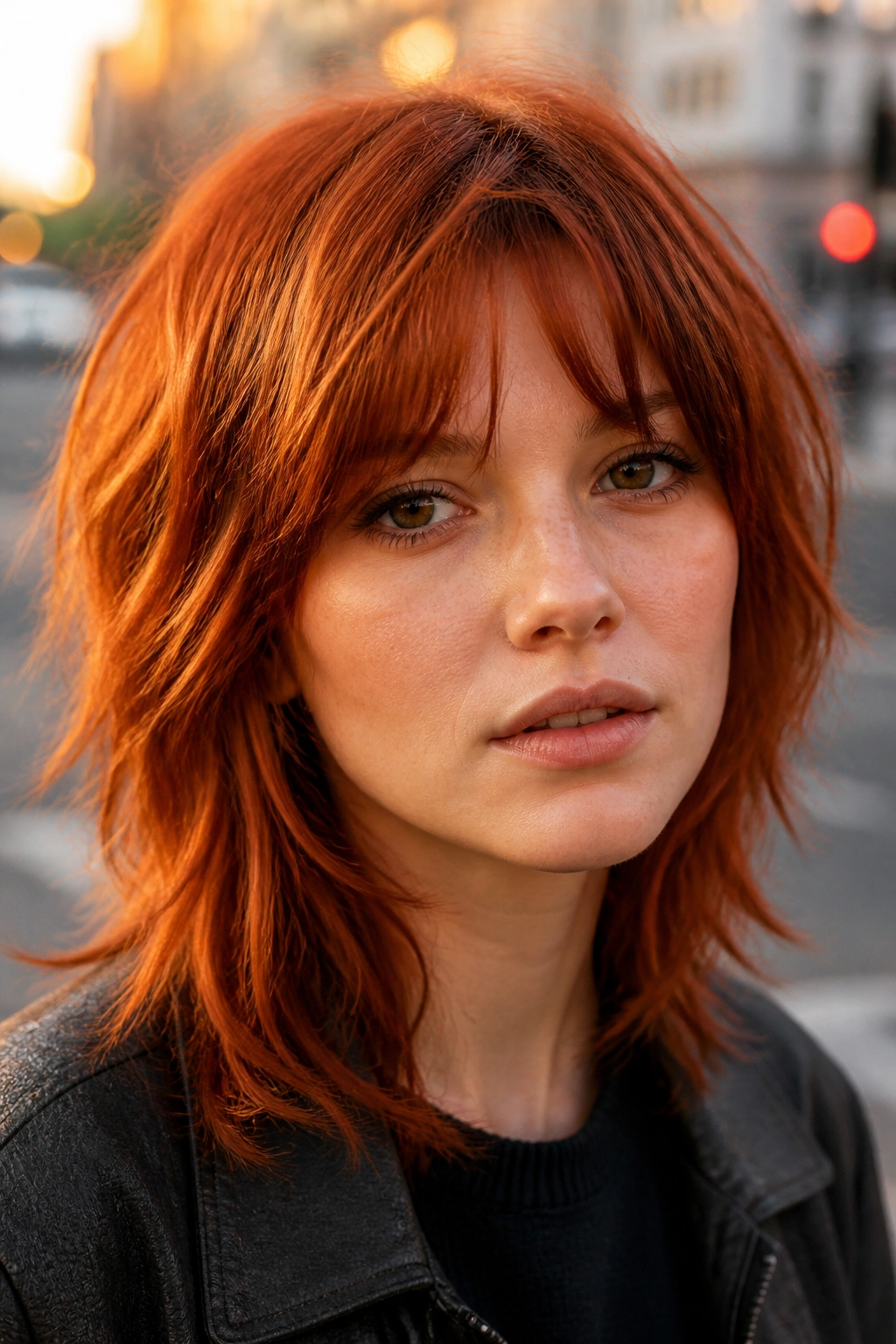
Rusty copper on a shag haircut has a scruffy charm that works better than it should. The texture breaks up the color, so even a fairly warm shade can sit well on cool skin if the base is muted and the ends aren’t screaming orange.
The shag cut is doing some of the work here. Those uneven layers create shadows, and shadows make copper look deeper. If you’ve got a naturally cool complexion but still want a gritty red, this is one of the few cuts that can carry it without looking too polished.
- Ask for: a rusty copper with brown-red depth
- Best on: layered hair with movement
- Works well with: curtain bangs or wispy fringe
- Avoid: very glossy orange finishes; they erase the texture
There’s a reason this looks good on lived-in hair. It doesn’t demand perfection.
11. Metallic Copper Straight Lob
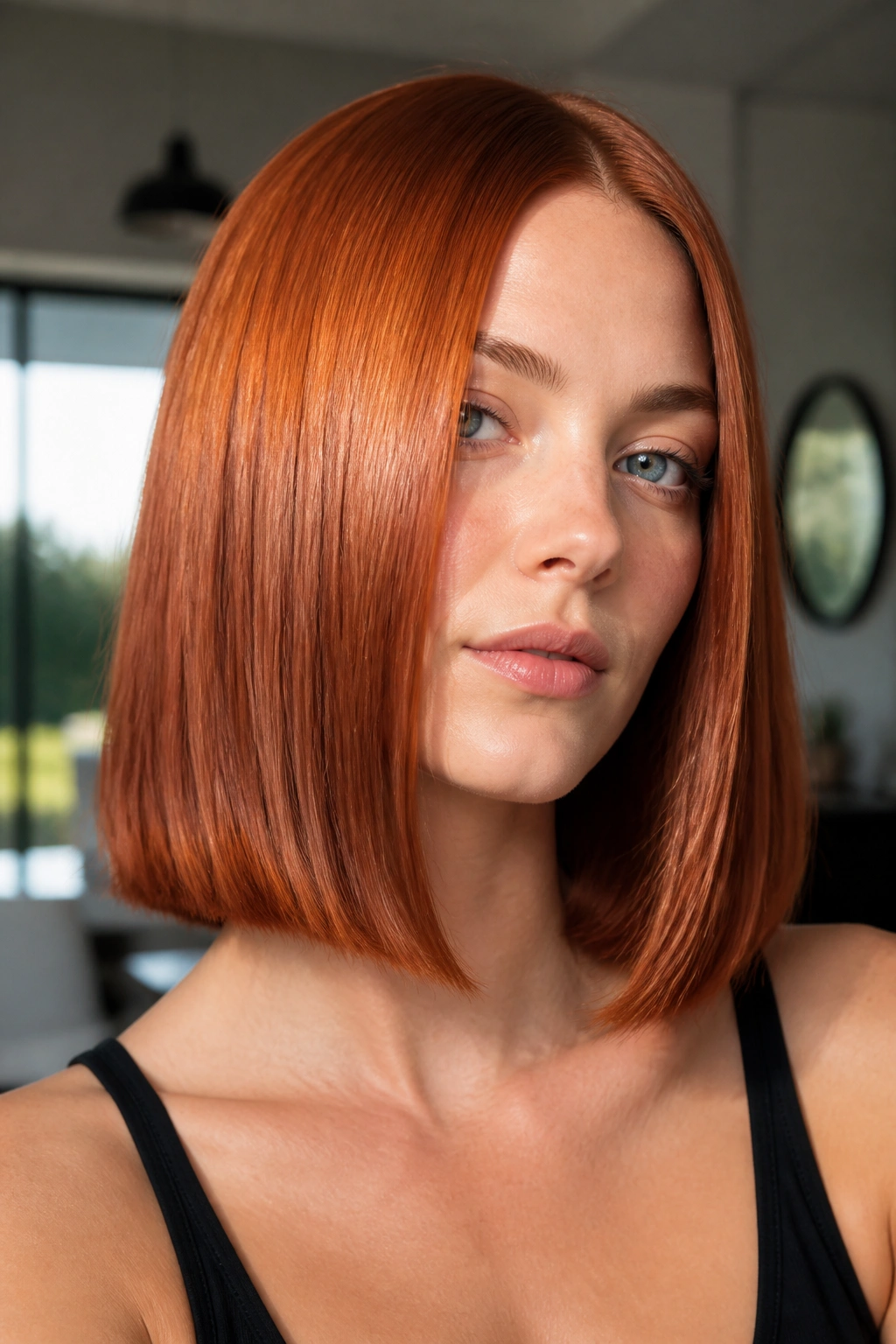
Metallic copper on a straight lob is all about reflection. When the hair is smooth, the light lands evenly, and the color reads as a clean copper-red sheet instead of a patchwork of warm pieces. Cool skin tends to like that controlled finish because it feels crisp.
This is one of my favorite options for people who wear minimal makeup. The shine does a lot of the visual work on its own. A center part makes it look modern; a deep side part makes it a little softer. Either way, the shoulder-length cut keeps the color from feeling too heavy.
The best formula here is a copper with red-brown depth and a glossy topcoat. Not a flat orange. Not a neon red. Just enough metallic sheen to make the whole thing feel sleek. If you like your hair to look expensive without looking fussy, this is a strong pick.
12. Merlot Copper Dimensional Layers
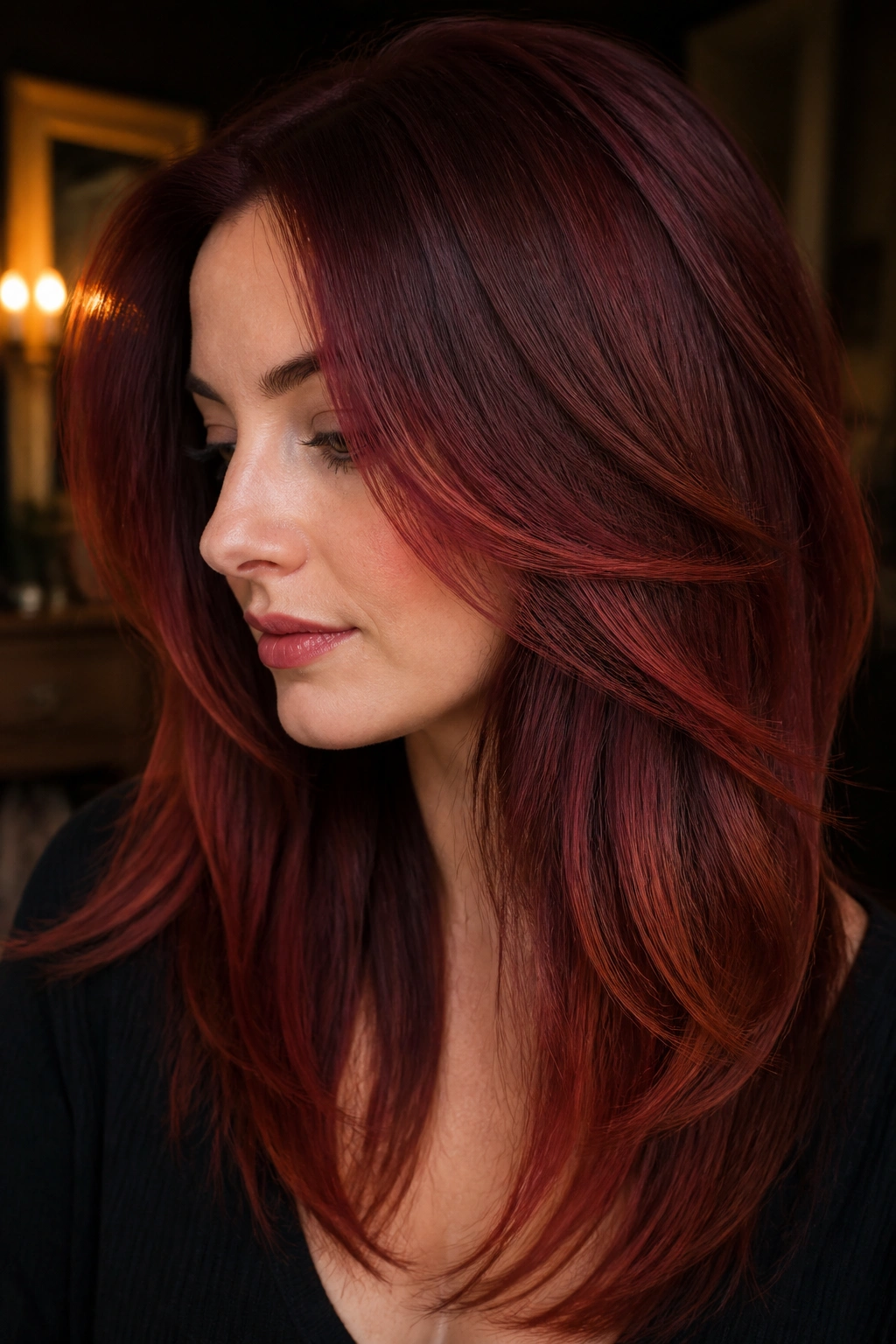
Merlot copper is one of the richest choices for cool skin because it borrows from wine tones instead of bright fire tones. There’s red, there’s brown, and there’s a dark berry note underneath that gives the whole color some restraint.
Unlike brighter copper shades, this one looks deeper at the root and more luminous on the ends. That contrast is lovely on layered cuts. The layers keep the tone moving, so the hair never sits in one flat block. It’s also a good choice if your natural hair is already dark and you want a red that doesn’t look pasted on.
I’d recommend this shade to anyone with cool skin and darker eyes. It creates a nice frame for the face without fighting with skin undertones. If you want one copper color that feels elegant in low light and alive in daylight, this is the one.
13. Peachy Copper with Shadow Roots
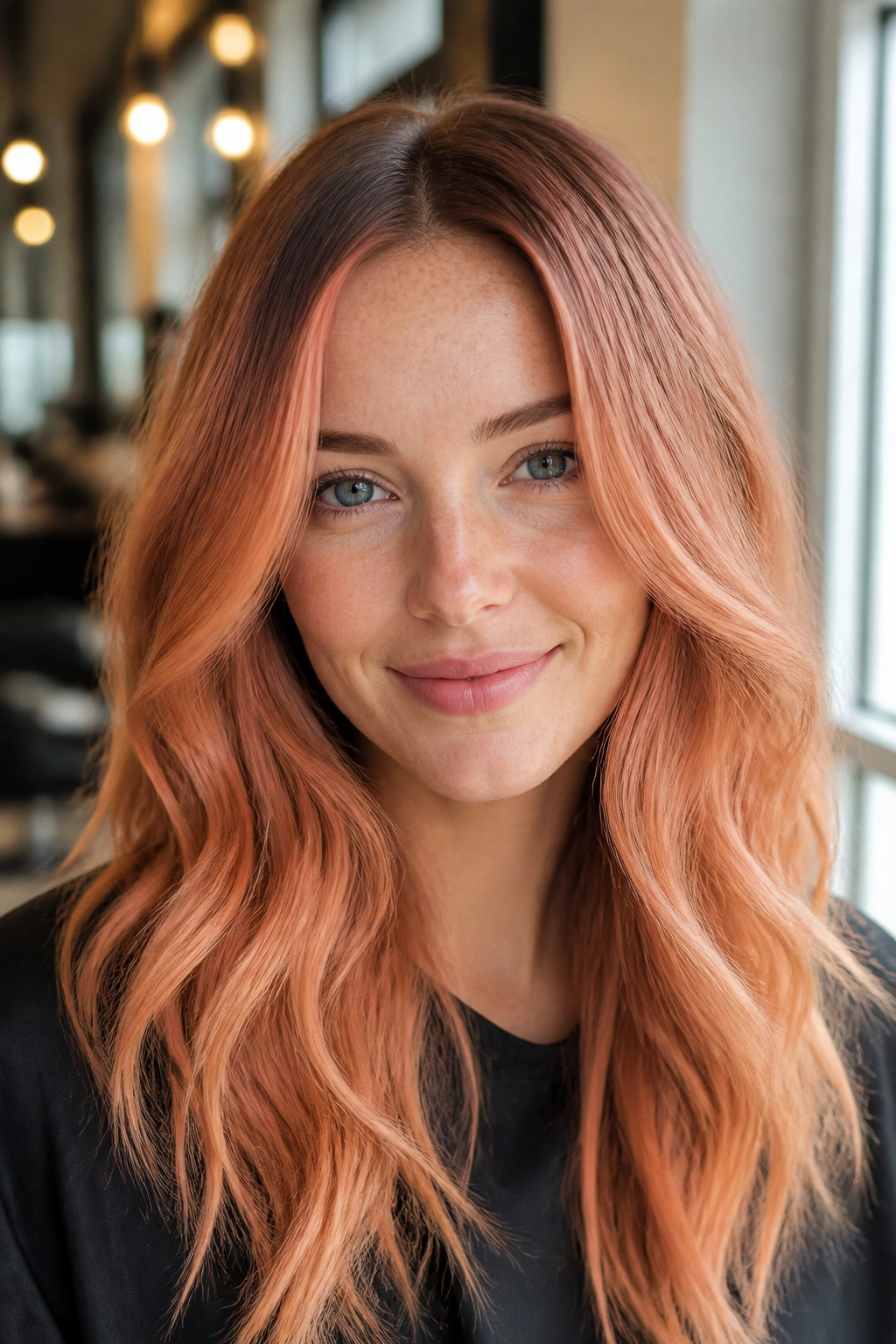
Peachy copper can work on cool skin, but only when the roots stay soft and the peach is kept in check. A shadow root gives the color somewhere to breathe. Without that darker anchor, the shade can look too cheerful and too warm.
The salon trick that saves it
Ask for a cool beige shadow root melting into peach-copper mids. That blend keeps the shade from drifting into orange. It also makes the color look softer against the face, which matters a lot if your skin already has pink in it.
This is a good choice for people who want something lighter and more playful than auburn. It looks best on medium-length cuts or long layered hair where the lighter ends can move. If the peach is too saturated, it stops being flattering. If it’s dusty and blended, it has a nice airy feel.
14. Deep Auburn Copper Gloss
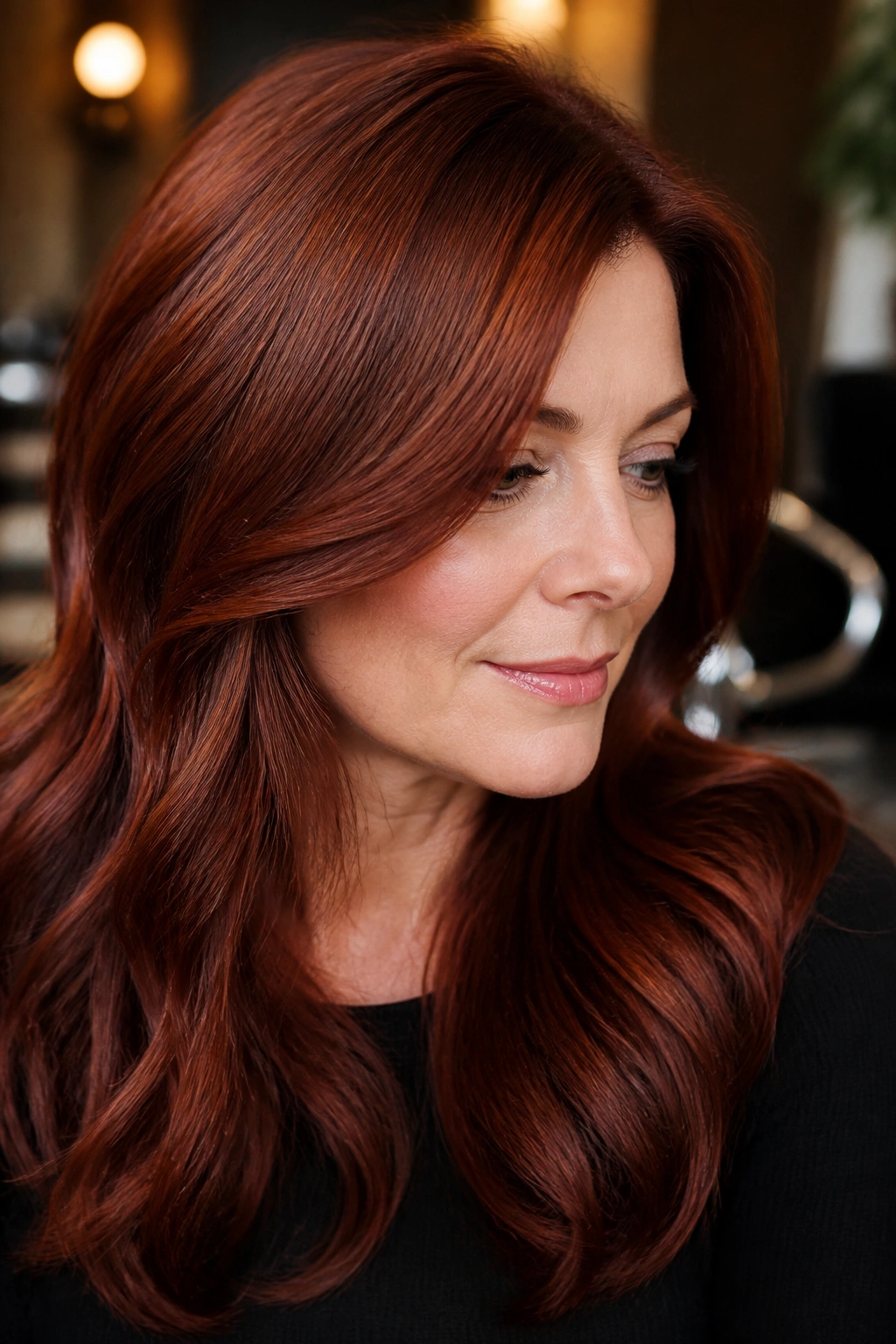
Deep auburn copper gloss is the shade I suggest when someone wants one color that will not scream for attention every time they pass a mirror. It’s darker, quieter, and far easier on cool skin than a bright orange copper.
The gloss is the whole point. A good auburn gloss adds red depth, smooths the cuticle, and gives the hair that polished, almost velvet finish. On cool skin, that darker red-brown base keeps the face from looking flushed. It’s a smart move if your complexion is fair and you burn easily in warm tones.
This shade also ages well between appointments. As it softens, it tends to drift toward a rich chestnut-red instead of turning harsh. That’s a nice trade-off, and honestly, one of the better ones in the copper family.
15. Cranberry Copper with Violet Base

Cranberry copper is what you reach for when you want red, but you want it with a colder edge. The violet base takes the edge off the copper and gives the whole shade a berry lift that looks especially good on cool skin.
Why this one flatters
Blue-red and violet-red pigments sit closer to the cool side of the spectrum, so they don’t compete with rosy cheeks or pink undertones. If you’ve ever felt like warm red hair made your face look more red than your hair, this shade fixes that problem.
I like cranberry copper on straight styles, but it also works on loose waves. The movement keeps the berry tone from feeling too dark. If you’re nervous about going full red, this is a nice middle path because it reads as copper in some light and wine in others. That shift is part of the appeal.
16. Clove Copper with Neutral Root Melt
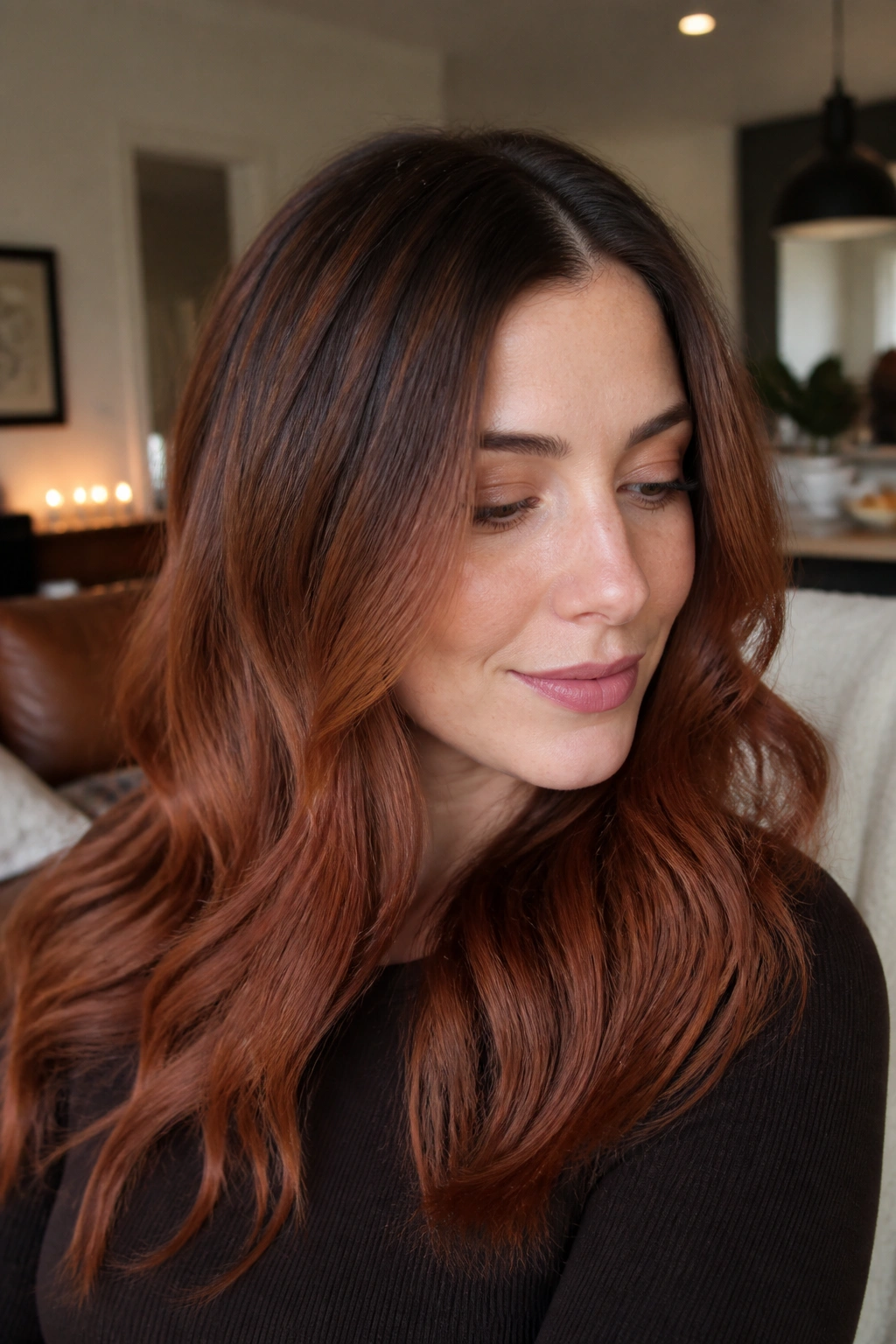
Clove copper sounds warm, and it is, but the neutral root melt keeps it from tipping into orange territory. That’s why it works on cool skin better than you might expect. The base stays calm while the mids carry the copper-red lift.
Picture a spice shade that’s been grounded with brown. That’s the feel here. It’s not bright. It’s not pale. It lands somewhere in the middle, which gives it more wearability on medium cool skin and deeper complexions with cool undertones.
- Best for: brunettes who want to go red gradually
- Technique: root melt into copper-brown mids
- Finish: soft blowout or brushed waves
- Bonus: the darker base buys you more grow-out time
This is one of those colors that looks even better in person than in a filtered photo. The depth matters.
17. Copper Ombré on Long Waves
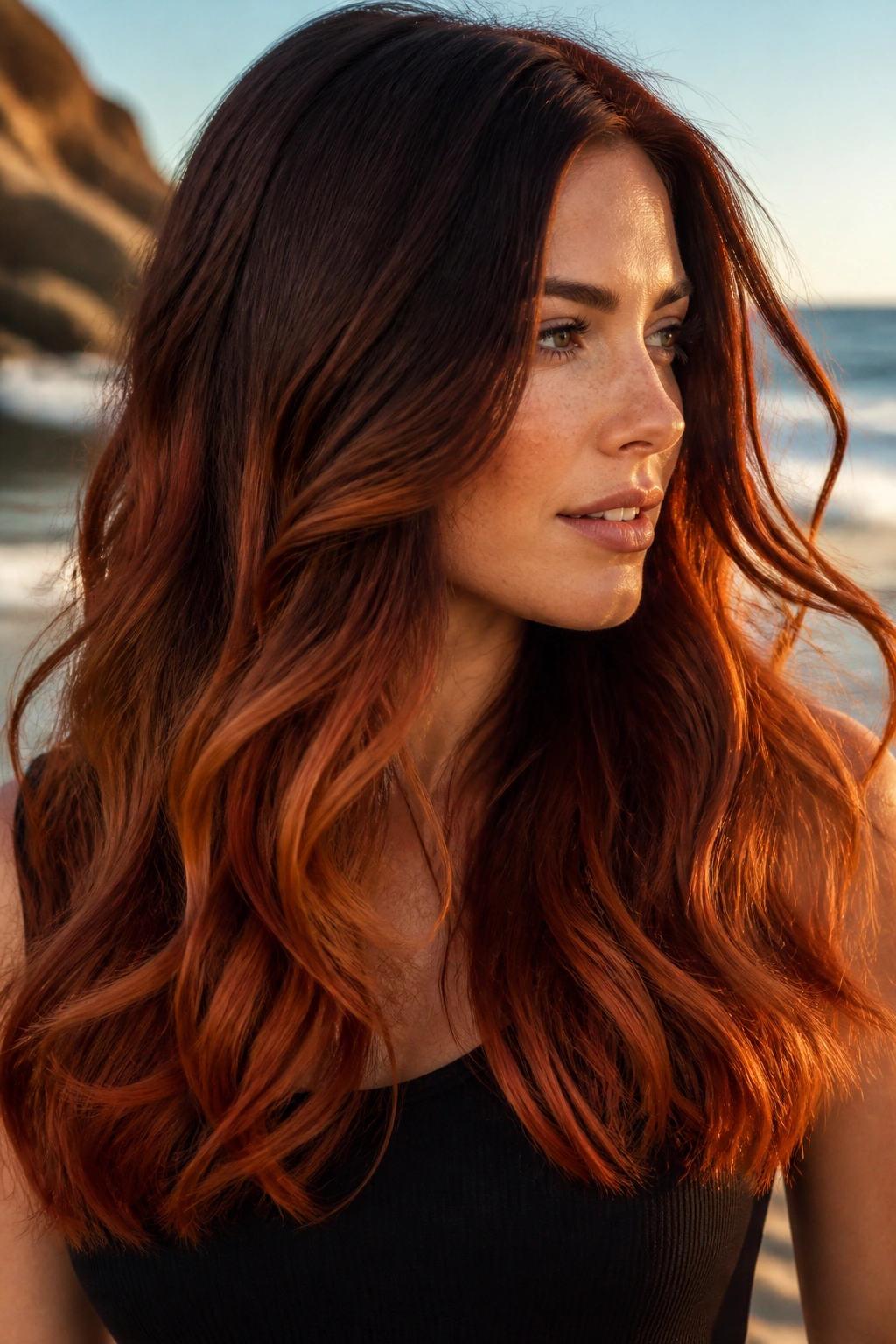
Copper ombré on long waves gives you the movement of a bright color without forcing that brightness onto the roots. That helps cool skin a lot, because the color stays away from the face near the scalp and shows up more where the hair can move.
The best version starts with a deeper auburn or chestnut root and fades into copper-red mids and ends. That gradual shift keeps the warm pieces from feeling too aggressive. It also makes the hair look thicker, which is a nice bonus if your ends tend to be fine.
Long waves are the right canvas here. Straight hair can make ombré feel abrupt. Waves soften the transition and let the copper catch light in loose sections. If you like hair color that changes a little every time you move, this one has a lot going on without looking busy.
18. Brick Copper with Blunt Bangs
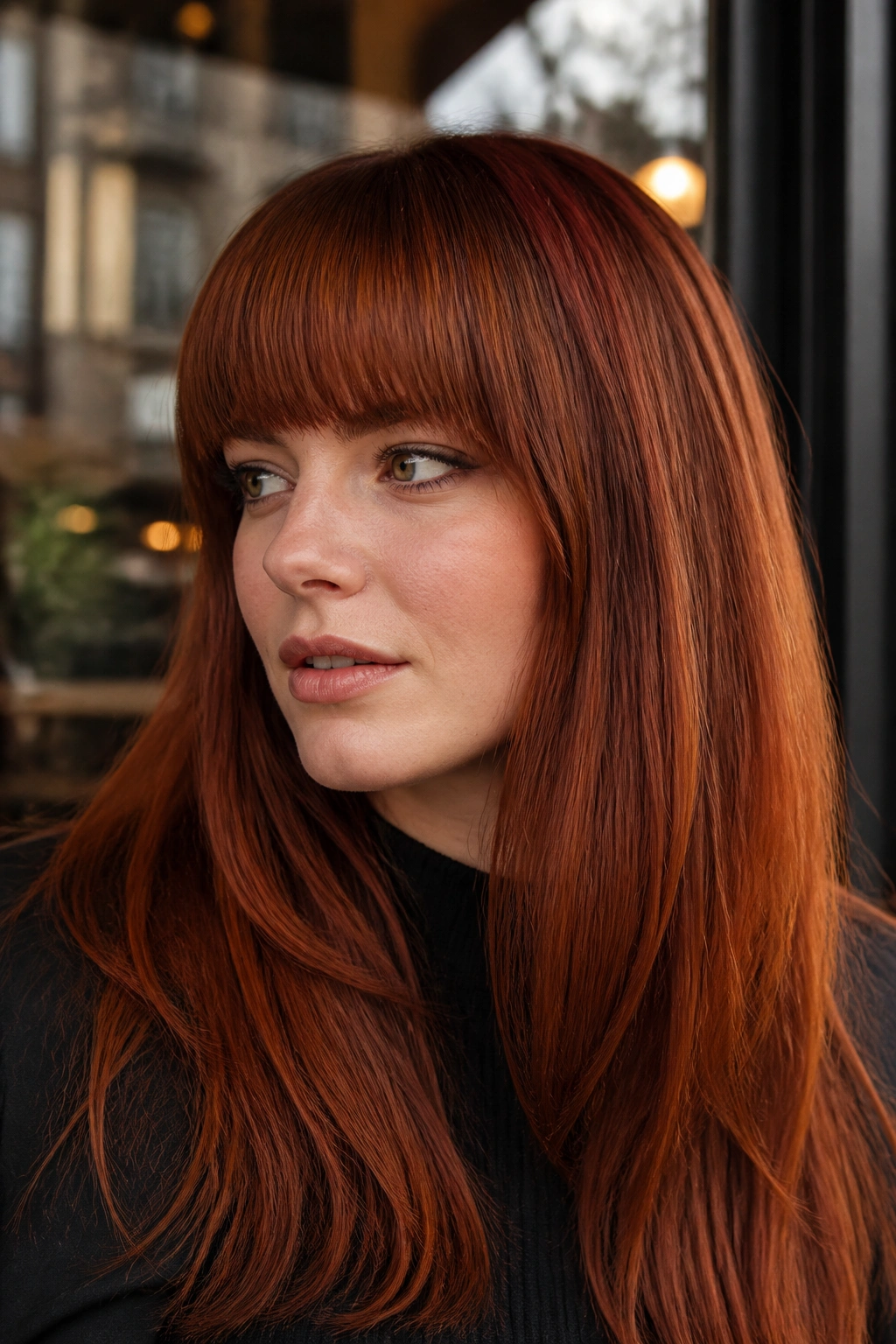
Brick copper is a stronger, earthier take on red-copper, and blunt bangs make it feel graphic. On cool skin, that combination works because the brick tone has enough brown in it to stay grounded. It is not trying to be shiny orange.
The bangs matter more than people think. A blunt fringe puts a hard edge against the face, which gives the color structure. If the red sits too high on the warmth scale, that edge can make things harsh. But with a brick-red copper, the shape and color balance each other.
This is a good option for someone who likes a little drama and doesn’t mind a statement haircut. It pairs well with strong brows and simple makeup. You do not need much else. The hair does the talking already.
19. Mulberry Copper Ribbon Highlights
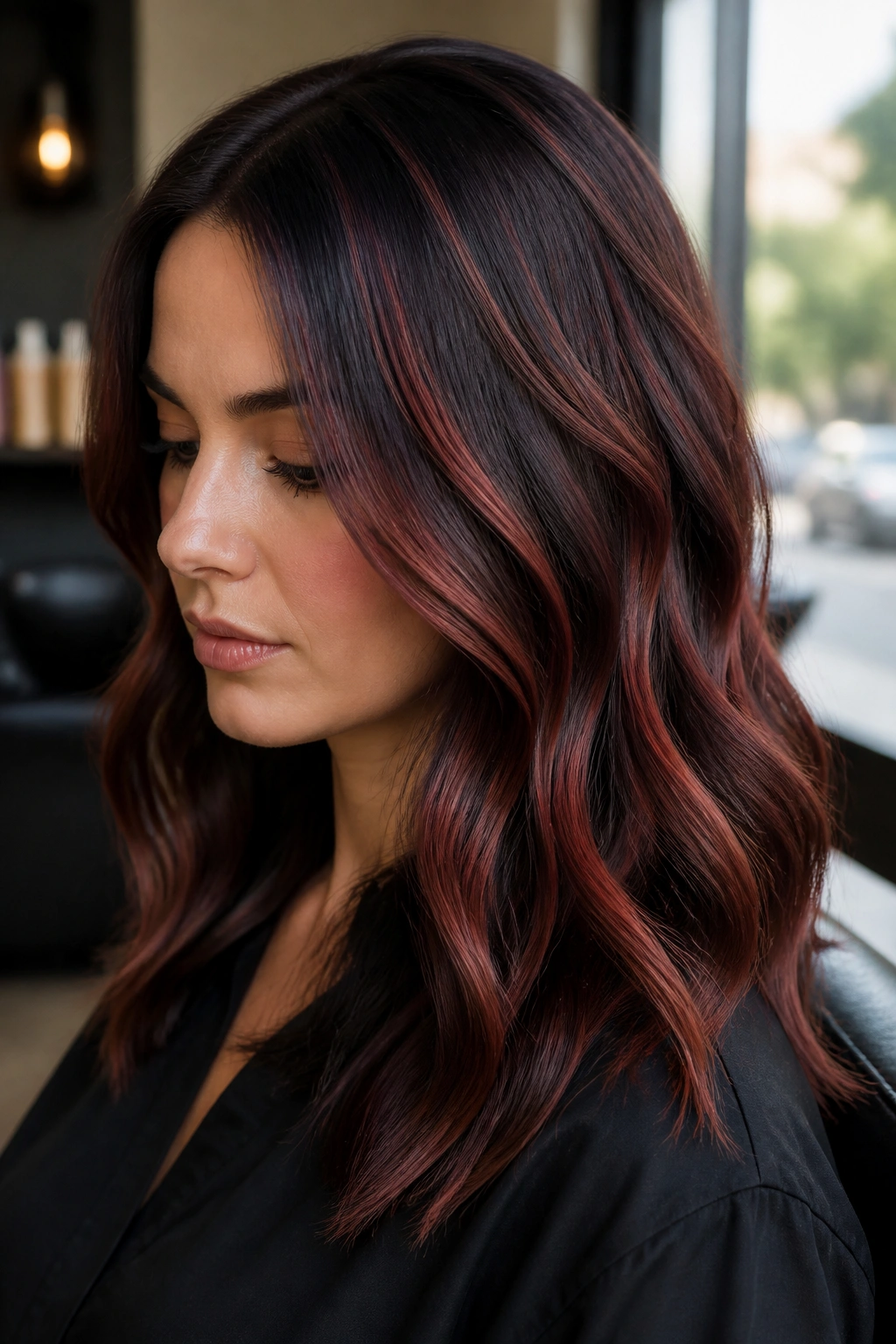
Mulberry copper ribbon highlights are a good answer if you want red without giving up brunette depth. The ribbons sit inside the darker base, so the color reads as layered and alive instead of flat. Cool skin tends to like that kind of contrast.
What makes it different
Instead of painting the whole head copper, the colorist weaves thin ribbon pieces through the hair. That means more movement and less warmth concentrated at the face. It is a softer way to wear copper-red, especially if your natural hair is already dark brown.
- Great for: cool brunettes who want dimension
- Ask for: mulberry-red copper ribbons, not chunky highlights
- Maintenance: lower than full copper because the base remains deeper
- Style pairing: loose bends or a round-brush blowout
This is one of the smarter low-commitment choices in the whole group. It gives you color without the upkeep of an all-over red.
20. Blue-Red Copper Melt
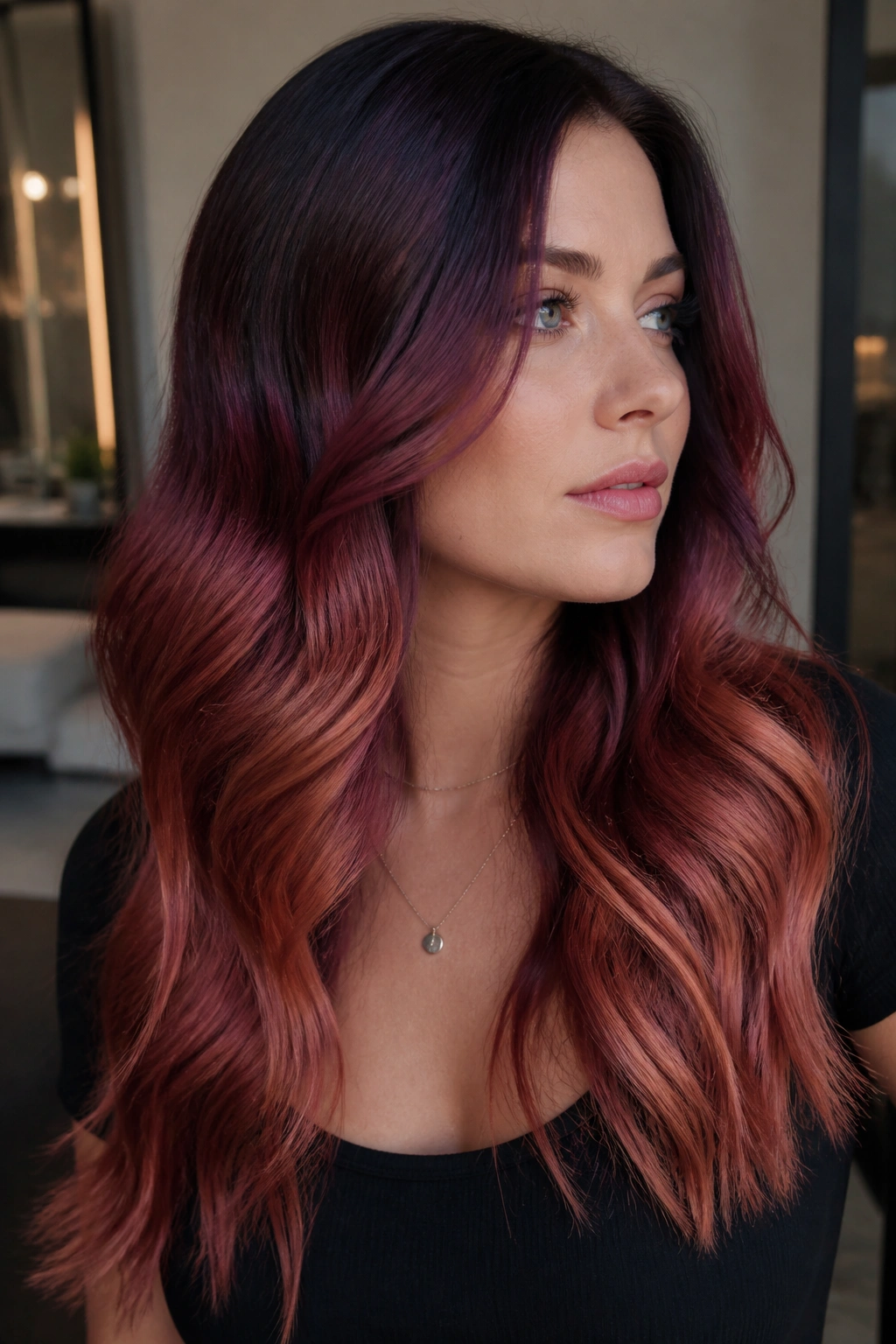
Blue-red copper is the shade that leans the coolest of the bunch, and that is exactly why it works on cooler skin tones. It has the brightness people want from copper, but the red is pulled toward berry instead of flame.
A melt is the right technique here because it keeps the base dark and soft while the color brightens gradually through the lengths. On cool skin, that means the hair energizes the face without turning it ruddy. The finish feels more refined than a straight orange-red application, and frankly, I think that refinement is what makes it wearable.
If you want a vivid look but hate warm brass, this is the one to study. Ask for a blue-red copper melt with a violet or burgundy influence. That phrasing will save you from a lot of disappointment at the sink.
21. Rosewood Copper with Airy Ends
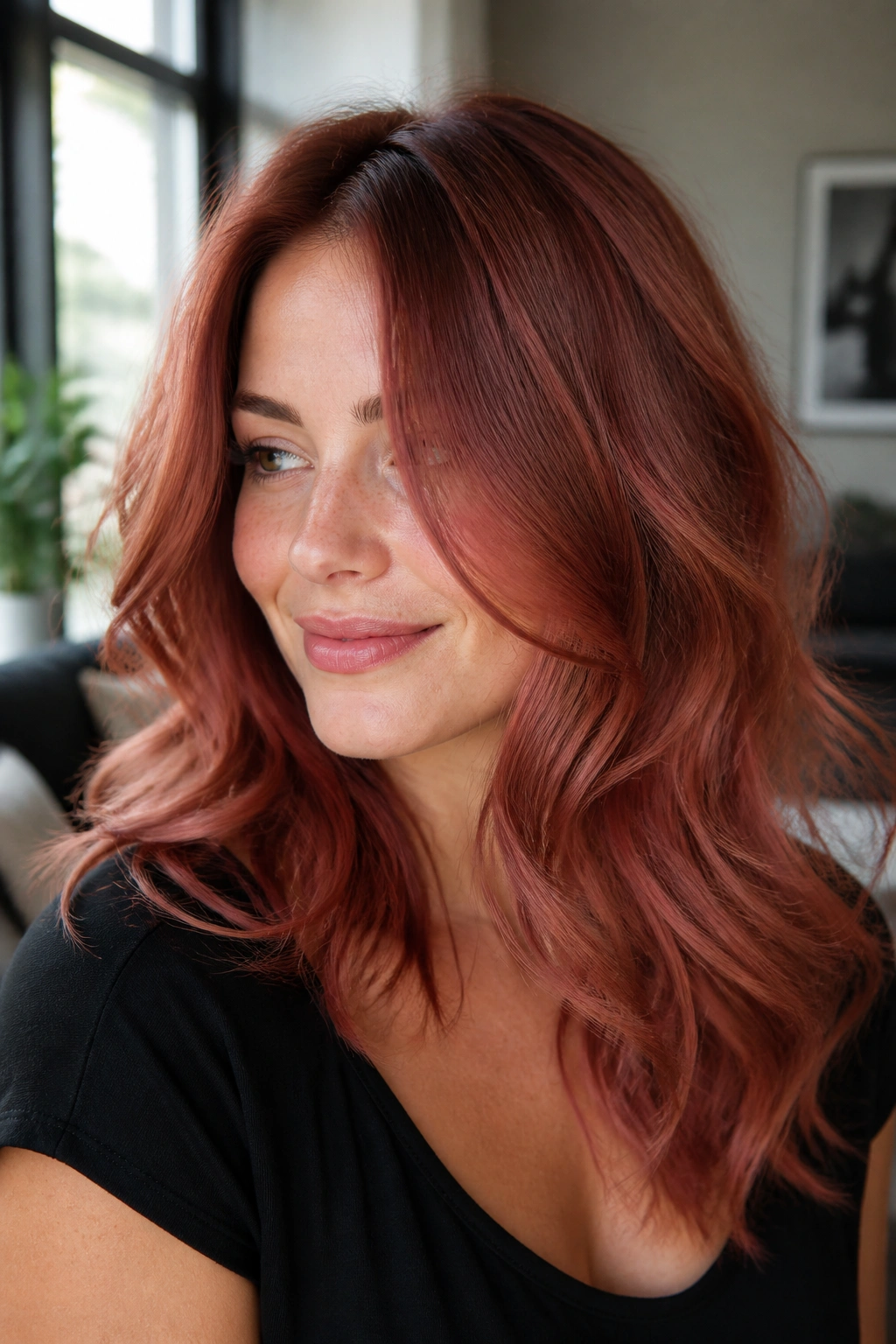
Rosewood copper sits between red-brown and pink-toned copper, and that middle ground is where cool skin often looks best. It feels soft, not sugary. The color has enough depth to look grown-up and enough brightness to keep the hair from disappearing.
How to wear it
Airy ends matter here. Slightly lighter, softly textured ends make the shade feel feathered instead of blocky. That keeps the finish from looking too dense around the face, which can happen with darker copper reds.
This is a solid pick for medium-length layers, especially if you like movement at the ends. It also works well with berry-toned makeup and muted blush. The whole look stays in the same temperature family, and that makes the face look calmer. Calm is underrated.
22. Dark Copper Auburn Velvet
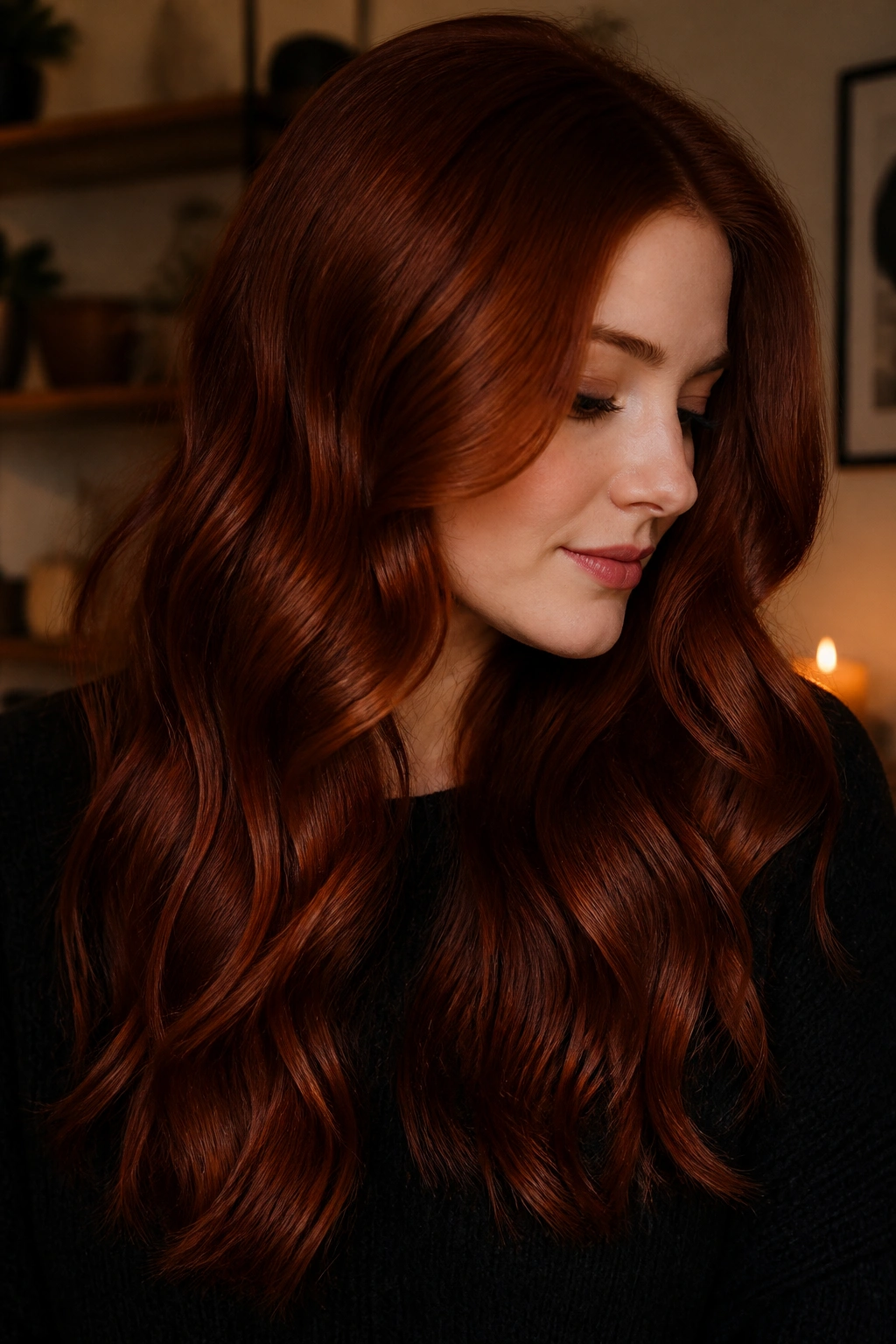
Dark copper auburn velvet is what I’d call the most wearable evening-shift version of copper for cool skin. It’s deep, rich, and a little moody, with just enough red-copper shine to keep it from collapsing into plain brown.
The velvet part is real. A smooth gloss finish gives the hair a soft, almost plush look that pairs well with cool complexions. You get warmth, but it stays tucked under the surface instead of sitting on top of the skin. That’s why this shade works on people who have always felt that bright copper was too much.
This is the one for someone who wants copper hair but doesn’t want to announce it at full volume. It’s subtle in dim light and rich in daylight. That’s a useful trick, and one I never get tired of seeing.
Final Notes
Cool skin usually does better with copper when the color leans red, rose, berry, or auburn instead of bright yellow-orange. That’s the pattern running through almost every shade above, even the lighter ones. The more the copper behaves like a red with warmth, the easier it is to wear.
If you’re still unsure, ask for a gloss first or choose a rooted version with copper through the mids and ends. That gives you room to test the tone without locking yourself into a full head of warm pigment. Small shift. Big difference.
And one last thing: the prettiest copper-red shades on cool skin are rarely the loudest ones. They’re the ones that look like they belong there, which is a lot more interesting than looking like you borrowed color from somewhere else.
