



Black cherry hair color gets interesting when it stops looking like a candy red and starts looking like crushed berries in low light.
That shift matters a lot for cool skin tones. The shades that flatter pink, blue, and neutral-cool undertones usually lean blue-violet, plum, or berry, not orange. A coppery cherry can work on some people, sure, but on cool complexions it often pulls the face a little ruddy in a way that feels off. I’m picky about that. A good cherry shade should make your skin look clearer, not busier.
The smartest versions of black cherry hair color usually start with a dark brunette or near-black base, then add red-violet pigment through gloss, balayage, ribbons, or a full-color melt. That’s the part a lot of people miss. The placement matters almost as much as the shade itself. A sharp black cherry money piece can wake up the face, while a smoky all-over gloss can look expensive and low-maintenance even when the grow-out starts.
Some of these ideas are soft and wearable. Some are dramatic enough to feel almost gothic. A few sit right in the middle, which is where cherry shades usually look best on cool skin tones anyway—rich, dark, and a little moody without turning brick red.
1. Classic Black Cherry Hair Color for Cool Skin Tones
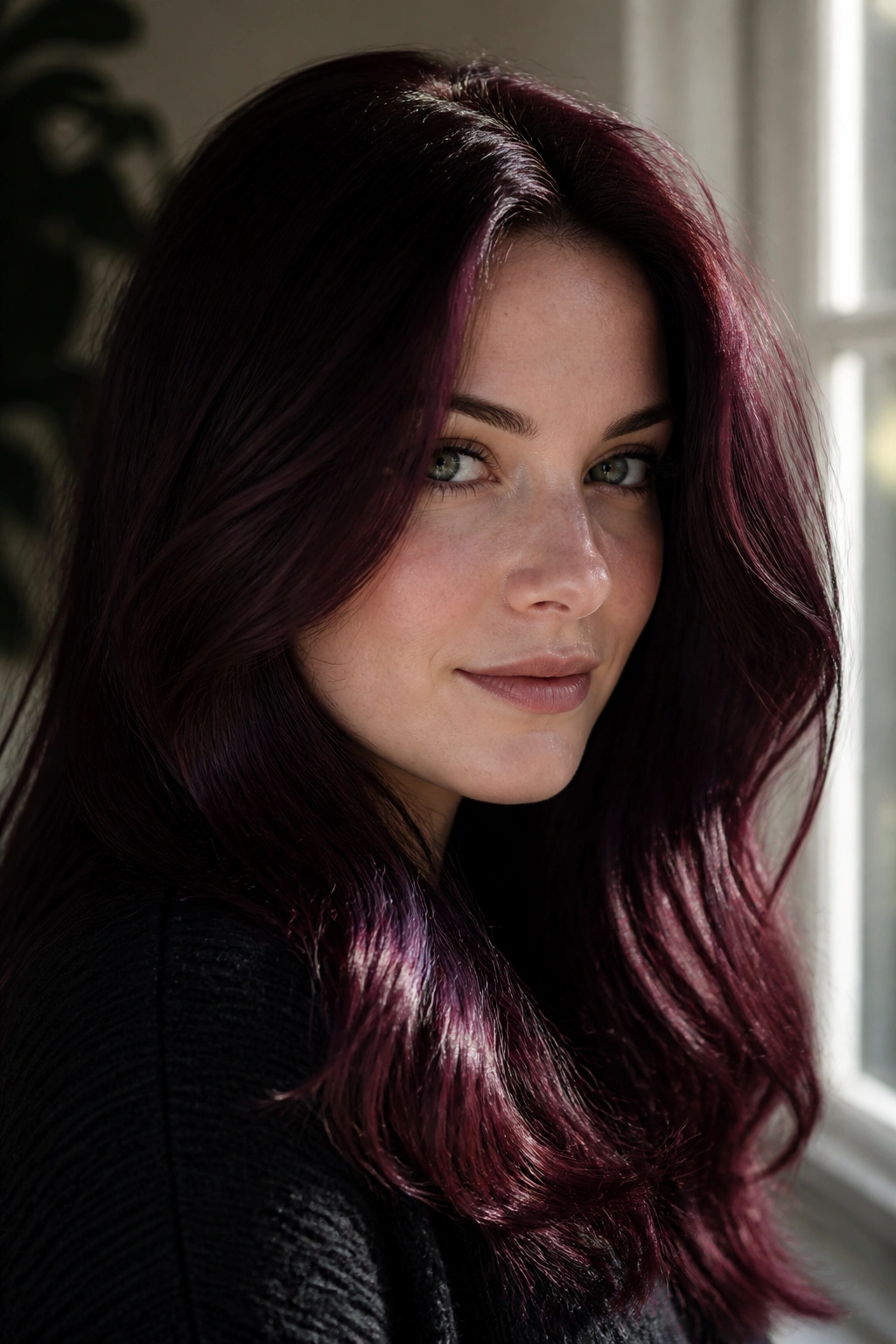
This is the version I recommend when someone wants black cherry hair color but doesn’t want red that shouts across the room. The shade sits deep at the base, then flashes berry or violet in sunlight, which is exactly why it works so well on cool skin tones.
Why It Flatters Cool Undertones
Cool complexions usually look best when the hair has blue, violet, or burgundy depth. That keeps the color from fighting the skin. If your cheeks flush easily, a warm cherry can make that flush look stronger. A cooler cherry does the opposite. It sharpens the face a bit and makes the eyes look brighter.
Ask for a level 3 or 4 brunette base with cherry-violet deposit through the mids and ends. If the colorist talks about copper, push back. Copper is the wrong lane here.
- Best on medium to fair cool skin
- Works with straight, wavy, or loose curly hair
- Looks deepest indoors, berry-like outdoors
- Fades softer if done as a gloss or demi-permanent color
My tip: keep the finish a shade darker than your first instinct. Dark cherry reads richer on cool skin than a brighter red ever will.
2. Espresso Base with Cherry Balayage
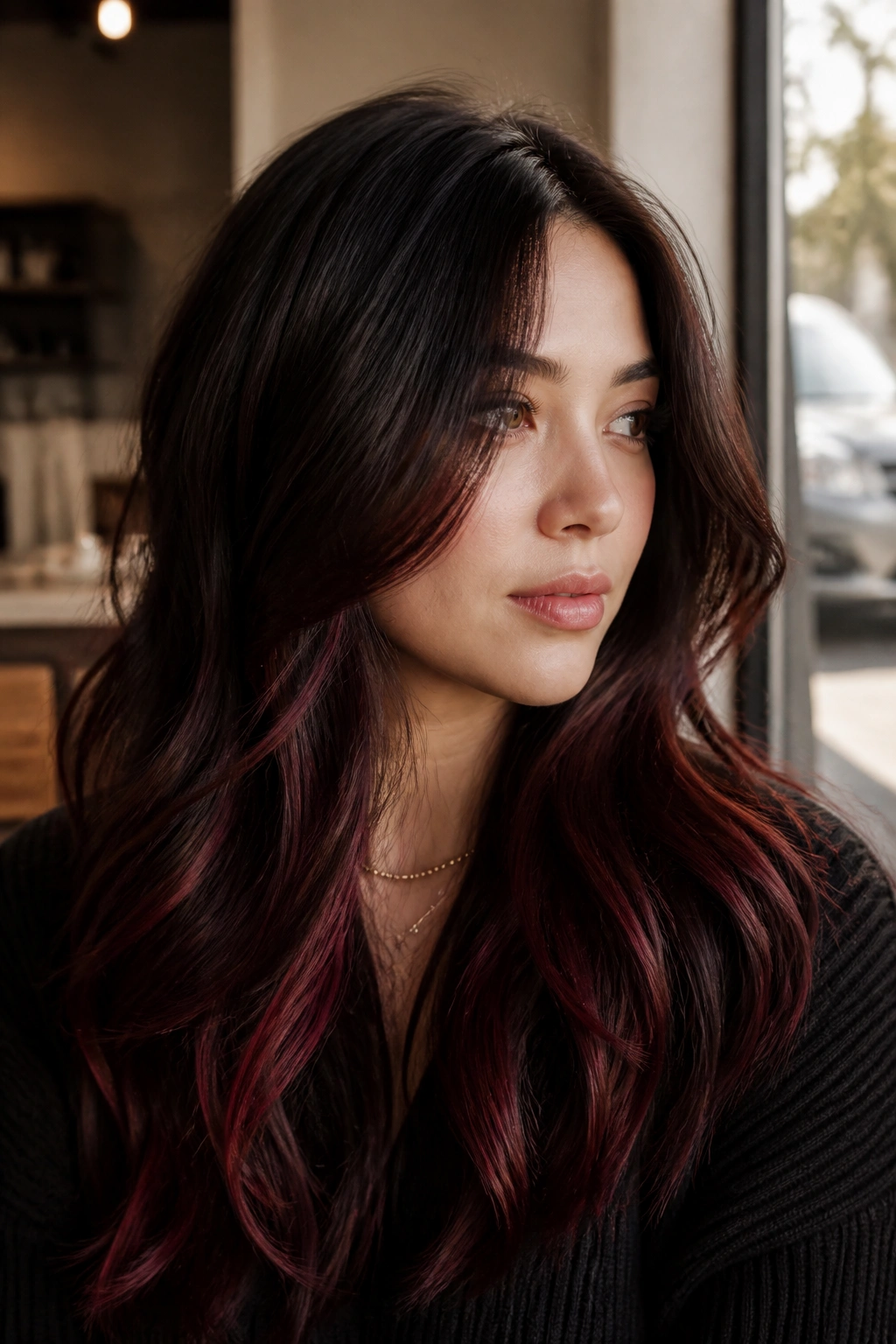
Can cherry look subtle? Yes, and this is the cleanest way to do it. Keep most of the hair espresso or dark mocha, then hand-paint cherry balayage through the mid-lengths and ends so the red appears in movement, not as a flat block.
The contrast is what makes it good on cool skin tones. Your darker base anchors the look, and the cherry pieces bring in just enough color to stop the hair from disappearing into one heavy shade. It also grows out in a softer way, which matters if you do not want salon maintenance every few weeks.
How to Ask for It
Tell your colorist you want thin, feathered balayage ribbons, not chunky stripes. Ask for the cherry to stay muted at the root area and stronger toward the ends. That keeps the result polished, not patchy.
This one’s a favorite for people who wear a lot of black, gray, navy, or charcoal. The whole look makes sense with those colors.
3. Cherry Cola Ribbons on Long Layers
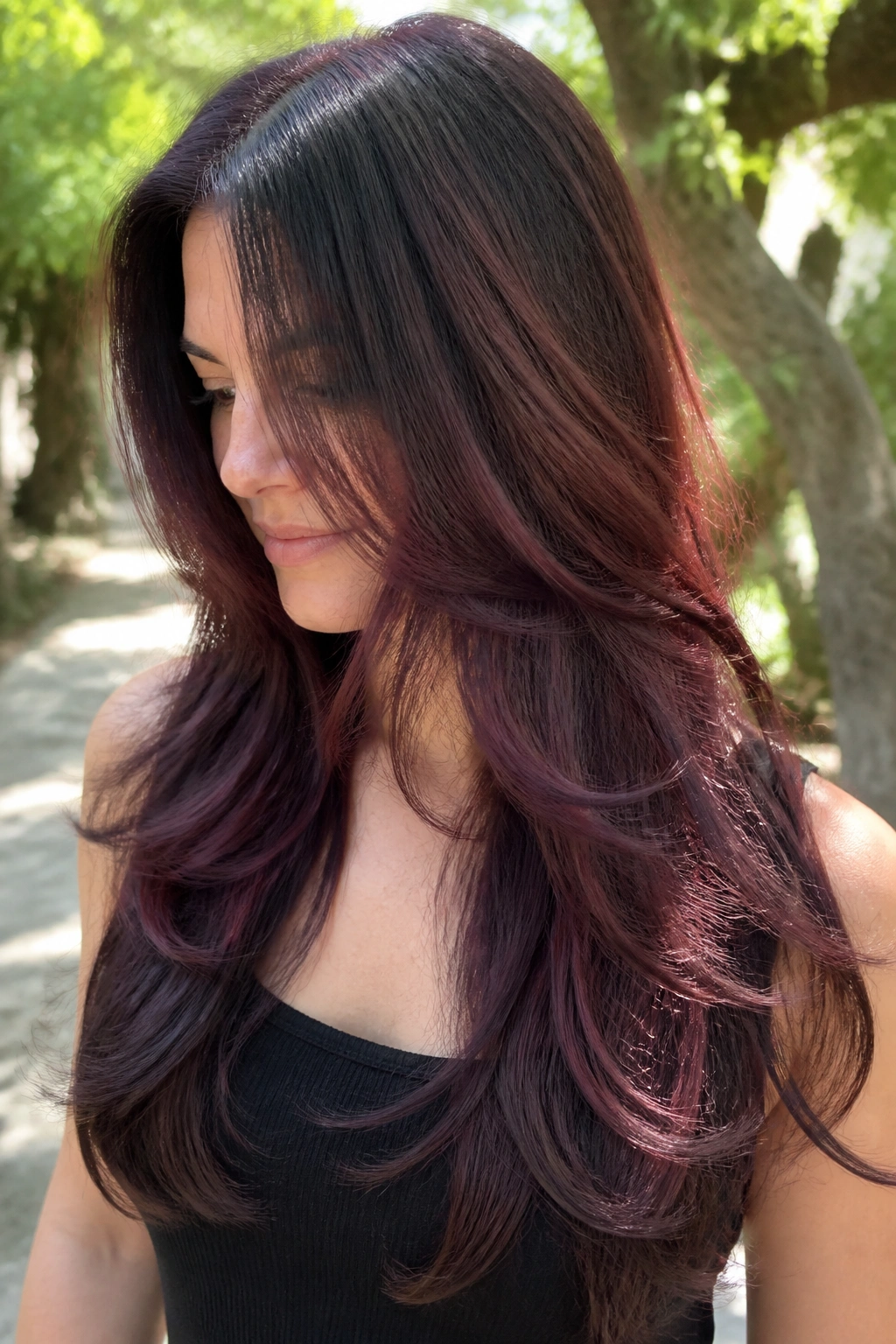
Long layers give black cherry room to move, and that movement is where the shade comes alive. On very long hair, I like thin cherry cola ribbons because they keep the hair from looking like one solid dark sheet. The strands catch light differently when they fall over each other.
A little dimension goes a long way here. If the cherry is too uniform, the color can read flat. But when the highlights are scattered through layered lengths, the red-violet pieces peek out at the collarbone, around the shoulders, and near the face. That is the part that flatters cool skin tones most.
- Best with soft curls or brushed-out waves
- Ask for ribbon placement, not full saturation
- Keep the red cool with a violet glaze
- Works well if your base is dark brown to black-brown
One thing I like: this version looks expensive even when the styling is simple. Air-dried hair still looks deliberate.
4. Smoky Black Cherry Lob
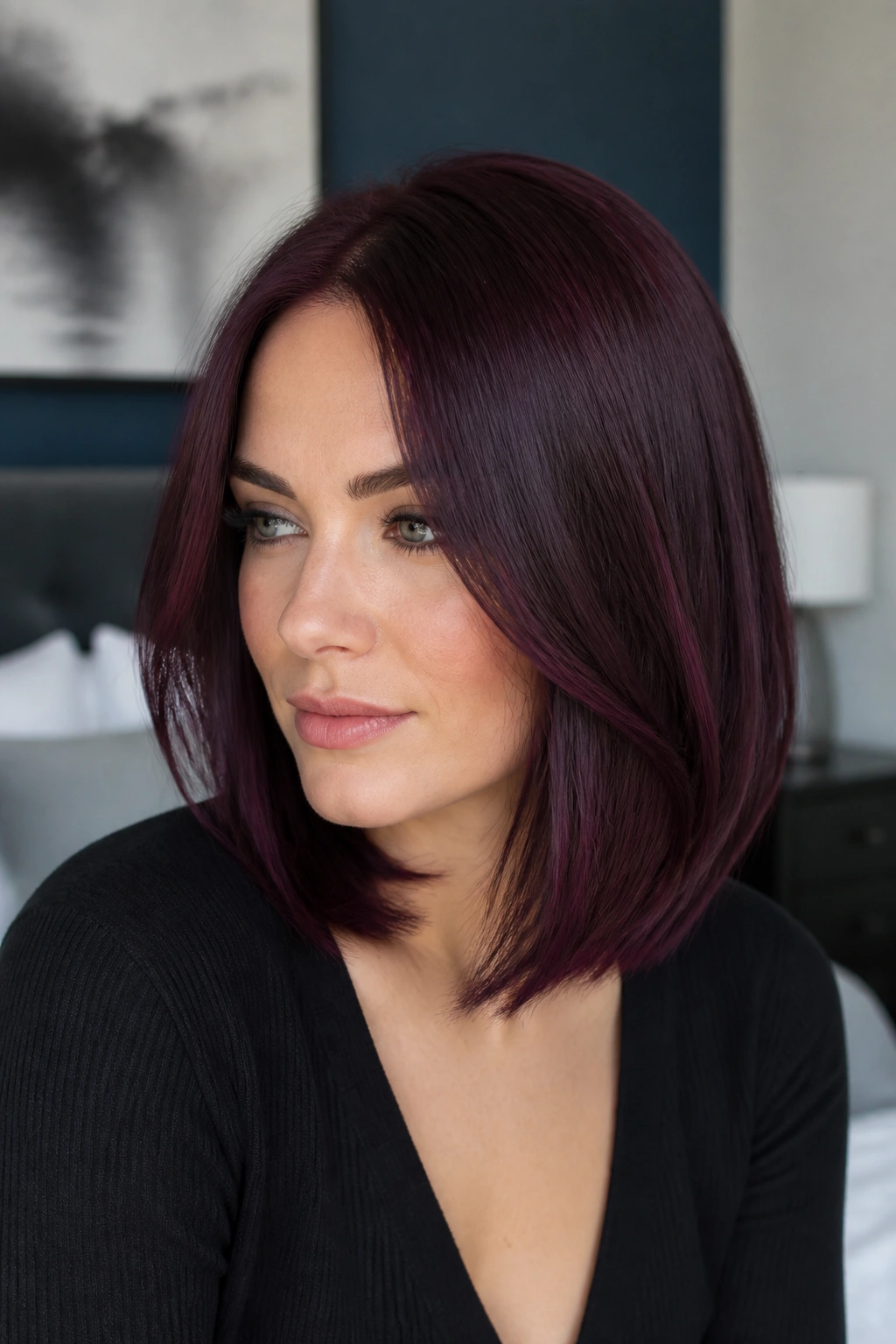
A lob gives black cherry room to breathe. The cut ends around the collarbone, which is just long enough for the color to feel grown-up and just short enough to keep the shade from weighing the face down.
The smoky part matters. You want the cherry pulled toward ash and violet, not bright red. That softens the contrast against cool skin and keeps the finish from turning too warm under indoor lights. On a lob, the color has a sleek, almost polished feel—especially if the hair is bent with a flat iron instead of curled into obvious waves.
If you like hair that moves but still looks neat, this is one of the easiest wins. A blunt-ish lob with a smoky black cherry tone has a clean line around the jaw and a deep shine at the ends.
And yes, it wears nicely with lipstick. Berry, plum, or even a soft blue-red all make sense here.
5. Blue-Black Cherry Pixie Cut
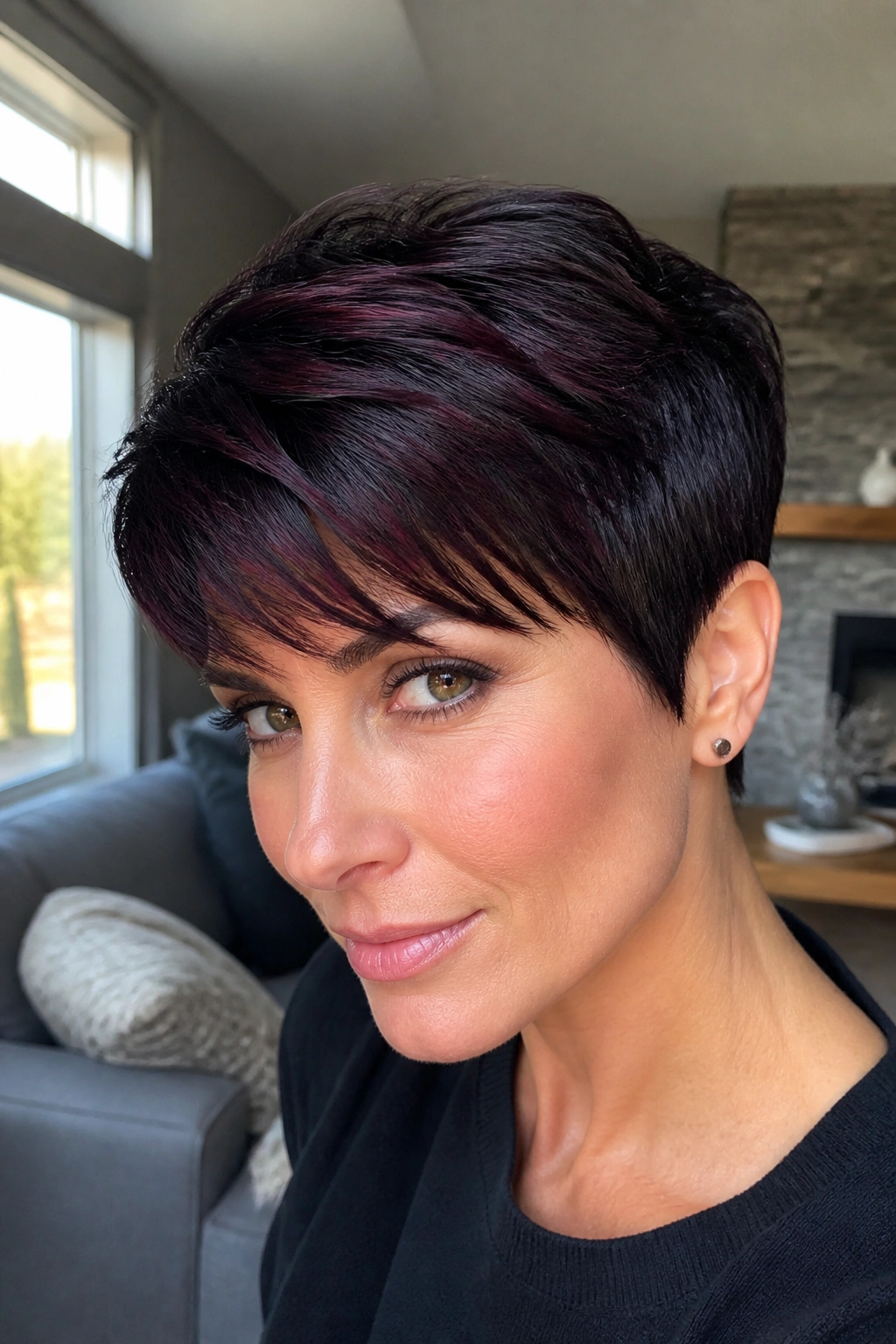
Warm cherry can fight a short cut. Blue-black cherry doesn’t. That’s why this version feels so sharp on cool skin tones. A pixie cut already brings attention to the eyes, brow bone, and cheek line, so the color should support that structure instead of adding heat.
The trick is to keep the base almost inky, then let the cherry show only as a cool flash when the hair moves. The red should feel more like blackberry skin than candy apple. That sounds poetic, maybe, but it’s also the easiest way to explain the tone to a colorist who gets too excited about warm pigment.
This works especially well if you like bold earrings, clean necklines, or graphic makeup. Short hair can handle stronger color contrast because there’s less surface area and less chance of the shade looking noisy.
6. Black Cherry Money Piece
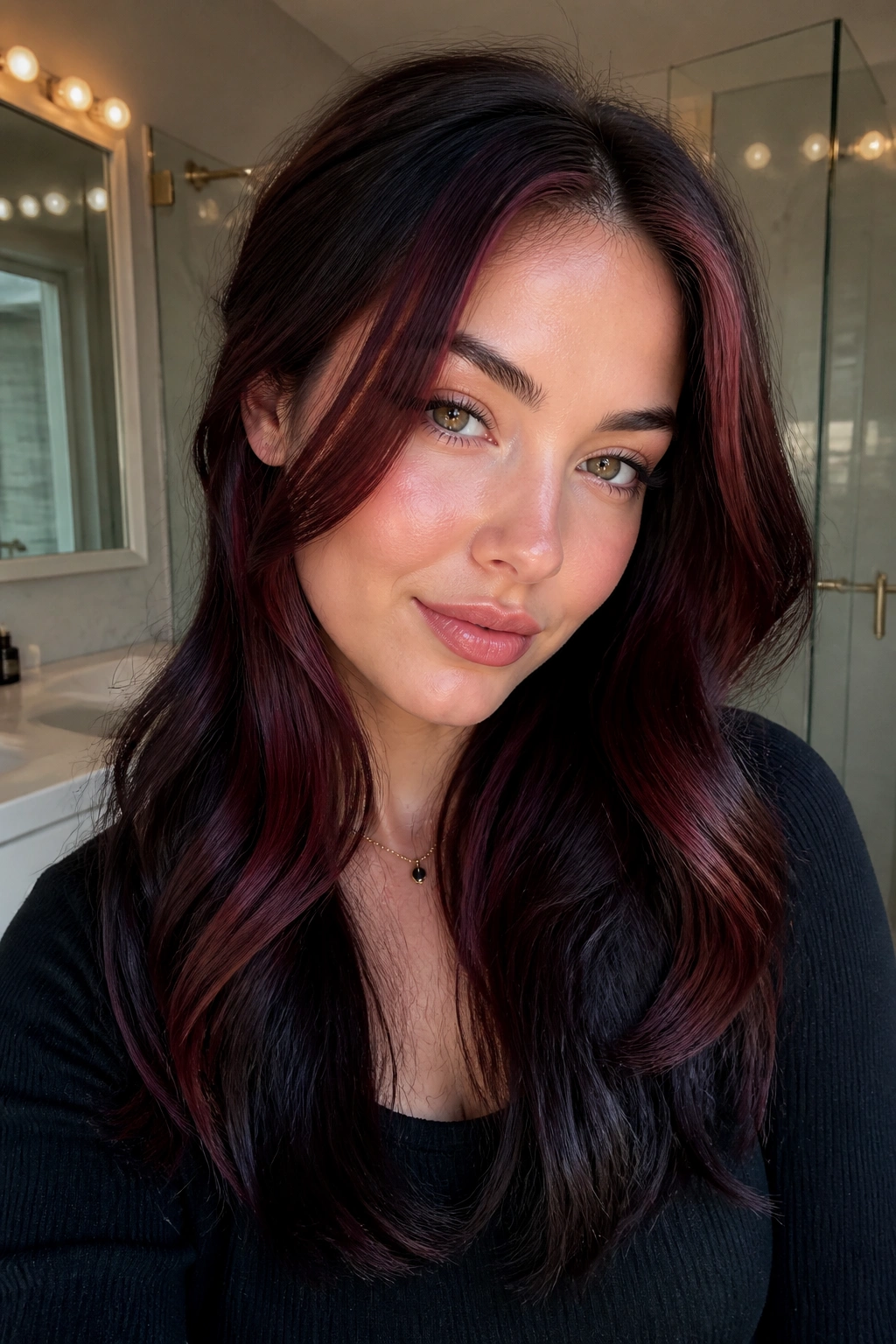
If you want the color to show up first, the money piece is the move. A black cherry money piece means the face-framing sections get a brighter, cooler cherry than the rest of the hair, which brings instant lift around the eyes and cheekbones.
That placement is useful for cool skin tones because it keeps the warmth away from the roots and concentrates the color where you want the eye to go. A cherry-violet panel near the face can make pale skin look less washed out and can sharpen stronger features without needing a full-head transformation.
What to Ask for
Ask for face-framing sections that are 1 to 2 shades lighter than the rest of the hair, not blonde-light. You want contrast, not a stripe. Keep the underside darker so the brighter front pieces have something to bounce off.
This is a good option if you wear your hair behind your ears a lot. The color still shows. No extra styling needed.
7. Velvet Black Cherry Curls
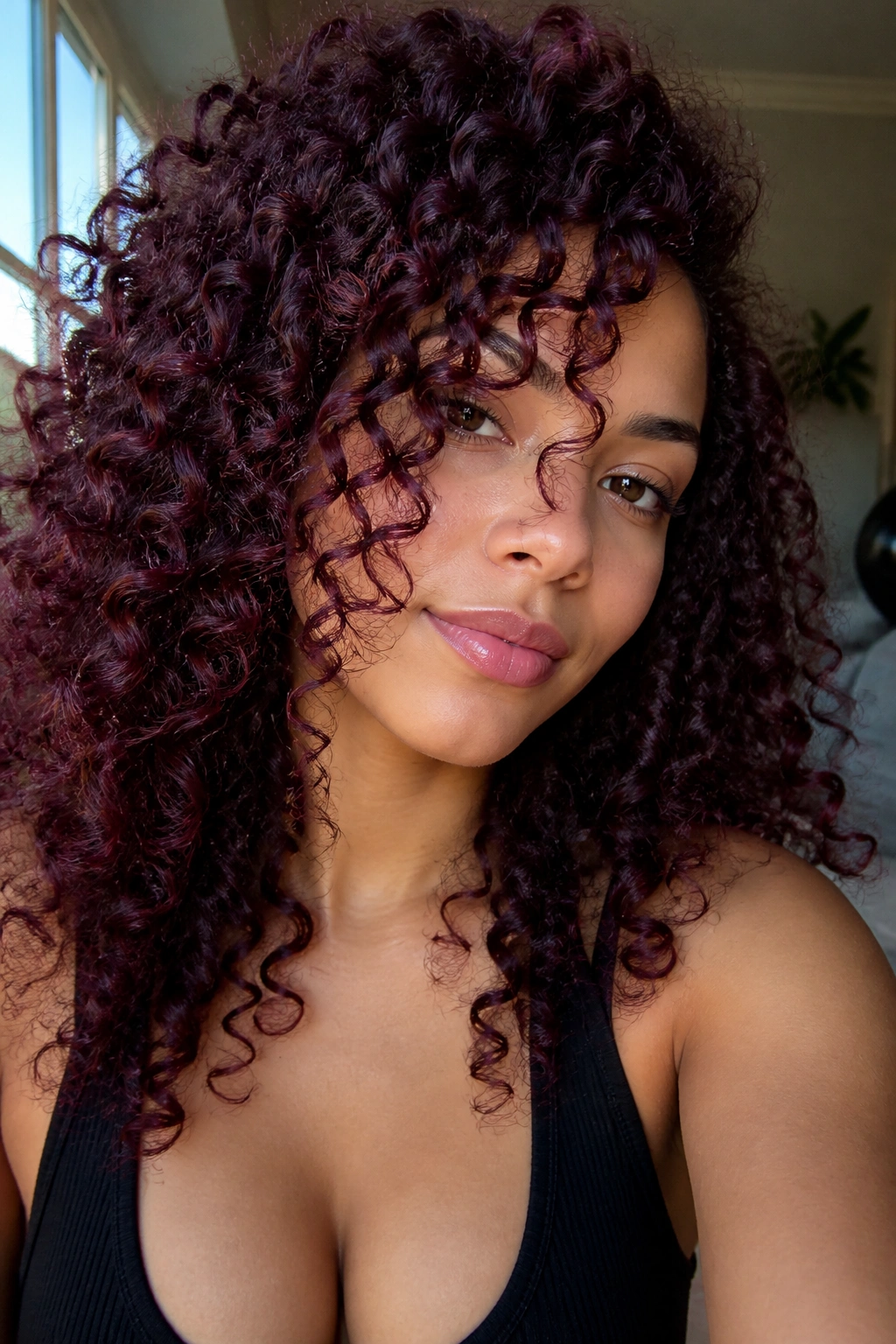
Why does black cherry look so good on curls? Because curls already create natural shadow and shine, and the color follows that pattern instead of fighting it. A velvet finish on curly hair gives you depth at the base and flashes of plum or berry on the curve of each curl.
The danger is over-processing the ends. Curly hair can go frizzy fast if the color is too aggressive, so a gloss or demi-permanent formula is usually the smarter choice. You want the shade to sit on top of the curl pattern, not chew through it.
How to Keep the Curl Pattern Visible
- Ask for a cool cherry glaze, not a heavy red permanent color
- Keep the ends slightly softer than the roots
- Use a curl cream with slip, not a crunchy gel
- Diffuse on low heat so the color reads shiny, not puffy
The result feels plush. Not loud. Plush.
8. Plum-Forward Black Cherry Bob
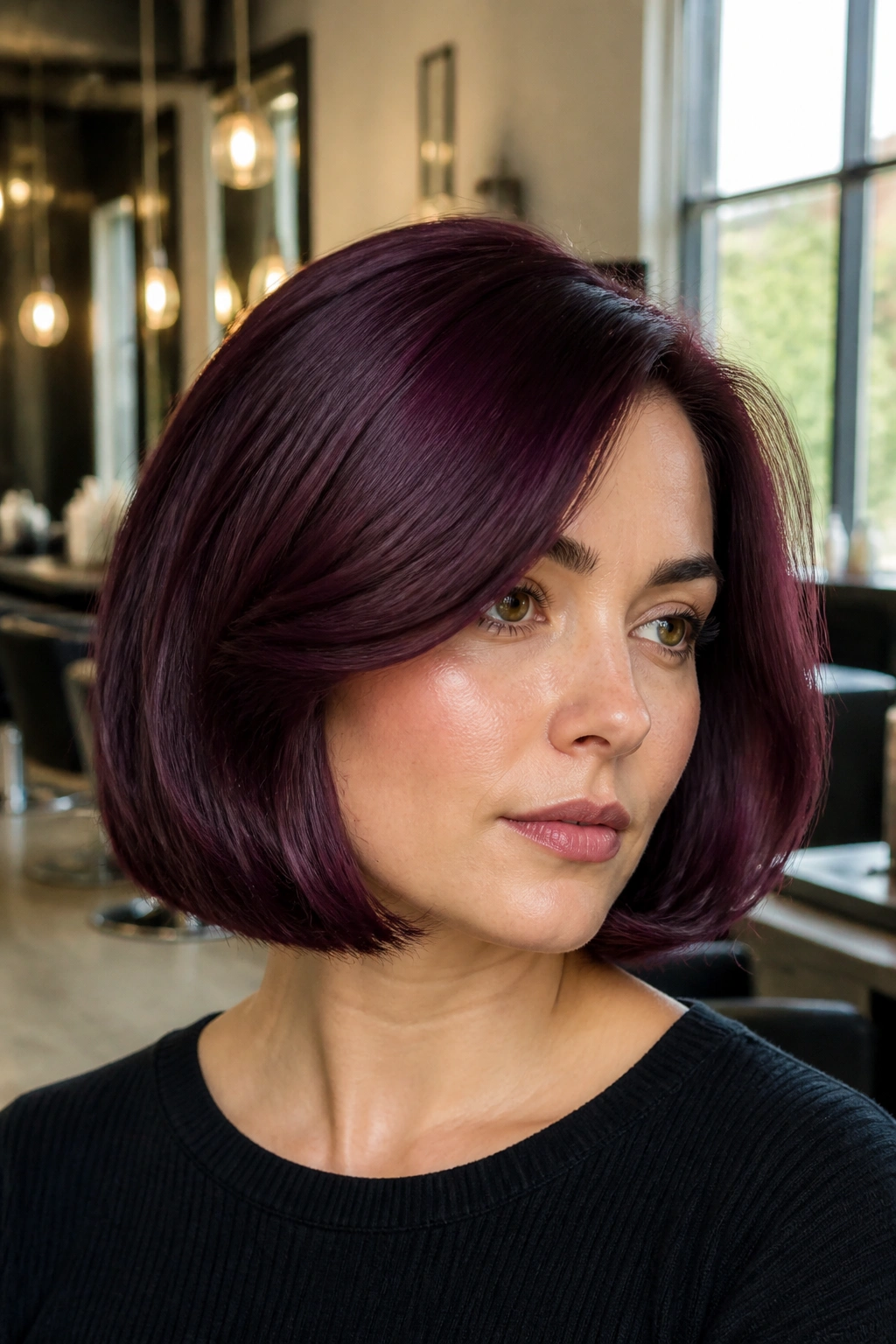
A bob is where plum-forward cherry really earns its keep. The shorter shape gives the eye fewer places to go, so the color has to carry more of the style. That’s good news here, because plum tones sit beautifully against cool skin and keep the red from becoming too bright.
I like this on a chin-length or jaw-skimming bob with a gentle bend under the ends. The shape looks deliberate, and the plum note keeps the whole thing from veering into warm burgundy. If you wear cool-toned makeup—taupe shadows, rose blush, a blue-red lip—this version slots right in.
A side part helps too. It gives the cherry a little asymmetry and stops the cut from feeling too severe. And if your hair is fine, the darker base can make the bob look fuller than it actually is. That’s a nice side effect.
9. Dimensional Black Cherry with Micro-Highlights
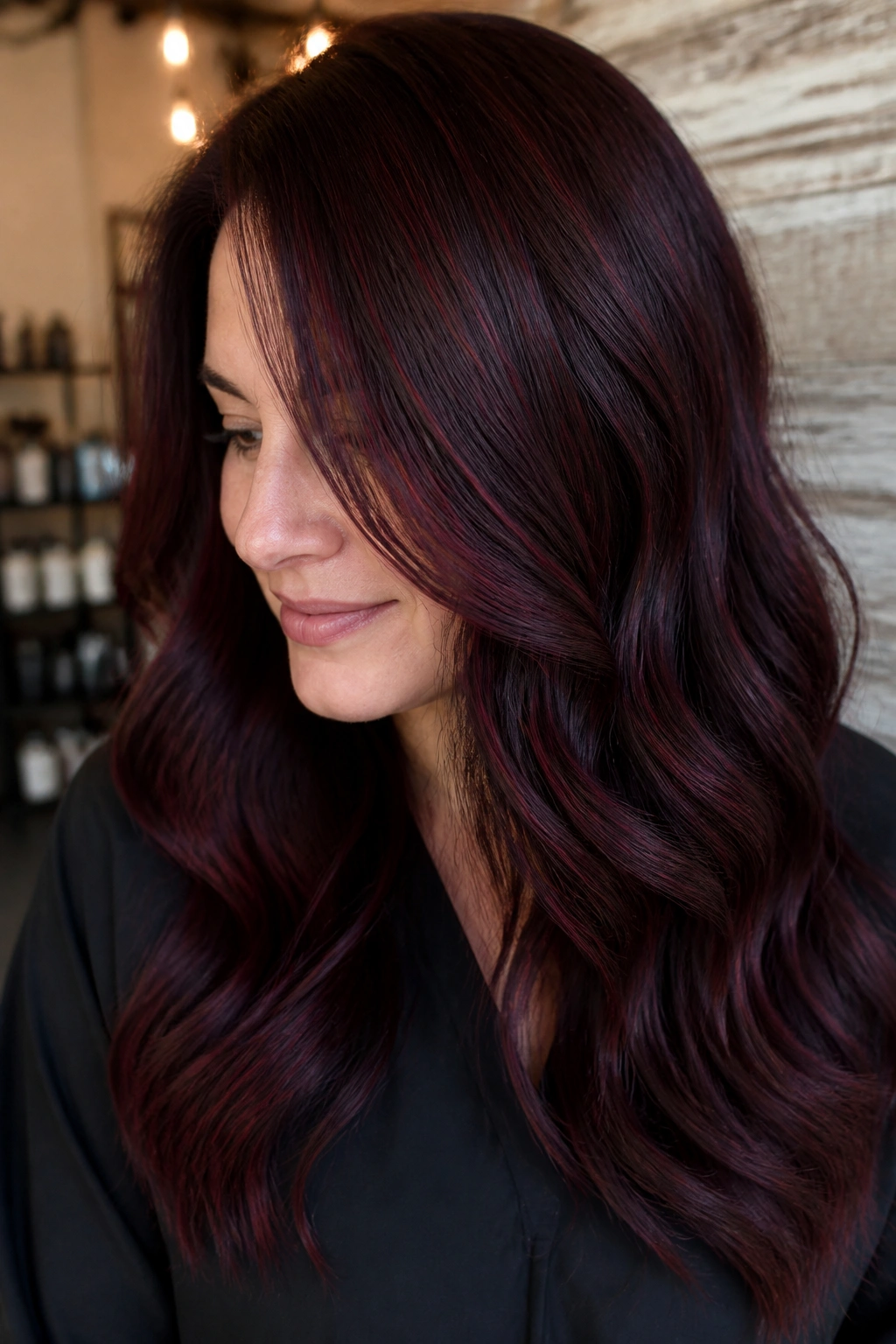
Flat color has its place, but micro-highlights make black cherry much more interesting. These are tiny woven strands, not chunky ribbons, and they give the hair a lifted look without making it scream “highlighted.”
This version works especially well on medium to thick hair. The tiny pieces catch light at different depths, so the cherry looks layered instead of painted on. On cool skin tones, the micro-highlights should stay in the berry-violet family. If they turn too red or coppery, the whole effect gets muddy.
I prefer this to big, obvious streaks when the goal is wearable color. It’s the difference between a quiet shimmer and a hard stripe.
Ask for this: baby-fine weaving through the crown and around the face, with the ends kept deeper. That creates movement without losing the dark, moody base.
10. Ombré Black Cherry with Soft Black Roots
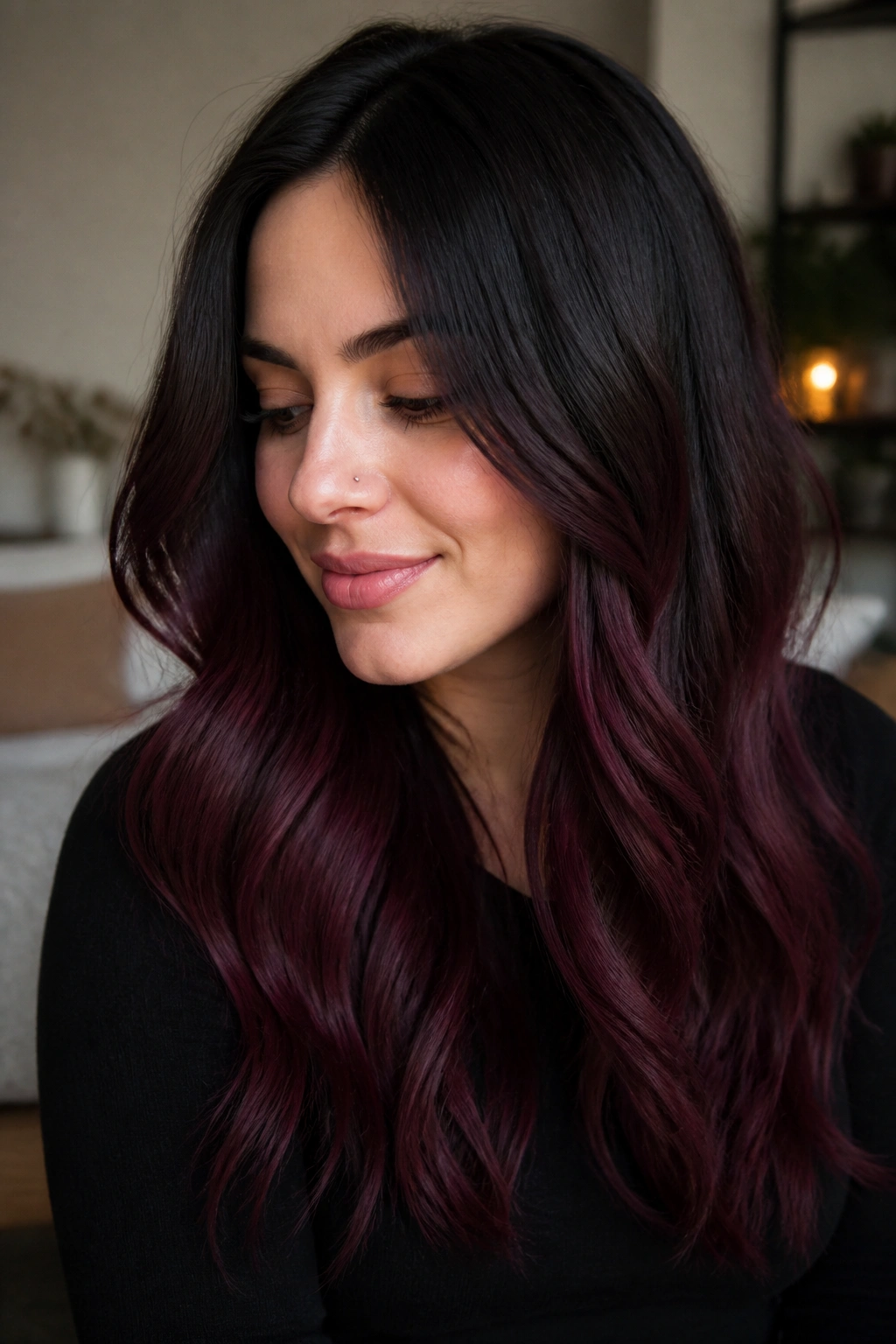
If you hate seeing regrowth, this is a smart lane to drive in. Keep the roots soft black or deep espresso, then let the hair melt into black cherry mid-lengths and ends. The ombré makes the color look intentional even when it grows out.
The best versions of this shade lean toward dark berry rather than bright red. That keeps the gradient smooth and cool-toned. On long hair, the transition can be almost smoky at the top and richer at the bottom, which is a good way to add visual depth without touching the roots too often.
- Best for longer hair that shows a gradient
- Easier grow-out than a full all-over red
- Looks strong on curls and waves
- Keep the ends plum-heavy for a cooler finish
One nice bonus: if your ends are a little dry, the darker ombré hides a lot.
11. Cherry Noir Glass Hair
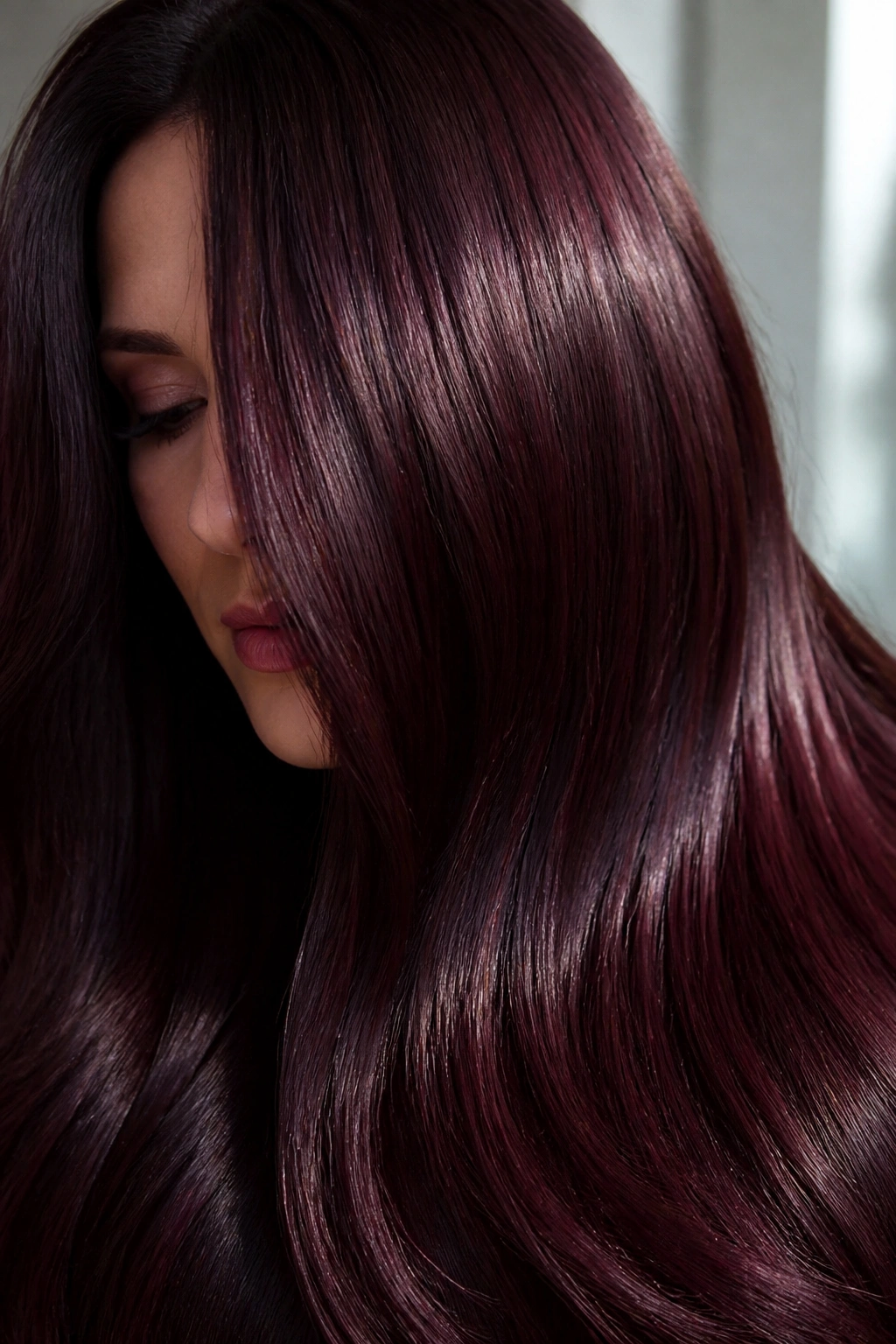
Shine is half the story here. Cherry noir glass hair is the sleek, reflective version of black cherry, the one that looks almost lacquered when you smooth it out with a brush and heat protectant.
Cool skin tones usually handle this well because the shade reads deep and cool first, red second. That means the hair looks expensive instead of fiery. The finish matters a lot. If the hair is frizzy or rough, the color loses its effect fast. A gloss after coloring helps, and a blowout with a paddle brush makes the shine more visible.
I like this on long straight hair or on a blunt cut with sharp ends. The strong line makes the dark cherry look more intentional. It is not a casual color. That’s part of the appeal.
And yes, it looks excellent with silver jewelry.
12. Black Cherry Shag with Feathered Fringe
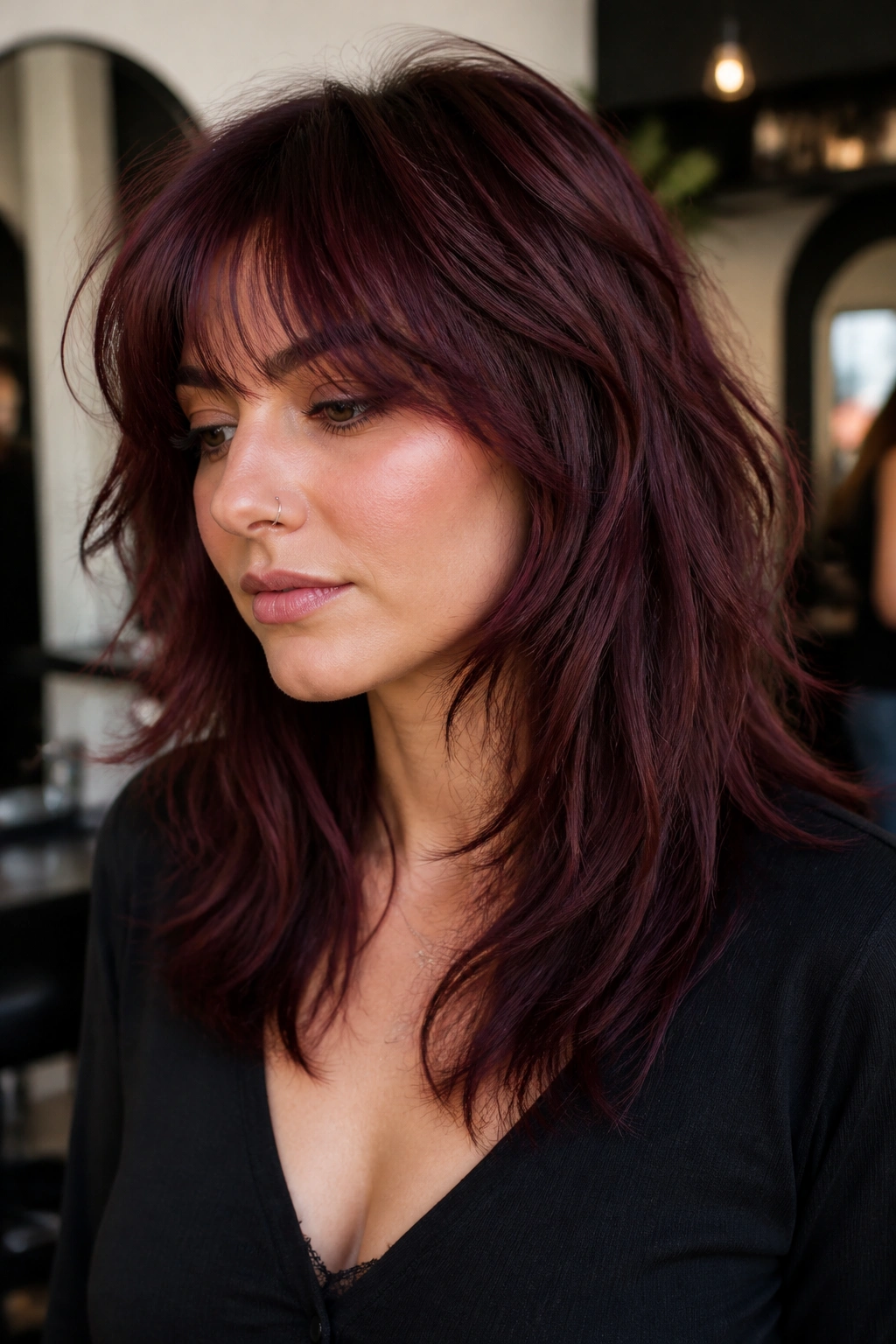
Can black cherry look laid-back? Absolutely, if you pair it with a shag. The cut gives the hair broken-up movement, and the color fills in the spaces between the layers so the whole thing feels airy instead of heavy.
What to Ask the Stylist
Ask for feathered layers and a soft fringe, not blunt edges. Then ask for the cherry tone to stay a little deeper on the underside and a touch brighter on the top layers. That makes the texture pop without creating a stripe effect.
This is one of my favorite choices for cool skin tones with angular features. The shag softens the face, while the cool cherry keeps the hair from drifting too warm. If you like a slightly lived-in look, this is the one.
It also grows out well. Which, frankly, matters more than people admit.
13. Wine-Stained Black Cherry Waves
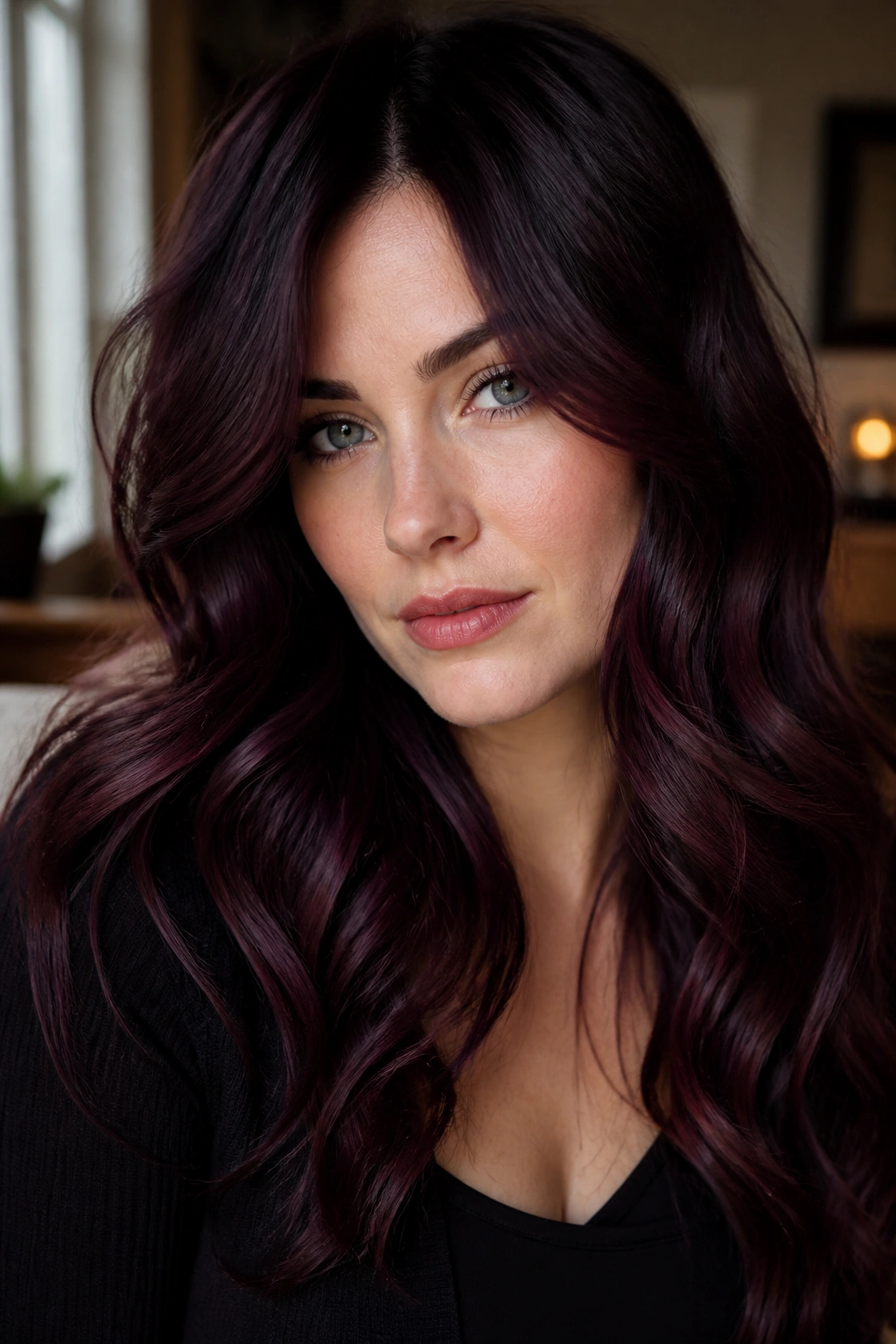
There’s something satisfying about waves that look like they were dipped in dark wine. Wine-stained black cherry is richer than bright cherry, and on cool skin tones it lands in that nice zone between romantic and serious.
Loose waves help the shade move. The darker bends read almost black, then the raised parts pick up plum or merlot notes. If the hair is all one length, the effect can get a little flat. A few long layers fix that fast.
This color works especially well if you like deep lipstick, black coats, or simple fitted clothes. The hair becomes the statement, but it does it quietly. No high drama required.
A semi-permanent gloss can be a good choice here if you want the color to fade softly rather than hold on too tightly. The fade is part of the appeal. It turns the shade softer instead of stripy.
14. Deep Black Cherry on Natural Black Hair
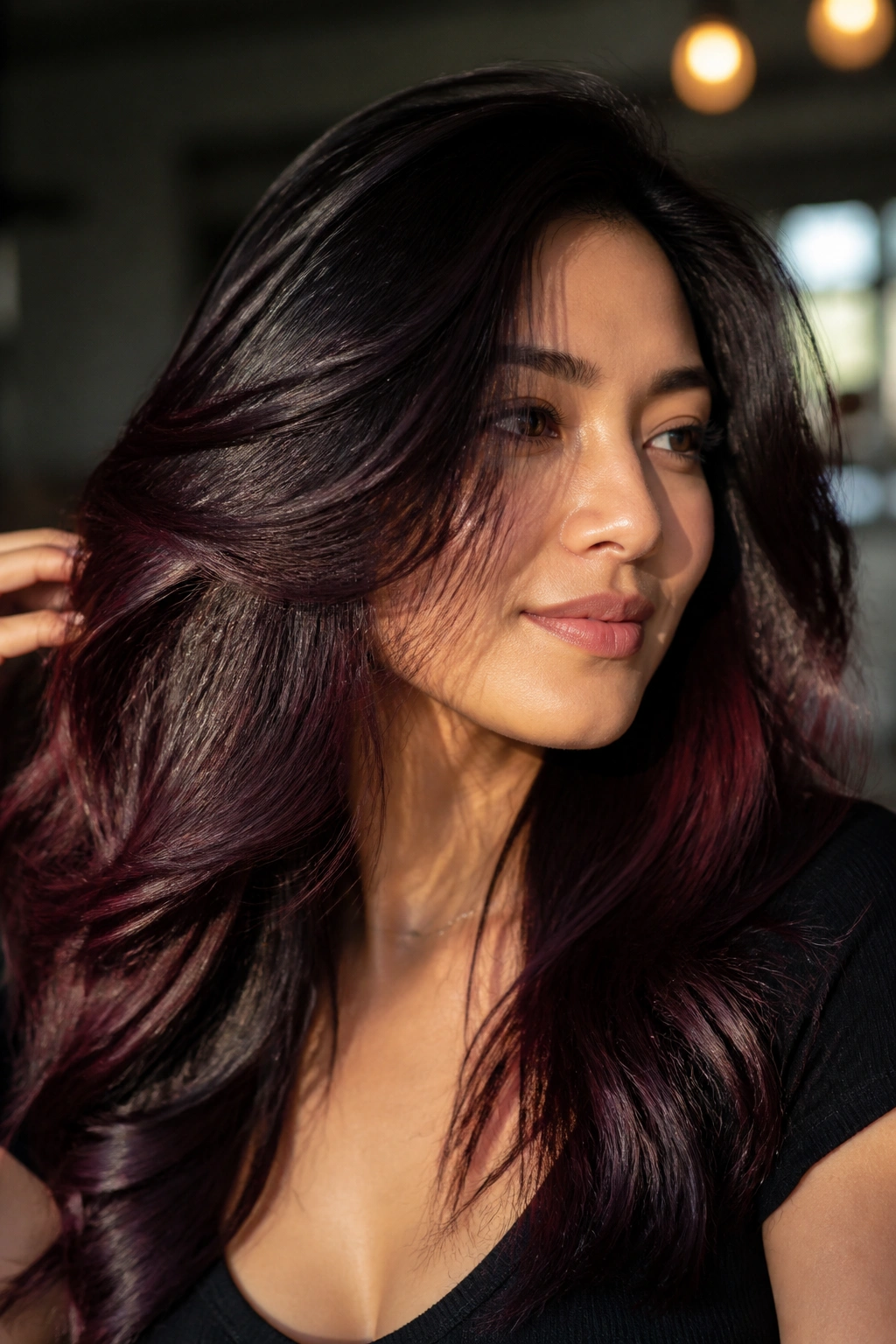
On natural black hair, black cherry doesn’t have to be obvious to be effective. Sometimes the best result is a shade that only shows itself in sunlight, under warm indoor lamps, or when the hair moves across the shoulders.
That subtlety works beautifully on cool skin tones because it adds color without breaking the dark frame around the face. If the hair is lifted even a little, the cherry note can show more clearly, but you do not need a dramatic bleach job for this look to make sense.
A Smart Approach for Dark Hair
- Keep the roots close to your natural base
- Use a violet-red gloss through the mids and ends
- Avoid orange-heavy formulas
- Prioritize shine, because shine is what reveals the color
This is the version for someone who likes depth first and color second. It is quiet. In a good way.
15. Black Cherry Peekaboo Panels
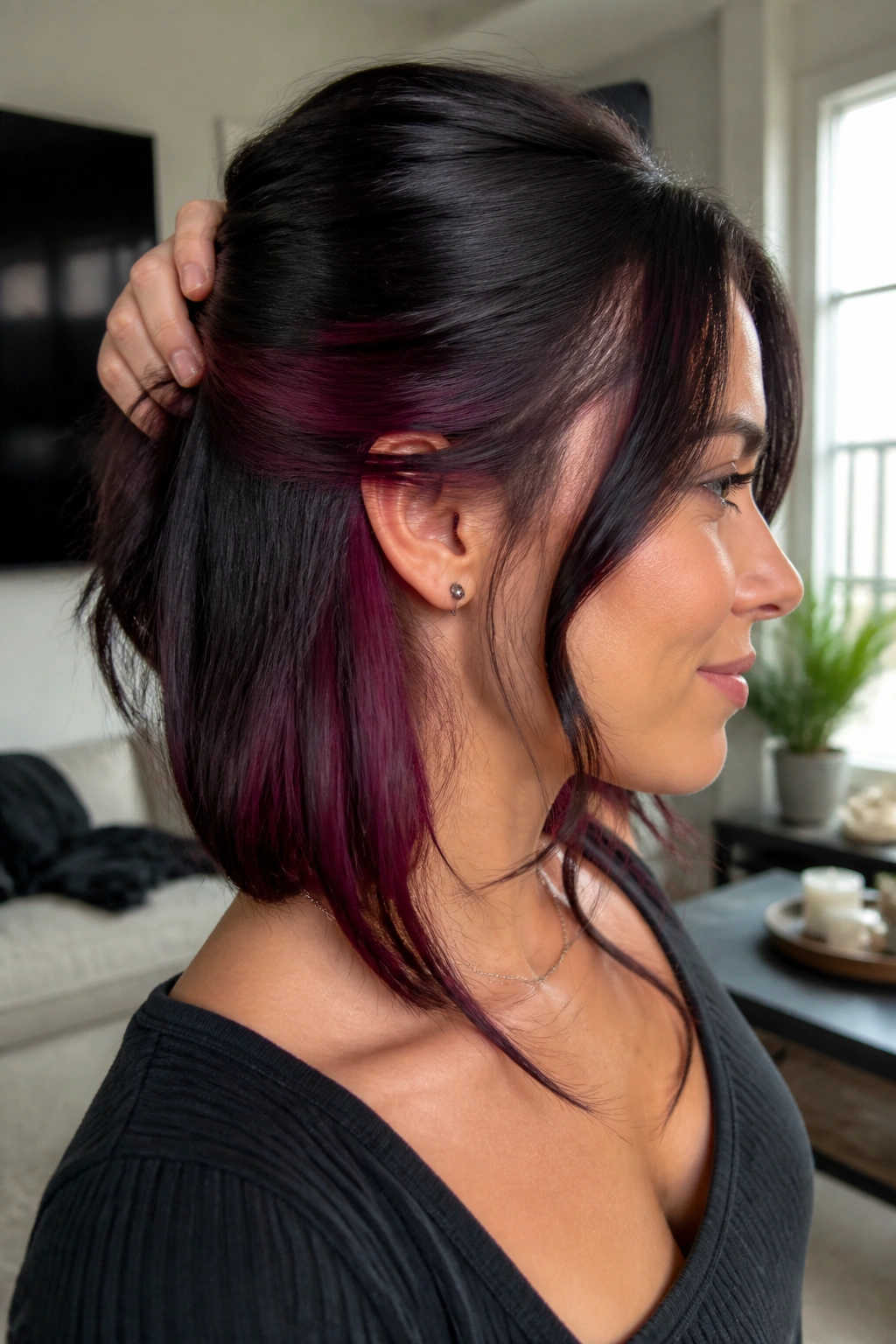
Peekaboo panels are for people who want cherry color to feel like a surprise, not a headline. The hidden sections sit underneath the top layer of hair, so the shade appears when you tuck the hair behind your ears, twist it up, or catch it in motion.
That placement flatters cool skin tones because it keeps the brighter cherry away from the entire face while still giving you a cool-toned red flash. I prefer this with a darker outer layer and a deeper berry or violet underneath. The contrast is the whole point.
- Best under the crown or near the nape
- Good for office-friendly color
- Easy to hide when needed
- Looks stronger on layered hair than on one-length cuts
This is the kind of color that makes sense if you want something fun but not obvious at every angle. There’s a reason people keep coming back to peekaboo panels.
16. Black Cherry with Ashy Root Shadow
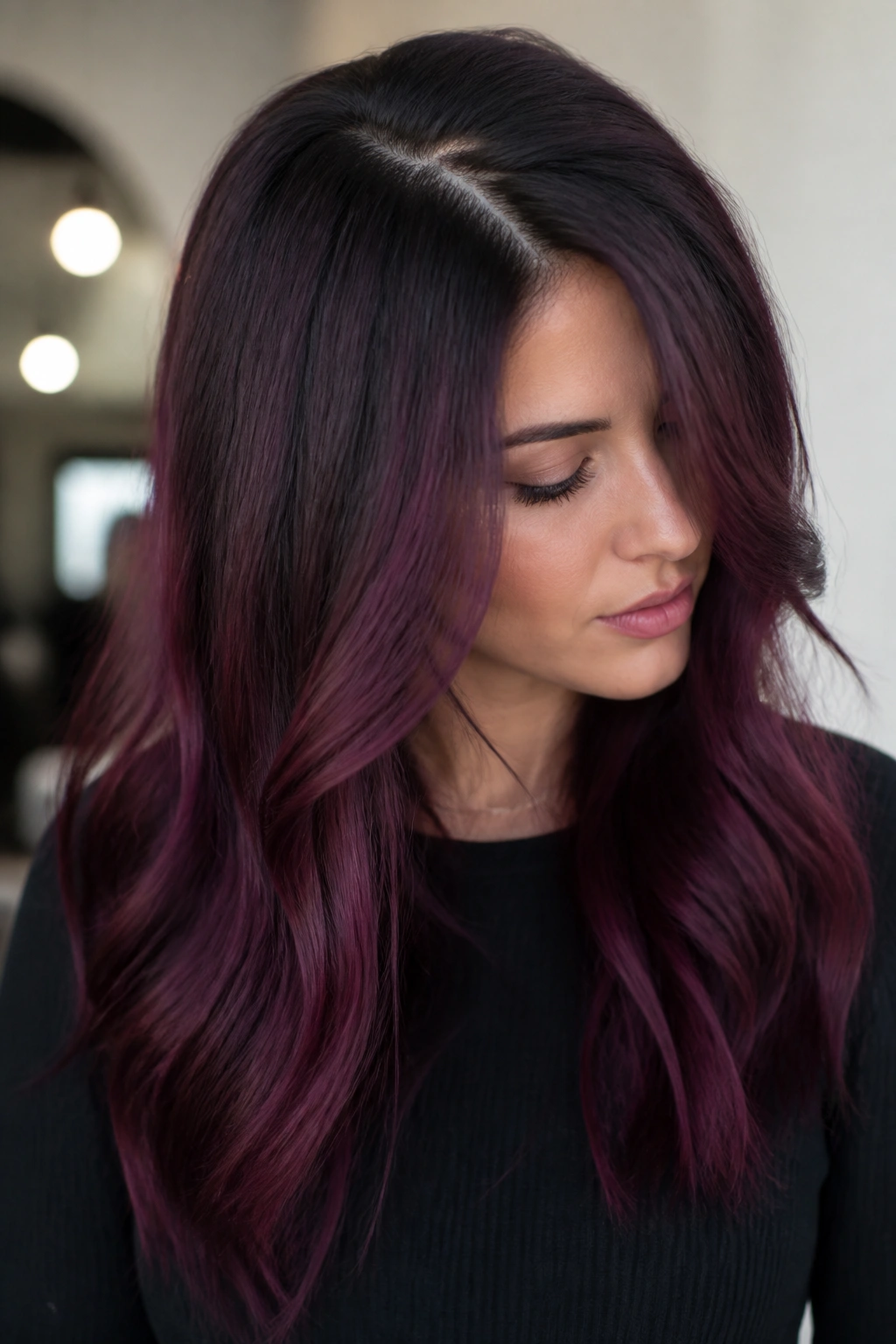
A root shadow can save a cherry shade from looking too busy. By keeping the roots a little deeper and ashier, you create a softer transition into the black cherry lengths. That small shift matters a lot on cool skin tones because it keeps warmth from gathering right at the scalp.
I like this better than a hard line between your natural base and the dyed section. The ash makes the cherry look richer, not dull. And because the color starts darker near the roots, the grow-out tends to feel cleaner for longer.
If your hair is naturally dark brown, this is a practical way to wear cherry without committing to high upkeep. The root shadow also helps the red stay grounded. Without it, some cherry shades can look a bit floating and disconnected.
A good colorist will usually keep the root area half a shade to one shade deeper than the mids. That tiny difference is doing more work than people think.
17. Cool Violet Black Cherry Layers
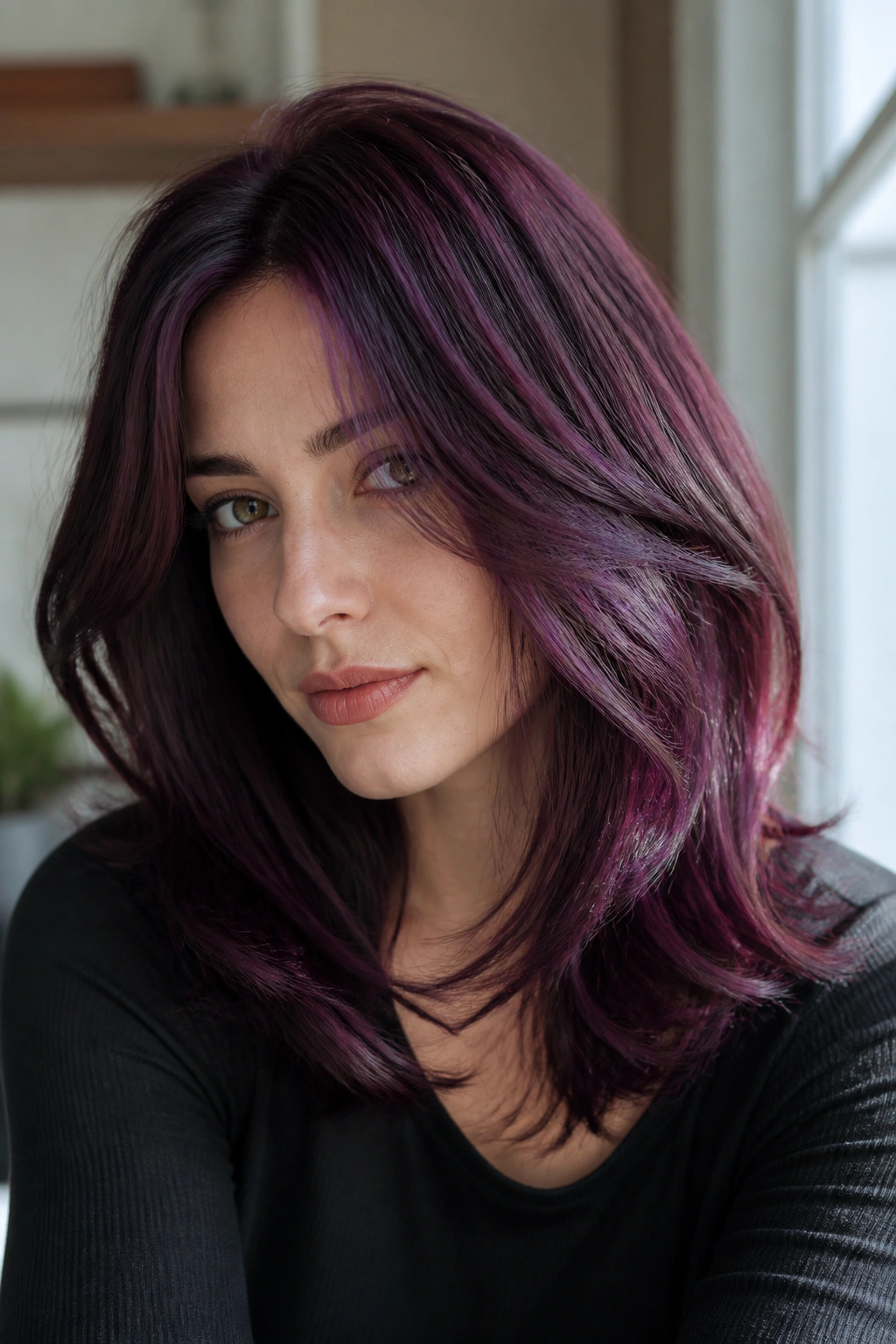
This is the version I’d hand to anyone who says, “I want red, but I don’t want red-red.” Cool violet black cherry leans berry first and red second, which makes it a strong match for pale, pink, or neutral-cool skin.
The violet in the formula keeps the color from drifting into rust. That’s the whole trick. On layered cuts, the shade gets even better because each layer catches a slightly different amount of light. The top can look nearly black, while the lower pieces flash plum when you turn your head.
I especially like this on medium-length hair with movement around the jaw and collarbone. The layers stop the color from looking heavy, and the cool tone keeps the face bright.
If your hair tends to pull warm when colored, this is the correction. Ask for violet depth up front. Not copper. Not orange. Violet.
18. Black Cherry Curtain Bangs
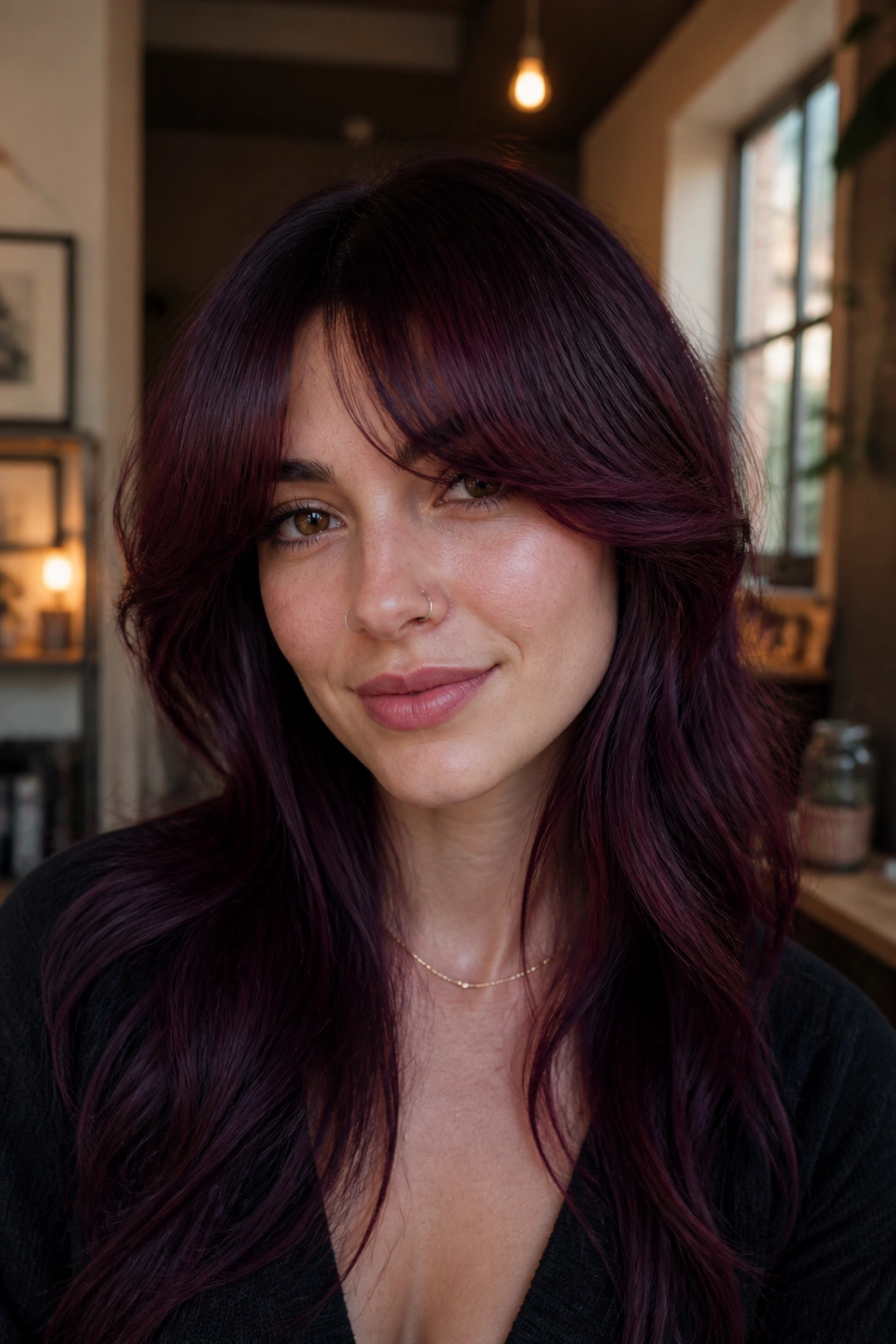
Curtain bangs and black cherry make each other look sharper. The bangs frame the face, and the cherry color gives that frame a little extra depth right where the eye lands first. On cool skin tones, that framing effect can be a lifesaver if your complexion needs a touch of contrast.
The important part is not letting the bangs get too saturated or too bright. They should feel blended into the rest of the cut, not like a separate panel. A softer cherry on the fringe and deeper black cherry through the lengths keeps the whole shape balanced.
Styling Notes That Help
- Blow the bangs away from the face with a round brush
- Keep the ends piecey rather than heavy
- Use a cool-toned gloss if the fringe fades fast
- Let the side sections stay a touch darker for contrast
This is a very wearable look. Even on days when the rest of your hair is a little messy, the bangs and color still do their job.
19. Cherry Burgundy Melt with Smoky Ends
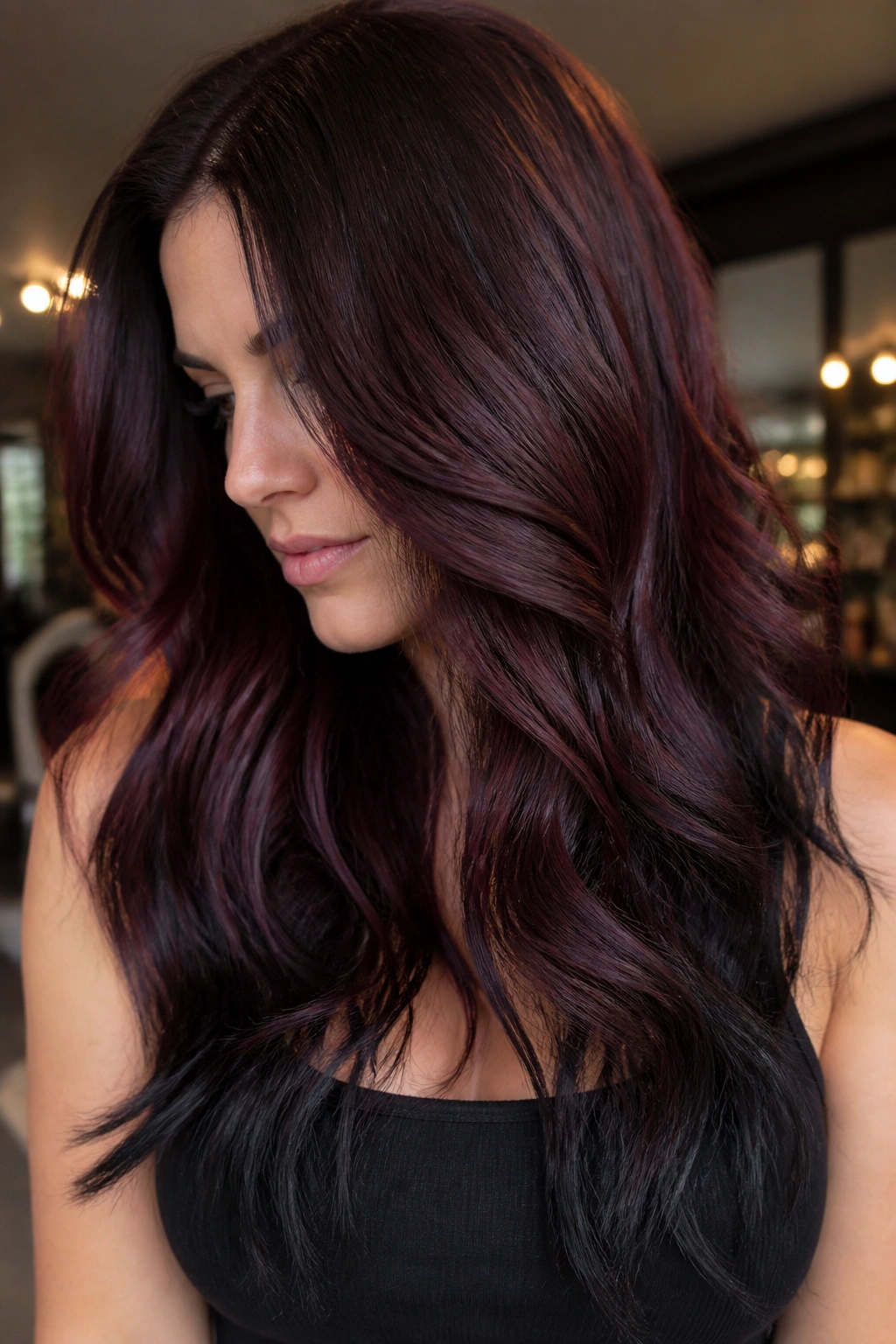
Why does a melt work so well here? Because it lets the red sit in different depths instead of forcing one flat tone across the whole head. A cherry burgundy melt starts deeper at the roots, moves through wine and berry in the middle, then turns smoky at the ends so the whole color stays cool.
That smoky finish is especially nice on cool skin tones. It prevents the red from creeping warm and gives the hair a softer edge. Thick hair benefits a lot from this because the multiple tones keep the length from looking heavy.
If you like polished color but hate the look of obvious striping, this is a solid pick. It feels grown-up without being stiff. The tonal shift is doing the work, not the styling.
I’d choose this for shoulder-length or longer hair where the fade has room to show. On shorter cuts, the melt can disappear too fast.
20. Black Cherry on a Wavy Collarbone Cut
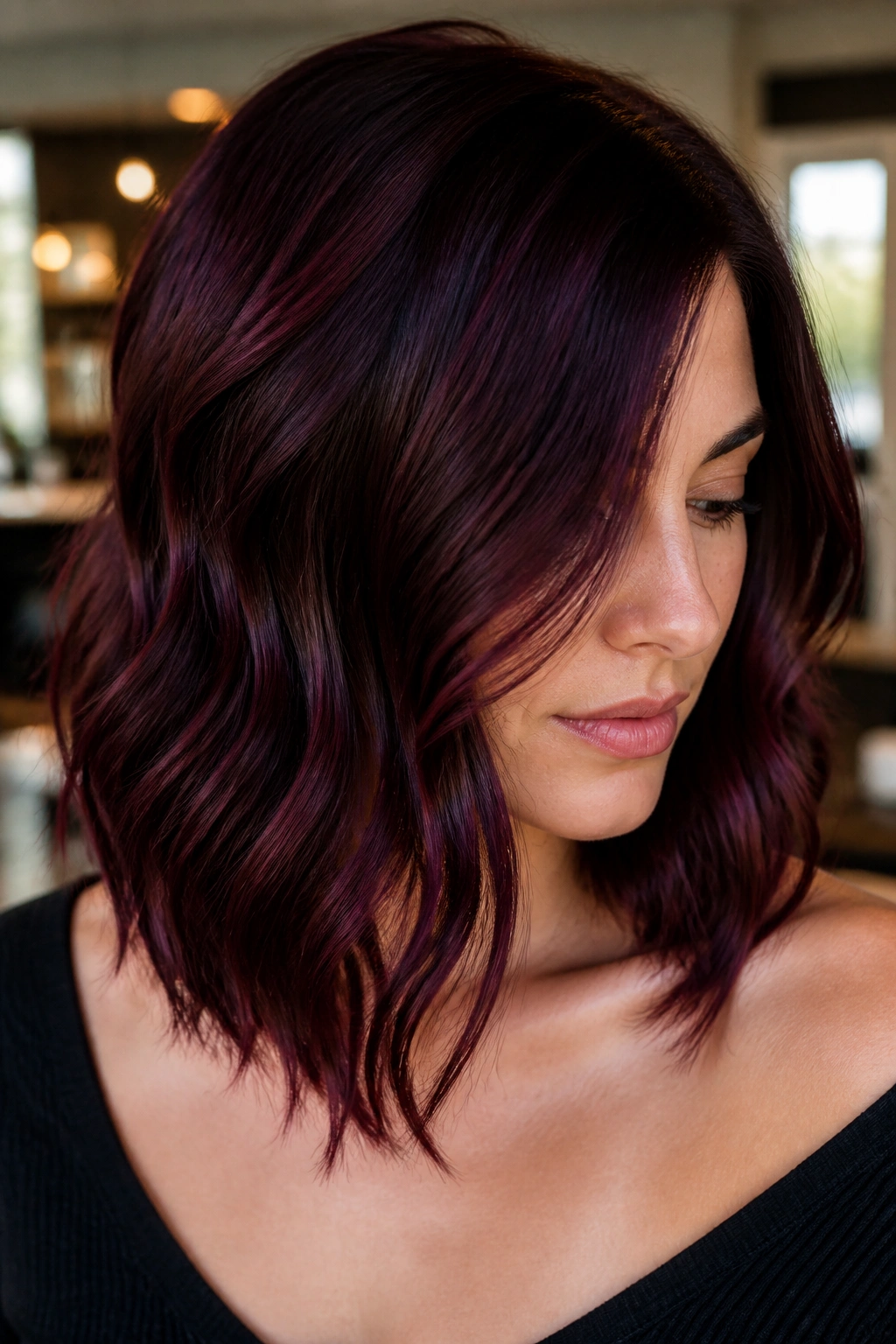
A wavy collarbone cut is one of the easiest places to wear black cherry. The length sits right between short and long, so the color gets enough movement to show off the red-violet notes without taking over the whole look.
The waves matter. They break up the dark base and let the cherry appear in little flashes along the bends. That keeps the shade from going flat, which is the main problem with dark reds on medium-length hair. Cool skin tones tend to like that kind of motion because the color feels lighter around the face even when the hair is still dark overall.
If you want something low-drama but not boring, this is it. Air-dry with a touch of cream, bend a few pieces with a wand, and you’re done. The shade does the heavy lifting. Hair that sits at the collarbone also tends to show shine well, which helps black cherry look richer.
21. Black Cherry with Silver-Edged Highlights
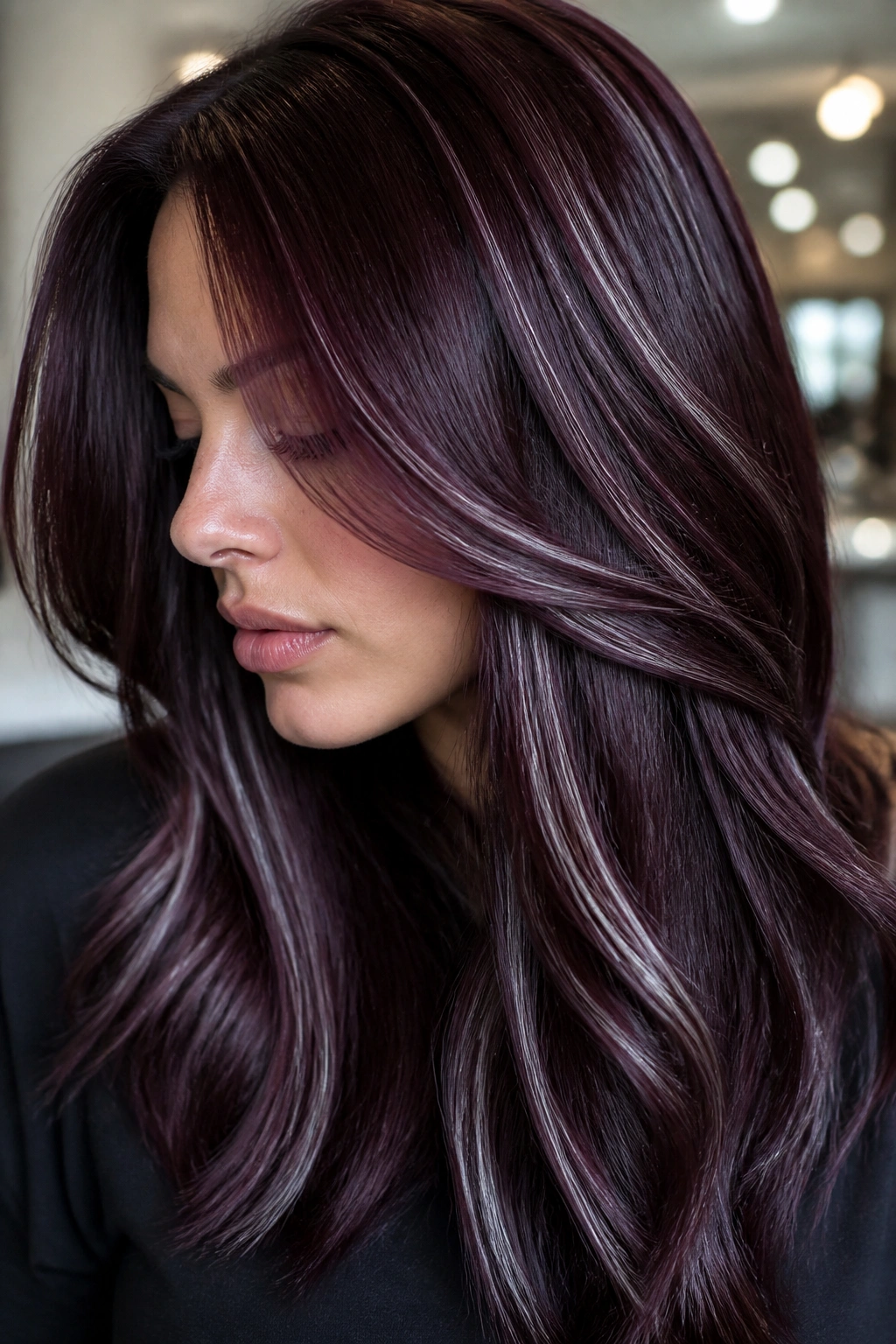
This one has a little edge to it, and I mean that in the best way. Silver-edged highlights give black cherry a cooler, almost icy outline, which is a strong fit for cool skin tones that need the hair to stay crisp instead of warm.
What Makes It Different
Instead of lifting the whole head, the colorist places very fine highlights near the outer layers and tones them toward silver, ash, or lilac. The black cherry underneath keeps the hair grounded, so the lighter pieces never look disconnected. The effect is subtle from a distance and sharp up close.
It works best if you like fashion-y hair that still behaves like normal hair in daily life. A sleek blowout shows the silver edges best, but even natural waves let them peek through.
This is not the shade for someone who wants softness first. It is for someone who likes contrast and clean lines.
22. Black Cherry Gloss Over Faded Red
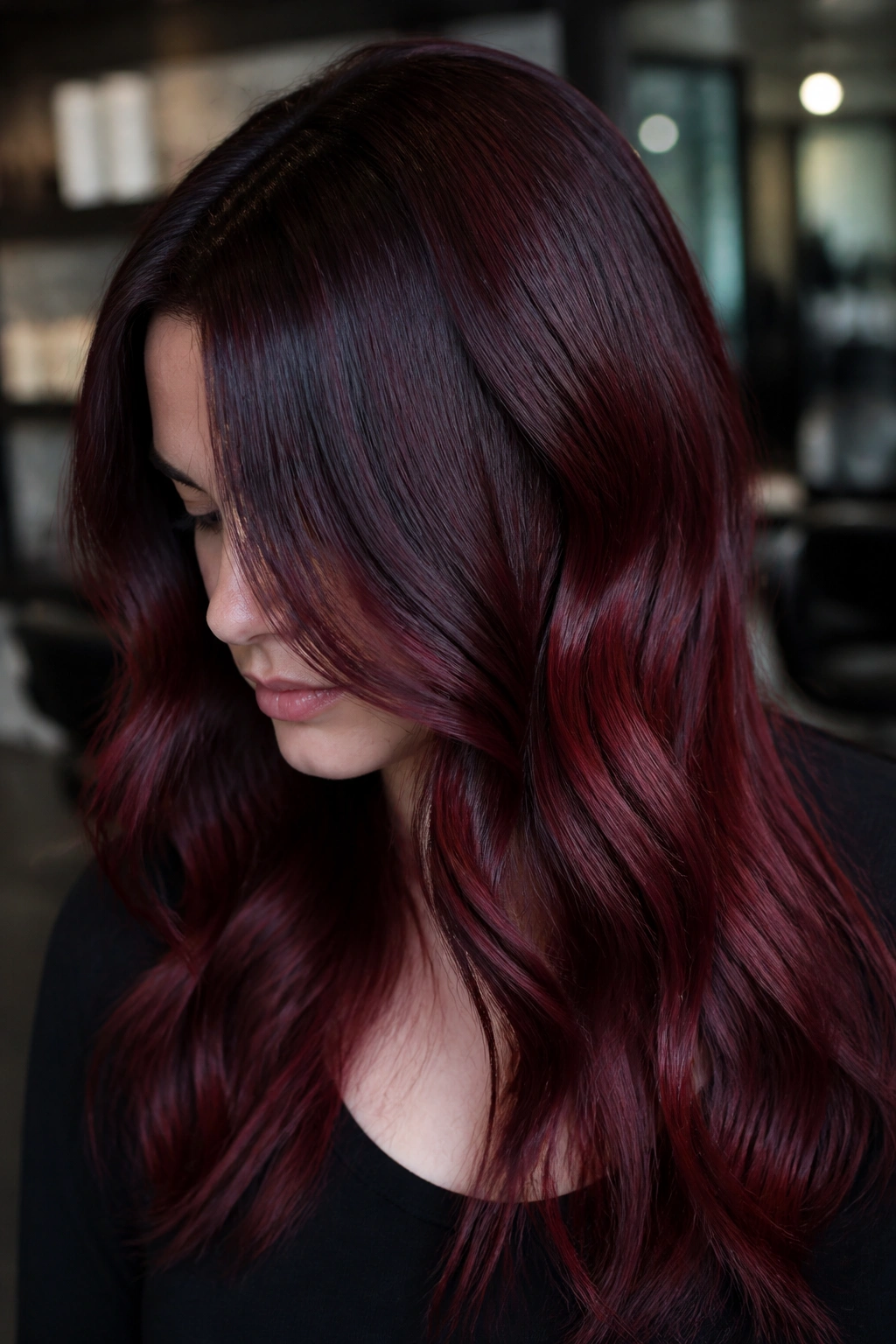
If you already have warm red hair and it’s starting to look a little tired, a black cherry gloss can rescue it fast. The gloss adds depth, cools down the warmth, and makes the color read richer instead of brassy.
That’s a useful move for cool skin tones because old red dye often fades too orange. A cherry gloss with violet or burgundy notes can put the color back in the right direction without starting from zero. I like this path when the hair is healthy enough to skip heavy lightening.
How to Refresh It
- Ask for a demi-permanent cherry gloss
- Keep the formula cool, not copper-based
- Focus the gloss through mids and ends first
- Refresh every few weeks if the fade turns orange
This is one of those fixes that feels almost too simple. It isn’t magic. It’s just the right tone in the right place.
23. Inverted Bob in Cool Black Cherry
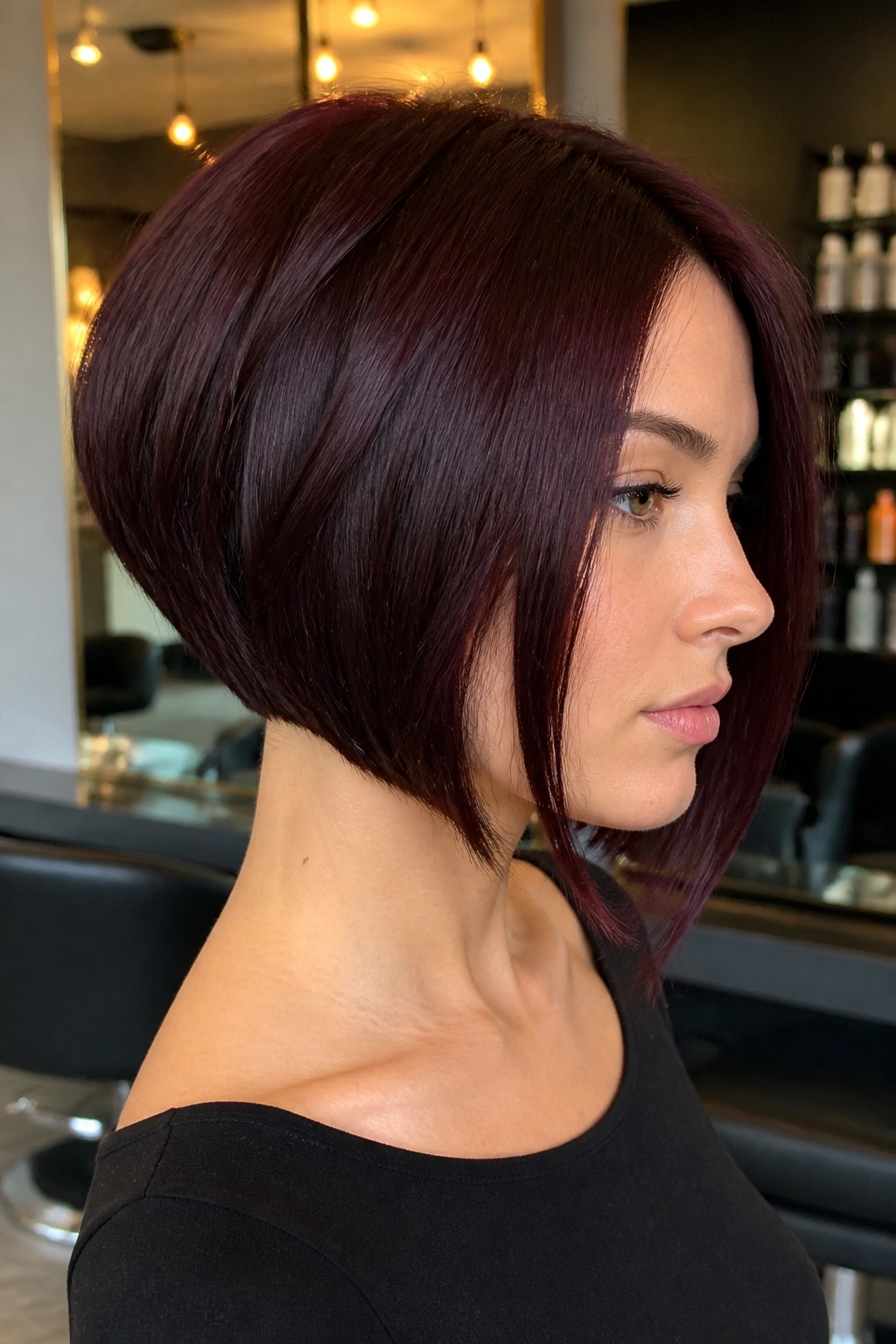
A crisp cut can make cherry color look sharper, and an inverted bob is one of the best examples. The shorter back and longer front give the shade structure, so the black cherry doesn’t wander into softness or blur at the edges.
That line matters for cool skin tones because the face-framing front pieces create contrast right where you need it. If the color leans berry and the cut stays clean, the whole look feels controlled and polished. A smooth bend under the front helps too. It keeps the shape from looking too severe.
I’d choose this if you like neat hair with a bit of attitude. It’s especially good on straight or slightly wavy textures, where the color can show every angle of the cut. The darker base also makes the bob look denser, which is a nice bonus for finer hair.
24. Black Cherry for Short Coils
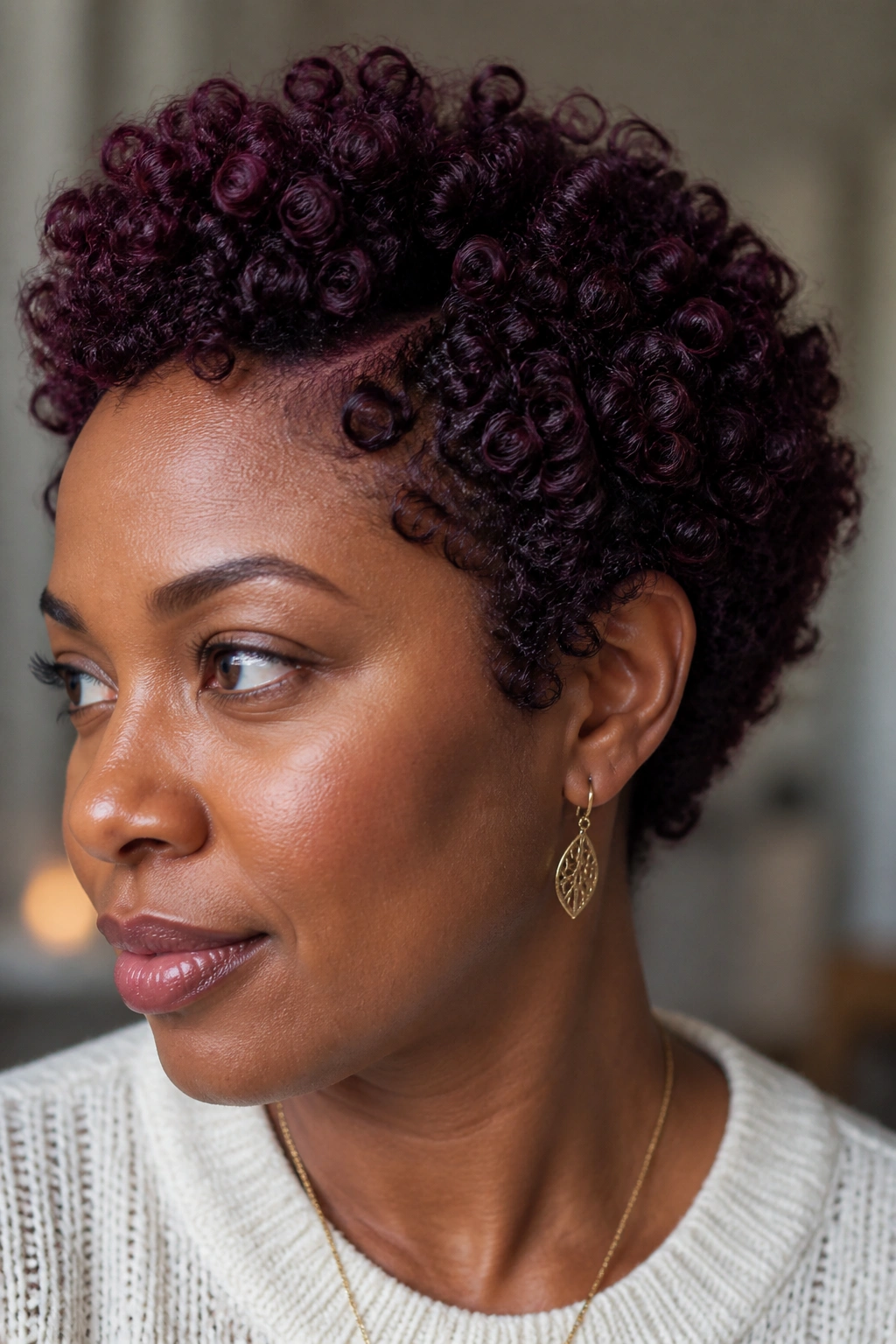
Short coils can carry black cherry in a way that feels rich rather than loud. The curl pattern breaks the color up naturally, so the shade shows as depth, shine, and tiny shifts of berry or plum across the surface.
That makes it a strong match for cool skin tones. The color sits close to the head, which keeps the look compact and neat, and the dark cherry finish adds warmth without crossing into orange. If the coils are tight, a gloss or color-depositing treatment can be enough to change the tone without drying the hair out.
- Keep moisture high
- Use cool cherry deposits, not copper reds
- Let the curl pattern stay defined
- Refresh shine often, because shine reveals the color
This is one of my favorite places for black cherry. Short, textured hair can take the shade and make it look even deeper than it is.
25. Cool-Toned Cherry Noir
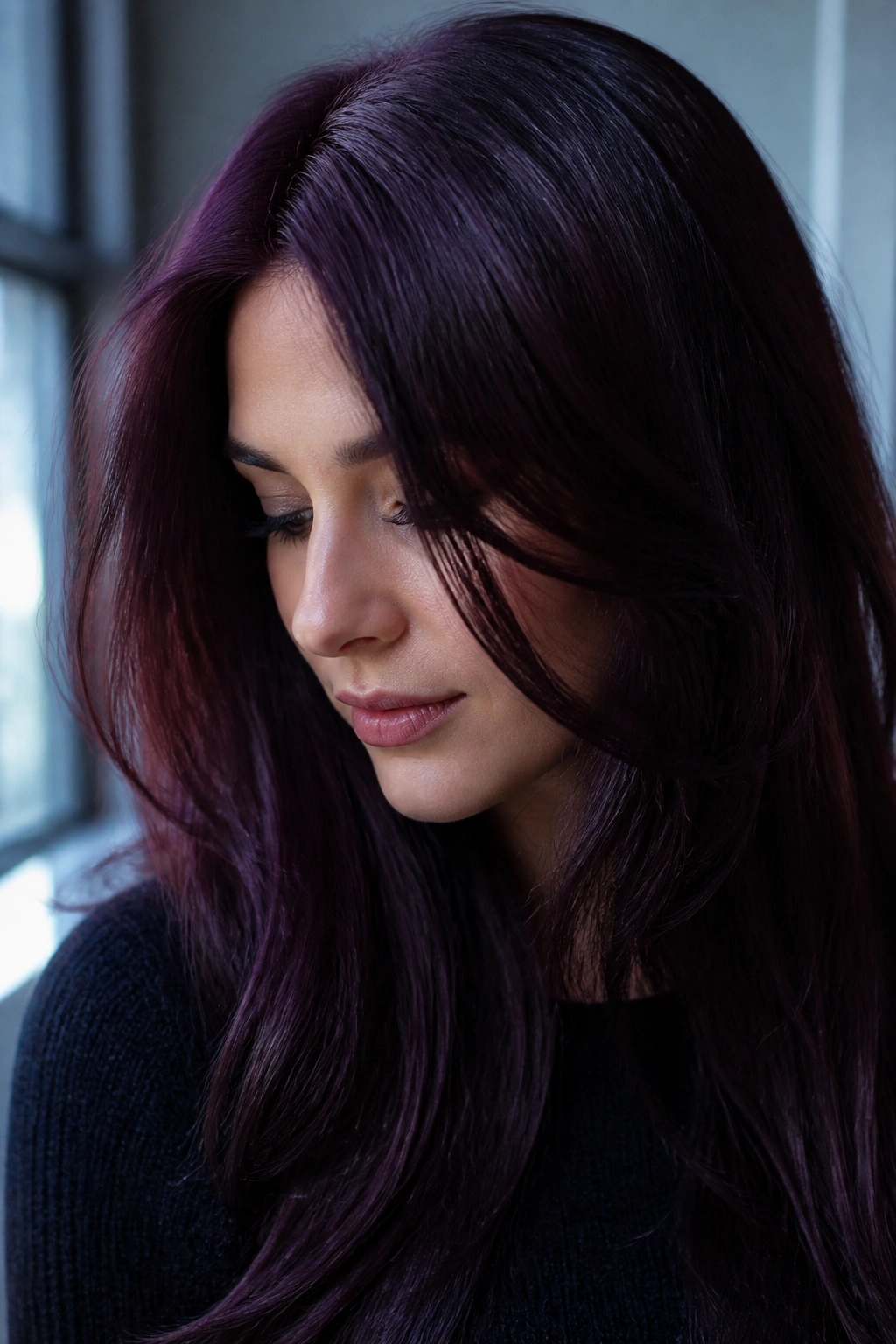
If you want the darkest possible version of this color, cherry noir is the one. It looks nearly black at first glance, then gives off blue-red or plum hints when the light hits it at the right angle. That makes it especially good for cool skin tones that can handle a strong, moody contrast.
The coolness is the point. You are not chasing bright red here. You are chasing depth. A near-black cherry shade looks elegant on long hair, polished on short hair, and flat-out striking against pale or rosy complexions. It can also be a smart choice if you want color that feels grown-up instead of playful.
Ask for This at the Salon
Ask for a level 2 or 3 base with a blue-violet cherry gloss layered through the mids and ends. If the formula includes brown or orange warmth, steer it back. The best version should look dark first and red only when the hair moves.
Final Thoughts
Black cherry hair color works best on cool skin tones when the shade stays berry, plum, violet, or blue-black. That cooler direction keeps the face looking fresh instead of ruddy. The shape of the cut and the placement of the color matter just as much as the pigment.
If you want the safest starting point, choose a gloss, a money piece, or a soft balayage. If you want drama, go darker and cleaner with a cherry noir finish. Either way, the most flattering versions are the ones that look rich in shade and a little glassy in light. That’s the sweet spot.
