



Black-red hair can look expensive in the best way when the red leans wine, cherry, plum, or blackberry. Push it too far toward orange, and cool skin can start to look a little tired, which is why the exact tone matters more than the dramatic idea of “red hair” itself.
That’s the part people miss. A black-red shade is not one thing. It can be glossy and subtle, like dark merlot under indoor light, or bold and moody, like a cherry-black melt that shows up the second you step outside. On cool skin, the sweet spot is usually a blue-based or violet-based red with a dark base that keeps the whole look grounded.
I’ve always liked this color family because it gives you depth without the flatness that some jet-black shades can have. Black acts like eyeliner for the hair, and the red adds movement that shows up in layers, curls, waves, and shine. The right version also makes pale, rosy, or cool-neutral skin look cleaner and sharper around the face.
So if you want black-red hair color ideas for cool skin tones, start with the shades that live in the wine and berry lane. The good ones are below, and they range from barely-there shimmer to full-on dramatic color.
1. Black Cherry Gloss
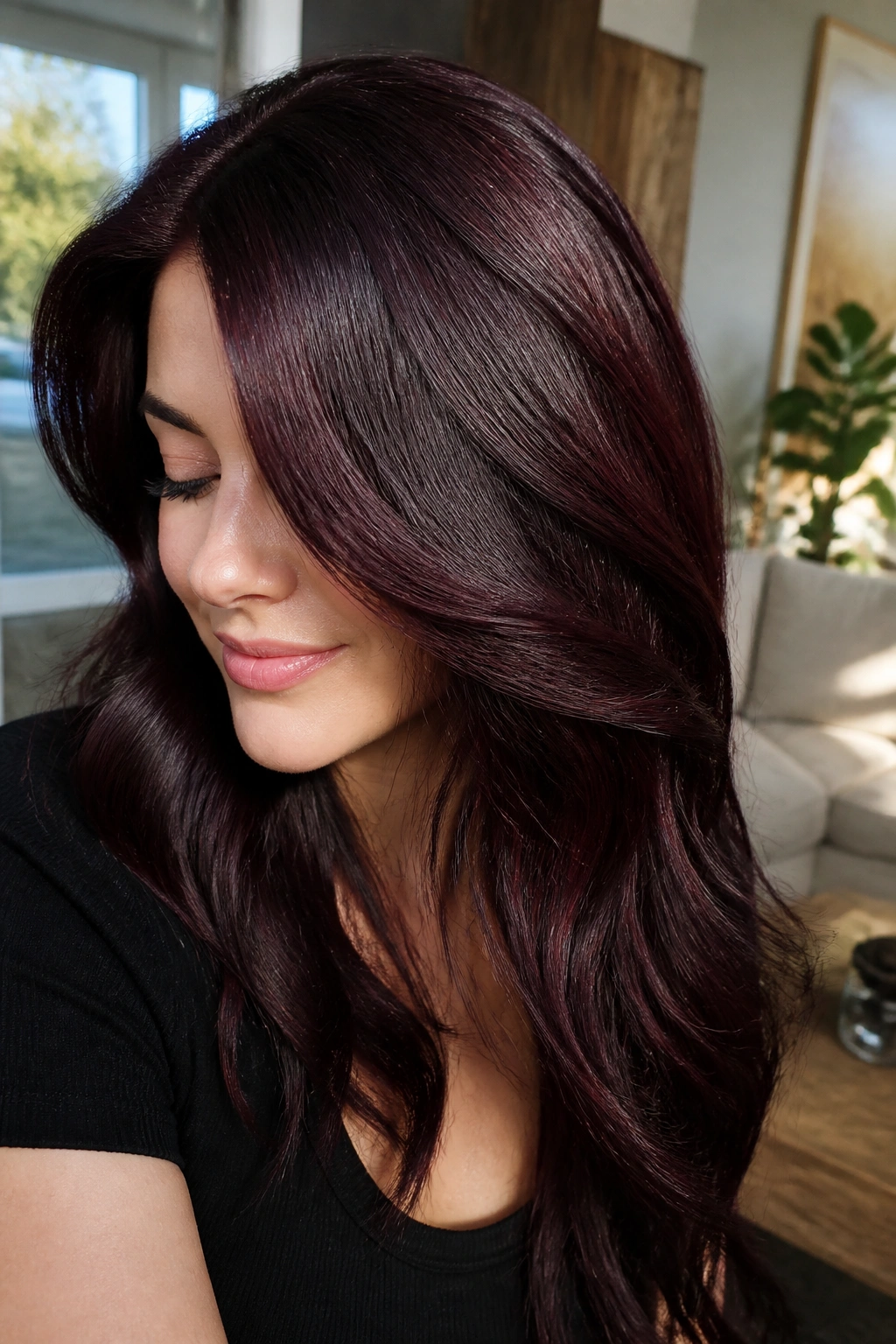
Black cherry is the shade I reach for when someone wants red without the coppery heat. It reads like near-black hair with a deep cherry cast, and that little bit of blue-red shine is exactly why it suits cool undertones so well.
Why It Flatters Cool Skin
A black cherry gloss usually sits on a dark base level, then gets a red-violet toner or demi-permanent glaze over the top. That keeps the color from looking flat. It also means the red shows most clearly in sunlight or under strong indoor lighting, which is nice if you want drama without a loud grow-out line.
- Ask for a blue-red or violet-red base rather than a warm red.
- Works well on straight, wavy, or softly curled hair.
- Needs a refresh gloss every 4 to 6 weeks if you want the cherry tone to stay vivid.
- Looks richest on medium to dark hair, but it can be layered over lighter hair too.
My favorite part: it can look almost black at first glance, then go full cherry when the light hits.
2. Burgundy Noir Balayage
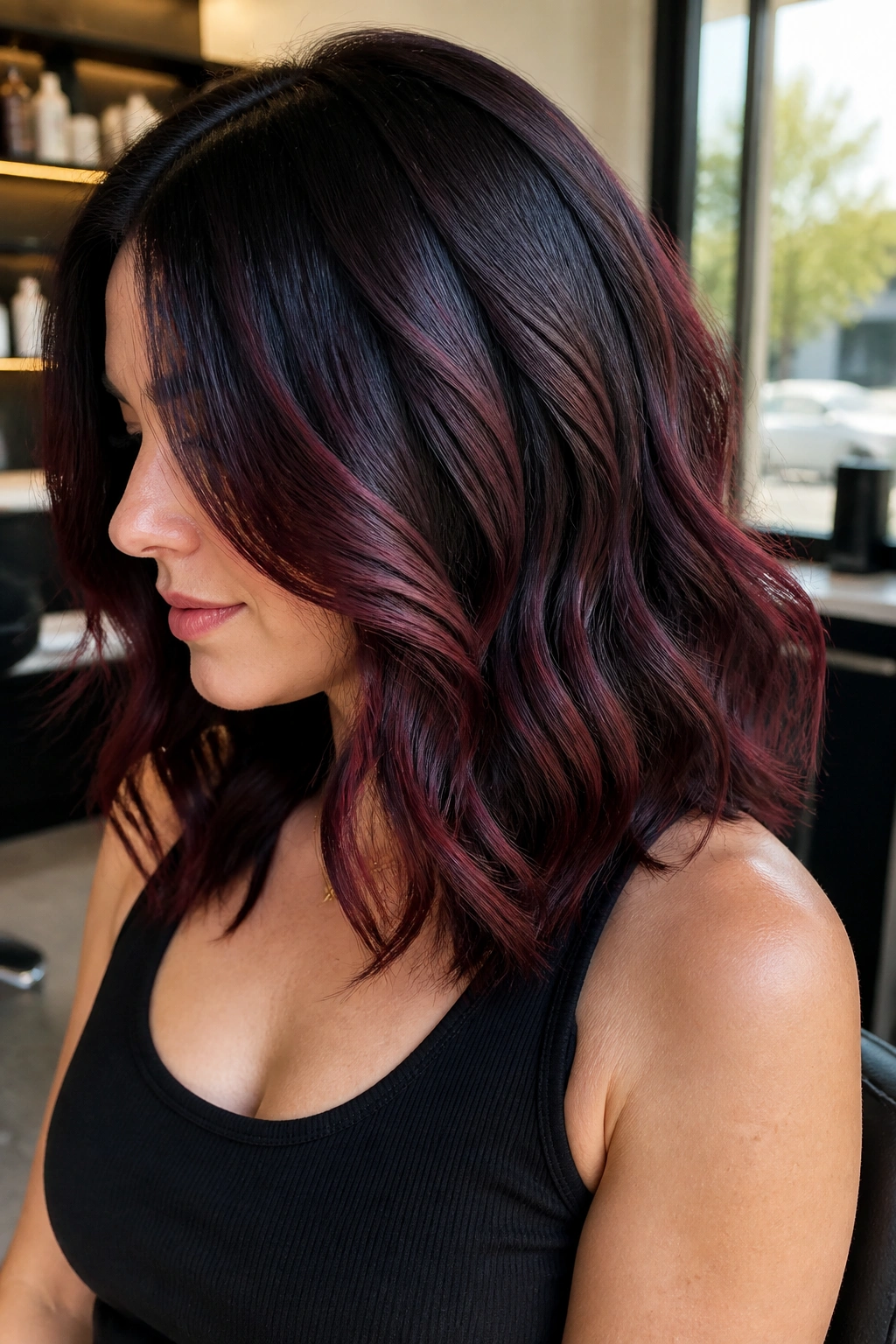
Burgundy noir balayage has a little more movement than an all-over color, and that matters on cool skin. Instead of one solid block of color, you get dark burgundy ribbons painted through a black or espresso base, which keeps the whole look soft and wearable.
Unlike chestnut-burgundy shades, this version skips the brown warmth and leans into wine. That makes it a cleaner match for skin with pink, blue, or rosy undertones. It also works especially well on hair with bends and layers, because the painted pieces catch the light as you move.
If you want a salon request that makes sense, ask for mid-length balayage pieces in a cool burgundy tone, with the root area left deep. That gives you a softer grow-out and keeps the face from getting boxed in by one dark color.
3. Plum-Black Allover Color
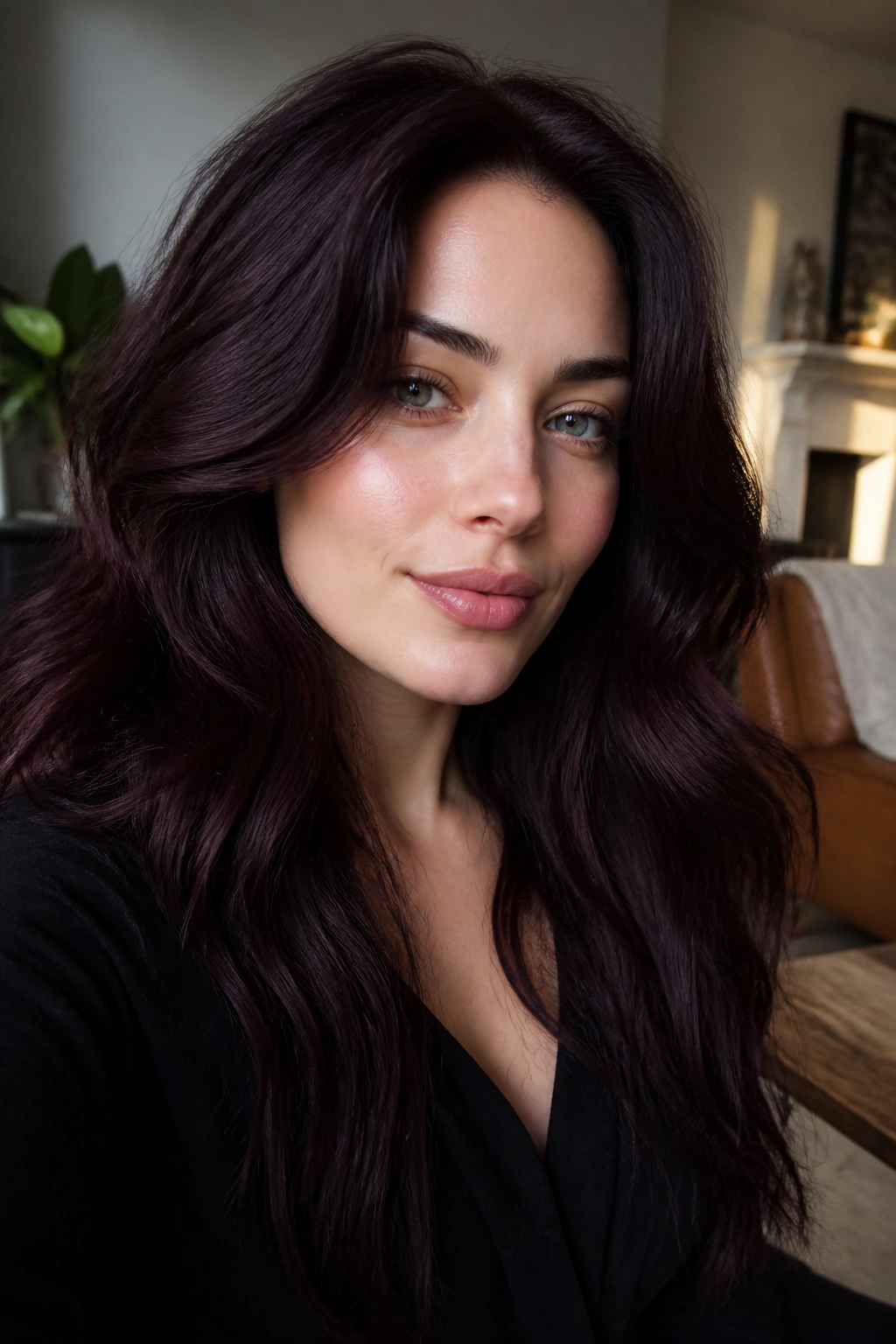
Plum-black is one of those shades that looks calm from far away and a little mysterious up close. It’s black at the root and through most of the strand, but the plum pigment sits underneath the darkness and shows through when the light shifts.
That makes it a nice choice for cool skin tones, especially if your complexion already has a cooler cast. The plum keeps the black from looking flat or harsh. It also gives the hair a softer edge around the face, which I find helpful on very fair skin.
The nice thing about this color is that it doesn’t need highlights to feel rich. A good plum-black formula can do all the work on its own, especially on shiny, healthy hair. If your strands are coarse or dry, though, ask for a gloss finish rather than a permanent heavy deposit. You want depth, not a dull matte block.
4. Merlot Money Piece
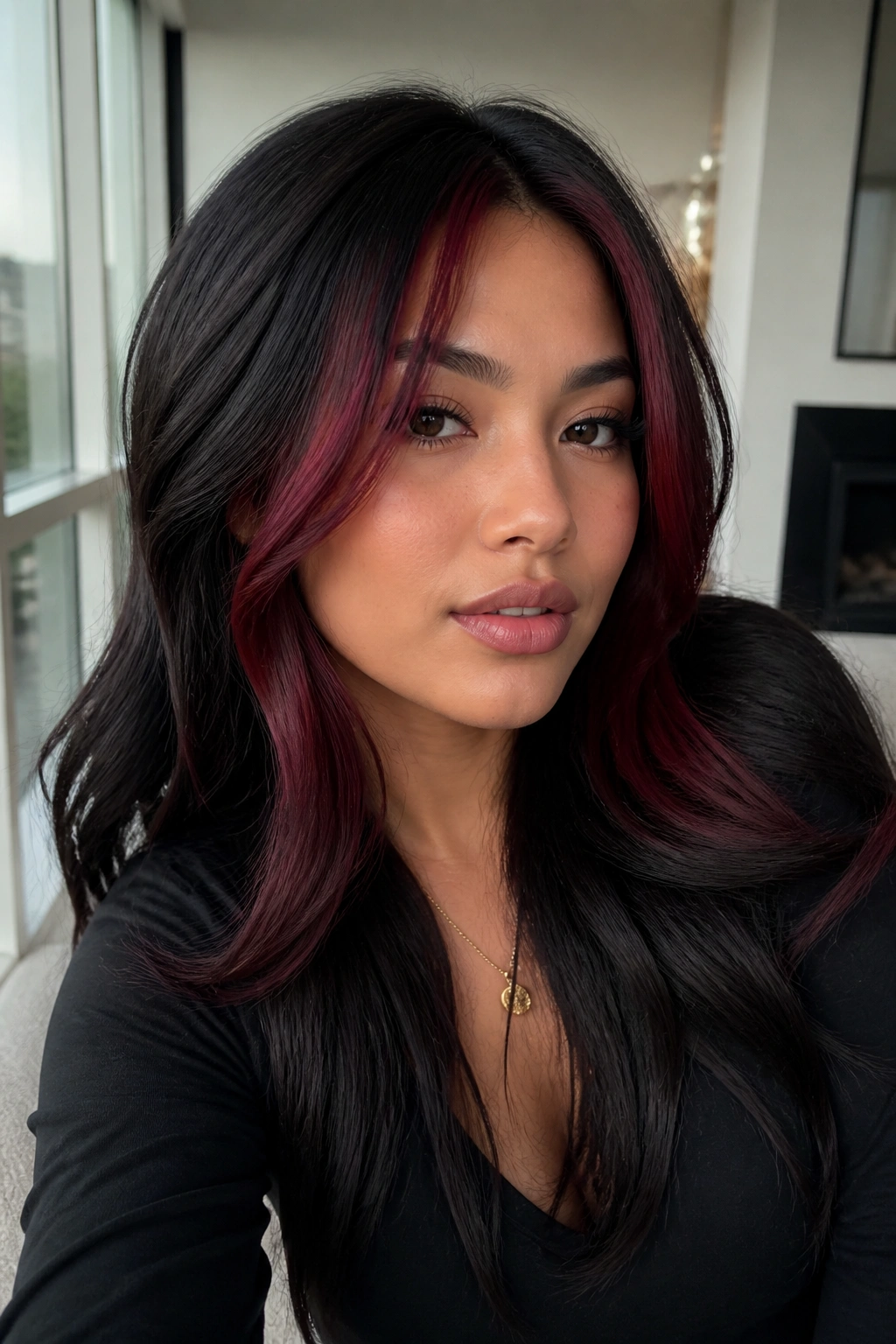
Want red without giving up a dark base? A merlot money piece is the easy answer. You keep the rest of the hair dark, then brighten the front with a deep merlot ribbon right at the hairline, where it frames the face.
How to Wear It
The trick is placement. The money piece should sit where your part naturally falls, then blend softly into the front layers so it does not look like a stripe someone dropped on top. On cool skin, a merlot shade works because it carries that wine-heavy red rather than a bright orange tone.
- Best on curtain bangs, long face-framing layers, or a center part.
- Ask for the front pieces to be 1 to 2 levels lighter than the base.
- Keep the contrast soft if you wear glasses, since the frame can already do a lot.
- Refresh the front pieces more often than the rest, because they fade fastest.
A lot of people start here because it feels bold without being a full commitment. Fair enough.
5. Blackberry Melt
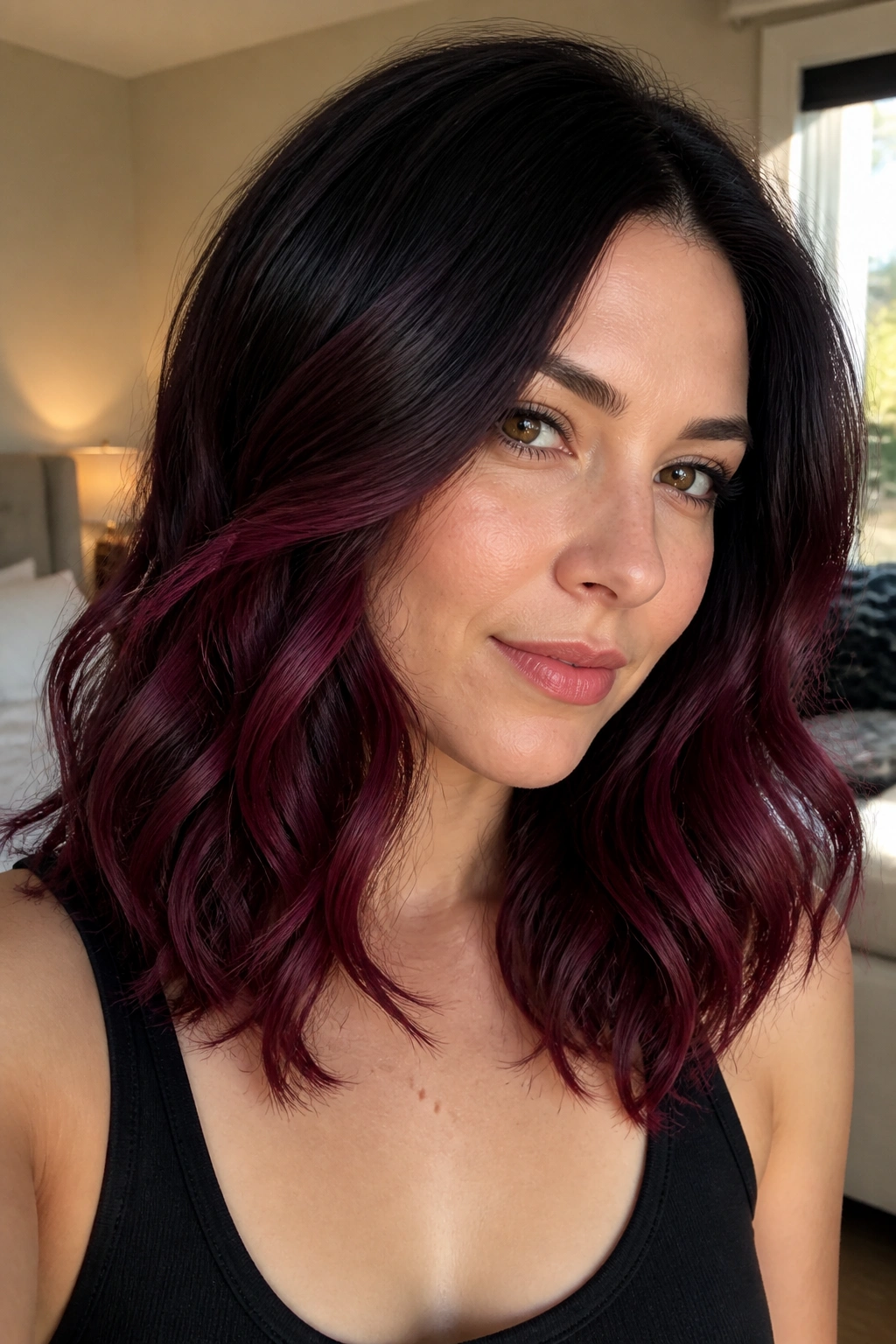
Blackberry melt has that dark-berry depth I always think of as “quiet drama.” The roots stay near-black, then the color melts into a blackberry red-violet through the mids and ends, almost like stain fading into silk.
A shoulder-length cut is especially good for this shade, because the gradient has room to show. On longer hair, it can look even richer when the lower half is curled or waved. Cool skin likes it because the red never turns syrupy or orange; it stays in the berry family, which keeps the face looking fresh.
- Works well with soft waves and layered cuts.
- Ask for a demi-permanent blackberry toner over a dark base.
- Keep shampooing to a minimum if you want the berry tone to hold.
- A cool-toned color-safe conditioner helps the red stay deeper between appointments.
This is one of those shades that looks polished even when you do very little to style it.
6. Oxblood Root Shadow
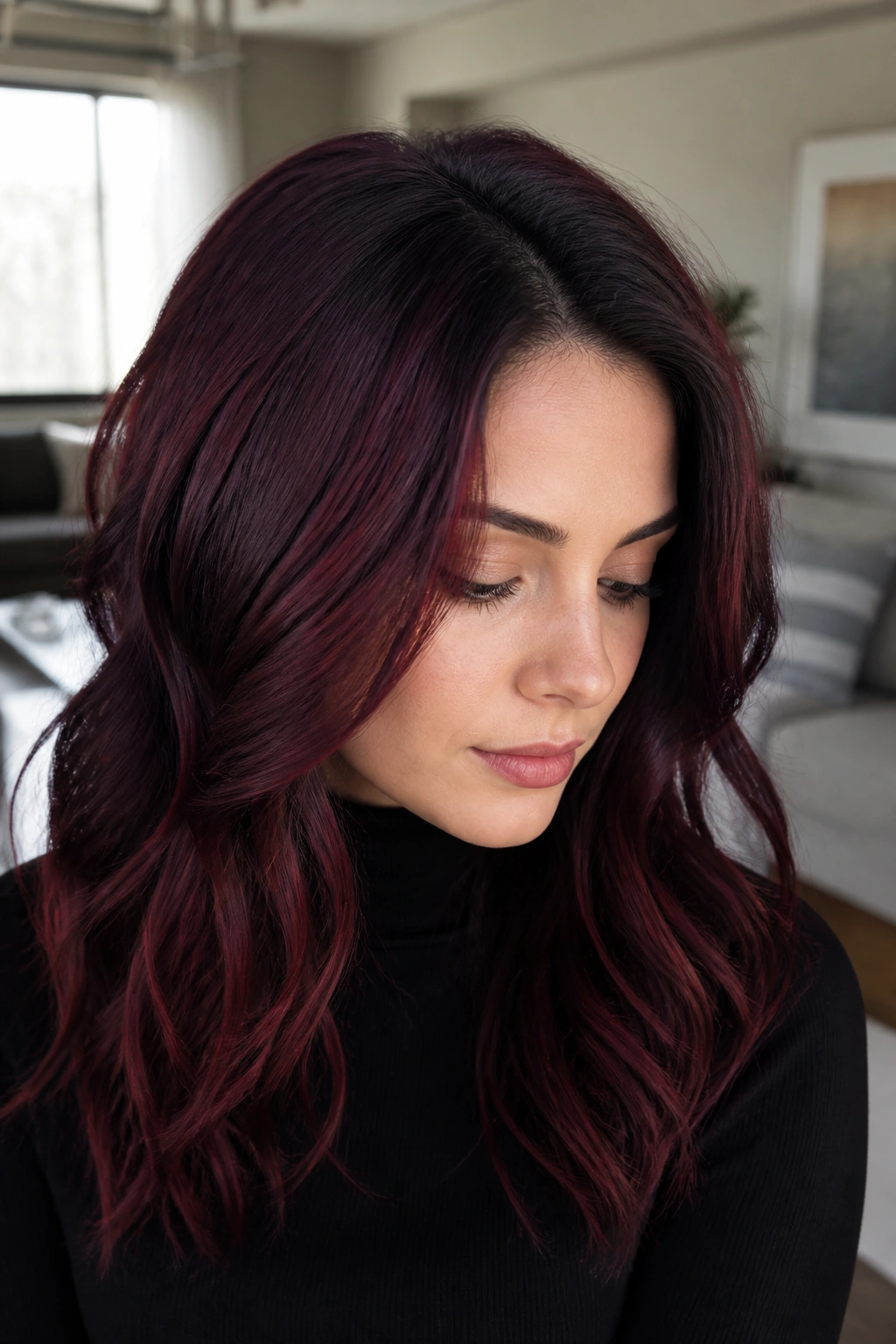
Oxblood root shadow is the least fussy way to go red if your hair is already dark. The roots stay almost black, and the oxblood shade shows through around the crown, part, and upper mids. It gives you that dark wine look without forcing a hard line at the scalp.
That darker root area is also why it flatters cool skin so well. Oxblood is heavy on the wine note and light on the orange. When the shade is done right, it looks deep, a little smoky, and not at all brassy.
I like this on people who are nervous about upkeep. The grow-out is kinder than a lighter red, and the dark root keeps the color from looking too bright against cooler complexions. If you wear your hair up often, even better — the root shadow and darker base make the style look intentional instead of overdone.
7. Cherry Cola Ribbons
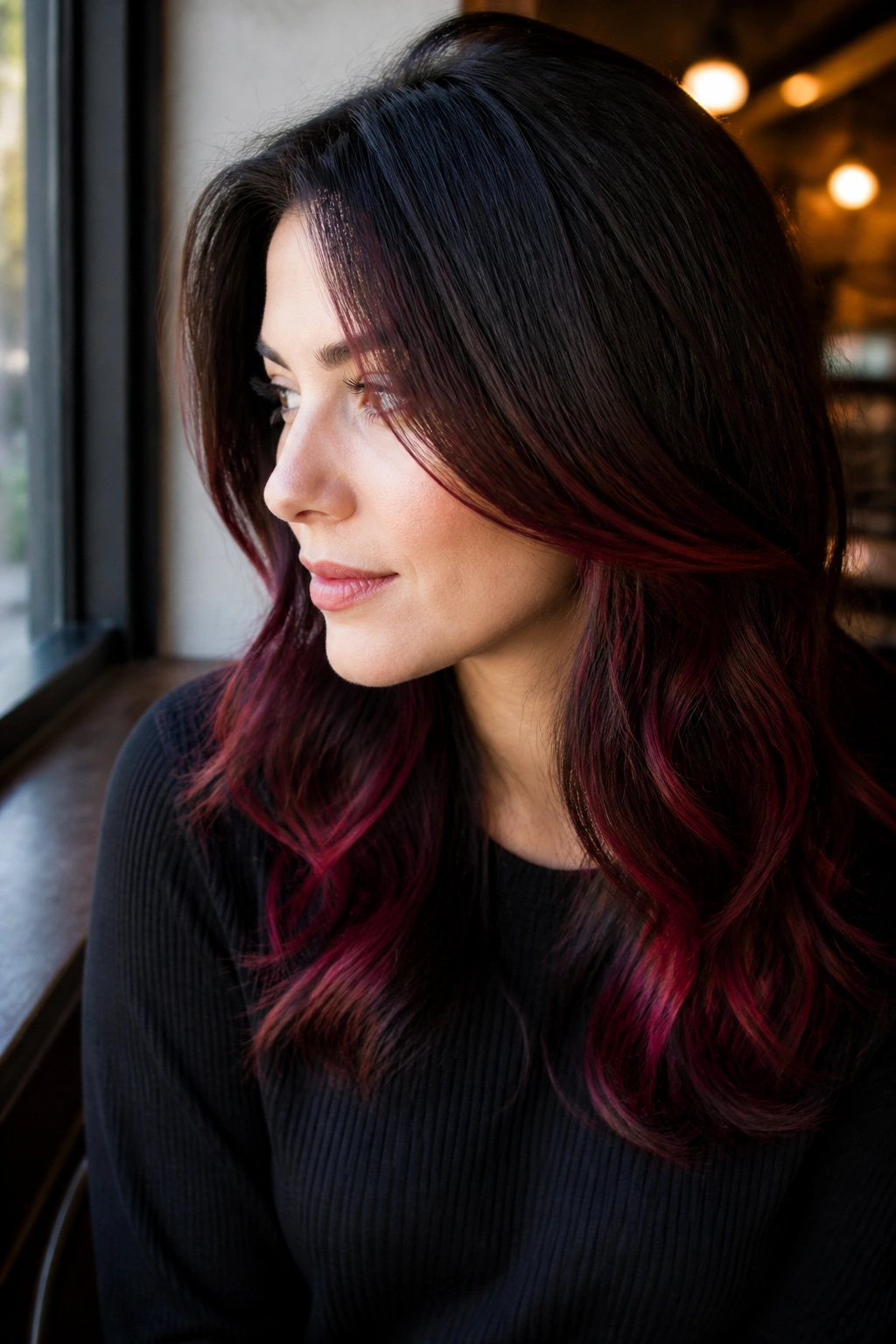
Cherry cola ribbons sit between brown and red, which is why they work on cool skin better than louder cherry shades sometimes do. The cola base keeps the look grounded, while the red-violet ribbons add that glossy soda-bottle shine people love.
What Makes It Different
This is not full red hair. It’s a brunette-to-black base with thin, visible ribbons of cherry through the mid-lengths and ends. The effect is especially good on layered cuts, because each piece moves a little differently and the red shows in flashes, not blocks.
A few things help this look land:
- Keep the ribbons around ½ inch wide or thinner.
- Ask for red tones with a violet base.
- Style with loose bends rather than tight curls.
- Use a shine spray on the ends, not the roots.
It’s subtle enough for someone who wants a dark palette, but it still has personality. That balance matters.
8. Midnight Aubergine
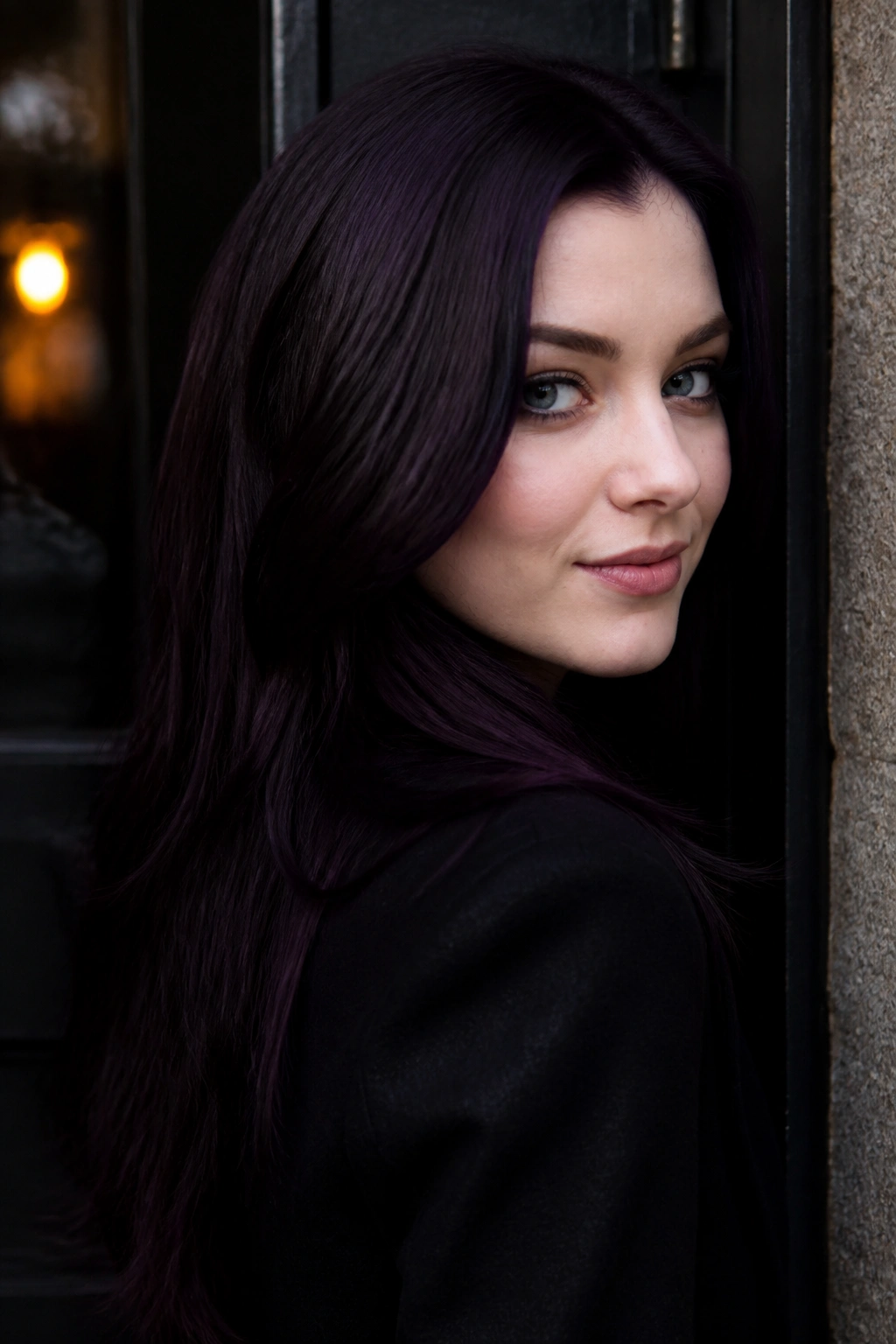
Midnight aubergine is for the person who likes the idea of black-red hair but doesn’t want to shout about it. The color sits in the deep eggplant zone, so it reads almost black in low light and turns plum-violet when the sun hits it.
Compared with blue-black, aubergine feels softer and warmer in a good way — not warm in the orange sense, but warmer in the “there’s actual color here” sense. On cool skin, that little bit of violet can make the face look cleaner and the eyes look sharper. It’s especially good if you wear silver jewelry or cool-toned makeup.
This shade also behaves well on thick hair. The depth keeps the texture from looking bulky, and the violet sheen gives the strands a smoother look. If you want color that feels grown-up and a little moody, this is one of the cleanest choices in the whole family.
9. Wine-Tinted Babylights
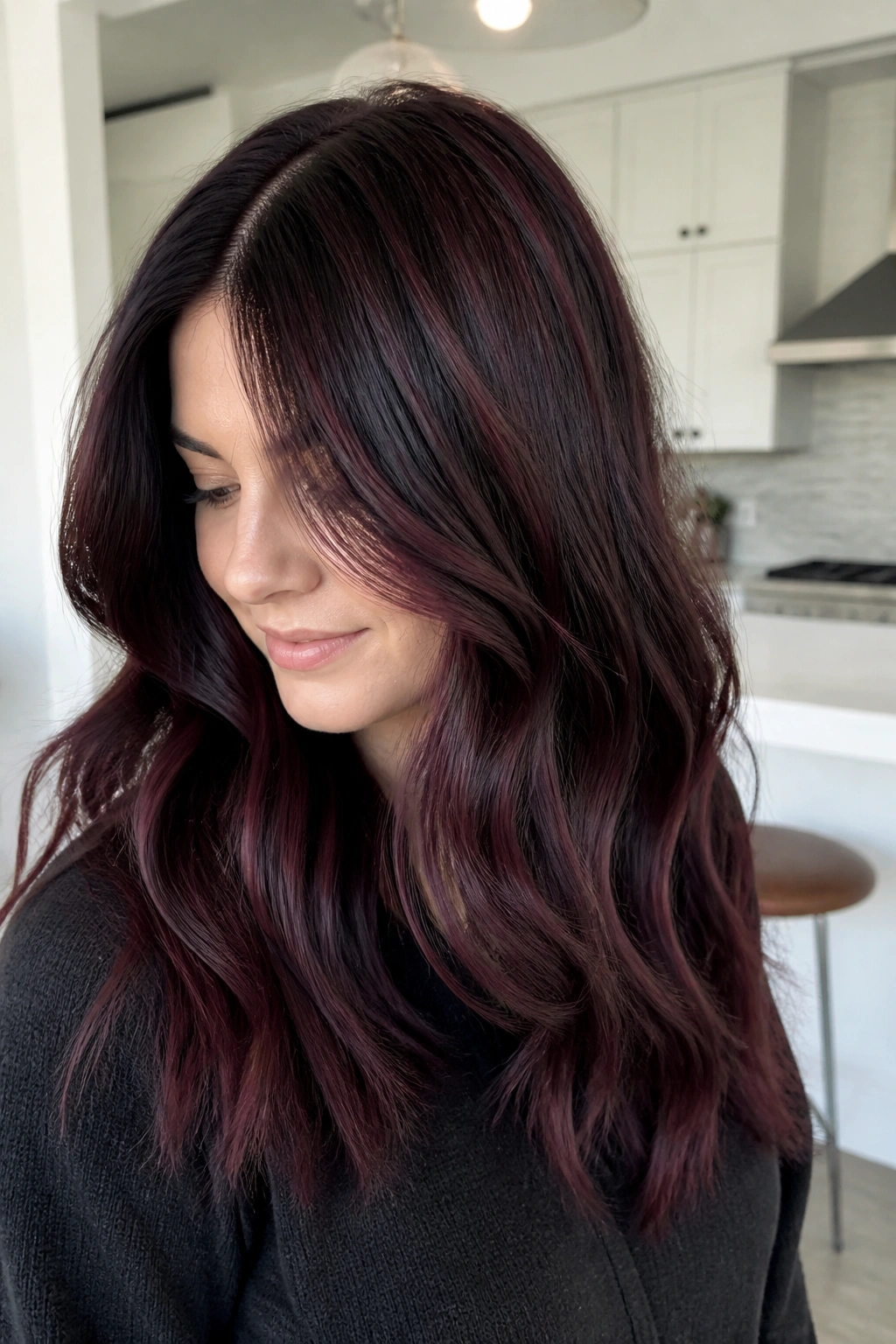
Why babylights instead of full color? Because tiny, fine highlights can give you the red dimension without changing the whole head. Wine-tinted babylights weave thin red-violet strands through black or very dark brown hair, and the result is more shimmer than statement.
That’s a good thing on cool skin. The smaller placement means the color doesn’t sit heavy around the face, and the wine tone never gets a chance to look too bright. It also makes the hair look denser, which I always appreciate on finer strands.
How to Ask for It
Tell your colorist you want micro-fine ribbons in a cool wine shade, not chunky highlights. Keep them concentrated around the crown, part, and upper sides so they show when the hair moves. If you usually wear your hair tucked behind one ear, put a few pieces there too. Tiny placement changes a lot.
10. Garnet Velvet Bob
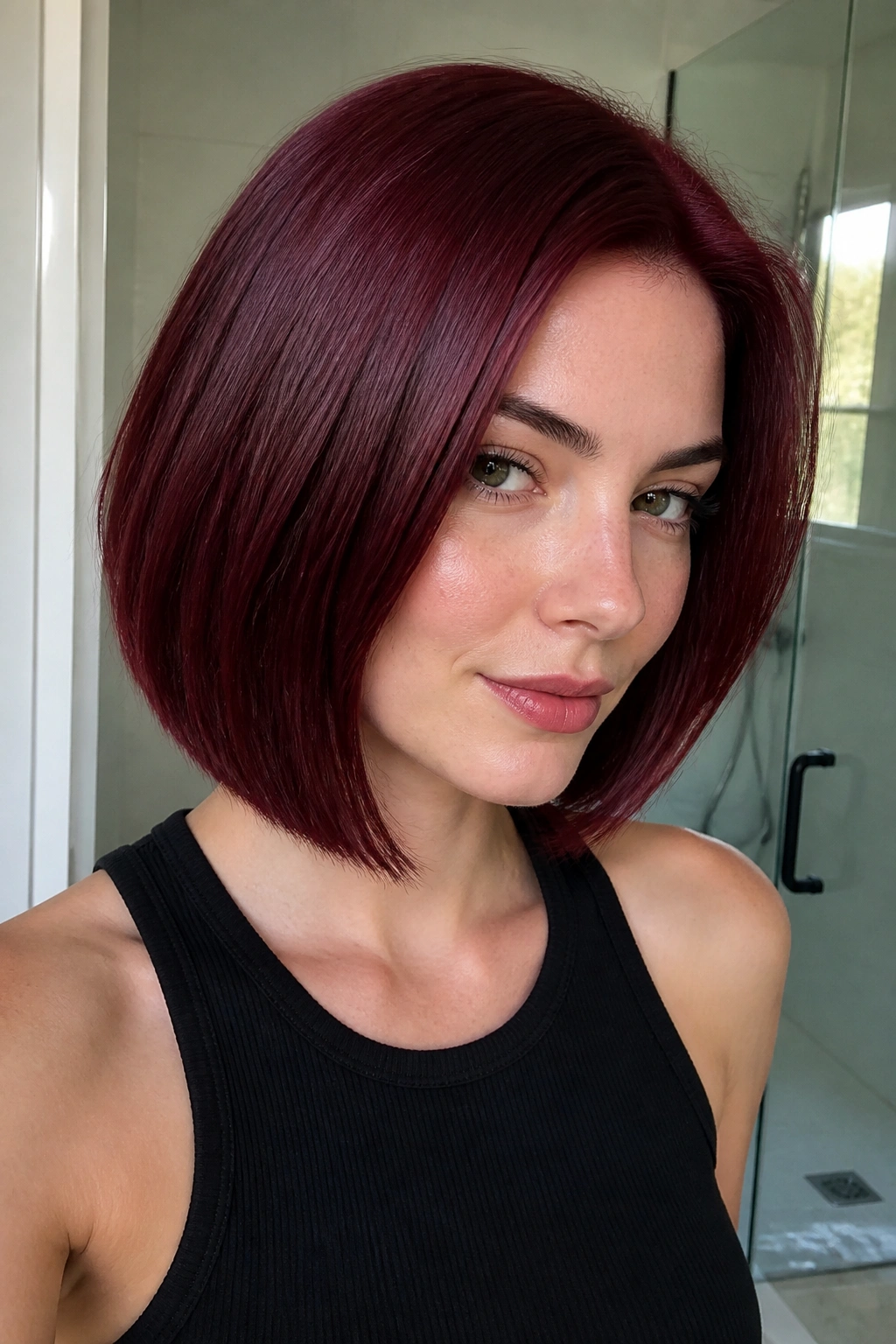
A bob is a good haircut for rich color because there’s nowhere for the shade to hide. Garnet velvet leans deep red with a dark base, and on a bob it looks sleek, tidy, and a little dramatic without trying too hard.
The garnet note matters. It keeps the red on the blue side of the spectrum, which is the part that flatters cool skin. You get depth at the roots, shine through the mids, and a kind of gem-like finish near the ends, especially if the bob is blunt or just slightly stacked.
I like this on straight hair, but it’s even nicer when the hair has a slight bend at the ends. The shape gives the color edges to catch on. If you’re the sort of person who likes a short haircut to do most of the talking, this is a strong pick.
11. Mulled Wine Curls
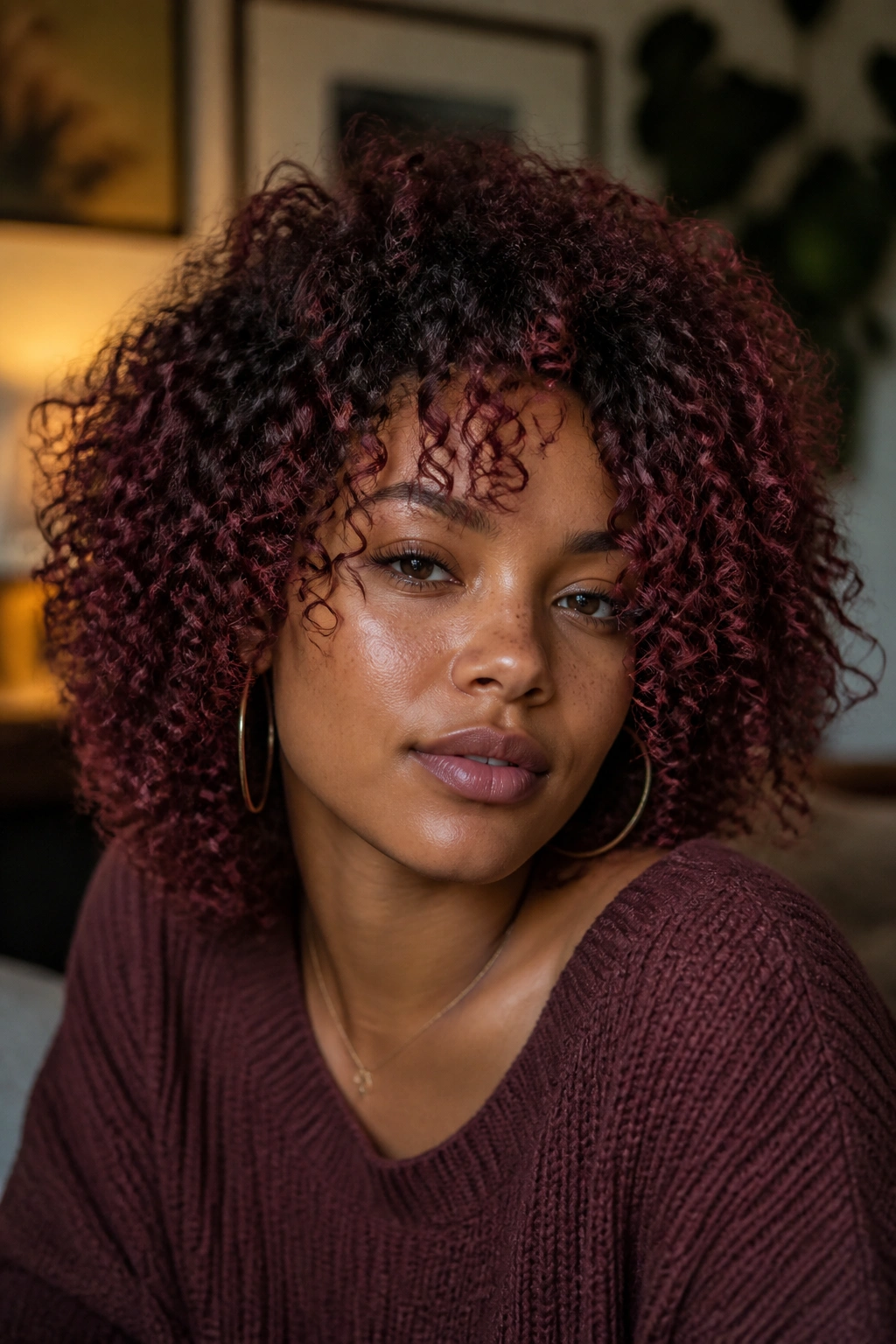
Mulled wine curls are a dream on textured hair because every bend in the curl picks up a slightly different part of the red-violet pigment. The shade looks deeper at the roots and brighter where the curls open up, which keeps the whole style from feeling flat.
The color works for cool skin because it sits in that spiced wine lane rather than the cinnamon lane. That’s a small distinction, but it changes how the face reads next to the hair. With cool-toned makeup or a rosy lip, it can look sharp in a way that feels easy, not forced.
Curl-Specific Notes
- Keep the darkest color near the root to preserve depth.
- Ask for a semi-permanent wine glaze if your curls are dry.
- Diffuse on low heat so the color shine stays visible.
- A leave-in cream with a little slip helps the curls hold shape without dulling the finish.
This shade gets better when the curls are healthy. Flat ironed? Fine. But curls are where it really wakes up.
12. Mahogany Black with Cool Undertones
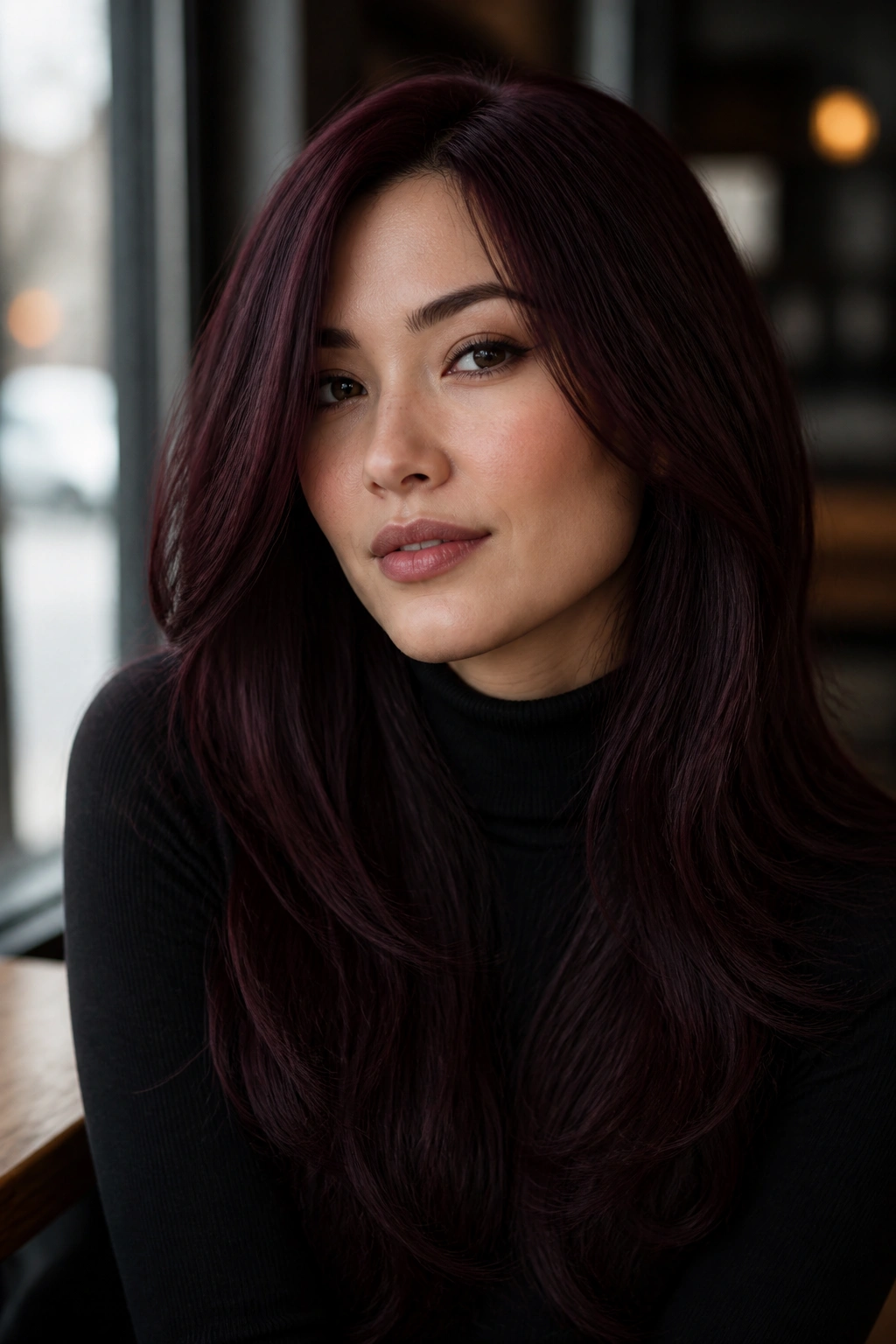
Mahogany can go warm fast, and that’s why the cool version matters. When the formula leans deeper, with a red-violet base and less golden brown, mahogany black gives you the richness of red hair without the copper edge.
That makes it easy on cool skin. The color still has warmth in the sense of depth and shine, but it doesn’t fight your undertones. I also like it for people who work in a more conservative setting and still want a color with personality. It’s noticeable, but it doesn’t shout from across the room.
If you’re asking your stylist for this shade, say cool mahogany, not soft mahogany or warm mahogany. Those small words matter. A cooler formulation can keep the color looking like polished wine rather than red-brown wood stain, and that difference is bigger in real life than it is in a swatch book.
13. Raspberry Noir Underlights
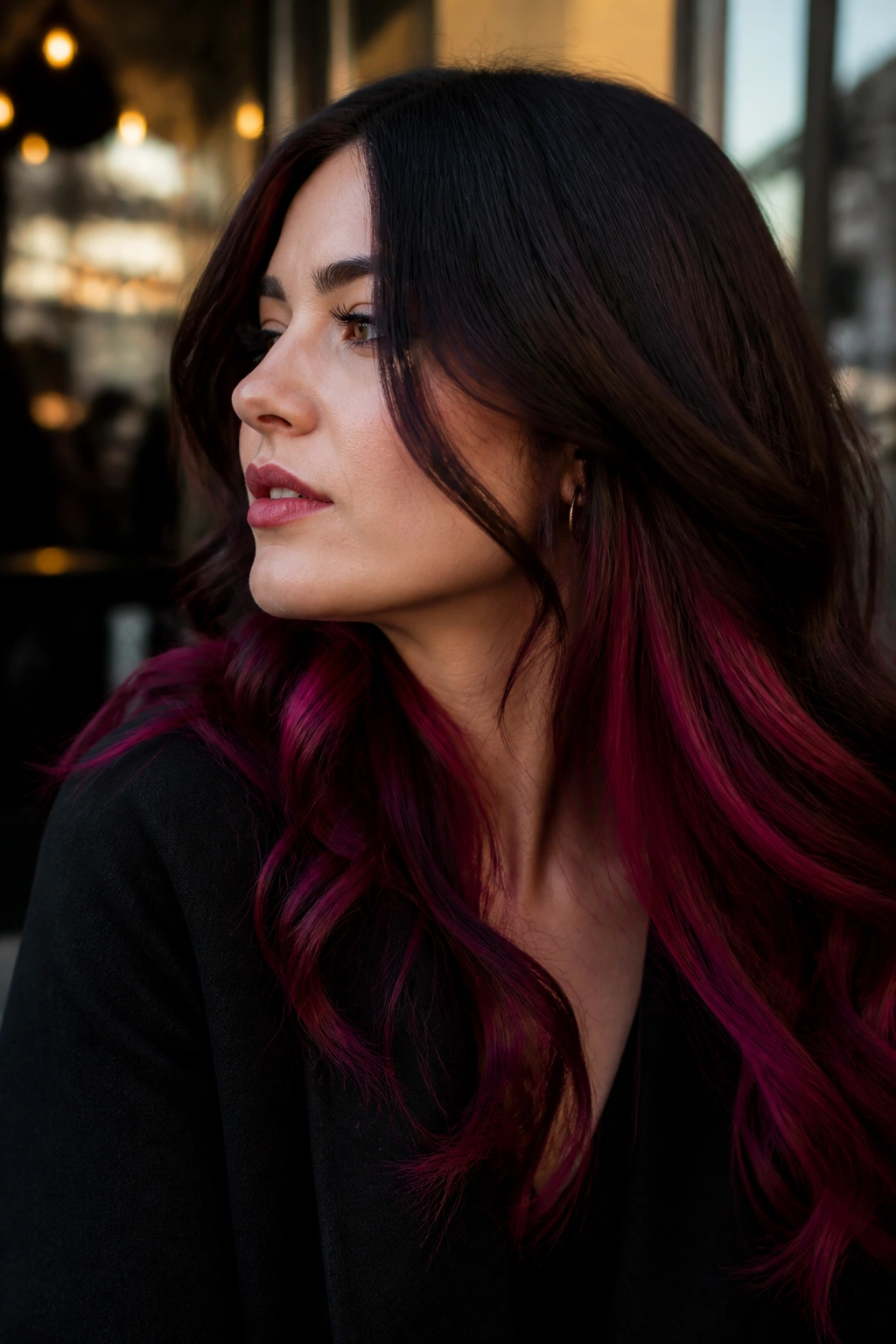
Raspberry noir underlights are the kind of color that rewards movement. The top layer stays dark, while the hidden underlayers carry a raspberry-red tone that flashes through when you lift the hair, braid it, or wear it half-up.
That hidden placement is useful if you like low drama most days and a stronger effect when you style your hair. Cool skin tends to do well with raspberry because the red leans blue and pink rather than orange. Underlights keep the color from sitting directly against the face, which makes the whole look feel a little softer.
Best Ways to Show It Off
- Wear a half-up twist or clip.
- Try braids; the red shows in the plait.
- Use loose curls if you want the underlayer to peek through more often.
- Keep the top layer dark and glossy so the contrast stays clean.
It’s a smart choice if you want color that feels a bit private.
14. Blackcurrant Ombre
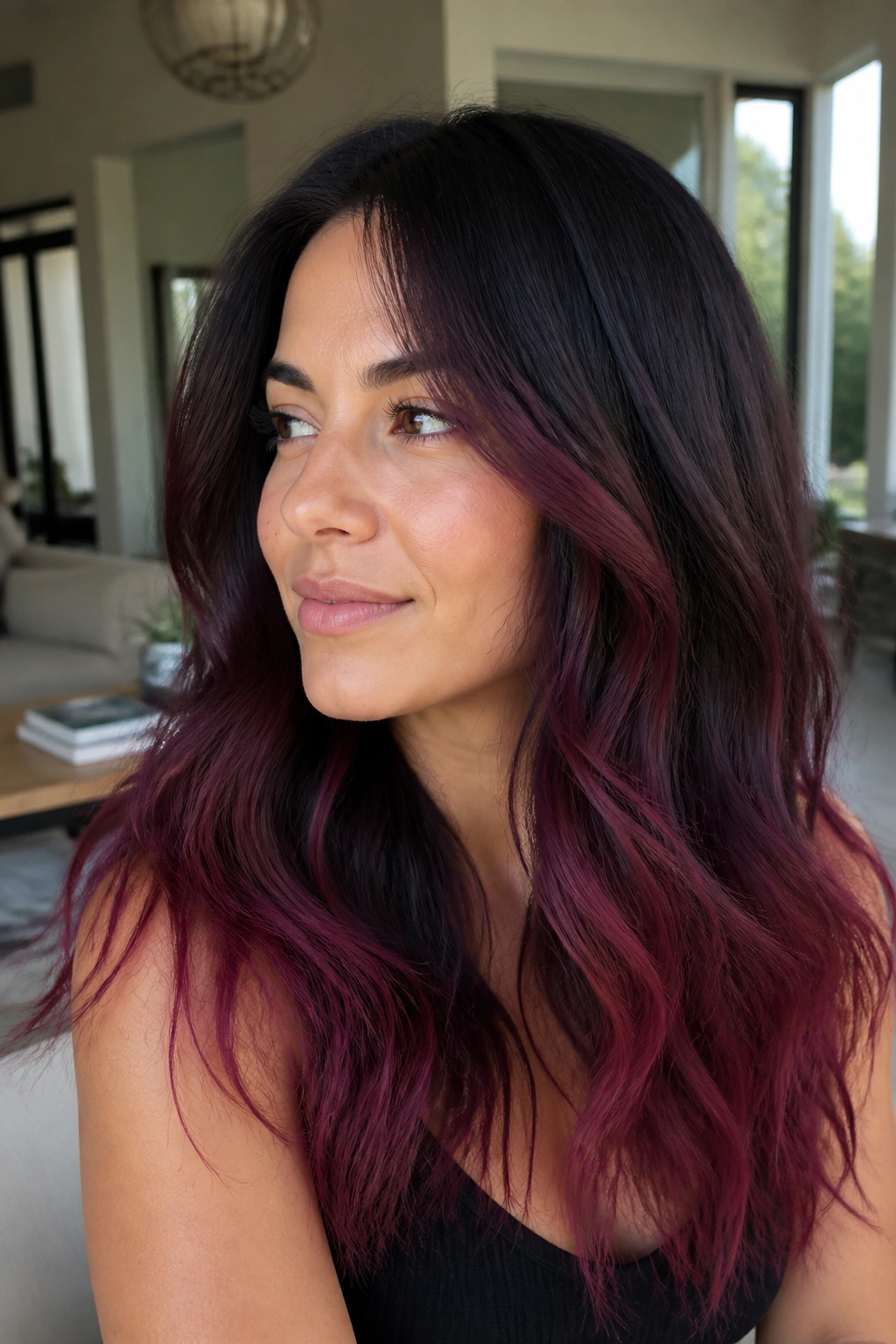
Blackcurrant ombre moves from a dark root into a berry-heavy red through the ends, and the transition is the whole point. Instead of a harsh line, you get a long blend that feels like black hair slowly steeped in juice.
Compared with standard ombre, this version needs a cooler red. Blackcurrant gives you that. It’s dark, tart-looking, and much easier on cool skin than bright cherry or true red. The ends should still feel rich, though — not faded pink, not magenta, not rusty.
I like this on long hair because the color has room to unfold. Waves help even more. If the hair is pin-straight, the gradient still works, but movement makes the berry tone look deeper. A good gloss at the end can keep the shade from drifting into dull brown, which is the main thing to watch for.
15. Deep Cranberry Peekaboo
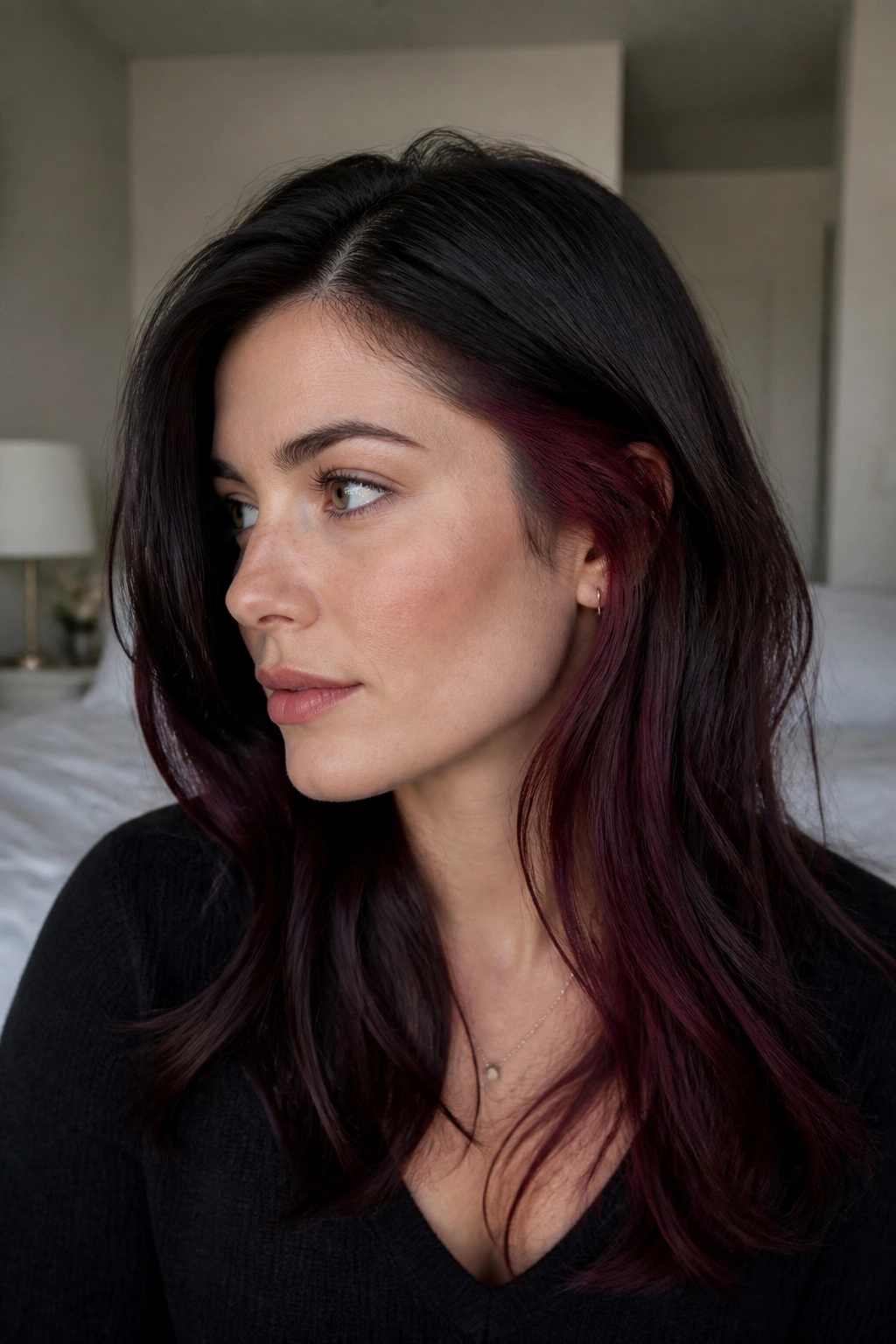
Want a color surprise that only shows when hair moves? Deep cranberry peekaboo is the move. The top layers stay black or near-black, while cranberry panels sit underneath and flash through at the nape, the sides, or along the part when the hair shifts.
That makes it flattering on cool skin without making the whole head red. The cranberry tone is bright enough to feel fun, but still blue-based enough to sit in the right temperature range. It’s also a nice entry point if you’re not ready for all-over color.
Where to Place It
The placement changes the vibe a lot. Under the crown reads subtle. Near the temples feels bolder. Along the lower half of the hair, especially on shoulder-length cuts, gives the nicest movement when you walk or turn your head. I’d skip this if you never wear your hair half-up; the color works best when something about the style lets it peek out.
16. Violet-Black Gloss
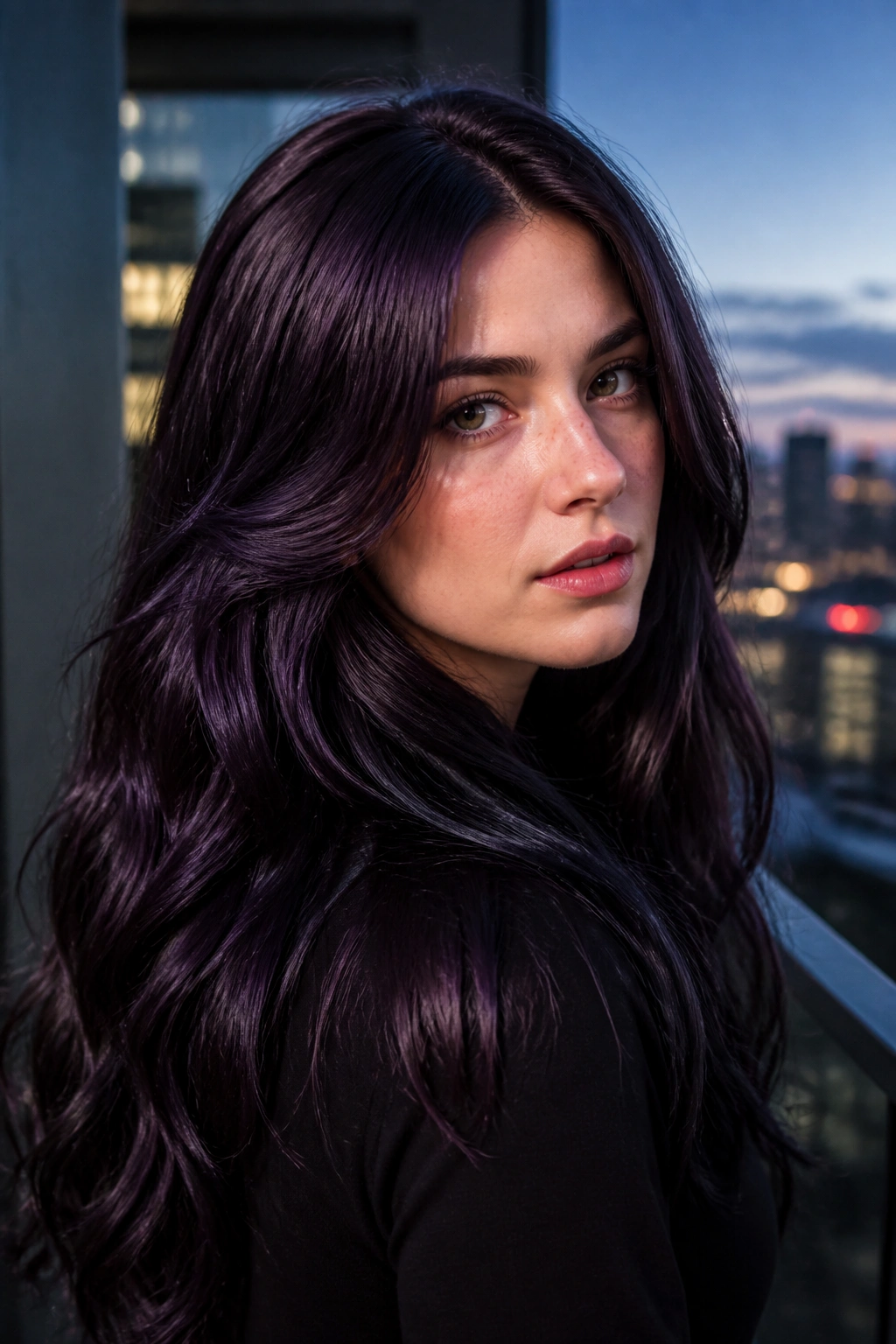
Violet-black gloss is one of those shades that looks simple until you see it in light. Then it turns into something much more interesting — black at a distance, violet-plum up close, and almost blue-black in certain indoor spaces.
That’s why it suits cool skin. It doesn’t push warmth back at the face. Instead, it reinforces the coolness already there, which can make skin look cleaner and eyes look brighter. I also think this is one of the easiest dark shades to maintain because it fades in a graceful way. Even when the gloss softens, you’re left with a dark, cool finish instead of a washed-out red.
It’s a good pick if you like polish more than contrast. A violet gloss on a black base can make hair look healthier than it really is, which sounds unfair but is true. Shine matters. A lot.
17. Smoked Merlot Lob
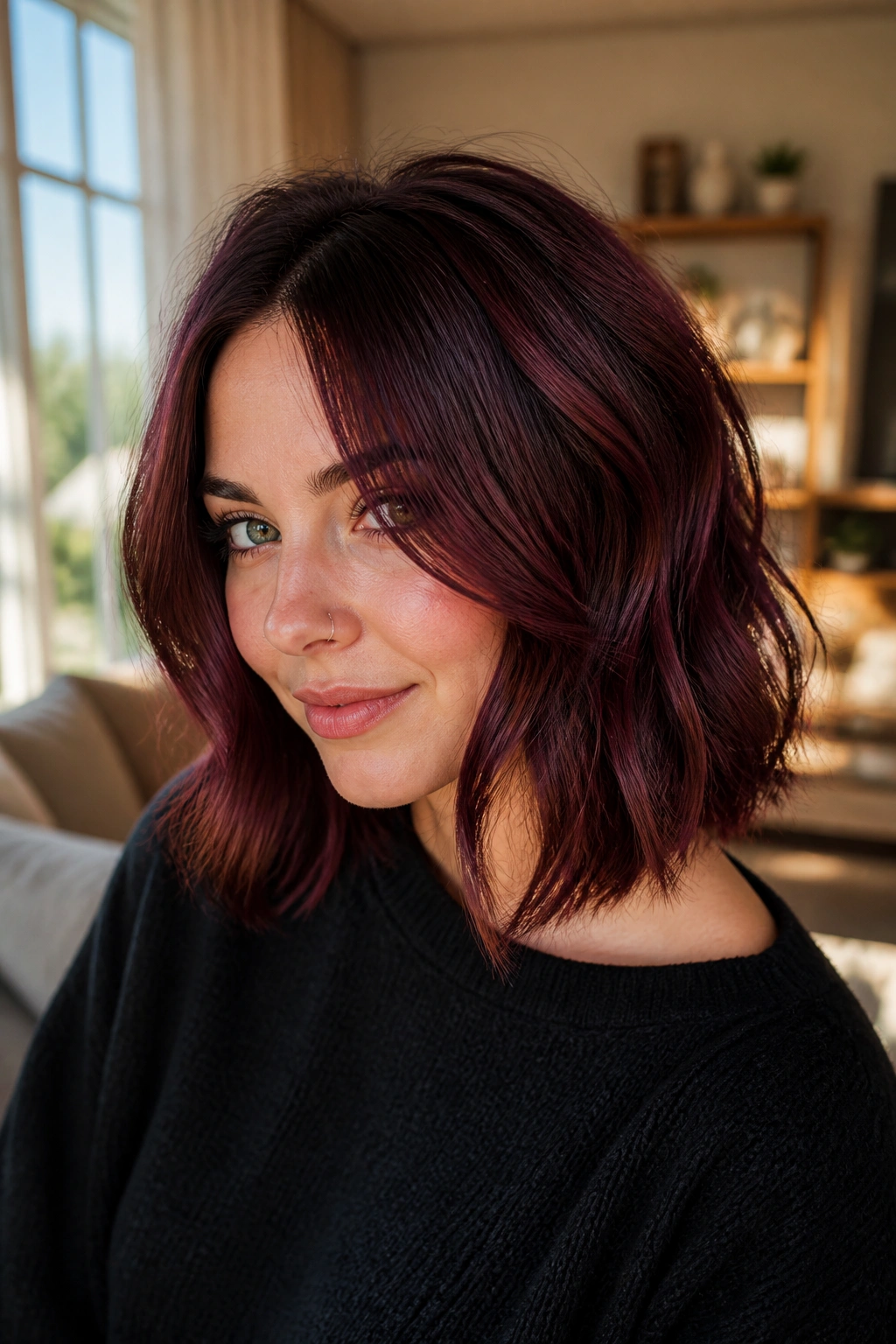
A lob gives color room to breathe, and smoked merlot takes advantage of that. The cut usually lands between the chin and collarbone, so the dark red tone moves with every turn of the head instead of getting lost in long layers.
The “smoked” part keeps the merlot from going too bright. That matters on cool skin, because a toned-down wine shade looks more even against the complexion than a pure red. It also keeps the cut feeling modern without requiring anything flashy from the styling side.
This is a good shade for people who wear their hair straight during the week and wavy on weekends. It behaves well both ways. Straight, it looks sleek and editorial. Waved, the merlot pieces show more depth. If you want a low-maintenance shape with a color that still does something, this is one of the smarter choices.
18. Shadowed Cherry Fringe
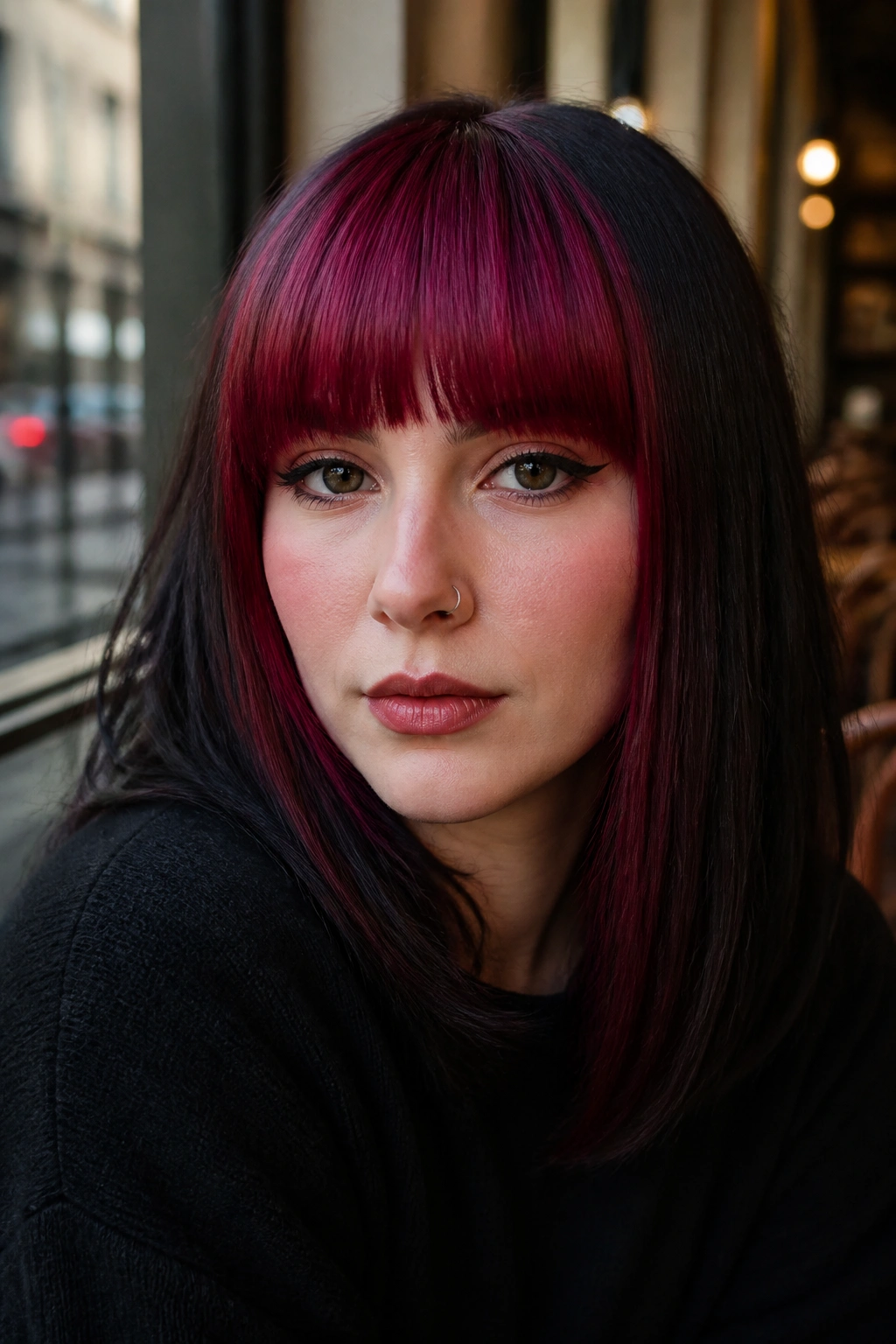
A cherry fringe can do a lot of work for the face. Keep the rest of the hair dark, place the red only through the bangs or front fringe, and you get a sharp hit of color exactly where people look first.
That placement is especially useful for cool skin tones because the red sits close to the face in small enough amounts to flatter rather than overwhelm. The best version is usually a cherry-violet shade with a dark base underneath, so the fringe looks bright but not warm. It can read playful, edgy, or even a little art-school depending on the cut.
If you wear blunt bangs, this shade has a stronger graphic feel. If the fringe is piecey, it feels softer. Either way, the contrast between black length and cherry front pieces makes the haircut itself look more intentional. And yes, it grows out fairly well if the fringe is already part of your style.
19. Dark Plum Face Frame
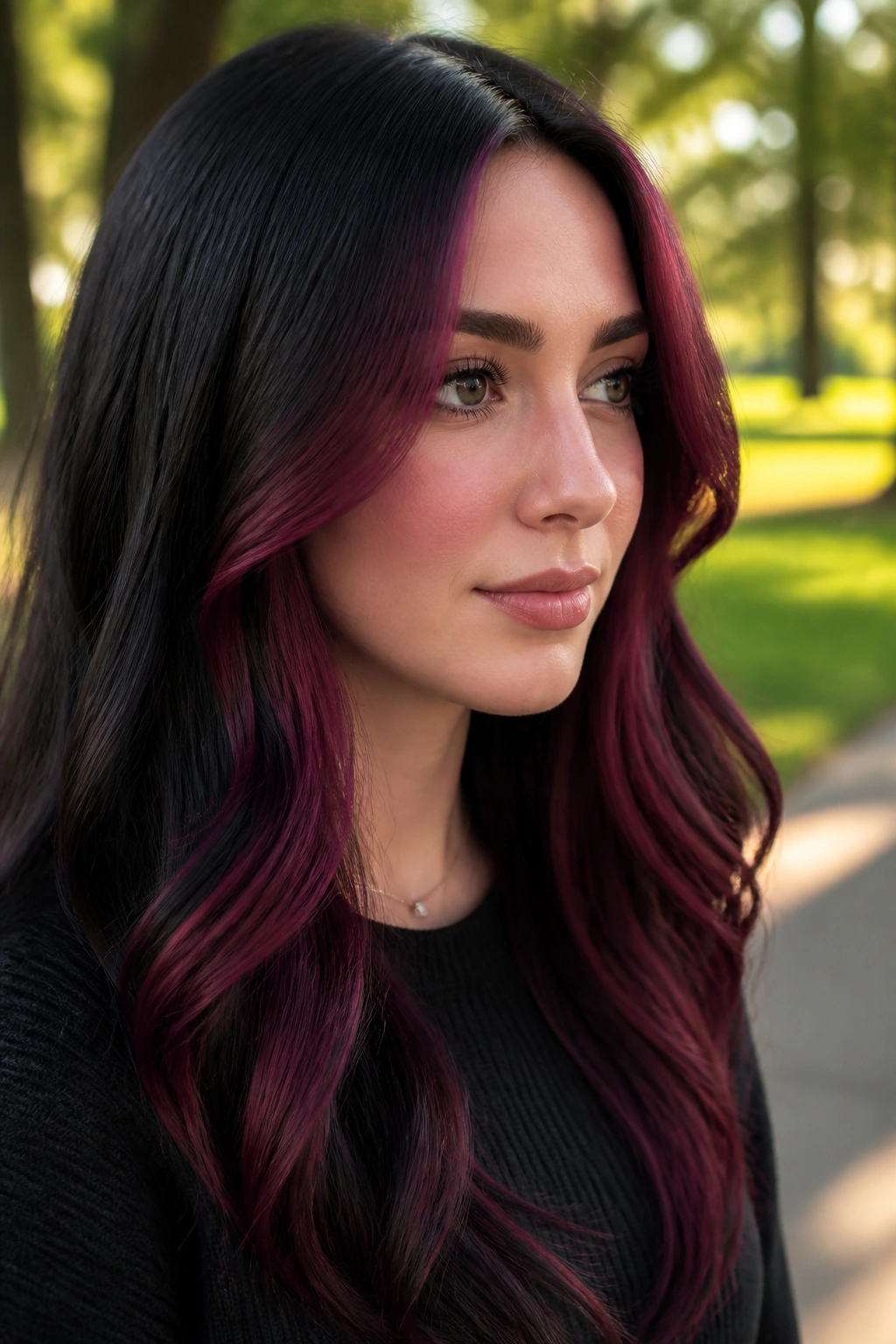
Dark plum face-framing pieces are one of my favorite ways to break up a heavy dark color. The plum sits right at the front, usually from the temples down through the first few inches of the layers, and the rest of the hair stays much deeper.
Why the Front Matters
The front pieces are the ones that sit closest to the skin, so they carry the most visual weight. A cool plum tone can soften a hard black base and give cool complexions a little movement without turning the whole head red. It also keeps the style from looking overly severe, which can happen with a dense, one-tone black.
A few details help:
- Keep the plum pieces slightly brighter than the base.
- Place them where your hair naturally splits at the front.
- Ask for soft blending near the cheekbone.
- Use a color-depositing mask only if the shade starts looking brown.
This is one of those ideas that looks quiet in a photo and better in motion.
20. Cabernet Reverse Balayage
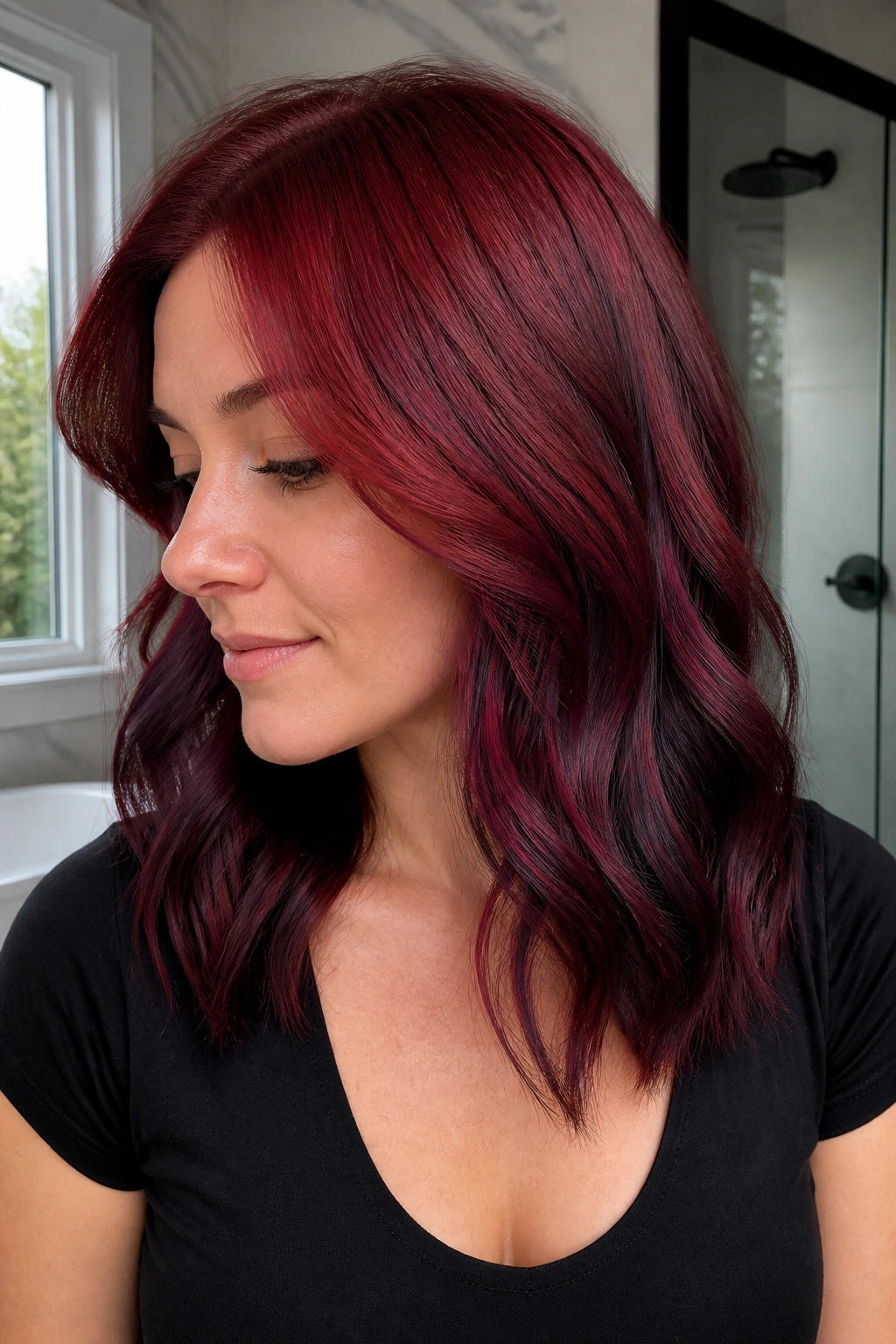
Reverse balayage is the opposite of the usual lightening trick. Instead of painting lighter ends, you add darker wine pieces back into a brighter red or medium-red base, which deepens the whole head and makes the color feel more grounded.
Cabernet is a smart tone for this because it reads cool and rich, not orange or rusty. On cool skin, that matters a lot. The darker added pieces create dimension around the mids and ends, while the brighter red underneath keeps the look from going flat.
I like this for people who started with a brighter red and want to make it less loud without going back to brown. It also works well if your hair has faded unevenly and you want to even out the tone. The result is layered, wine-dark, and a little smokier than standard balayage. Good thing. That’s the whole point.
21. Black Raspberry Waves
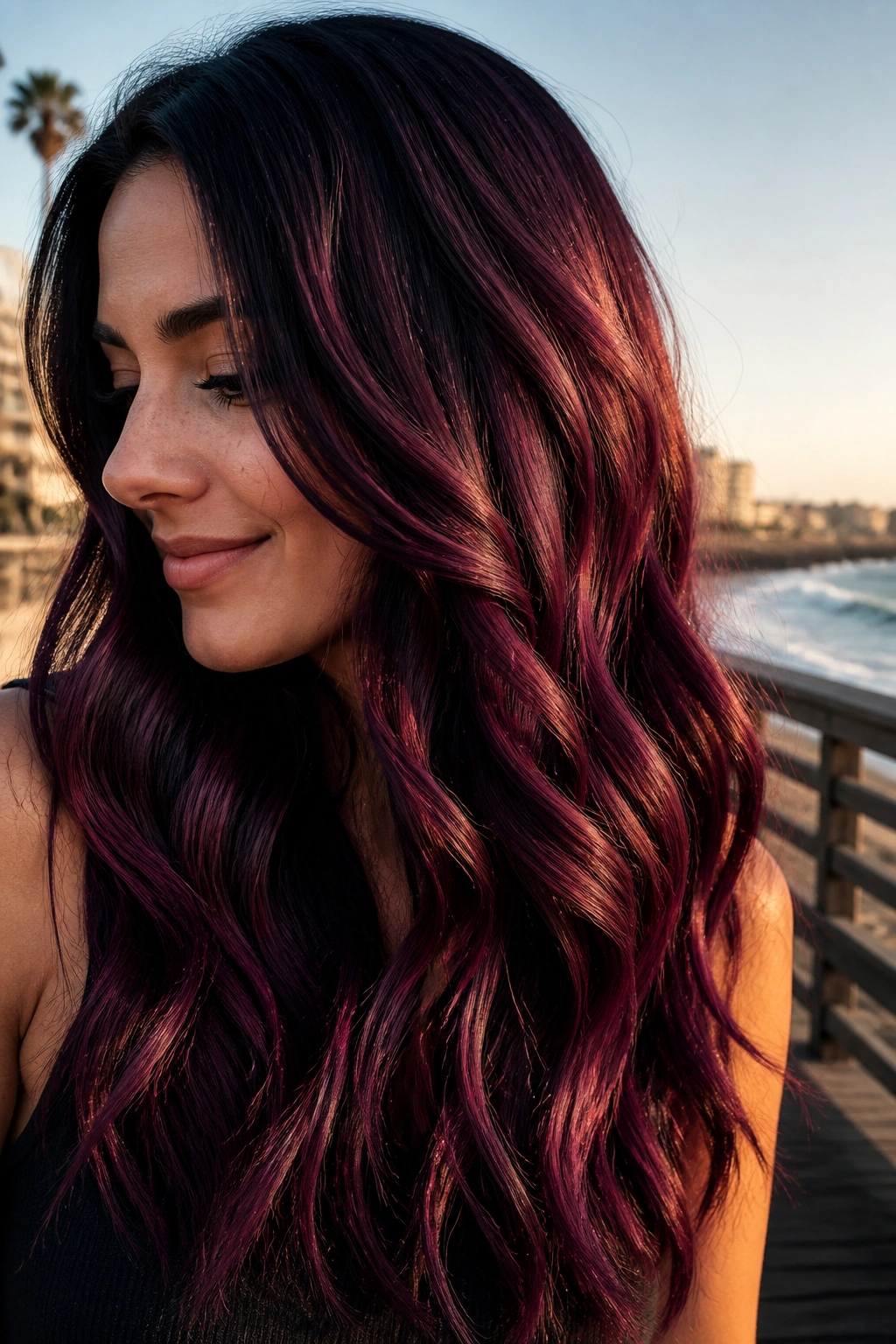
Black raspberry waves have a softer feel than a straight-gloss finish. The color sits in that dark berry lane, but the waves break up the pigment so you see black, plum, and red all at once.
That makes it a strong choice for cool skin because the shade never sits in one flat place. It shifts. It moves. It looks richer when the hair bends, which is exactly what waves do. A 1.25-inch curling iron or a flat iron bend works well here, as long as you leave the ends a little undone so the color can show through.
How to Style It
Use a heat protectant, then curl away from the face in alternating sections. Let each curl cool for a few minutes before touching it, or the wave collapses and the color loses some of its depth. Finish with a light serum on the ends, not the roots. That keeps the shine without making the hair greasy.
22. Cranberry Smoke Pixie
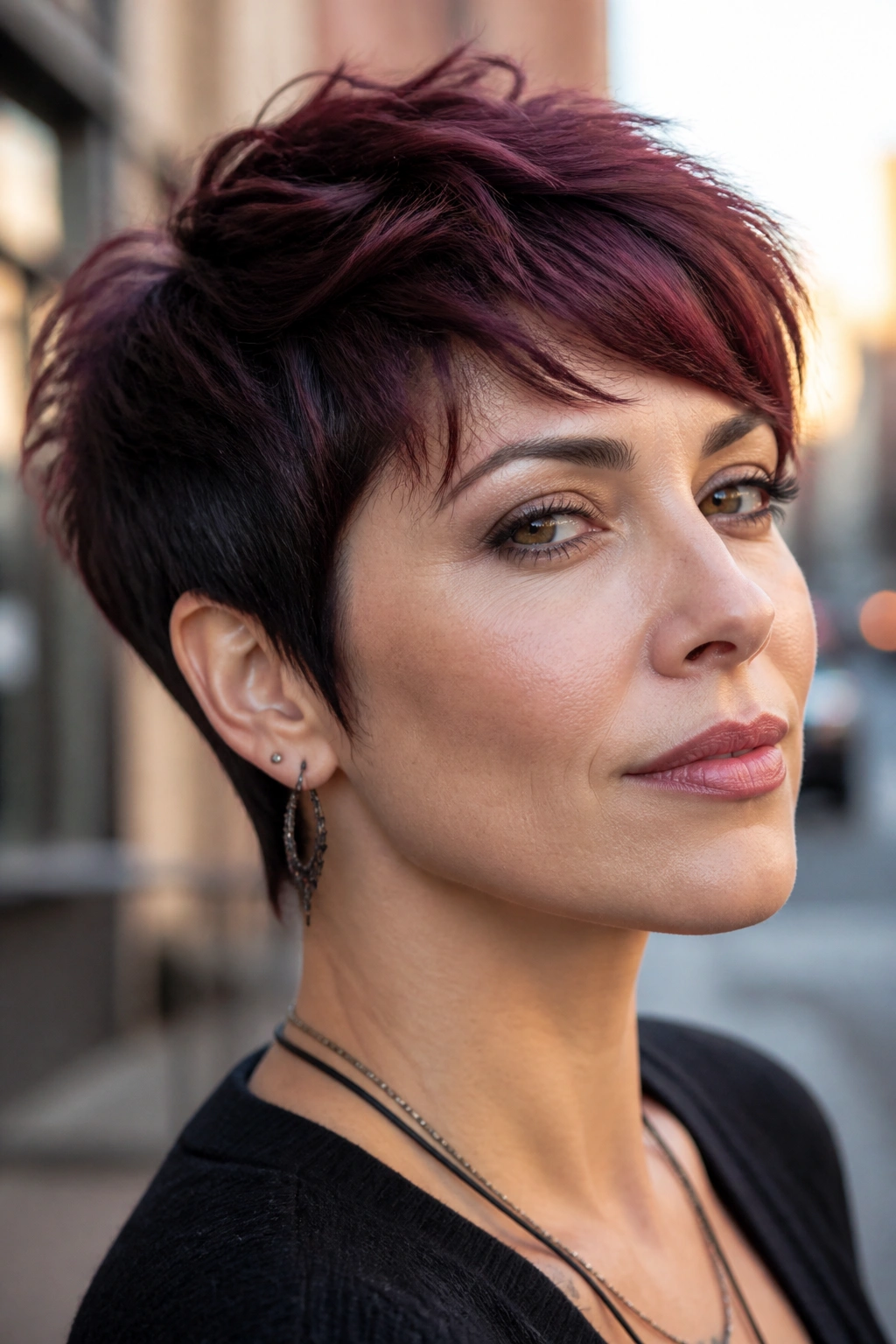
A pixie cut can carry more color than people think. Cranberry smoke proves it. The short length means the shade reads instantly, and the smoky base keeps the cranberry from tipping into a bright, warm red that would fight cool skin.
This is a good option if you like a crop with attitude but still want softness in the color. The red-violet tone can sit through the top, the fringe, and the nape, while the darker underlayer holds the structure together. On textured pixies, the color shows in tiny shifts as the hair lifts and falls.
Short hair is honest about color. There’s nowhere to hide. That’s the appeal here. If the cut is sharp, the cranberry smoke feels sharp too; if the cut is soft around the ears, the whole thing loosens up. Either way, it’s a strong, face-first look that cool skin can wear without looking washed out.
23. Black Red Panel Highlights
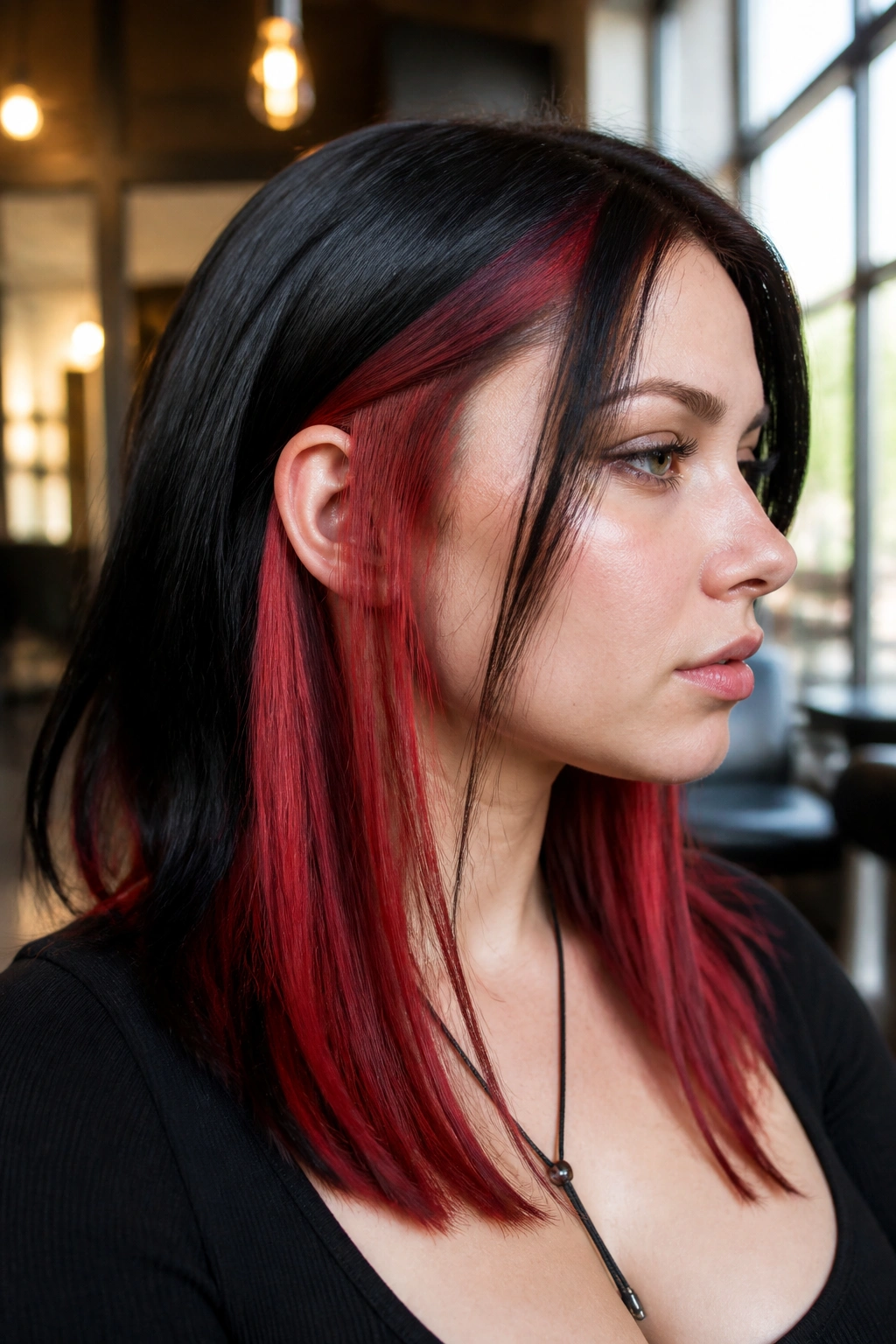
Panel highlights are for someone who wants the color to look deliberate and a little graphic. Instead of fine ribbons or soft balayage, you get broader sections of black-red color placed in blocks, usually through the sides, nape, or one side of a layered cut.
That bold placement can be excellent on cool skin because the red is balanced by the dark sections around it. The contrast keeps the shade from reading too warm or too flat. It also works especially well on straight hair and blunt cuts, where the panels show clean edges.
A good version usually uses 1 to 2-inch sections, depending on the density of the hair. Too thin, and the effect disappears. Too wide, and it can look heavy. Ask for a cool cherry, wine, or garnet tone in the panels so the whole thing stays in the black-red family rather than drifting into burgundy brown.
24. Velvet Beetroot Bob
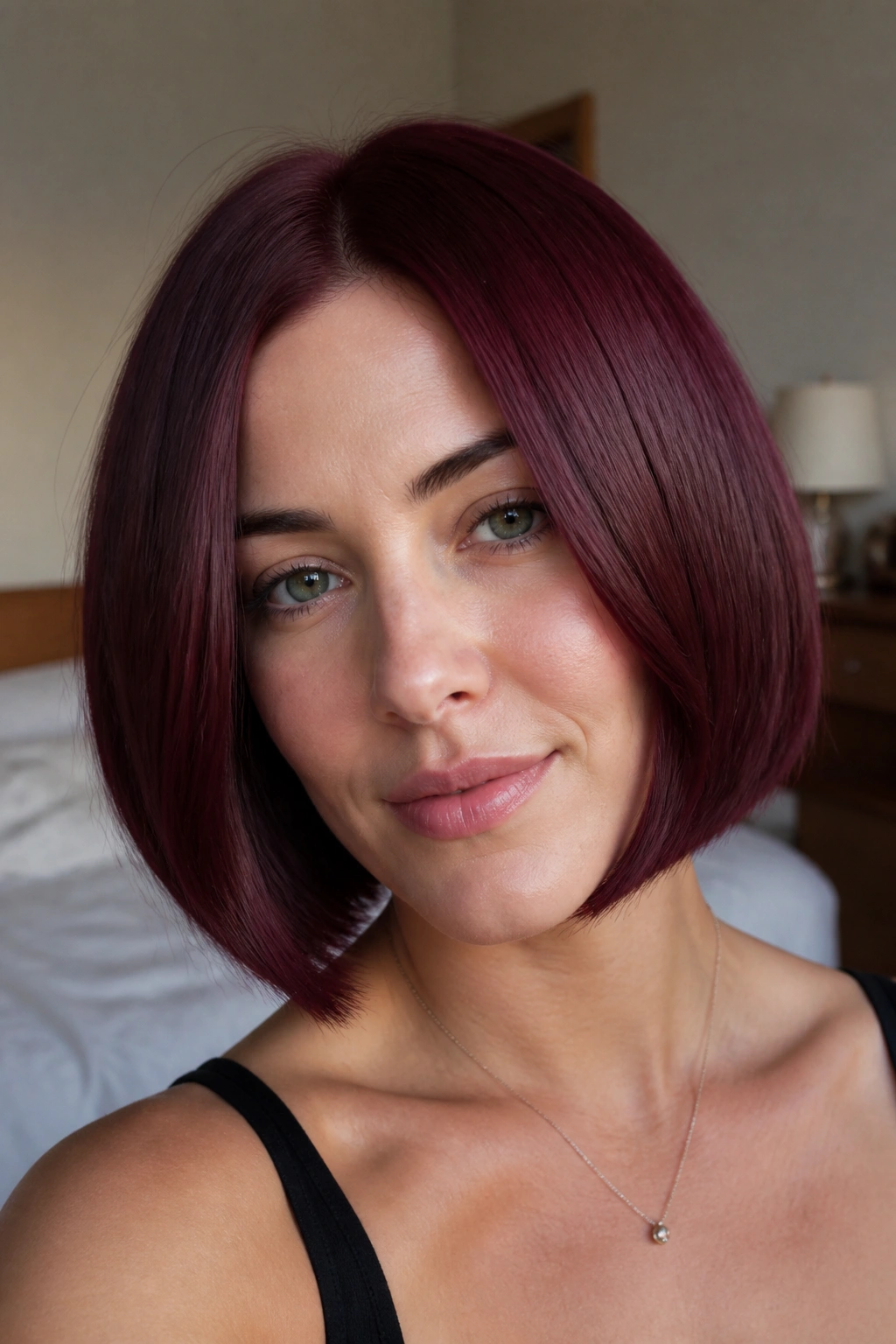
Beetroot is underrated. It leans purple-red, which is why it tends to flatter cool skin more than a pure red does. On a bob, that color looks plush and dense, almost like crushed velvet with a dark base underneath.
The short length helps the shade read cleanly. You can see the color shift from root to end without needing a lot of styling, and the blunt cut keeps the silhouette tidy. If you like red lipstick, this shade often feels oddly natural next to it. The two tones share the same cool energy.
I’d choose this if you want a red that feels vivid but not loud. It has personality, but it doesn’t beg for attention. That is a useful distinction. If the idea of orange-red hair makes you hesitate, beetroot is the calmer, smarter cousin.
25. Inked Cherry Melt
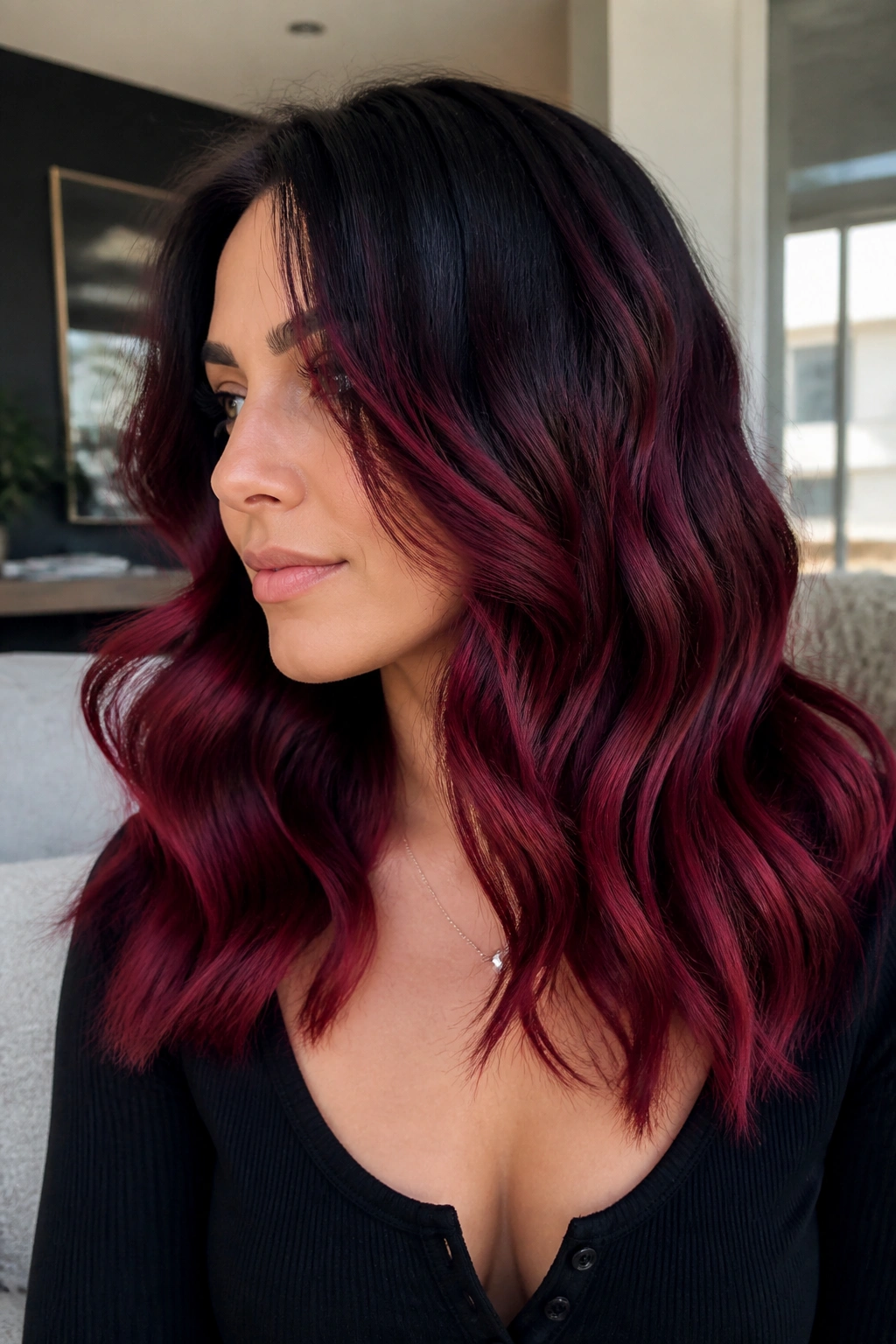
Inked cherry melt is the richest-looking version of this whole category when the blend is done well. The roots stay inky and dark, then the color slides into cherry-wine mids and ends, with just enough red to show in daylight and just enough black to keep it grounded.
That’s why it works so well on cool skin. The cherry stays blue-based, the black adds contrast, and the melt keeps the hair from looking like a single heavy block. It’s also one of the most flexible choices in the bunch. You can wear it sleek and polished, or rough it up with waves and let the red show more.
If you want the simplest way to ask for it, say deep black root, cool cherry lengths, soft melt, no copper. That last part matters more than people think. Copper is the wrong turn here. Cherry is the lane you want, and it’s a very good lane.
