



Copper can look icy on cool skin, which catches people off guard. The shade does not have to turn pumpkin to read as copper; in fact, the nicest versions usually sit closer to rose gold, penny, auburn, or cherry-red than to yellow orange.
The difference is undertone. Blue-red copper and violet-leaning auburn tend to flatter pink or blue undertones because they echo what is already in the face instead of fighting it. Gold-heavy copper, on the other hand, can make skin look flushed or a little tired.
That is why placement matters too. A soft money piece, a smoky root, or a gloss over brunette hair can make copper feel tailored instead of loud, and the right haircut changes the whole read of the color. A bob gives copper polish. Waves make it feel softer. A shag breaks the shine into little pieces, which is often kinder on cool complexions than one flat block of orange.
The shades below stay inside that lane, but each one has a different personality. Some are bright enough to make pale skin look crisp. Others sit deeper and moodier, which is usually the better move if you want copper without wearing a neon wig on your head.
1. Rose Copper Bob for Cool Skin Tones
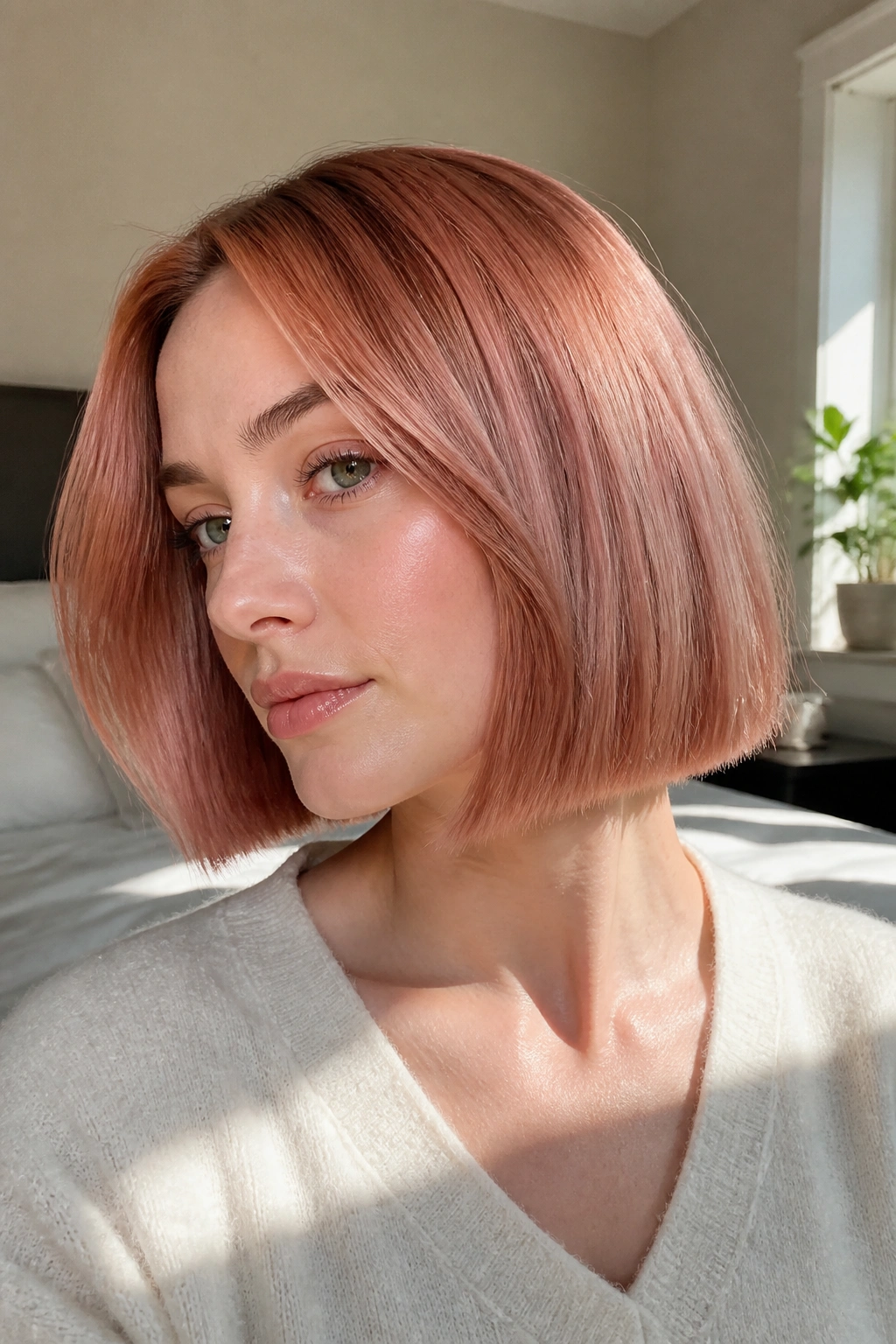
A rose copper bob is the safest first step if you want warmth that still respects cool skin. The rose softens the orange, and the bob keeps the color neat instead of sprawling all over your face.
Why It Flatters Cool Undertones
Rose copper has enough red in it to warm the complexion, but the pink edge keeps it from turning brassy. On fair skin, that can look clean and fresh instead of harsh. On medium cool skin, it gives a soft flush effect that feels intentional, not accidental.
What to Ask For at the Salon
- A level 7 copper base with a rose or beige-rose gloss.
- A blunt bob that lands at the jaw or just below it.
- Minimal gold in the formula; too much will push the shade orange fast.
- A soft finish, not a highly reflective glaze if your skin is already very pink.
Best move: keep the ends sharp. The clean line makes the color look expensive, even when the formula itself is quite simple.
2. Penny Copper with a Blue-Red Base
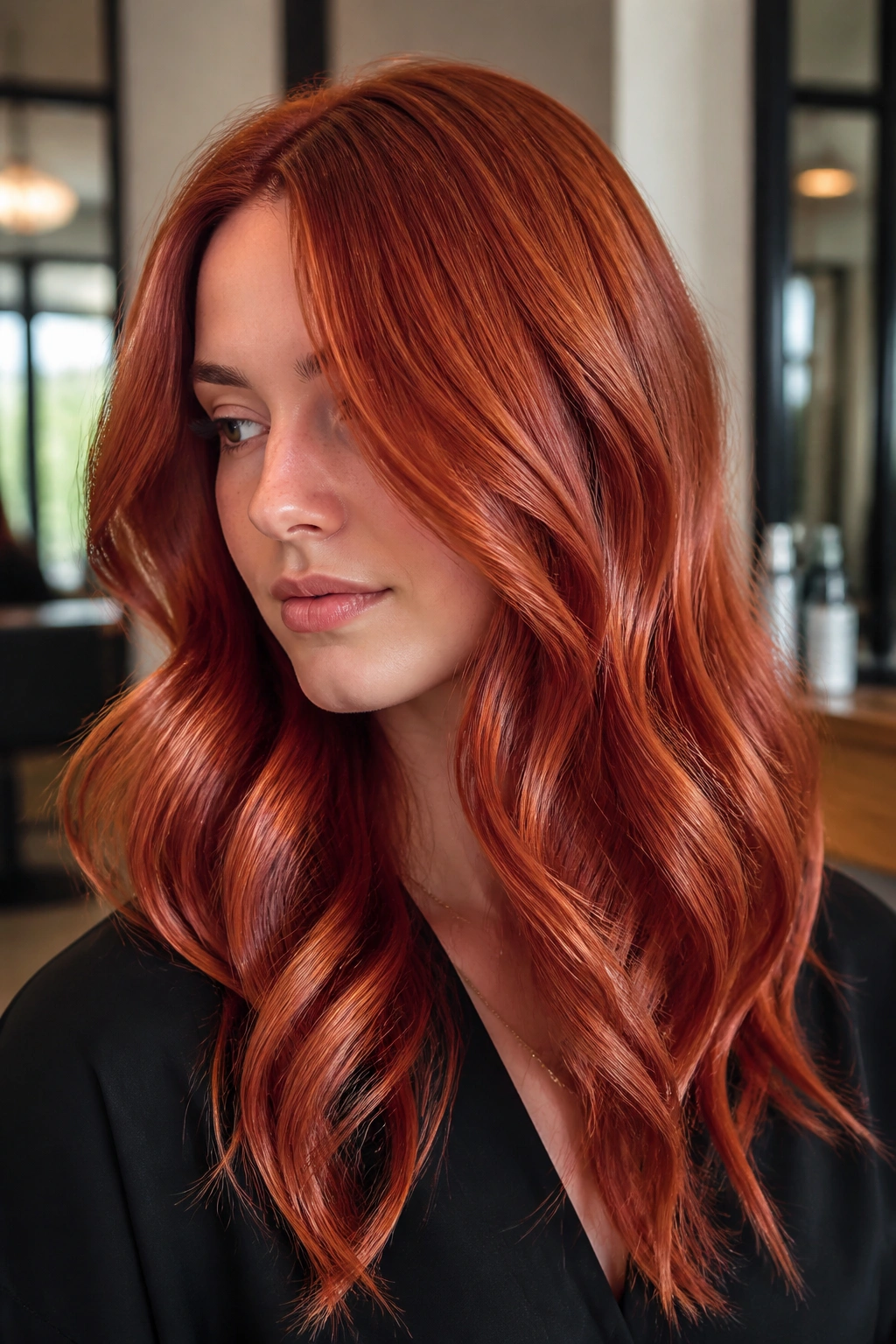
Penny copper is the shade that makes people stop and look twice. It has that new-coin shine, but the important part is the blue-red base underneath, which keeps the color from drifting into construction-cone territory.
That blue-red note is what cool skin usually needs. It gives the face a little structure and makes the copper read richer, not yellower. If you wear a lot of black, gray, navy, or icy makeup, this is one of the easiest bright coppers to pull off.
Wear it straight if you want the metallic side to show. Wear it with a loose wave if you want the color to feel softer around the edges. Either way, this shade likes gloss. A quick demi-permanent refresh every few weeks keeps the shine clean and stops the ends from going flat.
3. Strawberry Copper Balayage
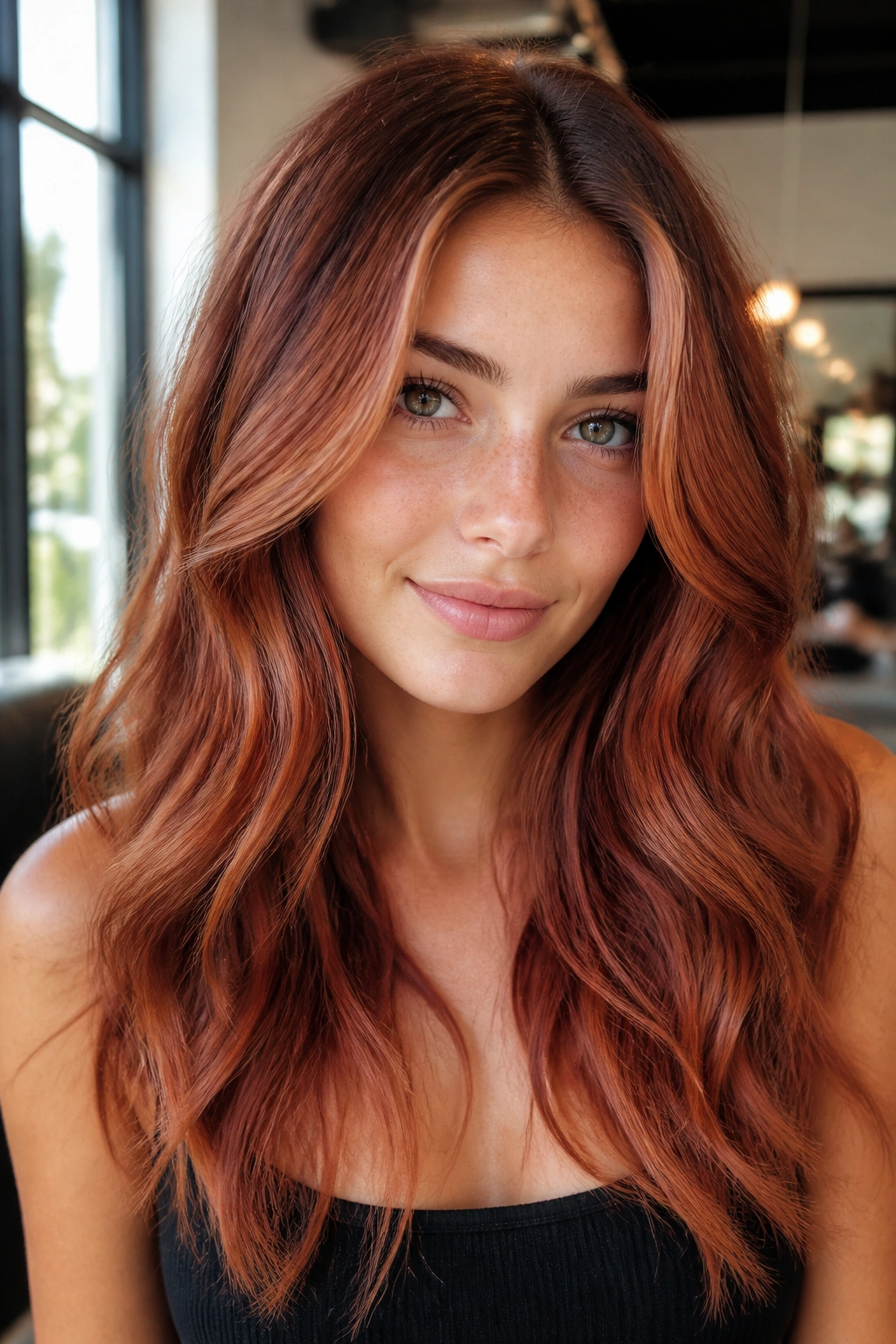
Can strawberry copper work on cool skin? Yes, if the strawberry leans more red than peach. The balayage placement helps, because you are not flooding the whole head with warmth. You are dropping lighter copper ribbons where the light hits.
What Makes It Work
The hand-painted pieces should sit around the face, through the crown, and at the ends, not scattered everywhere. That spacing keeps the look airy. It also means the copper catches the eye in motion instead of sitting like one heavy block.
A good version usually mixes three things: a deeper base, medium copper ribbons, and one brighter face-framing panel. That panel does a lot of work. Too much of it, and the shade turns loud. Too little, and the strawberry effect disappears.
How to Wear It
- Best on shoulder-length cuts and long layers.
- Looks good with loose bends, not tight curls.
- Ask for a slightly deeper root so the balayage doesn’t wash out the face.
- A peachy blush can tie the whole look together without making the skin look warm.
4. Smoky Copper Brown Lob
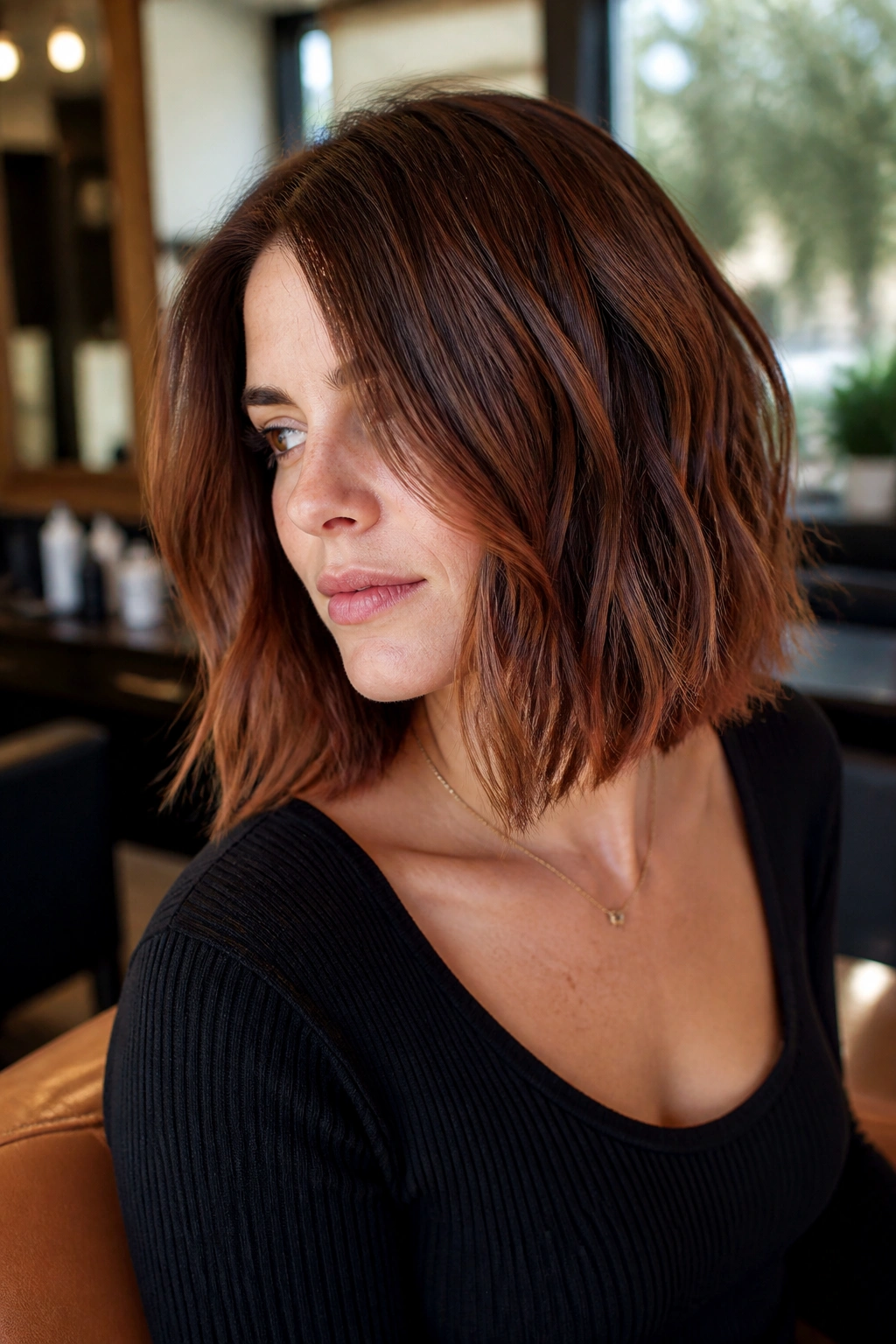
If you want copper but you do not want the full brightness of it, smoky copper brown is the sensible choice. It reads like a brunette that spent a week in warmer light, which is exactly why it flatters cooler skin so well.
The smoke comes from lowlights and a muted gloss. That little bit of depth keeps the shade grounded. Without it, copper on cool skin can feel too shiny and a touch cartoonish. With it, the color looks layered, soft, and grown-up in the best way.
A lob makes the whole thing feel easy. The length gives the copper enough room to move, but it never becomes too wide or overpowering around the face. If your hair is naturally fine, this shade also adds the visual bulk that a flat brown often misses.
5. Cherry Copper Gloss
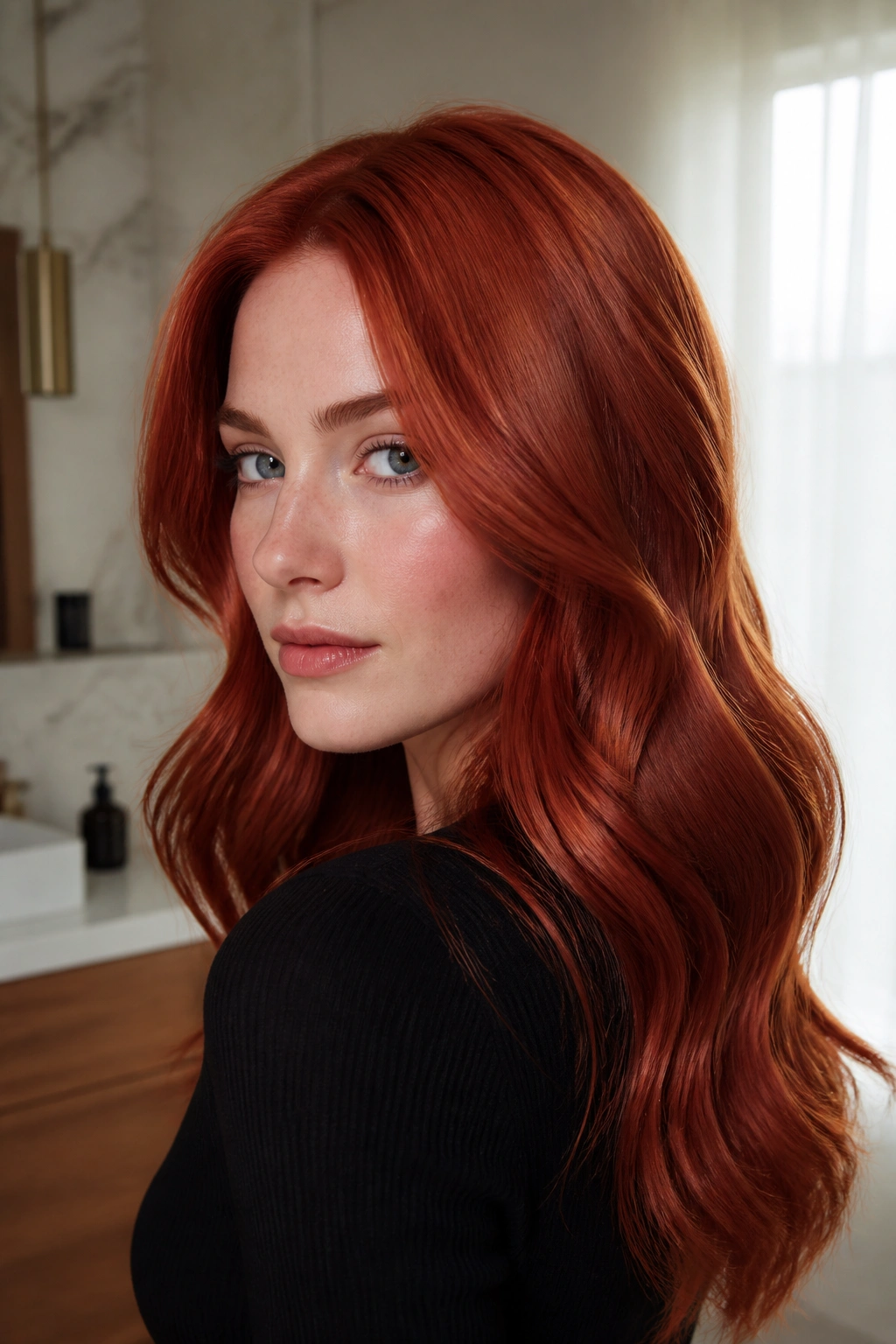
Cherry copper is what happens when copper gets a little more red and a little more dramatic. It is not a fire-engine red. It is deeper, richer, and sharper, with a berry-like edge that suits cool undertones nicely.
Why It Looks So Clean on Fair Skin
The red in cherry copper gives pale skin a crisp frame. That matters. Yellow-heavy copper can blur into the face, while cherry copper leaves a clearer boundary between hair and skin, so the whole look feels more deliberate.
It also works well with dark lashes and cool-toned makeup. A berry lip, a charcoal liner, or a muted mauve blush all sit comfortably beside it. That is one reason stylists reach for this shade when someone wants copper but still wears cooler clothes and makeup every day.
A gloss finish matters here. Cherry copper without shine can look flat. Cherry copper with shine looks like polished glass, and that’s where it gets good.
6. Apricot Copper Shag

An apricot copper shag has a little edge to it. The layers keep the warmth from sitting in one heavy sheet, and the piecey texture makes the color feel lighter on cool skin.
A shag is useful if your face shape needs movement near the cheeks or jaw. The razored ends break up the copper so it does not read too solid. Apricot itself sits between peach and orange, so it needs that cut structure to stay flattering. On cooler complexions, the color works best when the shape is doing some of the heavy lifting.
Best Features of This Look
- Razor or point-cut layers that move when you shake them out.
- A soft fringe or curtain bang to keep the face from looking too bare.
- A matte or satin styling cream instead of a greasy serum.
- Medium-density hair that can hold texture without collapsing.
Good sign: if the ends look too sweet or candy-colored, ask for a deeper root. The contrast will calm everything down fast.
7. Cinnamon Copper Curls
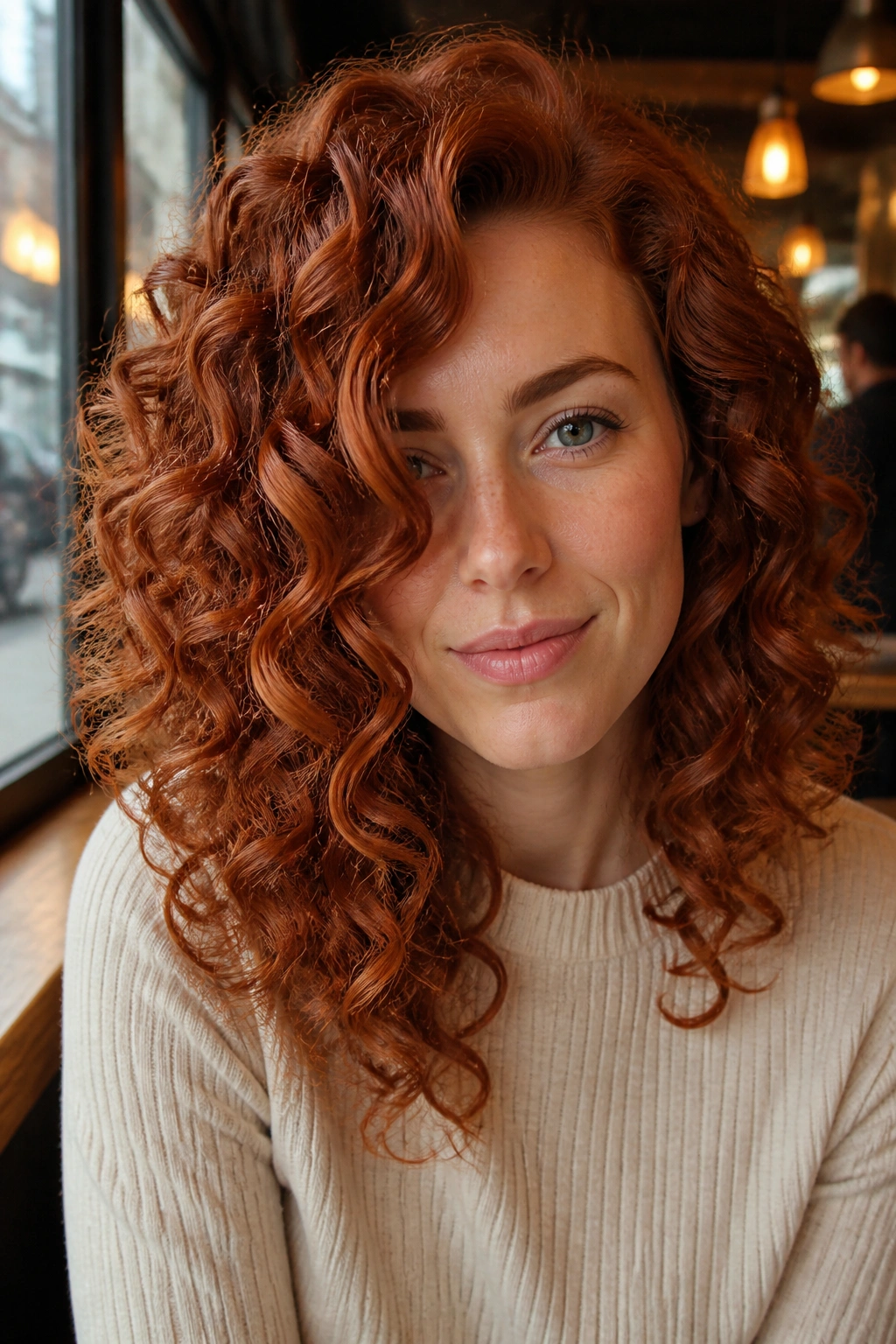
Why do curls make copper easier to wear? Because the shape breaks the color into little flashes instead of one wide wall of warmth. On cool skin, that matters a lot.
Cinnamon copper sits in a useful middle ground. It is warmer than auburn, softer than bright copper, and rich enough to look planned. Curls make the cinnamon side show up first, which keeps the shade from reading orange. If your skin runs pink, this is a friendly way to go warmer without losing balance.
How to Get the Most From It
Use a curl cream that defines without making the hair stiff. A soft hold matters more than a crunchy one. Copper looks better when the curl pattern stays touchable and a little loose, because hard curls can make warm color feel louder than it is.
A side part helps too. It gives the front a little sweep and stops the color from sitting too symmetrically around the face.
8. Rusted Copper Pixie

A pixie cut changes the game. Short hair can take a stronger copper shade because there is less of it, which means the color feels sharper rather than louder.
Rusted copper is a little darker and earthier than bright copper. That makes it one of the better choices for cool skin if you like punch but not neon. The cut does some of the work here. Piecey top layers, short sides, and a little separation in the fringe all keep the shade from reading blocky.
What to Watch For
- Ask for depth at the root so the color does not look flat.
- Keep the finish matte or semi-matte.
- Avoid over-lightening; short cuts look better with depth than with fragile ends.
- A tiny amount of styling paste is enough.
One of the nicest things about this look is how fast it changes mood. Sweep it forward and it feels moody. Push it back and the copper looks bolder. Short hair does that.
9. Auburn Copper with a Violet Glaze
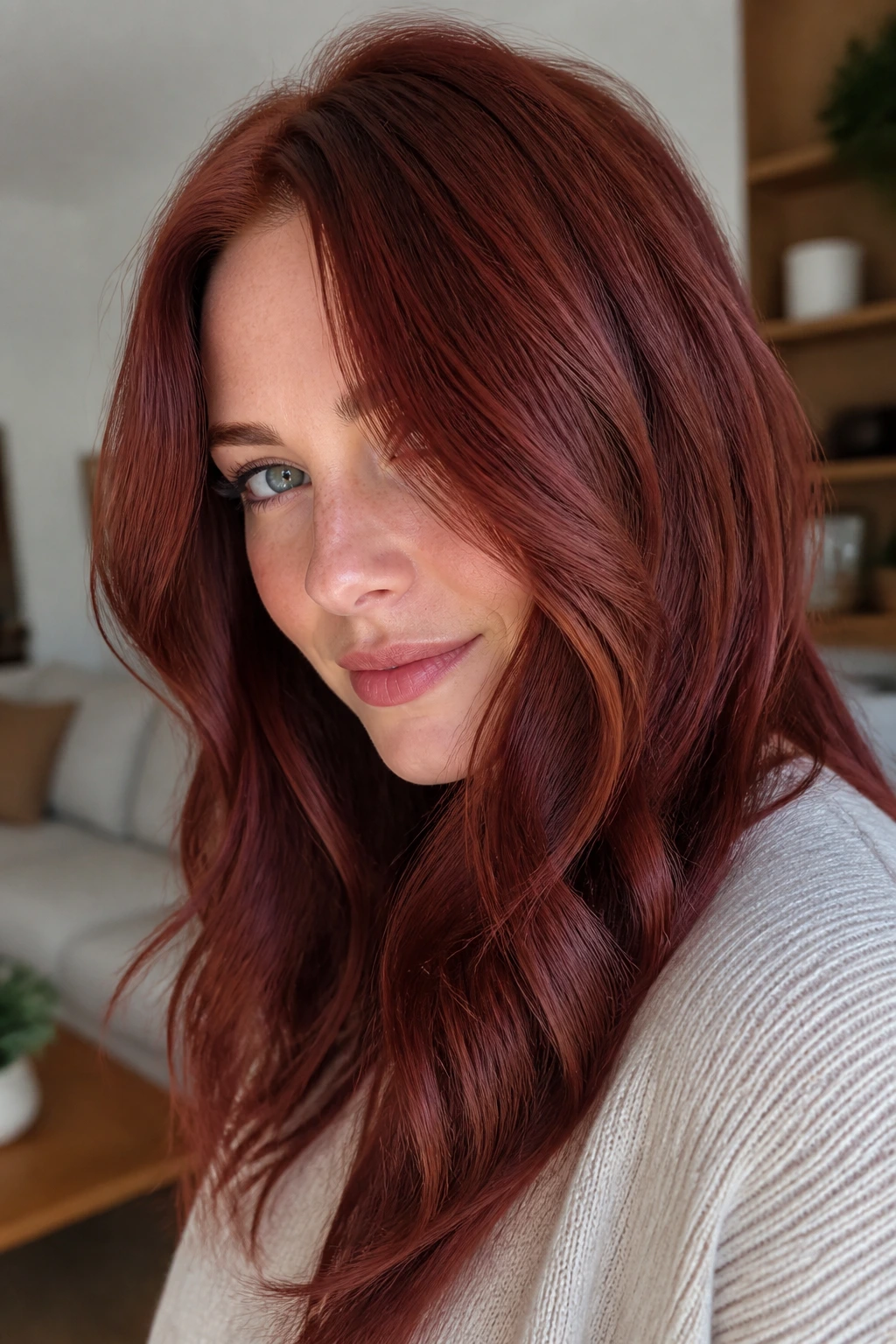
Auburn copper with a violet glaze is the version I reach for when someone says, “I want copper, but I don’t want orange.” That violet layer softens the warmth and pushes the whole shade toward wine-red territory.
It works especially well on cool skin with a little contrast in the features. Think dark brows, pale eyes, or a complexion that flushes easily. The violet does not make the color purple. It just keeps the copper from drifting too gold, which is the real problem in a lot of formulas.
A glaze like this also buys you time between full color services. Even when the vibrancy fades, the shade still looks intentional because the red-violet base leaves a stain of depth behind. That is a much nicer grow-out than a flat orange wash.
10. Rose Gold Copper Waves
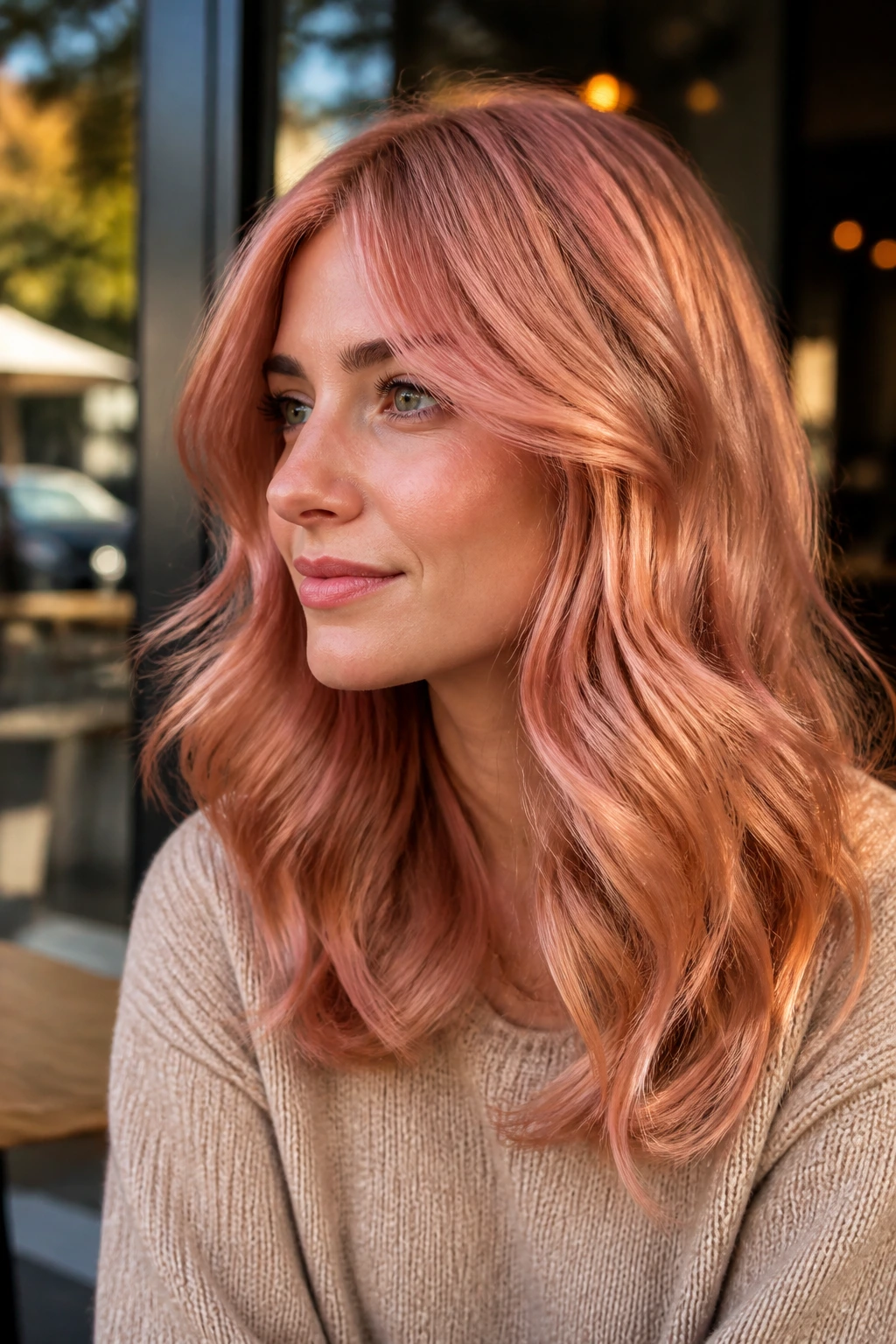
Rose gold copper waves sit between jewelry tone and hair color, which is part of the appeal. The rose keeps it flattering on cool skin, and the waves add enough movement that the shimmer never feels heavy.
This shade is especially nice on medium-length hair. The bends in the wave catch different tones as the hair moves, so you get flashes of copper, blush, and soft gold without any one color taking over. If your skin is fair and tends to look washed out in plain brown, rose gold copper can wake things up fast.
A 1.25-inch curling iron or a large wand gives the most natural bend. Wrap the hair loosely, leave the ends out on a few pieces, and brush it out once it cools. That little bit of messiness makes the color feel modern instead of costume-like.
11. Burnt Peach Copper
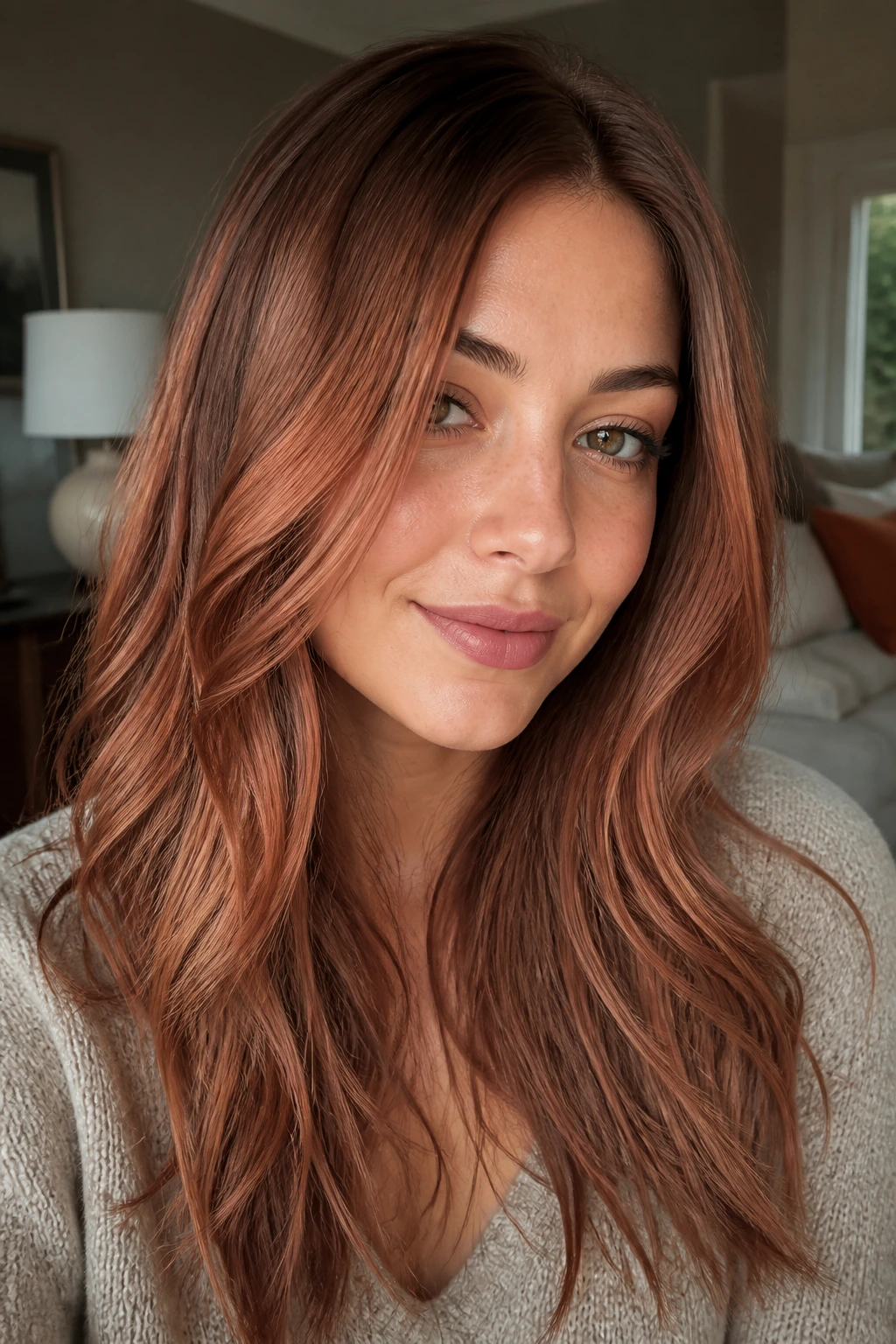
Burnt peach copper is for people who want warmth with a little dust on it. The burnt part matters. It keeps the peach from becoming sweet or neon, which is where cool skin often starts to look overwhelmed.
This shade works best when the formula has a muted brown base under the copper. That little bit of shadow changes everything. Instead of a bright orange wash, you get a soft, lived-in color that reads peach only in better light. In a mirror, it can feel surprisingly wearable.
It pairs well with soft layering, collarbone-length cuts, and makeup that leans taupe, plum, or rose. If you love a pale pink lip and a cool-toned wardrobe, this is one of the few peachy coppers that won’t fight you.
12. Mahogany Copper Layers
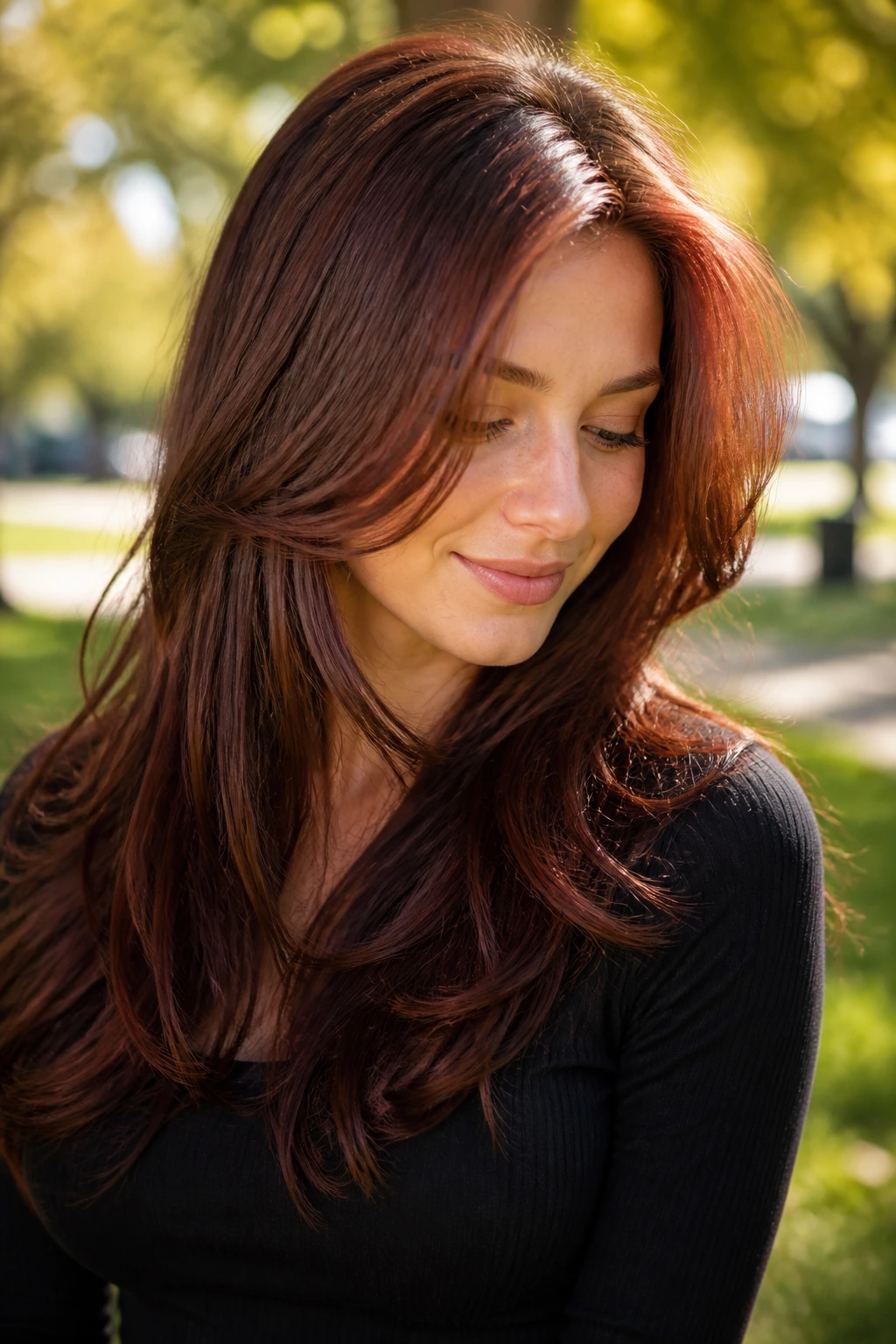
Mahogany copper is deeper, quieter, and much easier to wear than people expect. It’s a smart choice if your cool skin needs a little warmth but not a loud color shift.
The mahogany base keeps the shade close to brunette territory, while the copper sheen appears when the hair moves. That means the color works in a more subtle way. It does not shout. It glows. On cool skin, that can be a huge advantage, especially if you wear strong brows or dark eyeliner.
Long layers suit it well because they give the different tones room to show up. Straight, heavy one-length cuts can make mahogany copper look too dense. Layers stop that. They also make the red-brown depth look richer around the face, which is where you want the color to do most of its work.
13. Copper Money Piece on Dark Brunette Hair
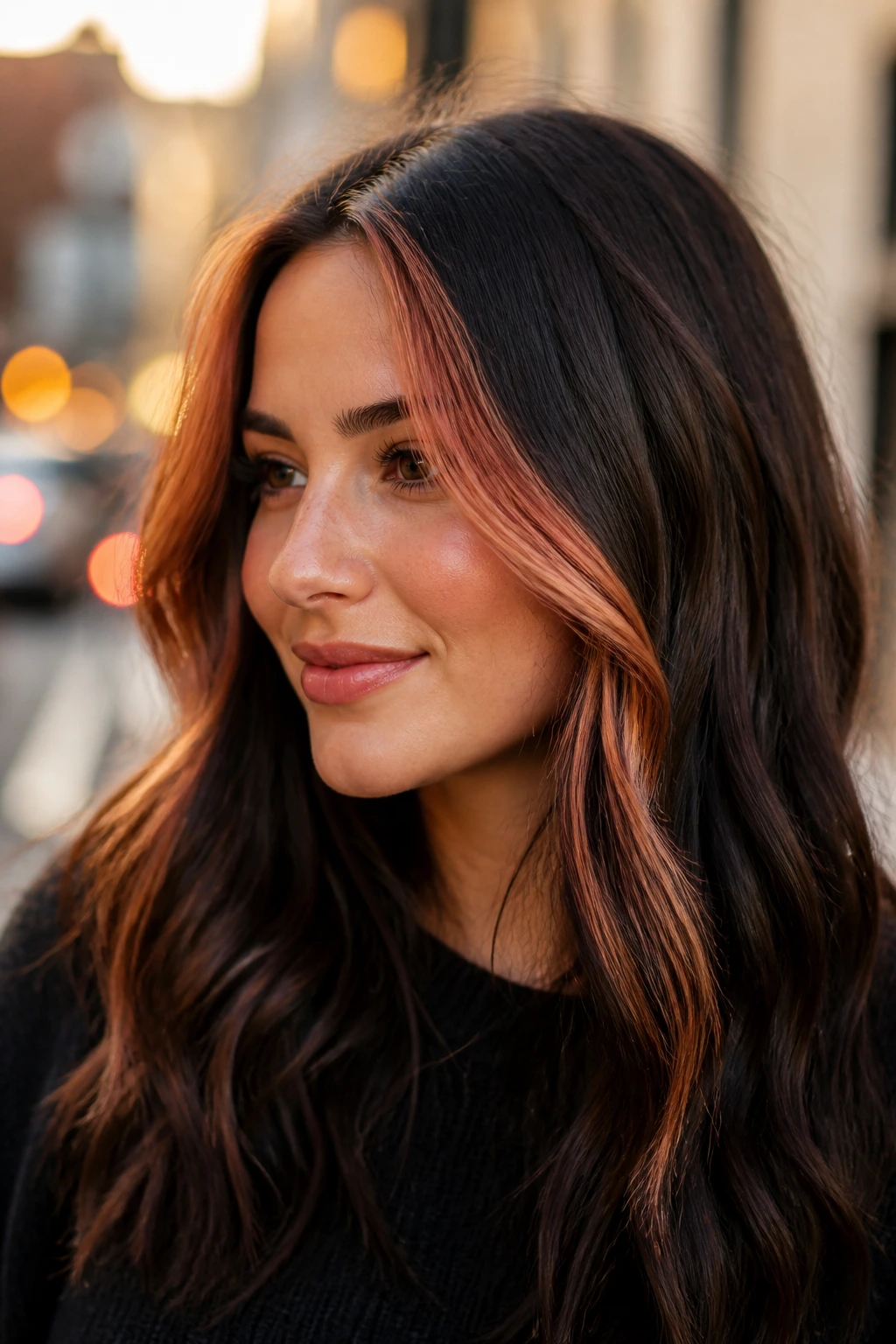
A copper money piece is the move for anyone who wants copper without changing the whole head. The face-framing pieces sit right where the eye goes first, so you get impact with far less commitment.
Why It Flatters Cool Skin
Against a dark brunette base, copper looks cleaner and more deliberate. The darkness around it keeps the warmth from spreading too far. That contrast is what makes it work on cool undertones; the copper becomes an accent, not a flood.
Ask for the front pieces to be one or two levels lighter than your base, then keep the ends glossy. If they are too orange, they will take over. If they are too pale, the look loses its punch. The sweet spot sits right in the middle.
A center part makes the money piece feel sharper. A soft side part makes it easier to wear. Pick your mood.
14. Terracotta Copper Lob for Cool Skin Tones
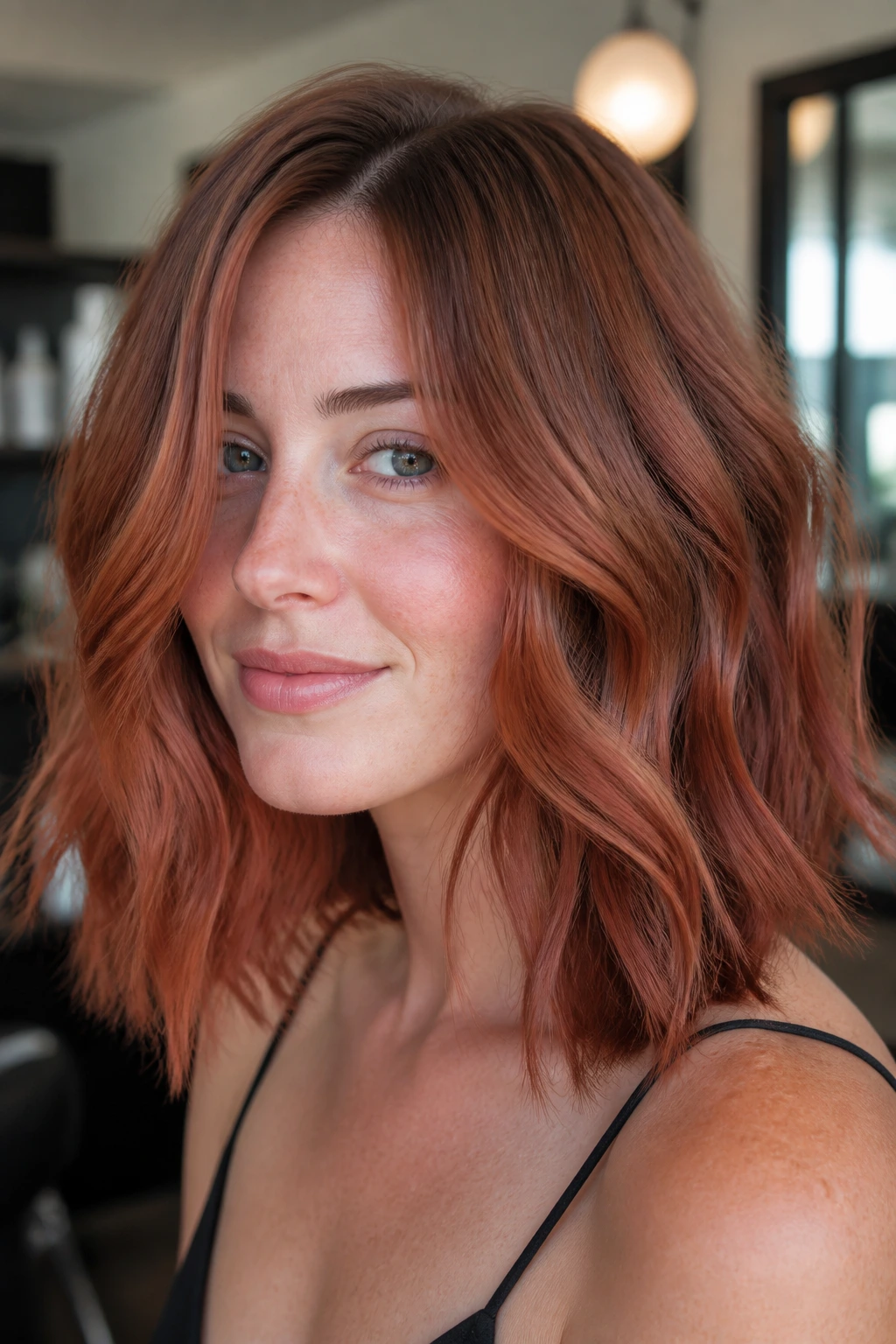
Terracotta copper is one of the smartest copper shades for cool skin because it has clay in it. That earthy note keeps the color from turning sugary or too bright.
A lob gives terracotta copper structure. The length lands in that useful middle space where the color can look strong, but not heavy. I like this shade on people with medium cool skin and darker brows, especially when they want something richer than strawberry blonde and less obvious than cherry red.
The finish should stay soft, not glossy to the point of looking wet. Terracotta needs texture. A little bend in the hair, a few loose layers, and a neutral brown root all help it read like a real hair color rather than a costume dye job. That’s the whole trick.
15. Spiced Ginger Copper Fringe

Can a bright ginger piece work on cool skin? Yes, if you keep it near the eyes and leave the rest quieter. A fringe gives you that chance.
The bangs or fringe become the focal point, so the warmth sits in a small, controlled area. That means the cheeks and jaw do not have to compete with the color. If the rest of your hair is deeper copper, the ginger fringe can even sharpen the face and make the eyes look clearer.
How to Ask for It
- Keep the fringe lighter than the rest by one level.
- Use a copper formula with a red base, not a gold one.
- Ask for texture in the fringe so it falls in separate pieces.
- Style it with a light cream, not a heavy oil.
This is a fun choice, but it is not a casual one. Bangs demand upkeep. If you like regular trims and a little personality, though, the result is worth it.
16. Mulled Wine Copper
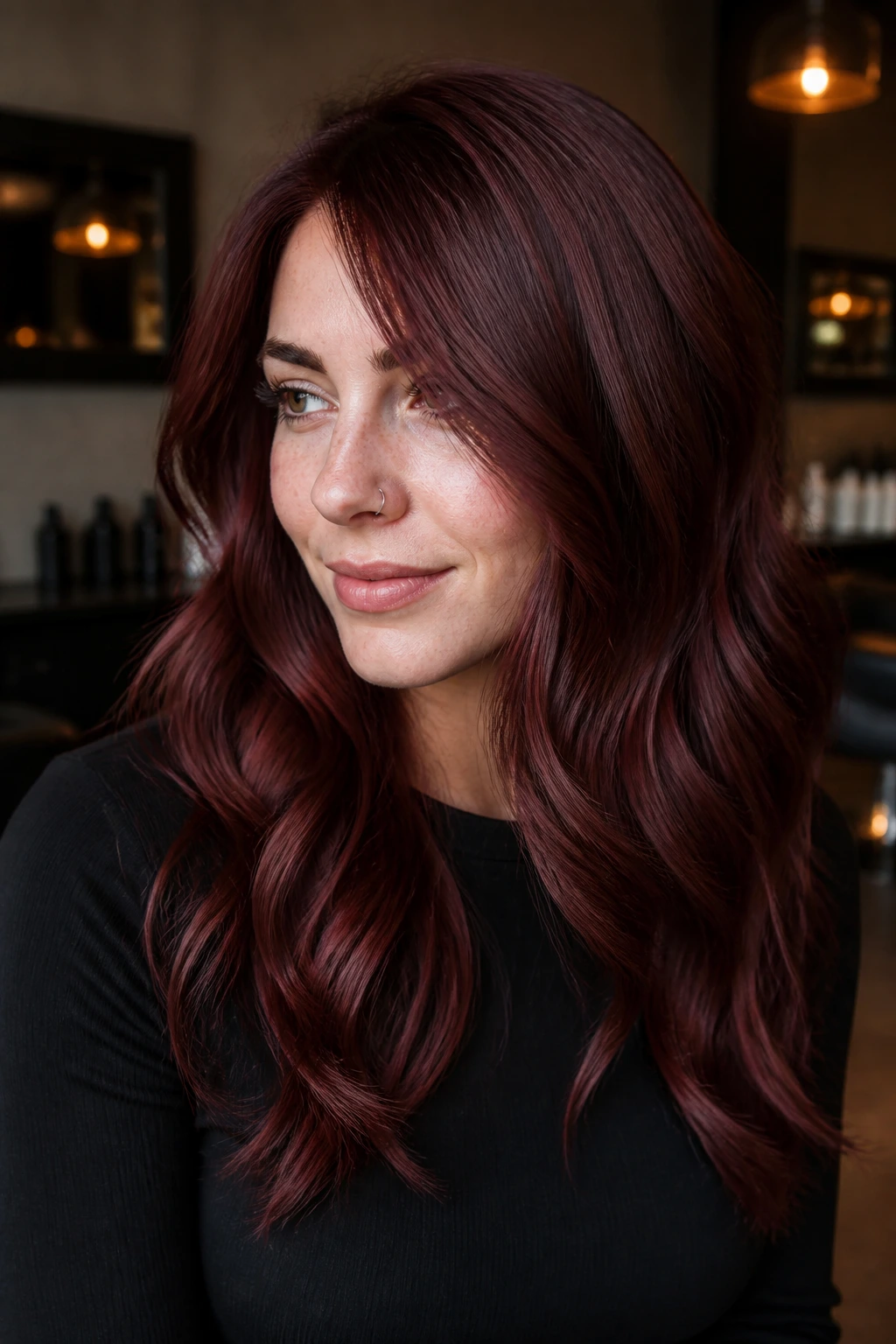
Mulled wine copper is deep red, spiced, and a little moody. It sits closer to burgundy than orange, which is why cool skin often wears it better than a brighter copper.
The shade works because it pulls from red and violet instead of gold. That gives the complexion room to breathe. On very fair skin, the contrast can look sharp and elegant. On deeper cool skin, the color reads plush and rich without turning flat.
Blunt cuts, sleek bobs, and long straight lengths all suit this tone well. Loose waves can work too, but the shape should stay controlled. Too much texture can dilute the red-violet depth and make the color look more brown than it should. If you want drama with a polished edge, this is a strong pick.
17. Copper Balayage on an Espresso Base
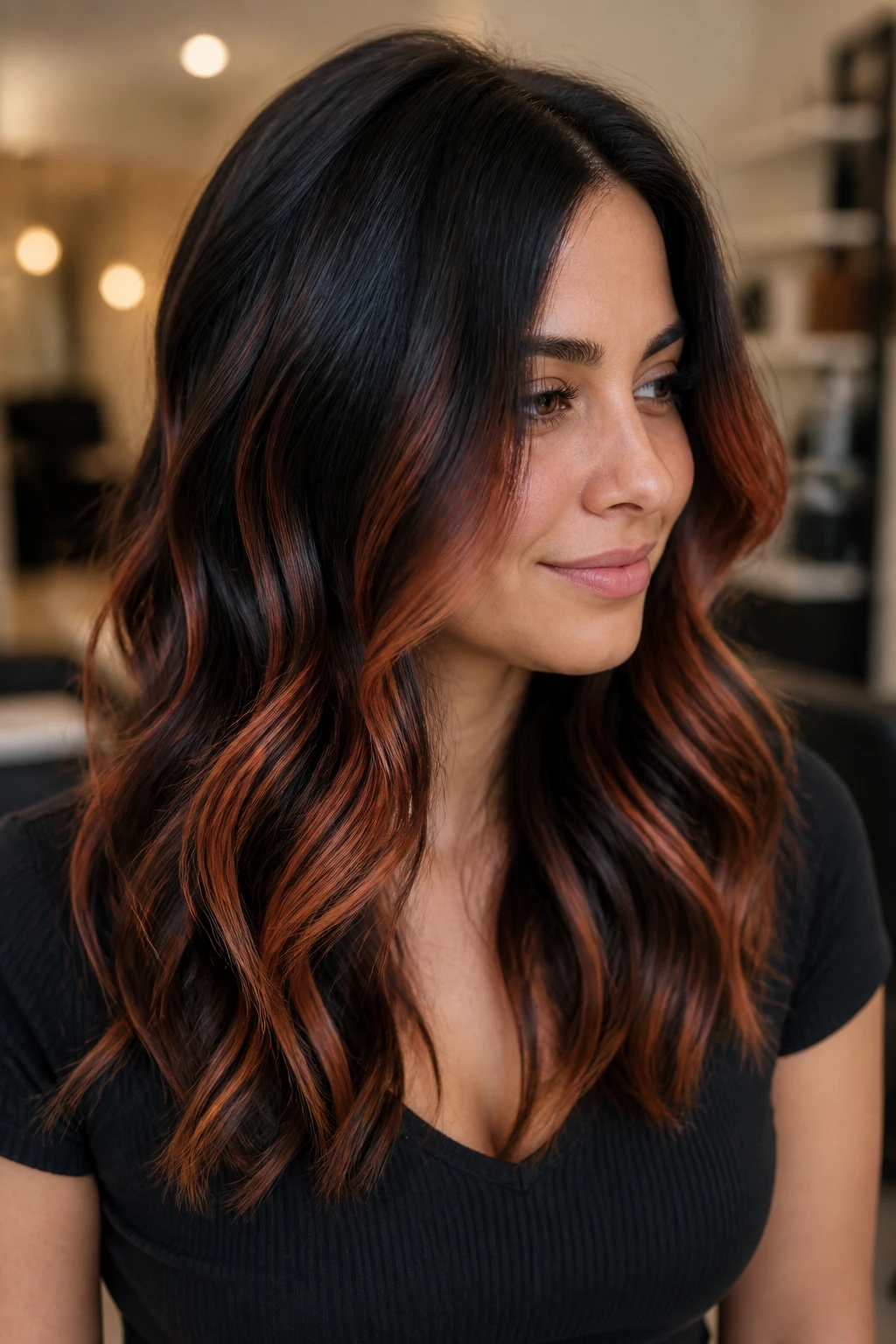
Copper balayage on an espresso base is one of my favorite choices for people who want depth first and copper second. The espresso keeps the look grounded, while the hand-painted copper pieces bring light to the surface.
That contrast is especially kind to cool skin. The dark base frames the face, and the copper appears in flashes instead of a solid block. You get dimension, not heat overload. And because the roots stay dark, the grow-out is easier to live with.
This style works well on medium to long hair, especially if you like loose waves. The paint should follow the movement of the cut, not just the surface of the hair. That detail matters. Copper balayage can look flat when it’s placed too evenly, so ask for varied saturation through the mids and ends.
18. Satin Copper Blonde
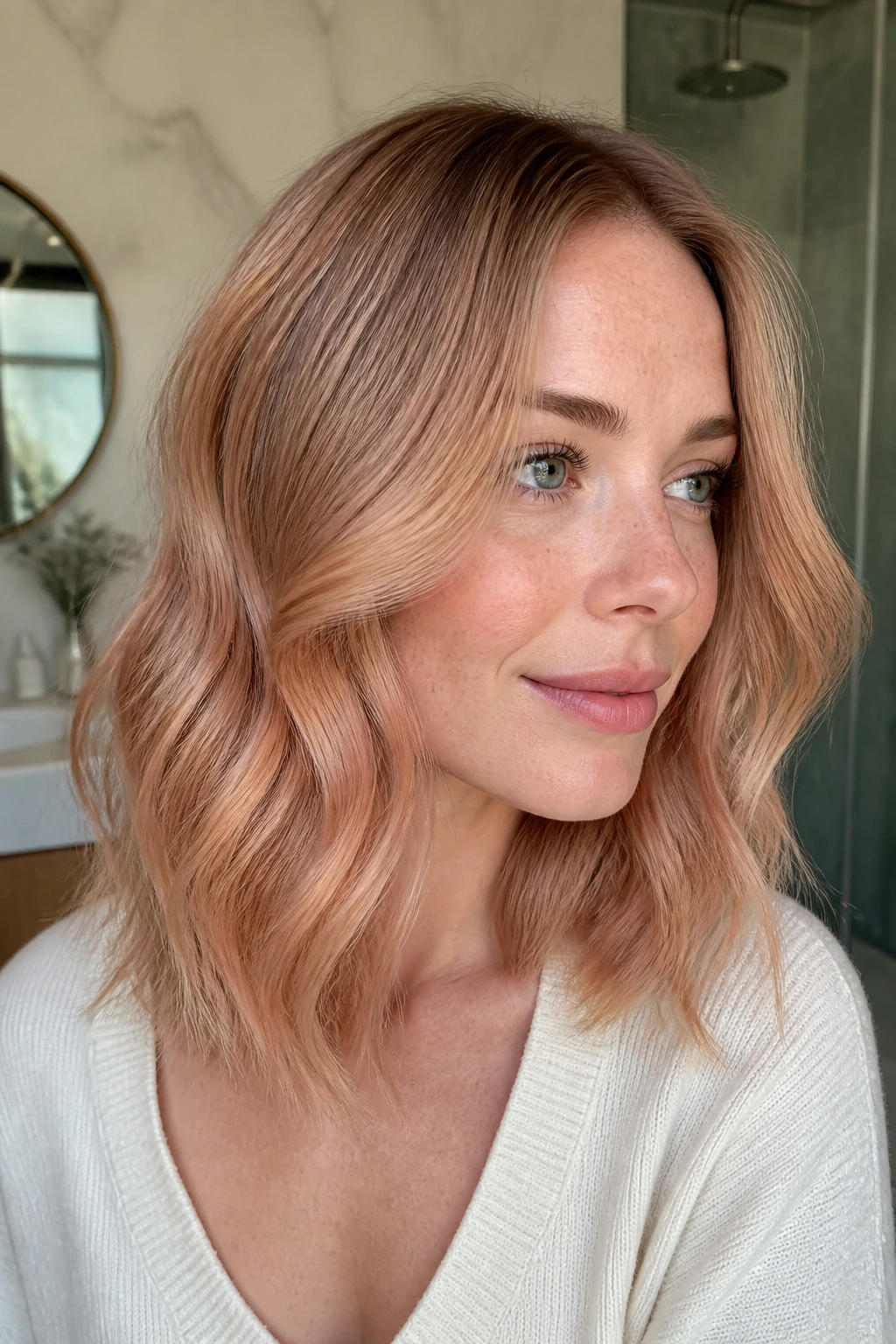
Satin copper blonde is softer than bright copper and lighter than auburn. It has a velvety finish that sits well on fair cool skin, especially if your natural hair is already light.
The word satin fits because the shade should not scream for attention. It should glide. That means the copper needs enough beige in it to stay wearable, but enough red to keep it from turning washed out. If the tone gets too gold, the whole thing drifts warm fast.
Root shadow helps here. A neutral root gives the blonde-copper middle room to shine, and it stops the color from looking too airy around pale skin. This is a good choice if you like soft sweaters, clean makeup, and hair that looks polished without being stiff.
19. Rosewood Copper Bob
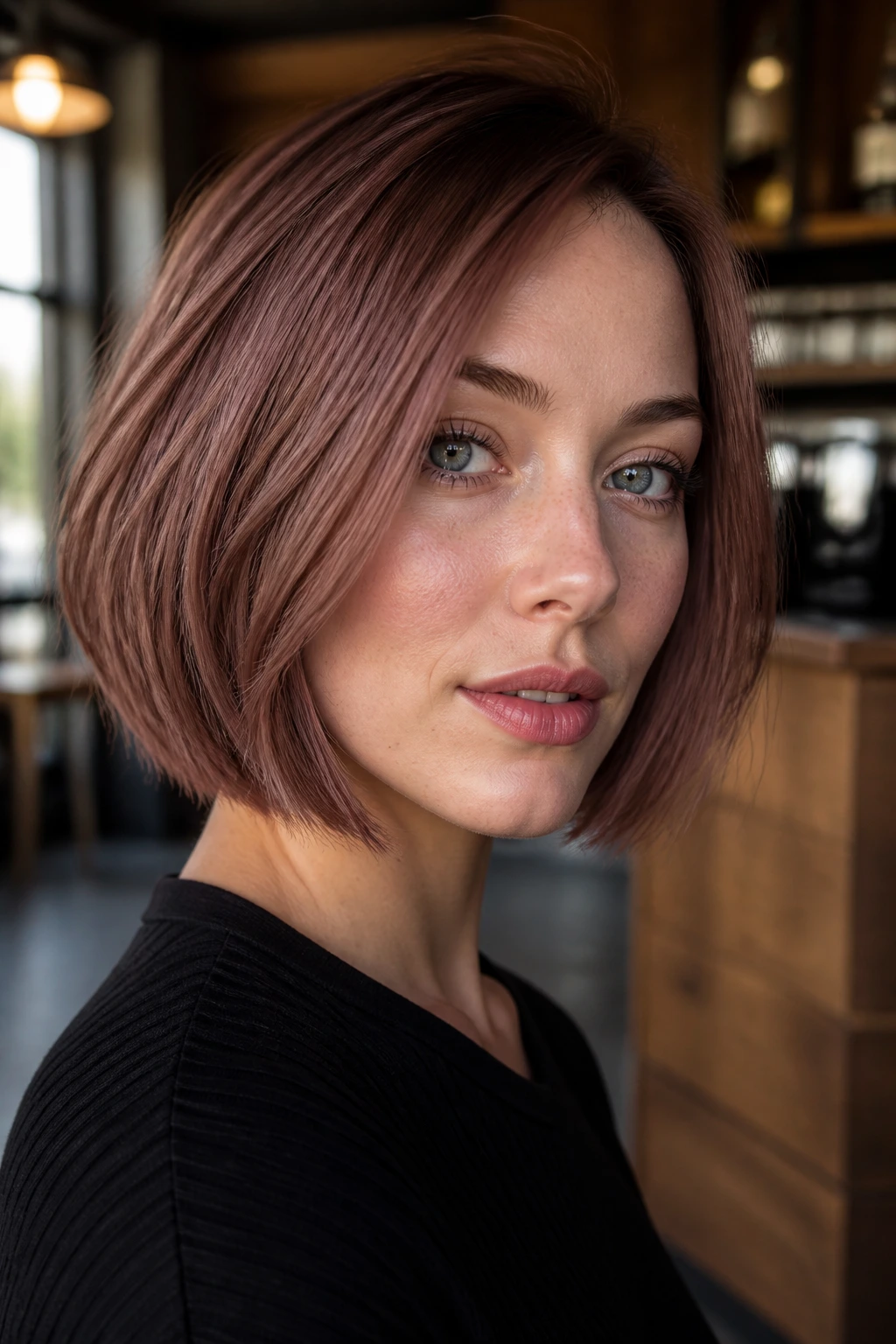
Rosewood copper sits in a muted, rosy family that feels tailor-made for cool complexions. The rosewood note keeps the copper from looking aggressive, and a bob keeps the whole thing neat.
What Makes It Different
Unlike a brighter penny shade, rosewood copper has a dusty finish. That dustiness is what keeps the shade from competing with pink or blue undertones in the skin. It can make the face look calm instead of flushed, which is exactly the point.
A jaw-length bob makes the color read as clean and graphic. The line of the cut adds shape, so you do not need a louder formula to get a strong result. If your hair is straight or slightly wavy, this version is especially good. It looks intentional with minimal styling.
Best Styling Choice
A flat iron bend at the ends is enough. No need to overwork it.
20. Copper Ombré Ends
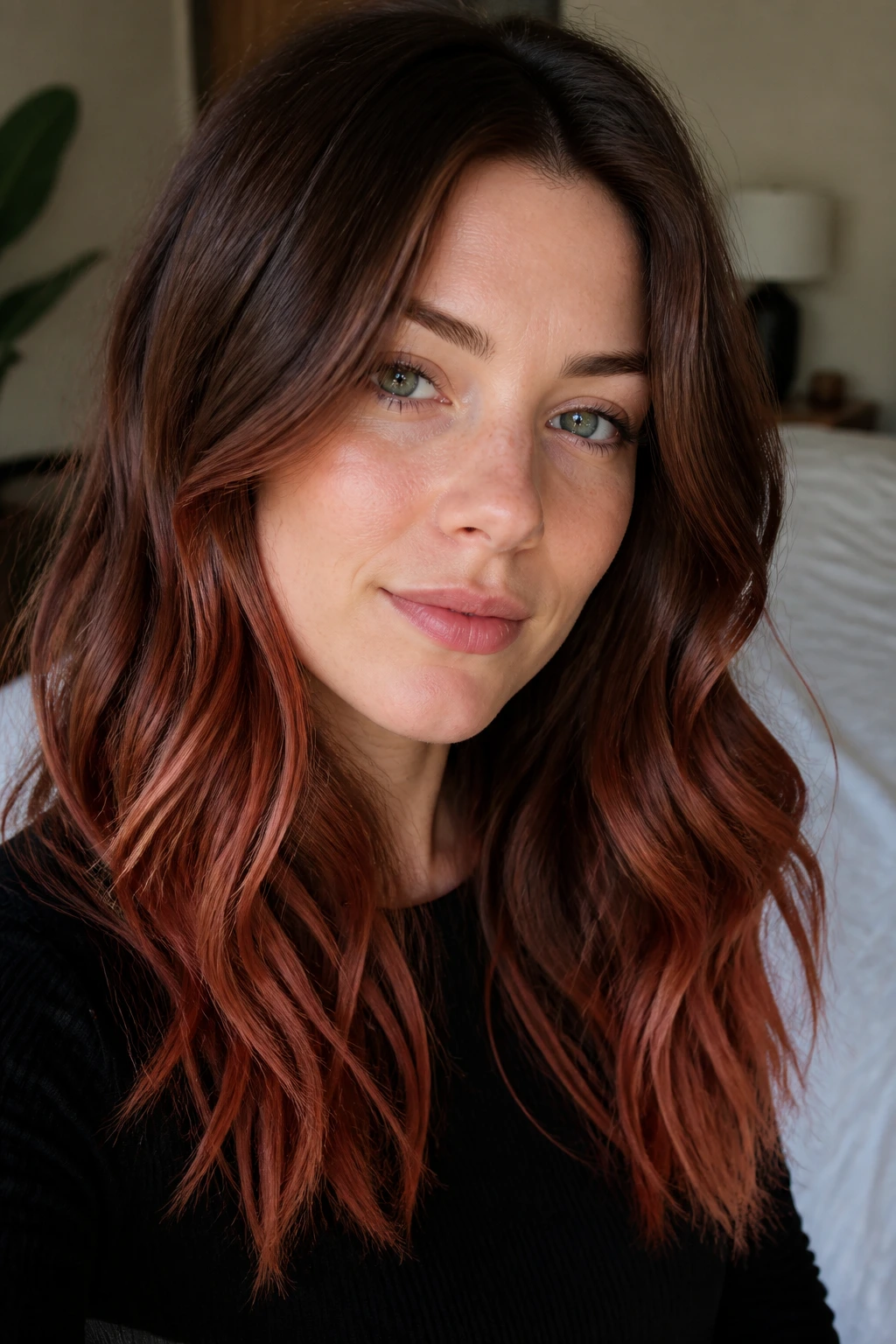
Copper ombré ends are the easiest way to test the color if you are nervous about a full head change. The roots stay natural or close to natural, and the copper appears only from midshaft down.
That gradual shift makes the color easier on cool skin because the warmth never sits too close to the scalp. Your natural base handles that job. The copper just adds movement at the ends, which is where light usually catches first anyway.
This is also a smart look if your hair grows fast or if you like to trim often. You can cut the color off slowly without losing the whole style. Keep the transition soft rather than stripey, though. A harsh ombré line can make copper feel dated fast. A blurred fade feels much better.
21. Amber Copper with a Shadow Root
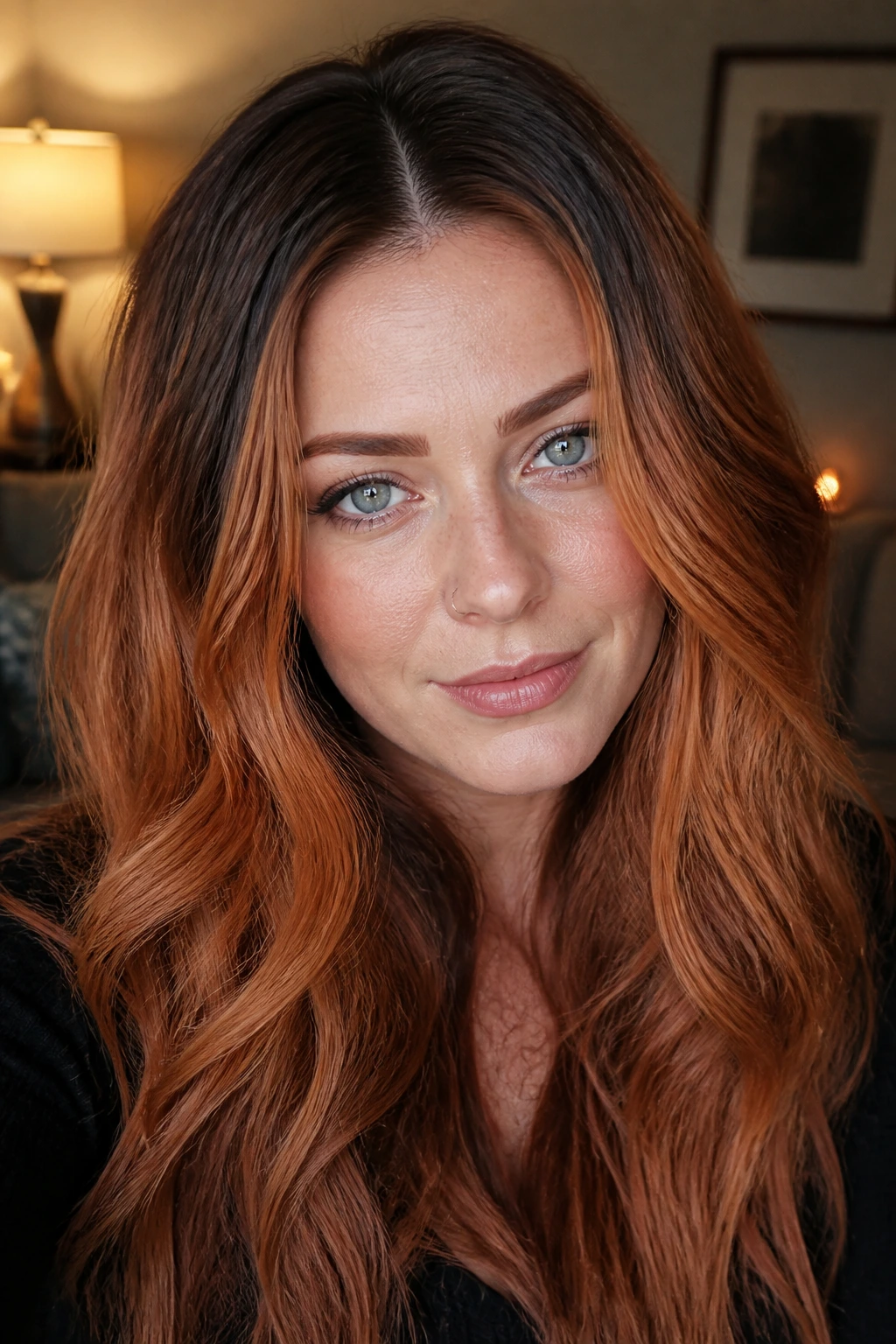
Amber copper sounds brighter than it needs to be. The shadow root changes the mood. It grounds the shade, and on cool skin that grounding keeps the warmth from taking over.
Why the Shadow Root Helps
A deeper root gives the eye a place to rest. That matters when the mids and ends are copper, because the contrast stops the color from sitting too close to the face. If you have very pale skin, this can make amber copper look rich instead of loud.
The mids should hold the amber, not the roots. That placement keeps the whole look soft and grown-out in a good way. You can wear the color sleek, or you can add waves so the amber catches in pieces. Either way, the shadow root does the heavy lifting.
How to Keep It Wearable
- Keep the root neutral brown, not almost black.
- Ask for a blurred blend, not a hard line.
- Use a shine spray only on the mids and ends.
- Let the copper sit a touch deeper near the nape.
22. Copper Shag with Micro-Lowlights

A copper shag with micro-lowlights is a clever fix for anyone who loves copper but feels overwhelmed by solid brightness. The tiny lowlights break up the shade and make it read more textured.
That texture is flattering on cool skin because it gives the eye more than one tone to look at. Instead of a single orange note, you get a mix of copper, brown, and muted rust. The result feels softer, more natural, and easier to pair with cooler makeup or clothes.
What to Look For
- Very fine lowlights, not chunky streaks.
- A shag cut with air through the crown.
- A little separation around the fringe.
- A styling cream that keeps the ends piecey.
The best part is movement. The color shifts as you move, and the lowlights keep the copper from going flat under indoor light. That can be the difference between a fun shade and one you tire of after a week.
23. Soft Ginger Copper Pixie
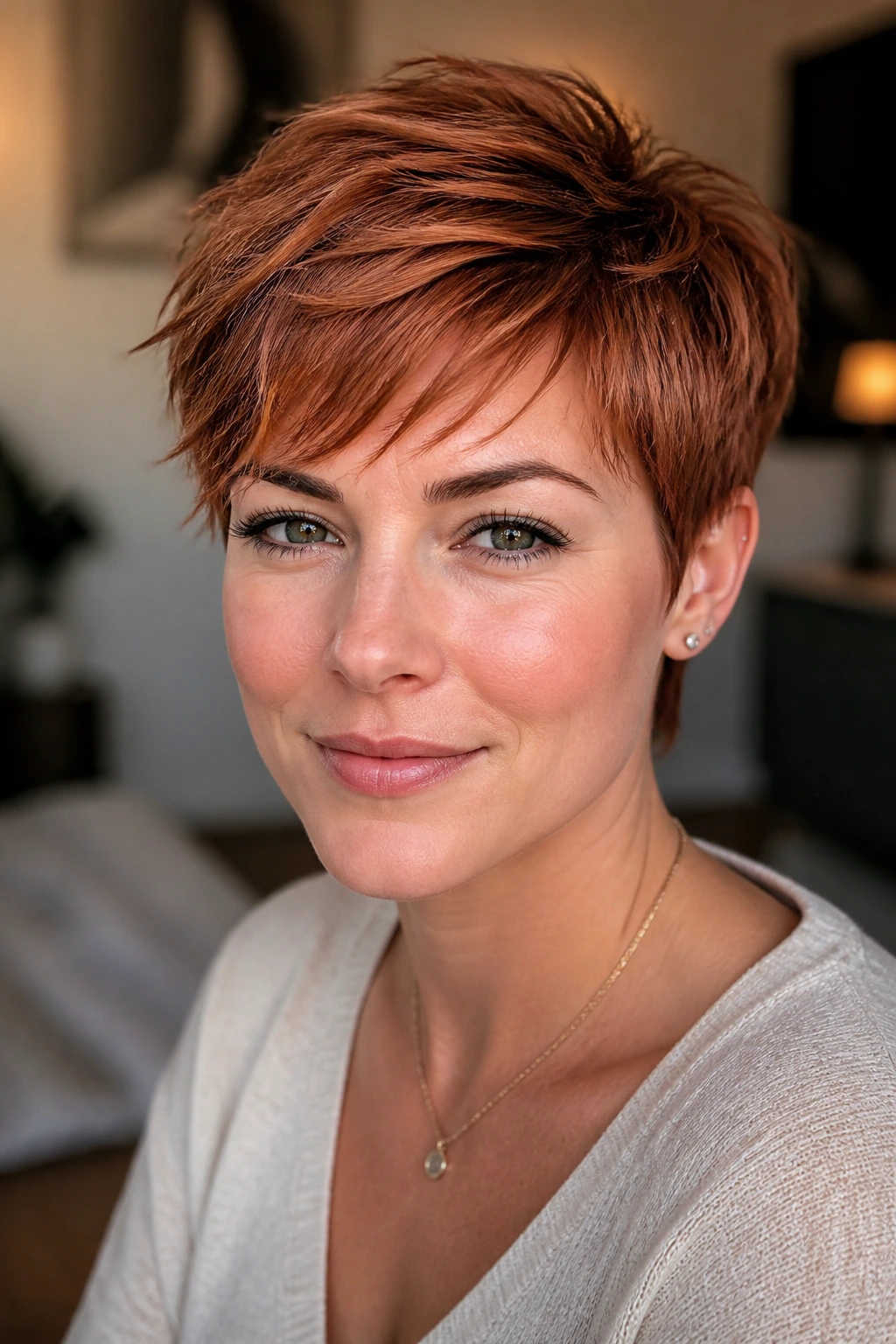
A soft ginger pixie is proof that short hair can still feel warm and interesting without going full red. The softness matters here. You want ginger with a touch of copper, not a saturated orange.
On cool skin, the shorter cut keeps the color manageable. There is less surface area, so the shade reads as a detail rather than a wall of warmth. That detail is what makes the look work. A pixie also leaves room for the skin, brows, and eyes to stay central, which helps if your complexion is very pale.
Use a lightweight cream or paste, not a glossy serum. A pixie can go greasy fast, and greasy copper looks muddy. Piece it out with your fingers, leave a little lift at the crown, and let the texture do the rest.
24. Bronze Copper Layers
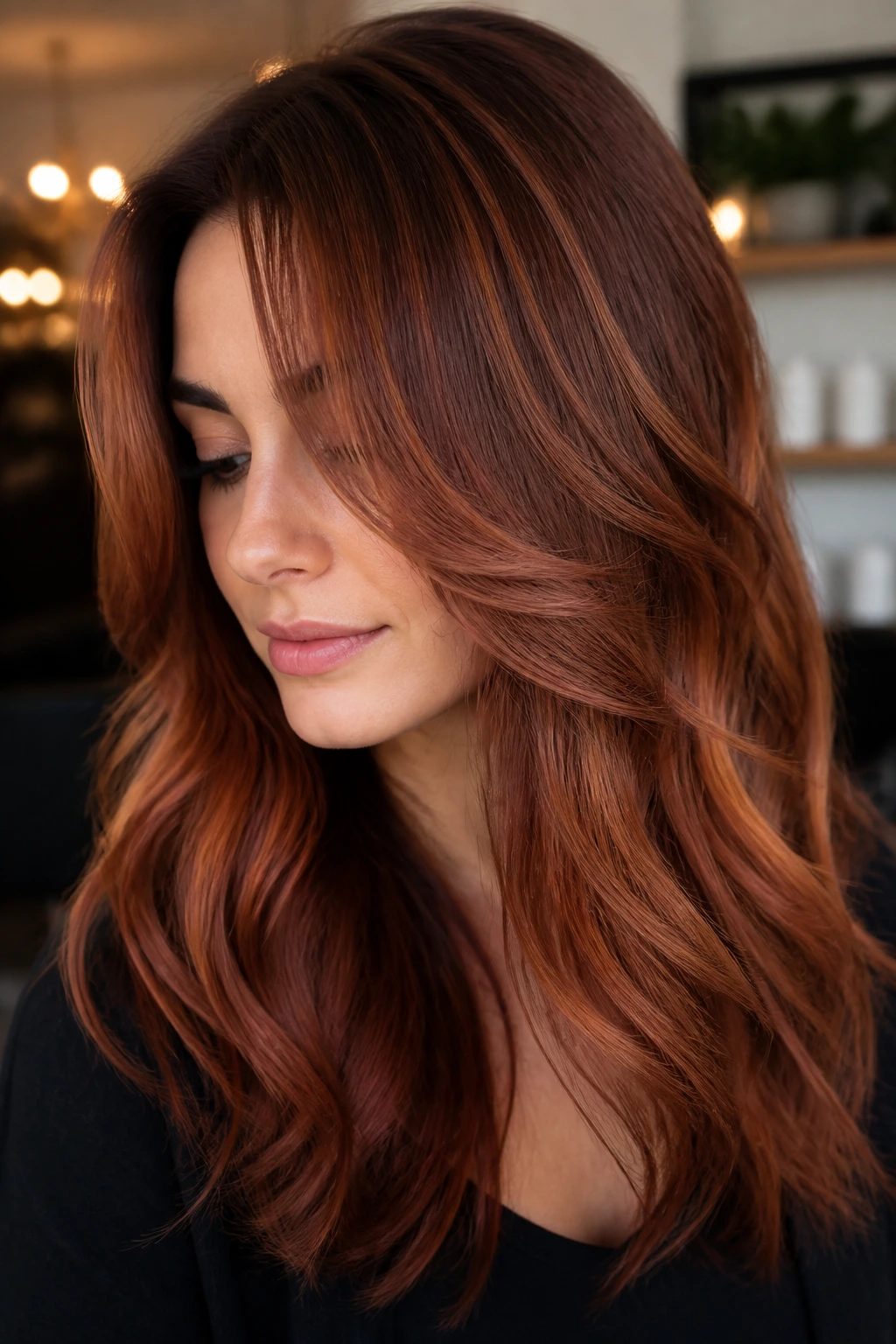
Bronze copper is darker and cooler than a lot of copper shades, which is why it sits so well on neutral-cool skin. It has that muted metallic feel, but it never pushes all the way into true bronze brown.
Layers help the shade breathe. Without them, bronze copper can look dense. With them, the color opens up and shows flashes of warm metal against the deeper base. That is especially nice on medium or dark cool skin because the contrast looks calm rather than bright.
If you wear brown makeup, this is a strong fit. Taupe shadows, cool bronzers, and muted lip colors all sit comfortably next to it. It is one of those shades that looks expensive without trying too hard, which I know sounds vague, but in this case it’s just the truth.
25. Cider Copper Waves

Cider copper waves feel richer than plain ginger and lighter than auburn. The cider note gives the shade a brown-red edge that softens the copper for cool undertones.
Why It Works on Cooler Skin
The color has enough red to warm the complexion, but the brown in it keeps the warmth from shouting. That balance makes it easier to wear if your skin turns pink in the heat or if strong oranges usually make you look flushed. Waves help too. They break the color into sections, so the copper moves instead of sitting still.
This is a nice color for shoulder-length cuts. The waves pile up just enough to show depth, but not so much that the hair swallows your face. A side part can make the look feel a bit more grown-up. A center part makes it feel more casual.
A Small Styling Note
A 1-inch iron gives tighter bends; a larger iron gives a softer cider glow. Pick based on how much movement you want.
26. Deep Copper with Face-Framing Ribbons
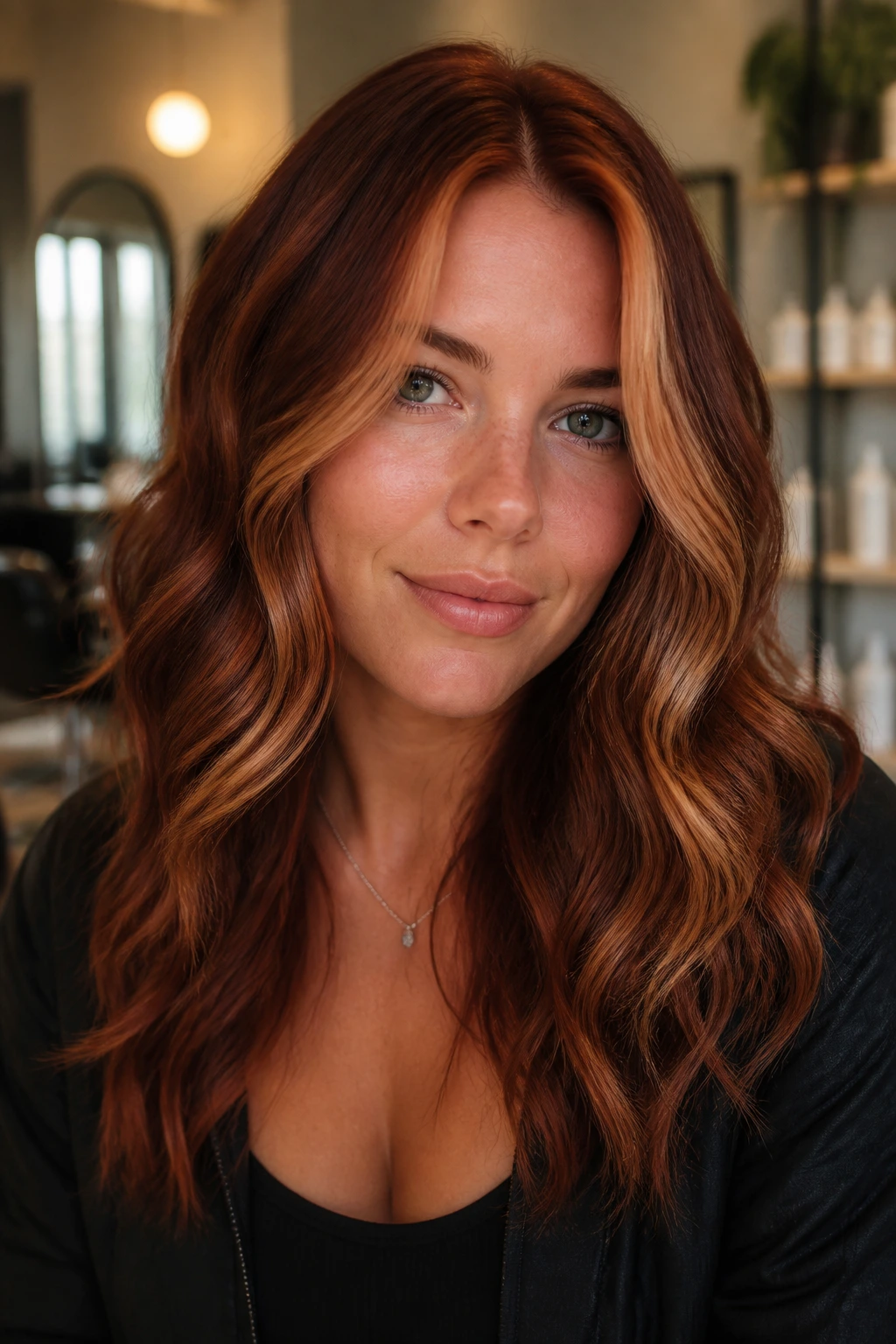
Deep copper with face-framing ribbons is for someone who wants impact but not an all-over blast of brightness. The darker base keeps the shade grounded, and the lighter ribbons around the face pull attention exactly where you want it.
That placement is flattering on cool skin because it lets the warmth sit in controlled spots. You are not flooding the whole head with orange. You are brightening the front edges and keeping the rest of the color richer and deeper. The result can look sharp with a clean blowout or softer with bends through the ends.
If you have strong brows or dark eyes, this is a particularly good match. The copper ribbons echo the warmth in the face, while the deep base makes everything else look defined. It is bold, but not chaotic.
27. Pearlized Copper Gloss
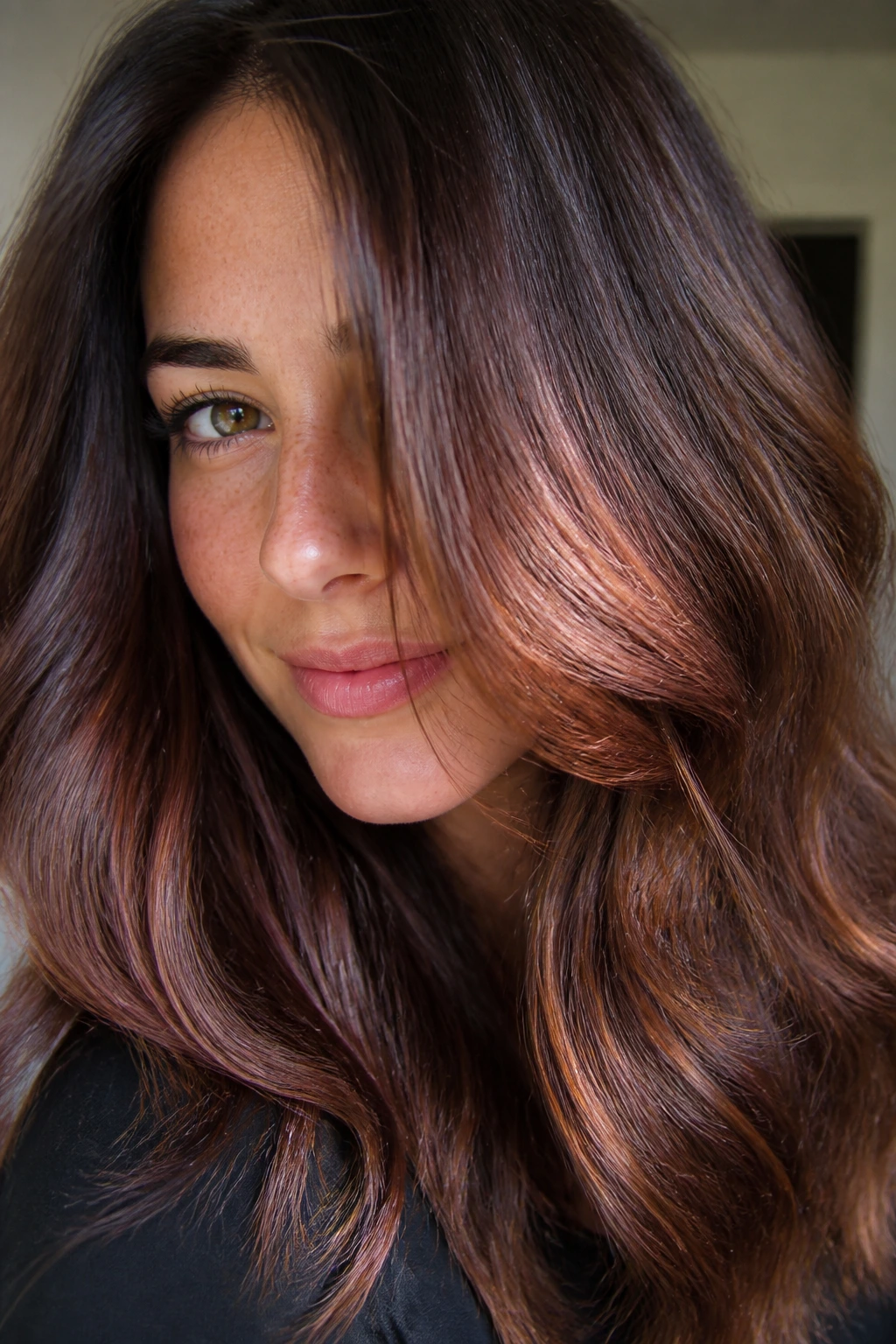
A pearlized copper gloss is not a full color change, and that is what makes it useful. It can soften a copper shade that has gone too warm, or it can give a brunette base a faint copper sheen without moving into obvious red territory.
When to Choose It
If your hair already has copper in it but the tone feels a touch orange, a pearlized gloss can calm it down. The pearl effect adds a muted shine that sits well on cool skin. It is lighter than a full dye job and easier to grow out, which makes it a nice middle ground.
Best Base Shades
- Light brown hair that needs a redder cast.
- Soft auburn that feels flat.
- Copper blonde that needs less gold.
- Highlighted hair that looks uneven in strong light.
A gloss like this works best when the base color is already close. If you need a major shift, it will not do enough on its own.
28. Cool Auburn Copper Melt for Cool Skin Tones
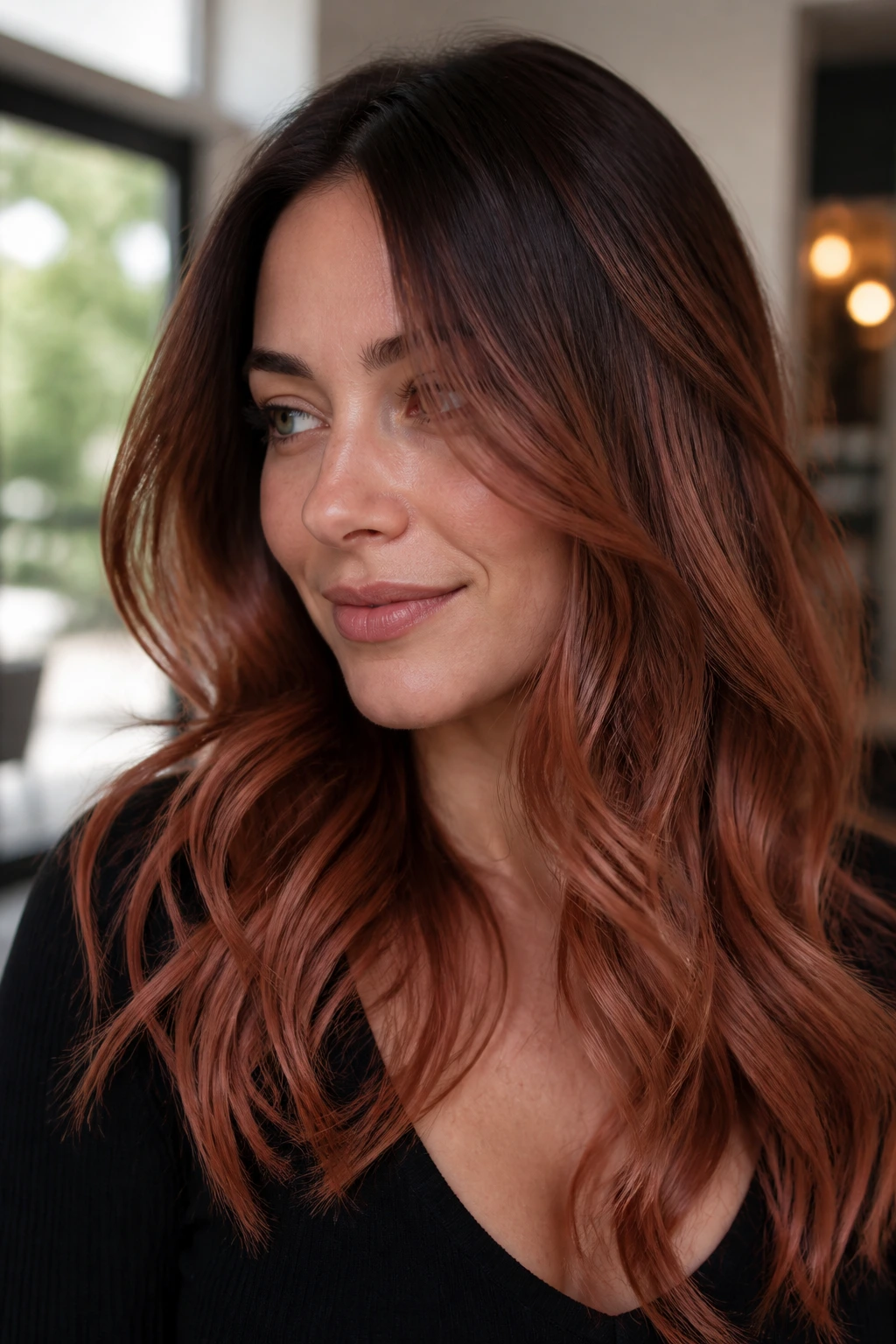
A cool auburn copper melt is one of the most balanced choices on this list. The root stays deeper and cooler, then the color eases into copper through the mids and ends. That slow shift keeps the look polished and keeps cool skin from getting swallowed by warmth.
Why It Lands So Well
The melt effect matters because it avoids a harsh line. Cool skin tends to look better when copper is spread through the hair in stages rather than dropped on top all at once. You get dimension at the roots, warmth in the middle, and a brighter finish near the ends.
This is also a good choice if you like to wear your hair down a lot. The color still has interest when the hair is straight, but it comes alive in soft movement. Ask for a cool auburn base with copper-lifted ends and a blurred blend where the two meet.
Who Should Pick It
- Anyone moving from brunette to copper for the first time.
- People with pink or neutral-cool undertones.
- Medium to long hair that can show the color shift.
- Readers who want copper that feels elegant, not flashy.
Final Thoughts
The best copper for cool skin is rarely the brightest one on the swatch ring. More often, it is the shade with the right red base, a little shadow at the root, and enough depth to keep the warmth from going wild.
That is the real pattern running through all 28 ideas. Rose copper, cherry copper, auburn-copper, smoky copper, and those muted clay shades all do one thing well: they warm the face without turning it yellow.
If you are taking this to a colorist, bring two photos — one in daylight and one indoors — because copper changes a lot under different light. And if you are unsure, start a little deeper and a little redder than you think. It is easier to lighten a copper later than to pull gold out of it once it has taken over.
