



Red mahogany hair color ideas for cool skin tones work best when the red leans berry, wine, or plum — not orange. That sounds picky until you see the wrong red sitting on a pink cheek and making the whole face look tired.
Mahogany sits in a useful middle ground. It gives you the drama of red, the depth of brunette, and enough shadow to keep the color from shouting at the face. On cool skin, the best versions usually carry blue, violet, or burgundy notes; the ones that drift too coppery can pull the skin ruddy and a little washed out. That’s the part people miss.
Pumpkin red can stay on the shelf.
A good mahogany shade should look brown indoors and red-violet in daylight. That little shift is what makes it interesting, and it’s why the same formula can look expensive on one person and strangely loud on another. Hair length matters too. A sleek bob shows the color as a clean block, while curls scatter the reflect and make it feel softer. The right match isn’t about picking “red hair” in the abstract. It’s about choosing the version that flatters your undertone, your cut, and the amount of upkeep you actually want to live with.
1. Classic Deep Mahogany
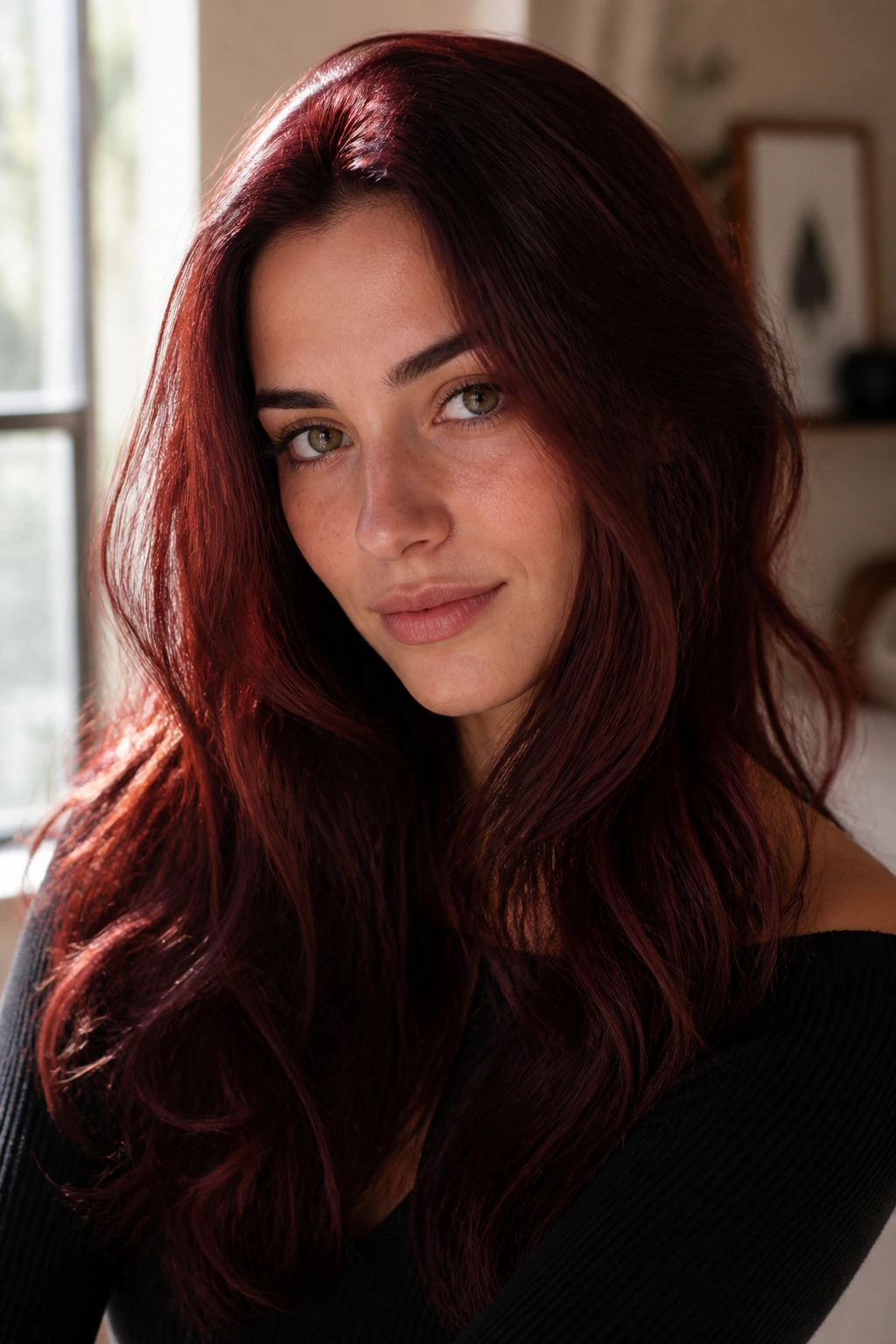
This is the shade that makes mahogany feel like mahogany. Think medium brown at the base with a red-violet reflect that only wakes up when light hits it, not a bright red that announces itself from across the room. On cool skin, that restraint is a gift.
What I like about this version is how calm it looks in shadow and how rich it looks near a window. It gives pale, pink, or porcelain skin a little warmth without turning the face orange. If your natural color lives around level 4 or 5, this is the cleanest starting point.
Best for:
- Straight or softly waved hair
- Fair to medium cool skin
- Anyone who wants red, but not red red
- First-time color clients who want a safe entry point
The trick is to ask for a brown-red base with violet reflect, not a coppery mahogany. That tiny wording change matters more than people think. Copper is a different personality entirely.
2. Burgundy Mahogany Melt
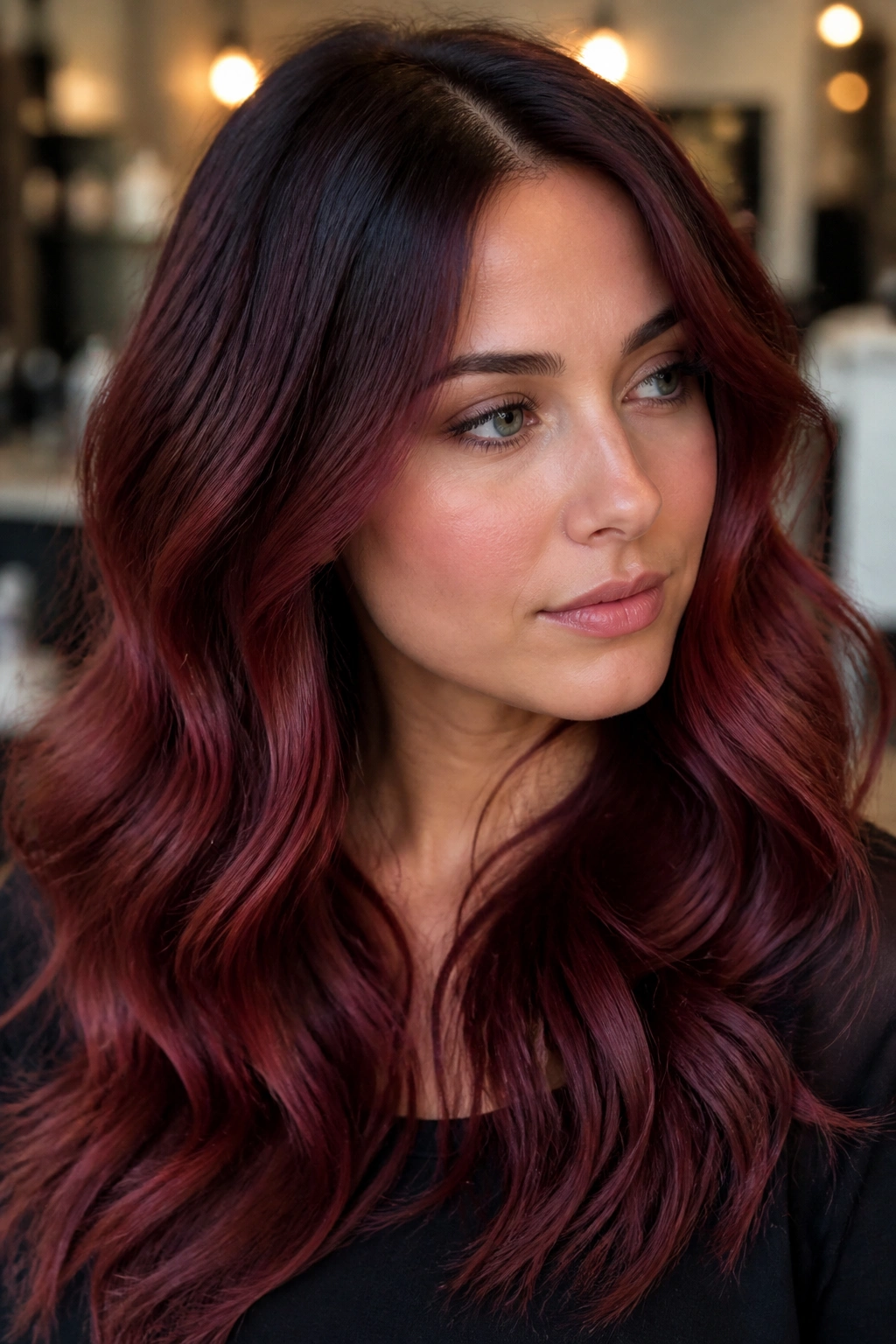
Why does this read so soft on cool skin? Because the burgundy note blunts the red and keeps the whole look in the wine family. You still get depth, but the shade feels smoother and less fiery than a true auburn.
How to Ask for the Melt
Tell your colorist you want a dark brown root shadow that melts into burgundy-mahogany mids and a slightly softer end point. That kind of blend makes the color feel grown-up, not striped. It also helps the red fade in a prettier way, which matters more than people admit.
A melt works especially well if your hair already has dimension. Highlights underneath, natural sun-lightening, old balayage — all of that gives the burgundy something to sit on. On cool skin, it tends to flatter pink cheeks and blue eyes without making the face look flat.
If you like wearing black, silver, or charcoal, this shade is an easy win. It has enough depth to hold its own against dark clothes, which is where some reds get lost.
3. Cherry Mahogany Bob
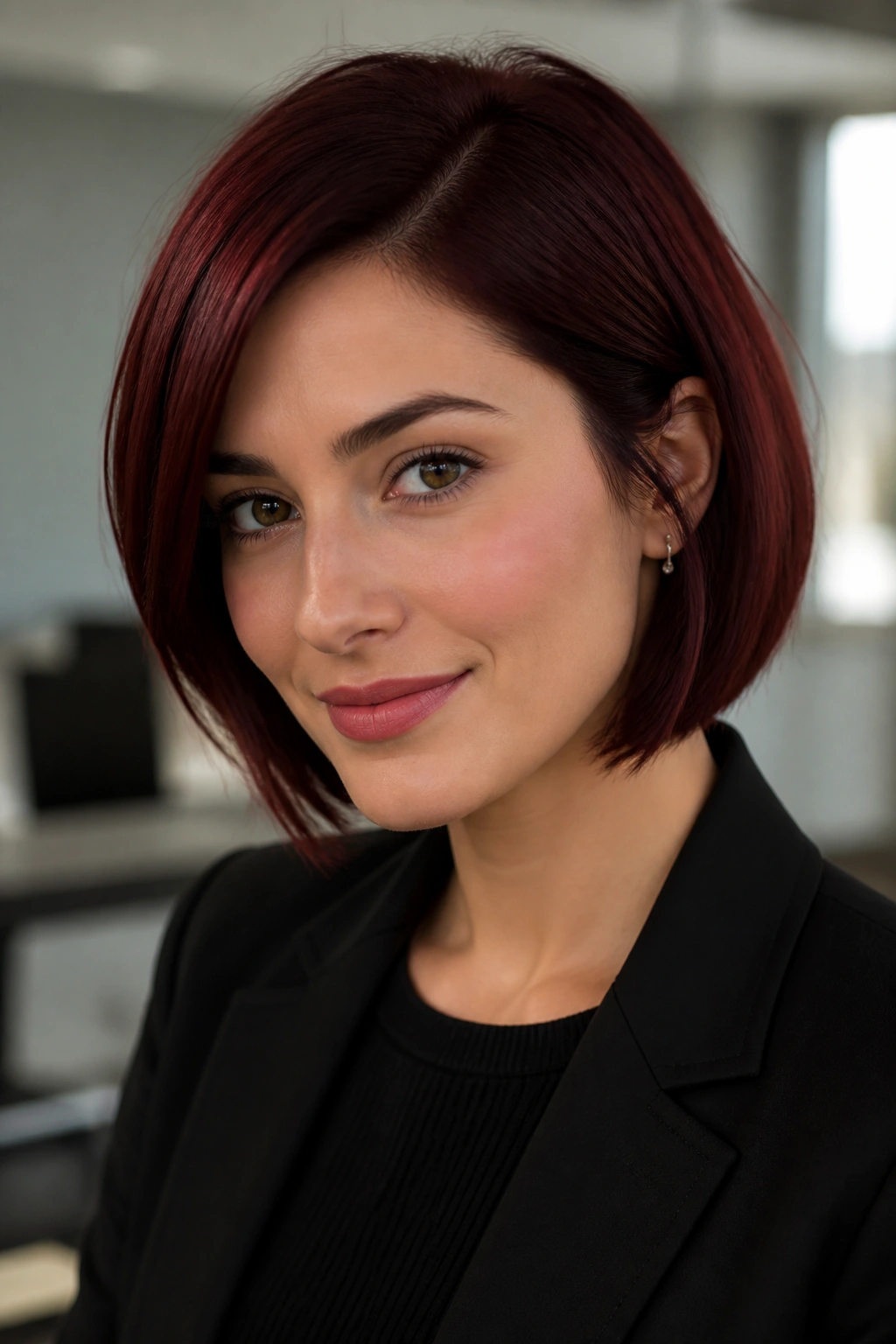
Picture a chin-length bob with a deep cherry-brown sheen under office lights. Clean lines, sharp ends, and a color that looks like polished fruit instead of candy. That’s the whole appeal.
A bob gives red mahogany a shape to live in. The cut keeps the eye on the line of the jaw, while the cherry tone stops the style from feeling severe. On cool skin, this is a smart move if you want the face to look brighter without having to go light.
What Makes It Work
- The shorter shape makes the red show faster and more clearly
- Fine hair looks denser because the darker brown base creates visual weight
- A center part feels sleek; a deep side part makes the cherry tone flash more
- Regular trims matter every 6 to 8 weeks, because blunt ends expose any fading fast
Keep the red on the cherry side, not the tomato side. That’s the difference between chic and loud.
4. Black Cherry Mahogany
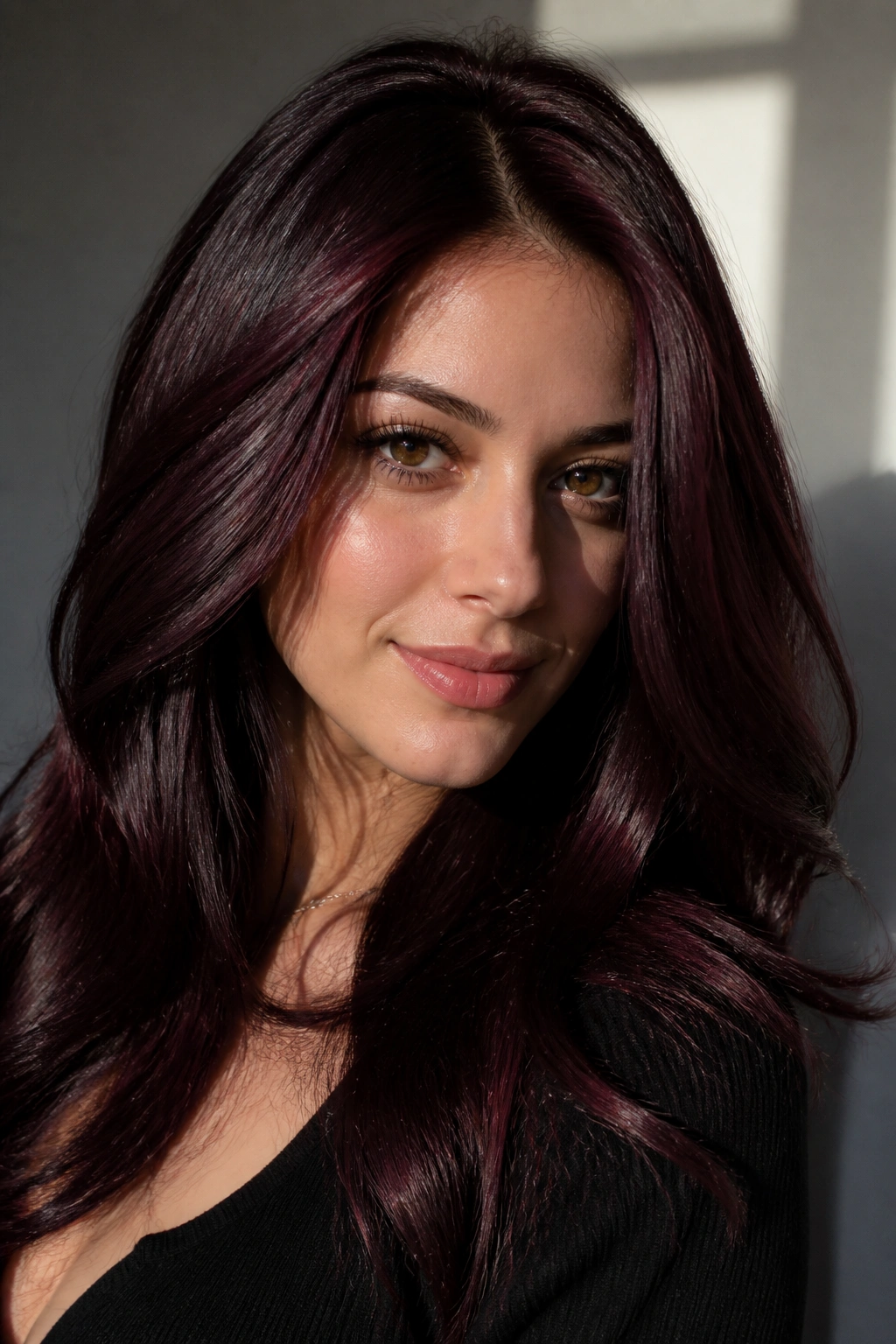
This is the shade for someone who wants a dark color that still reads red. It sits close to black at first glance, then gives off a wine-dark glow in daylight. On cool skin, that matters. A true black can go flat; black cherry keeps the face alive.
The best version usually starts with a deep brown or soft black base and a burgundy overlay. I like it on medium to deep cool skin, especially when the eyes are dark or the eyebrows are naturally strong. It has presence without needing a lot of brightness.
Ask for a demi-permanent gloss if you’re testing the waters. The shine is half the effect here. Flat black cherry loses its charm fast; glossy black cherry looks expensive and deliberate.
One small caution: if your hair is already very porous from bleach or heat, this shade can grab too dark. A strand test is worth it.
5. Plum-Rose Mahogany
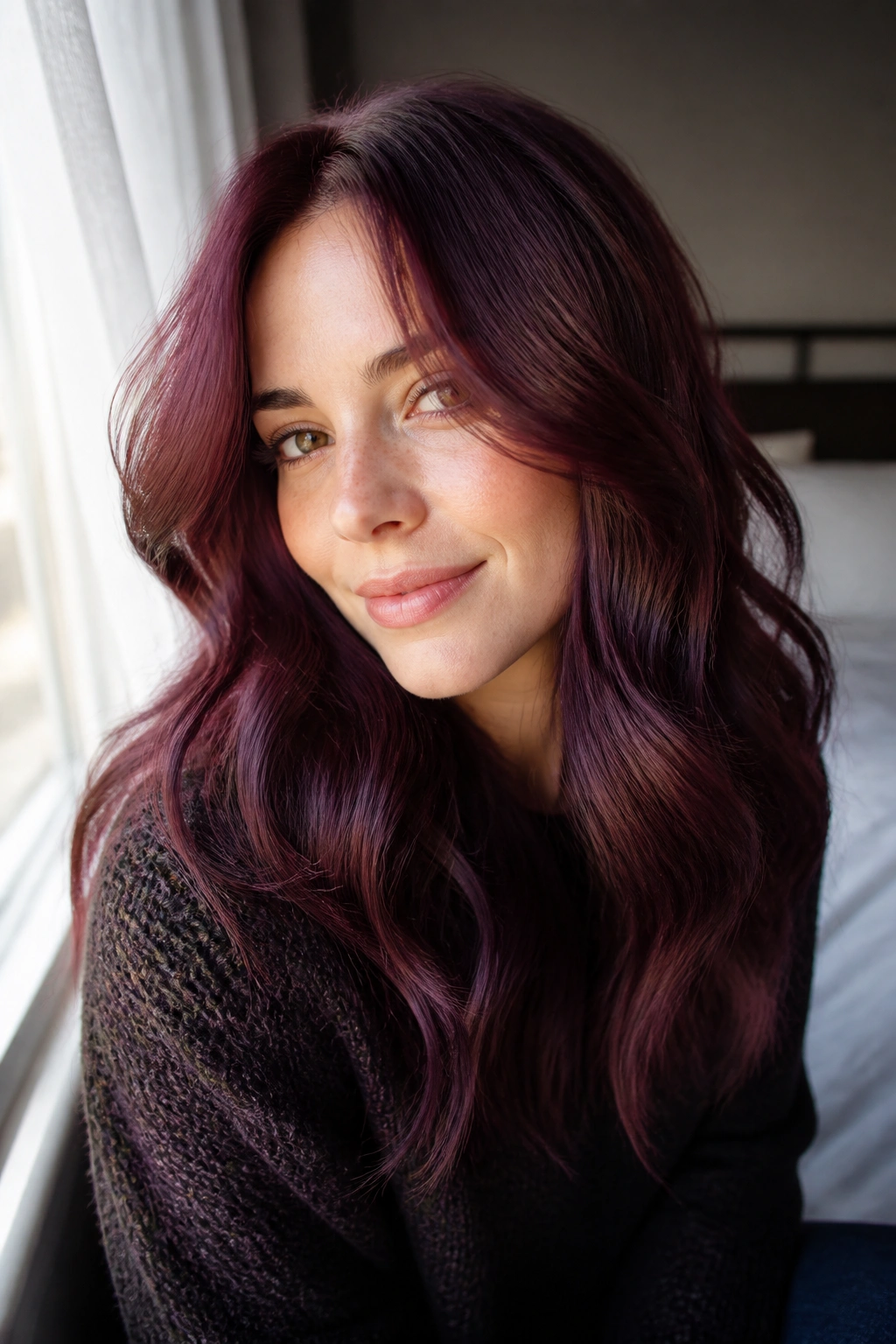
Unlike a straight plum, this version keeps a brown spine. That’s what makes it wearable. You get the cool violet-red tone, but the mahogany base stops it from drifting into purple candy territory.
Plum-rose mahogany is especially kind to muted cool skin. If your complexion reads soft rather than sharp, a heavy red can feel too loud. This shade sits lower on the volume dial. It also plays well with gray, hazel, and blue-gray eyes because the violet note echoes the coolness in the face instead of fighting it.
Why It Feels Different
The rose note gives the color warmth at the surface, while the plum keeps it cool underneath. That mix is harder to get than it sounds. If the rose is too strong, the color turns pinkish. If the plum takes over, it can look almost brown in low light.
This is a good choice if you want something tasteful without being timid. That balance is rare, and honestly, most red shades do not manage it.
6. Smoky Rosewood Mahogany
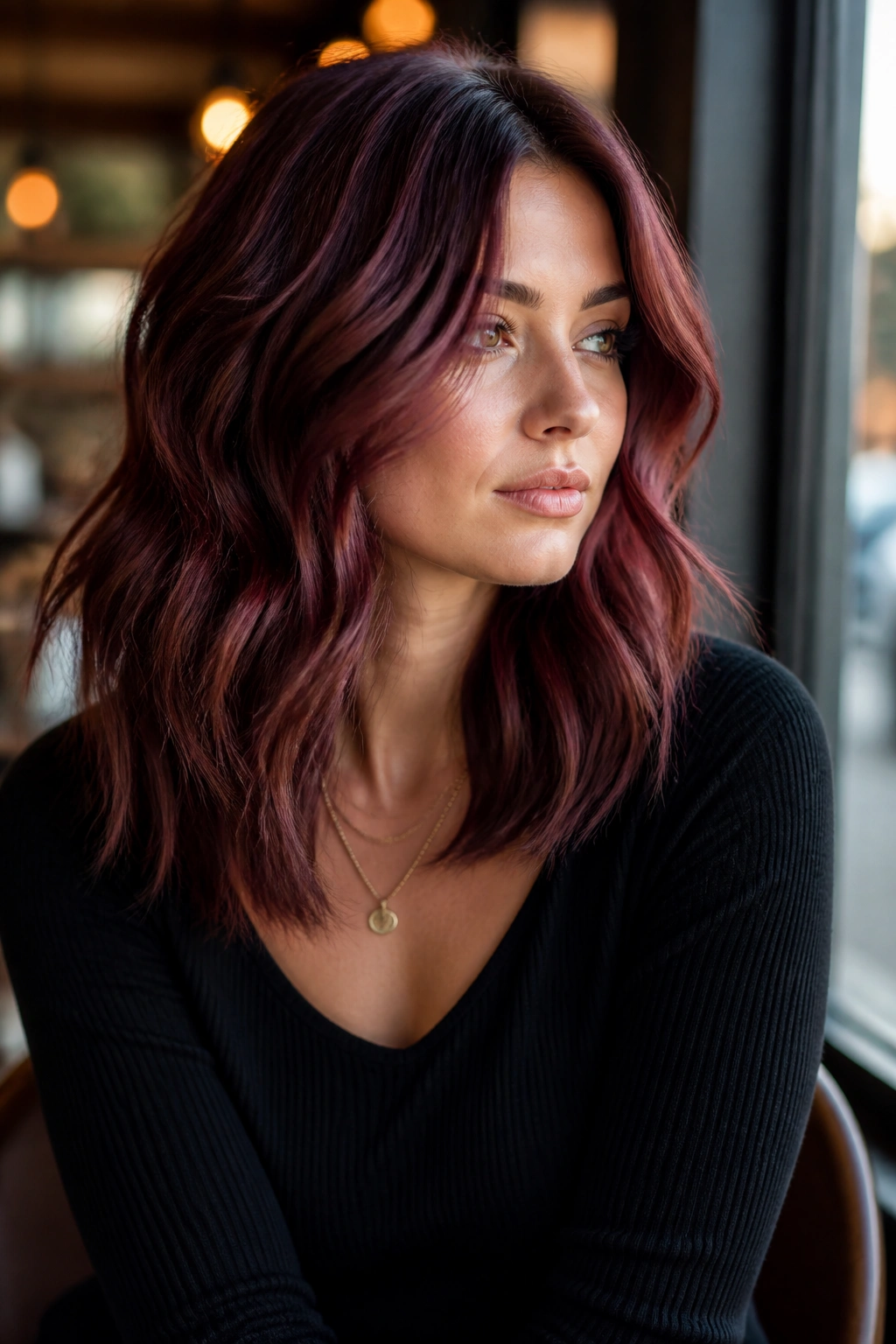
A smoky rosewood mahogany looks like the color was filtered through soft charcoal and velvet. It’s one of those shades that never seems to sit still. In daylight it reads reddish-brown; indoors it leans moody and quiet.
I like this on shoulder-length waves because the bends in the hair catch the color differently. The darker pieces hold the shape, and the red shows up at the curves. That movement gives the shade depth without obvious highlights.
What to Watch For
- Ask for a muted red-brown gloss, not a bright copper glaze
- Keep the roots slightly deeper than the mids
- Works best when the cut has some layering
- Looks especially good on cool skin with a rosy cast
This is the shade for someone who wants red but hates the look of “fresh dye.” It has enough personality to feel intentional, and enough softness to stay practical.
7. Mocha Mahogany with Cool Ribbons
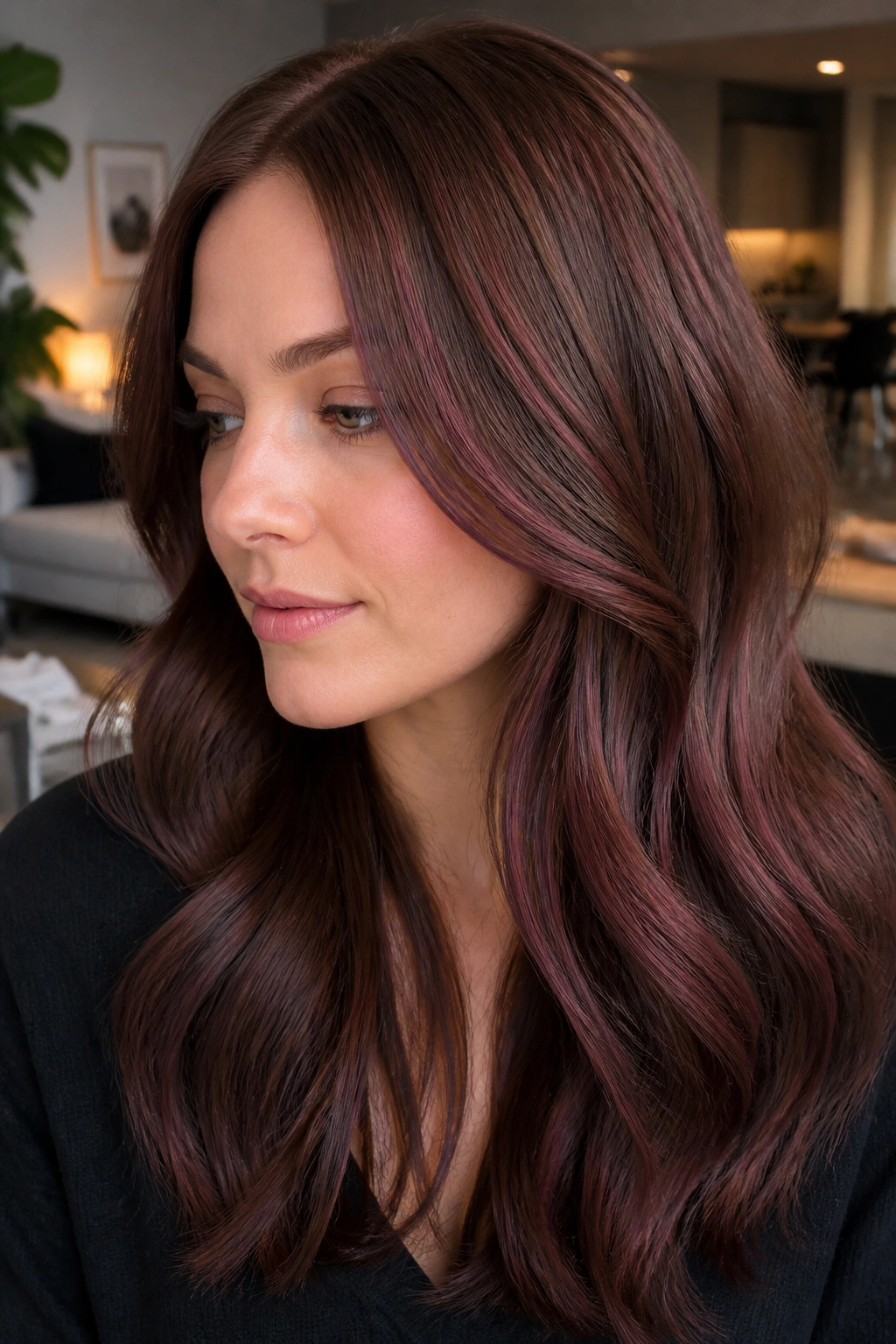
Mocha mahogany with cool ribbons is a relief if you’re coming from brunette hair and don’t want a full color overhaul. The base stays mocha — dark brown, almost coffee-colored — while narrow ribbons of mahogany run through the top layer and around the face.
Those ribbons matter. Too many and the hair starts looking streaky. Too few and the red gets lost. The sweet spot is a few vertical pieces near the cheekbones and a handful through the crown so the color can move when you turn your head.
This is the version I’d point to if you like a professional, polished look but still want the red family to show. Cool skin tends to like the contrast. The brown base keeps things grounded, and the mahogany ribbons stop the hair from feeling flat.
It’s a tidy choice. Not boring. Just controlled.
8. Mulberry Mahogany
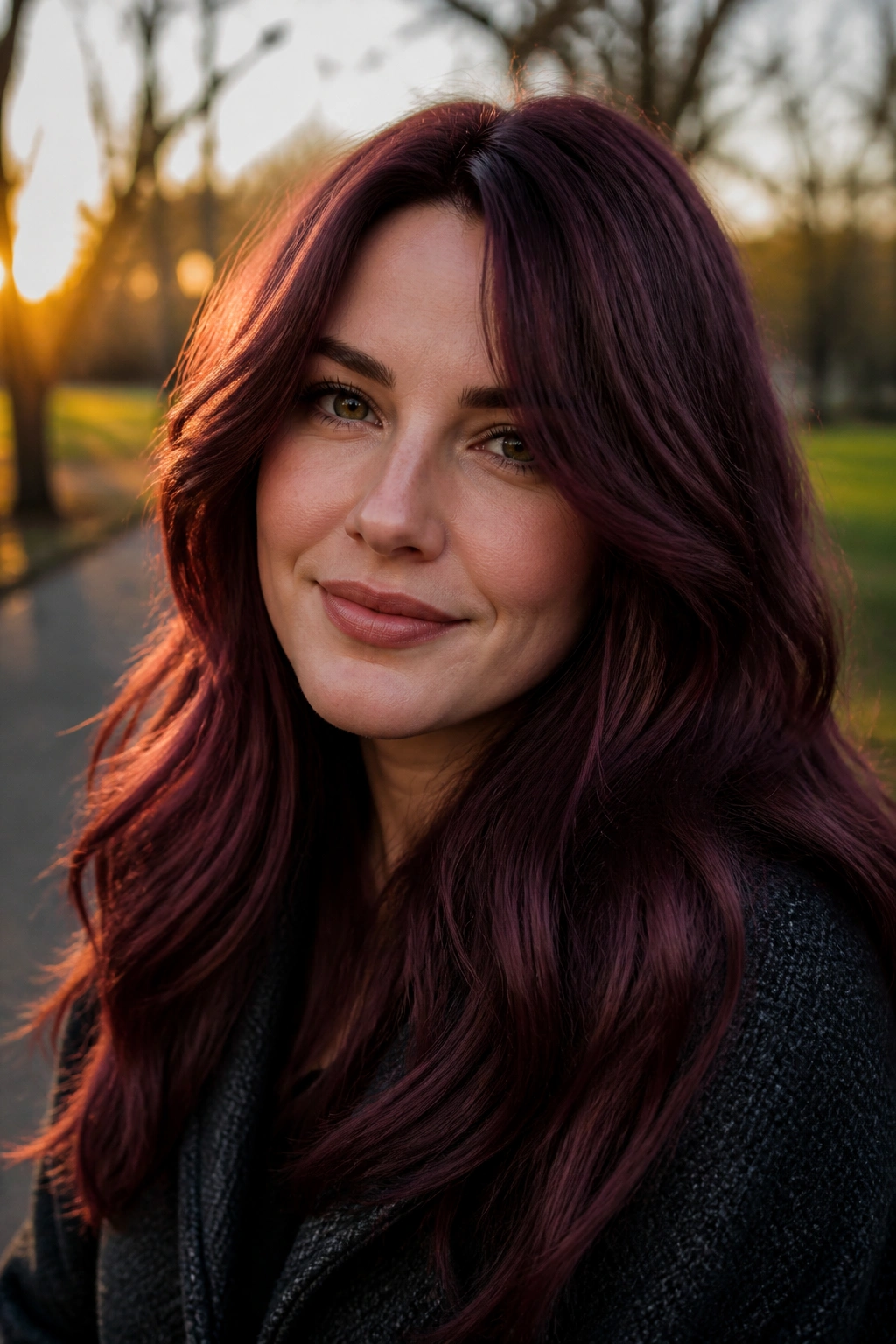
Why does mulberry mahogany look so rich on cool skin? Because it sits deeper than cherry and cooler than merlot, which gives the face a clean frame instead of a warm haze. It has that dark berry feel that makes blue undertones in the skin look clearer.
How to Get the Shade
Ask for a brown-violet base with berry reflect. That phrasing helps avoid red formulas that lean orange. If your starting color is dark blonde or light brown, the mulberry note can take on a glossy, almost fruit-skin finish. On darker brunettes, it can read as a deep wine sheen instead.
Who It Flatters
- Fair cool skin that blushes easily
- Deeper cool skin that needs a rich frame
- Thick hair, because the color loves density
- Wavy or curly textures that break up the shine
This is not a shy color. It’s better when the cut has movement or length, because mulberry wants room to show the shift between red, violet, and brown.
9. Merlot Mahogany
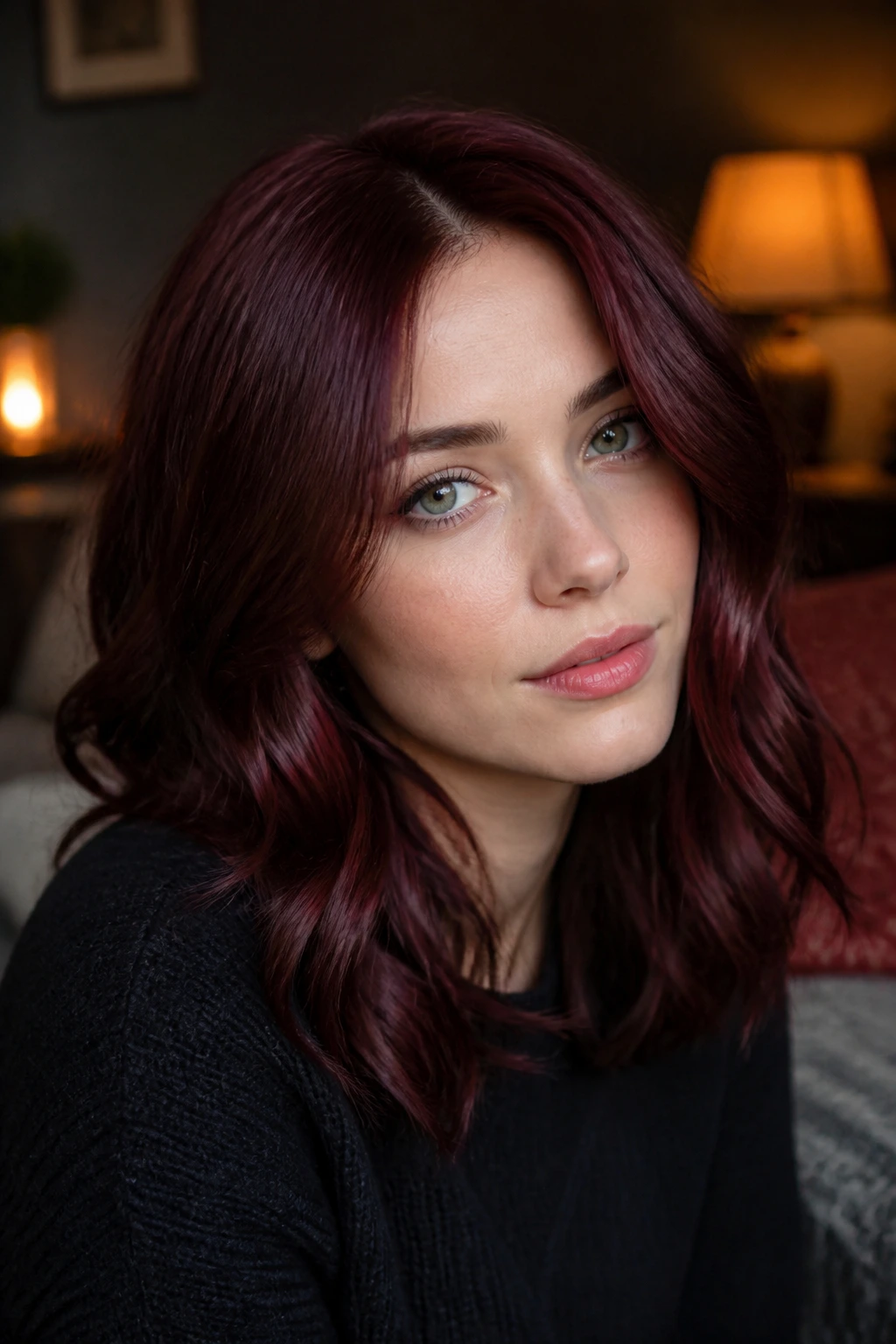
Merlot mahogany makes me think of candlelight and dark glasses. That sounds dramatic, but the color earns it. It’s deep enough to feel elegant, yet the red-wine tone keeps it warmer than a plain espresso brown.
This shade tends to flatter medium and deeper cool skin because it gives the face some color without creating a harsh contrast. If your complexion looks best in silver and deep jewel tones, merlot is worth a serious look. It also handles dim indoor light well, which some brighter reds do not.
Quick Shade Notes
- Level 4 to 5 brown base
- Burgundy or wine-red reflect
- Slightly cooler than a classic auburn
- Best when finished with a gloss, not a matte color
If you like richer lipstick shades — berry, wine, plum — this hair color will make sense on you. It has that same dressed-up feeling, but in a quieter way.
10. Cranberry Mahogany Pixie
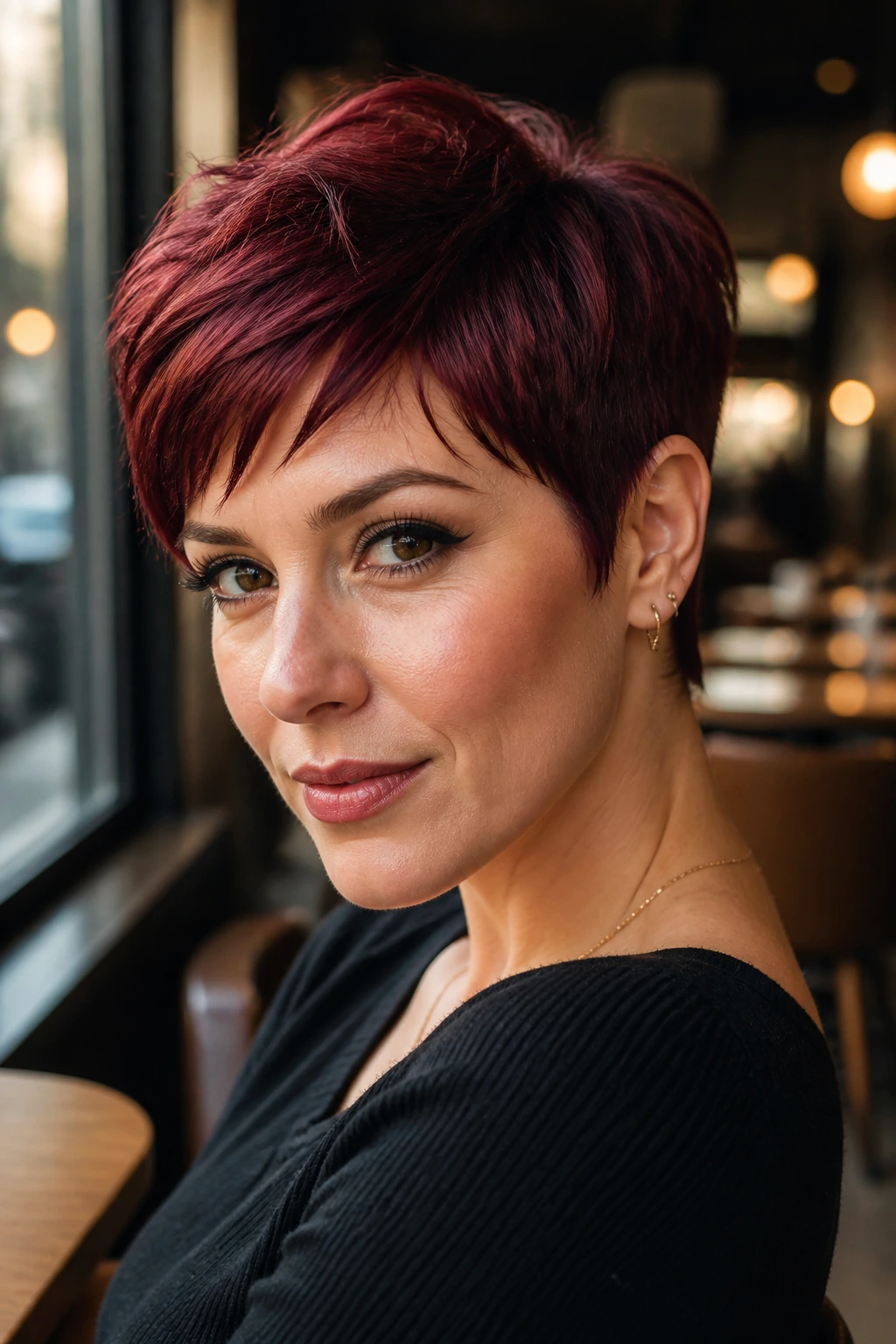
This is the shade that proves short hair can carry real color. On a pixie, cranberry mahogany shows up at the temples, crown, and nape in fast little flashes, so the color does half the styling for you. The cut stays crisp, and the red keeps it from feeling severe.
The cranberry note is what keeps it cool. Too much orange and a pixie can start to look dated fast. But cranberry on a mahogany base? That feels sharp. The color has enough brightness to wake up fair skin and enough depth to keep from looking juvenile.
Short hair does reveal growth quickly, though. That’s the tradeoff. If you don’t mind a trim every few weeks, it’s a strong choice. If you want a low-touch color, skip the brighter cranberry and keep the mahogany deeper.
This one has attitude. A little goes a long way.
11. Velvet Mahogany Balayage
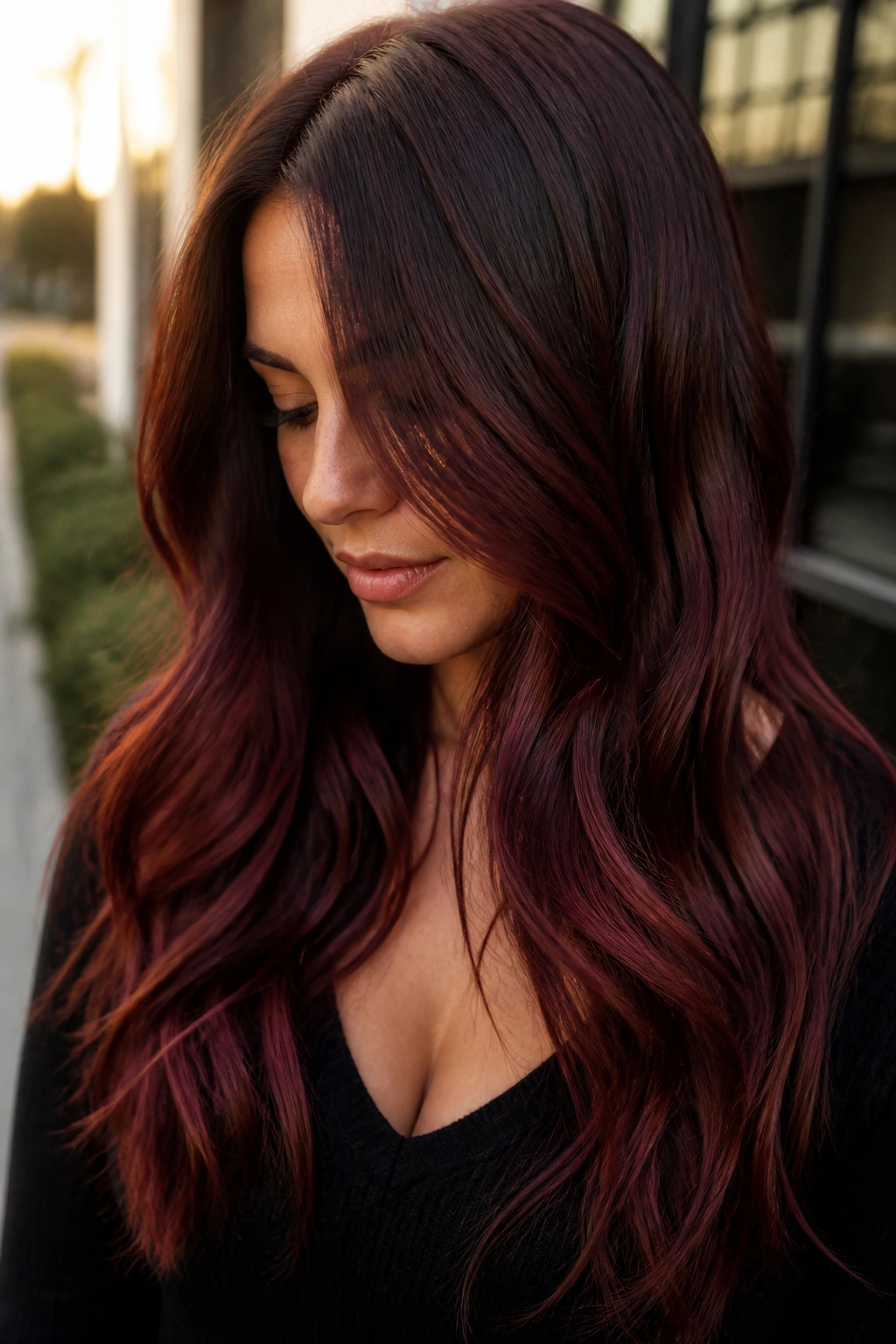
Unlike chunky highlights, velvet mahogany balayage keeps the color soft at the edges. The hand-painted pieces sit in a broader pattern, so the red doesn’t look striped or harsh. That’s a big deal on cool skin, because hard orange streaks can drag the whole face in the wrong direction.
The “velvet” part comes from the finish. You want a shade that looks plush, not shiny in a plastic way. A balayage approach gives the red room to show through the brown without sitting on top like decoration. On waves, the contrast is lovely. On straighter hair, it still reads clean.
I’d choose this if you want dimension and movement more than full saturation. It suits long layers, collarbone cuts, and soft blowouts. Ask for narrower ribbons near the face and wider pieces underneath so the color feels balanced.
This is one of the easiest ways to wear mahogany without looking like you tried too hard.
12. Espresso-Mahogany Gloss
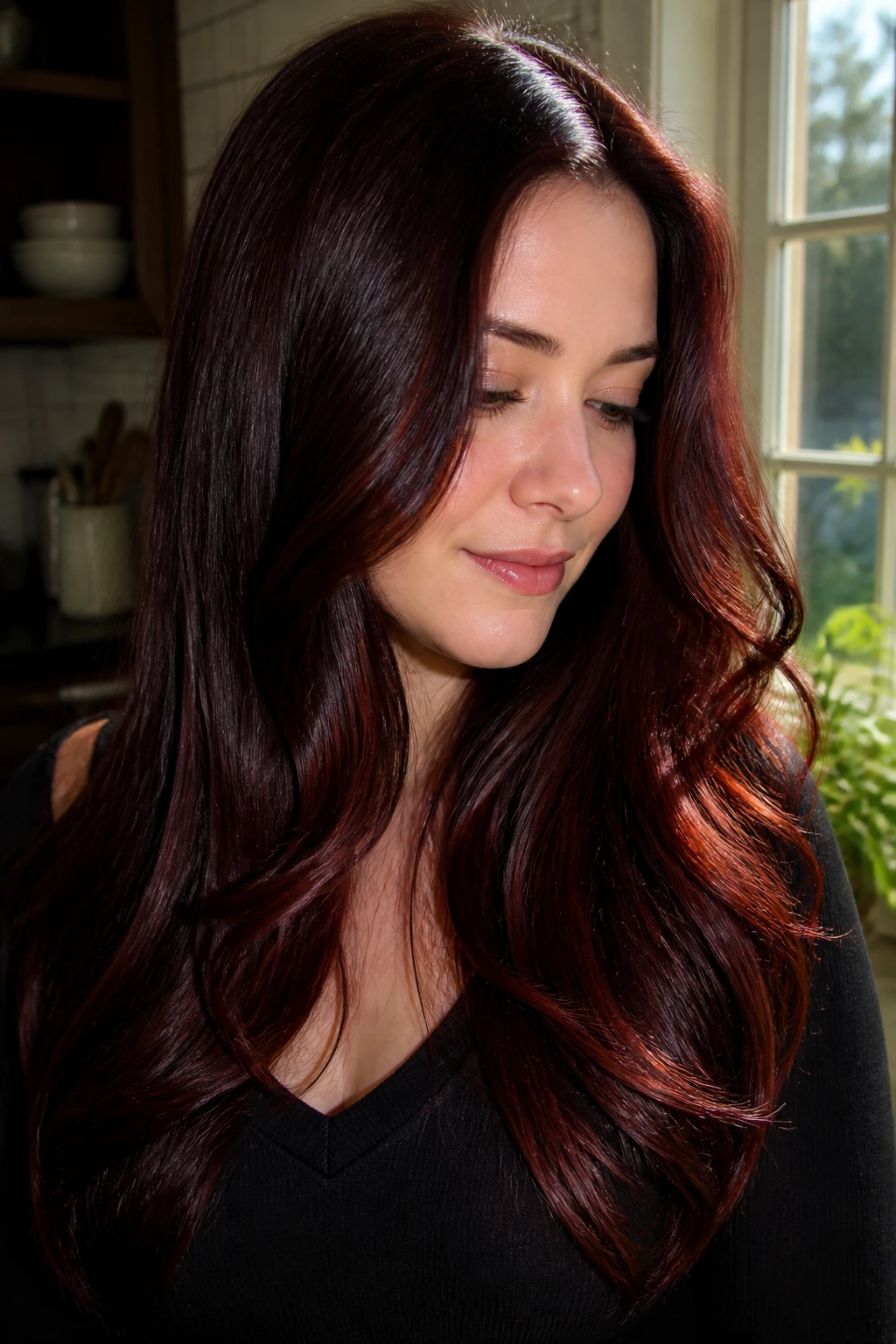
Espresso-mahogany gloss is for the person who wants a barely-there red that still changes the whole mood of the hair. It looks dark from a distance, then gives off a red-brown gleam when the light gets close. That’s the charm. It whispers.
I like this as a first step for brunettes who are nervous about red. A gloss sits on top of the hair or just inside the cuticle, so it can add reflect without locking you into a heavy permanent shift. It also leaves the hair looking smoother, which helps if your ends are dry.
The color reads especially well on cool skin because it avoids the orange zone almost completely. If your wardrobe is full of black, gray, navy, or white, this shade blends in cleanly and still looks richer than plain brown.
It’s a quiet move. Not invisible. Quiet.
13. Dusty Garnet Mahogany
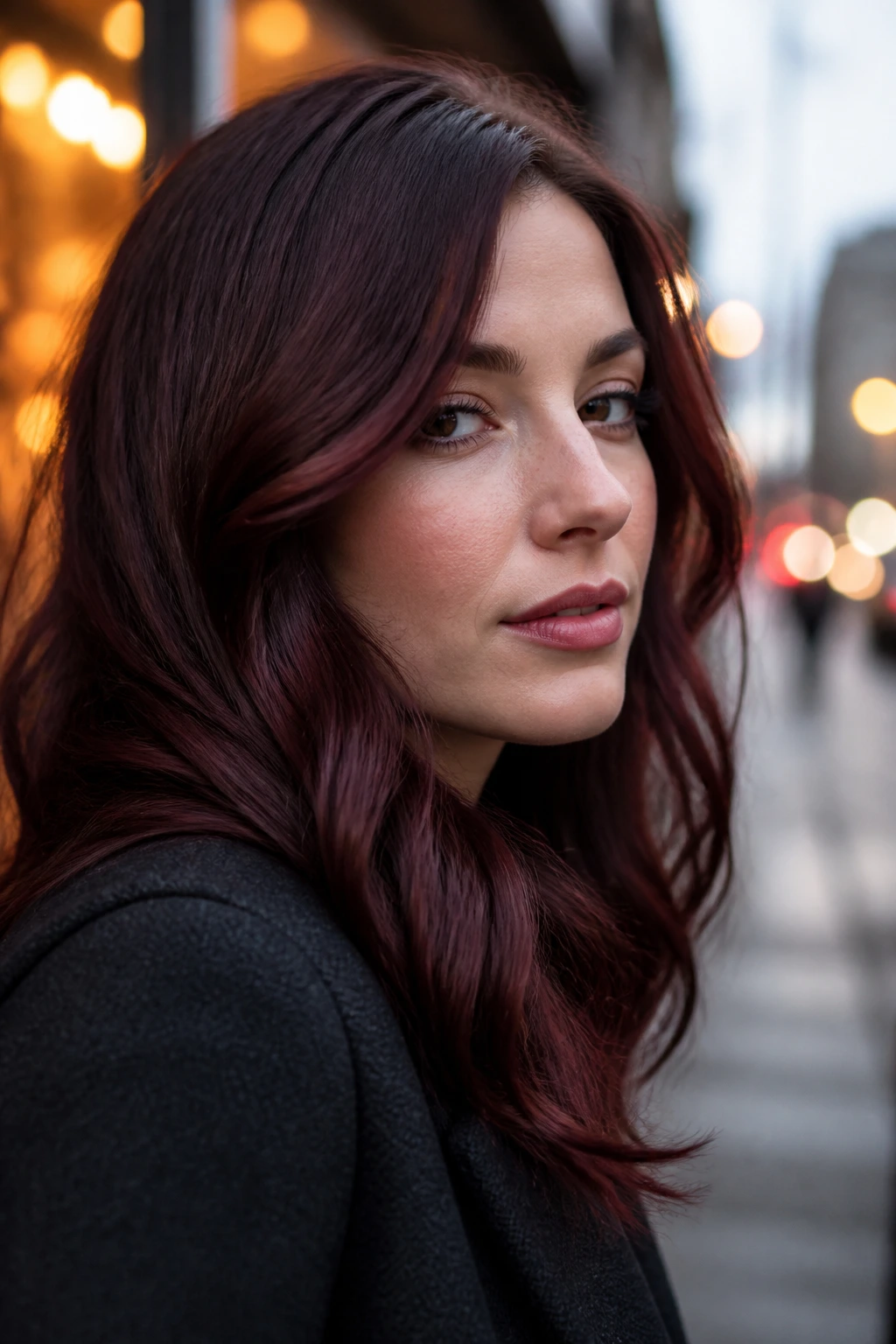
Can garnet look soft? Yes, if you dust it down with brown and violet. That’s the trick. Dusty garnet mahogany takes the jewel-tone depth of garnet and mutes the brightness just enough to sit comfortably next to cool skin.
What to Ask Your Colorist
Tell them you want a muted garnet with a mahogany base and no copper pull. That last part matters. Copper can hijack the whole formula if it’s not controlled. A dusty garnet should feel grounded, not bright.
If your skin leans pink, this shade can be lovely because it adds color without making the face look flushed. It also works well on shoulder-length hair with layers, where the deeper and lighter pieces can show off the wine note.
What to Avoid
- Too much orange or gold in the formula
- Flat one-tone application on very fine hair
- Heavy red deposits on porous ends without a strand test
This is a grown-up color. Rich, but not loud.
14. Cool Chestnut Mahogany
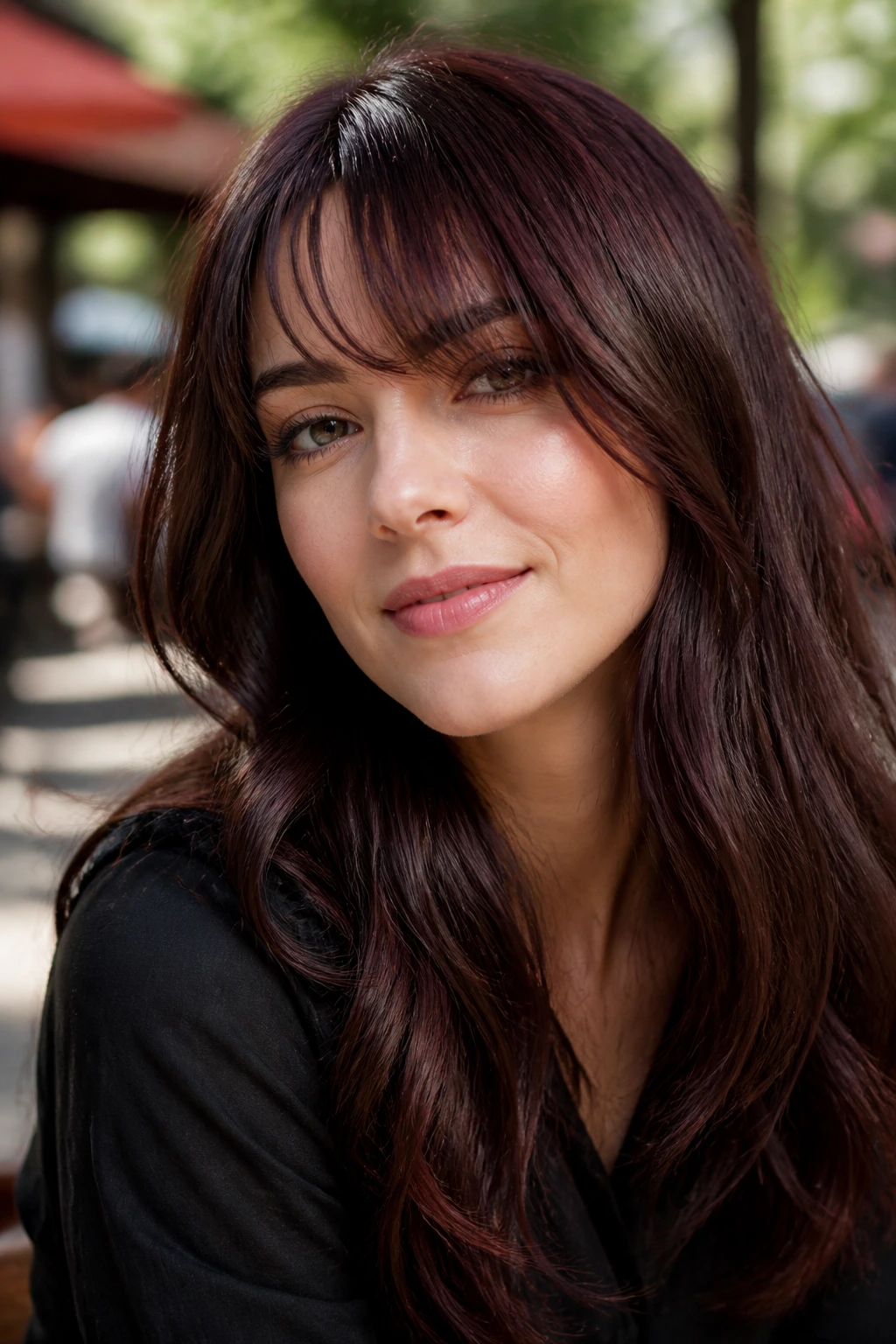
This is the shade for someone who wants the door into red hair to stay a little open, not thrown wide. Cool chestnut mahogany is mostly brown, with a restrained red cast that peeks out in sun or under bright indoor light.
A lot of people think they want a stronger red than they actually do. Then they see their reflection in daylight and regret it. Chestnut mahogany avoids that problem. It keeps the color family readable without making the whole head red.
Why It’s So Forgiving
- The chestnut base softens any redness at the hairline
- Regrowth blends more easily than with brighter mahogany
- It works on straight, wavy, and curly textures
- It plays nicely with cool neutral wardrobes
This is the color I’d steer toward if you’ve never worn red before. It’s the least dramatic on the grow-out, which is a quiet blessing. You do not want to be trapped by a shade that looks great for two weeks and strange for the next six.
15. Raspberry Mahogany Ends
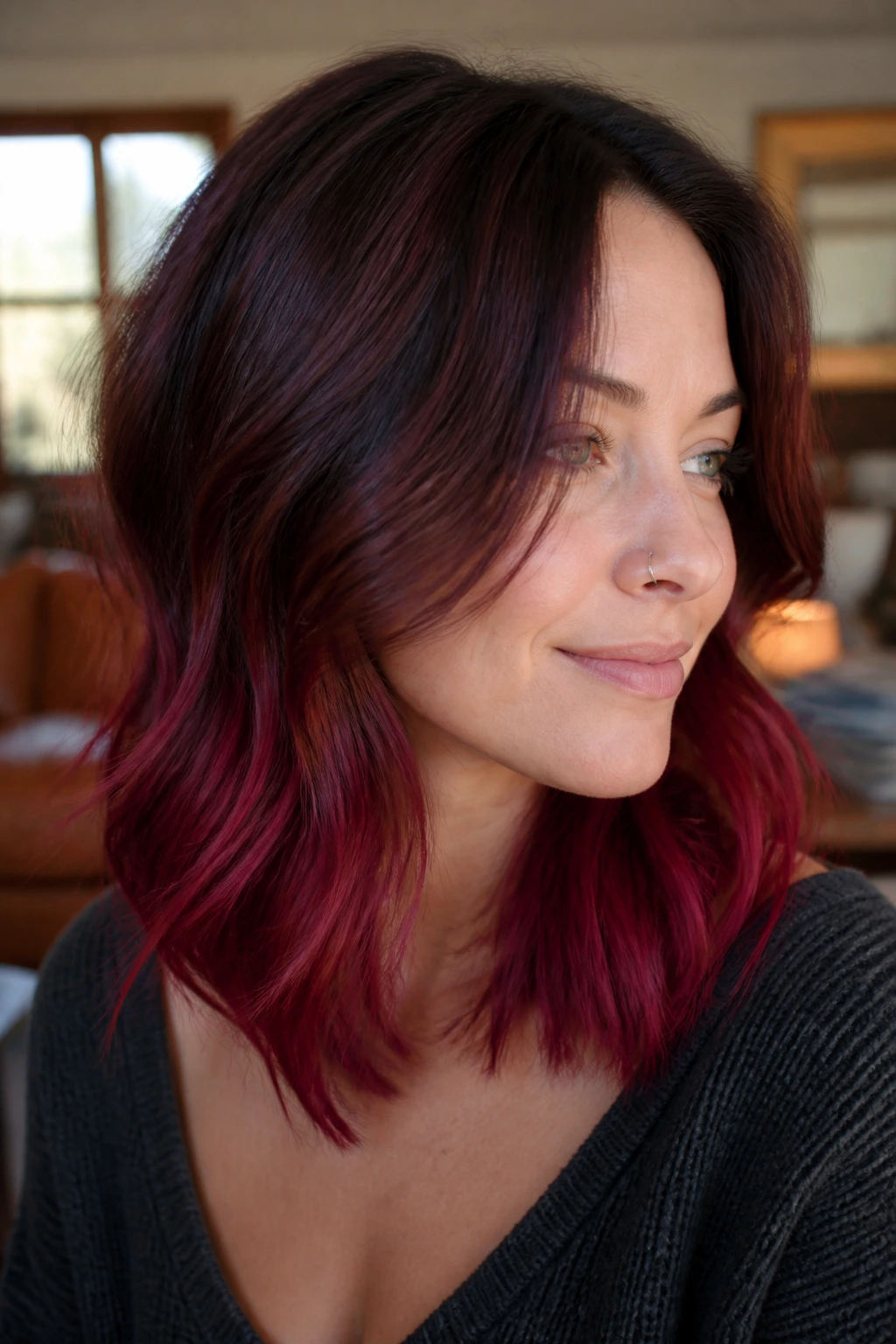
This one has energy. Raspberry mahogany ends create a darker root and mid-length story, then let the color get brighter near the bottom where the eye lands last. On long hair, that contrast gives the whole style a sense of motion.
The raspberry note keeps the color cool and punchy. It’s not the same as hot pink or fire red. Think berry stain instead of neon. On cool skin, the contrast can be very flattering because the top half of the hair stays grounded while the ends lift the face.
The shape matters here. Collarbone length and longer work best, especially with layers or soft U-shaped cuts. A blunt one-length cut can make the ends feel heavy unless the hair is very thick.
If you like the idea of a color story instead of a full-head transformation, this is one of the smarter options. It gives you the red payoff where it counts.
16. Mahogany Shadow Root with Wine Lengths
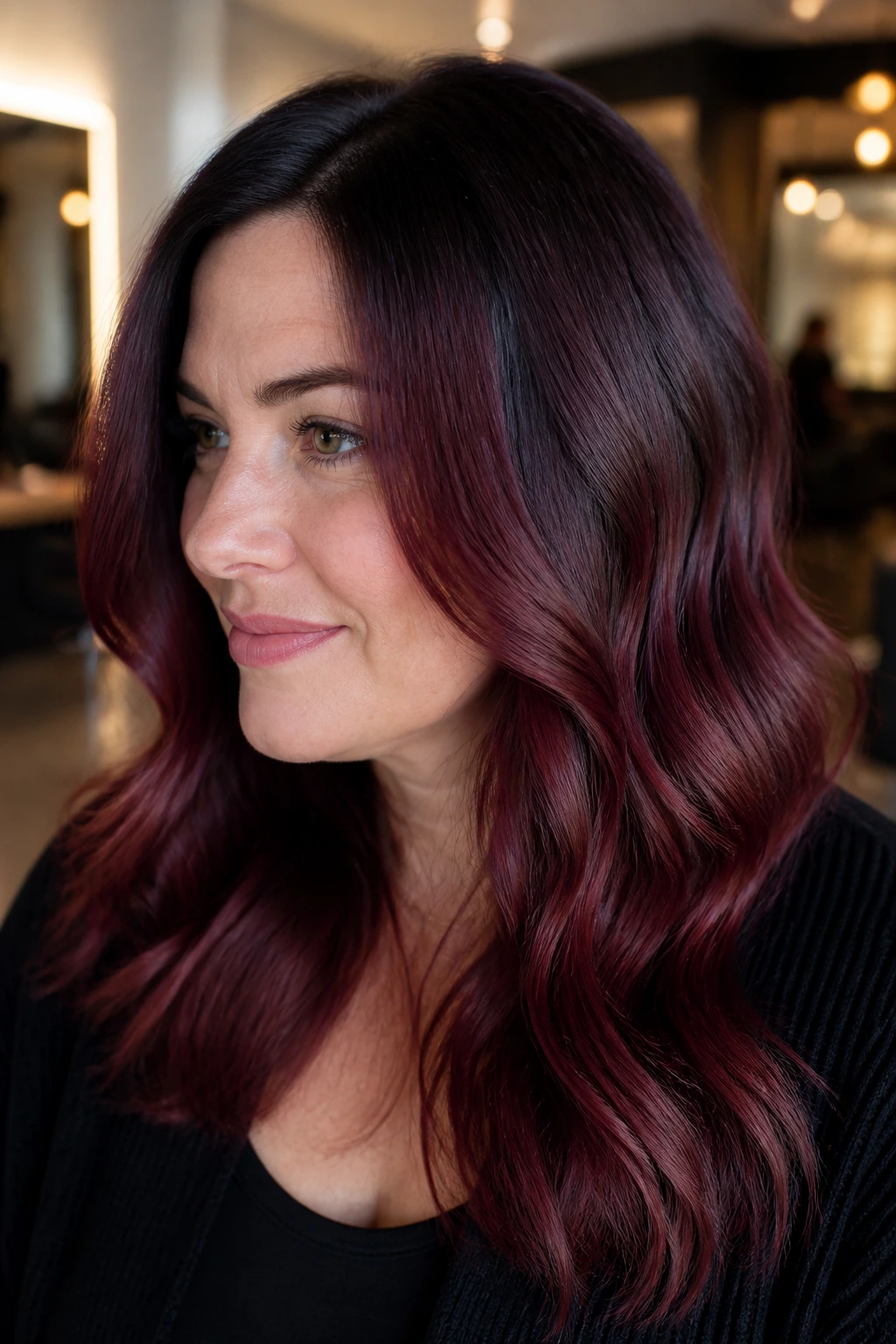
A shadow root is the easiest way to keep red hair from looking high-maintenance. With mahogany shadow root and wine lengths, the darker root blends into the richer red below, so regrowth doesn’t show up like a hard line. That alone makes the shade worth considering.
Unlike a solid red, this version has built-in softness. The root stays about one to two levels darker than the rest, which creates depth at the scalp and lets the wine lengths feel dimensional. On cool skin, that depth keeps the face from looking too bright around the hairline.
This is a smart pick if you style your hair in waves or loose curls. The darker root disappears at the crown, and the red shows more fully at the bends and ends. It gives the impression of thicker hair too, which is a nice side effect.
Ask for a root melt rather than a sharp line. Sharp lines belong in other color stories.
17. Amethyst Mahogany
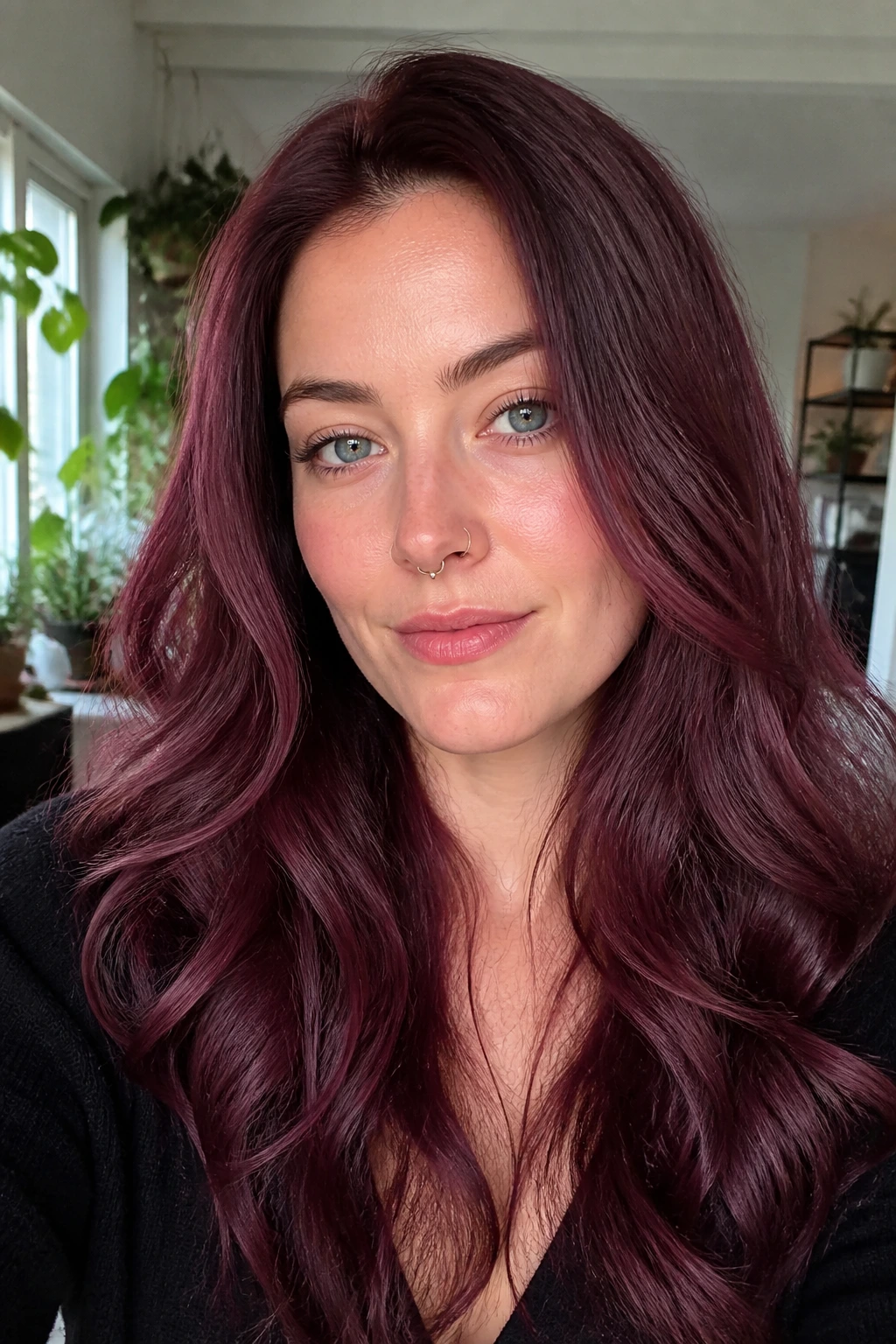
Amethyst mahogany is the jewel-tone cousin in the family. It brings in a violet note that makes the red feel cooler, cleaner, and a little more refined. On cool skin, that violet base can be a lifesaver because it keeps the hair from drifting into orange or rusty brown.
Why the Violet Note Matters
Violet helps neutralize unwanted warmth. That’s the practical piece, and it’s the reason this shade often looks more balanced on fair cool complexions and deeper cool skin alike. You still get the mahogany depth, but the amethyst lift gives the color a sharper edge.
The shade looks especially good on smooth finishes — blowouts, straight styles, soft curls with a clean pattern. In messy texture, the violet can get lost. In polished hair, it glows in a quiet way.
This is one of the richer choices on the list. Not the loudest. Just the one that feels the most jewel-like, which is a nice thing to have if your skin already leans cool and clear.
18. Tinted Mahogany Money Piece
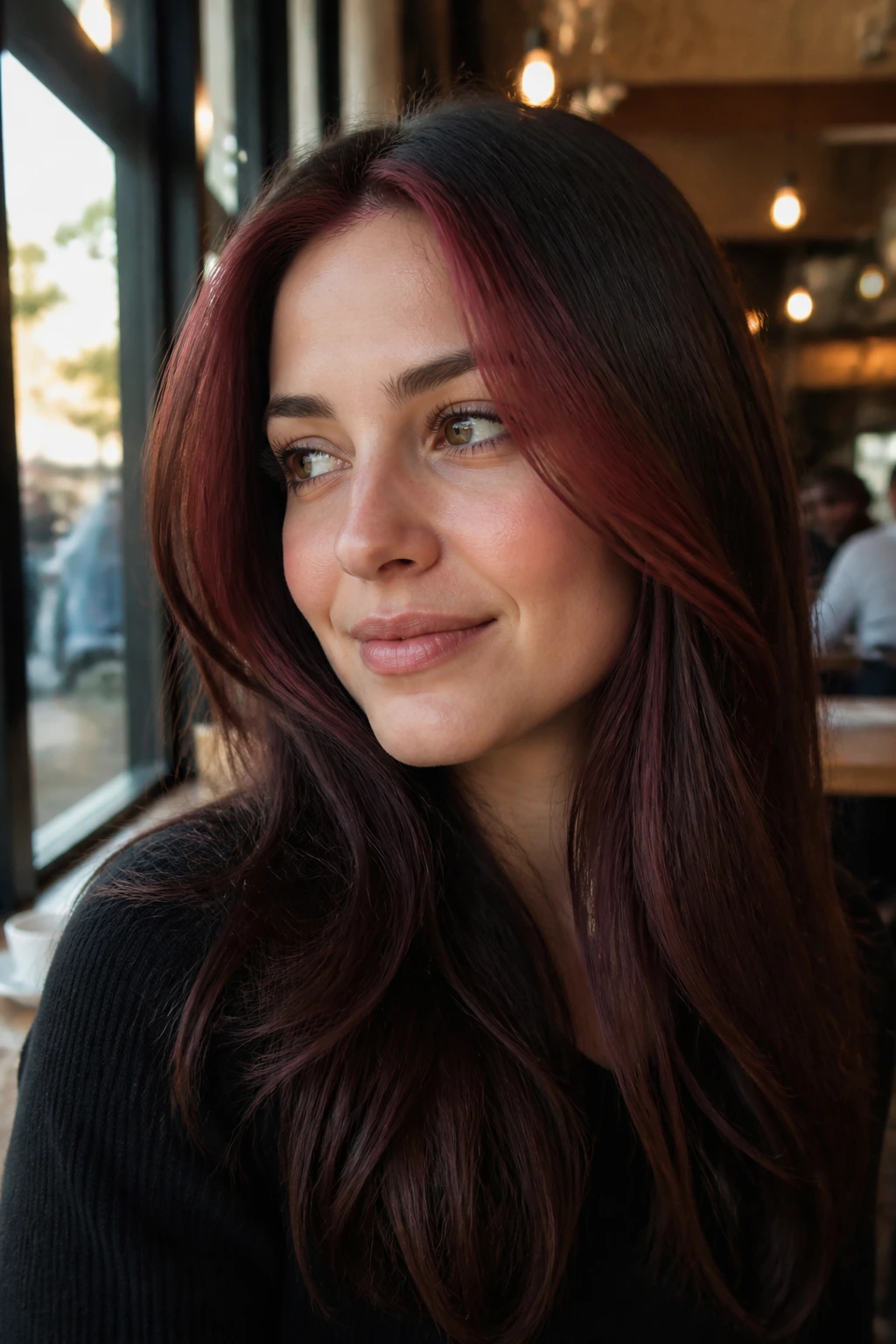
Want color near your face without committing to a full head? The money piece solves that cleanly. With tinted mahogany around the front hairline, you get a quick hit of red-brown brightness where it matters most — at the cheeks, temples, and fringe.
Where to Place It
I’d keep the pieces about 1 to 2 inches wide on each side, then feather them into the rest of the hair so they don’t look like stripes. Around bangs, the effect can be even better, because the color peeks through in motion and frames the eyes.
Who Should Skip It
- People who hate visible contrast
- Anyone with very damaged front pieces
- Hair that’s been over-lightened near the hairline
This is a useful test-drive if you’re unsure about mahogany. It gives you the feeling of change without a full commitment, and cool skin usually likes the red placed close to the face if it stays in the berry-brown range.
19. Soft Auburn Mahogany for Fair Skin
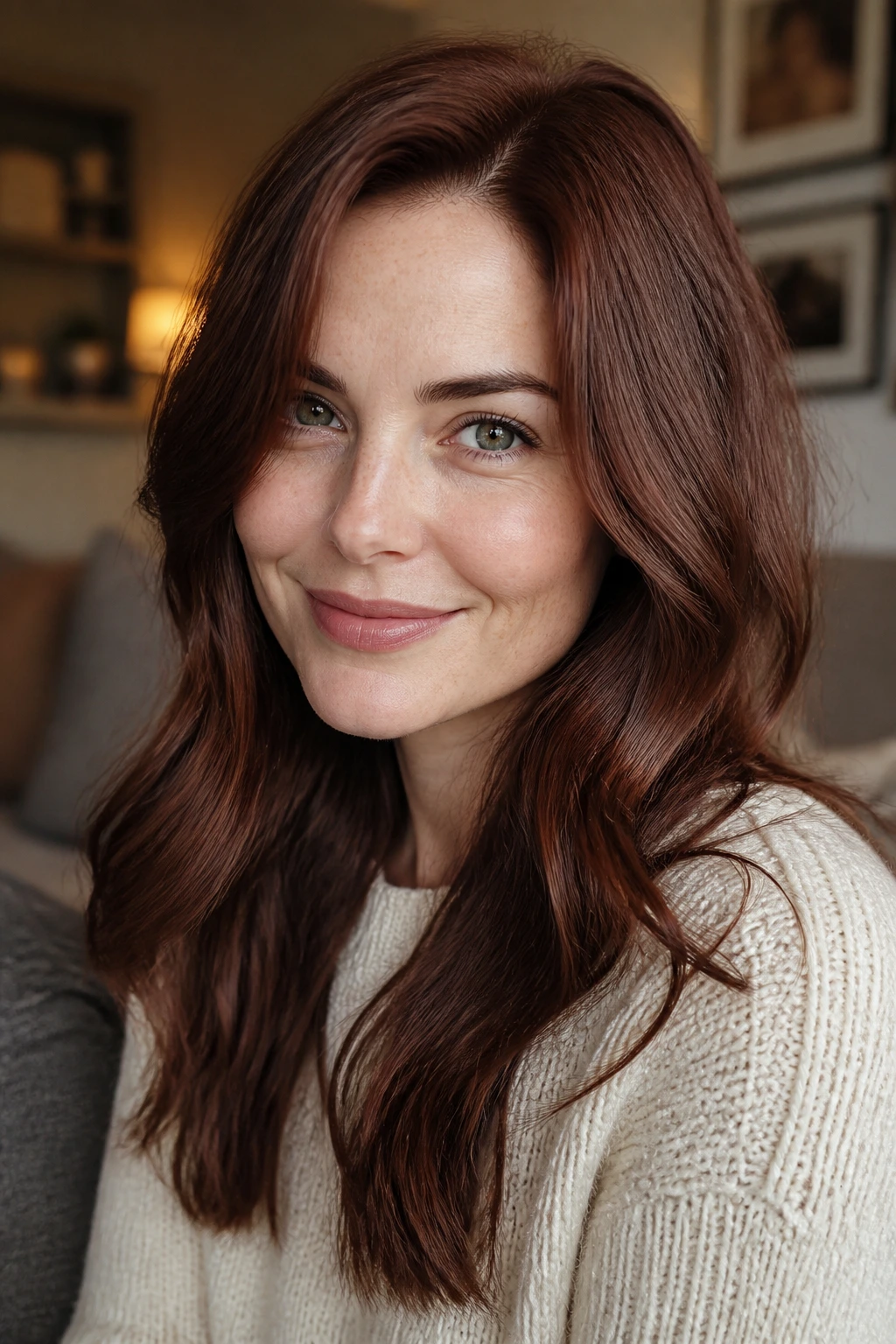
A fair cool complexion can wear red beautifully, but the shade has to stay controlled. Soft auburn mahogany does that by holding the red lower and letting the brown base do more of the work. The result is gentler than traditional auburn and far easier to live with.
That said, I would not push this toward copper. That’s where the whole thing gets noisy. Keep the warmth muted, keep the saturation soft, and let the red read as a tint rather than a shout. If your skin burns pink easily, this approach is kinder.
A few practical moves help here:
- Ask for a neutral-brown base with restrained red reflect
- Keep brows a shade or two deeper than the hair
- Use a gloss instead of a bright permanent red if you’re unsure
- Pair it with a soft cut, like long layers or a rounded bob
This is one of the easiest ways to make red feel wearable on very fair skin.
20. Deep Wine Mahogany Lob
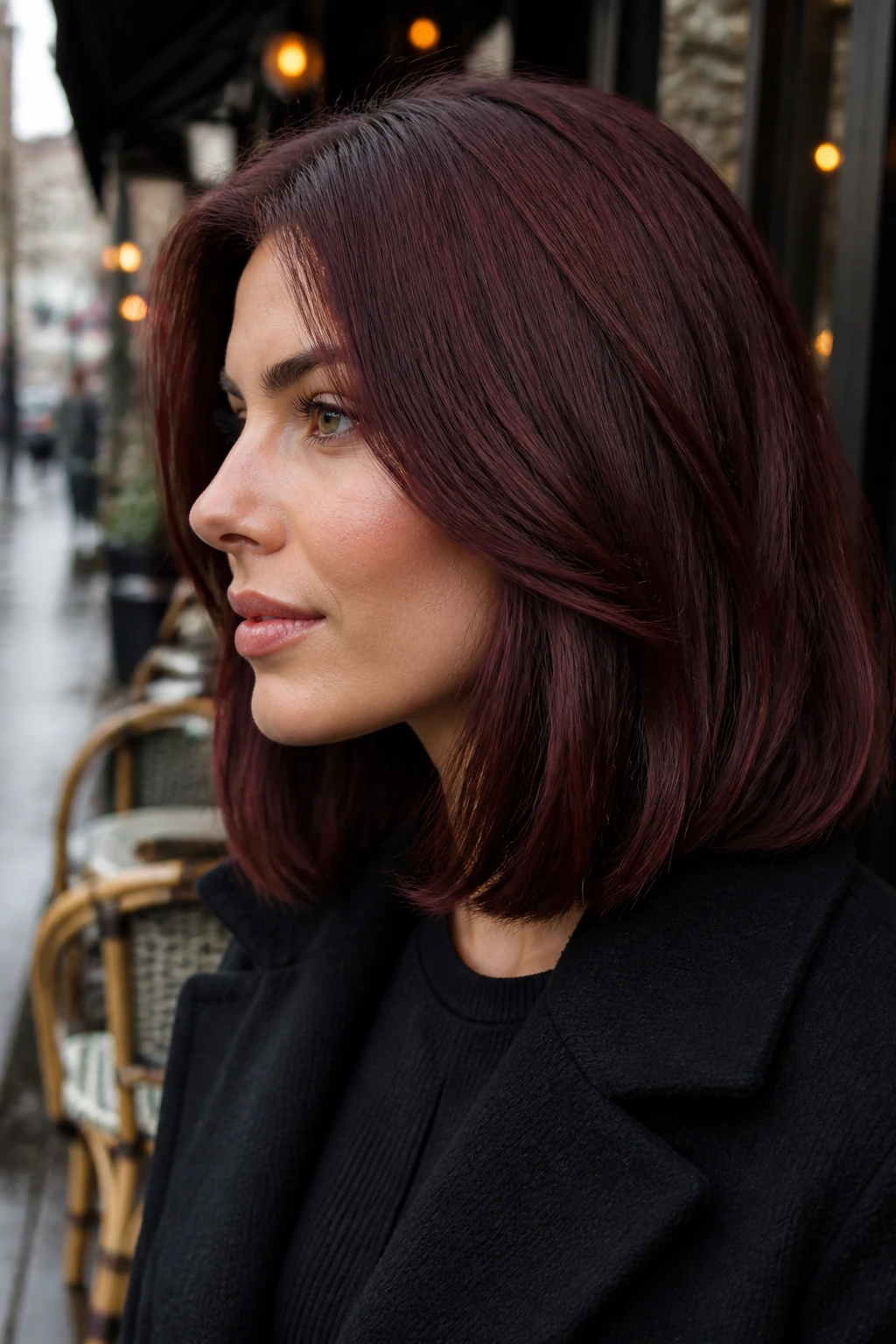
A lob gives deep wine mahogany room to breathe. Shoulder length is long enough to show the red-brown shift, but short enough that the color still looks tidy and polished. If you want a shade that feels grown-up without being stiff, this one earns its place.
The wine tone gives the color a cool, dark richness, and the mahogany base keeps it from sinking into plain brown. On a sleek blowout, the hair looks smooth and glossy. On loose bends, the color opens up and catches light at the mid-lengths.
A blunt lob makes this look cleaner. A softly layered lob gives it more movement. I’d choose the first if your hair is fine, the second if it’s thick or heavy. Either way, the cut and color support each other.
It’s a strong everyday choice. Easy to dress up, easy to wear with a T-shirt, not fussy.
21. Satin Mahogany with Blue-Black Lowlights
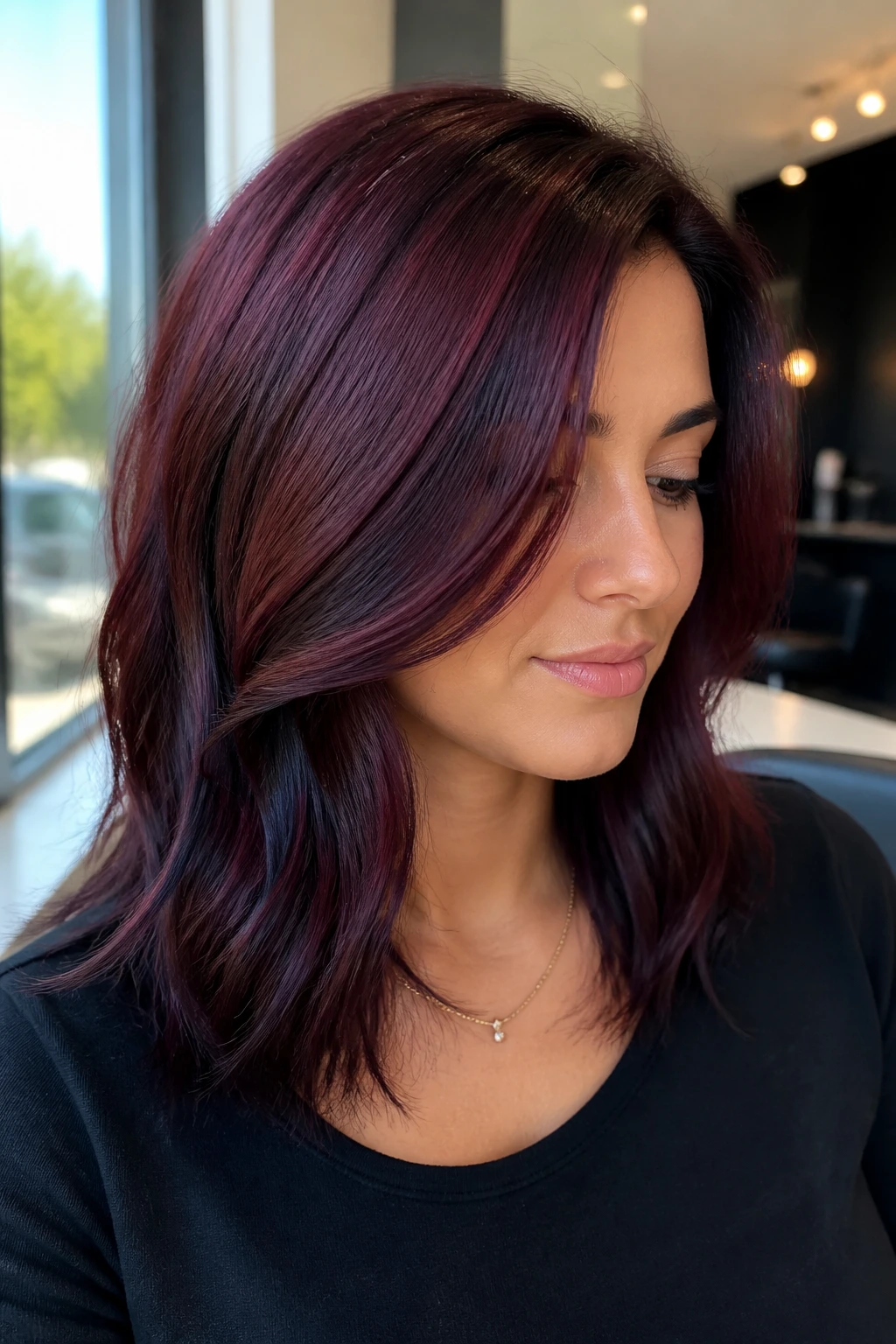
This shade is darker than people expect, and that’s why it works. Satin mahogany with blue-black lowlights gives the hair depth under the surface, so the red lives inside the brown instead of sitting on top of it. On cool skin, that hidden depth keeps the color from going brassy.
Unlike highlight-heavy color, lowlights create shadow. Shadow is useful. It makes the hair look thicker, calmer, and more expensive-looking without relying on brightness. The blue-black pieces also cool down the mahogany reflect, which is handy if your natural color has a warm streak you want to mute.
This is a strong option for coarse or dense hair because the lowlights break up the mass and keep the color from reading as one flat block. It also grows out more quietly than a brighter red, which is a practical plus.
If you want red that behaves like brown until the light hits it, this is the one to save.
22. Smoky Mahogany Curls
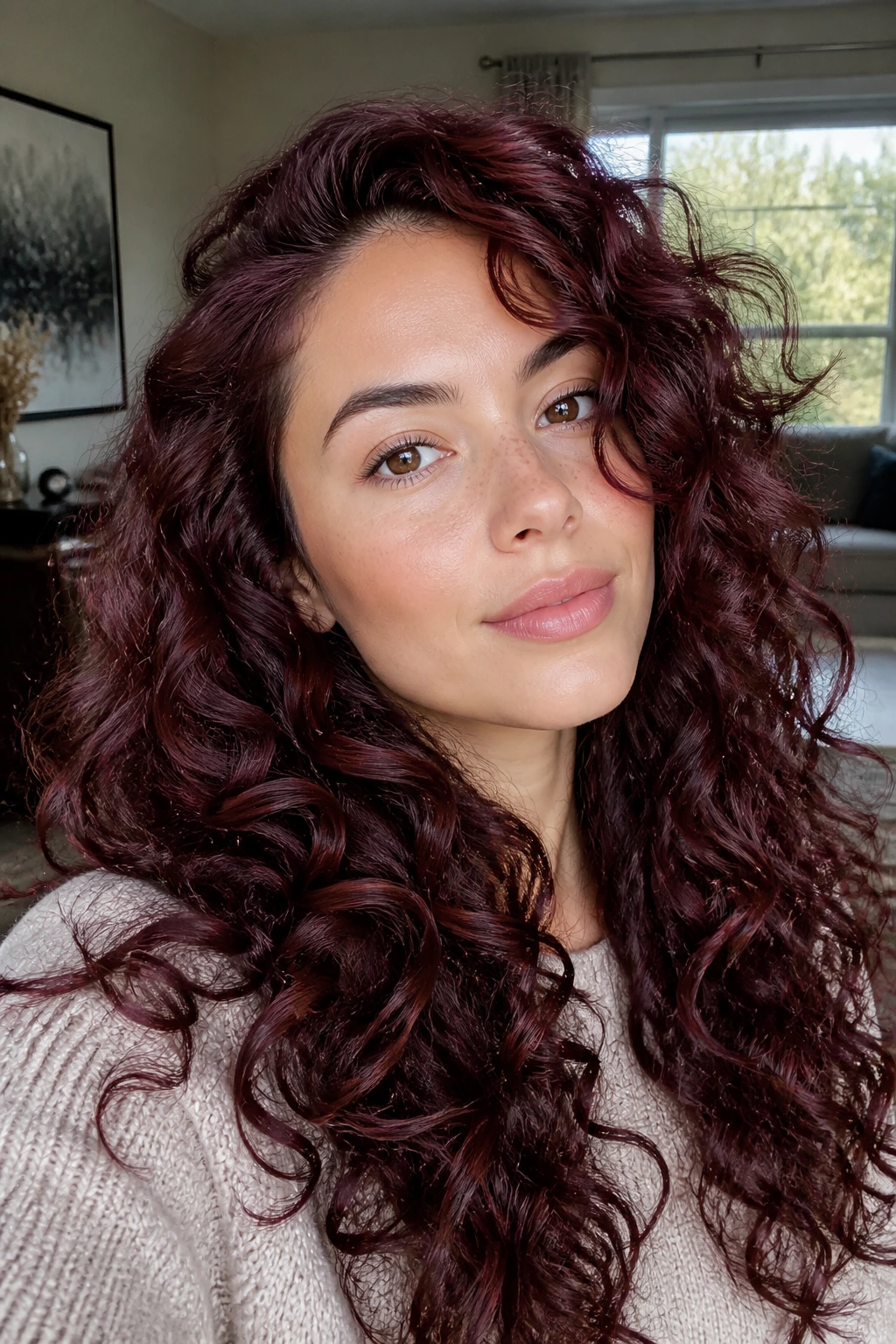
Curls love depth. Flat color gets lost in texture, but smoky mahogany gives curls enough contrast to show off their shape. The smoky note softens the red, while the mahogany base keeps the whole look grounded and cool-friendly.
The best part is how the shade moves. On ringlets, the red shows on the outer curve and disappears in the shadows. On tighter curls, it creates a richer surface that looks almost velvety. That kind of dimension is hard to fake with highlights alone.
What to Ask For
- A deeper root than mids, so the curls keep shadow
- A red-brown formula with violet or berry reflect
- Extra saturation on the mid-lengths, lighter pressure at the ends
- A gloss finish to keep the curl pattern looking clean
This is a strong finish to the list because it reminds you of something important: the cut, texture, and color have to work together. Mahogany is not one shade. It’s a family, and curls show that better than almost anything else.
Final Thoughts
Cool skin tones and mahogany hair are a strong match when the red stays in the berry-violet lane. The farther the shade drifts toward orange, the more likely it is to fight with pink undertones and make the complexion look a little off.
If you want the safest first step, start with a gloss, a shadow root, or a version with more brown than red. If you want more impact, move into black cherry, merlot, or amethyst territory and keep the finish glossy. A good reference photo helps, but a strand test helps more. Hair is honest that way.
The best mahogany shade is the one that makes your face look awake the minute you pass a mirror. That’s the goal. Everything else is details.
