



Round faces do not need to be hidden; they need shape. That is why red hair color ideas for round faces work best when the shade has depth at the root, brightness around the cheekbones, or a cut that falls past the jaw.
A flat scarlet all over the head can read wider, especially on a blunt bob with a center part. The better versions borrow a few old-school color tricks: darker roots, lighter ribbons placed lower on the face, and ends that move instead of sitting in one heavy line. Small shifts. Big difference.
Copper, auburn, cherry, mahogany, brick red — each one behaves a little differently on the face. Some soften cheeks. Some pull the eye downward. A few look strongest only when the cut does the work, and that matters more than most people think.
The notes below lean on placement as much as shade. Shade matters, yes, but placement does the heavy lifting.
1. Soft Copper Lob With Face-Framing Pieces
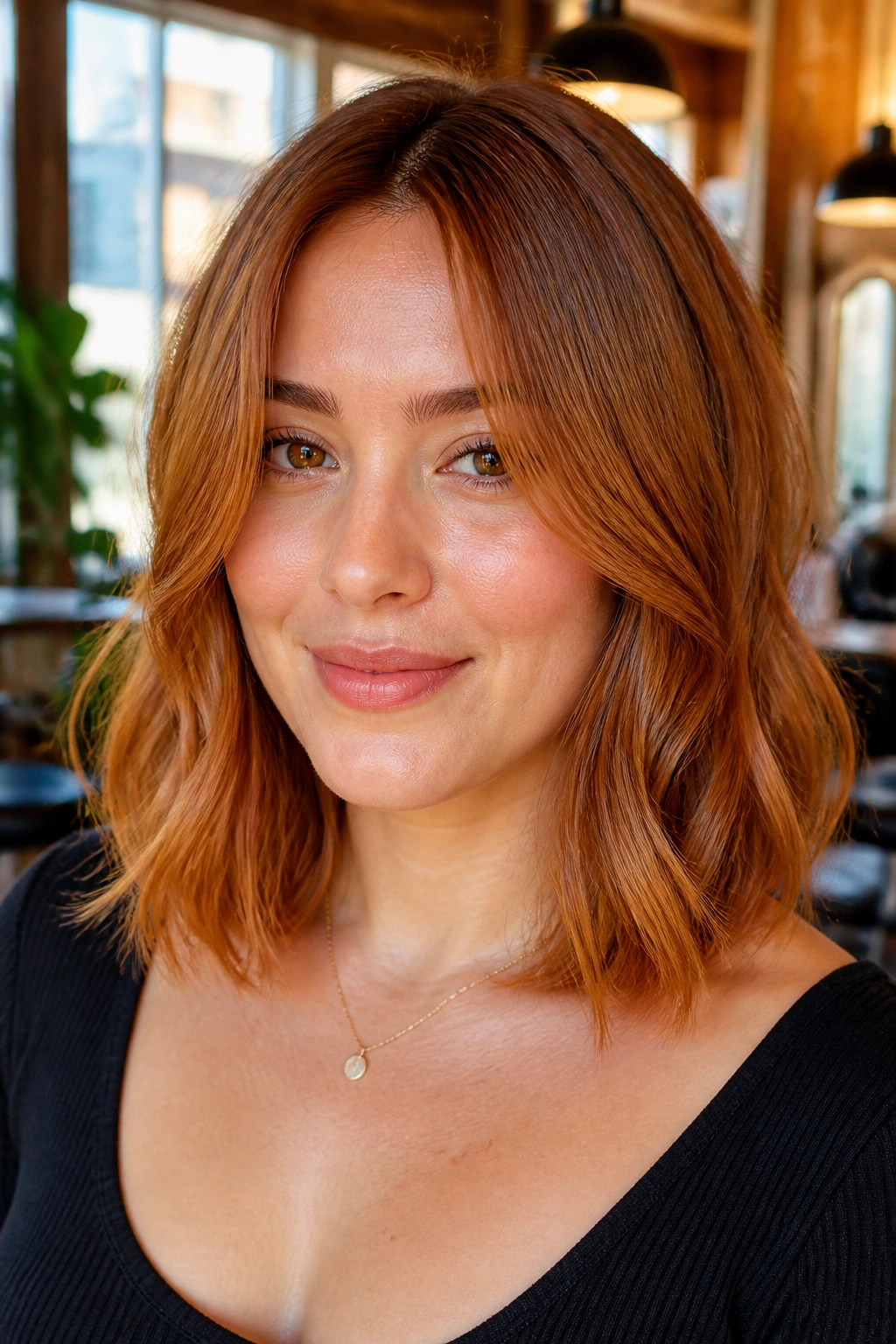
Soft copper and a lob make a clean pair. The length lands near the collarbone, which already helps a round face feel less wide, and the warm red tone keeps the look bright instead of heavy.
Why it works
The face-framing pieces should start a little below the cheekbone, not right on top of it. That keeps the eye moving downward, especially when the front has a soft bend and the back stays sleek.
- Ask for a level 7 or 8 copper, not a neon orange.
- Keep the front pieces 1 to 2 inches longer than the back.
- Use a 1.25-inch curling iron for a loose bend, not tight curls.
- A slight root shadow adds depth and keeps the shape from going boxy.
Best move: tuck one side behind the ear and let the front piece fall free. It’s a tiny thing, and it changes the whole read of the cut.
2. Smoky Auburn Shadow Root
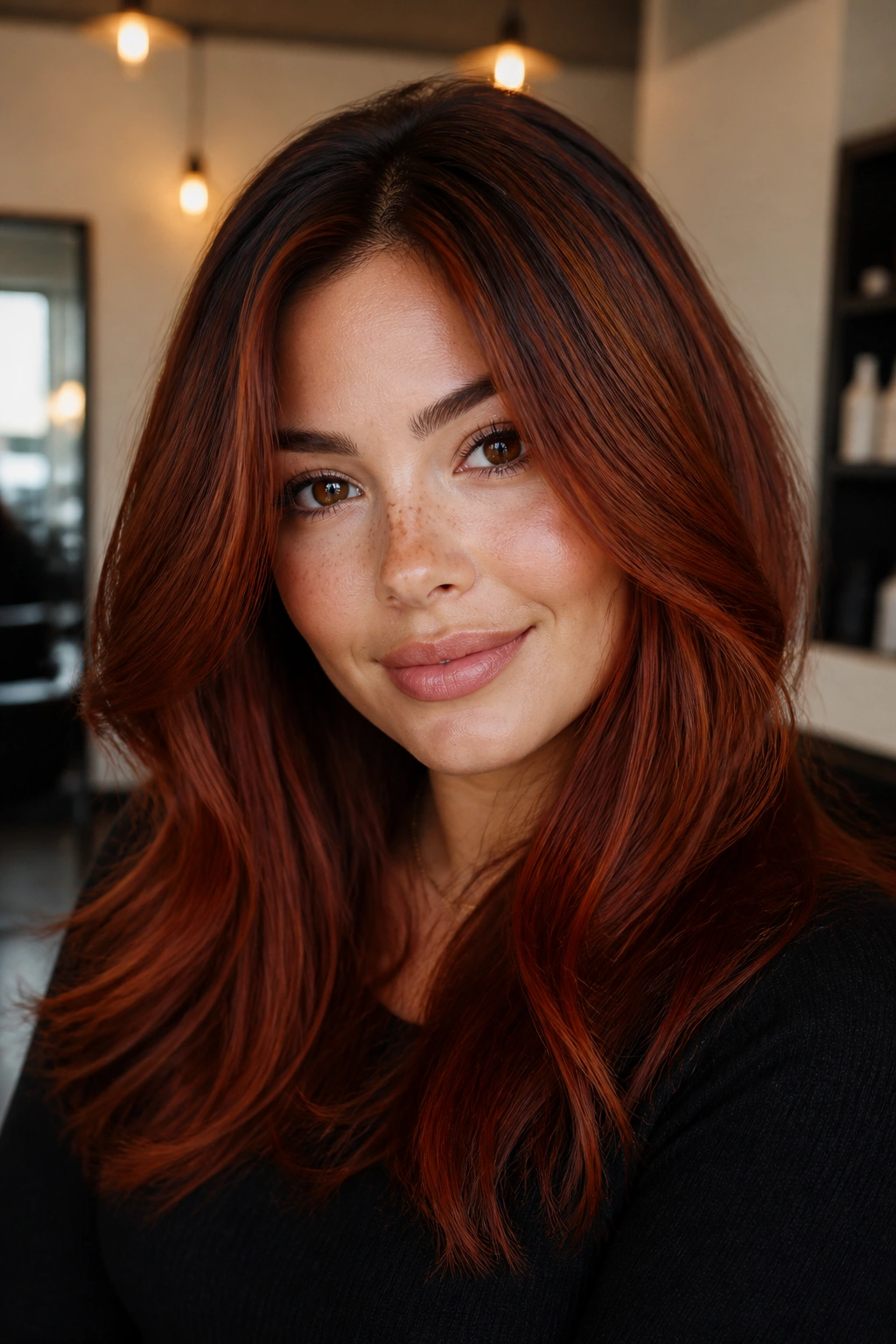
A shadow root does more for a round face than another inch of hair. Smoky auburn has that quiet depth at the top and a softer red glow through the mids and ends, so the shape feels longer without looking severe.
The trick is contrast control. If the roots stay one or two levels darker than the rest, your hair gets a vertical line right where the eye starts. That matters. A round face usually benefits when the top of the head feels lifted and the fullness sits lower.
Tell your colorist to keep the auburn rich, not flat. A demi-permanent gloss over a level 5 or 6 root can give you that brown-red smoke without turning muddy. It’s one of those shades that looks expensive in a very plain way, which I like.
3. Cherry Cola Waves
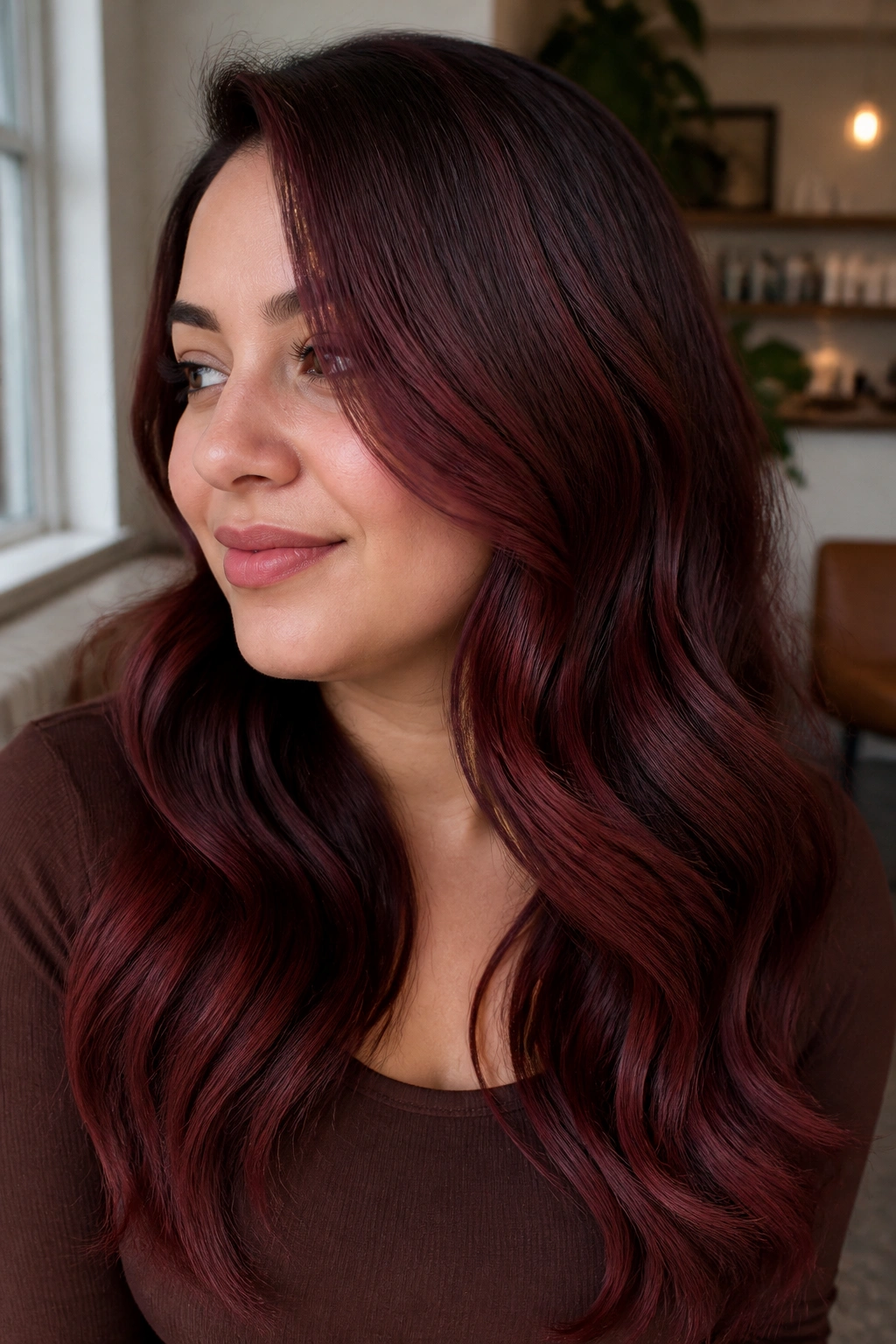
Why does cherry cola flatter round faces so well? Because it’s not one solid red. The brown base and the red sheen keep the hair moving in the light, and that movement stops the face from looking boxed in.
The best version lives somewhere between burgundy and cherry, with soft waves that start below the cheekbone. If the wave starts too high, the face can look fuller. If it starts lower, the whole shape feels longer. A side part helps too, especially if your hair naturally wants to sit flat across the forehead.
How to wear it
- Use a 1.5-inch iron for loose waves.
- Keep the finish glossy, not crunchy.
- Ask for deep cherry over a brown base rather than bright red on top of brown.
- Sweep the front section away from the widest part of the cheeks.
One more thing: this shade is forgiving when you grow it out. The brown base keeps it from looking harsh after a few weeks.
4. Strawberry Copper With Curtain Bangs
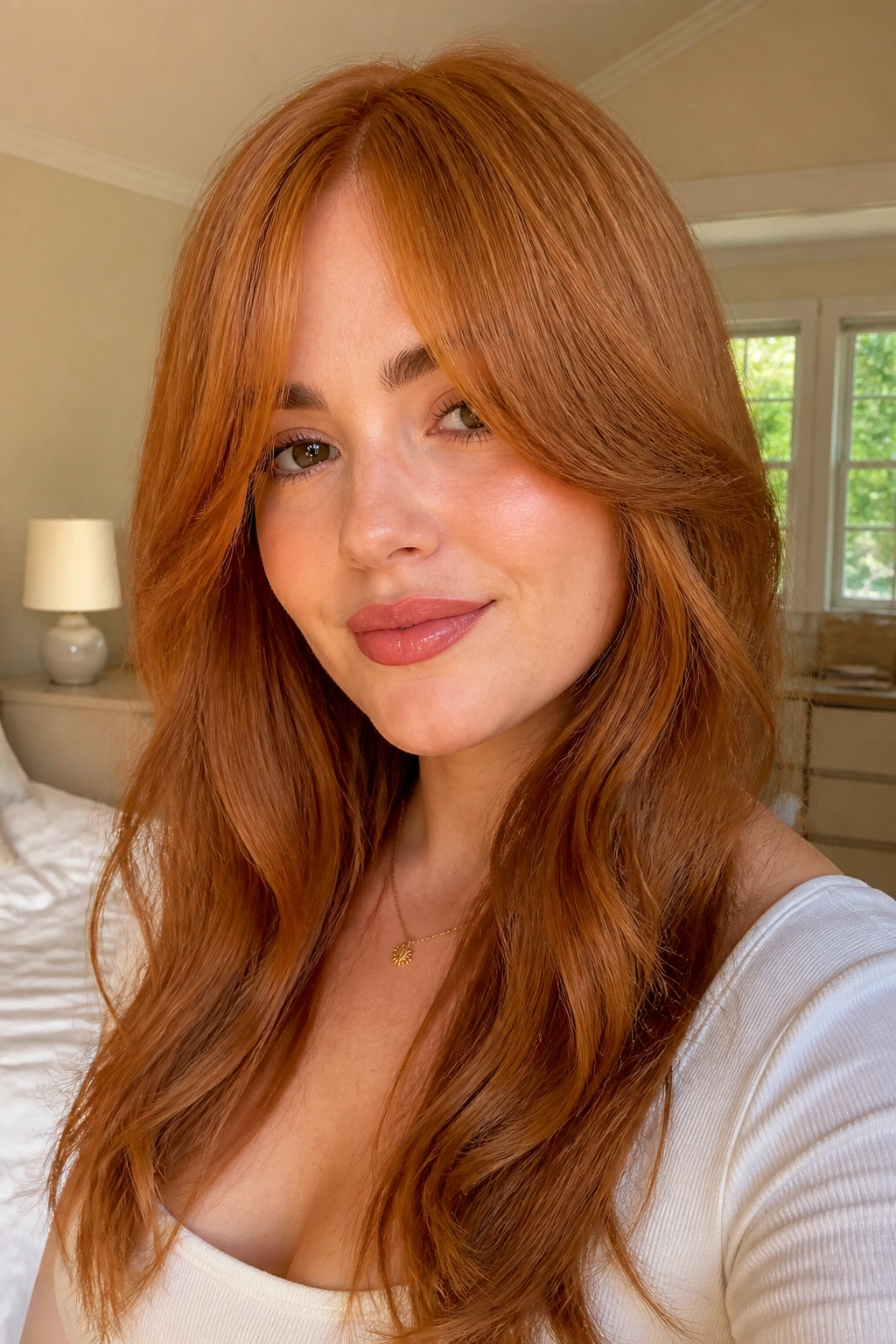
A friend once described this look as “soft enough to wear every day, but not boring.” Fair. Strawberry copper has that light, peachy warmth that feels airy, and curtain bangs keep the face open instead of cutting it straight across.
The bangs matter here. They should part in the center and taper toward the cheekbones, not sit like a shelf. When they’re cut well, they break up width at the temples and make the face feel a little longer. That’s the good stuff.
Ask for the longest pieces to graze the cheekbone or just below it. Short curtain bangs can be cute, but on a round face they can also make the forehead feel smaller than it is. The softer, longer version is the one I’d pick.
5. Mahogany Gloss on a Clean Center Part
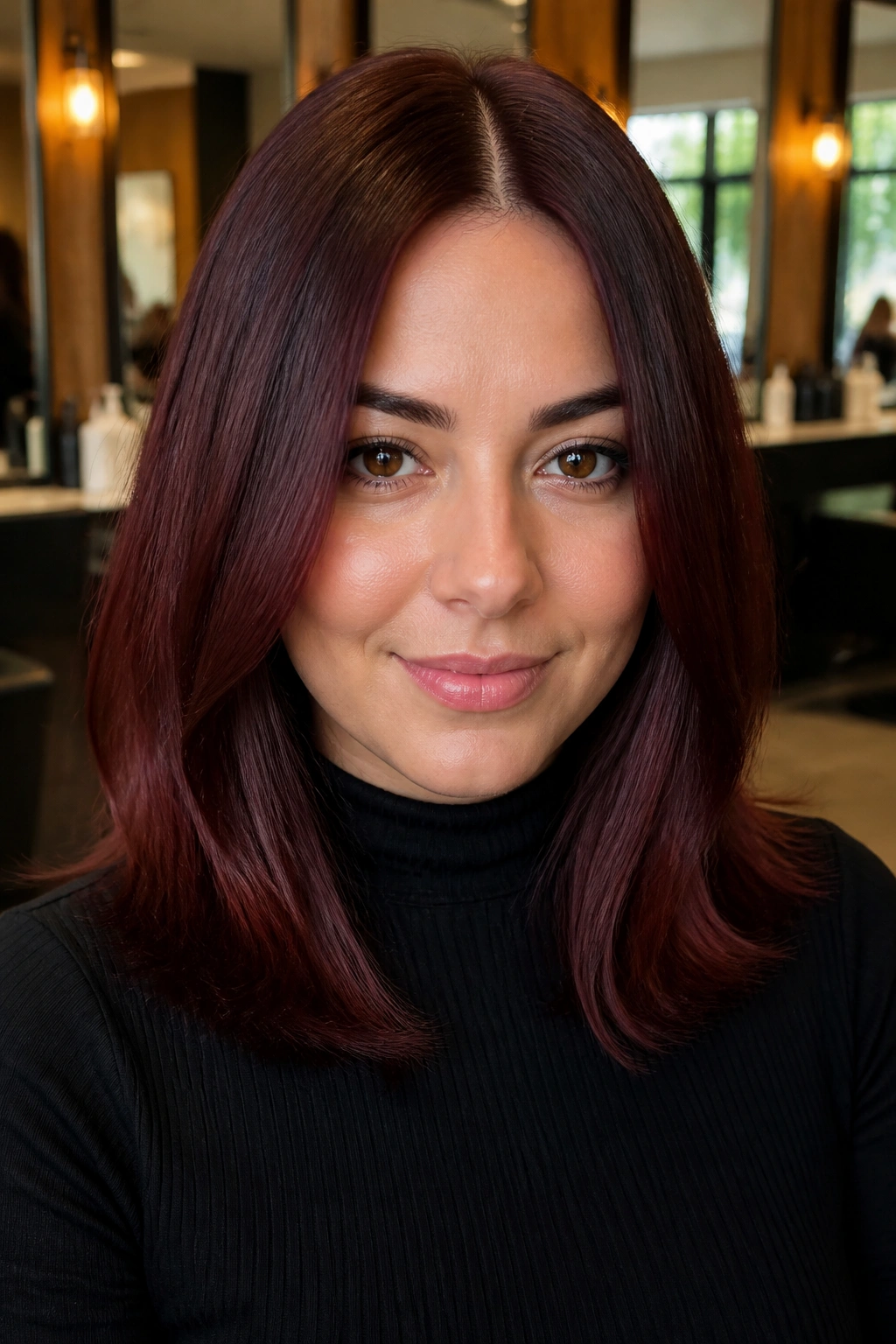
Mahogany is one of those shades that does quiet work. It sits deep enough to slim the outline of a round face, yet the red-brown tone still gives you warmth and shine. If your hair is thick, this shade can look especially good because the depth keeps all that volume from reading as one big shape.
A clean center part can actually be a win here. The darkness at the roots and the polished finish create a neat vertical line down the middle, which helps balance fullness in the cheeks. Keep the lengths past the shoulders if you can; mahogany likes room to fall.
Straight styles suit this color, but a slight bend at the ends keeps it from looking too stern. I’d skip fluffy layers here. The point is polish, not puff.
6. Copper Balayage Over Chestnut Brown
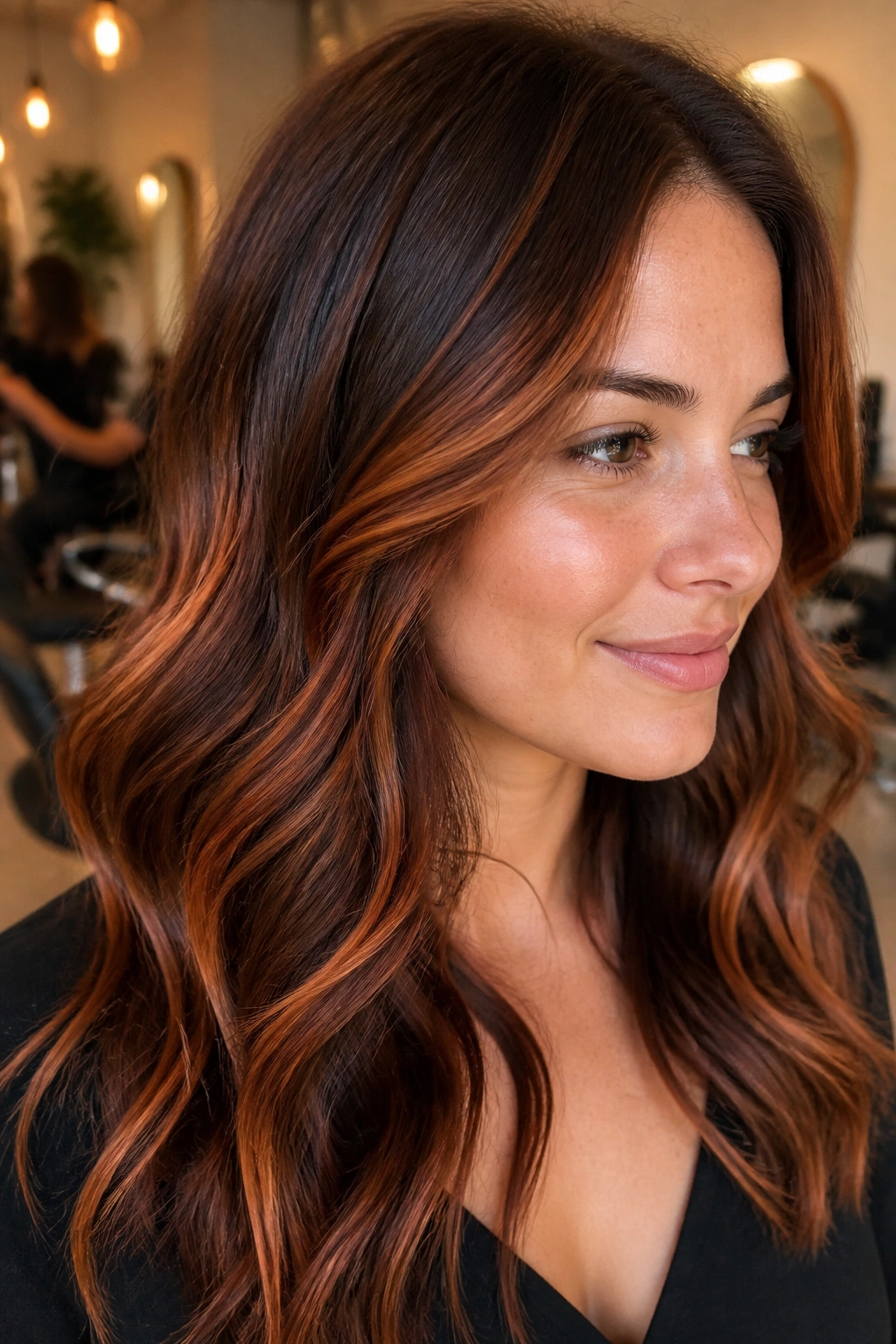
Flat copper is loud. Copper balayage over chestnut is smarter. The chestnut base gives the eye a place to rest, and the copper ribbons bring light without turning the whole head into one bright block.
This is one of the easiest red hair color ideas for round faces if you want something wearable. The darker base around the crown adds height, while the lighter pieces sit lower and pull attention toward the jaw and collarbone. The shape feels longer. Simple.
What to ask for
- A chestnut brown base one or two levels deeper than the copper pieces.
- Hand-painted copper around the hairline and midlengths.
- Keep the brightest ribbons below the cheekbone.
- Avoid thick, banded highlights near the temple.
It also grows out cleanly, which matters if you hate constant salon touch-ups. Not glamorous, maybe. Practical? Absolutely.
7. Crimson Red With Long, Lean Layers for Round Faces
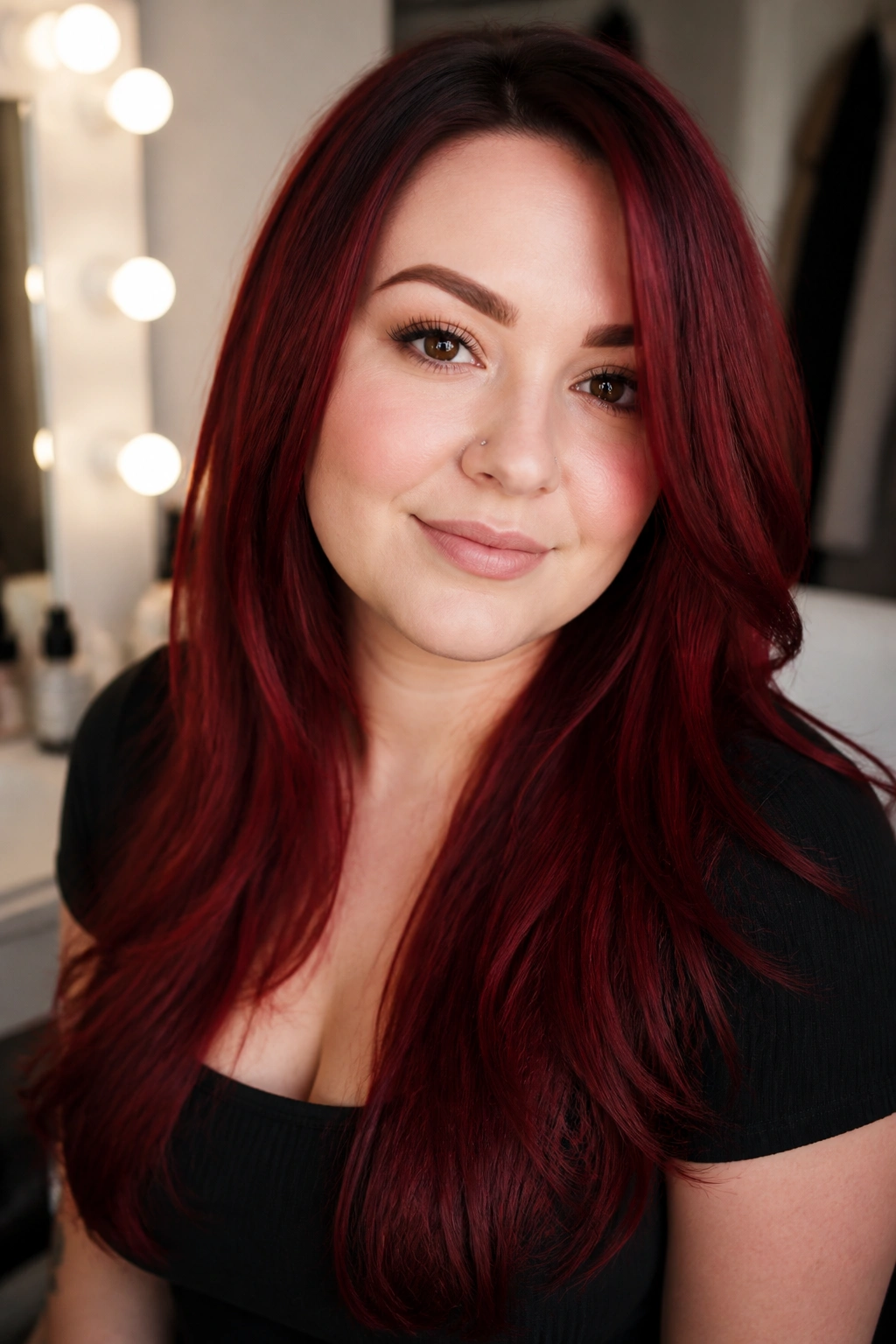
Crimson can sharpen a round face if the cut does the work. The color is bold, no question, but long layers stop it from reading as one big wall of red. That’s the difference between dramatic and heavy.
What to ask for at the salon
Tell your colorist you want crimson with a darker root melt and layers that begin below the chin. That keeps the fullness out of the widest part of the face. If the layers start too high, the shape can puff out at the sides.
- Use larger sections of color, not tiny streaks.
- Keep the ends a touch lighter than the roots.
- Style with a soft off-center part.
- Finish with a smooth blowout or loose bend, not round curls at the cheek.
Crimson looks strongest when the texture stays sleek. A little gloss spray helps too. It catches light without making the color look busy.
8. Rose Gold Auburn Shag
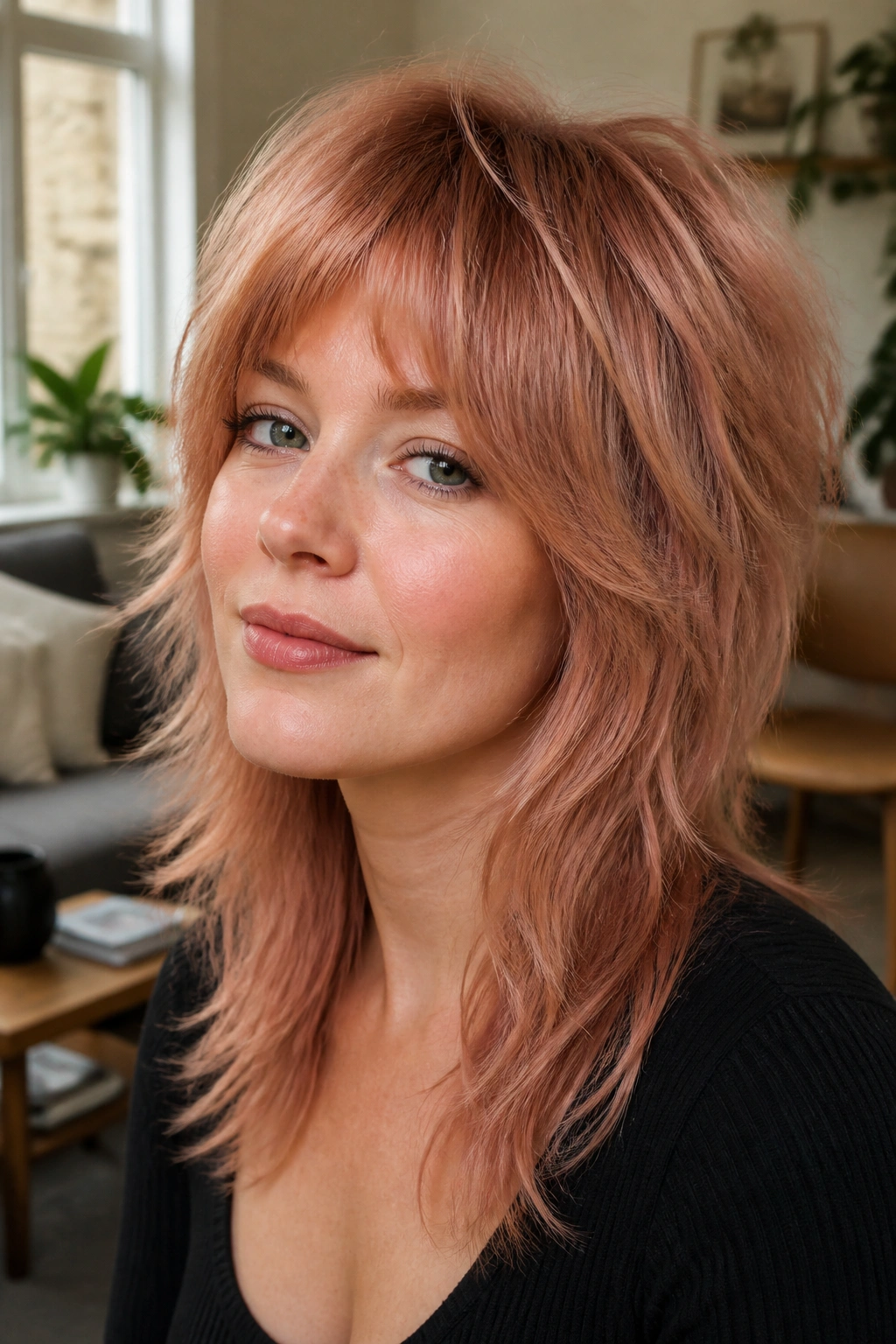
A shag can be messy in the best way. With rose gold auburn, all those feathered pieces stop the face from feeling too round because the eye keeps landing on different lengths instead of one wide line.
The color itself softens the cut. Rose gold pulls the red down into something lighter and more airy, while auburn keeps it grounded. On fine hair, this combo is especially nice because the layers add lift without needing a lot of bulk at the sides. That’s the part people miss. A shag works because it breaks shape.
A diffuser helps if your hair is wavy. If it’s straighter, a few bends from a flat iron are enough. Don’t over-style it. The slightly undone finish is the whole point, and it suits this shade better than a polished, helmet-like blowout ever will.
9. Ginger With a Deep Side Part

Extra length isn’t always the answer. A deep side part can change the whole read of a round face, and ginger has enough brightness to make that shape shift obvious fast.
The part creates a diagonal line across the forehead, which breaks the symmetry that often makes a round face look wider. Add long layers that start below the cheekbone and the effect gets even better. The ginger itself can be soft and golden or slightly spicy; both work, as long as the front doesn’t get chopped too short.
If you want more lift, blow-dry the roots on the heavier side away from the part. That tiny bit of height gives the face room. It’s a simple move, but it does more than people expect.
10. Mulled Wine Red on Soft Waves
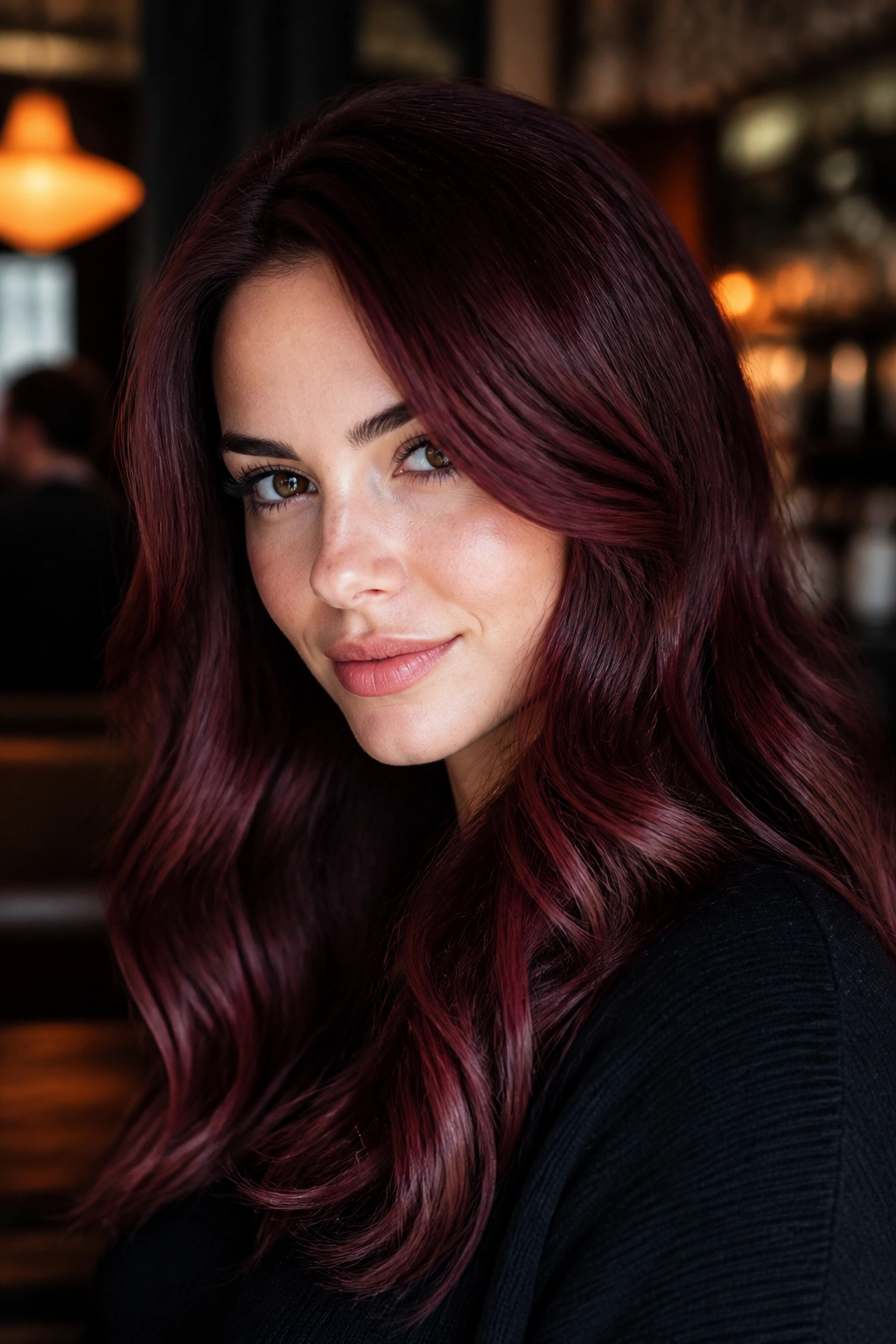
Mulled wine red is for anyone who likes dark reds but doesn’t want them to feel harsh. The mix of berry, brown, and plum creates softness, and soft waves keep the color from sitting in one thick block around the face.
This shade suits round faces because the depth near the roots and the richness through the mids keep everything looking long. Use a 1.5-inch curling iron and leave the ends a little straight. That relaxed finish avoids extra width at the cheeks. Tight curls can make the shape balloon. No need.
It’s also a nice choice if you wear a lot of black, camel, cream, or dark denim. The color holds its own without shouting. Quietly rich is the mood here.
11. Apricot Copper With Airy Curls
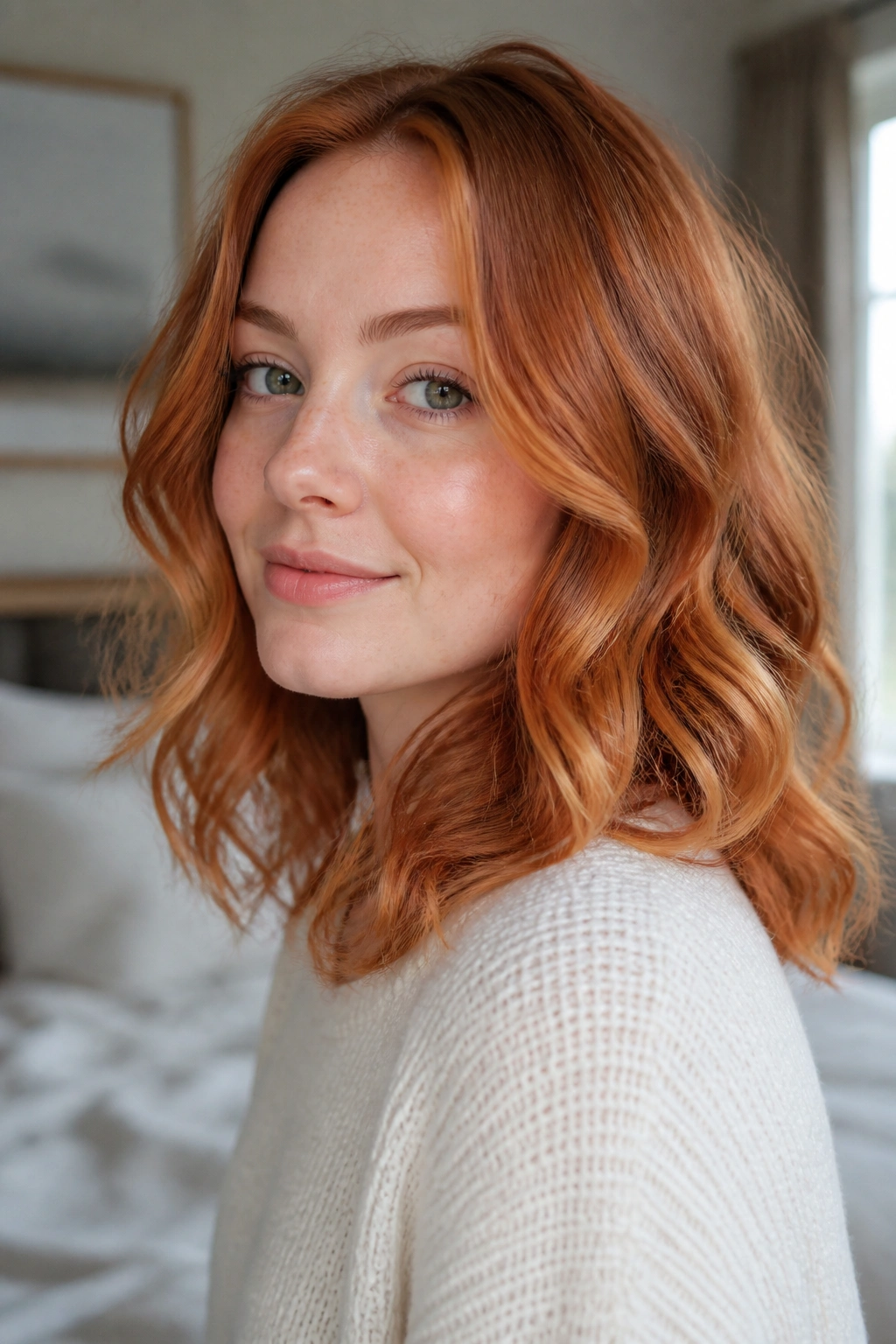
Light copper is not off-limits for round faces. The trick is keeping the curls airy and the brightness soft enough that the shape doesn’t puff out at the sides.
The curl pattern that helps
Go for a curl that starts midlength, not at the root. A loose wrap around a 1.25-inch iron or a heatless bend gives the hair movement while still letting the top stay smooth. That matters because volume at the roots can widen the face if it sits in the wrong place.
- Ask for apricot copper, not flat orange.
- Keep the brightness strongest on the lower half of the hair.
- Let the curls fall into wide, soft bends.
- Skip heavy layering around the cheekbones.
The apricot tone gives the whole look a lighter feel, which is nice on pale or warm skin. It reads fresh, not loud.
12. Black Cherry With a High-Gloss Finish
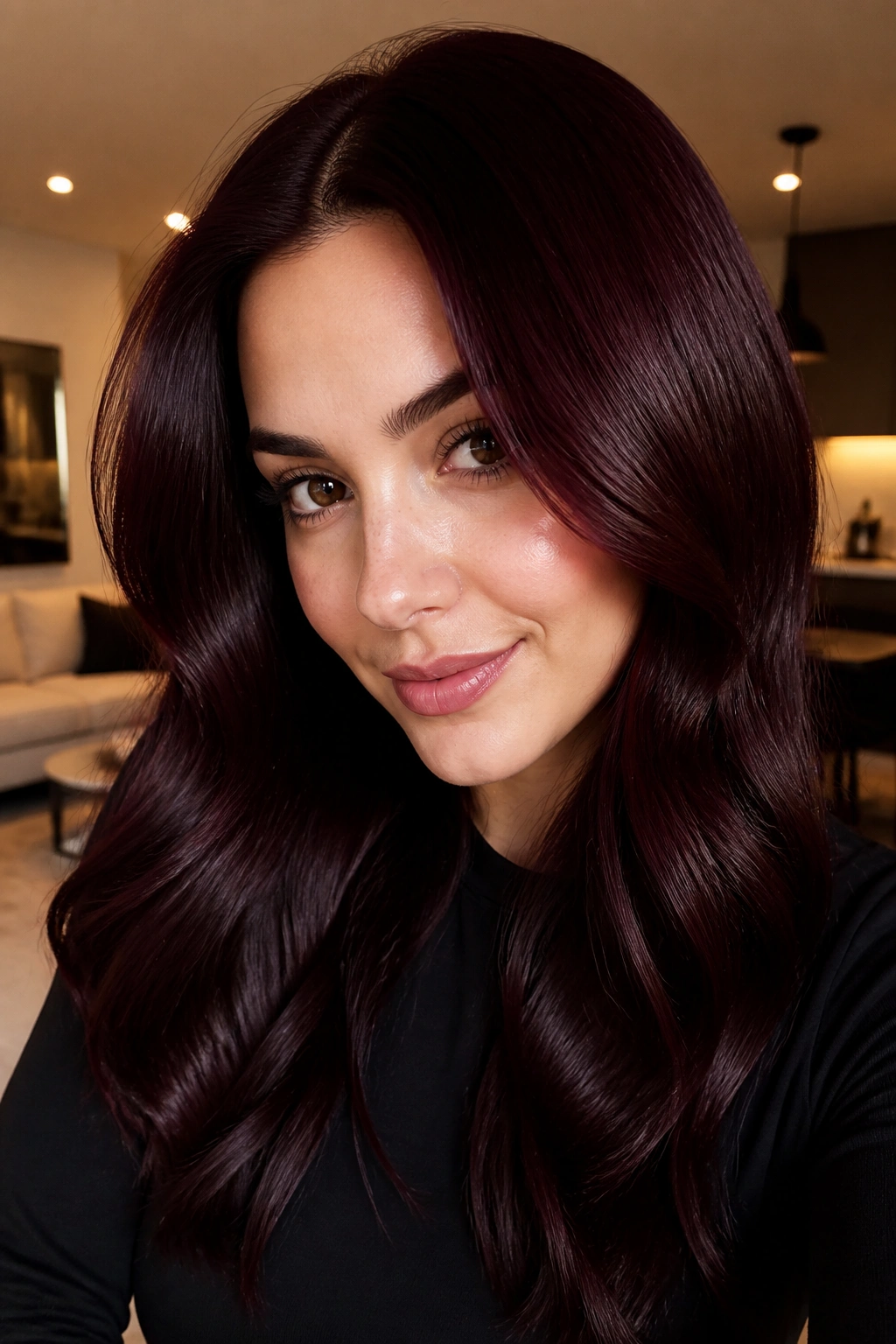
Black cherry is darker than cherry cola and cooler than auburn, which is exactly why it works. The shade wraps the face in depth, and that depth can make a round face look more carved out, especially when the finish is glossy.
The shine is half the appeal. A smooth, reflective surface keeps the color from looking flat or heavy. It also makes the red-violet undertone show up in different light, so the hair shifts instead of sitting still. That movement helps more than you’d think.
This is a strong choice if your brows are dark or your skin leans cool. It also looks very good on straight styles and soft bends, since the dark base gives the face a cleaner outline. If you like hair that feels a little moody, this one has real presence.
13. Fiery Copper Melt
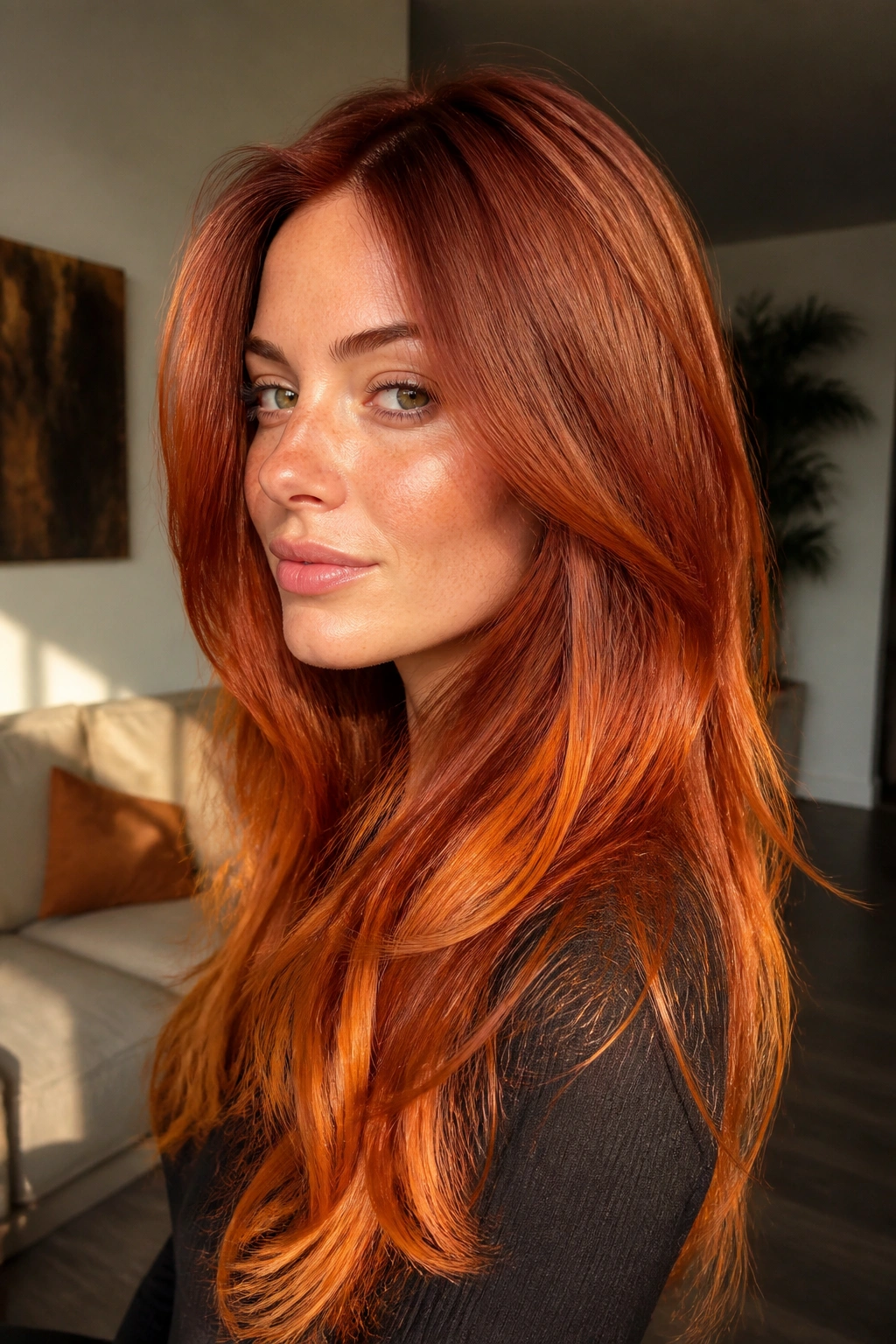
Some reds need a little drama. Fiery copper melt is one of them. The color usually begins with a cinnamon or auburn root and melts into brighter copper through the mids and ends, which pulls the eye downward in a nice, natural way.
That vertical shift matters on a round face. If the brightest pieces stay lower, the width in the cheeks stops being the first thing people notice. A layered cut helps too, especially if the layers are long and move around the collarbone. Short, choppy layers can make the color read busier than it needs to.
What to request
- A root melt one shade deeper than the midlengths.
- Copper ends with a soft gold sheen.
- Long layers that begin below the chin.
- Styling with a brush-out wave rather than tight curls.
This is the kind of color that looks best when it’s touched up with gloss, not constant re-dyeing.
14. Cinnamon Red Money Pieces
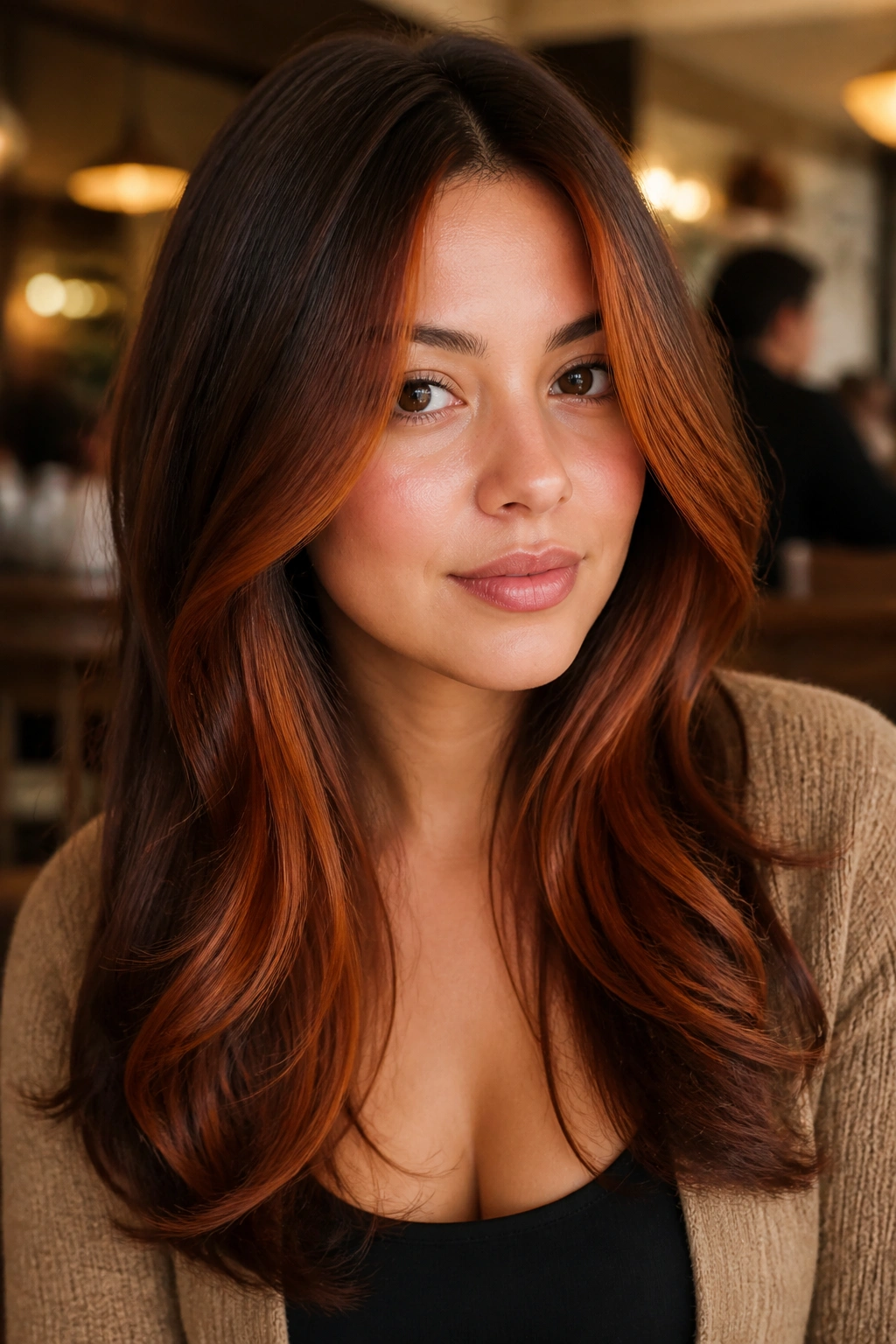
Can bright face-framing pieces work on a round face? Yes, if they’re skinny and placed low enough. That’s the whole trick. Cinnamon red money pieces give you light around the face without building a chunky frame that adds width.
Keep the brightest strands narrow, and let them begin near the temple or cheekbone rather than right at the hairline. You want movement, not a stripe. The rest of the hair can stay a little deeper, which makes the front pieces stand out without taking over the whole head.
How to ask for the placement
- Request thin money pieces, not thick panels.
- Ask that they start below the brow line.
- Keep the rest of the color in soft cinnamon auburn.
- Style the front away from the face with a round brush or large roller.
This is a good pick if you like color that feels visible in photos but still easy to wear in daily life.
15. Burgundy Peekaboo Ribbons
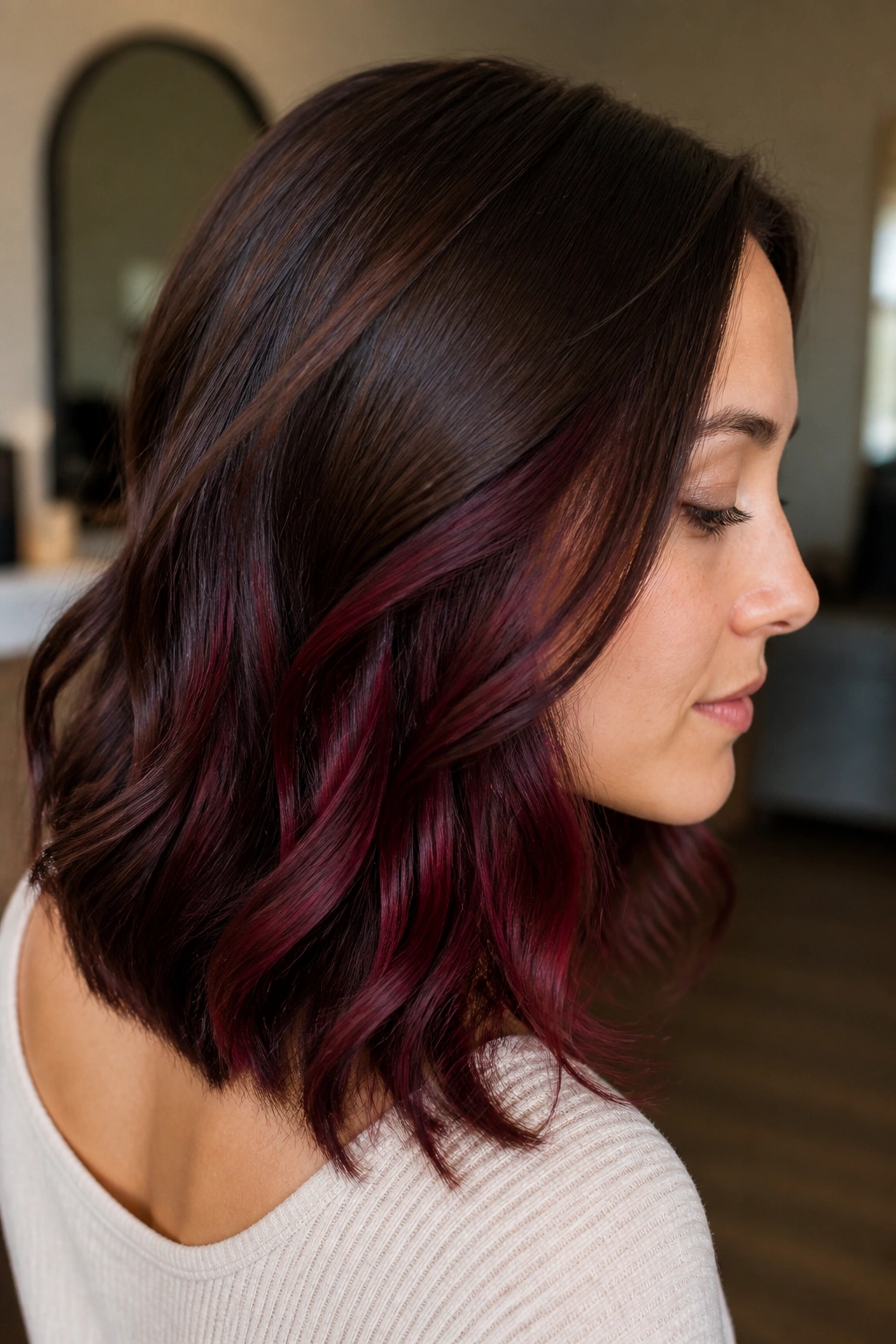
Hidden color can be smarter than a full head of red. Burgundy peekaboo ribbons stay tucked under the top layers, so the surface keeps its darker outline while the movement underneath flashes color when you turn your head.
That darker outer layer matters on round faces. It keeps the shape tidy around the cheeks, and the burgundy underneath gives depth without turning the whole cut into a red block. It’s a nice option if your job or dress code leans conservative but you still want something with personality.
Waves show this color best, though straight hair can work too if the ribbons are placed well. I’d ask for them under the crown and through the lower sides, not right at the temple. That keeps the color playful instead of wide.
16. Tangerine Copper Shag

Unlike polished copper, this one lives on texture. Tangerine copper in a shag cut feels lively and rough around the edges, which is why it suits a round face so well. The chopped layers keep the eye moving, and the brighter orange-red tone gives the whole shape lift.
This is a good fit for fine hair that needs body. The shag adds movement without a heavy curl pattern, and the tangerine shade makes the layers show up. If you rough-dry it and pinch a little texture cream into the ends, the result looks airy instead of puffy.
Skip bulky styling at the sides. Keep the volume higher at the crown and softer around the cheeks. That simple balance lets the face stay open while the cut does its messy, cool little thing.
17. Brick Red Textured Lob

Brick red has an earthy, clay-like feel that a lot of people overlook. It’s not as bright as copper and not as dark as mahogany, and that middle ground is useful on round faces because it doesn’t make the hair look like one wide sheet of color.
A textured lob keeps the shape easy. Piecey ends, a soft bend, and a bit of undone movement stop the cut from sitting flat against the jaw. If you wear it with a slight side part, even better. The hair falls in a more diagonal line, which helps lengthen the face.
This color is also forgiving if your natural shade has brown or chestnut in it. That makes the grow-out smoother and the overall look less fussy. Which, honestly, is a relief.
18. Peach Copper With a Feathered Fringe
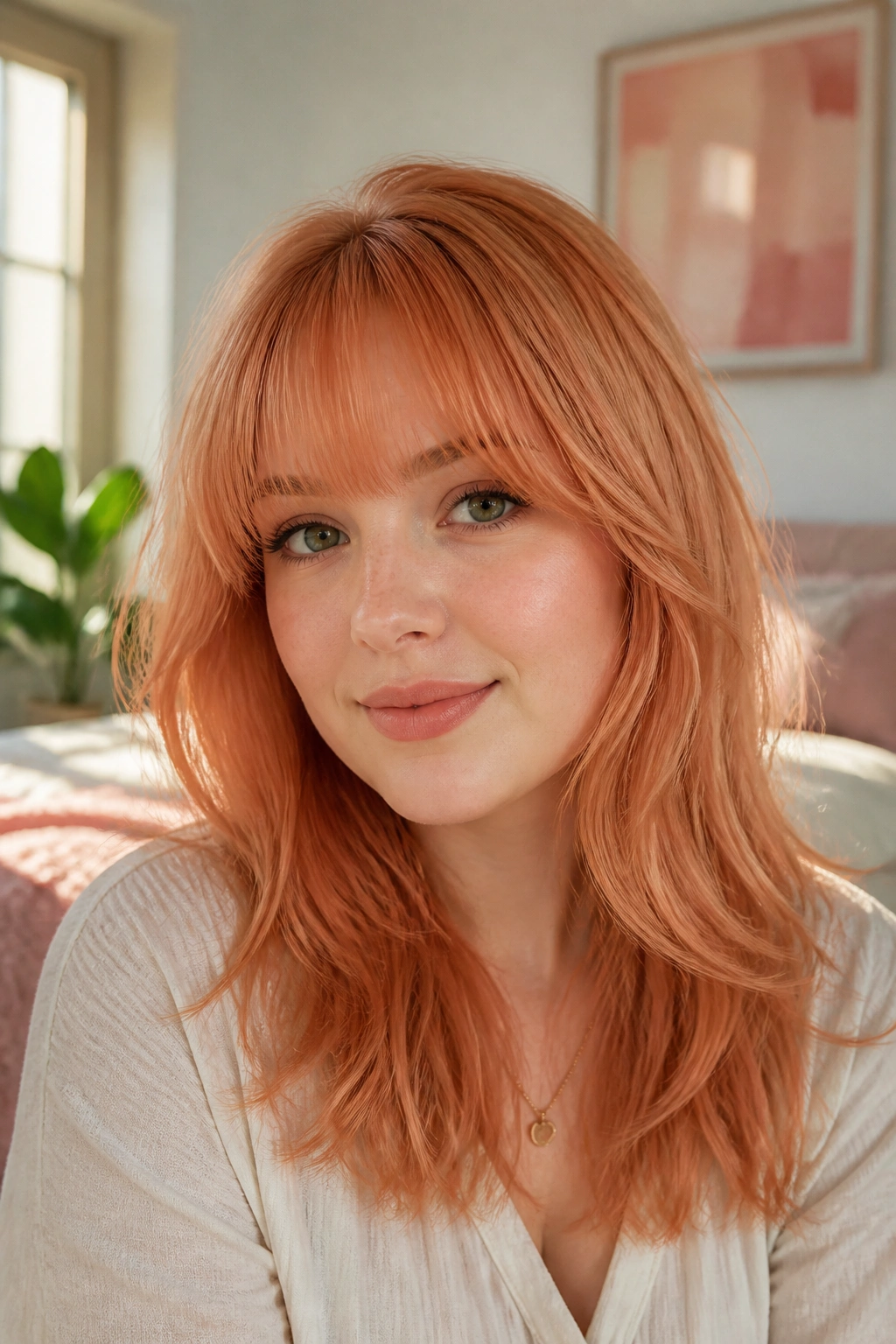
Soft does not mean weak. Peach copper can look delicate in the best way, and a feathered fringe keeps the forehead from feeling too broad on a round face.
The fringe should be light and wispy, not dense. Think pieces that brush the brow and split easily at the center. That little bit of openness changes the proportions fast. The peach tone adds lightness around the skin, while the feathering breaks the line across the top of the face.
What to watch for
- Avoid a blunt, heavy fringe.
- Keep the fringe longer at the temples.
- Ask for peach copper with warm gold undertones.
- Style with a soft round brush, not a tight roll.
This one looks especially good when the rest of the hair has a loose, airy bend. The fringe does the framing, and the color keeps it soft.
19. Plum Red on Long, Straight Lengths
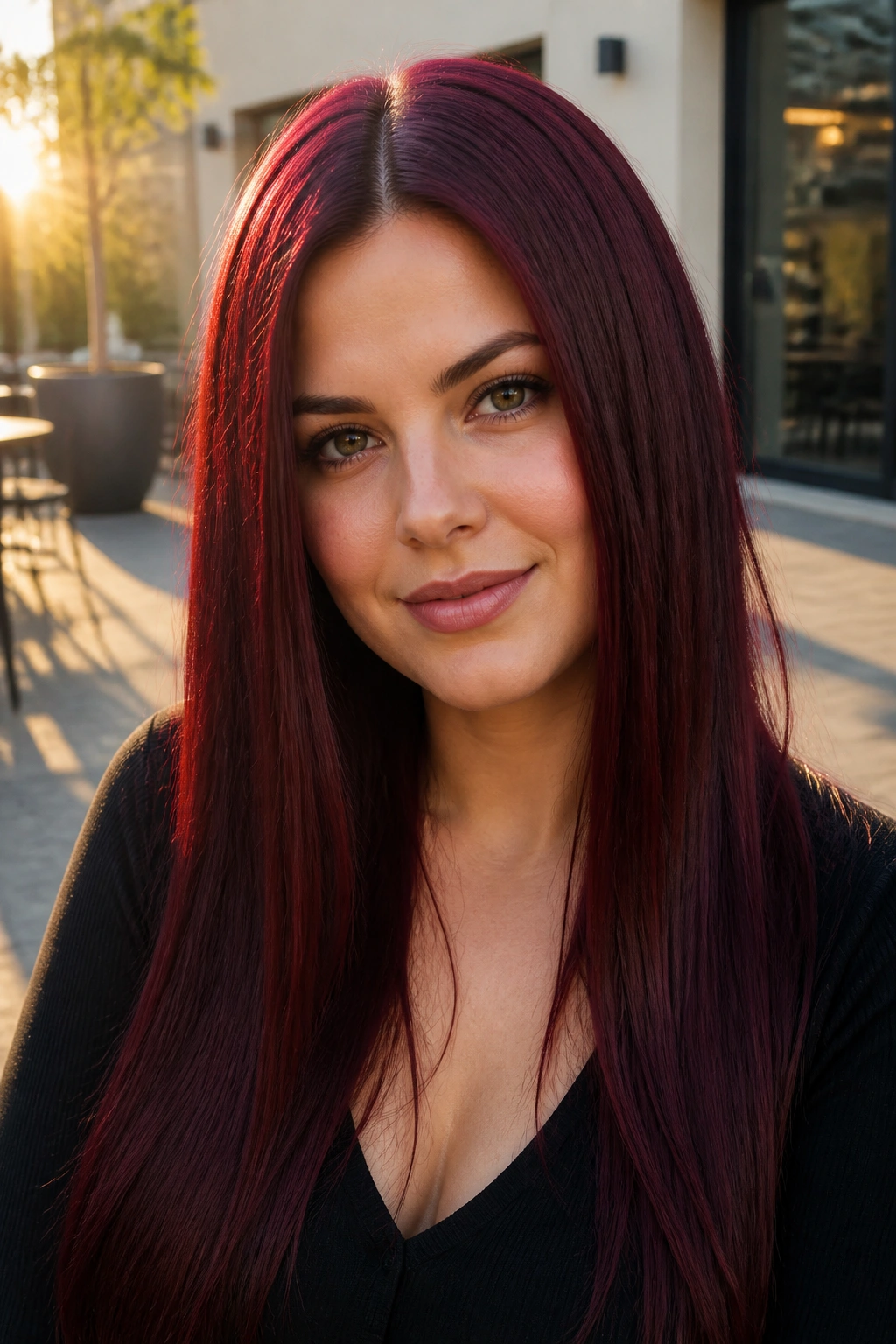
Too cool? Not if you want a cleaner outline. Plum red on long, straight lengths can be one of the most flattering looks for a round face because it creates a vertical line from crown to ends.
The plum tone has enough red to feel rich, but the violet edge keeps it from getting puffy or overly warm. That matters. A straight finish lets the color stay sleek, and sleek hair almost always reads more elongated than fluffy hair. If you need a touch of softness, a single bend at the ends is enough.
This is a strong option for thick hair, since the weight helps the style fall in a neat sheet. Use heat protectant, keep the finish glossy, and avoid too many layers near the cheekbone. The shape should stay long and narrow, not feathered outward.
20. Maple Auburn With Dimensional Highlights
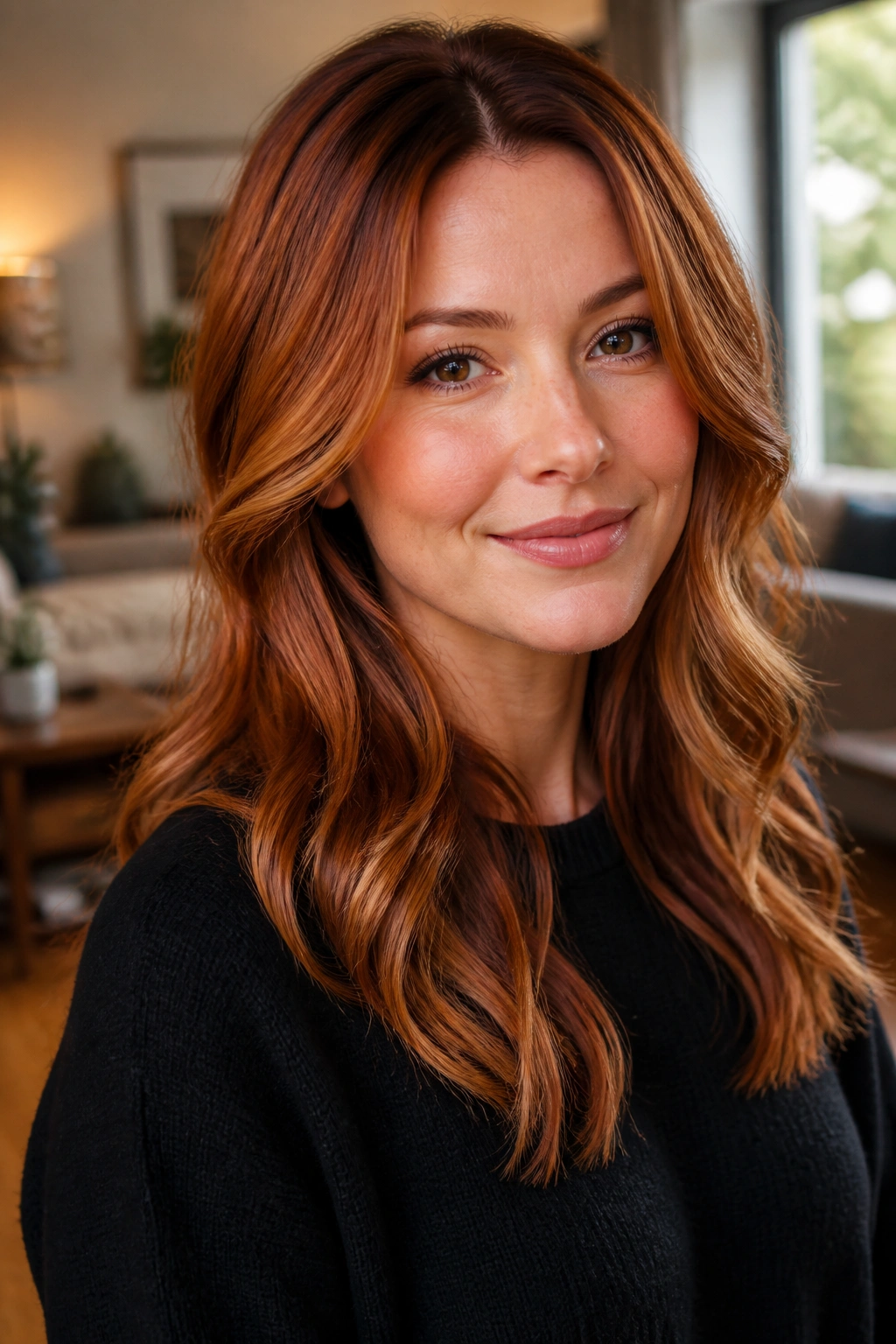
If one red shade feels flat, maple auburn fixes that. It mixes amber, cinnamon, and soft bronze notes so the hair changes in different light instead of sitting there as one solid color.
That dimension helps a round face because the eye keeps moving. The lighter pieces can sit below the cheekbone and through the lower half of the hair, while the deeper auburn stays near the crown. It gives you lift without crowding the sides of the face. A round face usually likes that.
Placement that matters
- Keep the brightest ribbons below eye level.
- Leave the root area slightly deeper.
- Use highlights that are fine, not chunky.
- A loose wave shows the color shifts better than a tight curl.
Maple auburn is a good middle road if you want warmth, shine, and movement without going full copper.
21. Scarlet Red and a Deep Side Part
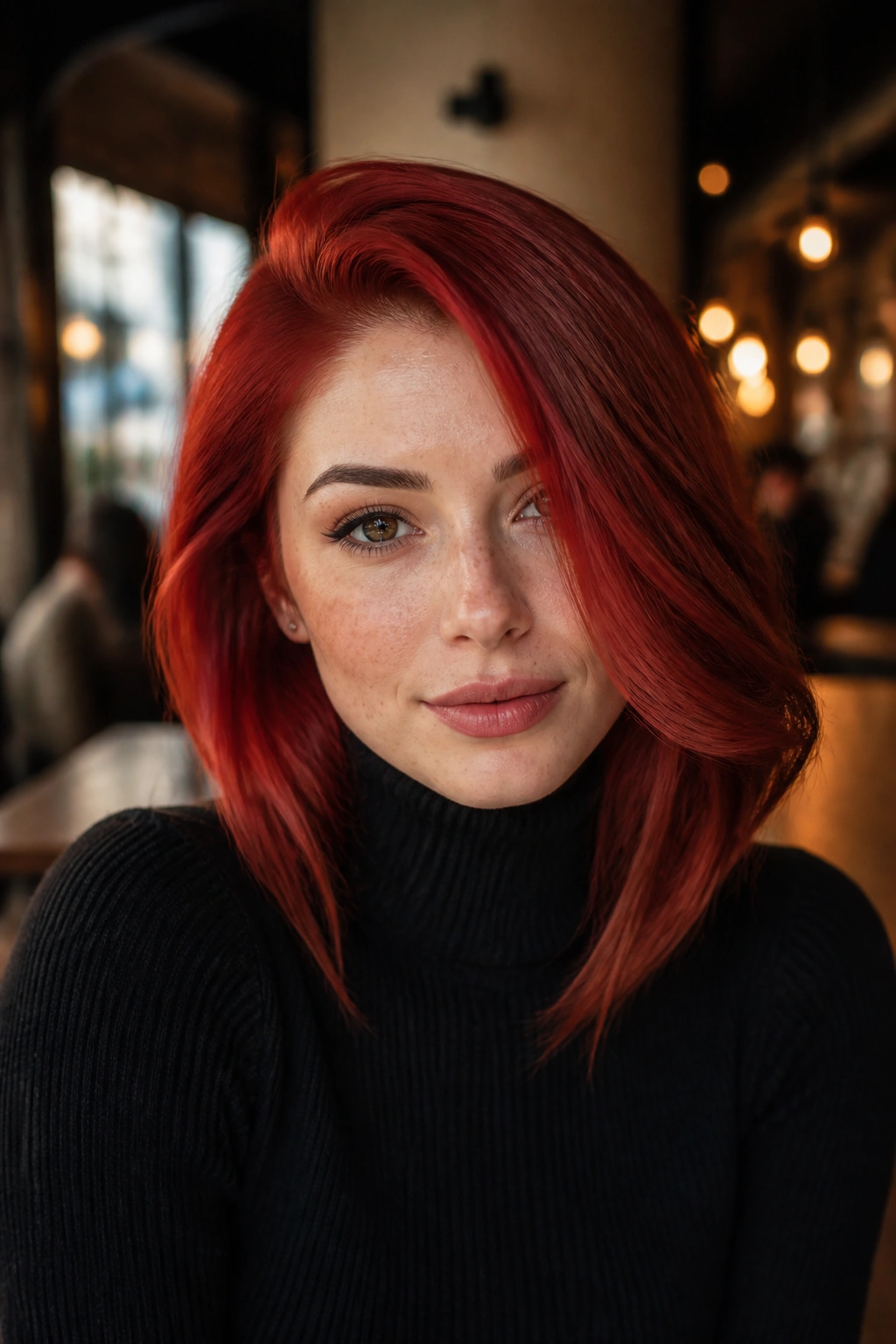
Scarlet needs structure. On its own, a strong red can feel broad, especially on a round face. Add a deep side part, though, and the whole look sharpens fast.
The part pulls weight to one side and creates a diagonal line across the forehead. That breaks up symmetry and keeps scarlet from reading like a single wide panel of color. Long layers or a lob make the effect stronger, especially if the front section sweeps across the cheekbone and then falls away.
Styling details
- Part the hair above the arch of the eyebrow.
- Blow-dry the front section away from the part.
- Keep the ends soft and curved, not bulky.
- Choose scarlet with a slight ruby undertone if your skin leans cool.
This shade has attitude. It just needs direction.
22. Rosewood Red With Soft Waves

Rosewood red sits in that sweet spot between red, brown, and muted berry. It feels rich, but not loud, and soft waves keep the shape flowing instead of sitting heavy around the cheeks.
The reason it flatters a round face is simple: the color has enough depth to outline the hair, while the waves break up width. Neither piece tries too hard. That balance matters. On medium-length or long hair, rosewood can look polished without becoming stiff, which is a nice change from reds that demand constant attention.
If you want the safest all-around choice from this list, this is probably it. It works with a side part, an off-center part, or a center part if the waves are loose enough. And when the color starts to fade, it usually fades into something still nice to wear — softer, warmer, and less fussy.
The reds that flatter round faces usually do three things: they add a little shadow near the roots, place brightness below the cheekbone, and avoid a hard horizontal line at the widest part of the face. That’s the whole game, really.
If you keep those three ideas in mind, a red shade stops feeling risky and starts feeling tailored. Not every bold color needs to shout from the roots. Some of the best ones just know where to stand.
