



Cherry red hair color can make cool skin tones look sharp, fresh, and a little bit expensive in the best possible way. It can also go sideways fast. If the red leans orange, the face can look pinker than you want, and the whole shade loses that crisp edge that makes cherry tones work so well in the first place.
The trick is simple, but people miss it all the time: blue and violet are your friends. Those cooler pigments keep cherry red from drifting into copper or tomato territory, which is where cool skin usually starts to look irritated instead of polished. The best versions feel like deep fruit, wine, plum, berry, or a dark jewel tone that just happens to have red at the center.
Fair cool skin can take brighter cherry shades without looking washed out. Medium cool skin often looks richest in burgundy, merlot, and black cherry. Deeper cool skin can wear the darkest versions with a kind of quiet intensity that looks expensive under daylight and even better at night.
And that’s the good part: cherry red is not one shade. It’s a whole range. Some versions are bold enough to stop traffic, some are so dark they read almost brunette, and a few sit in that lovely middle ground where you catch the red only when the light hits it just right.
What Keeps Cherry Red Flattering on Cool Skin
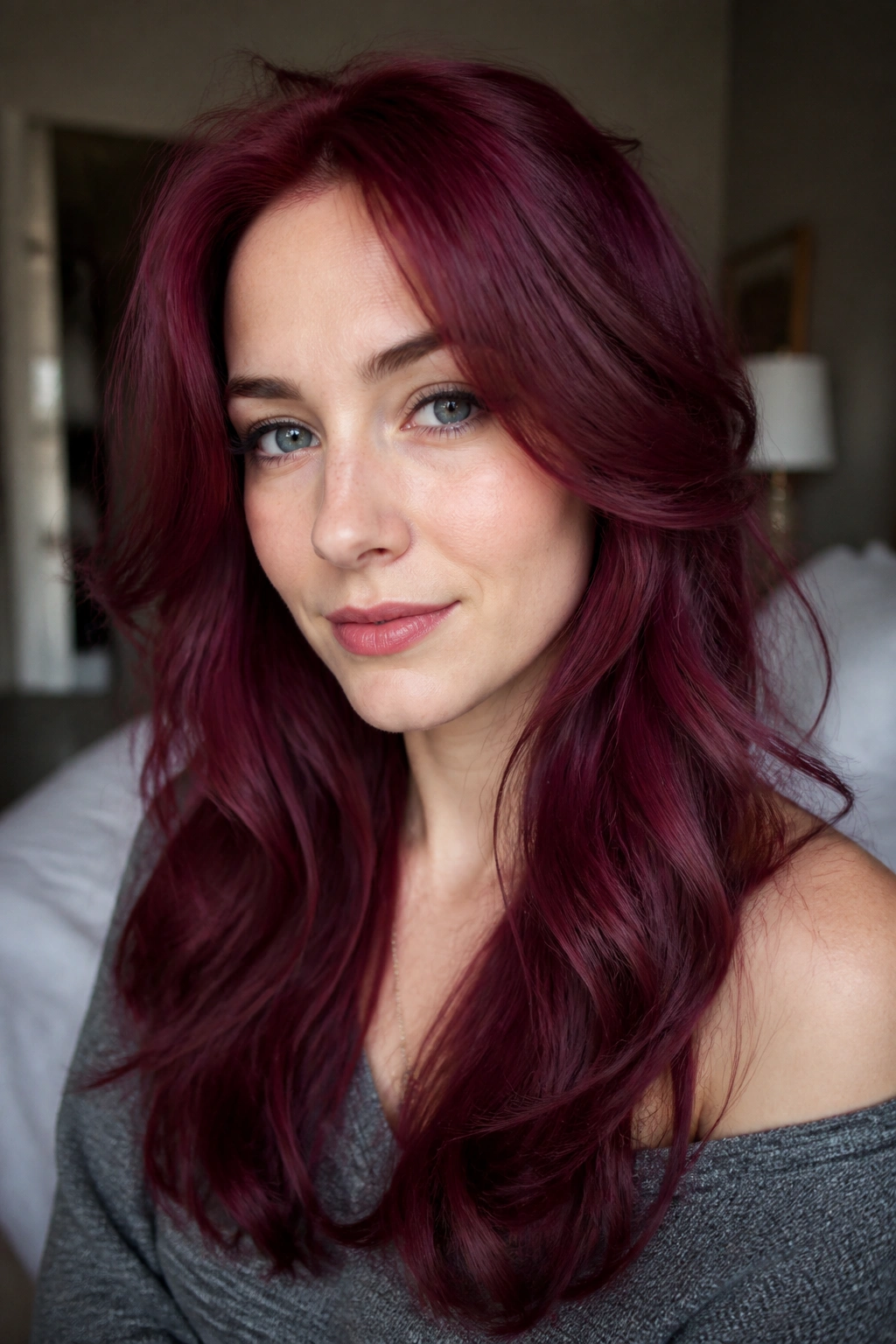
Cool skin tones usually have pink, blue, or neutral-cool undertones, so a cherry red hair color needs to respect that base instead of fighting it. The shades that behave best usually have a blue-red or violet-red foundation, which is why burgundy, black cherry, cranberry, and plum look so much more natural on cool skin than orange-red or burnt copper.
A lot of people think the answer is “more red.” It isn’t. The answer is the right red.
Blue vs. Violet Base
Blue-based cherry red reads cleaner and crisper. Violet-based cherry often looks deeper and softer, with a wine-like finish. If your skin is pale and cool, blue-reds can keep your face from looking washed out. If your skin is medium or deep and cool, violet-reds usually add more depth without making the color feel harsh.
Hair Level Matters
This part matters more than people expect. A cherry gloss on level 8 blonde will look bright and juicy. The same cherry formula on level 4 brown will look deep and moody, almost like red wine tucked under brown. Neither is wrong. They just land in different places.
What to Ask Your Colorist For
- Ask for blue-violet cherry, not warm copper cherry.
- If your hair is dark, ask whether you need a deposit-only gloss or a gentle lift first.
- If you want brightness, talk about cranberry, ruby, or raspberry tones.
- If you want depth, bring up black cherry, burgundy, or merlot.
Red fades. That part is non-negotiable. A color-depositing mask, cool water rinses, and less frequent washing help a lot, but the bigger win is picking a shade that stays flattering even as it softens. That is where the good cherry reds separate from the ones that go dull fast.
1. Blue-Black Cherry Red
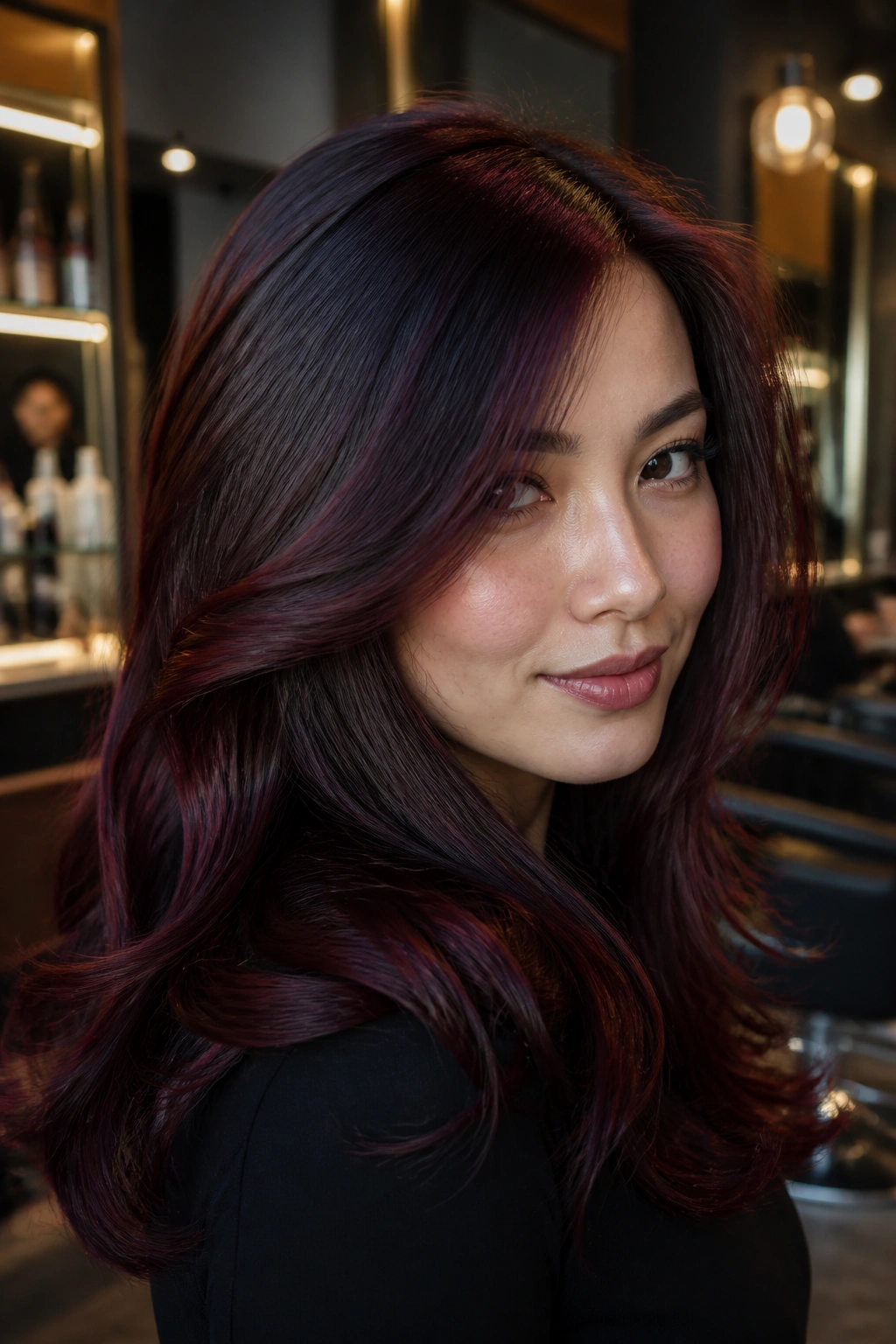
Blue-black cherry red is the shade I reach for when someone wants red hair but does not want the red to shout first and think later. At first glance, it looks nearly black. Then the cherry tone slides out in sunlight, and the whole thing feels glossy, dark, and expensive-looking without needing a lot of maintenance.
This is one of the safest cherry red hair color ideas for cool skin tones because the blue base keeps the warmth under control. On pale skin, it adds contrast without making the face look ruddy. On deeper cool skin, it creates a rich frame that makes eyes and brows stand out fast.
If you want to describe it at the chair, say you want a level 2 or 3 with black cherry reflect and a blue-violet finish. That tiny wording shift matters. It tells the colorist you want depth first, not a bright red that has to be toned down later.
A little shine serum goes a long way here. This shade looks best when the surface is smooth and reflective, not matte.
2. Burgundy Cherry
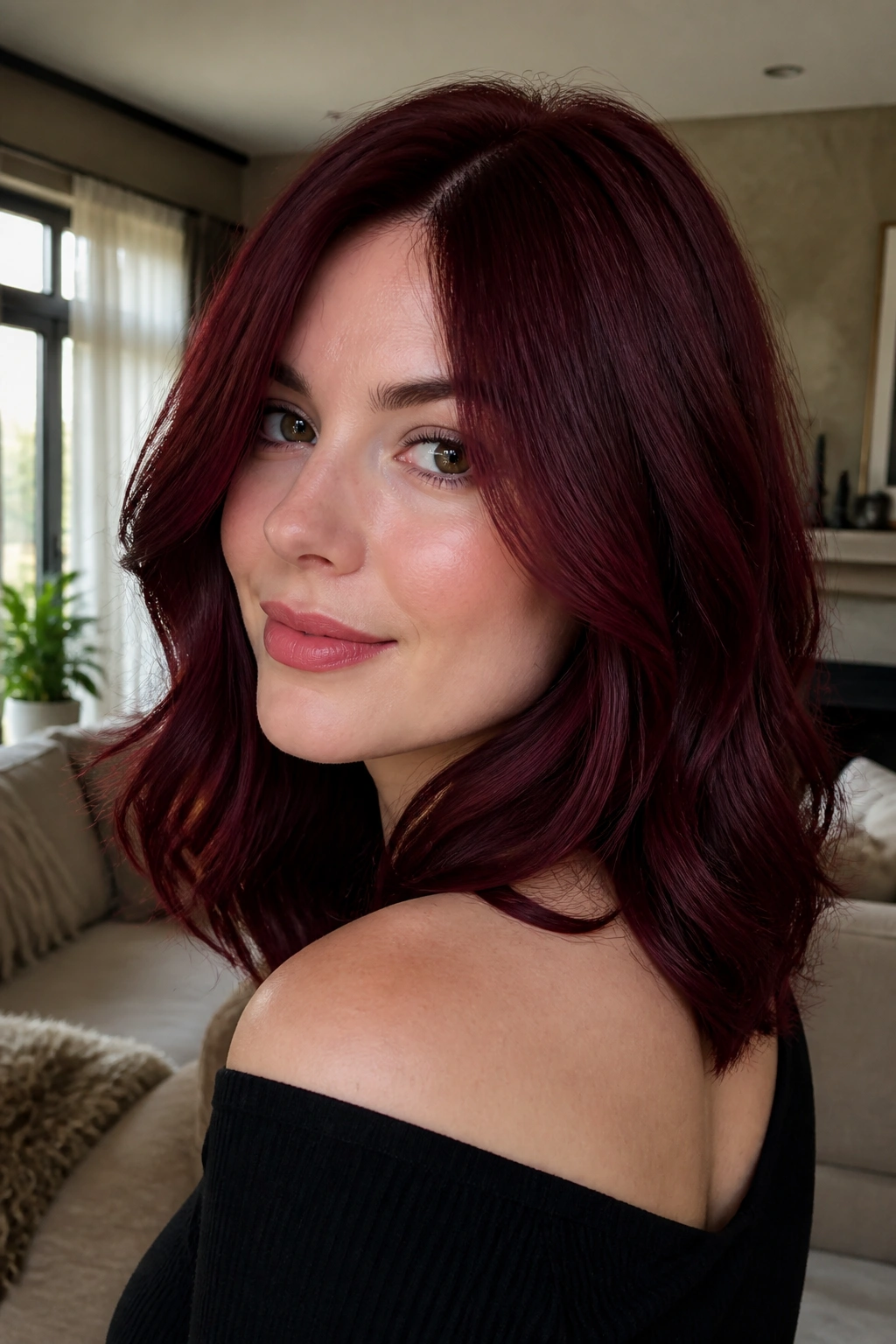
Why does burgundy cherry work so often on cool skin? Because it sits in that sweet spot between red and wine, which means it adds color without forcing warmth into the face. It has enough red to feel lively, but enough depth to keep things elegant and grounded.
What Makes It Work
- Best on fair to medium cool skin
- Reads like a soft wine tone in low light
- Looks richer on layered cuts than on blunt, flat lengths
- Works especially well on hair that is already medium brown or darker
I like burgundy cherry on shoulder-length cuts because the movement keeps the color from feeling heavy. On curly hair, it can look plush and almost velvety. On straight hair, the same shade feels more polished and severe, which can be a good thing if that is your lane.
Ask for a blue-red burgundy or a cherry-burgundy glaze if you want the tone to stay cool. Skip anything described as “golden burgundy.” That usually means warm undertones, and warm undertones are where cool skin starts to lose the plot.
3. Black Cherry Balayage
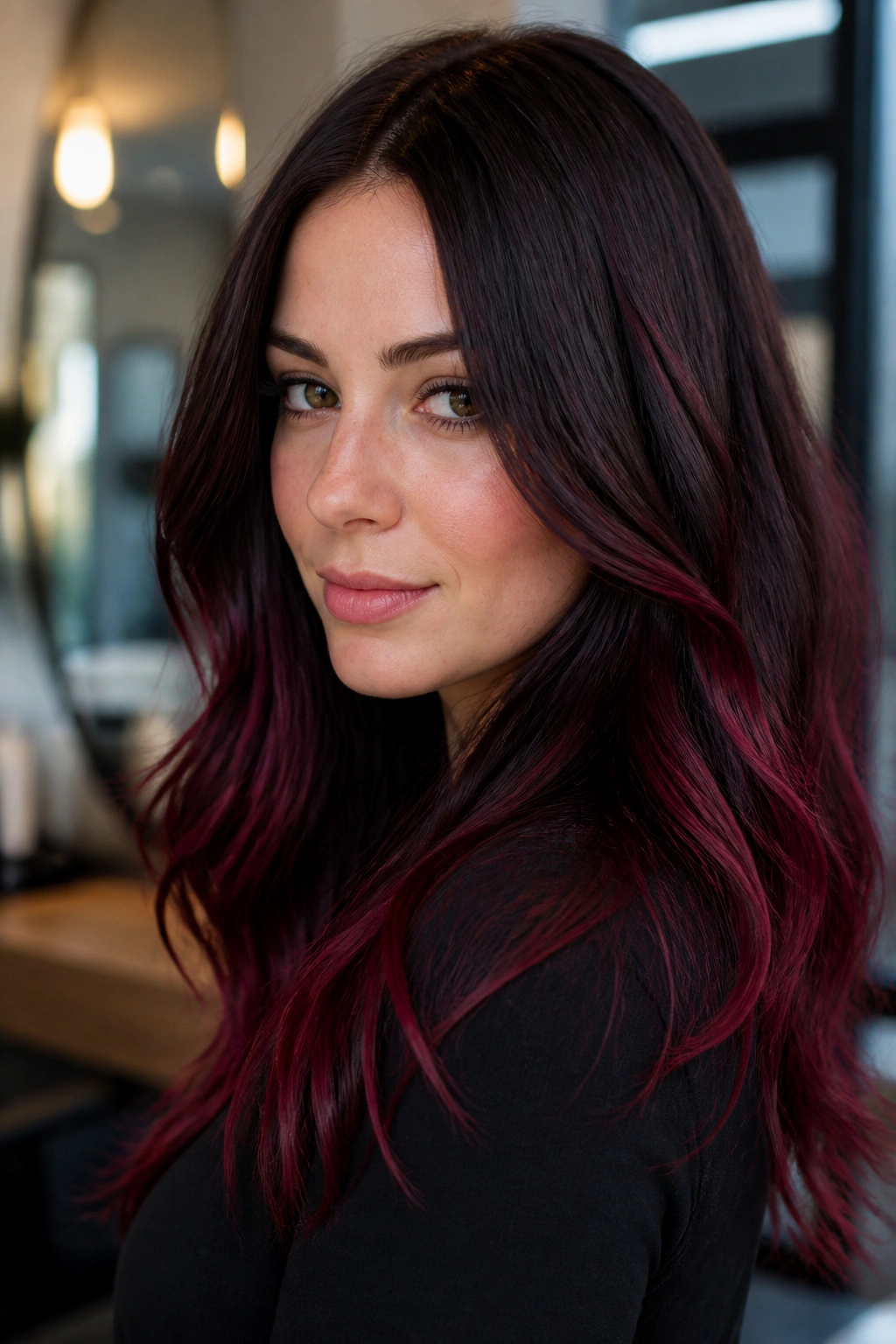
Picture dark brown hair with cherry ribbons woven through the mids and ends. That is black cherry balayage, and it is one of the easiest ways to wear red without living in the salon chair every few weeks.
The balayage placement keeps the look soft. The cherry only shows where the light lands, which means you get movement and depth instead of a flat block of color. For cool skin, that softness is a gift. It lets the red complement the face instead of crowding it.
This shade is especially smart if you have naturally dark hair and do not want heavy prelightening all over. A colorist can paint cherry pieces around the face, through the ends, or under the top layer for a more hidden effect. The result feels modern, but not in a try-hard way. Just smart.
If you wear a lot of black, charcoal, or navy, black cherry balayage sits right at home. It looks even better when the cut has long layers or a soft wave.
4. Cool Cranberry Red
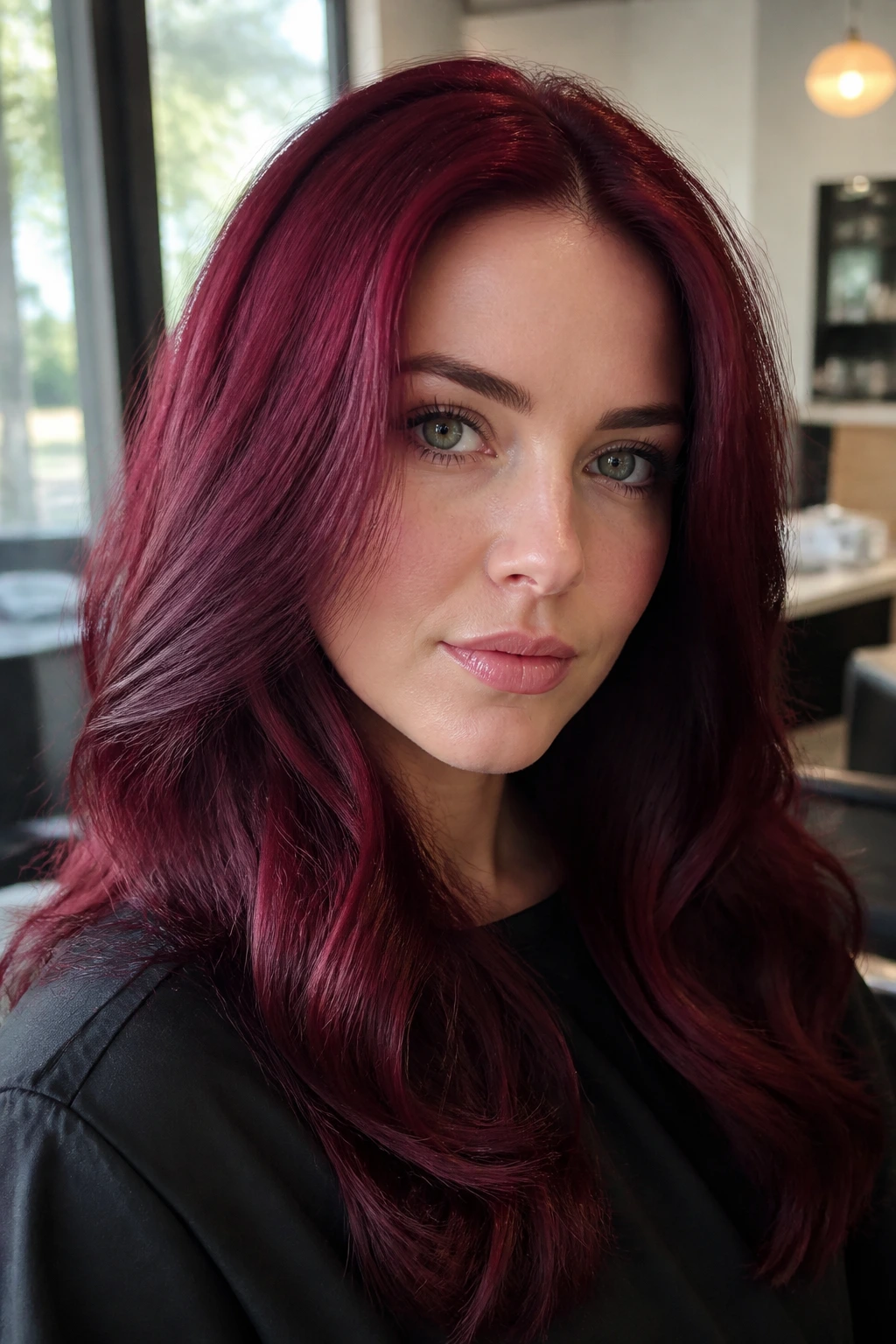
Cool cranberry red is the bright option that still behaves. It has that fresh berry look, but it stays on the right side of the color wheel for cool skin because it leans blue rather than orange. That difference sounds small. It is not.
On fair cool skin, cranberry can make the complexion look clearer and more awake. On medium cool skin, it adds a lively pop that does not fight blush or natural redness. On deep cool skin, a richer cranberry can look jewel-like instead of loud, which is a lovely thing when the tone is done well.
What to Watch For
A true cranberry red should feel crisp, almost tart. If it starts looking peachy or coral, the formula has gone too warm. That’s the line. Stay on the berry side, and you’re safe.
This shade works best on prelightened hair or on naturally light bases. If your hair is dark, ask your colorist whether they can build it with a red-violet gloss rather than chasing a neon finish. The glossy version is usually more wearable anyway.
And yes, it fades. Bright reds always do. But cranberry fades into a softer berry tone, which is still flattering on cool skin. That makes it a little less fussy than some of the brighter reds people fall in love with online and regret two washes later.
5. Plum-Infused Cherry
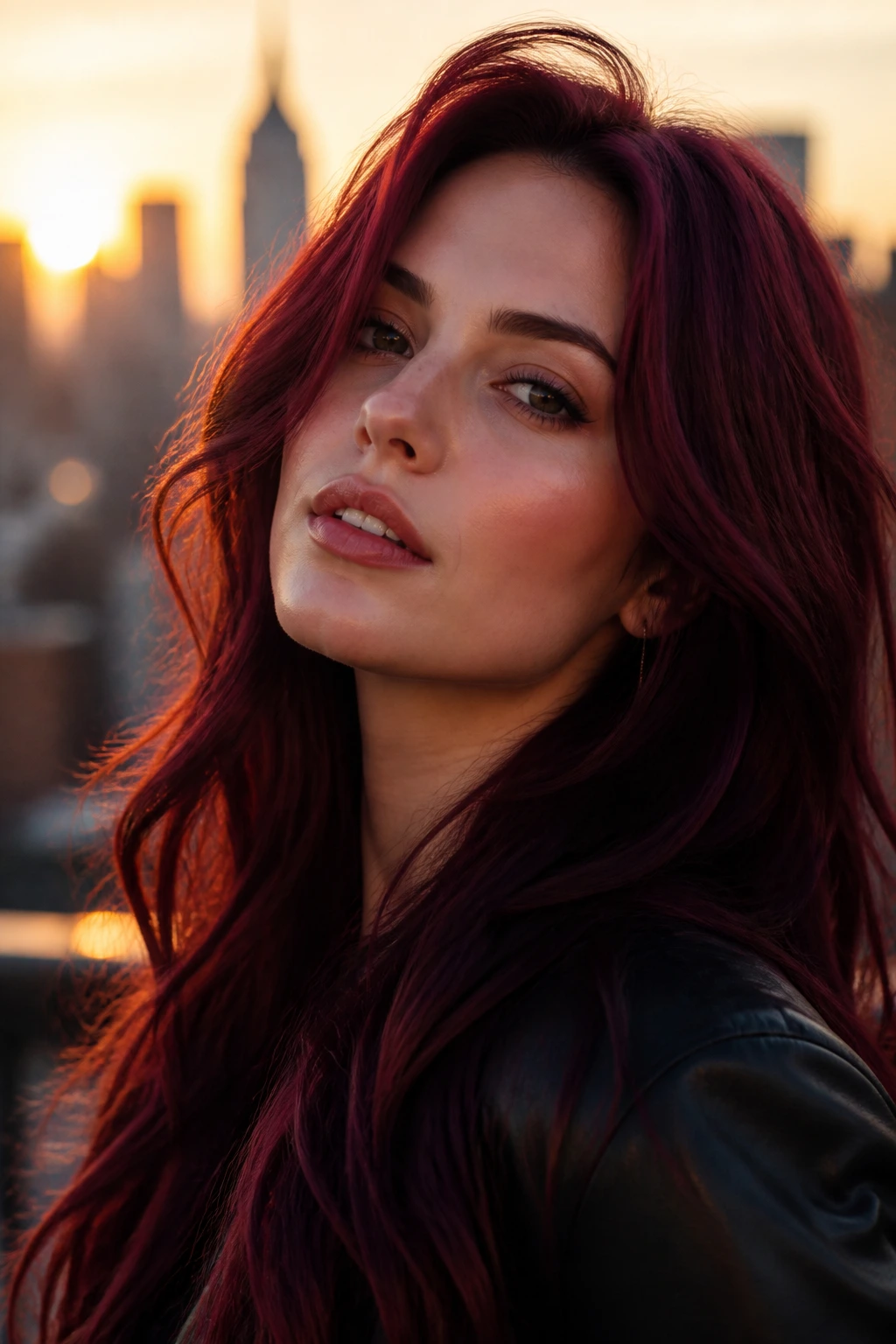
Plum-infused cherry lives closer to violet than fire-red, and that is the whole point. It has enough red to count as cherry, but the plum edge gives it a cooler, deeper finish that sits beautifully against pink or blue undertones.
This is one of my favorite choices for people who want red hair without looking like they borrowed it from a costume box. The plum tone keeps the shade grown-up. On cool skin, it can make the complexion look smooth and even, especially if your skin tends to flush easily.
Think of this shade as cherry red with the lights turned down a little. It is moody, but not muddy. If you have hazel, gray, or blue eyes, the violet cast can make them look sharper. If your hair is naturally dark, this can often be done as a rich overlay instead of a full lightening job.
A blunt bob or long waves both suit it well. The color has enough depth to hold shape, which is part of why it looks more expensive than a brighter, flatter red.
6. Merlot Melt
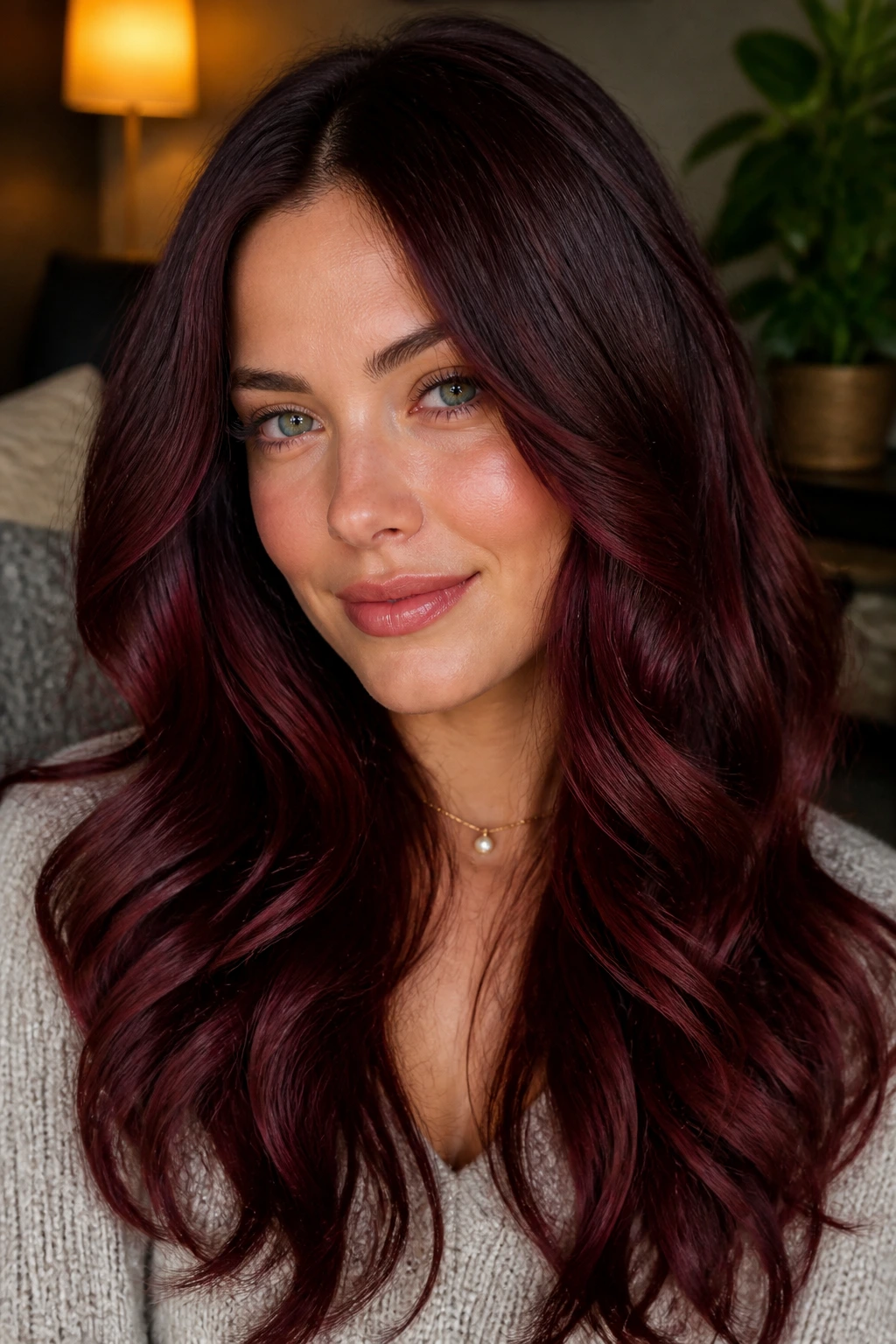
Merlot melt is the grown-up version of cherry red. It starts deeper at the roots and softens a little through the mids and ends, usually with a wine-red or berry-red shift that gives the hair some movement without screaming for attention.
It’s a strong choice if you want color that grows out gracefully. The root area can stay dark enough to blend with your natural base, while the midlengths carry the cherry tone. That makes this style especially nice for longer hair, where a harsh line would look messy fast.
Why It Flatters Cool Skin
Merlot has a cool wine depth that keeps the face looking balanced. On cool skin, it reads rich instead of brownish. The finish matters too. A glossy merlot melt looks lush; a dry one can look flat, and nobody needs that.
If you want to ask for it, say deep merlot root shadow with cherry-wine mids and ends. That gives the colorist room to tailor the placement. It also tells them you want depth, not a bright red band sitting on top of dark hair.
This shade does particularly well on wavy hair because the bend in the hair shows off the different red layers. Straight hair can wear it too, but the glossy finish has to be clean.
7. Raspberry Cherry Gloss
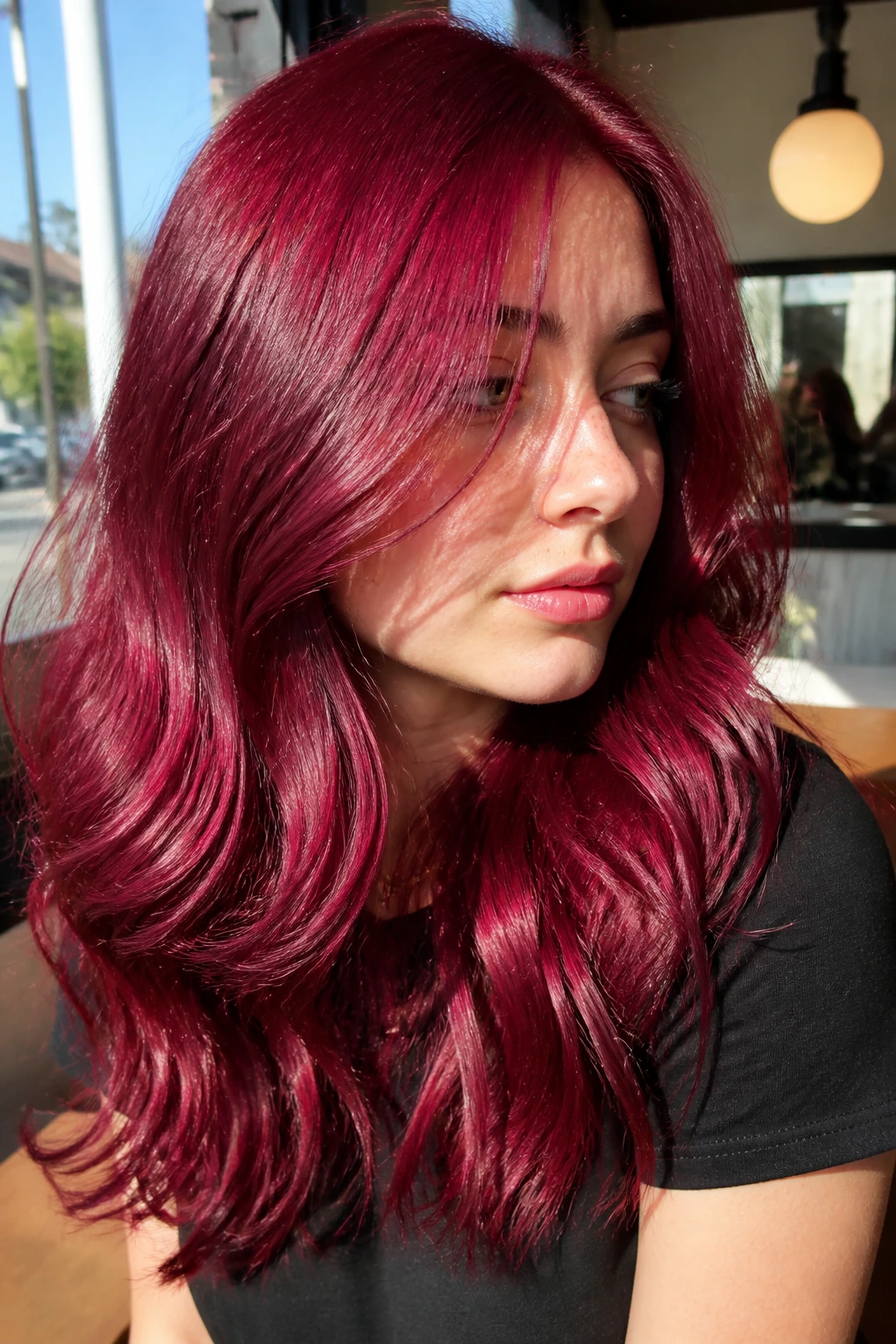
Can you wear raspberry cherry without it looking too candy-like? Yes, if the base is light enough and the finish stays glossy instead of matte. On cool skin, raspberry cherry can be one of the prettiest bright reds because it keeps a berry edge rather than drifting into orange-red.
This is a smart choice for blondes or very light brown hair that has already been lifted. A gloss over that base can give you a red that looks juicy in daylight and polished under indoor light. The red is there. So is the sparkle.
The Finish Matters
A raspberry cherry gloss should feel slick and shiny, almost like stained glass. That shine keeps the color from reading flat. It also helps the skin look fresher, which is the whole point when you’re working with a bright red.
- Best on level 8 to 10 blonde
- Great for a short bob, long layers, or soft waves
- Needs regular gloss refreshes to stay vivid
- Looks best when the hair cuticle is smooth
This shade is not the most forgiving if your hair is damaged. Dry ends can make the red look dusty. If you want this color, healthy ends are part of the look, not a bonus.
8. Cherry Cola Brunette
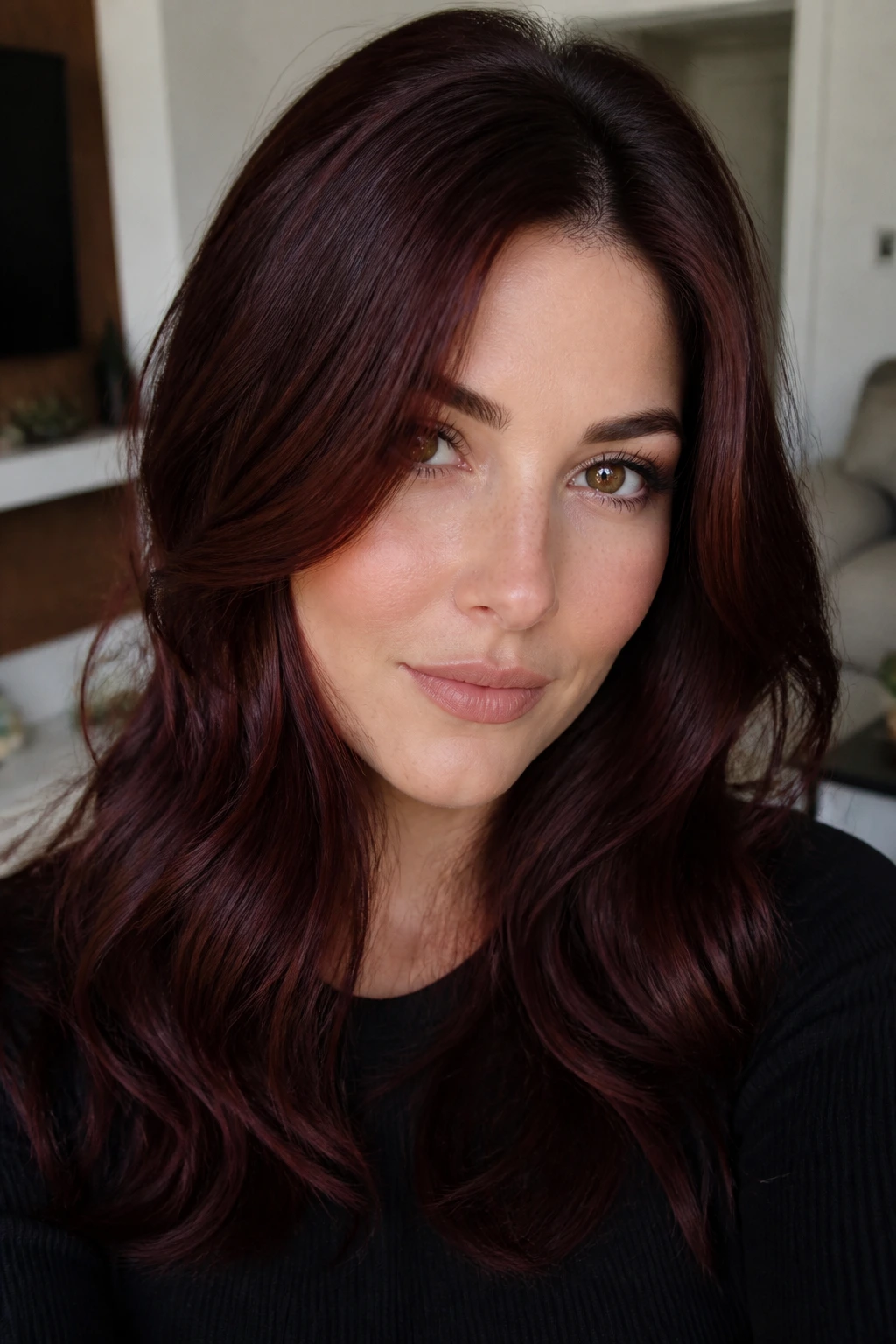
The first time I see cherry cola brunette on cool skin, it usually looks expensive because the brown keeps the red from shouting. That is the whole charm. It gives you enough cherry to make the hair interesting, but the brunette base keeps it wearable for everyday life.
This shade lives in the middle. Not too dark. Not too bright. It is a brown-red with a cool cola undertone, which means it often looks best on medium cool skin, though fair skin can wear it too if the contrast is strong enough.
Cherry cola is also a practical choice if you are nervous about full red. It softens the commitment. You still get the red family, but it reads like a rich brunette in low light and a cherry tone when the sun catches it. That dual life is part of what makes it so easy to live with.
If you have thick hair, this shade can look especially nice because the depth gives the strands more visual weight. It does not disappear the way lighter reds sometimes can.
9. Smoky Cherry Brown
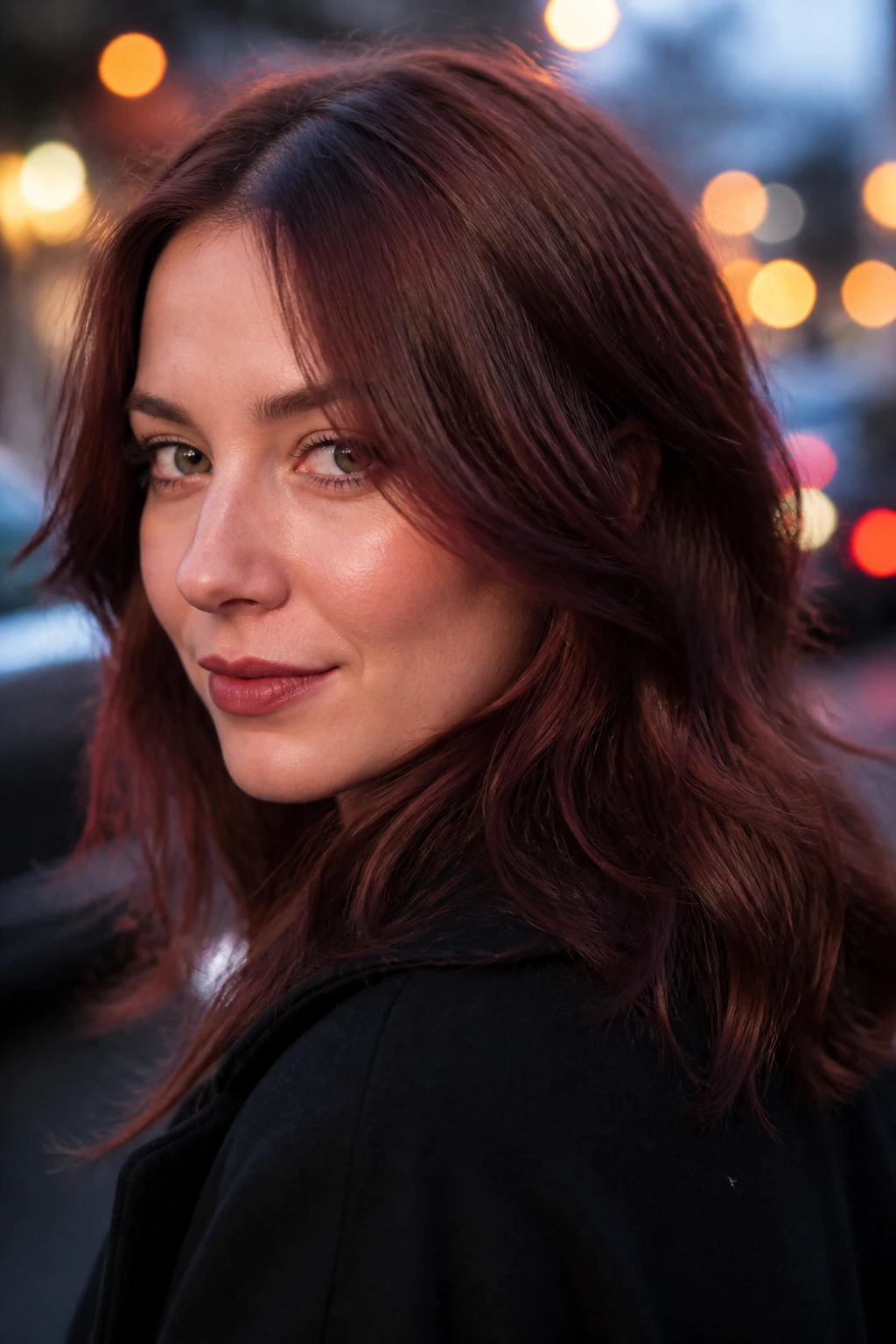
Smoky cherry brown is for people who want the suggestion of red, not a full-on color statement. It is quieter than burgundy and softer than cola brunette, with a muted red-brown base that stays cool instead of turning rusty.
This is a strong pick for anyone with cool skin who works with a dress code, hates high-maintenance color, or simply prefers a subtler look. The color is there, but it sits under the surface a little. You notice it most when the hair moves.
Unlike warmer chestnut reds, smoky cherry brown does not push yellow or orange into the face. That matters. Cool skin often looks best when the red shades around it feel clean and a touch smoky, not sunny. The shade works especially well on medium-length layered cuts because the ends catch the light and show the red dimension.
A demi-permanent glaze can be enough if your hair is already brown. If you want more visible red, ask for a cool cherry overlay with very little warmth added. Tiny difference. Big result.
10. Violet Cherry Ombre
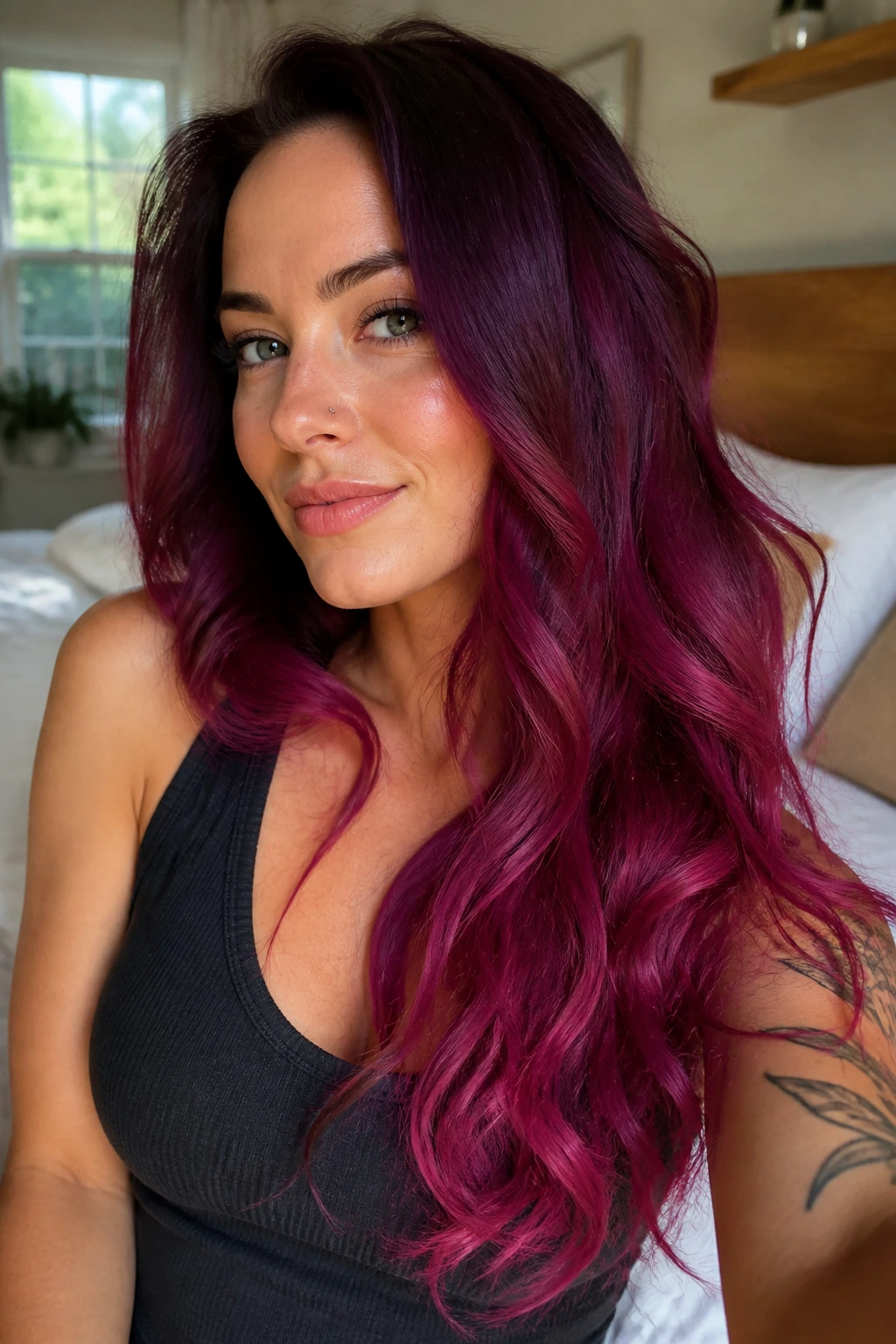
Violet cherry ombre works because the darker roots anchor the whole look. The red then opens up through the mids and ends, often shifting toward a cherry-plum or berry tone that feels cooler as it gets lighter. It is a nice move if you like contrast and do not mind your hair doing a little more visual work.
This style is especially good on wavy or curly hair, where the ombre transition shows up in motion. Straight hair can wear it too, but the gradient is more visible when the hair bends. Cool skin tends to like this kind of dimensional red because the violet base keeps the color from going brassy.
If you want the look to feel intentional, keep the root shade fairly deep and the ombre transition soft. Hard lines can make red hair look chopped up. A gentle melt is better.
A violet cherry ombre also buys you some grow-out room. The roots can stay darker longer, which means fewer obvious lines between appointments. That’s one of the few places where “lower maintenance” and “more interesting” actually overlap.
11. Frosted Cherry Highlights
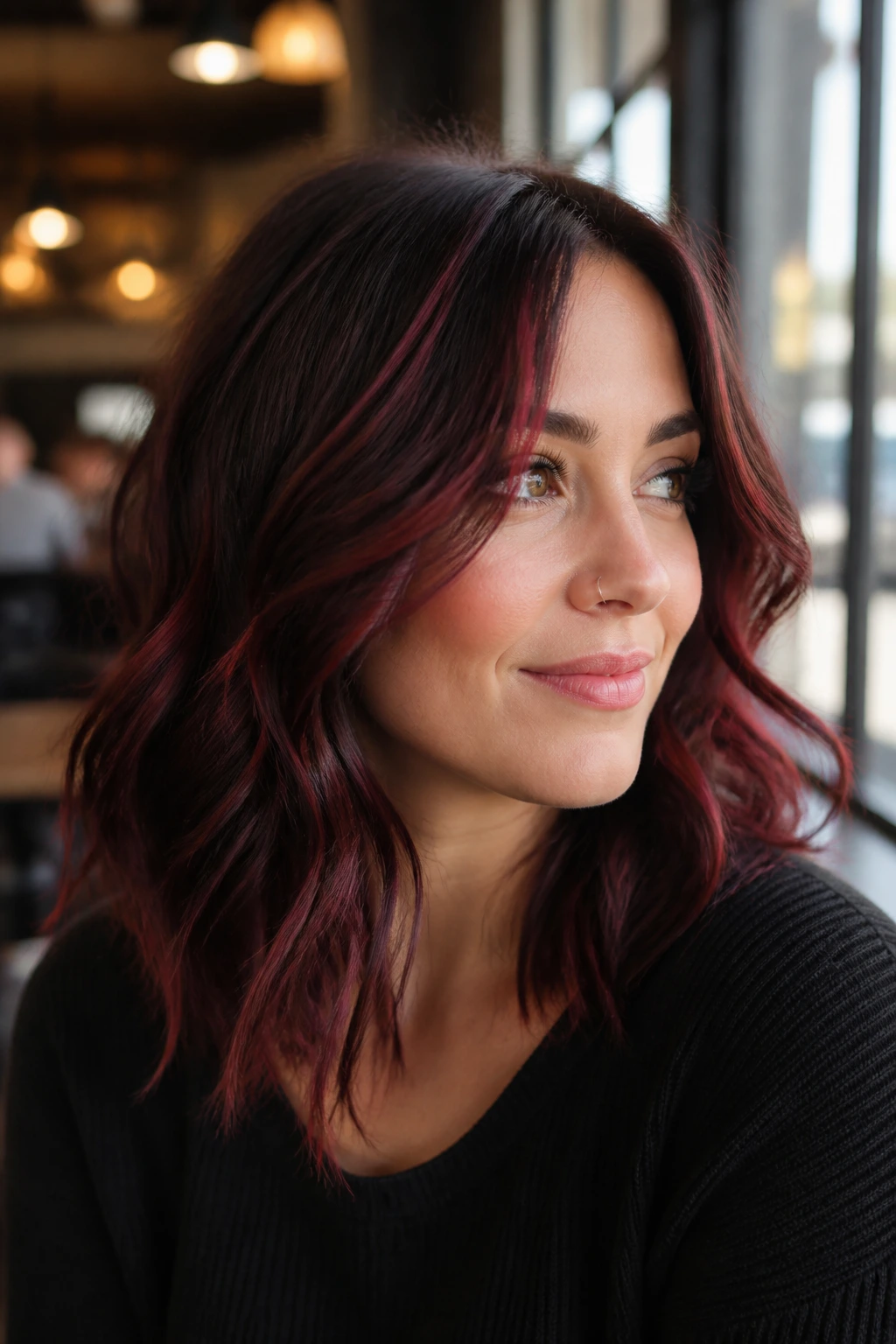
Frosted cherry highlights are the easiest way to test the red waters without committing your whole head. They work best when the highlights are thin, cool, and scattered through a brunette or dark blonde base rather than dropped in as chunky ribbons.
This look can be subtle or bold depending on placement. Around the face, the red reads brighter. Underneath the top layers, it stays hidden until the hair moves. That flexibility is nice if you want red hair ideas for cool skin tones but do not want your color to define the whole haircut.
Best Ways to Wear It
- Keep the highlights fine, not stripy
- Place more red around the face frame and crown
- Use a berry or cherry glaze over the lighter pieces
- Avoid orange-red streaks, which fight cool skin fast
I like this option on shoulder-length cuts because the highlights can move without being swallowed by too much hair. It also works well with curls, since the bend in the pattern makes the red look scattered and dimensional rather than planned to death.
12. Pomegranate Cherry
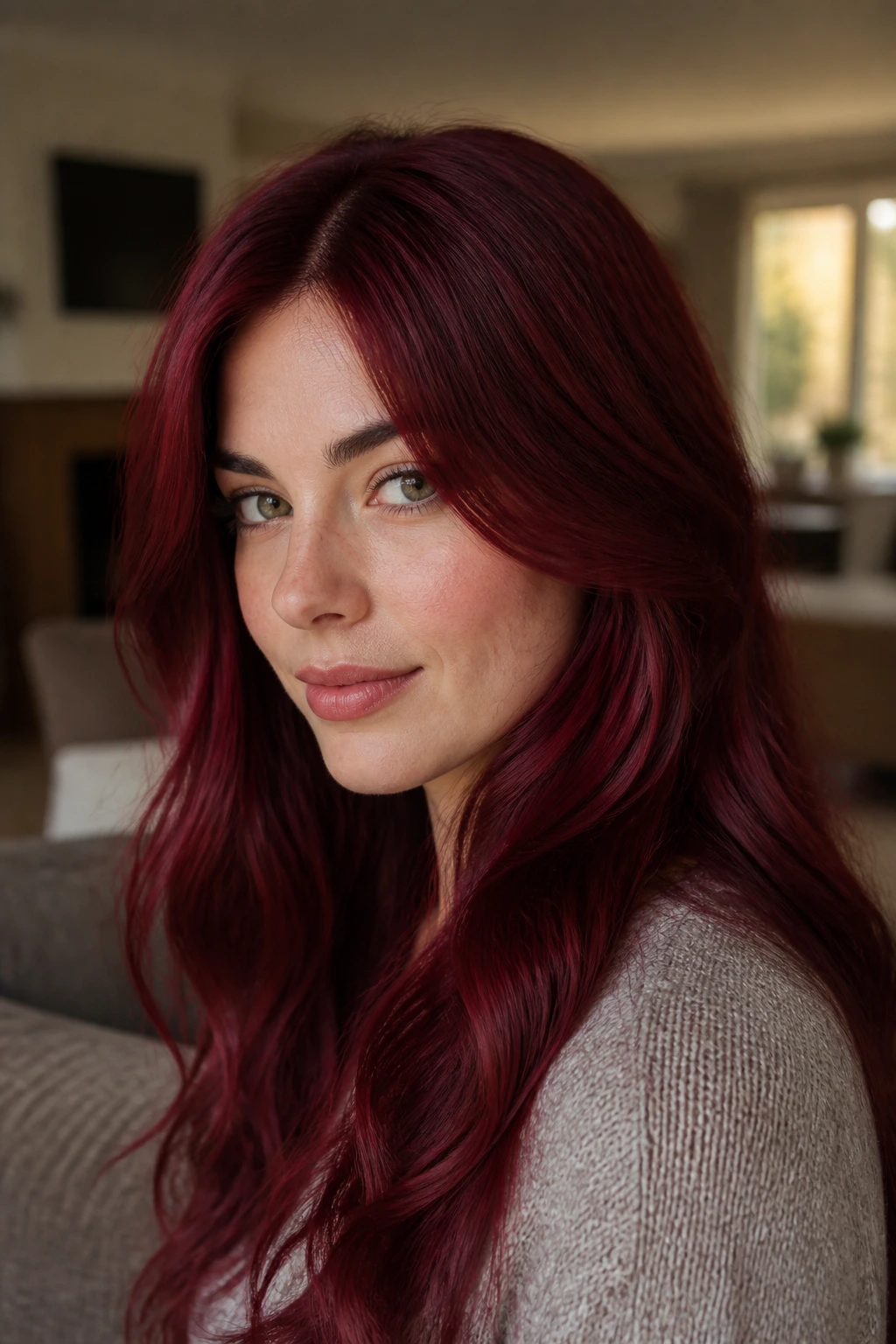
What makes pomegranate cherry different from cranberry? It goes deeper and a little rounder through the midtones. Cranberry feels brighter and sharper. Pomegranate feels fuller, almost like a red wine with berry skin still in it.
That fuller tone is flattering on medium to deep cool skin, especially if your complexion has a neutral edge. It gives the face warmth in the sense of richness, not heat. That distinction matters more than people think. You want life, not orange.
Where It Sits on the Color Wheel
Pomegranate cherry stays closer to ruby and berry than to copper. That is why it behaves so well on cool undertones. The color has a deep fruit note, but the finish remains clean. If the formula gets too warm, the whole shade starts looking like brick red, and the charm is gone.
This shade works well on longer hair because the depth creates a strong visual line. It can also look gorgeous in loose waves, where the light catches the red at different points and keeps it from going flat. If you want drama without neon, this is one of the better picks on the list.
13. Cabernet Cherry Money Piece
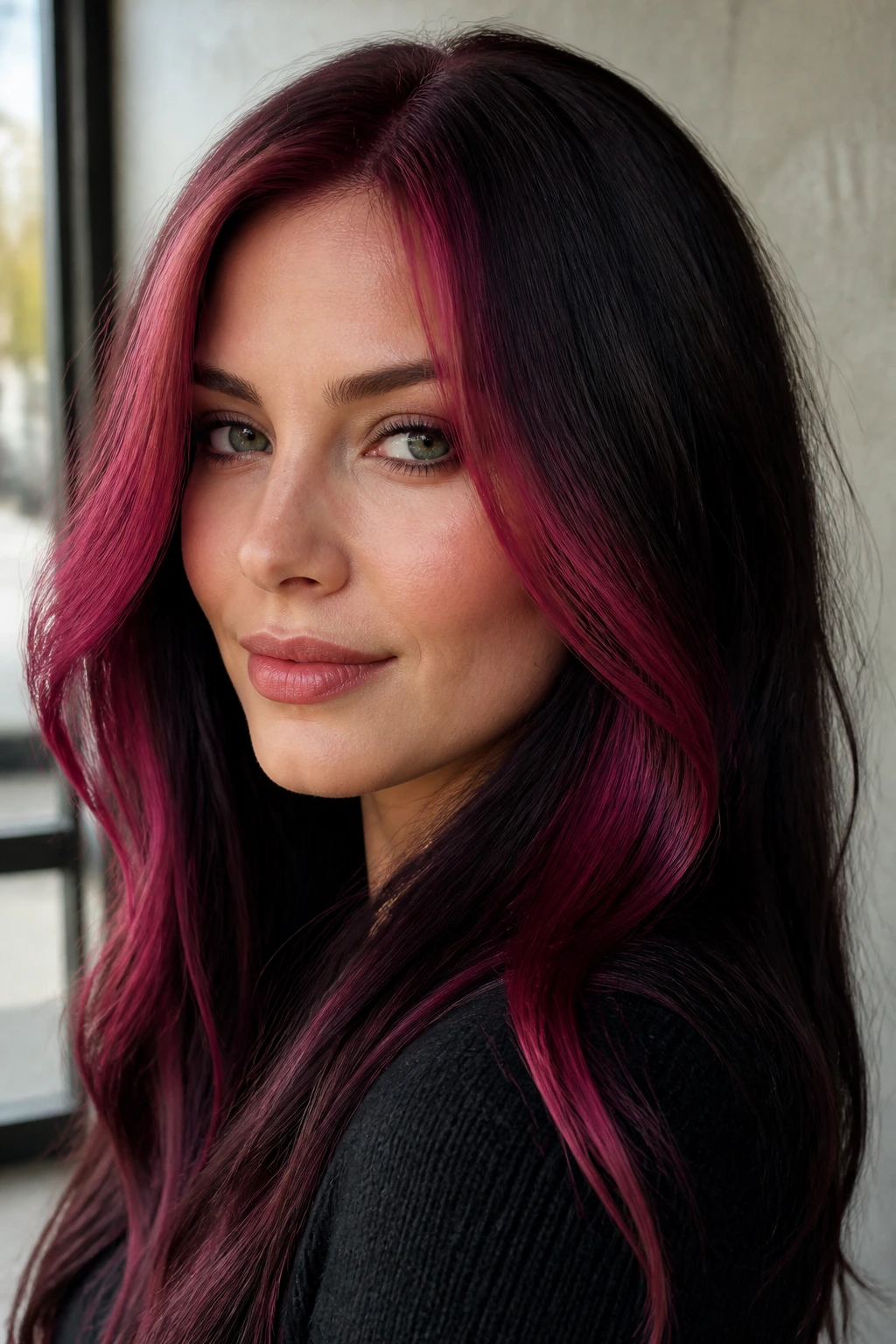
A face-framing cabernet cherry money piece can change a haircut fast. You only need a narrow section — usually about 1 to 1.5 inches wide on each side — but the effect is big, especially if the rest of the hair stays dark or neutral.
This is the sort of color placement that cool skin often loves because it brings the red right where the face needs it most. The cabernet tone keeps the red deep and wine-like, so it feels rich instead of loud. On cool undertones, that can make the cheek area look clearer and more defined.
The money piece works best when the color is a shade lighter or brighter than the rest of the hair. That contrast is what gives it shape. If everything is the same depth, the face frame disappears. If the frame is too bright, it can feel disconnected. Cabernets usually sit in the middle nicely.
I’d pair this with long layers, a blunt lob, or even a shag if you want the front pieces to move. It is one of the easiest ways to wear cherry red without a full head commitment.
14. Rose-Cherry Midlengths
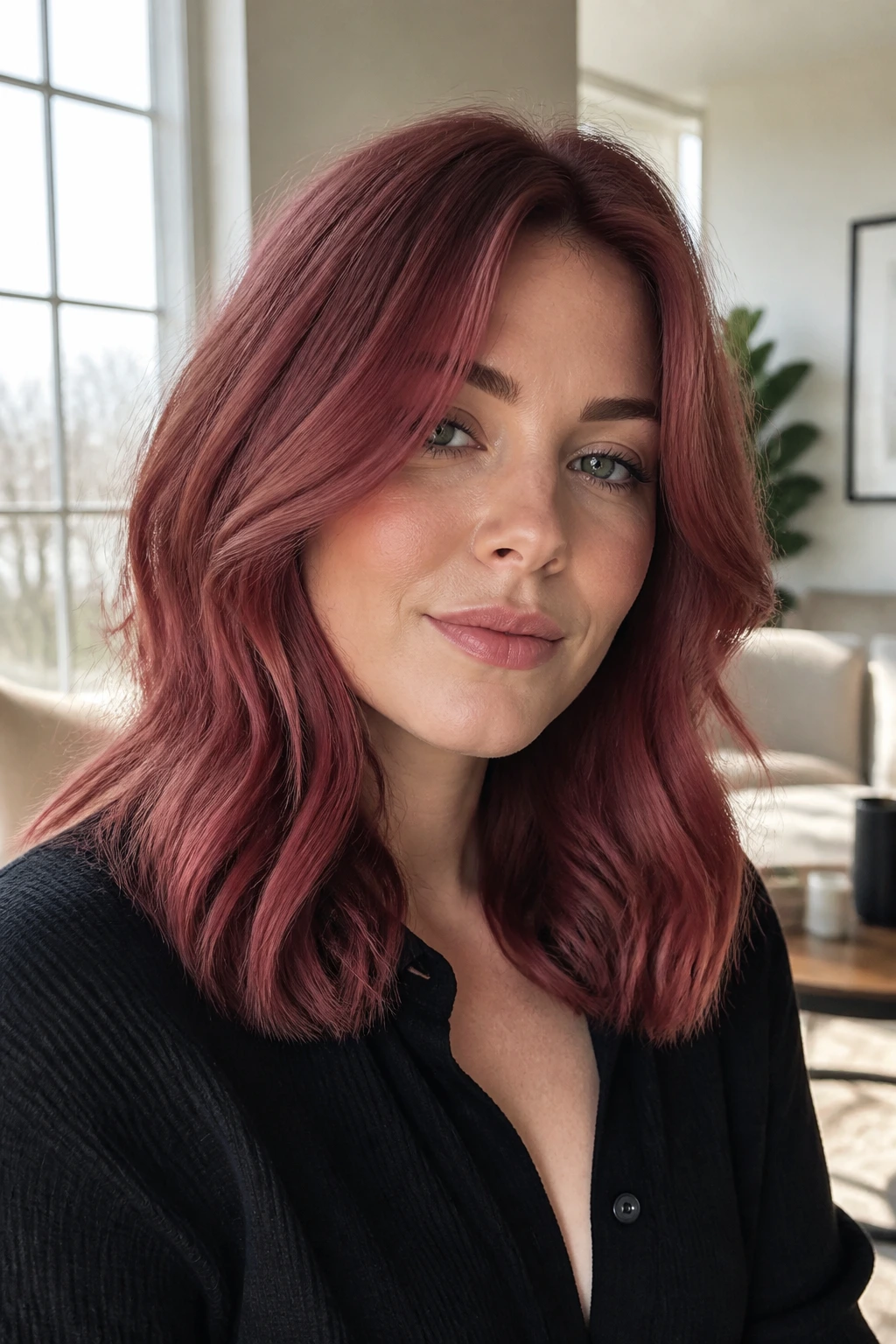
Rose-cherry midlengths are a little softer than most cherry reds, and that’s why they sit so well on neutral-cool skin. The shade carries a red backbone, but the rose tone lightens the mood so the color feels airy instead of heavy.
This works especially well on medium-length cuts where the midsection is doing most of the visual work. The ends can stay slightly deeper, the top can stay cleaner, and the whole thing reads like a soft wash of color rather than a strict dye job. That sort of softness is useful when you want red, but you do not want the red to do all the talking.
Unlike pink-only hair, rose-cherry still gives you real depth. That keeps it from looking pastel or washed out in daylight. On cool skin, it can make the complexion look calm and even. On darker cool skin, it can look almost smoky rose instead of bright pink, which is a nicer place to land.
This is a good choice if you like jewelry-toned clothes, especially silver, black, gray, or navy. The color has enough restraint to sit with those shades without disappearing.
15. Midnight Cherry Pixie
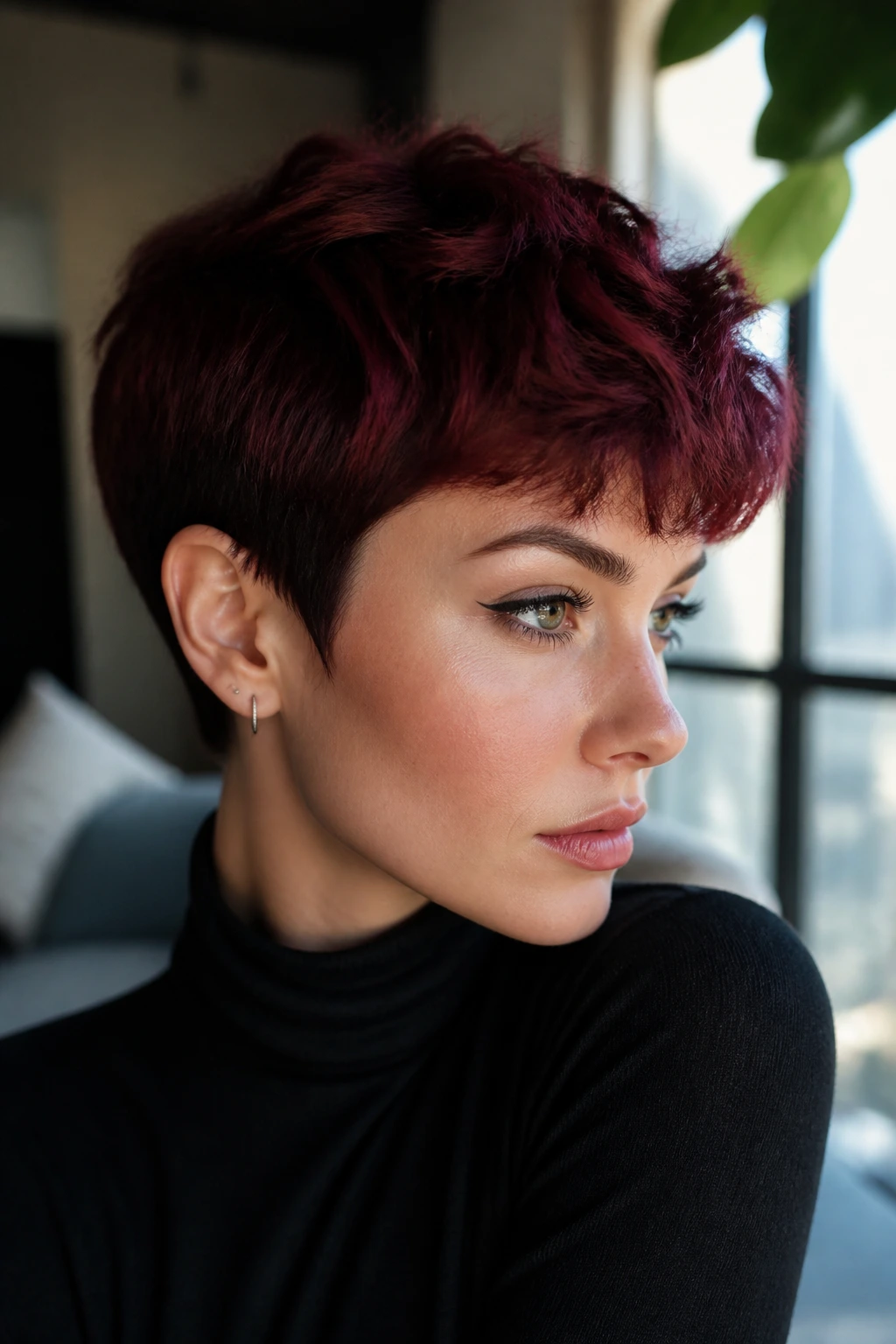
A midnight cherry pixie is a tiny haircut with a lot of attitude. The short shape lets the color do more of the talking, so even a deep cherry tone can feel bold without needing much length to show it off.
This is a smart option if you want red hair but do not want the upkeep of long, lightened pieces. The dark base keeps the tone grounded, and the pixie cut makes the whole thing feel sharp. On cool skin, the red can peek through near the crown and temples, which is where a lot of face-framing color tends to be most flattering anyway.
Shine matters here. A pixie can look flat fast if the color is matte or overly dry-looking, so a light glossing spray or shine balm makes a real difference. The goal is not a greasy finish. Just enough reflection to show the cherry undertone.
I like this shade on people who wear strong eyeliner, a bare face, or very clean brows. It has a crisp, editorial feel without drifting into costume territory.
16. Cherry Merlot Bob
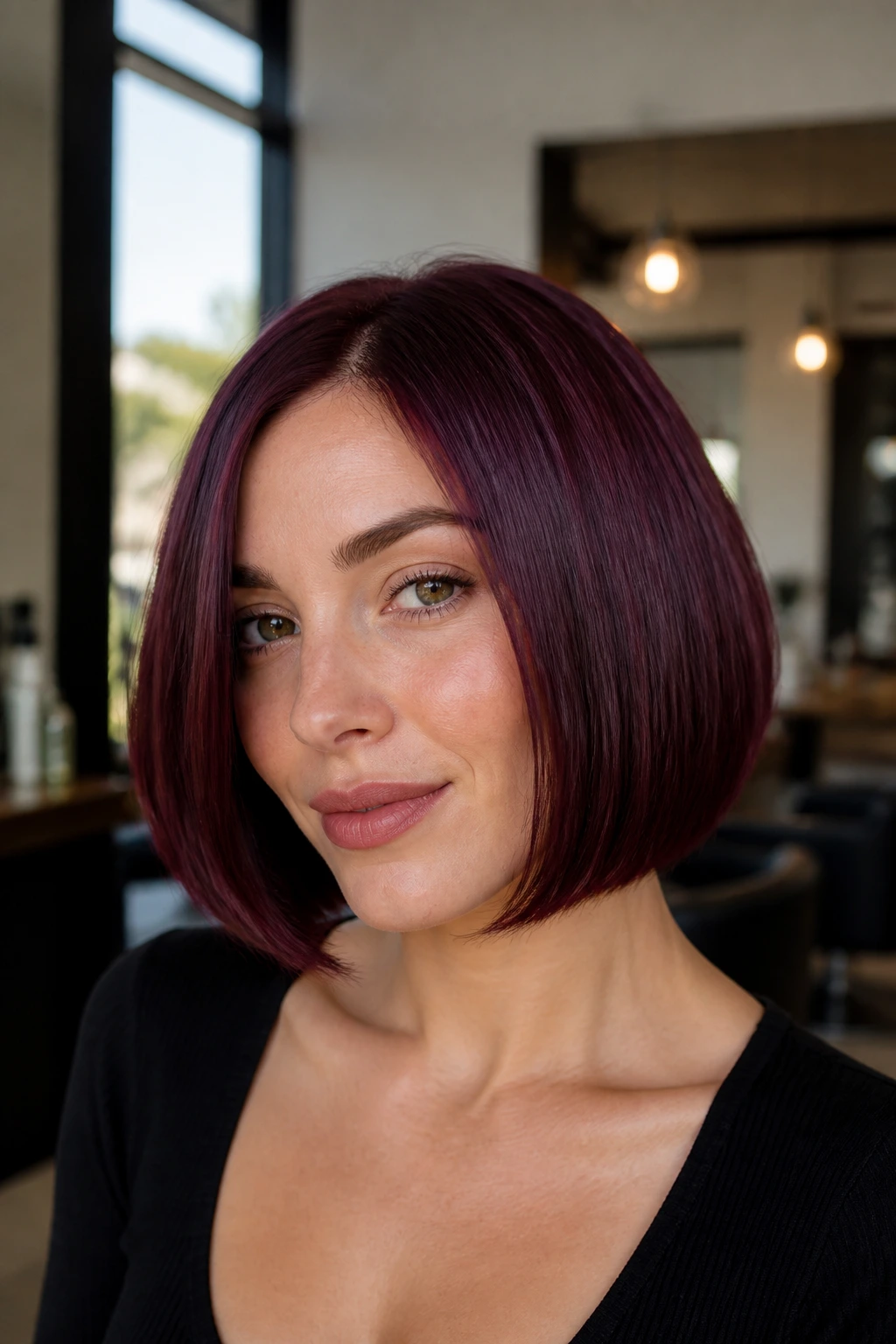
Cherry merlot bob is the shade I recommend when someone wants polish without brightness. The bob cut gives the color a clean edge, and the merlot cherry tone adds depth that cool skin usually wears well, especially when the red stays in the wine family.
The blunt shape matters here. A bob with a straight line at the ends makes the color look denser and richer. That can be gorgeous on fine hair, because the shade gives the hair more visual weight. On thick hair, the same color feels lush and controlled.
What to Ask For
- A deep merlot cherry with blue-violet undertones
- A bob cut that stays blunt or softly beveled
- A gloss finish to keep the red from looking dull
- Slightly darker roots if you want softer grow-out
This is one of those shades that can look very different depending on how clean the haircut is. If the bob is tidy, the color looks intentional. If the bob is uneven, the color starts to lose its edge. That’s not a flaw in the shade. It just means the cut has to carry its share of the job.
17. Blackcurrant Cherry Layers
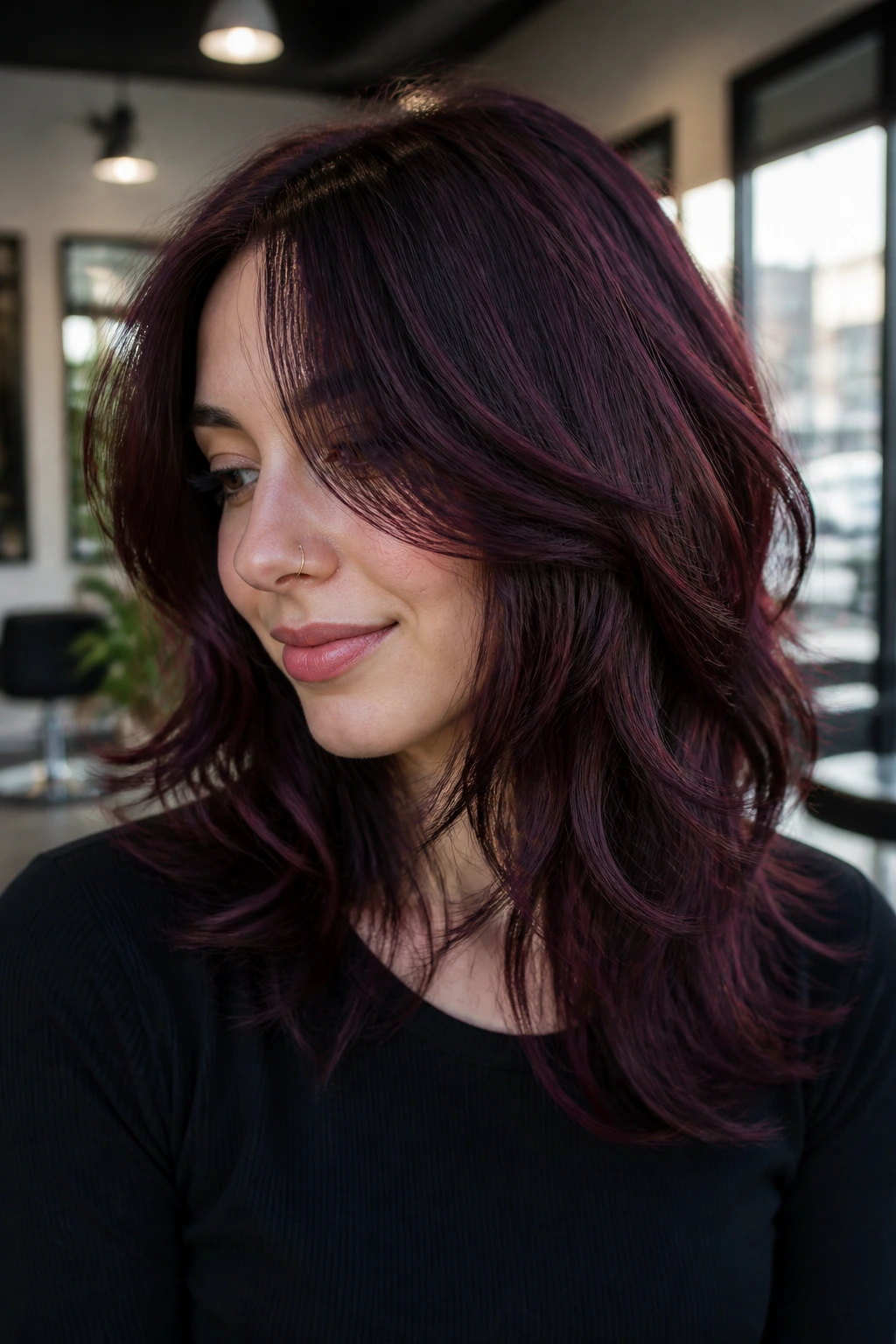
Blackcurrant cherry layers feel cooler than standard black cherry because the berry tone runs a little bluer. That tiny shift changes the mood. The color reads less like red-brown and more like deep fruit with a cool edge, which is exactly why it suits cool skin so well.
Best Way to Wear It
Blackcurrant cherry is strongest on layered hair, especially if the layers are long enough to catch light but not so thin that the color breaks apart. On curls, the shade can look almost dimensional without needing complicated placement. On straight hair, the layers keep it from feeling too solid.
If you want to talk to a colorist about it, say you want a blackcurrant base with cherry reflect and very little warmth. That phrase tells them you care about the undertone, not just the darkness. That part matters because blackcurrant can go brown if the formula is too neutral.
This is also a nice shade if you like dark makeup, silver jewelry, or cool-toned clothing. It has enough depth to sit with those choices without competing. And if the idea of bright red hair makes you hesitate, this is a good middle path.
18. Soft Ruby Cherry
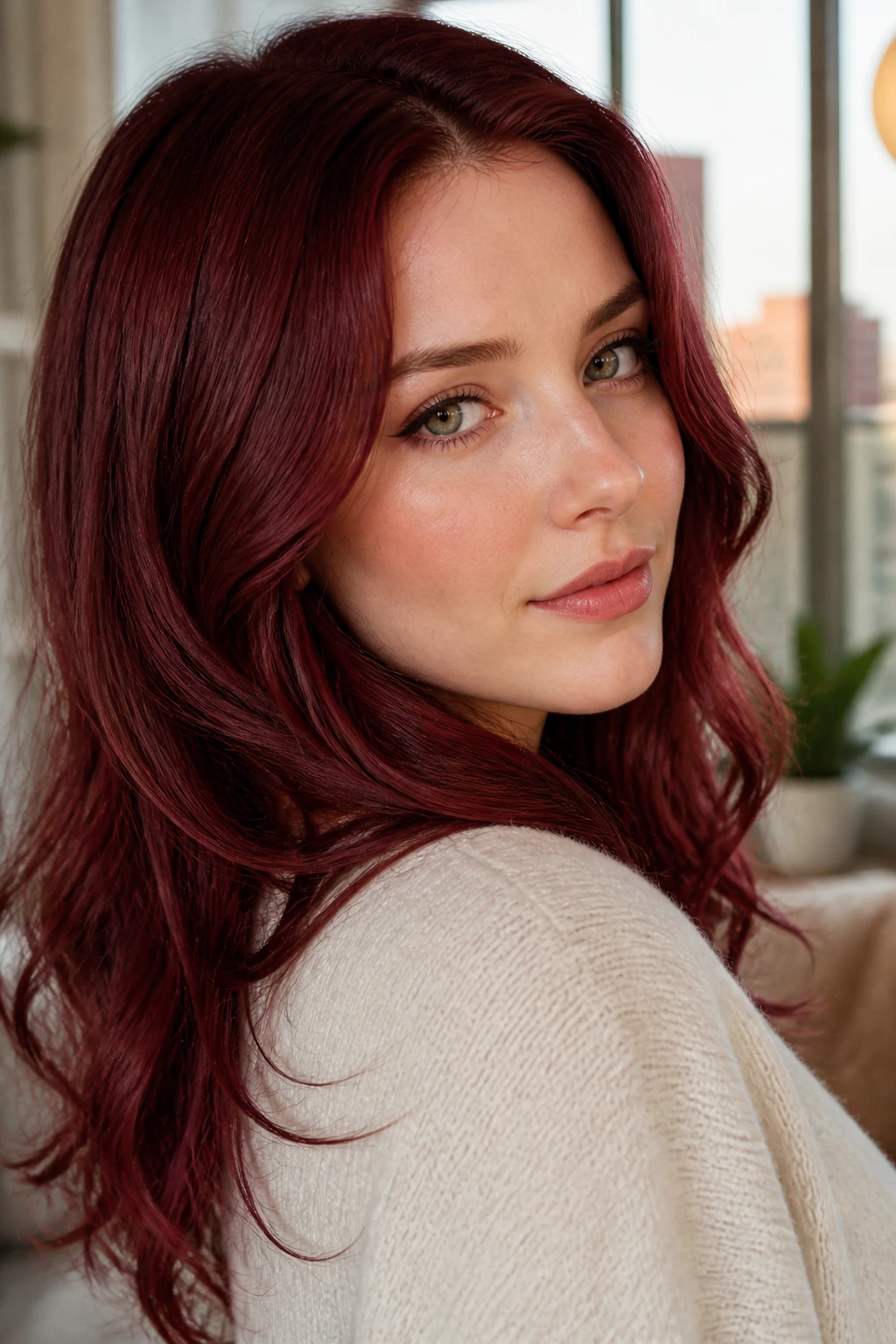
Soft ruby cherry is the cleanest choice for cool skin if you want red to read as jewel-toned rather than punk. It has a polished, glassy quality that works on pale cool skin, medium cool skin, and even deeper skin tones when the formula stays blue-based.
Unlike fire-engine red, soft ruby cherry does not rely on orange to create impact. The red is still vivid, but the cooler base keeps it elegant. That means it can look just as good with a black sweater as it does with denim or a gray coat. Simple clothes, strong hair. Easy win.
A level 6 or 7 base with a ruby gloss can give you a softer version, while prelightened hair can carry a brighter ruby cherry that still feels refined. If you want shine, ask for a gloss finish. If you want more saturation, ask for a demi-permanent ruby red with violet support.
This is the shade I’d pick for someone who wants one red that feels safe and still interesting. It has range. It is bright enough to count, but cool enough to flatter without a fight.
Final Note
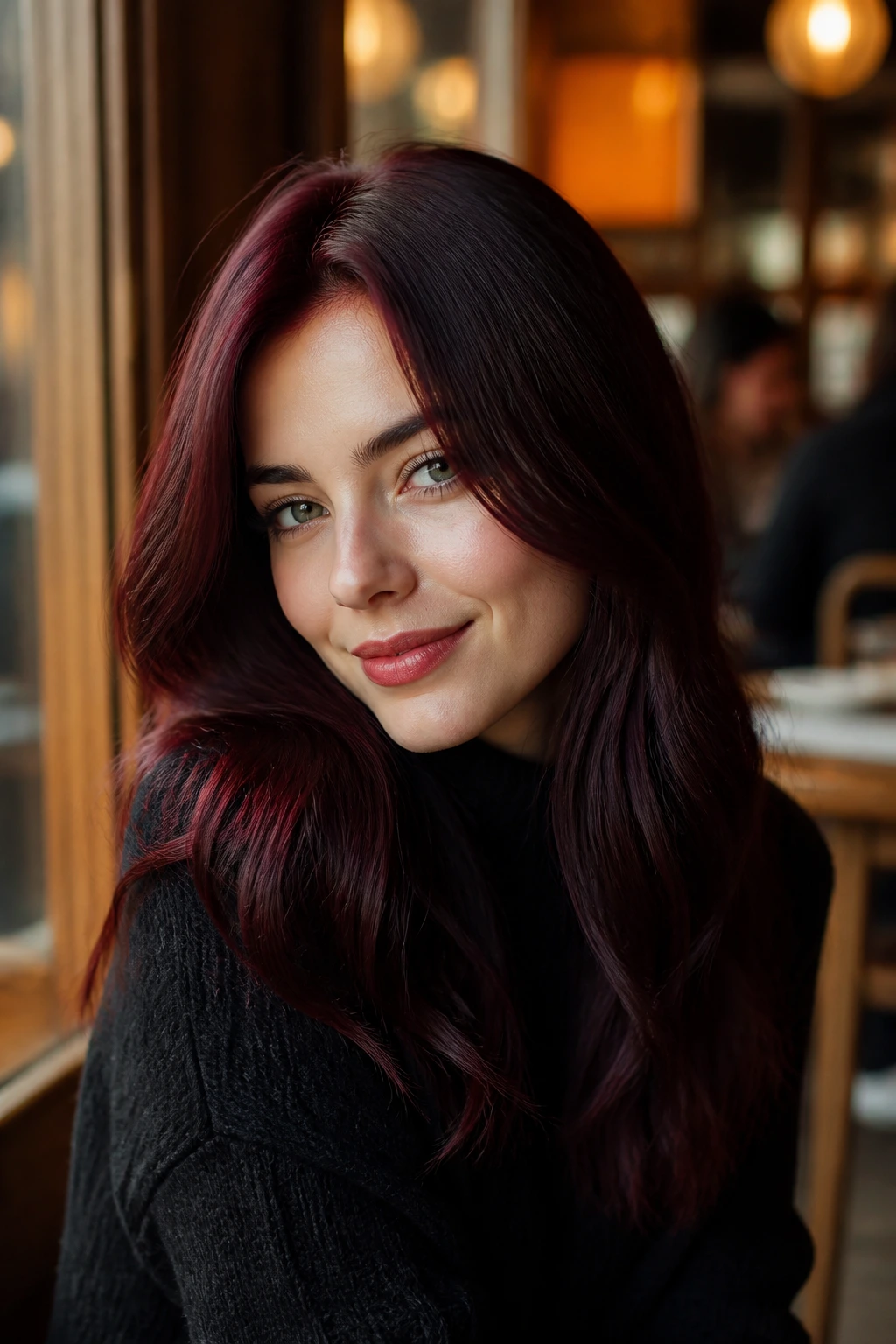
The best cherry red hair color for cool skin tones is usually the one that keeps blue or violet in charge. That can mean black cherry, burgundy, cranberry, plum, or ruby. It can also mean a softer cherry gloss on a lighter base if you want something brighter but still controlled.
If you want the safest place to start, go with blue-black cherry, burgundy cherry, or soft ruby cherry. If you want the color to do a little more talking, try cranberry, blackcurrant, or cabernet money-piece accents. The fun part is that cherry red has range, so you do not have to choose between subtle and bold. You just have to pick the red that respects your undertone.
And that is the part people forget. The right red does not fight your skin. It frames it.
