



Red hair can be a gift when it’s chosen with a little restraint and a little nerve. The wrong shade can look flat, brassy, or слишком loud against mature skin; the right one makes the face look fresher, the eyes look brighter, and the whole cut feel sharper. That’s why red hair color ideas for women over 40 work best when they lean on depth, shine, and dimension instead of one flat block of color.
There’s also a useful myth to toss out right away: red does not have to mean bright, cartoonish, or hard to wear. A soft copper, a brown-leaning auburn, or a wine-toned glaze can be far more flattering than a neon cherry shade. And if gray is starting to show up around the temples, the smartest red tones don’t fight it head-on. They weave around it, blur it, and make it look intentional.
What tends to work best is color that respects the haircut. A chin-length bob can carry a bolder copper. A layered lob can take a richer auburn melt. Pixies, shags, and soft curls all have different needs, and the color should follow the shape instead of ignoring it. That part matters more than people think. A good red on mature hair is never only about color; it’s about placement, shine, and how the shade moves when the hair moves.
1. Soft Copper Bob
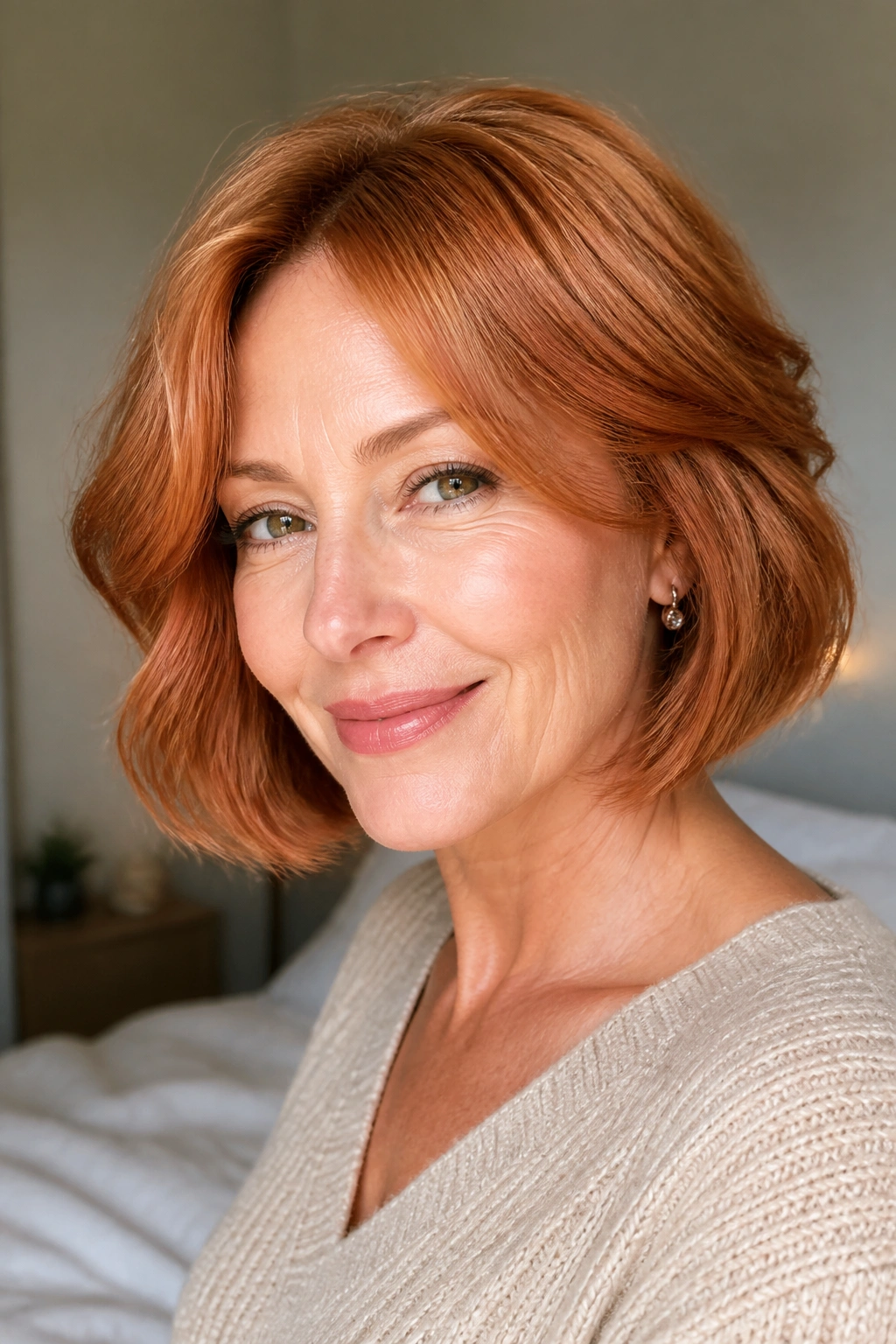
Soft copper is one of those shades that looks polished without feeling stiff. On a bob, it gives fine hair a little visual lift and keeps the cut from reading too dark or too heavy around the jawline.
Why It Works So Well
The copper is warm, but not orange in that cheap, box-dye way. It sits in that sweet spot where the hair looks lively in daylight and still calm indoors. If your skin has peach, golden, or neutral undertones, this one tends to flatter fast.
A chin-length or slightly longer bob helps the shade stay neat. The cut does half the work.
- Best for straight, wavy, or lightly textured hair
- Works well with subtle gray blending
- Looks strongest with a gloss finish every 6 to 8 weeks
- Needs less upkeep than brighter red shades
Best move: ask for a sheer copper glaze over a beige-brown base instead of one solid block of color.
2. Rich Auburn with Micro-Lowlights
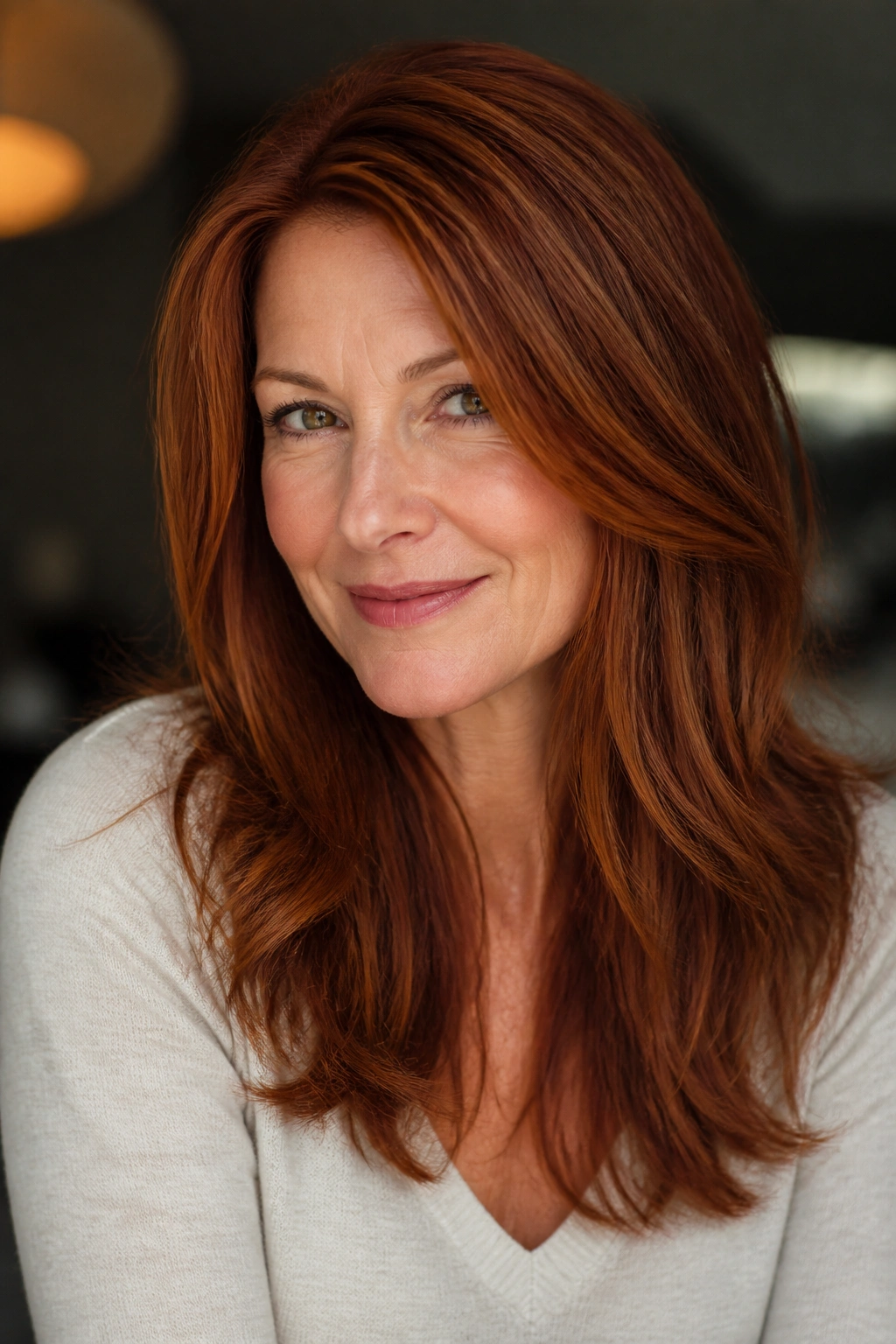
Why does auburn age so well on mature hair? Because it has depth. The red is there, but the brown base keeps it grounded, so the color looks expensive instead of loud.
Micro-lowlights are the trick that many people skip. Tiny darker pieces threaded through the hair make the red look thicker and richer, especially if your hair has thinned a bit around the crown. The result is subtle, but not bland. You still get movement. You just get it in a smarter way.
This shade works especially well for women who want red hair color ideas for women over 40 that feel classic rather than trendy. It grows out softly, too, which is a relief if you do not want to sit in a salon every few weeks.
If your natural hair is medium brown or dark blonde, auburn with lowlights is one of the easiest red families to wear.
3. Cinnamon Brown Gloss
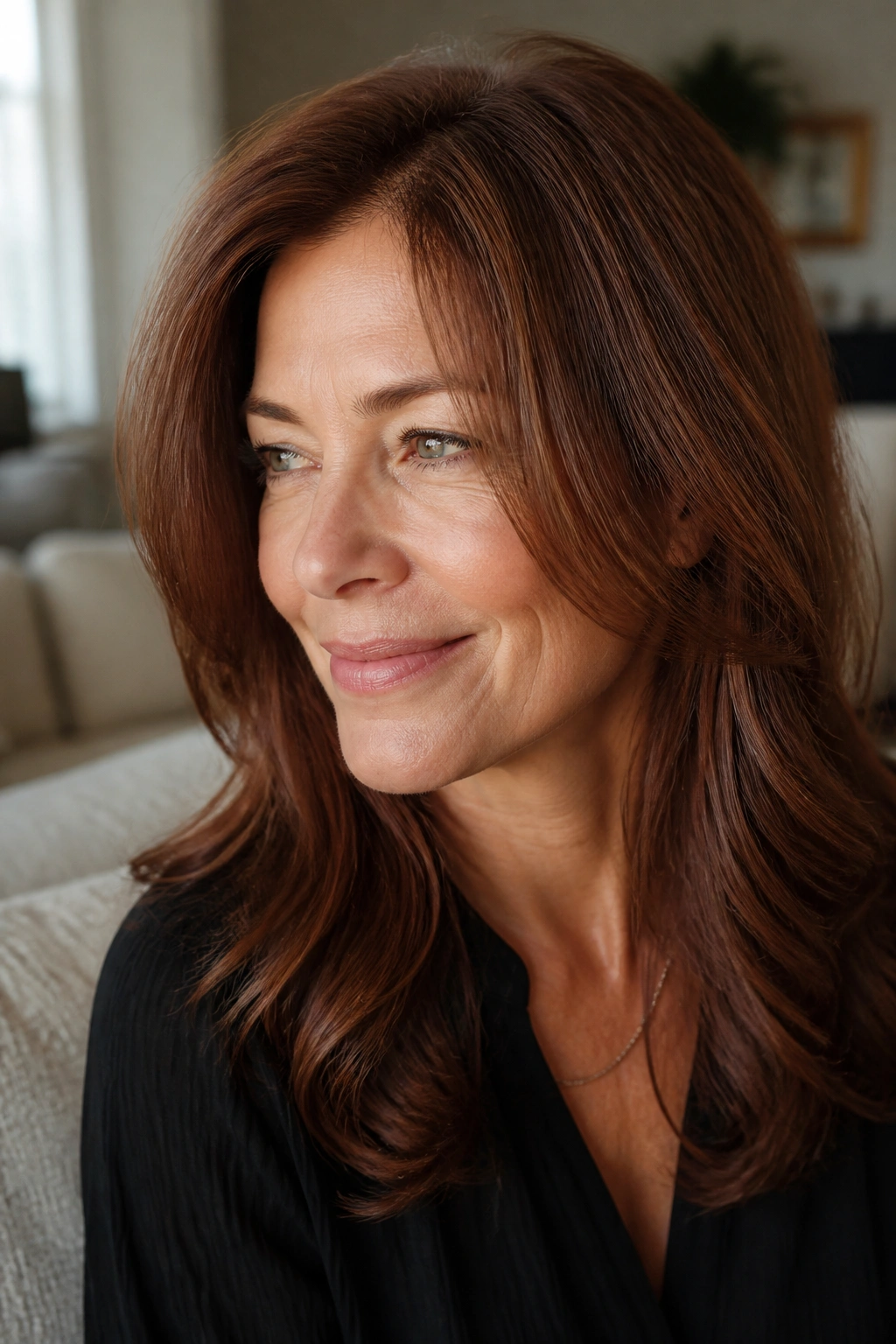
A cinnamon brown gloss is the sort of color that sneaks up on people. It doesn’t shout. It warms the face, softens harsh lines, and gives the hair a satin finish that makes even simple styles look cared for.
What Makes It Different
Unlike brighter reds, this one sits close to brunette territory. That means it’s forgiving on dry ends and doesn’t expose every uneven layer in the haircut. It also plays nicely with a few silver strands, which can look more like shimmer than regrowth when the tone is right.
A gloss is not the same thing as permanent color. It’s thinner, gentler, and usually fades more softly. That makes it a smart choice if you want to test the waters before going richer or brighter.
You can wear cinnamon brown with a blunt bob, shoulder-length layers, or a sleek blowout. It has a tidy, expensive look without trying too hard.
How to Wear It
- Keep the roots one shade deeper
- Ask for warm cinnamon, not copper orange
- Style with a round brush for extra sheen
- Refresh every 4 to 6 weeks
4. Strawberry Blonde with Beige Ends
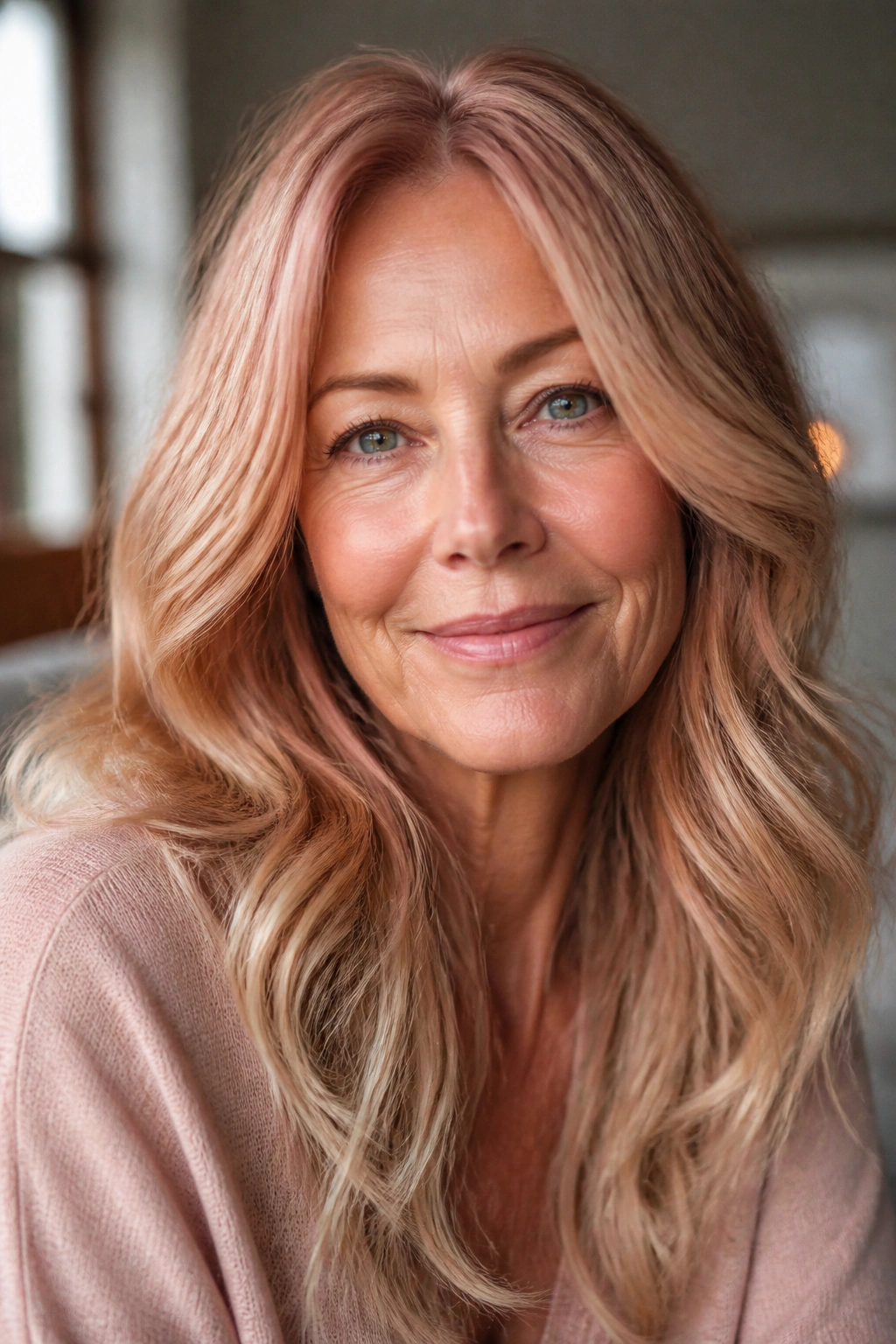
Strawberry blonde can be tricky, because it can drift too pink or too yellow fast. The version that works best after 40 is softer: a beige blonde base with strawberry warmth through the mids and ends.
That softer approach keeps the hair from looking washed out. It also avoids that problem where a very light blonde makes facial lines feel sharper. Beige ends, especially around the face, soften the whole look. They’re easy on the eyes.
This color is a good fit if you already have lighter hair and want a gentle red shift without a dramatic change. It’s also useful if you like airy layers or loose waves, since the color shows up in movement instead of sitting flat.
A little root shadow helps here. It gives the color a modern feel and makes regrowth less fussy.
5. Mulled Wine Lob
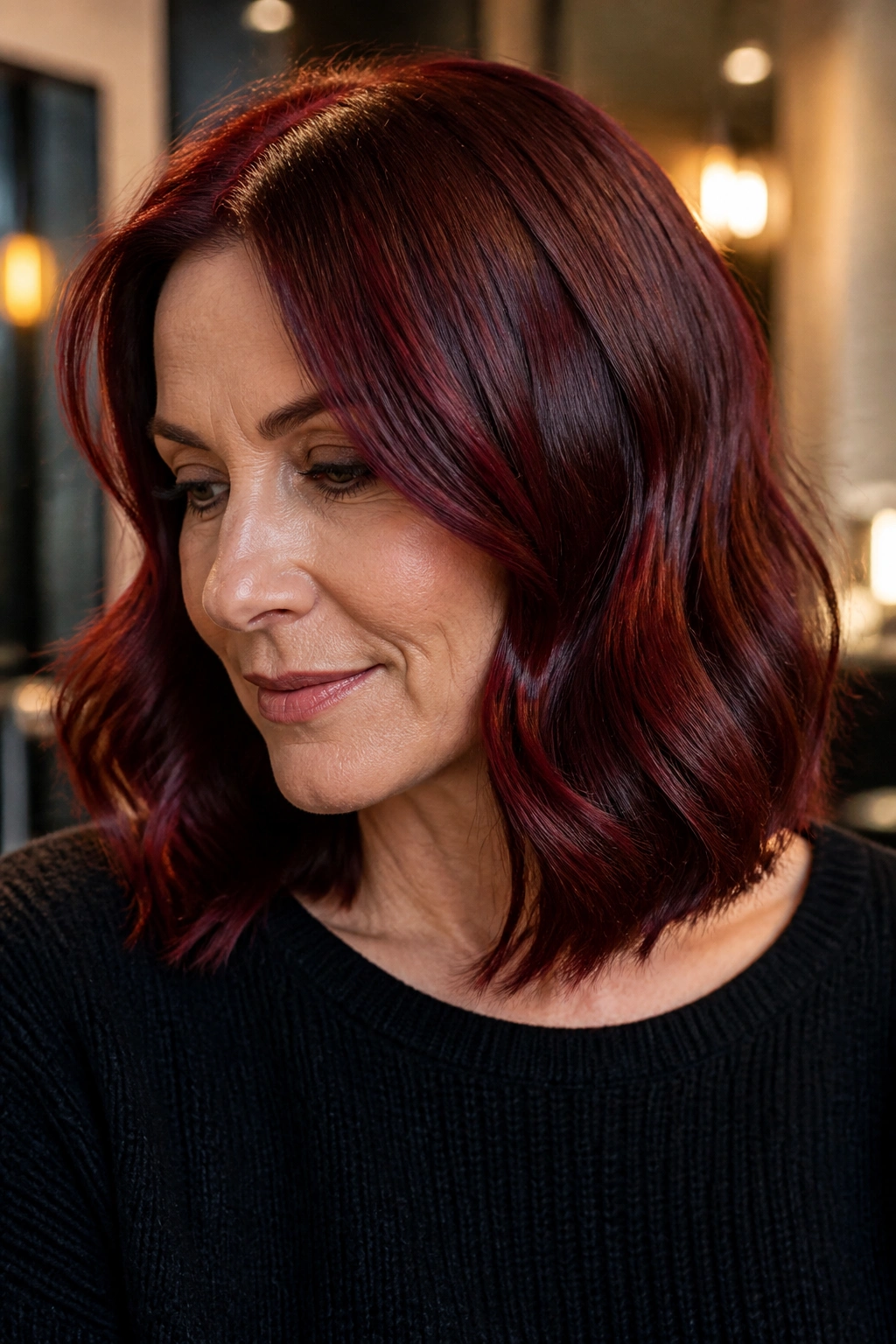
Dark red with a wine stain feel is one of my favorite options for women who want drama but not brightness. A lob gives it enough length to feel elegant, while the wine tone keeps it rich and wearable.
The shade sits between burgundy, plum, and cherry, but the brown base is what saves it from looking costume-like. On shoulder-length hair, it reads as glossy and deliberate. On very long hair, it can go a little heavy if the cut is too blunt, so soft layers help.
This is a strong choice for cool or neutral skin tones. It also looks especially good with dark brows, which help hold the face together. If your wardrobe leans black, cream, navy, or charcoal, the color usually fits right in.
A deep side part gives this shade some swing. Too straight and severe, and the hair can lose its shape.
6. Chestnut Red Melt
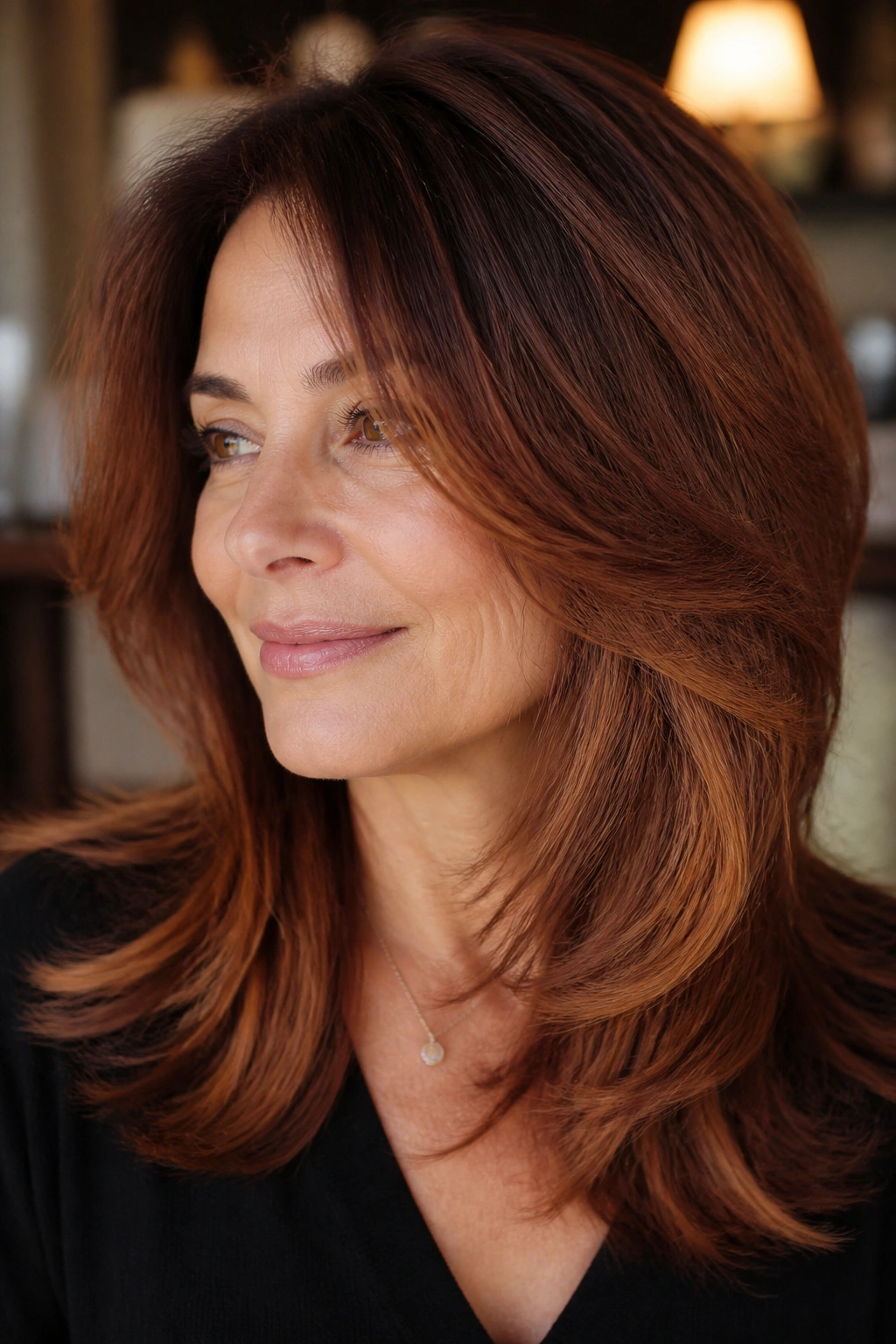
Chestnut red is a quiet favorite because it works in real life. It gives you warmth, but it doesn’t make the hair look dyed from ten feet away. The melt effect—deeper at the roots, warmer through the mids, softer at the ends—keeps the color from feeling blocky.
That gradient matters more than people expect. It’s especially kind to layered cuts, where each section can pick up a slightly different tone. The result is a red that moves instead of sitting still.
Why I’d Pick It
It’s flattering on brown eyes, hazel eyes, and skin that has both warm and neutral notes. It’s also one of the easier reds to live with between salon visits. If the ends fade a little, the whole look still makes sense.
This is one of the red hair color ideas for women over 40 that works when you want warmth and softness, not flash.
7. Copper Balayage on Dark Brown Hair
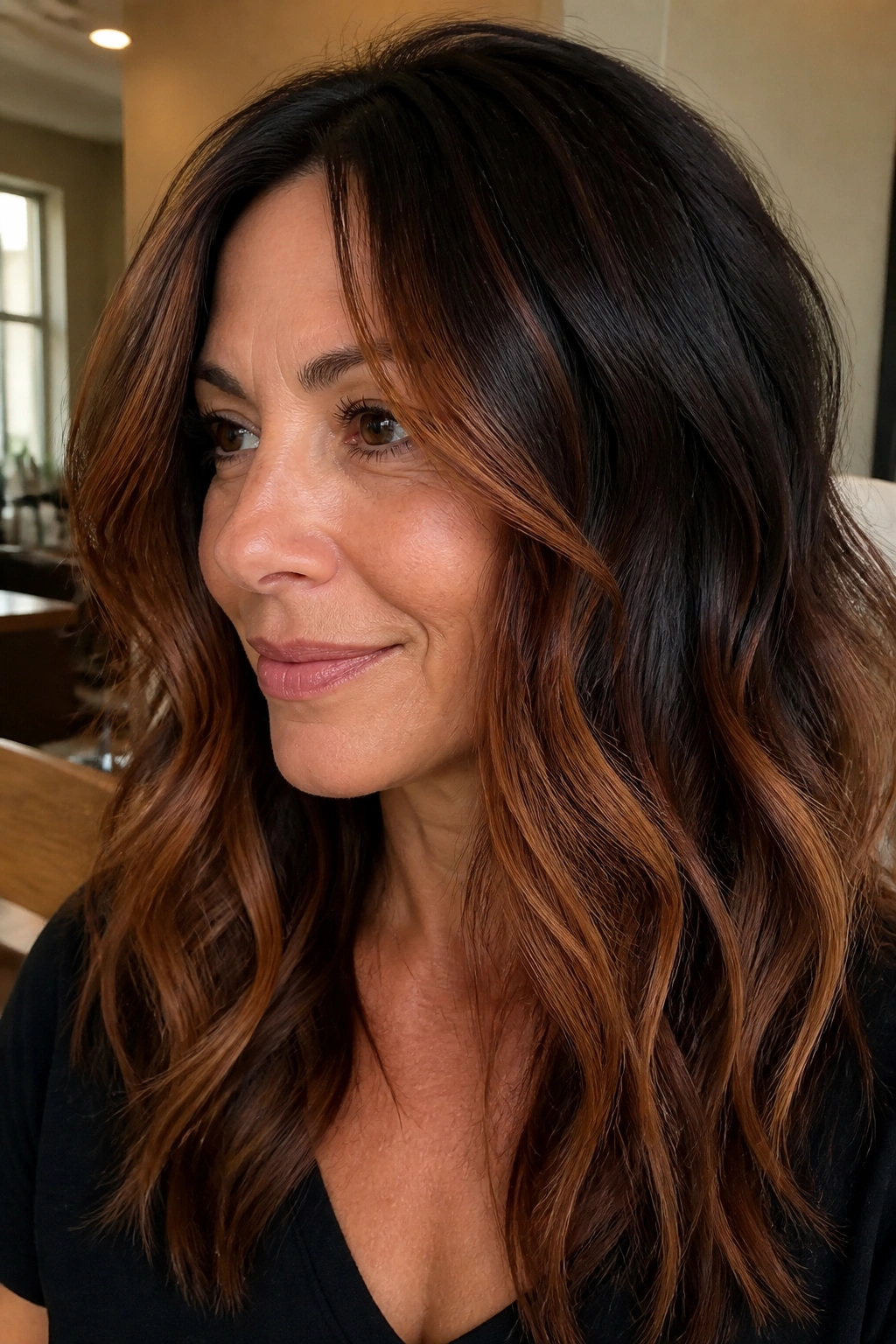
Copper balayage gives dark hair some life without asking you to go fully red. That’s the charm. You keep the richness of brunette roots, then layer in copper ribbons that show up most where light hits the hair.
Balayage works best when the copper is painted with intent, not scattered everywhere. Place it around the face, through the top layers, and a little at the ends. Leave the underlayers deeper. That contrast keeps the color from turning flat.
What to Ask For
- Copper ribbons around the cheekbones
- A dark root that stays close to your natural shade
- Warm ends, not bright orange
- Soft blending through the mid-lengths
This approach is great for busy women who want red without constant upkeep. And it does not fight gray as hard, which is handy if your part line has started to sparkle a bit.
8. Deep Mahogany Pixie
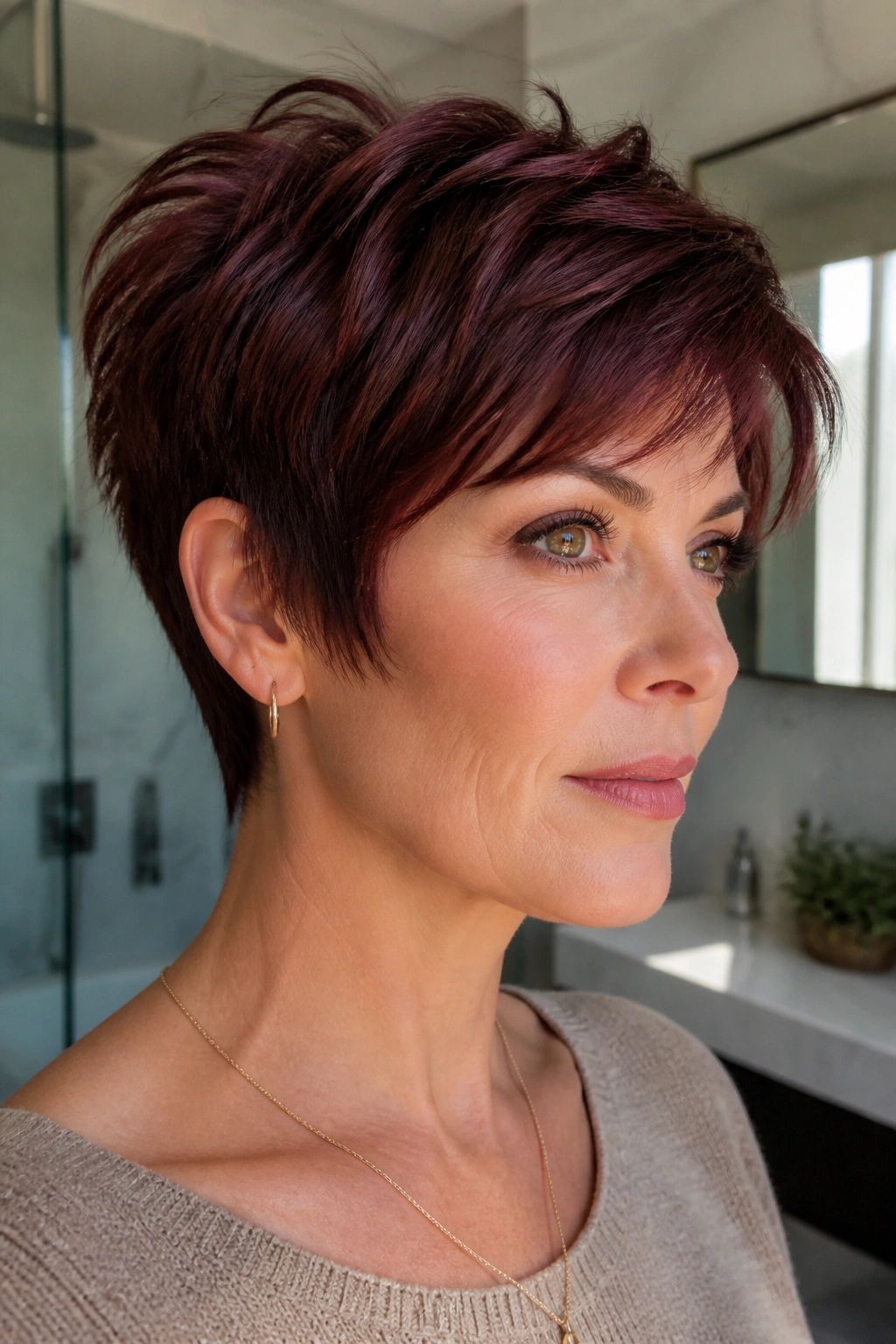
A pixie cut with deep mahogany color has a sharp, elegant feel. There’s no fuss in it. The cut already does the talking, so the color can stay dark, rich, and controlled.
Mahogany gives you red, but in a darker register. That makes the texture of the cut more obvious, especially if you have a piecey fringe or a slightly longer top. It also works well for fine hair because the darker tone makes the hair look denser at the roots.
This shade is a strong pick if you like defined brows and a clean neckline. It’s not the shade for someone who wants soft and airy. It’s for someone who wants crisp edges and a little attitude.
Wear it with a matte pomade or a light styling cream. Too much shine product can make the color look overly heavy.
9. Rose Gold Highlights on a Warm Brown Base
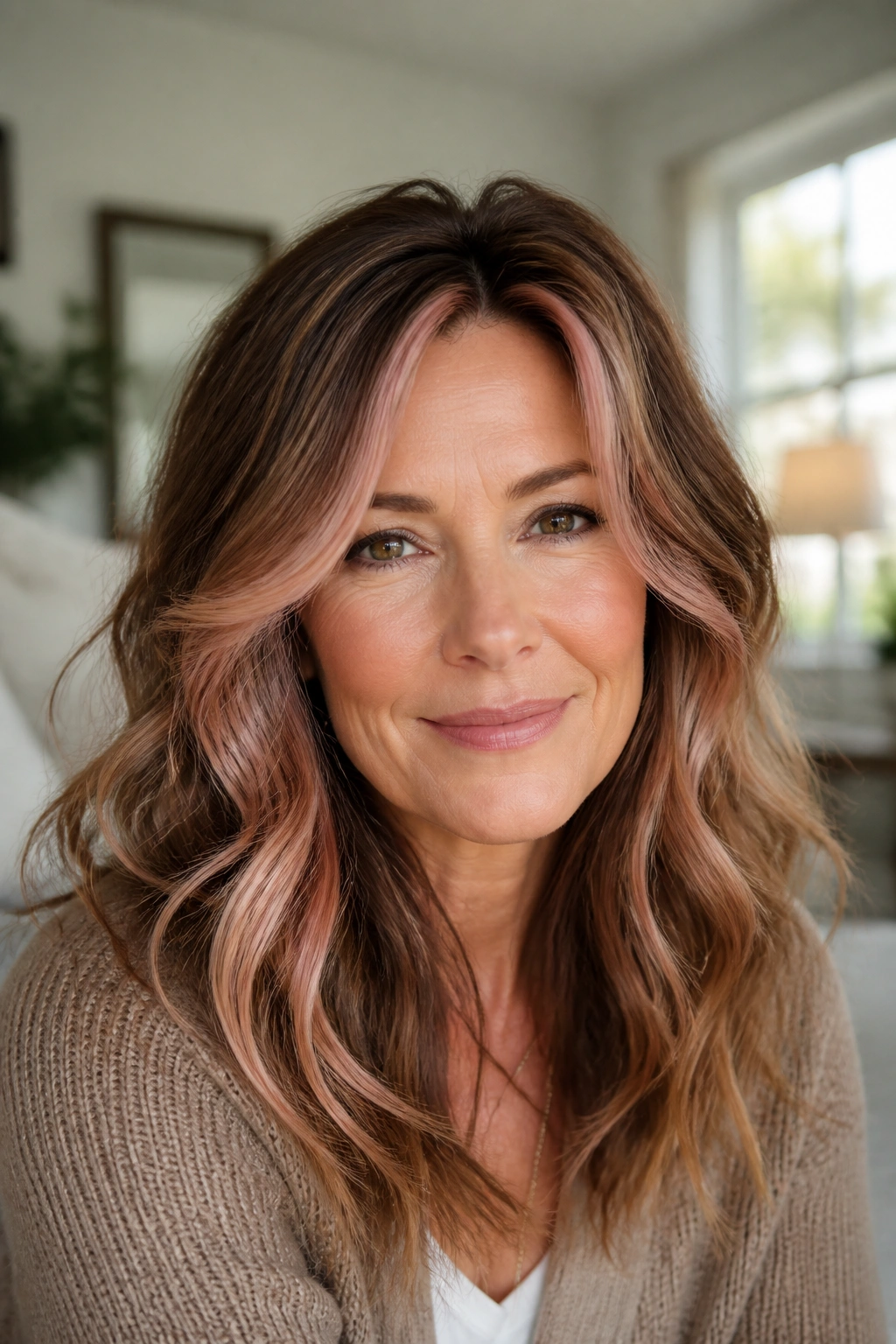
Rose gold can look delicate or dated depending on the base. On a warm brown foundation, it usually lands in the right place: soft, glowy, and slightly romantic without drifting into pastel territory.
The brown base keeps the look grown-up. The rose tones add a pink-red shimmer that works best through face-framing sections and the top layers. If you place too much rose gold underneath, it can disappear. If you place too much near the roots, it can get busy. Balance matters here.
This is one of those colors that suits women who want a lighter red look without committing to copper. It’s especially nice on wavy hair, where the pinkish tones break up as the hair bends.
A beige makeup palette tends to support this shade well. Heavy orange blush can make it go strange.
10. Cherry Cola Layers
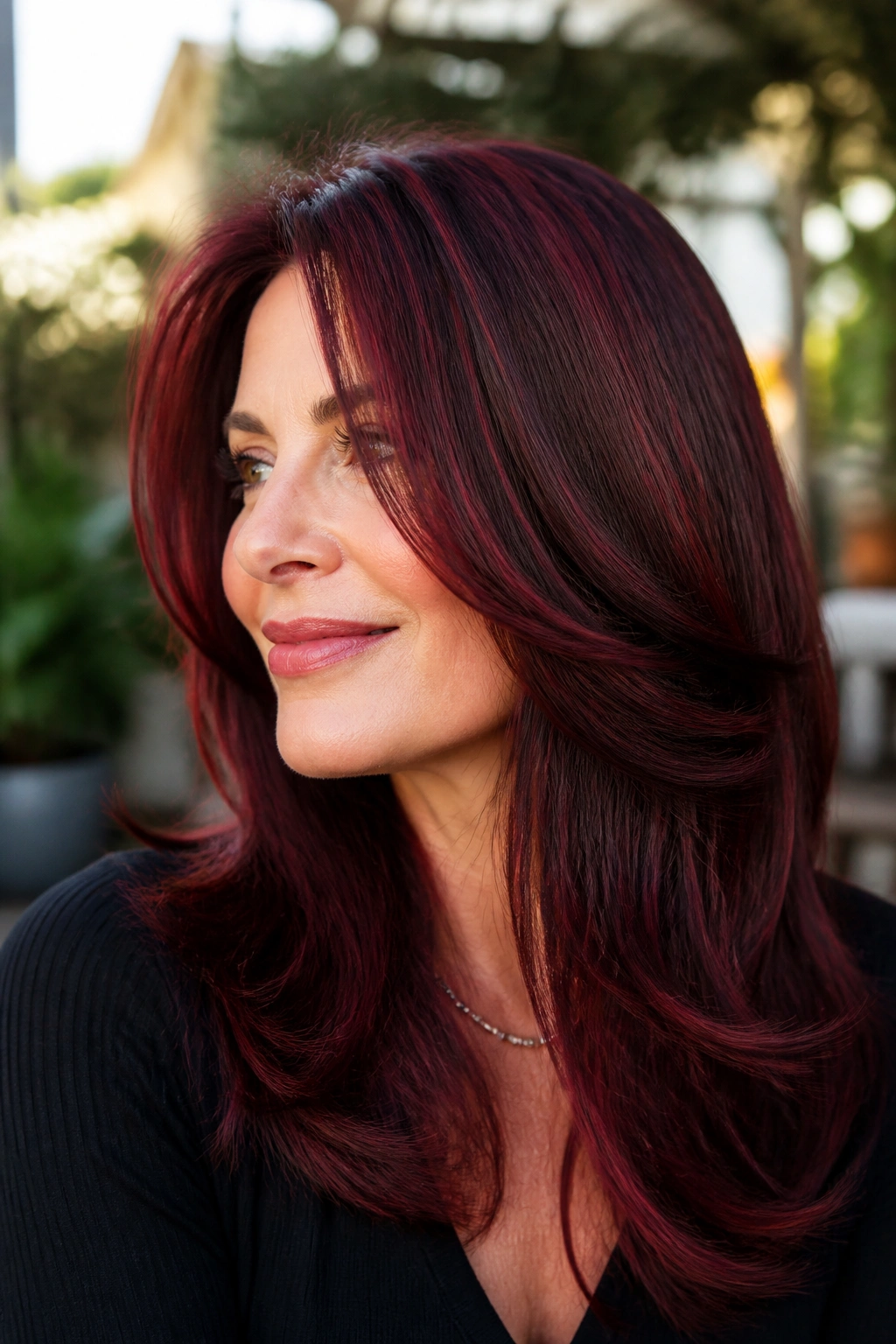
Cherry cola is dark, glossy, and slightly playful. It’s the kind of red that reveals itself slowly. Indoors, it can look brown-black. In daylight, the cherry tone comes forward and gives the hair a low-key edge.
Layers are what make this shade work. On a one-length cut, it can feel too heavy. On a layered style, each bend in the hair catches the red differently, so the color looks richer and less flat.
The Best Cut Pairing
A collarbone-length cut with loose layers is ideal. You get movement around the face, and the color has room to shift. If your hair is thick, this helps stop the style from looking like one solid sheet.
Cherry cola is a strong option if you want red hair color ideas for women over 40 that feel a little bolder without going full bright red. It gives the impression of depth first, red second.
11. Ginger Spice with Root Shadow
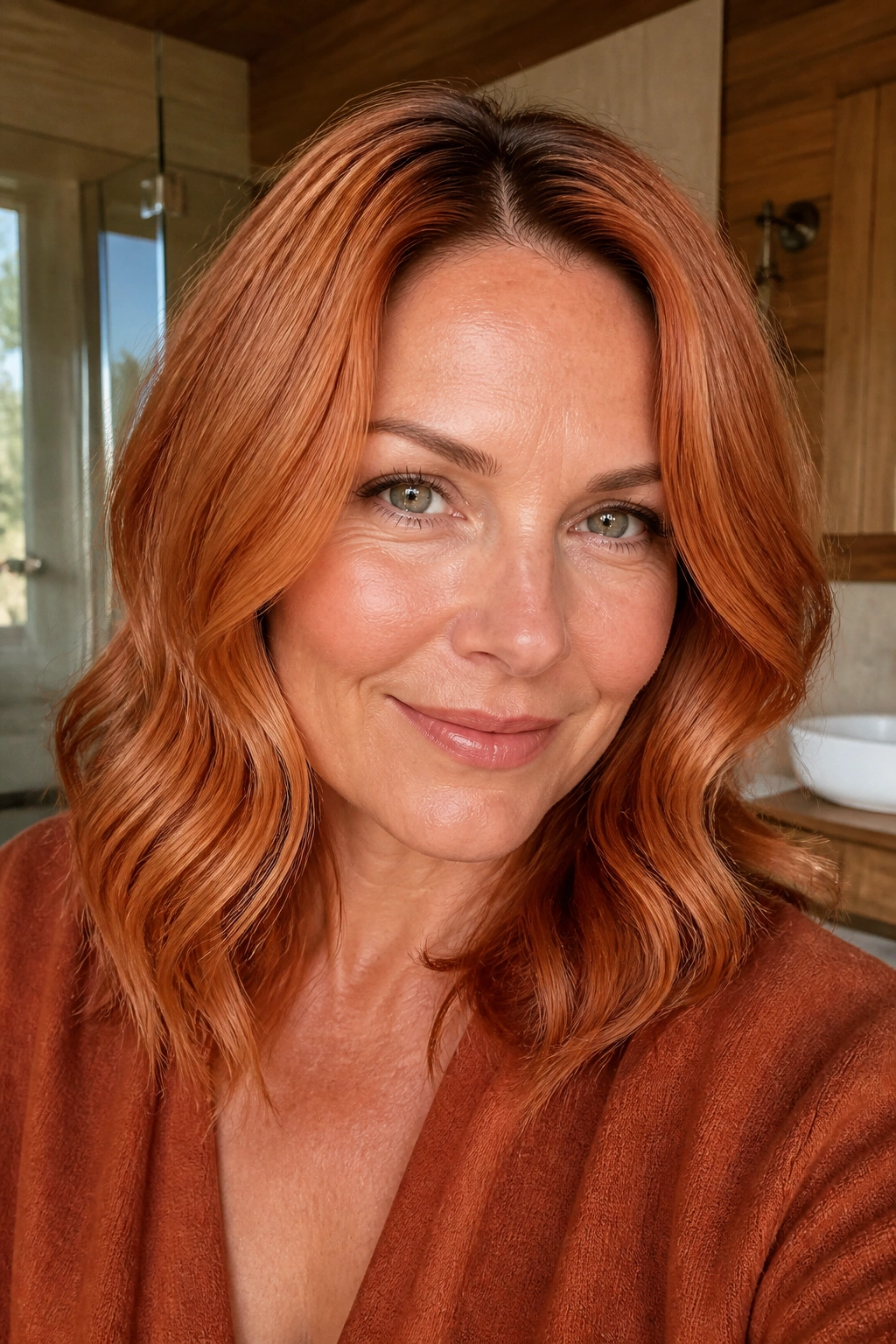
Bright ginger can be gorgeous, but it needs a softer frame on mature hair. Root shadow gives it that frame. The darker root keeps the color from looking too one-note and makes regrowth easier to live with.
The trick is to let the ginger start a few inches down from the scalp. That small shift makes a big difference. It softens the contrast around the hairline and keeps the look from being too severe on fine lines or pale skin.
This shade can be a bit of a commitment. It fades faster than deeper auburns, and it needs regular toning to stay clean instead of brassy. Still, if you like warmth and a lively finish, it can be worth the upkeep.
Loose curls make ginger spice look more expensive than pin-straight styling. The bends help the shade move.
12. Warm Terracotta Waves
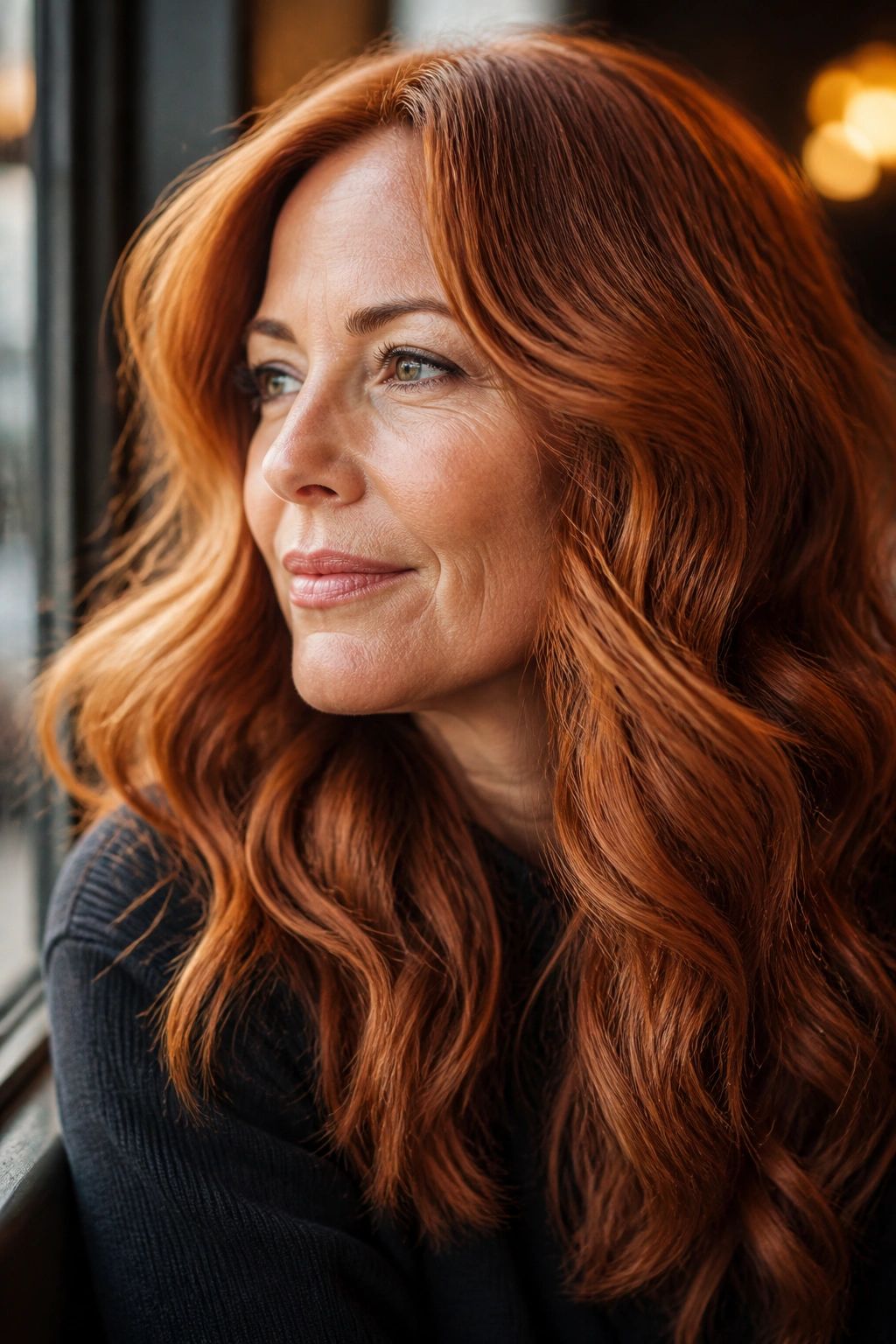
Terracotta is red with a dusty, earthy edge. It feels grounded, which is exactly why it suits women who want something warm but not sugary. On waves, the shade looks layered even when the hair is only lightly colored.
The tone sits between copper and rust, with just enough brown to keep it wearable. That makes it a strong match for olive skin, warm beige skin, and hair that already has a little natural depth. If your wardrobe leans soft neutrals—camel, cream, olive, denim—it fits without friction.
I like this one for medium-length cuts. The waves open up the color and keep it from reading as a solid block. A one-pass blowout with a round brush is often enough. No need to over-style it.
Terracotta is one of those shades that looks calm from a distance, then richer when you get close. That’s a good thing.
13. Burgundy Tinted Curls
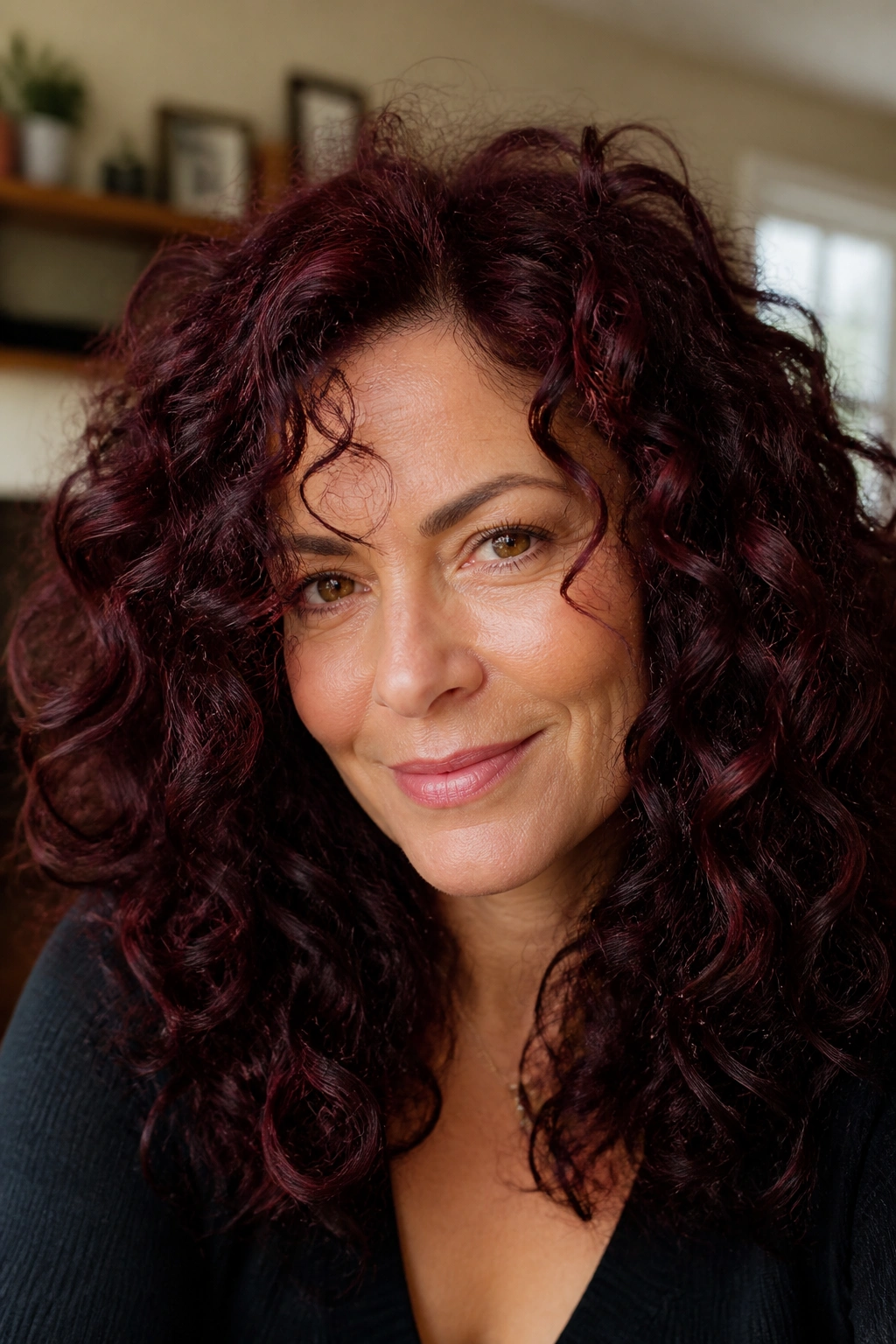
Curls and burgundy are a strong pair because curly hair already has movement. Add a deep red-violet tint, and the shape starts to look more defined without a lot of extra styling.
Burgundy works best when it’s not too opaque. A sheer tint allows the curl pattern to show through. If the color is too dense, the hair can lose that light-and-shadow effect that makes curls interesting. A little translucence goes a long way.
This is a very good choice for women with naturally dark hair who want to shift into red without bleaching. It also looks elegant on longer curls, where the ends can pick up a wine tone and the roots stay deeper.
Moisture matters here. Burgundy shows dryness faster than brown shades do, so a weekly mask helps keep the curls from looking wiry.
14. Rusty Brunette with Caramel Ribbons
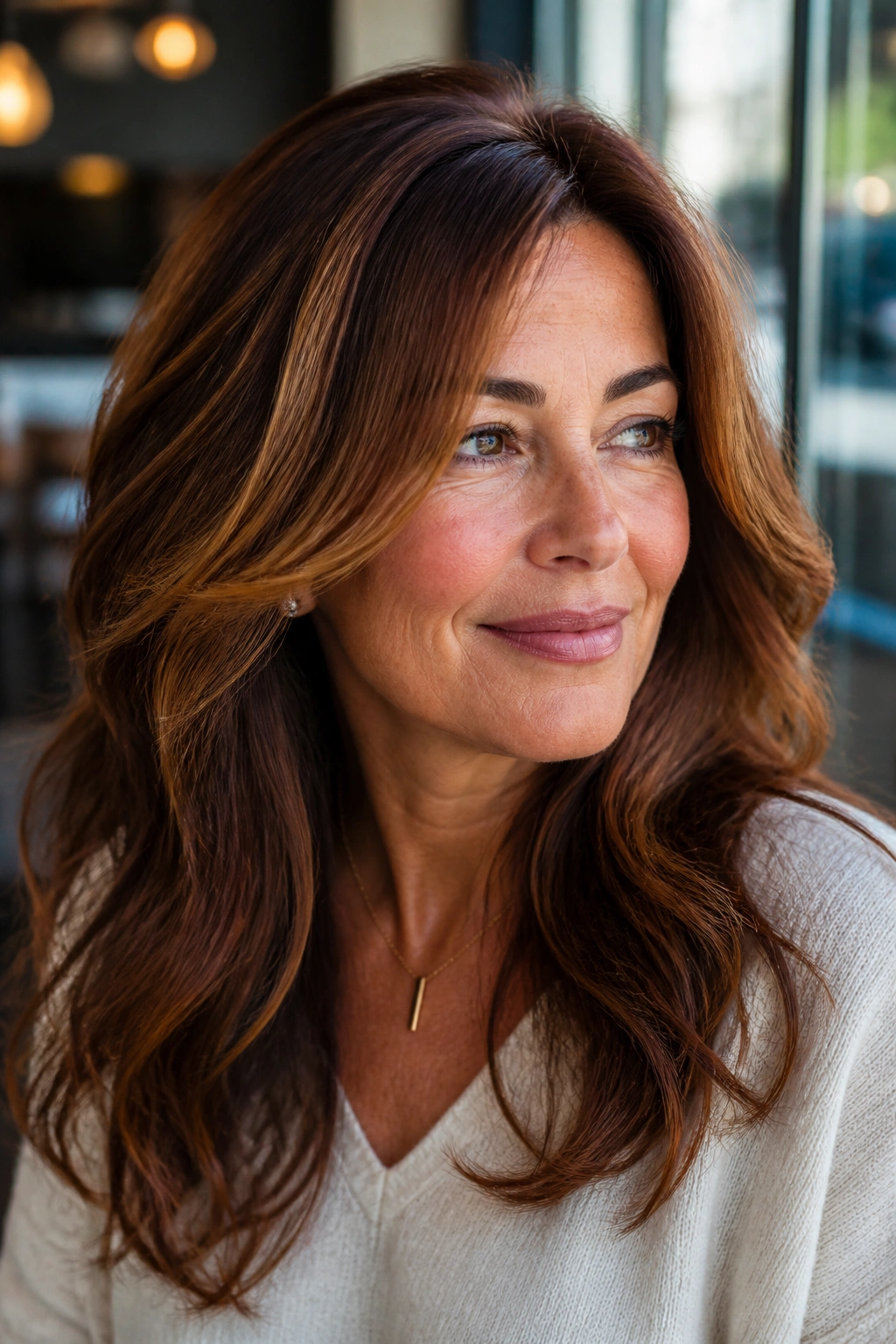
Rusty brunette is one of the most wearable red-brown options on the list. It gives you warmth and a slightly autumnal feel, but the brunette base keeps it familiar. Caramel ribbons then brighten the face so the shade doesn’t sink into the hairline.
The ribbons should be placed with care. Too many, and the red gets lost. Too few, and the color reads flat. I prefer them around the temples, through the top layers, and a few pieces near the ends. That gives lift where it matters most.
This shade is a good pick if you want a gentle shift rather than a dramatic change. It can soften gray at the front without making you feel overcolored. That’s a hard balance to get, and this one lands it more often than not.
A soft wave or bend at the ends helps the caramel show up better than a straight finish.
15. Natural Redhead Refresh
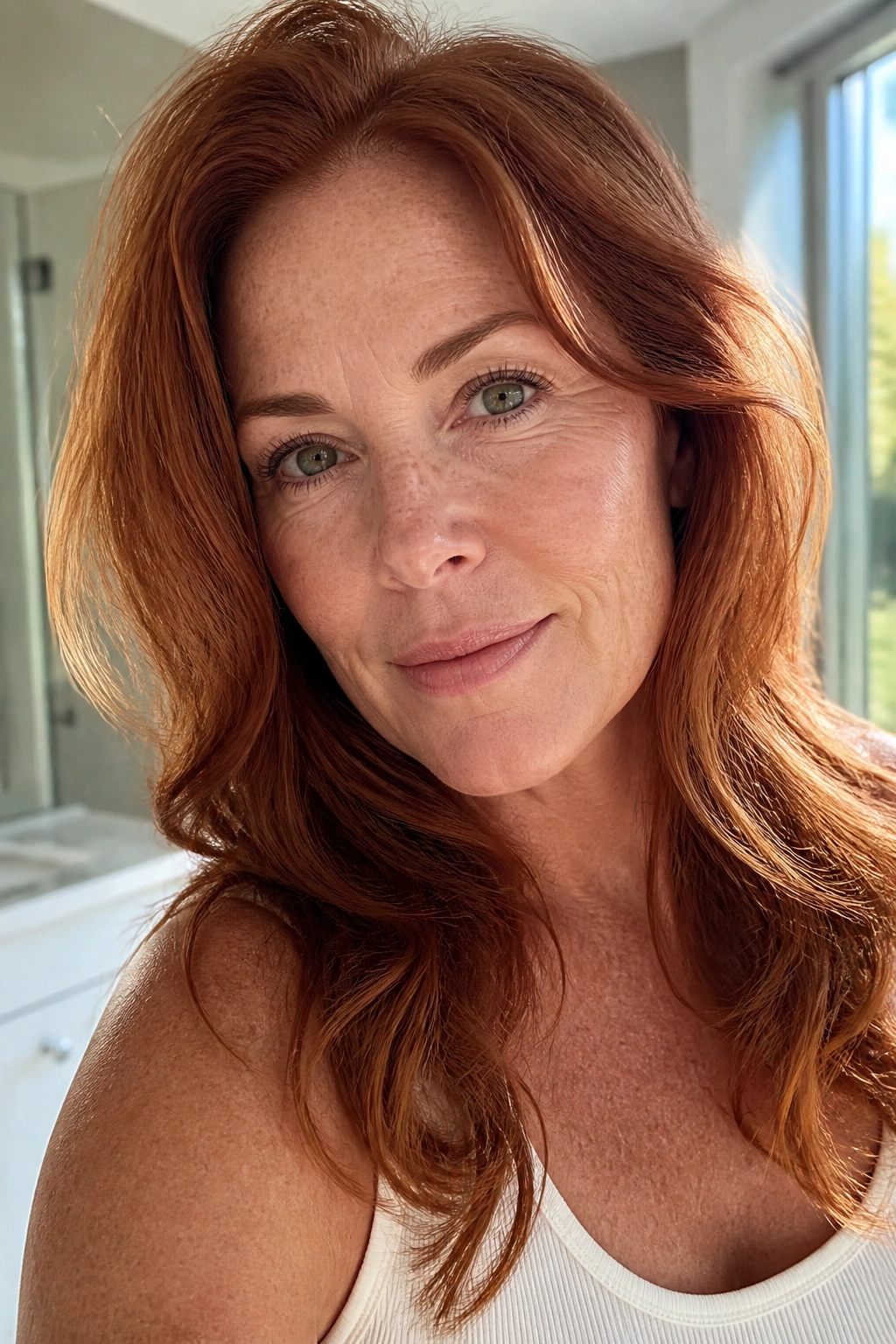
Sometimes the best red is the one you already have. If you were born with red hair—or had it as a child and saw it darken over time—a refresh can bring back the warmth without changing your identity.
The goal is not a loud new color. It’s closer to restoring what the sun, age, and fading have softened. That can mean a copper gloss over faded ends, a slightly deeper auburn at the roots, or a translucent glaze that makes freckles and eye color stand out again.
What to Ask Your Colorist
- Keep the root tone close to your natural shade
- Add warmth through the mids, not all over
- Use a gloss rather than heavy permanent color when possible
- Avoid over-lightening the ends, which can make the color look thin
This kind of refresh is deeply flattering because it looks like you, only more awake. And that matters.
16. Auburn Shag with Airy Fringe
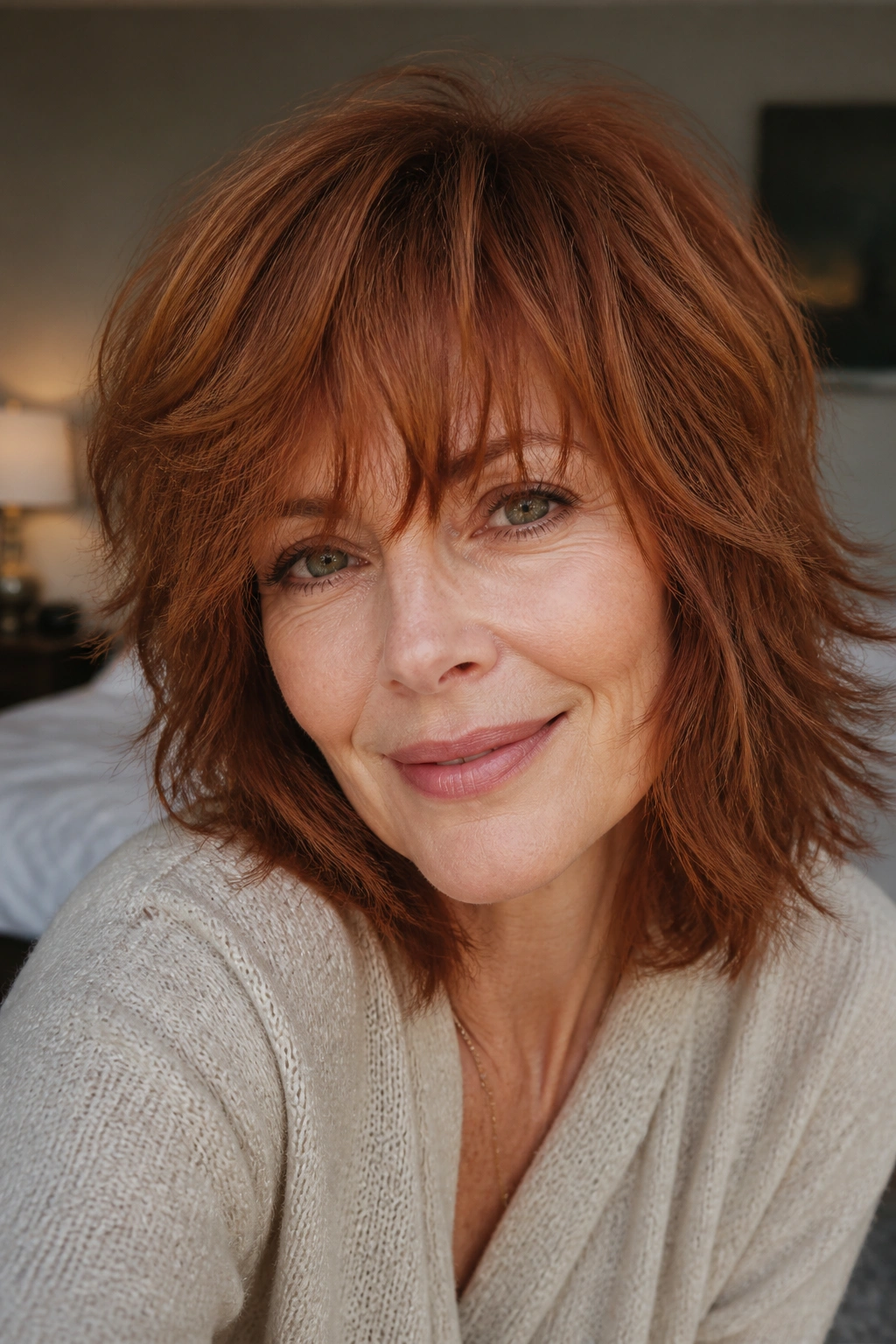
A shag cut likes color that has movement in it. Auburn gives the layers some visual lift, and an airy fringe helps frame the face without closing everything in.
The key here is softness. Not every auburn needs to be rich and dense. A lighter auburn, especially one with copper or cinnamon notes, can give the shag a lived-in feel. The fringe breaks up the forehead area, which is nice if you want a little softness around the eyes.
This is one of the more youthful-feeling red options, but not in a forced way. It’s casual. It looks best with texture spray, a diffuser, or a quick bend from a flat iron rather than a polished blowout.
If your hair tends to get flat at the crown, auburn helps. The warmth gives the layers more presence, especially in short to medium lengths.
17. Soft Cranberry Bob
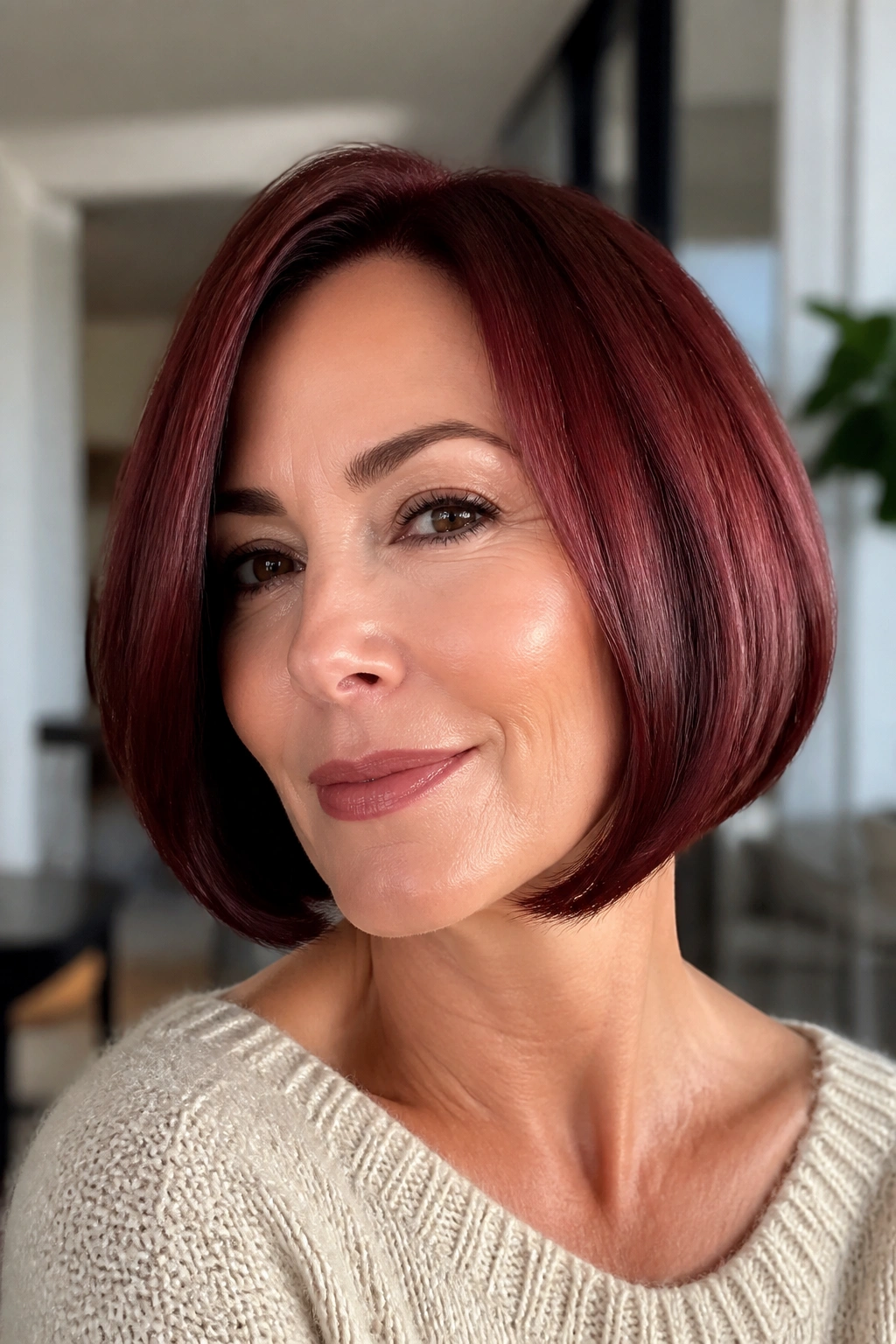
Soft cranberry sits between red and berry, which makes it a nice option if you want color with a little cool edge. On a bob, it can look neat, modern, and slightly unexpected.
The softer version matters here. Hard cranberry can go too purple or too vivid. A muted cranberry with brown undertones reads as polished and wearable. It’s a good match for women whose skin has pink or neutral notes, especially if brighter copper tends to fight with their complexion.
Why It Flatters
The bob keeps the shade contained. That’s helpful, because stronger berry tones can overwhelm long, thick hair if they’re painted too widely. A shorter shape gives the color a clear outline.
You’ll want shine with this one. A gloss serum or a smoothing cream can keep the cranberry from going flat under indoor light.
- Best on sleek bobs and blunt lobs
- Works well with side parts
- Looks strongest when the ends stay clean and even
- Benefits from color-safe shampoo
18. Auburn Money Piece
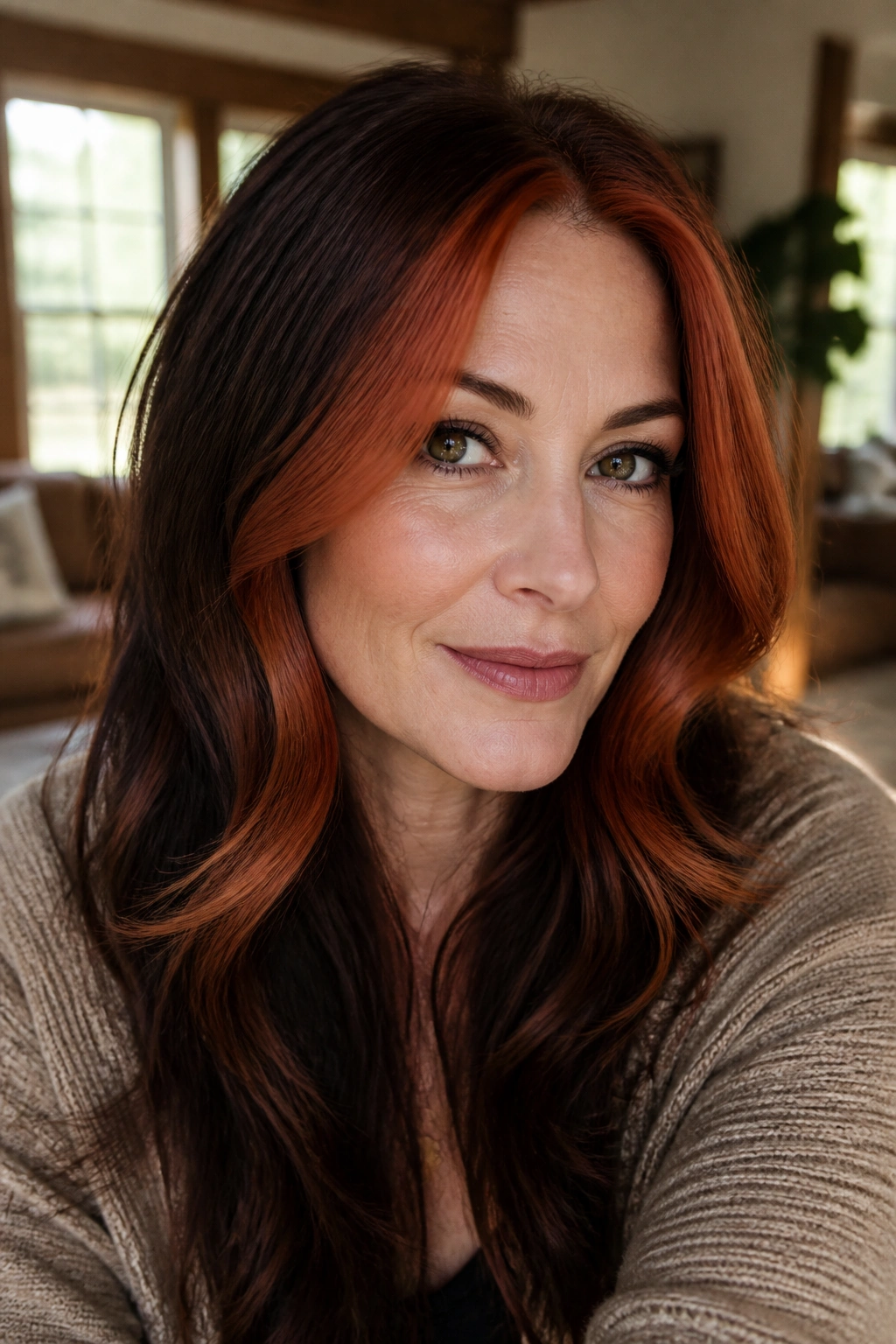
An auburn money piece is a smart way to wear red without coloring the whole head. The brighter front sections frame the face, pull attention upward, and soften the look around the cheekbones.
The rest of the hair can stay brunette, chestnut, or dark auburn. That contrast is what makes the money piece work. You get the payoff of red near the face, but you keep upkeep low. If your hair grows fast or you dislike obvious roots, that’s a real advantage.
How It Should Look
The front pieces should be blended enough that they don’t look like strips. You want a soft transition from the root into the warmer front section. A colorist can feather the line so the brightness feels woven in.
This works especially well with long layers or curtain bangs. The red pieces sweep naturally with the cut and don’t need a lot of styling to show up.
It’s a little bold. Not loud. That’s the difference.
19. Smoky Copper Curls
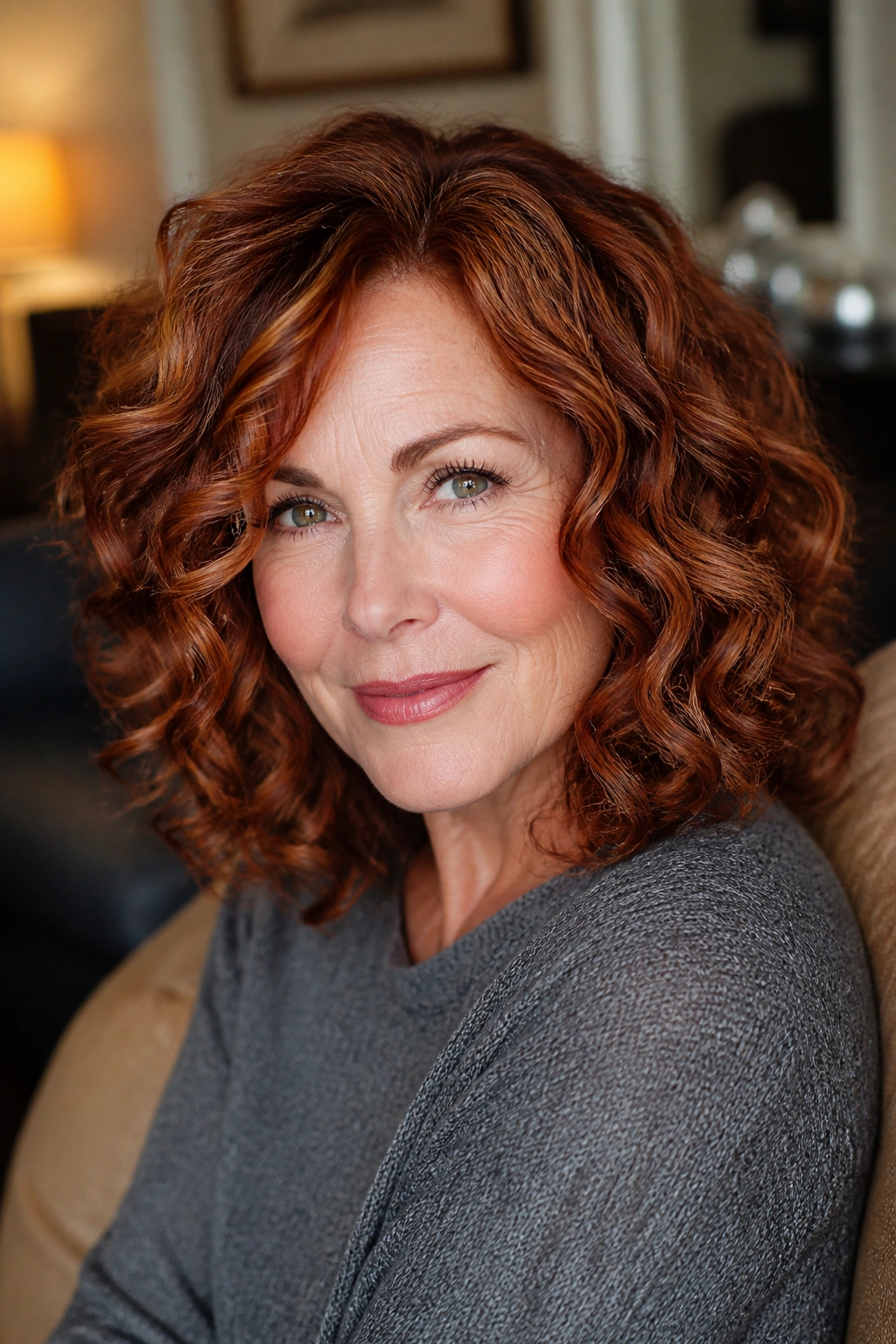
Smoky copper is copper with the brightness turned down and the depth turned up. On curls, that makes the pattern look fuller because the light catches the outer curve while the inner curve stays rich and shadowed.
I like this shade for women who want warmth but don’t want a clear orange note. The smoky part softens the whole look, which helps if your skin leans cool or if bright copper tends to wash you out. It also keeps the hair from looking overprocessed.
The curls do a lot of the work here. You do not need a complicated cut. A medium layered shape is enough. The color is what brings the interest.
A diffuser on low heat is the safest styling choice. High heat can flatten the tone and dry the curl ends fast.
20. Merlot Balayage
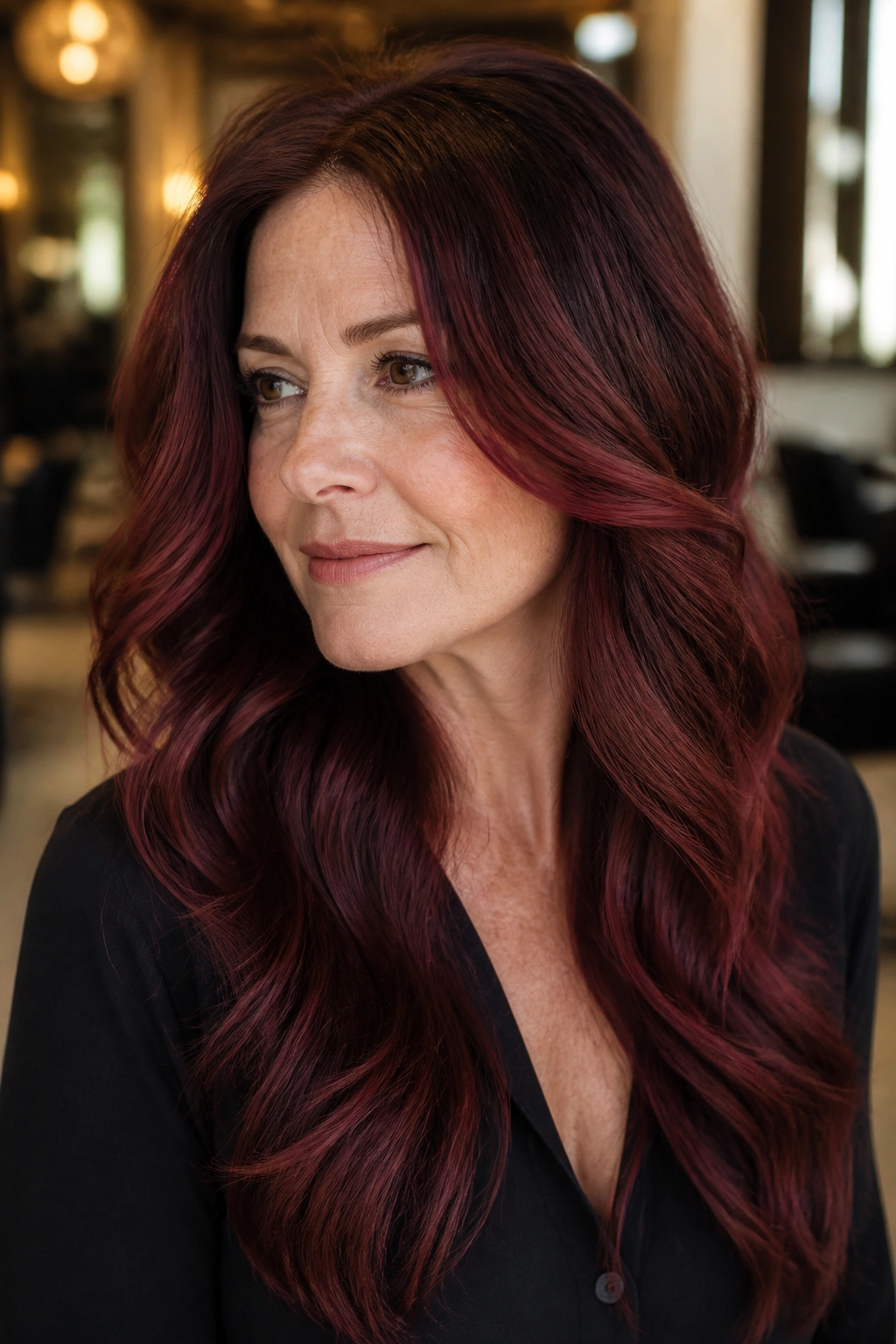
Merlot is one of the richest reds you can wear without going full plum. It has wine depth, a little brown, and a soft violet edge. On balayage, it creates a streaked, expensive-looking finish that feels more refined than all-over color.
The beauty of merlot is that it can be dark and bold at once. That makes it good for women who want a stronger red but still want something that sits comfortably with black clothes, dark brows, and deeper hair tones.
Balayage placement matters here. Put the merlot where hair moves—around the face, on the top layers, and through the mid-lengths. Leave some darker base peeking through underneath. That contrast keeps the color from becoming heavy.
If you like lipstick in berry or wine shades, this color family often feels surprisingly natural.
21. Sunlit Strawberry Brown
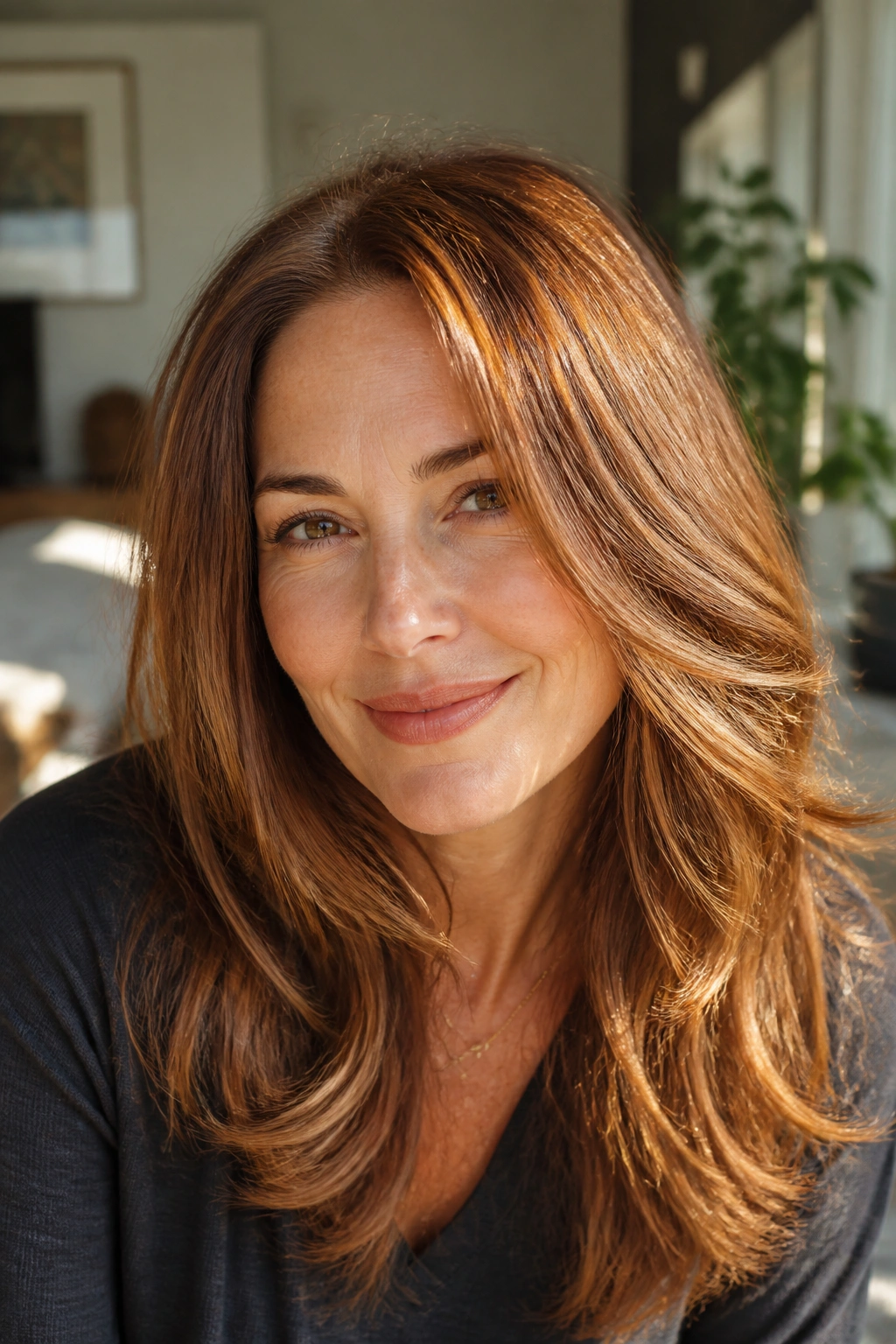
Sunlit strawberry brown is what happens when brunette hair gets a soft red glow instead of a full dye job. It’s a gentle option, and that gentleness is exactly why it works so well on many women over 40.
The strawberry note should stay subtle. Think warm highlights, not pink streaks. The effect is best when the hair still looks brown at a glance, but redder when the light moves across it. That kind of shift is easier on mature features than a flat pale blonde can be.
This shade is useful if you want to test red without a hard commitment. It also grows out well because the base stays close to your natural color. That means fewer harsh lines at the part and around the temples.
A soft blowout brings out the warmth. Air-drying can leave it looking more brown than strawberry.
22. Cinnamon Copper Sleek Cut
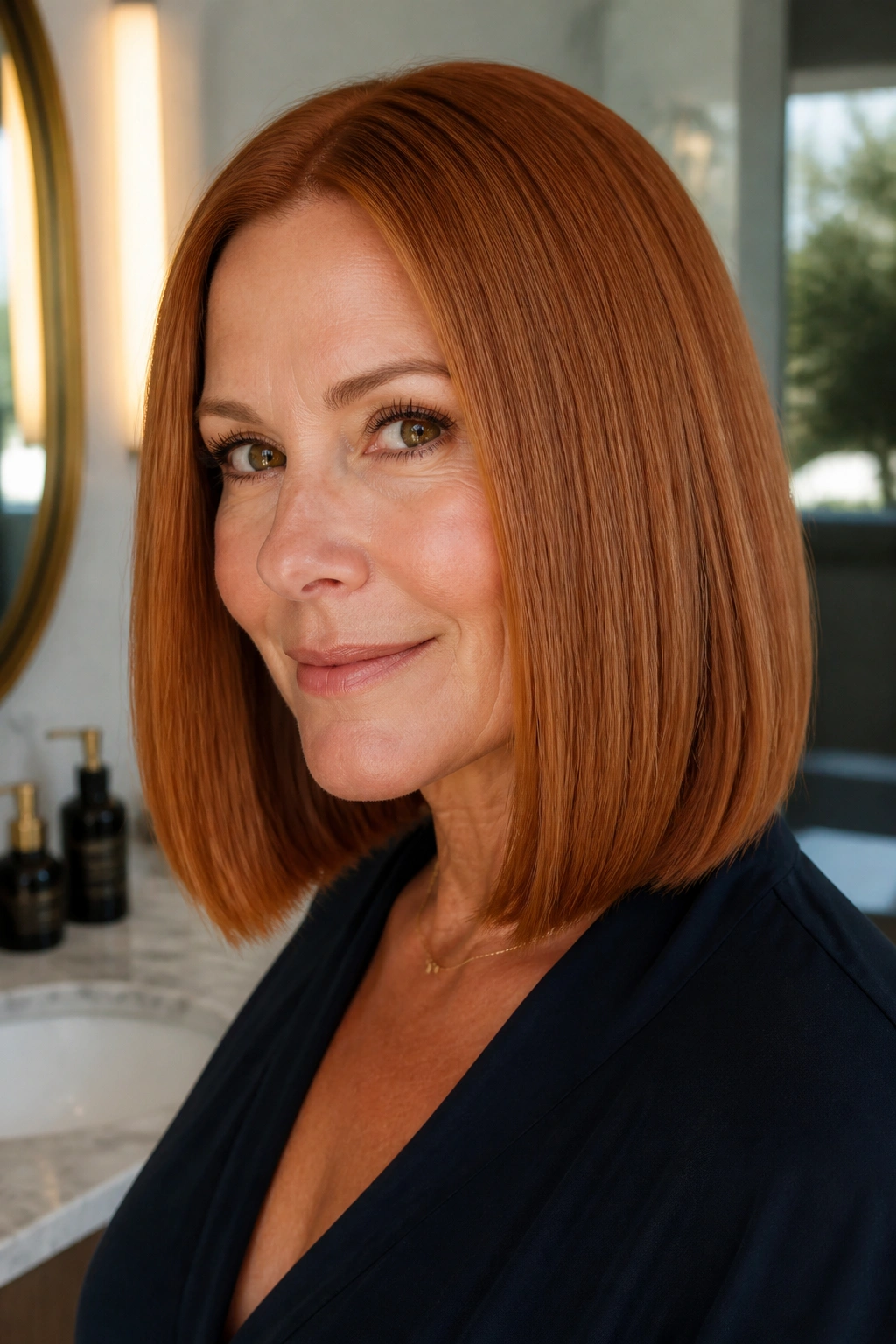
A sleek cut paired with cinnamon copper is tidy, smart, and a little bit sharp. The smooth finish shows off the color in a clean way, which is helpful when you want the red to look intentional rather than chaotic.
Cinnamon copper sits between auburn and light copper. It has warmth, but the brown base keeps it civilized. On a blunt lob or shoulder-length cut, the color feels modern without being fussy.
How to Get the Best Effect
- Keep the ends blunt or only lightly textured
- Ask for a gloss or demi-permanent formula for shine
- Use a heat protectant before flat ironing
- Finish with a tiny bit of serum on the ends only
This is a good option if your hair is naturally straight or you like a polished style. The color and the cut work together instead of competing. And that makes life easier.
23. Brick Red Midlength Layers
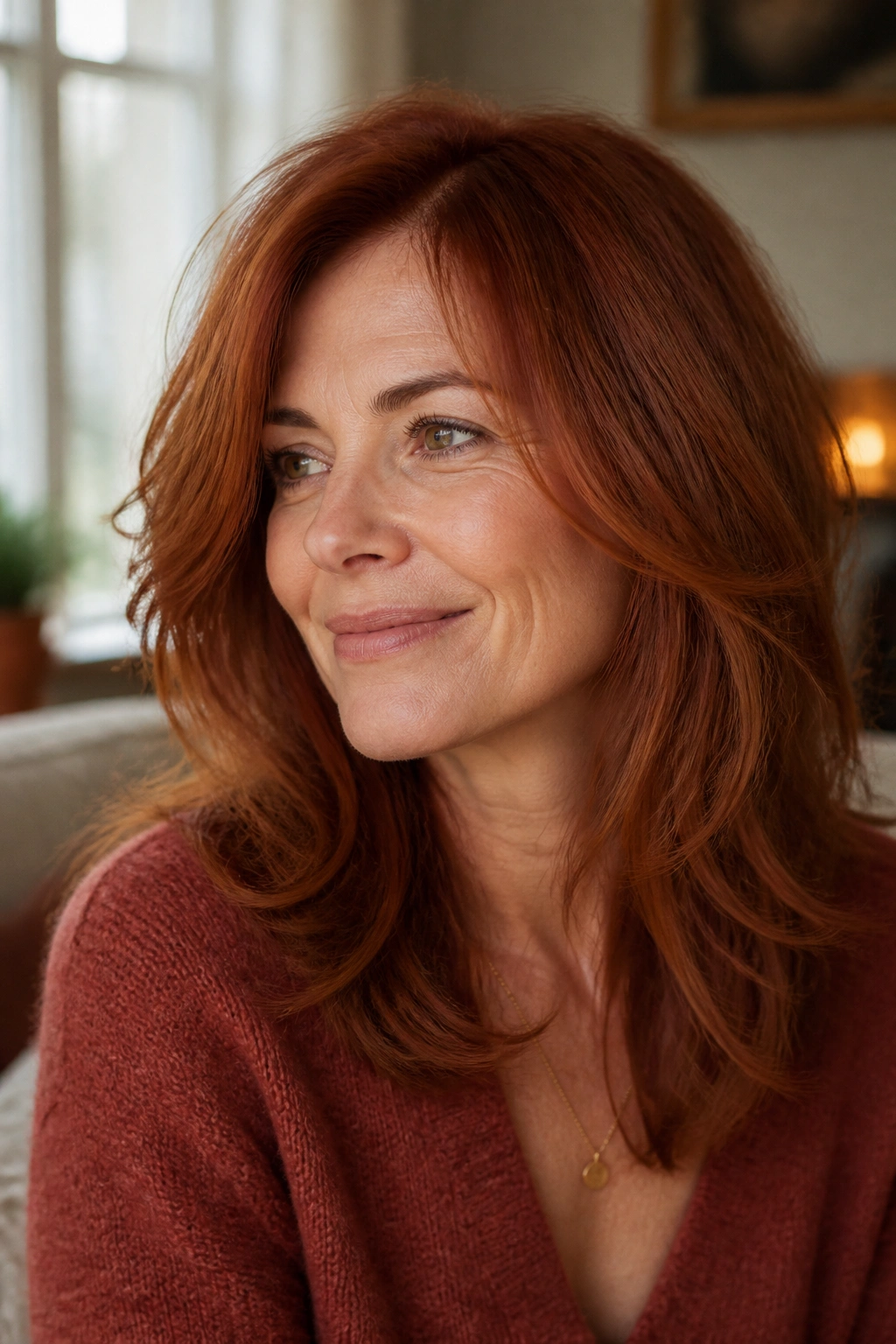
Brick red is earthy, grounded, and a little unexpected. It’s red with a terracotta-brown base, which gives it more depth than a bright copper and more edge than a plain auburn.
Midlength layers are the right partner for this shade. The layers stop the color from looking too heavy and help the hair move. If the cut is too long and blunt, brick red can feel boxy. If it’s too short, some of the earthy richness gets lost. Midlength is the sweet spot.
This tone is especially good if you have medium to deep skin tones or if you like a slightly rustic, low-gloss finish. It feels less “salon red” and more naturally lived-in.
A side part can help it feel softer around the face. Center parts work too, but they make the color look more direct.
24. Toasted Chestnut with Red Undertone
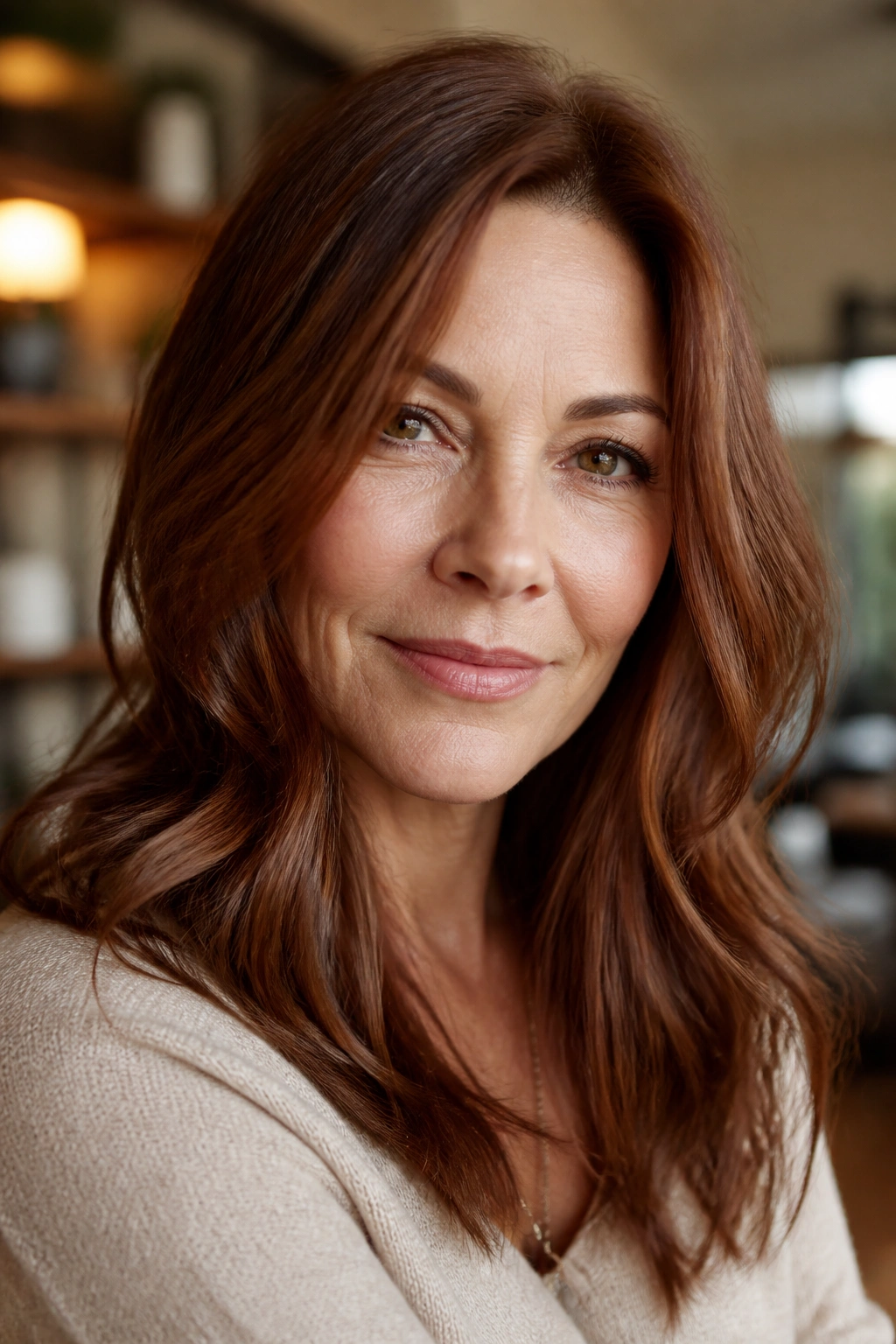
Toasted chestnut is one of the safest bets on the list, and I mean that in a good way. It gives the hair warmth and richness without asking you to make a bold statement. The red undertone stays tucked inside the brown, so the color looks polished from every angle.
This shade is especially kind to women who want to soften gray while staying close to brunette territory. The red undertone keeps the hair from going muddy, which can happen when brown shades are too flat. It also adds a bit of glow around the face.
If you prefer understated color, this may be the one to keep. It works with short hair, long hair, curls, waves, and sleek blowouts. Few shades are this easy to live with.
A good glaze every so often keeps the toastiness from fading into dull brown.
25. Velvet Auburn with Gloss Finish
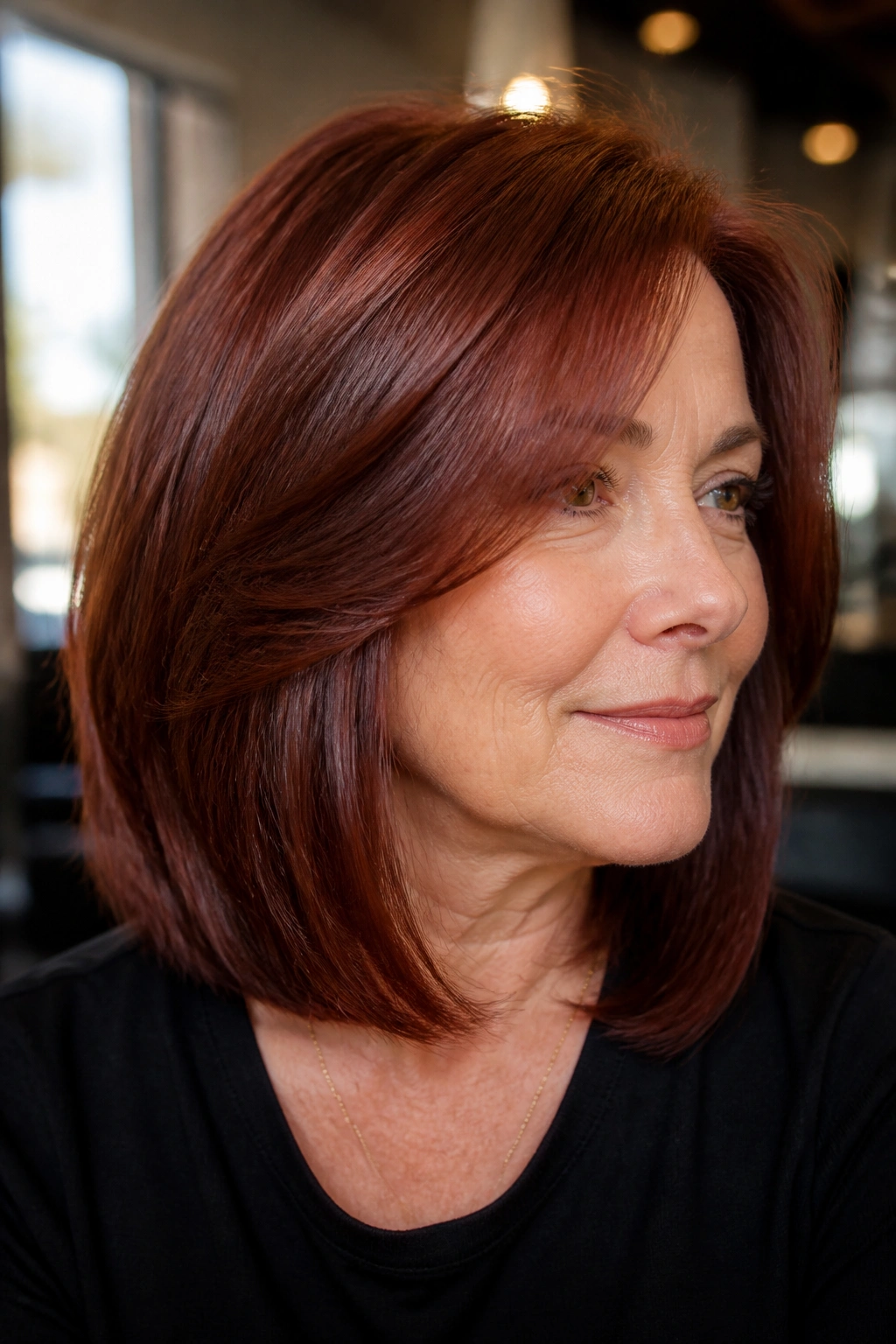
Velvet auburn is the shade I’d hand to someone who wants red hair to feel rich, smooth, and grown-up. The word “velvet” fits because the color should look soft, deep, and almost touchable—not shiny in a plastic way, but smooth in a way that suggests good condition and careful upkeep.
A gloss finish is what keeps this shade from looking too dry or flat. That matters more on mature hair, which can lose shine faster than it used to. When the red has a reflective surface, it looks fuller and more expensive, even on a simple cut. A long bob, layered shoulder cut, or soft bob all work well here.
If you want one red that lands between bold and discreet, this is a strong place to stop. It has warmth. It has depth. It wears well with gray blending, and it does not demand that you dress around it every day. That’s the charm, really. The color does its job without making a scene.
