



Cool skin tones can make burgundy pink hair look sharp in a way warm undertones sometimes can’t. The shade doesn’t need to shout; it just needs the right base—blue-red, violet, berry, or rose-plum—so it sits cleanly against the skin instead of fighting it.
That detail matters more than most salon photos admit. A burgundy with a plum cast can make pale cool skin look clearer, while a pinker wine shade can bring life to a cool medium complexion without tipping into orange or copper. Get the undertone wrong and the whole thing goes muddy fast.
The smartest move is to match the color to your base and your maintenance tolerance. Dark hair can take glossy berry overlays with minimal lightening. Lighter hair can wear mauve, cranberry, and rose-wine blends that show more movement, especially in waves or curls. Keep the pink cool, keep the red deep, and the result feels deliberate instead of costume-y.
1. Black Cherry Rose
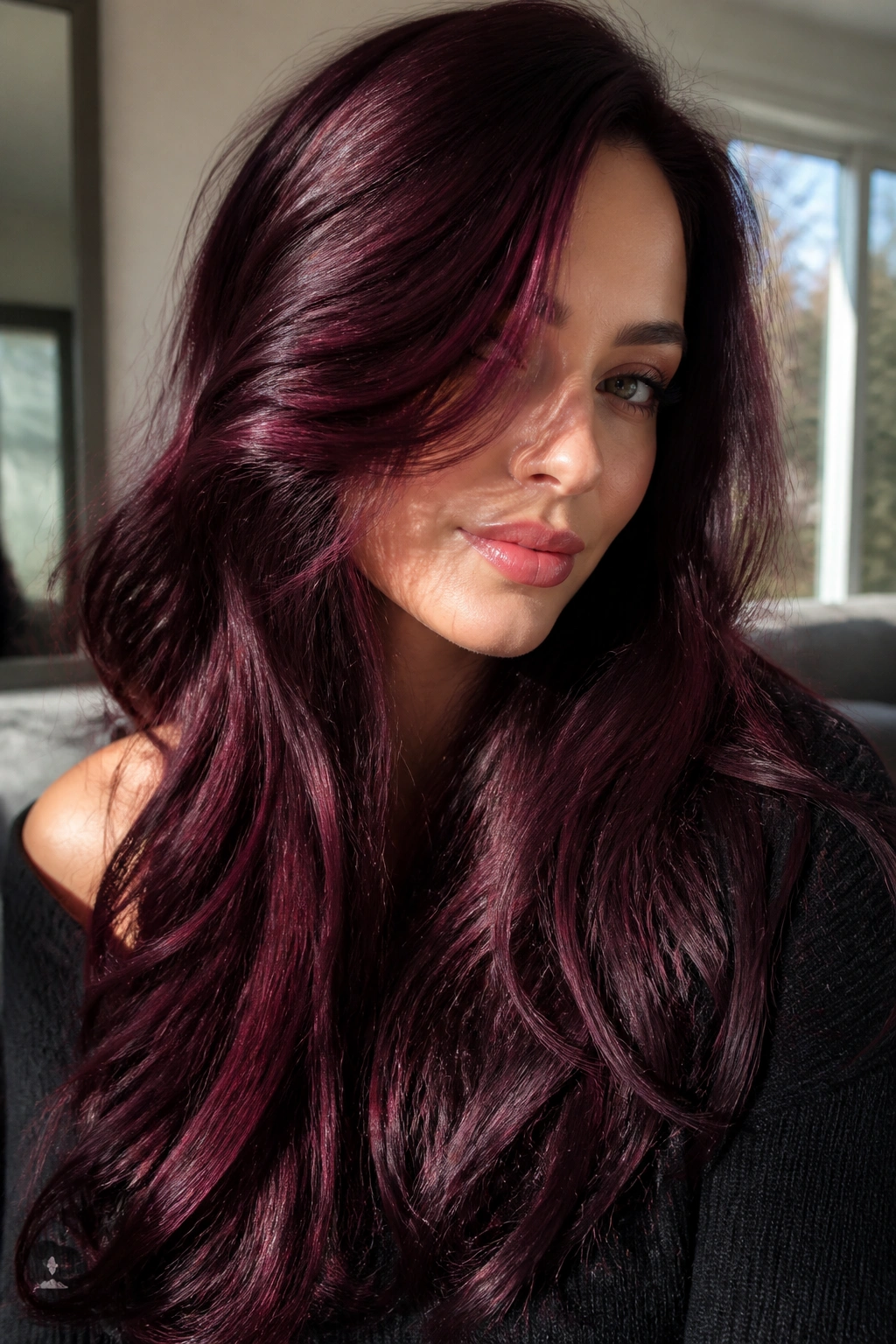
This is the shade I reach for when someone wants burgundy pink hair color ideas for cool skin tones but still wants to look polished in daylight. Black cherry rose sits in that sweet spot where the hair reads nearly black indoors, then shows a bruised-rose shine when you move into brighter light.
Why it flatters cool skin
The magic is in the balance. The cherry keeps it lively, while the rose softens the edge so it doesn’t look too hard against fair or porcelain skin.
It also gives cool medium skin a cleaner finish than a warm burgundy would. Warm reds can drag the face toward ruddy. Black cherry rose does the opposite.
How to wear it
- Ask for a deep cherry-violet glaze over a level 3 to 5 base.
- Keep the finish glossy, not matte.
- Wear it on a blunt bob, long layers, or a sleek blowout.
- Refresh with a demi gloss every 6 to 8 weeks.
Best tip: keep the pink subtle. If the rose part gets too bright, the color starts to lose that dark, plush feel.
2. Plum Burgundy Balayage
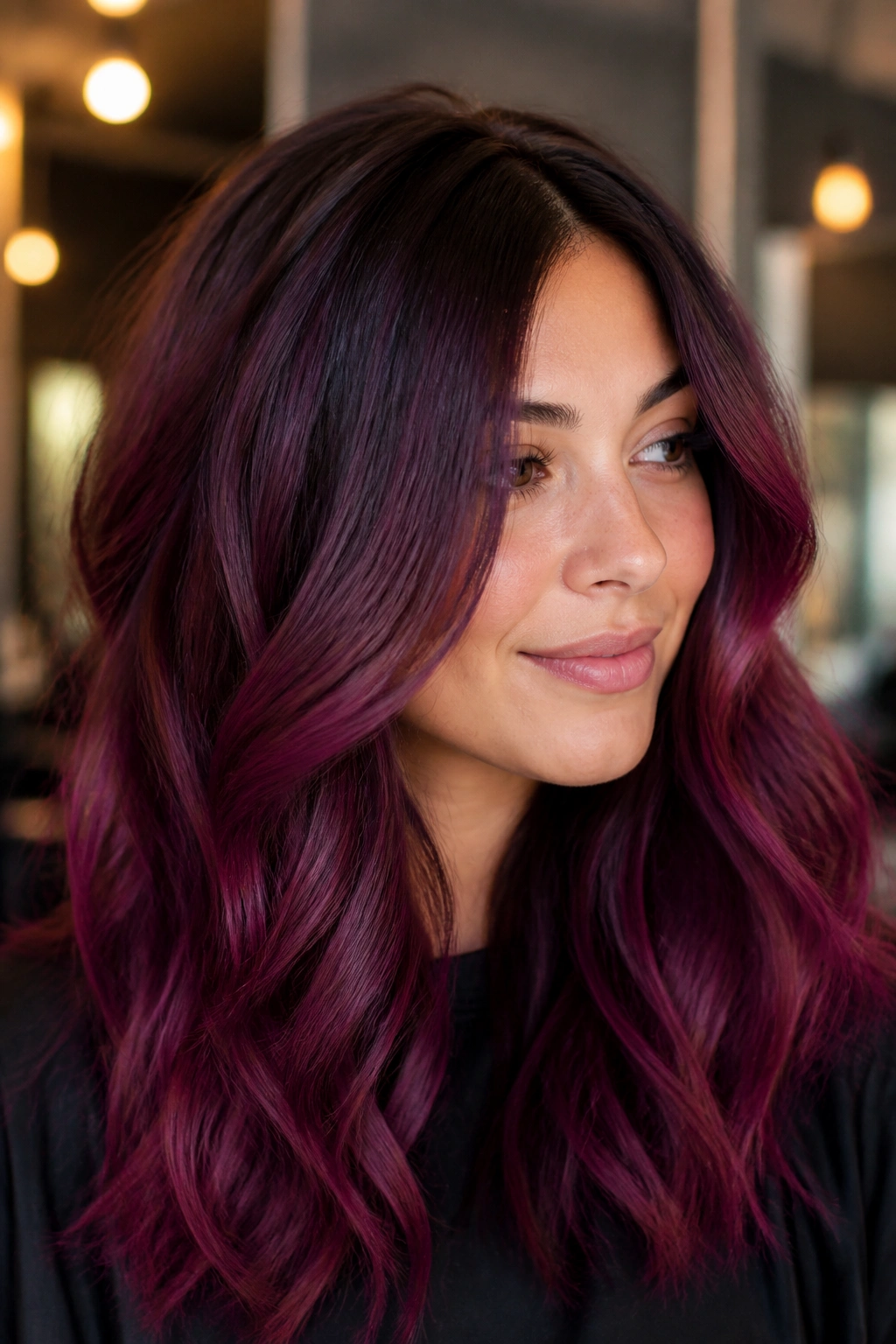
Plum burgundy balayage is the easiest way to make this color family feel grown-up. The hand-painted pieces catch light in a softer way than all-over color, and that matters when you want depth instead of a flat red sheet.
The cool skin payoff is simple: plum sits closer to violet than orange, so it doesn’t make the complexion look tired. On olive-cool or fair-cool skin, the result is especially clean. It can almost make the eyes look brighter.
Ask your colorist to keep the roots deeper and place the lighter burgundy through the mid-lengths and ends. That keeps growout calm, which is nice because a hard root line can make burgundy pink look louder than it needs to be.
This works especially well on layered cuts. The movement breaks up the color, and the balayage ribbons show through without turning the whole head into one block.
3. Smoky Rose Wine
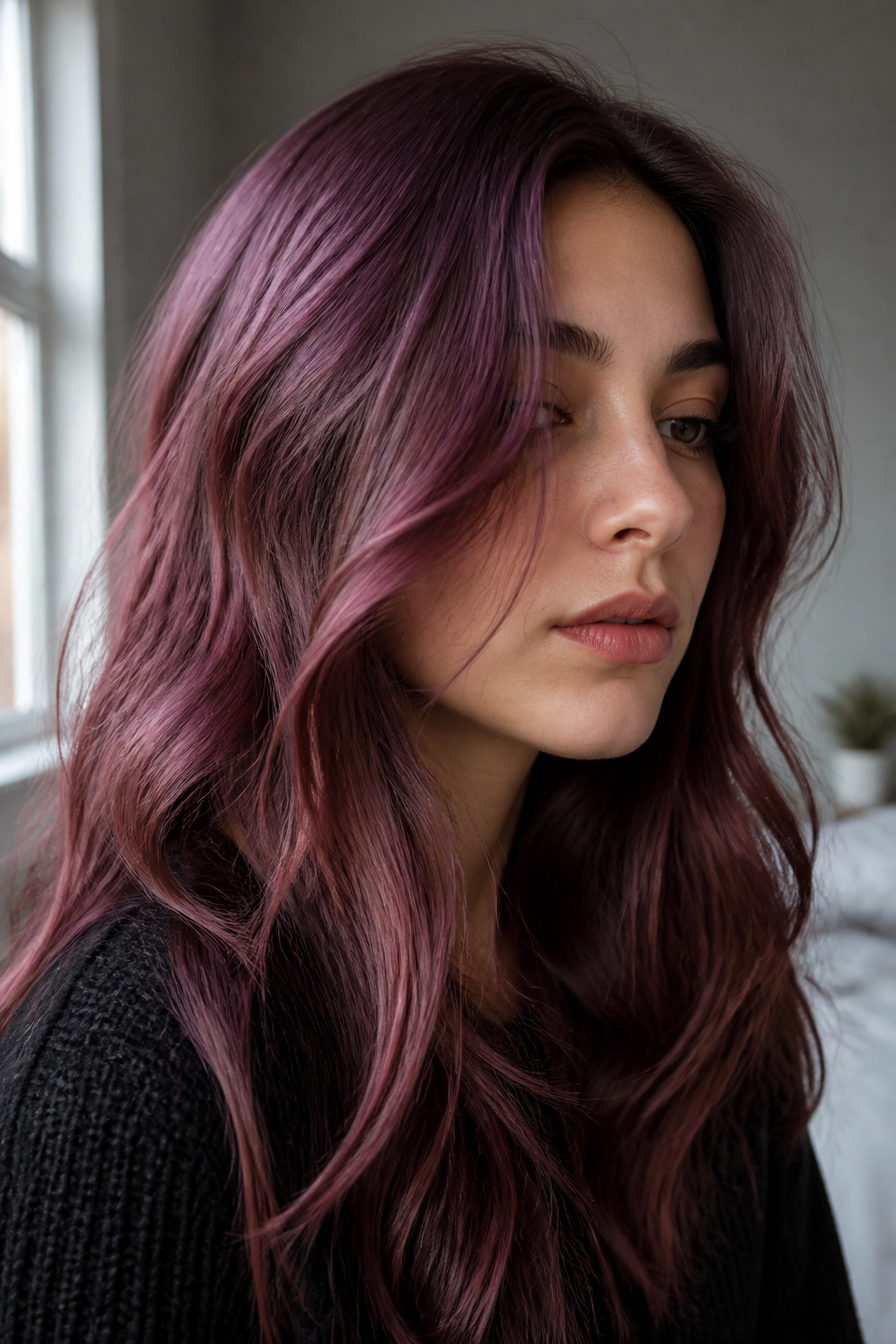
Want pink without the bubblegum problem? Smoky rose wine is the answer that usually gets overlooked. It leans dusty, a little moody, and much more wearable than the brighter pink-red shades people tend to pin first.
What makes it different
The rose component is muted on purpose. That keeps the shade from sitting on top of the skin and making every cool-toned redness in the face look louder. Instead, it blurs things a little.
On pale skin, that blur looks soft. On medium cool skin, it reads as a wash of color rather than a costume dye job.
How to get the most from it
- Ask for a rose-violet base with a soft burgundy gloss.
- Keep the saturation lower near the roots.
- Style with loose bends, not tight curls.
- Use a color-depositing conditioner every other wash if the pink fades too fast.
A smoky finish is the part people forget. Shiny, yes. Flat, no. But not slick in a fake way.
4. Raspberry Merlot Melt
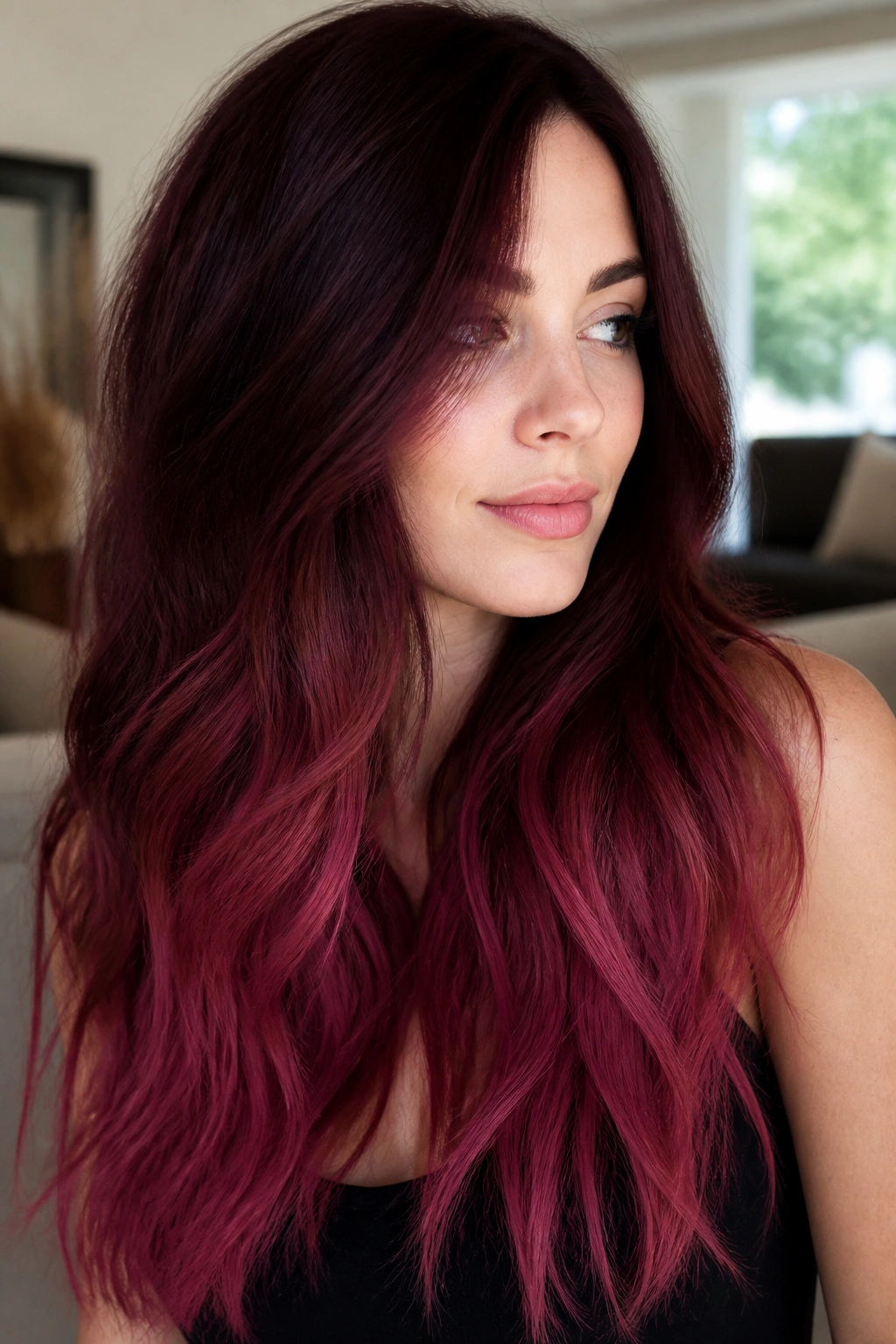
Picture a deep merlot root fading into raspberry at the ends. That’s the whole appeal here. The color melt keeps the look from turning blocky, and it gives the pink enough room to show without shouting.
The cool-skin advantage is in the contrast. Raspberry has enough blue in it to stay flattering, and merlot keeps the top of the head rich and dark. If your complexion pulls pink already, this combo helps keep the face from looking washed out.
This one is especially good on longer hair. The transition needs length to breathe, otherwise the effect gets chopped up and you lose the softness. Straight hair shows the gradient clearly, while curls turn it into a ribboned, glossy mix.
If you like a color that changes a lot from indoors to outdoors, this is a good pick. It looks like one shade in the chair and another by the time you’re halfway home.
5. Mauve Burgundy Bob
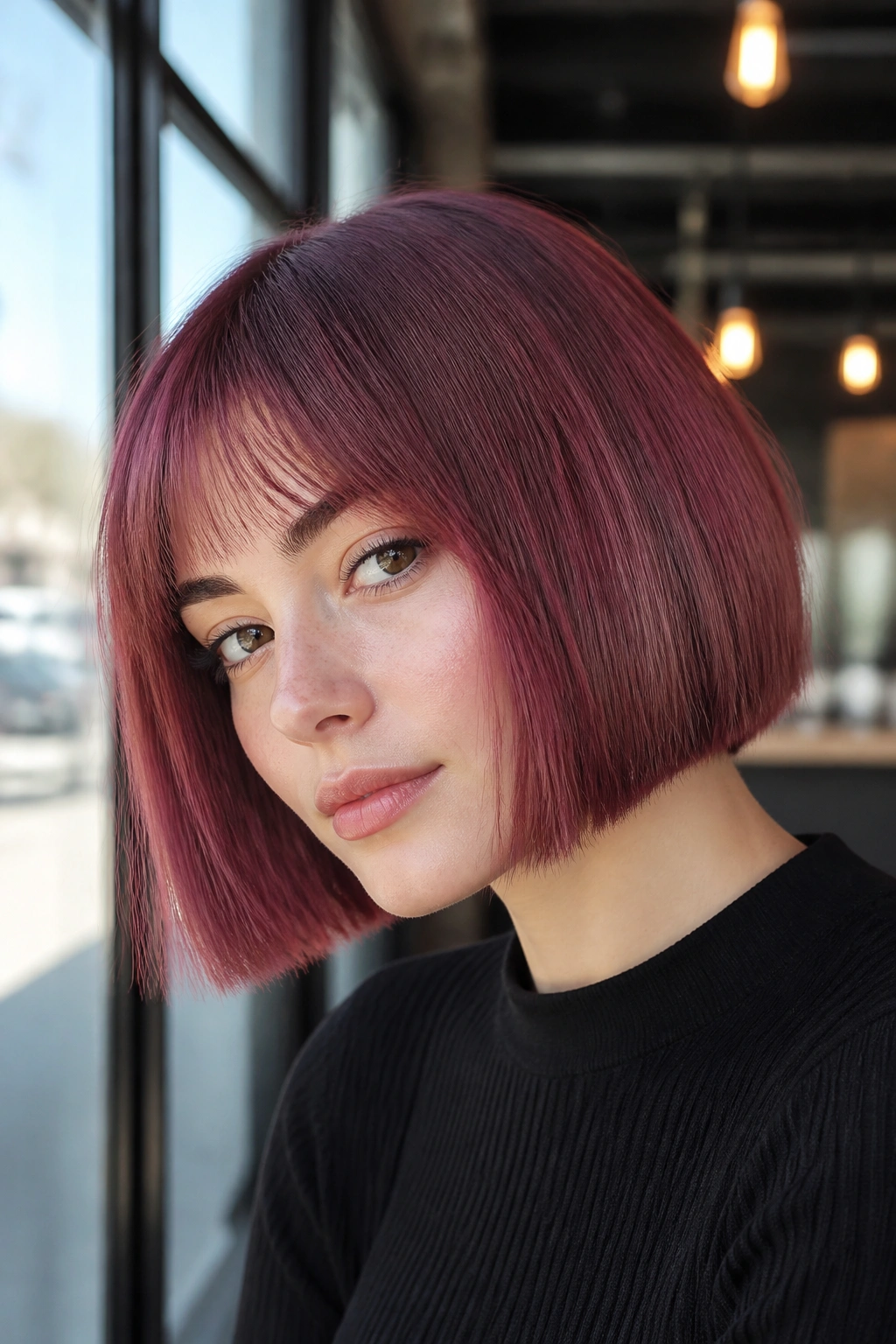
A blunt bob and mauve burgundy go together almost too well. The cut gives the color structure, and the color keeps the cut from looking severe. On cool skin, that combination feels crisp without getting cold.
Mauve is the reason this works. It brings in a little gray-pink softness, which makes the burgundy feel more tailored and less dramatic. That’s useful if you want color, but not a loud statement every time you tuck your hair behind your ear.
This shade does demand a bit of honesty about upkeep. Mauve can turn cloudy on porous hair, so it’s better to start slightly deeper than you think you need. You can always brighten later with a gloss. Going the other way is annoying.
I like this on a chin-length cut with a center part. It frames the face cleanly, and cool skin tends to like that kind of shape when the color is carrying the interest.
6. Cool Cranberry Gloss
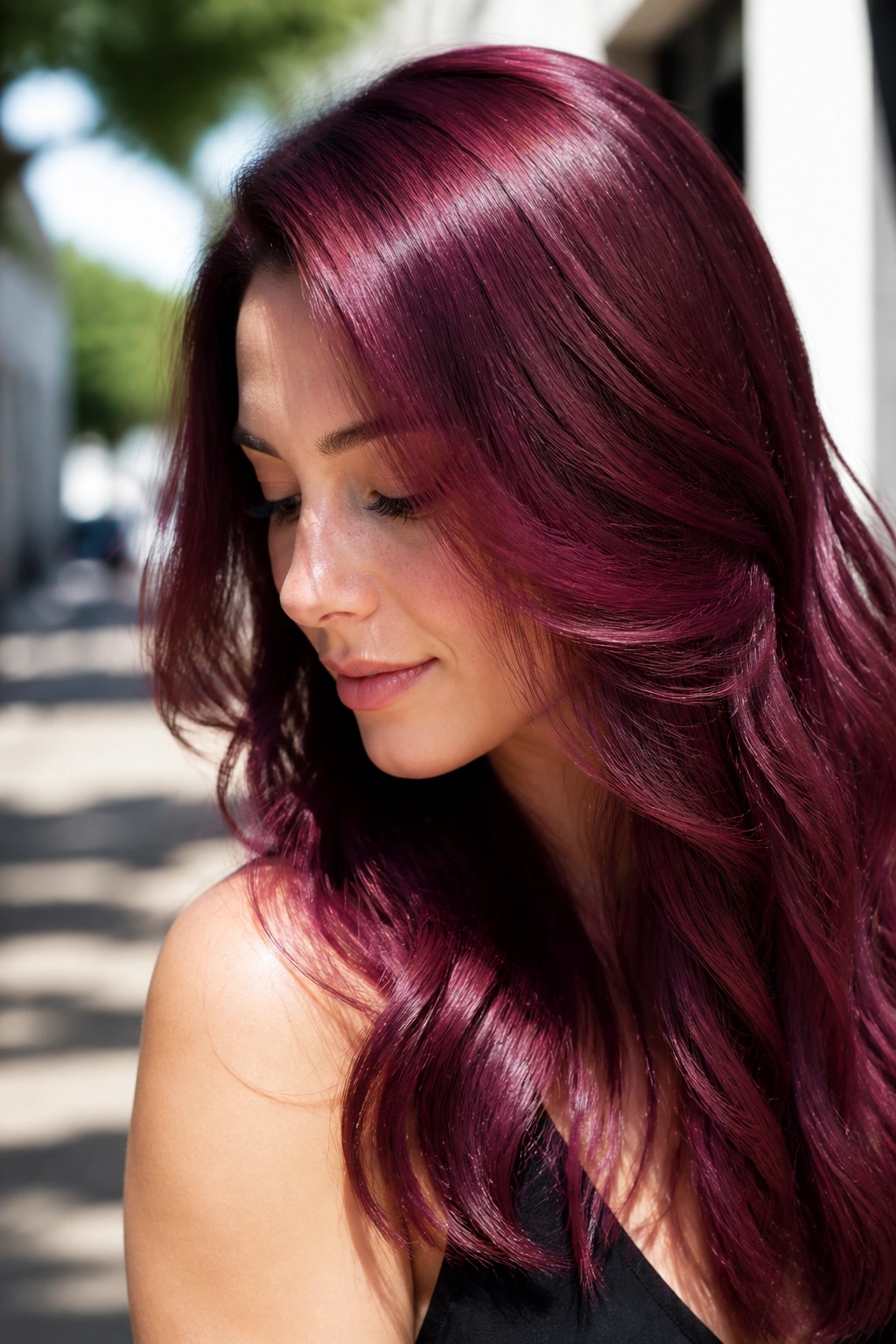
Cool cranberry gloss is one of those shades that sounds simple until you see it on hair. It’s brighter than plum, deeper than pink, and far less orange than the cranberry shades that lean warm. That last part matters.
Unlike hot cranberry, this version keeps the red side blue-based. That’s why it plays well with cool undertones. The color doesn’t fight the skin; it sits beside it.
A gloss is the right format here if your hair is already light brown, dark blonde, or pre-lightened. You’re not chasing full pigment saturation. You’re adding a veil of color that makes the hair look fresher and the tone a little cleaner.
If you want a salon request that sounds specific, try this: cranberry demi-permanent gloss with a violet base, kept semi-sheer at the crown. It usually gives you enough impact without the maintenance headache of a full vivid red.
7. Velvet Plum Money Piece
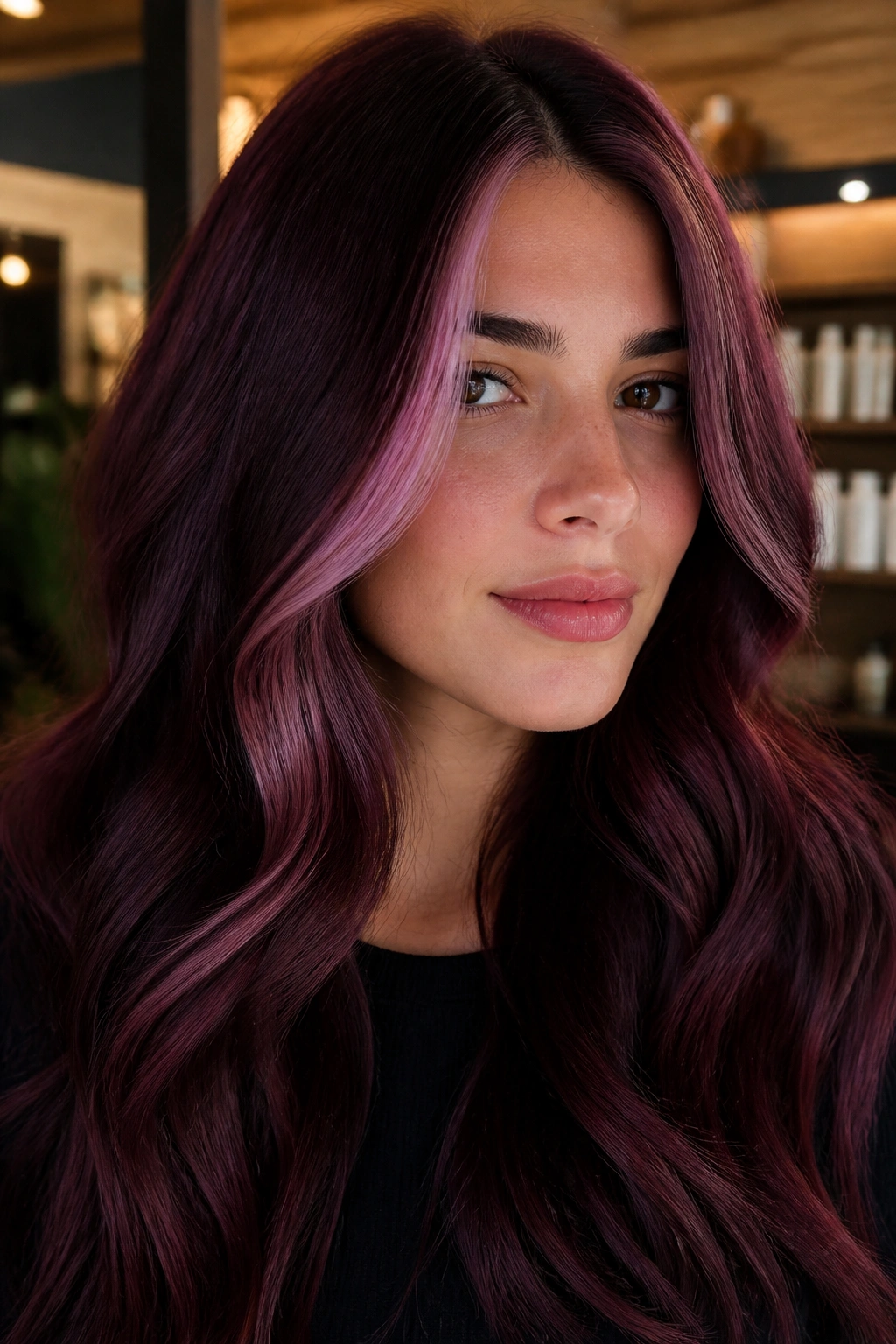
A money piece can change a whole burgundy look faster than a full dye job. With velvet plum, the front streaks give cool skin a little lift while the rest of the hair stays deep and grounded. That contrast is the point.
Why the face frame matters
The lighter plum near the face brings attention to the eyes and cheekbones without forcing the whole head to go lighter. On cool skin, a plum money piece can sharpen features in a way a bright copper front piece never will.
It also lets you keep the overall color richer. You don’t need to lighten every strand to get movement.
Ask for this
- Keep each face-framing section about 1 to 1.5 inches wide.
- Place the lightest plum right around the cheekbone.
- Leave the crown deeper for contrast.
- Finish with a high-shine blowout or soft flat iron bend.
Watch this: if the money piece gets too pink, it can read childish. Plum keeps it smarter.
8. Berry Noir Underlights
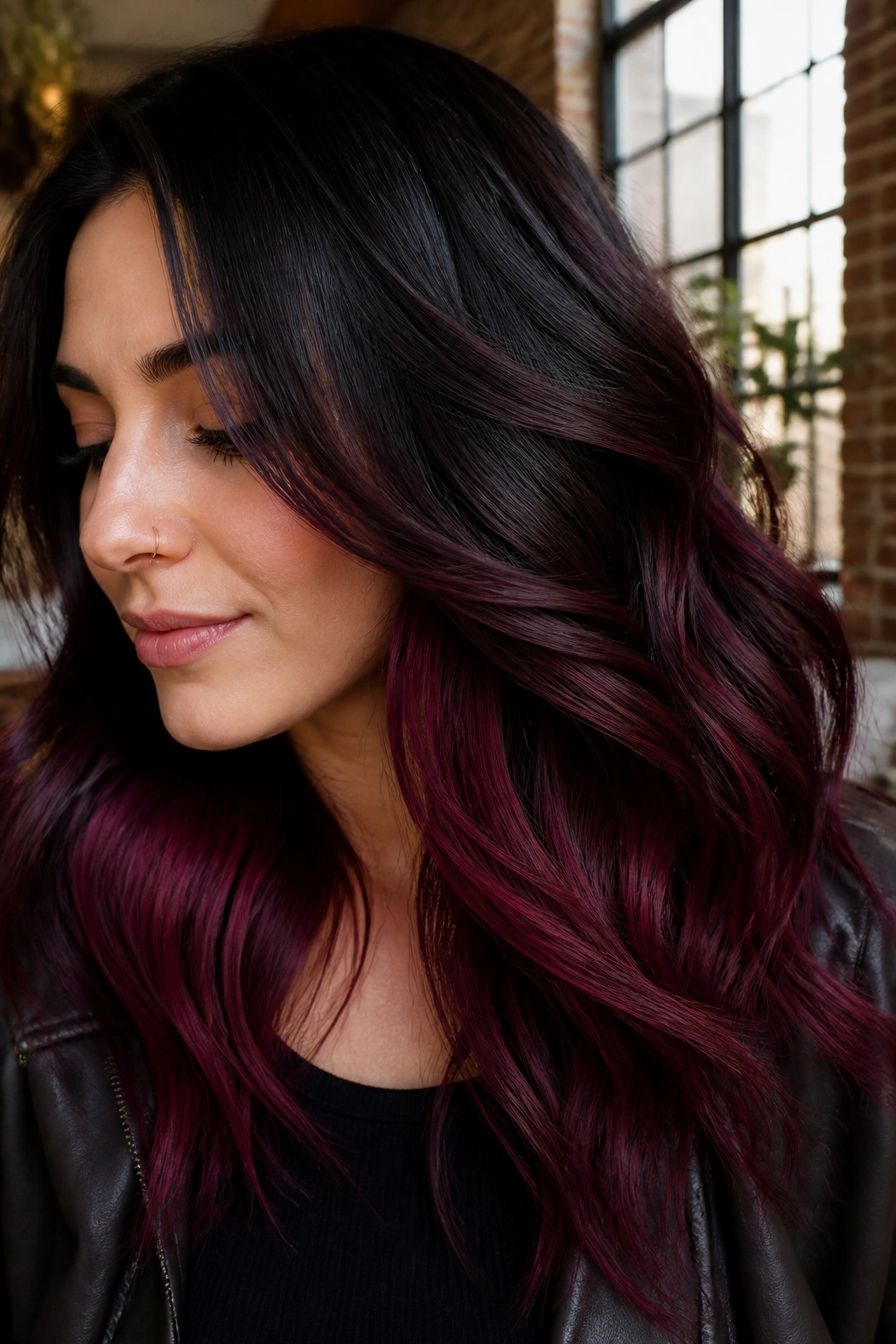
Hidden color is underrated. Berry noir underlights give you the fun of burgundy pink without turning your whole head into a high-commitment color block. The top layers stay dark, and the berry sits underneath like a secret.
That makes it a strong match for cool skin because the visible color is controlled. You get flashes of blue-red berry when you curl your hair, braid it, or throw it into a ponytail. The face doesn’t get overwhelmed.
This is a smart choice if you work somewhere conservative or just don’t want to see every color decision in the mirror all day. The reveal happens on your terms.
A deep brown or black base works best here. The berry should be vivid enough to show in motion, but not neon. If the contrast is too hard, the look stops feeling sleek and starts feeling theatrical. That’s a different mood entirely.
9. Rosewood Burgundy Lob
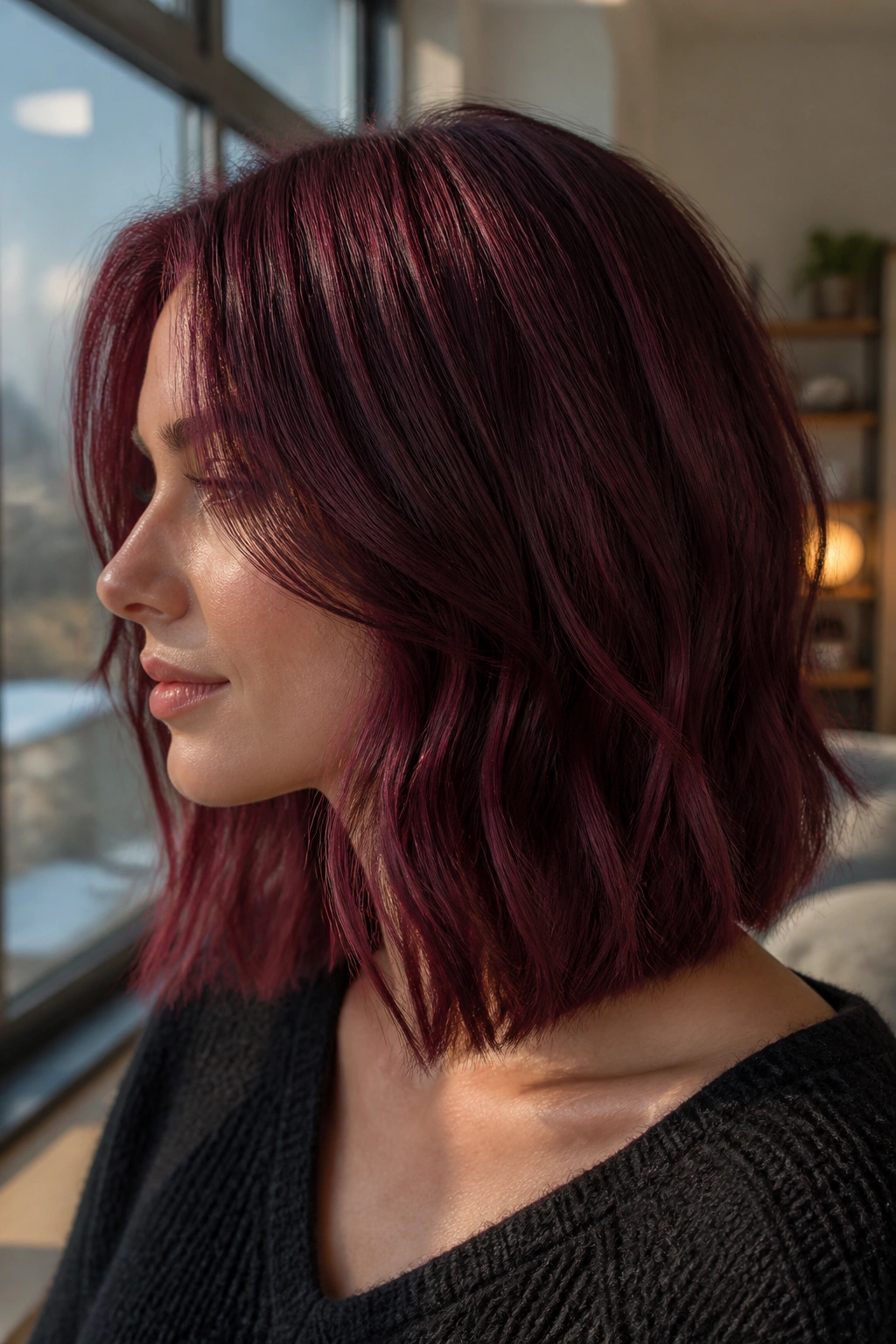
Rosewood burgundy has a softer, woodier feel than classic wine red, and that’s exactly why it works so well on cool skin. It gives color without making the hair look candy-bright.
The lob cut helps. Collarbone length gives the rosewood tone enough surface area to show off, but it still moves quickly, which keeps the color from feeling heavy. On straight hair, the shade looks smooth and elegant. On bent waves, it gets a little more dimension.
What I like most is that it doesn’t need a lot of extra styling. A light bend with a one-inch iron, a little shine cream, and you’re done. Too much texture can make the rose side disappear, which is a shame because that’s the part that keeps the burgundy from going flat.
If your skin leans cool and a bit rosy, this shade can be especially flattering. It doesn’t add heat where you don’t want it.
10. Orchid Wine Peekaboo
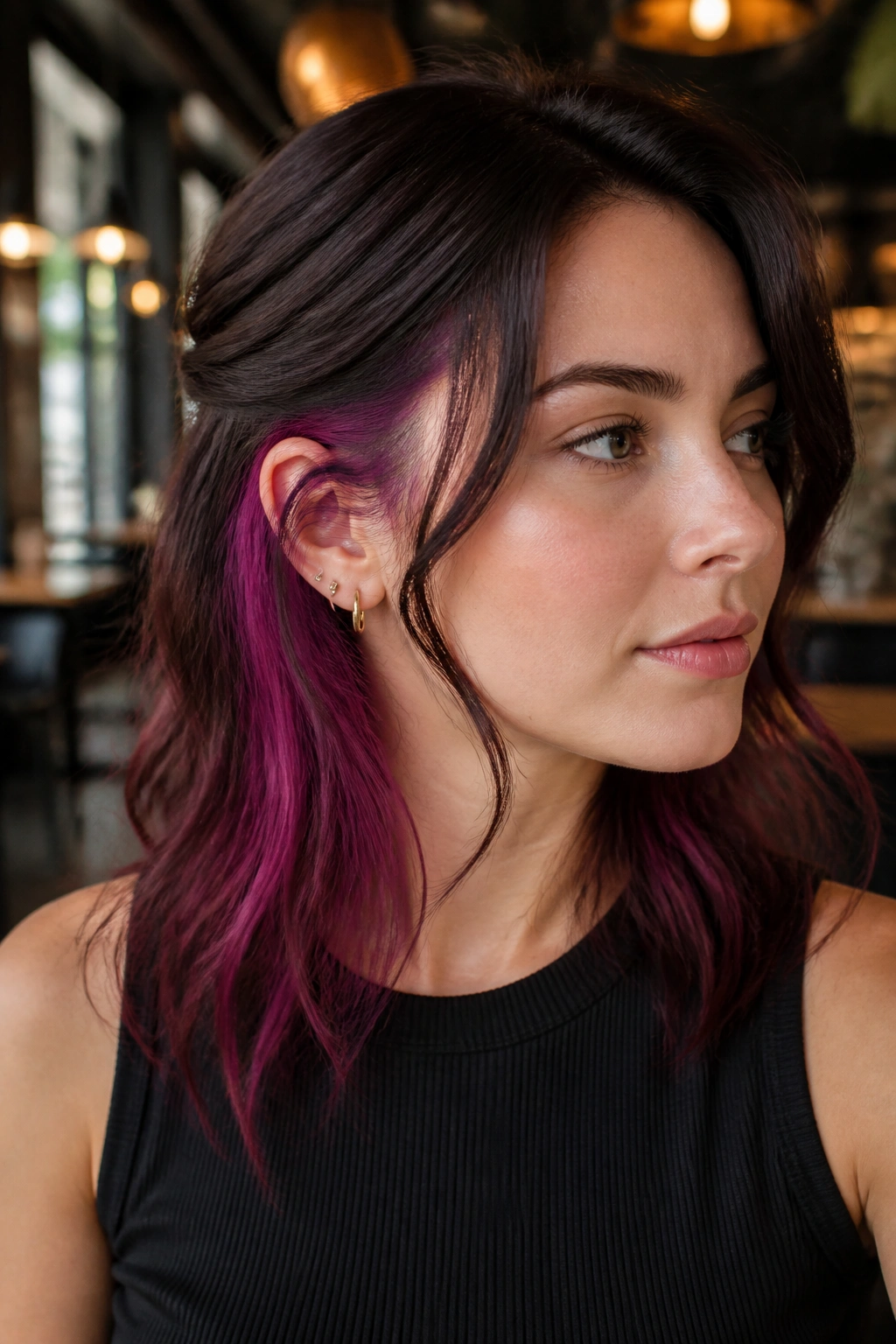
A quick flip of the hair and there it is: orchid wine underneath the top layer. That little flash is the whole point. Peekaboo color gives you drama without making every angle loud.
The orchid note matters because it pushes the burgundy toward violet instead of warmth. On cool skin, that keeps the color from reading brassy or tired. It also gives the hair a more modern look, especially when the top layer is dark brown or near-black.
How to place it
- Put the color under the crown and through the lower sections.
- Keep the visible pieces around the ears and nape.
- Use pre-lightened panels if you want the orchid to stay bright.
- Curl the ends under or away from the face to show the contrast.
This is a strong choice if you like surprises. It’s low-key until you tuck your hair back, and then it suddenly has a lot more personality.
11. Cabernet Pink Ombré
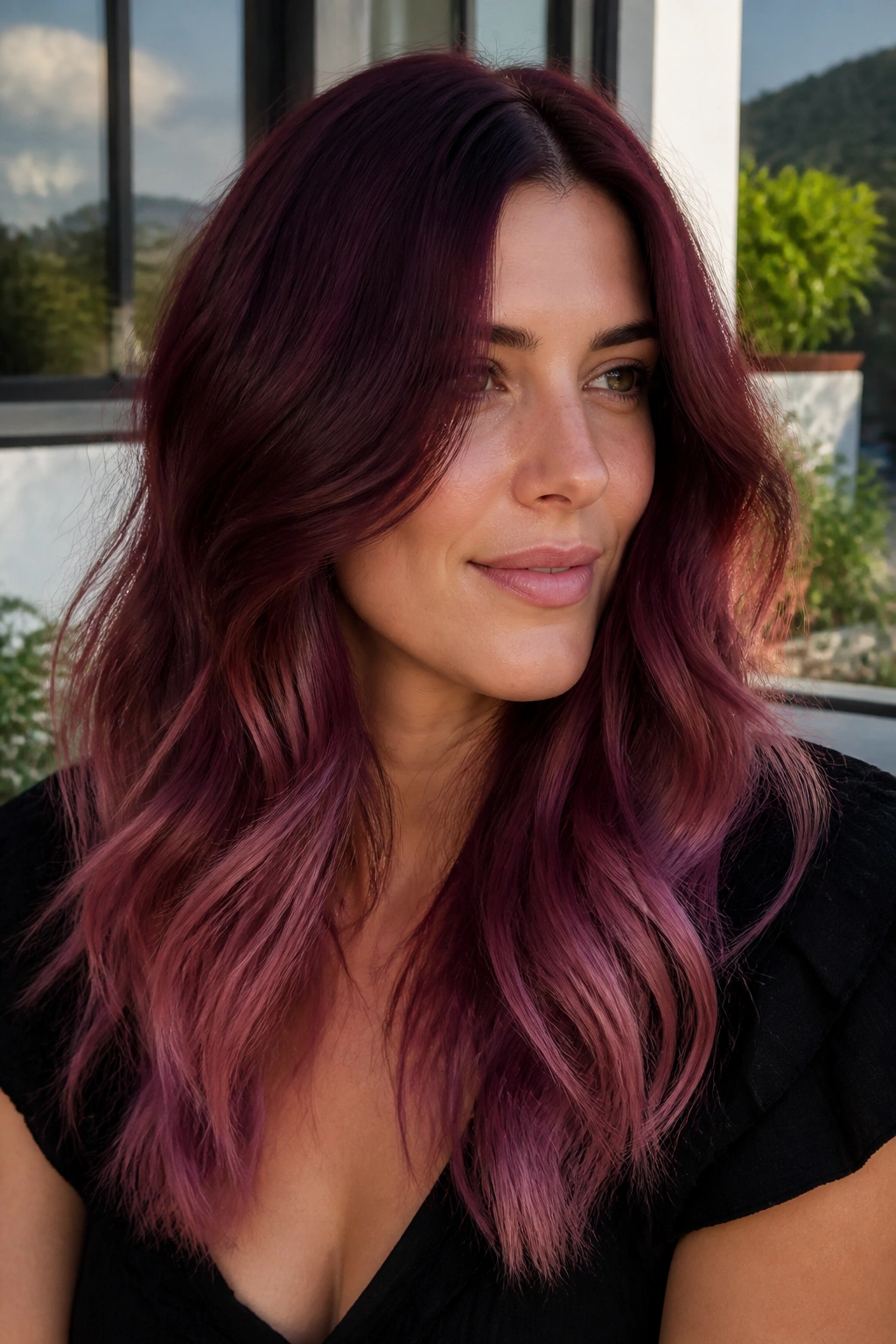
Cabernet pink ombré works because the transition feels natural, not patched on. Deep cabernet at the roots gives you weight, then the color slides into a pinker burgundy through the mids and ends. It’s a graceful shift, and cool skin usually likes that kind of depth.
The key is keeping the pink part restrained. If the ends go too strawberry or coral, the ombré loses its cool-tone advantage. You want pink that still feels like it has wine in it.
Loose waves help here. They break up the gradient and keep the darker top from looking too heavy. On straight hair, the transition is bolder and more graphic, which can be nice if you want more edge.
This is one of the better choices for longer hair that gets a lot of wear in ponytails or half-up styles. The dark root hides a lot. That’s useful.
12. Dusty Magenta Layers
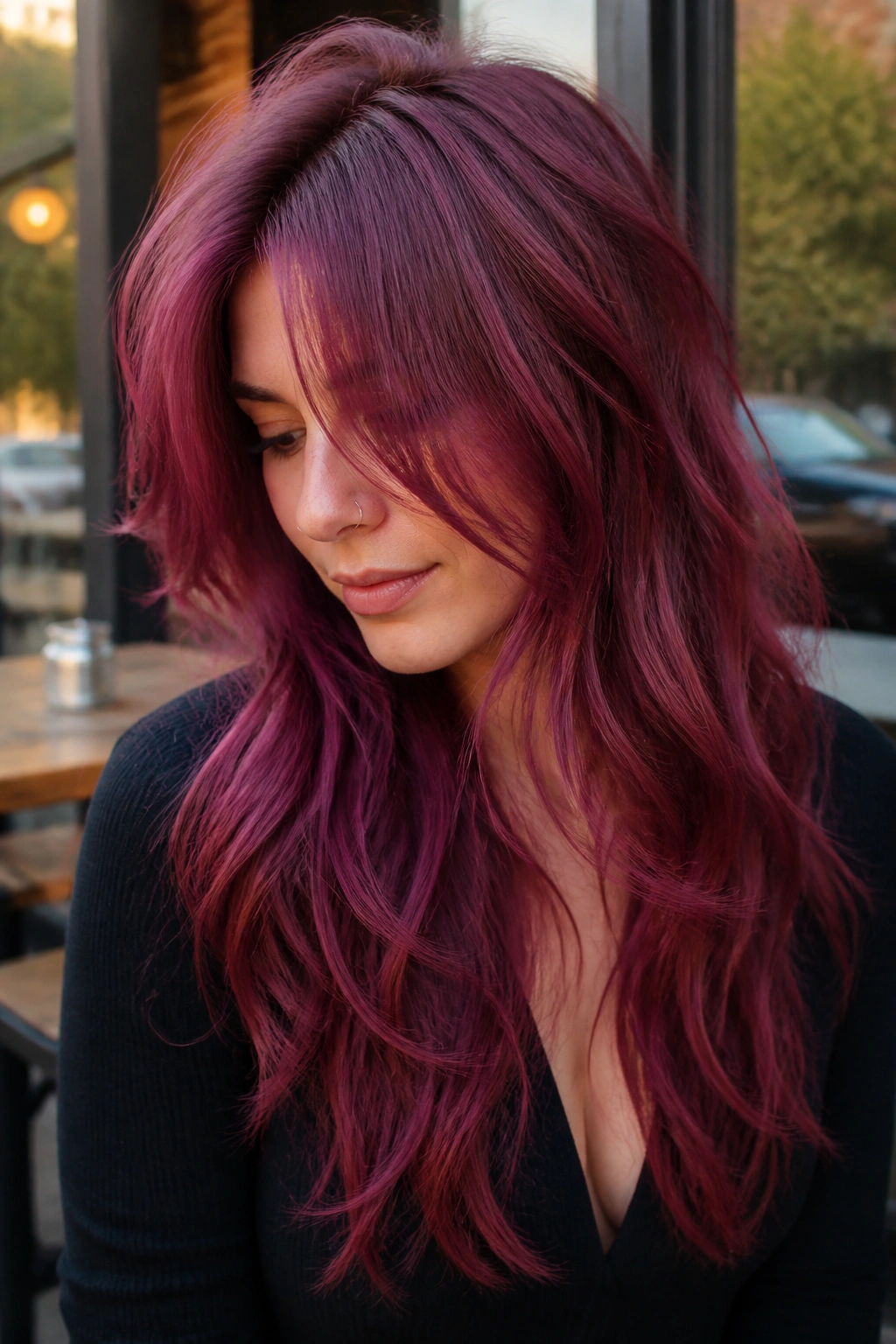
Dusty magenta layers are for people who want color that looks lived-in, not loud. The dusty note tones down the pink enough to flatter cool skin, while the magenta keeps it from disappearing into a plain burgundy.
What makes it different
Unlike a vivid magenta, this shade doesn’t sit at full volume. It has a little softness around the edges, which helps the skin stay the focus. That matters if your complexion is fair and cool, because super-saturated pink can sometimes make the face look pale in a harsh way.
The layers do the heavy lifting here. On a shag, wolf cut, or long layered cut, the movement lets different pieces catch different parts of the shade. It looks more expensive that way. Less painted on. More hair.
How to wear it
- Keep the base a little deeper at the roots.
- Ask for a matte-violet magenta mix, not a neon pink.
- Skip heavy oil on the mids; it can make the dusty note disappear.
- Let the layers air-dry a bit for extra texture.
The color has a little edge, but it’s controlled. That’s the good part.
13. Plum-Tinted Espresso
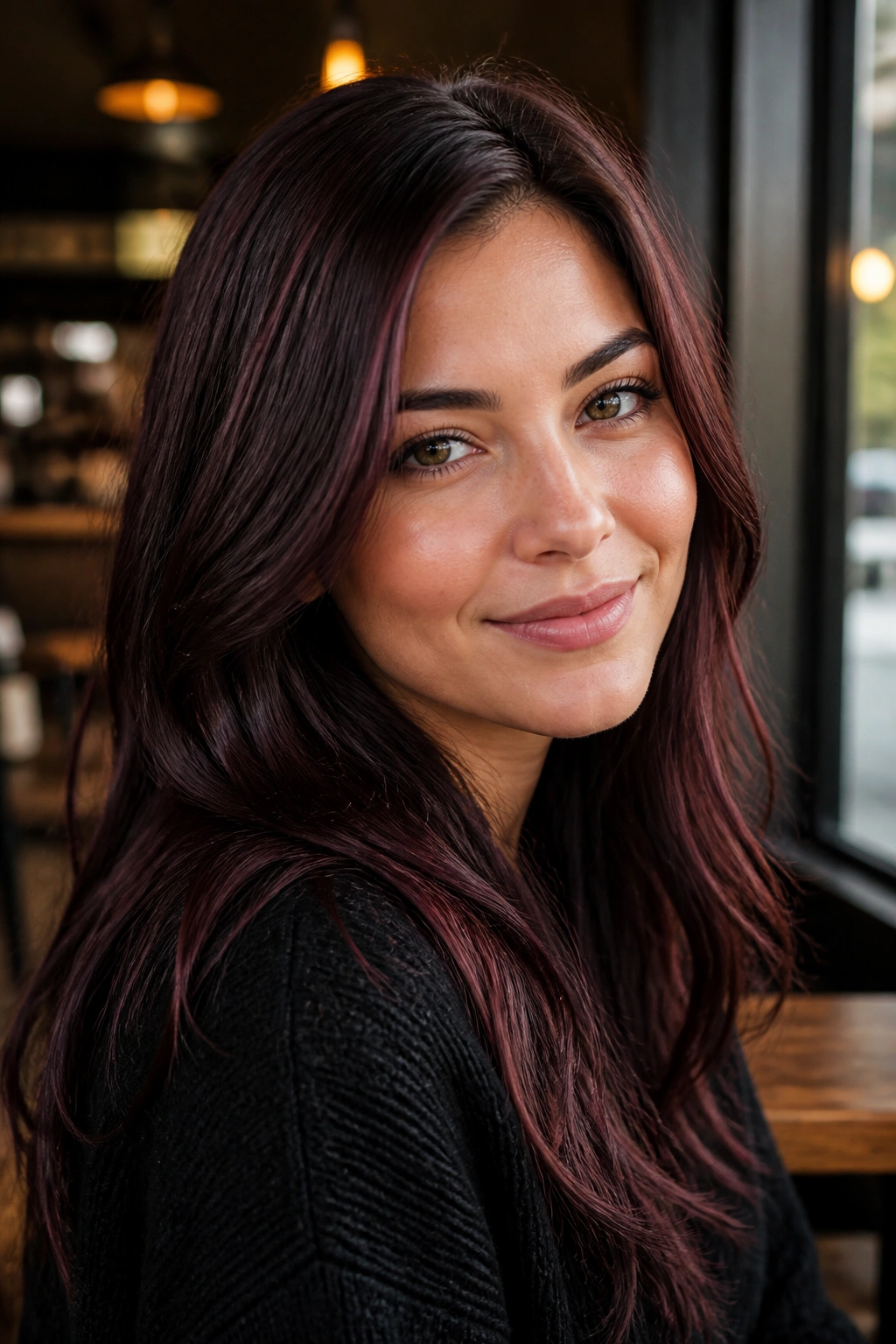
Plum-tinted espresso is the quietest shade on this list, and honestly, it might be the most practical. Most of the time it reads as rich dark brown. Then the plum catches light and the whole thing shifts.
That makes it a strong match for cool skin because the color never fights the complexion. It just adds a cooler cast to the dark base. If your natural hair is already brown or black, this is a smart way to test the burgundy pink family without jumping straight into obvious pink.
Why it works
- The espresso base keeps upkeep low.
- The plum tone shows in sunlight and indoor lighting.
- The shade looks clean on straight, wavy, and curly hair.
- It grows out softly, with no harsh line.
If you want a color that your co-workers won’t clock immediately but your friends definitely will, this one is worth a hard look. It’s subtle in the best way.
14. Frozen Berry Pixie
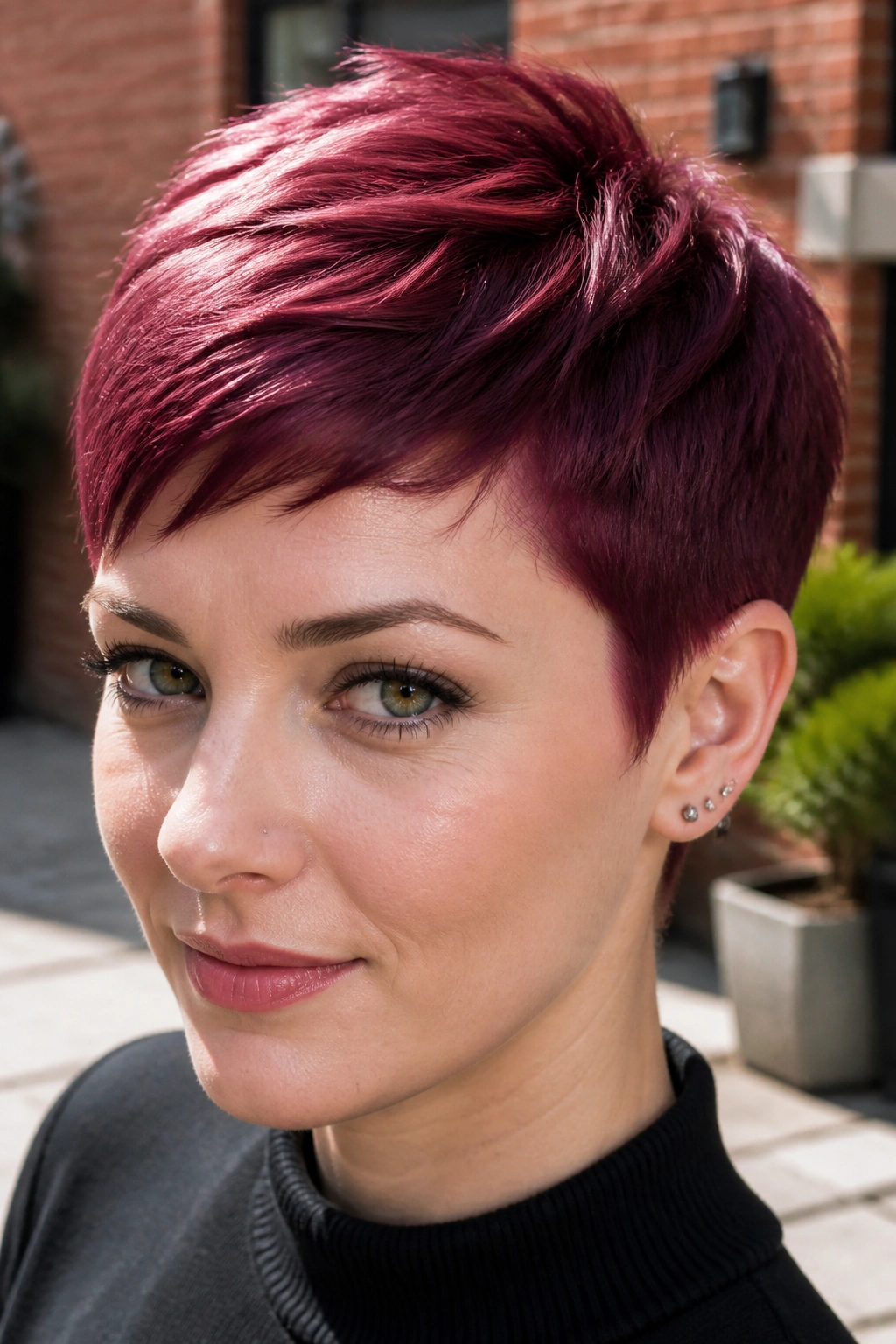
Short hair shows everything. Every line. Every tone. So a frozen berry pixie has to be precise, or it gets messy fast.
The cool-skin appeal here is obvious: the berry is icy enough to flatter without turning warm, and the short cut keeps the color from feeling heavy. Because there’s less hair, the shade can be stronger than it would be on a long style. That’s useful if you like impact but don’t want a lot of maintenance.
A pixie also lets you play with gloss. A smooth, slightly reflective finish makes the berry look crisp. Too much texture can break the color apart and make it look patchy, especially on porous ends.
This shade is a good fit if you like frequent trims anyway. On a pixie, the color and the shape are tied together. One starts slipping, the whole look changes.
15. Sangria Pink Face Frame
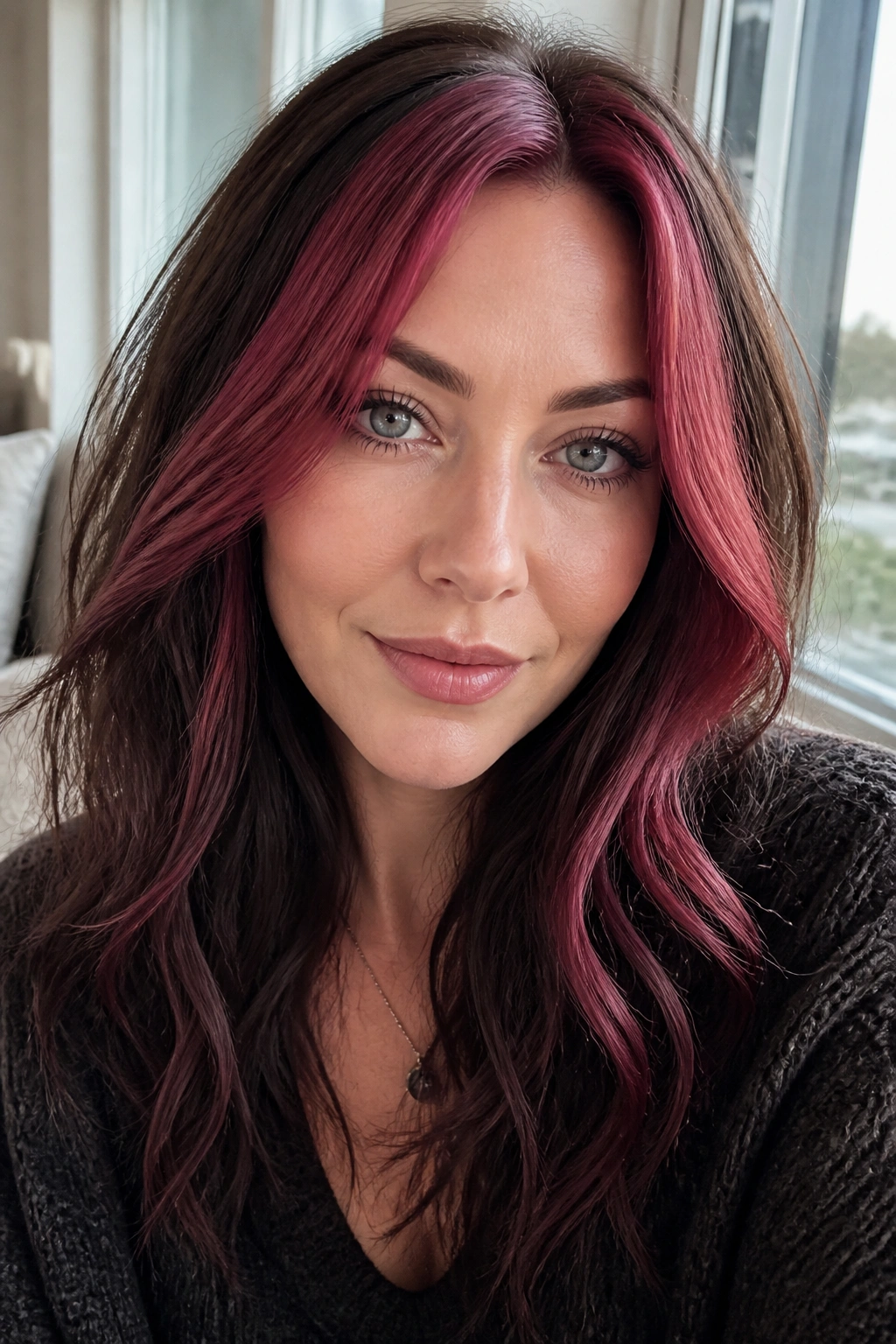
Sangria pink around the face changes the whole mood of a cut, even if the rest stays dark. That’s the appeal. You get a bright hit of color right where the eye lands first, and cool skin usually loves that kind of focused contrast.
The best version keeps the face-framing pieces more wine than coral. Sangria can go warm quickly, so the pink needs a blue-red base to stay friendly to cool undertones. If you see orange in the strand, you’ve gone too far.
A middle part makes the look feel more balanced, but side parts can work too if you want the lighter section to sit closer to one side of the face. I’d avoid making the front pieces too thick. Thin, clean framing looks sharper and less bulky.
This is a nice option if you want a color change that shows up in photos and mirrors without needing a full-head commitment. Quick payoff. Less chaos.
16. Burgundy Rose Chrome
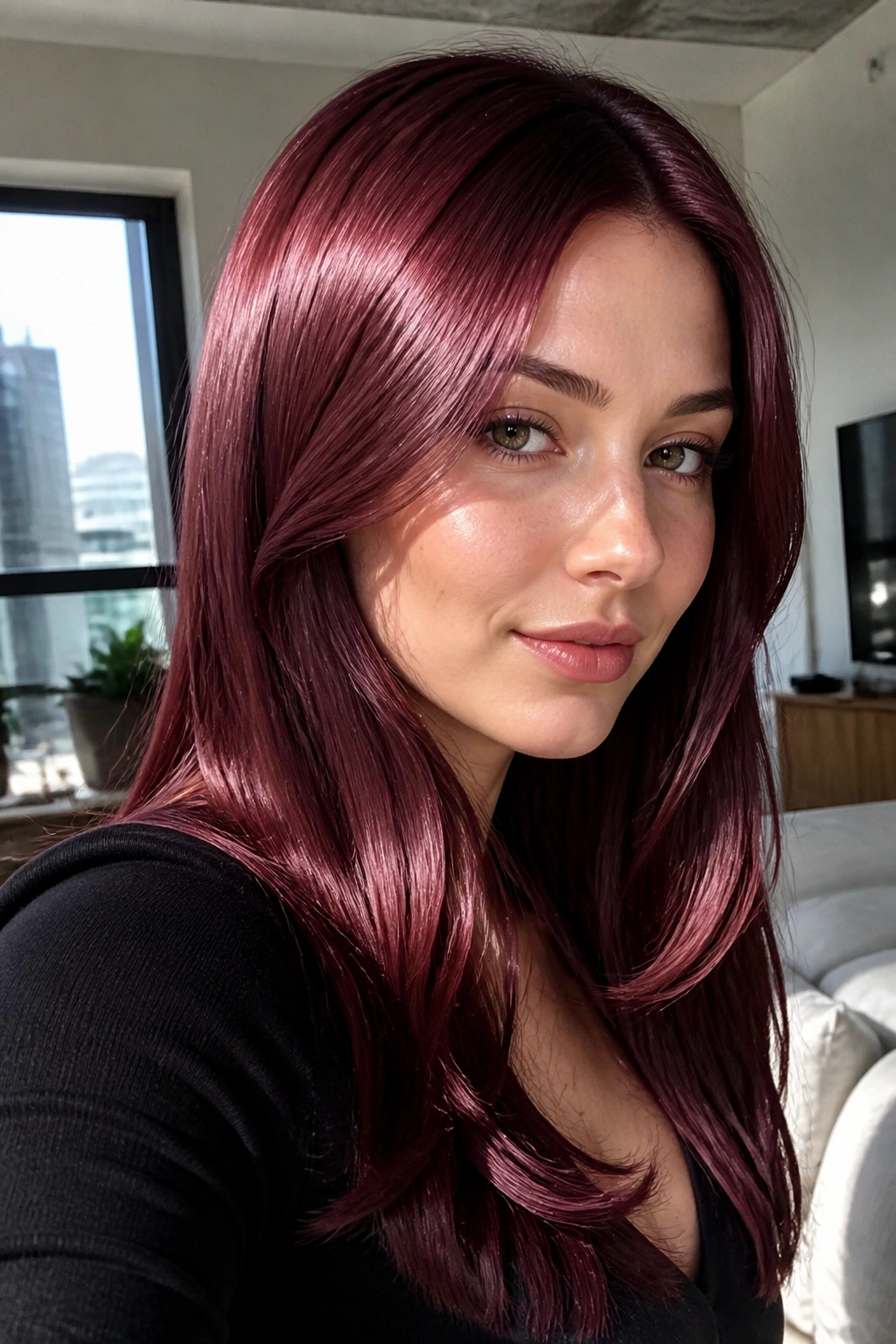
Chrome finish changes everything here. Same burgundy-rose base, different result. The reflective surface makes the color look smoother, denser, and more expensive without needing a brighter pigment.
Cool skin tends to benefit from that mirror-like finish because shine makes cool reds read cleaner. The hair looks like it has depth under the surface instead of sitting flat on top of the head. That’s a big difference, even if it sounds small.
You need a good gloss or sealing treatment to get this right. Open cuticle equals dull color. Period. If the hair is rough, the rose side starts to look dusty in the wrong way, and the chrome effect disappears.
This style is especially strong on sleek styling—blowouts, flat-ironed bends, polished ponytails. It’s not the friendliest choice for very dry hair unless you’re willing to put in the moisture work.
17. Lilac-Burgundy Shadow Root
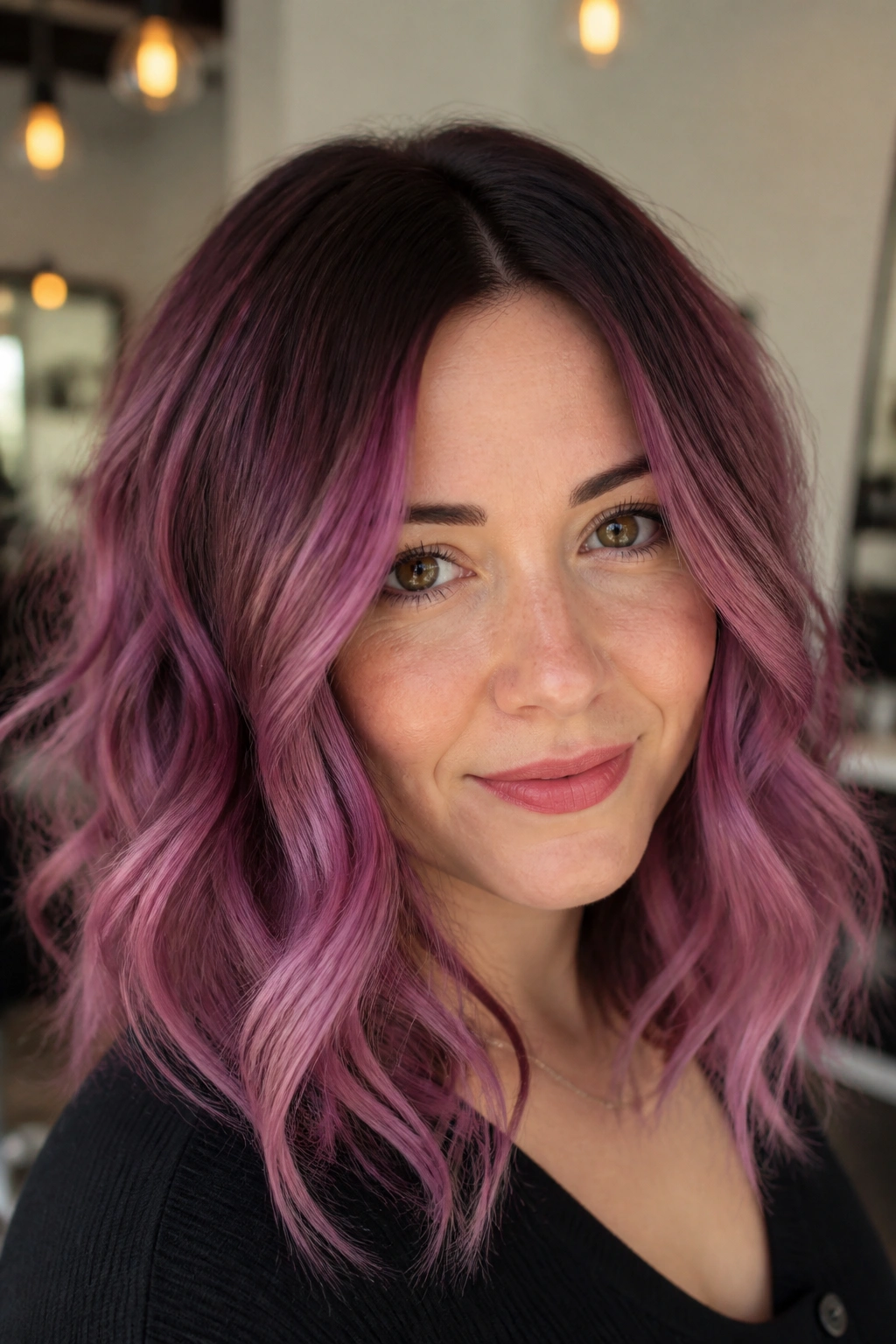
A shadow root is one of those salon moves that makes a color last longer and look calmer. With lilac-burgundy, the root stays deep while the mid-lengths carry that cool purple-pink shift. That keeps the shade flattering on cool skin and easier to maintain between appointments.
Why it’s smart
The darker root adds depth at the scalp, which stops the whole color from going flat. The lilac through the lengths cools the burgundy just enough to keep it refined.
It also lets you stretch the time between touch-ups. Root growth looks intentional instead of obvious.
How to ask for it
- Keep the root 1 to 2 shades deeper than the mids.
- Use a violet-based burgundy in the transition zone.
- Let the lilac show more on the ends than the crown.
- Style with loose waves to keep the shadow from looking too rigid.
This is a good choice if you like contrast, but not a hard contrast. The difference is visible, yet soft.
18. Mulberry Pink Curls
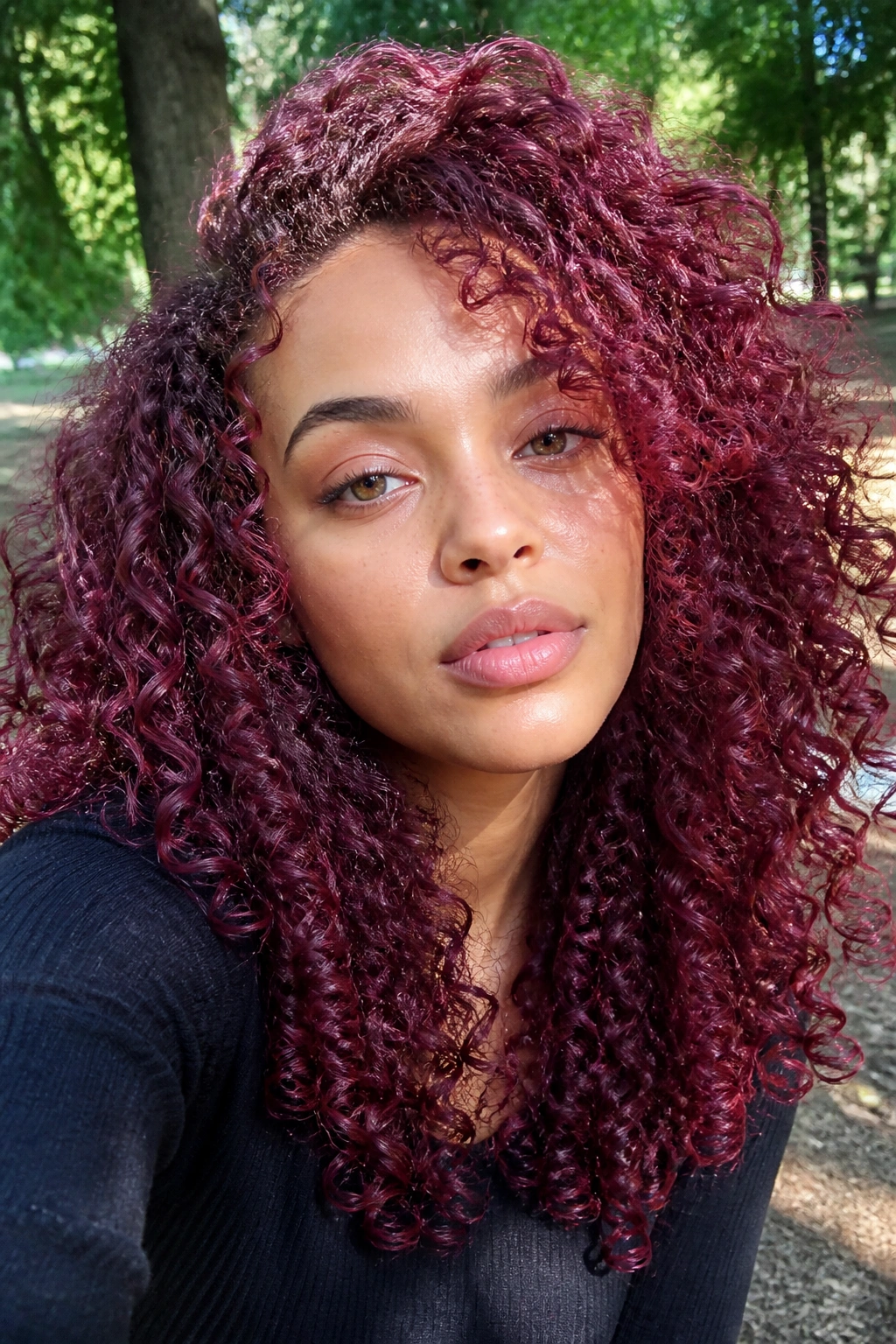
Curls love mulberry pink because each coil catches color a little differently. One ring shows berry. The next shows plum. Then the light shifts and the whole thing changes again. Straight hair can do that too, but curls make the dimension feel richer.
Cool skin gets a nice payoff here because mulberry stays on the blue-red side of pink. It doesn’t have that syrupy warmth that can make a cool complexion look slightly off. The result is deeper and more polished.
What to watch for
Dry curls can steal shine fast, and shine is part of what keeps mulberry looking expensive. Use a leave-in that doesn’t leave a greasy film, then seal the ends with a small amount of cream or oil. Not a lot. A little.
A diffused dry helps too. Rough blow-drying can frizz the cuticle and make the color look duller than it is. That’s annoying, because the shade itself is doing enough work already.
19. Wine-Berry Ribbon Highlights
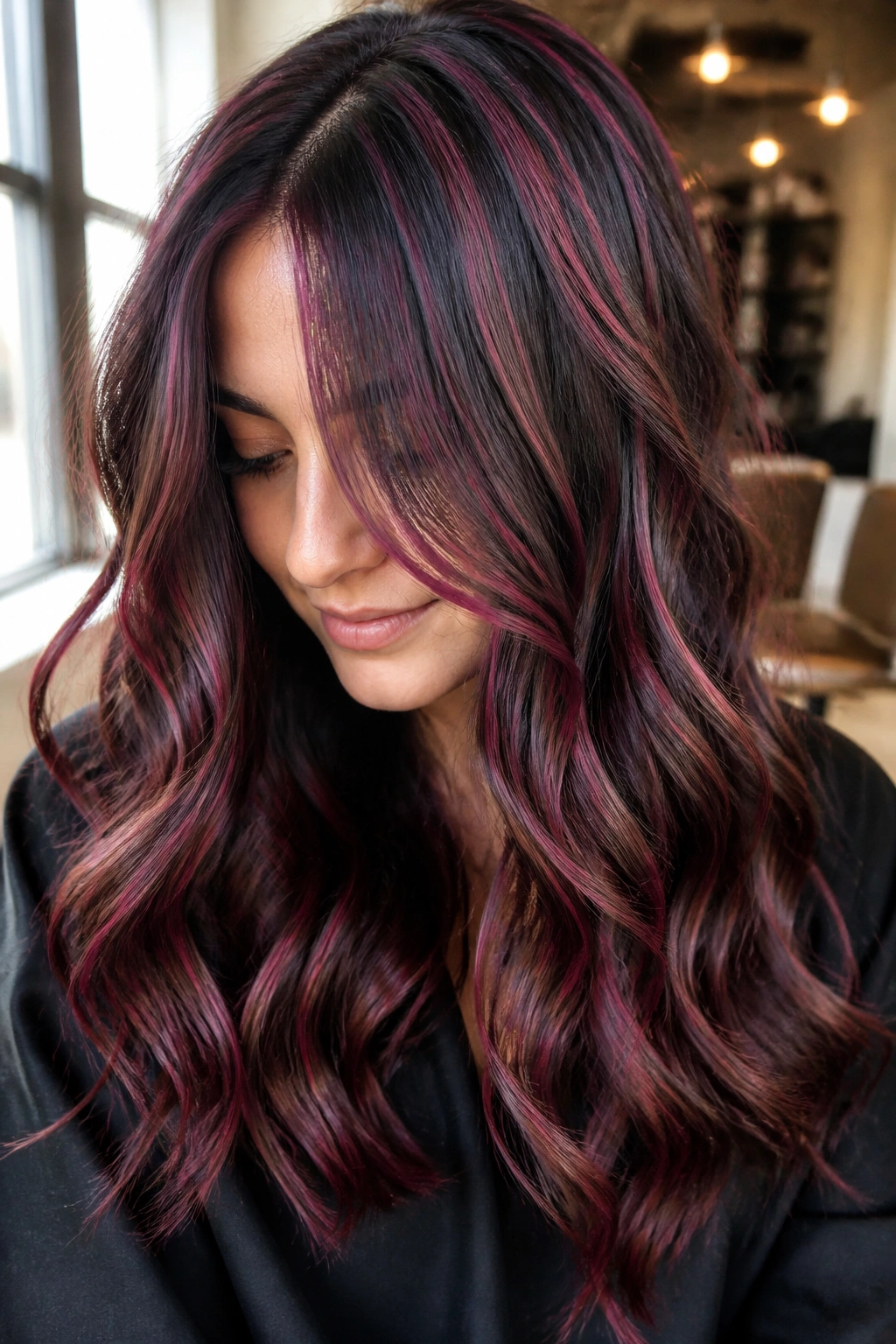
Ribbon highlights are for people who want movement without giving up a dark base. Thin wine-berry pieces woven through brunette hair create a soft streaking effect, and cool skin tends to like the contrast because the red stays blue-based.
The trick is spacing. Put the ribbons too close together and the hair turns busy. Keep them too far apart and you lose the point. The sweet spot is usually a few fine pieces every couple of inches, especially around the crown and face frame.
This is one of my favorite options for medium to long hair because it behaves differently in braids, ponytails, and waves. The highlights peek out in layers instead of all at once. That keeps the color interesting without making the whole head look high-maintenance.
If you want a change that is visible but not loud, this is probably the safest lane on the list.
20. Midnight Berry Sheen
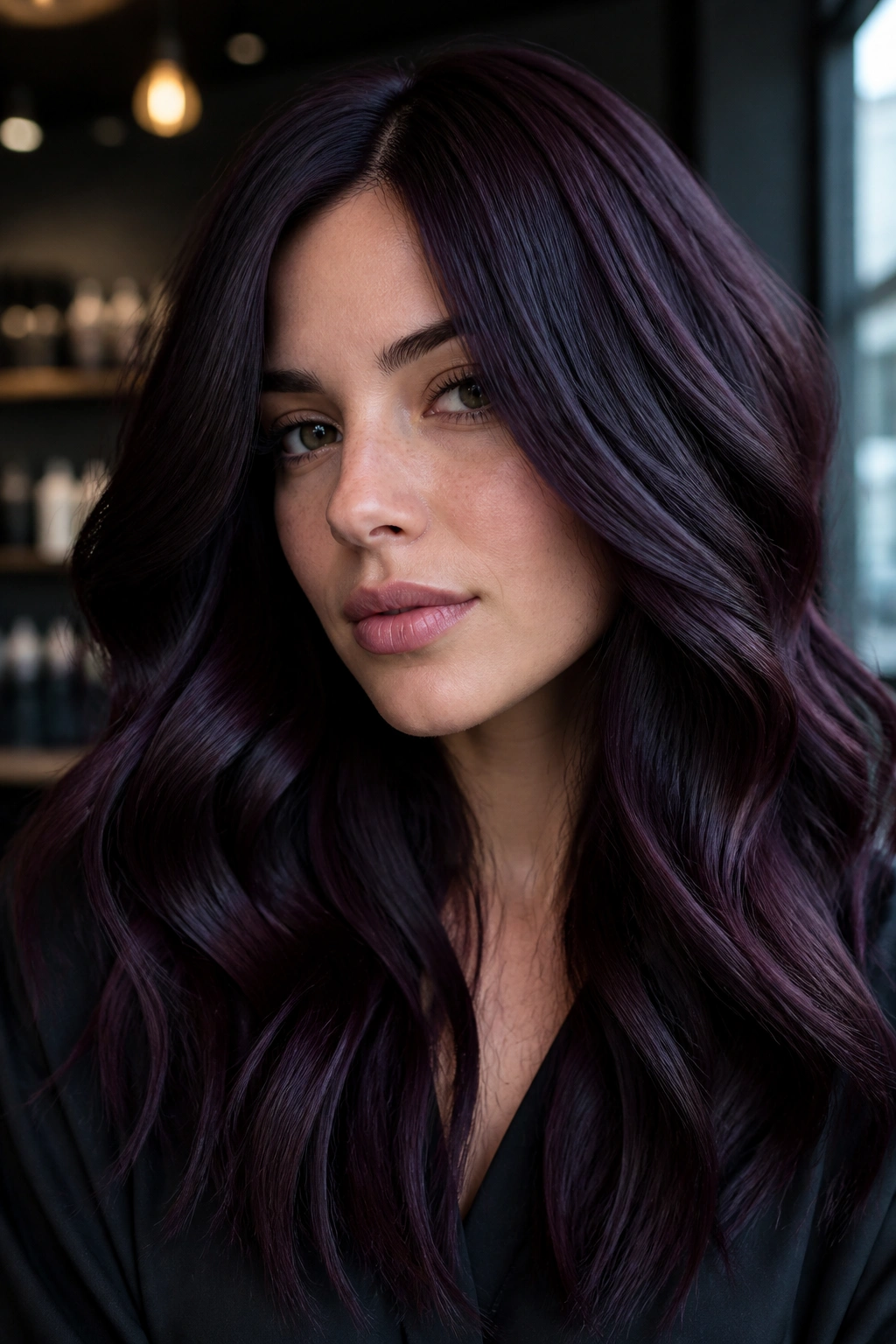
Sometimes the prettiest burgundy pink is the one people notice only after a second look. Midnight berry sheen lives in that space. It’s dark, cool, and reflective, with enough berry in the mix to keep it from becoming plain black.
For cool skin tones, that’s a useful trick. A near-black berry shade can make the face look clearer and the eyes look brighter without adding obvious warmth. It’s also one of the easiest shades to live with because the growout stays soft and the pigment doesn’t have to stay screaming to look good.
This is the shade I’d point to if you want the least fuss of the whole group. Keep the finish glossy, keep the undertone blue-berry, and let the color do its work quietly. That quiet part is the point.
If you’ve been torn between “just dark hair” and “something with more personality,” this is the compromise that usually holds up best.
