



Black burgundy hair can look almost tailor-made for cool skin tones when the shade stays in the blue-red, plum, and wine family. If your skin leans pink, rosy, porcelain, or blue-based beige, the right burgundy makes the face look clearer and the eyes look sharper. The wrong one can go muddy fast.
That’s the part people miss. Burgundy is not one shade. Some versions lean cherry, some lean plum, some lean blackcurrant, and some drift warm enough to start flirting with copper. On cool skin, that warmth is usually the problem. A little blue or violet in the mix goes a long way.
Placement matters too. A full dark gloss feels sleek and dramatic. Face-framing panels bring the color right up to the skin. Underlights, balayage, and root melts each change the mood without changing the basic color story. That’s why black burgundy hair color ideas for cool skin tones can look quiet, sharp, or bold depending on how you wear them.
The 22 ideas below move through the spectrum from subtle to obvious, and the differences are practical, not just cosmetic. Some are easier to maintain. Some work better on curls, bobs, or long layers. Some are the sort of color that looks even better when it’s slightly tousled and a little imperfect.
1. Midnight Merlot All-Over Gloss
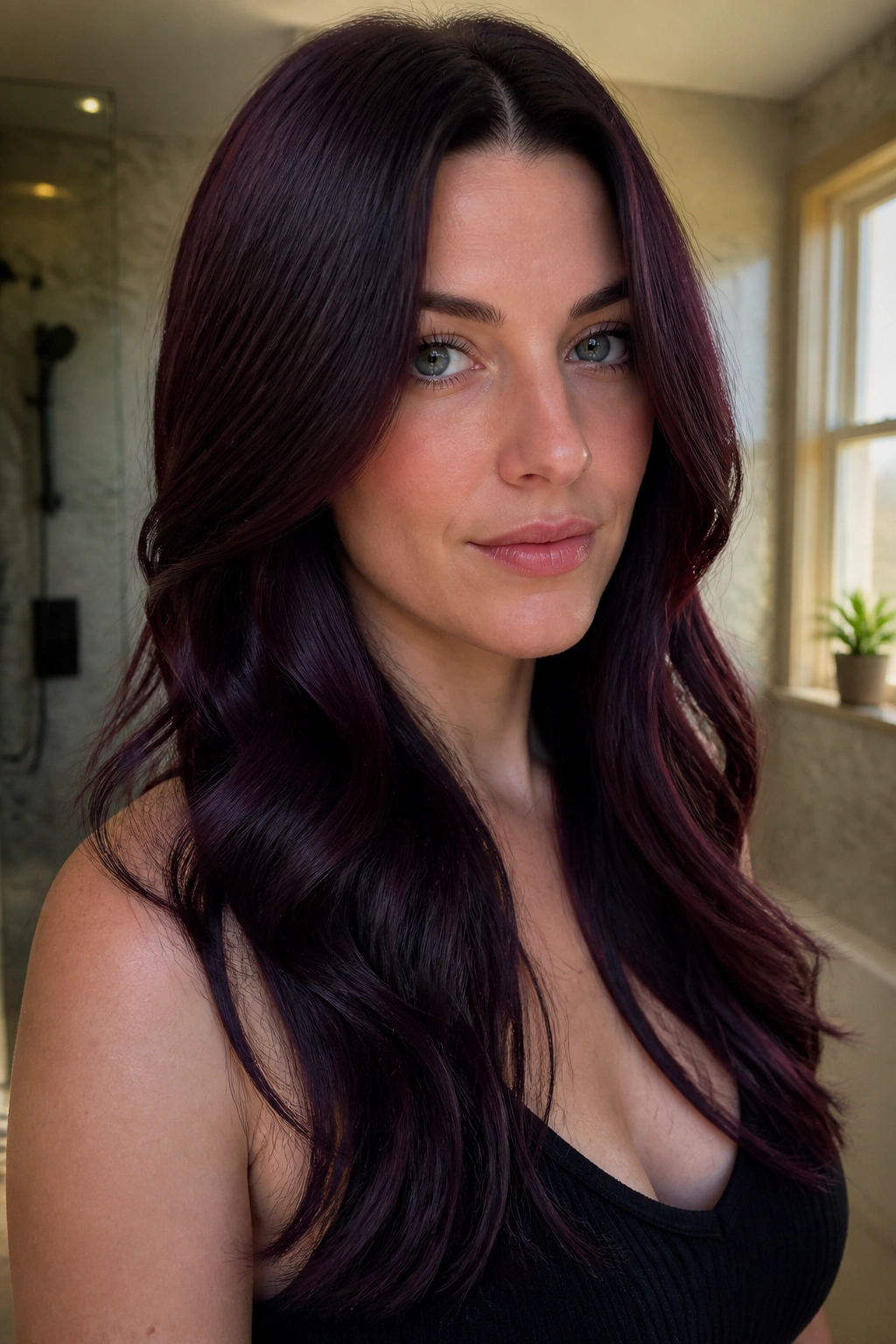
Midnight merlot is the safest starting point if you want black burgundy hair that still feels refined. It keeps the base near-black and lets the red-violet tone show mostly in shine, not in obvious streaks.
Why It Works on Cool Skin
The reason this shade flatters cool undertones is simple: it pulls color from the same family as plum, berry, and wine. That keeps the look clean against pink or rosy skin, instead of pushing into rusty territory.
A demi-permanent gloss works well here, especially on dark brown hair that already has enough depth. Ask for a burgundy with a blue or violet base, not a red-brown formula that looks warmer once it hits the light.
- Best on level 2 to 4 hair
- Looks richest on straight or softly waved hair
- Needs a shine-heavy finish, not a matte one
- Good choice if you want low contrast
Tip: If your hair is porous, tone it first with a neutral filler so the burgundy does not sink in blotchy at the ends.
2. Black Cherry Money Piece
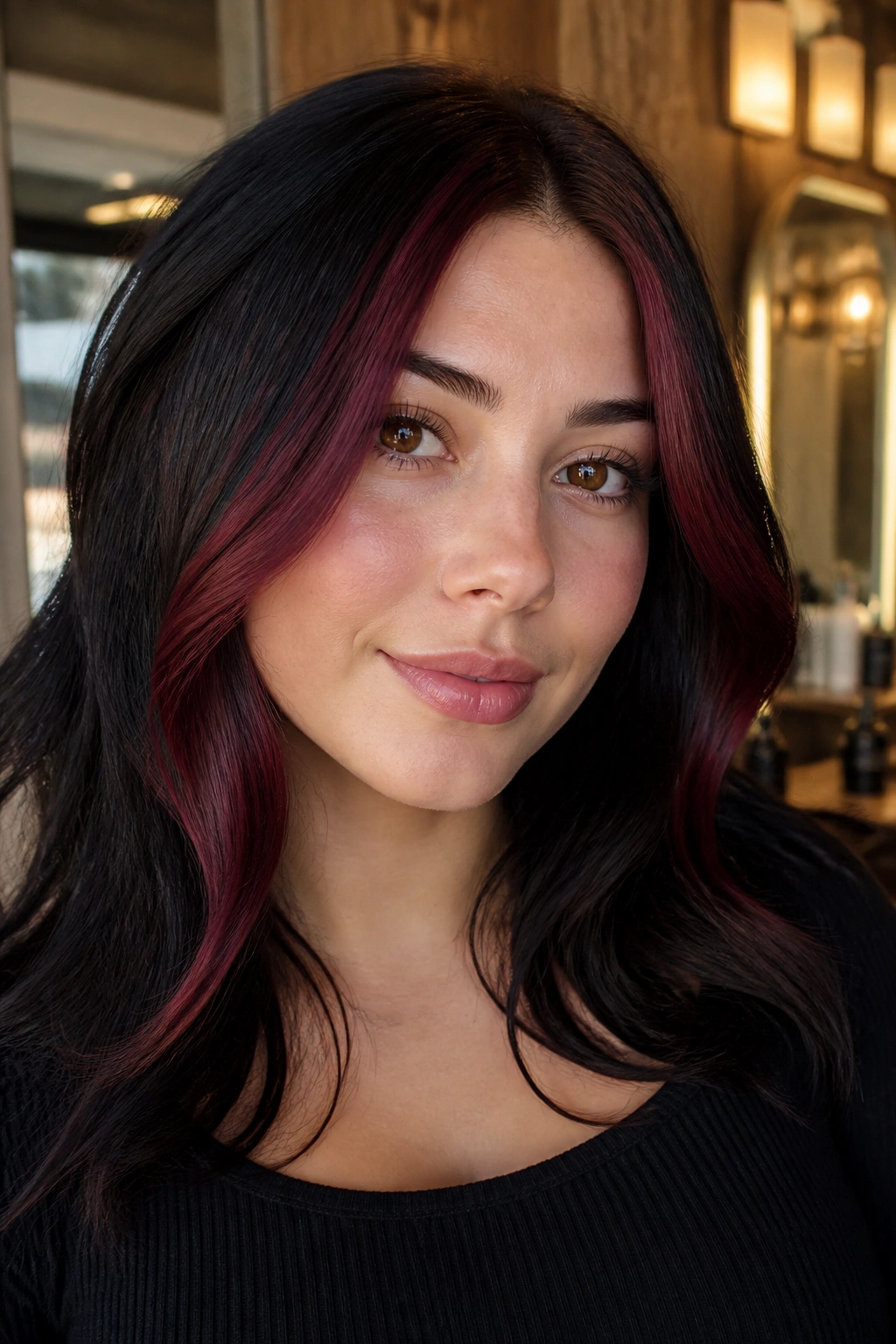
A thick black cherry money piece can change your whole face without forcing you into a full head of red-violet color. That is why I reach for it when someone wants a visible shift but does not want the upkeep of all-over burgundy.
The trick is keeping the front panels cool and saturated. Ask for two face-framing sections about 1 inch wide, starting just behind the hairline and blending into the front of the hair rather than sitting like hard stripes. When the color sits next to cool skin, the cherry tone lights up the eyes without turning orange.
This idea works especially well if your natural base is dark brown or black. The contrast looks deliberate, and the grow-out is forgiving because the front pieces stay part of the cut. If you wear a side part, the money piece gets even more visible.
3. Plum-Black Root Melt
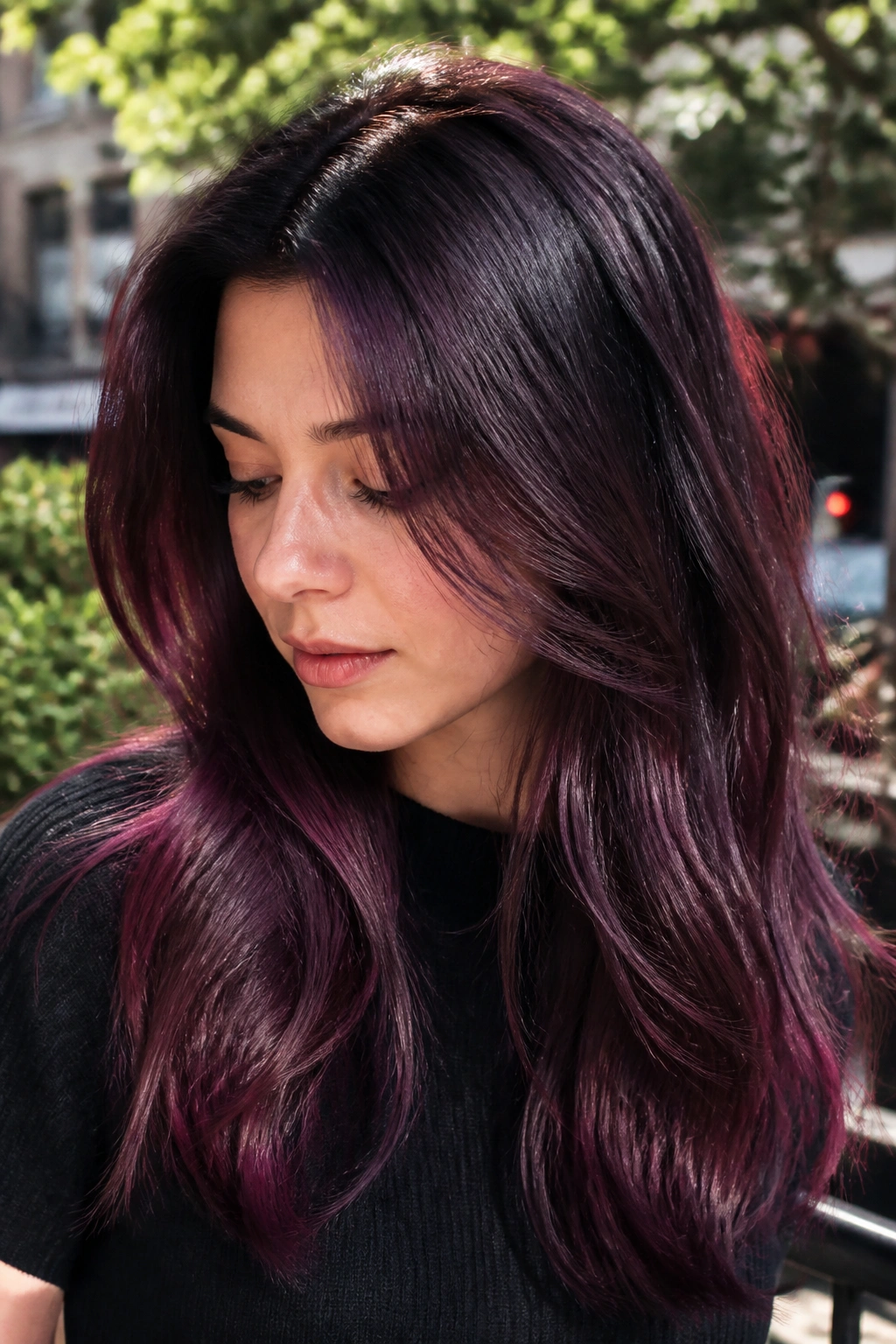
Why do root melts look so polished on cool skin? Because the fade takes the edge off regrowth and lets the burgundy move from black at the top into plum at the lengths without a hard line.
A plum-black root melt is a smart pick if your natural hair is already dark. Your stylist can keep the roots close to espresso or black and drop the burgundy lower through the mid-lengths and ends. The color shift should feel soft, not striped.
How to Wear It
This is one of those shades that changes with styling.
- Straight hair shows the gradient most clearly
- Loose waves make the plum tone look fuller
- A middle part keeps the look sleek
- A side part adds more face framing
If you want something that grows out without shouting for attention, this is one of the better options. It also plays nicely with cool makeup shades like mauve blush, berry lipstick, and silver jewelry.
4. Bordeaux Balayage on Long Layers
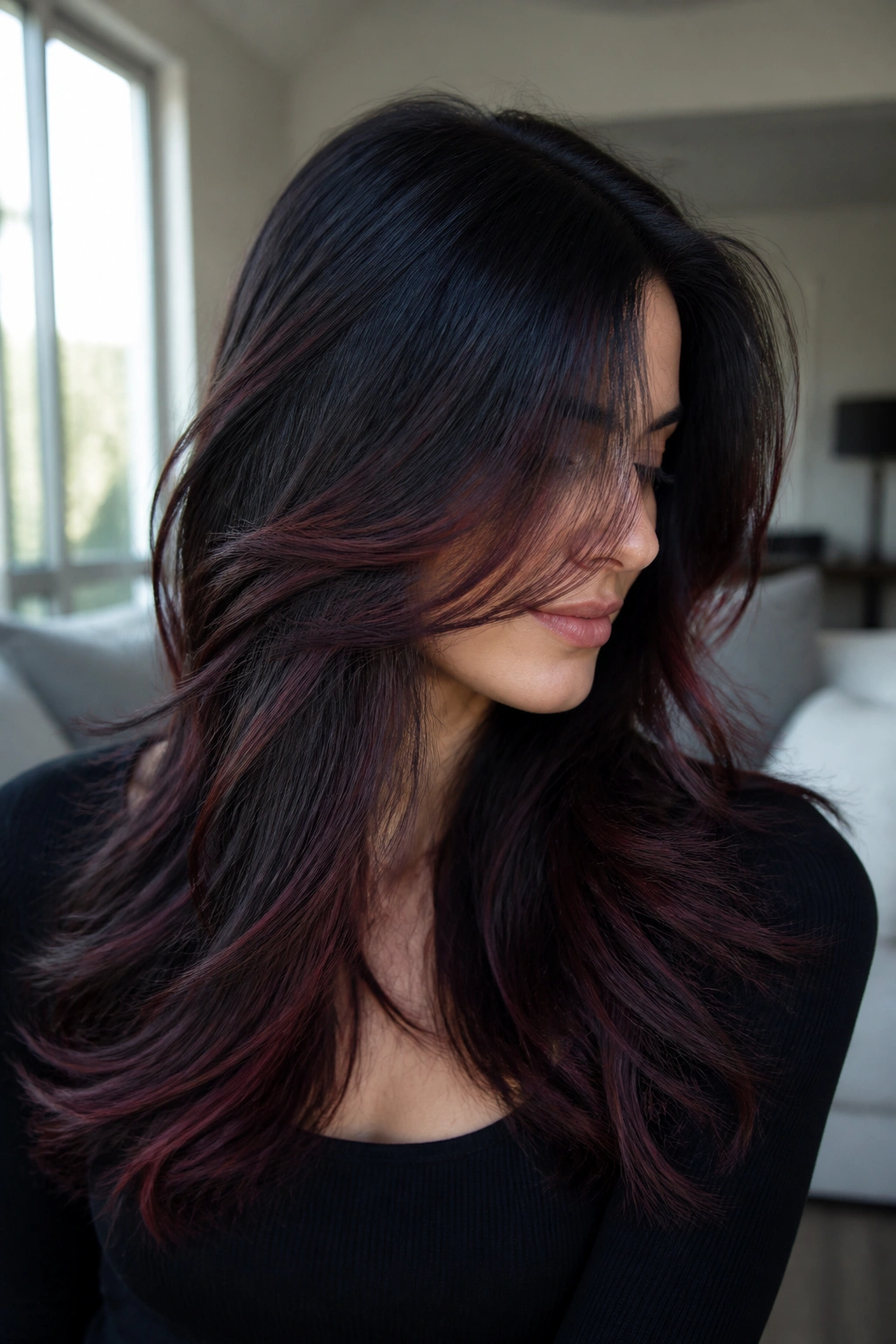
Long layers and burgundy balayage are a strong match because the cut gives the color room to move. Without that movement, burgundy can sit flat. With it, the shade catches on the bends of the hair and breaks up the dark base in a way that feels natural.
Ask for hand-painted ribbons of bordeaux through the mid-lengths and ends, with the deepest pieces underneath for contrast. I prefer this on layered cuts that fall below the shoulders, because the color gets a chance to show up when the hair swings. On cool skin, a bordeaux tone with a wine or plum cast looks sharper than a brick-red version.
The maintenance is not wild, but it does need care. A soft wave from a 1.25-inch curling iron, or even a rough blow-dry with a round brush, gives the color more movement than pin-straight styling ever will.
5. Black Currant Gloss for Short Cuts
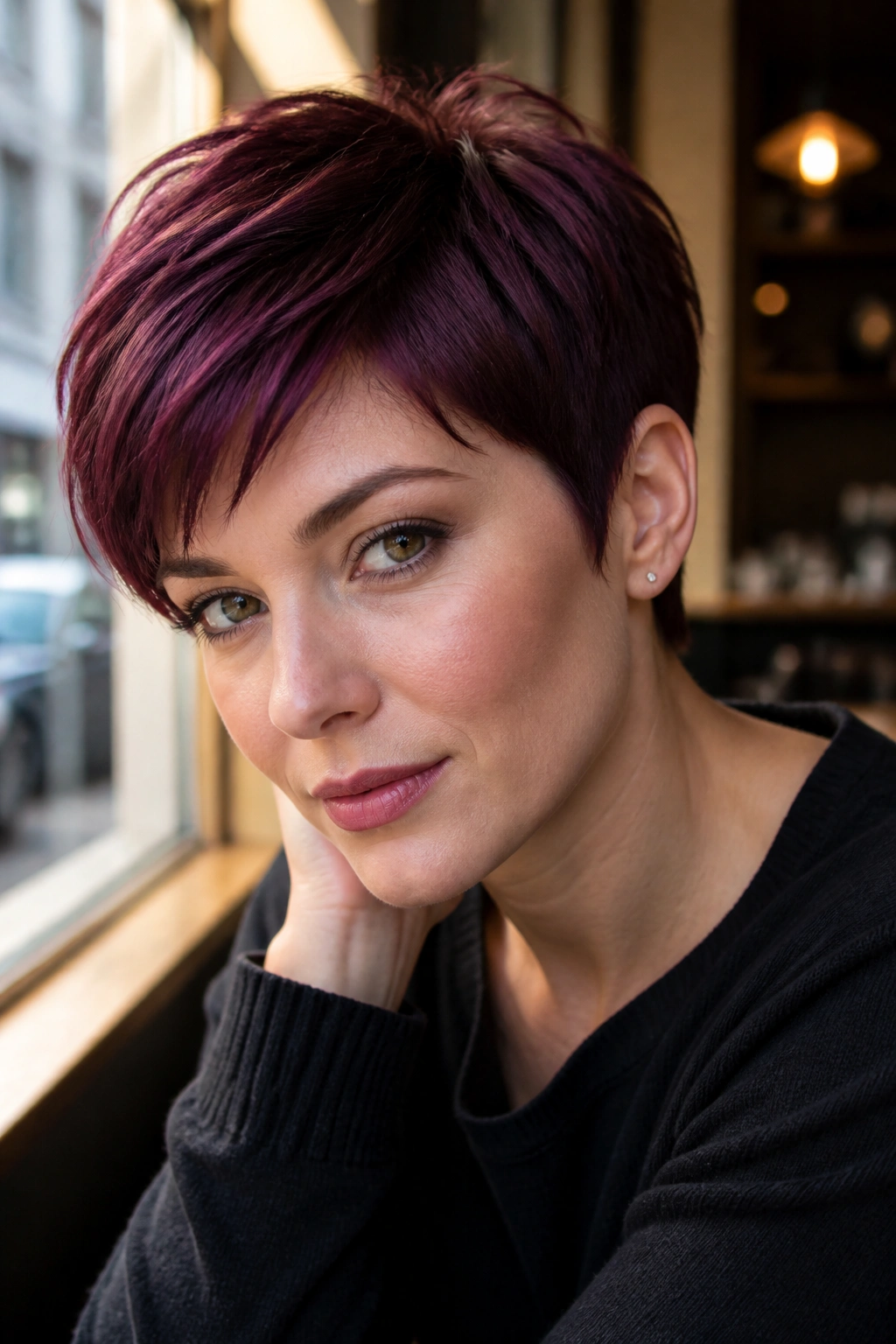
Short hair can handle a darker, more reflective burgundy than people expect. In fact, a black currant gloss often looks better on a pixie, bixie, or blunt bob than it does on long hair, because there is less length for the color to hide in.
The cool part about black currant is that it sits closer to violet than red. That keeps it crisp against cool skin and gives the hair a polished sheen instead of a warm tint. On a short cut, every edge matters. The color picks up around the crown, at the fringe, and along the ends, which makes the haircut look sharper.
One thing to avoid: too much purple toner. If the hair gets over-toned, the shine can go dull and flat. I like this shade best when it looks berry-dark in shade and almost inked with plum in sunlight.
6. Velvet Wine Ombré Ends
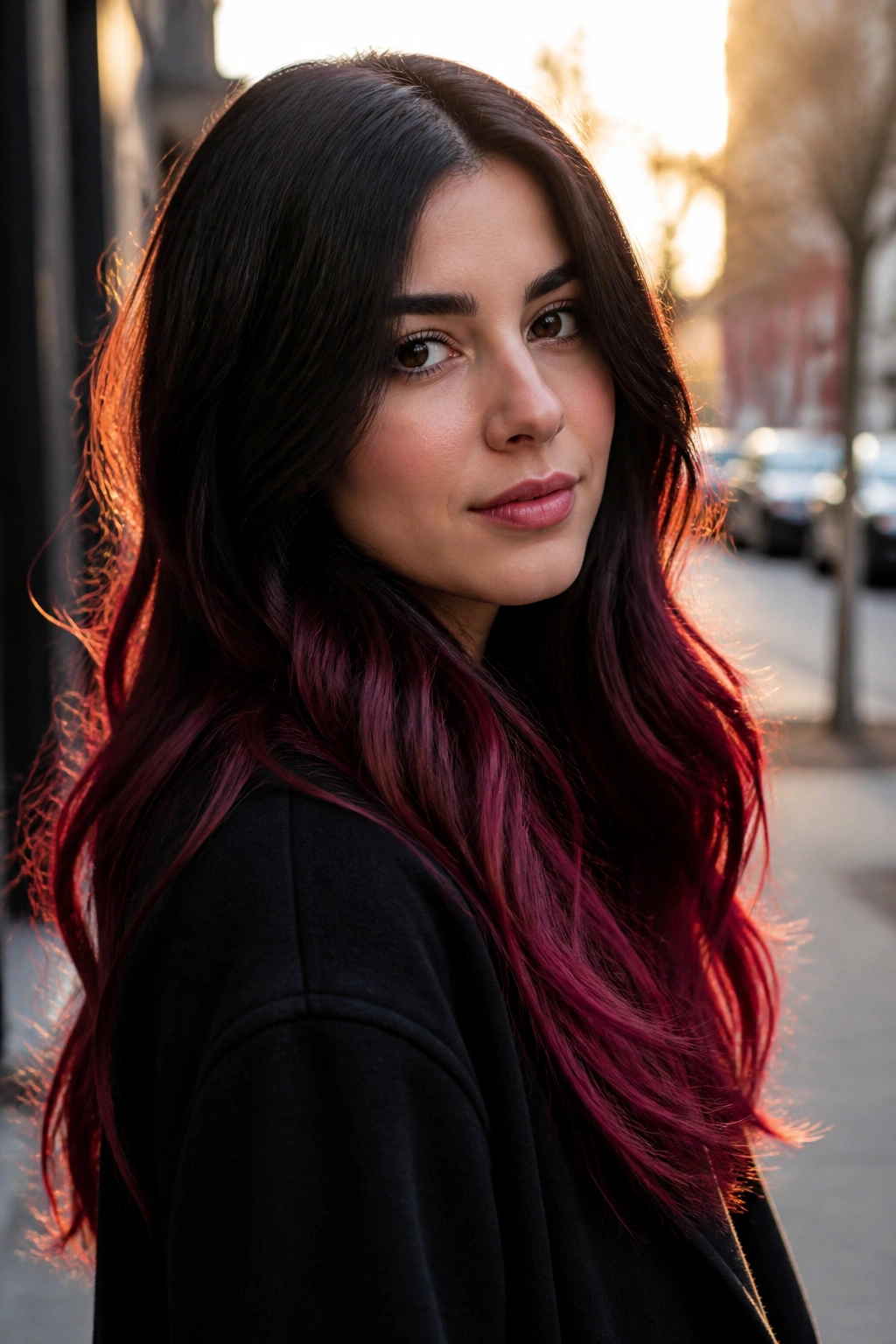
Unlike a bright red ombré, velvet wine ends keep the color story dark from the start. The roots stay black or near-black, and the burgundy shows up where the light hits the ends first.
That makes it a good option if you want drama without a hard line at the root. Ask your stylist to keep the fade slow, using a red-violet tone that leans wine rather than copper. The transition should look like a soft slide from black to blackberry wine, not a dip-dye block.
What to Ask for at the Salon
- A dark root zone with no obvious line
- Burgundy placed mostly from mid-length to ends
- A cool-toned glaze over the whole head
- Soft blending through the last 3 to 4 inches
This shade looks especially good on hair that already has some movement. Straight hair shows the gradient cleanly, while waves make the ends look fuller and more expensive.
7. Smoky Burgundy Bob
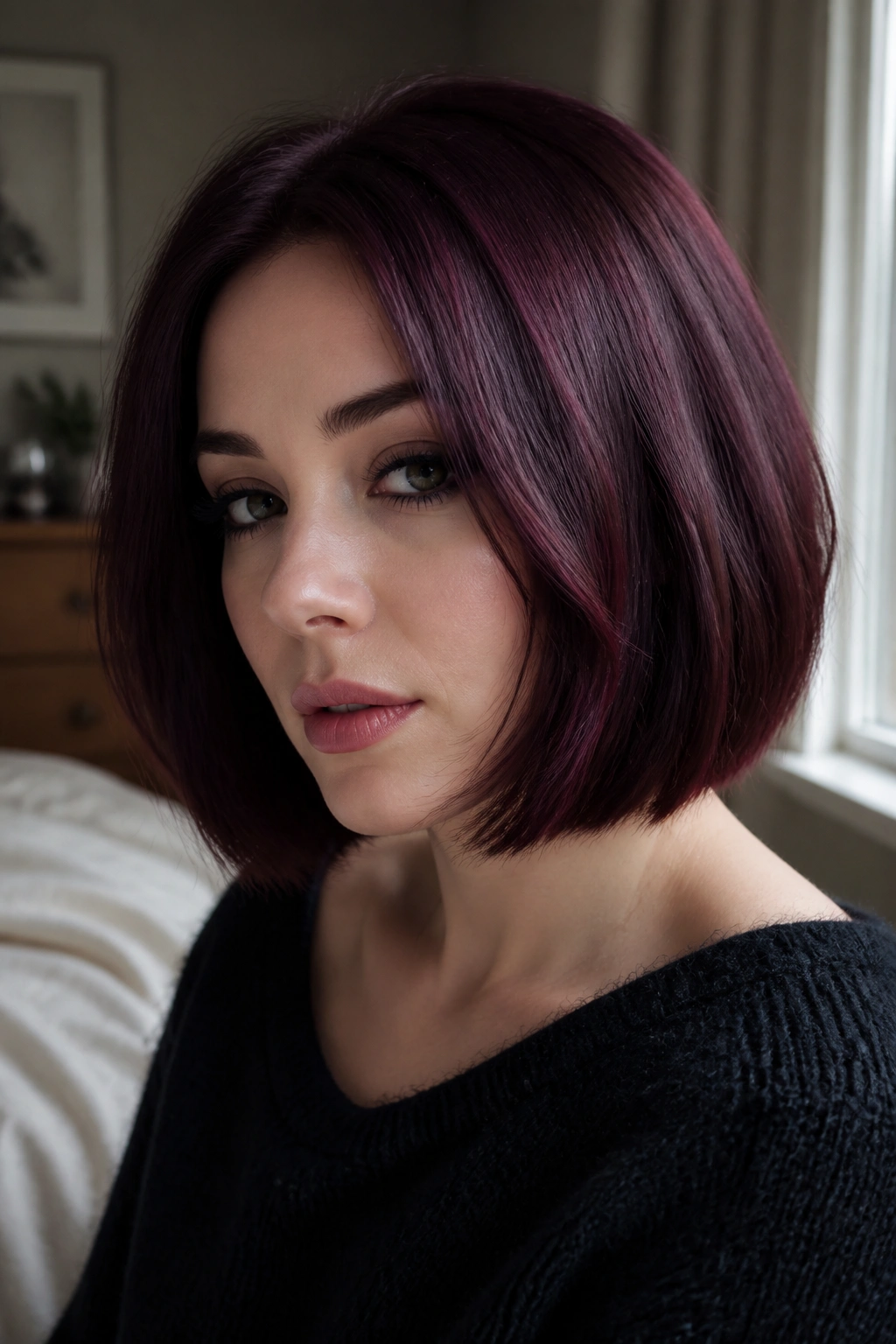
A bob gives burgundy a place to land. That’s the real advantage here. On a blunt or softly angled bob, a smoky burgundy glaze can make the cut look more defined without pushing it into bright red territory.
The smoky part matters. Ask for a burgundy that has a muted, blue-red base, then keep the finish glossy instead of matte. Cool skin tends to look best when the color is rich and dark rather than warm and fiery. If your bob is chin-length, the shade will frame the jawline in a clean way.
A light serum on the mid-lengths and ends keeps the color from reading dry. Heavy oils can dull the reflect, and on a short cut, that matters more than people think. Trim the shape every 6 to 8 weeks so the ends stay neat. Ragged ends make dark burgundy look tired fast.
8. Black Plum Peekaboo Panels
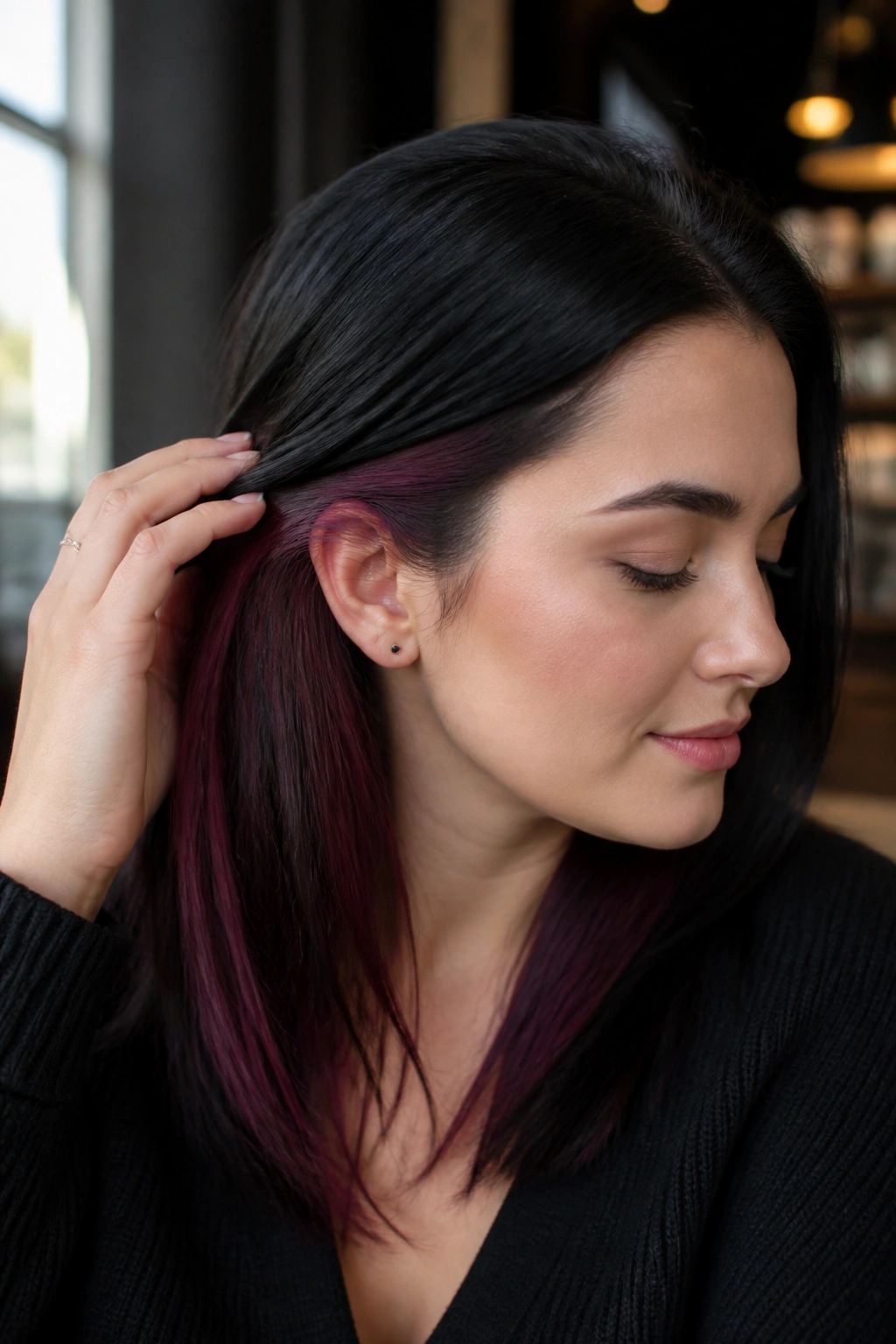
Peekaboo color is one of the sneakiest ways to wear burgundy. The top layer stays black, and the plum panels sit underneath, waiting to flash when you tuck your hair behind your ear or tie it up.
That hidden placement makes the color easier to wear in conservative settings. It also works well if you want cool-toned drama without letting burgundy take over your whole head. Black plum is a smart choice here because it reads expensive and deep, not loud.
Best Placement
Put the panels under the crown, along the nape, and just behind the temples. Those are the spots that show movement without making the color obvious from every angle.
This kind of color is especially good for layered cuts, ponytails, braids, and half-up styles. When the hair moves, the plum appears. When it’s down, the look stays dark and sleek.
9. Cabernet Face Frame
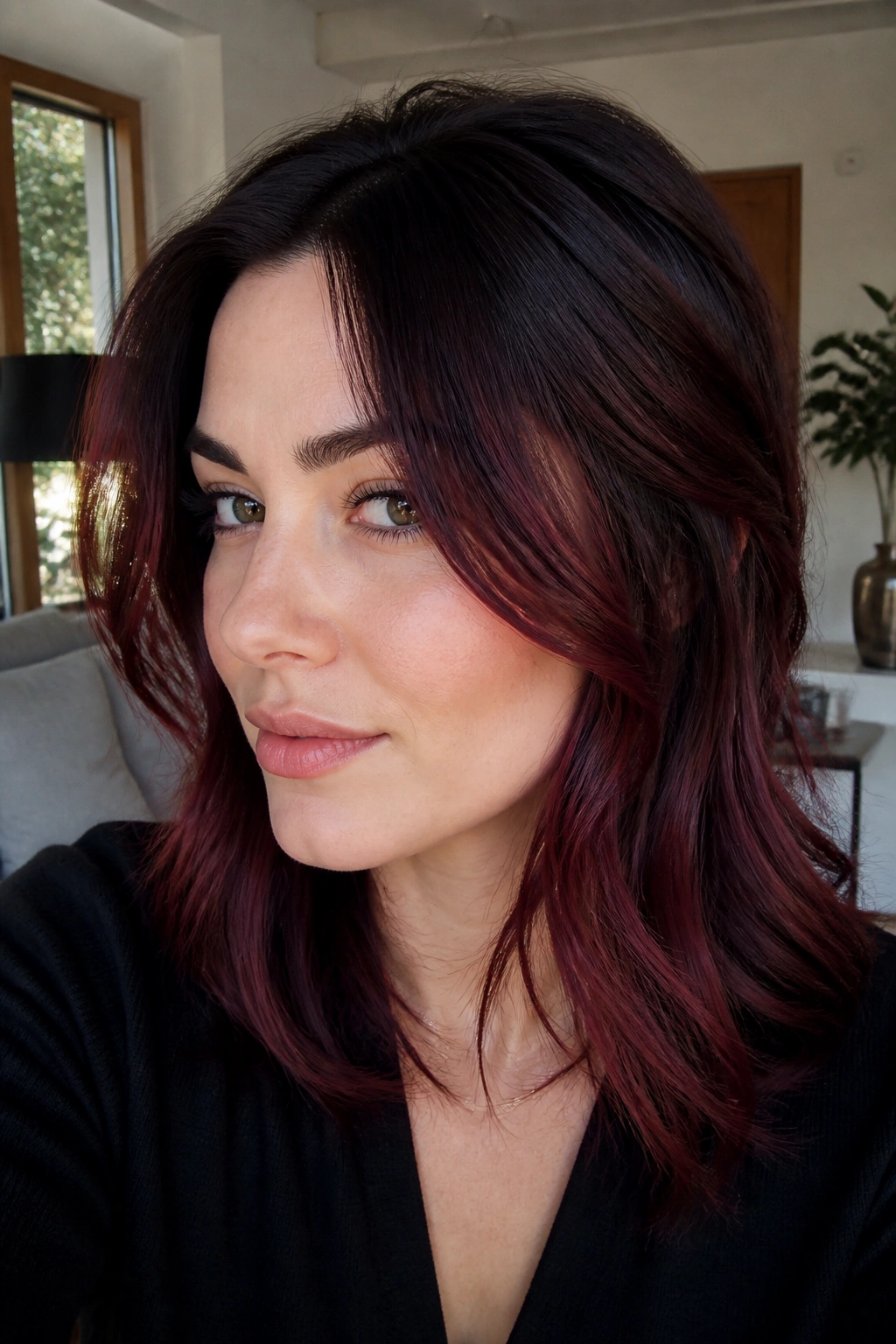
Why do face-framing pieces matter so much? Because they sit right next to the skin, and that means they affect how your whole face reads in a mirror.
A cabernet face frame gives cool skin a sharp, berry-rich edge without requiring a full-color change. The pieces should be thick enough to show clearly, but not so wide that they swallow the rest of the hair. I usually think in terms of 1/2-inch to 1-inch sections near the cheekbone and jawline.
How to Keep It Crisp
- Keep the frame cool and wine-toned
- Leave a soft root shadow for easier grow-out
- Style the front pieces away from the face for a cleaner line
- Avoid any copper in the formula
This idea works well with long layers, curtain bangs, or a deep side part. It also gives you a way to test burgundy before committing to more of it. If you love the frame, you can build from there.
10. Eggplant Burgundy Waves
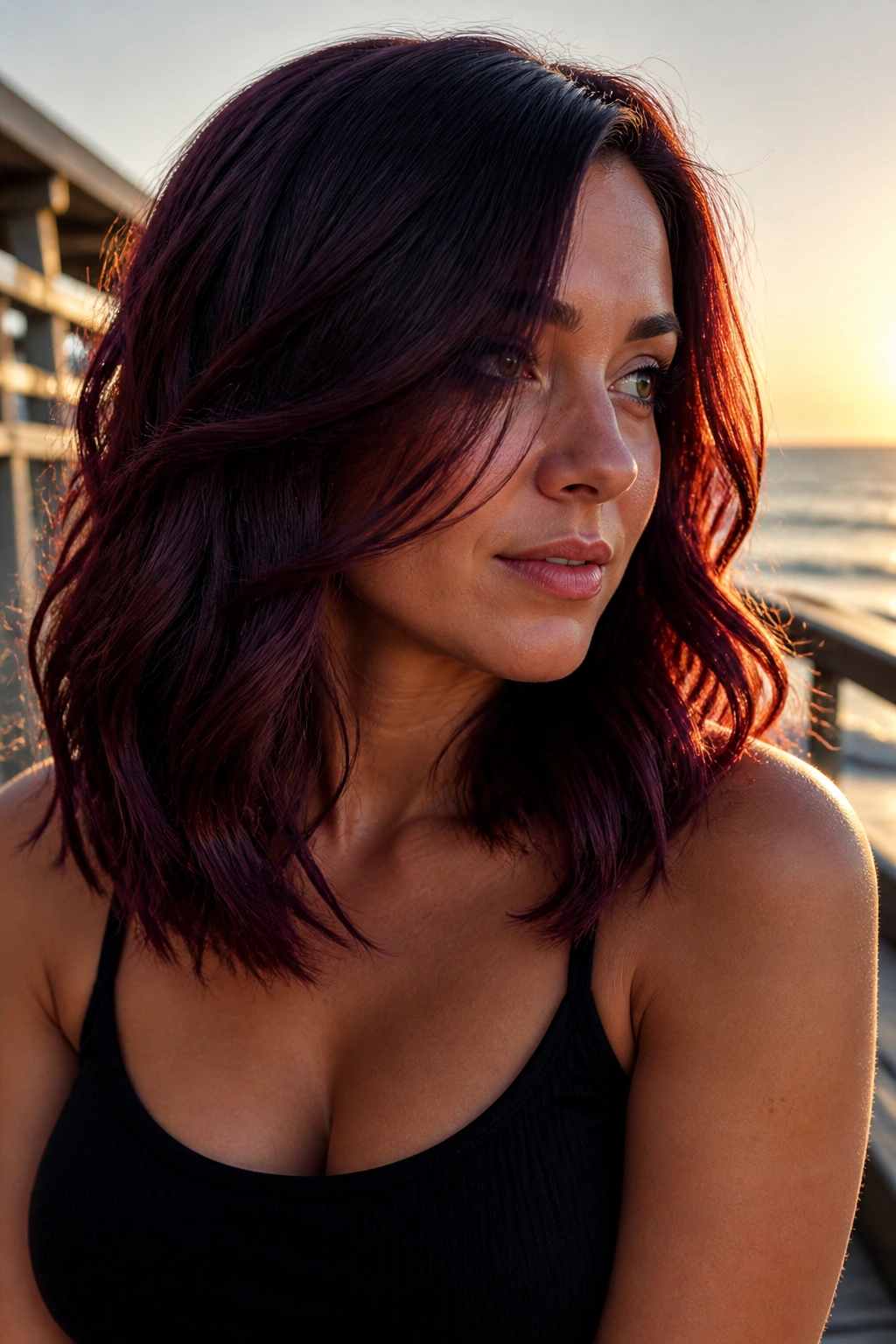
Eggplant burgundy is for people who like color that shifts when you move. In daylight it can lean plum, and indoors it can look almost black with a purple edge. That makes it a strong match for cool skin, because the violet note stays clear even when the room lighting changes.
Waves bring this color to life. On straight hair, the shade can look almost too dark to notice. On loose waves or natural texture, the bends in the hair catch the pigment and show off the difference between black, plum, and wine. I like this shade on medium-length cuts because it has enough surface area to show the variation.
One small warning: if the burgundy formula leans red-orange, the whole thing loses its charm. Eggplant works because it stays cool. Keep that part nonnegotiable.
11. Cherry Cola Melt
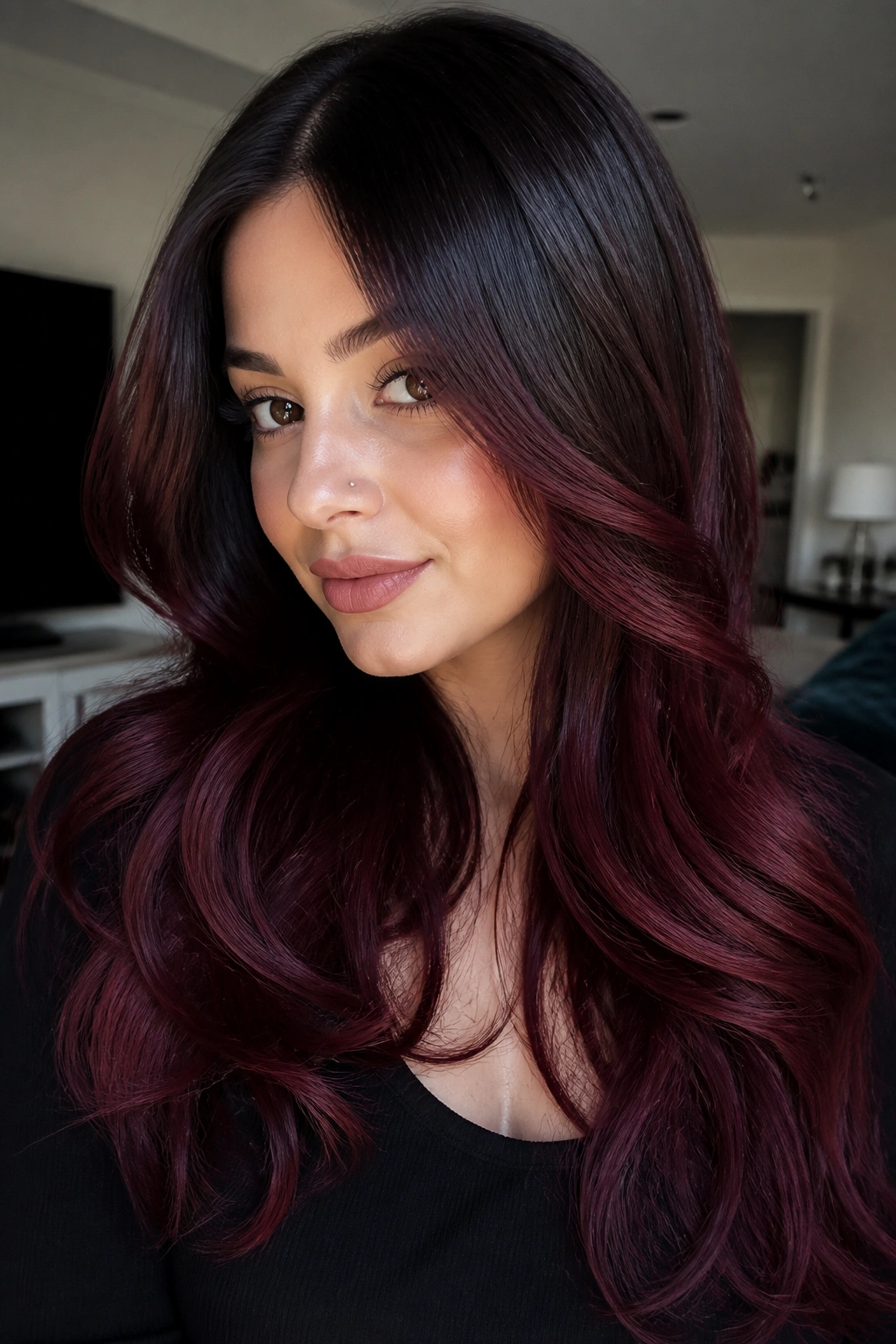
Cherry cola is the darker, more wearable cousin of a true red fade. The base stays cola-black, while the mid-lengths and ends pick up a cherry burgundy tone that feels rich instead of bright.
What makes this shade so useful is the contrast. It gives cool skin some color near the face and through the body of the hair, but it never turns candy-red. If your wardrobe leans black, gray, navy, or silver, this is one of the easiest burgundy ideas to live with.
I like cherry cola best on hair that’s blown out smooth or curled into large, soft bends. Those styles show the fade from dark to cherry without making it look stripey. Keep the ends trimmed and the gloss fresh, and the whole color stays looking intentional.
12. Black Raspberry Ribbons
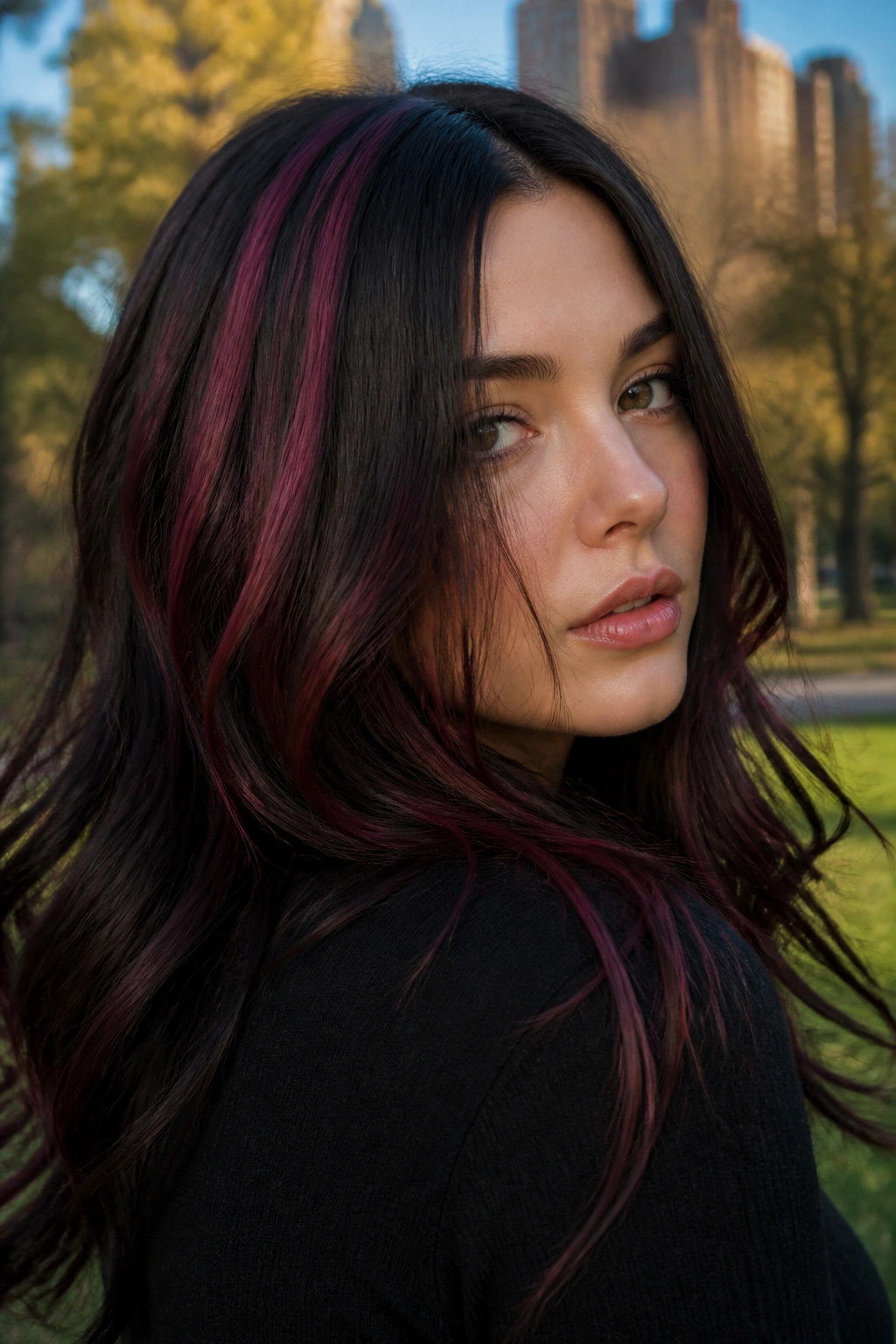
Why use thin ribbons instead of chunky highlights? Because thin ribbons let the dark base stay in charge while the burgundy gives movement.
Black raspberry ribbons are woven through the hair in narrow pieces, usually no wider than a pencil or two. That keeps the effect soft. On cool skin, the raspberry note works better than a warm red because it sits in the berry family and feels cleaner against pink or pale undertones.
How to Use It
Ask for 5 to 10 narrow ribbons per side, with a little more concentration around the face and crown. That spacing gives you texture without turning the hair into a patchwork. If your hair is wavy or curly, the ribbons break up beautifully as the curls separate. On straight hair, they look sleeker and more graphic.
This is a good choice if you want movement first and color second. That sounds odd, but it matters. Some burgundy looks shout. This one hums.
13. Cool Mahogany Curls
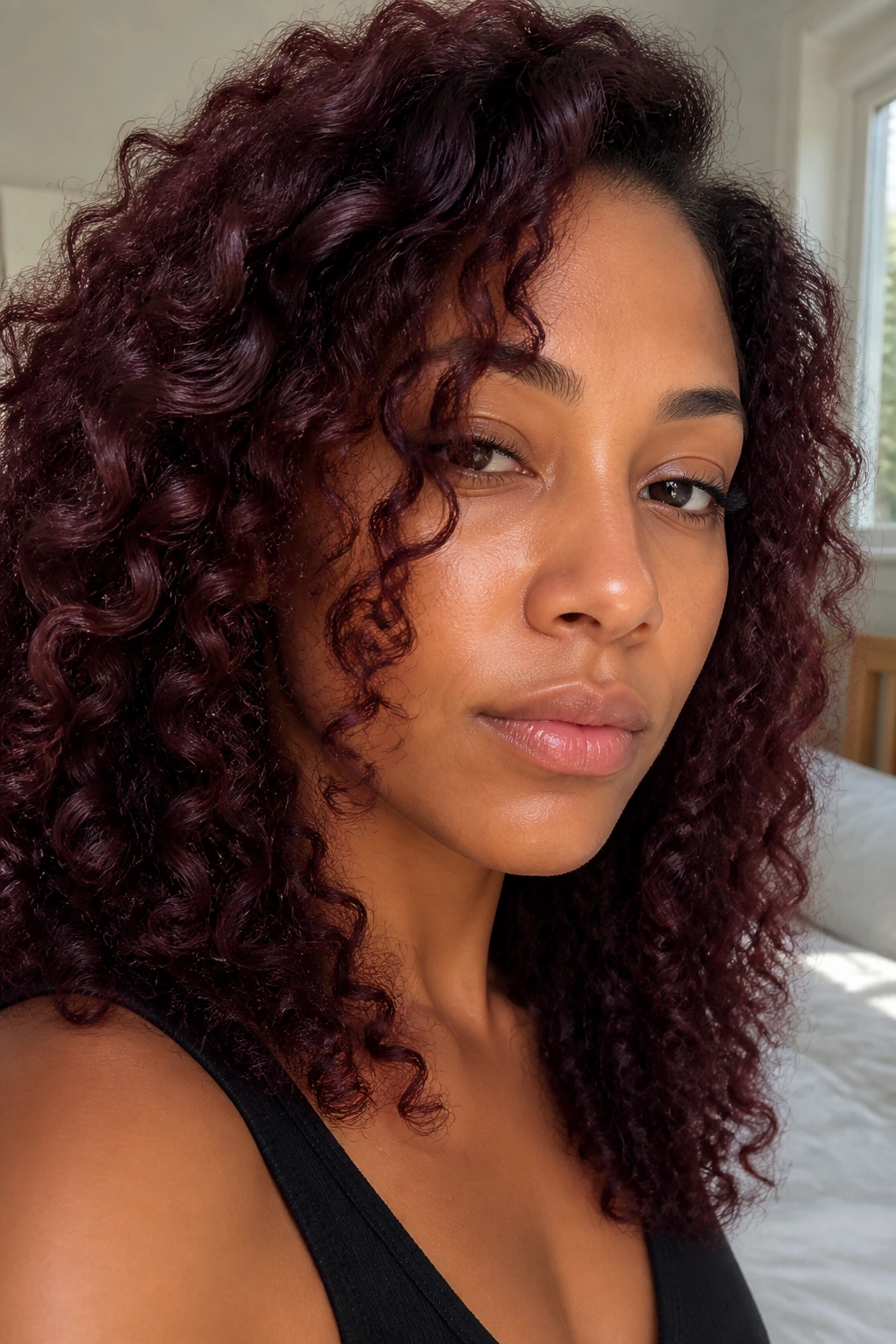
Mahogany can go warm fast, and that’s why this version has to stay cool. A true cool mahogany leans more red-violet than red-brown, which is what keeps it flattering on cooler skin.
Curly hair shows this shade in a different way. The color lives in the curl pattern, so the burgundy appears and disappears as the hair folds over itself. That gives the look more softness than a flat, one-tone finish. I especially like it on dense curls, where a cooler mahogany can make the shape look richer without making it heavier.
The important part is what you do not ask for: no copper, no orange-red, no chestnut warmth. If the formula has any of that, the shade stops being cool. A stylist who understands burgundy will usually steer it toward plum, wine, or berry instead.
14. Burgundy Underlights
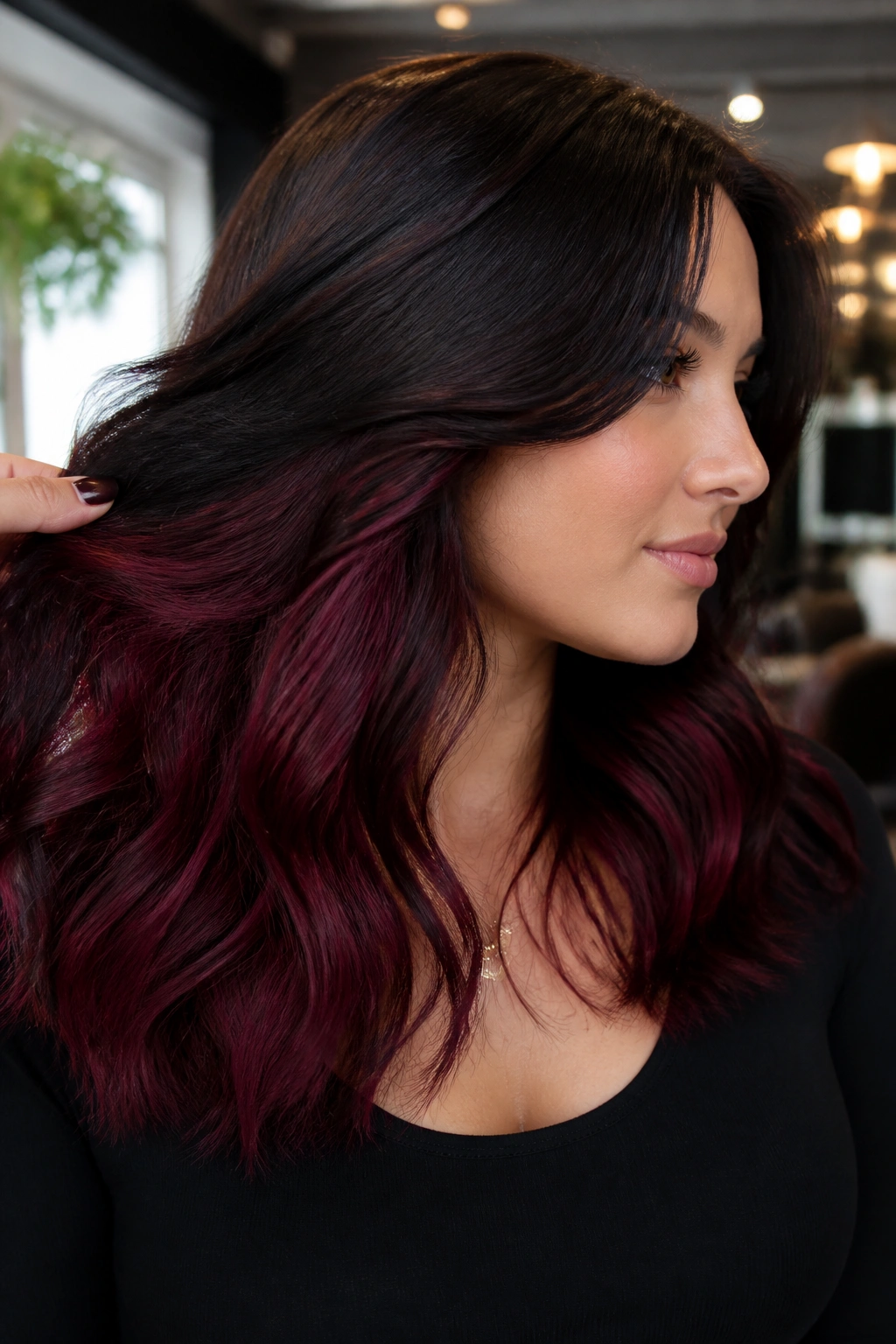
Underlights are one of my favorite ways to wear dark color because they feel a little secretive. The top layer stays black, espresso, or very deep brown, while burgundy lives underneath and shows when the hair moves, twists, or gets pinned up.
That hidden placement makes the shade easier to wear every day. It also gives you more room to play with styling. A half-up knot, a messy bun, or even a claw clip can reveal enough burgundy to make the color feel alive.
- Best for medium to thick hair
- Works well on nape and crown sections
- Looks strongest when the top layer is kept dark
- Easy to pair with braids or twists
The nice part is that the color still flatters cool skin when it shows, because the burgundy stays close to plum and wine. You get drama without needing the whole head to carry it.
15. Black Violet Shine
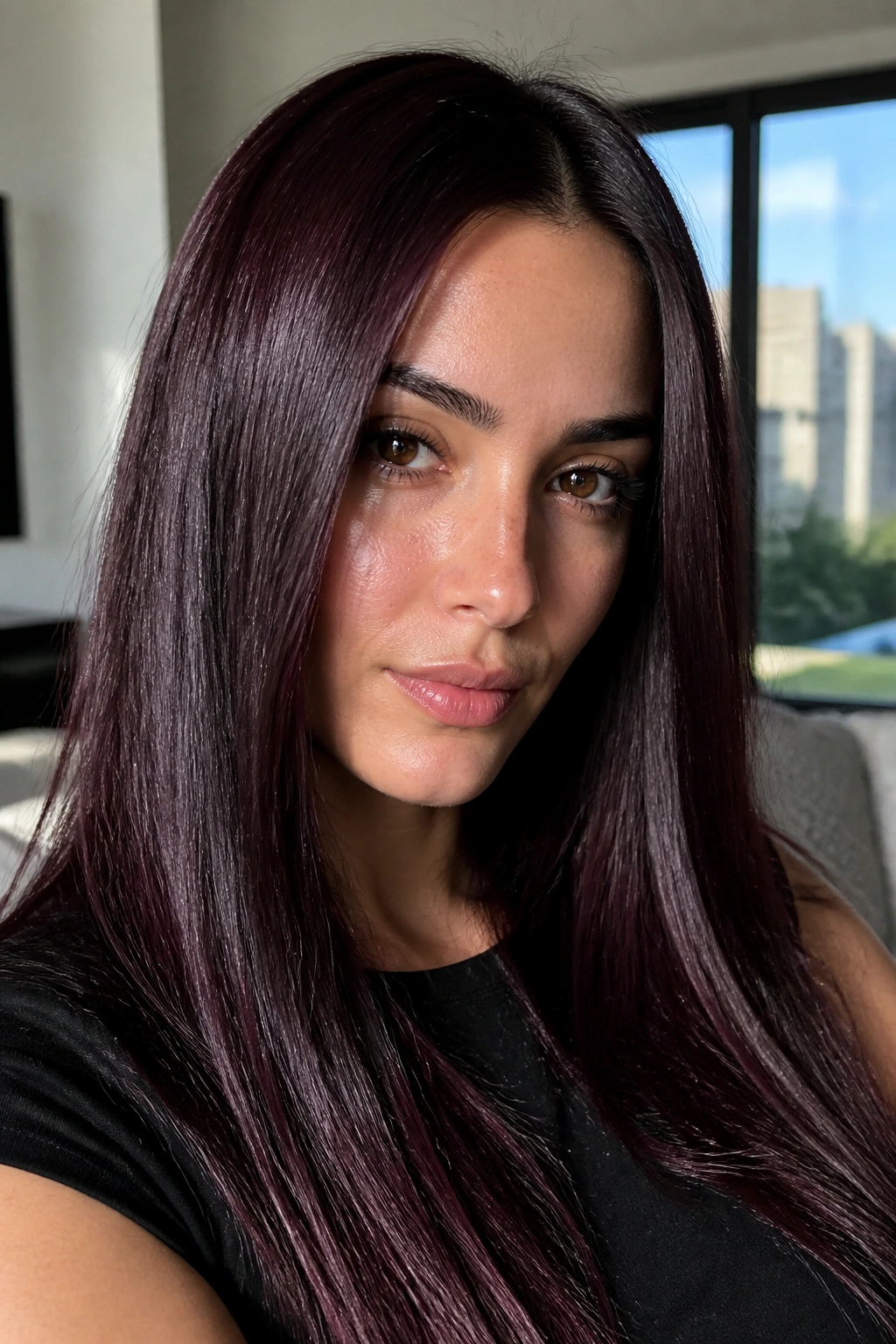
How dark can burgundy go before it stops looking burgundy? Pretty dark, as long as the violet stays in the formula.
Black violet shine is the near-black option for people who want a whisper of color instead of a full color shift. In shade, the hair looks almost black. In sunlight or under a bright mirror light, the violet-red reflect shows up and gives the hair a sleek edge. Cool skin likes this because the color stays in the same family as cool berry lipstick and deep plum shadow.
Where It Shines
- On very straight hair with a center part
- On long hair with blunt ends
- On polished blowouts
- On silver jewelry-heavy wardrobes
This is not the shade for someone who wants everybody to notice the burgundy from across the room. It’s for someone who likes color that rewards a second look. Quiet, but not boring.
16. Merlot Pixie Crop
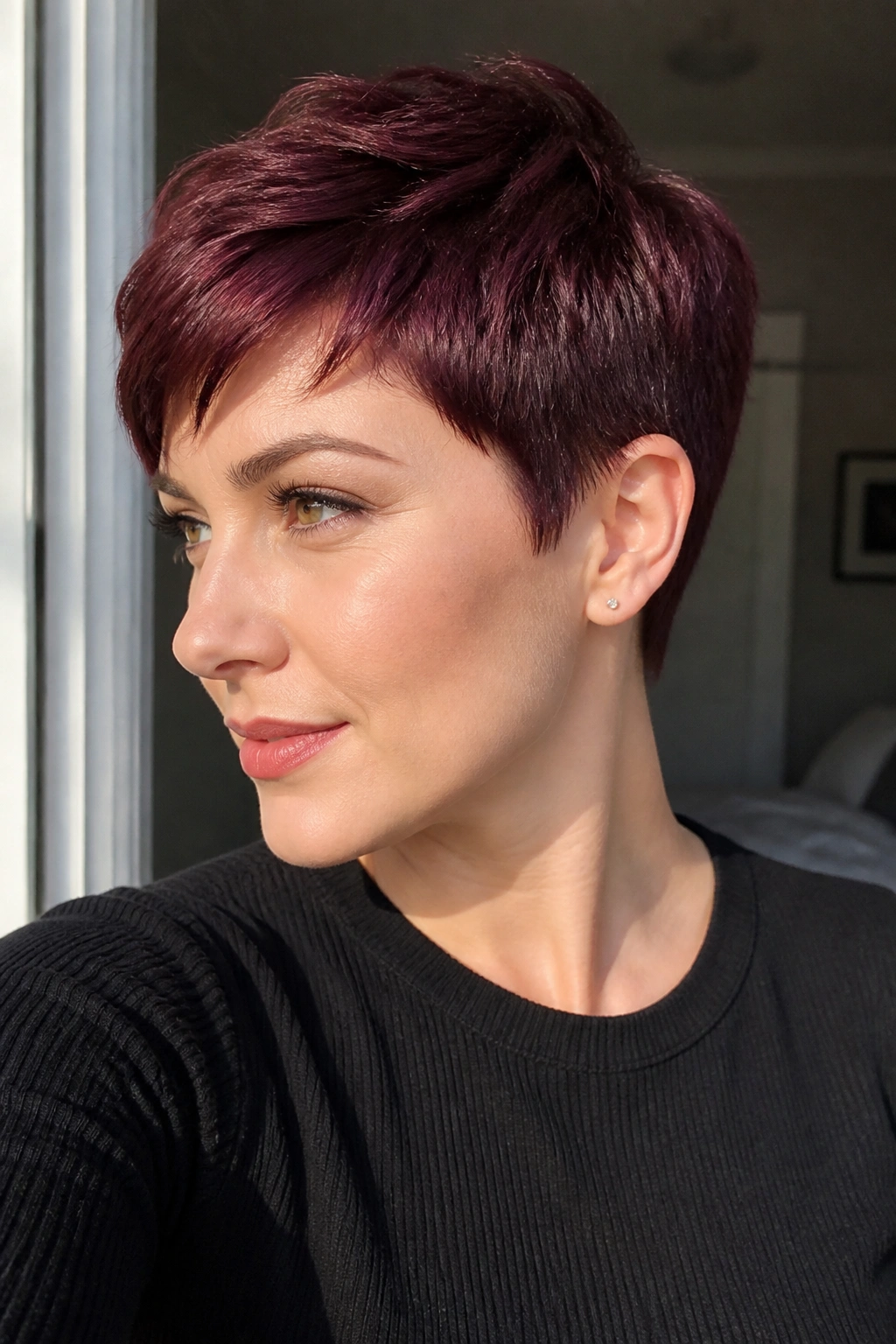
A pixie crop leaves no place for sloppy color. That’s why merlot works so well on short hair. Every bit of shine shows, and the dark burgundy tone can sit close to the scalp without looking bulky.
On a textured pixie, the color catches on the crown and fringe in small flashes. On a smoother crop, it looks more uniform and sleek. Either way, the shade flatters cool skin because it stays in the red-violet lane. If the cut has a long top section, the burgundy shows even more clearly when you push it to one side.
Use a light styling cream rather than a heavy wax if you want the color to stay visible. Heavy product can mute the reflect, and on a short cut that means the shade disappears faster than you’d expect. A clean line at the ears or nape helps too. Short burgundy looks best when the cut is crisp.
17. Burgundy Balayage on a Lob
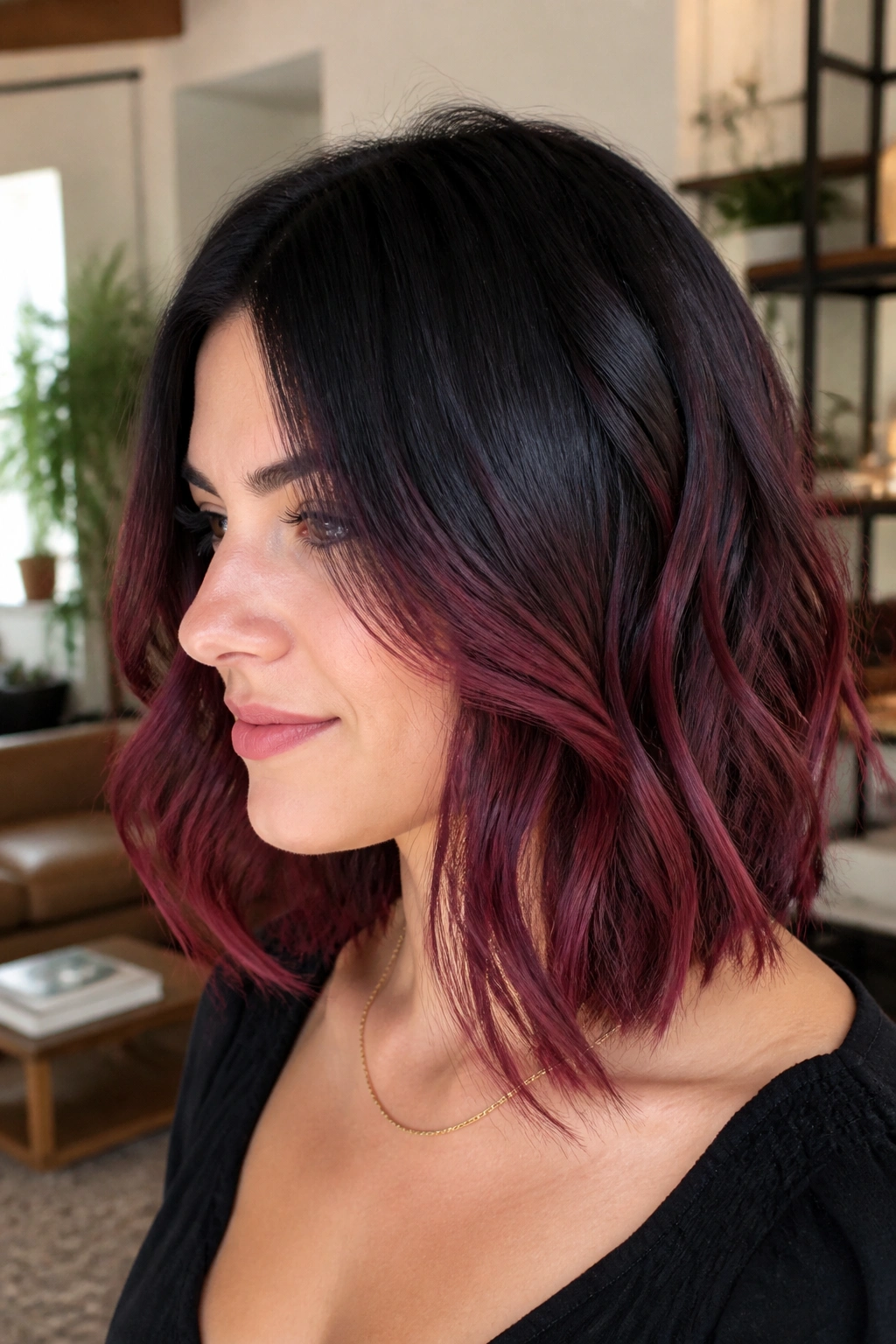
A lob gives burgundy enough length to move without making the style hard to manage. That’s what makes it such a good base for balayage. The color can start softly around the collarbone and get richer toward the ends without looking overloaded.
Compared with a full burgundy dye job, balayage on a lob feels lighter and easier to grow out. Ask for the painted pieces to start below the cheekbone so the front stays dark enough to flatter cool skin. If the burgundy begins too high, the face can get crowded fast.
This works especially well on fine to medium hair, because the painted pieces make the lob look fuller. A loose bend from a flat iron or a round brush helps separate the ribbons and keeps the cut from looking boxy. If you like a polished but not fussy finish, this is a strong pick.
18. Dark Wine Money Piece
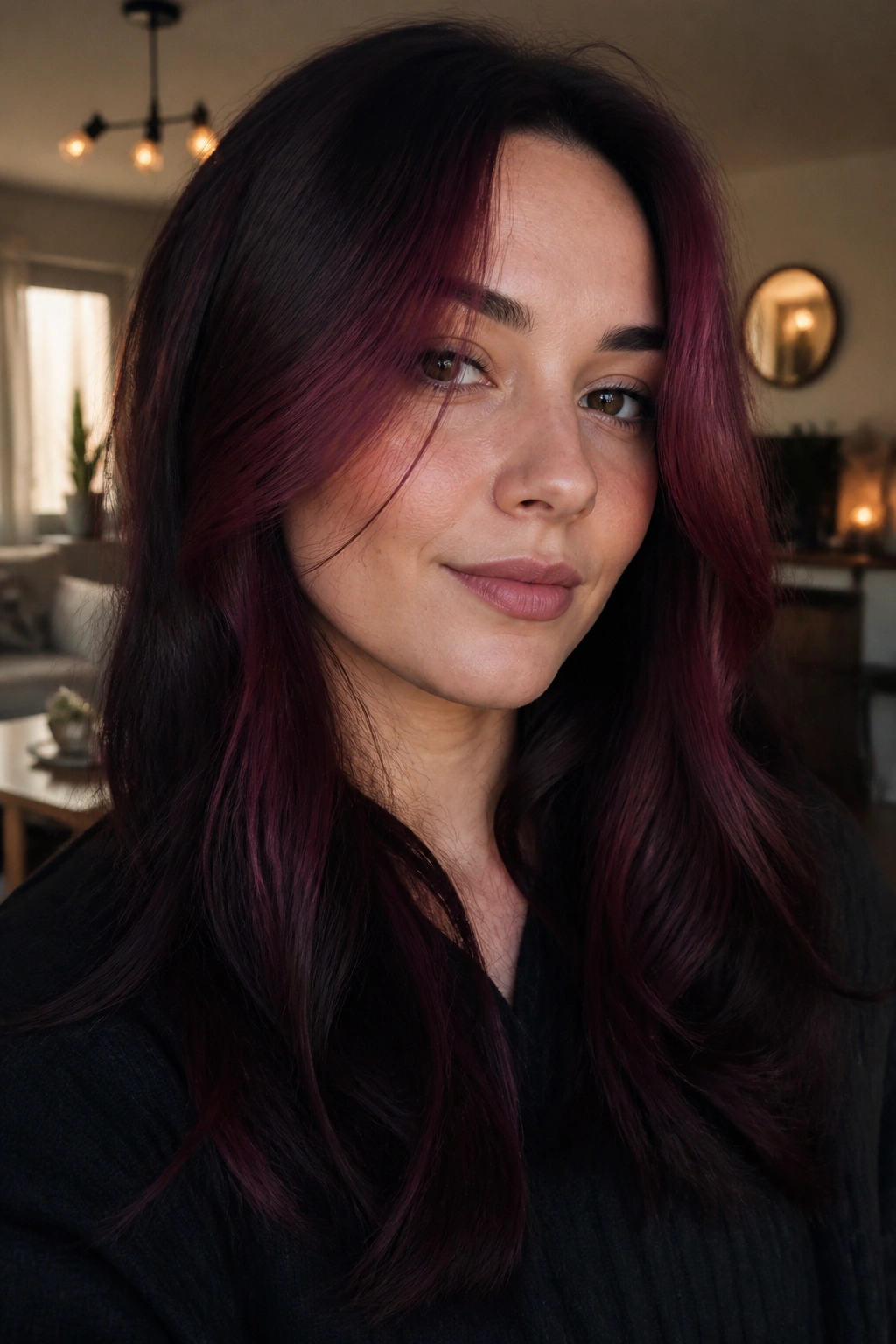
A dark wine money piece is a bolder cousin to the cherry front panel. The difference is that this version leans deeper, more like red wine than fresh cherry, which gives cool skin a darker frame without making the front look loud.
Why It Feels Different
The thicker face-framing sections sit around the cheekbones and jaw, so they change how the whole haircut reads. The color should be rich enough to show from a distance, but still dark enough to stay in the black-burgundy family.
- Best if your hair is already dark at the base
- Works on straight, wavy, or brushed-out curls
- Needs a glaze to keep the wine tone from fading flat
- Looks best when the front pieces are no wider than two fingers
I like this one for anyone who wants a visible switch but does not want to bleach large sections of the head. It’s a simple way to make dark hair feel less static.
19. Plum Noir Braids
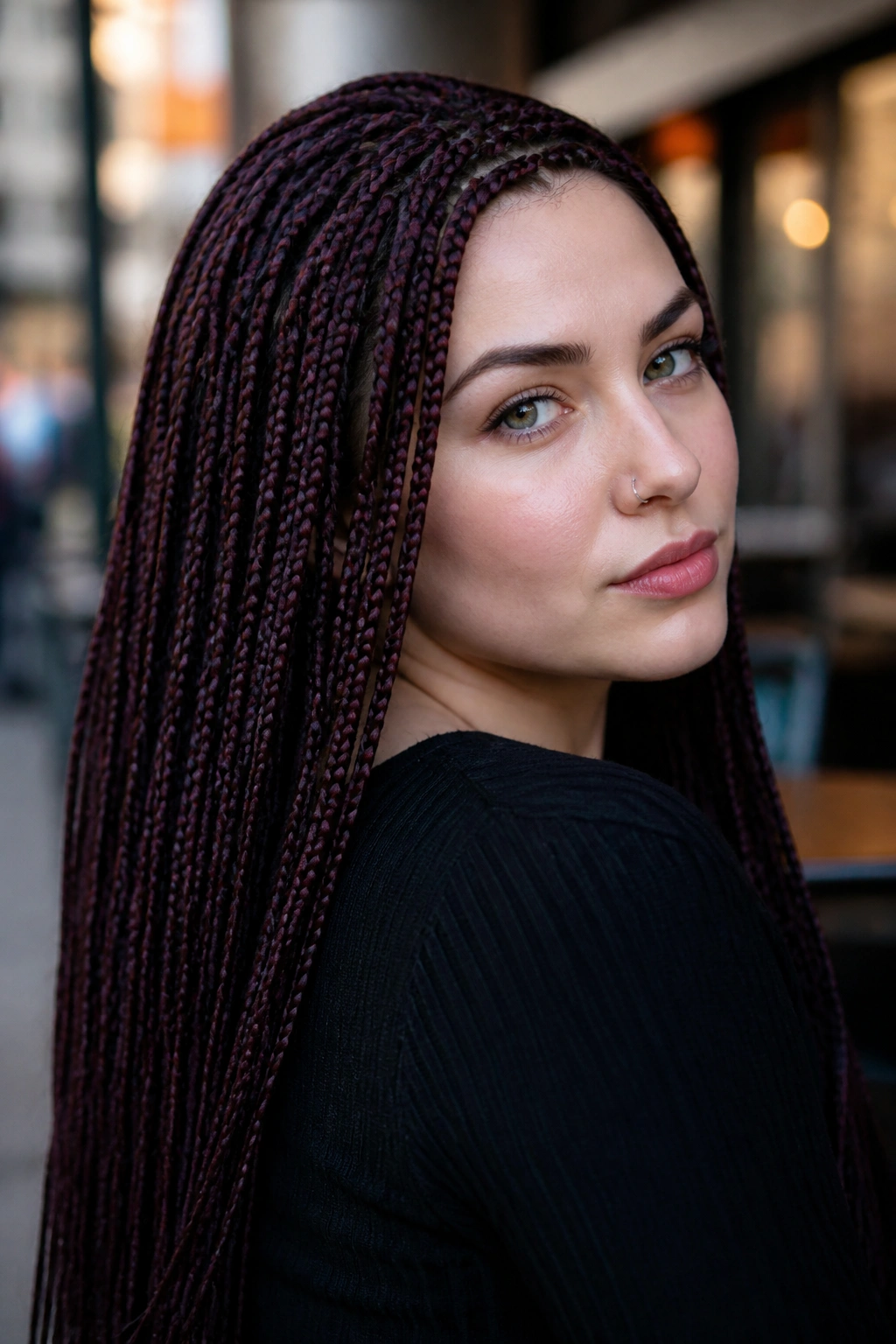
Braids and burgundy are a strong match when you want color without lifting the whole head. Plum noir works with box braids, knotless braids, twists, and added hair pieces, and it gives cool skin a deep berry note that does not look orange under daylight.
If you use extensions, I’d choose a black-and-plum blend over a bright burgundy blend. That keeps the color close to the black base and avoids the warm red that can fight cool undertones. The benefit of braids is that the color shows in the braid pattern itself, so you do not need streaks or highlights to get movement.
This is also one of the easiest looks to style with accessories. Gold beads, silver cuffs, and matte black clips all work. The color is dark enough to carry the texture, and the texture is what makes the shade interesting.
20. Black Burgundy with Curtain Bangs
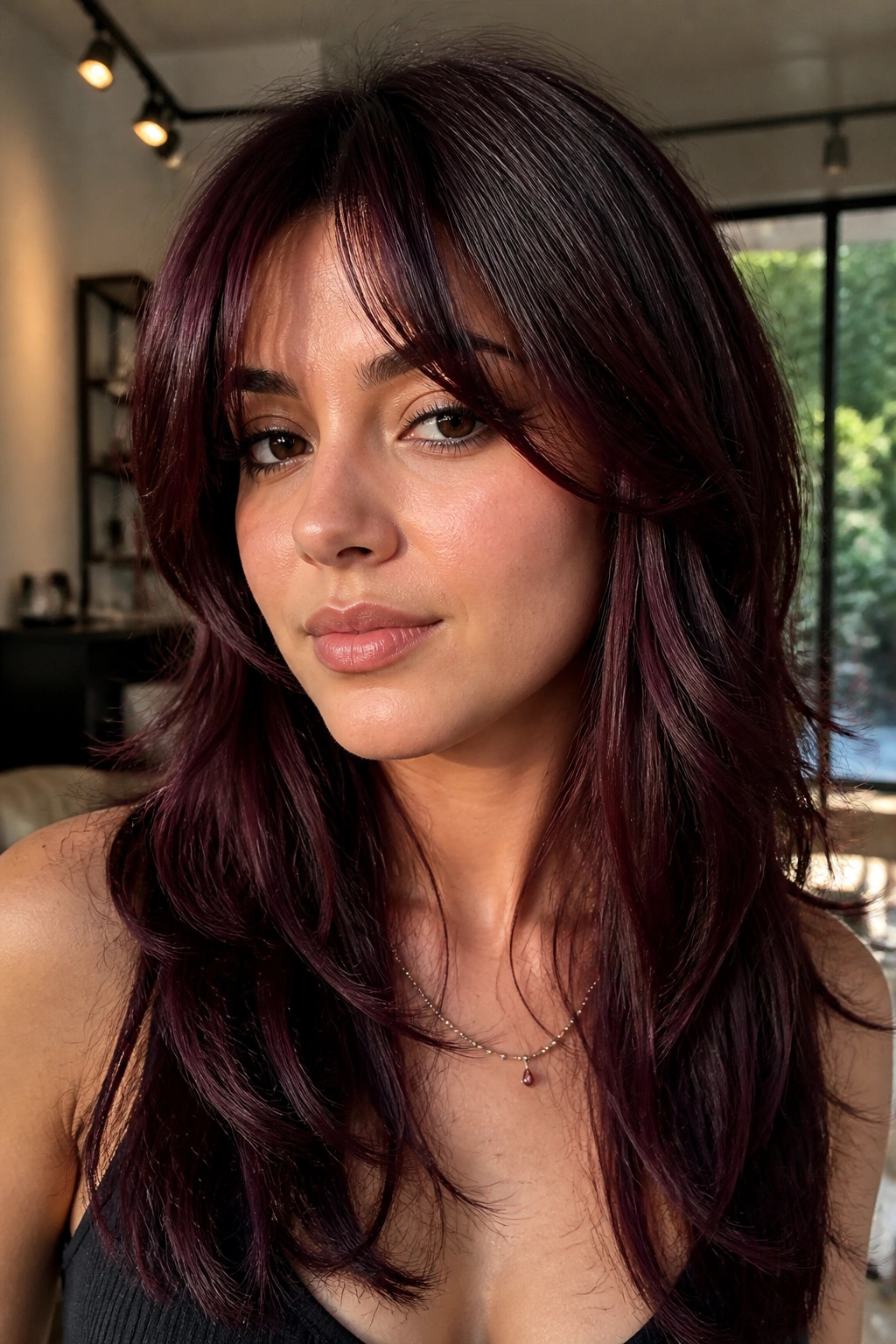
Curtain bangs change the whole feel of black burgundy hair. They bring the color right to the face, where the wine and plum tones can soften the heavy dark base and keep it from looking flat.
The trick is to keep the fringe light enough to move. Heavy, blunt bangs can swallow the burgundy and make the front look blocky. Curtain bangs split the color and let it fall on either side of the face, which is where cool skin gets the most benefit. Ask for a soft face frame, not a thick fringe curtain that stops dead at the cheek.
Styling Notes
- Blow-dry the bangs away from the face with a round brush
- Keep the burgundy at the front slightly brighter than the crown
- Use a lightweight cream so the fringe does not separate too much
This is one of those styles that looks done without feeling stiff. That matters.
21. Reverse Balayage with Burgundy Ends
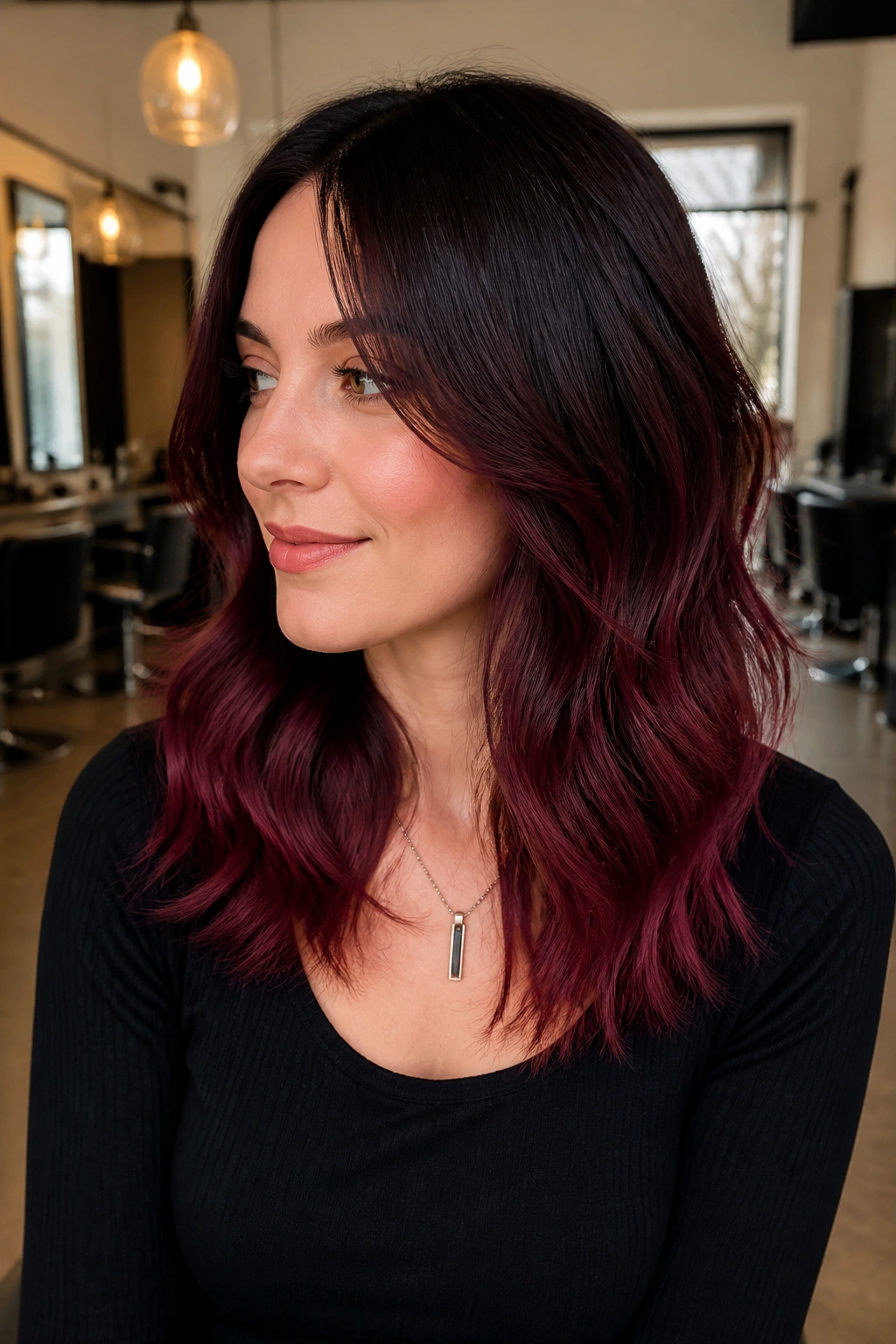
Can reverse balayage work in burgundy? Yes, and it looks especially good when the top stays black while the ends carry the richest color.
The point of reverse balayage is to add darkness back into lighter sections, but here it can also be used to deepen the crown and leave the burgundy concentrated toward the bottom. That gives the hair more weight at the ends and creates a darker frame around cool skin without needing a full global dye job.
What to Ask For
- Dark lowlights through the crown and mid-lengths
- Burgundy ends that stay in the plum-wine family
- A soft melt between shades, not a sharp line
- Extra gloss on the last few inches
This is a smart option if your hair already has highlights that need to be toned down. It also works when you want the color to show mostly in movement, not from every angle. The ends catch the light, and the top stays controlled.
22. Glossy Black Burgundy Full Color
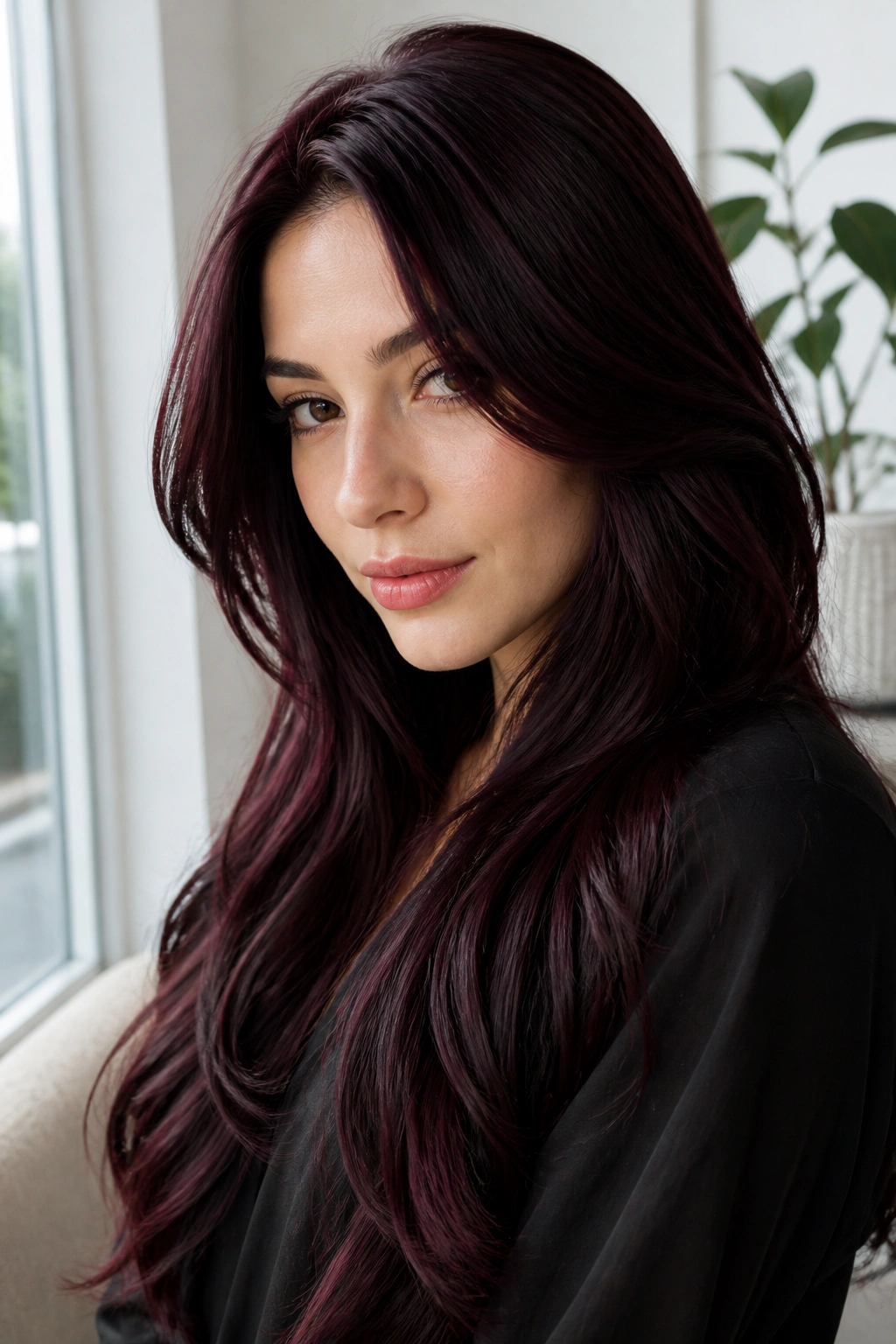
A glossy full-color black burgundy is the richest version of the look, and honestly, it is the one that still feels dramatic after the novelty wears off. It covers the whole head in a deep dark wine tone, with enough black in the base to keep it grounded and enough burgundy to show a cool, berry shine.
This shade suits cool skin because it stays away from orange-red completely. The whole trick is shine. Without shine, dark burgundy can look flat or almost brown. With shine, it turns sleek and expensive-looking in the plainest sense of the word. No fuss. No visible streaks. Just a dark, saturated color that holds up in daylight and indoor light.
If you want the color to stay crisp, keep the ends trimmed and the gloss refreshed before the fade gets dull. A photo taken near a window will show you the real tone better than a bathroom mirror ever will.
Final Thoughts
The best black burgundy shade for cool skin is the one that keeps the color family honest. Blue-red, plum, wine, blackcurrant, and violet notes usually flatter better than anything that leans copper or rust.
I’d also pay attention to placement. A full gloss, a face frame, and a peekaboo panel all create different results on the same person. That is the part worth thinking about before you sit in the chair.
If you’re torn between two shades, ask for swatches in natural light and under indoor light. One will usually look cleaner against your skin, and that small difference tells you more than a dozen filtered photos ever will.
