



Burgundy red hair color ideas for cool skin tones can look expensive when the shade leans blue or violet. Push the red too far into orange, and the whole thing can go muddy fast. Wine, blackberry, plum, and black cherry are the shades that usually keep the face looking clean and awake.
The part people miss is that “burgundy” is not one color. It’s a family of colors, and the difference between a flattering shade and a fussy one often comes down to what sits underneath it — a blue base, a violet base, an ash brown base, or a soft black base. That detail matters a lot more than the name on the tube.
Hair texture changes the result too. A sleek bob shows shine first. Curls show ribbons of red, purple, and brown all at once. Porous ends grab pigment fast, which is why the same burgundy can look glossy on one head and flat on another.
Some of the looks below are deep and quiet. Some are brighter and more playful. All of them stay on the cool side of the color wheel, which is the part that matters most when your skin has pink, blue, or rosy undertones.
1. Blue-Black Burgundy All-Over Color
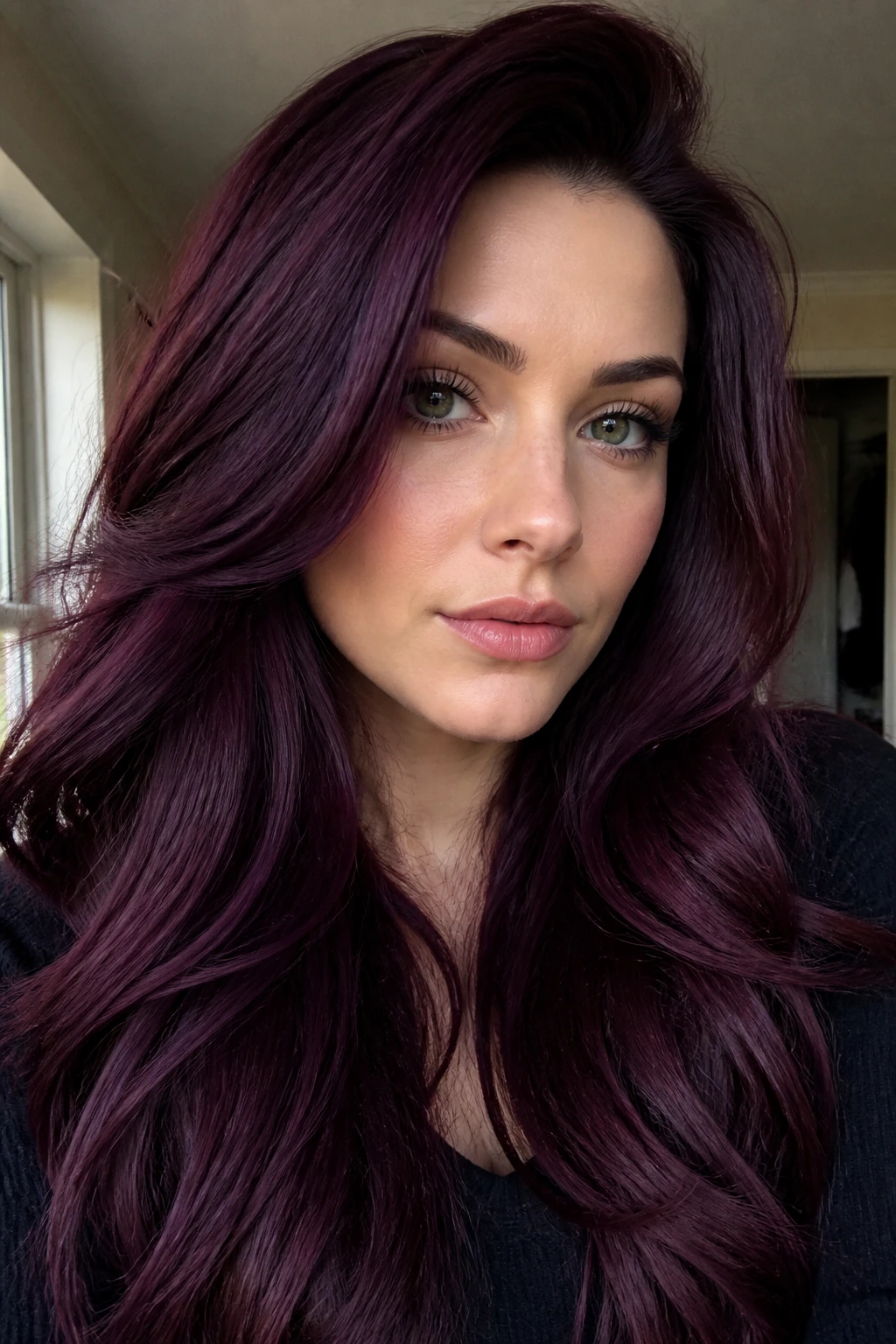
This is the darkest burgundy that still reads red. Under indoor light, it sits close to black. Step outside, and the wine tone shows at the mids and ends, which is exactly why it flatters cool skin so well.
Why It Flatters Cool Skin
Blue-black burgundy keeps the complexion from looking flushed or washed out. The blue-violet base acts like a calm backdrop, so the skin can stay the focus instead of competing with the hair.
It also works well if you like depth more than brightness. A lot of red shades get loud the second they’re placed on dark hair. This one stays controlled.
What to Ask For at the Salon
- A level 3 or 4 base with blue-violet burgundy tones
- A gloss finish, not a flat matte red
- Low warmth at the mids and ends
Best for: fair cool skin, deep cool skin, and anyone who wants burgundy with a little edge.
Pro tip: ask for a translucent glaze at the end. That extra shine keeps the color looking rich instead of heavy.
2. Black Cherry Layers
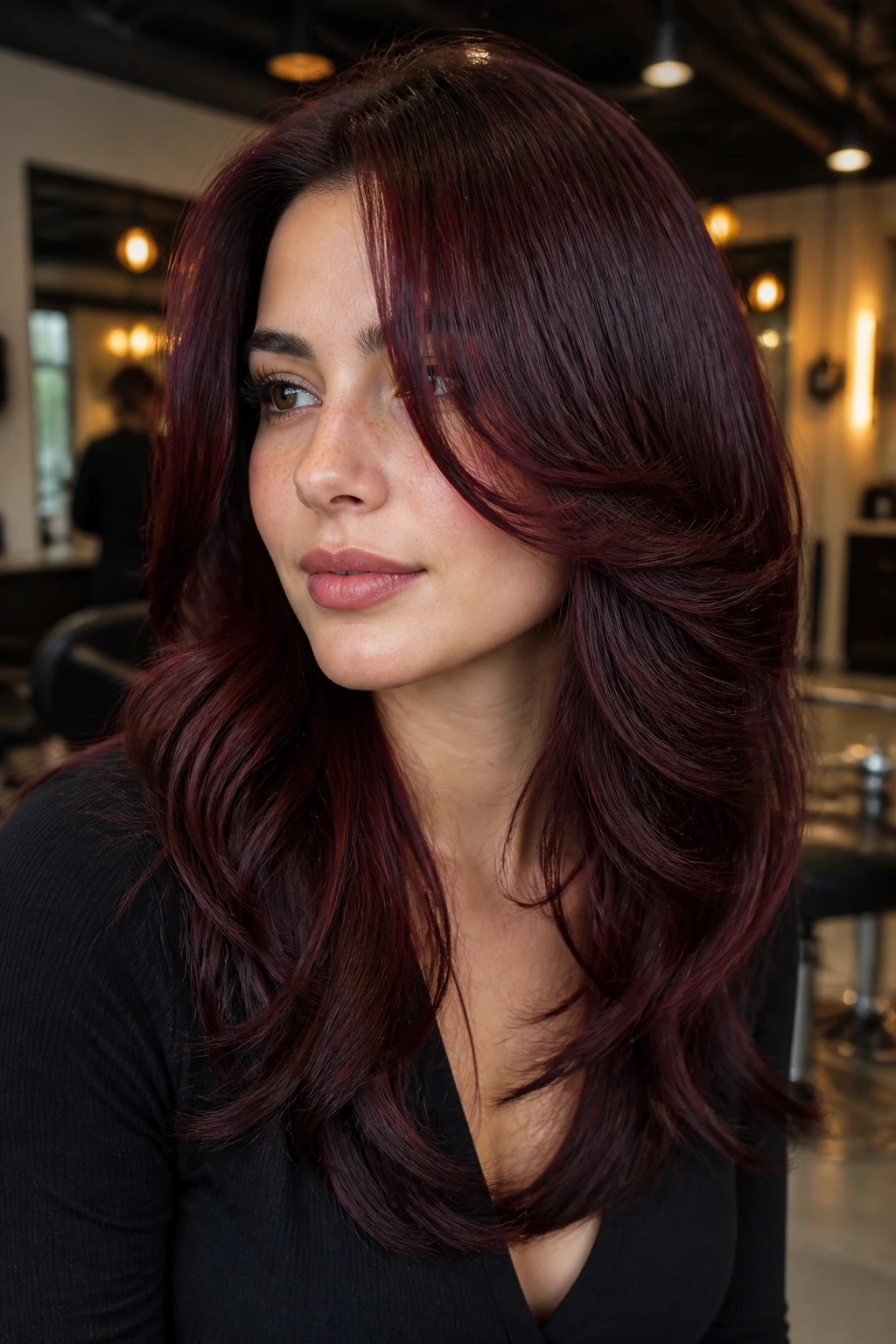
Want red that feels polished instead of costume-y? Black cherry is the safer, smarter version of burgundy for cool undertones.
It usually starts with a dark brunette or black base, then folds in red-violet tones that only show when the hair moves. That movement matters. On layers, the shade looks soft and dimensional; on one-length hair, it can look a little too solid.
The easiest way to wear it is with long layers and a clean blowout. A round brush or a large-barrel brush gives the color room to catch light at the bends, which is where black cherry really wakes up. If your skin leans cool, this shade tends to look more expensive than bright red because it stays in that deep wine lane.
3. Plum Burgundy Bob
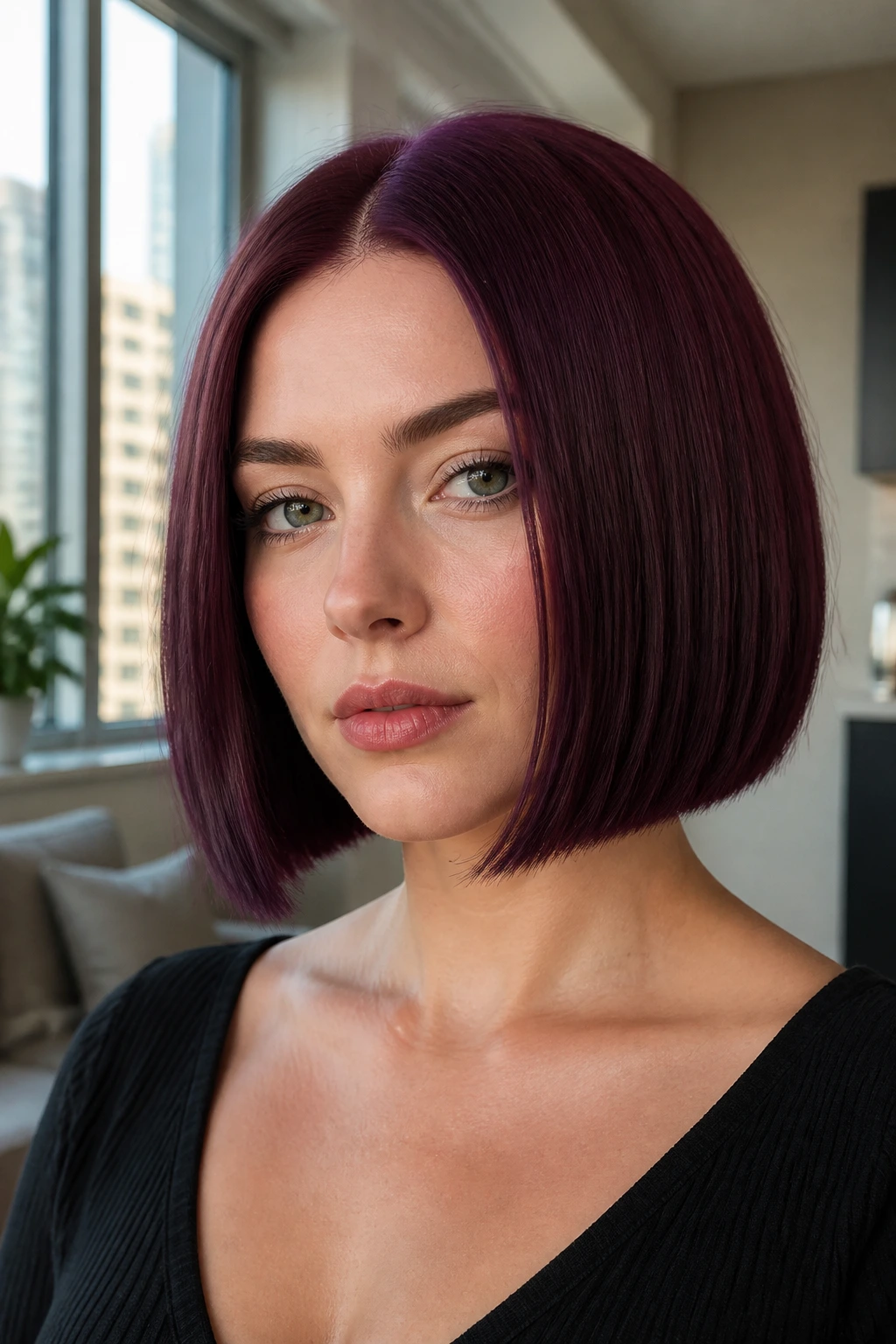
A blunt bob and plum burgundy are a good match because the cut does half the work for you. The straight edge gives the color a crisp frame, and the plum note keeps it from drifting warm.
This look is especially kind to cool skin with a little redness in the cheeks. Plum softens that effect. It doesn’t cancel the skin out; it just lets the hair sit beside it instead of shouting over it.
How to Wear It
A center part gives the shade a cleaner, sharper feel. A slight side part makes it softer and a little more casual. If your hair is fine, this is one of the best burgundy ideas on the list because the blunt ends make the hair look thicker than it is.
Keep the finish sleek. A little serum on the ends is enough.
4. Merlot Root Melt
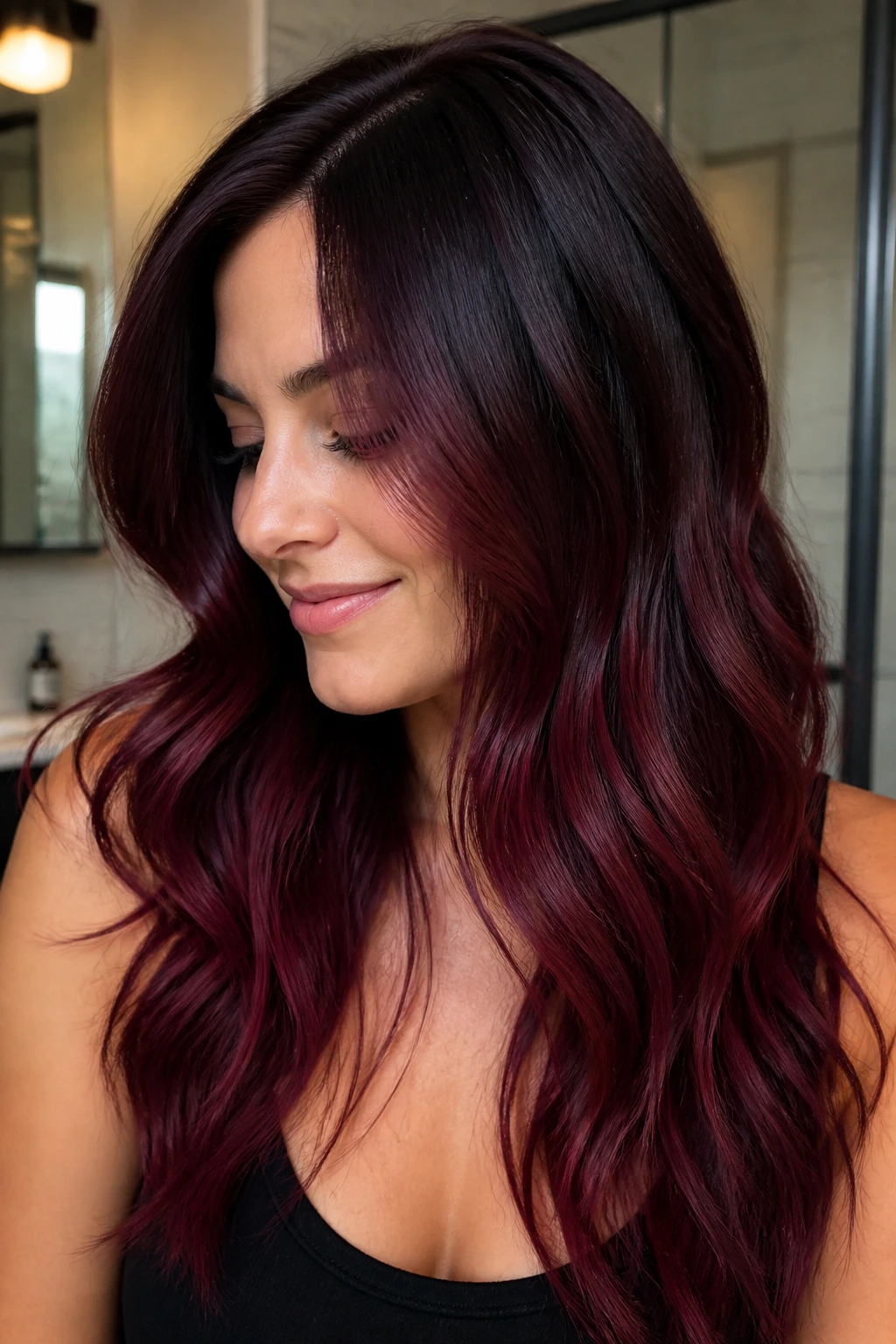
Not every burgundy needs a hard start at the scalp. A merlot root melt gives you depth at the roots and a softer wine-red transition through the lengths, which is a lot easier to live with.
The root area stays dark — espresso, soft black, or a deep cool brown — and the merlot tone begins a few inches down. That fade helps the color grow out with less contrast, so you do not get a bright line across your part every few weeks.
This is a good pick if you like color but do not want to babysit it. Cool skin benefits from the dark root because it anchors the face, while the merlot through the lengths keeps the hair from looking flat. It is also a smart choice if your natural hair is already dark and you want something that feels intentional, not dramatic for the sake of drama.
5. Burgundy Balayage on Brown Hair
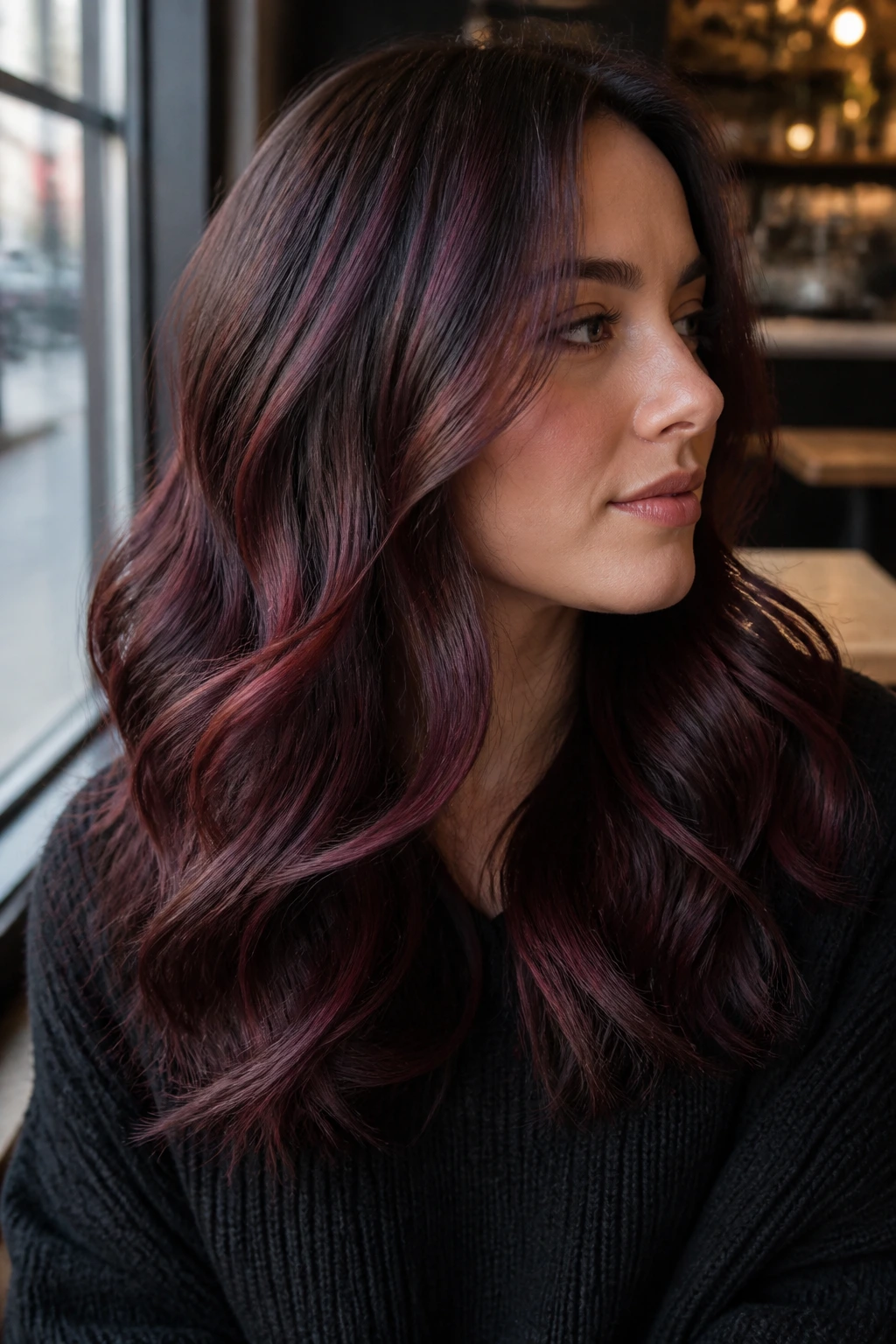
Painted ribbons of burgundy look richest against mocha or cool chestnut hair. The point is not to cover the entire head; it’s to let the red peek through where movement shows it off.
Placement That Matters
- Keep the brightest pieces under the top layer so they flash when the hair moves.
- Put a few face-framing ribbons at cheekbone level.
- Leave the crown deeper and cooler so the whole color reads balanced.
That placement is what keeps the look from turning streaky. Too many burgundy pieces on the surface can read busy. A few well-placed ribbons look deliberate.
This is a smart option if you want dimension without losing your brunette identity. On cool skin, the cooler burgundy ribbons prevent the brown base from looking dull, and the result is cleaner than a warm caramel balayage, which often fights the undertone.
6. Smoky Mahogany Burgundy
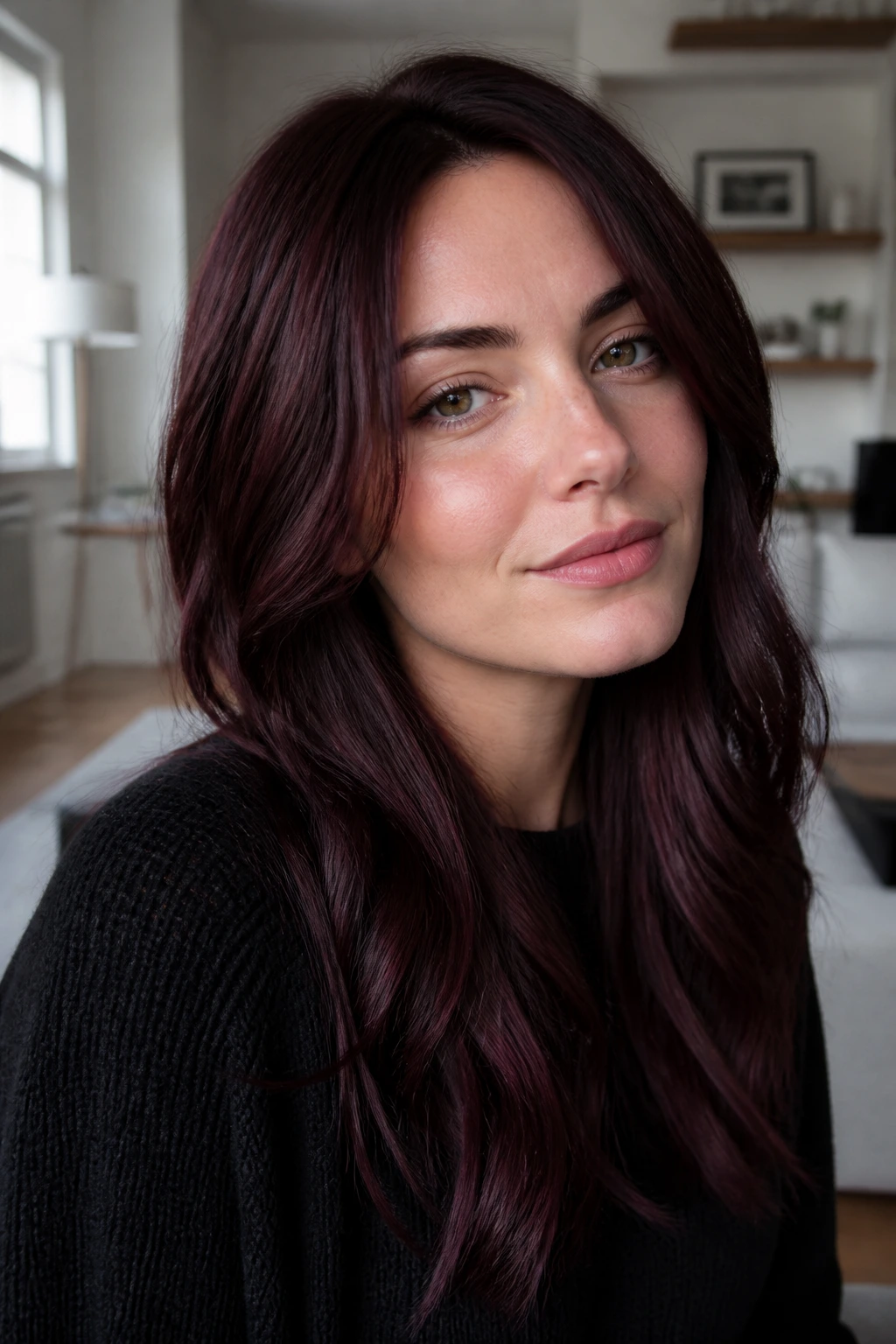
Mahogany only works here if it skips the cinnamon. A smoky mahogany burgundy keeps the brown base, but the red stays muted and cool instead of leaning copper.
That makes a big difference on cool skin. Warm mahogany can make the face look a little flushed. Smoky mahogany does the opposite. It softens the red, cools down the brown, and gives you a richer finish that feels steady rather than bright.
This shade is a good middle ground if you want depth but not purple. It also suits people who wear a lot of black, gray, navy, or white, because the color sits neatly beside cooler clothes. If your hair has some gray mixed in, smoky mahogany can blend the silver in a way that looks polished instead of obvious.
7. Raspberry Face-Framing Highlights
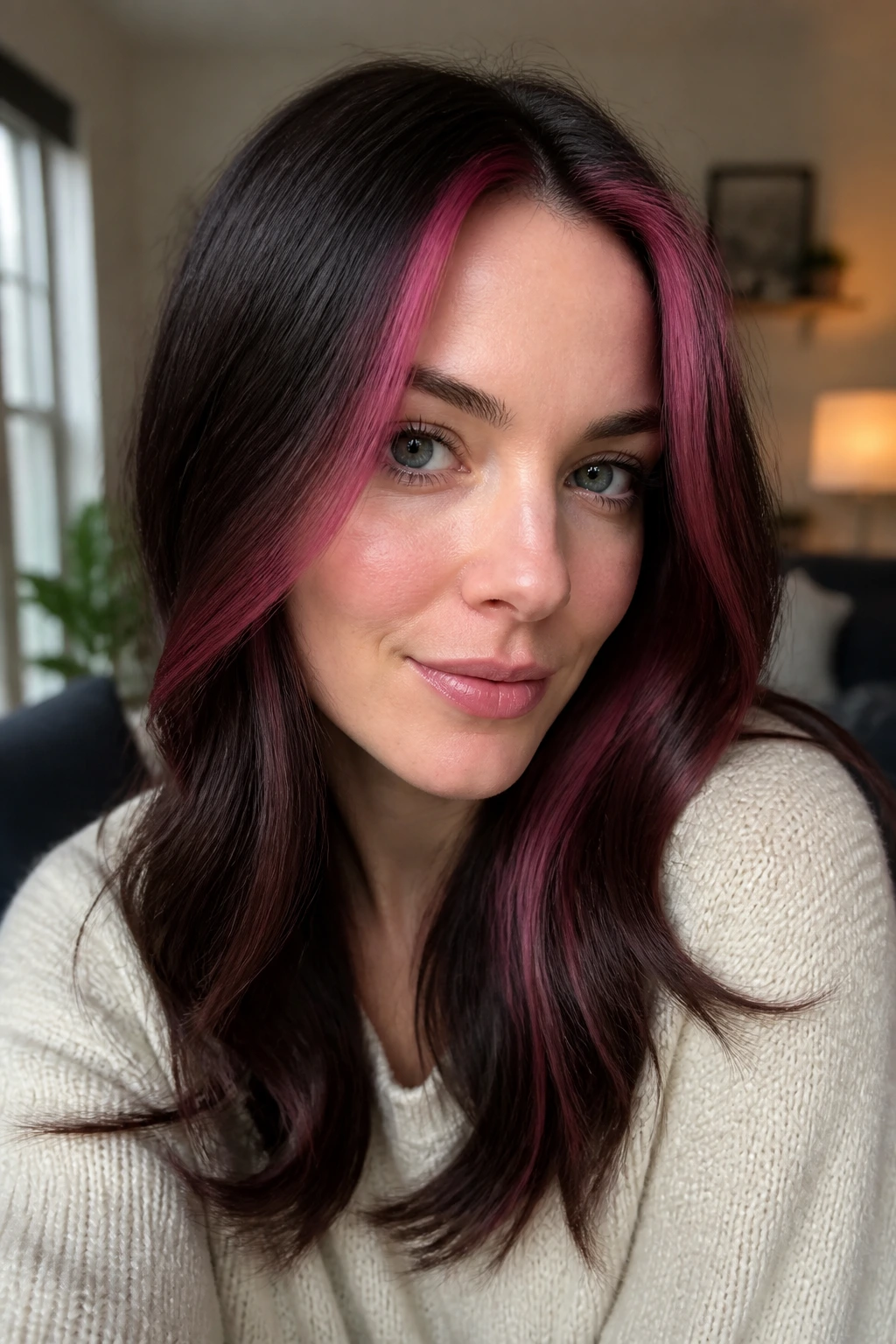
Do you want a brighter burgundy without committing to an all-over color? Face-framing raspberry highlights are the quick answer.
The key is to keep the pieces narrow enough to look refined. A 1-inch money piece can be enough. Wider than that, and the look starts to feel chunkier than it should. On cool skin, the raspberry note gives a little lift near the face, especially if your complexion is pale or pink-leaning.
How to Get the Most From It
Ask for the color to start near the part line and taper into the front layers. That keeps the brightness where people actually see it. If you wear your hair curly, the highlight can trace the shape of the curl pattern and make the red look more layered than stripey.
This is one of the easiest burgundy ideas to grow into. It lets you test the shade without changing everything at once.
8. Velvet Wine Curls
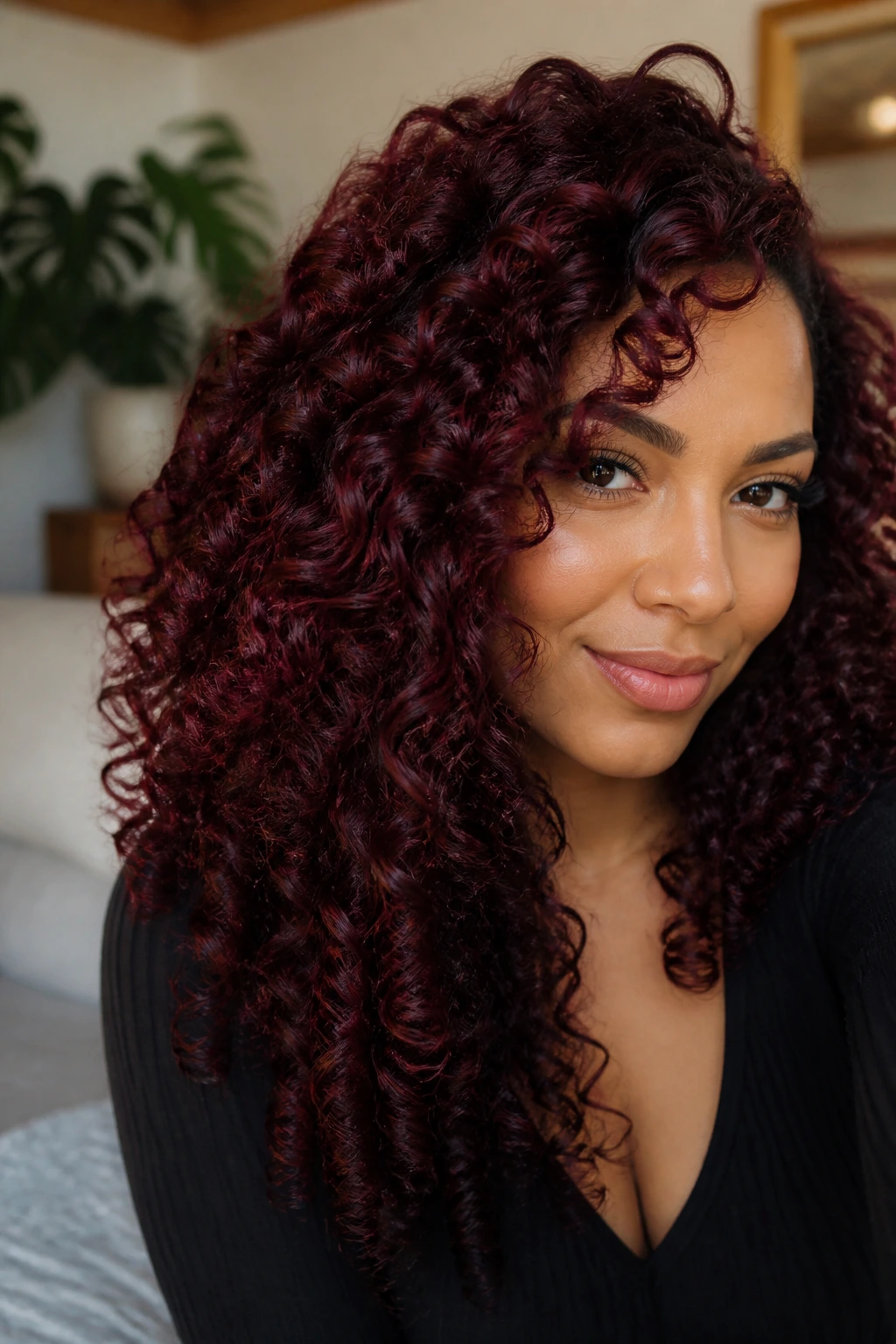
On curls, burgundy doesn’t have to shout to show up. Velvet wine works because curls already give you texture; the color just adds depth inside the shape.
A single dark red tone can look flat on curls if the hair is one shade from root to tip. Velvet wine avoids that by letting the curl pattern catch different bits of red, purple, and brown as it bends. The result feels softer and more expensive-looking than a bright red that sits on top of the hair.
Why Curls Love It
The trick is keeping the mids and ends slightly lighter than the root. Not blonde. Just one step lighter. That tiny shift helps the curls separate visually so the burgundy doesn’t turn into one dark block.
A curl cream with a soft hold helps too. Frizz can swallow the shine, and burgundy needs shine. Without it, even a good shade can look tired by the end of the day.
9. Amethyst Burgundy Straight Hair
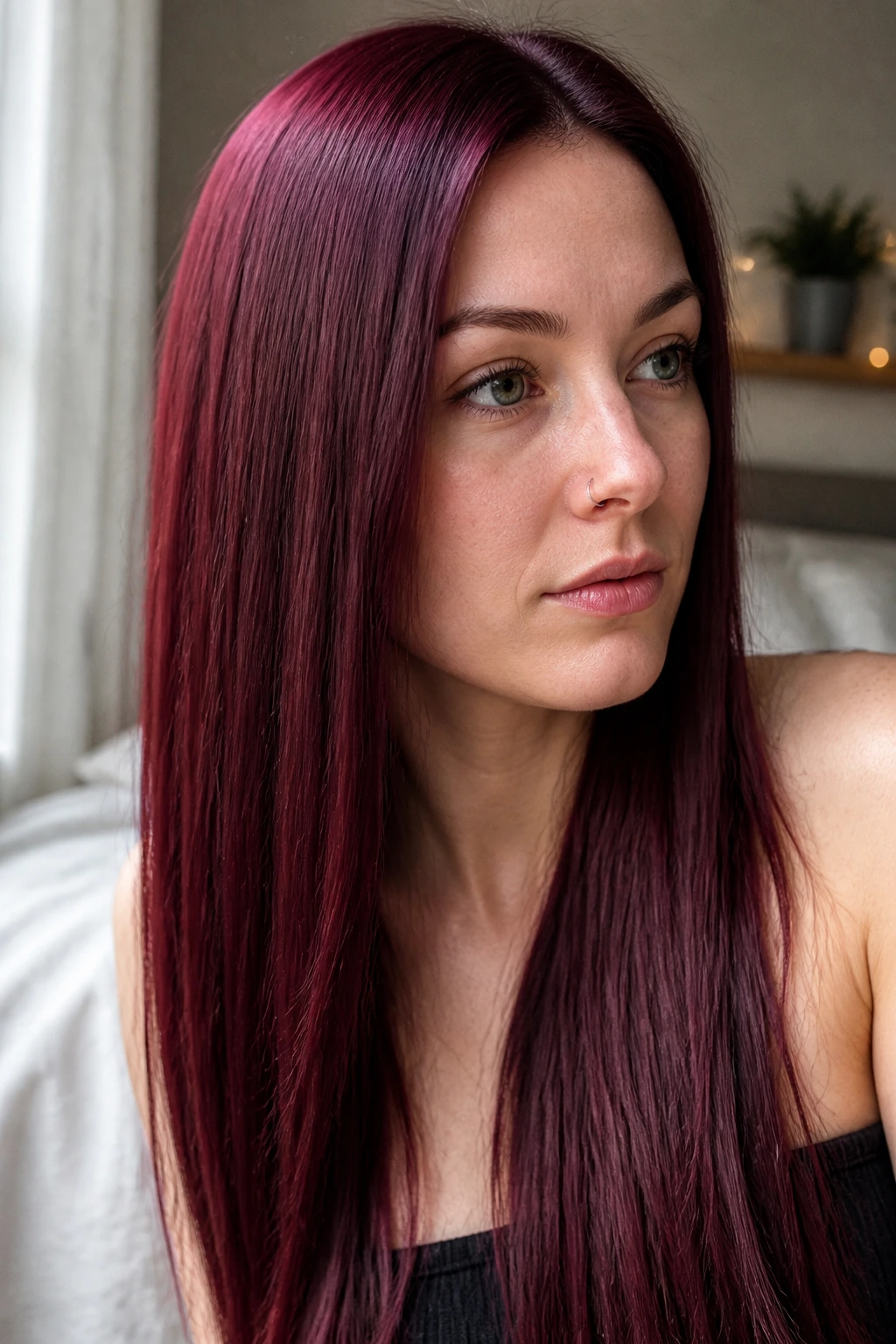
Straight hair is not boring here. It’s actually the cleanest way to show off a purple-red tone.
Amethyst burgundy has enough violet in it to keep cool skin happy, but it still reads red in motion. On straight hair, every reflective line shows the shift from dark purple to wine red, which makes the color feel sharp rather than muddy. It’s a good choice if you like sleek styles, flat irons, or glassy blowouts.
The catch is maintenance. Straight styles show everything — dry ends, split ends, uneven tone, all of it. If you go this route, keep a heat protectant in the routine and trim the ends before they start looking wispy. A cool burgundy can look costly on straight hair, but only if the finish stays smooth.
10. Burgundy Ombré with Plum Ends
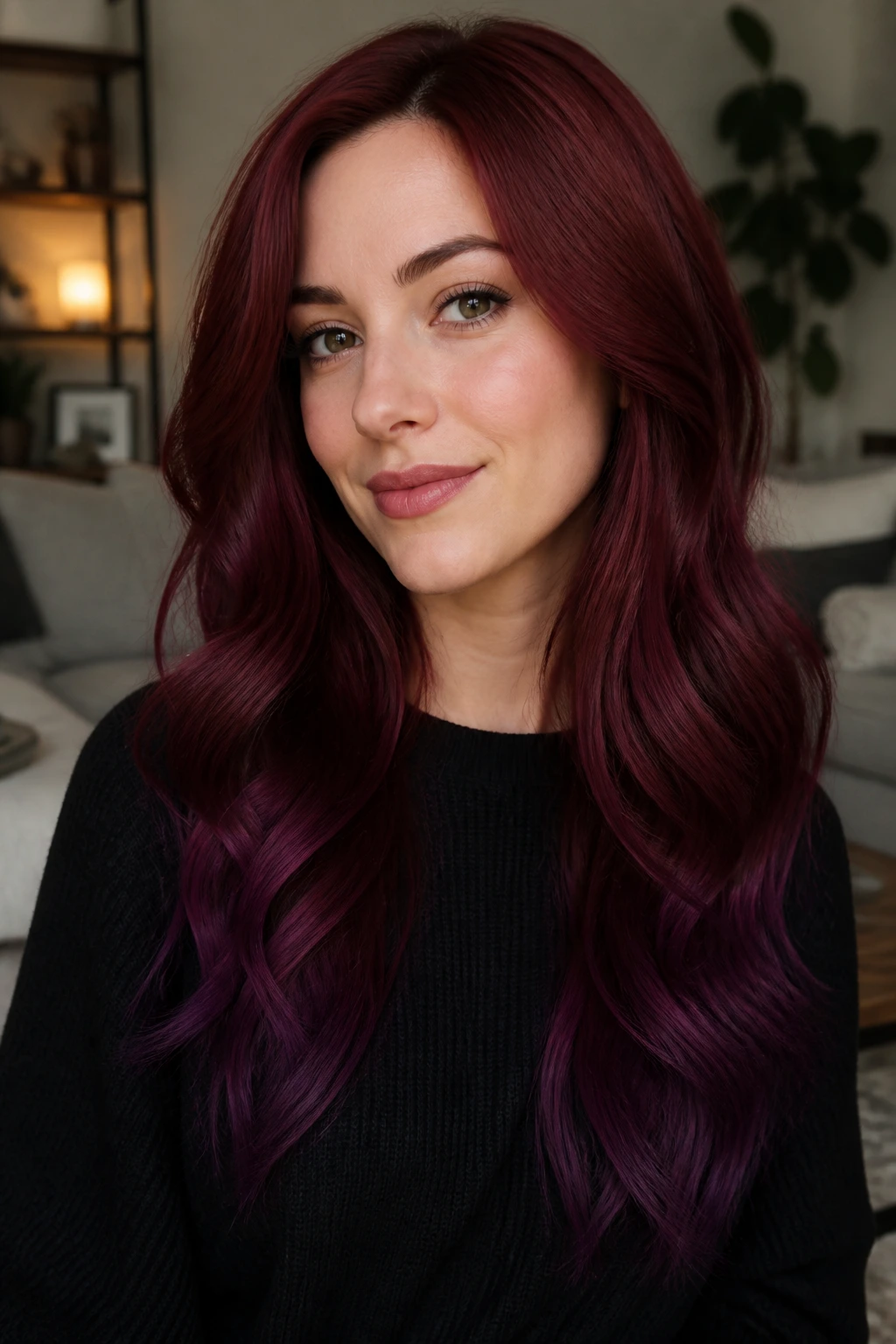
Dark roots fading into plum ends look soft, almost smoked. That gradual shift is easy on cool skin because the face stays anchored by the darker top while the ends carry the color story.
Ombré works best when the color shift starts below the chin. Any higher, and the red can crowd the face. Keep the mids deep burgundy and let the ends slide into plum, not pink. Plum keeps the whole thing cooler and more grown-up.
This is one of the better ideas for long hair because the length gives the fade room to breathe. It also helps if you like wearing your hair up. A ponytail or braid will still show the color change, even if the lengths are tucked away.
11. Cabernet Lob with Soft Waves
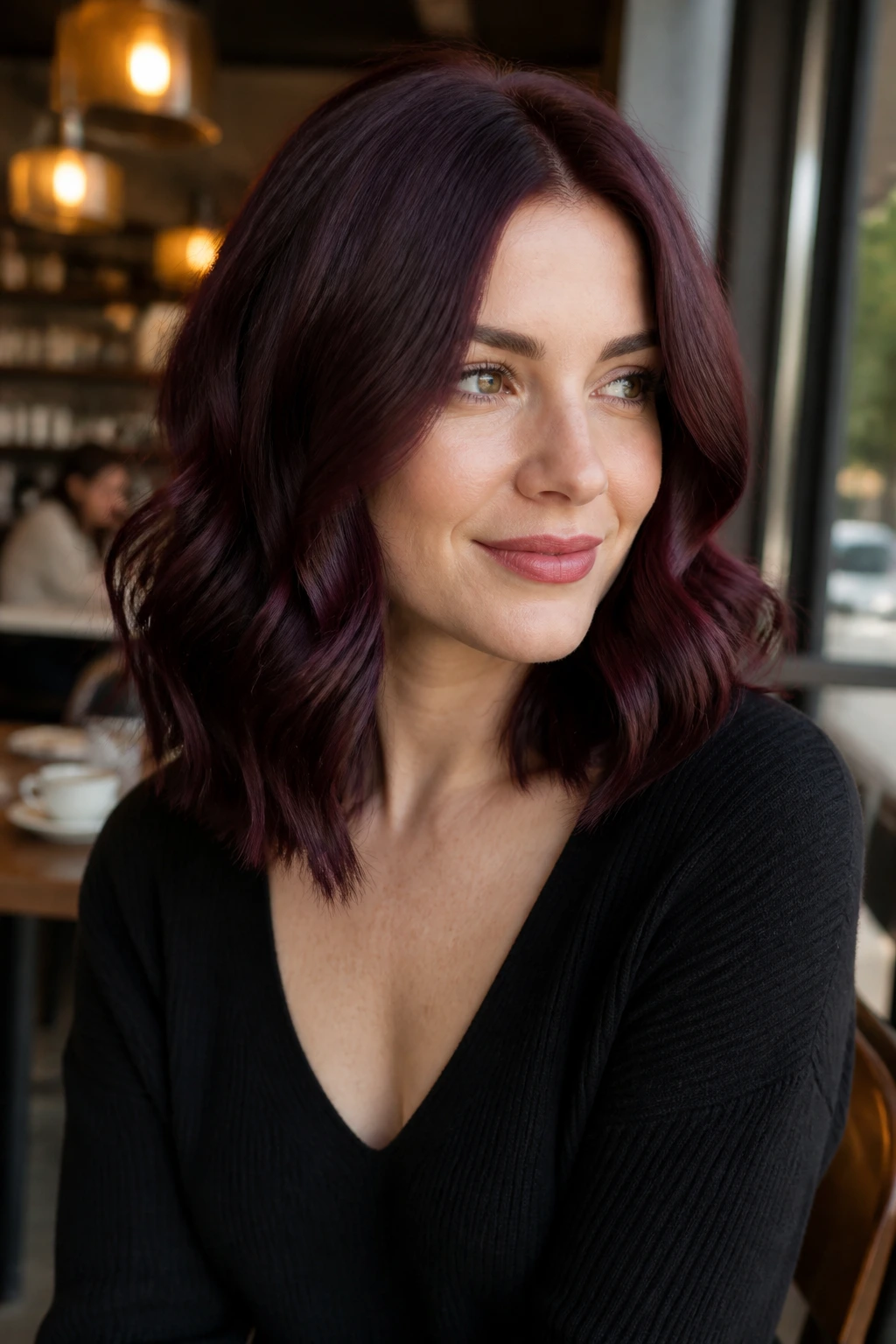
A lob might be the easiest cut for cabernet. It sits in that sweet spot where the hair is long enough to show color movement, but short enough to feel tidy.
What Makes It Different
- Works well at collarbone length
- Looks good with a center part or side part
- Gives the red enough movement to avoid a flat finish
Cabernet is deep and winey, which makes it a natural fit for cool skin. It doesn’t need a bright lift to show up. Soft waves do the rest. A 1-inch iron gives you enough bend without turning the hair into curls, and that bend is what lets the shade change as the hair moves.
This is a good choice if you want burgundy that works in a polished setting. It doesn’t read too loud. It just looks like you spent time on your hair.
12. Rosewood Burgundy with Curtain Bangs
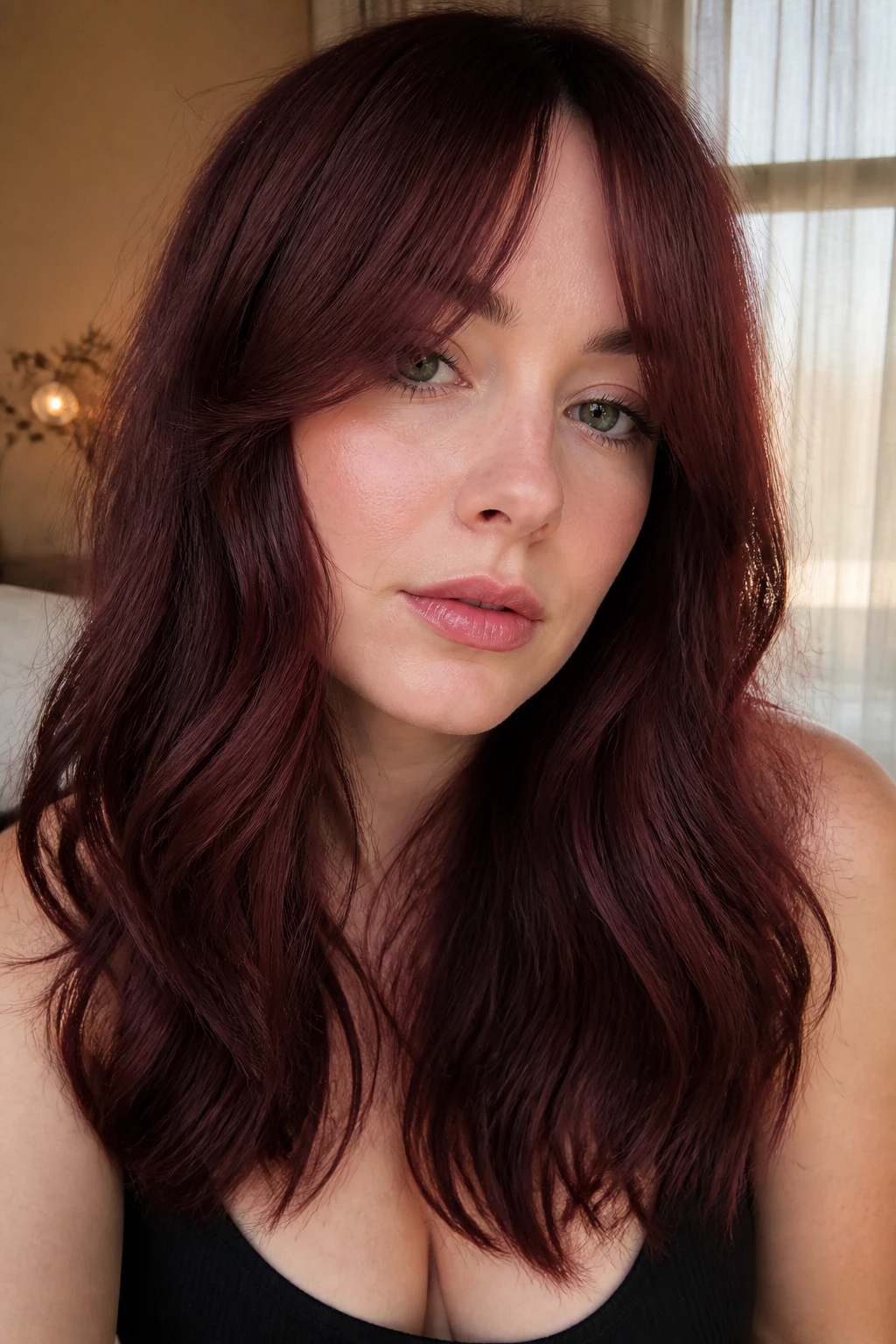
Need burgundy that feels softer against pale or rosy skin? Rosewood is the answer.
It sits between muted pink, brown, and red, which gives it a gentler edge than black cherry or wine. Curtain bangs make the color even easier to wear because they put the shade right around the face without forcing you into an all-over strong red. The bang area gives a small burst of color where the eyes land first.
Rosewood burgundy is also a nice fix if you’ve tried darker burgundy shades and found them too heavy. This one still feels cool, but it doesn’t pull moody in the same way. It’s the sort of color that looks better when the hair is lightly waved and brushed out, not perfectly styled. Soft is the point.
13. Midnight Burgundy Pixie
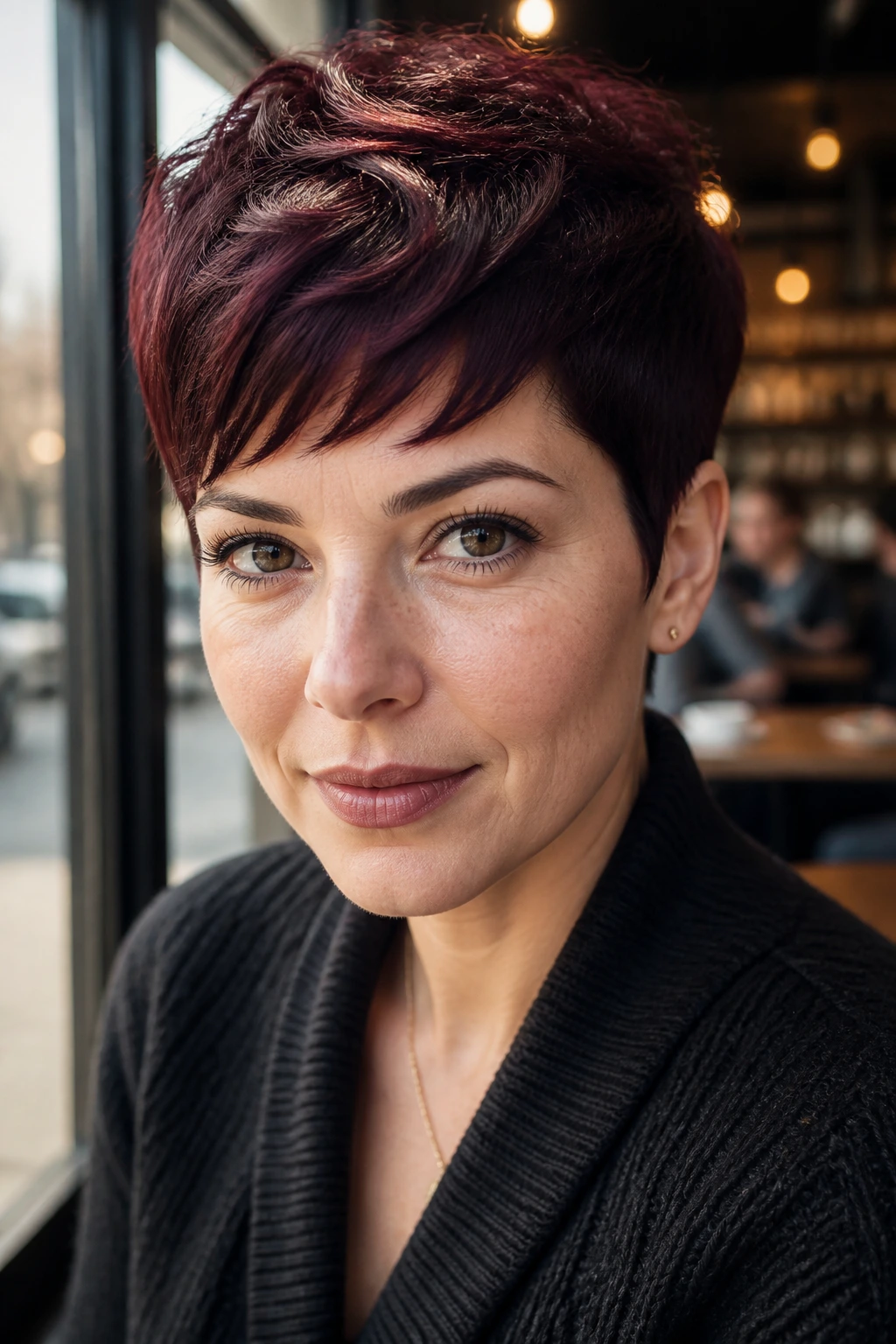
A pixie gives burgundy nowhere to hide. That’s the whole appeal.
Midnight burgundy on short hair looks like black at first glance, then gives off a wine flash when the light moves. Cool skin tends to like that contrast because the hair frames the face without taking over. The shorter cut also means the color stays clean and deliberate.
A little texture goes a long way here. Use a pea-sized amount of styling paste or cream, then work it through the top layers so the hair breaks into small pieces instead of sitting flat. That separation matters more on short cuts than people think. Without it, the shade can read too solid. With it, the burgundy looks sharp.
14. Cranberry Burgundy Gloss
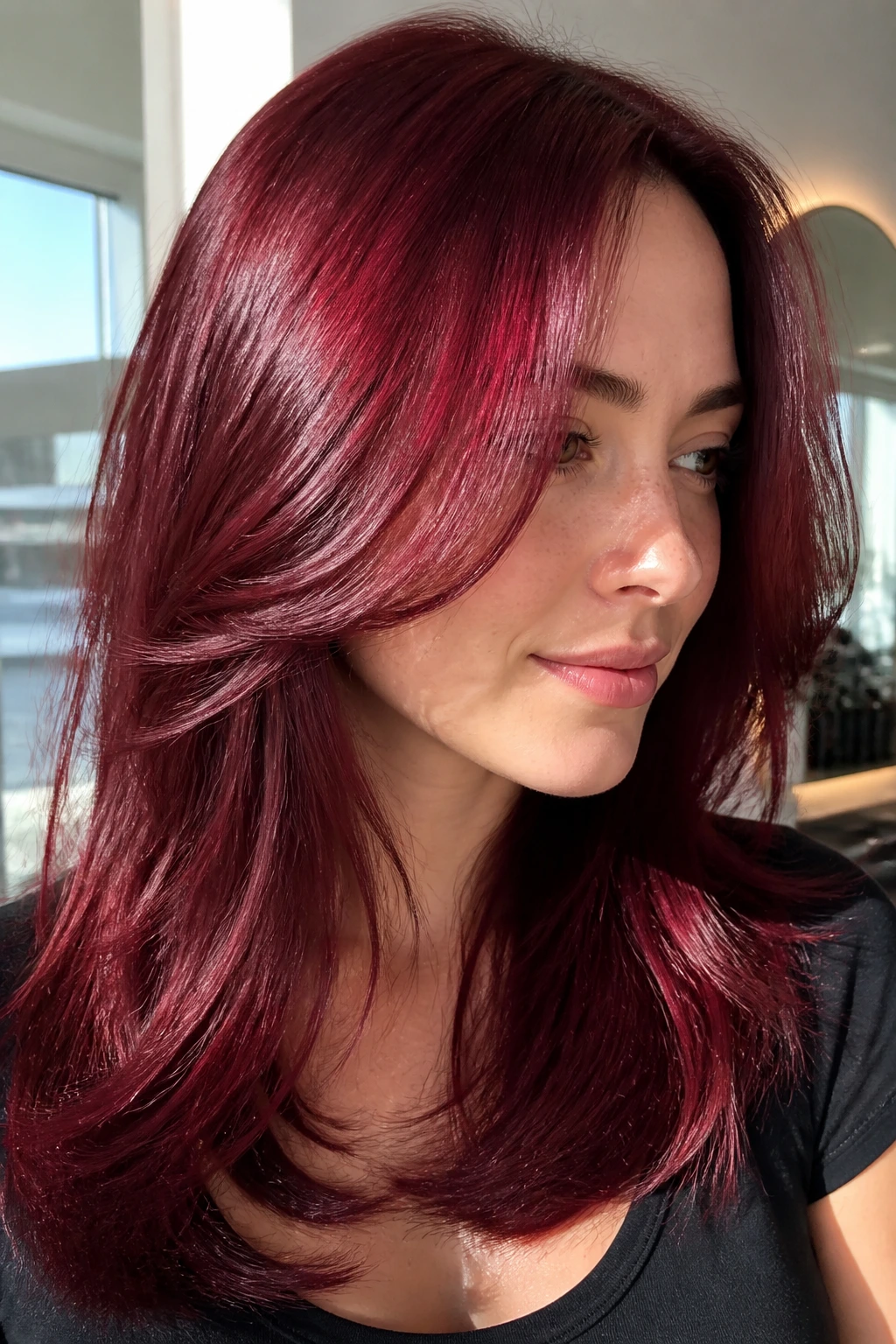
Burgundy does not have to be dark to work on cool skin. Cranberry is the brighter, cleaner sibling that still stays on the cool side.
This shade adds lift without crossing into copper. It’s a red that has enough pink and berry in it to stay friendly to cool undertones. If your skin is medium or fair and you want more visibility near the face, cranberry can be a good compromise between bold and wearable.
A gloss is the part that makes this shade behave. Cranberry can lose its edge if the finish goes dry, so keep the surface shiny and the color refreshed before it fades too far. On layered hair, the brightness shows best at the ends and front layers, which gives the whole style more life than a one-note red.
15. Mulled Wine Balayage
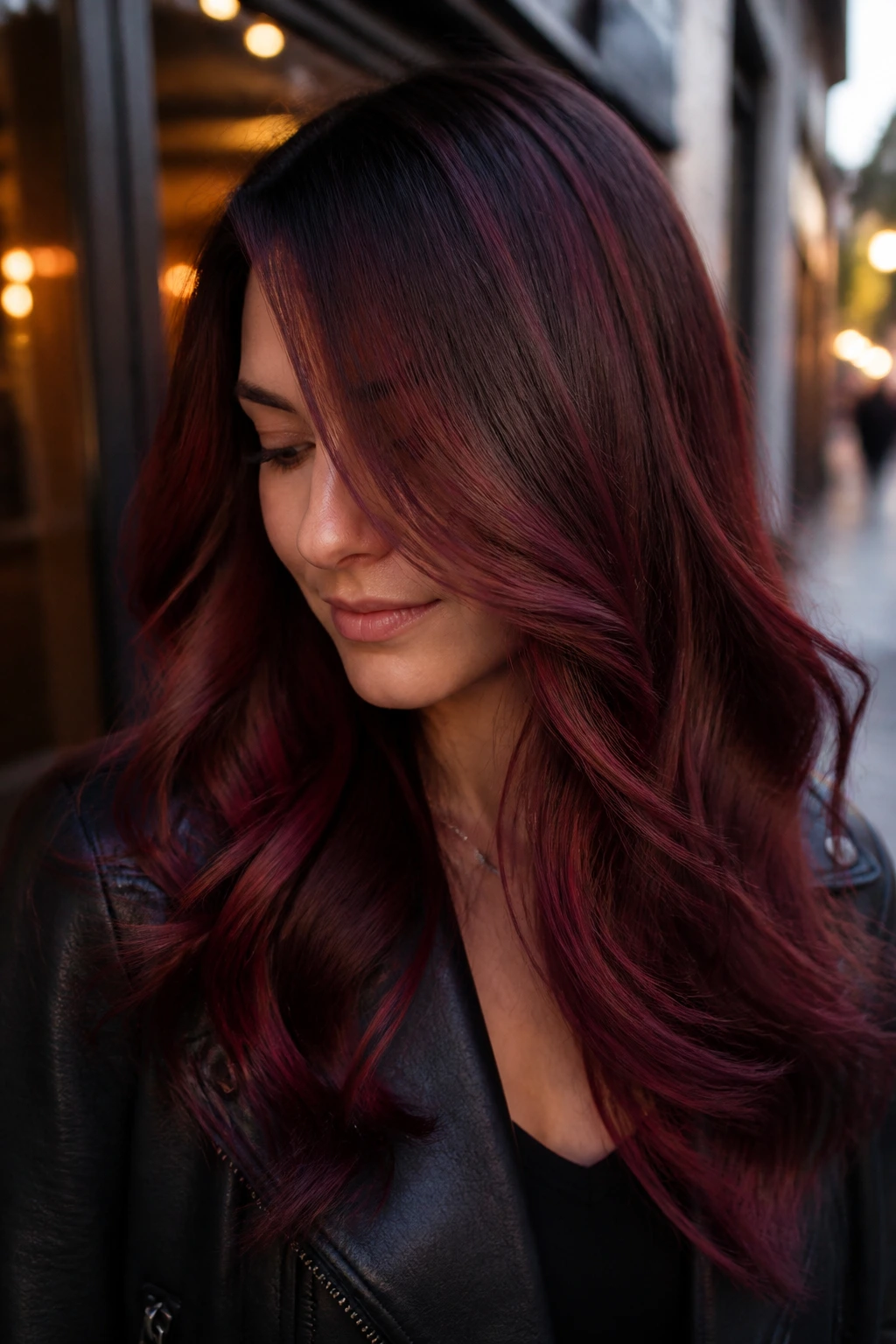
Think claret, berry, and plum all woven through the hair. Mulled wine balayage gets its richness from those layered tones, not from one loud red paint job.
This is a strong pick if your hair is thick or layered. The different shades keep the length from looking heavy, and the cooler wine notes sit well beside pink or blue skin. It also has a nice side effect: because the red is broken up into ribbons, the grow-out tends to look softer than a solid burgundy.
The best version keeps the darkest pieces near the root and the brighter wine tones through the mids. That contrast gives you movement without losing depth. If the color gets too red at the ends, the whole look can turn noisy. Keep it in the wine family, and it stays elegant.
16. Eggplant Burgundy Shadow Root
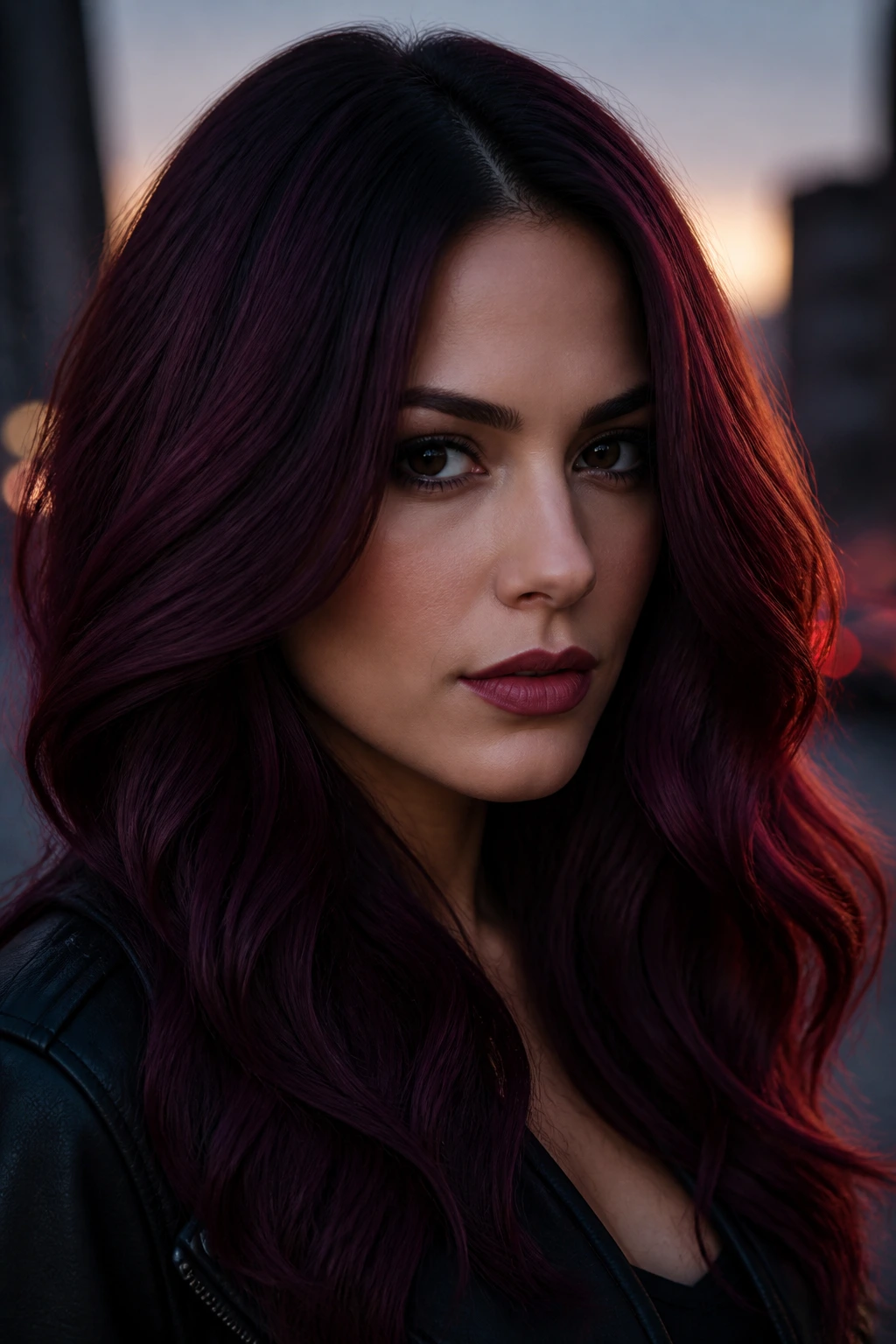
If you want drama without copper, eggplant burgundy is the sleeper pick.
It leans violet, which makes it one of the easiest burgundy ideas for cool skin. The shadow root keeps the scalp area deep and low-contrast, then the color opens into a darker plum-red through the lengths. It’s moody, but not in a flat way.
This shade works especially well if you don’t want frequent root touch-ups. The dark root gives the grow-out a soft edge, and the eggplant lengths hold their shape for a long time if you use color-safe shampoo and a cool rinse. Keep the finish glossy. Matte burgundy can look thirsty. Eggplant burgundy needs shine.
17. Burgundy Money Piece
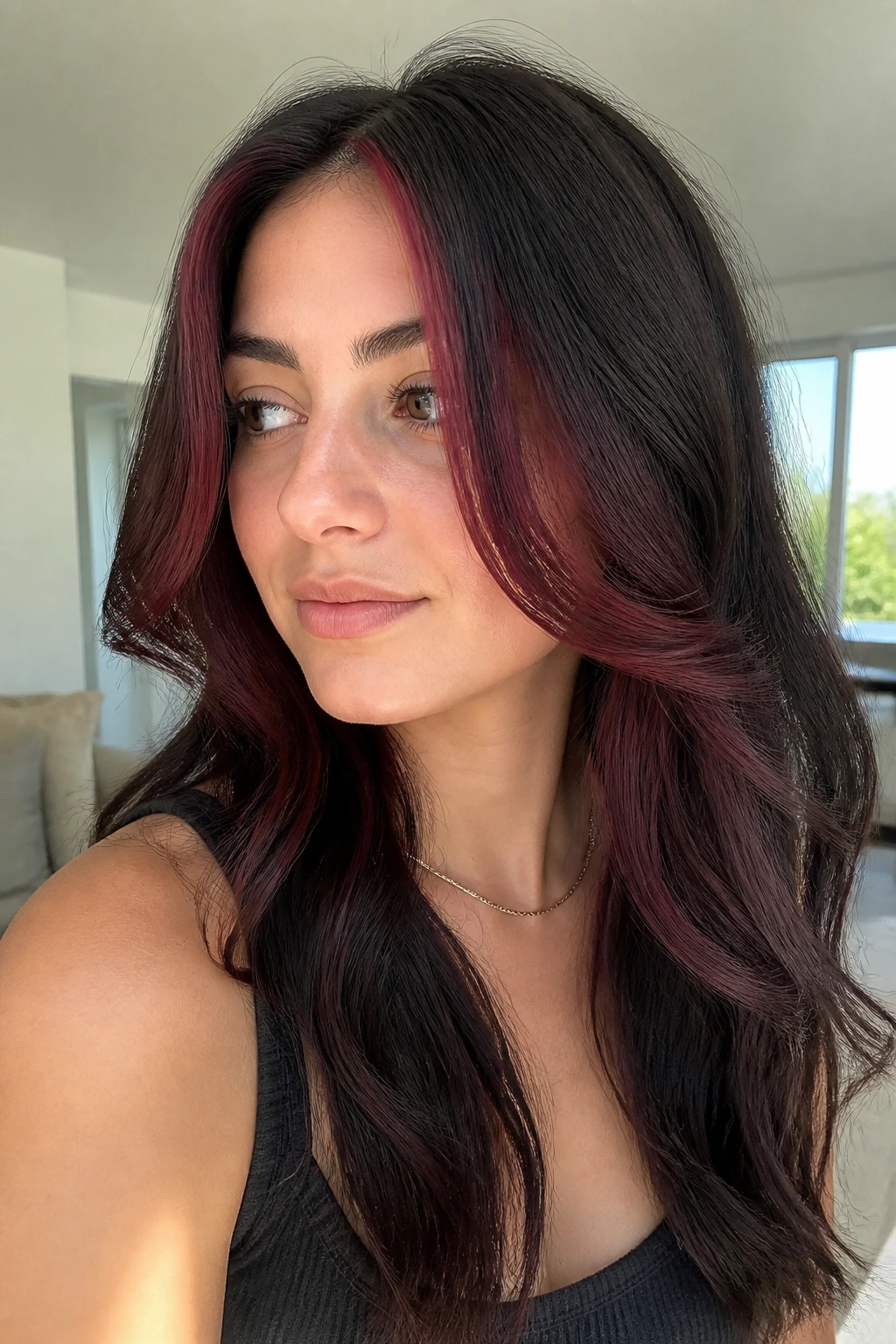
Want the fastest way to test burgundy? Just frame the face.
Placement Rules That Help
- Keep the front pieces about 1 to 1.5 inches wide
- Start the color near the part line
- Soften the edges so the red doesn’t look cut-out
A burgundy money piece gives you a visible hit of color without changing the whole head. On cool skin, that works because the color lands where the eye goes first, near the cheeks and eyes, instead of washing the whole face in red. It’s a good test drive if you’re nervous about maintenance.
The trick is restraint. Too chunky, and it can look harsh. Too thin, and it disappears into the rest of the hair. I like this look best with darker lengths and a soft wave through the front. That keeps the money piece from looking like a stripe and makes it feel part of the haircut.
18. Deep Cherry Cola Waves
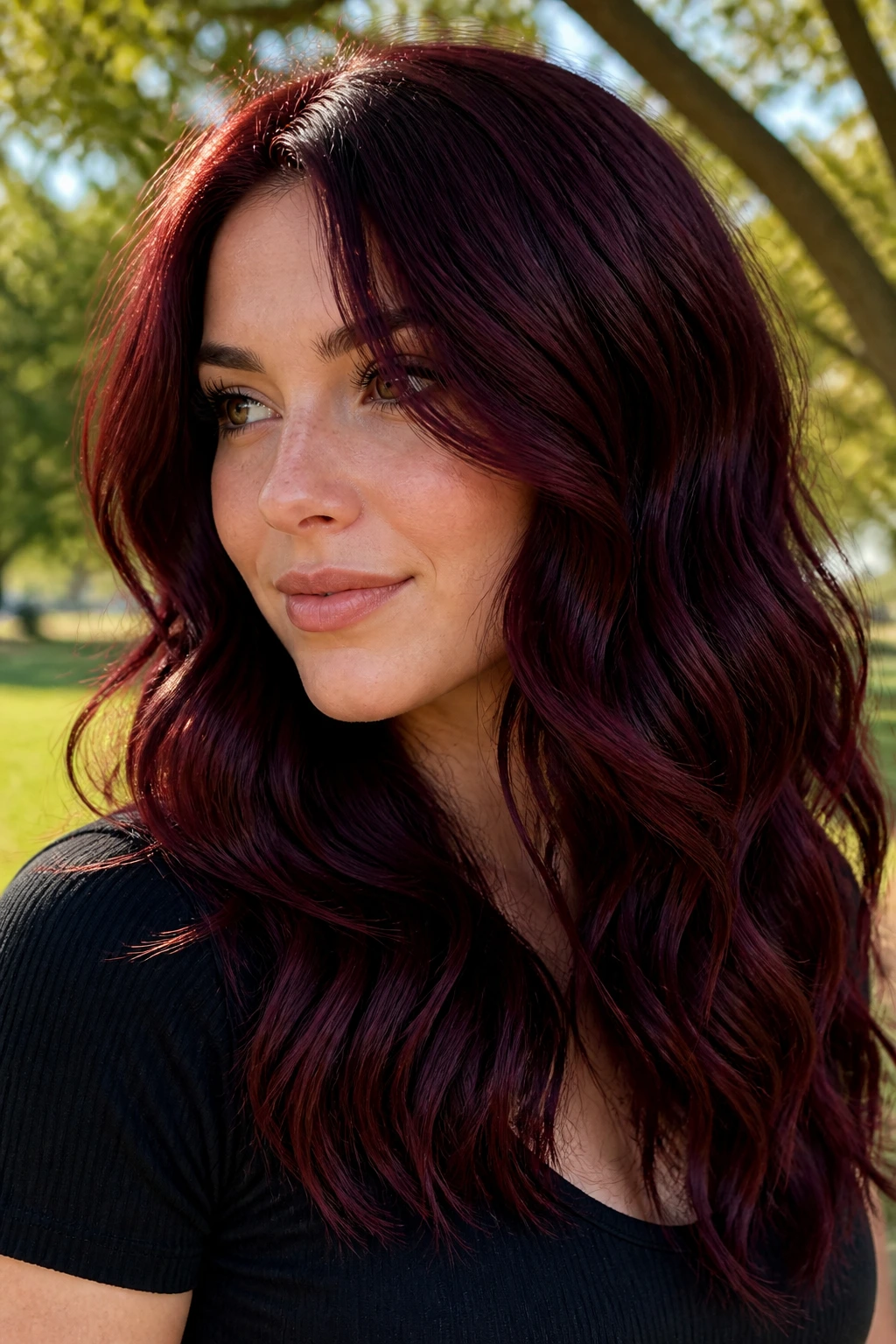
Cherry cola is the shade that keeps brunettes from looking flat.
It blends brown, red, and wine tones into one darker color, which gives cool skin a little warmth without pushing the hair into copper territory. On waves, the mix is even better because the movement lets the red surface in some spots and sink back in others.
This is one of the most wearable burgundy looks if you want something low-key. It’s not a color people clock from across the room. It shows up when you move, tilt your head, or wear it under bright light. That restraint is the point. For a lot of people, that’s the sweet spot between “interesting hair” and “I have to talk about my hair all the time.”
19. Burgundy Ribbon Highlights on Black Hair
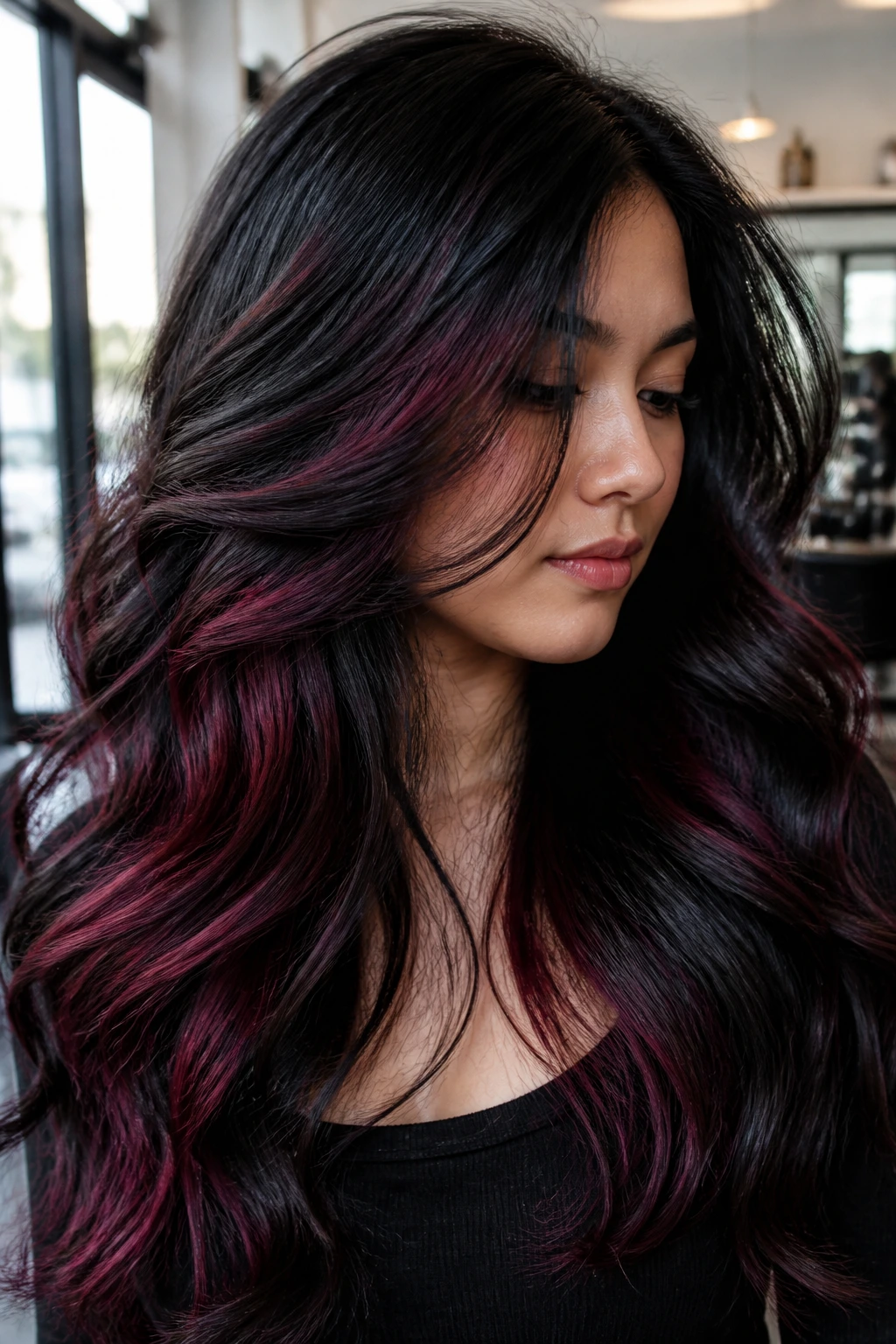
Highlights can be bold without turning streaky. On black hair, burgundy ribbons look clean when the placement is controlled.
The wider ribbons matter here. Tiny highlights can get lost against a very dark base, but controlled burgundy pieces give you contrast that still feels deliberate. Cool skin does well with this because the red sits inside a dark frame rather than floating on top of a warm brown base.
Where They Work Best
Put the ribbons near the temples, under the top layer, and through the ends. That keeps the color visible when the hair moves. If you scatter them too evenly, the black base disappears and the whole thing can look busy. A few good pieces are stronger than a dozen thin ones.
This look is a nice option if you like dark hair but want something that shifts in the light.
20. Bordeaux Ringlets
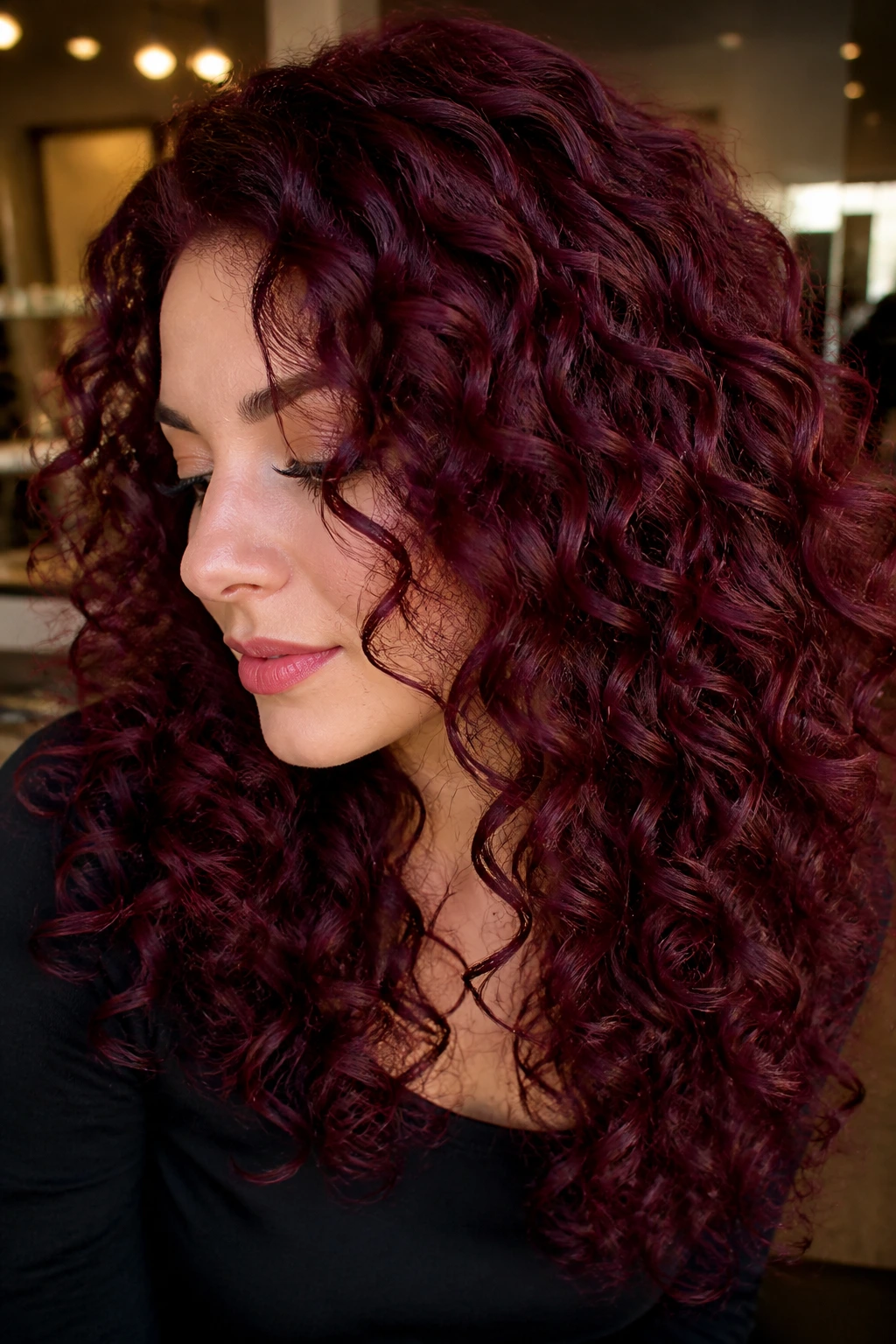
Ringlets hold burgundy like velvet holds light.
Bordeaux is a deep wine shade with enough red to be seen, but enough blue in it to stay cool. On curls and coils, that matters because the texture already gives you shape. The color only needs to support it. It does not need to do all the work.
Curl Care Notes
- Use a leave-in conditioner on damp hair
- Diffuse on low heat or air-dry in sections
- Refresh the color with a gentle color-depositing mask if the ends fade faster than the roots
The reason this shade works so well on textured hair is simple: the different curl sizes catch the color unevenly, which creates depth. You don’t need streaks or highlights to get that effect. Bordeaux can look full and rich on its own, especially if the curls are defined and the frizz is under control.
21. Blackberry Burgundy for Fine Hair
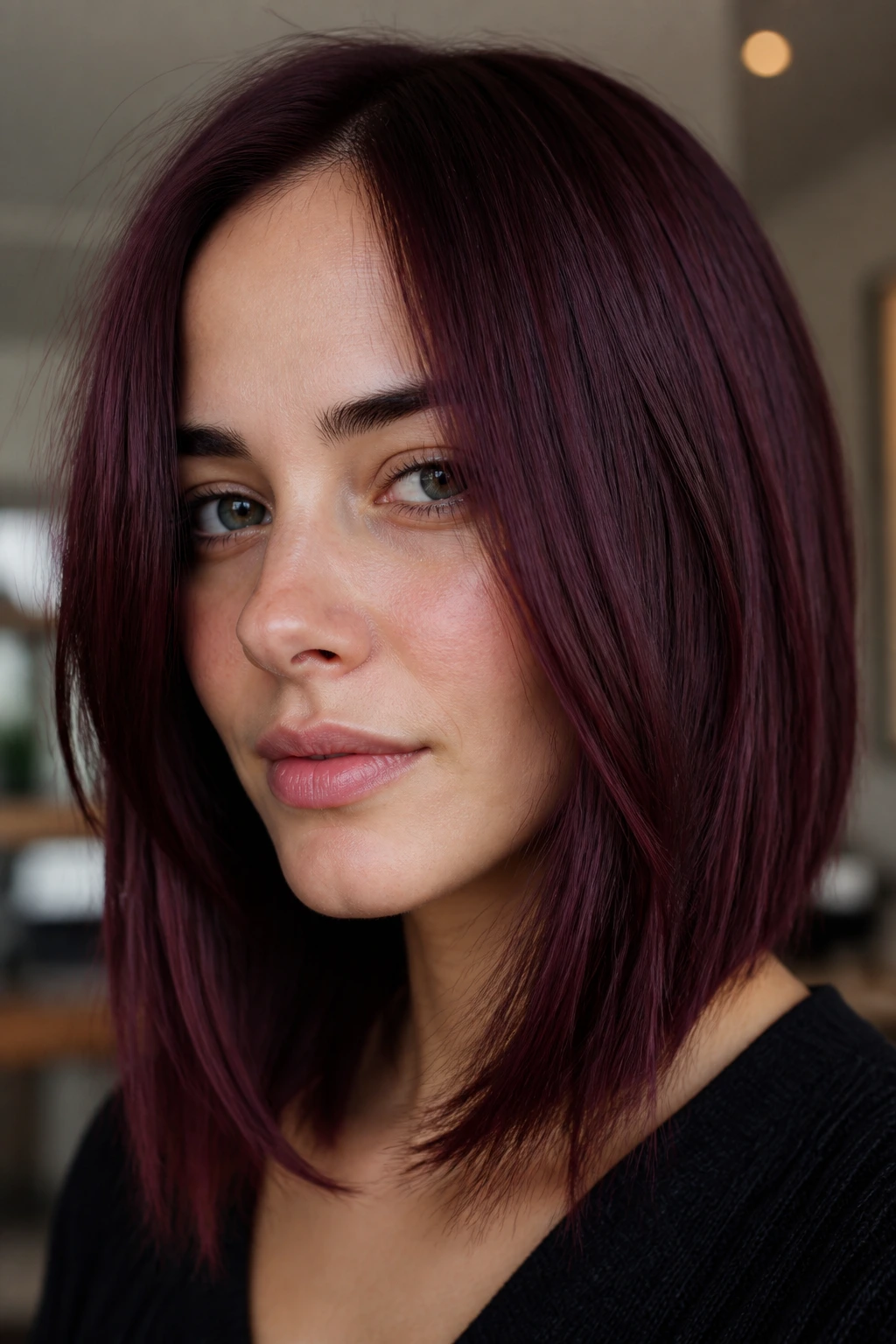
Fine hair often looks fuller in darker berry shades than in bright red. Blackberry burgundy does exactly that.
It adds depth first, shine second, and brightness only where the hair moves. That means the strands look a little denser than they would in a lighter red. On cool skin, the blackberry note keeps the shade from drifting warm, while the burgundy underneath gives it enough life to avoid looking like soft black.
This is a smart pick if your hair tends to go see-through at the ends. Darker berry tones make those ends look more present. Keep the cut clean and the lengths trimmed, and the color will do the rest. A violet-leaning gloss helps too. It keeps the shade crisp instead of brownish.
22. Frosted Burgundy Melt
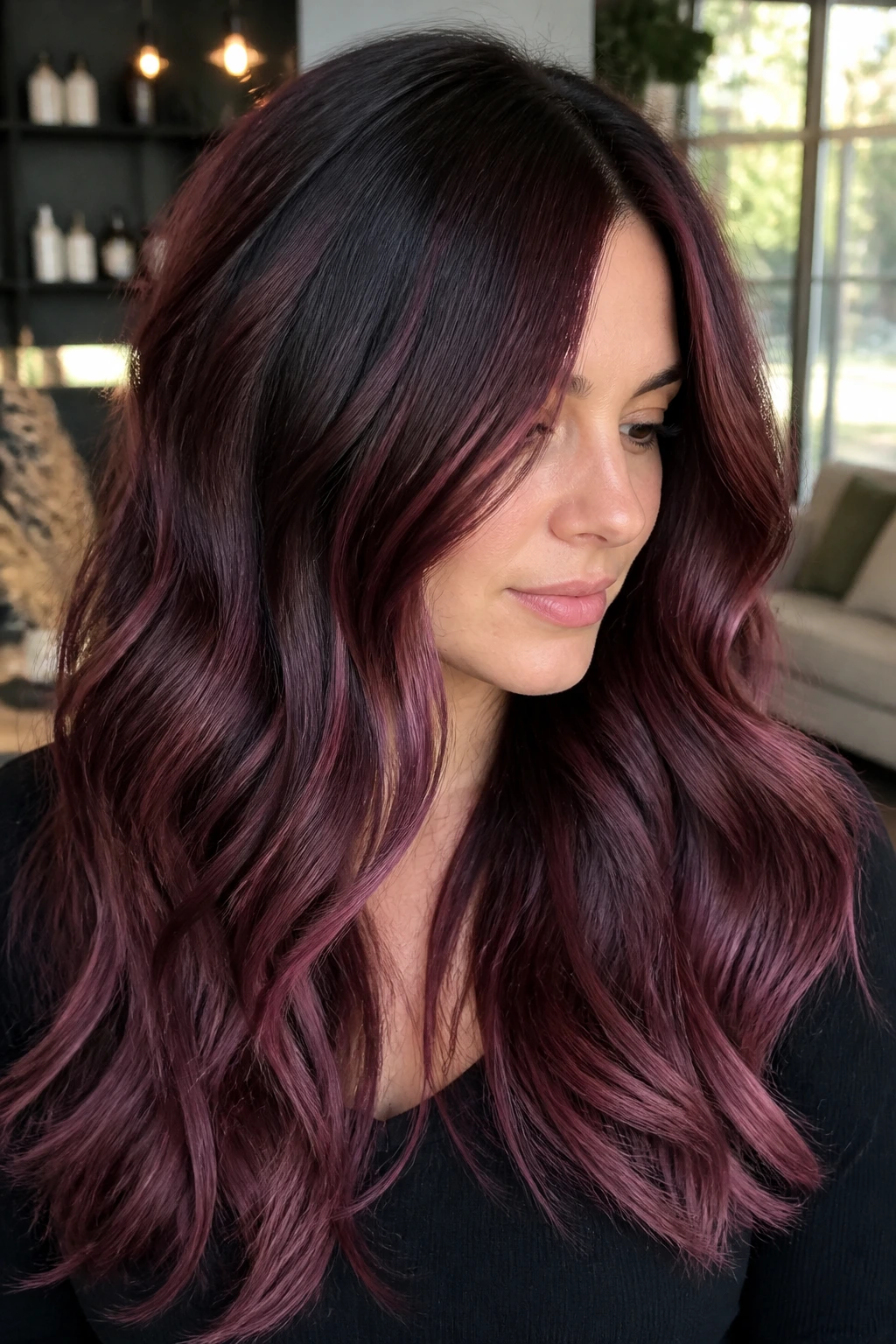
What if you want burgundy that feels airy instead of heavy? A frosted burgundy melt is the answer.
This look uses a smoky base — think cool mauve, soft plum, and dark wine — then melts it into lighter burgundy pieces that still stay on the cool side. It’s not frosty in the icy-blonde sense. It’s frosted in the way a windowpane gets a soft haze over it. That hazy finish is what keeps the shade from feeling too dense.
The best version of this color works on people who already wear a lot of cool neutrals and want the hair to echo that mood. It can also soften a sharper haircut, like a long shag or textured lob. Bring a daylight photo to the salon and ask for the red to stay blue-based the whole way through. That one detail can save you from a surprise copper result.
Final Notes
Cool skin and burgundy hair can be a gorgeous match, but the shade has to stay in the right lane. Blue-based red, violet-red, black cherry, plum, and berry tones usually behave better than anything that starts flirting with orange.
Bring your colorist a clear reference photo and be specific about depth. A level 4 burgundy on cool brown hair is a different animal from a blackberry glaze on light blonde hair, and the undertone changes everything.
The versions that age best are the ones with shine, depth, and a little restraint. If the red looks rich in dim light and clean in daylight, you’re in the right place.
