



Copper hair color ideas for cool skin tones work best when the red leans berry, rose, or smoky—not pumpkin-orange.
That single shift changes everything. Cool skin usually has pink, blue, or rosy undertones, and a copper that leans too gold can make the face look a little tired or flushed in the wrong way. Push the shade toward red, violet, or brown, though, and the whole thing gets sharper: the skin looks clearer, the eyes look brighter, and freckles suddenly look intentional instead of random.
The funny part is that people still treat copper like one flat color. It isn’t. Copper can be soft and muted, deep and glossy, bright and punchy, or so low-key it nearly reads brunette until the light hits it. That range is exactly why it works so well on cool undertones when the formula is handled with a little restraint.
The best versions below keep that crisp edge and skip the toy-store orange.
1. Soft Rose Copper Bob
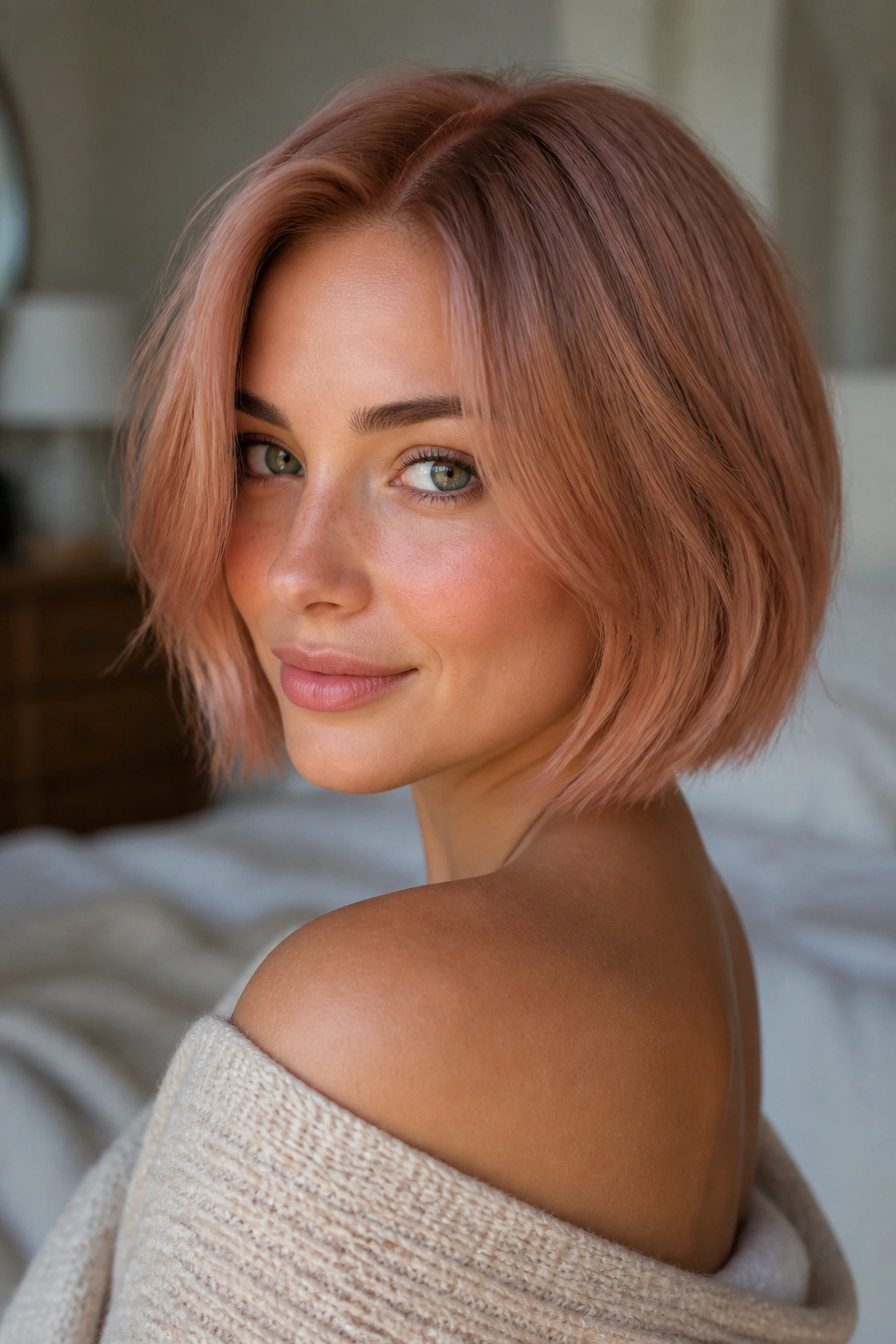
A soft rose copper bob is one of the easiest ways to wear copper if your skin leans cool and your features are on the softer side. The rose note keeps the shade from tipping too orange, and the bob length gives the color a clean frame instead of letting it sprawl across too much hair.
Why It Flatters Cool Undertones
Rose copper sits in that useful middle zone between pink and red-brown. On cool skin, that means the hair doesn’t fight the face. It sits beside it.
I like this shade on chin-length cuts, especially if the hair has a slight bend at the ends. The movement stops the color from looking heavy. If the hair is dead-straight and blunt, the rose tone can feel a little flat.
- Ask for a level 7 copper with a rose-red base
- Keep the orange out of the formula; beige or pink toners do the job better
- Add a tiny root shadow if your skin is very fair and flushes easily
- Style with a 1-inch iron and loose bends, not tight curls
Best for: pale to medium cool skin, pink undertones, and people who want copper without a loud finish.
2. Dimensional Copper Balayage on a Dark Brown Base
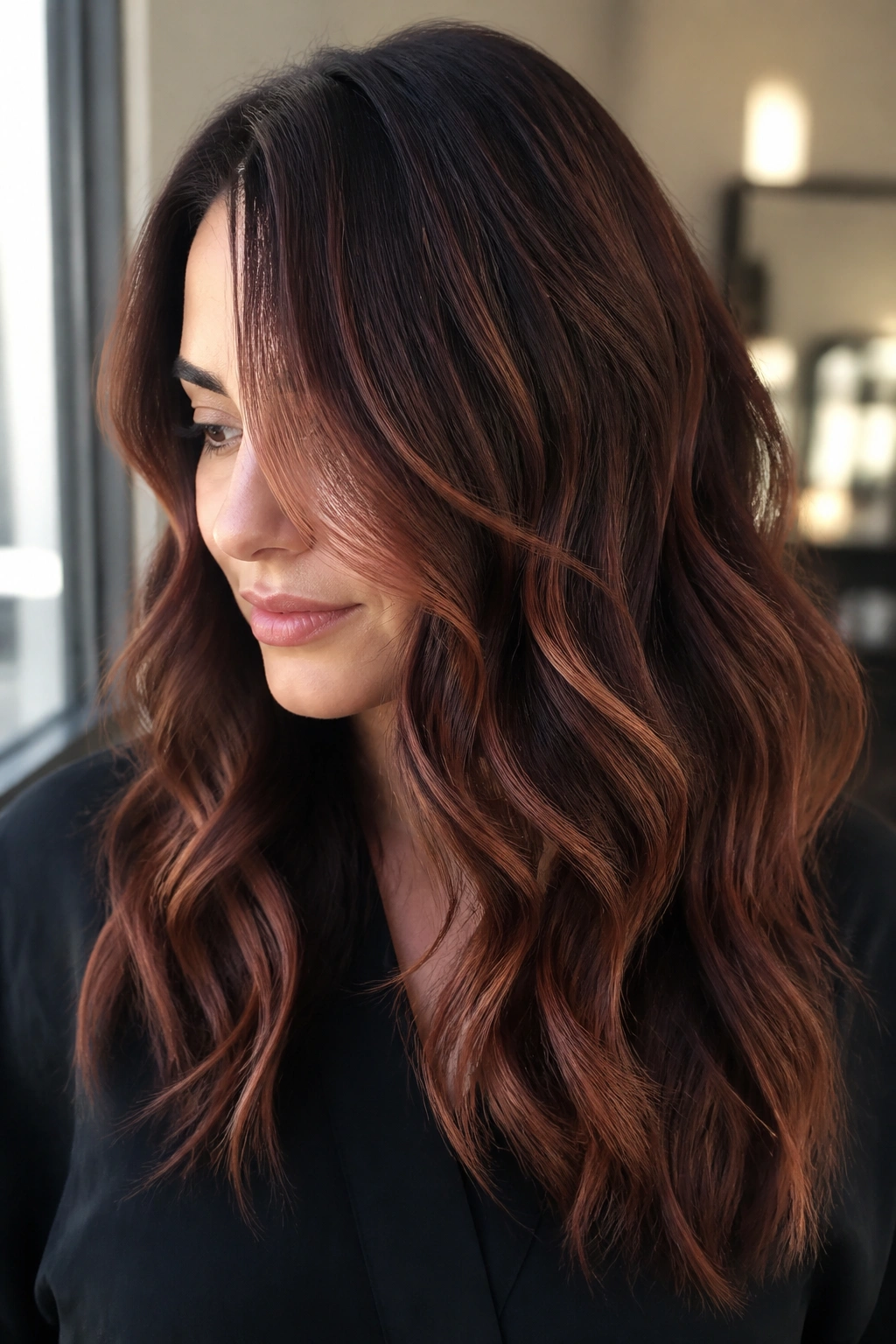
Dimensional copper balayage on a dark brown base gives you the easiest grow-out of the bunch. It also happens to look expensive in the plainest sense of the word: there’s depth at the roots, light through the mids, and enough contrast that the color doesn’t smear into one flat orange block.
The dark base matters more than most people think. On cool skin, a brown anchor keeps the copper from taking over the face. The brighter ribbons should sit around the top layers and through the mid-lengths, not packed everywhere. That spacing gives the hair some air.
I’d ask for copper ribbons painted in a freehand way, then a cool beige or neutral gloss over the top. That softens the warmth without erasing it. It’s a good choice if your natural shade is brunette and you don’t want to see harsh regrowth after three weeks.
This one also holds up nicely in waves. The bends catch the lighter pieces, and the darker base gives your complexion a clean border.
3. Strawberry Copper with a Root Smudge
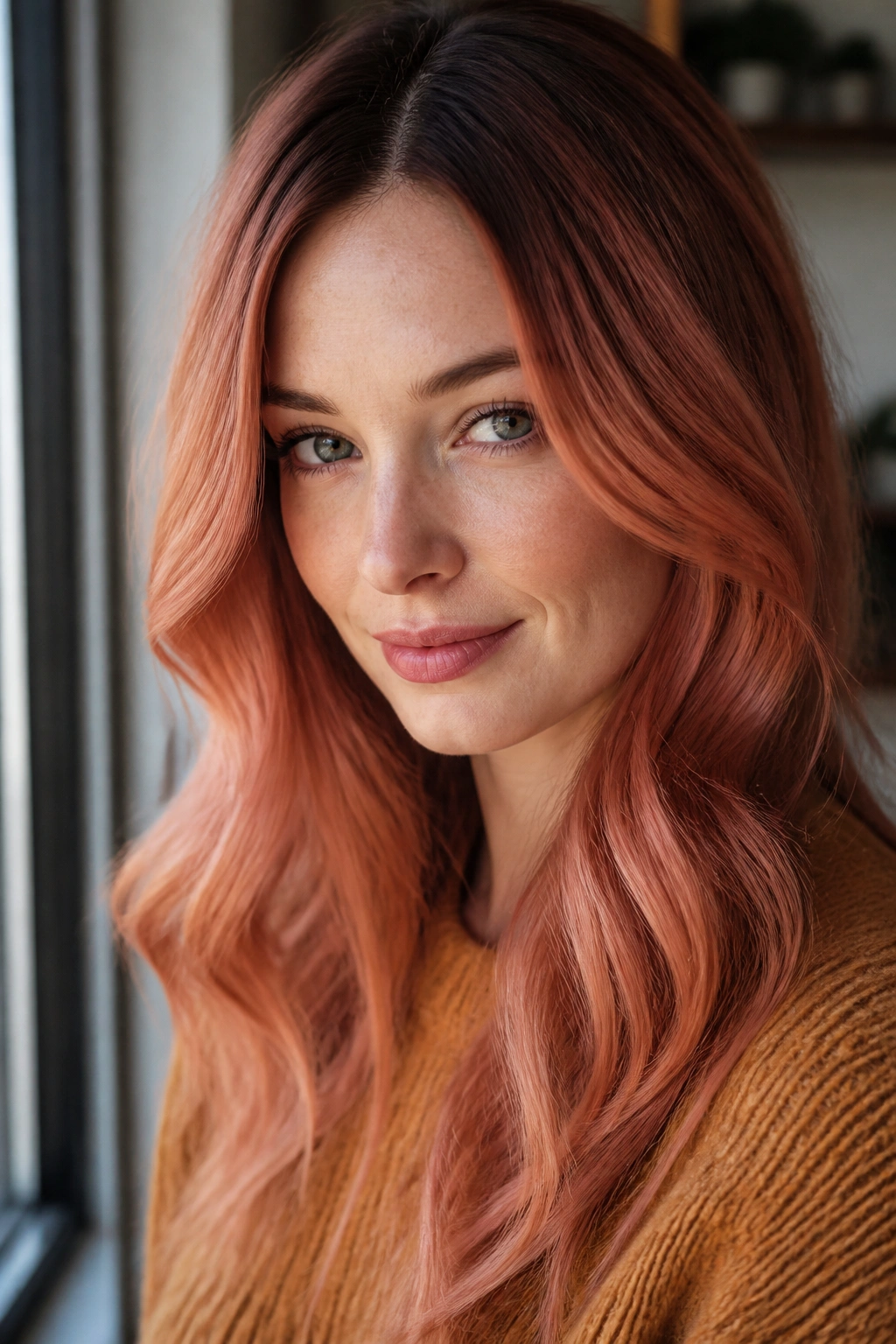
Why does strawberry copper keep showing up on cool skin? Because it sits closer to pink-red than plain orange. That little shift makes a big difference when your undertones lean cool.
A root smudge keeps the whole thing from looking too sweet. Without it, strawberry copper can drift into candy territory. With it, the color feels polished and a little more grown-up. I’d keep the root one to two shades deeper than the mids, especially if your hair is naturally brunette or ash brown.
How to Wear It
This shade looks best when the finish is glossy, not matte. Use a shine serum on the mid-lengths and ends, then blow-dry with a round brush or add soft waves with a large iron barrel. The movement helps the strawberry pieces show without making the color feel busy.
A cool-toned blush and a berry lip play well here too. Not because the hair needs makeup to work, but because the whole face ends up in the same color family. Clean, not matchy.
4. Muted Apricot Copper Lob
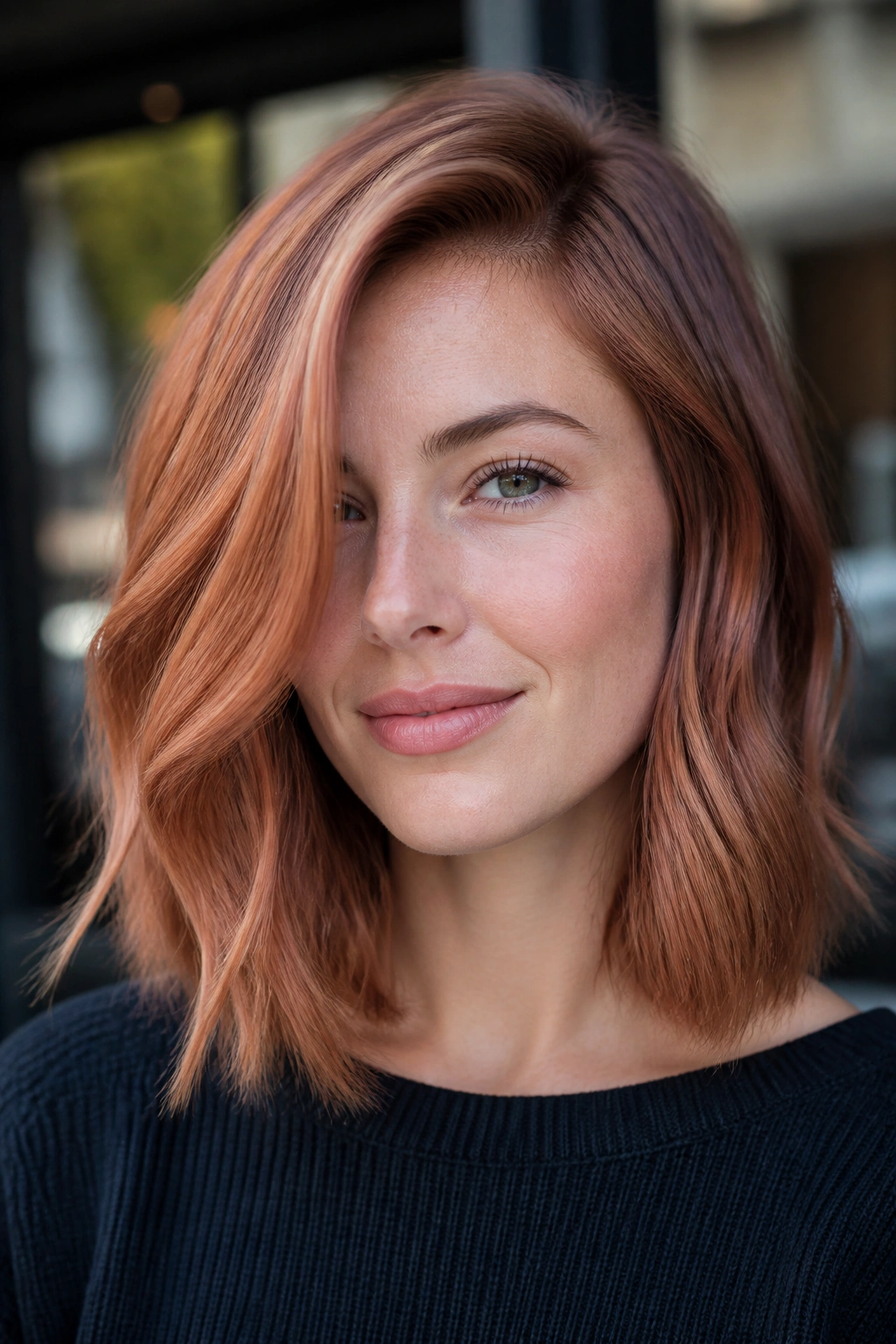
You know that moment when a swatch looks soft in the salon light, then hits daylight and suddenly shouts? Muted apricot copper is the answer to that problem.
The apricot part gives you warmth, but the muted finish keeps it from turning neon on cool skin. On a lob, the shade feels airy and easy to wear. There’s enough length to show the color shift from root to end, but not so much that the tone starts to drag.
If your skin is fair and pink-leaning, this is one of the safer brighter copper options. The trick is to keep the orange controlled with a beige-rose glaze. I’d stay away from yellow-heavy toner here. That’s where the trouble starts.
- Best on a lob that sits at the collarbone
- Works well with a soft side part
- Needs a gloss refresh every 4 to 6 weeks
- Looks cleaner with textured ends than with a sharp, one-length cut
The finish should feel light, almost like the color has been dusted on instead of poured over the head.
5. Cinnamon Copper Melt
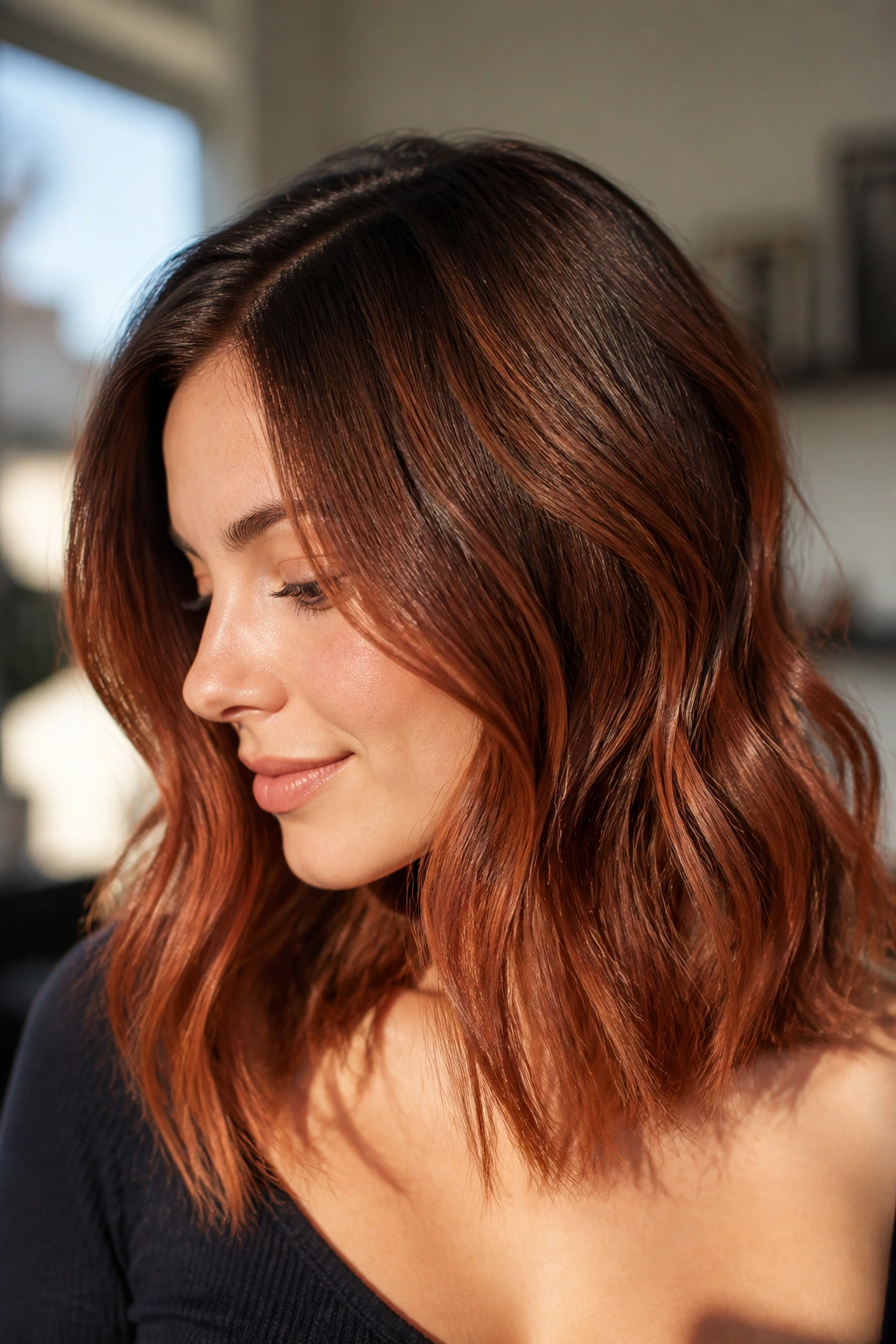
A cinnamon copper melt is one of those shades that looks richer the longer you stare at it. Chestnut roots bleed into cinnamon mids, then a copper end catches the light. Nothing about it feels loud.
That depth is what makes it flattering on cool skin. The darker root keeps the face from getting washed out, and the cinnamon red in the middle gives the copper somewhere to land. Without that middle tone, the color can jump from brown to orange too fast. Nobody wants that.
I’m fond of this one on shoulder-length layers, especially if the hair already has a bit of natural wave. Straight hair can still wear it, but the melt shows better when the strands move. It gives the color those soft shifts you see when someone turns their head near a window.
The maintenance is fairly sane, too. A demi-permanent gloss every six or so weeks will keep the cinnamon from going flat. If your ends are porous, use a color-safe conditioner with a touch of red pigment so the copper doesn’t drain out first.
6. Copper Money Piece on Deep Brunette Hair
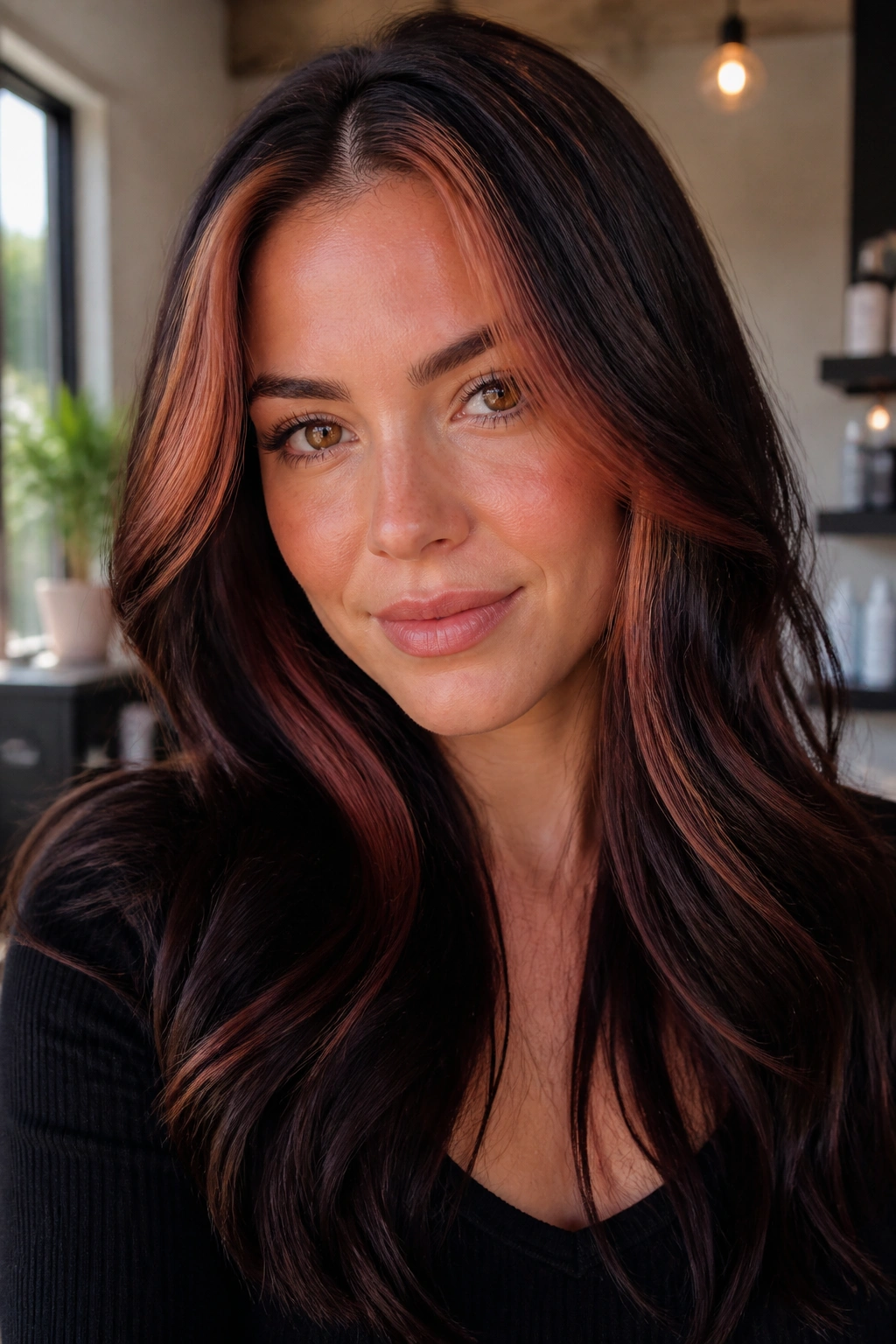
Copper money piece highlights are the cleanest option if you want copper but not a full-head commitment. They sit right at the front, where the color can brighten the face and lift cool skin without changing the whole head.
Unlike all-over copper, this version lets the brunette base do most of the work. That base is useful. Cool skin tends to look best when there’s some contrast nearby, and dark hair around the crown keeps the copper from reading too warm. The front pieces can be a level 7 or 8 copper, depending on how light your hair is now.
If you wear a center part, ask for the brightest pieces to sit from the temple down to the cheekbone. If you prefer a side part, push the lightest copper a little farther back so it peeks out when the hair moves. Tiny placement changes matter here.
This is the shade I’d suggest to someone nervous about red hair. It gives you the feeling of copper without the maintenance of a full copper grow-out.
7. Ruby Copper Gloss
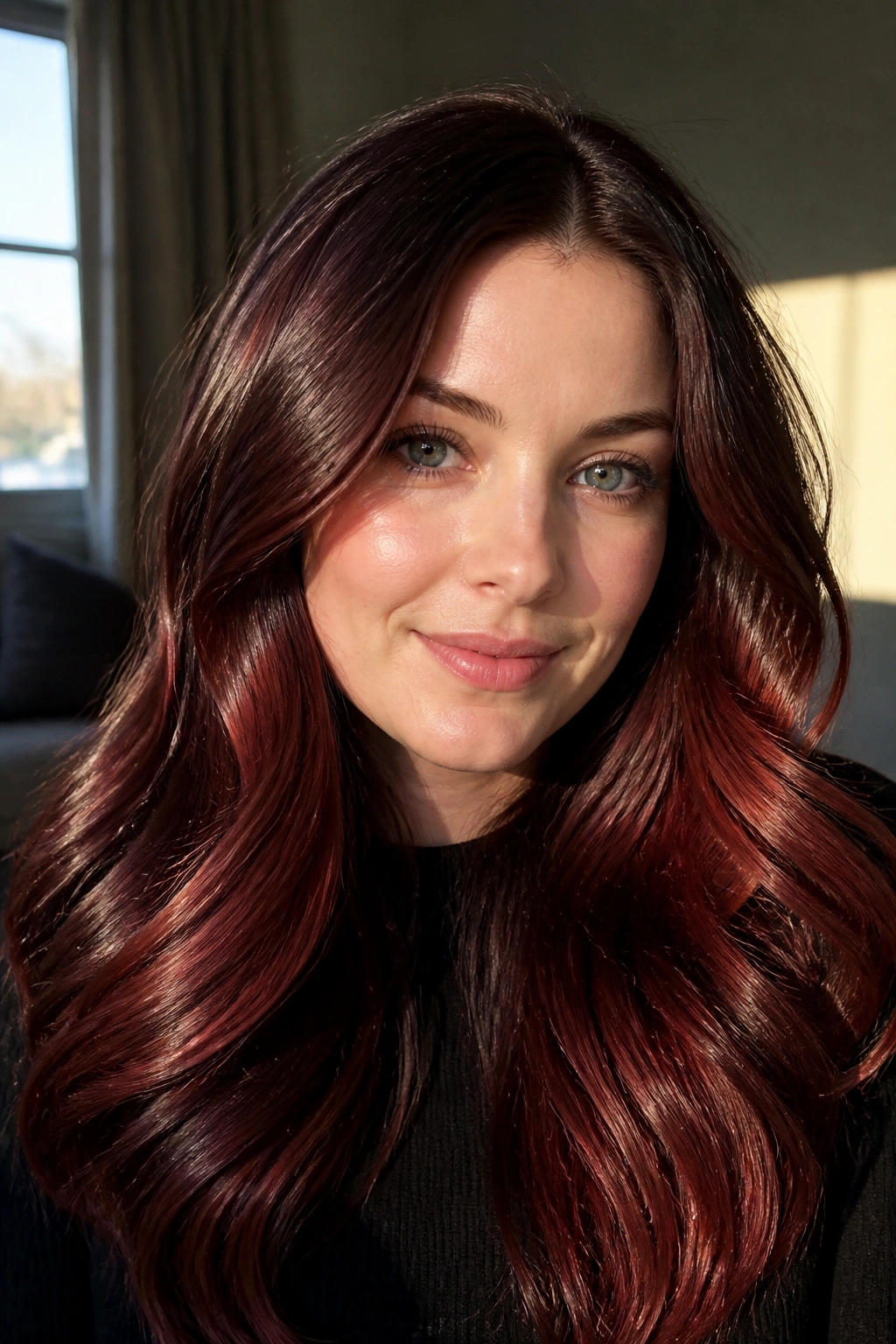
Ruby copper gloss is the cleanest copper for cool undertones if you like shine more than saturation. It’s darker, redder, and more jewel-like than the brighter copper shades people usually picture.
Keep the Base Dark
A deep brunette or near-black base makes ruby copper look intentional. If the base is too light, the color can drift toward orange-red. That’s where cool skin starts to lose the fight. Keep the root area rich and let the ruby tone bloom through the mids and ends.
Why Gloss Beats Permanent Color
A gloss gives you control. It lays down tone without locking you into a heavy permanent red that can turn brassy as it fades. If your hair is already light enough, a demi-permanent ruby gloss can do most of the work in one session. If it’s darker, the gloss is better as a finish on pre-lightened or highlighted hair.
I like this shade with blunt cuts, glossy waves, and darker brows. It has a polished edge that keeps the face from looking washed out. Red lipstick helps too, but you already know that part.
8. Peach Copper Pixie
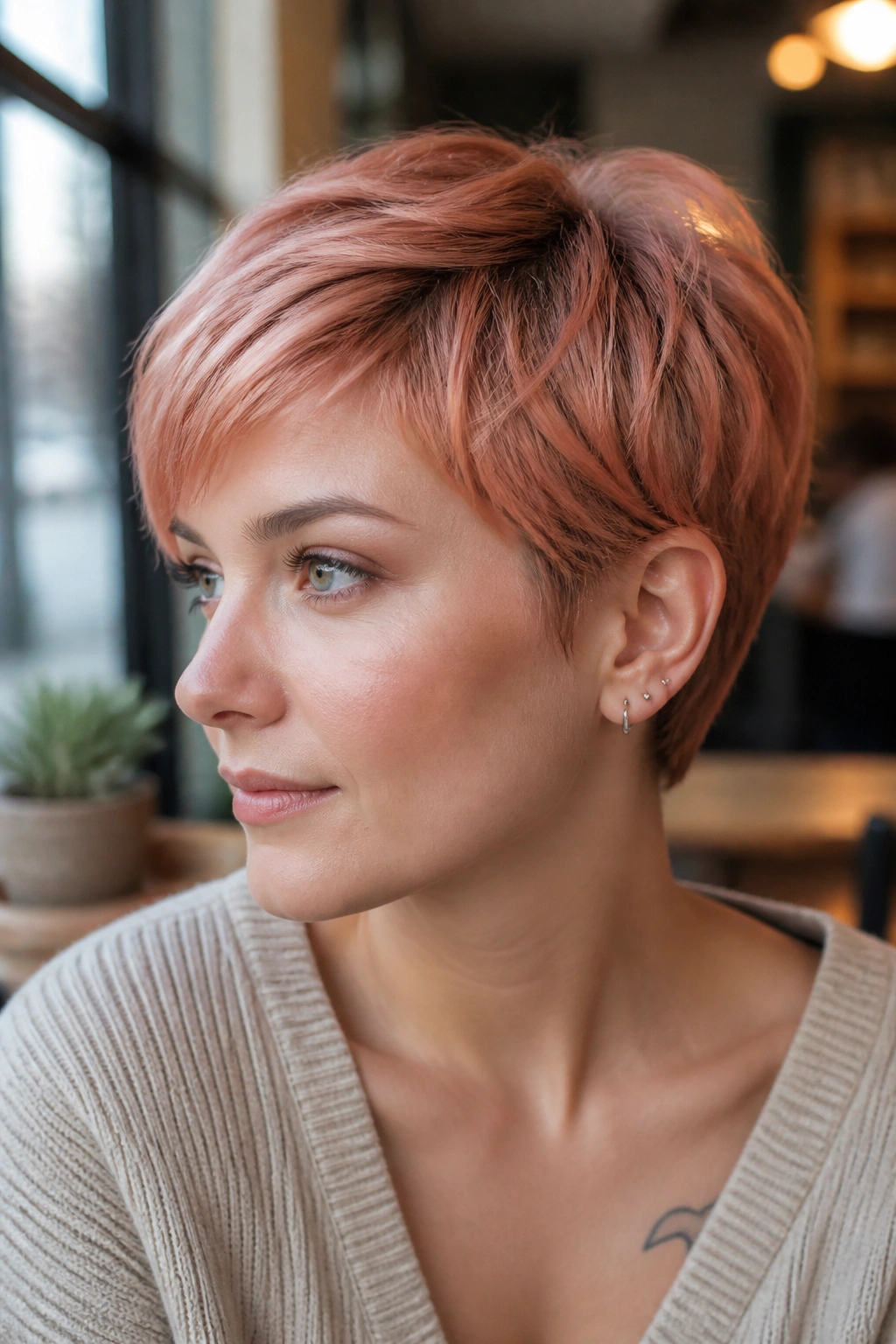
Can peach copper work on a pixie cut without turning cartoonish? Yes, if the tone stays grounded and the haircut has some texture.
A pixie shows color fast. That’s the blessing and the problem. On cool skin, a peach copper pixie needs a shadow root or a deeper base around the sides so the peach doesn’t sit too high and too bright. The hair should feel airy, not sugary.
How to Style It
Use a matte paste or light cream to separate the top layers. That keeps the peach visible in pieces instead of turning the whole cut into one flat glow. If the hair is fine, a root-lifting spray at the crown helps the color catch the light without needing more warmth.
- Ask for peach-copper tones with a soft violet or beige base
- Keep the sides slightly deeper than the top
- Avoid yellow-heavy glosses
- Refresh the tone every 3 to 4 weeks if your hair fades fast
A pixie like this looks best when the color feels sliced through the cut, not painted on top of it.
9. Auburn-Copper Ribbon Highlights
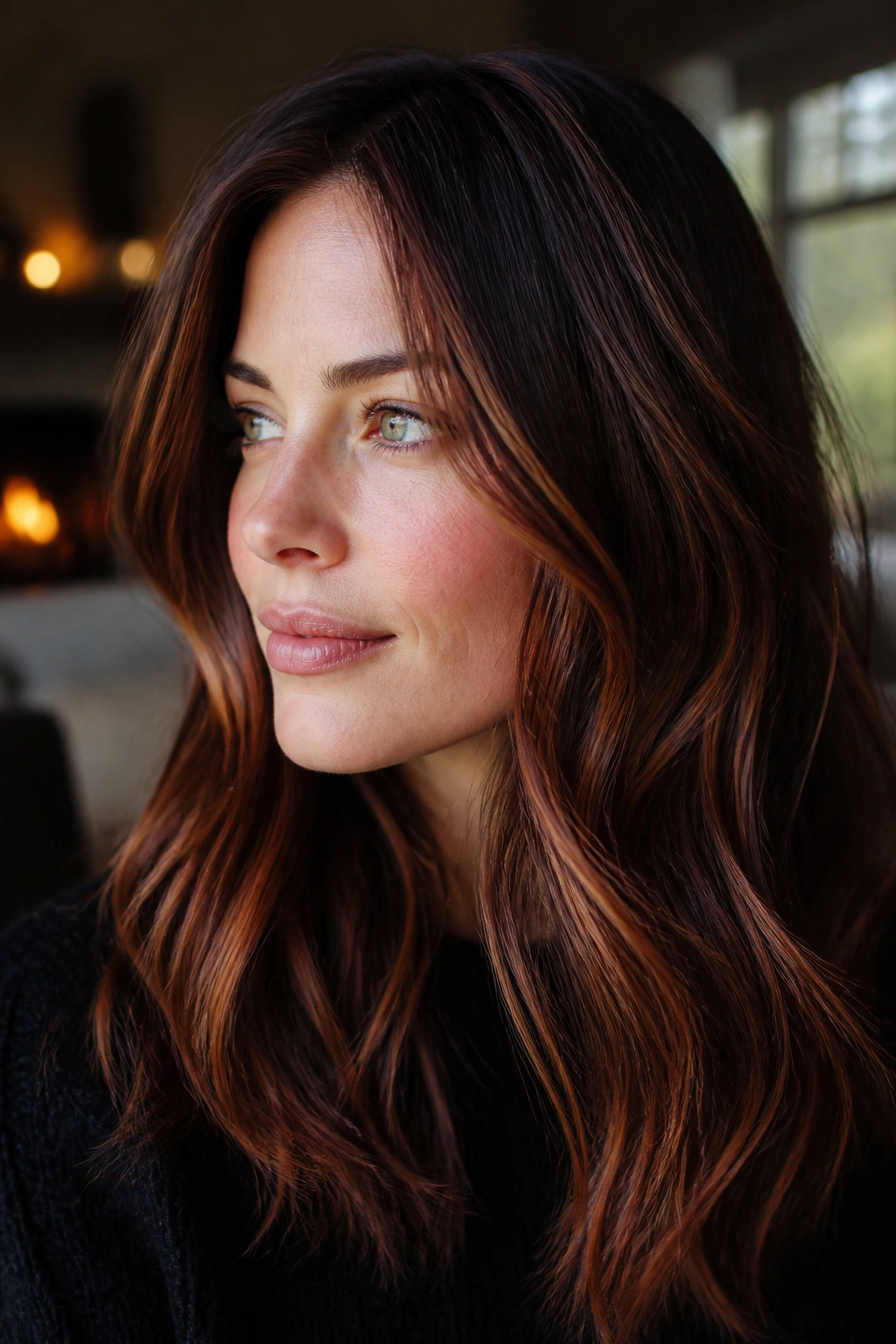
This is the color that looks brunette in the office and copper in daylight. Auburn-copper ribbon highlights sit somewhere between red-brown and burnished copper, which makes them easy to wear on cool skin without a dramatic color overhaul.
The ribbon technique matters. Instead of chunky stripes, the color is woven through the hair in thin, curved pieces. That makes the finish softer and keeps the cool undertones in your face from clashing with one giant warm block. It’s especially good on layered cuts where the pieces move a lot.
I’d choose this if your base color is already medium brown or dark ash brown. The auburn-copper ribbons add warmth without erasing depth. If your skin is very fair, keep the brightest ribbons away from the part line and closer to the lower layers. That prevents the whole face from going ruddy.
This shade has a quiet kind of movement. Not subtle in a boring way. Just controlled enough to look like you meant it.
10. Smoky Copper with Mushroom Brown Roots
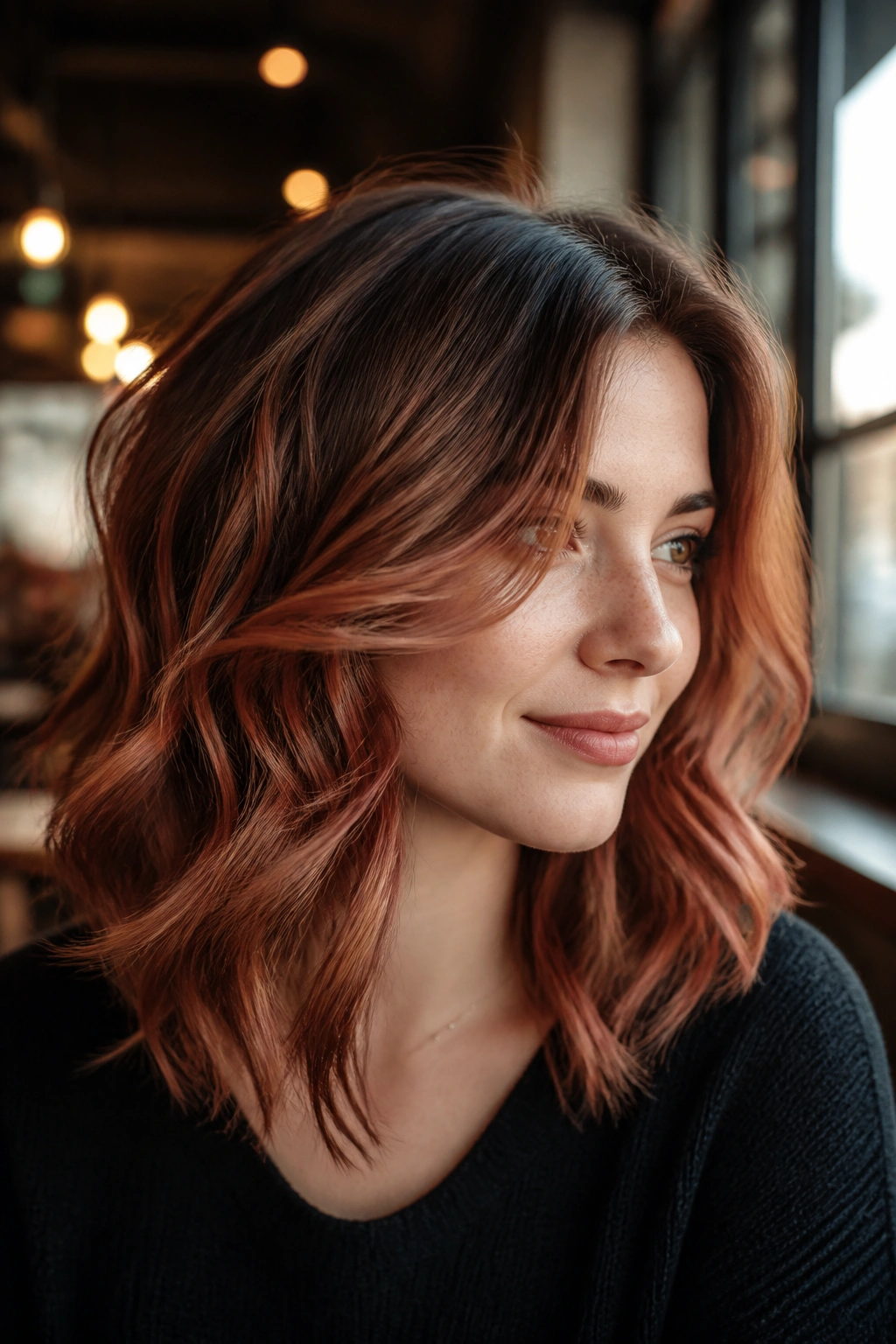
Smoky copper with mushroom brown roots is the answer for anyone who loves copper but hates the way bright orange can bully cool skin. The mushroom root tones the warmth down before it reaches the face.
Why the Root Matters
A cool, earthy root gives the hair a place to rest. Without it, copper can look like it starts too high and too hot. With it, the mids and ends can carry the color while the top stays grounded. That balance helps a lot if your skin is pale, pink, or prone to redness.
What to Ask For
- A mushroom brown root shadow
- Smoky copper mids, not bright orange
- A soft beige-red glaze on the ends
- No gold toner near the face
This is one of my favorites on wavy shoulder-length hair because the root shadow and copper pieces move together. It also grows out better than a lot of brighter reds. The contrast softens naturally, which saves you from a harsh line after a few weeks.
11. Burnished Copper Waves
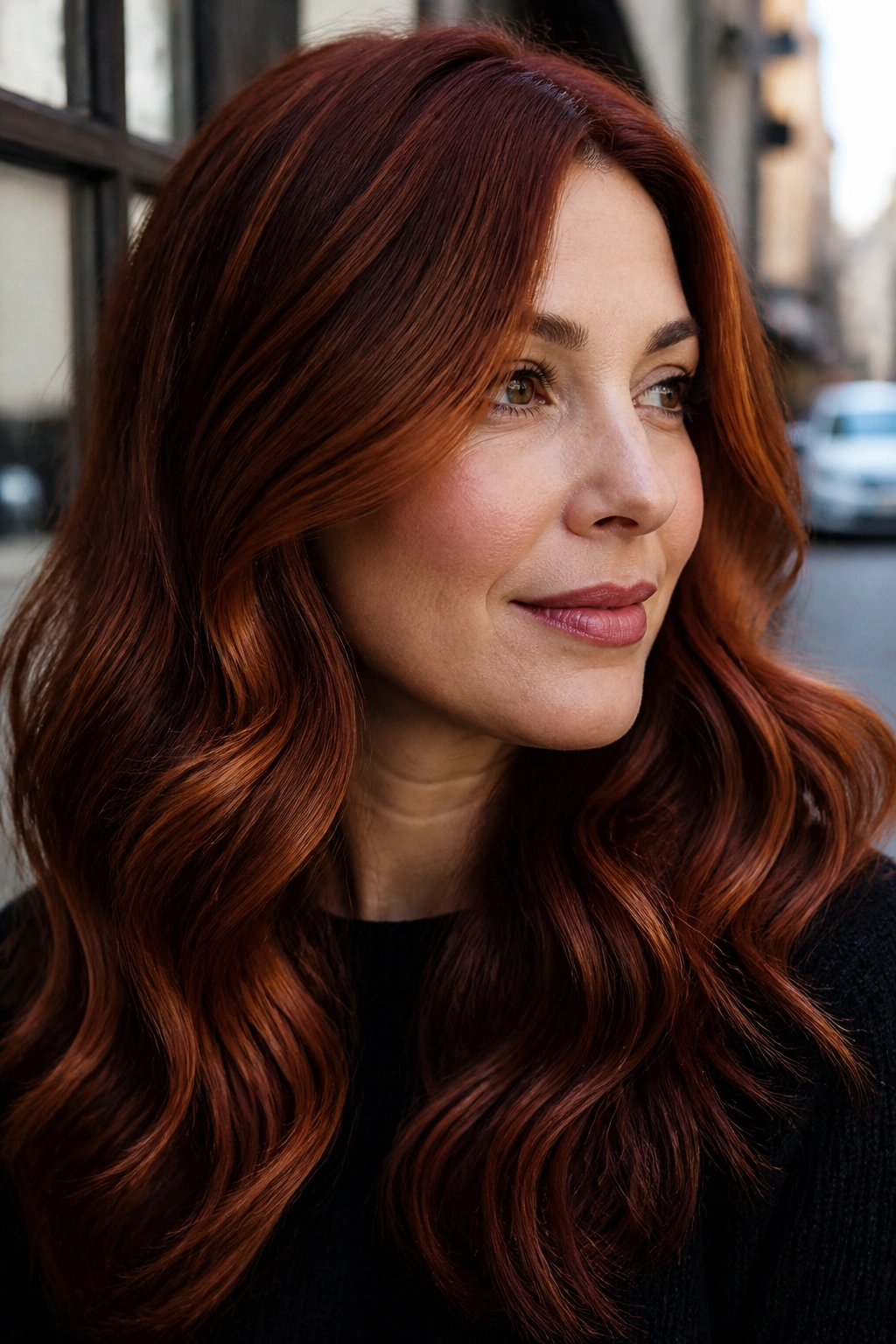
Burnished copper is the shade I picture when I think of polished metal after it has been handled a few times — still bright, but with a bit of depth and wear. On cool skin, that depth is what keeps the color from feeling too sunny.
The waves matter here. Burnished copper needs movement to show off its red-brown body. On straight hair, the color can flatten and start looking more orange than intended. Add loose bends with a one-inch iron, though, and the highlights and darker pieces start doing their job.
I’d keep the formula on the deeper side of copper, closer to level 6 than level 8. That gives the shade some weight. A high-shine finish matters too. The shine doesn’t have to be glassy; it just needs to be clean enough that the copper looks rich instead of dusty.
This is a good pick if you like copper but want something a little more adult and a little less bright salon-red. It’s low drama, which I mean as a compliment.
12. Copper-Red Ombré
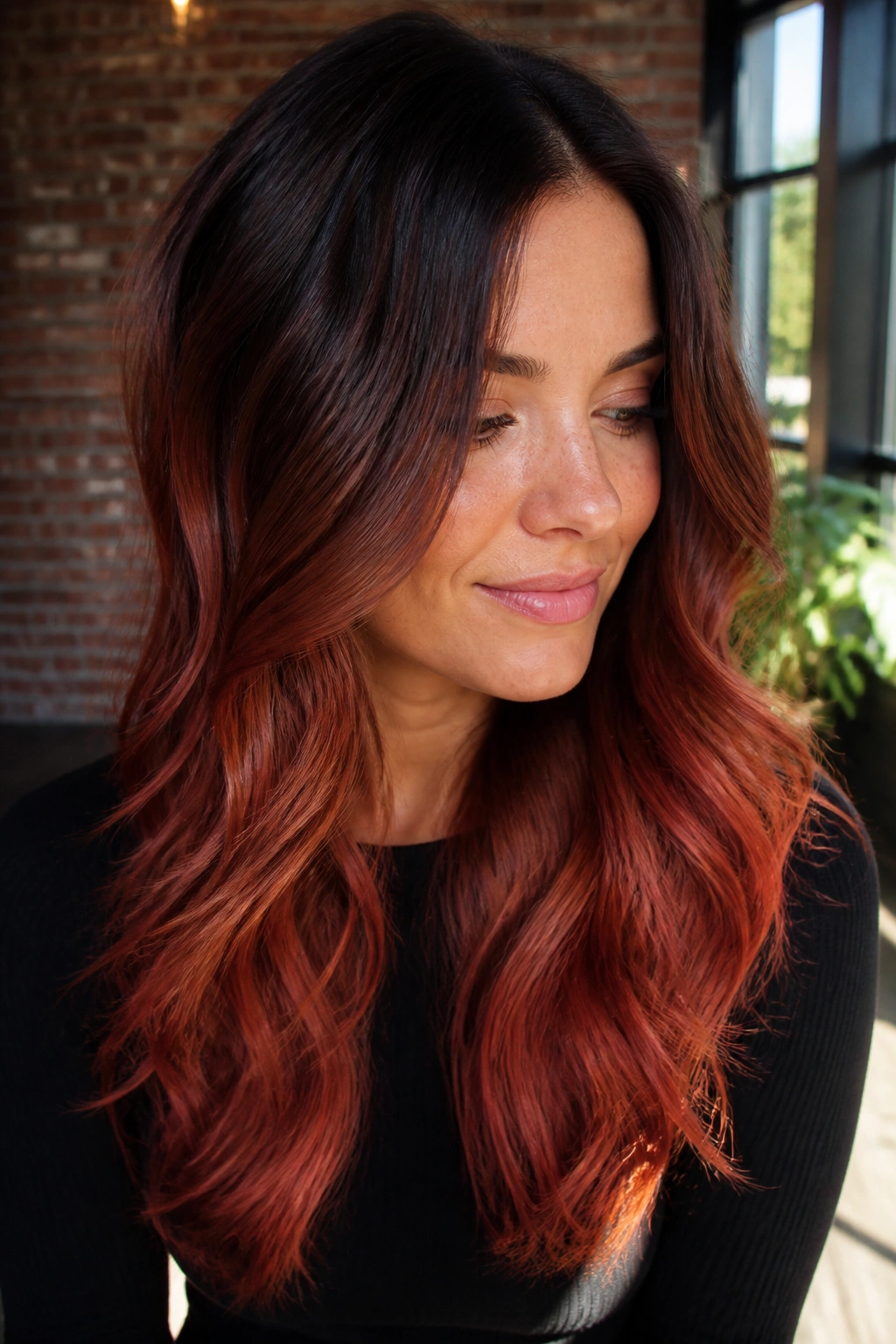
A copper-red ombré is one of the few brighter looks that can still work on cool skin without looking loud. The reason is simple: the root depth does the heavy lifting.
When the hair starts deep at the crown and eases into copper-red ends, the color has room to breathe. The gradient keeps the warm tones away from the face and lets the brighter copper show only where the light can catch it. That makes it much easier to wear than a solid all-over red-orange.
How to Avoid a Stripey Fade
The blend has to be soft through the middle. If the transition line is too sharp, the color looks like two separate heads of hair. Feather the copper through the mid-lengths and keep the ends the brightest part. A glossy finish helps the shift look intentional.
I like this on long layers, but it can work on medium hair too. The key is that the ombré should feel like a slow burn, not a hard dip from brown into orange.
13. Venetian Copper Blonde
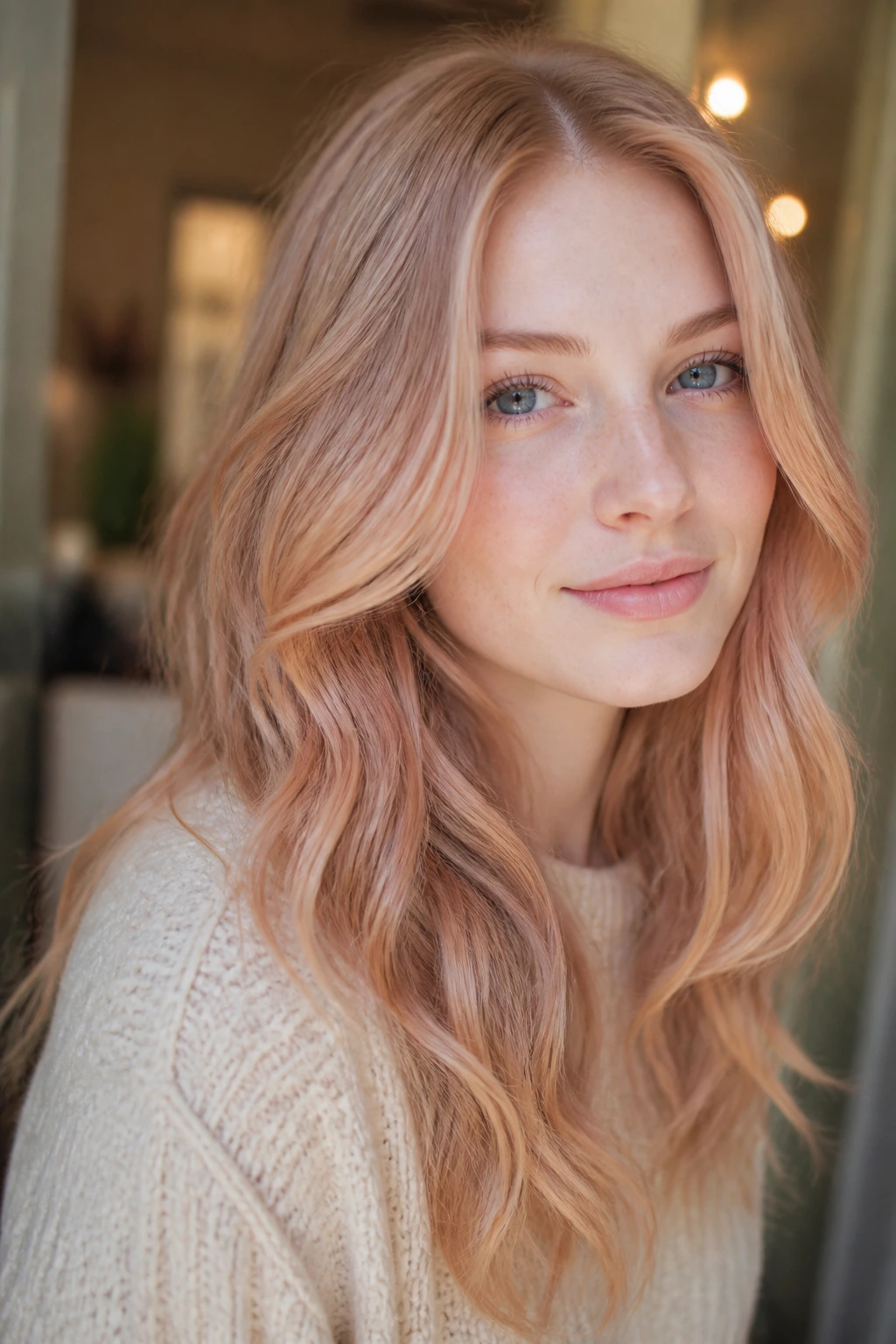
Venetian copper blonde is the lightest shade on this list, and it needs a steady hand. Too much yellow and cool skin starts to look tired. Keep it rosy, beige, and clean, and it turns into a soft, expensive-looking light copper.
This shade works best when the hair is already light or has been lifted carefully to a pale blonde base. Then a copper-beige toner can tint the hair without making it orange. I prefer this on people with fair skin, blue eyes, or a lot of natural contrast in their features. It’s a lighter version of copper, not a blonde pretending to be red.
A few details make or break it:
- Ask for level 8 to 9 lightening
- Keep the toner rosy-beige, not gold
- Add face-framing brightness around the cheekbones
- Use a purple-blue color-safe shampoo sparingly if the ends go too yellow
It’s delicate. That’s the whole point.
14. Spiced Copper with Face-Framing Layers
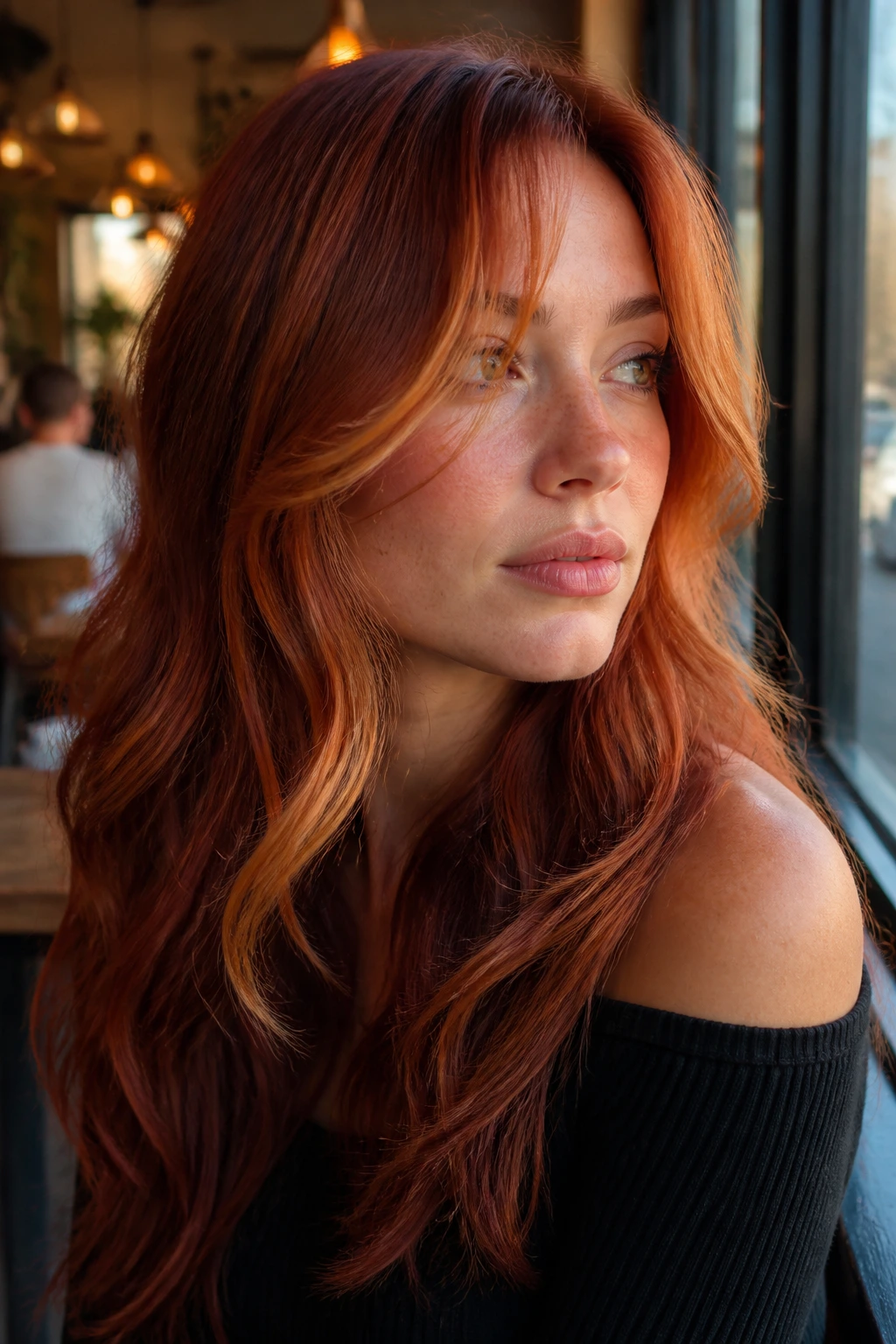
Spiced copper with face-framing layers is the move if you want color that follows the cut. A blunt one-length style can make copper sit there like paint. Layers give it motion.
The face-framing pieces should be a half shade lighter than the rest, maybe even a touch more red. That pulls the eye forward and gives cool skin a lift near the face. The interior can stay richer and slightly darker so the color doesn’t start yelling from every angle.
This works especially well with curtain bangs or long layers around the jaw. Those pieces catch the brightest copper and then drop back into the deeper body color. I like it on medium-thick hair because the layers have enough bulk to hold their shape.
If you’re asking for this at a salon, say you want spiced copper, but keep the front pieces brighter and the underneath more muted. That one sentence saves a lot of confusion. Hair colorists hear “spiced” and think all sorts of things.
15. Cider Copper with a High-Gloss Finish
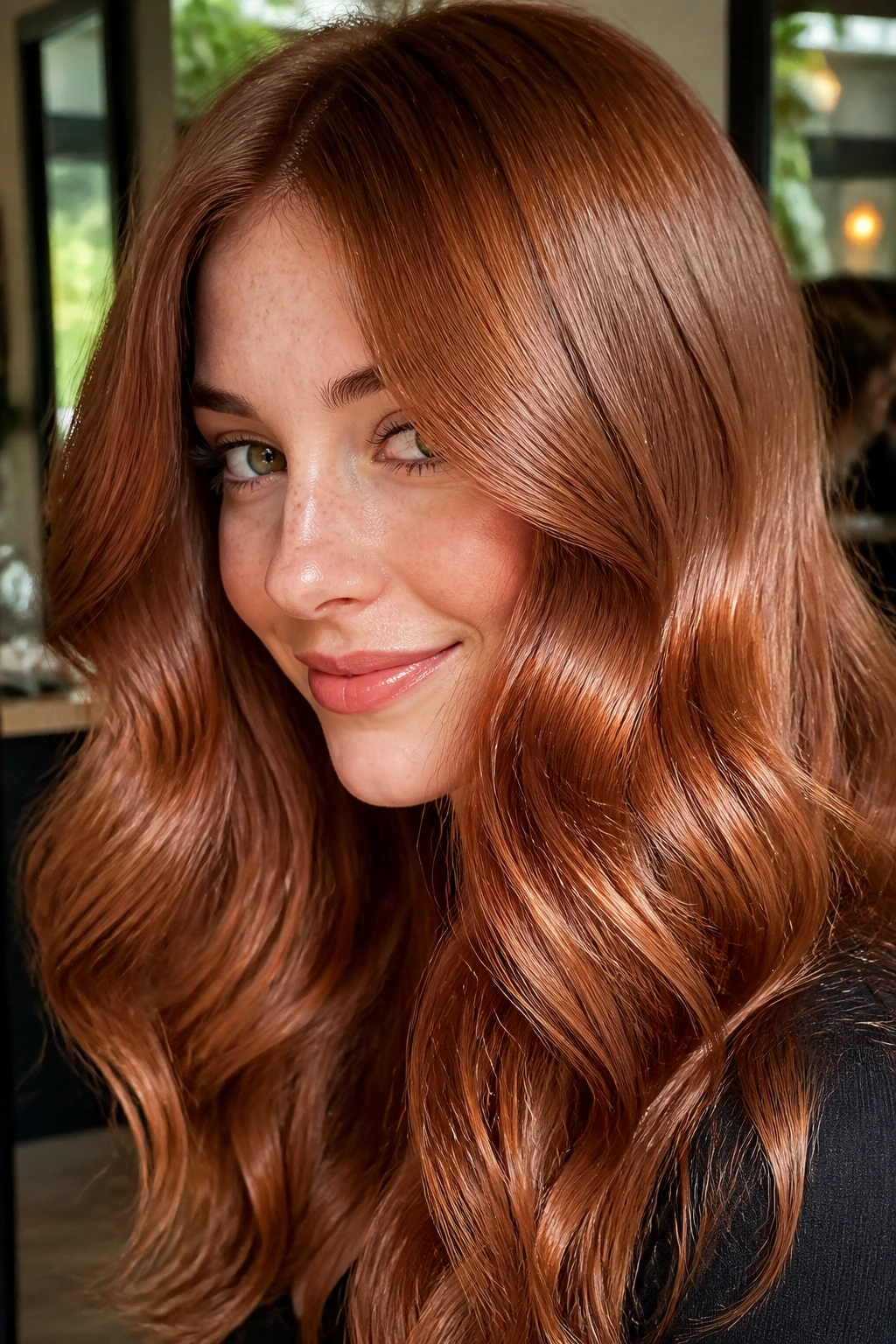
Cider copper is one of those shades that looks warmer in memory than it does in the mirror. The trick is the gloss. A high-gloss finish keeps the red-brown tone reflective, which helps it sit nicely on cool skin.
This color lives in the apple-cider zone: red-brown, slightly sweet, never neon. It works especially well if your natural hair is medium brown or auburn because the tonal shift feels believable. A heavy golden copper would fight the complexion. Cider copper doesn’t.
I’d keep the formula on the deeper side and finish it with a clear or lightly tinted gloss. That shine makes the shade look richer and cleaner. If the hair is porous, the gloss matters even more. Porous hair drinks in pigment unevenly and can leave the ends looking dull or too orange after a few washes.
A color-depositing conditioner with red-brown pigment can help stretch the life of the shade between salon visits. Not every wash. Just enough to keep the edges from fading out first.
16. Deep Copper Curls
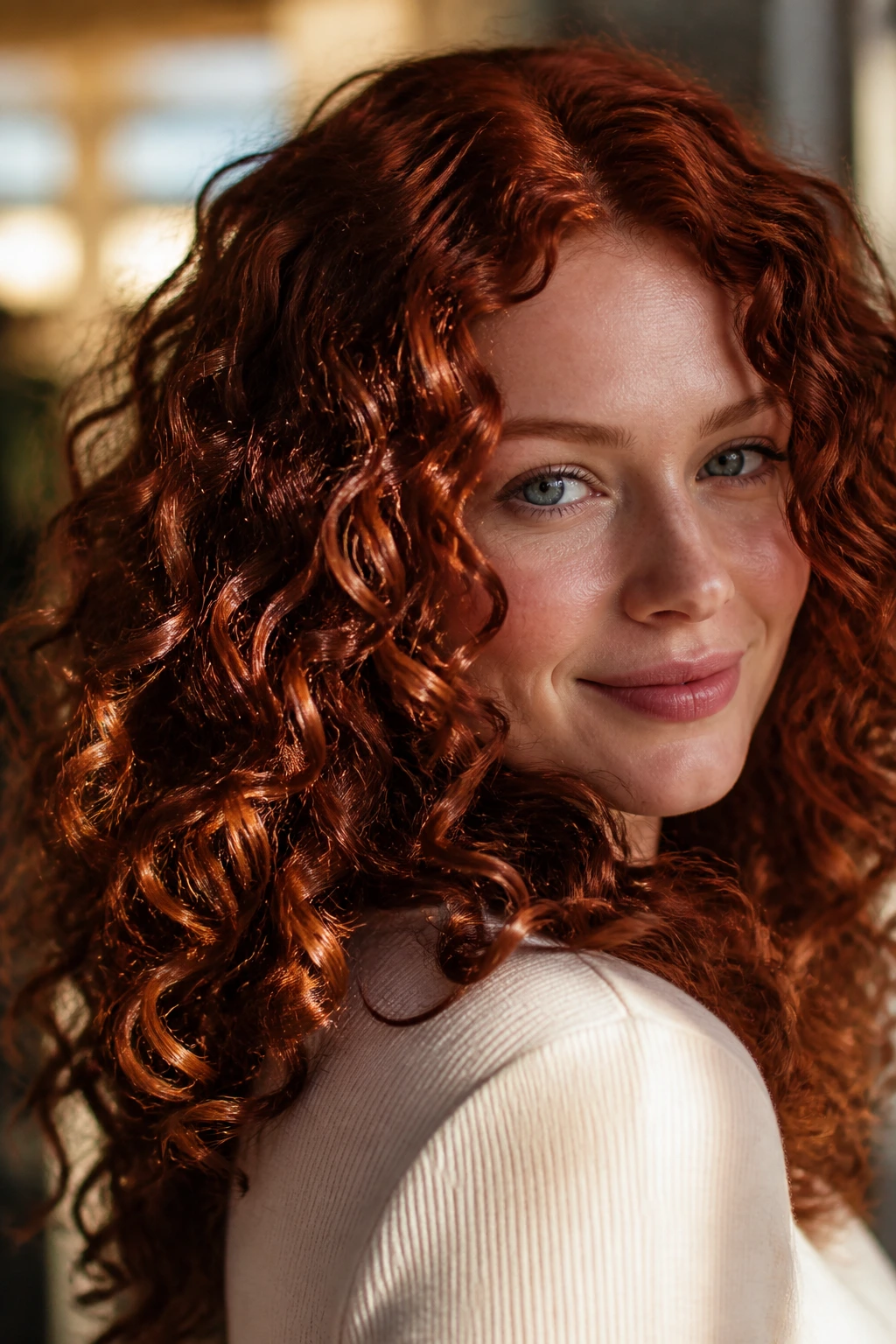
On curls, deep copper reads richer than it does on straight hair. That’s good news for cool skin, because the curl pattern breaks up the warmth and keeps the shade from sitting in one flat sheet.
The best version has depth in the base and copper through the tops of the curl clumps. That way the light hits the outer curve and the darker interior keeps the hair from looking too bright. I like this on naturally curly hair that already has some density. Fine curls can wear it too, but they may need lowlights to stop the color from looking thin.
Curl-Specific Notes
- Use a diffuser on low heat
- Work in a curl cream that keeps shine without weighing the hair down
- Ask for lowlights one shade deeper than your base
- Avoid heavy yellow copper if your skin is fair and pink
Curls make copper feel less forced. The texture does half the styling for you.
17. Copper Caramel Blend
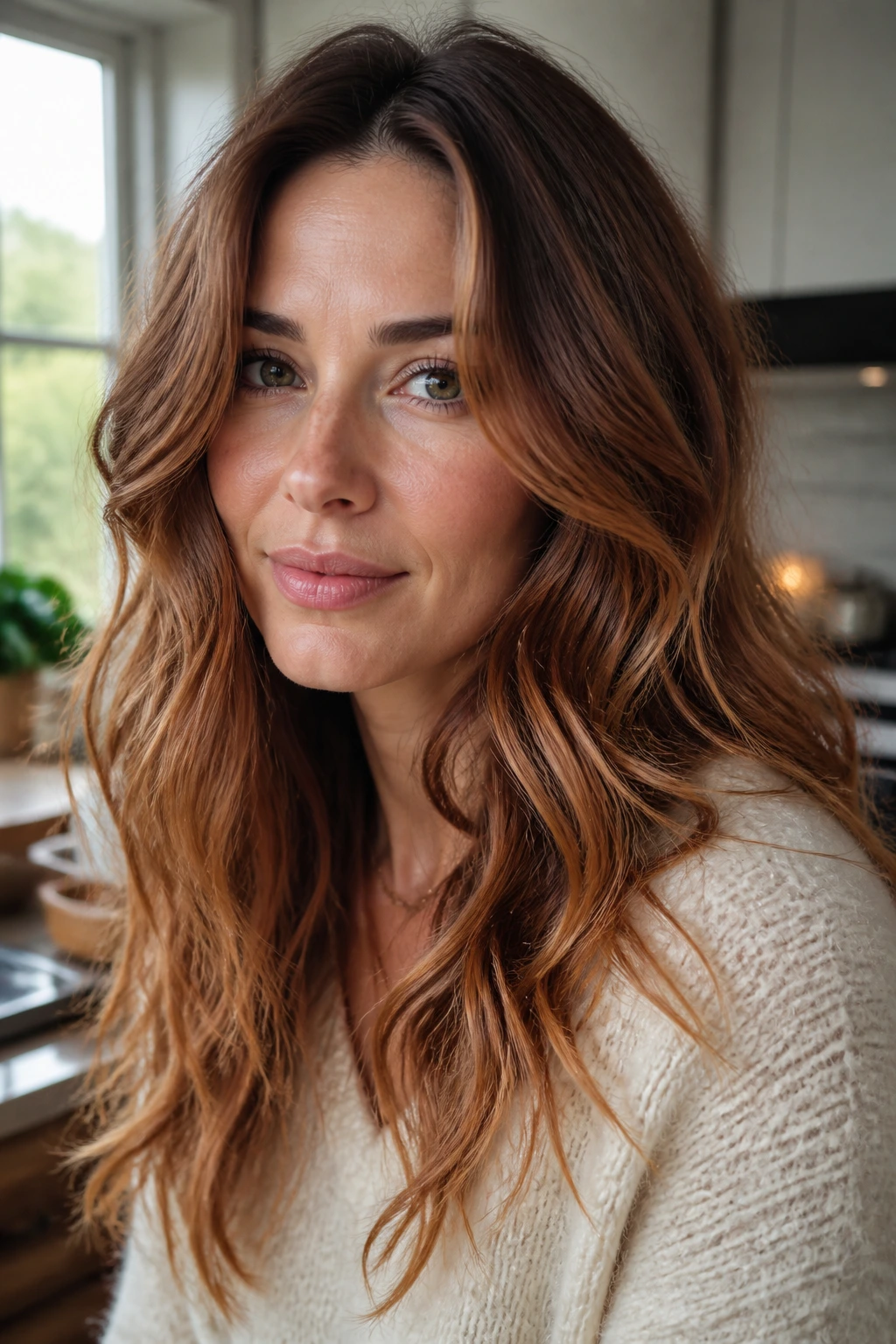
Is copper caramel too warm for cool skin? Not if the caramel stays toasted and the copper leans red.
That’s the part people get wrong. Caramel by itself can go gold fast, and gold is where cool complexions start to look off. Blend it with a rose-copper base, though, and the shade turns into something much more wearable. The hair still feels soft and warm, but it doesn’t take over the face.
This is a strong option for brunettes who want a softer copper story. You’re not lifting the hair all the way into red territory. You’re warming it up with controlled red-brown ribbons and a caramel finish that stays quiet. The result looks especially good on layered long hair, where the lighter pieces can fall around the face and the deeper pieces stay underneath.
If your undertones are very cool, keep the caramel more beige than yellow. That one move keeps the whole shade in line.
18. Metallic Copper with Lowlights
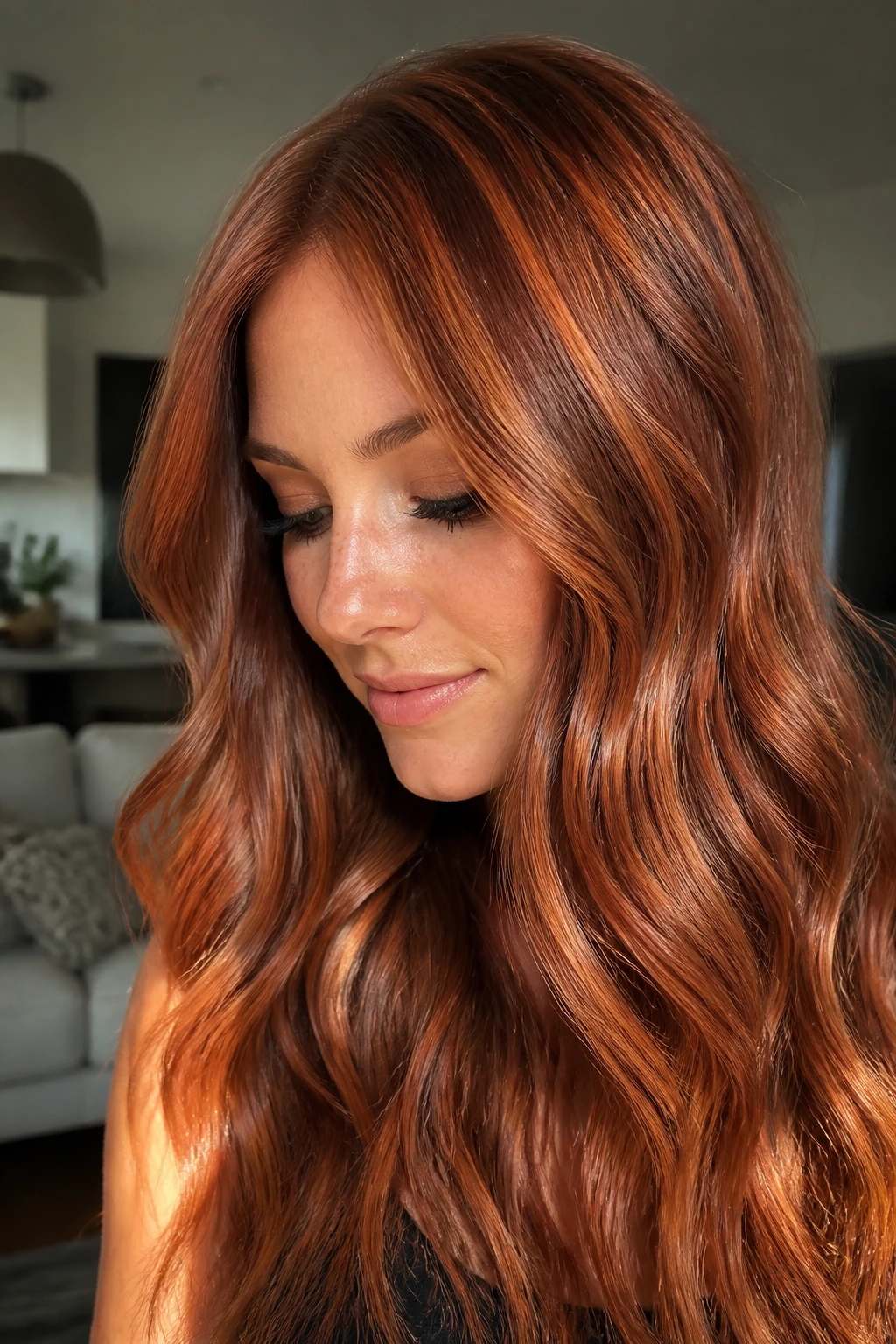
Metallic copper with lowlights is for people who like shine and movement. The lowlights are not an afterthought here; they’re the reason the color works on cool skin.
Without lowlights, metallic copper can look flat or too bright. Add a few deeper auburn, espresso, or smoky cinnamon strands, and the hair gets shape. The shiny pieces lift, the darker pieces ground the color, and the whole thing feels more like fabric than paint.
The Lowlight Formula That Works
I’d keep the lowlights one or two levels deeper than the base and place them underneath the top layer and through the back. That keeps the face bright but stops the color from turning one-note. A clear shine spray or a light serum makes the metallic effect stronger, but don’t pile it on. Too much product makes copper look greasy fast.
This is a good choice for straight or lightly waved hair. The shine shows best when the strands have a smooth surface. If your hair is rough or overly dry, the metallic look can fall apart.
19. Retro Penny Copper Shag
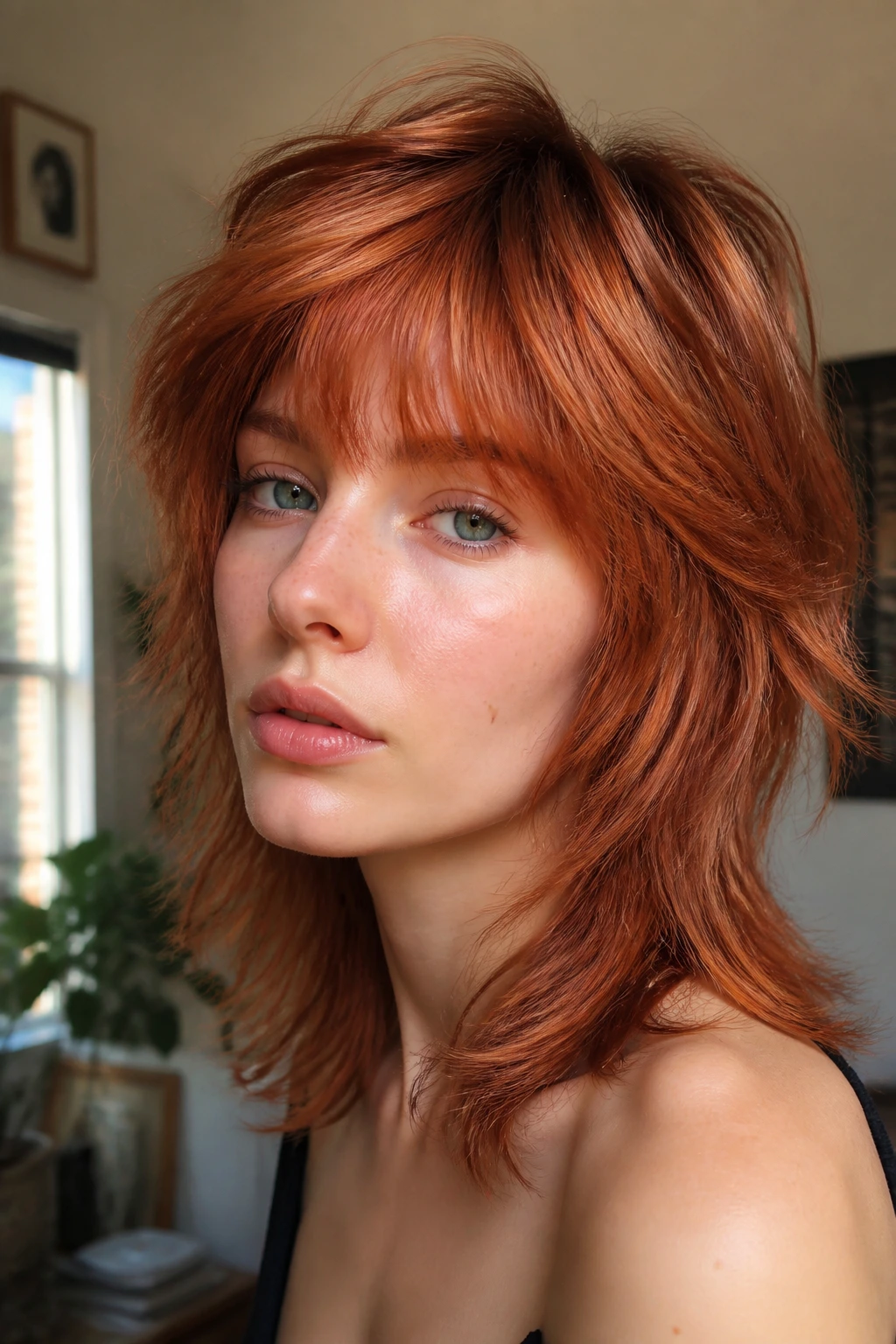
A retro penny copper shag brings a little grit to copper, and that’s exactly why I like it on cool skin. The shag cut breaks up the color into pieces, so the shade never feels too heavy.
Penny copper is deeper and richer than bright orange copper. On a shag, the chopped layers and fringe keep the color moving. The result is less “single shade” and more “color with texture.” That matters because cool skin usually needs either depth or contrast. A shag gives you both.
This cut also works for people who don’t want to fuss with heat styling every day. Air-dried waves, a bit of texturizing spray, and the color does its own thing. If the fringe is soft and slightly piecey, the copper shows around the face without turning harsh.
I’d use this on medium to thick hair. Very fine hair can wear the cut, but it needs careful layering so it doesn’t look wispy. The color should stay rich and a touch smoky, not flat orange.
20. Velvet Copper for Short Hair
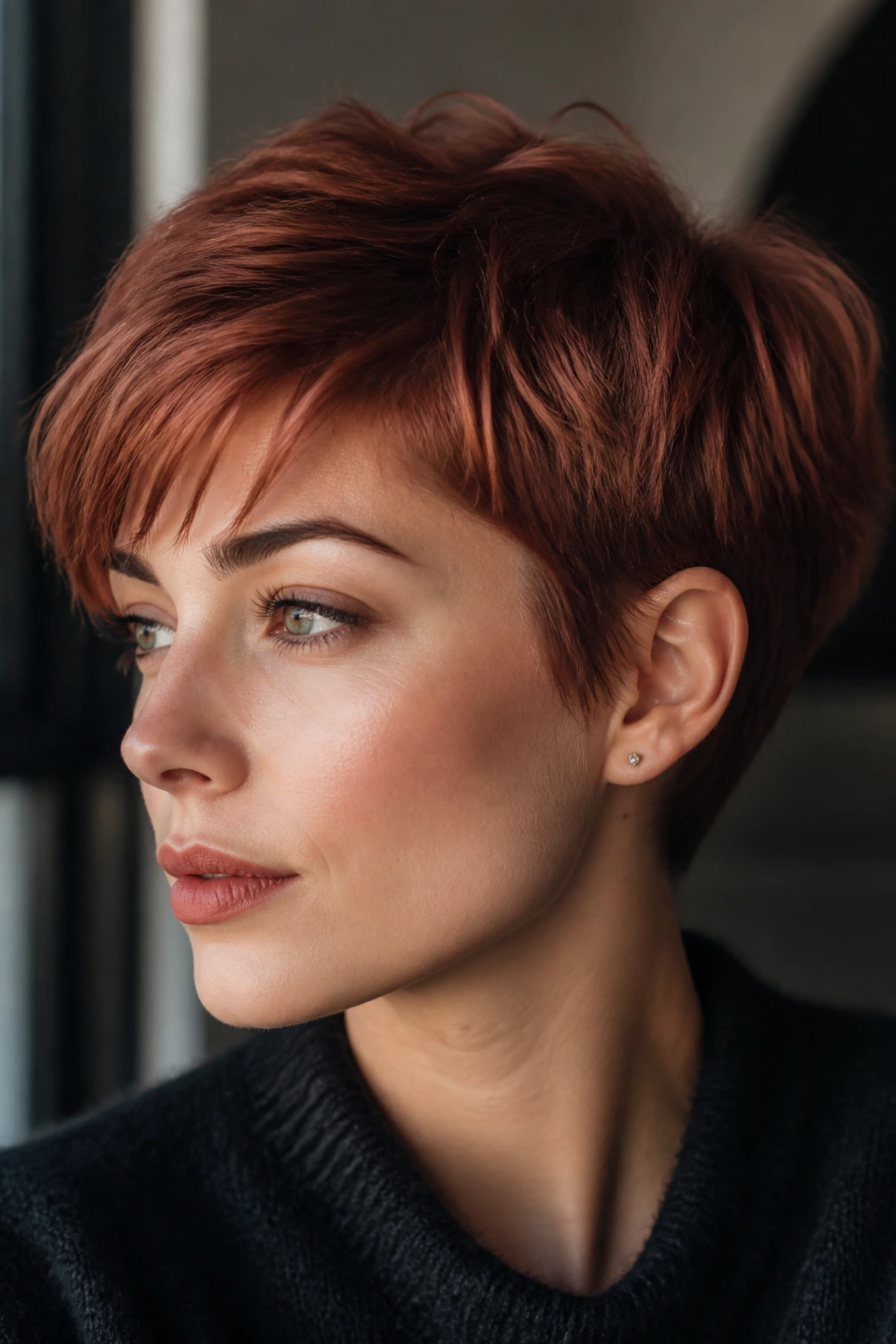
Short hair is honest.
A velvet copper on a pixie, crop, or short bob has nowhere to hide, which is exactly why the shade needs to be controlled. Keep the tone muted enough to feel soft, but rich enough that the hair still looks alive in daylight.
This one works because the finish feels plush rather than glossy or bright. On cool skin, that velvet effect keeps the copper from flashing too orange at the temples and hairline. A slight shadow at the roots helps too. It gives the cut shape and makes the red-brown body of the color look deeper.
- Best on cropped cuts with texture
- Use a lightweight cream, not a heavy wax
- Ask for a soft copper glaze over a darker base
- Refresh the tone often if your hair is porous
I like velvet copper on people who want the color to feel smart and a little moody. It’s not fussy. It’s just well controlled.
21. Copper with Violet Lowlights
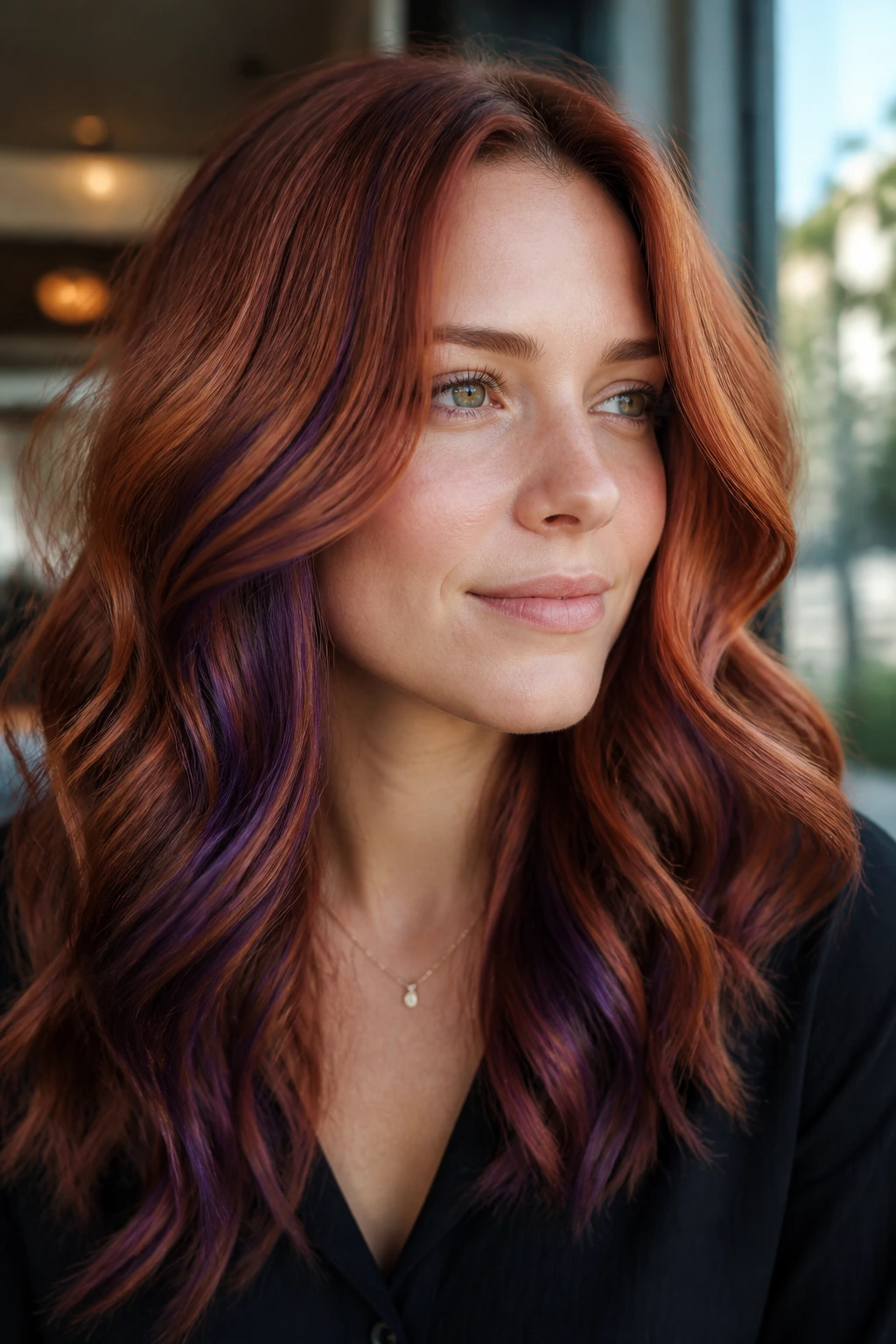
What makes copper with violet lowlights so useful on cool skin? The violet keeps the orange in check.
That sounds simple because it is. Violet sits opposite yellow and helps soften warmth, which makes the copper look cleaner and more red. On a cool complexion, that cleaner finish matters. The lowlights also give the hair depth, so the copper isn’t doing all the work by itself.
This look is especially strong on medium to light hair that has already been lifted. The copper can sit on top, and the violet pieces tuck underneath or through the mid-lengths. If the lowlights are too dark, the color can get muddy. Keep them soft and smoky instead.
A few placement notes help here:
- Put violet lowlights underneath the top layer
- Leave the money pieces copper-forward, not violet-heavy
- Ask for a glaze that leans red-violet rather than blue-violet
- Use color-safe shampoo so the violet doesn’t drain too fast
This is one of the smartest copper ideas on the list. It solves the warm-vs-cool problem without making a big scene about it.
22. Classic Copper Ginger with Blue-Black Roots

If you want the most recognizable copper and still want it to sit well against cool skin, classic copper ginger with blue-black roots is the one I’d start with. The roots do the hard work. They hold the brightness in place and make the ginger feel sharper, not sweeter.
The blue-black root shadow is especially good if your natural hair is dark or if you like a bit of edge around the face. It stops the copper from spreading too far upward and turning the whole look warm. The contrast is what keeps it cool-skin friendly. Without that darker anchor, classic ginger can drift too orange for a lot of people.
This shade looks strong on long waves, but it can also be a sharp choice on a sleek bob. The root area frames the face, and the copper below gives the color its payoff. If you’ve been curious about red hair but worried about looking washed out, this is the version that tends to feel safest without getting boring.
Keep the ginger side red enough to stay vivid, and let the roots stay inky. That’s the whole trick.
