



Round faces can wear black-red hair better than most people expect. The trick is not flooding the cheeks with bright color and hoping for the best. It’s about where the red lands, how dark the roots stay, and whether the overall shape pulls the eye downward instead of letting it spread outward across the widest part of the face.
That’s where black-red color work gets fun. A deep cherry melt, a wine-toned underlayer, or a velvet burgundy gloss can do more for a round face than a blunt cut ever could if the color placement is smart. The same shade that looks busy on a wide face frame can look sleek and lengthening when it starts below the cheekbone or stays tucked into the lower half of the hair.
Hair color is not only about tone. It’s about contour. A black base gives you a clean, narrowing frame, while red adds movement, shine, and a little drama without needing neon brightness. The best versions look expensive in the old-fashioned sense — rich, layered, and a little moody — not loud for the sake of being loud.
So the ideas below lean into that balance: darker roots, diagonal ribbons, face-framing pieces that stop at the right spot, and red shades that flatter rather than fight a round face. Some are subtle. Some are bold. All of them can be adjusted so the shape works with you, not against you.
1. Black Cherry Melt for Round Faces
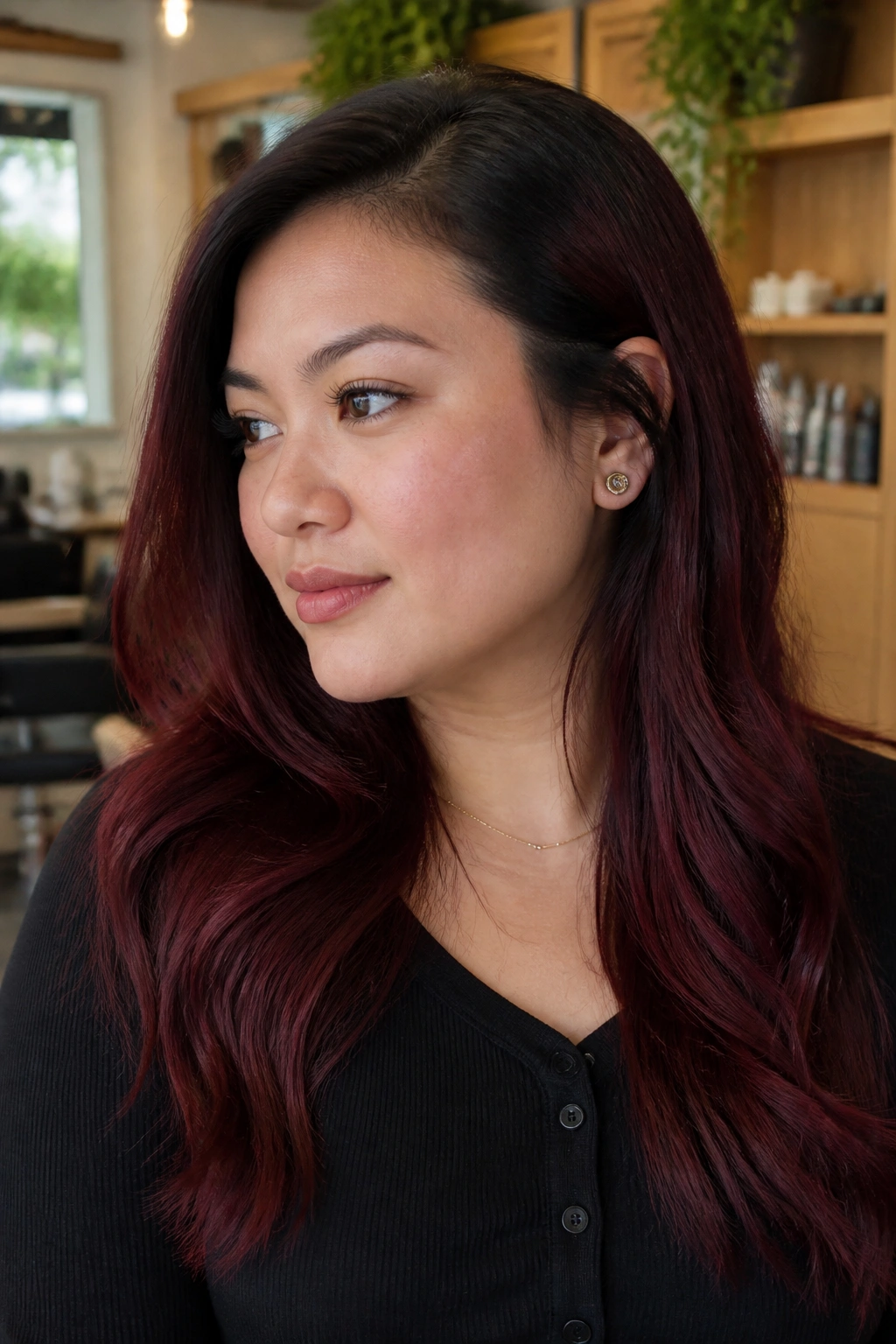
Black cherry is one of those shades that looks almost edible in the best way. On a round face, it works because the black root keeps the top narrow while the cherry tone blooms through the mids and ends, which gives the hair a long, vertical read.
Why It Works
The key is soft contrast, not a hard stripe of color. If the cherry begins too high at the cheeks, the face can read wider. If it starts lower, around the mouth or collarbone area, the eye drops instead of spreading.
Ask for a melt rather than a blocky dye job. The color should shift from near-black at the root into a deep cherry red that still feels dark in shade but catches light with a wine-like glow. On wavy hair, the color shows in bends. On straight hair, it reads sleek and polished.
- Keep the root in a level 2 or 3 black.
- Let the red build through the middle lengths.
- Keep the brightest bits below the cheekbone.
- Add a side part if you want more face length.
Best tip: if you wear your hair behind the ears often, ask for a softer front edge so the red doesn’t disappear when the hair moves back.
2. Deep Burgundy Ends on Jet Black
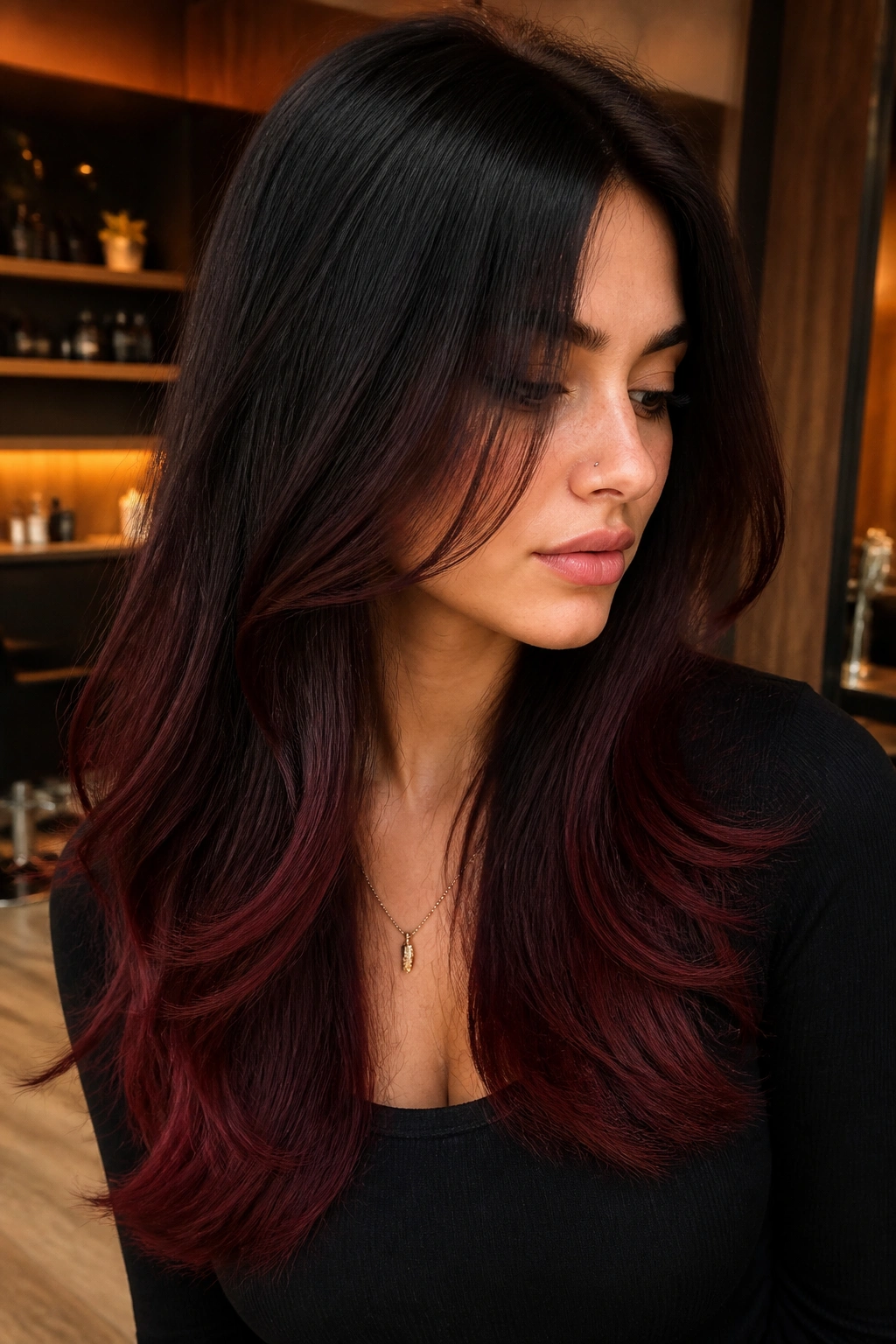
A bold burgundy end is a smart move when you want red hair without filling the whole head with warmth. The black top does the slimming work for a round face, and the burgundy ends give you depth that feels elegant instead of harsh.
This look is cleanest on long layers. The darker crown keeps the head shape from looking wide, while the lower color draws the eye down the length of the hair. That matters more than people think. A round face usually looks best when the color has a clear top-to-bottom line.
Keep the burgundy dark. If it turns too bright or tomato-red, the contrast can start to feel heavy at the sides. A deep wine tone keeps the finish smoother and easier to wear day to day. It also fades in a nicer way; burgundy tends to soften into a muted berry rather than a muddy orange if the hair is cared for well.
Straight hair shows the edge sharply. Loose curls make the transition feel softer. Either way, this is one of the easiest black-red hair color ideas for round faces if you want drama without giving up polish.
3. Cherry Cola Balayage
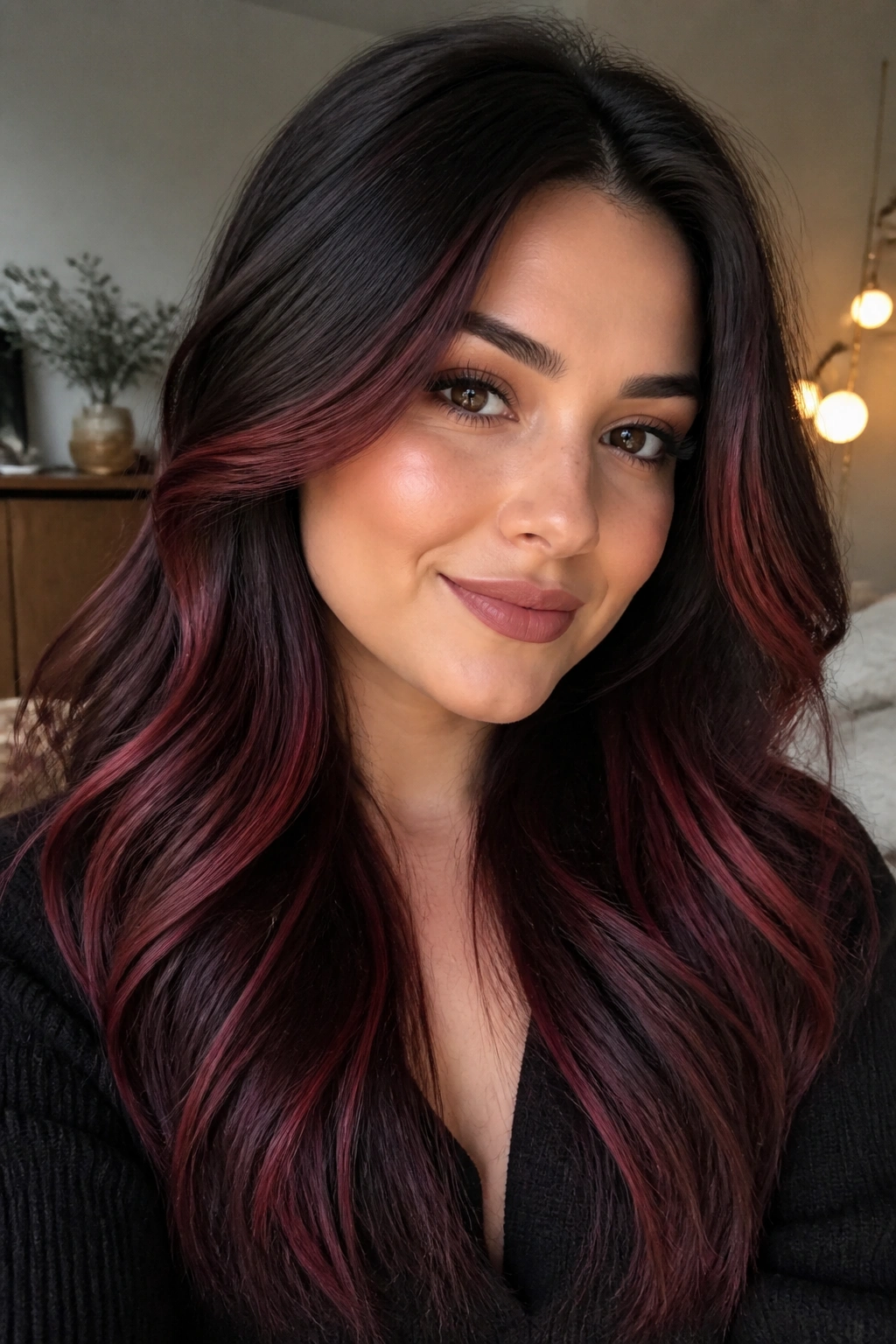
Why does cherry cola work so well on a round face? Because the color placement can be as important as the color itself. A deep espresso base with thin cherry ribbons gives you warmth without making the sides of the face look heavy.
How to Ask for It
Tell your colorist you want balayage that starts below the temple line. That one detail matters. If the red begins too high, the color can sit beside the cheeks and widen the face. If the ribbons start lower and sweep diagonally, they stretch the hair visually.
Cherry cola is not a flat red. It should have brown depth, a little black shadow at the root, and a polished shine that looks richer under indoor light. On layered cuts, the movement helps the red appear in pieces instead of all at once. That’s a good thing.
Wear this shade with side-swept waves or a soft off-center part. The movement breaks up the roundness and keeps the color from sitting in a perfect, face-wide frame. You want ribboning, not a solid band.
4. Mahogany Money Piece
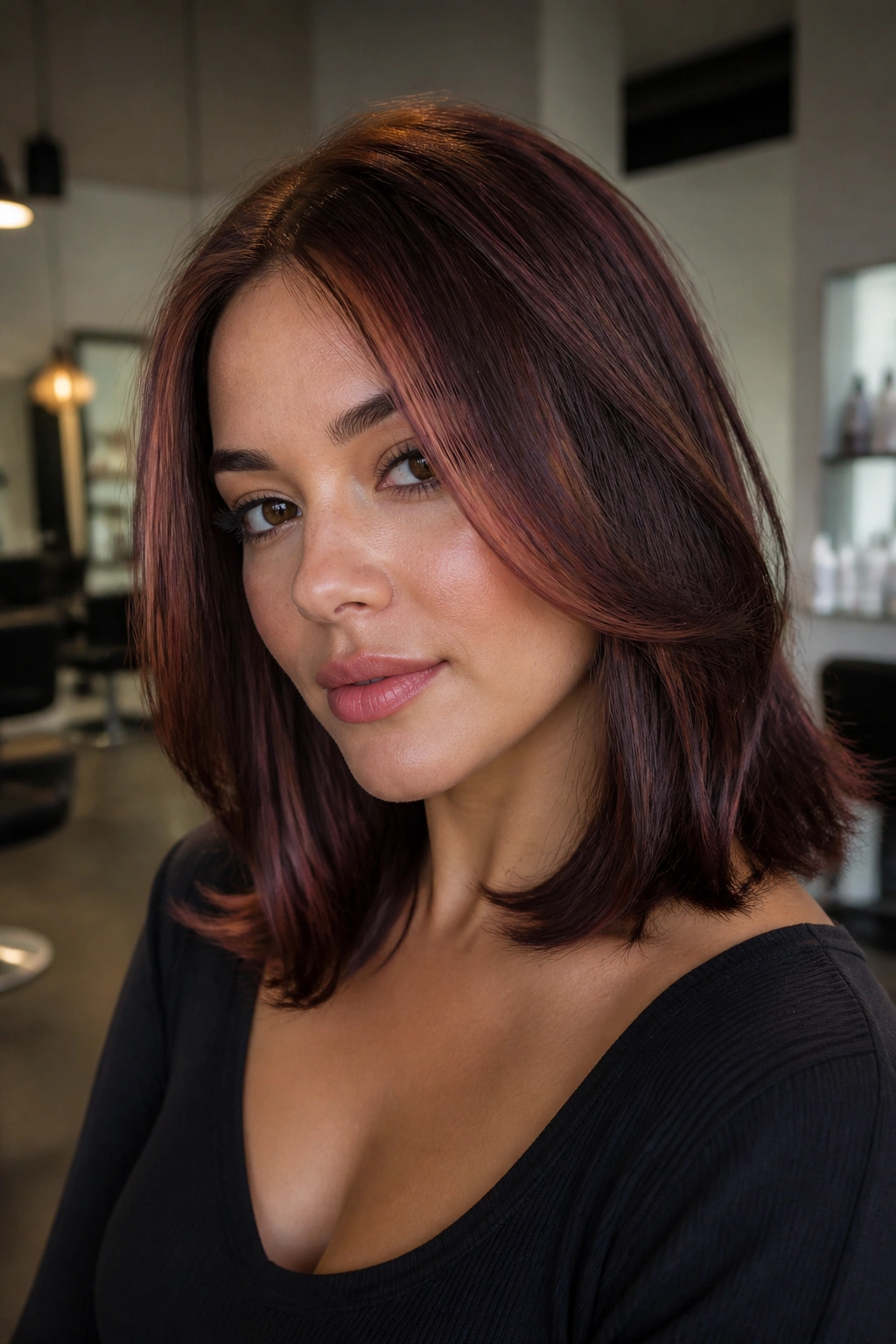
Imagine walking in wanting color that warms the face without turning the whole head red. Mahogany money piece is the answer. It gives you a narrow hit of color around the front, but it stays deep enough to keep the cheek area from looking wider.
What to Watch For
- The money piece should be thin near the hairline.
- It should widen only slightly through the front layers.
- It looks best when it fades into darker mahogany mid-lengths.
- The brightest point should sit closer to the jaw than the cheek.
That placement matters more than the shade name. Mahogany has enough red-brown richness to stand out, but it still feels grounded. On a round face, grounded color is useful. It creates shape without screaming for attention.
This idea works especially well on shoulder-length cuts with face-framing layers. The front pieces can curve away from the cheek instead of stopping right on top of it. If you like a blowout finish, even better. A smooth bend at the ends helps the money piece look intentional instead of chunky.
One small warning: keep the front piece narrow. A wide, bright panel can work against the whole point.
5. Wine Red Peekaboo Layers
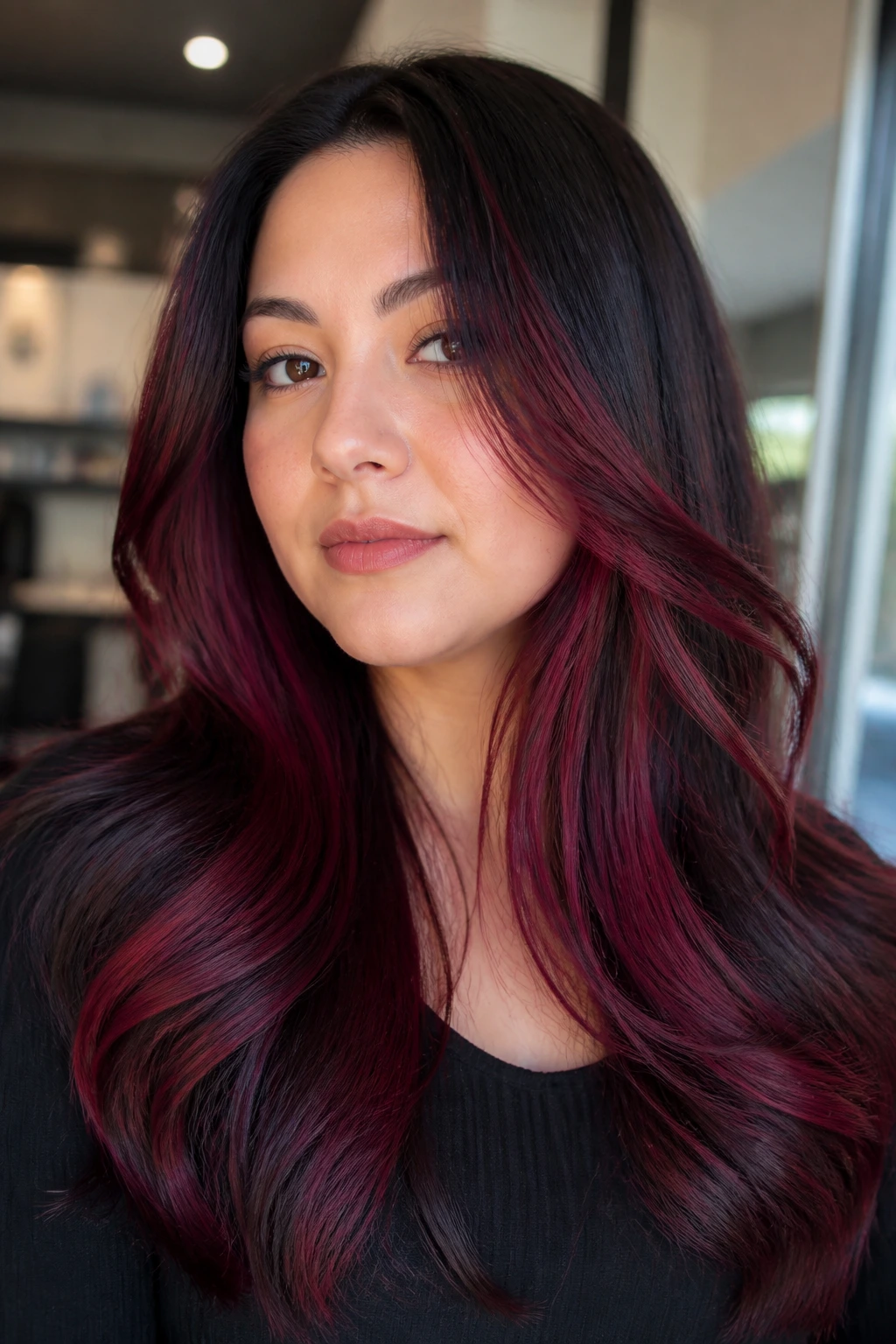
Wine red peekaboo color is for the person who likes drama but does not want that drama sitting in the front row all the time. The red hides under the top layer, which keeps the surface sleek and the overall silhouette long.
On a round face, that hidden placement helps a lot. The eye sees depth first, not width. When the hair moves, the wine tones flash through the lower half of the style, which makes curls and waves look richer without turning the face into a bright frame.
This one is especially good on thick hair. Thick hair can swallow hidden color unless the layers are cut with enough movement, so ask for long internal layers or a soft U-shape. That gives the red places to appear when the hair shifts.
A center part can work here if the front is longer and feathered. A side part makes the peekaboo effect feel a little more moody. Either way, this is a shade for someone who wants the surprise to happen in motion, not all at once.
6. Black Plum Velvet
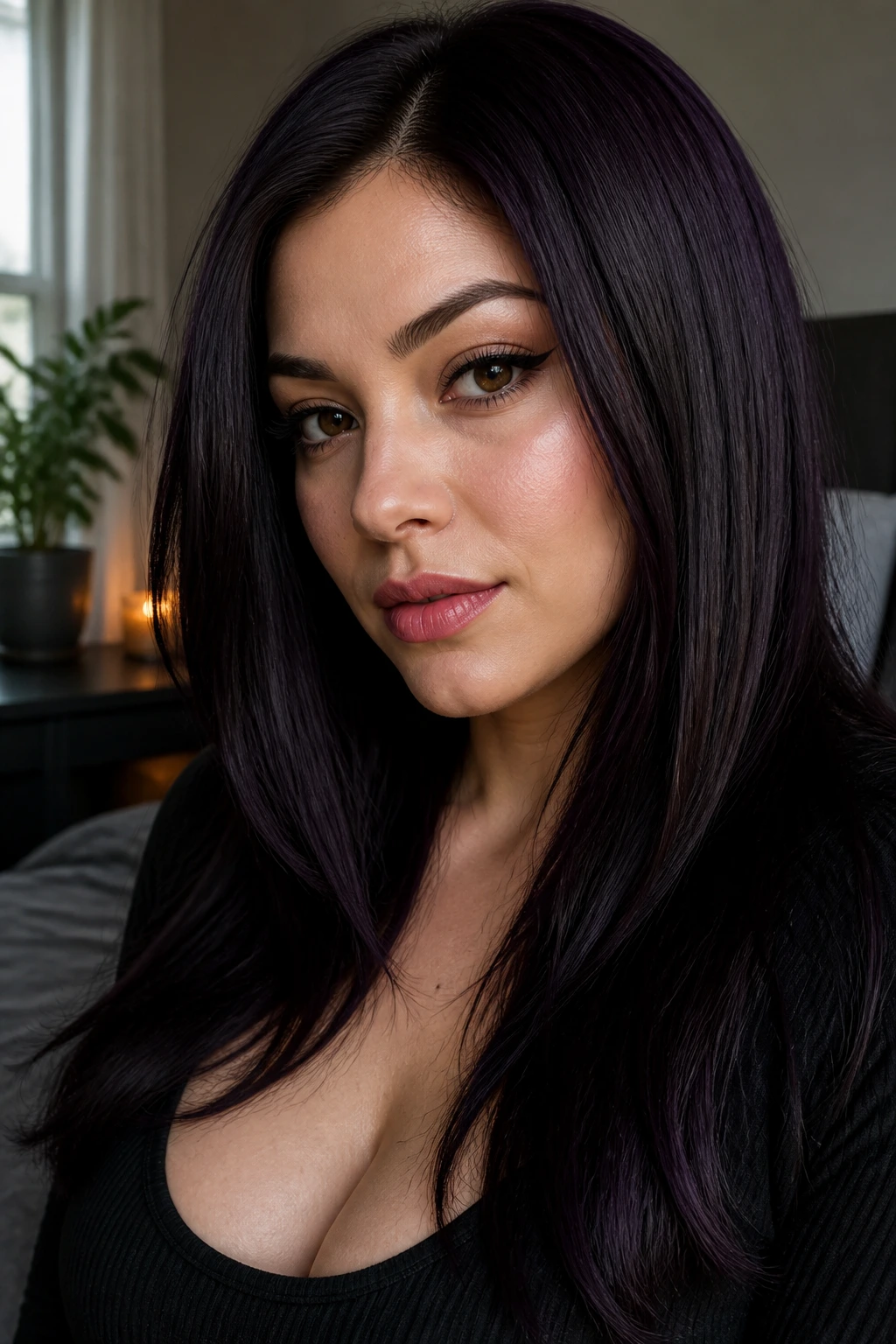
Black plum is cooler than cherry, darker than burgundy, and far less predictable than people assume. It suits round faces because the finish stays deep at the edges, which keeps the face from being boxed in by bright red.
Unlike hotter reds, plum has a blue-violet base. That makes it feel smoother against cool or neutral skin, and it tends to read polished on straight or lightly waved hair. The color can look almost black indoors, then shift to a plum sheen in daylight. That kind of change is useful when you want dimension without a high-contrast streak map.
Best of all, the plum tone softens strong curves in the face and jaw. It does not shout from the sides. It whispers from the lengths. That’s a good trade for round faces, which usually benefit from movement lower down rather than flare around the widest point.
Ask for a gloss or demi-permanent finish if you want the velvet look. Heavy permanent color can make plum feel flat.
7. Auburn Underlayer on Black Hair
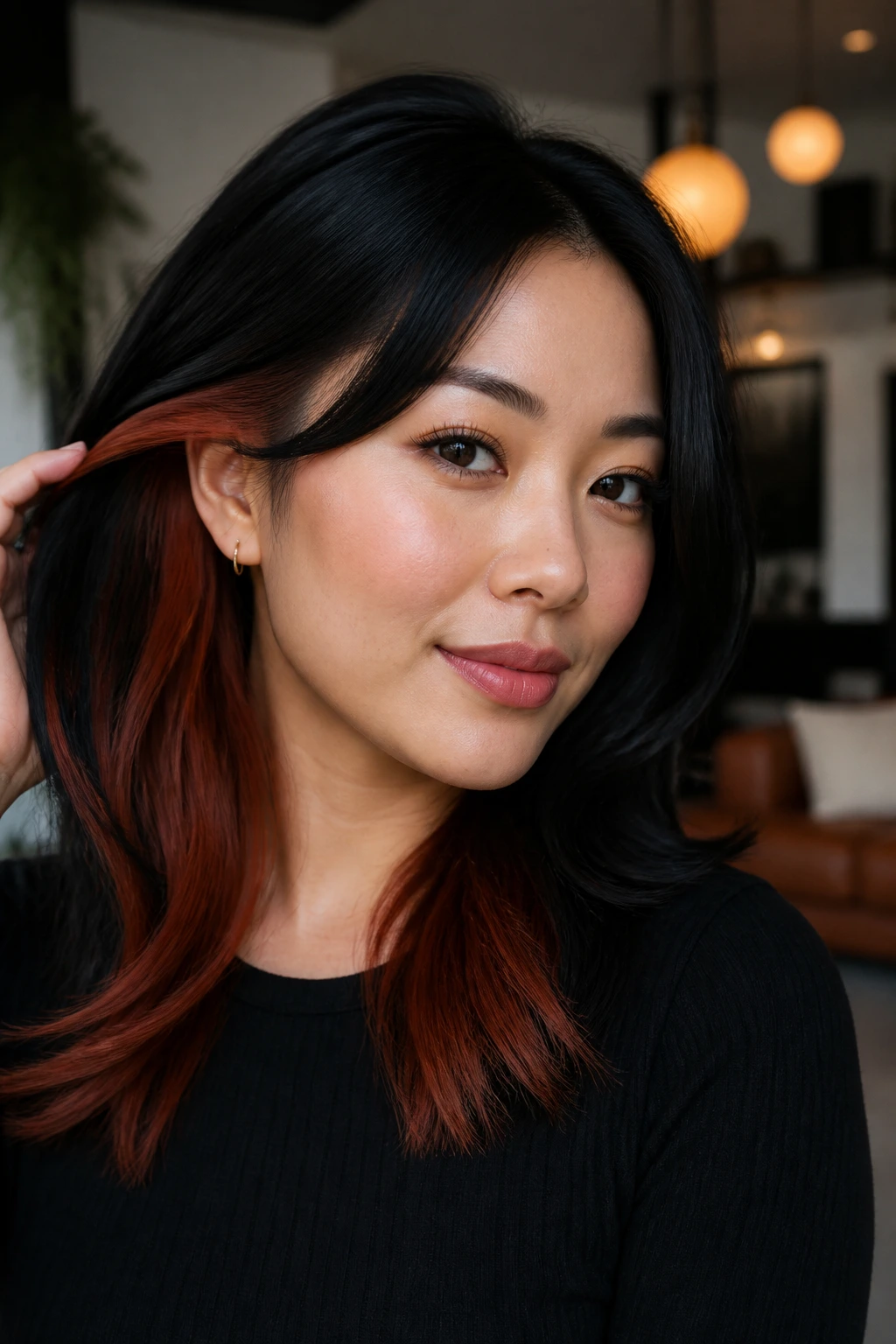
An auburn underlayer is one of my favorite ideas for someone who wants warmth without committing to a full red head. The top layer stays black, so the face keeps that narrowing frame. The auburn hides underneath, where it shows when you move, flip, or curl the hair.
What Makes It Different
The color shows from the inside out. That’s the whole point.
- It keeps the face frame clean.
- It adds warmth without a heavy red block.
- It works well on layered lobs and longer cuts.
- It looks especially good when hair is tucked behind one ear.
For a round face, this is useful because the visible red can be placed farther from the cheeks. You get the feeling of color without putting a bright band at the widest part of the face. That makes it friendly for people who want dimension for work, school, or any setting where loud color would feel like too much.
It also grows out well. Since the black layer stays on top, the line between roots and red is less obvious. That means fewer awkward weeks between salon visits, which is never a bad thing.
8. Crimson Ribbon Highlights
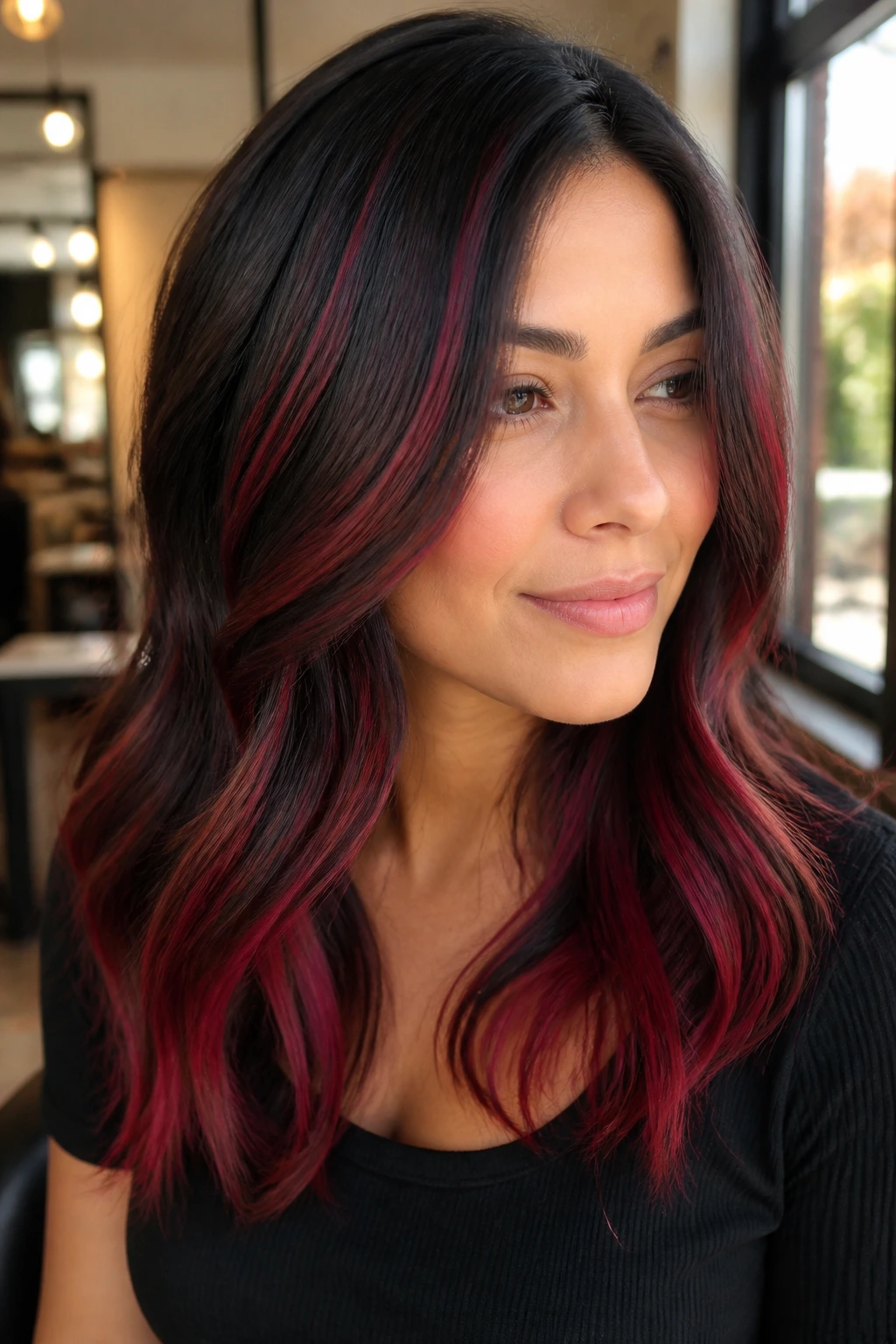
Crimson ribbons can look sharp or flat, depending on placement. On a round face, they need to be thin, slanted, and broken up. If they’re too chunky, the hair spreads out at the sides. If they’re ribbon-thin and tucked into waves, they create a long, lean line.
The best version starts below the crown and sweeps through the lengths in narrow pieces. Think of them as streaks that move through the hair, not bars sitting on top of it. A darker black base keeps the whole look rooted and rich.
This color shines on layered hair and on styles with movement around the collarbone. The red pieces catch the bends in the wave and make the style look taller. Straight hair can wear it too, but then the placement has to be perfect, because every stripe shows more clearly.
Crimson is a strong shade. That’s the appeal. But it needs restraint near a round face. A few well-placed ribbons beat a whole head of busy contrast every time.
9. Dark Merlot Face Frame for Round Faces
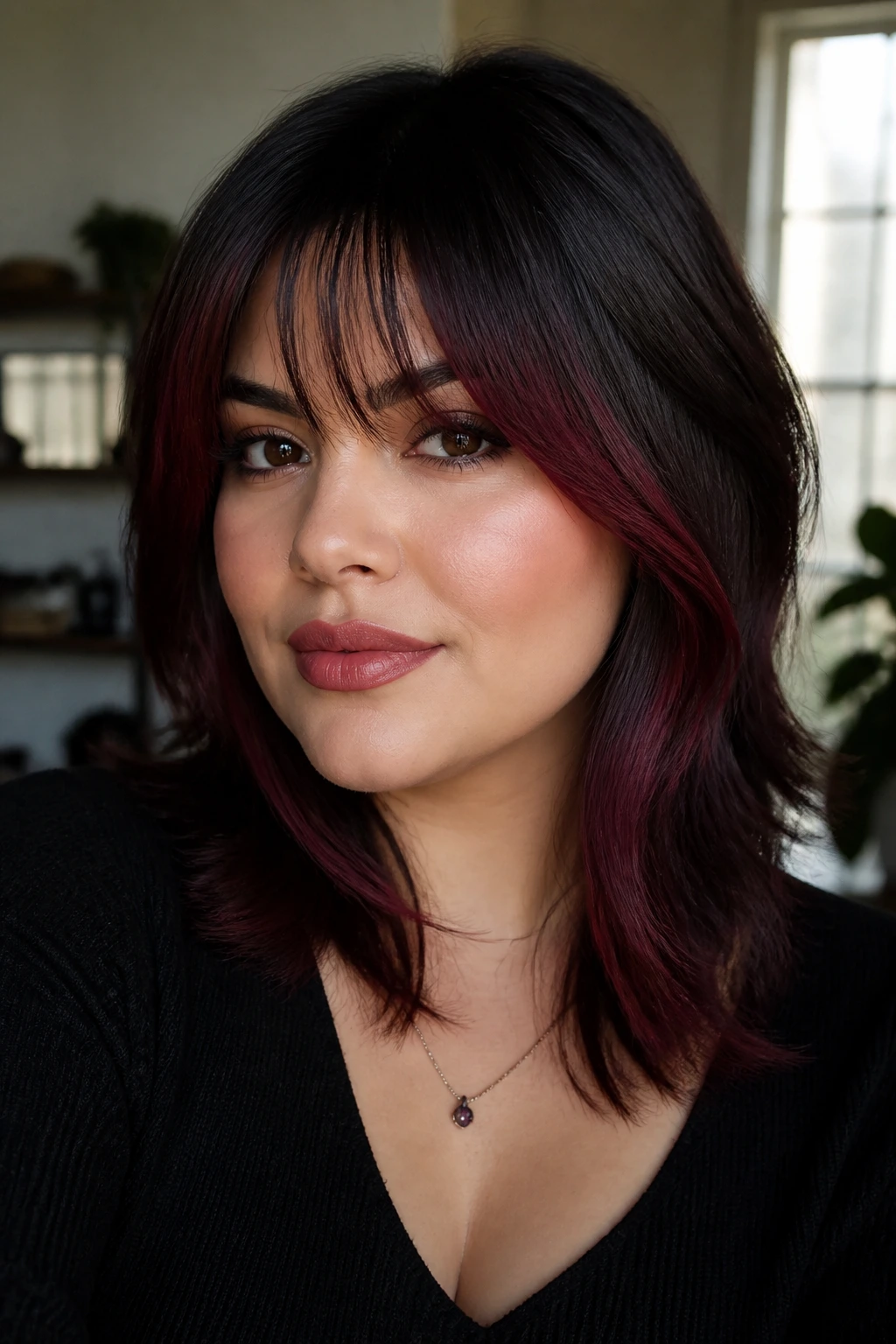
Can a face frame work on a round face without making it wider? Yes — if the front pieces are dark enough and placed low enough. Dark merlot is ideal for that job because it gives you color around the face while still feeling deep and controlled.
The Smart Placement
Ask for the red to begin near the temple but drift down as it reaches the jaw. That keeps the eye moving vertically. If the brightest merlot sits right beside the cheeks, the whole look can spread sideways. If it begins softer and gets richer lower down, the face feels longer.
This color is gorgeous on medium-length cuts with long bangs or curtain pieces. The front sections can frame the cheekbone without stopping there. That little extra length makes a real difference. It’s one of those details people notice without knowing why.
Merlot is also good if you like lipstick tones. It tends to match berry makeup, soft mauves, and even a plain black sweater without trying too hard. The result feels deliberate, not costume-like.
10. Black-to-Red Ombre
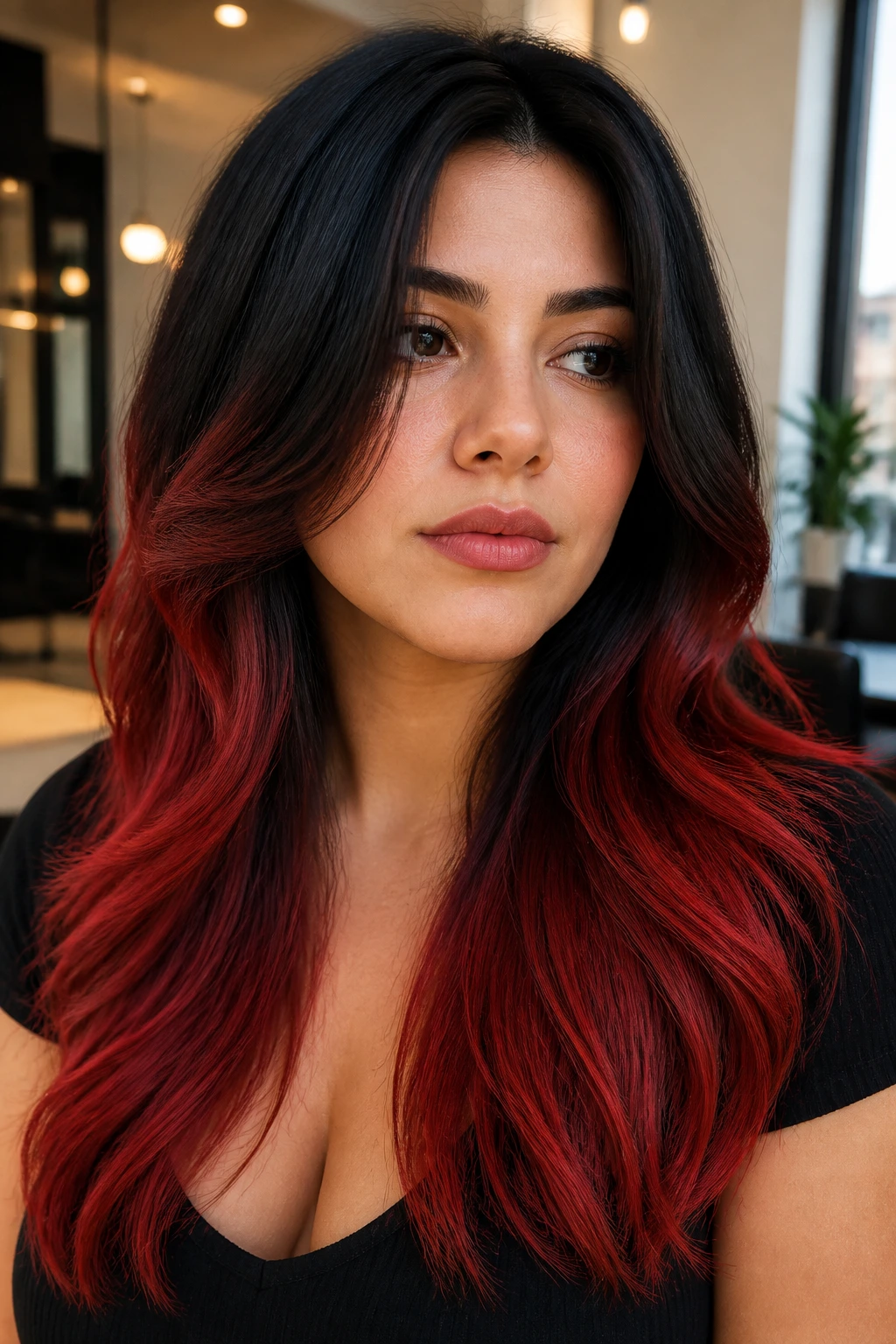
A black-to-red ombre is a classic for a reason. On a round face, the black crown keeps the top neat and narrow, while the red on the ends draws the eye downward. That downward pull is the whole game.
What makes this version work is where the fade starts. Put the transition too high and the red takes over the cheeks. Put it around the mid-lengths or lower and the face gets a longer frame. This is especially good for people with layered hair, because the fade shows in different places as the layers move.
The red itself can lean cherry, wine, or auburn depending on your skin and your style. I tend to prefer a darker red here because ombre can look a little harsh if the bottom gets too bright. A softer red gives you more depth and less costume energy.
This is also one of the easiest ideas to grow out. The dark root is already part of the design.
11. Mulled Wine Curls
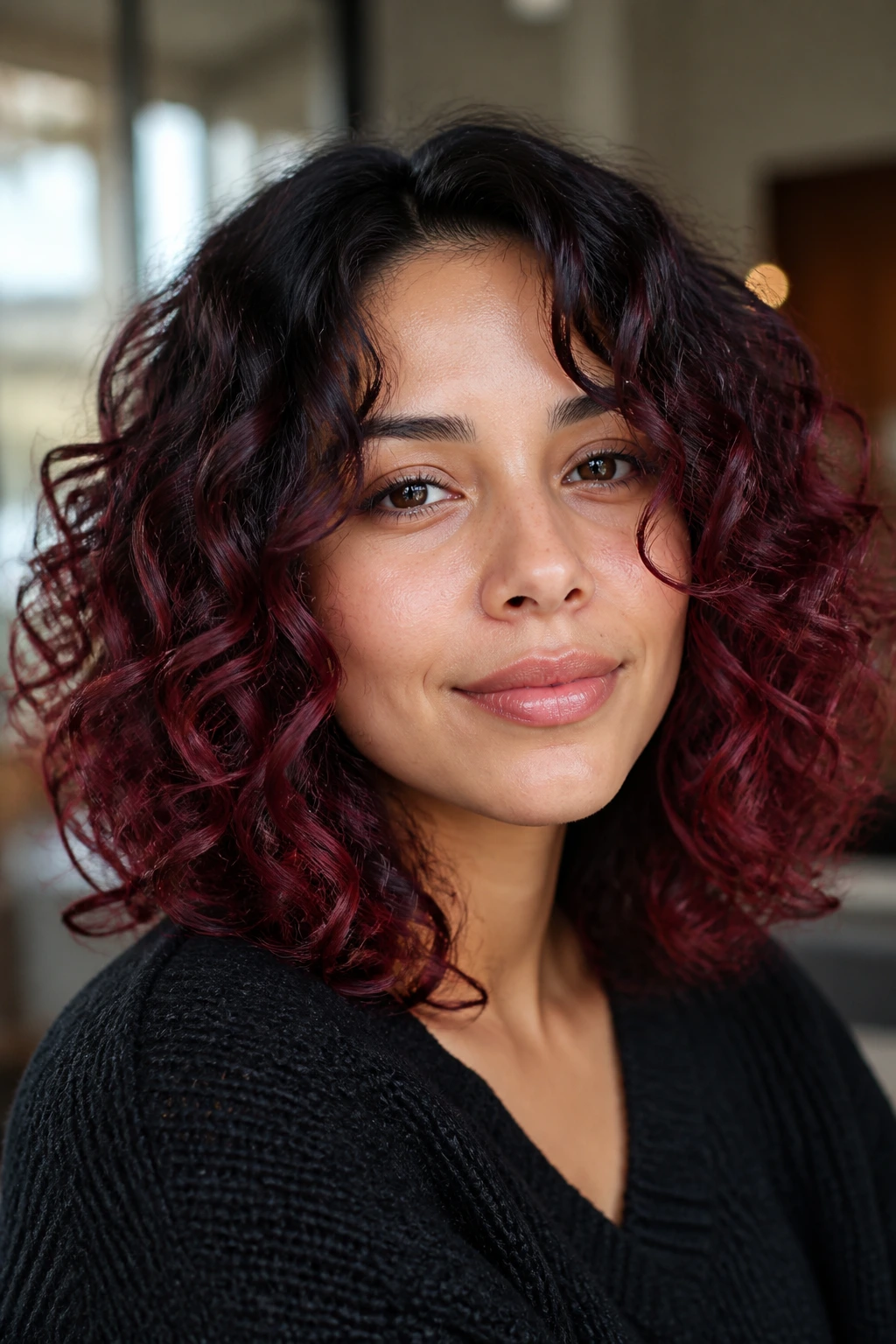
Mulled wine color looks especially good on curls because the red doesn’t sit as one flat block. It catches on the outer bends and gives the hair a deeper, warmer shape. On a round face, that movement matters. It keeps the style from feeling heavy at the sides.
The trick is to keep the color richer at the lower half of the curls. That way the face is framed by depth, not by a bright ring. If you’ve ever seen a curly color job that seemed to widen the cheeks, this is why. The bright bits were too high and too even.
Mulled wine works on black hair when the red is layered in thin, glossy sections. It doesn’t need to be loud. In fact, the shade reads best when it feels almost burgundy in shade and wine-red in sunlight. That shift is what gives curls their dimension.
A curl cream with a little shine helps a lot here. Dry curls can make red look muddy. Smooth curls let the color do the talking.
12. Scarlet Tips on a Lob
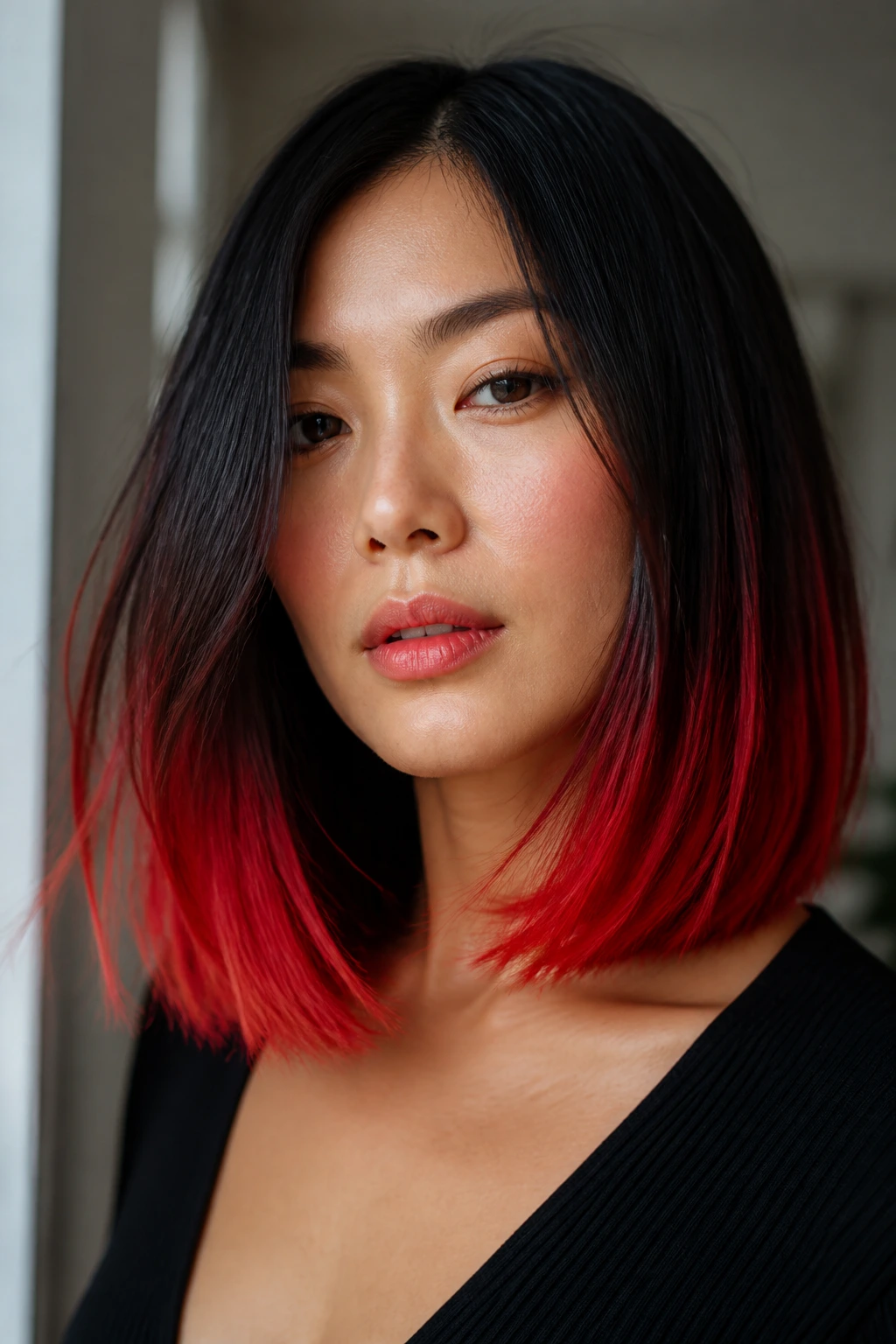
Scarlet tips are a smart choice if you want one strong hit of color without painting the whole head red. On a lob, the blunt lower edge acts like a frame, and the scarlet sits right where the eye wants to follow the hair downward.
Unlike all-over scarlet, this version does not crowd the cheeks. The brighter color stays at the ends, which keeps the face open. That matters on round faces, where any bright color near the width of the face can feel like extra bulk.
This look works well with a clean, straight lob or a softly textured one. A straight finish makes the scarlet edge look graphic. A wavy finish softens it and gives the red a little motion. If your hair is fine, the tips can also make the ends look thicker.
Best for someone who likes a little attitude. Not too much. Enough to notice when the hair swings.
13. Chestnut Red Shadow Roots
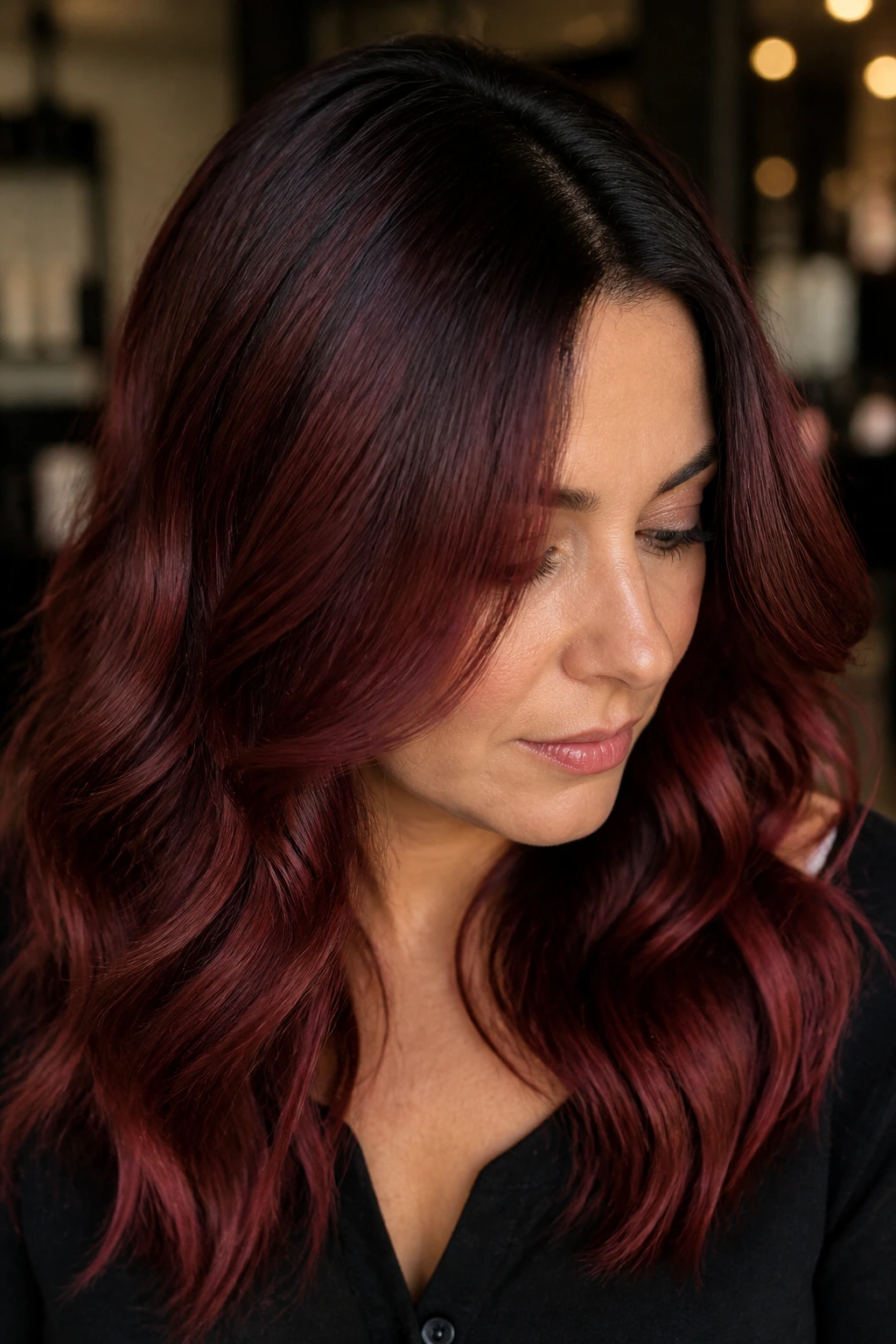
Chestnut red with shadow roots is one of the safest bets for a round face, and I mean that in a good way. The root stays dark, the red stays muted, and the whole head gets shape without a sharp horizontal line cutting across the top of the face.
That dark root is doing real work. It keeps the style from lifting outward at the cheeks, and it lets the red read as depth rather than a solid band. Chestnut red can lean warm and earthy, which makes it easier to wear if you do not want a high-drama berry tone.
Shadow roots also help with grow-out. The line between natural black and colored red is softer, so you avoid that strong stripe that can make the hair look blocky. This is useful if you wear your hair in waves or a loose blowout, because the movement hides the transition in a nice way.
If you want red hair that still feels adult and calm, this is one of the better options.
14. Red Velvet Balayage Bob
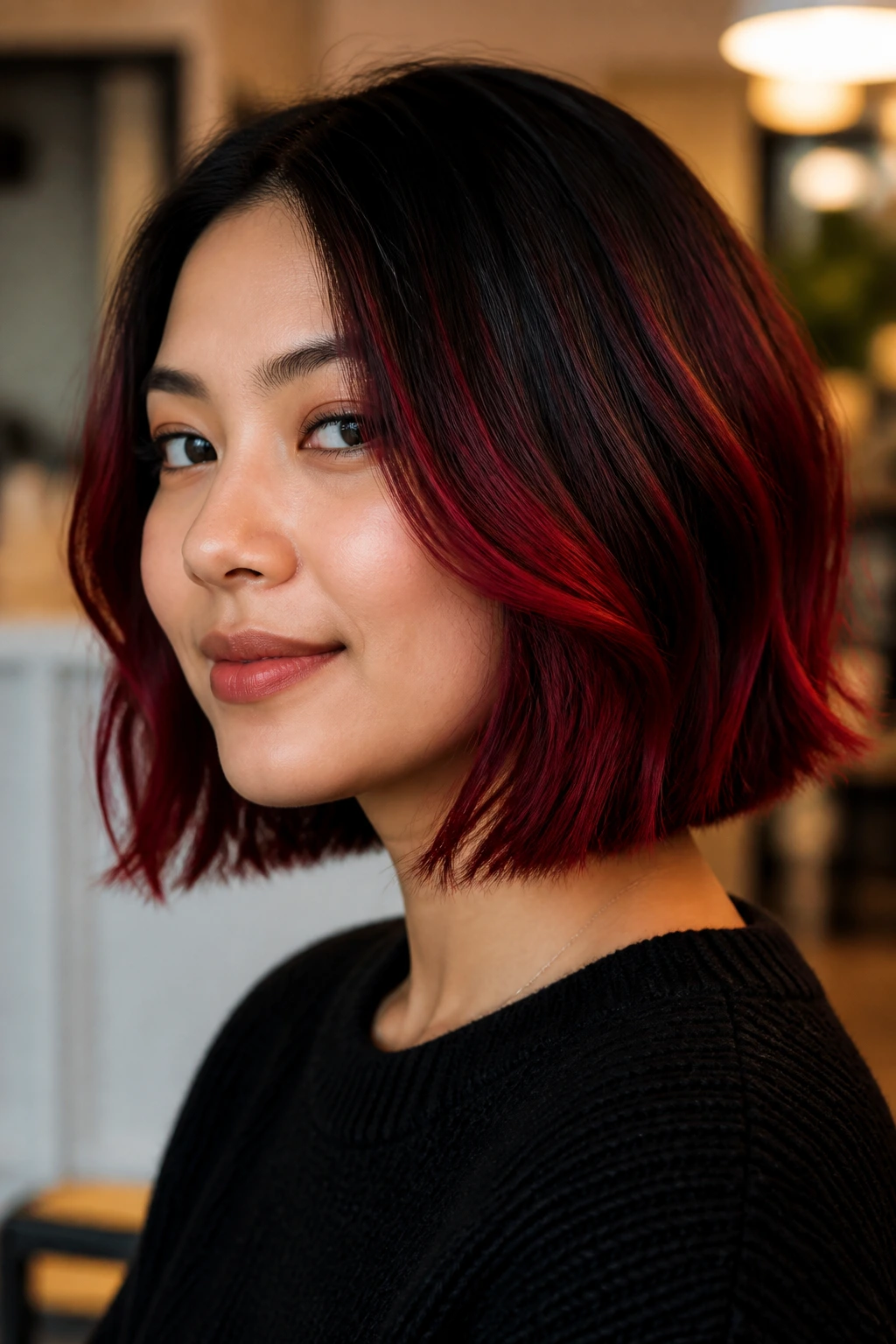
A bob can be tricky on a round face. It can also be excellent, if the color adds enough vertical movement. Red velvet balayage does that by putting softness into the cut instead of letting the bob sit as one solid shape.
What to Ask For
- Keep the base black or near-black.
- Place velvet red in curved balayage pieces.
- Start the brightest color below the cheekbone.
- Keep the nape and crown darker for shape.
That placement helps the bob look tucked in rather than puffed out. The red should sit in the body of the cut, not as a blunt ring around the face. A little bend at the ends helps too, especially if the bob hits between the chin and collarbone.
This is a lovely choice if you want something polished but not severe. The red gives the bob life. The black gives it structure. On a round face, that structure is the part you cannot skip.
15. Copper-Red Face-Framing Pieces
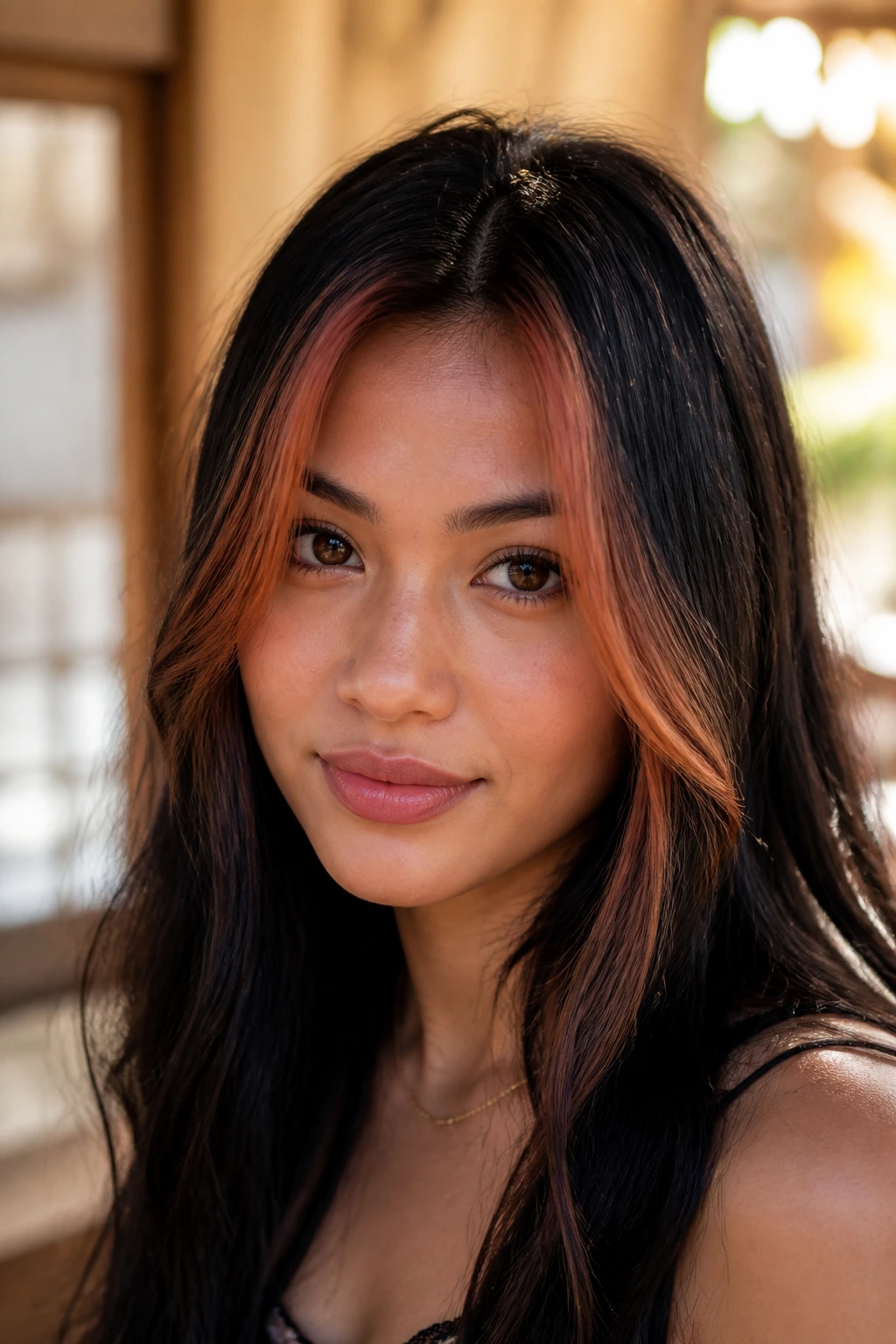
Copper-red can be hard to place on a round face, but when it’s done well, it brings a warm glow that feels fresh instead of heavy. The secret is restraint. Keep the pieces thin, tapered, and slightly lower than you’d think.
Copper near the forehead can widen the face if the stripes are too thick. Copper lower down, especially as it blends into darker lengths, gives warmth without the visual push. That’s why a face frame made of narrow copper-red pieces can look so good on round features.
This idea suits people with warm or golden skin, but it can work on neutral skin too if the copper leans deeper, closer to rust than bright orange. A polished blowout makes the pieces blend. Loose waves make them flicker.
The best part? You can keep the rest of the head black and still get a real change. No need to commit to a full bright copper job unless you want the maintenance headache.
16. Black Raspberry Dip-Dye
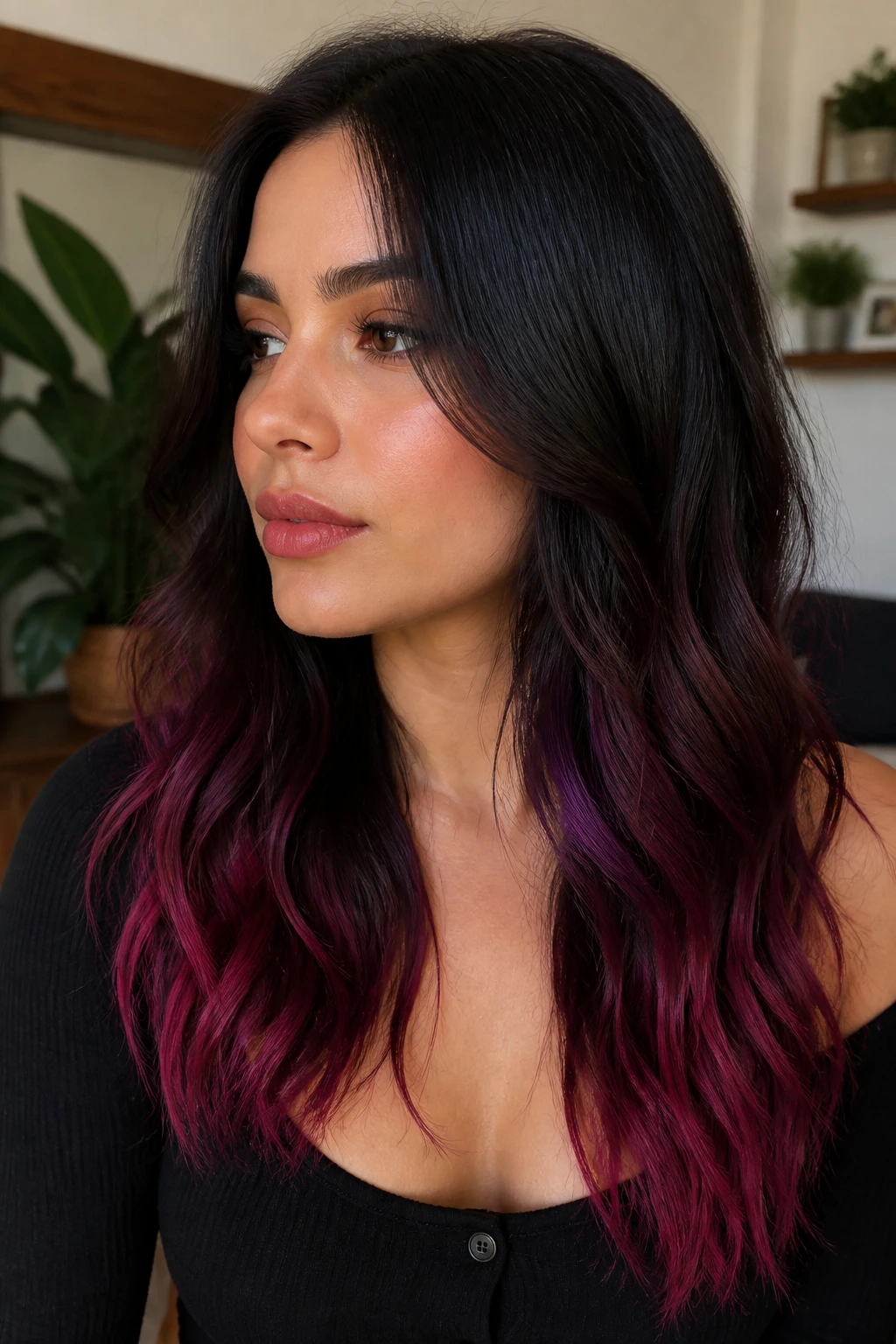
Black raspberry dip-dye has a playful side, but it still works for a round face because the color lives at the bottom. That keeps the top dark and clean while the raspberry tone adds a little punch where the hair is longest.
The dip-dye line should be soft, not sharp. A harsh line can make the ends look chopped off. A feathered blend feels better, especially on layered hair. The raspberry can lean berry-dark rather than hot pink, which helps it stay in the black-red family instead of sliding into something sweeter.
This is a good choice if you wear curls, because the color picks up along the ends and creates that full, glossy finish people like on long hair. It also works on straight styles if you want the bottom half to stand out more than the top half.
Honestly, this one has a bit of attitude. It’s fun without being childish. That balance is harder to find than it should be.
17. Garnet Reverse Balayage for Round Faces
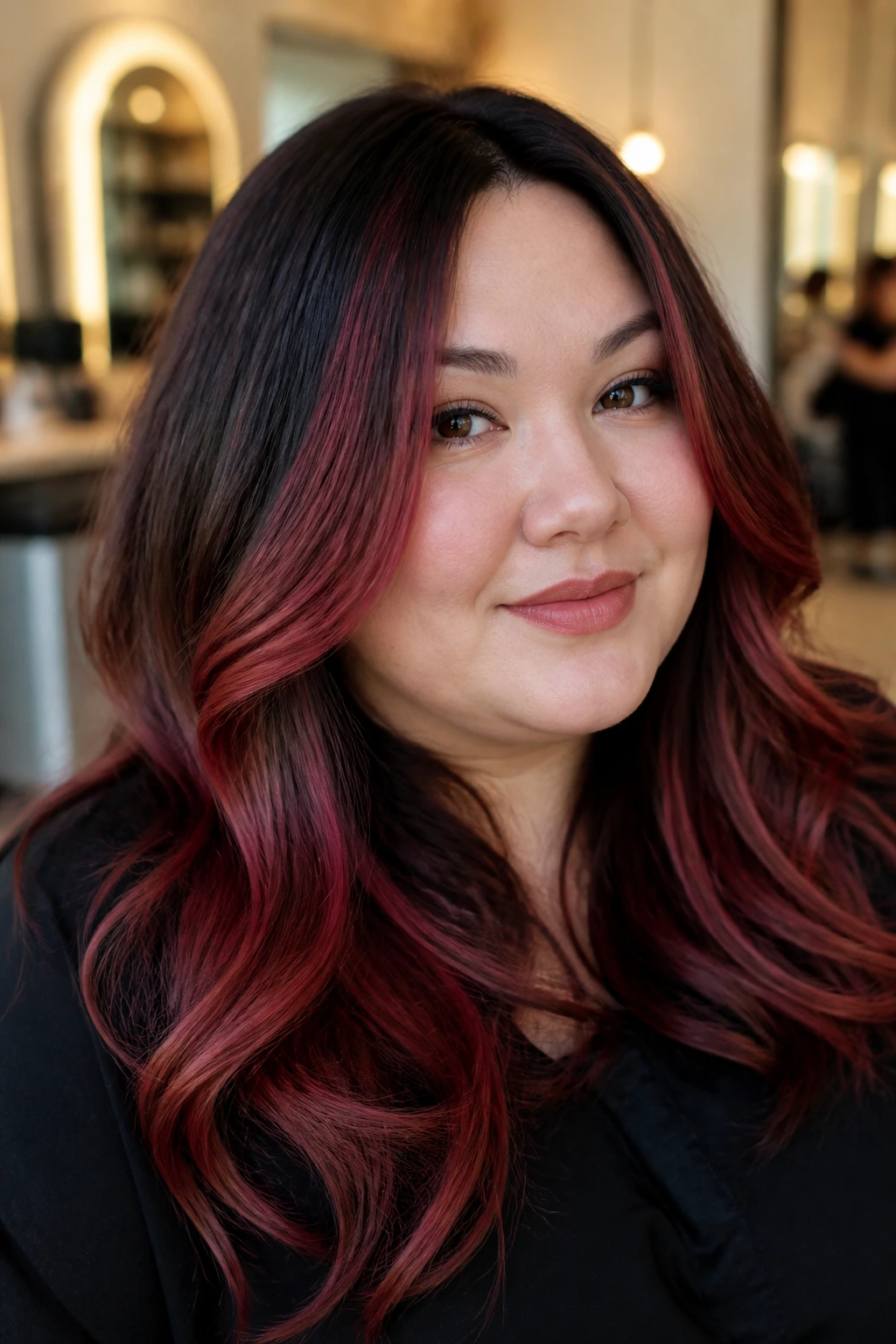
Reverse balayage sounds fussy, but the idea is simple: you add darker pieces back into lighter or brighter areas to create depth and shape. For a round face, garnet reverse balayage can be excellent because it lets you carve the silhouette with shadow instead of relying on more brightness.
The garnet tone should sit in slim vertical panels, not wide blocks. That keeps the face from looking boxed in. Darker pieces near the sides can narrow the outline, while red through the center or lower lengths keeps the style alive. It’s a sneaky good option if you love red but hate the idea of a heavy all-over color.
This is also a nice fix when hair has gotten too flat after repeated lightening. Adding garnet lowlights restores depth and makes the hair look thicker. The face benefits too, because the shape becomes less round and more tapered.
If you want dimension without a loud money piece, this one has real staying power.
18. Cinnamon Red on Black Waves
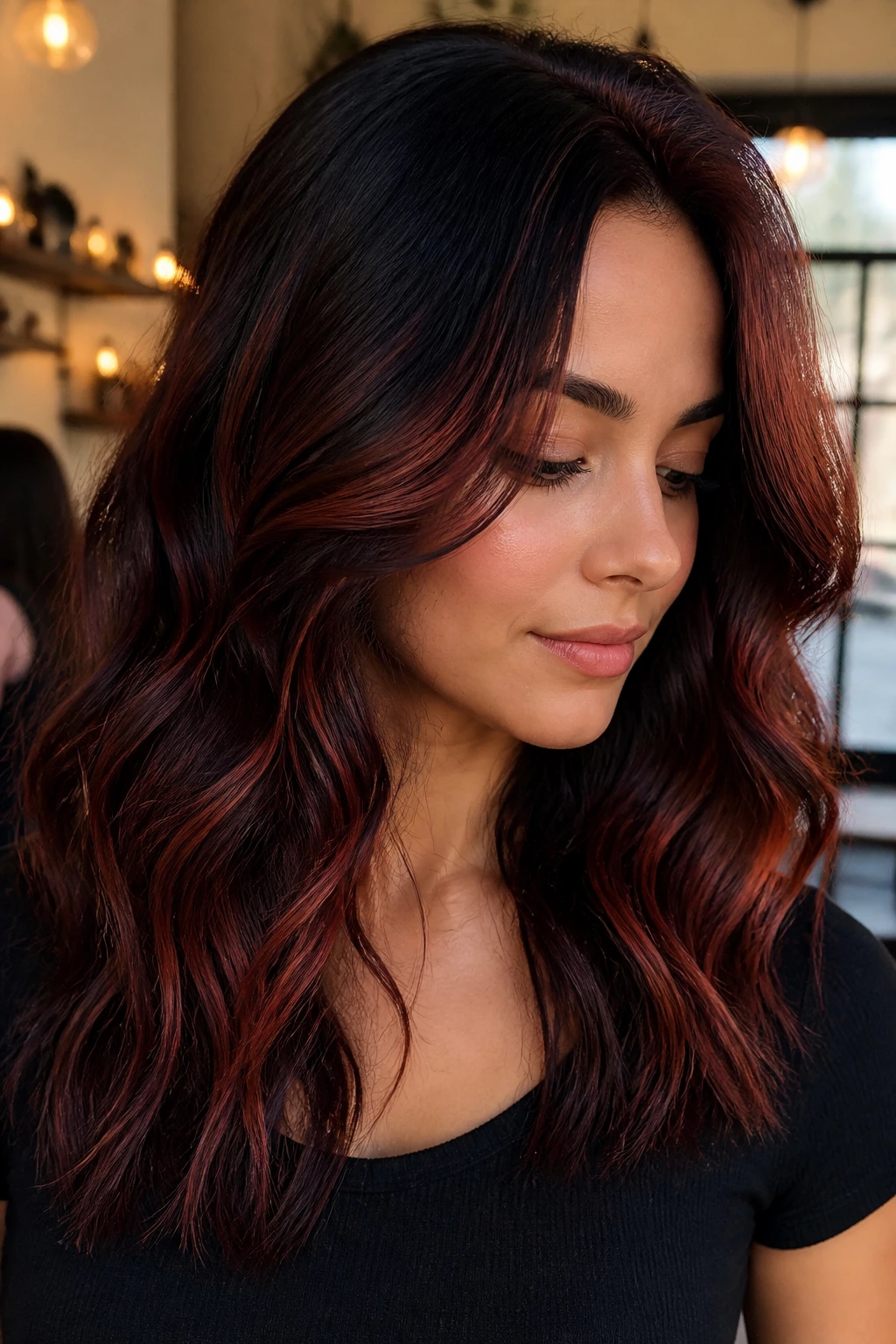
Cinnamon red is softer than cherry and warmer than plum, which makes it a friendly middle ground. On black waves, it reads like a warm glow under the surface rather than a hard stripe on top.
That softness helps round faces. The waves break the color into pieces, and the cinnamon tone keeps the edges from looking too sharp. If the color were brighter, the waves might spread the face outward. With cinnamon, the effect is gentler. It feels like warmth passing through the hair instead of sitting on it.
How to Wear It Well
- Use loose, brushed waves rather than tight curls.
- Keep the darkest sections near the crown.
- Let the cinnamon show in the mid-lengths and ends.
- Pair it with a side part if you want extra length.
This shade looks especially good in low light. Under indoor lighting, it reads rich and soft. In daylight, it shows its copper side. That kind of shift keeps the color from feeling flat.
19. Dark Sangria with Curtain Bangs
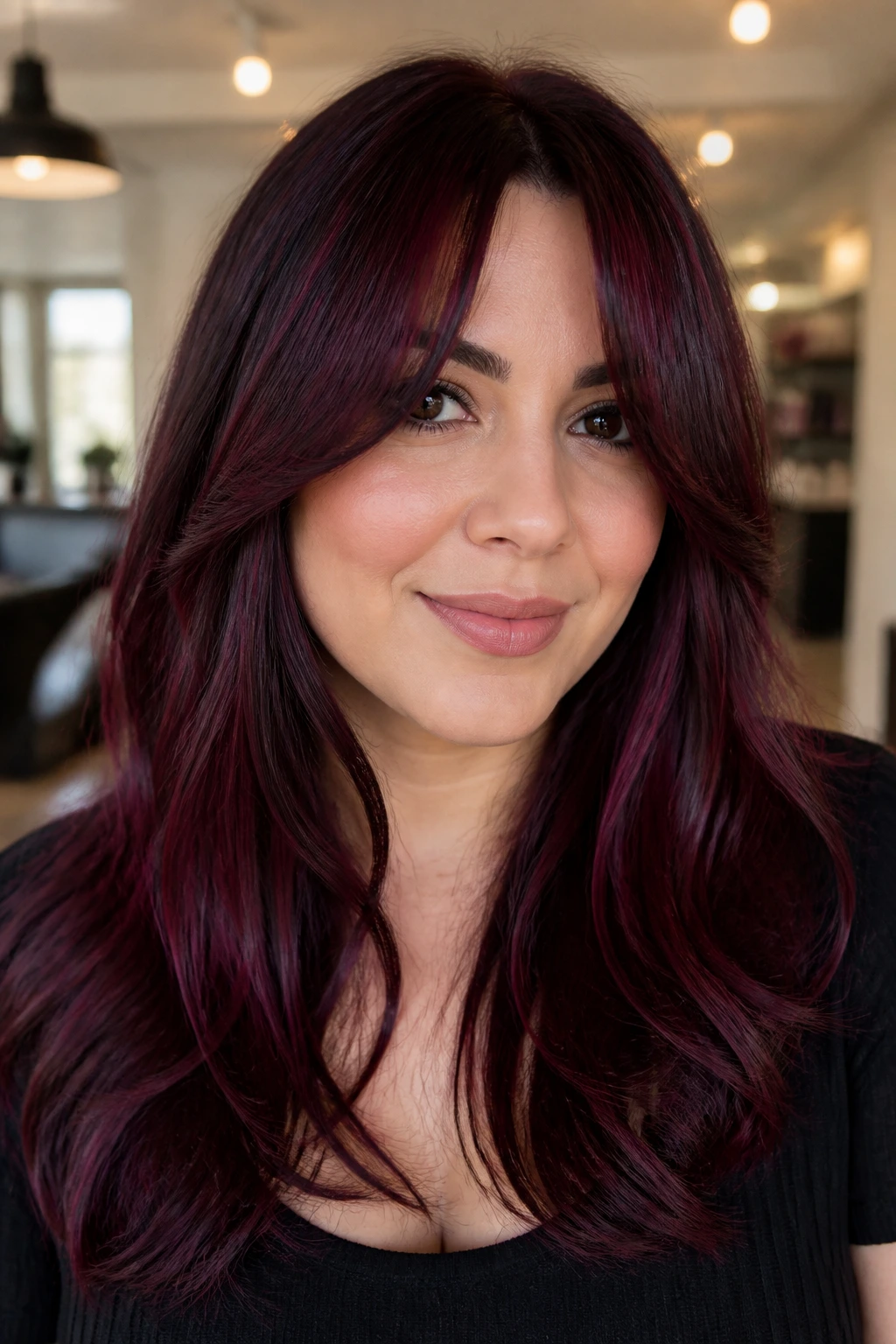
Curtain bangs can help a round face, but only when they’re long enough to split and sweep, not hang like a blunt curtain. Add dark sangria color to that shape, and the result is softer, longer, and far more balanced than a short fringe would be.
The sangria shade should stay deep. You want black at the root, then a wine-red shift through the bangs and front layers. The bang pieces should start higher at the center and taper lower toward the sides, which lets the eye move down and out instead of straight across.
This is not the place for a flat, heavy bang. Heavy bangs can shorten the face, which is the opposite of what most round faces need. Long curtain pieces solve that problem nicely. They split the forehead and create a vertical opening in the center.
It’s a good look if you like a little softness around the face but still want a strong color story. The sangria gives mood. The bangs give shape.
20. Firebrick Peekaboo Bob
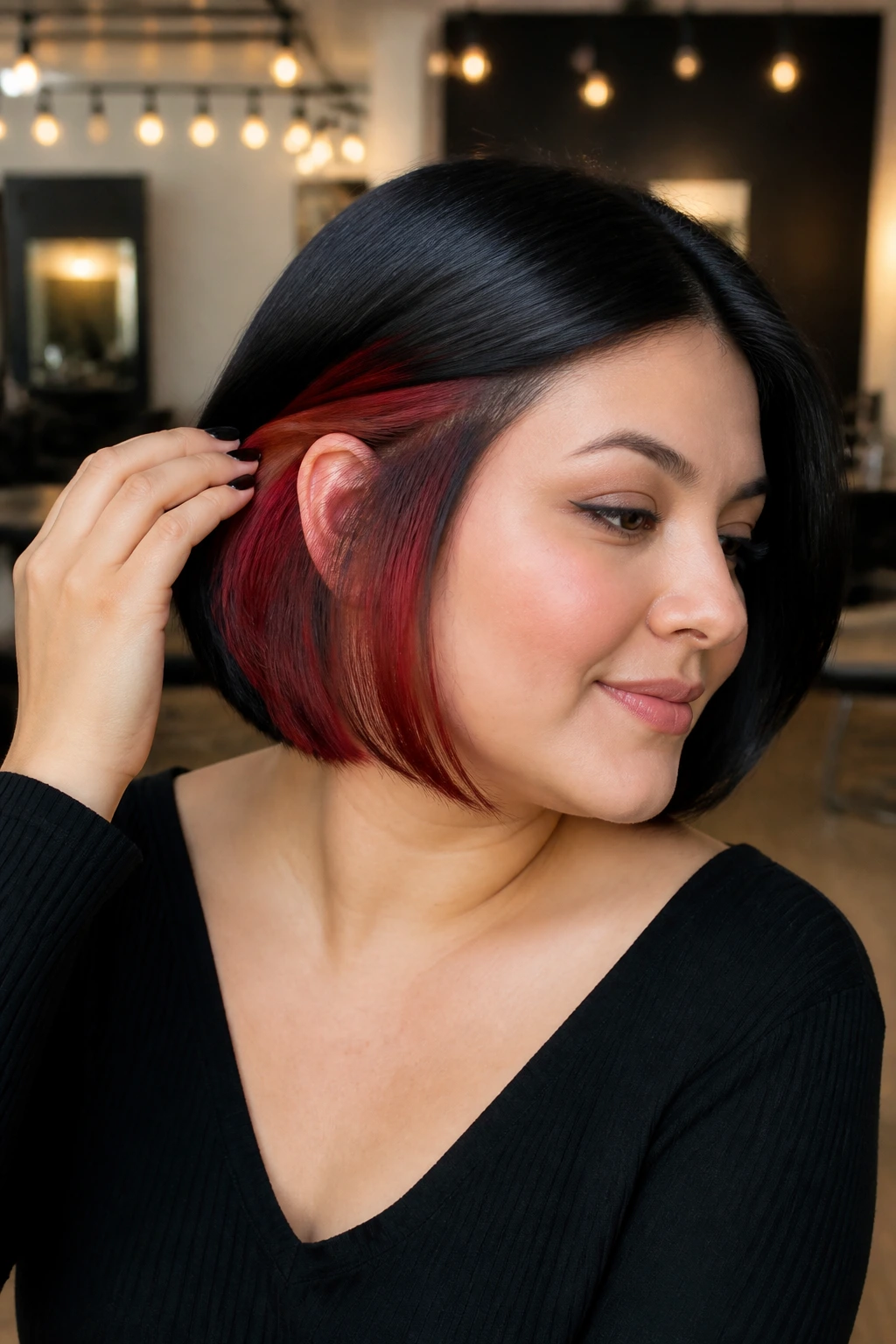
What happens when you hide firebrick red under a black bob? You get a sharp shape on top and a surprise flash underneath, which is a nice trick for a round face because the outline stays neat while the movement carries the color.
How to Wear It
Wear the bob slightly longer in front than in back. That tiny angle helps the face read longer. Then keep the firebrick hidden in the lower layers so it appears when the hair tucks behind the ears or turns at the jaw.
This kind of color works best when the bob has a clean edge. Too many choppy layers can make the peekaboo red look scattered. A tidy cut lets the color feel intentional. Firebrick itself is a deep red with a brown edge, so it stays grounded rather than neon.
If you like styling your hair with one side tucked and the other loose, this is a very good choice. You can control how much red shows, which is handy when you want drama on your own terms.
21. Black Currant Money Piece
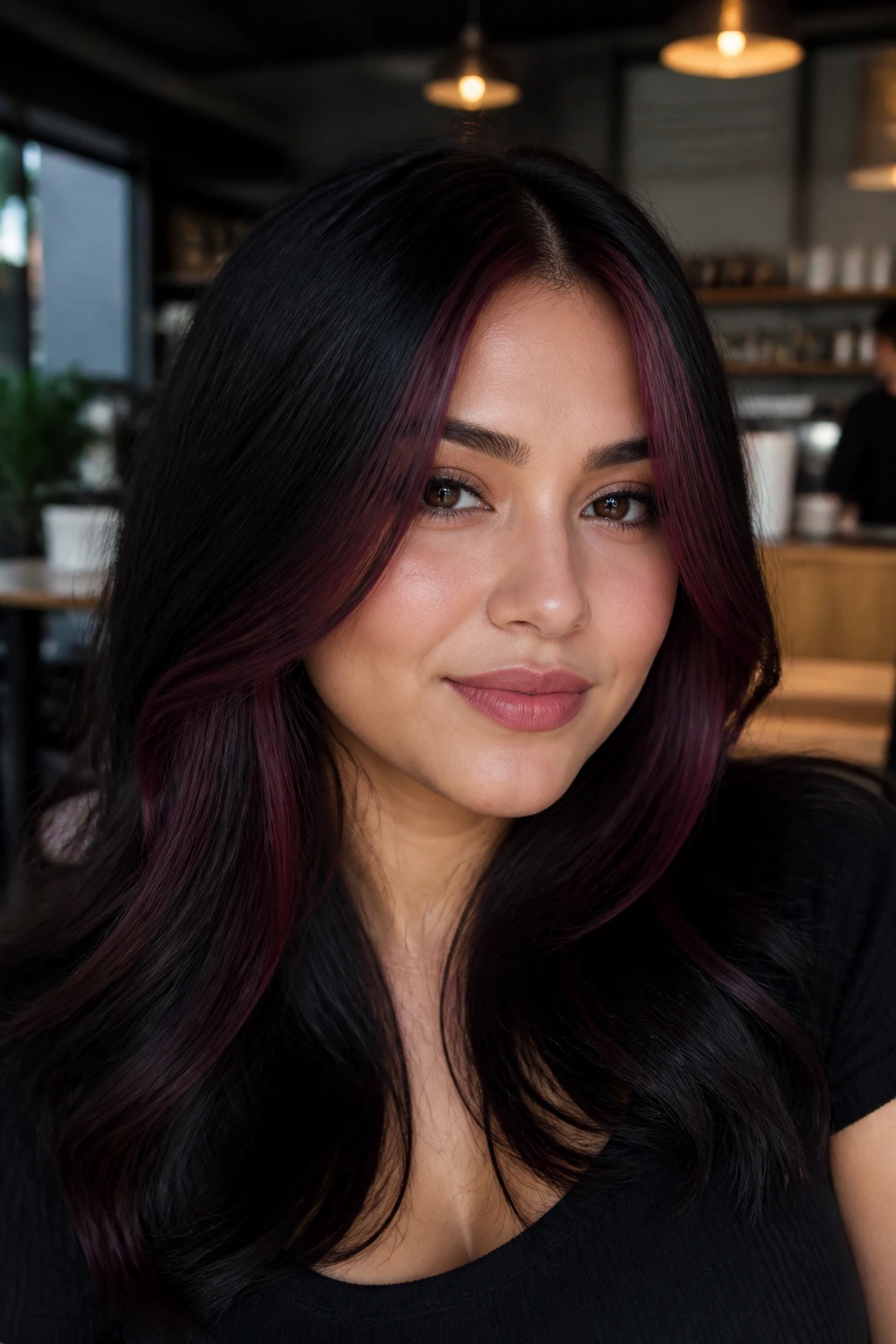
Black currant is a cooler berry red that works nicely for someone who wants a more refined look. The money piece version keeps the color concentrated in the front, but the shade stays deep enough to avoid a loud frame around the face.
The smart move is to keep the money piece narrow and slightly broken up. Straight, thick front panels can make a round face feel wider. Thin, feathered pieces that start just off the temple and drift toward the jaw do the opposite. They make the face look more lifted and a little longer.
This shade is lovely with a black base because the berry tone feels rich, not sugary. It also looks good with minimal makeup and a clean cut. You do not need a big style to carry it.
If your skin runs cool or neutral, black currant can be an easy win. If you’re warmer, keep the shade darker so it doesn’t go too purple-pink.
22. Smoked Ruby Layers
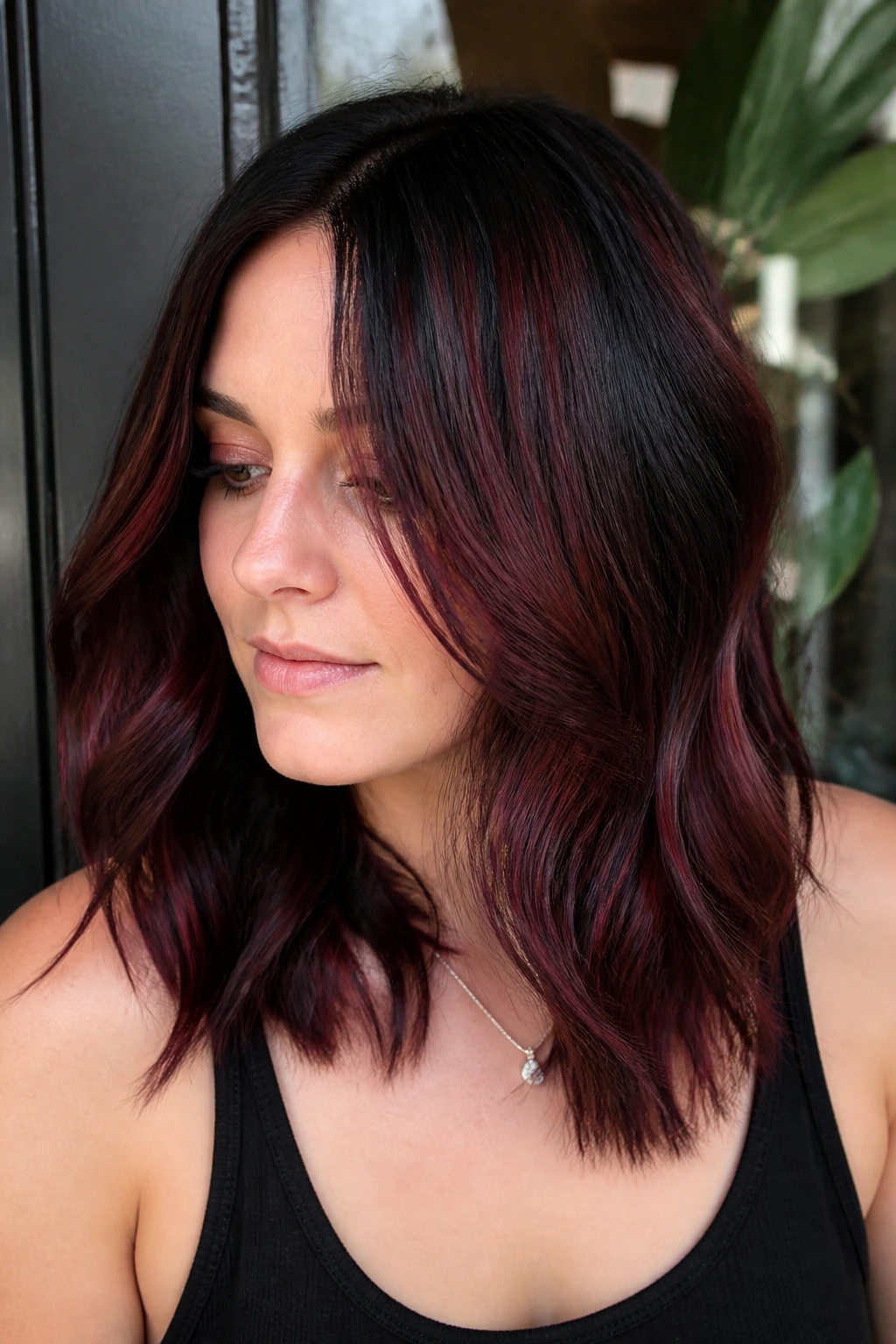
Smoked ruby is what happens when ruby red gets a little shadow and a little restraint. On layered black hair, that’s a good thing. The layers keep the color from pooling into one heavy block, and the smoky depth keeps the face from looking overly bright at the cheeks.
This color works best when the red is broken by darker lowlights. You want the ruby to peek through bends and layers, not sit as one flat panel. That layered movement gives a round face more length, especially if the shortest pieces stay below the jaw.
It also plays nicely with medium to long cuts. Shorter cuts can make the smoky effect feel crowded. Longer layers give the ruby room to breathe. If the hair is wavy, even better. The shine shifts around each bend and keeps the look from getting dull.
There’s a quiet luxury to this shade that I like. It’s red, but it doesn’t beg for attention.
23. Toffee Red with Glossed Ends
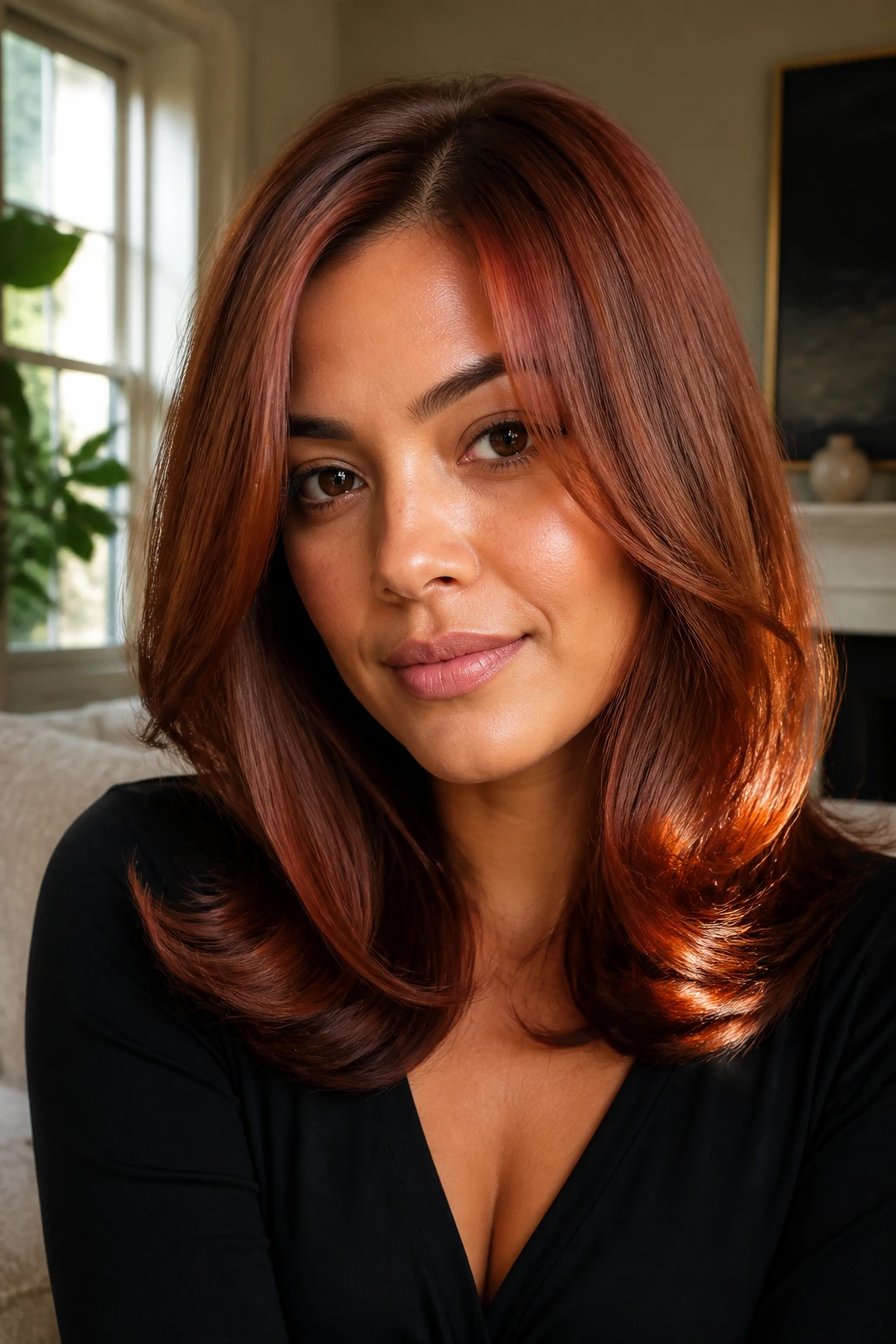
Toffee red is warmer and softer than cherry or burgundy, and that makes it a nice choice if you want red hair that feels approachable. On a round face, it works when the warmth stays low and the ends carry the gloss.
Unlike brighter copper, toffee red doesn’t flare out near the cheeks. It sits in the lengths, where it can stretch the style downward. That matters with layered hair and shoulder-length cuts, because a subtle warm end can lengthen the overall look without making the face look fuller.
This is one of the easier colors to live with if you want movement and shine more than drama. The gloss is important. Dry red hair can look flat in a hurry, while glossy ends catch light and keep the shade from going muddy.
Best for warm skin, golden undertones, and anyone who wants a softer red that still feels deliberate. It’s calm, but not boring. That balance is harder to nail than it sounds.
24. Ebony Rosewood Melt
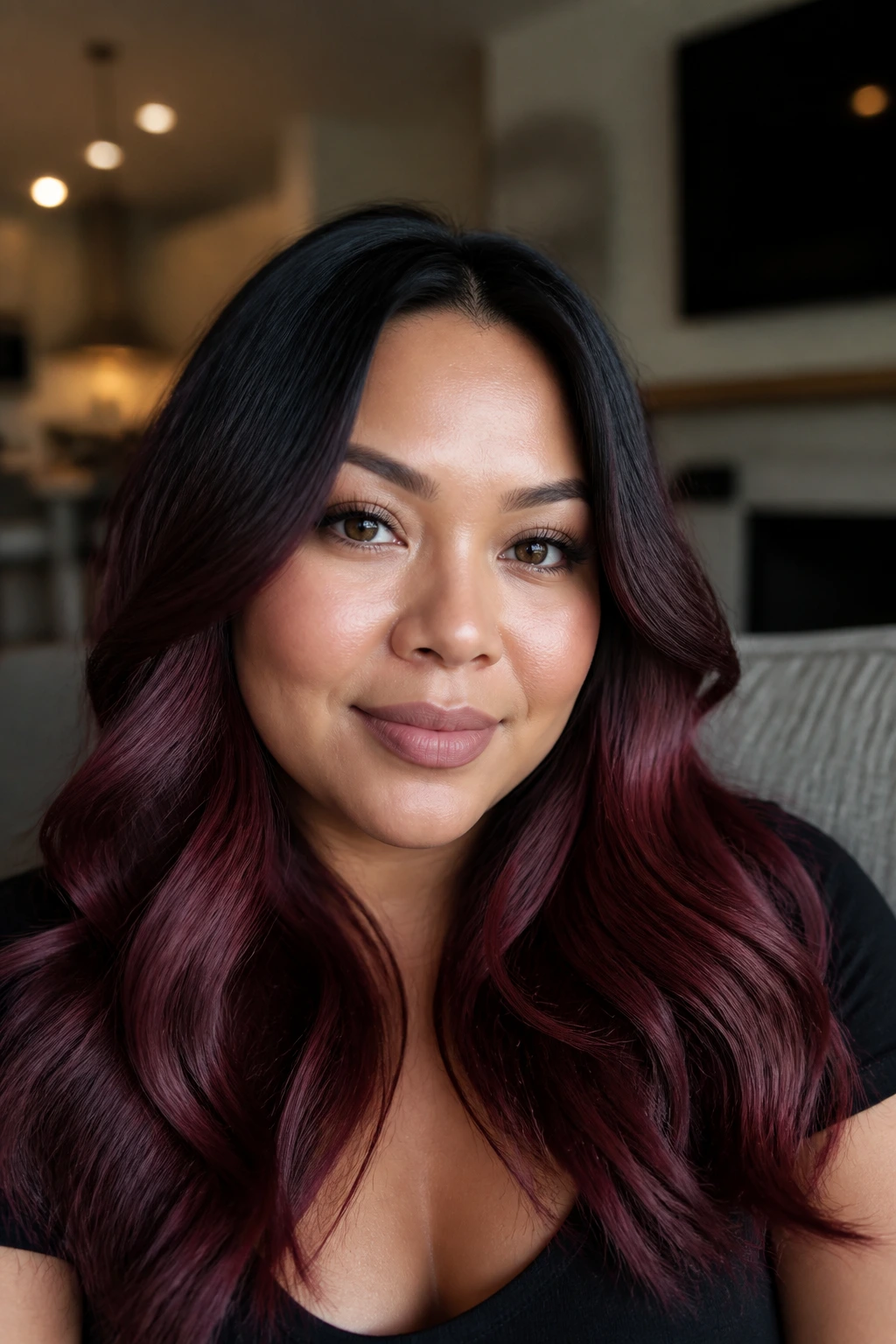
Ebony rosewood is a deeper, more romantic take on black-red hair. The black stays strong near the crown, and the rosewood red blooms through the mid-lengths with a soft, dusty tone that feels smoother than a bright berry.
What makes this flattering on a round face is the softness of the red itself. Rosewood doesn’t shout. It spreads in a gentle gradient, which means the face frame feels less wide and more sculpted. On waves, the color shifts in little pockets. On straight hair, it reads as polished and calm.
Ask for a melt, not a hard line. A visible stripe near the cheek can be unforgiving on a round face. A smooth rosewood fade keeps the shape long and elegant. It also pairs well with side parts, long layers, and ends that sit past the chin.
This is one of those shades that looks expensive in a quiet way. Not flashy. Better than flashy, honestly.
25. Ink Black with Rose Red Veil
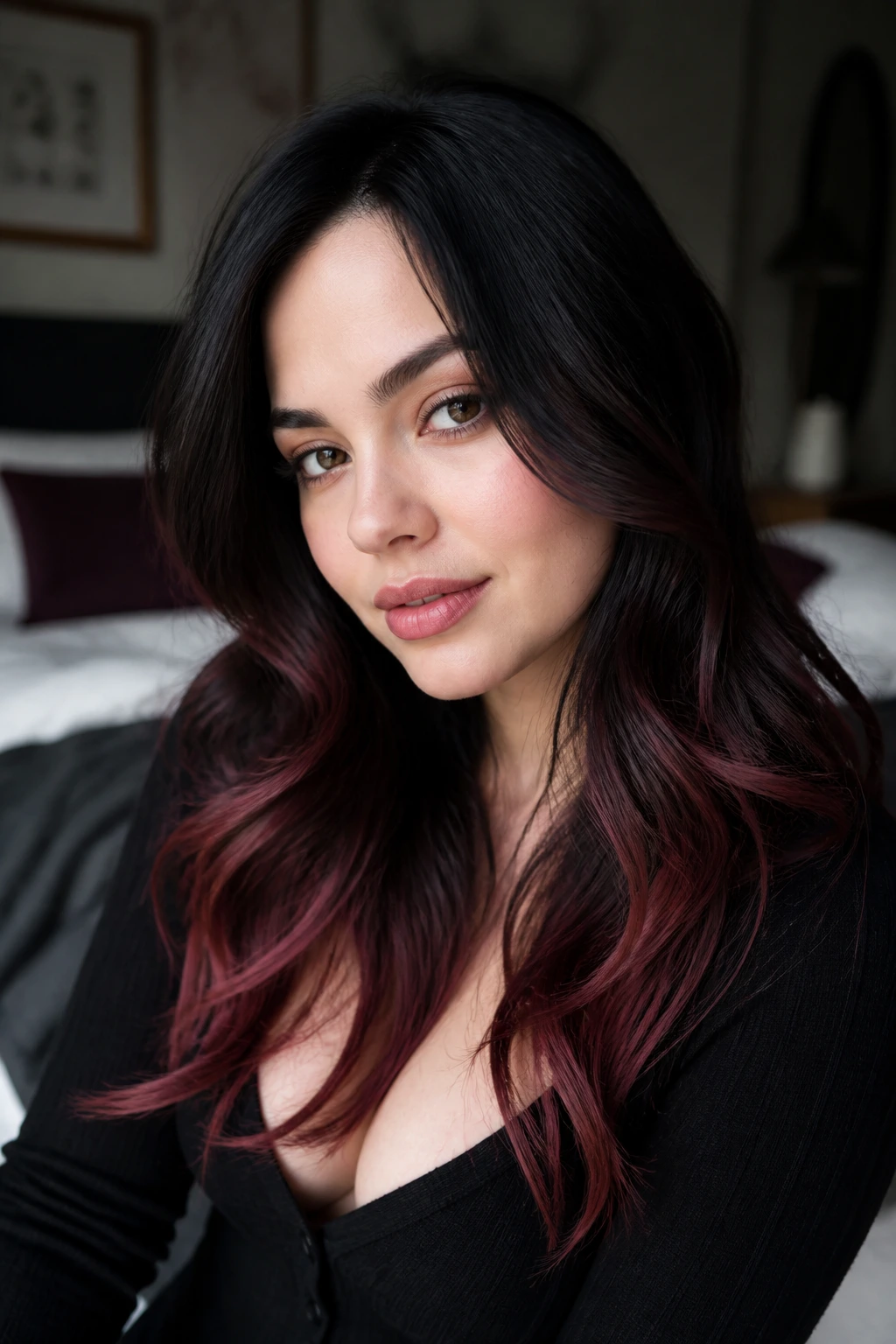
Ink black with a rose-red veil is the closest thing here to a whisper of color. The base stays near-black, and the rose red appears as a thin veil through the lower layers and just the softest front pieces. That makes it one of the best black red hair color ideas for round faces if you want red without adding width.
Why It Works
The rose tone is lighter than wine or burgundy, but the veil placement keeps it from feeling loud. It shows in motion, not in a static block. That movement is useful on round faces because the eye follows the hair downward and inward instead of out to the sides.
Ask for the veil to stay below the cheekbone and heavier toward the ends. If the color sits too high, the effect gets broader. If it stays low, the shape feels slimmer. A sleek blowout or soft wave finishes the look nicely.
This one suits people who want a little romance, a little edge, and a finish that doesn’t need to shout to be noticed.
Final Thoughts
Round faces do not need to hide from red hair. They just need the color placed with some care. Dark roots, lower brightness, and diagonal movement tend to do more for the face shape than a bright front panel ever will.
The smartest black-red looks keep the cheeks clean and let the drama happen below the widest point. That can mean a cherry melt, a wine underlayer, or a rosewood gloss that shows only when the hair moves.
Bring photos, yes. Bring a clear idea of where you want the red to start, even better. A colorist can work with almost any shade if the placement is right, and on a round face that little bit of placement logic changes everything.
