



Cool skin and ginger hair can look striking together — but only when the red leans the right way. A bright orange copper can make pink undertones look louder, while a blue-red ginger or smoked auburn can make the whole face look cleaner and brighter.
That tiny shift in tone is the whole game.
Cool skin is not one flat thing, either. Some people are fair with rosy cheeks and a little blue in the surface tone. Others are medium-toned with a cool beige cast, or deeper skin that carries a blue-red undertone instead of golden warmth. The same ginger that looks fiery and rich on one person can look harsh on another, and the difference often comes down to how much orange is sitting inside the dye.
The shades below move from airy strawberry tones to dark berry coppers and smoked auburns, because cool skin does not need to avoid ginger. It needs the right version of ginger — one with enough blue, violet, brown, or smoke to keep the color from drifting brassy. A good colorist knows this instinctively; a box dye usually does not.
1. Blue-Red Ginger for Cool Skin Tones
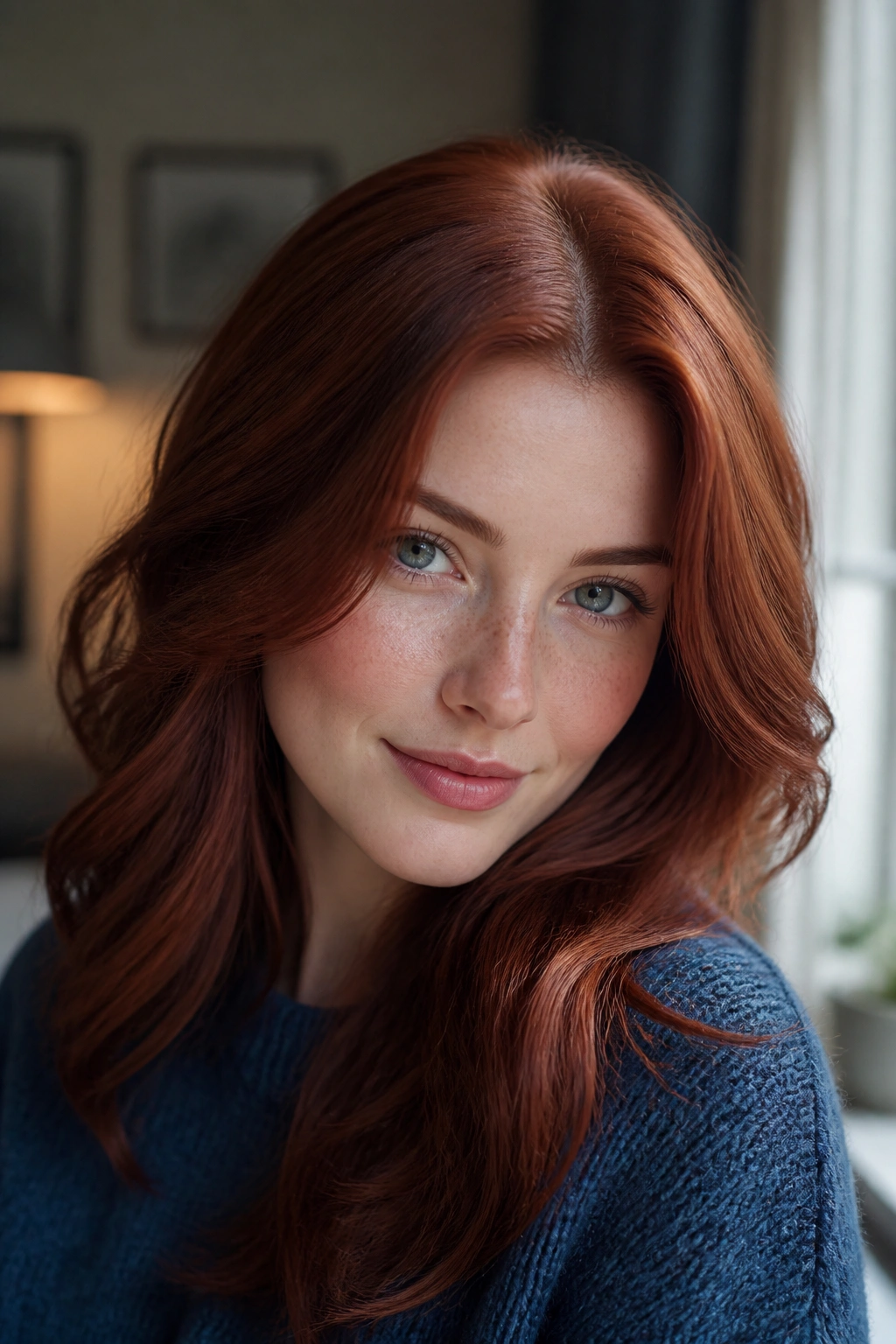
If your skin goes pink in daylight, start here. Blue-red ginger is the safest entry point into the red family because it keeps the warmth under control without turning dull.
Why It Flatters Cool Skin
The blue in the base cools the red down just enough to play nicely with rosy undertones. Instead of a sharp tangerine cast, you get a shade that reads like fresh cherry skin or red currant under soft light. That matters more than people think. On cool skin, the eye notices harmony before it notices shine.
Ask for a level 7 or level 8 red with a blue-red base, not a pure orange copper. If the hair is light already, a gloss or demi-permanent color can give you the tone without heavy commitment.
- Choose a blue-red or cherry base, not gold-red.
- Keep the finish semi-sheer, so the color looks light rather than flat.
- Refresh with a gloss every 4 to 6 weeks if your hair fades fast.
Pro tip: If your ends grab warmth, ask for a slightly deeper root melt so the brighter red stays away from the face for a week or two longer.
2. Smoky Copper
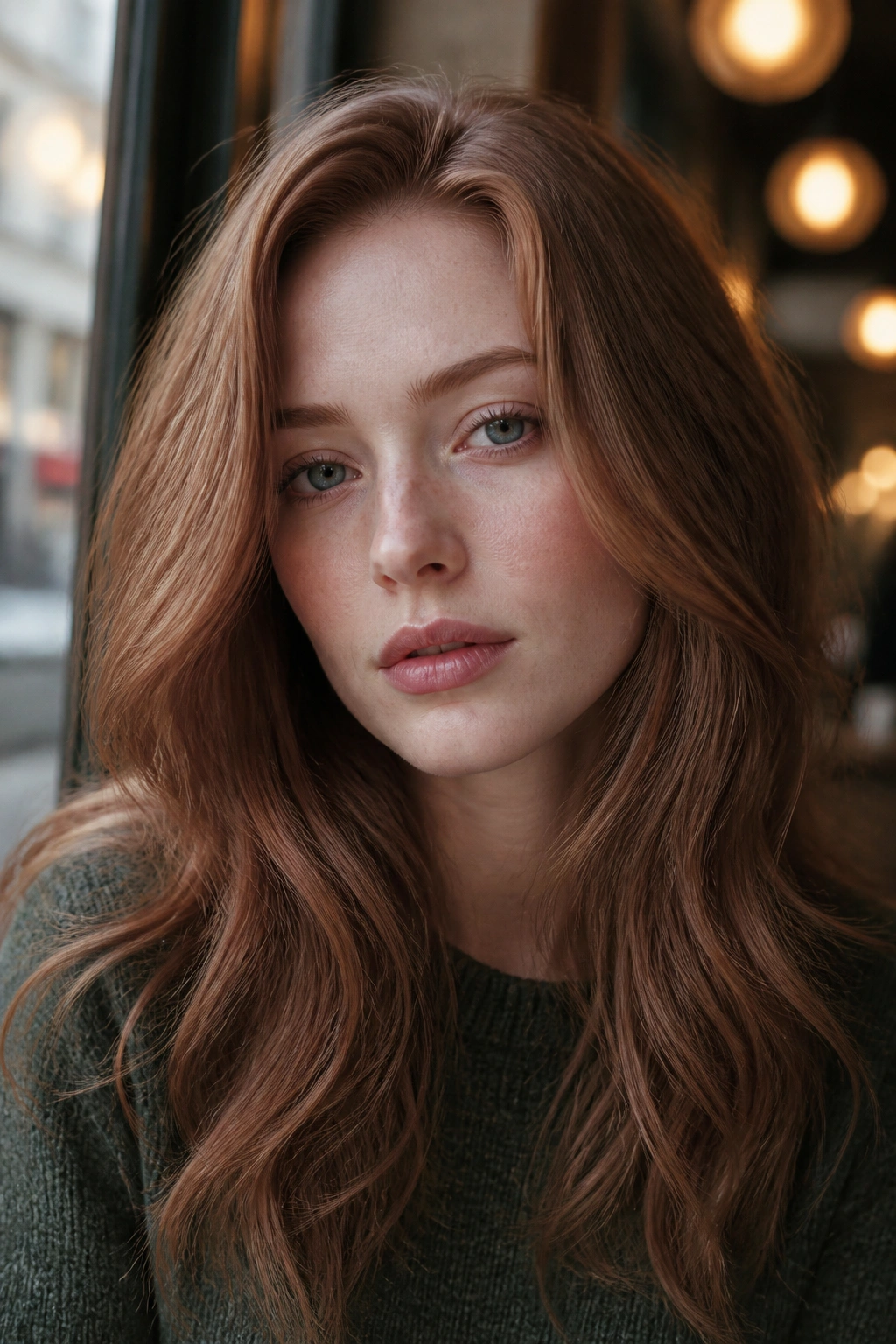
Smoky copper is what happens when copper grows up a little. The orange is still there, but a brown-gray veil keeps it from flashing too bright against cool skin.
That smoky note matters on pale skin with pink or blue undertones because it softens the contrast. A clean, bright copper can look almost neon under bathroom lights; smoky copper looks more lived-in, more natural, and easier to wear with bare skin. I like this shade on shoulder-length cuts and soft waves, where the darker lowlight ribbons can move around instead of sitting like a solid block.
It also holds up better in daylight. You get warmth, but not the kind that shouts. If you like red lipstick, black sweaters, and a little edge in your look, this shade has a nice bite to it. Ask for copper with neutral brown lowlights and a gloss that keeps the finish satin, not shiny-bright.
One small thing: smoky copper looks best when the brows are not too warm. Soft taupe or ash-brown brows tend to keep the whole face balanced.
3. Strawberry Ginger
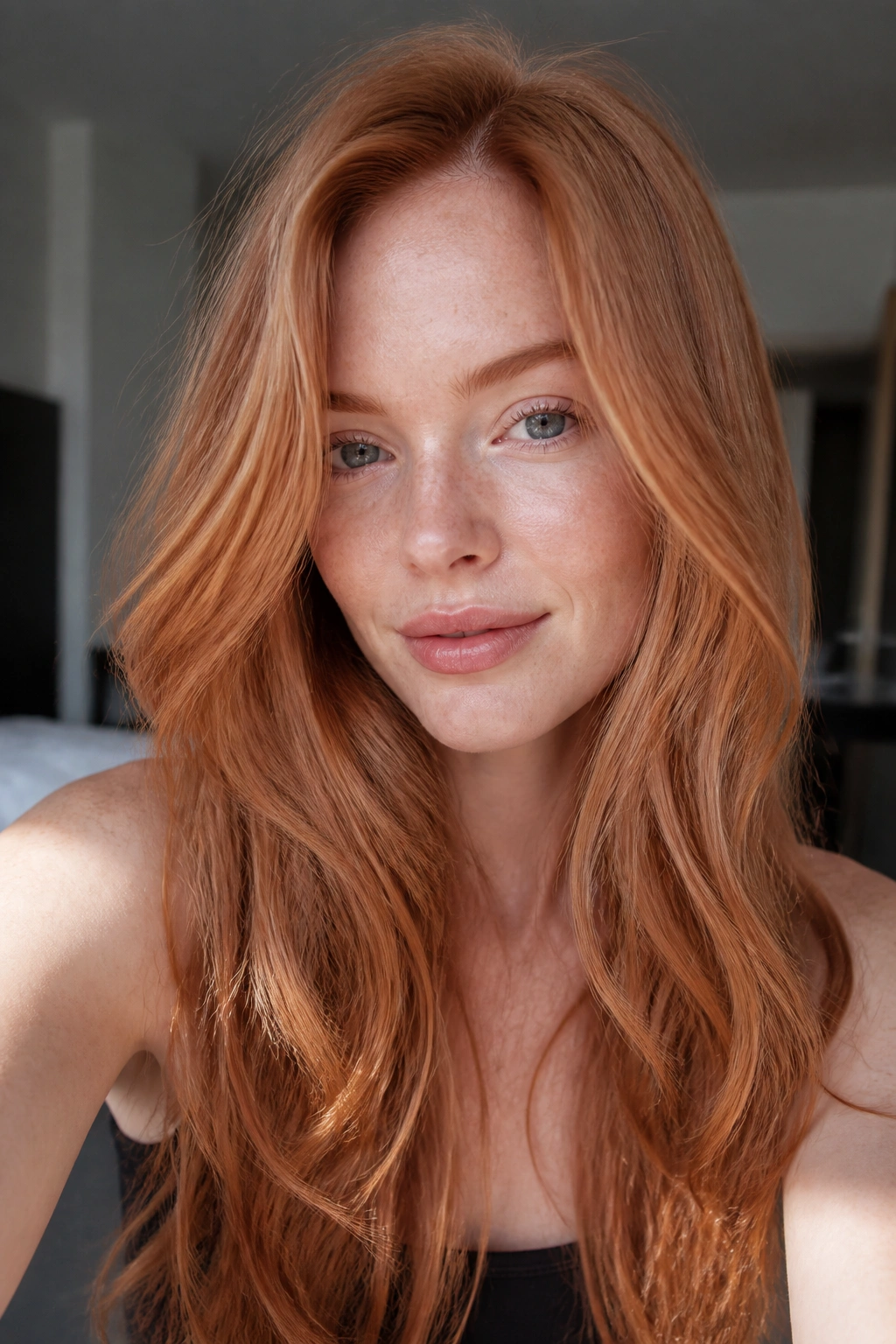
Can strawberry still work on cool skin? Yes, if the orange stays delicate and the pink stays visible.
Strawberry ginger lives in that soft in-between place where red, peach, and blonde all show up at once. On cool skin, the key is keeping the shade airy. A heavy strawberry with too much gold will fight pink undertones. A lighter strawberry with a cool gloss, though, can make the complexion look fresh and clean, almost like the skin itself got brighter.
How to Ask for It
Ask your colorist for a light copper strawberry blonde with a violet or neutral gloss layered on top. If your base is already light, a demi-permanent formula usually gives a more believable result than a strong permanent red.
- Keep the color at level 8 or lighter for the softest effect.
- Avoid yellow-gold highlights near the face.
- Use a color-depositing conditioner in a rose or copper tone every 2 to 3 washes.
This one looks best on fine to medium hair because the lighter shade can disappear a little on very thick hair. And yes, it fades fast. That is the price of the softness.
4. Cherry Cola Ginger

Cherry cola ginger is for the person who wants red hair that looks deeper in the office and brighter outside. It’s one of the easiest “cool red” shades to wear because the brown base carries the warmth.
Picture a dark cola brown with red-cherry reflections hiding in the middle and just at the ends. Under low light, it reads almost brunette. In sunlight, the red wakes up and gives the hair movement. That shift is what makes it flattering for cool skin: you get color without the hard orange edge that can make skin look flushed.
This shade also handles makeup well. Berry blush, plum lipstick, even a simple brown liner — all of it feels easy with cherry cola hair. It’s not a fussy color, which I appreciate. Some reds ask for a whole beauty wardrobe change. This one doesn’t.
- Best starting base: level 4 to level 5 brown
- Ask for red-violet or cherry ribbons through the mid-lengths
- Finish with a clear gloss for shine, not extra warmth
If your hair is already dark, this is one of the least dramatic ways to go ginger without looking like you tried too hard.
5. Rose Gold Red
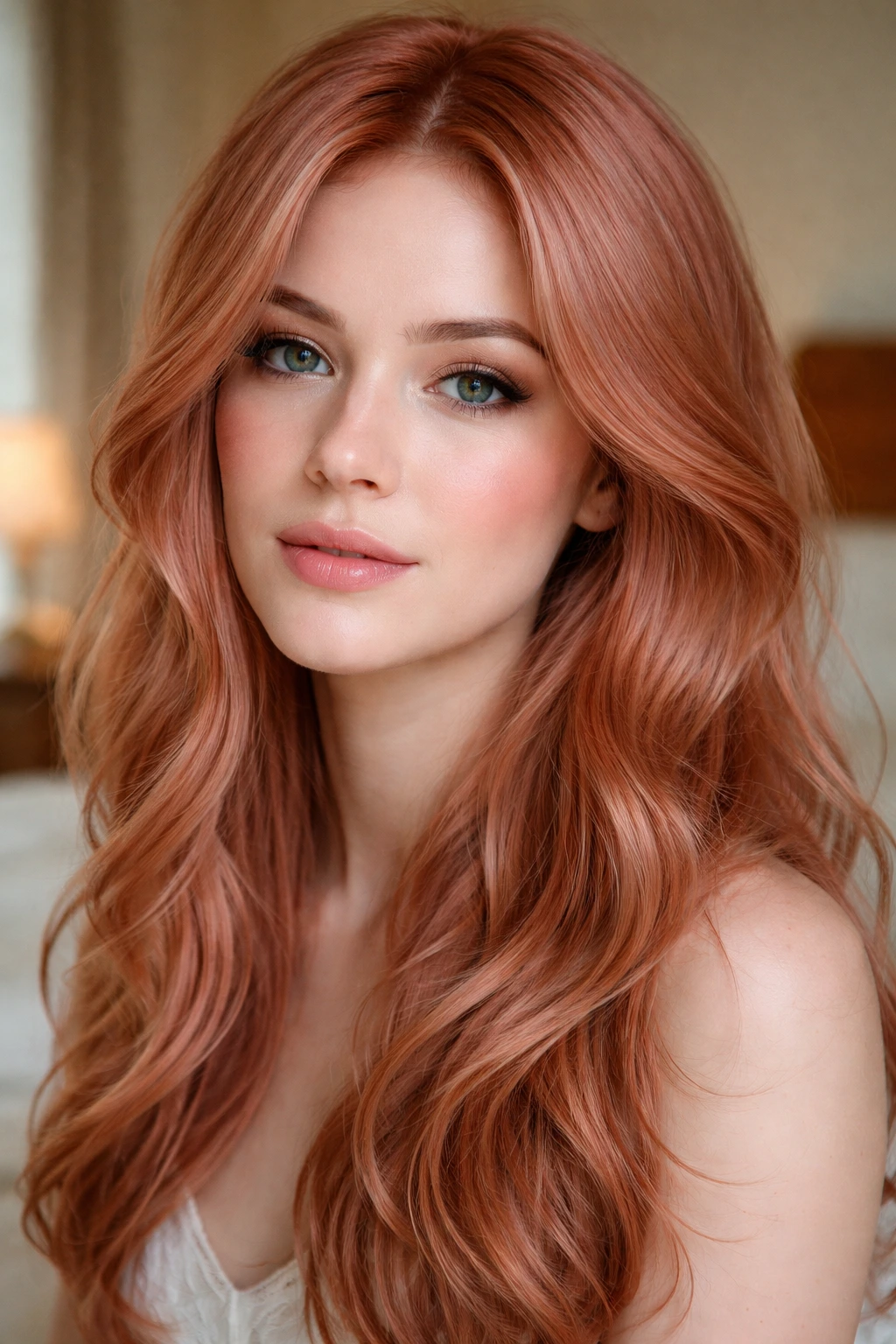
Rose gold red can go wrong fast, but when it’s done well, it’s one of the prettiest options for cool skin. The trick is to keep it more rose than gold and more red than peach.
This shade feels especially good on fair cool skin because it doesn’t overpower the face. Instead, it sits on top like a soft wash of color. Think polished, sheer, and reflective — not metallic in the costume-jewelry sense, just light-catching and soft. A blunt bob or a clean lob makes the color look even better because the shape gives the tone a place to land.
The best version has a beige-pink base with a muted copper veil. If the gold gets too loud, the color starts to read warm in a hurry, and cool skin can look a little tired next to it. That’s why I’d keep the saturation low and the shine high. It’s not a loud shade. That’s the point.
This is also a smart choice if you wear a lot of soft gray, navy, black, or cream. The hair becomes the warm note without taking over.
6. Cinnamon Auburn
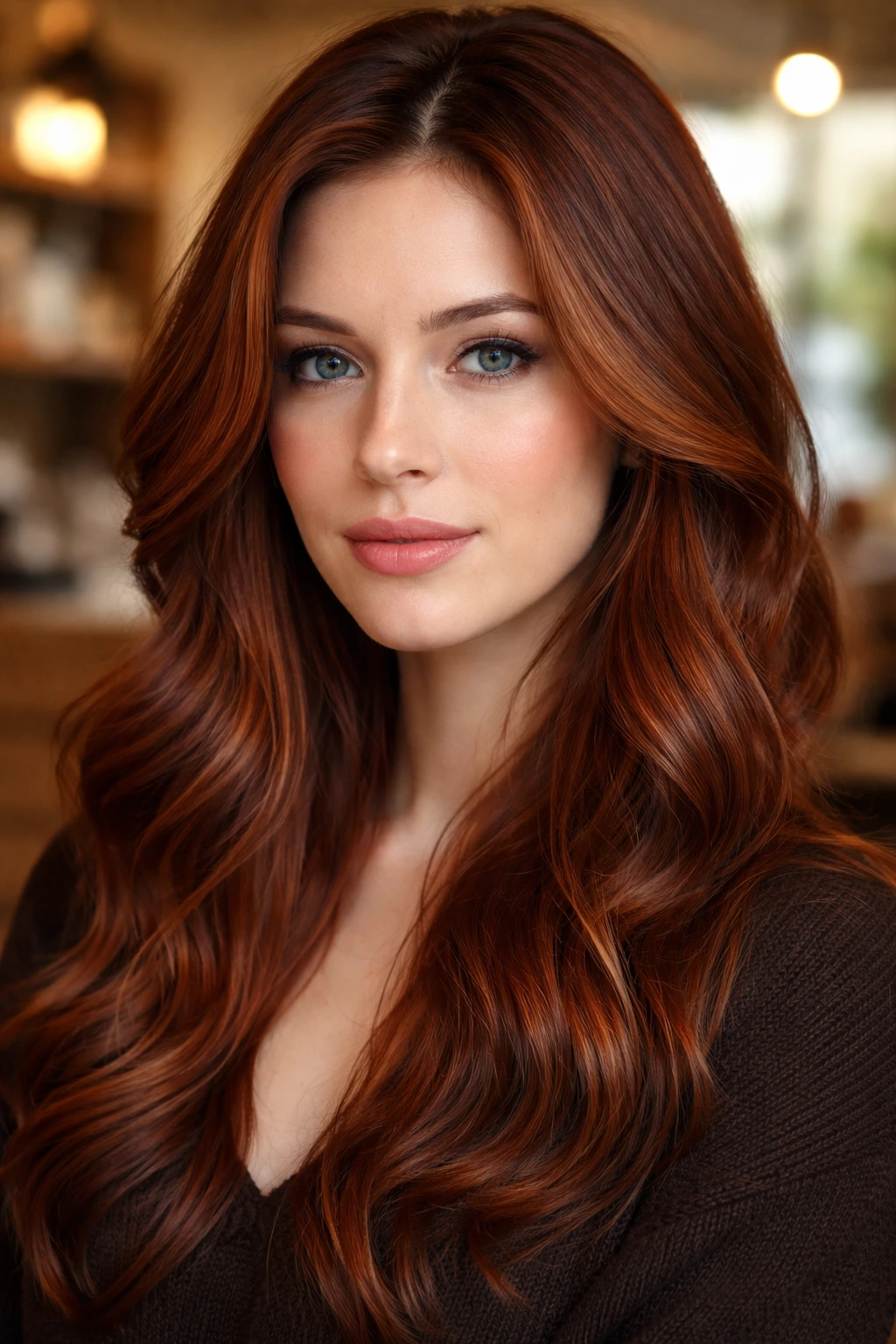
Cinnamon auburn is where ginger stops feeling sugary and starts feeling grounded. Compared with brighter copper, it has more brown in the mix, which is exactly why cool skin can carry it so well.
Auburn shades are underrated. People hear “red” and imagine a fire engine. Cinnamon auburn is closer to a warm chestnut with a red glow showing through the surface. On cool skin, that red glow keeps the face from looking washed out, while the brown base prevents the shade from turning orange.
If you have darker brows or naturally deeper hair, this one is especially easy to wear. It also grows out neatly, which matters more than any glossy photo will admit. A root line that’s one to two levels deeper than the mid-lengths gives the color depth and keeps maintenance sane.
Ask for a level 5 or level 6 auburn with a cinnamon glaze. If you want dimension, add a few thinner copper pieces around the face instead of full highlights. Less can be more here.
7. Penny Copper Balayage
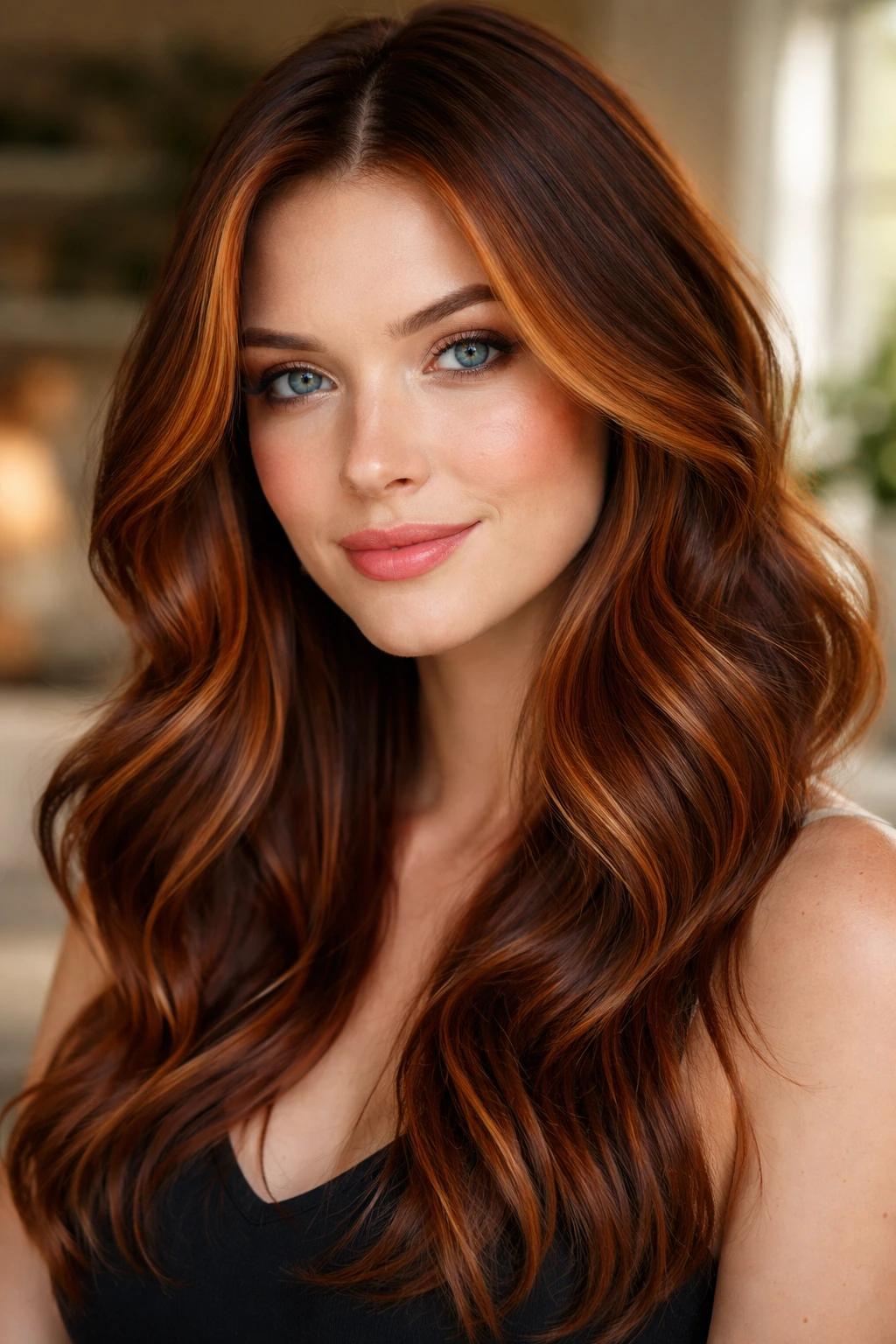
A penny-copper balayage has a good kind of shine to it. It gives cool skin a ginger hit without forcing the whole head into one bright tone.
The reason balayage works so well is placement. Bright copper around the face and on the top layers catches light first, so the skin gets a glow from the color. Deeper brown or auburn underneath stops the copper from feeling too flat or too loud. You get that rich penny-metal look, but with movement.
Where the Brightness Should Sit
Keep the brightest pieces about one inch away from the hairline if your skin blushes easily. That tiny gap gives the color some breathing room. A colorist can soften the root area with a neutral brown shadow, then paint copper through the mids and ends.
- Ask for hand-painted copper ribbons, not thick streaks.
- Keep the base at level 6 or darker if you want contrast.
- Use a sulfate-free shampoo and cool water rinses to slow fading.
This shade shines on wavy hair, but it also works on straight hair if the cut has movement. A blunt cut can make it look a little too polished. A few soft layers help.
Best part: the regrowth line is kinder than it is with all-over red.
8. Mahogany Ginger Melt
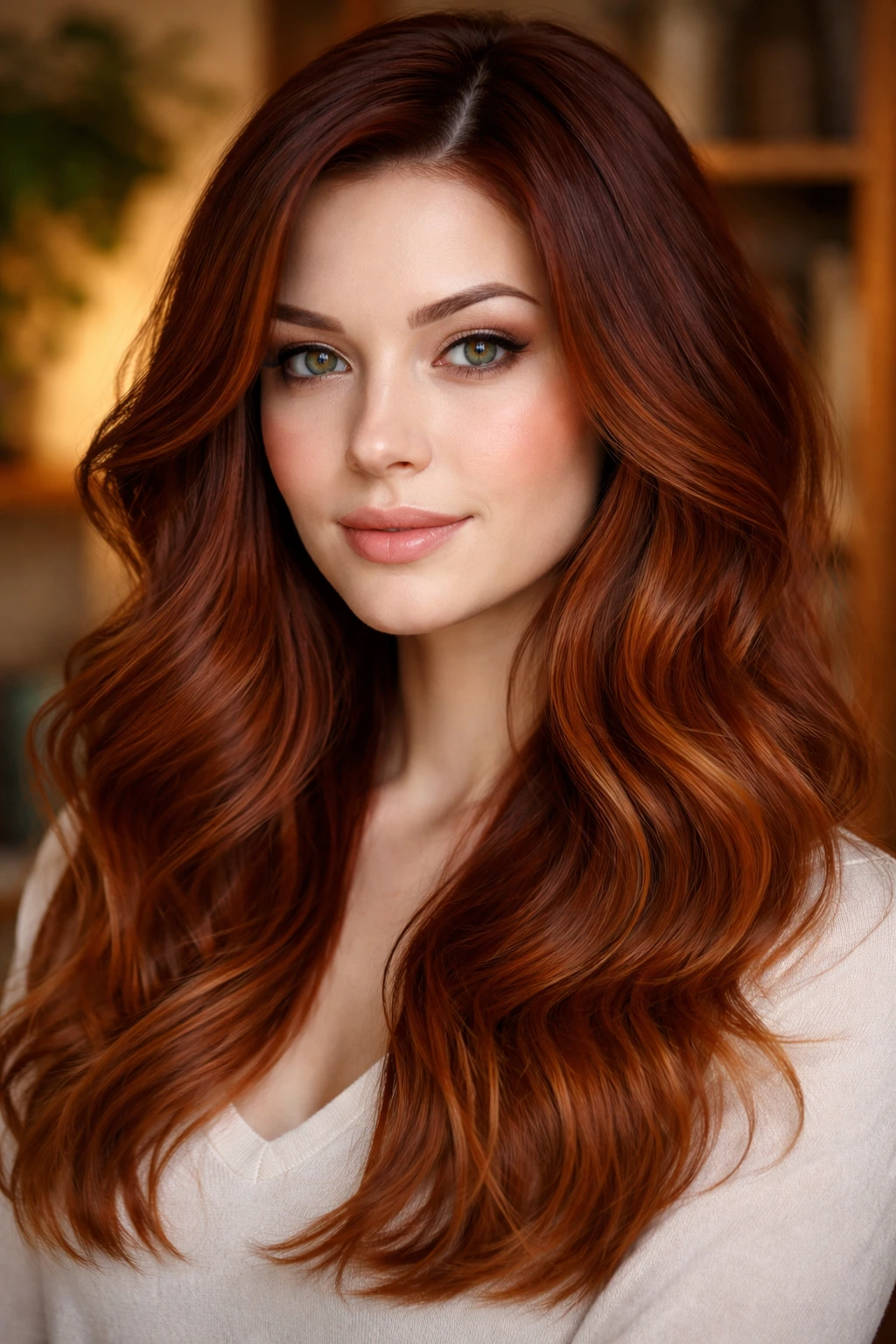
Mahogany ginger melt is one of the smartest choices for cool skin because the darkness does most of the heavy lifting. The red is there, but the brown-red base keeps it elegant instead of loud.
I like this one on longer hair, especially if the ends are a little porous and tend to grab warmth. A melt means the color shifts slowly from a deeper mahogany root into gingered mid-lengths and ends, so nothing looks painted on. It feels expensive in person, but more importantly, it is forgiving. If your skin is cool and your wardrobe leans dark, this shade fits right in without looking harsh.
The undertone should be a mix of brown, red, and a little violet. Not burgundy. Not bright copper. Somewhere between those, with enough depth to sit next to cool skin without turning orange under indoor lighting.
It also works well if your hair is naturally dark and you do not want to fight it. A pre-lightening session may not be necessary, which is nice, because repeated bleaching on red hair is how you get dryness, breakage, and that fuzzy halo nobody asked for.
9. Cranberry Auburn
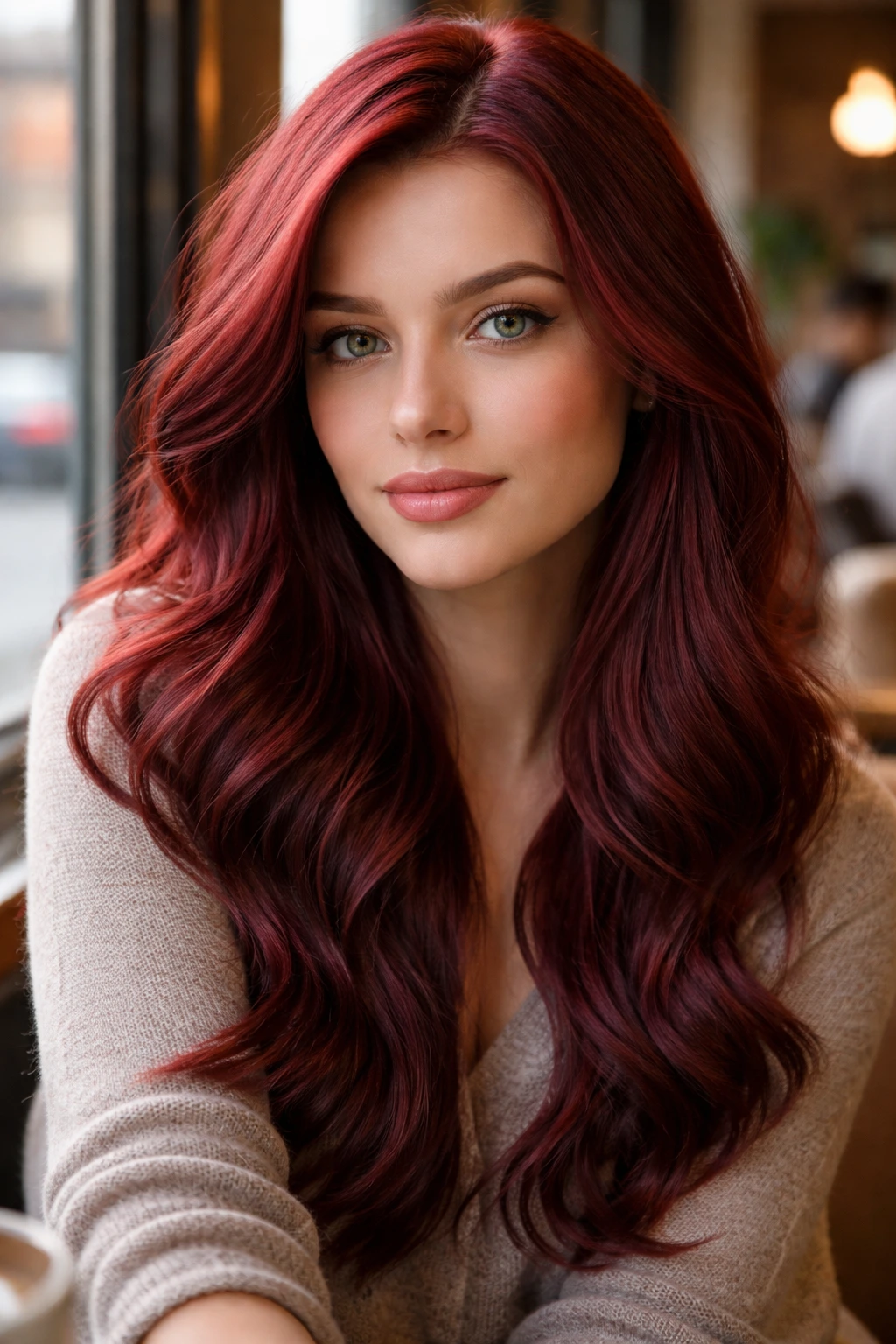
Can a red look cool and rich at the same time? Cranberry auburn can, and that’s why it stays on the good side of cool skin.
The cranberry note brings in a berry-red edge, while the auburn base keeps the shade grounded. On cool skin, that balance stops the face from looking washed out. The color has enough depth to feel mature, but enough vibrancy to keep the skin lively. It’s a good choice if you like red hair but don’t want anything that reads bright orange or peach.
How to Wear It Without Looking Flat
The big mistake is making cranberry too dark and too matte. Then it can look like a brown shade with a red filter thrown over it. Ask for a glossy finish instead, and let the light catch the red in the surface.
- Best on level 5 to level 6 hair
- Ask for berry-red lowlights rather than chunky highlights
- Refresh with a red-violet glaze every month if your hair fades fast
This shade suits deep eyes, strong brows, and cool-toned makeup. It also loves silkier textures. On coarse hair, cranberry can look extra rich, which is a good thing if you want a little drama without going full scarlet.
10. Burnt Ember Red
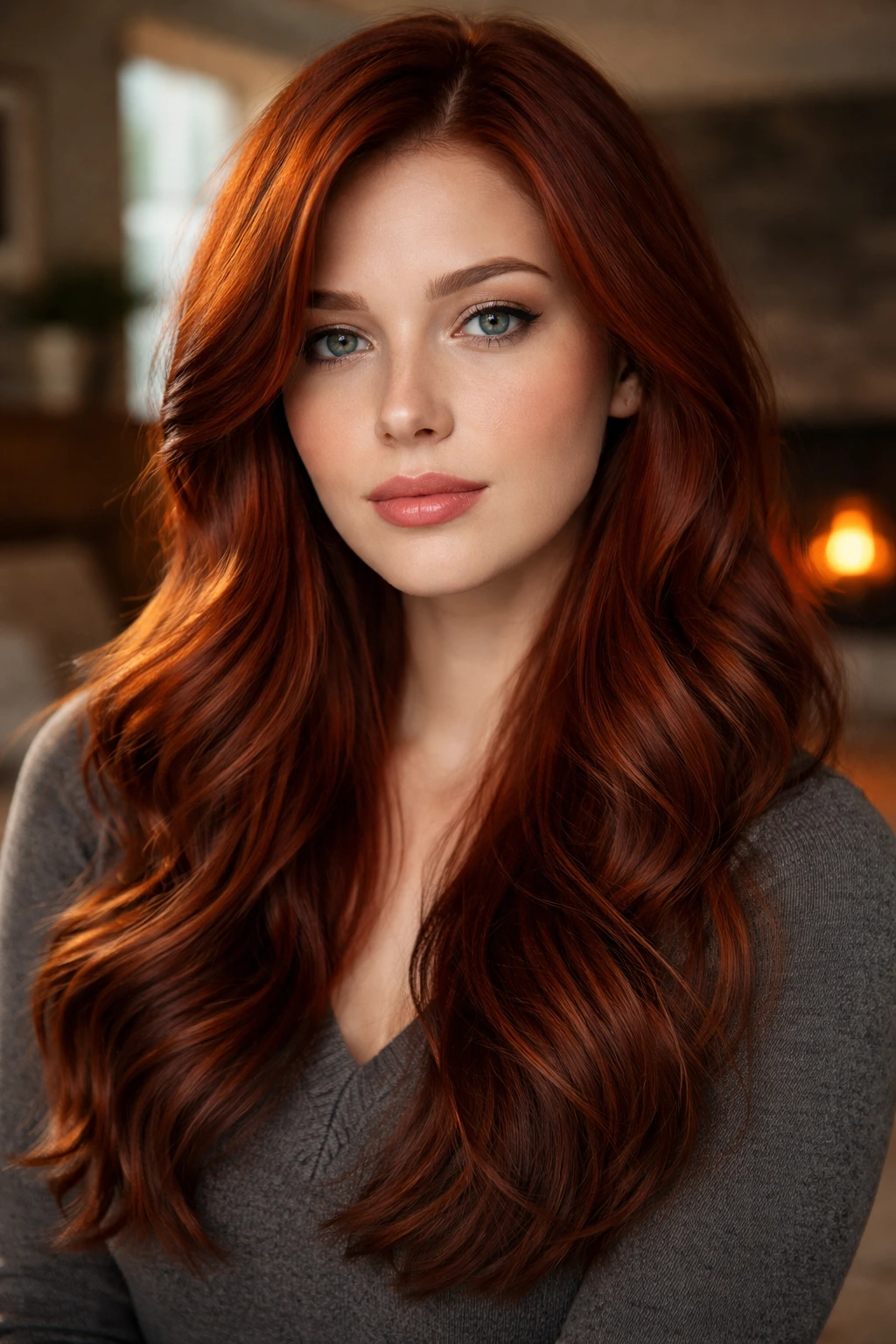
Burnt ember red is what I recommend when someone wants ginger with a little heat, but not the kind that looks cartoonish. The burnt note gives the color depth, and that depth is what keeps cool skin happy.
Think of a fire ember after the flame dies down — red at the center, brown at the edge, and a tiny orange spark somewhere in the middle. That’s the idea. It’s warmer than mahogany and darker than copper, which makes it one of the easier reds for cool skin to carry if you like stronger color.
This shade looks especially good with textured waves or a shag cut, because the darker and lighter parts can move around. A sleek style can make it look more uniform, which isn’t bad, just less lively. If your skin is pale, the burnished red tones can add life without making your cheeks look too pink. If your skin is medium with cool undertones, the depth can look almost velvet-like.
- Ask for a red-brown base with ember copper mids
- Keep the ends a touch lighter for movement
- Use a heat protectant every time you blow-dry or flatiron
11. Plum-Copper Blend
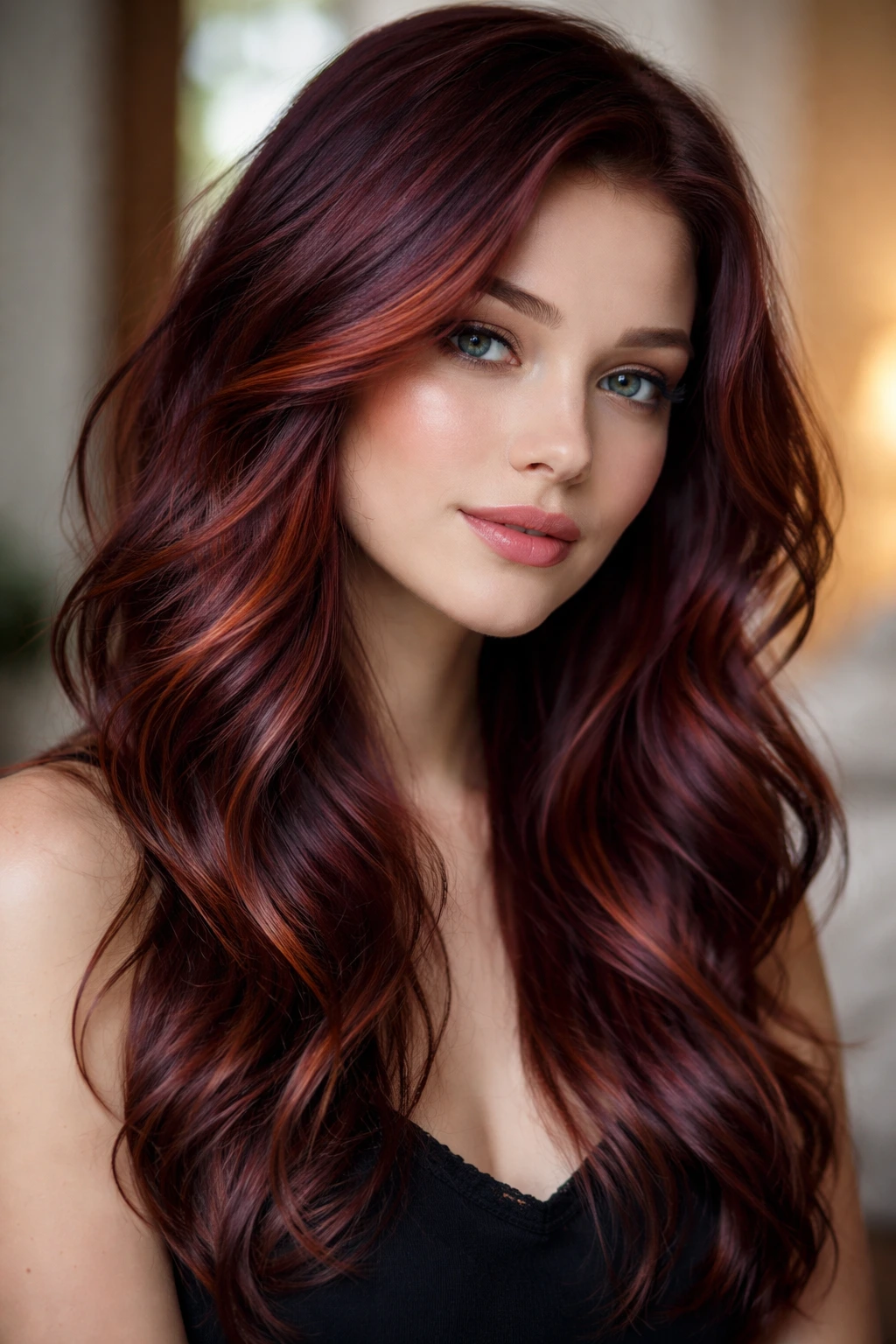
Plum-copper is a shade that knows how to behave on cool skin. The plum cools the copper, and the copper keeps the plum from looking flat.
That little tug-of-war is what makes the color interesting. In low light, the hair leans berry-brown. In daylight, the copper shows up first, but it never gets so orange that it starts fighting the skin. I love this on people who want a red that feels a bit editorial but still wearable on an ordinary Tuesday.
It also flatters cool skin because plum reflects blue-violet light back toward the face. That can soften redness around the nose or cheeks, which is a detail most people notice only after they have lived with the color for a few days. It does something subtle. Not flashy. Subtle.
A plum-copper blend pairs well with layered cuts, because the dark and light pieces can separate in motion. If the hair is all one length and very dense, ask for fine highlights rather than broad panels. The color reads richer when the transitions are narrow.
One more thing: this is a shade that gets better with a gloss, not a heavy dye refresh. Keep it shiny and the tone stays believable.
12. Brick Red with Shadow Root
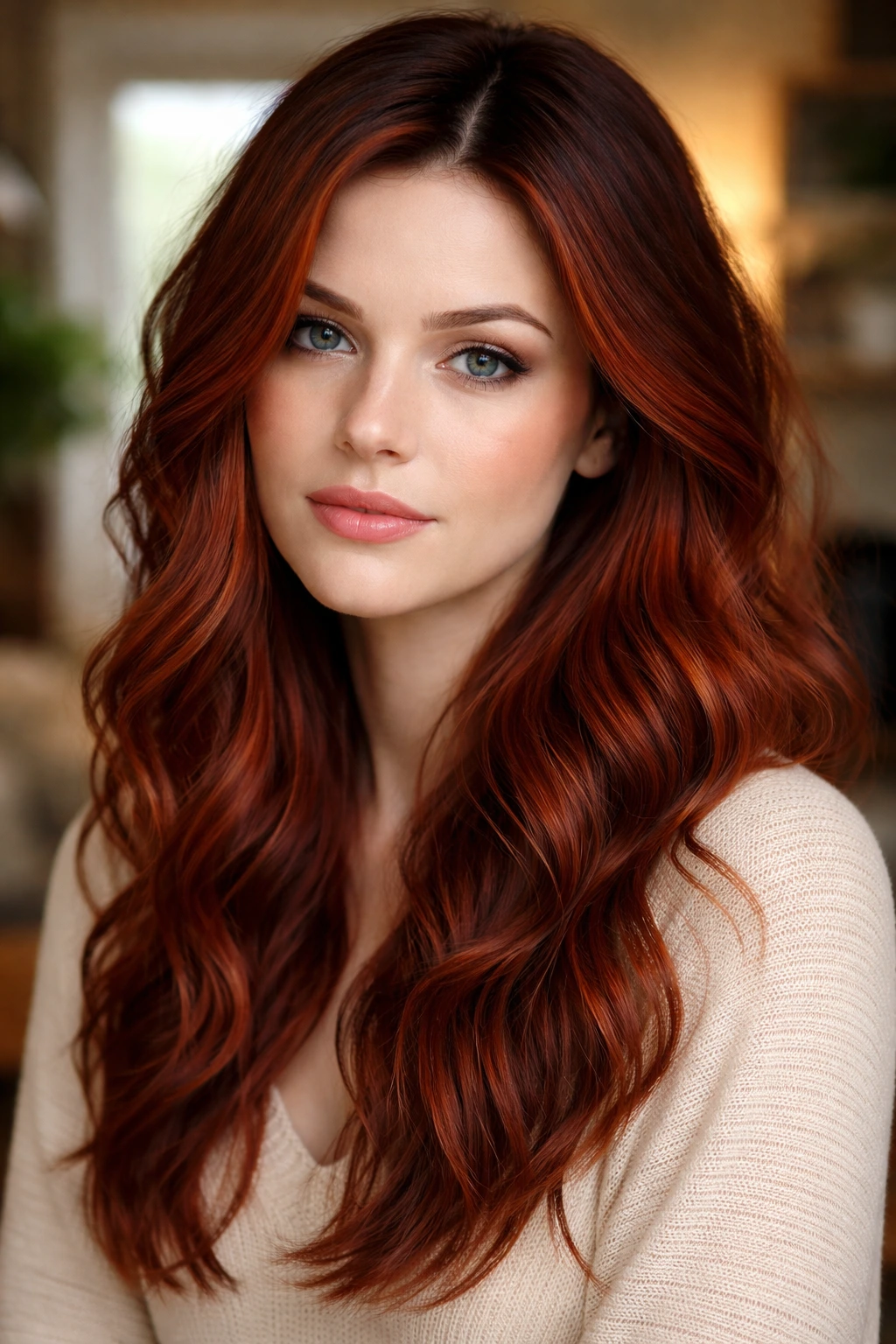
Brick red with a shadow root is the practical red for cool skin. It has enough warmth to qualify as ginger, but the root shadow keeps it from getting too bright at the scalp.
Unlike a full copper wash, brick red feels calm. The tone sits between rust and red clay, which gives you that earthy ginger idea without the neon edge. Cool skin tends to look better when the color has a little mud in it — not dirty, just grounded. A deeper root, usually one to two levels darker than the mids, makes the whole thing easier to wear and far easier to grow out.
This is a smart pick for anyone who wants a salon color that still looks decent six weeks later. The shadow root softens regrowth, and the brick-red mids hold the eye. Add a few copper flashes near the face if you want more brightness, but keep them narrow.
If your natural hair is medium brown, this may be the least annoying red on the list. That sounds unglamorous, I know. It also happens to be true.
13. Garnet Velvet Red for Cool Skin Tones
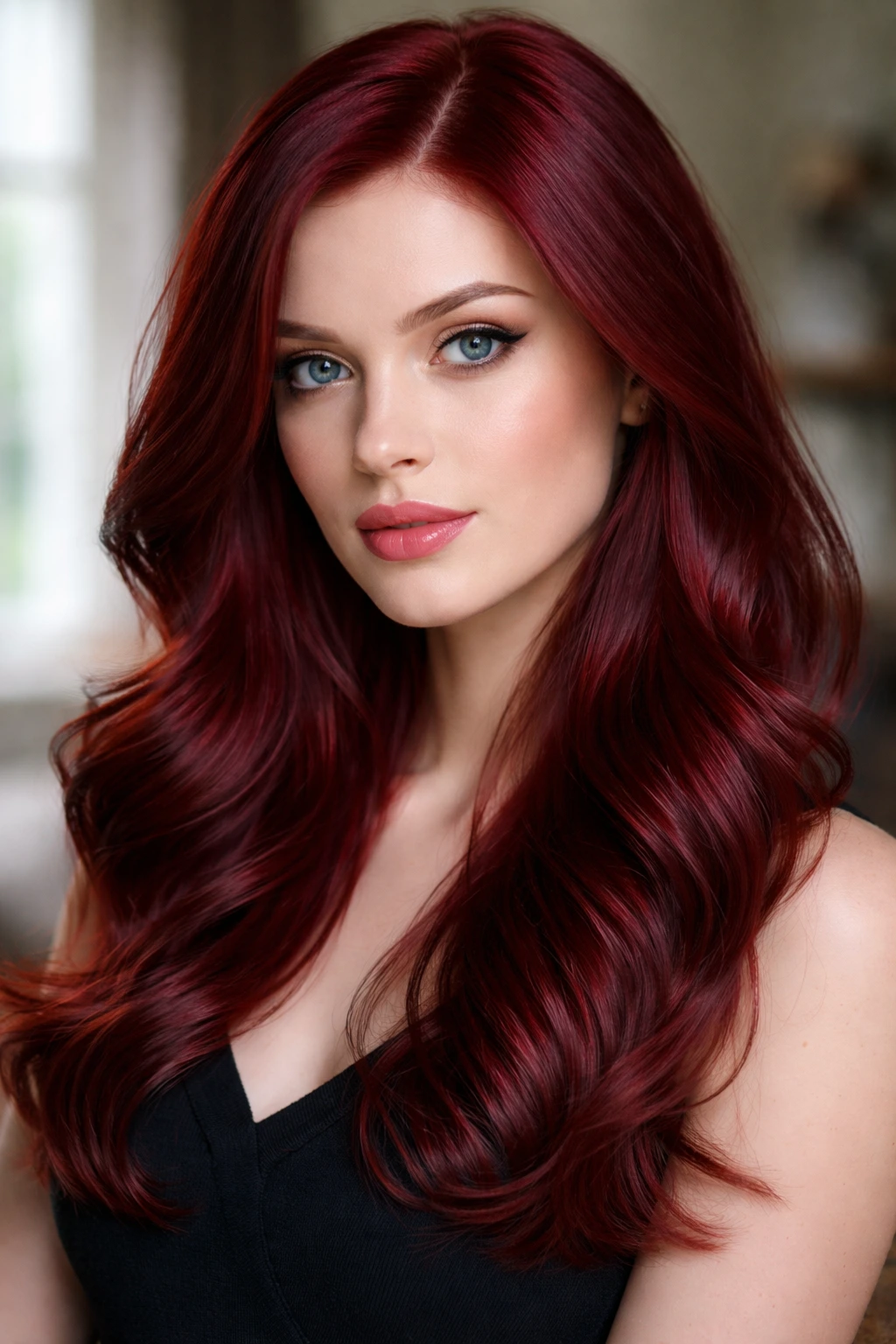
Garnet velvet red is the shade I pull out when someone wants red hair that looks deep, expensive, and a little mysterious without drifting into brown. It works on cool skin because the color stays jewel-like instead of orange.
Why It Works on Cool Skin
Garnet has a blue-red backbone. That matters. The undertone gives cool skin room to breathe, while the velvet finish softens the shine so the hair doesn’t look too harsh next to a fair or pink face. If you’ve ever seen a red that made the skin look flushed for the wrong reason, this is the opposite of that.
Ask for a level 5 garnet base with a clear gloss on top. If your hair is lighter, the color may need to be filled first so it does not go muddy.
- Choose blue-red or wine-red pigments
- Avoid bright gold or yellow copper
- Keep the finish satiny, not matte
This shade loves straight, smooth hair, but it also looks good in loose curls because the red picks up on the bends. It’s one of the better choices if you want your hair to feel deliberate rather than trendy. A good thing, honestly.
Best pairings: black knits, silver jewelry, and a sharp lip color.
14. Rust Face-Frame Ginger
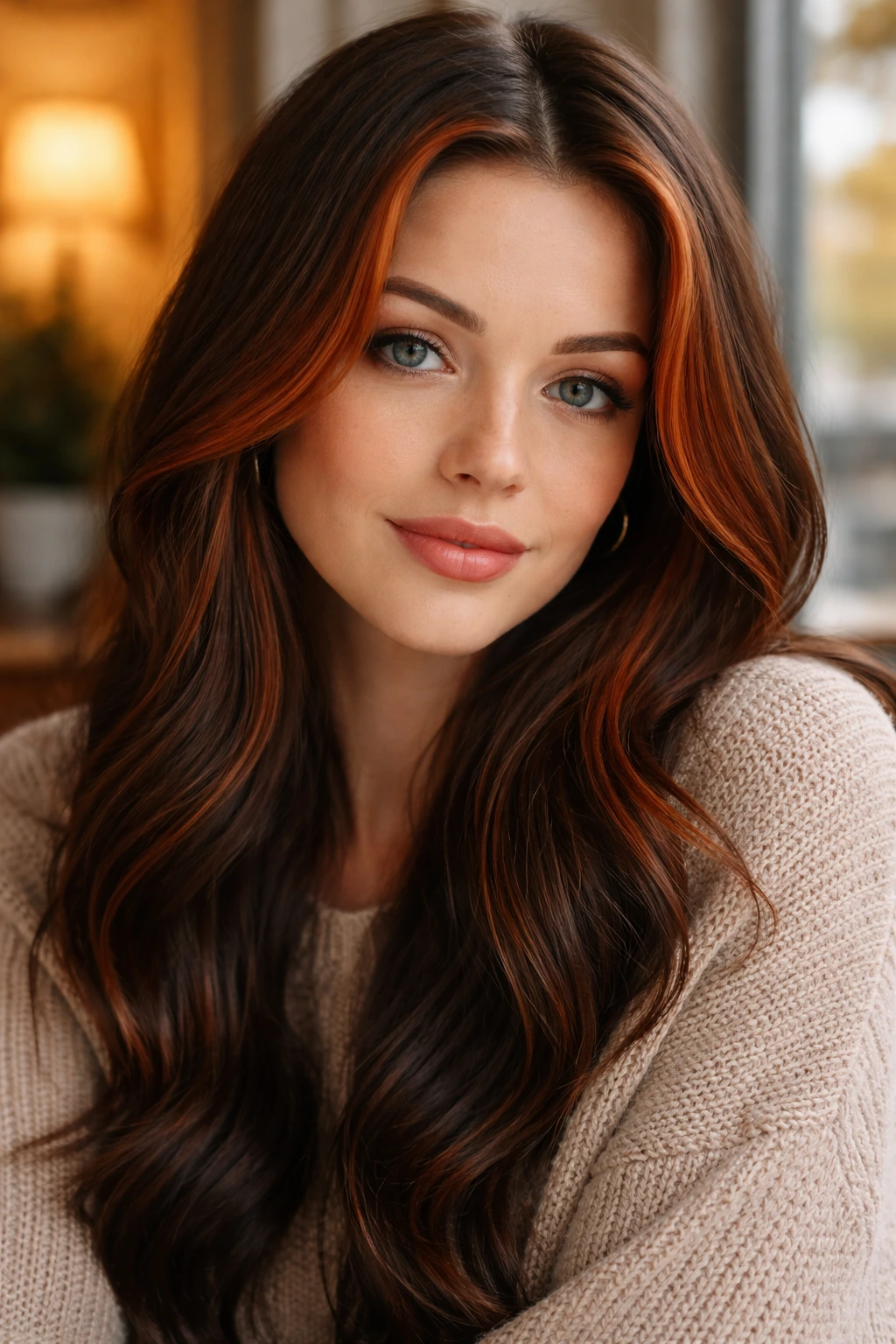
A rust face-frame is the easiest way to test ginger without turning your whole head into a copper project. Cool skin usually likes this because the warmth stays close to the face and can be adjusted in small pieces.
The idea is simple: keep most of the hair in a neutral brunette, auburn, or dark blonde base, then place rust-red or copper-red pieces around the hairline and part. Those lighter panels catch the eye first, which gives you the red effect without the full-time commitment. It is a nice option if you wear your hair up often, or if you want something that looks different in photos but not overly loud in everyday light.
Rust itself has a brown-orange cast that reads warmer than cherry but softer than pure copper. On cool skin, that can be enough, especially if the rest of the color stays muted. If your skin is very fair, ask for the face frame to be slightly deeper than you think you want. That keeps it from jumping too high in contrast.
This is also a sensible choice for first-time redheads. Low risk. Good payoff.
15. Marsala Auburn
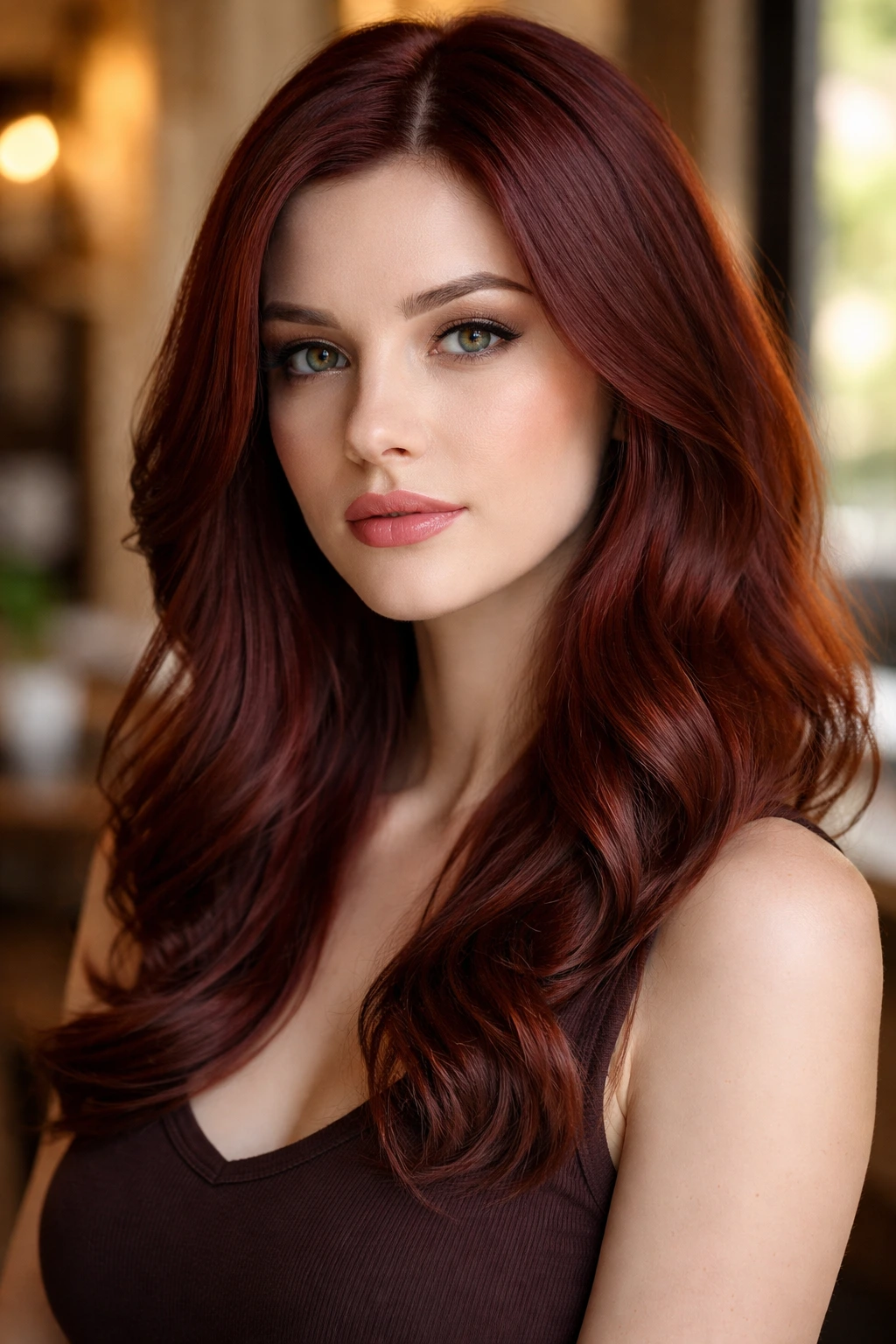
Marsala auburn sits in the wine-brown family, which is why it makes such a strong case for cool skin. It has red, brown, and a dark berry note all working together.
Do you want something rich enough to look polished but not so dark that the red disappears? This is the lane. Marsala auburn works especially well if your natural hair is already medium brown or dark blonde. The color deposits cleanly, and the auburn keeps it from sliding into plum territory. Under daylight, you get a subtle red sheen. Indoors, it can look almost like a deep brunette with personality.
What to Ask Your Colorist
Ask for a red-brown marsala glaze over a neutral base, and mention that you want the tone to stay cool rather than coppery. If your hair is porous, the ends may grab too much red; a pre-toning step helps stop that.
- Best for level 5 to level 7 hair
- Works well with brows that are soft brown or ash brown
- Needs a refresh every 4 to 6 weeks if you want the red to stay visible
This shade feels especially good with red lipstick, plum blush, and dark denim. It has enough edge to feel modern, but not enough brightness to start a fight with your skin.
16. Black Cherry Copper
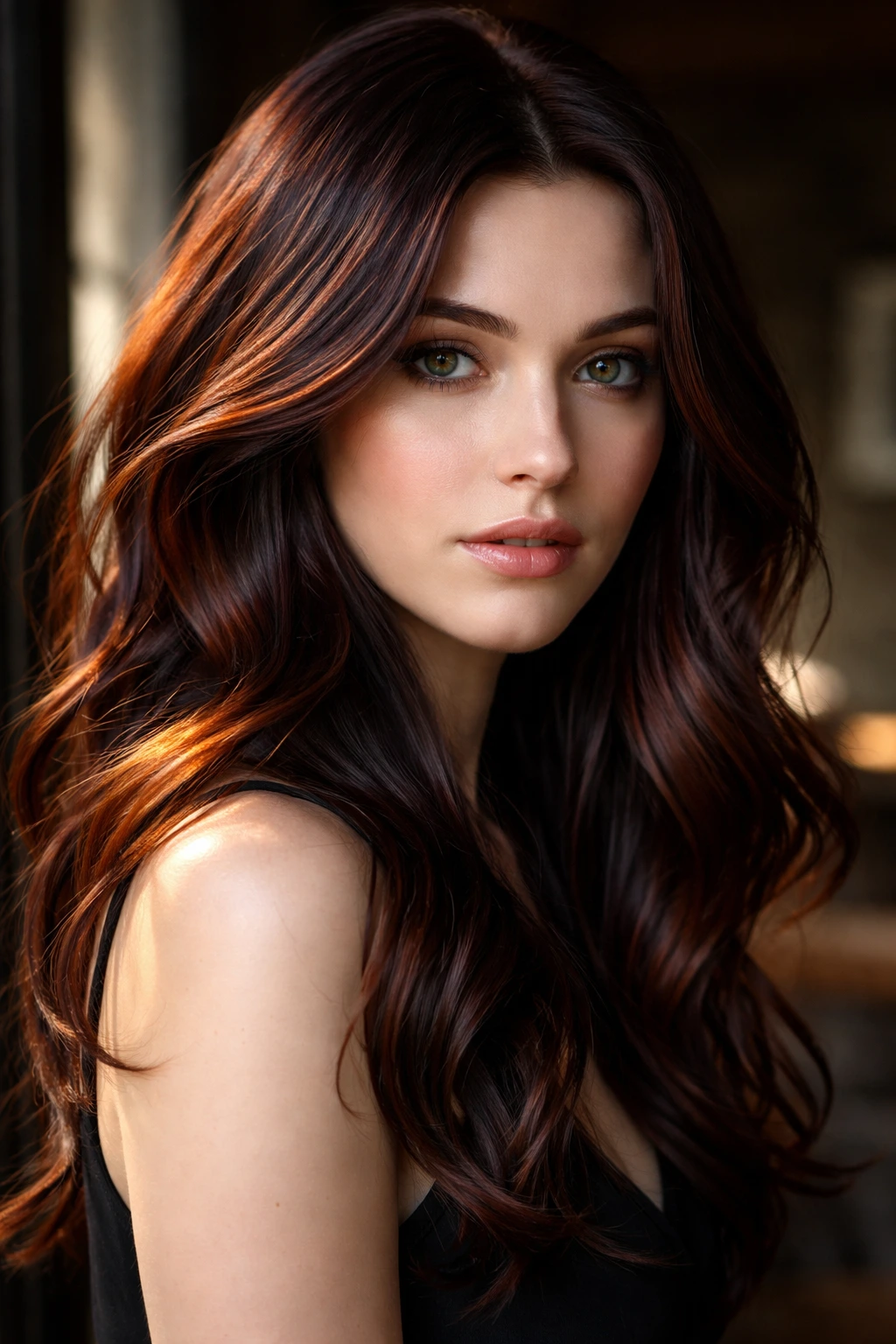
Black cherry copper is for the person who wants a dark red that still flashes warmth in sunlight. It’s moody, glossy, and far more wearable on cool skin than people expect.
The black cherry base gives depth. The copper comes through in the light, usually in the mids and ends, so the color never feels flat. That contrast is exactly why it works. Cool skin often looks good next to darkness, as long as the red note has enough blue or berry in it to keep the warmth in check. A straight copper on dark hair can look brassy. Black cherry copper avoids that by staying anchored.
This shade also suits people who do not love high-maintenance color. You can let it fade a bit and it still looks intentional because the base is dark. If your ends are lighter, the red will show there first, which is nice on waves and curls.
- Ask for black cherry lowlights with copper ribbons
- Keep the base a clean espresso or dark chestnut
- Use shine serum sparingly so the color doesn’t look oily
It’s a good choice for cooler wardrobes, strong makeup, and low-drama grow-out.
17. Soft Apricot Ginger
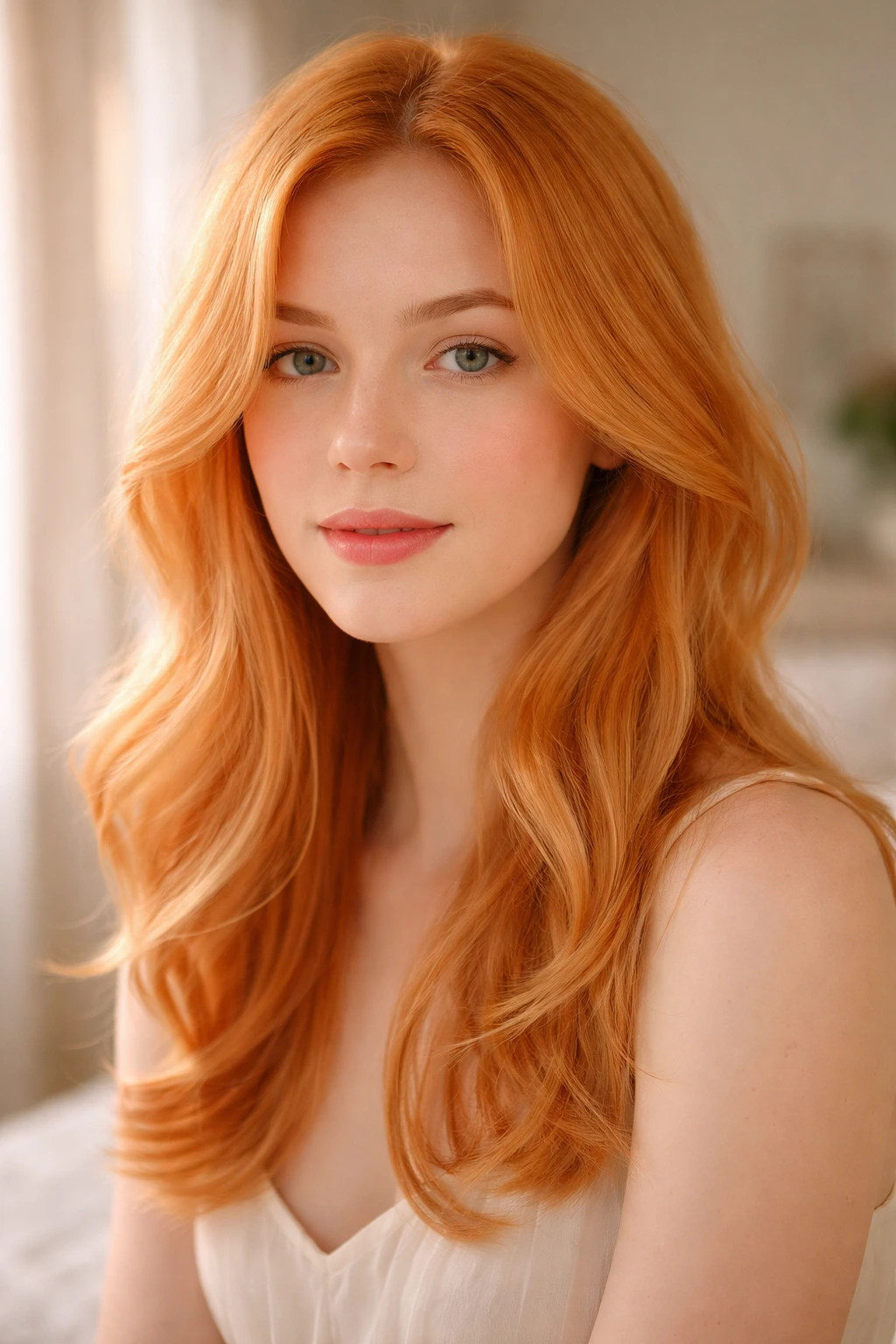
Soft apricot ginger sounds warm on paper, and it is — but when it’s muted properly, it can be one of the prettiest lighter red options for cool skin. The trick is keeping the apricot sheer, not saturated.
This is the shade for someone who wants a delicate ginger that looks airy rather than fiery. On cool skin, that softness matters. A pale apricot with too much yellow will tilt the complexion in an odd direction. A sheer apricot with beige and rose mixed in can instead give the face a fresh, almost luminous look. It’s especially pretty on fine hair, where a heavier color can feel too dense.
The finish should be glossy, not opaque. Think veil, not paint. That means a demi-permanent formula or a tinted gloss over a light base usually gives a better result than a hard permanent dye. If the color starts to look peach-heavy, a pink-beige glaze can cool it back down.
This shade also suits freckles and soft layered cuts. It feels gentle. Some people want red hair that announces itself from across the room. This is not that. This is the shade you notice when someone moves their head and the light shifts.
18. Cool Brown Copper with Lowlights
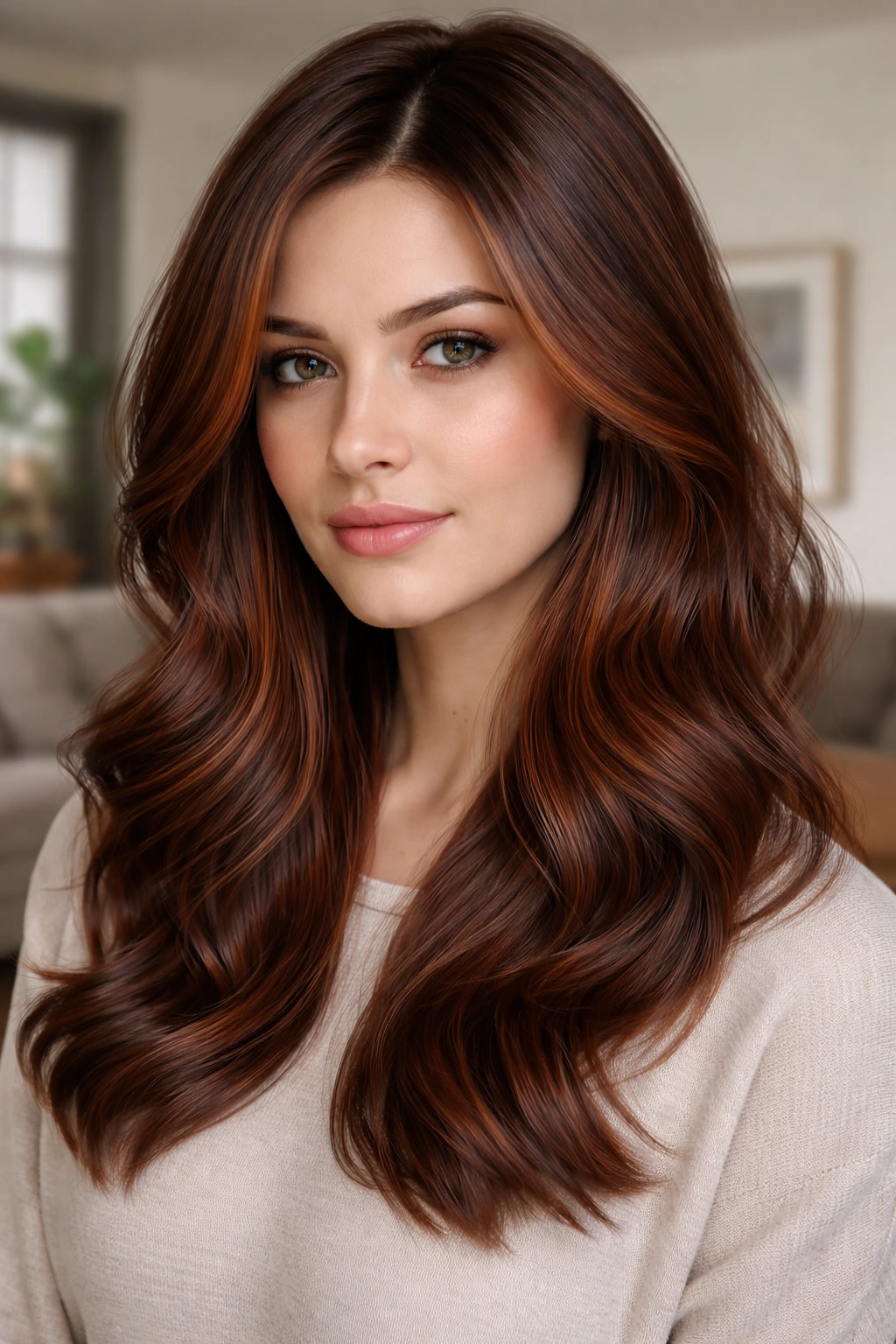
Cool brown copper with lowlights is one of the smartest low-maintenance choices on this list. The brown keeps the copper honest, and the lowlights stop the whole look from turning too warm.
Compared with a full copper dye job, this version has more depth and less brightness. That makes it a good fit for cool skin, especially if your skin sits in the fair-to-medium range and you don’t want the color wearing you. The darker pieces create shadow, which helps the copper sections pop without needing to be extra orange.
This also works well for thicker hair. Dense hair can swallow light, and lowlights help break up that flatness. Ask for thin copper ribbons woven through a neutral brown base, then add deeper brown lowlights around the crown and underside. The result looks dimensional without being busy.
It is a practical color, which I appreciate. You can wear it to work, wear it on a night out, and still let it grow out for a while before the line looks harsh.
If you want red hair but hate the maintenance of bright red, this is a strong place to land.
19. Scarlet Gloss Red
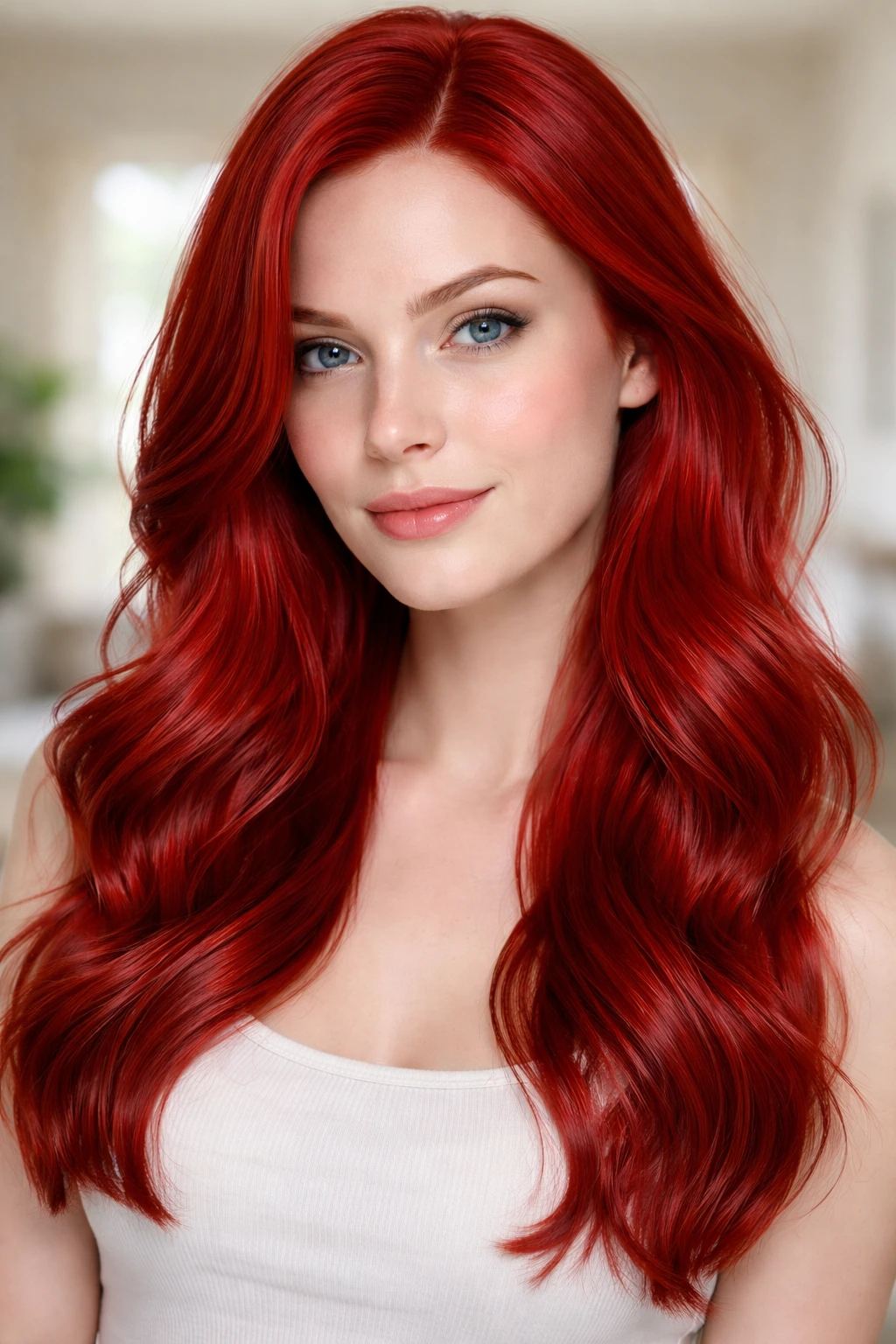
Scarlet gloss red is the boldest shade here, and yes, cool skin can wear it. The difference is that the scarlet has to be blue-based, not orange-based.
This shade is a clean, vivid red that sits closer to ruby than copper. On cool skin, the blue base keeps it from fighting the undertone. It can look dramatic, but not chaotic. The gloss finish matters just as much as the pigment. A shiny scarlet looks polished; a dry scarlet can look flat and a little harsh.
What to Watch For
If your starting hair is very dark, you may need lightening first, and that changes the maintenance picture. Red on pre-lightened hair fades fast. Not maybe. Fast. Plan for color-depositing masks, gentle shampoo, and a gloss touch-up before the shade turns pink-orange.
- Best on light brown to blonde hair
- Ask for a blue-red direct dye or gloss
- Use a heat protectant any time you style it with hot tools
This one is not quiet. That’s the point. It looks especially good with simple clothes and minimal makeup, because the hair is doing the work.
20. Smoked Auburn Gloss for Cool Skin Tones
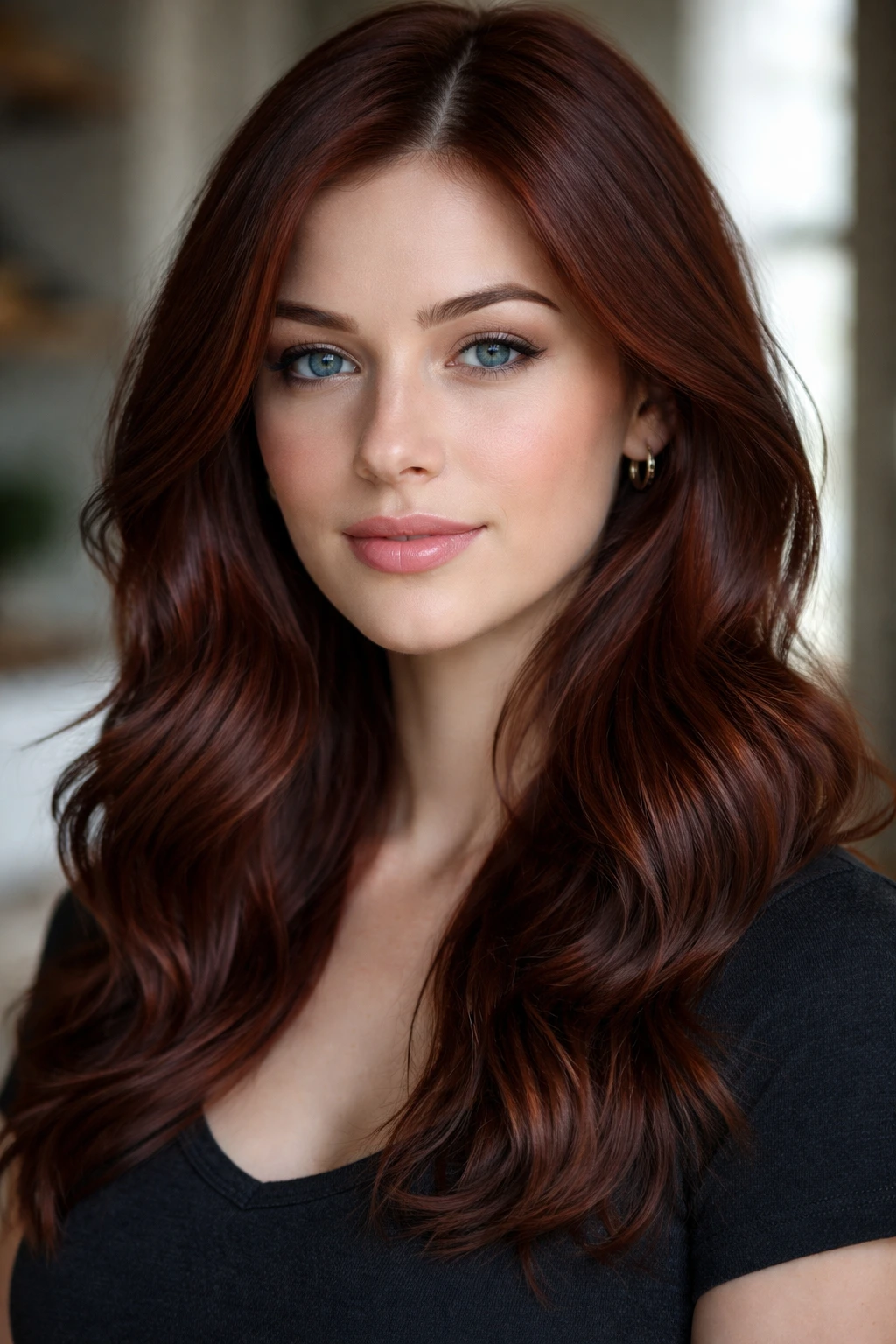
If you want one red that can quietly do a little of everything, smoked auburn gloss is hard to beat. It gives cool skin enough warmth to feel alive, but the smoked base keeps the ginger side from turning orange.
This is the shade I’d point to for someone who wants a red that feels adult, soft, and wearable from root to ends. A translucent gloss over a brown-red base keeps the hair reflective without making it loud. If your skin is cool and your hair has a habit of going brassy, this one gives you room to breathe. It also grows out well, which matters if you do not want to sit in a chair every few weeks.
The best version usually starts with a neutral brunette or dark blonde base, then gets layered with an auburn glaze that has a hint of blue-red mixed in. On wavy hair, the smoke shows up between the bends. On straight hair, the shine carries it. Either way, it reads more balanced than a bright copper and more interesting than plain brown.
Ask for a demi-permanent smoked auburn gloss, not a flat red block. Then keep it alive with a clear or tinted glaze every month or so. That’s the move that keeps cool skin and ginger hair looking like they belong in the same sentence.
