



Round faces and ginger hair can work together or fight each other, and the difference usually comes down to placement more than color. Put a bright copper stripe right across the cheekbones with a blunt chin-length cut, and the face can read wider. Shift the same warmth lower, or add a little depth at the roots, and the whole shape starts to look longer and cleaner.
Placement matters. A lot.
Ginger is not one shade anyway. It stretches from soft apricot and penny copper to smoked auburn, pumpkin red, rust, and those brown-red mixes that look quiet until the light hits them. On a round face, the best versions use one of three tricks: a side part, length below the jaw, or color that pulls the eye up and down instead of side to side.
I keep coming back to the same rule because it saves people from expensive mistakes: the eye follows lines. Vertical lines lengthen, diagonal lines sharpen, and a heavy bright band across the cheeks does the opposite. Once you see that, ginger hair color ideas for round faces get much easier to sort, and the first few picks become obvious.
1. Deep Copper Lob With a Soft Side Part
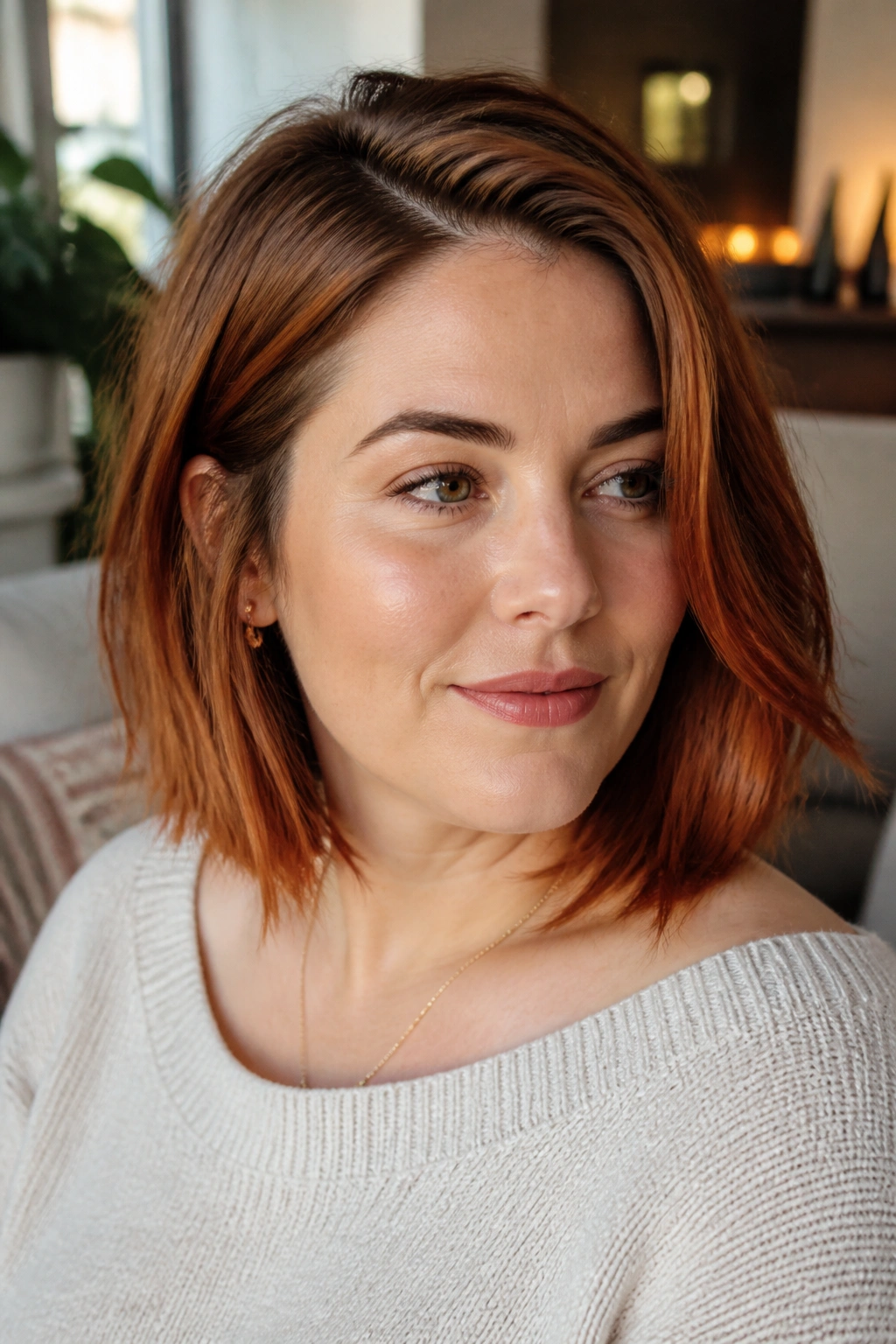
A collarbone-grazing lob is one of the easiest ways to make ginger hair work on a round face. The length sits below the widest part of the cheeks, which already helps, and the soft side part breaks up the symmetry that can make roundness read fuller.
Why this cut works so well comes down to simple geometry. A lob that lands just below the collarbone creates a long line on the body, and that line keeps the eye moving down. Add a copper shade with a slightly deeper root, and the top of the head feels a little narrower without looking harsh.
Quick details that matter
- Keep the ends 1 to 2 inches below the collarbone.
- Ask for a side part that starts slightly off center, not all the way over.
- Leave the front pieces long enough to skim the jaw, not stop at it.
- Style with a 1¼-inch curling iron and brush the bends out for a softer finish.
I like this one because it looks polished without trying too hard. It gives you ginger warmth without turning the face into the main event.
Tip: keep the roots one shade deeper than the mids. That tiny shift does more than people expect.
2. Ginger Balayage That Flatters Round Faces
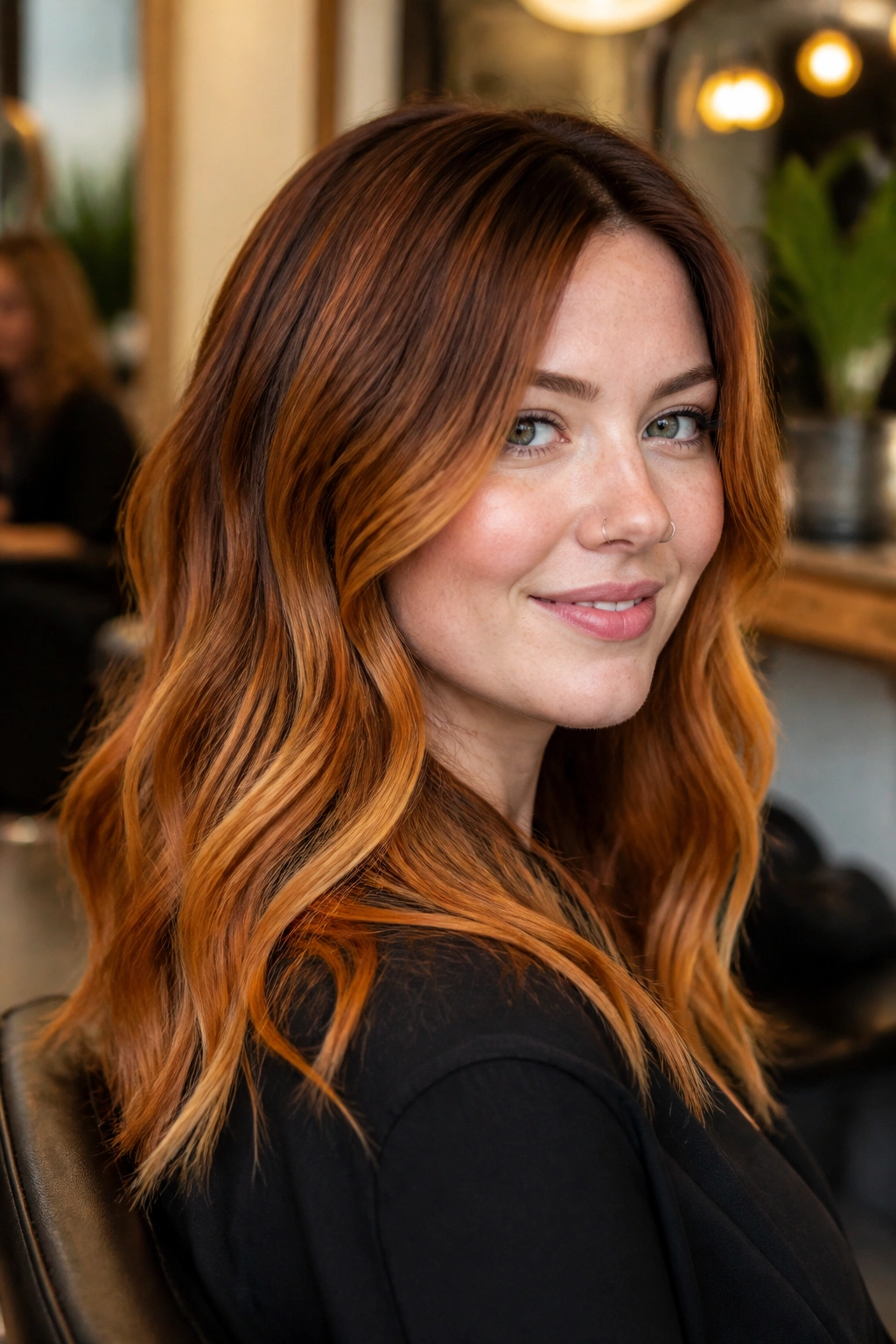
Why does balayage work so well on round faces? Because it lets the brightness travel vertically instead of sitting in one thick band. The color starts lower, usually beneath the cheekbones, and that keeps the face from looking boxed in by light pieces on the sides.
A good ginger balayage should feel lived-in, not stripey. The best versions use copper, amber, and strawberry tones in thin ribbons through the mid-lengths and ends, with a root shadow that stays one or two levels darker. That contrast gives the hair shape without making the color scream from across the room.
How to ask for it at the salon
- Place the brightest pieces below the cheekbone, not right at the cheeks.
- Keep the front money piece thin, about ½ to 1 inch wide.
- Ask for a soft root shadow that melts for 2 to 3 inches before the lighter red begins.
- Finish with a gloss so the copper reads rich instead of brassy.
This is a smart choice if you want ginger hair color ideas for round faces that feel lower maintenance. The regrowth is softer, and the whole look stays flattering even as it grows out.
3. Cinnamon Copper and Long Curtain Bangs
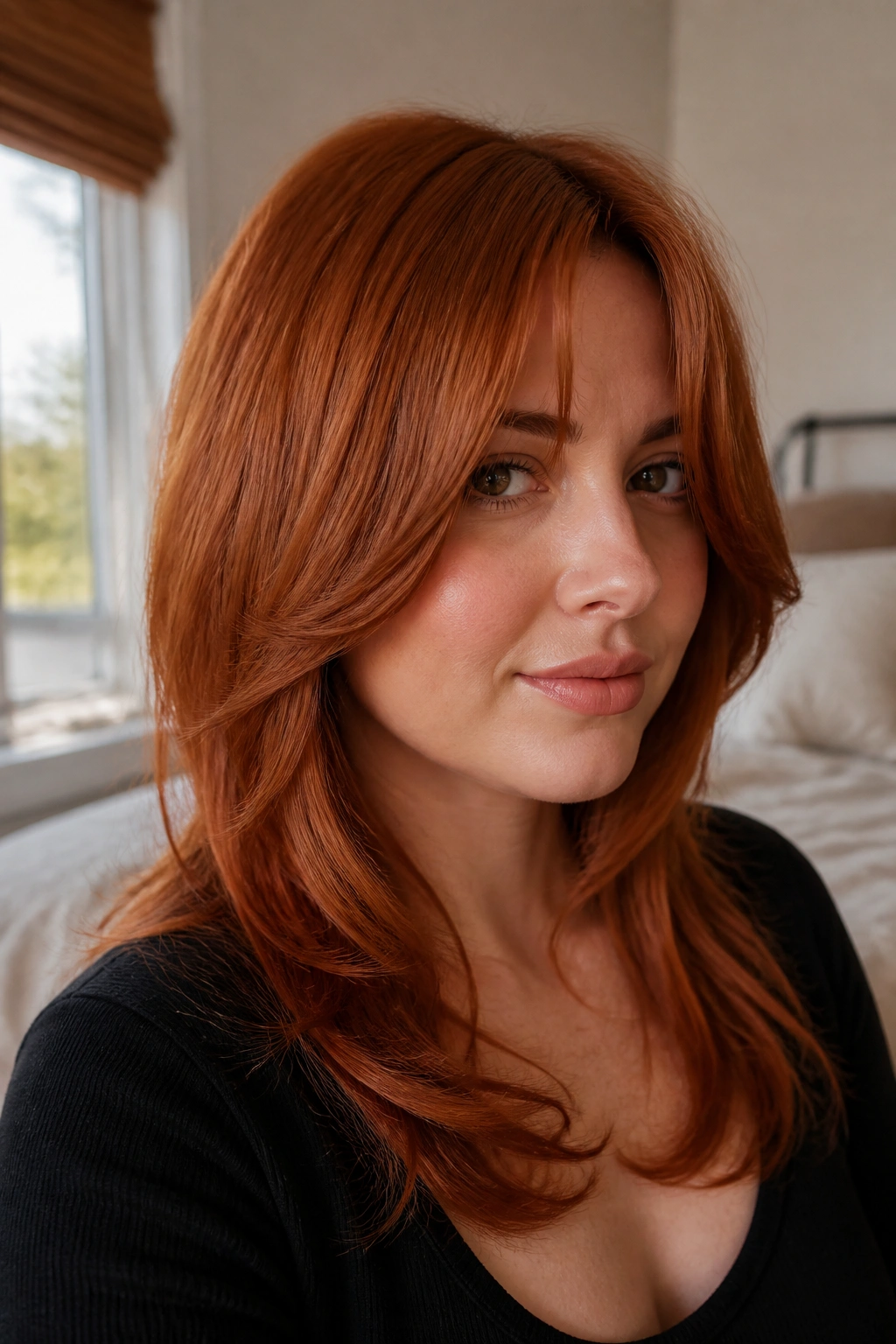
Cinnamon copper has a warm, toasted feel that suits soft features without washing them out. On a round face, long curtain bangs make the color work harder because they open the forehead and pull the eye downward in two soft diagonals.
The trick is length. Curtain bangs that hit too high on the cheek can widen the face. Bangs that start around the bridge of the nose and sweep into the jawline do the opposite. They make the face look a little longer, and they give the copper shade a place to show off its movement.
A shoulder-length cut underneath helps too. When the hair falls below the chin, the whole shape feels less circular. The bangs frame, but they do not trap the face.
I’d keep the texture loose here. A round brush, a light bend through the ends, and a little air around the bangs is enough. If the fringe sits heavy and flat, you lose the lift that makes this look worth wearing.
4. Rusty Auburn Shag With Airy Layers

If your hair tends to puff out at the sides, the shag can actually help. That sounds backward, but it’s true when the layers are cut with restraint and the color is a rusty auburn instead of a bright red block.
What makes it work
The shape matters more than the name. A shag that keeps the shortest layers near the crown and leaves the longest ones below the cheekbones creates movement at the top, where a round face can use a little extra height. The sides stay soft, not wide, because the layers are feathered instead of stacked.
The color helps the cut feel lighter. Rusty auburn has enough brown in it to ground the look, while the copper notes catch the ends and make the texture visible. It’s a good match for medium-density hair that needs motion without looking overstyled.
What to ask for
- Shortest layers should start below the cheekbone.
- Keep the crown airy, not choppy.
- Let the ends stay blunt enough to hold shape.
- Ask for auburn base color with thin copper ribbons through the outer layers.
One warning: do not let the layers get hacked up at the sides. That’s the fastest way to make a round face look wider.
5. Strawberry Ginger With a Dark Root Melt
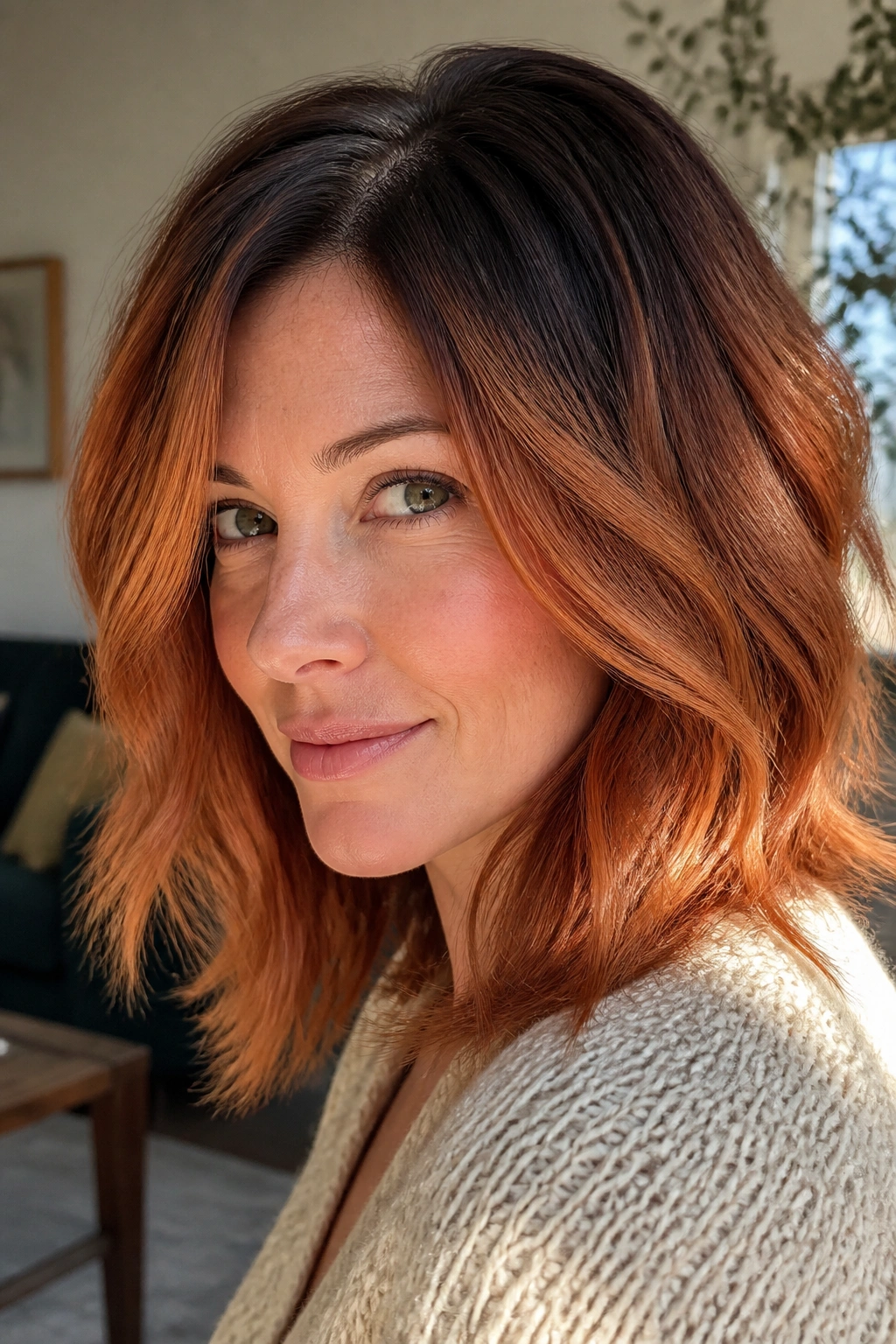
Bright strawberry ginger does not need a pale base to work. In fact, the darker root melt is what makes it good on a round face. The deeper root holds the top of the head in place visually, while the brighter color drops lower and pulls the face downward.
That contrast is useful. A round face can lose definition when everything is the same brightness from roots to ends. Darker roots and brighter ends create a path for the eye to follow, and that path is longer than a single flat color band.
This look also suits people who want a more playful red but do not want constant touch-ups. The root melt softens regrowth, and the strawberry lengths keep the shade from tipping into heavy copper. It’s especially nice on layered cuts because the movement shows off all the different tones.
Keep the brightest red away from the cheek line if you can. That one choice changes how the whole style reads.
6. Copper Bob With a Deep Side Part
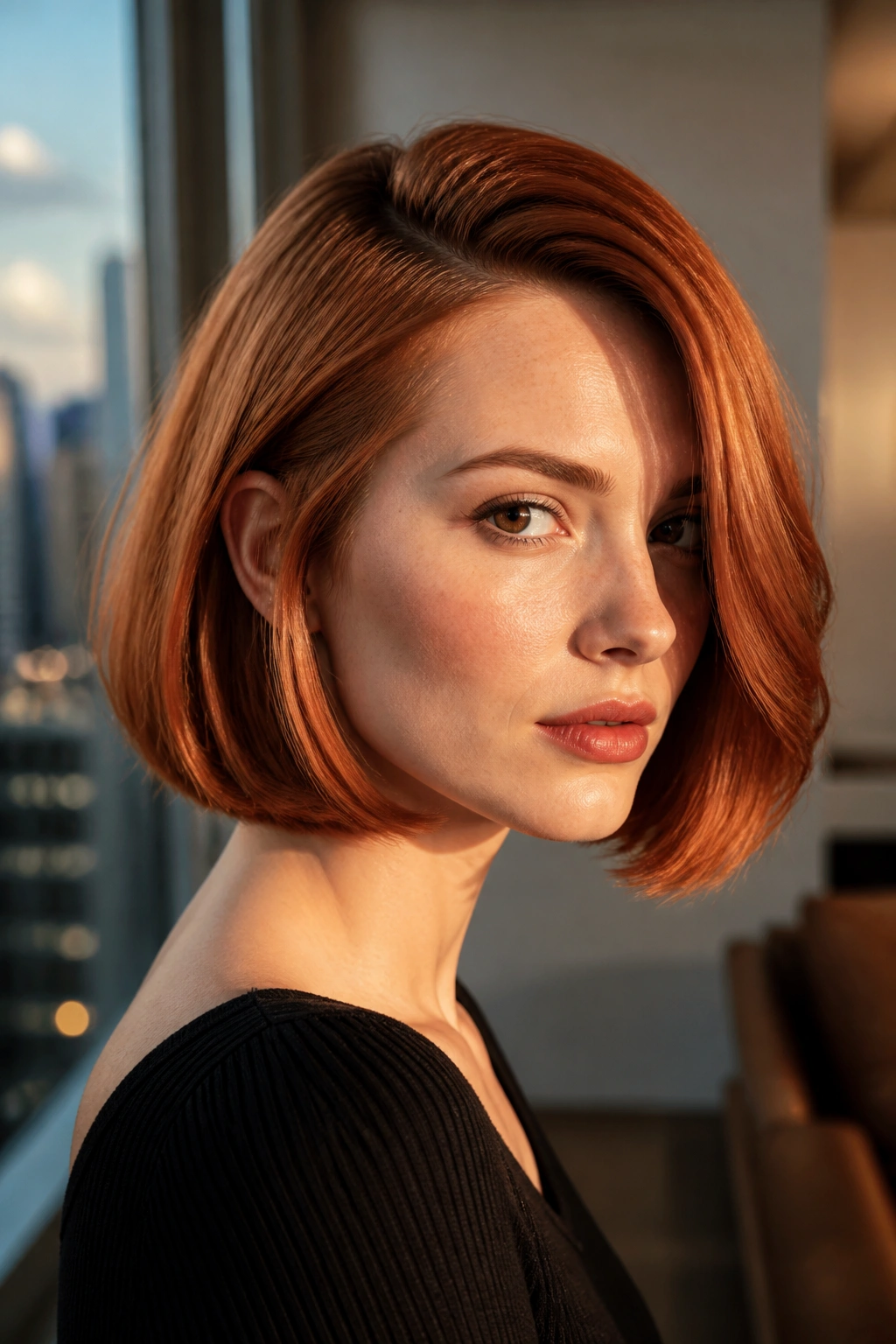
A chin-skimming bob can widen a round face if it’s blunt and worn dead center. Shift the part, and the whole thing changes fast. The diagonal line of a deep side part cuts across the face in a way that feels sharper and less circular.
The bob itself should sit carefully. I like it best when it lands a half inch to an inch below the jaw, because that keeps the line from ending exactly where the face is widest. A soft bevel at the ends helps too. Straight-across edges can look heavy if the hair is dense.
The color matters more than people think. A medium copper with a little gold in it reads brighter than auburn but not as loud as a fire-engine red. That middle ground is useful on round faces because it gives definition without turning the look into a block of color.
Best details to ask for:
- Length just below the jawline.
- Side part set off center.
- A slight inward bend at the ends.
- Copper that stays richer near the roots and lighter through the mid-lengths.
This is one of those cuts that looks expensive when it’s done well and annoyingly boxy when it isn’t. The part makes the difference.
7. Peachy Ginger Pixie With Height at the Crown
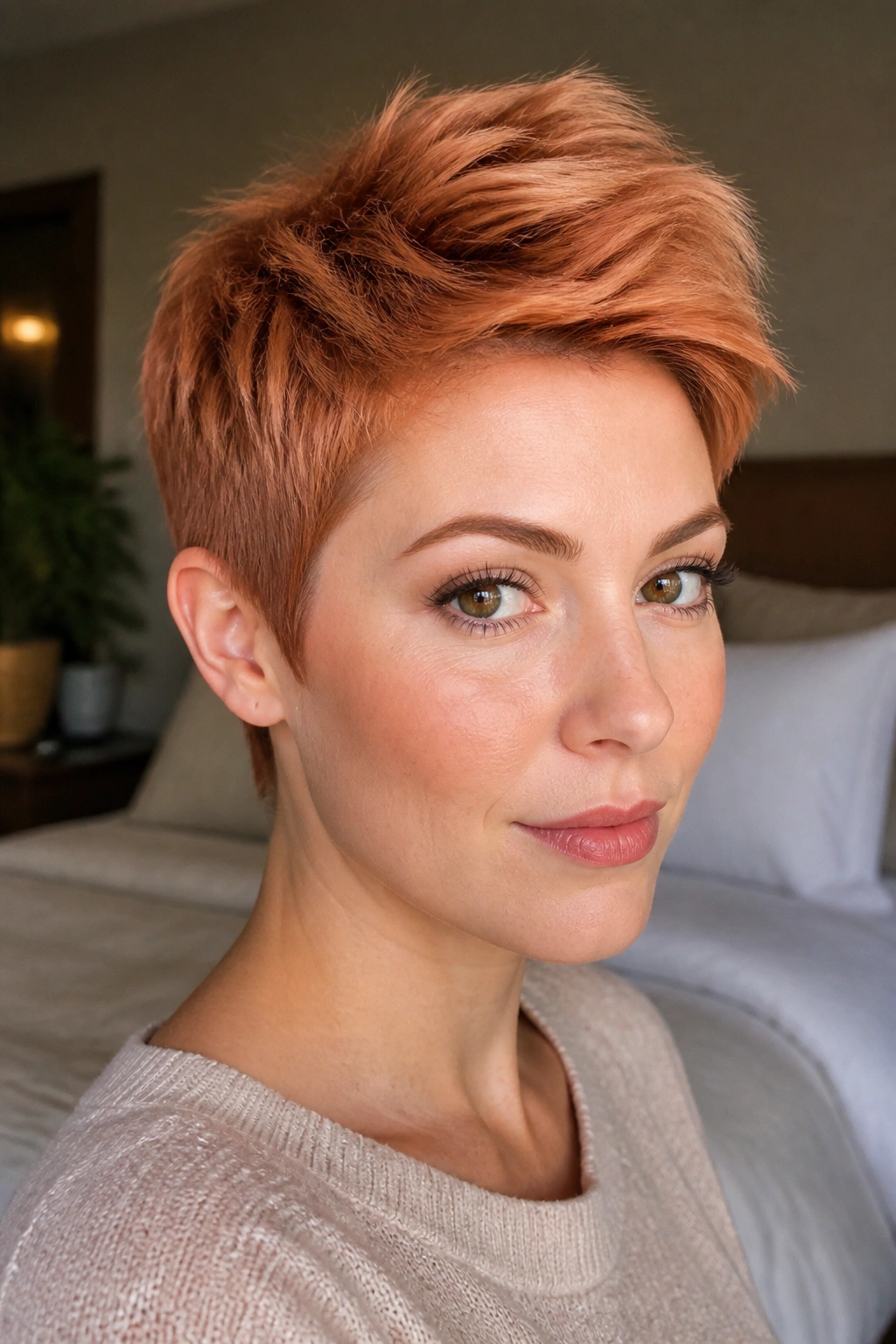
Pixies can work on round faces, but only when the height sits on top, not on the sides. A peachy ginger pixie does that nicely because the shade is soft enough to feel light, while the shape can still sharpen the face if the top is left a little longer.
What to keep short
The sides should stay tapered, especially around the temples and above the ears. If the cut flares out there, the face reads fuller immediately. Keep the nape neat and close so the eye is pulled upward instead of outward.
Where to leave length
The crown needs a bit of lift. Not a helmet. Just enough length to create height when you rough-dry it or push it up with a small round brush. The top can be around 1½ to 2½ inches, depending on hair density and how much movement you want.
Peachy ginger is a nice choice if you want warmth without heavy red saturation. It looks fresh on fine hair because the lighter tone gives the illusion of softness and texture. I’d avoid making the fringe too heavy. A wispy front is better than a blunt one here.
8. Burnt Orange Ombre on Long Waves
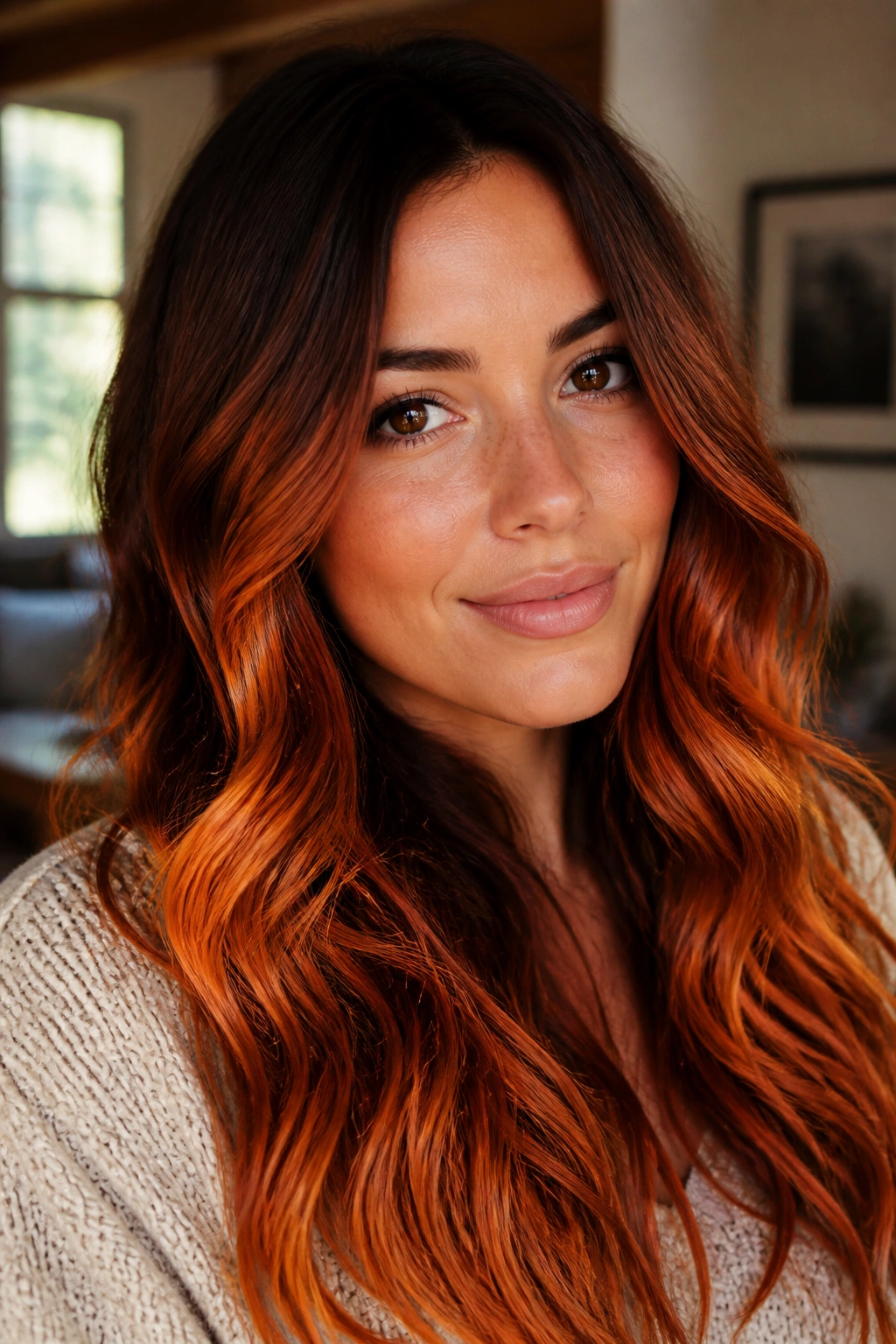
Long hair gives round faces room to breathe, and ombre makes that length work even harder. Burnt orange at the ends, with a deeper base up top, creates a strong vertical line. The face stops feeling boxed in by color and starts looking framed by it.
Loose waves are the right partner. Tight curls near the cheeks can add width, and nobody needs that here. Soft bends that start below the mouth line keep the volume lower, which is where the eye wants to travel anyway. The color shift from dark roots to orange ends also keeps the style from feeling flat across the sides.
This look is especially good if you do not want regular root maintenance. The darker base can grow out quietly, while the burnt orange sits at the bottom like a finished edge. It’s bold, but the boldness is contained.
One detail people miss: the mid-lengths should not all be the same orange. A little variation makes the hair look like it has depth instead of one flat dye job.
9. Soft Ginger Money Piece With Brunette Lowlights
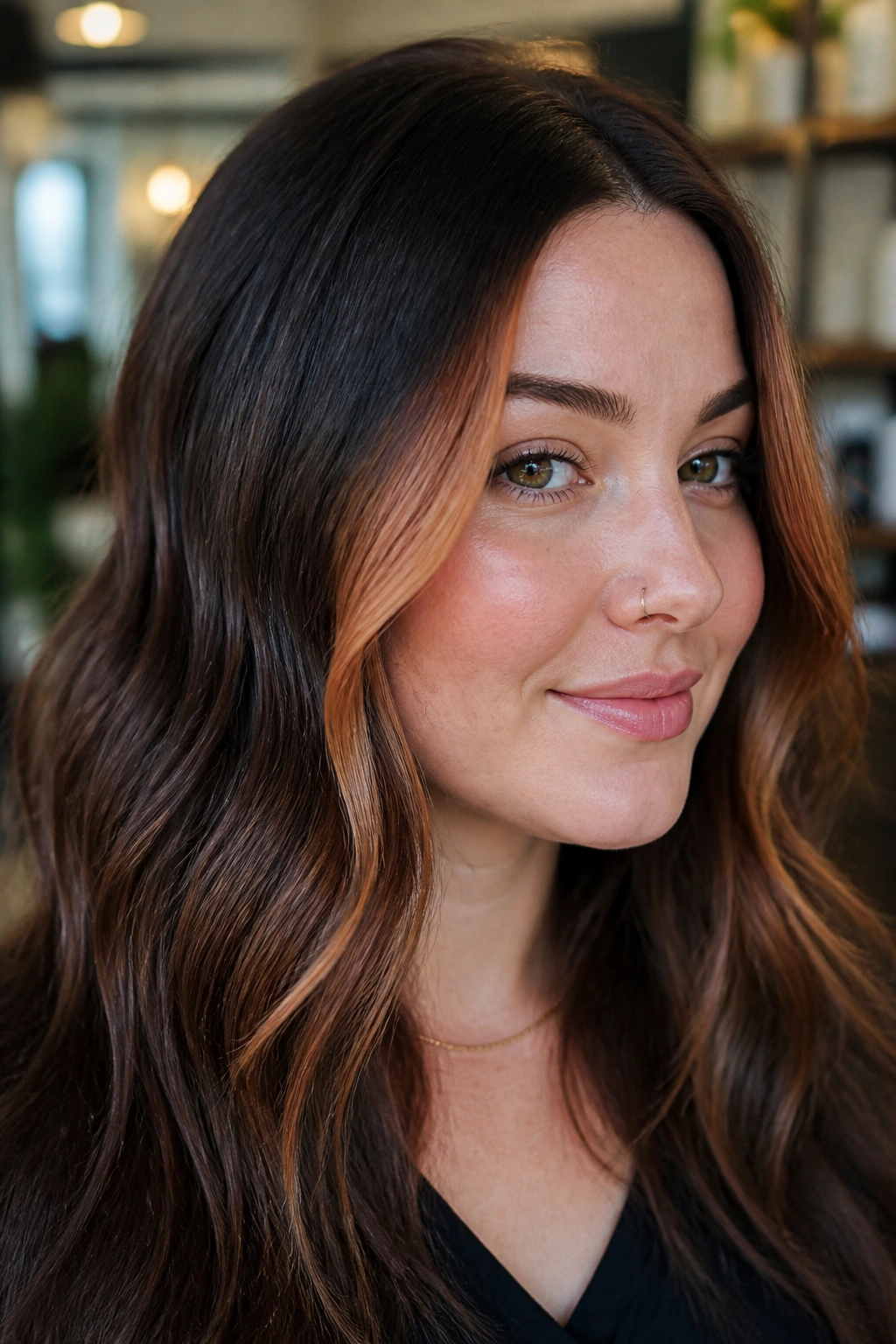
Unlike an all-over copper, this version keeps the face from floating in brightness. The brunette lowlights carve through the hair and give the round face some shadow, while the money piece stays thin enough to lift the front without widening it.
I like this approach for anyone who wants ginger without committing to a full copper head. The darker base keeps the look grounded, and the face-framing pieces can be placed exactly where they help most. Keep them narrow. Thick front highlights can turn into a bright wall on either side of the face, and that is not flattering on a round shape.
A smart placement is from the arch of the brow down toward the jaw, with the lightest point landing below the cheekbone. That line pulls the eye downward and slightly inward, which trims the visual width of the cheeks.
It’s also one of the easiest ways to try red tones if you’re nervous. You get warmth, dimension, and a little brightness near the face without living inside a full copper head.
10. Apricot Ginger and Bottleneck Bangs for Round Faces

Can bangs work on a round face? They can, when the center is shorter and the sides melt longer. Bottleneck bangs do exactly that, which is why they pair so neatly with apricot ginger.
The shape matters more than the label. A bottleneck fringe starts with a bit of lift in the middle, then opens outward near the cheekbones. That opening gives the face space. It does not cut the forehead in a hard line, and it does not stop right at the widest point of the cheeks. Those two things are the whole reason it works.
Apricot ginger is softer than a deep copper, so the bang shape becomes even more important. The warm peachy tone brightens the skin, while the fringe keeps the face from feeling too round or flat. Long hair underneath helps too, especially when the layers begin below the chin.
How to style the fringe
- Blow-dry the center section up and the sides away from the face.
- Keep the ends airy, not thick.
- Use a small round brush if the bangs want to split.
- Ask for a soft texture point so the fringe doesn’t sit in one solid line.
This is one of the better ginger hair color ideas for round faces if you want softness without losing shape.
11. Dark Ginger Lob With Face-Framing Ribbons
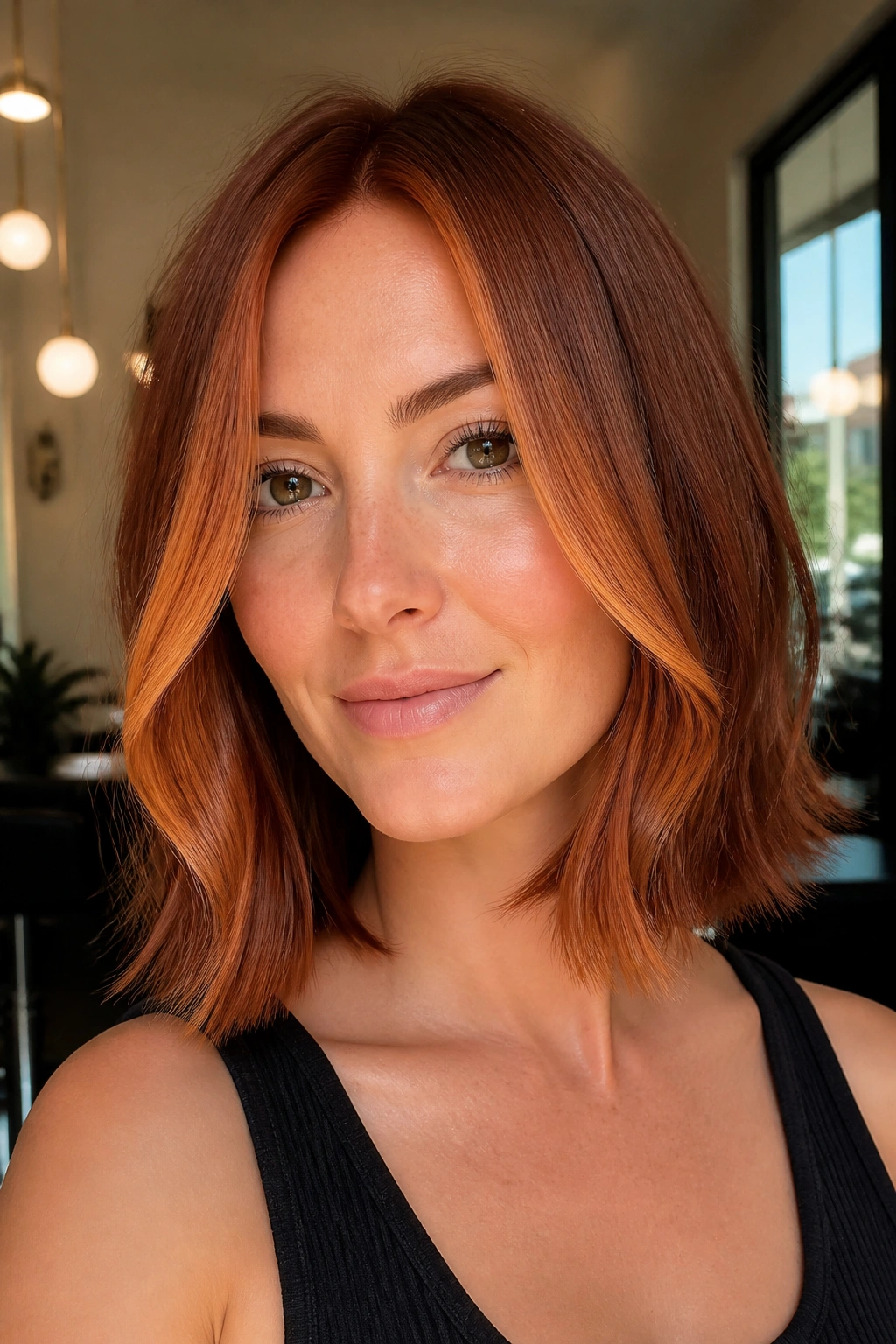
If you want something that looks polished at work and a little richer at dinner, dark ginger does the trick. It sits closer to auburn than classic copper, which makes it easy to wear, and the lob length gives the face a long clean edge.
Face-framing ribbons are the part that matters most. They should be thin enough to feel intentional, not stripy, and they need to start below the cheekbones. Too high, and they sit right on the width of the face. Too low, and they disappear into the rest of the cut. Just under the cheekbone is the sweet spot.
I’d keep the overall finish soft, maybe with a loose bend rather than tight curls. Straight hair can work here too, as long as the ends are not cut blunt right at the chin. The long lob creates a stable line; the ribbons keep it from feeling plain.
This is a strong choice for thick hair, since the color variation helps break up visual bulk. It’s also one of the more forgiving options if your styling routine is short.
12. Spiced Pumpkin Red on a Sleek Center Part
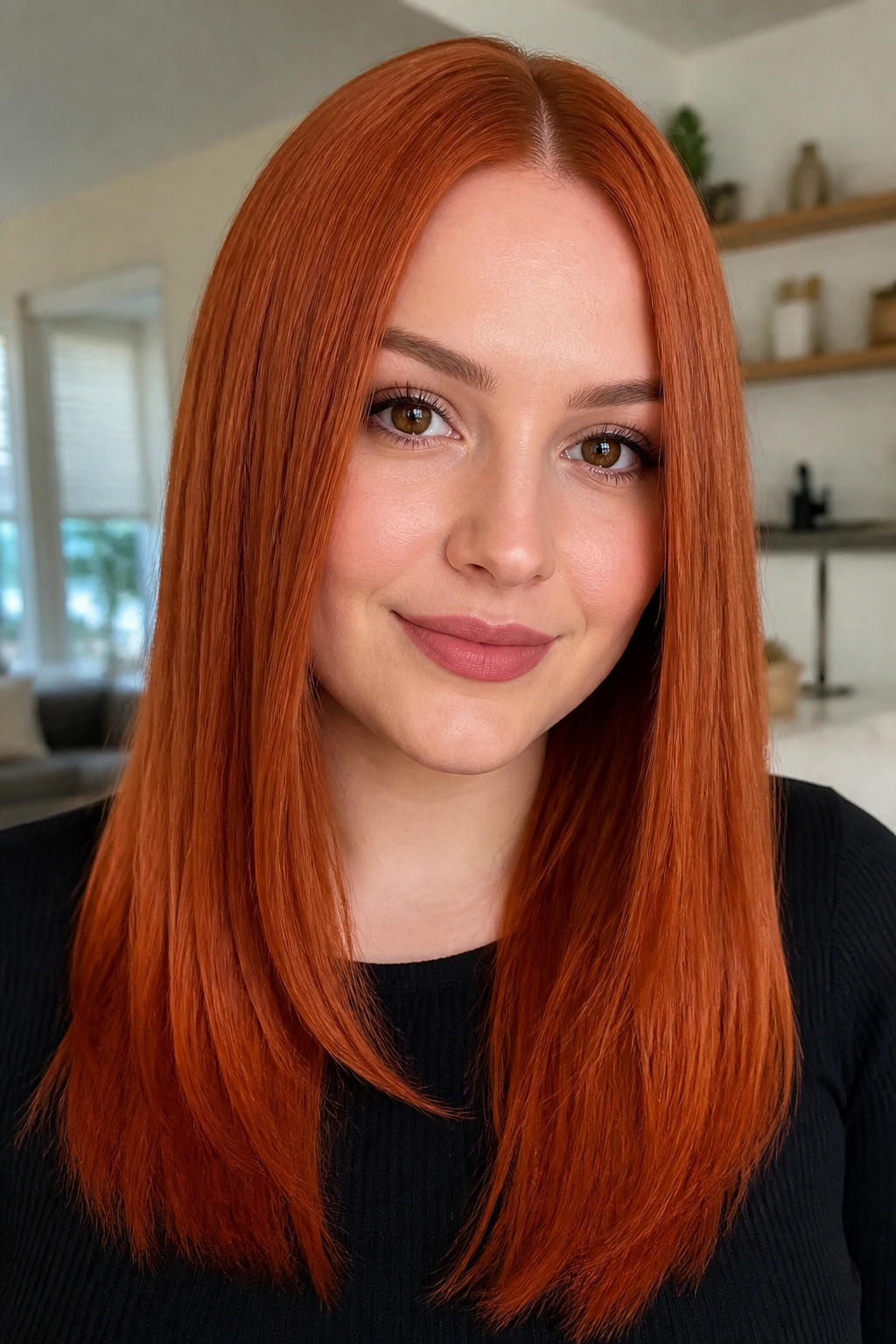
A center part does not have to flatten a round face. It fails only when the rest of the look is too wide or too fluffy. Pair it with a sleek length and a spiced pumpkin red tone, and the face can look longer than people expect.
The clean line down the middle helps create symmetry, but the real trick is keeping the sides controlled. If the hair balloons at the cheeks, the center part won’t save anything. A smooth blowout, a little root lift, and ends that skim past the shoulders work better. The spiced pumpkin shade gives the whole style enough warmth to stay lively.
I like this look on hair that has a bit of shine to it. When the surface is smooth, the red reads richer and more expensive. When it’s frizzy, the color can look louder than it should. That matters more with pumpkin tones because the shade already carries a lot of energy.
If your face is round and your features are soft, this can be a clean, grown-up option. It’s not fussy. That’s the point.
13. Smoky Auburn Butterfly Cut for Round Faces
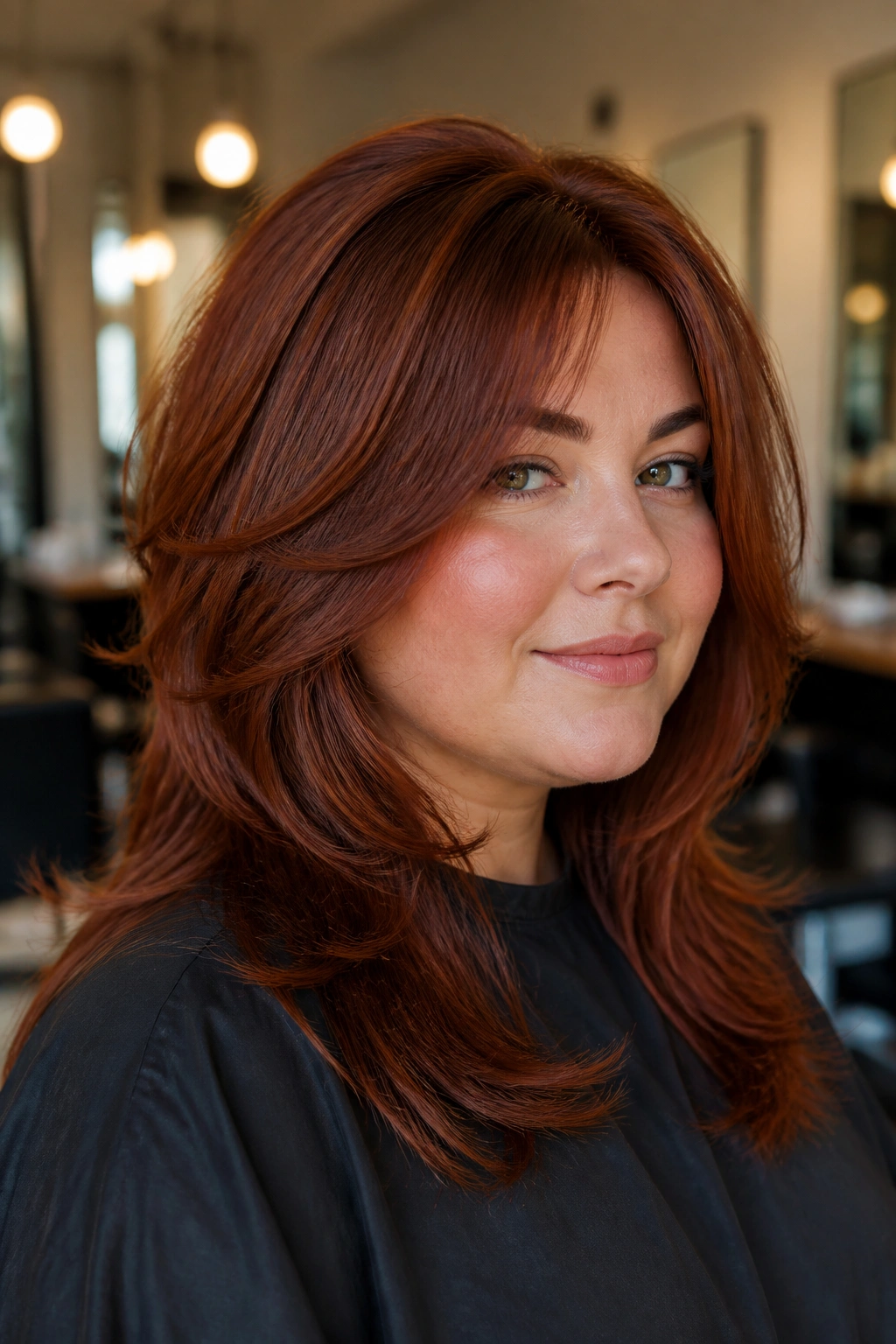
The butterfly cut is one of the few layered shapes that can add motion without puffing out the cheeks. On a round face, that balance matters. The shorter pieces sit high enough to create lift, while the longer layers keep the silhouette narrow.
Where the short layers sit
Ask for the shortest pieces to begin below the cheekbone, not at it. That keeps the volume away from the widest part of the face. The goal is to make the top feel light and active without cutting the face in half.
Where the color should land
Smoky auburn works because it softens the shape of the cut. A muted auburn base with copper highlights through the ends gives the hair depth without turning it brassy. Keep the brightest pieces below the chin so the eye travels downward.
What to tell your stylist
- Long layers should stay below the shoulders.
- The front pieces should angle away from the face.
- Avoid over-texturizing the sides.
- Keep the finish soft and bendy, not blown out wide.
This is a good pick if you want shape, warmth, and a little glamour without a hard edge. The butterfly cut gives the round face room, and the smoky auburn keeps it grounded.
14. Copper Rose on a Long Blunt Cut
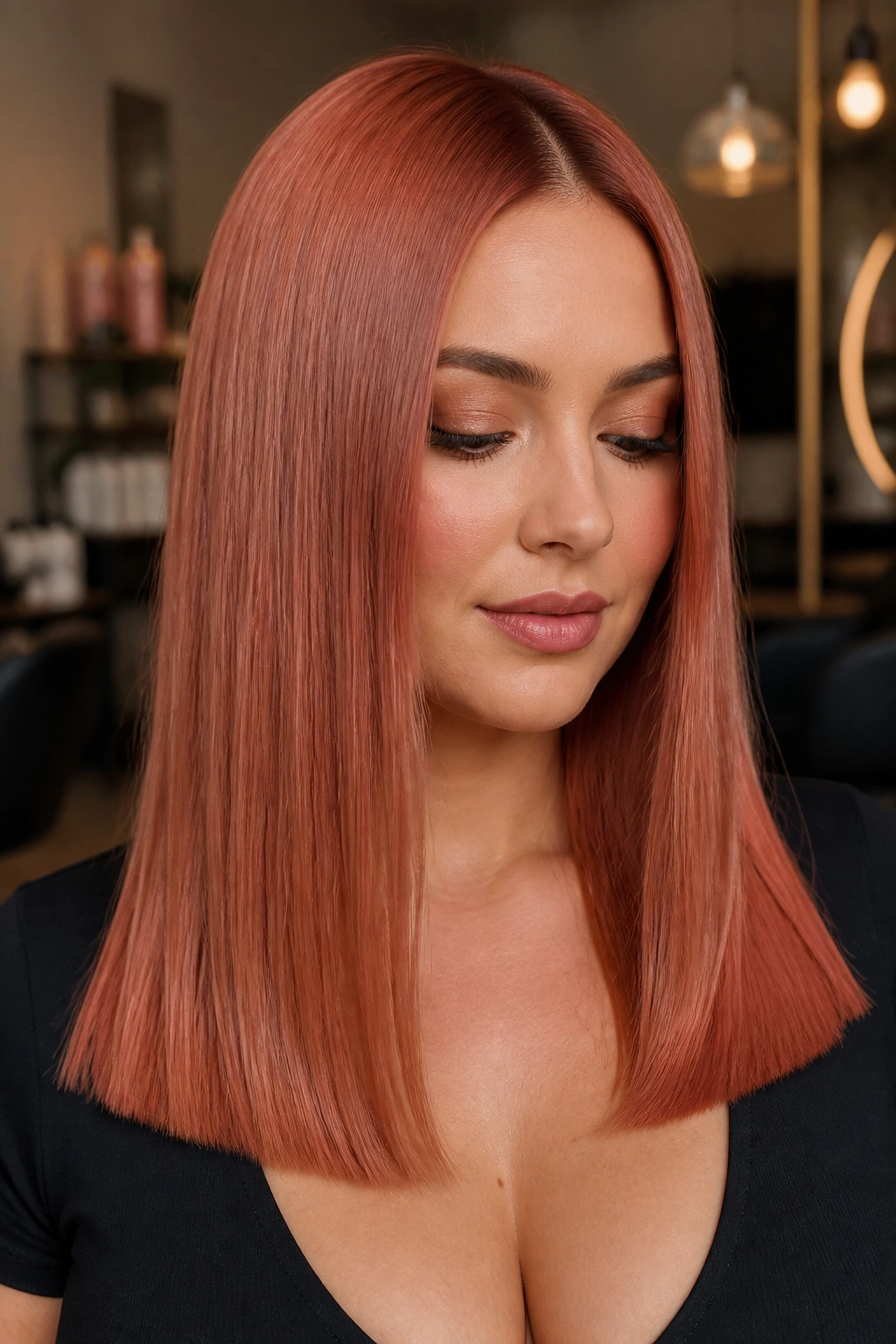
Copper rose reads softer than classic copper, with a pink note that keeps the shade from feeling too sharp. On a round face, that softness works best when the cut underneath stays long and blunt enough to anchor it.
A long blunt cut gives a neat vertical line. That line matters. It keeps the color from spreading outward too much across the cheeks, and it makes the hair look thicker at the bottom. Round faces usually benefit from that kind of length because it pulls the shape downward without needing a lot of layering.
I would keep the blunt edge below the shoulders. Chin-length blunt cuts can be tricky on round faces, even when the color is lovely. The eye lands right where the face is widest. No thanks.
This shade also wears well with a glossy finish. Copper rose can lose its charm if it turns dull, so a color-safe shampoo and a regular gloss are worth the effort. The pink undertone keeps it from reading too orange, which is a nice relief if you’re tired of the standard copper look.
It’s a pretty serious shade, in the best way. Soft, but not shy.
15. Golden Ginger Waves With a Subtle Side Sweep
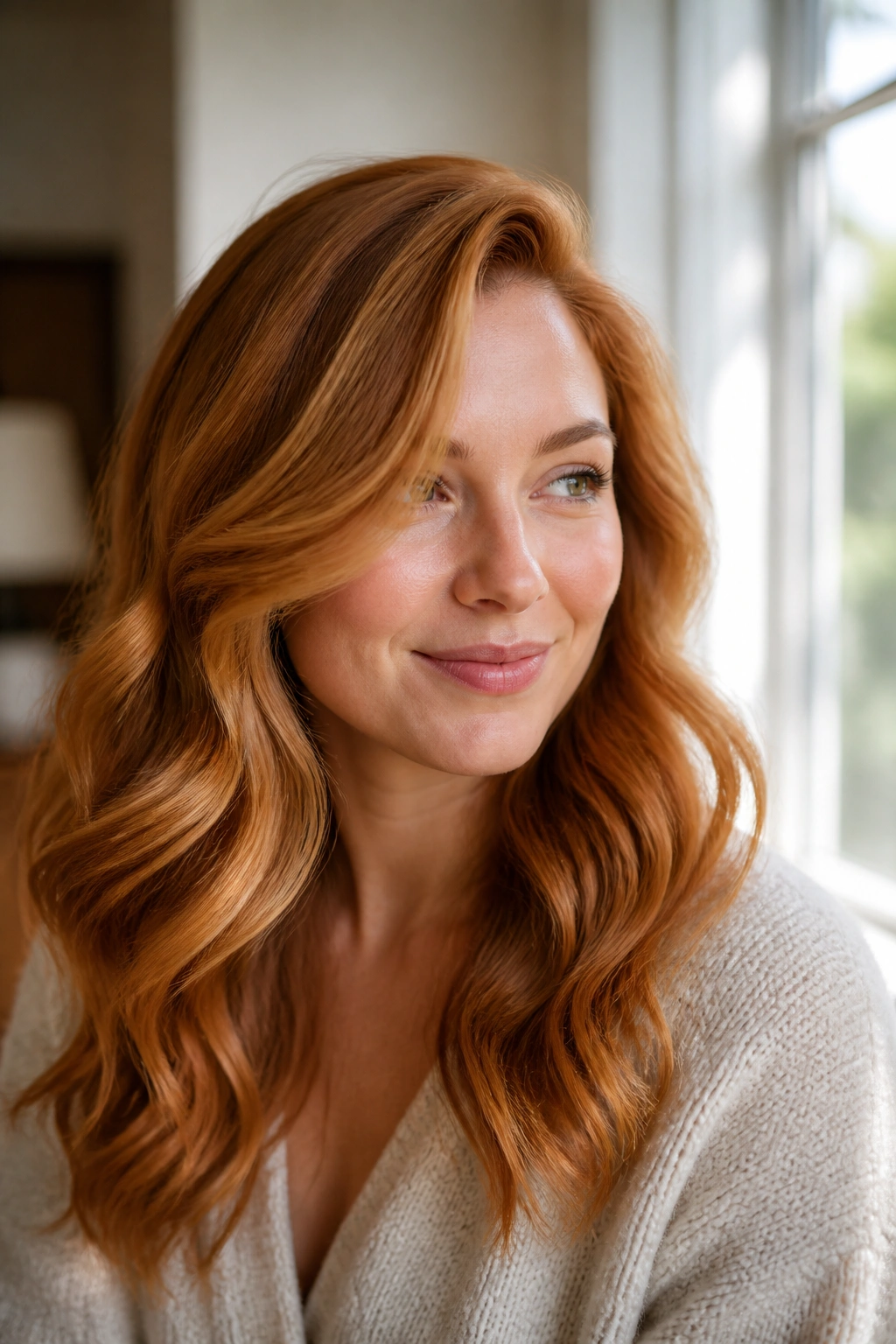
Some days you want the color to look rich without looking busy. Golden ginger does that better than most reds, especially when the waves are loose and the front section sweeps a little to one side.
The side sweep is doing quiet work here. It breaks the face shape, removes the dead-straight symmetry of a center part, and makes the forehead feel a touch longer. Keep the sweep soft, though. A huge side bang can feel heavy on a round face. A subtle sweep is cleaner.
The placement that helps most
- Set the part 1 to 2 inches off center.
- Start the waves below the ears, not at the cheeks.
- Put the brightest gold-ginger pieces on the outer layer and ends.
- Leave the roots a shade deeper so the crown doesn’t look wide.
Golden ginger suits warm skin really well, but it can also brighten cooler skin if the gold is tempered with a little copper. I think this is one of the easiest looks to wear because it doesn’t rely on a big haircut to do the shaping. The color and the part do most of the work.
16. Smoked Auburn Pixie Mullet
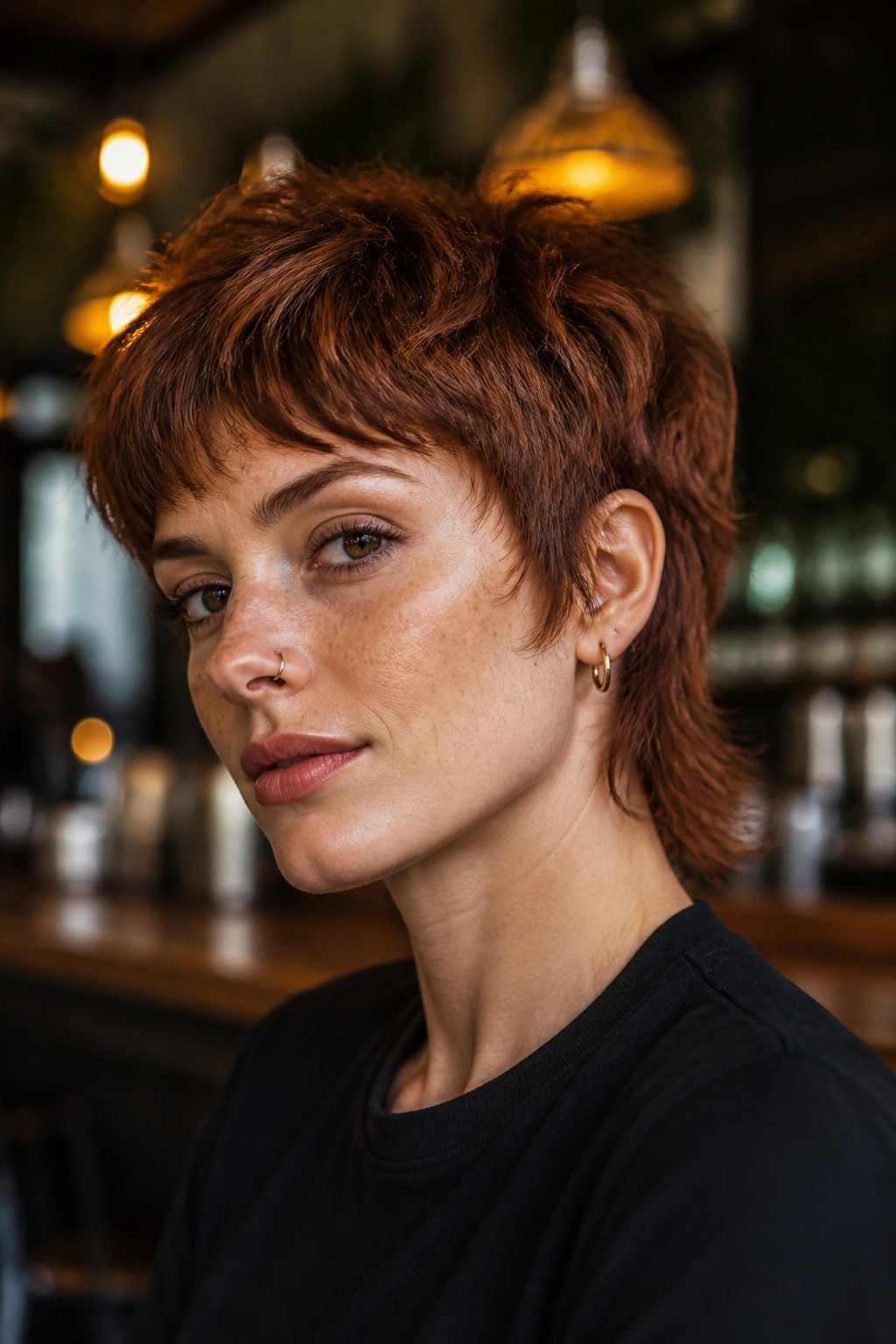
Unlike a soft bob, this cut uses contrast. The top stays textured and a little longer, the sides stay tight, and the nape can be cropped close. On a round face, that contrast adds angles where the shape needs them most.
The smoked auburn tone keeps the cut from looking too punk or too harsh. It gives the style depth, which matters because a very bright red on a very short cut can widen the face faster than you’d think. A deeper red-brown base with auburn highlights is usually enough.
This is not a shy haircut. It works best if you like definition and do not mind a little styling paste or pomade. The top can be pushed up for height, brushed forward for softness, or swept to one side for a stronger line. That movement helps lengthen the face.
The one thing I would avoid is too much width at the temples. Keep the sides snug and let the crown do the talking. That’s where the shape lives.
17. Honeyed Apricot Ginger With Wispy Face Pieces
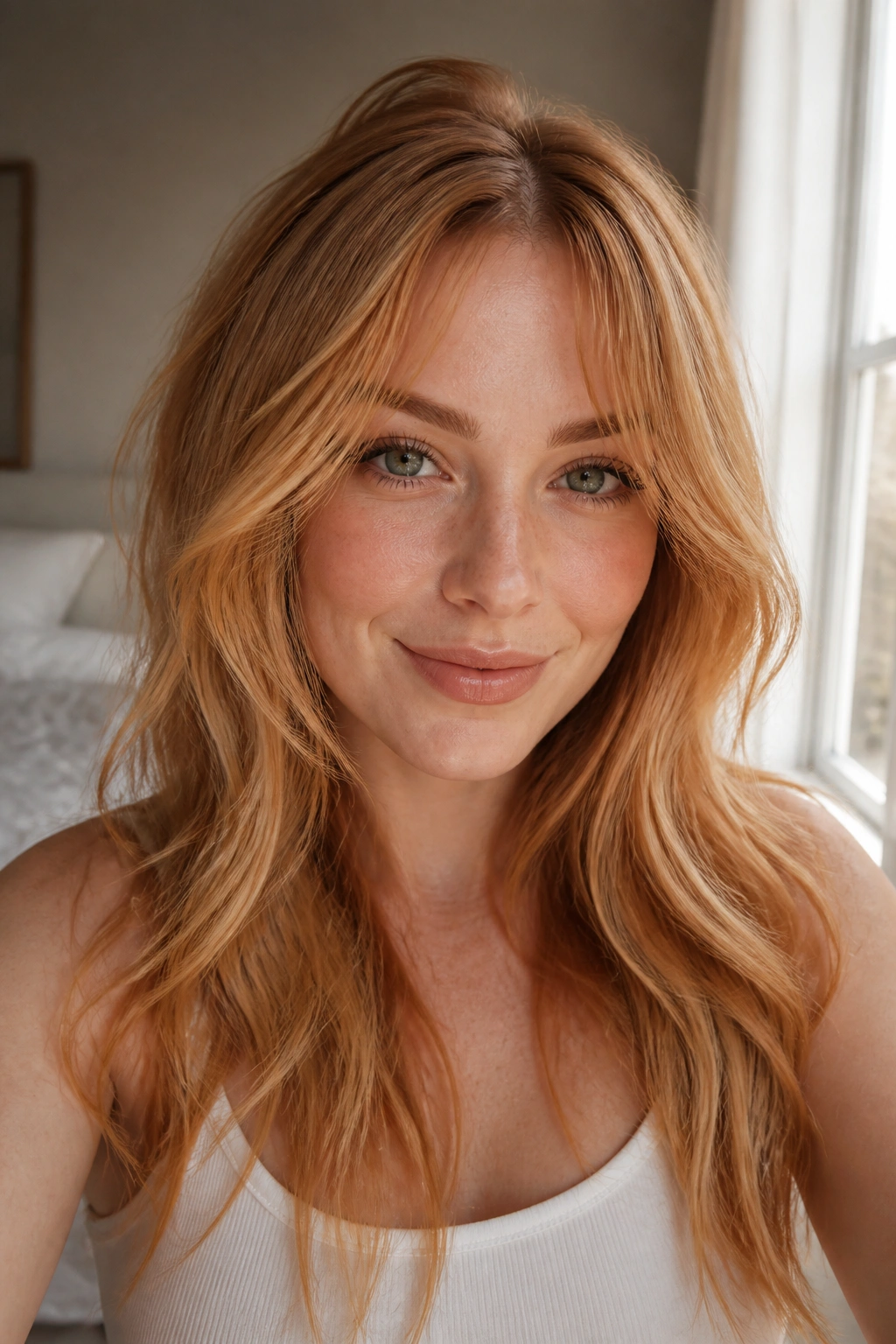
Why do wispy face pieces work when blunt bangs don’t? Because they leave skin visible and never stop at the widest part of the cheeks. That little bit of air around the face keeps the shape from feeling boxed in.
Honeyed apricot ginger is softer than true copper, and that softness makes the face pieces feel even lighter. The color lifts the skin, while the pieces themselves draw the eye downward in a narrow path. If you want warmth without a heavy frame, this is one of the nicest options.
How to wear it
- Start the face pieces near the chin or lower.
- Keep them thin enough to move in the air.
- Bend them away from the face with a round brush or a 1-inch iron.
- Let the ends stay translucent, not chunky.
This works well on medium-length cuts, especially if the rest of the hair has gentle layers. It also grows out nicely, which matters if you like your hair to look good between trims. A wispy piece can go soft and lived-in. A blunt one just sits there.
18. Rich Ginger Gloss on Long, Sleek Length
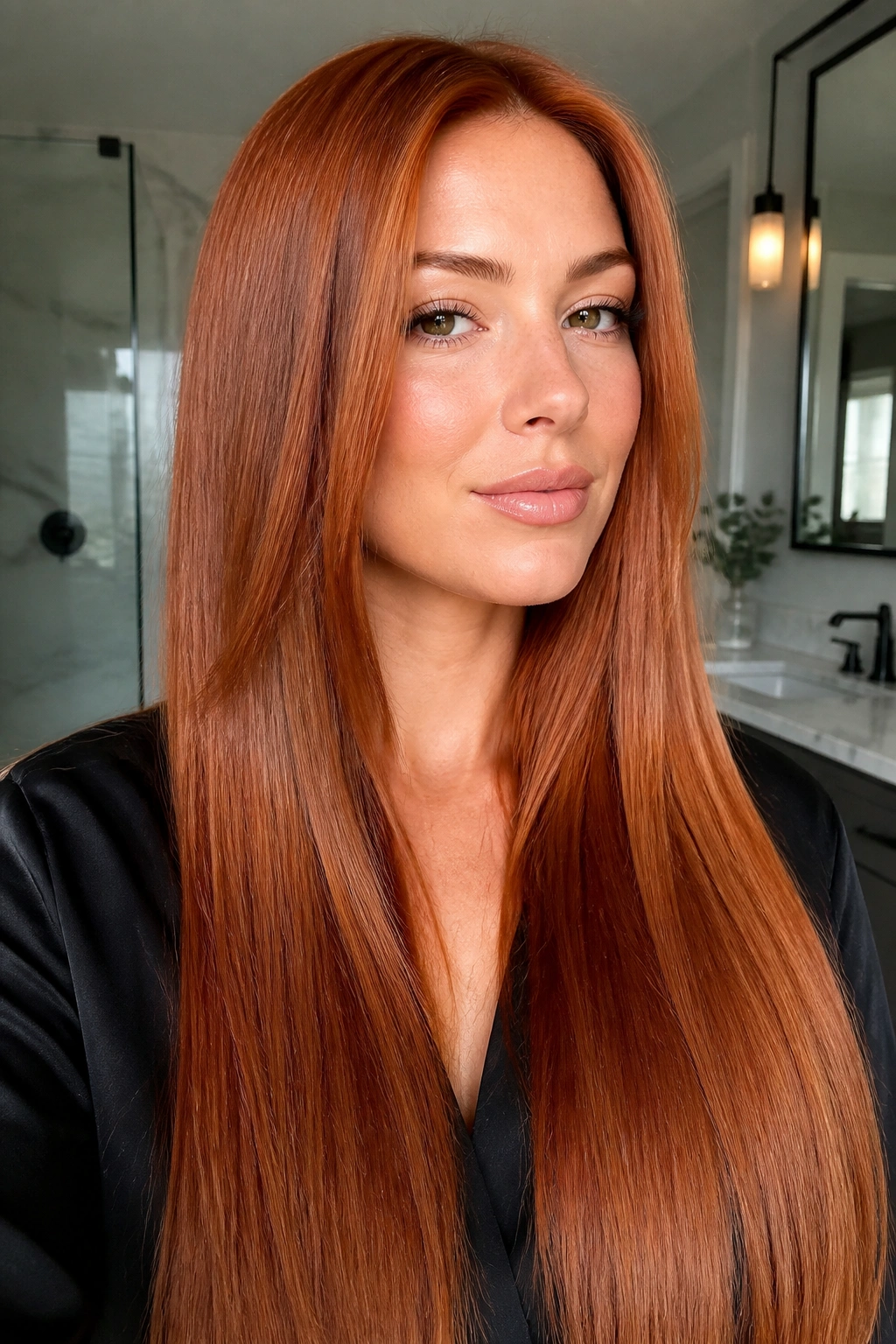
If you want the safest direction and the most polished one, this is the look I’d point to first. Long, sleek hair gives a round face the cleanest vertical line, and a rich ginger gloss keeps the color from getting flat or muddy.
A glossy ginger on long hair is not boring. It only looks boring when the tone is one-note. The better version layers auburn, copper, and a touch of gold so the finish changes under light. The length does the shaping, and the gloss does the selling.
This is a smart choice if you want to keep your routine simple. Straighten or blow-dry with a smooth finish, use a middle or slight off-center part, and keep the ends below the shoulders. The face gets length. The color gets shine. Nobody needs a hundred tricks here.
What I like most is how forgiving it is. You can wear it sleek, tuck one side behind the ear, or add a soft bend through the ends when you want a little more movement. The look stays controlled either way.
Round faces do not need to be hidden. They need a frame that keeps the eye moving. Start with the line, then choose the red, and the whole thing falls into place.
