



Round faces can wear mahogany hair color well, but the placement has to do the heavy lifting. A flat, one-note red-brown can sit on the head like paint; a good mahogany shade moves, shadows, and light in the right places.
Mahogany sits in that sweet zone between brown, red, and a hint of plum. In a dim room it can read like espresso with warmth. Near daylight, the red-violet side wakes up, and that shift is part of the appeal.
With a round face, the goal is not to hide every curve. It’s to build vertical lines. A center part, an off-center part, face-framing layers, and color that starts a little lower than you expect can make a big difference.
The 20 ideas below play with that idea in different ways—some lean glossy and deep, some pull in copper, some use shadow roots or bangs—but all of them keep the face from feeling boxed in.
1. Chestnut Mahogany Layers That Lengthen Round Faces
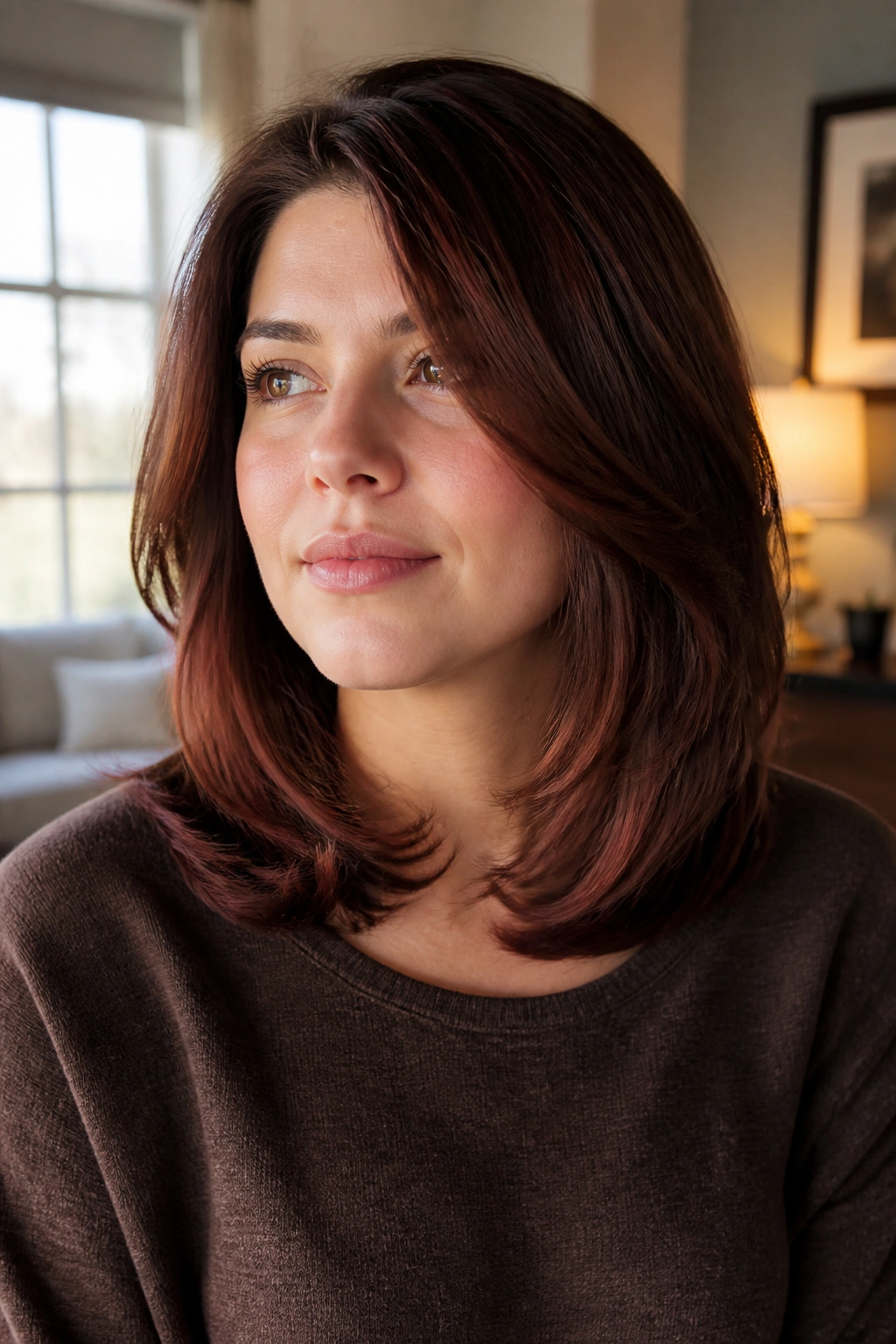
Chestnut mahogany is the shade I reach for when someone wants red-brown warmth without turning the whole head into one flat block. On a round face, those soft brown roots and slightly lighter ends create a long line instead of a wide one.
Why it flatters the shape
Keep the richest depth at the crown and through the back, then let the mahogany live from the cheekbone down. That small shift pulls the eye downward. It also keeps the color from sitting right across the widest part of the face, which is where a lot of red tones go wrong.
- Ask for a level 4 chestnut brown base with mahogany reflect through the mids.
- Start face-framing layers below the cheekbone, not at the cheek.
- Leave the crown a half-step deeper than the ends.
- Wear it with an off-center part if you want a little extra length.
Best detail: keep the brightest pieces under the jaw, not beside it.
2. Espresso Mahogany Bob With a Deep Side Part
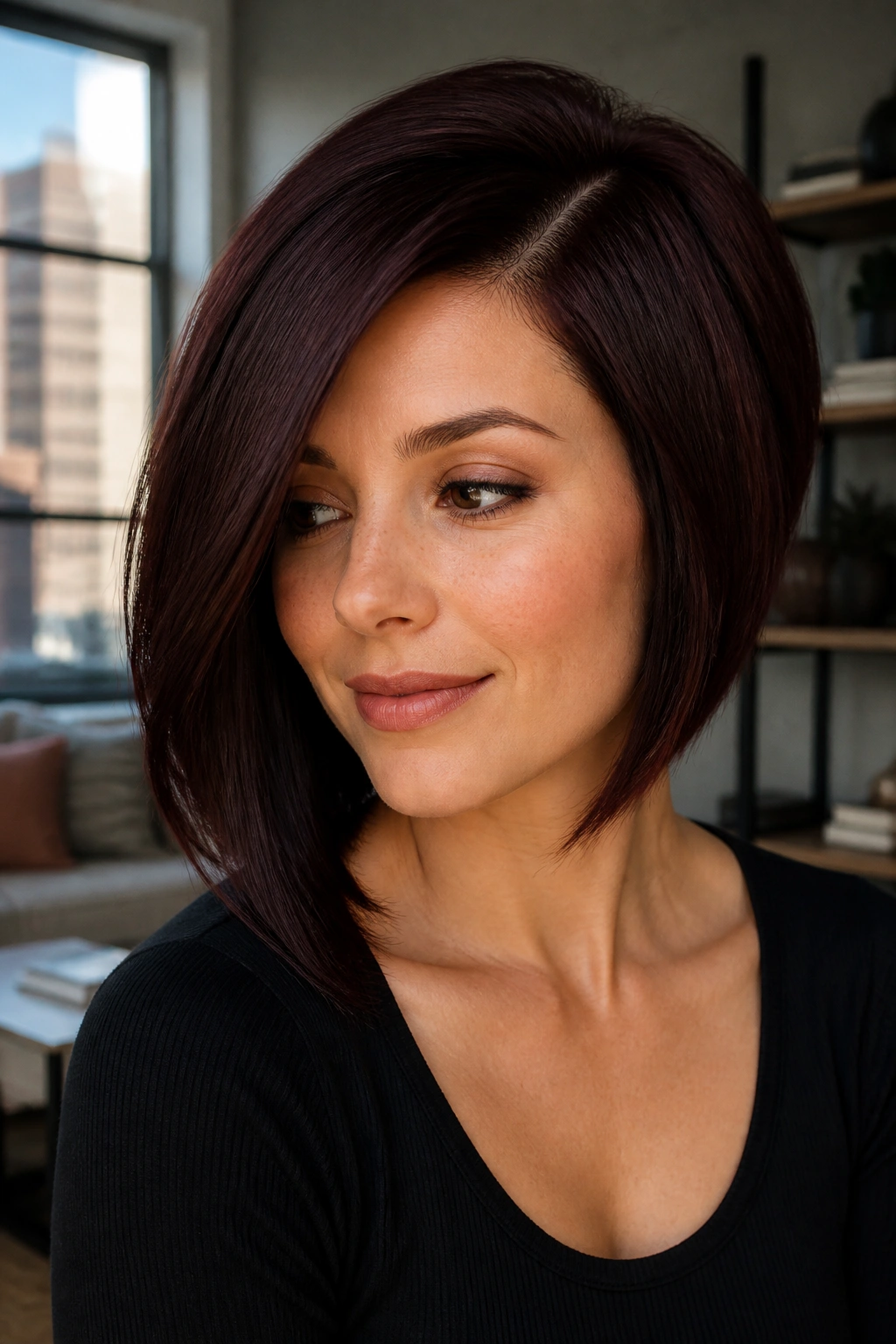
A bob can work on a round face. It just needs one sharp decision: move the part and break the symmetry.
An espresso mahogany bob looks crisp because the color stays dark enough to slim the outline while the red-brown sheen keeps it from feeling severe. Ask for a line that sits just below the chin, with the front pieces a touch longer than the back. That tiny angle matters. A blunt edge right at the jaw can widen the face; a slight bevel does the opposite.
The side part is the real trick. It gives the forehead more height, sends one side of the hair across the face, and leaves the other side falling away from the cheek. I like this cut on straight or softly waved hair, where the mahogany tone shows a little movement each time the head turns.
One more thing: keep the ends clean, not puffy. Puffy ends add width. Clean ends sharpen the whole look.
3. Mahogany Balayage That Starts Below the Cheekbones
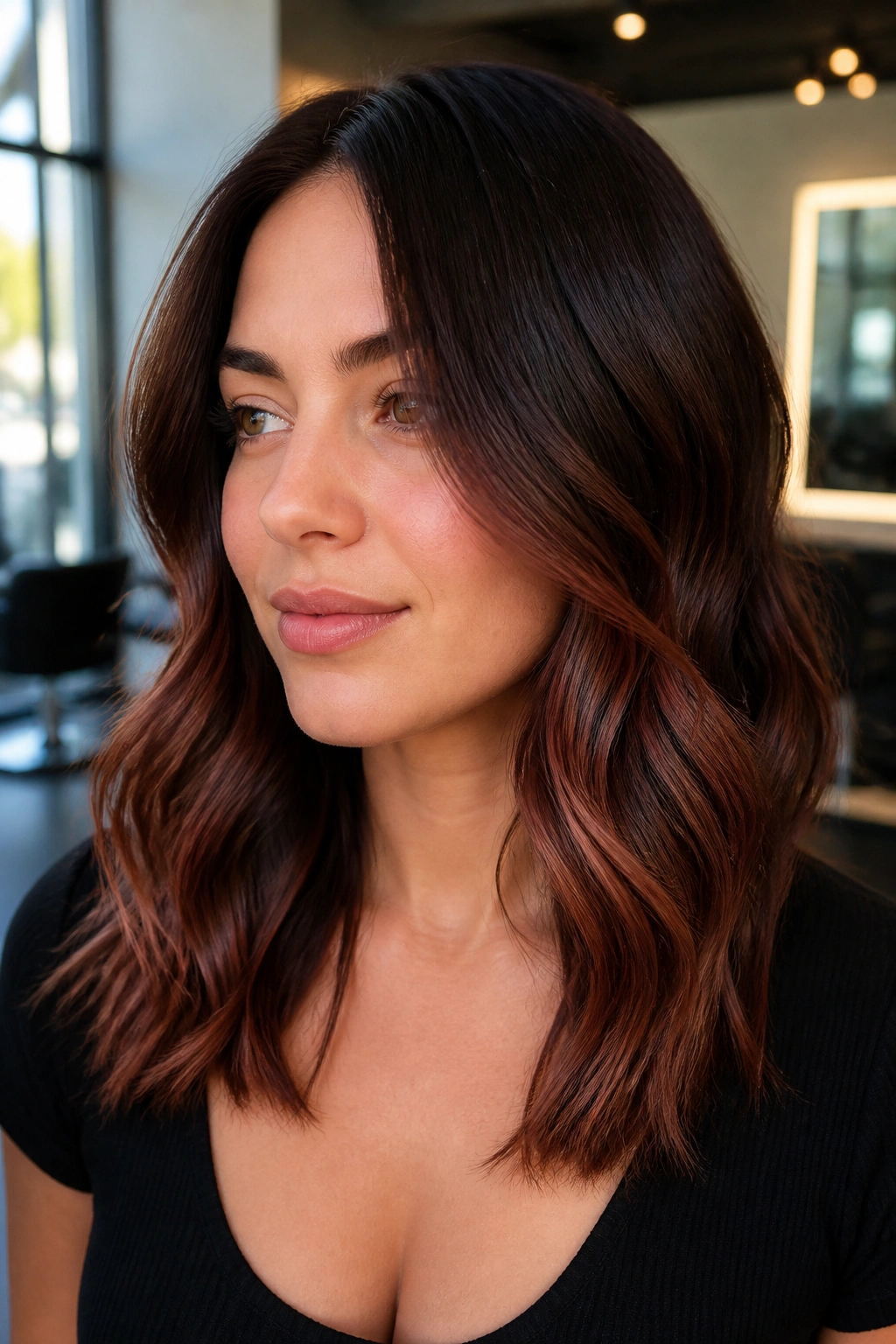
Why start the brightness lower? Because a round face already carries fullness in the middle, and that is the last place you want to crowd with light pieces.
A mahogany balayage works when the darker base stays near the roots and the first soft ribbons begin just under the cheekbones. From there, the color can open up through the mid-lengths and ends. The result is a vertical fade that reads longer and leaner, especially on hair that reaches the shoulders or longer.
How to wear it
Ask for painted ribbons, not chunky stripes. A few lighter mahogany strands around the lower face are enough. Curl the hair away from the cheeks in loose bends, and let the color sit in separate panels instead of blending into one heavy curtain.
- Best on medium to long hair.
- Keep the root shade 1-2 levels deeper than the mids.
- Let the lightest pieces live below the jawline.
- Works well with a center part or a soft off-center part.
The whole look feels relaxed, not loud. That matters.
4. Cherry Mahogany Money Pieces Around the Face
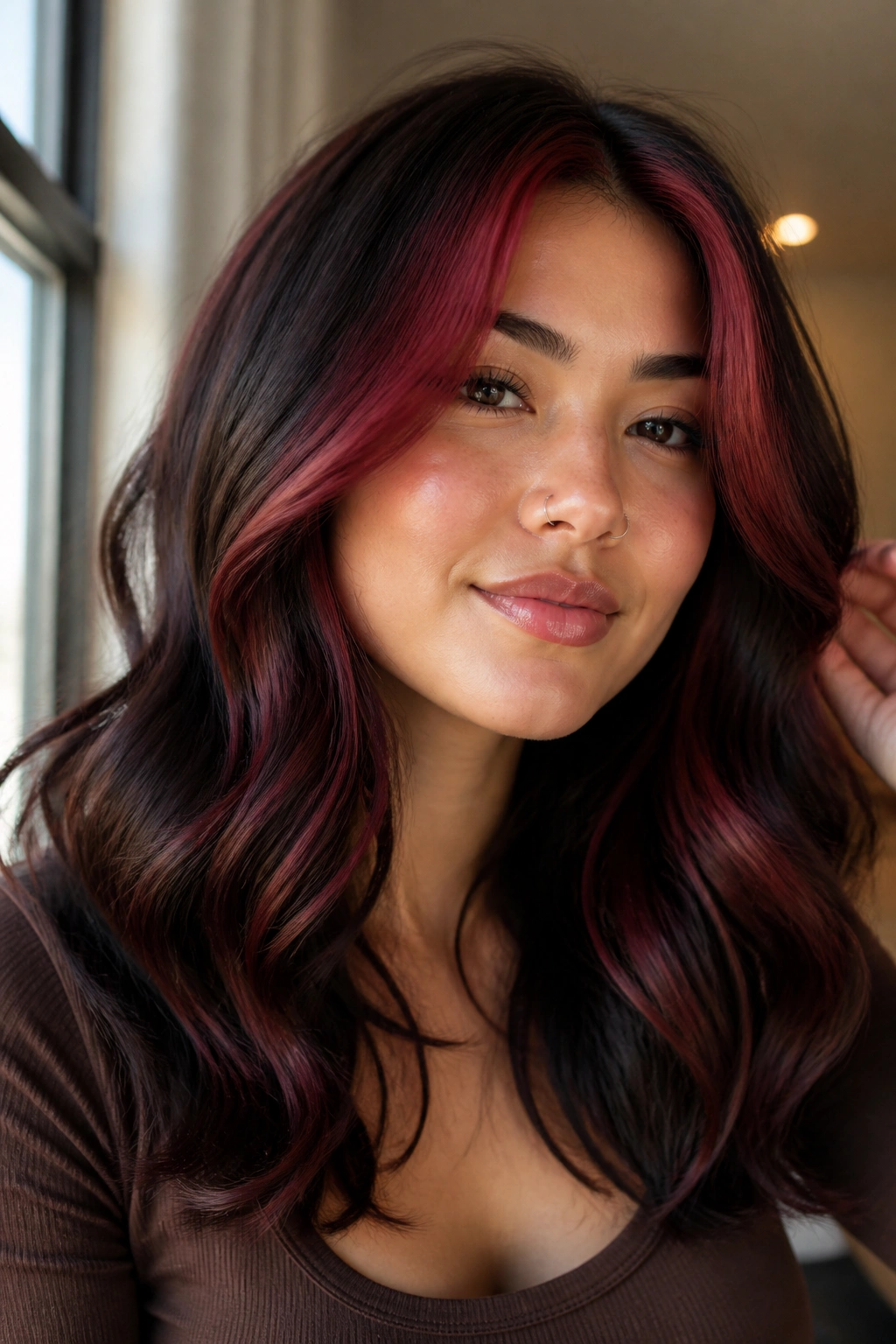
If your face tends to look fullest at the cheeks, a bright strip at the temples can be enough. You do not need a full halo of light. You need a careful line.
Cherry mahogany money pieces give just enough color pop to frame the face without widening it. The shade sits between burgundy and warm brown, so it flashes red when the hair moves but still holds depth. That depth is what keeps the pieces from reading as stark streaks.
What to ask for
- Keep each money piece about 1 to 1.5 inches wide.
- Start the placement at the brow or temple area.
- Stop the lightest point below the chin, not at the cheek.
- Blend the pieces into a darker mahogany base so they do not look pasted on.
A little contrast goes a long way here. Too much brightness around the temples can make the face feel wider. Two slim ribbons usually do the job better than a whole front section.
5. Soft Mahogany Melt on Shoulder-Length Hair
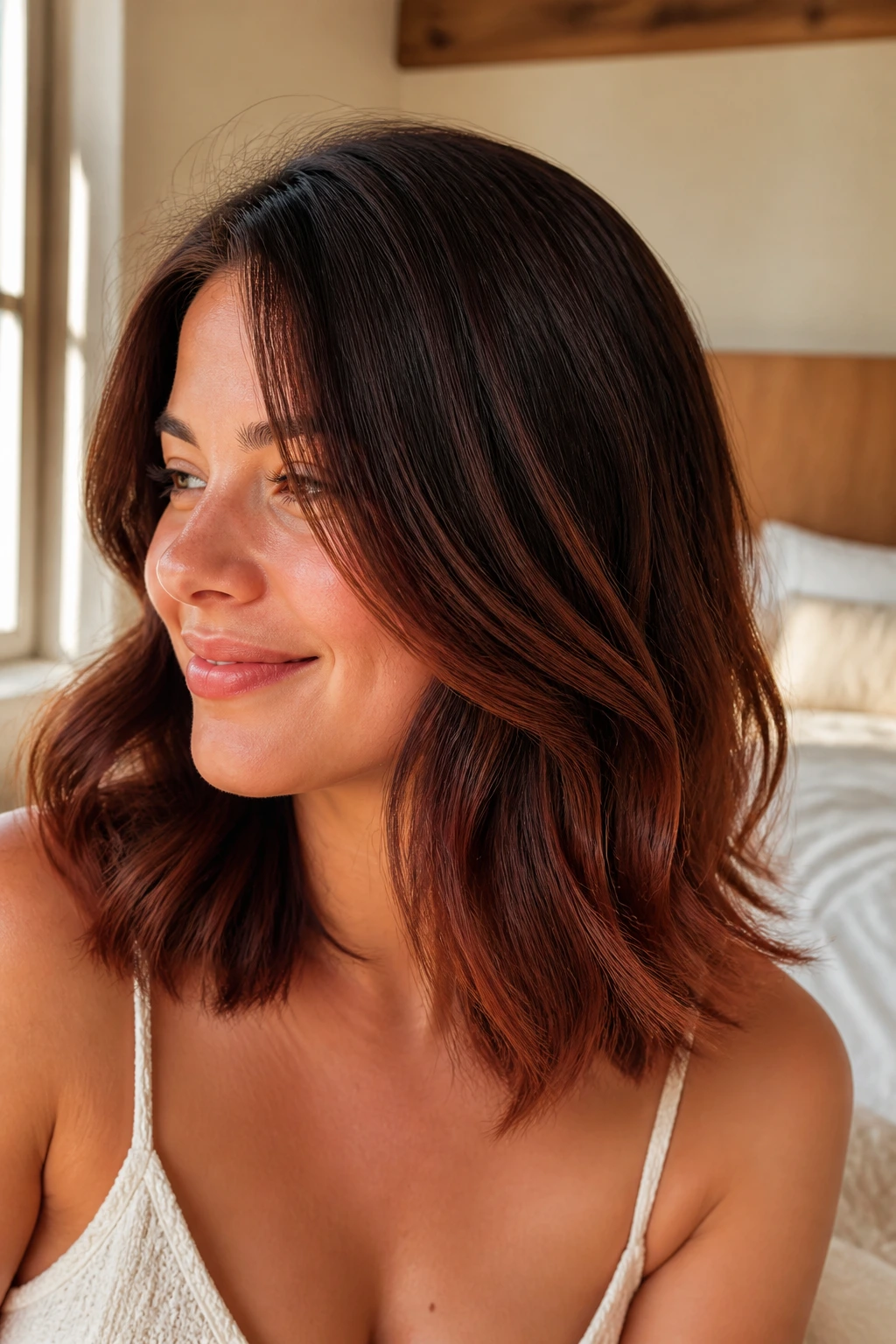
Shoulder-length hair is often the sweet spot for round faces. It gives enough length to pull the eye down, but it does not drag the whole look into heavy, long-hair territory. A soft mahogany melt uses that length well.
The color begins with a deeper chocolate or espresso root, then slides into mahogany through the mid-lengths, and lands in a muted auburn at the ends. Nothing about it feels harsh. The shift is slow enough that the eye keeps moving instead of stopping on one hard line. That matters more than people think.
I like this option when the cut has a little movement at the bottom—soft layers, a light bend, or ends that are not razor blunt. Round faces can handle volume, but not volume that sits all in one horizontal band. This melt avoids that problem because it keeps the energy moving from root to tip.
It also grows out nicely. A root shadow hides a lot of salon regret, and the soft transition means you can go a little longer between color refreshes. Not forever. But longer.
6. Violet-Infused Mahogany for Cool Undertones
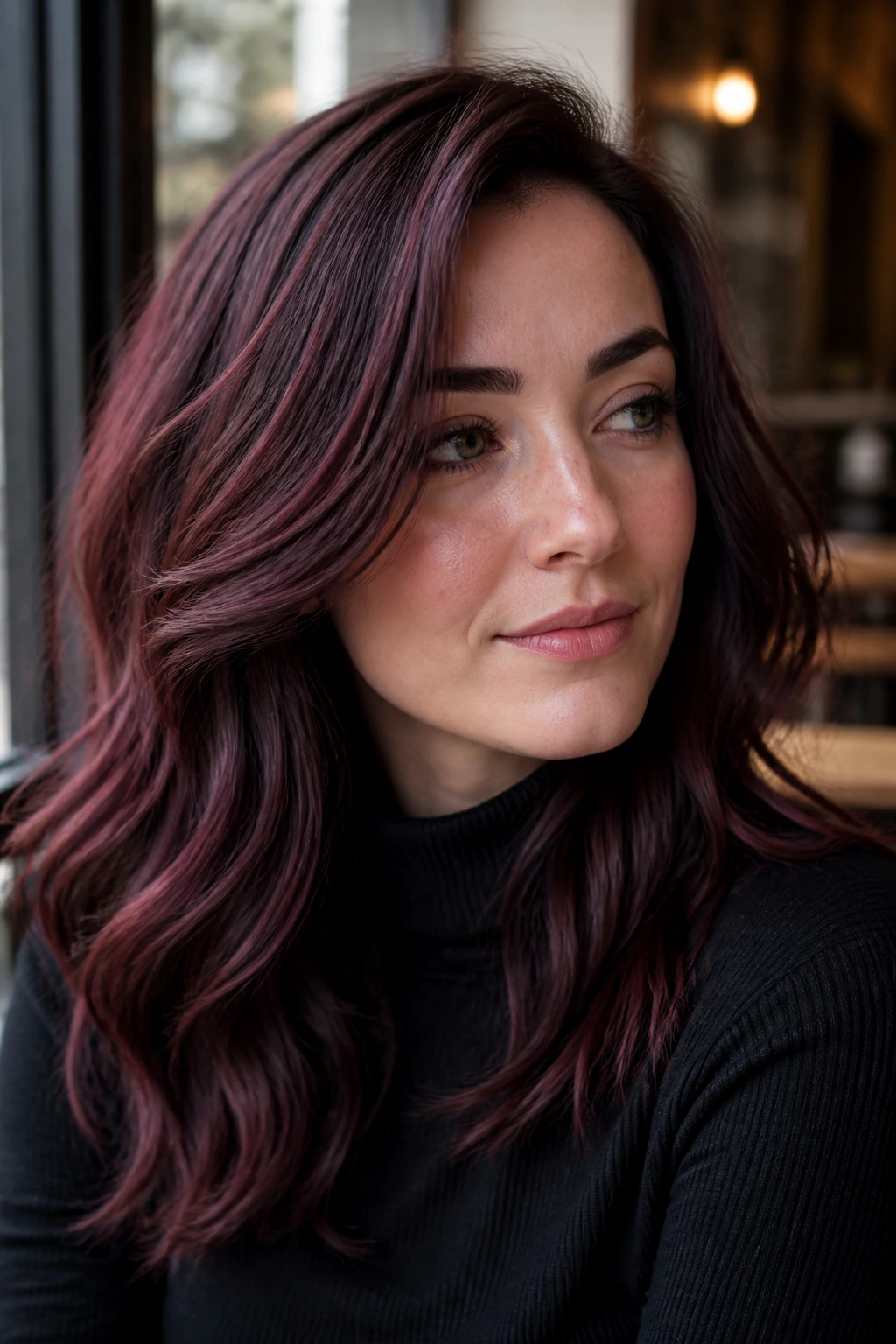
Warm auburn is not always the answer. If your skin leans cool or neutral, too much orange can make the color fight your face instead of sit beside it.
Violet-infused mahogany solves that problem. The red is still there, but the purple tone reins it in so the shade reads richer and deeper. It has more wine than fire, more plum than copper. On a round face, that depth keeps the outline from looking too broad, especially when the hair falls past the jaw.
A colorist would usually build this with a brown base at the root and a red-violet toner through the mids and ends. The trick is restraint. You want the violet to soften the warmth, not turn the hair into a plum block. A little dimension at the top helps too—a deeper root, a soft side part, and a few pieces around the cheek that are only one shade lighter.
This is a strong pick if you like red tones but hate brass. It looks polished without feeling stiff.
7. Cinnamon Mahogany With Curtain Bangs
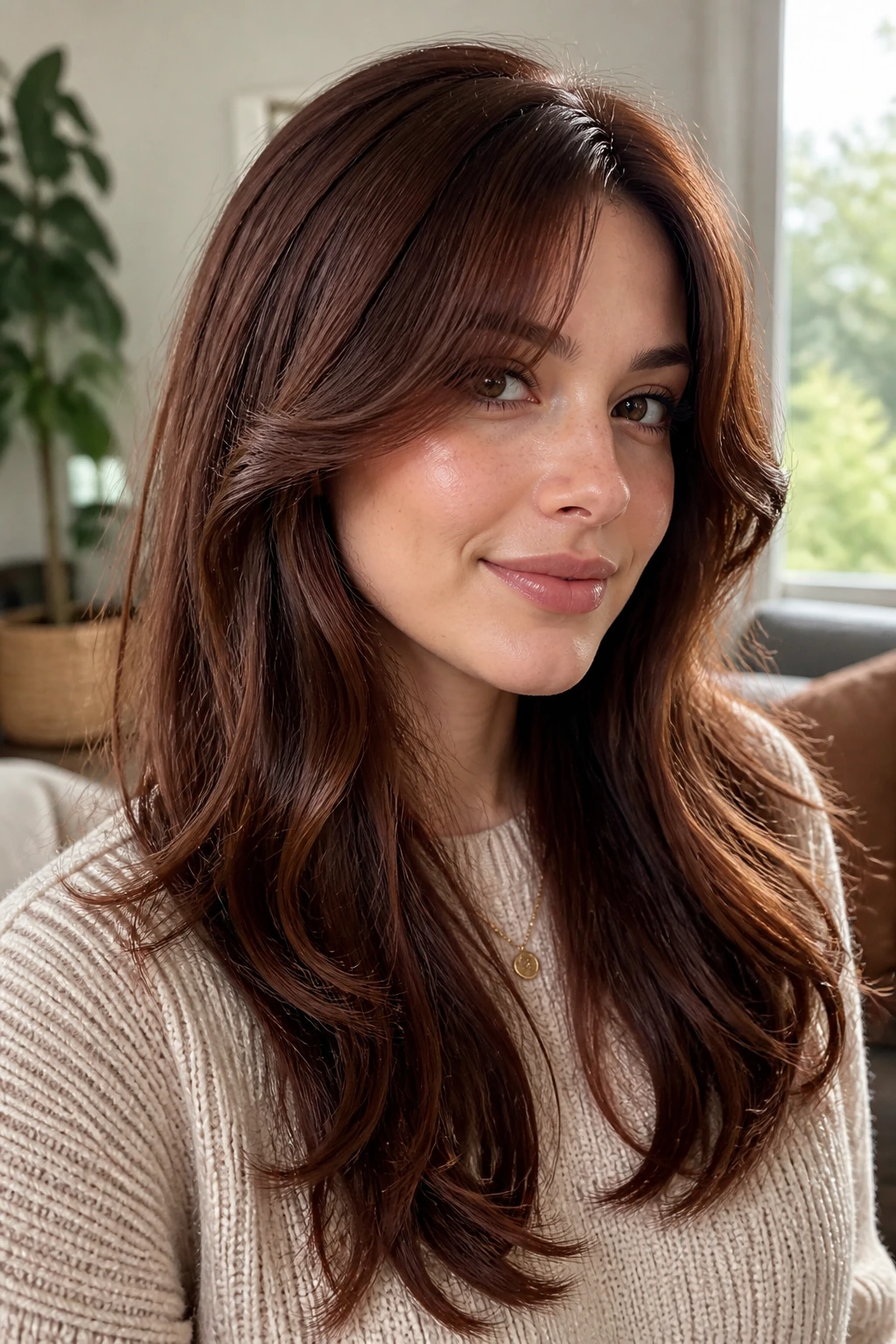
Curtain bangs can help a round face, but only when they start long enough to sweep instead of sit like a shelf. That is where cinnamon mahogany earns its keep.
Why curtain bangs help
A center split in the fringe opens the forehead and pushes the sides of the bangs away from the widest part of the cheeks. In cinnamon mahogany, the warm tone keeps the fringe soft and warm, not severe. The color also catches light in the front pieces, which gives the face a little more height.
What to ask for
- Ask for curtain bangs that begin around the outer corner of the eye.
- Keep the shortest point above the cheekbone, then let them fall longer toward the jaw.
- Blend the bangs into face-framing layers so the line feels continuous.
- Style with a round brush or a large roller for a gentle bend.
The best versions are never too short. Short curtain bangs can make a round face look shorter. Longer ones pull the eye outward and down, which is the whole point.
8. Dark Mahogany Shadow Root on Long Hair
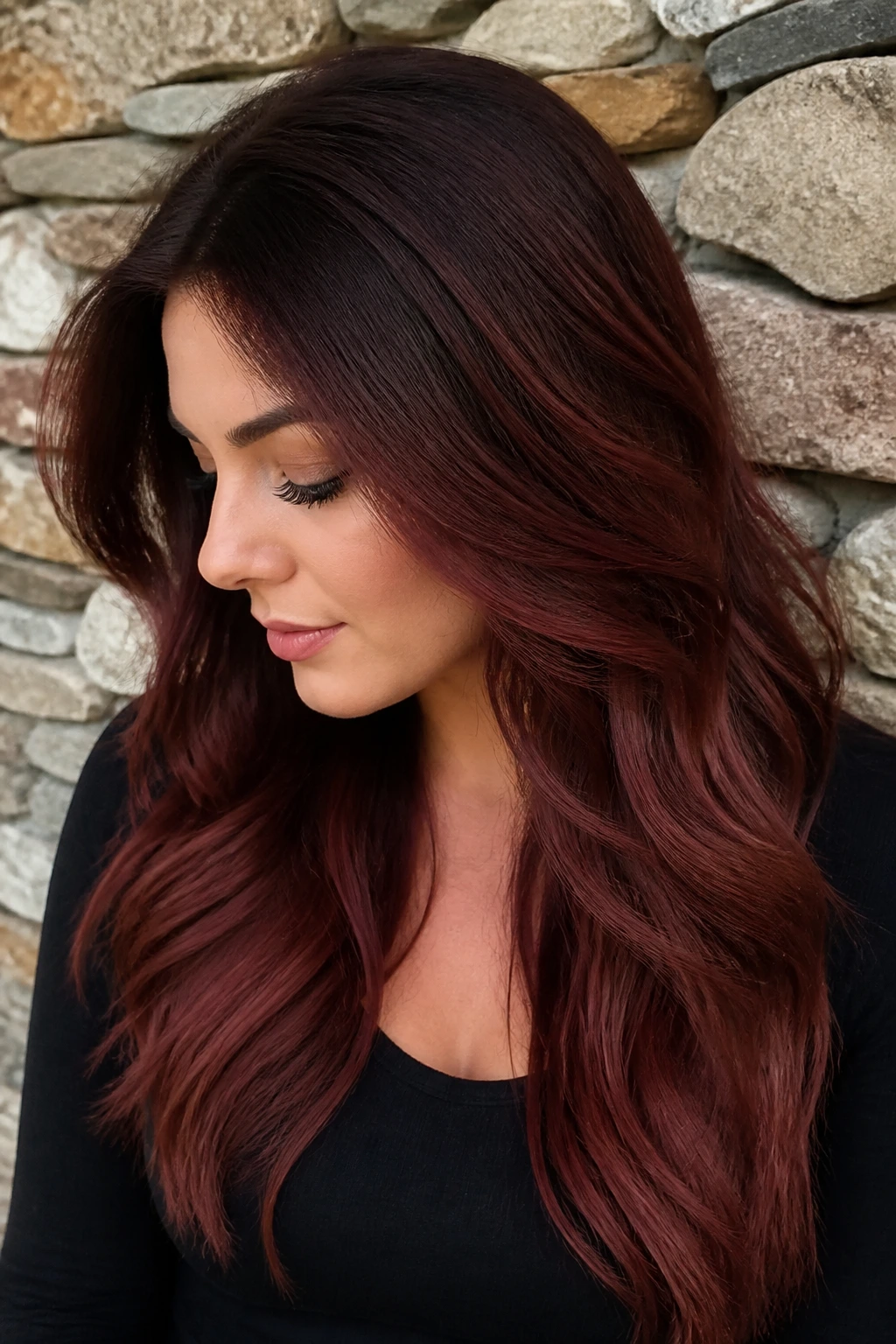
Long hair can look heavy fast when the color is solid from scalp to ends. A dark mahogany shadow root fixes that by giving the top a little depth and letting the ends do the talking.
The root stays deep—espresso, dark brown, or near-black with a mahogany cast—while the mids carry a soft red-brown glow. By the time the hair reaches the lower lengths, the tone opens up a touch more. That gives long hair motion without a harsh stripe. On a round face, the depth at the top keeps the silhouette from widening around the cheeks.
This is one of those shades that looks expensive when it’s done well and muddy when it isn’t. The difference is usually placement. The transition from dark to mahogany should be soft enough that you can’t point to a line and say, “there it is.” If you can see the line, it’s too sharp.
I also like this one for people who do not want to babysit their color every few weeks. A soft root shadow grows out cleanly, and that helps a lot.
9. Auburn Mahogany Curls With Face-Framing Highlights
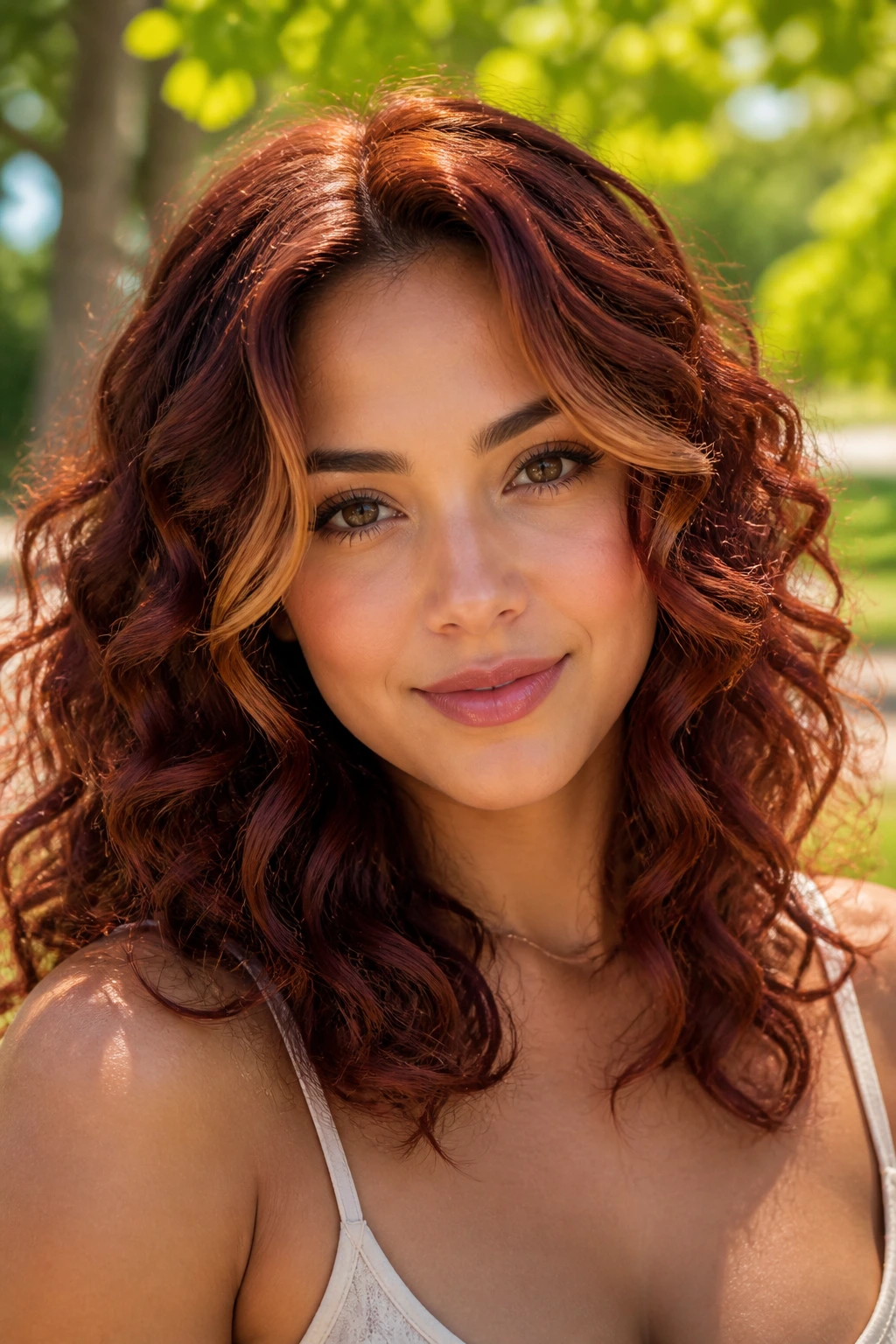
What happens when curls meet mahogany? You get movement for free, which is handy if your face shape already leans soft and full.
The danger with curly hair is adding highlights everywhere and ending up with a fuzzy halo. Better to place the brighter auburn mahogany pieces where the curl pattern naturally bends away from the face. That means the outermost curls at the front, not the whole front section. A few targeted strands do more than a whole head of light pieces.
How to place the light pieces
- Put the brightest curls just in front of the ear and below the eye line.
- Leave the area right at the cheeks a little deeper.
- Use wider painted pieces on thick curls, smaller ones on loose curls.
- Keep the root area darker so the style does not puff outward.
Auburn mahogany gives curls a warm shine that looks alive in motion. The shade is rich enough to keep the volume from feeling too round, but bright enough to show off the texture.
10. Mahogany Pixie With Longer Crown Length
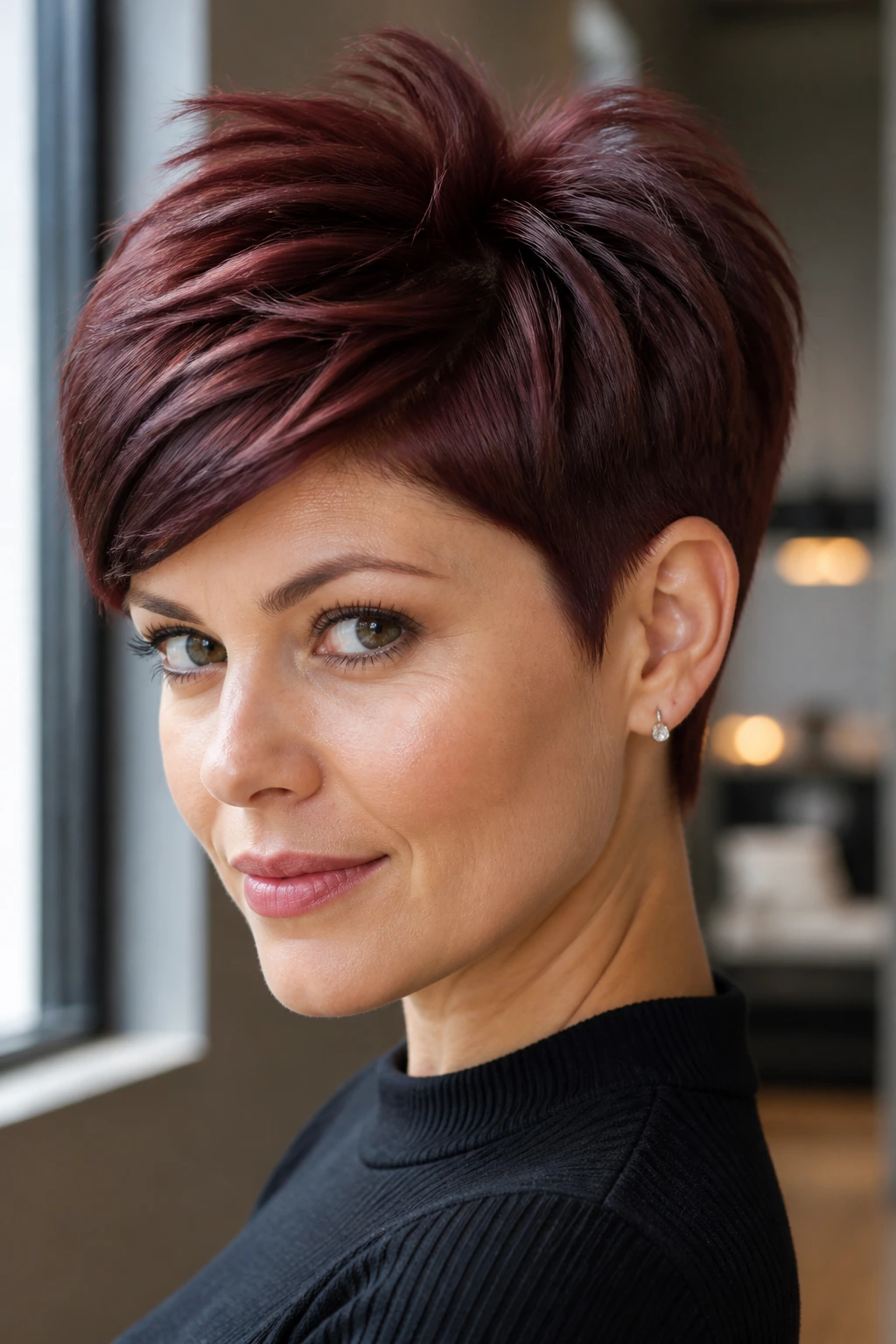
A pixie can flatter a round face better than people think. The trick is height on top, not width on the sides.
A mahogany pixie with a longer crown gives that lift. The sides stay neat and close, while the top carries enough length to create a vertical line. The color helps, too. Mahogany adds sheen to short hair, which keeps the cut from looking too severe or boyish. On a round face, that little bit of shine pulls attention upward.
The parts that matter
- Keep the crown about 1.5 to 2.5 inches longer than the sides.
- Ask for tapered sides around the ears.
- Skip a heavy, straight fringe unless you want the face to look shorter.
- Style the top with a matte cream or light paste so the shape holds.
This is not a wash-and-go cut if you want the best shape. It takes a minute. But that minute pays off, because a good pixie with mahogany depth looks sharp and easy at the same time.
11. Copper-Mahogany Ribbon Highlights in Straight Hair
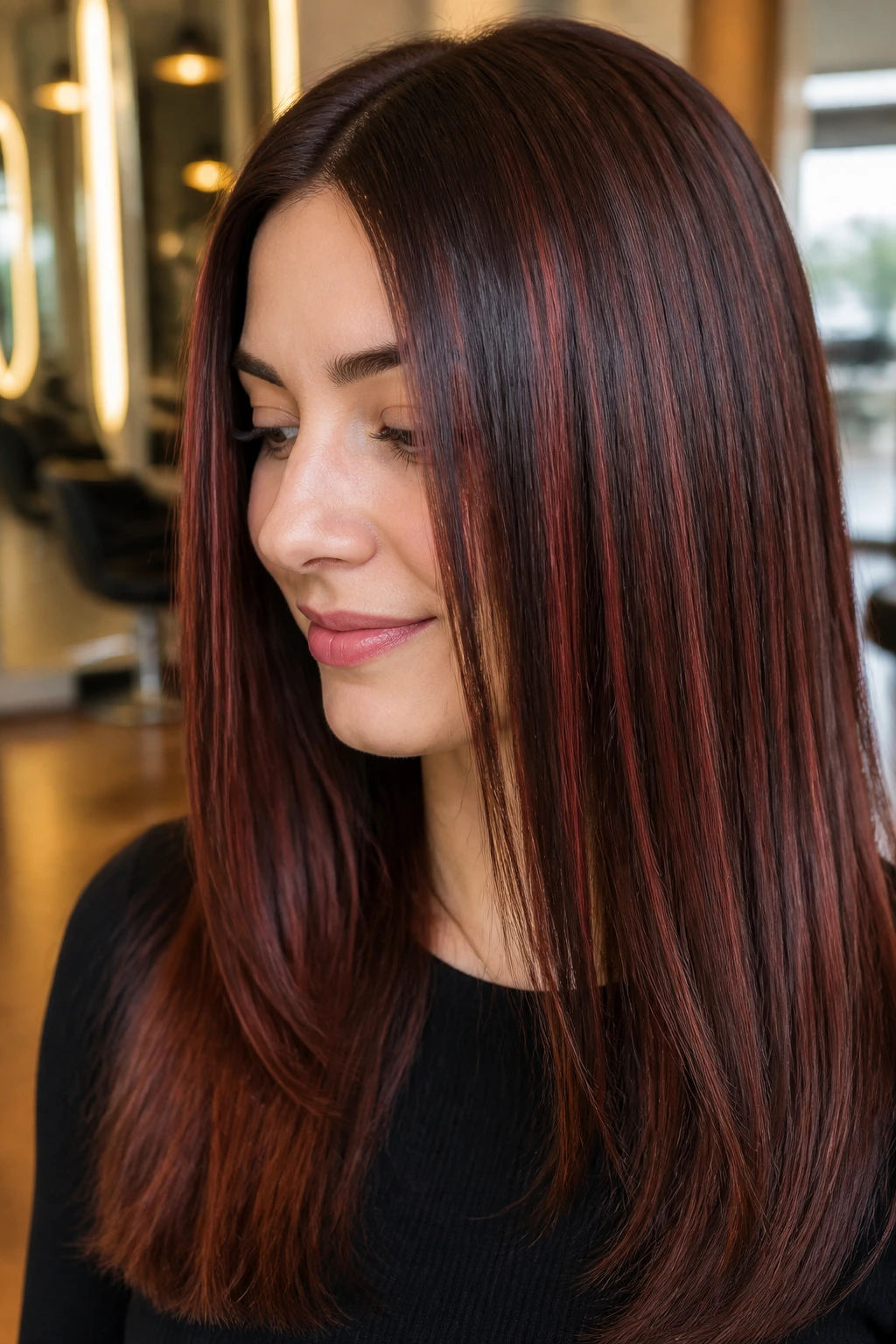
Straight hair can be a little unforgiving. It shows every line, every blunt edge, every color mistake. That is exactly why ribbon highlights can work so well.
Unlike chunky streaks, thin copper-mahogany ribbons keep the hair moving. The base stays dark enough to narrow the outline, while the lighter strips break up the shape and draw the eye downward. On a round face, that vertical movement matters more than bright color alone.
I would keep the ribbons narrow—about 1/8 to 1/4 inch wide—and place most of them from the temples down through the mids. A few can sit near the crown if the hair is very flat, but too many at the top make the head look wider. The goal is motion, not a zebra effect.
This shade is a good fit if you like clean, straight styling but want the color to do some of the work. A flat iron pass with a slight bend at the ends shows the ribbons off without making the whole look stiff.
12. Burgundy Mahogany Lob With Soft Ends
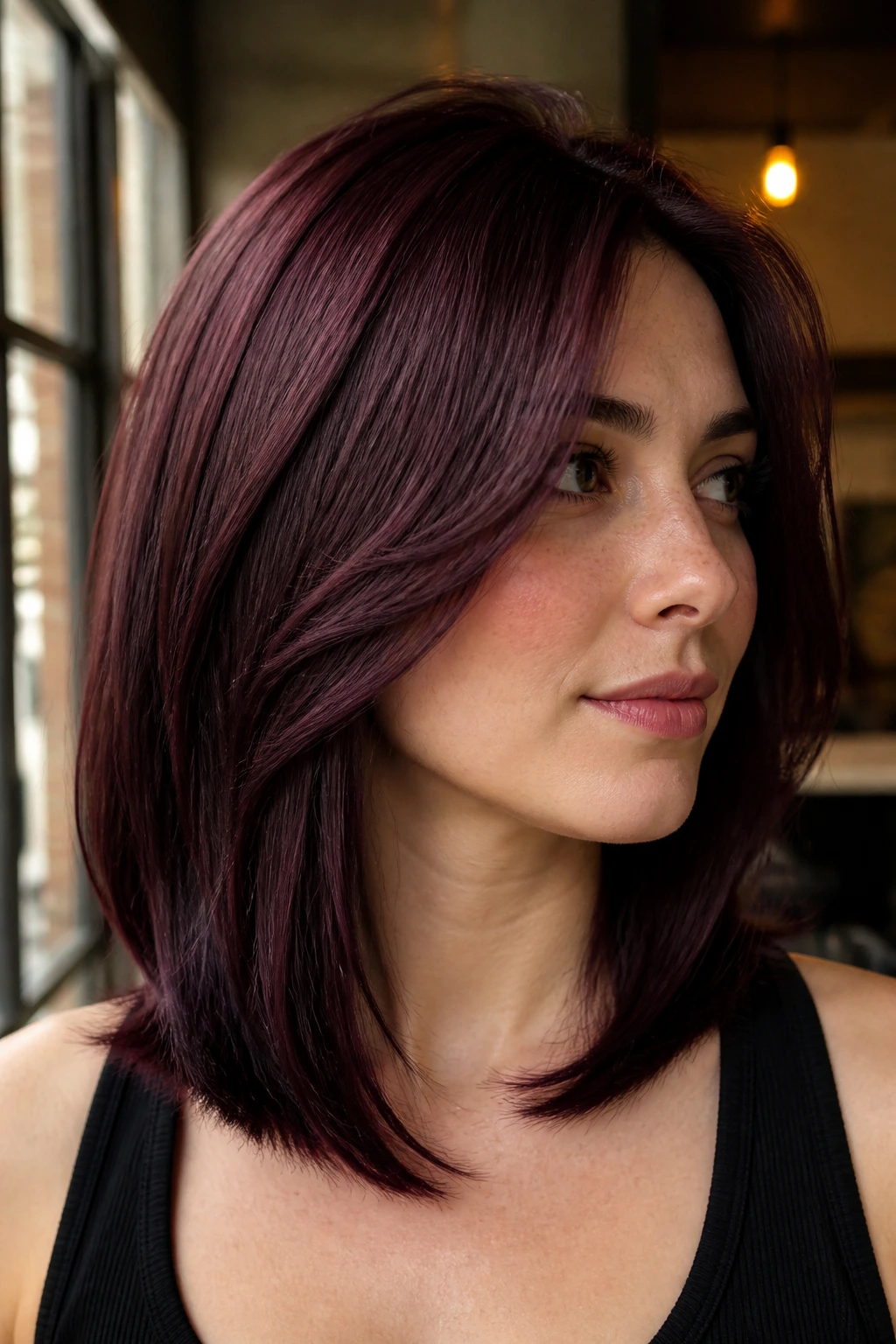
A lob can make a round face look compact if the ends stop too bluntly. That is the part most people miss.
Burgundy mahogany changes the mood because the color carries enough depth to sharpen the outline while the wine-red note adds interest. Keep the length brushing the collarbone, then soften the ends so they do not sit like a hard shelf. A little angle from back to front helps, too. It gives the face a longer path to follow.
The details worth asking for
- Front pieces should skim the collarbone or just below it.
- The ends need to be feathered, not chopped blunt.
- Burgundy should read wine-dark, not purple.
- A side part can make the whole cut feel longer through the front.
This version works especially well if you want red hair that still looks grounded. It has drama, but it does not shout. That balance is rare enough that I notice it every time.
13. Espresso Mahogany With Peekaboo Red Panels
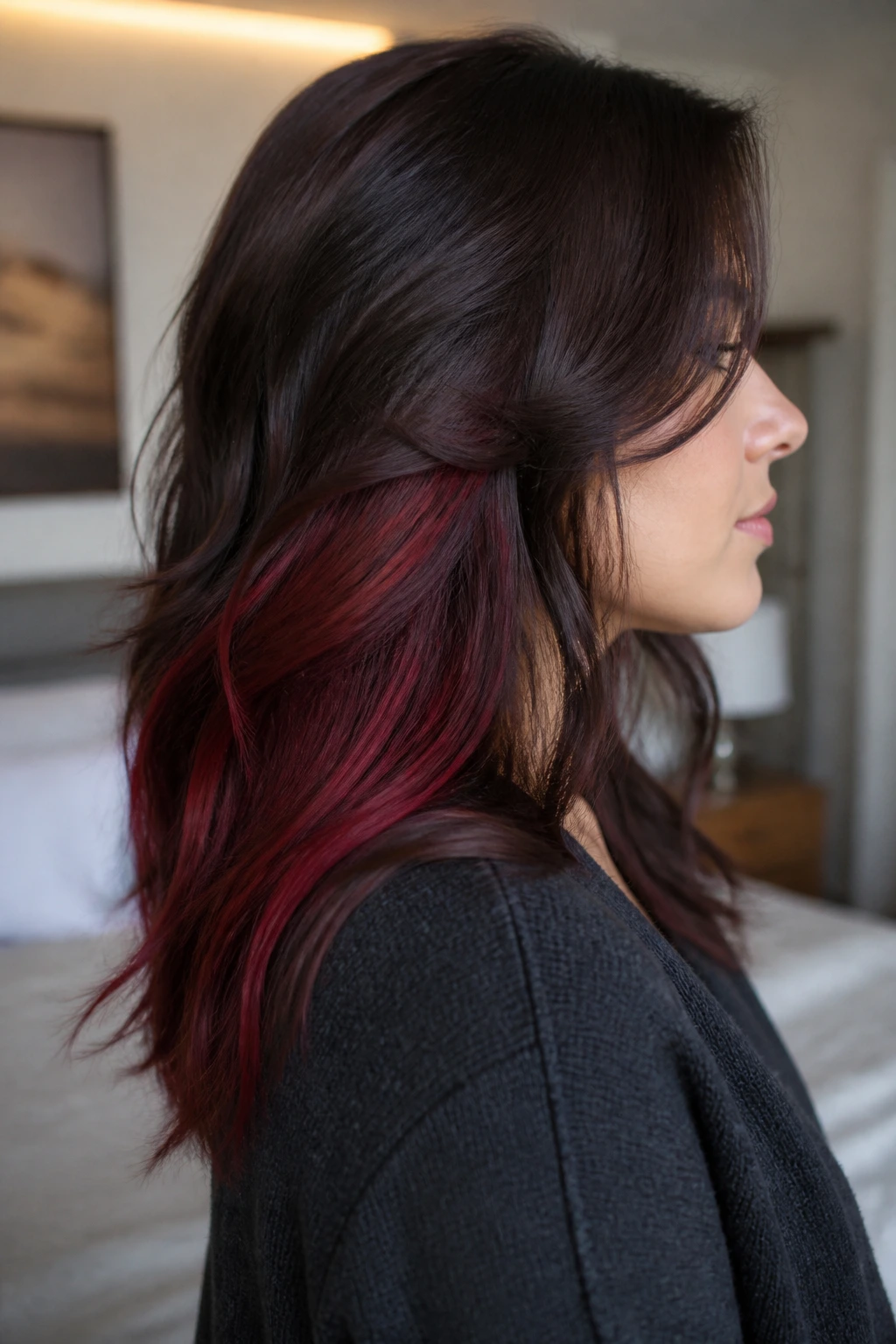
Hidden color has a charm that obvious color doesn’t always have. The hair looks almost solid from the front, then the red shows when you turn your head or tuck it behind the ear.
Espresso mahogany with peekaboo panels is a smart pick for round faces because the bright sections can live lower and deeper in the cut. Put them under the top layer, near the nape, or through the back half of the hair. That keeps the front clean and elongated while still giving you a flash of red when the hair moves.
This is the shade for someone who wants personality without a full-time bold look. It also works well with layers, because the movement exposes the hidden panels in little bursts instead of all at once. That makes the color feel playful, not busy.
I’d keep the top layer dark and glossy. The contrast is the point. Too much brightness up front can widen the face, while peekaboo panels let the eye travel downward, then back around.
14. Golden Mahogany on Wavy Hair
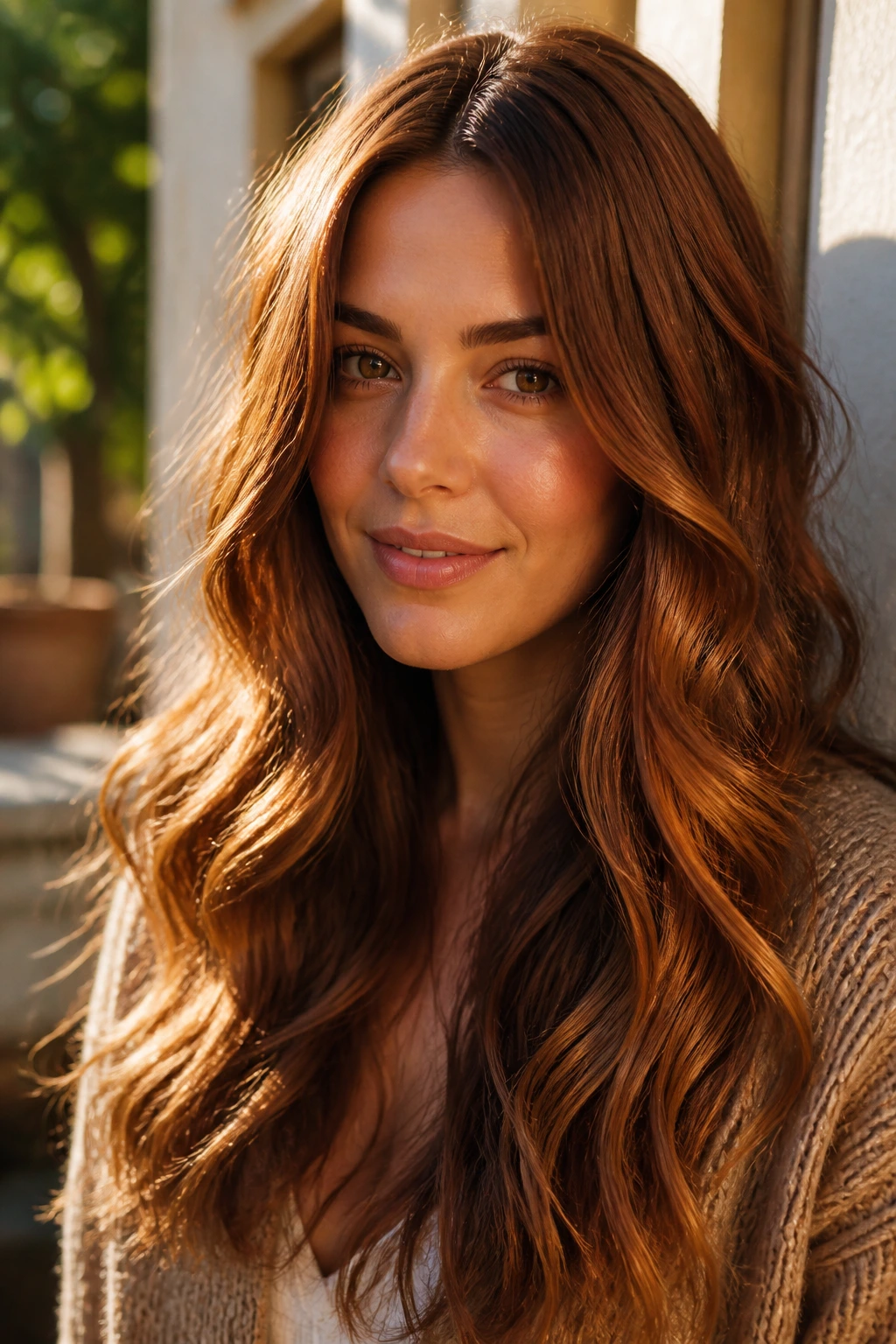
Golden does not have to mean brassy. That is the first thing to get straight.
A good golden mahogany has warmth, but it stays grounded by a brown base. On wavy hair, the gold picks up on the bends and gives the style a soft glow without turning it yellow. For a round face, the waves matter as much as the color. They break up the width and create a vertical sweep from cheek to shoulder.
How to keep it warm, not orange
Ask for a mahogany base with a soft gold glaze through the mids and ends. The gold should feel like honey in the hair, not like copper overload. Keep the pieces around the face thin and let most of the warmth live lower down. A round brush or a loose iron bend will show the color off without puffing the sides.
This shade is friendly on medium skin tones and on anyone who likes warmth but does not want a loud red. It feels soft, not sugary.
15. Mahogany Ombré From Roots to Ends
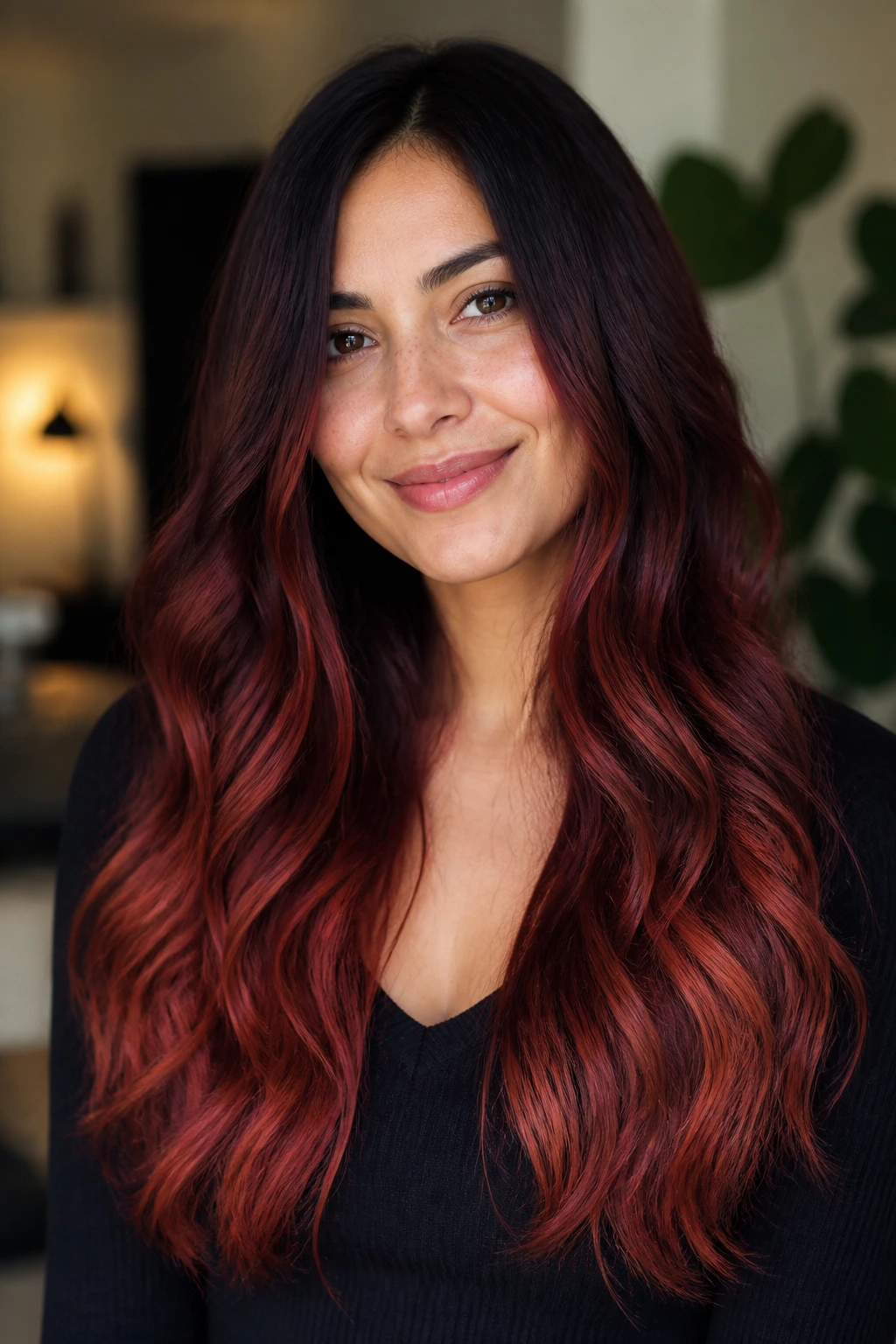
A good ombré gives a round face something it can use: a long, uninterrupted color path from top to bottom.
Mahogany ombré starts with deeper roots, slides through a rich red-brown middle, and lands in softer auburn ends. The fade does two jobs at once. It keeps the root area clean and narrow, and it pushes the eye downward through the length of the hair. That is exactly why this works so well on longer cuts.
This is a shade I especially like on layered hair, because the layers keep the ombré from looking like one heavy sheet of color. Every bend and flip shows a little more depth. If the hair is straight, a subtle wave at the ends helps the gradient show up instead of disappearing into one solid block.
You want the transition to feel slow. Fast ombré lines can look harsh around the cheeks, and that is the opposite of what you want here. Slow, soft, and a little smoky. That’s the sweet spot.
16. Smoky Mahogany With Ash Brown Lowlights
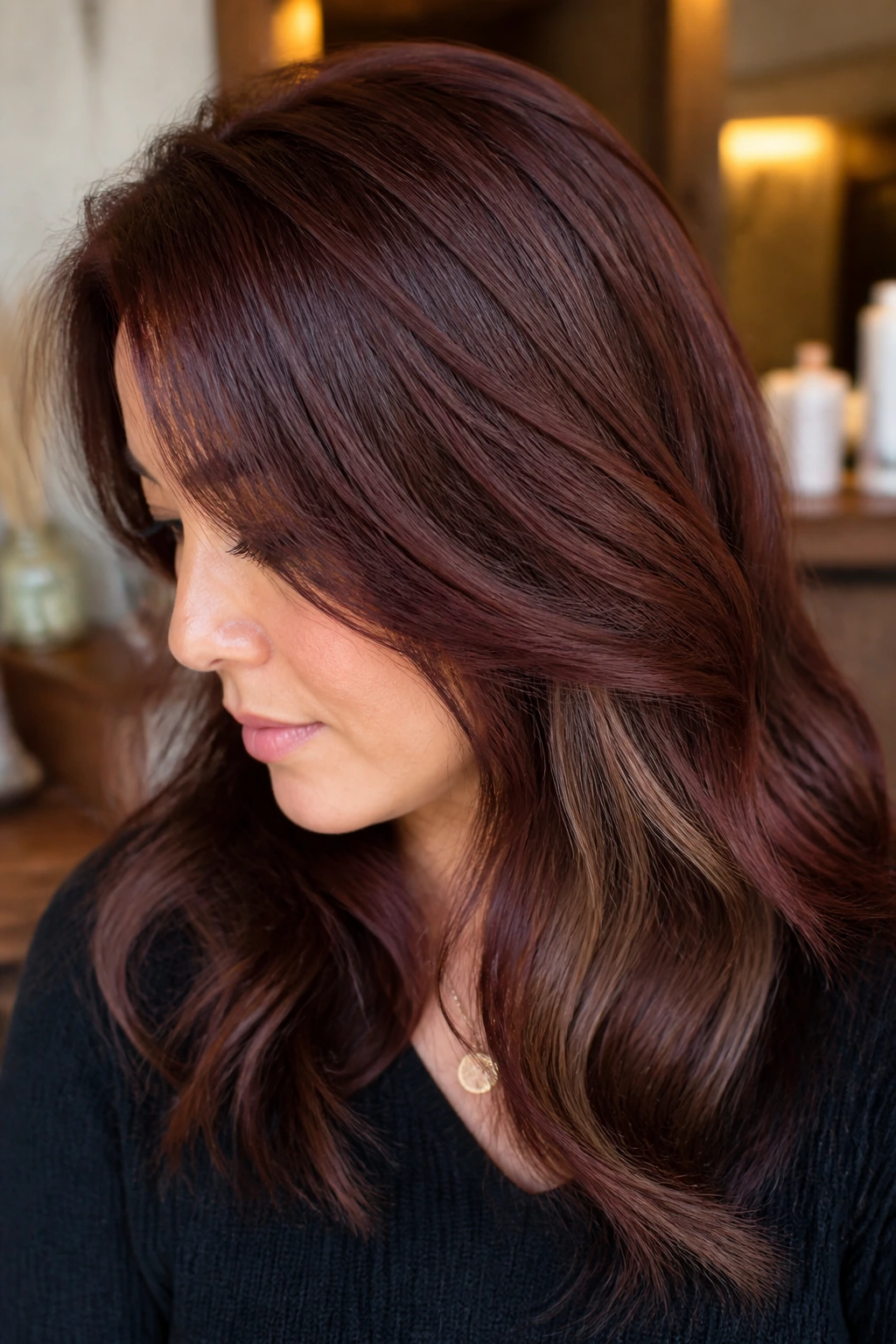
Want red without the fire-engine feel? Smoky mahogany is the answer.
Ash brown lowlights cool the warmth down and give the red-brown base some grit. The result looks richer and less glossy in a flashy way. It reads more like polished brunette with a red edge than bright auburn, which is often easier to wear on a round face because the color does not bounce so much light across the cheeks.
The best place for the ash lowlights is underneath and inside the hair, not scattered all over the top. That keeps the surface mahogany and alive while the interior depth does the shaping. On wavy or layered hair, the smoky pieces peek through when the hair moves. Nice effect. Very low drama.
This is a solid pick if you’ve tried warmer red-browns and found them too bright. It pulls the color back just enough to feel expensive and calm.
17. Ruby Mahogany for Thick Hair
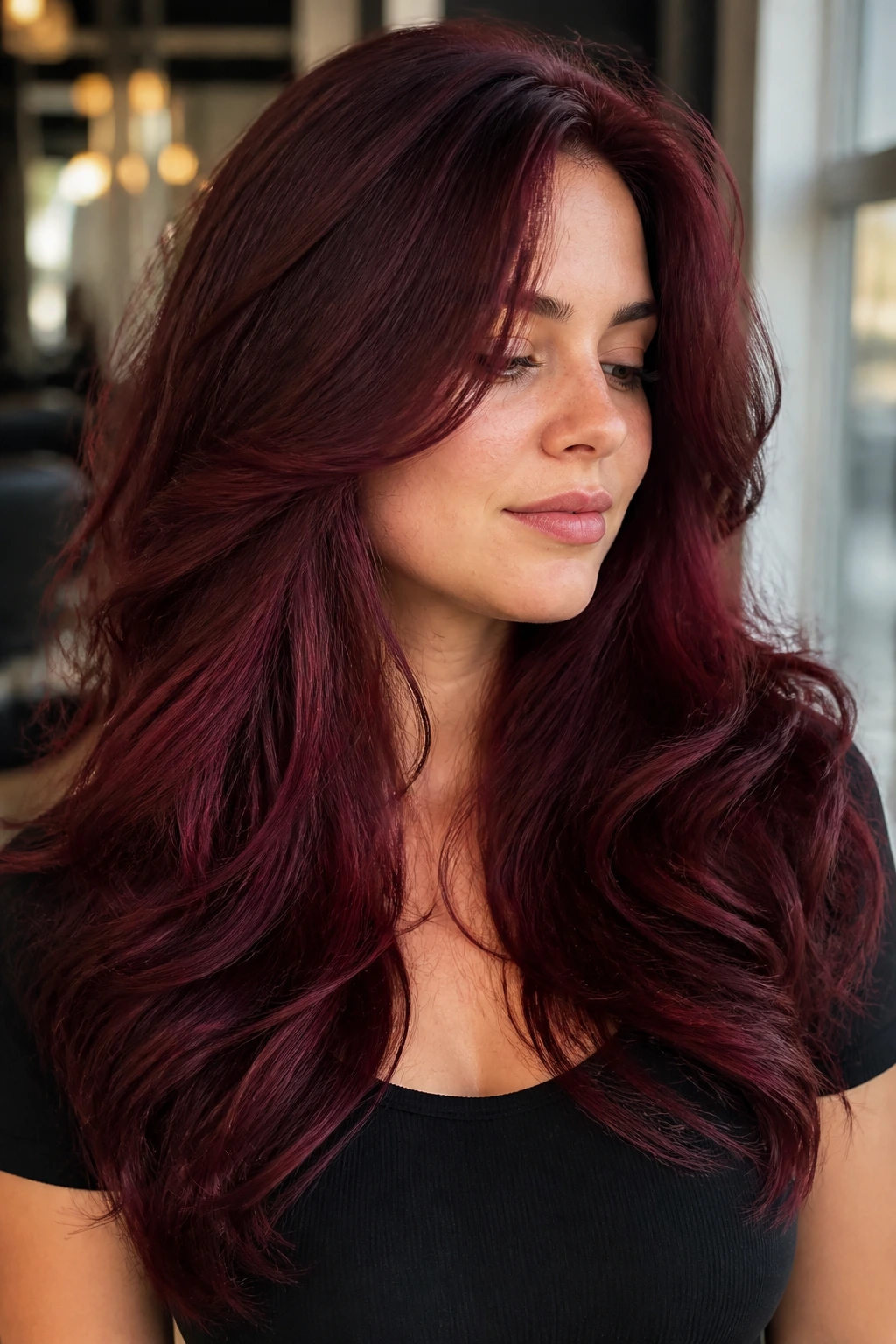
Thick hair can swallow delicate color. It needs saturation, not a whisper.
Ruby mahogany gives thick hair that depth. The red is deeper and more jewel-like than copper, so it holds its own against dense strands. I like it when the cut has some internal layering, because thick hair can look triangular if all the weight sits at the bottom. Break the shape first, then let the color fill it in.
What to ask for
- Keep the base deep, around level 3 or 4.
- Add ruby mahogany through the mids and ends in broader painted panels.
- Remove bulk inside the cut, not only at the surface.
- Style with a blowout or large brush set so the red catches movement.
This is one of those shades that looks a little different every time the light shifts. That’s the good part. Thick hair gets a color that doesn’t disappear, and the round face gets vertical movement from the layering. Clean fix.
18. Mahogany Gloss Refresh on Faded Red Hair
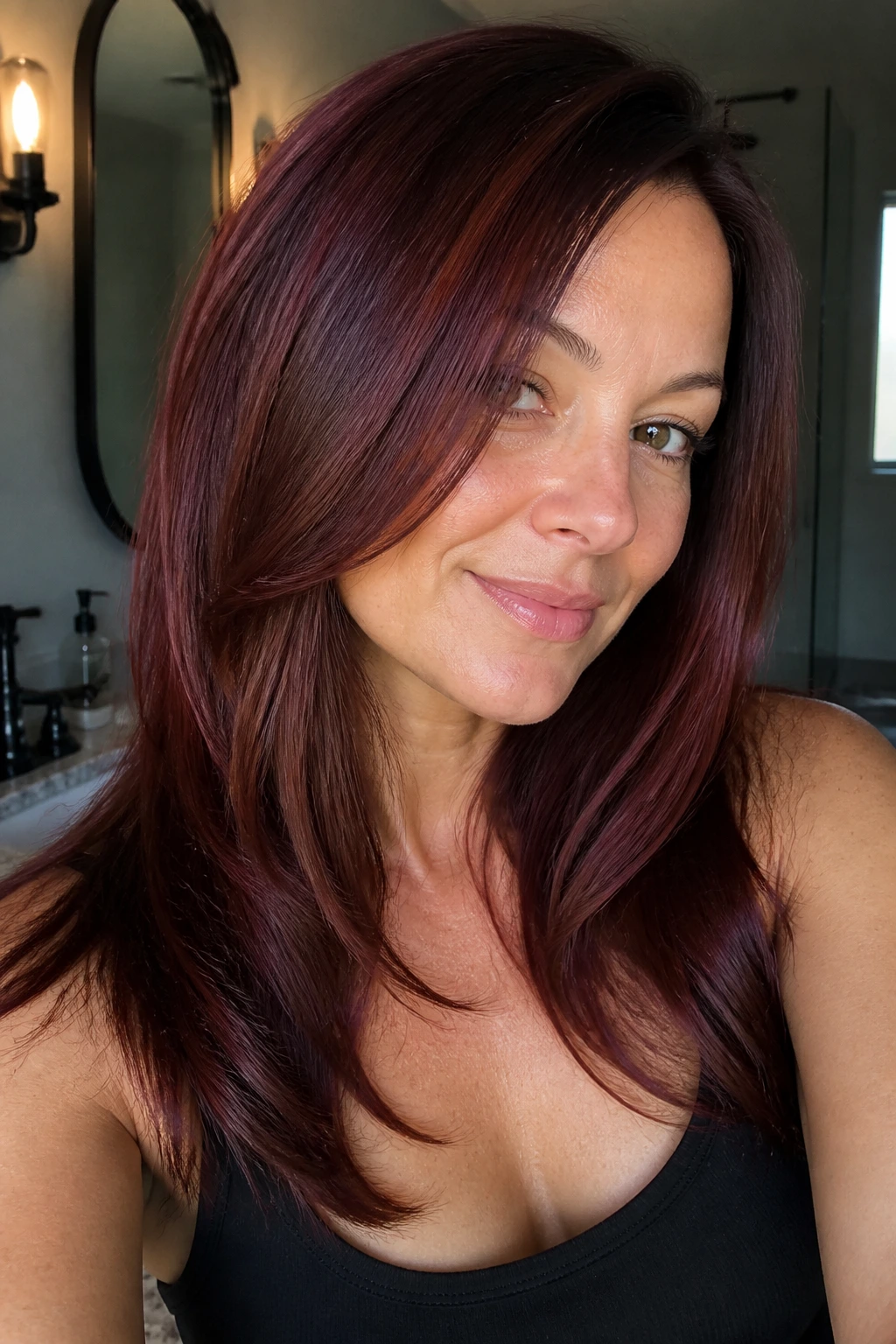
Not every red-brown needs a full recolor. Sometimes the hair just needs a gloss and a little patience.
A mahogany gloss refresh works especially well when old auburn or copper has gone dull, brassy, or washed out at the ends. Instead of repainting the whole head, you add a tinted gloss over the faded lengths and restore that dark red-brown shine. It takes less commitment, and on a round face it keeps the color from getting too loud around the cheeks.
I like this idea for people who already have a good shape and just want the tone cleaned up. The gloss makes the ends look healthier and moves the eye down the hair shaft. That’s a small thing, but it counts. Dry-looking red hair tends to puff outward; glossy red-brown hair falls better.
A clear gloss with a mahogany glaze, or a tinted one that leans red-brown, can both work. The exact choice depends on how much warmth you want to bring back.
19. Layered Mahogany Shag for Fuller Cheeks
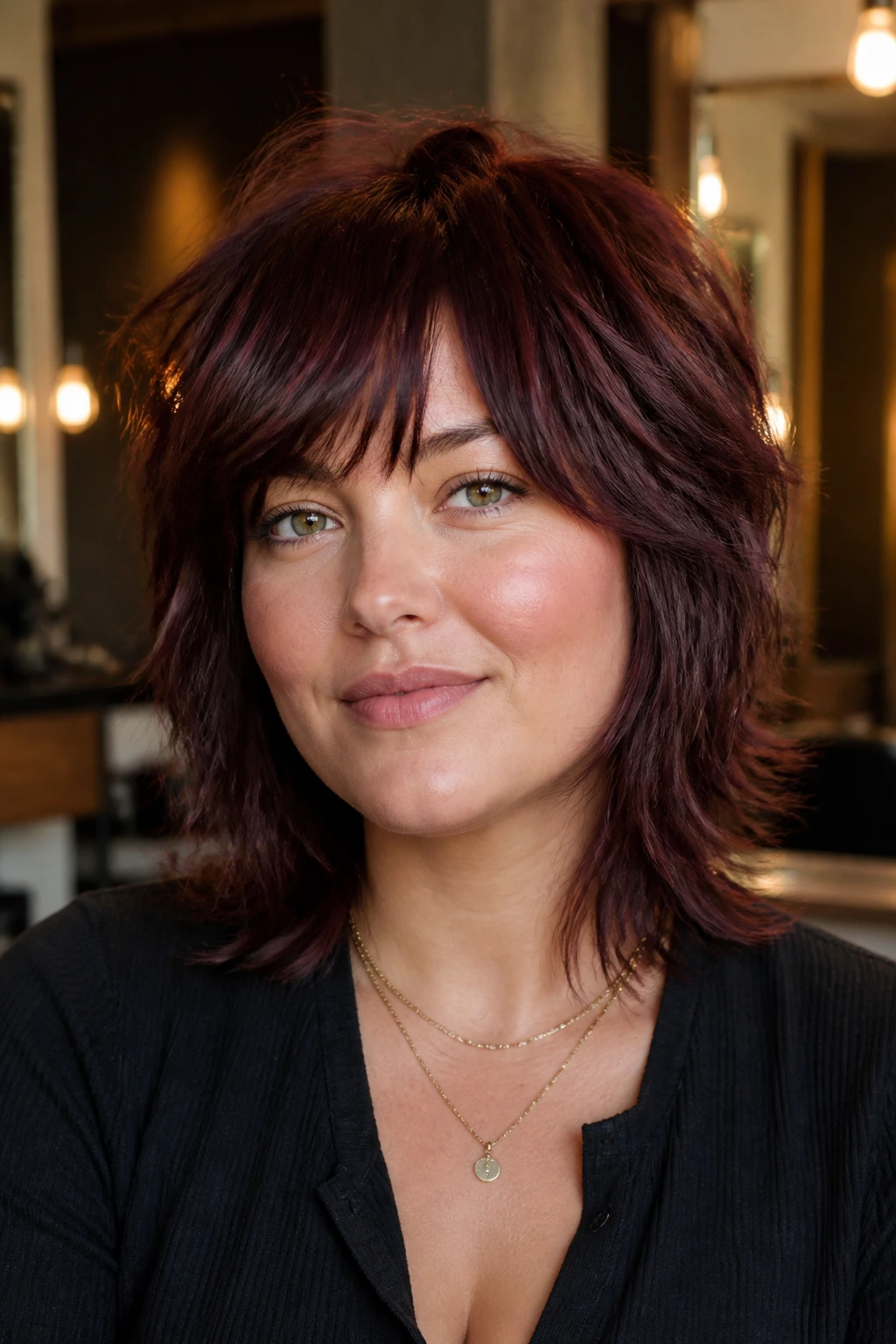
The shag has a messy reputation, but on a round face it can work when the layers are broken up with care.
A layered mahogany shag uses choppy movement to stop the hair from forming one circular outline around the face. The fringe stays wispy, the sides stay loose, and the ends kick out a little. That disorder is the point. It keeps the style from feeling heavy at the cheeks, which is where round faces can get overwhelmed.
What to ask your stylist
- Keep the shortest layers below the cheekbone.
- Let the fringe split or sweep instead of sitting straight across.
- Ask for texture through the ends, not massive bulk removal at the top.
- Keep the mahogany deep at the roots and a touch brighter at the tips.
This is a good one if you want red-brown hair with attitude. It looks relaxed, but not careless. And on thicker hair, the shag can take weight off fast without flattening the whole head.
20. Deep Mahogany Shadow Melt With Face-Softening Ends
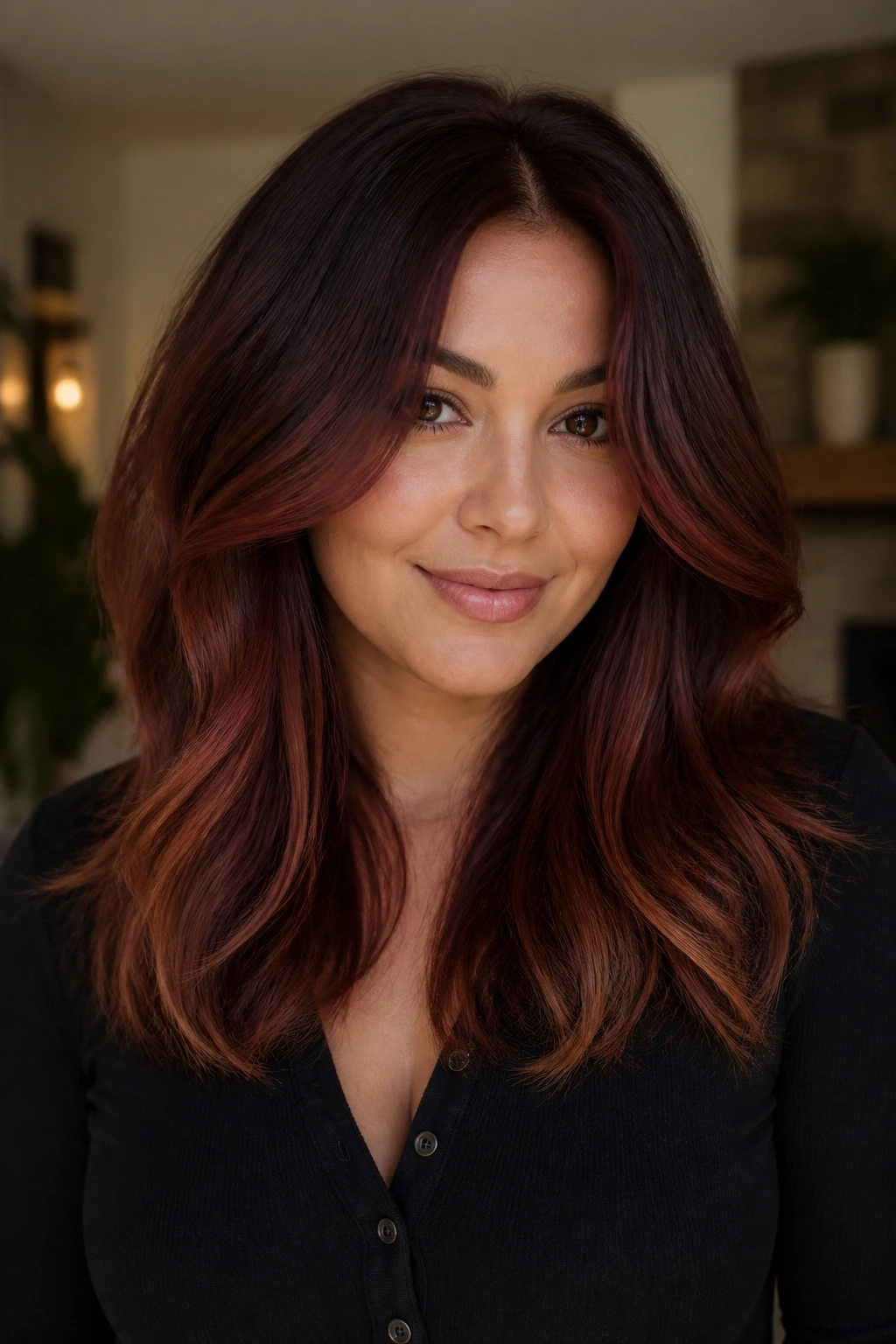
This is the one I’d pick if you want the safest grow-out and the strongest shape at the same time.
A deep mahogany shadow melt keeps the roots rich and dark, then softens the mids and ends into a red-brown gradient that never feels hard. On a round face, that dark top section gives lift, while the lighter ends keep the eye moving downward. The face reads a little longer, the hair feels a little looser, and the color stays useful even when it starts to fade.
Why it stays flattering
- The root depth keeps the crown from widening.
- The softer ends stop the hair from looking blocky at the jaw.
- The transition hides regrowth better than a solid red-brown.
- It works on straight, wavy, or curled hair, which is part of the reason I like it so much.
If you want mahogany hair color that looks rich, wears well, and does not fight a round face, this is a smart finish. It is calm without being dull. Hard to beat that.
