



Curly hair makes red look richer, louder, and a little less predictable than it does on straight hair. A coil catches light on the outside and holds shadow on the inside, so one shade can read as copper, auburn, and berry all in the same curl. That is part of the fun.
The best red hair color ideas for curly hair don’t force every spiral to look identical. They use placement: ribbons through the mids, a face frame at the front, deeper roots under the canopy, or a gloss that lets your own base keep doing some of the work. If you have ever seen a red color look flat on one head and alive on another, curl shape is usually the reason.
There is also the maintenance piece, and it matters more than people like to admit. Reds fade fast when they are too bright for the starting base, and curls can make fading look patchy if the color is laid on in heavy blocks. Softer coppers, auburns, cherry browns, and wine reds usually age better than candy-bright shades, especially when the haircut already has movement.
Pick the shade that fits the curl pattern first, then think about how bold you want the front pieces, the ends, or the whole head to be. Some of the ideas here are subtle enough for everyday wear. Others lean loud and gleam in the sun. All 30 rely on the same thing: curls give red a pulse.
1. Soft Copper Ribbons
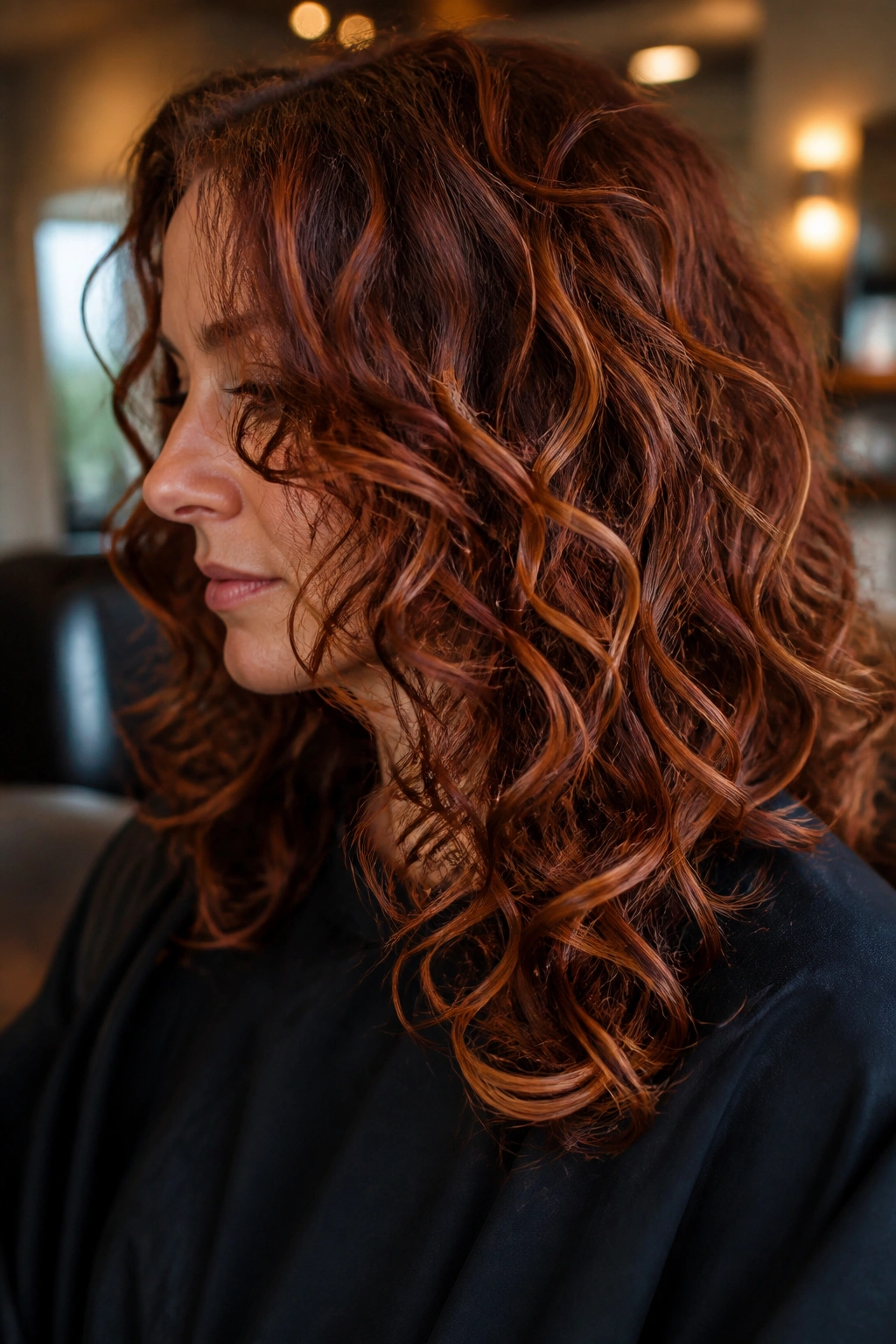
This is the red I recommend when you want movement before drama. Soft copper ribbons slip through curls instead of sitting on top of them, so the color looks hand-painted and airy rather than heavy.
It works best on loose ringlets, soft coils, or layered cuts where the curl pattern already has separation. Ask for very fine balayage pieces through the mids and ends, not chunky highlights from root to tip.
- Best starting base: Level 6 to 8 brunette or dark blonde.
- Salon ask: Fine copper ribbons with a sheer gloss.
- Maintenance: Refresh the gloss every 6 to 8 weeks.
- Watch for: If the copper pulls too gold, ask for a softer amber toner.
My favorite part: when a curl twists, the color flashes and then disappears again. That little flicker keeps the whole head from looking painted.
2. Cinnamon Auburn Balayage
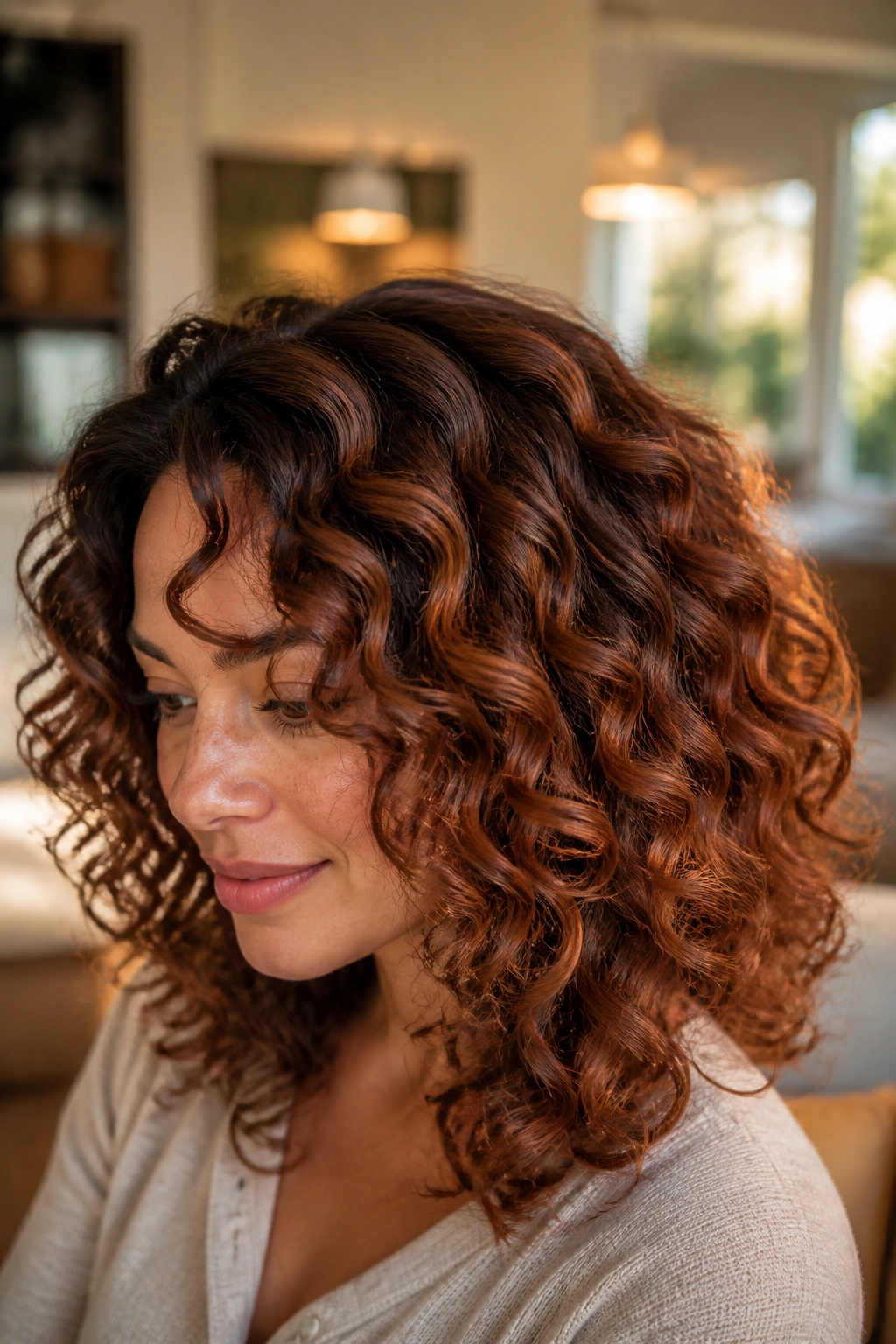
Want a red that grows out without a harsh line? Cinnamon auburn balayage is one of the easiest places to start. The cinnamon brings warmth, while the auburn keeps the whole look grounded and wearable.
On curls, balayage has a nice advantage: it follows the bend of the hair instead of fighting it. That makes the color look fuller at the crown and softer through the ends, which is exactly where curly hair tends to hold the most visual weight.
A root shadow helps here. Not a thick one, either — just enough depth so the red doesn’t start screaming from the scalp down.
3. Cherry Cola Ringlets
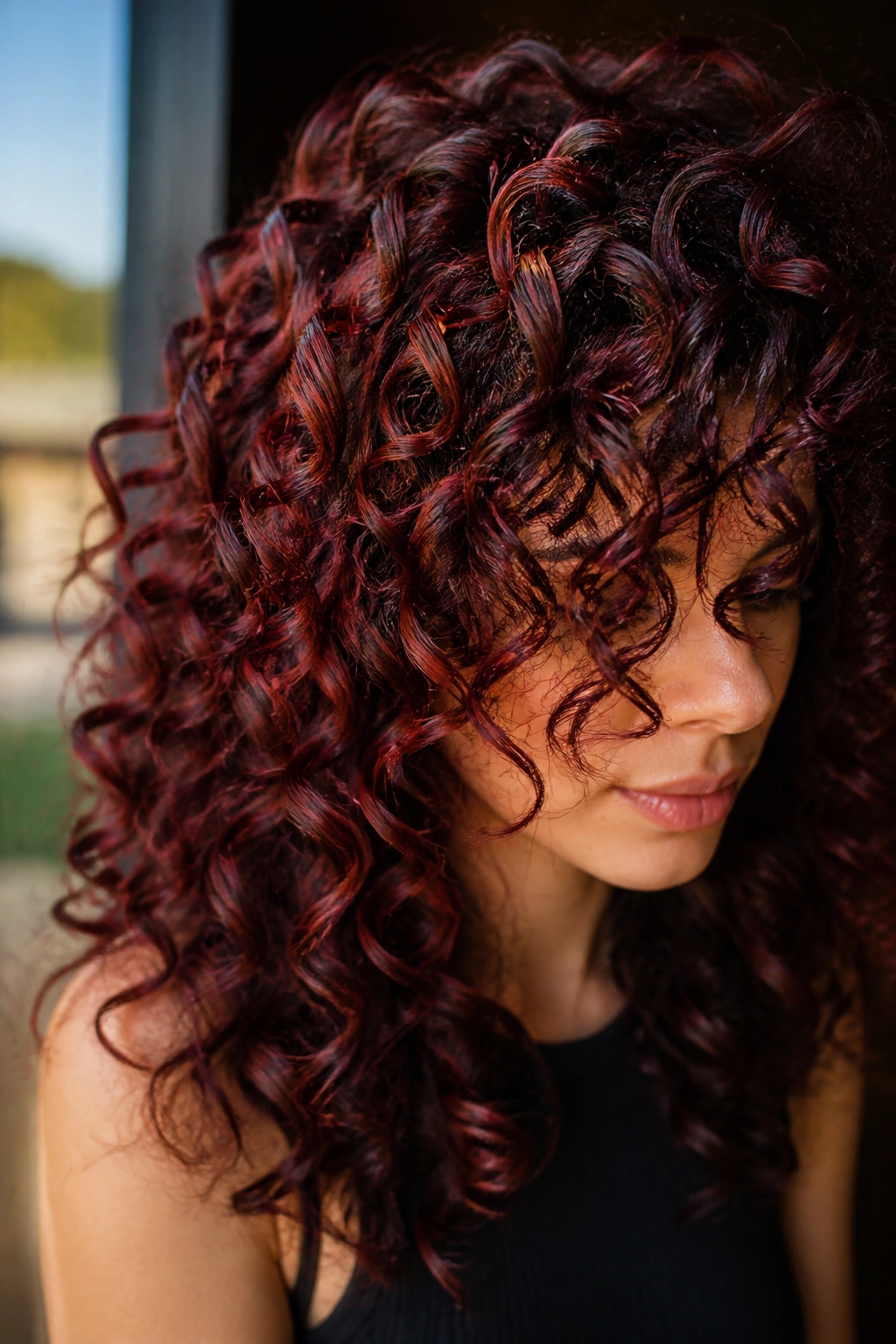
In shade, this one looks like dark chocolate. In sun, the cherry comes up fast. That contrast is why cherry cola tones work so well on ringlets and tighter spirals.
The trick is keeping the base dark enough that the red feels plush, not bright in a flat way. A level 4 or 5 brunette base with cherry-toned gloss on top gives you that moody look without turning the hair into one flat block of color.
It’s a sneaky color. People notice the shine before they notice the red, and that is often the nicest kind of compliment.
4. Ginger Money Piece
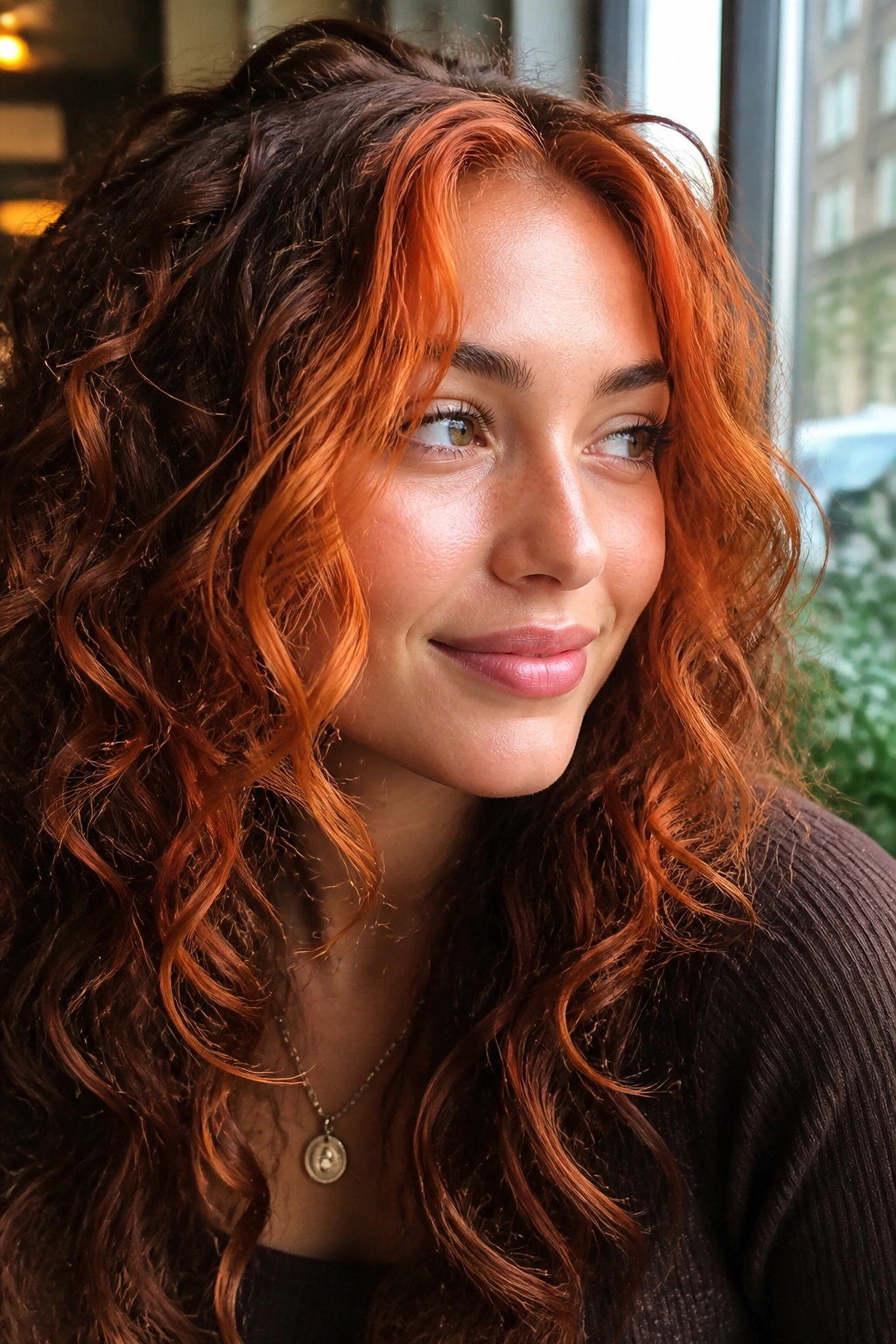
A bright ginger money piece sounds bold, and it is, but the rest of the head can stay calm. That’s the part people forget. You do not need to go full copper everywhere to get impact.
What to ask for at the chair
Ask for ginger framing around the face, then keep the mids and ends a little deeper. On curls, the front section moves first, so the color hits fast when you turn your head or wear your hair in a puff.
Use this if you like a high-contrast look but still want the back to feel low-key. It’s especially good for curly bobs, shags, and shoulder-length cuts where the front pieces can actually show shape.
5. Rusty Red Melt
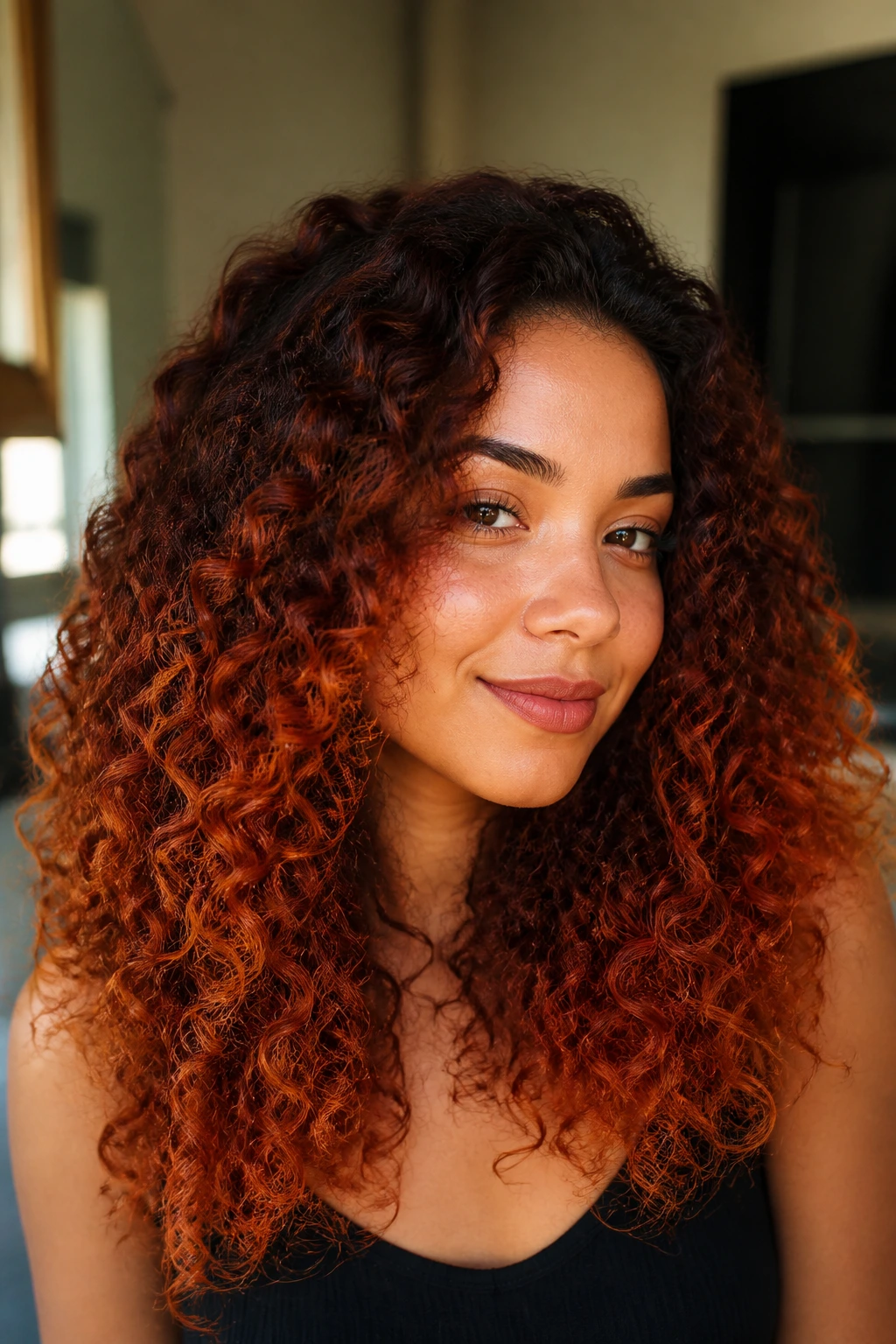
A rusty red melt feels earthy in a good way. Not muddy. Earthy. The base stays brown or deep auburn near the roots, then the red warms up as it moves toward the ends, almost like the color got roasted a little.
That melt effect matters on thicker curls because dense hair can swallow fine highlights. A deeper root zone gives the eye somewhere to rest, and the warmer ends keep the whole style from reading too dark.
This is the kind of red I’d pick for someone who likes rich color but hates harsh maintenance lines. The grow-out is softer, and the curl pattern does a lot of the work for you.
6. Strawberry Copper Bob
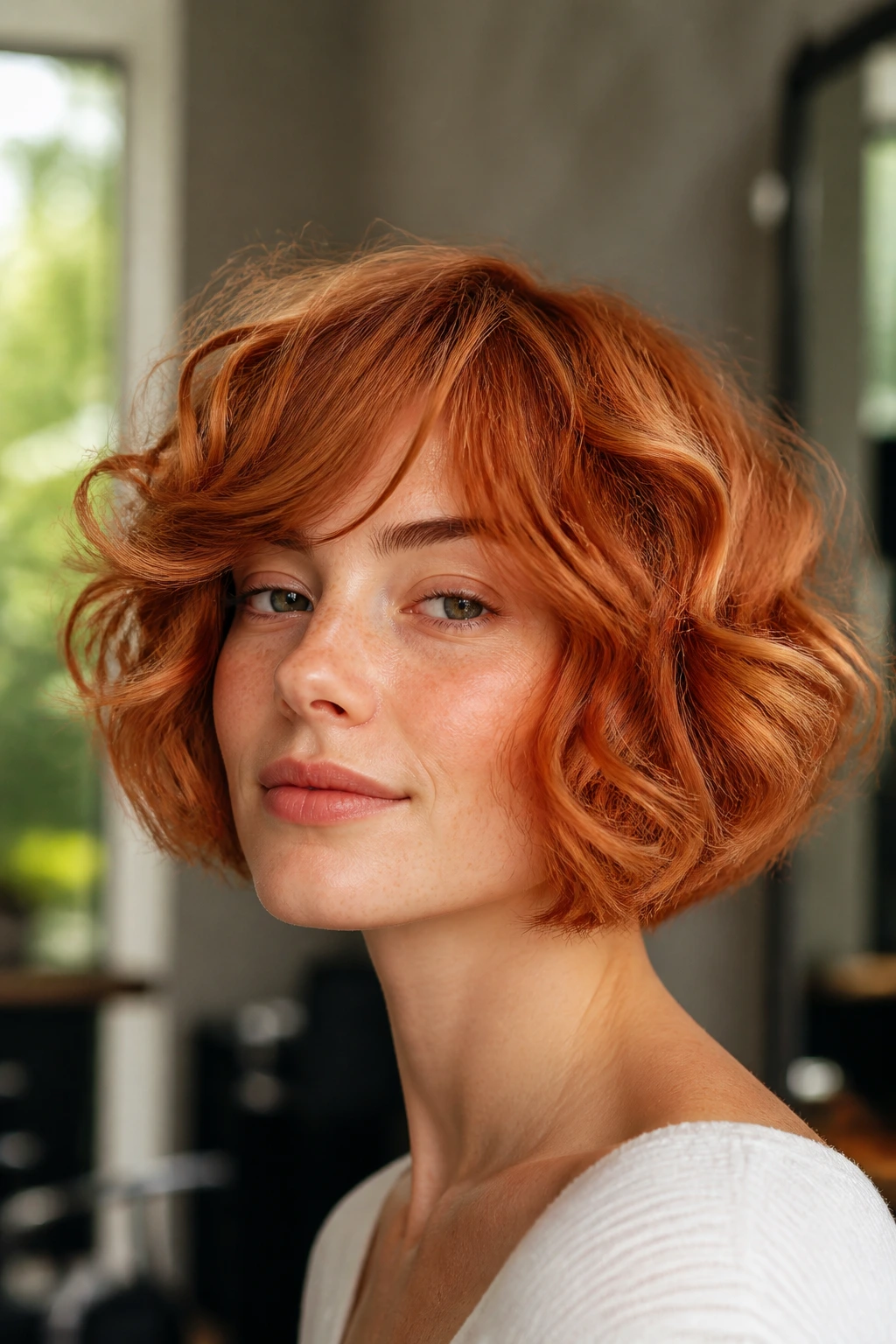
Short curls are where strawberry copper gets interesting. On a bob, there’s less length to hide behind, so the color shows immediately — but the curl pattern keeps it from feeling too neat or precious.
A strawberry copper bob works best when the shade sits between peach and true copper. Too pink, and it can look cosmetic. Too orange, and it loses that soft shine that makes the cut feel fresh.
If you wear your curls in a rounded shape, keep the color slightly deeper underneath and brighter on the outer layer. That gives the bob a little lift without making every strand fight for attention.
7. Deep Mahogany Curls
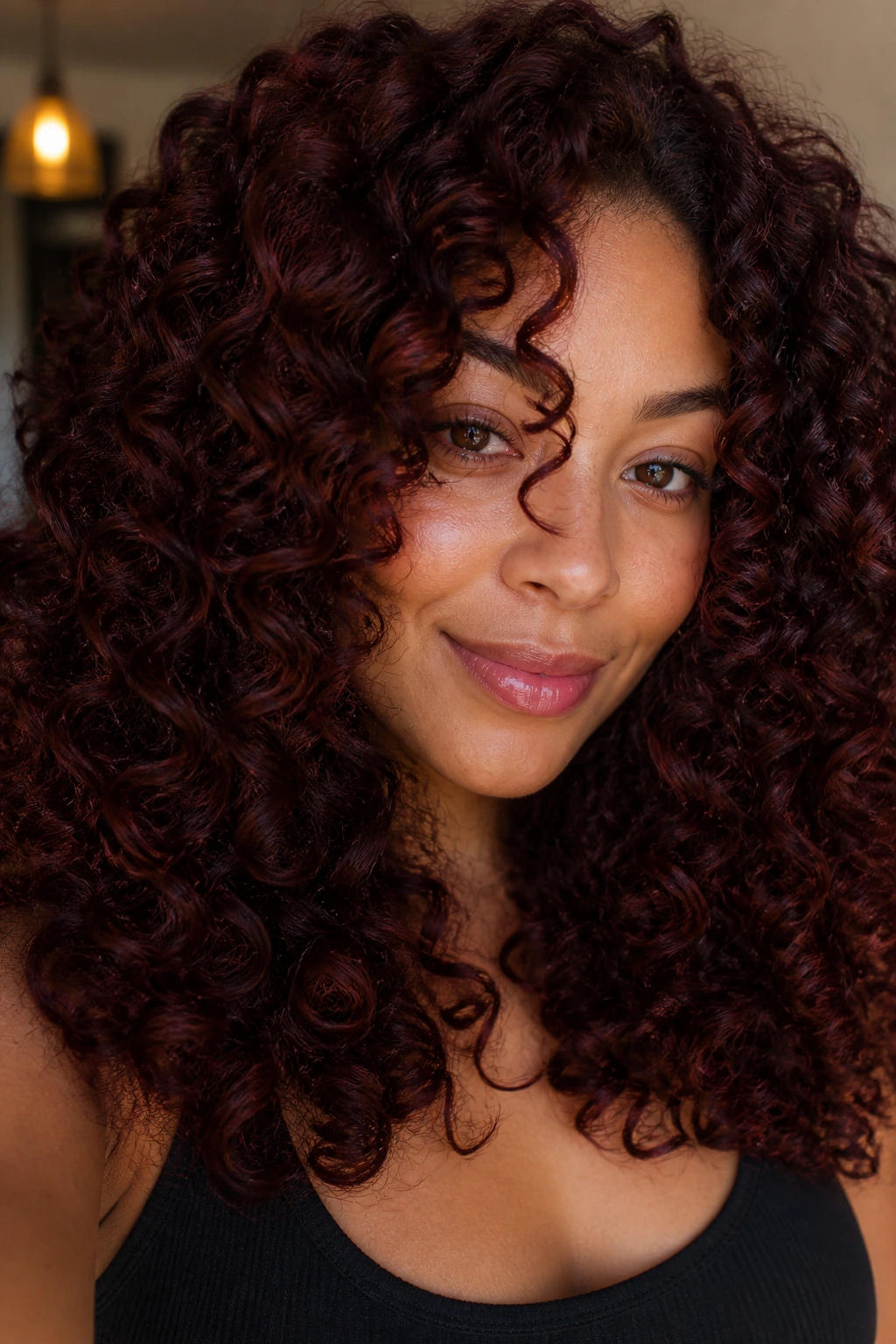
Deep mahogany is the quiet one in the red family. It’s red, yes, but the brown base keeps it from shouting. That’s exactly why it looks so good on dark curls.
Why it flatters darker bases
Mahogany doesn’t need a lot of lift to show up, which means you can protect some hair integrity while still getting a red result. The color reads as wine, brown, and red depending on light, and curls make those shifts even more obvious.
- Best for: dark brown to black curls.
- Tone: red-brown with a wine edge.
- Maintenance: gloss every 6 to 8 weeks.
- Style note: looks especially good on twist-outs and stretched curls.
If you like depth more than brightness, this is one of the safest bets.
8. Ruby Red Ombré
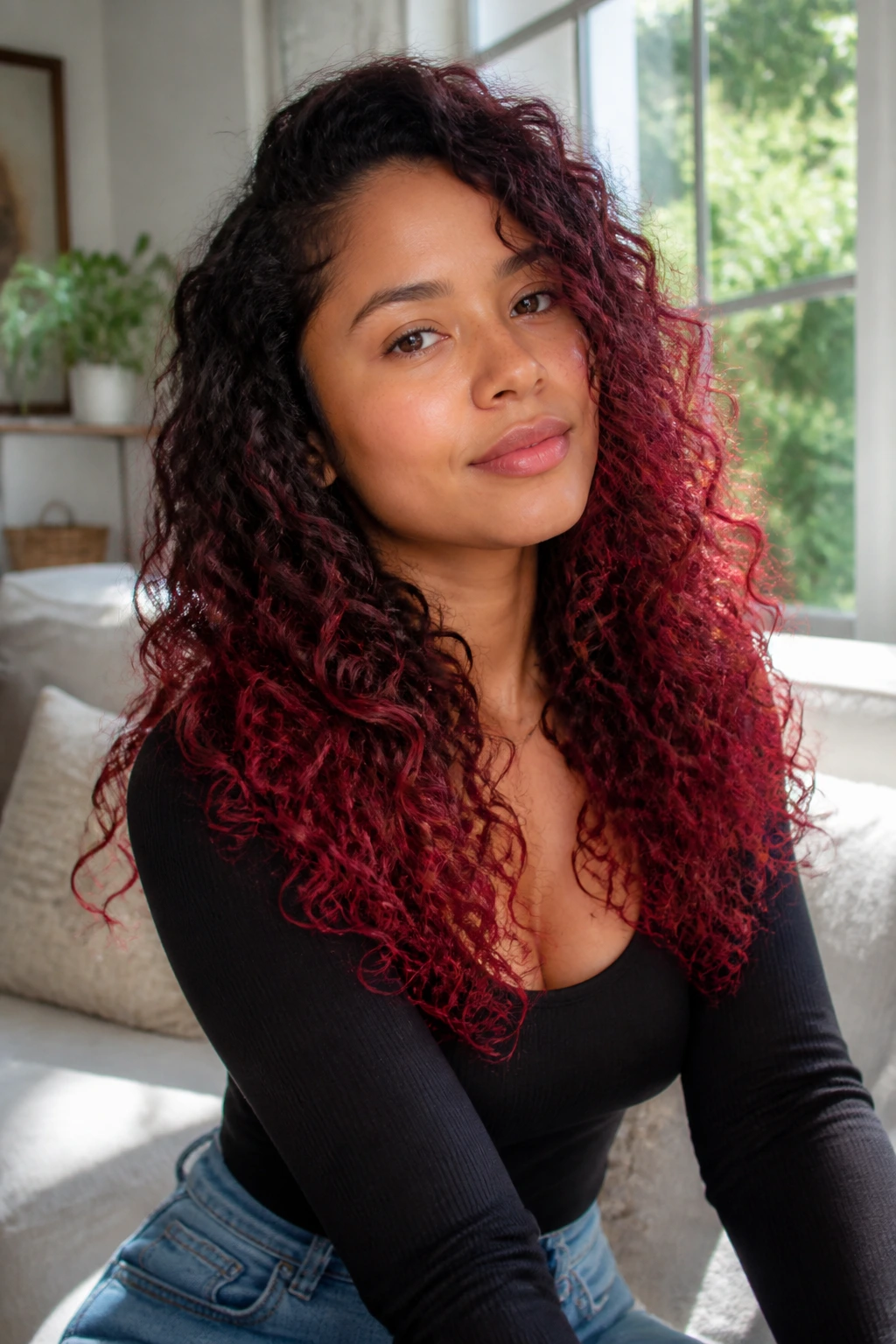
The ends glow first. That’s the whole appeal of ruby red ombré on curls. You keep the roots darker, then let the ruby intensify as it drops through the length, so the color feels like it was pulled through the hair rather than painted on.
Long curls make this look easier to read. There’s enough surface area for the transition to show, and every spiral exposes a little more of the red as it swings.
A soft ombré line is better than a hard one here. Sharp color changes can look chopped up once the curls shrink.
9. Spiced Auburn Afro
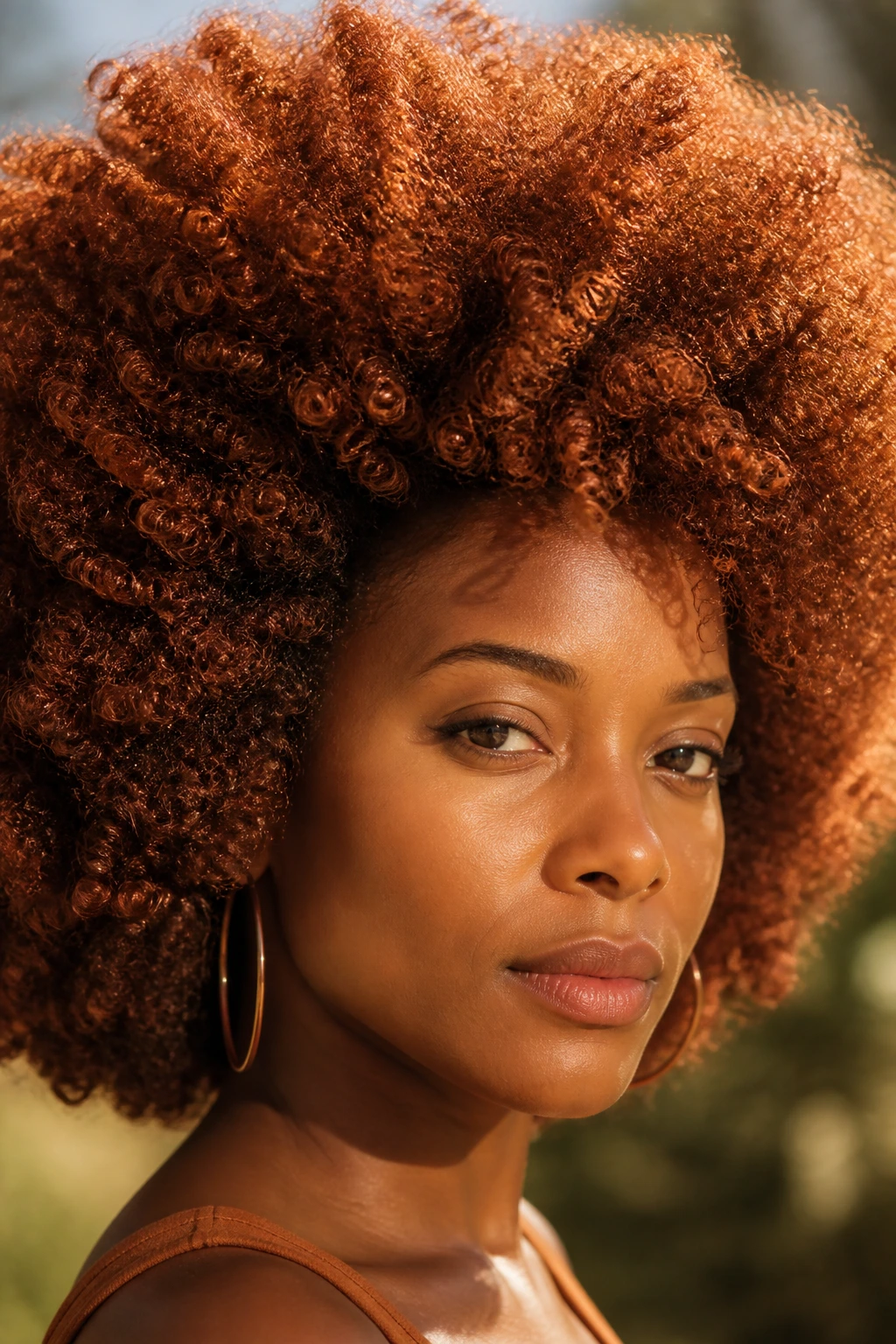
If your hair is dense and beautifully shaped, spiced auburn can read plush rather than loud. That’s the real win. The color warms the silhouette without flattening the volume, which is a mistake I see all the time with too-bright reds.
On an afro, the tone has to do a lot of work in the interior of the shape, not just the surface. Spiced auburn handles that well because it stays rich in shade and glows at the edges.
Keep the finish soft. A shiny gloss can be nice, but a harsh metallic red can make the texture look stiff. You want warmth, not costume.
10. Copper Penny Highlights
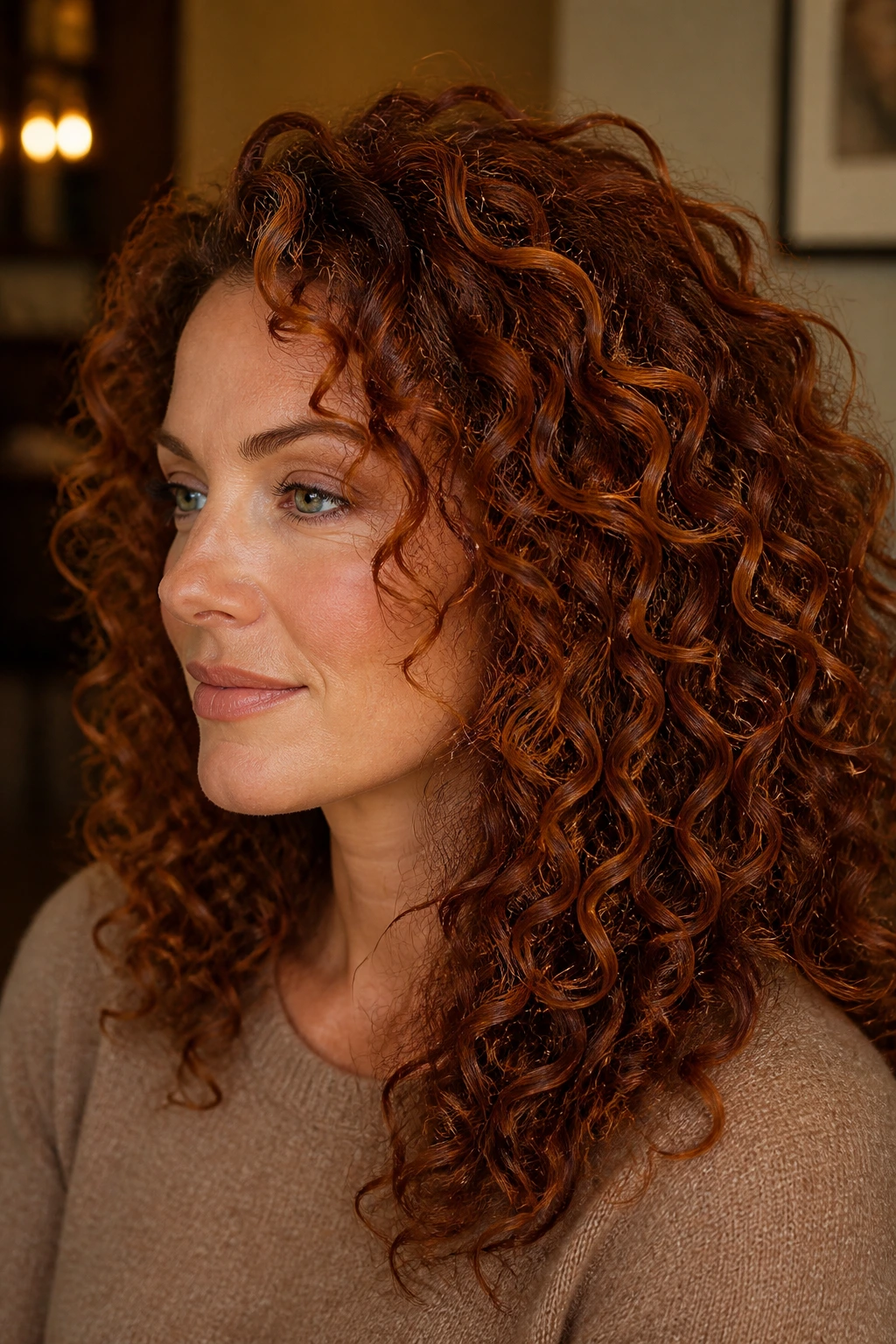
If you want red without a full-color commitment, this is the easiest place to start. Copper penny highlights give curls little flashes of brightness instead of wrapping the whole head in one strong tone.
The best version uses thin highlights painted through the outer curls and a few well-placed pieces around the crown. That lets the curls move, and movement is half the point. Without it, copper can go flat in a hurry.
This idea is especially smart for people who like to wear their hair natural most days. The highlights still show up in a bun, a puff, or a wash-and-go, which makes the color feel useful, not fussy.
11. Burgundy Curly Layers
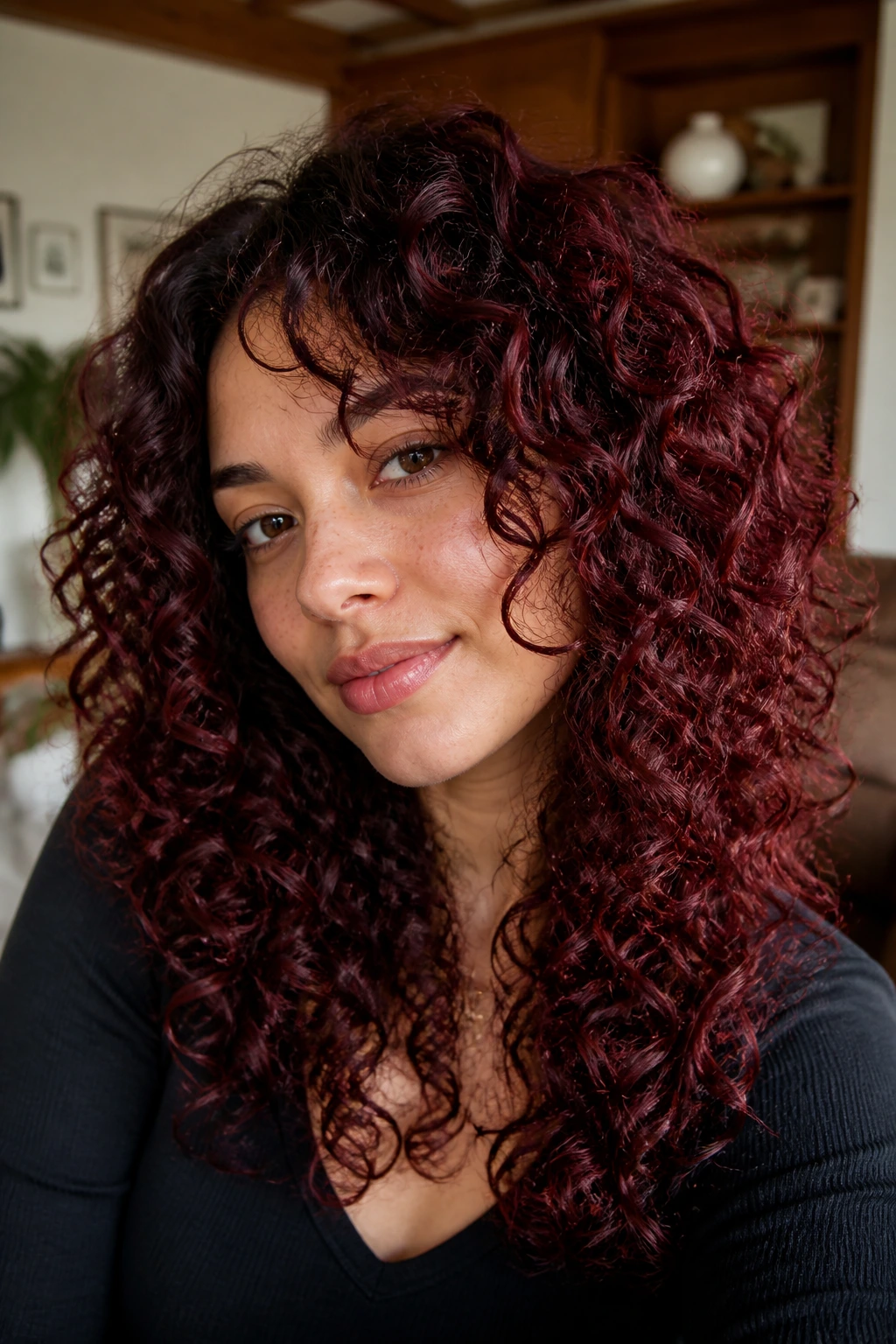
Burgundy curls have a deeper, cooler feel than copper, and that changes the mood completely. They look more velvet than flame.
How to wear it
Layered cuts are the sweet spot here. Burgundy loves pieces that can separate, because the darker red-violet shade needs movement to keep from looking like one heavy block. On curls, that separation happens naturally if the haircut is shaped well.
A little shine serum on the ends helps, but don’t drown the hair. The color already has a rich look. Too much product can make the red go dark and greasy instead of plush.
12. Burnt Orange Spiral Glow
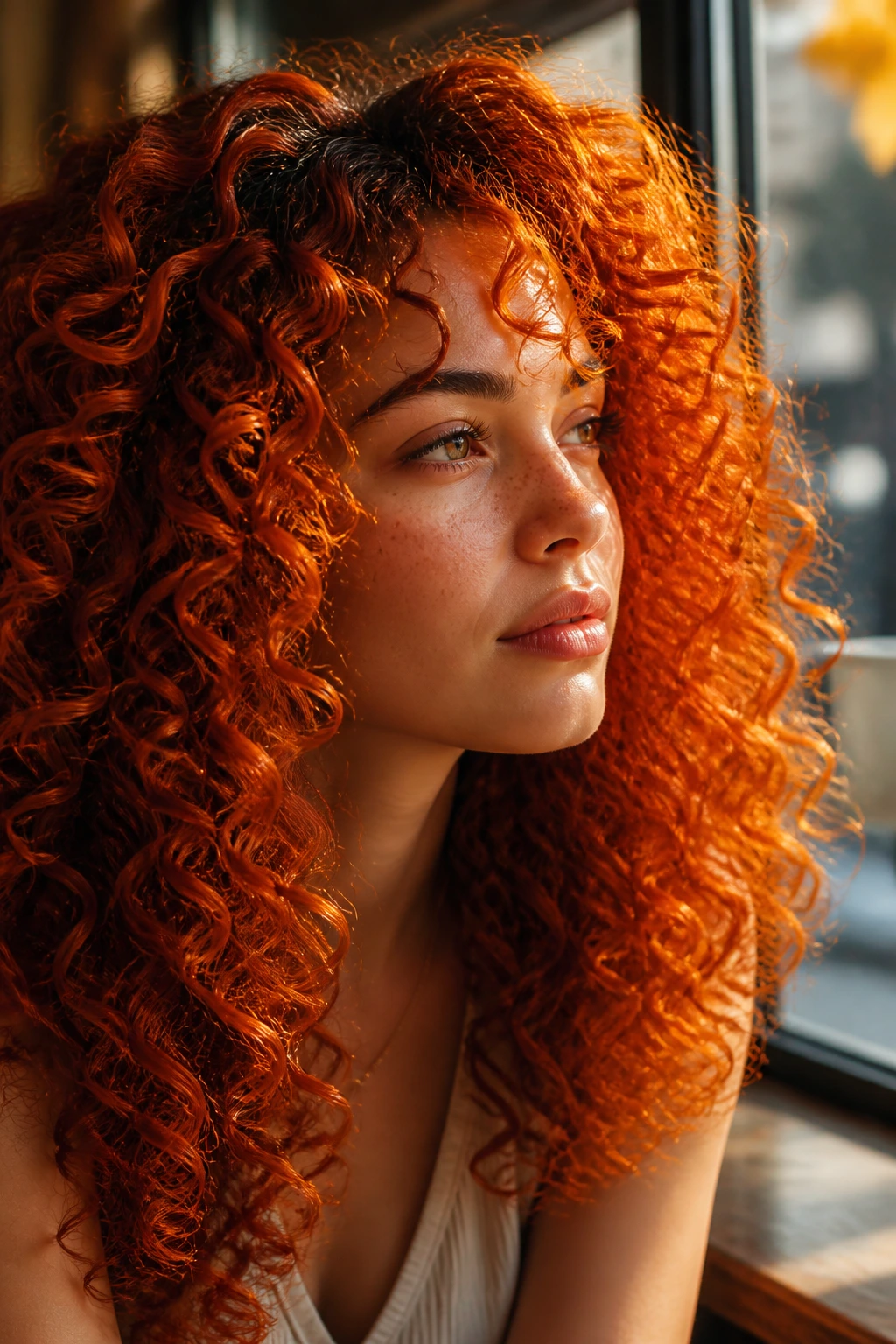
Why does burnt orange work so well on curls? Because the shape softens the heat. Straight hair can make orange look louder than intended, but spirals break it up and give it dimension.
This tone is brighter than auburn and earthier than true copper. That middle ground is what makes it wearable. If you want something with energy but not neon intensity, burnt orange sits in a nice spot.
It works best when the color is brighter on the outside layer and slightly deeper underneath. You get the glow without losing the shadow that keeps curly hair interesting.
13. Rosewood Red Waves
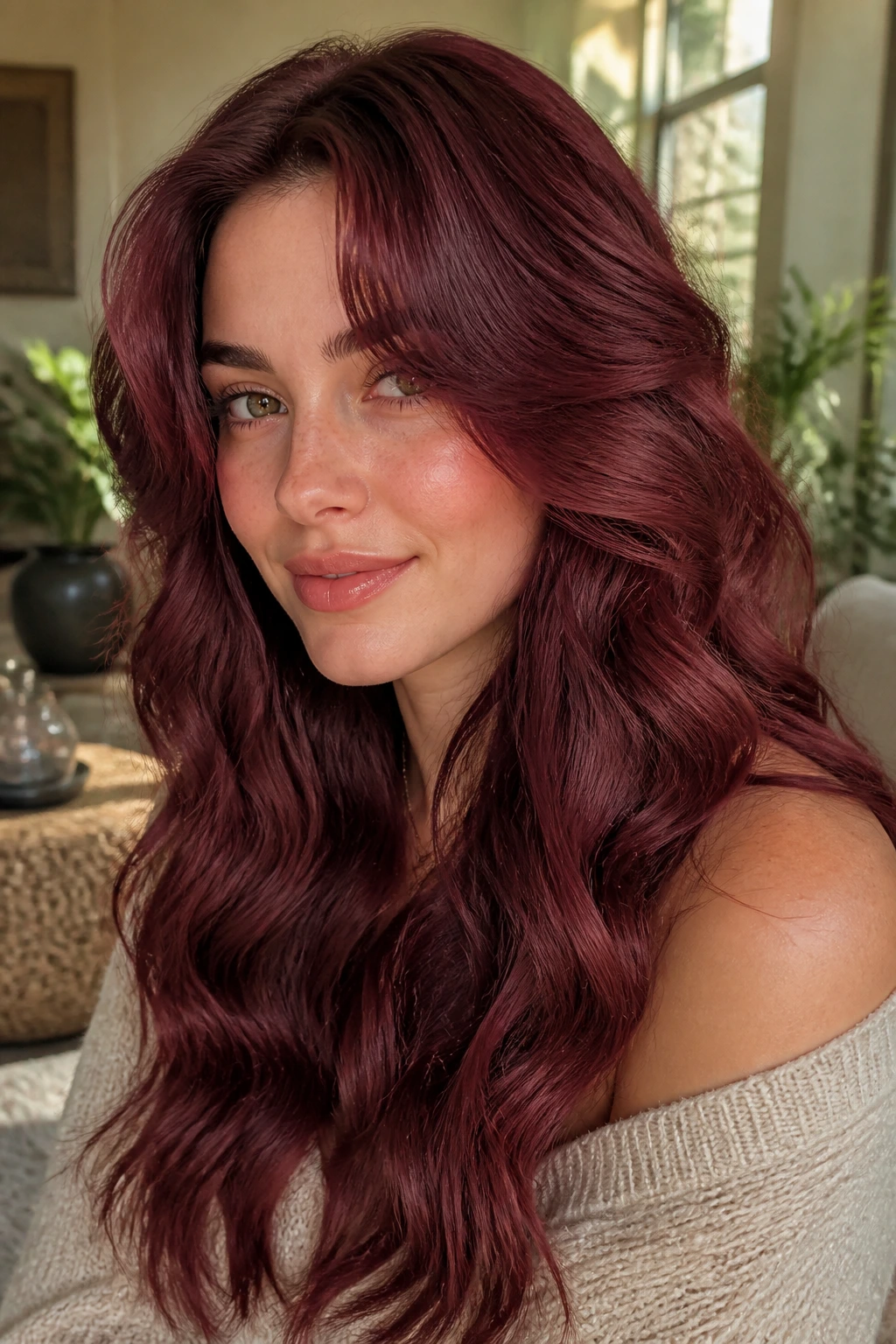
Rosewood red is one of those shades that looks expensive in a quiet way. Not flashy. Just rich. The brown-rose mix feels softer than cherry or ruby, and waves give it room to breathe.
A mid-length curly cut can be a sweet spot for this color. The wave pattern shows the rose tone, while the deeper red keeps it from going pastel or washed out. If your natural base is medium brown, the grow-out can look especially smooth.
What makes it different
It sits between red and mauve, so it flatters people who want warmth without going full copper. That also means it can shift a little depending on light — indoor lighting pulls it deeper, daylight gives it a rosy edge.
14. Saffron Copper Fringe
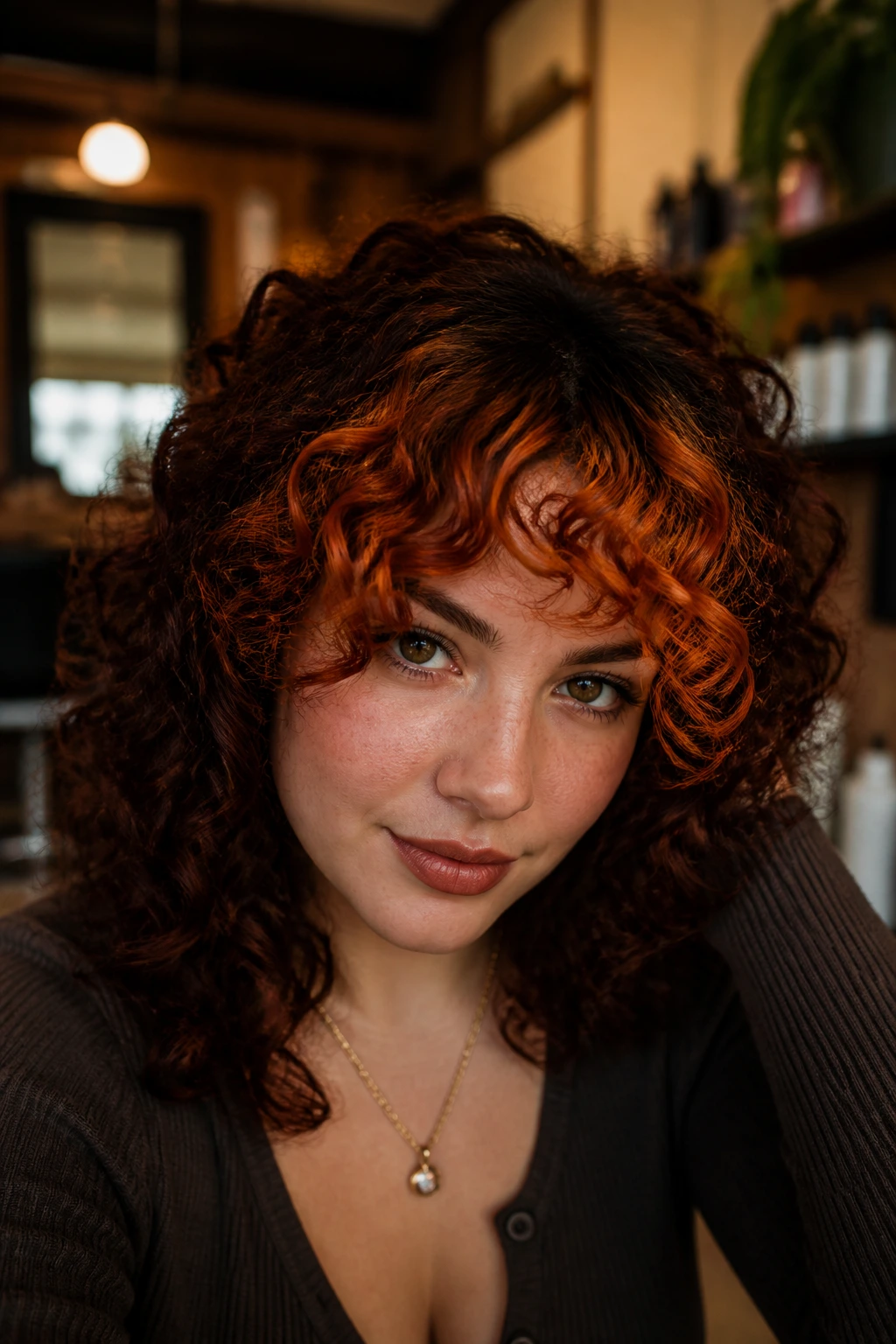
The fringe does most of the talking here. Saffron copper on the front pieces and bangs can completely change how a curly cut reads, even if the rest of the hair stays darker.
That makes it useful for people who want a noticeable red but don’t want to color every strand. The front curls frame the face first, so a warm saffron tone gets seen fast. It also plays well with curly shags, where the fringe already has a loose, piecey shape.
Keep the rest of the hair a half-step deeper. If everything is equally bright, the style loses focus.
15. Mulled Wine Shag
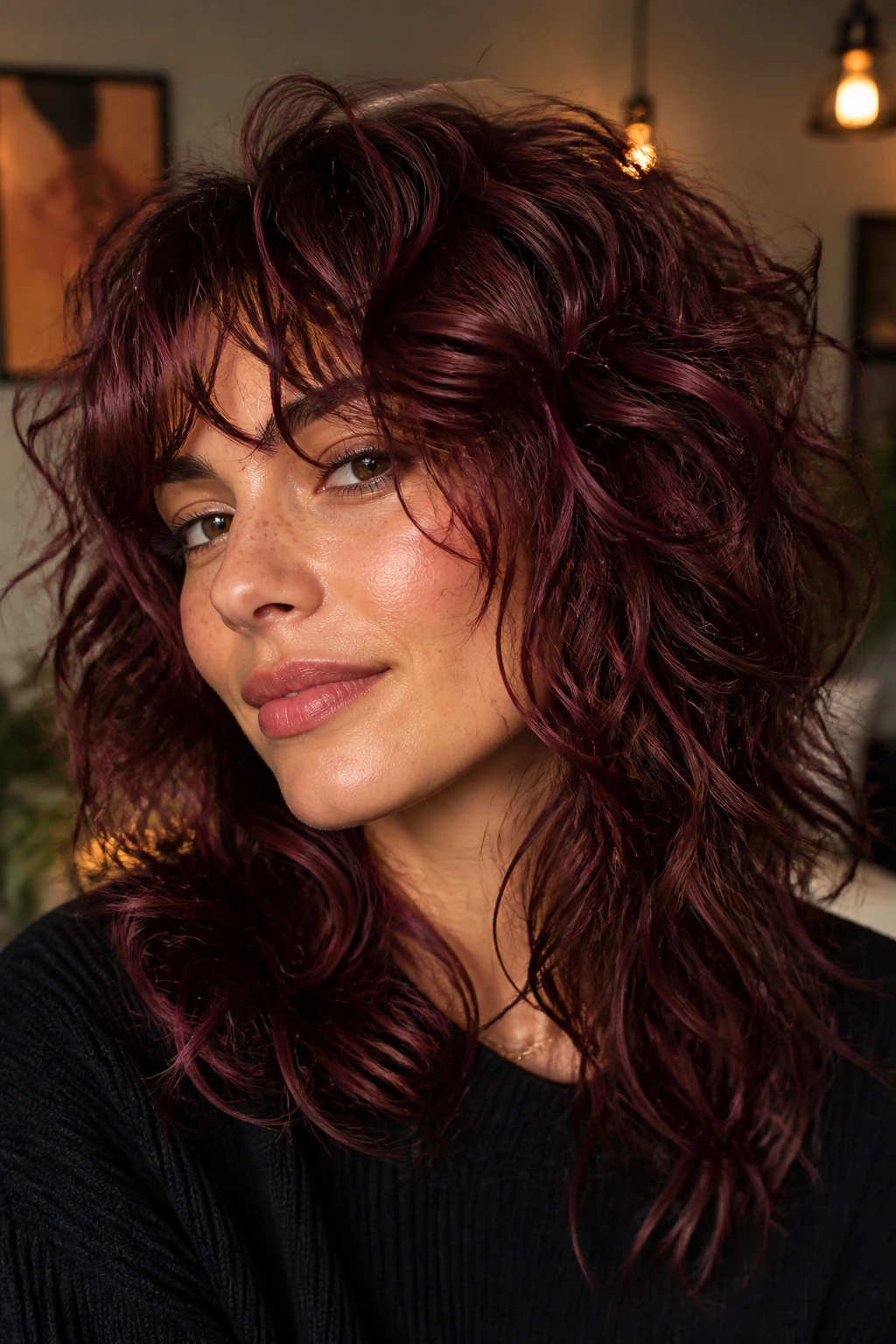
A shag and a red-violet tone are a good match. The shag gives you uneven movement, and mulled wine gives that movement some depth. Put them together and the cut looks intentional in the best way.
This shade usually sits in the burgundy family, but with a brown base that keeps it from going too purple. It is a nice choice for people who want a dramatic red that still feels wearable at brunch, at work, or wherever you need the color to behave.
The pieces around the face can be a touch brighter. That keeps the style from disappearing into one dark mass when the curls dry down.
16. Apricot-Red Curly Pixie
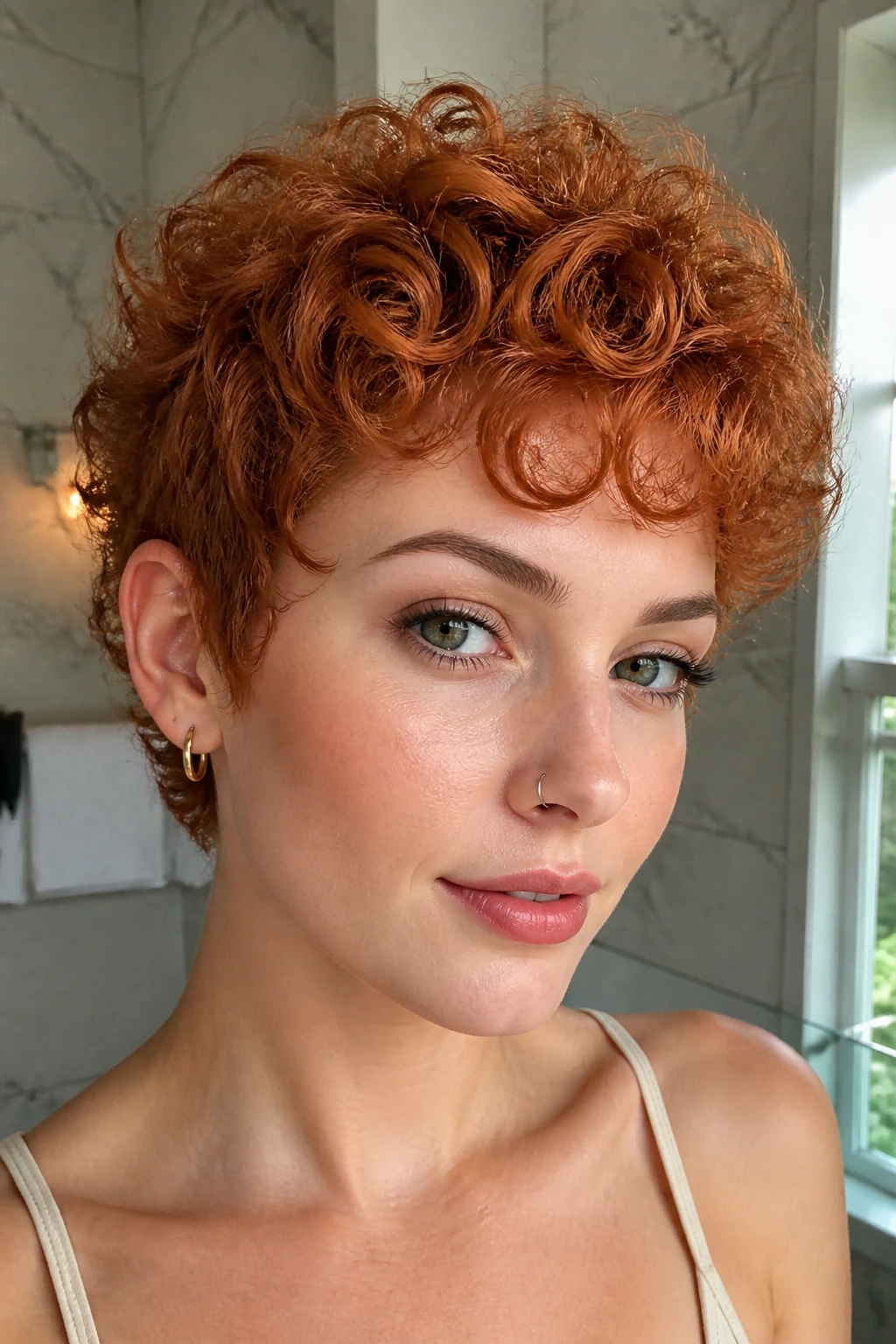
Short curls and apricot-red make a very lively pair. The color brings softness, while the cut gives the face shape. You get both at once, which is why this one works so well on pixies and cropped coils.
Styling note
Keep the apricot tone gentle. Too much orange and the cut starts to feel harsh. A peach-red balance feels lighter, especially when the curls are tiny and close to the head.
The beauty of a pixie is that the color is visible from every angle. That means even a subtle gloss can matter a lot. A clean curl shape and a warm tint can do more than a louder shade on a bigger cut.
17. Scarlet Face Frame
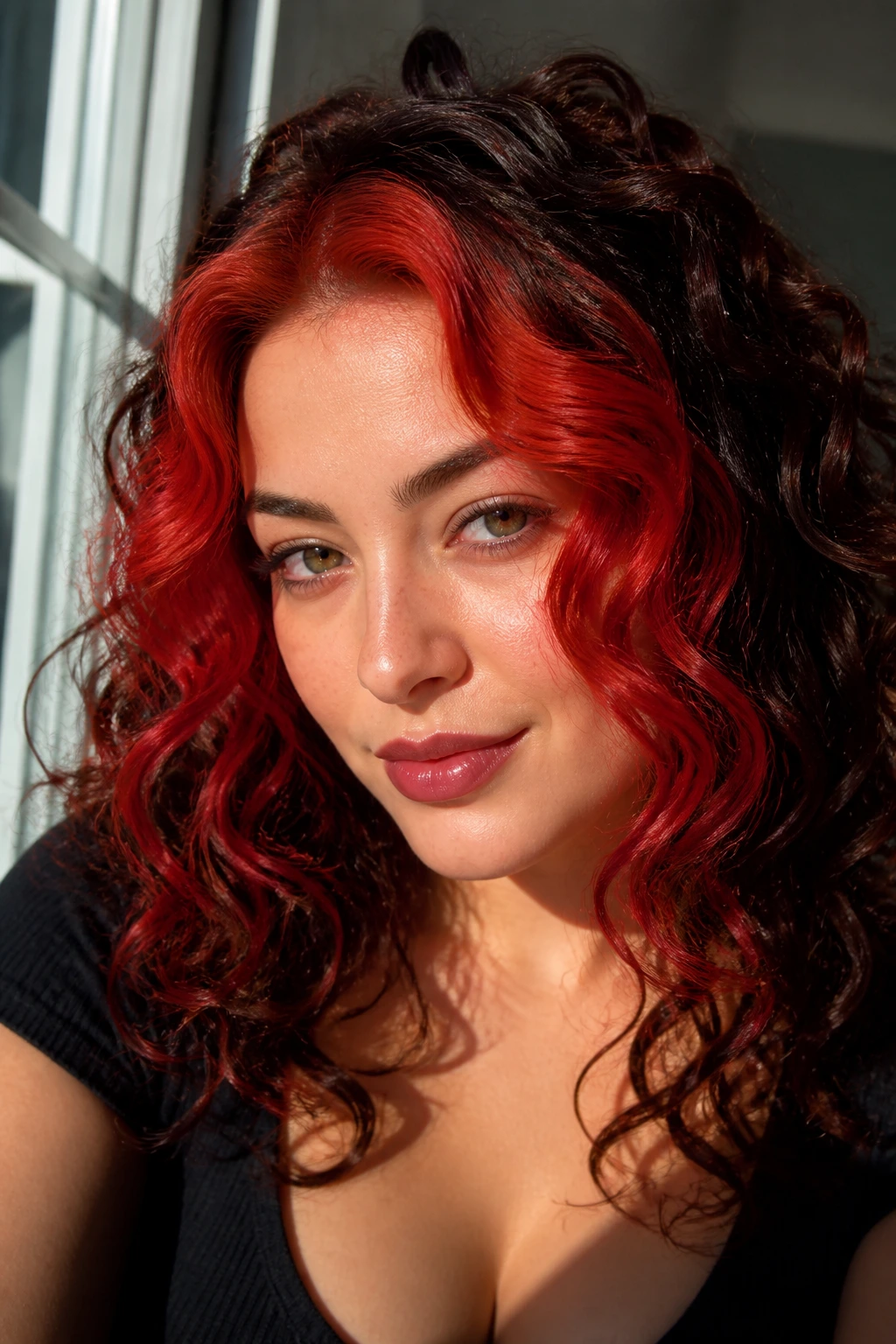
A scarlet face frame is not shy, and that is the point. You keep the rest of the hair darker, then place bright scarlet where the curls fall around the cheeks and forehead.
That contrast gives you a lot of impact without dyeing the whole head a high-intensity red. It also looks good when curls are tucked behind the ears, pulled into a half-up style, or fluffed out with a pick. The color keeps showing up in the places people actually look first.
If you want the front pieces to stay crisp, ask for a gloss that leans red rather than orange. Scarlet looks sharp when the tone is clean.
18. Desert Rose Curls
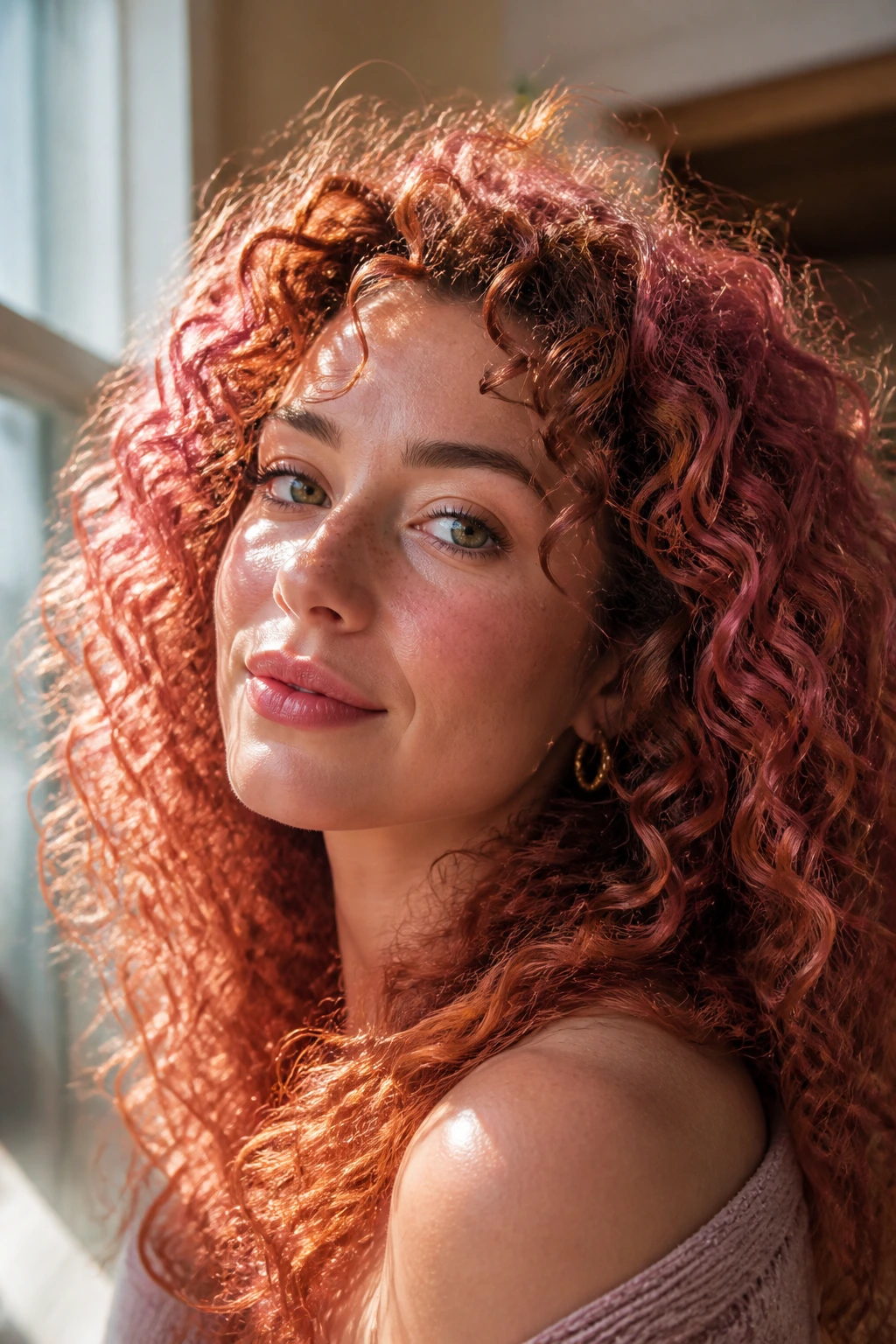
Desert rose is softer than it sounds. The color sits in that dusty pink-copper range, which means curls can make it feel romantic instead of sugary.
This is a nice choice if you like red but don’t want your hair to read as high-maintenance. The tone is muted enough that root regrowth doesn’t jump out, and the curls give it a little lift so it doesn’t fade into beige.
One thing I like about desert rose is that it behaves differently across the head. Outer curls show the rosy side, while the denser interior reads more copper-brown. That makes the whole style feel lived-in from day one.
19. Black Cherry Shadow Root
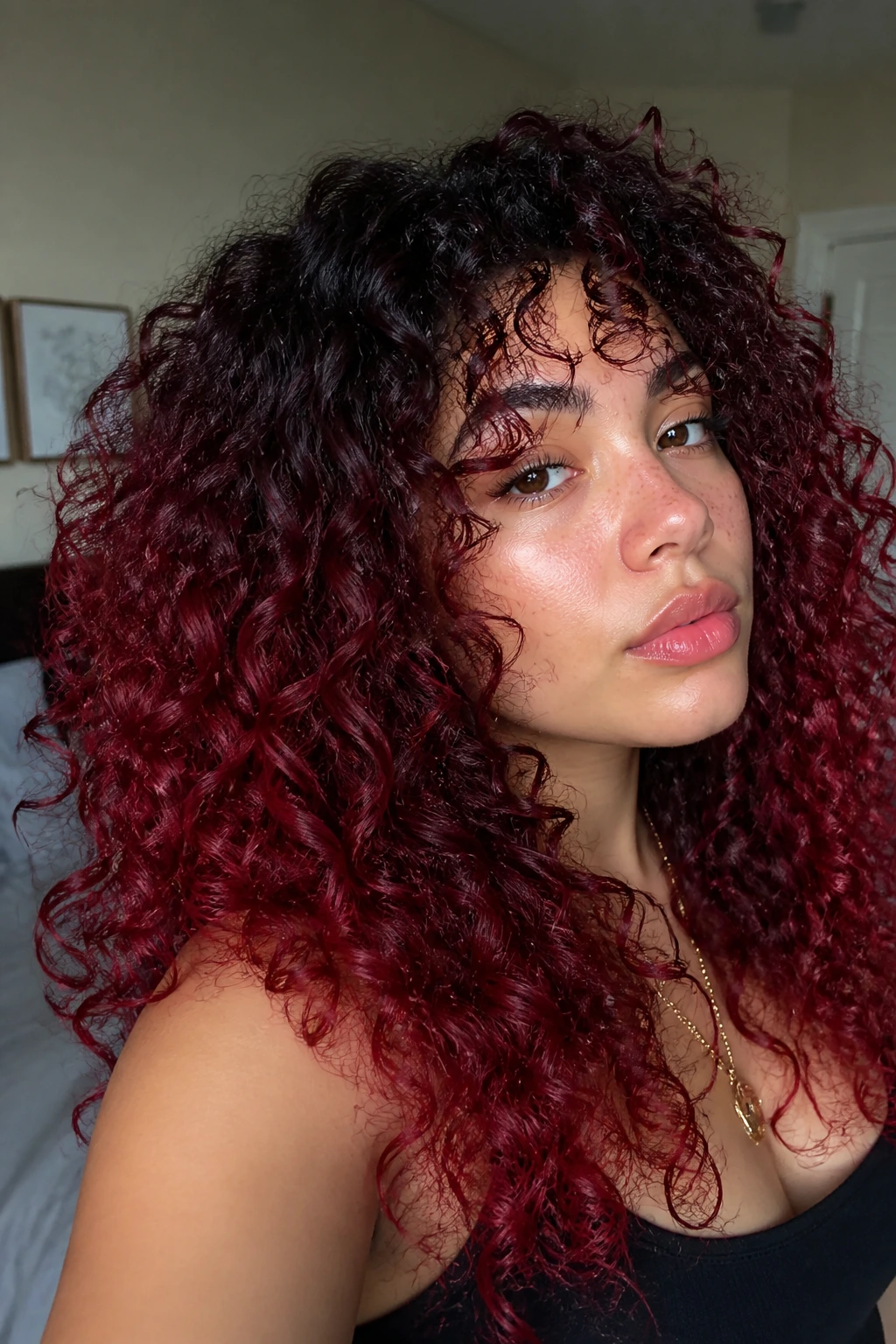
Black cherry with a shadow root is the low-maintenance answer for people who still want depth and shine. The root zone stays dark, then the cherry tone appears lower down where the curls move the most.
Why this works
It gives the eye contrast without demanding that every inch be lifted light. That matters if your hair is dark and you’d rather not push it through a long bleaching process. The shadow root also makes the red fade more gracefully, which is not a small thing.
- Root area: deep brown or black.
- Mid-lengths: dark cherry gloss.
- Ends: slightly brighter red for movement.
- Best cut: layered curls with some separation.
This one feels polished without looking overdone. Good, because curly hair can carry it.
20. Maple Copper Layers
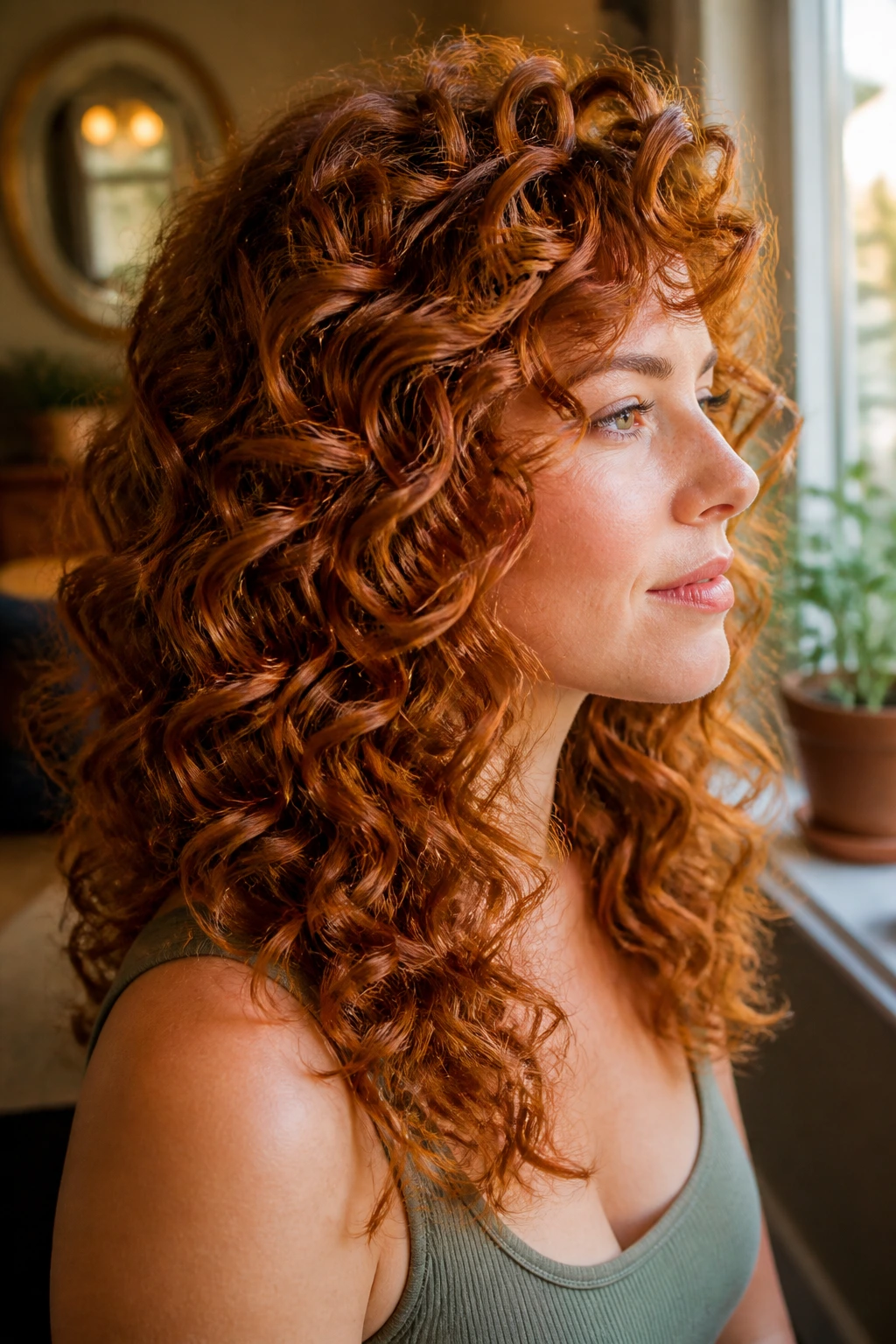
Maple copper has a warmer, slightly golden feel than pure copper. On layered curls, that warmth can look almost woven through the hair, especially when the layers are cut to spring away from each other.
The shape matters here. Layers create shelves for light to sit on, and red tones love that. A one-length cut can still work, but the color gets more interesting once the hair has a little structure.
If your natural color is medium brown, this shade can be a nice bridge into red. It isn’t so bright that the shift feels shocking, but it is still clearly red when the light hits.
21. Ember Red Ends
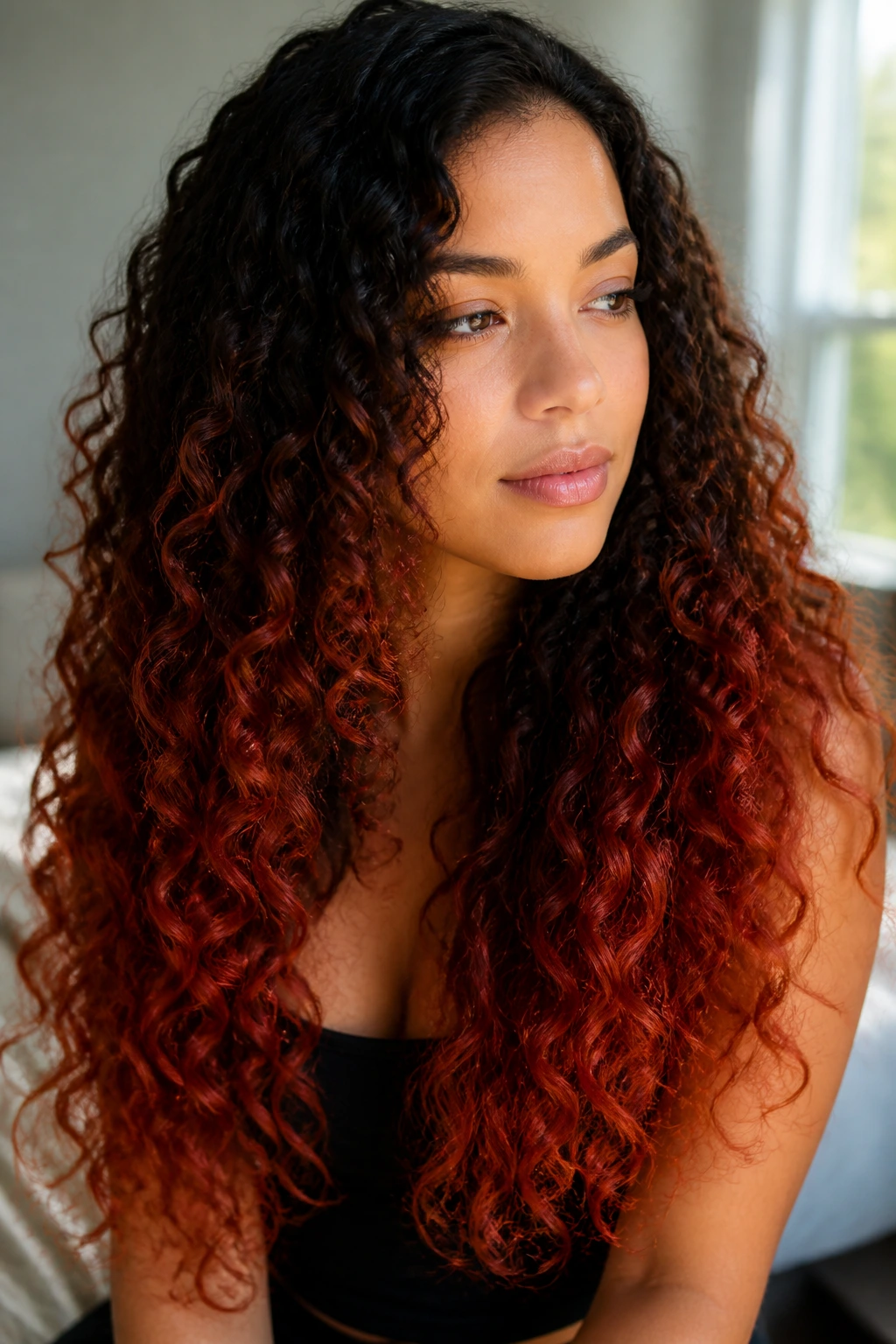
Ember red ends are for people who like a slow reveal. The roots and mids stay deeper, and the color gets brighter only at the bottom, like the ends were warmed by fire.
This works especially well on long curls, because the length gives the ombré room to breathe. Short hair can still do it, but the transition is easier to read when the curls hang a little lower and swish as you move.
Keep it sharp
Ask for the brightest red on the last third of the hair, not halfway up. That keeps the look intentional instead of muddy. If the fade starts too high, the style loses the ember effect and starts looking tired.
22. Cranberry Twist-Out
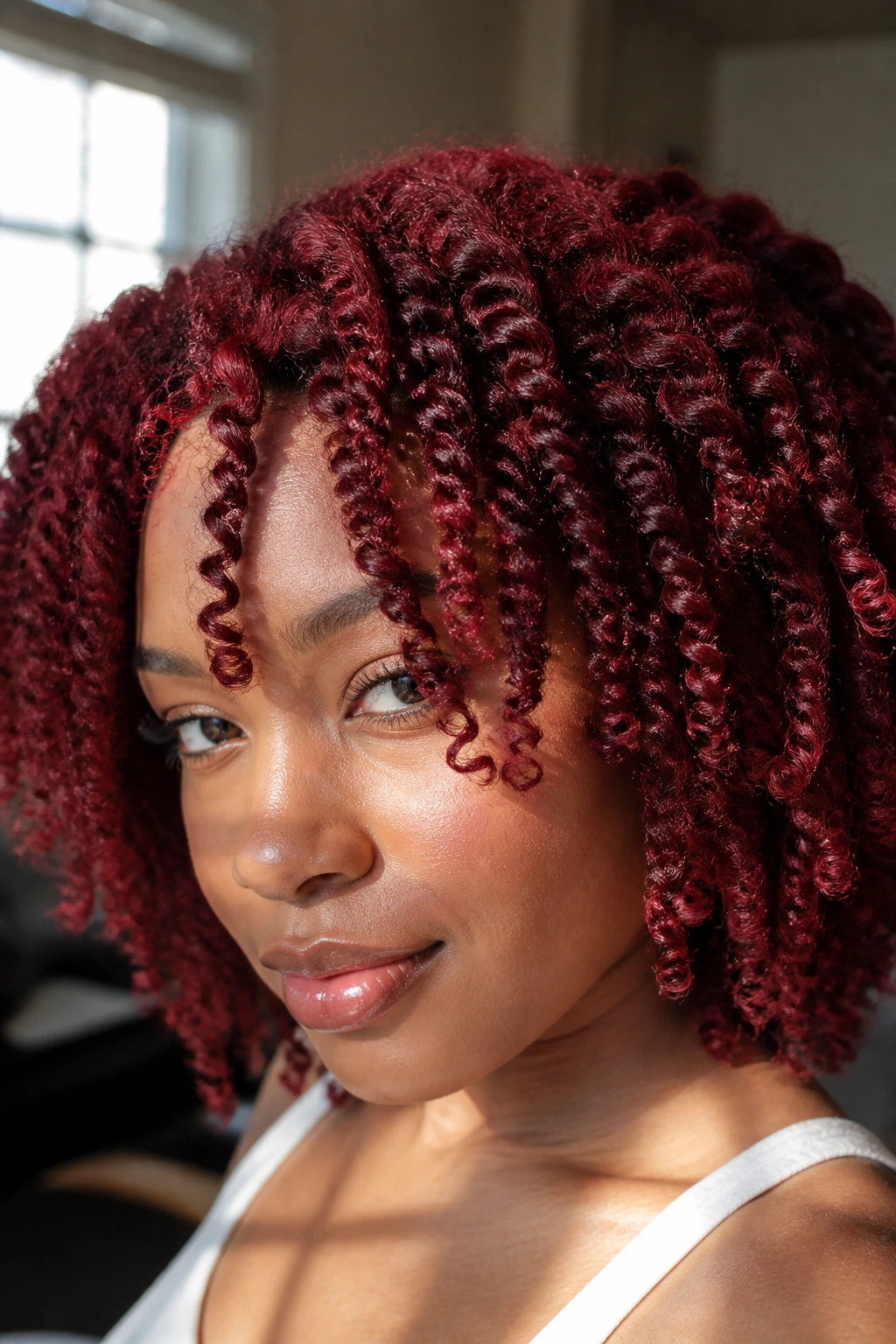
Cranberry has a clean, juicy brightness that shows up beautifully in a twist-out. The pattern gives the color more surface area, which means the red catches in each ridge and dip instead of sitting flat.
That’s why this tone can look richer on textured styles than on loose blowouts. The twists create a built-in pattern, and cranberry slips right into it. You get definition and color at once.
If your hair is dense, cranberry is useful because it can read from a distance without needing platinum-level lift. It is vivid, but it still has enough depth to sit comfortably on natural texture.
23. Tortoiseshell Copper Curls
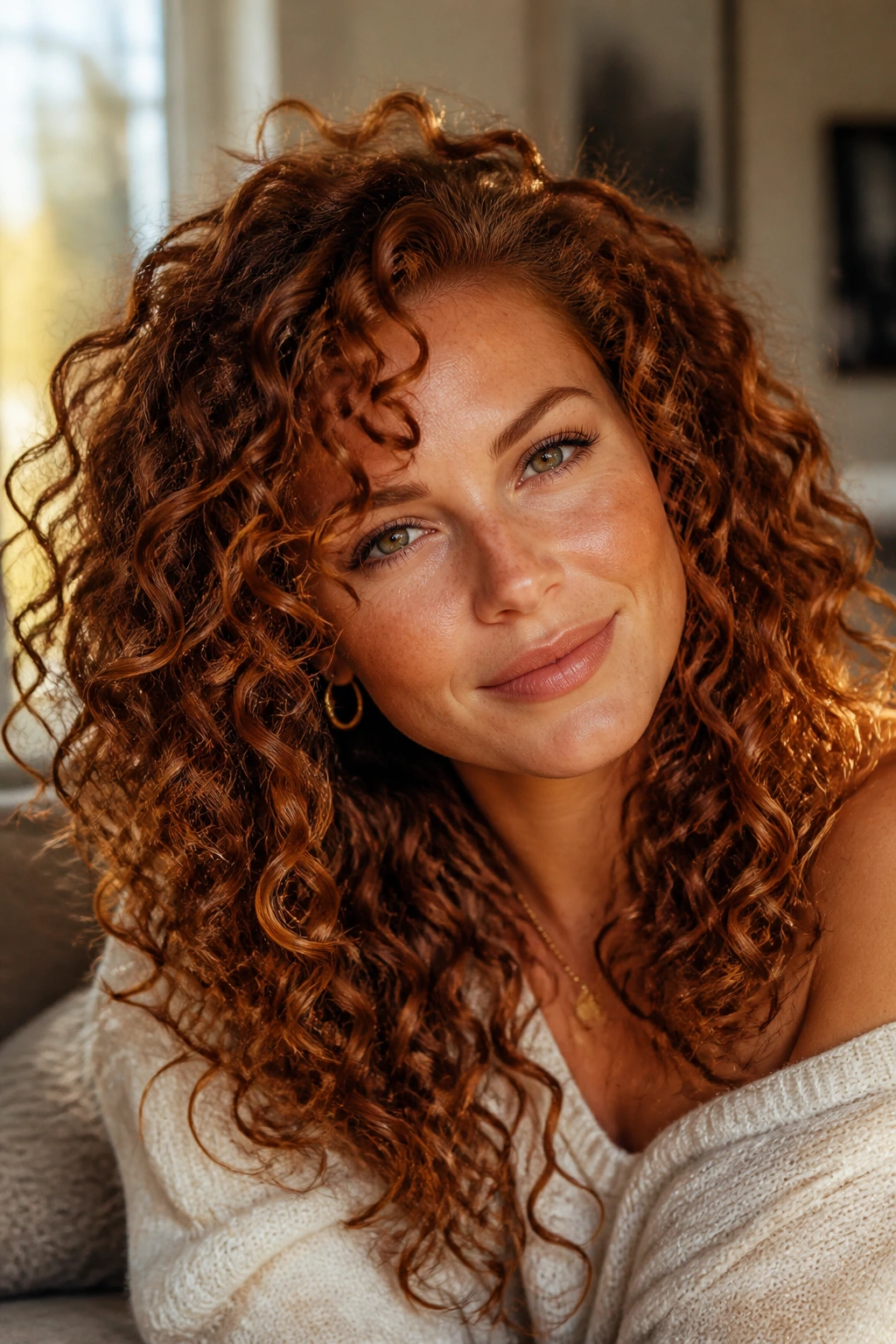
This is one of the smartest red ideas on the list, mostly because it isn’t one single red. Tortoiseshell copper mixes amber, bronze, and copper through the curls, so the result feels dimensional instead of painted.
Why the mix matters
Curly hair already moves in a lot of directions. A blended red-brown palette makes that movement easier to see. One curl can read copper at the tip and bronze near the bend, and that variation keeps the whole head alive.
- Use: on layered curls, ringlets, or dense waves.
- Palette: amber, bronze, and copper.
- Finish: soft gloss, not stiff shine.
- Result: a warmer, richer look than a single-tone red.
If you hate color that looks one-note, start here.
24. Marsala Coil Glow
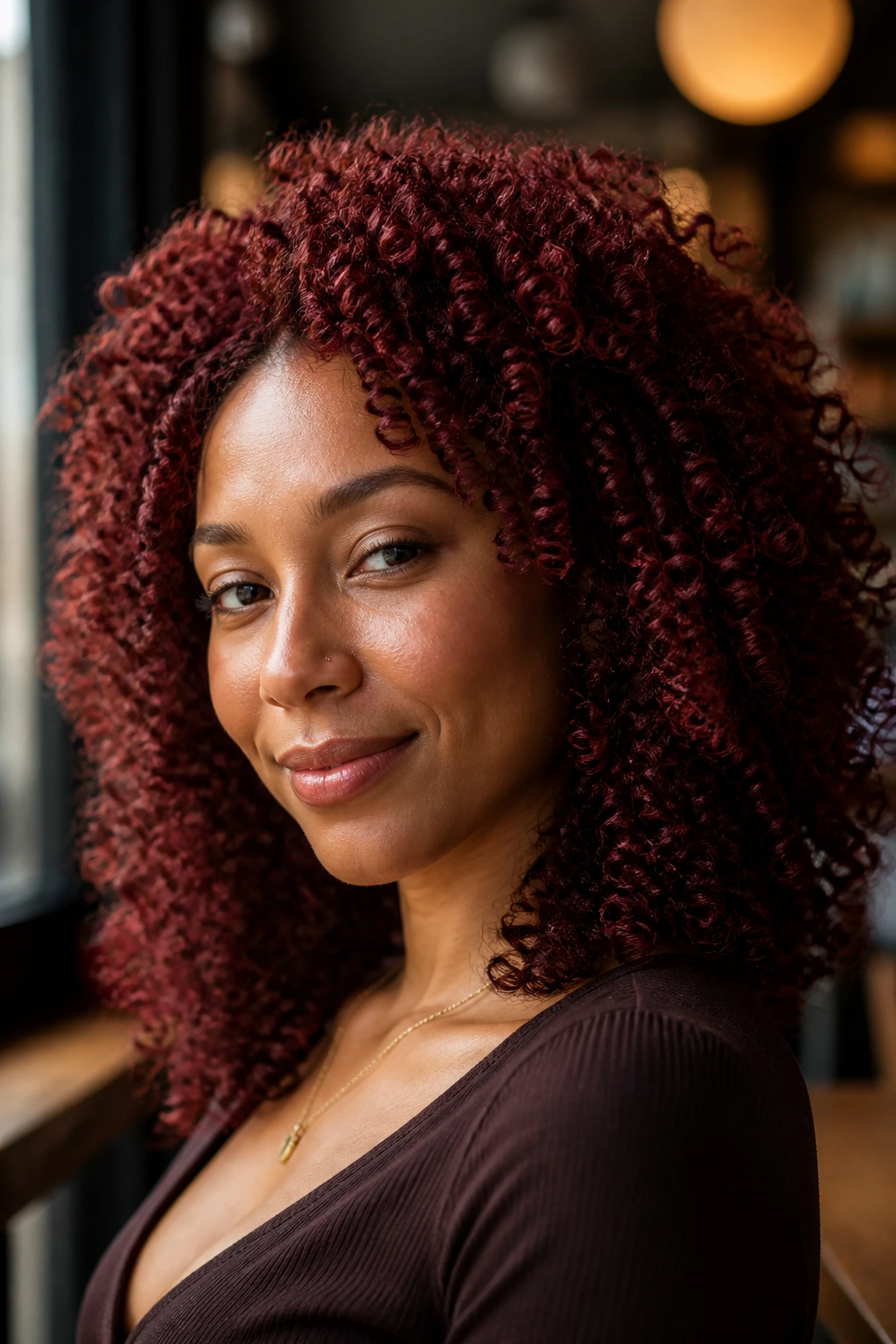
Marsala is red’s moody cousin. It has wine in it, brown in it, and a little warmth that keeps it from going flat. On coils, that makes the color feel deep and plush.
How to get the most from it
A tight coil pattern loves dark reds because the shape creates natural shadow. Marsala uses that shadow well. Instead of fighting the texture, it leans into it and gives the hair a kind of soft glow at the edges.
You can wear this color all over or keep it concentrated on the top layer with deeper roots underneath. Either way, the finish should look rich, not bright. That is the whole appeal.
25. Paprika Red Peekaboo
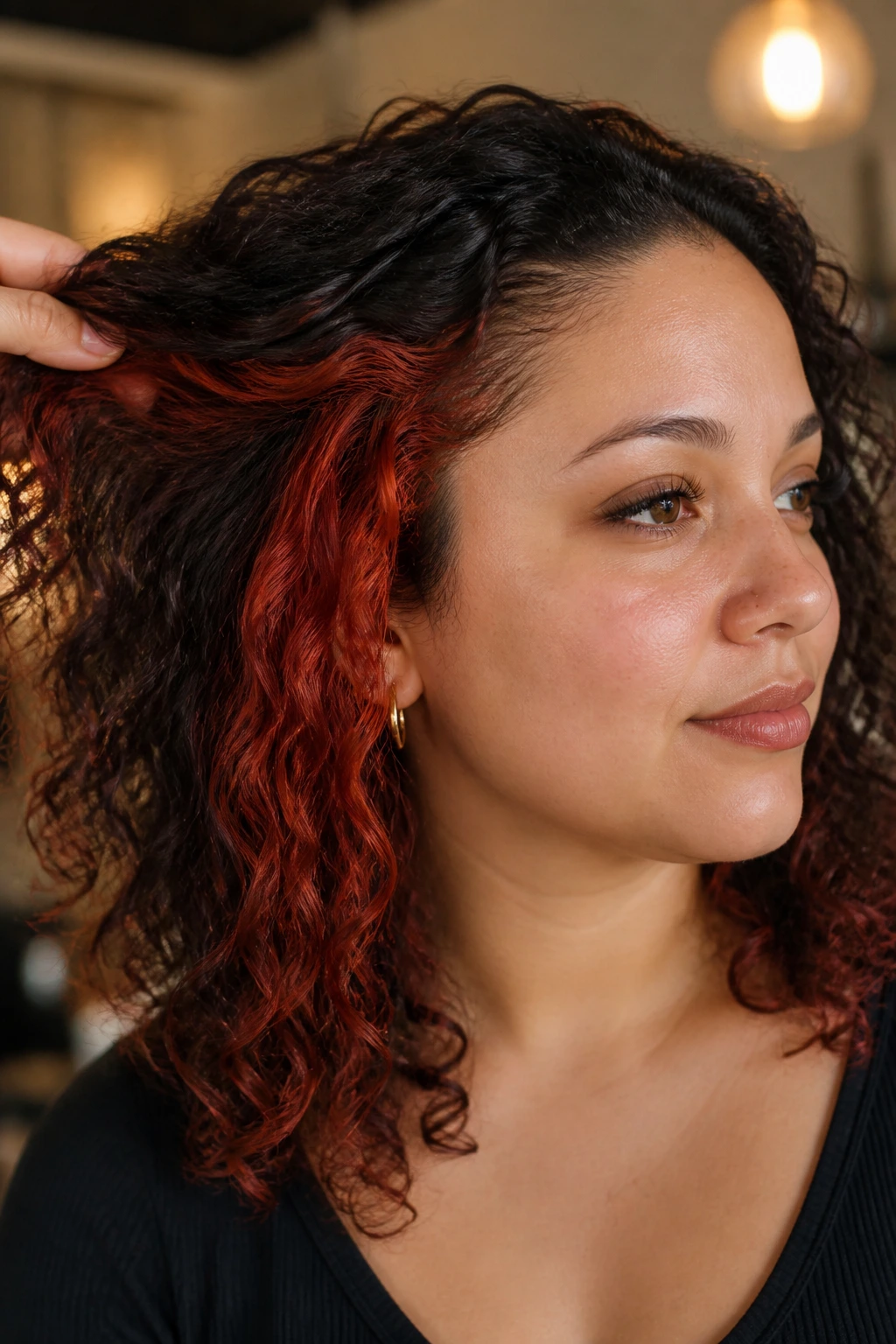
Peekaboo color is a nice trick when you want something fun but not obvious all the time. Paprika red works especially well here because it has enough warmth to show through dark curls, even when only small sections are visible.
The hidden panels sit under the top layer, so the color pops when you part the hair, tie it up, or let the curls separate naturally. It’s a good choice for anyone who wants to test red without changing the whole head.
This one is also forgiving. If the top layer is a little darker, the paprika still reads. If the curls are big and springy, the reveal gets better.
26. Sunset Auburn Balayage
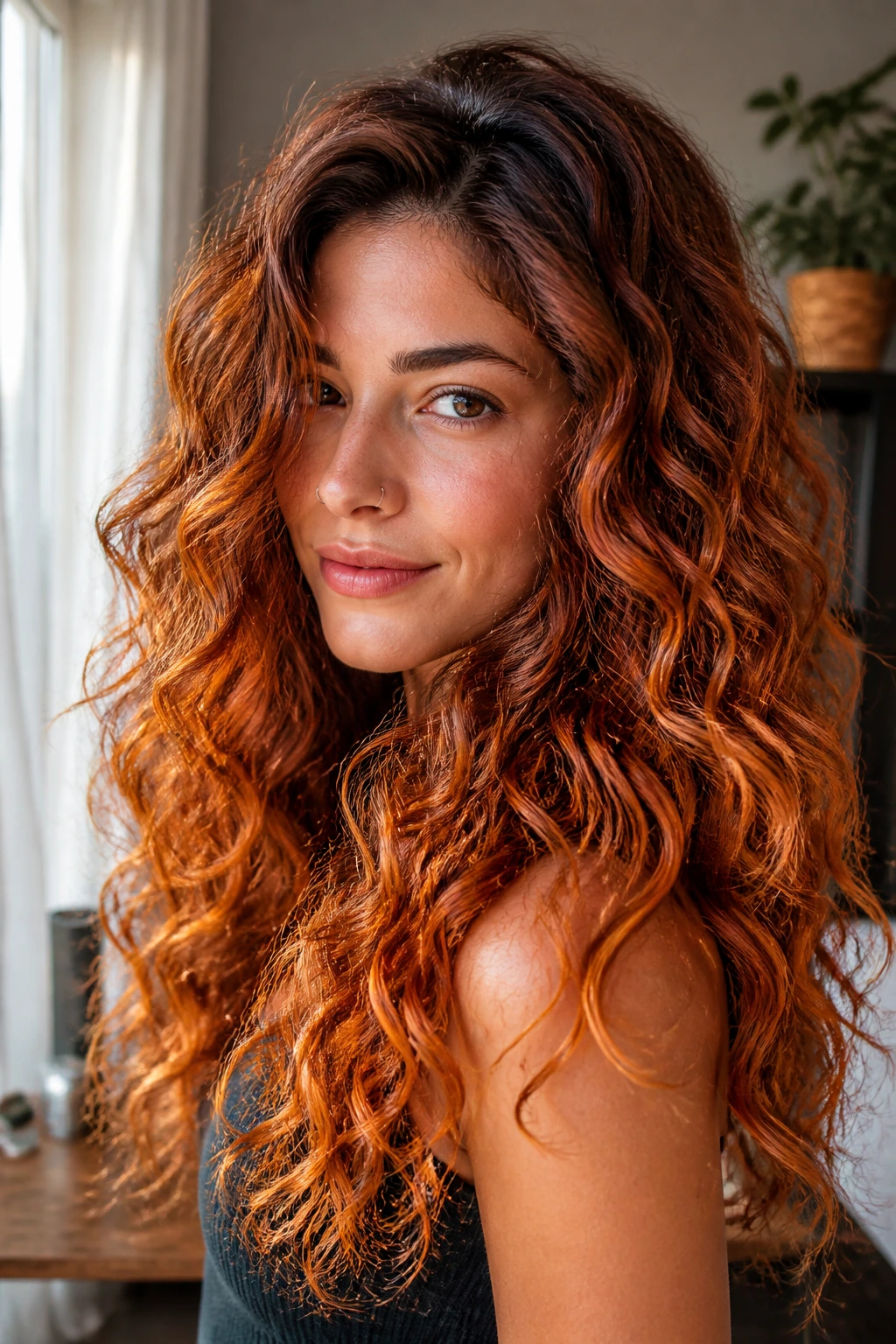
Sunset auburn balayage is the kind of red that looks like it was made for movement. The tone slides between copper, amber, and auburn, so each curl turns into a tiny color shift.
Longer curls are where it really pays off. The transition from darker root to lighter auburn ends has room to breathe, and the shape keeps the color from reading as streaky. A blunt cut can still wear it, but layered lengths make the blend feel smoother.
What to ask for
Ask for a warm auburn balayage with soft brightness around the outer curls. If you want more depth, keep the root area one or two shades darker. The result should look sunlit, but not washed out.
27. Brick Red Curly Shag
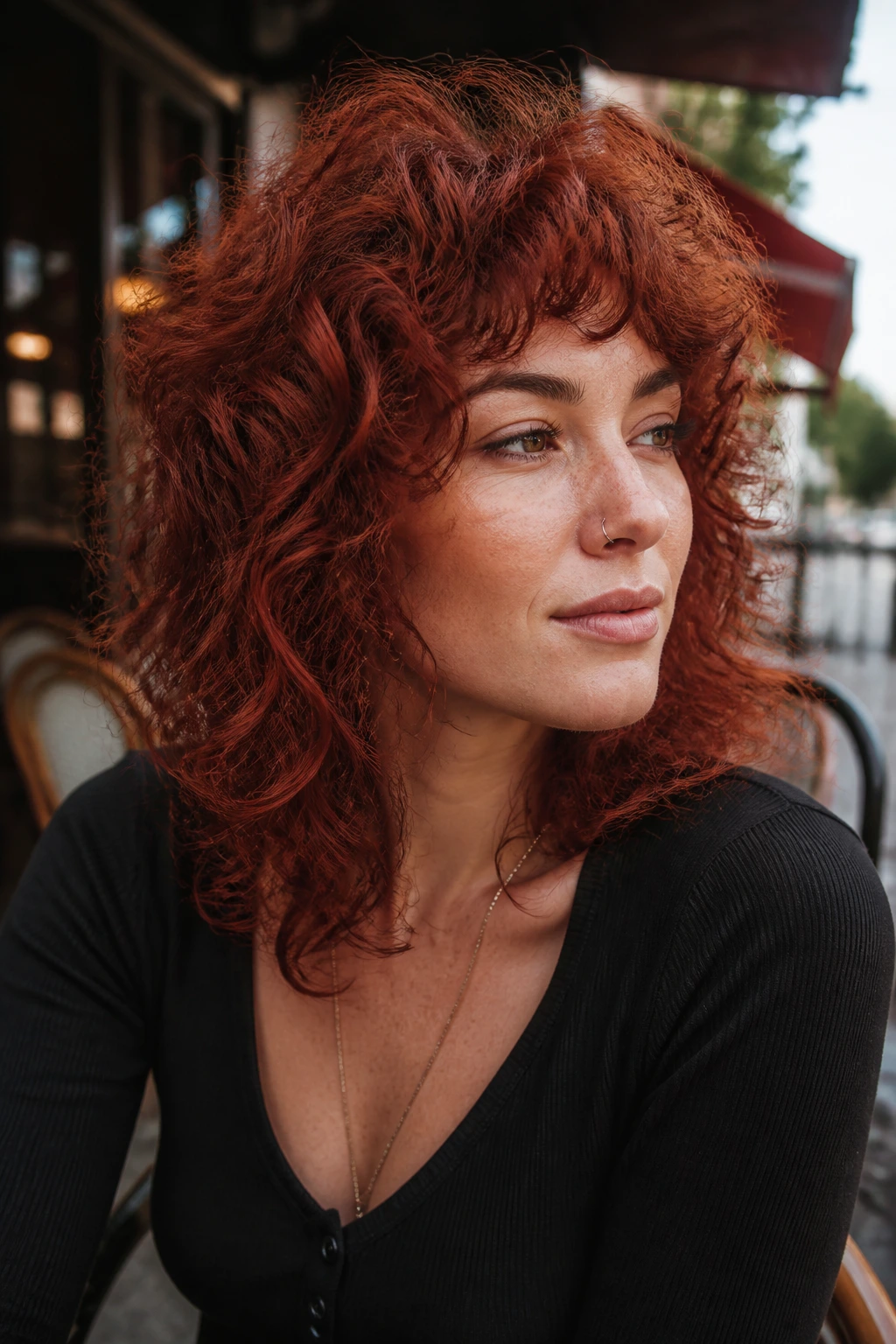
Brick red has a firmer, earthier look than copper or cherry. On a curly shag, that is a very good thing. The cut already has edge, so the color can be bolder and slightly matte without losing balance.
This is the red for someone who does not want sweet. It feels grounded, a little gritty, and more interesting because of it. The shag gives the color motion, and the brick tone keeps the whole style from going too bright or playful.
If you wear a lot of black, denim, or neutral clothes, this shade can sit beautifully with your wardrobe. It has enough warmth to stand out, but not so much that it starts competing with everything else.
28. Velvet Red Money Piece
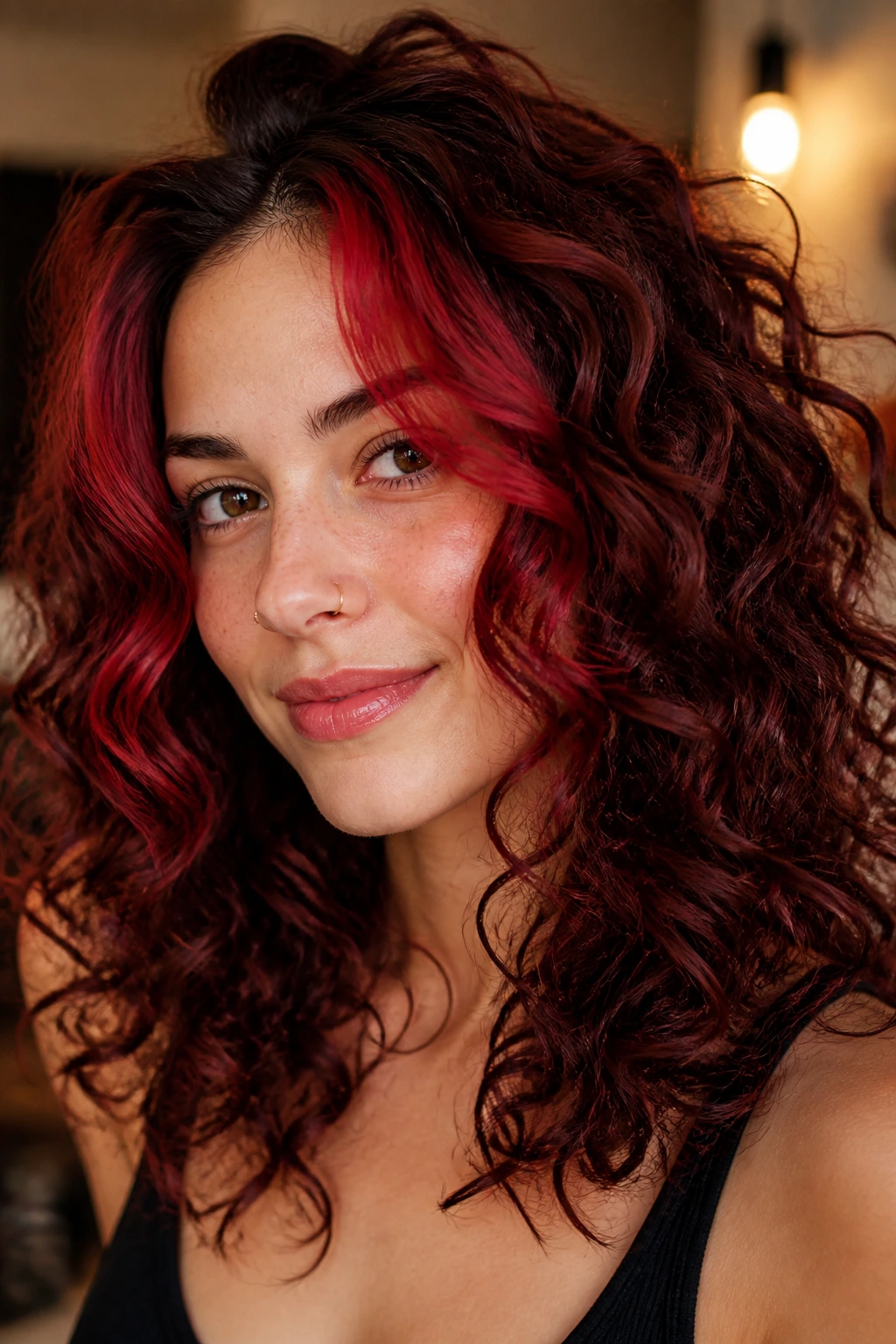
Velvet red around the face is one of those looks that reads expensive because the tone is so deep and smooth. The rest of the hair can stay a darker auburn or brown-red, while the front pieces carry the velvet hit.
That contrast works especially well on curly hair because the face-framing pieces bounce as you move. A little red there changes the whole impression of the cut. It pulls the eye up without asking for a full head of brightness.
Keep the velvet tone in the red-brown family. If it gets too cool, it can turn purple in low light. Nice if you want that. Not so nice if you wanted warmth.
29. Firelight Copper Coil
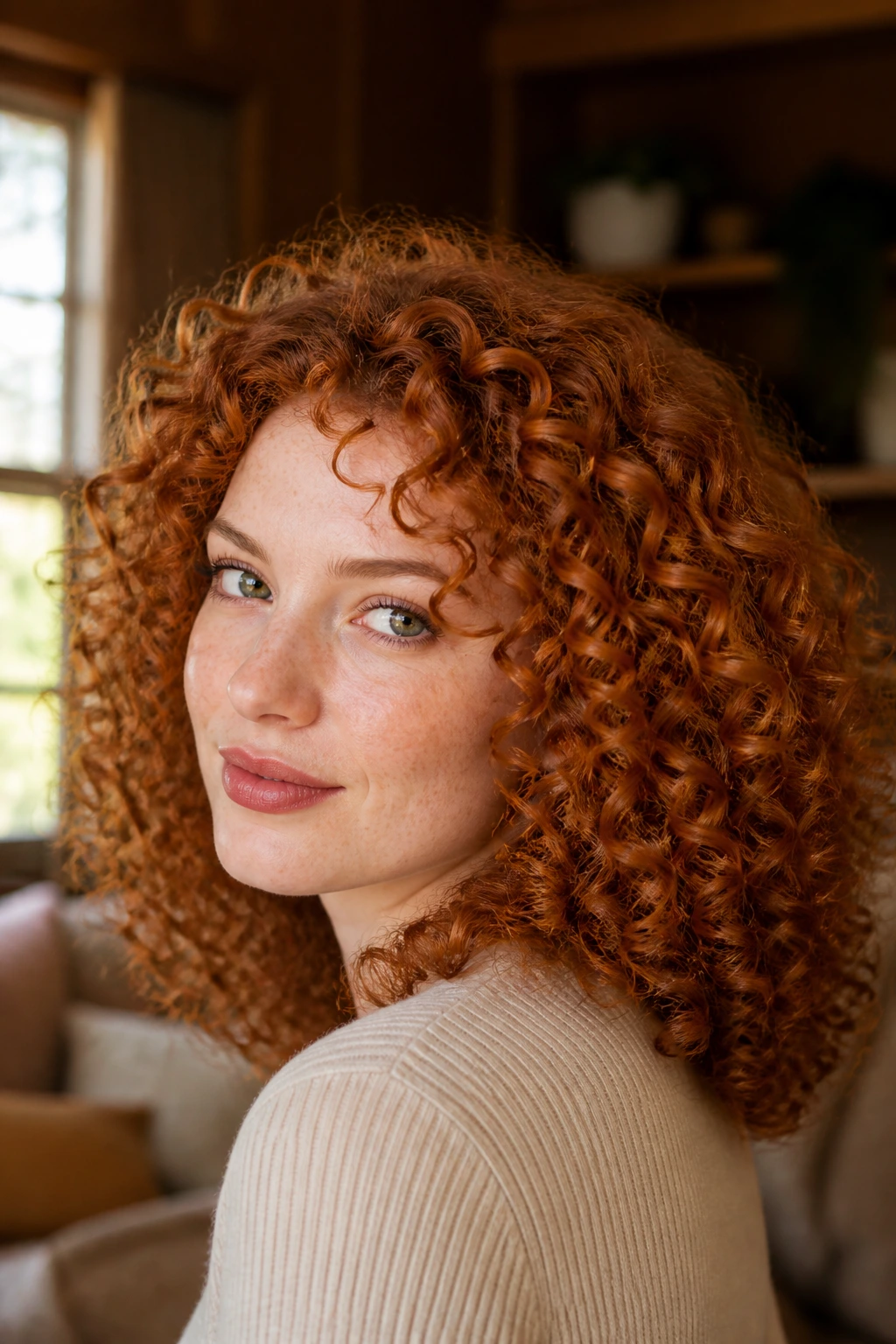
Firelight copper is bright, but the coil pattern keeps it from looking harsh. That is the magic here. Tight curls can take a vivid copper and make it look textured instead of flat.
How to keep the brightness
Start with strong placement near the outer layer and around the crown. That gives the copper a place to catch light first. A clear gloss or color-safe conditioner helps the tone stay clean between salon visits, because bright copper can drift dull fast if the hair is dry.
- Best on: coils, corkscrews, and dense spirals.
- Tone direction: bright copper, not orange.
- Placement: outer layer and crown first.
- Finish: glossy, but soft.
This is one of the few reds that can look both fiery and elegant at the same time.
30. Soft Garnet Definition
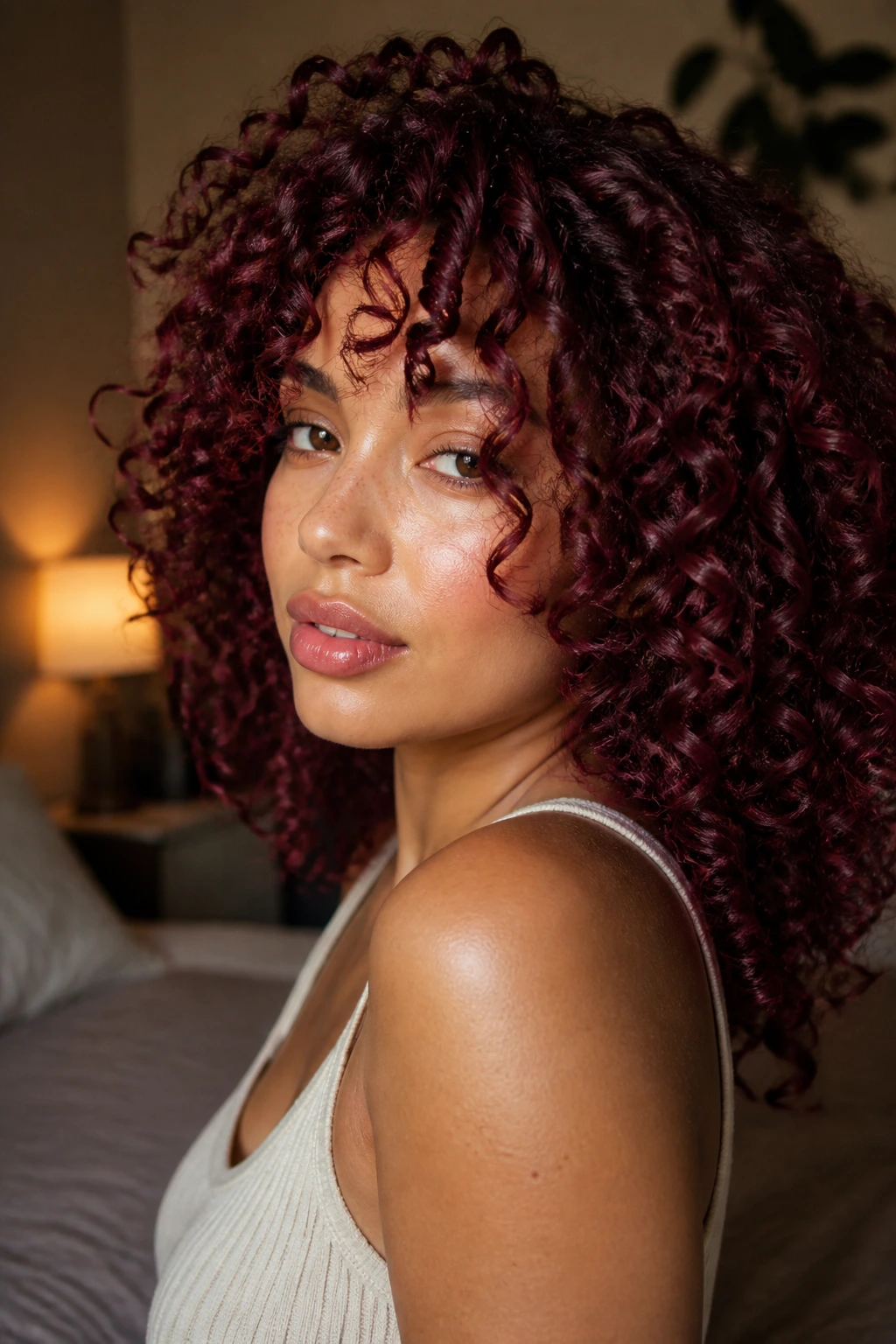
Soft garnet is the shade I’d hand to someone who wants red to show up in motion more than in a static mirror photo. It sits deep, like a rich wine-brown, but the red opens up when the curls turn.
That makes it a very good finishing color for curly hair. You get definition at the bends, depth at the roots, and enough warmth that the whole head feels intentional. It is not loud. It does not need to be.
If you want the easiest version, ask for a garnet gloss over a dark brown base and keep the haircut layered enough for the curls to separate. The color will do the rest, and it tends to look best when the curls are clean, springy, and left alone instead of brushed into submission.
