



Burgundy mahogany hair color has a useful trick: it gives you red without the brass.
That matters a lot if your skin leans cool. Pink undertones, blue-beige undertones, rosy cheeks, silver jewelry that looks cleaner than gold — all of that tends to look sharper next to wine shades, berry reds, and plum-brown tones than it does next to orange-heavy copper.
The part people miss is depth. A cool-toned red that’s too bright can shout over your face. A burgundy mahogany shade, though, sits in a sweeter spot: dark enough to feel rich, red enough to register, and muted enough to keep your complexion from looking flushed in a bad way. The right version can look almost black indoors, then show off a berry or merlot edge in daylight. That little shift is the whole point.
And yes, placement changes everything. A full gloss over brunette hair feels very different from face-framing ribbons, peekaboo panels, or a root melt that grows out softly. Some of these ideas are understated. Some are dramatic. None of them need to turn orange, which is the real win.
1. Deep Wine Burgundy Mahogany Melt
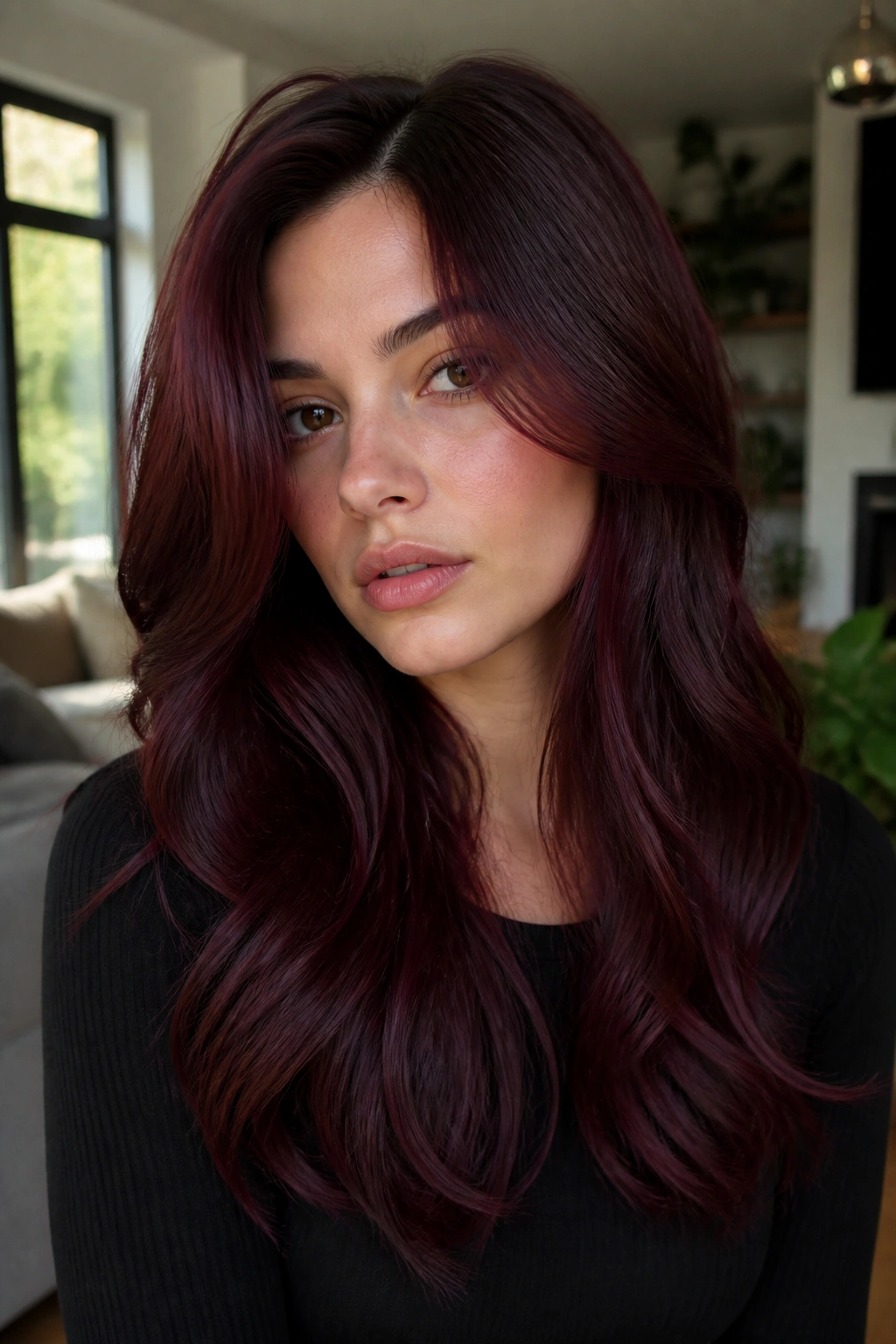
If you want the cleanest, richest take on burgundy mahogany hair color, this is the one I’d start with. Think red wine poured over dark chocolate. The base stays brunette, but the red comes through in a way that feels polished rather than loud.
Why It Works on Cool Skin
Cool skin usually looks best when the hair has a blue-red or violet-red base. That’s exactly what a deep wine melt gives you. It keeps the warmth low and the depth high, so your face stays the focus.
Ask for a level 4 or 5 brown base with a burgundy glaze that leans merlot rather than copper. The finish should look glossy, not fuzzy. If the color catches light and turns rusty, it’s too warm.
- Best on light, medium, and deep cool complexions
- Looks strongest on straight or softly waved hair
- Needs a shine-heavy finish to keep the red visible
- Works especially well if your natural hair is already dark brown
Tip: keep the roots a half-shade deeper than the mids. That tiny contrast makes the wine color look cleaner around the face.
2. Cherry Cola Burgundy Brown
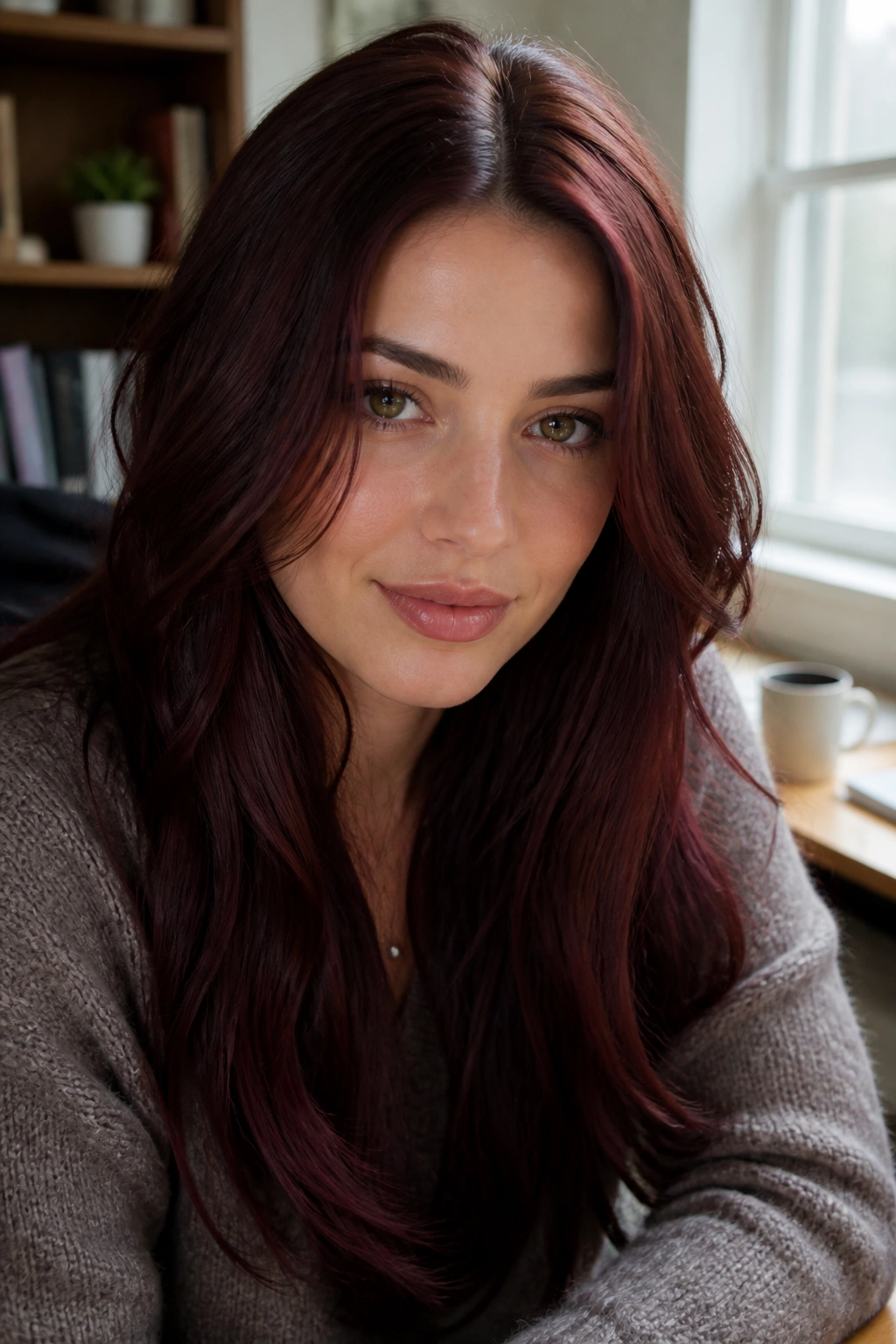
This is the safest burgundy option for someone who hates obvious red. It reads brown first, red second, which is exactly why it flatters cool skin without looking flashy.
Cherry cola shades work because the red sits inside the brunette base instead of floating on top of it. In dim light, the hair can look almost espresso. In daylight, the cherry edge shows up in the mid-lengths and ends, especially if you wear it in loose waves.
This is the shade I’d point to for people who want a little drama but still need their hair to work at a desk, in a classroom, or under plain indoor lighting. It’s restrained. Not boring. There’s a difference.
A center part makes it look cleaner. Soft bends in the hair bring out the cola-red undertone without making the whole thing feel overdone.
3. Plum-Lean Mahogany
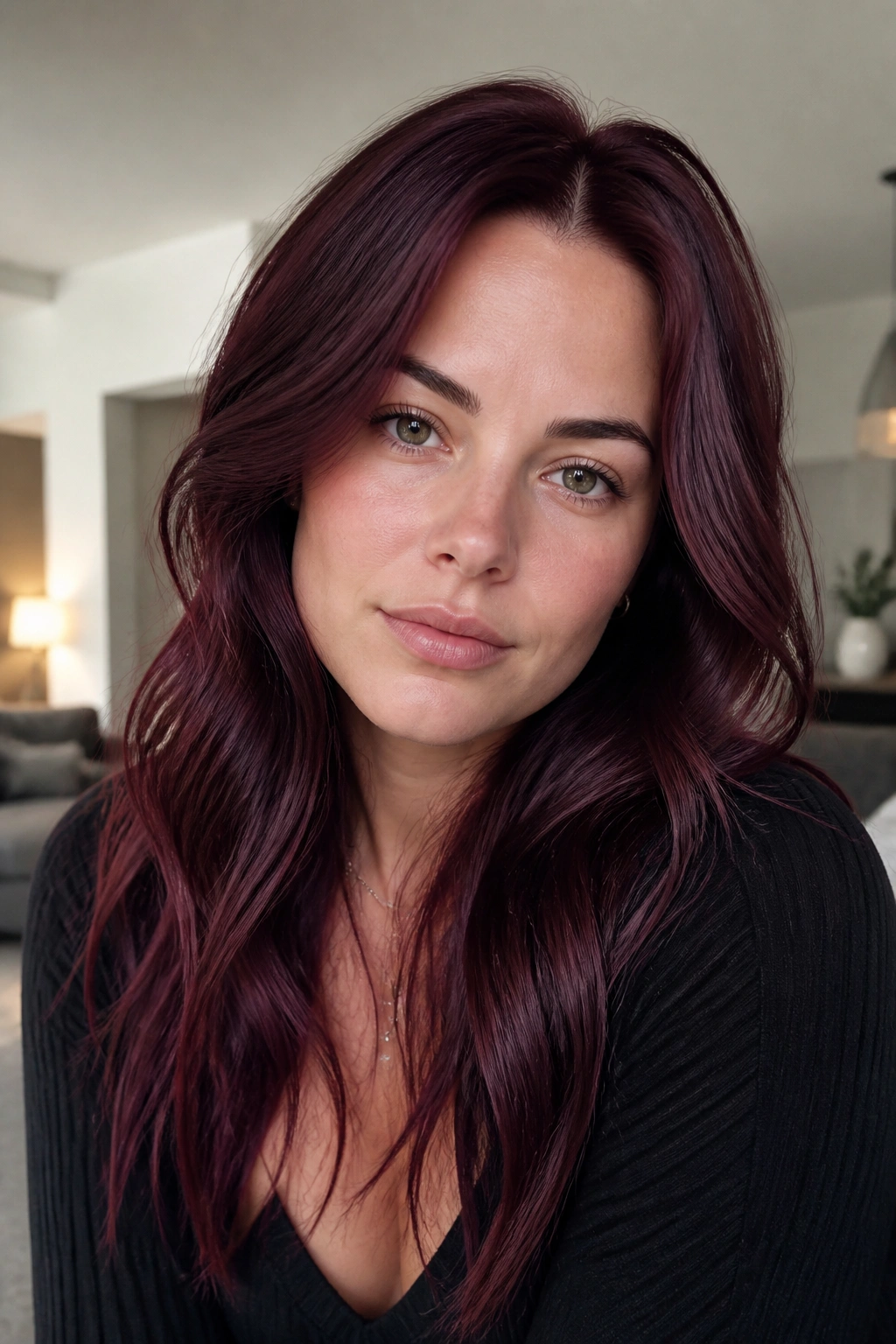
Why does plum help cool skin so much? Because violet tones echo the same cool notes that already live in your complexion.
A plum-leaning mahogany is one of those shades that looks expensive in the simplest possible way. The red is still there, but it’s softened by purple, which takes the edge off any orange cast. On fair cool skin, it can make the face look brighter. On medium cool skin, it gives a nice contrast without going too deep.
How to Wear It
If your hair is medium brown or dark blonde, ask for a mahogany base with a violet-toned gloss. If your hair is dark brunette, plum lowlights around the face are often enough.
- Best with blunt bobs, collarbone cuts, or shoulder-length layers
- Looks cleanest under cool indoor lighting and natural light
- Pairs well with soft pink blush and berry lipstick
- Needs toner maintenance when the purple starts fading
A little weird note: this shade can look flatter than expected in a flat iron finish. Add bend or texture and it suddenly wakes up.
4. Black Cherry Gloss
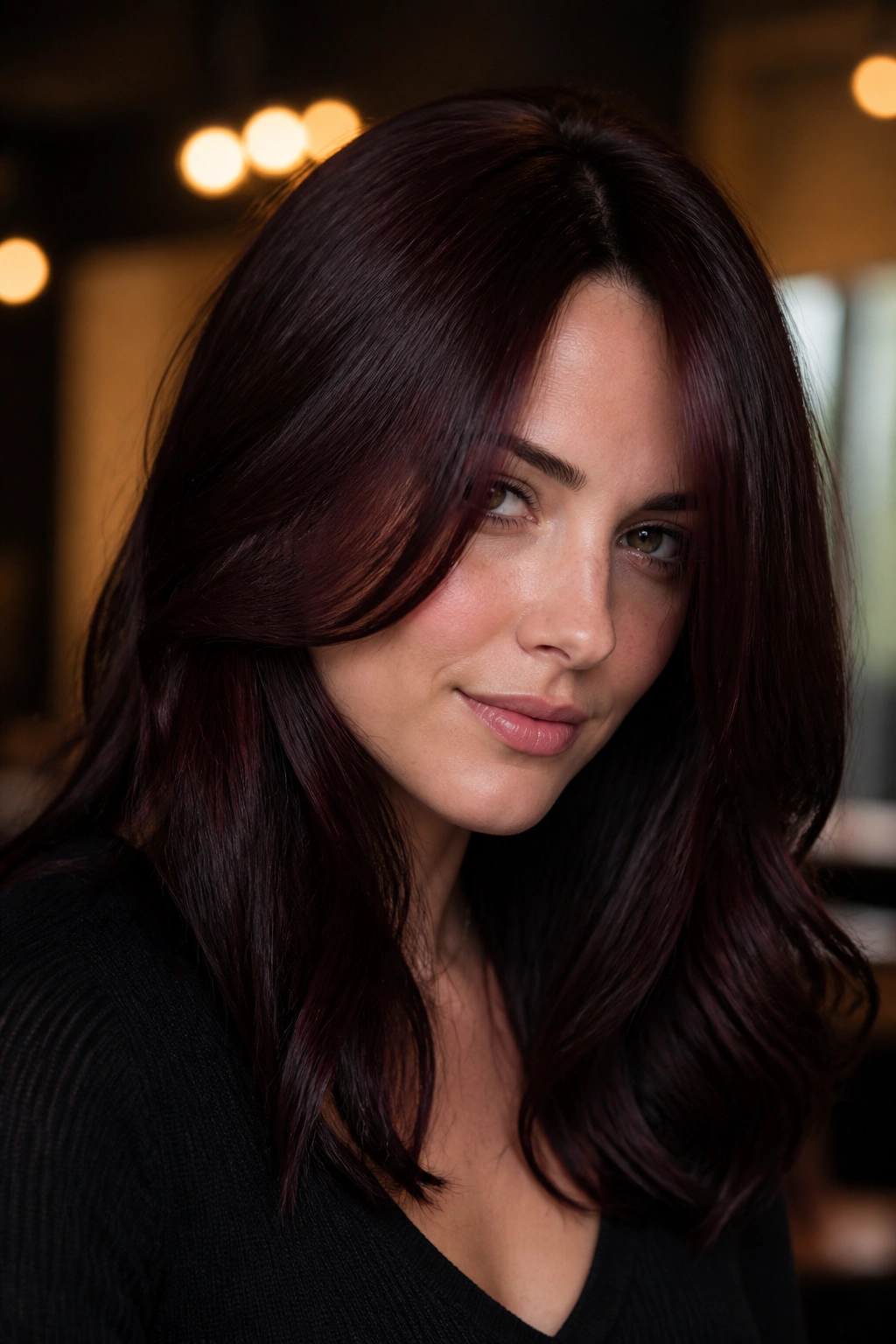
This is the move for anyone who wants red hair but doesn’t want the whole room to know about it.
Black cherry gloss works on the same principle as a tinted lip balm. The base stays dark, and the color shows up only when light hits it. On cool skin, that contrast can be gorgeous because it keeps the hair from fighting your undertone. It sits quietly until it needs to show off.
I like this shade on naturally dark hair because the gloss gives dimension without heavy lift. That means less damage, less fuss, and less chance of the color going orange at the end of the fade. Good news, because orange-black cherry is not the vibe.
- Great for brunettes who want a subtle red shift
- Best on thick hair that can hold shine
- Keep the gloss short of the roots for a sleeker finish
- Refresh with a clear or color-depositing glaze when the cherry tone softens
The payoff is light. You get red when you want it, quiet brown when you don’t.
5. Smoky Mahogany Balayage
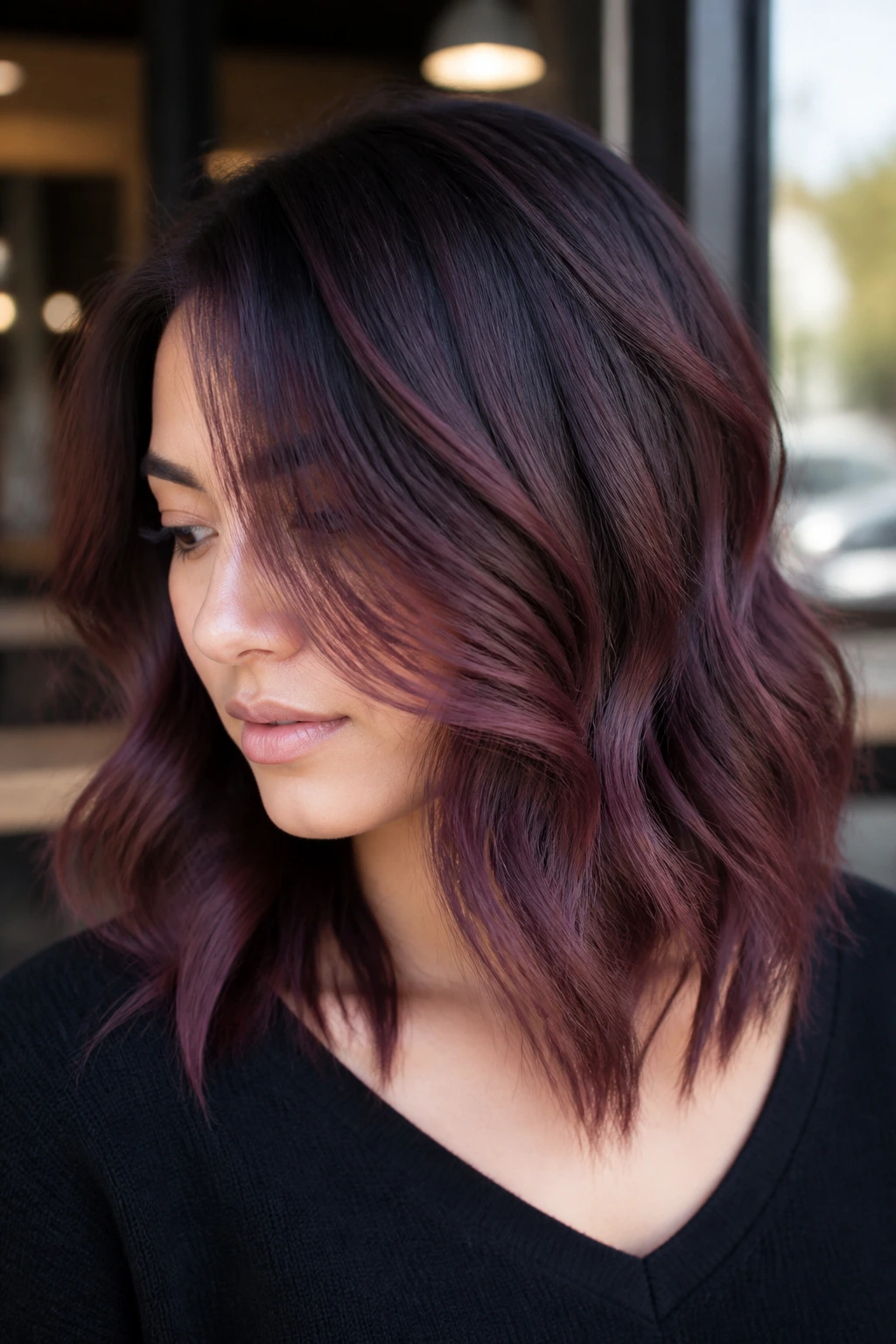
Smoky mahogany balayage is what happens when you want movement more than you want a solid block of color. The result is softer than all-over burgundy, and that softness is exactly why it works so well on cool skin tones.
The word “smoky” matters here. It means the red is toned down with ash or violet brown, so the highlights don’t slide into pumpkin territory. A good balayage should look hand-painted, with the richest ribbons near the face and through the outer layers. The ends can be a touch brighter, but not copper-bright.
I’d choose this for shoulder-length hair or longer, especially if your natural color is already medium to dark brown. The shape of balayage lets the burgundy mahogany show up in motion, which is where the shade looks best anyway.
It’s also a smart pick if you dislike hard grow-out lines. The fade is softer. The upkeep is calmer. And that matters more than people admit.
6. Merlot Root Melt
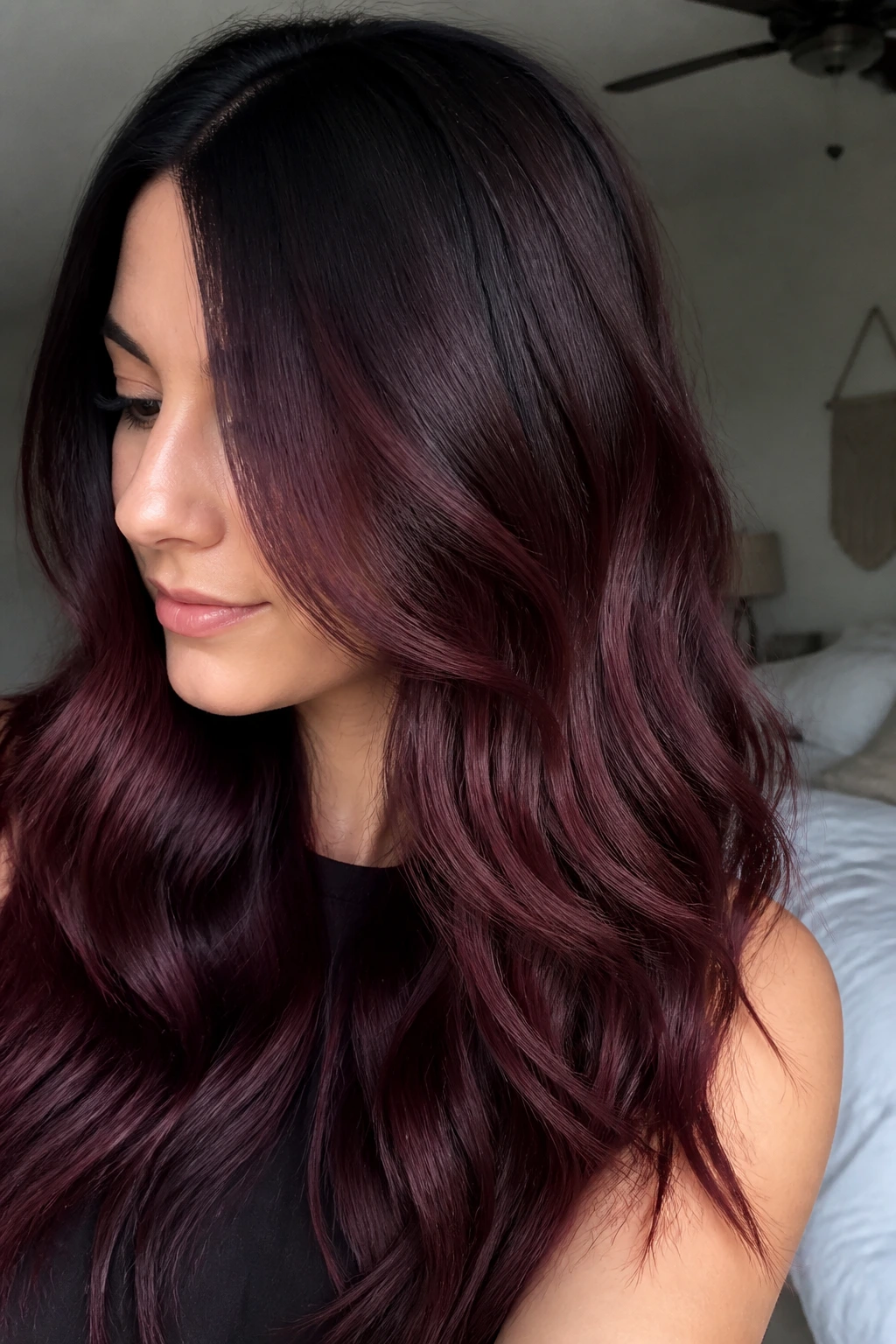
Compared with one flat burgundy shade, a merlot root melt gives you more depth at the scalp and less panic when it grows out. That’s a trade I usually like.
The root stays a shade darker, sometimes two, and then the merlot color softens as it moves toward the ends. On cool skin, this keeps the face from getting swamped by too much red right at the hairline. The darker root acts like a frame.
This is also one of the easiest ways to wear burgundy mahogany hair color if you live in a real life, which means you do not want to sit in a salon chair every few weeks. The melt buys time. It also keeps fine hair from looking thin at the part because the darker root adds visual density.
Best choice? Long layers, a deep side part, and a smooth blowout. The shine does half the work for you.
7. Cranberry Espresso Depth
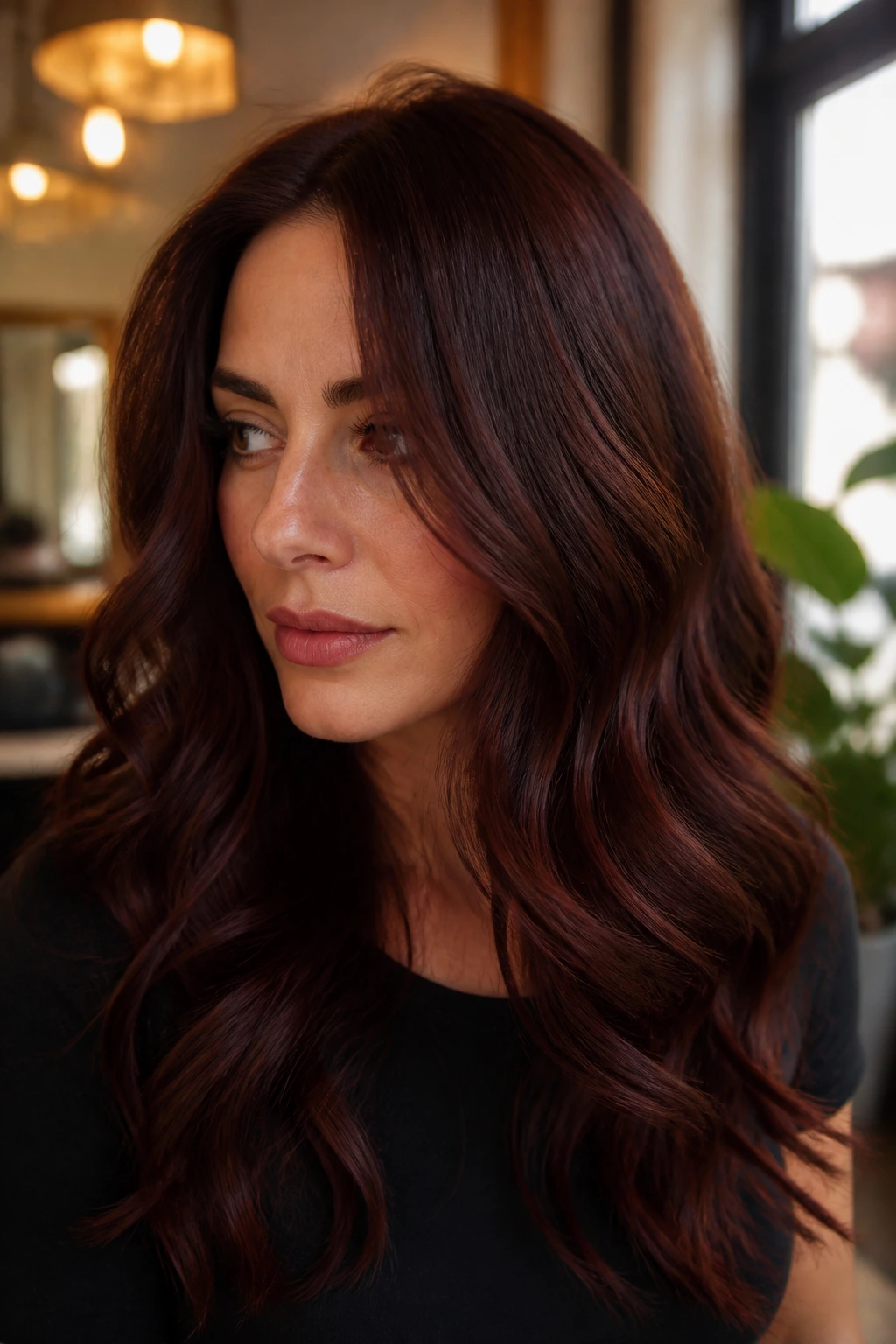
Cranberry espresso is for the person who likes red but wants to keep one foot in brunette territory.
What Makes It Different
The espresso base keeps the whole look grounded, while the cranberry tones show up as a cool red overlay rather than a bright color block. That makes it easier on cool skin, especially if your undertone leans pink or blue and you’ve had copper shades go weird on you before.
Quick Facts
- Looks darkest at the roots and richest through the mids
- Works well on medium-length cuts with movement
- Best if you want red that still reads brown from across a room
- Needs shine to keep the cranberry tone from looking dull
A loose wave is better than a sleek pin-straight finish here. The wave lets the cranberry catch the light in thin ribbons. That tiny shift keeps the color from feeling heavy.
Ask for a cool red glaze, not a warm cherry toner. The difference shows.
8. Violet Money Pieces
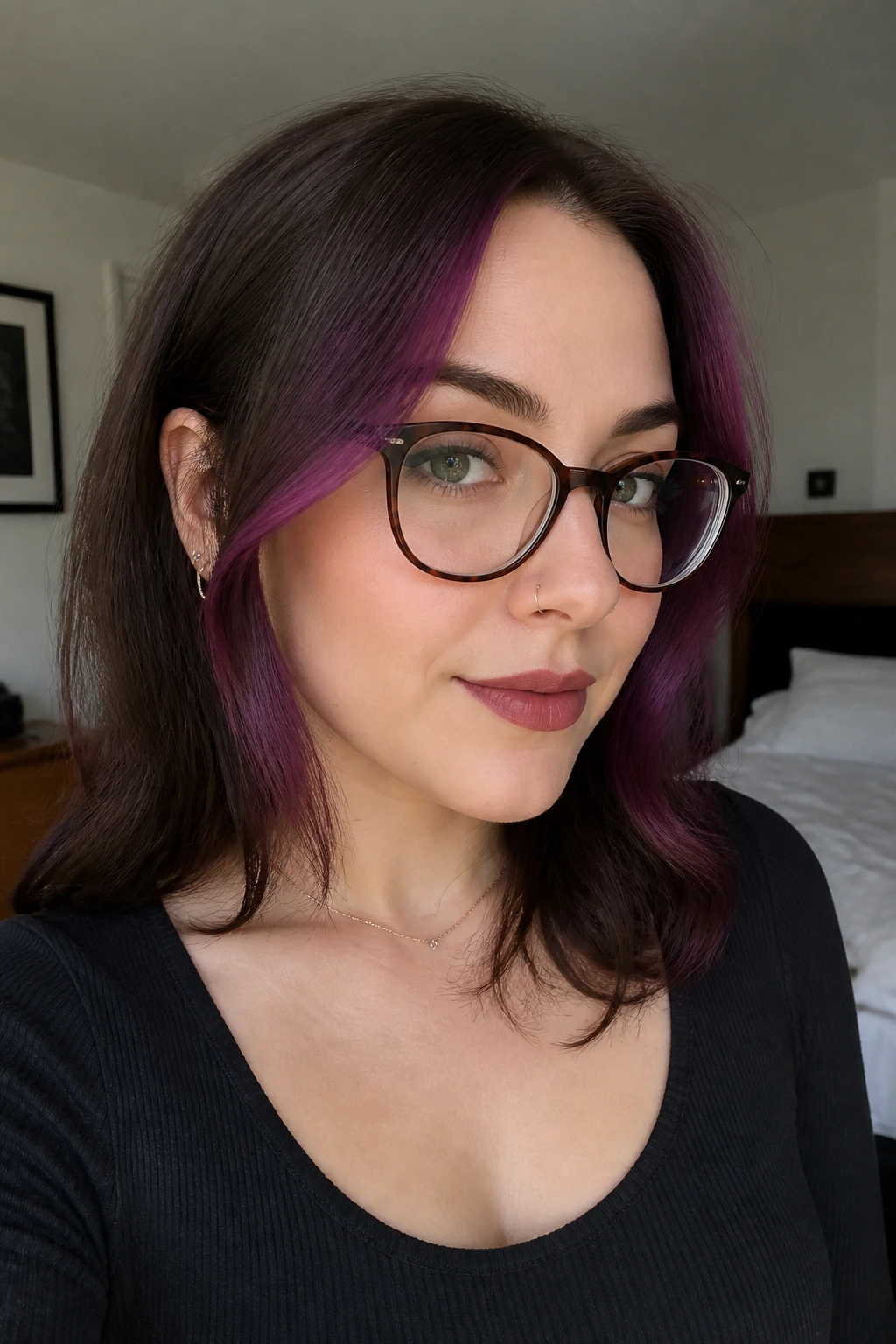
A few face-framing violet burgundy pieces can change the whole mood of your hair without forcing you into a full color commitment.
That’s the appeal, plain and simple. You get the cool-toned red near your face, where it matters most, and the rest of the hair can stay brunette or soft mahogany. On cool skin, those front pieces often make the face look sharper and more awake because they mirror the coolness in the complexion.
This works especially well if you wear glasses, because the color sits right where the eye naturally lands. It also works if you like updos. Pull the hair back, and the burgundy pieces do the talking.
Ask for thin pieces starting at the temples and grazing the jawline. Keep them narrow if you want subtlety; make them wider if you want a stronger contrast.
If you’ve never gone red before, this is one of the least risky ways to start. Small surface area. Big payoff.
9. Mulled Wine Curls
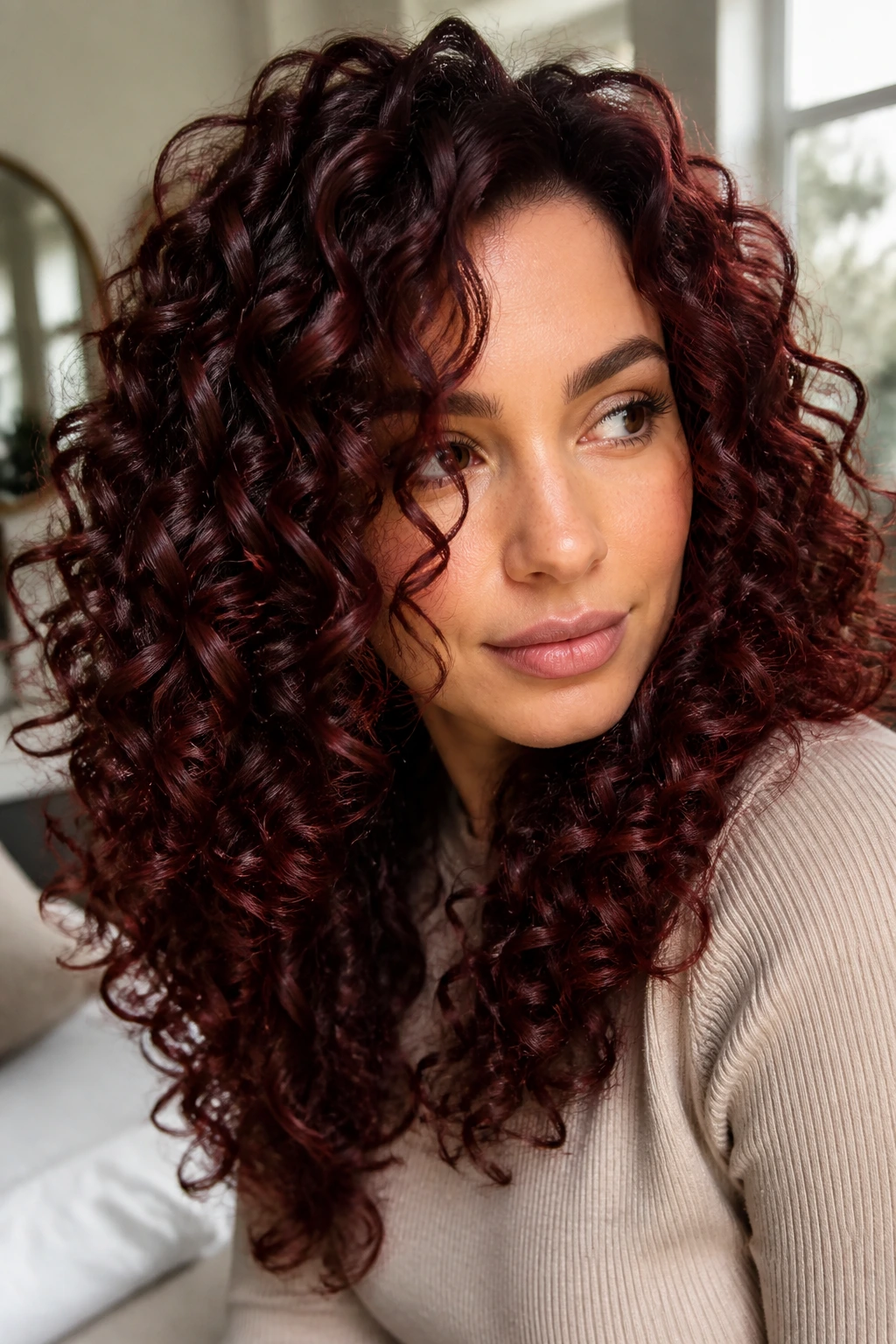
Why do curls make burgundy mahogany look so much richer? Because every bend in the hair catches a different amount of light, and the color has more places to move.
A mulled wine shade on curls can look lush without needing extra brightness. The burgundy reads deep in the shadowed parts, then turns berry or merlot on the outer curve of the curl. Cool skin tones benefit from that shift because the red never sits flat against the face.
How to Wear It
- Best on natural curls, twist-outs, and loose barrel curls
- Keep the color placement slightly softer at the crown
- Use a diffuser on low heat so the tone stays glossy
- A cream styler works better than a crunchy gel here
The key is dimension. If every curl is the same shade, the color can feel one-note. Give it a few deeper lowlights and the whole look starts moving.
Honestly, this is one of the prettiest burgundy ideas on textured hair.
10. Cabernet Bob
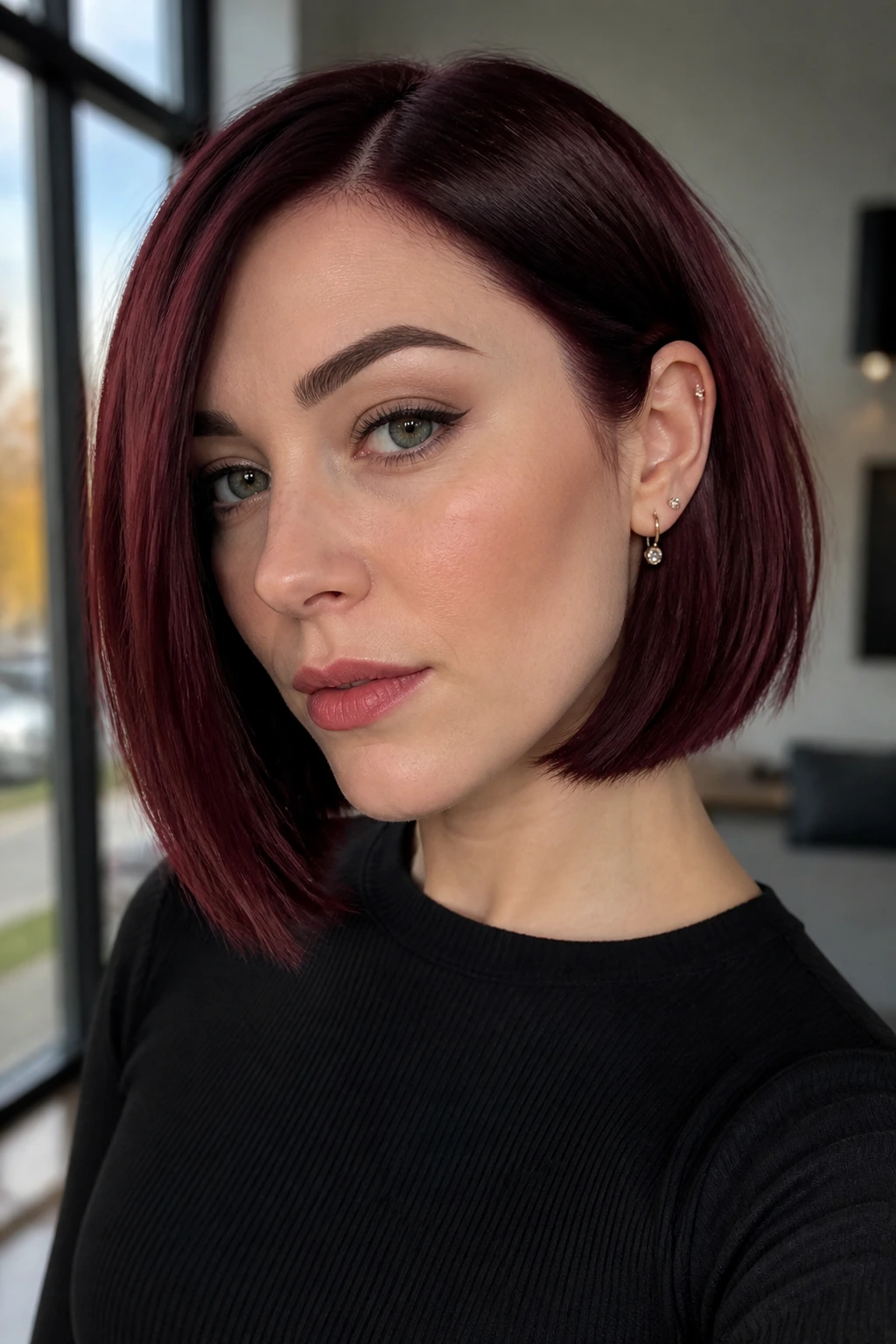
A cabernet bob is sharp in the best way. The shorter cut makes the color look more deliberate, and the deep wine tone gives the bob a polished edge that cool skin tones usually handle beautifully.
Shorter hair shows pigment differently. There’s less length for the color to disappear into, so the red reads stronger and cleaner. That’s why a bob can look more expensive than it sounds when the shade is right. It’s not about price. It’s about clarity.
A blunt chin-length bob keeps the silhouette crisp. A slightly layered lob gives you a softer feel. Either way, the cabernet tone should stay deep enough that it doesn’t turn cartoon red under bright light.
- Great for straight and wavy hair
- Very good with a side tuck behind one ear
- Works on both fine and thick textures
- Easy to refresh with a gloss instead of full recoloring
If you want your haircut to do some of the work, pick this one.
11. Smoked Plum Lob
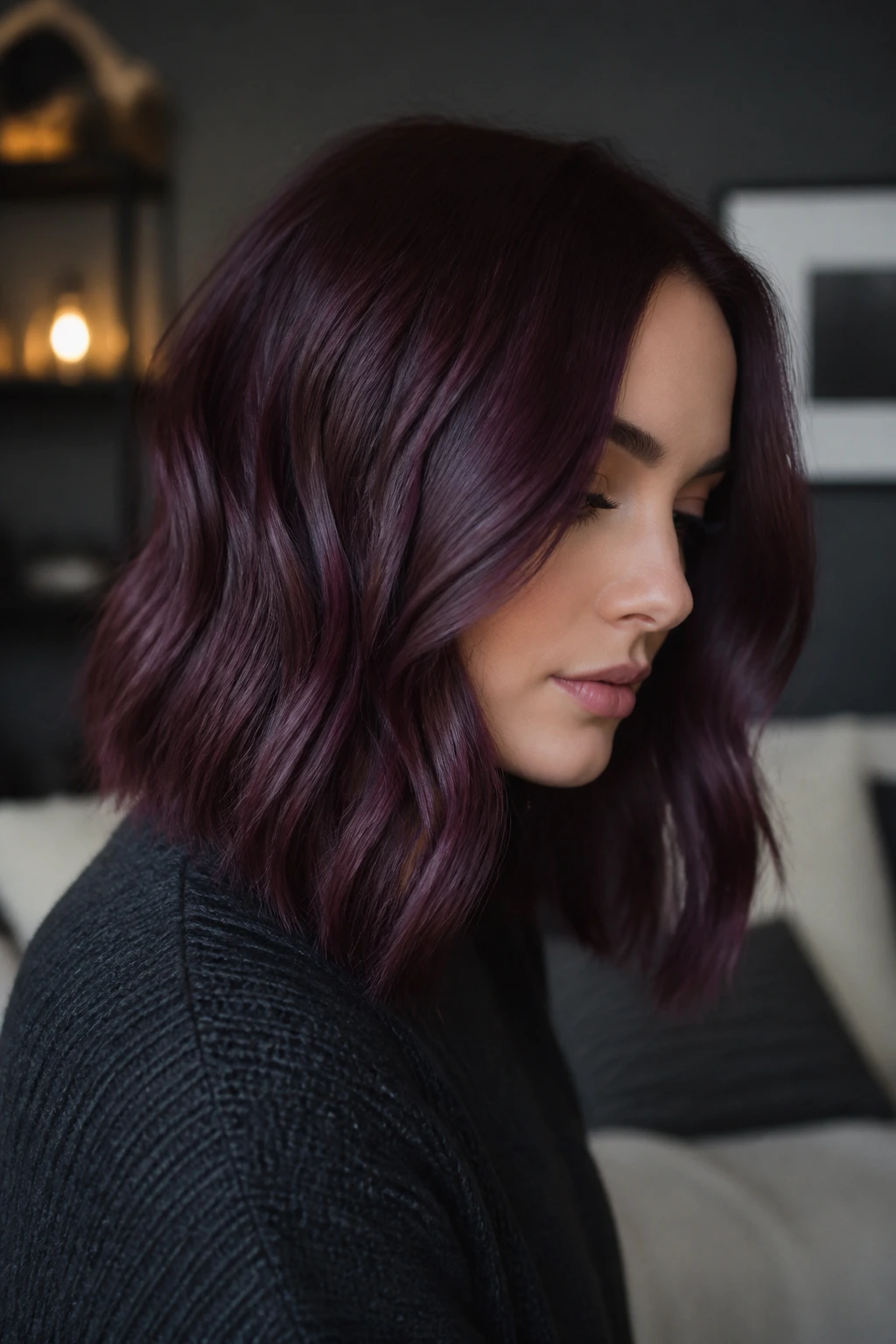
Smoked plum is one of my favorite shades for people who want cool red-brown hair without a lot of shine drama. It’s a little muted, a little moody, and it avoids the bright warmth that can clash with cool undertones.
A lob gives the color room to show off. Long enough for movement, short enough to keep the shade looking clean. The smoked part matters because it takes the plum down into something softer and more wearable. You still get color. You just don’t get the loud version.
This one works well if your closet leans black, charcoal, gray, navy, or deep jewel tones. The hair won’t fight the clothes. It tends to sit right in the same color family.
Try it with a soft blowout or barely-there waves. The finish should feel smooth, not stiff. That’s where the plum tone really settles in.
12. Burgundy Ombré Ends
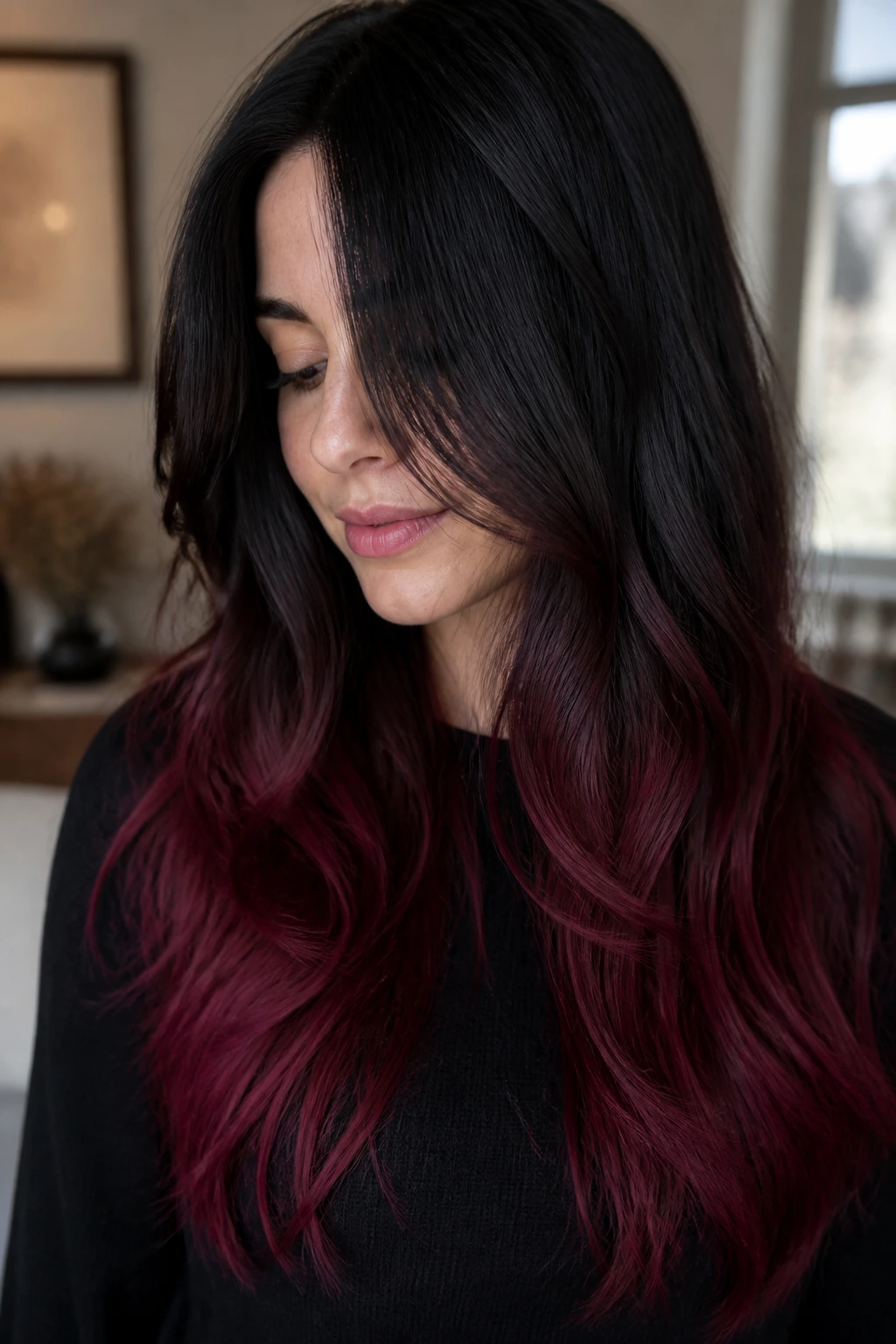
Unlike a full-head burgundy, an ombré gives you the drama at the bottom and keeps the top darker. That’s useful if you like contrast and want the color to grow out in a clean way.
The top stays brunette or deep mahogany, then the burgundy takes over through the mid-lengths and ends. On cool skin, the darker top helps the face stay balanced, while the cooler red at the bottom adds movement. You get the hit of color without flooding the whole head with it.
This works especially well on long hair, where the gradient has room to breathe. On shorter cuts, the shift can feel abrupt unless the blend is very soft. A skilled colorist will feather the transition so it doesn’t look striped.
If you like hair that changes a little when you move, this is a strong pick. The ends flash. The roots stay calm. Nice balance.
13. Iced Burgundy Highlights
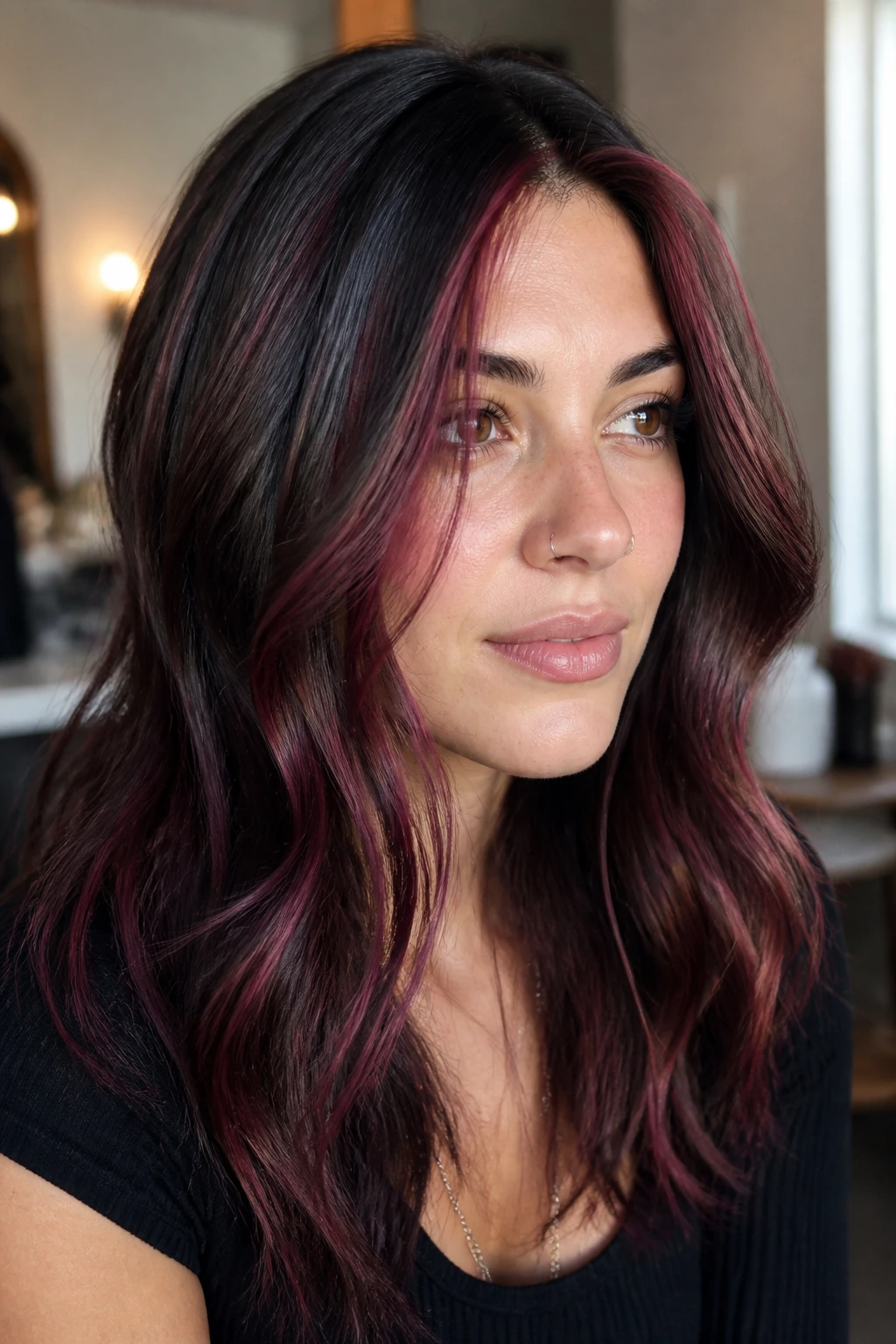
Iced burgundy highlights are for people who want the red to feel cool, not fiery.
Why It Works
The “iced” part means the red is pulled toward mauve, berry, or soft wine instead of orange. That keeps the highlights friendly to cool skin and makes them easier to wear with pale makeup, silver accessories, and muted clothing.
A good version of this idea uses fine ribbons rather than chunky streaks. The strands should sit close together enough to read as one dimensional color family, not as scattered pieces. Think shimmer, not stripes.
How to Get the Most From It
- Ask for fine weaving around the crown and face frame
- Keep the base dark for contrast
- Use loose styling so the highlights move
- Refresh with a cool-toned gloss before the color goes flat
A lot of people think highlights have to be bright to matter. Not here. The cooler the red, the more grown-up the result feels.
14. Espresso Burgundy Glaze
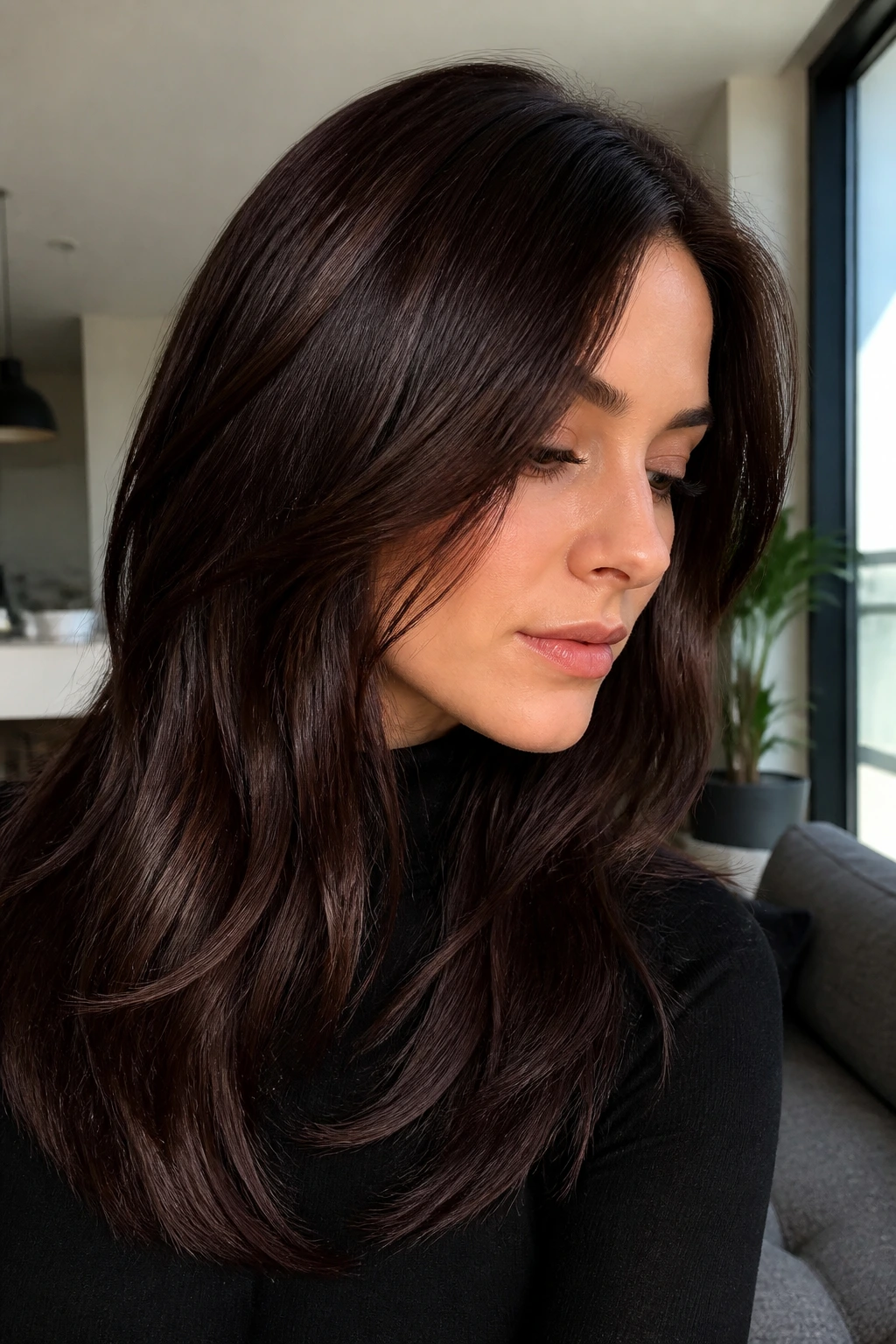
If you want a color change that stays quiet in indoor light, this is the smartest one on the list.
An espresso burgundy glaze adds a wine sheen to brown hair without forcing a big shift in base color. That makes it flattering on cool skin because the red sits under the surface. You notice it in sunlight, in a mirror by a window, or when the hair moves. The rest of the time, it just looks like richer brunette.
That kind of restraint has real value. Not everyone wants their hair to announce itself from across the room. Some people want a cleaner, glossier version of their own color, and this is that.
The best version uses a translucent glaze rather than heavy permanent dye. It keeps the depth soft and makes fading less awkward. If your hair is already medium brown, this can look especially natural.
No drama required. Just a better brunette.
15. Rosewood Burgundy Shine
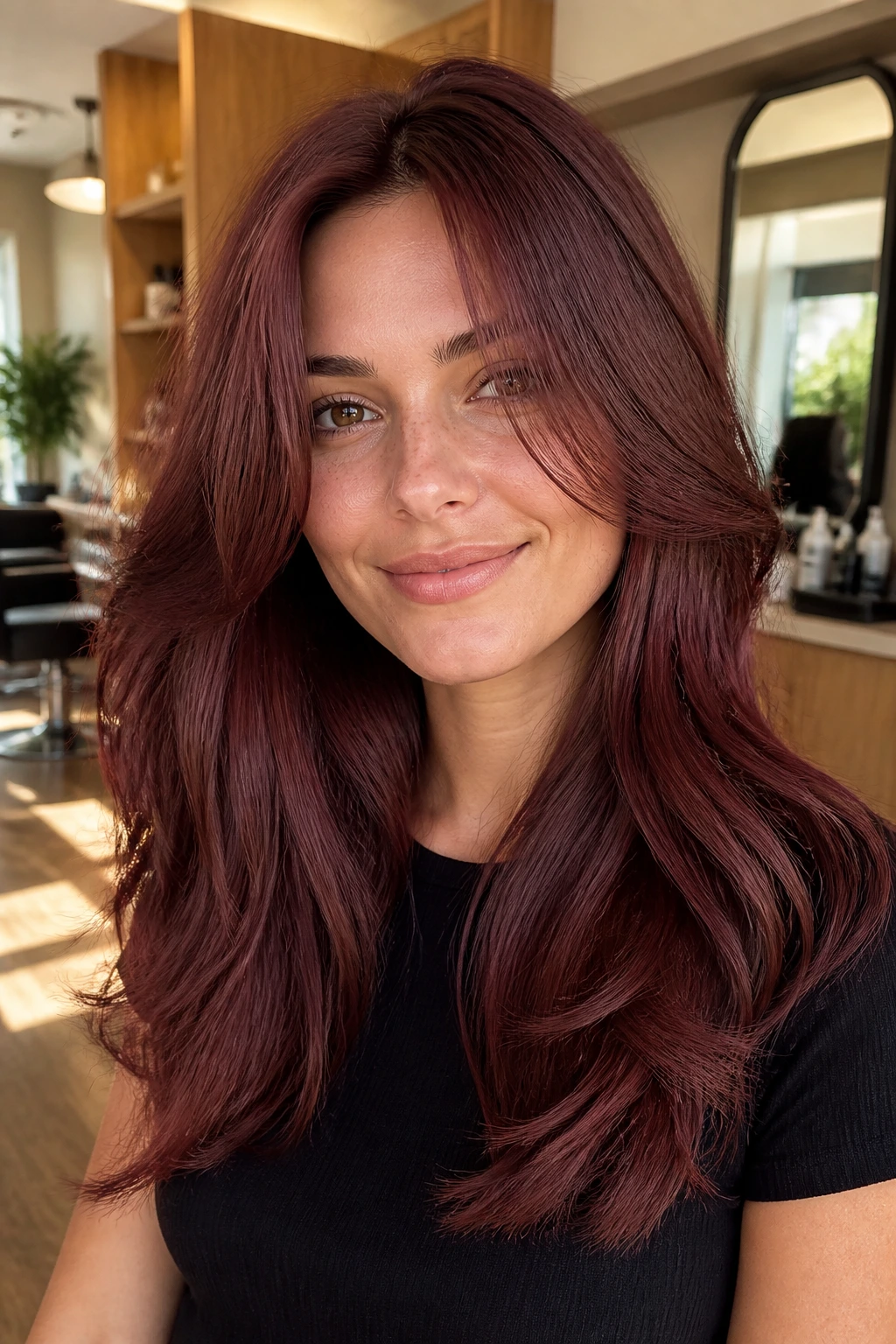
Why does rosewood work on cool skin so well? Because it bridges pink and brown without leaning orange.
Rosewood burgundy has a softer mood than wine or merlot. There’s a muted rosy feel to it, but the brown base keeps it grounded. On fair cool skin, that can be a lifesaver because the color doesn’t swamp the face. It just adds warmth in the right direction — and yes, warmth can still be cool-toned if it’s the right kind.
How to Wear It
- Best on soft layers and shoulder-length cuts
- Looks lovely with a round brush blowout
- Pairs well with berry blush and mauve lipstick
- Works if you want red-brown, not true red
This is one of those shades that quietly does a lot. It softens sharp features, gives shine, and stays wearable. No shouting necessary.
16. Amethyst Mahogany
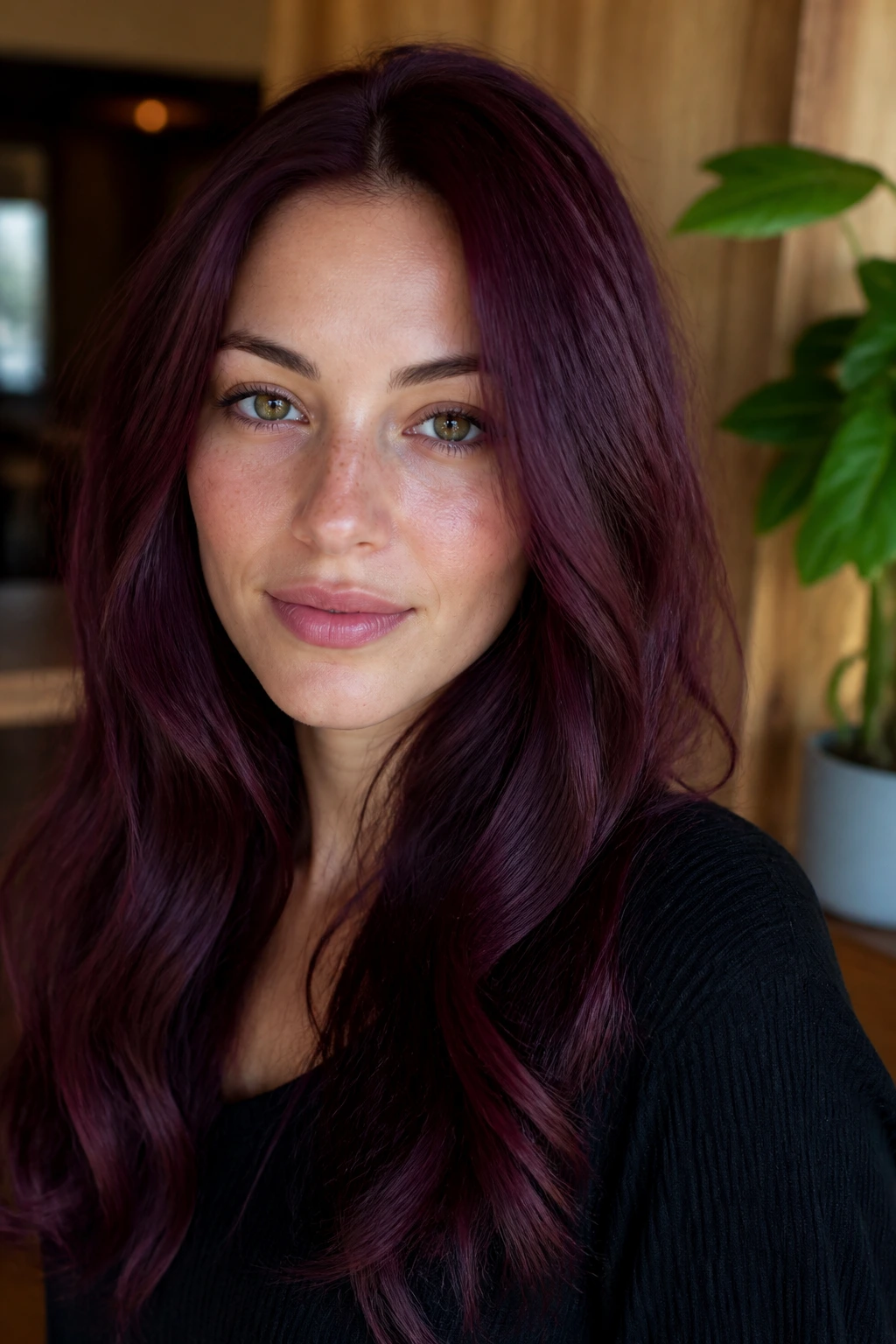
A lot of burgundy shades lean wine. Amethyst mahogany leans violet.
That’s what makes it feel a little bolder. The purple note makes the red read cooler, which is exactly what cool skin often needs. If you’ve ever tried a red that made your face look pink or tired, amethyst is the corrective move. It has enough darkness to stay rich, but the violet keeps the whole thing from tipping warm.
This is a strong choice for anyone who likes a more fashion-forward color without going neon. It also looks sharp on straight cuts, where the pigment gets a smooth, even surface. On curls, it turns jewel-like.
- Works best on medium to deep bases
- Good with blunt cuts, pixies, and geometric bobs
- Needs a blue-violet toner to stay cool
- Stays dramatic even when the color softens a bit
It’s moody, but not gloomy. That line matters.
17. Wine-Stained Waves
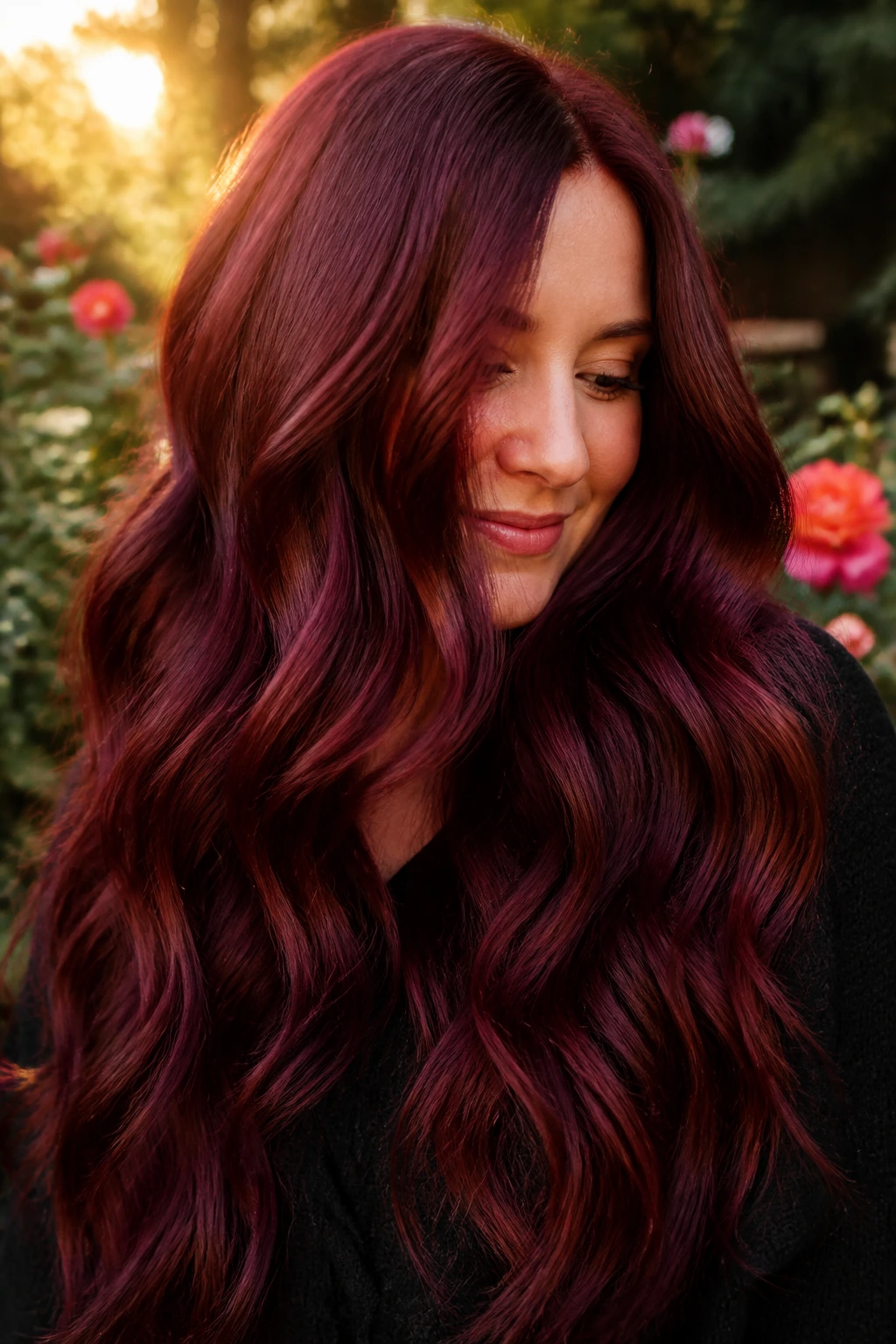
Wine-stained waves are one of the easiest burgundy ideas to love because they do not need a complicated cut to work.
The color sits all over the hair, but the waves break it up so it never looks like one solid slab. That movement matters. On cool skin tones, the shade feels more dimensional when there’s texture in the style, and waves give you that texture without asking for highlights, ombré, or any other extra work.
This look is especially good on long hair, where a flat color can sometimes feel heavy. Add a few bends, and the burgundy takes on depth. It’s the kind of color that looks calm at first glance and richer the longer you stare.
I’d keep the finish glossy and the part clean. Side part, middle part, whatever you like — just don’t bury the shine under too much product.
18. Mulberry Shadow Roots
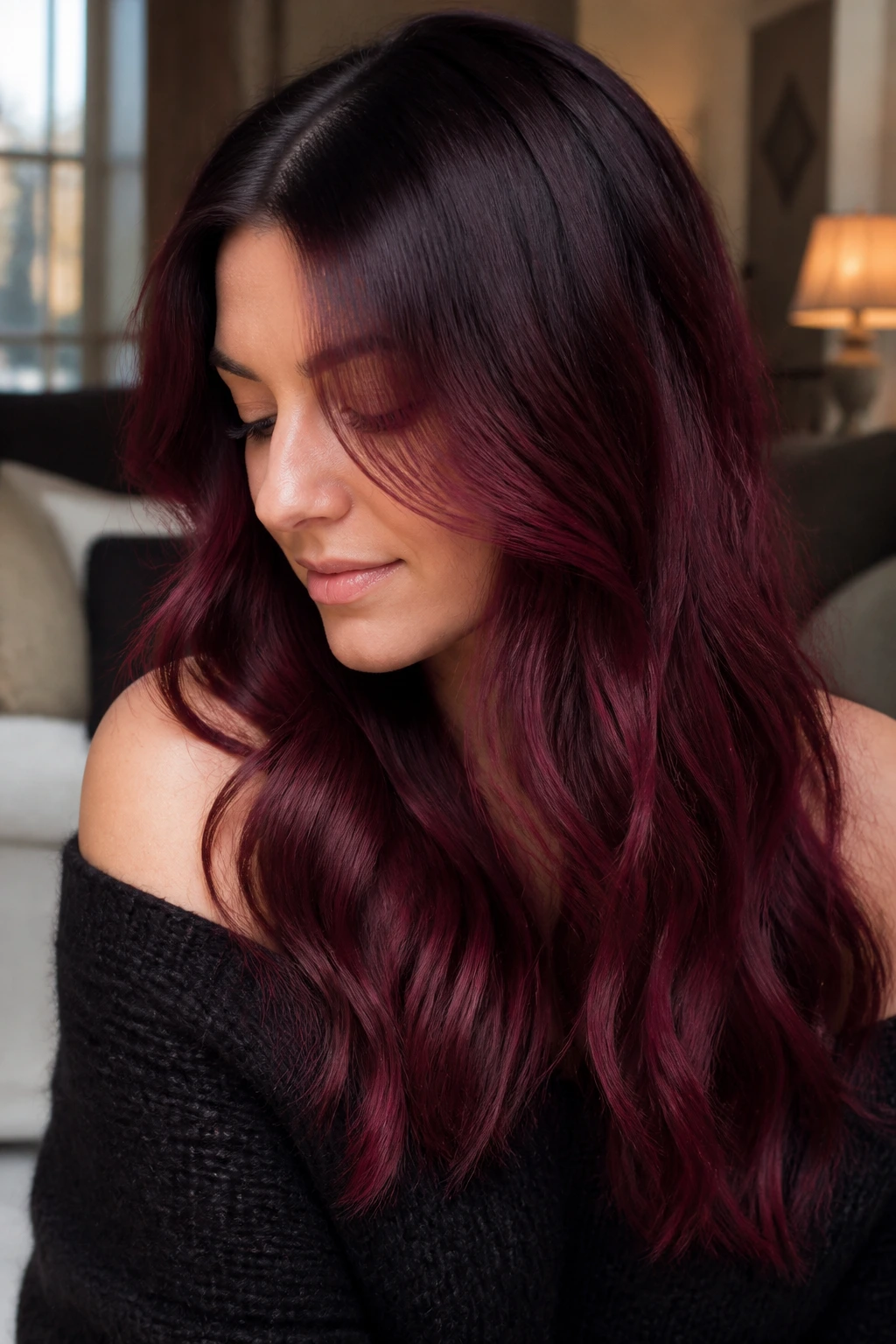
Compared with bright all-over burgundy, shadow roots give you a softer start and a cleaner grow-out. That’s a real advantage if salon time is not your favorite hobby.
The root stays deeper and cooler, while the mulberry tone opens up through the mids and ends. On cool skin, this helps the face frame stay grounded instead of too red. The color still reads rich, but the contrast is gentler.
It’s a smart look for medium to long hair because the shadow root creates an easy transition. You can wear it sleek, curled, or loosely waved. The root-to-end shift does the styling for you.
Best part? It hides regrowth better than a flat burgundy. That means fewer obvious lines and a more lived-in finish.
19. Deep Raspberry Mahogany
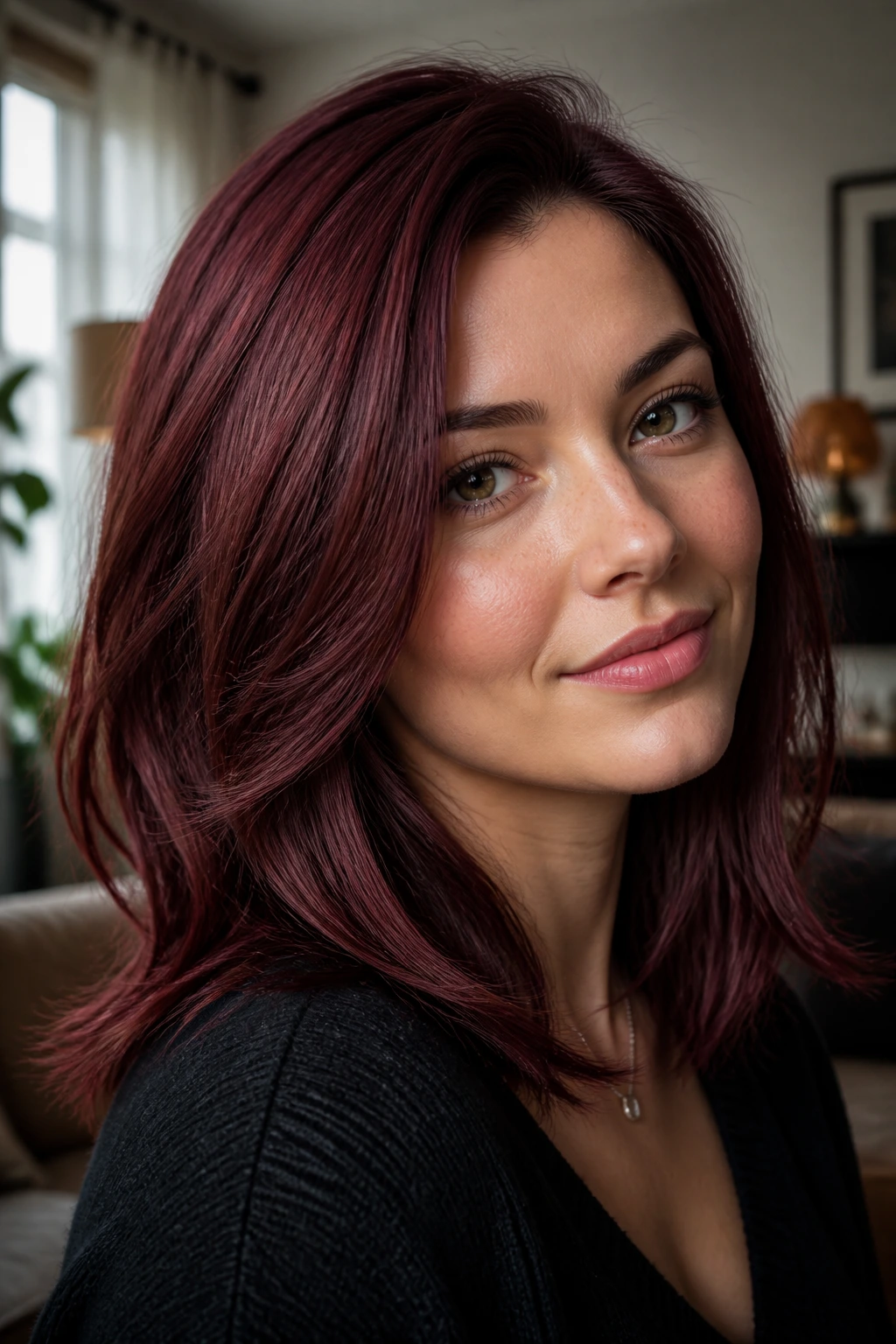
A deep raspberry mahogany shade is the one I’d point to if you want more life in the red but still want to stay cool.
Why It Works on Cool Skin
Raspberry has that berry brightness that can wake up pale or muted skin without dragging the color into orange territory. Mix it with mahogany, and you get a deeper, more wearable version that still feels expressive.
This is one of the better choices if your natural hair is medium brown and you don’t want to go nearly black. The raspberry tone keeps the color from disappearing, especially in daylight. It also plays nicely with cooler makeup tones, which is handy if your whole routine already leans pink, plum, or berry.
Small Details That Matter
- Keep the base one level deeper than the red overlay
- Ask for a cool berry toner, not copper red
- Let the hair move; flat irons can mute the raspberry shift
- A layered cut helps the red catch along the ends
This one has personality. It also has restraint, which is why it works.
20. Burgundy Curtain Bangs
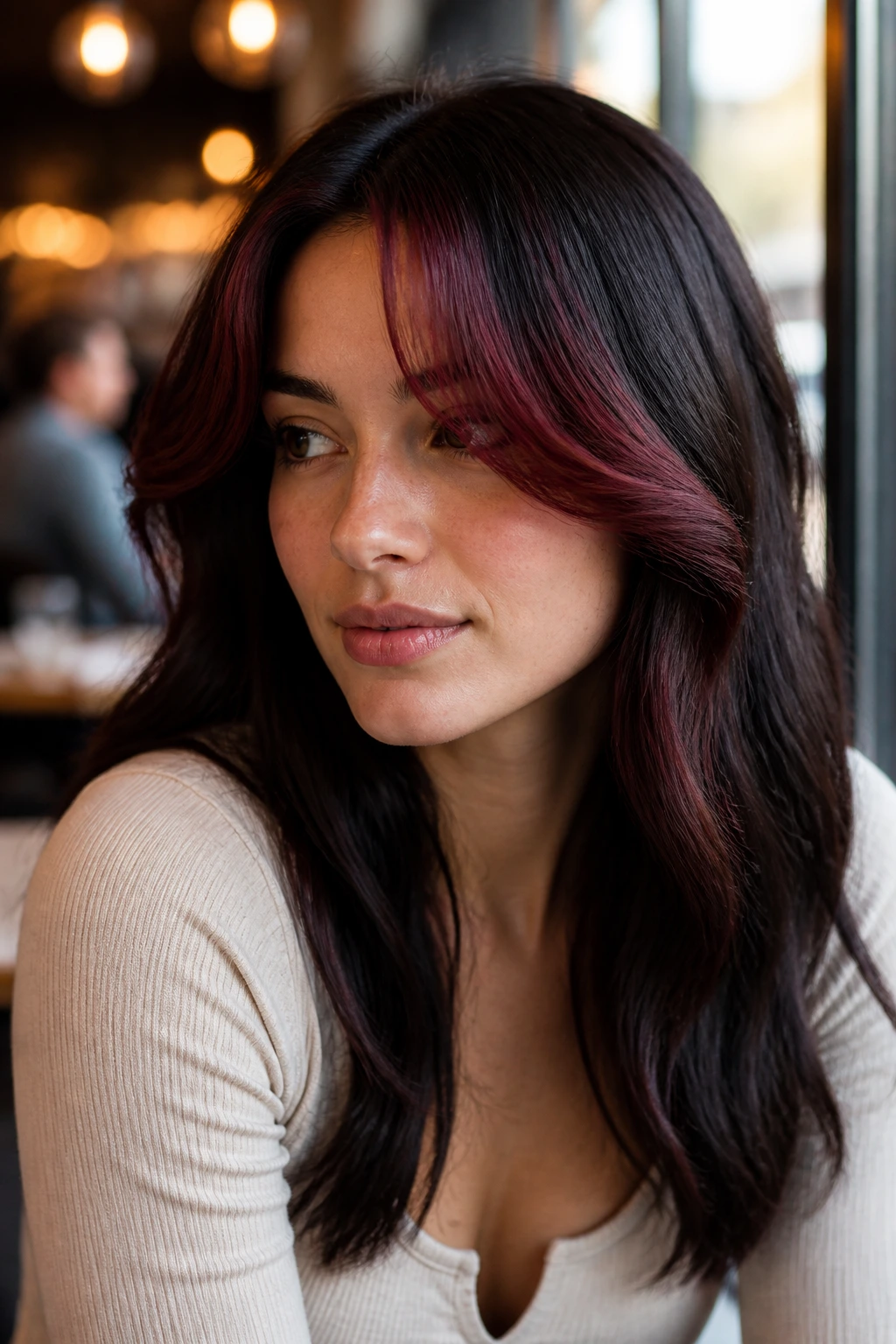
Curtain bangs can make a color feel intentional without requiring a full-head change.
That’s the real reason this idea works. If the front pieces are burgundy mahogany and the rest of the hair stays darker brunette, the color lands right where people look first. Cool skin tones tend to like that because the red is framed near the face, where it can echo your undertone instead of spreading everywhere.
This is a good first-step red if you’re nervous. You can keep the lengths subtle and still get the color hit. It also works beautifully with layered hair because the bangs and face frame create a soft transition into the rest of the cut.
A light bend in the bangs helps. Too much round brush volume can make the color feel dated. Keep it loose. That’s the move.
21. Mahogany to Plum Melt
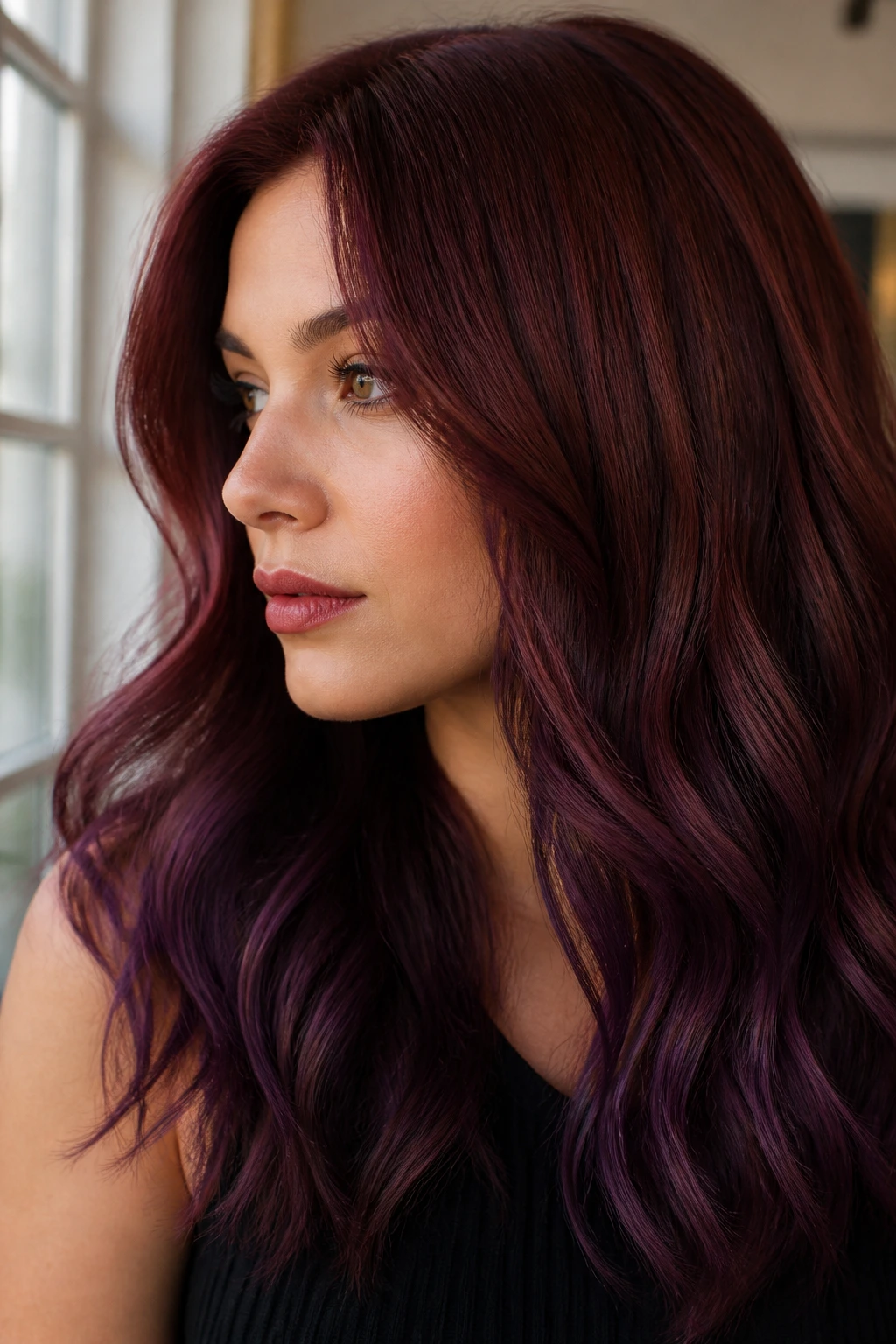
Why blend mahogany into plum instead of choosing one shade? Because the plum end cools the whole look down just enough.
The transition usually starts with a richer mahogany near the roots or mid-lengths, then shifts into a plumier finish toward the ends. On cool skin, that change can be very flattering because the warmer red never sits alone for long. The purple takes over before the color has a chance to feel brassy.
How to Wear It
- Best on medium and long layered cuts
- Works well if you like visible color changes through the length
- Keep the transition soft over 2 to 3 levels
- Great with loose waves, where the two tones can meet and separate naturally
This is a choice for someone who likes dimension but doesn’t want highlights. It has depth, movement, and just enough edge.
22. Dark Cherry Pixie
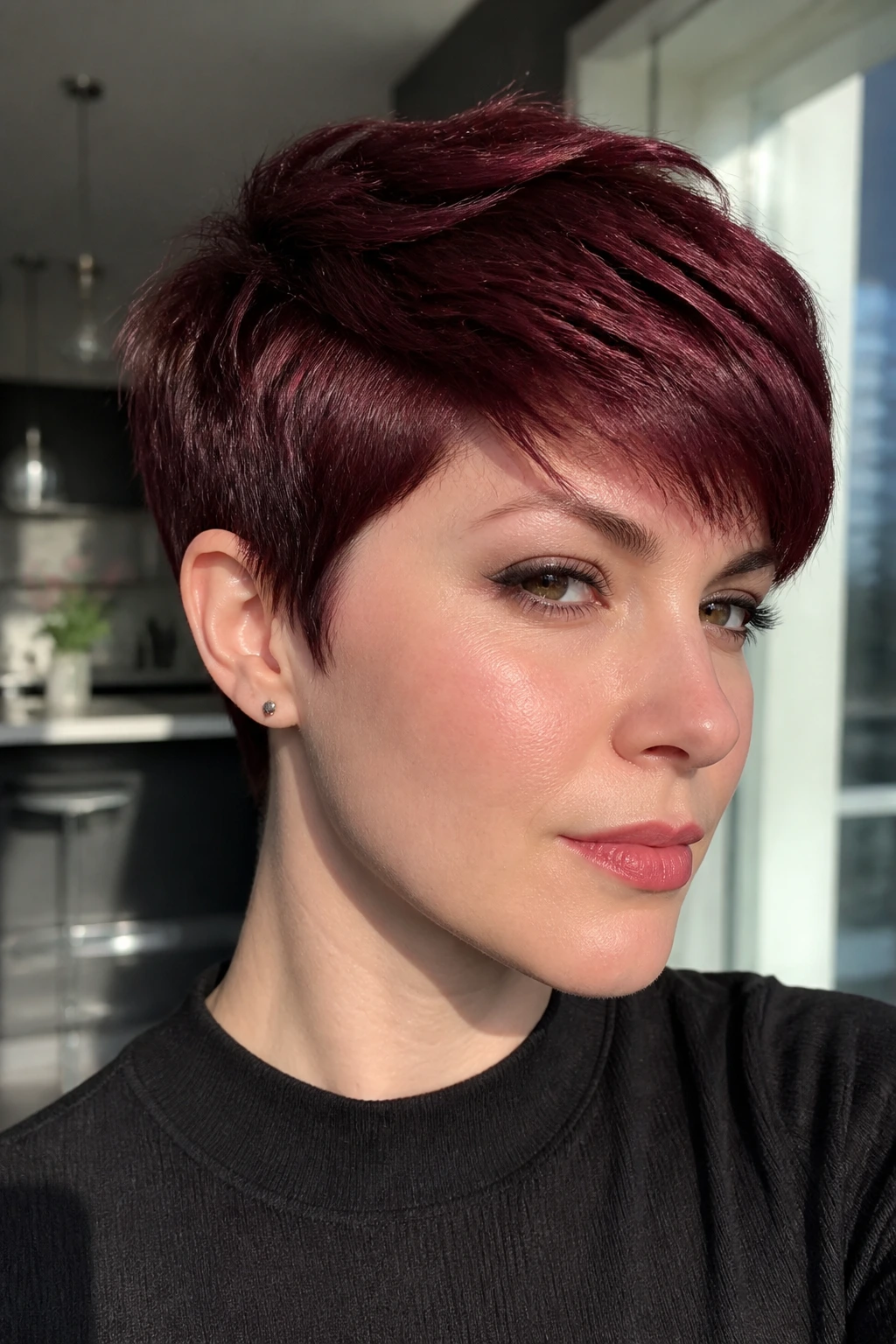
A pixie cut with dark cherry color can look sharper than a much longer style because every inch of hair matters.
Short hair does not hide pigment. It puts it on display. That’s why a dark cherry pixie can look so crisp on cool skin tones — there’s no extra length to muddy the color. The red sits close to the head, where the cut lines stay visible and the shade reads more deliberate.
The best version keeps the sides neat and the top textured. That way, the cherry tone can shift a little as the hair moves. Sleek pixies look polished; textured ones look lively. Pick your lane.
- Great for people who want low length and high color payoff
- Good with tapered sides
- Best if you like bold earrings or strong brow shapes
- Needs frequent trims to keep the cut clean
Tiny haircut, big attitude. That’s the whole appeal.
23. Satin Burgundy Black
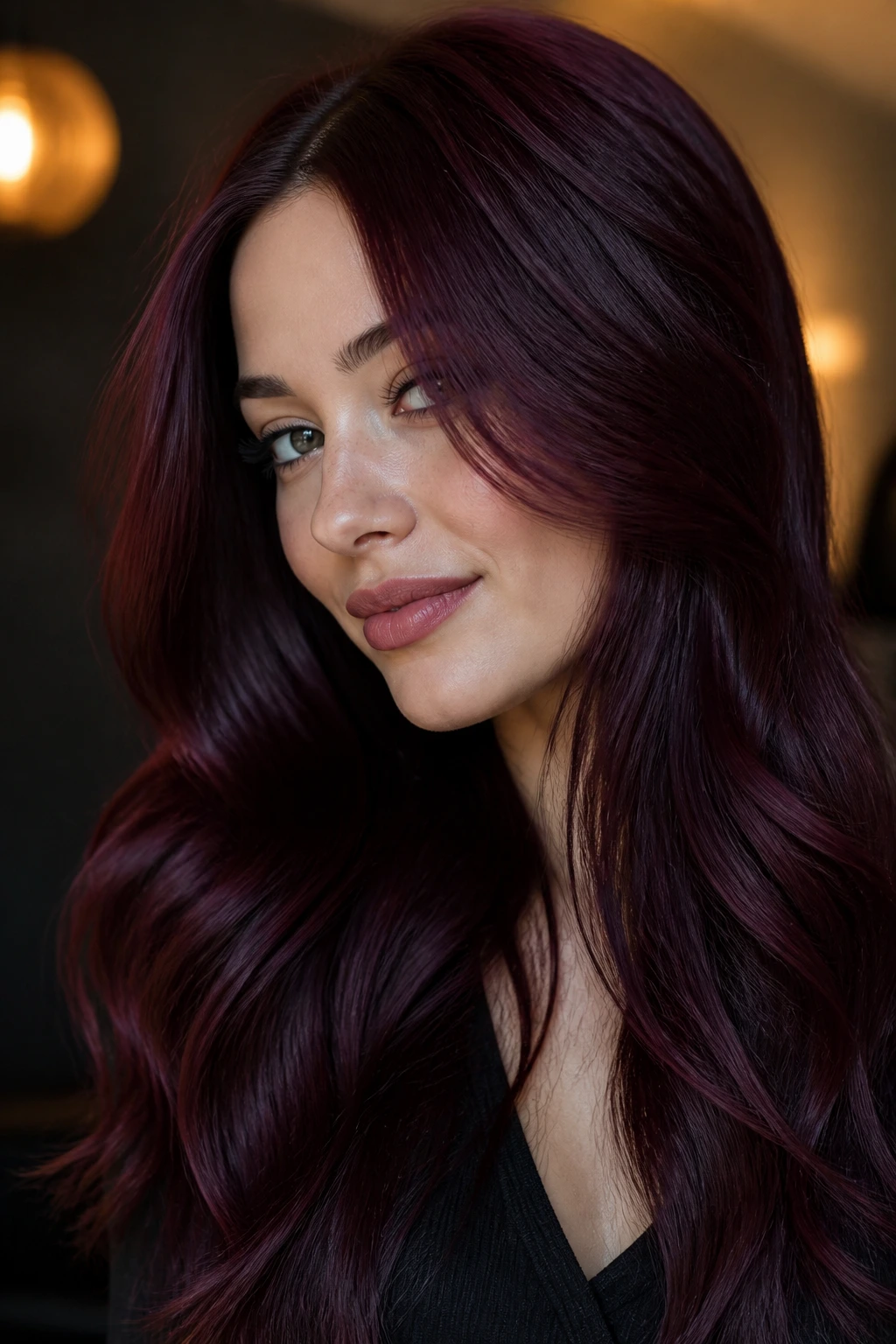
Satin burgundy black is the darkest idea on this list, and maybe the easiest to live with if you want almost-no-red until the light hits.
The satin finish matters more than the color name. You want sheen. Without shine, the shade can go flat and absorb all the dimension that makes burgundy mahogany attractive in the first place. With shine, though, the hair turns deep black indoors and reveals a wine edge outside or under a bright lamp.
This can be stunning on deep cool skin, but it also works on lighter cool complexions if you like contrast. The trick is keeping the red cool and the black soft, not harsh.
I’d pair this with a gloss treatment every so often and a cut that has some movement. Dead-straight hair can make the tone feel heavier than it is. A little bend helps.
24. Peekaboo Burgundy Panels
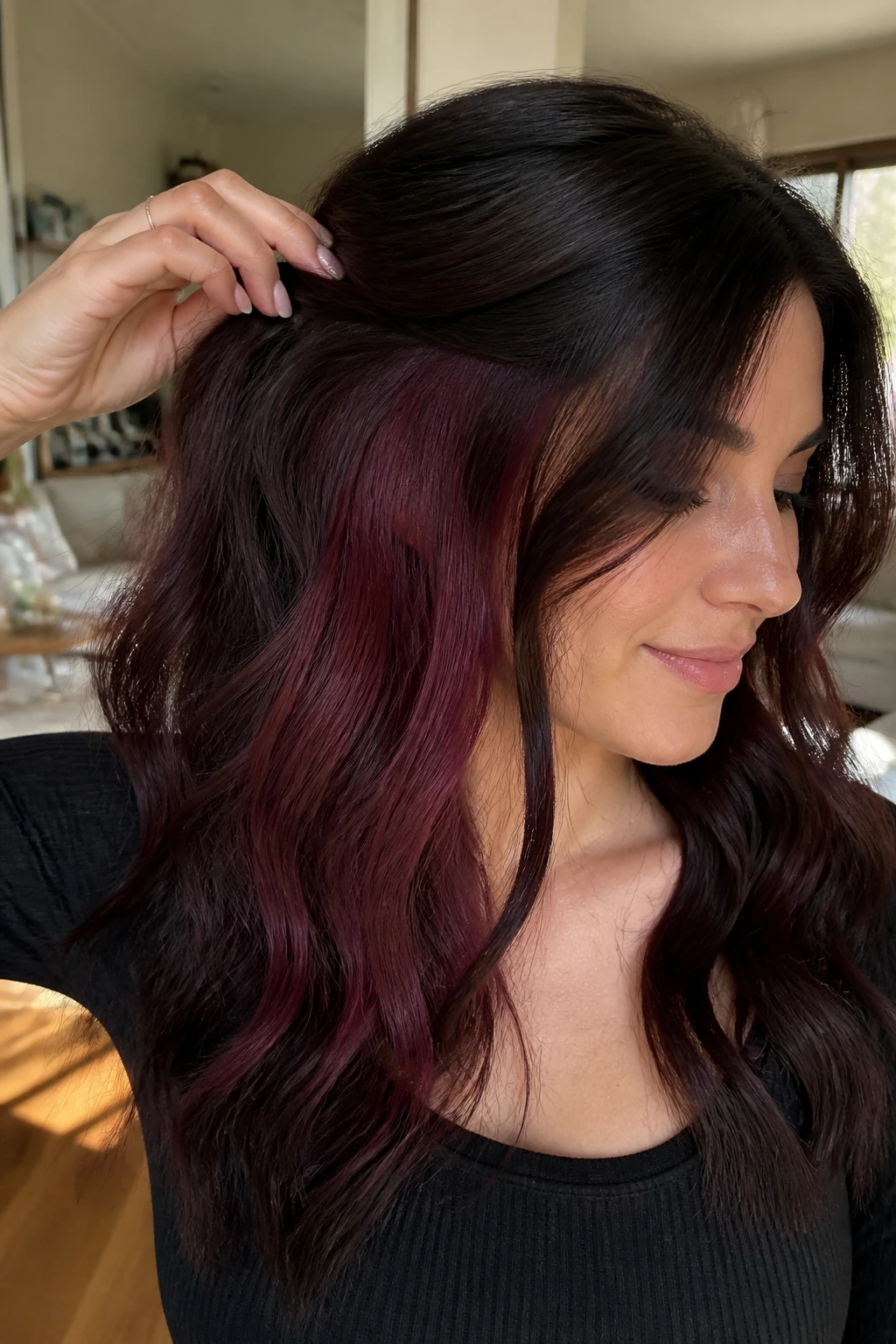
Compared with full-color burgundy, peekaboo panels let you keep the drama hidden until the hair moves. That makes them ideal if you want something playful without committing to an all-over change.
The color usually sits underneath the top layer or inside the hair, so it flashes when you tuck the hair back or turn your head. On cool skin tones, the hidden red-purple notes can be a nice surprise because they never sit in the spotlight long enough to feel too warm.
This is one of the best ideas for conservative environments, first-time red wearers, or anyone who likes a little secret in their hair. You can make it stronger with wider panels or quieter with a few thin slices.
It’s also an easy way to test how often you actually like seeing red in your hair. Turns out, that matters.
25. Cool Berry Burgundy Mahogany Gloss
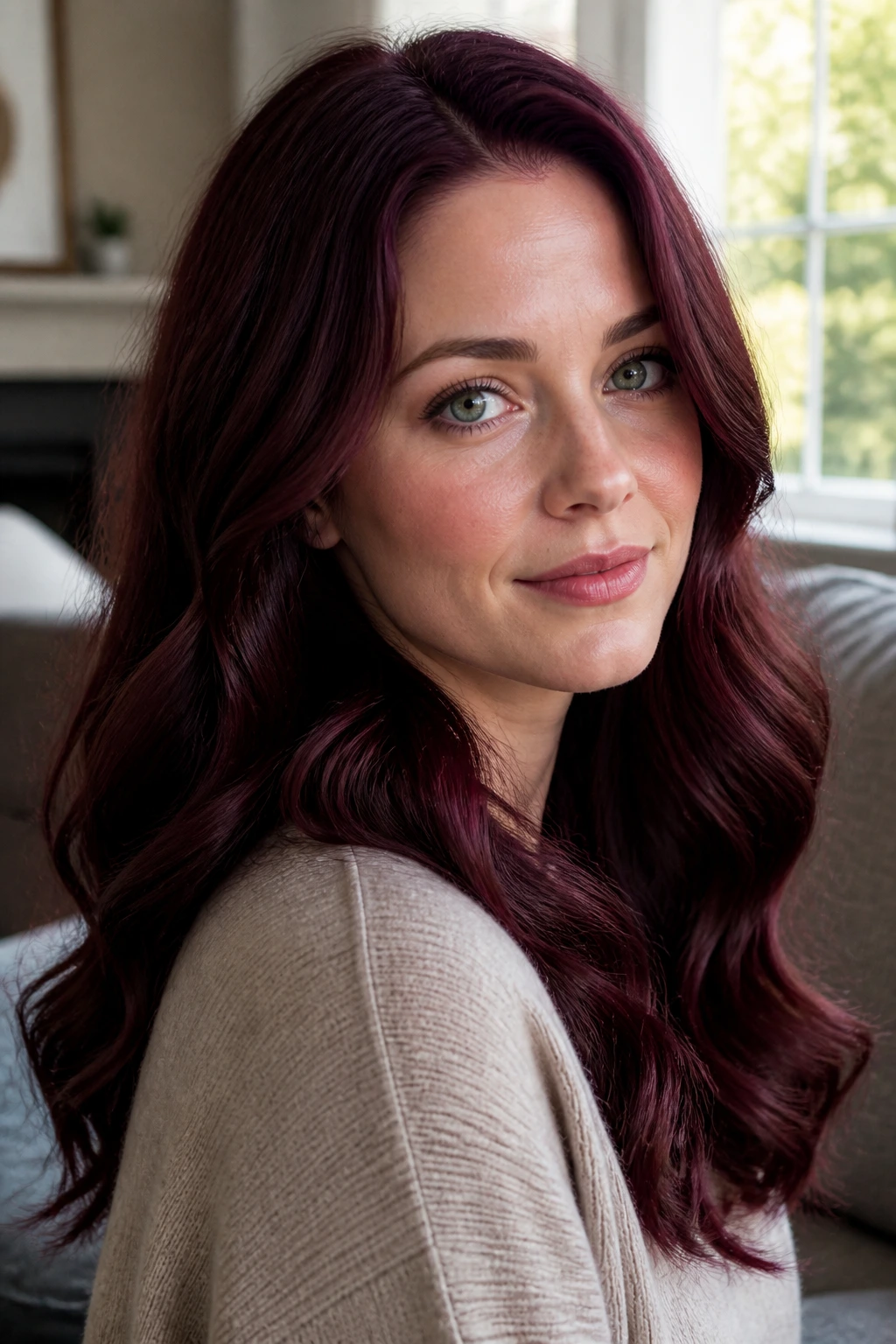
If I had to name one burgundy mahogany hair color idea that feels the safest and softest for cool skin tones, this would be it.
A cool berry gloss over a mahogany brunette base gives you color without weight. It’s red, but not loud. Dark, but not flat. There’s enough berry in the mix to flatter pink or blue undertones, and enough brown to keep the whole thing grounded. In daylight, you get that wine-kissed shift. Indoors, it stays sleek and understated.
How to Finish It
- Ask for a translucent gloss, not a heavy opaque dye
- Keep the base a level 4 to 6 brunette
- Let the ends carry slightly more berry than the roots
- Style with soft waves or a smooth blowout for extra shine
This is the shade I’d recommend to someone who wants to try the color family without making a huge leap. It reads polished, it grows out gently, and it never needs to look orange to be interesting. Pretty good deal.
