



Layered haircuts for thick hair can be a blessing or a headache, and the difference usually comes down to where the weight gets removed. Cut the bulk in the wrong place and the hair balloons out at the sides, collapses at the crown, or sits in that awkward triangle shape nobody asked for.
Dense hair is not one thing, either. Straight, coarse strands behave differently from soft waves, and both act differently from curls that clump on their own. That’s why the same haircut can look sleek on one person and puffed-up on another.
The styles that work best usually do one of three jobs: they lighten the interior, shape the perimeter, or break up a heavy line around the face. Sometimes all three. The good news is that thick hair gives you room to play with shape, so you can go long and airy, short and piecey, polished and blunt, or somewhere in the middle without ending up with wispy ends.
Bring a photo to the salon, yes. Bring a sense of where the bulk bothers you more, too — around the jaw, at the sides, through the crown, or in the ends. That detail matters. A lot.
1. Long Face-Framing Layers That Keep the Length
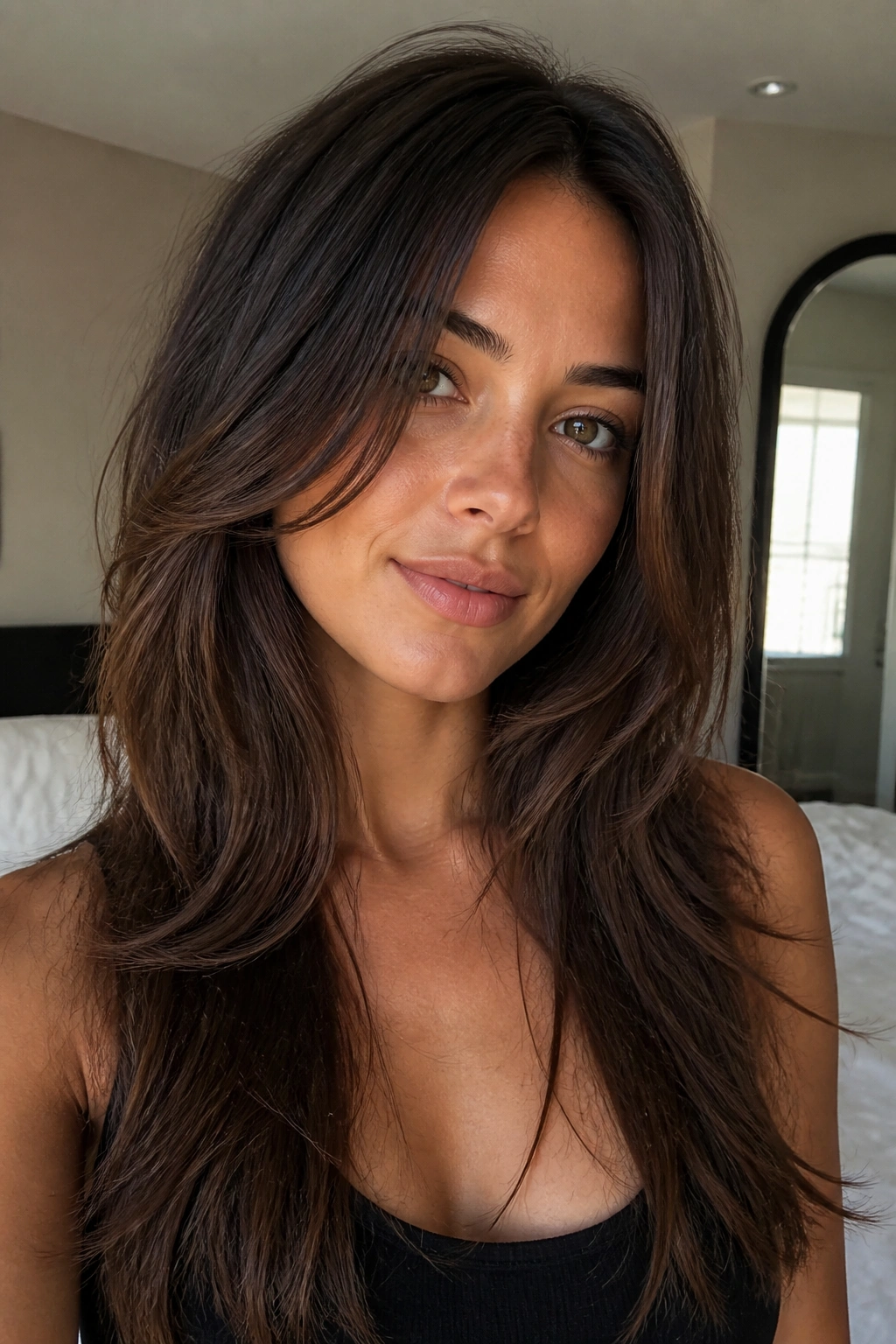
Long face-framing layers are the safest place to start if you want movement without giving up the drama of long hair. The perimeter stays heavy enough to feel full, while the front pieces soften the line around the cheekbones and jaw.
Why It Works
The trick is placement. On thick hair, the shortest face-framing pieces usually look best when they begin somewhere between the chin and collarbone, not way up near the temples. That gives shape without turning the front into a curtain that flips out every time you move.
I like this cut for people who wear their hair down more often than up. It gives you swing. It also makes ponytails and half-up styles look better, which sounds minor until you compare them side by side.
Quick notes:
- Best for straight, wavy, and softly curled hair
- Ask for layers that start low, not a choppy top layer
- Works well with a 1.5-inch round brush or large-barrel iron
- Trims every 8 to 10 weeks help the face frame stay clean
Best tip: keep the front pieces long enough to tuck behind the ear without fighting the shape.
2. The Butterfly Cut With Lift at the Crown
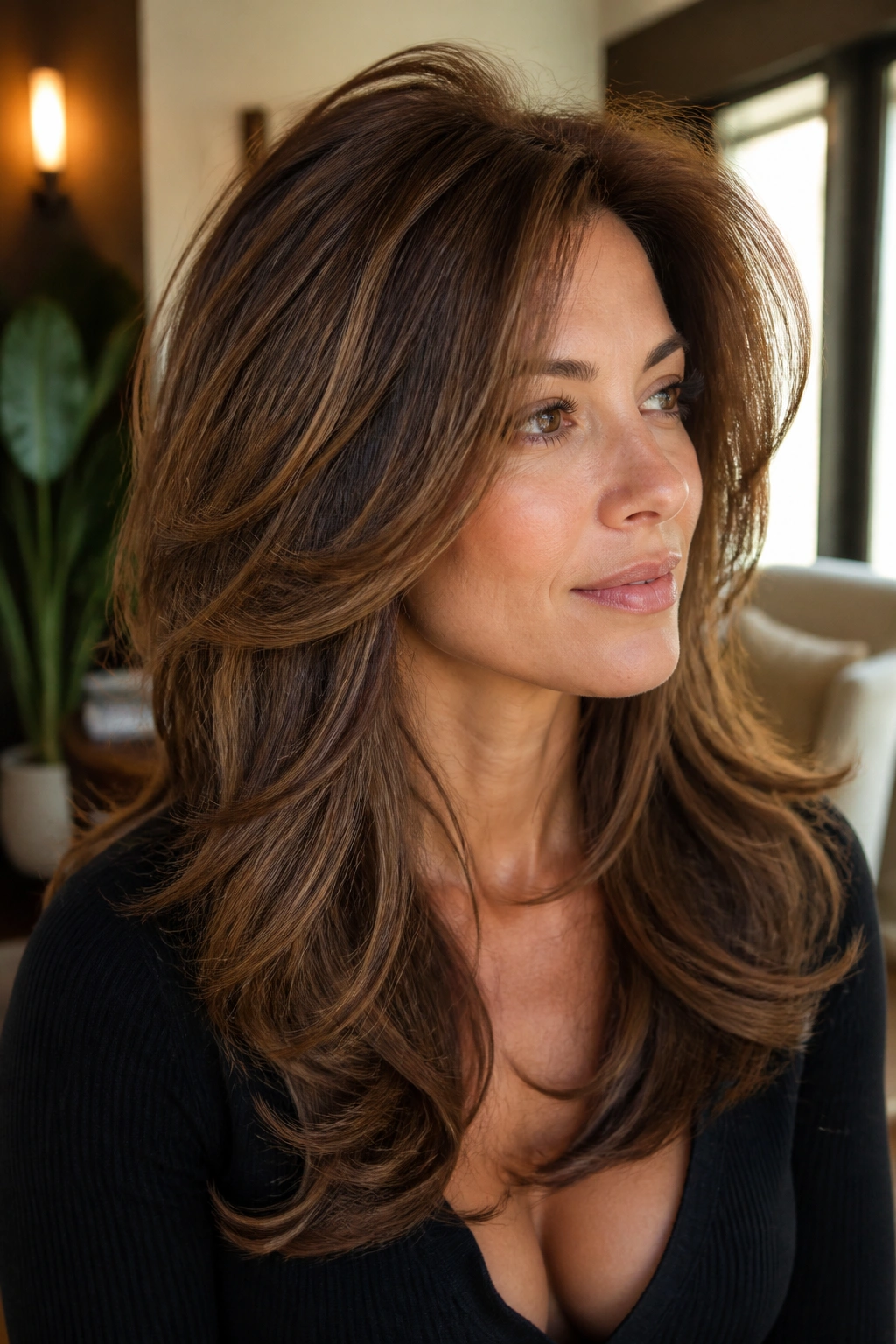
Why does this cut show up so often in layered haircuts for thick hair? Because it solves two problems at once. The crown gets lift, and the length underneath stays long enough to feel like you didn’t lose anything.
The butterfly cut uses shorter layers around the top of the head and longer layers underneath, so the shape opens up when you blow-dry it. Thick hair can look heavy through the crown even when it’s healthy, and this cut breaks that mass apart without making the whole head look thin.
How the layers sit
The shorter pieces usually land around the cheekbone or just below it, while the longer section keeps going past the shoulders. That contrast is what makes the shape flutter when the hair moves. It’s especially nice if your hair feels big but flat at the roots.
How to style it
A round brush and a bit of root lift go a long way here. Rough-drying won’t show the full shape as well, and that’s the catch. This cut likes some styling. Not hours. Just enough to bend the layers away from the face and give the top a little air.
3. U-Shaped Layers for a Softer Hemline
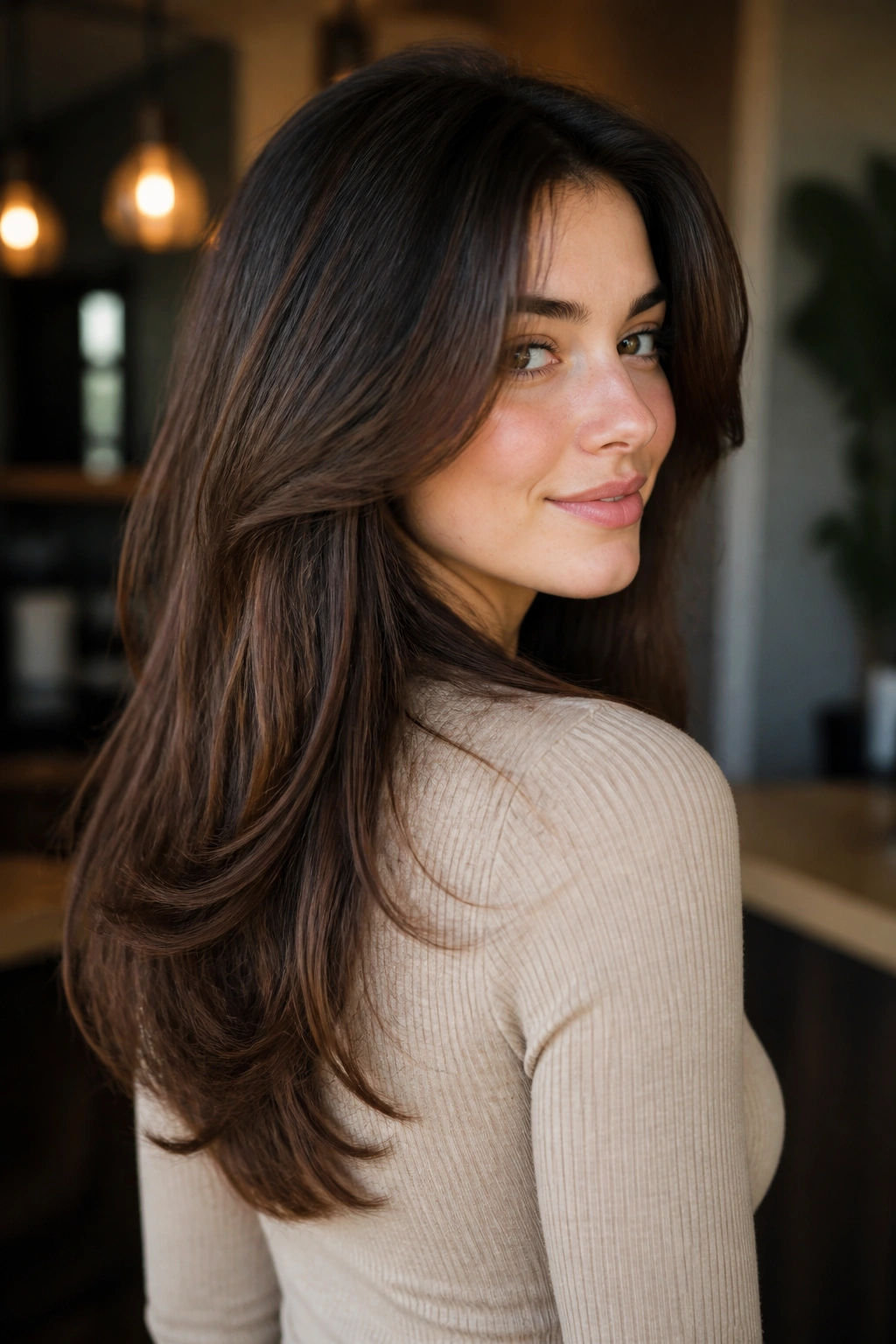
A U-shaped cut is one of those styles that quietly makes thick hair behave. The back is left slightly longer, the sides fall in a gentle curve, and the bottom line looks softer than a blunt straight edge.
That curve matters more than people think. Thick hair can create a hard horizontal shelf at the bottom if it’s cut too square, especially when it’s straightened. A U shape breaks that heaviness without turning the ends wispy.
What to ask for
- Keep the longest point centered in the back
- Let the sides fall a little shorter than the middle
- Add long internal layers if the ends feel too bulky
- Avoid too many short pieces near the temples if you wear your hair smooth
This style is a nice middle ground. It looks polished when blown out, but it still has enough movement to work air-dried. If you like a ponytail, you’ll probably like this one even more, because the curve helps the hair fall naturally instead of sticking out like a ruler.
4. A Shaggy Layered Cut That Loves Natural Texture
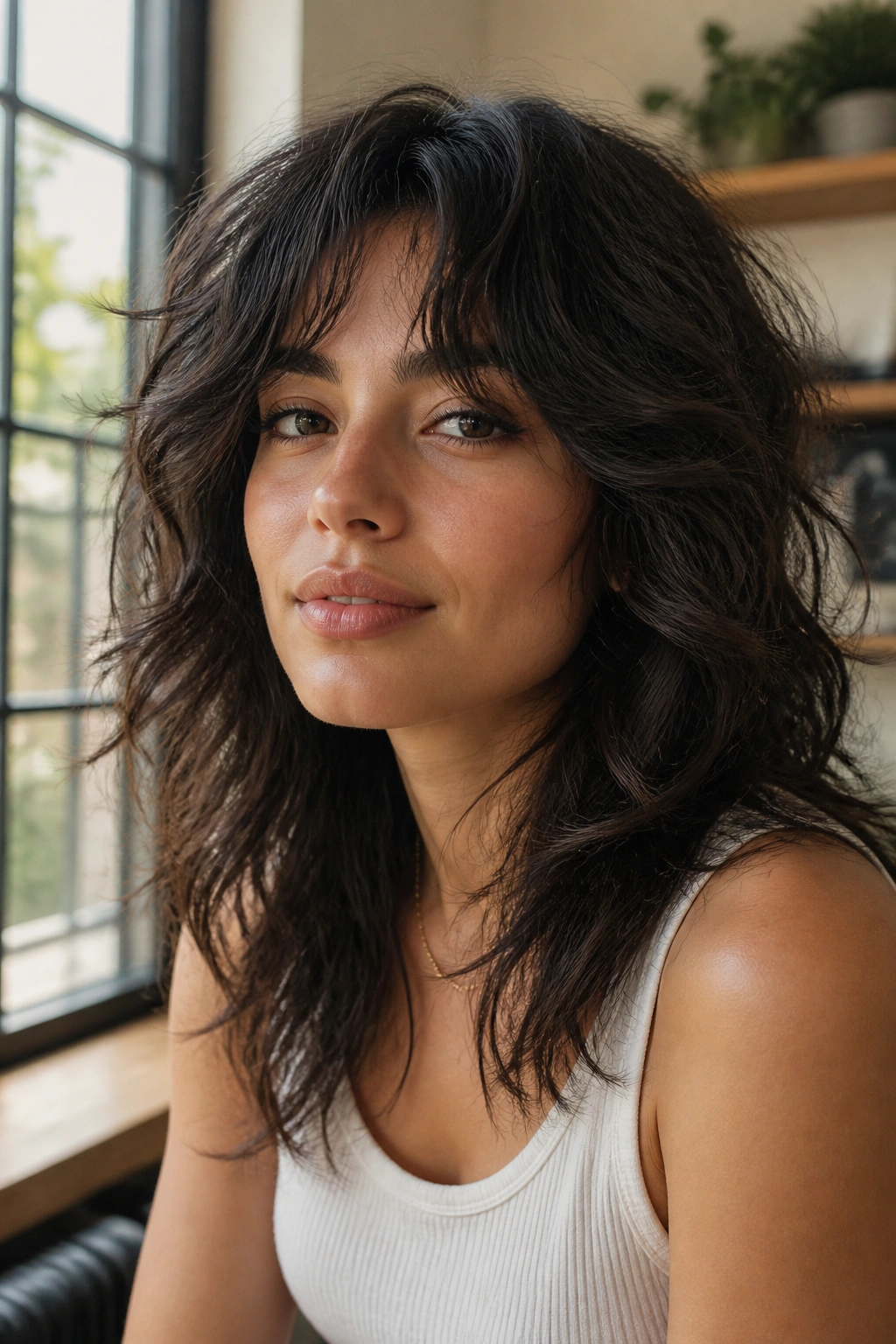
A shag is not subtle, and that is exactly why it works on thick hair. The choppy layers remove weight in a way that looks intentional, not accidental, and the texture ends up doing most of the work for you.
This is the cut I’d hand to someone with waves, bend, or a little natural frizz who wants to stop fighting the hair every morning. The shag gives shape to movement. It does not ask the hair to be calm.
The best version keeps the layers soft enough that the cut still grows out well. Too much razoring, and the ends can start to fray. Too little texture, and it just turns into a heavy layered cut that needs more styling than it should.
Use it if:
- Your hair has wave or loose curl
- You like a lived-in finish
- You don’t mind a little mousse or texture spray
- You want your hair to look fuller around the crown and lighter at the ends
Skip it if: you want a super smooth, tidy shape every single day.
5. Collarbone Lob With Hidden Internal Layers
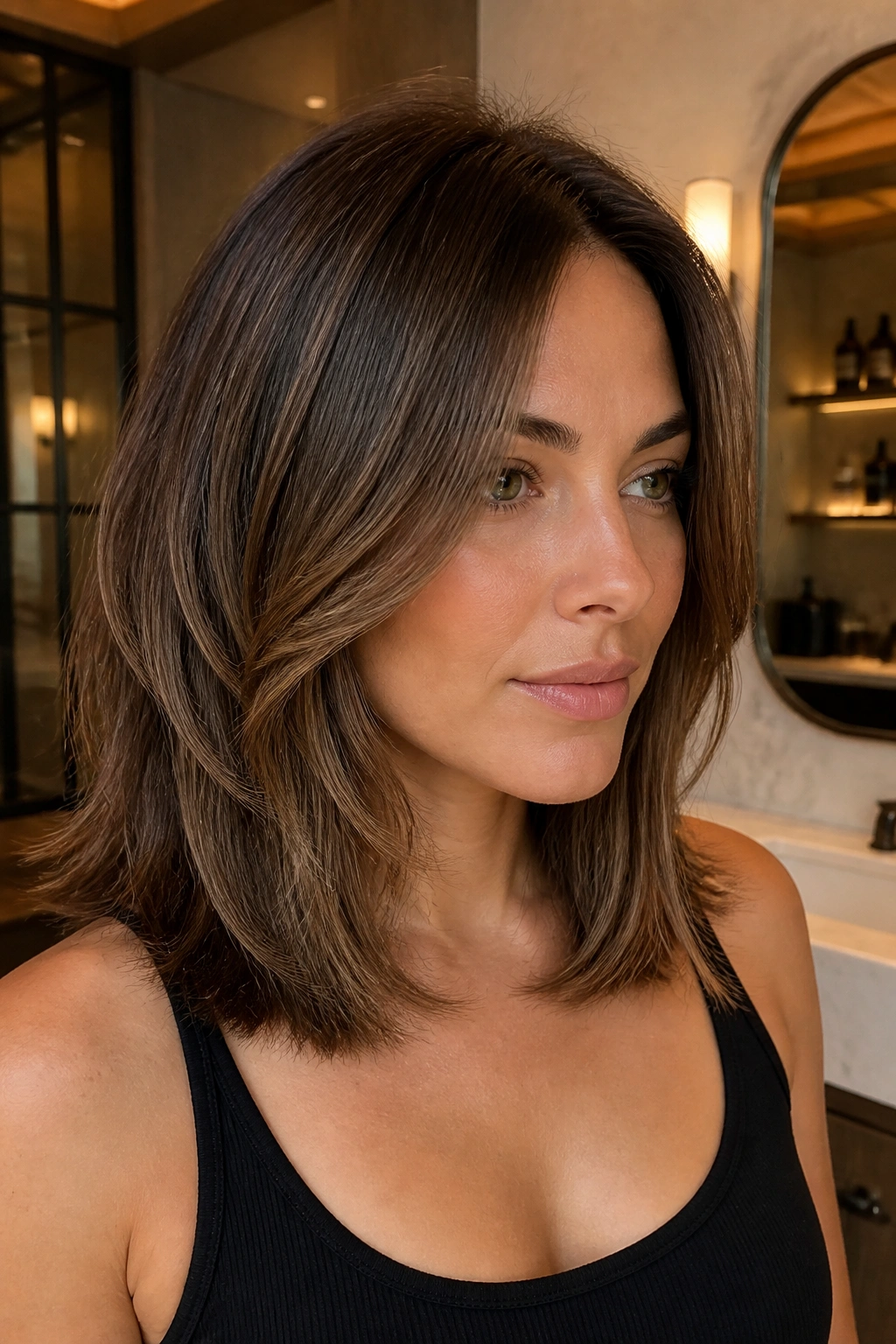
A collarbone-length lob is one of the most useful layered haircuts for thick hair because it lands in that sweet spot between too long and too short. The length removes some of the drag, and the hidden layers keep the surface from sitting like a block.
What makes this cut smart is that the layers stay inside the shape. From the outside, the bob can look clean and modern. Inside, the stylist has taken out weight so the hair bends better and doesn’t mushroom at the sides.
Why the internal layers matter
Thick hair at collarbone length can feel surprisingly heavy. The ends swing, but the middle can puff out. Internal layers solve that without making the cut look choppy. The result is cleaner around the face and lighter through the mid-lengths.
A 1-inch curling iron or a medium round brush gives this cut a nice bend, but it also air-dries well if your hair has some natural texture. The big win here is control. Not drama. Control.
6. Curly Layers That Let the Shape Breathe
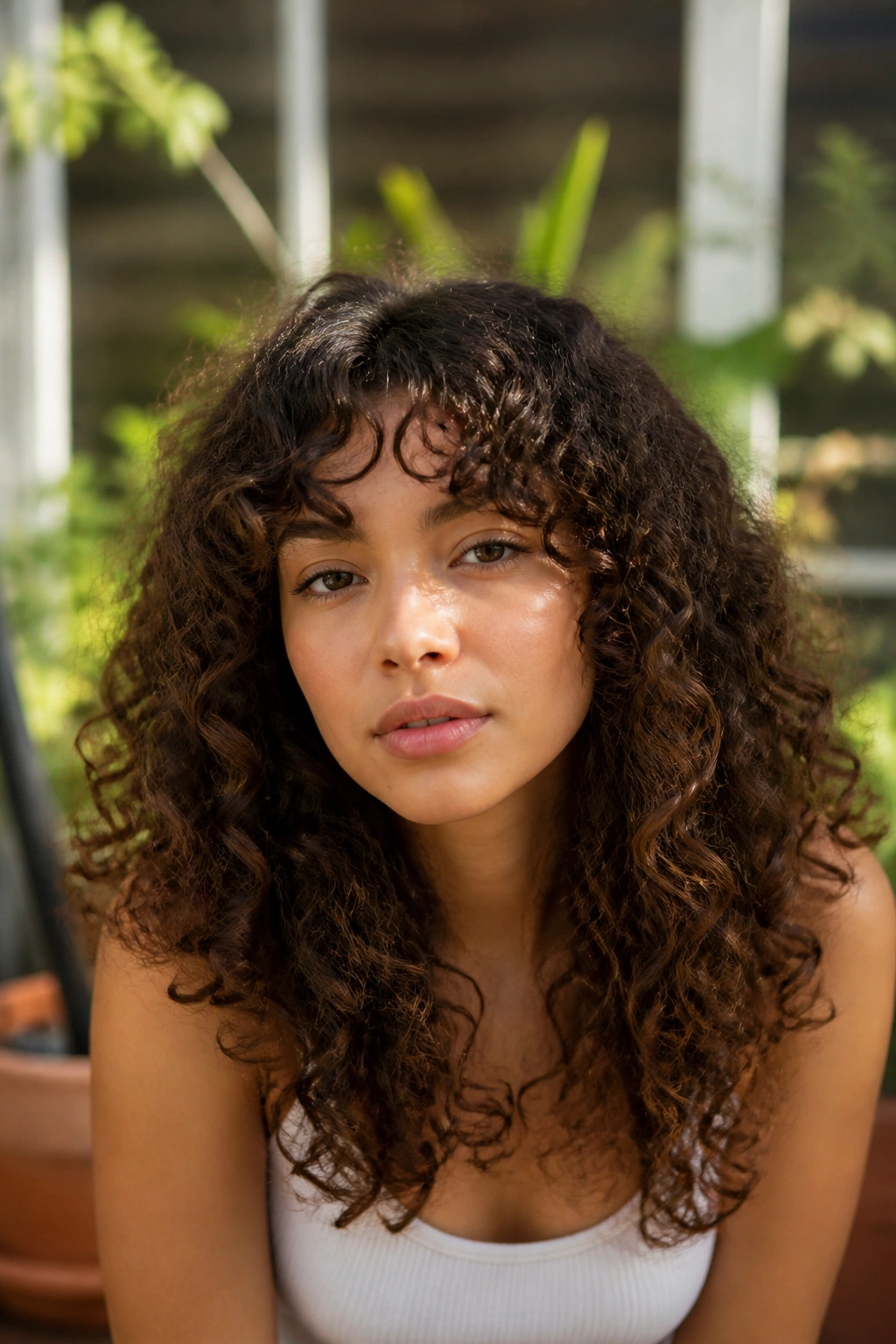
Curly thick hair needs a different kind of layer than straight thick hair. If the curl pattern is doing half the shaping already, the haircut should support it, not fight it.
Dry cutting or cutting the hair in its natural state usually gives the best read on where the curls actually sit. Wet curls can lie to you. They stretch, shrink, and clump in ways that make the haircut look different once it dries.
What to look for
- Layers should follow the curl pattern, not slice through it
- Too much thinning can make curls puff and separate
- The shortest pieces often work best around the cheekbone and crown
- A diffuser on low heat helps keep the definition intact
Curly layers are less about neatness and more about balance. You want the top to have enough shape that it doesn’t flatten, and the ends to avoid turning into a triangle. A good curly cut should make the hair feel lighter when you shake it out. That’s the signal. Not flat. Not stringy. Just freer.
7. Rounded Layers That Build a Clean, Full Shape
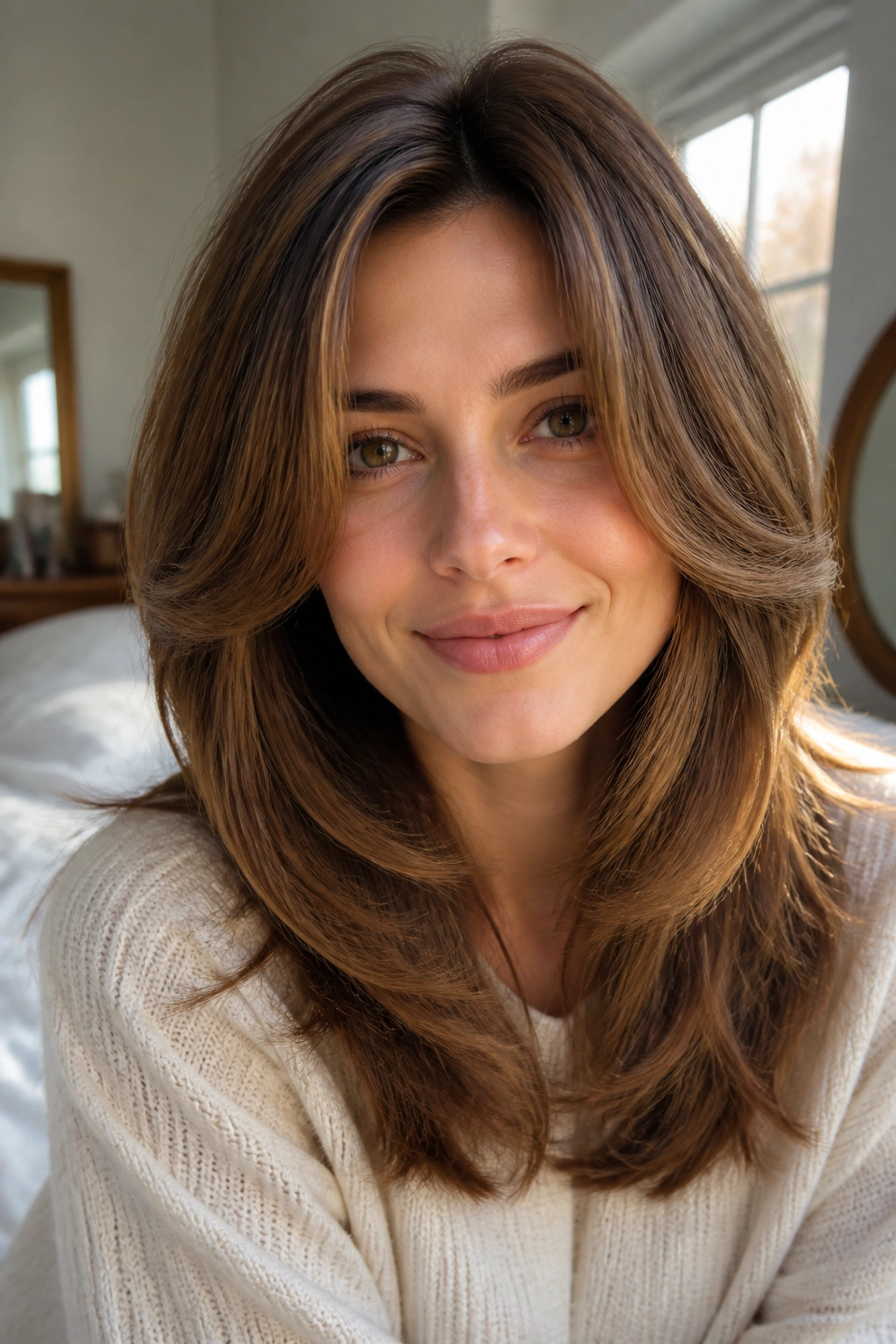
Rounded layers give thick hair a soft dome shape that looks polished without feeling stiff. Instead of letting the sides hang straight and heavy, the cut follows the curve of the head and keeps the overall silhouette balanced.
I’m a fan of this one for dense hair that gets bulky at the sides. Straight-across layering can sometimes widen the head too much. A rounded shape narrows that effect and keeps the hair looking full in a controlled way.
It also makes blowouts easier. The hair already wants to move in a curve, so the brush doesn’t have to bully it into submission. That saves time. Which, honestly, matters more than a lot of salon language admits.
Best for people who want:
- A smooth finish with visible body
- Less width around the cheeks
- A shape that grows out without looking rough
- Layers that still feel classic, not edgy
Rounded layers are especially good when your hair has density but not much frizz. They sit best when the ends can be polished with a brush or a large iron.
8. Invisible Layers for a Sleek Surface
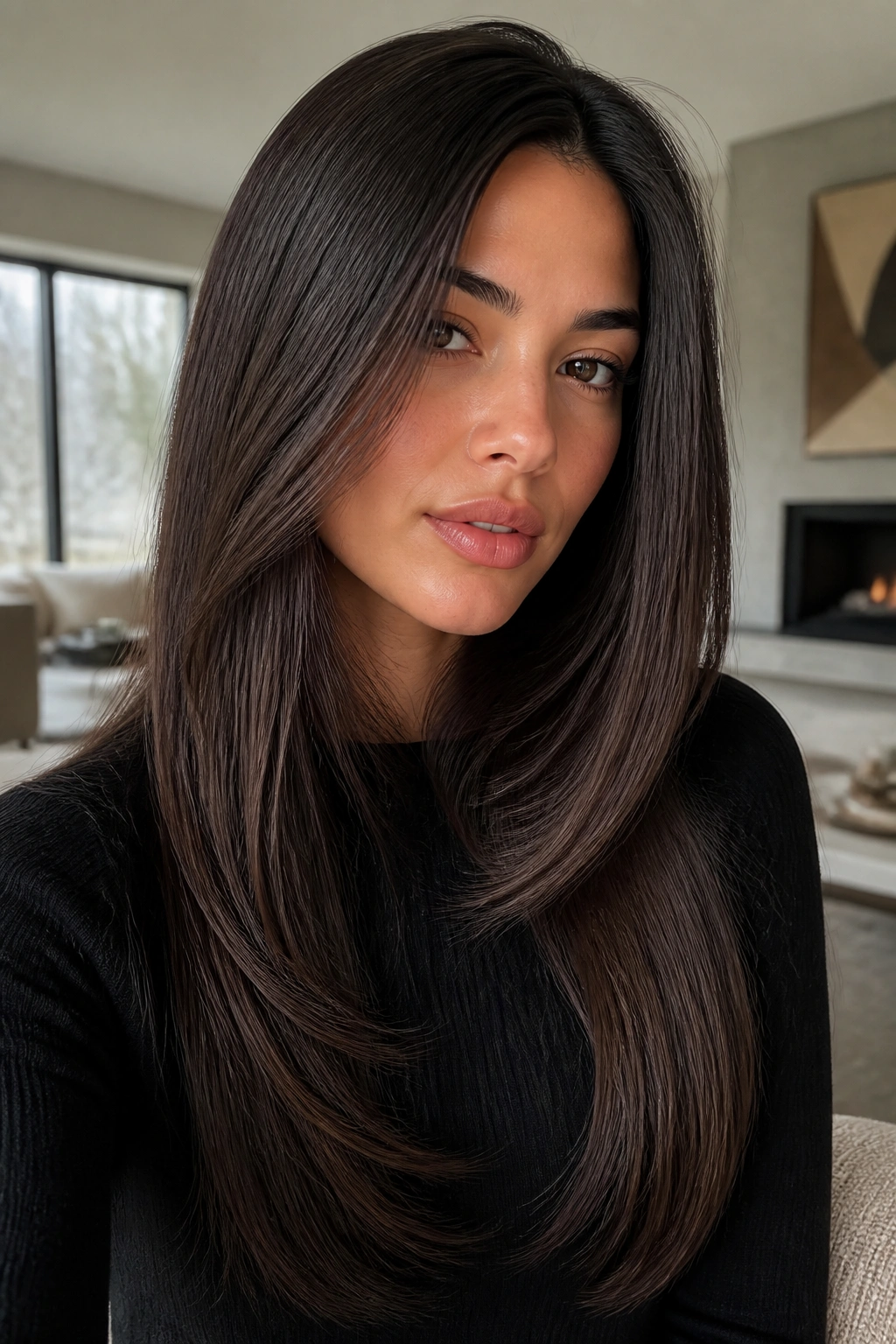
Invisible layers are the answer for anyone who wants movement but hates seeing obvious steps. The haircut looks blunt from the outside, but the inside has been lightened so the hair sits flatter and moves better.
That hidden work is the whole point. Thick hair can get boxy fast, especially when it’s all one length. Invisible layers fix the bulk while keeping the outer line clean enough to look expensive, for lack of a better word.
What makes them different
Unlike obvious layers, these don’t break up the silhouette. The perimeter still reads as solid. Underneath, the density has been redistributed so the hair doesn’t stack up in one heavy sheet.
They’re a good match for straight or softly wavy hair, especially if you wear your hair down most days and want it to dry smoothly. They are not flashy. They’re useful. That’s the appeal.
Ask for weight removal inside the shape, not around the ends. If the stylist starts carving too much into the perimeter, you lose the whole point.
9. The Wolf Cut for Thick Hair With Attitude
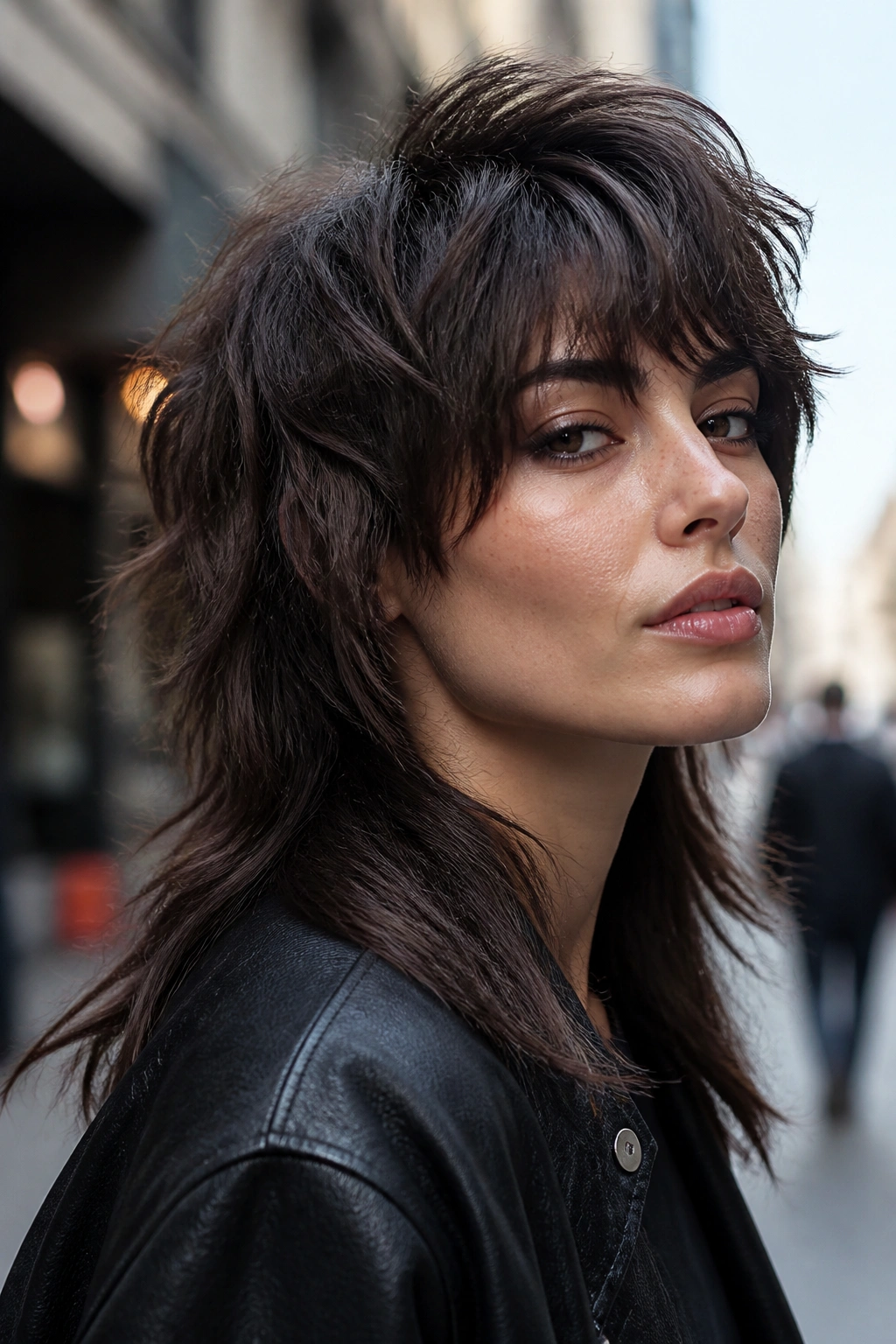
The wolf cut works on thick hair because it embraces the bulk instead of pretending it isn’t there. Shorter layers at the crown, longer pieces through the back, and a rougher outline give the cut a lived-in edge that can handle density.
This is the one for people who want texture first and neatness second. It has a bit of a rebellious streak. Fine. Hair can have one too.
The crown gets lifted, the sides break apart, and the ends stay long enough to keep the whole thing from feeling too chopped up. On thick hair, that structure stops the top from sitting like a helmet. The shape looks better when it’s a little messy, which is either a blessing or a dealbreaker depending on your life.
If you choose this cut, plan on using a light mousse, cream, or texturizing spray. And trims matter. Let it grow too long and the balance goes off fast.
10. Curtain Bangs With Mid-Length Layers
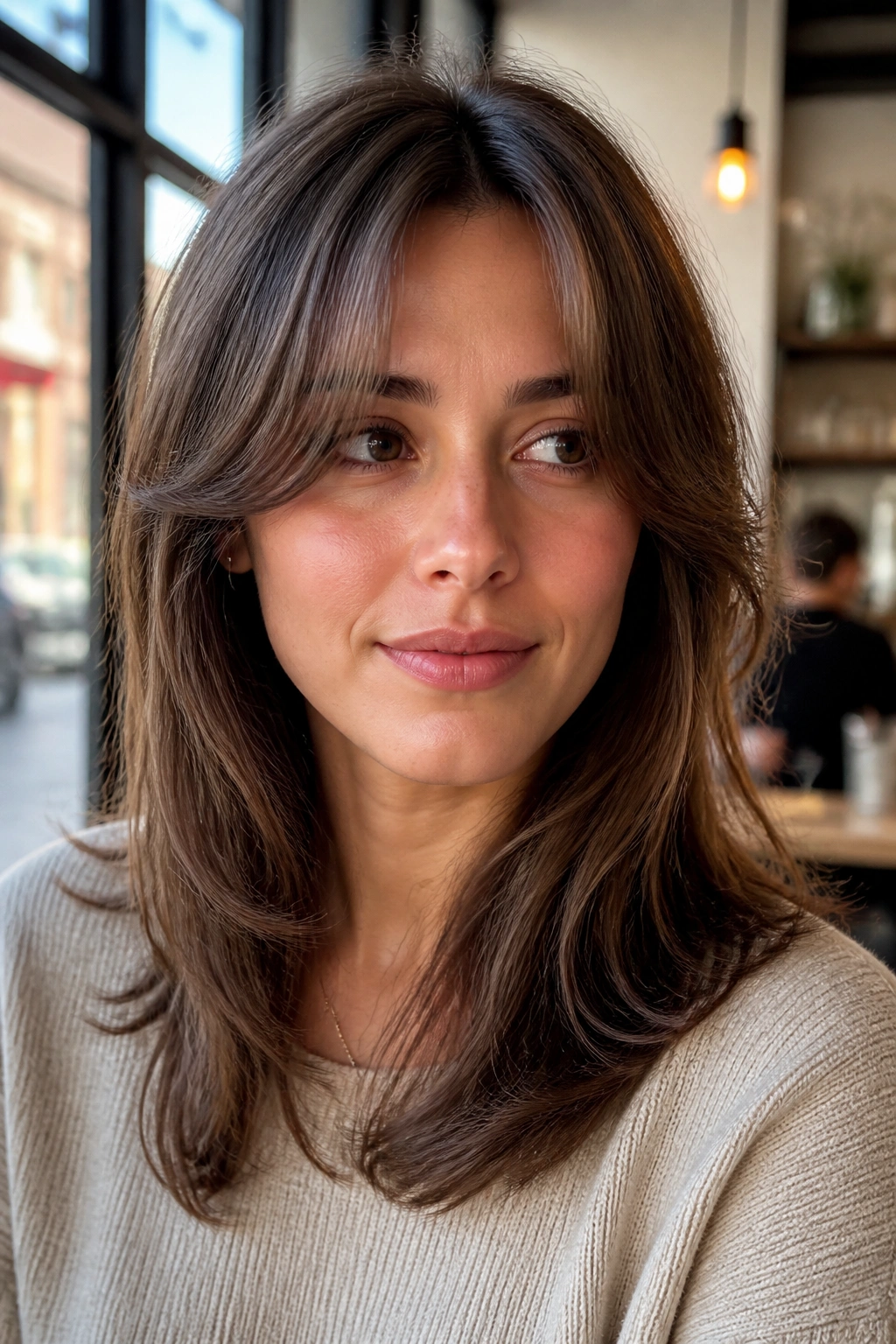
Curtain bangs can change thick hair faster than almost anything else. They open the face, soften the top line, and let the rest of the hair stay long enough to keep its weight and swing.
The best part is that they work with mid-length layers instead of fighting them. The bangs blend into the front pieces, so the haircut feels connected instead of chopped into separate parts. That matters on thick hair, where disconnected sections can start looking bulky.
The face-framing effect
Curtain bangs usually start around the cheekbone and angle down toward the jaw. On dense hair, that angle keeps them from puffing up like a shelf. You want them light enough to split in the middle, not short enough to stand straight out.
How to keep them in shape
A small round brush or velcro rollers can help the fringe sit properly. They do need a little attention. Nothing wild. Just enough heat or tension to keep the front from falling flat into your eyes.
If you want a change without chopping off the length, this is one of the smartest ways to do it.
11. A Choppy Layered Bob With Movement
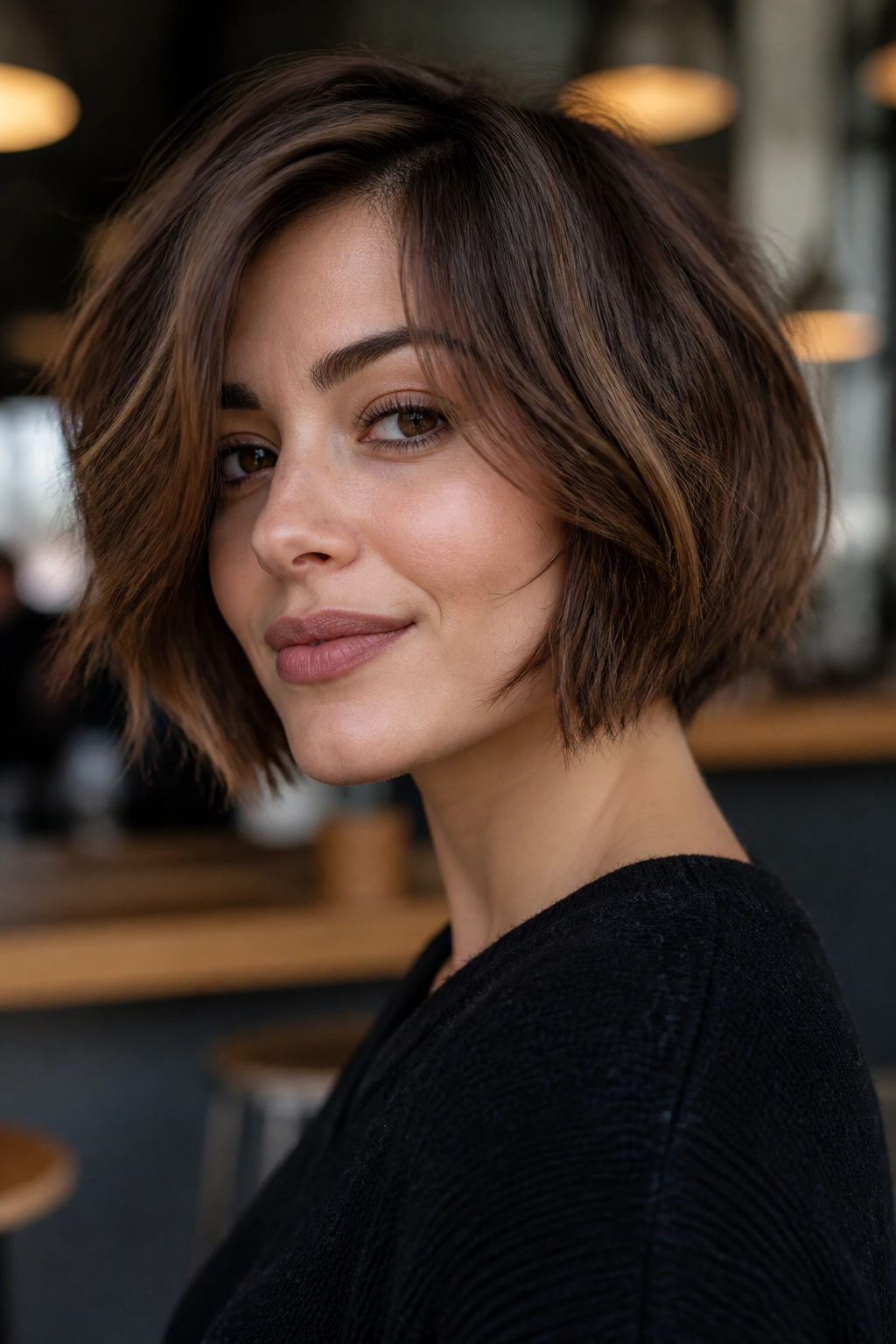
A choppy bob looks sharp on thick hair because it cuts through all that density and gives the shape some air. The bluntness of a bob keeps it from becoming fluffy, while the choppy interior keeps it from turning into a solid block.
This is not a timid haircut. It has edges. It also has enough movement that the hair won’t sit like a brick around the jaw.
I like this option for thick hair that feels too heavy at shoulder length. Sometimes the easiest fix is simply to go shorter. Not all the way short, just short enough to let the hair behave.
A little styling paste goes a long way here. Work a pea-sized amount through the ends, scrunch or twist a few pieces, and stop. If you pile on product, the cut loses the broken-up texture that makes it interesting in the first place.
12. Razor-Cut Layers for Extra Swing
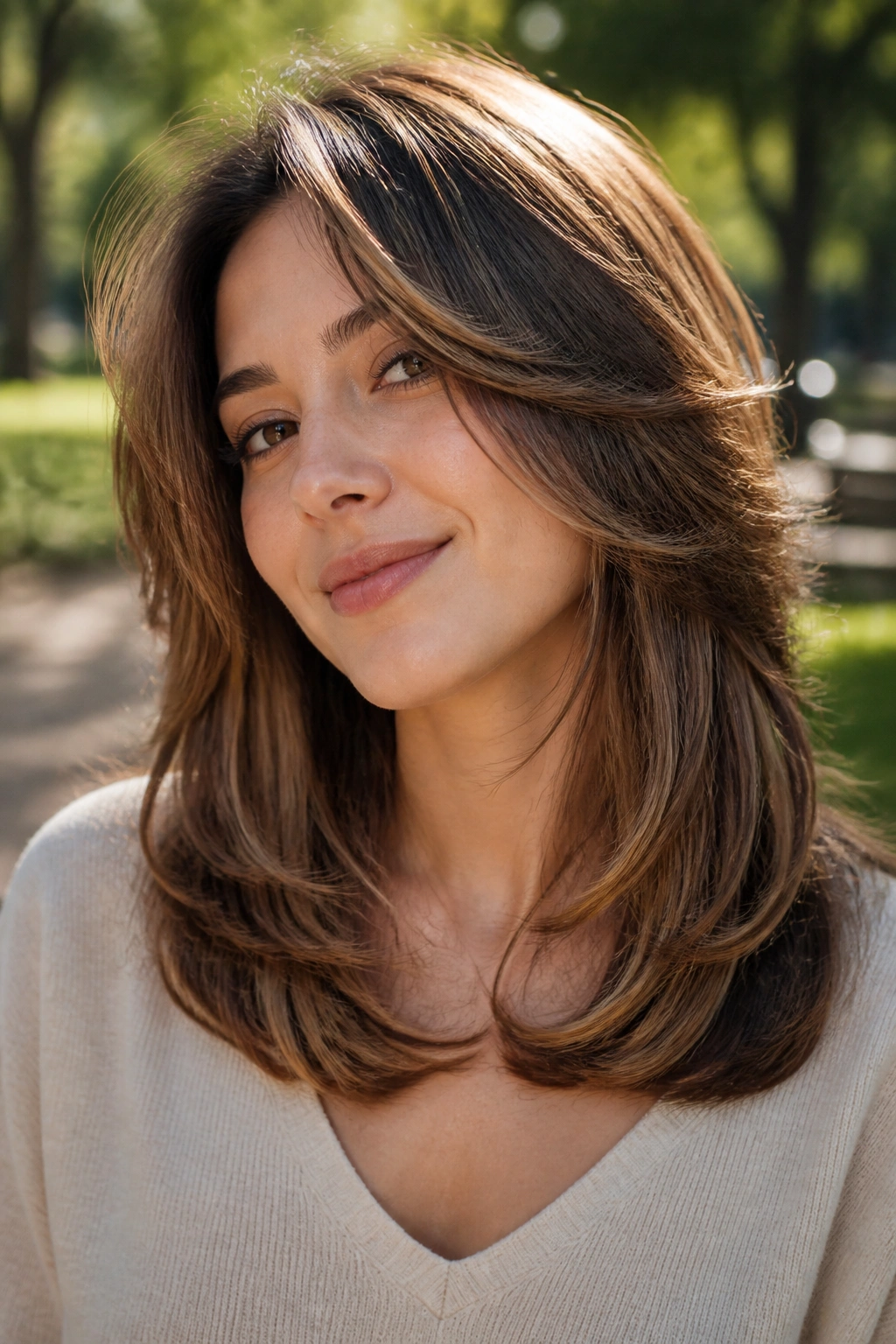
Razor-cut layers can give thick hair a soft, airy swing that scissors sometimes miss. The blade removes weight while leaving the ends with a bit more movement, which is useful if your hair tends to feel blunt and heavy all the way down.
But there’s a catch. Razor cuts are not the best choice for every thick texture. If your hair is coarse, dry, or frizzes the moment humidity shows up, too much razor work can make the ends look fuzzy instead of light.
Where this cut shines
- Medium to long hair with some natural bend
- Hair that feels heavy but not brittle
- People who like a softer, less “cut” finish
- Layers that need movement around the face and mid-lengths
What to watch for
Ask for controlled razor work, not aggressive thinning. There’s a difference. A good razor cut removes bulk and keeps the edge soft. A heavy-handed one can leave the ends looking thin in all the wrong places.
Used well, this technique gives thick hair a bit of air. Used badly, it just makes more maintenance.
13. V-Cut Layers That Narrow the Ends
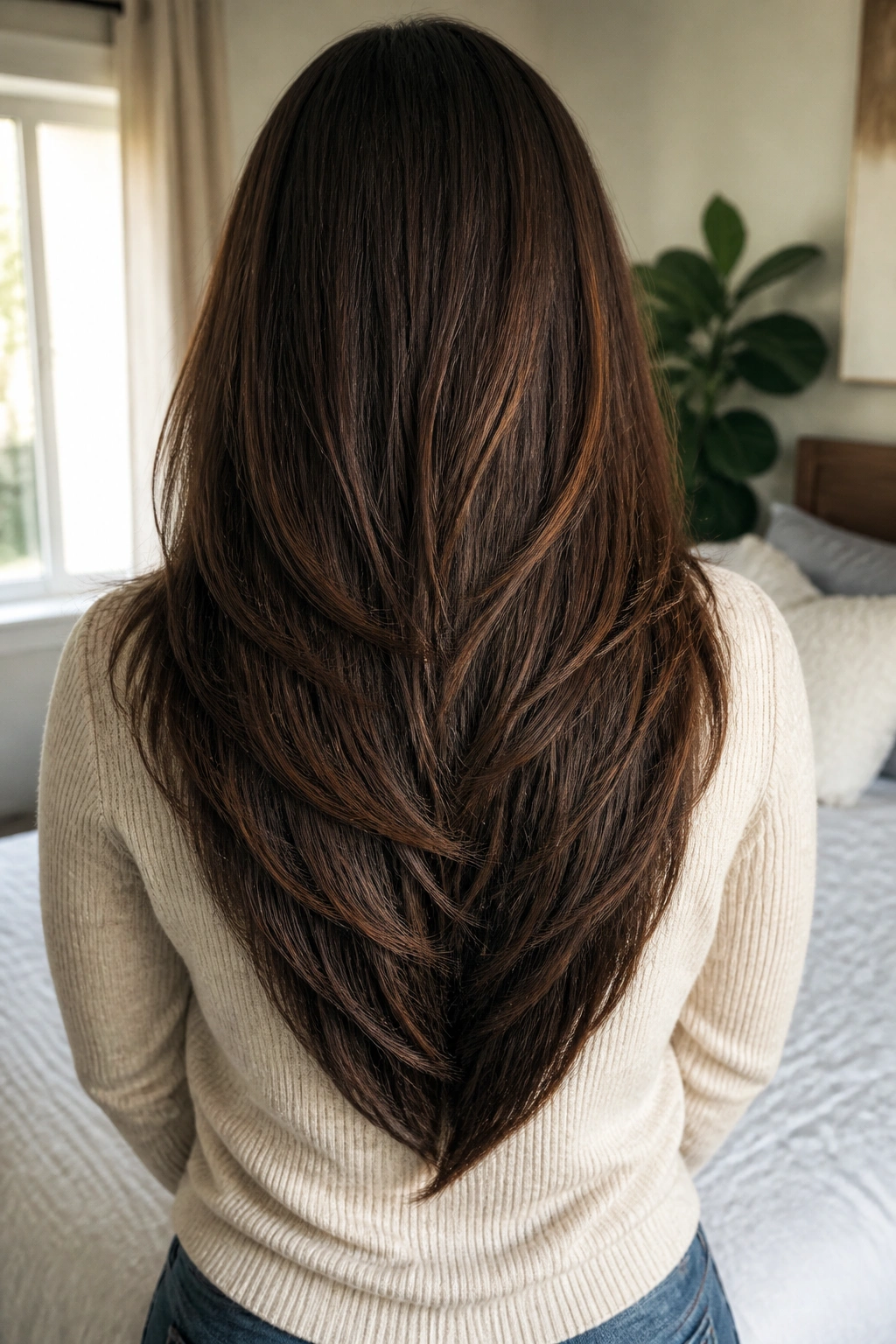
A V-cut creates a point at the back, with the longest center section tapering down and the sides falling a little shorter. On thick hair, that shape keeps the ends from spreading out into a wide, heavy curtain.
The style is especially nice if you wear your hair long. It keeps the length dramatic, but the tapered outline makes the whole thing feel lighter. That’s the real win. The hair moves more, and the back doesn’t look like a blunt wall.
This cut also looks good in a ponytail because the shape still shows when the hair is pulled back. A straight hemline disappears. A V shape gives you a little detail even on lazy days.
If your hair is very curly, the V can get lost under shrinkage. On straight and wavy textures, though, it reads cleanly and helps thick hair fall in a more controlled way.
14. Blunt Ends With Internal Layering
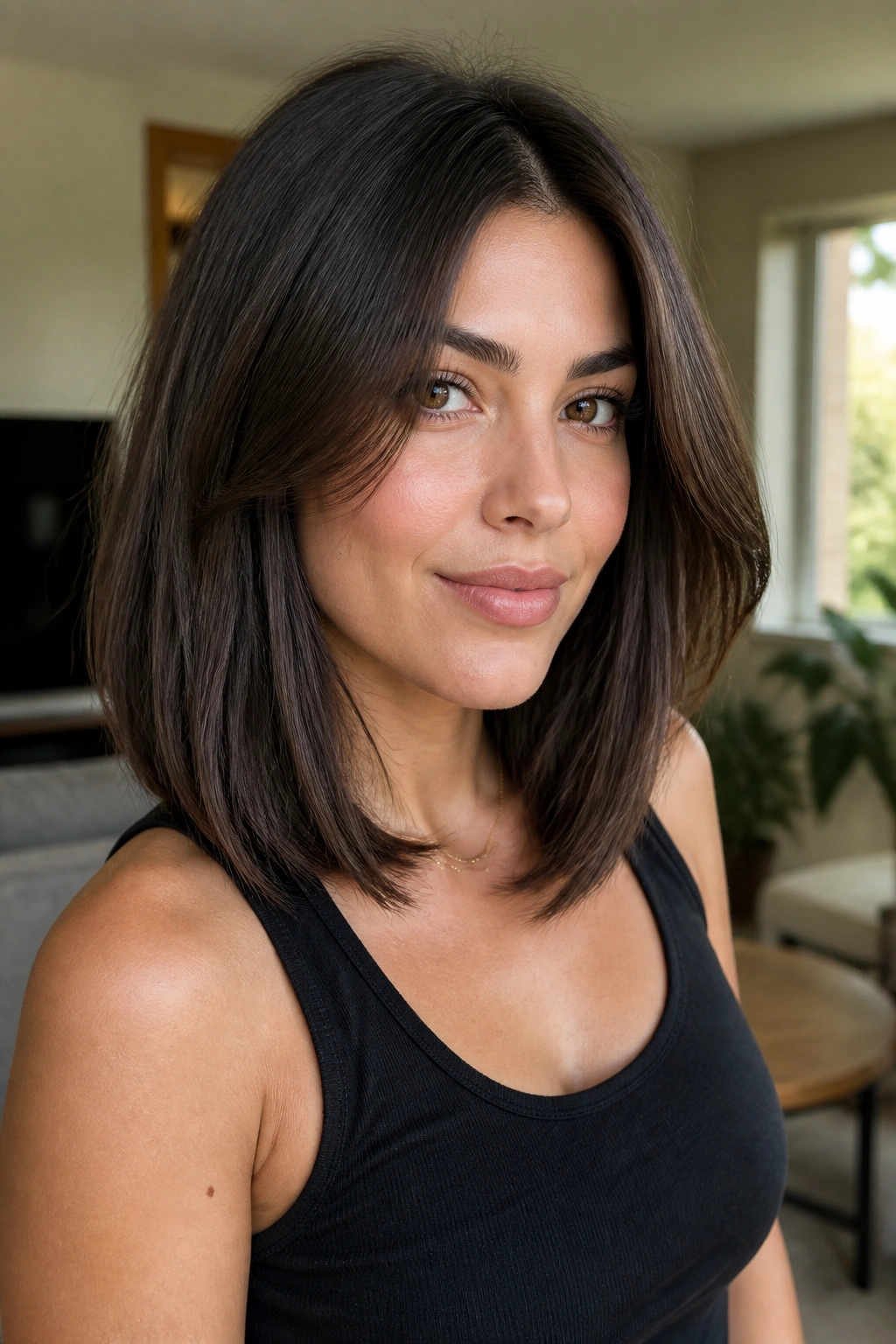
A blunt cut with hidden layers is one of my favorite options for thick hair because it keeps the ends looking strong. So many people assume thick hair needs obvious layers everywhere. Not true. Sometimes the perimeter just needs to stay solid.
The inside of the haircut is where the weight gets reduced. The outside stays clean. That means you get movement without losing the dense, healthy-looking finish that makes thick hair so good in the first place.
Why it feels heavier — and why that’s good
A blunt edge can look luxurious on thick hair because it gives the hair a finish. The trick is preventing the middle from bulging. Internal layers solve that, so the cut feels easier to wear while still looking full.
This is a smart choice if you love straightening your hair or wearing it in a smooth blowout. It also grows out nicely. The line stays crisp longer than a heavily layered cut, which means fewer awkward weeks between salon visits.
15. Feathered Crown Layers That Lighten the Top
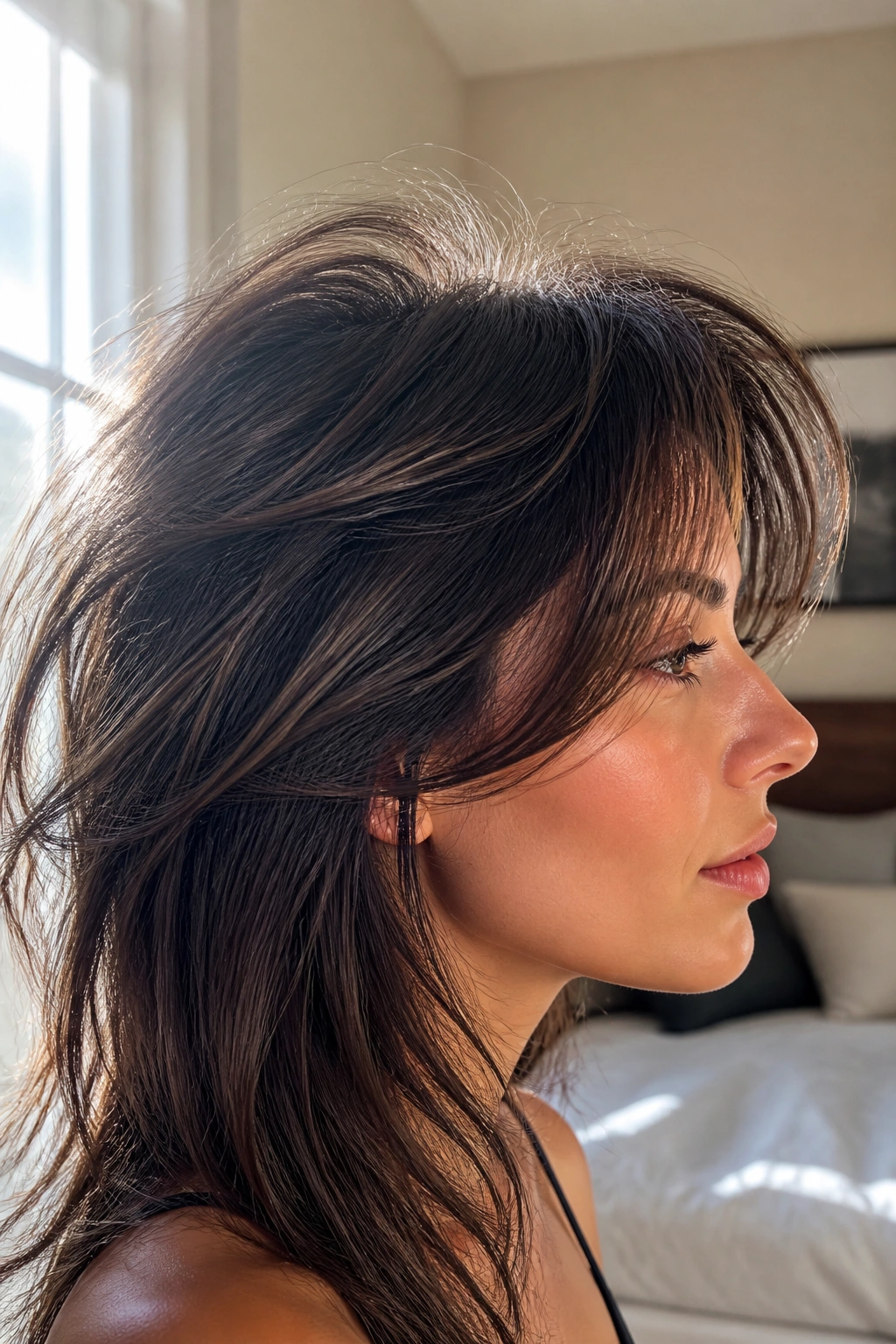
Feathered crown layers are a quiet fix for hair that feels too heavy on top. The crown gets lifted, the top loses some bulk, and the whole shape stops collapsing into the head.
This cut is especially useful when thick hair sits flat at the roots but puffier through the lower half. A little feathering around the crown changes the balance without forcing the rest of the length to become choppy.
The pieces that matter most
- Shorter layers around the crown and temples
- Softer transition into the mid-lengths
- A blow-dry that lifts the roots slightly
- Light styling foam instead of heavy cream
The result is airy rather than shaggy. That distinction matters. Feathered layers should look soft and clean, not shredded. If you want a haircut that gives the top some life without making the rest look busy, this is a smart lane to stay in.
16. Side-Swept Fringe and Medium Layers
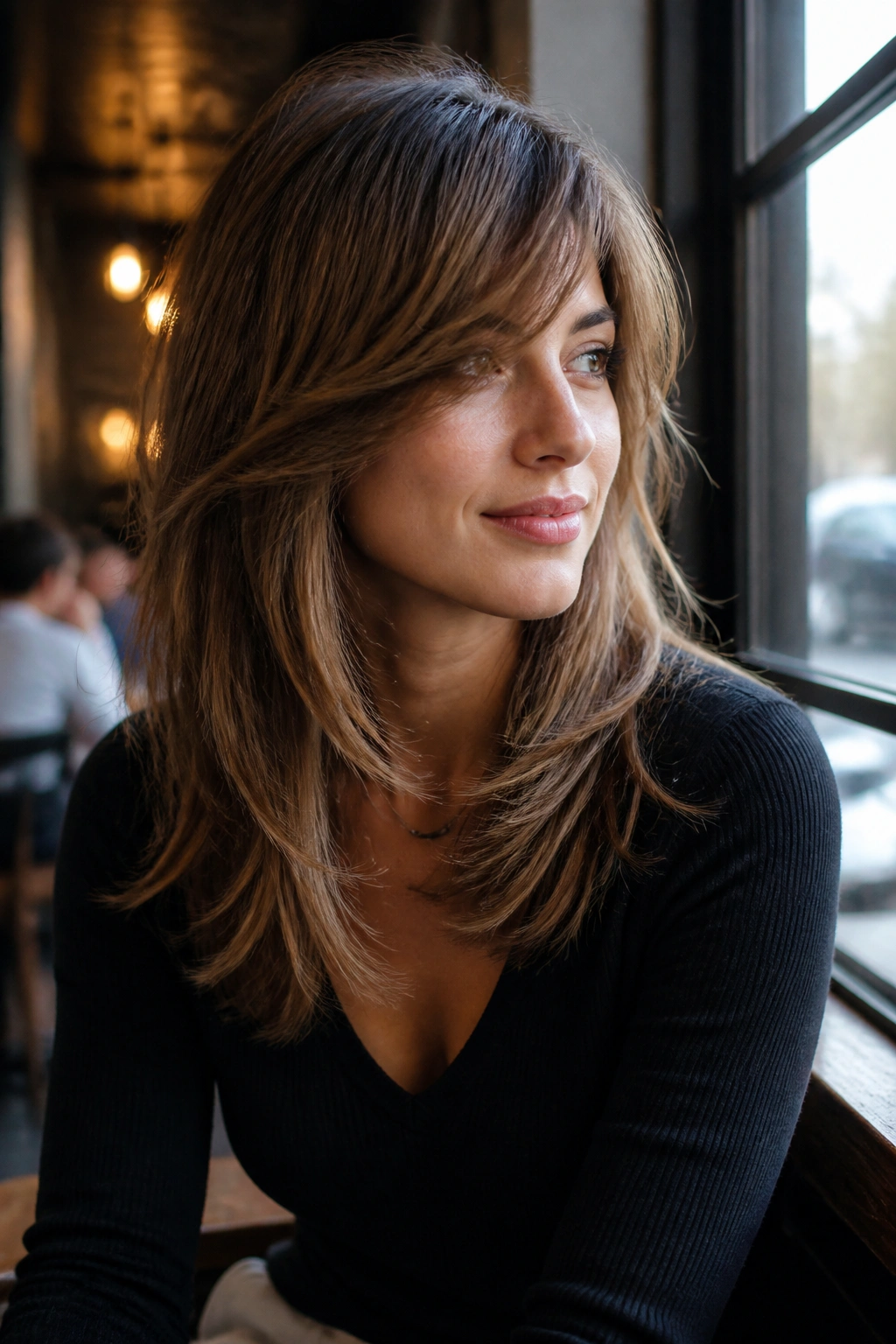
A side-swept fringe is one of the easiest ways to make thick hair feel less severe. It breaks up the forehead, softens the front, and gives the haircut a diagonal line that keeps the face from looking boxed in.
Medium layers pair well with it because they carry that diagonal movement into the rest of the hair. The result is a shape that feels polished but not stiff. And unlike full bangs, side-swept fringe tends to be easier to grow out.
Picture thick hair that falls all one way and covers the face. A side part plus a soft fringe changes that fast. It opens one side, narrows the other, and gives the haircut more shape without cutting off much length.
I’d choose this if you like a feminine, face-framing style and want something less committed than a full fringe. It works especially well on hair that already has a little bend.
17. Graduated Layers That Control Bulk
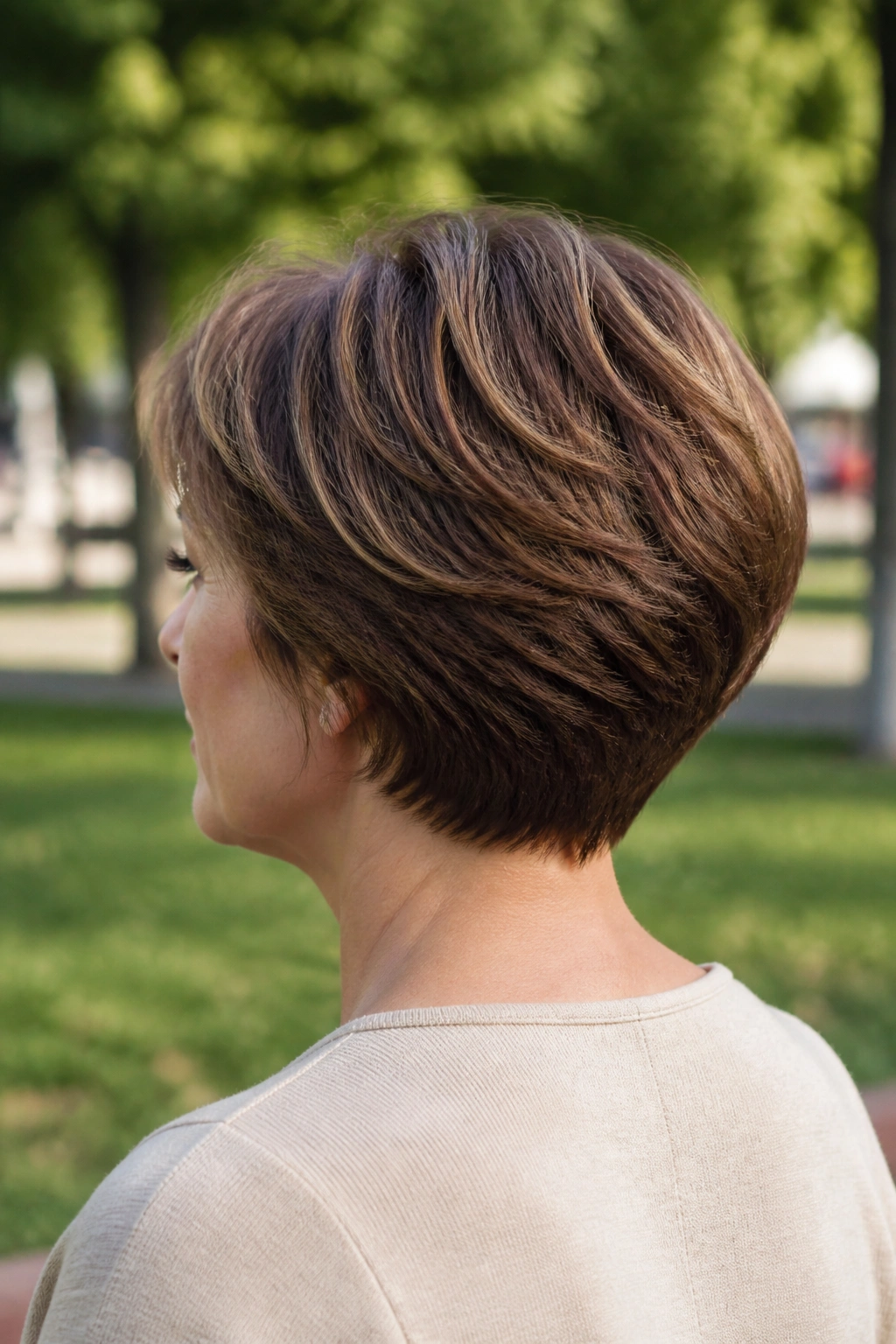
Graduated layers are built to control the way thick hair stacks from top to bottom. The shortest pieces sit higher, the length extends lower, and the haircut gains shape without feeling overly chopped.
This is a good option when you want the hair to hug the head a little closer through the top and midsection. It can help a dense cut sit more neatly, especially if your hair gets bulky near the nape or around the back of the head.
Where this cut earns its keep
- Hair that feels heavy at the nape
- Cuts that puff out at the back when dried naturally
- People who want more shape and less width
- Hair that benefits from a clean transition between layers
Graduated layers are not always dramatic to look at in photos, but they’re useful in real life. The haircut feels lighter when you turn your head, and that matters more than a flashy before-and-after shot.
Ask for a controlled graduation, not a stacked haircut that shoots straight up. There’s a difference, and thick hair will show it.
18. The Bixie: Short, Piecey Layers for Thick Hair
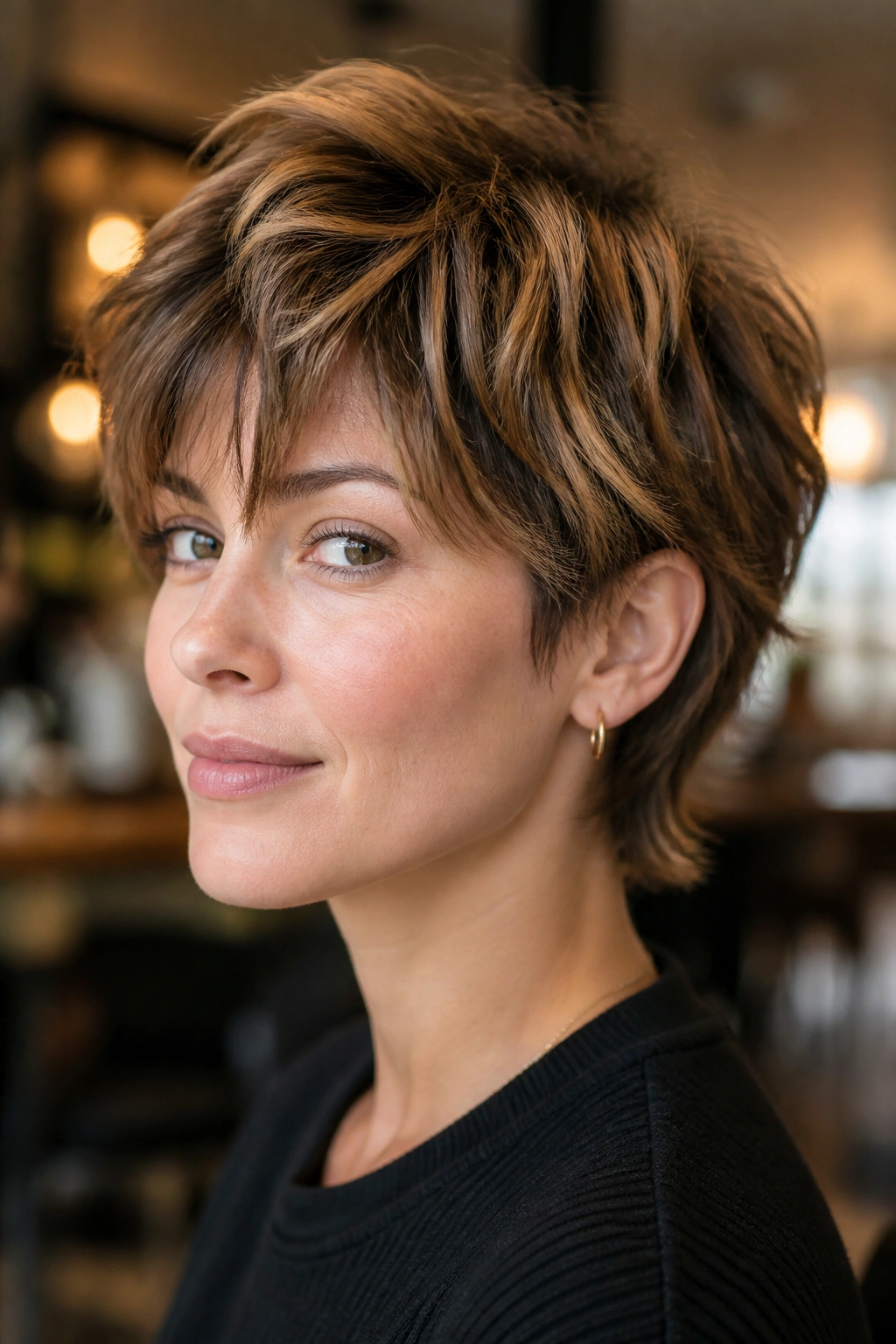
A bixie sits between a bob and a pixie, and thick hair can carry it better than most people expect. The short length takes away a ton of bulk, while the piecey layers keep the shape from turning into a helmet.
This cut has energy. It also has rules. You need some styling cream, a little finger-tousling, and a willingness to let the shape be a bit imperfect. That’s the charm.
Best for people who want:
- Less drying time
- A lighter feel around the neck and ears
- A short cut with texture, not a strict pixie
- A shape that looks better a little tousled
What to expect
You’ll probably use less shampoo, less heat, and less time. That part is lovely. But short thick hair also shows growth faster, so trims matter if you want the shape to stay clean.
If you’ve been carrying thick hair for years and want a real change, this is one of the boldest but most practical moves on the table.
Final Thoughts
Thick hair gives you options, which is the part people forget when they’re busy complaining about the bulk. The right cut does not fight density. It places the weight where you want it and clears space where you don’t.
If you want the lowest-maintenance route, look hard at invisible layers, a blunt cut with internal shaping, or long face-framing layers. If you want texture and movement, butterfly cuts, shags, and razor work are stronger bets. And if you’re ready to go shorter, a bixie or choppy bob can make thick hair feel lighter in a way long cuts simply can’t.
Bring reference photos, sure. Better still, tell your stylist where your hair feels too heavy when it’s dry, because that single detail can change the whole haircut.
