



Thick waves can look lush and expensive, or they can puff into a triangle that eats your whole head. The difference is usually the cut. Short thick layered haircuts for wavy hair work best when the layers are placed with a plan, not hacked in at random just to “remove bulk.”
That matters more than people think. Thick hair has weight, and waves have their own bend and spring, so a blunt, one-length shape can sit like a helmet by lunchtime. A good layered cut lets the wave move instead of fighting it. A bad one can leave the ends too thin, the crown too wide, and the whole thing strangely flat at the roots.
A lot of stylists get this one detail right: thick, wavy hair usually needs internal weight removal, not a mass of short surface layers that frizz up and stick out. That’s the difference between soft shape and mushroom head. Tiny thing. Big deal.
The 22 cuts below cover soft and edgy, polished and messy, low-maintenance and salon-perfect, so you can match the shape to your hair’s actual behavior instead of guessing.
1. Chin-Length Shag Bob
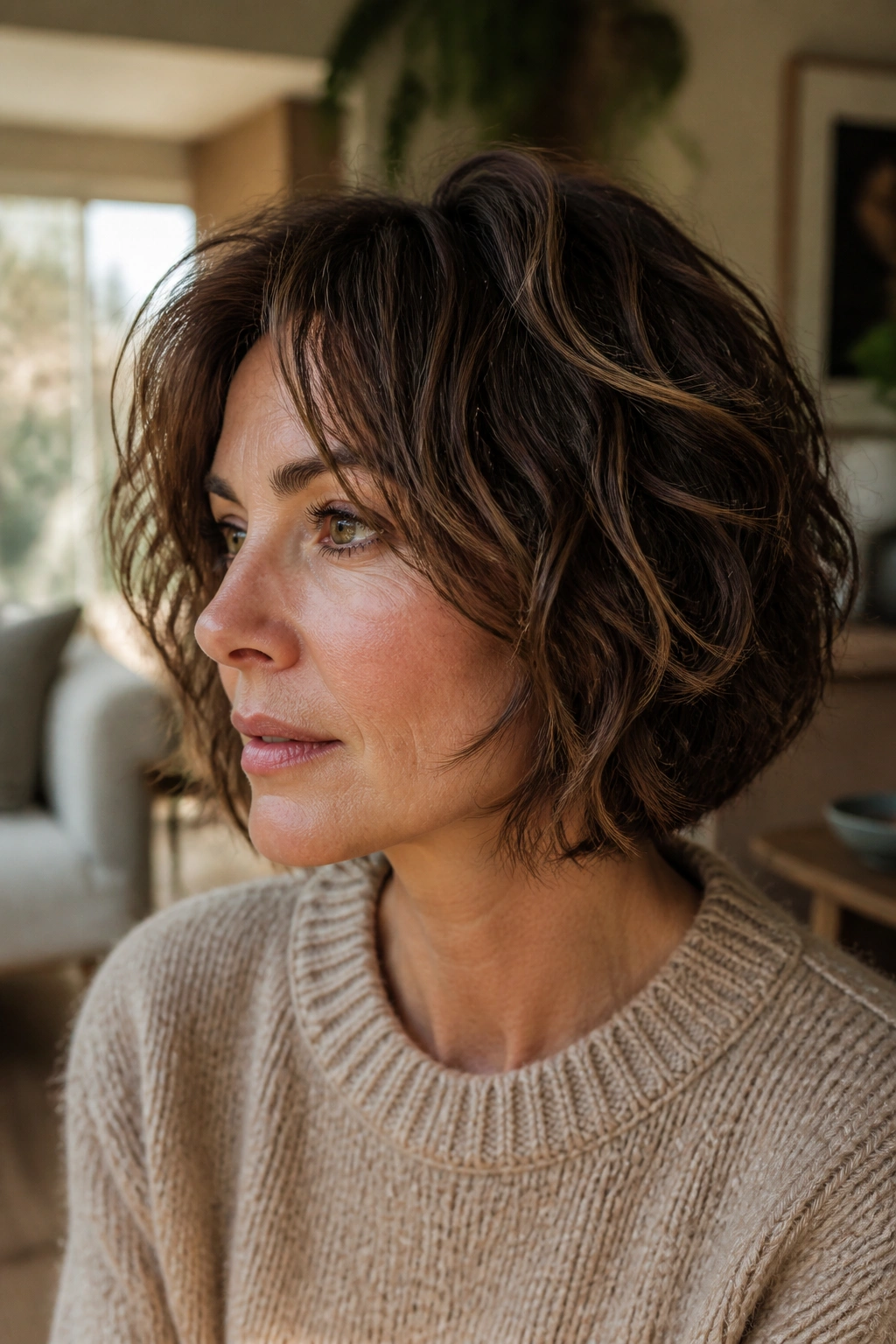
This is the cut I’d hand to someone who wants movement first and fuss later. A chin-length shag bob gives thick waves room to swing without letting the bottom of the haircut balloon out like a bell. The length sits short enough to feel fresh, but not so short that every wave turns into a puff.
Why It Works on Thick Waves
The crown is where a lot of thick wavy hair starts to misbehave. If it’s left too heavy, the top collapses and the sides spread out. Shorter layers at the crown fix that by taking some weight off the top while leaving the perimeter soft.
Ask for point-cut ends and light texturing through the mids, not razor-heavy thinning. You want the hair to move, not fray. If your waves are loose, this cut can air-dry into shape with a little mousse and a squeeze of diffuser time.
- Best for people who hate spending 20 minutes with a round brush
- Works well on oval, heart, and soft square faces
- Looks especially good when the front pieces hit just below the cheekbone
- Needs a trim about every 6 to 8 weeks to keep the shape from widening
Pro tip: keep the shortest crown layers subtle. If they’re too short, thick waves can jump out and sit on top of the head like a cap.
2. Rounded Bob with Crown Layers
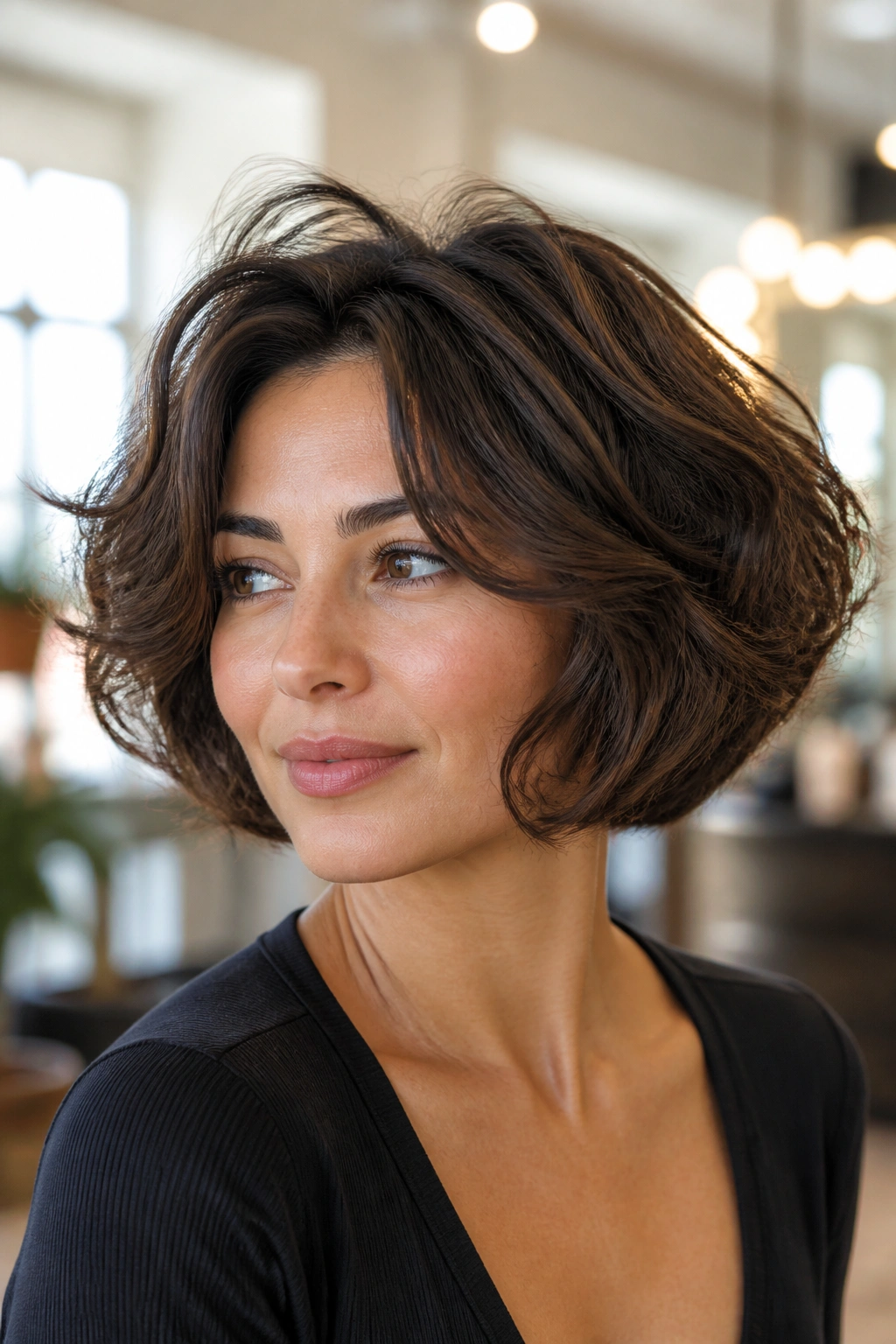
A rounded bob is one of those cuts that looks calm until you realize how much engineering is hiding inside it. The outline curves gently around the head, which keeps thick waves from spreading sideways. It feels polished, but it’s not stiff.
What makes it work is the balance: the crown gets enough layering to lift the roots, while the lower half stays full enough to keep the bob from looking wispy. That matters with thick hair. You do not want to thin the bottom into sadness just to make the top lighter.
This shape is especially good if your waves get frizzy when they’re cut too choppy. The rounded line gives the hair a place to fall. It also looks nice with a middle or slightly off-center part, depending on how your wave pattern behaves on each side.
If you like a smoother finish, blow-dry the top with a paddle brush and let the ends stay a little undone. That contrast is what keeps it from feeling too neat.
3. Textured Bixie
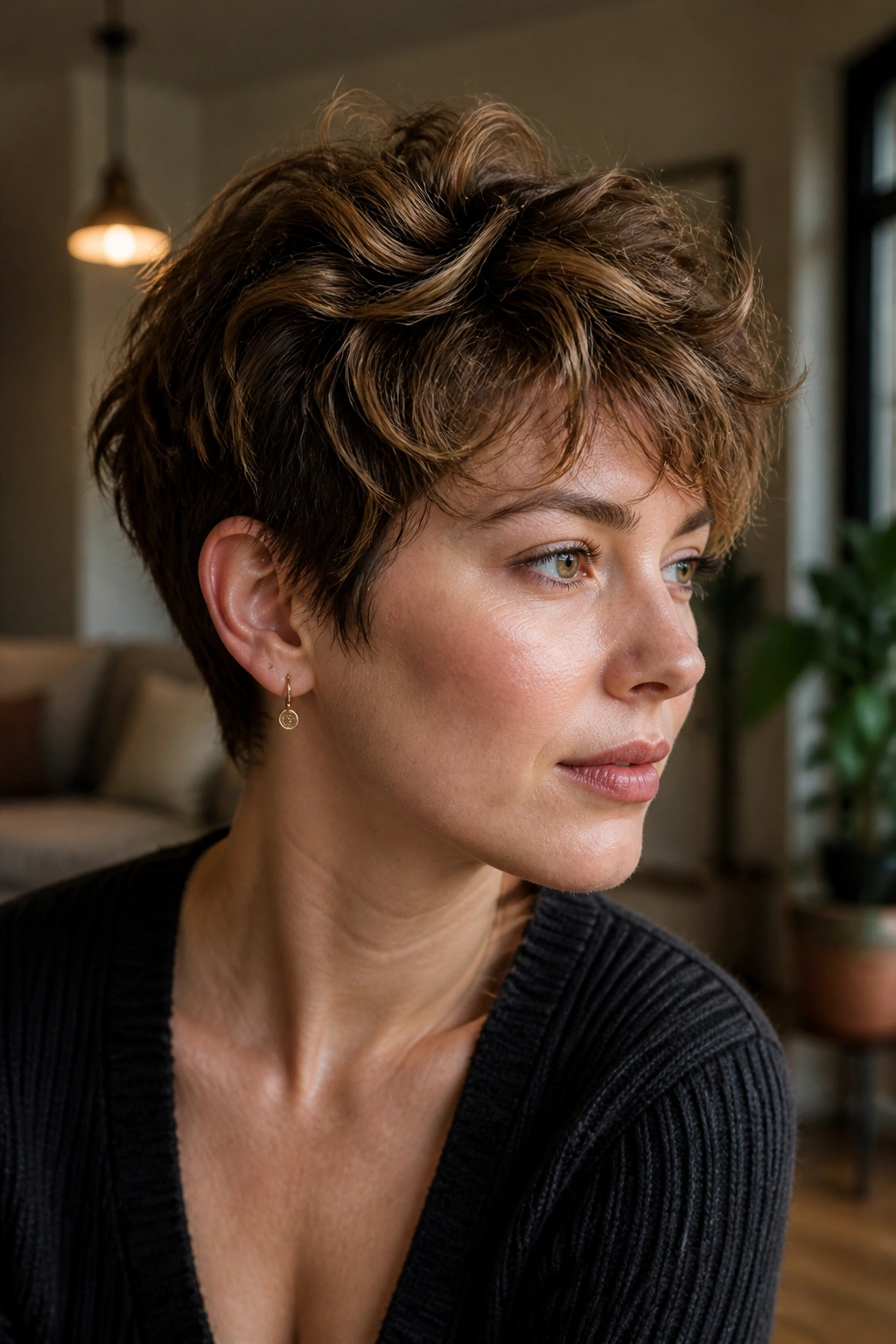
Can a bixie handle thick waves without turning into a fuzzy helmet? Yes — if the shape is handled with restraint. A bixie sits between a bob and a pixie, and on thick wavy hair that middle ground can be gold. It gives you shortness around the ears and nape, but enough length on top to keep the wave pattern visible.
How to Style It
The top should stay long enough to scrunch, usually around 2 to 4 inches depending on curl strength. Sides need to be soft, not shaved down too far, or the whole cut starts to feel severe. For thick waves, the best version is piecey rather than neat.
A little styling cream goes a long way here. Too much product will flatten the texture and make the top look greasy. Too little and you get puff.
- Air-dry with a light mousse if you want separation
- Diffuse upside down only until the roots are mostly dry
- Use a pea-sized amount of cream on the ends, not the scalp
- Keep the nape tidy so the silhouette doesn’t grow into a blur
The sweet spot: a bixie should look intentional even when it’s messy. If it looks accidental, the layers are probably too short.
4. Collarbone Lob with Invisible Layers
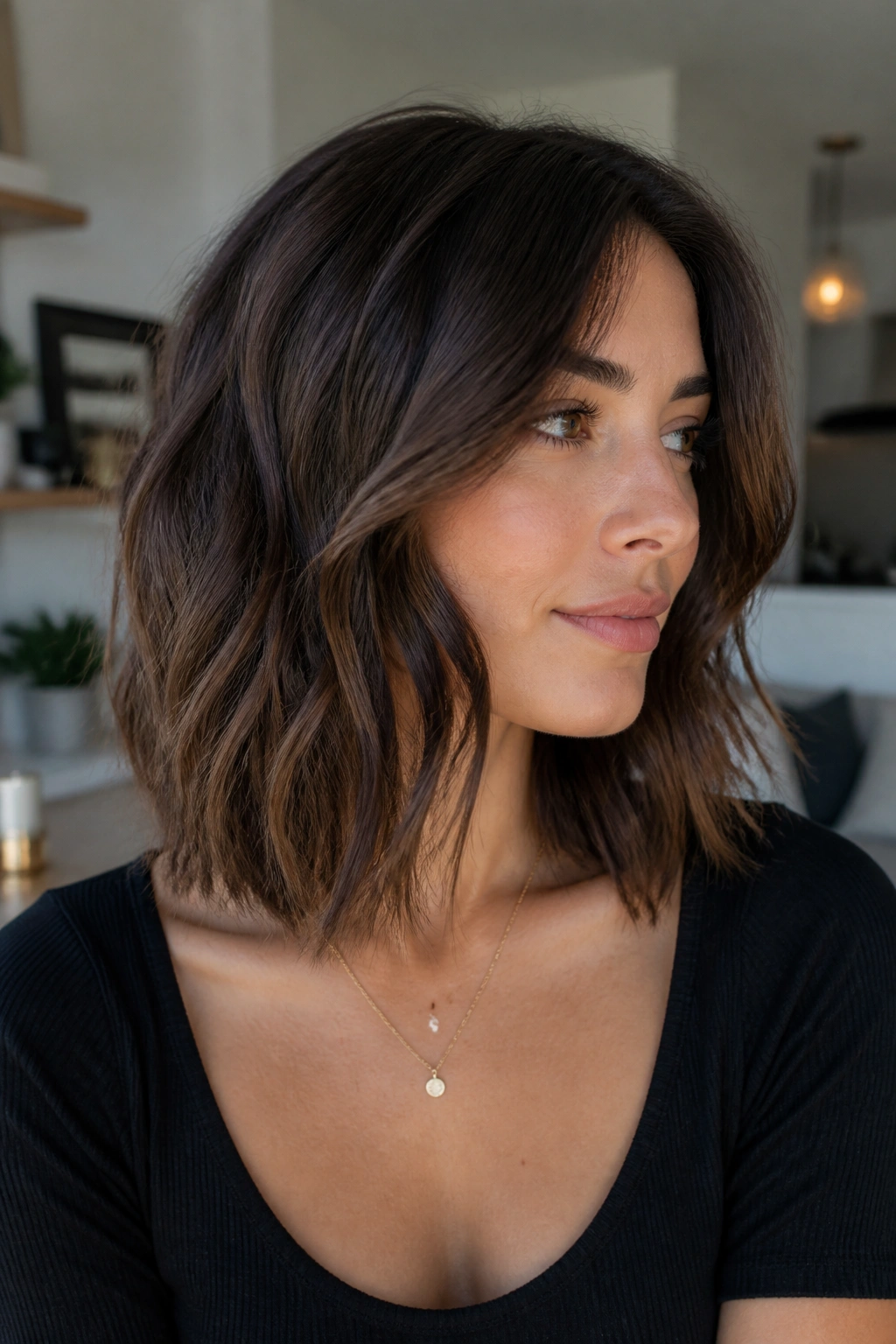
Sometimes the smartest short haircut is the one that still gives you a little room to breathe. A collarbone lob with invisible layers is ideal if you want to lighten thick wavy hair without making the cut feel chopped up. On the surface, it looks smooth and clean. Underneath, there’s just enough layering to stop the bulk from stacking up.
This is the cut for someone who likes to tuck hair behind one ear, throw it into a clip, and still have shape left when it comes down. It also grows out gracefully, which matters if you’re not eager to be in the salon all the time.
The trick is hidden removal around the interior, not obvious steps or obvious feathering. Thick waves do not need every strand announced. They need direction. If your hair tends to frizz when too many short pieces are exposed, this is a safer choice than a shag.
It also happens to be one of the easiest cuts to dress up. A smooth bend at the ends, plus a center part, can make it look clean enough for work without turning stiff.
5. Soft Wolf Cut
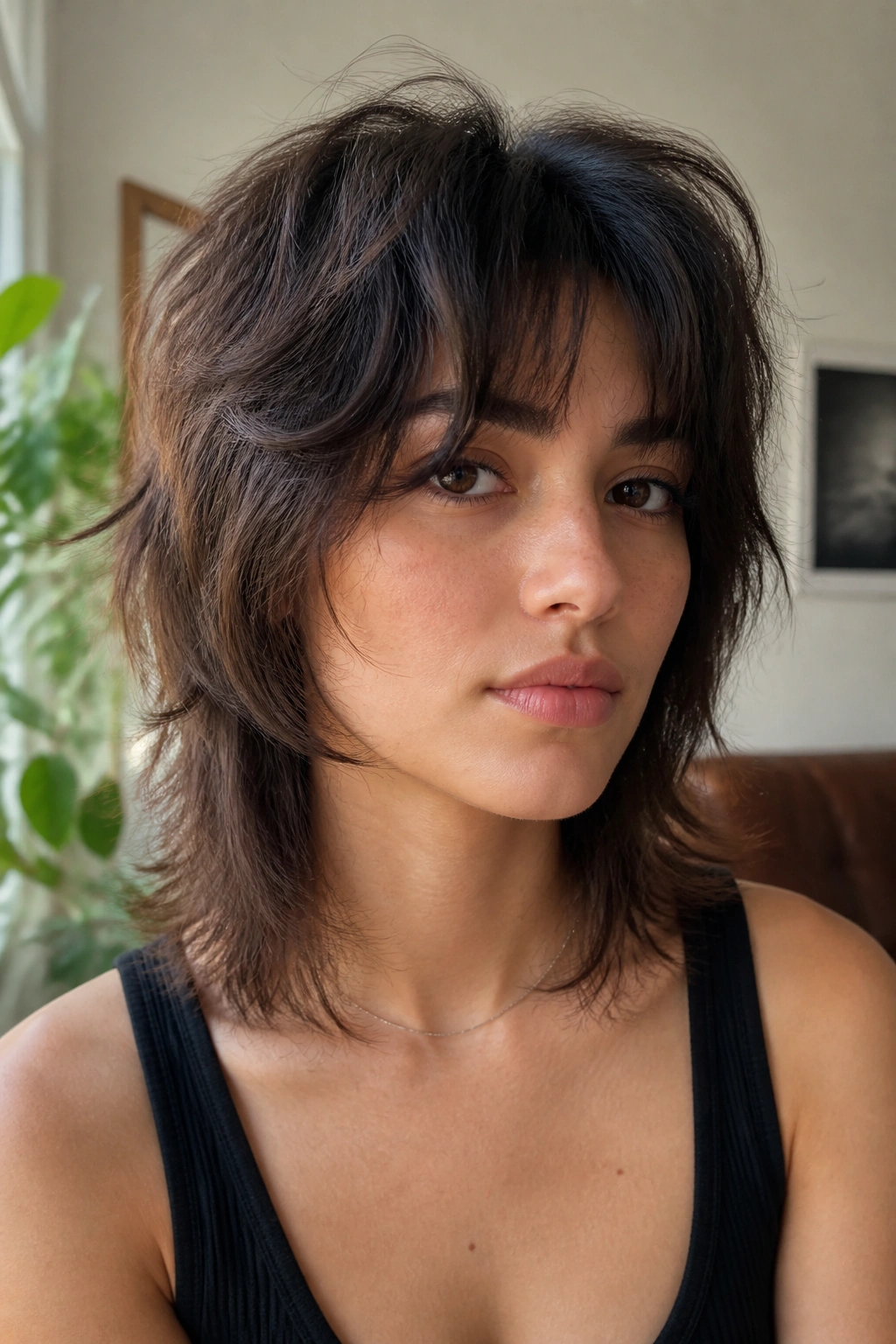
The soft wolf cut is the boldest thing on this list that still makes practical sense for thick waves. It takes the airy crown of a shag and mixes it with a slightly tapered lower section, so you get motion without the full chaos of a high-volume mullet. Done right, it looks cool. Done badly, it looks like you forgot to finish the haircut.
The reason thick waves like this shape is simple: the crown gets lifted, the mids are broken up, and the ends are kept light enough to swing. A wolf cut can make heavy hair feel almost weightless in the best way, but only if the layers are blended enough to avoid hard shelves.
A good version keeps the front pieces longer around the face and softens the top instead of carving it into sharp spikes. That’s the move. Sharp layers and thick waves can turn puffy fast.
If you like texture spray, this is the cut that earns it. Twist a few face-framing strands while they’re damp, then let the rest dry naturally. It looks better a little imperfect.
6. Blunt Bob with Face-Framing Layers
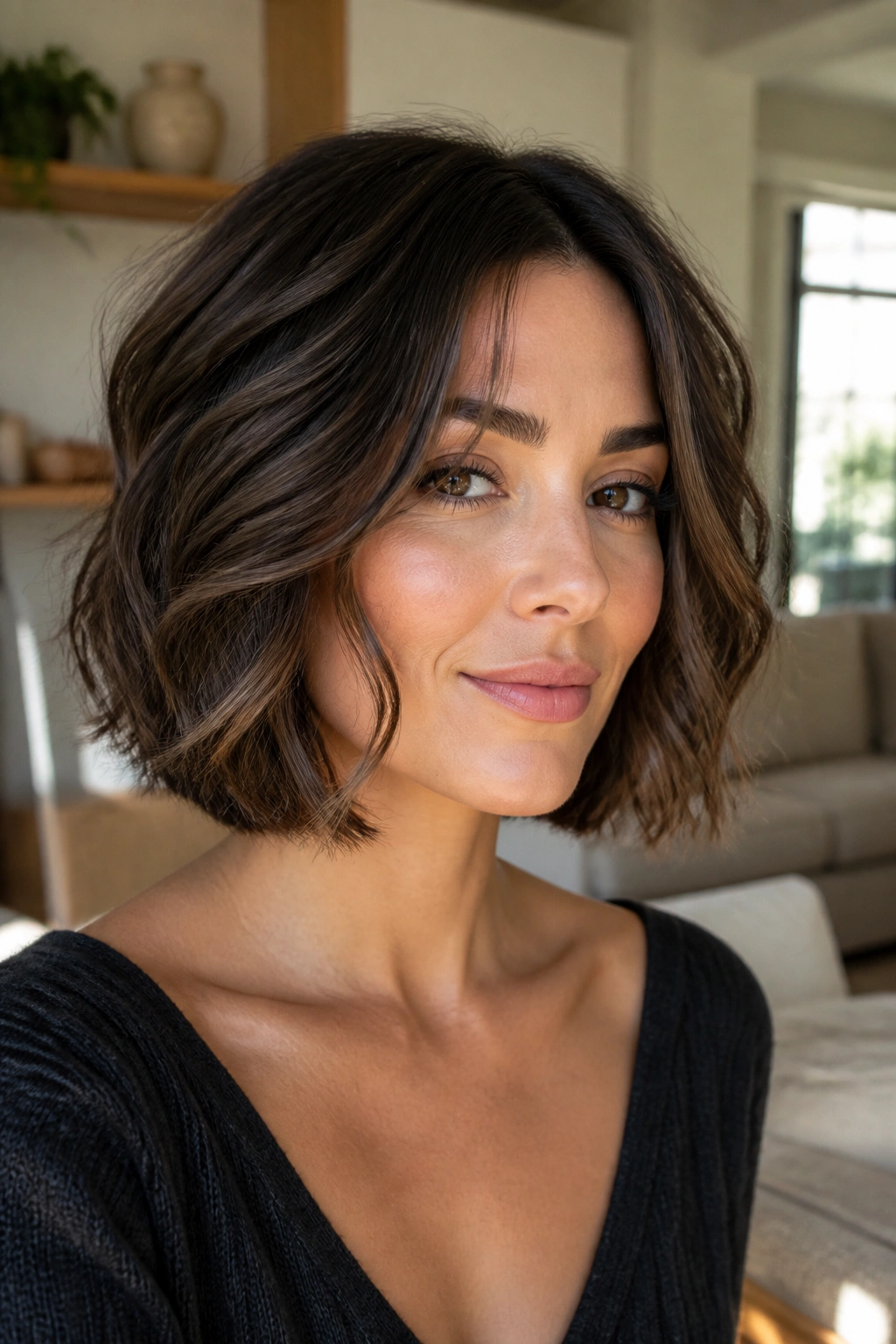
A blunt bob sounds like the wrong answer for thick wavy hair until you see one with the right interior work. The straight edge at the bottom gives the haircut structure, which keeps waves from flaring out at the ends. The face-framing layers soften the front so it does not feel like a cube.
That contrast is the point. A fully layered bob on thick hair can get too airy, and a fully blunt one can get boxy. Mix the two and you get a shape that feels solid but not heavy. I like this option for anyone whose waves are loose in some places and strong in others, because the blunt edge helps pull the whole thing together.
Best Details to Ask For
- A clean perimeter that sits around the jaw or just below it
- Layers only at the front and around the cheekbones
- Soft internal removal near the back, not all over the surface
- No aggressive thinning shears near the ends
This cut also photographs well in real life, not just in salon mirrors. The clean line makes thick hair look deliberate.
7. Asymmetrical Wavy Bob
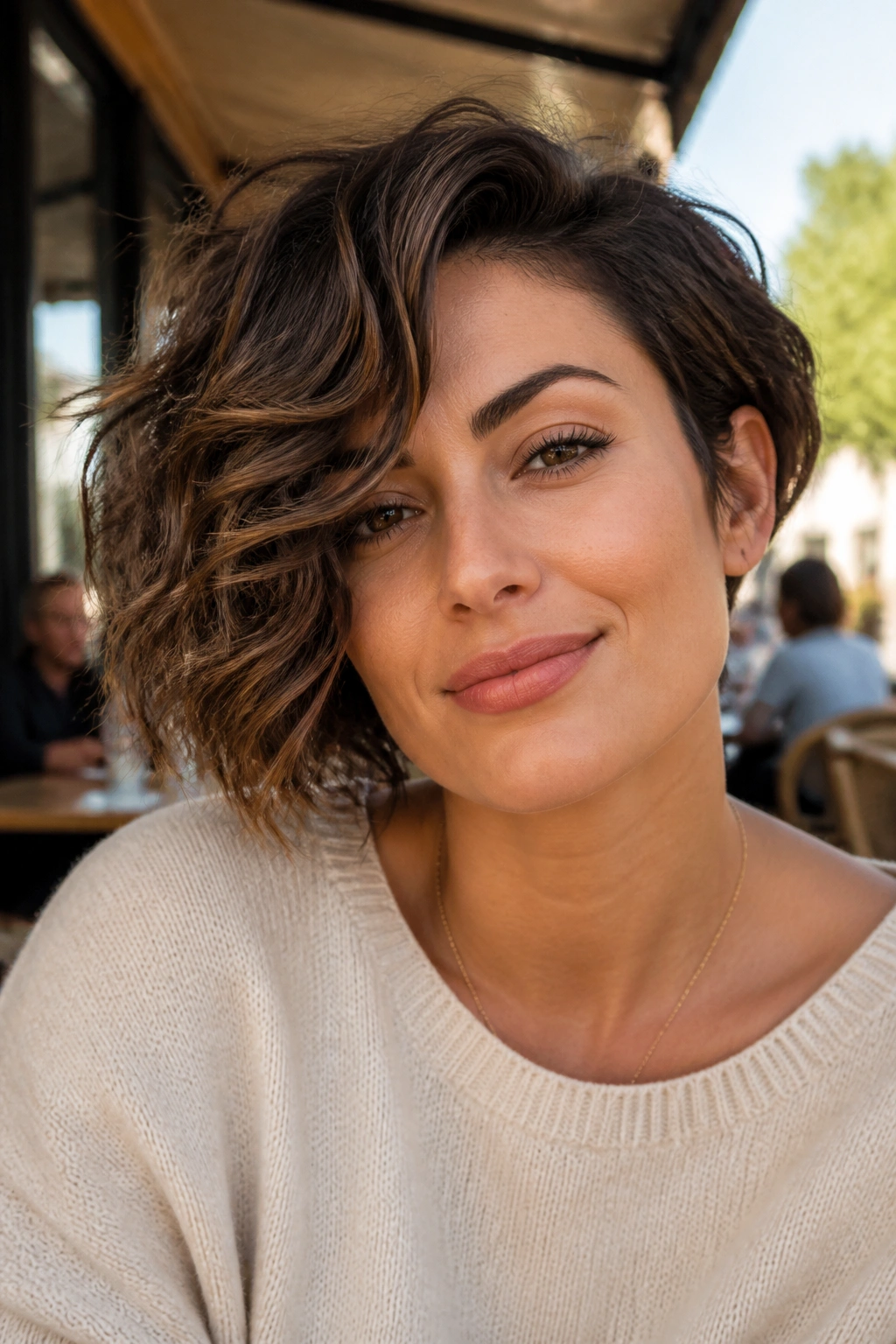
Ever notice how one slightly longer side can make thick hair look more interesting instantly? That’s the whole appeal here. An asymmetrical wavy bob breaks the symmetry just enough to keep heavy waves from settling into a predictable shape, and that little imbalance can make the haircut feel lighter.
The difference does not need to be dramatic. One side might skim the jaw while the other lands closer to the chin. That’s enough. On thick wavy hair, even a half-inch change can shift how the waves stack and fall. It also helps if one side of your hair naturally lies flatter than the other.
This cut suits people who want something modern without going full statement haircut. The asymmetry gives the eye something to follow, and the layering keeps the ends from puffing out on both sides at once. If your face is round, a longer front piece on one side can stretch the shape a bit. If your face is more angular, the soft curve of the wave keeps it from looking harsh.
A side part makes this bob especially good. Center parts can fight the asymmetry a little too hard.
8. Choppy Crop with Tapered Nape
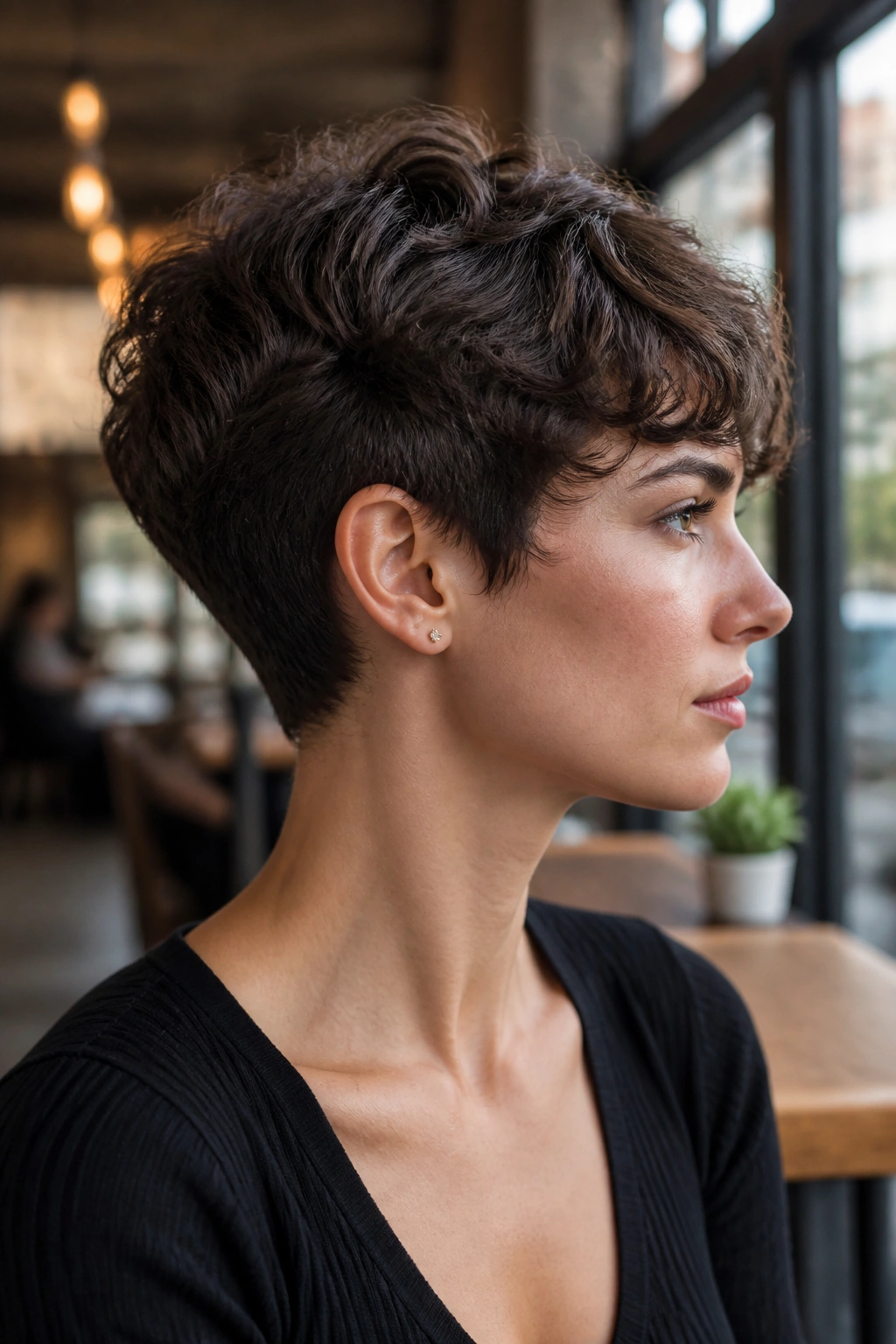
Picture thick waves cut short enough to feel clean at the neck, but with enough texture on top that the whole style still has air. That’s the appeal of a choppy crop with a tapered nape. It keeps the back tight and neat, which is a gift if your hair grows fast around the neckline.
Where the Weight Disappears
Most of the lift happens through the top and sides, where the layers are cut in broken, uneven pieces. The nape stays tapered so the haircut doesn’t mushroom when it grows out. That gives the style a sharper shape than a shag, but less severity than a classic pixie.
This one works especially well if your waves get bulky at the back of the head. You know the look: the sides sit fine, then the back starts bulging under a hoodie collar. A tapered nape solves that problem before it starts.
- Keep the top around 2 to 3 inches for movement
- Leave the front pieces slightly longer to soften the forehead line
- Ask for texture through the crown, not random thinning all over
- Trim the neckline every 4 to 6 weeks if you want to keep the shape crisp
The result feels practical, but it is not boring. A little edge goes a long way here.
9. Layered Pixie with Long Top
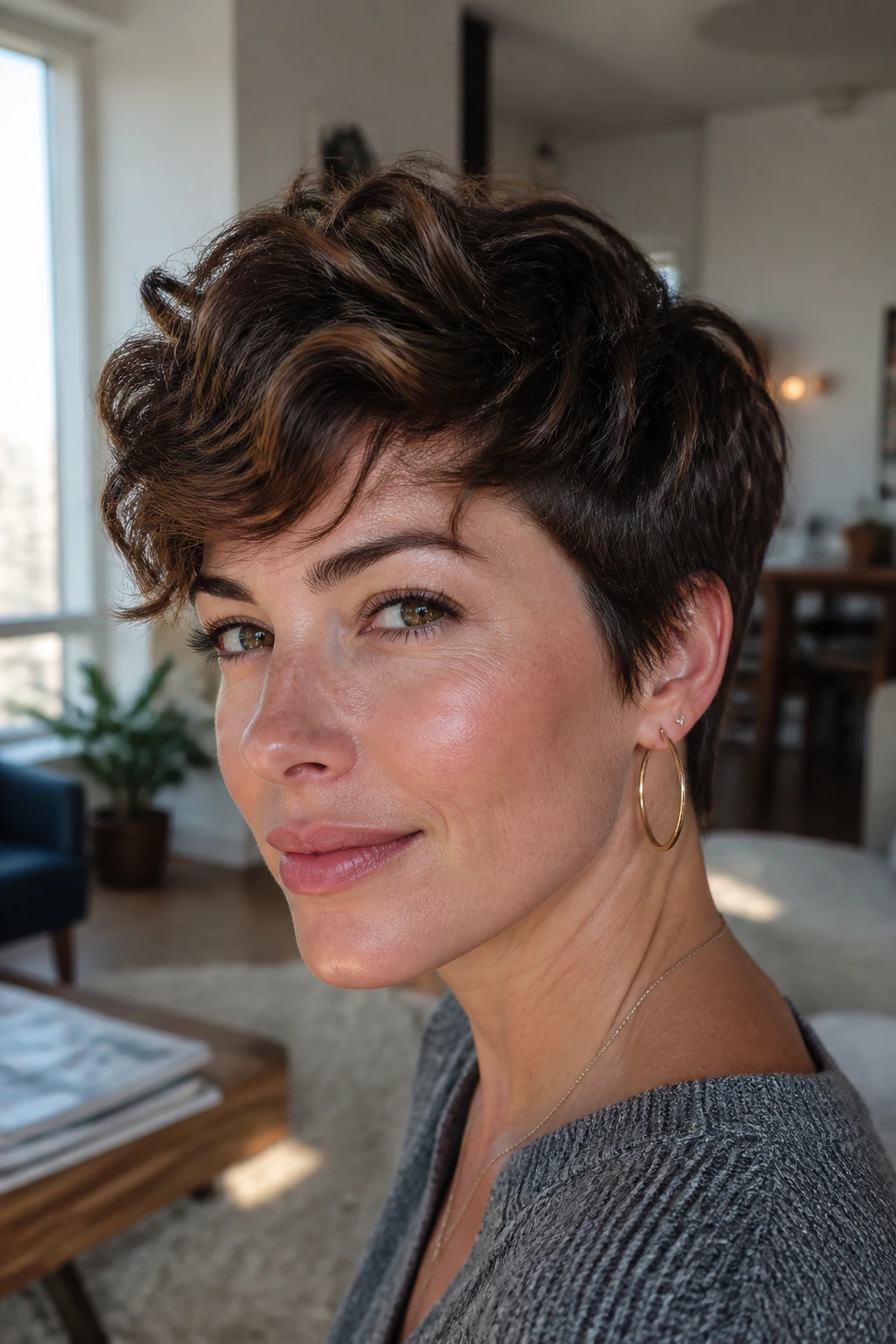
A layered pixie with a long top is one of the best short options for thick wavy hair if you like the feeling of being done in under five minutes. The sides and back are cropped close enough to reduce bulk, while the top stays long enough to show the wave pattern and avoid that helmet-on-the-head effect.
The secret is proportion. If the top is too short, thick waves lose their shape and stand up in odd places. If it’s too long, the cut starts behaving like a mini shag. Somewhere around 3 to 4 inches on top gives you room to push it forward, sweep it back, or wear it messy.
This is also one of the few short cuts where your styling product choice matters a lot. A tiny amount of paste can define the top without freezing it. Mousse gives you more softness. A dry finish cream gives a little sheen. Pick one direction, not all three.
I like this cut for dense hair that feels hot at the neck. It cools you down fast. And yes, that matters more than people admit.
10. Mini Butterfly Bob
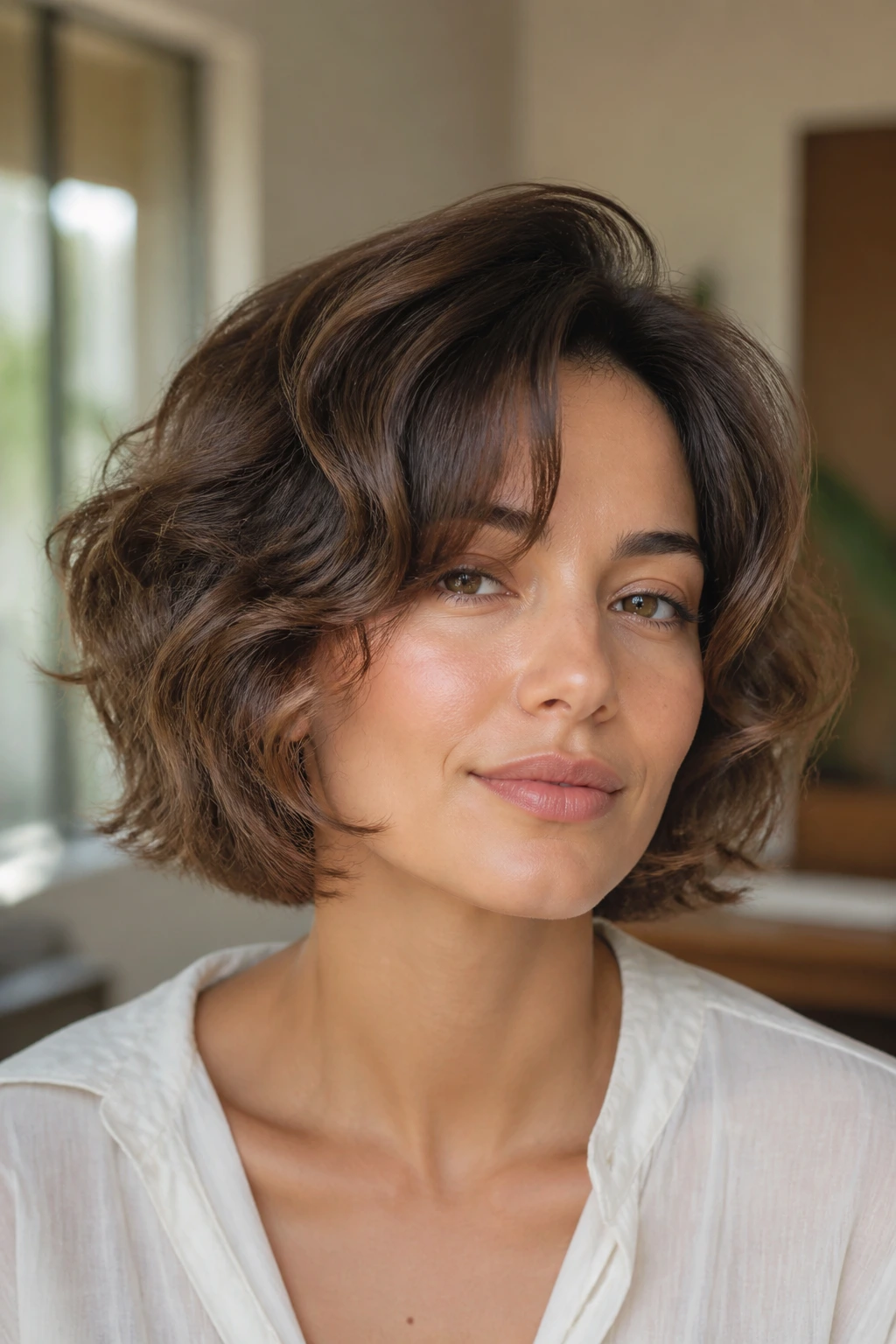
If you like the shape of a butterfly cut but refuse to live with long hair, the mini version is worth a hard look. A mini butterfly bob keeps the face-framing layers and crown lift that make the larger cut work, then shortens the overall length so thick waves do not drag the whole style down.
It usually lands around the chin to just below the jaw, with the front pieces cut a little longer so they skim the cheekbones. That framing matters. Thick wavy hair can look blunt around the face if the front is ignored, and the butterfly shape solves that by opening things up without making the sides too thin.
This cut works best when the layers are soft and staggered rather than chopped into obvious steps. The idea is movement. Not drama for its own sake.
If you often wear your hair tucked back on one side, the mini butterfly bob looks especially good because the front pieces still fall in a flattering way when one side is pinned. It also grows out with less awkwardness than a lot of short layered cuts, which is a nice bonus when life gets in the way of hair maintenance.
11. Piecey Bixie
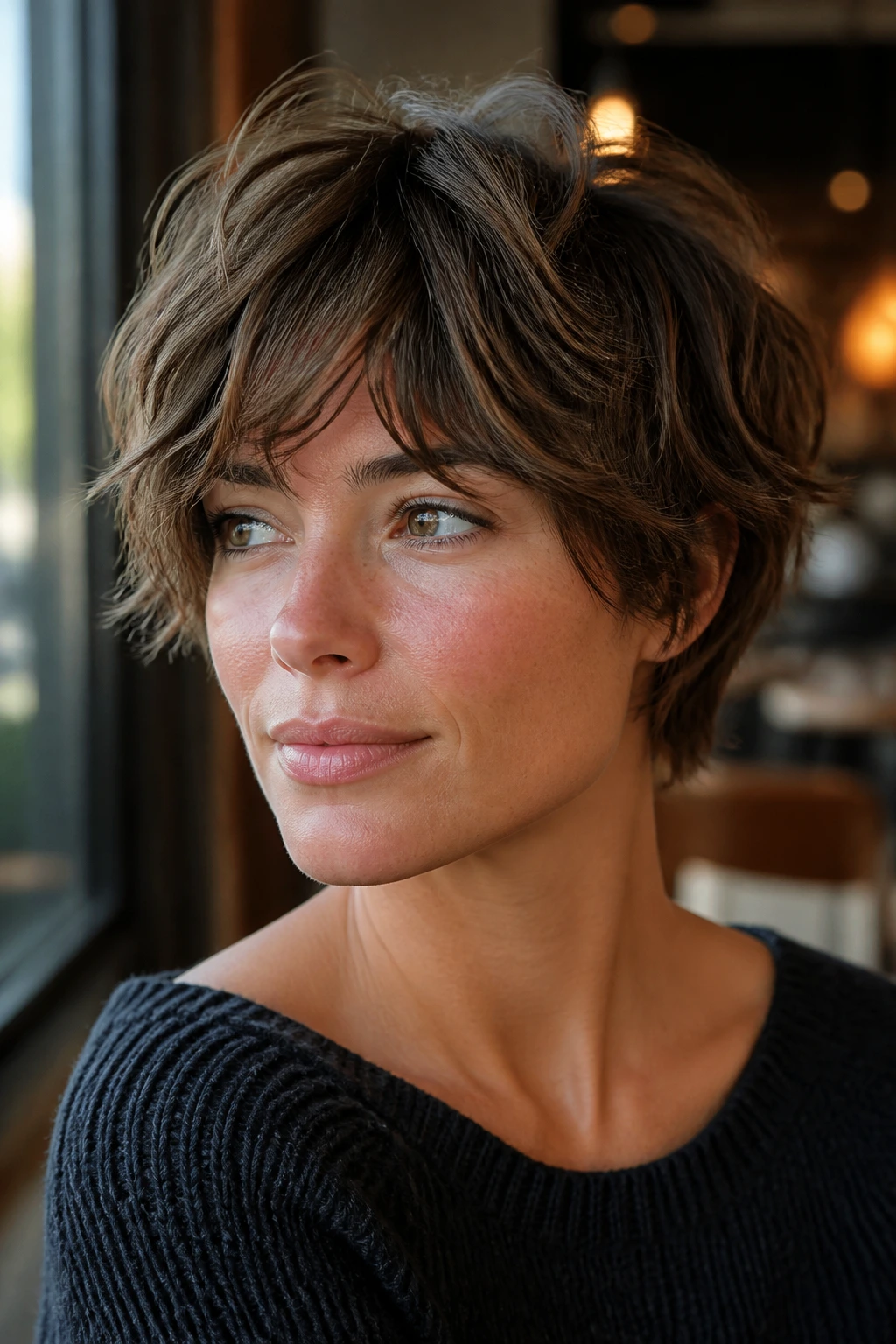
The piecey bixie is the less polished cousin of the standard bixie, and I mean that as a compliment. It keeps the same in-between length, but the finish is more broken up, more lived-in, and a little less precious. Thick wavy hair usually likes that. It already has texture; you do not need to dress it up too much.
What sets this version apart is the definition around the ends. Instead of blending everything into one soft cloud, the layers are separated enough to show movement. You still want control near the ears and nape, but the top can be left a touch messier so the waves read clearly.
What to Ask Your Stylist For
- Longer sideburns to soften the front
- A lighter crown than the nape
- Broken ends rather than a smooth, rounded finish
- Minimal thinning at the perimeter so the bulk stays under control
This cut is especially friendly for people who want something easy but not plain. It can look a bit sharper when styled with a matte paste, or softer with leave-in cream and air-drying.
It’s not a formal cut. That’s the charm.
12. Angled Bob with Internal Layers
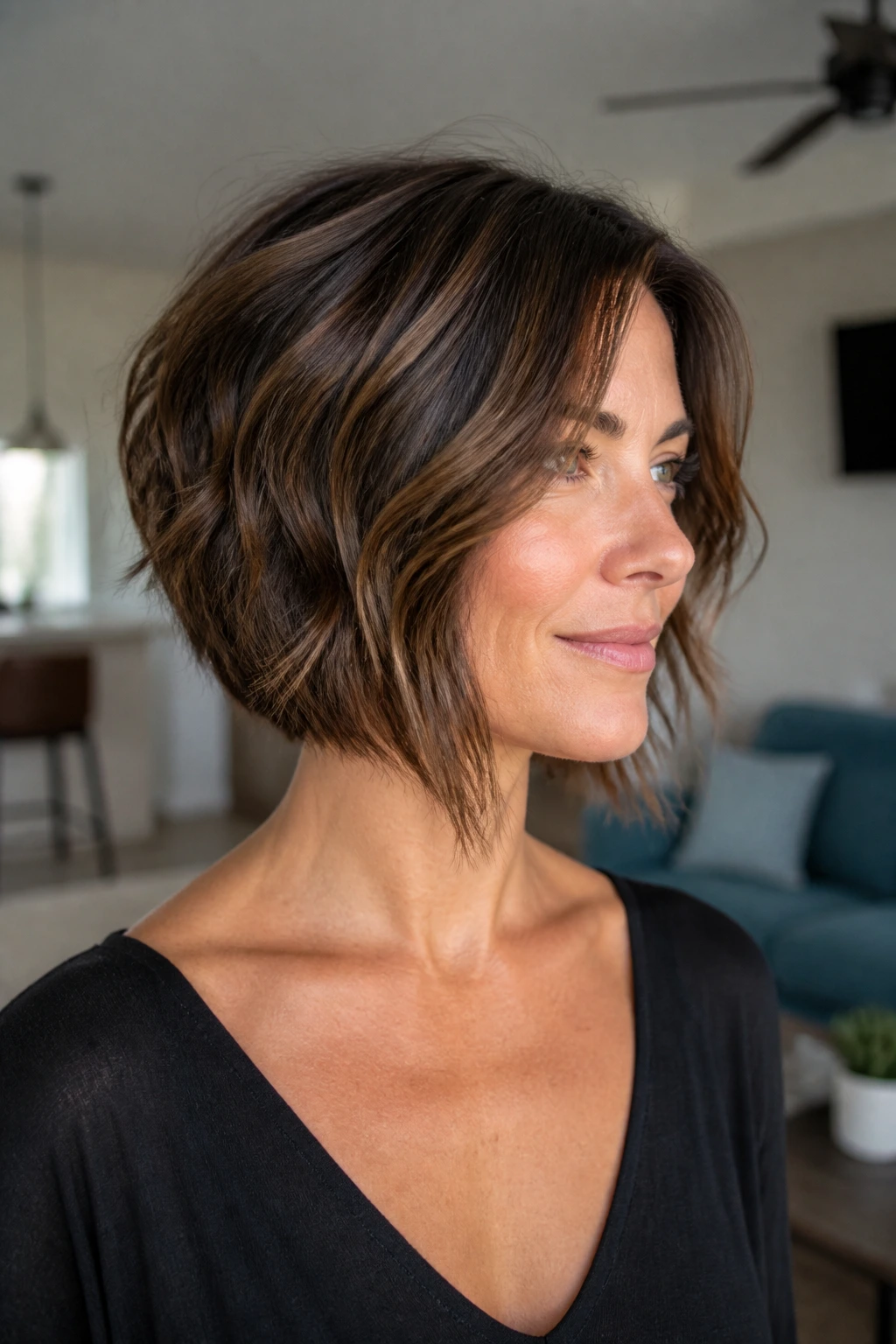
A lot of people hear “angled bob” and think of a dramatic front-heavy cut from a magazine. That is not what thick wavy hair needs unless you want a lot of shape maintenance. A better version keeps the front just a little longer than the back and uses internal layers to stop the bulk from building up in the mids.
That hidden layering is the whole story. Thick hair can feel heavy through the lower half of the head, which makes the front swing forward and the back puff out. Internal layers redistribute that weight so the cut leans cleanly instead of sitting like a block.
This one is especially good if you want a slightly more structured bob than the shag or wolf cut. It has lines. It has shape. It still moves.
The angle does not have to be extreme. Even a subtle difference between the nape and the front can make waves fall more neatly. If your hair tends to get wide at the cheeks, this shape keeps the outline narrower and more controlled.
A slight bend with a flat iron on the front pieces can sharpen the angle without making the rest of the haircut too perfect.
13. Shaggy Lob with Curtain Fringe

A shaggy lob with curtain fringe is one of the easiest ways to make thick waves look intentional fast. The lob length gives the hair enough weight to stay grounded, while the shaggy layers prevent it from turning into a wide, puffy shape. The curtain fringe finishes the whole thing by breaking up the front and softening the forehead line.
Why the Fringe Matters
Curtain fringe is useful on thick waves because it can blend into the rest of the cut instead of sitting on top like a separate piece. When it’s cut long enough to part in the middle and skim the cheekbones, it frames the face without adding a lot of extra bulk.
A few things make this cut work:
- Fringe should start around the brow to cheekbone area, not too short
- Layers should be soft through the sides, heavier at the bottom
- The lob length should sit around the collarbone or just above it
- A bit of root lift near the part keeps the fringe from sticking flat
If you like a low-maintenance blowout look, this is a strong option. It can also be worn air-dried and scruffy, which is the version I tend to like most. The cut has enough shape to do the work for you.
14. Soft Mullet with Wavy Ends
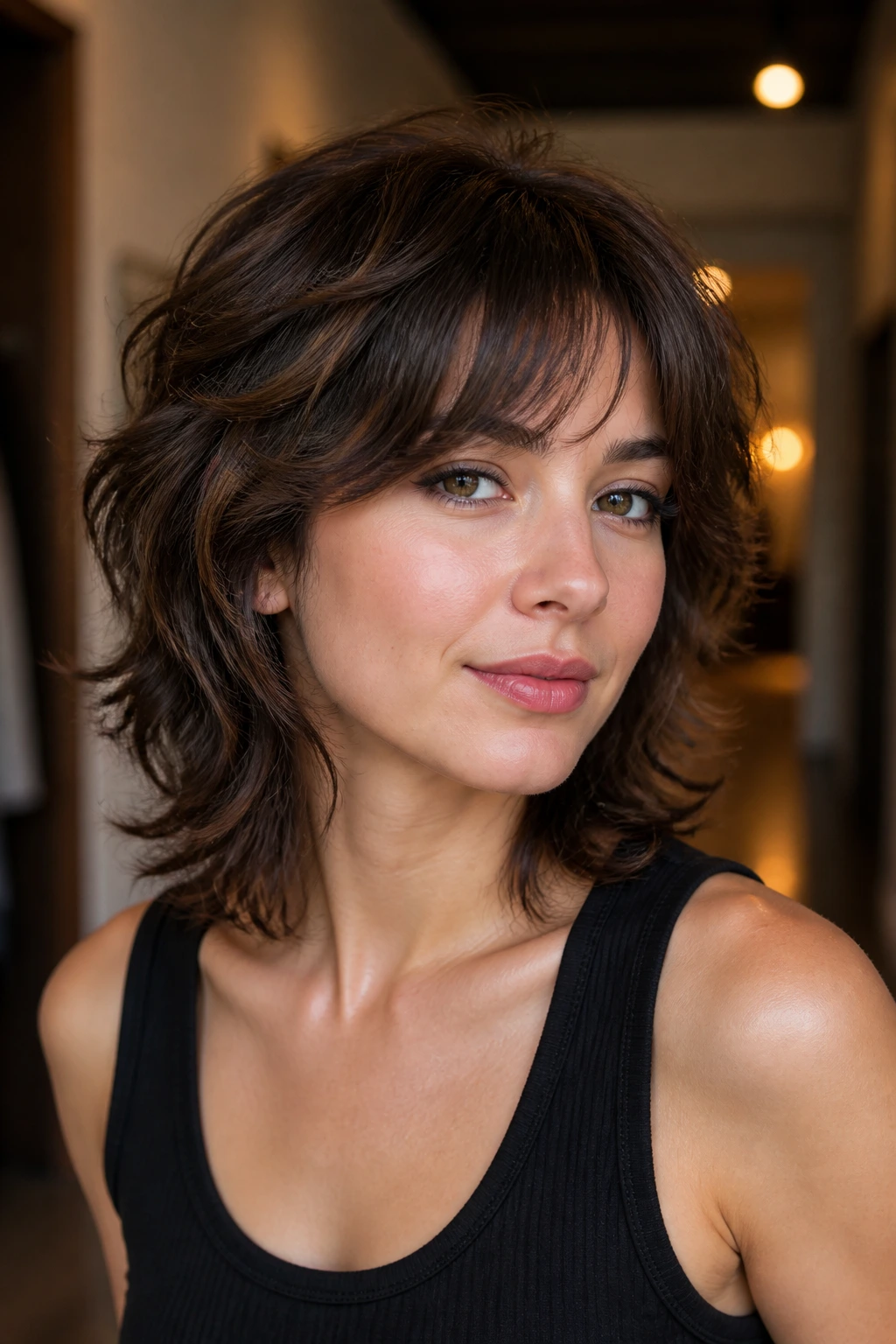
The soft mullet is not as wild as people think. On thick wavy hair, it can be surprisingly wearable when the contrast between top and bottom is kept gentle. The crown gets lift, the front pieces stay soft around the face, and the nape is left a touch longer so the silhouette doesn’t collapse.
What keeps this cut from veering into costume territory is softness. The ends should look feathered, not shredded. The sides should connect to the back without a hard shelf. If you can see exactly where the layers start and stop, they’re probably too obvious.
This cut suits someone who likes a little attitude in their hair. It also handles natural cowlicks better than a rigid bob, because the shape already has some looseness built in. Thick waves give it extra life.
There’s a small practical upside too: the longer back can help the cut grow out in a less awkward way than a very short crop. That matters if you know you’ll want to change your mind later, because hair always has opinions of its own.
A dab of texture cream on the ends is enough. More will flatten the whole point of it.
15. Jaw-Length Box Bob with Movement

A jaw-length box bob sounds blunt, maybe even a little severe, and that’s exactly why it can work so well on thick wavy hair. The firm outline gives the hair a clear boundary, which stops the sides from drifting outward. The movement comes from inside the cut, not from a million little frayed pieces.
At first glance, this sounds like the wrong cut for waves. It isn’t. The box shape creates strength, while the internal layers keep the bottom from feeling heavy. That combination is useful if your hair has a coarse texture and likes to expand in humidity.
The jaw length is important. Too short and the haircut can flare above the jawline. Too long and it stops looking boxy and starts behaving like a regular bob. Right around the jaw gives the shape enough presence without making your face look buried.
If you want to soften it, tuck the front pieces behind the ears or curve the ends under with a blow dryer. If you want edge, let it air-dry and keep the ends a little uneven.
Some cuts are about movement. This one is about control with movement hiding underneath.
16. Tousled Crop with Side-Swept Fringe

What makes a tousled crop so useful on thick wavy hair? The side-swept fringe gives the face a built-in line, which keeps short hair from looking too square or too boyish. The crop itself stays light and close, so the volume goes where you want it instead of rising straight up.
This style is a good fit if your waves sit strongly at the front but flatten at the crown. The fringe can be directed across the forehead, and the rest of the crop can be cut in short, uneven layers that encourage movement. It feels casual, but not careless.
The fringe should be long enough to bend, not so short that it sticks out. Usually that means cheekbone length or a little higher, depending on your brow shape. A side part helps the whole thing fall into place faster.
Styling Note
Use a small amount of mousse at the roots, then scrunch the front while it’s damp. Let the hair dry about 80 percent before touching it again. That single habit makes the texture look better and keeps the fringe from separating into random spikes.
If you want a haircut that looks good with sunglasses, this one does the job.
17. Curved A-Line Bob
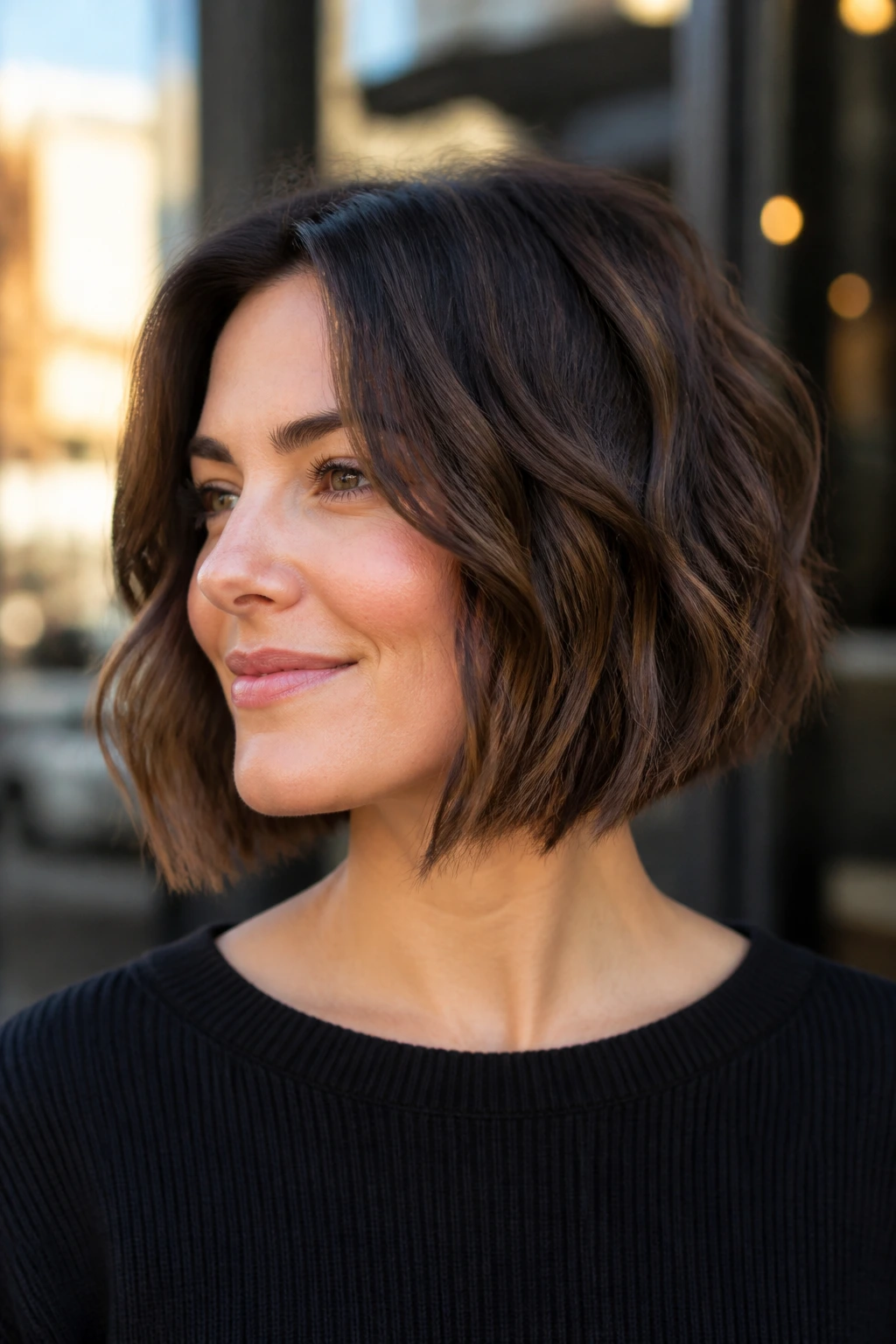
A curved A-line bob is one of the cleanest shapes you can give thick wavy hair. The back sits shorter and slightly rounded, while the front length slips forward enough to graze the jaw or chin. That curve keeps the silhouette narrow and controlled, which thick waves need more than they let on.
The front length is doing some heavy lifting here. It gives the waves a place to fall, and it stops the haircut from feeling too stacked. Meanwhile, the shorter back removes enough bulk that the nape does not balloon under collars or jackets.
This is a nice choice if you want a cut that looks tidy from the side without feeling flat from the front. It can be worn straightened at the ends or left messy and air-dried. Either way, the shape remains clear.
I also like this cut for people who need a style that behaves in a hurry. A curved A-line bob usually falls into place with less coaxing than a more layered shag. The shape itself does a lot of the work.
A small bend at the front is enough. Don’t over-style it. The line is the feature.
18. Airy Layered Crop with Side Part

A side part changes everything on thick wavy hair. Seriously. It shifts weight, opens the face, and keeps one side from puffing up in the same way the other side does. Pair that with a short layered crop and you get a haircut that feels airy instead of bulky.
The reason this works is shape direction. Thick waves need somewhere to go, and a side part gives them a slope to follow. A center part can be beautiful, but on very dense hair it sometimes leaves the center too flat and the sides too wide.
What Makes It Different
- The part creates lift at the root without extra teasing
- One side can be left a touch longer to frame the cheek
- The crop can stay short around the ears and neckline for a cleaner outline
- It grows out in a flattering way if the layers are soft rather than sharp
This cut is especially good if your hair has a stubborn cowlick at the front. A side part can work with that bend instead of fighting it. The overall effect is easy, light, and a little undone in the best way.
Not every short cut needs to shout. Some just need to sit well.
19. Wedge Bob with Soft Texture
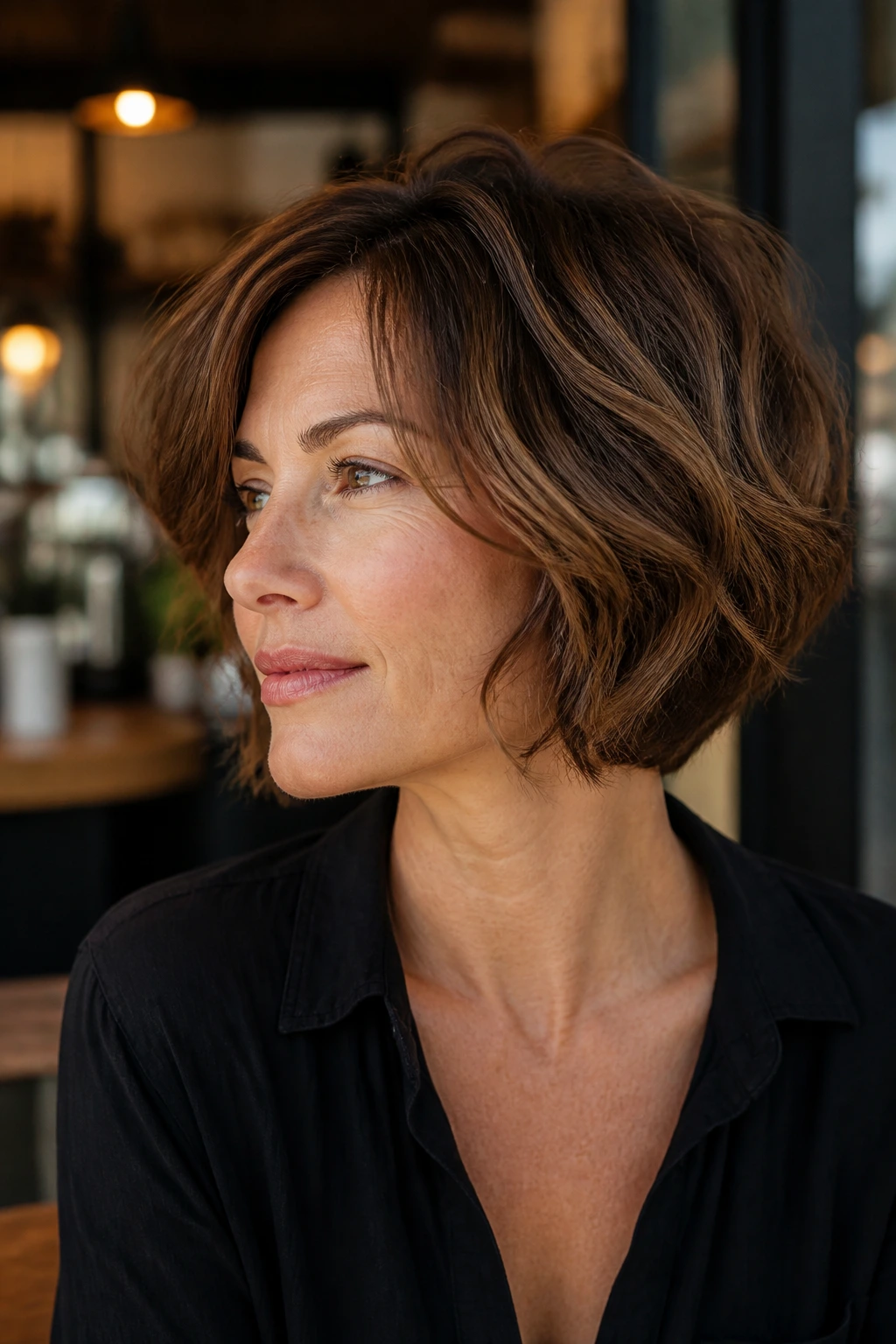
The wedge bob has old-school bones, and that is exactly why it can be so good on thick wavy hair. A modern version keeps the stacked shape at the back but softens the edges so it doesn’t look stiff or dated. The result is neat, lifted, and much easier to wear than the rigid wedges people remember.
At the Nape and the Crown
The back is where this cut earns its keep. The stacked nape removes weight, which stops thick hair from ballooning below the occipital bone. The crown gets enough layering to keep the head shape balanced, but not so much that the top frizzes up.
The soft texture matters. If the layers are cut too sharply, waves can look choppy in a bad way. You want a clean curve, not a staircase.
This is a strong pick if you like structured hair but don’t want it to feel fussy. It also works well with a round brush if you enjoy a little smoothing at the ends. A quick blow-dry can make the back sit beautifully close to the neck, while the sides still keep their wave.
It’s practical. It just happens to look more interesting than a standard bob.
20. Tapered Crop with Long Side Fringe
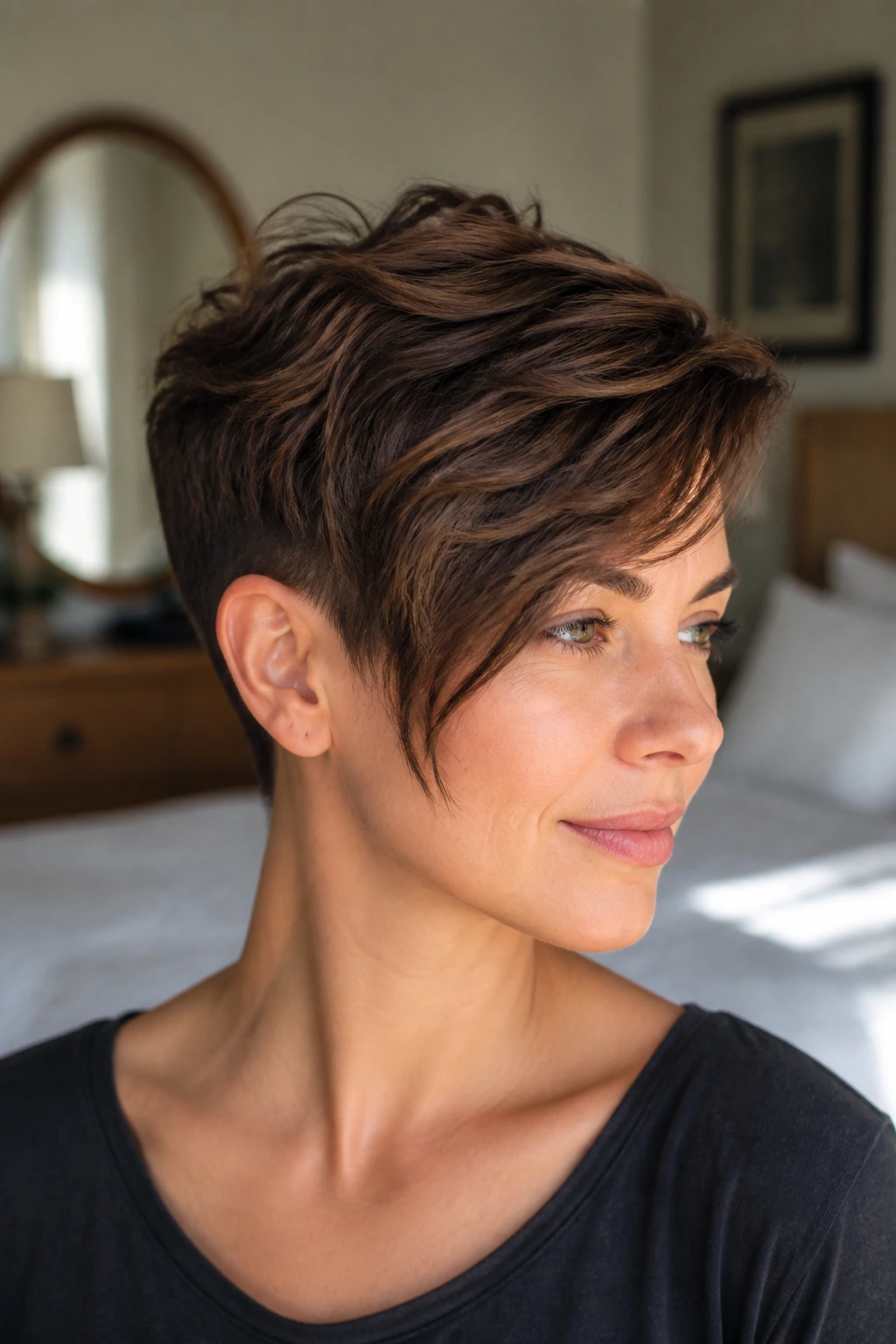
A tapered crop with a long side fringe is one of the most forgiving cuts for thick waves because it gives you two things at once: a short, tidy outline and a soft front that doesn’t feel severe. The fringe keeps the haircut feminine or sharp depending on how you style it, and the taper makes the back easy to live with.
This one is especially useful if your face has a strong jaw or a broad forehead. The fringe can sweep diagonally across the face, which creates a nice line and breaks up the density around the temples. The crop underneath stays close enough to prevent puffing.
A long side fringe also gives you styling options. You can pin it back, tuck it behind one ear, or let it fall forward on a lazy day. That flexibility matters more than people admit when they’re choosing a short haircut.
Use a wax cream the size of a pea if you want separation. Use less than that if your hair is already coarse. Thick waves hold shape well; they do not need help becoming heavy.
21. Razored Bob with Micro Layers

A razored bob can be fantastic on thick wavy hair, but it needs a careful hand. The right version uses micro layers hidden inside the cut so the weight comes out without wrecking the finish. The wrong version can leave the ends frayed and the waves frizzy by noon.
That’s the tradeoff. Razor work softens dense hair fast, and it can create a lovely feathery edge. But if the razor is used too high or too often, thick waves can break apart in a way that looks thin at the bottom and puffy at the top. Nobody wants that.
The cut is best when the overall shape stays strong. Think clean bob line, softened from the inside. The outer perimeter should still look deliberate. The texture should show when the hair moves, not scream from across the room.
This is the style I’d give someone with coarse waves who wants a softer finish than a blunt bob but doesn’t want a full shag. It sits right in the middle, which is a useful place to be.
Dry it with tension at the roots and almost no product on the ends. Too much product flattens the clean lines.
22. Soft Side-Part Bob with Face-Framing Sweep
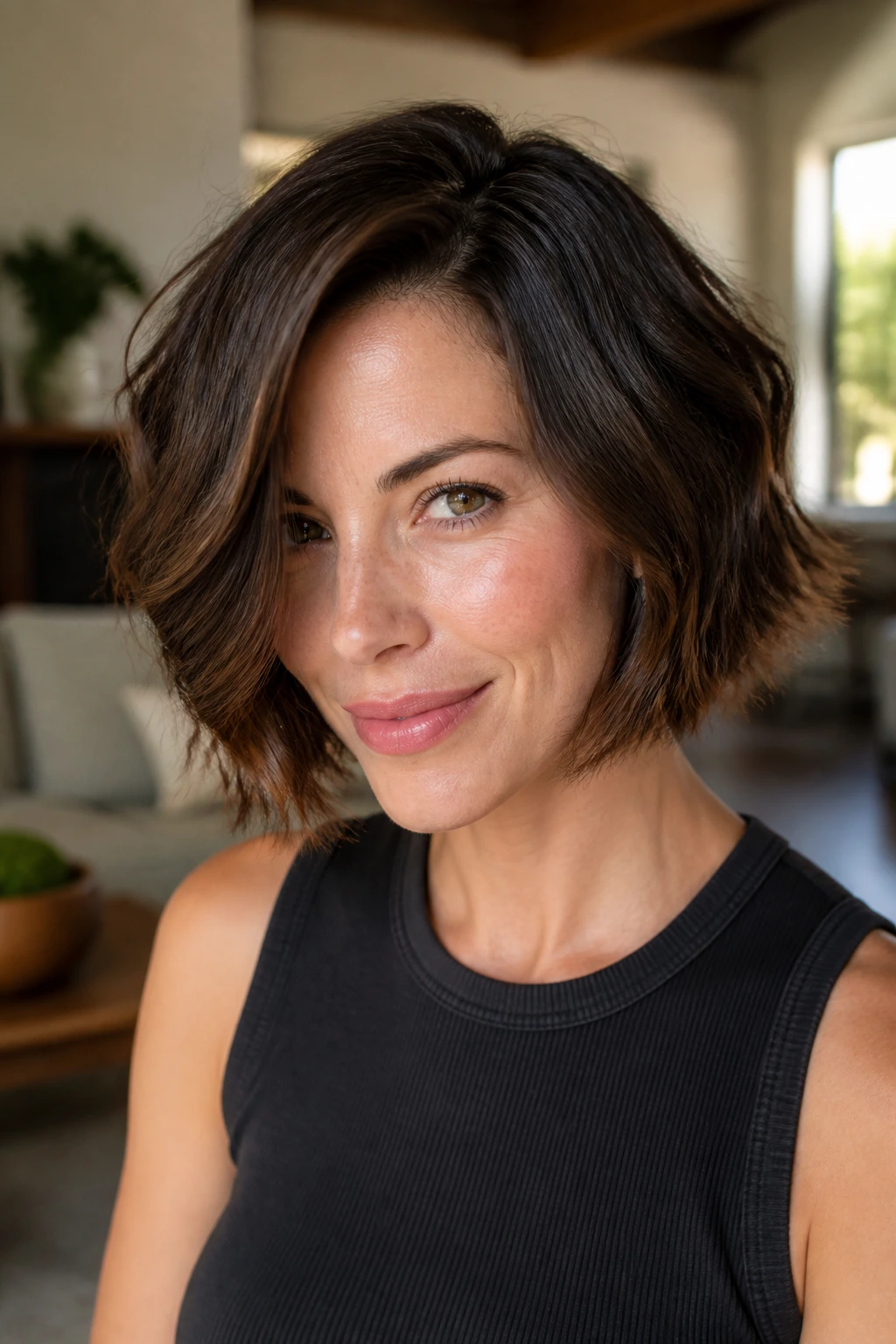
If you want one cut that feels safe, flattering, and not at all boring, this is the one. A soft side-part bob with face-framing sweep works on thick wavy hair because it gives the waves direction, keeps the outline controlled, and softens the face without scattering the bulk everywhere.
The side part matters here. It creates lift where thick hair often lies too flat, and it gives the top a little asymmetry that keeps the bob from feeling stiff. The face-framing pieces should start around the cheekbone and drift down toward the jaw, not stop abruptly. That sweep is what keeps the cut from looking blocky.
This style suits people who want short hair that still feels polished without a lot of styling time. It can be air-dried with a little cream, blown out smooth for a sharper look, or left a bit rough if you like texture. It also grows out well, which is rare enough to mention.
If you’re stuck between a bob, a shag, and a pixie, start here. It borrows the best parts of each without making a mess of your mornings.
