



Fine hair is picky. It likes a clean shape, a little lift at the roots, and an end line that still looks full at arm’s length. Give it too many short layers and it can go wispy fast; leave it one flat length and it often hangs like wet ribbon by lunchtime. The sweet spot sits in the middle, and layered haircuts for fine hair are all about finding that balance without stealing density from the places that need it most.
One detail people miss: fine hair and thin hair are not the same thing. You can have a lot of strands that are each very small in diameter, or you can have fewer strands with the same soft texture. The haircut needs to respect both. A stylist who understands fine hair usually thinks in terms of perimeter, weight, and where the eye lands first, not just “add layers and hope for the best.”
That’s why the best cuts for fine hair usually keep some kind of strong edge somewhere. A blunt bob. A collarbone line. A full bottom section with movement built higher up. The point is not to chop the hair into pieces until it looks busy. The point is to make it look like there’s more hair than there really is, and to do that without making the ends disappear.
And yes, the styling matters too. A 1-inch round brush, a light mousse, a root spray, or even a few velcro rollers can change the whole mood of a cut. But the cut has to do the heavy lifting first. Start there.
1. Collarbone Layers With a Blunt Edge
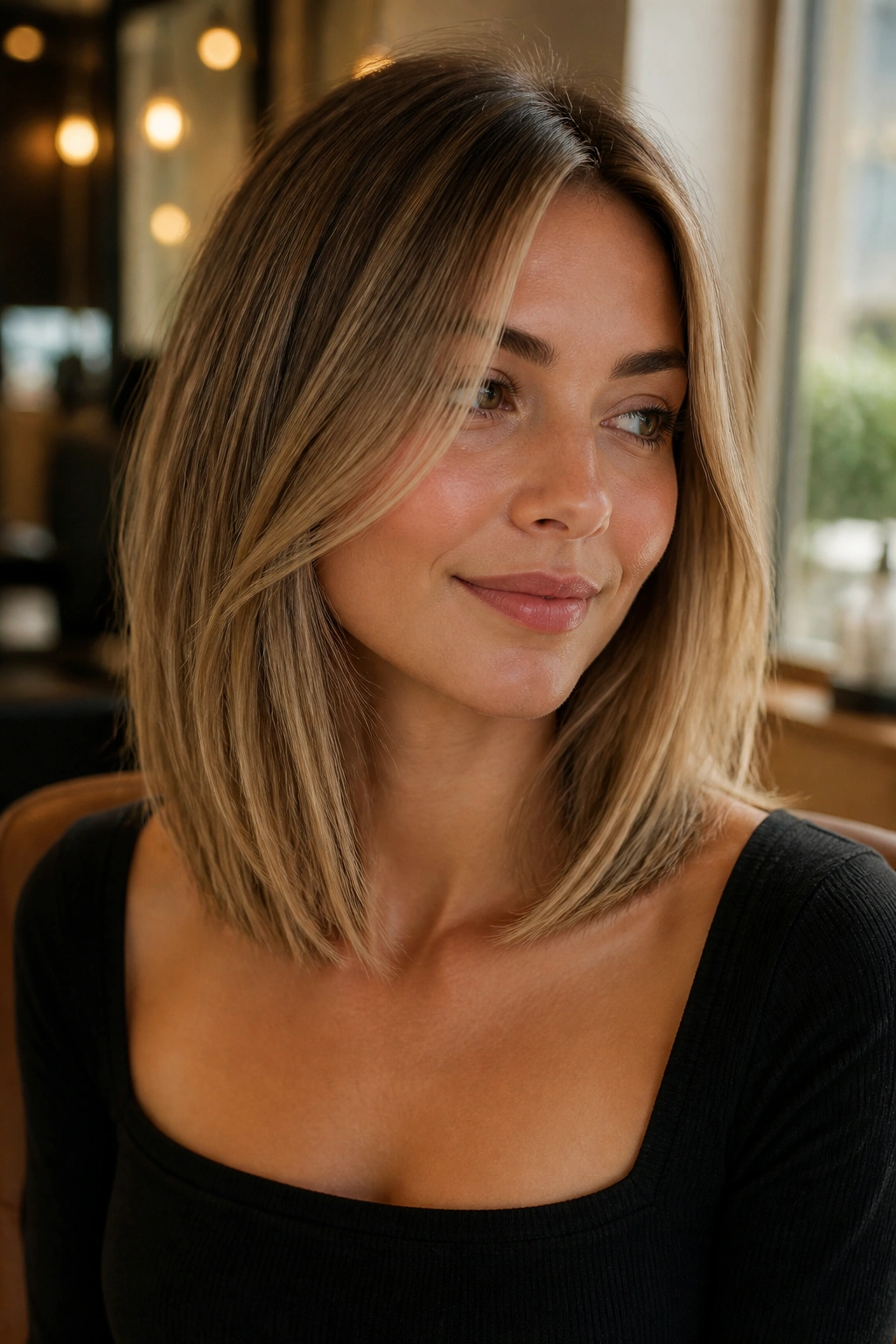
The safest place to start is a collarbone cut with soft layers around the face. It’s long enough to pull back, short enough to feel lifted, and the collarbone length keeps the ends from looking stringy the way longer fine hair often does.
Why it flatters fine hair
A collarbone line gives the eye a clear finish point. That matters more than people think. When hair ends somewhere tidy, it reads as thicker, even if the strands themselves are delicate.
Ask for the layers to begin low, usually around the chin or just below it, and keep the bottom edge blunt. That blunt edge is doing a lot of work. It makes the shape look intentional instead of chopped up.
- Best for straight to softly wavy fine hair
- Works well with a middle or side part
- Easy to blow-dry with a round brush
- Keeps enough length for ponytails and clips
Pro tip: If your ends already feel thin, do not let the haircut climb too high into the sides. Keep most of the movement in the front third of the hair.
2. The Blunt Lob With Hidden Internal Layers
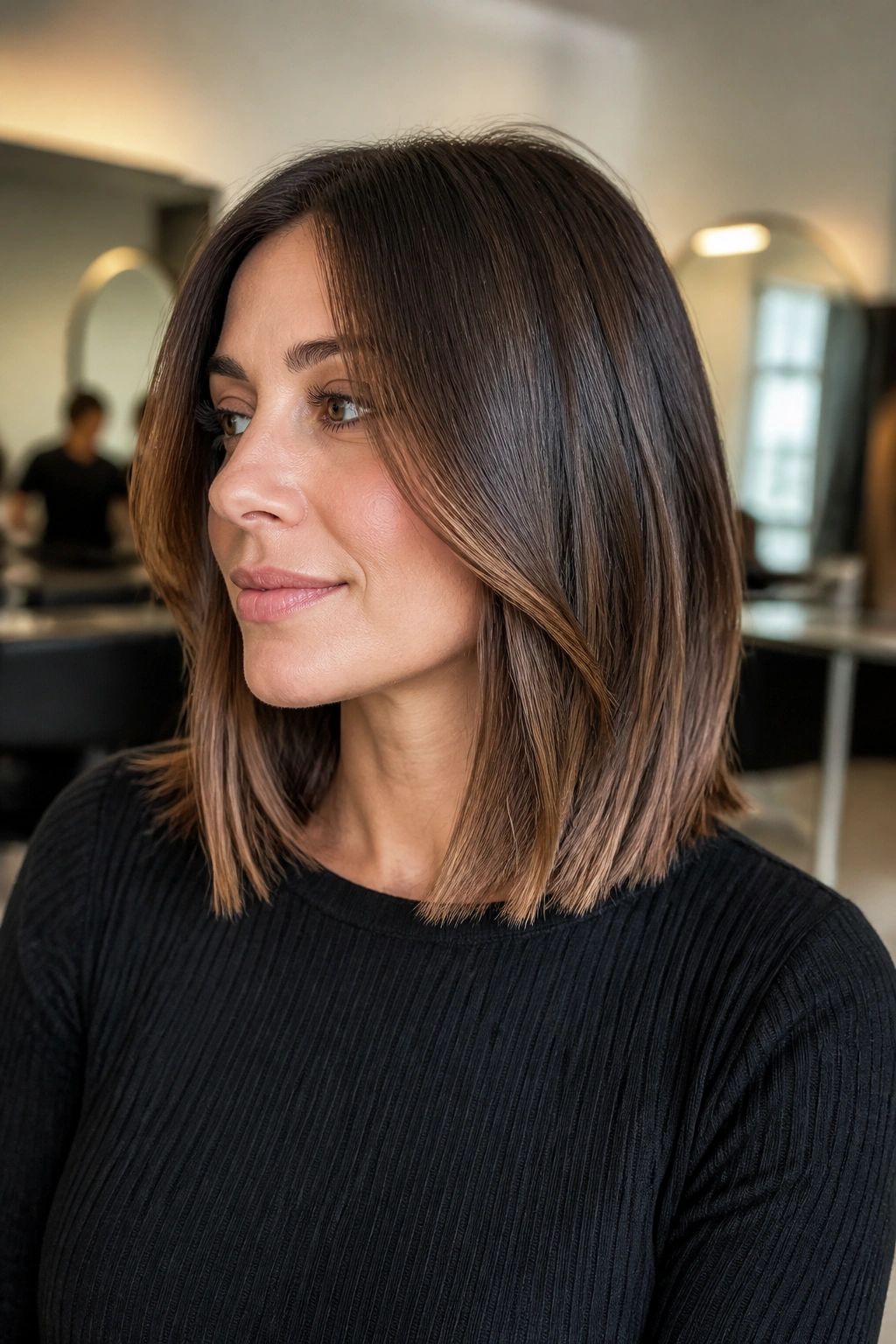
A blunt lob can look denser than longer hair, even when the actual strand count never changes. That’s the magic here. The visible outline stays full, while a few hidden layers under the top section stop the hair from sitting like a helmet.
This is a cut for someone who wants polish without stiffness. The best version keeps the outer line clean at the shoulders or just below them, then removes a little weight from the interior so the hair bends instead of drooping. The result is neat, not heavy.
Use this cut when your hair falls flat at the crown but still looks fine at the ends. It gives you shape without the choppy, see-through feeling that comes from over-layering. A flat iron pass through the top layer can make it sleek, but a quick bend with a brush and dryer often looks better.
It also holds up well on day two. That matters. Fine hair that has a blunt base and a little hidden movement tends to wake up with some shape instead of collapsing into the scalp.
3. Butterfly Layers That Stay Light Around the Ends
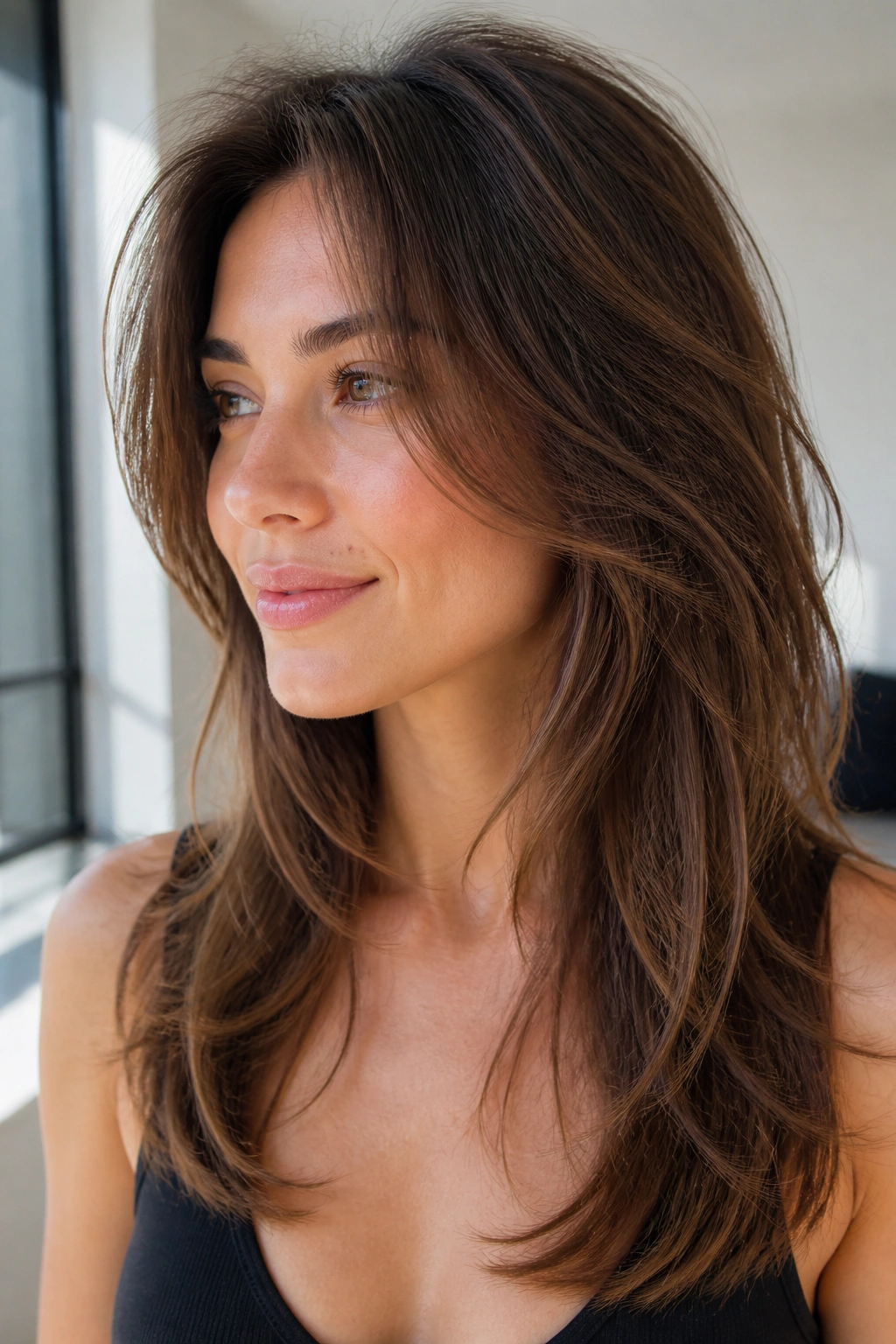
Can the butterfly cut work on fine hair? Yes, if the layers are handled with some restraint. The cut looks best when the shortest pieces live around the cheekbones and collarbone, while the lower half stays long enough to keep its body.
What makes it different
The butterfly shape gives the illusion of a full, airy top layer without forcing the entire head into short, choppy pieces. That’s the key for fine hair. You want lift near the face and crown, not a bunch of short ends that start to look sparse from the side.
The most common mistake is asking for butterfly layers that go too high around the head. That can make the hair look feathery in a bad way. Instead, keep the shortest layers deliberate and leave the bottom section heavy enough to hold the silhouette.
How to wear it
- Blow-dry the front pieces away from the face with a 1.5-inch round brush
- Add a light mousse at the roots while the hair is damp
- Curl the face-framing pieces away from the face for a softer fall
- Leave the ends straight or barely bent so they don’t look thin
The cut wants movement, not chaos. That’s the difference.
4. A Feathered Bob That Never Looks Flat
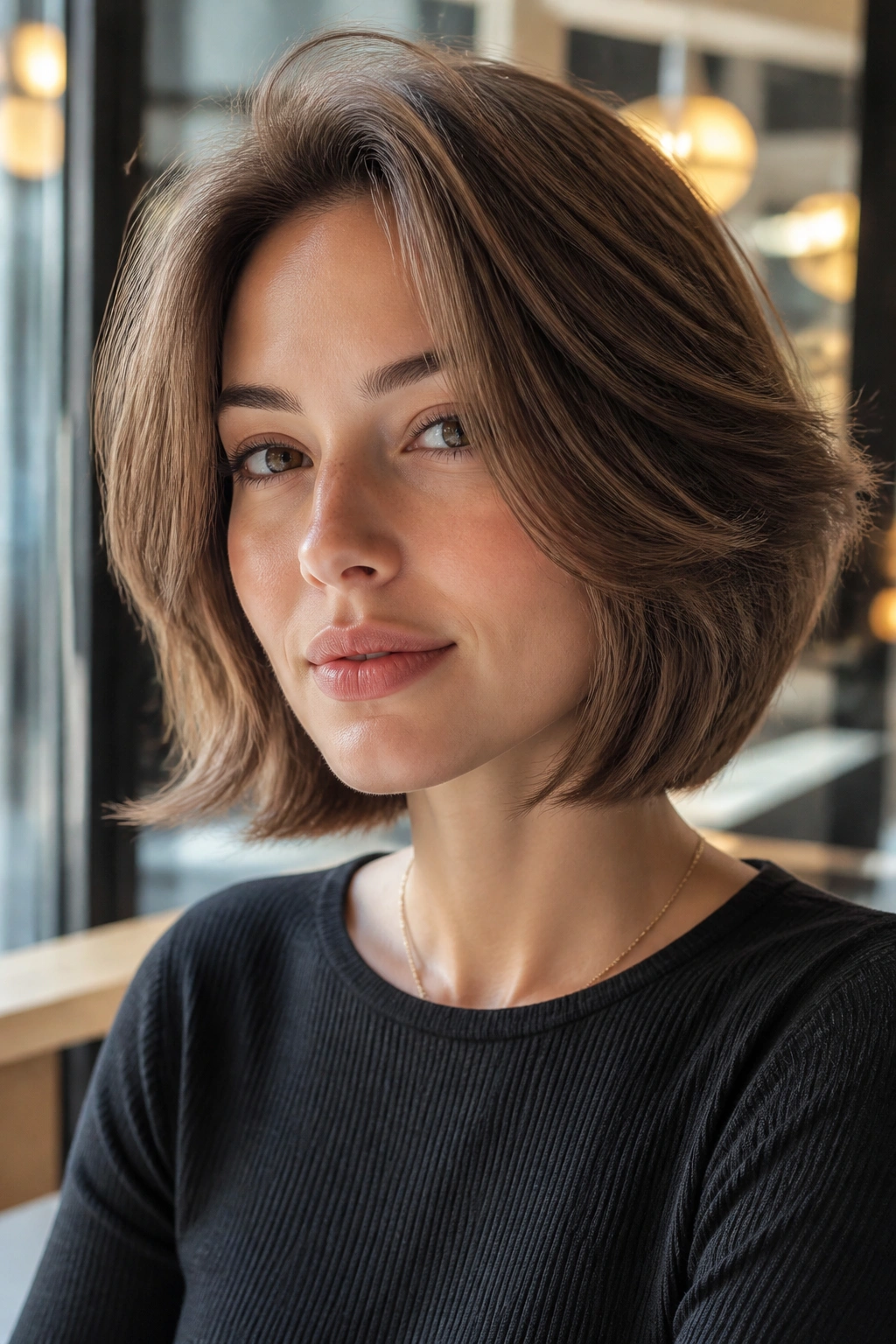
I keep coming back to the feathered bob for fine hair because it solves a real problem: the hair can move without looking broken apart. Shorter length means less weight dragging the hair down, and the feathering gives it a little swing around the cheeks and jaw.
This is the haircut I think of for anyone whose hair goes limp the second humidity, heat, or a long workday gets involved. The shape sits just under the ears or at the jaw, and the ends are softly textured rather than blunt and boxy. It feels lighter than a classic bob, but it still has enough outline to look full.
What to ask for
- A bob that lands at the jaw or just below
- Soft feathering around the perimeter, not all over the head
- Light shaping at the crown for lift
- A fringe only if you’re ready to style it often
One warning: avoid aggressive thinning shears. On fine hair, they can leave the ends looking shredded within days.
If you like a little polish with your volume, this is one of the easiest cuts to live with. It dries fast, it takes a bend well, and it rarely looks too precious.
5. Long Invisible Layers That Keep the Length
Some people do not want to lose length. Fair enough. That doesn’t mean they have to live with one flat curtain of hair. Long invisible layers solve the problem by adding movement underneath the top section while keeping the visible outline long and full.
The best version barely looks layered when it’s hanging still. You see the change when the hair moves. It falls in soft sections instead of a single heavy sheet, and that motion is enough to keep fine hair from looking stringy at the ends.
This cut works especially well if your hair is straight or just slightly wavy. The layers should start low, often below the chin, and the ends should stay blunt. If the bottom gets too tapered, the whole thing can go see-through fast. A long cut for fine hair needs a thick-looking perimeter more than it needs drama.
Air-drying can work here, but a quick blow-dry with a paddle brush gives the best shape. If you want a tiny bit more life, wrap the front two sections around a 1.25-inch iron for five seconds each. That little bend is enough.
6. The Rounded Bob That Softens the Jaw
Unlike a square bob, a rounded bob curves inward a little at the ends, which helps fine hair look fuller around the lower half of the head. That rounded line is doing the visual trick. It keeps the shape from feeling boxy or sharp, and it gives the hair a soft, tucked-in finish that reads as denser.
This cut is a good fit if your face tends to look wider at the cheeks or if a straight-across bob makes your hair stick out at the sides. The curve keeps the silhouette close to the head, which helps a lot when the hair is fine and light. It also works well on hair that has a slight bend already, because the shape helps the hair cooperate instead of fighting it.
Ask for length that skims the jaw or sits just below it, plus a little graduation through the interior. The back can be a touch shorter than the front, but not so much that it starts stacking up. You want a rounded outline, not a hockey helmet.
This is one of those cuts that looks expensive when it’s done right. Not flashy. Just neat, tidy, and full enough to hold its own.
7. The Shaggy Lob With a Soft Curtain Fringe
The shaggy lob is the cut people think will be too messy for fine hair—until they see it done with restraint. A good version keeps the lob length at the collarbone, adds soft texture through the middle, and uses a curtain fringe to frame the face without eating up the front.
Why it works
The shag shape gives motion to hair that would otherwise lie too flat, but the length keeps it from getting fluffy in the wrong places. On fine hair, the trick is to stop before the layering turns into fray. The ends should still look connected.
What to ask your stylist for
- Collarbone length
- Soft, not severe, internal layering
- Curtain fringe that opens from the cheekbones
- Point cutting only at the very ends
How to style it
A diffuser helps if you have a wave. If your hair is straight, a rough dry with a little mousse at the roots is enough, then wrap the face frame around your fingers while it’s still warm. Do not over-style the fringe. It should fall, not sit in perfect little arches.
This cut has attitude, but it’s not fussy. That’s why it works.
8. The Bixie With Crown Lift
A bixie works because it keeps weight at the crown and sides where fine hair needs help, then stays short enough to avoid dragging itself down. It sits between a pixie and a bob, which sounds vague until you see it in a mirror and realize the shape is doing all the talking.
The top is a little longer. The nape is neat. The sides are soft, not blocky. That combination gives fine hair a lift that lasts longer than a heavily layered long cut, especially if your hair tends to go limp by midday. It also means you spend less time fighting the shape every morning.
This cut is best for someone who likes easy styling and does not mind a shorter neck. A little paste or cream at the roots can push the crown up, but the cut itself should already have some height built in. If the stylist leaves the top too short, the whole thing can look flat and boyish. If the top is too long, it turns into a floppy bob.
The sweet spot is right in the middle. Clean. Light. A little cheeky.
9. C-Shape Layers Around the Face
Can a simple face frame make fine hair look fuller? Absolutely, if the shape is a soft C rather than a hard chop. The idea is to bend the front sections inward and around the cheekbones, so the hair seems to wrap the face instead of hanging straight down from it.
That gentle curve matters. Fine hair often needs movement near the face because that’s where people look first. A C-shape gives you lift and softness without breaking the bottom line into too many pieces. The back can stay longer and more solid, which helps the whole head look denser.
How to style it
- Dry the front sections with a round brush, turning the brush inward at the ends
- Keep the layers longest at the collarbone and shortest near the chin
- Use a light root spray only at the front two inches of the hairline
- Let the back fall naturally, or give it one smooth bend with a brush
This cut is especially good if you wear a middle part. It creates movement without making the part look wider than it is. That’s a small thing, but on fine hair, small things add up.
10. The Textured Midi Cut With a Full Bottom Line
A midi cut sits in that shoulder-skimming zone that can either look expensive or look limp. The difference is the bottom edge. Keep it full and clean, then add texture higher up where the hair can move without losing its shape.
I like this cut for people who want something easier than long hair but not as short as a bob. Fine hair often gets stuck in an awkward in-between stage around the shoulders, where it flips, catches, and goes flat at once. A textured midi cut sidesteps that by giving the ends enough weight to stay together.
The layers should be subtle. Think light internal shaping, not obvious stair-steps. A few pieces around the face can soften the line, but the base should remain thick-looking. That bottom line is the anchor.
If you use a blow-dryer, dry the roots first, then the ends. If you use a flat iron, give the top layer a soft bend rather than chasing pin-straight perfection. Fine hair usually looks better when it has a little air around it.
11. The Wolf Cut Lite for Fine Hair

The wolf cut gets a bad reputation with fine hair, and honestly, some of that is earned. The full version can be too choppy, too shredded, and too eager to remove the exact length that fine strands need. The lighter version is a different animal. It keeps the crown and top layers loose, but leaves the bottom section stronger.
That balance matters because fine hair needs contrast. A little texture at the top creates lift; a fuller bottom keeps the haircut from looking sparse. If both ends and crown are heavily layered, the whole shape can collapse into fuzz.
This version works best on hair with natural wave or bend. Straight hair can wear it too, but the cut has to be softer and less disconnected. Ask for a gentle shag shape, not a dramatic one. The shortest layers should stay well away from the ends, and the stylist should leave enough bulk around the hemline to keep the shape anchored.
It’s a cut with personality. Not everyone wants that. If you do, keep it lighter than you think.
12. Curtain Bangs With Long, Soft Layers
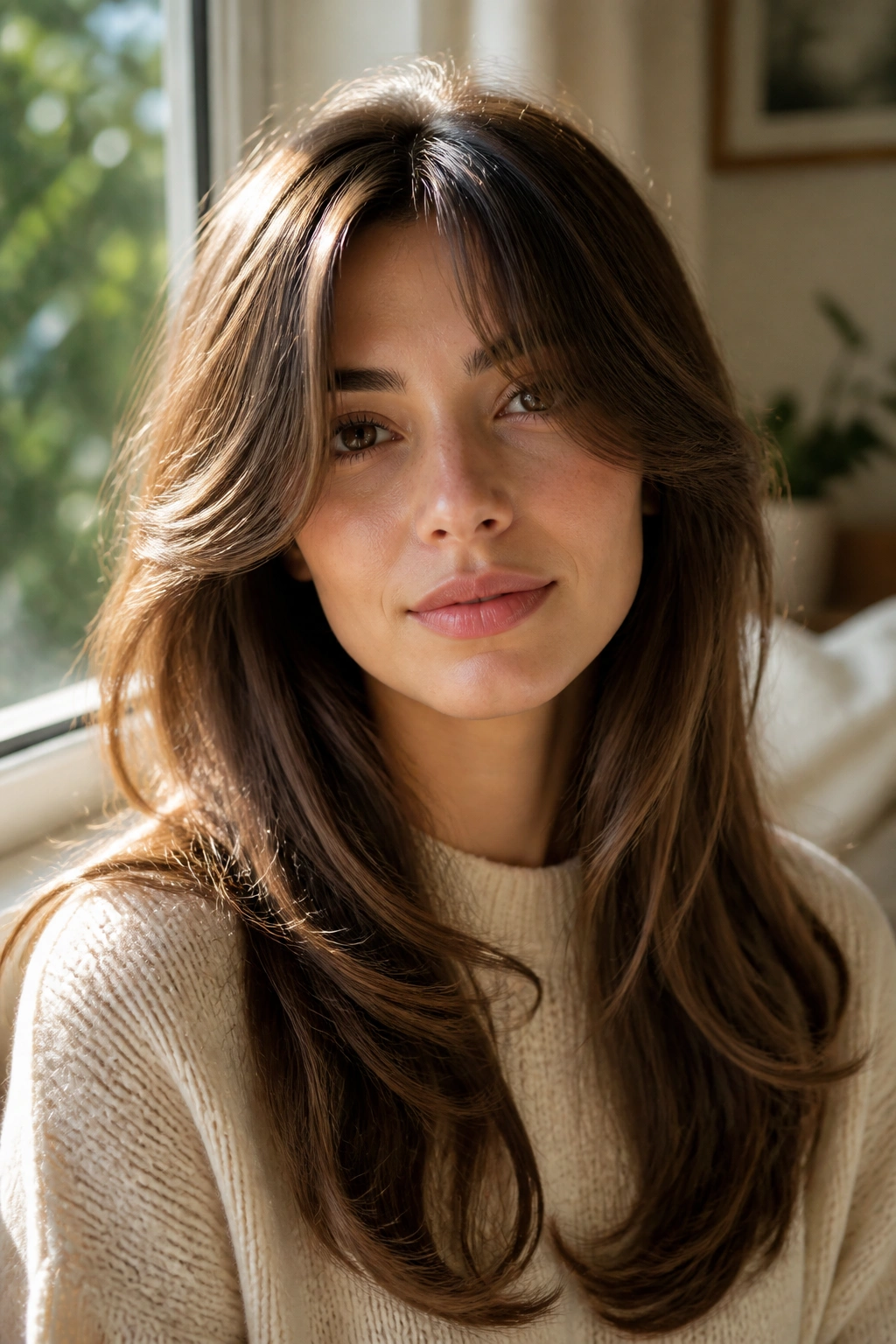
Curtain bangs change the whole face without asking the rest of the haircut to do too much. That’s why they work so well on fine hair. Instead of creating a heavy fringe that can separate or cling to the forehead, curtain bangs part in the middle and fall to the sides, where they blend into long layers.
Unlike a full bang, this shape gives you movement without stealing density from the front. That matters. Fine hair often loses visual weight fastest around the hairline, and a blunt fringe can make the rest of the head look flatter by comparison. Curtain bangs are lighter, easier to grow out, and less fussy on windy days.
Who they suit best
- Medium to long hair lengths
- Fine hair that needs face framing
- Straight or softly wavy textures
- People who don’t want a heavy maintenance fringe
The trick is to keep the shortest piece at or just below the eyebrow, then let the sides drift into cheekbone length. Too short, and they pop up. Too long, and they stop reading as bangs at all. It’s a narrow lane, but a useful one.
13. The Razor-Lite Lob for Straight Fine Hair
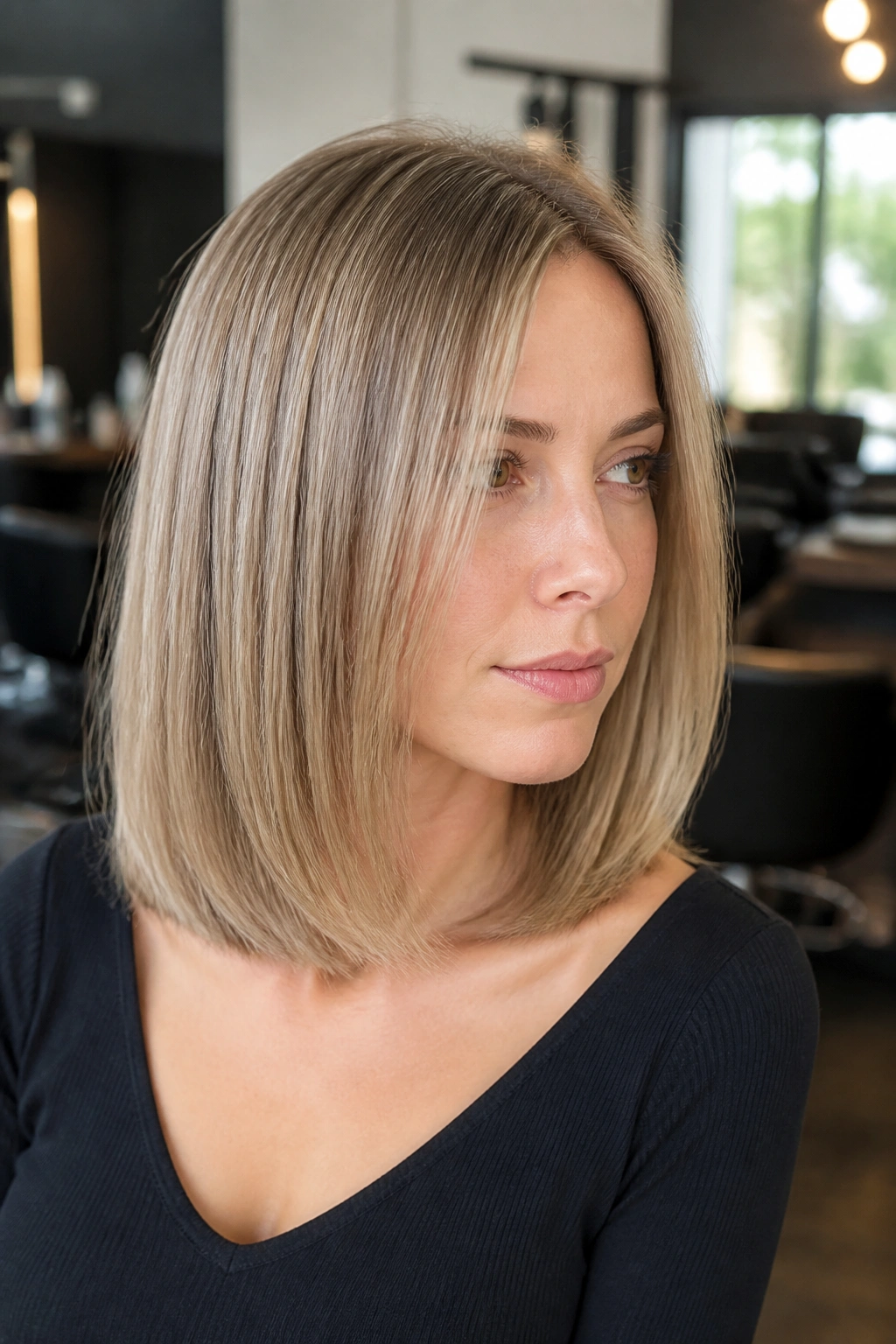
A razor cut can be a lifesaver on the right head of hair, and a headache on the wrong one. For straight fine hair, the safest version is a razor-lite lob with only a little softness at the ends and very controlled layering through the face frame.
What to ask for
- A shoulder-length or collarbone-length lob
- Light razor work only at the perimeter
- No heavy thinning through the mids
- Smooth, face-framing sections that start low
The reason this works is simple: straight fine hair can look harsh when the ends are cut bluntly with no motion, but it can also look shredded if the razor goes wild. The goal is softness, not frizz. A skilled stylist will use the razor to whisper around the edges, not carve a hundred tiny pieces into the length.
If your hair feels fragile, skip this one. Seriously. A dull razor or heavy-handed texturizing can leave the ends rough within a few washes. But when the hair is healthy and the cut is restrained, this shape moves well and dries with a clean, modern line.
It’s the kind of cut that looks best when it’s not trying too hard.
14. The Shoulder-Length Cut With Tapered Ends

A shoulder-length cut with tapered ends is a little sharper than a classic mid-length style, but it keeps enough shape to be friendly to fine hair. The taper creates motion near the bottom without turning the whole head into a feathered cloud.
This is a smart choice if your hair sits on the shoulders and flips out in odd directions. A tiny bit of taper can guide the ends inward or outward on purpose. You end up with movement that looks planned, not accidental.
The best version keeps the top and sides smooth, then narrows slightly toward the neck and shoulders. That keeps the silhouette from feeling wide. It also makes the hair easier to tuck behind the ear without exposing a see-through line underneath.
I like this cut on people who wear their hair down most of the time and want a shape that still looks decent after three hours in a chair, a car, or a humid room. If the taper is too aggressive, you lose fullness. Keep it modest. A quarter-inch to half-inch change in the perimeter can be enough.
15. The Chin-Length Layered Bob With a Side Part
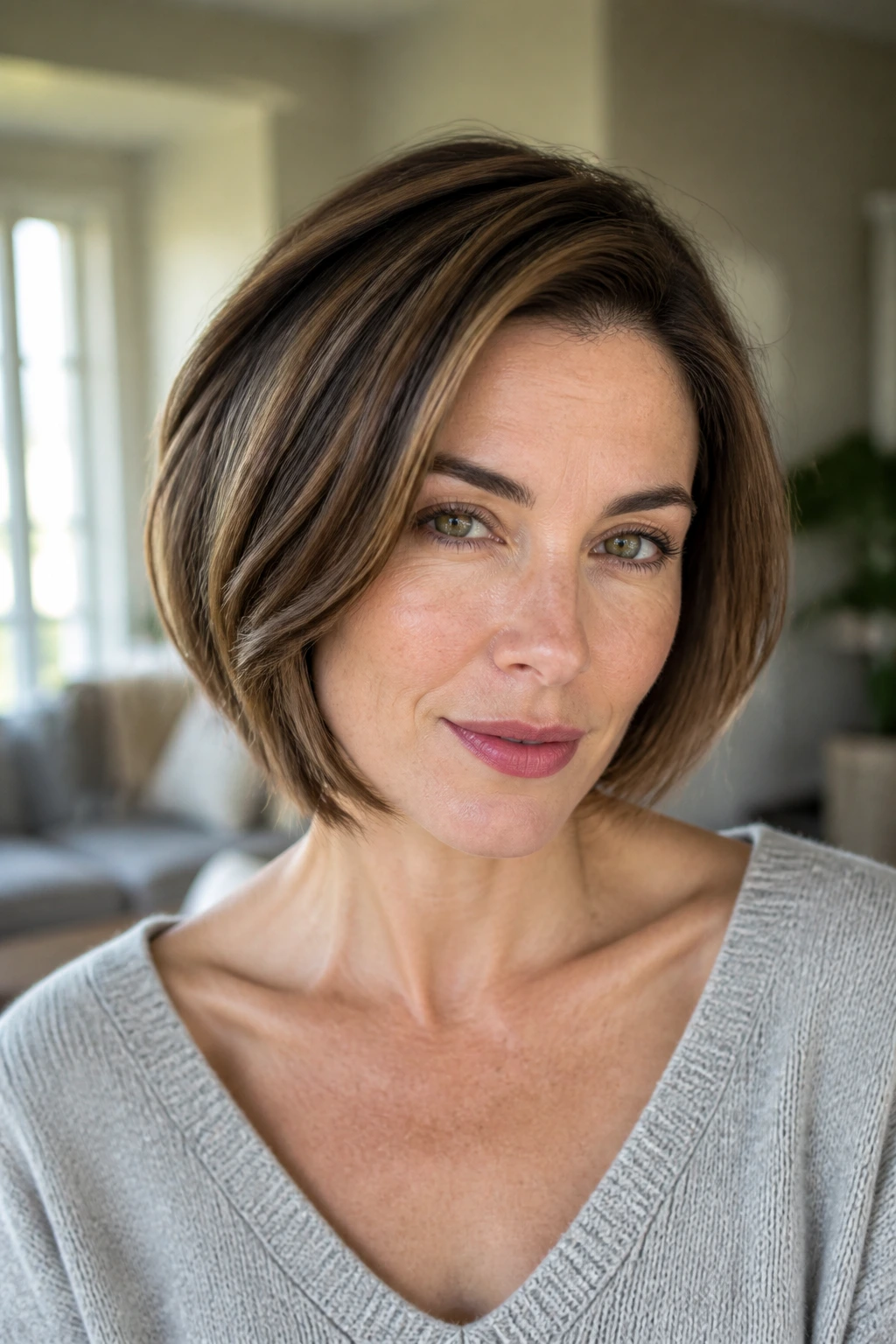
Why does a chin-length bob sometimes look fuller than a longer cut? Because the shorter shape lets fine hair sit in one compact, visible line instead of spreading itself thin across too much length. Add a side part, and you get instant lift at the root.
How to get volume at the roots
A side part shifts weight away from the middle and gives the top section a little push-up effect. On fine hair, that shift is useful because the crown tends to lie flat under a center part. The cut itself should stay around the chin, with gentle layering only around the front so the outline remains strong.
This bob works especially well for heart and oval faces, but it can be adjusted for most shapes. If the chin area feels too blunt, ask for a soft angle from back to front. If you want more swing, leave the front a touch longer. The key is not to slice the interior so much that the bottom line disappears.
A chin-length bob can feel dramatic in the mirror. It is. But it’s also practical. Quick drying time. Easy styling. Fewer pieces to go limp.
16. The Airy Pixie-Bob Hybrid
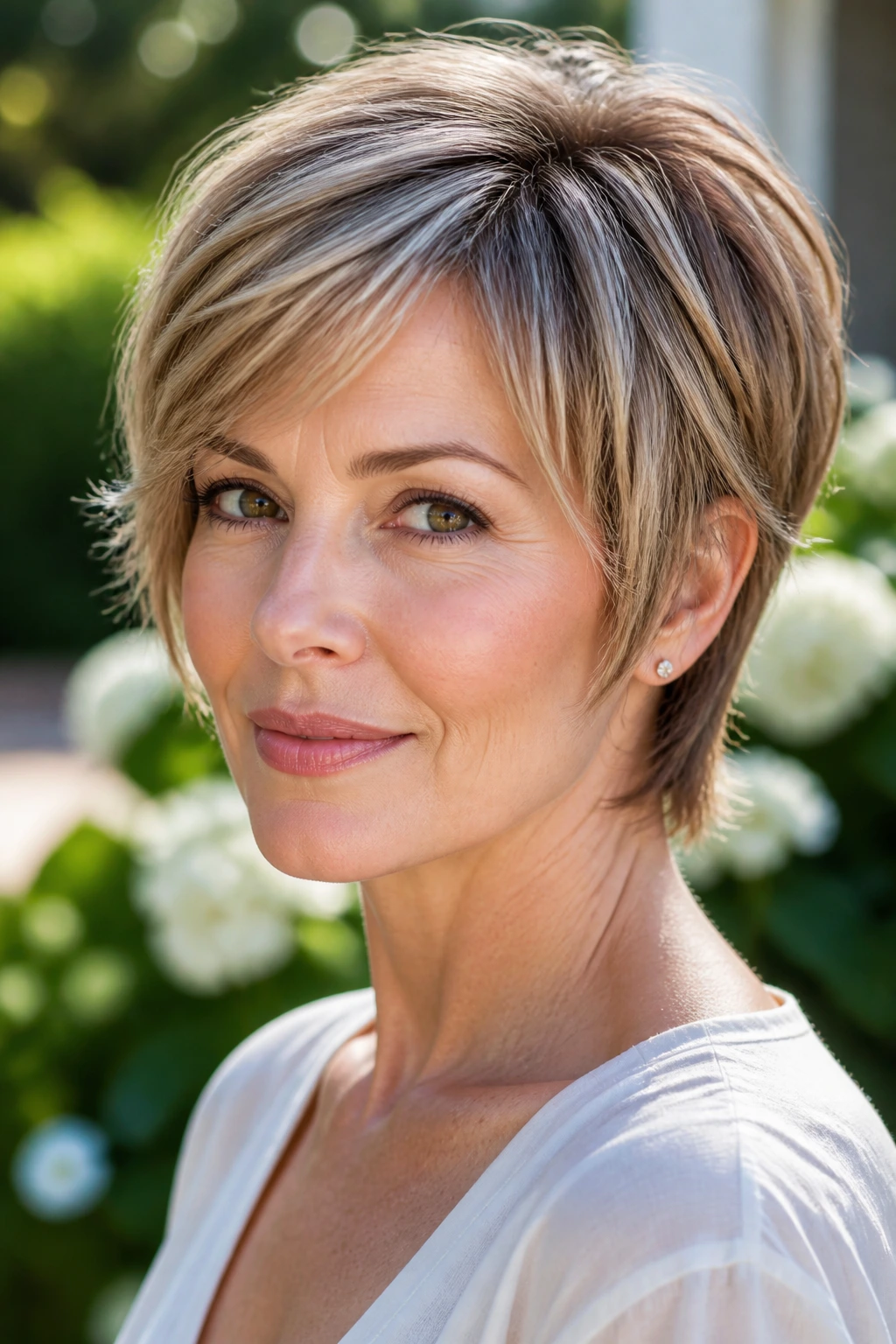
A pixie-bob hybrid sits in the middle of short and short-ish, which is a useful place for fine hair. It keeps the neck and ears exposed enough to feel light, but leaves more length than a true pixie so the shape has room to move.
This cut is a good fit when you want volume without spending much time styling. The crown is usually a little fuller, the sides are soft, and the back has enough length to avoid looking clipped to the scalp. If a pixie can sometimes feel too severe, the pixie-bob softens the edges.
What makes it work
- Longer top layers for lift
- Tapered nape for shape
- Gentle side pieces to frame the face
- A little texture at the crown, not everywhere
The most common mistake is over-texturizing the top until it puffs out and separates. Fine hair needs air, not fluff. A pea-sized amount of styling cream or a dab of paste through the fingertips is usually enough. Nothing heavy. Nothing sticky.
This is one of the easiest cuts to wake up and go with, which is part of its charm. Not lazy. Efficient.
17. Long Layers With Face-Framing Pieces and No Interior Thinning
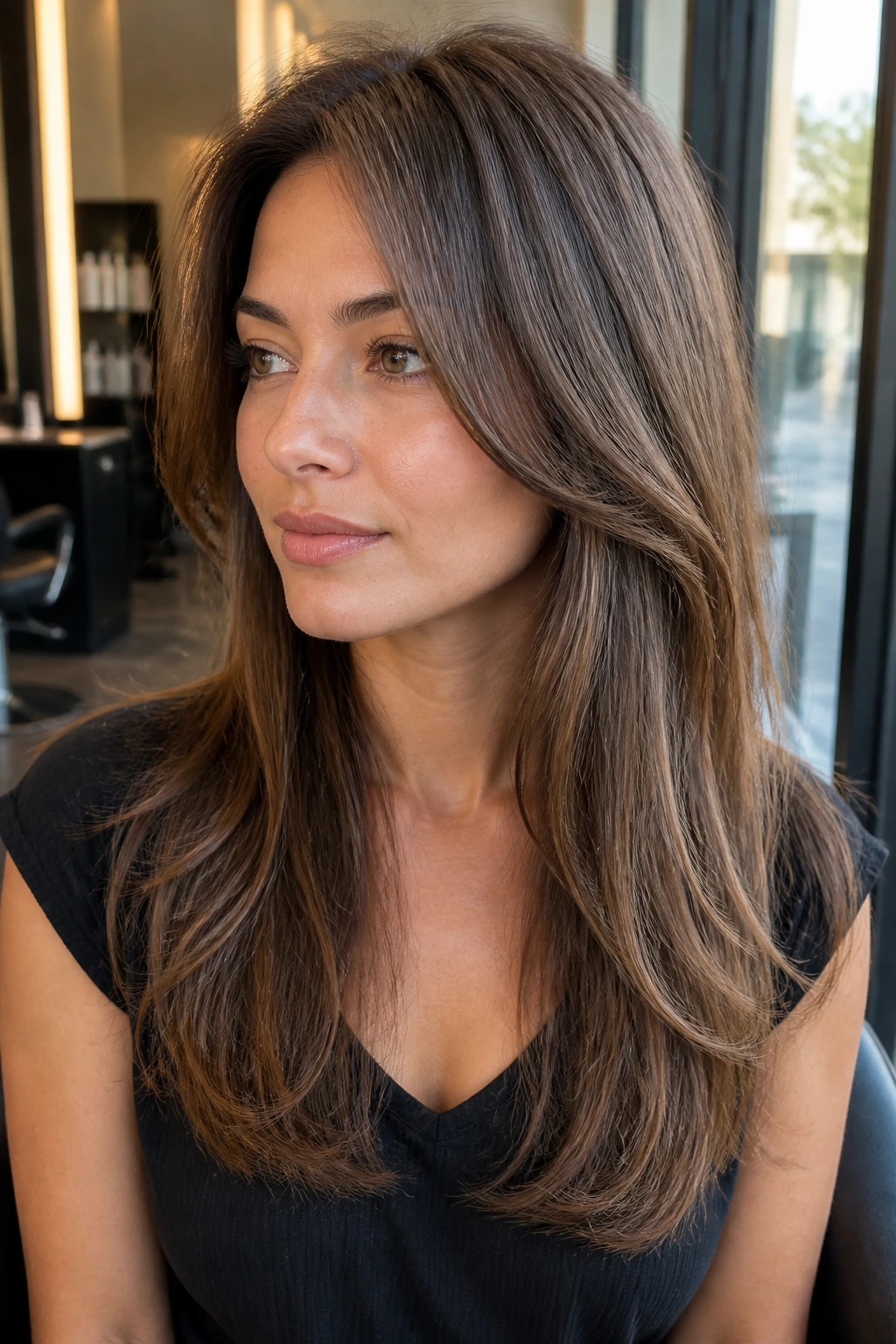
If you love length, this is the cut I’d protect first. Long hair with fine strands can still look full, but only if the stylist leaves the interior alone and puts the movement where it actually helps: around the face, below the chin, and maybe a little through the mid-lengths.
That “no interior thinning” part matters more than people expect. Removing too much bulk from the middle of fine hair makes the ends look distant from the top, like they belong to a different head. Keeping the inside strong makes the whole style hang together. The face-framing pieces add shape without turning the rest of the hair into scraps.
This cut works best if your hair is naturally straight or has a loose bend. The front layers can start at the cheekbones or jaw, then blend into the longer pieces below. The ends should stay healthy and full. If they’re wispy already, ask for a tiny dusting rather than a major reshaping.
It’s a quiet haircut. That may sound boring. It isn’t. Quiet is often what fine hair needs.
18. The Soft U-Shape With a Full Bottom Edge
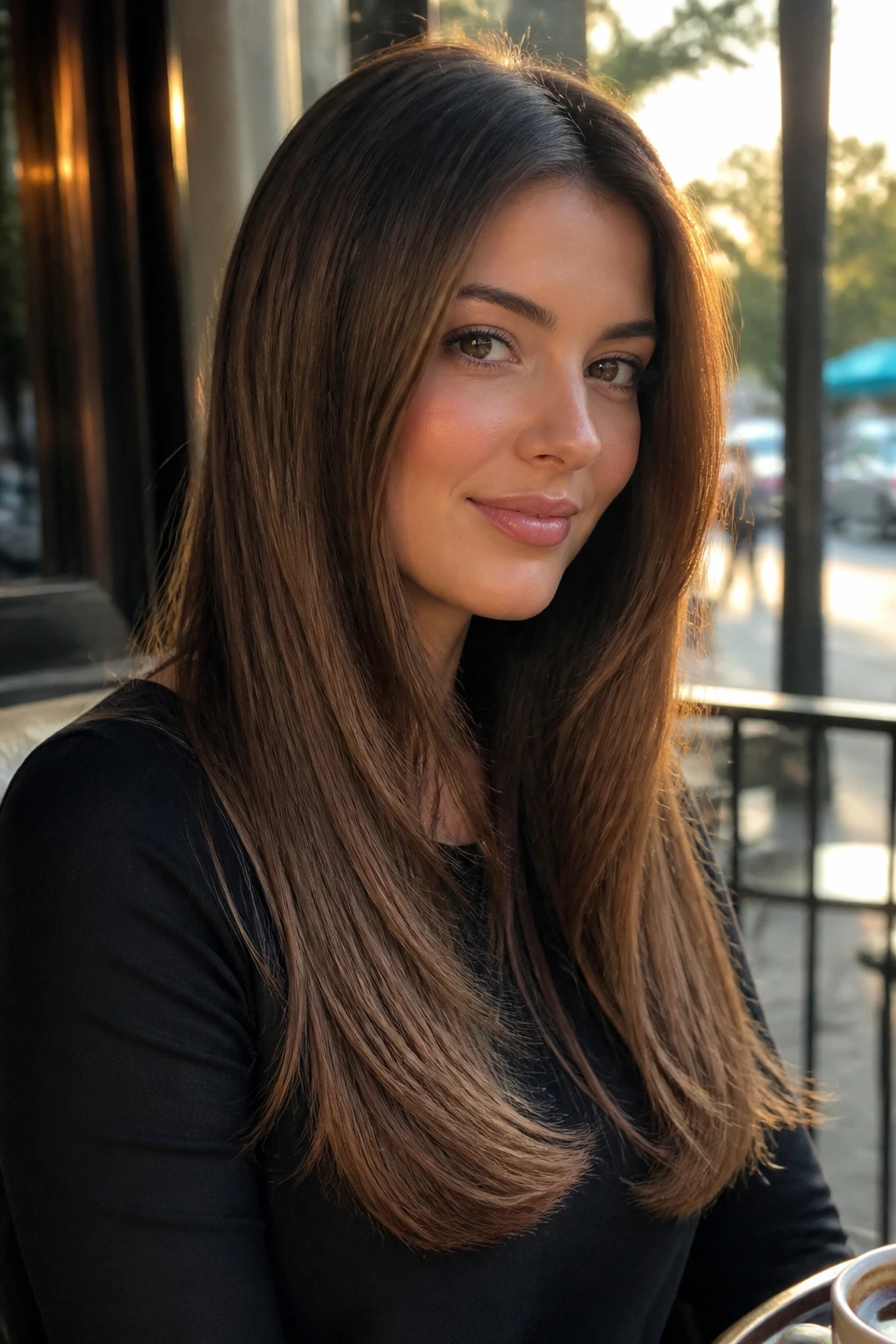
A U-shape gives fine hair a softer outline than a straight cut, and it keeps more fullness at the center back than a V-shape ever will. That difference sounds small on paper. On your head, it matters. A V pulls the perimeter into a point and can make the ends feel thin; a U keeps the length rounded and visually thicker.
This is the long-hair answer for people who want movement without losing the sense of a solid curtain of hair. The sides fall slightly shorter than the back center, which creates a gentle curve and a little swing around the shoulders. The cut looks especially good when the hair is tucked behind one ear or worn half-up, because the shape stays readable even when part of it is pinned back.
Ask for a strong bottom line with very light internal layering. If the layers climb too high, the U turns into a shrunken shell of itself. A few face-framing pieces are enough. The rest should stay connected.
And that’s really the whole point with fine hair: keep the shape honest. Keep the ends thick-looking. Keep the cut doing the work so you aren’t chasing volume every morning with a round brush and a prayer. The best layered haircut is the one that still looks full when you stop staring at it in the mirror.
