



Layered haircuts for men solve a problem that plain one-length cuts keep creating: hair gets heavy, goes flat at the crown, and starts looking boxy faster than it should. Layers take some of that weight out, but they also do something more useful — they give hair room to move instead of sitting there like a helmet.
That sounds obvious until you sit in a barber chair and realize how many bad layered cuts are out there. Too many stylists over-thin fine hair, leave thick hair too bulky, or chop the front without paying attention to the crown, which is where the whole shape can go sideways. A good layered cut is not random texture. It’s a shape plan.
Texture matters, too. Straight hair needs different layering than wavy hair, and curly or coily hair needs its own approach entirely. The best layered haircut for men is the one that works with your growth pattern, your density, and how much time you’re willing to spend with a comb or blow dryer in the morning.
So let’s get practical. The cuts below are all layered, but they’re not copies of the same idea in different clothes. Some are short and sharp, some sit in that medium-length sweet spot, and a few are for men who actually want length without the puffiness that usually comes with it.
1. The Classic Layered Crop for Thick Hair
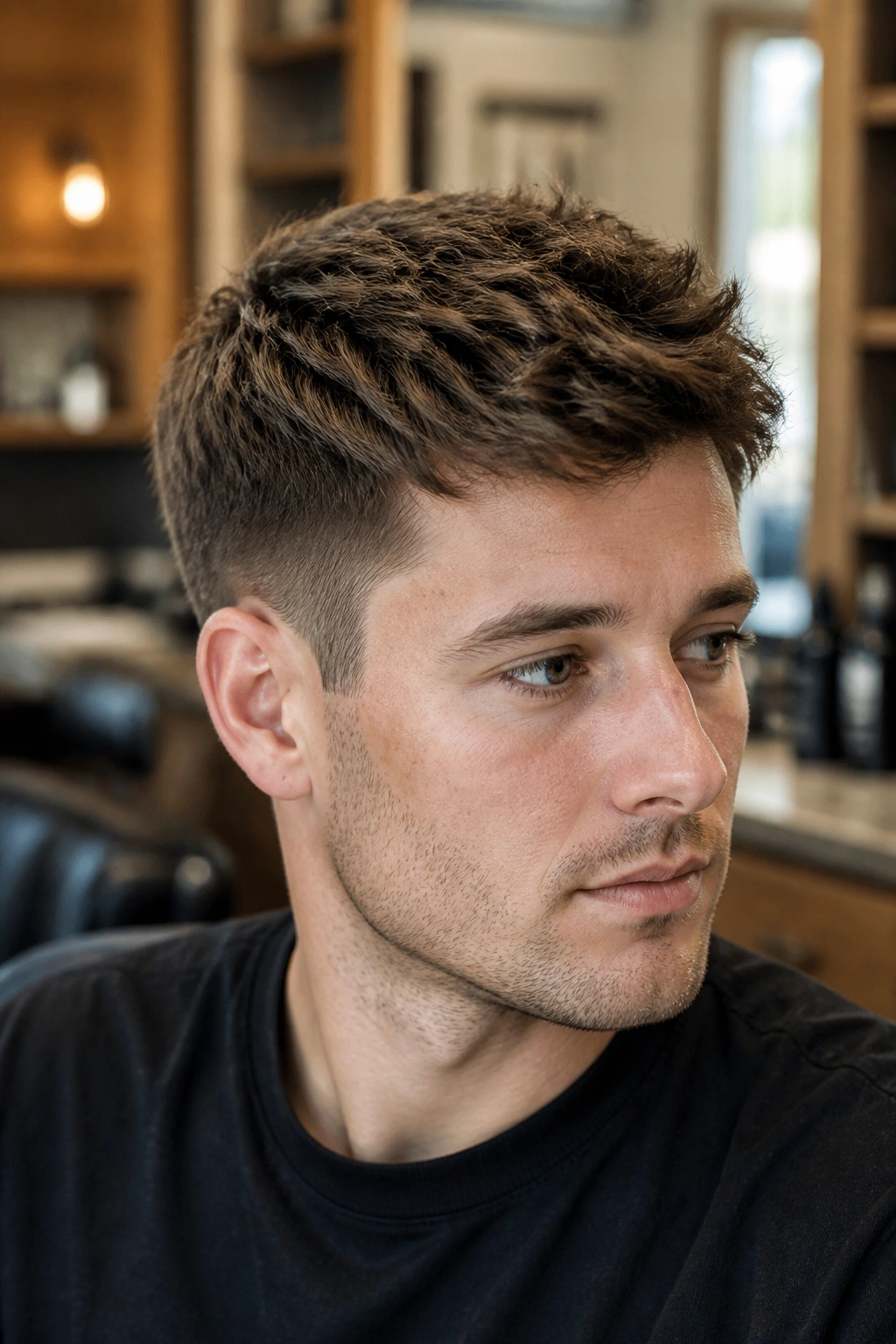
Heavy hair has a way of turning into a block if nobody removes the right weight.
This is the haircut I think of when a man wants something clean, easy, and not too styled. The top stays short to medium — usually around 2 to 3 inches — while the barber builds soft layers through the crown so the hair lies with shape instead of sitting in one solid slab. It works especially well on thick, straight hair that tends to stand up or puff out around the sides.
What to ask your barber
- Keep the top long enough for texture, but remove bulk through the crown.
- Use point cutting on the top so the ends look broken up, not blunt.
- Taper the sides and neckline instead of going too tight.
- Leave the fringe soft if you want a more casual finish.
A matte clay or paste is enough here. Rub in a pea-sized amount, then push the hair forward or slightly to one side with your fingers. That little bit of mess is the point. Too much shine ruins the shape fast.
2. Short Textured Layers With a Low Taper
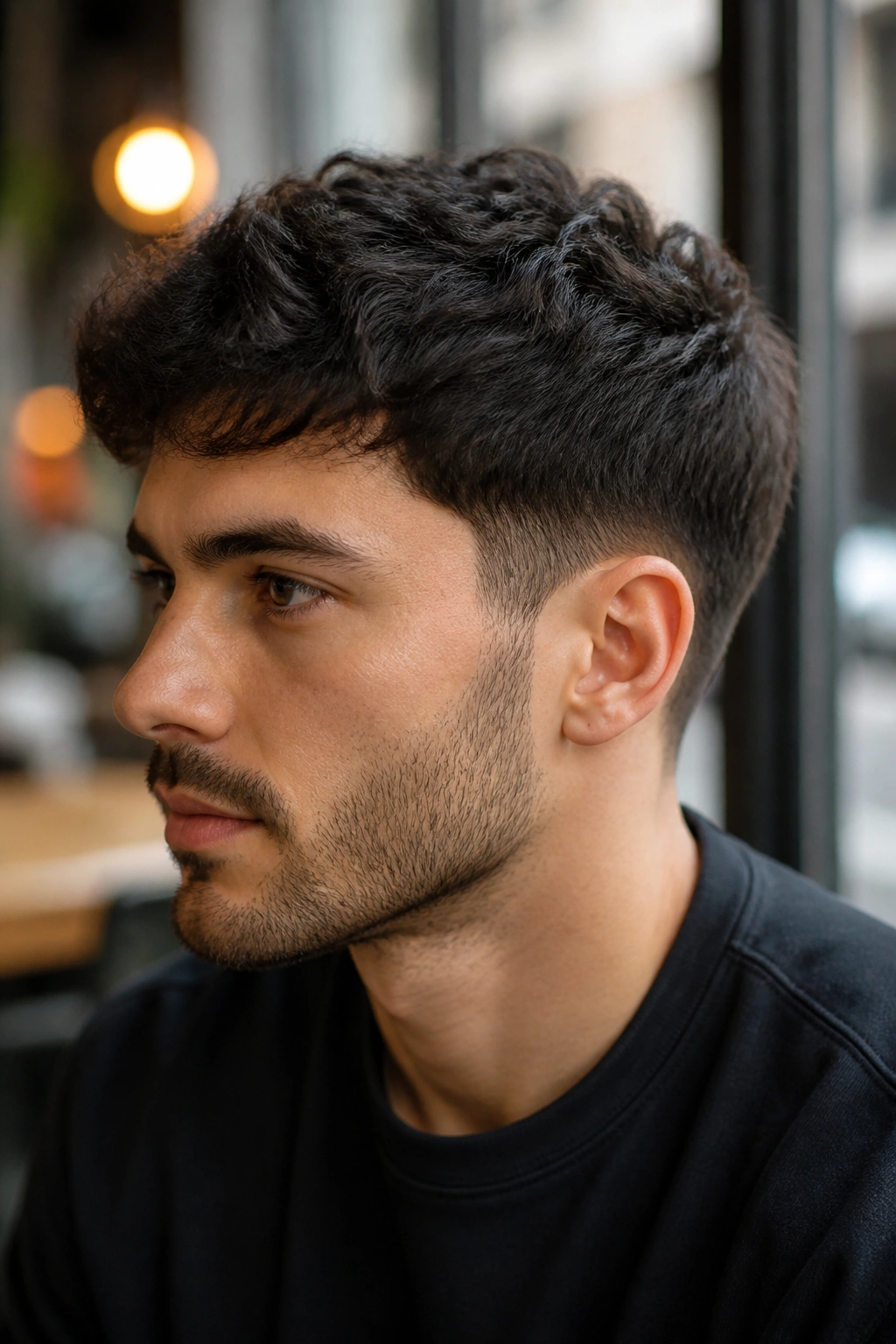
Do you want something neat that still looks like hair and not a military cut?
Short textured layers with a low taper hit that sweet spot. The top usually sits around 1.5 to 2.5 inches, cut in choppy sections so the hair separates cleanly. A low taper around the ears and nape keeps the outline tidy without stealing all the softness from the top. It’s a good choice if your hair is straight or only slightly wavy and you want a cut that dries well on its own.
The trick is not to let the barber overblend the top into the sides. That wipes out the texture. You want the contrast to stay visible, just not dramatic. If the top is cut with too much weight in one spot, it will fall forward like a fringe curtain. If it’s cut too thin, it starts looking wispy and tired.
A light sea salt spray on damp hair helps, then a quick blast with your fingers or a vent brush. Finish with a small dab of matte paste. Clean. Fast. No drama.
3. Medium-Length Side-Part Layers
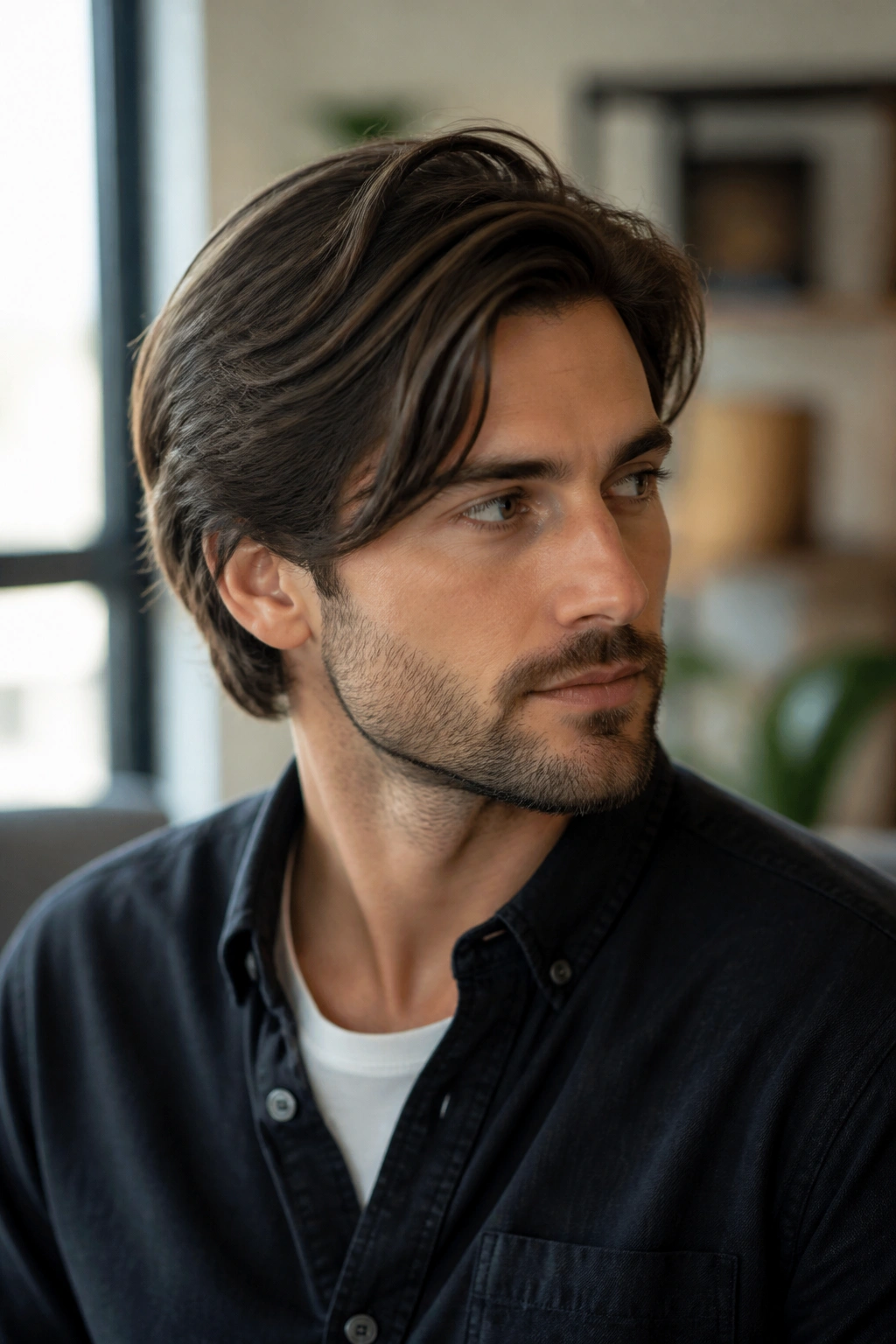
A medium side part is the haircut for men who want order without stiffness.
This version usually keeps 3 to 5 inches on top, with subtle layers that let the hair part naturally instead of fighting the comb. The sides can stay tapered or scissor-cut, depending on how formal or relaxed you want it to read. On thick hair, the layers stop the part from looking like a flat shelf. On finer hair, they keep the top from collapsing into a thin stripe.
The best part is how grown-up it looks without turning fussy. You can comb it clean for work, then rough it up with your fingers later and it still holds its shape. That flexibility is the whole appeal. It’s one of those cuts that looks more expensive than it is, mostly because the silhouette is tidy.
A light cream or low-shine pomade works well. Blow-dry the part into place if you want more control, but do not overload the front with product. A little separation reads better than a stiff side panel.
4. Curtain Fringe With Soft Front Layers
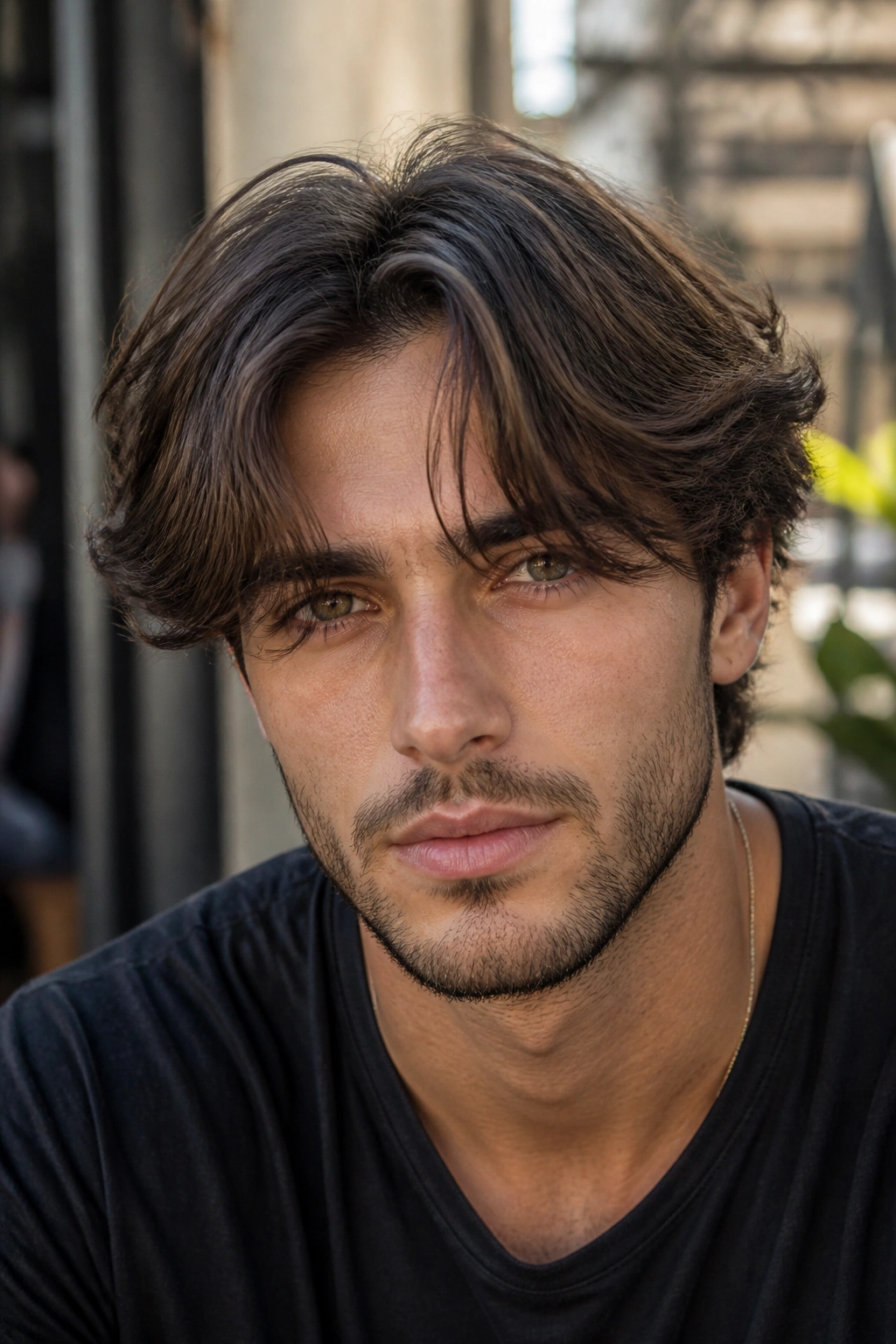
Curtain fringe looks relaxed, but it asks for more shape than people think.
The hair falls away from the center and opens at the front, usually grazing the eyebrows or cheekbones. Soft layers through the front and sides stop the fringe from becoming a heavy curtain that hangs in one piece. If your hair is straight or wavy, this cut gives you movement without forcing a hard part. It also plays well with longer faces because the fringe breaks up that vertical length.
Why it works
The front carries the style, but the back and sides do the balancing. That’s the part many guys miss. If the layers only live in the fringe, the cut can look top-heavy. If the crown is too flat, the curtain part loses its shape by lunch.
What to tell the barber
- Keep the center front long enough to part naturally.
- Add soft layers around the temple area.
- Keep the ends feathered, not blunt.
- Avoid chopping the fringe into a straight line.
A medium-hold cream gives the best finish. Blow-dry the fringe away from the face with your fingers, not a stiff comb, and let a few strands fall where they want. That looseness is the whole point.
5. The Bro Flow Layered Cut
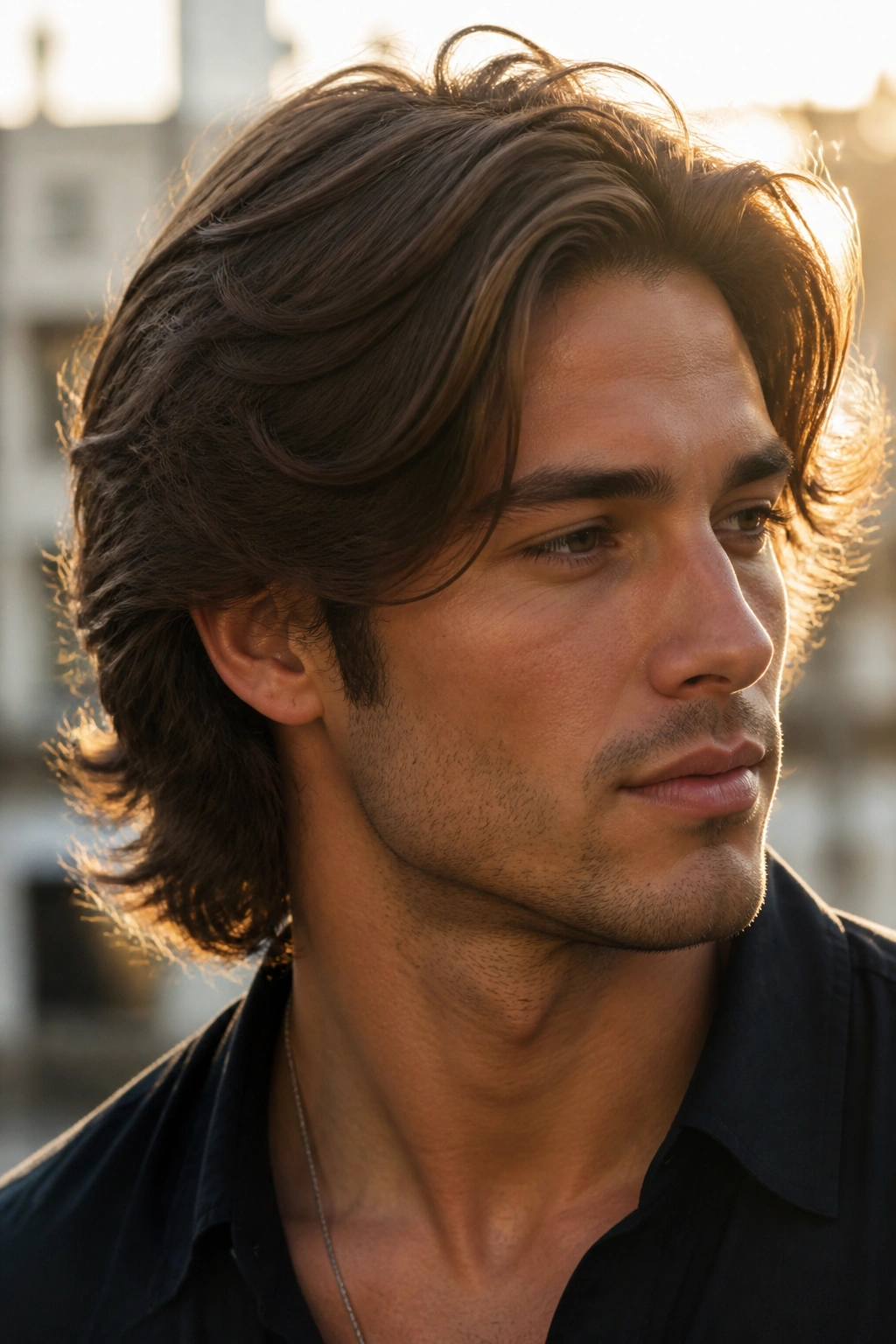
Bro flow is what happens when someone lets the hair grow, but still cares how it falls.
It usually sits around collar length or just above it, with layers built through the sides and back so the hair does not balloon into one long triangle. You still get length. You just do not get the awkward mushroom shape that comes from cutting it too bluntly. On straight to wavy hair, this cut moves nicely when you turn your head, and that movement is what keeps it from feeling heavy.
I like this cut for men who want a laid-back look but hate the idea of a full man bun life. There’s a bit of surfer in it, a bit of musician, and a bit of “I do not need to spend 20 minutes on my hair.” Fair enough.
A leave-in conditioner or light cream helps the ends look healthy, especially if your hair brushes the collar or gets dry at the tips. Trim it every 8 to 10 weeks so the layers stay connected and the outline does not turn scraggly.
6. Choppy Shag Layers
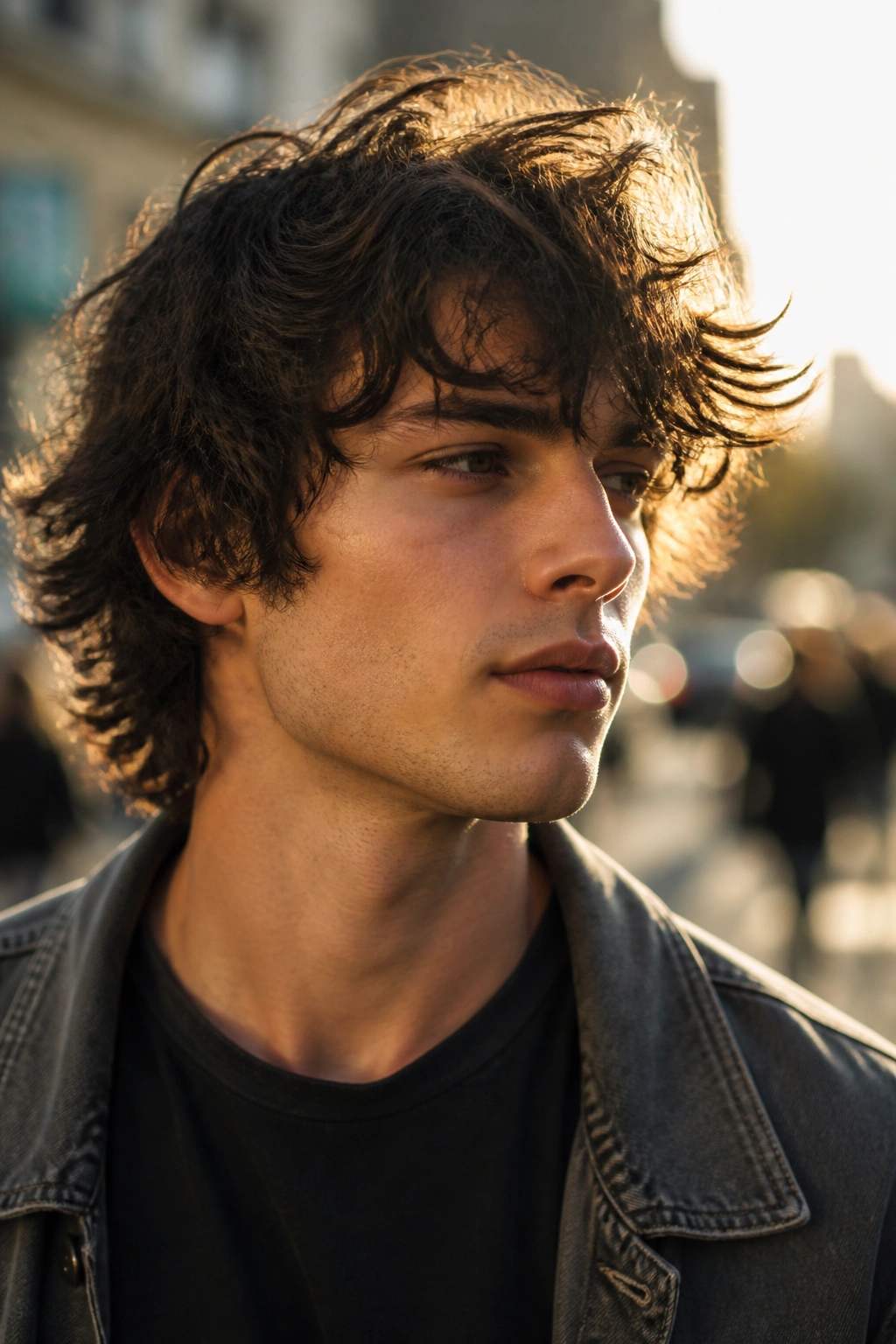
Messy, in a good way.
The men’s shag is all about broken texture, piecey ends, and a shape that looks like it already has a story. It works best on wavy or thick hair, because those hair types naturally hold movement. A good shag keeps the sides and crown blended, then adds jagged layers through the top and fringe so the hair never feels too polished. That’s why it looks alive even when you barely touch it.
If you want this cut to work, the ends need to stay feathered. Razor work can help, but only if the barber knows how your hair reacts. On some heads, razor-cut layers create nice softness. On others, they make the ends frizz out and do that fuzzy halo thing nobody asked for.
Air-drying is usually enough. If your hair leans straight, scrunch in a little texture spray. If it leans wavy, use a small amount of curl cream and leave the front a bit loose. The cut should look lived-in, not styled to death.
7. Layered Quiff With Lift at the Front
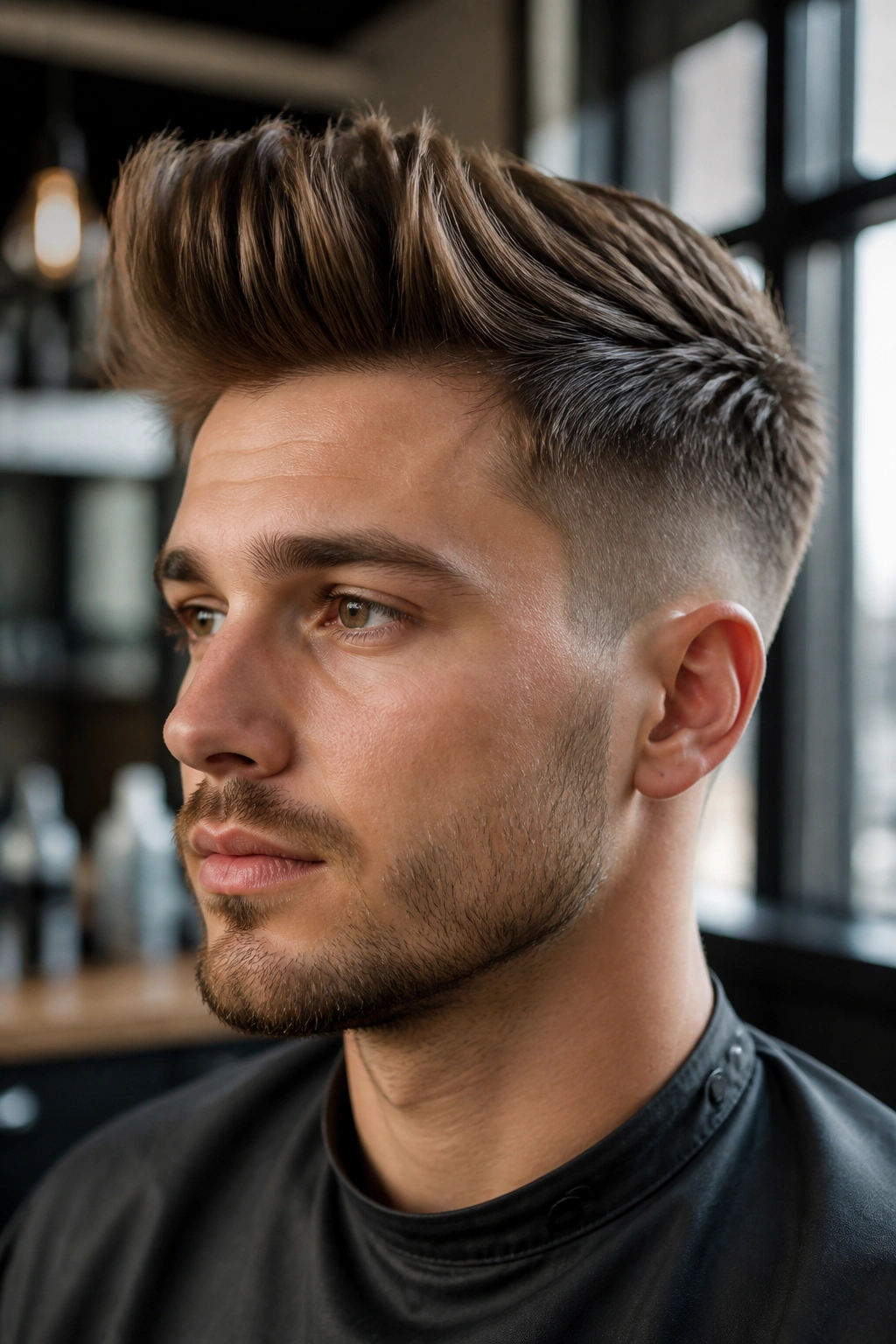
A quiff gets easier when the sides stay light and the top has movement.
That’s the real job of layers here. Instead of one bulky front section that needs half a can of spray to stand up, the top is cut with controlled lengths that can be lifted and shaped without feeling stiff. You want enough hair on top to sweep upward and back, usually around 3 to 5 inches, while the sides are kept tighter with a taper or fade. The cut ends up cleaner than a pompadour and less formal than a slick-back.
Styling routine that actually works
- Blow-dry the front upward with a round brush or your fingers.
- Push the roots back while the hair is still warm.
- Work in a small amount of matte paste or light clay.
- Pinch the front for texture instead of combing it flat.
A quiff like this looks best when the front has a little lift but not a perfect wave. If every hair is arranged the same way, it starts looking rigid. A few loose strands are fine. Better, even.
8. Wavy Layers That Follow Your Natural Bend

Why does wavy hair look better in layers than in a blunt shape? Because waves need room to bend.
A one-length cut can make wavy hair puff at the sides and sag at the ends, which is a frustrating combo. Layering solves that by removing bulk where the wave bends and keeping enough length where the hair wants to curl. The result is shape without fighting the pattern. This works especially well if your waves sit somewhere between loose and medium, not fully curly and not pin-straight.
The cut should follow the natural movement of your hair. That means the barber should look at how your hair falls when it is dry, not only when it is wet and stretched down. A slight face frame helps, but the crown matters too. If the crown is left too heavy, the whole cut grows out with a hump in back.
Use a lightweight curl cream or sea salt spray, depending on how dry your hair runs. Let it air-dry if you want softness, or diffuse on low heat if you need more lift. Either way, the goal is shape, not control.
9. Weight-Removing Layers for Thick Coarse Hair
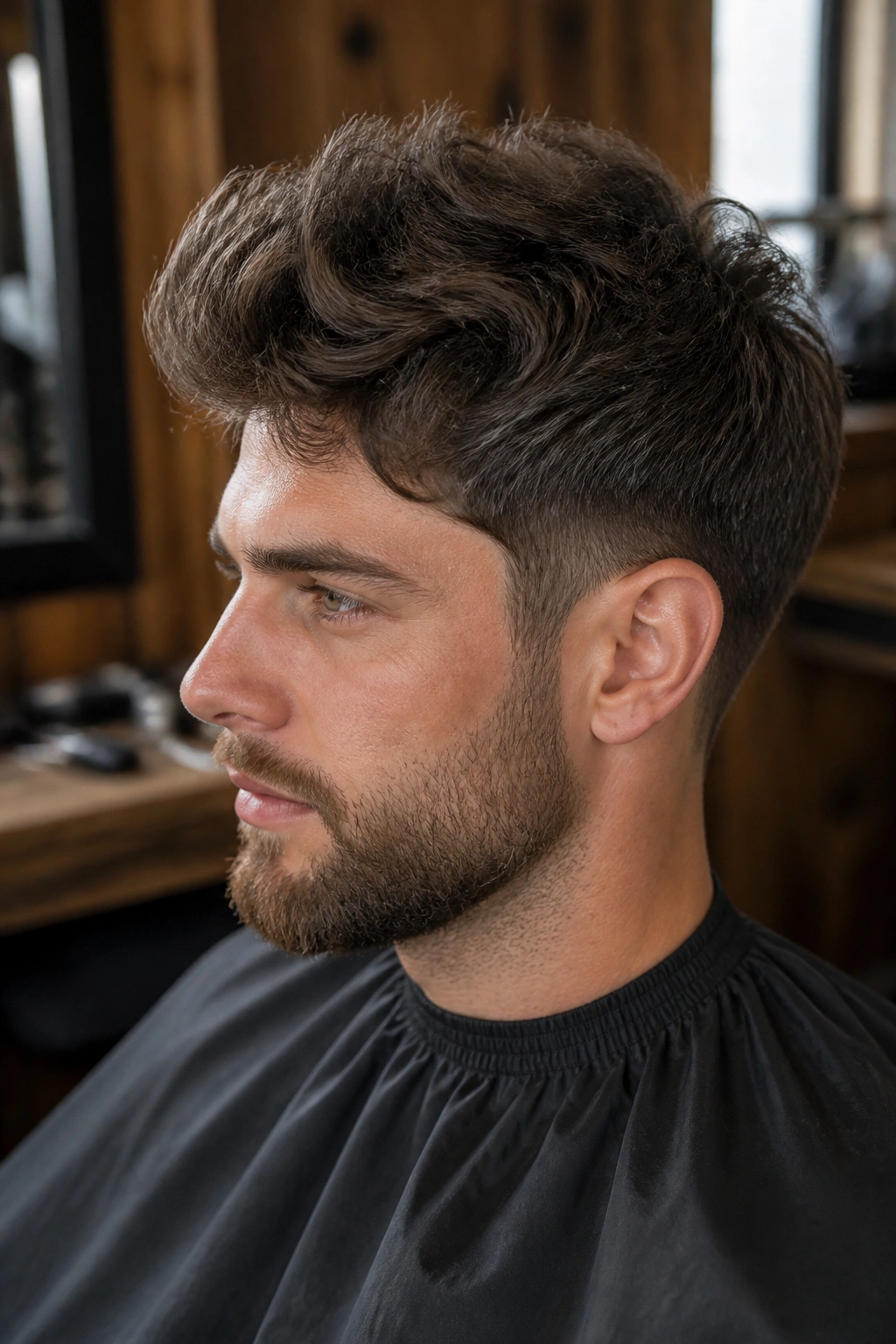
If your hair balloons into a triangle by noon, you need this kind of layering.
Thick coarse hair often looks best when the barber removes bulk from the inside, not by hacking away at the surface. That means internal layers, careful scissor work, and maybe a little texturizing through the crown. The outline still looks full, but the hair stops sitting so wide at the sides. It is a small difference on the chair and a huge difference two weeks later.
What to avoid
- Too much thinning near the ends. It can make thick hair frizzy.
- Short, random layers that leave holes in the shape.
- A razor finish if your hair already feels dry or coarse.
- Overlooking the crown, which is where heavy hair often collapses.
A good cut here should feel lighter without looking wispy. That balance is the whole game. If the barber takes too much, the hair puffs in new places and you end up with more work, not less.
For styling, use a cream or paste with a bit of hold. Thick hair often needs a little help to stay where it is told, but not much. That is the nice part.
10. Airy Layers for Fine Straight Hair
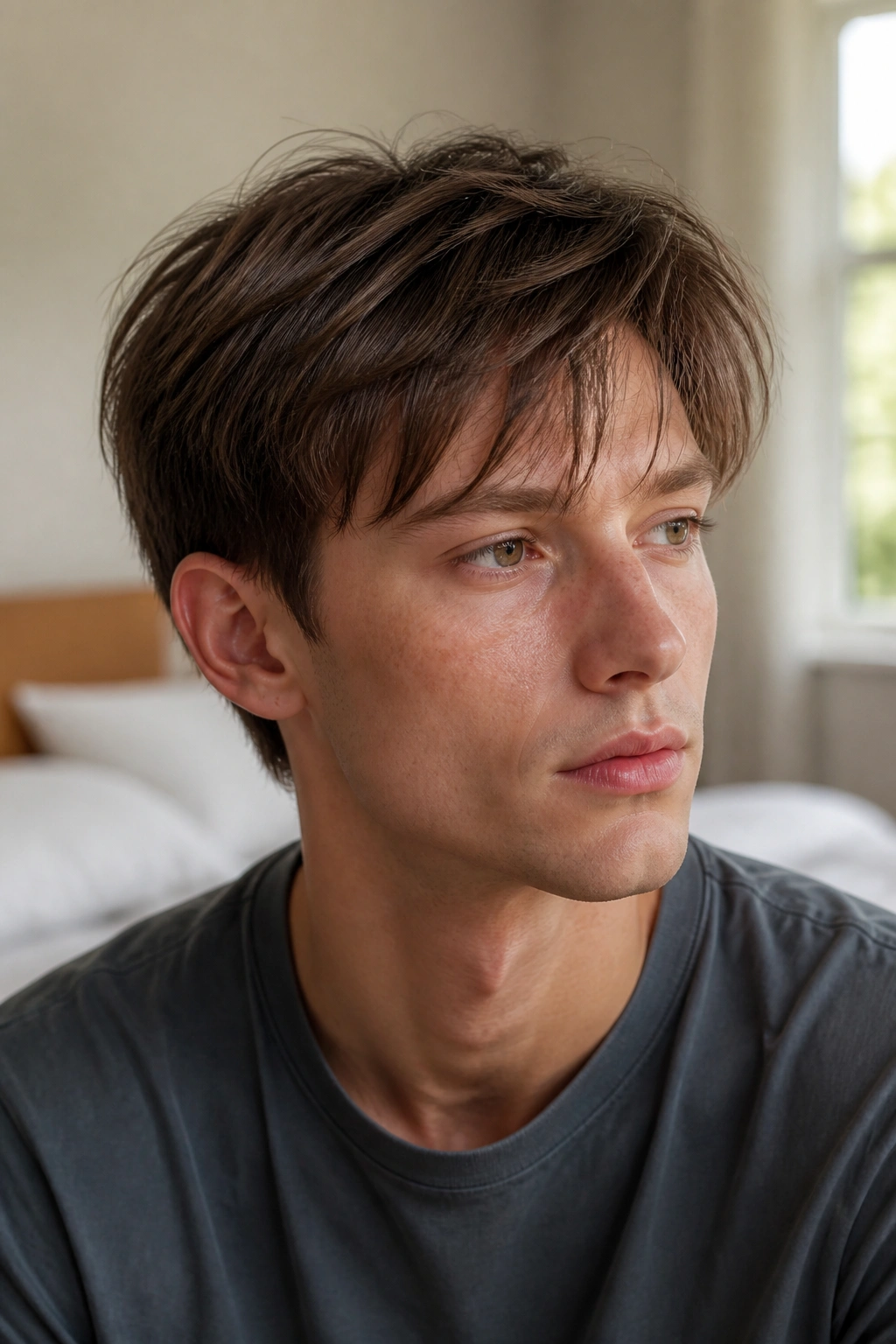
Fine hair does not need a pile of layers.
That sounds backward, but it is true. Too many short layers on fine hair make the scalp show through, and the cut starts looking thin before it grows out. The better move is to keep the top a little longer, build only a few subtle layers, and leave enough weight in the shape so the hair still looks full. The sides can be tapered softly or clipped short, depending on how neat you want the finish.
This is one of those cuts where restraint matters more than technique. I’d rather see one smart layer than five tiny ones. The goal is lift and separation, not a shredded top. If your hair is very straight, a blunt-ish perimeter with a touch of texture can look thicker than aggressive layering ever will.
Use root spray at the roots, then blow-dry with your head slightly forward. That helps the hair lift off the scalp. Finish with a tiny amount of matte powder or light paste. Heavy cream is usually a bad idea here — it drags the hair down fast.
11. Long Top Layers With an Undercut
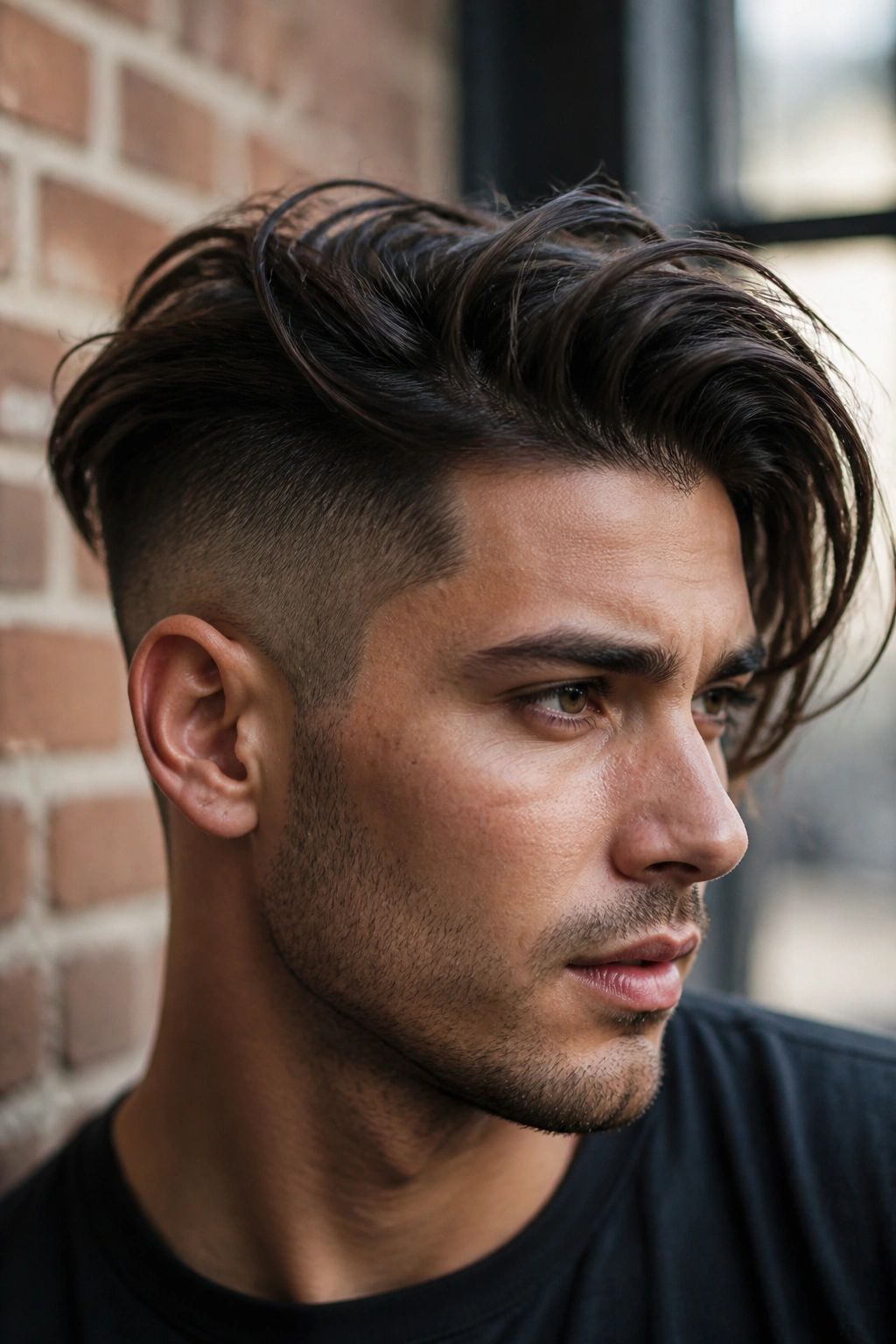
You want the drama of long hair up top, but you do not want the sides touching your ears all day.
That is where a long top layered cut with an undercut earns its keep. The top stays long enough to push back, side-sweep, or leave loose, while the sides and lower back are clipped much shorter for contrast. The layered top keeps the length from collapsing into one heavy sheet, which is what makes this style look more deliberate than just “growing it out.”
Ask for it like this
- Keep the top long, but layer the crown and mid-lengths.
- Disconnect the sides so the bulk does not creep downward.
- Leave enough length near the front to style backward or sideways.
- Blend the undercut into the neckline cleanly.
This cut has a sharp edge to it. Good. That contrast is the point. It does ask for regular maintenance, though, because short sides grow out fast and can make the whole style look shaggy in the wrong way. If you want the long-top look without extra noise, this one is hard to beat.
12. The Modern Mullet With Controlled Layers
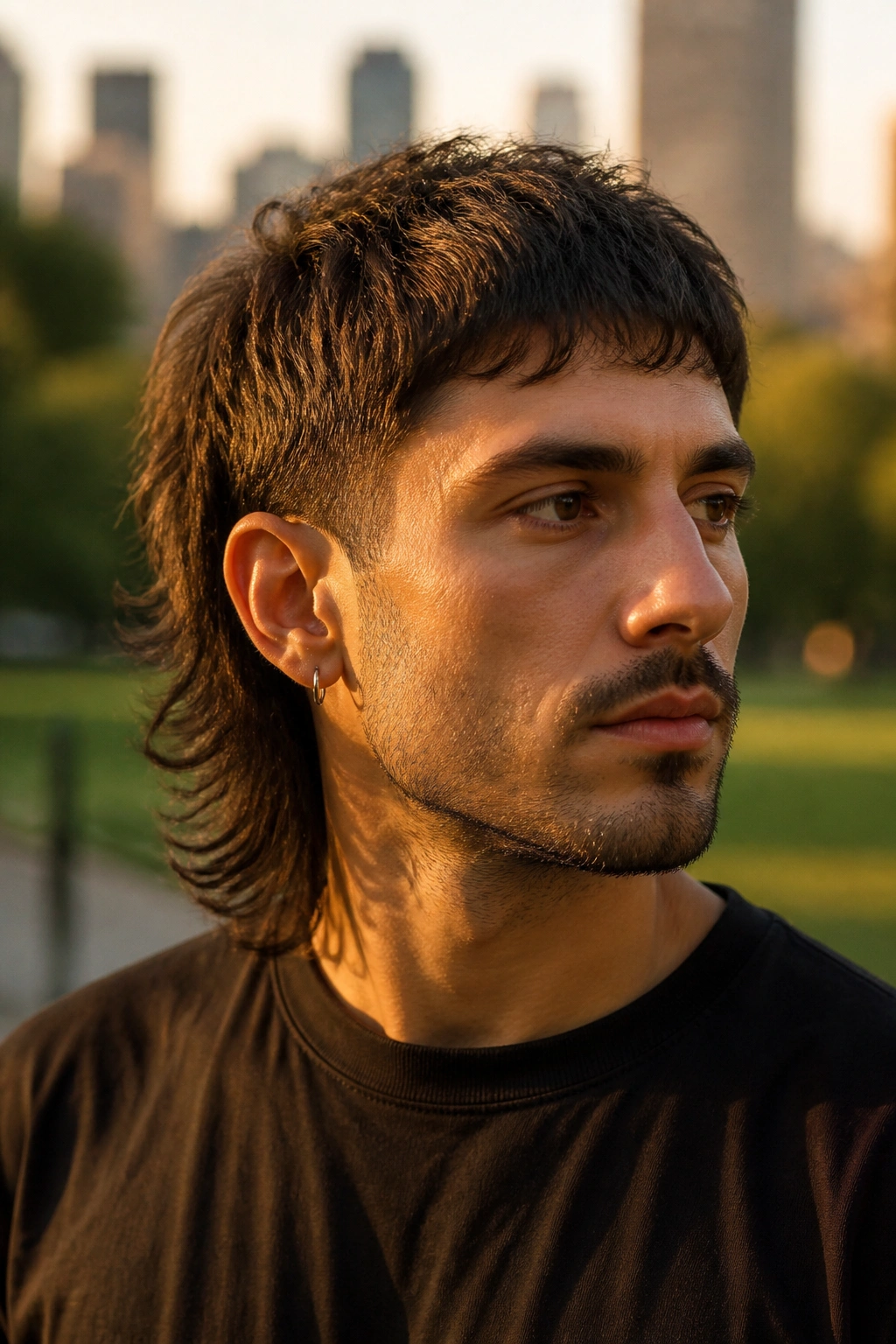
A mullet works when the back is controlled, not wild.
The modern version keeps the sides shorter, the top textured, and the back longer without letting everything become one loud shape. Layers are what make that possible. They let the hair in the back move and taper into the neckline instead of hanging like a separate tail. On straight or wavy hair, the look can feel sharp and a little rebellious without turning into costume hair.
What I like about this cut is how flexible it is. You can wear the top messy, push it forward, or sweep it back, and the longer back still gives the silhouette some personality. It is not subtle. That’s fine. Not every haircut needs to whisper.
If you want the style to look current rather than exaggerated, keep the top and back connected through soft layers. Sharp disconnects can work, but they need confidence and a barber who knows what they are doing. Use texture spray or a light cream, and let the ends stay a little loose.
13. The Textured Caesar Layered Cut
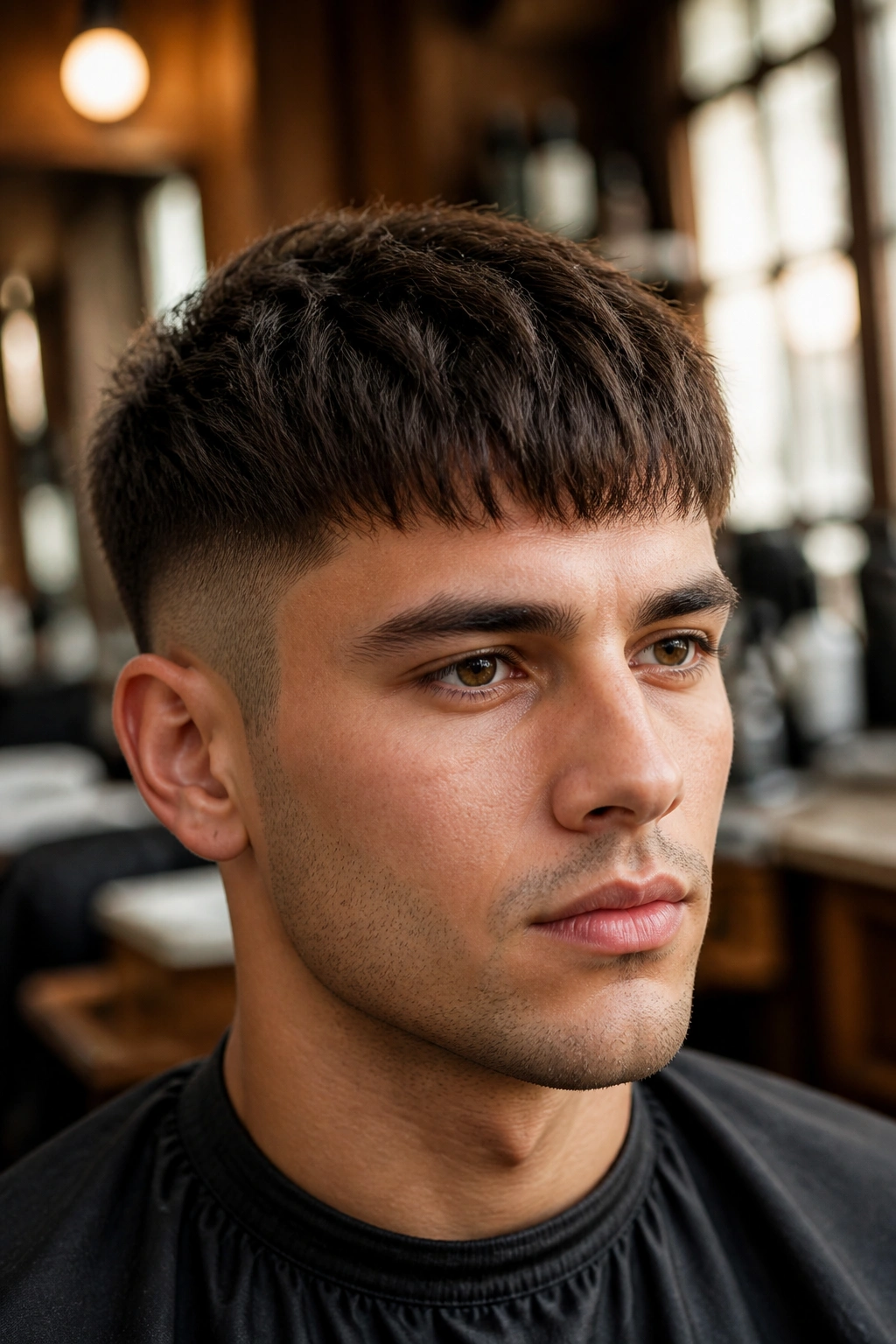
Can a Caesar have layers? Absolutely. It just cannot be lazy.
A Caesar usually has a short, forward fringe and a compact shape around the head. Layering it breaks up the front so the fringe does not look like one stiff strip across the forehead. That texture matters, especially if your hairline is starting to move back a bit or if you just prefer a tighter, shorter look that still has some movement. The top stays short, but the surface should look piecey, not helmet-like.
Why the texture matters
The classic Caesar can feel harsh if it is cut too bluntly. A layered version softens the fringe, keeps the crown from bulking up, and gives the whole cut more breathing room. That makes it easier to wear on straight or slightly wavy hair.
Good cues for the barber
- Keep the fringe short, but not dead straight.
- Add subtle texture through the top.
- Taper the sides so the shape stays clean.
- Avoid over-thinning, which can make the front look sparse.
Use a matte paste and push the hair forward with your fingers. It should look deliberate, not frozen in place.
14. The Ivy League With Scissor Layers
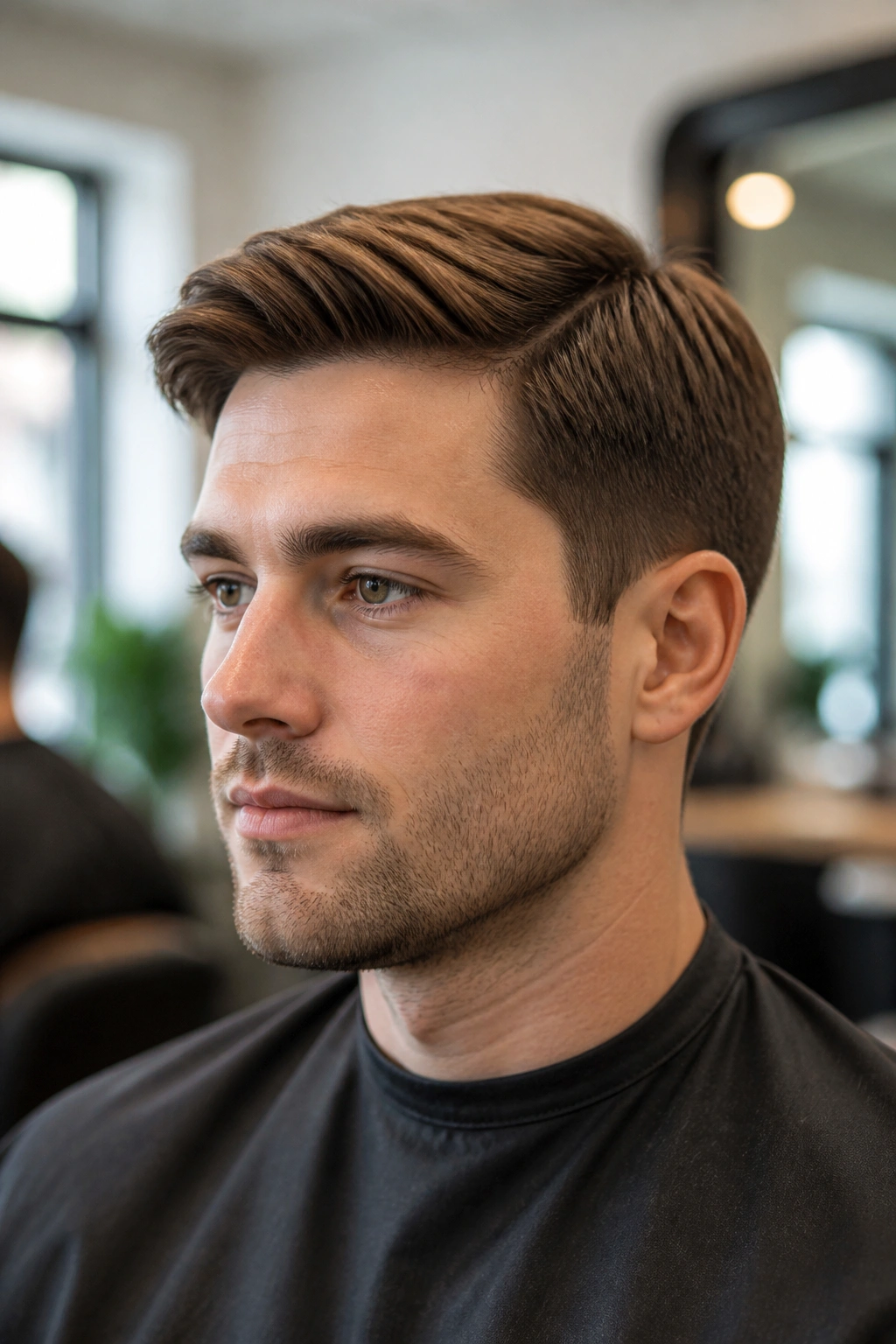
A scissor-cut Ivy League is what I reach for when someone wants neatness without looking over-groomed.
The length stays short enough for easy combing, usually with a little extra room on top for a soft side part. Layers are subtle here — just enough to stop the top from lying flat and to keep the shape from feeling blocky. It is a smart haircut for straight hair, especially if your hair grows forward or sticks up at the crown. The cut cleans that up without turning it into a buzz cut with opinions.
What separates this from a basic crew cut is the top. You still have texture, movement, and the option to style it with a part or brush it forward on lazier mornings. The barber should use scissors on top rather than just clippers, because that gives the ends some softness.
A light cream, grooming cream, or tiny bit of pomade is enough. If you want a little more polish, comb it while it is damp and let it dry with the part in place. Easy.
15. The Wolf Cut for Men
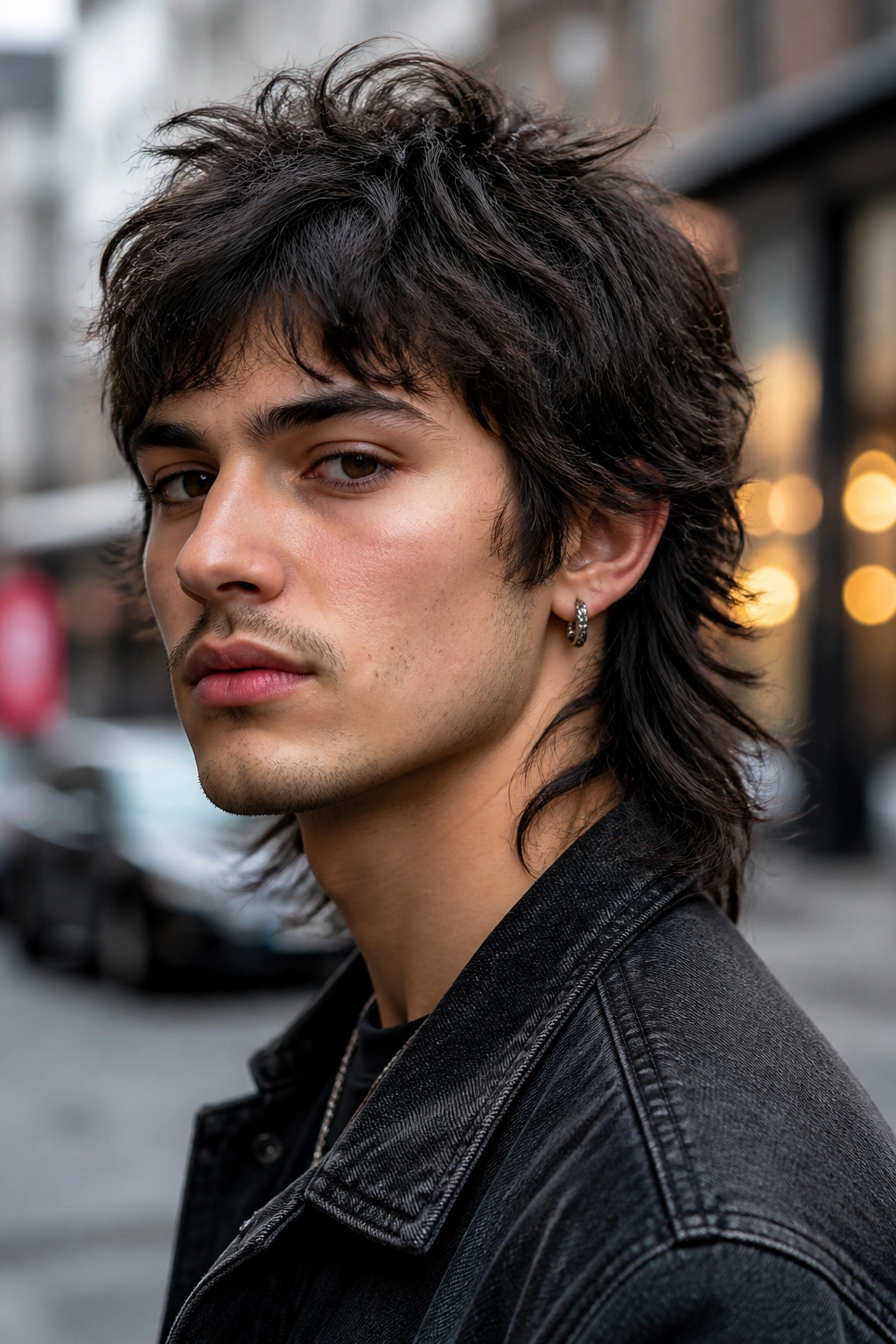
Not every layered haircut needs to behave.
The wolf cut is shaggy, a little wild, and heavy on attitude. It usually blends a choppier top with a longer back and plenty of texture around the face. The haircut works because the layers are uneven in a controlled way — not random, not sloppy, just deliberately broken up. It suits medium to thick hair, especially if your waves or curls already want to push the shape around on their own.
This is not a cut for someone who wants a clean corporate outline. It lives in a looser lane. The charm is that the haircut looks like it has motion even when you barely touch it. That said, the shape has to be managed. Too much length in the wrong places and it turns into a shag with no direction.
A bit of texture spray, rough drying, and finger styling are usually enough. If your hair is thick, ask your barber to keep the layers visible but not shredded into nothing. There’s a difference.
16. Slicked-Back Long Layers

Long hair looks better slicked back when the layers are built for it.
Without layers, long hair can bunch up at the sides and make the back feel heavy. With layers, the hair slides back more cleanly and sits closer to the head. The effect is smoother, less blocky, and easier to control. This cut works best when the top still has enough length to move back naturally — usually 4 inches or more — while the mid-lengths and back are shaped so the outline does not balloon.
The slick-back does not have to be shiny and rigid. I prefer a lower-shine finish unless you are after a very formal look. A medium-hold gel on damp hair can give a tighter finish, while a cream or light pomade keeps it softer. Either way, combing matters. Start from the front and move back in one steady pass, then break the surface slightly with your fingers so it does not look painted on.
If your hairline is strong and your density is good, this cut can look sharp for a long time between trims. If not, keep the layers softer and the sides a bit lighter.
17. Layered Fringe With a Fade
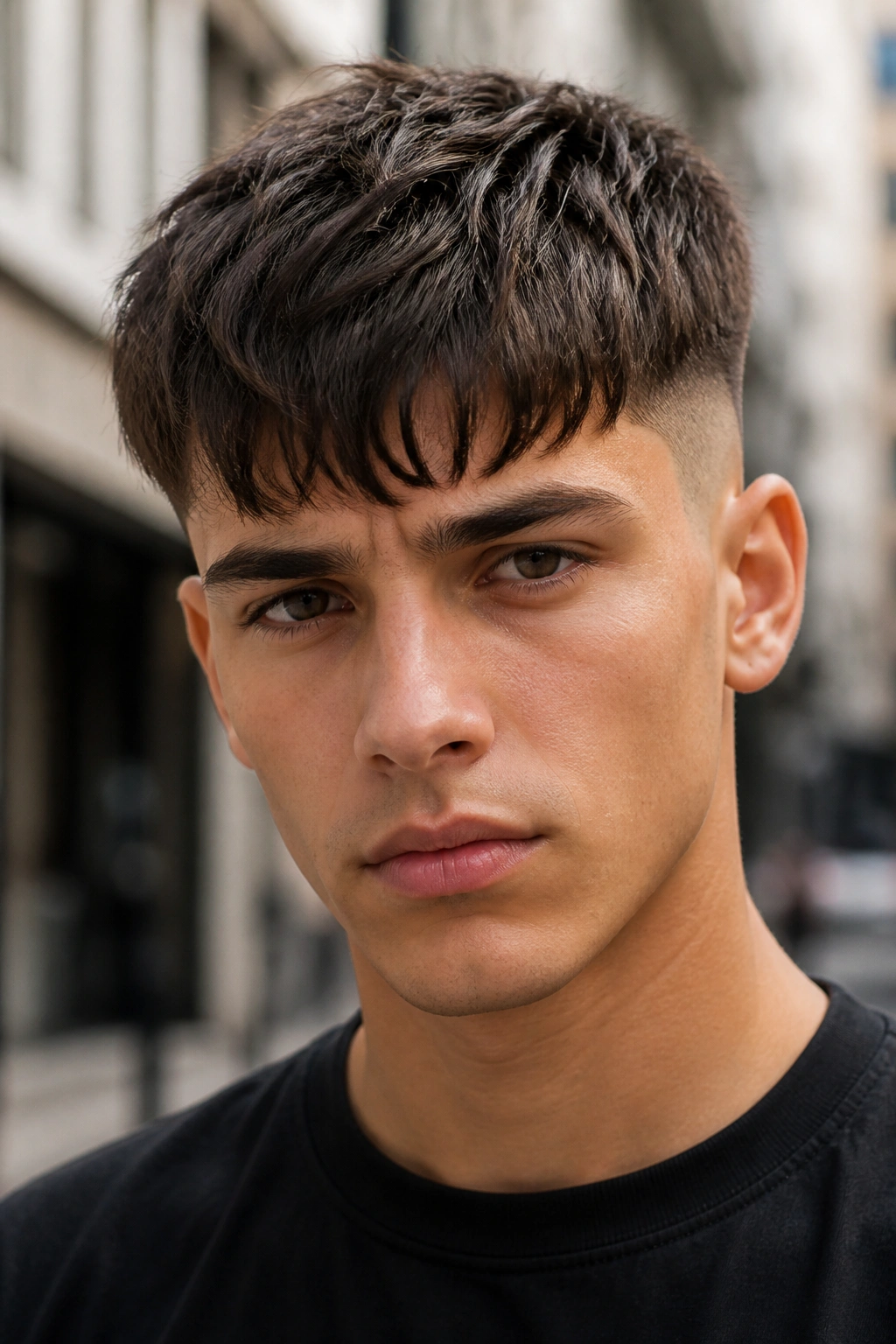
What if you want fringe without the bowl-cut problem?
You cut it into pieces. That is the short answer. A layered fringe with a fade keeps the front short enough to sit forward, but the fringe itself is broken up so it falls in sections rather than one blunt line. The fade on the sides gives the front more room to breathe and keeps the haircut from feeling too heavy around the ears. It works well on straight hair, and it can also tame hair that likes to stand up at the front.
The shape to ask for
Tell your barber you want the fringe to be textured, not straight across. That one detail changes everything. A soft mid fade or skin fade can work, but the top needs to stay long enough to create separation. If the fringe is cut too short, the whole thing turns into a choppy crop instead of a true layered fringe.
A paste with medium hold is enough. Use your fingers to push the fringe forward, then split a few pieces with a light pinch. The style should look intentional, but not stiff. A comb can be useful, though too much combing kills the texture fast.
18. The Tapered Flow Cut
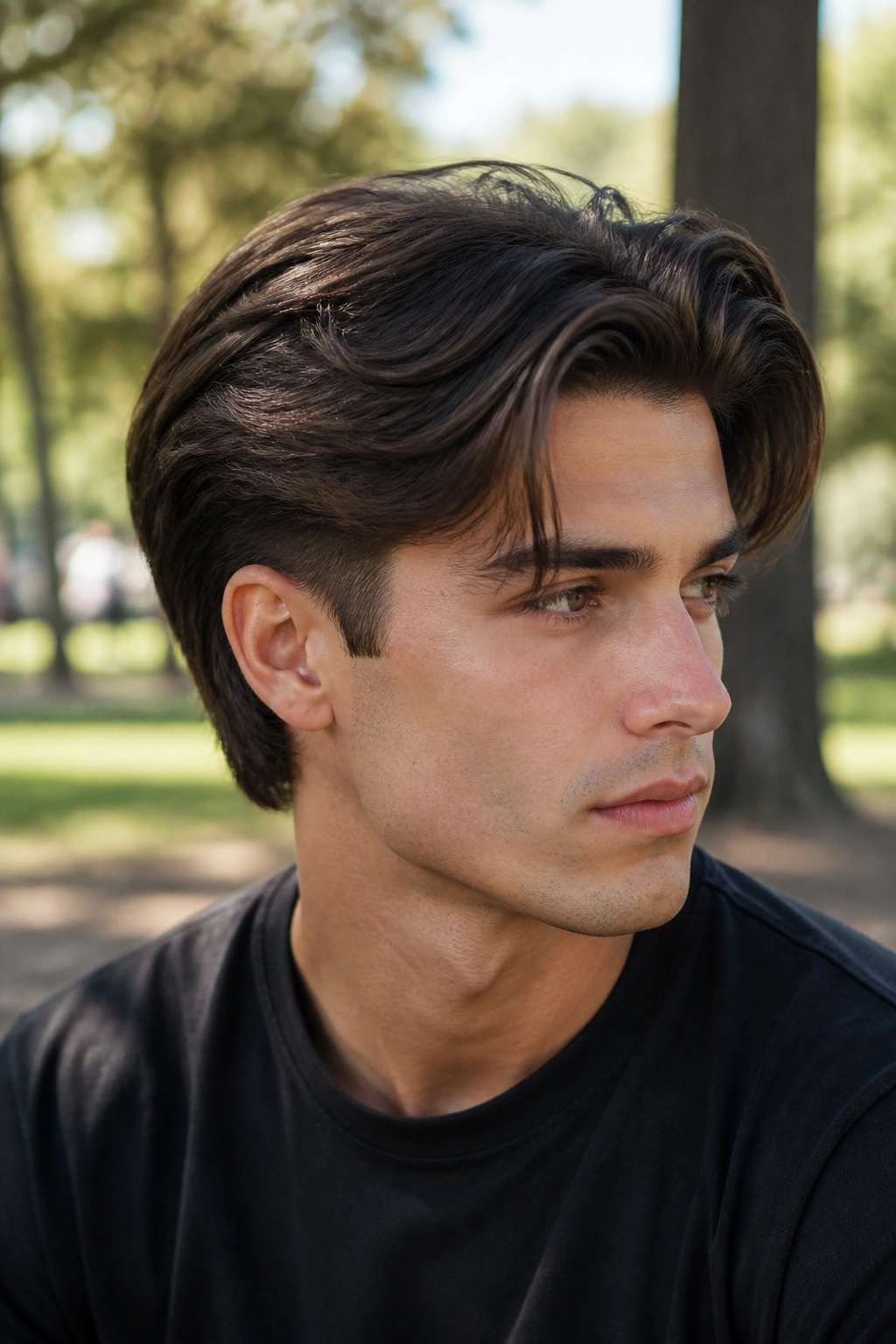
This cut should move when you turn your head.
The tapered flow cut sits between a bro flow and a neater medium-length style. The top and back stay long enough to fall naturally, but the sides and neckline are tapered so the outline stays clean. Layers are the thing that keep it from becoming a blunt sheet of hair. On wavy hair, it looks easy. On straight hair, it gives shape where there would otherwise be none.
This is one of the more forgiving layered haircuts for men because it can grow out without looking sloppy right away. That matters if you do not want to see your barber every few weeks. The taper keeps the edges from turning fuzzy, while the layers stop the weight from building up too much in the back.
A light mousse or cream helps if your hair needs a bit of direction. Let it dry with a natural bend, then push the front where it wants to sit. Overstyling defeats the point. The appeal here is movement, not control.
19. Curly Top Layers With Shape
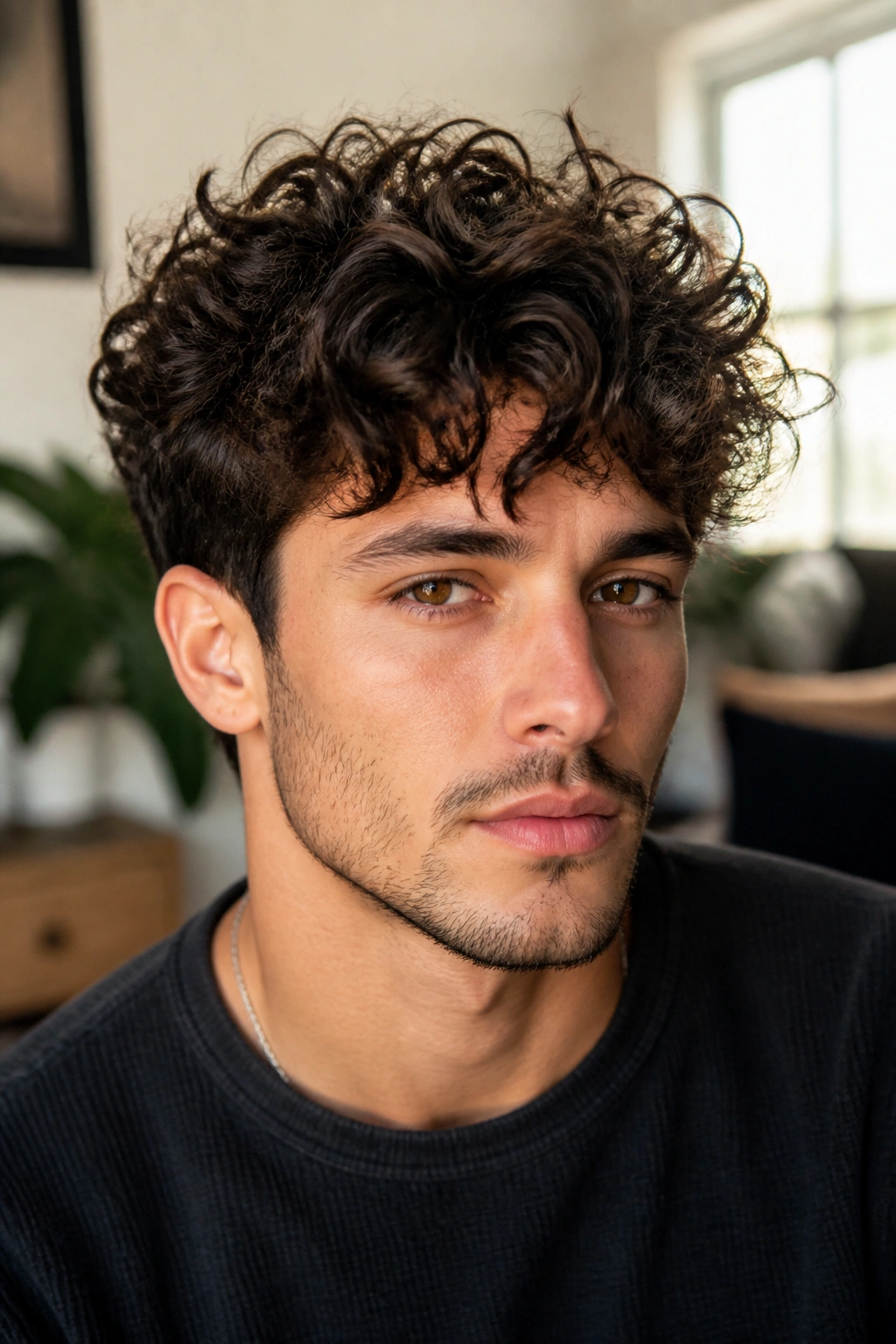
Curly hair usually looks better with more shape, not more length.
That is why layered cuts matter so much on curls. If the top is left one length, curls can stack up and make the head look round in the wrong way. Layers let the curls sit on top of each other without building a hard triangle at the sides. The result is more lift at the crown and a cleaner outline around the temples and jaw.
A few things that help
- Ask for the cut on dry or mostly dry curls so the real shape is visible.
- Keep the layers longer than you think at first.
- Avoid heavy thinning near the surface if your curls frizz easily.
- Use a curl cream or gel with enough hold to define the pattern.
The best curly layered cut is shaped, not shredded. I’m not a fan of overdoing the thinning shears on curls; too often it makes the hair puff instead of settle. Leave enough length for the curls to clump, then let the layers do the rest.
20. Layered Shapes for Coily Hair
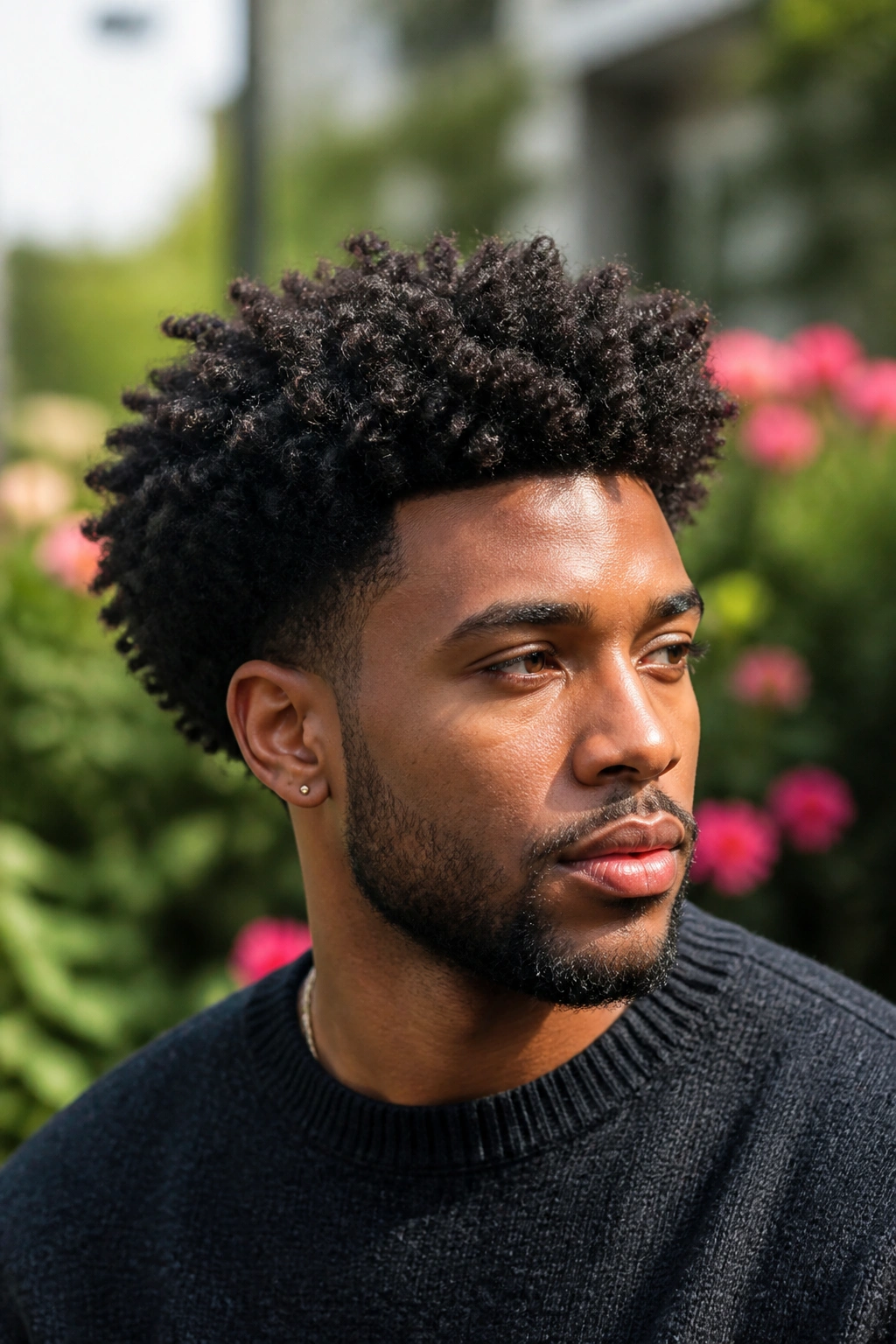
Coily hair needs layering to keep the outline clean.
Because shrinkage changes everything, this cut works best when the barber thinks in shape, not just length. The hair can be left fuller on top, with carefully planned layers to stop the silhouette from building too much width at the sides. A rounded shape often looks strongest, especially when the hair is moisturized and the coils are allowed to sit naturally. If the cut is too blunt, it can feel boxy. If it is too thin, the shape loses presence fast.
This is one of those cuts where drying and styling matter as much as the scissors. A leave-in conditioner, twist cream, or curl butter can help define the pattern and keep the hair from looking dry at the ends. If you wear a twist-out, sponge curls, or a picked-out shape, the layers should support that routine rather than fight it.
Ask for the cut with shrinkage in mind. That single sentence can save a lot of regret.
21. Shoulder-Length Surfer Layers

If your hair hits the shoulders, the wrong cut turns it into rope.
Shoulder-length surfer layers keep the ends moving and prevent the bulk from gathering at the bottom. The layers should start somewhere around the cheekbones or jaw, depending on face shape, and continue through the back so the hair falls with a loose, windblown shape. Straight hair gets more body from this. Wavy hair gets more swing. Even thick hair can wear this look well if the ends are kept light.
What makes it look intentional
The perimeter cannot be ignored. If the bottom is too blunt, the hair hangs like a curtain. If the layers are too short, the cut frizzes out and loses that beachy shape. The sweet spot is soft but not messy.
A leave-in conditioner or a very light styling cream helps the ends stay soft, especially if you wash your hair often or spend time in dry air. Trim the ends every 10 to 12 weeks so the layers do not fray into uneven pieces. This cut is low-pressure, but it still needs maintenance.
22. The Face-Framing Layered Cut

If you want one layered haircut that plays nicely with most face shapes, start here.
The idea is simple: keep enough length around the front to frame the face, soften the temples, and let the hair move without swallowing your features. On square faces, this can take the edge off the jaw. On round faces, a bit of height and length around the top helps stretch the shape. On longer faces, a fuller fringe or slightly shorter front pieces keeps the cut from dragging everything downward. It is a forgiving option because the layers can be adjusted without changing the whole haircut.
What I like about this one is how little it asks for from the reader. You do not need perfect wave patterns or a dramatic texture story. You just need a barber who knows where to keep weight and where to remove it. That is usually the difference between a flattering layered cut and one that looks accidental.
If you are stuck between styles, this is the safe place to begin. Keep the front soft, the crown controlled, and the sides clean enough to hold the shape. The rest is mostly about how your hair grows — and that is the part no haircut can fake.
