



Short choppy layered haircuts for round faces work because they do three jobs at once: they add height, break up width, and keep the eye moving instead of sitting in one soft circle. That sounds simple, and it is. The hard part is choosing the right kind of choppy.
A round face usually reads widest through the cheeks, with a softer jaw and less natural angle at the chin. So the cuts that flatter most are the ones that build texture above the widest point, skim past it instead of stopping on it, or cut a line that pulls the eye diagonally. A blunt chin-length shape can still work, but it needs some break in the edge. Otherwise it can feel boxy on the face.
I keep coming back to short layers because they solve a common problem: hair that sits too neatly can make roundness look louder. A little messiness helps. Not frizz. Not puff. Just broken ends, slight asymmetry, and enough lift at the crown to create shape without looking overdone.
These 22 cuts cover the whole range, from tiny pixies to jaw-length bobs, and each one makes a round face look a little sharper, a little longer, and a lot more intentional. The first one is where I’d start if you want something easy to wear.
1. Piecey Pixie with Side-Swept Bangs for Round Faces
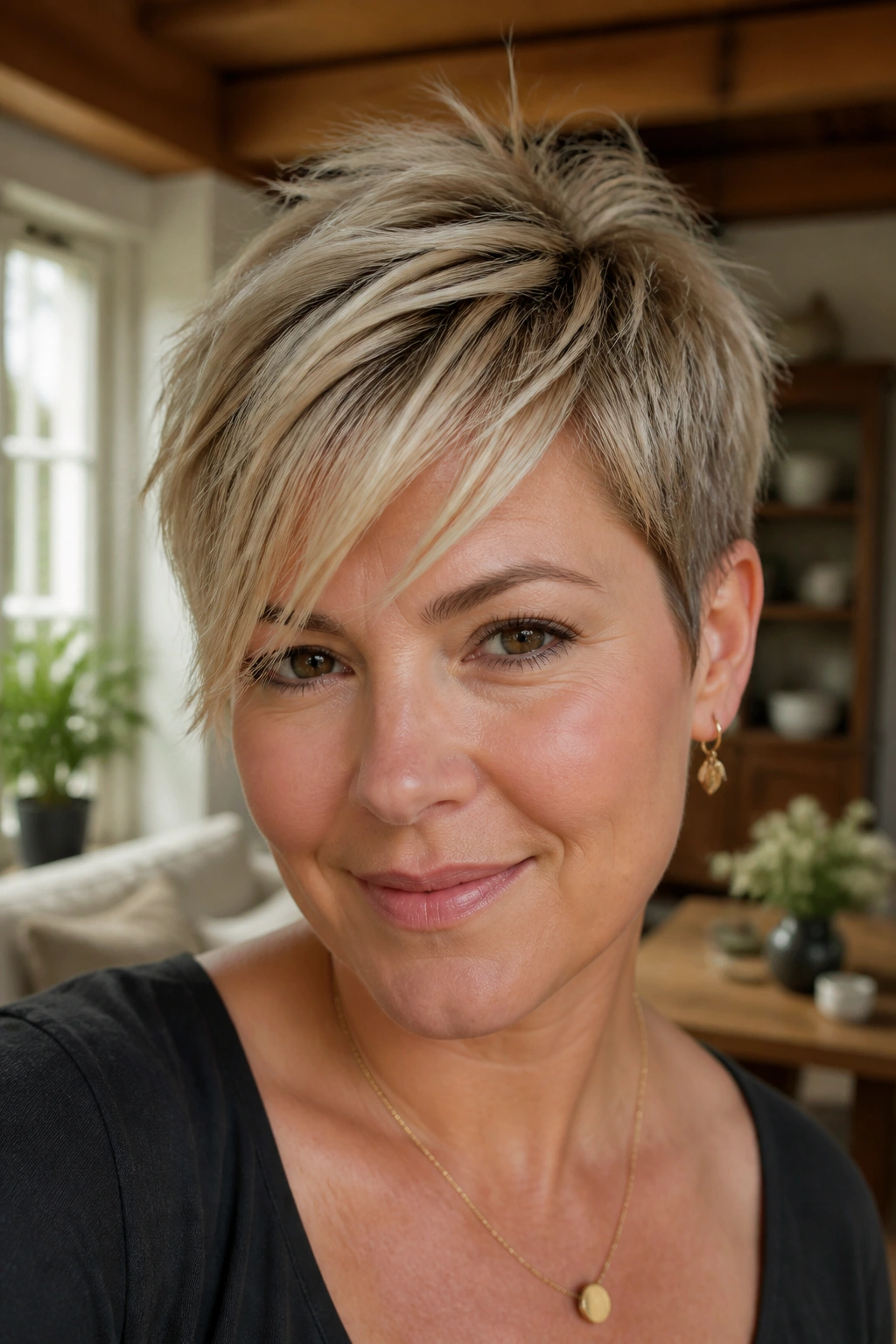
A pixie can do more for a round face than people expect, but only if it has movement on top. Keep the sides tight, leave the crown longer, and let the fringe sweep across the forehead instead of cutting it straight across. That diagonal line matters. It pulls the eye upward and stops the cut from sitting like a helmet.
What to ask for at the salon
- Keep the top around 3 to 4 inches so it can be styled forward or up.
- Ask for the sides to be cropped close but not shaved.
- Request point-cut ends on the fringe so it looks soft, not blocky.
Best for: fine to medium hair that needs lift without a lot of bulk.
Use a pea-size matte paste and push the top slightly off center. If the crown lies flat, blow-dry it in the opposite direction first, then sweep it back. Small move. Big difference.
2. Choppy French Bob with a Broken Hemline

This cut looks relaxed, but it is doing a lot of shape work. A French bob normally sits near the jaw, and the choppy version breaks up that heavy line with uneven ends and a slightly off-center part. On a round face, that’s the trick: keep the bob close enough to feel modern, but not so blunt that it widens the cheeks.
The cleanest version lands right at the chin or just below it. Anything shorter can land on the fullest part of the face and make the width feel stronger. A broken hemline keeps the eye moving, which is exactly what you want.
I like this cut on straight or softly wavy hair. It has that easy, slightly undone look that never feels too precious. A little bend with a 1-inch iron is enough. If the ends flick in different directions, even better.
3. Angled Bob with Jagged Ends
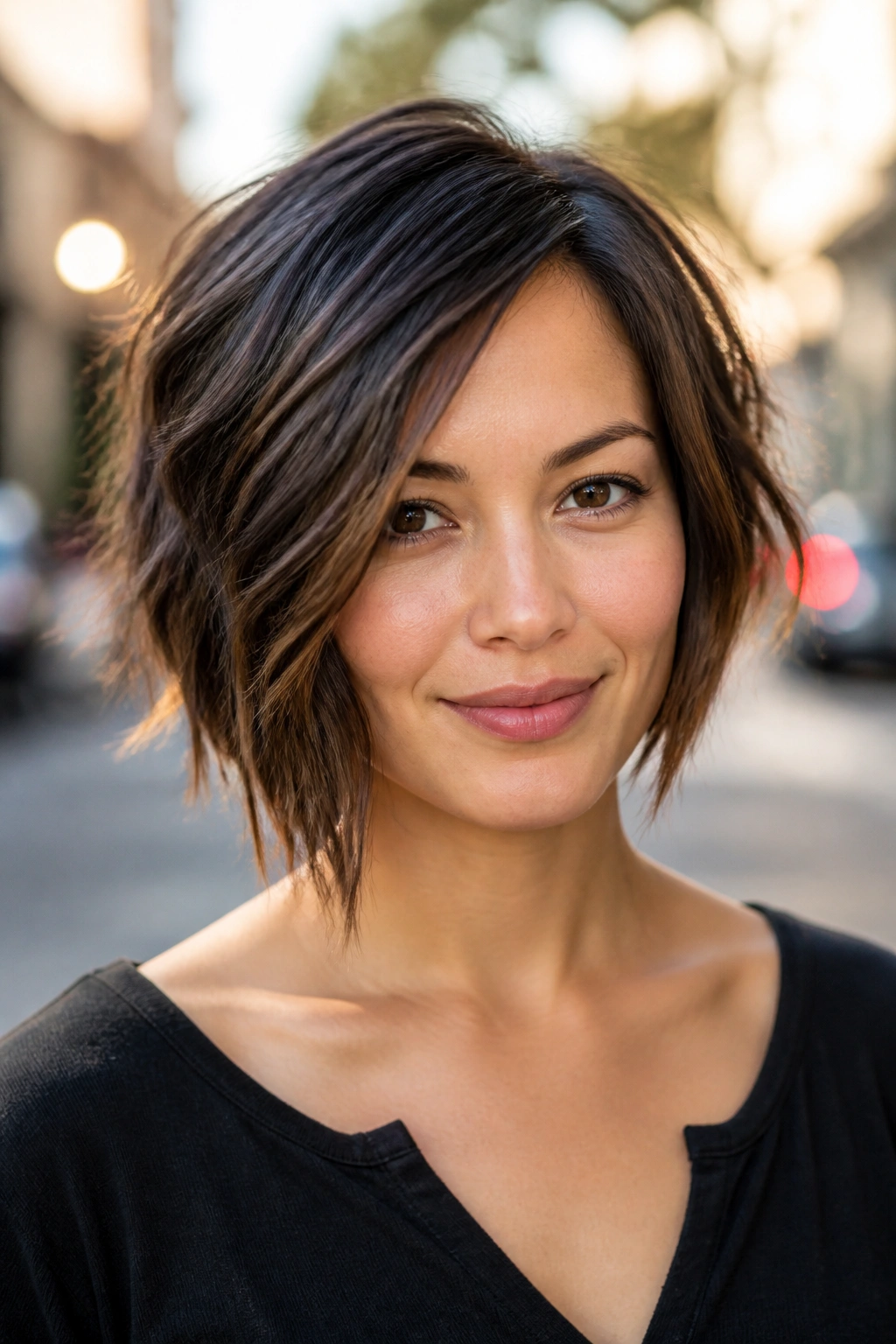
Why does an angled bob work so well on a round face? Because the line does the slimming for you. Shorter in the back, longer in the front, the shape creates a diagonal that cuts across the roundness instead of echoing it. That slant is subtle, but it changes the whole read of the haircut.
Keep the angle moderate. Too steep, and it starts to look dated. Too flat, and you lose the effect. The front pieces should graze the jaw or sit a touch below it, while the back can stay neat and compact.
How to wear it
- Tuck one side behind the ear for extra asymmetry.
- Bend the front pieces away from the face with a flat iron.
- Use a light smoothing cream so the jagged ends stay piecey, not frizzy.
This is a smart cut if you like structure. It feels polished, but not stiff.
4. Textured Bixie with Crown Lift
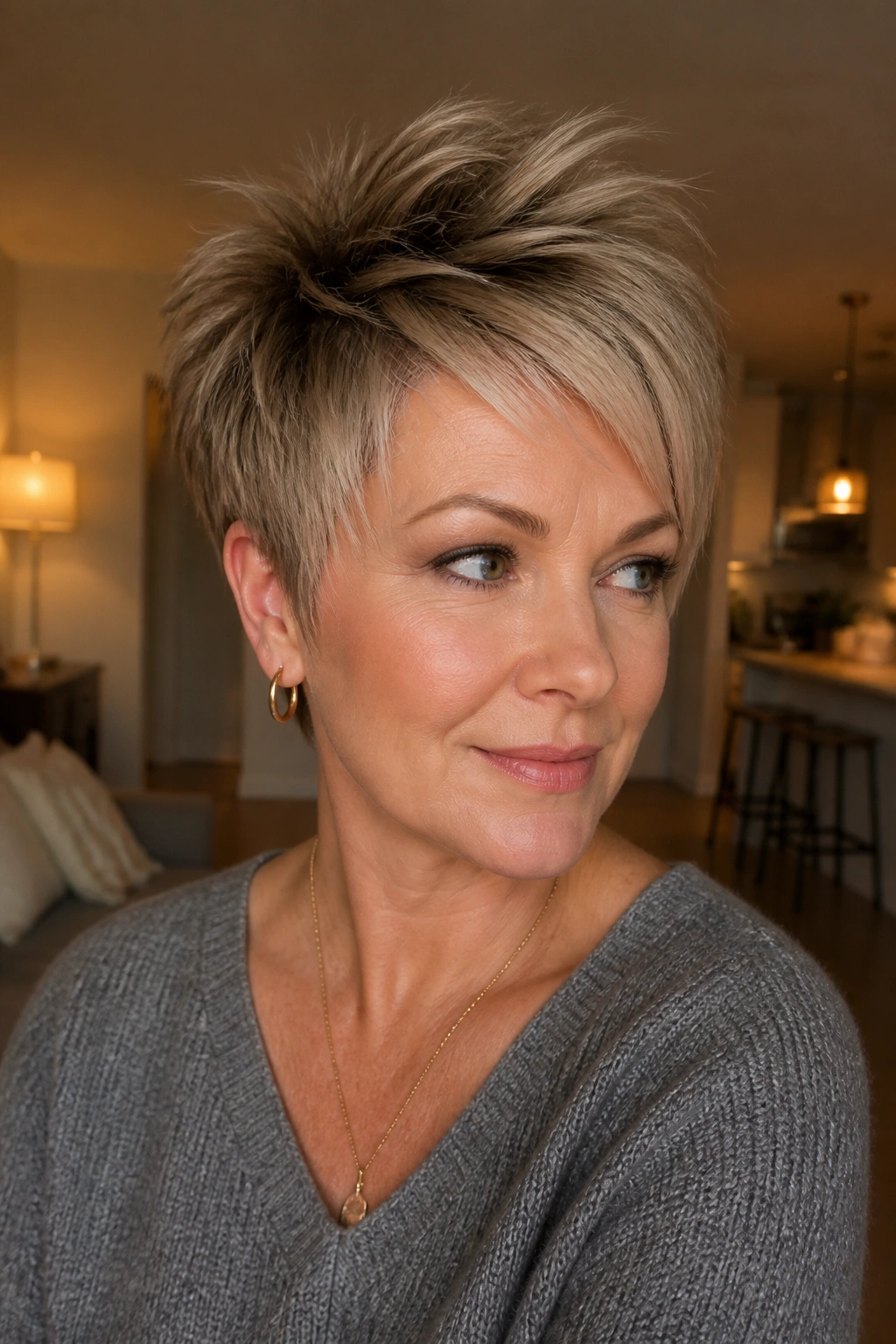
The bixie sits between a bob and a pixie, and that middle ground is exactly why it flatters round faces. You get the lift and openness of a pixie with a little more length around the face. When the crown is left fluffy and the sides stay close, the cut makes the face look longer without asking for a lot of styling time.
The key is balance. If the top gets too short, the cut can turn flat fast. If the sides get too full, the face looks wider. The sweet spot is a slightly longer top with shattered layers that fall in soft pieces instead of one solid mass.
I reach for this cut on fine hair that needs life. A root spray at the crown and a quick rough-dry are usually enough. If your hair is thick, ask for internal removal of weight so the shape stays airy instead of boxy.
5. Shaggy Crop with Curtain Bangs
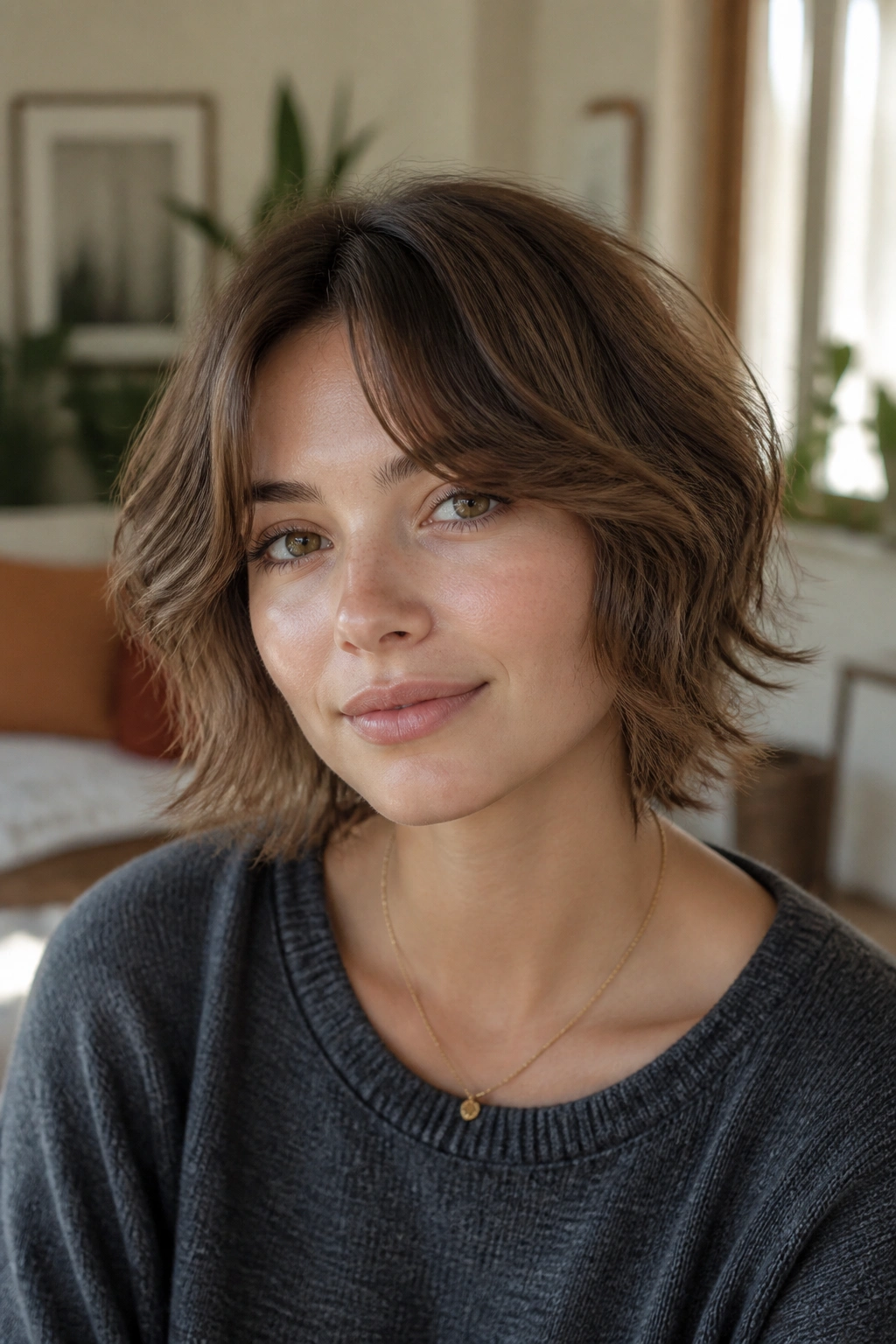
The shag is the easiest cut to misunderstand. People hear “shag” and think messy, but the real job is controlled movement. Curtain bangs open the face in the middle, while the short layers around the cheeks and crown create that broken texture round faces need. The face doesn’t feel boxed in, and the fringe helps lengthen the forehead area.
I like this cut on wavy hair best. The natural bend makes the layers look intentional without much effort. Straight hair can wear it too, but it needs a little grit from mousse or texture spray, otherwise the layers can fall too neatly.
The shortest face-framing pieces should begin below the cheekbone, not right on it. That one detail keeps the widest part of the face from becoming the focus. Air-dry or diffuse, then pinch a little styling cream through the bangs. Done.
6. Ear-Length Crop with Tapered Sides
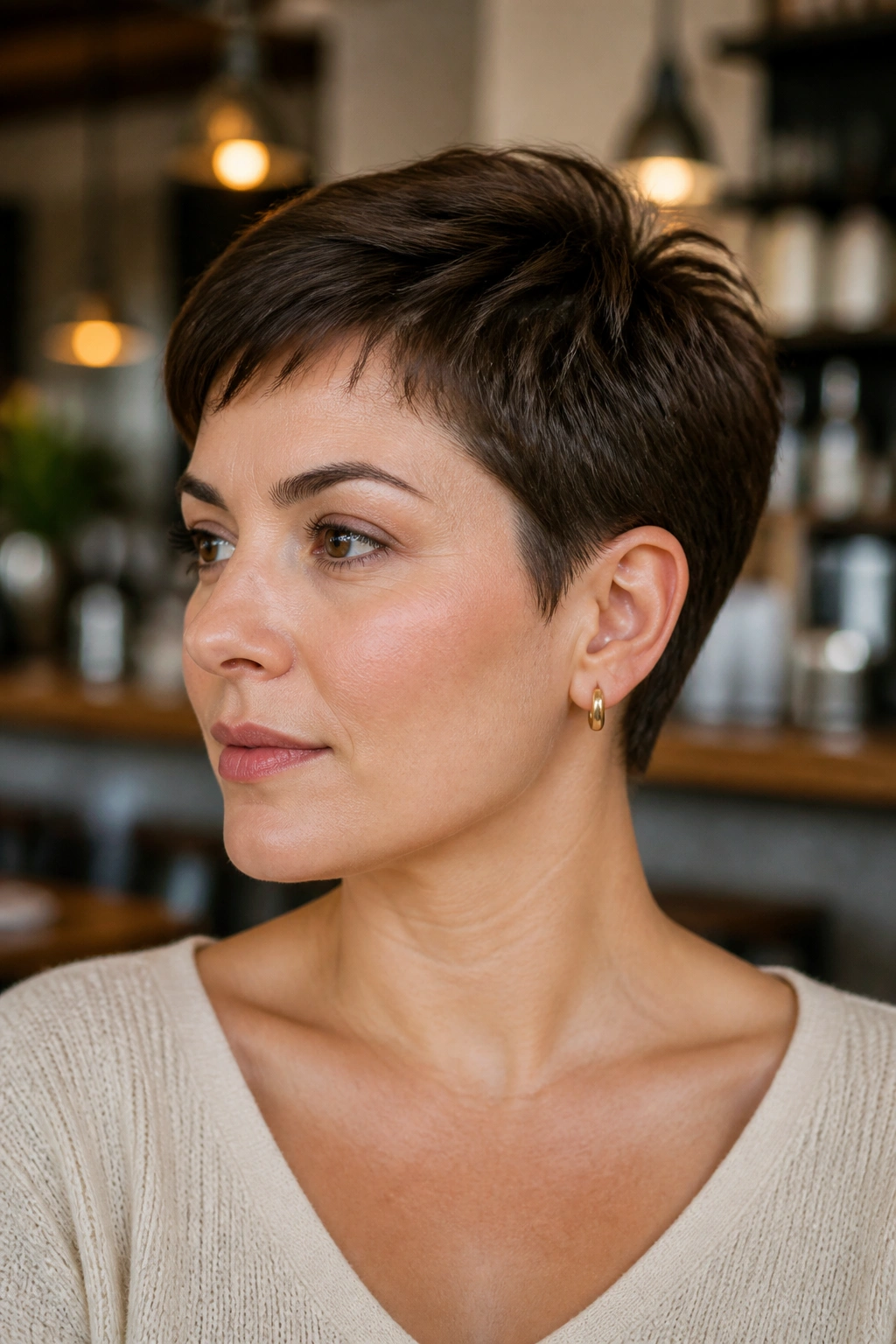
A short crop can look sharp on a round face when the sides are tapered cleanly. The ear-length version keeps the outline close, which opens up the cheekbones and jaw instead of covering them. It has a crisp, almost tailored feel, and I love that on someone who wants short hair without a lot of fuss.
This cut is more about precision than length. The top should stay soft and slightly longer, while the sides are cut close enough to follow the head shape. If the crown is too flat, the face can look wide. If the top has a bit of lift, the whole cut feels lighter.
It’s also a good one if you wear earrings or glasses. The shorter length gives those details room to show. A dab of styling cream is enough for most hair types, though thick hair may need a touch of wax at the ends to keep the taper clean.
7. Wavy Micro Bob for Round Faces
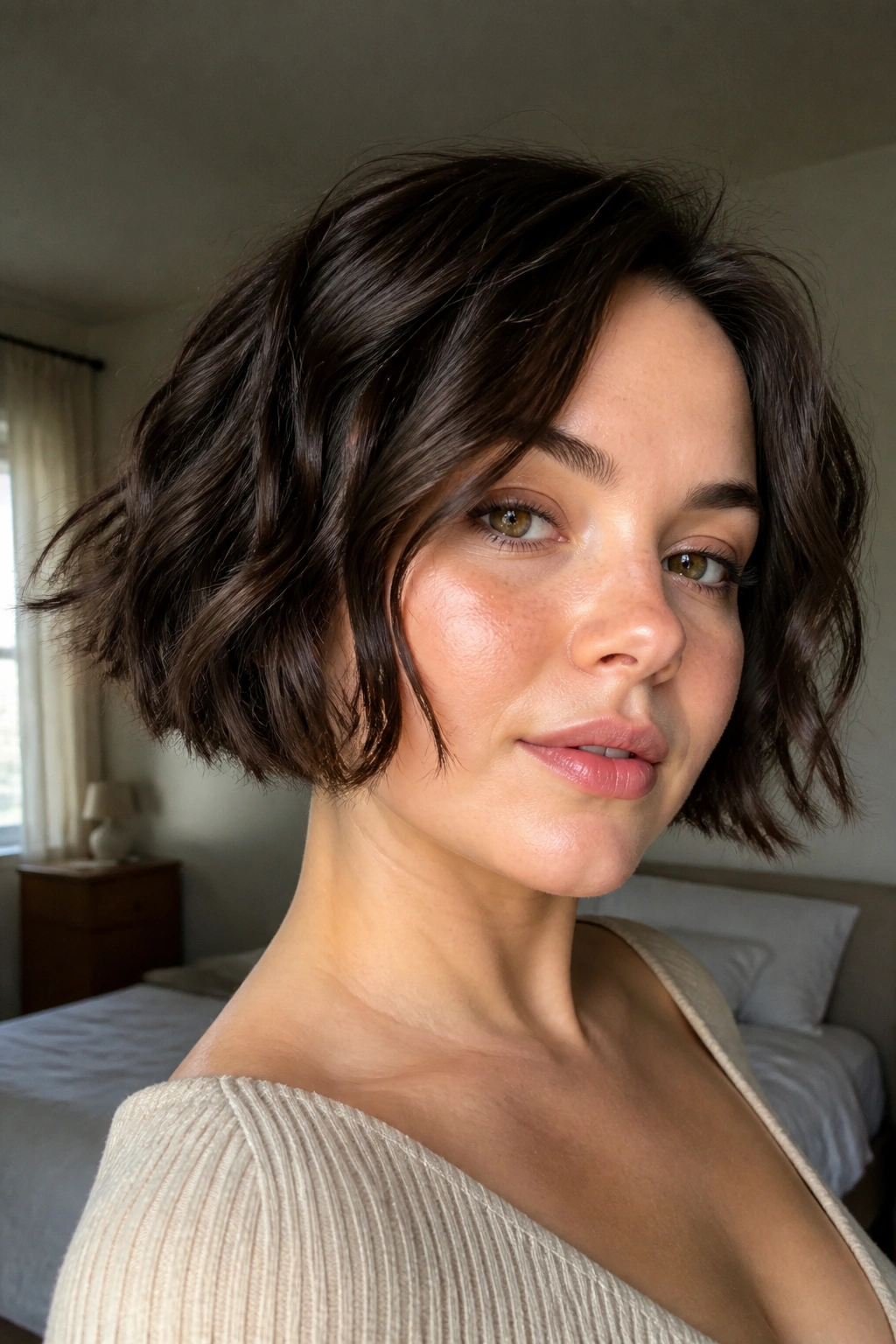
Picture hair that stops just above the jaw and bends in loose, uneven waves. That’s the micro bob I’d trust on a round face. It sounds tiny, but the shape works because the movement keeps it from becoming a solid circle around the face. The part should sit off center, and the waves should be loose enough to show the neck.
Why it works
The cut exposes more of the neck and lower cheek, which creates a longer line. A blunt micro bob can make a round face look fuller, but a wavy one softens the edge and breaks the outline in all the right places.
How to style it
- Use a 1-inch or 1.25-inch curling iron and alternate curl directions.
- Leave the ends straighter so the cut does not puff out.
- Finish with a light mist of texture spray.
This is a bold look, but it is not a difficult one once the shape is right.
8. Asymmetrical Jaw-Length Bob

One side longer. That’s the whole trick, and it works because it breaks symmetry in a way a round face welcomes. A perfectly even bob can feel a little too neat, while a slight asymmetry gives the face a diagonal line to follow. It’s one of the quickest ways to add edge without going short-short.
The best version is only slightly uneven. You do not need a dramatic runway cut unless that is your personality. A difference of about 1 to 1.5 inches between the sides is enough to shift the shape. Keep the longer side falling past the jaw, not right on top of it.
This cut looks especially good with a deep side part. It keeps the front from feeling too centered, which is where round faces can lose definition. If your hair is straight, a little bend at the ends keeps it from looking severe. If it’s wavy, even better.
9. Layered Pixie Mullet
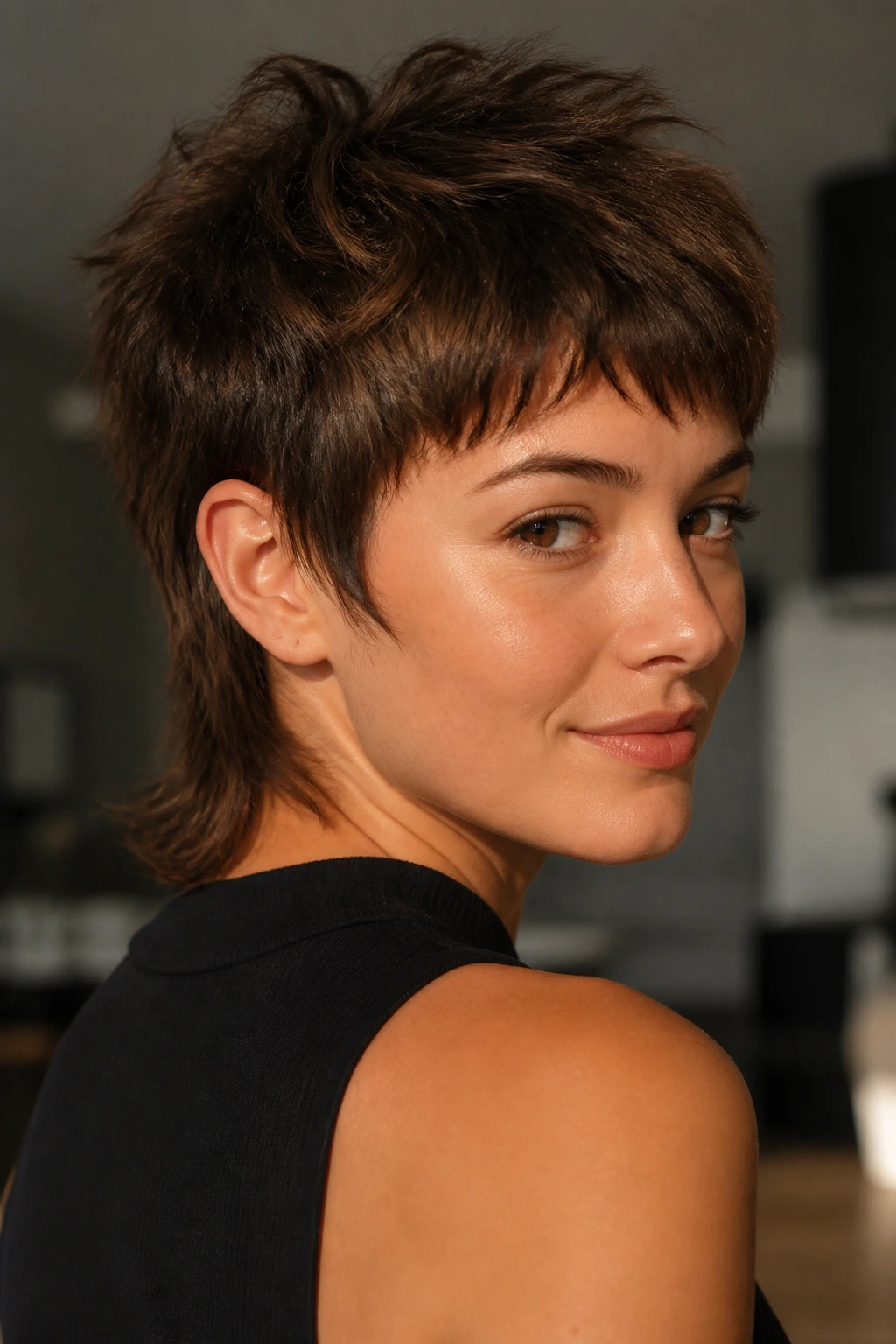
The pixie mullet is not timid. It keeps the front and sides short, then leaves a little extra length in the back for movement. On a round face, that longer nape helps pull the eye downward, which is useful when you want to break the width of the cheeks. The shape has attitude, but the layers stop it from feeling hard.
I like this one on people who want short hair with some personality. It works best when the top is textured, not flat, and when the nape is soft rather than stringy. A bit of separation through the ends makes the whole cut feel modern.
Ask for short, broken layers around the crown and a longer tail at the back. That contrast is the point. Use a tiny bit of pomade or cream on dry hair and pinch the ends into place. If everything looks too smooth, the cut loses its edge.
10. Feathered Crop with Long Top
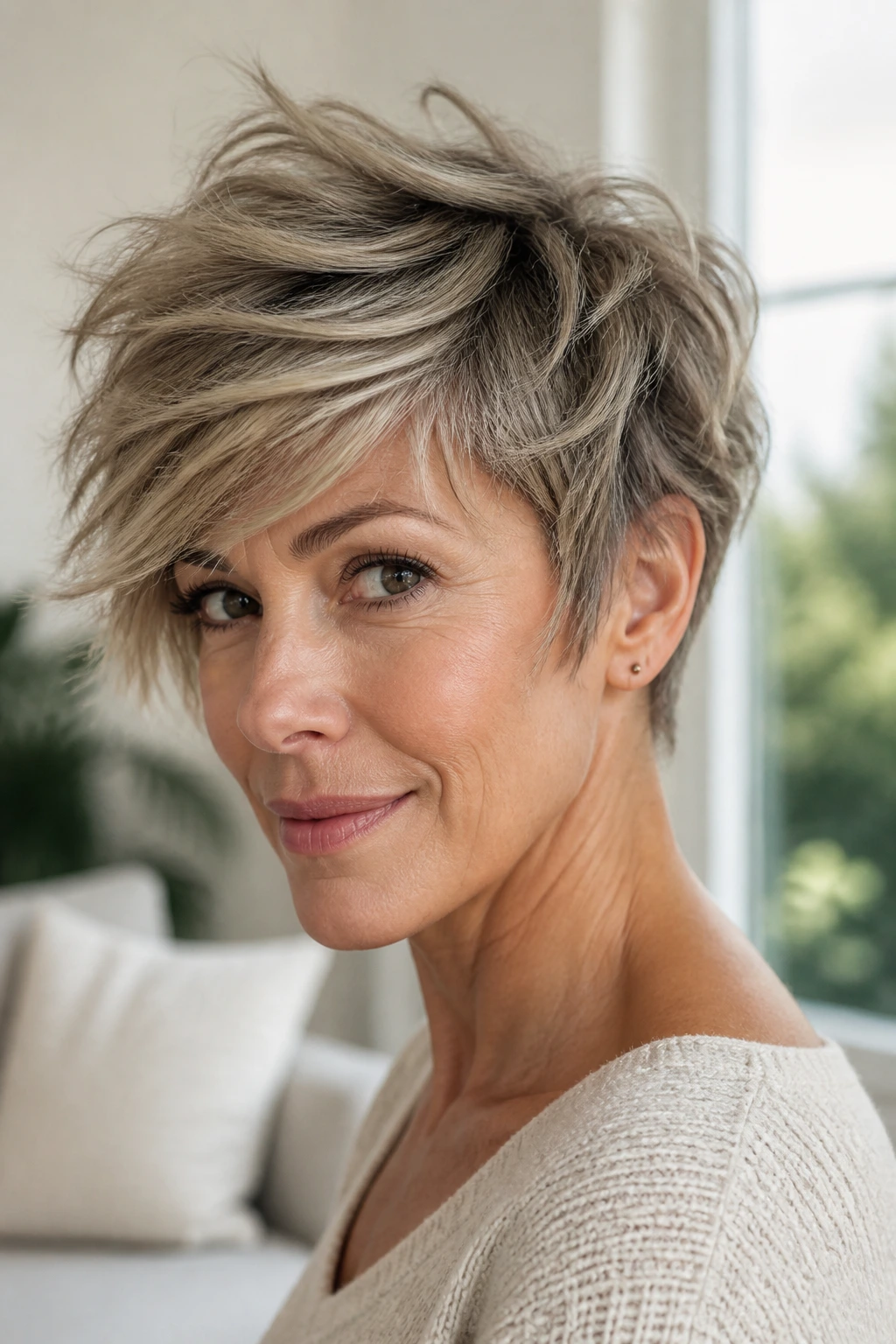
Feathering changes the mood fast. A cropped cut with feathered layers on top feels lighter than a heavy pixie, and that matters on a round face because weight around the sides can make the face look broader. Keep the sides neat, leave the top a little longer, and let the layers taper outward instead of stacking in chunks.
This is a good cut for anyone who wants softness rather than sharpness. The feathered texture avoids the hard lines that can feel boxy near the cheeks. It’s also kind to fine hair, because the layers create the illusion of more body without requiring a ton of product.
What to watch for
- Don’t let the feathering start too low on the face.
- Ask for the longest pieces to sit at the cheekbone or above.
- Blow-dry with a small round brush to lift the crown.
The result is airy, not fluffy. That distinction matters.
11. Razored Bob with a Light Fringe
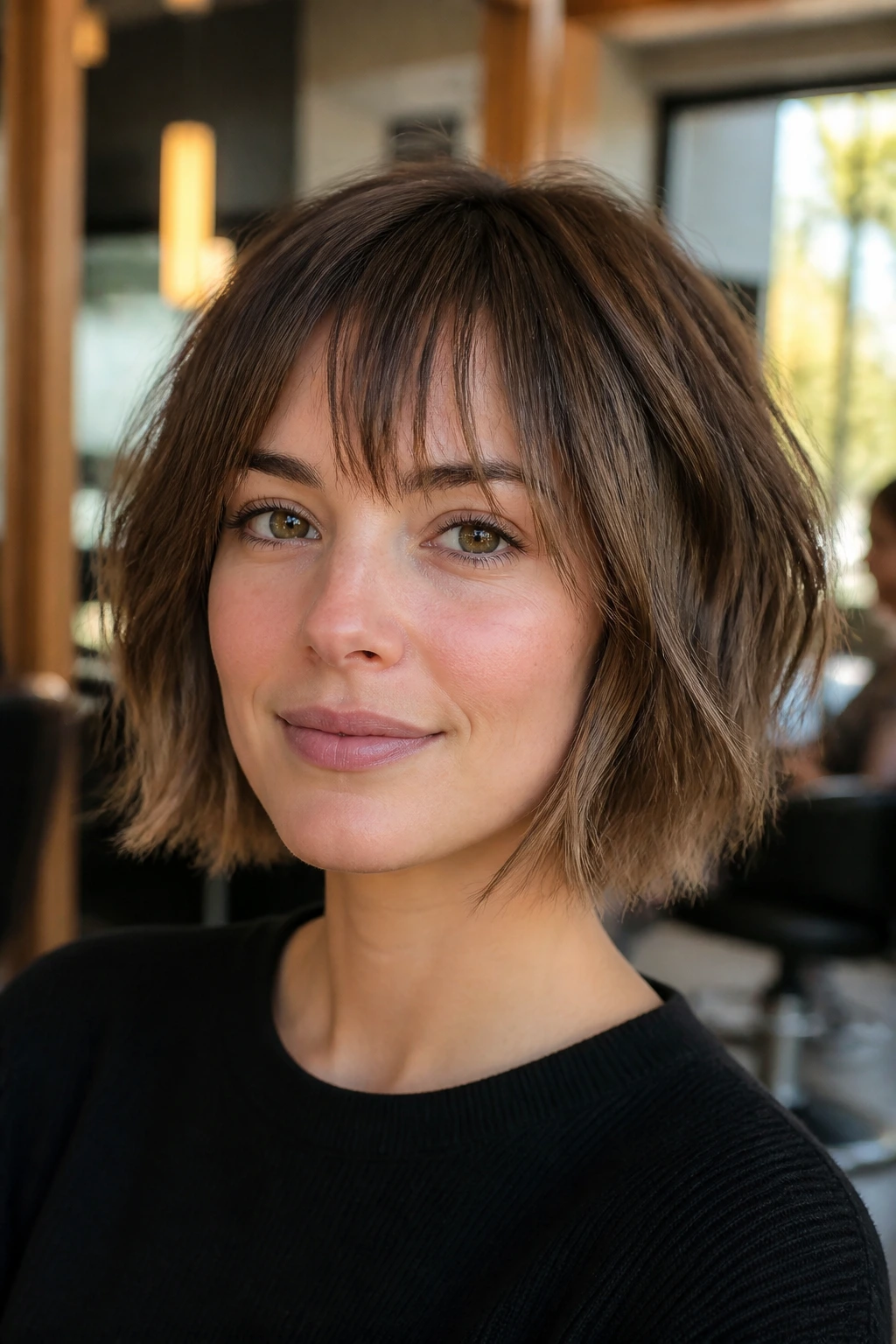
A fringe can help or hurt. The wrong one chops the face in half; the right one adds shape and interest. For a round face, I prefer a light, razored fringe that sits just above the brows or brushes them softly. It keeps the forehead in the picture without making the cut feel heavy.
The bob itself should stay short and broken at the ends. A razor gives the perimeter a softer finish, which helps if your hair is thick or straight. If the fringe is too dense, the whole cut can feel flat. If it is too wispy, it can disappear. The middle ground is the sweet spot.
This style is especially good if you like a little drama. It frames the eyes well and makes glasses look intentional rather than crowded. Keep a texture paste nearby. A small amount through the fringe keeps it from separating into odd little strings.
12. Tousled Mushroom Cut
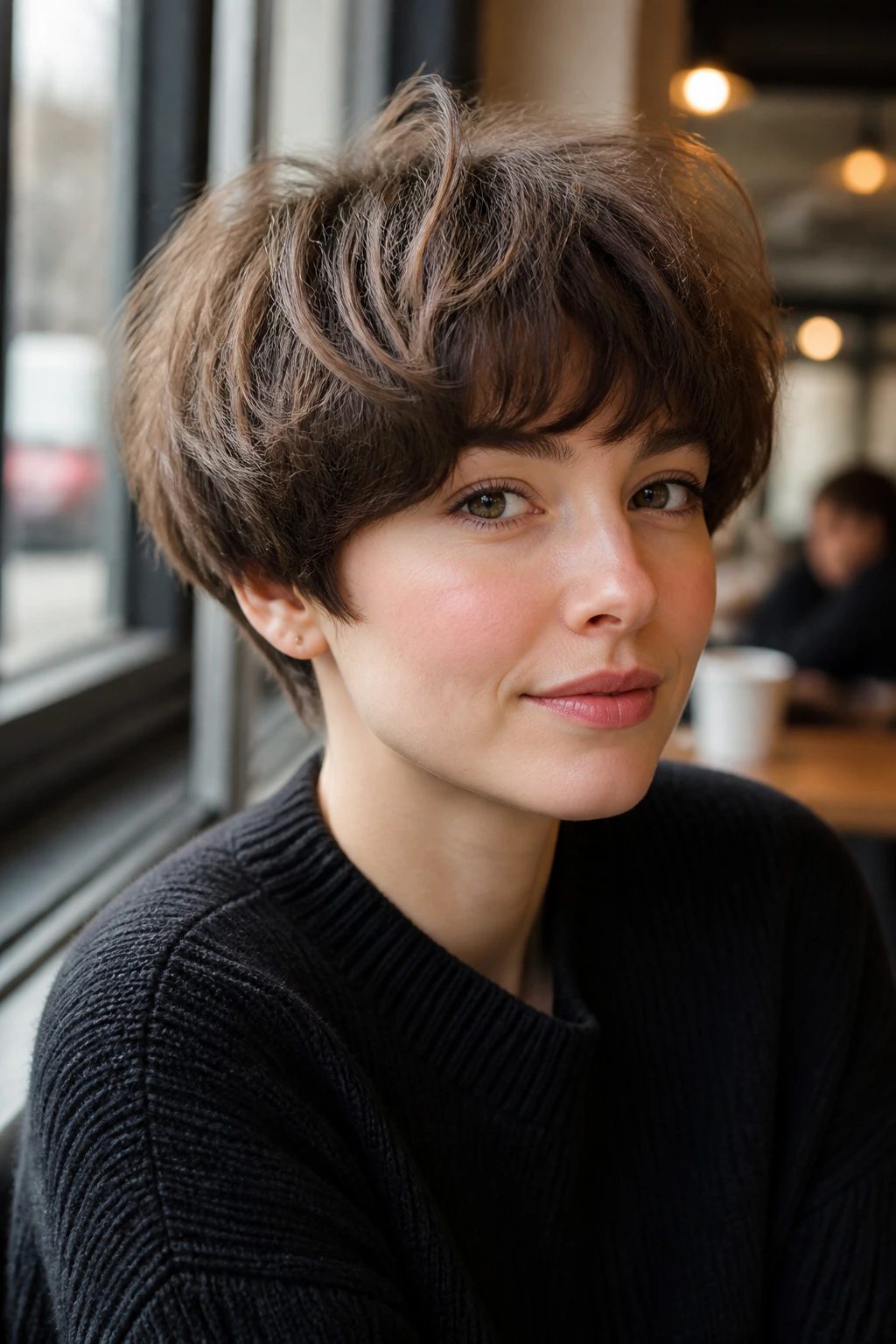
The mushroom cut gets a bad rap because people picture the old, stiff version. The modern one is different. It keeps the rounded outline but breaks it up with internal layers and a tousled finish, so the shape sits softer on a round face. That matters. A hard bowl shape can double down on roundness, while a textured version adds some air.
I like this cut on thick hair because it removes bulk in a controlled way. The top stays full, the sides stay tucked in, and the ends are broken so they do not form a hard ring. If your hair is straight, the cut needs a little styling help to keep it from collapsing into a cap-like shape.
Use a texturizing cream or a light matte paste on dry hair. Push some pieces forward, leave others slightly apart. The more you try to make it perfect, the less interesting it looks. This cut lives on small irregularities.
13. Stacked Bob with Broken Layers for Round Faces
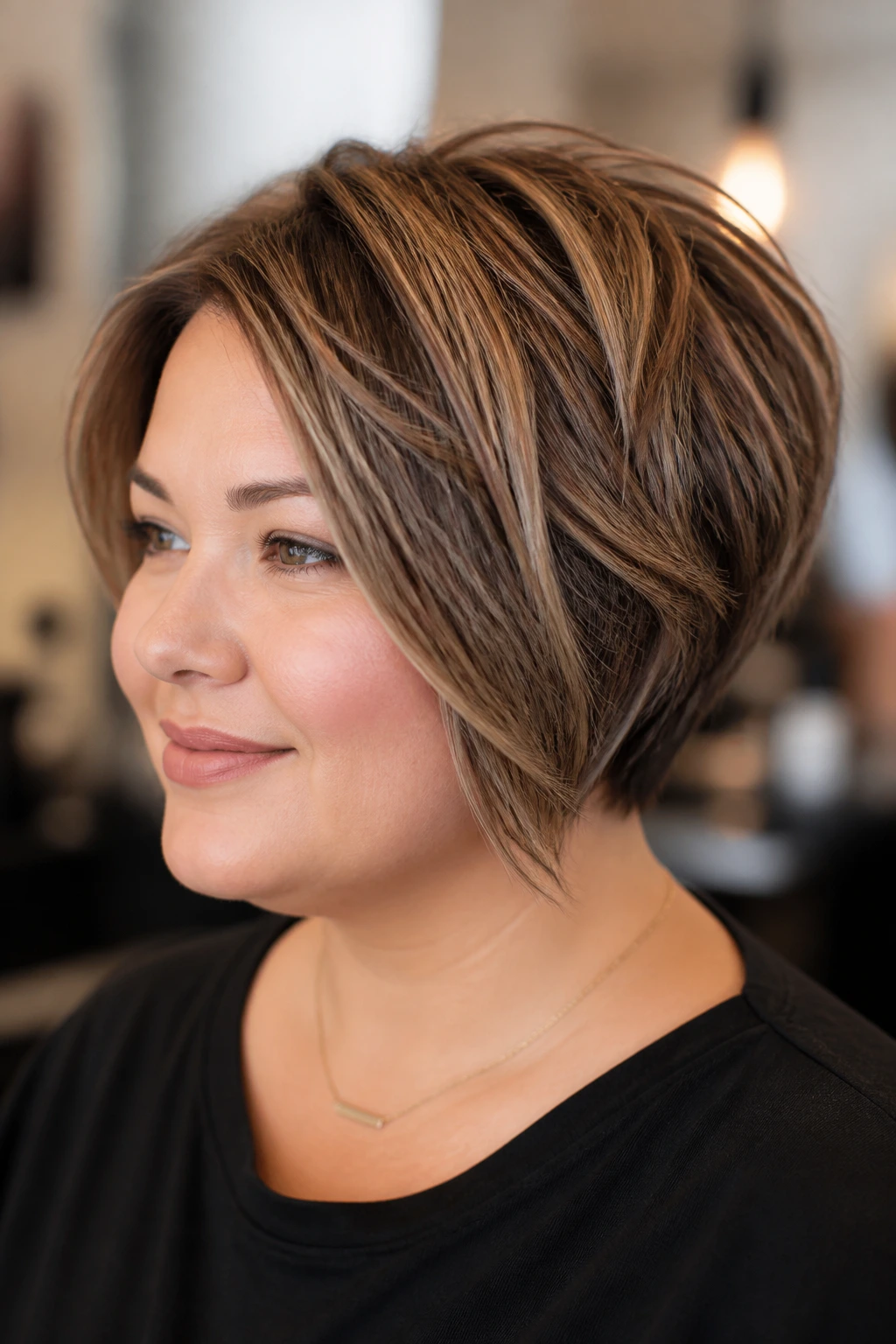
Stacked bobs can turn puffy fast, so the shape has to be handled with care. The back gets shorter layers that build lift at the nape, while the front stays longer and softer. On a round face, that lift at the back can be great—if the sides do not expand too much near the cheeks.
Why this version works
A heavy stack can make the widest part of the face feel wider. Broken layers fix that by removing the hard curve and replacing it with movement. The silhouette still has volume, but it does not sit in one round shell.
If you have thick hair, this is one of the smartest short cuts around. It takes weight off the bottom and gives the crown some shape. Fine hair can wear it too, though the stack should be lighter so the ends do not look sparse.
Blow-dry with a round brush, lifting only the crown and smoothing the front pieces toward the jaw. That gives the face a cleaner line and keeps the bob from ballooning.
14. Short Wolf Cut
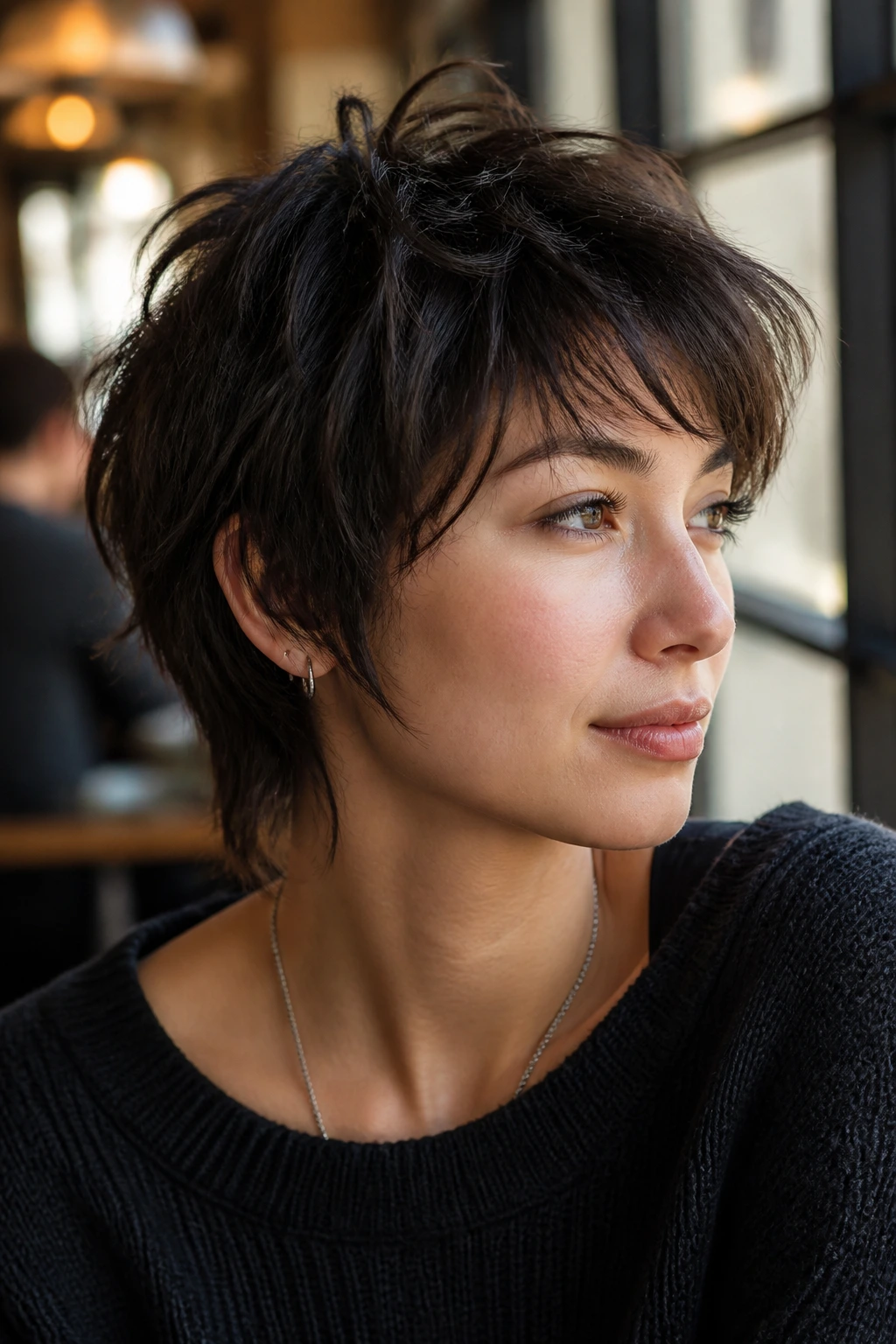
The short wolf cut earns its name because it has bite. The crown is fuller, the layers are choppier, and the ends taper out instead of sitting in one flat line. For a round face, the important part is the top: volume up there lengthens the face, while the longer pieces around the jaw keep the shape from closing in.
This cut likes texture. Natural wave is a gift here. Straight hair can still wear it, but it will need a little roughness from mousse, salt spray, or a quick bend with a flat iron. If everything is too smooth, the cut loses the thing that makes it work.
Keep the shortest layers around the crown and upper sides, not right at the cheeks. That keeps the fullness from landing where you do not want it. The wolf cut is a little wild, yes, but in short form it can also be surprisingly wearable.
15. Side-Parted Crop with Cheekbone Layers

A side part does more work than people think. On a round face, it creates a diagonal line straight away, and that line helps cut through softness. Add cheekbone layers, and the haircut starts framing the face exactly where the eye needs a little guide.
This is one of the easier short cuts to live with. It does not need a lot of length, and it does not need a lot of styling. The part should sit deep enough to show a difference, but not so deep that the hair collapses over one eye. The layer that matters most is the one that lands just below the cheekbone and then softens as it moves toward the jaw.
I like this on fine or medium hair. It gives shape without a big commitment. A little blow-dry with a paddle brush, then a quick tuck behind the ear on the shorter side, is usually enough.
16. Undercut Pixie with Soft Top Length
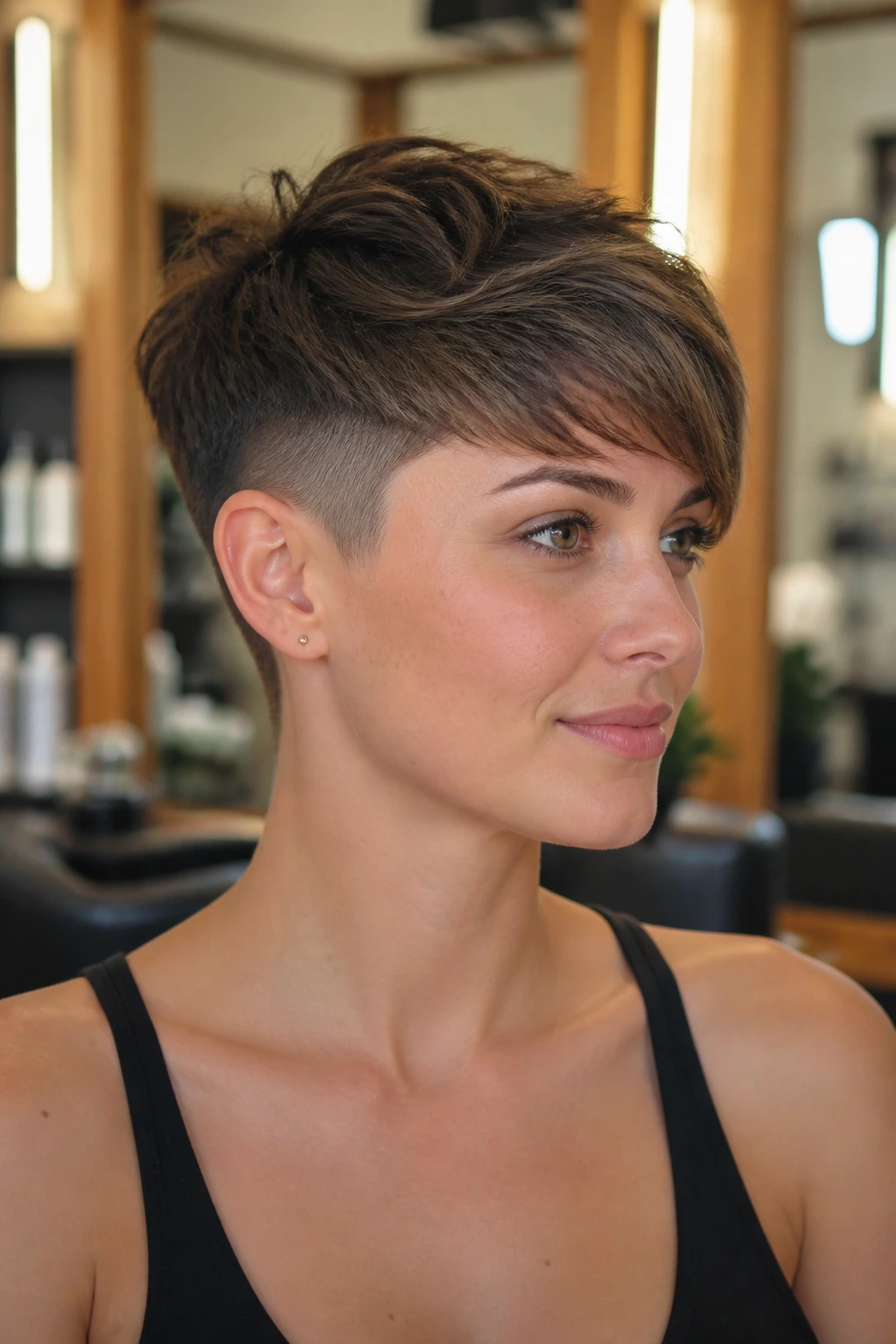
Thick hair and an undercut are old friends. If your hair grows out with too much bulk at the nape or behind the ears, removing some of that weight can make a round face look slimmer almost instantly. The top stays soft and longer, which keeps the cut from looking severe.
The undercut does not have to show. That’s the nice part. A hidden one under the top layers can remove puff without making the haircut feel loud. Leave enough length on top to sweep forward, up, or to the side, because the shape needs a little flexibility.
This cut is especially good if you hate the mushroom effect that thick short hair can create. It reduces that triangle of bulk around the jaw. If you tuck your hair behind your ears all the time, this shape behaves beautifully with almost no extra effort.
17. Curly Choppy Bob

Curly hair needs its own rules. A choppy bob on curls works best when the cut respects the curl pattern instead of fighting it. For a round face, that usually means keeping the widest curls away from the cheekbone line and building shape above or below it, not dead on it.
Cutting curls dry is often the right move because shrinkage changes everything. If the hair is wet, the shape can look longer than it really is, and the finished cut can land too high. A good stylist will snip curl by curl and let the natural bend decide the line. That part is not optional.
Styling notes
- Use curl cream on soaking-wet hair.
- Scrunch in a mousse if you need extra hold.
- Diffuse on low heat until the curls are set but still soft.
The best curly bob on a round face looks alive, not puffed out. That is the line to hold onto.
18. Tapered Shag with Wispy Bangs

The tapered shag is a close cousin to the classic shag, but the neckline is cleaner and the shape feels a little lighter. Wispy bangs keep the front soft, which matters on a round face because heavy fringe can shorten the face too much. The taper at the bottom pulls the silhouette inward, so the head shape does not spread outward at the jaw.
I like this cut when someone wants movement but not a lot of obvious edge. It has texture, yet it still feels wearable with a T-shirt and no makeup. The face-framing pieces should begin below the cheekbone, then fall in uneven little sections. That keeps the cheeks from becoming the center of attention.
If your hair is straight, add a bit of wave with a flat iron bend. If it is wavy, use mousse and let it dry with a slight scrunch. The cut wants a little mess. Not chaos. Just enough roughness to keep it from looking like a helmet.
19. Blunt-to-Choppy Hybrid Bob
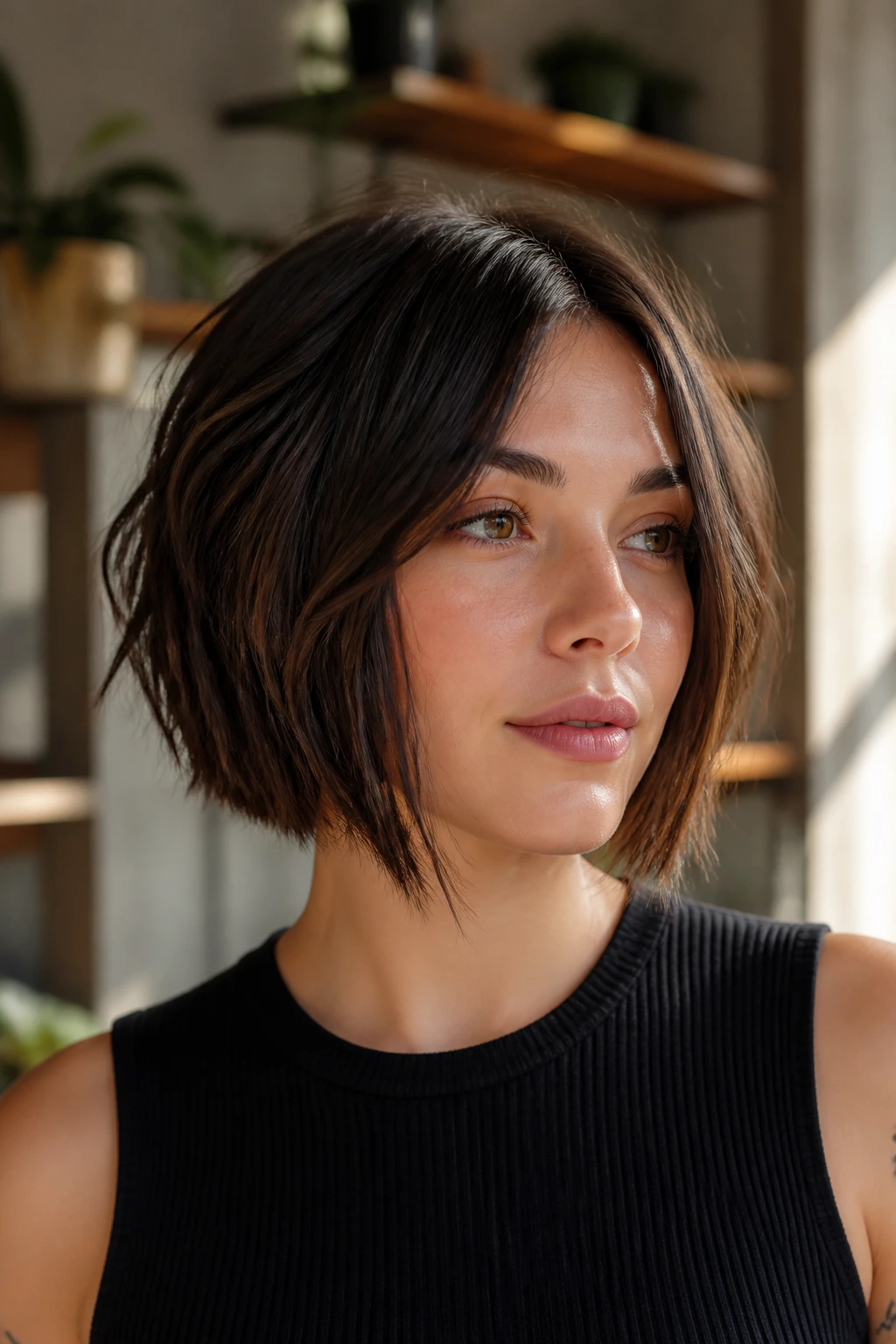
A blunt edge is not the enemy. On some fine-haired round faces, a completely shattered cut can make the ends look thin and weak. A hybrid bob solves that by keeping the outer line blunt enough to hold shape, while the inside gets choppy layers that move and lighten the bulk.
That mix is useful. The blunt perimeter gives the hair weight; the internal layers stop the cut from feeling flat or boxy. If the bob lands around the chin and the front pieces are a touch longer, the face gets a little extra length without losing density at the bottom.
This is a good pick if you want a bob that looks neat from far away and textured up close. It does not scream for attention. It works harder than it looks. Ask for invisible layers through the interior and a soft point cut through the front so the line stays clean but not harsh.
20. Boyish Crop with Sweeping Fringe
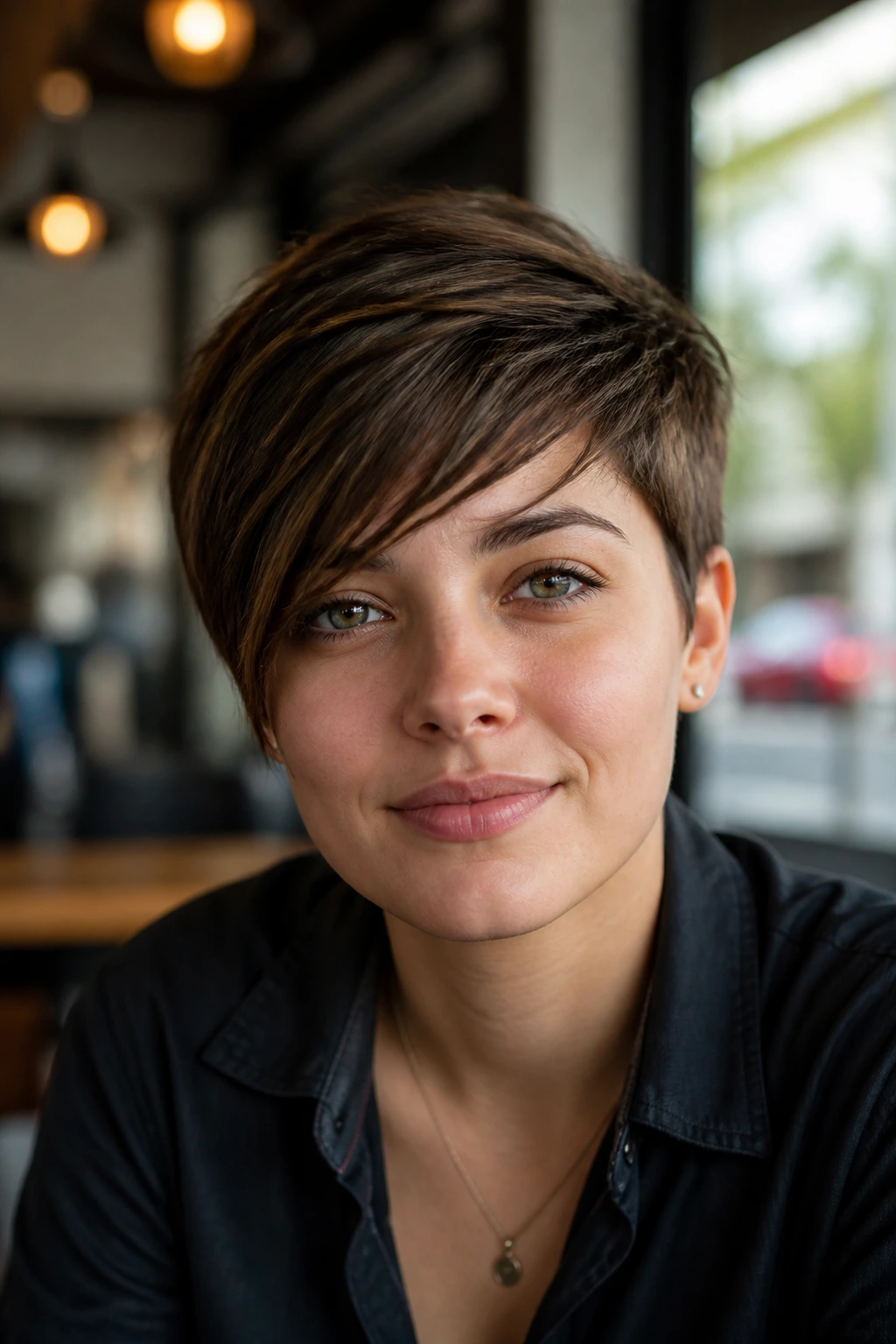
Some people want a crop with a little attitude. This is that cut. The boyish shape keeps the sides close and the top short, but the sweeping fringe brings softness back into the picture. On a round face, that fringe matters because it creates movement across the forehead and away from the widest part of the cheeks.
The key is direction. The fringe should start deeper on one side and sweep across the face in a long diagonal. If it stops too high, the face can look shorter. If it falls too thick, it can cover the eyes and feel heavy. The right balance is light and loose, with the ends broken up just enough to avoid a solid wall.
This cut is easy to style with a bit of cream or paste. Push the fringe into place with your fingers, not a brush. Brushed too neatly, it loses the charm. Finger-shaped, it keeps that soft masculine-feminine mix that makes the cut interesting.
21. Soft Disconnected Pixie-Bob
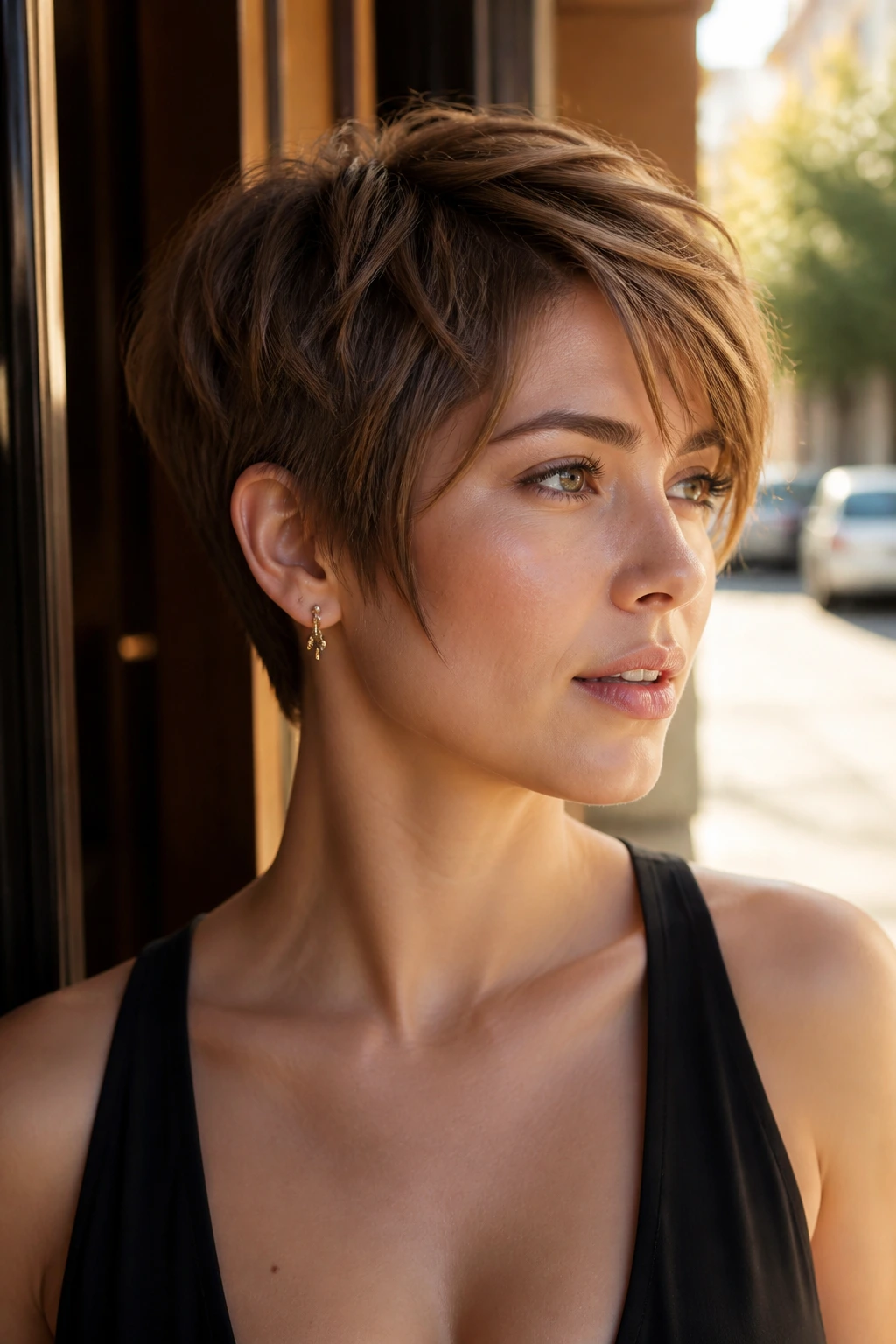
What makes a disconnected pixie-bob useful is the gap between the top and the bottom. The lengths do not blend perfectly, and that separation is the point. On a round face, the result is a shape that has lift on top, lightness through the sides, and enough length near the front to sharpen the outline.
This cut sits in a nice middle zone for people who are not ready for a true pixie and do not want a full bob. The top can stay long enough to sweep sideways, while the back stays compact. That contrast gives the face more vertical energy, which helps a round shape look less circular.
It does need a bit of styling. A light cream or wax through the longer top pieces keeps the disconnection visible. If the whole cut is blended into one soft mass, you lose the best part of it. Clean separation is what gives it character.
22. Chin-Length Choppy Bob with Long Front Pieces
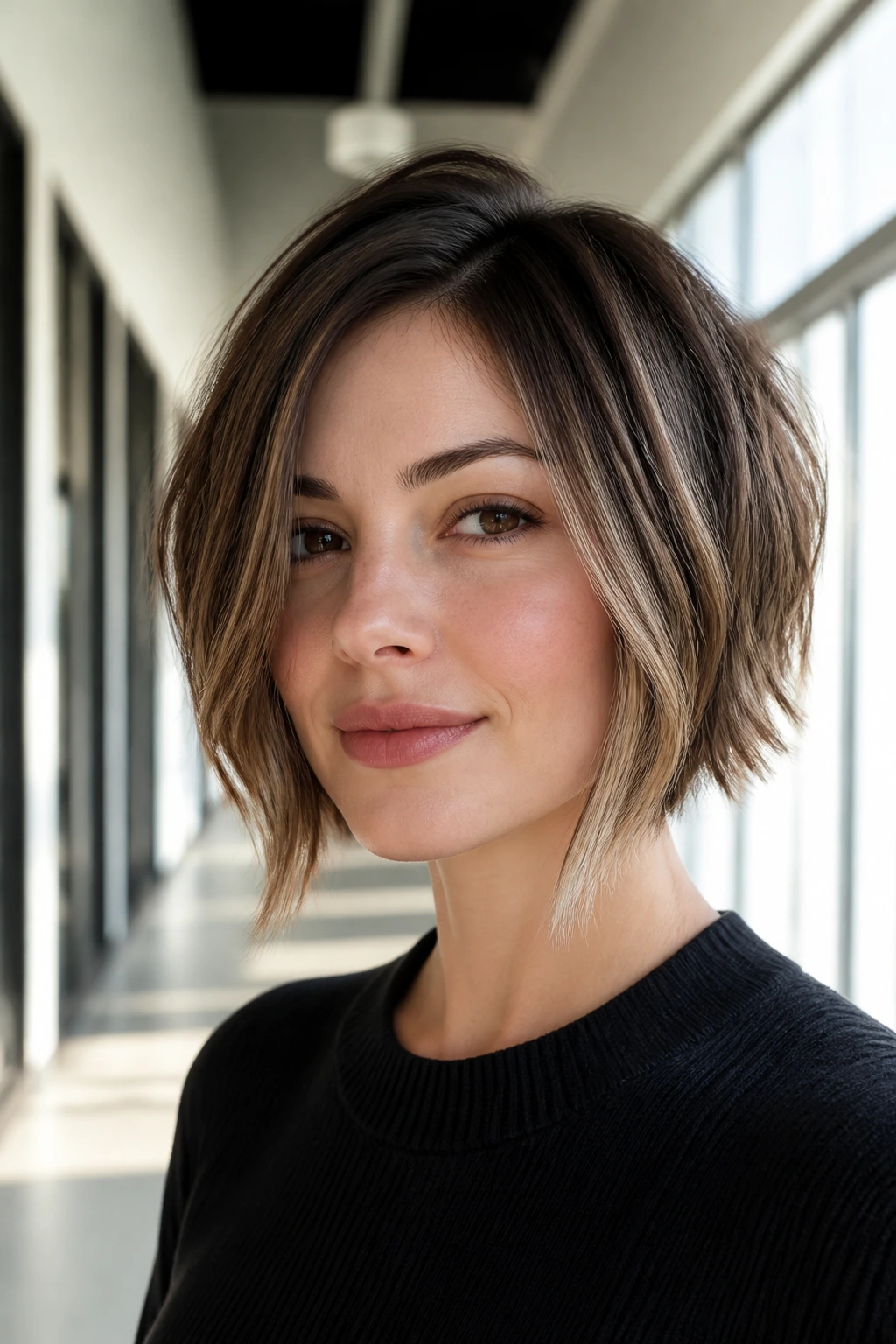
If you only save one idea, save this one. A chin-length choppy bob with longer front pieces is one of the safest short cuts for a round face because it gives shape without getting fussy. The ends should sit just below the jaw, and the front should dip a little longer so the eye sees a narrow frame instead of a full circle.
I like this cut for people who want something easy to grow out. It also works on straight, wavy, and lightly curly hair, which is rare. The secret is keeping the front pieces soft and slightly separated, not blunt and heavy. A center part can work, but a subtle off-center part usually gives the face a little more lift.
If you are nervous about going short, start here. It has enough structure to feel deliberate and enough softness to avoid looking severe. That’s the sweet spot, and honestly, it’s the one I point people to when they want short hair without the drama.
